
Terra Incognita by Simon Turney

Publisher: Head of Zeus (Ebook – 12 September 2024)

Series: Standalone

Length: 407 pages

My Rating: 4.5 out of 5 stars

Amazon

Simon Turney continues to explore the Roman Empire with his latest novel Terra Incognita, a fantastic read that proves to be one of the top historical fiction adventure novels of 2024.

Simon Turney, who also writes as SJA Turney, is a fantastic author who has been penning various intriguing historical novels for several years now.  I have enjoyed a couple of his books in the past, including the deeply compelling read, Commodus, which was part of his Damned Emperors series.  2024 has proven to be another good year for Turney, as he managed to also to impress me with the first book in his Agricola series, InvaderInvader was a very fun military novel that followed the early career of a famous Roman general and his potential involvement with Boudica’s rebellion.  I deeply enjoyed Invader, and I am very keen for the sequel, Warrior, which is set for release in early 2025.  However, before Warrior comes out, I was very happy to receive a copy of Turney’s intriguing novel Terra Incognita.  Providing his own take on a truly fascinating adventure hinted at in Roman historical records, Terra Incognita was an awesome read I was excited to check out.

Rome, 61 AD.  Under the rule of Emperor Nero, the Roman Empire is a wealthy and powerful civilisation covering much of Europe and Africa.  However, Nero is eager to expand the range of his control even further and sets his eyes down the River Nile.  Desiring to conquer the mysterious and reportedly rich lands and kingdoms below Egypt, Nero devises an elaborate plan to learn more about the world beyond his borders.

Under the command of an ambitious tribune, Nero sends two centuries of his elite Praetorian Guard into the African wilds with orders to follow the Nile until they find the source of the river.  If they succeed, they are to offer tribute to the river’s spirits, and ensure favourable waters for any subsequent invasion of the lands that follow.  However, reaching these fabled waters alive will prove to be an arduous journey.

Travelling down the Nile, the soldiers of Rome experience great hardships as they make their way to their empire’s borders.  But even greater challenges wait beyond, as the Romans will have to overcome bandits, hostile kingdoms, disease, inhospitable desert, fierce beasts and the madness of their own commander.  Can the Romans make it to their goal alive, or will the insanity of their Emperor and the impossible mission he’s set for them destroy even these elite soldiers?

Terra Incognita was as an outstanding and epic historical read that I honestly could not stop reading.  Presenting a powerful and deeply compelling narrative of trials, tribulations, and the dark side of ambition and duty in the wilds of Africa, Turney expertly grabs the reader in with his elaborate historical adventure tale and refused to let go.

I really loved the fun and distinctive story that Turney sets up in Terra Incognita, which proved to be particularly captivating and gripping to me.  A fictional account of the two Praetorian centuries the historical record indicates Nero reportedly sent to find the source of the River Nile, Terra Incognita is an exciting, entertaining and occasionally grim book, that just keeps loading compelling misadventure after compelling misadventure.  Told from the perspective of the venture’s two centurions, Sempronius Densus and Claudius Faventinus, you witness the full extent of the expedition through their eyes, from its hopeful if apprehensive start, all the way to its grim conclusion, and you will love every single second of it.

The narrative itself starts off as a classic Roman historical adventure, as it follows its protagonists down into Egypt.  This early part of the book is very much focused on introducing the characters and setting the scene for the adventures to come, and the readers get some fun sights of Roman occupied Egypt, while also experiencing the initial hurdles of the expedition.  However, once they leave Egypt and journey into land owned by the Kushites, Rome’s southern neighbour in Africa at the period, things start to unravel for them, as they come under attack, encounter greater setbacks, and are beset by bad omens.

The second half of the book sees the Romans enter unexplored territory and encounter the world beyond their known borders.  The already tired and demoralised soldiers face a lengthy and grim trudge deeper into Africa, with things getting worse for them the further they get away from home.  Trapped in their mission by their stubborn and seemingly unkillable commander, the book takes on a real Heart of Darkness vibe as their commander’s obsession drives them forward no matter the consequences.  Things continue to get more and more desperate for the protagonists as they continue, and you are constantly on the edge of your seat waiting to see what disaster or intriguing new turn of events they are likely to stumble across next.  After an increasingly tense series of events, Turney brings the reader to a deeply interesting and compelling conclusion, which fit the overall themes of obsession, insanity and a desire to survive perfectly.  This ended up being an excellent and well-crafted standalone narrative, and I had such a brilliant time getting through this elaborate adventure.

Turney is probably one of the top current authors of Roman historical fiction, and he clearly had a lot of fun bringing this elaborate novel together through his great writing.  Written as one continuous and compelling historical adventure, readers are really drawn into the epic tale of exploration and insanity that evolves, and Turney does a wonderful job of blending historical inclusions with a deep and powerful narrative.  I think the author had the right elements of action, exploration, history and personal stories in Terra Incognita, and it’s hard not to get drawn into the constant adventure and the interaction with new obstacles and societies.

In addition to the well-written story, I really must highlight the excellent main characters of Terra Incognita, especially as you see the entire disastrous expedition through the eyes of the group’s two centurions, Sempronius Densus and Claudius Faventinus.  Cast as the group’s sensible, disciplined and stubborn hearts, the two centurions doggedly lead their soldiers on, forced to serve as a buffer between the disgruntled Praetorian Guard, and their increasingly unhinged commander.  While there sometimes isn’t a lot to distinguish between the two centurions, you grow attached to them, especially as they are forced into impossible situations time and time again and are compelled by duty to continue.

However, the best character in the book is easily the expedition’s leader, Tribune Lucius Curtius Lupus.  An ambitious and regal figure, the tribune serves as a great foil to the sensible protagonists in the first half of the book, especially as his bluster, unreasonable orders and lack of common sense ensure that the centurions are forced to work against him to continue.  However, once the Romans find themselves in the African wilds, the tribune really turns into a fantastic character.  Due to a mixture of illness, pettiness and fear, the tribune becomes continuously more detached from the reality of the situation they are in and keeps dragging his mutinous soldiers further down into Africa.  Absolutely driven by obsession, Lupus refuses to stop until Nero’s orders are fulfilled, no matter the cost to the troops, and every action forces his centurions to decide whether to support him or kill him.  I loved the constant battle of duty and practicality that emerged, as the two centurion protagonists attempt to find their line in the sand against the tribune, only to allow him to make more bad decisions.  It also proves quite amusing to see the continued tribulations that the tribune survives, so much so that his soldiers become to believe his mission is blessed by the gods.  It’s hard not to both love and hate Tribune Lupus as the book unfolds, and I felt that Turney’s use of him was perfect, especially as there are some interesting parallels between him and a key figure from Heart of Darkness/Apocalypse Now.

Finally, I need to highlight the excellent historical inclusions featured within Terra Incognita.  Turney does an outstanding job bringing the wild and uncharted territories of Africa to life through his excellent writing, and you are constantly envisioning the elaborate landscapes and intriguing people that the Romans may have encountered on this expedition.  I also really appreciated how Turney utilised and expanded on details from the Roman historical records as well more modern understandings of the period in his story.  The depiction of several different tribes, nations and kingdoms that likely existed along the Nile at that point in history was fascinating.  I also enjoyed seeing how Turney envisioned the Roman’s reactions to the various crazy creatures, obstacles and unusual people they would have encountered, including crocodiles, hippopotamuses, and some of Africa’s more impassable terrain.  These obstacles also led to some interesting solutions, and I particularly appreciated Turney’s idea for a potential malaria treatment/preventative.  Throw in some great depictions of the Roman soldiers themselves, something the author has a lot of experience showcasing, and this was a great historical book with some unique features.

Terra Incognita was an outstanding standalone book from Simon Turney that provides readers with an awesome historical adventure.  Fast-paced, addictive, and loaded with some fantastic intensity, especially around the great characters, Terra Incognita was an epic read that comes very highly recommended.
Amazon

The Emperor’s Exile by Simon Scarrow

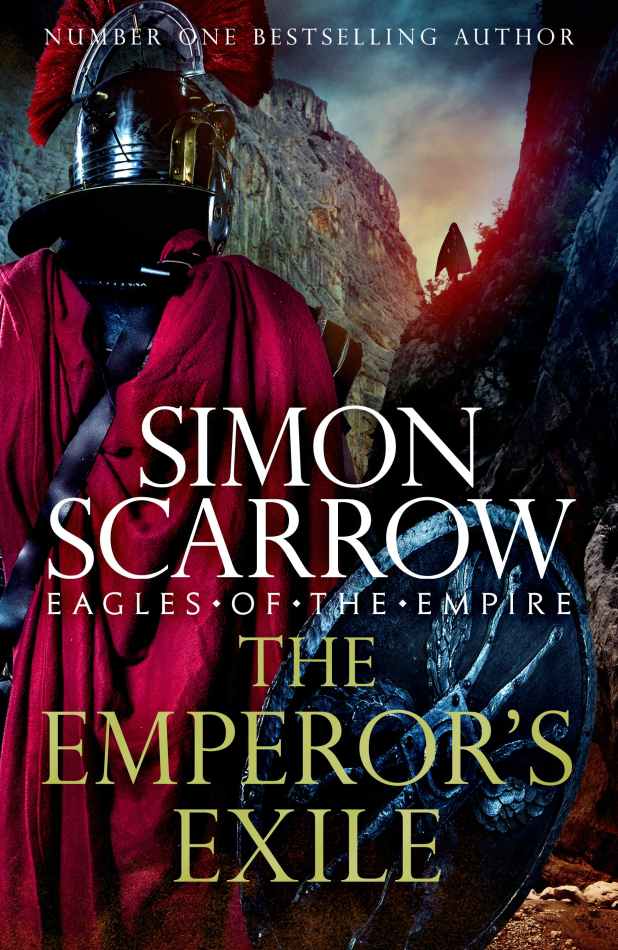
The Emperor's Exile Cover

Publisher: Headline (Trade Paperback – 10 November 2020)

Series: Eagles of the Empire – Book 19

Length: 434 pages

My Rating: 4.5 out of 5 stars

Amazon

One of the top authors of Roman historical fiction, Simon Scarrow, returns with the latest exciting novel in his Eagles of the Empire series, The Emperor’s Exile.

Rome, 57 A.D.  Following their adventures in Parthia, Legionary veterans Tribune Cato and Centurion Marco return to Rome with the remnants of their Praetorian Cohort.  Thanks to the ever-shifting politics of Rome and the fickleness of Emperor Nero’s court, Cato faces a hostile reception from some of Nero’s advisors, who hold him responsible for the military disasters experienced in the Parthian campaign.  Soon Cato has his command taken away from him, while Marco decides to resign from the Legions in protest, determined to live out his retirement in Britain.

Isolated in Rome, Cato is forced by one of Nero’s advisors to take on a new and dangerous mission.  Nero’s mistress, the beautiful Claudia Acte, has risen too high too quickly, and Nero’s political enemies have manipulated him into sending her into exile.  Travelling with a select group of Praetorian officers and his new advisor, the spy Apollonius, Cato must escort Claudia to the location of her exile, the island province of Sardinia, where he has another mission to accomplish.

Sardinia has long been plagued by tribes of bandits living wild in the centre of the island.  These proud decedents of the original inhabitants of Sardinia have been causing problems in recent months, raiding the local villages and ambushes caravans.  Taking command of Sardinia’s entire garrison, Cato begins to work out a strategy to defeat the locals and regain his position in Rome.  However, this proves harder than originally anticipated as Cato needs to contend with a disorganised military force, a dangerous plague that is beginning to overwhelm the island and a surprisingly competent group of bandits with unparalleled knowledge of the local landscape.  Worse, Cato begins to have dangerous feelings for Claudia, feelings which his enemies will exploit and which could set the entirety of Rome against him.  Can Cato pacify Sardinia before his entire force is decimated, or have his adventures finally come to an end?

This was another fantastic and highly enjoyable historical fiction novel from one of my favourite authors, Simon Scarrow, who has produced an impressive new entry in his long-running Eagles of the Empire series.  The Eagles of the Empire books are easily among the best Roman historical fiction series out there at the moment, and I have had an amazing time reading every single entry in this series, including the last two novels, The Blood of Rome and Traitors of RomeThe Emperor’s Exile is the 19th Eagles of the Empire book and the author has produced another impressive story, featuring great historical elements and some fantastic character work.  I had an awesome time reading this book and it is definitely worth checking out.

The Emperor’s Exile contains an extremely fun and captivating narrative which follows Cato work to defeat a new enemy in a new historical setting.  Scarrow sets up an exciting and fast-paced story for this latest book, with the protagonist forced to deal with all manner of politics, intrigue and various forms of deadly peril in rather quick succession as he is assigned his mission and attempts to complete it.  This naturally results in all manner of impressive action sequences which are a lot of fun to watch unfold, including one particularly good extended siege sequence.  It is not all action, adventure and historical undertakings, however, as the book also has an intriguing focus on its central protagonist, Cato.  Cato, who has been evolving as a character over the last 18 books, continues to develop in The Emperor’s Exile in several dramatic and emotionally rich ways.  Not only does he have to adapt to a major change in his personal circumstances with the retirement of a great friend but he continues to question his role in the Roman army and whether he wants to remain a brutal killer.  Throw in an ill-conceived romance, his continued regrets about his past actions and his disastrous first marriage, as well as a certain major change in his appearance for the future, and this becomes quite a substantial novel for Cato which also opens up some intriguing storylines in the future.  I had a wonderful time reading this book and, once I got wrapped up in the story, I was able to power through the book extremely quickly.

In addition to having a great story, The Emperor’s Exile also serves as a key entry in this impressive, long-running series.  While readers who want to check out this book do not particularly need to have read any of the previous Eagles of the Empire books, mainly because Scarrow does an excellent job of revisiting story aspects and characters from prior novels, those established fans of the series are going to find this book particularly significant and memorable.  This is because one of the main protagonists of this series, Centurion Marco, who has been a major part of all 18 previous novels, retires from the Legions 100 or so pages into the book then subsequently disappears off to Britain, leaving Cato to his own adventure in Sardinia.  Scarrow has been telegraphing Marco’s plans to retire for the last couple of books, and it is a natural consequence of the author realistically aging his characters (15 years have elapsed within the series at this point).  While it was somewhat expected, it was still weird and a bit sad not to have Marco fighting along Cato in this latest adventure, especially as their comradeship is one of the defining aspects of this series.  That being said, Cato has grown a lot over the last 18 books and the natural progression of Cato and Marco’s dynamic as characters did necessitate them splitting off at some point.  It will be interesting to see how Scarrow features Marco in the future, especially if he plans to continue the Eagles of the Empire series for several more books (I personally would love it if he goes all the way into The Year of the Four Emperors, as it would wrap up the Vitellius and Vespasian storylines from the earlier books quite nicely).  Based upon how The Emperor’s Exile ends, it looks like Marco is going to appear in the next book, but it is uncertain whether he will continue on as a central protagonist, become an occasional character or go down in a final blaze of glory.  I personally think that Scarrow is planning to permanently retire Marco as a character soon, potentially replacing him with new character, Apollonius.  Apollonius is the dangerous and insightful spy who Cato teamed up with during the previous novel, and who followed Cato back to Rome in this book.  Apollonius served as Cato’s aide, scout and confident during The Emperor’s Exile in place of Marco, and it looks like he will be a major character in the next book as well.  I quite liked Apollonius as a character and it will be interesting if he ends up as Marco’s replacement, especially as he shares a very different dynamic with Cato than Marco did.  All of this makes The Emperor’s Exile quite an intriguing entry in the overall series and I am extremely curious to see what is going to happen to these amazing protagonists next year in the 20th book in the series.

As always, this novel is chock full of fantastic historical detail and storytelling as the author sets his story in some intriguing parts of Roman history.  Not only does the reader get a great view of Rome under the control of Emperor Nero (whose chaotic rule as described in this novel has some interesting modern parallels) but the main story takes place in the island province of Sardinia, off the Italian coast.  Sardinia is a fascinating province that I personally have never seen used before in Roman historical fiction novels and which proved to be a fantastic setting for most of this book’s story.  Scarrow really dives into the history, culture and geography of the island, explaining how it became a Roman province, examining some of the key towns and ports and highlighting the difference between the locals and the Roman settlers.  There is a particularly compelling focus on the tribes who controlled the centre of the island and it was rather interesting to see how a group of rebellious barbarians managed to survive so close to Italy during this period.  Scarrow also provides the reader with his usual focus on the Roman legions/auxiliaries, providing impressive details and depictions of how the Roman war machine operated and what their usual tactics and strategies are.  All of this really helps to enhance the novel and I had an amazing time exploring Sardinia with the Roman protagonists.

Another intriguing aspect of The Emperor’s Exile was the plague storyline that saw the inhabitants of Sardinia, including Cato and his soldiers, have to contend with a deadly infectious sickness.  This plague added an excellent edge to the storyline, serving as a hindrance to the protagonists and ensuring that they constantly have to change their plans while dealing with their enemy.  Not only does this serve as a clever handicap for the Romans but readers cannot help but make some comparisons to modern day events.  While I could potentially be reading a little too much into this and it is possible that Scarrow always intended to feature a plague in this book, I cannot help but think that this was a deliberate choice by the author.  Either way, it proved to be an extremely fascinating part of the book and it was fun to compare the reactions of these historical characters to the actions of people in the real-world.  While this story inclusion may potentially prove to be a little tiring for readers sick of any mentions of disease, infection and quarantine in their day-to-day lives, I thought it was a great addition to the novel, especially as it raised the dangerous stakes of this exciting novel.

With his latest novel, The Emperor’s Exile, Simon Scarrow continues to show why he is one of the top authors of Roman historical fiction in the world today.  This latest novel serves as a key entry in his amazing Eagles of the Empire series and it takes the reader on an outstanding, action-packed adventure, loaded with some great character moments and some impressive historical settings.  I had a fantastic time reading this book and I cannot wait to see how Scarrow continues this epic series next year.  Luckily, I only have to wait a few more months for my next dose of this author’s work as his World War II crime fiction novel, Blackout, is set for release next March.

Amazon