Quick Review – A Great Hope by Jessica Stanley

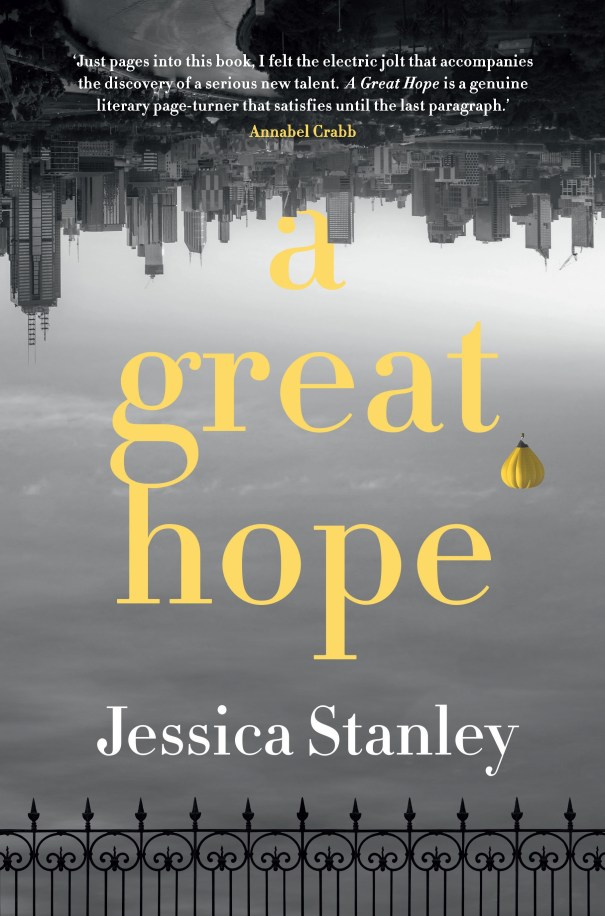
A Great Hope Cover

Publisher: Picador (Trade Paperback – 22 February 2022)

Series: Standalone

Length: 406 pages

My Rating: 3.5 out of 5 stars

Amazon     Book Depository

Intriguing new author Jessica Stanley produces a compelling Australian political drama, A Great Hope, an intense read that looks at the impact of the mysterious death of a politician on his family, set to the backdrop of a turbulent time in Australian politics.

Plot Synopsis:

John Clare was a titan in Australian politics. The head of a powerful union and a key player in the election of Kevin Rudd as prime minister in 2007, he had long been tipped as a future leader himself. Supporting him in his push for power were his elegant wife Grace, his troubled children Sophie and Toby, and Tessa, the mistress he thought would stay secret.

But now John has fallen, brutally, to his death. A terrible accident – or was it?

In the wake of losing John, his inner circle mourn and rage, remembering and trying to forget the many ways he’d loved and disappointed them. An adoring and unreliable father; a grateful and selfish husband; a besotted and absent lover; an authoritative and compassionate leader; a failed politician in an era when party politics failed a nation. As those around him reassess everything they knew of and felt for John, a new idea of what love and power really mean begins to emerge – as does the true cause of his death.

Gripping, propulsive and ambitious, A Great Hope untangles the mystery of John’s fall through the eyes of those who knew him best – or thought they did. Deftly displaying the clash of the political and the personal, this is a novel for our times, from a brilliant and forceful new Australian writer.

This was an excellent novel which I think did a great job telling a unique story by exploring some of the more controversial elements of recent Australian politics.  A Great Hope’s story is a great blend of personal drama, political intrigue and contemporary historical fiction, with a little bit of mystery thrown in as various characters attempt to understand the death of John Clare and the impact he had on the world.

Telling the story from a variety of different perspectives, including those of his family, his mistress, and other related figures, Stanley presents a complex and winding narrative that proves to be very compelling at times.  Initially set one year after the death of John Clare, the story jumps around the various point-of-view characters, and the readers are shown not only their present situations and opinions but also the origins of the characters as well as the full events that led up to the night John Clare died.  While this does produce a cluttered story with a few odd moments (such as the unnecessary and graphic sex scenes), the reader is soon treated to a unique story that cleverly builds up to the finale while also exploring the various key characters.  You get a real sense of everyone featured in the novel, especially those closest to John Clare, and their complex lives and relationships with the political heavyweights.  Unfortunately, most of these characters are pretty terrible people who are fairly insufferable and hard to enjoy.  While this was no doubt the intent, to show the strain and ugliness a political life brings out, there are barely any relatable or redeemable figures here (honestly the only character I particularly liked was the mistress, Tessa, which is a bit odd when you think about it).

While this lack of likeable characters did slow the flow and my enjoyment of the story a little, I managed to power through the last 200 pages in a single sitting.  There are some interesting resolutions and revelations towards the end, and I enjoyed seeing some of the storylines come full circle, especially those that are set up in the present and then expanded on in the flashbacks.  The resolution of who or what caused the death of John Clare was pretty interesting and a little surprising, but it fit nicely into the unique feel and storytelling of A Great Hope.

One of the most distinctive elements of A Great Hope was the author’s intense and in-depth examination of Australian politics in the early 21st century, particularly around the 2007 and 2010 elections.  This is mainly because the author, Jessica Stanley, was herself involved in some of these campaigns, particularly in 2007, when she served as one of the party’s social media consultants (similar to main character Tessa).  As such, this book contains some compelling and fascinating insights into the election campaign, candidates, and voters, particularly those associated with Australia’s major left-wing party (the Labor party), which really added to my enjoyment of the book.  Some of the more intriguing and compelling political moments of this period are scattered throughout A Great Hope, and I deeply enjoyed seeing the author’s take on what happened and why.  The author also examines the growing impact of social media during this time, as well as other intriguing elements about campaigns and party politics.  However, readers should be warned that these political elements do start to get very upsetting as the book continues, especially as Stanley dives into the failures of government, the increased political hostility, the rejection of climate change by the opposition, and the inherent sexism that defined the era between 2007 and 2010.  This stirred up some unpleasant memories of the political landscape of the time, but I did find this to be an interesting and captivating part of the novel, and I really appreciated how much these unique and realistic inclusions added to the story.

Fantastic new author Jessica Stanley got off to a great start here with A Great Hope, producing an intriguing and distinctive novel that makes excellent use of the author’s political insights.  While I had some issues with the story and characters, A Great Hope ended up being quite an entertaining book, and I was very interested in seeing how everything came together, as well as all the clever political inclusions.  I look forward to seeing what Stanley writes in the future, especially as there are so many memorable moments in Australian politics to set a story around.

Amazon     Book Depository

Engines of Empire by R. S. Ford

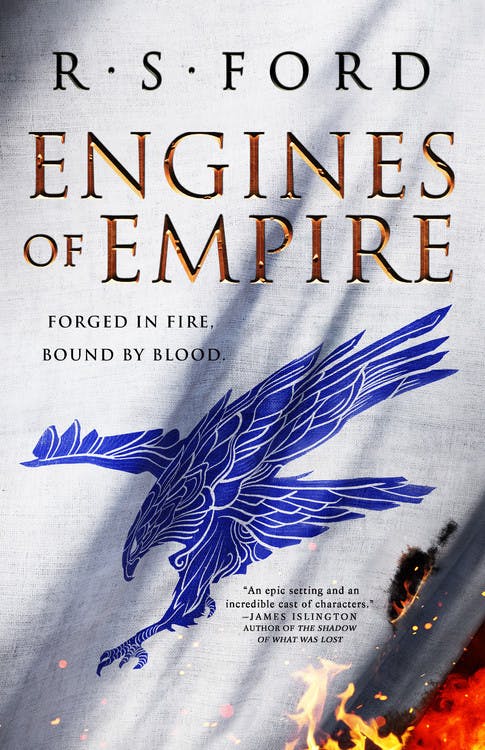
Engines of Empire Cover

Publisher: Hachette Audio (Audiobook – 18 January 2022)

Series: The Age of Uprising – Book One

Length: 22 hours and 3 minutes

My Rating: 4.25 out of 5 stars

Amazon

Bestselling fantasy author R. S. Ford starts off an intriguing and compelling new epic fantasy series with the powerful Engines of Empire, a great read that I had a wonderful time reading.

Ford is an author who has been writing some interesting books in the last few years.  His big works include the Steelhaven and War of the Archons series, both of which have some very intriguing plots.  While I have not had the pleasure of reading any of his previous work, I have heard some great things about his War of the Archons books, and I might have to go back and check it out at some point.  After reading some early positive reviews of Ford’s latest novel, Engines of Empire, I decided to check it out, grabbing an audiobook version, which proved to be extremely good.  This cool book serves as the first entry in Ford’s new The Age of Uprising series and sets the scene for a captivating and exciting new trilogy.

For generations, the nation of Torwyn has been ruled by the Guilds, industrial powerhouses who provide the nation its food, weapons, transportation and invaluable devices that fuse magic with technology.  One of the most prominent Guilds is the Hawkspurs, an ancient and powerful family who have long held the empire together and ensured its position in the world.  However, the current generation of Hawkspurs are about to find that everything they thought they knew is about to change.

As the matriarch of the family, Rosomon Hawkspur, attempts to maintain her family’s status and standing in Torwyn’s capital, the Anvil, her children each head off to find their own destinies.  The oldest son, Conall, departs to the empire’s distant frontier to prove his worth as a military commander.  The rebellious and magical Hawkspur daughter, Tyreta, is sent to an important imperial holding to facilitate her training as the future head of the family business.  The youngest son, Fulren, a talented artificer, finds himself involved in foreign politics when he is tasked with guiding an emissary from a powerful rival nation.

However, forces of chaos, fanaticism and destruction are all around them, and soon all the Hawkspurs are placed in mortal danger.  At the frontier, Conall attempts to prove himself, but only finds rejection and hints at a rising evil.  Tyreta’s reckless actions place her in mortal danger, and her only path to salvation lies in understanding the people her nation has hurt the most.  Back in the Anvil, Fulren is framed for murder and is soon banished to a hostile foreign nation ruled by dark gods.  Rosomon, desperate to save her fractured family, finds herself thrust into the middle treachery and dark revolution, as unseen hands plot against the guilds.  As the entirety of the world changes all around them and dangerous forces reveal themselves, can the Hawkspurs endure, or will they, and the entirety of Torwyn, come to utter ruin?

Engines of Empire was a captivating and entertaining fantasy epic that transports the reader to intricate new world, filled with interesting characters, political intrigue, and intense action, and makes for an excellent and exciting read.

At the centre of Engines of Empire is a massive and complex narrative that fully explores the various main characters while also plunging the intriguing new setting into chaos and anarchy.  Ford utilises a great multiple perspective storytelling device that splits the overall book into some compelling, separate chunks.  The story initially has four distinctive storylines that follow the Hawkspur family members as they go off on their own separate adventures.  This results in an interesting blend of plotlines as you have a more military story with Conall, a survival/adventure storyline with Tyreta, Rosomon’s political intrigue narrative, and Fulren’s life-or-death struggle in a foreign land.  These storylines are mostly unconnected to each other and not only allow the point of view protagonists to grow and develop independently with their own group of supporting characters, but it also ensures that the reader gets to explore various aspects of the new fantasy realm and see the range of different problems affecting it.  These four storylines develop at a reasonable and compelling pace, and the reader soon is drawn into their individual storylines, as well as some of the overlapping conspiracies that are featured throughout.  A fifth point-of-view character is introduced about halfway through the novel, which mainly acts to bolster one of the existing storylines and proves to be an excellent feature filled with action and espionage.  This leads to the final stretch of the novel, where several big events and twists occur that shake the foundation of the novel and take it in an excellent new direction.  Several of the separate plot lines start to come together more closely towards the end, and there are some excellent moments as the characters reunite to face a common foe.  This leads to an exciting and intense conclusion that takes several of the character storylines in interesting direction and sets up the rest of the trilogy extremely well.

I really liked how Engines of Empire came together as Ford wrote an excellent fantasy tale that made sure to cover a vast range of people and places.  The entirety of Engines of Empire has a great combination of story elements that ensures there is something for all sorts of readers here, including massive world building, great action, clever political intrigue, dangerous adventures or interesting characters.  I particularly enjoyed the great use of five character driven storylines centred on different point-of-view protagonists.  Not only did they come together well to produce a great overall narrative but they also provided the reader with several unique adventures with their own appeal.  I particularly enjoyed Fulren’s story, as it featured an excellent blend of interesting world building in a rival nation ruled by dark magic and impressive character moments.  Tyreta’s jungle-based survival mission was also really cool, especially with the intriguing side characters and brutal combat, while the fifth storyline introduced halfway through the book was filled with some amazing sequences and intriguing international espionage.  Unfortunately, the remaining two storylines surrounding Rosomon and Conall were a little slower and I didn’t have as much fun reading them, even with their respective political intrigue and desert action elements.  I struggled a little to get through these specific storylines at times, especially towards the centre of the novel, and it slowed down my overall reading of Engines of Empire.  Still, both storylines end on interesting notes, and I think they might have more potential in the sequel.

Due to the narrative being focused on five specific central characters, Ford spends a lot of time in Engines of Empire exploring and building up some of the characters.  The main protagonists are the four members of the Hawkspur family, Rosomon, Conall, Tyreta and Fulren, each of whom have their own skill.  Due to certain tragedies in their past, the family is a bit dysfunctional, and there is a noticeable distance between them.  I liked seeing each of them go on their own distinctive journey throughout the book, and each of them does develop to a degree, especially Fulren and Tyreta.  However, I did find myself getting rather frustrated with some of the protagonists as the book continued, especially as there is a lot of narrative stupidity and inconsistent character work.  This is particularly true for Conall, who comes across as a whiney idiot for most of the novel, while Rosomon, who is supposed to be a brilliant leader and tactician, is soundly outsmarted at every turn and can’t even see the most obvious of traps.  I felt these negative character traits deeply impacted their individual storylines, and it made them harder to care for.  On the other hand, I felt the fifth point-of-view character, Lancelin Jagdor, rounded out the main cast extremely well.  Lancelin is a master swordsman who has a very complicated relationship with the Hawkspurs.  He finds himself getting dragged into their issues about halfway through the book, and I think his interesting outlook and unique experiences help to balance out the less enjoyable protagonists and produce a better story.

Aside from these five main protagonists, Ford has also included a great collection of supporting characters.  These supporting characters are usually unique to one of the main protagonists’ storylines and are primarily shown through their eyes.  Many of these characters prove to be allies or friends of the protagonist, although there are a few good antagonists thrown in there as well.  Some of my favourites include Sted, Conall’s hard-drinking second in command, whose fun, no nonsense personality helps to enhance Conall’s storyline to a degree.  I also had fun with Kosma Khonos, a ruthless Torwyn spy in the kingdom of Nyrakkis, Saranor the Bleeder, an over-the-top barbarian war chief, and Wenis, a foreign witch who becomes both a jailor and love interest to Fulren, which ends up being one of the more interesting relationships in the entire novel.  This huge web of supporting characters really helps to enhance the overall story and I look forward to seeing some of these elaborate and distinctive figures again in the future.

I was deeply impressed with the amazing new fantasy world featured in Engines of Empire, and it appears that Ford spent a significant amount of time developing it.  The main setting for the novel is the fascinating nation of Torwyn, a former religious nation that has been taken over by the Guilds, industrial powerhouses who now hold sway over the various industries.  Torwyn is built up beautifully by Ford, and you soon get the full sense of it, including its intriguing industrial aspects, magic-powered technology, dragon-based religion, and ruthless politics.  The arrangement of Torwyn leads to an intense civil war that looks set to shape the future of much of the novel and serves as a brutal and fantastic central setting for several storylines.  While Torwyn proves to be an exceptional area to explore, Ford goes above and beyond and takes the reader to several other intriguing locations within and without it.  Thanks to the adventurous characters, you see some of the more desolate and dangerous locations in the lands, such as the jungle-covered Sundered Isles, the war riven frontier, the snow-covered, barbarian-infested Huntan Reach, and the magical controlled nation of Nyrakkis.  While all these locations were pretty cool, I particularly loved the dive into Nyrakkis, which proved to be a very intricate location filled with intrigue and demonic magic.  The jungles of the Sundered Isles were also extremely awesome, and Ford provides an interesting examination of the tribes who were displaced by the Torwyn settlers, especially as Tyreta spends time amongst them and getting to know their culture.  Throw in an interesting blend of different magical practices and technologies, as well as a few fun creatures (giant war eagles and beast men for the win), and you have an extremely awesome world that I can’t wait to return to in the future books.

I ended up grabbing the audiobook version of Engines of Empire, which ended up being a very enjoyable experience.  With a run time of just over 22 hours, this is a pretty substantial audiobook (it would have come in at number 18 on my Top Ten Longest Audiobooks list), and it did take a fair bit of effort to get through, especially in some of the slower parts of the story.  Despite its length, I think that it is worth the time to get through this audiobook, especially as it proves to be an excellent way to absorb Engines of Empire’s story.  I always find myself really connecting more to new fantasy settings and characters in this format, and this happened again with Engines of Empire, as I really found myself absorbing all the interesting details about this world.  I also loved how the Engines of Empire audiobook had several different narrators including Alison Campbell, Ciaran Saward, Phoebe McIntosh, Ewan Goddard, Andrew Kingston, Martin Reeve and Stephen Perry.  These narrators provide a rich and powerful audible tapestry, with one narrator assigned to voice all the chapters told from the perspective of a specific point-of-view character.  Not only do the narrators do a good job capturing the personalities of the main characters they are portraying but they also provide some fun voices for the various supporting figures and antagonists.  While it is occasionally odd to hear a narrator start voicing a character who had appeared in other chapters, this ended being a great collection of voices and I loved how well they all brought the characters to life.  An overall excellent audiobook, I would strongly recommend this format to anyone who wants to check out Engines of Empire and I had a brilliant time listening to it.

I have to say that I was quite impressed with my first book from R. S. Ford.  Engines of Empire was an excellent read that takes the reader on an epic fantasy adventure.  Making awesome use of a big cast of characters, Ford transports his audience to a brilliant and elaborate fantasy realm filled with adventure, intrigue and betrayal.  I had an amazing time getting throughout Ford’s captivating narrative, and I loved the exception world building that he did.  While I didn’t enjoy all of the characters, Engines of Empire ended up being an outstanding read that does a wonderful job setting up his next The Age of Uprising novel.  A great fantasy novel that is really worth checking out, especially in its audiobook format.

Amazon

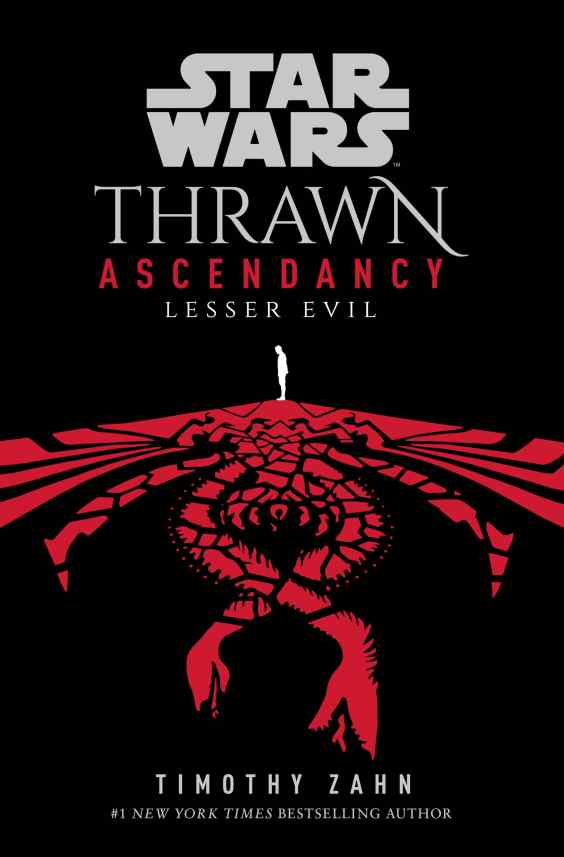
Star Wars: Thrawn Ascendancy: Lesser Evil by Timothy Zahn

Star Wars - Thrawn Ascendancy - Lesser Evil Cover

Publisher: Del Rey/Penguin Random House Audio (Audiobook – 16 November 2021)

Series: Thrawn Ascendancy – Book Three

Length: 23 hours and 13 minutes

My Rating: 5 out of 5 stars

Amazon

The undisputed master of Star Wars extended fiction, Timothy Zahn, returns with final book in the Thrawn Ascendancy series, Lesser Evil, which brings this excellent prequel trilogy to a fantastic and dramatic end.

Out of all the awesome authors who have contributed to the Star Wars extended universe over the years, few are more talented or highly regarded than Timothy Zahn.  Zahn, who is one of the key architects of the original extended universe (now rebranded as Star Wars Legends), is probably best known for his original trilogy of Star Wars novels, which started with Heir to the EmpireHeir to the Empire served as the introduction of several major extended universe characters, such as Mara Jade; however, his most iconic creation is probably the legendary character of Grand Admiral Thrawn.

Grand Admiral Thrawn is an intriguing and complex figure considered the greatest tactician in the entire Star Wars canon.  Serving as a major figure in the Imperial Navy, Thrawn was the brilliant antagonist of Heir to the Empire and other major Star Wars Legends novels.  The subsequent popularity of Thrawn saw him eventually introduced into the Disney canon in the Star Wars: Rebels animated series, as well as a future live-action appearance.  This also resulted in Zahn being contracted to write six new Thrawn-centric novels.  The Thrawn trilogy (made up of Thrawn, Alliances and Treason), detailed Thrawn’s introduction, rise and career in Imperial Navy and filled in some of the gaps of the show.  Zahn followed this up with the Thrawn Ascendancy trilogy, which served as a prequel to the original trilogy.

The Thrawn Ascendancy series is set during the Clone Wars period and takes place in the Chaos, the unexplored area of space outside of the main galaxy of the Star Wars series, and focuses on Thrawn’s species, the Chiss.  As such, the series is primarily set in and around the Chiss Ascendancy and focuses on several threats to the Ascendancy that Thrawn attempts to overcome.  This series has so far consisted of Chaos Rising and Greater Good, both of which were extremely cool, filled with detailed battles, fun new characters, and some intense political machinations.  Now this brilliant trilogy comes to an end, with a final chapter telling the full story of Thrawn’s greatest victory and lowest moment.

For thousands of years, the legendary Chiss Ascendancy has been one of the greatest powers within the Chaos, keeping its people safe from the alien races who seek to conquer or destroy them.  Confident in its own power and determined not to interfere in the lives of its neighbours, the Chiss maintain their borders through the Expansionary Defence Fleet.  However, in recent months, the Ascendancy has found itself under attack from a dangerous and manipulative force that seeks to utterly destroy the Chiss.  After defeating a potential external invader and weathering an attempt to drag some of the Ascendancy’s powerful families into conflict, the threat to the Chiss appears to be over.  However, these were merely a precursor to a much more sophisticated and dangerous attack by a new alien race, known as the Grysk.  Led by the dangerous and manipulative Jixtus, the Grysk seek to unleash a deadly, multi-pronged assault against the Chiss to rip the ascendancy apart inside and out.

As Jixtus traverses the planets of the Ascendancy, manipulating the great Chiss families towards civil war, his powerful fleet lies just outside its borders, waiting to attack.  With the Chiss getting closer and closer to a devastating internal and external conflict, the fate of the Ascendancy lies in the hands of Senior Captain Mitth’raw’nuruodo (Thrawn), the Chiss Expansionary Defence Fleet’s most brilliant and unconventional commander.  Having defeated the previous attacks on the Ascendancy, Thrawn is the only person that fully understands the oncoming danger and he is determined to stop Jixtus and permanently end the threat he represents.  However, Thrawn has long worn out the patience of the ruling families, and he now finds himself hamstrung by politics and personal grievances.  To save his people, Thrawn will be forced to break all the rules he has sworn to uphold.  But just how far will Thrawn go to defeat his enemy, and what consequences will his actions have on himself and the future of the Chiss Ascendancy?

Lesser Evil was another brilliant and exceptional read from Zahn that did an amazing job of wrapping the complex Thrawn Ascendancy series to an end.  Containing some awesome and unique Star Wars elements, Lesser Evil fills in all the gaps between this trilogy and the sequel Thrawn trilogy, and I think it ended up being one of Zahn’s strongest recent novels.

This novel contains an amazing narrative that brings together all the elaborate and compelling storylines from the previous Thrawn Ascendancy novels and provides a satisfying and fantastic conclusion to the trilogy.  The novel starts off right after the events of Greater Good, with several characters dealing with the aftermath of the near civil war and Thrawn’s latest unofficial mission.  The story quickly introduces the book’s antagonist, the master manipulator Jixtus, as he starts his grand plan to destroy the entire Chiss Ascendancy.  This brings out an impressive amount of intrigue, infighting and dissent, which forces many of the protagonists to attempt to slow it down.  At the same time, Thrawn engages in his own mission to try and identify the enemy’s master plan, which reintroduces several key storylines and settings from the previous novels and helps tie them into the plot of this book.  Zahn also throws in a series of flashback interludes that dive into key parts of Thrawn’s past and give some context to his current mindset and plans.  This all leads up to the big conclusion in which the great adversaries, Thrawn and Jixtus, finally meet in battle.  Lesser Evil proves to be a particularly exciting and intriguing read, and I loved the brilliant combination of world building, political intrigue, character development and fantastic battle sequences.  I had a lot of fun with this story, and it was one of the strongest in the entire Thrawn Ascendancy trilogy.

I really enjoyed how Zahn told this final entry in the series.  The great use of multiple character perspectives not only allows for a richer story that examines all angles of the conflict but it also presents several impressive character driven storylines that were wonderful to follow.  In addition, Zahn once again lays onto the universe building by expanding the reader’s knowledge of the alien Chiss Ascendancy and their domain outside of the main galaxy of the Star Wars universe.  This universe building excellently comes into play as the novel progresses, especially as the antagonist’s plan relies on manipulating the politics and history of the various ruling families.  I really appreciated this cool extended look into this intriguing setting, especially as it ties into some of Zahn’s prior work.  Due to the extensive and elaborate Star Wars lore contained within Lesser Evil, this book is probably best read by experienced fans of the franchise who will appreciate all the inclusions.  It is also highly recommended that readers check out the first two novels in this trilogy first, as the storylines of Lesser Evil are very strongly tied into them.

Lesser Evil contains some intriguing connections to the wider Star Wars universe and canon that long-term fans of the franchise will deeply appreciate.  These connections mainly revolve around Thrawn’s prior appearances and fills in many gaps that were left open from the Thrawn trilogy.  This includes the full reason why the original series began with Thrawn banished from his people and left stranded on an alien planet.  It has been pretty clear since the first Thrawn Ascendancy novel that this entire trilogy has been leading up to this moment, and Zahn did not disappoint, including a moving and complex reason for the banishment that played perfectly into the character’s personality and the events of the previous novels.  Zahn also layers in a ton of intriguing connections to his Star Wars Legends novels that fans will deeply enjoy.  For example, parts of Lesser Evil are deeply connected to Zhan’s previous novel, the now non-canon Outbound Flight, which also focused on a younger Thrawn.  Parts of Outbound Flight’s story and setting have been adapted into the Thrawn Ascendancy trilogy, such as some elements of Chiss culture and some supporting characters, and it was interesting to see Zahn retrofit his previous works for the new canon.  In addition, key flashbacks within Lesser Evil take place in a version of Outbound Flight’s narrative, and while I did think this was cool, Zahn did not include a lot of context, so readers unfamiliar with his prior book may be left a little confused.  Still, this was a clever homage to the author’s prior works, and I appreciated Zahn’s fascinating references to his now defunct novels.

One of the strongest things about Lesser Evil was the great array of characters featured throughout.  There is a very strong cast in this final book, with most of the key characters having been established in the previous Thrawn Ascendancy novels or re-introduced from some of Zahn’s Star Wars Legends novels.  All the major characters featured in Lesser Evil have some amazing story arcs and Zahn spends a lot of time fleshing out their personalities, motivations, and histories, which deeply enhances this brilliant narrative.

The most prominent of these characters is Thrawn himself, who has an epic showing in Lesser Evil after being somewhat underutilised in Greater Good. Lesser Evil proves to be a defining novel for Thrawn, especially as he encounters his true enemy, the Grysk, for the first time.  The reader is also given insights into certain previously unseen relationships that Thrawn had, namely with his adopted brother, Thrass.  It also finally reveals the reasons why he was banished from the Chiss and marooned on the deserted alien planet by the start of Thrawn.  I deeply enjoyed the cool character arc surrounding Thrawn in this book, and Zahn does a great job once again highlighting his unique personality and motivations.  Despite being a little less sinister in literary form than in Star Wars Rebels, Thrawn has a harsh edge here, and the reader gets some great insights into his constant motivation of protecting the Chiss Ascendancy.  Throughout the course of the book, it becomes deeply apparent that Thrawn will risk everything to achieve his goal, and I loved how heartless Thrawn can become when dealing with his enemies.  This motivation and background go a long way to exploring Thrawn’s actions while serving the Empire, and fans of this fantastic character will deeply appreciate this compelling story arc.  Zahn also answers several intriguing questions about Thrawn’s past in this book, and it proved incredibly fascinating to see this great character expanded even further.

I must once again highlight the great way in which Zahn displays his central protagonist.  As with his previous appearances in Zahn’s novels, Thrawn is one of the few characters whose perspective is not shown; instead all his actions and interactions are viewed through the eyes of his friends, allies, and even a couple of enemies.  I have always felt that this was a very clever technique from Zahn as it helps to highlight just how mysterious and distinctly complex his protagonist is.  Readers are only given glimpses into his brilliance, and it allows for increased suspense and surprise throughout the novel as the reader often has no idea what Thrawn is thinking or how he plans to get out of a certain situation.  The use of other observers also really helps to highlight the tactical ploys Thrawn employs, especially as he usually is forced to explain his insights, strategies, and the entire scope of his plans to the less tactically gifted people he is working with.  These elaborate explanations, coupled with the observations of the relevant side character, ensures that the readers get a much more detailed picture of Thrawn’s observations and subsequent tactics.  I have often compared this to how Watson amps up the deductive ability of Sherlock Holmes by having Sherlock explain everything to him, and the result is pretty much the same here.  I deeply enjoyed this fantastic use of perspective and I love everything that Zahn did with his iconic protagonist throughout Lesser Evil, and indeed the entire Thrawn Ascendancy series.

If Thrawn was Sherlock Holmes, then I would say that antagonist Jixtus was the Professor Moriarty of the Thrawn Ascendancy series.  A member of the mysterious Grysk species, Jixtus has been a shadowy figure throughout the proceeding novels, influencing events from the shadows and sending out proxies to fight Thrawn and the Chiss.  This comes to an end in Lesser Evil as Jixtus takes a personal hand in attacking the Chiss Ascendancy.  Jixtus proves to be an excellent and brilliant counterpoint to Thrawn and it is fascinating to see the battle of minds between them, especially as both have alternate strengths.  While Thrawn is tactically brilliant, Jixtus is better at personal manipulation and politics, something Thrawn struggles with.  As such, there is a real battle of styles here in Lesser Evil and the result is pretty brilliant.  I also really appreciated how you also never see any part of the book told from Jixtus’ perspective, ensuring that he is just as mysterious and ethereal as Thrawn.  I loved how Zahn portrays Jixtus in this novel; he comes across as an incredibly dangerous and malevolent being, even though you never see his face.

The other new character I wanted to focus on in this book was Thrass (Mitth’ras’safis), Thrawn’s friend and fellow member of the Mitth family.  Thrass is an interesting character, initially introduced in the previous canon as Thrawn’s brother.  There have only been hints of him in the Thrawn Ascendancy novels, and this final book finally features in him to a degree, showing him in a series of flashback interludes set in Thrawn’s past.  Thrass is shown to be a Mitth politician who finds himself befriending and then partnering with Thrawn through a series of adventures.  The two complement each other extremely well, with Thrass serving as a bridge for the more unconventional Thrawn, while also supporting him with his political knowledge.  Thrass’s scenes proved to be a great inclusion to the novel and I felt the author did a great job re-introducing the character, even if only for flashback sequences.  I really appreciated the author’s examination about how this friendship, and later brotherhood, was vital to Thrawn’s growth and current abilities, and I particularly enjoyed the examination about how Thrass helped develop Thrawn’s flair for the dramatic.  Fans of Zahn’s Legend’s work will deeply enjoy the new appearance of this established character in Lesser Evil, and I think it was an interesting and fun choice from the author, that ended up working incredibly well.

I must also highlight how Zahn featured the other recurring characters from the Thrawn Ascendancy series.  Pretty much all the major characters from the previous two novels are featured strongly in Lesser Evil, and there are some remarkably good storylines set around them.  Thrawn’s crew aboard the Springhawk get a decent amount of focus throughout this book, particularly Samakro, Thalias and Che’ri, and each of their storylines are nicely concluded.  In addition, I loved the continued use of Ziinda, another Senior Captain, who, after barely averting a civil war in the previous book, finds herself subsequently vilified and forced into a new family.  Ziinda proves to be a vital part of the plot, and it was great to see how much she had developed since the previous novel, especially as Zahn starts her on the path to becoming as determined as Thrawn.  Zahn also makes great use of Roscu, a former member of the Expansionary Defence Fleet who had issues with Thrawn in Chaos Rising. Roscu is initially set up as a secondary antagonist, especially as her mistrust of Thrawn, his friends, and all the rival families, drives her to do some stupid things.  However, Zahn slowly turns her into a surprisingly sympathetic character as the novel progresses and you end up really rooting for her.  I also loved Qilori, a supposedly neutral Pathfinder with a grudge against Thrawn; and Thurfian, the Mitth Patriarch who views Thrawn and his actions as a threat to his family and the Chiss as a whole.  These two serve as interesting secondary antagonists to the story, and it was great to see their outraged reaction to Thrawn’s actions, as well as their own attempts to end him.  These characters, and many more, added so much to this book, and I loved seeing all their arcs conclude with the trilogy.

I cannot talk about a Zahn Star Wars novel without highlighting the amazing and exciting space battles featured within.  No one does a space battle in Star Wars fiction better than Zahn, who devotes an impressive amount of time and detail into making them as impressive, thrilling, and tactically awesome as possible.  The reader gets a detailed mental impression of the space engagements that occur, and you can practically feel every shot, roll, or manoeuvre.  Lesser Evil was a particularly good example of this, featuring several great battle scenes, including one massive and action-packed confrontation towards the end.  Each sequence was beautifully rendered and perfectly portrayed, with the reader getting the full sense of everything that happened.  Throw in the distinctive technology of the Chiss, as well as the tactical abilities of Thrawn, and you have some of the most unique and brilliant battles in all of Star Wars fiction, especially as there is a great focus on larger cruisers and battleships, rather than smaller fighter craft.  I deeply enjoyed every battle sequence in this book, and fans of fights in space are in for a real treat here.

Unsurprisingly, I ended up checking out the audiobook version of Lesser Evil, rather than reading a psychical copy.  I cannot overemphasise just how amazing the Star Wars audiobooks are, thanks to their usual amazing combinations of impressive voice acting, clever sound effects and moving Star Wars music.  Lesser Evil is a great example of this, and I had a wonderful time getting through this brilliant audiobook, even with its extensive 23+ hours run time (it would rank 17th on the current version of My Longest Audiobook I Have Ever Listened To list).  I must once again highlight the cool sound effects that were utilised throughout the audiobook to great effect.  These effects, most of which have been taken from Star Wars films and animated shows, add so much depth and power to the audiobook’s scenes, building up a strong atmosphere around the words.  Sounds like blaster fire or roaring engines really help to bring the listeners into the centre of the book’s climatic scenes, while even smaller scenes get a boost thanks to having crowd noises or computer sounds lightly running in the background.  The audiobook also makes good use of the iconic Star Wars score in various parts.  While not featured as heavily as other Star Wars audiobooks, in several places the amazing orchestral music from the films is utilised to give some major scenes a dramatic punch.  This is particularly true in some of the battle sequences, and the listeners are treated to some of the more exciting or moving tunes, which makes the battles or major moments feel bigger and more important.

In addition to this great use of sound effects and epic Star Wars music, Lesser Evil’s audiobook also benefited immensely from the narration of Marc Thompson.  Thompson is an amazing narrator (one of my personal favourites), who has contributed his voice to a huge range of Star Wars novels, including all of Zahn’s previous Thrawn and Thrawn Ascendancy novels, and other audiobooks such as Scoundrels, Light of the Jedi, The Rising Storm, Dark Disciple and more.  Thompson has such a great range for Star Wars fiction, and he can produce some amazing and fitting voices for the various characters featured within.  Most of these voices are continuations of the ones used in the previous Thrawn Ascendancy novels, and I enjoyed the consistency from the previous two books.  I must also really highlight Thompson’s epic Thrawn voice, that perfectly captures the character’s essence, and which is incredibly close to Lars Mikkelsen’s voice from Star Wars: Rebels.  I also loved the voice that Thompson assigned to Jixtus, and the dark and sinister tones perfectly fit this awesome villain.  Thompson also cleverly modulated his voice for certain alien races to capture the unique characteristics Zahn assigned to them in his writing.  You really get a sense about how alien and strange these creatures are, which helped bring me into the zone.  This was another exceptional Star Wars audiobook, and this is easily the best way to enjoy this clever and impressive novel.

With the brilliant and captivating Lesser Evil, the legendary Timothy Zahn brings his awesome Thrawn Ascendancy trilogy to an end in a big way.  Loaded up with excellent universe building, an outstanding story, some excellent characters and some truly impressive space battles, Lesser Evil is probably the best entries in the entire Thrawn Ascendancy trilogy.  I loved how Zahn brought the trilogy’s various storylines together in this final novel, providing an exciting and captivating conclusion that perfectly leads into the original Thrawn trilogy.  Thanks to all of this and more, Lesser Evil gets a full five stars from me and comes extremely highly recommended, especially in its audiobook format.  I have had an incredible time reading the various Thrawn novels over the last few years and I really hope that Timothy Zahn continues to explore his iconic protagonist in the future, especially once Thrawn gets his long overdue live action debut.

Amazon

It Ends in Fire by Andrew Shvarts

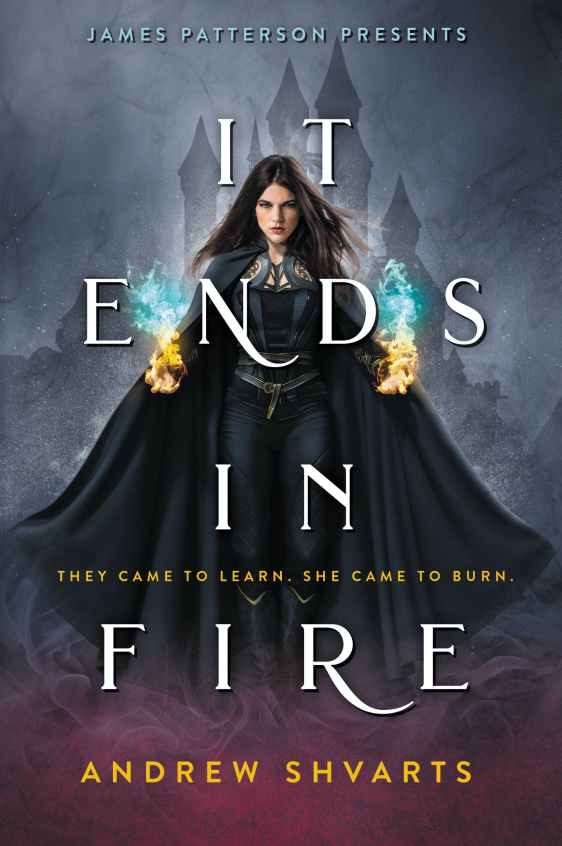
It Ends in Fire Cover 2

Publisher: Jimmy Patterson Books (Hardcover – 9 November 2021)

Series: Standalone/Book One

Length: 369 pages

My Rating: 4.5 out of 5 stars

Amazon     Book Depository

After wowing the world with his debut trilogy, impressive young adult fantasy author Andrew Shvarts return with a fantastic and entertaining read that cleverly parodies the classic magical school fantasy setting with It Ends in Fire.

Shvarts is a great author whose work I have been rather enjoying over the last couple of years.  Shvarts debuted back in 2017 with his Royal Bastards trilogy, which followed a group of illegitimate children as they found themselves caught up in the conspiracies and plots of their dangerous parents.  Made up of Royal Bastards, City of Bastards (which has an extremely explosive ending), and War of the Bastards (one of my favourite books of 2019), this was an awesome trilogy, and it has made me very keen to read more of Shvarts’s books.  As a result, when I heard that Shvarts had a new novel coming out, one set in one of my favourite settings, a magical school, I knew I had to grab it.  I have been waiting for It Ends in Fire for a while, and I was quite excited when I received a copy the other day.

Prepare to visit the Republic, a land of magic, deceit and corrupted power, where the Wizards rule and the non-magical people, the Humbles, are brutally oppressed.  At the heart of the Republic is Blackwater Academy, the most prestigious school of magic in the land, where the elite Wizards are trained and forged into scheming, power-hungry sadists.  Blackwell Academy has survived for centuries and remains a great power in the Republic, but nobody is prepared for the arrival of its latest student.

As a child, Alka Chelrazi watched as her parents were brutally murdered by a powerful Wizard, and she has since sworn vengeance.  Taken in by a rebel group, Alka has grown into their most lethal weapon thanks to her own magical abilities and has spent her life training to do the impossible: infiltrate Blackwell.  Taking the identity of a dead Wizard unknown to anyone, Alka is tasked with entering the school, learning all its secrets, and burning it to the ground from the inside.

Determined to carry out her duty to the very end, Alka attempts to find her bearings and learn everything she can.  However, Blackwell is unlike any other school in the Republic, its lessons are lethal, the rivalries are fierce, and some students will do anything to succeed, even kill their classmates.  To complete her mission, Alka will need to use every skill and trick at her disposal to recruit allies, take out her rivals and help a motley crew of outcasts to win the Academy’s Great Game.  However, with dangerous politics, power-hungry rivals, suspicious professors, and an evil headmaster all arrayed against it, can Alka succeed in bringing down the Academy, or will the fires of her revolution be snuffed out before it can begin?

This was an awesome and compelling new book from Shvarts, who has produced another deeply entertaining and intense read.  It Ends in Fire has a powerful and captivating narrative that not only contains a great story about revenge and finding oneself, but which also parodies certain magical school stories.  I had a great time reading this novel, and I became quite addicted to it as it went along.

It Ends in Fire has a brilliant and exciting narrative that moves at a fast pace and ensures that the reader is never bored.  Shvarts starts the story off with a bang, introducing the protagonists and point-of-view narrator, Alka, and showing her initial steps in infiltrating the academy.  The start quickly showcases some of the lead characters, the stakes of her mission, and the new and somewhat familiar setting of Blackwell Academy, as well as the surrounding Republic.  At the same time, Shvarts includes a series of framing chapters that are set in the protagonist’s past, showcasing her motivations, her many personal tragedies and the training she undertook for her infiltration.  From there the story quickly progresses into a compelling arc around the character’s darker magical school experience, while also building up her personal history.  There are some fun magical lessons, budding rivalries and caste systems woven into the narrative, and it was intriguing to see this ultimate outsider attempt to get into the flow of this elite school.  The crux of the narrative revolves around three magical contents that the various school houses compete in for glory and reputation (as well access to the Republic Senate, which interests Alka).  These competitions are pretty awesome, and serve as the major story highlights, much in the same way as the Quidditch matches and the Triwizard Tournament in the Harry Potter novels.  I particularly enjoyed the first and third one, and it was pretty fun to see the protagonist engage in some heavy cheating to pull it off.

This all leads up to a big and brutal finale, where the protagonist finally gets to unleash her true personality on her foes, and which potentially sets up some interesting directions for any resultant series in the future.  There is a great blend of character development, world building, magical adventure, intrigue and personal betrayal throughout this story, and I ended up getting really stuck into this brilliant narrative.  I pretty much read the last 200 pages in a single day, especially as it contained two of the competitions and a fantastic duel, and I really loved how everything came together.  It Ends in Fire turned out to be fairly self-contained and feels a lot like a standalone read.  That being said, it has some potential to be a larger series, and I would be interested to see where it goes, especially as there are some outstanding storylines to explore.  Like Shvarts’s previous novels, It Ends in Fire is aimed towards a young adult audience with its teenage protagonist and supporting characters.  Due to some more mature elements, this novel is probably best suited towards an older teenage audience, who will no doubt appreciate the author’s realistic take on teenage education.  This novel will also hold a lot of appeal to adult fantasy fans, especially those who grew up on Harry Potter, as this novel acts in many ways like a clever and fun parody of these classic novels.  An overall excellent story with some fun twists and major memorable moments.

I must say that I was also incredibly impressed with the new fantasy setting that Shvarts came up with for It Ends in Fire.  This new fantasy world is a brilliant and complex collection of nations brought together by an oppressive magical regime ruled by powerful Wizards who control the non-magical people, the Humbles.  The author does a great job setting up this cool new world, and I loved the examination of a magical regime and the unique cultural and social circumstances that would evolve in such a regime.  I particularly enjoyed the fun examination of the Republic’s politics, especially when it came to the impacts of the protagonist’s actions within Blackwater Academy.  It was also very compelling to see the clever hierarchies that see even some Wizards oppressed or disenfranchised, ensuring that the situation is even more complex than the protagonist, who was raised by rebellious Humbles who hate all Wizards, initially believed.  This proves fertile ground for the main narrative that follows Alka attempting to take the system down from the inside, and it was a solid background to the narrative.  I also really appreciated the cool new magical system that Shvarts came up with for his new novel.  In It Ends in Fire, Wizards cast spells by entering a time-dilated field known as the Null, where they carve glyphs into the air with Loci (magical wands) to unleash elemental spells.  This is an awesome magical system, which allows for some amazing and complex duals and battles.  The slow-motion aspect of the Null ensures that there is some clever strategy involved, as well as some intense explanation from the protagonist, and I deeply enjoyed some of the fun an epic clashes that occurred.

In addition to the cool magic and fun overarching setting, I also must highlight Blackwater Academy, which serves as a dark mirror to other magical schools that have been featured in fantasy novels and media.  In many ways, Blackwater Academy is a twisted version of Hogwarts; an elite magic school, with houses, elaborate classes and competitions.  Shvarts does an amazing job of working altered versions of these classic magic school elements into his own setting, and pretty much every scene has something reminiscent of these established school settings.  However, all these elements are twisted and converted into something far darker and more adult.  The teachers are crueller, the rich rival kills with impunity, the lessons are more deadly, and the headmaster is essentially Dumbledore (a highly respected wizard who turned down political leadership to be a teacher), except evil and self-serving.  I really liked how Shvarts included these elements in his novels, and it was a lot of fun to not only spot the similarities but also see how the author had twisted them into something different (for example, the protagonist is chucked into the universe’s version of Hufflepuff, and then turns them into a strong team).  This resulted in a fantastic and compelling setting that is both familiar and rather distinct at the same time.

While there are a lot of similarities to Hogwarts and other classic magical schools, Blackwater Academy also has some truly unique features, which also enhance how awesome it is as a primary setting.  The near murderous rivalries between the houses added some excellent conflict to the narrative, and I found the Humble village located next to the school to be a great inclusion, especially as all the inhabitants are absolutely terrified of their Wizard clientele.  I also really loved the unique challenges that the students had to compete in throughout the year into order to win the Great Game.  While the inclusion of a three-event competition is somewhat familiar, the challenges themselves are special, and Shvarts obviously had a lot of fun coming up with something new for the young Wizards to compete in.  This entire clever setting and compelling magical system help to transform It Ends in Fire into an incredible read, and I hope that Shvarts will explore it more in the future.

I also need to quickly highlight the great characters within this novel.  It Ends in Fire features a fantastic and entertaining cast whose unique stories add a lot of depth and drama to this brilliant tale.  The most prominent of these is protagonist and narrator Alka, a rebel and wizard who infiltrates the Blackwater Academy with dreams of destroying it and everyone in it.  Alka is a complex and intriguing figure who must overcome a lot of emotional turmoil in this novel while also encountering conflicts, revelations and disturbing truths about the nature of evil.  Shvarts did an awesome job setting Alka up throughout this novel, and I appreciated the way in which elements of her past life are blended into the primary story.  Alka’s unique history and experience with Wizard culture ensures that she is the perfect narrator, ensuring that the reader learns about many parts of the world’s unique aspects through her constant questioning and research.  I also appreciated the complex romantic relationships that form between her and two other characters, especially as both are sweet and moving in their own ways, while also naturalising Alka’s bisexuality.  The rest of the characters in It Ends in Fire are also set up pretty well, and I liked the cool blend of arrogant rich wizards, bitter Humbles and lower-tiered Wizards who struggle in life nearly as much as the Humbles.  Shvarts utilised a wonderfully eclectic group of supporting characters throughout this novel, and I enjoyed some of the friendships and rivalries that formed, as well as the similarities that some characters have to notable Harry Potter characters.  The author introduces some interesting storylines and character development arcs around them, and you end up getting attached to their survival alongside Alka.  It will be interesting to see if Shvarts will continue to explore them in the future, and I hope he does, as I would love to see what happens to them next.

With his latest novel, It Ends in Fire, Andrew Shvarts continues to dominate the young adult fantasy genre with a complex and powerful read.  It Ends in Fire has a brilliant and entertaining narrative that takes a rebellious soul into the heart of enemy territory, an evil and twisted magical school.  I loved how Shvarts cleverly subverted a classic fantasy setting with his fantastic narrative and world building, and the resulting story is loaded with magical action, amazing character develop, and multiple fun, high-concept sequences.  It Ends in Fire is a highly recommended young adult fantasy novel and you will have a wonderful and amazing time reading it.

Amazon     Book Depository

Enemy at the Gates by Kyle Mills (based on the series by Vince Flynn)

Enemy at the Gates Cover

Publisher: Simon & Schuster Audio (Audiobook – 14 September 2021)

Series: Mitch Rapp – Book 20

Length: 8 hours and 36 minutes

My Rating: 4.5 out of 5 stars

Amazon     Book Depository

Ready for another down-and-dirty spy thriller with America’s most violent secret agent, then make sure to grab a copy of the 20th book in the bestselling Mitch Rapp series, Enemy at the Gates, by the series’ current author Kyle Mills.

One of the most consistently entertaining thriller series of the last few years has been the long-running Mitch Rapp series.  The Mitch Rapp series is an iconic collection of thriller novels originally written by author Vince Flynn, and more recently by Kyle Mills, who took over the series after Flynn’s death.  Mills has been doing an outstanding job with this series, and I have had an incredible time with some of his recent books, including Red War, Lethal Agent and Total Power.  Now, 22 years after Mitch Rapp’s first appearance in Transfer of Power, the 20th book in the series, Enemy at the Gates, has been released, and it was another dark and compelling novel with an awesome story.

Following the resolution of a coordinated terrorist attack aimed at taking down America’s entire power infrastructure, the lights are finally back on across America, and the country seems ready to return to its usual problems.  A new president, Anthony Cook, has been installed in the White House, and many believe that he has the potential to turn the country around.  However, the old guard of American intelligence, CIA Director Irene Kennedy and legendary agent Mitch Rapp, believe that there are dangerous ulterior motives behind many of Cook’s actions.

In Uganda, a high-tech research facility belonging to the world’s first trillionaire, Nick Ward, is attacked by a dangerous and deranged warlord, aiming to capture and ransom the lab’s brilliant head scientist.  Ward, the richest man on the planet, claims to want to make the world a better place, and the research being undertaken by his Ugandan team is rumoured to have the potential to save billions of lives.  Determined to save his people and against the wishes of President Cook, Ward hires Rapp and his friend Scott Coleman to recover his scientist before it is too late.  However, their desperate battle in the jungle soon turns out to be the least of their problems.

As Rapp and Coleman brave the skilled militia in the jungle, a mysterious mole has managed to infiltrate the CIA’s secure computer network, stealing data on Nick Ward and his current security arrangements.  To keep Ward safe and to flush out the source of the leak, Kennedy instructs Rapp to stay close to Ward, just in case.  However, following a vicious and coordinated attack, it soon becomes clear that some very powerful people are determined to kill Ward at any cost.  With all intelligence and communications with their usual sources in the CIA potentially compromised by the mole, Rapp and his team embark on an elaborate scheme to flush the true architects of the attacks out.  But what happens when their plan puts them right in the cross of the ambitious new president who is determined to shape the chaotic world no matter the cost?

This was a high-intensity, action-packed thriller from Mills, who has produced another awesome and fun read.  Enemy at the Gates contains a great narrative that sees its aging but deadly protagonist caught between the very powerful forces of the world’s richest man and the President of the United States.  This is a very fast-paced story, with Mills quickly introducing the new characters, mainly Nick Ward and President Chisholm, as well as some of their key allies, and showcases the first stages of the president’s proxy war against Ward.  From there, Mitch Rapp and his team are drawn into the conflict on Ward’s side, thanks to CIA director Irene Kennedy, resulting in a fun dust-up in the jungle.  The story quickly moves on from there, forcing Rapp to face off against a crazed Ugandan warlord while also trying to uncover the mole in the CIA.  This is an extremely fun story, with the story moving at a very quick and entertaining pace.  Mills writes a great espionage story, and I loved the usage of tradecraft, over-the-top action and general dislike of politicians throughout the story.  The author introduces a couple of great twists, especially around the identity of the mole, and it was excellent to see Rapp and his allies forced to deal with a crooked United States President.  There is a ton of intensely violent scenes throughout this novel, and readers should be prepared for a couple of torture sequences and somewhat disturbing methods of killing (let us just say there is a strategically placed explosive).  Just like all the previous Mitch Rapp novels, Enemy at the Gates is an easy book to enjoy, even for readers unfamiliar with the series.

One of the things I have enjoyed about Mills’s Mitch Rapp novels is the unique insights that the characters have about the world and the United States, and Enemy at the Gates is no exception.  Most of the characters in this novel have been engaged in the political or espionage game for a long time, and all of them share a similar, cynical view about the state of America and its potential future.  While you would mostly expect an ultra-positive American outlook from this sort of thriller novel, Mills apparently has a pretty grim view of the future, which is reiterated multiple times throughout the book.  Making references to a lot of recent events and political schisms, the characters in this novel envision a future filled with increased factionalism, chaos, and political uncertainty, with many of these characters subsequently wondering how they will fit into such a potentially destructive future.  This grim and surprisingly honest viewpoint from Mills sets the stage for the major conflict of this novel, with the president attempting to kill the richest man on the planet, who may be the best chance of saving America.  It was certainly very fascinating to see the author’s views on the role of the uber-rich and corporations will have on the power structure in the future, and the introduction of a trillionaire philanthropist, certainly changed the scales around.  All this political introspection gives Enemy at the Gates an extremely dark and brooding feeling to it, especially as most of the characters full accept this reality and are just waiting for the other shoe to drop.  I personally found Mills’s views to be extremely fascinating and particularly realistic, and I think that he did a great job working them into the narrative and highlighting the impact these opinions could have on modern espionage and world events.

This was another interesting book for protagonist Mitch Rapp, the legendary spy feared throughout the world, especially by all rival intelligence operatives.  Rapp continues to show off his credentials as a genuine badass in this novel, and I liked the fun storylines around the spy getting older and being forced to reconsider his methods and techniques.  It was interesting to see Rapp more on the outs with the American intelligence community in this novel; with the new president in power, he is forced to use some alternative means to complete his missions.  The author also introduces a few interesting storylines in Enemy at the Gates that examine Rapp strongly considering retiring.  This allows the author to include a few emotionally rich scenes of Rapp attempting to settle into the quiet life with his family.  However, despite his best efforts, he is eventually dragged back into the game by a new employer and some old friends.  I liked these inclusions of the character’s personal life, and it was great to see him as a more conflicted figure.  Despite all that, nothing can really disguise the fact that Rapp is a raging psychopath, even for a spy thriller protagonist, whose complete disregard for human life results in some major violence and natural fear and hatred from his enemies.  While this does result in some entertaining moments, it is a bit hard to root for Rapp at times, which does slightly lessen the impact of some of the storylines.  Still, Rapp is a fun character to follow, and it will be intriguing to see what happens to him and his family in the future.

Just like I have with the last few Mitch Rapp novels, I chose to grab a copy of Enemy of the Gates in its audiobook format.  I must admit that the Mitch Rapp audiobooks, which are narrated by George Guidall, are not my absolute favourite audiobooks out there, but with a run time of just eight hours and 36 minutes, it was a quick way to enjoy Enemy at the Gates, which I managed to do in only a couple of days.  Guidall, who has narrated hundreds of audiobooks throughout his career, has his own unique voice for these novels, with a lot of gravitas and cynicism, which helps translate the story extremely well, although he does sound a bit tired as he narrates, and he really does not try to vary his voice too much to distinguish between the various characters featured in the book.  While I was never uncertain who was talking thanks to Mills’s writing, I do think that Guidall could make a little effort to make his narration a little more passionate and his voices a little more distinctive.  Still, this is a fine way to enjoy this novel, and I did have fun getting through Enemy at the Gates.  Despite some of my concerns about Guidall’s performance, I will probably enjoy the audiobook version of the next Mitch Rapp novel in 2022.

After 20 intense books, the Mitch Rapp continues to reign supreme as one of the most entertaining and captivating spy thriller series currently in print.  This latest novel, Enemy at the Gates by Kyle Mills, is a fantastic addition to the series which sets the violent, titular protagonist on another action-packed adventure, this time diving deep into the political and social spectrum of America.  I had an absolute blast listening to this awesome novel and Enemy at the Gates is a great book to check out if you are in the mood for a fun and exciting read.  An overall very fun story that does a great job of continuing this long running series, while also leaving behind a few interesting storylines for later books.

Amazon     Book Depository

The Councillor by E. J. Beaton

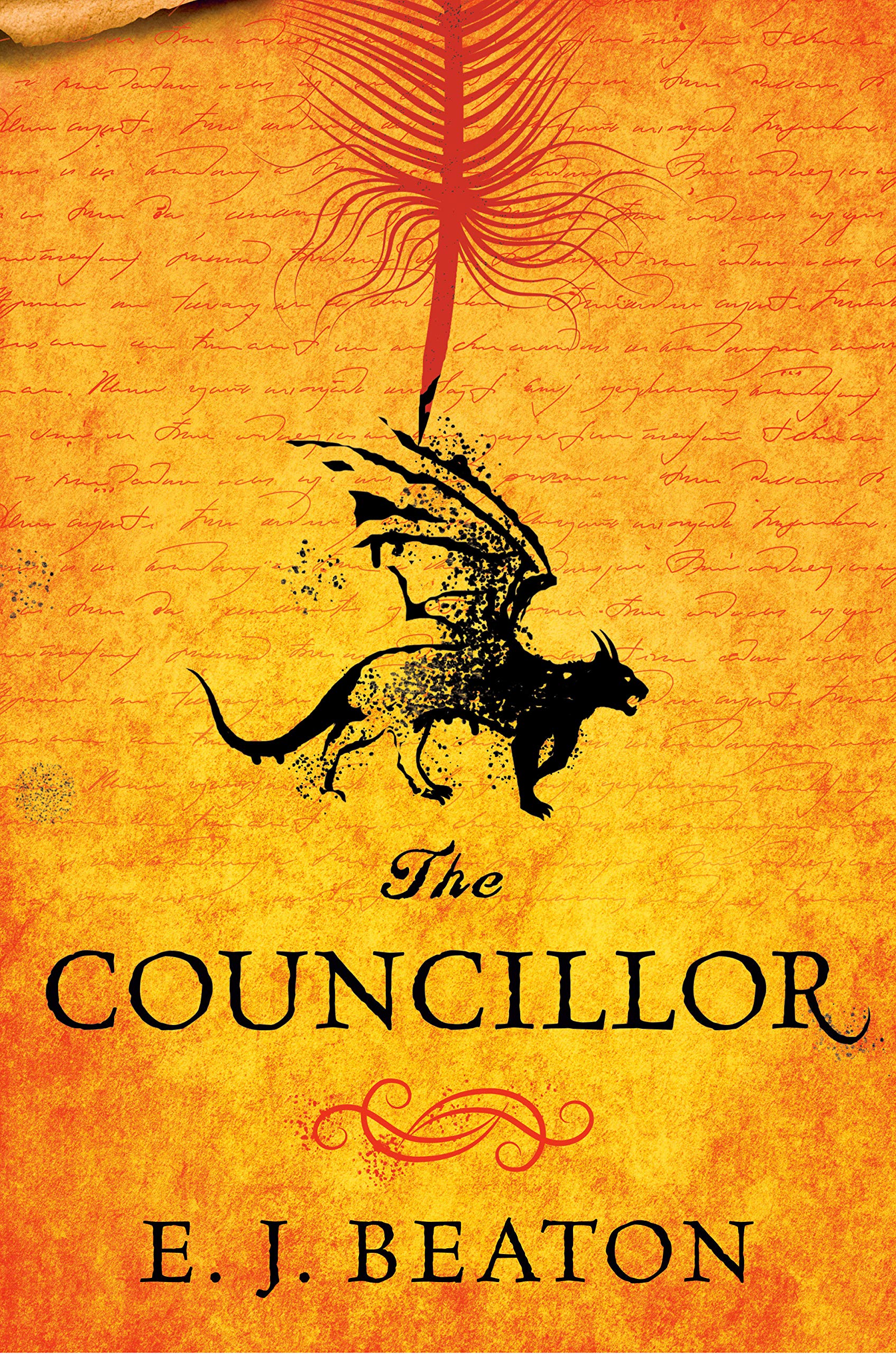
The Councillor Cover

Publisher: Daw Books (Hardcover – 20 July 2021)

Series: The Councillor – Book One

Length: 442 pages

My Rating: 4.5 out of 5 stars

Amazon     Book Depository

Australian author E. J. Beaton presents an excellent and compelling fantasy debut with The Councillor, an outstanding and impressive read.

Elira is a country still recovering from a fractious war a generation ago spurred on by the tyrannical magic-wielding White Queen.  The heroic Sarelin Brey, known as the Iron Queen, defeated the White Queen and led the subsequent hunt for the elementals, powerful magical users, who were forced into hiding.  Now, Elira once again stands on the brink of ruin when a mysterious assassin manages to kill the Iron Queen, an act that threatens to split and destroy the entire nation.

The queen’s last act before her death was to name her loyal companion, the palace scholar Lysande Prior, Councillor.  As Councillor, it is Lysande’s duty to choose the next ruler of Elira from the four city rulers and to ensure a peaceful transition of power.  As the city rulers arrive at the palace, Lysande is convinced that one of them may have orchestrated the Iron Queen’s murder.  Using her position as Councillor and the upcoming decisions around Elira’s future to her advantage, Lysande begins to investigate each of the city rulers to find who is responsible for her friend’s death.

As the investigation continues, Lysande soon learns much about the city rulers, including the secrets that they harbour.  Forced to balance her investigation with her responsibilities to the people, Lysande begins to revel in the power that she has been granted, even as her problematic addiction to a magical narcotic threatens her self-control.  However, the closer she gets to the truth, the more Lysande begins to understand that there is a dark threat rising, one that could overwhelm Elira for good.  The White Queen is returning, and this time there is no mighty Iron Queen to stop her, only a brilliant scholar with a bright vision for her nation.

The Councillor was an impressive debut fantasy novel from Beaton, who combines some intriguing characters with a powerful fantasy narrative laden with political intrigue, espionage and one character’s personal journey from scholar to ruler.

Beaton utilises a pretty awesome story in The Councillor, and it is one that I quickly became quite addicted to.  Told exclusively from the point-of-view of protagonist Lysande, the novel has a powerful start with one of the major characters killed off, leaving Lysande and the entire nation in chaos, especially as it appears that a notorious magical villain has returned years after her famous defeat.  From there the protagonist attempts to identify the agent responsible for her friend’s death, believing it to be one of the four arriving nobles vying for the throne.  This results in a compelling storyline where Lysande investigates the secrets of the city rulers, while also becoming increasingly involved in the politics of the realm after being unexpectedly placed in a position of power.  As The Councillor progresses, it evolves into a very captivating piece of political intrigue as Lysande and the city rulers tour the country, attempting to rule together, initiate plans to stop the growing influence of the White Queen, while also attempting to achieve their own goals.  There are some great misdirects and red herrings featured throughout this part of the book, as Beaton attempts to disguise who the antagonist is and what the agendas of the various other politicians are.  This all leads up to a big and explosive conclusion where the traitor is revealed and several great storylines come together, resulting in some awesome action and clever political storylines.  While I was able to guess who the traitor was in advance, Beaton did a great job setting them up, and I did find the methods of the antagonist very surprising, especially the fun super-weapon that was hinted at throughout the book.  The final scenes wrap up the entire narrative extremely well and do a great job setting up the next novel in the series.  I look forward to seeing where the narrative goes from here and I think that the series has some amazing potential.

I really enjoyed the cool and memorable fantasy world that Beaton introduced in her first novel, and it serves as a great setting for the awesome story.  The nation of Elira is broken up into several distinctive political and climate zones, based around a city state, resulting in fascinating group of different and proud people.  I loved the fun blend of cultures featured within this nation, especially as it results in some compelling and entertaining cultural and political clashes.  There is a great focus on the history of Elira, especially as it relates to the previous war against the White Queen, with the scholar protagonist attempts to uncover the full truth behind the past to determine the country’s future.  There are also a ton of LGBT+ elements associated with the setting, which I really appreciated and which helped to make the setting even richer.  Add to that several hostile nations surrounding Elira, a rampaging magical queen full of vengeance, and a covert network of independent magical users with their own agenda, and you have a fantastic combination of groups and political ideals, which helps to makes the compelling narrative even more exciting.  This all proves to be pretty damn awesome, especially as Beaton does a wonderful job describing the rich and vibrant countryside of her setting, allowing the reader to have an outstanding time exploring this new nation.  I really enjoyed this captivating setting and I look forward to seeing how the author expands it in her next novel.

Easily the best thing about The Councillor are the complex and intense characters featured throughout the story.  This includes main protagonist Lysande, who is forced to endure quite a lot of growth and betrayal during the story.  Beaton weaves a powerful and intense narrative around Lysande, an orphan who was chosen to become the Iron Queen’s companion and who grew into a brilliant scholar and thinker.  After the queen’s death, Lysande is forced to become both a ruler and politician, and she finds herself excelling in the role, especially as it allows her to use her skills as a scholar and researcher to her advantage.  Due to Lysande being the point-of-view protagonist, Beaton takes a lot of time exploring her personality, feelings, and history, and it does not take long for the reader to become attached to her, especially as she finds herself in a dangerous and complex personal and political situation.  It proved to be extremely compelling to see Lysade take the political stage for the first time, and I loved the way she adapted to the intrigue and deceit, especially once she started to revel in it.  It was pretty cool to see a scholar attempt to take the throne, resulting in a very different hero from what most fantasy fans would expect.  I also enjoyed the way that the author ensured that Lysande is a bit of a flawed protagonist, especially as she is controlled by her addiction to Chimera Scale, a magical narcotic that gives her energy and different insights to the world.  This growing reliance on Chimera Scale impacts her severely throughout the novel, especially as it covers up some deeper secrets about her, which come to fore later in the novel.  An overall exceptional main character, I am very intrigued about where this story will take Lysande next.

Aside from Lysande, The Councillor features a fantastic collection of supporting characters, each of whom add a lot the story.  The main four supporting characters are the city rulers who arrive in court to put their cases for being the next monarch.  Beaton spends a bit of time building up each character, and it proves quite enjoyable learning their flaws, personalities and secrets, especially as any of them could potentially be villainous.  The most prominent of these city rulers is the mysterious and manipulative Luca Fontaine, a dangerous bastard son who became city ruler after killing his family.  Presented as a dark figure with a love of intrigue, espionage and advanced politics, Fontaine has some outstanding back and forth with Lysande, which were extremely enthralling and compelling, and Fontaine swiftly becomes one of the more entertaining and likeable characters in the novel.  I did think that Beaton could have toned down Fontain’s manipulative side just a little, especially as it made him too obvious a suspect for being the traitor, however, I don’t think this had too much of a negative impact on the narrative.  Aside from the city rulers, the book has some interesting focus on Lysande’s advisors and guards, each of whom hep her in their own unique way.  I particularly enjoyed Lysande’s new maid, Litany, especially once her real purpose in the court is revealed.  This great supporting cast proves to be a lot of fun to follow, and I really appreciated the time and detail that the author put into setting them up.

Overall, I found The Councillor to be an outstanding and deeply entertaining fantasy read with a really addictive and compelling narrative.  Australian author E. J. Beaton did an excellent job with her first book, and this is a must read for anyone who loves a fantasy tale laden with clever political intrigue.  A highly recommend fantasy debut, I cannot wait to see where Beaton takes this series next.

Amazon     Book Depository

Blackout by Simon Scarrow

Blackout Cover

Publisher: Headline (Trade Paperback – 30 March 2021)

Series: Standalone/Book One

Length: 424 pages

My Rating: 4.5 out of 5 stars

Amazon     Book Depository

One of the leading authors of historical fiction, Simon Scarrow, breaks new ground in a thrilling and captivating historical murder mystery, Blackout.

Berlin, December 1939.  As the citizens of Berlin worry about a potential upcoming conflict with Britain and France, the Nazi party continues to sink their claws into every aspect of German society.  But as a bleak winter sets in and enforced blackouts plunge the city into darkness, a far more sinister threat begins to stalk the streets of Berlin.

A young woman has been found brutally murdered near a busy set of train tracks.  The victim is a former famous actress with a powerful husband.  Due to her marital connections, as well as a scandalous past with various high-ranking Nazi figures, including Goebbels, her case has dangerous political implications.  To that end, her case is assigned to Criminal Inspector Horst Schenke of the Kriminalpolizei, the Kripo, one of the few police officers not to join the party.  Due to his apparent disregard for the party and the importance of the victim, Horst is under intense pressure from the head of the Gestapo to solve this case.  However, what begins as an easy murder case swiftly devolves into something far more dangerous when a second body is found, and Horst is forced to face the reality that he is chasing a serial killer.

As the bodies of more young women are discovered, Horst rushes to find a killer before the government attempts to hush up the fact that a killer is loose within their perfect Nazi society.  But with the Gestapo interfering at every step and key suspects protected by the Abwehr, German Military Intelligence, this case proves difficult to solve.  When a survivor is found, Horst thinks this may be the opportunity to find the killer.  However, when the witness is revealed to be Jewish, Horst is forced to find a way to protect her from both the killer and the Gestapo.  Can Horst find the killer before it is too late, or will he discover that disloyalty to the Nazi government is considered a far worse crime?

This was another amazing novel from one of my absolute favourite authors.  Scarrow is best known as a Roman historical fiction author due to his long-running and impressive The Eagles of the Empire series, which I am a particular fan of (see my reviews for The Blood of Rome, Traitors of Rome, and The Emperor’s Exile).  However, Scarrow has also branched out into other historical periods with his Revolution quartet, the standalone novels The Sword and the Scimitar and Hearts of Stone, and a modern crime novel he wrote with his colleague Lee Francis, Playing with Death (which I really need to check out).  His latest book, Blackout, is an interesting change of pace from some of the previous Scarrow novels I have enjoyed, presenting a compelling murder mystery story with the dark historical setting of Nazi Germany.  Blackout, which was unfortunately delayed from last year, proved to be an excellent read, and I loved the complex and powerful story that Scarrow came up with.

Scarrow’s latest book has an outstanding narrative that starts with a Nazi social party scene quickly leading to the brutal murder.  This shocking opening in the dark of a blacked-out Berlin sets the scene for the rest of Blackout perfectly, and lets the reader know that they are in for an intense and dark tale.  The narrative then advances to the next day, with a great introduction to central protagonist Inspector Horst Schenke, who gets to showcase his deductive ability while also covering his personality and feelings about the Nazi government.  Once the case proper begins, Horst and his team are thrust into a lethal hunt for a serial killer, while also having to contend with the vicious politics and intrigue of the Nazi party.  Horst finds himself caught between the Gestapo, German Military Intelligence, and other influential Nazis, each of whom are attempting to manipulate the situation for their own ends.  This blend of mystery and dangerous political intrigue makes for a fantastic read, and I enjoyed the compelling balance that Scarrow produced.  The mystery itself is well crafted, with the author ensuring there is a complex and tangled web to unravel, with several promising suspects.  There are some very cool twists added into the plot, and I quite enjoyed the exciting conclusion and eventual reveal of the killer.  This is also a very effective standalone mystery, which would serve as a great introductory novel if Scarrow ever wanted to revisit this setting and characters in the future.  A series set around this book could go in some interesting directions, and I for one would be quite keen for that.

Easily the most captivating and fascinating part of this novel is the amazing historical setting that Scarrow used as the backdrop to his amazing mystery.  While several great mystery series have used World War II Germany as a setting before (the Bernie Gunther series by the late, great Philip Kerr comes to mind), I think that Blackout was a particularly good example of how it could be done, with Scarrow making sure that it really enhanced this already incredible story.  Scarrow skilfully works several fantastic and intriguing elements of this iconic setting into his narrative.  This includes the blacked-out winter streets and train lines of 1939 Berlin, which serve to hide the killer’s actions and ensures an easy hunting ground.  I also appreciated the air of worry and uncertainty that inhabited many of the characters as they are constantly left wondering if their country is heading towards a bigger war with Britain and France, not knowing of their government’s master plan.  There is also a certain amount of nationalism, patriotism and casual racism/anti-Semitism on the streets, which is a confronting and concerning aspect that the protagonist has to deal with.  There is also a fascinating focus on the way in which the Nazis infested all aspects of the German government and administration, particularly the police.  Inspector Horst is constantly butting heads with other members of the police force who were only promoted due to their party allegiances, rather than any skill or ability, which impacts the protagonists to successfully investigate his crime.  Add in the compelling depictions of German politics and Nazi interference that I mentioned before, and you have a very impactful and distinctive setting, which really helped to turn this crime novel into something very special.

Scarrow has a knack for creating some interesting and likeable characters, and this is certainly true for Blackout.  Inspector Horst is a fantastic protagonist, a former famous race car driver who experienced a traumatic crash several years ago.  He has since reworked himself as a talented police investigator and a rare man of honour in troubled times.  There is a lot to like about Horst, including his brilliant investigative skills, his courage in the face of danger, and his complete disregard for the Nazi leadership.  As one of the few senior police officers who has not joined the Nazi party, Horst is a bit of a black sheep amongst the ranks of his organisation, especially as he barely contains his disdain for the Nazis and what they are doing to his country.  This invariably leads him into a whole mess of trouble, which sees him in the crosshairs of the Gestapo and other Nazi figures, who seek to use his neutrality and skill for their own advantages.  I had a lot of fun following Horst throughout this novel, and it was great to see how a non-Nazi supporter would survive amongst the authoritarian ranks of German police in this period.  There are several great storylines surrounding this character, including about the trauma he is experiencing from his crash, as well as guilt at his failure to save the people closest to him.  I really enjoyed this character in Blackout, and it seems likely that Scarrow would have some very compelling storylines in place for this character if he ever revisited this series.

Aside from Horst, there are several other compelling side characters in this novel, which include a mixture of fictional characters and real historical figures.  One of the better characters is Ruth, the only apparent survivor of one of the serial killer’s attacks.  Ruth is a feisty and combative character, made so by her position as one of the few Jewish people still remaining in Berlin.  Despite being threatened by the entire German apparatus as well as a serial killer, Ruth remains strong throughout the book and is a very inspirational character to follow.  I also quite enjoyed the character of Liebwitz, a Gestapo agent assigned to Horst’s unit to spy on him and report back to the Gestapo commander.  However, Liebwitz proves to be a rather unusual Gestapo agent, more concerned with facts and analysis, rather than Nazi internal politics, and it was fascinating to see an honest and non-sociopathic member of the Gestapo.  While there is a lot of mistrust for Liebwitz in the beginning, he soon becomes a major part of the investigation, and Scarrow sets up some very interesting storylines for him.  Finally, I also quite enjoyed the killer of the story.  Several sequences in Blackout are shown from his point of view, although his identity is kept hidden towards the end of the book.  Scarrow paints an interesting picture of this killer’s mental state, and it was interesting to see his motivations run parallel to the goals of the Nazi party, which he uses to justify some of his actions, and indeed his actions are something that the Nazi leadership might approve of.  I felt that the author did a good job setting this antagonist up throughout the novel, and I rather liked the twist surrounding their eventual reveal.

Simon Scarrow continues to show why he is one of the leading authors of historical fiction with the outstanding and captivating historical murder mystery, Blackout.  Breaking into a whole new historical period and setting, Scarrow produces a fantastic and powerful murder investigation which makes amazing use of its complex characters and detailed historical setting.  Featuring all manner of twists, political intrigue and devious Nazi characters, Blackout was a compelling and intriguing read that comes highly recommended.  I cannot wait to get my next hit of Scarrow, and luckily I don’t have to be patient for long as the next Eagles of the Empire book, The Honour of Rome, is out in a few months time.

Amazon     Book Depository

Quick Review – Crusader by Ben Kane

Crusader Cover

Publisher: Orion (Trade Paperback – 27 April 2021)

Series: Lionheart – Book Two

Length: 393 pages

My Rating: 4.5 out of 5 stars

Amazon

Impressive historical fiction author Ben Kane returns with the second entry in his Lionheart series, Crusader, which does an amazing job of continuing the epic story of King Richard the Lionheart.

Synopsis:

KING. POLITICIAN. WARRIOR. CONQUEROR.

1189. Richard the Lionheart’s long-awaited goal comes true as he is crowned King of England. Setting his own kingdom in order, he prepares to embark on a gruelling crusade to reclaim Jerusalem.

With him on every step of the journey is Ferdia, his loyal Irish follower. Together they travel from southern France to Italy, to the kingdom of Sicily and beyond.

Finally poised to sail to the Holy Land, Richard finds a bitter two-year-long siege awaiting him. And with it, the iconic Saracen leader responsible for the loss of Jerusalem, Saladin.

No one can agree who should fill the empty throne of the Kingdom of Jerusalem and Saladin’s huge army shadows Richard’s every move. Conditions are brutal, the temperatures boiling, and on the dusty field of Arsuf, the Lionheart and his soldiers face their ultimate test…

Kane has produced another amazing novel in the Lionheart trilogy.  While Kane is best known for his incredible Roman historical novels, I have been particularly enjoying his compelling foray into medieval fiction with this outstanding series that examines the life of King Richard the Lionheart.  Told through the eyes of fictional character Ferdia, better known as Rufus, the first novel in this series, Lionheart, did a remarkable job of covering some of the most influential younger years of Richard’s life, which cumulated in him seizing the throne.  Crusader continues this epic retelling of Richard’s life by recounting the events that occurred as Richard led his forces on a bloody journey to the Holy Land.

Crusader contains a historically rich narrative that explores one of the most iconic periods of Richard’s life, the crusades.  Kane produces a very detailed story that focuses on the journey to the east as well as the battles in the Holy Land.  This includes the army’s stops in Sicily and Cyprus, where Richard was forced into conflict with other Christian rulers, before eventually arriving in the Holy Land and engaging in his legendary conflict with Saladin.  Kane attempts to cover every major battle of this Crusade, with several sieges, large-scale attacks, skirmishes and the infamous massacre at Acre.  At the same time, Rufus continues his deadly rivalry with the dishonourable knight Robert FitzAldelm, while also secretly engaging in a very risky romance.

This proves to be a very compelling story, and I very much enjoyed seeing this detailed portrayal of this legendary crusade.  Kane does a wonderful job of bringing all the dry historical facts to life throughout Crusader, and I found it fascinating to see his take on the entire journey and eventual battles with Saladin’s forces.  While the story does occasionally get a bit bogged down in medieval politics, royal disputes and petty squabbles, Kane keeps the novel going at decent pace, and the reader is treated to several epic and dangerous fight scenes.  The author can write a deeply impressive and thrilling battle sequence, and the reader is left on the edge of their seats multiple times, especially as the various characters you come to care about find themselves in utter peril.  I also enjoyed the bitter conflict that occurred between the non-fictional Rufus and his rival, FitzAldelm.  While not as prominent as in the first book, this rivalry is still a fantastic part of the book, especially as it adds an intrigue-laden edge to the main story.  While I really enjoyed this great novel, I do think that it suffered a little being the middle novel in the series, primarily because certain overarching conspiracies and plots are put on hold because of the crusade.  I also felt the first half of the novel was a little slow in places, especially when compared to the intense second part of Crusader.  Still, this was a pretty amazing story, and I loved how the author managed to ensure that his tale contained both excitement and fascinating historical fact.

Just like in the first novel in this series, Kane spends considerable time examining the complex historical figure of Richard the Lionheart.  In this book, Richard is portrayed as a multifaceted and intense being with a wide range of emotions and moods.  Most of the story focuses on the classic King Richard, the inspirational and personable figure that the protagonist Rufus eagerly vows to follow.  This includes multiple portrayals of Richard’s prowess in combat, especially in the Holy Land where he leads his troops to many great victories.  The author features several intense battles throughout the book where Richard either lead the charge or proved to be something more than human, such as fighting through a superior forces or chasing off an entire army by himself.  I initially assumed that Kane was taking a bit of artistic licence with some of these outrageous scenes, but it turns out that most were based on real historical accounts.  While I found these epic depictions of Richard to be cool, I also appreciated the way in which Kane tries to show the king’s darker side.  There are multiple scenes that portray Richard in a despondent mood, especially when faced with setbacks or betrayals, and this low mood could often transform into a dangerous anger at a drop of a hat.  This makes for a very complex and contrary portrayal, and I really appreciated the way in which Kane attempted to examine the true mind and thoughts of Richard, as seen by his closest friend.

It was also really interesting to see the continued growth of Rufus throughout Crusader, as he keeps moving away from the helpless Irish hostage he was at the start of the series, and is now a knight and close companion to the King.  Rufus goes through a lot in this novel, and it was fascinating to see how he deals with the horrors and dangers of the war around him.  I found his description and concern about the massacre of Acre to be particularly intense, and it was interesting to see him witness such an event while remaining loyal and dedicated to Richard.  Rufus’s rivalries and loves were a major focus of this novel, and it is clear that Kane is setting up something major with them for the final novel.  It was also intriguing to see the changes occurring with additional fictional character Rhys, Rufus’s squire and close confidant, who has accompanied the protagonist on all his adventures.  Rhys, after killing a vicious knight in the first book, has become a little bloodthirsty, and is constantly seeking to prove himself in combat, much to Rufus’s concern.  I really enjoyed the inclusion of these fictional characters amongst the more historically accurate tale of Richard’s campaigns, and it serves as a great narrative device, while also adding in some additional drama and conflict.  I am very curious about how Rufus and Rhys’s stories will end in the final book, although I am not expecting a happy ending.

Overall, Crusader was a pretty amazing historical novel that presented a detailed and captivating picture of King Richard’s crusades.  Loaded up with some excellent portrayals of historical events and a series of epic battles, Crusader will appeal to a wide range of historical fiction fans, and readers will have an outstanding time digging through Kane’s captivating text.  A clever and intriguing novel, I am very keen to read the final entry in this series next year, especially as we all know how dark the final chapters of King Richard’s story are.

Amazon

The Two-Faced Queen by Nick Martell

The Two-Faced Queen Cover

Publisher: Gollancz (Audiobook – 25 March 2021)

Series: The Legacy of the Mercenary Kings – Book Two

Length: 20 hours and 6 minutes

My Rating: 5 out of 5 stars

Amazon     Book Depository

Following his epic 2020 debut, one of the fastest rising stars in fantasy fiction, Nick Martell, returns with the second entry in his The Legacy of the Mercenary Kings series, The Two-Faced Queen.

Last year I was lucky enough to listen to a copy of Martell’s incredible first novel, The Kingdom of LiarsThe Kingdom of Liars was a gripping and impressive fantasy read set in Hollow, a crumbling city surrounded by an army of rebels, which followed the misadventures of the infamous Michael Kingman.  Michael is the scion of the legendary Kingman family, a noble clan of heroes and leaders who have guided Hollow for generations, serving as both supporters to the royal family and a check on their power.  However, the legacy of the Kingman family has been severely tarnished in recent years as Michael’s father was executed for the murder of the heir to the throne.  With their family disenfranchised, Michael grew up as an outcast in his own city, acting out against authority.  This changed when a chance encounter allowed him to investigate who was responsible for his family’s downfall and the death of the prince of Hollow.  While he was eventually able to discover the true murderer, his investigation also resulted in the King’s suicide, which subsequently saw him tried for regicide and sentenced to death.  The end of the book saw him manage to escape his execution, while also setting up several of the storylines for future entries in the series.  I deeply enjoyed the cool story of this first entry in The Legacy of the Mercenary Kings, and The Kingdom of Liars ended up being one of my favourite novels, audiobooks and debuts of 2020.  As a result, The Two-Faced Queen was one of my most anticipated reads of 2021.

Michael Kingman is a dead man walking.  Still accused of killing the King of Hollow, Michael is now under the protection of the Orbus mercenary company, serving as an apprentice under the mysterious mercenary Dark.  However, even with Orbus’s protection, everyone in Hollow still wants to either kill him or use him for their own dark ends.  The deadliest of these is the one person Michael is sworn to protect above all others, the heir to the throne, Princess Serena.  After spending years away, a vengeful Serena has returned to claim her throne and end Michael’s life.  Wielding great power, a lethal attitude and holding the keys to Michael’s heart, nothing will stand in the way of her wrath.

To restore his family’s position, save his home and convince Serena of his innocence, Michael needs to unravel the various conspiracies that have encircled Hollow and uncover the true motivations of the various power players in the city.  However, to succeed, Michael is forced to go up against a magnitude of foes, from the Corrupt Prince, the unhinged Rebel Emperor besieging the city, enraged royal guards, conspiring nobles, a scheming immortal, an insane serial killer, dangerous assassins and his former foster father, the man responsible for all his family’s ills.

But the more Michael attempts to understand Hollow’s hidden past and the dangerous plots surrounding his city, the more it becomes apparent that his is a mere pawn in a very dangerous game.  Immortals, monsters and mercenaries are all present in Hollow, and each of them has their own nefarious designs for Michael and his family.  Can he save everyone he loves before it is too late or has the Kingman family finally breathed its last?  Michael’s rise to become a Mercenary King continues, but who will truly wield power when the dust settles?

Now that was one hell of a sequel!  Martell absolutely crushed this second entry in this outstanding and exceptional fantasy series, producing a five-star novel that is extremely compelling, intense and so damn exciting.  I was absolutely enthralled with this book the moment I started listening to it and I loved every second.  The Two-Faced Queen is easily one of the best books I have read in 2021 and I think that any other fantasy novel coming out this year is going to be extremely hard-pressed to outdo it.

Martell has come up with a pretty incredible and intense narrative for The Two-Faced Queen, one that proves to be extremely addictive and insanely good.  Starting shortly after the events of The Kingdom of Liars, this novel starts fast and hard, with Michael following up on a number of storylines and revelations from the previous novel.  There is already so much going on right from the start of the novel, as the protagonist finds himself surrounded by enemies and conspiracies, both old and new.  While several secrets were revealed at the end of the first novel, there is still so much that Michael needs to understand.  However, as he attempts to learn these additional secrets, he must also try to avoid the deadly attentions of his beloved princess, end the rebellion plaguing the city, restore his family, defy a dangerous immortal, and make up with his betrayed friends.  While this is already a substantial amount of story, Martell keeps adding to it, as Michael also soon encounters a deadly assassin with a contract on him, and a deranged and unnatural serial killer.

While this may seem like too many story elements for one novel, it actually works extremely well, and the reader quickly becomes engrossed in Michael’s various adventures throughout the city.  I loved the inclusion of the serial killer storyline, as not only does it add some fantastic mystery elements, but it also proves to be a gateway to some intriguing world building, revealing more of the dark, immortal forces manipulating events from the shadows.  This storyline also results in several epic action scenes that place the protagonist and his friends in mortal danger from some unusual foes.  I had an outstanding time getting through this complex and well-constructed narrative, especially as every single scene has an intriguing revelation, intense character development or subtle clue to the future of the series.  Several key mysteries and secrets from the first novel are answered, partially or wholly, in this novel, although many more are introduced.  This really helps to keep the reader’s attention focused on The Two-Faced Queen’s plot, and I am not exaggerating when I talk about how addictive the secret-ridden narrative proves to be.  Readers are hammered with large amounts of lore and history in places, so I would recommend reading the first novel in the series, The Kingdom of Liars, before reading this book, although binge-reading this series is hardly a chore.  Overall, The Two-Faced Queen’s narrative is epic story writing at its best, and readers will love this terrific tale.

I absolutely must highlight the awesome and well-developed characters featured within The Two-Faced Queen.  The most prominent is series protagonist Michael Kingman.  Michael is an intriguing and distinctive figure through whose eyes most of the plot unfolds.  I have to admit that Michael was not my most favourite character in the first book, mostly because of his impetuous nature and selfish behaviour at times.  However, it was revealed that the reason for some of his annoying behaviour was due to some magic affecting his memories and personality.  As a result, Michael’s behaviour is substantially changed in The Two-Faced Queen and he comes across as a more considerate figure in this book.  He still has quite a few flashes of recklessness and stubbornness, but many of the rougher edges from the first novel are worn away here.  Still, a lot of people call Michael out for his crap in this book, including his friends and family, and it was great to see him finally heed their words.  There was also some additional exploration of how Michael deals with the legacy of being a Kingman; he is forced to live up to some big expectations.  There is a rather good scene where Michael is exploring the crypt of his ancestors with some of his friends, describing why some of them are famous and others are considered failures because they never achieved anything remarkable but just lived a normal life.  Seeing this, Michael’s friends, both of whom have been some of his greatest critics, start to understand just how much pressure he is under.  I really appreciated the way in which Martell continues to develop his protagonist, and it will be very fascinating to see how Michael’s story continues in the future novels.

Aside from Michael, there is an impressive collection of interesting supporting characters, each of whom have some fascinating storylines, as well as secrets or details from their past which helps to move the story along.  They also have their own motivations and plans to shape Hollow and the rest of the world to their advantage, which results in additional plots and conspiracies that the protagonists have to overcome.  The most prominent supporting character is probably Serena, the titular Two-Faced Queen.  Serena is Michael’s childhood friend and the royal he was sworn to, meaning that he was always destined to be her protector, advisor, and conscience.  However, after the death of her brother and Michael’s family were declared traitors, their relationship effectively ended.  Now returned, Serena is determined to destroy Michael for the apparent murder of her father, even if it leads to her own ruin.  The novel starts up with Michael visiting Serena only to find that she has hand-dug a grave for him, showing her resolve for killing him.  This forces Michael to attempt to change her mind, which is no easy prospect, and results in great calamity.  Naturally, these two characters share thorny romantic feelings for each other, which complicates Michael’s plans to stay alive, as Serena is a major blind spot in his defences.  Their entire joint character arc in this novel is extremely good, and I really appreciated the author’s take on their complex relationship.

Another key character is Dark, Michael’s mercenary master, who, aside from having his own mysterious past and motivations, is the son of Michael’s nemesis, Angelo Shade.  Due to Michael and Dark working together closely, the protagonist learns several of Dark’s secrets, especially those related to his troubled childhood and his encounters with the Heartbreaker serial killer.  While you don’t learn everything about Dark’s past in this novel (Martell is the master of dolling out just enough character detail to keep you interested, while also keeping plenty back for future novels), you do find out quite a lot, and what is revealed is extremely memorable.  Dark has a real dark side to him, no pun intended, and while Michael initially believes that Dark is his ally, he is soon faced with the possibility that he might have placed all his trust in a monster.  This results in a very interesting mentor/student relationship between the two, filled with much conflict and mistrust.  I really enjoyed learning more about Dark in The Two-Faced Queen, and it will be fascinating to see how the rest of his story unfolds in the future.

Other intriguing characters in this novel include Michael’s best friend Trey, who is attempting to forge his own path and take down both the nobles and the rebels, even if this leads him into conflict with Michael.  Trey has a fantastic arc as dangerous antihero in this book, taking control of the city’s criminal element in order to protect its citizens.  While a lot of his hostility towards Michael has ended, Trey and the protagonist still have a strained relationship, although Trey does go out of his way to help his friend.  Despite their friendship, it is clear that there is a major schism between the two planned in the future, which no doubt will result in all manner of pain and regret.  The ruthless immortal Charles Domet is still a firm favourite of mine, and it was fun to see his attempts to manipulate Michael, especially as Michael is now well aware of his true nature.  There are some interesting hints to Domet’s past in this novel, and he is clearly working up to something big.  The ambitious social climber Naomi also returns, although now she is suffering from a bad drug addiction which makes her even more entertaining, especially as she decides to torment Michael through embarrassment.  I also quite liked the expanded use of the chronicler, Symon.  Symon, who is determined to record and analyse every secret of Michael and his family, has taken to stalking them by living at the Kingman family home, and it is always entertaining to see his take on the events occurring before him.  He ends up actually narrating several interludes in The Two-Faced Queen, which are laid out as parts of his in-novel chronicles as part of a very clever and amusing supplement to the main story.  Symon really endeared himself to me in this novel, especially after his insulting descriptions of Michael in his proposed history book, and I deeply appreciated his increased presence.

I honestly could go on and on about the various characters featured within this novel; indeed, I have only just scratched the surface of the support cast in the paragraphs above.  However, it is more than clear that Martell does an excellent job in introducing and developing complex characters, and I loved the detailed and intriguing depictions of them throughout the novel.  Nearly every character featured within The Two-Faced Queen gets at least one big moment, and there are plenty of revelations and compelling backstories that are really cool to uncover.  I will say that you should probably not get too attached to the characters; however, I am very much looking forward to seeing what happens to each of the survivors, especially as Martell has set up some deeply captivating and powerful character arcs around them.

In addition to the fantastic story and amazing character work, Martell has also invested a lot of time in expanding his enthralling fantasy world.  The first entry in The Legacy of the Mercenary Kings did a great job setting up the key elements of Hollow, such as the noble families, the people of the city and the various problems they faced.  This unique setting of a besieged city filled with scheming nobles and set on a world where pieces of a shattered moon fall to the ground was so cool, and The Two-Faced Queen continues to expand on these previous elements, while also adding to the history and geography of the city and its surrounding nations.  Not only do you learn of several outside nations and locations but you also get to see how the key characters of this novel, or their ancestors, have impacted them, as well as the various dangers these realms represent.  However, some of the most substantial world-building revolves around some of the unusual creatures residing in this world, including a range of dangerous and destructive immortal creatures.  In the previous novel we only encountered one immortal (that we knew of), whose plots and schemes were a major part of the book’s plot.  This second novel, in contrast, is loaded with many more immortals, each of whom has their own unique abilities and plans for the world.  Martell introduces the lore around these immortals extremely well, and their various traits and schemes are worked into the plot extremely well.  It sounds like we are going to encounter a whole raft of intriguing and monstrous immortals in the future of this series, and I am very much looking forward to seeing what happens there.  The next book also looks like it will be set in a whole new location, and I will be extremely intrigued to see how that impacts the narrative.

One particular bit of world-building that I really enjoyed was the excellent expansions of Martell’s unique magical system.  The main magic of Hollow is known as Fabrication, which allows its users certain control over certain elements or phenomena at the cost of their own memories.  This is a really cool magical system, and Martell uses it to great effect throughout his novels, ensuring that there is all manner of destruction and manipulation throughout the narrative.  The Two-Faced Queen features multiple new Fabrication types, as Martell introduces unique Fabrications throughout the story, including several that even the protagonists have never heard of.  Examples include a particularly dangerous telekinetic Fabrication, which forces everyone to their knees (perfect for its user), while I was also very impressed with the disturbing blood Fabrication that one of the supporting characters pulled out.  In addition, Martell also introduces some different forms of magic from some of the other countries in his fantasy world.  While you only get to see one or two of these new magical abilities, they are still fun to see and they stand as an intriguing counterpoint to the already established magical abilities.  It looks like Martell is setting up some sort of mystery around the origins of all these different powers and it should prove pretty interesting to see how that turns out.

Martell also does an incredible job fitting the downsides of this magical Fabrication into the plot, as several characters experience memory loss, which affects their plans, reactions and relationships.  This is most obvious in Michael; as narrator, he loses several days of his life, resulting in him being unaware of plans he puts into motion or certain secrets that he learnt in these missing days.  Because the reader does not see these missing pieces of time either, this adds an extra amount of mystery and uncertainty into the narrative, as you try to work out both what is being deliberately hidden from Michael and what he has simply forgotten.  These bigger lapses in memory are a fantastic part of The Two-Faced Queen’s narrative, and it helps to make the flow of this book unique and compelling.  However, you also have to appreciate some of the smaller examples of memory loss throughout the book, some of which are quite heartbreaking in nature as the characters forget elements of their friends and families without realising it.  There is one extremely poignant scene in which Michael confesses to forgetting something very important to him, with the reader only then realises that a certain normal-sounding character description was evidence of memory loss all along.  Some of these subtle details are really impressive, and I deeply enjoyed seeing the hurtful side effects of this magical system.

To enjoy this awesome book, I ended up grabbing its audiobook format, mainly because I had such a great time listening to the first novel.  There were actually two audiobook versions of The Two-Faced Queen, and I ended up grabbing the Joe Jameson narrated version.  Jameson is a fantastic audiobook narrator who has previously lent his voice to amazing fantasy novels like King of Assassins by RJ Barker.  I loved his narration for The Kingdom of Liars last year and I was really keen to continue to listen to him in this sequel.  Jameson has a great voice for this complex fantasy read, and you swiftly become enthralled by the way he narrates the events occurring, as well as the fantastic voices he comes up with for his characters.  All the characters are given a unique voice in a variety of different accents, and each of them really helps to capture the character’s emotions and personality perfectly, whether it is the constant confusion and hurt in Michael, the raging anger of Serena, the cold menace of Dark or the calculating and manipulative voice of Charles Domet.  All this voice work is perfect and spot on and I really appreciated the effort that Martell put into this book.  Despite its runtime of 20 hours, I got through this audiobook in no time at all and I honestly wished it was a lot longer by the end.  This was another outstanding audiobook, and this format comes highly recommended to anyone interested in this fantastic novel.

With this epic and captivating second novel, Nick Martell has cemented his position as one of the best new fantasy authors out there.  The Two-Faced Queen was absolutely incredible, and I loved the complex and addictive story, set in a unique fantasy world.  There are just so many cool elements to this awesome novel and it really does not take long for the reader to become hooked on every single mystery, secret and hidden past that Martell features within this great read.  I cannot wait to see what happens next in this series, but it is already perfectly clear that The Legacy of the Mercenary King books are going to be one of the defining fantasy series of the next few years.

The Two-Faced Queen Cover 2

Amazon     Book Depository

Star Wars: Thrawn Ascendancy: Greater Good by Timothy Zahn

Star Wars - Thrawn Ascendancy - Greater Good Cover

Publisher: Penguin Random House Audio (Audiobook – 27 April 2021)

Series: Thrawn Ascendancy – Book Two

Length: 16 hours and 17 minutes

My Rating: 4.75 out of 5

Amazon

One of the most impressive authors of Star Wars fiction in the world today, the legendary Timothy Zahn, returns with another epic entry in his Thrawn Ascendancy series, Greater Good, which continues to explore the early life of that awesome Star Wars character, Grand Admiral Thrawn.

Zahn is an outstanding author who has been writing Star Wars fiction since 1991, with the highly regarded Heir to the Empire.  Since then, Zahn has written several amazing Star Wars novels in both the current canon and the Star Wars Legends canon.  While I have not read all of Zahn’s Star Wars novels (yet!), the ones I have were all incredible and are some of my all-time favourite Star Wars novels (such as the awesome Star Wars: Scoundrels).  However, his most distinctive works have all surrounded the awesome character of Thrawn.

Grand Admiral Thrawn is an alien officer in the Imperial Navy, renowned for his amazing tactical knowledge, brilliance in battle and ability to discern insights about his opponents by observing their personality or culture, especially art.  Ever since his introduction in Heir to the Empire, Thrawn has been a firm favourite among the fans, so much so that he was one of the few characters from the Legends extended universe reintroduced in the new canon.  This reintroduction was done in the third season of the Star Wars: Rebels animated series, where he served as an impactful antagonist for the third and fourth season.  It also looks like Thrawn will also be getting a live-action appearance at some point in the future after his name was dropped in The Mandalorian, which is pretty damn exciting.

The character has been heavily featured in the current range of Star Wars novels, as Zahn was brought back in to write some exciting new Thrawn-based novels.  This started with a brand new Thrawn trilogy in 2017, made up of Thrawn, Alliances and Treason, which showed how Thrawn joined the Imperial Navy and his early career as an officer.  These novels were all incredible reads (Thrawn got a five-star review from me, and Treason was one of the best books I read in 2019), and I loved the character’s unique adventures.  Thrawn’s story was furthered expanded last year with Chaos Rising; the first novel in Zhan’s Thrawn Ascendancy series, which examines the character’s pre-Empire life.

While the armies of the Republic and the Separatists battle for supremacy in the Clone Wars, another deadly conflict is occurring beyond the bounds of known space.  Deep in the unexplored regions, known as the Chaos, the mighty Chiss Ascendancy have just defeated the forces of General Yiv the Benevolent, shattering his empire, the Nikardun Destiny, and bringing peace back to their territories.  As the Chiss Ascendancy returns to normal, they are unaware that they are still under attack from a malevolent and clever foe that is determined to finish off the Chiss once and for all.

On a Chiss agricultural planet, a group of peaceful and seemingly harmless aliens have arrived, seeking to temporarily make a home.  In addition to their good nature, kind hearts and unique spices, these aliens have also brought something of great value that many people will kill for.  As news of the alien’s resources spread, cracks begin to appear in the very foundation of the Ascendancy, as the various powerful families fight for supremacy.

With civil war on the horizon, the future of the Chiss Ascendancy may lay in the hands of the brilliant and infamous Senior Captain Mitth’raw’nuruodo of the Chiss Expansionary Defence Fleet.  Thrawn, who is personally responsible for the defeat of Yiv and the Nikardun, is currently investigating the origins of their attack on the Ascendancy and, in doing so, comes across a previously unknown planet destroyed by its own deadly civil war.  As Thrawn attempts to explore this new mystery, he soon finds himself in the midst of a dark conspiracy.  An unseen force is attempting to take control of the entire Chaos, and the Chiss are the greatest obstacle to their plot.  Hamstrung by politics, family ties and his own inability to see the deeper motivations of his fellow Chiss, can Thrawn stop the oncoming conflict before it is too late, or will the Chiss Ascendancy burn from the inside out?

Zahn has once again produced an exceptional and outstanding piece of Star Wars fiction that further explores the fantastic early adventures of his greatest creation.  Greater Good is an excellent middle novel in this cool trilogy, and readers will deeply enjoy this book’s blend of intricate storytelling, great characters and impressive universe-building.  All of this results in an exciting and compelling novel that quickly draws readers in and has absolutely no trouble keeping their attention.  I had an outstanding time getting through this great novel and I was able to power through its audiobook format in no time at all.

At the heart of this outstanding novel is a clever and addictive narrative that follows Thrawn and a bevy of supporting characters as the Chiss Ascendancy finds itself in danger from an indirect attack.  Greater Good follows on immediately after Chaos Rising, and examines the next stage of a compelling conspiracy against the Chiss, while also focusing on Thrawn’s battles during this period.  The author utilises a substantial number of alternate perspectives to tell a rich and varied story and, while Thrawn is the centre of much of the book’s plot, Zahn has widened the focus of the novel with several compelling storylines and characters.  These include an investigation into the origins of a Nikardun attack on a remote planet, several jaunts out into different parts of space, internal political conflicts that are a threat to Thrawn, and exciting encounters with other inhabitants of the Chaos.  There is also a substantial focus on a new plot to destroy the Chiss, which includes several compelling flashback sequences that examines the origins and initial planning of the conspiracy.  This use of flashback is pretty impressive, and while certain aspects of the antagonist’s storyline are a tad odd, it was still an interesting tale.  I really enjoyed the vast array of different storylines and character arcs that really highlighted the richness of the setting and the unique plotlines they could inspire.  While some of these storylines might seem rather disconnected at times, Zahn cleverly brings them together at the end of the novel, resulting in a very impressive and intriguing conclusion.

As with most of Zahn’s novels, Greater Good is loaded to the brim with Star Wars lore and intriguing universe-expanding ideas as the author dives deeper into the origins, culture and history of the Chiss Ascendancy.  Zahn really expands on what he introduced in his previous Thrawn and Thrawn Ascendancy novels, especially Chaos Rising, and highlights the proud Chiss warrior culture.  A vast amount of new information of the Ascendancy is featured within this latest book, and the reader gets a fascinating look at the planets, political makeup and social hierarchy of this race, especially at the family level.  Not only is this really intriguing, especially for those readers who have enjoyed Zahn’s previous additions to the Star Wars canon, but the author uses it extremely well within the plot.  Much of the main narrative, including the conspiracy that threatens to destroy the Chiss, is based on their family makeup and the accompanying politics and family mentalities that go along with that.  I felt that Zahn integrated this into the narrative extremely well, forcing the characters to navigate their unusual and insane politics in order to survive.

The author also expands the reader’s knowledge of the previously unexplored area of the Star Wars universe known as the Chaos.  The Chaos, thanks to certain celestial anomalies, is harder to navigate and transverse than regular space; it is a mess of isolated planets, unknown societies and new alien races.  Zahn introduces several new aliens throughout this novel, with each unusual race playing an interesting role in the overall story.  I love the unique Star Wars setting of the Chaos, especially as many of the established Star Wars rules and technology are not as present.  For example, the various warships have some different armaments and shielding, such as acid-filled missiles, resulting in some unique and previously unseen battle tactics.  It was also interesting to see the different takes on the Force that the inhabitants of the Chaos have come up with.  Without any Jedi present, the various races within the Chaos each have their own interpretations or uses for the Force, such as the Chiss Sky-Walkers, young children who can use the Force to help ships navigate the Chaos more effectively, and it was intriguing to encounter different views of this throughout Greater Good.  Hardcore Star Wars fans will enjoy the intriguing additions that Zahn makes to the expanded universe, and the final few pages hint at some major lore introductions occurring in the next Thrawn Ascendancy novel that I am rather curious about.

While this was a great book and piece of Star Wars fiction, I did feel that it required some pre-knowledge of Zahn’s prior works.  The narrative of Greater Good is heavily linked to the events of its preceding novel, Chaos Rising, and while the author does re-explain some of the elements or storylines, a lot of the plot does rather assume you read the first book.  Having greatly enjoyed Chaos Rising, I was able to follow this quite easily, but I could easily see some newer readers getting a little lost or overwhelmed in places.  In addition, parts of the Thrawn Ascendancy series are heavily linked to the events of the previous Thrawn trilogy, and certain references or comments might not make much sense unless you had already read these books.  As a result, I would suggest newer readers check out some of Zahn’s earlier novels first, although it is still possible to enjoy Greater Good without it.  Those readers who have enjoyed these prior books are definitely in for a great treat though and will find the deeper dive into the Chiss and Thrawn’s past to be really enjoyable.

I cannot review one of Zahn’s Thrawn-centric novels without talking about the awesome space battle sequences they contain.  Each of these awesome books features some impressive and detailed space battles as the protagonists encounter a range of ships and fleets that they must fight against.  Greater Good is a particularly good example of this, as Zahn has written several outstanding sequences that are attention-grabbing and fun.  The sheer level of detail and planning that Zahn puts into these action sequences is incredible, and you get an amazing sense of what is occurring during the battle as well as the associated tactics and plans.  The sequences involving Thrawn are easily the best, as Zahn goes out of his way to showcase the character’s tactical brilliance.  This results in some very elaborate sequences, as Thrawn quickly determines the weaknesses of his opponents and uses that knowledge to craft intricate and somewhat insane strategies to utterly defeat them.  Watching these plans come to fruition is always amazing, especially as the reader has no idea in advance what is going on in Thrawn’s mind.  Instead, you only get to see the brilliance and impact of his tactics at the same time as the other characters, and it is always a lot of fun seeing how Thrawn was able to come to his conclusions about his opponents and use them against him.  Zahn comes up with some outstanding sequences for Greater Good that are guaranteed to leave readers on the edge of their seats.

In addition to the awesome narrative, action and universe-building, Greater Good also features an awesome collection of characters, each of whom add so much to the novel.  Naturally, the most impressive character is Thrawn himself.  Even amongst his own people, Thrawn is a strange being who sees the world in a very unique way, and everyone he encounters is impressed by his tactical know-how and unnatural observational skills.  I always enjoy the way in which Zahn depicts Thrawn’s actions in the novel, as Thrawn is one of the few characters whose perspective we do not see.  Instead, Thrawn is only portrayed through the eyes of the major point-of-view characters who observe and react to his actions.  Not only does this remove the inherent difficulties in depicting Thrawn’s mind, but it really enhances the impacts of his deductions and subsequent reactions.  The observing characters view Thrawn making his moves or claiming some impossible bit of knowledge, and then slowly work out how he did it, either through their own observations or thanks to comments by Thrawn.  This is done in a similar manner to the classic Sherlock Holmes novels, with the supporting characters in Greater Good acting in the role of Watson to witness and be impressed by the protagonist’s intelligent leaps.  Like with Sherlock Holmes, the use of the outside narrator in Greater Good deeply enhances the impact of Thrawn’s action, resulting in some awesome scenes.

One of the intriguing aspects of Thrawn’s character in Greater Good that I appreciated was the way in which Zahn continued to highlight his character’s one major weakness: politics.  Thrawn has absolutely no concept of politics, family alliances or some of the inner conflicts impacting the Chiss, and as such is unable to defend himself or others against political ambitions or vindictiveness.  I always really enjoy this trait in the Thrawn novels, especially as it gives Thrawn a noticeable weakness, while also enhancing the impact his fellow supporting characters have, as all of them understand politics better and can help Thrawn in this arena.  This blindness to political realities is particularly important in Greater Good, as not only is Thrawn being attacked by politicians from within his own family but the main threat facing the Chiss is more political than militaristic in nature.  This results in a rather intriguing handicap for Thrawn throughout Greater Good, and it was cool to see the sort of plan that the character came up with to compensate for it, as well as the mistakes he then makes.  Overall, Thrawn is a pretty awesome and fascinating character to follow, and I cannot wait to see what events happen to him in the final book in the trilogy.

Aside from Thrawn, I also really enjoyed some of the supporting characters featured throughout Greater Good.  In addition to being perfect conduits to observing Thrawn’s actions, each of these characters have their own intriguing storylines, many of which are continuing from Chaos Rising.  Examples of this include Thrawn’s old friend, Admiral Ar’alani, Thrawn’s second in command Mid Captain Samakro, the former Sky-Walker Thalias, who has tied her fate with that of Thrawn, and the powerful Mitth family politician, Thurfian, who serves as a secondary antagonist.  Each of these characters is further developed in Greater Good, and I enjoyed some of the cool storylines that Zhan is coming up for them.  Thurfian’s storyline is particularly intriguing going into the next novel, as the final scenes hint that he is going to come into possession of some very interesting knowledge soon.

Zhan also introduces several great new characters throughout Greater Good, many of whose narratives are tied into the malevolent plot to destroy the Chiss.  I found myself quite intrigued by the character of Lakinda, a fellow Senior Captain in the Chiss Expansionary Defence Fleet, who serves alongside Thrawn.  Not only does Lakinda offer an intriguing alternate observation angle on Thrawn, tinged with a bit of jealously and mistrust, but this character provides greater insight into the Chiss family structure.  Lakinda is an extremely loyal member of a mid-tier Chiss family, and she often finds her loyalties conflicted as she attempts to choose between family and the fleet.  This results in some captivating and emotional sequences which really help to highlight the unusual nature of Chiss society.

I also quite liked how Zahn spends time following the main antagonist of Greater Good, the mysterious alien Haplif.  Haplif and his people have been hired by a mysterious third party to orchestrate chaos and dissent within the Chiss Ascendancy to destroy them.  As a result, he masterminds an ingenious plot to promote conflict between various members of the Ascendancy.  I really enjoyed the complex and clever plot that this character came up with, and it was really cool to see him manage to manipulate several people throughout the course of the book, and he was an interesting alternative to the previous antagonist, Yiv.  It was a little odd to see Haplif, a supposedly brilliant planner and master manipulator, find his plans constantly stymied by a spoiled teenager and a backwater rancher, but it was fun to see his arrogance work against him.  All of these characters are amazing, and I really appreciate the time and effort that Zahn put into developing them.

It will not surprise anyone that I ended up listening to this Star Wars novel’s audiobook format rather than seeking out a physical copy of the book.  I absolutely love Star Wars audiobooks, and this was another excellent example that comes highly recommended.  The Greater Good audiobook has a runtime of just over 16 hours, which, while substantial for a Star Wars novel, is extremely easy to get through, especially once you become engrossed in Zahn’s cool story.  Like most modern Star Wars audiobooks, Greater Good makes amazing use of the classic Star Wars sound effects and film score to enhance the story.  I particularly enjoyed its use in Greater Good’s various space combat sequences, and it really amps up how epic those scenes were.

The real standout of this audiobook was the outstanding narration by Marc Thompson.  Thompson is an experienced narrator of Star Wars fiction who, aside from contributing his voice to all the books in the Thrawn and Thrawn Ascendancy novels, has also narrated awesome audiobooks like Light of the Jedi, Doctor Aphra, Dooku: Jedi Lost, Dark Disciple and more.  Thompson does an incredible voice for Thrawn that is filled with the character’s control, intelligence, and gentle menace, and which is very, very close to how the character is portrayed in Star Wars: Rebels.  This amazing voice for Thrawn is easily one of the best parts of the audiobook, and it is fun to listen to the character lay out his elaborate strategies in Thompsons’s awesome tones.  Aside from Thrawn, Thompson also produces a great range of different voices for Greater Good’s supporting characters.  Each character gets their own distinctive voice, which matches their personality and physical qualities, and the listener is never in doubt about who is talking.  I also quite enjoyed how Zahn makes fun accommodations for the various different species featured within the audiobook, tailoring his voices to make them sound more alien at times.  Zahn also gives more rural accents to some of the Chiss characters featured in this novel who are from, or are located on more backwater planets, which I thought was a very nice touch.  All of these amazing features help to turn the Greater Good audiobook in an absolute treat for your ears, and it is an incredible way to enjoy this epic novel.

Thrawn Ascendancy: Greater Good is another exceptional piece of Star Wars fiction from Timothy Zahn.  Featuring his iconic and impressive creation, Grand Admiral Thrawn, Greater Good serves as an outstanding second entry in the Thrawn Ascendancy series, which charts the early life of this great character.  With a clever and exciting story, chock full of universe building, fantastic characters and some unique and memorable battle moments, Greater Good is an excellent novel that comes highly recommended.  I have so much love for Zahn’s Thrawn and Thrawn Ascendancy novels and, after really enjoying Greater Good, I am very excited to see how this series ends.  The final book in the Thrawn Ascendancy trilogy, Lesser Evil, is coming out in November 2021, and I cannot wait to get my hands on it.

Amazon