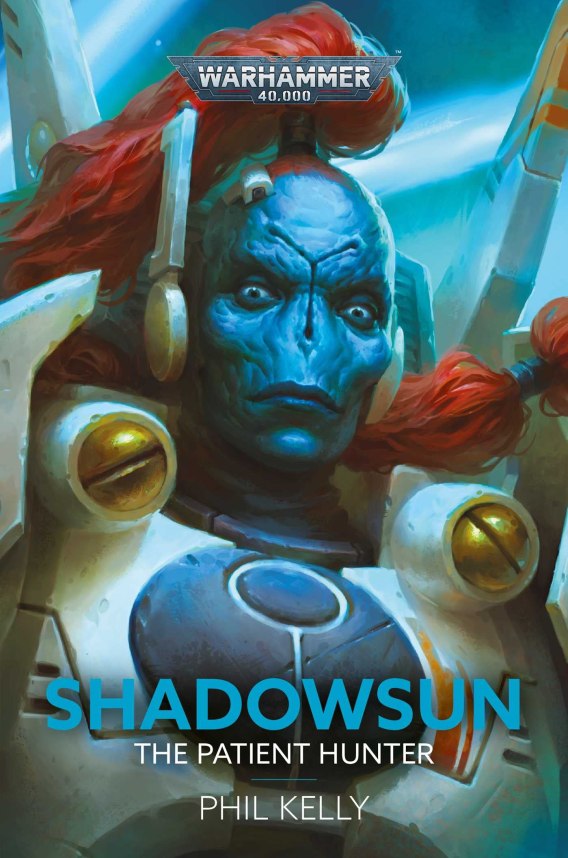
Warhammer 40,000: Shadowsun: The Patient Hunter by Phil Kelly

Warhammer 40,000 - Shadowsun Cover

Publisher: Black Library (Audiobook – 1 April 2023)

Series: Warhammer 40,000

Length: 8 hours and 13 minutes

My Rating: 4.25 out of 5 stars

Amazon

Veteran Warhammer 40,000 author Phil Kelly once again dives into his favourite topic, the T’au, with this new fast-paced and intense novel focused on the intriguing figure of Commander Shadowsun, Shadowsun: The Patient Hunter.

I have been having a lot of fun with Warhammer 40,000 novels this year, and I have already had the opportunity to read some major classics.  Many of these appeared in my recent Favourite Warhammer 40,000 novels list, and I have been keen to read more Warhammer fiction as a result.  As such, I decided to dive into one of the more recent Warhammer 40,000 novels, Shadowsun: The Patient Hunter, an excellent novel focusing on the intriguing T’au faction.  Shadowsun is the latest Warhammer 40,000 novel from Phil Kelly, who is probably best known for his work as a background writer on the various codexes and campaign books released as part of the Warhammer 40,000 tabletop game.  However, Kelly has also produced several Warhammer 40,000 novels over his career, with a particular focus on the T’au, having written several of the more prominent novels for the alien faction, including his Farsight novels and Blades of Damocles.  This latest book sees Kelly once again focus on Commander Shadowsun as she leads the latest T’au expansion, only to encounter more horrors than she ever expected.

Commander Shas’O Shaserra, better known to her foes as Shadowsun, has long led the forces of the T’au into war against all manner of foes.  A former contemporary of the legendary Commander Farsight, Shadowsun has since earned her own substantial reputation across various theatres.  Her latest action sees her leading the T’au Empire’s Fifth Sphere Expansion on the other side of the Startide Nexus, capturing many former Imperial worlds and bringing them under the sphere of the T’au’s influence.

A calculating tactician and a master of the philosophy of war that emulates the Patient Hunter, Shadowsun has known only success during this new phase of expansion.  But the surprise appearance of a massive fleet of decaying and indestructible warships soon throws all her plans into turmoil as she faces an enemy unlike anything T’au have dealt with before, the Chaos Space Marines of the Death Guard.

Ancient and deadly warriors sworn to the Chaos God of disease and decay, Nurgle, the Death Guard are a force unlike any other in the galaxy.  Employing deadly diseases, unstoppable daemons and other deranged horrors that defy all laws of physics and sanity, the Death Guard effortlessly brush through the T’au resistance.  Unable to counter their terrible tactics, Shadowsun desperately looks for a way to strike back against the Death Guard.  But with her own body consumed with disease and rivals within the T’au seeking their own sinister objectives, can even the great Commander Shadowsun succeed against these relentless opponents?

This was a pretty fun and intense Warhammer 40,000 novel from Phil Kelly, who had a great time really showing off two very different factions from the game.  Shadowsun: The Patient Hunter was a very interesting and action-packed read that will really appeal to fans of the Warhammer 40,000 franchise.

The plot of Shadowsun follows the character of Commander Shadowsun in her most lethal adventure yet.  This is a very brutal and quick-paced narrative that wastes no time diving into the action and intrigue to grab the readers full attention.  Starting with a good introduction to the character of Shadowsun and the complex politics of the T’au, the reader is soon introduced to the gruesome threat of the Death Guard, who soon make a major impact on the plot.  This takes the form of an extended and very over-the-top battle sequence on a T’au controlled human planet which Shadowsun was visiting, and she soon must contend with the full threat of the Death Guard.  Kelly really does not hold back at this part of the book, producing a brilliant and very lengthy connected sequence in which Shadowsun encounters the full, fly-infested horrors of Nurgle, as the Death Guard unleash their terrible might.  These scenes are pretty damn intense, at times bordering on pure horror, as the characters encounter diseases, decay, daemons and plague zombies, each of which test Shadowsun and her forces in very different ways.  This major sequence takes a substantial chunk of the book, and it really served to grab the reader’s attention early on with very high plot stakes.

The second half of the book deals with the fallout of this conflict, as an infected and weakened Shadowsun finds all her strategies and plans in ruin, and must find a new way to strike back, despite being hamstrung by internal T’au politics, a growing conflict between the T’au and their alien levies, and a sinister conspiracy from her superiors.  The resolution to this is a desperate boarding action against the Death Guard flagship, with Shadowsun leading a small force on a deadly suicide mission.  While not as extensive as the previous major confrontation, this final third of the book is extremely good, as Kelly envisions another complex battle that pits T’au tech against ancient, unclean horrors.  This sequence gets a little crazy in places, especially as Kelly brings in a couple of unique aliens as backup for the protagonist, and the Death Guard ship is loaded with horrors.  The big fights that emerge are extremely deadly and well written, and you will be enthralled at the carnage that emerges and the unique encounters that occur.  At the same time, the character of Shadowsun continues to grow as a warrior and a commander, fully trusting in her new squad of aliens, while also beginning to understand there is far more going on in the universe than her superiors have let her know.  Everything comes together extremely well, with a fun conclusion that is very satisfying for readers and leaves quite a few questions open that I am sure Kelly will try to answer in the future.  I liked the more metaphysical examination of the T’au towards the end of the book, and it gave the story a really unique conclusion that I will definitely remember.

I felt that Shadowsun was an overall pretty good Warhammer 40,000 novel as Kelly produced an excellent and highly exciting narrative that makes full use of the book’s action, heavy doses of lore intriguing characters.  The various fight sequences are very well written, and the author goes out of his way to try and capture the full horror and considerations of the battlefield, especially when regular soldiers face off against something strange and terrifying.  The two lengthy battles that much of the plot of Shadowsun focuses on are true highlights of the novel, and I love how intense, captivating and devastating the author made them.  Due to Kelly’s obvious passion for the game, this is a very, very detailed novel as the author goes out of his way to highlight the various factions, their motivations, and the state of the Warhammer 40,000 universe at this point in the canon timeline.  Every scene is loaded with some fascinating description of technology, lore, politics or factional history, which is fun in its way, especially for established fans of the games and the surrounding canon.  However, this does mean that Shadowsun might be a bit of a harder book for more casual readers to enjoy, as a certain level of understanding about the T’au is needed to fully appreciate the plot.  As such, I would probably recommend this book to fans of the T’au and dedicated Warhammer 40,000 readers, although newer readers will still be able to have some fun with Shadowsun.

Due to Kelly’s familiarity with the T’au, quite a lot of the book is dedicated to showing them in all their glory, from their advanced technology, their complex society, and their reliance on allied races to help their expansion.  While I am familiar with the T’au, I haven’t read a lot of books from their perspective, having instead only read books where they’re the enemy (Deathwatch: Shadowbreaker by Steve Parker and Kill Team by Gav Thorpe).  As such, I really appreciated this highly detailed and compelling focus on the T’au, and I had a lot of fun exploring their recent history, including their expansion throughout the galaxy.  There are so many great elements to their inclusion in Shadowsun, such as getting to see their awesome advanced weapons in combat, which are so very different from the human technology that most of the other Warhammer 40,000 books feature.  I also appreciated the compelling look at several of the client species that make up the T’au auxiliary forces, such as the Kroot.  Kelly features several intriguing different alien species throughout Shadowsun, making for some unique scenes as a result, and I appreciated the examination of their thoughts about the T’au allies, especially with how it plays into their faith and how they view the rest of the galaxy.

In addition, Kelly layers this book with so many complex bits of T’au day to day life, and you must admire his dedication and attention to detail.  Every conversation or discussion between T’au characters provides you some intriguing insights into their society, and I loved seeing their perfectionist mindsets or their fascinating interactions, such as those meaning-laden hand signals.  There are also some cool examinations of the various castes, their reliance on technology (such as Shadowsun’s two drone companions), and their desire to expand and bring word of the “Greater Good” to the rest of the galaxy.  While there is some definite love for the T’au throughout Shadowsun, Kelly also makes it a point to examine the darker side of their society, including the deadly secrets of the Fourth Sphere Expansion force and the typical manipulation of the Ethereal caste.  Commander Shadowsun, who starts the story off relatively naïve about some of the darker aspects of her race, begins to get an understanding of some of the secrets being kept from her, especially when she encounters some of the forces of Chaos and the secrets of the Warp.  The attempts to shut down any discussion about daemons or what happened to the allied species when they went through the Warp gave some of the T’au focused scenes a darker and more sinister edge, and it will be interesting to see whether Shadowsun continues to blindly follow the Ethereals in the future.  I also liked how Kelly really showcased the inherent arrogance of the T’au, especially when it comes to their opinion of other races in the universe, such as humans from the Imperium.  Their haughty belief that they understand the universe is quite amusing, especially when they come face to face with something completely insane.

To balance out the T’au, Kelly also strongly features the Chaos Space Marines of the Death Guard legion in Shadowsun, who are pretty epic antagonists.  Followers of the Chaos God Nurgle, the Death Guard are dedicated to all things disease, decay and corruption, which results in some pretty horrific mutations for their plague infested bodies.  The Death Guard are always pretty gruesome when featured in fiction, but I felt that Kelly did a particularly fantastic job of capturing them in their fully festering glory.  All the Death Guard encountered in this book are covered in putrefying mutations or growths to some degree, and Kelly really goes out of his way to describe just how unsettling they are.  This includes a compelling look at a Death Guard battle cruiser, whose interior is just covered in growths, mould, various liquids that fill up entire corridors, and loaded with so many other over-the-top elements, which really pop in Kelly’s talented hands.  I also loved how the author tries to capture the Death Guard’s highly positive and benevolent natures, which are reflections of their “kindly” god, Nurgle, and which honestly makes them even more sinister.  He further disturbs the reader by showing the Death Guard unleashing their full horrors on the T’au with, diseases, plague zombies, daemons, dark magic and more used against them, totally devastating them.

Watching the T’au get overwhelmed by these weird and terrifying elements is pretty intense, and the main T’au perspective character, Commander Shadowsun, keeps getting more disturbed by their unpredictable tactics and terrible weaponry.  I loved the compelling comparisons the author makes between the Death Guard and the T’au, and the two are honestly the antithesis of each other in aesthetics, combat styles, and mindset.  This ensures that their conflicts are pretty damn epic and watching the T’au forced to come up with some new tactic while freaking out made for some thrilling reading.  I did think that to make the Death Guard see even more threatening and dangerous, Kelly did slightly nerf the T’au in places, especially during their earlier battles, which fans of the faction probably won’t love, however, the protagonist makes up for that by taking out a Great Unclean One at one point.  Kelly’s decision to feature the Death Guard as the antagonists was an outstanding choice and one that made Shadowsun standout to me even more.

As with most Warhammer 40,000 novels that I have the pleasure of enjoying, I chose to check out Shadowsun on audiobook, which was a fun decision as always.  Coming in at just over eight hours, this was a quick audiobook to power through, especially when you get to some of the more epic battle scenes.  This format served to really enhance some of the best elements of the Shadowsun book, including the cool action and the sheer horror of some of the scenes where the protagonists go up against the forces of Nurgle.  Having someone reading out all the disgusting things this foul horde contains makes the book seem even more terrifying, which I deeply appreciated.  Narrator Helen McAlpine does a very good job bringing this compelling plot to life with her great voice work, and I really appreciated her take on several of the characters and big scenes within Shadowsun.  The voice that she gives to the main character of Commander Shadowsun is highly fitting, and I felt that McAlpine managed to capture her emotions, particularly that of distress of despair, very well throughout this audiobook.  Due to this, and more, I would once again strongly recommend this Warhammer 40,000 audiobook to anyone interested in checking out Shadowsun, as it is easily the best way to enjoy any book from this franchise.

Overall, Shadowsun: The Patient Hunter is an excellent Warhammer 40,000 novel and one that I really had a fun time with.  Phil Kelly did an outstanding job featuring the T’au again and it was great to get a deeper look at one of the more fascinating alien factions in the canon.  Loaded with action, horrifying moments, and some deep lore drops, Shadowsun is an awesome read that fans of Warhammer 40,000 fiction can have a lot of fun with.
Amazon

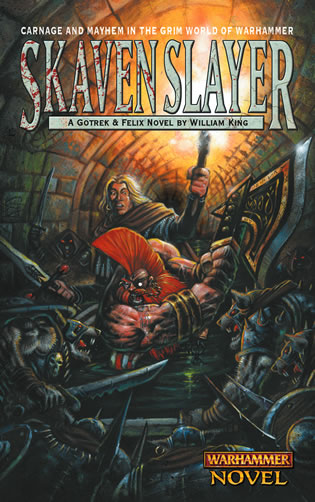
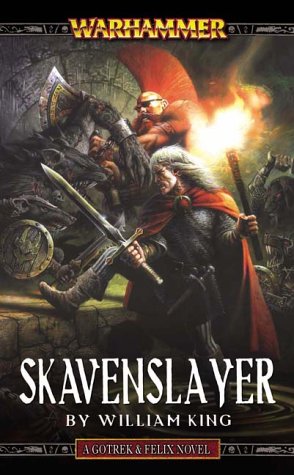
Throwback Thursday – Skavenslayer by William King

Skavenslayer Cover

Publisher: Black Library (Audiobook – December 1999)

Series: Gotrek and Felix – Book Two

Length: 10 hours and 30 minutes

My rating: 4.5 out of 5 stars

Amazon     Book Depository

Welcome back to my Throwback Thursday series, where I republish old reviews, review books I have read before or review older books I have only just had a chance to read.  The adventures of my two favourite Warhammer Fantasy protagonists, Gotrek and Felix, continues, with the second incredible and extremely fun entry in their series, Skavenslayer.

After their previous escapades throughout the Empire and beyond, wandering adventurer, outlaw, and writer Felix Jaeger is still reluctantly following the Dwarf Slayer Gotrek Gurnisson on his quest to find a glorious death.  After travelling to the Imperial city of Nuln, the two heroes attempt to make some money to support their travels.  However, danger is always around the corner, as the heroes find themselves thrust into the middle of a vast conspiracy when they take on a menial job.  The chittering and evil hordes of the Skaven are amassing beneath Nuln, determined to conquer the city by any means necessary.  Led by a dangerous and ambitious leader, the rat-men have several sinister plots to kill all the humans above and appropriate their city and technology for their own glorious purposes.  The only chance the city has to survive this chaos appears to be Gotrek and Felix, who are constantly dragged into the middle of the Skavens’ plots, thanks to fate, Skaven pettiness or terrible bad luck (both Felix’s and the Skaven’s).  Can the two heroes save Nuln from the Skaven hordes, or will Gotrek finally find the death he always seeks?

Wow, this is such a fun and entertaining series.  Skavenslayer is the second entry in the Gotrek and Felix series, which follows the two titular heroes as they journey throughout the Warhammer Fantasy world, battling all manner of monsters, demons and creatures.  After enjoying some of the excellent Warhammer 40,000 fiction out there (Deathwatch: Shadowbreaker and Kal Jerico: Sinner’s Bounty), I recently dove into the first Gotrek and Felix novel, Trollslayer, which contained several exciting and compelling short stories.  I loved the fantastic mixture of action, world-building and fun characters featured within Trollslayer, and within a couple of weeks I had started listening to SkavenslayerSkavenslayer proved to be another excellent novel, and I honestly think it was a slightly stronger novel than Trollslayer, thanks to its much more connected plot.  This was an outstanding read that has many amazing elements to it.

Skavenslayer contains an outstanding and deeply addictive narrative that follows Gotrek and Felix as they attempt to stop the Skaven plot to destroy the city of Nuln.  Skavenslayer is made up of several short stories linked together by Felix’s journal entries.  Unlike the previous novel, all six stories and the epilogue are linked, forming one continuous narrative and resulting in a tighter and more comprehensive read.

Skavenslayer’s first short story is Skaven’s Claw, which sees Gotrek and Felix employed as sewerjacks, guards who patrol the vast catacombs underneath Nuln.  On patrol, they chance upon a clandestine meeting between a Skaven and a human noble, placing Gotrek and Felix in the middle of a conspiracy involving the head of Nuln’s secret police.  Skaven’s Claw is an excellent first story that does a wonderful job establishing most of Skavenslayer’s plot details and introducing several key characters, including recurring antagonist Grey Seer Thanquol.  I loved the combination of action, world building and intrigue that was contained within Skaven’s Claw, and it results in an awesome, fast-paced story.  The Nuln sewers prove to be a claustrophobic and memorable setting for most of the battles.  I also enjoyed the use of secondary antagonist Fritz von Halstadt, a fanatical human who has been manipulated by the Skaven, as his story arc was very well established and quite compelling.  This is an awesome entry that gets Skavenslayer off to an impressive start.

Next up we have Gutter Runners, which sees the Clan Eshin assassin, Chang Squik, lead a group of Skaven Gutter Runners on a mission to kill Gotrek and Felix at the inn where they are working as bouncers.  This was a quick and action-packed story which proved to be a lot of compelling fun.  The action is swift and deadly, as the protagonists are attacked on multiple fronts, and there are several great battle scenes throughout.  This is a fun story that you can easily power through in one short sitting, and I felt that it did a great job keeping the reader’s attention after the fantastic introductory story.

The third entry is the fantastic and funny Night Raid, which focuses on the members of Clan Skyre, the insane Skaven engineers and weapon designers.  The leader of the Clan Skyre contingent, Heskit One-Eye, plans a raid on the Nuln College of Engineering to appropriate the latest human weapons and technology and obtain glory.  However, the jealous Grey Seer Thanquol organises a significant roadblock in the form of Gotrek and Felix.  This is another outstanding entry in the novel, and I consider it to be the most comedic and entertaining of the bunch.  Not only do you get to see amazing examples of Skaven backstabbing and betrayal but you also have an extremely funny and exciting sequence at the college, where all hell breaks loose when a Skaven gets stuck in a Steam Tank.  This story also serves as an excellent introduction to the various Skaven side-characters, and a lot of elements from Night Raid have major impacts on the rest of Skavenslayer’s story.

Up next, we have the disgusting and captivating story, Plague Monks of Pestilens.  In this story, a brewing plague strikes quick with deadly consequences.  However, this is no ordinary plague; it is a deadly concoction dreamt up by the demented plague monks of Clan Pestilens, led by the terrible Vilebroth Null.  Warned again by Thanquol, Gotrek and Felix attempt to stop the plague monks before it is too late.  Plague Monks of Pestilens is an amazing middle story that is pretty memorable.  Rather than the pure hack-and-slash narrative of the previous story, King works in an interesting mystery element, as Felix tries to work out where the plague monks are attacking from.  Once battle is joined, you are in for a dangerous and gruesome fight, especially as the author goes into full horror mode when describing the grotesque plague monks and their malformed, diseased bodies.  This is an extremely intense and disturbing story which really enhances Skavenslayer’s overall narrative and gives it the more serious edge it needed.

The penultimate story of Skavenslayer is Beasts of Moulder, which sees Gotrek and Felix attempt to stop the master mutators of Clan Moulder, led by Izak Grottle, try to unleash their latest creation.  This was a decent addition, although if I am being honest, it was probably the weakest entry in the entire book.  Not only are the stakes a little lower, but it repeats the pattern of the previous two entries.  I did quite enjoy the scene where Felix visits the palace, especially as everyone there assumes he is some sort of master monster hunter, but the rest of the story fell a little flat, especially the Elissa subplot.  Still, it fits into Skavenslayer’s narrative well and does a good job setting up the final story.

The last entry in Skavenslayer is the major concluding storyline, The Battle of Nuln.  In this story, both the citizens of Nuln and the Skaven army hiding beneath the streets have been afflicted by plague and famine.  In order to achieve victory, Thanquol leads a daring raid on the Countess’s palace during a ball, while the rest of the Skaven army attacks the city.  With Gotrek and Felix stuck in the middle of several Skaven plots, can they save the city before it is overwhelmed by rats, disease and vile Skaven magic?  The Battle of Nuln is an incredible and captivating entry that serves as the action-packed conclusion to the entire book.  King brings together all his fantastic storylines, and the readers are rewarded with an intense and extended war sequence, as the full wrath of the Skaven force is unleashed.  I deeply enjoyed this final story, and it did an outstanding job of providing satisfying, if occasionally lethal, conclusions to all the character arcs and storylines.  There is so much action going on in The Battle of Nuln, and I loved seeing the consequences of all the previous short stories finally come to the fore for both sides in the war.  An excellent and exciting conclusion that will put you in the mood for even more Gotrek and Felix.

I had an outstanding time getting through each of the short stories above, and not only are they fantastic reads on their own but together they form an impressive and intense overarching narrative.  King did a wonderful job crafting together all six stories, and I felt that the use of a single location and overarching antagonists worked extremely well, especially once you are introduced to the four iconic Skaven clans.  While some of the middle stories do suffer from plot repetition, this is still a great book which is extremely fun to read.  King ensures each story has a great combination of action, character development and humour, and each of the stories can easily be read on their own without a lot of context from the others.  This is also a very good Warhammer Fantasy novel, and readers only need minimal prior knowledge of the franchise, especially as King provides a great amount of detail and self-contained lore.  I felt that it came together perfectly, and readers are in for an exceptional time when they check this novel out.

One of the more entertaining and fun parts of this novel was King’s use of the Skaven as the villains of the story.  The giant rat-men known as Skaven are chaotic beings who, thanks to their spiteful nature, massive ambitions and weird array of abilities, weapons, magic and fighting techniques, are one of the most entertaining and recognisable races in the Warhammer Fantasy canon.  I think that King did a particularly good job bringing the Skaven to life in Skavenslayer, and they proved to be a very intriguing and memorable group of antagonists.  Not only does the author showcase several unique Skaven clans (each of them is covered in a short story), but he also captures the Skavens’ treacherous nature, speech pattern and insane pettiness.  While the Skaven have an elaborate plan, their own paranoia and self-serving mindset gets in the way of its success, and it is wonderful to see the various backstabbing, betrayals and plots that occur throughout the course of the book.  Despite this, they still prove to be a dangerous group of enemies, and they manage to hit the protagonists and the rest of the humans in Nuln in a big way.  I really enjoyed the way that King utilised the Skaven throughout this novel, especially as their duplicitous or cowardly actions are the catalyst for most of the book’s humour, and Skavenslayer is a fantastic and detailed introduction to this impressive Warhammer Fantasy faction.  That being said, there are only so many times you can hear a scared Skaven getting ready to “squirt the musk of fear”, and some different wording might have been better.

Another highlight of this book is its complex characters.  The most notable and prominent of these are titular protagonists, Gotrek and Felix, and it is still incredibly fun to see the unusual partnership of a doomed Dwarf Slayer and a former wealthy poet turned notorious adventurer.  Due to his position as the book’s main point of view character, much of Skavenslayer’s focus lies on Felix.  While there are still hints at his somewhat cowardly past, especially as he seems apprehensive before every single fight, Felix has become a much more fearless and dangerous being in this book, and he leads the way in several battles throughout Skavenslayer, proving himself a fantastic hero.  There are some interesting character moments for Felix throughout this book, especially as he encounters his brother, Otto, the first member of his family to reach out to him since his banishment.  There are some great comparisons between the wealthy Otto and the more adventurous Felix in Skavenslayer, and it was intriguing to see what Felix might have turned into if he was not bound to Gotrek.  I also liked how Felix developed more into his role as the sane straight man to Gotrek, and his dry humour really adds a lot of comedy to the books.  Overall, Skavenslayer is quite a strong outing for Felix, and he proves to be an outstanding central character.

Aside from Felix, the other main character is Gotrek, the mad, death-hungry Dwarf Slayer, who is constantly denied his desired doom in glorious combat due to his own unnatural skill.  Gotrek is his usual crude and disrespectful self throughout Skavenslayer, and it is an absolute joy to see him in battle, even if his portrayed as way too overpowered.  While he is a great character, Gotrek was underutilised in Skavenslayer, and he was mainly just a supporting player in the Felix-based stories, only appearing when there is a need for fighting.  Still, it was great to see him, and he does get a lot more attention in the next novel.

While Gotrek was a bit overlooked, King does a wonderful compromise by introducing an exceptional primary antagonist in the form of Grey Seer Thanquol, a powerful Skaven sorcerer who goes on to be a major recurring figure within the Gotrek and Felix novels and the wider Warhammer Fantasy universe.  Thanquol is an impressively entertaining character who represents the absolute best (or worst, depending on your point of view) of Skaven society.  He is insanely ambitious, arrogant, power-hungry and dangerous, and rose to power thanks to an unfortunate “accident” involving his predecessor, a loaded crossbow and an exploding donkey.  Due to his ambition and an unwillingness to share any glory, Thanquol spends just as much time plotting against his equally aspiring subordinates as he does attempting to conquer Nuln or kill Gotrek and Felix.  Indeed, several conflicts with the Skaven are due to Thanquol himself informing the protagonists about his rival’s plots, often through some hilarious letters which are clearly written by a Skaven (despite Thanquol’s own belief that they are masterful forgeries).  The sheer overconfidence, deluded self-belief and inability to take responsibility for his failings make Thanquol a particularly nasty antagonist, however, it is just so entertaining to see him strive and then fail, that you end up wanting him to live and succeed against his Skaven opponents.  Thanquol proves to be an excellent antagonist, and I really enjoyed seeing his alternative point-of-view which highlights the Skaven plans.  King really outdid himself coming up with this villainous rat-man, and he is one of the best things about Skavenslayer and the overall Gotrek and Felix series.

King has also filled Skavenslayer with an interesting collection of side characters who add a lot to the plot.  The author does a good job of introducing these major side characters throughout the various stories, and he manages to build them up and flesh out their personalities in a short amount of time.  There are great human supporting characters, such as Heinz and Doctor Drexler, and several fun and amusing Skaven.  The majority of these Skaven characters are leading members of the main clans who not only serve as secondary antagonists for the novel, but who are also cast as rivals to Thanquol’s rise to power.  I had a fantastic time seeing each of these Skaven characters in all their treacherous, self-serving glory, although my favourite had to be the aptly named Lurk Snitchtongue, who is a very fun and cowardly character.

If I had to make one major criticism, it would be about the complete lack of any decent female supporting characters.  While you can forgive some older fantasy books for their lack of gender diversity, it is a painfully obvious problem in Skavenslayer.  There are literally only two female characters of note within the novel, and both are badly written.  The first is Felix’s romantic partner, Elissa, who quickly becomes a major burden to the story by forming conflicts with Felix.  Their romance is thankfully over before the end of the book, and you cannot feel anything but relief as she leaves.  The other character is the ruler of Nuln, Countess Emmanuelle, who gets only a couple of lines at the end of the novel.  While her one scene does shine her in a good light, the rest of the novel hints that she is a vapid, lustful and incompetent ruler.  The underuse of female characters is probably going to be a major feature of Gotrek and Felix series in the future (for example, Daemonslayer only has one female character), however, I really hope that any who feature are written a lot better than the ones featured in Skavenslayer.

Just like I did with Trollslayer before it, I chose to listen to Skavenslayer on audiobook rather than grab a physical copy of the book.  I have a lot of love for the Warhammer Fantasy audiobooks, especially as they always perfectly capture the excitement, grim horror and elaborate fantasy of this franchise.  Skavenslayer was another great example of this, and I had a wonderful and thrilling time listening to this amazing novel in this format.  Much of the reason for this was the excellent narration by Jonathan Keeble, a brilliant narrator who has lent his voice to most of the Gotrek and Felix novels.  Keeble has an outstanding voice for dark fantasy stories such as this, and I loved the grim tone he gives to several of the characters, particularly Gotrek, as well as the sheer excitement that infects his tone whenever there is a fight sequence or dangerous scene.  Keeble also a lot of fun voicing the various Skaven characters, and he expertly mimics their high-pitched, whiney tones, which helps highlight their fickle and cowardly nature.  This excellent voice work helps turn the Skavenslayer audiobook into an absolute treat to listen to, and with a runtime of only 10 and a half hours, listeners will power through this in no time at all.

William King’s second Gotrek and Felix novel, Skavenslayer, was another outstanding and wildly enjoyable novel that I had an incredible time listening to.  Featuring a compelling connected narrative filled with intense action and fun villains, this is an amazing fantasy tale that is perfect for all Warhammer Fantasy fans.  I can think of no higher compliment for this book than to reveal that the moment I finished Skavenslayer, I immediately grabbed the next novel in the series, Daemonslayer, which proved to be just as much fun.

Skavenslayer 2

Amazon     Book Depository

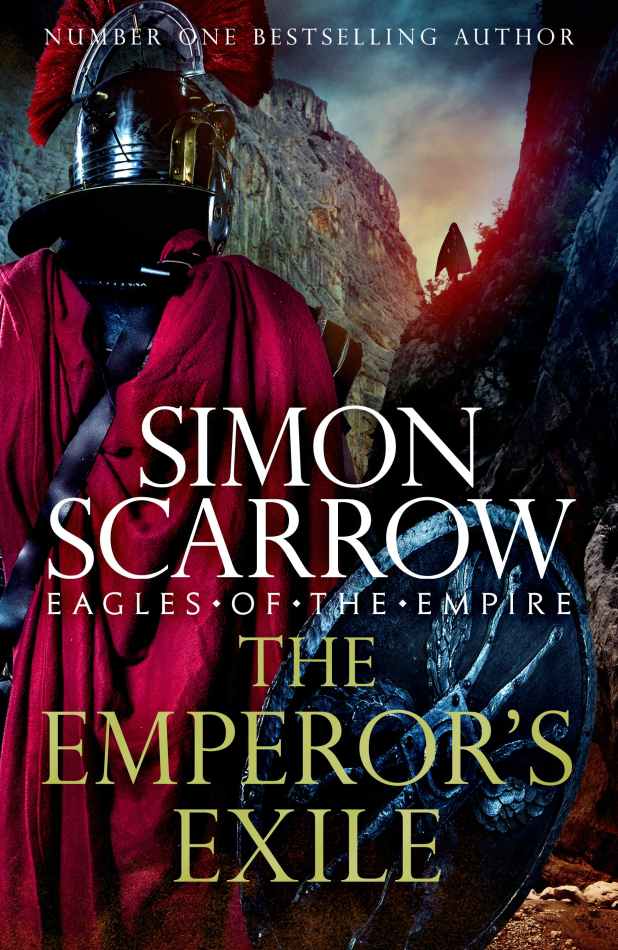
The Emperor’s Exile by Simon Scarrow

The Emperor's Exile Cover

Publisher: Headline (Trade Paperback – 10 November 2020)

Series: Eagles of the Empire – Book 19

Length: 434 pages

My Rating: 4.5 out of 5 stars

Amazon

One of the top authors of Roman historical fiction, Simon Scarrow, returns with the latest exciting novel in his Eagles of the Empire series, The Emperor’s Exile.

Rome, 57 A.D.  Following their adventures in Parthia, Legionary veterans Tribune Cato and Centurion Marco return to Rome with the remnants of their Praetorian Cohort.  Thanks to the ever-shifting politics of Rome and the fickleness of Emperor Nero’s court, Cato faces a hostile reception from some of Nero’s advisors, who hold him responsible for the military disasters experienced in the Parthian campaign.  Soon Cato has his command taken away from him, while Marco decides to resign from the Legions in protest, determined to live out his retirement in Britain.

Isolated in Rome, Cato is forced by one of Nero’s advisors to take on a new and dangerous mission.  Nero’s mistress, the beautiful Claudia Acte, has risen too high too quickly, and Nero’s political enemies have manipulated him into sending her into exile.  Travelling with a select group of Praetorian officers and his new advisor, the spy Apollonius, Cato must escort Claudia to the location of her exile, the island province of Sardinia, where he has another mission to accomplish.

Sardinia has long been plagued by tribes of bandits living wild in the centre of the island.  These proud decedents of the original inhabitants of Sardinia have been causing problems in recent months, raiding the local villages and ambushes caravans.  Taking command of Sardinia’s entire garrison, Cato begins to work out a strategy to defeat the locals and regain his position in Rome.  However, this proves harder than originally anticipated as Cato needs to contend with a disorganised military force, a dangerous plague that is beginning to overwhelm the island and a surprisingly competent group of bandits with unparalleled knowledge of the local landscape.  Worse, Cato begins to have dangerous feelings for Claudia, feelings which his enemies will exploit and which could set the entirety of Rome against him.  Can Cato pacify Sardinia before his entire force is decimated, or have his adventures finally come to an end?

This was another fantastic and highly enjoyable historical fiction novel from one of my favourite authors, Simon Scarrow, who has produced an impressive new entry in his long-running Eagles of the Empire series.  The Eagles of the Empire books are easily among the best Roman historical fiction series out there at the moment, and I have had an amazing time reading every single entry in this series, including the last two novels, The Blood of Rome and Traitors of RomeThe Emperor’s Exile is the 19th Eagles of the Empire book and the author has produced another impressive story, featuring great historical elements and some fantastic character work.  I had an awesome time reading this book and it is definitely worth checking out.

The Emperor’s Exile contains an extremely fun and captivating narrative which follows Cato work to defeat a new enemy in a new historical setting.  Scarrow sets up an exciting and fast-paced story for this latest book, with the protagonist forced to deal with all manner of politics, intrigue and various forms of deadly peril in rather quick succession as he is assigned his mission and attempts to complete it.  This naturally results in all manner of impressive action sequences which are a lot of fun to watch unfold, including one particularly good extended siege sequence.  It is not all action, adventure and historical undertakings, however, as the book also has an intriguing focus on its central protagonist, Cato.  Cato, who has been evolving as a character over the last 18 books, continues to develop in The Emperor’s Exile in several dramatic and emotionally rich ways.  Not only does he have to adapt to a major change in his personal circumstances with the retirement of a great friend but he continues to question his role in the Roman army and whether he wants to remain a brutal killer.  Throw in an ill-conceived romance, his continued regrets about his past actions and his disastrous first marriage, as well as a certain major change in his appearance for the future, and this becomes quite a substantial novel for Cato which also opens up some intriguing storylines in the future.  I had a wonderful time reading this book and, once I got wrapped up in the story, I was able to power through the book extremely quickly.

In addition to having a great story, The Emperor’s Exile also serves as a key entry in this impressive, long-running series.  While readers who want to check out this book do not particularly need to have read any of the previous Eagles of the Empire books, mainly because Scarrow does an excellent job of revisiting story aspects and characters from prior novels, those established fans of the series are going to find this book particularly significant and memorable.  This is because one of the main protagonists of this series, Centurion Marco, who has been a major part of all 18 previous novels, retires from the Legions 100 or so pages into the book then subsequently disappears off to Britain, leaving Cato to his own adventure in Sardinia.  Scarrow has been telegraphing Marco’s plans to retire for the last couple of books, and it is a natural consequence of the author realistically aging his characters (15 years have elapsed within the series at this point).  While it was somewhat expected, it was still weird and a bit sad not to have Marco fighting along Cato in this latest adventure, especially as their comradeship is one of the defining aspects of this series.  That being said, Cato has grown a lot over the last 18 books and the natural progression of Cato and Marco’s dynamic as characters did necessitate them splitting off at some point.  It will be interesting to see how Scarrow features Marco in the future, especially if he plans to continue the Eagles of the Empire series for several more books (I personally would love it if he goes all the way into The Year of the Four Emperors, as it would wrap up the Vitellius and Vespasian storylines from the earlier books quite nicely).  Based upon how The Emperor’s Exile ends, it looks like Marco is going to appear in the next book, but it is uncertain whether he will continue on as a central protagonist, become an occasional character or go down in a final blaze of glory.  I personally think that Scarrow is planning to permanently retire Marco as a character soon, potentially replacing him with new character, Apollonius.  Apollonius is the dangerous and insightful spy who Cato teamed up with during the previous novel, and who followed Cato back to Rome in this book.  Apollonius served as Cato’s aide, scout and confident during The Emperor’s Exile in place of Marco, and it looks like he will be a major character in the next book as well.  I quite liked Apollonius as a character and it will be interesting if he ends up as Marco’s replacement, especially as he shares a very different dynamic with Cato than Marco did.  All of this makes The Emperor’s Exile quite an intriguing entry in the overall series and I am extremely curious to see what is going to happen to these amazing protagonists next year in the 20th book in the series.

As always, this novel is chock full of fantastic historical detail and storytelling as the author sets his story in some intriguing parts of Roman history.  Not only does the reader get a great view of Rome under the control of Emperor Nero (whose chaotic rule as described in this novel has some interesting modern parallels) but the main story takes place in the island province of Sardinia, off the Italian coast.  Sardinia is a fascinating province that I personally have never seen used before in Roman historical fiction novels and which proved to be a fantastic setting for most of this book’s story.  Scarrow really dives into the history, culture and geography of the island, explaining how it became a Roman province, examining some of the key towns and ports and highlighting the difference between the locals and the Roman settlers.  There is a particularly compelling focus on the tribes who controlled the centre of the island and it was rather interesting to see how a group of rebellious barbarians managed to survive so close to Italy during this period.  Scarrow also provides the reader with his usual focus on the Roman legions/auxiliaries, providing impressive details and depictions of how the Roman war machine operated and what their usual tactics and strategies are.  All of this really helps to enhance the novel and I had an amazing time exploring Sardinia with the Roman protagonists.

Another intriguing aspect of The Emperor’s Exile was the plague storyline that saw the inhabitants of Sardinia, including Cato and his soldiers, have to contend with a deadly infectious sickness.  This plague added an excellent edge to the storyline, serving as a hindrance to the protagonists and ensuring that they constantly have to change their plans while dealing with their enemy.  Not only does this serve as a clever handicap for the Romans but readers cannot help but make some comparisons to modern day events.  While I could potentially be reading a little too much into this and it is possible that Scarrow always intended to feature a plague in this book, I cannot help but think that this was a deliberate choice by the author.  Either way, it proved to be an extremely fascinating part of the book and it was fun to compare the reactions of these historical characters to the actions of people in the real-world.  While this story inclusion may potentially prove to be a little tiring for readers sick of any mentions of disease, infection and quarantine in their day-to-day lives, I thought it was a great addition to the novel, especially as it raised the dangerous stakes of this exciting novel.

With his latest novel, The Emperor’s Exile, Simon Scarrow continues to show why he is one of the top authors of Roman historical fiction in the world today.  This latest novel serves as a key entry in his amazing Eagles of the Empire series and it takes the reader on an outstanding, action-packed adventure, loaded with some great character moments and some impressive historical settings.  I had a fantastic time reading this book and I cannot wait to see how Scarrow continues this epic series next year.  Luckily, I only have to wait a few more months for my next dose of this author’s work as his World War II crime fiction novel, Blackout, is set for release next March.

Amazon

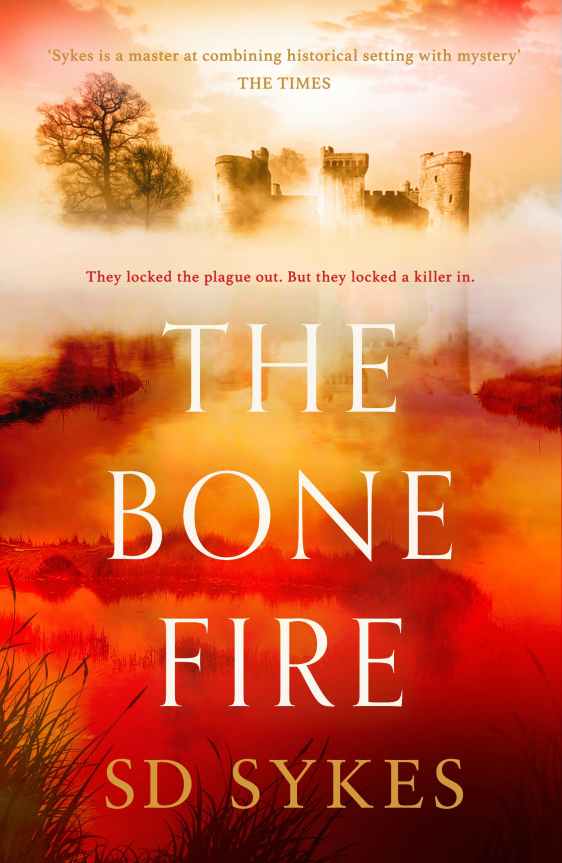
The Bone Fire by S. D. Sykes

The Bone Fire Cover

Publisher: Hodder & Stoughton (Hardcover – 25 July 2019)

Series: Somershill Manor Mystery – Book Four

Length: 310 pages

My Rating: 4.5 out of 5 stars

Amazon     Book Depository

In the mood for a clever and captivating historical murder mystery? Look no further than the latest book from the brilliant S. D. Sykes, The Bone Fire, which continues the adventures of her reluctant 14th century murder-solving protagonist, Oswald de Lacy, who this time finds himself stuck in a unique situation.

After several years of respite, the Plague returns to England in 1361. As a survivor of the original outbreak in 1350, Oswald de Lacy, lord of Somershill in Kent, knows the devastation the sickness can bring. Desperate to save his family, he accepts an invitation from one of his friends, Godfrey, to shelter for the winter in his remote castle in the Romney Marsh with a select company of friends and allies. The rules are simple: once the de Lacy family enters the castle, the gates will be closed and no-one will be allowed to leave until the Plague has passed.

Arriving just ahead of the Plague with his wife, son, mother and valet, de Lacy finds that Godfrey’s castle is a grim refuge filled with a disagreeable group of fellow guests and servants. Despite this, the castle appears to be the safest place for them, especially with the Plague already ravishing the outside countryside. That is until their host is found murdered in his own library.

As the residents deal with the shock of losing the lord of the castle, other bodies are discovered within the castle walls. With nowhere to run except onto the plague-infested island outside the castle walls, de Lacy must once again rely on his talent for solving mysteries to save the day. However, it soon becomes apparent that de Lacy is up against a ruthless killer who delights in violence and is seemingly able to move about the castle undetected. Can de Lacy solve this crime before it is too late, or will he and his family face a fate worse than the sickness keeping them trapped within the castle?

The Bone Fire is the fourth book in Sykes’s Somershill Manor Mystery series, which started back in 2014 with Plague Land. The Somershill Manor Mystery books are an intriguing historical mystery series which follows the investigations of its protagonist in the land devastated by the Black Death. I had not previously read any of Sykes’s books, although her preceding release, City of Masks, is probably one of the books I most regret not reading in 2017.

I was initially drawn to The Bone Fire by the beautiful cover and the really cool-sounding plot, and I thought that this novel had some real potential. I am extremely glad I decided to get a copy of this book, as I was blown away by the fantastic and clever story. Sykes does an excellent job of combining a complex and compelling murder mystery with a unique and fascinating historical setting. The entire story is extremely fast paced, and I found myself racing through the book in no time at all, especially as it proved to be pretty darn hard to disengage from the fantastic story.

Those readers who have not had the opportunity to read any of Sykes’s books can easily enjoy The Bone Fire without any foreknowledge of the previous entries in the Somershill Manor Mystery series. Each of the books in the series can be read as a standalone novel, although existing readers will note the continuation of character arcs from the earlier entries in the series. Some information from the previous books does play a role in the story, including how the protagonist survived the first outbreak of the Plague, however Sykes always does a careful job of reintroducing these elements in The Bone Fire well before they become relevant to the plot.

At the heart of this book lies an excellent murder mystery storyline, as the protagonist is forced to investigate a series of killings in a remote English castle. Sykes has come up with a thrilling murder mystery storyline that follows a twisting and intriguing investigation. The protagonist has a huge bevy of potential suspects, each of whom has their secrets and schemes, which de Lacy has to unravel in order to get to the bottom of the murders, and there are a variety of motives for the killings occurring in the castle. The case goes in some very interesting directions, and the end result was very satisfying, with some well-plotted-out twists and some truly unique motivations for a murder. I had a great time trying to figure out who the killer was, and this was a terrific storyline to centre the book upon.

While the murder mystery storyline is an excellent part of this book, readers will also be entranced by Sykes’s use of a fascinating historical setting. Like the first two books in this series, the author has set the story in the midst of plague-ravished England. However, unlike the previous books, which dealt with the first bout of the Black Death between 1348-51, this story is set in 1361, when a second plague hit the country. This time the populace, including all the characters in this book, were much more aware of how deadly the Plague could be and took steps to try and avoid it. Sykes does an amazing job capturing the subsequent sense of despair, fear and paranoia that emulates from people who previously experienced the Plague, and it makes for a fantastic emotional background to the story. The various theories and ideas of the cause of the Plague are pretty fascinating, as are the methods with which the protagonists attempt to protect themselves from its influence. It also results in some heartbreaking, if not cruel, decisions from the protagonist, who is still traumatised from his experiences during the first sickness, and results in some dramatic character moments.

I really enjoyed the way that Sykes utilised the Plague and other intriguing historical aspects, such as religion, to enhance the murder mystery storyline of this book. The restrictions of the Plague keeping the residence within the castle helped make the story feel like a classic whodunnit in places with a small group of suspects trapped in an enclosed location and only one investigator trying to sort out the entire case. The historical setting also resulted in a number of intriguing potential motives for the story, such as religious differences, complex inheritances, arranged marriages and even clocks, all of which adds a compelling edge to the story.

The Bone Fire by S. D. Sykes is an exciting and gripping historical murder mystery that is really worth checking out. The author did a fantastic job creating a clever mystery storyline that perfectly utilises its bleak and intriguing historical setting. The end result is a terrific fourth book from Sykes that was a lot of fun to read. It is safe to say that Sykes’s Somershill Manor Mystery series is now firmly on my reading radar, and I will be keeping an eager eye out for the next book in the series.

Amazon     Book Depository