
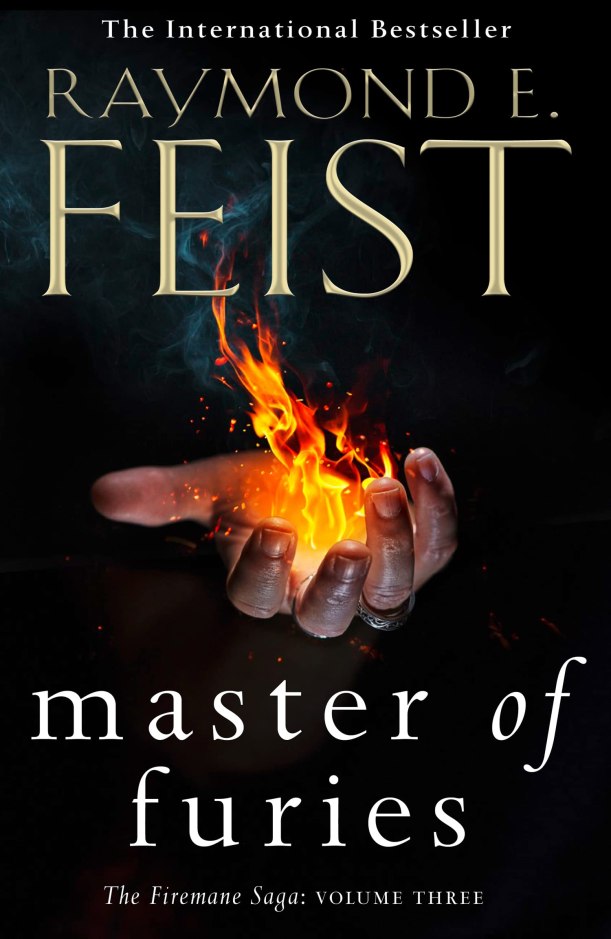
Master of Furies by Raymond E. Feist

Master of Furies Cover

Publisher: Harper Voyager (Hardcover – 5 July 2022)

Series: The Firemane Saga – Book Three

Length: 515 pages

My Rating: 4.5 out of 5 stars

Amazon

One of the leading authors of fantasy fiction, Raymond E. Feist, brings his Firemane Saga to an end in a big way with the impressive and deeply entertaining Master of Furies.

I was recently in the mood for some classic high fantasy awesomeness, and few people do high fantasy better than one of my all-time favourite authors, Raymond E. Feist.  I have been a massive Feist fan for years, ever since I stumbled upon his epic Riftwar Cycle in my youth.  Made up of around 30 connected novels in a massive, multi-world universe, including his epic debut, Magician, and the fantastic Empire trilogy (co-written with Janny Wurts), the Riftwar Cycle contains so many fantastic stories and it remains one of the seminal pieces of fantasy fiction out there.  Feist appeared to finish the Riftwar Cycle off in 2013 and after a break he started working on a different fantasy series, the Firemane Saga.

Set in a new fantasy world, the Firemane Saga followed several great protagonists as they found themselves dragged into a series of conflicts that threaten to tear their continent apart.  This series started in 2018 with King of Ashes, an excellent book that served as a brilliant introduction to the setting, story and characters.  This series was continued in 2020 with Queen of Storms, which continued the various character-based storylines, expanding on some existing elements while also throwing in a ton of new enemies and some surprising changes.  This second novel included a pretty fantastic twist halfway through, as one of the major settings of the series was completely destroyed and various supporting characters were killed off.  I have been eager to see how this series would continue and I was pretty excited when I saw that the third and final book in the series, Master of Furies, was set for release this year (it was one of my most anticipated releases for the first half of the year).  I ended up grabbing this book the day it came out and I swiftly got drawn into its fun and action-packed story.

War and death have come to the Barony of Marquensas after unknown raiders from across the seas arrived and laid waste to everything before them.  Their most savage action saw them destroy the town of Beran’s Hill, which resulted in the death of Gwen, Declan Smith’s beloved wife.  Now determined to get revenge, Declan has become a soldier and allied with Baron Daylon Dumarch, whose family was also killed in the raid.  As the Baron gathers a new army around him, Declan travels to the desolate far south of Tembria to recover rare materials that will allow him to forge the best weapons and armour for them.

At the same time, Hava, former spy for the shadow nation of Coaltachin, has drawn first blood against the mysterious forces attacking her friends.  After capturing the enemy ship, Queen of Storms, Hava has become a notorious pirate captain, raiding ships from across the waves to find out who or what is threatening Marquensas.  Her investigations will eventually lead her to the hidden continent of Nytanny, where a powerful group holds sway of a vast population of warring nations.

As Hava, Declan and Baron Daylon prepare their forces to fight whatever lies within Nytanny, the fate of the world may rest in someone else’s hands.  Hava’s husband, Hatushaly, the last living member of the Ithrace royal family, has finally discovered his legacy as a legendary Firemane.  Under tutelage on the hidden island Sanctuary, Hatushaly works to hone his destructive magical abilities.  But as his powers grow, Hatushaly will find himself thrust into events beyond his control.  A new darkness is rising within his world and Hatushaly will need all the help he can find to stop it.

This was another awesome book from Feist that I felt was a great end to the excellent Firemane Saga.  This third and final book takes the character-driven story in some fantastic directions, and I think that Master of Furies was one of Feist’s better recent novels.

I had an outstanding time getting through Master of Furies’ clever and compelling narrative and I really enjoyed the elaborate and exciting third part of the series.  Now, I must admit that I initially had a bit of a hard time getting back into this book, mainly because it had been two years since Queen of Storms’ release and I had forgotten some of the story details from the preceding novels.  I probably should have done a bit of a reread of the series before starting Master of Furies, and this is one of those cases where interested readers should really check out the first two novels first. Master of Furies immediately dives back into the plot lines from the last book, and while a lot of elements are recapped, it does help to remember how the series has unfolded.

Master of Furies is told from multiple character perspectives as all the protagonists from the first two novels are featured here.  There is a good mixture of different storylines throughout the novel, including the mystical training of Hatushaly, the adventures of Declan in a hostile desert, political intrigues occurring with Marquensas, and Hava’s nautical and espionage activities as she sails from location to location, attempting to find out who they are actually fighting.  All of those storylines are spread out evenly through the book and they played off each other well, coming together into an exciting and expansive narrative.  I particularly liked Declan’s storyline, not only because it was a very good example of a classic fantasy adventure but it also expertly showcased the character’s grief and anger after the events of Queen of Storms.  I liked the balance between action, world-building and character development contained in each chapter, and this book had an amazing flow to it.  The action scenes are particularly well written, and Feist features multiple epic battles and fights that really get the reader’s adrenalin pumping.  The resulting story is very well paced out and there are no slow spots in the story at all.  Each of the separate stories start coming together a lot more towards the centre of Master of Furies as Feist starts to prepare for the big conclusion.

While I was initially worried that Feist was going to rush the conclusion too much (I had some doubts with 150 pages to go, as there seemed to be too much that needed to get wrapped up), this ended up coming together really well.  The established character arcs ended on an awesome (if slightly predictable) note and most of the open storylines are resolved in a satisfying manner.  It was great to see some of the fun characters you have grown to like over the course of the trilogy finally get what they deserve, while others start new adventures that will lead to some interesting storylines in the future.  Feist also works to set up some interesting storylines for the future and it is pretty clear that he has intentions to produce some form of sequel trilogy or series in the future.  An overall strong and exciting story, I absolutely powered through this book and I was extremely entertained and happy the entire way through.

There was some interesting world-building in Master of Furies that I quite enjoyed as Feist sought to expand on his already established new fantasy realm.  Not only did Feist take one of his main characters to the previously unseen harsh deserts at the lower part of the main continent of Tembria, but we also got our first real look at the rival continent of Nytanny, where most of the antagonists originate.  I found both areas to be fascinating and detailed as Feist does a great job of building up both settings in this novel, ensuring that the reader gets an idea of geography, culture and history.  I had a great time exploring both, and the fantastic landscapes of south Tembria were particularly cool, especially as one of the main protagonists spends half the book facing off against every enemy and threat he can find there.  I did think that the focus on Nytanny came too late in the trilogy, as Feist has deliberately kept this continent and its people obscured from the reader and the main characters.  While this did enhance the mystery surrounding their actions, it did mean that their sudden reveal in this book felt a tad forced and you did not care as much about who they were or savoured the eventual counterattack against them by the protagonists.  Likewise, some of the political situations in the rest of Tembria that were featured in the earlier books, such as the impacts of the corrupt Church of the One and the politics of the other kingdoms of Tembria, are somewhat ignored here in favour of focusing on the characters in Marquensas.  While I do not think this took away from the narrative too much, it might have made for a more elaborate and complete universe if more of these missing elements had been explored in more detail (I reckon Feist could have turned this into a four-book series to properly set up this world).  Still, I really enjoyed the rest of the world-building and the change in the settings in this book, particularly surrounding the impacts of the massive raids from Queen of Storms which have devastated not only the Barony of Marquensas but also the various other kingdoms and lands featured in the book.  I really hope that we get to see a lot more of this world in Feist’s future novels as I really want to see how it progresses and changes as it faces more dangers.

For the final thing I wish to discuss about this novel, I think I’m going to have to put a Spoiler Warning into effect as some of the details I’m about to discuss are significant and one of the more surprising things about Master of Furies.

This feature was the intriguing connection that Master of Furies, and by extension the entire Firemane Saga, has with Feist’s established Riftwar Cycle.  I was pleasantly surprised when, seemingly out of nowhere, one of the most entertaining characters from the Riftwar Cycle suddenly appeared in the narrative and started helping Hatushaly learn how to control his magic, revealing that this new world is set in the same joint universe as Feist’s previous series.  While I really should not have been too surprised, (multiple alternate fantasy worlds are a staple of Feist’s writing), I honestly did not see this coming.  In hindsight there were some subtle hints in some of the previous books, but I did not realise to what extent the author intended to bring everything together.  Feist really goes to town on the connections in this third book, and soon several additional Riftwar Cycle characters appear, referring all the existing books.  It soon became very clear at the end of Master of Furies that the author was intending to substantially combine the Firemane Saga with the Riftwar Cycle, especially when an established malevolent presence was discovered on this new world.  The book ends on a very interesting note, with the main characters of this series meeting with two of the biggest characters from the Riftwar Cycle, and it looks like Feist’s next trilogy is going to combine these two universes together in even more substantial ways.

Now, bringing the Firemane Saga into the larger Riftwar Cycle is a bit of a double-edged sword for Feist, although it is one that I personally enjoyed.  I loved the surprise at seeing some of these favourite characters come across each other, and every single new connection or reference brought a thrill for me, Feist nerd that I am.  However, I know that some readers are going to be disappointed, especially as people who were hoping for something new from Feist suddenly got thrown back into the author’s established universe and characters.  This connection also means that those readers unfamiliar with the entire Riftwar Cycle might get a little lost here, especially if they do not fully realise the significance of events or characters.  While Feist does a good job of highlighting who these characters are and why readers should care, I can see some people getting confused about what is going on.  As such, I can understand if some readers are frustrated, but I think it was a great choice by Feist and I loved seeing the author bringing everything together.  If nothing else, this is probably going to inspire me to do a big Feist re-read at some point in the future, especially if all his previous novels are going to come into play in his next series (can I read all the Riftwar Cycle novels before Feist’s next book? I don’t know, but I’m willing to try).

Spoiler Warning End

Raymond E. Feist continues to shine as one of my absolute favourite fantasy authors with the outstanding third and final entry in his awesome Firemane Saga, Master of Furies.  Containing an epic and deeply entertaining narrative that cleverly concludes this fun trilogy, Master of Furies has an excellent blend of story, setting and characters, as well as some cool connections to some of Feist’s more iconic works.  While there were a few issues with how this book came together, I honestly had a fantastic time reading Master of Furies as I was so wrapped up in its outstanding story.  Overall, this book comes highly recommended, especially for those established fans of Feist’s work.
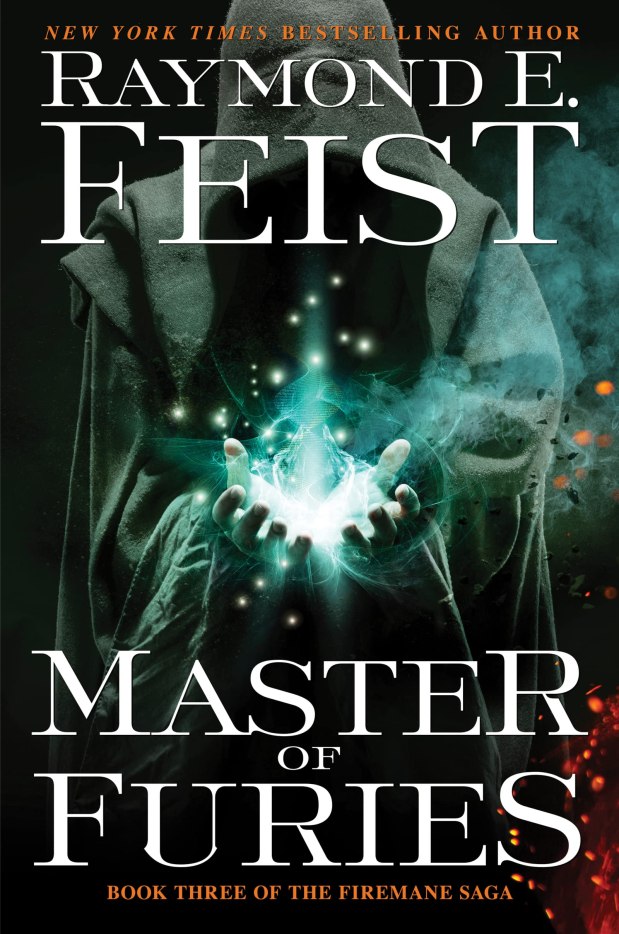
Master of Furies Cover 2

Amazon

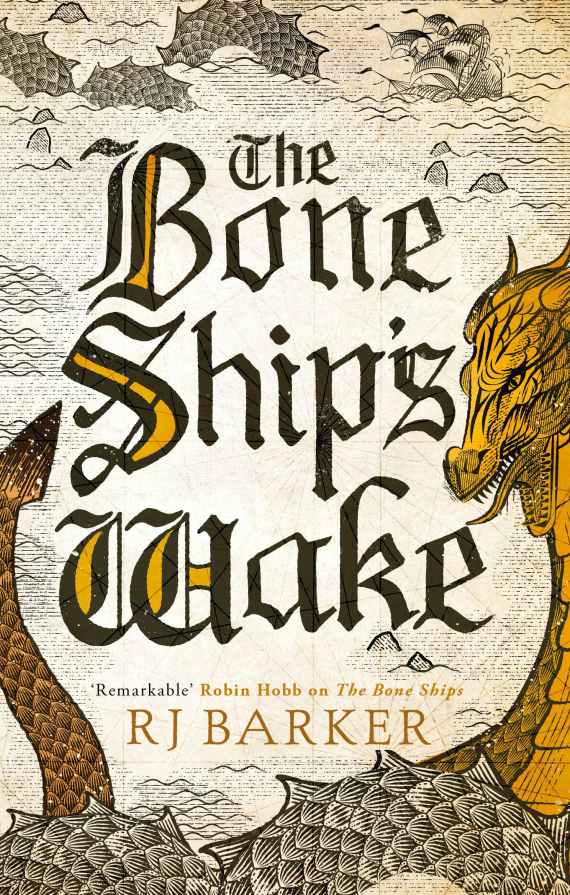
The Bone Ship’s Wake by R. J. Barker

The Bone Ship's Wake Cover

Publisher: Orbit/Hachette Audio (Audiobook – 28 September 2021)

Series: The Tide Child Trilogy – Book Three

Length: 20 hours and 49 minutes

My Rating: 5 out of 5 stars

Amazon     Book Depository

One of the fastest rising fantasy authors in the world today, the brilliant and exceedingly talented R. J. Barker, brings The Tide Child trilogy to an end in epic fashion with the exceptional and powerful The Bone Ship’s Wake, one of the best fantasy reads of 2021.

There have been some really impressive fantasy authors producing great reads over the last few years, but in my opinion none have been as consistently amazing and addictive as R. J. Barker.  Barker burst onto the scene in 2017 with Age of Assassins, the first book in The Wounded Kingdom trilogy, and soon followed it up with two additional outstanding reads, Blood of Assassins and King of Assassins.  While I have a lot of love for this brilliant trilogy, especially the final novel King of Assassins, Barker has since eclipsed it with his second series, The Tide Child trilogy.

The Tide Child trilogy is a grim and powerful series that follows a unique set of characters in an exceptional, character driven, adventure tale.  The Tide Child books are set in a dark fantasy world, primarily made up of deadly oceans and seas which have produced a harsh breed of warring humans.  The inhabitants of this world traverse these oceans in ships made of the harvested bones of sea dragons, known as the keyshans, the creation of which led to the mass extinction of these dragons.  The first novel in this series, The Bone Ships, set the scene for this great series and introduced the primary characters as they set out on an epic quest to hunt the last sea dragon aboard the boneship, Tide Child.  This was an exceptional read that ended up being one of the best books and audiobooks of 2019.  Barker followed this up in 2020 with Call of the Bone Ships, a great sequel that saw the crew of Tide Child engage in a rebellion against the established order.  Call of the Bone Ships ended on a pretty massive cliffhanger that set the scene for an exceptional and stunning conclusion.  As such, the final entry in this trilogy, The Bone Ship’s Wake, was one of my most anticipated reads of 2021, and Barker did not disappoint here, as he produced an epic and captivating read.

It has been a year since the climactic battle that saw the boneship Tide Child and the rebel fleet barely escape the wrath of the Hundred Isles after being forced to abandon shipwife Meas Gilbryn.  In that time, loyal deck keeper Joron Twiner has taken on the mantle of leadership for the rebel black ships and turned them into a fleet of marauding pirates.  Now known by all as the feared Black Pirate, Joron constantly raids the Hundred Isles, determined to weaken its fleet and devastate its defences for an invasion from the rival Gaunt Islands, Joron’s only true priority is to discover the location of his lost commander and rescue her.

After a particularly vicious raid nearly sees the destruction of Tide Child, Joron is only more determined to find the shipwife before the entire fleet is lost.  With time running out for Joron thanks to the insidious keyshan’s rot that is slowly eating away at his body, Joron embarks on an ambitious plan to find and rescue Meas by returning to the most dangerous place in the world, the capital city of the Hundred Isles.

Accompanied by a small crew, Joron hopes to infiltrate the city and force Meas’s location from the ruthless rule of the Hundred Isles, Meas’ estranged mother.  However, all Joron will discover is blood and betrayal, as dangerous forces seek to take control of the oceans for their own nefarious ends.  Worse, Joron must continue to struggle with the dangerous legacy of the magical gullaimes, who believe that he is the Caller, the man who can sing up the keyshans and use them to destroy the world.  Will Joron and his crew succeed against impossible odds, or will the final voyage of the Tide Child result only in the death of everyone and everything Joron loves and cares about?

Well damn, now that was an incredibly awesome book.  I have said time and time again that Barker seems to get better with every book he writes, and I honestly believe that The Bone Ship’s Wake is the very best so far.  The Bone Ship’s Wake has an exceptional narrative filled with emotion, tragedy and powerful action on the high seas, which perfectly wraps up this epic series and provides the reader with an emotional and captivating goodbye.  Easily one of the best books of the year, The Bone Ship’s Wake gets a full five-star rating from me.

This final entry in The Tide Child trilogy has an extremely powerful, character-driven narrative to it, which perfectly continues the epic tales told in the preceding novels while also providing an extremely satisfying and moving conclusion to the entire series.  Told nearly exclusively from the perspective of central protagonist Joron Twiner, The Bone Ship’s Wake starts one year after Call of the Bone Ships, with some major changes occurring to the world and the characters during this period.  Told in three parts, this book has a bit of a slower introduction, which Barker uses to full effect to highlight the situation the characters find themselves in, while also reintroducing all the key elements of the fantasy world.  The first part of the novel is primarily used to show how far Joron has come, placing him in command of a ship as he faces off against his enemies.  This outstanding introduction sets up several key storylines while also featuring a tense and detailed chase out on the seas, with deadly and monstrous consequences.  The second part of the novel follows a desperate Joron, after leaving his ship and most of his crew behind, as he embarks on a dangerous all-or-nothing quest to save his shipwife and bring her back to the fleet.  This second part is loaded with some major dramatic moments, intrigue, treachery, and politics, which does an outstanding job expanding the already captivating storylines, while also serving as a great buffer from the nautical heavy start and end of the novel.  The story goes in some amazing directions here, and Barker throws in some captivating and surprising twists that alter everything you thought about how the story would end.

All this leads up to the conclusion of the novel, which sees the surviving primary characters caught in a desperate situation on the high seas.  After some daring actions and clever plans which have some unfortunate costs, all the characters are perfectly set up for their final places the series’ brilliant storyline.  This last part of the novel is deeply thrilling and powerful, and it honestly proves impossible to put it down as you wait to see how everything comes to an end.  Barker really amps up the desperation and hopelessness during this part of The Bone Ship’s Wake, as the crew of Tide Child and its allies are pressed in some destructive naval actions.  It all leads up to one final gambit, with the lives and the hopes of the survivors held in the balance.  This epic conclusion is extremely dramatic and powerful, with some big sacrifices and major character moments that will leave you breathless and deeply moved.  I thought that this amazing conclusion perfectly wrapped up the entire series, with all the key storylines and character arcs coming to a very satisfying and emotional end.  I loved every single second I spent getting through this exceptional story, and every brilliant turn, clever revelation and powerful character moment is still firmly engrained in my mind.

I really need to highlight Barker’s fantastic writing style, which brings this brilliant story to life.  It has been an absolute pleasure to see Barker grow as an author throughout the last few years, especially as he utilises more and more complex techniques with each passing novel.  The Bone Ship’s Wake is a particularly good example of this, as an amazingly well paced novel that slowly builds momentum as the story requires, with the intensity of the book turning on a dime, from the deep slowness of sailing to the fast pace of an epic nautical battle.  This is often accentuated by the author’s great use of repetition, with key sentences throughout the novel repeated multiple times to build up tension or to highlight the rapidity of duty aboard a ship.  This pacing and repetition almost gives The Bone Ship’s Wake a pulse, and you can feel the rhythmic build towards the high points of a novel.

I was once again deeply impressed by Barker’s incredible ability to produce a nautically focused novel.  Nautical novels require an insane amount of detail and dedication to work, and Barker has done that in spades throughout The Tide Child trilogy.  Thanks to Barker’s ultra-detailed writing style, life aboard the boneships is brought to life for the reader, showcasing every single action of the crew or movement of the ship.  The reader gets an amazing sense of what is happening aboard Tide Child, and you feel that you are aboard the ship itself, watching the crew in action.  This works particularly well during some of the intense, high-concept naval battles, where the actions of multiple ships are followed, ensuring that the reader gets a great idea about what is going on.  Barker also works in a lot of ship details that are unique to the series’ fantasy universe, allowing for a much more distinctive and compelling time at sea.  The combination of traditional nautical elements and fantasy features, such as ships crafted from dragon bone, ultra-powerful bolt throwers, wind calling bird men and the various monsters stalking the deeps is particularly striking and really helps this cool trilogy stand out.  This is honestly one of the best series set on a ship you are ever likely to read, and I am still so impressed with how well Barker was able to feature it in his novels.

I also must highlight the cool, dark fantasy world that Barker has created for this series.  Throughout this trilogy Barker has put an amazing amount of work into crafting this complex and deadly fantasy world, containing hostile oceans with only a few small islands, where the inhabitants are forced to fight on ships made from dragon bone.  I have had an outstanding time exploring this complex and compelling landscape, and I have a lot of love for some of the more unique details, including the enslaved gullaime (bird-like windtalkers), crazy monsters, the gender reversed human society which includes subtle changes like ships being consider male by their crews, and the constant naval warring and raiding such a landscape has created.  Barker does some very interesting expansions in this final entry, resulting in some substantial changes and journeys to new locations within the world.  There are some cool new creatures, including a mist-spewing kraken, as well as some fascinating and intense developments amongst the established creatures, including the gullaimes and the keyshans.  I similarly appreciated the way Barker examined the troubles with his female dominated society, especially as the motivations for some of the antagonists are closely tied into it.  Overall, I had a wonderful time with my last exploration of this unique and dangerous setting, and I cannot wait to see what sort of distinctive setting Barker comes up with next, although I already know it will be pretty incredible.

You cannot talk about any novel in The Tide Child series without praising the outstanding character work that Barker has done.  Each of these novels has done an exceptional job of building up all the major characters, from the central point-of-view perspective, to the various supporting characters found upon the central ship setting.  I have deeply enjoyed seeing each of these characters develop into better and well-rounded figures as this series has progressed, and Barker makes sure to give them an impressive send-off in this final entry.  Pretty much all the key surviving characters get some great moments throughout The Bone Ship’s Wake, and most of their associated storylines come to an end, one way or another.  This naturally results in some intense emotional moments throughout the novel, especially as readers of this series will have become deeply attached to a lot of these characters, and you will not be prepared for how some of these characters go out!

Just like in the previous two novels, the central focus of The Bone Ship’s Wake was on Joron Twiner, the deck keeper (first mate) of Tide Child, who has grown from scared drunkard to experienced officer within the course of the series.  Twiner has gone through an incredible amount during the last two books, and when we first see him again in The Bone Ship’s Wake, he is a very different person.  Joron has since lost a leg and is now infected by the keyshan’s rot, an incurable disease that is slowly eating him alive.  Despite this, he has finally taken on command of his vessel and an extended fleet and fashioning himself a new persona, that of the Black Pirate, a notorious killer of ill-repute.  This is a fascinating change for Joron, and it is absolutely amazing to see how the differences between this character and the one we first saw in The Bone Ships.  While this change is substantial, it has been well built up in the last few books, and it was great to finally see Joron take on the command he was always meant to have.  Despite this, Joron still has some uncertainty dogging his steps that proves great to explore, especially as he is hesitant to risk the lives of those under his command on his missions.  Joron is also forced to deal with the insane prophecy and power hanging over his head, as he is forced to contemplate his ability to summon the sea dragons and potentially end the world.  Throw in his unwillingness to take on the role of his mentor, and the extreme guilt he feels for all the lives he has taken in her name since the conclusion of the last book, and you have a quite a conflicted figure, desperate to do anything to redeem himself.  This makes for some amazing character moments, and I really appreciated the sheer amount of development that went into Twiner in this novel.  A lot of Twiner’s storylines come full circle in this novel, and there are some extremely satisfying moments  between him and the other characters in the novel.  I deeply enjoyed this flawed and uncertain protagonist throughout this series, and Baker ensures that he is given a fitting and powerful ending.

The novel also spends a lot of time examining Tide Child’s shipwife, Meas Gilbryn, also known as Lucky Meas.  When we last saw Meas, she was surrendering herself to the Hundred Isles to give her fleet a chance to escape.  In the year that follows, she has been brutally tortured by her captors, who are attempting to gain all her secrets, especially regarding the sea dragons.  Due to her capture, and the primary focus on Joron, we don’t see that much of Meas for the first half of The Bone Ship’s Wake, and when we finally do, she is very different.  Rather than the always confident captain we are used to, we have a broken and brooding figure, unsure of the correct actions to take and unprepared for how much her legend has spread in the year she has been gone.  This makes for a very interesting counterpoint to the growth in Joron, and it is fascinating to see the slight role reversal that occurs between them.  I loved this exceptional character change that occurred around Meas, and Barker uses it to full effect to create some dramatic and emotionally charged moments.  The author also ensures that several lingering questions about Meas are answered, especially as she finally gets some closure with members of her family, such as her mother.  It was also amazing to see the unique relationship she forged with Joron come full circle, as the man she chose to be her second surpasses her.  The outstanding character work surrounding Meas, especially when it comes to her connection to Joron, added so much to the overall quality of this novel, and it was great to see how Barker altered and explored this character in The Bone Ship’s Wake.

I have to highlight the outstanding storylines surrounding the Gullaime, the ship’s windtalker of legendary power, who is destined to destroy the world alongside Joron.  This humanoid bird creature is always an entertaining figure in the novel, due to their unique appearance and outrageous behaviour and Barker does an exceptional job giving unique avian features to it.  However, like the other characters, the Gullaime goes through some big events in this final novel, especially once certain species detail is revealed, as well as the full scope of its powers and prophesised responsibilities.  Out of the all the characters in this series, the Gullaime is probably the easiest to like, and the end of its story cuts deep to the heart.

I also really appreciated Cwell’s storyline in this novel, especially after all the changes that occurred around her in this series.  Cwell initially started as a secondary antagonist who led a mutiny against Joron in the previous novel.  Despite this, Joron spared her life and kept her as his shadow, a silent bodyguard always watching his back.  This final book really explores the extent of this bond forged between them, as Cwell’s loyalty is tested multiple times throughout the course of the novel.  Barker is such a canny writer when it comes to Cwell, and it was fascinating to see some of her final depths in this book, especially as you honestly have no idea what she is going to do and whether she will end up betraying Joron.  It was also great to see more of Farys, the young woman Joron mentored through the series, and who now finds herself as his second.  Farys has a complex and compelling storyline in this novel, and I really appreciated how much time Barker put into enhancing her role in this final novel.  I also want to give callouts to recurring characters Mevans, Solemn Muffaz and Aelerin the courser, who all have some great moments in this novel, and whose roles each had their own emotional weight.  There is also a certain interesting reveal about one side character, right at the end of the novel that was a little surprising to me, but which I really appreciated, especially as Barker set up some great hints about them as the novel progressed.  Overall, all the side characters in this book are extremely awesome, and I am so deeply impressed with the work that Barker put into them, and the outstanding impacts that had on this already epic and captivating tale.

While I did receive a physical copy of The Bone Ship’s Wake, I ended up enjoying this novel in its audiobook format, not only for scheduling reasons but because I knew that I would have an amazing experience with it.  The Bone Ship’s Wake’s audiobook format has a substantial runtime of just under 21 hours, which does require a substantial time investment to enjoy.  I can guarantee that the time spent is well worth it, as the audiobook format perfectly gets the reader into the flow of the story and the detailed fantasy world of the series, and I found myself really absorbing all the many details Barker places into his writing.  I was also deeply impressed with the narration of Jude Owusu, who really threw himself into voicing the various books in The Tide Child trilogy.  Owusu has a brilliant voice that perfectly fit the epic, marine based tale, and which perfectly translated every single action and move to the listener.  Owusu has an excellent range of voices for the various characters featured throughout the novel, and each character ended up with a distinctive voice that perfectly fit their personality and demeanour.  I particularly enjoyed the weird and hyper-excited voices he utilised for the various gullaime characters, fully highlighting their birdlike characteristics in his voicing.  I felt that the narrator did an amazing job of injecting all the relevant emotion into the tale, and you have no doubt what the characters are feeling as they speak.  This brilliant and powerful voice work really helped to bring this epic tale to life, and I loved every single second of this fantastic audiobook.  This format comes very highly recommend, and it was easily one of the best audiobooks I have had the pleasure of listening to in 2021.

With The Bone Ship’s Wake, the final incredible and epic entry in The Tide Child trilogy, the unstoppable R. J. Barker has once again shown the world he is the future of the fantasy genre.  This outstanding and captivating nautical fantasy novel masterfully wrapped up one of the best trilogies I have ever read, ensuring that the reader will be emotionally blasted by this brilliant and clever tale.  The entire story came together perfectly, and fans of this series will be amazed and moved by the fates of so many well-established characters.  Not only was this Barker’s best book to date, but The Bone Ship’s Wake is also one of the most impressive novels I have enjoyed all year.  An exceptional five-star read that comes very highly recommended, especially in its audiobook format.  Anyone who loves fantasy needs to read this series!

Amazon     Book Depository