
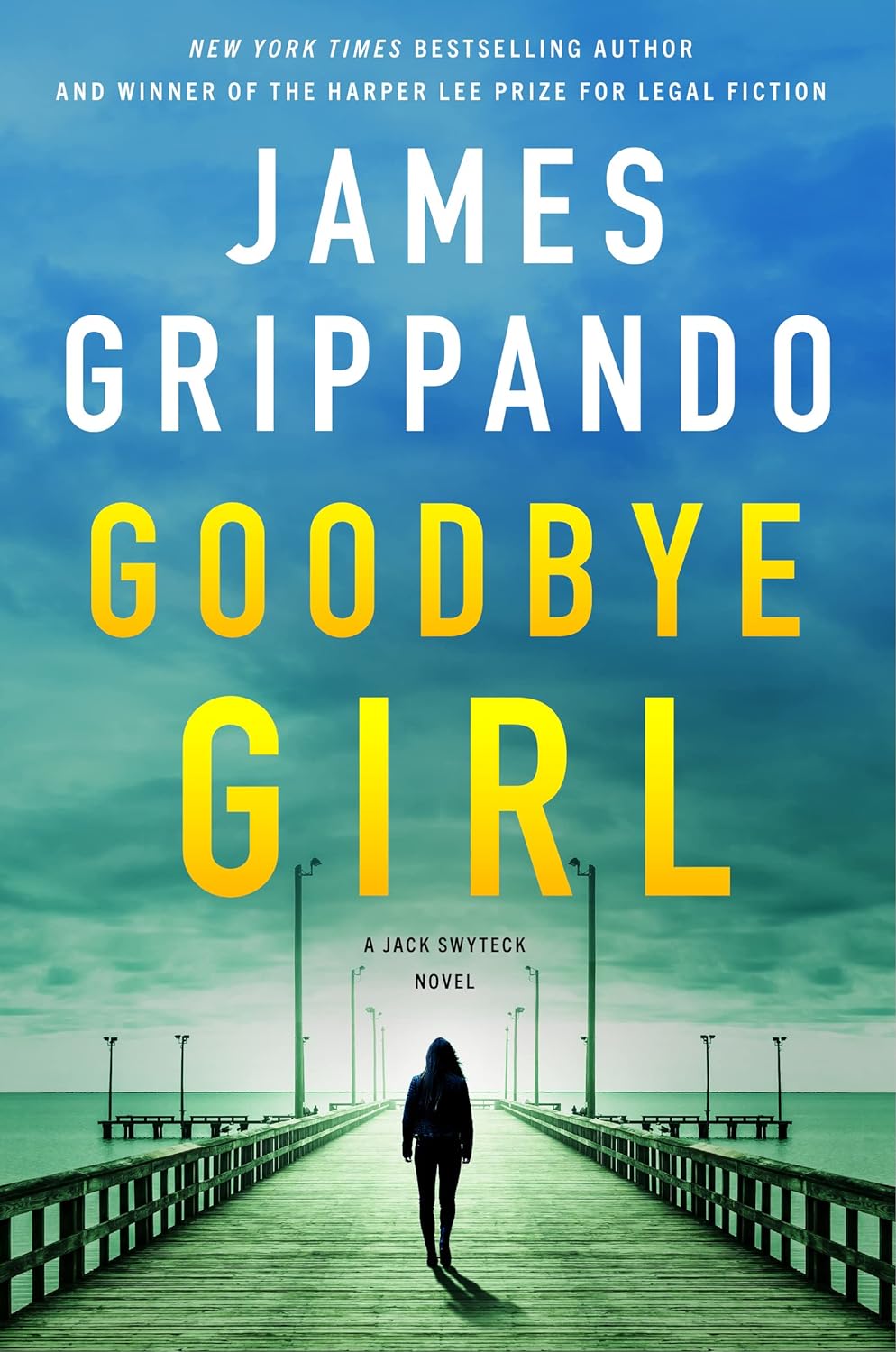
Goodbye Girl by James Grippando

Goodbye Girl Cover

Publisher: Harper Audio (Audiobook – 9 January 2024)

Series: Jack Swyteck – Book 18

Length: 12 hours and 2 minutes

My Rating: 4.5 out of 5 stars

Amazon

In the mood for a complex, gripping and endlessly entertaining legal thriller?  Look no further than the exciting and compelling read, Goodbye Girl by acclaimed author James Grippando.

I am still relatively new to the thriller genre, and I have been trying to catch up on all the different and compelling thriller authors out there I have yet to experience.  One new-to-me author I just came across was James Grippando, who has been writing intriguing thrillers since 1994.  A former lawyer, Grippando has produced a raft of awesome sounding books over the years, including several great standalone novels and his iconic and long-running Jack Swyteck series, which focuses on a titular defence attorney who gets caught up in a range of deadly and intense cases.  I personally became interested in Grippando earlier this year when I came across the synopsis for his new Jack Swyteck book, Goodbye Girl, which really appealed to me.  The 18th book in the series, Goodbye Girl, sounded like so much fun and I ended up having an outstanding time reading it.

Jack Swyteck, Miami’s top criminal defence attorney, has defended many infamous and notorious people throughout his career, but none had the star power of his new client, beloved popstar Imani Nichols.  A Grammy-winning star with worldwide fame, Imani is every definition of successful, except when it comes to the money she makes.  Signed to a controlling contract as a teenager, the rights to Imani’s original songs are now firmly owned by her ex-husband and manager, Shaky Nichols, who receives all the royalties for her music.

Determined to get back at her ex-husband, Imani has begun a controversial campaign, encouraging her fans to “go pirate” and download her early music illegally, ensuring that no-one, especially Shaky, makes any money from her songs.  In response, Shaky has engaged in ruinous litigation against Imani, who in desperate need of counsel, hires Jack to defend her.  The case swiftly turns into a salacious media circus, where allegations of infidelity, manipulation and abuse fly from both sides of the courtroom.  However, this scandalous trial is only the beginning, and soon Jack is forced to defend his client against far more serious charges.

Years earlier, a young man was found brutally murdered by asphyxiation and his body displayed in Biscayne Bay, chained to a piling with the words “goodbye girl” written on his chest.  When connections between the victim, Tyler McCormick, and Imani and Shaky are discovered, the police believe that they are responsible for his death, and suddenly Jack must now defend the estranged spouses in a complex murder trial.  Caught in the sensational trial of the century, Jack and those closest to him are forced to contend with the chaotic consequences of this case, including enraged Russian oligarchs, deadly hitman, and a deranged serial killer who bears a murderous grudge against online pirates.

Goodbye Girl was an incredible novel from Grippando that had me absolutely hooked from the very beginning.  A powerful and exciting thrill-ride filled with intense legal cases, complex investigations and fantastic characters, Goodbye Girl was a truly awesome read that proved very, very hard to put down.

I really got drawn into the awesome story that Grippando came up with for Goodbye Girl, as this book features a thrilling tale of murder, broken relationships, and betrayal, all centred around a series of intense legal cases.  The primary story initially sees Jack defend the famous singer Imani from a complex civil case from her ex-husband, which turns into a highly entertaining and salacious legal affair in the courtroom.  This initial trial is quite fun, especially as it bears some similarity to the infamous Johnny Depp/Amber Heard case, and it proves to be a compelling initial occurrence.  However, things get far more complicated as the protagonist’s client, and her former husband, are drawn into other cases, including federal charges of piracy, and the gruesome murder of a young man, Tyler McCormick, who has a past connection with the singer.

While Jack is caught up in these various complex, but highly entertaining, trials, the narrative splits to follow several other protagonists on parallel adventures.  Jack’s best friend, Theo Knight, becomes embroiled in related trouble in London, as he manages to annoy a Russian oligarch involved in the piracy business.  At the same time, Jack’s wife, Andie, begins investigating a series of murders that mirror the death of Tyler McCormick, and she soon finds herself hunting a deadly serial killer with a very specific motivation and methodology.  These intriguing storylines combine nicely with the main legal-thriller elements of the plot, resulting in a complex, multi-directional narrative which expertly keeps the reader’s attention.  Grippando loads up the story with some clever misdirection, over-the-top moments, and a few big twists, all of which increases the intensity and attractiveness of the plot.  I honestly was surprised at some of the directions that the author took the story, and I loved how crazy parts of the book got, especially when it came to why victims of the serial killer where being targeted.  The author keeps the tension going right to the end, and I loved the clever resolution to the various storylines, especially as the reader comes away extremely satisfied.

I really enjoyed how Goodbye Girl was written, especially as Grippando has an entertaining and fast-paced style that really drew me in.  The extremely strong story was well enhanced by the author’s ability to quickly jump between his protagonists, as well as a few antagonists.  The multitude of unique perspectives added a lot to the impact of the story, especially as the three main protagonists each experienced their own intense hurdles, including thrilling action in London, and an intense hunt for a serial killer in America.  While Theo and Andie’s storylines are a lot of fun and add a lot to the overall plot, the highlight of this book is the intensely compelling legal-thriller elements, which centre around main protagonist Jack Swyteck.  Throughout the course of Goodbye Girl, the protagonist becomes involved in a raft of different cases and trials, all of which are extremely compelling, and tie into the main story in some very interesting ways.  Grippando really utilised his experiences as a lawyer to create a series of realistic courtroom sequences, and I loved seeing the fantastic and fun back and forth that occurred in the court.  These trial scenes were really well written, and the reader gets effortlessly drawn into proceedings, especially as the protagonist is forced to engage in a range of tricky and entertaining legal manoeuvres in the various complex cases.  These court sequences were some of the best parts of the book, and the other story threads played off them extremely well, ensuring a complex and twisty narrative.  Throw in some fascinating and highly relevant discussions about online piracy, which becomes a key part of the plot, and Goodbye Girl really had something for all thriller and crime fiction fans.

I must admit that when I started reading Goodbye Girl, I did initially worry that it would be hard to come into the Jack Swyteck series at the 18th entry.  However, this proved not to be the case, as Goodbye Girl proved to be a very easy novel to enjoy without any prior knowledge of the other books in the series.  Most of the story contained within Goodbye Girl is insular, and readers can dive right into the plot without having read any of the other books.  While there are references to prior cases and the character history, none of it is especially relevant to the current plot, and Grippando’s explanations allow the reader to easily follow what is going on.  The author also does a great job of once again showcasing the relationships between the existing characters, so all readers get the full emotional experience of the story.  The author did feature some complex character interactions amongst the recurring protagonists. which seems likely to continue in future, however, nothing was exclusive to fans of the prior books.  There is also a range of cool new characters, especially the big personalities associated with the main case, and I enjoyed their entertaining interactions with the main characters, even if Grippando did lean too heavily into deliberately featuring “pick-me girl” characters.  As such, Goodbye Girl can easily be enjoyed by new and existing readers without any difficulty, and indeed anyone interested in a fantastic and compelling legal thriller will be spoiled by this book.

I ended up grabbing Goodbye Girl on audiobook, which is often my favourite way to enjoy a good novel.  This proved to be a great idea in the case of Goodbye Girl as the audiobook version was very fun to listen to and really brought the awesome story to life.  Coming in with a run time of 12 hours, this was a relatively quick audiobook to get through, and I had a blast listening to the complex story.  It helped that Goodbye Girl featured the vocal talents of one of my favourite audiobook narrators, Jonathan Davis.  Davis, who I best known for his work on some epic Star Wars audiobooks (including Master & Apprentice, Lords of the Sith, Maul: Lockdown and Kenobi), is an exceptional narrator with a variety of cool voices and accents at his disposal.  I really liked how Davis read out Goodbye Girl, and the fun characters and over-the-top scenes that emerged were highly entertaining when narrated by this amazing talent.  The various characters are each giving fitting and fun voices that I really enjoyed, and Davis brings a range of serviceable accents to the fore in the various international settings.  I also appreciated how he helped to enhance the magic of the author’s various court sequences, and the fantastic back and forth between the various character in the trial really came across in a clear and effective manner through Davis’ narration.  Due to this amazing narration, as well as how thrilling it was to listen to this great story be read out, I strongly recommend Goodbye Girl on audiobook.

My first experience with James Grippando’s amazing writing proved to be a lot of fun as the new Jack Swyteck novel, Goodbye Girl, ended up being quite extraordinary.  Featuring an outstanding narrative that blended a complex array of legal cases and trials, with some exciting thriller elements, Goodbye Girl was an exceptional read from start to finish and I got so drawn into this novel as a result.  This was such an incredible book, and I now fully intend to read all the new Jack Swyteck books from Grippando in the future.
Amazon

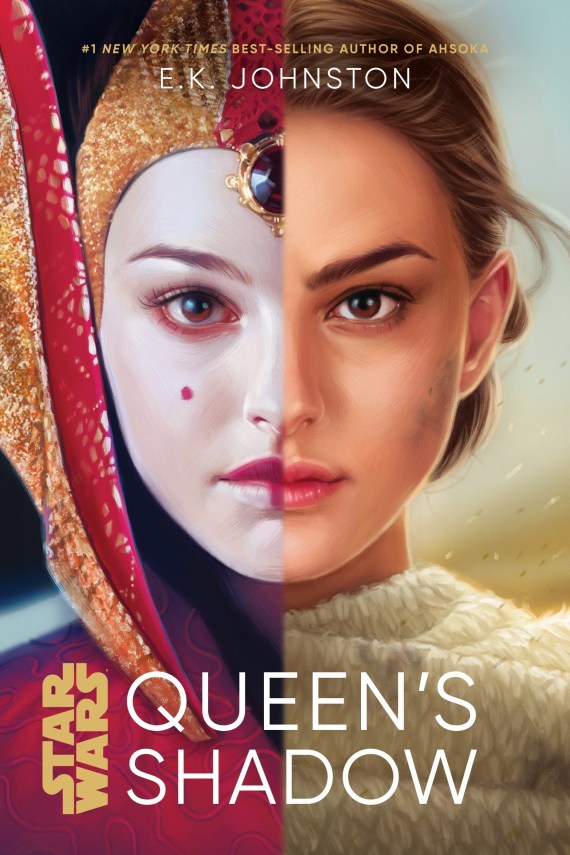
Star Wars: Queen’s Shadow by E. K. Johnston – Audiobook Review

QueensShadow Cover.jpg

Publishers: Disney Lucasfilm Press and Listening Library (5 March 2019)

Series: Star Wars Extended Universe

Length: 8 hours 22 minutes

My Rating: 4 out of 5 stars

Amazon

The female protagonist of the Star Wars prequel movies, Padmé Amidala, gets a story mostly worthy of her, as young adult fiction author E. K. Johnston attempts to bridge the character gap between the first two Star Wars prequel movies in Queen’s Shadow, the first Star Wars novel of 2019.

While The Phantom Menace had its flaws, one of the things that the first Star Wars prequel film did right was the character of Queen Amidala, the young, fierce and strong democratically elected Queen of Naboo, who was able to lead her people to freedom.  Portrayed by a young Natalie Portman, the character appeared in the other two prequel movies, where her relationship with Anakin Skywalker became a key plot point of the entire series.  While I am not the biggest fan of how Padmé was portrayed in the second and third prequel films, I was quite excited to read a novel that explored the character in more detail, especially one written by Johnston, who did such a fantastic treatment on the popular character Ahsoka Tano in her one previous foray into Star Wars fiction.  After my previous awesome experiences with Star Wars audiobooks, such as Ahsoka, I chose to listen to this book’s audiobook format, which was narrated by Catherine Taber.

Four years after ensuring the defeat of the Trade Federation on Naboo, Queen Padmé Amidala has served the last elected terms of office and is no longer Queen.  Now free of the responsibilities of ruling, Padmé and her loyal handmaidens now have time to think about a new future.  However, before Padmé can put any plans in place the new Queen of Naboo presents her with a job she cannot refuse: become the new representative of Naboo in the Galactic Senate.

Accepting the role, Senator Amidala travels to Coruscant, the capital of the Galactic Republic, to take up her seat, accompanied by a completely new support staff.  She is quick to discover that her experiences as a ruler have not prepared her for the demanding and treacherous world of galactic politics.  The Senate is a hotbed of corruption and bureaucracy, and Padmé is already considered by many to be a puppet of Chancellor Palpatine.  She also has number of powerful enemies throughout the galaxy who seek not only to discredit her but also to kill her.

However, Padmé Amidala is used to being underestimated, and with Sabé, her former decoy and shadow, watching her back, she begins to forge the political alliances she needs to finally bring some change the galaxy.

This was an interesting piece of Star Wars fiction that I quite enjoyed.  However, it is not without its flaws, and there were a few things that I disliked about the story that resulted in me dropping my overall rating slightly.  But before I talk about the parts of the story that I had issue with, I want to mention the elements of this book that I enjoyed quite a bit.

Queen’s Shadow is an amazing Padmé Amidala story that helps redeem the character after her less than stellar showings in the second and third Star Wars prequel movies.  This book helps make people forget about the helpless, pregnant damsel from Revenge of the Sith (although some deleted scenes from that movie do show some of the politics she was involved with), and instead focuses on her role as a canny political operator.  I was also quite happy that Anakin did not appear as a character in this book; I preferred to see Amidala stand on her own without being defined by her relationship with a Jedi.

Johnston did a spectacular job of creating a novel that bridges the gaps in Padmé’s story between the first and second prequel movies.  At the end of The Phantom Menace Padmé is still queen of Naboo, but by the start of Attack of the Clones she has become a senator, with very little discussion in the movies concerning how this came about.  While I am sure that some of the books and comics in the old Star Wars extended universe would have covered this period of Padmé’s life, Queen’s Shadow is one of the first stories to explore this in the new Disney owned and operated Star Wars extended universe.

The author spends a significant amount of time focusing on Padmé’s early days in the Galactic Senate, including how she formed some of her early alliances, such as with Bail Organa and Mon Mothma, and how she became such a significant force in the Senate.  In addition to this, we get to see how and why several of the minor Naboo characters from The Phantom Menace left Padmé’s side, and how several new characters, such as her new handmaidens and her security guard, Gregar Typho, came into her service.  In addition to serving as a bridge between the two prequel movies, Queen’s Shadow also ties into The Clone Wars animated television show, showing Padmé’s first contact and initial relationships with some of the characters who originated in the animated show, such as Senators Rush Clovis and Mina Bonteri.  While the book does spend time setting up events for Attack of the Clones, Johnston ensures that Padmé and the other main characters reflect on the events that occurred during The Phantom Menace, and the people that helped them during these adventures, such as Qui-Gon Jinn and little Anakin Skywalker.  Overall, I felt that this really helped tie in the events between the two books and is an excellent new piece of Star Wars cannon.

In my opinion, one of the cleverest parts of The Phantom Menace was the revelation towards the end of the film that Queen Amidala was actually being played by two separate actresses: Natalie Portman and Keira Knightley.  In the context of the film, Natalie Portman’s character, Padmé, was the real queen of Naboo, while Keira Knightley’s character, Sabé, was a decoy used for security purposes.  While Padmé portrayed the Queen at the start of the movie, when the Trade Federation invaded there was a subtle switch and Sabé took on the role while Padme could be seen disguised as a nondescript handmaiden in the background.  The two characters would then switch between portraying Queen Amidala throughout the film, with Sabé taking on the role whenever there was a chance the Queen could be captured or killed, while Padmé took on the role herself when official discussions or speeches needed to be made.  Handmaiden Padmé also got her own scenes when Sabé was taking on the role as Queen, allowing the viewers to see this side of the character.  This was and still is an amazing and ingenious part of the movie, which worked due to the similarity in appearances between the two then relatively unknown actresses, a downplaying of Knightley’s role in the film, as well as because of the elaborate makeup, hairstyles and dresses that Queen Amidala wore.  As a result, the general audience were quite surprised at the time, especially as cast lists were not as easily available on the internet at the time.

As a result, I was extremely happy that Johnston chose to explore the utilisation of the queen’s decoy in some detail throughout this book.  Quite a lot of time is spent discussing the techniques behind the Amidala persona, from the distracting makeup and costumes, to the quick-change techniques that Padmé and her handmaidens utilise, and even several discussions about the ‘Amidala voice’, the imperious tone that Portman and Knightly both performed in The Phantom Menace.  I found this entire exploration of this decoy angle incredibly fascinating, and it gave me a completely new appreciation for how the decoys were utilised in the first prequel film.  The decoys were also a key part of Queen’s Shadow, as Padmé still continues to utilise them as a senator, allowing her to avoid danger and slip away at social gatherings so she can undertake other covert tasks.  The scenes where they utilise them are quite intriguing, and I liked the author’s thoughts on the psychology behind the effectiveness of the decoys and how they are still an effective technique in an advanced science fiction society.  It was interesting to note that both of Padmé’s decoys who appear the films, Sabé and Cordé (who was blown up at the start of Attack of the Clones), have major roles in this book, with both taking on the Amidala persona at some point in the story.

While it was intriguing to see Cordé learn to take on the role of Amidala in this book, the original decoy, Sabé, was a much bigger part of the plot.  Sabé has a significant role within the book and is actually Queen’s Shadow’s secondary protagonist, performing undercover work on Padmé’s behalf.  The relationship between Padmé and Sabé was a really interesting and emotional subplot to explore, as Sabé is quite loyal to the former queen.  How Sabé defines herself as Padmé’s friend and confidant is a significant part of Sabé’s story, and Johnston spends time attempting unravel this complicated relationship.  The overall result is a fascinating inclusion to this story, and one that adds some real emotional depth to the story.

In addition to the focus on the decoy characters, Johnston also spends time looking at the role of Padmé’s royal handmaidens, the young hooded women who followed Padmé around in the first film.  I had never really given the handmaidens much thought before this book, apart from how Padmé was able to hide her identity by taking up a handmaiden’s garb for several parts of the film.  However, Johnston does a fantastic job of explaining the actual role of these characters as Padmé’s confidants, covert operatives, undercover bodyguards and potential body doubles.  I really liked how Johnston was able to turn these minor characters from the films into a significant part of her book, and it was quite interesting to see them be deployed to help with Padmé’s political moves.  Each of the handmaidens, both those who only appeared in The Phantom Menace and those who only appeared in Attack of the Clones, are explored in some detail throughout the book.  The reader gets a real sense of each of the characters personalities, what skills they bring to Padmé’s table and the fates of those handmaidens who served Padmé during the invasion of Naboo are also explained by this book.  This look at the handmaidens is an excellent part of the book, and one that I actually found quite fascinating.

Aside from the look at Padmé and her associates, Queen’s Shadow also examines a number of other aspects of the Star Wars universe during this time period.  For example, there is quite a large focus on politics, both on Naboo, and within the Galactic Senate.  The galactic politics in particular is quite intriguing, and I liked seeing Padmé’s initial impression of Senate procedure and its many shortcomings.  Johnston has also included some fun media articles throughout the book, showing how negative news coverage is being used to disadvantage or advantage Padmé’s political ambitions, which I found to be quite amusing.  There are also some hints at the coming Separatist movement, as several planets are showing discontent with the Republic and certain actions are taking place to undermine security throughout the galaxy.  All of the features are pretty interesting, and I had fun reading about them throughout this book.

Now, while I obviously quite enjoyed many of the elements that Johnston explored in this book (having gone on about them for over two pages), I have to admit that the overall story is actually a bit boring in places and the story really does not go anywhere.  There are some big points, including a quick assassination attempt, piracy, large-scale disasters and potential political crisis, but many of these events has any real significance, follow through or any sort of actual conclusion.  This could potentially be alright if Queen’s Shadow is the start of a larger storyline or a new book series, but I am not too sure how likely that is.  Not only is there no real indication that Johnston will be continuing this story, but the epilogue of the book kind of puts a damper on that, which I will discuss below.

BEWARE SPOILERS BELOW:

The epilogue of the book shows Padmé’s funeral, as shown at the end of Revenge of the Sith.  While I did like how Johnston alluded to the funeral at the start of Queen’s Shadow’s by using the same descriptions of Padmé’s floating flower-covered body, and the funeral does put a final end to the story.  The epilogue did show Sabé talking with Senator Organa, so this book could potentially set up a follow-up book focusing on the former decoy either joining the Rebel Alliance or investigating Padmé’s death.  However, this does not really fit with some of the open story points from this book, as the Trade Federation are the most likely people behind the assassination attempts and the piracy, and who cares about the Trade Federation after Revenge of the Sith?  In addition, this book only really explored around a year of Padmé’s life as a senator, and I think it would make more sense to follow more of Padmé’s early political career, especially as there is still around five more years until Attack of the Clones begins.  I suppose you could maybe do a split-timeline story that follows Padmé and Sabé before and after Revenge of the Sith, with the two storylines coming together, although I am not sure how well that would work.  I would like to see Johnston explore this more and give her overall story more shape, I just do not know how likely that is at this point.

END OF SPOILERS

While the somewhat pointless story does bring Queen’s Shadow rating down a bit, its audiobook features really help raise it up again, especially with its excellent narrator Catherine Taber.  The audiobook version of Queen’s Shadow runs for around eight hours and 20 minutes, so it is an easy book to get through quickly.  Catherine Taber is the actress who voiced Padmé in The Clone Wars animated show and is also the most recent person to portray the character on screen.  As a result, she is the perfect narrator for this book, as she already perfected a great Natalie Portman imitation voice for the show.  Taber did a fantastic job narrating this book, as she not only is the perfect voice for Padmé but also has an amazing range for the other characters featured in the book.  I appreciated how she was able to craft similar voices for the handmaiden characters, many of whom were chosen to be handmaidens because they were physical and audible matches to Padmé.  This is particularly true of Sabé, and as a result Taber ensures she has pretty much the same voice that Padmé does.  Other high points of Taber’s narration include her rendition of the Amidala voice, as well as the creepy tones she utilises for Chancellor Palpatine, especially when he kept saying “my dear”.  As always, the producers of this Star Wars audiobook load up this version with all sorts of sound effects and classic Star Wars music.  I felt that these sound effects and music really helped enhance the story, and gave it some real atmosphere, and I liked the way that certain things, such as holo-messages between the characters, were altered to make them sound more realistic.  I would strongly recommend the audiobook format of Queen’s Shadow as the best way to enjoy this story, and I thought it was just wonderful.

Queen’s Shadow is marketed as a young adult novel, and it is quite a good novel for a younger audience to enjoy, with only minor sexual references, coarse language, drug use and violence throughout the book.  However, there really is not any upper age limit on enjoying this book, and older readers can just as easily explore Johnston’s story.  While there is no age limit, readers should ideally be a Star Wars fan to fully enjoy Queen’s Shadow.  At the very least, readers should have watched all of the prequel films first to get a full handle on what is happening.  While I imagine someone with no prior knowledge of Star Wars might be able to enjoy reading this, it is probably not the best young adult science fiction book to pick out.  As a result, this book is recommended more for established fans of the franchise, and as a pretty hard-core Star Wars fan myself, I know I enjoyed all of the references and character exploration that Johnston did a lot more.

In the end, I decided to award Queen’s Shadow four stars out of five.  While I really loved all the intriguing elements that Johnston explored in this book, the lagging story did make it a little harder to enjoy.  That being said, I would not hesitate to grab another Star Wars book from Johnston, as she has an outstanding understanding and appreciation of the Star Wars universe.  I do hope that this story is continued in some way, and if it does, I will definitely check out the audiobook version of it, especially if it is narrated once again by Catherine Taber.  Interesting reading, Queen’s Shadow is worth checking out, especially if you are an established fan of the Star Wars franchise.

Amazon