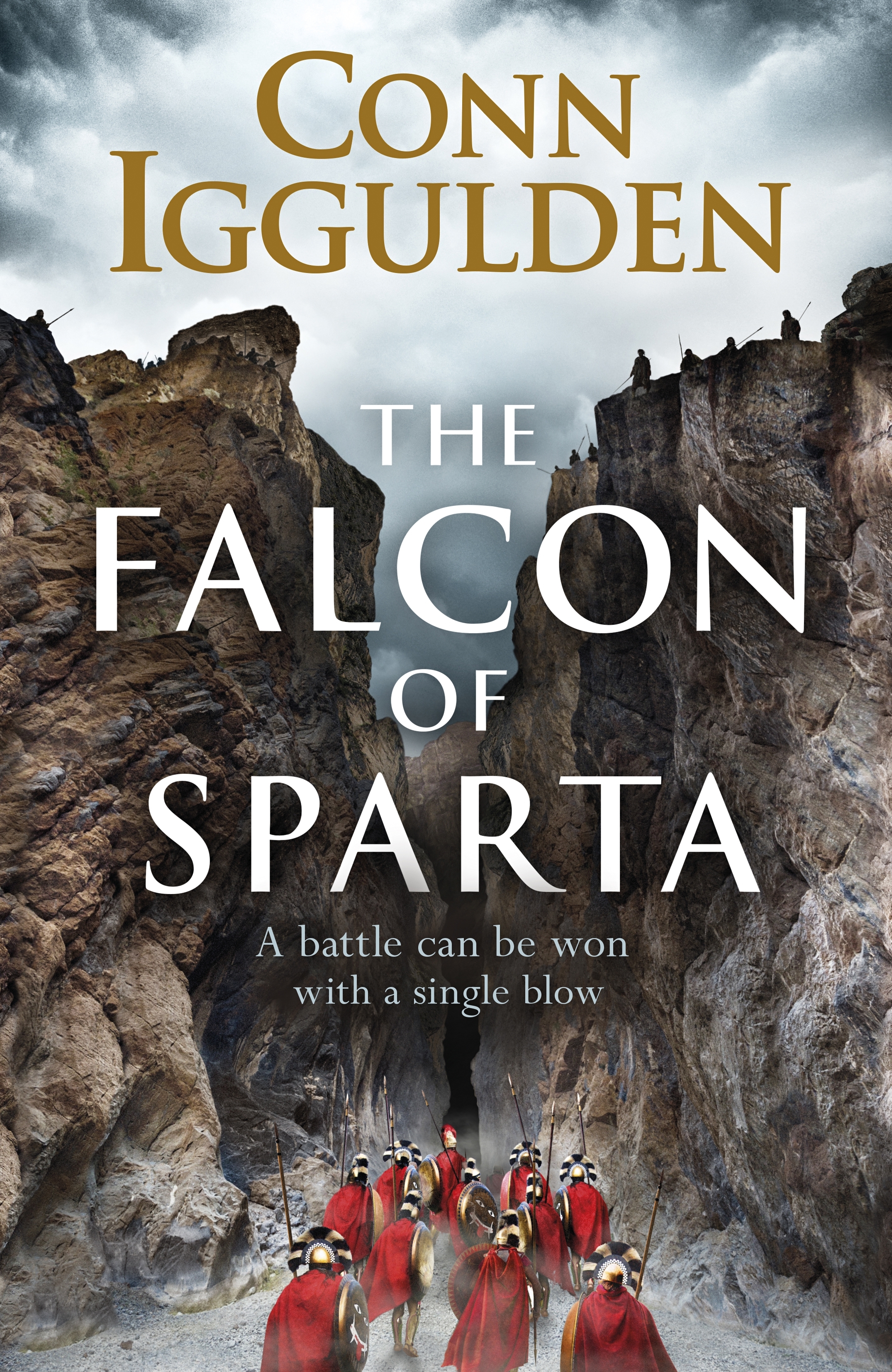
The Falcon of Sparta by Conn Iggulden

Publisher: Michael Joseph

Publication Date – 3 May 2018

Amazon

One of historical fiction’s very best authors is back with an enthralling story that follows history’s greatest warriors on one of their most legendary journeys.  Without a doubt, Conn Iggulden is one of the top authors of historical fiction in the world today.  Since 2003 he has consistently produced some of the most in-depth, detailed and engrossing chronicles of several different historical periods and cultures.  His previous work includes lengthy examinations of Julius Caesar and Genghis Khan in his bestselling Emperor and Conqueror series, and he has also produced the definitive fictional account of one of the bloodiest civil wars in English history with his extraordinary War of the Roses series.  Now, following his 2017 fantasy debut Darien, Iggulden has once again returned to his historical fiction roots by exploring another new realm of history, the Spartans.

In 401 BC, the new Persian king, Artaxerxes II, rules the largest empire in the known world.  With an empire sprawling from the Aegean Sea to the north of India, the king of Persia is the undisputed ruler of 50 million people.  However, despite all their wealth and power, the kings of Persia have never conquered Greece.  From Thermopylae to Marathon and Platea, the Persians have suffered the ferocity of the Greeks, and none are more feared than the men of Sparta.  As a result, it has been many years since the Persians have attempted to invade Greece, and many Spartans now serve as mercenaries in the Persian army.

When Prince Cyrus, Artaxerxes’s brother, is nearly executed by the new king following the death of their father, the young prince is determined to claim the throne of Persia for himself.  After hiring an army of skilled Greek mercenaries led by an elite core of Spartan warriors and the revered Spartan General Clearchus, Cyrus marches against his brother.  But battles can be lost with a single blow, and when Cyrus is killed on the battlefield the Greeks suddenly find themselves trapped in the middle of the Persian Empire.

With Clearchus and the other Greek generals having been killed through treachery, it falls to a young solider, Xenophon, to lead the surviving Greeks to safety.  With limited supplies and no knowledge of the land before them, Xenophon must find a way to lead 10,000 soldiers and an additional 10,000 camp followers back to Greece.  Forced to endure constant attacks from the Persian army as they travel through deserts and across mountains, their journey will become legendary.

The Falcon of Sparta is a standalone novel primarily based on the classic Greek text, Anabasis, which was written by the historical Xenophon.  Iggulden’s novel focuses on the events of the first four of the seven books of Anabasis.

While The Falcon of Sparta does not contain the full version of Anabasis, in some ways it is a much more complete and detailed story that focuses on the people who featured in this great adventure.  Xenophon related his tale in a rather simple and direct manner, and Iggulden has compensated for this by providing his own storytelling and dramatic writing.  Many of the key characters now have significant backstories fictional justifications for many of these characters’ actions and motives.  For example, Iggulden attempts to provide a more complex and dramatic explanation for the schism between Artaxerxes and Cyrus, rather than the historical story that Cyrus simply desired the throne.  Iggulden also provides additional context for one of the main villains of the Anabasis, the Persian noble Tissaphernes, who led the Persian armies against the retreating Greek forces.  In The Falcon of Sparta his role as a villain is greatly expanded.  Not only is he portrayed as a former friend of Cyrus who betrayed him for power but also as one of the main reasons Cyrus fails to seize the throne and the protagonists are placed into such peril.  Iggulden’s additional backstories and character traits make for a much more compelling and complete story with thrilling and absorbing motivations and antagonists.

These additional story elements are greatly enhanced by the author’s use of character perspectives.  For the first two thirds of the story, narration is split between a number of characters, including Cyrus, Clearchus, Tissaphernes, Artaxerxes and Xenophon.  Not only does this split narration help to build up the respective characters’ histories and allow the audience a better view of their personalities, but it also adds significantly to the story as these characters provide various perspectives on the events occurring in the formative parts of the main story.  Through the narrators we are given glimpses into a range of interesting things, including Artaxerxes’s and Cyrus’s thoughts on the war for their father’s throne, as well as the events and feelings that led up to the conflict.  We also see the respect that Cyrus and Xenophon have for their Spartan allies, as they see examples of their effectiveness in combat and their legendary self-discipline.

The scenes told from Tissaphernes’s point of view further highlight his role as a villain as his inner monologue reveals his selfish motivations and ambitions.  The story told from Tissaphernes’s viewpoint helps turn him into an embodiment of the distain that the ancient Persians had for the Greeks and their soldiers.  Despite seeing the Greeks’ substantial battle prowess, Tissaphernes and many of the Persians viewed the Greeks as second-rate soldiers, and it is fascinating to see how deeply held this belief was.

After the first two thirds of the book, the story is told exclusively from the point of view of Xenophon and starts to mostly represent Book III and Book IV of the Anabasis.  This part of the book allows the reader a closer view of the Spartan and Greek forces as they participate in their epic march and is very entertaining.  Even as the story becomes confined to only one narrator, Iggulden is still able to provide the necessary detail and drama in the final part of the book to keep the story going strong and maintain the reader’s attention and enjoyment.

Special attention needs to be given to the masterful portrayal of the Greeks and Spartans in battle.  Iggulden has an incredible eye for detail and an amazing writing style that brings the reader right into the heart of the book’s large-scale action sequences.  In particular, he spends a significant amount of time focusing on the Greeks and the Spartans and does an amazing job of capturing their battle techniques, tactics and mentality.  There are a large number of battle scenes within this book, and Iggulden uses every opportunity to show off the prowess of his heroes in as much detail as possible, allowing the reader to easily witness the events in their minds.  The Persian soldiers are also examined in the scenes narrated by Cyrus, and it is interesting to see the differences in the fighting style and mentality of the Greeks and Persians.  Those interested in reading about this part of history will love the amount of attention given to the Spartans and find many of the associated descriptions deeply fascinating.

Conn Iggulden has once again produced a masterful and absorbing fictional account that focuses on an utterly intriguing historical event.  Bringing the reader right into the middle of the march of the Ten Thousand, Iggulden expands on Xenophon’s Anabasis and provides a more dramatic and elegant story of betrayal, endurance and survival.  The Falcon of Sparta is a love letter to one of history’s most legendary race of warriors, and it provides the reader with a detailed exploration of Spartan warfare, lifestyle and mentality.  This is a breathtaking and highly recommended piece of historical fiction that is guaranteed to drag you in for the long haul.

My Rating:

Five Stars

Amazon

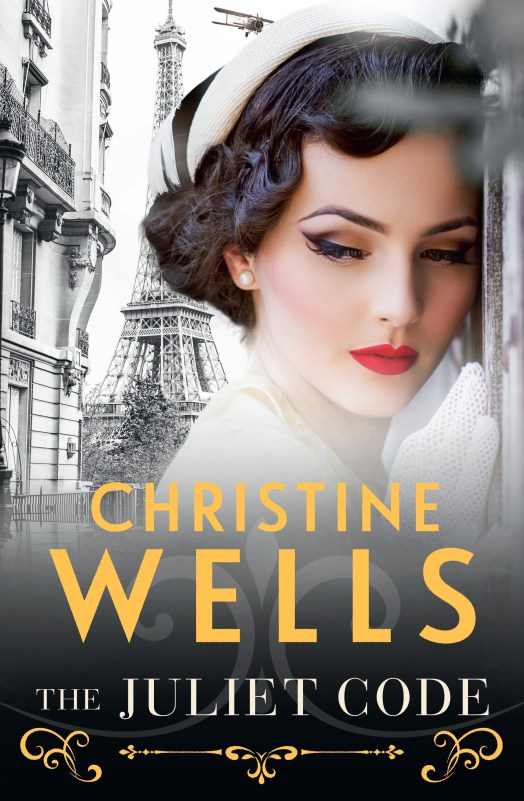
The Juliet Code by Christine Wells

The Juliet Code Cover

Publisher: Michael Joseph

Publication Date – 30 April 2018

Amazon     Book Depository

From acclaimed Australian author Christine Wells comes this touching and memorable tale of love, captivity and endurance in the darkest of times.

During World War II, Juliet Barnard was a British agent working for the Special Operations Executive.  A skilled wireless operator, she was one of the few female agents that were dropped into occupied France to meet contacts and pass intelligence back to the Allies.  While initially successful, she was only active in France for a short time before the Nazis captured her.  Trapped in a prison that specialised in interrogating captured spies and infiltrators at Paris’s Avenue Foch, Juliet endured torture, drugging and manipulation and came out of the prison a different person.

Now, two years after the end of the war, Juliet is still recovering from her ordeal and trying to continue a relationship with Felix, the man she fell in love with during her training.  Claiming to be suffering from memory loss, Juliet has managed to avoid providing any details about her time at Avenue Foch or about the man who held her captive, Sturmbannführer Strasser.  Finding Strasser is the last thing Juliet wants to happen, because he knows a dark secret about Juliet – a secret she would kill to protect.  However, when Juliet meets Mac, an SAS officer turned Nazi hunter whose sister served in the war with Juliet, her guilt compels her to return to Paris to help him locate Strasser.

This is the third book from Wells, who has previously written two English-based historical stories that feature a strong, female protagonist.  The Juliet Code is the second book from Wells that focuses on British spy activities during World War II; her previous novel, The Traitor’s Girl, focused on a World War II MI5 operative.  The Juliet Code is another excellent and intense romp into the history of World War II, and Wells has done an amazing job of creating this unique and emotional story.  This book is a combination of a great dramatic story and a two-stage historical spy thriller wrapped up with a poignant romantic subplot.

Wells has injected considerable drama and emotion into her story, especially through her main character, Juliet, who goes through substantial emotional changes throughout the book.  Before she is dropped into France, Juliet is portrayed as a shy girl, unsure of her abilities as a potential spy but eager to do her duty to her country.  After the war she is more hardened individual who is suffering from guilt, both due to being one of the few agents to survive capture and because of her own actions during the war.  These changes in the character are made obvious to the reader, not just because of Wells’s great writing ability but also because she switches between the mid-war and post-war scenes multiple times.  Wells slowly reveals the main character’s wartime secret, which is a central part of the plot.  While there are some hints to what this secret is early in the book, the full reveal is not done until later in the story, and makes use of a moving and artfully constructed confession scene.

The Juliet Code is set in the 1940s, and Wells has broken the story up into two distinct periods.  The first period starts in 1943 and continues for the rest of the war, examining the main character’s training, her infiltration of occupied France and her time as a captive at Avenue Foch.  The parts of the book set during the war are very intriguing and are some of the most appealing scenes from a historical fiction viewpoint.  The sections that feature Juliet training and actively spying in France were some of my favourite parts of the plot, and I loved reading Wells’s descriptions about the French resistance networks, the British covert activities, their espionage techniques and the counteroperations the Nazis were undertaking to catch the operatives active in France.  There are also some significant descriptions of how the British wireless transmitters functioned and British coding techniques.  These very technical parts of the book contain some fascinating information while also providing the reader with a good understanding of this technology and what the operators were doing with it.  There are also a number of scenes that follow Juliet after she is captured and held as an enemy spy in Paris.  These parts of the book are, by necessity, darker in nature, depicting how these spies, especially female operatives, were treated during this period.  There are also thorough descriptions of the historical locations used as prisons in Paris.

The second part of the book is set in 1947 and features Juliet and her companions revisiting the sites of Juliet’s captivity and attempting to hunt down her jailer.  This part of the book comes across as more of a traditional spy thriller, and contains some vivid descriptions of post-war France.  There are some examinations of how the Allies and the Soviets were attempting to capture or recruit former members of the Nazi regime, as well as some interesting looks into the post-war espionage that was occurring at this time.  Wells also revisits characters and locations encountered by the protagonist during the war, and these scenes are used to provide clues to locate Strasser while also providing additional hints about what happened to Juliet during her captivity.

Among the defining features of The Juliet Code are the realistic and detailed characters that the reader gets to enjoy.  They feel so realistic because these characters were inspired by real historical figures who served in similar capacities during the war.  This touch of realism adds a lot to the book and serves as an inspirational reminder of those unsung heroes of British espionage.  These fictional facsimiles do interact with a few real historical figures within the book, and readers will be captivated as they find out which of these unique wartime stories are actually historical fact.

Wells has included an enticing romantic subplot between the characters of Juliet and Felix.  Readers will be able to feel the affection that these two characters have for each other, as well as the loss they experience as a result of Juliet’s capture.  Their relationship is also masterfully woven into the main story, and elements of their romance become key plot points, such as some personal romantic poems that actually contain transmitter codes.  Thankfully, Wells decided not to invest too much time in a love triangle between Juliet, Felix and Mac, although she does include the initial and somewhat entertaining jealousy you would come to expect from this situation.  Overall, the romantic subplot is both absorbing and nicely subtle, as it does not overwhelm the rest of the story.

Australian author Christine Wells once again delivers an elegant piece of literature that makes full use of its well-paced dramatic story and an utterly stimulating historical setting and content.  Fans of historical fiction will love The Juliet Code’s dive into World War II spycraft and counterespionage, as well as the excellent and electrifying thriller that blazes through post-war France.  This is a phenomenal novel that sticks in the mind and will appeal to wide array of readers.

My Rating:

Four stars

Amazon     Book Depository

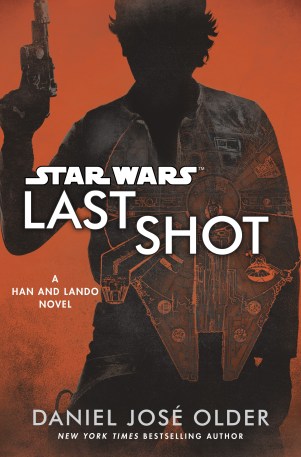
Star Wars: Last Shot by Daniel Jose Older

Last Shot Cover.jpg

Publisher: Century

Australian Publication Date – 30 April 2018

World Publication Date – 17 April 2018

Amazon     Book Depository

Han and Lando return in Last Shot, the latest Star Wars novel, released just ahead of the characters’ upcoming prequel movie, Solo: A Star Wars Story.

The Phylanx Transmitter is one of the most secretive and dangerous weapons in the galaxy.  Built by the psychotic Fyzen Gor, over the years it has been sought by some of the most nefarious people in the galaxy, from criminal gangs to bounty hunters and even the Empire.  Two captains of the Millennium Falcon have gone up against Gor in an attempt to claim the Phylanx Transmitter.  In the early days of his career, the dangerously charismatic Lando Calrissian and his pilot droid, L3-37, encountered a prototype of the transmitter and barely survived.  Years later, a young Han Solo and the Wookiee Chewbacca raced through the criminal underworld to reach the transmitter before it disappeared into the stars.

Since then, the Empire has fallen and the New Republic has taken its place.  Lando has become a successful business owner and the respected administrator of Cloud City, while Han has settled down with Princess Leia and is now trying to be a good father to young Ben Solo.  While Lando and Han both believe they have put their former lives as thieves and smugglers behind them, the past has a way of catching up with everyone.

Having escaped custody, Gor is holding Cloud City hostage and demands that Han and Lando find and reclaim the Phylanx Transmitter.  Forced to fly under the radar, the two scoundrels must find the transmitter and prevent Gor from using it to rain down untold destruction across the galaxy.  In order to succeed, they recruit a brand new team, including a young hotshot pilot, a brilliant Ewok slicer, a woman who may be the love of Lando’s life, and, of course, the best and fluffiest co-pilot around, Chewbacca.  However, even their new team may not be able to withstand Gor and his twisted droid creations.

Last Shot is the latest book from the acclaimed Daniel Jose Older, author of the young adult fantasy sensation Shadowshaper.  This represents his first venture into Star Wars fiction.

Ever since the original Star Wars movies, vast amounts of books, comics, video games and a television series have been created, resulting in a massive extended universe.  Since Disney’s purchase of Lucasfilm in 2012, the vast majority of this extended universe has been expunged, with only the movies and a few products, such as The Clone Wars, now considered canon.  Some elements of the original extended universe have resurfaced over the years, such as fan favourite character Grand Admiral Thrawn, who recently appeared as an antagonist in Rebels and was the subject of last year’s Thrawn by Timothy Zahn.  Last Shot is the latest book in the smaller Star Wars canon extended universe which has been cultivated in the Disney years.  This stand-alone book has been released as a companion piece to the upcoming movie, Solo: A Star Wars Story, and features four of the characters who are going to appear in it.

Last Shot contains a clever combination of four separate storylines set in different points in time throughout the franchise’s history.  The main story is set a couple of years after the events of Return of the Jedi, and features the characters forced to return to their lives of crime.  Two of the side storylines follow the main characters on a separate mission in their past, and these subplots are set on either side of the upcoming Solo movie.  The final storyline is set over a period of years and follows the rise of Fyzen Gor.  Older does a skilful job of switching between the various storylines to reveal certain clues and show the reader the hidden history the two main characters have with the protagonist.

This book will strongly appeal to fans of Star Wars, particularly those who like to dive deeper into the lore and storylines of the extended universe.  However, even dedicated fans may feel a little overwhelmed by the constant references to other elements of canon and the inclusion of nearly every alien race in the galaxy.  Even the addition of The Force Awakens fan favourite character Maz Kanata seems a bit forced and unnecessary.  Despite this, casual fans will easily be able to follow the story and enjoy the funny and action-packed adventure within.

Last Shot sets itself apart from many of the other Star Wars stories by avoiding the Jedi-saturated and force-fixated storylines that define most of the movies and books.  This book doesn’t even feature a single Jedi, but instead focuses on the criminal underworld of the galaxy as the main characters fight, cheat and steal their way to victory.  This is a refreshing story which seems to mirror the crime-orientated plot of the upcoming Solo movie.

In addition to the crime-centric story and the multitude of action-packed scenes, the readers will really enjoy the substantial humour that Older has included within book.  In particular, most readers will appreciate the number of self-deprecating jokes and references towards elements of the Star Wars universe.  For example, one particularly enjoyable sequence involves a Gungan who is annoyed with how his species is perceived by the galaxy thanks to the actions of a certain individual.  Despite there being a 40-year gap between the events of this book and those of The Phantom Menace, some shade is still thrown over the infamous Jar Jar Binks.  Not only does the book come across as more humorous and less serious than other Star Wars stories, the book has also been written in a much more adult way, as there are a number of jokes and allusions that would never get included in the family friendly movies.  As a result, Last Shot is an incredibly entertaining story that stands apart from previous works of Star Wars fiction.

Star Wars: Last Shot is an outrageously fun new novel that will greatly appeal to all fans of the Star Wars franchise.  Filled with innumerable references and jokes about the wider Star Wars universe, readers will love to see Han Solo and Lando Calrissian being the very best scoundrels they can be.  This is amazing and addictive new adventure in a galaxy, far, far away.

My Rating:

Four stars

Amazon     Book Depository