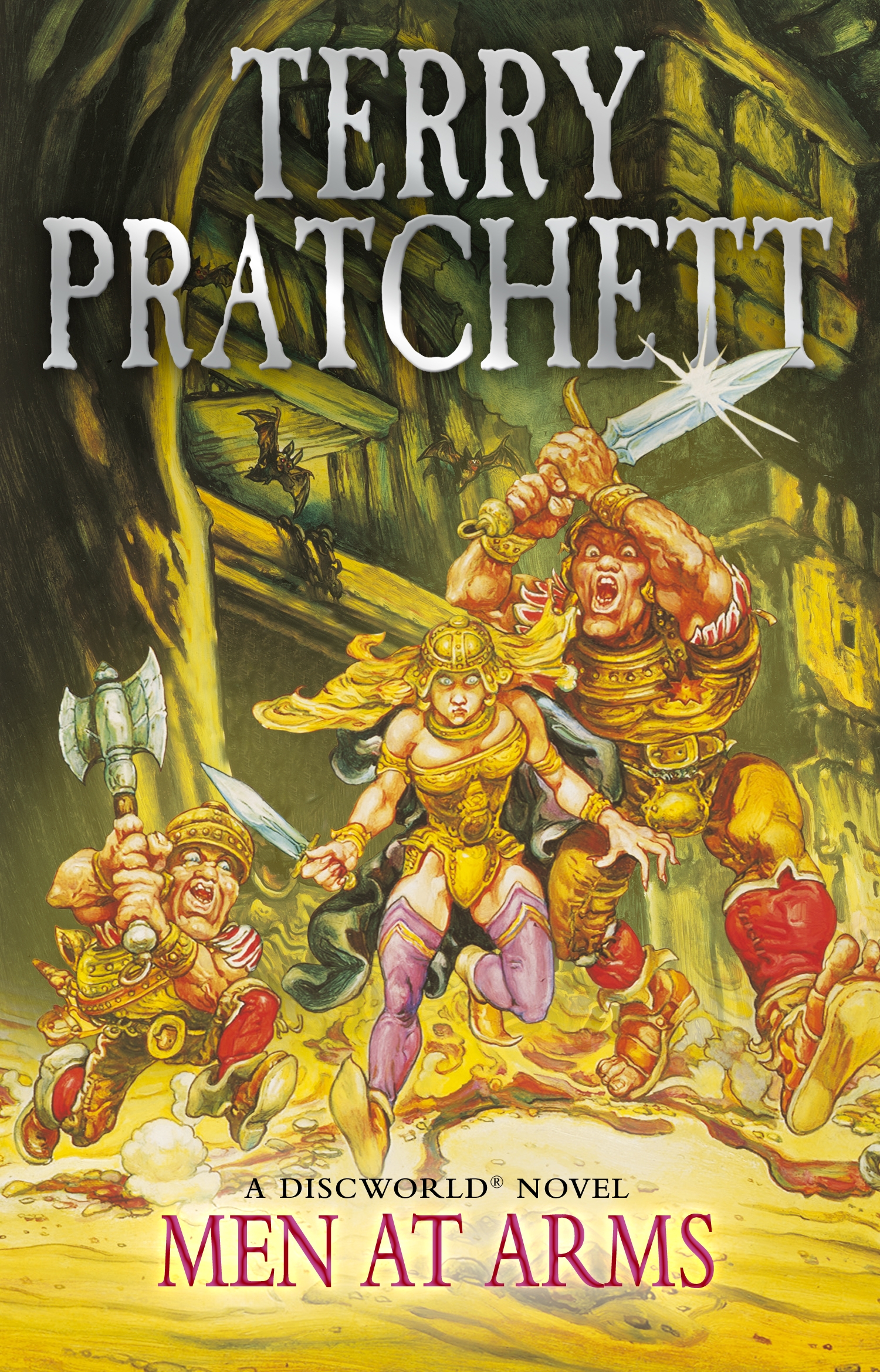
Men at Arms by Terry Pratchett

Publisher: Gollancz/Penguin Random (Audiobook – 1993)

Series: Discworld – Book 15/City Watch – Book Two

Length: 12 hours and 58 minutes

My Rating: 5 out of 5 stars

Amazon

After yet another re-read, the classic fantasy satire novel, Men at Arms remains as one of my favourite Discworld novels by the late, great Terry Pratchett, especially as its new audiobook version breaths fresh life into the always impressive novel.

Readers of this blog will have noticed that I have been on a real Discworld rampage lately, having re-read several books from my absolute favourite fantasy series.  Much of this is due to the recent release of a cool new audiobook version of all the Discworld books, featuring an awesome array of new narrators and vocal talents.  This new format has proven particularly awesome for books like Pyramids, Moving Pictures and Small Gods, and I have been eager to see how some of the books in my favourite Discworld sub-series, the City Watch books, come across with the new narrators.

While I have a lot of love for all the books in Terry Pratchett’s Discworld, my absolute favourites come from the City Watch sub-series.  Following the unlikely members of the Ankh-Morpork City Watch, a rag-tag team of guards generally looked down upon by the entire city, the City Watch books features an exceptional combination of fantasy and crime fiction elements, wrapped up in Pratchett’s usual satirical humour, as the protagonists investigate a series of dastardly crimes in the supernatural Discworld.  The series started perfectly with the awesome novel Guards! Guards!, which I reviewed last year, and Pratchett did an outstanding job following this up with the brilliant sequel, Men at Arms.

After saving the sprawling and eternally crime-ridden city of Ankh-Morpork from a fire-breathing dragon, the men of the Night Watch are still at work protecting the city, even though most of the city wishes they didn’t exist.  Despite their previous escapades, it’s a bad time to be a copper in Ankh-Morpork, with species tension between the dwarfs and the trolls at boiling point, while the powerful guilds disregard the Watch’s non-existent authority.  Worse, the Night Watch has been forced to accept three diversity hires, and must now contend with a mad dwarf, a thick troll and a woman (gasp) amongst their ranks.

Despite this, when an explosion at the Assassin’s Guild literally rocks the city, it falls to Captain Samuel Vimes and his small squad to investigate the heist hidden by the blast, despite the deliberate orders of the city’s tyrannical ruler to stop.  Determined to wrap up the case before his impending marriage and retirement, Vimes is soon forced to contend with a series of unusual, but seemingly linked murders, many of which have been caused by a lethal weapon never seen on the Disc.

With riots on the streets, and assassins and fools dodging their questions, all the members of the watch, including their contentious recruits, will need to work together to solve the murders before the city descends into chaos.  But how will they fare when going up against the most dangerous criminal mind the city has ever seen, one determined to bring back the Ankh-Morpork’s ancient kings, while wielding a dangerous new weapon that could change the entire Disc forever?

Even after many, many re-reads, Men at Arms continues to shine as one of Pratchett’s better books.  Featuring an epic crime fiction narrative, loaded with impressive characters, fantastic humour and great use of Pratchett’s iconic Discworld setting, Men at Arms is a complex, emotionally charged and deeply moving read that I could honestly read 100 times and still not get bored with.  A brilliant novel that unsurprisingly gets an instant five-star rating from me.

Pratchett wrote some exceptional narratives throughout his career, but few stand up to Men at Arms in terms of complexity, cleverness and emotional impact.  Expertly reintroducing the cast of Guards! Guards!, while also bringing in some impressive new support characters, Men at Arms starts off an excellent pace, as Pratchett cleverly examines the changes to the characters, sets up the new case, while also showcasing the motivations of the apparent main antagonist.  From there, it doesn’t take long for a dark series of crimes to take place, with Vimes and his squad investigating despite the apathy of the rest of the city.  Pratchett does a lot of excellent set up in the early part of the book, and the reader soon becomes invested in the investigation, especially as the book begins to follow a series of deaths, some of which were caused by a particularly deadly weapon that modern readers will be all-too familiar with.  Some great character arcs are also introduced here, as the extended cast all hit their own various problems they are forced to overcome, with Vimes dreading his eventual retirement, Carrot feeling the added responsibility, the fun buddy-cop arc between Detritus and Cuddy, and Angua dealing with her own problems.  The author sets up and expands on these arcs throughout the book perfectly, providing additional emotional impact, as well as some interesting side angles on the main storyline.

While the first half of the novel sets everything up perfectly, it is in its second half where Men at Arms truly shines.  Pratchett keeps raising the stakes of the story, with more victims, run-ins with the shadowy antagonist, and the Watch characters attempting to understand the nature of the weapon that has been turned against the city.  The author throws in some interesting wrinkles to the case, which shadow who the true villain is, while other events throw emotional shade across several of the characters.  The various connected character arcs start to come together perfectly as the book continues, and you go into the final stretch with a range of emotions around you.  While ostensibly a comedy, Pratchett chooses to hit the tragedy element of the plot really hard in the lead up to the finale, with some big moments that will leave you speechless.  The big end reveal and confrontation is exceptional, and I loved how well all the storylines and cleverly setup plot points came together.  Everything leads up to a very desperate struggle that helps to define some of the main characters in some very powerful ways.  Pratchett chooses to leave the book on a hopeful note that sets the expanded course for the future City Watch books, while also providing some interesting insights into one of the main characters and his role in the city.  An overall epic narrative that twists, turns and keeps you guessing, while constantly entertaining and emotionally charged.

As with his other books, Pratchett perfectly sets out Men at Arms with impeccable writing, and I loved how this complex novel came about.  Featuring his usual impressive blend of fantasy and humour elements at its base, Men at Arms is both intriguing and quite funny in equal measures, and I love the subtle comedy that runs through it.  Many of these scenarios involve classic fantasy scenarios being seen through the eyes of self-aware characters, allowing the situation to be taken up to an 11, with sarcastic commentary from the witnesses.  This humour is well enhanced by several of its best characters, including a fantastic new buddy cop routine, with members of two separate and historically antagonistic species forced to work together and eventually becoming friends.  Some of the other hilarious moments in the book include unlikely members of the city’s population being conscripted into the Watch, unfunny clowns, unconventional investigation methods, and other subtle humour.  You also have to love the brilliant footnotes that seek to enhance the story and showcase just how ridiculous the Discworld is by providing additional details about the universe and the people within it.  All this results in a brilliant and highly entertaining fantasy read, and that’s before you even get to the great crime fiction elements of the story.

As with Guards! Guards!, Men at Arms stands out from the rest of the Discworld series due to the way that Pratchett provides a complex and compelling crime fiction narrative.  Focused on an explosive heist that eventually results in a series of brutal murders, Men at Arms tries to envision how firearms would disrupt the Discworld.  This allows for quite a captivating crime fiction narrative, which I feel was a much better mystery than Guards! Guards!.  Advancing more into police procedural territory than its predecessor, the mystery of Men at Arms proves to be top rate, with the protagonists going after an already known villain for much of the book.  Much of the early story involves the protagonists trying to unfurl the antagonist’s plan and discover how he committed the crime, which allows for some great scenes as the Watch inexpertly investigate.  Pratchett cleverly twists the fact that think you know who the antagonist is towards the end of the book, and I love how well he switched this key story element, especially as the implied true villain of the story is far more sinister than just evil humans.  I really enjoyed how well Pratchett sets up this mystery in Men at Arms, and even after so many re-reads there are still additional subtle clues and foreshadowing that I’m only just picking up on.  The police procedural elements of the story are also extremely well handled, with a lot of humour focused around three very unlikely recruits joining the already scruffy outsiders who make up the Watch.  All these elements come together extremely perfectly and allow for readers of various genres to come into Men at Arms and have an incredible time.

Due to Pratchett’s excellent writing style, Men at Arms does work quite well as a standalone novel, and new readers can generally enjoy this book without any prior knowledge of the Discworld series, especially once they get caught up in the cool story and amazing humour.  However, I do feel that to get the best experience with Men at Arms, readers really do need to have checked out Guards! Guards! first.  The continuing storylines, history of the city and character arcs all come into play extremely well in Men at Arms, and you get a much more complete experience viewing all City Watch novels in order.  There is also a continuation of some character arcs from the standalone novel, Moving Pictures, especially as a few major characters from there get a recurring role in this new sub-series.  As such, I would say that Men at Arms is a novel more aimed towards Pratchett’s established fans, with those who loved Guards! Guards! guaranteed to enjoy its impressive sequel and the compelling direction Pratchett starts to take the City Watch books in.  It helps that the author continued to explore the crumbling and crime-ridden city that is Ankh-Morpork in this Men at Arms, providing even more details about its governance, mindset and people.  This includes really expanding on the species tension between the dwarfs and trolls and showcasing it as a major plot point while also paralleling real-life racial tensions.  This focus on dwarf and troll conflict becomes a major plot point of the Discworld going forward (especially in the later City Watch books), and its setup here was spectacular.  Combine that with the changes that happen to the Watch at the end of the book, and Men at Arms is an important entry in the wider Discworld context, especially as so many key City Watch storylines start here.

While there are so many amazing writing elements to Men at Arms, few things top the exceptional character work that ensured that this novel was far more than just a funny fantasy novel with crime fiction elements.  Instead, the complex and heartfelt dives into its extensive main cast ensured that Men at Arms was one of the more powerful and emotionally charged entries in the Discworld (a very impressive feat).  The combination of returning protagonists from previous books, as well as a few outstanding new characters, allows for a range of different plot perspectives and personal storylines, and Pratchett effortlessly works to make you invested in all these character arcs before hitting you with intense tragedy and powerful moments.

At the centre of the plot lies main character Captain Samuel Vimes, the cynical veteran leader of the Night Watch, who has finally found happiness and romance in his life.  Now on course to retire and become a man of leisure, Vimes must deal with the horror of becoming the thing he hates most: a rich civilian.  Dealing with it by diving into one last investigation, Vimes finds himself facing everything he hates about his job, including bureaucracy and the whims of powerful people, resulting in some brilliantly chaotic scenes.  While it does seem that Vimes’s role in this story is slightly diminished compared to in other City Watch books, especially in the centre, he is still a major part of the book, and Pratchett writes some excellent storylines around him being the dogged and worn-down investigator pushing against authority and trying to solve one more crime.  The focus on his identity as a copper, the sacrifices he makes for his fellow officers, as well as the horror at having to give up the job are major parts of his character arc, and there are some truly heartbreaking moments when he realises he must give it all up.  This is well balanced with his heartwarming romance with his unlikely partner, Lady Sybil Ramkin, whose well-meaning support and determination help to make Vimes a better person.  However, it is the major sequence when Vimes finally encounters the antagonist which really provides the best look at the character.  Forced to decide between being a good cop or a figure of vengeance (a battle that rears its ugly head for Vimes many times during the series), Vimes truly hits his mental and moral limit as he faces down his adversary, and it is one of the most powerful scenes in the entire Discworld series.

While Vimes is the main character of the City Watch series, the focus of Men at Arms is a little more skewed more towards Corporal Carrot Ironfoundersson, as Pratchett expands on his excellent introduction in Guards! Guards!.  Now firmly a part of Ankh-Morpork society, Carrot has evolved from naïve newcomer to a seasoned police officer who knows literally everyone in the city.  Fully utilising his natural charisma, Carrot proves to be a major force for law and order in the city.  I loved how much Pratchett enhanced Carrot in this sequel, as his personality evolves due to his role and responsibility, and despite still appearing quite naïve and obedient, Carrot showcases some impressive intelligence driving much of the investigation.  I especially appreciated the various scenes where Carrot managed to outfox many of the city’s more dangerous figures who fall for the dumb copper routine.  Despite his new confidence and ability to bring out loyalty in others, Pratchett makes sure to show that Carrot isn’t infallible, and you see some vulnerability at times. Carrot also serves as the moral centre of the book, bringing out the best in the other members of the Watch.  His interactions with Vimes in the final confrontation were very heartfelt, especially as he keeps the man he admires most from doing the wrong thing, while the way he handles the antagonists goes to show that he is truly a good man, who you better pray you never face.  I also think that his talk with Vetinari at the end of the book was one of the best scenes in Men at Arms, especially as he truly surprises the Patrician, while also dancing around the tricky subject of Carrot’s potential position as heir to the throne.  His decision to refuse power and ensure that Vimes will be there instead really helps you keep faith in the good of people, and this was frankly Carrot’s best book.

I also have to highlight the fantastic and fun duo that was the newly instated watchmen, Cuddy and Detritus, the later of whom previously appeared in Moving Pictures.  An unusual dwarf and the thickest of trolls, the two make for a particularly unlikely and chaotic duo, which Pratchett uses to full effect as the book continues.  Thanks to the enmity that exists between their respective species, Cuddy and Detritus spend much of the early part of Men at Arms bickering with each other, including in one scene in the middle of a riot.  However, after being forced to work together, the two form a grudging bond, especially when Cuddy stops seeing Detritus as a dumb troll.  I loved how well Pratchett took the classic odd-couple police partner trope and twisted it around the compelling species-rivalry theme of the book, and the fun dynamic that forms between the new friends is a major highlight of the book.  The various sequences that follow the big scene that defines these two partners are some of the most powerful in the entire Discworld.

Following on the heels of Cuddy and Detritus is Angua, the other new recruit to the Night Watch.  Angua is an interesting figure in the story, mainly because she’s one of the few people able to see how ridiculous the entire Night Watch is.  The subsequent storylines surrounding her potentially doomed romance with Carrot and her desire to keep her status as a werewolf secret from everyone, add some excellent alternate perspectives to the plot, and Pratchett did an outstanding job setting her up as a compelling figure for the rest of the series.  It helped that for this first book she worked as a bit of a double act with the small talking street dog, Gaspode, who also previously appeared in Moving Pictures.  Gaspode proves to be a fantastic wise-cracking counterpoint to Angua, and it was hilarious to watch him mess with the various human characters who refuse to believe he can talk.  Their resulting storylines about investigating the crime as canines, as well as the unlikely dog rebellion brewing within the city, works well with the other character focused arcs, and it was fun to get a little more closure on Gaspode’s story after his previous appearance.

Other great supporting characters in Men at Arms includes the returning members of the City Watch, Sergeant Colon and Corporal Nobbs.  While not as well utilised in this book as the rest of the City Watch series, they still prove to be a fantastic addition to the supporting cast.  Entertaining backers to the various other character-driven storylines, both show interesting depths in this book, whether it’s Colon acting as a put-upon drill sergeant, or Nobby’s use of his quartermaster past to obtain a collection of weapons.  Other members of the city also prove to extremely entertaining, with the tyrannical Lord Vetinari being the highlight.  The way in which Vetinari manipulates Vimes throughout the entire novel, while also understanding the true nature of most of the city’s residents is highly impressive, and I love that he stayed on as a major character after Guards! Guards!.  Throw in a complex arrangement of well-hidden antagonists, including an idea of violence that takes on a familiar form, and the cast of Men at Arms proves quite exceptional.  I really cannot emphasise just how much these carefully written character arcs and complex personal storylines increased the impact and emotional power of this novel, and you will come away loving everything about them.

I doubt anyone will be too surprised that I am about to write several paragraphs about Men at Arms’s epic audiobook formats, which I have long described as the very best way to enjoy Pratchett’s stories.  I honestly love all the Discworld audiobooks and luckily for connoisseurs, there are two outstanding versions of the Men at Arms audiobook that you can check out.

The first of these is the classic edition that was released back in 1996 and which is read by Nigel Planer.  Planer, who is one of my favourite audiobook narrators, lent his voice to most of the early Discworld novels, and is a key reason why I love Discworld books in this audio format.  Planer unsurprisingly does an amazing job with Men at Arms, especially as he perfectly captures Pratchett’s complex humour and intense story arcs with his brilliant narration, with every element of the book coming across in an exceptional and addictive manner.  This includes the brilliant characters, many of whom Planer previously voiced in other Discworld books.  Planner does an amazing job once again diving into these unique characters throughout Men at Arms, and the way he effortlessly portrays each character and shows their full personality and emotional range is just amazing.  He frankly provides the definitive portrayal for all the City Watch characters, and I honestly love the passion he brings to the Men at Arms audiobook. 

While the Nigel Planer audiobook version is always going to be a favourite of mine, I also have come to deeply appreciate the latest Men at Arms audiobook.  Part of a newly released collection of Disworld audiobooks that feature an interesting array of British talents bringing their vocal skills to Pratchett’s classic tales, this new Men at Arms audiobook is very impressive and is just as easy to get lost in at the classic Planer version.  Featuring the amazing cast of Jon Culshaw, Peter Serafinowicz and Bill Nighy, this Men at Arms audiobooks has a runtime just short of 13 hours, which is a few hours longer than Planer version.  However, the excellent array of narrators really makes it worth a listen.

The heart of this new Men at Arms’ audiobook is British radio and television personality Jon Culshaw, who dove into this role in a very impressive manner.  Culshaw really makes the story his own with his take on the novel and the characters, resulting in a very different feel that fans of the original Planer version will really appreciate.  Part of the reason why it was so good was that Culshaw brought back the excellent character voices and tones he previously used in Guards! Guards!, many of which provide great and often gritty new takes on some classic characters.  This includes a much rougher and despair filled Vimes, which fits the darker places Pratchett took the character in Men at Arms, especially when he goes up against the system.  His voice for Carrot captures the same keenness and naiveté that we saw in the previous book, however Culshaw’s vocal work also backed up Carrot’s excellent character development as the protagonist came into his own.  His voices for Lord Vetinari and Nobby Nobbs were also a ton of fun, with the dark and insister tones of Vetinari stealing every scene he is in, while Culshaw’s Nobby voices sounded appropriately similar to David Bradley or Jon Pertwee, which is just hilarious.  Culshaw also did an excellent job with several newly introduced City Watch characters, and I felt he got ever new additional cast members’ voice down perfectly.  My favourite was probably the troll Detritus, as Culshaw worked hard to showcase his massive and rocky troll nature, as well as his serious and slow personality.  This excellent vocal work from Culshaw ensured that the core of this Men at Arms audiobook was extremely impressive, and I really could listen to Culshaw’s take on these epic characters all day long.

As with all books in this new collection of Discworld audiobook’s, Culshaw’s main narration was perfectly backed up by recuring voices of Bill Nighy and Peter Serafinowicz. Both play key parts in this audiobook, with Nighy providing the narration for the footnotes, while Serafinowicz was the voice of Death whenever he appeared. These performances were once again perfect, and I especially loved Nighy’s excellent work with the vital, comedic footnotes.  Nighy really enhances the impact and value of these footnotes with his calm and impressive voices, and I especially loved his take on some of the more entertaining footnotes, including one where he partially sings a bad folk song.  Serafinowicz’s role in Men at Arms is also very fun, as he brings the fan-favourite character of Death to life.  Death has several great appearances in Men at Arms, and hearing Serafinowicz’s excellent voice suddenly appear amongst the general narration really increases the impact of the character.  Both Bill Nighy and Peter Serafinowicz’s inclusions were extremely fun, and I felt that they were combined with Culshaw’s main narration in a very impressive way.  These three brilliant British talents ensured that the new version of Men at Arms was particularly impressive, and while the original audiobook will always remain one of my favourite ways to enjoy Men at Arms, this new version is very much worth a listen and will likely inspire a new generation of Discworld fans.

Well, I think that my above excessive ramblings have probably made the point by now that I deeply enjoyed Men at Arms by Terry Pratchett.  One of the best Discworld and City Watch novels, Men at Arms was a glorious, captivating and moving read that perfectly blended crime fiction, fantasy and satire into one truly addictive and impactful book.  Clever, sharp and loaded with truly exceptional characters, Men at Arms was Pratchett at his very best, and I cannot recommend this book enough, especially on audiobook.  I can think of no higher praise for Men at Arms than to once again state that I will never get bored with this exceptional book, and it inspired me to continue the series and re-listen the next City Watch book, Feet of Clay.

Amazon

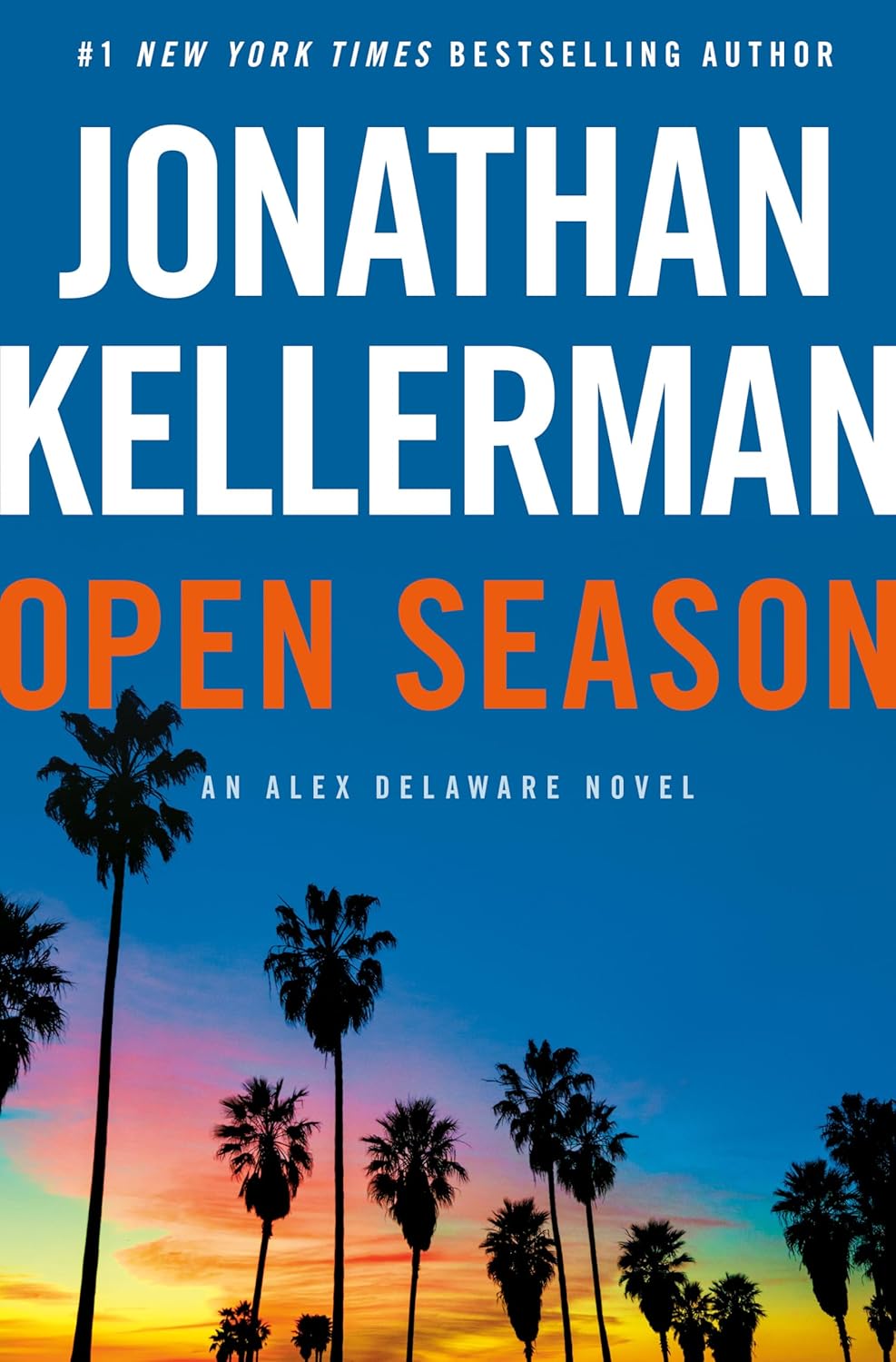
Open Season by Jonathan Kellerman

Publisher: Penguin Random House Audio (6 February 2025)

Series: Alex Delaware – Book 40

Length: 9 hours and 10 minutes

Rating: 4.5 out of 5 stars

Amazon

Still going strong after 40 Alex Delaware crime fiction novels, the always dependable Jonathan Kellerman presents another clever and captivating read with Open Season, an intense novel that proves very hard to put down.

Jonathan Kellerman is an excellent veteran author, whose massive body of work has been impressing crime fiction readers for decades.  While he has a couple of big series, Kellerman is best known for his long-running Alex Delaware series, which follows titular protagonist Alex Delaware, a child psychologist, and his best friend, LAPD Lieutenant Milo Sturgis as they investigate unusual or deranged murders around Los Angeles.  This is a really great series, and ever since I came across it, I’ve made a major effort to read each new entry, especially as they also provide some great mysteries and complex police investigation narratives.  Books like (The Wedding Guest, The Museum of DesireSerpentineCity of the DeadUnnatural History and The Ghost Orchid), have all been extremely amazing, and I eagerly await my new Alex Delaware hit at the start of each year.  The latest entry in the series, Open Season, is the 40th Alex Delaware novel, with Kellerman still going strong this far into the series.

Los Angeles is filled with all manner of dreamers and aspiring stars, but when one of them meets a tragic end, it falls to psychologist Alex Delaware and veteran homicide detective Milo Sturgis to find them justice.  Called in to investigate the dumping of an aspiring actress’s drugged body near a hospital emergency room, Alex and Milo soon set their sights on a known abuser as a likely culprit.  However, their hunt is prematurely ended when their suspect is found murdered, shot by a sniper.

Forced to switch to a new investigation, the two friends and their team are surprised to discover that the execution of the sexual predator is connected to two other unsolved homicides, with both additional victims shot from a distance using the same rifle.  Determined to figure out how the cases are linked, the team uncover a web of seemingly unconnected innocent victims, each of whom appeared to have been killed for very different reasons.

With additional bodies starting to pile up around the city, Alex and Milo find themselves in a race to solve the case before more victims can be cut down.  But are they facing a dangerous spree killer with no rhyme or reason to their actions, or a darker figure with their own complex rationales for murder?  To solve the case and stop the shooter, these two friends will need to use all their combined skills to decipher their strange motivation before even more people wind up dead.

Jonathan Kellerman continues to deeply impress with this new addictive and captivating crime fiction novel that I couldn’t get another off.  Featuring another brilliant and unique case, Open Season was an exceptional 40th entry in the Alex Delaware series that takes the reader down some dark and twisty paths.  This was a truly excellent read that I powered through in a very short amount of time.

Open Season was a particularly strong murder mystery from Kellerman, and I loved the compelling, multi-layered narrative that emerged.  Once again bringing together his two loveable main characters, Alex Delaware and Milo Sturgis, the two initially begin the book by investigating the murder of a young aspiring actress, drugged and dumped near a hospital.  Starting off with the typical look at the victim and anyone who knew her, the detectives are quick to narrow in on a suspect, only for the story to take an interesting turn when their potential killer ends up dead.  From there the story becomes a lot more complex, as the protagonists and a larger team begin to investigate the shooting of the first suspect, as well as several connected crimes.  This allows for a larger story with a ton of distinctive potential witnesses and suspects, and the protagonists investigate in several different directions, adding a lot of different pieces to the puzzle. 

Thanks to a series of varied clues, compelling research and additional discovered killings, the protagonists eventual narrow down on a potential suspect with interesting connections to each of the victims.  Without giving too much away, I felt that the overall solution for Open Season’s investigation was very clever, and it nicely tied into each of the victims/cases that make up the larger mystery.  The motivations for the killer were very unique and memorable, so it proved quite fascinating to see how the protagonists identified the antagonist and led to a great conclusion to the overall story.  I particularly enjoyed the final confrontation that the protagonists had with the killer towards the end of the book, and it wrapped the story up perfectly.  An overall excellent murder mystery narrative that will have you hooked all the way to the end.

I deeply enjoy Kellerman’s style for the Alex Delaware books and he really knows how to pull together a fascinating and intense police investigation narrative.  The author prefers a slow and methodical style of investigation as the protagonists pull together various clues and connections and work them into their various theories, which always adds a great touch of realism to proceedings.  There is a particular reliance on diving into the personal histories of the victims and suspects that Kellerman enjoys, which works to drag the reader further into the plot as they become even more invested in the investigations.  I felt that Kellerman’s typical style worked particularly well in Open Season, and I loved the complex investigation that emerged.  The multiple separate murders and the large array of connected people associated with each case allowed for a particularly elaborate story, and Kellerman carefully allowed his protagonists to explore these different elements allowing for compelling drive to the big conclusion around who was responsible.  I felt that Kellerman did an excellent job layering the more important clues around the case throughout the entire story, and it was very interesting to see what discussions or personal details came into play later.  I really got invested in Open Season’s complex case as a result, and this proved to be a particularly clever and well written mystery that deeply enhanced Kellerman’s already excellent story.

In addition to the very well-written story, Kellerman features some interesting characters and interactions in Open Season that help to create a unique feel that fans of the Alex Delaware series will be very familiar with.  Much of this lies with the two main characters, Alex Delaware and Milo Sturgis, who have an established and comfortable way of speaking with each other.  These two characters, both of whom are quirky in their own ways, are an excellent centre for the story, and I love how well the play off each other.  While their dialogue can be a little unique and occasionally flippant, Kellerman has spent a lot of time developing their patter, and you grow to appreciate the way these two characters work together.  In addition to their usual discussions, Open Season also had some more personal interactions between the two, especially when Alex is forced to keep some information from the team to protect the confidence of a medical professional.  I also liked how this was one of the Alex Delaware novels where the protagonist got to use his expertise as a psychologist to try to get to the root of the various suspects potential motivations.  This psychological work comes into play nicely, especially once they identify who the killer is, and it helped to give Open Season more of a distinctive edge away from other crime fiction reads.

While most of Open Season’s focus is on Alex and Milo, Kellerman also introduces an array of interesting supporting characters, each of whom are connected to the case in some specific way.  I really enjoyed the unique collection of characters that emerged, and there are some interesting storylines and connections that emerge thanks to the protagonists constant digging into the past.  The characters that get the most attention are some of the victims of the case, whose lives are explored in detail by the detectives.  Despite not interacting with the protagonists or readers while alive, you get to know all the victims thanks to interviews with their friends and families.  These many detailed interviews not only provide key information about who the victims are and potential motivations for their murders, but they also provide compelling and emotional testimony from those that loved them, which ensures that the reader becomes very invested in finding out who killed them.  You also meet a compelling group of people connected to the victims, who serve as witnesses, sources of information or suspects (sometimes all at once) in the case.  Due to the nature of Open Season’s story, you meet quite a few supporting characters, often for only a scene or two.  Kellerman makes these appearances count, though, and I liked some of the unique interactions that occurred, even if some of these characters were a little weird or had an unrealistic way of communicating.  The eventually revealed killer was particularly outrageous when eventually revealed, which I personally thought was very entertaining, although I could see some readers finding him to be too over-the-top.  Still, all these characters added something to the plot, and I enjoyed the effective way in which Kellerman introduced and utilised them throughout the book.

While I usually try to get physical copies of the Alex Delaware novels, for Open Season I ended up listening to the audiobook version, which I felt was an excellent way to enjoy this amazing book.  I personally find that the audiobook format does wonders for helping readers appreciate detailed and multilayered crime fiction narratives and Open Season was a great example of this, as I soon got drawn into every level of the author’s compelling mystery.  Part of the reason this worked so well was narrator John Rubinstein, who has lent his voice to a large chunk of the Alex Delaware series.  Rubinstein has a fun voice that lends itself to the occasionally zanier style of the Alex Delaware books and really brings the author’s complex narratives to life.  I especially enjoy how Rubinstein perfectly captures the characters featured in Open Season, including the main protagonists, Alex and Milo.  A great example of this is the very distinctive voice that Rubinstein utilises for Milo, which really captures the man’s complex and entertaining nature, and frankly I don’t know any other way how this character could be voiced.  The narrator also successfully captures the distinctive patter that the two main protagonists have between each other, and the way conversation flows between them in the audiobook is a ton of fun.  The various other characters featured with Open Season are also well represented, and I loved the colourful array of voices and accents that Rubinstein utilises for the supporting cast and various witnesses that protagonists encounter.  While a few of these voices are a little over-the-top, I personally liked them, and I felt it fit the long-running and distinctive series tone extremely well.  This exceptional narration allowed me to absolutely power through Open Season’s roughly nine-hour long run time, and I had such a blast picking up every single clue or compelling character interaction in this format.  As such, I would strongly recommend the audiobook version of Open Season to anyone interested in checking this mystery out, and I can personally guarantee it makes for great entertainment on a long trip.

Even after all these years, Jonathan Kellerman still shines as one of the masters of the crime fiction genre.  The 40th Alex Delaware novel, Open Season, was an outstanding addition to the series, and I love the compelling and awesome narrative that emerged.  Slick, addictive and featuring some interesting twists, Open Season was a truly impressive read, and I am still having so much fun with Jonathan Kellerman’s incredible books.

Amazon

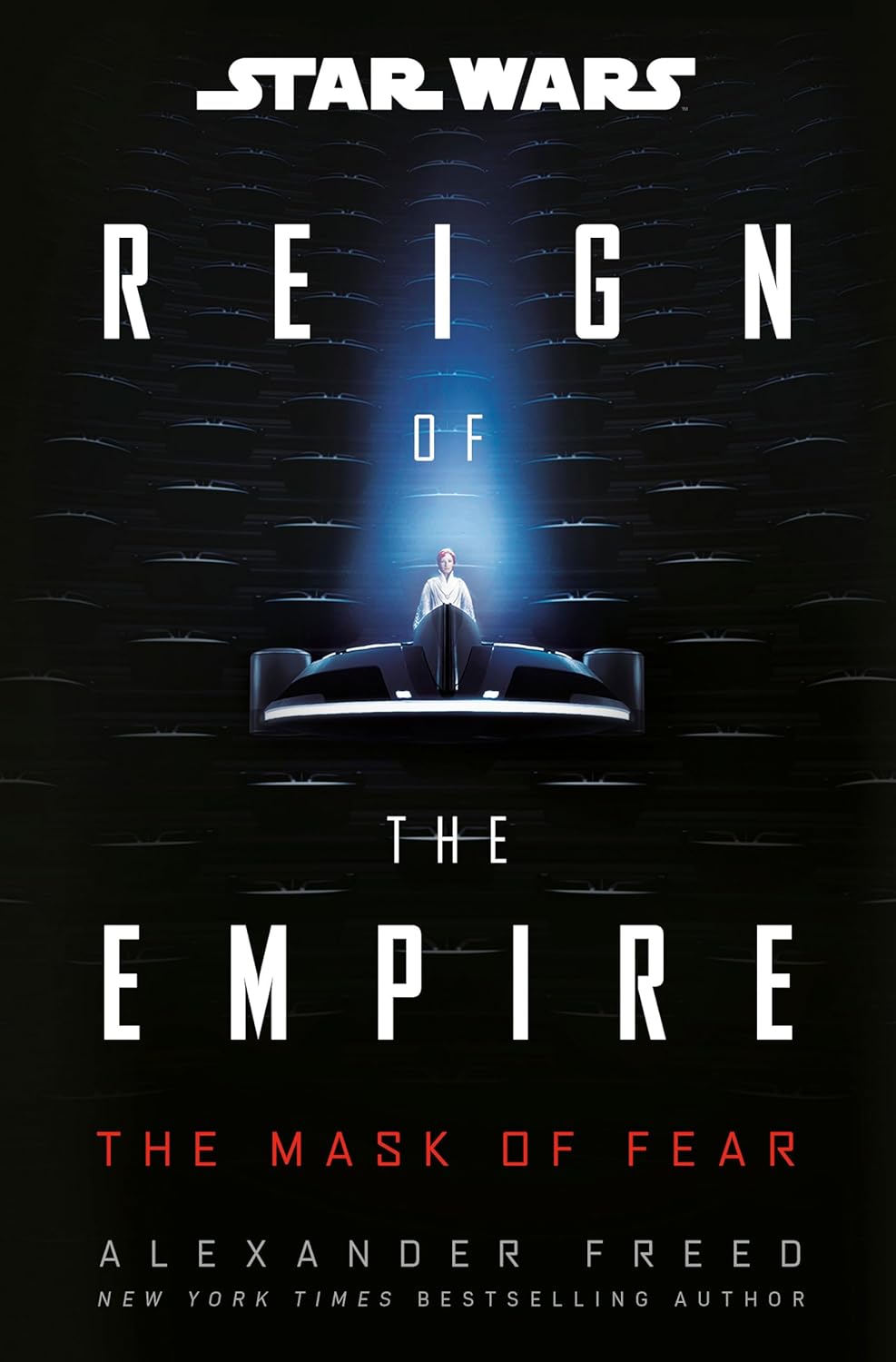
Star Wars: Reign of the Empire: The Mask of Fear by Alexander Freed

Publisher: Penguin Random House Audio (Audiobook – 25 February 2025)

Series: Reign of the Empire – Book One

Length: 16 hours and 51 minutes

My Rating: 4.5 out of 5 stars

Amazon

One of the top authors of Star Wars extended fiction, Alexander Freed, presents a compelling and complex inclusion to the franchise with The Mask of Fear, a powerful Star Wars novel that is a must-read before the upcoming second season of Andor.

There are some impressive authors writing Star Wars fiction at the moment, but one of my favourites is Alexander Freed, primarily because of his Alphabet Squadron trilogy.  An awesome series that followed a group of New Republic pilots in the immediate aftermath of Return of the Jedi, the Alphabet Squadron novels (Alphabet Squadron, Shadow Fall and Victory’s Price), are amongst some of my favourite Star Wars books, and I loved Freed’s dark take on the universe following the happy ending of the original trilogy.  As such, I was very intrigued when I heard that Freed was working on a new Star Wars trilogy set during one of my favourite periods of the franchise’s history, with the cool Reign of the Empire trilogy.

The Reign of the Empire trilogy is an ambitious series that seeks to chronicle the rise of the Empire and provides some cool new history in the current Disney canon.  Set immediately after Revenge of the Sith, the Reign of the Empire follow several key supporting characters from the films, as well as some new figures, as they attempt to navigate the galaxy following the formation of the Empire.  The first book in this series, The Mask of Fear, proved to be extremely fascinating, and I loved the compelling direction that Freed took the story.


Plot Synopsis:

Before the Rebellion, the Empire reigns, in book one of a trilogy told through the eyes of Mon Mothma, Bail Organa, and Saw Gerrera – for fans of Andor.

“In order to ensure the security and continuing stability, the Republic will be reorganized into the first Galactic Empire! For a safe and secure society!”

With one speech, and thunderous applause, Chancellor Palpatine brought the era of the Republic crashing down. In its place rose the Galactic Empire. Across the galaxy, people rejoiced and celebrated the end to war—and the promises of tomorrow. But that tomorrow was a lie. Instead the galaxy became twisted by the cruelty and fear of the Emperor’s rule.

During that terrifying first year of tyranny, Mon Mothma, Saw Gerrera, and Bail Organa face the encroaching darkness. One day, they will be three architects of the Rebel Alliance. But first, each must find purpose and direction in a changing galaxy, while harboring their own secrets, fears, and hopes for a future that may never come, unless they act.


The Mask of Fear
was another impressive and unique Star Wars novel from Freed, who sought to bring together a complex narrative of early rebellion and fear, as various people witness the rise of a tyrannical government.  Clever, intense and cleverly addressing some real-world parallels, The Mask of Fear was extremely good, and it served as a brilliant start to an excellent new Star Wars trilogy.

Freed produced a particularly intricate and complex narrative for The Mask of Fear that really sets the scene for the trilogy in a fantastic character-driven read.  I must warn potential readers that this is a very slow-burn narrative, with a focus on politics, character development, and Star Wars lore, and as such the book doesn’t have a ton of action in it at the start.  Instead, Freed follows the experiences of several different characters as they face the early days of the Empire’s rise and the end of the Clone Wars, with the narrative broken down across several character perspectives, including Mon Mothma, Bail Organa, a former Separatist operative who is forced to team up with Saw Guerra, and a couple of Imperial spies who find out the hard way that their Empire isn’t everything it’s cracked up to be.  This interesting combination of characters allows The Mask of Fear to go in a few compelling directions, including a political narrative around Mon Mothma, an adventure-laden investigation by Bail Organa, who tries to prove that the Jedi was set-up by the Emperor, a dark journey of revenge by the former Separatist, while the two spies find their stories interacting with the other characters as they try to investigate them.

As I mentioned above, the first half of The Mask of Fear is a little dry and slow-paced, but it nicely explores the universe after Revenge of the Sith and provides some dark context to how the Republic was changed into the Empire.  Mon Mothma’s story lies at the heart of the book, as she tries to bring about a legislative end to the Emperor’s reign, and this compelling political tale meshes well with the more action focused or espionage laden chapters of the other protagonists.  Things start to get a lot more interesting and intense once some of the characters start to interact with each other, including with a few action sequences, and Freed ensures that narrative gets realistically dark as you begin to understand the full evil of the Empire.

Everything leads up to the climatic final third of The Mask of Fear, where most of the major storylines of the book start to come together.  Thanks to the complicated story elements Freed set up in the earlier stages of the book, the reader finds themselves quite hooked at this point, especially as the characters find themselves in real peril.  I really enjoyed how Freed wrapped up a couple of the story arcs in The Mask of Fear, especially in one scene were a previously moral character finds the dark side of conflict.  Freed rewards the reader by providing a big moment of hope towards the end of the book, although this is swiftly taken away just to highlight what sort of Star Wars series this is going to be.  I really enjoyed this final section of the book, as the dark result of all the character’s plans galvanises them and leads them into a new direction.  I felt that this story came together extremely well, and while it was initially a little hard to get invested in it, Freed’s excellent establishment of the characters, narrative and overarching setting, ensured that it became a really gripping narrative.

The Mask of Fear was a very well-written novel from Freed, who expertly sets up a cool new Star Wars novel trilogy with some intriguing disparate elements to it.  The blend of politics, intrigue and action made for quite a compelling read, and I felt the author’s excellent use of multiple character perspectives led to a very rich and complex read that hit a lot of great boxes for me.  In addition, Freed does an amazing job placing this into the larger Star Wars canon, especially as he spends a lot of time exploring the very early days of Imperial rule, which is such a fascinating period in the franchise’s history.  The author perfectly blends compelling Star Wars lore about the fallout of the Clone Wars and the start of the Empire with his own story, and the resulting narrative is very fascinating.  While not every reader is going to love the complex political inclusions, I personally really enjoyed them, and this book helped to fill in some interesting gaps in how the Republic from the prequel films becomes the Empire.  As such, The Mask of Fear is a novel geared more towards hardcore Star Wars fans, although anyone who’s seen the original and prequel trilogies, or who wants to get a little more universe history before the second season of Andor comes out will probably have an amazing time with this book.

Speaking of politics, it’s hard not to notice some interesting real-life parallels that The Mask of Fear has with political realities of the world right now.  Freed would have written this book in 2024, and he paints a grim picture of the Empire’s new political and social reality within this book, which includes gross corruption, manipulation of the media, disinformation and other despicable practices, which will probably be quite familiar to readers now.  For example, the portrayal of a legislative body transferring most of its power to a popular-supported executive who then makes radical right-wing changes is jarringly close to how 2025 is turning out in some ways.  I found that these real-world parallels made the story that much more fascinating, and the reader ends up really feeling for the emotional turmoils of the protagonists.  One particular part of Freed’s portrayal of the Empire that I personally appreciated was the decision not to feature any of the franchise’s main villains, but instead focused on the people joining the administration purely for their own goals or benefit, who start revelling in the power they now have, or the lower level supporters who finally believe that they have a worthy leader.  In some ways this makes the Empire seem even eviler, as much like certain real-world governments, it’s obvious that the Empire was corrupt from top to bottom since the beginning.  As such, The Mask of Fear proved to be a masterful examination of how such fascist governments come into being and stay in power, and it was interesting, if a little scary, to see how the ultimate evil empire from fiction is being mirrored in the world today.

While the amazing story elements and intriguing examination of politics is a highlight of this book, for me, the best part of The Mask of Fear was the brilliant and damaged characters that Freed featured, especially his five major protagonists.  Each of these protagonists, which includes a compelling mixture of established characters and new figures written for this novel, has fascinating plot arcs behind them, as each of them tries to find their place in the new book.

Of these, I personally enjoyed the compelling storylines around future Rebel leaders Mon Mothma and Bail Organa the most.  Mon Mothma, who has been so well used in recent shows like Star Wars Rebels and Andor, had a compelling showing here in The Mask of Fear, and it was fascinating to see what happened to her in the immediate aftermath of the Empire’s takeover.  Portrayed as an ambitious politician already under attack by the new administration, Mon’s storyline around her attempts to curtail the Emperor’s power through political means and to keep power in the Senate is interesting, and I really enjoyed seeing the version of Mon who still believed in the institution she was apart of.  Freed weaves together an excellent combination of storylines around Mon, including her political troubles, personal issues, trauma from past arrests and her own growing disillusion with her political colleagues.  Mon’s storyline in The Mask of Fear starts her on the path to becoming the future Rebel leader, as she is forced to take deadly action in protection of her ideals, while also learning just how ruthless the new Emperor and his administration is.

The storyline surrounding Bail Organa on the other hand was a little more action and adventure focused, as he began his own journey towards rebellion.  Portrayed as the only person in the Empire who actually knows that the Emperor is a Sith Lord, Bail spends much of the book desperately trying to fight back by clearing the Jedi’s name.  You can really feel the despair in Bail as he tries to solve the situation in a manner he believes is right, only to hit roadblocks and disinterest from even his potential allies who disregard the Jedi who Bail knows are innocent.  This allows for some very intense scenes, especially as Bail crosses some major boundaries to chase his goals, and you really sympathised with everything Bail is going through.  Bail’s storyline was really well written, and I really enjoyed Freed’s realistic portrayal of what this character would be going through.  His storylines ended up melding nicely with the rest of the cast, especially Mon Mothma’s, and I loved how Freed showed them as having some noticeable political and personal friction.

The rest of the main point-of-view cast of The Mask of Fear includes three original characters, who provide intriguing alternate views about the Empire.  This included Soujen, a cybernetically enhanced Separatist infiltrator who awakens from hibernation to find that the government that made him was defeated, and he has to decide who or what he is going to fight for now.  A complex figure who believed in the Separatist cause, Soujen provides a compelling alternate view of events from the Clone Wars and the formation of the Empire.  Freed works an interesting and intense storyline around Soujen, as he is forced to confront the impact of his actions and the realisation that he might not have achieved anything with his fighting.  I loved how dark some of Soujen’s scenes got, as well as the realistic emotional outbursts as the character refuses to give up the war.  Soujen’s storyline is one of the most impactful in the entire story, as his more destructive approach forces the other characters to act against him.  There were some very complex interactions that occurred as Soujen tried to achieve his objectives, including a certain amount of tragedy which hits the reader hard.  The other key perspective characters are two imperial intelligence operatives, made up of an elderly spy who doesn’t fit in with the new regime and her young apprentice from the slums of Coruscant.  They both go on compelling journeys throughout the book, with the veteran tailing Bail, while the younger journeys into the morass of the extremist groups supporting the Emperor.  I really enjoyed seeing both coming to realise the problems with the Empire they’re solving in their own different ways, and both their perspective character arcs supported the other storylines extremely well.

This main cast is supported by an interesting array of figures, including supporting characters from the main shows, who have a big impact on the story.  The most prominent of these is Saw Gerrera, who, despite having a big role in the plot, doesn’t serve as a major perspective character.  Freed does an excellent job portraying Saw in this book, and it proves fascinating to see the character’s journey to become an extremist fighter begin in this book, as he initiates the first militant rebellion against the Empire.  This mostly rounds out the main cast, and as I mentioned above there is a distinct lack of major antagonists in this book, with neither the Emperor or Darth Vader appearing.  However, there is an array of self-serving middle management administrators and agents, pro-Imperial vigilantes and politicians supporting the new Empire, who prove to be quite dangerous and corrupt in their own way, especially as they oppose and attempt to remove the protagonist when they oppose the Emperor.  An overall excellent collection captivating character arcs in this book which really enhanced The Mask of Fear’s narrative in some impressive ways.

As with most Star Wars novels that I check out, I chose to enjoy The Mask of Fear on audiobook, which proved to be an outstanding way to enjoy this captivating read.  Star Wars audiobooks always do such a great job of capturing the atmosphere and excitement of the franchise’s extended universe, and I love how awesome they can make a story.  The Mask of Fear was a great example of this, and the complex narrative of politics, betrayal and damaged characters, really came to life when read out by the talented January LaVoy.  LaVoy, who specialises in reading female-led fiction, including extended universe books such as Star Trek: Die Standing and Freed’s Alphabet Squadron books, did an outstanding job narrating this awesome novel, and I loved how well she captured the key characters.  Her voice work for Mon Mothma was particularly good, and I liked the fun voices that accompanied some of the other intriguing female characters.  LaVoy also ensured that the story moved at a swift pace, and readers found themselves really drawn in, even with the book’s politically heavy content.  It helped that The Mask of Fear featured the typical array of iconic sound effects and music from the Star Wars films, which are put to great use throughout the production.  The sound effects in particular were cool, giving extra life to some scenes, especially those involving firefights, vehicles and crowds, while the music was used to add some outstanding gravity or excitement to key moments.  The combination of the amazing narration and the cool Star Wars sound inclusions helped to make The Mask of Fear something truly wonderful to listen to, and this is easily the best way to enjoy this fantastic novel.

Alexander Freed kicks off his Reign of the Empire trilogy in a big way with this captivating novel.  An outstanding addition to the Star Wars canon that dives into one of the franchise’s most intriguing periods, The Mask of Fear was an intriguing, character-driven novel that examines the fallout of war, political upheaval and the rise of evil.  Highly recommended, especially on audiobook, The Mask of Fear is a must-read for all Star Wars fans.

Amazon

Star Wars: The High Republic: Convergence by Zoraida Córdova

Star Wars - Convergence Cover

Publisher: Del Rey/Penguin Random House Audio (Audiobook – 15 November 2022)

Series: Star WarsThe High Republic

Length: 13 hours and 28 minutes

My Rating: 4.75 out of 5 stars

Amazon     Book Depository

The next phase of the High Republic is in excellent form as outstanding author Zoraida Córdova presents a particularly awesome new tie-in novel with Star Wars: Convergence.

For last couple of years, the focus of the Star Wars extended universe has been The High Republic, an intriguing prequel series of tie-in media that expands and explores the iconic Star Wars universe in the centuries before the Skywalker Saga.  Set hundreds of years before The Phantom Menace, the High Republic series examines the Republic and the Jedi at the height of their influence, as well as the many dangers they encountered during this time.  I have had an awesome time with the High Republic series, and there are some excellent stories contained within this elaborate prequel sub-series, written by a great collection of writers.  Highlights so far include the main novels Light of the Jedi, The Rising Storm and The Fallen Star, as well as great young adult novels such as Midnight Horizon, all of which come very highly recommended.

The latest batch of High Republic books are currently part of the second phase of the series, which acts as a prequel to the first and upcoming third High Republic phases.  Set even further back in the Star Wars timeline, the second phase provides intriguing context to the previous entries, including the origins of the main antagonists and the reason for their hatred of the Jedi.  I have so far read the preceding second phase novel, The Path of Deceit, a fantastic young adult read, and I have been excited for Convergence for some time.  Written by talented new Star Wars author Zoraida Córdova, Convergence was an amazing read that I had a wonderful time listening to.

It is a time of great expansion, exploration and diplomatic strides in the galaxy as the Republic seeks to expand its influence.  Led by the Jedi, Republic pathfinder teams are constantly journeying out into the furthest reaches of the galaxy, seeking out new civilizations and planets.  However, not everyone is excited to see the Republic or the Jedi, and chaos is always around the corner.

Nowhere is this clearer than the closely neighbouring planets of Eiram and E’ronoh, which have been at war for generations.  Bound to the fighting by hatred and years of conflict, the end of both planets looks to be near, as the war has resulted in nothing but drought, starvation and despair.  However, after an unexpected tragedy brings the two heirs of Eiram and E’ronoh together for the first time, a solution to the ongoing war comes clear and the mediating Republic are able to broker a marriage alliance between the two royal families.

But before wedding preparations can begin, an attempt is made on the lives of the young couple, which once again brings the planets close to war.  Determined to keep the peace, young Jedi Knight Gella Nattai is chosen to act as the couple’s bodyguard and journeys across both planets with them as they attempt to sell the peace to their people.  A serious and dedicated Jedi, Gella is unprepared for another companion for the journey as Republic Chancellor Kyong also sends her son, Axel Greylark, to represent the Republic.  A rogue and cad of the highest quality, Axel swiftly gets under the group’s skin, especially as his disdain for all Jedi, including Gella, is plainly evident.  However, the new companions need to work as a team, as they find themselves caught in a deadly conspiracy that can impact not only the warring planets but the entire Republic.  Can they get to the bottom of this plot before it is too late, and are they truly ready for the consequences if they do?

Damn, now this was a pretty awesome Star Wars novel from a very talented author.  Córdova came up with a remarkable and powerful narrative for Convergence that not only contained its own brilliant character-driven plot, but which also sets up some awesome narrative threads for the future.  I had an amazing time getting through Convergence, and it was one of the better Star Wars books I read in 2022.

Córdova brings out an impressive and complex story for Convergence that drags you in quickly and hits you with a ton of great elements from this new High Republic era.  Primarily set around the war-torn twin worlds of Eiram and E’ronoh, Convergence starts off with the two once again on the brink of war after an unfortunate space battle.  However, the battle leads to the intervention of the Jedi and the Republic, who attempt to force peace, as well as the chance meeting between the planet’s two royal heirs.  What follows is a compelling bout of political intrigue, as the two planets negotiate, while various elements with ulterior motives try to sabotage it.  This early part of the book is pretty damn compelling, as the author spends a good amount of time introducing the complex characters as well as the well-crafted background setting and war story arc.

Thanks to some mysterious murders and sabotages, the middle of Convergence evolves into an exciting road-trip narrative, as the two royals, their new Jedi bodyguard and the unrepentant party boy Axel Greylark, embark on a goodwill mission to both planets, which results in further action and adventure, while also taking the time to build up the four main characters and establish some intriguing relationships between them.  After some excellent and often heartbreaking sequences, the story enters a whole new phase as the deadly outside influences trying to disrupt the peace process are revealed.  There are series of great twists and turns around here, including one massive reveal that severely impacts a major character, and everything you think you know about the plot is changed as hidden motivations are revealed.  The last third of the book is easily the most exciting, as you wait for the various characters to explode when everything is brought to the light and the full scope of the various plots are revealed.  The author really amps up the action towards the end, including one of the most chaotic wedding sequences in Star Wars history, and there is no shortage of intense interactions as certain characters come face to face.  Everyone walks away from Convergence with their emotional and excitement buckets filled and I really appreciated the fantastic swings that Córdova took in this major High Republic book.

I deeply enjoyed how this excellent narrative came together, and Córdova has a great writing style that lends itself to an intense character-driven plot.  Told from multiple compelling character perspectives, Córdova has produced an excellent narrative that combines adventure, intrigue and character growth with the lore-heavy Star Wars universe.  While there is plenty of action and some great universe building featured here, most of the book is constructed around intense character emotions as the central protagonists attempt to overcome their pasts and the dangerous secrets they all hide.  The author keeps the pace of Convergence’s narrative pretty constant throughout, and there were no major areas that slowed down or got stuck, and I enjoyed the continued build-up of disasters and betrayals that occurred.  The various action scenes featured throughout a very well written and make sure to highlight both the emotion behind each battle, but the iconic Star Wars elements such as the Jedi.  There is also a great sense of mystery and betrayal throughout the book that gives it a powerful overarching tone, and you really get drawn in trying to see how the characters are going to implode with their own inner chaos.  It really proved quite impossible not to enjoy this captivating read, and I really think that Córdova showcased just how impressive her writing ability is with this outstanding read.

In addition to having an outstanding story, Convergence also serves as a great entry in the second phase of the High Republic and I loved how it continued certain awesome storylines as a key novel in this sub-series.  I have mentioned a couple of times previously on my blog that I was surprised they started off the second phase of this sub-series with the young adult book, Path of Deceit.  However, after getting through Convergence, I now completely understand why they did this, as the more subtle Path of Deceit really helped to set up certain key overarching plot elements, as well as the wilder aspect of this period of the Star Wars timeline.  Convergence had a narrower narrative focus which, which really benefited from not having to introduce a whole new batch of major antagonists in too much detail.  Córdova was able to expertly utilise and then expand some of the elements from Path of Deceit throughout Convergence’s narrative, which I think really enhanced the overall story, and made it a bit more gripping and connected with the wider series.  I do think that at this point in the High Republic, Convergence is a very hard novel for those non-Star Wars fans to easily jump in and fully appreciate.  A lot of the joy of Convergence and the other books in the prequel second phase is in seeing the origins of key characters, organisations or events that are featured or discussed in the first phase.  As such, you can only fully appreciate this book if you have read a few of the key novels from the first phase, and this makes Convergence a little less accessible as a result.  Luckily, Convergence really is geared towards established fans of the franchise, who are guaranteed to have a wonderful time with this book.

I really must highlight the outstanding settings that were such a key part of Convergence’s narrative and tone.  Part of this comes from the even earlier timeline that the book is set in, as this period of the High Republic is a lot wilder and less civilized in places, more resembling a space western than the golden age seen in the first phase.  While the story doesn’t spend a lot of time in the wider Star Wars universe, you get an idea of the different society and times in this new phase, and it really feels like a period of flux and new ideas.  However, the story primarily takes place on the twin worlds of Eiram and E’ronoh, both of which have been featured to a degree during the first phase (Into the Dark and The Fallen Star for example).  Both planets are shown in even more detail in Convergence, especially as the characters spend most of the book there.  Stuck in an endless cycle of war and destruction, both Eiram and E’ronoh are in very dire straits when Convergence begins, which adds a great layer of politics, strife, and desperate characters to the narrative.  The protagonists are forced to dive into the history and culture of both planets to resolve the war, which reveals some major emotional edges as the dark similarities and differences between them make peace seem impossible.  Córdova does a remarkable job highlighting both planets throughout the course of Convergence and I really cannot emphasise how impressive they were as a background setting, especially as there is a tangible tension and threat of violence permeating both.  I deeply enjoyed this cool setting and I look forward to seeing another author’s take on these planets, and the wider Star Wars universe at this time in the next High Republic books.

While I loved the epic story and impressive Star Wars elements, the best part about Convergence for me was the exceptional characters that Córdova introduced and strongly featured throughout the course of the narrative.  Each character is pretty intriguing in their own way, and many are clearly set to become central figures in this second phase and will no doubt be reutilised again by other authors in the future.  The plot of Convergence, however, primarily rests around four complex and well-written protagonists who tend to serve as the main point-of-view characters of the book.

The first two characters I need to talk about are Jedi Knight Gella Nattai and political scion Axel Greylark, who form an intriguing odd-couple pairing for much of the book.  Gella is naturally the more serious and stoic Jedi character, who is dealing with regrets and uncertainty after a failed mission that saw the order lose confidence in her.  Now forced to work under more experienced Jedi Masters, Gella is uncertain what her future holds, but her impulsive nature brings her into the middle of the conflict on the two warring planets.  She is eventually relegated to the role of bodyguard for the royal characters and is teamed up with Axel, who is easily the most entertaining and fun character in this entire book.  The son of one of the Supreme Chancellors, Axel is a pampered rogue and troublemaker who spends most of the book gambling, flirting and doing irresponsible things (think Lando dialled up to 11).  Introduced in a very entertaining early chapter which ends with him shooting up an illegal casino, Axel is sent by his mother to the twin planets as her envoy and is recruited as an extra bodyguard when things go bad.  He immediately goes to work annoying Gella, not just because of her uptight personality, but because he also has a great dislike of the Jedi in general after they failed his family as a child.  While it is easy to see Axel as a one-note character, he is one of the most complex figures in the entire novel and he has one of the best character arcs.  I loved the unique partnership he formed with Gella, which initially begins with great antagonism but eventually morphs into something else, that really changes both for the better.  Of course, there is a further great twist around Axel that changes the entirety of his story, and it will be fascinating to see how that evolves in some future books.

The other two major characters are the heirs to Eiram and E’ronoh, Princess Xiri A’lbaran of Eiram and Prince Phan-tu Zenn of E’ronoh, who suddenly find the fate of both worlds resting on their shoulders when they have a chance meeting.  Both are very different from each other as Xiri is a tough and practical warrior from a proud lineage, while Phan-tu is a kind and somewhat gentle former orphan who was adopted into the royal family.  Despite their differences, both are dedicated to their respective planets and initiate the peace process through an arranged marriage that will unite their houses.  While initially uncertain of each other, the two begin to grow closer as the book continues, not only because of their duty but because of their legitimate feelings as they prove themselves to their future spouse.  The author features a slow-burn romance between the two that builds throughout the course of the story and has a lot of roadblocks to it, including both characters’ families and pasts filled with tragedy.  Xiri and Phan-tu prove to be exceptional partners as the book proceeds, and I also really enjoyed the fantastic friendship group they formed with Gella and Axel during their travels, as the four stay to play off each other perfectly.  These four end up really carrying the book on their shoulders, and I really must compliment Córdova on how well they were crafted and the amazing stories woven around them.  Backed up by an amazing supporting cast of big personalities, this was an amazing character-focused book, and I cannot wait to see how some of these figures are featured in future High Republic works.

I doubt that anyone who is familiar with my blog and my love for Star Wars novels is going to be too surprised that I chose to check out Convergence on audiobook rather than reading the physical book I received.  I love, love, love all the Star Wars audiobooks, especially as the production team behind them always features iconic Star Wars sound effects and music throughout the runtime, which I find adds to the overall ambience and emotional impact of the plot.  Convergence was another exceptional example of this, and I especially enjoyed how the awesome music made every major scene feel that little more epic.  At the same time, Convergence also featured the outstanding voice work of Marc Thompson, who is easily one of the best Star Wars audiobook narrators of all time.  I always enjoy Thompson’s brilliant voice work in Star Wars fiction (such as in the audiobooks for Thrawn, Chaos Rising, Greater Good, Lesser Evil, Scoundrels, Dark Disciple and more), and he once again hit it out of the park in Convergence, giving each of the characters their own distinctive voice that really brought out their personalities and inner emotions.  I really loved some of the cool voices that Thompson brought out for Convergence, especially as they were well tailored for the relevant characters and their backgrounds, and this ended up being an epic performance from him that allowed listeners to power through the audiobook.  Coming in with a runtime of roughly 13 and a half hours, Convergence has a decent length, but dedicated listeners should have no trouble powering through it quickly.  I personally thought this was an outstanding way to enjoy this amazing book, and I even featured Convergence on my favourite audiobooks of 2022 list before I’d even finished it.

The brilliant High Republic series of Star Wars fiction continues to roll on at an unstoppable pace with the latest epic read, Convergence by Zoraida Córdova.  Featuring an exceptional plot, amazingly complex characters and serving as an intriguing prequel to the previous run of High Republic books, Convergence was an outstanding read that I cannot recommend enough.  One of the best Star Wars books of 2022, Convergence was extremely impressive and captivating and I am now very excited to check out all the High Republic entries of 2023.

Amazon     Book Depository

Hide by Kiersten White

Hide Cover

Publisher: Penguin Random House Audio (Audiobook – 24 May 2022)

Series: Standalone/Book One

Length: 8 hours and 9 minutes

My Rating: 3.75 out of 5 stars

Amazon     Book Depository

Get ready to run and scurry for cover in the intriguing new horror thriller from Kiersten White, Hide.  Kiersten White is a captivating author who is known for her young adult and tie-in fiction novels.  I best know her for her work on the extended universe of franchises like Buffy the Vampire Slayer, where she recently wrote a series of novels about a new Slayer, which started with the 2019 release Slayer.  White is also making some waves this year with the new Star Wars young adult novel, Padawan, which follows a young Obi-Wan Kenobi and which is pretty high up on my to-read list.  However, her 2022 release that intrigued me the most was the thriller release, HideHide had a great concept to it and I couldn’t resist checking it out in the last week to see what it was all about.

Mack is good at hiding.  She’s spent her whole life doing it after it worked so well to save her life as a child while her family died around her.  However, after years of avoiding people, Mack is running out of options and money.  So when a strange challenge arises, Mack has no choice but to accept, even if it brings back terrible nightmares from her past.

A mysterious corporation is sponsoring a new and unique reality competition with a prize of $50,000 to the winner.  The challenge is simple: survive a week hiding in a creepy abandoned amusement park and don’t get found.  The last person left hidden is crowned the winner and gets enough money to change everything.

Competing against a group of similarly desperate and determined young people, each of whom is hoping that this game will turn their life around, Mack thinks the odds are in her favour to win.  However, there is something far more sinister going on than any of the contestants know.  As the people around her start disappearing, one by one, Mack and the rest of the competitors begin to realise that something else is in the park with them, something that is hungry and unrelenting.  Come out, come out, wherever you are.

This was an intriguing and fun book from White that I managed to get through in a few days.  I loved the excellent premise behind Hide and I think that the author produced a pretty good story that appeals to both horror and thriller fans.  While the book has a slightly slow start to it, once the competition starts I found myself getting pretty into it as I was very keen to see what happened.  White ratchets up the tension day by day as the competition continues, and I think that the increased level of threat and uncertainty that occurred helped to keep my attention and make me want to figure out what is going on.  There are some interesting revelations about halfway through the book that I thought were pretty clever, especially the reveal about what exactly is chasing them and why.  Once that happens, it’s a pretty high-octane fight for survival that results in some fantastic and compelling moments.  While there were still a few questions left over by the end of the book, I think White ended Hide pretty well and everything came together in interesting way.  I do wish that there the competition was a bigger part of the plot, as that could have been pretty cool, but I guess you can’t have everything.

White utilised an interesting storyline telling method to get Hide’s narrative across, which worked for the most part but had a few issues.  While the story is primarily focused around Mack, the book does quickly jump between the other characters in the book, giving some brief insights into their thoughts and history.  While this worked to keep you in the loop about every contestant, it was a bit random at times and I felt that it impacted the pacing of the story, especially when it jumped between multiple perspectives in a very short amount of time.  I also felt that the use of jumps resulted in some missing details in places, such as when some characters are removed from the contest without you realising it.  I did think that White did a good job inserting the background lore behind the events of the book into the story through a series of journal entries, and that part of the book was quite fascinating, although I wouldn’t have minded a bit of a deeper dive.  There is also quite a bit of social commentary chucked into the mix as well, especially when it comes to exploring the motives of the unsurprising villains, plus you must appreciate the strong LGBT+ elements thrown in as well.  The story itself had a mostly fine flow to it, and you do feel the fear and terror of the contestants once they realise what is going on.  All of this worked pretty well in the end, and I think that the story came across in a pretty accessible and compelling way.

White focuses the story on an interest group of protagonists, each of whom has their own reason to be there.  Due to the way that the narrative jumps around to examine different characters, you get a decent look into the heads of each of the competitors, as well as some other characters, and you soon get some insights into why each of them is there.  It soon becomes apparent that each contestant is pretty desperate and broken in their own way, which I felt added to the drama and intensity of the story.  However, due to the quick-fire change in perspective, the reader isn’t given a lot of time to bond with most of the characters, and their eventual fates aren’t too shocking or moving as a result.  The main exception to this is Mack, who you do spend quite a lot of time with.  Mack has a very tragic backstory (it reminded me of last year’s book, The Final Girls Support Group by Grady Hendrix), which becomes a major part of her motivations and trauma in Hide.  Watching her attempt to overcome her dark past and her reservations for being there is pretty intense, and there was some interesting character work there, as well as a potential for new friendships and romance.  A couple of other characters who survive towards the end of the book (I won’t mention who) are also developed to a decent degree, and I felt that some of the story arcs around them were pretty intense as well.  It was a little obvious which of them was going to survive and who was going to die, even with a few twists thrown in, although I did appreciate a few surprise changes in motivations that worked really well.  An overall interesting group of characters, I do wish that we could have gotten to know a few of them a little better though.

I ended up listening to Hide on audiobook, which worked as an excellent format to enjoy this interesting horror read.  Hide has a pretty short runtime of just over eight hours, so if you get caught in the story you can get through it rather quickly.  I felt that this format did help to emphasise the tension and the rising panic of the protagonists, especially as narrator Emma Galvin does a good job telling the story.  Galvin had an excellent voice that was pretty fitting to this setting and story genre, and she ended up doing a good job personifying the main characters.  I rather enjoyed the tone and intensity that Galvin brought to this audiobook, and I felt that this was a fantastic format to check out Hide on.

Overall, I had a lot of fun with Hide and Kiersten White came up with a great story that I really enjoyed.  While I do think that there were a few missed opportunities and pacing issues in places, this mostly came together pretty well and I think fans of exciting novels with horror elements to it will have a great time with Hide.  An interesting book that is worth checking out.

Amazon     Book Depository

World of Warcraft: Sylvanas by Christie Golden

World of Warcraft - Sylvanas Cover

Publisher: Penguin Random House Audio (Audiobook – 29 March 2022)

Series: World of Warcraft

Length: 15 hours and 38 minutes

My rating: 4.5 out of 5 stars

Amazon

Prepare to find out everything you every wanted to know about one of Warcraft’s most complex characters with the brilliant Sylvanas by the always impressive Christie Golden.

There have been some great tie-in novels coming out this year across multiple franchises.  While I have mostly been sticking to Star Wars and Warhammer novels, I recently decided to dive back into the fiction surrounding a personal favourite franchise of mine, the Warcraft games.  It may surprise some people to know that the Warcraft games, which includes the absolute institution that is World of Warcraft (WOW), has a massive extended universe surrounding it, with multiple novels and comics working to enhance and support the game’s already impressively deep lore.  I have had a lot of fun with some of these over the years, but I was particularly intrigued when I managed to get a copy of the latest tie-in novel, Sylvanas by Christie Golden.  Not only did this book cover the life of one of the best characters in this franchise, Sylvanas Windrunner, but it was also written by the amazingly talented Christie Golden, an absolute master of tie-in fiction.  Golden has written some impressive Warcraft novels, including Before the Storm and the brilliant War Crimes, and she has also written tie-in novels to multiple other franchises, including one of my all-time favourite Star Wars novels, Dark Disciple.  As such, I am always really keen to check out any of Golden’s additions to this complex canon, and this turned out to be a particularly great book.

Few inhabitants of the world of Azeroth have had more of an impact on its recent history and the devastating events that have befallen it than the infamous Sylvanas Windrunner.  The Banshee Queen of the Forsaken, Sylvanas has held many titles, names and positions as she has witnessed and manipulated the entire realm for both her people and herself.  However, Sylvanas has a far deeper goal than power; she also seeks to realign the injustices of life and the meaninglessness of death, finally achieving the peace and happiness that she and the world deserve.  To that end, Sylvanas has aligned herself with the mysterious and otherworldly afterlife entity known as the Jailer.  Bound to his side and now a fugitive from both the Alliance and the Horde, Sylvanas seeks to bring his goals to fruition, no matter the cost.  However, her final task from the Jailer appears to be the most difficult, securing the fealty of imprisoned human king Anduin Wyrnn.

Reluctant to force service upon Anduin against his will, Sylvanas attempts to sway him to their side through subtler means.  To that end, she regales him with the story of her life, believing its lessons will convince Anduin of the necessity of her actions and help bind him to the Jailer’s cause.  With her captive audience listening close, Sylvanas reveals the key events from her life that shaped her, including her childhood and the tragedies of the Windrunner family, her death and damned resurrection at the hands of Arthas, and her eventual ascension to leadership of the Horde as Warchief.

However, amongst these tales of tragedy, triumph and a deep despair, Sylvanas also reveals her history with the Jailer and her first journey to the Maw.  Discovering a dark truth behind the veil of death, Sylvanas hopes to end the injustices and terrible consequences that awaits all souls, including her, by helping the Jailer achieve her goals.  But to achieve victory, Sylvanas was forced to become a force of destruction, bringing war to Azeroth and forcing another conflict between the Alliance and the Horde.  However, her worst actions may be yet to come as the Jailer’s plan for Anduin will require Sylvanas to become what she hates the most.  Daughter, sister, hero, unwitting pawn, rebel queen, Warchief, and monster, the truth of Sylvanas is revealed, and you’ll have to decide whether she is Azeroth’s greatest hero or worst villain.

Golden continues to add more and more depth to the Warcraft canon with this rich and clever novel that serves as the ultimate guide to one of the franchise’s best characters.  I had an absolute blast with this exceptional read that expertly turned the established history of Sylvanas Windrunner into a powerful and moving tale of family, tragedy and the consequences of choices.

Sylvanas contains a brilliant character-driven narrative that I think perfectly tells the tale of Sylvanas Windrunner, expanding out her life and providing details and insights about her that have never been shown in various other parts of the Warcraft fiction.  Starting during the events of the Shadowlands expansion, where Sylvanas is holding Anduin prisoner, the story soon morphs into a chronicle tale as the titular character recounts her entire life story to Anduin.  Starting off during her childhood, the first substantial part of the novel is focused on Sylvanas’s early life, the complex family relationships she had, her surprising rise to the rank of Ranger General, and her first encounter with tragedy.  This initial section of the novel, which covers most of Sylvanas’s life before her appearance in the games, is extremely detailed as Golden firmly establish this part of her life and show how her early relationships and losses would shape the rest of her life.  While this first part of the book is intriguing and vital to the story, it was a tad less exciting than I was hoping and ended up being one of the slowest parts of the novel, although once the first real tragedy occurs, it does speed up to an entertaining pace.

Following this substantial introduction, Sylvanas’s story starts to feature some major time skips, with the narrative jumping to her encounter with Arthas and subsequent death, which is shown a bit more theatrically and briefly than you would expect.  The rest of the story happens at a blistering pace, with many of the key moments of the character’s life briefly shown as the story powers through the events of the various games and expansions.  There are some fascinating moments and scenes in this second half of the book, and I had a great time seeing Sylvanas’s resurrection and enslavement to Arthas, her rebellion against her deathless master, her rise to become a leader of the Forsaken and her early days as a member of the Horde.  The story really skips along extremely quickly here, although it slows down at times to highlight Sylvanas’s interactions with the Jailer and the various things she did as his command.  These scenes are some of the most important parts of the book, as they try to highlight when and how Sylvanas started working with this villain, as well as her motivations for joining him.  These pivotal scenes are extremely interesting, and Golden masterfully works in the novel’s earlier character development into Sylvanas’s reasons for her actions.  The rest of the novel showcases Sylvanas’ more villainous turn, until she completely becomes the antagonist we encounter in Shadowlands and the end of Battle for Azeroth, which brings us full circle to the interludes between Sylvanas and Anduin.  The book ends on a fantastic and compelling note, recreating a scene from the game, and serving as a fitting conclusion to Sylvanas’s story, while also providing the reader with some much needed hope and satisfaction at a potential happy ending in the future.

Golden used some interesting storytelling techniques throughout Sylvanas, and most of them paid off extremely well to create an intense and exciting story.  While many Warcraft novels are more concerned with immediate action and intrigue, Sylvanas works well as a chronicle story which focuses on its protagonist’s complex and damaged psyche, as well as an intense portrayal of family and the difficulties and joys associated with it.  Through her reminiscing, the protagonist highlights her story extremely well, and I liked the clever use of several interludes to take the story back to the present for Sylvanas to debate her actions and choices with Anduin, whose pensive and compassionate insights add to the emotional weight of the narrative.  Both these past events and the storyline set in the present have some great moments, and I loved the novel’s overarching theme of the importance of free-will and choice, especially as the protagonist is a person who often found the events of her life and death, controlled by others.  There is an excellent balance of story elements featured throughout Sylvanas, with Golden featuring a great blend of intense character moments with cool action scenes, fun interactions and attempts to bring the novel into the established events of the wider Warcraft universe.  However, I did have some issues with the pacing of the novel.  While most of the novel flowed well, I really disliked how the author would spend a substantial amount of time going over some periods of the characters life in high detail, before quickly jumping through multiple years of subsequent events in extremely short order.  While I could see the author’s reasons for doing this, it did limit the impact of the narrative and there were multiple interesting events and characters that were only lightly featured.  Still, I had a great time getting through the plot elements that the author included, and they ended up resulting in an excellent and intense character driven story that featured some very powerful moments as the protagonist goes through absolute hell and back.

Sylvanas ended up being a particularly interesting inclusion in the wider Warcraft canon and it is one that I am extremely glad I decided to check out.  Due the multiple appearances and impacts that this titular character has had, the plot of Sylvanas encompasses the events of all the Warcraft games, including the entirety of WOW (at this point).  At the same time, the novel also ties into some of the other books, comics and other pieces of extended Warcraft fiction that are out there, particularly some that were written by Golden.  As a result, there are an awful lot of references, locations and iconic events going on in here, and Golden does an excellent job to bring all of these to life throughout the novel, with a focus on Sylvanas’s role in them.  I loved seeing so many key moments from the games and the other extended fiction re-featured or referenced throughout this novel and it was fascinating to see how they connected with the events of this book.  While Golden does really try to explain the context or importance of all of them, some readers unfamiliar with the games (or who may have stopped playing in recent years), may have difficulty at times following what is happening.  This is partially mitigated by the fact that Golden chooses to avoid or only lightly feature multiple events, especially those covered in the games, other novels and comics (several of Golden’s books are only lightly brushed on).  While I can understand Golden trying to avoid unnecessarily rehashing events that Warcraft fans would have seen before, it was one of the main reasons for the pacing issues, as it ensured that the events of the character’s childhood, which has not really been seen before, got so much focus early on.  It also requires readers to have a bit of an idea of what happened in many of the other novels and comics, especially if you wanted to get the full emotional impact.  Still, attentive readers generally should not have any issues following the book’s plot, and established fans of the franchise will really love the intriguing world building elements and revealed character histories, especially those that help to fill in several of the gaps surrounding the Jailer and their actions.

Unsurprisingly, Sylvanas also proves to be a major character study of its intriguing protagonist Sylvanas Windrunner who serves as the main point of view character as she recounts her life story.  This was one of the main things that drew me to Sylvanas, as I have been a big fan of this character ever since Warcraft III.  Golden does a brilliant job featuring this titular protagonist here, and Sylvanas ends up being both a great recreation of the characters life and an in-depth study of one particularly damaged person’s darkest emotions.  I was really impressed with how much additional depth Golden added to this already well-established character, and there are some fascinating details included here that help to explain so much about her and her actions in the latest expansions.  Thanks to the chronicle style of the novel, you get an intense look at her life, and find out all her pivotal moments and the emotions she experienced throughout them.  Golden provides a particularly impressive focus on the character’s mostly previously unseen childhood and family life, which serves as a good basis for much of the character-driven narrative.  Her earlier tragedies and heartbreaks have a great lasting impact on her and serve as some of her motivation for serving the Jailor.  From there the story covers most of her appearances in the various games, and it is fascinating to get the new Sylvanas-orientated perspectives of these events, which adds substantially to the novel’s drama as you see Sylvanas reacting to the various terrible events, including her murder and subsequent enforced enslavement by Arthas.  Golden does a brilliant job of highlighting the character’s despair, anguish and helplessness during this period, and the change into the life-long hatred that infected her was extremely powerful, and many of these moments tie into the book’s overall them of choice and free will.  However, some of the most fascinating moments occurred after the Lich King’s death (at the end of the second WOW expansion), when Sylvanas, cheated of her revenge, takes some drastic actions never seen in the games.  These actions lead her to first meet the Jailer and her eventual villainous actions, and I think that Golden was extremely successful in finally showcasing the character’s motivations, which were a little clouded in the actual game.  As such, Sylvanas ends up being show as a far more sympathetic character in this novel, which ties into her great redemption arc in the game, and you end up getting very attached to her story.  This novel really was the ultimate Sylvanas Windrunner experience and I loved learning even more about this brilliant character.

Aside from Sylvanas herself, this novel contains a massive cast of supporting characters who have varying degrees of impact on the overall story.  Due to the scope of the book’s plot, this supporting cast ends up encapsulating most of the major characters from the various Warcraft games, which is a bit excessive.  Many of these characters are only included for brief moments or are featured merely as mentions, and it can be a bit overwhelming to be bombarded with character names, especially from some more obscure figures.  However, I liked how the use of all these characters and the various interactions they had with Sylvanas helped to set up her place in the universe, and Golden does ensure that the reader is aware of the reason why the character is there and what role they play in Sylvanas’s life.

While there is a huge cast of supporting characters, several do shine through in the plot, and it was great seeing the various relationships they have with Sylvanas.  For example, all the members of Sylvanas’ family are featured throughout the book, particularly in the first half, and Golden really captures the impact, joys and struggles of family, and showcases how the extreme nature of these can really impact a character’s life.  The inclusion of the least famous Windrunner sibling, Lirath, really adds to the overall story, especially due to the unique relationship they had with Sylvanas.  I have to say that I really enjoyed how much Nathanos Marris (eventually becoming Nathanos Blightcaller) was featured in this novel, and Sylvanas contains an in-depth exploration of the unique relationship they had with the protagonist both in life and in death.  This adds some intriguing depth to the actions of this supporting character, and it was fascinating to see how the loyalties and attachments of this character were formed, as well as the unusual romance they formed which lasted lifetimes.  The brief scenes of iconic villain Arthas were pretty intense, and I appreciated the look at the torment he inflicted upon Sylvanas, especially as it becomes such a big part of her life story.  The use of Alliance leader King Anduin Wyrnn as Sylvanas’s audience for her story was extremely good as well, especially as the kind and hopeful Anduin serves as a great foil to the more cynical Sylvanas.  Watching these two jab at each other in the interludes was an excellent and emotional part of the novel, with Anduin trying to convince her back into the light at the same time she’s trying to bring him towards her side.  These scenes get even more intense and emotional when you realise that the entire reason for these conversations is that Sylvanas is trying to be merciful and give Anduin a choice to serve, something Sylvanas was never given.  All these characters, and more, really help to tell the full story of Sylvanas and are an impactful and powerful inclusion in the overall narrative.

Like most tie-in novels I enjoy, I chose to check out Sylvanas in its audiobook format, which was outstanding.  This was mainly because Sylvanas was narrated by legendary voice actor Patty Mattson, who voices Sylvanas Windrunner in WOW.  There was absolutely no way I was going to turn down listening to a story about Sylvanas that is narrated by the ultimate voice of the character, especially after her epic performances in some of the recent cinematics.  Unsurprisingly, Mattson did an incredible job with this audiobook, and hearing Sylvanas telling her own tale really helps to bring you into the narrative in a big way.  Mattson does some excellent alterations to her voice to portray a younger Sylvanas in some of the earlier scenes, and it was also extremely cool to have Mattson recreate some of the most awesome lines from the games and cinematics throughout the plot.  Thanks to this impressive narration, the Sylvanas audiobook has an amazing flow to it, and you will swiftly find yourself powering through it, even with its 15 hour and 38 minute long runtime.  The ultimate way to enjoy Sylvanas, the audiobook format comes extremely highly recommended as it really enhanced my enjoyment of this novel.

Overall, Sylvanas by Christie Golden is a brilliant and impressive novel that serves as an excellent tie-in to the Warcraft franchise.  Containing a powerful and entertaining character driven narrative, Sylvanas serves as a definitive study of the damaged and brilliant game character, Sylvanas Windrunner, and I had an outstanding time seeing their entire character arc come together here.  A must-read for all Warcraft fans, especially those enjoying the recent expansions, Sylvanas is an amazing read that I had so much fun with.

Amazon

Dark Horse by Gregg Hurwitz

Dark Horse Cover

Publisher: Michael Joseph (Audiobook – 15 February 2022)

Series: Orphan X – Book Seven

Length: 454 pages

My Rating: 5 out of 5 stars

Amazon     Book Depository

One of the top spy thriller authors in the world today, Gregg Hurwitz, returns with the latest book in his exciting and captivating Orphan X series, Dark Horse.

Over the last few years, I have been having an absolute blast checking out the epic Orphan X series by Hurwitz, which has featured some amazing and extremely fun reads.  The series started back in 2016 with Orphan X, which introduced the former government assassin turned vigilante known as Orphan X.  Since then, the Orphan X series has expanded to seven great books, each of which pushed the protagonist against some dangerous and ruthless foes.  I have deeply enjoyed the last few books, including Out of the Dark, which set Orphan X against the corrupt President of the United States; Into the Fire, which was one of the top audiobooks of 2020; and Prodigal Son, a fantastic and exciting dive into the world of advanced military technology.  All these novels have been really good and I was quite excited to see what Hurwitz had planned for his latest book, Dark Horse.

After barely surviving a deadly explosion in his sanctuary, Evan Smoak, the former government assassin known as Orphan X, has returned to his mostly usual life.  Once again taking up his persona as the elite vigilante, the Nowhere Man, Evan attempts to balance his dangerous activities with the unusual romantic and familial bonds he has formed.  However, his latest case will push him like none before as he finds himself thrust into a deadly and conflict between two notorious criminal organisations.

Aragon Urrea is a lifelong criminal who has established himself in south Texas as a major underworld figure.  Operating a subtle and profitable undercover drug smuggling operation, Aragon has set himself as the patron of his local area, supplying employment, help and justice to those who need it, while ensuring the love and loyalty of everyone surrounding him.  However, despite all his power and influence, Aragon has one weak spot, his teenage daughter, Anjelina, who is kidnapped by one of the most vicious and notorious drug cartels.  Now held captive in the cartel’s impregnable stronghold, Aragon has no way to rescue her, and in desperation he turns to a man even more dangerous than him, the Nowhere Man.

Despite his misgivings about working for a drug kingpin, Evan soon finds himself drawn to Aragon’s side to save Anjelina, and discovers his new client is an honourable man worthy of his help.  Forced to contend with dangerous murderers, drug dealers and psychopaths, Evan starts his attempt to infiltrate the cartel’s ranks and enter their fortress.  However, what he discovers inside the fortress will change the entire mission and force Evan to attempt an impossible rescue.  But can even the Nowhere Man defeat an entire drug cartel by himself, or has this legendary spy finally met his match?

This was another great novel from Hurwitz that combines an intense and action-soaked story with deep character moments and powerful self-examinations, all of which comes together into one heck of a novel.  I had a brilliant time with Dark Horse, and it was an awesome continuation of the Orphan X series.

Dark Horse has an excellent narrative that I found to be extremely captivating and fun, especially as it pits the protagonist against a brutal drug cartel.  The story has an interesting start, introducing the client and his kidnapped daughter, before resetting the story towards Evan and showing how he survived the cliff-hanger conclusion of the last novel.  From there, Evan is slowly drawn into Aragon Urrea’s life as the drug lord convinces him to save his daughter, which eventually leads to the Nowhere Man attempting to infiltrate the rival cartel.  This leads to some impressive and dark scenes as Evan draws the attention of the cartel and starts to gain the trust of their deranged leader.  This central part of the book is very powerful, especially as the protagonist finds out several complications to his plans and witnesses the true evil of his target.  At the same time, Evan is dealing with multiple personal problems, as issues with his friends, family and love interest all impact upon his mind, resulting in a richer narrative.  This all leads up to the epic and destructive final major sequence where Orphan X is unleashed and takes out his opponents in some very clever and brutal ways.  The book ends on a satisfying conclusion which touches on many of the brilliant character moments built up throughout the novel, while certain hints at the events of future novels will ensure that you come back for me.

I love how Hurwitz told the cool story in Dark Horse.  Like the rest of the novels in the series, Dark Horse can be read as a bit of a standalone read, although Orphan X fans will really enjoy seeing the continuation of certain storylines, especially those raised in the last couple of books.  Readers are in for the suspense, intense and highly detailed action, and intriguing dives into the complex character that have been such a distinctive feature of this series, and I loved how they improved the cool new story Hurwitz came up with.  The scenes set down in Mexico are particularly dark, and I found myself inevitable drawn to the over-the-top depictions of cartel country and the dangerous people living there.  I also need to highlight a particularly gruesome scene inside a drug house in San Bernardino, which will leave you shocked and reeling, especially with Hurwitz’s descriptive writing.  There was a very interesting focus on ethics, morality and personal emotion throughout Dark Horse, with two very different drug organisations shown.  Evan’s attempts to decide whether the person he is trying to help is a good person become a key part of the story, and I enjoyed the captivating comparisons between the protagonist and the various people he interacts with throughout the novel.  I do think that Hurwitz could have perhaps sacrificed a little of this philosophical introspection and replaced it with some more action or suspense in a few of the slower parts of the novel, but overall this was an impressive and highly enjoyable read.

Hurwitz has once again loaded his novel with some complex and intriguing characters who add a substantial amount to the story.  The most prominent of these is main protagonist Evan Smoak, the titular Orphan X.  Evan is a particularly complicated figure who Hurwitz has been carefully building over the entire series.  Raised since childhood to be an assassin, Evan lacks many of the appropriate social skills people are supposed to have.  This, combined with his intense OCD and lack of emotional awareness, ensures he has difficulties adjusting to everyday life now that he is mostly retired from his assassin work.  His many issues cause multiple strains on his relationships in Dark Horse and it is very compelling to see him continue to adapt and improve as a person.  Evan also experiences many revelations in this novel, especially when it comes to the complex people and families he encounters.  Seeing people who strive to be good like him while also supporting evil or illegal actions really impacts him, and it proves to be very intriguing to see him attempt comprehend what sort of person he is and the people he is dealing with.

In addition to Evan, Dark Horse contains an interesting collection of supporting character who round out the story and ensure that the main character’s life is even more complex and meaningful.  Dark Horse makes use of a good combination of recurring characters from the previous novel and several new figures, including several over-the-top and menacing antagonists.  A large amount of focus is placed on new character, Aragon Urrea, who in many ways is a similar figure to Evan, as he is a genuinely good person, but he does bad things to achieve his goals.  There is also the character of Anjelina, who finds herself as a secondary point-of-view character in parts of Dark Horse.  A young, scared teenager, Anjelina makes some dangerous decisions in this novel and Hurwitz throws in some great surprises about her actual motivations and mindset.  I also really enjoyed seeing more of some of the recurring characters from the previous novels.  Evan’s main love interest, Mia, goes through some dark moments in this book, which adds to the emotional weight on the protagonist’s shoulders.  It was also cool to see more of Joey and Peter, Evan’s substitute children, whose interactions with the protagonist go to show how unprepared and damaged he truly is.  Throw in the residence of Evan’s building, who have some entertaining and frustrating interactions with Evan, and you have a fantastic cast for this novel that proves to be extremely fascinating to follow.

While I did receive a physical copy of this novel, I ended up listening to the audiobook version of Dark Horse, which was a fun and enjoyable experience.  Dark Horse’s audiobook has a run time of just over 15 hours, and proves to be easy enough to power through, especially when you get caught up in the cool story.  I loved having this cool action-packed story read to me, and I found it helped me to really envision the great fight scenes, as well as context with the multitude of compelling characters.  This great audiobook also features the impressive voice work of Scott Brick, a veteran narrator of thriller audiobooks, including the previous Orphan X books, as well as entries in the Cotton Malone series by Steve Berry (The Malta Exchange, The Warsaw Protocol and The Kaiser’s Web).  Brick has an excellent voice that really lends itself to the spy thriller genre.  I felt that he perfectly captured many of the great characters in this novel, and he ensured that their full range of emotions and reactions were on full display.  This amazing voice work helped to turn the Dark Horse audiobook into a real treat, and I am very glad that I decided to enjoy it in this format.

With the awesome and impressive Dark Horse, Gregg Hurwitz presents an excellent continuation to his outstanding Orphan X series.  Containing an epic story filled with cool action, entertaining sequences and impressive characters, Dark Horse is a captivating and addictive read that is really worth checking out.

Amazon     Book Depository

Star Wars: The High Republic: The Fallen Star by Claudia Gray

Star Wars - The Fallen Star

Publisher: Del Rey/Penguin Random House Audio (Audiobook – 4 January 2022)

Series: Star Wars – The High Republic

Length: 13 hours and 31 minutes

My Rating: 4.5 out of 5 stars

Amazon     Book Depository

The awesome new focus of Star Wars fiction, the intriguing High Republic range, continues to shine brightly with the latest epic adult novel, The Fallen Star, a dark and impressive entry by the extremely talented Claudia Gray.

Ever since its start at the beginning of 2020, the High Republic multimedia project has presented some unique Star Wars stories that I have deeply enjoyed.  Set in the golden age of the Republic and the Jedi, hundreds of years before the films, The High Republic focuses on a different generation of Jedi facing off against the murderous raiders known as the Nihil.  This series has so far produced some excellent gems across various forms of media, including novels, comics, audio dramas and other cool entries written by some of the best authors of Star Wars fiction.

While there is an interesting spread of fiction in The High Republic, the key storylines are generally contained in the main adult novels such as The Fallen Star, and the previous novels, Light of the Jedi by Charles Soule, which introduced the High Republic era and the Nihil, and The Rising Storm by Cavan Scott, which saw the Nihil launch a bold attack at the very heart of the Republic.  Other cool entries, such as the young adult novels Into the Dark and Out of the Shadows, and the audio drama Tempest Runner, added to this tapestry, and it has resulted in a fantastic and compelling overarching narrative and setting.  As such, I have been very excited to see where this franchise goes next, especially as The Fallen Star acts as one of the finales to the current phase of High Republic fiction.  Written by Claudia Gray, who previously authored the incredible Master & Apprentice (one of my favourite Star Wars novels), this was an epic book with a fantastic adventure story.

Following the brutal Nihil attack on the Republic Fair, the entire galaxy is hunting for the Nihil, determined to destroy them and their mysterious leader, the Eye, once and for all.  However, the Republic and the Jedi are unaware that the true Eye of the Nihil is the fearsome Marchion Ro, who plans to devastate the Jedi and the Republic headquarters, Starlight Beacon.  A massive space station out in the Outer Rim, Starlight Beacon was intended to bring light and cooperation to the most remote areas of the galaxy.  Staffed by some of the most powerful Jedi, Starlight Beacon stands a symbol of hope and determination, but that is about to change.  Determined to make the Jedi and the Republic pay, Ro sends his cohorts on a deadly mission to destroy Starlight Beacon from the inside, causing a massive explosive that rips through the station, causing chaos and destruction, as Starlight Beacon loses all power.

Determined to save the station and its inhabitants no matter what, the Jedi try to restart the station before it is too late.  However, something else is aboard Starlight Beacon, something ancient, unseen and bearing an insatiable hunger that drives it to hunt and feast on Jedi.  With their abilities to connect with the Force disrupted by the foul beasts stalking them, the Jedi will need the help of everyone on the station, including weird pilots, annoying droids and rogue Nihil, to save the people around them.  But even their combined abilities might not be enough to save Starlight Beacon from its imminent destruction, nor from monsters capable of turning even the most skilled Jedi into dust.

The Fallen Star was an incredible book from Claudia Gray that does an excellent job of continuing the impressive High Republic storylines.  Gray has come up with a very unique Star Wars tale that sees some of this era’s best characters trapped in an impossible and dangerous situation.  Loaded with a ton of action, some major plot moments, interesting storyline continuation and a ton of character development, this was an excellent novel that proves very easy to get drawn into.

Honestly the best way to describe The Fallen Star’s story is as a nautical disaster story, like Titanic or The Poseidon Adventure, in space.  This novel begins with the initial stages of the disaster as a small team of Nihil saboteurs infiltrate Starlight Beacon and systematically take out the station.  These early parts of the novel have a great sense of tension, as the reader is forced to watch the Nihil continue to succeed while the Jedi remain oblivious.  The story starts to pick up as the Nihil plan goes into effect, not only because of the explosion that knocks Starlight Beacon out of orbit, but because several unseen creatures immediately start to attack the Jedi in brutal mind-bending ways while also disrupting their connection to the Force.  The true disaster narrative takes over from here as the characters attempt to survive the destruction while also trying to save the station.  Gray really dives into character psychology here, as the Jedi are forced to overcome their guilt and the building fear of the creatures attacking, while the other characters try to determine whether to focus on self-preservation or helping those around them.  The last two-thirds of the book is purely devoted to the attempts to survive the station’s slow destruction, and Gray really does not let up the plot intensity.  Every time the protagonists seem to make some progress or success they are immediately hit with obstacles or tragedy that seek to overwhelm them.  This leads to some impressive and confronting moments throughout the book, and you honestly will be surprised and shocked by some of the deaths or twists that occur.  While there are one or two fake-outs designed to ramp up the feels, you will come away from this book being extremely moved and a little emotionally drained.

This was a very well put together novel; it has an amazing flow to it, and once the various disasters start up, the pace and stakes of the novel just keep jumping higher and higher.  The use of multiple character perspectives helps to tell a massive and impressive story, and you really get the full sense of how deadly and disastrous the events of the book are.  I loved how well Gray layered tension and grief into the non-stop action of the plot, and you are honestly left reeling or yelling at the book, wishing to help the characters you have become extremely attached to.  Gray also is also very skilled at detailing some fun and compelling action and disaster sequences, which works extremely well to showcase all the chaos and destruction occurring around.  I did find that there were a few plot gaps here and there throughout the novel, most likely because the full extent of this event will be featured in other High Republic media, such as the main comic series, although this didn’t impact the story too dramatically.  Overall, thanks to its powerful moments, character growth and great action, and you have an outstanding narrative that hits all the right notes at the right time.

In addition to its excellent narrative, The Fallen Star is also a great new entry in the High Republic sub-series.  Gray does an impressive job of continuing the events from the previous pieces of High Republic fiction, and aspects from most of the preceding novels are strongly featured here.  I deeply enjoyed seeing the return of several great characters and the continuation of some interesting story arcs, and Gray brings them together to create an outstanding Star Wars story.  Like most of the High Republic series, The Fallen Star is probably best read by fans of the expanded literary universe, especially as much of the build-up for this period was in the prior novels.  While I would recommend at least reading The Light of the Jedi and The Rising Storm first, people with a basic knowledge of Star Wars should be able to follow what is happening here, as Gray does a good job of recapping key events.  While there are a few good reveals here, there is still an aura of mystery around other parts of the book, particularly the character of Marchion Ro and the real motivations of the Nihil.  An epic conclusion to this phase of the High Republic novels, I will be interested to see if any other reveals or revelations occur in the connected comics.

Star Wars - The Fallen Star Cover 3

To support her fantastic narrative, Gray makes use of an excellent collection of great characters, and I loved the mixture of protagonists and antagonists that she chose.  Not only are the protagonists of the previous adult High Republic books heavily featured, but Gray also makes strong use of characters from young adult novels like Into the Dark and Out of the Shadows.  This amazing blend of character perspectives really helped to craft a unique and interesting book, and it was great to see the different protagonists react to the situation.  Readers should be aware that Gray has gone on a bit of a killing spree here, and several fan favourite characters may not survive.  These deaths really help to ratchet up the tension and emotional weight of this novel, and you will really be left reeling.  While I might question the wisdom of killing off as many characters as they did, especially as the High Republic has a greater need of recognisable characters than other Star Wars novels, I think they all worked in the context of the plot and served the overall narrative extremely well.

The most prominent characters of The Fallen Star are the Jedi protagonists of Light of the Jedi and The Rising Storm.  These Jedi go through some big moments in The Fallen Star, especially as they face disaster and failure on a scale they have rarely seen before.  Gray works in some very interesting changes in the various Jedi’s characterisation because of the unseen monsters let loose on the station who disrupt the Jedi’s connection to the Force, which messes with their heads.  As a result, for most of the book the Jedi are scared, uncertain and irritable, which is a fun and clever change of pace that I felt added to the high-stakes disaster narrative extremely well.  The most prominent of these characters include Stellan Gios, Bell Zettifar, Elzar Mann, who have had some excellent character arcs in the previous novels, and it was great to see them again.

The first of these is Elzar Mann, who has been a standout figure due to his battles with his emotions, his romantic feelings towards fellow Jedi Avar Kriss, and his inadvertent connection to the Dark Side of the Force.  Following this dark moment, Mann has gone into a deep meditation retreat with a unique spiritual guide, who is teaching him to have a different perspective on life.  As a result, when Mann returns to Starlight Beacon just before the first attack, he has mostly cut himself off from the Force.  While this impacts his ability and mentality as a Jedi, his lack of a Force connection ensures that he is one of the only Jedi not incapacitated by the monsters roaming the station, which forces him take on more responsibility during the crisis.  I liked seeing this side of Mann, and it was great to watch him attempt to step up and protect his more responsible friends.  Unfortunately, Mann also experiences some big losses and failures in this novel which really strike him hard.  The final few chapters of The Fallen Star have some major moments for this character, and there was some brilliant development occurring here.  Gray did an incredible job expanding on one of the best and most complex High Republic protagonists here, and I loved Mann’s story in this book.

I also deeply enjoyed the story arc that surrounded apprentice Bell Zettifar.  Bell has gone through a lot in the last two books, especially as his master was killed before him in The Rising Storm.  This has led to some excellent and dark moments for Bell, and Gray does a wonderful job continuing them here as Bell struggles for most of this book, dealing with intense doubt and a sense of failure that gets enhanced by the influence of the strange creatures stalking the station.  I enjoyed seeing Bell slowly regain his confidence as he finds himself in the middle of another crisis and it led to some great and heartfelt moments, even as Bell suffered even more personal tragedies.

I must also highlight the continued story of Stellan Gios, the Jedi Master and rising star of the Order who was such a fantastic figure in The Rising Storm.  Stellan starts this book off as the new Marshal of Starlight Beacon, but he is still impacted by the doubts and trauma of the last Nihil attack at the Republic Fair.  Thanks to this and the influence of the Nihil’s monsters, Stellan shows a very different side to his character in The Fallen Star, being more petty, angry, and dispirited.  This is such a substantial change to what we have previously seen out of Stellan that it really hammers home just how dangerous the Nihil monsters are.  Watching Stellan battle with his emotions is pretty intense, and it proved to be exceptional to see him slowly overcome everything that is happening to him.  Gray writes an amazing couple of moments for Stellan in this book, and you end up with an impressive appreciation of this character by the end of this awesome book.

Aside from these main three figures, The Fallen Star also features an interesting array of supporting Jedi characters.  This includes the friendliest and fluffiest Jedi of all-time, the Wookie Burryaga, who everyone loves due to his kind nature and innate connection to the Force.  Burryaga forms a moving friendship with Bell, and he is easily one of the best supporting characters in the entire novel.  I also liked the reappearance of the Jedi Wayseeker, Orla Jareni, a semi-rogue Jedi who offers her own insights into the Force.  I will say I was surprised that there was barely any Ava Kriss in this novel.  Kriss, who is frequently touted as the main protagonist of the High Republic, has barely appeared in any of the novels since The Light of the Jedi, being more of a feature in the comics.  I feel that she leaves a noticeable absence in the novel, especially as the other character seem to reference how awesome she is in every second sentence.  Still, I think it worked without her, although I hope they use her more in the future.

Aside from the Jedi characters, Gray also makes exceptional use of an interesting collection of other characters trapped aboard the station who offer a great alternate viewpoint to the various Jedi.  What is interesting is that most of these characters are creations of Gray’s who first appeared in her last High Republic book, Into the Dark.  This includes the crew of the Vessel, a unique and unusual ship that transports Mann and Orla Jareni to Starlight Beacon and then gets trapped there.  The Vessel is crewed by a very entertaining trio of characters who balance each other out nicely.  This includes owner Affie Hollow, who plays straight woman to her unusual crew, and is a great central adventurer and emotional base for much of the book.  However, Affie is very much overshadowed by the rest of the crew, including captain Leox Gyasi, who is essentially a space hippy.  Leox is a wildly entertaining figure, with his Zen mindset, pacifistic tendencies, unique way of talking, and outrageous sense of humour, and you will quickly fall in love with him as the book progresses, especially in the few scenes where he gets serious.

The most solid member of the Vessel’s crew is Geode, a Vintian who ends up being the heart and soul of not only the Vessel but all of Gray’s High Republic novels.  Geode is essentially a sentient rock who never talks, rarely moves, and for most of his first appearance in Into the Dark, you were half convinced was some sort of elaborate prank and was really just a rock.  However, Geode ends up being a remarkable figure, capable of great feats of ingenuity and courage, while also being a social genius and a massive flirt.  I cannot emphasise how hilarious it is to see all the outrageous things that the other characters attribute to this silent, giant rock, especially as he just sits there for the entire book.  However, the other characters can apparently all see the “facial” expressions he gives off, and he is apparently quite an emotional and thoughtful character, who ends up being the solution to several problems.  Honestly, having a motionless rock as a major supporting character should not work, but it really does in The Fallen Star, and I loved every second that was spent on him.  I enjoyed seeing all these characters return, and I hope that Gray brings them back in the future, although I do worry the Geode joke might eventually becomes too overused.

Former Nihil members Nan and Chancey Yarrow perfectly rounded out the main cast aboard Starlight Beacon.  Both have had some interesting appearances in the young adult books, and it was great to see them here.  Nan is another character created by Gray and is a young and zealous Nihil member, while Chancey is a brilliant scientist working for the Nihil while also promoting her own agenda.  After leaving the Nihil and starting their own partnership, Nan and Chancey get captured by the Jedi and are being questioned about Starlight Beacon when events kick off.  Freed by the Nihil infiltrators, they spend most of the book on the fence about where their loyalties lie as they try to find their own way to escape.  This results in a fantastic and compelling alternate viewpoint to the book, and I loved seeing these two morally grey characters interact with the more selfless protagonists.  Gray comes up with a great dynamic between Nan and Chancey, which is semi mother-daughter in nature, and there are some interesting moments as Nan struggles to overcome her loyalty to the Nihil.  Their storyline comes to a very interesting and powerful end, and I will be deeply intrigued to see what happens to them next.

I want to make a final mention about the antagonists of The Fallen Star, especially as there is a rather unusual dynamic with this book.  This because, in many ways, the main villain of the story isn’t the Nihil, but is instead time, despair, impossible choices, panic, and human nature.  To a degree, these basic, uncontrollable elements end up causing more damage, and the impossible battle against them results in much of the book’s most dramatic and powerful moments.  There are a few proper villains in this book, such as series antagonist Marchion Ro.  Despite only being in it for a short while, Marchion cuts a distinctive and menacing figure in The Fallen Star, especially as he instigates the next stage of his master plan.  There are some interesting developments around Marchion here, and although they are probably saving any major revelations for his upcoming comic limited series, I felt that he continues to shine as the main villain of The High Republic.  The rest of the Nihil aren’t shown as much in this book, although I did enjoy the examination of the fear and hatred associated with them, especially after all the pain and suffering they caused.  I was very intrigued by the mysterious Nihil controlled monsters that infest Starlight Beacon and mess with the Jedi.  Despite the fact you never see them, they are incredibly intimidating, effortlessly defeating the Jedi and sending them on some dangerous head-trips.  I cannot wait to find out more about them in the future, especially as they are bound to explore their history more, and it should lead to interesting discoveries.  Overall, The Fallen Star had an exceptional group of characters and their intense, compelling and entertaining story arcs really elevated this around exciting novel.

I will come as very little surprise to anyone familiar with this blog that I chose to check out The Fallen Star audiobook.  I have so much love for Star Wars audiobooks, and this ended up being a very good example of how fantastic this format could be as it combines impressive narration with clever sound effect and epic music.  With a run time of 13 and a half hours, this is a somewhat shorter Star Wars audiobook.  I had a wonderful time getting through the story in this format, and I found that the compelling narrative became even more intense when read to me.  This is particularly true in such a trauma and action laden book like The Fallen Star, with the awesome medium of the audiobook helping to enhance the danger and despair of the situation.  The use of sound effects and music was once again superb, and I loved how hearing the distinctive sound of blasters, lightsabers and other pieces of Star Wars technology, helped to bring me into the story and enhance the events being described.  I also cannot overemphasise how awesome it is to hear the incredible and iconic Star Wars music during this plot as well.  Whenever the music is played, especially during some of the more dramatic or action-packed sequences, it really enhances the impact of the moment, drawing the listener in and ensuring that they are perfectly entrapped by the events occurring.

You can’t talk about this audiobook without mentioning the epic voice work of the narrator Marc Thompson.  At this point in his career, Thompson is essentially Star Wars royalty, as he has narrated so many amazing Star Wars audiobooks over the years.  He is easily one of my favourite audiobook narrators and I loved his work on previous audiobooks like Thrawn, Chaos Rising, Greater Good, Lesser Evil, Scoundrels, Dark Disciple and more.  He once again does a great job on The Fallen Star, bringing all the characters to life and moving the story along at a swift pace.  I loved the consistency in voices from all the previous High Republic books he narrated, and he also did a great job voicing characters from other books he hasn’t worked on.  All the characters have very distinctive and fitting voices, which included some very distinctive accents, which helped to highlight the characters and what they did.  I also loved the sheer emotional range that Thompson was able to fit into these great characters, ensuring that all the intense emotions were on full display.  It was pretty intense hearing all the character’s despair, anger and grief as everything they knew and loved was burned around them, and it makes for some incredible sequences.  This was easily the best way to enjoy this cool Star Wars novel, and I would strongly recommend The Fallen Star audiobook to anyone interested in checking this book out.

Overall, Star Wars: The Fallen Star by Claudia Gray is an excellent read that I would strongly recommend.  Featuring a clever, action packed, and emotionally rich, character driven story, The Fallen Star brilliantly continues the outstanding High Republic series, and you will love the dark places this story goes. I deeply enjoyed this cool book and I cannot wait to see what happens in this brilliant sub-series next.  Long live the High Republic!

Star Wars - The Fallen Star Cover 2

Amazon     Book Depository

Star Wars: Thrawn Ascendancy: Lesser Evil by Timothy Zahn

Star Wars - Thrawn Ascendancy - Lesser Evil Cover

Publisher: Del Rey/Penguin Random House Audio (Audiobook – 16 November 2021)

Series: Thrawn Ascendancy – Book Three

Length: 23 hours and 13 minutes

My Rating: 5 out of 5 stars

Amazon

The undisputed master of Star Wars extended fiction, Timothy Zahn, returns with final book in the Thrawn Ascendancy series, Lesser Evil, which brings this excellent prequel trilogy to a fantastic and dramatic end.

Out of all the awesome authors who have contributed to the Star Wars extended universe over the years, few are more talented or highly regarded than Timothy Zahn.  Zahn, who is one of the key architects of the original extended universe (now rebranded as Star Wars Legends), is probably best known for his original trilogy of Star Wars novels, which started with Heir to the EmpireHeir to the Empire served as the introduction of several major extended universe characters, such as Mara Jade; however, his most iconic creation is probably the legendary character of Grand Admiral Thrawn.

Grand Admiral Thrawn is an intriguing and complex figure considered the greatest tactician in the entire Star Wars canon.  Serving as a major figure in the Imperial Navy, Thrawn was the brilliant antagonist of Heir to the Empire and other major Star Wars Legends novels.  The subsequent popularity of Thrawn saw him eventually introduced into the Disney canon in the Star Wars: Rebels animated series, as well as a future live-action appearance.  This also resulted in Zahn being contracted to write six new Thrawn-centric novels.  The Thrawn trilogy (made up of Thrawn, Alliances and Treason), detailed Thrawn’s introduction, rise and career in Imperial Navy and filled in some of the gaps of the show.  Zahn followed this up with the Thrawn Ascendancy trilogy, which served as a prequel to the original trilogy.

The Thrawn Ascendancy series is set during the Clone Wars period and takes place in the Chaos, the unexplored area of space outside of the main galaxy of the Star Wars series, and focuses on Thrawn’s species, the Chiss.  As such, the series is primarily set in and around the Chiss Ascendancy and focuses on several threats to the Ascendancy that Thrawn attempts to overcome.  This series has so far consisted of Chaos Rising and Greater Good, both of which were extremely cool, filled with detailed battles, fun new characters, and some intense political machinations.  Now this brilliant trilogy comes to an end, with a final chapter telling the full story of Thrawn’s greatest victory and lowest moment.

For thousands of years, the legendary Chiss Ascendancy has been one of the greatest powers within the Chaos, keeping its people safe from the alien races who seek to conquer or destroy them.  Confident in its own power and determined not to interfere in the lives of its neighbours, the Chiss maintain their borders through the Expansionary Defence Fleet.  However, in recent months, the Ascendancy has found itself under attack from a dangerous and manipulative force that seeks to utterly destroy the Chiss.  After defeating a potential external invader and weathering an attempt to drag some of the Ascendancy’s powerful families into conflict, the threat to the Chiss appears to be over.  However, these were merely a precursor to a much more sophisticated and dangerous attack by a new alien race, known as the Grysk.  Led by the dangerous and manipulative Jixtus, the Grysk seek to unleash a deadly, multi-pronged assault against the Chiss to rip the ascendancy apart inside and out.

As Jixtus traverses the planets of the Ascendancy, manipulating the great Chiss families towards civil war, his powerful fleet lies just outside its borders, waiting to attack.  With the Chiss getting closer and closer to a devastating internal and external conflict, the fate of the Ascendancy lies in the hands of Senior Captain Mitth’raw’nuruodo (Thrawn), the Chiss Expansionary Defence Fleet’s most brilliant and unconventional commander.  Having defeated the previous attacks on the Ascendancy, Thrawn is the only person that fully understands the oncoming danger and he is determined to stop Jixtus and permanently end the threat he represents.  However, Thrawn has long worn out the patience of the ruling families, and he now finds himself hamstrung by politics and personal grievances.  To save his people, Thrawn will be forced to break all the rules he has sworn to uphold.  But just how far will Thrawn go to defeat his enemy, and what consequences will his actions have on himself and the future of the Chiss Ascendancy?

Lesser Evil was another brilliant and exceptional read from Zahn that did an amazing job of wrapping the complex Thrawn Ascendancy series to an end.  Containing some awesome and unique Star Wars elements, Lesser Evil fills in all the gaps between this trilogy and the sequel Thrawn trilogy, and I think it ended up being one of Zahn’s strongest recent novels.

This novel contains an amazing narrative that brings together all the elaborate and compelling storylines from the previous Thrawn Ascendancy novels and provides a satisfying and fantastic conclusion to the trilogy.  The novel starts off right after the events of Greater Good, with several characters dealing with the aftermath of the near civil war and Thrawn’s latest unofficial mission.  The story quickly introduces the book’s antagonist, the master manipulator Jixtus, as he starts his grand plan to destroy the entire Chiss Ascendancy.  This brings out an impressive amount of intrigue, infighting and dissent, which forces many of the protagonists to attempt to slow it down.  At the same time, Thrawn engages in his own mission to try and identify the enemy’s master plan, which reintroduces several key storylines and settings from the previous novels and helps tie them into the plot of this book.  Zahn also throws in a series of flashback interludes that dive into key parts of Thrawn’s past and give some context to his current mindset and plans.  This all leads up to the big conclusion in which the great adversaries, Thrawn and Jixtus, finally meet in battle.  Lesser Evil proves to be a particularly exciting and intriguing read, and I loved the brilliant combination of world building, political intrigue, character development and fantastic battle sequences.  I had a lot of fun with this story, and it was one of the strongest in the entire Thrawn Ascendancy trilogy.

I really enjoyed how Zahn told this final entry in the series.  The great use of multiple character perspectives not only allows for a richer story that examines all angles of the conflict but it also presents several impressive character driven storylines that were wonderful to follow.  In addition, Zahn once again lays onto the universe building by expanding the reader’s knowledge of the alien Chiss Ascendancy and their domain outside of the main galaxy of the Star Wars universe.  This universe building excellently comes into play as the novel progresses, especially as the antagonist’s plan relies on manipulating the politics and history of the various ruling families.  I really appreciated this cool extended look into this intriguing setting, especially as it ties into some of Zahn’s prior work.  Due to the extensive and elaborate Star Wars lore contained within Lesser Evil, this book is probably best read by experienced fans of the franchise who will appreciate all the inclusions.  It is also highly recommended that readers check out the first two novels in this trilogy first, as the storylines of Lesser Evil are very strongly tied into them.

Lesser Evil contains some intriguing connections to the wider Star Wars universe and canon that long-term fans of the franchise will deeply appreciate.  These connections mainly revolve around Thrawn’s prior appearances and fills in many gaps that were left open from the Thrawn trilogy.  This includes the full reason why the original series began with Thrawn banished from his people and left stranded on an alien planet.  It has been pretty clear since the first Thrawn Ascendancy novel that this entire trilogy has been leading up to this moment, and Zahn did not disappoint, including a moving and complex reason for the banishment that played perfectly into the character’s personality and the events of the previous novels.  Zahn also layers in a ton of intriguing connections to his Star Wars Legends novels that fans will deeply enjoy.  For example, parts of Lesser Evil are deeply connected to Zhan’s previous novel, the now non-canon Outbound Flight, which also focused on a younger Thrawn.  Parts of Outbound Flight’s story and setting have been adapted into the Thrawn Ascendancy trilogy, such as some elements of Chiss culture and some supporting characters, and it was interesting to see Zahn retrofit his previous works for the new canon.  In addition, key flashbacks within Lesser Evil take place in a version of Outbound Flight’s narrative, and while I did think this was cool, Zahn did not include a lot of context, so readers unfamiliar with his prior book may be left a little confused.  Still, this was a clever homage to the author’s prior works, and I appreciated Zahn’s fascinating references to his now defunct novels.

One of the strongest things about Lesser Evil was the great array of characters featured throughout.  There is a very strong cast in this final book, with most of the key characters having been established in the previous Thrawn Ascendancy novels or re-introduced from some of Zahn’s Star Wars Legends novels.  All the major characters featured in Lesser Evil have some amazing story arcs and Zahn spends a lot of time fleshing out their personalities, motivations, and histories, which deeply enhances this brilliant narrative.

The most prominent of these characters is Thrawn himself, who has an epic showing in Lesser Evil after being somewhat underutilised in Greater Good. Lesser Evil proves to be a defining novel for Thrawn, especially as he encounters his true enemy, the Grysk, for the first time.  The reader is also given insights into certain previously unseen relationships that Thrawn had, namely with his adopted brother, Thrass.  It also finally reveals the reasons why he was banished from the Chiss and marooned on the deserted alien planet by the start of Thrawn.  I deeply enjoyed the cool character arc surrounding Thrawn in this book, and Zahn does a great job once again highlighting his unique personality and motivations.  Despite being a little less sinister in literary form than in Star Wars Rebels, Thrawn has a harsh edge here, and the reader gets some great insights into his constant motivation of protecting the Chiss Ascendancy.  Throughout the course of the book, it becomes deeply apparent that Thrawn will risk everything to achieve his goal, and I loved how heartless Thrawn can become when dealing with his enemies.  This motivation and background go a long way to exploring Thrawn’s actions while serving the Empire, and fans of this fantastic character will deeply appreciate this compelling story arc.  Zahn also answers several intriguing questions about Thrawn’s past in this book, and it proved incredibly fascinating to see this great character expanded even further.

I must once again highlight the great way in which Zahn displays his central protagonist.  As with his previous appearances in Zahn’s novels, Thrawn is one of the few characters whose perspective is not shown; instead all his actions and interactions are viewed through the eyes of his friends, allies, and even a couple of enemies.  I have always felt that this was a very clever technique from Zahn as it helps to highlight just how mysterious and distinctly complex his protagonist is.  Readers are only given glimpses into his brilliance, and it allows for increased suspense and surprise throughout the novel as the reader often has no idea what Thrawn is thinking or how he plans to get out of a certain situation.  The use of other observers also really helps to highlight the tactical ploys Thrawn employs, especially as he usually is forced to explain his insights, strategies, and the entire scope of his plans to the less tactically gifted people he is working with.  These elaborate explanations, coupled with the observations of the relevant side character, ensures that the readers get a much more detailed picture of Thrawn’s observations and subsequent tactics.  I have often compared this to how Watson amps up the deductive ability of Sherlock Holmes by having Sherlock explain everything to him, and the result is pretty much the same here.  I deeply enjoyed this fantastic use of perspective and I love everything that Zahn did with his iconic protagonist throughout Lesser Evil, and indeed the entire Thrawn Ascendancy series.

If Thrawn was Sherlock Holmes, then I would say that antagonist Jixtus was the Professor Moriarty of the Thrawn Ascendancy series.  A member of the mysterious Grysk species, Jixtus has been a shadowy figure throughout the proceeding novels, influencing events from the shadows and sending out proxies to fight Thrawn and the Chiss.  This comes to an end in Lesser Evil as Jixtus takes a personal hand in attacking the Chiss Ascendancy.  Jixtus proves to be an excellent and brilliant counterpoint to Thrawn and it is fascinating to see the battle of minds between them, especially as both have alternate strengths.  While Thrawn is tactically brilliant, Jixtus is better at personal manipulation and politics, something Thrawn struggles with.  As such, there is a real battle of styles here in Lesser Evil and the result is pretty brilliant.  I also really appreciated how you also never see any part of the book told from Jixtus’ perspective, ensuring that he is just as mysterious and ethereal as Thrawn.  I loved how Zahn portrays Jixtus in this novel; he comes across as an incredibly dangerous and malevolent being, even though you never see his face.

The other new character I wanted to focus on in this book was Thrass (Mitth’ras’safis), Thrawn’s friend and fellow member of the Mitth family.  Thrass is an interesting character, initially introduced in the previous canon as Thrawn’s brother.  There have only been hints of him in the Thrawn Ascendancy novels, and this final book finally features in him to a degree, showing him in a series of flashback interludes set in Thrawn’s past.  Thrass is shown to be a Mitth politician who finds himself befriending and then partnering with Thrawn through a series of adventures.  The two complement each other extremely well, with Thrass serving as a bridge for the more unconventional Thrawn, while also supporting him with his political knowledge.  Thrass’s scenes proved to be a great inclusion to the novel and I felt the author did a great job re-introducing the character, even if only for flashback sequences.  I really appreciated the author’s examination about how this friendship, and later brotherhood, was vital to Thrawn’s growth and current abilities, and I particularly enjoyed the examination about how Thrass helped develop Thrawn’s flair for the dramatic.  Fans of Zahn’s Legend’s work will deeply enjoy the new appearance of this established character in Lesser Evil, and I think it was an interesting and fun choice from the author, that ended up working incredibly well.

I must also highlight how Zahn featured the other recurring characters from the Thrawn Ascendancy series.  Pretty much all the major characters from the previous two novels are featured strongly in Lesser Evil, and there are some remarkably good storylines set around them.  Thrawn’s crew aboard the Springhawk get a decent amount of focus throughout this book, particularly Samakro, Thalias and Che’ri, and each of their storylines are nicely concluded.  In addition, I loved the continued use of Ziinda, another Senior Captain, who, after barely averting a civil war in the previous book, finds herself subsequently vilified and forced into a new family.  Ziinda proves to be a vital part of the plot, and it was great to see how much she had developed since the previous novel, especially as Zahn starts her on the path to becoming as determined as Thrawn.  Zahn also makes great use of Roscu, a former member of the Expansionary Defence Fleet who had issues with Thrawn in Chaos Rising. Roscu is initially set up as a secondary antagonist, especially as her mistrust of Thrawn, his friends, and all the rival families, drives her to do some stupid things.  However, Zahn slowly turns her into a surprisingly sympathetic character as the novel progresses and you end up really rooting for her.  I also loved Qilori, a supposedly neutral Pathfinder with a grudge against Thrawn; and Thurfian, the Mitth Patriarch who views Thrawn and his actions as a threat to his family and the Chiss as a whole.  These two serve as interesting secondary antagonists to the story, and it was great to see their outraged reaction to Thrawn’s actions, as well as their own attempts to end him.  These characters, and many more, added so much to this book, and I loved seeing all their arcs conclude with the trilogy.

I cannot talk about a Zahn Star Wars novel without highlighting the amazing and exciting space battles featured within.  No one does a space battle in Star Wars fiction better than Zahn, who devotes an impressive amount of time and detail into making them as impressive, thrilling, and tactically awesome as possible.  The reader gets a detailed mental impression of the space engagements that occur, and you can practically feel every shot, roll, or manoeuvre.  Lesser Evil was a particularly good example of this, featuring several great battle scenes, including one massive and action-packed confrontation towards the end.  Each sequence was beautifully rendered and perfectly portrayed, with the reader getting the full sense of everything that happened.  Throw in the distinctive technology of the Chiss, as well as the tactical abilities of Thrawn, and you have some of the most unique and brilliant battles in all of Star Wars fiction, especially as there is a great focus on larger cruisers and battleships, rather than smaller fighter craft.  I deeply enjoyed every battle sequence in this book, and fans of fights in space are in for a real treat here.

Unsurprisingly, I ended up checking out the audiobook version of Lesser Evil, rather than reading a psychical copy.  I cannot overemphasise just how amazing the Star Wars audiobooks are, thanks to their usual amazing combinations of impressive voice acting, clever sound effects and moving Star Wars music.  Lesser Evil is a great example of this, and I had a wonderful time getting through this brilliant audiobook, even with its extensive 23+ hours run time (it would rank 17th on the current version of My Longest Audiobook I Have Ever Listened To list).  I must once again highlight the cool sound effects that were utilised throughout the audiobook to great effect.  These effects, most of which have been taken from Star Wars films and animated shows, add so much depth and power to the audiobook’s scenes, building up a strong atmosphere around the words.  Sounds like blaster fire or roaring engines really help to bring the listeners into the centre of the book’s climatic scenes, while even smaller scenes get a boost thanks to having crowd noises or computer sounds lightly running in the background.  The audiobook also makes good use of the iconic Star Wars score in various parts.  While not featured as heavily as other Star Wars audiobooks, in several places the amazing orchestral music from the films is utilised to give some major scenes a dramatic punch.  This is particularly true in some of the battle sequences, and the listeners are treated to some of the more exciting or moving tunes, which makes the battles or major moments feel bigger and more important.

In addition to this great use of sound effects and epic Star Wars music, Lesser Evil’s audiobook also benefited immensely from the narration of Marc Thompson.  Thompson is an amazing narrator (one of my personal favourites), who has contributed his voice to a huge range of Star Wars novels, including all of Zahn’s previous Thrawn and Thrawn Ascendancy novels, and other audiobooks such as Scoundrels, Light of the Jedi, The Rising Storm, Dark Disciple and more.  Thompson has such a great range for Star Wars fiction, and he can produce some amazing and fitting voices for the various characters featured within.  Most of these voices are continuations of the ones used in the previous Thrawn Ascendancy novels, and I enjoyed the consistency from the previous two books.  I must also really highlight Thompson’s epic Thrawn voice, that perfectly captures the character’s essence, and which is incredibly close to Lars Mikkelsen’s voice from Star Wars: Rebels.  I also loved the voice that Thompson assigned to Jixtus, and the dark and sinister tones perfectly fit this awesome villain.  Thompson also cleverly modulated his voice for certain alien races to capture the unique characteristics Zahn assigned to them in his writing.  You really get a sense about how alien and strange these creatures are, which helped bring me into the zone.  This was another exceptional Star Wars audiobook, and this is easily the best way to enjoy this clever and impressive novel.

With the brilliant and captivating Lesser Evil, the legendary Timothy Zahn brings his awesome Thrawn Ascendancy trilogy to an end in a big way.  Loaded up with excellent universe building, an outstanding story, some excellent characters and some truly impressive space battles, Lesser Evil is probably the best entries in the entire Thrawn Ascendancy trilogy.  I loved how Zahn brought the trilogy’s various storylines together in this final novel, providing an exciting and captivating conclusion that perfectly leads into the original Thrawn trilogy.  Thanks to all of this and more, Lesser Evil gets a full five stars from me and comes extremely highly recommended, especially in its audiobook format.  I have had an incredible time reading the various Thrawn novels over the last few years and I really hope that Timothy Zahn continues to explore his iconic protagonist in the future, especially once Thrawn gets his long overdue live action debut.

Amazon

The Man Who Died Twice by Richard Osman

The Man Who Died Twice Cover

Publisher: Viking/Penguin Audio (Audiobook – 14 September 2021)

Series: The Thursday Murder Club – Book Two

Length: 12 hours and 30 minutes

My Rating: 5 out of 5 stars

Amazon

Following on from his epic crime fiction debut last year, writer and television personality Richard Osman presents the second book in his Thursday Murder Club series, The Man Who Died Twice.

Richard Osman is an awesome comedic talent and personality who I have enjoyed for many years on Pointless, Would I Lie to You and other fun British panel shows.  Known for his clever wit and immense height, Osman has a great sense of humour, and I was pretty excited last year when I saw that he had written a crime fiction novel, The Thursday Murder Club, which followed a group of true crime loving retirees who investigated a nearby murder.  While I knew I was likely to have a great time reading The Thursday Murder Club, I was truly blown away and it ended up being one of the best books, audiobooks and debuts I enjoyed in 2020.  Due to this, and the fact that my review for The Thursday Murder Club received a lot of attention this year, I have been really looking forward to reading the sequel for some time and I was very excited when details about The Man Who Died Twice were finally revealed.  This awesome sequel was one of my most anticipated releases for 2021 and it did not disappoint, presenting another clever and impressive character driven mystery.

Welcome back to Coopers Chase, the sprawling aged-care community near the town of Fairhaven, England, where peace and serenity is guaranteed for all its residents, aside from the thrill-seeking members of the Thursday Murder Club, a small group of friends who spend their Thursdays investigating cold cases and gruesome murders.  Made up of the intrepid Elizabeth, Joyce, Ibrahim and Ron, the Thursday Murder club has already had great success solving the murder of the previous owner of Coopers Chase, and they are now looking for their next batch of excitement.

Their wish appears to be granted when former spy Elizabeth receives a letter from a man she thought was dead, her former colleague and ex-husband, Douglas Middlemiss.  Douglas has recently run afoul of a dangerous English mobster and an international criminal cartel after stealing a bag of valuable diamonds and securing them in a secret hiding place.  Reluctantly put into witness protection by MI5, Douglas is keeping a low profile in Coopers Chase while he plans his escape and new life in retirement.  But when an assassin breaks into his flat and tries to kill him, Douglas turns to Elizabeth for help. 

Rallying the Thursday Murder Club to her side, Elizabeth attempts to figure out which of Douglas’s enemies is trying to take him out and who knew he was hiding at Coopers Chase.  But when tragedy strikes and an unknown enemy appears to have made off with the diamonds, everything seems lost.  But this opponent is unprepared for just how relentless the Thursday Murder Club can be, as Elizabeth and her friends put an ambitious plan in place.  However, this time the Thursday Murder Club aren’t just going after a killer; now they are facing down hardened criminals and assassins with a substantially less compunction about killing senior citizens.  Will the Thursday Murder Club once again solve the unsolvable, or will this be their final case?

Wow, this was amazing novel from Osman that I had an outstanding time getting through.  Featuring another epic and captivating mystery set around a fun group of characters, and featuring Osman’s amazing subtle humour, The Man Who Died Twice was an excellent read that I powered through in a few short days, and which gets another five-star rating from me.

The Man Who Died Twice has an impressive and deeply compelling character driven narrative that follows its various protagonists as they attempt to unravel the compelling case of the twice murdered man and the stolen diamonds.  This second entry in the Thursday Murder Club series can easily be enjoyed as a standalone read, although fans of the first book will no doubt have an amazing time seeing how the various characters continue to progress throughout this second book.  Osman beautifully utilises multiple character perspectives to tell several fantastic stories throughout the book, with the protagonists also involved in several personal battles, as well as attempting to bring down a local crime lord and a vicious young thug.  All of these storylines are chock full of mystery, humour, emotion and personal tragedy, as the protagonists work through the issues and challenges in their own unique ways.  The author balances all the storylines perfectly throughout the novel, eventually producing a clever and very entertaining conclusion.  I loved how the entire narrative came together, and there are some very amusing and compelling moments featured throughout.  Thanks to Osman’s ability to provide a great wrap-up to a story, the readers are left feeling incredibly satisfied and happy, especially after every single twist and bit of character development is revealed.  Combine that with Osman’s subtle sense of humour, mostly relating to the more outrageous situations these unlikely heroes casually wander in and out of, as well as some amusing jokes about being out of touch, and the barrage of references to British pop culture, and you have a very entertaining and addictive story that proves near impossible to put down.

I really enjoyed the central mystery of The Man Who Died Twice as the Thursday Murder Club and their associates are drawn into the case of Elizabeth’s ex-husband, a MI5 agent who has stolen a bunch of diamonds from a crime lord and is now avoiding assassins in the Coopers Chase retirement community.  While the initial hunt is for the location of the hidden diamonds, it soon morphs into another murder when a mysterious killer gets too close to the prize.  This is a very interesting and well-crafted mystery, and I loved how Osman moved away from more traditional murder and into the world of espionage and international crime.  To help solve this crime, the Club are forced to work with MI5 agents and soon find themselves investigating an influential criminal middleman with ties to the Mafia, who are hunting for the diamonds.  However, the nature of the crime also suggests an inside job, and the Club are forced to investigate friends and supposed allies to figure out who is responsible.  I had a great time with this mystery, and I loved the clever misdirection and various suspects that Osman featured throughout the plot.  I was able to pick up one of the twists pretty early in, but the full scope of the conspiracy was a lot more complex than I realised, with some additional unexpected reveals that I didn’t see coming.  I deeply enjoyed the elaborate and entertaining final plan utilised by the protagonists to entrap their opponents, especially when it ends in such a comical and amusing manner.  An overall compelling and fantastic mystery, I cannot wait to see what intriguing case appears in the next book.

You can’t talk about a Thursday Murder Club novel without mentioning the outstanding and loveable characters the story is formed around.  The Man Who Died Twice follows an intriguing and eclectic mix of characters as they find themselves caught up in the events of the latest mystery.  Osman spent a great deal of time in the previous novel introducing these fantastic characters and ensuring that the reader would fall in love with them.  This enjoyment for the characters continues in The Man Who Died Twice, as each character continues to evolve, with some excellent new details revealed about them.  Osman really does a good job of utilising each of these character perspectives in the novel, and I really appreciated the way in which the tone subtly changes for each of the characters.

The main characters of this book are the two female members of the Thursday Murder Club, Elizabeth and Joyce, who have some excellent moments in this latest novel.  The first of these is Elizabeth, the former spy and investigator who is now retired and has formed the Club to keep her mind busy.  Elizabeth gets a lot of attention in this novel as the story focuses on her prior relationship with Douglas, which also examines her career in espionage.  Elizabeth is a great protagonist to follow, mainly because she is bold schemer even now as an old woman.  I always have a fun time seeing her manipulating and outsmarting everyone she comes across, especially now that most of the other characters know her game but still can’t help falling into her webs.  While there is a lot of focus on her abilities and unerring talent for danger and deception, you also get a good look at her somewhat tragic personal life.  Not only is she impacted by the return of Douglas, which raises a lot of memories from her past, but she is also still trying to hold onto her current husband, Stephen, who is suffering from dementia.  I really appreciated the complex storylines around Elizabeth, and I appreciated the way in which Osman did an intriguing dive into her past.

Joyce on the other hand is a pleasant and friendly former nurse who was the last member of the gang to join the Club.  Joyce seems like your typical, well-intentioned older lady, and I am sure that many readers will see a lot of parallels between her and their own parents or grandmothers.  However, Joyce is a brilliant thinker who uses her brain and her friendly personality to make everyone like her and then help her out.  Joyce forms a fantastic partnership with Elizabeth, and the two make an effective double team, with Joyce’s more subtle tactics and insights combining well with Elizabeth’s more direct approach.  It is a lot of fun to see Joyce investigating these brutal crimes, especially as she picks up on just as much, if not more, than the experienced spy Elizabeth.  I also really appreciate the way in which Joyce’s chapters are written, with her point-of-view shown in a series of diary entries.  This different storytelling technique helps Joyce stand out as a protagonist, especially as it highlights her entertaining personality, including the revelations and observations she has about modern technology and younger people (I had so many chuckles at her forays on Instagram).

The male members of the Thursday Murder Club are Ibrahim and Ron,  who are a little underutilised compared to Elizabeth and Joyce in this novel, but they both get their intriguing storylines which were really well-written and compelling.  This is particularly true for Ibrahim, the group’s shy intellectual, who is forced to deal with a brutal physical attack from a young criminal at the start of the book, a scene which really hit me hard due to how much I got to know this harmless character during the first book.  This attack leaves Ibrahim scarred mentally as well as physically, and he spends the rest of the novel feeling quite afraid and unwilling to leave Coopers Chase.  Osman does some deep and emotional character work on Ibrahim here, and readers end up getting quite invested in his recovery as well as his intense mental journey.  This attack on Ibrahim is also the primary catalyst for Ron’s storyline, which probably gets the least amount of attention out of all the main characters.  Ron, the former union leader, who always puts on a classic tough-guy persona, is deeply impacted by the attack on his best friend and spends the early part of the book constantly by his side.  However, once it becomes clear that Ibrahim is alright, he then leads the charge against his friend’s attacker, and uses Elizabeth’s contacts to bring the thug to justice.  I felt that Osman hit the right notes with Ron in this book, and I appreciated seeing both his emotional side and his vengeful side, and I loved how they both came from the same place of love.

The final characters I want to mention are the associated members of the Thursday Murder Club, younger characters who have been drawn into the orbit of the compelling senior citizens.  These include police officers Donna and Chris, both of whom had an entertaining introduction to the Club in the previous novel and are now firm friends with them.  Donna and Chris spend most of the book attempting to bring down a Fairhaven crime lord while also dealing with their personal issues.  Chris, who was a bit of a sad-sack character in the first novel, has been revitalised by his blooming relationship with Donna’s mother.  While happy and now health conscious, this results in a lot of soul-searching by Chris, who is unsure how to pursue the romance, especially once his girlfriend is threatened by the criminal they are hunting.  Donna, on the other hand, continues her unlucky hunt for love and purpose in this novel, going from one bad date to another while also being suitably horrified by her boss sleeping with her mother.  While Donna does not get as much focus in this novel as she did in The Thursday Murder Club, she still had some great character moments, and I deeply appreciated that touching scene she had with Ibrahim.  I also need to mention Bogdan, who, after being a major suspect in the first novel, has moved on to a supporting role in this book due to his firm friendship with Elizabeth and her husband.  Simply put, Bogdan is the coolest person in Fairhaven and a true friend, helping Elizabeth with her projects by doing all manner of unusual requests, from looking after Stephen to buying a large amount of cocaine.  He has some really good scenes in this book, and Osman sets him up as quite the bright, mysterious action man with a heart of gold.  Throw in some other well-established and explored side characters in addition to the above and you have an exciting and compelling cast with a great story around them.

One of the key things about this series that I really appreciate is the way in which Osman attempts to champion the aging process and show how capable and interesting older members of the community can be.  The Man Who Died Twice is another great example of this, as it contains multiple amazing examples of older protagonists doing impossible things and manipulating people half their age in some elaborate and entertaining ways.  It was a lot of fun once again seeing these older characters taking charge, and Osman has a very unique and entertaining take on the aging process and the mindset of older people.  However, not everything is about the positives of aging, as the author once again presents some sad and dark elements that added some powerful drama to the narrative.  Throughout the course of the story, there are plenty of discussions about illness, living with regrets, and the growing realisation that death is just around the corner.  There was a particular focus on the vulnerability of the elderly, especially with Ibrahim’s storyline, as it shakes both the victim and all his friends.  There is also a compelling look at Stephen’s battle with dementia, which includes Elizabeth’s attempt to keep him in their apartment despite what may be medically best for him, resulting in some touching and emotional scenes, especially once the double meaning of the novel’s title becomes clear.  I really appreciated the author’s unique and compelling take on the aging process, and it was great to see more of the novel’s fun senior protagonists.

While I was lucky enough to receive a physical copy of The Man Who Died Twice, I decided in the end to listen to the audiobook format of this novel, which was a fantastic choice.  The Man Who Died Twice has a runtime of 12 and a half hours, although the last 40 minutes or so is an interesting interview.  I found myself getting through this audiobook extremely quickly, not just because of the amazing story but because the audiobook has a great pace to it and some excellent narration by actress Lesley Manville.  Manville, who also narrated The Thursday Murder Club, does another wonderful job in this second novel, and it was great to hear her impressive take on this fantastic story.  Manville has come up with some amazing voices for the various characters, with each person getting their own distinctive and fitting voice, with some great continuation from the first book.  Each of the character’s voices work extremely well, and I really appreciated the way in which Manville can ascribe age, emotion, and personality with her vocal work.  I had an outstanding time listening to Manville tell this cool story, and it was made even better by a fun discussion between Osman and Manville at the end of the book.  This nice and unique talk between author and narrator was an outstanding and fitting way to finish of this audiobook, especially as it offers some cool insights into the book you have just been enjoying.  I particularly enjoyed finally getting an explanation about why Osman doesn’t narrate his own novel, and I actually agree with his reasoning for it.  Overall, this was another exceptional audiobook adaptation, and I would strongly recommend this format to anyone and everyone keen to check out The Man Who Died Twice.

With his second entry in the spectacular Thursday Murder Club series, Richard Osman continues to showcase he is just as talented at writing crime fiction as he is at comedy.  The Man Who Died Twice is an outstanding and wildly entertaining read that combines an impressive story with a clever mystery, some complex and likeable characters, and a brilliant sense of humour.  This was a spectacular read and I had an incredible time getting through this fantastic sequel, especially in its amazing audiobook format.  The Man Who Died Twice was one of the best books of 2021 and I cannot wait to see where Osman takes this series next.

Amazon