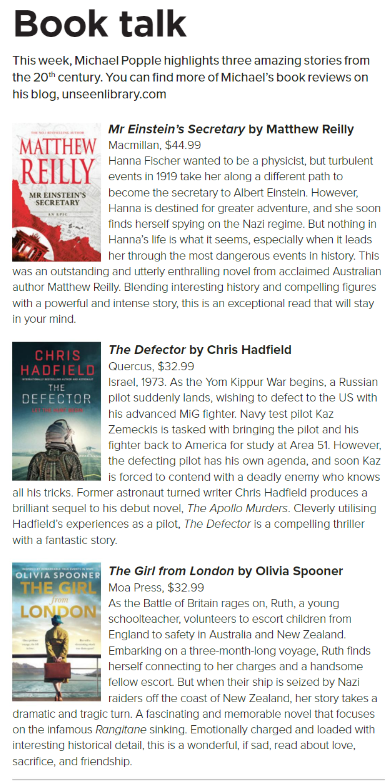
Originally published in the Canberra Weekly on 16 November 2023.
A copy of this column also appeared on the Canberra Weekly website.
Make sure to also check out my extended reviews for Mr Einstein’s Secretary, The Defector and The Girl From London.
Expert reviews of the latest and the best in Fantasy, Historical Fiction, Science Fiction and Crime Fiction from an Australian reviewer.

Originally published in the Canberra Weekly on 16 November 2023.
A copy of this column also appeared on the Canberra Weekly website.
Make sure to also check out my extended reviews for Mr Einstein’s Secretary, The Defector and The Girl From London.
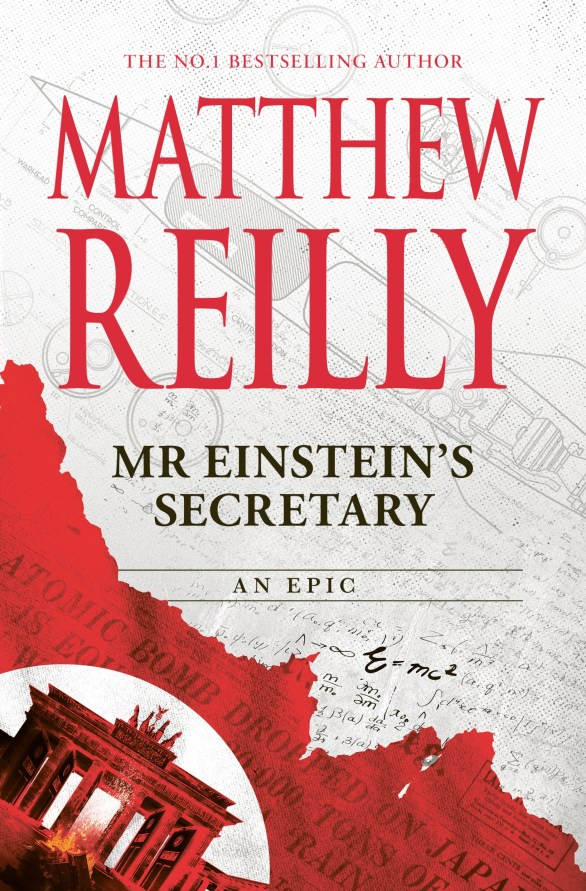
Publisher: Macmillan Australia (Trade Paperback – 17 October 2023)
Series: Standalone
Length: 464 pages
My Rating: 5 out of 5 Stars
Acclaimed Australian author Matthew Reilly presents one of the most entertaining, moving and brilliant historical fiction reads of 2023 with his compelling and well-written novel, Mr Einstein’s Secretary.
Matthew Reilly is a highly creative Australian author who has been wowing audiences for years with his elaborate and inventive thrillers and science fiction novels. Known for his Shane Schofield and Jack West Jr series, as well as several impressive standalone reads, Reilly has produced an intriguing array of fiction throughout his career, much of which revolves around ancient secrets and action-seeking protagonists. I have personally only had the pleasure of reading one of Reilly’s novels so far, the intriguing 2019 release, The Secret Runners of New York, which saw a group of teenagers travel back and forth between the modern city and a future dystopia. I really enjoyed this cool book and I have been meaning to read more of Reilly’s works. As such, when I got a copy of Reilly’s first foray into historical fiction, a favourite genre of mine, with Mr Einstein’s Secretary, I had to check it out, and boy was I glad that I did.
Born at the start of the 20th century in Berlin to an American mother and a German father, Hanna Fischer is a curious young woman whose greatest wish in life is to study physics like her mother and her neighbour the great Albert Einstein. However, when her peaceful existence is violently turned upside down in 1919, Hanna has no choice but to flee to America and make a new life for herself in New York.
Forced to give up her dreams of studying physics, Hanna makes the fateful choice to enrol in a prestigious school for secretaries. Her decision will place her in the orbit of some of the most interesting people in the city, including business tycoons, socialites, gangsters and one determined Treasury agent, as she works to find a way to return home. But as the years go by, it soon becomes apparent that the Germany she left behind is no longer her home, especially when Hanna returns to Einstein’s orbit as his secretary.
Trapped in Germany when the Nazis come to power, Hanna is recruited as an American spy and soon finds herself serving as secretary to several high-ranking Nazis. Caught between dangerous men, lethal intelligence operatives and her own conflicted loyalties, Hanna attempts to uncover the terrible truths of the Nazi regime without her own secrets coming out. But not everything in Hanna’s life is as it seems, and one dangerous part of her past will always come back to haunt her.
Mr Einstein’s Secretary was a fascinating and compelling read that had me hooked very early thanks to its unique style, focus on various gripping parts of early 20th century history, and fantastic characters. Loaded with some fascinating detail, a ton of action and a wonderful life story, I honestly couldn’t put this book down at times and I managed to power through the entire second half of the book in a single afternoon. Due to its clever writing and brilliant story, I just had to give Mr Einstein’s Secretary a full five-star rating, and this is honestly one of the best historical fiction novels of 2023.
Reilly tells a very unique story in Mr Einstein’s Secretary that primarily focuses on protagonist Hanna Fischer and her experiences living through some of the most turbulent parts of history. Reilly really piqued my interest early on when the first-perspective narrative opens on the protagonist’s funeral, with the reader apparently seeing it through her ghost’s eyes. While having the narrator’s funeral upfront can sometimes be problematic, I think it worked out well for this book, especially as Reilly introduces a few key characters for the reader to keep an eye out for, before jumping into three key scenes from the protagonist’s life. These scenes are three separate interrogations that the protagonist experienced during her intriguing career, each one undertaken by a different regime, including the American police, the Nazis, and the Soviets. All of these interrogations are key reference points in the main story, and you are immediately intrigued to see the chain of events that leads the protagonist to each of them, as well as how she managed to get out of the deadly situations each time.
After this excellent introduction, the story begins in earnest with a more traditional chronological approach. Starting with her childhood in Berlin where she lived next to Albert Einstein, Hanna’s story quickly fills with tragedy and adversity, especially as the early clouds of fascism and the consequences of World War I cause her to lose everything and force her to flee to America, where she is enrolled in a secretary school. This early part of the book is well set out, introduced several key characters, and really showcased some of the defining early moments for the protagonist that would serve her well in the future, as well as exploring the impacts that chance and simple choices can have on a person. The next section of the novel set in New York is initially a bit slower, but it soon picks up, especially when the Prohibition Era kicks in. Reilly has an excellent way of portraying someone’s personal story in the most interesting way, and I loved seeing Hanna’s life in America, especially when it combined early corporate America with gangster lifestyle and the burgeoning physics scene. There is a compelling sojourn back to Germany for Hanna that results in nothing but heartbreak, especially when her twin is involved, and I really enjoyed the protagonist’s encounters with a New York gangster during this time, especially as it showcases just how practical and cold Hanna can be when necessary. This part of the book ends when it reaches the events of the first interrogation, and the protagonist becomes a more permanent secretary to Einstein.
From there, the plot of Mr Einstein’s Secretary moves at a much quicker pace, especially when Hanna gets dragged into the events surrounding the rise of the Nazi regime. Trapped in Germany after Hitler’s rise to power, Hanna is recruited to spy on the Nazis and becomes the secretary to key members of the party. Thanks to this, Hanna has an excellent view of the full evils of the Nazis and becomes involved in several espionage missions against them and the Soviets. This part of the book combines spy thriller moments with compelling and dark historical detail, and you really get caught up in Hanna’s life as an operative, especially when it goes side by side with some of the major moments of the Nazi regime. I was absolutely powering through this part of the book it was so darn fascinating, especially as Hanna had to also deal with personal issues and her growing revulsion about what she was witnessing. Reilly keeps the plot moving quickly in the final third of the book, and there are some truly intense scenes leading up to the fall of Berlin, especially when Hanna is forced to make some hard choices and faces the ultimate betrayal. I loved some of the shocking moments and twists that emerged in this last section of the novel, especially as it places the protagonist in some major trouble, and the resulting scenes have you constantly on the edge of your seat. Everything ends on a pretty comfortable and satisfying note, and I felt that Reilly resolved his story in an excellent if crowd-pleasing way. An overall outstanding, gripping and electrifying story from start to finish.
While this impressive story is pretty strong and exciting in its own right, what really elevates Mr Einstein’s Secretary is the author’s clever and distinctive writing style. I loved how Reilly set up the entire story as the memories of a shadowy figure watching their own funeral, especially as events unfolding before them reminds the protagonist of some of the most traumatic memories of her life. The initial focus on the three defining interrogation sequences produces an extra strong start for the novel, and the fascinating foreshadowing that resulted really heightened the reader’s anticipation for the rest of the story. While the story does transfer to a more traditional biographical novel after these scenes, Reilly breaks this up masterfully by having the narrator suddenly remember other similar events of her life, and then having this scene unfold. For example, when the character visits a certain location as a child, Reilly will then insert a quick paragraph showing the same location at a different part of her life. This switch between time periods proves to be a fascinating and powerful way of expressing the character’s linked memories, and it also adds in some interesting additional foreshadowing and some fascinating contrasts. Reilly does a wonderful job of highlighting what part of the character’s life these memories are from by changing the font type around, and I loved how multilayered the novel got as a result. An additional font choice towards the end of the book also highlights a shocking and dark change in narrative focus, as a similar figure starts to tell the story in their own twisted way. These unique writing elements really helped to turn Mr Einstein’s Secretary into quite a distinctive read, and I deeply appreciated Reilly’s desire to experiment and tell a historical story his own way.
Aside from Reilly’s intriguing narration and style choices, I also think that Mr Einstein’s Secretary had an excellent balance of action, intensity, drama and romance to appeal to a wide audience of readers. The author does a remarkable job of developing his protagonist while simultaneously exploring so many fascinating historical events and moments, especially in New York and Germany. So many key historical events in the lead-up to and eventual outbreak of World War II are covered in excellent detail, and Reilly does an outstanding job of working his protagonist into these events and making her a witness and participant. I loved Reilly’s depictions of 1920s New York, which served as a grand backdrop for much of the early narrative, and the author takes the time to showcases several key periods of the decade, from the early roaring twenties with the economic boom, the prohibition era, and the eventual Wall Street crash. There are also some fascinating, if necessarily dark, depictions of the rise of the Nazi regime in Germany, which Reilly captures perfectly, especially through the eyes of his protagonist who has her own issues with the Nazis due to her family and her association with Einstein. There is even an intriguing discussion about historical physics, with the protagonist having a fantastic inside track, and watching her spy on the German attempts at nuclear technology is an intriguing part of the book, especially after seeing Oppenheimer earlier this year. Reilly utilises all these historical events extremely well, and his use of them allows for some great support characters, especially as there is a combination of fun original characters and multiple real life historical figures. I had such a brilliant time with the historical focus of Mr Einstein’s Secretary, and it proved to be a powerful, exciting and well-balanced read.
Matthew Reilly does it again with his first major foray in historical fiction. Mr Einstein’s Secretary is a powerful and captivating tale of life, love and loss in the run up to World War II and I loved every second spent with Reilly’s compelling protagonist. Featuring a brilliant and unique style from the author that deeply enhances an already fascinating narrative, Mr Einstein’s Secretary was a treat from start to finish, and I cannot recommend it enough.
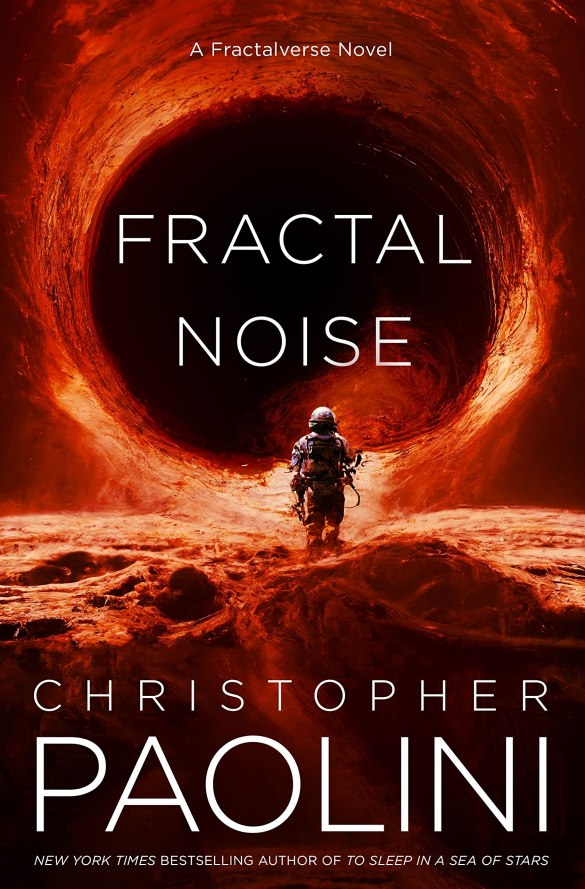
Publisher: Tor (Trade Paperback – 16 May 2023)
Series: Fractalverse – 0.5
Length: 287 pages
My Rating: 4.5 out of 5 stars
Return to the epic Fractalverse of the always awesome Christopher Paolini with this standalone prequel novel, Fractal Noise, a tense and impressive dark science fiction novel.
Christopher Paolini is an author that I have been a major fan of for a very long time thanks to his iconic and epic Inheritance Cycle series. The amazing Inheritance Cycle first debuted over 20 years ago with the amazing fantasy novel Eragon, which told the compelling story of a young hero and his dragon companion as they fight to free a conquered land. The Inheritance Cycle series is one of my all-time favourite series due to the great story, impressive world building, and the sheer nostalgia that I hold for them. Indeed, I am particularly excited because Paolini is also releasing a sequel to the Inheritance Cycle books later this year with Murtagh, which is one of my most anticipated reads for the second half of 2023. However, before we get to that there is even more Paolini goodness to unwrap this year as the author has also released the intriguing science fiction novel, Fractal Noise. A standalone prequel to his science fiction epic from a few years ago, To Sleep in a Sea of Stars, Fractal Noise was an intriguing read that I had a lot of fun reading in the last week.
Plot Synopsis:
July 25th, 2234: The crew of the Adamura discovers the Anomaly.
On the seemingly uninhabited planet Talos VII: a circular pit, 50 kilometers wide.
Its curve not of nature, but design.
Now, a small team must land and journey on foot across the surface to learn who built the hole and why.
But they all carry the burdens of lives carved out on disparate colonies in the cruel cold of space.
For some the mission is the dream of the lifetime, for others a risk not worth taking, and for one it is a desperate attempt to find meaning in an uncaring universe.
Each step they take toward the mysterious abyss is more punishing than the last.
And the ghosts of their past follow.
Fractal Noise was a very awesome book from Paolini that I had an outstanding time getting through. I must admit that when I first received a copy of Fractal Noise, I wasn’t too sure that I was going to read it, mainly because while I enjoyed To Sleep in a Sea of Stars, it was a bit too long and overcomplicated, and I feared this potentially unnecessary prequel would be the same. However, I decided to give it a shot, especially as Fractal Noise was considerably shorter than the original novel in this series, and boy am I glad that I did.
Paolini sets up a simple but very effective story in Fractal Noise that is set 23 years before the events of To Sleep in a Sea of Stars, which details the discover and early exploration of a mysterious alien artefact that was mentioned in the original novel. Just like with To Sleep in a Sea of Stars, Fractal Noise is told from the perspective of a single scientific protagonist, this time a xenobiologist names Alex Crichton, and follows them and their team as they examine a newly discovered space anomaly, an uninhabited planet with a 50km-wide perfect hole in it that is constantly relaying a continuous, overwhelming beat. This anomaly could only have been created by a sentient species, and the scientists aboard the ship decide to journey to the planet to find any additional signs of alien life and to discover more about the hole. However, to make it to the edge they need to land a substantial distance away and trek to it by foot in an arduous journey with many potential complications.
Paolini does a good job of quickly and effectively setting up this compelling plot in the first 50 pages of Fractal Noise while also providing great introductions to the damaged protagonist, as well as the accompanying scientists that are taking the trek with him. However, the real story doesn’t start until the protagonists land on the planet and begin walking the distance towards the hole. The author really goes out of his way to make this trek as arduous as possible, as the characters need to walk through wind, dust and other obstacles, all while pulling a mechanised sled behind them that slowly breaks down. The sheer repetitiveness of this task, combined with the desolate landscape, injuries, and the unique planet that rings with a loud “thud” every few seconds, works to slowly wear down the protagonists and force them into some very dark places of their mind. The closer they get to their goal, the harder their task becomes as the vibrations and noise produced by the hole becomes more intense and places a bigger toil on their bodies and technology. At the same time, every setback impacts their minds even further as the four scientists soon fall to dangerous infighting as each of them is haunted by their own ghosts and their own reasons for being there.
I really liked how the entire story slowly devolved into a dark and ultra-intense psychological science fiction thriller as Paolini worked to emulate desolate real-life expeditions (such as those old-school arctic journeys), with his excellent storytelling. The slow but unstoppable mental decline of the characters is handled perfectly, and while you are initially more worried about the protagonist, Alex Crichton, due to the recent tragedies in his life, the other characters are the ones you have to watch out for as they become more and more deranged or determined in their own ways. Watching everyone slowly turn on each other as the journey becomes harder and harder on them is extremely compelling, and it proves hard to turn away as things get darker and darker. The author supplements this compelling narrative with some intriguing, realistic and very-well thought out science fiction elements, especially when it comes to the physics of the planet, the obstacles they are facing, and the technology they have access to. However, there is also a certain primitive edge to the storytelling as no matter how advanced their technology is, when it starts to fail, they are forced to dive back into more a much more basic mindset. All this combines well with the fantastic dive into Crichton’s bleak mental state, as the protagonist begins to see the expedition as an important quest that will give him some redemption for his recent losses.
The entire story continues along this dark vein all the way to its compelling conclusion, and I was honestly pretty addicted towards the end, knocking out the last couple of hundred pages in a single night. Watching the final snap of each protagonist was pretty brutal, but it was a necessary commutation of the complex storytelling that had been leading up to at that point. I loved how well the barren landscape served as a background to this great story, and the constant “thump” “thump” of the planet as they drew closer gave such an outstanding atmosphere to the plot. Paolini really pulled together an excellent read here that both serves as a continuation of his existing universe, while also giving readers a story so very different to anything that he has produced before.
Overall, I found Fractal Noise to be an outstanding and epic new novel from Christopher Paolini, which I had such a great time with. I cannot emphasise just how intense and complex this initially simple story becomes, and the author’s ability to create forbidding settings, damaged characters, and suffocating story atmospheres has clearly grow over the years. Due to its connections to the history of his pervious novel, Fractal Noise is perfect for fans of To Sleep in a Sea of Stars, while also being very open to new readers interested in a compelling and bleak science fiction adventure. Fractal Noise was an exceptional read that comes very highly recommended from me and I cannot wait to see more of Paolini’s writing later this year when Murtagh comes out.
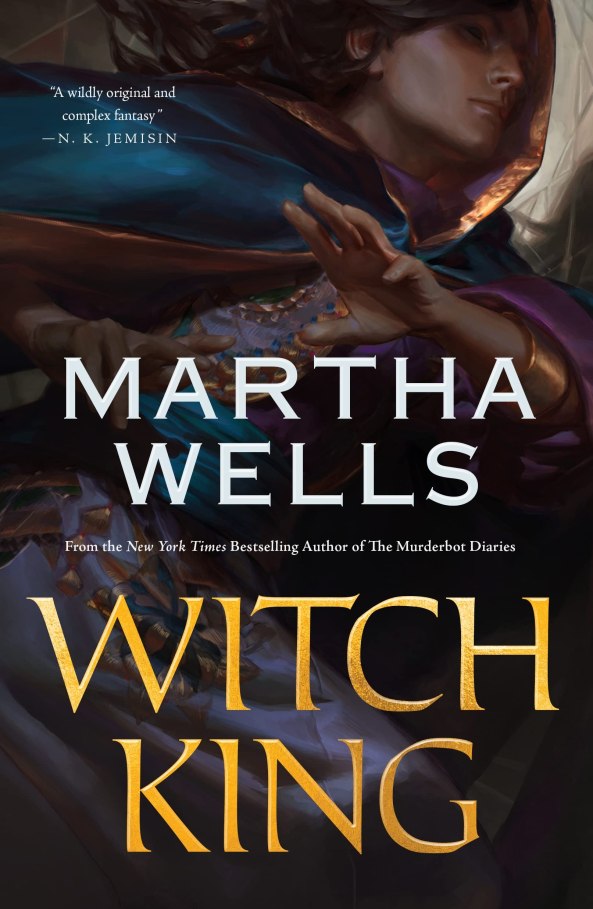
Publisher: Tor (ebook – 30 May 2023)
Series: Standalone/Book One
Length: 432 pages
My Rating: 4.5 out of 5 stars
Acclaimed science fiction author Martha Wells returns to fantasy fiction in a big way with a cool new epic novel, Witch King. This was an excellent and intriguing new read that I had a wonderful time reading, especially as I finally got to check out something from Wells, who has been on my to-read list for a while. Wells is a veteran author who has several intriguing novels and series throughout her storied career, including her Ille-Rien, Books of the Raksura and Emilie, and well as tie-in books in the Star Wars and Stargate franchises. While I am interested in reading her Star Wars book, Wells is best known for her Murderbot Diaries series, which follows a deadly security robot who has gained sentience and finds itself involved in serval complicated situation with various humans. This series gets a lot of love in review communities and has been on my radar for a while. However, instead I managed to get a copy of Wells’ new fantasy novel, Witch King and decided to have a read of that. Featuring an intriguing and compelling story, Witch King was an awesome novel that I found myself really hooked on.
Kai is having a very bad day. Awakening after an unknown period of imprisonment in a specially designed underwater cell, Kai is annoyed to find an arrogant magic user attempting to bind him to their will. However, Kai is no mere demon, he is Kaiisteron, the Witch King, a legendary figure who, with the help of his heroic friends, saved the world from the nefarious Hierarchs and the led the current nations to freedom.
Now freed from his tomb and inhabiting the body of the mortal who foolishly tried to control him, Kai needs to find out who trapped him and why. Accompanied by his long-time friend, the witch Ziede, and Sanja, the young woman intended to be sacrificed to him, Kai emerges once again into the world, trying to figure out what is changed and who benefited from his absence. However, nothing is as it seems, and Kai and Ziede soon discover that their other friends and comrades have also gone missing.
Determined to get to the truth, Kai, Ziede and Sanja begin their search for answers, but soon find themselves under attack from all corners. Dangerous magic users, powerful angelic creatures and lethal killers are all hunting for them, and everyone seems to have their own agenda. To survive, Kai and Ziede will need to dive into their dark history, and the legendary war they fought years ago. But the secrets they uncover will reveal dark truths about people they thought were their friends, and soon they will be forced to face the terrible consequences of their past mistakes. Can these legendary figures survive in a world that turned against them to find their loved ones, or has their adventure finally come to an end?
This was a pretty awesome read from Wells. Witch King has a gripping and intense story that really gets your attention early on and wows you with its elaborate world and interesting characters. I had a great time reading this book, and while I struggled to get through it quickly, I ended up really enjoying it and I am very interested in seeing how Wells follows it up.
I really enjoyed the great story contained within Witch King, although you have to be prepared for Wells to drop you into some heavy plot right away. There is not a lot of introduction to the characters or the world at the start of the book; instead you have to build up your own picture of events initially based on what’s going on. This kind of makes the first few chapters a little harder to follow at times, although there is some fun action, interesting events, and great characters to grab your attention. Wells eventually provides some of the details you need as the story continues, especially as she starts to split the story into two separate timelines, the current one and one set years in the past. The modern timeline continues to show the characters as they get to the bottom of why they’re imprisoned and why everyone is after them, while the past timeline shows the earlier days of their history, as well as the legendary war that made them famous and which is still impacting everyone who was involved. Both of these timelines are told from the perspective of Kai, and it provides a great overarching narrative, especially as you get to see two different sides to the same characters. The older timeline also provides some much needed context for the modern day storyline, and Wells did a great job of balancing events from the two timelines to tell an intriguing and elaborate story.
Both awesome narratives continue at a great pace and Wells loads both up with some outstanding moments. Out of the two, I enjoyed the chapters set in the past the most, especially as the young and inexperienced Kai was so very different from his confident and lethal persona in the future. There was also a greater sense of desperation, oppression, and an overlay of hope in these prequel scenes which really spoke to me. I also felt that it gave the reader a pretty good supplementary introduction into several of Witch King’s best characters, including Kai and Ziede, both of whom have some fun, complex, and LGBT+ positive arcs. I loved seeing them as younger characters experiencing some of the worst, and most defining, moments of their lives, and Wells did an outstanding job of building that up. However, most of the most important action occurred in the present-day storyline, and Wells writes a fantastic and powerful narrative about lost friends and relentless enemies that proved to be very compelling. There are some great twists and turns here, most of which are rooted in their adventures in the past, and I loved some of the powerful moments that occurred. Wells features several impressive battle scenes that make full use of the cool abilities of her magical characters, and it was particularly fun seeing Kai in action with his deadly abilities. Both storylines come to a great conclusion that perfectly complement each other, and I liked the symmetry with the past and present, especially as it relates to the protagonists. The final twist of the novel was pretty good and I liked how the modern-day storyline was set up to allow the narrative to continue if Wells chooses to. However, if this was only a standalone novel, it worked really well, and I loved how impressive and fun this fantastic narrative turned out.
In addition to featuring a compelling and well-written narrative with great characters, Wells also comes up with a very distinctive and intriguing fantasy setting for Witch King, which I had a fantastic time exploring. The world itself is a bit dark and damaged, having seen wars, magical upheaval and conquests, and it serves as a great background for the complex story. Wells does an outstanding job of utilising some unique elements, such as demons, angelic warriors, dark magic users and mysterious tyrants to bolster the plot and produce some distinctive and exciting sequences. This is often further enhanced by the author’s great use of the split timeline, as readers get to compare and contrast the settings and abilities of the characters after the massive time difference. Some of the settings are really outstanding as well, with my favourite being a sinister palace first introduced in the prequel timeline. This palace makes for an excellent backdrop for most of the early timeline’s plot, and the subsequent visit to it in the present also produces some fantastic and elaborate scenes, especially as actions in the past alter it in some very dramatic ways. While most of these unique fantasy and world elements are impressive and fun in many ways, I did think that Wells could have done a bit of a better job introducing them. The author really did just drop readers into the middle of the world at the start of the story with very little explanation and it takes a while to build up a full understanding of all the politics, factions, races, and basis for magic that are relevant to the plot. While this did lead to the occasional bought of confusion during the early chapters of the book, once you get deeper into the plot (especially after the first few prequel chapters), you really grow to appreciate the elaborate world and the inventiveness Wells put into it.
Overall, Witch King was a pretty awesome and captivating fantasy read, and it was one that served as a great introduction to Martha Wells for me. The exciting and compelling plot really drags the readers in, and the use of great characters, clever storyline splits, and an epic fantasy landscape proves to be an effective combination. I really hope that Wells continues some of the storylines set up in Witch King in the future, and I look forward to reading more from the author if she does.

Publisher: MacMillan (Trade Paperback – 28 February 2023)
Series: Standalone/Book One
Length: 327 pages
My Rating: 4.5 out of 5 stars
Fantastic new author Mali Waugh presents her excellent and memorable debut with the Australian crime fiction read, Judgement Day.
Family law judge Kaye Bailey is a woman on the rise. An honest and determined member of Melbourne’s Federal Circuit Court, Kaye is set to be the next chief judge, allowing her to make the changes she’s always dreamed about to make a real difference. However, hours after finding out about her promotion, Kaye is brutally murdered in her chambers.
Detective Jillian Basset has just returned from maternity leave and is having trouble balancing motherhood with her complicated career. Brought in with an arrogant partner to investigate the killing at the courthouse, Jillian hopes to crack the biggest case of her career. However, the murder of Judge Bailey is far more complicated than anyone anticipated, as the victim was a fierce and honest woman whose determination caused her to get on the wrong side of many of her colleagues and the people she ruled on.
As the detectives dive deeper into the judge’s life, they soon find themselves surrounded by potential suspects, from jealous judges to dangerous individuals with grudges against the entire family law system. As they attempt to understand who wanted to kill their victim, Jillian also finds her own life getting even messier, as her return to work raises problems she has been trying to avoid. Can Jillian crack the case before her own life spirals out of control?
Judgement Day was an amazing and captivating Australian novel that got my attention early on. Waugh pulls together a powerful and intense narrative that combines a brilliant murder mystery storyline with some fascinating legal thriller elements to produce a particularly impressive debut.
Waugh has come up with an excellent crime fiction narrative for her debut novel, and I liked the fantastic blend themes and story elements that she introduced throughout the book. Judgement Day starts off with an extended prologue that quickly and effectively sets the scene for the plot, introduces the victim and other key suspects, and showcases the events that led up to her murder. From there, the book primarily focuses on the main character of Detective Jillian Basset, a recent mother who is going through various personal issues as she tries to get back into her career. Forced to work with a new, glory-seeking partner, Jillian finds the journey back into the detective groove hard, but she is soon diving into the complex case before her. Waugh sets up an outstanding police procedural storyline here, as the character being their careful dive into the victim’s life, trying to identify who would have wanted to kill her.
The story moves along at a steady pace and the reader really gets drawn into learning about who the victim is and who might have wanted to kill her. Waugh loads up the story with a ton of great suspects and potential motives at this point, as the protagonists find out about all the drama that occurs behind the scenes of the court system. This takes the story in several intriguing directions, and you are soon hooked on the various leads that are presented to you. At the same time, Waugh paints a very complex and heartbreaking tale about the main character’s personal life, which I found to be just as interesting and moving as the tragic murder of the main plotline. The rest of the story moves very swiftly, especially as you are pretty invested in solving the case, and I personally managed to knock the second half of the book off in a single night. Several intriguing plot points from earlier in the book, including an infamous divorce case, jealousy from other judges, a kidnapping, and some intriguing character history, are brought together in a very clever way as the solution to the murder presents itself. Waugh set everything up extremely well, and I really liked the clever clues and hints that she had scattered through the rest of the book. The final resolution of the case, as well as the reveal of the murderer’s motivation and methods, was handled well, and I really liked how Waugh brought everything together and left the reader with a very satisfying conclusion.
While the story itself is very strong, I also liked some of the clever and compelling elements that Waugh added in to make it even more complex and emotionally powerful. The most prominent of these is the inclusion of some fascinating legal thriller elements that enhanced Judgment Day’s police procedural storyline and really helped to book stand out to me. Waugh uses all her experiences as a lawyer to paint an intriguing picture of the family court system in Melbourne, and the struggles and work of its judges become a key part of the plot. This leads to several other intriguing elements, such as domestic violence and the issues that professional women face in the workforce, especially when it comes to balancing family and the opinions of their male colleagues with a successful career. These elements are blended into the narrative in a smart and thoughtful way, and I liked how it forced the protagonists to examine the case from several different angles. While these intriguing elements are great, the focus on classic police work is still very strong, and I really enjoyed the impressive mystery that Waugh wove together in Judgement Day. The author’s focus on the character development and personal issues added a great deal to the overall story, and this ended up being quite a powerful read.
The characters that Waugh chose to focus the story on are a particular strength of Judgement Day, and I deeply appreciated some of the emotionally rich personal storylines that developed around them. In particular, Detective Jillian Basset was a brilliant lead, and you can tell that Waugh really poured her heart into her development. Not only was she everything you want in a police detective protagonist, smart, determined and empathetic to the victim, but she is also dealing with some deeper issues related to her recent maternity leave. While this initially shows itself to be her struggling to return to the office and fearing losing her place on the team, Waugh slowly reveals that her issues are much more concerning as she is suffering from postnatal depression. Feeling unable to connect with her new child, Jillian instead focuses on her work and neglects her family, leading to strain and conflict in her personal life. Waugh does an excellent job of examining her protagonist’s personal issues throughout Judgement Day, and the frank and powerful look at her mental health concerns was a key part of the book.
I also need to highlight Jillian’s new partner, Sergeant John McClintock, who was brought in as her temporary replacement while she was on leave. Now working together, McClintock initially comes across as an arrogant and ambitious male figure trying to overshadow the main protagonist, and the two have trouble working together. However, rather than stick with this cliche, Waugh provides a deeper look into McClintock and you realise that a lot of his attitudes are a façade brought on by his own issues. Waugh works these into the story really well, and Jillian and McClintock soon grow to understand each other and are able to help each other in their own ways. This partnership becomes a great part of the book, and I enjoyed these two main characters, as well as the intriguing supporting cast of suspects, witnesses and Jillian’s family, which add a great deal to story as a whole.
Overall, Judgement Day was an impressive Australian crime fiction debut from Mali Waugh and one that I am very glad I got the chance to check out. The outstanding story with its complex mystery, intriguing elements and fantastic characters ensured that I had an excellent time reading Judgement Day. I think that Waugh really showcased her writing ability with her first book and I think this is the start of an amazing new talent.
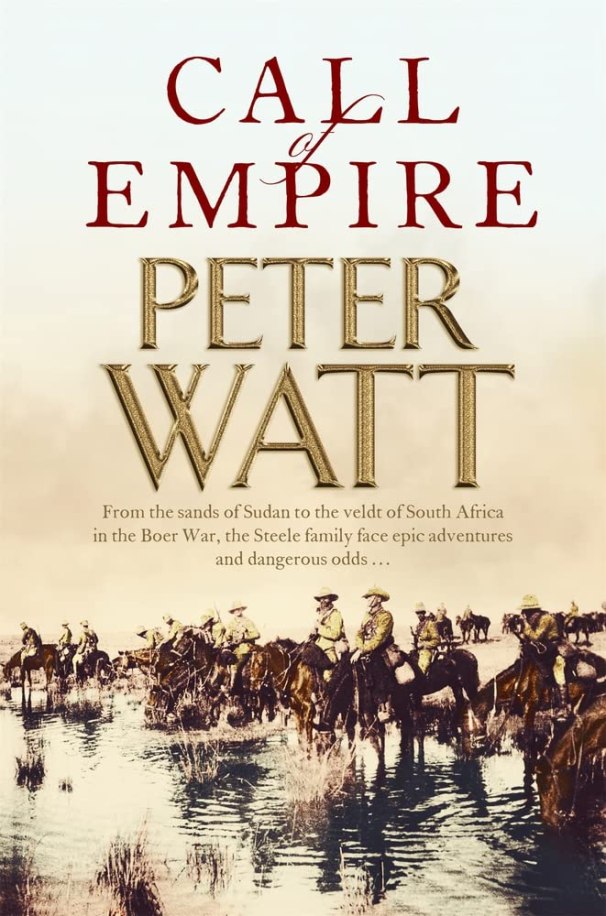
Publisher: Macmillan (Trade Paperback – 25 October 2022)
Series: The Colonial series – Book Five
Length: 368 pages
My Rating: 4.5 out of 5 stars
Australia’s master of the historical adventure returns with another deeply exciting and highly intriguing character driven read that follows one historical family as they embark on war and adventure across the world, Call of Empire by Peter Watt.
Towards the end of each year, I always know that I am about to have my historical action and adventure quota filled as the new Peter Watt is coming out. Watt has been a particularly enjoyable and compelling Australian author for years, producing intriguing historical fiction books with a focus on Australian history. His works have so far included the long-running Frontier series and his compelling Papua trilogy, both of which contained some remarkable historical adventures. However, I personally have been really getting into his currently body of work, The Colonial series, which I have had a wonderful time reading in recent years.
The Colonial series started of back in 2018 with The Queen’s Colonial, an intriguing read that followed young Australian Ian Steele in 1845 as he switched places with an English nobleman to take up his commission in a British regiment. Becoming Captain Samuel Forbes, Steele found himself drawn into several of England’s deadly 19th century wars, while also forced to confront several dangers back in England as the real Samuel Forbes’ family sought to have him killed. This fantastic series continued for two more books, The Queen’s Tiger and The Queen’s Captain, both of which were excellent reads. Watt continued the series last year with The Colonial’s Son, which jumped ahead a couple of decades to follow the main character’s oldest son as he followed in his father’s footsteps and become a soldier in the Queen’s army. I had a great deal of fun with these exciting books, and I was very happy when I received the next entry in the series, Call of Empire.
Starting in 1885, several years after the conclusion of The Colonial’s Son, Call of Empire sees protagonist Ian Steele finally living the quiet life in New South Wales, enjoying time with his family and friends, and expanding his business empire. However, the British Empire is constantly finding itself in conflict across the globe, and soon the young New South Wales colony is called upon to send troops to assist the British campaign in Sudan.
Determined to serve the Empire once again, Ian’s oldest son, Josiah, takes a commission in the New South Wales army and journeys to Africa to fight the Sudanese forces for the British. However, his decision will alienate him from the love of his life, Marian Curry, who is determined that he stop fighting in imperialistic wars. At the same time, Ian’s younger son, Samuel, is learning the family business out in the Pacific with the family’s friend, Ling Lee. However, Samuel and Lee are soon dragged into a dangerous plot to smuggle guns for the Chinese, as Lee’s obsession with freeing China from European control leads them into mortal danger.
Soon the entire Steele family finds themselves in deep trouble across the world, and only the most daring of actions will help them survive. But as the Empire’s wars continue and the Steele family and their friends are drawn into even more conflicts, can even their legendary luck continue? Death and tragedy awaits them all, and soon the Steele family will face a loss they never expected.
This was another fantastic and deeply exciting novel from Watt, who continues to dazzle with his fast-paced writing and impressive historical insights. I loved the awesome story contained in Call of Empire, and I ended up powering through this book in less than a day.
Watt produces another exciting and ultra-fast paced story for Call of Empire that takes the reader on a wild and captivating journey through some interesting parts of late 19th century history. Starting in 1885, Call of Empire primarily follows the three male members of the Steele family as they attempt to overcome the various challenges they face in their respective endeavours. Watt tells a multi-layered, multi-generational, character driven story that follows multiple characters simultaneously as they engage in their own story. This means that readers are often treated to a range of different storylines in the same chapter, having one character engaged in war, while another deals with issues at home, and at the same time a third finds themselves caught up in adventures at sea. This makes for quite a complex read, although the range of storylines are well balanced and never oversaturate or confuse the story. Indeed, Watt is a pretty clear and concise writer, and the reader is able to have a lot of fun with several of the storylines at the same time. Watt features an outstanding range of storylines throughout Call of Empire, and I loved the blend of war, politics, exploration, business, romance, character development and legal concerns that were featured at various points throughout the 15 year long plot. This reminded me a lot of the author’s previous Frontier novels, especially the focus on one big family, and I had a wonderful time seeing the elaborate narrative he wove around his characters. Watt really takes this story in some interesting directions, and there are a few big surprises, as well as some tragedies that established readers of this series will be hit hard by. This proved to be quite an addictive read, and I loved seeing his characters continue to traverse through life in their chaotic and adventurous ways. The book ends at the start of the new century, and it looks like Watt will be taking his characters in World War I next time, which I am sure will be suitably traumatic.
Easily my favourite thing about this book was Watt’s excellent dive into the always eventful colonial history of Australia. In particular, Watt examines several lesser-known wars and conflicts from the 19th century, with a particular focus on the role of New South Wales. This starts early in the plot with one of the characters getting involved in the Suakin Expedition in Sudan, which was part of the larger Mahdist War. This deployment saw a battalion of New South Wales soldiers travel to Sudan as part of the war effort and was the very first military force to be raised and deployed overseas by Australia. While there wasn’t a lot of fighting involved with this campaign, I was deeply intrigued by the history and the politics behind it, and Watt did a wonderful job of exploring it in great detail throughout the book by inserting his characters. Watt continued this trend throughout the rest of the book, which saw several of his characters involved in both the Boer War and the Boxer Rebellion in China. Both conflicts had Australian soldiers involved, fighting on the side of the British, and Watt took exquisite care to explore what role the Australians played in them, and how they came to be involved in the conflict.
Out of all of them, I particularly enjoyed the captivating examination of the Boer War in Africa, which was one of the more deadly wars Australians fought in during the 19th century. This war, and one of the character’s roles in it, dominated a good part of the book, and Watt did an amazing job of bringing different parts of the conflict to life. The author really captured just how dark and bloody this war was, from snipers in the African bush, to the horrors inflicted on the Boer settlers. However, Watt saves some of his best writing for the Battle of Elands River, a protracted battle that saw the Boers surround a force of Australians and their allies in a brutal siege for 13 days. Naturally, one of the characters is right in the middle of this fight, and Watt really showcased the carnage and terror that the Australians would have felt being surrounded and bombarded. I honestly didn’t know a great deal about some of these early Australian military conflicts, and it was absolutely fascinating to see them come to life in the hands of this talented author. Having this great historical background really enhanced the overall quality of the novel, and I had a wonderful time diving back into these sometimes overlooked parts of Australian military history.
As I mentioned above, Call of Empire was a very character focused book that featured a range of fantastic point of view protagonists through whose eyes the story unfolded. Watt features a great combination of characters, with a compelling mixture of younger figures who were the focus of The Colonial’s Son, and even a few characters from the first three Colonial books. There was quite a range of different character storylines in Call of Empire, and you swiftly get drawn into the various unique adventures of each of the characters. It was fascinating to see how the older characters had evolved since their original adventures, and I liked how Watt started focusing more on the next generation, including by expanding the role of the younger Steele son, Sam, who had an amazing outing here. There is a great examination of the events that help to form these figures character, and it was fantastic to see them overcome so much adversity at various parts of their life. I will say that some of the male Steele characters did tend to blend personality wise as the book proceeded, mostly as they are cut from the same adventurous cloth, but you still grow to like all of them, and you ended up getting touched when bad things happen to them. There are some very interesting and powerful developments that hit the main characters in this book, and this ended up being a very key novel in the family history. I had a wonderful time seeing the latest exploits of the Steele family, and with the next generation being introduced towards the end of the book, you know that they have even more adventures to come.
Peter Watt continues to showcase his talent as Australia’s premiere author of the Australian historical adventure with his latest Colonial novel, Call of Empire. Bringing back several of his fantastic protagonists from the previous books, Watt crafts together another exciting read that dives into some intriguing parts of Australia’s military history. Fast paced and full of awesome action, Call of Empire is another amazing read from Watt, and one that I had a lot of fun getting through.
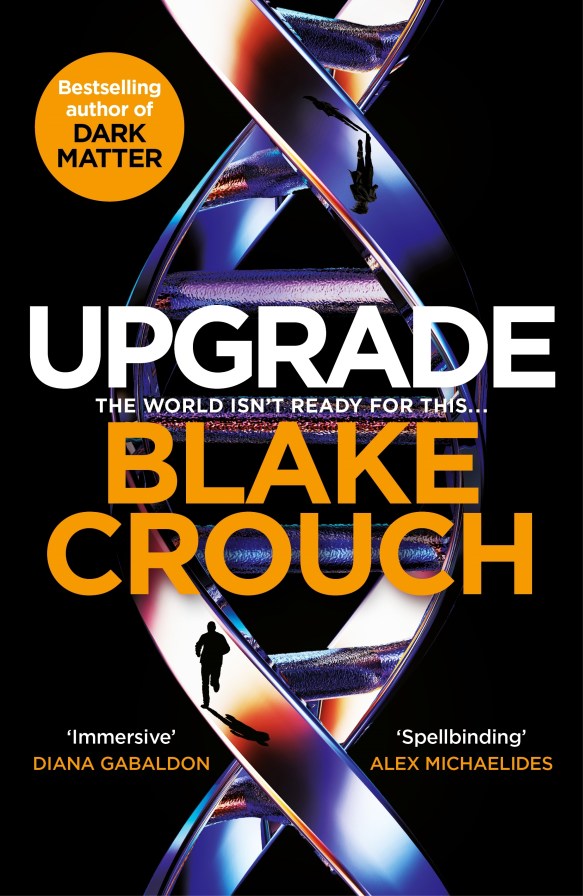
Publisher: Macmillan (Trade Paperback – 7 July 2022)
Series: Standalone
Length: 341 pages
My Rating: 5 out of 5 stars
The master of the high-concept science fiction thriller, Blake Crouch, returns with another exceptional and deeply addictive standalone read, Upgrade, which takes the reader on a deep journey into the world of genetic engineering.
In the near future, Earth is facing multiple threats and catastrophes that are slowly destroying the human race. However, the greatest threat to humanity may come from within, as advances in genetic engineering and manipulation have allowed scientists to change DNA itself. Following a massive genetic disaster that led to the destruction of an entire food supply and the deaths of hundreds of millions of people, all genetic research has been made illegal and is strictly policed by world governments.
Logan Ramsay is an agent in the newly created Gene Protection Agency that enforces the research ban in the United States and which comes down hard on anyone illegally modifying genes. The son of the scientist responsible for the last crisis, Logan works to atone for his role in her work and no longer believes in the benefits of genetic research of that kind. However, when a raid goes wrong and Logan is targeted by a bomb designed to inject an unknown gene hack into him, Logan’s entire life and grasp on humanity is changed forever.
With enhanced physical and mental capacities, Logan has been upgraded into something superhuman. Forced to leave his family behind and flee from his own agency, Logan soon finds himself caught up in a war for control of humanity’s future, with dangerous forces seeking to change everything about the species. To survive and prevent another genetic catastrophe, Logan must dive deep into his past and his family’s legacy. But the more upgraded he becomes, the harder it is for him to care about everyone’s fate.
Wow, Crouch does it again with Upgrade, combining an intense and compelling thriller storyline with an outstanding and highly detailed scientific principle, to create an exceptional and extremely addictive story. I knew that I was going to enjoy Upgrade when I got it, especially after having such a brilliant time with Crouch’s previous novel, Recursion, and the author really did not disappoint. Upgrade is a gripping and powerful read, and I ended up powering through it in very quick order once I got addicted to its excellent plot.
I absolutely loved the exciting and clever science fiction thriller narrative that Crouch featured in Upgrade, which swiftly drags you in with its unique story and compelling concepts. Crouch really kicks everything off in high gear right from the start, providing a quick but efficient introduction to the protagonist, Logan Ramsay, and the dystopian future of the novel, before kicking off the key plot events. The protagonist is almost immediately placed into danger from a booby trap that alters his genetics, and he is forced to deal with the side effects as he is upgraded to superhero levels. Forced to escape from his own employers, Logan must come to terms with the changes being done to him, while also diving into some deep family drama as he realises his connection to the person behind it. After a journey of discovery, Logan ends up in a war to decide the future of humanity’s genetics, as he goes up against a group determined to alter humans against their will. This led to some big and intense sequences as genetically enhanced beings face off in some powerful and cleverly crafted moments. Everything is wrapped up in a compelling and emotionally heavy way, and readers will come away very happy after getting caught up in Upgrade’s elaborate and highly entertaining story.
I felt that Crouch did a brilliant job setting out Upgrade’s narrative, and it is perfectly designed to keep the reader absorbed in the plot. I loved the faster pace of the book, which ensured that you power through the novel very quickly, although it isn’t so fast that you lose sight of its many featured scientific elements. There are several time skips throughout the course of the plot, which help to move the story along and set up some interesting changes in the character’s situation. The story is set in a near-futuristic dystopian setting which has been rocked by a series of environmental and genetic disasters. Seeing some of the author’s suggested futures for certain famous cities (a semi-abandoned Las Vegas and a partially flooded New York), was very interesting, and it worked well with some of the other cool science fiction elements featured throughout. I also appreciated Crouch’s interesting philosophical take on what it means to be human and the depths of human nature. There are multiple discussions between the key characters in Upgrade, as they debate the changes being undertaken, as well as humanity’s overwhelming self-destructive tendencies. This becomes a rather interesting overall theme for the book, and a captivating motivation for some of the characters. I also must highlight the awesome action sequences spread out through the book, which add some exciting punch to the narrative. Not only are these very entertaining, but I loved how they were showcased through the protagonist’s eyes, especially once his upgrades take over, and the clinical detail he attributes to various actions give them a fun twist. This fantastic narrative really comes together well throughout Upgrade, and I felt that this was an exceptional read.
I deeply enjoyed the compelling and intense scientific framework that went into Upgrade. Crouch does an impressive and expansive dive into the world of genetics for this book, and the reader is soon inundated with information about DNA, genes, and genetic research. It is very clear that the author has really done their research when it comes to this subject, and this combined with his immense imagination results in some intriguing story elements. Crouch postulates multiple potential genetic upgrades to humans and other species throughout this book and how such manipulations could be brought about. As such, you see a lot of very cool stuff throughout Upgrade, particularly enhanced human beings who move and think at superhuman rates. The author paints a very interesting and compelling picture about what such enhanced humans would be capable of, and it was fascinating to experience them throughout the course of the plot especially as you see them happening through the eyes of someone going through these changes. There are various evolutions of these genetic upgrades throughout the novel and watching the characters become more and more powerful while simultaneously losing their humanity is a fantastic and captivating element. Crouch also presents some compelling and thought-provoking discussions about whether genetic engineering should be allowed and would humanity benefit from it. The different points of view and the resultant debates are an outstanding part of book, and I am sure that many people will come away from Upgrade with a different opinion on the subject.
While Crouch does dive deep into the science for Upgrade, I found that I was able to follow along with the various premises without too many issues. The author really tries to explain the genetic science to the reader in an interesting way, which I really appreciated. There were no points in the book where I couldn’t follow what was happening, and I ended up getting really interested in all the potential genetic manipulations that might be possible in the future. I also felt that these scientific elements were worked into the plot of Upgrade extremely well, and the awesome thriller narrative really wrapped around it. Overuse of genetic manipulation is a real potential threat in the future, so having government agencies, underground labs and world-affecting schemes in place isn’t too far-fetched, and these science elements serve as a rich ground for the cool storylines. I loved seeing upgraded humans facing off against agents and SWAT teams, and it resulted in some brilliant scenes. The underlying message about the responsibility of those involved in genetic research played well with the action-packed narrative, and I was once again really impressed with how the author can seamlessly combine science with fiction.
Another outstanding element of Upgrade was its fantastic protagonist and point-of-view character, Logan Ramsay. Logan is quite a fascinating and complex character, especially as Crouch establishes him as the son of the brilliant genetic scientist who caused the ban and was partially responsible for the resulting mass deaths. For most of the novel he is trying to redeem himself for these actions, mainly through his work as a government agent. However, his entire life changes when he becomes genetically enhanced, and there are some deep emotional scenes and narrative threads that are explored because of this. While he is initially horrified by the changes, Logan soon realises they are exactly what he always wanted, and he must reconcile that with his perceptions of humanity and the damage he has already caused. At the same time, he is also finding himself changing, and the continued and detailed examinations of all his upgrades and altered perceptions are showcased in an excellent way by the author. The increased physical and mental capacities are worked into his character well, and it was fascinating to see the first-person perspective of everything that happens to him. I particularly appreciated the slow loss of his emotional self and as the book proceeds, he becomes less and less human in many ways, unable to connect with the people around him. This is sad in a lot of ways, especially as he must give up his family, but you get an impressive understanding of everything the protagonist is going through and grow closer to him as a result. There is some excellent character work around this protagonist in Upgrade, and I really appreciated the emotional depth that it brought to this already captivating story.
With Upgrade, Blake Crouch continues to shine as one of the most creative and brilliant authors of science fiction in the world today. The compelling, science-based ideas he comes up with combine perfectly with his exciting and emotionally powerful storylines to create an excellent narrative with amazing characters. I had such a great time with Upgrade, and it is one of the better science fiction novels I have read so far in 2022. I also think it was also really good in comparison to the other Crouch book I have read, Recursion, which I hold in really high regard. While I think that Recursion had the better overall narrative, I appreciated the scientific elements of Upgrade a little more and I felt it fit into the plot a little better. As such, I think that Upgrade is another five-star read, and it comes very highly recommended by me. A must-read for all science fiction fans in 2022!
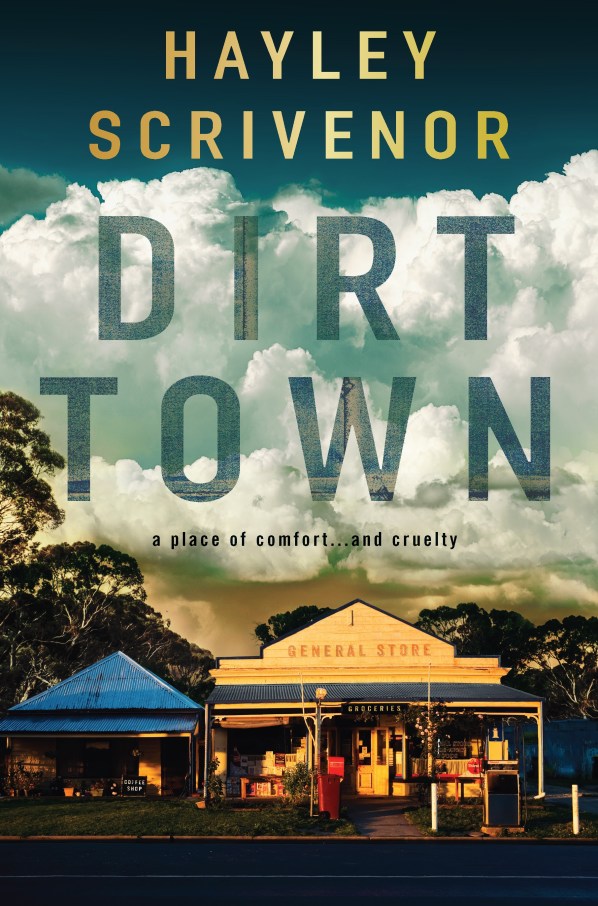
Publisher: Macmillian (Trade Paperback – 31 May 2022)
Series: Standalone
Length: 359 0ages
My Rating: 4.25 out of 5 stars
Intriguing new author Hayley Scrivenor presents her powerful and excellent debut novel with the powerful and dramatic Australian mystery, Dirt Town.
Plot Synopsis:
My best friend wore her name, Esther, like a queen wearing her crown at a jaunty angle. We were twelve years old when she went missing.
On a sweltering Friday afternoon in Durton, best friends Ronnie and Esther leave school together. Esther never makes it home.
Ronnie’s going to find her, she has a plan. Lewis will help. Their friend can’t be gone, Ronnie won’t believe it.
Detective Sergeant Sarah Michaels can believe it, she has seen what people are capable of. She knows more than anyone how, in a moment of weakness, a person can be driven to do something they never thought possible.
Lewis can believe it too. But he can’t reveal what he saw that afternoon at the creek without exposing his own secret.
Five days later, Esther’s buried body is discovered.
What do we owe the girl who isn’t there?
Character-rich and propulsive, with a breathtakingly original use of voice and revolving points of view, Hayley Scrivenor delves under the surface, where no one can hide. With emotional depth and sensitivity, this stunning debut shows us how much each person matters in a community that is at once falling apart and coming together.
Esther will always be a Dirt Town child, as we are its children, still.
Dirt Town was a fantastic and clever novel that contains a lot of interesting elements and moving parts to it that I had an amazing time reading. Set in the small Australian country town of Durton in late 2001, the crux of Dirt Town’s plot revolves around the sudden disappearance of local schoolgirl Esther, who vanishes on her way home. The subsequent search and police investigation into the disappearance soon involves several different inhabitants of Durton, including Esther’s friends, family and other connections, many of whom are dragged into the case over the course of the following days. The investigation and the eventual reveal of what happened to Esther slowly but surely tears the town of Durton apart, as everyone’s secrets come spilling out.
The story focuses on several intriguing protagonists, including Esther’s best friend, Ronnie, who attempts to find her without really realising what is going on; their fellow schoolmate Lewis, who witnessed something relevant to the case but is unable to say anything out of fear of being outed; the various relatives to the children; the cops that come to investigate; and more. This strong focus on these complex characters allows Scrivenor to weave together a compelling and exciting tapestry of personal stories that are altered for the worse when Esther goes missing. All the characters react to the disappearance in different ways, and the reader gets a deep and captivating look into their lives, which often reveal long-buried secrets, fears and insecurities that the investigation brings to the light. At the same time, the hunt for the missing child reveals other crimes going on around Durton, and everyone is moved in some way by the events of the narrative. The eventual reveal about what happened to Esther and who was involved is very intense, and I really loved the clever, heartbreaking twist that Scrivenor utilised here. The author layers the story with some clues, but it is still shocking to see what unfolded, and the series of events that led up to it and followed from there. Dirt Town ends with a satisfying, if very bittersweet, conclusion, and I really appreciate the impressive debut narrative the Scrivenor produced here.
This was a pretty moving and distinctive novel, as Scrivenor blends several genres together into a single riveting tale. While mostly framed as a mystery novel, Dirt Town also has a strong drama aspect to it, especially when it comes to examining the lives and secrets of the various townsfolk. This ensures that you get quite a lot of unique character interactions throughout Dirt Town, and it was very moving and powerful to see how everyone was impacted by the events of the plot, often in quite substantial and painful ways. It is also a particularly good piece of rural Australian fiction, as Scrivenor, who grew up in a small country town herself, does an amazing job portraying the tight-knit community, isolated landscape, and the feeling of decline that many of these towns experience during times of hardship. Scrivenor added in a distinctive, disassociated chorus narrator, which is essentially the joint voice of the town, which produces some poetic and insight examinations of the impacts that the case has on the town and its people, as well as providing compelling insights into how the town is generally faring. These separate elements blend well into a captivating and moving story, and you can find yourself getting quite drawn into Dirt Town as a result.
Overall, I felt that Dirt Town by Hayley Scrivenor was an outstanding and very distinctive debut novel, and one that sets Scrivenor up as an interesting rising talent in Australian fiction. A recommended read, especially for those who love complex stories in Australia’s unmatched rural setting, Dirt Town was an outstanding book that is well worth checking out.
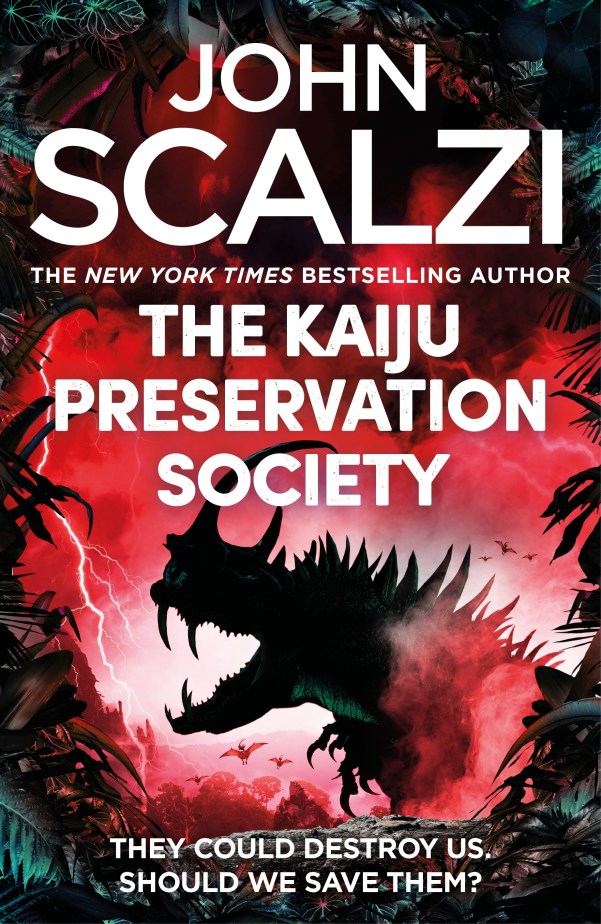
Publisher: Tor (Trade Paperback – 29 March 2022)
Series: Standalone
Length: 264 pages
My Rating: 4.5 out of 5 stars
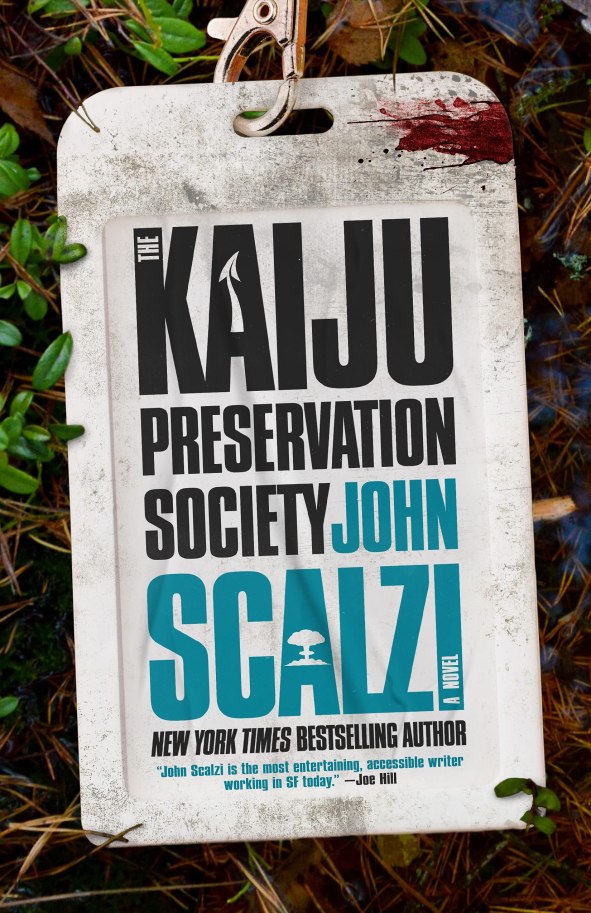
Prepare to save all the monsters as bestselling and madly inventive science fiction author John Scalzi presents his latest captivating and funny novel, The Kaiju Preservation Society.
I have a lot of love for imaginative author John Scalzi, who is probably best known for his Old Man’s War and The Interdependency series, both of which make great use of high-concept science fiction elements. I personally first experienced the author when I read his standalone novel, Redshirts a couple of years ago. This cool and clever book served as the ultimate parody of Star Trek, focusing on an Enterprise-esque spaceship whose regular crew are extremely aware that something is very wrong as they keep dying in ridiculous situations. I had an absolute blast with Redshirts and I have been keeping a very close eye out for anything else Scalzi was writing. As such, I was extremely excited when I saw that his new book, The Kaiju Preservation Society was coming out this year, especially as it had such a unique and interesting plot to it.
As COVID-19 starts to run rampart through New York City, Jamie Gray’s entire life is thrown upside-down when his terrible boss steals his ideas and fires him. Forced to work as a driver for the same food delivery app he developed, Jamie despairs at his now dead-end life, until one delivery leads to a chance encounter with an old acquaintance of his, Tom, who works for a mysterious animal rights organisation. In desperate need of a new team member to help with their next expedition, Tom offers the job to Jamie, who jumps at the chance at a high-paying job.
However, Jamie is unprepared for just how unusual his life is about to become as the expedition first journeys to the heart of Greenland, and then through a portal into a parallel Earth filled with lush jungle, an untouched atmosphere, and giant mountain-sized creatures named kaiju. It turns out that his new employers, known as the Kaiju Preservation Society, specialise in researching and preserving these vast creatures, while also working to keep them from leaving their own, human-less world, and traversing the barrier to ours.
Enraptured by the strange new world and exciting opportunities they present; Jamie soon takes to his role as a member of the Kaiju Preservation Society. However, his complex and dangerous new employment is about to get even harder when strange events start occurring around camp. It soon turns out that others have found a way to cross the boundaries between worlds and they have designs on the kaiju. Jamie and his friends must find a way to stop these intruders before their carelessness destroys a kaiju and millions of people on our world.
Scalzi has done it again, producing a clever and wildly entertaining book that makes brilliant use of a distinctive and unique idea. I had an incredible time reading The Kaiju Preservation Society, and I really loved the cool ideas, intelligent science fiction elements, and exciting story it contained.
The author has come up with an excellent story for The Kaiju Preservation Society that proves incredibly easy to get into and enjoy. This is a very intriguing and captivating read that quickly drags in the audience and gets them exceedingly addicted to the plot. Being a relatively short novel, it is an extremely fast paced, self-contained read that requires no prior experience of Scalzi’s books. It doesn’t take long for the events of the novel to unfold, with the reader soon introduced to the key characters, new friends, and the necessary set-up for the eventual dive into kaiju land. Once through the portal, the reader is given a crash course on the rules and attributes of the new world, the various issues the staff there are forced to contend with, and the crazy people who would choose to live amongst the monsters. After several fantastic and action-packed sequences, often broken up by several elaborate and comedic discussions between the protagonist and his friends, the book heads towards its intriguing final third, which identifies the main threat of the book and forces the characters to act. This final bit is extremely exciting and fun, and there are several intense moments as the characters face death, tragedy and one of the smarmiest villains I have had the pleasure of reading about. This leads up to an amazing conclusion that wraps everything up nicely and ensures everyone leaves the book incredibly satisfied.
I mostly liked how Scalzi wrote this book, especially as he clearly had a lot of fun introducing this bold new world and its many awesome features. The author does a lot in a short amount of time, and you are soon immersed in the excellent world of Kaijus. Told perfectly from the perspective of the main protagonist, who, like the reader, is seeing everything in this world for the first time, you quickly get a sense of all the craziness that occurs in this land, and the various issues they experience. I loved all the unique elements Scalzi came up with, from the impossible, nuclear-powered, mountain sized monsters with their complex biology and giant parasites, to the mass of strange creatures haunting the land, the unique landscape, and the various other awesome elements. You get a great sense of everything in this world, and Scalzi ensures that the science is both realistic and easy to understand at the same time. This proves to be such an impressive setting for this fantastic read, and you will wish that the author had made the book even longer just to see more of this strange new world. While there is a good focus on monsters, exploration and science, Scalzi also makes sure to lace The Kaiju Preservation Society with a great amount of comedy that proves to be extremely entertaining and amusing. This book is filled with so many fantastic and clever jokes, which range from comedic reactions to the outrageous events occurring around them, to fun, if random, pop culture references (for example, one of the villains is inspired by Trading Places), and multiple entertaining interactions between the eccentric central cast. You end up really getting into this excellent story as a result and it is so very fun to read.
I did have some minor issues with some of the dialogue in The Kaiju Preservation Society, as certain exchanges came across as a little clunky. I must note the somewhat overuse of dialogue tags (he said, she said, I said) after direct speech, which is something I noticed when I read Redshirts. While it was not as obvious or problematic in The Kaiju Preservation Society, possibly because I read a physical version rather than the listening to the audiobook, the overuse of them still stood out a little and spoiled the flow of the book at times. I also really wish that Scalzi could be a bit more descriptive with his writing in places, especially when it comes to the kaiju and some of the characters. For being such a key part of the plot you often don’t fully grasp what these creatures look like, with only very general descriptions of their size and shape being featured, unless an attribute is essential to the plot. There was also a complete lack of character description throughout the book, which I found to be a little distracting, especially as I often had no idea what a person looked like. For example, I didn’t realise character was nonbinary until halfway through the novel when they started getting a little more focus and the them/they pronouns started being used with more regularity. While some of this stuff is a little annoying, I felt that the strong and entertaining story more than overcomes it and you end up overlooking these minor stylistic problems.
The insanely brilliant John Scalzi continues to shine with his latest kooky and compelling science fiction read, The Kaiju Preservation Society. Filled with a wild and captivating exploration of a distinctive alternate Earth, you will quickly fall in love with this exciting and humorous story. I had an absolute blast getting through the awesomeness that is The Kaiju Preservation Society and I would strongly recommend it to anyone looking for something light and fun to get through.
Publisher: Picador (Trade Paperback – 22 February 2022)
Series: Standalone
Length: 406 pages
My Rating: 3.5 out of 5 stars
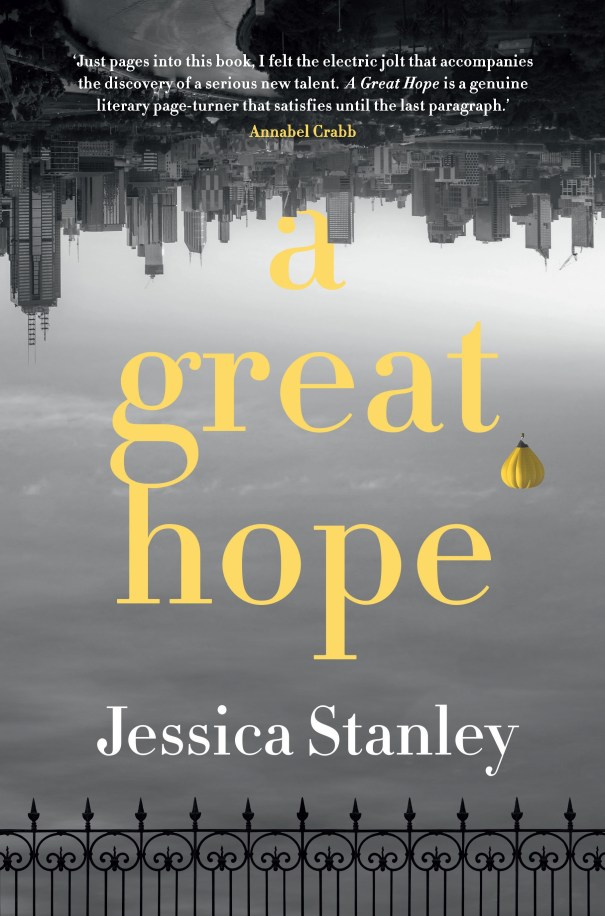
Intriguing new author Jessica Stanley produces a compelling Australian political drama, A Great Hope, an intense read that looks at the impact of the mysterious death of a politician on his family, set to the backdrop of a turbulent time in Australian politics.
Plot Synopsis:
John Clare was a titan in Australian politics. The head of a powerful union and a key player in the election of Kevin Rudd as prime minister in 2007, he had long been tipped as a future leader himself. Supporting him in his push for power were his elegant wife Grace, his troubled children Sophie and Toby, and Tessa, the mistress he thought would stay secret.
But now John has fallen, brutally, to his death. A terrible accident – or was it?
In the wake of losing John, his inner circle mourn and rage, remembering and trying to forget the many ways he’d loved and disappointed them. An adoring and unreliable father; a grateful and selfish husband; a besotted and absent lover; an authoritative and compassionate leader; a failed politician in an era when party politics failed a nation. As those around him reassess everything they knew of and felt for John, a new idea of what love and power really mean begins to emerge – as does the true cause of his death.
Gripping, propulsive and ambitious, A Great Hope untangles the mystery of John’s fall through the eyes of those who knew him best – or thought they did. Deftly displaying the clash of the political and the personal, this is a novel for our times, from a brilliant and forceful new Australian writer.
This was an excellent novel which I think did a great job telling a unique story by exploring some of the more controversial elements of recent Australian politics. A Great Hope’s story is a great blend of personal drama, political intrigue and contemporary historical fiction, with a little bit of mystery thrown in as various characters attempt to understand the death of John Clare and the impact he had on the world.
Telling the story from a variety of different perspectives, including those of his family, his mistress, and other related figures, Stanley presents a complex and winding narrative that proves to be very compelling at times. Initially set one year after the death of John Clare, the story jumps around the various point-of-view characters, and the readers are shown not only their present situations and opinions but also the origins of the characters as well as the full events that led up to the night John Clare died. While this does produce a cluttered story with a few odd moments (such as the unnecessary and graphic sex scenes), the reader is soon treated to a unique story that cleverly builds up to the finale while also exploring the various key characters. You get a real sense of everyone featured in the novel, especially those closest to John Clare, and their complex lives and relationships with the political heavyweights. Unfortunately, most of these characters are pretty terrible people who are fairly insufferable and hard to enjoy. While this was no doubt the intent, to show the strain and ugliness a political life brings out, there are barely any relatable or redeemable figures here (honestly the only character I particularly liked was the mistress, Tessa, which is a bit odd when you think about it).
While this lack of likeable characters did slow the flow and my enjoyment of the story a little, I managed to power through the last 200 pages in a single sitting. There are some interesting resolutions and revelations towards the end, and I enjoyed seeing some of the storylines come full circle, especially those that are set up in the present and then expanded on in the flashbacks. The resolution of who or what caused the death of John Clare was pretty interesting and a little surprising, but it fit nicely into the unique feel and storytelling of A Great Hope.
One of the most distinctive elements of A Great Hope was the author’s intense and in-depth examination of Australian politics in the early 21st century, particularly around the 2007 and 2010 elections. This is mainly because the author, Jessica Stanley, was herself involved in some of these campaigns, particularly in 2007, when she served as one of the party’s social media consultants (similar to main character Tessa). As such, this book contains some compelling and fascinating insights into the election campaign, candidates, and voters, particularly those associated with Australia’s major left-wing party (the Labor party), which really added to my enjoyment of the book. Some of the more intriguing and compelling political moments of this period are scattered throughout A Great Hope, and I deeply enjoyed seeing the author’s take on what happened and why. The author also examines the growing impact of social media during this time, as well as other intriguing elements about campaigns and party politics. However, readers should be warned that these political elements do start to get very upsetting as the book continues, especially as Stanley dives into the failures of government, the increased political hostility, the rejection of climate change by the opposition, and the inherent sexism that defined the era between 2007 and 2010. This stirred up some unpleasant memories of the political landscape of the time, but I did find this to be an interesting and captivating part of the novel, and I really appreciated how much these unique and realistic inclusions added to the story.
Fantastic new author Jessica Stanley got off to a great start here with A Great Hope, producing an intriguing and distinctive novel that makes excellent use of the author’s political insights. While I had some issues with the story and characters, A Great Hope ended up being quite an entertaining book, and I was very interested in seeing how everything came together, as well as all the clever political inclusions. I look forward to seeing what Stanley writes in the future, especially as there are so many memorable moments in Australian politics to set a story around.
 The Unseen Library