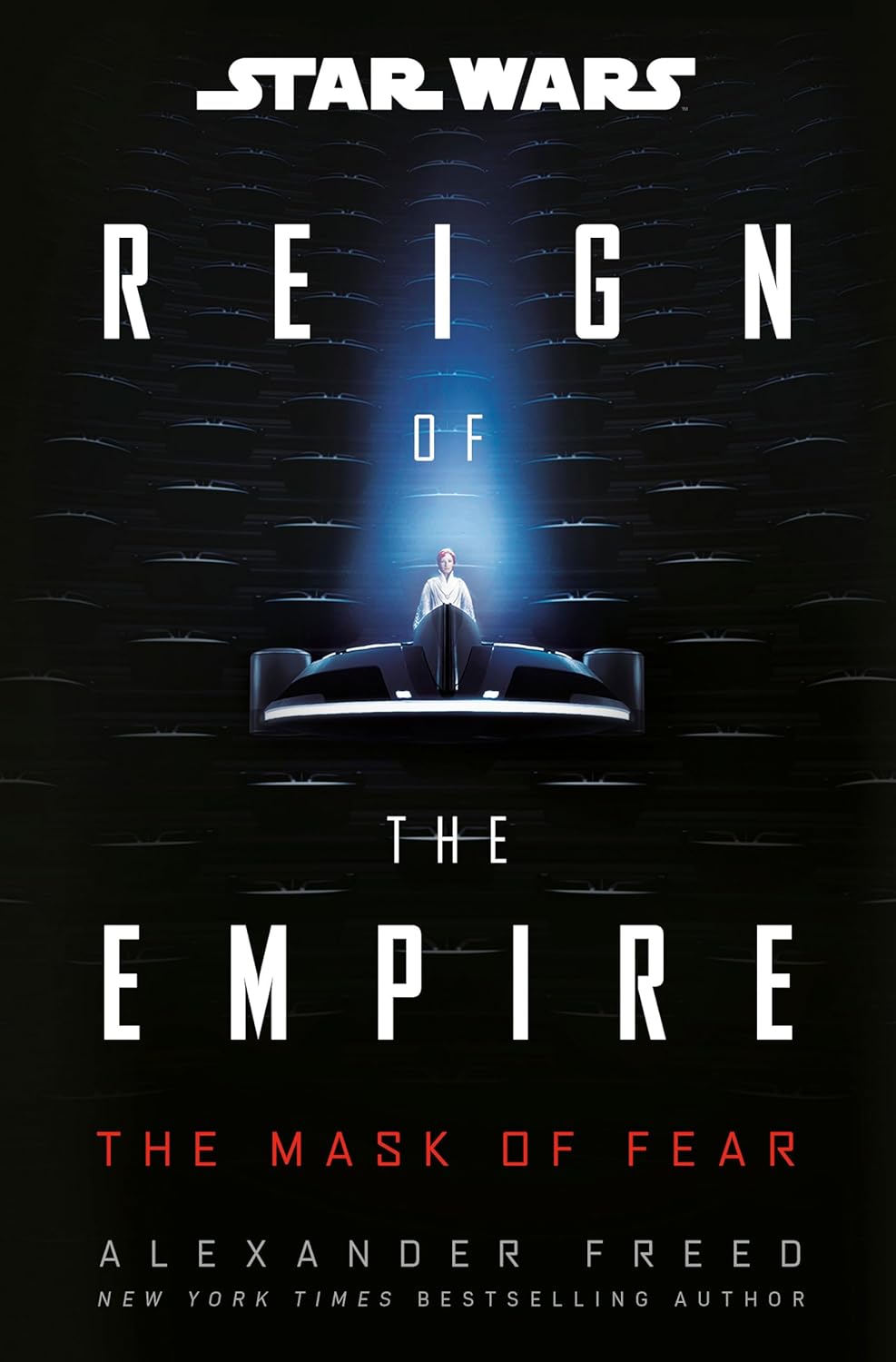
Star Wars: Reign of the Empire: The Mask of Fear by Alexander Freed

Publisher: Penguin Random House Audio (Audiobook – 25 February 2025)

Series: Reign of the Empire – Book One

Length: 16 hours and 51 minutes

My Rating: 4.5 out of 5 stars

Amazon

One of the top authors of Star Wars extended fiction, Alexander Freed, presents a compelling and complex inclusion to the franchise with The Mask of Fear, a powerful Star Wars novel that is a must-read before the upcoming second season of Andor.

There are some impressive authors writing Star Wars fiction at the moment, but one of my favourites is Alexander Freed, primarily because of his Alphabet Squadron trilogy.  An awesome series that followed a group of New Republic pilots in the immediate aftermath of Return of the Jedi, the Alphabet Squadron novels (Alphabet Squadron, Shadow Fall and Victory’s Price), are amongst some of my favourite Star Wars books, and I loved Freed’s dark take on the universe following the happy ending of the original trilogy.  As such, I was very intrigued when I heard that Freed was working on a new Star Wars trilogy set during one of my favourite periods of the franchise’s history, with the cool Reign of the Empire trilogy.

The Reign of the Empire trilogy is an ambitious series that seeks to chronicle the rise of the Empire and provides some cool new history in the current Disney canon.  Set immediately after Revenge of the Sith, the Reign of the Empire follow several key supporting characters from the films, as well as some new figures, as they attempt to navigate the galaxy following the formation of the Empire.  The first book in this series, The Mask of Fear, proved to be extremely fascinating, and I loved the compelling direction that Freed took the story.


Plot Synopsis:

Before the Rebellion, the Empire reigns, in book one of a trilogy told through the eyes of Mon Mothma, Bail Organa, and Saw Gerrera – for fans of Andor.

“In order to ensure the security and continuing stability, the Republic will be reorganized into the first Galactic Empire! For a safe and secure society!”

With one speech, and thunderous applause, Chancellor Palpatine brought the era of the Republic crashing down. In its place rose the Galactic Empire. Across the galaxy, people rejoiced and celebrated the end to war—and the promises of tomorrow. But that tomorrow was a lie. Instead the galaxy became twisted by the cruelty and fear of the Emperor’s rule.

During that terrifying first year of tyranny, Mon Mothma, Saw Gerrera, and Bail Organa face the encroaching darkness. One day, they will be three architects of the Rebel Alliance. But first, each must find purpose and direction in a changing galaxy, while harboring their own secrets, fears, and hopes for a future that may never come, unless they act.


The Mask of Fear
was another impressive and unique Star Wars novel from Freed, who sought to bring together a complex narrative of early rebellion and fear, as various people witness the rise of a tyrannical government.  Clever, intense and cleverly addressing some real-world parallels, The Mask of Fear was extremely good, and it served as a brilliant start to an excellent new Star Wars trilogy.

Freed produced a particularly intricate and complex narrative for The Mask of Fear that really sets the scene for the trilogy in a fantastic character-driven read.  I must warn potential readers that this is a very slow-burn narrative, with a focus on politics, character development, and Star Wars lore, and as such the book doesn’t have a ton of action in it at the start.  Instead, Freed follows the experiences of several different characters as they face the early days of the Empire’s rise and the end of the Clone Wars, with the narrative broken down across several character perspectives, including Mon Mothma, Bail Organa, a former Separatist operative who is forced to team up with Saw Guerra, and a couple of Imperial spies who find out the hard way that their Empire isn’t everything it’s cracked up to be.  This interesting combination of characters allows The Mask of Fear to go in a few compelling directions, including a political narrative around Mon Mothma, an adventure-laden investigation by Bail Organa, who tries to prove that the Jedi was set-up by the Emperor, a dark journey of revenge by the former Separatist, while the two spies find their stories interacting with the other characters as they try to investigate them.

As I mentioned above, the first half of The Mask of Fear is a little dry and slow-paced, but it nicely explores the universe after Revenge of the Sith and provides some dark context to how the Republic was changed into the Empire.  Mon Mothma’s story lies at the heart of the book, as she tries to bring about a legislative end to the Emperor’s reign, and this compelling political tale meshes well with the more action focused or espionage laden chapters of the other protagonists.  Things start to get a lot more interesting and intense once some of the characters start to interact with each other, including with a few action sequences, and Freed ensures that narrative gets realistically dark as you begin to understand the full evil of the Empire.

Everything leads up to the climatic final third of The Mask of Fear, where most of the major storylines of the book start to come together.  Thanks to the complicated story elements Freed set up in the earlier stages of the book, the reader finds themselves quite hooked at this point, especially as the characters find themselves in real peril.  I really enjoyed how Freed wrapped up a couple of the story arcs in The Mask of Fear, especially in one scene were a previously moral character finds the dark side of conflict.  Freed rewards the reader by providing a big moment of hope towards the end of the book, although this is swiftly taken away just to highlight what sort of Star Wars series this is going to be.  I really enjoyed this final section of the book, as the dark result of all the character’s plans galvanises them and leads them into a new direction.  I felt that this story came together extremely well, and while it was initially a little hard to get invested in it, Freed’s excellent establishment of the characters, narrative and overarching setting, ensured that it became a really gripping narrative.

The Mask of Fear was a very well-written novel from Freed, who expertly sets up a cool new Star Wars novel trilogy with some intriguing disparate elements to it.  The blend of politics, intrigue and action made for quite a compelling read, and I felt the author’s excellent use of multiple character perspectives led to a very rich and complex read that hit a lot of great boxes for me.  In addition, Freed does an amazing job placing this into the larger Star Wars canon, especially as he spends a lot of time exploring the very early days of Imperial rule, which is such a fascinating period in the franchise’s history.  The author perfectly blends compelling Star Wars lore about the fallout of the Clone Wars and the start of the Empire with his own story, and the resulting narrative is very fascinating.  While not every reader is going to love the complex political inclusions, I personally really enjoyed them, and this book helped to fill in some interesting gaps in how the Republic from the prequel films becomes the Empire.  As such, The Mask of Fear is a novel geared more towards hardcore Star Wars fans, although anyone who’s seen the original and prequel trilogies, or who wants to get a little more universe history before the second season of Andor comes out will probably have an amazing time with this book.

Speaking of politics, it’s hard not to notice some interesting real-life parallels that The Mask of Fear has with political realities of the world right now.  Freed would have written this book in 2024, and he paints a grim picture of the Empire’s new political and social reality within this book, which includes gross corruption, manipulation of the media, disinformation and other despicable practices, which will probably be quite familiar to readers now.  For example, the portrayal of a legislative body transferring most of its power to a popular-supported executive who then makes radical right-wing changes is jarringly close to how 2025 is turning out in some ways.  I found that these real-world parallels made the story that much more fascinating, and the reader ends up really feeling for the emotional turmoils of the protagonists.  One particular part of Freed’s portrayal of the Empire that I personally appreciated was the decision not to feature any of the franchise’s main villains, but instead focused on the people joining the administration purely for their own goals or benefit, who start revelling in the power they now have, or the lower level supporters who finally believe that they have a worthy leader.  In some ways this makes the Empire seem even eviler, as much like certain real-world governments, it’s obvious that the Empire was corrupt from top to bottom since the beginning.  As such, The Mask of Fear proved to be a masterful examination of how such fascist governments come into being and stay in power, and it was interesting, if a little scary, to see how the ultimate evil empire from fiction is being mirrored in the world today.

While the amazing story elements and intriguing examination of politics is a highlight of this book, for me, the best part of The Mask of Fear was the brilliant and damaged characters that Freed featured, especially his five major protagonists.  Each of these protagonists, which includes a compelling mixture of established characters and new figures written for this novel, has fascinating plot arcs behind them, as each of them tries to find their place in the new book.

Of these, I personally enjoyed the compelling storylines around future Rebel leaders Mon Mothma and Bail Organa the most.  Mon Mothma, who has been so well used in recent shows like Star Wars Rebels and Andor, had a compelling showing here in The Mask of Fear, and it was fascinating to see what happened to her in the immediate aftermath of the Empire’s takeover.  Portrayed as an ambitious politician already under attack by the new administration, Mon’s storyline around her attempts to curtail the Emperor’s power through political means and to keep power in the Senate is interesting, and I really enjoyed seeing the version of Mon who still believed in the institution she was apart of.  Freed weaves together an excellent combination of storylines around Mon, including her political troubles, personal issues, trauma from past arrests and her own growing disillusion with her political colleagues.  Mon’s storyline in The Mask of Fear starts her on the path to becoming the future Rebel leader, as she is forced to take deadly action in protection of her ideals, while also learning just how ruthless the new Emperor and his administration is.

The storyline surrounding Bail Organa on the other hand was a little more action and adventure focused, as he began his own journey towards rebellion.  Portrayed as the only person in the Empire who actually knows that the Emperor is a Sith Lord, Bail spends much of the book desperately trying to fight back by clearing the Jedi’s name.  You can really feel the despair in Bail as he tries to solve the situation in a manner he believes is right, only to hit roadblocks and disinterest from even his potential allies who disregard the Jedi who Bail knows are innocent.  This allows for some very intense scenes, especially as Bail crosses some major boundaries to chase his goals, and you really sympathised with everything Bail is going through.  Bail’s storyline was really well written, and I really enjoyed Freed’s realistic portrayal of what this character would be going through.  His storylines ended up melding nicely with the rest of the cast, especially Mon Mothma’s, and I loved how Freed showed them as having some noticeable political and personal friction.

The rest of the main point-of-view cast of The Mask of Fear includes three original characters, who provide intriguing alternate views about the Empire.  This included Soujen, a cybernetically enhanced Separatist infiltrator who awakens from hibernation to find that the government that made him was defeated, and he has to decide who or what he is going to fight for now.  A complex figure who believed in the Separatist cause, Soujen provides a compelling alternate view of events from the Clone Wars and the formation of the Empire.  Freed works an interesting and intense storyline around Soujen, as he is forced to confront the impact of his actions and the realisation that he might not have achieved anything with his fighting.  I loved how dark some of Soujen’s scenes got, as well as the realistic emotional outbursts as the character refuses to give up the war.  Soujen’s storyline is one of the most impactful in the entire story, as his more destructive approach forces the other characters to act against him.  There were some very complex interactions that occurred as Soujen tried to achieve his objectives, including a certain amount of tragedy which hits the reader hard.  The other key perspective characters are two imperial intelligence operatives, made up of an elderly spy who doesn’t fit in with the new regime and her young apprentice from the slums of Coruscant.  They both go on compelling journeys throughout the book, with the veteran tailing Bail, while the younger journeys into the morass of the extremist groups supporting the Emperor.  I really enjoyed seeing both coming to realise the problems with the Empire they’re solving in their own different ways, and both their perspective character arcs supported the other storylines extremely well.

This main cast is supported by an interesting array of figures, including supporting characters from the main shows, who have a big impact on the story.  The most prominent of these is Saw Gerrera, who, despite having a big role in the plot, doesn’t serve as a major perspective character.  Freed does an excellent job portraying Saw in this book, and it proves fascinating to see the character’s journey to become an extremist fighter begin in this book, as he initiates the first militant rebellion against the Empire.  This mostly rounds out the main cast, and as I mentioned above there is a distinct lack of major antagonists in this book, with neither the Emperor or Darth Vader appearing.  However, there is an array of self-serving middle management administrators and agents, pro-Imperial vigilantes and politicians supporting the new Empire, who prove to be quite dangerous and corrupt in their own way, especially as they oppose and attempt to remove the protagonist when they oppose the Emperor.  An overall excellent collection captivating character arcs in this book which really enhanced The Mask of Fear’s narrative in some impressive ways.

As with most Star Wars novels that I check out, I chose to enjoy The Mask of Fear on audiobook, which proved to be an outstanding way to enjoy this captivating read.  Star Wars audiobooks always do such a great job of capturing the atmosphere and excitement of the franchise’s extended universe, and I love how awesome they can make a story.  The Mask of Fear was a great example of this, and the complex narrative of politics, betrayal and damaged characters, really came to life when read out by the talented January LaVoy.  LaVoy, who specialises in reading female-led fiction, including extended universe books such as Star Trek: Die Standing and Freed’s Alphabet Squadron books, did an outstanding job narrating this awesome novel, and I loved how well she captured the key characters.  Her voice work for Mon Mothma was particularly good, and I liked the fun voices that accompanied some of the other intriguing female characters.  LaVoy also ensured that the story moved at a swift pace, and readers found themselves really drawn in, even with the book’s politically heavy content.  It helped that The Mask of Fear featured the typical array of iconic sound effects and music from the Star Wars films, which are put to great use throughout the production.  The sound effects in particular were cool, giving extra life to some scenes, especially those involving firefights, vehicles and crowds, while the music was used to add some outstanding gravity or excitement to key moments.  The combination of the amazing narration and the cool Star Wars sound inclusions helped to make The Mask of Fear something truly wonderful to listen to, and this is easily the best way to enjoy this fantastic novel.

Alexander Freed kicks off his Reign of the Empire trilogy in a big way with this captivating novel.  An outstanding addition to the Star Wars canon that dives into one of the franchise’s most intriguing periods, The Mask of Fear was an intriguing, character-driven novel that examines the fallout of war, political upheaval and the rise of evil.  Highly recommended, especially on audiobook, The Mask of Fear is a must-read for all Star Wars fans.
Amazon

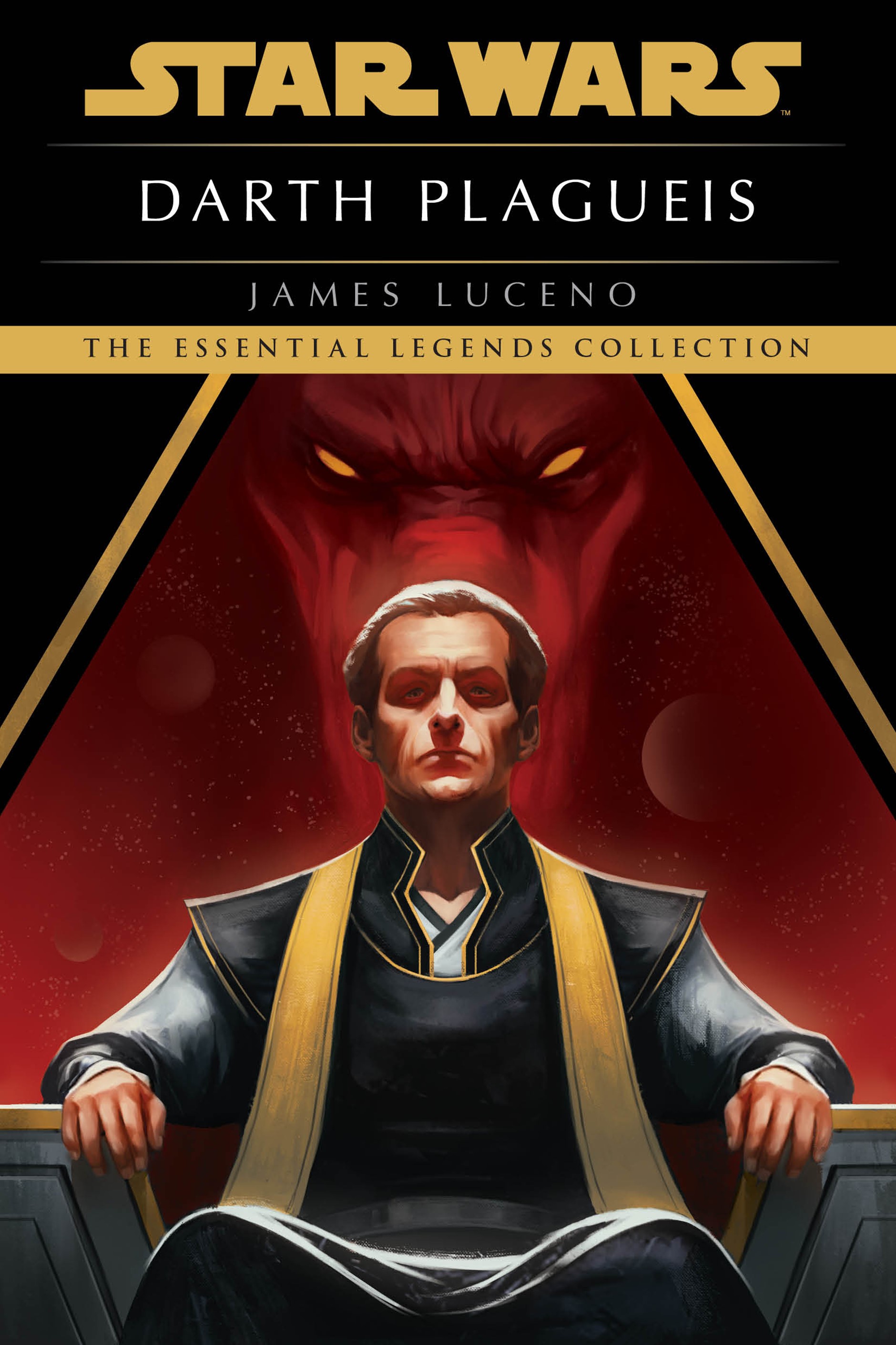
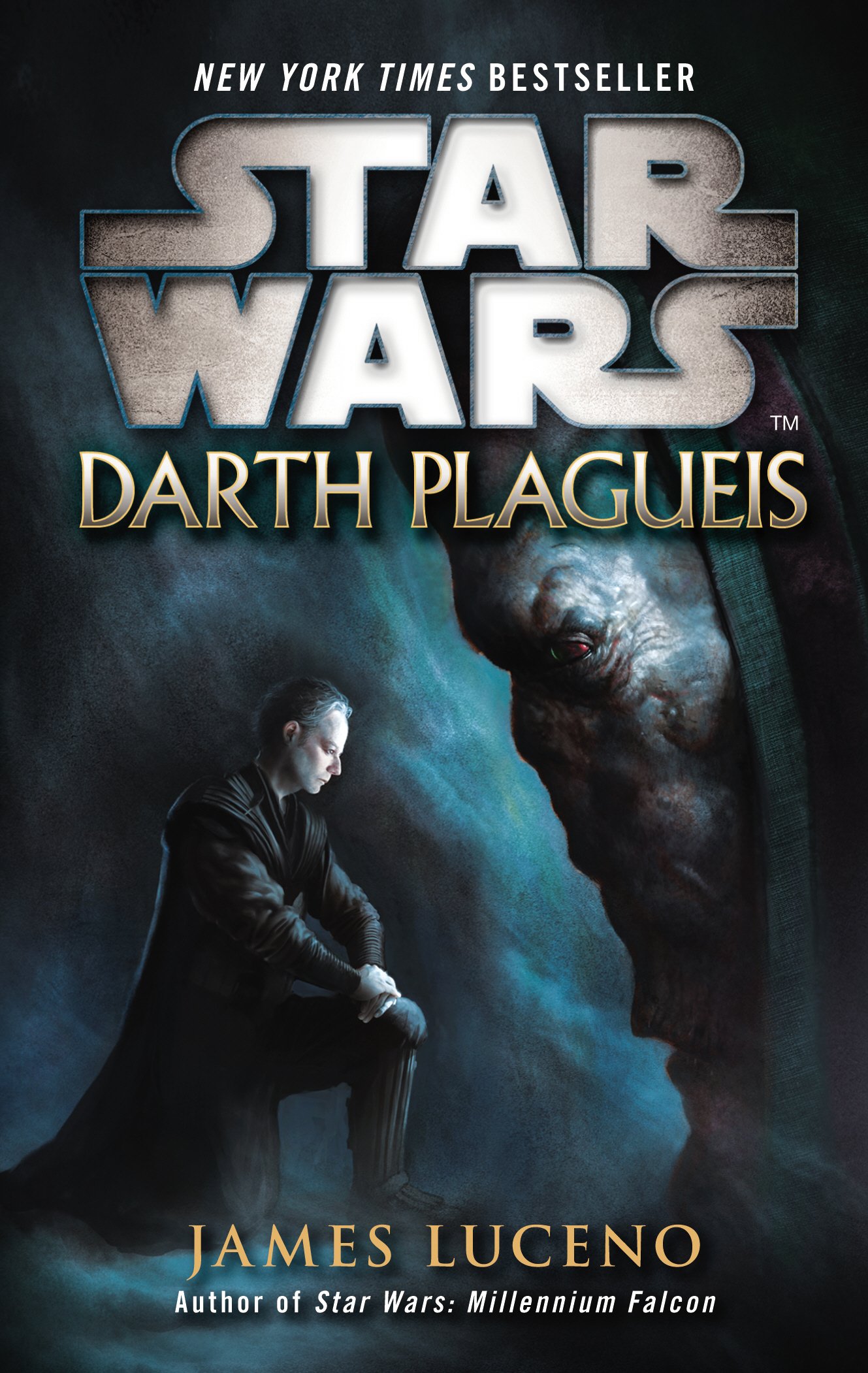
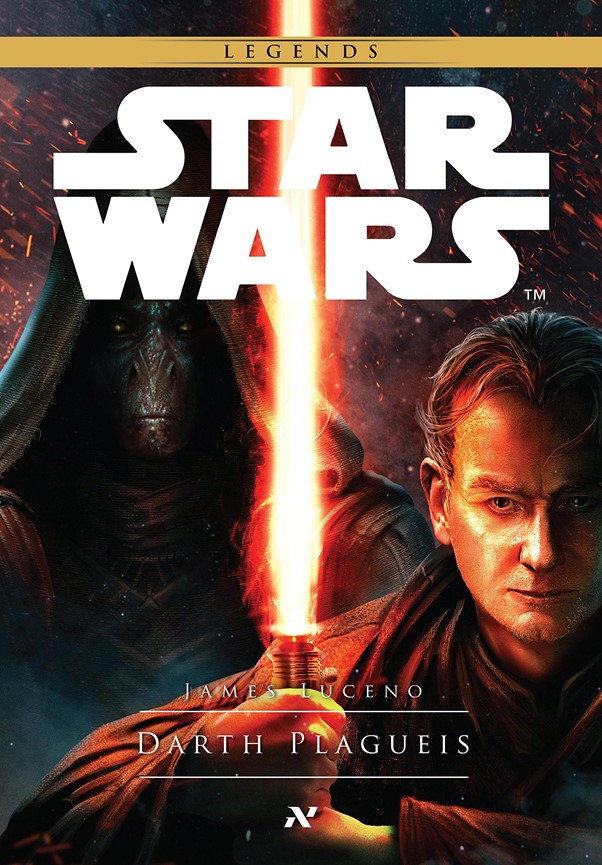
Throwback Thursday: Star Wars: Darth Plagueis by James Luceno

Star Wars - Darth Plagueis Cover

Publisher: Random House Audio (Audiobook – 10 January 2012)

Series: Star Wars Legends

Length: 14 hours and 45 minutes

My Rating: 4.75 out of 5 stars

Amazon

Welcome back to my Throwback Thursday series, where I republish old reviews, review books I have read before or review older books I have only just had a chance to read.  In my latest Throwback Thursday I look at one of the more interesting novels from the Star Wars Legends universe, Darth Plagueis by James Luceno.

With Star Wars day on the horizon, I have decided to go back and check out some of the key books in the now defunct Star Wars Legends universe.  While no longer canon, there are still some amazing books in the Legends range, including some that will no doubt serve as an inspiration for some future shows or movies.  I have already enjoyed several Legends books, such as Maul: Lockdown, Scoundrels and Death Troopers, but there are still more epic reads that I really want to check out.  Probably the one I was most interested in reading was the epic Darth Plagueis by James Luceno.  Luceno, who also wrote the fantastic novel Tarkin in the current Disney canon, is a very talented author, and I was very excited in checking out his take on the elusive and mysterious Darth Plagueis.

“Did you ever hear the tragedy of Darth Plagueis the Wise?”

Throughout the long and bloody history of the Republic, many Sith lords have risen to threaten the peace and order maintained by their hated rivals, the Jedi.  While some have put complex and deadly plans into effect, few have reached the pinnacle of power, influence or mastery of the Dark Side of the Force as the mysterious Darth Plagueis, whose malign guidance shaped the galaxy in terrible ways and introduced a great darkness.

Upon killing his master and obtaining all the power he ever desired, Darth Plagueis set out to continue his order’s greatest goal: destroying the Jedi and claiming the Republic as his own.  Using his position as a powerful member of the Banking Clan, Darth Plagueis worked to manipulate the Republic into chaos and slowly lead the Jedi to a war they had no hope of winning.  However, even a Sith as powerful as Darth Plagueis is unable to do everything on his own, and he soon seeks out a powerful Force user to take on as his apprentice, a talented politician from Naboo known only as Palpatine.

Renaming Palpatine Darth Sidious, Plagueis begins manipulating events to ensure that his apprentice becomes a major power in the Senate, planning to elevate him to the role of Supreme Chancellor while also destroying those opponents who threaten their plans.  However, despite the importance of their plan, Plagueis’s main desire is not the defeat of the Jedi but of a far older enemy, death itself.  Diving into the mysteries of the Force, Plagueis will explore avenues of power not seen for millennia as he attempts to become the immortal master of the galaxy.  But his obsession with endless life could yet be his greatest undoing.

Wow, Luceno did not disappoint with this fantastic Star Wars novel.  Darth Plagueis is an impressive and captivating read that perfectly tells the story of a particularly elusive figure.  Bringing in some heavy Star Wars elements from the extended lore, Luceno has crafted a brilliant character-driven story that I had an extraordinary time listening to.

Luceno has come up with an interesting story for the Darth Plagueis novel that achieves several goals at once.  Not only does it tell the complete story of this legendary Sith Lord but it provides some interesting context for other pieces of Star Wars fiction, while also containing a powerful story of intrigue, betrayal and darkness.  Set over a period of roughly 35 years and told from the perspectives of Darth Plagueis and Darth Sidious (with a few scenes seen from other characters, like Darth Maul), this brilliant novel does an excellent job of exploring the primary characters while also showing their malicious actions across various theatres of the Star Wars universe.  While the novel starts off a little slow, you soon become engrossed in the story as you encounter multiple layers of manipulation and politics as Plagueis attempts to control the galaxy and make his major plans.  The story is broken into three distinct periods, the first showing some of Plagueis’s early movements as a Sith Master and his initial meeting and recruitment of Sidious.  The second part of the book, set 20 years before the events of The Phantom Menace, showcases Sidious as he becomes established as a Senator as Plagueis contends with some dangerous opponents and plots as he sets up the earliest stages of his master plan.  The final third of the novel is set in the lead-up/during the events of The Phantom Menace, where you see many of the storylines come together, as well as the final chapters of the relationship between Plagueis and Sidious.

I had a really great time with this compelling story, and it is one that I feel will appeal to a lot of Star Wars fans.  While I was a little surprised at the suddenness of some of the time skips, I felt that all three major parts of the novel were really good, and I loved how well they flowed together to create one coherent and fantastic read.  The three separate time periods allow for a massive story, while also featuring some of the key moments of the main character’s lives.  Featuring a ton of intriguing and heavy bits of Star Wars lore, parts of the story do drag a little in places, especially as there is a little less action than your typical Star Wars novel.  However, I found all the politics, machinations and expansions of the Star Wars lore to be extremely fascinating, and there is a brilliant story hidden in there.  The story is also not completely bereft of action, and there are some pretty cool fight sequences scattered throughout the book, including some that show off Plagueis’s full, terrifying abilities.  This story had an excellent tone and pace to it, and I feel that everything came together extremely well and I was pretty enraptured by every damn moment of it.

Star Wars - Darth Plagueis Cover 2

This was a really good Star Wars novel, and it is one that will appeal to a wide range of fans, especially those who enjoyed the Legends range.  While Darth Plagueis is technically no longer canon, Luceno really went out of his way to connect it to the wider Star Wars canon, which is something I really appreciated about this book.  In many ways, Darth Plagueis serves as the ultimate companion to the prequel films as Luceno attempted to fill in some plot holes and unexplained bits of the movies, by exploring the entirety of the Sith’s rise to power.  Bringing in a ton of obscure lore, you get an unparalleled view of how Plagueis and Sidious manipulated events in the Legends canon to lead to the events of the films, and this really helps to fill in some gaps.  Luceno also includes multiple moments from The Phantom Menace film throughout the story, and it was pretty fascinating to see why parts of the antagonist’s plot came together like they did, as well as some excellent alternate views of certain key scenes.  I also deeply enjoyed how Darth Plagueis tied into a ton of other pieces of Star Wars Legends fiction, including books, comics and games.  Multiple prior novels are mentioned or connected to this novel in some way, and I felt that Luceno did a really good job of inserting elements from the already massive extended universe into his book and connecting the stories together and giving all of them more context and interest.  All these connections helped to create a novel that is particularly compelling and intriguing to dedicated Star Wars fans, who will love seeing the events of this book unfold.  While those fans who have only seen the movies will probably be able to enjoy this book easily enough (with only some minor confusion to some of the more obscure parts of the lore), this is a novel best enjoyed by readers who have checked out some other Star Wars Legends books and will appreciate how it fits into that wider version of the canon.

I did like a lot of the universe-building that Luceno did in this novel, as the author explored some fascinating parts of the Legends universe.  Not only does the reader get to experience a lot of obscure elements of Star Wars lore, including aliens, technology, locations and other cool things, but this also serves as one of the most impressive looks at the Sith and the Dark Side of the Force.  Due to the deep examinations of the Sith and its history by Plagueis, as well as other elements contained in the training of Palpatine, the reader is flooded with knowledge about these Dark Side users and their ways, which proves to be quite intriguing.  I had a brilliant time learning more about these deep elements of lore, especially as the characters talk about practicalities as well as history.  The difference between various forms of the Dark Side are very cool, as you see some comparisons between Plagueis’s more scientific based usage of the Force and the Dark Side sorcery preferred by Sidious.  I also found the characters’ own description and assessment of the Sith and the Force to be surprisingly deep, as the characters see themselves as more of a necessary force there to save the galaxy and the Republic from the Jedi.  Darth Plagueis also contains some fantastic detail about the history of the planet Naboo, which I also found really fascinating.  Darth Plagueis goes out of its way to explore the history of the planet and the reasons why it became a political and economic factor in the Republic in the lead-up to The Phantom Menace, and I loved seeing the political strife and manipulation that led to this initial war, as well as the rise of characters like Palpatine and Amidala.  These brilliant pieces of lore are so much fun to learn about, and I had an incredible time finding out more about the Sith in this canon.

Of course, one of the best bits of the lore that Luceno examines in this novel is the role that Darth Plagueis had in the Star Wars universe.  First mentioned in that iconic monologue in Revenge of the Sith, Plagueis remained a mostly shadowy and unknown figure until the release of this book, which serves as the ultimate guide to the character and his history.  Luceno, who at this point had been planning a Darth Plagueis story for years, does a brilliant job of telling the full story of this great character, and you get an outstanding focus on his entire life, especially his time as a Sith Master.  Plagueis, a Muun also known as Hego Damask, is portrayed as a thoughtful, powerful and manipulative being with a surprising nobility and dignity to him.  Fitted with an intriguing backstory and motivations, you see him grow into an extremely powerful Sith Lord throughout the course of the book, and it was fascinating to see all his plans and machinations.   The most significant part of the character’s motivations is his hunt for immortality through the force.  As such, you get a fantastic look at his obsessive experiments and research, as he tries to uncover this ultimate secret.  I felt that Luceno did an incredible job of working this mysterious character into the wider Star Wars canon.  There are some great moments throughout this book that show this shadowy figure manipulating key events from the shadows to bring about the events of the prequel films.  I particularly loved how Luceno fit Plagueis into some scenes from The Phantom Menace, and it is very fun to imagine him watching these moments from just outside camera shot.  This really was an incredible examination and exploration of this character, and I had so much fun finally finding out who Darth Plagueis was and how he was connected to the wider story.  Despite this story no longer being canon, this novel is really the only guide to Darth Plagueis, and it wouldn’t surprise me if it is used as the primary source material for anyone wanting to introduce him in a future film or television series.

While this book does tell the story of Darth Plagueis, in many ways it is just as much about Palpatine as it provides readers with an outstanding look at his early history.  Essentially set during the time he was Darth Plagueis’s apprentice, you get some amazing insights into who Palpatine is and how he turned to the Dark Side of the Force.  Portrayed as manipulative and insidious since birth, you get to see Palpatine at his most evil and dangerous as he learns about the Force and the Sith.  I loved how you get to see various stages of Palpatine’s early life, from his teenage years where he first learns about his powers, to his middle age where he becomes a young ambitious senator and apprentice, to his time as an experienced manipulator and Force user just before coming Supreme Chancellor.  I had a brilliant time seeing Palpatine grow as both a Sith and a politician throughout this book, and you get some fantastic views of his early interactions with key players in the Star Wars canon.  I also deeply enjoyed seeing his intriguing dynamic with Darth Plagueis.  In pretty much all his other appearances, Star Wars fans only ever see the confident and controlling Palpatine who has no-one above him.  However, in Darth Plagueis, you see a somewhat more subservient Palpatine who is forced to bow to the will of one more powerful.  Watching working under another is an interesting change of pace, although some reveals towards the end of the book (and in some other novels, such as Maul: Lockdown), show that he is never as loyal as Plagueis believes.  This truly was an outstanding depiction of Palpatine and it was so awesome to see more about our favourite soon-to-be emperor.

Aside from Plagueis and Palpatine, the Darth Plagueis novel is loaded with a ton of interesting supporting characters, many of whom had roles in the films, animated series or other pieces of Legends fiction.  These intriguing characters help to create the novel’s rich tapestry of politics, intrigue and betrayals, and all of them served some fantastic roles in the book.  I particularly enjoyed seeing the inclusion of other Sith characters like Count Dooku and Darth Maul, especially as this novel serves as a bit of an origin story for both, as you see Palpatine obtaining and training Maul as well as Plagueis and Palpatine manipulating Dooku to leave the Jedi.  I also enjoyed the intriguing look at Plagueis’s own master, Darth Tenebrous, whose brief role showed a whole other aspect to the Sith as he had his own distinctive style.  I did think that the crowd of supporting figures with their own story elements slowed the pace of the novel down a little in the middle of the book, but I ended up having a brilliant time enjoying the story set around the awesome main characters.

Unsurprisingly, I chose to listen to Darth Plagueis on audiobook rather than seeking out a physical copy of this excellent novel.  I naturally had a very fun time listening to this version of the book, which not only featured a brilliant narrator but also made excellent use of the typical Star Wars audiobook production elements.  Darth Plagueis is loaded with cool sound effects and awesome Star Wars music, all of which add to the ambiance of the story in various ways.  I particularly liked the use of John Williams’s iconic scores throughout this audiobook, which did a great job of enhancing several scenes and increasing their emotional impact.  This was particularly true for some of the darker moments in the book, as some of the music associated with the Sith, the Dark Side and death/destruction, are blasted at full volume during some key moments, such as Palpatine discovering his destructive abilities for the first time, or during a couple of massacres.  This awesome music was so cool to hear during these scenes, and you really got an increased sense of the powerful emotions and dark deeds that were going on.

I also deeply enjoyed the epic narration, as this fantastic audiobook features the vocal talents of actor Daniel Davis (whom audiences of taste will recognise as Niles from The Nanny).  Davis gives a powerful and commanding performance here, bringing some major gravitas to the role and the characters.  His voice work for the titular character, Darth Plagueis, is really good, and you get a fantastic sense of the character’s power and wisdom as the novel continues.  Davis also does a brilliant job of voicing multiple characters and species from the Star Wars films, sounding quite close to their original actors.  I loved the voice work for Palpatine, capturing much of the villain’s iconic voice, while also giving it a youthful tilt for the earlier parts of the book.  Other characters, such as Count Dooku and Darth Maul, are also expertly portrayed here, and I particularly liked Davis’s take on Christopher Lee’s amazing voice.  This outstanding voice work, combined with the sound effects and music, helped to turn this into an exceptional listen that I deeply enjoyed.  With a run time just under 15 hours, this is a descent sized Star Wars audiobook, but listeners can power through it in no time at all.  This format comes highly recommended and you will have an outstanding time listening to the Darth Plagueis audiobook.

Overall, Darth Plagueis is an impressive and addictive Star Wars Legends novel that I had an incredible time reading.  James Luceno really excels at telling complex narratives that examine character origins, and Darth Plagueis did a wonderful and comprehensive job of expanding on a mostly unknown figure.  I loved learning everything about this awesome Star Wars figure, and Luceno wove an outstanding tale of intrigue and power around him and his apprentice.  An absolute must read for all fans of the Star Wars extended universe, I cannot wait until they finally introduce this complex figure into the current canon.

Star Wars - Darth Plagueis Cover 3

Amazon

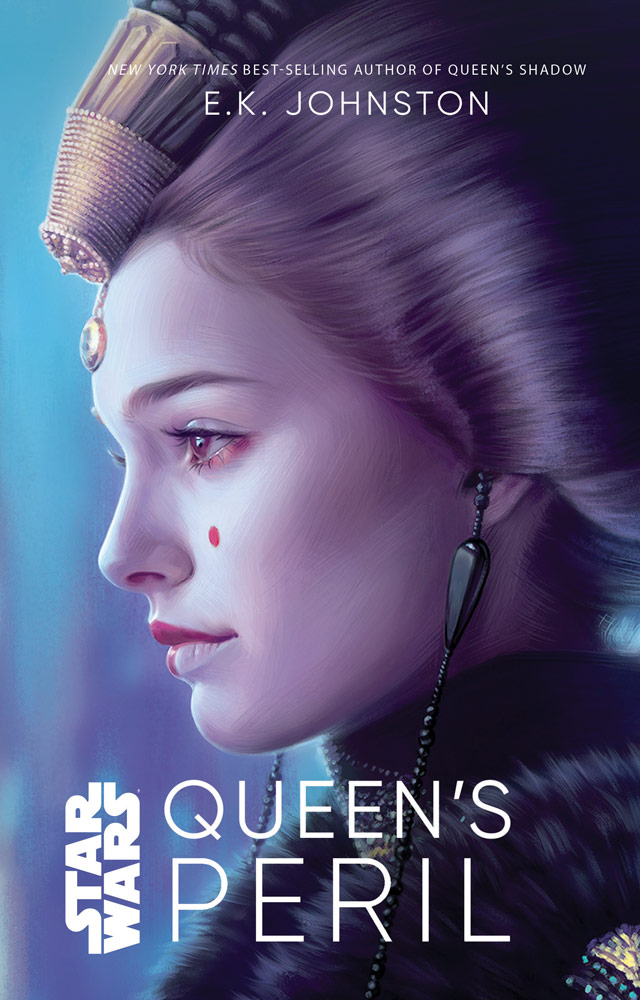
Star Wars: Queen’s Peril by E. K. Johnston

Queen's Peril Cover

Publisher: Random House Audio (Audiobook – 2 June 2020)

Series: Star Wars

Length: 6 hours and 10 minutes

My Rating: 3.75 out of 5 stars

Amazon

Prepare to dive back into a galaxy far, far away, as bestselling young adult author E. K. Johnston presents the very first Star Wars novel of 2020, Star Wars: Queen’s Peril.

Padmé Naberrie has always wanted to serve the people of her home planet of Naboo, and she knows that the best way to do that is to become Queen. Entering the competitive election, the 14-year-old politician is elected as ruler of Naboo. Casting aside her real identity for the protection of herself and her family, Padmé takes on a new name, Amidala, and moves into the royal palace, determined to bring change to Naboo. However, even a ruler as brilliant and diplomatic as Padmé is unable to do everything by herself, and she finds out that she is going to need help.

In order to keep her safe and to assist her with her needs, Padmé is introduced to a group of talented young women who will serve as her handmaidens. Acting as her assistants, confidantes, bodyguards and decoys, each of her handmaidens brings something different to the group, and it is up to Padmé to turn them into an effective team. Together, Padmé and her new friends seem capable of dealing with any challenge that may impact them.

However, there is a dark plot at work within the Republic, and its mastermind has Naboo in their sights. Soon Naboo is invaded by the armies of the Trade Federation, who seek to capture Queen Amidala and force her to sign away the planet. Forced to flee in disguise, Padmé sets out to reclaim her home and will do anything to free her planet. While Jedi, soldiers and a young chosen one may rally to their cause, the fate of Naboo ultimately rests on the shoulders of a young queen and her loyal handmaidens.

Queen’s Peril is an intriguing and enjoyable new addition to the Star Wars canon from bestselling author E. K. Johnston. I have been rather enjoying some of Johnston’s recent Star Wars releases, and I had a fun time reading her 2016 novel, Ahsoka, as well as last year’s fantastic release, Queen’s Shadow. Queen’s Peril is the first of several Star Wars books being released in 2020 (although some have been delayed), and I have been looking forward to seeing how this book turns out. This new novel acts as a prequel to Queen’s Shadow and is set both before and during the events of the first Star Wars prequel film, The Phantom Menace. This ended up being a fun and interesting read that explores some unique parts of Star Wars lore.

This latest Star Wars novel contains an intriguing tale that starts from the moment that Padmé is elected queen and takes on the Amidala persona. The first two thirds of this book follow the early days of Amidala’s reign, introducing Padmé and her handmaidens and showing how they became such a tight-knit team. There are a number of great moments during this first part of the story, and it was interesting to see the origin of a number of elements of the Amidala character that are shown in The Phantom Menace, such as her voice, the establishment of the decoy system, and a huge range of other compelling features. There are also several scenes that are dedicated to exploring why the Trade Federation decided to target Naboo and what the origins of their conflict were. I really enjoyed the first two thirds of this book, and I feel that the final third kind of let it down a little. The last part of the book focuses on the invasion of Naboo and follows the events of The Phantom Menace. While it was cool to see some different perspectives on the events of the film, this part of the book felt rather rushed, as the narrative jumped between a number of sequences from the movie in rather quick succession. Despite the problems with the ending, this was still a rather compelling story, and I did enjoy Johnston’s additions to the Star Wars universe.

While on the surface this book appears to be purely about Padmé, Queen’s Peril is actually about a number of different characters who made Padmé’s role as Queen Amidala possible. Padmé is naturally one of the main characters of the book, but all five of her handmaidens are just as important to the story. Johnston previously introduced each of these handmaidens in Queen’s Shadow, and briefly explored their unique skills and what they brought to the group. She does this again in Queen’s Peril, although this is done in greater detail, as this book shows each character’s history and how each of them became a handmaiden. Each of the handmaidens is given a distinctive personality, and all five get a number of scenes told from their point-of-view. I really enjoyed learning more about these characters, and it was great to see them come together as a group and work towards ensuring that Padmé was protected and an effective queen. While each of the characters are explored in some detailed, the biggest focus is on Sabé, Padmé’s first handmaiden and her main decoy (played by Keira Knightly in the film). The author spends time showing the unique relationship between Sabé and Padmé, and it was captivating to see the trust between them grow. Because she was so heavily focused on in the movie, Padmé does not get a lot of scenes in the last third of the book, so quite a bit this part of the story is told from the perspective of all the handmaidens. It was rather interesting to see how each of these characters went during the course of the film, and it was particularly cool to see some scenes with Sabé as she pretended to be the Queen.

In addition to Padmé and her handmaidens, Queen’s Peril also featured point-of-view chapters or scenes from pretty much all the key characters from The Phantom Menace film. The use of all these extra characters was an interesting choice from Johnston, and I liked how it expanded the story and showed some fresh perspectives and backstory for several major Star Wars protagonists. Most of these appearances are rather brief, with characters like Anakin, Obi-Wan Kenobi and Qui-Gon Jinn only getting a few minor scenes. However, other characters do get some extended sequences, especially Captain Panaka, the head of Amidala’s palace guards. Several chapters are told from Panaka’s perspective, and he becomes quite a key character within the book, mainly because he is the person who finds and recruits all of the handmaidens. Panaka is a major driving force of the plot, and it was interesting to see his role expanded from the films, especially as you get more insight into why he is so dedicated to the Queen. I also really liked how the book features several sequences told from the perspective of Senator Palpatine/Darth Sidious. These scenes were fun, as they showed a lot of Palpatine’s earliest manipulations, including how he was able to organise the invasion of Naboo. Overall, I rather appreciated how the author utilised all the characters within Queen’s Peril, and watching their development and interactions proved to be quite compelling.

Like the author’s other Star Wars novels, Queen’s Peril is intended for a young adult audience, and Johnston does a fantastic job tailoring it towards younger readers. This book has a lot of great young adult moments to it, especially as it focuses on a group of teen girls working together to outsmart a variety of adults and then eventually save their entire planet from an invasion. Queen’s Peril has some fantastic portrayals of these teen protagonists, and there are a number of sequences which show them stepping up or dealing with complicated issues that younger female readers will appreciate. While it is intended for younger readers, Queen’s Peril, like most young adult Star Wars novels, is also very accessible to all readers who are major fans of the franchise, and it is easy for older readers to get into and enjoy the plot of the book and its intriguing new additions to the Star Wars lore.

I did have a minor complaint about the release order of the books in Johnston’s series about Padmé. While I enjoyed both Queen’s Peril and Queen’s Shadow, I really do think that it was an odd decision to release Queen’s Shadow first, and then release a prequel novel a year later. It would have been better to release Queen’s Peril first to introduce the various handmaidens and help build up the emotional connection between them and Padmé, making their use and inclusion in Queen’s Shadow a bit more impactful. It might also have made a bit more sense to have Queen’s Peril only focus on events before The Phantom Menace, have another book focus exclusively on what was happening with the handmaidens and Padmé during the course of the film (which would have ensured that Queen’s Peril did not feel as rushed as it did towards the end), and then release Queen’s Shadow. While I am sure that there is some reason why the order for these books was a bit off, probably at the publisher level, I think they could have planned this out a little better.

I ended up grabbing the audiobook version of Queen’s Peril, and I had a great time listening to this book. Queen’s Peril has a short run time of just over six hours, so it is rather easy to get through this book quickly. Like all Star Wars audiobooks, this version of Queen’s Peril was a real auditory treat, due to the excellent use of the iconic Star Wars sound effects and scores from the movies, which are used to enhance each of the scenes. While it was great to once again hear all the fantastic music and intriguing background noises, Queen’s Peril’s greatest strength as an audiobook comes from its fantastic narrator, Catherine Taber. Taber is the actress who voiced Padmé in The Clones Wars animated television show, and, short of getting Natalie Portman in, is the perfect person to narrate a novel about the character. Taber also narrated the previous Johnston book about Padmé, Queen’s Shadow (indeed all of Johnston’s Star Wars books have featured the character’s voice actor as a narrator for their audiobook), and it was great to see her return. She naturally does a perfect voice for the character of Padmé, as well as for the handmaidens, who had similar speaking patterns due to their role as decoys. There are some great vocal scenes between these characters, especially when they are trying to perfect the Amidala voice, and they go through several variations throughout the book. In addition, because Queen’s Peril features nearly every major character from The Phantom Menace, Taber also had to voice several different people who were brought to life by some amazing actors in the original film. I felt that Taber did a fantastic job as imitating some of these voices, and it proved to be a real showcase for her skills as a voice actor. Overall, I had an amazing time listening to this audiobook, and I would strongly recommend this format to anyone interested in checking out Queen’s Peril.

Star Wars: Queen’s Peril is an intriguing and exciting new young adult Star Wars release from E. K. Johnson that acts as a sequel to her previous awesome novel, Queen’s Shadow. Johnston comes up with another compelling story that explores the early life of Padmé/Queen Amidala and her loyal handmaidens. While it does have some flaws, it is a very good book, and it should prove to be a fun read for established fans of the franchise and younger readers who are interested in breaking into the expanded universe. I had an amazing time listening to this book and I look forward to seeing what sort of Star Wars story Johnston produces next.

Amazon

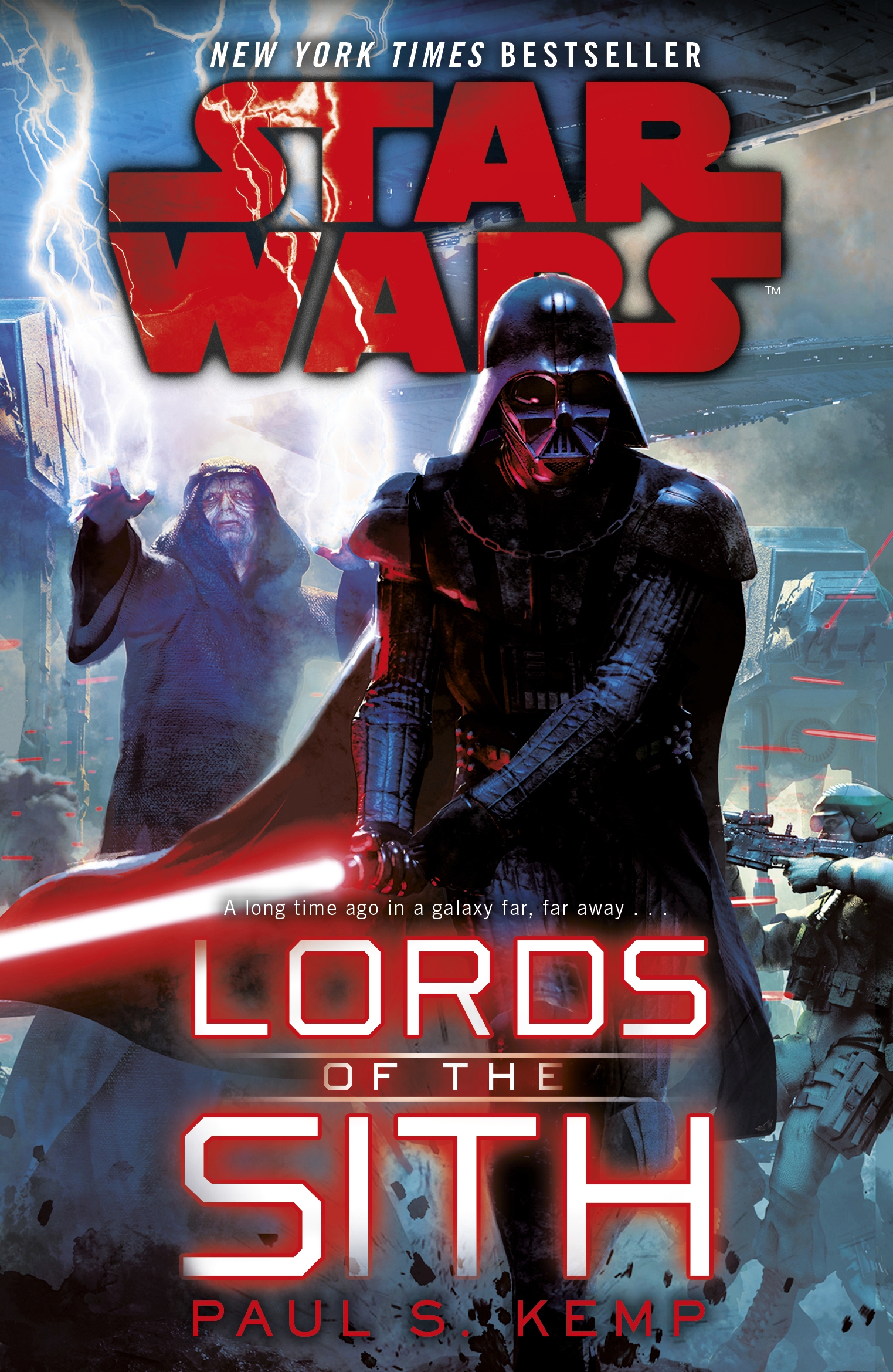
Throwback Thursday: Stars Wars: Lords of the Sith by Paul S. Kemp

Lords of the Sith Cover

Publisher: Penguin Random House Audio (Audiobook – 28 April 2015)

Series: Star Wars

Length: 10 hours and 56 minutes

My Rating: 4.5 out of 5 stars

Amazon

Reviewed as part of my Throwback Thursday series, where I republish old reviews, review books I have read before or review older books I have only just had a chance to read.

For my second Throwback Thursday article of this week (what can I say, I was in the zone for reviewing older content) I check out a fast-paced and addictive Star Wars novel that was released a couple of years ago, with Star Wars: Lords of the Sith by Paul S. Kemp.

It is the early days of the Galactic Empire. Under the reign of Emperor Palpatine, few openly oppose imperial rule, and those that do are swiftly dealt with by Palpatine’s ruthless apprentice, Darth Vader. But as the power and influence of the Emperor and Vader grow, so does their desire to rule and oppress every planet in the galaxy, and with that comes the first sparks of rebellion.

The planet Ryloth knows all about oppression and invasion. Following a brutal occupation during the Clone Wars, Ryloth now finds itself under the control of the Empire, which strips the planet of its natural resources while using the people for slave labour. In opposition to this occupation, an aggressive resistance moment has arisen, led by idealistic leader Cham Syndulla and his comrade Isval, a vengeful former slave. Thanks to their excellently placed sources, Syndulla’s resistance has been able to launch some substantial attacks against the Empire, but their actions have gained the attention of the Emperor and Vader. In a bid to assert his dominance on Ryloth, the Emperor sets out on a rare mission to the planet, accompanied by Vader. However, this is the opportunity that Syndulla has been waiting for.

Upon the Imperial’s arrival above Ryloth, the resistance fighters are able to do the impossible and blow up their Star Destroyer. Forced to abandon ship, the two Sith lords find themselves trapped on the dangerous surface of Ryloth with no means to communicate with Imperial command and no reinforcements on the horizon. In a bid to liberate the galaxy from their dark rule, Syndulla and Isval gather all their forces and resources to hunt the Emperor and Vader down. Surrounded by enemies, inhospitable terrain and terrible native fauna, the two Sith Lords appear to be at their most vulnerable. However, what Syndulla and his team fail to realise is that their prey are two of most dangerous beings in the galaxy, and together they are a force of unnatural destruction. Can the resistance fighters take on Emperor and Vader, and what happens when the two Sith lords work out that their biggest threat is each other?

Now this is a rather fantastic and captivating Star Wars novel that I have been wanting to check out for a while now due to the book’s cool concept. This is the first book that I have read by Paul S. Kemp, a fantasy author who has been writing since the early 2000s. His first novel, Twilight Falling debuted in 2003, after the author released several pieces of short fiction. Kemp then went on to write several fantasy series and standalone novels, including The Erevis Cale trilogy, The Twilight War trilogy and the Egil and Nix books, most of which fell within the Forgotten Realms shared fantasy fiction universe. Kemp has also written a few Star Wars novels, including Crosscurrent, The Old Republic: Deceived and Riptide, which were part of the old Star Wars Legends canon. Lords of the Sith is Kemp’s first novel in the new Star Wars canon, and he presents the reader with a fun and fast-paced novel that has some intriguing elements to it.

Kemp pulls together an excellent Star Wars novel that has a great story, is full of breathtaking action scenes and features compelling dives into some iconic Star Wars characters and elements of the universe. While I came for all the fun action that was bound to feature in a story surrounding the Emperor and Vader fighting against overwhelming odds, I stayed for the intriguing story that is full of betrayal and manipulations. The author does a fantastic job of utilising multiple character perspectives to tell a fuller story, which showed the perspectives of not only Vader and Syndulla’s resistance but also two Imperial officers stationed on Ryloth: one who is loyal to the Emperor and one who has been working for the resistance. This helped produce a really clever narrative, and it was interesting to see where Kemp took the story throughout Lords of the Sith.

The story is set five years after the events of Revenge of the Sith and focuses on the Emperor and Vader encountering some of the earliest forms of rebellion against the Empire. There are some strong elements from the extended Star Wars universe in this book, most notably with the inclusion of Cham Syndulla, a character who appeared in two Star Wars animated series, The Clone Wars and Star Wars Rebels, and is the father of Hera Syndulla, one of the main characters from Rebels (who is featuring in a lot of other pieces of Star Wars fiction at the moment). However, this is definitely a novel that can be enjoyed by the more casual Star Wars fan, and no real knowledge of the extended universe is needed to follow the plot. As always, though, those readers who are fans of some of the extended universe fiction are probably going to enjoy this book a little more. I myself enjoyed seeing the exploration of the early days of the Empire, an examination of Cham Syndulla’s history between the two animated shows and some exploration of the planet of Ryloth.

Without a doubt, the highlight of this book has to be the amazing action sequences featuring Darth Vader and the Emperor. Kemp went out of his way to show off just how badass these two characters can be, and he did not hold back any punches. Vader and the Emperor get into some major scrapes throughout the book, as they hunt or are hunted by members of the Ryloth resistance or some of the deadly creatures that reside on the planet’s surface. Needless to say, these two characters use all of their deadly Force abilities to take down swathes of opponents, and they come across as pretty impressive characters, especially in the eyes of some of the other point-of-view characters. I loved the reactions from characters like Syndulla or Isval, especially as it becomes more and more apparent to them that their opponents are something too much for them. I have always loved comics and books that showed off how badass Vader and the Emperor can be, and this is one of the better examples of this. Kemp started this book off strong by having Vader crash his fighter onto a ship to board it, before systematically taking down the crew one by one, while Syndulla and Isval are forced to listen from another ship (accompanied by Vader breathing heavily into a comms unit to freak everyone out). This is then followed by a plethora of other cool sequences, which includes Vader and the Emperor decimating a massive swarm of Ryloth’s apex predators and a particularly cool sequence where Vader started force choking several characters aboard a separate spaceship while he was flying upside down above them. All of this was exceedingly cool, and I loved Kemp’s amazing imagination when it comes to these two characters.

I also quite liked the intriguing examination of the unique relationship between Darth Vader and the Emperor that became an interesting central focus of the plot. While the story doesn’t show the Emperor’s point of view, you get Vader’s take on the situation, and through his eyes you see his perceptions of the Emperor, his thoughts on the partnership they have formed, and the knowledge that it will eventually end with Vader attempting to kill Palpatine to take his place. Palpatine, for his part, spends most of the story devising tests and challenges to get into Vader’s head and to ensure that his apprentice is loyal and has no thoughts of overthrowing him at the moment. I liked the compelling and clever examination of these two characters’ mindsets that Kemp pulled together, and I felt that he had a great handle on the personalities of these iconic Star Wars characters. I also rather enjoyed Kemp’s portrayal of the Emperor’s manipulative and purely evil nature, as it is revealed that everything that happens throughout the book is due to his design, and he threw away thousands of Imperial lives to achieve his goals. The revelation of this to some of key characters in this book makes for a great scene and I think that it really encapsulated just how evil the Emperor could be, which was pretty awesome.

Like with most Star Wars books that I read, I ended up checking out the audiobook format of Lords of the Sith, which was narrated by Jonathan Davis. This audiobook runs for just under 11 hours, and can be powered through quite quickly, especially once the listener hears the opening action sequence read out to them. I have to once again highlight that use of the cool music and sound effects that are included in all Star Wars audiobooks in order to enhance the story. Lords of the Sith had some great sound inclusions throughout its run time, and I felt that these definitely had a major impact on my enjoyment of this book. This audiobook features the audio talents of skilled narrator Jonathan Davis, whose work I have previously enjoyed in Star Wars books such as Master & Apprentice and Dooku: Jedi Lost. Davis does an incredible job narrating this book and he comes up with some impressive voices for the various characters featured throughout it. I particularly liked the great voices he came up for key characters like the Emperor and Darth Vader (with the help of some appropriate sound effects) and Cham Syndulla, and they sounded a lot like their appearances in the movies and animated shows. As a result, I really powered through this excellent audiobook, and I would strongly recommend this format to anyone who wants to check out Lords of the Sith.

Lords of the Sith is a fun and exceedingly entertainingly Star Wars novel that I had an outstanding time listening to. Kemp comes up with an exciting and action-packed story that not only explores some intriguing aspects of the expanded Star Wars universe, but which also contains some over-the-top action sequences that shows just how awesome a Star Wars novel can be. Lords of the Sith comes highly recommended to anyone looking for a fantastic and enjoyable read, and I hope that Kemp writes some more Star Wars novels in the future.

Amazon