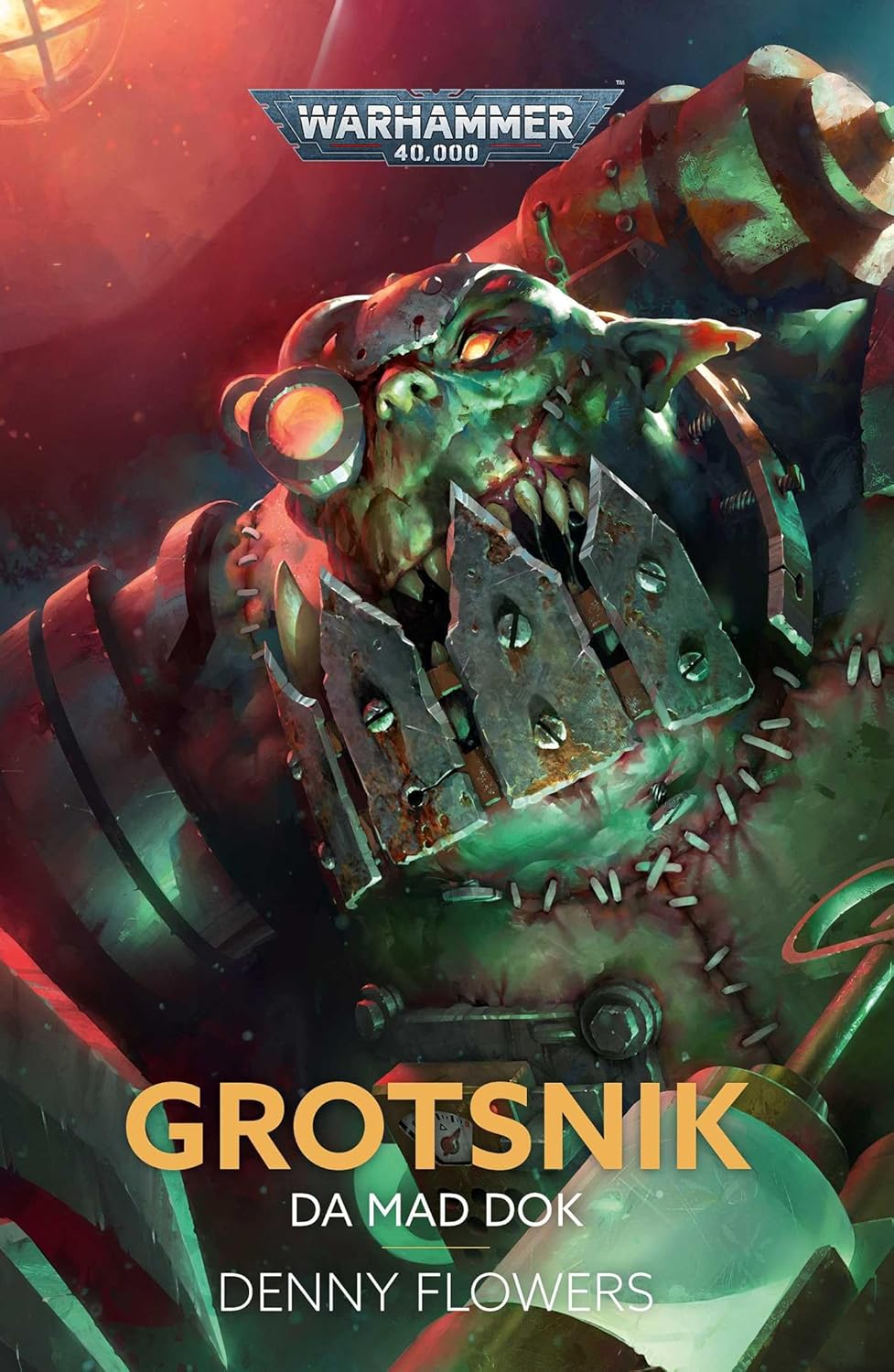
Waiting on Wednesday – Warhammer 40,000: Grotsnik: Da Mad Dok by Denny Flowers

Welcome to my weekly segment, Waiting on Wednesday, where I look at upcoming books that I am planning to order and review in the next few months and which I think I will really enjoy.  Stay tuned to see reviews of these books when I get a copy of them.  For this latest Waiting on Wednesday, I highlight a recently announced 2025 Warhammer 40,000 novel that I am particularly excited for with Grotsnik: Da Mad Dok by Denny Flowers

Fans of this blog will know that I am a massive sucker for all things Warhammer 40,000, and I have been having a blast reading and reviewing so many fantastic novels and audiobooks from this franchise for years.  2025 is already proving to be an interesting year for Warhammer 40,000 fiction, as not only did I just read and review Leontus: Lord Solar, but we also have the very awesome Interceptor City by Dan Abnett (the sequel to Double Eagle), coming out in a couple of days.  Well, it looks like my 2025 Warhammer experience is set to become even better, as the Black Library have just announced an excellent upcoming book that I am very excited for with Grotsnik: Da Mad Dok, from one of my favourite Warhammer authors Denny Flowers.

Denny Flowers is an author who has deeply impressed me since they started writing Warhammer 40,000 fiction.  Starting with Fire Made Flesh in 2021, Flowers did an outstanding job exploring the Necromunda setting, and Fire Made Flesh ended up being one of my favourite debuts of 2021.  Flowers followed his first book up in a big way in 2022 with the fantastic read Outgunned.  An incredibly clever and entertaining novel, Outgunned showcased a deadly fliers war through the eyes of a propaganda expert, who grows to understand the deadly reality they have been trying to sell to the rest of humanity.  Outgunned was such a good book, and it is one of my favourite Warhammer 40,000 novels thanks to its great story and complex characters.  Flowers further impressed last year when he provided us with an exceptional sequel to Outgunned with Above and Beyond.  A powerful read that cleverly expanded on the great character arcs from Outgunned and provided readers with a nuanced take on the human heroes of the Warhammer 40,000 universe, Above and Beyond was another exceptional read that ended up being one of my top books and audiobooks of 2024.

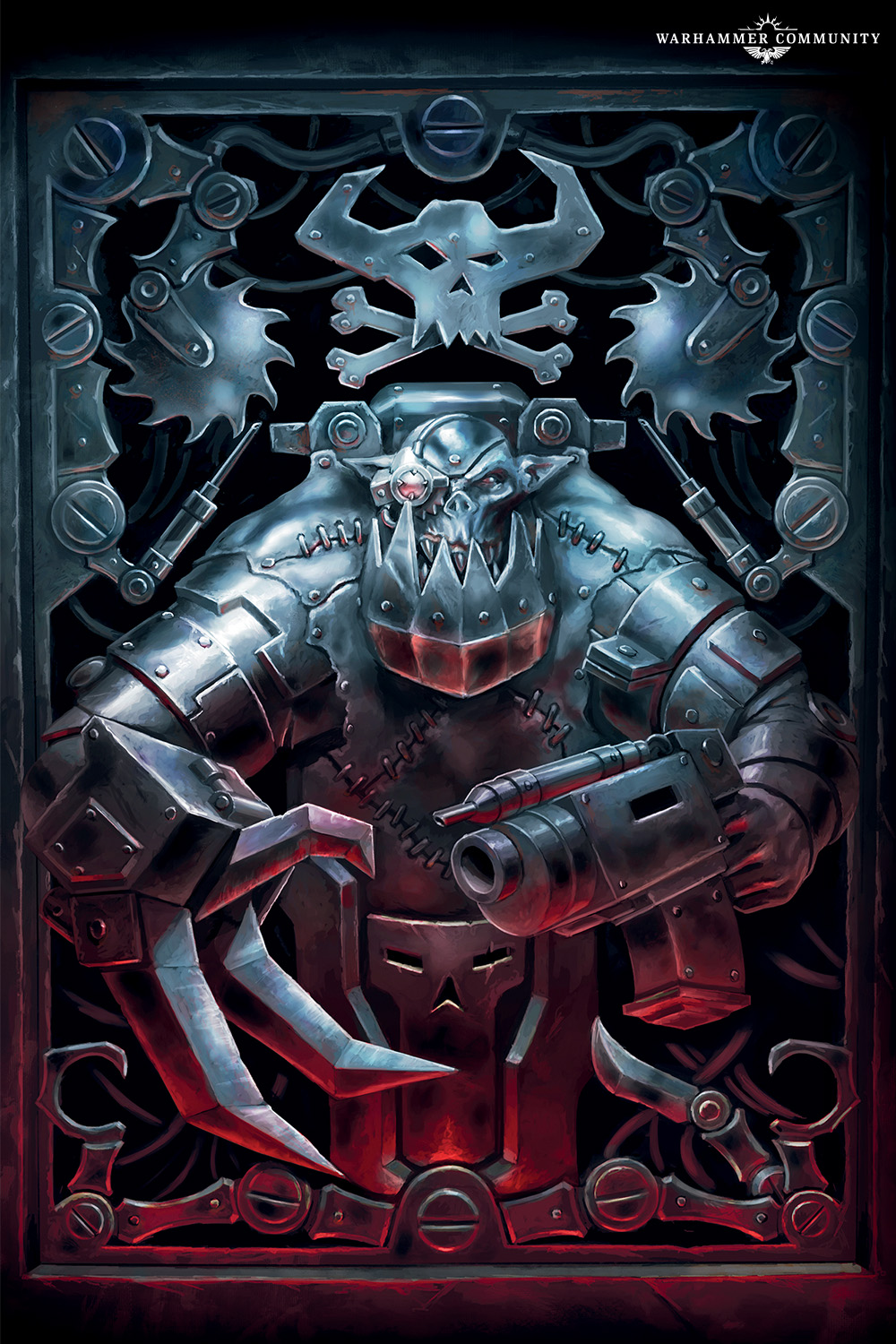
Due to how much fun I have had with Flowers in the past, you can understand that I was very excited to find that he had a new book coming out later this year.  While the details of this upcoming novel, Grotsnik: Da Mad Dok, are a tad sparse (and I only have some unfished covers at this point), the fragmented synopsis below honestly sounds pretty damn amazing, and I am already extremely keen to check it out.


Plot Synopsis:

A painboy of legendary repute, Mad Dok Grotsnik is the singular mind responsible for the towering monstrosity and numero uno Warboss of the Goff clan, Ghazghkull Thraka.* He has an entire army of thuggish orderlies who supply him with fresh meat to experiment on, and a formidable brain that harbours secrets not even the weirdest of boys could reckon at. 

So when he deigns to visit his medical “expertise” upon the beleaguered Bakum, whose faltering Waaagh! against Hive Prome is threatening to peter out, the Beastboss can’t believe his luck. But in reality, the Mad Dok is working on something monumental in his Painwagon, something that will supplant the creation of Ghazghkull as his grandest medical achievement and change the nature of ork-kind forever. 


Ok, now this sounds pretty damn awesome.  I have a special love for ork stories in Warhammer 40,000 fiction, which are so damn hilarious thanks to their over-the-top characters and crazy narratives.  Grotsnik: Da Mad Dok sounds like a particularly good example of this, and a story about a crazed ork painboy taking over a Waaagh! to create some elaborate medical experiment can only be amazing.  I have no doubts whatsoever that Flowers will do an incredible job with this premise, especially after showcasing his ability to write ork characters with his two short story entries in Da Red Gobbo Collection.

Look, I honestly will grab any new piece of Warhammer 40,000 fiction that Denny Flowers produces, as Flowers is an author that honestly gets better with every book he writes. However, a fantastically fun and elaborately over-the-top read about one of the canon’s most feared ork painboys is something I am extremely keen on, and there is no way that this won’t be good.  As such, Grotsnik: Da Mad Dok is one of my most anticipated Warhammer 40,000 novels coming out in 2025, and it won’t surprise me if this ends up being one of the best books I read all year.

Warhammer 40,000: Leontus: Lord Solar by Rob Young

Publisher: Black Library (Audiobook – 25 January 2025)

Series: Warhammer 40,000

Length: 5 hours and 44 minutes

My Rating: 4.5 out of 5 stars

Amazon

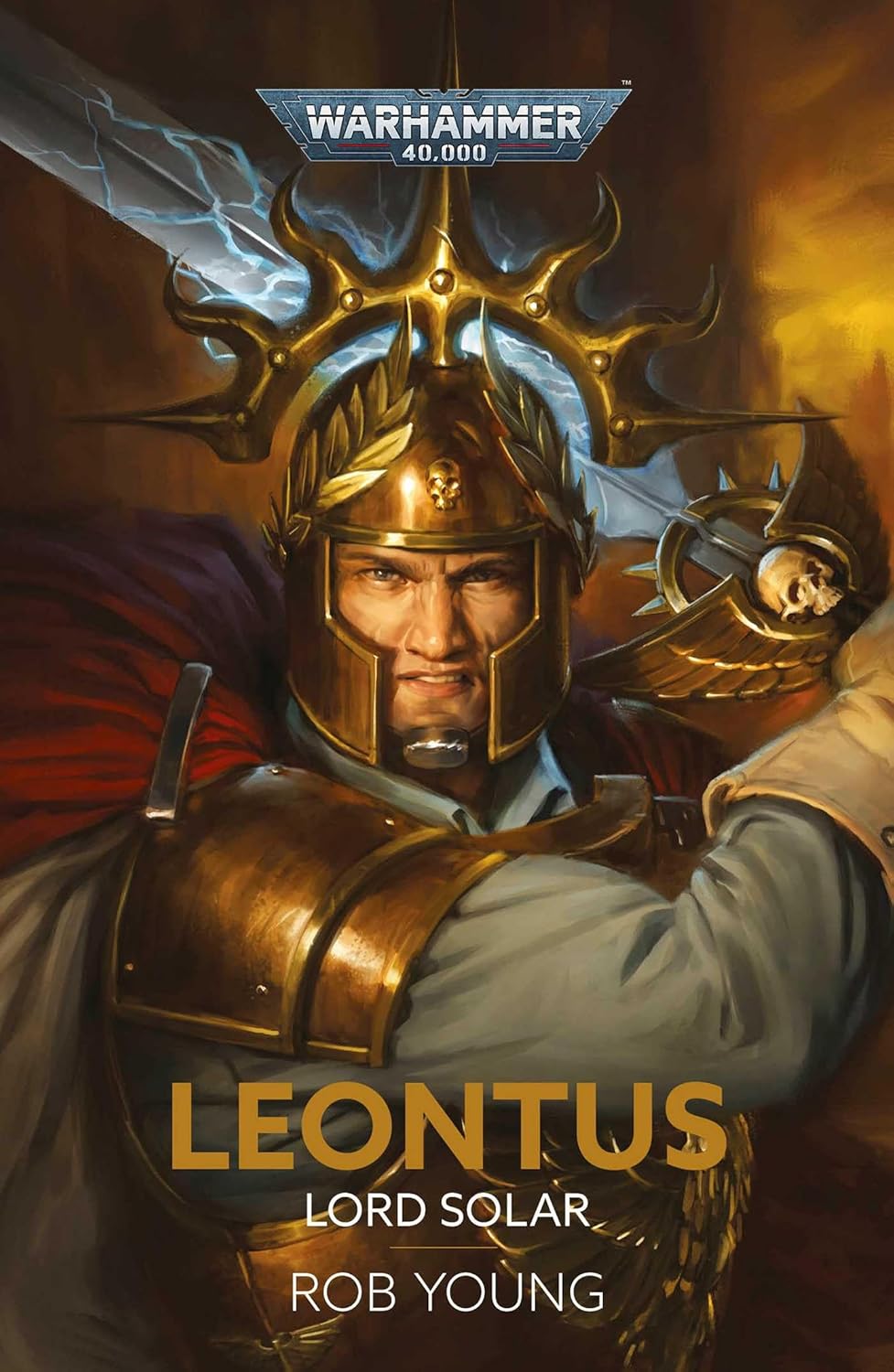
Warhammer 40,000 fiction in 2025 starts off strong with the compelling, character-focused novel, Leontus: Lord Solar by Rob Young.

Back in 2023 I had the very great pleasure of reading my first book from Rob Young, Longshot.  A cool and intense character-driven Warhammer 40,000 novel that followed a sniper war on a T’au held world, Longshot was a fantastic first book from Young, and it ended up being one of my favourite debuts of 2023.  As such, I have been very intrigued to see how Young would continue his Warhammer fiction career, and his next novel, Leontus: Lord Solar, proved to be an excellent new entry to the Warhammer 40,000 canon.  Focused on a legendary human leader, Leontus: Lord Solar was an impactful read that I shot through very quickly.

On the world of Fortuna Minor, an Astra Militarum taskforce of soldiers from various Imperial Guard regiments encounters grave disaster.  Sent to eliminate an invading ork horde, the Astra Militarum soldiers find themselves overwhelmed on the landing fields of Fortuna Minor and are slaughtered, while their reinforcements are forced to retreat into space thanks to the orks’ fighters and spacecraft.  Surrounded, outnumbered and lacking resources, only a few humans manage to escape the massacre, including legendary hero of the Imperium of Man, Arcadian Leontus, Lord Commander of the Segmentum Solar.

One of humanity’s most dedicated defenders and a master tactician, Leontus has no intention of giving up in the face of the ork invasion, even with his armies lost and devastated.  Determined to not only survive but complete the objective of reclaiming Fortuna Minor, Leontus rallies a small group of survivors and prisoners liberated from the ork camps to his cause and begins a desperate campaign to fight ensure that the armies of the Imperium can triumph on this latest battlefield.

Effectively welding his scattered force of mismatched and poorly armed soldiers into a coherent army, Leontus soon finds success against the orks, bringing hope to his demoralised troops.  But in the face of overwhelming odds, a determined and dangerously intelligent opponent, and his own lack of resources, can even the brilliant Leontus succeed, especially when his own men begin to question his tactics and motivations?

Leontus: Lord Solar was an excellent and fun Warhammer 40,000 novel that allowed Young to bring an iconic figure from the game to life.  A compelling and exciting read, Leontus: Lord Solar was a real blast to check out, especially as Young presents an impressive and direct narrative that you quickly sink your teeth into.

This was a very fast-paced and exciting Warhammer 40,000 novel that quickly throws you into the fray and successfully keeps your attention the entire way through.  Starting off with fire and blood as the Imperial Guard regiments are devastated by orks as they land, the story sets itself around some of the main supporting characters, particularly Belgutei, an Attilan Rough Rider, and Keori Arnetz, a Catachan medic.  Fighting there way out of the killing fields, Belgutei and Arnetz, as well as a handful of other survivors, link up with the titular Leontus, who leads them to safety and initiates a desperate guerrilla campaign against the orks, bringing together scattered troops, rescuing prisoners and ambushing ork convoys.

The resulting narrative is highly compelling and action-packed, as the brilliant yet practical Leontus proves to be a skilled commander, inspiring his disparate and demoralised troops, while also engaging in some risky and intense actions.  Young does an excellent job balancing the narrative amongst the three main protagonists, as well as a couple of interesting supporting figures, and I liked how the author tended to focus more on Belgutei and Arnetz, which allowed for an intriguing outsider perspective of Leontus and his actions.  There are some powerful character interactions, especially between Leontus and Belgutei, as the two clash over strategy and the fate of the survivors, which adds some dramatic spice to the overall exciting dish.  The action scenes flow fast and heavy as the book nears its end, including some dark sacrifices, and everything leads up to a massive and intense final battle, where so many of your favourite characters are in peril.  The book ends on a complex note, as Leontus proves his status as a tactician and hero, although the reader is left to decide on his humanity.  An outstanding overall Warhammer 40,000 narrative that is guaranteed to quickly hook you and keep your attention to the end.

Young once again shows his impressive ability when it comes to writing Warhammer 40,000 fiction, and I loved the short, brutal and captivating way Leontus: Lord Solar was presented.  While I was initially worried that it would be too similar to the Ciaphas Cain book, Death or Glory, which also featured a human hero marooned on an ork-held world, Young ensured that Leontus: Lord Solar stood out on its own feet.  The quick-fire narrative, intense and tactical action sequences, and cool scenario ensured this was a distinctive read, and one guaranteed to keep your attention the entire way through.  Primarily a character-focused story around the iconic in-game figure of Arcadian Leontus, Lord Commander of the Segmentum Solar, Young does an excellent job of highlighting the protagonist and showcasing him in a compelling way.  The author chose to primarily show Leontus through the eyes of his supporting characters, which allowed for a more nuanced take on the titular protagonist, while the occasional scene shown from Leontus’ perspective hinted at plans the character is hiding from his soldiers.  Throw in some excellent supporting characters and a memorable, if somewhat underutilised antagonist (who was simultaneously awesome and freaky), and this proved to be an amazing novel with some excellent character-driven strife and complexity at its core.

As with Young’s previous book, Longshot, Leontus: Lord Solar is an outstanding piece of Warhammer 40,000 fiction, and one that would serve as a good introduction to the wider universe for new readers.  The quickfire storytelling, classic action between humans and orks, and lack of excessive lore makes Leontus: Lord Solar a very accessible read, especially as Young doesn’t excessively dive into the history of his main protagonist.  Established readers of Warhammer fiction will naturally get a little more out of this book, especially as it was very cool to see the titular character in action in all his tactical glory, and I felt that Young did an exceptional job capturing and presenting this figure.  In addition, the book also features some intriguing unit makeups as Leontus bands together an irregular force of surviving Cadians, Catachans, Kreig troopers and Attilan Rough Riders.  The interactions between the groups and Leontus was pretty fun, and I liked the mixtures of styles of battle strategies.  Of them, I felt that the Attilan Rough Riders were shown off the best, and their explosive cavalry charges were awesome to read and reminded me of Warhammer Fantasy fiction at times.  All of this and more ensured that Leontus: Lord Solar was a very cool Warhammer 40,000 novel, and it is one I would recommend to all fans of the franchise.

As I tend to with most Warhammer novels I enjoy, I decided to check out Leontus: Lord Solar on audiobook, which was another fantastic experience.  As I have stated innumerable times, Warhammer fiction really lends itself to the audiobook format, and having talented narrators read out the over-the-top stories allows for all the best bits of the universe and its grim dark themes to come to life.  This was particularly true for Leontus: Lord Solar, whose compelling character focused storylines and intense action sequences proved to be a lot of fun to listen to.  Coming in with a relatively short runtime under six hours long, dedicated listeners can really fly through Leontus: Lord Solar, and I enjoyed how quick the pace turned out to be.  I also really appreciated the choice in narrator as David Seddon is a skilled voice actor who really impressed me in previous Warhammer 40,000 audiobooks Dredge Runners and Kasrkin.  Seddon did an excellent job with Leontus: Lord Solar, as not only did he move the story along at a fantastic and enjoyable pace, but he also provided some excellent voices for the various characters.  His take on the titular Leontus was extremely good, and you get a real sense of the character’s nobility, as well as his determination to win, through the performance.  The rest of the human characters also came across extremely well, and Seddon expertly gifts them accents that cleverly corresponded to their regiment and their real-world military influence.  This great voice work really enhanced the already exciting narrative, and I found myself getting really engrossed in this audiobook version as a result.

With this fantastic second book, Leontus: Lord Solar, Rob Young has nicely set himself up as a rising author of Warhammer fiction, especially as he brings a compelling figure from the game to life.  Featuring some awesome action, compelling characters, and an entertaining narrative, Leontus: Lord Solar was an outstanding Warhammer 40,000 novel to start the year with, and I look forward to seeing what amazing adventures Young brings to the franchise in the future.

Amazon

Warhammer 40,000: Da Big Dakka by Mike Brooks

Da Big Dakka Cover

Publisher: Black Library (Audiobook – 24 February 2024)

Series: Warhammer 40,000: Ufthak Blackhawk – Book Two

Length: 9 hours and 25 minutes

My Rating: 4.75 out of 5 stars

Amazon

I have been really punching out the Warhammer reviews this week, and the final one I want to bring up is the exceedingly fun novel Da Big Dakka by Mike Brooks.

Mike Brooks is an outstanding author, who has been killing it with his amazing novels in the Warhammer 40,000 universe with elaborate tales featuring some unique figures.  I really enjoyed his dark novel, Huron Blackheart: Master of the Maelstrom, and The Lion: Son of the Forest was one of my favourite books and audiobooks of 2023.  However, out of all of Brooks’s books, the most entertaining, exciting and outright funny are his novels that focus on the ork faction.  Orks are always a fantastic group in Warhammer fiction, but Brooks has some amazing insights into these rowdy creatures.  His previous ork novels, Brutal Kunnin and Warboss, have both been awesome, but I honestly think his latest book, Da Big Dakka, is his best yet.

Ufthak Blackhawk, big boss of Da Tekwaaagh! is in trouble.  Sent far away into the stars by his Warboss, Da Meklord, to find loot and a good scrap, Ufthak has found barely anything to steal or fight, and now Da Meklord wants his tribute.  Determined to find one big score, Ufthak is awarded a unique opportunity when his new grot servant reveals the webway, mysterious ancient portals which can lead to all sorts of unusual places.  However, he has no way of entering the webway, that is until someone opens it for him.

Dhaemira Thraex is a powerful and ambitious drukhari archon, who seeks to empower her cabal and become leader of her section of the dark city of Commorragh.  To that end, Dhaemira brings Ufthak and his horde into Commorragh, hoping to use the threat they present to unite her rivals behind her.  Confident of a swift victory against the unorganised orks, it quickly becomes apparent that Dhaemira has underestimated the danger she has unleashed.

After years of fighting and getting stronger, Ufthak is no longer the simple ork he once was.  Instead, he is now a monstrous foe who excels at killing, and who has a plan to get everything he wants.  But can even the new and improved Ufthak stand against the worst that the twisted and malevolent drukhari have to throw at him, especially when treachery sprouts within his own ranks in the most unlikely of places?

Mike Brooks presents one of his funniest and most exciting novels yet as Da Big Dakka hits all the right notes for me.  Utterly hilarious, loaded with over-the-top characters, and featuring two extremely awesome factions from the Warhammer 40,000 universe, Da Big Dakka had me hooked from the moment I started listening to it and refused to let go until the very last laugh.

Da Big Dakka had a great story behind it, and I liked how Brooks set it up as a direct sequel to Brutal Kunnin (which I read recently in preparation for the release of this book), while also featuring elements from WarbossDa Big Dakka is more of a dark comedy than a serious Warhammer 40,000 novel, which is to be expected when you have a book focused on the orks.  The premise behind Da Big Dakka is simple: the orks under the command of the evolving Ufthak Blackhawk have found themselves inside the drukhari city of Commorragh and must pit their savage battle skills and crude intellect against the subtle tactics of their drukhari hosts.

The drukhari, whose scenes are primarily told from the perspective of Dhaemira Thraex, initially see the orks as a minor threat, and they are more concerned with their intrigues to take them seriously.  However, underestimating the orks never works out for anyone, and soon Ufthak has launched a series of insane and unpredictable counterattacks that force the drukhari to work together.  As this happens, Ufthak finds himself being secretly undermined by one of his grots, Snaggi Littletoof (who previously appeared in Warboss), who his determined to lead a grot uprising and finds himself in all manner of trouble as a result.  All three of these storylines come together in a big way towards the end of the book, as all the schemes, outrageous plans and badly organised rebellions, are decided in one big brawl.  The final results of Da Big Dakka are pretty damn awesome, as there are some deliciously ironic comeuppances, interesting character development, and entertaining hints about what Brooks plans to do in the future.

While there are notable similarities between Da Big Dakka and the previous novel, Brutal Kunnin, as the book follows a similar thread of orks rampaging across a new world facing off against arrogant enemies, it’s hard not to fall in love with this book.  You can clearly see that Brooks has evolved his style since Brutal Kunnin, and this sequel was a much stronger novel.  A lot of this was down to the inclusion of one of the best characters from Warboss, who added in an extra comedic angle to the plot that vibed wonderfully with the other storylines.  Brooks also amped up the petty political intrigue and plotting with the non-ork parts of the book, with the drukhari serving as an excellent antithesis to the orks.  There was also a great deal more character development when it came to the protagonist, which helped to strengthen a lot of the plot.  This split between these three main point of view characters was pretty damn perfect, and their alternating views of events helped to produce a very strong story.

In addition, there was excellent added complexity to Da Big Dakka’s humour, which I had a brilliant time with.  While most of the comedy is based around the over-the-top antics of the orks, there is also some darker, more subtle comedic elements spread throughout the plot which plays off the other jokes extremely well.  A lot of this based around ironic events, in-universe jokes, and hilarious betrayals, which really added up as the book progressed.  I found myself laughing out loud multiple times while listening to Da Big Dakka, and this was one of the funnier books of 2024.  Throw in a ton of over-the-top fight scenes, most of which serves to enhance the already epic story, and you have an outstanding and captivating book with pure fun at its heart.

One of the things that I always enjoy about Warhammer 40,000 fiction is the shear range of different stories and styles that can be told.  Da Big Dakka for example is a much more light-hearted book that focuses on two alien races that don’t always get a lot of focus in the extended fiction.  As such, this book has a great deal of appeal for those unfamiliar with Warhammer, as Brooks is required to dive into these factions without weighing the reader down with too much heavy plot.  New readers can easily enjoy this book without any real pre-knowledge or conceptions about the Warhammer 40,000 universe and still have an outstanding time with the unique story and characters.  It can also be readily enjoyed by those who haven’t read the preceding two novels, Brutal Kunnin and Warboss, as Brooks makes the story very accessible.  Naturally, established fans and those who have read Brooks’ prior novels will get a lot more out of Da Big Dakka, mainly because there is some interesting progression of character arcs, and because Brooks provides outstanding look at the orks and the drukhari.

As with his previous two novels, I was deeply impressed with how Brooks portrayed the orks in Da Big Dakka.  The orks are always a very entertaining bunch, and their hooligan-esque actions, desire to fight, and unique outlook on life makes for some fun reading.  Pretty much every book that features an ork character is bound to be more on the comedic side, and Brooks delivers this in spades, loading up the story with a ton of funny observations, in-jokes and outrageous behaviours that proved to be exceedingly entertaining.  Brooks really amps up the unpredictable nature of the orks in Da Big Dakka, and there was a good recurring theme about being underestimated.  While Brooks went a little light on describing ork technology and the different clans, mainly because he’s covered that before, there was an interesting look at ork psychology and biology which showcased why they fight and how it benefits them.  The author also featured a great look at the ork sub-race known as the grots, who have an expanded role in this book.  Smaller, weaker and extremely bullied members of the ork race, the grots serve as a snivelling slave caste, and offer some fun comedic relief.  A good part of the plot revolves around the grots and their cowardly nature, and it was really entertaining to see Brooks’s take on their mindset and place in ork society, especially when one of their number tries something different.  Honestly every scene featuring a major ork character was entertaining or interesting in some way or another, and I really love how well Brooks portrays this awesome faction.

While Da Big Dakka is mostly dedicated to the orks, Brooks also spends a ton of time focusing on one of the more intriguing factions in the canon, the drukhari.  Previously known as the dark eldar, the drukhari are one of the more underutilised groups in Warhammer 40,000 fiction, and it was great to see them here.  Essentially evil space elves, the drukhari live in an extra-dimensional city and require the pain of others to survive (think the Cenobites from Hellraiser).  As Da Big Dakka is primarily set in a section of their city and features a drukhari as a main character, Brooks showcases a lot of the drukhari lore in this book, which was really cool.  This book features an in-depth look at the drukhari, with their unique units, weaponry and vehicles strongly featured.  However, Brooks goes even deeper than that, focusing on the politics of the drukhari characters, the various alliances that bind them, and entire basis of their existence.  I loved the fascinating examination of why they require pain to survive, as well as their thoughts on mortality, and this became a key part of the book’s plot.  You get a real clash of styles between the two factions, and the orks are constantly frustrated by the hit-and-run tactics of the drukhari (or the spikiez, as the orks know them).  I also loved how cool the city of Commorragh proved as a background to the plot, and Brooks features several unique drukhari structures and locations that made for some great battlefields.  The entire final sequence takes place in one of their arenas, and it was very fun to see the protagonist face off against some of the drukhari captives.  I honestly really loved that Brooks featured the drukhari here, and I hope we see more Warhammer authors use them in the future as they are so underutilised.

I also must highlight the excellent character work featured within Da Big Dakka, as Brooks featured some amazing figures whose unique insights added so much to the impact of this book.  The primary character is the ork big boss, Ufthak Blackhawk, who previously served as the protagonist of Brutal Kunnin.  Since we last saw him, Ufthak has literally grown into his role as a boss, as his victories have transformed Ufthak into a massive monster.  This physical growth has also resulted in him becoming smarter, and a lot of his storyline revolves around him utilising this new intellect for the first time.  It also makes him more ambitious and insightful, and it was fascinating to see him interact with the other characters in the book, especially the main drukhari figure.  Indeed, the one scene where they have a frank conversation was probably one of my favourites in the entire book, with Ufthak proving to be her intellectual match.  Despite this newfound and somewhat unwanted ability to think, Ufthak is still an ork at heart and he acts accordingly, with lots of destruction and carnage coming from him alone.  Ufthak is also a major source of comedy as his cynical, hilarious, and often surprisingly accurate insights into the drukhari, his fellow orks, and the other races of the galaxy, are so funny.  It will be interesting to see what adventures Brooks has planned for Ufthak in the future, as he is clearly positioning him to be a major recurring figure in his books.

Aside from Ufthak, the other two major characters of the book are the drukhari archon, Dhaemira Thraex and the grot Snaggi Littletoof, both of whom add some great alternate elements to the story.  Dhaemira is a ruthless drukhari strategist, who revels in schemes, plots and ambitious powerplays.  The person ultimately responsible for much of the carnage in Da Big Dakka, Dhaemira proves to be a fantastic figure to follow, especially as the reader gets most of their view of the drukhari from her.  Dhaemira proves to be an excellent alternative protagonist to Ufthak, mainly because the two are so different, and it was fascinating to see their clash of styles and personality, even though they have more common ground then you would expect.  I really loved Dhaemira’s narrative, which goes in some interesting directions, including an unlikely romance, and it really played off the ork perspective chapters so well.

The final key ingredient to this mix was Snaggi Littletoof, the self-proclaimed Grotboss and prophet of Gork and Mork.  Snaggi, who previously appeared in Warboss, is determined to lead a grot rebellion to overthrow the orks and place him in charge.  Unfortunately, Snaggi is held back due to the stupidity of his minions, as well as his own inaccurate sense of self-importance.  His entire storyline of attempted rebellion was a welcome addition to the plot as it served an interesting middle ground between Ufthak’s direct actions and Dhaemira’s more subtle plots.  It also added some excellent additional humour, as Snaggi’s various schemes to take over the ork band, go in some interesting directions that often balance unlikely success with massive failure.  This fantastic combination of characters was so much fun, and I really loved how well Brooks introduced them and balanced them out throughout Da Big Dakka.

I checked out this Warhammer novel in its audiobook format, which is the best way to enjoy the over-the-top action and big personalities of this franchise.  Da Big Dakka is a great example of this, and I love how all the amazing scenes and fun fights really come to life when they are read out to you.  In Da Big Dakka’s case, a lot of this is due to narrator Harry Myers, who is quickly becoming one of my favourite Warhammer audiobook voice actors.  Not only has he really impressed me in Brooks’s previous ork audiobook, Warboss, but Myers was also brilliant narrating two of my all-time favourite Warhammer 40,000 novels, Day of Ascension by Adrian Tchaikovsky and The Wraithbone Phoenix by Alec Worley.  Myers has such an amazing and booming voice and a great British accent that really fits the hooligan-aesthetics of the orks.  He effectively works through a series of voices in Da Big Dakka, that includes the commanding voice of main character Ufthak Blackhawk, and the high-pitched whiny voices of the various grots.  While his voice wasn’t always the most effective for conveying the subtle mannerisms of the ethereal drukhari, Myer still did an excellent job portraying them throughout this book, and I loved how efficiently and entertainingly he moved the plot along.  I honestly don’t think I would have had as much fun with Da Big Dakka without Myers’s narration, and with a run time just short of nine and a half hours, this is a very easy audiobook to get through and enjoy.

Mike Brooks continues to impress me with his outstanding and epic contributions to the Warhammer 40,000 franchise, especially as he so clearly grows as an author with each book he writes.  His latest novel, Da Big Dakka, is a captivating and deeply hilarious piece of Warhammer fiction that tells an awesome story, while also expertly using the franchise’s most unique factions.  Wildly entertaining, incredibly funny, and subtly clever, Da Big Dakka was particularly fun to read and comes highly recommended.  I cannot wait to see what wonderous piece of Warhammer fiction Mike Brooks will write next, as I know I am going to love it.

Amazon

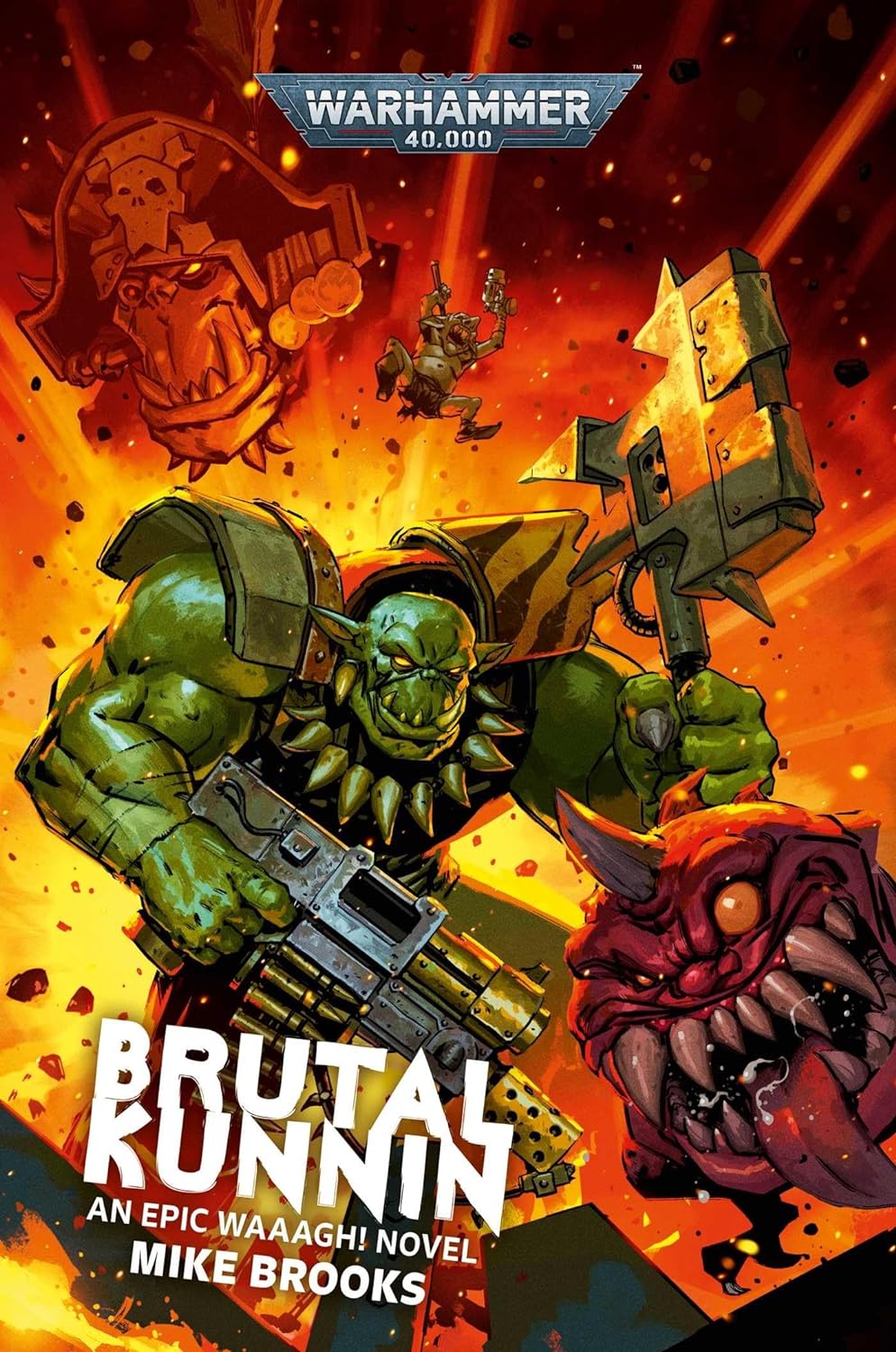
Warhammer 40,000 – Brutal Kunnin by Mike Brooks

Brutal Kunnin Cover

Publisher: Black Library (Audiobook – 22 June 2001)

Series: Warhammer 40,000: Ufthak Blackhawk – Book One

Length: 8 hours and 20 minutes

My Rating: 4.5 out of 5 stars

Amazon

Get ready for a scrap as one of the fastest rising authors Warhammer fiction, Mike Brooks, presents a fast-paced and wildly entertaining book that follows the orks as they bring carnage to a new planet with Brutal Kunnin.

One of the most impressive rising stars in Warhammer fiction at the moment is Mike Brooks, who has been on an outstanding roll lately.  An excellent talent with a great understanding of Warhammer lore and factions, Brooks has written several impressive novels in the last few years, all of which have contained clever stories featuring unique figures from the franchise.  I have had a wonderful time with several of these books, with Huron Blackheart: Master of the Maelstrom, Warboss and The Lion: Son of the Forest (one of my favourite books and audiobooks of 2023) being outstanding in their own way.  Because Brooks has some intriguing books coming out this year, I thought I would go back and check out one of his first major contributions to the Warhammer 40,000 canon with the thrilling novel, Brutal Kunnin, which I ended up having an amazing time with.

Out of all the dangerous creatures that infest the known galaxy, few things have more potential for violence and destruction than an ork warband.  Unfortunately for the Adeptus Mechanicus forge world of Hephaesto, they are about to caught in the middle of two rival warbands ready to show each other just who the hardest gits truly are.

Ufthak Blackhawk is a newly minted nob in the fleet of Da Meklord, who eagerly follows his boss to Hephaesto, looking for loot, glory, and the chance to break some skulls.  However, when Da Meklord forces arrive in orbit, they soon discover that another ork force is already there, as the ships of Freebooter Kaptin Badrukk lay siege to the planet.  Rather than fighting each other, Da Meklord and Badrukk form a temporary alliance to kill the human defenders before turning on each other.

Leading his troops to the surface, Ufthak looks ready to prove himself, only to find himself coming face to face with the most advanced weaponry and upgraded troops in the entire Imperium of Man.  However, even the highly specialised and disciplined soldiers of the Adeptus Mechanicus are unprepared for the green tide about to roll down upon them, especially when their troops are bogged down by incompetent leaders and infighting from within.  Worse, a darker threat lies waiting in the bowels of Hephaesto, one that has no qualms about killing both ork and augmented humans to achieve its bloody goals.  Can Ufthak lead his troops to victory against all comers, including an enemy that even he can’t headbutt into submission?

Brutal Kunnin was a particularly fun and thrilling novel from Brooks that takes great looks at two fantastic Warhammer factions, while also presenting an action-packed story.  Funny, brutal and loaded with laughs, this is a particularly awesome novel that makes great use of the ork faction.

I really enjoyed the fantastic story featured within Brutal Kunnin, especially as Brook produced an addictive and exciting read.  The trick with ork focused Warhammer 40,000 novel is that you usually aren’t going to get a serious story out of it; instead the writer needs to lean into the humour surrounding the whole faction.  Brooks did a really good job of this, as he primarily focuses on the volatile orks as they land on Hephaesto and begin fighting against both the Adeptus Mechanicus soldiers and other orks due to the rival fleets in order.  While this is extremely fun, it doesn’t necessarily result in a complete or fully engrossing story, so Brooks cleverly adds in a parallel storyline which helps to turn Brutal Kunnin into something particularly awesome.

This secondary storyline follows members of the Adeptus Mechanicus, particularly Zaefa Varaz, who serves as an alternative protagonist, as they witness the ork invasion unfold.  About half the book is told from the perspective of the various Adeptus Mechanicus characters, which adds a lot of meat to the story.  Not only do you get the entertaining perspective of smart characters being completely unprepared for the unusual and direct actions of the orks, but there is a lot of internal conflict as the planet’s leadership fight amongst themselves.  At the same time, various conspiracies lurking beneath Hephaesto’s surface comes to life which present even greater threats to the defenders.  I really loved how well the intrigue laden human characters contrasted with the straightforward, action-packed ork chapters, and it helped to produce a very effective story.  Brooks loads in some big set pieces as the story rushes by, and you really get drawn into the carnage that unfolds as the orks get closer to their goal and all hell breaks loose within the main city of Hephaesto.  The author sets up a very entertaining ending for Brutal Kunnin, with the right characters coming away on top, while others get their just deserts.  An overall exceedingly amusing, exciting, and cleverly set up story that you can’t put down.

I felt that Brooks did a really good job of setting out Brutal Kunnin’s story, especially with the split between the ork perspective and that of the inhabitants of Hephaesto.  The ork chapters are exclusively shown from Ufthak Blackhawk’s perspective, while the rest of the book is shown from multiple point-of-view characters to tell their side of the narrative.  Having only one ork protagonist was a clever choice from Brooks, as it ensured that side of the story was focused, character driven and didn’t get watered down with a group of similar ork characters.  I loved how well Brooks was able to express the unique perspectives of the various characters throughout the course of Brutal Kunnin, and you really get the sense of how each of these races sees the universe.  The various ork chapters are naturally loaded with humour, mostly brought on by their unique insights into the humans they face, and you have to laugh at some of the outrageous events that occur there.  This humour blends in nicely with the more serious chapters focusing on the Adeptus Mechanicus, and Brook hits the right balance between silly and intense here.  The resulting action is also very well written, and Brook made sure to fill up the story with so many compelling and over-the-top fights, which anyone can appreciate.

Unlike some of the more elaborate Warhammer novels out there, I felt that Brutal Kunnin was particularly accessible to new readers, and indeed could be a good entry point into the Warhammer 40,000 universe.  Brooks really leaned into showing how crazy and dark this universe can be throughout the course of the book, and the unique humour, over-the-top action, and interesting figures will appeal to a wide audience, especially to those interested in seeing what Warhammer 40,000 is all about.  Of course, there is a lot in it for established fans of the franchise, especially as Brooks brings several fantastic factions to life.

Naturally most of this focus revolved around the orks, who are always some of the funniest figures in the canon.  Essentially the Warhammer universe’s answer to football hooligans, the orks are the rude, crude, and always entertaining green horde, who only live for a fight.  You know what you are in for with an ork book.  Brooks did a particularly good job of capturing the orks in Brutal Kunnin, especially as you see them from both interior and exterior perspectives.  Most of what you see comes from the eyes of Ufthak Blackhawk, whose insights into the ork horde, its leaders, and the unique culture of violence, strength and domination, prove quite intriguing and usually entertaining.  Blackhawk’s chapters are loaded with the typical ork humour, as well as the entertaining observations of the humans they face, and I loved how well Brooks captured the ork mind.  This is well complemented by scenes shown from the perspective of the orks opponents, most of whom are completely unable to comprehend the threat coming towards them.  Indeed, much of the ork’s success is due to the other factions underestimating them, and it was quite satisfying to see some of the more arrogant characters lose badly due to their false preconceptions.  Other distinctive characters also have some compelling views about the orks, with one daemon’s insights in the matter being particularly fascinating.  If I had one complaint about the orks in Brutal Kunnin, it would be that Brooks somewhat overpowers them, as they tear through everything in front of them.  While this worked for narrative purposes, and showcased just how advantaged the orks were by their opponent’s arrogance, I could see fans of the other factions getting a little annoyed about how quickly the orks take down some big units.  Still, this is a very minor complaint, and I felt that Brutal Kunnin ended up being a pretty awesome book about the orks, and I loved how much fun Brooks had writing this faction.

Aside from the orks, Brutal Kunnin has a surprisingly in-depth look at the Adeptus Mechanicus, the Tech Priests of Mars.  Essentially humanity’s mechanics, inventors, and mass production specialists, the Adeptus Mechanicus worship technology and live to perfect their devices and expand their knowledge.  About half the book is shown from several Adeptus Mechanicus personalities on the planet as they attempt to fight back against the orks, and there are various scenes that showcase their combat capabilities, weird units, and excessive augmentation.  However, the true highlight of Brook’s use of the Adeptus Mechanicus characters, was how well he captured their ambitious and machine altered mindset.  Every scene featuring an Adeptus Mechanicus character has that figures perception and mind influenced by internal calculations and computer augmentations, which helped to show how most of this faction are more machine than man.  However, no matter how augmented they are, these characters are still human, especially when it comes to their ambitious, desires, and inability to work together.  In many ways, the main antagonist of Brutal Kunnin was these character’s hubris rather than the orks, as these big personalities were often more concerned with each other, and this cost them dearly.  Throw in a mysterious outsider from another faction, and Brutal Kunnin ends up being a pretty interesting piece of Warhammer 40,000 fiction, that fans will have a lot of fun with.

As with most Warhammer novels I have the pleasure of enjoying, I chose to check out Brutal Kunnin on audiobook rather than seeking out a physical copy.  Naturally this proved to be a pretty fun experience as Brutal Kunnin has an outstanding audiobook format that really enhances the amazing and fun story of this book.  With a run time of nearly eight and a half hours, this is a pretty typical sized Warhammer audiobook which I was able to power through quickly thanks to its fast-paced story.  It also helped that Brutal Kunnin had an awesome narrator in Tom Allenby.  Allenby is a narrator who I wasn’t familiar with before this book, but he quickly impressed me with his excellent range of voices.  Allenby proved quite adept at voicing the various inhuman figures in the story, whether it be an ork or a member of the Adeptus Mechanicus.  He did such a good job capturing the essence of these figures throughout the production, and I loved how all the various characters got their own unique voice that proved fitting to their personalities.  Allenby also did a great job of narrating the intense and entertaining action throughout the course of Brutal Kunnin, and the listener really gets a good sense of what is going on.  As such, I would strongly recommend the Brutal Kunnin audiobook format to anyone interested in checking this piece of Warhammer fiction out, as you guaranteed to have an amazing time with it.

Mike Brooks continues to impress me with his outstanding additions to the Warhammer canon.  Brutal Kunnin was a pretty damn amazing read that showcased the author’s ability to showcase some of the more distinctive figures from the game.  This was a wildly entertaining and exciting Warhammer 40,000 novel that comes very highly recommended.

Amazon

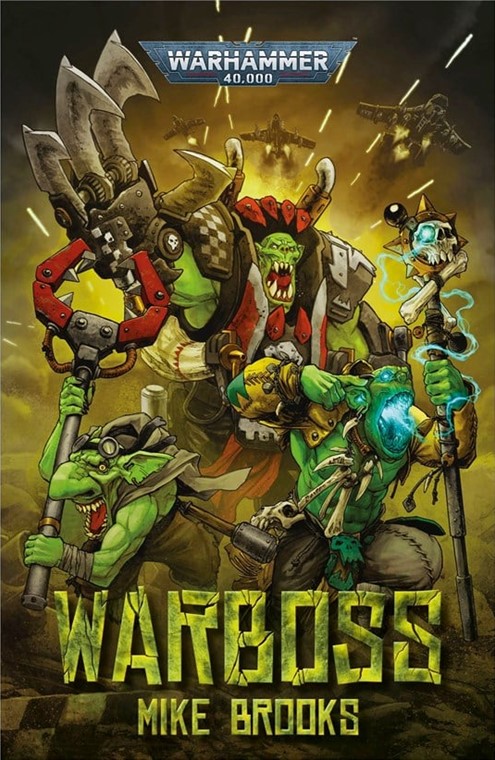
Warhammer 40,000: Warboss by Mike Brooks

Warhammer 40,000 - Warboss Cover

Publisher: Black Library (Audiobook – 25 March 2023)

Series: Warhammer 40,000

Length: 8 hours and 48 minutes

My Rating: 4.5 out of 5 stars

Amazon

Prepare for the ultimate battle for control as several feuding ork bosses fight to become the new leader of the Waaagh! in this amazing and highly entertaining Warhammer 40,000 novel, Warboss by Mike Brooks.

2023 has been a big Warhammer 40,000 fiction year for me as I have been having an absolute blast reading all manner of cool novels from across the franchise (make sure to check out my recently released list about my favourite Warhammer 40,000 novels).  However, while I have read a ton of Warhammer books this year, I have not had the opportunity to read any 2023 Warhammer releases.  Well, I am on my way to rectify that by looking at the recently released Warboss by awesome author Mike Brooks, who also wrote the 2022 novel Huron Blackheart: Master of the Maelstrom.  Brooks did an outstanding job with this fantastic new book, and I had so much damn fun with Warboss and its highly entertaining and hilarious story.

In the far future of the 41st millennium, there are few things are more destructive or unstoppable than an ork warband on a rampage.  One of the most effective bands currently killing its way through the galaxy is that of Warboss Gazrot Goresnappa whose Waaagh! has conquered the once mighty human fortress world of Aranua.  After several decisive and bloody victories, the Waaagh! celebrates in front of the planet’s remaining bastion, the massive Davidia Hive.  All it will take is one final assault to totally defeat the humans on Aranua so Warboss Goresnappa can strip their resources and lead his boyz to bigger and better fights out in the stars.

However, before Goresnappa can achieve his great victory, an unfortunate accident sees him very, very dead under the giant decapitated head of a Gargant war machine.  With their leader squashed, the Waaagh! now has an opening for Warboss, and several ambitious orks from across the no-longer united clans step forward to fight for the job.  However, before the usual brawl for leadership can begin, a prophecy from the clan’s resident weirdboy, Old Morgrub, reveals that the ork gods have something very special in store for the Waaagh! and its next leader.  A mysterious gate lies underneath the human city that could transport the Waaagh! to fights anywhere in the galaxy, and whichever boss finds it first will be the new Warboss.

Forced to obey the words of the gods, the bosses engage in their own elaborate plans to breach the Hive City and claim the gate.  But which boss can triumph over the others?  Will it be the brutal Goff Big Boss Mag Dedfist, the suicidally fast Speedboss of the Evil Sunz, Zagnob Thundaskuzz, the sneaky and cunning leader of the Blood Axes, Da Genrul, or could it even be the leader of the grot uprising, the self-proclaimed prophet of Gork and Mork, Snaggi Littetoof?  All four believe that they are the only ones capable of leading the Waaagh! and they will fight tooth and nail to become Warboss.  But to succeed they’ll need to not only overcome all their rivals but the human defenders of the Hive City and an Aeldari army waiting in the depths to defend their gate.  May the best ork win!

Oh dear, oh dear, what a damn funny book.  Honestly, any Warhammer 40,000 novel that focuses on the orks is bound to be comedy gold, but Warboss is one of the better ones I have had the pleasure of reading.  Author Mike Brooks does a wonderful job of telling a tight and amazingly fun story that perfectly showcases the orks in all their green skinned glory.  I had so much fun with this book and I managed to power through Warboss in very short order.

This proved to be a pretty fast-paced and impressive story, and it’s one that I was able to have a blast listening to as it unfolded.  Primarily focusing on the various ork characters that are part of Waaagh! Goresnappa, Warboss starts off with a sudden game changer for the protagonists as the infamous Warboss Goresnappa is killed off in hilarious fashion thanks to a group of argumentative grots and the falling head of a massive war machine.  This leads several of the remaining ork bosses throwing their hats into the ring to become the Warboss, and all hell follows as a result.  Tasked with finding a hidden Aeldari gate under the human city, each of the ork bosses implements their own plans to get into the city first, whether that be through blowing down the walls, infiltrating from below, or driving around the city at high speeds, hoping for the best.  Brooks breaks the story up around the main three contenders nicely, and you soon get a good idea of their different, but very orkish strategies.  However, the story is made even more enjoyable thanks to some of the alternate perspectives that emerge.  This includes the ambitious grot Snaggi Littletoof who, after accidently killing Warboss Goresnappa, attempts his own grot uprising and tries to find the gate to gain his cause legitimacy.  Several human characters are also shown, often to add some interesting contrast to the orks, and it is fun to see their attempted counterattacks, which often leads to disaster.  This makes for an excellent first two-thirds of the book and Brooks does a great job of showcasing both the protagonists and the ork nation as a whole while also setting up a very entertaining story.

Unsurprisingly, the orks make it into the city and everyone starts arriving at the gate at the same time, often in comedic or unexpected ways.  This leads to a very fast-paced final third as everyone starts fighting everyone else to become Warboss, facing off against humans, Aeldari, and every rival faction of the Waaagh!.  Brooks showcases this final big battle in some excellent ways, and you get really drawn into the crazy carnage that follows thanks to the well-written and exciting action scenes.  The use of multiple perspectives was pretty useful here, and I liked how the author showed the same massive battle again and again, each time from the point of view of another character.  This added more detail to the brawl each time, as well as some amusing alternate opinions of events from some very different characters.  Brooks throws in some excellent twists and turns here and you are never quite certain who is going to come out on top in the battle for supremacy.  The eventual fate of every major character is pretty fantastic and really fits the storylines that have been building up throughout the book.  I personally came away from Warboss extremely satisfied and I loved all the cool developments and totally insane moments that occurred.  Overall, this was a very impressive standalone Warhammer 40,000 narrative and it is very hard not come away loving this story thanks to the awesome humour and all the fantastic, over-the-top interactions that occurred.

All fans of Warhammer fiction know that ork focused novels are some of the funniest novels out there, due to the way that they focus on the over-the-top antics of this beloved faction.  Some good examples of previous Warhammer books that strongly featured orks include Ghazghkull Thraka: Prophet of the Waaagh! by Nate Crowley (one of my favourite books of 2022) and Catachan Devil by Justin Woolley, and I think that Warboss is up there with these fantastic reads.  This outstanding book really dove into the humour as you watched the crude and eternally underestimated orks battle it out amongst each other and the other factions, often coming up with insane and funny solutions to all the deadly problems they encounter.  There honestly wasn’t a single chapter where I wasn’t laughing at some of the crazy stuff that just occurred, and Brooks had a real talent for writing from the ork perspective.  There was some great consistency in the way that the ork characters acted and thought throughout Warboss and every chapter focussed on them saw the characters using similar lingo, slang and descriptions of the other races in the Warhammer 40,000 universe.  As such, you get a great appreciation for the ork mindset and it was great to see the ork perspective on all the book’s over-the-top moments.

One of the things that I felt set Warboss aside from some other Warhammer 40,000 novels featuring orks is that Brooks didn’t fall into the trap of portraying them simply as funny simpletons.  Instead, Brooks shows that the orks are quite smart and complex in their way, it just that their culture, in comparison to humans or Aeldari, has more of a focus on violence and straightforwardness than the other races in the galaxy.  This is backed up by scene after scene of the orks utilising their skills, technology and cunning to win various encounters against seemingly smarter or more organised opponents, and it is always quite fun to see the orks looking down on their opponents for making mistakes that they wouldn’t do.  While this love of extreme violence is mostly played for fun, Brook’s also tries to show the darker side of it, as the orks are pretty damn brutal in how they deal with the humans and Aeldari they encountered.  I loved the great contrast between the ork and human characters that Brooks added into Warboss, as the humans were always so arrogant and condescending towards the orks’ intelligence, even when they were beating them.  This complete lack of understanding by most of the human characters really enhanced the various ork chapters, especially those that showed the orks managing to understand and outthink their human opponents, and I really appreciated this fantastic deeper dive into ork mindset and society.  I did think that Brooks might have made the orks slightly too overpowered in Warboss, as they manage to take on quite a few major enemies with relative ease, but this always added some fun to the story and it was interesting to see the full potential of the orks.

This deep dive into the orks is further cemented thanks to the several outstanding character arcs that Brooks set up throughout Warboss, particularly around the four main characters fighting for control of the Waaagh! in their own way.  The three ork characters Mag Dedfist, Zagnob Thundaskuzz and Genrul Uzbrag (Da Genrul), are in some ways quite similar, in that they have several similar racial tendencies towards violence or leadership.  However, each of them represents a different clan, and so they have different battle tendencies which really helps to highlight the different factions within ork society.  Mag Dedfist is a Goff, and so he relies more on classic violence and explosions to achieve his goals in the most direct ways possible.  Zagnob is an Evil Sun boss who has dedicated himself to the Kult of Speed and believes in riding the fastest vehicle he can find right towards the enemy.  The most entertaining of these is probably Da Genrul, a member of the Blood Axe clan who admire human martial ability and utilise their own take on tactics, discipline and stealth to achieve their goals, often outsmarting the humans they are aping.

I was also a big fan of the character of Snaggi Littletoof, a grot with ideas of grandeur who attempts to start a grot uprising against their cruel ork masters.  The grots (also known as gretchins, essentially goblins from classic fantasy), smaller cousins of the orks who are used as slave labour and cannon fodder, aren’t particularly well featured in most Warhammer 40,000 fiction, so I had fun with a whole character arc around them in Warboss.  Snaggi and his band of rebellious grots (Da GrotWaaagh!), are a very entertaining inclusion, and I liked the revolutionary storyline that Brooks set around them that provided both humour and an interesting look at typical grot life.  It was so much fun to see Snaggi inspiring his followers to go against their nature and rebel, especially as the orks had no idea what they heck they were doing.  Thanks to Brook’s use of Mag, Zagnob, Da Genrul and Snaggi, you get a great understanding of each of their specific faction and the author did a particularly good job of featuring each of them equally.  Indeed, thanks to the appearance of several different ork characters in a supporting role, you get a pretty good idea of nearly every major ork clan, faction and designation, and even those readers completely unfamiliar with orks can come away from this book knowing most of the key things you need to know about them.

These ork and grot protagonists are well backed up by several entertainingly arrogant human characters who honestly make the orks seem reasonable and likeable in comparison.  The best is easily Captain Armenisu Varrow, who is held prisoner by Da Genrul as his pet and tactical advisor.  Varrow goes through so much hell in this book, but is so deliciously haughty while he does so that you really can’t feel sorry for him.  Despite his ironclad belief in his own intelligence, Varrow is outsmarted time and time again, and it is just great to see him cower his way through events while still thinking he is the smart one.  His story arc is very entertaining and I loved how very dark it gets, especially at the end.  The rest of the humans are also great in their own ways, even if they are only featured for a short amount of time, and their ongoing false remarks about the abilities of the orks in the face of the carnage they are laying down always made me chuckle.  An overall great group of characters who help to turn this amazing story into something truly special.

I checked out Warboss on audiobook, which honestly is becoming my go-to format for all things Warhammer.  This proved to be another excellent decision as the Warboss audiobook was a ball of absolute fun that I had a brilliant time listening to.  Coming in with a runtime of under nine hours, this is a pretty easy audiobook to power through quickly and I managed it in a few, hilarious sessions.  The outstanding, comedy laden story really works well in the audiobook format and so many of the great jokes come across that much better when you listen to them.  It definitely helped that they brought in established Warhammer narrator Harry Myers to voice this book as he did a spectacular job here.  I have deeply enjoyed Myers in several recent Warhammer audiobooks, including The Wraithbone Phoenix by Alec Worley (one of my favourite audiobooks of 2022) and Day of Ascension by Adrian Tchaikovsky, and he has another amazing performance in Warboss.  His voice is just perfect for all the alien characters featured within this novel, and the various gruff tones of the orks and high-pitched squeals of the grots are very spot on.  In addition, several of the human characters are shown in all their arrogant finery throughout the audiobook and you really appreciate just how stupid they are through this medium.  Each character is expertly showcased to the reader through Myers’ voice, and I loved every line he read out as a result.  I also deeply enjoyed how well his narration worked to convey all the fantastic jokes loaded throughout the production, including that hilarious bit involving the ork characters failing to know the chapter numbers.  This was a such a great audiobook to listen to and I cannot recommend this format enough for Warboss as you are guaranteed to have an exceptional time listening to it.

Mike Brooks continues to impress me as an outstanding author of Warhammer fiction with his amazing novel Warboss.  A comedy heavy novel that perfectly showcases the always fun orks, Warboss is pure entertainment from start to finish that both established fans of the franchise and new readers can easily enjoy.  Brooks has a clear appreciation for this faction which really shines through in his storytelling, and I loved his great take on everything orkish.  One of the funniest and enjoyable releases of 2023 so far, this is essential reading for all interest in hilarious Warhammer fiction, and I am very glad I checked it out.

Amazon

Warhammer 40,000: Catachan Devil by Justin Woolley

Catachan Devil Cover

Publisher: Black Library (Audiobook – 29 March 2022)

Series: Warhammer 40,000/Astra Militarum – Book Two

Length: 9 hours and 14 minutes

My Rating: 4.5 out of 5 stars

Amazon     Book Depository

Another iconic regiment of the Astra Militarum is on full display in the new Warhammer 40,000 novel by talented author Justin Woolley, with the intense and action-packed read Catachan Devil.

2022 is shaping up to be a particularly epic year for Warhammer 40,000 fiction, with a ton of brilliant novels coming out that cover a range of factions and sides of the surprisingly massive and highly compelling extended universe surrounding the famous tabletop games.  Some of the best Warhammer books of the year include Ghazghkull Thraka: Prophet of the Waaagh! by Nate Crowley and Assassinorum: Kingmaker by Robert Rath, which both got five-star ratings from me.  However, I have also been really drawn to the impressive novels that examine the basic human troopers of the Imperium of Man.  These soldiers, members of the Astra Militarum, better known as the Imperial Guard, come from many different planets, and are forged into unique fighters by the harsh conditions of their worlds.  I have had a great time reading some of the recent books about them, such as Steel Tread, Krieg and The Vincula Insurgency, especially as the authors dive deep into the psyches of the regiments and their members to unearth their history, mentality, and their opinions of the deadly wars they are fighting.  As such, I was excited when I saw that there was a cool book coming out that followed the legendary Catachan Jungle Fighters, Catachan Devil by Justin Woolley.

Deep in the 41st century, where war and death surrounds the fragile Imperium of Man, many serve the Imperium as soldiers of the Astra Militarum.  However, not all Imperial Guard are created equal, as Trooper Torvin of the newly formed Skadi Second Infantry is about to find out.  Conscripted to fight in the Emperor’s wars, the poorly trained and terrified Torvin suddenly finds himself on the jungle world of Gondwa VI, expected to go up against the brutal and ever-growing greenskin threat.  However, fate is about to place him in the path of a far more dangerous group of fighters.

The lone survivor of his regiment after their vital outpost is overrun and captured by orks, Torvin is accused of cowardice and faces death by firing squad.  However, he is given a chance at redemption by joining up with the men chosen to retake his fallen outpost, the legendary and lethal men of the Catachan 57th Jungle Fighters.  Led by Colonel Haskell ‘Hell Fist’ Aldalon, the Catachans are masters of stealth and jungle fighting, and the 57th Jungle Fighters have a particular grudge to bear against the orks.

Accompanying a small detachment of Catachan Devils to the fallen fortress, Torvin is in awe of the Catachan’s skill and lethality, while they view him with nothing but disdain.  Forced into the fight, Torvin soon discovers that the Catachans are just as likely to turn on him for his incompetence as they are to kill the orks they are hunting.  If he wants to survive, Torvin will need to forget his standard training and fight his hardest to gain the respect of the Catachans.  However, not even the Catachans are fully prepared for the opponents waiting for them; these orks are aware of their strengths and have taken to emulating their tactics and style.  May the best commandos win!

Woolley’s first full Warhammer 40,000 novel was a real hit, and I loved how Catachan Devil provided the reader with a powerful and deeply exciting science fiction tale that also highlights one of the more distinctive factions from the tabletop game.  Catachan Devil has a brilliant and deeply compelling story to it that I found myself powering through in only a few days.  A standalone Warhammer 40,000 book, Catachan Devil takes the reader into heart of the action quickly by introducing two of the main protagonists in the early goings of the book and showing their arrival on Gondwa VI.  These initial chapters primarily focus on the character of Trooper Torvin and show his initial attempts at being an Imperial Guardsman and his unfortunate first encounter with the orks and their fun point-of-view character.  Following this, you are introduced to the Catachans and their leader, Colonel Aldalon, who are brought in to clean up the mess made by Torvin’s regiment.

While it was a tad surprising not to see any Catachan characters until a third of the way in, I think it worked, as all the previous events set up the main narrative extremely well, while also showcasing the dearth in skill of the human soldiers at that point.  The rest of the book follows at a brilliant pace, taking the various characters on an intense and ultra-exciting adventure.  The rest of the story has a great blend of combat, universe building and character development splattered throughout it, as the three central characters all evolve in different ways as they fight against their own issues and their various opponents.  Woolley takes Catachan Devil’s narrative in some interesting directions, and I enjoyed the examination of the Catachan mission and the work done to build up a worthy set of adversaries.  This all leads up to some brilliant and highly exciting final confrontations between the Catachans and their foes, and I loved the fantastic way that Woolley was able to wrap up the main narrative of this book, as well as the three central character storylines.  Everything comes together extremely well, and readers will come away very satisfied, although if they are anything like me, they will be wanting more, even if that is a tad unreasonable.  While Catachan Devil does work as a standalone narrative, Woolley does leave some options for a sequel open in the future, which I personally would be quite interested to see.  An awesome and highly addictive narrative that was really fun to get through.

I enjoyed the way that Catachan Devil was put together as Woolley wrote it in an enjoyable and captivating way.  While this book is primarily designed to highlight a specific regiment of Imperial Guard, something that Woolley does really well, it still contains a brilliant and extremely fun narrative that can be easily enjoyed by anyone familiar with Warhammer 40,000.  However, Catachan Devil would serve as a rather good introductory novel for new readers of the franchise.  Catachan Devil contains an excellent blend of damaged characters, impressive action sequences and entertaining humour that anyone can have an awesome time with this book, and I personally found myself laughing myself silly at times (there is a fun scene where some orks are trying to lure the Catachans out), while also getting drawn into some powerful character arcs.  The entire book is very well paced out, and I particularly enjoyed how Woolley perfectly utilised three central character perspectives to tell a layered and intriguing tale.  Seeing three very different perspectives of the events occurring in Catachan Devil adds to the humour and complexity of the tale, and the three unique main characters play off each other extremely well to create an outstanding book.  I had such a great time getting through Catachan Devil and it was an exceptional addition to the Warhammer 40,000 canon.

Without a doubt the highlight of this book is the focus on the iconic Imperial Guard regiment, the Catachan Jungle Fighters.  The Catachans are a fan-favourite regiment with a distinctive look strongly based on Green Berets in Vietnam (or more likely around Rambo).  Portrayed as tough, disrespectful, and extremely deadly warriors whose fighting ability is a result of their upbringing on a jungle Death World, the Catachans have long captured the imagination of the Warhammer fandom, and they have some of the coolest models in the game.  Due to their popularity, the Catachans have featured in multiple tie-in novels and comics before, but I felt that Woolley did a particularly good job of examining this iconic faction throughout this book.  Indeed, the author really goes out of his way to showcase just how cool and impressive the Catachans are, and the reader gets an intriguing deep dive into their history, mentality and deadly ability in combat.

I felt that the way Woolley set out Catachan Devils really helped to highlight just how skilled and different they are from typical Imperial Guards.  Woolley ensures that there is a very fun and compelling comparison between the Catachans and the other Imperial Guards by first showing a normal regiment of troopers getting slaughtered by the orks while relying on their standard training.  From there, the Catachans are shown from various perspectives: an insider one from their commander, and two outsider perspectives, including from a poorly trained guardsman, which really helps to highlight the differences between the typical soldiers and these badass Jungle Fighters.  Watching the Catachans’ various ambushes, sneak attacks and brutal close combat fights was pretty amazing, and I loved the way that Woolley worked to highlight the practical aspects of their skills and techniques.  You learn a lot about the Catachans throughout this book, as all the point-of-view characters learn or reminisce about the things that drive them and the full applications of their skills and training.  I definitely came away from Catachan Devil with a new appreciation for this faction, and I loved how well Woolley focused the book on them.

To tell Catachan Devil’s fantastic story, Woolley centred the narrative on three point-of-view characters who each have multiple chapters told from their perspective.  These three characters proved to be a winning narrative combination, and you get a powerful and intriguing story as a result.  While each of them has their own distinctive personal narrative, their stories come together throughout the book, and it proves very entertaining to see their different takes on the same events.  This use of three characters was very effective, especially as you get drawn into their personal stories in some powerful ways.

The first character is Trooper Torvin, a rookie Imperial Guard from the ill-fated and newly formed Skadi Second Infantry.  Torvin, who was drafted into the Imperial Guard against his will, is thrust into the deep end on this book and soon finds himself forced to work with the Catachans, even though his inexperience and lack of any jungle training make him a major liability.  Woolley makes good use of Torvin throughout Catachan Devil, and he is the primary example used to show the differences between the common solider and the Catachans.  There are a ton of great examples scattered throughout the book that showcases the difference between a draftee like Torvin and the Catachans, who are raised from babies to be tough soldiers, from the lack of training, the bad information about opponents, and the way he lugs around a ton of unnecessary gear.  I particularly enjoyed the way in which several exerts from The Imperial Infantryman’s Uplifting Primer, an in-universe propaganda document, are quoted throughout Torvin’s chapters, often with ridiculous and untrue information that leads the character astray.

While much of Torvin’s story arc is used to highlight the Catachans, Woolley also inserts a compelling and emotionally rich narrative around Torvin as you witness his experiences as a newly minted Imperial Guard.  I felt that Woolley did an amazing job capturing the fear and uncertainty that a draftee like Torvin would experience.  The hesitation and reluctance that Torvin goes through feels very realistic, and the subsequent reactions from his superiors, most of whom would kill him if they knew what he was feeling, really got me to care for Torvin early on, and it was a great portrayal of a common man in the insane Warhammer 40,000 universe.  Naturally, Torvin develops as the book continues, especially once he is with the Catachans, and there are several great scenes as he slowly works to emulate his new comrades and gain their respect.  While it is slow going, Torvin eventually finds his courage and comes to terms with the fact that he is going to be an Imperial Guardsman for the rest of his life, and he really develops in a realistic manner.  Woolley did some brilliant character work here in Torvin, and I really appreciated how his character arc turned out.

The second major character in Catachan Devil is Colonel Haskell Aldalon, the Catachan commander known as Hell Fist due to the Power Fist he wields.  Aldalon is a lifelong soldier who has spent his entire life surviving and fighting in jungle warfare.  Portrayed as a gruff and unforgiving figure who fits the mould of the tough, impossibly muscled Catachans extremely well, Aldalon is Torvin’s polar opposite and is an interesting character as a result.  While Aldalon doesn’t change much in the book, he is dealing with some deep emotional issues after a big loss in his unit’s last battle.  He spends most of Catachan Devil keeping his emotions in check, and he ends up making several mistakes and fighting in a very un-Catachan way, just so he can kill some orks.  Aldalon is the most damaged figure in the entire novel, and it proves to be quite moving to witness him come to terms with his grief and despair to regain his old mindset.  I really grew attached to this old soldier as the book progressed and his impressive viewpoint added a lot to the quality of the entire narrative.

It is a little ironic that in a book all about the Catachans, one of my favourite characters is an ork.  Readers will be blown away by the incredible figure of Nogrok Sneakyguts.  Nogrok serves as the book’s primary antagonist and third point of view character and is a rather interesting figure that offers a fantastic alternate perspective on events.  Rather than the ultra-violent orks you typically see in Warhammer fiction, Nogrok is something special as he is a Blood Axe Kommando, an ork who has grown enamoured with human ideas of tactics and battle strategy, and who attempts to emulate these ideas in battle.  In particular, Nogrok has spent time observing the Catachans in combat and starts to use their ideas of infiltration, camouflage and sneaky kills, rather than the standard ork strategy of running towards the enemy screaming “WAAAAAAGH!”  Unfortunately for Nogrok, he is currently under the control of a warboss from another clan who doesn’t believe in tactics and is constantly berating Nogrok for his human ideas and suggestions.  I loved how Nogrok spent the entire book idolising the Catachans, and it was impressive to see an antagonistic perspective on them, especially as Nogrok acted more like a demented fanboy than anything else.  The comparisons between Nogrok’s opinions about the Catachans and his fellow orks are very entertaining, and it was so much fun seeing the long-suffering character trying and failing to talk sense into his stronger boss.  Woolley writes some interesting character development into Nogrok throughout Catachan Devil, and he ends up serving as an outstanding foil to Aldalon, especially as there is some major history between them.  Between all of this, and all the hilarious scenes featuring ork society and the hilarious discussions he becomes involved with, Nogrok’s chapters quickly ended up being a favourite of mine, and I loved how Woolley was able to build up the Catachans from this enemy viewpoint in a very funny way.

Like I have with most of the Warhammer 40,000 novels, I listened to Catachan Devil on audiobook, and I felt that this was the superior format to experience it in.  Catachan Devil ended up being a pretty exciting and fun audiobook experience, and the format works really well to enhance the action sequences and ensure that listeners can quickly power through its enjoyable narrative.  With a run time of over nine hours, this is a relatively easy audiobook to get through, and I managed to polish it off in only a few days.  I was particularly impressed with the narration by Joe Shire, who did a remarkable job with Catachan Devil.  Not only does he bring all the action and excitement to life with his excellent tone, but he also provides some fantastic voices to the various characters featured within.  All the key characters are given distinctive and very fitting voices for their dialogue, and you can really feel the emotion, anguish and bloodlust that the various figures felt.  I especially loved the various ork voices that Shire came up with throughout the book, and he captured the hilarious and vicious nature of these extremely fun characters, ensuring that all their jokes are delivered to the listener perfectly.  I had so much fun listening to Catachan Devil on audiobook and this format comes highly recommended as the best way to enjoy this epic read.

Catachan Devil by Justin Woolley was an impressive and highly entertaining Warhammer 40,000 novel that I had an incredible time reading.  Featuring a fantastic central cast, some awesome humour, compelling action and three outstanding central characters, Catachan Devil really grabbed my attention, and I had a wonderful time getting through it.  A guaranteed fun read that will appeal to both established Warhammer fans and general science fiction readers alike.

Amazon     Book Depository

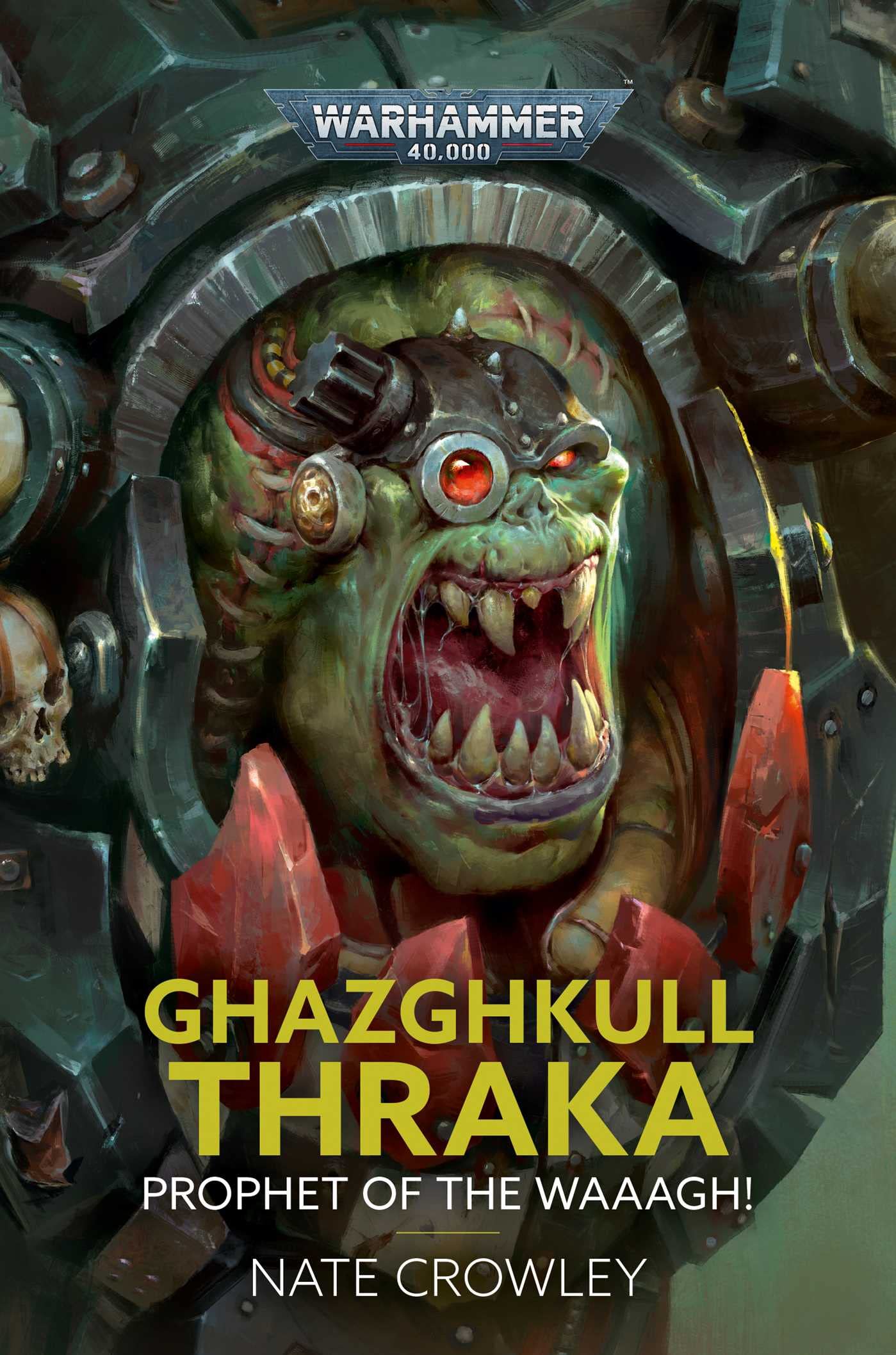
Warhammer 40,000 – Ghazghkull Thraka: Prophet of the Waaagh! by Nate Crowley

Ghazghkull Thraka - Prophet of the Waaagh! Cover

Publisher: Black Library (Audiobook – 15 March 2022)

Series: Warhammer 40,000

Length: 7 hours and 30 minutes

My Rating: 5 out of 5 stars

Amazon     Book Depository

Prepare to read one of the most amusing and downright entertaining recent additions to the Warhammer 40,000 canon with the hilarious and brilliant Ghazghkull Thraka: Prophet of the Waaagh! by outstanding author Nate Crowley.

I have been having an immense amount of fun really diving into the massive wealth of tie-in fiction surrounding the Warhammer 40,000 tabletop game this year.  Books like Steel Tread by Andy Clarke, Krieg by Steve Lyons, The Bookkeeper’s Skull by Justin D. Hill and Day of Ascension by Adrian Tchaikovsky, have really highlighted just how diverse and intense this extended universe can be.  However, the latest tie-in novel I checked out may prove to be one of my absolute favourites, as I got to learn all about one of the most iconic ork characters in this universe with Ghazghkull Thraka: Prophet of the Waaagh!

Orks are the most notorious and dangerous creatures that roam the galaxy of the 41st millennium.  Billions upon billions of the powerful, war-loving creatures can be found throughout every sector of space, fighting anyone and anything they can find, especially each other.  However, out of all these monsters, none are more feared, respected or hated than the warlord Ghazghkull Mag Uruk Thraka, chosen of the ork gods Gork and Mork and proclaimed prophet of the Waaagh!

Throughout his legendary life, Ghazghkull has done what no other ork has been able to achieve.  Bringing together innumerable warbands into one massive horde of green, Ghazghkull has warred with every faction in the cosmos, while his infamous invasions of the Imperial planet of Armageddon are the stuff of bloody legend.  Everyone knows of his epic and rivalry with his indomitable foe, Commissar Yarrick, which turned Armageddon into a perpetual warzone, but does anyone know the true story of Ghazghkull and the events that made him?

Rogue Lord Inquisitor Tytonida Falx has long attempted to discover what lurks in the minds of the xenos her order faces.  When an opportunity to find out more about Ghazghkull presents itself, she eagerly jumps at the opportunity, bringing a unique prisoner aboard her heretical ship, Ghazghkull’s banner bearer, the grot Makari.  Interrogating him, Inquisitor Falx and her team soon discover that Makari might just be the only being in the universe who knows the full truth about who, or what, Ghazghkull is, and what he plans to do next.  But, as she listens to Makari’s tale, the Inquisitor soon discovers that the shadow of Ghazghkull’s rage and desire for violence far eclipses anything that the Imperium has ever believed.

Wow, now that was a really fun and captivating read.  I knew going into Ghazghkull Thraka: Prophet of the Waaagh! that I was going to have a great time, especially after enjoying author Nate Crowley’s The Twice-Dead King novels, Ruin and Reign, but I was blown away by how awesome Ghazghkull Thraka was.  Featuring a clever and wildly entertaining story, perfectly told through various unique eyes, as well as some deeply enjoyable characters, I quickly became absorbed in the impressive story and powered through it in a couple of days.  Not only was this my favourite book from Crowley but it also probably overtakes Kal Jerico: Sinner’s Bounty as the most amusing Warhammer novel I have ever read.

I had an absolute blast with the incredible story that Crowley whipped up for Ghazghkull Thraka, as it ended up being an inventive and entertaining way to showcase an iconic Warhammer figure.  Due to his prominence within the game and the extended fiction, Ghazghkull is probably one of the most utilised non-human characters in the canon, with many different novels, game books and comics already diving into his life.  As such, Crowley needed to come up with a completely new way to examine this great character that didn’t tread on any prior works.  I think his solution to this problem was exceedingly clever, as he chose to tell the story through the eyes of the most unlikely narrator and chronicler, the grot Makari, whose unique insights and worldview turned this already known backstory into something truly special.

The story starts off in the current timeline of the Warhammer 40,000 universe and shows Inquisitor Falx obtaining Makari and interrogating him about Ghazghkull.  This causes the book to dive back into the early days of Ghazghkull as Makari chronicle his master’s existence as he saw it.  As such, you get a very specific examination of Ghazghkull’s life, with a focus on his early trials, some of his pivotal moments, and more specifically his interactions with Makari.  At the same time, the story keeps jumping back to the present, with the Inquisitor and her followers interrupting to ask specific questions and discussing whether there is any truth in what he says.  The book keeps jumping between these different perspectives, and you end up with two distinctive storylines as Makari’s presence brings some big woes for the Inquisitor in the present day.  The chronicle storyline goes at a brisk pace, especially as Makari’s interrogators get him to skip or shorten specific sections, but there is a clever and impressive logic into what parts of Ghazghkull’s life are featured or ignored.  Not only are the past and present storylines exceedingly intriguing and entertaining in their own rights, but they also come together perfectly as well, with Makari’s insights into Ghazghkull and himself impacting the actions of Falx.  While the ending was slightly too metaphysical, it served as a brilliant and powerful conclusion to this great story, and I loved seeing the entire tale come full circle in some hilarious ways.

I deeply appreciated the way that Crowley put Ghazghkull Thraka’s story together, as its distinctive and clever style really helped to enhance the chronicle contained within.  The plot device of an interrogation of an alien prisoner works extremely well to set up the main narrative, and the constant interruptions, debates and revelations that occur whenever it snaps back to the present adds to the sense of mystery and mysticism surrounding the titular figure.  While Crowley takes the story in some interesting and complex directions at times, the entire novel is paced beautifully, and there is never a single boring or slow moment within the entire thing.  I particularly liked the near constant humour that was injected into the story, a fantastic side-effect of basing the book around the funny ork species, and I laughed out loud several times as I powered through this impressively amusing read.  Like many Warhammer novels, Ghazghkull Thraka can be enjoyed as a standalone read, and the author makes sure that it features a great self-contained narrative that anyone can enjoy, even those unfamiliar with the universe and the canon.  Indeed, this would be a decent introduction to the Warhammer 40,000 canon and associated extended universe, especially as it perfectly presents one of the key factions of the universe.  Most of the unique universe elements and wider history are explained sufficiently for new readers to follow along without any issues, although some could potentially get confused by the deliberate exclusion of events previously covered in other books.  Still, Ghazghkull Thraka should turn out to be an easy and entertaining read for any science fiction fan, and I thought that this Warhammer 40,000 novel was very well written and extremely clever.

One of the things I love the most about Nate Crowley’s Warhammer novels is his brilliant ability to dive into the unique alien races of the universe and then perfectly showcase their culture and mindsets.  This was the case again in Ghazghkull Thraka, where Crowley expertly dives into the heads of the various ork and grot characters.  No matter whose perspective is shown, every scene of this book features some excellent and often highly amusing depiction of greenskin culture, as Makari attempts to explain the ork perspective as well as his place in the society as a grot.  As such, you get some incredibly detailed and compelling insights into this crude and warlike race, including their brutal hierarchy, need for violence, insane technology, and very unique worldview, which generally results in most of the book’s fantastic humour.  However, rather than the dumb, brutal and one-note figures that most authors depict, Crowley really goes out his way to show that there is a lot more to orks than you realise.  Not only do you get some excellent insights into their various clans and organisations but the various ork characters are shown to be complex beings with unique needs and the ability to formulate some very cunning plans.  There is a particularly intriguing look at the ork religion that follows the gods Gork and Mork, and this novel ends up with a spiritual edge, especially as Crowley shows the orks being extremely successful because they choose to strongly believe in themselves.  As such, you see quite a unique and compelling side to the ork race in this book, and I loved how incredibly Crowley portrayed them.

Naturally, a big part of this examination of ork culture comes from the in-depth look at the life of Ghazghkull himself.  As I mentioned before, Ghazghkull is one of the best-known characters in the entire Warhammer 40,000 canon, so most veteran readers would already be quite familiar with him and his actions.  However, Crowley does an excellent job of examining a completely new side to this character, and mostly ignores his wars at Armageddon and his intense rivalry with Commissar Yarrick, both of which have been done to death in other books.  While certain parts of his history are revisited in this novel, Crowley completely changes their implications and causes, instead focusing on Ghazghkull’s unique orkish mindset and his role as the prophet of his gods.  This new take on Ghazghkull proves to be quite unique and very captivating, as he is shown to be an overburdened being, constantly pressured by his own visions and the influence of the gods to succeed and be a uniting force for his people.  While he still retains the casual violence of his race, you really see Ghazghkull as a deep thinker, and it is fascinating to see his inner ork face off against his grand ambitions and desires.  Crowley also adds some compelling supernatural elements to his character, as Ghazghkull, as seen by Makari, bears a direct connection to the gods which he can use to alter his fellows and himself.  While this isn’t too overpowered or strange, it adds a great extra layer of menace to the character, especially for the humans, and I loved seeing the Inquisitors trying to wrap their heads around the strange occurrences.  I had a lot of fun seeing this other side of Ghazghkull, and this novel ended up being a great analysis of who they are and what they represent to their race.

I also really enjoyed the inclusion of Makari as one of the central characters, and his use as the main witness to Ghazghkull’s life worked incredibly well.  While Makari has always been associated with the character of Ghazghkull, accompanying him in his battles and waving his banner as a source of luck, Crowley really changes him in this novel and paints him as an essential part of Ghazghkull’s success and relationship with the gods.  Shown to be there the moment that Ghazghkull became the prophet, Makari follows Ghazghkull through some of his big moments and it is hilarious to see his snide view on the subject, especially as, like most grots, he a massive coward who doesn’t want to be there.  A lot of this novel’s humour is derived from Makari’s observations and responses, and I loved some of the jokes set up around it.  Crowley does an awful lot with this character, and I particularly liked how the story explained certain aspects of his previous portrayals, such as the apparent multiple versions and his surprising luck.  These are worked into the story extremely well, but it’s the relationship with Ghazghkull that becomes the most fascinating.  Just like with Ghazghkull, there is a major spiritual edge to Makari, who appears to be just as chosen and important to the plan as his master.  Makari’s mystical and religious bond enables him to have a far bigger insight into Ghazghkull’s actions than anybody else, and this really enhanced the analysis of the titular character.  However, it is in Makari’s attempts to serve and help his master achieve his destiny that we see the best Makari scenes, especially when faced with Ghazghkull’s apparent depression, the manipulation of his other followers, and his own stubbornness.  While Ghazghkull does have the inherent ork reluctance to rely on a grot, and indeed he is extremely likely to kill Makari if he starts giving advice, the moments where Makari get through to him are powerful, and I really appreciated the character work surrounding them.  There are some rocky moments between them, especially when Ghazghkull becomes dismissive of his lucky grot, and Makari’s subsequent reactions is very funny and incredibly over the top, which was so very cool.  Overall, this ended up being an excellent and surprisingly compelling portrayal of Makari, and I am exceedingly glad that Crowley featured him in this novel the way he did.

Aside from the greenskin characters, a large amount of plot revolves around the team interrogating Makari.  Crowley really went out his way to create a particularly unique group of Imperial agents who bear surprising insights into the mind of the xenos.  This team is led by Inquistor Falx, a rogue Inquisitor who bears a dangerous obsession with the alien creatures.  Falx is desperate to learn everything she can about the aliens attacking the Imperium to help defeat them and finds herself stymied by the Imperium’s controlling and non-progressive government and religion.  As such, she takes some major risks in this book to understand Makari and Ghazghkull and has some unique and dangerous methods for achieving her goals that borders on the insane/heretical.  I quite liked Falx, despite her obsessive qualities, and she proved to be a great central figure for half the novels plot, especially as her frustrations, concerns and thoughts about the evils of the Imperium, are extremely understandable.

Falx also employs a unique team of interrogators to help her with Makari, including Brother Hendriksen, a Space Wolves rune priest assigned to Deathwatch who has also fallen out of favour with the Imperium thanks to his work with Falx.  Hendriksen serves as a beastly and powerful presence on Falx’s team, and he often provides a great counterpoint to the inquisitor in both technique and common sense, often despairing at her more dangerous choices.  Crowley’s diverse cast gets even larger with the truly unique character of Cassia, a female ogryn psyker who has grown as smart as a human.  This was a fantastic and extremely distinctive addition to the cast, and her surprisingly calm demeanour, which contrasts beautifully with her immense ogryn strength, works perfectly against Hendriksen’s impatience and anger.  The final member of the team is probably the most enjoyable, with the ork character, Biter (Bites-Faces-Of-The-Face-Biter-Before-It-Can-Bite).  Biter is a member of a Blood Axes mercenary band who have dealings with Falx and who sell Makari to her, remaining behind to interpret Makari’s testimony to the humans.  Due to being a member of the Blood Axes, a group who idolise human military culture, Biter is a very distinctive figure, wearing an approximation of a military uniform and appreciating complex tactics and strategy.  However, Biter is even more intelligent and cunning than most Blood Axes, and his near human tendencies really stand out, as it is pretty unexpected from an orc.  His fantastic reactions, comedic impressions of human behaviour, and determination to antagonise the Inquisitor really make him stand out, and he was an absolute joy to behold.  These four interrogators play off each other perfectly during the present-day scenes, and their arguments, discussions and interpretations of Makari’s story give it added depth, humour and impact, especially once they start realising just how valuable their prisoner is.  This entire cast was put together extremely well, and I had an incredible time with this unique and enjoyable collection of characters.

Like most Warhammer novels I check out, I chose to grab the audiobook version of Ghazghkull Thraka, which turned out to be such a wonderful and incredible listening experience.  Not only did the story absolutely fly by in this format, allowing me to get through its seven and a half hour runtime extremely quickly, but I found that the narrative and descriptions of ork life really popped when read out.  However, the best part about the Ghazghkull Thraka audiobook is the outstanding use of narrators.  This audiobook has three separate narrators, Kelly Hotten, Paul Putner and Jon Rand, each of whom have some experience narrating other Warhammer audio productions.  Not only are each of these narrators quite talented but the way they were featured in this audiobook is extremely clever, with the voice actor changing depending on who is witnessing or telling the events of the book.  For example, Kelly Hotten serves as the narrator for the various scenes and interludes where Inquisitor Falx is witnessing Makari’s interrogation, and Hotten does a brilliant job capturing the various players of these scenes, including the Inquisitor, her unique companions, and their orkish interpreter.  Paul Putner narrates the various scenes shown directly from Makari’s perspective, and he has a lot of fun in this role, not only capturing the cowardly and sneaky mannerisms of the grot protagonist, but also providing some amusing and deep voices for the ork characters.  Finally, Jon Rand has a memorable sequence voicing Brother Hendriksen when he psychically jumps into Makari’s mind and views some of the events occurring, and he gives the character a notable accent and internal growl that fit him extremely well.  The jumps between the voice actors were done perfectly and I really loved how it changed up depending on the perspective.  All three voice actors did an amazing job with their narration, and their work, plus some fun sound effects here and there, helped to turn this into such an impressive production.  Easily the best way to enjoy Ghazghkull Thraka, you will have an incredible time listening to this audiobook.

Nate Crowley continues to shine with another entry in the Warhammer 40,000 universe, with the unbelievably entertaining Ghazghkull Thraka: Prophet of the Waaagh!  Featuring a unique and deeply amusing story that re-examines on of the canon’s most iconic alien characters, Ghazghkull Thraka has a tight and cleverly written story, loaded with action, great characters and whole mess of outstanding humour.  Not only that, but this is without a doubt one of the best portrayals of the Warhammer 40,000 orks I have seen as Crowley obviously had a ton of fun bringing them to life.  Easily one of the best (and definitely the funniest) Warhammer 40,000 novels I have been lucky enough to enjoy, Ghazghkull Thraka comes extremely highly recommended, especially in its audiobook format, and is a must read for all fans of this wonderful fandom.

Amazon     Book Depository

Warhammer 40,000: The Twice-Dead King: Ruin by Nate Crowley

The Twice-Dead King - Ruin Cover

Publisher: Black Library (Audiobook – 9 October 2021)

Series: Twice Dead King – Book One

Length: 11 hours and 22 minutes

My Rating: 4.75 out of 5 stars

Amazon     Book Depository

Intriguing new author Nate Crowley presents one of the most complex and fascinating Warhammer 40,000 novels I had the pleasure of reading, The Twice-Dead King: Ruin, an epic and thrilling novel that explores one of the most intriguing races in the canon, the Necrons.

I have been having a lot of fun listening to a bunch of awesome Warhammer 40,000 (Warhammer 40K) novels over the last year, with some great examples including Deathwatch: Shadowbreaker by Steve Parker, Kal Jerico: Sinner’s Bounty by Joshua Reynolds, Fire Made Flesh by Denny Flowers, and First and Only by Dan Abnett.  While I have deeply enjoyed all these novels, I felt that it was time to go outside of the novels that typically focus on this universe’s human characters and instead read something with a more unique subject matter.  As such, when I saw that The Twice-Dead King: Ruin had recently been released, I instantly grabbed a copy, and I am really glad that I did.

Ruin is the first novel in The Twice-Dead King series, which looks set to explore the Necrons and their place in the current Warhammer 40K universe.  This was the second Warhammer 40K novel from author Nate Crowley, who previously released the intriguing Ork-centric novel, Ghazghkull Thraka: Prophet of the Waaagh!, as well as several short stories/novellas set in the universe.  Crowley makes full use of his talent for getting into the mind of fictional aliens to create an excellent and enjoyable read that I had a wonderful time listening to.

In the chaotic and war-striven future of the 41st millennium, many powerful and dangerous races fight for domination and destruction.  However, no race is more mysterious or feared than the immortal beings known as the Necrons.  The Necrons are an ancient and ruthless race who, thousands of years ago, sacrificed their mortality and humanity to defeat a powerful enemy as well as death itself.  Forced into thousands of years of hibernation after their great victory, the Necrons are now slowly awakening to reclaim their empire by destroying all life in the galaxy.

However, despite their intense belief in themselves, the Necrons are a dying race, gradually being whittled down by time, madness, and the unceasing tide of organic life they are forced to constantly fight against.  None know this better that Oltyx, a bitter and resentful Necron Lord who has been banished to the wretched border world of Sedh.  Once heir to the throne of a mighty and glorious dynasty, he now only has control of a small garrison of degraded warriors who are slowly dwindling under constant attacks from Ork raiders attempting to invade the Necron empire.

As Oltyx dreams about vengeance and reclaiming his birthright, he finds himself facing an immense threat that could spell the doom of his dynasty and the entire Necron race.  The invading Orks are only the precursor of a larger and much more powerful enemy, one his small force has no chance of defeating.  With no other option, Oltyx is forced to return to his dynasty’s crownworld and beg for reinforcements from the court who cast him out.  However, his return uncovers something far more disturbing than he could have ever imagined.  A twisted horror now lies within the heart of Oltyx’s dynasty, bringing only madness and bloodshed with it.  To ensure his people’s survival, Oltyx must face the curse of the Necrons and the pure horror of a twice-dead king.

Ruin is an exceptional and captivating tie-in novel that perfectly combines an intriguing and addictive narrative with large amounts of Warhammer 40K lore and some great character work.  This is a perfectly paced story that does an exceptional job introducing the complex setting and character and placing them into an intense and emotionally rich adventure.  While the initial start of the book is a tad slow due to the necessity of throwing in so much Necron lore, it swiftly picks up speed and excitement within the first few chapters.  I personally became really attached to this novel a couple of chapters in when the protagonist and point-of-view character, Oltyx, attempts to determine the best way to defend his planet against the Ork invaders, while also simultaneously mulling over the failures of his personal history.  There was one amazing extended sequence that saw Oltyx attempting to analyse a vision from his past to come up with a perfect plan, while also watching a massive force of Orks approaching.  This scene perfectly blended a fun Warhammer battle with alien history and a complex character moment, all set to a timer that was counting down to the start of combat.  From there the story gets even more enjoyable, as after getting up close and personal with the real horrors of the Necrons, the protagonist discovers that there is a bigger danger approaching: humans.  From there, Oltxyx is forced to journey back to his home planet to beg for help, but instead finds a secret more terrible and disturbing than he could ever imagine.  After some severe lows, combined with a couple of family reunions of variable enjoyment, the story leads up to an impressive and epic conclusion, loaded with war, destruction and sacrifice.  This satisfying and moving conclusion wraps up this leg of the story extremely well and treats the reader to some outstanding action sequences and some major emotional moments that will define the protagonist for the entire series.  An overall brilliant and deeply memorable narrative, I powered through this cool book and loved every second of it.

Ruin was also a pretty impressive entry in the overall Warhammer 40K canon, especially as it contains an outstanding look at one of the franchises more unique races, the Necrons, who are extremely underrepresented in the extended fiction.  Crowley has done a brilliant job here with Ruin, and I loved the distinctive and compelling Warhammer 40K story it contained.  The author has made sure to load up this book with a ton of detail, information and settings unique to this massive franchise, and fans will no doubt love immersing themselves in this cool lore.  Ruin also contains several massive and well-written battle sequences that will easily remind readers of the table-top games that this franchise is built around and which really increase the epic nature of this novel.  The immense amount of somewhat more obscure lore may turn off readers new to Warhammer 40K fiction.  However, I think that most new readers can probably follow along pretty well here, especially as Crowley has a very descriptive and accessible writing style, and Ruin proves to be an excellent and compelling introduction to the Necrons.

I was deeply impressed by how Crowley featured the Necrons in Ruin, especially as he provides a deep explanation of their history and personalities, while also making this somewhat aloof race extremely sympathetic.  The Necrons are a very interesting race within the Warhammer 40K canon, with a look that can be best summed up as Ancient Egyptian Terminators.  They also have a backstory that is somewhat similar to the Cybermen from Doctor Who, in that they are formally organic beings who were transplanted into metal bodies, with only a few members (mostly the former nobility) maintaining their personalities, memories and emotions.  This makes them a very hard species to get a handle on, and most of their appearances in the expanded fiction feature them as cold antagonists.  However, Crowley really went out of his way to showcase the deep and rich culture, history and personalities contained within this race, and the reader ends up getting an impressive and comprehensive look at them throughout Ruin.

This book contains so many intriguing and compelling details about the Necrons, and the reader gets a real crash-course, including why they gave up their humanity to become metallic monsters.  Crowley attempts to cover every single detail about the Necron way of life in this book, and Ruin is filled with cool discussions about current Necron biology, how their components work, how they communicate, and what the mindset of these immortals truly are.  The readers are left with a vision into the complex and hierarchical minds of this unique race, and you get some compelling insights into who they are and why they do what they do.  In addition, Crowley really attempts to highlight just how tragic the Necrons really are as a race, with a deep and compelling look at what they truly gave up when they become the metal beings we all know.  Crowley paints the Necrons as a dying race, despite the apparent immortality bestowed upon them, as the finite members are slowly being worn down by combat, disrepair, and madness.  There is a particularly fascinating look at how the transition from flesh to metal has deeply impacted the psyche of many of its members, as some have been driven into a deep depression while others are turned into crazed cannibals.  This fascinating and comprehensive examination helps to turn the Necrons into quite a sympathetic race throughout Ruin, and you end up rooting for them as the book progresses, even when they are fighting humans.  While the Necrons have never been my favourite race/faction in the Warhammer 40K canon, I deeply appreciated seeing a novel from their point of view, and Crowley’s excellent writing has helped to alter my opinion about them.  I must admit that it was extremely fun to see their perspective on the events of the Warhammer 40K universe, as well as their opinions about the other races inhabiting it (the protagonist makes a very intriguing comparison between Necrons and Space Marines that really sticks in the mind).  This was a perfect Necron novel, and readers will come away with a whole new appreciate for their backstory and plight.

Another thing that I deeply enjoyed about Ruin was the complicated protagonist, Oltyx, a disgraced Necron noble who has been banished to a desolate and worthless frontier planet for his transgressions.  At the start of Ruin, Oltyx is an angry and arrogant creature, weighed down by his bitterness and resentment, and is not a particularly fun character.  However, as the story progresses, Crowley adds layer upon layer of complexity to him, using a mixture of flashbacks, personal insights, revelations, and alternate perspectives of his memories.  This slowly turns him into a sympathetic and compelling figure, showing him as one of the few nobles to truly care about the future of his people, whole also exploring his concerns about the madness and apathy that could one day claim him.  As the story progresses, and he reencounters the members of his family and has more visions of his past, Oltyx continues to evolve into a much more likable character, especially as he deals with great adversity and tragedy.  This adversity gives him some great appreciation for his race, even the lower tiers, and he soon comes away a well-rounded figure with an interesting future ahead of him.  This was an overall exceptional introduction to this character and Crowley has set up this figure up perfectly for the future entries in this series.

Aside from Oltyx proper, there were a couple of other fun figures I must highlight in this book.  Five of these characters are actually part of Oltyx himself, as the protagonist has installed five subminds into his head in order to help him achieve his mission.  These five subminds each provide different insights to a range of subjects, including doctrine, aliens, combat, strategy, and analytical analysis.  The various subminds each have their own personalities, based on their design, and it is fun to see them interact with Oltyx in his head and with each other.  While some of the subminds are focused on more than others, they prove to be an intriguing inclusion in the story, especially as they also grow and develop alongside Oltyx, especially once he comes to appreciate them more.  The subminds also help compensate for the general lack of other side characters in the novel, which are a result of both isolated planets and the general lack of remaining sentience amongst the Necrons.

The other major side character I want to talk about is Djoseras, Oltyx’s brother, who the protagonist blames for his exile.  Djoseras is an excellent mentor character who was just as deeply impacted by the transition to a metal body as his brother.  Despite Oltyx’s bitter memories about him, nothing about Djoseras is as cut-and-dry and you initially believe.  Once you encounter him in person and see some additional memories for Oltyx, you really grow to appreciate Djoseras more, especially once you see him lead an army in battle.  Oltyx’s multiple encounters with Djoseras add some outstanding emotional elements to the story, and each of his appearances were complex and compelling.  Other side characters are introduced in this book, although most of them were only featured for a short time.  However, they will probably have a bigger role in the future novels in this series, and Ruin serves as a good introduction to them.

I grabbed a copy of Ruin in its audiobook format, which proved to be an outstanding way to enjoy Ruin, especially as it allows listeners to really absorb all the cool and impressive details contained within this compelling read.  This novel has a decent runtime of over 11 hours and features some brilliant voice work from narrator Richard Reed.  Reed is a talented narrator who has been a major fixture of the Warhammer audiobook scene in the last few years, and I really loved the awesome job he did here with Ruin.  Reed has a great voice for this impressive science fiction epic, and he manages to move the story along at a quick and thrilling pace which allowed me to finish off this novel in a few short days.  Each of the major characters are gifted their own distinctive voice throughout Ruin, which fits them perfectly and ensures that the reader always knows who is talking.  I particularly enjoyed the fun voice work set around the protagonist’s five subminds, especially as they are similar, yet slightly different, to that of the protagonist.  I also really appreciated Reed’s voice work during certain big scenes, such as when attempting to emulate a crowd of mad, chanting Necrons, and his great narration really helped to enhance these scenes.  An exceptional and deeply entertaining audiobook outing, I would strongly recommend this format to anyone interested in enjoying this fantastic epic.

With Ruin, the first The Twice-Dead King book, brilliant author Nate Crowley, has provided Warhammer 40K fans with an exceptional and powerful introduction to the mysterious Necron faction.  Featuring a captivating, action-packed narrative, a complex protagonist, and an excellent examination of the complex Necrons, Ruin is a must read for all fans of the franchise.  This is easily one of the best Warhammer 40K tie-in novels I have had the pleasure of reading and I cannot wait to see what Crowley adds to this franchise in the future.  This series is set to continue with the second entry, The Twice-Dead King: Reign, and I cannot wait to see what happens next.

Make sure to also check out my review for the second The Twice-Dead King novel, Reign.

Amazon     Book Depository