Quick Review: Black Canary: Breaking Silence by Alexandra Monir

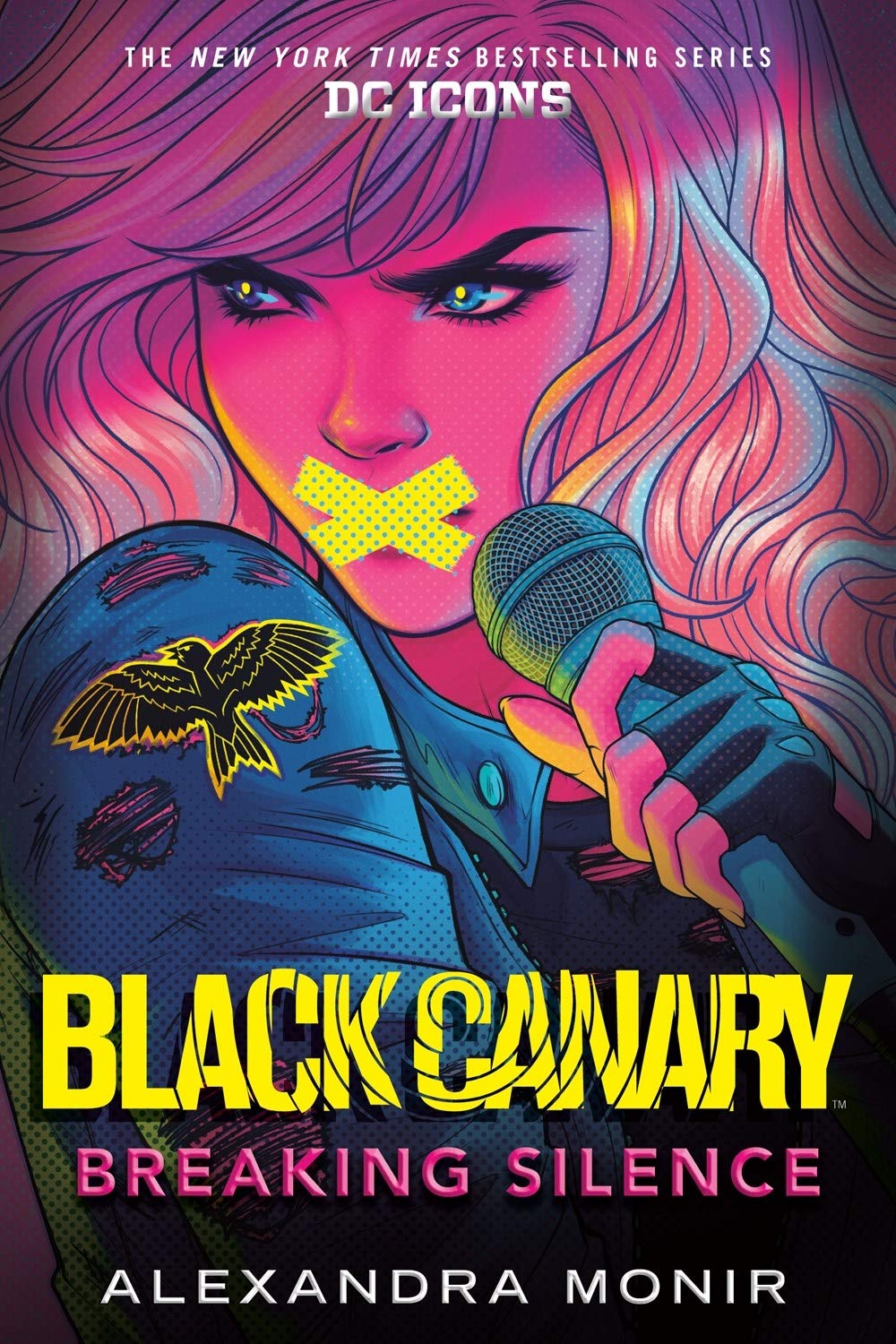
Black Canary - Breaking Silence Cover

Publisher: Listening Library (Audiobook – 29 December 2020)

Series: DC Icons – Book Five

Length: 8 hours and 29 minutes

My Rating: 4 out of 5 stars

Amazon     Book Depository

Prepare for a bold new story featuring the iconic DC Comics character Black Canary in Black Canary: Breaking Silence by Alexandra Monir, the fifth compelling book in the DC Icons range.  The DC Icons books are a fantastic collection of unconnected young adult tie-in novels that show unique and entertaining new non-canon teenage origin stories of some of your favourite DC Comics characters, including Wonder Woman and Batman.  I have previously read a couple of the books in this fun series, such as Catwoman: Soulstealer by Sarah J. Maas and Superman: Dawnbreaker by Matt de la Pena, both of which were great reads that did an amazing job bringing their characters to life.  I actually thought that this series finished after four books, so I was very surprised when Breaking Silence came out late last year.  However, the moment I saw it was out, I made sure to grab a copy and had an interesting time reading it a little while ago.

Synopsis:

THE HANDMAID’S TALE meets the DC universe in this breathtaking, thrilling origin story of Black Canary. Her voice is her weapon, and in a near future world where women have no rights, she won’t hesitate to use everything she has to fight back.

Dinah Lance was seven years old when she overheard the impossible: the sound of a girl singing. It was something she was never meant to hear—not in her lifetime, and not in Gotham City, taken over by the Court of Owls. The sinister organization rules Gotham as a patriarchal dictatorship, all the while spreading their influence like a virus across the globe.

Now seventeen, Dinah can’t forget that haunting sound, and she’s beginning to discover that her own voice is just as powerful. But singing is forbidden—a one-way stop to a certain death sentence. Can she balance her father’s desire to keep her safe, a blossoming romance with mysterious new student Oliver Queen, and her own desire to help other women and girls rise up and finally be heard? And will her voice be powerful enough to destroy the Court of Owls once and for all? 


Breaking Silence
turned out to be an excellent tie-in novel that did a fantastic job capturing the character of Black Canary and placing her in a unique situation.  This was the first novel that I have read from author Alexandra Monir, an Iranian-American author who has written several intriguing young adult novels, including her Timeless and The Final Six series.  I ended up getting through this novel very quickly and I had an amazing time listening to its clever and enjoyable tale.

This book’s story starts off quick and fast, establishing the new setting of a futuristic, dystopian Gotham city, where the villains have won and the population, particularly the women, are oppressed and terrified.  Into this setting is inserted a teenage Dinah Lance, who has lived her entire life in the Court of Owls dark and tyrannical shadow.  Desperate to rebel, especially after seeing friends and family victimised by the Court, Dinah finds her inner strength, as well as some mysterious vocal powers, which allow her to fight back in her own way.  This results in an intense and exciting central part of the novel, as Dinah tries to hide her rebellious streak from the Court’s followers, while slowly coming to terms with who she is.  At the same time, she enters into a risky relationship with the glamorous new student at her high school, Oliver Queen, whose family are heavily connected to the Court of Owls.  This all leads up to a thrilling conclusion when Dinah and her friends need to find a way to stop the Court’s most despicable plans and find a way to stop them for good.

I quite enjoyed the cool story contained within Breaking Silence and it was very easy to get addicted to.  I loved the excellent blend of established DC lore with a patriarchal dystopian dictatorship, and it resulted in an excellent tale of resistance and rebellion against a cruel authority.  Monir does a lot within this one novel, not only introducing a unique and compelling new period of DC lore but also setting up a great heroic origin tale that showcases the protagonist’s defining adventure.  The pace of Breaking Silence is very fast, and readers end up moving through the narrative extremely quickly.  The author has set up an intriguing blend of action, suspense, and teen drama, which results in a compelling and moving narrative.  There are several great twists scattered throughout the book, as well as clever references to the main DC comics, although anyone familiar with the DC canon in any way will know that Oliver Queen is no threat to Dinah, despite the constant hints to the contrary.  I did find the ending a little sudden and underwhelming, which slightly tanked my overall opinion of the book, but this was still a great and enjoyable novel that will appeal to a wide base of readers, including both the young adult market and older established fans.

I have to say that I was rather impressed with how Monir took the background of the Black Canary character and adapted it to a completely new setting.  While some substantial character elements are changed to fit the dystopian setting, the author still utilises or alludes to many key details from the comics to great effect.  As a result, you get a fantastic version of the martial arts using, canary cry wielding, strong-willed hero, who is damaged and withdrawn after years of oppression due to her gender.  I loved how Monir managed to rework several other iconic DC characters to fit around the younger Black Canary, and you get to see several different versions of characters essential to the Dinah Lance Black Canary mythos, including Oracle, the original Black Canary, and Lady Shiva.  I also liked the clever rework of the Black Canary/Green Arrow relationship into a typical teen romance storyline which fit the young adult nature of this book perfectly.  Monir makes sure to highlight the importance of music to the character, something that is particularly emphasised in some of the more recent Black Canary comics where she is a bit of a punk rocker, and which is re-worked here to help the character sing some anti-Court propaganda songs.  Fans of Black Canary and DC Comics are going to have fun seeing all the clever references and unique alterations to the hero and her associates, and I really liked Monir’s version of the character.

Easily one of the most intriguing and distinguishing features of Breaking Silence is the extra dark and sinister version of Gotham City that the story is set in.  This is a futuristic Gotham City where Batman is long dead and the ruthless Court of Owls, have taken control and have instituted a fascist, patriarchal regime.  There are some many amazing and horrifying elements to this setting, and it was clear that Monir was trying to combine a The Handmaid’s Tale inspired society with the iconic and dark comic setting of Gotham.  I think that this unique combination worked extremely well, as this dystopian Gotham is a pretty sinister place, with a disturbing and horrifying anti-female agenda.  Monir masterfully crafts together several great scenes and sequences that highlight how women are oppressed, including one shudder-inducing scene where a school doctor gets his kicks “examining” the female students to see if one of them is the Black Canary.  I felt it was interesting that one of the tyrannies that much of the plot revolved around was a forced biological ban of women singing, to limit their ability to raise their voices in protest.  Monir covers this oppression extremely well, and cleverly examines the psychological and emotional impact that the removal of singing could have on already oppressed women.

I very much liked the author’s use of the Court of Owls as the main antagonists.  The Court of Owls are a fantastic group of villains who are a relatively recent addition to the Batman canon (introduced in the Batman comics in 2011, frankly one of the few good things to come out of the New 52).  The Court are a secret society made up of the wealthy elite of Gotham who secretly control the city from shadows and fight to keep the wealthy in power and the poor oppressed.  Monir transitions this group perfectly into a patriarchal organisation who take power after Batman’s death, killing all the other heroes with their ruthless powered enforcers, the Talons.  There are some great parallels between the Court of Owls and right-wing groups like the Nazi Party, and I think that the author did a great job reutilising them for her story.  The Talons also prove to be a particularly dangerous group of opponents for the protagonist and her allies, and it was a lot of fun to see Black Canary attempt to take them down with her fighting skills alone.

Black Canary: Breaking Silence is an excellent fifth novel in the DC Icons range, producing an amazing story that did the Black Canary proud.  Alexandra Monir’s tie-in novel presents a unique and powerful tale that places a teenage version of the character into a dangerous and oppressive version of Gotham City.  With a very intriguing setting and fantastic narrative loaded with revolution and inner-strength, Breaking Silence is a fantastic read with some real heart to it.  A strongly recommended read, especially in its great audiobook format which is narrated by Kathleen McInerney (who did a great job inhabiting the central role of Black Canary), Breaking Silence is your new young adult superhero obsession.

Amazon     Book Depository

Throwback Thursday: Usagi Yojimbo: Volume 6: Circles by Stan Sakai

Usagi Yojimbo Circles

Publisher: Fantagraphics Books (Paperback – 1994)

Series: Usagi Yojimbo – Book Six

Length: 164 pages

My Rating: 5 out of 5 stars

Amazon     Book Depository

Reviewed as part of my Throwback Thursday series, where I republish old reviews, review books I have read before or review older books I have only just had a chance to read.

For this latest Throwback Thursday, after reviewing Lone Goat and Kid a couple of weeks ago, I am still in a Usagi Yojimbo mood, so I thought I would check out the sixth volume of this fantastic comic book series, Circles.

Usagi 25

Circles is another fun and exciting addition to this excellent series which I honestly cannot praise enough (although I have been trying very hard in my last several Throwback Thursday articles). This sixth volume once again presents the reader with several outstanding and inventive stories that chronicle the adventures of the rabbit samurai, Miyamoto Usagi, as he journeys around a unique version of historical Japan. This volume contains five separate stories, derived from issues #25 – 31 of the Fantagraphics Books run on the Usagi Yojimbo series, as well as a short story taken from Critters number #50 (a comic magazine that had some early Usagi Yojimbo appearances). There are some rather amazing stories featured within this volume, and I had an incredible time reading them.

The first story contained within this sixth volume is called The Bridge, which sees Usagi encountering a demon out of Japanese folklore. During a dark a stormy night, Usagi is entering a village from across a bridge when suddenly he lashes out with his sword behind him, convinced something is sneaking up on him. When he finds nothing there, Usagi shrugs it off and enters the nearest inn, only to learn from the villagers that the bridge he just crossed has been possessed by a demon, and Usagi’s back now bears the claw marks of the demon. Awaking next morning, the villagers find a severed monstrous hand on the bridge, which Usagi appeared to have cut off the night before. Taking the hand into the inn, Usagi and villagers wait for a priest to arrive in order to perform an exorcism on the severed limb, but the demon of the bridge has other plans.

Usagi 26

This was a rather good supernatural story that sees Usagi go up against one of Japan’s many demons and monsters. Several significant elements from this story are taken from the story of the demon of Rashomon Gate, including the severing of the arm and the demon disguising itself as an old woman to recover its severed limb (although unlike the samurai in the legend, Usagi doesn’t fall for it). The demonic antagonist of this story is rather sinister in its drawing style and methods of attack, and it proves to be a dangerous opponent for Usagi. I love the extended fight on the bridge, and I especially enjoyed the way that the whole event ended, providing a side-character in the story their moment of vengeance. Overall, this was a tight, well-written story that was a lot of fun to read.

The next story in this volume is titled The Duel, and, as the name suggests, it features some duels between samurai. Usagi arrives in a village and is challenged to a public duel by the local champion while the watching villagers place bets with a travelling bookmaker, a duel that eventually results in Usagi’s opponent’s death. Completing the duel, Usagi meets and has lunch with a fellow unemployed samurai, Shubo, who subtly takes his measure. It is revealed that Shubo, who is a talented swordsman, is in league with the bookmaker who manipulates the odds of Shubo’s duels in order to make money off the betters. Shubo, who needs the money to provide for his wife and child, believes that he can beat Usagi, and the bookmaker inflates the odds in Usagi’s favour so that they can clean up when Shubo wins. Forcing Usagi into a duel, the two engage in a quick fight to death, with tragic results.

Usagi 27

This was a really clever and captivating single story that Sakai did an incredible job writing. The whole story concept is just brilliant, and Sakai sets it up and executes the plot brilliantly. There are some amazing scenes throughout The Duel, and the story features an excellent mix of comedy and tragedy which work together amazingly to produce a gripping narrative. Usagi, as the reluctant participant of this duel, is pissed at the entire affair, and his outraged reaction to the town people cheering his victory is rather good, especially as the peasants show over-the-top fake remorse in order to get him to go away so they can collect their winnings: “We are lower than the scum at the bottom of a stagnant pool!” While there is some fun and well-deserved karma coming down onto the bookkeeper who overextends himself and tries to escape, nothing quite takes away from the tragedy of Shubo’s wife and young child. The final panel of this story is incredibly heartbreaking, as it shows the wife and child waiting just outside the village for him to return. But as the light in the sky gets darker and darker, you can see the worry start to work its way onto the wife’s face, until she breaks down completely in the final panel, fully realising that her husband is dead. The wife comes across as a massively tragic character in this story, and the major impact that this final page has is a testament to how amazing Sakai’s storytelling and illustrations are.

The third story in the volume is the rather short entry, Yurei, which is the story that appeared in Critters. In this tale, Usagi, who is camping at the edge of a river, awakens to find a Yurei, a ghost, floating before him. The ghost imparts her tragic story to Usagi; she was betrayed and murdered by her husband, and she now seeks justice. Usagi then awakens and finds a woman’s hairpin on the ground next to him. Thinking his encounter with the ghost was just a dream, he travels to a nearby inn and attempts to trade the pin for a meal. What he does not realise is that the innkeeper is the murderous husband from the ghost’s tale, and his discovery of the pin leads to a series of deadly events. This was a good, fast-paced story which tells a compact and intriguing tale. I loved the supernatural elements in this story, and it was interesting to see Usagi portrayed as a tool of fate, who wonders into some ghostly revenge without even realising it. This was a fantastic short entry in this volume and was great to check out.

USagi 28

The next entry in Circles is an entertaining and over-the-top tale titled My Lord’s Daughter. In this story, Usagi, who is telling a bedtime tale to children, is shown as the classic hero from Japanese legend, fighting through vast hordes of demons, monsters, and obstacles to rescue a beautiful princess from an Oni. This was a fun take on some of the traditional Japanese heroic legends, and it was cool to see Sakai draw a classic tale with Usagi as the protagonist. Sakai has some obvious fun setting the Usagi hero fearlessly against armies of demons and monsters, and he comes up with some clever fight sequences and scenes in this book, from a brutal duel with an Oni, to an underwater battle between Usagi, a shark and a giant octopus wielding several swords in its tentacles. This is an entertaining and exciting story, and I had a good laugh at the end reference to Sakai’s old comic, Groo the Wanderer.

Now let us get to the fifth story of this book, which is kind of the main event of the entire volume. This is a big story, told across four issues, titled Circles. This story follows Usagi as he returns home for the first time since the events of volume one, The Ronin. There are actually a couple of distinctive parts to this story, especially the first issue, which is somewhat separate from the rest of the story (with the exception of some build-up at the end). For this first part, Usagi, on his way back home, decides to stop at his old master’s house to pay his respects to the grave marker of Katsuichi, the man who taught him how to wield a blade. The story then shows a flashback, which serves as a continuation to part of the origin story Usagi told in the second Usagi Yojimbo volume, Samurai, about Usagi’s past. In the flashback, it is shown that Usagi’s master was ambushed and seemingly killed by members of the Dogora Fencing School after Usagi beat their students in a tournament. However, upon arriving at Katsuichi’s old house, he discovers that his master is still alive, having survived the ambush, and has taken on a new student. I liked this revisit of Usagi’s origin story with Katsuichi, although the whole death scene in the flashback comes a little bit out of nowhere. Still, it was interesting to see how much Usagi has matured since he was learning the way of the sword, and it was nice to see the teacher and student reuniting. The flashback sequence is also top quality, and Sakai illustrates up a storm in this one, showing a fierce battle and some intense emotions from Usagi, who goes from a full-on berserker rage as he gets his revenge on his master’s killer to an intense grief in just a few scenes.

Usagi 29

The story then continues as Usagi journeys back to his village, only to be confronted by his old childhood rival, Kenichi. It turns out that Jotaro, Kenichi’s son with Usagi’s former love, Mariko, has gone missing, and bandits are roaming the area. While Usagi and Kenichi are able to defend their town from a raiding party, the attackers reveal that Jotaro has been kidnapped by the bandits and are holding him hostage. Leading an army of local peasants against the bandit’s hideout, Kenichi and Usagi hope to rescue Jotaro and end the raids that have been plaguing them. However, what they do not realise is that the bandits are being led by the deranged and dangerous former adversary of Usagi, Jei, a mysterious and seemingly unkillable murder with a black blade, who hopes to use Jotaro to get his revenge on Usagi. But even Jei is not the most dangerous thing that lies ahead, as old resentments between Usagi and Kenichi, their shared love for Mariko and certain revelations may tear everything apart.

Wow, I have to say that the final three issues of Circles are just incredible. There is so much to unpack from them, as Sakai brings together a brilliant and powerful story. First of all, it was great to see Jei return as a villain once again. Jei, who was introduced in volume 3, The Wanderer’s Road, is an outstanding antagonist, and his continued feud with Usagi is just brilliant. The two engage in a fantastic and extended duel in this story, and Sakai did a fantastic job showing off each combatant’s skill and martial ability through his drawings. I also love the extensive battle between Kenichi’s peasant army and the bandits, which proved to be rather eye-catching. Not only is there a beautifully drawn sequence in the misty forest before the big battle in which Usagi does a great Jei impersonation to scare a bandit sentry, but Sakai illustrates a massive battle between the two forces. The massive single panel that shows the pitched battle is just impressive, and I love the detailed and entertaining scene that the author produced here.

Usagi 30

While all of the above is pretty amazing, what really makes this captivating story is the complex relationship between Usagi, Kenichi and Mariko. There are so many great layers plastered into this relationship. Usagi and Mariko were deeply in love when they were younger, and they still have great feelings for each other. However, Mariko ended up marrying Kenichi, and she is bound by duty, and her child, to him, no matter how she feels about Usagi. Kenichi, on the other hand, has always borne antagonism towards Usagi, which has been compounded over the years by their differences in skill and the fact that Usagi was chosen to serve Lord Mifune and left the village. However, Kenichi’s resentment towards Usagi is even greater, as he knows that Usagi is in love with his wife, and that these feelings are reciprocated by Mariko.

This leads to some outstanding scenes throughout this story, as these three try to come to terms with their complicated emotions. I particularly loved one scene in the middle of the story, where Usagi and Mariko discuss their feelings and reveal that they still both love each other, although Mariko makes it clear that they can never be together. The scene ends when Kenichi interrupts them, and while the look of heartbreak and shame on Mariko’s face is notable, what really gets me is the way that Kenichi’s usual stern/angry look is replaced with one of sad resignation in the last panel once he realises how Mariko still feels about Usagi. Despite this, Kenichi comes across in this story as a surprisingly honourable and well-intentioned character who puts aside his negative feelings for Usagi for the greater good, and it is a fantastic examination of a character who has mostly been antagonistic in the previous volumes. Sakai also drops a massive bombshell at the end of this story, when he reveals that Jotaro is actually Usagi’s son, and that Kenichi has known this and raised him as his own. Because of this, Mariko asks Usagi to leave and not try to settle down in their home village, as she fears it will put a wedge between Jotaro and Kenichi, who she sees as Jotaro’s true father. Usagi regretfully accepts this in another dramatic and captivating scene, although Mariko arranges for Usagi to see Jotaro as he leaves, and Usagi has a heartfelt time with his son, noting the similarities between them, and even suggesting Jotaro seek out Katsuichi as a teacher in later years. All of this is some first-rate storytelling and character development, and cannot praise Sakai enough for this amazing, emotional storyline. This is actually the last book that Kenichi and Mariko appear in (so far), and I think that Sakai did a fantastic job tying their love triangle together. All in all, Circles is easily my favourite story in this entire volume (The Duel comes close), and it is worth grabbing this volume just to check this key story out.

Usagi 31

It should come as no surprise to anyone considering all the praise I elicited above that I am giving this sixth volume of Usagi Yojimbo a full five star rating. This was another incredible comic book that features Sakai’s outstanding blend of powerful stories, memorable characters, intense action, fun references and depictions of traditional Japanese culture and history and some truly impressive artwork. I absolutely loved this volume, and this entire awesome series, comes highly recommended and is an unquestionable must-read.

Amazon     Book Depository

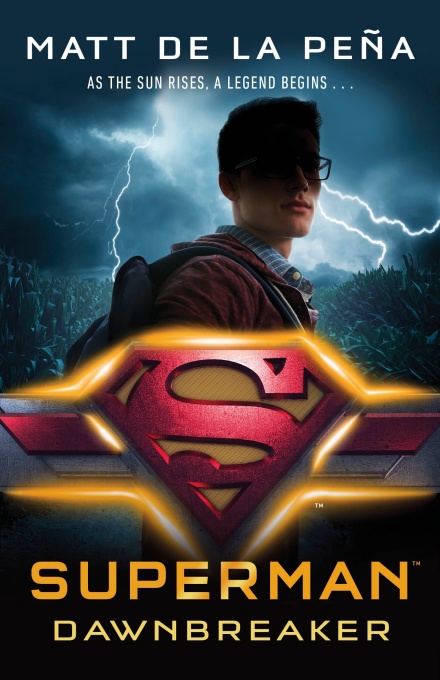
Superman: Dawnbreaker by Matt de la Peña

Dawnbreaker Cover.jpg

Publisher: Penguin Books (Trade Paperback – 5 March 2019)

Series: DC Icons – Book 4

Length: 290 pages

My Rating: 4 out of 5 stars

Amazon     Book Depository

Bestselling young adult fiction author Matt de la Peña attempts to put his own spin on the classic origins of one of DC Comics’ most iconic superheroes, Superman, in the fourth and final instalment of the DC Icons book series.

The DC Icons series is made up of four young adult books that present new and modernised origin stories for four of DC Comics’ most iconic and recognisable characters.  Written by some of the world’s best young adult fiction authors, this series has so far looked at Wonder Woman, Batman and Catwoman, and this final book, Dawnbreaker, takes a look at Superman.  Each of the stories in the DC Icons series stands alone and does not connect to either the main DC comic universe or the other DC Icons books.  I have so far only had the opportunity to read one of the previous books in the DC Icons series, Soulstealer by Sarah J. Maas, which presented an imaginative and captivating new version of Catwoman’s origin story.  I really liked Soulstealer when I read it late last year, and I have been looking forward to Superman: Dawnbreaker for a while.

In Dawnbreaker, the reader is taken to the sleepy Kanas town of Smallville, home to awkward high school student Clark Kent.  Clark has always been different to the other young people around him, as he is gifted with abilities that make him stronger, faster and resistant to injury.  Afraid of these powers and the potential reactions of the people around him if they found out, Clark tries to live a more ordinary life, hiding his abilities and only confiding in his parents.  However, Clark is finding it harder and harder to disguise what he can really do, especially when he has the power to help those around him.

However, Clark is not the only person with secrets in Smallville.  When Clark finds fellow student Gloria Alvarez crying one day after school, he begins to see that there is something dark at the heart of the town he loves.  People are disappearing; men are skulking around the Kent farm attempting to enter a barn that his father always keeps locked, a large corporation is buying up land around town, and several wealthy young people, including the mysterious Lex Luthor, are suddenly taking an interest in both Smallville and Clark.

Teaming up with his best friend, Lana Lang, Clark attempts to uncover what is really happening in his town.  But the further down the rabbit hole they go, the more Clark begins to realise that only his abilities will be able to stop the terrible events occurring around them.  Can Clark become the hero that his town and the world needs?

De la Peña is an award winning young adult author who has written a number of intriguing and thought-provoking books which often look at young people from disadvantaged or ethnic backgrounds.  De la Peña debuted in 2005 with Ball Don’t Lie, which was later developed into a motion picture of the same name.  Some of his other notable works include We Were Here, I Will Save You and the highly acclaimed children’s book, Last Stop on Market Street.  His most famous book is probably his second novel, Mexican WhiteBoy, which was actually banned in Tucson for five years due to its “critical race theory”.  Dawnbreaker is de la Peña’s first foray into comic book fiction.  While he has previously written some science fiction books, such as The Living and his instalment of the Infinity Ring series, Curse of the Ancients, I was interested to see how he went writing in this new genre.

I personally think that de la Peña did a great job with this book, as he was able to craft together a compelling and exciting novel that contains an excellent combination of mystery, superhero origin story and teen drama.  The mystery and young adult storylines are particularly good, and I quite enjoyed seeing where those parts of the story went.  However, I did have some minor issues with the Superman origin story part of the book, namely because I had seen this origin story so many times before.  I honestly found parts of Dawnbreaker to be very similar to some of the previous versions of Superman that I have seen in both comics or screen adaptions like the Smallville television show (which I may mention again a few times, as I was a massive fan of the show).  Of course, readers who have not already been exposed to so many iterations of Superman’s origin story will not have the same problem.

I fully recognise that this was always going to be a problem for any author attempting to write this sort of book.  For the last 81 years, Superman has been one of the most, if not the most, iconic and recognisable comic book superheros in the world.  As a result of the commercial appeal of the character, there have been so many different versions of Superman over the years, nearly all of which at some point have shown him as a younger Clark Kent living in Smallville.  Because of all of these comics, novels, movies, television shows, games and animated features, the character’s origin story has really been done to death.

Still, de la Peña does do a great job portraying the character of Clark Kent and presenting a more modern version of the hero.  In particular, he did an outstanding job of capturing the character’s identity issues.  An important part of Clark Kent/Superman’s character has always been his fear of hurting anyone with his power or exposing his family to danger.  De la Peña’s take on this character aspect is fantastic, as his version of Clark is extremely vary of using his powers anymore after he previously lost control and hurt someone.  As a result, he finds himself somewhat socially isolated in this book, as he attempts to distance himself from others to make sure they do not realise that he is different and subsequently reject or fear him.  However, events keep conspiring against him, as he keeps finding himself drawn into situations where his powers could help or save people and he has to decide what to do.  I felt that de la Peña covered this part extremely well, and the emotional and ethical internal debates that occur within the protagonist during these events were spot on and some of the best writing in the entire book.  The eventual creation of the Superman identity later in the book is a great result of some of these events, and it is shown to be a natural progression for the character.

Another issue I had with this book was how compacted the origin story felt.  While some origin stories would build up to Clark becoming Superman and an alien saviour over an extended period (although perhaps Smallville’s 10 seasons were a bit over the top), Dawnbreaker covers all of this rather quickly.  At the start of the book, Clark is a teenager with powers (mostly strength and invulnerability at that point), but he has no idea where they come from or what their full extent is.  Within a few days, he finds out that his an alien, he learns all his additional abilities (x-ray vision, heat vision, artic breath and the ability to fly) and he takes on the Superman identity for the first time.  While I certainly understand de la Peña’s desire to portray all these iconic Superman elements in this book, it did make Dawnbreaker’s story feel a bit rushed.

There is some great utilisation of characters within this book.  As I mentioned above, the examinations of Clark’s inner self are done perfectly and really cover important aspects of the character.  I also felt that de la Peña made good use of several classic Superman comic characters, specifically Lana Lang and Ma and Pa Kent, and there were a few clever references to other major characters associated with Superman.  I was a tad disappointed in the portrayal of perennial Superman villain, Lex Luthor.  While he is a key character with his own agenda, there are no real signs of the super scientist and utterly ruthless businessman he is in the comics, nor was there the close friendship that devolved into antagonism that features in some comics, as well as the excellent version that appeared in Smallville.  Still the new, original characters that appear in this book are really well done and offer some unique new inspirations for Superman that I quite enjoyed.

I also quite liked the way that de la Peña attempted to introduce relevant and divisive political and social issues into Dawnbreaker, such as racism and immigration.  This can be mainly seen in treatment of Mexican immigrants (both legal and illegal) in Smallville.  Not only have several of these immigrants gone missing without the police caring, but also people in the town are harassing some of the remaining immigrants, and there are attempts to pass a targeted stop-and-search law.  I thought this was an intriguing and thought provoking inclusion for this book, and it was interesting to see such issues discussed in a comic book tie-in novel.  A Superman book is a great place for this sort of storyline to be explored, as the character is probably the most famous illegal alien in fiction, and Clark’s empathy for these immigrants once he finds out the truth of his past is an interesting inclusion.

Like the other books in the DC Icons series, Dawnbreaker is targeted at a young adult audience.  This is quite a good book for younger audiences, as not only does it present an exciting and fun adventure at an American high school, but it would also serve as an excellent introduction of this iconic character’s origins for this younger cohort.  Younger readers will no doubt appreciate the author’s more modern take on this beloved superhero and be intrigued by how his story starts.  There is also quite a lot for older readers in this book, especially fans of comic books and Superman, and an adult audience can easily enjoy Dawnbreaker.

Superman: Dawnbreaker by Matt de la Peña is a compelling and exciting story that attempts to present an updated origin of one of comic’s most iconic superheros.  Featuring some new takes on the character of Clark Kent, as well as bringing some more contemporary issues to bear in the story, this is an fantastic and enjoyable book and one a wide range of readers can appreciate.  Dawnbreaker is an excellent conclusion to the DC Icons series, and I still fully intend to check out the first two instalments in this series in the near future.

Amazon     Book Depository