
Throwback Thursday – Warhammer: Runefang by C. L. Werner

Runefang Cover

Publisher: Black Library (Paperback – 24 June 2008)

Series: Warhammer Fantasy

Length: 413 pages

My Rating: 4.5 out of 5 stars

Amazon

Welcome back to my Throwback Thursday series, where I republish old reviews, review books I have read before or review older books I have only just had a chance to read.  For this week’s Throwback Thursday I have a look at a classic Warhammer Fantasy adventure novel with the entertaining fantasy thrill ride, Runefang.

I have been reading an awful lot of Warhammer 40,000 novels lately, but deep down my heart will always belong to the Warhammer Fantasy franchise, as that was the game that I played back in the day.  Even though the Warhammer Fantasy game has ended (replaced by The Age of Sigmar), while it was going the Black Library invested a lot of time into creating some excellent novels in this setting, which I have also been enjoy recently.  This includes the awesome Broken Honour and some of the earlier entries in the iconic Gotrek and Felix series (including Trollslayer, Skavenslayer, Daemonslayer, Dragonslayer and Beastslayer).  Even after reading these, I am still in the mood for more fun Warhammer Fantasy adventures and so I just read Runefang by established Warhammer fiction author C. L. Werner.  Werner, whose other writing credits include the Witch Hunter, Thanquol & Boneripper and The Black Plague series, came up with a compelling idea for this novel which I had a lot of fun getting through.

As civil war, discord and political instability rock the human realms of the Empire, a far greater threat marches upon it from the south.  A massive horde of undead creatures has been raised from the grave and is  cutting its way through the heavily populated province of Wissenland.  As the forces of Wissenland gather to fight, they are disheartened to find that these are not the typical shambling herd of undead horrors, but a well-organised, highly disciplined force of relentless fighters with dangerous magic backing them up.  Worse, the leader of this force is a true monster, the wight lord Zahaak, an ancient general of the legendary dark necromancer, Nagash, who has risen from his last defeat to finally achieve the victory he promised centuries before.

After several devastating slaughters, it becomes apparent that the undead force before them is unstoppable and the only way to defeat it is to kill the unkillable undead general.  In desperate need of anything that will save his realm, the Count of Wissenland and his advisors come up with an unlikely plan: recovering the Solland Runefang.  Lost years before when an orc raid destroyed the former province of Solland, the stolen Runefang, one of the legendary 12 swords signifying rulership of the Empire’s provinces, is rumoured to be the only weapon capable of killing Zahaak.

The task of finding the Runefang falls to Baron von Rabwald, who pulls together a small expedition of soldiers, knights and adventurers and leads them to the Runefang’s purported hiding place in the Worlds Edge Mountains.  However, this is no easy quest, and the chances of success are low, especially as the Worlds Edge Mountains are a notorious haunt for monsters, orcs and innumerable other dangers.  Worse, they are not the only group seeking the lost Runefang, and the fell magic of Zahaak is never far behind.  Can the expedition recover the Runefang before it is too late, or will Wissenland fall at the hands of its greatest foe from the past?

This was an outstanding and extremely exciting Warhammer Fantasy novel that I had a wonderful time reading.  C. L. Werner did an excellent job providing readers with an amazing fantasy adventure, and Runefang has a lot of great elements that will appeal to a wide range of readers.

At the heart of Runefang lies a captivating and highly enjoyable fantasy narrative that quickly drags the reader in with its impressive action, enjoyable characters, intriguing examination of the Warhammer world, and exciting adventure narrative.   Starting off with a fantastic introduction that sees the Wissenland army’s first disastrous attack against the undead horde, you are swiftly brought into the middle of the conflict as you witness the aftermath of the defeat, which also introduces several of the main characters.  Following some compelling exposition about the enemy they are facing, the story splits into two parts, with Baron von Rabwald leading most of the supporting cast off to find the lost Runefang, while the rest of the story focuses on the Count of Wissenland’s attempts to delay the undead army to give the adventurers time.  This split works really well, and seeing the disasters unfolding in Wissenland heightens the stakes of the expedition’s adventures and ensures that the reader is even more invested in its outcome.  The expedition storyline encounters multiple obstacles throughout their adventure, including monsters, traps, and orcs and goblins.  They are also forced to deal with a rival force of humans who are also hoping to claim the Runefang, untrustworthy mercenaries, as well as a traitor within their ranks who is helping the enemy.

This all translates into a very good and action-packed adventure, and I loved seeing all the epic events unfold through the eyes of the varied characters.  The story chugs along at a quick and exciting pace, with a good combination of action, dark moments and some fun, if grim, humour that I quite enjoyed.  Werner also ensures readers are in for a wild ride by not being sentimental when it comes to character survivability.  This became really apparent around halfway through Runefang when several key characters, many of whom had been built up in a big way for most of the narrative, were very suddenly killed off, and one of the supporting cast took the reigns as lead protagonist.  While this was a little surprising, I think it worked rather well, and it added to the suspense and drama of the tale, as the new protagonist is forced to make some big choices and deals to keep the quest alive.  Following this, the story keeps advancing at a great pace, with new foes and dangers appearing the closer the protagonists got to their goal.  This leads up to the epic final sequences of the expedition narrative, and it was fantastic to see the surviving protagonists go up against all the villains that had been chasing them in a big, extended confrontation, and Werner kept continuously hitting the reader with twists, surprises and dangers.  The reveal about the traitor in the ranks was pretty good, especially as Werner threw in an excellent red herring character (although by the time it is revealed, there were limited potential characters who it could be).  Everything comes together extremely well, with all the storylines and character arcs reaching their natural end, and I felt that it was an excellent, if rather bittersweet, conclusion.

I have to say that this was a particularly good and accessible entry in the wider Warhammer Fantasy canon, which is very well suited to this sort of immense and powerful story.  While Werner could have just phoned in Runefang with a generic adventure story set in the universe, he does a great dive into the lore.  This novel is set well before the events of most Warhammer Fantasy novels and takes place during the Age of the Three Emperors, where the Empire was split by a raging civil war.  As such, the province of Wissenland is on its own throughout the novel and must also deal with the substantial machinations of its neighbours as it fights to survive, which gives it a great additional edge of intrigue.  The author also spends a great deal of time focusing on the ruined province of Solland and the importance of its lost Runefang.  It was fascinating to see the ruins of Solland in Runefang, as it was still badly scarred by the orc invasion that destroyed it, and the impact of Wissenland’s absorption of it was quite interesting.  I also really appreciated the fantastic portrayal of the notorious Worlds Edge Mountains, the former realm of the dwarfs that is now controlled by orcs, bandits, and monsters.  The author did a really good job showing this to be a desolate and dangerous place, and he really did not disappoint when it came to featuring the variety of cool creatures and threats it contains, forcing the protagonists up against dangerous odds again and again.

Finally, I must highlight the author’s excellent use of the undead army in this book.  Rather than using the armies of the Vampire Counts or the Tomb Kings (which were the two undead factions at the time of Runefang’s release), Werner features a historic army of undead creatures who have risen after their defeat during the early days of the Empire to have their vengeance.  As such, they are a unique force of undead creatures, and I loved seeing them in action, particularly as you get some awesome reactions of terror from the human characters observing them.  Overall, I really loved the cool use of Warhammer Fantasy elements, history and settings in Runefang, and I felt that this was the sort of Warhammer novel that any fantasy fan could pick up and enjoy.

I also need to highlight all the impressive action featured throughout Runefang, and Werner has a clear talent for making fight scenes come to life in a big way.  There are so many battles throughout this book, and each of them is showcased to the reader in exquisite detail.  Whether it be a small skirmish, a one-on-one fight, a brawl against a giant monster, or a large pitched battle between armies, the author ensures that the reader gets the full sense of everything that his happening.  It was extremely cool to see all these fights unfold, and I was able to mentally see every sword swing, desperate charge and epic moment.  I liked how some of these fights emulated the battles from the table-top Warhammer Fantasy game, and you could really envision how they would have looked being played out on the board.  These action scenes combined well with the awesome and exciting story, and I think that they strongly enhanced my enjoyment of Runefang.

The final thing I want to talk about is characters, as Runefang features an excellent and massive cast of distinctive protagonists and villains.  Now, I am not going to go into too much detail about character arcs or development here, as to do so might ruin which key characters are killed off early.  However, I have to say that I was really impressed with the awesome way that Werner introduced each of the major figures in the book.  As such, you quickly grow to like many of the figures in Runefang, especially as Werner goes out of his way to feature a unique and often damaged group of protagonists to fit the story around.  I will say that I deeply enjoyed the Baron’s notorious and scarred champion, Kessler, who has some great moments; the dwarf Skanir, who serves as cantankerous guide; and the fantastic duo of the halfling Theodo Hobshollow and his ogre sidekick, Ghrum, who were an excellent and entertaining comic relief team.  There are also some really good villains in this novel, including the bandits who are also after the Runefang (featuring a brilliantly despicable leader and an entertaining pair of cowards), and an extremely dangerous orc warlord, Uhrghul Skullcracker.  Uhrghul was a particularly fun character, and I liked both his philosophical insights about being an orc leader as well as his effective way of questioning human prisoners (eating my legs in front of me probably would get me to talk).  I did think that the main villain of Runefang Zahaak was a tad underdeveloped, even if he was shown to be an epic badass with major historical cred to his name.  However, this might have been a deliberate choice by Werner to highlight the uncomplicated nature and motivations of the undead compared to the more insidious, evil, or animalistic plots of the humans and orc villains.  I had an amazing time following these characters, just try not to get too attached to any of them.

Filled with fantastic action, a compelling adventure storyline, fun characters and great use of the Warhammer Fantasy setting, Runefang was an outstanding novel from C. L. Werner that I had an amazing time reading.  Werner really went out of his way to create the most impressive and exhilarating fantasy adventure he could, and the result is really worth checking out.  A highly recommended Warhammer fantasy novel that you are guaranteed to have fun with.
Amazon

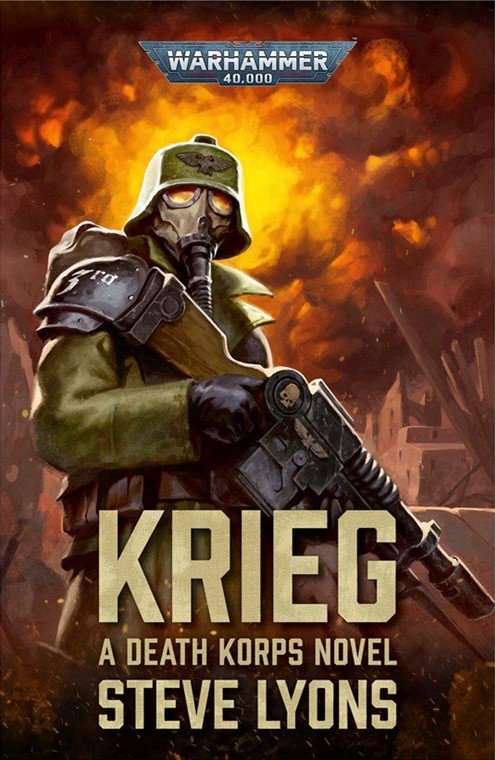
Warhammer 40,000: Krieg by Steve Lyons

Warhammer 40,000 - Krieg Cover

Publisher: Black Library (Audiobook – 29 January 2022)

Series: Warhammer 40,000

Length: 9 hours and 33 minutes

My Rating: 4.5 out of 5 stars

Amazon     Book Depository

Death, dishonour and duty all collide as impressive author Steve Lyons returns to the epic Warhammer 40,000 universe with Krieg, which dives into the origins of one the most iconic regiments of Imperial Guard out there, the Death Korps of Krieg.

Damn this has been a good year for Warhammer fiction so far.  We may only be in March, but 2022 has already produced a great collection of awesome Warhammer novels, including Steel Tread, The Twice-Dead King: Reign and Day of Ascension.  I have deeply enjoyed all these cool books, and when another awesome sounding tie-in novel was released on audiobook, I just had to grab it.

This latest book is Krieg by veteran science fiction author Steve Lyons.  Lyons is a new author to me, but he comes with an impressive pedigree in tie-in fiction, having written several Warhammer novels and short stories, a ton of Doctor Who novels and audio dramas, and several other intriguing novels.  I knew that I was probably going to love Krieg and I turned out to be right, as this fantastic and dark Warhammer 40,000 novel contains an intense and captivating tale of a legendary regiment.

In the grim future of the universe, there is only bloodshed and death, especially near the system-spanning Octarius War, where two brutal alien races battle for supremacy, and Imperial forces fight to stop their conflict spilling out into the greater Imperium.  However, the latest round of fighting sees a massive orc ship break through Imperial lines and crash into the massive city of Hive Arathron.  As the desperate Imperial forces fail to contain the invading orcs, all hope looks lost until a new set of deadly reinforcements arrive: the Death Korps of Krieg.

The Death Korps of Krieg are a legendary unit of peerless soldiers who are utterly fearless in battle, fanatically loyal to the Emperor, and who seem to harbour an unnatural desire to die in battle.  But who are the men of Krieg under their gasmasks and coats, and why do they fight so hard to regain their lost honour?  The answer lies thousands of years ago when Krieg attempted to cede from the Imperium, thrusting the planet into a brutal civil war.  In the end, one man stepped forward to end the fighting, and his decision doomed Krieg to become a blasted wasteland where only soldiers are grown.

As the fighting around Hive Arathron continues, many of their fellow soldiers and inquisitorial observers begin to doubt the loyalty and sanity of the Death Korps, especially when their unusual habits and creeds keep them apart from the other members of the Astra Militarium.  However, a deadly discovery deep inside the Hive will show the Imperium just how invaluable the men of Krieg are, especially when history seeks to repeat itself.  Can the Death Korps succeed against the xenos, or will Hive Arathron and its planet soon share a similar fate to Krieg?

The Warhammer 40,000 hits just keep on coming as Krieg turned out to be a truly awesome read.  Steve Lyons has produced an epic and intense novel here, and I loved the brilliant story that not only showcased a dangerous alien threat but which also examined the past of an iconic and captivating faction.

I thought that Lyons came up with an exceptional and captivating narrative for Krieg, which takes the reader on several parallel journeys throughout the history of the Warhammer 40,000 universe.  I have said multiple times before that I think some of the best Warhammer stories out there focus on the common troops, and I was proved right again as Lyons does a brilliant dive into the mind of the average solider when they experience the very worst of circumstances.  The primary storyline is set in the modern era of the canon and shows a regiment of Krieg Imperial Guard dropped into the battle for Hive Arathron to fight the orcs.  This section, which is told entirely from the perspective of supporting non-Krieg characters, shows the Death Korps in battle, with a specific highlight on their unusual appearance and practices.  At the same time, another storyline dives back into the past and shows the civil war that occurred on Krieg and the events that led up to the destruction of the planet and the formation of the modern Death Korps.  Both these storylines take up about half the book and they present the reader with two unique and interesting tales which work to complement the story from the other timeline while also depicting their own brutal military actions.  The stories start to come together towards the end when the protagonists of the contemporary storyline discover nuclear weapons in Hive Arathron, which they need to recover.  This leads to an interesting conclusion that results in some clever parallels between the historical events and the current storyline.  All this leads to a satisfying, if grim, conclusion that reveals the various fates of the supporting characters and wraps up the remaining story elements.

I was really impressed with how Krieg was written, and I think that Lyon did a really good job here.  The story ended up perfectly toeing the line between examining the lore and history of the universe and providing the reader with all the necessary excitement and adventure.  I think the decision to split the book between the two separate timelines was pretty clever, and I had a brilliant time reading the unique storylines it produced.  Both timelines were really good, and I loved the grim and powerful plot points they contained, especially as the protagonists within both suffered defeats, setbacks and brutal character realisations.  If I had to choose a favourite it would probably be the historical storyline set on Krieg, mainly because it shows the more desperate situation and substantially more character development and tragedy.  The twin storylines also did a wonderful job complementing each other, ensuring that the reader gets two separate sides of the titular regiment.  It also results in a series of different battle sequences, and I loved the interesting comparisons between a protracted civil war and a short and brutal fight against orcs.  Krieg ended up being a good standalone read, with a concise, well-paced and beautifully set-up narrative that is pretty easy to get addicted to, especially once both storylines descend into the hell of battle.  This also proved to be an extremely accessible tie-in to the Warhammer 40,000 universe, with Lyons ensuring that newer readers can easily follow what is happening with a minimal of explanation about the universe.  As such I would strongly recommend this book to a wide range of readers, and both experienced Warhammer fans and general science fiction readers will really appreciate the powerful and action-packed story contained within.

Unsurprisingly for a novel named Krieg, there is an extensive and fascinating examination of the Death Korps of Krieg in this book.  Lyons does a brilliant job of diving into this distinctive Warhammer faction, and this novel ended up being a very detailed and impressive love letter towards the infamous regiment.  Every aspect of the modern regiment is shown in exquisite detail, and you get an extremely powerful look at their design, uniform (which is based on the uniforms of World War I German trench fighters), fighting style, equipment, unique regiments, and more, including the iconic Death Riders (I was so very happy they were included, especially as you get several great fight scenes with them, including against orc bikers).  However, the real focus is on their unusual behaviour, including their determination to die in combat, their complete resolve and the fact that they never remove their masks.  Lyons really hammers home the unusualness of this regiment by only showing the modern Krieg soldiers through the eyes of regular soldiers or member of the Inquisition, all of whom are at a loss about what the Krieg are or why they fight so hard.

However, while these outsider characters are left wondering about many of these events, the readers get multiple insights thanks to the chapters that explore the historical civil war on Krieg.  Lyons does an incredible job of portraying this conflict, and it is fascinating to see the events that led up to it and the lengthy and costly war that followed.  Watching the opposing mentalities on Krieg during this time is really fascinating, and you soon get caught up in the dramatic battle that follows, especially as the situation continues to deteriorate over time.  I loved how the origins of the Krieg’s many idiosyncrasies are featured here, and you soon see what necessitated the use of certain equipment or behaviours.  The real highlight is the eventual destruction of Krieg and the subsequent formation of the modern version of the Death Korps.  The scenes that cover this destruction are pretty damn brutal, and watching the slow transition from typical soldiers to the eventual shrouded figures is extremely compelling and awesome.  I really appreciated the way in which Lyons showed off the various stages of the Krieg regiments, and the use of both the historical version of the regiment and its current formation really helped to highlight just how distinctive and cool they are.  While there are still a few secrets left hidden (what’s under the mask??), the reader leaves this book with an impressive appreciation for this awesome regiment, and it wouldn’t surprise me if it convinces several Warhammer 40,000 players to start using the Death Korps in their games.

A quick shoutout also needs to go to the fantastic characters featured throughout Krieg.  Lyons makes use of a large cast to tell this interesting story, and I liked the excellent mixture that this novel contained.  The characters featured in the contemporary line are primarily made up of non-Krieg fighters who serve as an interesting counterpoint to the nameless, faceless Death Korp soldiers.  This includes Inquisitor Ven Bruin, an older witch hunter who leads the search for the hidden weapons in Hive Arathron.  Ven Bruin is a lot gentler and less cynical that a typical Imperial Inquisitor, and he has some intriguing viewpoints on the situation, with his decisions tempered by experience and weariness.  Ven Bruin ends up holding multiple secrets throughout Krieg, and it is emotional to see him impacted by his multiple hard decisions and the lives they cost.  You also get the compelling viewpoint of Sergeant Renick, a Cadian soldier who fights alongside the Krieg.  Renick, who is a surprisingly good female character for a Warhammer novel, gives the common soldier’s viewpoint of events, and I loved seeing her slow opinion change of the Death Korps after seeing them in action against the orcs.

While there are some great characters in the Hive Arathron storyline, Lyons saves his best character work for the historical storyline on Krieg, which highlights the key people in the deadly civil war that destroyed the planet.  While there are several intriguing figures here, most of the focus is given to Colonel Jurten, the Imperial Guard commander who fights to keep Krieg in the Imperium.  Jurten is a weary veteran character who borders on the fanatical, especially when it comes to saving his home from himself.  Throughout the course of the book, you see Jurten fight a desperate war for his believes that culminates in him making a terrible decision that will impact his people for generations.  Watching Jurten’s substantial resolve slowly chip away throughout the book is very intense, and Lyon really shows the weight his beliefs and determination bear on him, especially after he makes the very worst of choices.  The other characters in this past storyline serve as an excellent support cast, and it was great to see their concerns and opinions about the battles being fought, especially compared to the resilient Jurten.  My favourite is probably the mysterious Adeptus Mechanicus tech-priest, Greel, who acts as the devil on Jurten’s shoulder, convincing him to make the tough decision about the future of Krieg.  I am still a little uncertain whether Greel was a hero or a villain (probably both; it is Warhammer), and I would be curious to find out more about him and his motivations in the future.  An excellent group of characters, I would be interested to see more of some of them in the future.

Unsurprisingly, I made sure to grab the audiobook version of Krieg, which ended up being another excellent and enjoyable experience.  I deeply enjoy Warhammer audiobooks, especially as they tend to enhance the grim and brutal stories, while also highlighting all the cool details about the Warhammer universe.  I had amazing time with the Krieg audiobook, and with a runtime of only 9 hours and 33 minutes, this was a pretty easy audiobook to get through.  The audiobook did an excellent job capturing the grim battles and blasted warzones featured throughout this awesome novel, and I could easily envisage every fight and every brutal decision.  I was also really impressed with the voice work of narrator Timothy Watson, who brought a ton of gravitas and intensity to this book.  Watson’s voice fit perfectly into this grim universe, and he did an outstanding job of capturing the various larger-than-life characters featured within, while also providing great Germanic accents to all the characters who originated from Krieg.  You really get a brilliant range of voices throughout Krieg, and I loved Watson’s ability to showcase the devotion, despair and weariness of all these great figures.  Another brilliant and wonderful Warhammer audiobook, this is easily the best way to enjoy this amazing tie-in book.

Overall, Krieg by Steven Lyons was another awesome Warhammer 40,000 novel that did a wonderful job of examining one of the game’s more unique and enjoyable faction.  Containing an action-packed narrative that highlighted the fantastic Death Korps of Krieg and showcased the events that made the soldiers they are today; Krieg was an addictive and clever read.  I loved the excellent use of a split timeline narrative, especially when it dove back into the civil war on Krieg, and the result was a grim and haunting tale of regret, duty and honour.  Highly recommended to all fans of Warhammer 40,000, you will love this beautiful and moving love letter to the iconic Death Korps and their tragic origins.

Amazon     Book Depository

Throwback Thursday – Warhammer: Dragonslayer by William King

Dragonslayer Cover Combined

Publisher: Black Library (Paperback – November 2020)

Series: Gotrek and Felix – Book Four

Length: 271 pages

My Rating: 4.5 out of 5 stars

Amazon     Book Depository

For this week’s Throwback Thursday I check out another volume in the incredibly entertaining Gotrek and Felix Warhammer Fantasy series, Dragonslayer, by William King.

I have been having fun over the last year checking out several cool Warhammer 40,000 and Warhammer Fantasy tie-in novels, especially as all of them place great stories inside their respective elaborate extended universes.  Some of the most exciting and compelling of these Warhammer books have been part of the Gotrek and Felix series, which follows a doomed dwarven Slayer and his human companion as they face all manner of monsters and evils across the Warhammer Fantasy landscape.  I have so far had a lot of fun reading the first three books in this series, Trollslayer, Skavenslayer and Daemonslayer, all of which were some of the best pre-2021 releases I read this year.  I recently grabbed a couple more Gotrek and Felix novels second-hand, and I had a great time quickly reading the next entry in the series over the Christmas break, Dragonslayer, another fun and enjoyable read that has an action-packed narrative to it.

After their daring exploits in the Chaos Wastes, dwarf Slayer Gotrek Gurnisson and his rememberer, Felix Jaeger, return to the lands of Kislev in triumph, having rescued the survivors of a lost dwarven stronghold.  However, their victory is short lived, as danger begins to assail them the moment they return in the form of the skaven forces of their arch-enemy Grey Seer Thanquol.  Worse, their voyage has revealed a giant horde of Chaos warriors advancing towards the lands of Kislev, determined to bring destruction and death to all before them.

To warn the people of Kislev, Gotrek, Felix, and their companions travel by dwarf airship towards the capital.  However, their voyage is disrupted by an unnatural storm and an attack from a legendary dragon determined to rip them asunder.  Barely escaping with their lives, the adventurers find themselves stuck in the World’s Edge Mountains and forced to pull into the Slayer Keep of Karak Kadrin.  There they discover that the dragon that attacked them, Skjalandir, has been terrifying the mountains for months.  Determined to finally meet his mighty doom, Gotrek and his fellow Slayers head out to destroy the beast, accompanied by a reluctant Felix and their Kislev allies.  Beset on all sides by ravening orcs, desperate bandits, and a massive dragon of immense destructive potential, can even the legendary team of Gotrek and Felix survive, or will Gotrek finally find his longed-for death at the hands of the mightiest beast in the realm?

This was another very fun and intense novel from King, who once again provides the reader with an exciting and compelling dive into the Warhammer Fantasy universe.  Dragonslayer was a very good entry in the long-running Gotrek and Felix series, and I deeply enjoyed its cool and fast-paced narrative that sees the protagonists fight all manner of foes and dangers.  Filled with impressive monsters, a hilarious sense of humour and all manner of action, Dragonslayer was a fantastic read that I powered through in a few short days.

Just like all previous Gotrek and Felix novels, Dragonslayer starts off fast and never really slows down, as the various characters are thrust into one dangerous situation after another all the way up to the last page.  The first quarter of the book is firmly focussed on continuing the antagonist-centric storyline from Daemonslayer, with Grey Seer Thanquol’s planned attack from the last book finally coming to fruition.  This opening scene is pretty fun, even if it does feel a little disconnected from the following narrative, and I loved seeing more of enjoyable antagonist Thanquol.  Following this enjoyable first encounter, the protagonists head off on a new quest which is quickly detoured by an encounter with a dragon.  The dragon’s first big appearance is pretty devastating, and I loved how much of a threat this monster is made out to be, especially as the protagonists don’t come out unscathed.  The next section of the book is mostly devoted to character development and world building, as the protagonists prepare for their next adventure and gain some interesting new companions.  At the same time, Thanquol engages in another mostly unconnected storyline that sees him encounter and set up the dangerous Chaos horde that will be the major threat of the next novel.  The final third of the novel is primarily dedicated to the protagonist’s quest towards the dragon’s lair, where they encounter not only the beast but various other foes as well.  This leads up to some amazing battle sequences, the highlights of which include the deadly confrontation with the wounded and mutated dragon, and a fun full-on war scene between two forces determined to kill each other and the protagonists.  The book had an entertaining and exciting conclusion with a fun lead-in to the next novel, and I had a fantastic time getting through this brilliant and excellent read.

King has a great easy-to-read style that I really connect with in the Gotrek and Felix novels, which ensures that all fantasy fans can easily enjoy it, especially with the fast-paced narrative and crazy action scenes.  I like the author’s use of multiple character perspectives to tell a rich and impressive adventure story, and you get some fun alternate viewpoints and storylines as a result.  This is particularly apparent in the action sequences, as you see the various participants of the battle as they encounter the same foes or other narrators, and results in a much fuller and bloodier picture.  The action scenes themselves are great, filled with compelling fights that really get the blood pumping as the protagonists face off against a variety of foes.  While a couple of fights were a little shorter than I would have liked, King more than makes up for it with some of the big encounters, especially against the dragon.  I loved the two major dragon scenes, and King crafts some excellent and hard-hitting fight sequences against it, loaded with character deaths and intense brutality.  I also loved one fun final battle sequence that read like a pitched battle from the Warhammer Fantasy universe, Goblin Fanatics and Doom Diver catapults included.

Like most of the previous Gotrek and Felix books, Dragonslayer is pretty accessible to new readers, and there is no major requirement to check out any of the previous novels first, especially as King’s books tend to repeat certain elements from the preceding entries.  As such, unfamiliar readers can easily jump in here, although the Thanquol attack at the start of the books does come a little out of nowhere if you haven’t read Daemonslayer.  I would say that Dragonslayer did feel like a bit of a bridging novel in places, especially as it continued several plot points from Daemonslayer while also taking the time to set up a potentially bigger evil in the next book, but I still had a lot of fun with it.  I still really believe that the Gotrek and Felix novels are an excellent place for new Warhammer fans to start out, especially as they mostly read like classic fantasy novels rather than intense tie-in reads.  The readers get some great details about the extended Warhammer Fantasy universe here, and King expertly introduces several key locations while also featuring some of the more recognisable factions.  I really appreciate how King makes sure to reintroduce all these races in each of his novels, and it ensures that new readers can appreciate what is going on and why certain factions are acting the way they do.  This ended up being a particularly strong Gotrek and Felix entry, and I cannot wait to see what happens in this universe next.

Dragonslayer has a rather interesting cast headlined by the two central characters, Gotrek and Felix, who have another great adventure here.  Gotrek is his usual gruff self in this novel, and you don’t get a lot of development surrounding him in Dragonslayer, especially as King never shows his perspective, no doubt to highlight his secret past and the aura of unbreakable strength and confidence he gives off.  Felix, on the other hand, gets most of the plot’s attention, and it was fun to see him continue to grow as a character.  While he still has certain understandable apprehensions about the quests he follows Gotrek on, Felix has grown into quite a capable adventurer over the last few books, and it was fun to see him accompany his friend into near-certain death once again.  I enjoyed the intriguing storyline around his magical sword which was quietly introduced in the first book and which reaches its full potential here as a dragon-slaying item.  I also enjoyed the compelling examinations of Felix’s personality and resolve, especially when it comes to the oath he swore to Gotrex, as he is forced to make some big decisions here when faced with an alternate future.

Dragonslayer also features a fun supporting cast, including several intriguing characters from Daemonslayer who get an extended role here.  This includes Felix’s love interest (and the only significant female character), the Kislev noblewoman Ulrika, who ends up accompanying the main protagonists on their latest adventure.  Ulrika is an interesting character who I have mixed feelings about during the book.  While I did like how King featured a strong and complex female character (something lacking from some of his previous novels), I honestly could not stand the terrible romance that she has with Felix.  The two of them continuously bounce from being madly in love to hating each other over petty things, and it ends up getting annoyingly repetitive.  This terrible relationship made me hate Ulrika a little as the book progressed, and I kind of wanted her to get eaten by the dragon (in my defence, it would have made for a good dramatic moment).

Another character who got an expanded role in this book was the human wizard Max Schreiber, who becomes quite an intriguing addition to the plot.  Max becomes a key part of the team in this book, and his insight into magic and the wider events of the Warhammer Fantasy universe are great additions to the plot, helping to expand the reader’s knowledge.  At the same time, Max also comes across as a bit of a creeper due to his unrequited love of Ulrika, which causes him to do some stupid things.  You honestly start to worry that Max is going to do something sinister as the story continues, and I have no doubt that will become a major plot point in the future.

I also must quickly mention the mad dwarf engineer Malakai, who goes on a fun mission of vengeance here in this book to fight the dragon who crashed his beloved airship.  Malakai, who speaks with a Scottish brogue just to make him seem even wilder, is a deeply entertaining figure in this book, combining a Slayer’s death wish with a love of advanced weaponry.  It was so much fun to see this insane character advancing on his foes with explosives and giant guns, and I am still laughing about his cart-loaded gatling gun.

While there is a great focus on recurring characters, King also spend some time introducing several interesting new characters.  The best of these are the four new dwarf Slayer characters, Steg, Bjorni Bjornisson, Ulli Ullisson and Grimme, who accompany the protagonists on their quest to slay the dragon.  All four Slayers have diverse personalities, backgrounds and fun quirks that make them interesting in their own way.  King ends up doing a lot with these four characters in the 100 or so pages that they end up being featured, and there are some great story arcs drawn around them.  I quite enjoyed the compelling narrative around Ulli, a young dwarf forced to become a Slayer for his cowardice, especially as it had a good resolution.  I also must highlight Bjorni’s constant lewd stories and declarations, which add so many laughs to the book, especially as he makes some outrageous claims about his romantic conquests.  I did think he could have done a little more with the intriguing and incredibly taciturn Grimme, but overall these four characters were great additions to the plot and I look forward to seeing some of them again in the future.

The final characters I need to point out are the extremely amusing antagonist team of Grey Seer Thanquol and his minion Lurk Snitchtongue, two skaven characters who serve as secondary antagonists for Dragonslayer.  Thanquol and Lurk are really amusing characters who perfectly encapsulate the snivelling and duplicitous skaven race, with their constant talk of betrayal, self-gain and incompetence.  It is always so much fun seeing the two of them at it, and every one of their scenes is chock full of hilarious statements and continuous thoughts of treachery.  King adds in a very fun change to the dynamic between these two characters in Dragonslayer, with the previously small and deferential Lurk having been mutated into a massive beast, which gives him increased confidence.  This makes him strongly consider killing Thanquol several times throughout the book, and the two are constantly eyeing each other off.  This proves to be a hilarious addition to the plot, and I loved seeing Thanquol on the back foot with his minion after two books of pushing him around.  While they are not the most dangerous of villains at this point, they do make for an intriguing alternate viewpoint, especially as their storylines are mostly separate from that of the protagonists.  While they are a tad detached from the main narrative, their encounters and experiences add to the general tapestry of the series and help to set up the villains of the next Gotrek and Felix book.

With Dragonslayer by William King, the Gotrek and Felix books continue to impress me as one of the all-time best and most enjoyable Warhammer tie-in series.  I had an amazing time getting through this cool book, especially as it features all the best aspects of the series, including tons of fun action, great characters, and major Warhammer Fantasy settings.  Readers are guaranteed to have a blast with this book, and I loved every single second of danger, combat and dragon fighting Dragonslayer contained.  A fun and fantastic read, I look forward to checking out the rest of the books in this series, especially the fifth entry, Beastslayer.

Amazon     Book Depository