The Unbound Empire by Melissa Caruso

The Unbound Empire Cover (WoW)

Publisher: Orbit (Trade Paperback – 25 April 2019)

Series: Swords and Fire – Book 3

Length: 508 pages

My Rating: 5 out of 5 stars

Amazon

One of the fast-rising authors of fantasy fiction, Melissa Caruso, brings her outstanding debut series to an end with the third book in the Swords and Fire trilogy, The Unbound Empire.

It is always a bittersweet moment when a great book series comes to an end. For the last two years, the Swords and Fire trilogy has been one of my favourite new fantasy series due to its excellent combination of characters, story, intrigue, fantasy elements and world building. I absolutely loved the first book in the series, The Tethered Mage, and I felt that Caruso did an excellent job following this up with The Defiant Heir, which made my Top Ten Reads For 2018 list and my Top Ten Books I Loved with Fewer than 2,000 Ratings on Goodreads list. As a result, I have been eagerly waiting for The Unbound Empire for the last year, and it even featured in my very first Waiting on Wednesday post.

The Swords and Fire series is set on the continent of Eruvia, which is made up of two great nations, the Serene Empire of Raverra and the loosely collected states of Vaskandar. The Serene Empire is the home of our protagonists, and is a land where magic is controlled by the government, led by the Doge and the Council of Nine. All mages who are identified as having enough power are conscripted into the army as a Falcon. Each Falcon is bound to a non-magical handler, a Falconer, who is entrusted to control and protect their Falcon. One such Falconer is Lady Amalia Cornaro, heir to one of the most powerful families in Raverra and future member of the Council of Nine. While the nobility is usually forbidden from becoming Falconers, desperate circumstances forced Amalia to be bound to the powerful and rebellious fire warlock Zaira.

Vaskandar, on the other hand, is a far wilder nation, ruled by the Witch Lords, magicians whose powerful vivomancy literally flows through their land, making them part of everyone and everything in their domain. War is always looming between these two nations, and while Vaskandar as a nation has decided to remain out of the most recent conflict, nothing can stop an individual Witch Lord from attacking. The cruel and ambitious Witch Lord Ruven, the Skinwitch, has long wanted to conquer and rule over The Serene Empire. His most recent ambitions have been stymied by the combined actions of Amalia and Zaira, who managed to stop his plan to unleash a destructive volcano, although it came at great cost to Amalia.

However, Ruven is far from done and is determined to gain new land, either in the Serene Empire or in the domains of the other Witch Lords. Launching a series of attacks against the Empire’s capital, Raverra, as well as several outlying holdings, with a range of horrifying strategies, Ruven is able to cause significant damage. But while he launches his attacks, he is also trying to recruit Amalia to his cause by any means necessary, as her unique heritage gives her the ability to usurp the domains of other Witch Lords. As Amalia and Zaira race to counter Ruven’s actions, Amalia finds herself once again torn between love, duty and friendship, as the responsibilities of her office clash with the friendships she has formed. As Amalia struggles to maintain her humanity in the heat of war, Ruven’s greatest cruelty might be the thing that finally breaks her and leads to the fall of the Serene Empire.

Caruso once again knocks it out of the park with The Unbound Empire, creating a satisfying conclusion to her series that still contains her trademark storytelling ability and character work. The final book in the Swords and Fire trilogy does a great job utilising the previous entries of the series and also attempts to tie up all of the existing loose storylines and plot points. The Unbound Empire is filled with some really emotional storylines, a number of powerful magical action sequences and several surprising plot developments. The end result is another five-star book from Caruso that I powered through in quite a short period.

At the heart of this book lies the series’ main two characters, the narrator and point-of-view character, Amalia, and the fire warlock Zaira. The challenging and evolving relationship between the initially sheltered Falconer and the rebellious and infinitely destructive Falcon has always been a major part of this series. While the two characters have been establishing a better relationship with each book, it was great to see the two of them becoming even closer in this book and helping each other deal with some major issues. I also liked how both characters’ stories come full circle in this book, as Amalia becomes more and more like her mother, while Zaira finally confronts a number of her personal demons and for once starts to consider having a future. The author’s depiction of the doubt and guilt that Amalia is feeling after the events of the last book forced her to kill her cousin added some extra emotional depth to the story, and I liked the inclusion of such a realistic emotional reaction. The character arcs for the two main characters were incredible, and it was great to see how much they had evolved over the course of the trilogy.

Caruso has also developed a number of great side characters for this series, and she continues to expertly utilise them in this final book. The main two side characters of The Unbound Empire were Amalia’s love interests: Captain Marcello of the Serene Empire; and the Witch Lord Kathe, known as the Crow Lord. Throughout the course of the book, Amalia is caught between them; while she loves Marcello, her position makes a relationship impossible, and Kathe presents a more suitable match. Marcello’s storyline in this book is pretty significant, and there are some substantial and emotive changes to his character that really helped make The Unbound Empire extra compelling. I also really liked the deeper dive into Kathe’s personality and backstory, as well as the natural strengthening of the relationship between Amalia and Kathe. Thankfully the book’s love triangle aspect wasn’t too over-the-top or filled with insufferable toxic jealousy, as both the men understand the difficult position Amalia is in. The arc of Zaira’s love interest, Terika, is really sweet, and I liked how she continues to have a positive effect of Zaira’s personality. Other side characters, such as the Amelia’s powerful and unflappable mother; the surprisingly lethal Cornaro servant, Ciardha; and Marcello’s eccentric artificer sister, Istrella, all shine through in this book, and all of them add quite a lot to this book’s story.

No great fantasy story would be complete without a despicable antagonist threatening the heroes, and luckily this book has a truly evil and threatening villain. The Witch Lord Ruven is a powerful Skinwitch, a person with the ability to control and alter other creatures just by touching him. Not only is this power by itself pretty horrifying but Ruven uses it in some fairly novel and evil ways, unleashing all manner of horrors upon the protagonists. I thought that Ruven had some of the best magical powers in the entire series, and his abilities were really fun to see in this book. Caruso also tried to humanise the character in places throughout this book, which was a nice touch and added some new depth to the story, although he does mostly come off as utterly irredeemable. Overall, I feel that Ruven was an excellent villain and his antagonism really helped make this book and the series as a whole.

I have always loved the complex fantasy world and elements that the author came up with for this series. The various forms of magic and resulting rules that form the backbone of this book are very imaginative, and I loved how Caruso was able to utilise them in her story. There are some amazing new versions of the magic and fantasy elements from the previous two books included in The Unbound Empire, as well as some new locations to explore. While the world building is not as intense as the first two books in the trilogy, Caruso still offers some great new elements, and I had a lot of fun seeing these extra expansions to the universe. Hopefully Caruso will come back to this world at some point in the future, as I had a lot of fun there over the course of the series.

The Unbound Empire was another incredible piece of fantasy fiction from author Melissa Caruso that expertly wraps up her debut trilogy. This has got to be one of the best debut fantasy trilogies I have had the pleasure of reading, and it has been a lot of fun absorbing the excellent tales of magic, adventure and intrigue that Caruso has woven over the last two years. I have really loved the Swords and Fire trilogy, and while I am sad to see it go, I am excited to see where Caruso goes next as this author has amazing potential for the future. I highly recommend each and every book in the series and encourage you to get wrapped up in the magic and characters of this series if you have not had a chance to read it.
Amazon

Sixteen Ways to Defend a Walled City by K. J. Parker

Sixteen Ways to Defend a Walled City Cover

Publisher: Orbit (Trade Paperback Format – 9 April 2019)

Series: Standalone

Length: 350 pages

My Rating: 5 out of 5 stars

Amazon

Ok, now this was one hell of a book!!!

K. J. Parker’s Sixteen Ways to Defend a Walled City is an exceptional piece of fantasy fiction that keeps the reader enthralled with its excellent story, fantastic self-aware humour and one of the best depictions of a siege that I have ever had the pleasure of reading. The end result was an excellent read that I just had to give a full five stars to, and it has to be one of my favourite books of 2019 so far.

The Robur Empire is one of the great civilisations in the world, and at its heart lies the City, capital and seat of power of the Emperor, kept safe by its impenetrable walls, powerful armies and unsurpassed navies.  However, that safety is unexpectantly compromised when a massive force of soldiers appears out of nowhere, slaughtering the entire imperial army, crippling the navy and completely surrounded the City.

The only forces left garrisoned in the City are the men of the Empire’s Engineering Corps, led by Colonel-in-Chief Orhan, who suddenly finds himself in charge of the defence of the City.  Orhan is a coward, a glorified bridge builder, a man able to work the complex imperial military system for his own gain and a foreigner despised by most of Robur society, but he is not a great military leader.  He is, however, one of the most devious and underhanded men the army has ever seen, and these might just be the qualities needed to save the City from destruction.  As Orhan works to unite the various factions in the City to his cause and come up with a range of unique defences, he makes a shocking discovery.  A figure from his past is leading the assault against the City, and Orhan quickly realises that he might be on the wrong side of this battle.

I really enjoyed this latest book from Parker, who has created a complex and captivating fantasy tale that proves exceedingly hard to put down.  K. J. Parker is actually a pseudonym of author Tom Holt, who was able to keep the dual identity secret for 17 years before it was revealed in 2015.  Between his two identities, the author has written an amazing number of books since his 1987 debut, mostly focused on the fantasy genre.  This includes over 30 humorous fantasy novels as Tom Holt, five historical fiction novels, the Fencer, Scavenger and Engineer trilogies as Parker, a number of standalone fantasy books and a huge range of short fiction, some poems, songs and even some non-fiction work.  For those who may be concerned, no reading of any of Parker’s prior work is required to enjoy Sixteen Ways to Defend a Walled City as this latest book is a standalone novel.  Still, I will be keeping an eye out for any future books by either Tom Holt or K. J. Parker as I really enjoyed the author’s writing style and fantastic sense of humour.

Sixteen Ways to Defend a Walled City is an intriguing novel that is told from the perspective of its “hero” Orhan, who is narrating the story of his defence of this city within a historical text.  This story is incredibly entertaining, as not only does it feature a first-rate siege within an excellent fantasy location, but it is told by a complex and multi-layered character who paints the entire ordeal of being in charge in a very funny light.

I am a man who loves a good siege storyline, but this has to be one of the best ones that I have ever had the pleasure of reading.  At the start of the siege the situation looks grim, as a vast host surrounds the City, whose defenders have all been slaughtered outside the walls, with the exception of Orhan’s engineers, who lack the basic military supplies and machinery to defend the City.  As the enemy start a conventional long-term siege with advanced weaponry and superior forces, Orhan is forced to come up with something to delay their inevitable defeat in the hopes of reinforcements turning up.  Without the required men, equipment or leadership, they cannot rely on the traditional 15 methods of defending a walled city that the books suggest, so he has to rely on the on his own 16th way, which involves bluffing, chaos and mad-cap innovation.  As a result, much of the book features Orhan’s many unconventional methods to defend the City, whether it involves taking symbolic control of the entire empire, legitimising and attempting to control two rival criminal gangs or creating devastating new siege weapons.  The protagonist and his men’s engineering prowess comes in effect quite a bit throughout the book, and I loved seeing the machines and other unique defence methods that he deploys as a result.  All the various deceptions and tactics used to hold the City against this superior force is widely entertaining and I absolutely loved the siege storyline which serves as an amazing centre to this incredible story.

The setting that the author chooses for this book is pretty interesting and adds a lot of great elements to the story.  The Robur Empire is pretty much the Roman Empire, with the City being this universe’s equivalent of Rome.  I thought that the City was a fantastic setting for the vast majority of the story, and the various factions and problems with such a large city really tied into the great siege storyline.  The City’s criminal organisations, the Greens and the Blues, former charioteer supporters (very Roman) turned rival criminal unions, are the cause of a large amount of strife, and I liked how their own battles and self-importance became such a major part of this book.  I also felt that Parker did an amazing job portraying a city that sits at the heart of a massive empire, and the attitudes of the people within felt pretty accurate.

On top of the great setting, Parker has also created an intriguing, extended world for this story.  The Robur Empire is a great overall setting for most of this book, as its setup, design and attitudes are very similar to the ancient Romans.  Parker’s initially subtle use of racial identity in this empire is quite intriguing, and it becomes a major part of the book.  Essentially the empire is made up of the pure-blooded Robur, who are called blueskins due to their darker skin colouration.  Then there are those people with white skin, who are given the derogatory name of milkfaces, who are treated like second-class citizens within the empire, and who came from lands conquered by the Imperials.  Not only does this become an important plot point with the army attacking the City made up completely of milkfaces, but it is reminiscent of the Roman Empire, when the pure-blooded Roman citizens looked down upon the paler barbarians from Gaul, Britain or Germany.  I also liked how the author tried to replicate the precision military system of the Romans with the Robur, and it was fun to see how the problems of such a system came into play throughout this book, such as having the military resources of the entire empire being kept in supply depo sites rather than in the capital.  I quite enjoyed these fantastic settings, and I thought that they were an excellent place to set these complex stories.

While the siege storylines and settings are extremely amazing, this book would be nothing without its main character and the person narrating this fictional historical text, Orhan.  Orhan is an amazingly complex character, and the personality that Parker creates for his hero is outstanding.  Orhan is a milkface who has risen to high military command within the Robur Empire due to his abilities as an engineer.  As a result of his hard early life and the constant belittlement and discrimination by the blueskins he serves under, he is an incredibly cynical person with a very jaded outlook on life.  The author does an amazing job transcribing these character traits onto the page, often in a sarcastic and very entertaining manner as he describes the events going on around him, and the reader gets a great sense of the character’s frustrations.  While Orhan is attempting to defend the City, his own narrations reveal him to be an extremely self-serving and selfish person who has been forced by circumstances rather than duty to protect the City.  His motivations become even more complex as he begins to wonder if he is on the wrong side of the conflict, as the invading army is completely made up of milkfaces like himself, and even when he is doing the right thing the blueskins in the city that he is defending still treat him badly.  Even with that doubt, he is a surprisingly (especially to himself) effective commander, whose deceitful and inventive nature, as well as his extensive knowledge of history and engineering, allows him to come up with some outstanding defensive strategies.  My favourite has to involve his unique method for dealing with the enemy’s sappers, which sees him use his knowledge of the City, his craft and his ability to manipulate his opponents to create a fantastic response.  The entire sequence involving this anti-sapper technique is one of the best parts of the book, and I love the doubt and regret he experiences as a result of his actions.  Overall, Orhan is an outstanding narrator, and his depiction of the chaotic event and his part in them really made this story for me.

Sixteen Ways to Defend a Walled City is an exceptional piece of fantasy fiction, and I think I already have a contender for my future top ten books of 2019 list.  This book has to be read to fully appreciate its complexity and cleverness, and I found it to be boundlessly entertaining and widely funny.  K. J. Parker’s latest book comes highly recommended, and it is well worth checking out.

Amazon

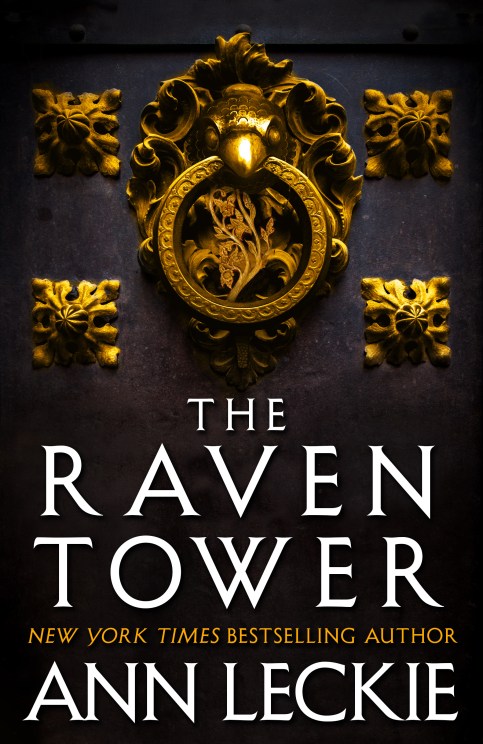
The Raven Tower by Ann Leckie

The Raven Tower Cover

Publishers: Orbit and Hachette Audio (Audiobook Format – 26 February 2019)

Series: Standalone/Book 1

Length: 12 hours and 1 Minute

My Rating: 4.25 out of 5 Stars

Amazon     Book Depository

The bestselling author of the Imperial Radch series, Ann Leckie, presents her first foray into fantasy fiction with The Raven Tower, an intriguing fantasy read that I have been looking forward to for a while, and which attempts something new and different in its presentation.

The Raven Tower is set in a world filled with gods whose power and abilities can be gifted to humans in exchange for worship and offerings.  For centuries, a powerful god known as the Raven has ruled over the rich kingdom of Iraden, offering protection and prosperity from atop a tower in the city of Vastai.  The human ruler of all of Iraden is known as the Raven’s Lease and has been chosen by the Raven to bear his power and enact the god’s will.  However, this power comes at a price, as each Lease must sacrifice himself to the Raven in order to keep the god strong and Iraden safe.

When Eolo and his lord, Mawat, heir to the Raven’s Lease, return to Vastai, they find the city in chaos.  Mawat’s father, the former Lease, went missing just before he was required to pay the Raven’s price.  In his place, Mawat’s uncle, Hibal, has taken the throne and has been named the new Raven’s Lease.  Determined to find out what happened to the former Lease and reclaim the throne for his master, Eolo attempts to uncover the many secrets of Vastai.  But as Eolo investigates he discovers that something ancient and mysterious is concealed within the Raven’s Tower: a secret from Iraden’s past that the Raven has kept hidden for centuries.  It is clear there will be a reckoning, but is Eolo ready to pay the price?

To be honest, I found that The Raven Tower was a very challenging book to critically examine and assign an overall rating for.  Before I had even started reading it, I saw that a number of other reviewers had noted that had great difficulty with this book, mainly due to the author’s unique way of narrating the story.  As a result, I chose to listen to the audiobook version of The Raven Tower, narrated by Adjoa Andoh, in the hopes that this would make it easier for me to follow along.  The audiobook version of the book is around 12 hours long, and I managed to get through it in around a week.  While I did also experience some issues with the way the book was set out, I actually began to appreciate this unique format the more that I stuck with the story, and this turned out to be a really enjoyable piece of fantasy fiction.

For this book, Leckie chose to utilise a noticeably different second person limited narration format to tell her story.  The story is told by a god known as the Strength and Patience of the Hill, who not only tells the main story in Vastai, specifically focusing on the character Eolo, but who also describes all the events of its own life that led up to this period of time.  This god has a very unique way of speaking that impacts how the Vastai story is told.  In particular, the god constantly describes what Eolo is doing, but, at the same time, it has no idea of what is going on inside Eolo’s head.  As a result, it makes very generic statements and guesses about Eolo’s memories, state of mind or thought process.  Take for example the following line, said as Eolo explores the docks near the tower: “I don’t think you grew up near the sea, and so you likely knew very little about boats or tides.”  Having this being make guesses about the protagonist’s thoughts or feelings is a little unusual, and I was very confused about why the author had written her book this way, and for a large portion of the book I really thought that it would have made more sense to have a more traditional narrator system.  However, as I read deeper into the story, it became a whole lot clearer why Leckie had set her story out in this way, and I was able to really appreciate it use.

As the book progresses, the two halves of the story start to come together.  Taken separately, both parts of the story are fairly interesting.  The storyline focusing on Eolo and the mystery surrounding the Raven’s Lease is fairly intriguing mystery filled with politics, murder, mystery and the fate of an entire nation.  The second storyline, which looks at the backstory of the Strength and Patience of the Hill, helps build up Leckie’s new world while also explaining much about the book’s primary fantasy element, the gods, as well as the Raven’s rise to power.  While both these storylines are quite fascinating in their own right, when they start coming together in the later part of the book, it creates a much more complete and intense story.  The author’s use of the Strength and Patience of the Hill as the book’s primary narrator becomes a lot clearer, and I actually really liked how this unconventional narration was utilised.  I also really enjoyed the fantastic twists that occurred at the end of the book, and the author’s excellent lead-up to these events was really quite clever and subtle.  Overall, this turned into quite an amazing story, and I was very glad that I stuck with it and got all the way through.

One of the main things that I enjoyed about The Raven Tower was the interesting fantasy elements that Leckie utilised throughout her story, mostly shown in the form of the gods that inhabit this world.  The gods in this book are quite an interesting creation from Leckie, who has come up with a number of rules surrounding them, all of which is explored by the narrator.  In this world, the gods have a finite amount of power, which they gain from worship and which they lose by altering the world, either for their own benefit or in order to answer prayers.  The gods’ power is tied to their speech; anything they say as a fact, their power will act to make it so.  For example, if they say that an object will turn, then their powers will act to make it turn.  However, if the action they want to accomplish takes more power than they have access to, then they will die or become extremely weak.  As a result, the gods are forced to speak extremely carefully, lest they inadvertently make a command that will take way too much energy.  The gods, therefore, try to avoid absolutes in their conversations and have to use words such as “I think” or “I heard” to get around this.  Leckie consequently has to have her narrator, the Strength and Patience of the Hill, utilise this language throughout the entire book, as to the god addresses the main character Eolo (even if Eolo does not hear them).  That is why there are so many unusual language choices throughout the book, such as the recurring “Here is a story that I have heard”.  While these language choices did throw me at first, once I understood why it was happening, I got used it and I thought it was extremely creative and commendable that the author stuck with this throughout the entire story.

In addition to this use of language, Leckie spends considerable time exploring the limitations and abilities of the gods throughout her book.  Leckie uses all sorts of different narrative devices to showcase this, from the Strength and Patience of the Hill’s personal memories and experiments, conversations they have with other gods, as well as telling stories about other gods and how they utilise their powers (there is one particularly amusing story about a god-powered spear I liked).  It is clear that the author put a lot of thought into her universe’s gods and the abilities that they have, and the exploration of these ideas were some of my favourite parts of the book.  I was also extremely impressed with how Leckie was able to utilise these fantasy ideas so effectively in her story, and I liked the bearing that they had on both the plot and the way the book was written.

Another interesting aspect of The Raven Tower is the characters that the author has used within the story.  The main protagonist is Eolo, whose attempts to get to the bottom of the mysterious events in Vastai are a large focus in the book.  Eolo is a pretty boss protagonist, able to disguise his intelligence and cunning behind an ignorant peasant facade, while quickly unravelling what has occurred in the city and then playing the politics to get the best result for her master.  Eolo is actually a transgender character, and I was really impressed with how well-written this part of the character’s identity was, and with how it was explored within the book.  In addition to Eolo, there are also several other intriguing characters used throughout the book.  Once you get the hang of its speech pattern, the Strength and Patience of the Hill is a pretty good narrator, and I found the god’s backstory and way of seeing the world to be incredibly intriguing.  I quite liked the character of Tikaz, who serves as one of the main female characters in the book, as well as Eolo’s potential love interest.  Tikaz is fleshed out incredibly well, and I loved the various interactions that she has with Eolo.  The book’s main villain, Hibal, is suitably evil and conniving, and he even has a pair of creepy twins serving as his henchmen.

I need to point out the fantastic job Leckie did coming up with one of the main characters in the book, Mawat.  Mawat is the heir to the Raven’s Lease, who finds his position usurped by his uncle.  However, rather than write him as a noble character we are supposed to feel sympathy for, Mawat immediately has a temper tantrum and spends the rest of the book acting as an unreasonable child, completely ignoring Eolo’s advice and even attacking his loyal servant whenever he hears something he does not like.  While a large amount of this is necessary for the story, I liked the reversal of the noble disenfranchised heir trope that is often utilised in fantasy, and instead we are left with a more complex character.

I quite liked the audiobook format of The Raven Tower and found it to be a really great way to enjoy this book.  I definitely think it helped me follow the plot and navigate the different narrative devices of this book, and I absorbed more information about Leckie’s fantasy elements.  I quite enjoyed Adjoa Andoh’s narration throughout the book and thought their voice was perfect for the mysterious and wise Strength and Patience of the Hill, who narrated most of the text.  I especially liked how Andoh was able convey the Strength and Patience of the Hill’s anger at certain key points of the book and to make the god’s voice quite menacing.  Apart from the Strength and Patience of the Hill, the other character voices throughout The Raven Tower were fairly distinctive and matched the personalities of the characters quite well.  I was especially fond of the fitting accents she assigned to some of the human characters, such as Tikaz or the god known as the Myriad.  Overall, I would strongly recommend that readers check out the audiobook format of The Raven Tower, as it may prove to be an easier way to enjoy this intricate story.

As I mentioned above, I had a hard time giving this book an overall rating.  When I first started reading it and I encountered the strange narration style for the first section of the book, I thought I might have to give it a low score.  However, once I started to get more into the story and the lore behind the gods of this world was explained in some detail, I ended up changing my score to something closer to 4 out of 5 stars.  This reflected my appreciation of Leckie’s inventiveness, but also had a few demerits due to the slow start and issues I had getting into the story.  However, I ended up changing this to a 4.25 out of 5 stars in the end, once I appreciated how the two separate storylines came together and that superb ending.  As a result, I would highly recommend The Raven Tower to fantasy readers, and I encourage people to see past the issues at the start of the book.  Leckie is an outstanding author, and her first foray into fantasy featured some unique elements that turned The Raven Tower into one of the most distinctive and clever reads of 2019.  The Raven Tower works incredibly well as a stand-alone book, but if the author decides to return to this world in the future I would be extremely curious to see where she takes the story next.

Amazon     Book Depository

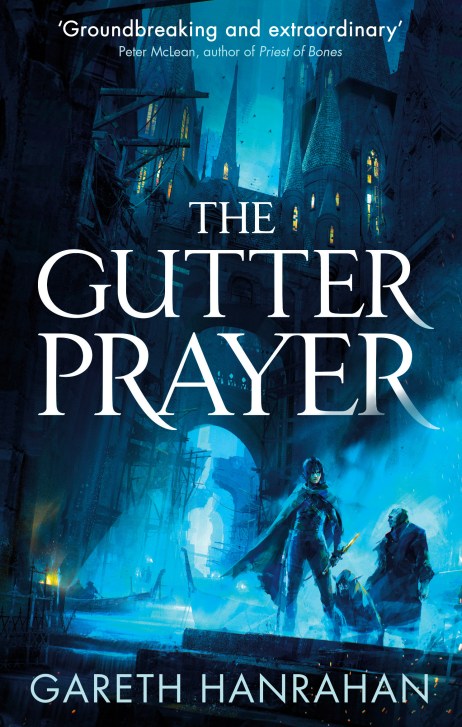
The Gutter Prayer by Gareth Hanrahan

The Gutter Prayer Cover.jpg

Publisher: Orbit (Paperback Edition – 17 January 2019)

Series: Black Iron Legacy (Book 1)

Length: 512 pages

My Rating: 4.5 out of 5 stars

Amazon     Book Depository

From debuting author Gareth Hanrahan comes the grimdark fantasy book that everyone has been talking about, The Gutter Prayer.  This debut novel has been getting some serious hype from a lot of fantasy reviewers, so I was very happy when I got my copy earlier in the week, as it will give me a chance to check it out for myself.

For thousands of years, the large, sprawling city of Guerdon has survived against all manner of attacks and calamity.  In recent years, the city’s alchemical industry has taken off, producing powerful weapons and twisted creations to sell to Guerdon’s warring neighbours, involved in the destructive Godswar.  But with the rival nation’s eyes on Guerdon, refugees flooding into the city and the city’s various factions fighting for power, the potential for chaos is great.

In the middle of all this, three mismatched young thieves – stranger to the city, Cari; the Stone Man, Spar; and Rat the ghoul – find their lives changed forever.  Hired by the leader of the city’s criminal element, these three thieves attempt to break into an important civic building, only to be nearly killed by a massive explosion and framed for the crime.  Pursued by the Alchemist Guild’s murderous enforcers, the Tallowmen, and the relentless thief-taker, Jere, the three friends attempt to escape their pursuers, but find themselves entangled in a terrible plot to bring destruction to the city.

Ancient creatures are rising from the city’s bloody past, and the city’s old gods are prepared to rise once again.  As Cari, Spar and Rat uncover the full extent of these gods’ power, they must contend with others who seek to use the chaos for their own ends.  With everything on the line, can the three friends find a way to stop the events unfolding, or will their failure result in the destruction of everything they hold dear?

This is Hanrahan’s first fictional book, although the author has written a number of gaming manuals and fantasy guides over the years.  However, with the evident popularity of The Gutter Prayer among the fantasy community, it seems extremely likely that this will not be Hanrahan’s only book.  Indeed, the author already has plans for a sequel, and The Gutter Prayer will form part of this planned Black Iron Legacy series.

I thought that The Gutter Prayer was an ambitious and intriguing new entry to the fantasy genre, and it is definitely worthy of the hype around it.  Hanrahan presents a wide-ranging and dark story of magic, religion and betrayal, and he sets it within an imaginative new fantasy landscape with a ton of unique fantasy elements and creatures.  The story is then based around several great characters, each of whom has their own compelling arc within the narrative.  The result is an excellent and memorable novel that showcases Hanrahan’s creativity and serves as an amazing introduction into a bold new fantasy universe.

This book contained a fantastic and intense story which focused on a variety of different characters and follows their attempts to investigate and forestall the strange events occurring around them.  I really enjoyed this story, although I had a little bit of a hard time getting into it at the start of the book due to mass of story and fantasy elements I was bombarded with.  However, I am extremely glad that I powered past this first part of the book because once I was able to place all the story elements together I appreciated the book’s wild and intricate plot.  One of the main things that I really loved about this book was the inclusion of a significant number of different characters and factions, each with their own motivations and hidden secrets.  As a result, you have no idea who is going to do what next and who is going to betray the protagonists to serve their own needs, creating an unpredictable story.  The narrative is also extremely dark, and readers should be prepared for characters dying or being altered in some way or another.  This is some fantastic storytelling from Hanrahan, and an overall clever narrative.

One of the most talked-about elements of this book is the author’s use of a huge range of unique fantasy elements.  Hanrahan has come up with and expertly utilised a ton of creative, inventive and at times just plain creepy new fantasy elements.  The best example of this has to be the Tallowmen, humans that have been turned into living candles, often as punishment for crimes.  These creatures are strong, lethal and fast, serving as the guards and law enforcers of the Alchemist Guild.  Their terrifying appearance, distinctive abilities and the glow of their candle flames as they hunt down the protagonists are extremely memorable.  Another terrifying inclusion is the Ravellers, servants of the city’s ancient gods who have the ability to unravel people out of existence and take on their appearance.  There are also the ghouls and Stone Men.  Stone Men are humans infected with a disease that slowly turns them into stone, although their condition can be held back by an alchemical compound.  The depictions of their condition are pretty horrific, and there is the interesting double-edged sword of the disease: they become stronger the more their condition progresses, but they also become less able to live normal lives.  The ghouls, humanoid creatures who feast of the dead flesh of humans, are an element that most fantasy fans will be familiar with, but Hanrahan has made some clever alterations to these creatures by expanding on their life cycle and making them a key part of the city’s history.  Another awesome creation is the Crawling Ones, a sentient hive of worms who take a human shape and are powerful magic users.

In addition to the above unique fantasy creatures, The Gutter Prayer also introduces the author’s great new twist on fantasy gods.  The world of the Dark Iron Legacy is filled with a vast pantheon of powerful gods, which forms a critical part of this universe.  Many of the deities outside of the city are engaged in a massive conflict known as the Godswar, where these gods and their followers are involved in battles against each other for supremacy.  While we get a brief look at this in The Gutter Prayer, most of the focus of this book is on the gods of Guerdon.  While a few other religions are mentioned within the city, the main two pantheons are the Kept Gods and the Black Iron Gods.  Both of these different gods are extremely intriguing, and I particularly loved the concept of the Kept Gods, who are chained and whose intake of prayer is controlled by their church to limit their power and control their actions.  The Black Iron Gods are a darker and more ancient pantheon with a great history, a horde of sinister followers and a captivating physical presence.  I also liked this universe’s concept of saints, those humans gifted power by their connection to the gods.  There are a couple of saints featured throughout the book who form an integral part of the plot, powering through the story with a range of different powers and abilities.  Quite frankly, all of these unique fantasy elements are deeply intriguing, and Hanrahan uses all of them perfectly to enhance his outstanding story.  I do hope that the Godswar will be explored in future books, as that sounded like a really fun concept that I would be deeply interested in.

Guerdon is a decent grimdark fantasy city, and it serves as the primary setting for most of the city.  The city’s range of interesting and unique residence allows for a fascinating overall story and makes this a fantastic setting.  I really like how the city is home to a range of competing factions, such as the Alchemists, the Church, the criminal organisation known as the Brotherhood, politicians and the city’s non-human races, each of whom have different plans for the future of the city.  This is a pretty typical dark, crime-ridden fantasy city, but it works really well as a setting for this story.  The author’s deep exploration of the history of his fantasy city served as a useful plot point, and I love how the city’s past came back to haunt it in a number of ways.

I have to say that I was really impressed with Hanrahan’s character work within this book.  The author introduces a number of amazing characters, most of whom get deep and satisfying story arcs.  The main three characters are particularly great.  I really liked Spar, who is not only the son of one of the city’s most famous criminals, but who is also a Stone Man.  It is through this character’s eyes that we get the best view of the living hell of life as a Stone Man, as Spar is forced to deal with all the unpleasant side effects that his condition brings.  At the same time he must deal with his family legacy as he fights to achieve his father’s dream of a more noble Brotherhood while forced to work for its current corrupt leader.  Rat the ghoul is another interesting character.  As a ghoul, he is generally supposed to live under the city, but he likes living above the streets with his friends.  Rat is constantly conflicted between loyalty to his friends and to his race’s ancient promises, as well as dislike for the traditional ghoul lifestyle.  Finally, there is the mysterious young thief, Cari, who holds a dark secret in her past.  Cari is a rebellious young female protagonist who is developing strange new powers.  The exploration of her past and her abilities is a key part of the book and a good basis for a large portion of this plot.  I liked the way that these three characters cared for each other and how their stories remain interconnected even as they have their own unique adventures within the story.

While these three main characters serve as an extremely powerful narrative base for The Gutter Prayer, the author also focuses on a couple of additional point-of-view characters, including the veteran thief-taker, Jere; Cari’s cousin, Eladora; and the saint of the Kept Gods, Arla.  These characters do not get as large a focus as the book’s three main characters, but their parts of the book are quite significant.  Each of them also has a full character arc within the book, and they all develop or change in substantial ways.  Jere is a grizzled private investigator obsessed with taking down the Brotherhood, and his investigations for the first two-thirds of the book provide the reader with some vital plot detail.  I really liked the end to Jere’s character arc, which was both dark and satisfying.  Eladora is a sheltered scholar who gets a rather rude awakening about life throughout the course of this book.  Eladora is not my favourite character, but I did like her gradual transformation from damsel in distress to something more useful.  Finally, there is Arla, who would have to be my favourite side character.  Arla is a saint of the Kept Gods blessed with fiery powers as a result.  Arla is a badass and entertaining character who spends most of the book fighting her opponents with her fiery sword and generally not acting in a way most people would consider saint-like.  I especially love when she utilises her god-empowered voice to command people, as she is usually swearing while doing this.  This comes up in the text in all caps, and you have to imagine it sounds pretty impressive in this book’s audiobook format.  There were a number of other entertaining side or minor characters throughout the book that the author put to good use, and I will enjoy seeing what role they will play in any future books in the series.

Overall, I truly enjoyed The Gutter Prayer and was impressed by Hanrahan’s magnificent debut.  This was an excellent piece of grimdark fantasy which expertly combined some very inventive fantasy elements together with a fantastic story and some excellent characters.  With this first book Hanrahan has shown some incredible talent as a fantasy storyteller whose outstanding imagination is his biggest asset.  This is a highly recommended book which lives up to the substantial hype surrounding it.  I am already extremely keen for any additional books in the Black Iron Legacy, especially as the interview at the end of the book implies that Hanrahan has some brilliant ideas for the rest of the series.

Amazon     Book Depository

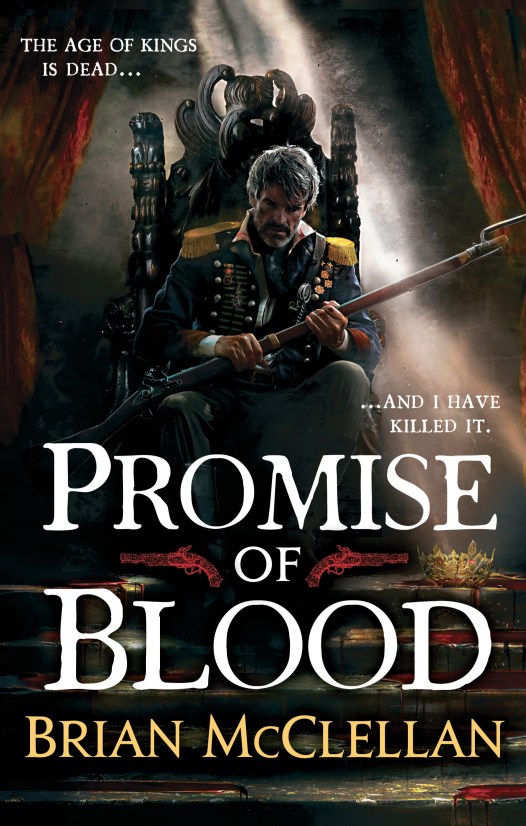
Throwback Thursday – Promise of Blood by Brian McClellan

Promise of Blood Cover.jpg

Publishers: Orbit

                        Hachette Audio

Publication Date – 16 April 2013

Amazon

Reviewed as part of my Throwback Thursday series, where I republish old reviews, review books I have read before or review older books I have only just had a chance to read.

One of the saddest realities of being a bibliophile is that no matter how hard you try or how much spare time you have, no one can read every great book that comes out every year.  I am no exception to this rule, as for years I was mainly focused on the historical fiction genre.  While this is a fantastic genre to focus on, it did mean that I missed out on many of the biggest science fiction and fantasy releases for the last several years.  Ever since I expanded my attention to a range of other genres, I have been seeking out and reading a number of different fantasy or science fiction books and series, many of which I have or will review on my blog and on Goodreads.  One of the series that I have heard constantly praised by friends, fantasy fans and other book reviewers is The Powder Mage trilogy by Brian McClellan.  Nearly every fantasy reviewer and their dog has read and said good things about these books and, as a result, The Powder Mage trilogy has long been at the top of my to-read list.  So when I was recently able to fit the first book in the trilogy, Promise of Blood, into my reading schedule, I thought I would try it out and see if it lived up to everyone’s hype.

The Powder Mage trilogy are the debut novels of fantasy author Brian McClellan, and are a flintlock fantasy series, which is a modern fantasy sub-genre that features pre-industrialisation civilisations who utilise flintlock firearms with fantasy elements.  The Powder Mage trilogy started in 2013 with Promise of Blood, which the author followed up with a new book in 2014 and 2015.  Following the success of his initial trilogy, McClellan introduced a second trilogy, the Gods of Blood and Powder trilogy, which is set 10 years after the events of The Powder Mage trilogy.  This second trilogy is still ongoing, with the third and final book set to be released in November of this year.  In addition to these two main trilogies, McClellan has also written a number of novellas and short stories set in the same universe as his main books, which expand on his fantasy world.

McClellan has created a new and captivating fantasy world in order to contain the stories in his two main trilogies.  The Powder Mage trilogy is primarily set in the nation of Adro, one of nine nations that were founded thousands of years ago by the god Kresimir, which are together known as The Nine.  By the start of the first novel, Promise of Blood, the nations of The Nine have reached a level of technology equivalent to Europe’s pre-industrial revolution period, with flintlock firearms in heavy use.  Magic is also common in this world, with the nations of The Nine containing three separate levels of magical ability.  These include the privileged, extremely powerful sorcerers who can wield a range of devastating elemental abilities; the marked, lesser mages with more specific gifts; and the knacked, who have one specific magical talent, like a perfect memory or not needing to sleep.  The privileged of The Nine are generally organised into sorcery cabals, with the most powerful organised into a Royal Cabal loyal to the King of their nation.

Promise of Blood starts with Field Marshal Tamas, the highest-ranked military officer of Adro, leading a bloody coup against his country’s corrupt king and nobility.  During the coup, Tamas and his powder mages, marked whose abilities are powered by gunpowder, assassinate every member of Adro’s Royal Cabal.  However, every member of the Royal Cabal said one thing before they died, “You can’t break Kresimir’s Promise”.  In order to find out the meaning of these mysterious words, Tamas hires former police inspector Adamat to investigate.  While Adamat sets out to uncover meaning behind these mysterious final words, Tamas begins the difficult process bringing order to his country.  However, it soon becomes apparent that staging the coup was the easiest part of his endeavour.

Tamas’s coup provokes a war with the Kez, one of Adro’s rival nations in The Nine, whose previous attempts to control Adro’s king, led to Tamas overthrowing him.  As Tamas deals with assassins, Royalists, deposed nobles and Kez magicians, it soon becomes apparent that someone on Tama’s council has betrayed him.  Brought in by Tamas to investigate who betrayed him, Adamat finds his loyalties tested when mysterious figures target him and his family.  At the same time, Tama’s estranged son, Taniel Two-Shot, embarks on a hunt for a surprisingly powerful member of the Royal Cabal who escaped Tamas’s powder mages.

Both Adamat and Taniel’s missions reveal dark secrets about the formation of their country.  With dark omens in the sky and ancient legends come to life, can Tamas and his forces stop the destruction of Adro, or will the mysterious forces arrayed against them succeed in their mission to summon forth an ancient power?

To be honest, even before I heard about this trilogy from other book lovers and reviewers, I thought the synopsis was pretty cool and the idea of gunpowder-wielding mages was an interesting concept.  I listened to the audiobook format of Promise of Blood, narrated by Christian Rodska, which goes for a lengthy 19 hours.  Now the question is; did this book live up to the hype?  The answer is yes.  I loved this book, I thought it was massively creative, filled with incredible action, had some complex, if mostly male, characters and made use of some excellent fantasy elements.

I really enjoyed the story within this book and I thought it was an amazing combination of intrigue, action and fantasy storytelling.  I liked the idea of starting the book just as a successful coup had taken place and the focus on the immediate aftermath of such a significant event.  The story is essentially broken into three main parts.  About a third of the book is told from Adamat’s point of view and really focuses on the intrigue elements of the story.  Adamat at first investigates “Kresimir’s Promise”, which is a fairly interesting part of the book, as it dives into the history of the country, and quickly reveals that shadowy forces are at play behind the scenes.  This initial investigation only lasts for a short part of the book, before Adamat is drawn into the larger investigation about the traitor in Tamas’s council.  This is a very well done investigation part of the book as the reader is presented with five suspects, each of whom is hiding several secrets and many of which have suspicious employees.  In addition, Adamat has to deal with a mysterious figure who is blackmailing him, and who keeps the identity of his employer secret.  These multiple layers of intrigue and lies ensures that the reader is looking in several different directions and have a much harder time guessing who these antagonists are.

Another third of the book is told from Taniel’s point of view, and follows him as he first hunts down a powerful privileged, and then finds himself stuck in the middle of a large battle for the survival of Adro.  While there are quite a lot of reveals about some of the book’s underlying fantasy elements in this part of the book, the main focus is on the action, as Taniel and his allies fight a number of opponents, and Taniel reveals while he is known as Two-Shot.  There is some interesting character work in this section as Taniel works through his feelings for his father, finds himself having to choose between obeying orders and the life of his best friend, and him coming to terms with his weird relationship with the powerful female character, Ka-poel.

The final main part of the book is told from the point-of-view of Tamas himself, and deals with the fallout from his coup and the multitude of issues he has to deal with in the aftermath.  The parts of the book focusing on Tamas are the most important chapters within Promise of Blood, as they bridge the other two sections of the book due to Taniel and Adamat not really interacting too much during the book.  The Tamas chapters have the best balance of Promise of Bloods’ excellent combination of fantasy elements, intrigue and action.  Throughout these chapters, Tamas is constantly forced to deal with the political infighting and betrayals occurring all around him, while also being targeted by assassination or capture by his various enemies.  Tamas also encounters a number of hints about the true nature of the fantasy events impacting Adro, including from a bizarre chef, and I loved the layers of intrigue that surrounded something most of the characters believed was a myth.  I really liked Tamas as a character, and I found him to be an intriguing combination of a calm, tactical genius and an absolute rage monster.  Despite alienating most of the people around him, especially Taniel, deep down Tamas is a good man who has been forced to make the hard decisions no-one else will.  However, when enraged he is an absolute terror to behold, especially to someone who has crossed his friends or family, and during these scenes of anger he gives several of the best lines, such as the one that appears on the cover:  “The age of kings is dead, and I have killed it”.  He is an absolutely great character and a fantastic focus for this trilogy.

In addition to these three main characters, a small portion of the book is narrated by female character Nila.  Nila’s character really is not explored too much in Promise of Blood, although she is given a good introduction, and I understand she will become a much bigger character in the next books in the trilogy.  On top of the main characters, there are several excellent side characters who really make this book extra awesome.  This includes Tamas’s bodyguard, Olem, a sarcastic and funny man who acts as Tamas’s moral compass for much of the book, and who also has certain ideas about people shooting his dog.  There is also Sousmith, Adamat’s bodyguard, a former boxer who acts as a fun foil to Adamat’s detective character.  While several characters at the Mountain Watch are also enjoyable, you have to love Ka-poel, the mute, witch who serves as Taniel’s spotter.  She has some crazy magic to her, and I have a vague feeling (without knowing anything about the plot of the future books) that she is some sort of young god or something.  I liked the way that Ka-poel was able to express everything, despite being a completely non-verbal character, although the implied romance between her and Taniel was a tad weird, especially as it started the moment he realised she was older than she looked.

The world building in this book is extremely impressive and it serves as an outstanding introduction to the key elements of the series’s universe.  While the other magical and fantasy elements of this book are pretty awesome, I especially loved the powder mages, and their magic is easily the best part of the book.  The powder mages have a unique blend of abilities, all of which are powered by eating or snorting gunpowder.  Consuming the powder gives them focus, enhanced perception, great strength and stamina.  In addition, they have control over gunpowder, igniting at will, and using their abilities to manipulate bullets in flight.  Each of the characters have different abilities on top of that.  Tamas can ricochet bullets around a room; Taniel can fire bullets further than anyone else, as well as firing two bullets at once; while another powder mage, Vlora, can ignite powder from a distance.  These characters in battle are absolutely fantastic, and I love it when these characters, especially Tamas, fully unleash their abilities.  The fight scenes between the powder mages and the privileged were exceptionally amazing, and I loved the contrast between the more traditional fantasy magic of the privileged and McClellan’s more unique powder magic.  That being said, when the privileged unleash their abilities they can be much more destructive, and some of their fights are pretty impressive.

I had a wonderful time listening to the audiobook format of Promise of Blood, and I thought that it was a spectacular way to enjoy this amazing story.  The action sequences, especially when the magic and bullets are flying, really come to life when narrated, and audiobooks always help me absorb complex new fantasy worlds such as the one in this series.  Rodska’s narration is really well done, and I found that he really captured the essence of the characters.  I especially thought he got the gruff and powerful voice of Tamas down perfectly, and it was an extremely realistic personification of the character’s voice.  I really hope that Rodska does the narration for the other books in McClellan’s series, and I would easily recommend the audiobook format of Promise of Blood to anyone interested in this series.

Overall, I really loved Promise of Blood and I found that it lived up to its substantial hype.  It’s easily a five-star novel in my eyes.  I loved this book so much that I am planning to listen to the remaining books in The Powder Mage trilogy as soon as I can, and I will probably also try and listen to the first two books in the Gods of Blood and Powder before the final book comes out in November.  McClellan is a fantasy genius, and anybody who loves action and explosions should invest the time to read this book.

My Rating:

Five Stars

Amazon

Quick Review – Adrift by Rob Boffard

Adrift Cover

Publishers: Orbit/Audible Studios

Publication Date – 5 June 2018

Amazon     Book Depository

For this review I will be looking at Adrift by Rob Boffard, a book I listened to a few months ago, but which I did not get a chance to review at the time.  With the end of 2018 fast approaching, I decided to do a quick review for this book in order to clear my review schedule for the new year.

Goodreads Synopsis:

In the far reaches of space, a group of tourists board a small vessel for what will be the trip of a lifetime – in more ways than one…

They are embarking on a tour around Sigma Station – a remote mining facility and luxury hotel with stunning views of the Horsehead Nebula.

During the course of the trip, a mysterious ship with devastating advanced technology attacks the Station. Their pilot’s quick evasive action means that the tour group escape with their lives – but as the dust settles, they realize they may be the only survivors . . .

Adrift in outer space, out of contact with civilization, and on a vastly under-equipped ship, these passengers are out of their depth. Their chances of getting home are close to none, and with the threat of another attack looming they must act soon – or risk perishing in the endless void of space.

What initially drew me to this book was the pretty cool-sounding synopsis above.  I had not read anything from author Rob Boffard before, but a story featuring a group of mismatched passengers attempting to survive out in space with only a small, poorly equipped ship sounded like an intriguing read.  After enjoying Adrift, I think I might check out Boffard’s Outer Earth series in the future.

Adrift turned out to be a pretty compelling read, featuring a great story in space.  While the action was a little lighter than your standard science fiction read, this is more than made up for by some powerful drama as the characters deal with the stresses of their situation.  There are also some thrilling intrigue elements as the protagonists attempt to unwrap the difficult situations inside and outside of the ship, as well as one particularly shocking and unexpected moment in the middle of the book.  There were a few good action sequences as well, including several epic flight scenes, and a memorable spaceflight featuring a little old lady.

This book is primarily a character-driven story, as the story mainly focuses on the passengers aboard the tourist ship.  Each of the various characters gets decent coverage in this book, with a particular focus on the three main point-of-view characters and the two secondary point-of-view characters.  After the first few chapters, my initial impression of all the characters in the ship was, ‘What a bunch of losers and arseholes!’  The passengers of the ship are made up of several abrasive characters who initially seemed to overshadow most of the other characters, including two timid main point-of-view characters.  However, as the book is explored further, the background of all of the characters is explored in some detail, and the reader gets an idea of why some of the characters are the way they are.  The events of the story help develop these characters further, and by the end the surviving characters are all much more likeable.  I was impressed by the emotional range that Boffard was able to write, and the various reactions to the situations about the tourist ship came across as quite realistic.

I ended up listening to Adrift in its audiobook format, which was narrated by Katie Scarfe.  The audiobook runs for a little bit over 15 hours, so readers need to invest a bit of time in getting through this book.  I thought that Scarfe did a good job with her narration, coming up with a number of good voices for her distinctive characters, and moving the story along quickly.  Scarfe had a bit of work to do with the primary cast of characters, as not only did she have to do Russian, Irish and British accents, as well as several random accents the ship’s computer system blurted out through the course of the book, but she also had to do a range of ages across both genders, from a young male child to an elderly lady.  Fortunately, Scarfe was able to produce pretty good accents for each of these characters, and it was possible to get an idea of gender and age with the various narrations.  I also thought she did a good job capturing the range of emotion that flowed from her characters, from despair to anger at their situation.  Overall, the audiobook format is a great way to enjoy Adrift, and I would recommend it for those who prefer to listen to their books.

Adrift by Rob Boffard is a clever and fairly captivating read that makes great use of its character-driven storyline.  This was a good standalone novel, and readers will find a lot to enjoy with this intense science fiction read.

My Rating:

Four stars

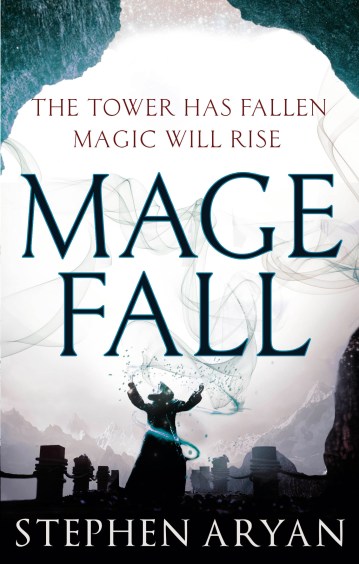
Magefall by Stephen Aryan

Magefall Cover.jpg

Publisher: Orbit

Publication Date – 4 September 2018

Amazon     Book Depository

In the aftermath of the devastating battlemage war, magic became mistrusted and feared by the common population of all the lands.  However, the mysterious Akosh managed to turn this mistrust into outright hatred, and her manipulations and minions led the populace to attack and destroy the Red Tower, the seat of all magical learning.  While the tower was destroyed, many of its students and teachers managed to escape and the outcast mages must now find a new path for their magic and abilities.

While the powerful and disturbed former instructor of the Red Tower, Garvey, leads several of his former students on a murderous rampage through the countryside, three other refugees from the Red Tower attempt to change the public perception of magic.  Wren and Danoph have started their own community of mages in the abandoned fringes of Shael, and attempt to protect the local villages from a murderous band of bandits.  At the same time, their friend Tianne returns home to Zecorria in order to take advantage of the regent’s amnesty for mages.  But as she begins to work in an official capacity for the regent, she is forced to become more involved in his despotic policies.

Elsewhere, Akosh continues to manipulate events across the lands, attempting to gain even more influence and control.  However, her actions have not gone unnoticed, and several individuals are rallying to counter her bid for power.  The new head of the Guardians, Tammy, moves to shatter Akosh’s influence in the country of Shael, but how far will she go to win this fight, and what will the consequences be?  Old friends Balfruss and Vargus attempt to counter both Garvey and Akosh, while Munroe, the most powerful mage in existence, embarks on deadly rampage to find Akosh and get her revenge.  But Akosh is far more powerful than anyone believes possible, and what will happen when a mage goes up against a god?

Magefall is an intriguing and enjoyable book from talented fantasy author Stephen Aryan and one that I had a lot of fun reading.  Magefall is the second book in Aryan’s Age of Dread trilogy, which followed on from his initial The Age of Darkness trilogy.  I have to admit that I have not had a chance to read any of Aryan’s previous books before, and as a result, I had a bit of a harder time getting into this story initially, due to the author’s assumption of his readers’ knowledge of the four previous books’ established plot and lore.  While I was eventually given a clearer picture of some of the previous events, the initial confusion and uncertainty when it came to certain plot points did slightly colour my assessment of this book.  As a result, I have knocked my rating down to four stars, rather than the four and a half stars I probably would have given to it if I were more familiar with the previous books in this universe.  That being said, Magefall is still an amazing piece of fantasy fiction that I really enjoyed, and I am intending to check out some of Aryan’s previous novels at a later date.

The book is made up of a series of semi-separated storylines that take place across various locations in Aryan’s fantasy landscape.  Each of the storylines is very exciting and incredibly captivating, resulting in some great moments of action and intrigue.  I rather enjoyed the story that focused on the former student Wren as she starts her own community of mages out in the wilderness, as it contained a great examination of a responsible group of mages who actually wanted to protect and help the people around them.  Their battles against a merciless group of bandits are particularly intriguing, especially as the bandits are actually able to cause the very powerful young mages significant issues and problems.  The various intrigue based storylines that highlighted the manipulative and wide-reaching schemes of the villainess Akosh are also done really well, and some of the best parts of the book showcase the various moves and countermoves as the protagonists seek to thwart Akosh and her goals.  There is not a single dull moment during this entire book as every single one of these fantastic stories come together in an amazing overall narrative.

One of the other things that I also really enjoyed about Aryan’s latest book is the devastating magical sequences that take place throughout the various storylines.  The magical characters engage in a number of high-octane battles in a variety of creative scenarios throughout the book.  Not only do these characters engage in battles with normal non-magical people but several mages fight each other in sequences that see buildings and scenery blown apart around them.  It is great to see the tactics of some of the non-magic characters, as well as the difference in power levels between the former students and the really powerful mages who previously taught them.  The highlight of the book has to be the fight between the uber-powerful mage Munroe and Akosh, as the two engage in an all-out power brawl.  This is magical action at its very best, and readers will have a terrific time enjoying all the carnage.

Magefall is an excellent piece of fantasy fiction from a rising star in the genre.  Making full use of his multiple-storyline format, Aryan has combined a series of enjoyable, fast-paced and electrifying adventures with some outstanding uses of magic.  While I would strongly advise reading some of the previous books in this universe before attempting to dive into Magefall, this is still a fun book to read and it serves as a mostly great introduction to this intriguing series.

My Rating:

Four stars

Amazon     Book Depository

Annex by Rich Larson

Annex Cover.jpg

Publication Date: Orbit

Australian Publication Date – 25 September 2018

World Publication Date – 24 July 2018

Amazon     Book Depository

From exciting new author Rich Larson comes an absorbing young adult science fiction debut that makes use of creepy alien elements, excellent characters and fantastic LGBT inclusions to create a powerful and creative read.

When a gigantic alien ship arrives above Earth and isolates an entire city, all the children that are trapped with the aliens are kidnapped and infested with parasitic life forms, while the adults are clamped and inserted with mechanical devices that turn them into mindless drones.

For the small group of children that escape captivity, the disappearance of all the adults offers them a life of fun and adventure.  Falling under the leadership of the charismatic Wyatt, this group of survivors, the Lost Boys, are living the high life, with their newly attached parasites giving them the ability to vanish objects for brief periods of time.  While life is fun, they must continue to avoid the mechanical whirlybirds, the pod-like spaceships and the terrifying Othermothers hunting them in the streets.

For Violet, this new world allows her the opportunity to live the life she’s always wanted and to be the person she’s always wanted to be.  But Violet’s new life on of the city streets changes dramatically when she finds a new escapee, Bo, and takes him under her wing.  Bo has the most powerful parasite the group has ever seen and is capable of permanently vanishing larger objects.  It also appears the alien invaders want him back and are deploying hordes of their creatures to capture him.

Sensing an opportunity, the Lost Boys use Bo to fight back against the aliens while trying to uncover what plans they have for the rest of the planet.  Breaking into the massive hovering mother ship, Violet and Bo team up with the mysterious Mr Gloom to end this alien threat once and for all.  But these two young people will quickly find that the biggest threat to them may be far closer to home than they realise.

Annex is the first novel from Rich Larson and is the first book in The Violet Wars series, with the second book of this intriguing series, Cypher, already on its way.  This is a wonderful debut from Larson, which contains a surprisingly intense and at times dark story that will prove to be enjoyable to a wide range of readers.

There are a number of great features of Annex that readers will enjoy; however, one of the most noticeable features is the creepy and well-written descriptions of the aliens and events that the book’s main characters encounter.  There are a lot of inventive and twisted creatures, technology and even body modifications that can be found throughout this book, and Larson’s skilled writing helps brings them to life in the reader’s imagination.  I was particularly impressed, and a little freaked out, by Larson’s unique creation the Othermothers.  The Othermothers are unsettling clones of the escaped children’s mothers, perched upon long skeletal metal legs, who chirp out random phrases in the mothers’ voices in an attempt to lure the escaped children to them and then capture them.  Because of Larson’s descriptive writing, these creatures are horrifying and really stood out for me among the other alien antagonists the heroes encountered.  Special mention should also be made of the shadowy Mr Gloom, a strange adult they encounter whose appearance is not quite human and who has a range of powerful abilities.  I am not going to reveal too much about Mr Gloom because he appears about two-thirds into the book and I do not want to spoil too much about him.  I did find him to be quite a fun character.  Larson’s descriptions of Mr Gloom are fantastic, especially when it comes to exploring his shadow based abilities, which are a treat to read about.

In addition to the alien creatures and characters that are encountered through the book, readers should also keep an eye on the leader of the Lost Boys, Wyatt.  Wyatt is at first presented as a talented leader who has managed to bring the Lost Boys together and keep them alive.  However, there is much more to this character than he initially presents, and his real personality begins to be revealed to the heroes and the readers as the book progresses.  This is some incredible character work from Larson, and the revelation of Wyatt’s true motivations and persona is done perfectly, resulting in some excellent dramatic scenes and some really dark twists.  The author’s use of two separate point-of-view characters, Violet and Bo, works really well when it comes to viewing Wyatt, as the reader is able to observe his different manipulations, his moods and the cracks that appear in his outer façade.  This is a very intriguing character that dramatically changes the narrative of Annex in a number of ways, and the scenes exploring Wyatt are some of the best written in the entire book.

One of the key aspects of Annex that will prove to be an interesting addition for the reader is one of the main protagonists, Violet.  Violet is a tough–as-nails kicker of alien ass who is also a young transgender girl who has used the lack of adults following the invasion to finally live her life the way she always wanted to.  This is an amazing portrayal of a transgender character, as the author creates a stimulating backstory for Violet that examines her past and explores how she became her current self while also exploring the fears and people that stopped her from fully expressing her identity.  The book also explores how intrinsic this identity can be and how devastating attacks about identity can be, even during an alien apocalypse.  Violet is a well-rounded character, and Larson skilfully displays her other fears, her independence, her new friendship with Bo and her relationships with the other Lost Boys.  Violet helps to elevate this book to the next level and make it into a terrific piece of young adult fiction.

This book is an interesting addition to the young adult genre that definitely highlights the empowerment of young people.  The human characters of this book are all quite youthful and yet manage to thrive in a hostile alien landscape that has incapacitated all of the adults.  Watching these young people come together as a tight-knit group is an intriguing part of this book, and it is interesting to see the subtle techniques Wyatt uses to turn them into his own little army, such as with initiation rites, slogans and other forms of manipulation.  Overall, watching this group overcome without adult help the obstacles of being among the aliens oppressing them is a great part of the book.  This makes it an interesting read for the young adult audience, especially for those who love to see transgender characters in fiction.

Annex by Rich Larson is an excellent debut and is recommended for those younger readers looking for a science fiction adventure that they can relate to.  With some creepy aliens, intriguing characters and a deep look at transgender issues among today’s youth, this is an exhilarating read from a promising new author.

My Rating:

Four stars

Amazon     Book Depository

Bloody Rose by Nicholas Eames

Bloody Rose Cover.jpg

Publisher: Orbit

Publication Date – 10 July 2018

Amazon

Sensational fantasy author Nicholas Eames follows up his exceptional debut with the five-star novel Bloody Rose, featuring an epic quest storyline which takes its protagonists through a series of wild adventures in a spectacular and large-scale fantasy landscape.

In the human lands of Grandual, mercenary bands hold a celebrity status among the people.  Originally formed to help protect against the horrors of the world, most bands now spend their days touring from city to city, fighting monsters in arenas in order to gain fame, glory and money.  The most famous of these bands is Fable, led by the notorious Bloody Rose, daughter of the land’s greatest hero, Golden Gabe.  Years after her father led a mercenary army to rescue her from a horde of monsters, Rose has reformed Fable with the druin Freecloud, the shaman Brune, the Inkwitch Cura and their booker, the waggish satyr Roderick.  With a massive chip on her shoulder, Rose is determined to take on the toughest jobs and challenges that she can find.

In the city of Ardburg, Tam Hasford is sick of her job slinging drinks at the local pub to the famous mercenaries passing through.  As the daughter of two mercenaries herself, Tam craves adventure, and when Fable rolls into town looking for a new bard, Tam jumps at the opportunity to travel with Bloody Rose and her band.  Gaining a well-deserved reputation for her singing and an accidental reputation as a fighter, Tam receives the moniker ‘The Bard’ and a crash course in the mercenary lifestyle of drinking, gambling, fighting and good times.

But while Tam is having fun in her new role, there is still work to be done.  A massive monster horde has once again left the wilds and is threatening several human cities.  All of Grandual’s mercenary bands are gathering to meet them, all except Fable.  Rose is leading her band in the opposite direction and appears unconcerned with the potential devastation the monsters could cause.  Has Bloody Rose lost her nerve or does she have a far more dangerous quest in mind?  While Fable’s plan to become legends may prove to be successful, they will have far more destructive consequences than anyone could ever predict.

Bloody Rose is the incredible sequel to Eames’s 2017 debut, Kings of the Wyld, and forms the second book in Eames’s The Band series.  Set several years after the events of the first book, Eames switches up the story, focusing on the adventures of Rose and her band of mercenaries, while telling the narrative through the eyes of new point-of-view character Tam.  While there are many tie-ins with the first book, including several of the main characters, Eames has mostly shifted the focus onto a new generation of characters.

Although Bloody Rose is the second instalment in this series, curious readers can easily start their adventure with this book.  This book’s point-of-view character, Tam, never directly experienced the battles of the first entry in the series, and she ends up having quite a few conversations that describe or dramatise the events of the previous novel.  As a result, new readers who start with Bloody Rose will not experience any confusion and will be able to enjoy this story right off the bat.  That being said, readers who start with this book will probably get a hankering to read Kings of the Wyld due to how amazing Bloody Rose is.

This is a substantial piece of fantasy literature with a powerful story that is guaranteed to draw the reader in from the first page.  The huge scope of this story is just remarkable, as what begins as a simple adventure story transforms into an epic battle for the survival of all life in the world.  Much of this scope is the result of the significant number of secondary characters and antagonists that are introduced throughout the book.  It is a testimony to Eames’s skill as a writer that all these characters don’t overwhelm the story, and the reader finds themselves interested in seeing how each these characters ends up.  The use of a brand new point-of-view character to tell this story is a clever move from Eames as it allows a fresh insight into this world of mercenary bands and monsters, moving on from the old veterans that were the focus of Kings of the Wyld.

The author has infused his narrative with a huge amount of humour, most of it quite adult and over the top in nature.  This humorous tone infects quite a lot of the way that the book is told and makes it a very fun read.  There are some extremely funny scenes through the book, from debates about fake cockatrices, to the antics of a drunken satyr, to discussions about the dietary requirements of minotaurs.  While this humour is a key and overwhelmingly fun part of the story, Eames does get deadly serious in several parts of the book when the protagonists encounter dark days.  These darker scenes are felt particularly hard by the reader, mainly due to the sudden shift away from the lighter tone of the rest of the book.  While there are several examples of this throughout the story, I found that the final scenes of this book were particularly intense and had me absolutely captivated.  This clever combination of the outstanding comedy overtones and the gripping dramatic moments works exceedingly well and turns Bloody Rose’s story into one of the best fantasy narratives I’ve had the pleasure of reading.

In addition to the great use of comedy, drama and story, Eames has also packed this book with a significant amount of action and adventure.  The protagonists of this story essentially fight everyone as they adventure across the land, and participate in all sorts of combat, including arena battles with monsters, fights with titanic creatures, large-scale battles and even a few tavern brawls.  All these action sequences work well with the book’s other elements.  Not only do these battles result in some devastating moments but Eames also includes some comedy in these fight scenes, which can prove to be very entertaining.  Readers should also keep an eye out for the fun and inventive combat tactics used throughout this book, which are not only destructive but creative.  Never has red hair been used in battle so effectively.  With as much conflict and combat as you’ll ever need in a book, this is a perfect read those looking for those looking for their next injection of thrilling action and adventure.

Eames has also created a vast world to be the setting for this story, filled with a huge number of fantasy creatures and massive amount of world building lore.  Having such a large and well-established world is essential for a story of this magnitude.  The protagonists do a substantial amount of travel from one end of Grandual to the other, exploring large cities, small towns, barren wastes, massive battlefields and dangerous forested areas.  The author has also filled this story with every classic fantasy and mythological creature one could think of, as well as a few unique creatures from his own imagination.  All these creatures are a great addition to the story, resulting in some very fun battle sequences throughout the book, especially when their a huge number of these creatures in action.  One of the more intriguing races is the druin, the rabbit-eared humanoids created by Eames which used to rule all the humans and monsters of this fantasy world.  There is some fascinating history around the druin which has some significant impacts on the story, as well as gifting these creatures with some cool abilities that come into play in a variety of great ways.

The author has also spent time developing a fantastic band of main characters for the reader to follow on their adventure.  Using his new narrator, Tam, to full effect, the reader is given an introduction to every member of Fable and learns their history and motivations in significant and interesting detail.  A decent amount of time is spent looking at all of the members of Fable and the reader is given a deep understanding of each of them.  Each member of the band is a fairly unique fighter and character in their own right, but together they form a fun team.  Eames really hammers home how close these band members become throughout the book, and the reader becomes attached to the characters as they grow closer together.  This makes any potential harm or trauma they experience particularly hard for the reader to experience, and really adds to the books emotional depth.

With the follow-up to his epic debut, Eames has once again demonstrated why he is one of the freshest and most exciting new voices in fantasy fiction.  This exceptional story is an action-packed bonanza that sees several compelling characters engage in a heroic quest across an impressive fantasy landscape.  With the perfect blend of comedic adventure, epic fantasy storytelling and some dramatic character moments, Bloody Rose is an exceptional and excellent read that is guaranteed to become your new favourite story.

My Rating:

Five Stars

Amazon

Dreadful Company by Vivian Shaw

Dreadful Company Cover.jpg

Publisher: Orbit

Publication Date – 24 July 2018

Amazon     Book Depository

Those looking for an entertaining, intriguing and different take on the horror genre should investigate Dreadful Company, the latest book from author Vivian Shaw, which contains a thrilling story based around the doctor to your favourite fictional monsters.

Greta Helsing is London’s medical practitioner for the undead, providing specialised treatment to the city’s hidden community of ghouls, vampires, mummies and zombies.  After being called to Paris to attend a supernatural medical conference, Greta’s plans to enjoy a stimulating discourse and debate on monster medicine is ruined when she is suddenly kidnapped off the street.  Her abductors turn out to be a coven of young and murderous vampires led by the unhinged Corvin, who bears a particular grudge against Greta’s vampire friend Ruthven.  Even more concerning, a member of Corvin’s coven is using magic to summon small and friendly magical creatures.  While the creatures may be harmless, the ripples they are causing in reality are not, and represent a significant threat to our world.

While Greta is trapped in the tunnels and catacombs below Paris, her friends arrive in the city to save her.  Legendary elder vampire Ruthven and Greta’s vampyre boyfriend, Sir Francis Varney, team up with Paris’s guardian werewolf, two immortal paranormal investigators and the city’s resident demon to free Greta and put an end to the dimensional instability.  But Greta and her companions are about to find out that there are weirder and more dangerous things than a collection of bloodthirsty vampires in the tunnels underneath Paris.

Dreadful Company is Shaw’s follow-up to her 2017 debut novel, Strange Practice, and is the second book in her Dr Greta Helsing series.  Dreadful Company returns several of the protagonists from the first book while also adding in a healthy number of new and exciting characters.  A third book in the series is already planned; I will definitely be keeping an eye out for Grave Importance next year.

Shaw’s latest book contains a fun and electrifying adventure that pits several ancient beings and their doctor against a coven of vampires and the magical catastrophe they have created.  The author tells her story through a range of characters to show many different perspectives of the adventure taking place.  Not only is every single protagonist – including returning characters Greta, Ruthven and Varney, as well as new characters the werewolf St Germain, the remedial psychopomps Brightside and Dammerung and the demon Irazek – a point of view character, but so are several of the young vampires who serve as the book’s antagonists.  This allows Shaw to tell a much wider story.  Not only is the central adventure explored in greater detail from a several angles, but the motivations, shared histories and the underlying thought processes of the story’s key players are presented to the reader.

Shaw has made a smart decision to change the book’s main setting from London to Paris.  Many writers can get bogged down in one location during their series, but Shaw did a fantastic job adapting her story to a completely new and unique cityscape, a trend that she will apparently continue to follow in her 2019 addition to the series.  Shaw makes full use of several iconic Paris locations, particularly the catacombs and tunnels underneath the streets, which are the perfect setting for a horror story.  Overall, Dreadful Company contains a rather exciting adventure story that makes spectacular use of its horror and fantasy elements, while also making use of the humour and history of its many point-of-view characters to lighten the darker tone of the book and create a unique and entertaining read.

I was extremely happy that Shaw included more examples of monster medicine within Dreadful Company.  The examination of the medical techniques used on supernatural characters was one of the best features of Strange Practice, and was a very unique and compelling element of this first book.  There are a number of wonderful general monster medicine scenes throughout the book, including a supernatural medicine conference where topics include ‘An overview of the various treatment modalities for tissue degeneration in Class A revenants’ (how to stop bits falling off zombies).  Readers will really enjoy Dreadful Company’s interesting focus on the medicine of vampires.  Shaw did spend a little time exploring the biology and treatment of vampires in the first book, which is expanded upon in Dreadful Company.  There are several discussions about vampire anatomy and physiology, including some of the features of the different vampire subspecies.  There is also a detailed look at the effect of certain substances on vampiric characters, including drugs and garlic, as well as the surprisingly devastating absinthe.  The protagonist is also forced to treat a number of different vampire characters for a variety of different conditions, including an overdose, stab wounds and an infection caused by a ghoul bite.  Once again, Shaw’s inclusion of monster medicine was an amazing part of this book, and I am looking forward to the third novel in the series, Grave Importance, which will focus on the care of mummies.

Aside from the examination of vampire biology, Shaw has also included a fascinating look into the different vampire mentalities, particularly when it comes to the old school versus the young bloods.  The two elder vampire characters, Ruthven and Varney, are reformed from their violent past and are instead trying to live normal and peaceful lives alongside humans.  The younger vampires, on the other hand, are bloodthirsty creatures who don’t follow any rules, kill indiscriminately and indulge in drugs and wanton behaviour.  The differences between the behaviours of these two different types of vampires are quite noticeable, especially when the younger vampires try to live up to all of the vampire stereotypes, such as sleeping in coffins, wearing elaborate clothes and makeup, making up dumb names for themselves, developing a superiority complex and trying out various ways to make themselves glitter.  While these inclusions are extremely fun, the readers will really experience chills when they see how angry the usually calm characters Ruthven and Varney get when they encounter these younger vampires and realise what taboos they have broken.

In addition to the creative and captivating use of vampire characters throughout the book, Shaw has referenced several other classic horror creatures and villains.  There are several allusions to Frankenstein and The Phantom of the Opera, with the protagonists actually visiting the Phantom’s underground lair at one point.  There are also other creatures, such as magically summoned hair monsters, well monsters and a whistle-summoned spirit, all of which play an interesting role in the plot.  Some great humour also comes from the inclusion of several ghosts, many of whom can be found having a lively party in Paris’ iconic Père Lachaise cemetery.  Highlights of this scene include a snarky Oscar Wilde and a musical Jim Morrison, both of whom have some great interactions with the new characters, Brightside and Dammerung.

Dreadful Company sees new author Vivian Shaw return with another fun and thrilling horror novel that contains a fast-paced adventure and a light comedy enhance tone.  Shaw has invested in a range of new characters, a fresh setting and some appealing fantasy and horror elements.  The author’s clever and memorable inclusion of monster medicine once again shines through as the book’s best feature, as well as the detailed examination of the vampire psyche.  An absolutely amazing second outing from Shaw, Dreadful Company is a fantastic read that will prove to be both unique and captivating to a huge range of readers.

My Rating:

Four and a half stars

Amazon     Book Depository