

Quick Review – The Girl From London by Olivia Spooner

The Girl From London Cover

Publisher: Moa Press (Trade Paperback – 14 November 2023)

Series: Standalone

Length: 314 pages

My Rating: 4.25 out of 5 stars

Amazon

Fantastic New Zealand author Olivia Spooner presents her first dive into historical fiction, with the intriguing and clever historical drama, The Girl Form London, an outstanding read that proved quite fascinating.

Plot Synopsis:

London, 1940. Ruth, a young schoolteacher, volunteers as an escort helping to evacuate children from war-torn England to Australia and New Zealand. Her three-month voyage is fraught – their passage is perilous, and the children anxious and homesick. Nine-year-old Fergus is more troubled than most and Ruth forms an unexpected bond with the boy.

It’s not just Fergus who captures Ruth’s attention. Bobby, a fellow volunteer who initially infuriates Ruth with his laidback charm, somehow gets under her skin and throws her ordered life into chaos.

Tragedy strikes on their return voyage, when the Rangitane is attacked by German raiders. As the ship goes down, the surviving passengers are taken as prisoners of war aboard the German vessel. To the rest of the world, they are missing, presumed dead.

New Zealand 2005. Hazel boards a plane to London, eager to explore Europe. Sitting next to her is a man named Joe. On her lap is a treasured book from her grandfather, Fergus. A book that will finally reveal Ruth’s story.

A captivating, heart-wrenching story of love, loss, and the resilience of the human spirit that will stay with you long after you turn the final page.

This was an outstanding novel from Spooner that took the reader on an enchanting and tragic adventure during some very distinctive moments from World War II.  Spooner chose to tell The Girl From London’s narrative through the somewhat overused medium of a young person in modern times learning about the struggles their older relatives went through during the war.  However, I rather enjoyed Spooner’s take on this writing trope by having her modern characters getting invested in a novel that covers the adventure of Hazel’s grandfather and the people that were important to him as a child.  This not only allowed the author to dive back into the unique story generated in the past but also allowed for a quite good and heartfelt romance story to occur in the present as Hazel and Joe have a meet-cute which develops naturally into a compelling, complex relationship.

While this modern storyline was interesting, I much preferred the storyline set in the past surrounding Ruth’s journey from England to Australian and New Zealand and then the tragic events aboard the Rangitane.  That entire journey away from England was pretty darn fascinating, and I loved the captivating details of how the children were being transported to safety, the inherent tragedy of their journey, and the complicated figures who volunteered to help escort them to a new life.  Spooner covers the historical aspects of their journey extremely well and the first half of their story is quite powerful and lovely, especially as she takes the time to explore the various characters, their developing relationships, and their complex motivations for being on the ship.

The Girl From London takes a fascinating turn once the main characters start the second part of their journey aboard the Rangitane.  The historical events covering the sinking of this ship off the coast of New Zealand during the war is absolutely amazing, and despite a love for history and a good knowledge of World War II history, I had personally never heard of the Rangitane before.  As such I was really enthralled by this real-life tale, and Spooner told it magnificently, examining the taking of the ship in detail and showcasing all the remarkable events that followed.  While these events in themselves are fascinating, Spooner makes them even more compelling by tying her great characters into this historical event.  By this point of the book, you’ve come to care for the characters, so having them involved in this tragedy really raises the stakes for the reader, especially as you know something bad has to happen to Ruth at some point.  This entire part of the book was pretty remarkable, and I really got caught up in how everything unfolded.

I think that Spooner did a pretty good job of bringing the two separate storylines together in an effective and enjoyable way.  As I mentioned above, I liked Spooner’s version of the relative finding out their grandparent’s story here, and the constant breaks in the World War II storyline to explore Hazel and Joe’s burgeoning relationship gave the story a distinctive flavour.  Honestly having her grandfather’s story not become Hazel’s entire identity was quite refreshing compared to other historical dramas I’ve read and I liked the mixture of storylines that emerged.  Still, it was good to get some closure on the main storyline surrounding Ruth, and I liked the emotionally powerful way that Spooner chose to have her story be told.  The ending is both tragic and heartwarming in all the right ways and this ended up being quite an excellent read.

Overall, The Girl From London is a wonderful and compelling historical drama that I had a fantastic time reading.  Olivia Spooner produced a compelling and emotionally charged narrative, that examines romance, sacrifice and the power of choices across the generations, while also diving into a fascinating historical event.  This ended up being an amazing book and Spooner definitely showcased her ability as an author in her first foray into historical fiction.
Amazon

The Queen’s Captain by Peter Watt

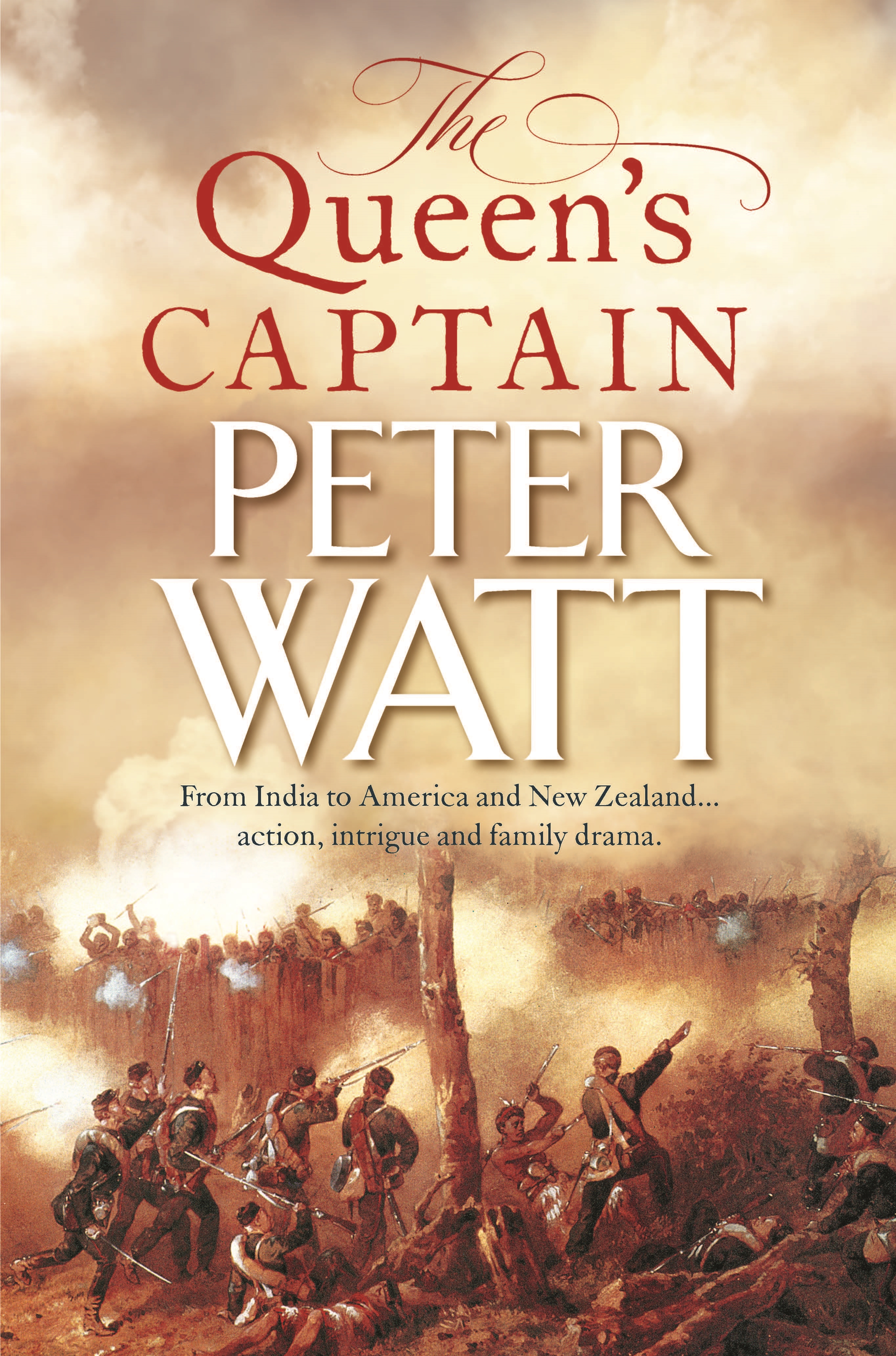
The Queen's Captain Cover

Publisher: Macmillan (Trade Paperback – 10 November 2020)

Series: Colonial series – Book Three

Length: 358 pages

My Rating: 4.5 out of 5 stars

Amazon

One of Australia’s top historical fiction authors, Peter Watt, wraps up his ultra-exciting Colonial series with the third and final novel, The Queen’s Captain.

Watt is a fantastic Australian author who has written a huge collection of amazing historical fiction novels, most of which are set in Australia or feature Australian characters.  I have been a fan of Watt’s books for several years now and I have been particularly enjoying his current body of work, the Colonial series.  The Colonial books, which started back in 2018 with The Queen’s Colonial, follow the adventures of Ian Steele, a colonial blacksmith who manages to enlist as an officer in the British army under the name Captain Samuel Forbes, taking the identity of a friend who wished to sit out his military service.  While the real Samuel leaves to go to America, Ian fights in his place for a period of 10 years, which will allow Samuel to claim a substantial inheritance from his ruthless family.  This has so far been a really fun series, and I enjoyed reading The Queen’s Colonial and The Queen’s Tiger.  I have been looking forward to reading this third novel in the series for some time now and I was very excited when I received my copy, especially because the back cover quoted my Canberra Weekly review of The Queen’s Tiger.  I ended up having an awesome time reading this book, and it proved to be another fast-paced and compelling read.

In October 1863, Ian Steele is still fighting for the British crown as Captain Samuel Forbes, known to his men as the Queen’s Colonial.  After helping to put down the Indian Mutiny, Samuel and his comrades, including his long-time friend Sergeant Major Conan Curry, are fighting the Pashtun in the treacherous mountain passes on the north-western frontier of India.  With only a few months left until the 10-year deal with the real Samuel Forbes concludes, Ian is determined to survive so he can claim his reward and finally settle down.  However, with his typical bad luck, he finds himself drawn into several high-profile missions, including a dangerous operation to eliminate a murderous rebel army camped in the jungle.

As Ian fights for Queen and country, his friends are engaged in their own adventures.  In America, the real Samuel Forbes has followed the man he loves into battle, become a lieutenant in the Union army to fight the Confederates.  Back in London, Ella, the women Ian loves, has entered into an unhappy marriage to Russian Count Nikolai Kasatkin.  Determined to have one piece of happiness, Ella attempts to reclaim the son she had with Ian, but the jealous Nikolai will do the unthinkable to spite her.  At the same time, Samuel’s ruthless older brother, Charles Forbes, continues his relentless bid for power and money, while still determined to prove that the Samuel serving in the British army is an imposter.

All of this will come to a head down in the colonies in 1864.  As Ian is transferred to New Zealand to provide advice to the soldiers fighting against the determined Maori, he will come face to face with an old enemy, and the final chapters of his story will be told.  Friends will die, people will be changed in unexpected ways and the Queen’s Colonial will fight his last battle.  How will the story end?

The Queen’s Captain was another excellent novel from Watt, who has produced an exciting and fascinating conclusion to his latest series.  Like the rest of the books in the Colonial series, The Queen’s Captain is an extremely fast-paced story told from a series of different character perspectives around the world.  The book is broken up into two distinctive parts (although the second part only contains the last 100 pages) and features a number of compelling action and intrigue orientated storylines.  This is an extremely easy novel to get into, even for those readers who have not previously enjoyed the Colonial series, and I was able to finish it off in a short period of time as I got caught up in the various battles and double-crosses.  Watt really took this final entry in his series in some interesting directions, and readers will be intrigued by the various ways he finishes up the Colonial books.  There was a real focus on wrapping up every single storyline and character arc throughout The Queen’s Captain, and I really enjoyed the way in which Watt brought the series to end, especially as the overarching narratives comes full circle.  Overall, I felt that The Queen’s Captain was a fantastic way to conclude the Colonial series and readers are in for a real treat with this book.

Like all of Watt’s novels, The Queen’s Captain makes use of a substantial number of point-of-view characters to tell the story.  This is a combination of some of the established characters from the previous Colonial novels as well as several new characters.  This makes for a rather intriguing, character driven novel, especially as Watt was apparently determined to wrap up as many character arcs as possible for this final entry in the series.  There is a particular focus on the characters of Ian, Samuel, Ella, Charles, and Ian and Ella’s child, Josiah, although many of the other point-of-view characters get their time to shine and Watt ensures that they have a decent backstory.  I have really enjoyed seeing several of these characters develop over the course of the series, and it has been rather heart-warming to see how the hard events of their lives has changed several of them.  I was particularly impressed with the characterisation of the real Samuel Forbes in The Queen’s Captain, as he had a fantastic arc in this book.  Samuel, whose hatred of war is a major plot point of the series, actually joins the Union army in this book, following his love James Thorpe into battle, and while he still detests being a soldier, he shows some natural flair as an officer.  I thought that this inclusion in the book was extremely fascinating, and I loved how Samuel’s arc in this book mirrored that of his body-double Ian, with both of them gaining a reputation for courage and bravery from their soldiers, and both gaining an affectionate nickname from their men, with Samuel becoming known as “the Limey Officer”.  Samuel’s storyline in this book is really good, full of all manner of tragedy, heartbreak and dramatic moments, and readers will be deeply surprised how it ends up.  I also have to highlight the character of Charles Forbes in this book.  Charles serves as the series’ main antagonist, as he is determined to bring down both Ian and Samuel while gaining as much power as possible.  Charles is an extremely slimy villain who the reader cannot help but dislike, and I know I had a rather good time seeing him gradually get some comeuppance in this book.  I also quite enjoyed the various ways in which Watt provided conclusions to nearly all the side-characters featured in the series.  Some of these are rather entertaining (I had a good laugh at one in particular), and it was great to get some closure on all of these excellent characters at the end. 

The major highlights of this book are the awesome and thrilling action sequences as The Queen’s Captain’s characters journey through several intense and dangerous battlefields around the world.  The Queen’s Captain features several interesting and impressive battle scenes from around the world and possibly has the greatest variety out of all the books in the Colonial series.  Not only do you have a number of great sequences in India as Ian fights both the Pashtun in the mountains and a group of rebels in the jungle, but you also have battles from the American Civil War as Samuel fights against the Confederates.  There are also some sequences that feature the Maori fighting against the British and the New Zealand settlers which really stand out, despite the fact that this particular conflict only occurs for a short while towards the end of the novel.  Watt has clearly done his research around these battles, as they are loaded with historical detail about the typical combatants and the weapons and tactics they utilised.  The author does an amazing job bringing these sequences to life, and you get a real sense of the desperation and the horror that the participants would have felt on these fields.  I particularly enjoyed the author’s examination of the differences between small-scale guerrilla skirmishes (several of which occur throughout The Queen’s Captain), compared to the larger-scale battles of the past, and Watt includes several hints about how combat was likely to occur in the future.  All these action scenes are extremely awesome to read and they are a great part of The Queen’s Captain, especially as they help the plot to move along at a faster pace.

The Queen’s Captain by Peter Watt was another amazing and enjoyable historical fiction novel that takes the reader on a series of fast-paced adventures around the world.  Watt has done an awesome job wrapping up his Colonial series and readers will have a fantastic time seeing how he has concluded the various storylines and character arcs he has set up over the previous two novels.  A fun and exciting read, The Queen’s Captain comes highly recommended and I look forward to seeing what cool series Peter Watt comes up with next.

Amazon