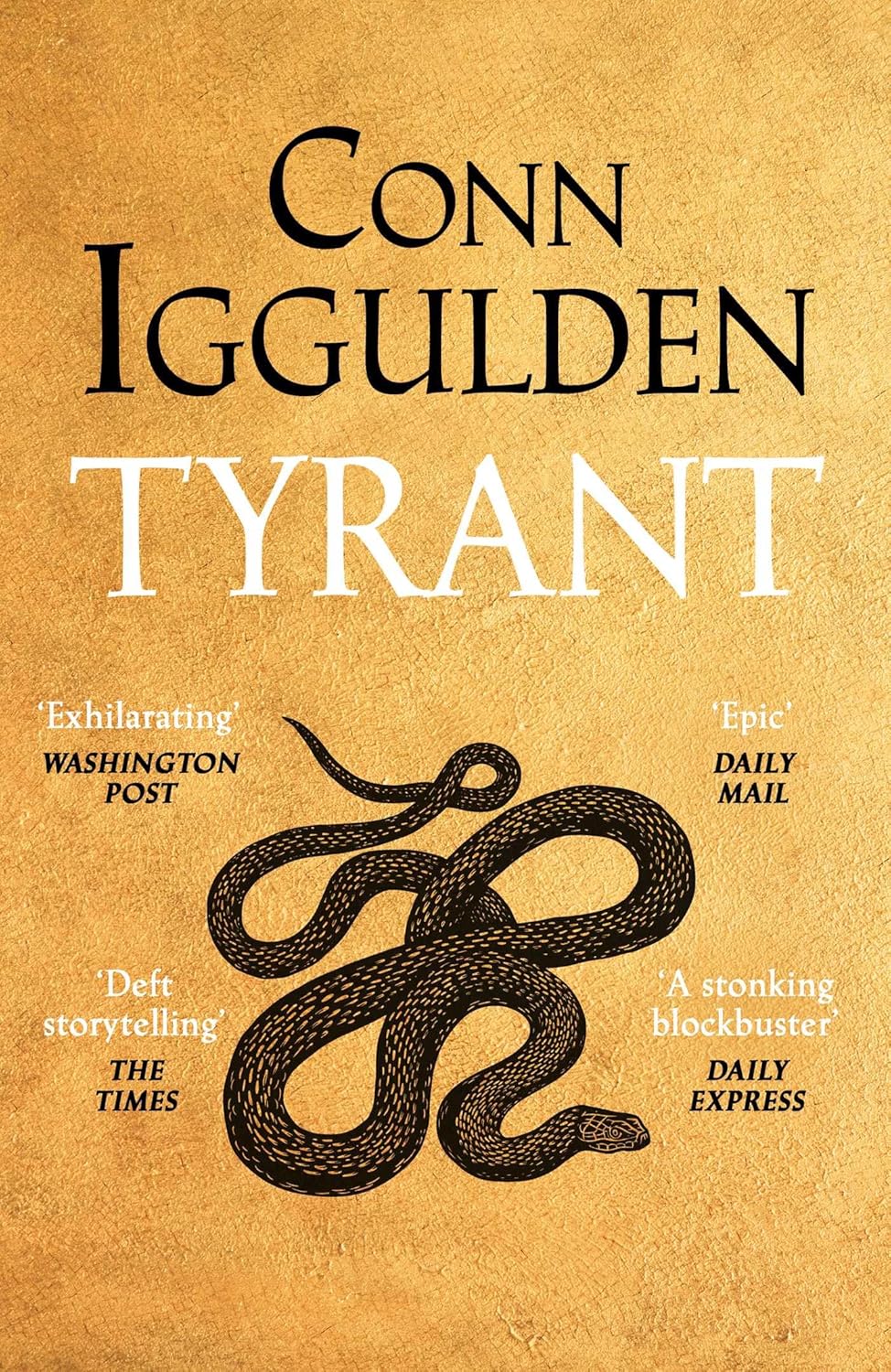
Waiting on Wednesday – Tyrant by Conn Iggulden

Welcome to my weekly segment, Waiting on Wednesday, where I look at upcoming books that I am planning to order and review in the next few months and which I think I will really enjoy.  Stay tuned to see reviews of these books when I get a copy of them.  For this latest Waiting on Wednesday, I look at Tyrant, the new novel from acclaimed historical fiction author, Conn Iggulden, which continues to follow the dark rise of Emperor Nero.

Amazon

2025 is shaping up to be a great year for historical fiction, and one of the books that I am looking forward to the most is the next fun novel from awesome author Conn Iggulden, Tyrant.  Iggulden is an outstanding author who has produced some amazing and complex historical reads throughout his career.  This includes his epic Emperor series, which covered the complete life of Julius Caesar, as the Conqueror series that was set around Genghis Khan, and the outstanding War of the Roses books.  I also have had a lot of fun reading and reviewing some of his more recent books, including The Falcon of Sparta and his Athenian series, made up of The Gates of Athens and Protector.

The historical fiction fun continued last year as Iggulden started off a cool new series that revolved around the life of the infamous Emperor Nero.  This first book, Nero, was set around the birth and early childhood of the titular future emperor, and examined how his mother, the manipulative Agrippina, outlasted her husband and survived the dark attention of her crazed brother Caligula, all while scheming to enhance her position and ensure her son becomes emperor.  Nero proved to be a highly captivating read that provided both excitement and a fascinating look at the tumultuous events leading up to Nero’s adoption.  I had a great time with this latest Iggulden novel, and I have been keen to see how the author would follow it up.

Well, it looks like I will be able to explore more of Nero’s contentious life in a few months’ time as a sequel to Nero is coming out in May 2025.  This sequel, Tyrant, will continue to follow the early life of Nero, this time focusing on his time as Emperor Claudius’ adopted son and his mother’s twisted attempts to remove his new brother and current heir to the throne.  This should be another amazing book filled with cool historical detail, deadly intrigue and complex figures fighting for power, which should result in an epic and memorable narrative.  I have no doubt Tyrant will be one of the better historical fiction reads of 2025 and I cannot wait to get my hands on it.

Plot Synopsis:

The latest gripping instalment in the bestselling Nero trilogy follows empress Agrippina’s ceaseless pursuit of absolute power for her son to rule over the Roman Empire

Ancient Rome, AD 50

The boy Nero lives. His mother Agrippina has married her way to power, tangling the Emperor Claudius in her skirts.

The emperor may have a son and heir of his own, but Agrippina sees no obstacles to her ambition.

Rome is a path through a marsh, lit by torches. Those who walk it are always one step from disaster – and the road itself is treacherous, slippery with blood.

Claudius may have the world at his feet, but he has Agrippina in his bed.

Terra Incognita by Simon Turney

Publisher: Head of Zeus (Ebook – 12 September 2024)

Series: Standalone

Length: 407 pages

My Rating: 4.5 out of 5 stars

Amazon

Simon Turney continues to explore the Roman Empire with his latest novel Terra Incognita, a fantastic read that proves to be one of the top historical fiction adventure novels of 2024.

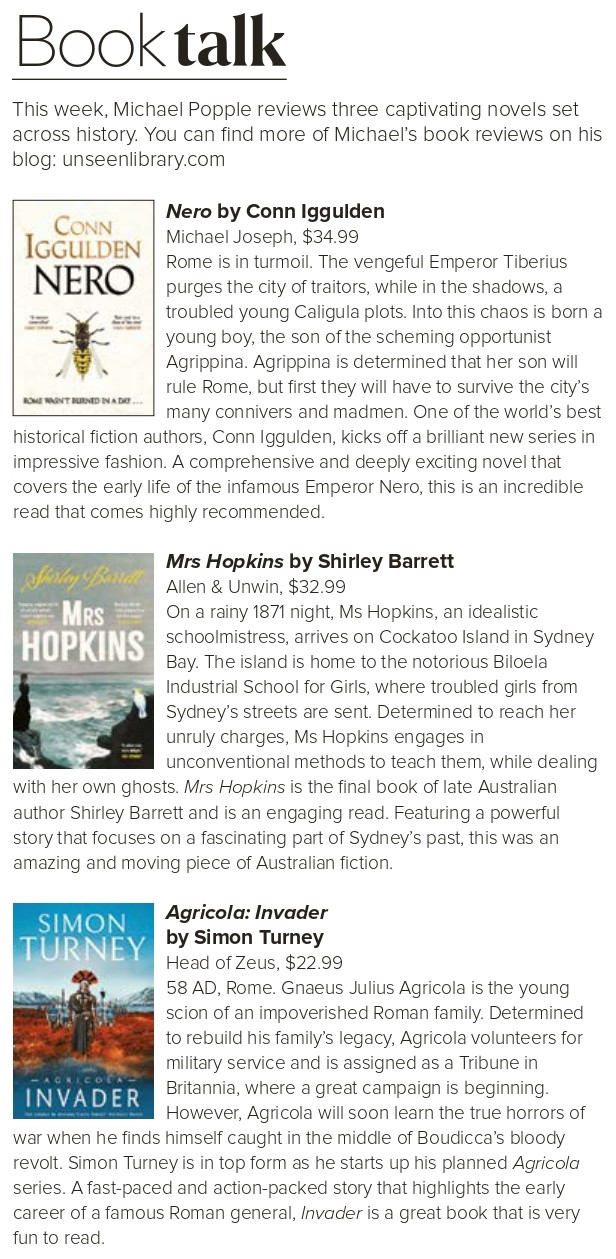
Simon Turney, who also writes as SJA Turney, is a fantastic author who has been penning various intriguing historical novels for several years now.  I have enjoyed a couple of his books in the past, including the deeply compelling read, Commodus, which was part of his Damned Emperors series.  2024 has proven to be another good year for Turney, as he managed to also to impress me with the first book in his Agricola series, InvaderInvader was a very fun military novel that followed the early career of a famous Roman general and his potential involvement with Boudica’s rebellion.  I deeply enjoyed Invader, and I am very keen for the sequel, Warrior, which is set for release in early 2025.  However, before Warrior comes out, I was very happy to receive a copy of Turney’s intriguing novel Terra Incognita.  Providing his own take on a truly fascinating adventure hinted at in Roman historical records, Terra Incognita was an awesome read I was excited to check out.

Rome, 61 AD.  Under the rule of Emperor Nero, the Roman Empire is a wealthy and powerful civilisation covering much of Europe and Africa.  However, Nero is eager to expand the range of his control even further and sets his eyes down the River Nile.  Desiring to conquer the mysterious and reportedly rich lands and kingdoms below Egypt, Nero devises an elaborate plan to learn more about the world beyond his borders.

Under the command of an ambitious tribune, Nero sends two centuries of his elite Praetorian Guard into the African wilds with orders to follow the Nile until they find the source of the river.  If they succeed, they are to offer tribute to the river’s spirits, and ensure favourable waters for any subsequent invasion of the lands that follow.  However, reaching these fabled waters alive will prove to be an arduous journey.

Travelling down the Nile, the soldiers of Rome experience great hardships as they make their way to their empire’s borders.  But even greater challenges wait beyond, as the Romans will have to overcome bandits, hostile kingdoms, disease, inhospitable desert, fierce beasts and the madness of their own commander.  Can the Romans make it to their goal alive, or will the insanity of their Emperor and the impossible mission he’s set for them destroy even these elite soldiers?

Terra Incognita was as an outstanding and epic historical read that I honestly could not stop reading.  Presenting a powerful and deeply compelling narrative of trials, tribulations, and the dark side of ambition and duty in the wilds of Africa, Turney expertly grabs the reader in with his elaborate historical adventure tale and refused to let go.

I really loved the fun and distinctive story that Turney sets up in Terra Incognita, which proved to be particularly captivating and gripping to me.  A fictional account of the two Praetorian centuries the historical record indicates Nero reportedly sent to find the source of the River Nile, Terra Incognita is an exciting, entertaining and occasionally grim book, that just keeps loading compelling misadventure after compelling misadventure.  Told from the perspective of the venture’s two centurions, Sempronius Densus and Claudius Faventinus, you witness the full extent of the expedition through their eyes, from its hopeful if apprehensive start, all the way to its grim conclusion, and you will love every single second of it.

The narrative itself starts off as a classic Roman historical adventure, as it follows its protagonists down into Egypt.  This early part of the book is very much focused on introducing the characters and setting the scene for the adventures to come, and the readers get some fun sights of Roman occupied Egypt, while also experiencing the initial hurdles of the expedition.  However, once they leave Egypt and journey into land owned by the Kushites, Rome’s southern neighbour in Africa at the period, things start to unravel for them, as they come under attack, encounter greater setbacks, and are beset by bad omens.

The second half of the book sees the Romans enter unexplored territory and encounter the world beyond their known borders.  The already tired and demoralised soldiers face a lengthy and grim trudge deeper into Africa, with things getting worse for them the further they get away from home.  Trapped in their mission by their stubborn and seemingly unkillable commander, the book takes on a real Heart of Darkness vibe as their commander’s obsession drives them forward no matter the consequences.  Things continue to get more and more desperate for the protagonists as they continue, and you are constantly on the edge of your seat waiting to see what disaster or intriguing new turn of events they are likely to stumble across next.  After an increasingly tense series of events, Turney brings the reader to a deeply interesting and compelling conclusion, which fit the overall themes of obsession, insanity and a desire to survive perfectly.  This ended up being an excellent and well-crafted standalone narrative, and I had such a brilliant time getting through this elaborate adventure.

Turney is probably one of the top current authors of Roman historical fiction, and he clearly had a lot of fun bringing this elaborate novel together through his great writing.  Written as one continuous and compelling historical adventure, readers are really drawn into the epic tale of exploration and insanity that evolves, and Turney does a wonderful job of blending historical inclusions with a deep and powerful narrative.  I think the author had the right elements of action, exploration, history and personal stories in Terra Incognita, and it’s hard not to get drawn into the constant adventure and the interaction with new obstacles and societies.

In addition to the well-written story, I really must highlight the excellent main characters of Terra Incognita, especially as you see the entire disastrous expedition through the eyes of the group’s two centurions, Sempronius Densus and Claudius Faventinus.  Cast as the group’s sensible, disciplined and stubborn hearts, the two centurions doggedly lead their soldiers on, forced to serve as a buffer between the disgruntled Praetorian Guard, and their increasingly unhinged commander.  While there sometimes isn’t a lot to distinguish between the two centurions, you grow attached to them, especially as they are forced into impossible situations time and time again and are compelled by duty to continue.

However, the best character in the book is easily the expedition’s leader, Tribune Lucius Curtius Lupus.  An ambitious and regal figure, the tribune serves as a great foil to the sensible protagonists in the first half of the book, especially as his bluster, unreasonable orders and lack of common sense ensure that the centurions are forced to work against him to continue.  However, once the Romans find themselves in the African wilds, the tribune really turns into a fantastic character.  Due to a mixture of illness, pettiness and fear, the tribune becomes continuously more detached from the reality of the situation they are in and keeps dragging his mutinous soldiers further down into Africa.  Absolutely driven by obsession, Lupus refuses to stop until Nero’s orders are fulfilled, no matter the cost to the troops, and every action forces his centurions to decide whether to support him or kill him.  I loved the constant battle of duty and practicality that emerged, as the two centurion protagonists attempt to find their line in the sand against the tribune, only to allow him to make more bad decisions.  It also proves quite amusing to see the continued tribulations that the tribune survives, so much so that his soldiers become to believe his mission is blessed by the gods.  It’s hard not to both love and hate Tribune Lupus as the book unfolds, and I felt that Turney’s use of him was perfect, especially as there are some interesting parallels between him and a key figure from Heart of Darkness/Apocalypse Now.

Finally, I need to highlight the excellent historical inclusions featured within Terra Incognita.  Turney does an outstanding job bringing the wild and uncharted territories of Africa to life through his excellent writing, and you are constantly envisioning the elaborate landscapes and intriguing people that the Romans may have encountered on this expedition.  I also really appreciated how Turney utilised and expanded on details from the Roman historical records as well more modern understandings of the period in his story.  The depiction of several different tribes, nations and kingdoms that likely existed along the Nile at that point in history was fascinating.  I also enjoyed seeing how Turney envisioned the Roman’s reactions to the various crazy creatures, obstacles and unusual people they would have encountered, including crocodiles, hippopotamuses, and some of Africa’s more impassable terrain.  These obstacles also led to some interesting solutions, and I particularly appreciated Turney’s idea for a potential malaria treatment/preventative.  Throw in some great depictions of the Roman soldiers themselves, something the author has a lot of experience showcasing, and this was a great historical book with some unique features.

Terra Incognita was an outstanding standalone book from Simon Turney that provides readers with an awesome historical adventure.  Fast-paced, addictive, and loaded with some fantastic intensity, especially around the great characters, Terra Incognita was an epic read that comes very highly recommended.

Amazon

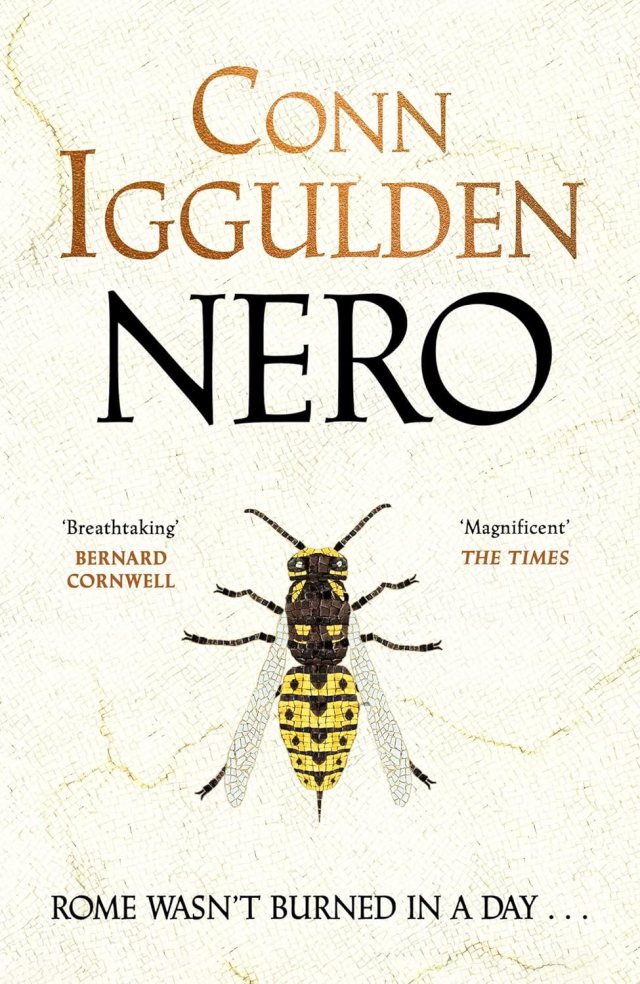
Nero by Conn Iggulden

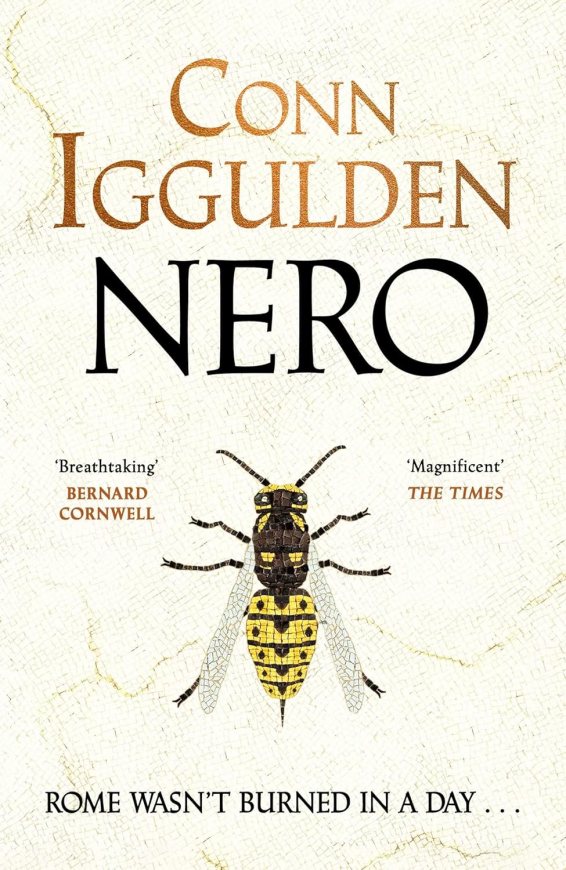
Nero Cover

Publisher: Michael Joseph (Trade Paperback – 28 May 2024)

Series: Nero – Book One

Length: 396 pages

My Rating: 4.5 out of 5 stars

Amazon

One of the absolute best authors of historical fiction in the world today, Conn Iggulden, returns with an exciting new series as he examines the life of Rome’s most infamous Emperor, Nero.

Conn Iggulden is a historical fiction author that I have a lot of respect for, especially as consistently presents intense and compelling reads that focus on some of the most interesting people and conflicts of the historical world.  Starting off over 20 years ago with his iconic Emperor series, which covered the complete life of Julius Caesar, Iggulden has moved through various historical periods and locations with his works.  This includes his impressive Conqueror series, which followed the life and legacy of Genghis Khan, his outstanding War of the Roses books, the fantastic standalone novel The Falcon of Sparta, and his clever Athenian series, made up of The Gates of Athens and Protector.  All these series have been really impressive, effectively balancing historical detail with exciting storytelling, and Iggulden is a favourite author of mine as a result.  Due this I have been really excited for his latest novel, Nero, which provides an intriguing look at the events that led to the ascension of the titular Emperor.

Rome, AD 37.  The greatest city in the world is in turmoil.  The decrepit and vengeful Emperor Tiberius has returned to Rome after a lengthy absence, and his first act is to order the strangulation of the man he left in charge.  As a flurry of sanctioned killings and destruction begins to reign down upon Rome, a young boy is born who is destined to burn everything around him.

Born Lucius Domitius Ahenobarbus, the boy is the son of a former champion charioteer of noble lineage, and Agrippina, the great-granddaughter of the Emperor Augustus.  With family ties reaching all the way back to original emperors, Lucius is already considered an eventual claimant to the Roman throne.  However, there are many within Rome who want power and influence for themselves and care little for the hopes and ambitions of a noblewoman and her young son.

With dark clouds on Rome’s horizon, Agrippina soon discovers that the greatest threat comes from closer to home than she realises in the form of her brother, Caligula.  Banished and robbed of everything, including her young son, Agrippina finds herself at the mercy of those around her.  However, Agrippina does not intend to be powerless forever, and when fate intervenes, she finds herself with the opportunity to influence the very heart of Roman politics.  Can Agrippina ensure the rise of her young son, the boy who will eventually be known as Nero, and will Rome ever be the same again?

This was an intriguing and gripping novel from Iggulden, who continues to show why he is one of the most consistent and entertaining authors of historical fiction.  Nero is a fascinating and thrilling read that cleverly examines the early life of the future emperor from those around him and proves very hard to put down.

Nero contains a typical Iggulden narrative, in which he focuses on a historical figure and follows them from birth to their eventual rise to power.  In Nero’s case, this book is clearly the first part of a larger series as it is dedicated to examining the childhood of the future emperor and the many events that lead to him to the throne.  As such, the focus of this novel is more on his parents, and the various other dangerous Roman figures who were around at this time.  Starting in the latter days of Tiberius’s reign, the author parallels Nero’s birth with the start of Tiberius’s purges in Rome, while also showcasing his troubled parents, including his mother Agrippina, who is essentially the main character here.  This proves to be an interesting start to the book, especially as you get a good look at many of the key figures the story is going to focus on, while also showcasing just how crazy stories recounting the history of Rome can get.

The author quickly moves the story along to the reign of Caligula, which drags the protagonists closer into the limelight due to Agrippina being the new emperor’s sister.  Naturally, it doesn’t take long for affairs to devolve into chaos, and there are some major changes that really impact the lives of the principal cast.  The second half of the book features a decent time skip which brings certain figures back into prominence and allows Agrippina to focus on her ambitions.  Iggulden does a great job showcasing Agrippina’s change of heart and new desire for power, and I liked the intrigue, political machinations and manipulations that were at the heart of this second half of Nero.  Everything leads up to an interesting conclusion, as Iggulden adds in some exciting military action, which contrasts nicely to the political and personal struggles of the first half of the plot.  The book ends on a solid note that ensures readers will come back to the series in the future, especially as the story of Nero is only just beginning.  This proved to be a very intriguing story, and I enjoyed how Iggulden showcased the many infamous historical events and wove a great, character-driven story around them.

Nero had a great tone that was a combination of character driven plot, over-the-top Roman antics and intriguing history, which I really enjoyed.  Loaded with a fast-paced and brutal story, you quickly get absorbed into the many political intrigues and dysfunctional relationships that lie at the heart of the plot, and Iggulden did an outstanding job flipping the perspective around a range of compelling historical figures and showcasing their unique views on intriguing events and the future emperor.  The story is constantly sharp and compelling, I liked how intense events got, especially as Iggulden ensured that certain dark moments of history are shown in all their glory.  I deeply enjoyed the author’s depictions of Roman history, and his take on events really stood out compared to some other series I have read set in the same period.  The chaotic nature of the antagonists, the mood of the city, and the general insanity of the times were all very impressive, and they formed a great background to the outrageous plot.  Iggulden has such a knack for displaying Roman history (as evidenced by his first epic series) and he really makes the ancient city, and iconic figures stand out for all readers.  While he does appear to take a few liberties with the historical record for storytelling purposes (honestly, what historical fictions author doesn’t ?), many of the most iconic moments of the time were captured perfectly, and he constantly ensured that the mood of the city was examined in detail.  I deeply enjoyed this fantastic and captivating historical tale, and Nero proved to be a highly addictive book to check out.

I want to also highlight some of the amazing characters featured in Nero, especially as most of them proved to be awesome takes on major historical figures.  As I mentioned before, the character of Nero himself doesn’t get a lot of time as a perspective figure in this first novel, mainly because he is quite young for most of the plot, although he does get a few intriguing moments in the second half of the book.  Instead, most of the book was dedicated to showing the formative events of his youth, as well as how he ended up in the position to eventually become emperor.  I felt that this was a smart decision on Iggulden’s behalf, and I really enjoyed seeing this in-depth examination of Nero’s history, especially as most Roman historical fiction series tend to include him as an overexaggerated villain rather than a product of the crazy times he grew up in.  I look forward to seeing how he evolves in future books, and it will be interesting to see how Iggulden utilises him as a major perspective character.

With Nero growing into the role, the character who probably gets the most focus is Agrippina the Younger, Nero’s mother and future empress.  Due to the way the plot plays out, Iggulden spends a lot of time exploring this controversial figure, and I rather enjoyed seeing the in-depth examination of the events that preceded her marriage to Claudius.  You get a very complex picture of Agrippina here, including the many tragedies surrounding her family, the violent marriage that resulted in Nero, and the terrible treatment by her brother Caligula.  Iggulden does an excellent job showcasing how these events impacted Agrippina’s personality, and you can see how and why she becomes more ruthless and determined to be the one in control.  While she does a lot of despicable things, Iggulden almost makes her a sympathetic character, although certain dark events stop you from ever truly loving her.  I deeply enjoyed the author’s portrayal of Agrippina in Nero, and she proved to be a compelling and intriguing force.

Other characters of note include Nero’s father, Gnaeus Domitius Ahenobarbus, a violent drunken former famous charioteer who Iggulden showcases in a manner similar to a modern-day angry failed sports star trying to relive their glory days.  Constantly enraged that the world has left him behind and caught up in events beyond his control, Gnaeus cuts a dark and brooding figure that proves very hard to love.  Despite this, Gnaeus was a very intriguing addition to the plot, and his fraught interactions with Agrippina left a mark that resulted in some intriguing plot points.  I must also mention the great depictions of the three emperors who preceded Nero, Tiberius, Caligula and Claudius.  All three of these emperors are notorious, and Iggulden went out of his way to show their many eccentricities and issues, as well as the impacts that they had on the Roman empire.  I always love seeing authors depict the unique events these figures were responsible for, and Iggulden did not disappoint.  As such, they all end up being major and memorable figures in Nero, which proved to be quite important, as their actions and reigns will no doubt be referenced and compared to Nero in the rest of the series.  Throw in a great collection of other fantastic historical figures, and Nero had a great cast that really brought some amazing monsters from history to life.

Conn Iggulden continues to showcase why he is one of the top authors of historical fiction.  Nero was an outstanding book that masterfully showcases the early life of the infamous emperor with a wildly entertaining story.  Exciting, dramatic and very over-the-top, Nero was an incredible read that I deeply enjoyed.  I look forward to seeing how Iggulden brings this series together in the future, and I am already very excited for the inevitable sequel.

Amazon

WWW Wednesday – 5 June 2024

WWW Wednesday is a weekly meme hosted by Taking on a World of Words, where bloggers share the books that they’ve recently finished, what they are currently reading and what books they are planning to read next. Essentially you have to answer three questions (the Three Ws):

What are you currently reading?
What did you recently finish reading?
What do you think you’ll read next?

So, let’s get to it.

What are you currently reading:

Mrs Hopkins by Shirley Barrett (Trade Paperback)

Mrs Hopkins Cover

I am currently reading the intriguing Australian historical drama Mrs Hopkins.  The final book of late Australian author Shirley Bennett, Mrs Hopkins is a compelling read about women’s reform school in 19th century Sydney.  This is proving to be an interesting read and I am hoping to get through it this weekend.


Point Nemo by Jeremy Robinson (Audiobook)

Point Nemo Cover

On the audiobook front I am currently listening to the exciting science fiction thriller Point Nemo by the always entertaining Jeremy Robinson.  A fast-paced read that sees a small group journey to an alien landscape that forms in the middle of the most remote ocean, Point Nemo is a captivating and electrifying adventure that proves hard to put down.  I have made a lot of progress on Point Nemo already and I cannot wait to see how everything comes together.

Amazon

What did you recently finish reading?

Hill 112 by Adrian Goldsworthy (ebook)

Hill 112 Cover

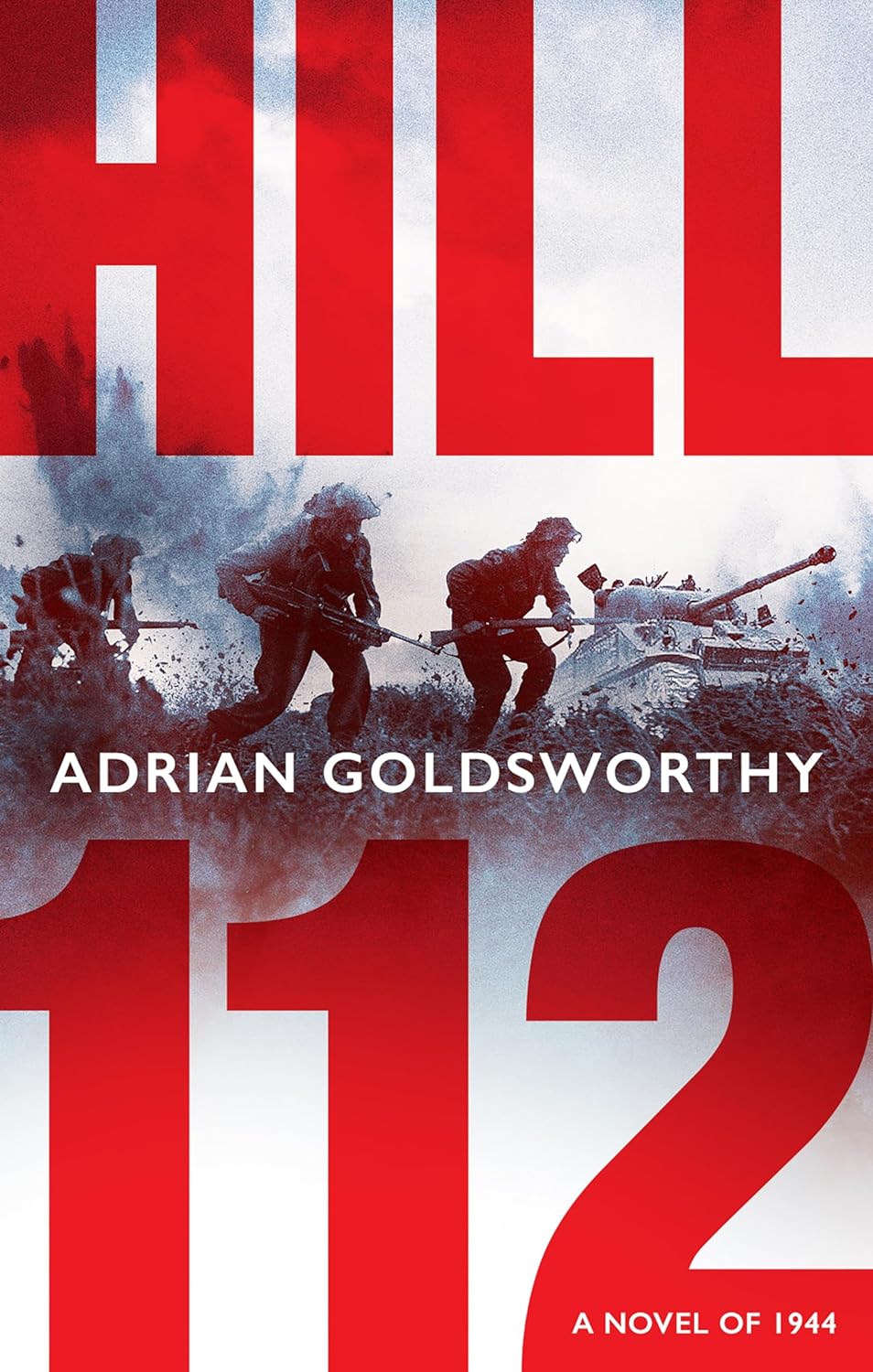
I managed to finish off the epic historical novel Hill 112 by Adrian Goldsworthy this week.  A powerful and brutal World War II novel, Hill 112 followed three young soldiers fighting in one of the bloodiest battles of the Normandy campaign.  A compelling and harrowing read.

Amazon


Warhammer 40,000: Cain’s Last Stand by Sandy Mitchell (Audiobook)

Cain's Last Stand Cover

Another exceptional and highly entertaining entry in the amusing Ciaphas Cain series, Cain’s Last Stand was a great addition to the series and the Warhammer 40,000 universe.  Review to follow soon.

Amazon


Nero by Conn Iggulden (Trade Paperback)

Nero Cover

I also managed to power through the epic historical fiction novel Nero by Conn Iggulden.  An intriguing read that followed the early days of the titular tyrant and show the events that led to him becoming Emperor.  One of the best historical books of 2024.

Amazon

What do you think you’ll read next?

Death on the Tiber by Lindsey Davis

Death on the Tiber Cover

While I have a few potential books to read next, I think I will probably dive into the new Lindsey Davis novel, Death on the Tiber.  The latest book in Davis’ long-running Flavia Albia historical murder mystery series, Death on the Tiber will see the series’ protagonist investigate another complex murder in ancient Rome, this time while dealing with demons from her past.  I really love this amazing series and I have no doubt I will have a wonderful time reading Death on the Tiber.

Amazon


That’s it for this week, check back in next Wednesday to see what progress I’ve made on my reading and what books I’ll be looking at next.

WWW Wednesday – 29 May 2024

WWW Wednesday is a weekly meme hosted by Taking on a World of Words, where bloggers share the books that they’ve recently finished, what they are currently reading and what books they are planning to read next. Essentially you have to answer three questions (the Three Ws):

What are you currently reading?
What did you recently finish reading?
What do you think you’ll read next?

So, let’s get to it.

What are you currently reading:

Hill 112 by Adrian Goldsworthy (ebook)

Hill 112 Cover

I have been having an amazing time reading the epic historical novel Hill 112 by Adrian Goldsworthy this week.  A powerful and brutal World War II novel, Hill 112 follows three young soldiers fighting in one of the bloodiest battles of the Normandy campaign.  I am deeply enjoying this epic book and I only have a little bit left of it, so I should finish it off soon.

Amazon


Warhammer 40,000: Cain’s Last Stand by Sandy Mitchell (Audiobook)

Cain's Last Stand Cover

I was in the mood for some fun listening this week, so I dove into a couple of the fantastic Ciaphas Cain audiobooks.  Following a complex character as he navigates the dark Warhammer 40,000 universe with humour and justifiable fear, the Ciaphas Cain books are very entertaining, and I have been deeply enjoying this series lately.  Cain’s Last Stand is a particularly interesting inclusion and I look forward to seeing how it comes together.  I am absolutely flying through Cain’s Last Stand at the moment, and I should finish it off this weekend.

Amazon

What did you recently finish reading?

Think Twice by Harlan Coben (Trade Paperback)

Think Twice Cover

I powered through Think Twice by Harlan Coben last week, knocking off the final 200 pages in a single day.  This was an outstanding and entertaining read that proved to be one of the most exciting thrillers of 2024 so far.  Make sure to check out my review for it here.

Amazon


Crucible of Chaos by Sebastien De Castell (Audiobook)

Crucible of Chaos Cover

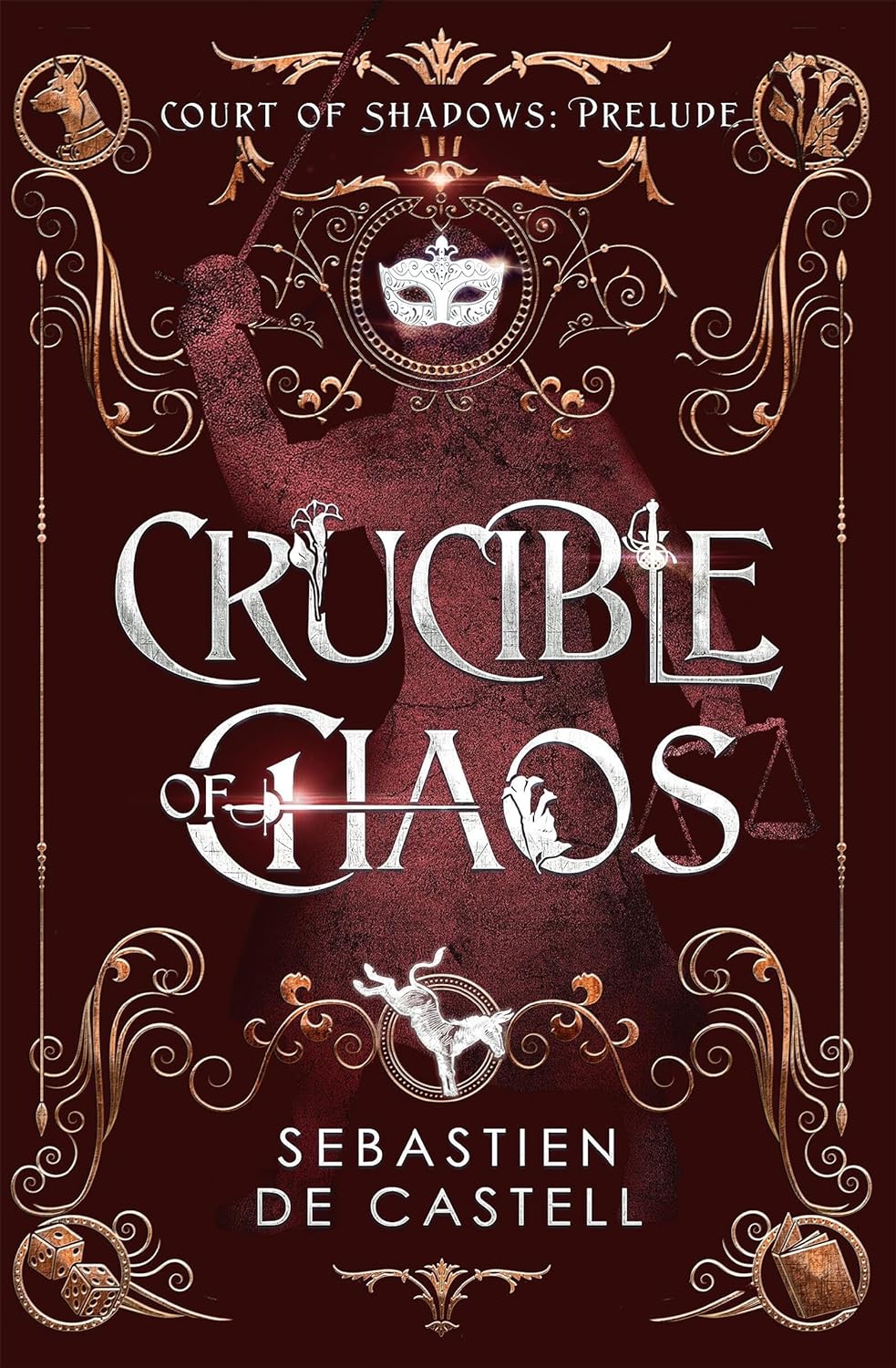
After having so much fun with the epic novel, Play of Shadows, earlier this year, I decided to also read Sebastien De Castell’s 2023 release, Crucible of Chaos.  Serving as a loosely connected prelude to Play of ShadowsCrucible of Chaos was a unique mystery novel that saw wandering magistrate enter a conflicted abbey where the monks have initiated a holy civil war.  This proved to be an exceptional listen that I could not stop listening to.  A very highly recommended piece of fantasy fiction, I am hoping to get a review up for it very soon.

Amazon


Warhammer 40,000: Duty Calls by Sandy Mitchell (Audiobook)

Duty Calls Cover

Another Ciaphas Cain audiobook I checked out this week was the very fun Duty CallsDuty Calls was an epic read, and I loved the entertaining and thrilling plot that forced the protagonist into some dark adventures.

Amazon

What do you think you’ll read next?

Nero by Conn Iggulden

Nero Cover

The next book I am planning to check out is the epic historical fiction novel Nero by Conn Iggulden.  An intriguing read from one of the top authors of historical fiction, Nero will follow the early days of the titular tyrant and show the events that led to him becoming Emperor.  I am very curious to see how Nero turns out, and I have high hopes this will be one of the best historical books of 2024.

Amazon


That’s it for this week, check back in next Wednesday to see what progress I’ve made on my reading and what books I’ll be looking at next.

Book Haul – 30 April 2024

I have been having another excellent couple of weeks for books, and I was lucky enough to receive several incredible and amazing new novels from local publishers and Netgalley.  These novels include some truly awesome new releases, including books that have the potential to be some of my top reads of the year.  I cannot wait to dive into them, and I look forward to seeing how they turn out.

Nero by Conn Iggulden

Nero Cover

The first book I want to highlight in this book haul post was the epic historical fiction book, Nero by Conn Iggulden.  Iggulden, who is one of the top authors of the genre, once again dives into Roman history  with a book that looks at the early life of the infamous emperor Nero.  I am deeply fascinated to see Iggulden’s take on this iconic figure and I have no doubt Nero is going to be one of the top historical fiction novels of 2024.

Amazon


The No.1 Lawyer by James Patterson and Nancy Allen

The No.1 Lawyer Cover

A cool legal thriller from the team of James Patterson and Nancy Allen is a very welcome addition to my reading list and I am really looking forward to reading this.  I love a great legal thriller, and The No.1 Lawyer sounds particularly fun as it forces a skilled defence attorney to win the biggest murder case of his life when he is accused of murdering his wife.  I love the sound of this book and I have no doubt I am absolutely going to power through The No.1 Lawyer.

Amazon


Think Twice by Harlan Coben

Think Twice Cover

I only recently started reading acclaimed thriller author Harlan Coben, but I really enjoyed the first book of his I checked out, I Will Find You.  His new novel, Think Twice, also sounds pretty damn epic as it forces a sports agent to investigate how his friend’s DNA was found at a recent murder, years after the friend’s funeral.  I look forward to seeing how this intriguing thriller unfolds, and I know I’m going to love it.

Amazon


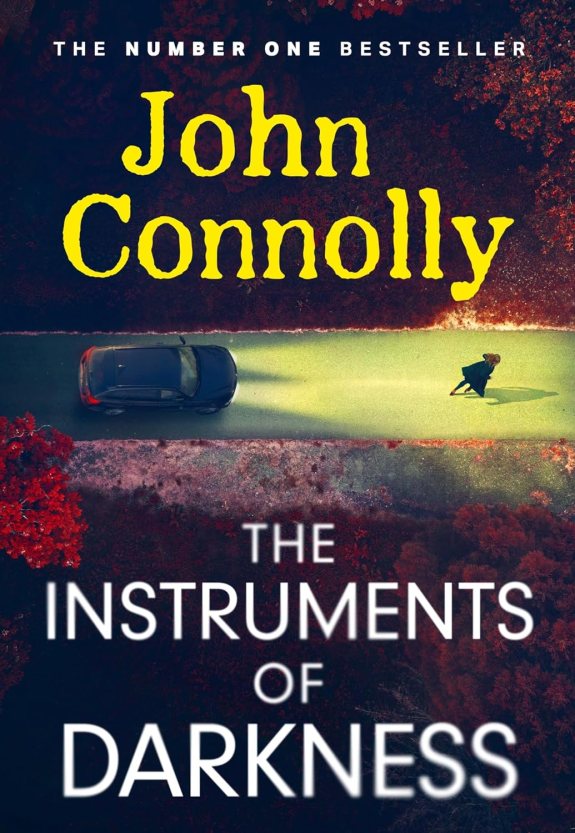
The Instruments of Darkness by John Connolly

The Instruments of Darkness Cover

One author I have been meaning to get into for years is John Connelly, who is known for his clever and twisty thrillers.  Well, it looks like I’m going to get the chance very soon as I just received a copy of The Instruments of Darkness, which sounds amazing.  Set to follow a complex legal case of a mother accused of murdering her own child, The Instruments of Darkness sounds very intense, dark and intriguing, and I look forward to diving into it.

Amazon


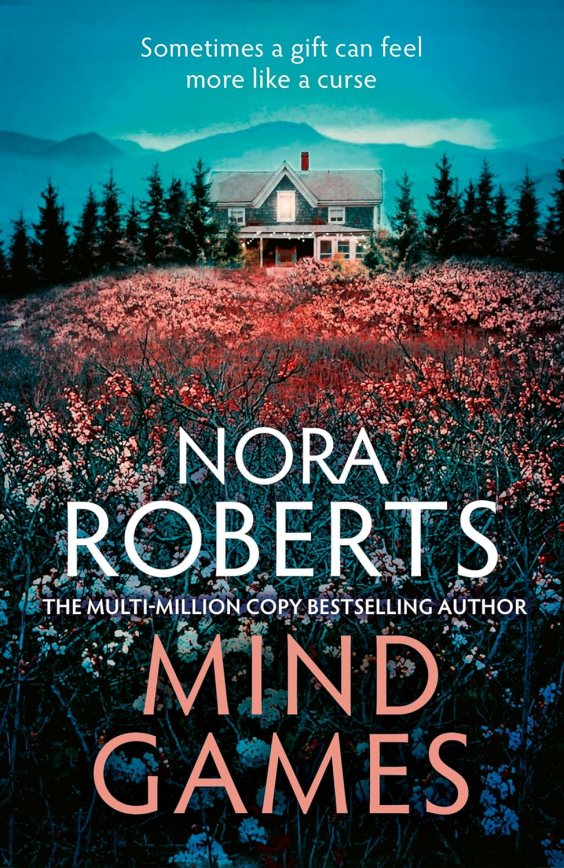
Mind Games by Nora Roberts

Mind Games Cover

An intriguing thriller that showcases a dark connection between a young woman and the killer who murdered her parents.  This should be an interesting novel and I look forward to reading my first Nora Roberts book.

Amazon


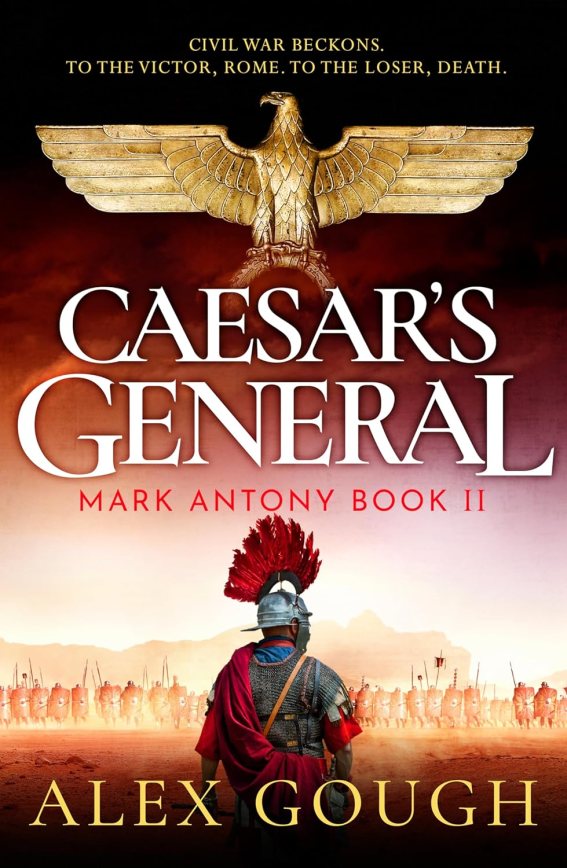
Caesar’s General by Alex Gough

Caesar's General Cover

A great sounding addition to a Roman historical fiction series that follows the life of Mark Antony.  Caesar’s General sounds particularly cool, as it covers the events that lead to Caesar crossing the Rubicon.  I look forward to diving into Caesar’s General and I know I’m going to have fun with it.

Amazon


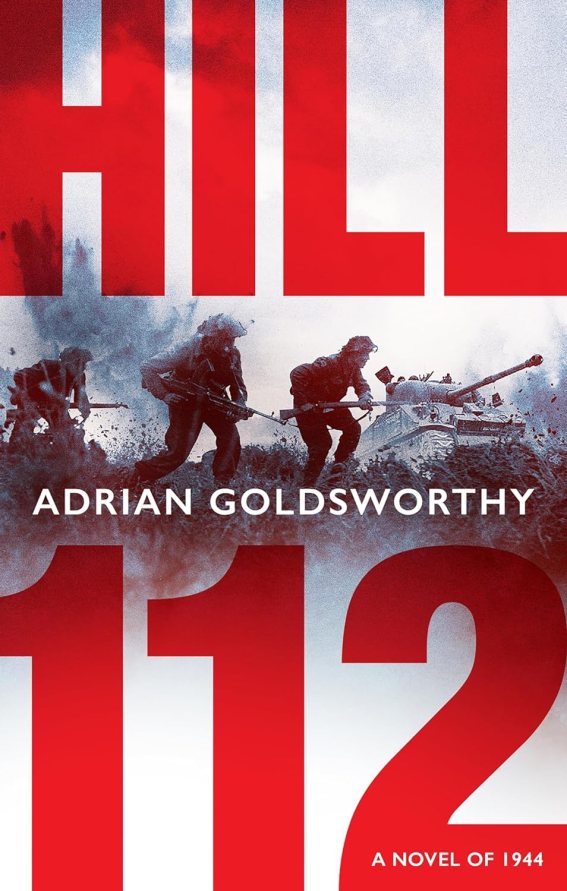
Hill 112 by Adrian Goldsworthy

Hill 112 Cover

The final book I want to highlight in the book haul post is Hill 112 by Adrian Goldsworthy.  An intense and powerful war novel that follows a particularly bloody battle of World War II, Hill 112 sounds fantastic, and I cannot wait to check it out.

Amazon


Well, that’s the end of this latest Book Haul post.  As you can see I have quite a bit of reading to do at the moment thanks to all these awesome books that have come in.  Let me know which of the above you are most interested in and make sure to check back in a few weeks to see my reviews of them.

Waiting on Wednesday – Nero by Conn Iggulden

Welcome to my weekly segment, Waiting on Wednesday, where I look at upcoming books that I am planning to order and review in the next few months and which I think I will really enjoy.  I run this segment in conjunction with the Can’t-Wait Wednesday meme that is currently running at Wishful Endings.  Stay tuned to see reviews of these books when I get a copy of them.  In this week’s Waiting on Wednesday, I highlight an outstanding upcoming historical fiction novel from one of the genre’s best authors with, Nero by Conn Iggulden.

Nero Cover

Amazon

There are some great historical fiction novels coming out in 2024, although one of the more intriguing ones that has caught my eye is the new upcoming release from Conn Iggulden.  Iggulden is one of the better-known authors of the historical fiction genre, having writen several key series throughout his impressive career.  Starting out with his Emperor series that perfectly captured the life of Julius Caesar, Iggulden has covered an awesome range of different historical periods through his key series, including his Conqueror and War of the Roses books.  I have had a wonderful time reading several of these over the years, including the amazing standalone novel, The Falcon of Sparta, and his outstanding Athenian novels, The Gate of Athens and Protector.  I am always intrigued to see what Iggulden is going to write next, and it looks like the author is going back to his Roman fiction roots with his next book.

This upcoming novel which is set for release in May 2024 is Nero, the first book in a trilogy that will follow the life of the infamous titular Emperor.  I love the idea of a trilogy that provides a deep examination of this compelling historical figure, especially as most pieces of historical fiction tend to frame him solely as a monster.  By basing a whole trilogy on Nero, it appears that Iggulden will provide a more nuanced portrayal of this notorious Emperor, and I look forward to seeing a whole different perspective to his life.  This first book in the trilogy seems particularly intriguing, especially as Iggulden will look at the very early life of the character, and the machinations of his mother Agrippina.

I am honestly very excited for Nero, and I think it has a lot of potential.  Not only does the plot sound extremely interesting, but Iggulden has such a great track record for bringing complex historical figures to life in his books.  As such, I have high confidence that Nero will prove to be an awesome and epic read, and I cannot wait to see what unique spin Iggulden places on the life story of Rome’s most infamous Emperor.

Plot Synopsis:

 TYRANTS AREN’T BORN. THEY’RE RAISED.


ANCIENT ROME, AD 37

It begins with a man’s hand curled around another’s throat.

Emperor Tiberius first dispatches a traitor.

Then his whole family.

Next all his friends. It is as if he never existed.

THIS IS ROMAN JUSTICE.

Into this fevered forum, a child is born.

His mother is Agrippina, granddaughter of Emperor Augustus. But their imperial blood is no protection. The closer you are to the heart of the empire, the closer you are to power, intrigue, and danger.

She faces soldiers, senators, rivals, silver-tongued pretenders, each vying for position. One mistake risks exile, incarceration, execution. Or, worst of all, the loss of her infant son.

For Agrippina knows that opportunity waits, even in your darkest moments. Her son is everything. She can make this boy, shape him into Rome itself – the one all must kneel before.

BUT FIRST, THEY MUST SURVIVE . . .

Also, a quick shoutout to that line on the cover “Rome wasn’t burned in a day….”.  That was genius, and I love it so much.

Death to the Emperor by Simon Scarrow

Death to the Emperor Cover

Publisher: Headline (Trade Paperback – 15 November 2022)

Series: Eagles of the Empire – Book 21

Length: 466 pages

My Rating: 4.75 out of 5 stars

Amazon

One of the world’s best historical fiction authors, Simon Scarrow, returns with another epic instalment in his brilliant long-running Eagles of the Empire Roman history series, Death to the Emperor.

I have made no secret of my deep appreciation for the works of Simon Scarrow, who is easily one of my favourite historical fiction authors.  A talented and compelling author, Scarrow has written several great series and standalone reads that cover historical subjects such as the Napolenic wars, World War II and even a cool historical crime fiction novel, Blackout.  However, his most substantial body of work is his Eagles of the Empire series, which is one of the best historical fiction series I have had the pleasure of reading.  Set during the reigns of some of Rome’s most infamous emperors, Eagles of the Emperor follow two Roman soldiers, Prefect Cato and Centurion Marco, who have fought on multiple battlefields across the empire.  I have had a wonderful time reading this series over the years, and it features some outstanding books, including the last four novels, The Blood of Rome, Traitors of Rome, The Emperor’s Exile and The Honour of Rome.  Naturally I started reading the latest book in the series (the 21st book overall), Death to the Emperor, pretty much as soon as I got it, and boy did that prove to be a smart decision.

60 AD, Britannia.  After years fighting side by side together, Prefect Cato and Centurion Marco are back in Britannia, the land they helped conquer at the start of their partnership.  Since their first time there, their lives have been transformed in ways they could have never believed.  While Marco is retired, serving a senior administrative role amongst the other retired veterans in Britannia, Cato is hiding out on the island, attempting to avoid Nero’s wrath for rescuing the Emperor’s former mistress from exile.  Determined to make their new lives in Britannia work, Cato and Marco are once again thrust into danger as tensions escalate throughout the island.

While the usual malcontents and druids stir rebellion and conflict against the Romans, tensions are higher than ever, especially as rumours spread that Emperor Nero wishes to pull out of the savage province.  However, Nero is also determined to squeeze the island for every bit of wealth it has, and he dispatches a ruthless and dangerous procurator to do this.  Worried that this move may destabilise an already fragile Britannia, Cato and Marco attempt to help their ally, the recently widowed queen of the Iceni, Boudica, whose tribe has caught the eye of the Emperor and his Procurator.

However, soon duty separates the two old friends again, as Cato is conscripted by Britannia’s ambitious governor, Gaius Suetonius Paulinus, in his latest campaign to destroy the druid stronghold at Mona.  Left alone, Marco can only watch as outrage and disrespect brings the Iceni to the brink of war with Rome, one that he and his forces cannot possibly defeat.  Soon, the fate of Britannia lays in hands of one woman, Boudica, who can bring peace to the lands.  However, when Boudica is pushed too far, will she declare war on Rome, its Emperor, and her old friends Cato and Marco?

Death to the Emperor was an outstanding and fantastic read that once again highlights Scarrow’s impressive ability as a historical fiction writer.  Continuing the long-running story of Cato and Marco, Scarrow expertly dives into a major historical event and brings it to life in a compelling way.  I had a wonderful time reading Death to the Emperor and I felt that it was one of Scarrow’s better novels in recent years.

I loved the incredible story that Scarrow wove around Death to the Emperor, especially as it provides the reader with an excellent blend of action, adventure, character development and a ton of historical detail.  Set shortly after the events of the last book, The Honour of Rome, Scarrow continues several threads from there, with Cato and Marco attempting to settle down in their old stomping ground of Britannia and find some peace.  However, the death of Boudica’s husband soon leads to chaos as the disgruntled locals start to push back against the increasing control and greed of Rome.  After a good introduction, which sets much of the scene for the rest of the book, the protagonists are split up, with Cato forced to accompany Governor Paulinus on his campaign to eradicate the druids, while Marco remains behind to attempt to keep the peace.  This results in a great split of storylines, and both of their exciting character arcs really paid off.  Cato’s story arc is a pretty typical Scarrow narrative, as Cato takes control of a new regiment and leads them into several battles as part of his campaign.  This results in several impressive action sequences, including a great and highly exciting extended siege sequence at the druid stronghold of Mona, which was one of the best battle scenes in the entire book.  At the same time, Marco bears witness to all the key events that lead up to Boudica’s rebellion, as the villainous Catus Decianus antagonises the tribes, despite Marco’s best efforts to stop him.  Marco’s storyline is a lot more intense and emotionally rich as the protagonist attempts to save all his friends against heavy odds.  However, despite his best efforts, Marco and his fellow veterans find themselves forced to fight Boudica’s army, which results in a pretty memorable ending.

I deeply enjoyed how this compelling narrative came together, and Scarrow was on excellent form as he provided the reader with everything they needed.  While the start of the book is a little slower, it sets the scene perfectly, before all the action and deadly developments ensue at a faster and more intense pace.  The author really built up the tension throughout the narrative, and you really knew that everything was going to go wrong, and boy did it.  The resulting battles, which includes several very fun sieges, were well worth the wait, and Scarrow did a wonderful job of showcasing all the carnage of these fights.  Separating the main characters created a much more complex and wider narrative, and I liked the excellent contrasts between the battles, as Cato’s successes with his forces are mirrored by Marco’s desperate fights with the small band of retired fighters under his command.  The intensity of the plot got even more pronounced as the narrative continued, and the reader really gets drawn in as a result.  I personally powered through the second half of the book in very short order as I wanted to see how everything would unfold.  The desperate and bloody conclusion to the narrative was pretty shocking, especially as there are some major series moments featured here.  The resulting cliff hanger finisher was just perfect, and you are left wanting more.  I am not entirely sure I’ll be able to wait a whole year to see how this series continues, but I am sure that the reader is for even more excitement and shocks when Scarrow brings out his next book.

One of things that really impressed me about Death to the Emperor was the level of historical detail that Scarrow put into it as he covers some of the early events of Boudica’s uprising.  The author does a remarkable job showcasing all the events that lead up to the rebellion, and he paints a compelling and unique picture around it.  Many events are discussed or shown in intriguing detail, including the general oppression of the local tribes, the attempts to embezzle money from the Iceni, the capture and humiliation of Boudica, and the disregard that Nero had for Britannia and his rumoured plans to abandon the province.  All these events, eventually lead up to the rebellion and it was fascinating to see them come about, especially through the eyes of a common soldier character like Marco.  The subsequent early battles of this rebellion, including the fight at Camulodunum, are very dark and brutal, and I deeply appreciated how Scarrow put his protagonists in the centre of these bloody conflicts, as they really raise up the intensity of the narrative.  At the same time, Scarrow also spends a good part of the book highlighting Governor Paulinus’s invasion of the druid stronghold of Mona.  This compelling campaign is often overshadowed by Boudica in history books, but it was an important part of the events at that time, especially as it left the rest of the province undermanned.  Scarrow covers this campaign extremely well through the book, especially as Cato is the officer usually at the front of the fighting, and it became quite a key part of the book.  I loved seeing this blend of historical events throughout Death to the Emperor, especially as Scarrow brings his usual flair for showcasing the Roman war machine throughout this book, highlighting the strategies and martial techniques of the Romans in exquisite detail.  I can’t wait to see the rest of Boudica’s rebellion in the next Eagles of the Empire book, as it is going to be epic.

Scarrow does another awesome job with the characters in Death to the Emperor, as he tells some intriguing character arcs that really helped to shape the narrative.  The primary focus as always is one of the series’ main protagonists, Prefect Cato and Centurion Marco.  Both have some intriguing character moments in this book which I had a great time with here.  Cato’s arc is pretty typical for much of the series, with the prefect forced back into combat, this time leading an auxiliary cohort on the campaign to Mona.  Cato’s arc is filled with a huge amount of action and intense battles as he fights from one end of Britain and back again.  It is always fun to see Cato in action, especially as he takes his units into some bloody battles, using a range of unique tactics to win.  While Cato is fun, the most intense character moments is focused on Macro, who remains behind and watches over the province while the army is gone.  Marco, who is mostly retired at this point, finds himself in a unique leadership position, and must work his force of reservists into a coherent force.  At the same time, he also finds himself greatly conflicted as he finds his loyalty to Rome tested due to his friendship with Boudica.  Forced to take military action against them, Marco tries to protect Boudica and her family, however, his orders and his slimy commander make that impossible, and he must decide whether he should continue to blindly follow Rome or do what is right.  His decision will have huge impacts on the story, and it places him in some dark situations.

Aside from Cato and Marco, who tend to be the primary point-of-view characters, Death to the Emperor has an awesome cast of supporting characters who really add a lot to the overall narrative.  This includes Boudica, who serves as Rome’s main antagonist in this arc of the series.  Boudica has actually been a friendly supporting character for many of her previous appearances, having formed a relationship with the two protagonists.  However, this book sees all that change as she is pushed too far, becoming the warrior queen we all know.  Scarrow handled her transformation from friend to deadly enemy extremely well, and it was fascinating to see her interact with Marco, especially as he keeps trying, but failing, to help her.  Aside from Boudica, I also liked seeing more of the fun supporting character, Apollonius.  Apollonius has been an interesting figure for the last few books, serving as Cato’s spy and advisor, and generally being a good secondary protagonist.  He has a very interesting time in Death to the Emperor as he remains behind to help Marco.  I loved seeing the continued relationship between the two, as Marco generally disapproves of Apollonius, and it was also quite intriguing to get some insights into why Apollonius chooses to stay and help Cato.  The final character I need to point out is Catus Decianus, the Roman Procurator who is generally considered responsible for Boudica’s rebellion.  Scarrow does an amazing job with Decianus, a real historical figure, and he turns him into a very despicable villain in Death to the Emperor.  The author paints him as an arrogant, greedy fellow, whose arrogance and general dislike of the Britannia locals, leads to the resulting war.  You really cannot help but hate Decianus, especially as he really is the main villain of this story.  These great characters, and more, turn out to be an amazing cast, and I had a wonderful time seeing the outstanding and dramatic narrative Scarrow wove around them.

Simon Scarrow continues to showcase why he is one of the best historical fiction authors in the world with the latest entry in his exceptional Eagles of the Empire series, Death to the Emperor.  Expertly showcasing the brutal events of Boudica’s rebellion with his long-running protagonists right in the middle, Scarrow tells a powerful and action-packed story that takes his characters into some dark direction.  Captivating, exciting and oh so bloody, Death to the Emperor will keep you relentlessly entertained and ensure you come back for more books in this epic series.  Highly recommended!

Amazon

The Emperor’s Exile by Simon Scarrow

The Emperor's Exile Cover

Publisher: Headline (Trade Paperback – 10 November 2020)

Series: Eagles of the Empire – Book 19

Length: 434 pages

My Rating: 4.5 out of 5 stars

Amazon

One of the top authors of Roman historical fiction, Simon Scarrow, returns with the latest exciting novel in his Eagles of the Empire series, The Emperor’s Exile.

Rome, 57 A.D.  Following their adventures in Parthia, Legionary veterans Tribune Cato and Centurion Marco return to Rome with the remnants of their Praetorian Cohort.  Thanks to the ever-shifting politics of Rome and the fickleness of Emperor Nero’s court, Cato faces a hostile reception from some of Nero’s advisors, who hold him responsible for the military disasters experienced in the Parthian campaign.  Soon Cato has his command taken away from him, while Marco decides to resign from the Legions in protest, determined to live out his retirement in Britain.

Isolated in Rome, Cato is forced by one of Nero’s advisors to take on a new and dangerous mission.  Nero’s mistress, the beautiful Claudia Acte, has risen too high too quickly, and Nero’s political enemies have manipulated him into sending her into exile.  Travelling with a select group of Praetorian officers and his new advisor, the spy Apollonius, Cato must escort Claudia to the location of her exile, the island province of Sardinia, where he has another mission to accomplish.

Sardinia has long been plagued by tribes of bandits living wild in the centre of the island.  These proud decedents of the original inhabitants of Sardinia have been causing problems in recent months, raiding the local villages and ambushes caravans.  Taking command of Sardinia’s entire garrison, Cato begins to work out a strategy to defeat the locals and regain his position in Rome.  However, this proves harder than originally anticipated as Cato needs to contend with a disorganised military force, a dangerous plague that is beginning to overwhelm the island and a surprisingly competent group of bandits with unparalleled knowledge of the local landscape.  Worse, Cato begins to have dangerous feelings for Claudia, feelings which his enemies will exploit and which could set the entirety of Rome against him.  Can Cato pacify Sardinia before his entire force is decimated, or have his adventures finally come to an end?

This was another fantastic and highly enjoyable historical fiction novel from one of my favourite authors, Simon Scarrow, who has produced an impressive new entry in his long-running Eagles of the Empire series.  The Eagles of the Empire books are easily among the best Roman historical fiction series out there at the moment, and I have had an amazing time reading every single entry in this series, including the last two novels, The Blood of Rome and Traitors of RomeThe Emperor’s Exile is the 19th Eagles of the Empire book and the author has produced another impressive story, featuring great historical elements and some fantastic character work.  I had an awesome time reading this book and it is definitely worth checking out.

The Emperor’s Exile contains an extremely fun and captivating narrative which follows Cato work to defeat a new enemy in a new historical setting.  Scarrow sets up an exciting and fast-paced story for this latest book, with the protagonist forced to deal with all manner of politics, intrigue and various forms of deadly peril in rather quick succession as he is assigned his mission and attempts to complete it.  This naturally results in all manner of impressive action sequences which are a lot of fun to watch unfold, including one particularly good extended siege sequence.  It is not all action, adventure and historical undertakings, however, as the book also has an intriguing focus on its central protagonist, Cato.  Cato, who has been evolving as a character over the last 18 books, continues to develop in The Emperor’s Exile in several dramatic and emotionally rich ways.  Not only does he have to adapt to a major change in his personal circumstances with the retirement of a great friend but he continues to question his role in the Roman army and whether he wants to remain a brutal killer.  Throw in an ill-conceived romance, his continued regrets about his past actions and his disastrous first marriage, as well as a certain major change in his appearance for the future, and this becomes quite a substantial novel for Cato which also opens up some intriguing storylines in the future.  I had a wonderful time reading this book and, once I got wrapped up in the story, I was able to power through the book extremely quickly.

In addition to having a great story, The Emperor’s Exile also serves as a key entry in this impressive, long-running series.  While readers who want to check out this book do not particularly need to have read any of the previous Eagles of the Empire books, mainly because Scarrow does an excellent job of revisiting story aspects and characters from prior novels, those established fans of the series are going to find this book particularly significant and memorable.  This is because one of the main protagonists of this series, Centurion Marco, who has been a major part of all 18 previous novels, retires from the Legions 100 or so pages into the book then subsequently disappears off to Britain, leaving Cato to his own adventure in Sardinia.  Scarrow has been telegraphing Marco’s plans to retire for the last couple of books, and it is a natural consequence of the author realistically aging his characters (15 years have elapsed within the series at this point).  While it was somewhat expected, it was still weird and a bit sad not to have Marco fighting along Cato in this latest adventure, especially as their comradeship is one of the defining aspects of this series.  That being said, Cato has grown a lot over the last 18 books and the natural progression of Cato and Marco’s dynamic as characters did necessitate them splitting off at some point.  It will be interesting to see how Scarrow features Marco in the future, especially if he plans to continue the Eagles of the Empire series for several more books (I personally would love it if he goes all the way into The Year of the Four Emperors, as it would wrap up the Vitellius and Vespasian storylines from the earlier books quite nicely).  Based upon how The Emperor’s Exile ends, it looks like Marco is going to appear in the next book, but it is uncertain whether he will continue on as a central protagonist, become an occasional character or go down in a final blaze of glory.  I personally think that Scarrow is planning to permanently retire Marco as a character soon, potentially replacing him with new character, Apollonius.  Apollonius is the dangerous and insightful spy who Cato teamed up with during the previous novel, and who followed Cato back to Rome in this book.  Apollonius served as Cato’s aide, scout and confident during The Emperor’s Exile in place of Marco, and it looks like he will be a major character in the next book as well.  I quite liked Apollonius as a character and it will be interesting if he ends up as Marco’s replacement, especially as he shares a very different dynamic with Cato than Marco did.  All of this makes The Emperor’s Exile quite an intriguing entry in the overall series and I am extremely curious to see what is going to happen to these amazing protagonists next year in the 20th book in the series.

As always, this novel is chock full of fantastic historical detail and storytelling as the author sets his story in some intriguing parts of Roman history.  Not only does the reader get a great view of Rome under the control of Emperor Nero (whose chaotic rule as described in this novel has some interesting modern parallels) but the main story takes place in the island province of Sardinia, off the Italian coast.  Sardinia is a fascinating province that I personally have never seen used before in Roman historical fiction novels and which proved to be a fantastic setting for most of this book’s story.  Scarrow really dives into the history, culture and geography of the island, explaining how it became a Roman province, examining some of the key towns and ports and highlighting the difference between the locals and the Roman settlers.  There is a particularly compelling focus on the tribes who controlled the centre of the island and it was rather interesting to see how a group of rebellious barbarians managed to survive so close to Italy during this period.  Scarrow also provides the reader with his usual focus on the Roman legions/auxiliaries, providing impressive details and depictions of how the Roman war machine operated and what their usual tactics and strategies are.  All of this really helps to enhance the novel and I had an amazing time exploring Sardinia with the Roman protagonists.

Another intriguing aspect of The Emperor’s Exile was the plague storyline that saw the inhabitants of Sardinia, including Cato and his soldiers, have to contend with a deadly infectious sickness.  This plague added an excellent edge to the storyline, serving as a hindrance to the protagonists and ensuring that they constantly have to change their plans while dealing with their enemy.  Not only does this serve as a clever handicap for the Romans but readers cannot help but make some comparisons to modern day events.  While I could potentially be reading a little too much into this and it is possible that Scarrow always intended to feature a plague in this book, I cannot help but think that this was a deliberate choice by the author.  Either way, it proved to be an extremely fascinating part of the book and it was fun to compare the reactions of these historical characters to the actions of people in the real-world.  While this story inclusion may potentially prove to be a little tiring for readers sick of any mentions of disease, infection and quarantine in their day-to-day lives, I thought it was a great addition to the novel, especially as it raised the dangerous stakes of this exciting novel.

With his latest novel, The Emperor’s Exile, Simon Scarrow continues to show why he is one of the top authors of Roman historical fiction in the world today.  This latest novel serves as a key entry in his amazing Eagles of the Empire series and it takes the reader on an outstanding, action-packed adventure, loaded with some great character moments and some impressive historical settings.  I had a fantastic time reading this book and I cannot wait to see how Scarrow continues this epic series next year.  Luckily, I only have to wait a few more months for my next dose of this author’s work as his World War II crime fiction novel, Blackout, is set for release next March.

Amazon