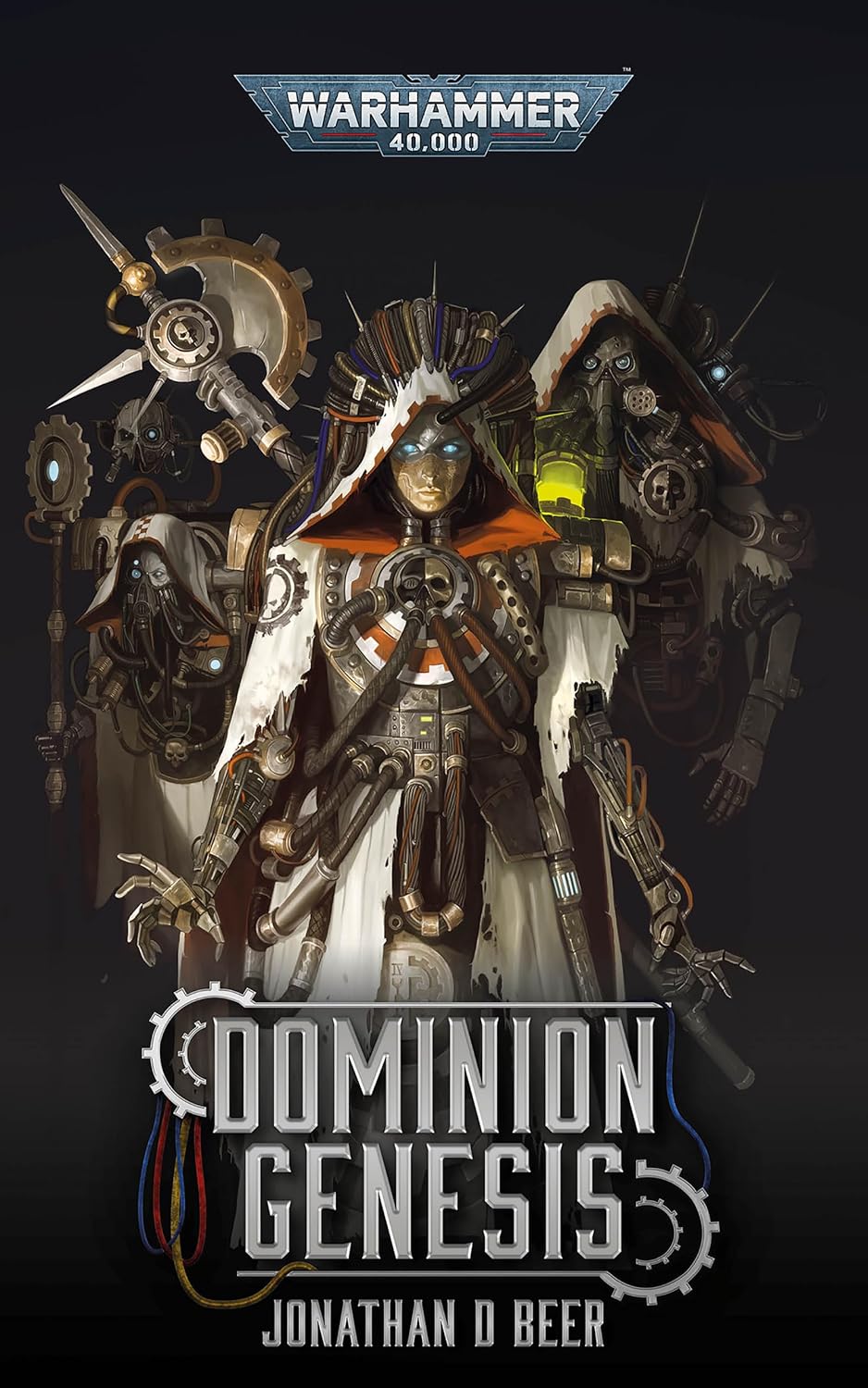
Warhammer 40,000: Dominion Genesis by Jonathan D. Beer

Publisher: Black Library (Audiobook – 21 September 2024)

Series: Warhammer 40,000

Length: 10 hours and 47 minutes

My Rating: 4.5 out of 5 stars

Amazon

Destitute tech-priests of the Adeptus Mechanicus embark on a massive quest for redemption in the excellent 2024 Warhammer 40,000 novel, Dominion Genesis by Jonathan D. Beer.

Beer is a talented rising author in the Warhammer 40,000 fiction space who has so far impressed with two interesting books covering unique spheres of the fandom’s canon.  I deeply enjoyed his first novel, The King of the Spoil, which was a particularly epic entry in the Warhammer Crime sub-series, and which ended up being one of my favourite debuts of 2023.  Beer followed up this debut last year with his second novel, Dominion Genesis, an intriguing read that takes place in a very different Warhammer 40,000 setting.  I had an excellent time with Dominion Genesis, although I spectacularly failed to write a review for it last year.  However, with Beer’s third Warhammer 40,000 novel just released, I felt that this was a good time to finally write something about Dominion Genesis, which honestly was an awesome read.

Plot Synopsis:

Gryphonne IV is dead – one of the mightiest forge worlds in the arsenal of the Adeptus Mechanicus, succumbed to the relentless hunger of Hive Fleet Leviathan. Devoured. Lost.

The few magi that survive drift in idleness, robbed of purpose and direction. But there is one who rejects that fate.

READ IT BECAUSE
It’s the gripping tale of an Explorator desperately seeking ancient technologies from humanity’s past as she races against time to restore one of the mightiest forge worlds in the Imperium.

THE STORY
Explorator Talin Sherax seeks ancient and miraculous technologies from humanity’s distant past. When she learns of a fabled relic that could restore all that has been lost, Sherax embarks on a journey, the outcome of which could change everything. Nothing will stand in her way… even if the quest brings her to the brink of heresy.

Dominion Genesis was a particularly intense and compelling entry in the Warhammer 40,000 canon that proves quite enthralling to read.  I like how Beer managed to achieve quite a few things with this book, as he produced an excellent quest narrative with a focus on obsession, trauma and survival, while also cleverly showcasing several different factions of the Warhammer 40,000 universe.

Beer came up with a very awesome story that hits a lot of highly emotional story notes early on.  The start of Dominion Genesis was one of the more striking sequences of Warhammer fiction I have read, as the protagonist, Explorator Talin Sherax, is forced to witness the destruction of their home world.  Moving quickly into a time skip, you see a very different version of Sherax several years in the future, as she still attempts to make sense of the destruction while searching for valuable lost technology.  After a great sequence aboard a derelict spacehulk, Sherax finds a clue about a potential artifact that could help to restore her planet.  Going against the orders of her superiors, Sherax leads a crew of human soldiers and Adeptus Mechanicus forces on a quest to several deadly and hidden locations in the galaxy.  Along the way, the protagonists examine their humanity in several different forms, while also being stalked by dangerous alien fighters determined to stop them achieving their goal.

There are some great sequences in the middle of this book, as the protagonist desperately follow the clues into a trap, which shakes all the characters to their core.  After a gruelling sequence of events that help to highlight and move along several, well-constructed character development arcs, the adventure moves to its destructive conclusion.  After another disaster, the protagonists are dropped in amongst a war between rival xenos forces and must journey into the fray to achieve their goal, resulting in a brutal series of battles and the intense conclusion to the narrative.  Beer wrote in some great tragic moments as the protagonists are outmatched at nearly every turn, although many of these sequences work well to provide closure to some of the book’s various character arcs.  The conclusion to Dominion Genesis was as bleak as you would hope for a novel in the grimdark Warhammer 40,000 universe, but it provides some great closure for the main character and will keep readers very satisfied.

I felt that Dominion Genesis was a particularly good addition to the Warhammer 40,000 canon, as Beer provides a thoughtful and complex novel loaded with unique action and damaged characters trying to survive the inherent darkness of the war-torn universe.  Beer ended up producing an intense character-driven story for Dominion Genesis, and I loved the great balance between action, exploration and interaction between certain unique Warhammer races, and the focus on character elements.  I personally really enjoyed the deep dive into the Adeptus Mechanicus, with various character perspectives diving into their culture and thought processes, even though certain sections of the plot need to be altered to emulate the machine nature of the tech-priests.  Beer tried to showcase a more emotional side to the Adeptus Mechanicus in this book, especially through his protagonist which, while different from other portrays of this faction, fits the trauma-rich narrative as all these characters struggle with the loss of their home.  The author also has fun fitting in several of the main alien races of the Warhammer 40,000 universe into the story, including orks, Tyranid, Aeldari and Necrons.  While not a lot of focus is given to understanding them, they serve as good foils to the obsessed protagonists, and it was interesting to see the Mechanicus takes on these different enemies.  In the end, Dominion Genesis proved to be a compelling, and impressive standalone novel that makes great use of its Warhammer 40,000 elements.  However, be warned that this novel is probably better read by more established fans of the franchise, rather than newer readers, as Beer covers a lot of complex lore in a short period of time.

One of the key things I liked about Dominion Genesis was the rich array of compelling characters featured throughout the plot.  Beer does an outstanding job introducing and following several very damaged figures, including the protagonist Explorator Talin Sherax, who finds herself in a depressed state following the opening sequence of book.  Cutting herself off from the technological hivemind used by the rest of Adeptus Mechanicus brethren, Sherax proves to be a brilliantly complex figure in Dominion Genesis, and Beer’s take of her as the depressed member of a group known for having no emotions was really fascinating.  The author also features an interesting array of other Adeptus Mechanicus members who provide great alternate viewpoints to that of Sherax.  I really enjoyed how Beer managed to include a lot of intriguing individualism in these machine-like Adeptus Mechanicus characters, and the range of different opinions and feelings around Sherax and her mission added some interesting drama to the story. 

Finally, I must highlight the human members of the Dominion Genesis cast, who provide intriguing alternate viewpoints to cybernetic protagonists. I particularly enjoyed the focus on a depressed former Imperial Knight pilot, who, after losing his ancient war machine, decides to join the crew of Sherax’s ship.  There are some fascinating focuses on his parallel grief to that of the Adeptus Mechanicus characters, as well as his own self-anger, especially while forced to pilot a seemingly lesser machine.  Beer writes some interesting side plots around this more human character, including his relationship with an Imperial Guard regiment also aboard the ship, and he must balance his need for human contact with his own grief and arrogance.  I felt this compelling collection of distinctive characters helped to make Dominion Genesis really stand out, and I enjoyed seeing their unique interactions.

As with most Warhammer 40,000 novels I review, I ended up listening to Dominion Genesis on audiobook, which is pretty much the best way to enjoy this series.  The Dominion Genesis audiobook ended up being a lot of fun to listen to, and I managed to get through it’s near 11-hour runtime quickly.  It helped that Dominion Genesis was narrated by the very talented Colleen Prendergast, who is becoming the go-to narrator for any Warhammer 40,000 audiobook that features a human female protagonist, such as Justin D. Hill’s Cadia series, or standalone books like Creed: Ashes of Cadia by Jude Reid or Longshot by Rob Young.  Prendergast did an outstanding job bringing the various complex cast members of Dominion Genesis to life, and I particularly appreciated the skill need to voice a variety of cybernetic humans with altered or robotic voices.  This great voice work turned Dominion Genesis into a fantastic listen, and it was very easy to enjoy Beer’s outstanding and lore-heavy story when it was being read out.

Overall, Dominion Genesis was an amazing second novel by Jonathan D. Beer, who did an outstanding job pivoting to a different area of Warhammer 40,000 fiction.  I loved the complex character-driven narrative contained within Dominion Genesis, and this was one of the more enjoyable Warhammer 40,000 novels that came out last year.  I cannot wait to see how Beer continues to develop as a writer in the future, and I currently have a copy of his latest book, Tomb World, in my audiobook queue to listen to.
Amazon

Warhammer 40,000: Dead Men Walking by Steve Lyons

Dead Men Walking Cover

Publisher: Black Library (Audiobook – 30 November 2010)

Series: Warhammer 40,000

Length: 10 hours and 42 minutes

Rating: 4.75 out of 5 stars

Amazon

Two relentless foes face off in the intense Warhammer 40,000 novel, Dead Men Walking by Steve Lyons.

Dead Men Walking was an epic novel released back in 2010, that featured a brutal and compelling story I really fell in love with.  This novel follows the trend of books that highlight the adventures of specific regiments or units of Imperial Guard, such as Catachan Devil by Justin Woolley, Kasrkin by Edoardo Albert, Steel Tread by Andy Clark, and the Gaunt’s Ghosts books by Dan Abnett, which has been very fun.  Dead Men Walking was the author’s first look at the legendary Death Korps of Krieg, one of the most distinctive and dark regiments of Imperial Guard soldiers, who he covered again back in 2022 with Krieg.  This new novel sets the Death Korps onto a whole new battlefield with deadly results.

Hieronymous Theta is a small and relatively young world in the Imperium of Man.  Populated by nearly nine billion people, it is slowly becoming an important industrial hub, as its cities and massive spires build up.  But as the inhabitants of the capital, Hieronymous City, expand their mining operations deeper they encounter something unexpected and terrifying, the Necrons.  Unfeeling and inhuman ancient xenos encased in living metal, the Necrons are an unrelenting force determined to exterminate the human pests they find inhabiting their world by any means necessary.

As the citizens of Hieronymous City begin to panic, unable to stand against the encroaching Necrons and their deadly technology, their apparent salvation lands on the planet in the most unlikely of forms, the Death Korps of Krieg.  One of the most feared and mysterious regiments of the Astra Millitarum, the Death Korps of Krieg come from a world destroyed by civil war which seeks to redeem itself by producing soldiers solely dedicated to the Emperor and his victory.

As the Death Korps land on Hieronymous, they take the war to the Necrons and begin a determined siege to retake Hieronymous City from the outside.  But as the Krieg regiments push forward, the people of the planet soon begin to realise that the Death Korps might not be the salvation they hoped for.  The soldiers of Krieg’s only goal is to defeat the Emperor’s foes, and they are willing to sacrifice anything to achieve victory, including the citizens of Hieronymous.  With battle joined, the fate of Hieronymous hangs in the balance.  But does anyone truly win when two implacable and unrelenting armies go to war?

This was an extremely interesting, intense and dark novel from Steve Lyons, who follows up his previous Krieg novel in a big way with this outstanding read.  Featuring a moving, action-packed and highly cynical story, Dead Men Walking was probably one of the better Warhammer 40,000 books from last year, and I had an exceptional time getting through it.

I really liked the fantastic story that Lyons came up with for Dead Men Walking, especially as it successfully showcased both opposing armies, the Death Korps and the Necrons, without actually featuring any perspective characters from either side.  Instead, the focus is reserved for the other humans caught in the middle of the conflict, including the Imperial Commissar attached to the Death Korps, the governor of the planet, and several citizens who find themselves caught in the crossfire of the war and are forced to adapt to survive.  I love how Lyons set the early narrative out, with the perspective characters slowly becoming aware of the dangers beneath them.  The slow build introduction of the Necrons, a force the humans don’t know but the reader is very aware of, was handled perfectly, and there is a lot of great anticipation that pays of well when they finally attack.  The scenes of carnage and utter terror that emerge for the characters stuck in the city really hit home with their realism and intensity.  Indeed, there is a bit of a horror vibe to the story at this point, and Hieronymous City turns into an excellent wasteland setting for the characters to subsequently attempt to navigate.

Once the city is in ruins, the book turns towards the landing Death Korps, who begin prosecuting a deadly war against the Necrons.  This moves the story into a fascinating new zone, as you get some fantastic battles while also witnessing several characters soon caught up in the city as everything changes around them.  I loved the various unique, personal stories that emerged, and the focus on characters watching both the Krieg and Necron forces battle it out proves very powerful.  As the story continues, each of the main characters suffer in various ways, especially as they begin to realise that the unrelenting, victory-focused Krieg are just as dangerous as the Necrons, and there are some deeply powerful moments as they lose their humanity in the carnage of war.  All of these mostly independent character narratives go in some dark directions, especially as the background war gets even darker, and not everyone survives the various conflicts to come.  These storylines either end or coalesce together as the book comes to a head, and you really appreciate the impressive narrative that Lyons weaves together.  I loved how grim and cynical the story got at the end, and Lyons provides a particularly memorable conclusion that really highlights just how unfair the Warhammer 40,000 universe can be.

Lyons really came up with a brilliant story for Dead Men Walking, as he balanced the need to highlight two interesting Warhammer 40,000 factions, while also telling his own unique narrative.  Telling the story of the Krieg and Necrons from the perspective of the third-party characters caught in the middle of their war was such as clever move, especially as it provided some fascinating contrast between the two factions.  The author provided such a dark vibe for Dead Men Walking, and the terrified civilians, the crumbling city and the relentless troops waging war without a care for those around them were all handled brilliantly.  I think the narrative split between the various characters caught up in the fray was done well, and you get to see all sides of the conflict, and the darkest actions of both opposing foes.  I also loved how well Lyons showcased the main city setting throughout the book, as the collapse of the once proud city mirrors the loss of humanity for the various protagonists.  Dead Men Walking can easily be read as a standalone novel, and new readers can just fall into its dark and unique story.  Indeed, this might be a pretty good entry point, as the views of the confused and horrified civilians provide some good opening observations about two key factions.  Naturally, established fans of the franchise will get a lot more out of Dead Men Walking, especially as Lyons really showcases both iconic groups in some fantastic ways.

I absolutely loved the portrayal of the Krieg soldiers in Dead Men Walking, and they really are some of the most entertaining figures in the Warhammer 40,000 canon.  Unlike his other novel, Krieg, where Lyons spent a great deal of time focusing on the origins of the Krieg soldiers with flashback sequences, Dead Men Walking showcases them purely through the eyes of other human inhabitants of the Warhammer 40,000 universe.  To the common soldier or citizen of the Imperium of Man, the Death Korp are unnaturally dedicated, unwavering and heartless, focussing on the battle to the exclusion of all others.  Thanks to their harsh training, indoctrination, and history, they have a very black-and-white view of the universe and will stop at nothing to win, even if that means sacrificing their comrades or allies for a strategy.  Lyons really highlights their near-inhuman mentalities throughout the course of Dead Men Walking, and thanks to the perspectives of the non-Krieg soldiers, you see them in a much more sinister light.  There is something very concerning about the simple mathematic they put behind their strategies, and I loved how well Lyons captured how similar they are to the Necrons.  Thanks in great deal to the actions of the Krieg soldiers, this ended up being a particularly bleak book, which really hammered home how there are no good guys in this universe.

In addition to the Krieg soldiers, Dead Men Walking also featured the Necrons as the antagonists, who served as worthy opponents to the Krieg.  As with the Krieg soldiers, you don’t get a Necron perspective in Dead Men Walking, which honestly enhanced the unique story Lyons was going for.  Unlike books like other more recent Necron focussed novels like Ruin, Reign or The Infinite and the Divine, you only see these characters through the eyes of normal humans, who have no idea who or what they are.  This makes for some particularly terrifying scenes as the humans encounter overwhelming attacks from unkillable metal monsters, and Lyons really captures how the unknown is just as bad as the devastation around them.  Even when the Krieg soldiers arrive, there is very little knowledge about the Necrons, due to the secrecy of their origins, and the only intelligence about them comes from rumours of prior encounters (which includes a cheeky reference to the Ciaphas Cain novel, Caves of Ice).  I really appreciated this shrouded look at the Necrons, and it proved to be interesting to see the how a normal person would view them.

I really liked the characters in Dead Men Walking, especially as Lyons focuses the story on several normal humans who suddenly get thrust into hell and find everything they thought they knew completely upturned.  Much of this upheaval is due to the interactions with the Krieg soldiers, whose unreasonable actions cause even the most stoic soldier or commander to falter in different ways.  Watching each of these characters slowly change for the worse makes for some gripping reading, and you end up feeling great sympathy for all the point of view characters.

These great characters include Gunthar Soreson, a mine supervisor who loses everything in a single night and tries to find redemption as a soldier fighting for the Krieg.  It was absolutely fascinating to see Gunthar, who starts the book as a relatively normal and nice character, slowly lose his humanity in a similar manner to the Krieg soldiers, and his story hits particularly hard at times.  I also must highlight the character of Commissar Costellin, one of the commissars attached to the Krieg regiments, and one of the few non-Krieg soldiers featured in the book.  Commissars are fantastic figures in the Warhammer 40,000 canon, mainly because they serve as implacable disciplinarians charged with maintaining order and morale through lethal means and ensuring that the soldiers due their duty.  However, due to the unnatural discipline of the Death Korp soldiers, Costellin finds himself acting more in the role of a liaison between the Krieg and the citizens of Hieronymous.  Lyons writes some intriguing storylines around Costellin, and it was fascinating to see a commissar character who fears the resolve of his own troops, as the Death Korp leaders go too far even for him.  Finally, I really enjoyed the inclusion of the governor of Hieronymous, Hanrik, who finds both his planet under attack and his authority taken away from him when the Death Korp takes over.  I felt the storyline around Hanrik was very clever, and you had to feel for him at times, especially when he finds his loyalties tested.  All these character arcs and more are really well written and hit hard emotionally, especially with their resulting dark ends.

It should come as no surprise whatsoever that I grabbed Dead Men Walking on audiobook, as frankly no other format does Warhammer 40,000 fiction justice.  The resulting audiobook was extremely awesome, as the intensity, action, and darker elements of Dead Men Walking’s story came through in this format.  Coming in with a run time just short of 11 hours, Dead Men Walking was an easy Warhammer 40,000 audiobook to power through quickly, especially once you get stuck into its awesome narrative.  It helped that they brought back talented narrator Timothy Watson for this audiobook adaptation.  Watson, who did a great job narrating Krieg and The Lion: Son of the Forest, was in rare form again in Dead Men Walking, especially as he has the perfect voice for this darker and exciting story.  His voice work really captures the chaos and desperation of the story, and I loved the unique tones he comes up with for the various characters.  The featured Krieg soldiers all have the typical German-esque accent, which matches the regiment’s World War I aesthetic, and I liked how Watson worked to enhance these figures relentless and unwavering nature through his voice work.  The other characters of the plot, who are allowed to have emotions, are also portrayed extremely well, and Watson provides them with excellent and fitting voices that captures their feelings on the situation, especially as their encounters with both the Krieg and the Necron, wear them down.  This audiobook version of Dead Men Walking was so damn good, and it is easily the best way to enjoy this epic novel.

Steve Lyons continues to showcase why the Death Korp of Krieg are some of the most memorable figures in the Warhammer 40,000 canon with the brilliant and dark read Dead Men Walking.  Presenting a grim scenario of war and sacrifice that only gets worse when the ‘good guys’ arrive, Dead Men Walking was a particularly harrowing piece of Warhammer fiction, that I still cannot stop thinking about.  Clever, intense and a little traumatising, Dead Men Walking comes highly recommended, and I cannot wait to see what great tale Lyons comes up with next.

Amazon

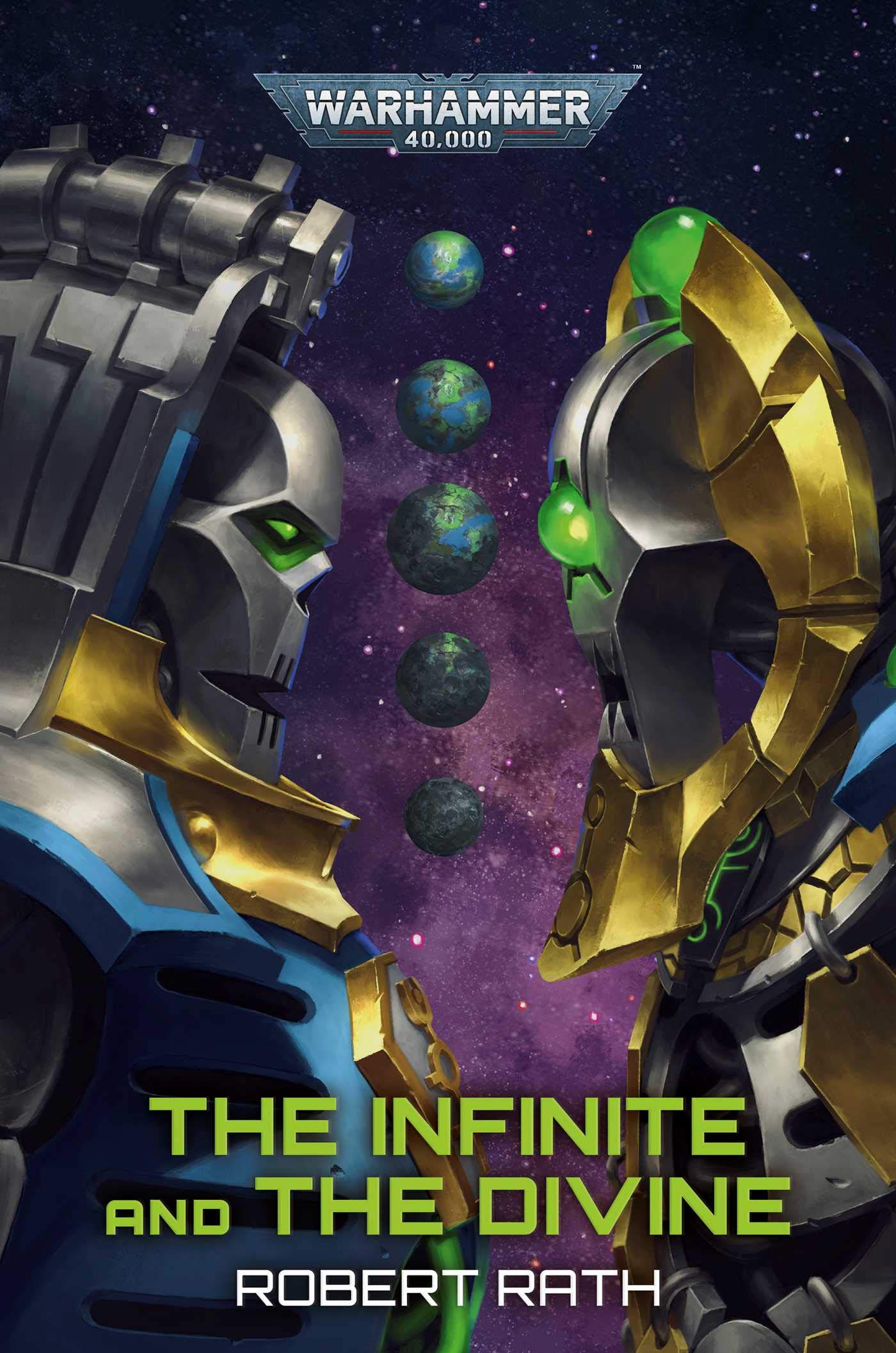
Warhammer 40,000: The Infinite and The Divine by Robert Rath

The Infinite and the Divine Cover

Publisher: Black Library (Audiobook – 10 October 2020)

Series: Warhammer 40,000

Length: 13 hours and 21 minutes

My Rating: 5 out of 5 stars

Amazon     Book Depository

Prepare to dive into one of the most entertaining and elaborate rivalries in Warhammer history with the outstanding and captivating read, The Infinite and The Divine, by the exceedingly talented Robert Rath.

Before I pause my current obsession with Warhammer fiction to pursue other recent books, I just had to read one more intriguing Warhammer 40,000 novel that I have been hearing a lot about in recent years, The Infinite and The Divine.  The debut Warhammer 40,000 novel of exceptional author Robert Rath, who previously wowed me with last year’s epic book, Assassinorum: Kingmaker (one of my favourite books and audiobooks of 2022) The Infinite and The Divine dives into one of the more unique factions in the Warhammer universe, the Necron.  This intriguing and fun novel follows two fantastic Necron characters as they engage in a bitter and lengthy feud across time and space.  Pretty much every review I’d read about The Infinite and The Divine was highly positive and I just had to try it out, and boy did it live up to all my expectations.

Long before the Imperium of Man and the Emperor existed, before the fall of the Aeldari and even before the Necrons traded their flesh away for immortal metal, there existed something far more deadly and permanent, an undying conflict between two arrogant scholars.  Even before they became immortal beings of metal, Trazyn the Infinite and Orikan The Divine were bitter rivals.  While Trazyn glorifies the past and seeks to capture and contain anything of rare or historical value, Orikan looks only to the future, divining events that are to come and hoping to find a way to become a being of energy.  But despite their differences, these two Necron are about to be drawn into the same obsession.

When Trazyn manages to obtain a rare Necron artefact, Orikan infiltrates Trazyn’s gallery to steal it, believing that it is the key to locating an ancient Necron tomb that could provide invaluable knowledge for the future of the Necrons.  However, Trazyn is unwilling to lose such a treasure, nor let Orikan’s trespass go unanswered, and swiftly snatches the artefact back, hoping to locate and plunder the tomb for himself.

So begins a battle of cat and mouse that will last millennia.  As both academics attempt to unlock the secrets of the artefact and gain the knowledge to find the tomb, they will engage in a series of deadly attacks and subterfuges to gain the advantage and destroy their opponent.  Their battles will destroy planets and shape the future of civilizations as they proceed, unheeding of the cost to those around them.  But the closer Trazyn and Orikan get to their goal, the more apparent it becomes that the treasure they seek is far beyond anything that the two rivals can ever imagine, and soon they and the entire Necron race sits on the precipice of destruction.

Wow, now that was an exceedingly epic and engaging Warhammer book.  Rath really pulled out all the stops for his debut here as The Infinite and The Divine is an incredibly clever and captivating read that I had an exceedingly hard time putting down.  Following two outstanding and petty protagonists, Rath hits the perfect blend of humour, intense action, and compelling lore expansions to elaborate Warhammer 40,000 lore, which turns The Infinite and The Divine into quite an elaborate and impressive read.

The Infinite and The Divine has a pretty epic and entertaining character driven story  that essentially boils down to two highly arrogant immortals going on an elaborate scavenger hunt across the galaxy for thousands of years, while also simultaneously engaging in a petty and deadly feud to ensure they win and their opponent fails.  This is an exceptional and highly amusing story concept which Rath utilises to his full ability, creating a captivating narrative that really drags you in and keeps you chuckling the entire way through.  The book starts with Trazyn facing off against an offshoot tribe of dinosaur-riding Aeldari, which does a lot to grab your attention while also perfectly introducing one of the main characters.  Rath keeps the momentum rolling after these initial fun fight scenes as Trazyn returns home to discover his rival, Orikan, invading his sanctum trying to steal one of his precious artefacts.  After a compelling fight that really highlights the differences between the two characters, Orikan escapes, and this sets off their bitter feud.

What follows is a series of fights and schemes across several different battlefields and locations as the two trade their advantage back and forth by claiming and then losing the artefact, all while attempting to kill each other.  There are some gloriously entertaining scraps throughout this book, especially as both Trazyn and Orikan have very different abilities and focuses, which Rath perfectly works into the story.  I have to highlight a particularly awesome and funny trial sequence near the start that played out in several different and amusing ways as Orikan uses his mastery of time to rewind events to try and get a result that favours him.  The two engage in some gloriously petty and hilarious methods to try and claim victory, and their reactions at being bested and the lengths they go to win really helps to turn this book into a fantastic and epic read.  Rath does a great job of switching attention between these two excellent characters as the book continues and I loved seeing the intriguing differences of opinions and the elaborate schemes that swirl within both their minds as they squabble.  The author adds in some great additional context of the wider universe throughout the story as well, and I loved the use of in-universe texts, such as the Necron epic The War in Heaven, at the start of each chapter, as they provide some subtle hints of what is to come.

The story gradually focuses on one specific planet which the Necron characters visit and fight across as they attempt to unlock the mysteries of the contested artefact and the treasure it unlocks.  This part of the book is particularly intriguing, as Rath adds in some compelling examinations of the evolution of this planet, and it is fascinating to see how their feud influences the people within, often to everyone’s detriment.  Trazyn and Orikan are eventually able to unlock the secrets of the artefact, which only intensifies their conflict, and I loved some of the very fun ways that they each try to knock off their opponents, especially as it often makes their own situation even worse.  I also felt that it was very clever how the author worked in the planet’s history and culture into the solution of the main mystery, and it was great when seemingly innocuous discussions about human society were actually hints about major events to come.  Everything leads up to the final opening of the tomb they have long been searching for, which of course only unleashes more problems.  Rath did a really good job of layering in hints and clever clues about the final twist, and I deeply enjoyed the massive reveal that emerged.  The protagonists are forced to work together in several spectacular scenes which did a wonderful job of highlighting the relationship the two formed throughout the conflict, while deeply upping the stakes and providing the reader with some memorable moments and entertaining battles.  Everything ends on an amazing note, especially with some final great betrayals by the protagonists, and you come away from The Infinite and The Divine pretty damn satisfied and extremely amused.

I was deeply impressed with how Rath brought The Infinite and The Divine’s complex and entertaining story together and considering the outstanding way in which he dove into the subject matter, it is pretty remarkable that this was his first Warhammer novel.  I was always going to be very interested in a book that focused on the Necrons, one of the more intriguing and distinctive factions in the Warhammer 40,000 canon, but I felt that Rath did a particularly exceptional job at capturing the essence of these immortal beings.  The great humour and comedy that he brought to the protagonists’ eternal feud really helped to make these ethereal beings very relatable and I loved their fun and arrogant opinions about the other races in the galaxy.  Rath manages to load a lot of snark into their observations about humans, orks and other species throughout their discussions, and it was quite fascinating to see their divergent opinions on the subject, as Orikan is determined to ignore and scorn all organics, while Trazyn is fascinated by culture and hopes to study or collect everything of value they have.  However, Rath also goes a lot deeper and you get an intense and powerful examination of the Necron self, including how they feel about their current state of being, the decline of their empire and the many sacrifices they have made over the years.  This, combined with an intriguing examination of their history, culture and personalities, gives readers a great understanding of the Necron race and any fan of this faction is absolutely going to love The Infinite and The Divine.  Rath’s excellent descriptions of the events, history, and the elaborate battles and technology really paints a beautiful picture around the Necrons and I felt that he did a remarkable job fitting the story around this background lore.  I especially loved the intriguing dive into Necron magic and other technology discussions, and it was really fun to see Orikan manipulate time throughout the book to make some very epic scenes.  While a few elements were extremely lore heavy, especially when it came to decoding the artefact, this was a very good use of the Necrons, and I really hope that Rath dives into additional unique factions in the future.

Despite Rath’s impressive and compelling descriptions of the Necrons and the wider universe, I don’t think I would recommend The Infinite and The Divine to those new to the Warhammer franchise, as the sheer amount of lore might break their reading flow.  However, for those a little more familiar with the history and background of the Warhammer 40,000 universe, this is a fantastic read which would serve as an exceptional transitional novel for those interested in checking out non-human stories in this canon.  I really cannot emphasise how great a book this was for Necron fans though and I deeply enjoyed Rath’s vision of these aliens and their unique culture.

I also really must highlight the excellent and compelling central characters of this book who take the form of ancient Necrons, Trazyn the Infinite and Orikan The Divine.  Ancient Necron lords who are the masters in their respective fields, Trazyn and Orikan are both particularly entertaining and fun in their own ways, as each of them believes themselves to be the smartest person in the room at all times.  Due to this, and many other reasons, the two hate each other with a passion and they enter into their eternal feud over several perceived grievances.  There is something delightfully entertaining about watching these supposedly highly evolved, ancient and wise beings engage in such petty actions against each other, and the way they bring out the worst in each other is so glorious, especially as it permeates the entire novel with some exceptional humour.  I personally loved how both were just as bad as the other in this feud, as this ensures that you don’t actually care which one of them wins and you can just get lost in the resulting chaos.  Ironically, the two protagonists actually have a lot in common, and when they are forced to work together they prove to be an effective team capable of so much more.  There are some great flashes of a deeper potential friendship at times, although this never lasts, although it is entertaining and moving to see what could have been had their rivalry not consumed their lives.  Throw in some very unique abilities, technology and artefacts between the two, which results in some particularly entertaining scenes and battles (watching Trazyn unleash his captured collections against his foes is always fun), and these two prove to be an outstanding central focus who really bring this exceptional story together.  I had so much fun with Trazyn and Orikan and I hope we see much more of them in the future, especially if the future of their private war is revealed.

I naturally listened to The Infinite and The Divine on audiobook, which was an epic experience as always.  The audiobook versions of all the Warhammer books are very effective at conveying the cool narratives, and I felt that The Infinite and The Divine’s audiobook really helped the reader to appreciate the elaborate story and the ton of lore that Rath fit into this book.  With a run time of nearly 13 and a half hours, this is a decent length Warhammer audiobook, although dedicated readers will power through it once you get caught up in the story.  I had a lot of fun listening to this audiobook, especially as they got the very talented Richard Reed to narrate the format.  Reed is an outstanding voice actor, who has a lot of experience narrating Warhammer novels, such as the Warhammer Crime novel Grim Repast by Marc Collins.  However, the main reason that I liked the use of Reed was because he also narrated the two The Twice-Dead King audiobooks, Ruin and Reign by Nate Crowley, which also focused on the Necrons.  Reed once again expertly captures the ancient and deadly nature of these metal alien creatures in his narration, and I felt that both main characters, Trazyn and Orikan, were perfectly portrayed by him.  Their intelligence and ancient emotions are shown to the listener, and I felt that Rath did a great job of showcasing their arrogance and pettiness through his voice work.  Throw in some additional great portrayals of the other eclectic characters and aliens contained in this book, and you have an outstanding performance which really helped The Infinite and The Divine’s audiobook format shine.  As such, this is absolutely the best way to enjoy this amazing novel and I cannot recommend it enough.

Robert Rath really cemented his Warhammer fiction legacy early with The Infinite and The Divine, which is one of the best and funniest Warhammer 40,000 novels I have read.  The exceptional book presents the reader with a unique and captivating narrative that perfectly utilises the iconic Necron faction while also telling a deep, personal and humorous story of betrayal, antagonism and treasure hunting.  I absolutely loved The Infinite and The Divine and I am really regretting not reading it earlier, especially as it lives up to all the hype.  A highly recommend book that is frankly one of the better Warhammer tie-in novels out there.

Amazon     Book Depository

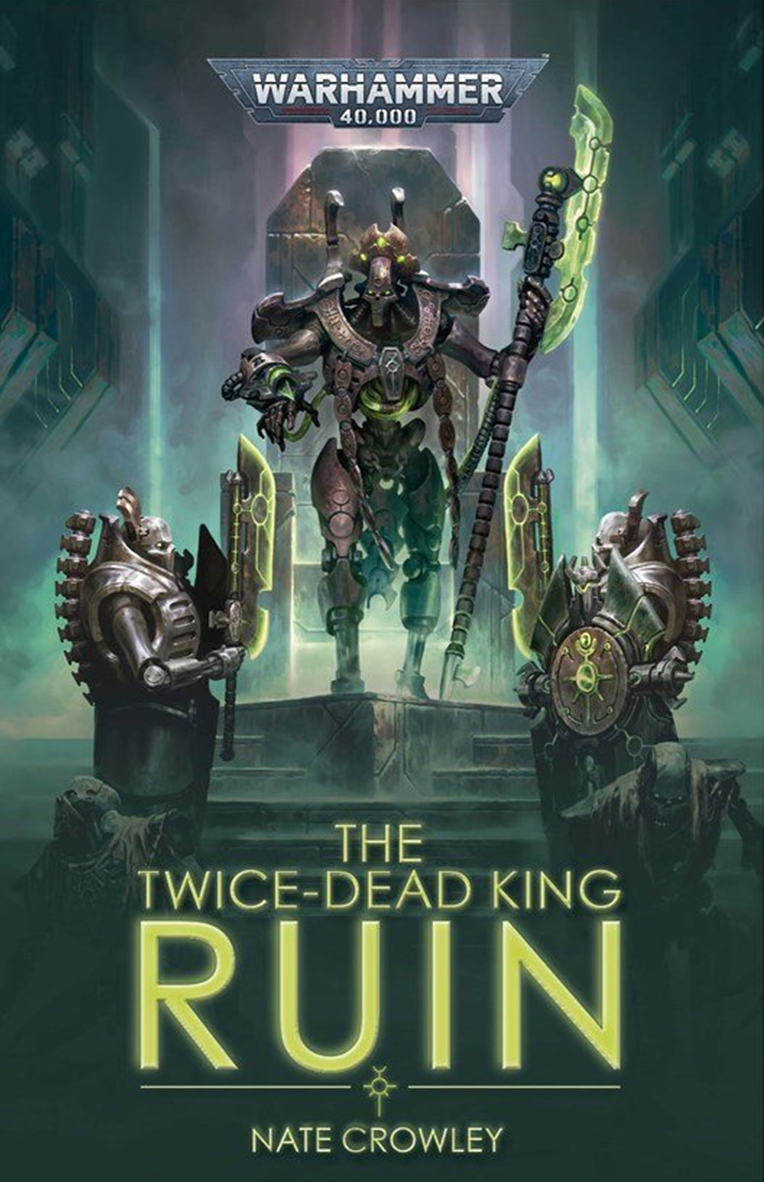
Warhammer 40,000: The Twice-Dead King: Ruin by Nate Crowley

The Twice-Dead King - Ruin Cover

Publisher: Black Library (Audiobook – 9 October 2021)

Series: Twice Dead King – Book One

Length: 11 hours and 22 minutes

My Rating: 4.75 out of 5 stars

Amazon     Book Depository

Intriguing new author Nate Crowley presents one of the most complex and fascinating Warhammer 40,000 novels I had the pleasure of reading, The Twice-Dead King: Ruin, an epic and thrilling novel that explores one of the most intriguing races in the canon, the Necrons.

I have been having a lot of fun listening to a bunch of awesome Warhammer 40,000 (Warhammer 40K) novels over the last year, with some great examples including Deathwatch: Shadowbreaker by Steve Parker, Kal Jerico: Sinner’s Bounty by Joshua Reynolds, Fire Made Flesh by Denny Flowers, and First and Only by Dan Abnett.  While I have deeply enjoyed all these novels, I felt that it was time to go outside of the novels that typically focus on this universe’s human characters and instead read something with a more unique subject matter.  As such, when I saw that The Twice-Dead King: Ruin had recently been released, I instantly grabbed a copy, and I am really glad that I did.

Ruin is the first novel in The Twice-Dead King series, which looks set to explore the Necrons and their place in the current Warhammer 40K universe.  This was the second Warhammer 40K novel from author Nate Crowley, who previously released the intriguing Ork-centric novel, Ghazghkull Thraka: Prophet of the Waaagh!, as well as several short stories/novellas set in the universe.  Crowley makes full use of his talent for getting into the mind of fictional aliens to create an excellent and enjoyable read that I had a wonderful time listening to.

In the chaotic and war-striven future of the 41st millennium, many powerful and dangerous races fight for domination and destruction.  However, no race is more mysterious or feared than the immortal beings known as the Necrons.  The Necrons are an ancient and ruthless race who, thousands of years ago, sacrificed their mortality and humanity to defeat a powerful enemy as well as death itself.  Forced into thousands of years of hibernation after their great victory, the Necrons are now slowly awakening to reclaim their empire by destroying all life in the galaxy.

However, despite their intense belief in themselves, the Necrons are a dying race, gradually being whittled down by time, madness, and the unceasing tide of organic life they are forced to constantly fight against.  None know this better that Oltyx, a bitter and resentful Necron Lord who has been banished to the wretched border world of Sedh.  Once heir to the throne of a mighty and glorious dynasty, he now only has control of a small garrison of degraded warriors who are slowly dwindling under constant attacks from Ork raiders attempting to invade the Necron empire.

As Oltyx dreams about vengeance and reclaiming his birthright, he finds himself facing an immense threat that could spell the doom of his dynasty and the entire Necron race.  The invading Orks are only the precursor of a larger and much more powerful enemy, one his small force has no chance of defeating.  With no other option, Oltyx is forced to return to his dynasty’s crownworld and beg for reinforcements from the court who cast him out.  However, his return uncovers something far more disturbing than he could have ever imagined.  A twisted horror now lies within the heart of Oltyx’s dynasty, bringing only madness and bloodshed with it.  To ensure his people’s survival, Oltyx must face the curse of the Necrons and the pure horror of a twice-dead king.

Ruin is an exceptional and captivating tie-in novel that perfectly combines an intriguing and addictive narrative with large amounts of Warhammer 40K lore and some great character work.  This is a perfectly paced story that does an exceptional job introducing the complex setting and character and placing them into an intense and emotionally rich adventure.  While the initial start of the book is a tad slow due to the necessity of throwing in so much Necron lore, it swiftly picks up speed and excitement within the first few chapters.  I personally became really attached to this novel a couple of chapters in when the protagonist and point-of-view character, Oltyx, attempts to determine the best way to defend his planet against the Ork invaders, while also simultaneously mulling over the failures of his personal history.  There was one amazing extended sequence that saw Oltyx attempting to analyse a vision from his past to come up with a perfect plan, while also watching a massive force of Orks approaching.  This scene perfectly blended a fun Warhammer battle with alien history and a complex character moment, all set to a timer that was counting down to the start of combat.  From there the story gets even more enjoyable, as after getting up close and personal with the real horrors of the Necrons, the protagonist discovers that there is a bigger danger approaching: humans.  From there, Oltxyx is forced to journey back to his home planet to beg for help, but instead finds a secret more terrible and disturbing than he could ever imagine.  After some severe lows, combined with a couple of family reunions of variable enjoyment, the story leads up to an impressive and epic conclusion, loaded with war, destruction and sacrifice.  This satisfying and moving conclusion wraps up this leg of the story extremely well and treats the reader to some outstanding action sequences and some major emotional moments that will define the protagonist for the entire series.  An overall brilliant and deeply memorable narrative, I powered through this cool book and loved every second of it.

Ruin was also a pretty impressive entry in the overall Warhammer 40K canon, especially as it contains an outstanding look at one of the franchises more unique races, the Necrons, who are extremely underrepresented in the extended fiction.  Crowley has done a brilliant job here with Ruin, and I loved the distinctive and compelling Warhammer 40K story it contained.  The author has made sure to load up this book with a ton of detail, information and settings unique to this massive franchise, and fans will no doubt love immersing themselves in this cool lore.  Ruin also contains several massive and well-written battle sequences that will easily remind readers of the table-top games that this franchise is built around and which really increase the epic nature of this novel.  The immense amount of somewhat more obscure lore may turn off readers new to Warhammer 40K fiction.  However, I think that most new readers can probably follow along pretty well here, especially as Crowley has a very descriptive and accessible writing style, and Ruin proves to be an excellent and compelling introduction to the Necrons.

I was deeply impressed by how Crowley featured the Necrons in Ruin, especially as he provides a deep explanation of their history and personalities, while also making this somewhat aloof race extremely sympathetic.  The Necrons are a very interesting race within the Warhammer 40K canon, with a look that can be best summed up as Ancient Egyptian Terminators.  They also have a backstory that is somewhat similar to the Cybermen from Doctor Who, in that they are formally organic beings who were transplanted into metal bodies, with only a few members (mostly the former nobility) maintaining their personalities, memories and emotions.  This makes them a very hard species to get a handle on, and most of their appearances in the expanded fiction feature them as cold antagonists.  However, Crowley really went out of his way to showcase the deep and rich culture, history and personalities contained within this race, and the reader ends up getting an impressive and comprehensive look at them throughout Ruin.

This book contains so many intriguing and compelling details about the Necrons, and the reader gets a real crash-course, including why they gave up their humanity to become metallic monsters.  Crowley attempts to cover every single detail about the Necron way of life in this book, and Ruin is filled with cool discussions about current Necron biology, how their components work, how they communicate, and what the mindset of these immortals truly are.  The readers are left with a vision into the complex and hierarchical minds of this unique race, and you get some compelling insights into who they are and why they do what they do.  In addition, Crowley really attempts to highlight just how tragic the Necrons really are as a race, with a deep and compelling look at what they truly gave up when they become the metal beings we all know.  Crowley paints the Necrons as a dying race, despite the apparent immortality bestowed upon them, as the finite members are slowly being worn down by combat, disrepair, and madness.  There is a particularly fascinating look at how the transition from flesh to metal has deeply impacted the psyche of many of its members, as some have been driven into a deep depression while others are turned into crazed cannibals.  This fascinating and comprehensive examination helps to turn the Necrons into quite a sympathetic race throughout Ruin, and you end up rooting for them as the book progresses, even when they are fighting humans.  While the Necrons have never been my favourite race/faction in the Warhammer 40K canon, I deeply appreciated seeing a novel from their point of view, and Crowley’s excellent writing has helped to alter my opinion about them.  I must admit that it was extremely fun to see their perspective on the events of the Warhammer 40K universe, as well as their opinions about the other races inhabiting it (the protagonist makes a very intriguing comparison between Necrons and Space Marines that really sticks in the mind).  This was a perfect Necron novel, and readers will come away with a whole new appreciate for their backstory and plight.

Another thing that I deeply enjoyed about Ruin was the complicated protagonist, Oltyx, a disgraced Necron noble who has been banished to a desolate and worthless frontier planet for his transgressions.  At the start of Ruin, Oltyx is an angry and arrogant creature, weighed down by his bitterness and resentment, and is not a particularly fun character.  However, as the story progresses, Crowley adds layer upon layer of complexity to him, using a mixture of flashbacks, personal insights, revelations, and alternate perspectives of his memories.  This slowly turns him into a sympathetic and compelling figure, showing him as one of the few nobles to truly care about the future of his people, whole also exploring his concerns about the madness and apathy that could one day claim him.  As the story progresses, and he reencounters the members of his family and has more visions of his past, Oltyx continues to evolve into a much more likable character, especially as he deals with great adversity and tragedy.  This adversity gives him some great appreciation for his race, even the lower tiers, and he soon comes away a well-rounded figure with an interesting future ahead of him.  This was an overall exceptional introduction to this character and Crowley has set up this figure up perfectly for the future entries in this series.

Aside from Oltyx proper, there were a couple of other fun figures I must highlight in this book.  Five of these characters are actually part of Oltyx himself, as the protagonist has installed five subminds into his head in order to help him achieve his mission.  These five subminds each provide different insights to a range of subjects, including doctrine, aliens, combat, strategy, and analytical analysis.  The various subminds each have their own personalities, based on their design, and it is fun to see them interact with Oltyx in his head and with each other.  While some of the subminds are focused on more than others, they prove to be an intriguing inclusion in the story, especially as they also grow and develop alongside Oltyx, especially once he comes to appreciate them more.  The subminds also help compensate for the general lack of other side characters in the novel, which are a result of both isolated planets and the general lack of remaining sentience amongst the Necrons.

The other major side character I want to talk about is Djoseras, Oltyx’s brother, who the protagonist blames for his exile.  Djoseras is an excellent mentor character who was just as deeply impacted by the transition to a metal body as his brother.  Despite Oltyx’s bitter memories about him, nothing about Djoseras is as cut-and-dry and you initially believe.  Once you encounter him in person and see some additional memories for Oltyx, you really grow to appreciate Djoseras more, especially once you see him lead an army in battle.  Oltyx’s multiple encounters with Djoseras add some outstanding emotional elements to the story, and each of his appearances were complex and compelling.  Other side characters are introduced in this book, although most of them were only featured for a short time.  However, they will probably have a bigger role in the future novels in this series, and Ruin serves as a good introduction to them.

I grabbed a copy of Ruin in its audiobook format, which proved to be an outstanding way to enjoy Ruin, especially as it allows listeners to really absorb all the cool and impressive details contained within this compelling read.  This novel has a decent runtime of over 11 hours and features some brilliant voice work from narrator Richard Reed.  Reed is a talented narrator who has been a major fixture of the Warhammer audiobook scene in the last few years, and I really loved the awesome job he did here with Ruin.  Reed has a great voice for this impressive science fiction epic, and he manages to move the story along at a quick and thrilling pace which allowed me to finish off this novel in a few short days.  Each of the major characters are gifted their own distinctive voice throughout Ruin, which fits them perfectly and ensures that the reader always knows who is talking.  I particularly enjoyed the fun voice work set around the protagonist’s five subminds, especially as they are similar, yet slightly different, to that of the protagonist.  I also really appreciated Reed’s voice work during certain big scenes, such as when attempting to emulate a crowd of mad, chanting Necrons, and his great narration really helped to enhance these scenes.  An exceptional and deeply entertaining audiobook outing, I would strongly recommend this format to anyone interested in enjoying this fantastic epic.

With Ruin, the first The Twice-Dead King book, brilliant author Nate Crowley, has provided Warhammer 40K fans with an exceptional and powerful introduction to the mysterious Necron faction.  Featuring a captivating, action-packed narrative, a complex protagonist, and an excellent examination of the complex Necrons, Ruin is a must read for all fans of the franchise.  This is easily one of the best Warhammer 40K tie-in novels I have had the pleasure of reading and I cannot wait to see what Crowley adds to this franchise in the future.  This series is set to continue with the second entry, The Twice-Dead King: Reign, and I cannot wait to see what happens next.

Make sure to also check out my review for the second The Twice-Dead King novel, Reign.

Amazon     Book Depository