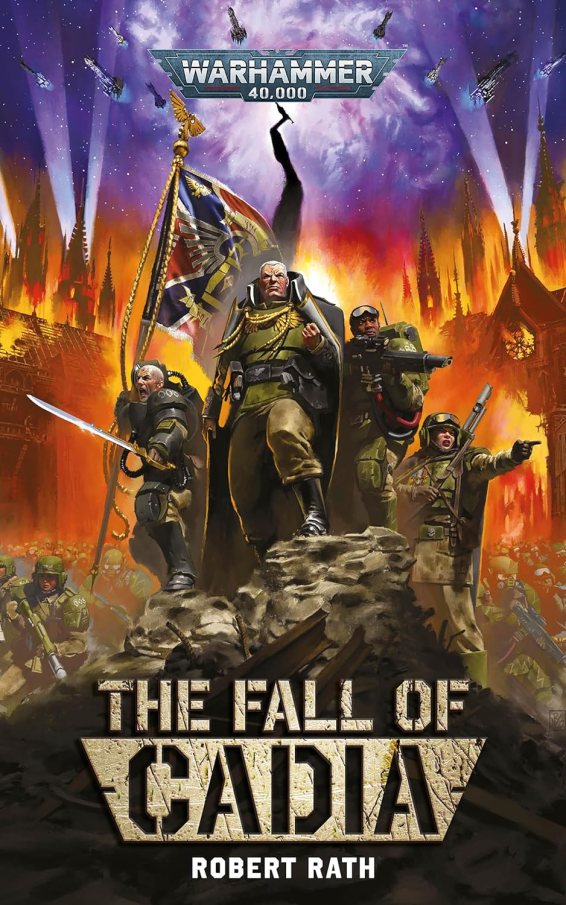
Warhammer 40,000: The Fall of Cadia by Robert Rath

Warhammer 40,000 - The Fall of Cadia Cover

Publisher: Black Library (Audiobook – 5 August 2023)

Series: Warhammer 40,000

Length: 19 hours and 42 minutes

My Rating: 5 out of 5 stars

Amazon

Cadia Stands!  I ended 2023 on a very high note with one of the best Warhammer 40,000 novels of the year that follows one of the biggest events in the franchise’s recent lore, The Fall of Cadia by Robert Rath.

There were several amazing Warhammer 40,000 novels released in 2023, with some of my favourites including The Lion: Son of the Forest and Warboss by Mike Brooks, The King of the Spoil by Jonathan D. Beer and Cypher: Lord of the Fallen by John French, just to name a few.  However, in terms of sheer scale, epic battles, and larger-than-life characters, my favourite will have to be The Fall of Cadia.  As the name suggests, The Fall of Cadia follows the final battle for the planet of Cadia at the end of the 13th Black Crusade, which was a major campaign in the Warhammer 40,000 tabletop game.  The original 13th Black Crusade campaign happened back in 2003, with the official result being something of a draw.  However, in 2017, Games Workshop retconned the campaign to result in a much more substantial Chaos victory, which ended up having substantial impacts on the wider lore of the franchise, effectively reshaping the entire Warhammer 40,000 universe.

This change ended up being a pretty significant event, and Games Workshop provided some major write-ups about it that summarised the events and their explosive aftermath.  Indeed, the lore events initiated in this event have already been featured in several novels, and most of the current Warhammer 40,000 fiction examines the consequences of this campaign.  However, there has yet to be a novel solely dedicated to trying to capture the entirety of the action at the end, until now with The Fall of Cadia by Robert Rath.  Rath was a great choice of author to write this book as he is a truly amazing author of Warhammer 40,000 fiction.  His previous novels, Assassinorum: Kingmaker (one of my favourite books and audiobooks of 2022) and The Infinite and the Divine, have both been exceptional five-star reads, telling elaborate, character-driven stories that cleverly capture complex aspects of Warhammer 40,000 lore and turn them into impressive and addictive reads.  As such, he was the perfect choice to write The Fall of Cadia and he succeeded in creating a deeply moving and epic novel that perfectly brought the chaotic events that ended this infamous war to life.

In the far future of the 41st Millenium, few battlefields are more significant or more soaked in blood than that of Cadia.  A fortress world for the Imperium of Man, Cadia stands in the shadow of the Eye of Terror, a blazing rift that serves as a gateway into the Warp and the realm of the Chaos gods.  For any substantial invasion by the forces of Chaos into the Imperium to be successful, Cadia needs to be taken and destroyed, and for that task the Chaos Gods have chosen the Warmaster of the Black Legion, Abaddon the Despoiler.  Abaddon is a legendary warrior of hatred and spite who alone is capable of welding together the unruly and contentious forces of Chaos.  Over the millennia, Abaddon has launched 12 Black Crusades against Cadia, leading an unholy alliance of monsters, daemons, cultists and traitor Space Marines to battle.  However, each time Cadia has held, at great cost to the desperate Imperial defenders.  But now, as the forces of Chaos appear stronger than ever before, a 13th Black Crusade has been declared, one that looks set to destroy Cadia forever.

The Fall of Cadia starts well into the 13th Black Crusade, as, after weeks of heavy fighting, the forces of Cadia and humanity once again appear victorious, with the armies of Chaos retreating on all fronts.  However, despite the apparent victory over the heretics and the dark gods of Chaos, Lord Castellan Ursarkar Creed is uneasy, believing that the victory was too easy.  As the celebrations continue, Creed is soon proved right, as the Eye of Terror disgorges a new enemy force unmatched in size and deadly potential since the legendary Horus Heresy.

At its head flies a dread Blackstone Fortress, an alien superweapon capable of intense destruction and now crewed personally by Abaddon.  Faced with this threat, Creed attempts to bring together the various elements of humanities defenders, including legendary Space Marines, virtuous Sisters of Battle, the inhuman soldiers of the Adeptus Mechanicus, and the outmatched by steely rank-and-file troops of Cadia, determined to save their home.

As the final invasion of Cadia begins, Creed organises the defence the best he can to hold back the oncoming horde on land, in the sky, in space, and even far behind Cadian lines in their seemingly safe cities.  If Creed has any hope of succeeding, he will need to bring together the scattered armies of the Imperium on Cadia into a single cohesive force, but not all of the defenders are fighting for the same goals.  Even if these armies come together, can the legendary Creed hold off the fury of Abaddon and his dark gods?  Cadia’s last stand has begun, but who will be left alive at its end?

Robert Rath continues to showcase just how varied and impressive his talent for writing Warhammer 40,000 fiction is as he captures the incredible events of the last siege of Cadia.  The Fall of Cadia is epic in every way possible, as it presents the reader with a great coverage of these key lore events and the characters involved.  Elaborate, intense, and featuring so much damn carnage and war, The Fall of Cadia is an incredibly addictive read that got a very easy five-star rating from me.

I think it is important to point out that Robert Rath had a difficult task ahead of him when he was chosen to novelise the events surrounding the end of the 13th Black Crusade.  A lot of detailed lore has been written around this event, not only in the various guides, rulebooks and other material associated with the tabletop game but also in several years worth of novels and extended fiction that focused on the aftermath of the war.  Any novelisation about these events ran the risk of being a stale retelling of events that all Warhammer 40,000 fans already know about.  However, Rath rose to the challenge and presented a powerful, intense and memorable depiction of the events that really drags the readers in while showing just how incredible and epic a piece of Warhammer fiction can be.

To tell the events of The Fall of Cadia, Rath elected to cover everything in a massive, multilayered, character-driven narrative, told from every perspective imaginable.  Starting towards the final days of the battle, when Abaddon unleashes his true invasion of Cadia, the reader is soon engrossed a range of different storylines that cover many different angles of the battle.  Not only do we get to see the overall strategy of both sides but the reader is also thrust into personal wars and fights across the theatre.  So many amazing moments are covered, including a desperate last stand in the mountains, battles in the sky and space, Chaos infiltration in the cities, criminal enterprises, even internal dissension amongst the Chaos command.  These scenes are usually shown through the eyes of a complex characters, whose desperate fight for Cadia helps to define them and presents the reader with some impressive and captivating character arcs.  All these varied conflicts are expertly portrayed by Rath, who does a wonderful job capturing the intensity, brutality and lack of humanity involved in warfare, as his characters suffer on every battlefield imaginable.  The sheer epic and destructive nature of these conflicts really come across in Rath’s writing style, and I honestly visualised many of the scenes being described in cinematic detail in my head.

The first half of the book primarily focuses on these various scattered storylines, and it was a lot of fun to see the different theatres of war, especially as you start to get attached to the major characters.  All the battles featured are pretty awesome and intense in their own way, and I really have to emphasise just how skilled Rath is at bringing all the different elaborate bits of combat to life.  The complex story pieces start to come together in the second half, especially as each of the characters find themselves drawn to the same battlefields.  I really appreciated how the storylines tied together, and there are some brilliant moments featured here.  I also felt that the multiple deus ex machina moments towards the conclusion of a big battle sequence that Rath needed to include because they were part of the lore was handled about as well as they could be.  Rath did some good set-up for the most important of them earlier in the plot, and I liked how in many instances he tried to examine it from the perspective of the common soldier looking for miracles, so it often did not seem too ridiculous.

Everything leads up to the big final battle in the last third of the novel, and despite knowing how it was going to end, I still was extremely invested in the plot and eager to see how everything came about.  A lot of this was because I deeply enjoyed the compelling character arcs of the newer protagonists, but I was also very interested in seeing how Rath envisioned some of the more essential events.  The author really did not disappoint, as these epic and groundbreaking moments were expertly showcased to the reader in a powerful and captivating way.  The big deaths were pretty shocking and hurtful, especially if you did not know they were coming, and the major conflicts were so damn epic in their scope and impact.  The final devastating blows of the war really hit hard, especially as the climatic events featured some deeply personal moments alongside the mass devastation, which made everything that much more powerful.  I really loved how everything came together, and the poetic conclusion that highlighted the final fights of the surviving protagonists is going to stay with me for some time.  I am so damn impressed with how much passion and emotion that Rath was able to stick into this massive war story, and I honestly loved every single second spent reading The Fall of Cadia.

In addition to the amazing story, I really need to highlight the impressive array of characters featured throughout The Fall of Cadia.  Rath did a wonderful job of presenting the massive events of this book through a range of intriguing character perspectives on every side of the conflict, and there is a fantastic combination of new characters and established Warhammer 40,000 figures.  The author really tried to cover The Fall of Cadia’s narrative from every single angle he possibly could, and the resulting combination of generals, common soldiers, legendary warriors, ancient traitors and other interested onlookers, helped to make this Warhammer 40,000 story even more powerful and layered.  This includes several Chaos characters, whose tainted perspectives allow for a compelling view of both sides of the conflict.  The Fall of Cadia’s character arcs are mostly self-contained for the majority of the book, with their focus usually on that particular figure or theatre of the war.  However, there are some clever and moving interactions between the characters as the novel continues, and it is testament to Rath’s writing style and ability to create a massive web of overlaying character storylines that these interactions fit together so well into a cohesive and powerful narrative.  Rath really dove into the complex lives and personalities of every character he featured, even those that died quite quickly, and the resulting character arcs really added to the emotional impact of The Fall of Cadia.  You become heavily invested in these characters as a result, and waiting to see who survives the war is an important part of experiencing this novel.

So many big personalities were expertly featured throughout The Fall of Cadia and every reader is going to come away with their own favourites.  The better character arcs I personally loved included that of Major Marda Hellsker, who is forced to lead a desperate last stand for much of the book and grows into the leadership position thrust upon her.  Captain Hanna Keztral’s exploits in the sky also make for great reading, especially as she desperately tries to gain respect whilst flying an unarmed aircraft.  You also have to love the storylines surrounding Salvar Ghent, Cadia’s premier gangster, as he tries to exploit the war to his advantage before finding himself thrust into a much more prominent role.  I particularly loved how well Ghent interacted with some of the major figures in the book, and his entire storyline was one of the most entertaining.  The insatiable Necron collector Trazyn the Infinite was also a great inclusion in the plot, and Rath clearly had fun bringing back this hilarious character after featuring him so heavily in The Infinite and the Divine, and I got a good laugh at several of his pivotal scenes and petty moments.

However, the best characters in The Fall of Cadia had to be the opposing leaders of the war, Lord Castellan Ursarkar Creed and Abaddon the Despoiler.  Both are major figures in Warhammer 40,000 lore and Rath ensured that they were done justice in this novel.  Creed is shown to be a rough but brilliant commander, capable of inspiring an entire world while also suffering from the stresses of constantly being on the losing side.  I particularly enjoyed the subsequent inclusion of Colour Sergeant Jarran Kell alongside Creed as his long-suffering aide and best friend, and the two make for a very powerful character combination for many of the scenes shown from the defenders’ perspective.  Abaddon on the other hand is presented as the absolute beast that he is, and his obsessive desire to destroy Cadia is palpable.  I deeply appreciated that Rath showcased Abaddon as the ultimate villain in this universe, and his appearances were always exceedingly impactful.  Many of Abaddon’s appearances were cleverly shown through the eyes of his loyal servant, Dravura Morkath, whose rose-tinted opinions of her master barely covered the restrained evil within this figure.  I quite enjoyed Dravura as a character, especially as she has the most intriguing insights into the Chaos ranks, and the resolution of her storyline with Abaddon might be one of the most heartbreaking in the entire book.  These characters, and so much more, were such a brilliant part of The Fall of Cadia, and they helped turn what could have been a simple retelling of the lore into a particularly powerful and moving novel.

As with most Warhammer 40,000 novels, I feel that The Fall of Cadia is going to appeal to those fans of the franchise who already have a grip on the basics of the lore and main characters and can fully appreciate just how massive an event this book was.  Due to the material the book is based on, there were a lot of crazy events and characters featured here, some of which would be obscure even to casual fans of the game.  While Rath does an outstanding job of explaining and exploring the most important of these elements, some readers might occasionally be confused at what is going on or how certain characters came into being.  Still, I feel that most new readers can still have an exceptional time with this book, especially as the epic battles, impressive characters, and heartfelt military focused story, is so damn good.  The Fall of Cadia might even be a great gateway novel for those people trying to get into Warhammer 40,000 fiction, and it sure as hell encouraged me to read more Warhammer fiction.

One of the other things that I really appreciated about The Fall of Cadia was the way that Rath tried to paint a more nuanced picture of the planet of Cadia itself.  Cadia is usually portrayed as a bastion of military prowess and resistance without some of the issues other planets in the Imperium had, so it was quite interesting to see Rath’s different take on the subject, showing Cadia to be a planet with hidden issues and dissent.  In particular, Rath examines the problematic social structure of Cadia, where the active military are notably prioritized and those people who could not fight or be assigned other roles were considered a second-class citizen.  I loved how well Rath examined and focused on the issues surrounding this unique military class system, and it became a surprising key part of the book.  Indeed, the motivations of several characters are highly tied into these issues, with many seeking to prove themselves after being considered lesser for their contributions.  It also serves as an intriguing motivation for several antagonistic figures, and I loved just how well Rath was able to weave the structure of a planet into these intriguing character traits.  This, and more, really showcased Rath’s inventiveness and appreciation for the little details of the Warhammer 40,000 universe, and it is one of the reasons why I really enjoy his novels.

As with most Warhammer 40,000 novels, I chose to enjoy The Fall of Cadia on audiobook, which proved to be a very smart decision on my behalf as it was one of my favourite audiobooks of the year.  Coming in with a runtime of just under 20 hours, The Fall of Cadia is a bit longer than your typical Warhammer 40,000 audiobook, which reflects the massive story Rath came up with for this epic read.  I really loved how well this audiobook format brought the epic nature of this narrative to life and the many battles, wars, and unique characters felt even more impressive when read out.  I enjoyed the narration of Mark Elstob, who has previously lent his voice to other great Warhammer audiobooks, including Kal Jerico: Sinner’s Bounty by Josh Reynolds.  Elstob’s narration of The Fall of Cadia is extremely good, and I loved how passionately he presented every big event and piece of action.  I really enjoyed some of the great voices he came up with for the cast of The Fall of Cadia, and every larger-than-life character was gifted a fitting tone that perfectly captured their personalities and intensity.  His voices for the opposing leaders of the battle, Abaddon the Despoiler and Ursarkar Creed, are amazing examples of this, and you really get awesome impressions of both character’s opposing determination and charisma in some outstanding sequences.  I really cannot emphasise just how incredible this audiobook version of The Fall of Cadia is and it is definitely the best way to enjoy this world-shattering story.

Overall, The Fall of Cadia is a pretty exceptional piece of Warhammer 40,000 fiction that did such an impressive job of capturing this intriguing event from the game’s substantial lore.  Robert Rath is such an impressive author, and I am really glad he had the opportunity to cut loose and present this massive inclusion to the Warhammer 40,000 franchise.  The Fall of Cadia is easily one of my favourite books of 2023, and I loved how Rath told such an epic war tale in such a powerful and memorable way.  I honestly hope they make a movie based around this book in the future, because it would be so damn spectacular.  A highly recommended read that no Warhammer 40,000 fan should be without.
Amazon

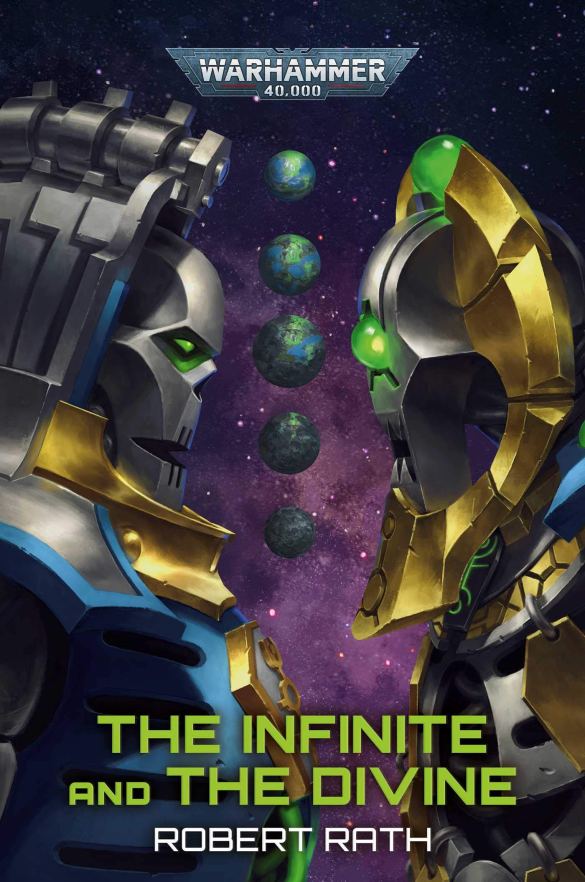
Warhammer 40,000: The Infinite and The Divine by Robert Rath

The Infinite and the Divine Cover

Publisher: Black Library (Audiobook – 10 October 2020)

Series: Warhammer 40,000

Length: 13 hours and 21 minutes

My Rating: 5 out of 5 stars

Amazon     Book Depository

Prepare to dive into one of the most entertaining and elaborate rivalries in Warhammer history with the outstanding and captivating read, The Infinite and The Divine, by the exceedingly talented Robert Rath.

Before I pause my current obsession with Warhammer fiction to pursue other recent books, I just had to read one more intriguing Warhammer 40,000 novel that I have been hearing a lot about in recent years, The Infinite and The Divine.  The debut Warhammer 40,000 novel of exceptional author Robert Rath, who previously wowed me with last year’s epic book, Assassinorum: Kingmaker (one of my favourite books and audiobooks of 2022) The Infinite and The Divine dives into one of the more unique factions in the Warhammer universe, the Necron.  This intriguing and fun novel follows two fantastic Necron characters as they engage in a bitter and lengthy feud across time and space.  Pretty much every review I’d read about The Infinite and The Divine was highly positive and I just had to try it out, and boy did it live up to all my expectations.

Long before the Imperium of Man and the Emperor existed, before the fall of the Aeldari and even before the Necrons traded their flesh away for immortal metal, there existed something far more deadly and permanent, an undying conflict between two arrogant scholars.  Even before they became immortal beings of metal, Trazyn the Infinite and Orikan The Divine were bitter rivals.  While Trazyn glorifies the past and seeks to capture and contain anything of rare or historical value, Orikan looks only to the future, divining events that are to come and hoping to find a way to become a being of energy.  But despite their differences, these two Necron are about to be drawn into the same obsession.

When Trazyn manages to obtain a rare Necron artefact, Orikan infiltrates Trazyn’s gallery to steal it, believing that it is the key to locating an ancient Necron tomb that could provide invaluable knowledge for the future of the Necrons.  However, Trazyn is unwilling to lose such a treasure, nor let Orikan’s trespass go unanswered, and swiftly snatches the artefact back, hoping to locate and plunder the tomb for himself.

So begins a battle of cat and mouse that will last millennia.  As both academics attempt to unlock the secrets of the artefact and gain the knowledge to find the tomb, they will engage in a series of deadly attacks and subterfuges to gain the advantage and destroy their opponent.  Their battles will destroy planets and shape the future of civilizations as they proceed, unheeding of the cost to those around them.  But the closer Trazyn and Orikan get to their goal, the more apparent it becomes that the treasure they seek is far beyond anything that the two rivals can ever imagine, and soon they and the entire Necron race sits on the precipice of destruction.

Wow, now that was an exceedingly epic and engaging Warhammer book.  Rath really pulled out all the stops for his debut here as The Infinite and The Divine is an incredibly clever and captivating read that I had an exceedingly hard time putting down.  Following two outstanding and petty protagonists, Rath hits the perfect blend of humour, intense action, and compelling lore expansions to elaborate Warhammer 40,000 lore, which turns The Infinite and The Divine into quite an elaborate and impressive read.

The Infinite and The Divine has a pretty epic and entertaining character driven story  that essentially boils down to two highly arrogant immortals going on an elaborate scavenger hunt across the galaxy for thousands of years, while also simultaneously engaging in a petty and deadly feud to ensure they win and their opponent fails.  This is an exceptional and highly amusing story concept which Rath utilises to his full ability, creating a captivating narrative that really drags you in and keeps you chuckling the entire way through.  The book starts with Trazyn facing off against an offshoot tribe of dinosaur-riding Aeldari, which does a lot to grab your attention while also perfectly introducing one of the main characters.  Rath keeps the momentum rolling after these initial fun fight scenes as Trazyn returns home to discover his rival, Orikan, invading his sanctum trying to steal one of his precious artefacts.  After a compelling fight that really highlights the differences between the two characters, Orikan escapes, and this sets off their bitter feud.

What follows is a series of fights and schemes across several different battlefields and locations as the two trade their advantage back and forth by claiming and then losing the artefact, all while attempting to kill each other.  There are some gloriously entertaining scraps throughout this book, especially as both Trazyn and Orikan have very different abilities and focuses, which Rath perfectly works into the story.  I have to highlight a particularly awesome and funny trial sequence near the start that played out in several different and amusing ways as Orikan uses his mastery of time to rewind events to try and get a result that favours him.  The two engage in some gloriously petty and hilarious methods to try and claim victory, and their reactions at being bested and the lengths they go to win really helps to turn this book into a fantastic and epic read.  Rath does a great job of switching attention between these two excellent characters as the book continues and I loved seeing the intriguing differences of opinions and the elaborate schemes that swirl within both their minds as they squabble.  The author adds in some great additional context of the wider universe throughout the story as well, and I loved the use of in-universe texts, such as the Necron epic The War in Heaven, at the start of each chapter, as they provide some subtle hints of what is to come.

The story gradually focuses on one specific planet which the Necron characters visit and fight across as they attempt to unlock the mysteries of the contested artefact and the treasure it unlocks.  This part of the book is particularly intriguing, as Rath adds in some compelling examinations of the evolution of this planet, and it is fascinating to see how their feud influences the people within, often to everyone’s detriment.  Trazyn and Orikan are eventually able to unlock the secrets of the artefact, which only intensifies their conflict, and I loved some of the very fun ways that they each try to knock off their opponents, especially as it often makes their own situation even worse.  I also felt that it was very clever how the author worked in the planet’s history and culture into the solution of the main mystery, and it was great when seemingly innocuous discussions about human society were actually hints about major events to come.  Everything leads up to the final opening of the tomb they have long been searching for, which of course only unleashes more problems.  Rath did a really good job of layering in hints and clever clues about the final twist, and I deeply enjoyed the massive reveal that emerged.  The protagonists are forced to work together in several spectacular scenes which did a wonderful job of highlighting the relationship the two formed throughout the conflict, while deeply upping the stakes and providing the reader with some memorable moments and entertaining battles.  Everything ends on an amazing note, especially with some final great betrayals by the protagonists, and you come away from The Infinite and The Divine pretty damn satisfied and extremely amused.

I was deeply impressed with how Rath brought The Infinite and The Divine’s complex and entertaining story together and considering the outstanding way in which he dove into the subject matter, it is pretty remarkable that this was his first Warhammer novel.  I was always going to be very interested in a book that focused on the Necrons, one of the more intriguing and distinctive factions in the Warhammer 40,000 canon, but I felt that Rath did a particularly exceptional job at capturing the essence of these immortal beings.  The great humour and comedy that he brought to the protagonists’ eternal feud really helped to make these ethereal beings very relatable and I loved their fun and arrogant opinions about the other races in the galaxy.  Rath manages to load a lot of snark into their observations about humans, orks and other species throughout their discussions, and it was quite fascinating to see their divergent opinions on the subject, as Orikan is determined to ignore and scorn all organics, while Trazyn is fascinated by culture and hopes to study or collect everything of value they have.  However, Rath also goes a lot deeper and you get an intense and powerful examination of the Necron self, including how they feel about their current state of being, the decline of their empire and the many sacrifices they have made over the years.  This, combined with an intriguing examination of their history, culture and personalities, gives readers a great understanding of the Necron race and any fan of this faction is absolutely going to love The Infinite and The Divine.  Rath’s excellent descriptions of the events, history, and the elaborate battles and technology really paints a beautiful picture around the Necrons and I felt that he did a remarkable job fitting the story around this background lore.  I especially loved the intriguing dive into Necron magic and other technology discussions, and it was really fun to see Orikan manipulate time throughout the book to make some very epic scenes.  While a few elements were extremely lore heavy, especially when it came to decoding the artefact, this was a very good use of the Necrons, and I really hope that Rath dives into additional unique factions in the future.

Despite Rath’s impressive and compelling descriptions of the Necrons and the wider universe, I don’t think I would recommend The Infinite and The Divine to those new to the Warhammer franchise, as the sheer amount of lore might break their reading flow.  However, for those a little more familiar with the history and background of the Warhammer 40,000 universe, this is a fantastic read which would serve as an exceptional transitional novel for those interested in checking out non-human stories in this canon.  I really cannot emphasise how great a book this was for Necron fans though and I deeply enjoyed Rath’s vision of these aliens and their unique culture.

I also really must highlight the excellent and compelling central characters of this book who take the form of ancient Necrons, Trazyn the Infinite and Orikan The Divine.  Ancient Necron lords who are the masters in their respective fields, Trazyn and Orikan are both particularly entertaining and fun in their own ways, as each of them believes themselves to be the smartest person in the room at all times.  Due to this, and many other reasons, the two hate each other with a passion and they enter into their eternal feud over several perceived grievances.  There is something delightfully entertaining about watching these supposedly highly evolved, ancient and wise beings engage in such petty actions against each other, and the way they bring out the worst in each other is so glorious, especially as it permeates the entire novel with some exceptional humour.  I personally loved how both were just as bad as the other in this feud, as this ensures that you don’t actually care which one of them wins and you can just get lost in the resulting chaos.  Ironically, the two protagonists actually have a lot in common, and when they are forced to work together they prove to be an effective team capable of so much more.  There are some great flashes of a deeper potential friendship at times, although this never lasts, although it is entertaining and moving to see what could have been had their rivalry not consumed their lives.  Throw in some very unique abilities, technology and artefacts between the two, which results in some particularly entertaining scenes and battles (watching Trazyn unleash his captured collections against his foes is always fun), and these two prove to be an outstanding central focus who really bring this exceptional story together.  I had so much fun with Trazyn and Orikan and I hope we see much more of them in the future, especially if the future of their private war is revealed.

I naturally listened to The Infinite and The Divine on audiobook, which was an epic experience as always.  The audiobook versions of all the Warhammer books are very effective at conveying the cool narratives, and I felt that The Infinite and The Divine’s audiobook really helped the reader to appreciate the elaborate story and the ton of lore that Rath fit into this book.  With a run time of nearly 13 and a half hours, this is a decent length Warhammer audiobook, although dedicated readers will power through it once you get caught up in the story.  I had a lot of fun listening to this audiobook, especially as they got the very talented Richard Reed to narrate the format.  Reed is an outstanding voice actor, who has a lot of experience narrating Warhammer novels, such as the Warhammer Crime novel Grim Repast by Marc Collins.  However, the main reason that I liked the use of Reed was because he also narrated the two The Twice-Dead King audiobooks, Ruin and Reign by Nate Crowley, which also focused on the Necrons.  Reed once again expertly captures the ancient and deadly nature of these metal alien creatures in his narration, and I felt that both main characters, Trazyn and Orikan, were perfectly portrayed by him.  Their intelligence and ancient emotions are shown to the listener, and I felt that Rath did a great job of showcasing their arrogance and pettiness through his voice work.  Throw in some additional great portrayals of the other eclectic characters and aliens contained in this book, and you have an outstanding performance which really helped The Infinite and The Divine’s audiobook format shine.  As such, this is absolutely the best way to enjoy this amazing novel and I cannot recommend it enough.

Robert Rath really cemented his Warhammer fiction legacy early with The Infinite and The Divine, which is one of the best and funniest Warhammer 40,000 novels I have read.  The exceptional book presents the reader with a unique and captivating narrative that perfectly utilises the iconic Necron faction while also telling a deep, personal and humorous story of betrayal, antagonism and treasure hunting.  I absolutely loved The Infinite and The Divine and I am really regretting not reading it earlier, especially as it lives up to all the hype.  A highly recommend book that is frankly one of the better Warhammer tie-in novels out there.

Amazon     Book Depository

The Twice-Dead King: Reign by Nate Crowley

The Twice-Dead King - Reign Cover

Publisher: Black Library (Audiobook – 15 January 2022)

Series: The Twice-Dead King – Book Two

Length: 12 hours and 3 minutes

My Rating: 4.5 out of 5 stars

Amazon     Book Depository

The fate of Oltyx and his necron dynasty is revealed in Reign, the epic and impressive second entry in The Twice-Dead King series of Warhammer 40,000 novels by Nate Crowley.

Last year I was lucky enough to listen to the fantastic and compelling Warhammer 40,000 novel, The Twice-Dead King: Ruin, which followed an exiled necron prince, Oltyx, one of the heirs to the Ithakas Dynasty.  After defending a barren rock in the far reaches of space for centuries, the immortal, metal-coated Oltyx soon encounters a grave threat of an invading alien fleet and is forced to break his exile and head back to his dynasty’s capital planet.  However, he soon discovers that his father, the king, and his court have been infected by a terrible madness and he must find a way to claim power and unite the remnants of his people before it is too late.  I had an outstanding time with Ruin and I was extremely excited when the planned second half of the series, Reign, came out a couple of weeks ago.

Reign takes place directly after the events of Ruin and sees Oltyx, now king of the Ithakas necrons, attempting to find a way to preserve his people after his capital planet was destroyed by the massed forces of the human Imperium.  With the remnants of his people crammed aboard his fleet, Oltyx searches for a safe planet to claim as their new home.  However, the forces of the Imperium are relentless in their mission to destroy all Xenos, and Oltyx’s fleet soon finds itself under pursuit from their massive crusade fleet.  At the same time, Oltyx is forced to deal with the vicious politics of the necron court, with the bickering and scheming nobles hoping to gain power at his expense.

However, the further the necrons run, the more apparent it becomes that the humans will never leave them alone.  Spurred on by his most loyal advisors, Oltyx embarks on a risky plan to find an ancient planet, said to be ruled over by a deadly king and his hordes.  Making use of long-lost technology, Oltyx and his people undertake a deadly trip towards their goal.  However, a far greater threat soon emerges in the very heart of his ship.  The flayer curse that has long infected his people and which drove Oltyx’s father mad has returned, and soon thousands are infected.  Forced to take drastic actions to save his people, Oltyx soon learns the full weight of responsibility and loneliness that all kings must bear.  But this king has a dark secret that will threaten the entire Ithakas Dynasty.  Can Oltyx control the dark urges that reside deep within his soul or will a new twice-dead king rise to reign over the Ithakas necrons?

Reign is an epic and exciting sequel to the first The Twice-Dead King novel, and I had a brilliant time getting through this compelling and fantastic novel.  This book has an excellent story that dives deep into the Warhammer 40,000 lore to explore one of the more mysterious races in the canon while focusing on a conflicted and damaged protagonist.

This latest The Twice-Dead King book had an intense and impressive narrative that I found myself incredibly drawn to.  Reign directly follows on from Ruin and continues several great storylines and character arcs established in the first book.  The book opens with the necrons on the run after the destruction of their crown world by the Imperium, and the recently crowned Oltyx desperately trying to produce a solution while also being assailed by doubts and regrets of his new position.  It really does not take long for the action to kick off, with the Imperium continuing their chase while Oltyx is assailed from within his own ship by treachery, dissention and doubt.  What follows is an intense chase storyline as the necron fleet tries to outrun their pursuers as Oltyx leads them to potential sanctuaries.  This eventually finds the necron travelling through a featureless void for the last half of the book, where they encounter greater internal problems as the terrifying flayer curse rears its head throughout the ships.  This results in some incredibly scary and powerful scenes that dives deeps into the protagonists’ insecurities and fears as he starts a brutal reign over his people.  All this leads up to epic conclusion, which not only features a brilliant fight scene between necrons and Space Marines, but then takes the protagonist on a deep journey to the heart of his enemies and himself.  There are some clever and powerful moments throughout the entire book, and I loved how several inclusions or continued throwaway lines really paid off.  I enjoyed how this book ended and Crowley leaves the narrative open for a follow-up, as there are a few questions left unanswered that I would really like to find out about.

Crowley has a great writing style that I felt really enhanced the intriguing and captivating Warhammer story contained within Reign.  The book’s narrative is well paced, with the plot jumping perfectly between great action sequences, touching character moments and freaky near-horror spots.  The author really lays in the detail during these scenes and the reader is swiftly drawn into the elaborate world of the necron, from the outrageous characters to the massive ships and artifacts.  This level of detail really brought the powerful narrative to life, and I was impressed with how epic and cool it made the various action sequences appear.  I particularly loved one elaborate fight sequence that saw the protagonist and his guards face off against the very best of the Angels Encarmine, including a full Death Company and a Chaplain.  This led to a destructive and intriguing duel, featuring some interesting similarities and a great clash of martial styles.  Reign is primarily a book for the dedicated Warhammer fan, especially as it focuses on an obscure race from deep within the lore.  You also really need to read the preceding book, Ruin, first, as all the key storylines follow through from there.  Some readers could probably get away with only reading the second book, especially as Crowley provide some detailed refreshing context and explanation, but I would strongly suggest going from the start to get the full experience of this fun and addictive read.

I deeply enjoyed how much Warhammer 40,000 lore that Reign features, especially as it dives into the heart of one of the most interesting factions, the necrons.  The necrons, ancient aliens with an ancient Egyptian motif who were made immortal by being encased in metal, are a fascinating race who are somewhat underutilised in Warhammer extended fiction.  However, throughout The Twice-Dead King novels, Crowley has done a wonderful job of examining everything important about the necrons and he soon expands your view of this mysterious and long-dead race, turning them into a very captivating and personable group.  Crowley really dives into the lore of the necrons, focusing on everything, such as their history, their emotions, technology, philosophies, physiology, strengths and their weaknesses.  There is a great focus on the many mental conditions impacting them thanks to their transition from flesh to metal, including the flayer curse which drives them insane and forces them to cut off the skin of their opponents and attempt to eat their flesh, despite their inability to consume anything.  The author brings each of these conditions to life, especially in Reign, and watching the various necron characters attempt to overcome the curses coming for them and impacting their friends is deeply fascinating and powerful.

I really enjoyed the intense sense of tragedy and decline that Crowley installs in the various necron characters, and you swiftly start rooting for them, despite the universe usually portraying humans as protagonists.  There are some major necron moments in this novel, and I loved the range of interesting characters, desolate settings and powerful technology that Crowley cleverly features.  You also must love seeing the rest of the universe through the necron’s ancient and somewhat arrogant eyes, as it makes for some amusing insights.  It was particularly fun to see their opinions about the human fleet coming after them, including the Space Marines of the Angels Encarmine, and their constant disbelief at their crudity and apparent success is a fun part of the book.  The Angels Encarmine are actually an interesting mirror to the necrons, as the Space Marines have also attempted to become better by enhancing their weak initial flesh.  The Angels Encarmine, a successor chapter of the Blood Angels, also share a similar bloodlust, insanity and desire for killing that the necron flayed ones have, and their appearance during the Black Rage is very similar to necrons suffering from flayers curse.  I deeply enjoyed this excellent and captivating examination of this part of the Warhammer 40,000 canon and Crowley has a brilliant understanding of this complex universe.

I also really enjoyed seeing the continued journey of the main character and sole point-of-view character, Oltyx, who is now the king of his dynasty.  Oltyx is a great, damaged character who went through substantial growth in the last novel as he attempted to become a worthy prince and regain his honour, only to discover that his father, the king, had gone insane with the flayer curse, which forced Oltyx to kill him.  Reeling from this and the death of his brother by the humans, Oltyx takes control as the new king and instantly finds himself overcome with responsibility as external and internal threats threaten to overwhelm him.  It is extremely captivating to watch Oltyx attempt to deal with the various dangers and concerns of a king, especially as he is wracked with guilt over his many mistakes and riven with indecision over the best course from his people.  Thanks to his own internal suffering, insidious visions from the past and his own brush with the flayer curse, Oltyx makes some terrible decisions throughout Reign, and his slow descent towards tyranny and insanity is brilliantly portrayed.  The subsequent and intriguing evolution of his character is set up extremely well, and it results in some major changes for Oltyx.  I really hope that Crowley will continue the story of Oltyx in the future as there is still a lot of development and story to follow there.

Like most Warhammer novels I have checked out, I chose to enjoy Reign in its audiobook format, which ended up being a great decision.  Having the complex and detail laden story read to me really helped to cement all the key detail of Reign in my head, and it really helped to paint an incredible picture of the various settings, events and battles.  It also was a pretty quick way to enjoy this great book, as, with a runtime of around 12 hours, most fans can power through Reign in no time at all.  I must highlight the impressive narration from Richard Reed, who also lent his voice to the first book in the series.  Reed has a brilliant voice that does an excellent job bringing all the ancient, proud and inhuman necron characters to life.  I loved the magnificent and powerful tones he gave to the main character and point of view character Oltyx, and the entire rest of the cast are given extremely cool and fitting voices that highlight their distinctive and mechanised personalities.  Reed ensures that the various mental diseases and age-related degradations that the necron characters are suffering really comes through in his voicing of them, and the occasional stutter or lengthy pause between words helps to highlight just how decrepit some of the ancient necrons is an excellent touch.  This was a brilliant and addictive way to enjoy this second The Twice-Dead King novel, and I would strongly recommend Reign’s audiobook to all Warhammer fans.

Nate Crowley continues to shine as a brilliant and talented author of Warhammer fiction, as his latest book, The Twice-Dead King: Reign, was such an awesome read.  Continuing the great narrative set up in Ruin, Reign was an amazing sequel that continued to dive down into the troubled mind of its cursed, necron protagonist.  I loved the amazing and captivating story that followed, especially as it showed the necron in all their bloody glory and revealed just how complex they can be.  A must read for all fans of Warhammer 40,000 fiction; Reign is an outstanding book that I just could not get enough of.

Amazon     Book Depository

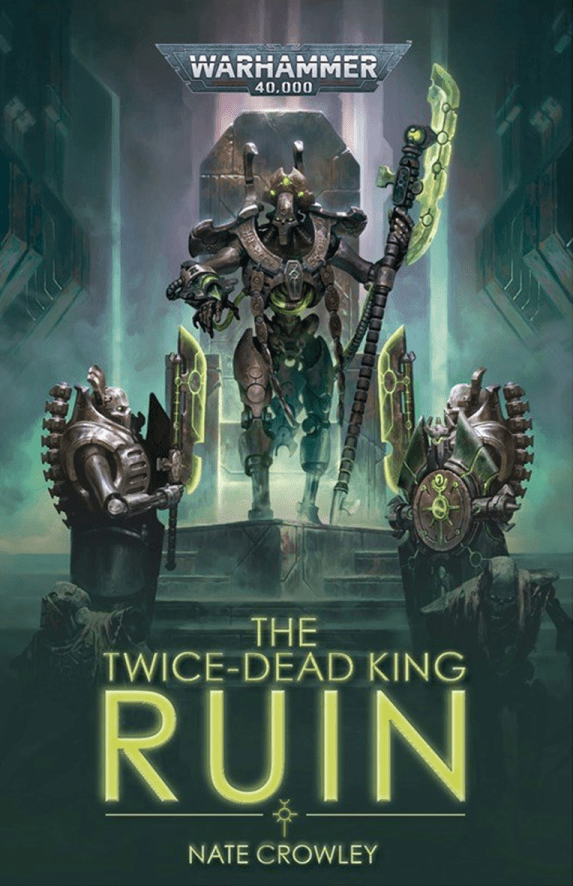
Warhammer 40,000: The Twice-Dead King: Ruin by Nate Crowley

The Twice-Dead King - Ruin Cover

Publisher: Black Library (Audiobook – 9 October 2021)

Series: Twice Dead King – Book One

Length: 11 hours and 22 minutes

My Rating: 4.75 out of 5 stars

Amazon     Book Depository

Intriguing new author Nate Crowley presents one of the most complex and fascinating Warhammer 40,000 novels I had the pleasure of reading, The Twice-Dead King: Ruin, an epic and thrilling novel that explores one of the most intriguing races in the canon, the Necrons.

I have been having a lot of fun listening to a bunch of awesome Warhammer 40,000 (Warhammer 40K) novels over the last year, with some great examples including Deathwatch: Shadowbreaker by Steve Parker, Kal Jerico: Sinner’s Bounty by Joshua Reynolds, Fire Made Flesh by Denny Flowers, and First and Only by Dan Abnett.  While I have deeply enjoyed all these novels, I felt that it was time to go outside of the novels that typically focus on this universe’s human characters and instead read something with a more unique subject matter.  As such, when I saw that The Twice-Dead King: Ruin had recently been released, I instantly grabbed a copy, and I am really glad that I did.

Ruin is the first novel in The Twice-Dead King series, which looks set to explore the Necrons and their place in the current Warhammer 40K universe.  This was the second Warhammer 40K novel from author Nate Crowley, who previously released the intriguing Ork-centric novel, Ghazghkull Thraka: Prophet of the Waaagh!, as well as several short stories/novellas set in the universe.  Crowley makes full use of his talent for getting into the mind of fictional aliens to create an excellent and enjoyable read that I had a wonderful time listening to.

In the chaotic and war-striven future of the 41st millennium, many powerful and dangerous races fight for domination and destruction.  However, no race is more mysterious or feared than the immortal beings known as the Necrons.  The Necrons are an ancient and ruthless race who, thousands of years ago, sacrificed their mortality and humanity to defeat a powerful enemy as well as death itself.  Forced into thousands of years of hibernation after their great victory, the Necrons are now slowly awakening to reclaim their empire by destroying all life in the galaxy.

However, despite their intense belief in themselves, the Necrons are a dying race, gradually being whittled down by time, madness, and the unceasing tide of organic life they are forced to constantly fight against.  None know this better that Oltyx, a bitter and resentful Necron Lord who has been banished to the wretched border world of Sedh.  Once heir to the throne of a mighty and glorious dynasty, he now only has control of a small garrison of degraded warriors who are slowly dwindling under constant attacks from Ork raiders attempting to invade the Necron empire.

As Oltyx dreams about vengeance and reclaiming his birthright, he finds himself facing an immense threat that could spell the doom of his dynasty and the entire Necron race.  The invading Orks are only the precursor of a larger and much more powerful enemy, one his small force has no chance of defeating.  With no other option, Oltyx is forced to return to his dynasty’s crownworld and beg for reinforcements from the court who cast him out.  However, his return uncovers something far more disturbing than he could have ever imagined.  A twisted horror now lies within the heart of Oltyx’s dynasty, bringing only madness and bloodshed with it.  To ensure his people’s survival, Oltyx must face the curse of the Necrons and the pure horror of a twice-dead king.

Ruin is an exceptional and captivating tie-in novel that perfectly combines an intriguing and addictive narrative with large amounts of Warhammer 40K lore and some great character work.  This is a perfectly paced story that does an exceptional job introducing the complex setting and character and placing them into an intense and emotionally rich adventure.  While the initial start of the book is a tad slow due to the necessity of throwing in so much Necron lore, it swiftly picks up speed and excitement within the first few chapters.  I personally became really attached to this novel a couple of chapters in when the protagonist and point-of-view character, Oltyx, attempts to determine the best way to defend his planet against the Ork invaders, while also simultaneously mulling over the failures of his personal history.  There was one amazing extended sequence that saw Oltyx attempting to analyse a vision from his past to come up with a perfect plan, while also watching a massive force of Orks approaching.  This scene perfectly blended a fun Warhammer battle with alien history and a complex character moment, all set to a timer that was counting down to the start of combat.  From there the story gets even more enjoyable, as after getting up close and personal with the real horrors of the Necrons, the protagonist discovers that there is a bigger danger approaching: humans.  From there, Oltxyx is forced to journey back to his home planet to beg for help, but instead finds a secret more terrible and disturbing than he could ever imagine.  After some severe lows, combined with a couple of family reunions of variable enjoyment, the story leads up to an impressive and epic conclusion, loaded with war, destruction and sacrifice.  This satisfying and moving conclusion wraps up this leg of the story extremely well and treats the reader to some outstanding action sequences and some major emotional moments that will define the protagonist for the entire series.  An overall brilliant and deeply memorable narrative, I powered through this cool book and loved every second of it.

Ruin was also a pretty impressive entry in the overall Warhammer 40K canon, especially as it contains an outstanding look at one of the franchises more unique races, the Necrons, who are extremely underrepresented in the extended fiction.  Crowley has done a brilliant job here with Ruin, and I loved the distinctive and compelling Warhammer 40K story it contained.  The author has made sure to load up this book with a ton of detail, information and settings unique to this massive franchise, and fans will no doubt love immersing themselves in this cool lore.  Ruin also contains several massive and well-written battle sequences that will easily remind readers of the table-top games that this franchise is built around and which really increase the epic nature of this novel.  The immense amount of somewhat more obscure lore may turn off readers new to Warhammer 40K fiction.  However, I think that most new readers can probably follow along pretty well here, especially as Crowley has a very descriptive and accessible writing style, and Ruin proves to be an excellent and compelling introduction to the Necrons.

I was deeply impressed by how Crowley featured the Necrons in Ruin, especially as he provides a deep explanation of their history and personalities, while also making this somewhat aloof race extremely sympathetic.  The Necrons are a very interesting race within the Warhammer 40K canon, with a look that can be best summed up as Ancient Egyptian Terminators.  They also have a backstory that is somewhat similar to the Cybermen from Doctor Who, in that they are formally organic beings who were transplanted into metal bodies, with only a few members (mostly the former nobility) maintaining their personalities, memories and emotions.  This makes them a very hard species to get a handle on, and most of their appearances in the expanded fiction feature them as cold antagonists.  However, Crowley really went out of his way to showcase the deep and rich culture, history and personalities contained within this race, and the reader ends up getting an impressive and comprehensive look at them throughout Ruin.

This book contains so many intriguing and compelling details about the Necrons, and the reader gets a real crash-course, including why they gave up their humanity to become metallic monsters.  Crowley attempts to cover every single detail about the Necron way of life in this book, and Ruin is filled with cool discussions about current Necron biology, how their components work, how they communicate, and what the mindset of these immortals truly are.  The readers are left with a vision into the complex and hierarchical minds of this unique race, and you get some compelling insights into who they are and why they do what they do.  In addition, Crowley really attempts to highlight just how tragic the Necrons really are as a race, with a deep and compelling look at what they truly gave up when they become the metal beings we all know.  Crowley paints the Necrons as a dying race, despite the apparent immortality bestowed upon them, as the finite members are slowly being worn down by combat, disrepair, and madness.  There is a particularly fascinating look at how the transition from flesh to metal has deeply impacted the psyche of many of its members, as some have been driven into a deep depression while others are turned into crazed cannibals.  This fascinating and comprehensive examination helps to turn the Necrons into quite a sympathetic race throughout Ruin, and you end up rooting for them as the book progresses, even when they are fighting humans.  While the Necrons have never been my favourite race/faction in the Warhammer 40K canon, I deeply appreciated seeing a novel from their point of view, and Crowley’s excellent writing has helped to alter my opinion about them.  I must admit that it was extremely fun to see their perspective on the events of the Warhammer 40K universe, as well as their opinions about the other races inhabiting it (the protagonist makes a very intriguing comparison between Necrons and Space Marines that really sticks in the mind).  This was a perfect Necron novel, and readers will come away with a whole new appreciate for their backstory and plight.

Another thing that I deeply enjoyed about Ruin was the complicated protagonist, Oltyx, a disgraced Necron noble who has been banished to a desolate and worthless frontier planet for his transgressions.  At the start of Ruin, Oltyx is an angry and arrogant creature, weighed down by his bitterness and resentment, and is not a particularly fun character.  However, as the story progresses, Crowley adds layer upon layer of complexity to him, using a mixture of flashbacks, personal insights, revelations, and alternate perspectives of his memories.  This slowly turns him into a sympathetic and compelling figure, showing him as one of the few nobles to truly care about the future of his people, whole also exploring his concerns about the madness and apathy that could one day claim him.  As the story progresses, and he reencounters the members of his family and has more visions of his past, Oltyx continues to evolve into a much more likable character, especially as he deals with great adversity and tragedy.  This adversity gives him some great appreciation for his race, even the lower tiers, and he soon comes away a well-rounded figure with an interesting future ahead of him.  This was an overall exceptional introduction to this character and Crowley has set up this figure up perfectly for the future entries in this series.

Aside from Oltyx proper, there were a couple of other fun figures I must highlight in this book.  Five of these characters are actually part of Oltyx himself, as the protagonist has installed five subminds into his head in order to help him achieve his mission.  These five subminds each provide different insights to a range of subjects, including doctrine, aliens, combat, strategy, and analytical analysis.  The various subminds each have their own personalities, based on their design, and it is fun to see them interact with Oltyx in his head and with each other.  While some of the subminds are focused on more than others, they prove to be an intriguing inclusion in the story, especially as they also grow and develop alongside Oltyx, especially once he comes to appreciate them more.  The subminds also help compensate for the general lack of other side characters in the novel, which are a result of both isolated planets and the general lack of remaining sentience amongst the Necrons.

The other major side character I want to talk about is Djoseras, Oltyx’s brother, who the protagonist blames for his exile.  Djoseras is an excellent mentor character who was just as deeply impacted by the transition to a metal body as his brother.  Despite Oltyx’s bitter memories about him, nothing about Djoseras is as cut-and-dry and you initially believe.  Once you encounter him in person and see some additional memories for Oltyx, you really grow to appreciate Djoseras more, especially once you see him lead an army in battle.  Oltyx’s multiple encounters with Djoseras add some outstanding emotional elements to the story, and each of his appearances were complex and compelling.  Other side characters are introduced in this book, although most of them were only featured for a short time.  However, they will probably have a bigger role in the future novels in this series, and Ruin serves as a good introduction to them.

I grabbed a copy of Ruin in its audiobook format, which proved to be an outstanding way to enjoy Ruin, especially as it allows listeners to really absorb all the cool and impressive details contained within this compelling read.  This novel has a decent runtime of over 11 hours and features some brilliant voice work from narrator Richard Reed.  Reed is a talented narrator who has been a major fixture of the Warhammer audiobook scene in the last few years, and I really loved the awesome job he did here with Ruin.  Reed has a great voice for this impressive science fiction epic, and he manages to move the story along at a quick and thrilling pace which allowed me to finish off this novel in a few short days.  Each of the major characters are gifted their own distinctive voice throughout Ruin, which fits them perfectly and ensures that the reader always knows who is talking.  I particularly enjoyed the fun voice work set around the protagonist’s five subminds, especially as they are similar, yet slightly different, to that of the protagonist.  I also really appreciated Reed’s voice work during certain big scenes, such as when attempting to emulate a crowd of mad, chanting Necrons, and his great narration really helped to enhance these scenes.  An exceptional and deeply entertaining audiobook outing, I would strongly recommend this format to anyone interested in enjoying this fantastic epic.

With Ruin, the first The Twice-Dead King book, brilliant author Nate Crowley, has provided Warhammer 40K fans with an exceptional and powerful introduction to the mysterious Necron faction.  Featuring a captivating, action-packed narrative, a complex protagonist, and an excellent examination of the complex Necrons, Ruin is a must read for all fans of the franchise.  This is easily one of the best Warhammer 40K tie-in novels I have had the pleasure of reading and I cannot wait to see what Crowley adds to this franchise in the future.  This series is set to continue with the second entry, The Twice-Dead King: Reign, and I cannot wait to see what happens next.

Make sure to also check out my review for the second The Twice-Dead King novel, Reign.

Amazon     Book Depository