Days of Shattered Faith by Adrian Tchaikovsky

Publisher: Head of Zeus (Audiobook – 5 December 2024)

Series: The Tyrant Philosophers – Book Three

Length: 21 hours and 39 minutes

My Rating: 5 out 5 stars

Amazon

One of the current top authors of all things fantasy and science fiction, the improbably imaginative Adrian Tchaikovsky, continues to greatly impress with his outstanding and epic early 2025 novel, Days of Shattered Faith.

I think it is fair to say that few fantasy and science fiction authors are as consistently prolific and entertaining as the relentless Adrian Tchaikovsky, who has been continuously putting out clever books over the last few years.  While he has written many intriguing series and standalone novels throughout his career, I am more familiar with some of his more recent works, including the novella Ogres, the gripping interstellar novel Alien Clay, one of my favourite Warhammer 40,000 novels, Day of Ascension, and the hilarious and insightful robot apocalypse novel, Service Model (one of my favourite books of 2024).

While the above books are all quite exceptional, my favourite body of Tchaikovsky’s work has so far been The Tyrant Philosophers series.  A gripping, brilliant and highly amusing series, the Tyrant Philosophers novels are set in a cool fantasy world filled with magic, gods and demons, all with a fun Tchaikovsky twist to them.  With the first two books, City of Last Chances and House of Open Wounds, both of which were amongst my favourite books of 2023 (with City of Last Chances being one of the best audiobooks of 2023) the series has really grabbed my attention over the last couple of years.  Much of it is down to the author’s clever narratives that work to expand this intriguing fantasy world through some interesting overlapping characters and events.  In particular, the series examines the dark impact of the Palleseen, a conquering army of fanatics who violently supress superstition and belief in the gods in the name of expanding their own worldview of perfection and correctness.  Both the previous books in this series were quite impressive, and I was very eager to read Days of Shattered Faith when it first came out.  While I have been delayed in writing a review for this book, it proved to be an outstanding read, especially with its rich and powerful narrative.

Plot Synopsis:

Welcome to Alkhalend, Jewel of the Waters, capital of Usmai, greatest of the Successor States, inheritor to the necromantic dominion that was the Moeribandi Empire and tomorrow’s frontline in the Palleseen’s relentless march to bring Perfection and Correctness to an imperfect world.

Loret is fresh off the boat, and just in time.

As Cohort-Invigilator of Correct Appreciation, Outreach department, she’s here as aide to the Palleseen Resident, Sage-Invigilator Angilly. And Sage-Invigilator Angilly – Gil to her friends – needs a second in the spectacularly illegal, culturally offensive and diplomatically inadvisable duel she must fight at midnight.

Outreach, that part of the Pal machine that has to work within the imperfection of the rest of the world, has a lot of room for the illegal, the unconventional, the unorthodox. But just how much unorthodoxy can Gil and Loret get away with?

As a succession crisis looms, as a long-forgotten feat of necromantic engineering nears fruition, as pirate kings, lizard armies and demons gather, as old gods wane and new gods wax, sooner or later Gil and Loret will have to settle their ledger.

Just as well they are both very, very good with a blade…

Wow, what an incredible read.  Adrian Tchaikovsky continues to deeply impress with his elaborate and intense narratives, especially as he expertly continues his Tyrant Philosophers series in his distinctive and creative way.  Featuring a complex plot that follows various damaged and self-serving characters as they navigate the attempts to influence and control a mighty city, Days of Shattered Faith was an addictive read from start to finish, and I loved how the entire novel came together.  A very easy five-star read, Days of Shattered Faith was one of my favourite books and audiobooks from the first half of 2025, and I had such an exceptional time getting through it.

I really loved how Days of Shattered Faith’s story turned out, especially as Tchaikovsky managed to turn this into both a powerful standalone novel as well as a moving entry in the larger Tyrant Philosophers series.  This book has quite a complex and layered narrative to it, as it follows multiple intriguing characters through chaotic events that are about to overtake the city of Alkhalend.  Initially focusing on the two Palleseen characters, Sage-Invigilator Angilly and Cohort-Invigilator Loret, Days of Shattered Faith sees them as unlikely ambassadors in a city that mostly hates and fears the Palleseen and their attempts to subvert and control the world.  When the sudden death of Alkhalend’s ruler results in a brutal civil war, Angilly and Loret attempt to help the Palleseen supporting heir to retain the throne following a coup from his brother.  At the same time, various other figures in the city, including a familiar former priest and several unconventional doctors, attempt to survive the chaos engulfing their home.

Tchaikovsky does an excellent job building up a lot of complex storylines, details of the main setting, and character arcs in the first half of Days of Shattered Faith, all of which came into play in fantastic ways as the novel continued.  Following a large collection of complex character-driven storylines throughout the novel, Tchaikovsky moulds these together into a compelling overarching narrative, with these protagonists impacted by various major events.  This includes the brutal civil war at the centre of the novel, which completely changes the course of the narrative and sets several major characters down some compelling and dark spirals.  Due to the appearance of more Palleseen influence in the second half of the book, things in Alkhalend naturally go to hell in a variety of ways, especially when all the unconventional and imperfect methods of Angilly and her unusual Palleseen colleagues in Outreach are questioned and changed by her more by-the-book superiors, who also drop the subtle tactics when it comes to controlling the city.  This results in a darker, more intense second half of the novel, where every protagonist makes mistakes or experiences greater tragedy.  The author perfectly builds up the tension and suspense before leading up to the big revolution sequence where all the separate character arcs converge for the last time, which was as devastating and crazy as you would expect from Tchaikovsky.  Everything ends on a satisfying, heartbreaking note, especially as several characters find themselves in worse positions then when they started.  It will be very interesting to see where the wider narrative of the series goes from here, especially for the series’ recurring protagonist, but it’s clear that the events of Tchaikovsky’s universe can only get sadder from here.

Tchaikovsky has a very distinctive and compelling writing style for the Tyrant Philosophers novels that coveys his elaborate and entertaining narrative in some unique ways.  Once again relying heavily on multiple perspective changes to tell his layered story, Tchaikovsky embarks on providing a deep and personal story, set around a large collection of compelling supporting characters.  The author excels at creating elaborate and complex backgrounds for the various characters, which are worked into the larger plot extremely well, especially as each character has their own unique motivations and damage.  All these varied story elements are well woven together into one complex story, and it was fascinating to see all the different figures react to the continually changing events.  As with the previous books, Days of Shattered Faith has a range of tones within it, as Tchaikovsky works hard to produce the right balance of intrigue, action, world building and dramatic and moving character moments, all of which are done perfectly and work to create an impressive novel.  The elaborate battle sequences pair well with the subtle and often forced betrayals of the various characters, while deeper personal troubles and dark histories lurk just beneath the surface.  All these sequences are well laced with the excellent and often cynical humour of the author, which really ties the entire thing together quite nicely.  I loved how so many complex scenes were made better by the sarcastic and realistic commentary of either the characters or the narrator, which worked to highlight the dark, and often absurd nature, of so many of the fantasy elements of the story.

As with the last two books in the series, Days of Shattered Faith works well as both its own distinctive, standalone narrative and as a continuation of elements and character-focused storylines from the previous books.  Due to how it initially focuses on an original group of central characters navigating an unfamiliar setting in the series’ wider world, new readers can easily come into this series without any real pre-knowledge of the other books.  However, as the story eventually grows to focus on several major characters from the first two novels, I think those readers who know the full story of these figures and the complex events they’ve had to navigate will end up appreciating the plot of Days of Shattered Faith a little more, especially as Tchaikovsky continues to torture a certain former priest with even more tragedy and hardship.  The author also features references to events from the previous books throughout Days of Shattered Faith, and readers will find it fascinating to see how certain decisions or plots from the recurring characters, such as some vengeful religious conversion in House of Open Wounds, had larger, devastating impacts on the wider world.

Tchaikovsky once again pulls together an elaborate setting for his compelling narrative, as while Days of Shattered Faith is set in the same fantasy world as the other Tyrant Philosophers novels, much of the action occurs around the newly introduced complex city of Alkhalend.  Loaded up with cut-throat politics, various conflicting religions, distinctive magic, and various otherworldly beings who have migrated from other realities, Alkhalend is an exceptional focus for much of the plot.  Tchaikovsky excelled at introducing the various unique elements of Alkhalend and its surrounding nations in the early part of the book, and it was fascinating to see how they impacted the plot going forward.  Alkhalend honestly had so many fun and quirky unique fantasy features, and this had to be one of the more memorable settings I have had the pleasure to see in fantasy figure.

Of course, as this book is set within the Tyrant Philosophers universe, Tchaikovsky had to once again include the Palleseen, who serve as the main antagonistic group in the series.  Ideological zealots often bound by their own rules and processes as they slowly and greedily try to take over the world, all the books in this series are dedicated to examining their methods and serves as a humorous critique of militarisation and empire building.  While the previous books have either looked at the Palleseen as an occupying force or at their weaponisation of magical medical practices, Days of Shattered Faith focuses on their diplomats and how they influence conflicts in lands outside their empire.  This ends up showcasing a new side to the Palleseen machine, especially as the empire’s diplomatic department, Outreach, is made up of more fluid personnel, willing to go outside of standard practices to achieve their goals.  It was quite entertaining to see the differing methods of this empire conflict with each other, especially when it brings some conflict between the various Palleseen characters, and it added some great drama to the second half of the book.  I loved once again seeing the dangerous bureaucracy and insatiable desire for more magical material turn the Palleseen from reasonable allies to controlling occupiers as the plot continued, especially as it perfectly influenced various characters to take a new course of action.

As I have mentioned a few times above, Tchaikovsky loaded this novel up with an outstanding array of complex or damaged characters who are the true highlight of the plot thanks to their collective dark histories and layered motivations.  The sheer range of different characters in Days of Shattered Faith is very impressive, featuring a great mixture of locals of Alkhalend, Palleseen visitors, and other memorable figures seeking refuge in the sandy city.  Much of the plot was focused around the two members of Palleseen Outreach in the city, Sage-Invigilator Angilly and Cohort-Invigilator Loret, whose unique take on diplomacy often causes more chaos.  Angilly was a great lead for much of the plot as a pragmatic Palleseen operative, who finds her loyalty compromised by her romantic connection to the city’s crown prince.  This doomed romance leads to all manner of trouble for both characters, and the various betrayals and eventual end resulted in some of the author’s more tragic writing.  Loret, on the other hand, was a great fish out of water in this novel as she attempts to learn the rules of diplomacy and understand the many facets of Alkhalend, all while keeping her troubled past a secret.  I felt that Tchaikovsky used Loret well as a good stand in for the audience to showcase his new city setting in more detail, while her eventual development and tragic past connected to the events of the previous book proved to be a particularly compelling, if bloody, part of the plot.

The rest of the cast are also impressive, including a couple of opportunistic Palleseen operatives who have less issues with exploiting the people of Alkhalend for their own means.  I also personally enjoyed the return of several familiar figures from the previous Tyrant Philosopher novels, including the unusual batch of former military doctors who made their escape in the previous novel.  While given less focus in this novel, Tchaikovsky still makes excellent use of these fugitive doctors, and it was interesting to see how the most junior member of the troupe got upgraded to a major character now he’s a little older.  Accompanying the doctors is character now known as Happy Jack, who readers of the series may recognise as the priest of small gods from the first two novels, Yasnic.  Now bereft of his original petty deity, Jack has now found happiness and contentment in Alkhalend, especially thanks to an unlikely doomed romance.  Of course, that happiness can’t last too long, and Tchaikovsky soon returns to torturing one of his best characters, ensuring he’ll be even more compelling in the next book of the series.  Throw in the many other unusual denizens of Alkhalend, which includes pirates, necromantic priests, scheming nobles, and even a giant frog god, and the cast of Days of Shattered Faith is impressive, especially as the author carefully balances the many alternating character storylines to create an overall outstanding narrative.  I cannot wait to see what awesome characters Tchaikovsky comes up with in the rest of the series, but I’m expecting some truly fascinating figures going forward.

While I did end up buying a physical copy of Days of Shattered Faith, I ended up listening to its audiobook format instead, mainly because I had such a good time with the City of Last Chances audiobook.  Days of Shattered Faith also proved to be an incredible listen, with the audiobook format deeply enhancing the complex plot and showcasing all the excellent fantasy elements in even more detail.  Coming in with a notable runtime of nearly 22 hours, I was able to get through Days of Shattered Faith quickly, especially with the outstanding David Thorpe narrating the story.  A veteran narrator who has lent his voice to many of Tchaikovsky’s audiobooks, Thorpe did an excellent job bringing Days of Shattered Faith to life, especially as his tones and voices matched the style of the author’s writing.  Thorpe really dives into the various unique characters loaded into Days of Shattered Faith, coming up with a range of fun and fitting voices.  I felt that these voices, as well as his excellent narration of the complex fantasy plot details of this novel, turned Days of Shattered Faith into a very enjoyable audiobook, and it was such a good format to enjoy this unique story.  Easily one of the top audiobooks I have so far enjoyed in 2025, Days of Shattered Faith comes highly recommended in this format, and you are guaranteed to have an amazing time listening to it.

With even more crazy characters, distinctive fantasy elements, and a twisty and captivating plot, Days of Shattered Faith was another exceptional novel from Adrian Tchaikovsky.  A perfect continuation of the incredible Tyrant Philosophers series, Days of Shattered Faith had so many awesome elements to it, and I loved its complex story and compelling protagonists.  An outstanding read I loved so much, Days of Shattered Faith is one of the best fantasy novels of 2025, and I cannot wait to see how the rest of the series unfolds.  Indeed, the fourth book in the series, Pretenders to the Throne of God, is out in a few months’ time, and it is already shaping up to be another epic read.
Amazon

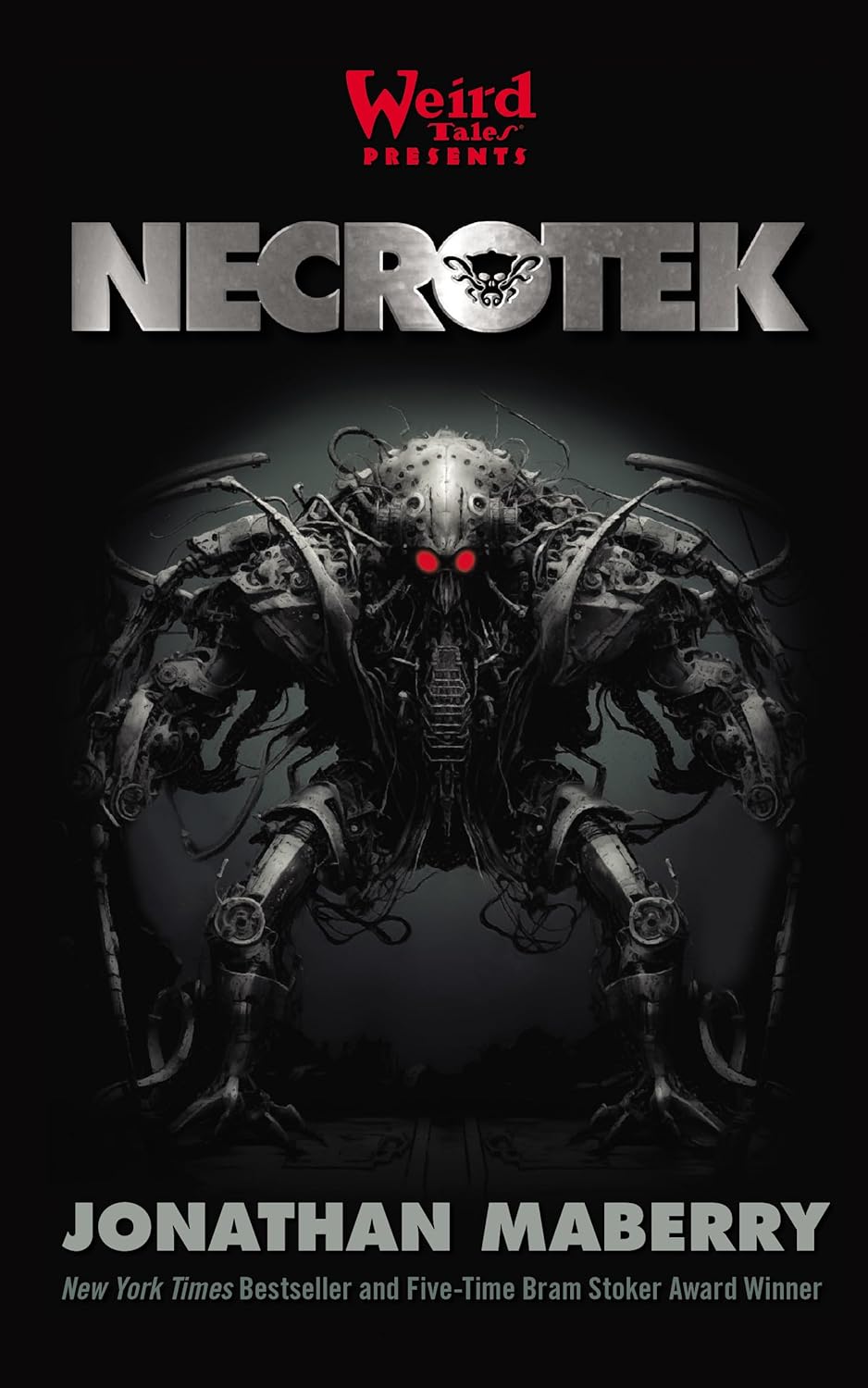
NecroTek by Jonathan Maberry

Publisher: Blackstone Audio (Audiobook – 28 May 2025)

Series: NecroTek – Book One

Length: 15 hours and 24 minutes

My Rating: 5 out of 5 stars

Amazon

One of the leading authors of action-packed fiction, Jonathan Maberry, dives headfirst into the science fiction genre with the unique read NecroTek, a remarkable Lovecraftian adventure in space that takes readers to some very dark places.

Readers of this blog will know that I have long been a fan of compelling author Jonathan Maberry, who has been impressing me with his elaborate, grim and varied book for years.  A long-time writer of horror-filled fiction across the genres, Maberry has multiple books and series under his belt, and I have had the great pleasure of reading a large portion of his existing works.  His main body of fiction is his Joe Ledger thriller series, which follows a tortured protagonist as he attempts to stop an array of dark technological threats assailing the modern world.  This series, which includes great books like Patient Zero, Assassin’s Code, Predator One and Dogs of War, as well as the Rogue Team International sequel series (Rage, Relentless and Cave 13), proved to be a great introduction to the author for me, and my appreciation for him grew after reading his Kagen the Damned dark fantasy series.  Made up of Kagen the Damned (one of my favourite books and audiobooks of 2022), Son of the Poison Rose (one of my favourite books and audiobooks of 2023), and The Dragon in Winter (which I am currently reading now), the Kagen the Damned books saw the author bring his distinctive style to the world of dark fantasy in a big way, and I loved the end result.

Due to how much I love Maberry’s captivating and enthralling novels, I always instantly grab anything new the author writes, and this includes his first release of 2024, NectroTek.  While his Joe Ledger books often feature strong science fiction elements in their thriller narratives, NecroTek was the first pure science fiction novel from the author, and I felt that he did an outstanding job applying his style and love for old-school horror into this new genre.  Released under the banner of the iconic Weird Tales horror magazine, NecroTek was one of my most anticipated releases of 2024, and it did not disappoint.


Plot Synopsis:

From New York Times bestselling author Jonathan Maberry, NecroTek is a gripping sci-fi thriller full of ghosts, gods, and a battle for the soul of humanity.

Neither cosmic philosopher Lars Soren, hotshot pilot Bianca Petrescu, nor the high priestess Jessica McHugh–Lady Death herself–can say quite where in the galaxy they are. But after an experiment gone horribly wrong, one thing is clear: Asphodel Station isn’t in orbit around Jupiter any longer. Worse, the monsters that live out here–ancient eldritch beings thought only to exist in stories and nightmares–have now been alerted to Earth’s existence.

Their army of Shoggoths is coming for us next.

Humanity’s only hope for survival lies on the surface of the alien world of Shadderal, where a ghost named Lost, the last of an ancient race, still haunts the vast plains of the Field of Dead Birds. But hope has a cost. Lost tells Soren about ancient derelict spacecraft awaiting on Shadderal, shapeshifting machines that blend ultra-advanced technology with the dark powers of necromancy. These ships might just be nimble enough to defend mankind against the coming invasion.

But there’s a catch: they can only be piloted by the dead.

As human starfighters fall in battle, their spirits can be called back from death to pilot these ghost ships of a fallen race. But will this new necromantic technology–NecroTek–allow humanity to stand against the vast armies of the Shoggoths? And even if it can, is the war to save the human race worth the cost of its pilots’ immortal souls?


What another brilliant read from Jonathan Maberry!  NecroTek was an outstanding and captivating novel that I unsurprisingly loved thanks to its elaborate and ambitious narrative, loaded with horror, carnage and a distinctive tale of survival against the odds.  Moving, powerful and highly emotional, NecroTek was such an epic and captivating novel, and I must give it a full five-star rating as a result.

Maberry produces another complex, detailed and powerfully dark narrative for NecroTek that is part science fiction, part horror, and all excitement.  Starting off just in advance of the events that will set the story in motion, Maberry does a great job of opening the book up and quickly setting the scene for the reader.  The start of a new series unconnected from his previous works (for now), this is one of the easier Maberry novels to break into, and you are soon invested in the tale of scientific exploration.  However, things change quickly once the teleportation experiment fails, and as this is Maberry, when things go wrong, they go wrong in a big and gruesome way.  The author really leans into his love of horror during these opening moments, and there are some shocking depictions of the side effects of the jump through space, as well as the terrifying things waiting for the survivors on the other side.  Maberry revels in featuring powerful depictions of terror and craziness here and it makes for a brilliant and often disturbing first part of the book.

After this horrifying start to the novel, NecroTek becomes more of a science fiction tale, although Maberry quickly infects it with his beloved Lovecraftian elements, as the protagonists soon discover that they have been discovered by Shoggoths above a mysterious planet.  This allows for some fantastic moments, as the humans attempt to defeat this new alien foe with their existing ships, while continuing to dive into the complex science and philosophy surrounding their circumstances.  This middle section of the book moves at a swift pace, and the readers are treated to some excellent battle sequences in space, as well as the character’s continued uncertainty as they try to understand the outrageous situation they have found themselves in.  Maberry does a great job setting down the required Lovecraftian lore and bringing key parts of the plot to light during this part of the book, and readers easily become absorbed in his compelling ideas, especially when they are coated in a combination of adventure, horror and intriguing characters.

Everything leads up perfectly to the final third of NecroTek, which sees the protagonists desperate to defend both the station, and the important planet they hover above.  Faced with attacks on multiple fronts and so many tragedies, the protagonists are forced to rely on a new ally and the titular NecroTek to face off against the Shoggoth fleet.  Maberry keeps the tension riding high for this final part of the book, and you are constantly on the edge of your seat as several simultaneous battles rage around the reader, often fought in some extremely epic ways.  There is some captivating tragedy, deeply moving moments of sacrifice, and elaborate dives into the human psyche as everything comes together, and you will be left dazed and moved by everything that unfolds.  An overall exceptional and unique story, NecroTek was so much fun, and I liked the potential for story continuation that exists at the end of the novel.

Maberry has a very distinctive writing style that he utilises in all his novels, no matter the genre, and which always results in an awesome and complex read.  Featuring a huge number of short and sharp perspective chapters that constantly jump between the key characters, as well as a few shots of the antagonists and other mysterious creatures, you get a layered story that shows so many complex actions at the same time.  This style works extremely well in this science fiction adventure, and I loved the elaborate ways he showcased the dark events occurring around the station, whether you get the experiences of the recurring characters, or one-off chapters that shows what happened to specific characters before they die.  These chapters deeply enhance the horror vibes in the book, which keep you on your toes and provides an overarching sense of threat and danger that really makes you concerned for the protagonists.  This cool horror vibe blends well with the extremely detailed science fiction setting and storyline, to create a particularly striking read that really stuck with me, especially as the author also dives into Lovecraftian elements which work nicely into Maberry’s distinctive tone.  As with most of Maberry’s work, NecroTek does get incredibly dark and disturbing at times, which may not appeal to every reader, especially when it comes to some of the more distressing occurrences.  However, Maberry channels this darkness extremely well into the plot and the various action sequences of the book, producing a rafter of ultra-exciting scenes that really stick in the mind.  I personally felt his various space-combat sequences were extremely good, and I loved how effectively he showcased the intricate nature of the battles, even when things get extreme with the inclusion of ghost-powered battle mechs. 

As with all Jonathan Maberry novels, the true power and heart of NecroTek lies in its many impressive and complex characters, who the author utilises to tell a particularly powerful and layered story.  Maberry has a real gift for producing compelling, damaged, and often highly over-the top characters for his various series, and NecroTek is no different as he introduces a range of figures whose unique perspectives shape and power the story.  While NecroTek lacks the full-on antagonist’s perspective that usually make his novels so effective (due to the enemies being unknowable aliens), you get a great spread of alternating perspectives and thoughts throughout NecroTek, as well as the powerful emotions behind them.  These emotions are greatly enhanced by the fact that all the human characters within NecroTek are disorientated or damaged by the earlier events of the plot, and watching them overcome their rage, fear or despair, really amps up the feeling of the unknown and the complex emotions that swirl around the plot.

While there are many characters featured within NecroTek, Maberry does focus the plot on a few key protagonists whose stories get a bit more attention.  This includes cosmic philosopher Lars Soren, who serves as one of the main explorers of the new world and the voice of calm reason amongst the protagonists.  I liked how effectively Maberry utilised a scholar protagonist for much of this novel, and it allowed for a much more thoughtful narrative at times.  Of course, as this is Maberry, there needs to be a militant main protagonist as well, and that role was filled ably by military pilot Bianca Petrescu.  A confident and skilled pilot, Bianca worked as a great partner to Soren throughout much of the adventure, and I liked the contrast in their styles and actions.  Bianca also works well as part of the fighter group, known as the Lost Souls, who work to defend the station from the Shoggoth fleet.  Acting like an extended family, the Lost Souls are a vital part of the book’s plot, especially as their eventual, many-layered sacrifice, results in some of the most emotionally charged scenes in the book, which is further enhanced by how much you have come to care for the whole group.  Throw in an actual necromancer and an ancient alien whose guilt-ridden ghost provides aid to the protagonists whilst also damning them, and the cast of NecroTek was extremely strong.  I really enjoyed the elaborate narrative threads that emerged around these figures, and it led to a very powerful and intense read.

As with most of the Jonathan Maberry novels, I chose to enjoy NecroTek on audiobook, which is easily the best way to enjoy one of the author’s elaborate and powerful novels.  Maberry’s distinctive writing style of constantly shifting characters, loaded action, and horrifying elements really comes across when read out and I honestly believe that this is the best way to enjoy one of author’s books.  A lot of this is due to the continued use of long-term Maberry collaborator Ray Porter, who has lent his voice to most of Maberry’s compelling audiobooks.  One of my favourite audiobook narrators, Ray Porter has an outstanding voice that expertly moves Maberry’s complex and addictive narrative around at a fast and effective pace.  Porter’s ability to instil emotion, intensity and often scary tones into his narration is extremely epic, and he can ensure that readers are always on the edge of their seats as they wait for more action or horror to emerge.  Porter also has a great range of different awesome voices that seem to always perfectly fit the character they are assigned to, and I love the fun and entertaining tones that convey so much of fear, feelings and deeper emotional state.  Coming in with an overall run time of 15 hours and 24 minutes, this is a long audiobook, although it proves easy to power through it quickly, especially in the action-heavy second half.  As such, the NecroTek audiobook version comes highly recommended, and you will not be disappointed when you listen to it.

Jonathan Maberry once again deeply impresses me with his elaborate and addictively dark science fiction read, NecroTek.  A very distinctive Maberry creation, NecroTek features a brilliant story that brings together cool new science fiction elements with the author’s love for all thing Lovecraftian into a brutal and captivating read.  Fast paced and loaded with complex characters, fantastic action, and some truly epic sequences, NecroTek was such a great read from Maberry and comes highly recommended.  I look forward to seeing how Maberry continues the series in the future, especially as a sequel, Cold War, is apparently set for release in 2025.

Amazon

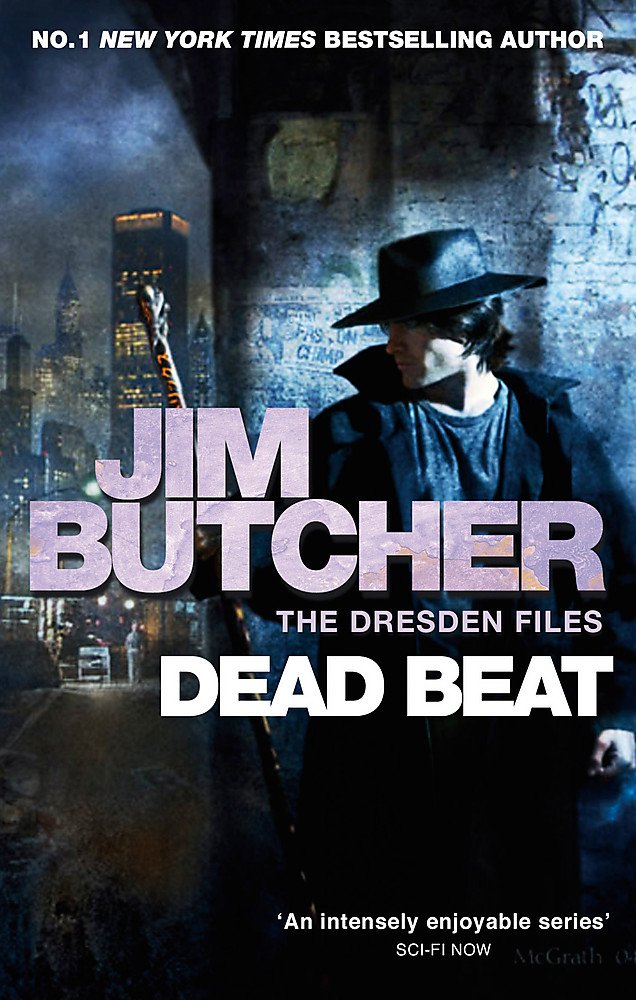
Throwback Thursday – Dead Beat by Jim Butcher

Dead Beat Cover

Publisher: Penguin Audio (Audiobook – 3 May 2005)

Series: Dresden Files – Book Seven

Length: 15 hours and 7 minutes

My Rating: 5 out of 5 stars

Amazon

Welcome back to my Throwback Thursday series, where I republish old reviews, review books I have read before or review older books I have only just had a chance to read.  For this latest review I dive back into the epic Dresden Files series by Jim Butcher with the seventh entry, Dead Beat.

Over the last couple of years, I’ve had a ton of fun finally getting into the iconic Dresden Files books by legendary author Jim Butcher.  Generally considered one of the very best urban fantasy series, the Dresden Files are a deeply captivating series that follows Chicago’s resident wizard, Harry Dresden, as he investigates a series of mystical cases throughout the city, often resulting in epic moments loaded with magic.  I started this series with the latest book, Battle Ground (one of my favourite books and audiobooks of 2020), and then went back to the start to experience the series from the beginning.  So far, I have managed to read Storm Front, Fool Moon, Grave Peril, Summer Knight, Death Masks and Blood Rites, as well as last year’s novella, The Law.  All these books have been extremely good in their own way, and I have loved the elaborate stories each of them contained.  As such, when I was in the mood for something I was guaranteed to love this week, listening to the next Dresden Files book on my to-read list was an easy choice for me, with the seventh book, Dead Beat.

Harry Dresden, private wizard detective and magical protector of Chicago is always willing to help a person in need no matter the cost.  But even he is unprepared for how far he’ll have to go when an old and merciless enemy imperils one of the people closest to him.  The ancient vampire Mavra has evidence that could destroy his best friend, Karrin Murphy, and threatens to unleash it unless Dresden recovers a powerful book of magic written by the legendary, long-dead necromancer Kemmler.

With no choice but to find the book, Dresden begins his search around Chicago, attempting to discover any trace of its location.  However, his search soon leads him into conflict with a new dark power arriving in the city.  Three of Kemmler’s students have their eyes on the book and the rituals it contains, and they are willing to destroy everyone and anyone to get it, including each other, especially when the prize at stake is godhood.

Caught between the three warring necromancers and their minions, Dresden needs to find the book first to stop their dark ultimate ritual before it can decimate Chicago.  However, each of Kemmler’s students far outclasses him in terms of magical ability and ruthlessness, and with only limited allies to call upon, it looks like even Dresden will have trouble saving the day again.  To survive, he might have to a make a dark deal with an even more malevolent evil, one that that has the potential to damn him forever.

I don’t know how he does it, but every single one of Jim Butcher’s novels that I read is so damn addictive and epic that I always struggle to put it down.  Dead Beat was another outstanding entry in the Dresden Files series, and honestly it might be one of the best I have read so far.  I absolutely powered through its clever and elaborate story as I tried to get to the end, and everything about it was highly enjoyable and fun.  Dead Beat gets another easy five-star rating and I have so much love for how amazing this seventh entry in the series turned out.

Dead Beat has an amazing story to it that effortlessly drew me in with the cool combination of magic, character moments and investigative angles.  Starting off quickly with Dresden drafted into the search for a powerful magic book, the protagonist begins his new investigation, only to discover the dangerous necromancers waiting for them.  Dresden soon has deadly encounters with all three necromancers in Chicago searching for the book, as well as their various minions and associates, which results in some brilliant scenes.  Dead Beat continues by setting Dresden and his allies on a dark course as they simultaneously attempt to find the book and the full extent of the warring necromancer’s plans, while also fending off their attacks.  Dresden keeps getting confronted again and again by his foes, barely escaping each time while also learning more about what is to come.  At the same time, he is forced to deal with certain personal issues, including trauma, complicated relationships, and a literal demon in his head, tempting him with power and knowledge.  There are some great twists, dark moments and emotionally powerful scenes set up around the middle of the novel, and I loved how well Butcher laid out the storylines and hinted at some big moments to come. Everything leads up to an epic concluding final third of the book as Dresden makes some hard decisions and compromises to save the day.  The final confrontation with the bad guys is pretty damn awesome, especially as the protagonist, utilising his usual restraint and good judgment, unleashes a very monstrous response to the antagonist’s minions.  This entire narrative was enthralling from start to finish, and I cannot emphasise just how addictive and entertaining the entire story was.

Dead Beat featured Butcher’s usual excellent writing style which once again lent itself extremely well to the elaborate narrative he came up with.  The pacing of this book was constantly fast and exciting, which guarantees that the reader is always paying attention, especially as every page has either action, some intriguing bit of lore or history, or some intense and compelling character development.  Butcher also ensures that this latest novel has the right blend of great story elements to it, and I deeply enjoyed how the fantasy and mystery elements are well featured as the protagonist is forced to do detective work to get the answers.  All this is overlayed by a great smattering of humour, mostly from the funny protagonist, who approaches the dark events and villains with his usual cockiness and disrespect.  The use of a first-person perspective from Dresden is also quite effective, and I loved seeing events through his eyes, as it allows readers to fully grasp the mystery, while also showcasing the great character developments.  While Dead Beat can be read as a standalone read, especially as Butcher is good at quickly recapping events, at this point in the series readers will benefit from going back and reading the earlier Dresden Files books first.  Dead Beat proves to be a key entry in the larger series, with multiple major events occurring here, and there are a ton of references to the preceding books, including the return of several fantastic characters.  I really got a lot more out of Dead Beat’s story for having read the previous novels, especially as you get to see how much Dresden has been through in the lead up to this book.  Overall, this was a very well-written and impressive novel, and Butcher really ensured that his cool story came through perfectly.

As with the rest of the Dresden Files books, I was really impressed with the blend of fantasy and urban fiction elements in Dead Beat, especially as Butcher has come up with such an elaborate world to set his stories in.  The author adds some cool new elements into his complex world throughout Dead Beat, as Dresden is forced to deal with a whole new branch of dark magic, necromancy.  Necromancy, or the control over the dead, is always a great villainous power in fantasy fiction, and Butcher makes excellent use of it in this book, with three rival necromancers vying for power.  Each uses a different form of necromantic magic in battle, and this results in some outstanding scenes where Dresden is forced to confront them.  The resulting magical mayhem is pretty epic, and Butcher’s unique depiction of zombies was both fun and a little scary.  This intriguing new form of magic ensured that Dead Beat really stood out, and I appreciated how Butcher turned it on its head towards the end when Dresden gets creative.  These excellent portrayals of magic fit within the fantastic setting of modern-day Chicago and it is always fun to see the elaborate balance of magical and mundane features that Butcher has set up within the city.  These great fantasy inclusions blend well with the character work and mystery elements of Dead Beat, and I look forward to seeing how Butcher further expands it in future books.

One thing that I felt Butcher did particularly well in Dead Beat was how he portrayed his brilliant cast of characters.  The Dresden Files always contain great protagonists and villains, but this novel had some of the best portrayals of them to date.  This is especially true for series protagonist and point-of-view character Harry Dresden, who had a great outing here.  Dresden has always been a damaged and conflicted figure in the series, but recent traumas are really weighing him down in Dead Beat as he struggles with a terrible hand injury, as well as the malign influence of the fallen angel bound to him, Lasciel.  The protagonist spends most of the book trying to deal with the influence of Lasciel who subtly manipulates him in many ways, tempting him with power or a solution to his many problems.  Each damaging and desperate encounter that Dresden survives in Dead Beat forces him to reconsider the wisdom of refusing her help, and the subsequent internal battles produce some of the most intense and compelling scenes in the novel.  This continued temptation and manipulation alters Dresden’s personality at times, and it was interesting to see how his allies and friends treat him, especially as Dresden begins to understand the different ways that members of the magical community view him.  Of course, Dresden hides most of his internal pain with his usual hilarious wit and humour, and his irreverent opinions, funny observations, and sheer ability to annoy anyone he encounters, results in most of the book’s humour and over-the-top moments.  Throw in other concerns, including complex relationships, unrequited love, and the character’s desire to prove himself and do the right thing, and this was some of the best character work that Butcher has ever done around his main protagonist.

On top of Dresden, Butcher also features a brilliant cast of support characters and villains that really help to enliven the book.  Dead Beat features a mixture of established supporting characters, as well as several great new ones, each of whom get some excellent moments to show off throughout the book.  I particularly enjoyed how well Butcher utilised the character of Waldo Butters in Dead Beat.  Butters, a kooky and big-hearted mortal medical examiner who had minor roles in a previous novel, is thrust into the limelight during this book, becoming a major ally to Dresden.  Butcher weaves some great storylines around him as he simultaneously finds his courage and begins to understand the magical world that keeps trying to kill him.  Butters proves to be a great supporting figure to Dresden in this book, and I loved their amusing team-up and developing friendship.  There is also a couple of great hints at some of the future storylines involving Butters, and I look forward to seeing more of him.

Aside from Butters, I also enjoyed the appearance of Dresden’s half-brother, the vampire Thomas Raith, who has been crashing at Dresden’s place.  Butcher paints a fun brotherly relationship between the two in this novel, which was quite entertaining at times.  However, the more humorous elements of their relationship are often overshadowed by the deep pain within Raith as he tries to overcome the emotional damage done to him in the previous novel.  I also loved learning more about Dresden’s skull spirit companion, Bob, in Dead Beat, and his dark history proves to be quite fascinating, especially as his former nature contrasts substantially with his usually entertaining persona.  The three necromantic villains, Grevane, the Corpsetaker and Cowl, each bring a certain level of sinisterness to the table, and they prove to be exceptional antagonists in their own way.  Finally, I must highlight the inclusion of Dresden’s new dog, Mouse, who has an awesome outing in Dead Beat.  A young and growing gentle giant, Mouse is a fun animal companion to Dresden and his allies, and I look forward to seeing more of his hijinks in the future.  Honestly, the entire cast of Dead Beat was pretty damn exceptional, and their powerful interactions and internal issues, added so much to the impact and power of this awesome novel.

As with all the Dresden Files novels, I chose to listen to Dead Beat on audiobook, which was an exceptional experience as the audio format helps to enhance the great characters and magical action.  Coming in at just over 15 hours, this is a substantial audiobook, however, I manage to knock it out in a few days, especially once I got caught up in fantastic story.  Naturally, the best thing about the Dead Beat audiobook is the return of actor James Marsters as the narrator.  Marsters, who is one of my favourite audiobook narrators thanks to his work on this series, did another brilliant job in Dead Beat and I have so much love for his outstanding performance.  After lending his voice to all the previous Dresden Files novels, Marsters has all the characters down, and each figure is given a fitting and powerful voice that carries through from book to book.  I particularly appreciated his portrayal of main character Harry Dresden, and Marsters perfectly captures the protagonist’s deep emotions and cocky demeaner, ensuring that you are both drawn to his pain and entertained by his antics.  In addition to the excellent voices, Marsters also has some noticeable and contagious enthusiasm in his narration, especially when it comes to the magical battles, and you can really feel his passion and excitement in parts of the story, especially when he loudly shouts out Dresden’s magical spells.  This narration from Marsters is so damn good, and it ensures that I had an exceptional time with Dead Beat’s audiobook, while is the absolute best way to enjoy a Dresden File novel.

In the seventh entry in his iconic Dresden Files series, Dead Beat, Jim Butcher has produced another exceptional read and one that I cannot recommended enough.  Featuring a particularly impressive and captivating narration, cool magical inclusions, and some of the best character work Butcher has ever done, Dead Beat is one the best Dresden Files novels I have read so far, and I loved everything about it.  This was such an amazing book, and I am very much intending to read several more entries in this outstanding series later this year.

Amazon

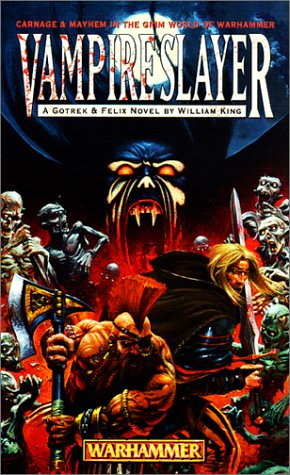
Throwback Thursday: Warhammer: Vampireslayer by William King

Vampireslayer Cover 2

Publisher: Black Library (Audiobook – August 2021)

Series: Gotrek and Felix – Book Six

Length: 11 hours and 13 minutes

My Rating: 4.75 out of 5 stars

Amazon     Book Depository

Welcome back to my Throwback Thursday series, where I republish old reviews, review books I have read before or review older books I have only just had a chance to read.  For my latest Throwback Thursday I continue my recent obsession with Warhammer Fantasy fiction by checking out another entry in the iconic Gotrek and Felix series by William King, Vampireslayer.

I have been on a real roll with looking at the cool fiction associated with the now defunct Warhammer Fantasy tabletop game over the last few weeks, including the fantastic novels Runefang and Van Horstman.  However, few Warhammer Fantasy books have grabbed my attention or interest more than the Gotrek and Felix series, which serves as one of the central pillars of Warhammer fiction.  The Gotrek and Felix books, which were originally written by William King, follow the titular characters, dwarf slayer Gotrek Gurnisson and his sworn human companion Felix Jaeger, as they journey around the Warhammer Fantasy realm, finding monsters to fight and kill, all in the hope of finding a worthy death for Gotrek.  This is an awesome and unbelievably exciting fantasy series that take the reader to some of the darkest parts of the Warhammer Fantasy world and sees them face off against all manner of crazy foes.

I have had an absolute blast getting through the Gotrek and Felix books over the last year, as there have been some cracking reads in there.  The previous books, Trollslayer, Skavenslayer, Daemonslayer, Dragonslayer and Beastslayer, have all had their own unique charm, and all of them have been well written and compelling reads.  Vampireslayer is the sixth book in the series, and as the name suggests, it pits Gotrek, Felix and their allies against one of the most dangerous creatures in the Warhammer canon, an ancient and deadly vampire count.

Following their victory at the siege of Praag, Gotrek, Felix and their surviving allies, have finally been able to relax after a never-ending series of battles. However, the ever-restless Gotrek is still determined to find a worthy death to fulfil his suicidal oath, and Felix knows it is only a matter of time before they journey out to face the rising hordes of Chaos that are building around the realms of man.  But before Gotrek and Felix can head out, a new evil rears its head; one that is far more cunning and ancient than anything they have faced before.

After accepting a job from a wealthy Praag nobleman, Gotrek and Felix find themselves investigating a mysterious man who is attempting to steal one of their client’s treasured artifacts.  But the closer they look, the more apparent it becomes that their target is no ordinary man, but a powerful ancient vampire named Adolophus Krieger, who has been stalking the streets of Praag, feasting on the innocent.  Determined to slay this beast, Gotrek and Felix’s confrontation goes poorly, when the vampire outsmarts them, steals the artifact and takes their companion, Ulrika Magdova, hostage.

Determined to save Ulrika and get their revenge on their foe, Gotrek and Felix, as well as their allies, Snorri Nosebiter, Max Schreiber and Ulrika’s father, Ivan Straghov, pursue the vampire lord.  To kill Krieger, they will have to travel to one of the most dangerous places in the Old World, the haunted lands of Sylvania.  Controlled by the Vampire Counts for generations, Sylvania is a wicked place where the dead never rest, and dark creatures lurk around every corner.  Worse, their foe is powered by an ancient artefact forged by Nagash and has designs on becoming the supreme vampire ruler, leading them in a new war against the living.  With the odds stacked against them, Gotrek, Felix and their companions must dig deep if they are to kill Krieger, rescue Ulrika and save the world.  But after spending time trapped with the vampire, can Ulrika truly be saved?

King once again shows why his Gotrek and Felix books were the defining Warhammer Fantasy series with this epic and fast-paced read.  Vampireslayer is easily one of the stronger entries in the series and takes its distinctive protagonists on an intense and captivating adventure that I deeply enjoyed.

Vampireslayer had an amazing fantasy narrative, and I think this was one of King’s more impressive and enjoyable stories.  Taking off right after Beastslayer, the initial story sees Gotrek, Felix and their allies still at the city of Praag, planning out their next adventures.  They quickly find themselves dragged into another adventure when a distant relative of Ulrika reaches out to them for help with a mysterious threat.  This initial part of the book was rather interesting, and not only does it have some great follow-ups from the previous entry in the series but it also sets up the narrative and the current characters really well.  There is a fantastic cat-and-mouse game going on in the early stages of the novel, as the protagonists attempt to discern the new evil they are going up against, while their vampiric assailant, Adolophus Krieger, puts his plans into motion.  Following the first encounter between the heroes and the vampire, which is set up and executed to drive up anticipation for later interactions, Krieger escapes and the protagonists are forced into a deadly chase across the world.

The rest of the novel is primarily set in the dread realm of Sylvania, and sees the protagonists chase after the vampire and his kidnapped victim.  This second part of the book is filled with some fun and exciting classic horror elements as the protagonists go up against a variety of foes from the vampire count’s army.  There is a lot of great action, fantastic chases, and some substantial character development occurring during this part of the novel, as the author brings together many of the threads from earlier in Vampireslayer, while also introducing some intriguing new supporting characters.  King makes particularly good use of multiple character perspectives throughout this part of the book, and I loved seeing the conflicted thoughts of the main protagonists (minus Gotrek as usual), as well as the many plots of the villain and his new minion.  This all leads up to the big confrontation between the protagonists and their foe at the legendary Drakenhof Castle, as the heroes face off against an army of the undead and the vampire himself.  The action flows thick and fast here, and King pulls no punches, showing the brutal and dark nature of the Warhammer Fantasy universe.  I did think that the final confrontation was a bit rushed, with the anticipated battle against Krieger lasting only a short while, but it was pretty fun to see.  There are a couple of good tragic moments in this conclusion, as well as some interesting developments for some long-running supporting characters, and King brings everything to a good close as a result.

I think that one of the things that made this story particularly enjoyable was that it was a lot more focused than some of the other books in the series.  This was mainly because it was the first book since Skavenslayer not to feature a sub-story that focused on recurring villain, Grey Seer Thanquol.  While Thanquol’s perspective was good for Skavenslayer, its use in the following novels, while usually very fun and entertaining, seemed a bit unnecessary and often affected the pacing or stole the impact away from the book’s actually antagonists.  This became more and more apparent in Dragonslayer and Beastslayer, especially when Thanquol’s actions rarely had any impact on the main plot.  As such, not having a Thanquol focused side story in Vampireslayer was a bit of a blessing, and it really increased the impact of the remaining storylines.  It also ensured that the parts of the book told from Krieger’s perspective really pop, as he was the only villain you could focus on.  I had a brilliant time with this impressive story and it ended up being an excellent adventure to follow.

Vampireslayer proved to be a pretty awesome entry to the wider Warhammer Fantasy universe, and I loved the cool details and references that King added in.  Like most of the books in the Gotrek and Felix saga, Vampireslayer can be read as a standalone novel (probably more so than the last three books in the series), and very little pre-knowledge about the Warhammer Fantasy or the previous books in the series is required to enjoy this excellent book.  King does a great job of once again introducing the key elements, recurring characters, and wider evils of this universe, ensuring that new readers get the information they need without making it too repetitive or boring for established fans.

One of the things that makes Vampireslayer standout a little more from some of the recent entries in the series is the move away from Chaos focused opponents and instead brings in a new faction from the universe in the form of a vampire and his undead hordes.  This is a fantastic change of pace, and I rather enjoyed seeing one of the more compelling factions from the game, even though I have bad memories of facing my brother’s Vampire Counts army.  King does a brilliant job diving into the lore and history of vampires and the general undead in the Warhammer universe, and the protagonists get a good crash course on them, which new readers will deeply appreciate.  I loved seeing a vampire antagonist in this novel, especially as it is one of the classic Vampire Counts types (a Von Carstein vampire).  This vampire has a lot of the classic European elements associated with Dracula, and it was fun to see the protagonist deal with this sort of creature, especially as Krieger takes the time to taunt them in a way they’ve never dealt with before.  King also adds in several of cool units from the Vampire Counts book, and it was pretty fun to see them in action in some brilliant fight scenes.  I also deeply enjoyed the dark setting of Sylvania, where much of the story takes place.  Sylvania, a Warhammer realm based deeply on Transylvania and ruled over by vampires, has always captured my imagination and it was fun to see it used in Vampireslayer.  You really get the sense of fear and despair surrounding the countryside, and all the locals, many of whom are just a step away from becoming some form of creature, are a depressing and scared group.  Watching the characters attempt to traverse this land was really entertaining, and I think all these awesome Warhammer Fantasy elements helped to make this great story even more impressive.

I also found some of the character work in Vampireslayer to be pretty intriguing, as King examines several great characters in this book.  The central two characters are naturally Gotrex and Felix, although not a great deal of character development went towards them in this book.  Gotrex is his usual gruff, murderous and unreadable self, who is essentially shown as an unkillable beast at this point, and you really don’t get much more from him, especially as Gotrex’s perspective is deliberately not shown.  Felix also doesn’t get much growth in this book, although he does serve as a primary narrator, recording and observing the events of the book.  Despite this lack of growth, Felix is a great everyman character to follow and it is really entertaining to see his quite reasonable reaction to facing off against the evils that gravitate towards Gotrek.

A large amount of focus went to the supporting characters of Max Schreiber and Ulrika Magdova, who have been major parts of the series since Daemonslayer.  The attention on both has been growing substantially through the last couple of books, especially in Beastslayer, and they had a massive presence in Vampireslayer.  Max, the team’s wizard, is pushed to the brink in this book after investigating a dangerous magical artefact and having his companion Ulrika kidnapped.  Max, who has always had a crush on Ulrika (it was pretty creepy at first, but better now), becomes obsessed with saving her before its too late, and this drives him to some extremes in this book.  Ulrika, on the other hand, must survive the evil attentions of the book’s villain, especially once the vampire takes an unhealthy obsession with her.  I must admit that I have always found Ulrika to be a fairly annoying character (which isn’t great when she’s usually the only female figure in the books), however, this was one of her best appearances as she goes through a physical, mental and magical wringer.  Her attempts to resist the vampire are extremely powerful and her eventual fall to darkness is one of the more compelling and best written parts of the book.  This was an excellent outing for both these supporting characters, and it actually serves as a wonderful final hurrah, as I know they don’t appear in many books in the future.

The final character from Vampireslayer that I need to talk about is the book’s primary antagonist, the titular vampire Adolophus Krieger.  Krieger, a centuries-old creature with connections to Vlad von Carstein, serves as a brilliant villain for this adventure novel, especially as King takes a substantial amount of time to dive into his history, personality and motivations.  Rebelling against his sire and attempting to become the next vampiric master of the Old World, Krieger is shown as a complex and intense being with some major issues.  Not only does he have to temper his intense ambition, but he also finds himself mentally deteriorating towards savagery and must constantly fight for control as his afterlife’s goals comes to fruition.  King does a great job capturing this compelling figure throughout the book, and I particularly enjoyed his introductory chapters where his temper and inability to suffer fools is shown with gruesome results.  Krieger has a brilliant presence throughout the novel, and he was a great villain opposite Gotrek and Felix with his gentlemanly airs (he has a great comeback to a line from Snorri Nosebiter).  I deeply enjoyed all the outstanding characters in Vampireslayer, and King did some superb work with them throughout this novel.

After reading paperback versions of Dragonslayer and Beastslayer, I’ve finally gotten back onto the Gotrek and Felix audiobooks with Vampireslayer, which was a lot of fun to listen to.  The audiobook format did an amazing job of capturing the dark tone and fast-paced action of this intense novel, and I felt that listening to Vampireslayer on audiobook really helped me appreciate a lot of the book’s more interesting details.  With a runtime of just over 11 hours, this is an easy audiobook to power through, and I personally managed to get through it in a few days.  This great audiobook was further enhanced by the excellent narration of Jonathan Keeble, who has narrated most of the other Gotrek and Felix audiobooks.  Keeble has an amazing voice for this sort of novel, and I loved the fantastic way he was able to move the story along at a brilliant pace while also enhancing the book’s horror and action elements.  I particularly loved the range of excellent voices he attributes to the various characters, many of which are carried over from his previous audiobook experiences.  All the characters get some distinctive and very fitting tones here, which I think worked extremely well.  Examples of some of the best voices include Felix, whose calm voice of reason, serves as the narrator’s base tone for most of the story; Gotrek, who is given a gruff and menacing voice that contains all the character’s barely restrained anger and regret; and even the new vampire character, Adolophus Krieger, who is gifted a French/European accent to match the classic vampire vibe that goes with the Vampire Counts characters in Warhammer, and the character’s likely origins as a Bretonnian Knight.  This expert voice work was extremely good and I had a brilliant time listening to this version of Vampireslayer.  As such, this format comes highly recommended and it is usually one of the best ways to enjoy a cool Warhammer novel.

Vampireslayer was another epic entry in the fantastic and ultra-fun Gotrek and Felix series by William King.  Bringing in a great new opponent who pushes the protagonists to new lows, this was an excellent adventure novel that shows some of the best parts of the Warhammer Fantasy world.  With a captivating and fast-paced narrative, this was one of the better entries in the series and I had an outstanding time getting through Vampireslayer.  An awesome read for all Warhammer and general fantasy fans, especially on audiobook.  I love this series so much!

Vampireslayer Cover

Amazon     Book Depository

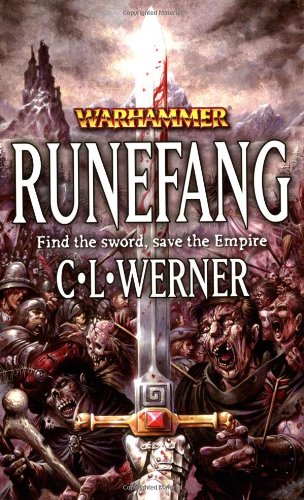
Throwback Thursday – Warhammer: Runefang by C. L. Werner

Runefang Cover

Publisher: Black Library (Paperback – 24 June 2008)

Series: Warhammer Fantasy

Length: 413 pages

My Rating: 4.5 out of 5 stars

Amazon

Welcome back to my Throwback Thursday series, where I republish old reviews, review books I have read before or review older books I have only just had a chance to read.  For this week’s Throwback Thursday I have a look at a classic Warhammer Fantasy adventure novel with the entertaining fantasy thrill ride, Runefang.

I have been reading an awful lot of Warhammer 40,000 novels lately, but deep down my heart will always belong to the Warhammer Fantasy franchise, as that was the game that I played back in the day.  Even though the Warhammer Fantasy game has ended (replaced by The Age of Sigmar), while it was going the Black Library invested a lot of time into creating some excellent novels in this setting, which I have also been enjoy recently.  This includes the awesome Broken Honour and some of the earlier entries in the iconic Gotrek and Felix series (including Trollslayer, Skavenslayer, Daemonslayer, Dragonslayer and Beastslayer).  Even after reading these, I am still in the mood for more fun Warhammer Fantasy adventures and so I just read Runefang by established Warhammer fiction author C. L. Werner.  Werner, whose other writing credits include the Witch Hunter, Thanquol & Boneripper and The Black Plague series, came up with a compelling idea for this novel which I had a lot of fun getting through.

As civil war, discord and political instability rock the human realms of the Empire, a far greater threat marches upon it from the south.  A massive horde of undead creatures has been raised from the grave and is  cutting its way through the heavily populated province of Wissenland.  As the forces of Wissenland gather to fight, they are disheartened to find that these are not the typical shambling herd of undead horrors, but a well-organised, highly disciplined force of relentless fighters with dangerous magic backing them up.  Worse, the leader of this force is a true monster, the wight lord Zahaak, an ancient general of the legendary dark necromancer, Nagash, who has risen from his last defeat to finally achieve the victory he promised centuries before.

After several devastating slaughters, it becomes apparent that the undead force before them is unstoppable and the only way to defeat it is to kill the unkillable undead general.  In desperate need of anything that will save his realm, the Count of Wissenland and his advisors come up with an unlikely plan: recovering the Solland Runefang.  Lost years before when an orc raid destroyed the former province of Solland, the stolen Runefang, one of the legendary 12 swords signifying rulership of the Empire’s provinces, is rumoured to be the only weapon capable of killing Zahaak.

The task of finding the Runefang falls to Baron von Rabwald, who pulls together a small expedition of soldiers, knights and adventurers and leads them to the Runefang’s purported hiding place in the Worlds Edge Mountains.  However, this is no easy quest, and the chances of success are low, especially as the Worlds Edge Mountains are a notorious haunt for monsters, orcs and innumerable other dangers.  Worse, they are not the only group seeking the lost Runefang, and the fell magic of Zahaak is never far behind.  Can the expedition recover the Runefang before it is too late, or will Wissenland fall at the hands of its greatest foe from the past?

This was an outstanding and extremely exciting Warhammer Fantasy novel that I had a wonderful time reading.  C. L. Werner did an excellent job providing readers with an amazing fantasy adventure, and Runefang has a lot of great elements that will appeal to a wide range of readers.

At the heart of Runefang lies a captivating and highly enjoyable fantasy narrative that quickly drags the reader in with its impressive action, enjoyable characters, intriguing examination of the Warhammer world, and exciting adventure narrative.   Starting off with a fantastic introduction that sees the Wissenland army’s first disastrous attack against the undead horde, you are swiftly brought into the middle of the conflict as you witness the aftermath of the defeat, which also introduces several of the main characters.  Following some compelling exposition about the enemy they are facing, the story splits into two parts, with Baron von Rabwald leading most of the supporting cast off to find the lost Runefang, while the rest of the story focuses on the Count of Wissenland’s attempts to delay the undead army to give the adventurers time.  This split works really well, and seeing the disasters unfolding in Wissenland heightens the stakes of the expedition’s adventures and ensures that the reader is even more invested in its outcome.  The expedition storyline encounters multiple obstacles throughout their adventure, including monsters, traps, and orcs and goblins.  They are also forced to deal with a rival force of humans who are also hoping to claim the Runefang, untrustworthy mercenaries, as well as a traitor within their ranks who is helping the enemy.

This all translates into a very good and action-packed adventure, and I loved seeing all the epic events unfold through the eyes of the varied characters.  The story chugs along at a quick and exciting pace, with a good combination of action, dark moments and some fun, if grim, humour that I quite enjoyed.  Werner also ensures readers are in for a wild ride by not being sentimental when it comes to character survivability.  This became really apparent around halfway through Runefang when several key characters, many of whom had been built up in a big way for most of the narrative, were very suddenly killed off, and one of the supporting cast took the reigns as lead protagonist.  While this was a little surprising, I think it worked rather well, and it added to the suspense and drama of the tale, as the new protagonist is forced to make some big choices and deals to keep the quest alive.  Following this, the story keeps advancing at a great pace, with new foes and dangers appearing the closer the protagonists got to their goal.  This leads up to the epic final sequences of the expedition narrative, and it was fantastic to see the surviving protagonists go up against all the villains that had been chasing them in a big, extended confrontation, and Werner kept continuously hitting the reader with twists, surprises and dangers.  The reveal about the traitor in the ranks was pretty good, especially as Werner threw in an excellent red herring character (although by the time it is revealed, there were limited potential characters who it could be).  Everything comes together extremely well, with all the storylines and character arcs reaching their natural end, and I felt that it was an excellent, if rather bittersweet, conclusion.

I have to say that this was a particularly good and accessible entry in the wider Warhammer Fantasy canon, which is very well suited to this sort of immense and powerful story.  While Werner could have just phoned in Runefang with a generic adventure story set in the universe, he does a great dive into the lore.  This novel is set well before the events of most Warhammer Fantasy novels and takes place during the Age of the Three Emperors, where the Empire was split by a raging civil war.  As such, the province of Wissenland is on its own throughout the novel and must also deal with the substantial machinations of its neighbours as it fights to survive, which gives it a great additional edge of intrigue.  The author also spends a great deal of time focusing on the ruined province of Solland and the importance of its lost Runefang.  It was fascinating to see the ruins of Solland in Runefang, as it was still badly scarred by the orc invasion that destroyed it, and the impact of Wissenland’s absorption of it was quite interesting.  I also really appreciated the fantastic portrayal of the notorious Worlds Edge Mountains, the former realm of the dwarfs that is now controlled by orcs, bandits, and monsters.  The author did a really good job showing this to be a desolate and dangerous place, and he really did not disappoint when it came to featuring the variety of cool creatures and threats it contains, forcing the protagonists up against dangerous odds again and again.

Finally, I must highlight the author’s excellent use of the undead army in this book.  Rather than using the armies of the Vampire Counts or the Tomb Kings (which were the two undead factions at the time of Runefang’s release), Werner features a historic army of undead creatures who have risen after their defeat during the early days of the Empire to have their vengeance.  As such, they are a unique force of undead creatures, and I loved seeing them in action, particularly as you get some awesome reactions of terror from the human characters observing them.  Overall, I really loved the cool use of Warhammer Fantasy elements, history and settings in Runefang, and I felt that this was the sort of Warhammer novel that any fantasy fan could pick up and enjoy.

I also need to highlight all the impressive action featured throughout Runefang, and Werner has a clear talent for making fight scenes come to life in a big way.  There are so many battles throughout this book, and each of them is showcased to the reader in exquisite detail.  Whether it be a small skirmish, a one-on-one fight, a brawl against a giant monster, or a large pitched battle between armies, the author ensures that the reader gets the full sense of everything that his happening.  It was extremely cool to see all these fights unfold, and I was able to mentally see every sword swing, desperate charge and epic moment.  I liked how some of these fights emulated the battles from the table-top Warhammer Fantasy game, and you could really envision how they would have looked being played out on the board.  These action scenes combined well with the awesome and exciting story, and I think that they strongly enhanced my enjoyment of Runefang.

The final thing I want to talk about is characters, as Runefang features an excellent and massive cast of distinctive protagonists and villains.  Now, I am not going to go into too much detail about character arcs or development here, as to do so might ruin which key characters are killed off early.  However, I have to say that I was really impressed with the awesome way that Werner introduced each of the major figures in the book.  As such, you quickly grow to like many of the figures in Runefang, especially as Werner goes out of his way to feature a unique and often damaged group of protagonists to fit the story around.  I will say that I deeply enjoyed the Baron’s notorious and scarred champion, Kessler, who has some great moments; the dwarf Skanir, who serves as cantankerous guide; and the fantastic duo of the halfling Theodo Hobshollow and his ogre sidekick, Ghrum, who were an excellent and entertaining comic relief team.  There are also some really good villains in this novel, including the bandits who are also after the Runefang (featuring a brilliantly despicable leader and an entertaining pair of cowards), and an extremely dangerous orc warlord, Uhrghul Skullcracker.  Uhrghul was a particularly fun character, and I liked both his philosophical insights about being an orc leader as well as his effective way of questioning human prisoners (eating my legs in front of me probably would get me to talk).  I did think that the main villain of Runefang Zahaak was a tad underdeveloped, even if he was shown to be an epic badass with major historical cred to his name.  However, this might have been a deliberate choice by Werner to highlight the uncomplicated nature and motivations of the undead compared to the more insidious, evil, or animalistic plots of the humans and orc villains.  I had an amazing time following these characters, just try not to get too attached to any of them.

Filled with fantastic action, a compelling adventure storyline, fun characters and great use of the Warhammer Fantasy setting, Runefang was an outstanding novel from C. L. Werner that I had an amazing time reading.  Werner really went out of his way to create the most impressive and exhilarating fantasy adventure he could, and the result is really worth checking out.  A highly recommended Warhammer fantasy novel that you are guaranteed to have fun with.

Amazon

Harrow the Ninth by Tamsyn Muir

Publisher: Recorded Books (Audiobook – 4 August 2020)

Series: The Locked Tomb – Book Two

Length: 19 hours and 51 minutes

My Rating: 5 out of 5 stars

Amazon     Book Depository

Sensational author Tamsyn Muir follows up her incredible 2019 debut with another epic, complex and infinitely entertaining hybrid novel, Harrow the Ninth.

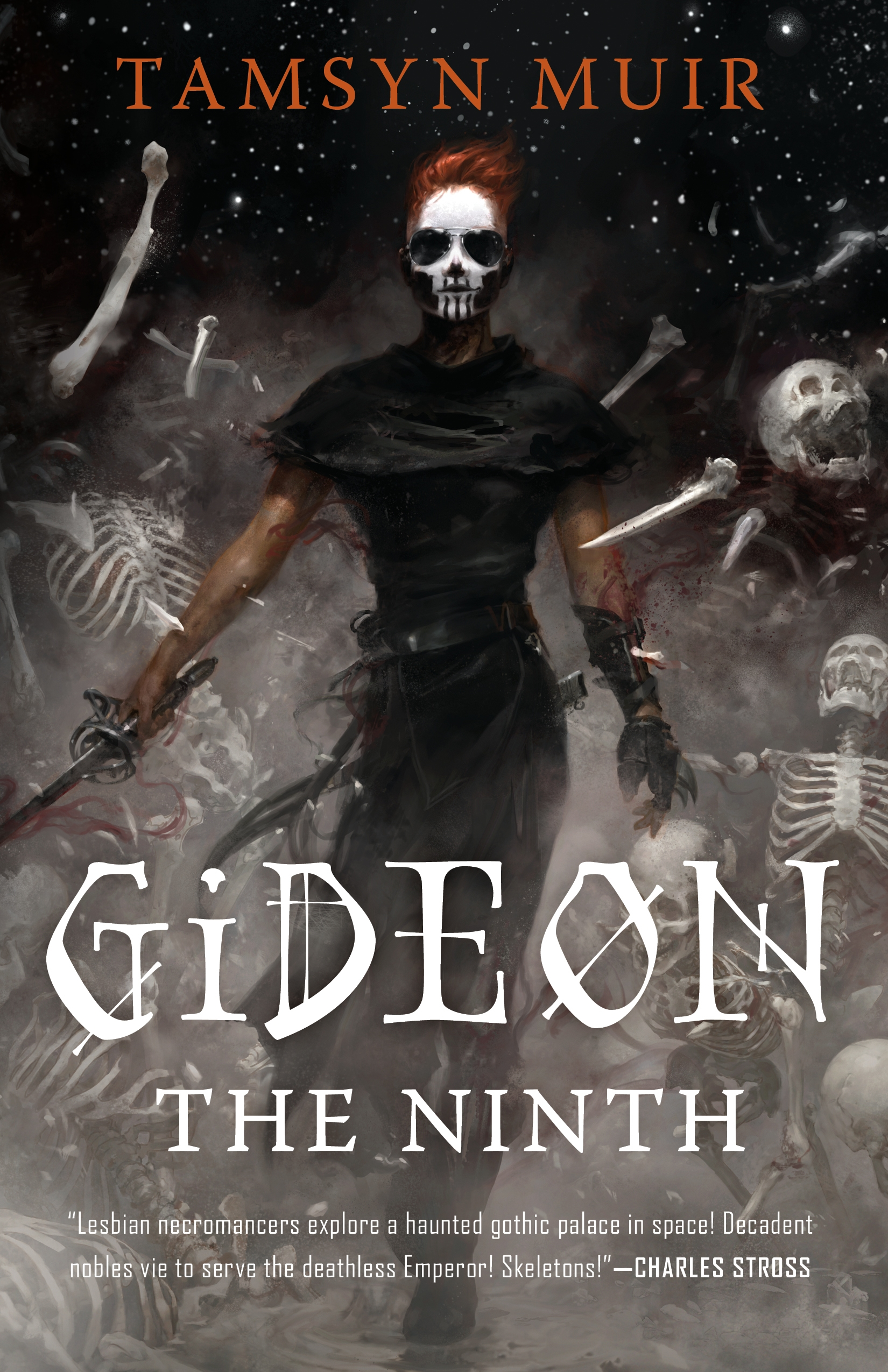
Tamsyn Muir burst onto the writing scene with a real vengeance last year with her debut novel, Gideon the Ninth, the first book in The Locked Tomb series.  Gideon the Ninth was an extremely clever and compelling novel that followed a group of spacefaring necromancers who were summoned to the house of their Emperor and god, and given an opportunity to learn from him and become Lyctors, immortal beings with immense necromantic power who are considered to be living saints.  What they instead found was a haunted manor filled with secrets, weird experiments and mysterious hints at the past.  The protagonist of this first novel was the titular Gideon, a smart assed, foul mouthed lesbian swordswoman who was reluctantly serving the necromantic lady of the Ninth House, Harrowhark Nonagesimus.  I absolutely loved Gideon the Ninth and it was easily one of my favourite debuts of 2019.  As a result, I was rather intrigued when I heard about its sequel, Harrow the Ninth (which, as you can see above, featured another intense and beautiful cover by the talented Tommy Arnold) and I eagerly grabbed an audiobook copy of it when it came out.  I have to say that I am extremely glad that I decided to do so as Harrow the Ninth turned out to be a truly outstanding book and I had an incredible time reading it.

Harrow the Ninth is set shortly after the dramatic conclusion to Gideon the Ninth and switches the focus of the novel over to Harrowhark, who has succeeded in becoming a Lyctor at great personal cost.  Now alone, mentally scarred and more powerful than ever, Harrow finds herself in the personal care of the Emperor of the Nine Houses, who is determined to use his new Lyctor in a deadly war against an ancient and powerful terror, a Resurrection Beast, the insane and vengeful ghost of a murdered planet.

Travelling to the Mithraeum, the Emperor’s isolated sanctum, Harrow finds herself trapped aboard a desolate space station with her god and her fellow Lyctors.  Each of her companions on the station has their own agenda and motive for being there, and all of them are seeking to use Harrow for their own ends.  Worse, as Harrow attempts to learn the full extent of her new powers and abilities, it becomes apparent that something has gone wrong with her transition to Lyctorhood.  Her body keeps failing her, her swordcraft is shoddy, her blade makes her nauseous and her mind keeps presenting her with impossible scenarios.

As the Resurrection Beast comes ever closer to the Mithraeum, Harrow desperately attempts to understand everything that is happening to her and learn how to survive the oncoming attack.  However, she finds herself distracted with the machinations and plots of her untrustworthy rival and the attitudes of her three ancient tutors, especially as at least one of them is trying to kill her.  Can Harrow unwrap all of the dark secrets that lie hidden on the Mithraeum before it is too late, or will the entire Empire fall into ruin before them?

Well damn, now that was a truly enjoyable and incredible read.  Harrow the Ninth is a complex, clever, entertaining and exceptionally well written novel that does an awesome job following on from Muir’s impressive first novel.  I had an absolutely amazing time reading this fantastic book, which I think in many ways is somewhat stronger than Gideon the Ninth.  Not only does Harrow the Ninth have a deeply captivating story that successfully utilises elements from a range of different genres, but it also features some memorable and compelling characters, excellent universe building and a magical system that really stands out thanks to its descriptive necromantic powers.  Harrow the Ninth also serves as a marvellous follow-up to Gideon the Ninth, continuing the clever story from the first book with the same distinctive tone and writing style, while also featuring an intriguing reimagining of prior events.  All of these makes for an epic read which gets a full five-star rating from me.

At the heart of this amazing novel is an intense and multilayered narrative that presents a compelling tale of love, tragedy, treachery and self-discovery.  The story is actually split into several distinct sections, with the main storyline focusing on Harrow after her transformation to Lyctorhood as she spends time in the Mithraeum with the Emperor and the other Lyctors.  This part of the book expertly jumps back and forth through time and is an extremely entertaining part of the book, detailing Harrow’s education under the Emperor and the other Lyctors and her attempts to survive the various internal politics, plots and personal chaos.  The other major part of the story shows a curious alternate version of the events of Gideon the Ninth, shown from Harrow’s point of view, made distinctive due to the complete lack of Gideon, who appears to be erased out of existence.  This alternate version of the prior book is a really intriguing part of Harrow the Ninth’s story, and while I was initially a little confused about why it was included and where Gideon had disappeared to, it proved to be an extremely clever and compelling part of the book, especially when everything becomes fully revealed.  Due to this reimagining of already existing narrative, as well as the continued references to the events of the first book, readers interested in checking out Harrow the Ninth really do need to have read Gideon the Ninth first, as the story gets a little confusing and significantly less impactful without this established knowledge.

These separate storylines complement each other is exceedingly cleverly.  This novel does start off a tad slow, but this is mainly because Muir is re-establishing the narrative from the previous book and loading up the front end of the story with hints and foreshadowing about the multitude or revelations that come throughout the course of the plot.  A lot of big events and reveals occur towards the end of Harrow the Ninth, including a few reveals that were hinted at in the previous novel, and I felt that the author set all of these up perfectly.  This results in an extremely epic conclusion to the novel and I was really impressed by how it all turned out.  This novel contains a unique blend of genres, as Harrow the Ninth features elements from the fantasy, science fiction, psychological thriller and murder mystery genres.  All of these disparate features work together extremely well in the story and it helps to produce a distinctive and entertaining narrative, especially as Muir adds on a rather good comedic edge.  The end result is a fascinating and exceedingly captivating overarching narrative, and I had an outstanding time getting pleasantly blindsided by the inventive twists and turns.

This excellent and unique story is expertly supported by a distinctive writing style that I felt did an amazing job enhancing the narrative.  Perhaps one of the most noticeable elements is the clever narration that accompanies the story.  While Harrow is the point of view character for most of the novel, she is not actually the one narrating the story.  Instead Harrow’s actions, emotions and thoughts are identified, summarised, and relayed back to Harrow by an unidentified second person narrator.  Naturally, this proved to be an interesting and unusual way to tell this story, although it works well in the context of the overall narrative, even if it takes a little to get used to.  This narrative format plays into certain character reveals and plot points of the novel and it makes a lot of sense once you get further into the book, with the style itself actually being a hint about what is happening with Harrow.  This narration style changes at a certain point towards the end of the book in accordance with certain plot developments and the subsequent deviation is clever and reminiscent of past events.  I also really must highlight the author’s extremely descriptive form of story writing, as every event, person or location is described in overly vivid detail.  Not only did this ensure that the reader got the full breadth of certain magical action and developments but it also helped to enhance the overall gothic feel of the book and ensure that reader was able to easily imagine the various locations the protagonist found themself in.  This really helped the story to shine and I have a lot of love for how Muir was able to work story elements into this style.

In addition to the great story that Muir has come up with for this book, Harrow the Ninth also boasts an impressive array of amazing characters.  The central protagonist is the titular Harrow, who takes over from Gideon as the main character after the first book.  Harrow is a vastly different character to Gideon as she has a much more subdued personality, less self-esteem, and a more restrained, subtler sense of humour.  Due to Gideon’s somewhat biased narration in the first novel Harrow was mostly viewed as an extremely arrogant, confident, and brilliant person, and this is how Harrow attempts to act throughout most of the novel.  However, certain vulnerabilities in Harrow’s character that were previously explored in Gideon the Ninth once again come to the fore in this second novel.  Harrow was already an extremely complex individual, having been birthed by dark magic, ended up being responsible for the death of her own parents and having an interesting love interest.  However, following her alteration into Lyctorhood, Harrow is a much more damaged person due to the absorption of her cavalier.  Harrow’s already fractured psyche is made even worse throughout the course of the book, as she sees all manner of things that are not there and has some very different ideas of the past or how she perceives the world.  In addition, Harrow bears an immense amount of guilt on her shoulders as a result of various events in her past and the many deaths on her conscience.  Harrow needs to work through all these issues throughout the course of the story if she has a chance to survive, and this becomes a major and dramatic part of the story that was really intriguing to explore.  I had an amazing time seeing the story primarily through Harrow’s eyes and it was a refreshing and compelling change of pace from the first book.

Harrow the Ninth also focuses on a great collection of supporting characters who add some intrigue and drama to the story.  Perhaps the most distinctive side characters in this novel are the five beings that Harrow finds herself trapped with aboard the Mithraeum, the Emperor of the Nine Houses and his four other Lyctors.  This is an extremely fascinating collection of people and much of the story revolves around Harrow’s unique interactions with them as each of them attempts to teach her, manipulate her or kill her at various points within the book.  These characters are really entertaining and distinctive, from the seemingly kind, patient, and infinitely calm Emperor, to the three ancient Lyctors, the cool and confident Augustine, the exceedingly self-involved Mercymorn and the ultra-focused and lethal Ortus.  In addition, we see the return of the manipulative Ianthe, who became a Lyctor at the same time as Harrow and who forms a very distinctive relationship with her throughout the course of the book.  I really enjoyed the complex interactions and relationships that forms between all of these characters (including some wild relationships between various participants), with the Emperor acting as the father figure, the three existing Lyctors portrayed as older siblings who have a complicated power dynamic with each other, while Ianthe and Harrow are the younger sisters learning the ropes from the others.

I also have to highlight the inclusion of several other characters who previously appeared in Gideon the Ninth.  It was rather intriguing to see many of these characters return, especially as most of them died or appeared to die in the prior novel.  Muir does a fantastic job working them into the fabric of this novel, such as by featuring some of them in the alternate version of the events of the first book, changing their roles and impacts on the story as a result.  I particularly enjoyed the extended role of Ortus, cavalier of the Ninth House.  Ortus, not to be confused with the Lyctor mentioned above (although the names are actually a clever clue to a big reveal), died early on in the events of Gideon the Ninth.  But in this book the dour Ortus serves as a fantastic yet reluctant companion to Harrow, with surprising hidden depths and an entertaining obsession with gloomy epic poems and verse.  He is also essentially the complete opposite to Gideon, resulting in a very different dynamic between necromancer and cavalier then we saw in the prior book.  Overall, I have to say that I was exceedingly impressed with the characters featured within this amazing novel.  Each of these complex and memorable characters added a heck of a lot to the story and it was deeply fascinating to see each of their storylines unravel and come to their compelling conclusions.

One of the major elements of this series that I love so much is the weird and wonderful necromantic magical system complements the science fiction of the book.  Pretty much all of the main characters in this book are powerful necromancers, specialising in a different form or style of necromantic magic.  All of this magic is extremely cool, and it was really awesome seeing it utilised in fight sequences and other scenes throughout the book.  Most of the magical elements revolve around Harrow’s bone magic, as she creates skeleton and bone constructs, manipulates her own bones to either enhance herself or detach them to make weapons or other creations, as well as elements of biological alteration.  Muir does an outstanding job explaining the full range of different powers that Harrow has, and there are some amazing scenes where the young necromancer does some really inventive and clever things with her bones.  There is one sequence in particular that sticks in the mind, and I’ll certainly remember it when eating soup in the future. 

In addition to Harrow’s abilities, Muir also showcases the creative and impactful abilities and magical powers that some of the other characters have.  These various abilities are all biological or spiritual in nature, and it was quite fun to see what the different necromancers can do, especially when they go up against Harrow’s bone magic.  All these magic scenes feature some rather vivid imagery and descriptions from Muir as she tries to show the full biological manipulations that are occurring, which really help to make these scenes pop.  The author also does a truly fascinating deep dive into the origins and mechanics of her unique magical system.  A lot of these new magical elements are explained to protagonist in some detail from one of her teachers, so the reader is able to understand these elements really well, and a lot of the lessons and explanations of magic have major impacts on the story down the line.  This proved to be an extremely interesting and enjoyable part of the book and I have a lot of love for Muir’s creativity when it comes to her version of necromantic magic.

I also have a lot of love for the distinctive gothic settings that Muir has imagined up for this series.  Each of the central story locations are filled up with all manner of dark and macabre trappings and features, which the author does a fantastic job bringing to life with her descriptive writing.  This includes the dreary and dark Mithraeum, a vast and mostly abandoned space station where most of the story takes place, as well as an alternate version of the First House that appeared in Gideon the Ninth.  All of these locations are described in great detail and each of these fun and distinctive settings helps to present a darker vibe to story and helps makes this series more unique and memorable as a result.  Harrow the Ninth also contains some rather captivating and inventive universe building expansions as the author attempts to introduce new things into her universe.  All of these extensions to this universe are really clever, playing into the story really well and I loved learning more about this fun fictional setting which does so much to enhance the story. 

I found that the audiobook format of Harrow the Ninth proved to be an excellent way to enjoy this amazing novel.  With a run length of just under 20 hours the Harrow the Ninth audiobook does require a bit of a commitment to get through it, although I felt that it was really worth the time investment.  I do have to admit that it took me a little while to finish this audiobook, especially at the start.  However, I absolutely flew through the second half of the novel once I became extremely invested in the story, and I managed to knock out the final six hours in rather short succession.  I have to highlight the fantastic narrator for this audiobook, Moria Quirk, who does an outstanding job telling the story and bringing the various characters to life.  I felt that Quirk utilised perfect voices for each of the main characters and you get a real sense of each character’s personalities and emotions from this vocal work, from the calm, composed tones of the Emperor to the exceedingly petulant voice of the Lyctor Mercymorn.  This excellent voice work really added a lot to this audiobook. I really think that Harrow the Ninth translates well into the audiobook format, and listening to it really added to my enjoyment of this second novel, especially as I absorbed a lot more of the detail and gothic atmosphere through the narration.

Harrow the Ninth by Tamsyn Muir was an epic and exceptional piece of fiction that I deeply enjoyed, and which comes highly recommended.  Not only did Muir present an impressive follow-up to her amazing debut novel, Gideon the Ninth, but she was able to turn out a complex and beautifully written sequel that proved extremely hard to stop listening to.  Powerful, cleverly written and just generally outrageous, Harrow the Ninth is an outstanding read and you have no discovered Tamysn Muir and her fantastic pieces of literature, you are really missing out. 

Amazon     Book Depository

Gideon the Ninth by Tamsyn Muir

Gideon the Ninth Cover

Publisher: Tor (Hardcover – 10 September 2019)

Series: The Ninth House – Book One

Length: 448 pages

My Rating: 4.5 out of 5 stars

Amazon     Book Depository

From debuting author Tamsyn Muir comes a very unique and compelling science fiction novel filled with death, comedy and necromancers in space, Gideon the Ninth.

Before I begin reviewing Gideon the Ninth, I have to point out how impressive the design of the hardcover copy I received was. When I previously featured this book in one of my Waiting on Wednesday articles, I mentioned how much I loved the cover art. Indeed, the drawing of the book’s titular redheaded character with her face painted liked a skull surrounded by exploding skeletons is pretty damn cool. The hardcover copy also has some excellent visuals, as the outer rim of all the pages is coloured black, which definitely gives prospective readers a noticeable visual hook, especially when combined with the all-black binding underneath the jacket, emblazoned with gold writing on the spine and a single golden skull on the front. I really liked this fantastic presentation style, and it definitely left an impression on me as I started to read the book.

In the far future, a vast interstellar empire is ruled by necromancers whose control over the various magical disciplines of death make them a powerful force. Eight noble houses serve under the First House of the Emperor, and each of them has just received a message from their ruler. The heirs to each of these houses and their cavaliers, loyal sword-wielding protectors and companions, must attend the Emperor’s planet in order to compete to become the next generation of Lyctor, immortal beings of vast power.

Gideon Nav is an indentured servant to the Ninth House of the Empire, a small and impoverished house that carries a dark reputation. A skilled swordswoman, Gideon wants nothing more than to enlist in the imperial army to leave the dark crypts, the strict occult nuns and the multitude of skeletons that make up the Ninth Planet far behind. However, when her latest escape attempt fails, she finds herself offered an irresistible bargain: act as the Ninth House’s cavalier for the period of the trials and be granted her freedom. There is just one minor problem: Gideon and the heir to the Ninth House, Harrowhark Nonagesimus, an extremely powerful bone witch, absolutely hate each other.

Forced to temporarily put their differences aside, Gideon and Harrow travel to First House, only to discover it is a near ruin, looked after by a few old and mostly unhelpful servants. They soon learn that the secrets to becoming a Lyctor lie hidden within the walls around them, and the representatives of various houses can do whatever they wish to learn them. Trapped on the planet, Gideon and Harrow begin to explore the First House and encounter the heirs and cavaliers of the other houses. As the mismatched pair from the Ninth House start to unravel the various mysteries and challenges before them, a gruesome murder occurs. Something powerful is lurking within the First House, and it has the heirs in its sight. Can Gideon and Harrow work together, or will their own turbulent past and the secrets of their house tear them apart?

Gideon the Ninth is a chaotically clever and massively entertaining first novel from Tamsyn Muir, who has done an excellent job introducing readers to her intriguing new world. Gideon the Ninth is the first book in her The Ninth House series, which already has two planned sequels in the works, with the first of these currently set for release next year. After hearing the awesome plot synopsis for this book earlier in the year, I had picked this as potentially being on the best books for the latter half of 2019. I am glad to see that my instincts were once again correct, as this was an awesome read that gets four and a half stars from me.

Muir has produced an outstanding story for her first novel, as the plot for Gideon the Ninth is an amazing combination of humour, universe building, emotional character moments and a captivating set of mysteries as the protagonists attempt to uncover not only the vast secrets of the First House but the identity of the person or being that is killing them off one by one. The author has stacked this book with all manner of fantastic twists, and there are a number of major and game changing developments that are well paced out amongst the story. There is never a dull spot within the book, as even parts where no substantial plot developments are occurring are filled with excellent humour from the sarcastic narrator with a huge vocabulary of various swear words. There is also a substantial amount of action throughout the course of the book. The various fight scenes blister and explode off the page, especially thanks to the unique magical system that Muir has populated this world with. All of this results in an addictive and electrifying overall story with a very memorable ending.

The real heart of Gideon the Ninth lies in its incredible main characters, Gideon Nav and Harrowhark Nonagesimus, and the complex relationship the two of them have. Gideon is the badass, rebellious, coarse, girl-loving mistress of the blade, who serves as the book’s narrator and only point-of-view character. Gideon is an absolute blast as a main character, as she deals with every situation she comes across with an abundance of disrespect, anger and exaggerated responses, resulting in much of the book’s humour. Harrow, on the other hand, is the dark noble necromancer heir to the Ninth House, whose reserved persona, obsession with necromantic research and abilities, and vindictive nature work to make her initially appear as a polar opposite to Gideon. The relationship between these two main characters is initially extremely adversarial, as both characters declare their absolute hatred for each other, and Harrow seems determined to make Gideon’s life a living hell. As the book progresses, however, Muir really dives into the heart of the relationship between the two characters, revealing a complex history and a twin tale of woe and dark secrets that has defined them for their entire lives. The combined character arc of these two main characters was done extremely well. While you knew from the very start of the book that the two characters would eventually work together, the exact reason why this occurred was handled perfectly, and the final form of this cooperation helps create an epic and tragic conclusion to the entire book. While their relationship is not explicitly romantic (Harrow’s sexuality really is not explored in this book), they do become quite close by the end of the novel, and both characters are written exceedingly well.

In addition to Gideon and Harrow, Muir has also included a range of different characters, representing the heirs and cavaliers of the other major houses in the Empire. This results in an intriguing assortment of side characters who add a lot to the overall story. The author has made sure to invest in substantial backstories for all these additional characters, and this has a number of significant benefits for the story. Not only are the readers now blessed with an abundance of viable and duplicitous suspects for the story’s murder mystery, but each of the various representatives of the houses have their own individual secrets and motives for being at the First House. Learning more about each of these characters is quite fascinating, and a number of them have some pretty amazing character arcs. I particularly enjoyed the storyline of Palamedes Sextus of the Sixth House, who treats his necromancy more as a science than a form of magic. Sextus is the most logical character out of all the people in the book, and he serves as a major driving force of the investigation into the murders. His connection to some of the other characters in the book is a major part of the book, and the ultimate conclusion of his story arc is really cool. Muir has done an incredible job coming up with the book’s various characters, and it is a major part of why this book is so awesome.

It is quite clear that Muir has an amazing imagination, as she has produced a grim and compelling new universe to set this book in. Necromancy and a futuristic science fiction setting make for a fascinating combination, and I really loved her examination of an empire built on worshipping an immortal, necromantic Emperor and the various secrets that come with it. The sheer range of different necromantic magic featured within this book is pretty impressive, especially as each of the Imperial Houses has their own specific form of necromancy, all of which are examined throughout the book. Not only are all these different types of magic really fascinating to examine but it also results in some diverse pieces of magical action, as many of the necromancers unleash their various forms of magic throughout the book, resulting in some fantastic sequences. I do think that the author could have done a slightly better job of explaining some of the unique elements of her universe at the start of the book, as I got a little confused at some points towards the beginning; however, this was quickly chased away by deeper dives into the universe’s lore later in the book. Muir has left open a number of questions and plot directions to explore in future books in the series, and I am really curious to see what happens next.

Gideon the Ninth is a wild and exciting novel that makes use of an intriguing concept, some compelling characters and an excellent story to create an exceedingly entertaining book that was a heck of a lot of fun to read. Featuring laugh-out-loud humour, intense action and major emotional moments, this is an incredible read that is really worth checking out. Muir has hit it out of the park with her debut novel, and I cannot wait for the next book in the series.

Amazon     Book Depository