
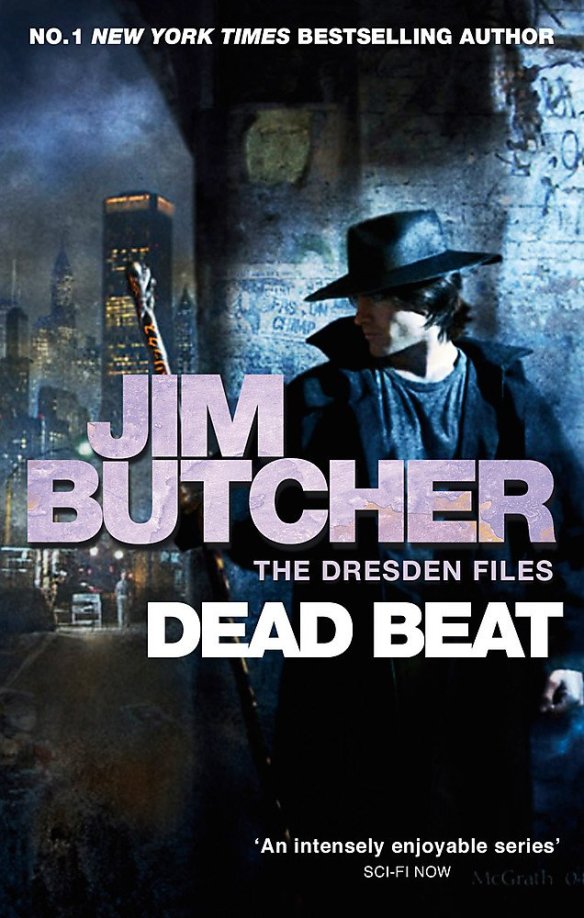
Throwback Thursday – Dead Beat by Jim Butcher

Dead Beat Cover

Publisher: Penguin Audio (Audiobook – 3 May 2005)

Series: Dresden Files – Book Seven

Length: 15 hours and 7 minutes

My Rating: 5 out of 5 stars

Amazon

Welcome back to my Throwback Thursday series, where I republish old reviews, review books I have read before or review older books I have only just had a chance to read.  For this latest review I dive back into the epic Dresden Files series by Jim Butcher with the seventh entry, Dead Beat.

Over the last couple of years, I’ve had a ton of fun finally getting into the iconic Dresden Files books by legendary author Jim Butcher.  Generally considered one of the very best urban fantasy series, the Dresden Files are a deeply captivating series that follows Chicago’s resident wizard, Harry Dresden, as he investigates a series of mystical cases throughout the city, often resulting in epic moments loaded with magic.  I started this series with the latest book, Battle Ground (one of my favourite books and audiobooks of 2020), and then went back to the start to experience the series from the beginning.  So far, I have managed to read Storm Front, Fool Moon, Grave Peril, Summer Knight, Death Masks and Blood Rites, as well as last year’s novella, The Law.  All these books have been extremely good in their own way, and I have loved the elaborate stories each of them contained.  As such, when I was in the mood for something I was guaranteed to love this week, listening to the next Dresden Files book on my to-read list was an easy choice for me, with the seventh book, Dead Beat.

Harry Dresden, private wizard detective and magical protector of Chicago is always willing to help a person in need no matter the cost.  But even he is unprepared for how far he’ll have to go when an old and merciless enemy imperils one of the people closest to him.  The ancient vampire Mavra has evidence that could destroy his best friend, Karrin Murphy, and threatens to unleash it unless Dresden recovers a powerful book of magic written by the legendary, long-dead necromancer Kemmler.

With no choice but to find the book, Dresden begins his search around Chicago, attempting to discover any trace of its location.  However, his search soon leads him into conflict with a new dark power arriving in the city.  Three of Kemmler’s students have their eyes on the book and the rituals it contains, and they are willing to destroy everyone and anyone to get it, including each other, especially when the prize at stake is godhood.

Caught between the three warring necromancers and their minions, Dresden needs to find the book first to stop their dark ultimate ritual before it can decimate Chicago.  However, each of Kemmler’s students far outclasses him in terms of magical ability and ruthlessness, and with only limited allies to call upon, it looks like even Dresden will have trouble saving the day again.  To survive, he might have to a make a dark deal with an even more malevolent evil, one that that has the potential to damn him forever.

I don’t know how he does it, but every single one of Jim Butcher’s novels that I read is so damn addictive and epic that I always struggle to put it down.  Dead Beat was another outstanding entry in the Dresden Files series, and honestly it might be one of the best I have read so far.  I absolutely powered through its clever and elaborate story as I tried to get to the end, and everything about it was highly enjoyable and fun.  Dead Beat gets another easy five-star rating and I have so much love for how amazing this seventh entry in the series turned out.

Dead Beat has an amazing story to it that effortlessly drew me in with the cool combination of magic, character moments and investigative angles.  Starting off quickly with Dresden drafted into the search for a powerful magic book, the protagonist begins his new investigation, only to discover the dangerous necromancers waiting for them.  Dresden soon has deadly encounters with all three necromancers in Chicago searching for the book, as well as their various minions and associates, which results in some brilliant scenes.  Dead Beat continues by setting Dresden and his allies on a dark course as they simultaneously attempt to find the book and the full extent of the warring necromancer’s plans, while also fending off their attacks.  Dresden keeps getting confronted again and again by his foes, barely escaping each time while also learning more about what is to come.  At the same time, he is forced to deal with certain personal issues, including trauma, complicated relationships, and a literal demon in his head, tempting him with power and knowledge.  There are some great twists, dark moments and emotionally powerful scenes set up around the middle of the novel, and I loved how well Butcher laid out the storylines and hinted at some big moments to come. Everything leads up to an epic concluding final third of the book as Dresden makes some hard decisions and compromises to save the day.  The final confrontation with the bad guys is pretty damn awesome, especially as the protagonist, utilising his usual restraint and good judgment, unleashes a very monstrous response to the antagonist’s minions.  This entire narrative was enthralling from start to finish, and I cannot emphasise just how addictive and entertaining the entire story was.

Dead Beat featured Butcher’s usual excellent writing style which once again lent itself extremely well to the elaborate narrative he came up with.  The pacing of this book was constantly fast and exciting, which guarantees that the reader is always paying attention, especially as every page has either action, some intriguing bit of lore or history, or some intense and compelling character development.  Butcher also ensures that this latest novel has the right blend of great story elements to it, and I deeply enjoyed how the fantasy and mystery elements are well featured as the protagonist is forced to do detective work to get the answers.  All this is overlayed by a great smattering of humour, mostly from the funny protagonist, who approaches the dark events and villains with his usual cockiness and disrespect.  The use of a first-person perspective from Dresden is also quite effective, and I loved seeing events through his eyes, as it allows readers to fully grasp the mystery, while also showcasing the great character developments.  While Dead Beat can be read as a standalone read, especially as Butcher is good at quickly recapping events, at this point in the series readers will benefit from going back and reading the earlier Dresden Files books first.  Dead Beat proves to be a key entry in the larger series, with multiple major events occurring here, and there are a ton of references to the preceding books, including the return of several fantastic characters.  I really got a lot more out of Dead Beat’s story for having read the previous novels, especially as you get to see how much Dresden has been through in the lead up to this book.  Overall, this was a very well-written and impressive novel, and Butcher really ensured that his cool story came through perfectly.

As with the rest of the Dresden Files books, I was really impressed with the blend of fantasy and urban fiction elements in Dead Beat, especially as Butcher has come up with such an elaborate world to set his stories in.  The author adds some cool new elements into his complex world throughout Dead Beat, as Dresden is forced to deal with a whole new branch of dark magic, necromancy.  Necromancy, or the control over the dead, is always a great villainous power in fantasy fiction, and Butcher makes excellent use of it in this book, with three rival necromancers vying for power.  Each uses a different form of necromantic magic in battle, and this results in some outstanding scenes where Dresden is forced to confront them.  The resulting magical mayhem is pretty epic, and Butcher’s unique depiction of zombies was both fun and a little scary.  This intriguing new form of magic ensured that Dead Beat really stood out, and I appreciated how Butcher turned it on its head towards the end when Dresden gets creative.  These excellent portrayals of magic fit within the fantastic setting of modern-day Chicago and it is always fun to see the elaborate balance of magical and mundane features that Butcher has set up within the city.  These great fantasy inclusions blend well with the character work and mystery elements of Dead Beat, and I look forward to seeing how Butcher further expands it in future books.

One thing that I felt Butcher did particularly well in Dead Beat was how he portrayed his brilliant cast of characters.  The Dresden Files always contain great protagonists and villains, but this novel had some of the best portrayals of them to date.  This is especially true for series protagonist and point-of-view character Harry Dresden, who had a great outing here.  Dresden has always been a damaged and conflicted figure in the series, but recent traumas are really weighing him down in Dead Beat as he struggles with a terrible hand injury, as well as the malign influence of the fallen angel bound to him, Lasciel.  The protagonist spends most of the book trying to deal with the influence of Lasciel who subtly manipulates him in many ways, tempting him with power or a solution to his many problems.  Each damaging and desperate encounter that Dresden survives in Dead Beat forces him to reconsider the wisdom of refusing her help, and the subsequent internal battles produce some of the most intense and compelling scenes in the novel.  This continued temptation and manipulation alters Dresden’s personality at times, and it was interesting to see how his allies and friends treat him, especially as Dresden begins to understand the different ways that members of the magical community view him.  Of course, Dresden hides most of his internal pain with his usual hilarious wit and humour, and his irreverent opinions, funny observations, and sheer ability to annoy anyone he encounters, results in most of the book’s humour and over-the-top moments.  Throw in other concerns, including complex relationships, unrequited love, and the character’s desire to prove himself and do the right thing, and this was some of the best character work that Butcher has ever done around his main protagonist.

On top of Dresden, Butcher also features a brilliant cast of support characters and villains that really help to enliven the book.  Dead Beat features a mixture of established supporting characters, as well as several great new ones, each of whom get some excellent moments to show off throughout the book.  I particularly enjoyed how well Butcher utilised the character of Waldo Butters in Dead Beat.  Butters, a kooky and big-hearted mortal medical examiner who had minor roles in a previous novel, is thrust into the limelight during this book, becoming a major ally to Dresden.  Butcher weaves some great storylines around him as he simultaneously finds his courage and begins to understand the magical world that keeps trying to kill him.  Butters proves to be a great supporting figure to Dresden in this book, and I loved their amusing team-up and developing friendship.  There is also a couple of great hints at some of the future storylines involving Butters, and I look forward to seeing more of him.

Aside from Butters, I also enjoyed the appearance of Dresden’s half-brother, the vampire Thomas Raith, who has been crashing at Dresden’s place.  Butcher paints a fun brotherly relationship between the two in this novel, which was quite entertaining at times.  However, the more humorous elements of their relationship are often overshadowed by the deep pain within Raith as he tries to overcome the emotional damage done to him in the previous novel.  I also loved learning more about Dresden’s skull spirit companion, Bob, in Dead Beat, and his dark history proves to be quite fascinating, especially as his former nature contrasts substantially with his usually entertaining persona.  The three necromantic villains, Grevane, the Corpsetaker and Cowl, each bring a certain level of sinisterness to the table, and they prove to be exceptional antagonists in their own way.  Finally, I must highlight the inclusion of Dresden’s new dog, Mouse, who has an awesome outing in Dead Beat.  A young and growing gentle giant, Mouse is a fun animal companion to Dresden and his allies, and I look forward to seeing more of his hijinks in the future.  Honestly, the entire cast of Dead Beat was pretty damn exceptional, and their powerful interactions and internal issues, added so much to the impact and power of this awesome novel.

As with all the Dresden Files novels, I chose to listen to Dead Beat on audiobook, which was an exceptional experience as the audio format helps to enhance the great characters and magical action.  Coming in at just over 15 hours, this is a substantial audiobook, however, I manage to knock it out in a few days, especially once I got caught up in fantastic story.  Naturally, the best thing about the Dead Beat audiobook is the return of actor James Marsters as the narrator.  Marsters, who is one of my favourite audiobook narrators thanks to his work on this series, did another brilliant job in Dead Beat and I have so much love for his outstanding performance.  After lending his voice to all the previous Dresden Files novels, Marsters has all the characters down, and each figure is given a fitting and powerful voice that carries through from book to book.  I particularly appreciated his portrayal of main character Harry Dresden, and Marsters perfectly captures the protagonist’s deep emotions and cocky demeaner, ensuring that you are both drawn to his pain and entertained by his antics.  In addition to the excellent voices, Marsters also has some noticeable and contagious enthusiasm in his narration, especially when it comes to the magical battles, and you can really feel his passion and excitement in parts of the story, especially when he loudly shouts out Dresden’s magical spells.  This narration from Marsters is so damn good, and it ensures that I had an exceptional time with Dead Beat’s audiobook, while is the absolute best way to enjoy a Dresden File novel.

In the seventh entry in his iconic Dresden Files series, Dead Beat, Jim Butcher has produced another exceptional read and one that I cannot recommended enough.  Featuring a particularly impressive and captivating narration, cool magical inclusions, and some of the best character work Butcher has ever done, Dead Beat is one the best Dresden Files novels I have read so far, and I loved everything about it.  This was such an amazing book, and I am very much intending to read several more entries in this outstanding series later this year.

Amazon

Harrow the Ninth by Tamsyn Muir

Publisher: Recorded Books (Audiobook – 4 August 2020)

Series: The Locked Tomb – Book Two

Length: 19 hours and 51 minutes

My Rating: 5 out of 5 stars

Amazon     Book Depository

Sensational author Tamsyn Muir follows up her incredible 2019 debut with another epic, complex and infinitely entertaining hybrid novel, Harrow the Ninth.

Tamsyn Muir burst onto the writing scene with a real vengeance last year with her debut novel, Gideon the Ninth, the first book in The Locked Tomb series.  Gideon the Ninth was an extremely clever and compelling novel that followed a group of spacefaring necromancers who were summoned to the house of their Emperor and god, and given an opportunity to learn from him and become Lyctors, immortal beings with immense necromantic power who are considered to be living saints.  What they instead found was a haunted manor filled with secrets, weird experiments and mysterious hints at the past.  The protagonist of this first novel was the titular Gideon, a smart assed, foul mouthed lesbian swordswoman who was reluctantly serving the necromantic lady of the Ninth House, Harrowhark Nonagesimus.  I absolutely loved Gideon the Ninth and it was easily one of my favourite debuts of 2019.  As a result, I was rather intrigued when I heard about its sequel, Harrow the Ninth (which, as you can see above, featured another intense and beautiful cover by the talented Tommy Arnold) and I eagerly grabbed an audiobook copy of it when it came out.  I have to say that I am extremely glad that I decided to do so as Harrow the Ninth turned out to be a truly outstanding book and I had an incredible time reading it.

Harrow the Ninth is set shortly after the dramatic conclusion to Gideon the Ninth and switches the focus of the novel over to Harrowhark, who has succeeded in becoming a Lyctor at great personal cost.  Now alone, mentally scarred and more powerful than ever, Harrow finds herself in the personal care of the Emperor of the Nine Houses, who is determined to use his new Lyctor in a deadly war against an ancient and powerful terror, a Resurrection Beast, the insane and vengeful ghost of a murdered planet.

Travelling to the Mithraeum, the Emperor’s isolated sanctum, Harrow finds herself trapped aboard a desolate space station with her god and her fellow Lyctors.  Each of her companions on the station has their own agenda and motive for being there, and all of them are seeking to use Harrow for their own ends.  Worse, as Harrow attempts to learn the full extent of her new powers and abilities, it becomes apparent that something has gone wrong with her transition to Lyctorhood.  Her body keeps failing her, her swordcraft is shoddy, her blade makes her nauseous and her mind keeps presenting her with impossible scenarios.

As the Resurrection Beast comes ever closer to the Mithraeum, Harrow desperately attempts to understand everything that is happening to her and learn how to survive the oncoming attack.  However, she finds herself distracted with the machinations and plots of her untrustworthy rival and the attitudes of her three ancient tutors, especially as at least one of them is trying to kill her.  Can Harrow unwrap all of the dark secrets that lie hidden on the Mithraeum before it is too late, or will the entire Empire fall into ruin before them?

Well damn, now that was a truly enjoyable and incredible read.  Harrow the Ninth is a complex, clever, entertaining and exceptionally well written novel that does an awesome job following on from Muir’s impressive first novel.  I had an absolutely amazing time reading this fantastic book, which I think in many ways is somewhat stronger than Gideon the Ninth.  Not only does Harrow the Ninth have a deeply captivating story that successfully utilises elements from a range of different genres, but it also features some memorable and compelling characters, excellent universe building and a magical system that really stands out thanks to its descriptive necromantic powers.  Harrow the Ninth also serves as a marvellous follow-up to Gideon the Ninth, continuing the clever story from the first book with the same distinctive tone and writing style, while also featuring an intriguing reimagining of prior events.  All of these makes for an epic read which gets a full five-star rating from me.

At the heart of this amazing novel is an intense and multilayered narrative that presents a compelling tale of love, tragedy, treachery and self-discovery.  The story is actually split into several distinct sections, with the main storyline focusing on Harrow after her transformation to Lyctorhood as she spends time in the Mithraeum with the Emperor and the other Lyctors.  This part of the book expertly jumps back and forth through time and is an extremely entertaining part of the book, detailing Harrow’s education under the Emperor and the other Lyctors and her attempts to survive the various internal politics, plots and personal chaos.  The other major part of the story shows a curious alternate version of the events of Gideon the Ninth, shown from Harrow’s point of view, made distinctive due to the complete lack of Gideon, who appears to be erased out of existence.  This alternate version of the prior book is a really intriguing part of Harrow the Ninth’s story, and while I was initially a little confused about why it was included and where Gideon had disappeared to, it proved to be an extremely clever and compelling part of the book, especially when everything becomes fully revealed.  Due to this reimagining of already existing narrative, as well as the continued references to the events of the first book, readers interested in checking out Harrow the Ninth really do need to have read Gideon the Ninth first, as the story gets a little confusing and significantly less impactful without this established knowledge.

These separate storylines complement each other is exceedingly cleverly.  This novel does start off a tad slow, but this is mainly because Muir is re-establishing the narrative from the previous book and loading up the front end of the story with hints and foreshadowing about the multitude or revelations that come throughout the course of the plot.  A lot of big events and reveals occur towards the end of Harrow the Ninth, including a few reveals that were hinted at in the previous novel, and I felt that the author set all of these up perfectly.  This results in an extremely epic conclusion to the novel and I was really impressed by how it all turned out.  This novel contains a unique blend of genres, as Harrow the Ninth features elements from the fantasy, science fiction, psychological thriller and murder mystery genres.  All of these disparate features work together extremely well in the story and it helps to produce a distinctive and entertaining narrative, especially as Muir adds on a rather good comedic edge.  The end result is a fascinating and exceedingly captivating overarching narrative, and I had an outstanding time getting pleasantly blindsided by the inventive twists and turns.

This excellent and unique story is expertly supported by a distinctive writing style that I felt did an amazing job enhancing the narrative.  Perhaps one of the most noticeable elements is the clever narration that accompanies the story.  While Harrow is the point of view character for most of the novel, she is not actually the one narrating the story.  Instead Harrow’s actions, emotions and thoughts are identified, summarised, and relayed back to Harrow by an unidentified second person narrator.  Naturally, this proved to be an interesting and unusual way to tell this story, although it works well in the context of the overall narrative, even if it takes a little to get used to.  This narrative format plays into certain character reveals and plot points of the novel and it makes a lot of sense once you get further into the book, with the style itself actually being a hint about what is happening with Harrow.  This narration style changes at a certain point towards the end of the book in accordance with certain plot developments and the subsequent deviation is clever and reminiscent of past events.  I also really must highlight the author’s extremely descriptive form of story writing, as every event, person or location is described in overly vivid detail.  Not only did this ensure that the reader got the full breadth of certain magical action and developments but it also helped to enhance the overall gothic feel of the book and ensure that reader was able to easily imagine the various locations the protagonist found themself in.  This really helped the story to shine and I have a lot of love for how Muir was able to work story elements into this style.

In addition to the great story that Muir has come up with for this book, Harrow the Ninth also boasts an impressive array of amazing characters.  The central protagonist is the titular Harrow, who takes over from Gideon as the main character after the first book.  Harrow is a vastly different character to Gideon as she has a much more subdued personality, less self-esteem, and a more restrained, subtler sense of humour.  Due to Gideon’s somewhat biased narration in the first novel Harrow was mostly viewed as an extremely arrogant, confident, and brilliant person, and this is how Harrow attempts to act throughout most of the novel.  However, certain vulnerabilities in Harrow’s character that were previously explored in Gideon the Ninth once again come to the fore in this second novel.  Harrow was already an extremely complex individual, having been birthed by dark magic, ended up being responsible for the death of her own parents and having an interesting love interest.  However, following her alteration into Lyctorhood, Harrow is a much more damaged person due to the absorption of her cavalier.  Harrow’s already fractured psyche is made even worse throughout the course of the book, as she sees all manner of things that are not there and has some very different ideas of the past or how she perceives the world.  In addition, Harrow bears an immense amount of guilt on her shoulders as a result of various events in her past and the many deaths on her conscience.  Harrow needs to work through all these issues throughout the course of the story if she has a chance to survive, and this becomes a major and dramatic part of the story that was really intriguing to explore.  I had an amazing time seeing the story primarily through Harrow’s eyes and it was a refreshing and compelling change of pace from the first book.

Harrow the Ninth also focuses on a great collection of supporting characters who add some intrigue and drama to the story.  Perhaps the most distinctive side characters in this novel are the five beings that Harrow finds herself trapped with aboard the Mithraeum, the Emperor of the Nine Houses and his four other Lyctors.  This is an extremely fascinating collection of people and much of the story revolves around Harrow’s unique interactions with them as each of them attempts to teach her, manipulate her or kill her at various points within the book.  These characters are really entertaining and distinctive, from the seemingly kind, patient, and infinitely calm Emperor, to the three ancient Lyctors, the cool and confident Augustine, the exceedingly self-involved Mercymorn and the ultra-focused and lethal Ortus.  In addition, we see the return of the manipulative Ianthe, who became a Lyctor at the same time as Harrow and who forms a very distinctive relationship with her throughout the course of the book.  I really enjoyed the complex interactions and relationships that forms between all of these characters (including some wild relationships between various participants), with the Emperor acting as the father figure, the three existing Lyctors portrayed as older siblings who have a complicated power dynamic with each other, while Ianthe and Harrow are the younger sisters learning the ropes from the others.

I also have to highlight the inclusion of several other characters who previously appeared in Gideon the Ninth.  It was rather intriguing to see many of these characters return, especially as most of them died or appeared to die in the prior novel.  Muir does a fantastic job working them into the fabric of this novel, such as by featuring some of them in the alternate version of the events of the first book, changing their roles and impacts on the story as a result.  I particularly enjoyed the extended role of Ortus, cavalier of the Ninth House.  Ortus, not to be confused with the Lyctor mentioned above (although the names are actually a clever clue to a big reveal), died early on in the events of Gideon the Ninth.  But in this book the dour Ortus serves as a fantastic yet reluctant companion to Harrow, with surprising hidden depths and an entertaining obsession with gloomy epic poems and verse.  He is also essentially the complete opposite to Gideon, resulting in a very different dynamic between necromancer and cavalier then we saw in the prior book.  Overall, I have to say that I was exceedingly impressed with the characters featured within this amazing novel.  Each of these complex and memorable characters added a heck of a lot to the story and it was deeply fascinating to see each of their storylines unravel and come to their compelling conclusions.

One of the major elements of this series that I love so much is the weird and wonderful necromantic magical system complements the science fiction of the book.  Pretty much all of the main characters in this book are powerful necromancers, specialising in a different form or style of necromantic magic.  All of this magic is extremely cool, and it was really awesome seeing it utilised in fight sequences and other scenes throughout the book.  Most of the magical elements revolve around Harrow’s bone magic, as she creates skeleton and bone constructs, manipulates her own bones to either enhance herself or detach them to make weapons or other creations, as well as elements of biological alteration.  Muir does an outstanding job explaining the full range of different powers that Harrow has, and there are some amazing scenes where the young necromancer does some really inventive and clever things with her bones.  There is one sequence in particular that sticks in the mind, and I’ll certainly remember it when eating soup in the future. 

In addition to Harrow’s abilities, Muir also showcases the creative and impactful abilities and magical powers that some of the other characters have.  These various abilities are all biological or spiritual in nature, and it was quite fun to see what the different necromancers can do, especially when they go up against Harrow’s bone magic.  All these magic scenes feature some rather vivid imagery and descriptions from Muir as she tries to show the full biological manipulations that are occurring, which really help to make these scenes pop.  The author also does a truly fascinating deep dive into the origins and mechanics of her unique magical system.  A lot of these new magical elements are explained to protagonist in some detail from one of her teachers, so the reader is able to understand these elements really well, and a lot of the lessons and explanations of magic have major impacts on the story down the line.  This proved to be an extremely interesting and enjoyable part of the book and I have a lot of love for Muir’s creativity when it comes to her version of necromantic magic.

I also have a lot of love for the distinctive gothic settings that Muir has imagined up for this series.  Each of the central story locations are filled up with all manner of dark and macabre trappings and features, which the author does a fantastic job bringing to life with her descriptive writing.  This includes the dreary and dark Mithraeum, a vast and mostly abandoned space station where most of the story takes place, as well as an alternate version of the First House that appeared in Gideon the Ninth.  All of these locations are described in great detail and each of these fun and distinctive settings helps to present a darker vibe to story and helps makes this series more unique and memorable as a result.  Harrow the Ninth also contains some rather captivating and inventive universe building expansions as the author attempts to introduce new things into her universe.  All of these extensions to this universe are really clever, playing into the story really well and I loved learning more about this fun fictional setting which does so much to enhance the story. 

I found that the audiobook format of Harrow the Ninth proved to be an excellent way to enjoy this amazing novel.  With a run length of just under 20 hours the Harrow the Ninth audiobook does require a bit of a commitment to get through it, although I felt that it was really worth the time investment.  I do have to admit that it took me a little while to finish this audiobook, especially at the start.  However, I absolutely flew through the second half of the novel once I became extremely invested in the story, and I managed to knock out the final six hours in rather short succession.  I have to highlight the fantastic narrator for this audiobook, Moria Quirk, who does an outstanding job telling the story and bringing the various characters to life.  I felt that Quirk utilised perfect voices for each of the main characters and you get a real sense of each character’s personalities and emotions from this vocal work, from the calm, composed tones of the Emperor to the exceedingly petulant voice of the Lyctor Mercymorn.  This excellent voice work really added a lot to this audiobook. I really think that Harrow the Ninth translates well into the audiobook format, and listening to it really added to my enjoyment of this second novel, especially as I absorbed a lot more of the detail and gothic atmosphere through the narration.

Harrow the Ninth by Tamsyn Muir was an epic and exceptional piece of fiction that I deeply enjoyed, and which comes highly recommended.  Not only did Muir present an impressive follow-up to her amazing debut novel, Gideon the Ninth, but she was able to turn out a complex and beautifully written sequel that proved extremely hard to stop listening to.  Powerful, cleverly written and just generally outrageous, Harrow the Ninth is an outstanding read and you have no discovered Tamysn Muir and her fantastic pieces of literature, you are really missing out. 

Amazon     Book Depository

Gideon the Ninth by Tamsyn Muir

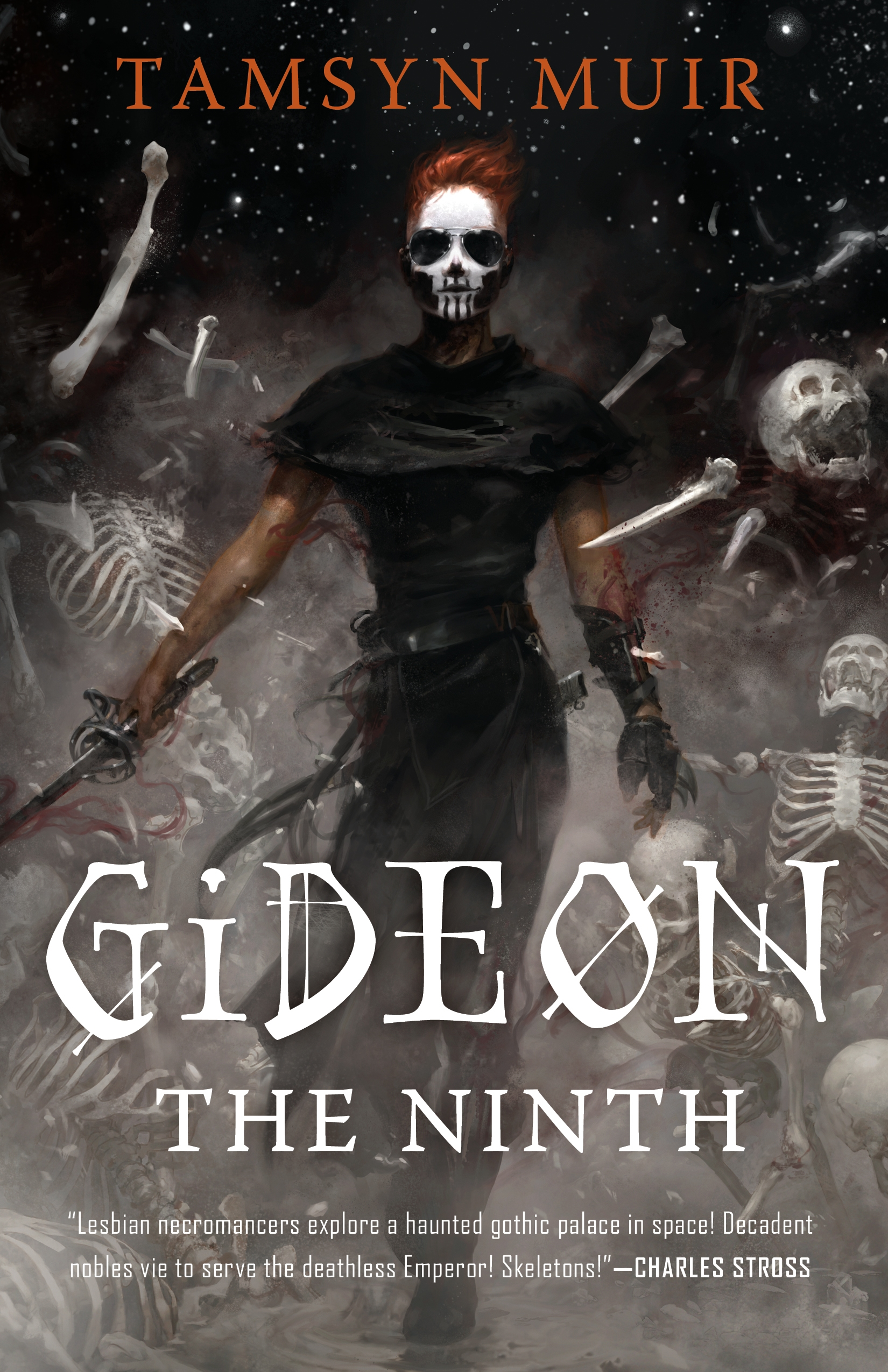
Gideon the Ninth Cover

Publisher: Tor (Hardcover – 10 September 2019)

Series: The Ninth House – Book One

Length: 448 pages

My Rating: 4.5 out of 5 stars

Amazon     Book Depository

From debuting author Tamsyn Muir comes a very unique and compelling science fiction novel filled with death, comedy and necromancers in space, Gideon the Ninth.

Before I begin reviewing Gideon the Ninth, I have to point out how impressive the design of the hardcover copy I received was. When I previously featured this book in one of my Waiting on Wednesday articles, I mentioned how much I loved the cover art. Indeed, the drawing of the book’s titular redheaded character with her face painted liked a skull surrounded by exploding skeletons is pretty damn cool. The hardcover copy also has some excellent visuals, as the outer rim of all the pages is coloured black, which definitely gives prospective readers a noticeable visual hook, especially when combined with the all-black binding underneath the jacket, emblazoned with gold writing on the spine and a single golden skull on the front. I really liked this fantastic presentation style, and it definitely left an impression on me as I started to read the book.

In the far future, a vast interstellar empire is ruled by necromancers whose control over the various magical disciplines of death make them a powerful force. Eight noble houses serve under the First House of the Emperor, and each of them has just received a message from their ruler. The heirs to each of these houses and their cavaliers, loyal sword-wielding protectors and companions, must attend the Emperor’s planet in order to compete to become the next generation of Lyctor, immortal beings of vast power.

Gideon Nav is an indentured servant to the Ninth House of the Empire, a small and impoverished house that carries a dark reputation. A skilled swordswoman, Gideon wants nothing more than to enlist in the imperial army to leave the dark crypts, the strict occult nuns and the multitude of skeletons that make up the Ninth Planet far behind. However, when her latest escape attempt fails, she finds herself offered an irresistible bargain: act as the Ninth House’s cavalier for the period of the trials and be granted her freedom. There is just one minor problem: Gideon and the heir to the Ninth House, Harrowhark Nonagesimus, an extremely powerful bone witch, absolutely hate each other.

Forced to temporarily put their differences aside, Gideon and Harrow travel to First House, only to discover it is a near ruin, looked after by a few old and mostly unhelpful servants. They soon learn that the secrets to becoming a Lyctor lie hidden within the walls around them, and the representatives of various houses can do whatever they wish to learn them. Trapped on the planet, Gideon and Harrow begin to explore the First House and encounter the heirs and cavaliers of the other houses. As the mismatched pair from the Ninth House start to unravel the various mysteries and challenges before them, a gruesome murder occurs. Something powerful is lurking within the First House, and it has the heirs in its sight. Can Gideon and Harrow work together, or will their own turbulent past and the secrets of their house tear them apart?

Gideon the Ninth is a chaotically clever and massively entertaining first novel from Tamsyn Muir, who has done an excellent job introducing readers to her intriguing new world. Gideon the Ninth is the first book in her The Ninth House series, which already has two planned sequels in the works, with the first of these currently set for release next year. After hearing the awesome plot synopsis for this book earlier in the year, I had picked this as potentially being on the best books for the latter half of 2019. I am glad to see that my instincts were once again correct, as this was an awesome read that gets four and a half stars from me.

Muir has produced an outstanding story for her first novel, as the plot for Gideon the Ninth is an amazing combination of humour, universe building, emotional character moments and a captivating set of mysteries as the protagonists attempt to uncover not only the vast secrets of the First House but the identity of the person or being that is killing them off one by one. The author has stacked this book with all manner of fantastic twists, and there are a number of major and game changing developments that are well paced out amongst the story. There is never a dull spot within the book, as even parts where no substantial plot developments are occurring are filled with excellent humour from the sarcastic narrator with a huge vocabulary of various swear words. There is also a substantial amount of action throughout the course of the book. The various fight scenes blister and explode off the page, especially thanks to the unique magical system that Muir has populated this world with. All of this results in an addictive and electrifying overall story with a very memorable ending.

The real heart of Gideon the Ninth lies in its incredible main characters, Gideon Nav and Harrowhark Nonagesimus, and the complex relationship the two of them have. Gideon is the badass, rebellious, coarse, girl-loving mistress of the blade, who serves as the book’s narrator and only point-of-view character. Gideon is an absolute blast as a main character, as she deals with every situation she comes across with an abundance of disrespect, anger and exaggerated responses, resulting in much of the book’s humour. Harrow, on the other hand, is the dark noble necromancer heir to the Ninth House, whose reserved persona, obsession with necromantic research and abilities, and vindictive nature work to make her initially appear as a polar opposite to Gideon. The relationship between these two main characters is initially extremely adversarial, as both characters declare their absolute hatred for each other, and Harrow seems determined to make Gideon’s life a living hell. As the book progresses, however, Muir really dives into the heart of the relationship between the two characters, revealing a complex history and a twin tale of woe and dark secrets that has defined them for their entire lives. The combined character arc of these two main characters was done extremely well. While you knew from the very start of the book that the two characters would eventually work together, the exact reason why this occurred was handled perfectly, and the final form of this cooperation helps create an epic and tragic conclusion to the entire book. While their relationship is not explicitly romantic (Harrow’s sexuality really is not explored in this book), they do become quite close by the end of the novel, and both characters are written exceedingly well.

In addition to Gideon and Harrow, Muir has also included a range of different characters, representing the heirs and cavaliers of the other major houses in the Empire. This results in an intriguing assortment of side characters who add a lot to the overall story. The author has made sure to invest in substantial backstories for all these additional characters, and this has a number of significant benefits for the story. Not only are the readers now blessed with an abundance of viable and duplicitous suspects for the story’s murder mystery, but each of the various representatives of the houses have their own individual secrets and motives for being at the First House. Learning more about each of these characters is quite fascinating, and a number of them have some pretty amazing character arcs. I particularly enjoyed the storyline of Palamedes Sextus of the Sixth House, who treats his necromancy more as a science than a form of magic. Sextus is the most logical character out of all the people in the book, and he serves as a major driving force of the investigation into the murders. His connection to some of the other characters in the book is a major part of the book, and the ultimate conclusion of his story arc is really cool. Muir has done an incredible job coming up with the book’s various characters, and it is a major part of why this book is so awesome.

It is quite clear that Muir has an amazing imagination, as she has produced a grim and compelling new universe to set this book in. Necromancy and a futuristic science fiction setting make for a fascinating combination, and I really loved her examination of an empire built on worshipping an immortal, necromantic Emperor and the various secrets that come with it. The sheer range of different necromantic magic featured within this book is pretty impressive, especially as each of the Imperial Houses has their own specific form of necromancy, all of which are examined throughout the book. Not only are all these different types of magic really fascinating to examine but it also results in some diverse pieces of magical action, as many of the necromancers unleash their various forms of magic throughout the book, resulting in some fantastic sequences. I do think that the author could have done a slightly better job of explaining some of the unique elements of her universe at the start of the book, as I got a little confused at some points towards the beginning; however, this was quickly chased away by deeper dives into the universe’s lore later in the book. Muir has left open a number of questions and plot directions to explore in future books in the series, and I am really curious to see what happens next.

Gideon the Ninth is a wild and exciting novel that makes use of an intriguing concept, some compelling characters and an excellent story to create an exceedingly entertaining book that was a heck of a lot of fun to read. Featuring laugh-out-loud humour, intense action and major emotional moments, this is an incredible read that is really worth checking out. Muir has hit it out of the park with her debut novel, and I cannot wait for the next book in the series.

Amazon     Book Depository