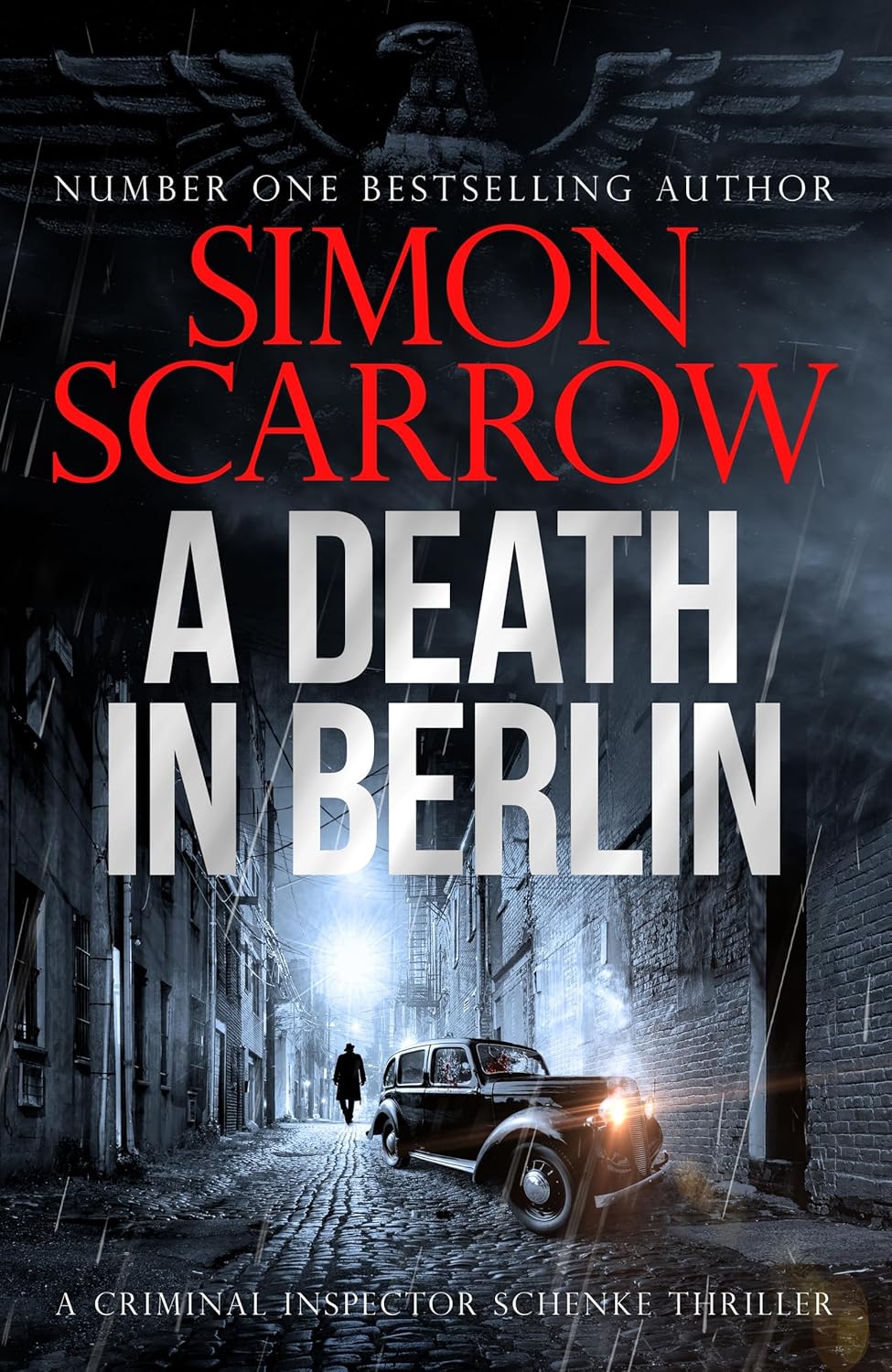
A Death in Berlin by Simon Scarrow

Publisher: Headline (Trade Paperback – 11 March 2025)

Series: Berlin Wartime/Criminal Inspector Schenke Thriller – Book Three

Length: 385 pages

My Rating: 4.5 out of 5 stars

Amazon

One of the world’s leading historical fiction authors returns with another intriguing and captivating historical murder mystery with the outstanding read, A Death in Berlin.

I have made no bones about the fact that I am a major fan of historical fiction author Simon Scarrow, who has been diving into awesome scenarios from history for over 20 years.  While I probably know him best from his outstanding Eagles of the Empire Roman historical fiction series (see my review for the latest entry, Revenge of Rome), Scarrow has also written some other amazing series, including his current ongoing Berlin Wartime Thriller novels.  Set in Berlin towards the start of World War II, the series follows a studious and troubled police detective as he attempts to uphold justice in a city overrun with murderous Nazis.  The first two books in this series, Blackout and Dead of Night, were both very impressive, and I have been eagerly awaiting this third novel in the series, A Death in Berlin, for some time.

Berlin, May 1940.  As the German army prepares for its invasion of France and Western Europe, crime still roams the street of Berlin, and it falls to CI Horst Schenke and his investigative Kripo to keep order and maintain justice, a job made markedly harder by the dark policies of their Nazi overloads.  Despite his own dislike of the Nazi regime, which grows increasingly suspicious of him, Schenke is determined to do his job, especially when it comes to the criminals controlling the streets.

Assigned to find the source of forged ration coupons that are disrupting the war effort, Schenke and his team find themselves investigating a growing gang war when a prominent black-market operator is gunned down in the dead of night.  Convinced that the gangster’s murder is related to the forged coupons, Schenke leads the Kripo into investigating the criminal underworld that lies beneath Berlin.

However, this is no ordinary gang crime.  A dark series of events have led to the death of their victim, and the Kripo investigators soon uncover a dangerous conspiracy to profit from the war.  Worse, the gangster they are chasing are protected by powerful Nazi leaders, and Schenke must continue to walk a fine line in avoiding their attention.  But when his enemies uncover his deepest secret, can Schenke survive with his honour intact, or will he need to make a dark deal to get what he wants?

A Death in Berlin was another excellent novel from Scarrow, who cleverly combines exciting crime fiction elements with a compelling historical setting.  Clever, action-packed, and constantly moving, A Death in Berlin was an outstanding read, and I think this might be his best Berlin Wartime Thriller novel yet.

I really liked the cool story that Scarrow came up with for A Death in Berlin, especially as this latest novel features a complex narrative revolving around Berlin gangsters and crime wars.  Starting off fast and getting into the heart of the case, readers soon become invested in finding out who was behind the killing of the gang leader and what impact it is having on the larger criminal underworld of Berlin in the leadup to the invasion of France.  Thanks to an excellent early shootout, the stakes of the book become even higher, as the protagonist finds himself in the middle of a gang war, which he is forced to navigate to solve the main mystery of the book.  Scarrow also continues to focus on the complex life of protagonist CI Horst Schenke, who constantly finds himself coming to the attention of his Nazi superiors, despite his dislike of the party and his secret romance with Ruth, a Jewish woman hiding out in Berlin.

Following this great initial setup, Scarrow takes the plot of A Death in Berlin in some outstanding directions, especially as there is quite a compelling mystery here, with multiple potential suspects and motivations for the murder, many of which lead to other alternate crimes investing the Nazi controlled city.  Scarrow cleverly reveals the involved parties at key parts of the book, and while there aren’t too many surprises, it was very interesting to see how everything tied together.  The final third of the book is probably the best, as the protagonist finds himself trapped by his own secrets and is forced to make compromises to keep those important to him safe.  This leads to a massive and intense final confrontation, as the protagonist risks everything with some unlikely allies in a brilliant, action-packed set piece.  The final revelations revealed during this climax brought the entire story together nicely, and I really appreciated how the tight and complex mystery was resolved.  This was an overall fun and exciting narrative, and one that is quite easy to power through quickly, especially once you get caught up in the mystery.

Scarrow did an outstanding job pulling together A Death in Berlin, as the novel was a compelling and exciting read with a lot of awesome elements behind it.  The author successfully blends an excellent murder mystery storyline around the intriguing historical elements of his series, showcasing the potential hurdles a police detective needed to face during the Nazi regime.  At the same time, there is a fantastic emotional heart to A Death of Berlin, as the protagonist continues his ill-advised romance with Ruth, while also being forced to once again confront the dark side of the government he is wilfully working for.  I felt that Scarrow perfectly balanced these elements throughout A Death in Berlin, and there is a little something for everyone here, including a ton of amazing action and firefights, as the protagonist attempts to bring down a dangerous collection of emboldened criminal gangs.  As such, this is a very easy book to get into and follow, and while there are some references to the previous Berlin Wartime Thriller novels, for the most part A Death in Berlin acts as an accessible standalone novel, which allows for a wider audience.

For me, one of the more intriguing elements of A Death in Berlin was the author’s excellent examination of life in Berlin during the early days of World War II.  Scarrow has always done an amazing job showcasing the uncertainty, fear and underlying issues of Berlin in the early days of the war in this series, and I enjoyed how he further outlined the tension involved with the pre-invasion of France.  The overarching fear that certain members of the public have with the Nazi regime is still a key part of the plot, and while the protagonist isn’t as directly targeted by the Nazis as he was in previous books, he still has to play by their twisted rules, especially when invited to a party of the Nazi elite, where he meets some very high-level members.  However, it was the focus on the criminal element infesting Berlin during these years that I found to be particularly fascinating, as Scarrow explores the potential scams, nightspots and other enterprises that would have been run in early wartime.  While coupon forgeries have been mentioned in previous novels, it was fascinating to see the entire novel focussed on the control of this valuable wartime currency, and it resulted in some truly compelling scenes.  Despite this being a more crime-fiction novel than a book examining hidden Nazi plots or killers, the influence of the Nazi government still plays a big role in the murder investigation elements of the book, especially as the protagonist and his colleagues must worry about high-level party members protecting the criminals.  These elements proved to be an outstanding part of the book, and I really appreciated how well Scarrow worked it into the main plot of the book.

As with the rest of the series, Scarrow does some excellent character work in A Death in Berlin, bringing together a complex cast of characters to work the case, each of whom are dealing with their own issues associated with Nazi-controlled Germany.  The most prominent of these is the protagonist and main point-of-view character, CI Horst Schenke, a former race car driver turned police investigator.  While generally shown to be a studious and steadfast lawman, Schenke’s life has become even more complicated due to his growing dislike of the Nazis and his refusal to join the party, much to the displeasure of his superiors.  It is fascinating to see the seemingly strait-laced Schenke walking the line between doing the right thing and surviving the Nazis, especially as he has fallen in love with the fiery Ruth, a Jewish woman who has managed to stay hidden in Berlin after the first purges.  Many of Schenke’s more radical actions in this book are driven by his complicated relationship with Ruth, and you really grow attached to both characters, especially when their secret relationship causes great risk for them. 

Other great characters A Death in Berlin include Schenke’s main police backup, Sergeant Hauser and former Gestapo agent Liebwitz.  These two prove to be an excellent double act behind Schenke, as not only do the three form an effective crime fighting force, but they also showcase alternate viewpoints of Germany during this period.  Hauser is a former World War I soldier and family man, who is the classic everyman figure who supports the Nazi regime.  Despite this, he merely wants to support his country and has some doubts about the more extreme actions of Hitler.  Liebwitz is a more unusual figure, who honestly steals the show in some ways.  An exceedingly logical figure who has gravitated away from the Gestapo to be a police investigator, Liebwitz finds his life still bound by his Nazi training, despite the many flaws he sees in it, and he is well used as a compelling alternative point-of-view character.  However, as with the previous book, the influence of Schenke and the investigation of crimes that show the true evils of the Nazis are slowly changing Liebwitz’s way of thinking, and it will be fascinating to see where Scarrow takes his character arc in the future.  Throw in a series of entertaining and over-the-top Berlin criminals and the cast of A Death in Berlin is quite entertaining, and I really enjoyed how their complicated arcs impacted the overall narrative.

Simon Scarrow continues his outstanding Berlin Wartime Thriller series in a massive way with the captivating and impressive novel, A Death in Berlin.  Combining a great crime fiction narrative with a clever historical background setting, A Death of Berlin proved quite addictive, and I had an incredible time getting through it.
Amazon

Hill 112 by Adrian Goldsworthy

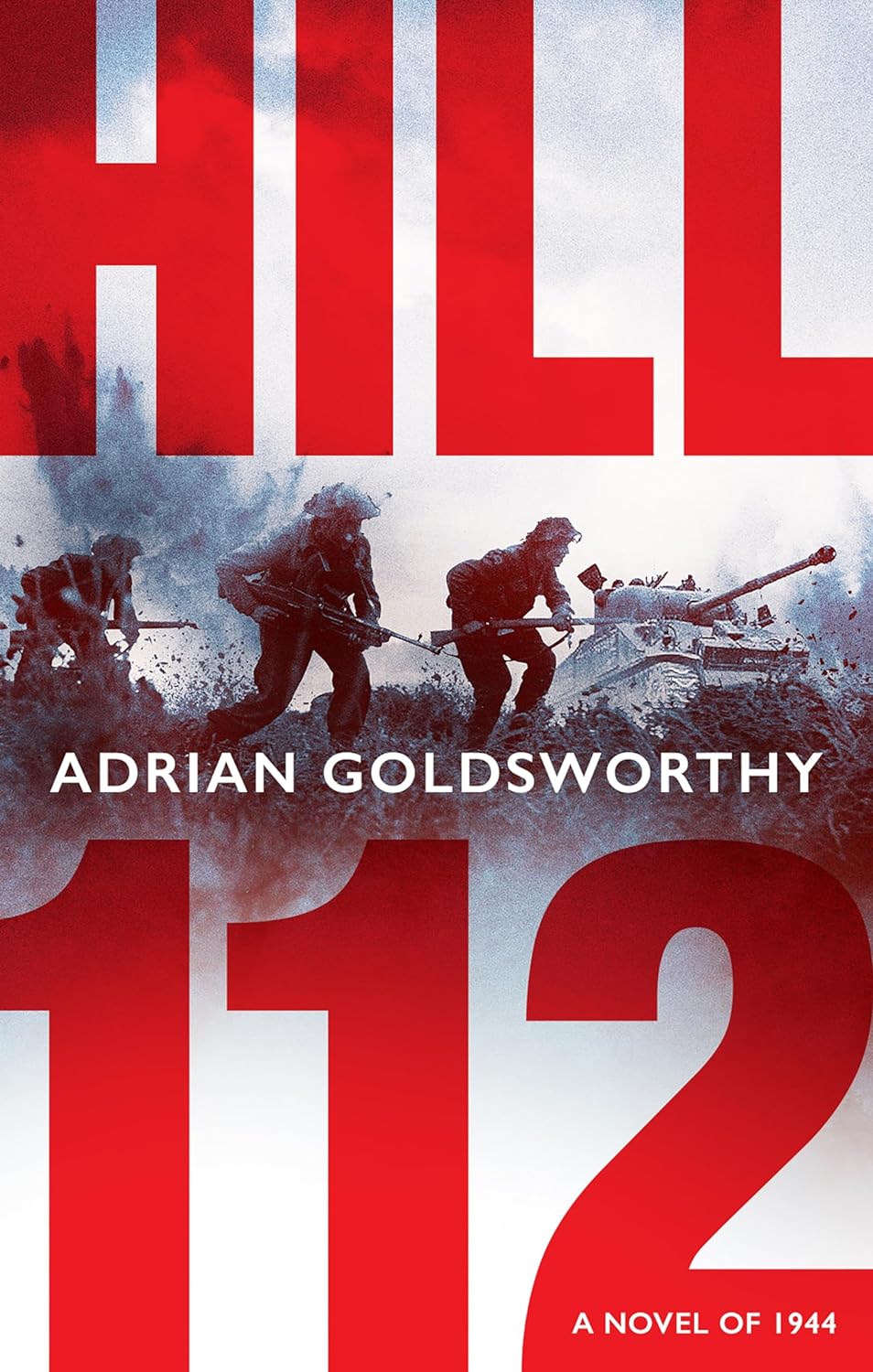
Hill 112 Cover

Publisher: Head of Zeus (ebook – 23 May 2024)

Series: Standalone/Book One

Length: 495 pages

My Rating: 4.75 out of 5 stars

Amazon

Prepare to dive headfirst into the deadliest of struggles as acclaimed historical fiction author Adrian Goldsworthy provides a captivating look at the Normandy invasions with his epic novel, Hill 112.

Adrian Goldsworthy is an impressive historical fiction author who has been producing some great novels as of late.  A respected historian, Goldsworthy made the jump back to fiction in 2011 when he started his Napoleonic Wars series.  I had the great pleasure of reading the first few books in the series, including True Solider Gentlemen and Beat the Drums Slowly, and Goldsworthy prove to be an outstanding author who would focus his stories on intriguing historical elements.  His Napoleonic Wars series ended up featuring six novels before he dove into Roman historical fiction in 2017 with his Roman Britain series.  Starting with Vindolanda and also featuring six novels, the Roman Britain series sounds very awesome, and it is one I need to check out in the future.  Due to how much I enjoyed some of Goldsworthy’s previous books, I made sure to grab a copy of his latest release, Hill 112, which provides a compelling examination of the bloody invasion of Normandy during World War II.

June 6th, 1944.  After years of enduring the Nazi onslaught, the Allies are finally ready to begin their campaign to invade occupied France.  But to liberate France and free all of Europe, the Allies first must make a perilous landing and brave the full force of the German army waiting for them.  The destination for their fateful landing: Normandy!

As the Allies begin their invasion, three young soldiers, former classmates from south Wales, are amongst the troops landing in Normandy.  The charismatic James must put his previous experience as cricket captain into practice by leading a troop of Sherman tanks into fray.  The athletic Mark is forced to prove himself as the young officer in charge of a platoon of infantrymen, while Bill, the group’s resident firebrand, finds himself in the middle of the fighting as he serves as a private soldier.  However, none of these young men are truly prepared for the carnage to come.

The battle-hardened German army is determined to push the Allies back into the sea, and soon both sides find themselves caught up in a brutal battle for survival.  Into the middle of this, James, Mark and Bill find their courage and luck tested like never before as they finally experience the horrors of war and the seemingly unbeatable Germans.  Their fates, and that of the entire Allied war effort, will be decided in one of the most brutal fights of the Normandy campaign, the battle for Hill 112.

Goldsworthy brings together one of his heaviest and moving novels yet with the incredible Hill 112.  A gritty and realistic war story that seeks to capture the experiences of young soldiers during Normandy, Hill 112 was a fantastic and moving novel that drags readers right into the heart of the fighting.

Hill 112 has a great story to it that, while simple in concept, hits the reader hard and provides a powerful look into the realities of war.  Told from the perspective of three young soldiers as they experience their first taste of combat, Hill 112 is a very moving war novel that is hard to look away from at times.  Starting with the first day of the Normandy landings, you initially follow James, who leads the charge with his tank unit, while Mark and Bill wait back in England for their deployment to the front.  While this did make James’s chapters a lot more interesting and exciting than the others’ at the start of the book, I liked how Goldsworthy chose to start the remaining two characters off back in England.  Not only was historically realistic, but it allowed you to get to know these two protagonists and other supporting characters before the fighting, while also building up the tension, especially when you compared their experiences with what James was going through on the front.

It doesn’t take long for Mark and Bill to make it over to Normandy, and from there the reader becomes enmeshed in seeing all three protagonists facing the tough campaign in Europe.  There is a lot of action and a ton of tragedy in this part of the book, and it was fascinating to see them slowly adjust to the new normal of battle, as they experience the true horrors of war.  Goldsworthy continued to keep the three protagonists separated for most of the story, which allows each of them to grow, while also showcasing several different fronts at the same time.  Their storylines start to converge as the book continues, especially when they find themselves at the foot of the tactically significant Hill 112.  The last third of the book is essentially all out fighting as the three protagonists attempt to survive the desperate battle for the hill.  The carnage flies thick and fast in this part of the book, and you are constantly on edge as the three characters fight on, while also trying to understand the necessity and impacts of war.  I was deeply captivated for this entire part of Hill 112, and I couldn’t stop reading as I waited to see the fates of all three characters.  Goldsworthy did not disappoint, as the ending to this book was extremely shocking and powerful, and you come away wondering about the sacrifices, experiences and emotions of those involved in the fighting.  This was a such a great character-driven war story, and I came away very impressed with how it all unfolded.

I deeply enjoyed the compelling and powerful story that Goldsworthy created for Hill 112 that hits all the right notes for the reader.  Goldsworthy made the clever choice to provide the reader with a more insular look at the invasion, as the viewpoint is limited to the lower-ranked protagonists, more concerned with their own battles, rather than a look at the large war going on around them.  This proved to be an excellent choice of focus, and I deeply appreciated the way in which Goldsworthy was able to get into the mindset of the young soldiers fighting this war.  The constant switching between the three main protagonists allowed for a complex and intriguing story, as they experienced different battles while coming to terms with the fighting in their own ways.  Goldsworthy has a real talent for showing the chaos of war, and you are thrown into innumerable skirmishes, firefights and large-scale battles, all of which is captured in its full destructive glory.  You can honestly feel the bullets flying and the shells landing as you pour through Hill 112, and the constant conflict, danger and excellent portrayal of the fighting ensures that readers have a very hard time pulling their attention away from this amazing book.

Goldsworthy clearly did an exceptional amount of research for Hill 112 as this book is loaded with historical detail as the author meticulously covers key events of this initial invasion.  While the main regiments featured in Hill 112 are fictitious, Goldsworthy bases them on actual participants of the fighting, and you get incredibly detailed depictions of the early days of the Normandy campaign for the English and Canadian forces.  This includes events that followed from the initial landings on Normandy all the way to the conclusion of the fighting around the titular Hill 112, a key historical battle.  Readers get a very compelling and intensive look at how the campaign unfolded, and it was interesting to see how hotly contested this initial fighting in France was, especially as most modern war movies/television series usually show swift victory the moment the allies are off the beaches.  The battle of Hill 112 was naturally a compelling part of the book which the author covers in heavy detail, noting the movement of all the relevant units and the various attacks.  I got so engrossed in Goldsworthy’s recounting of this battle, and readers are left haunted and amazed that so much death occurred for a simple hill in the countryside.

The author really did not spare any detail when it comes to the fighting, and you get a comprehensive vision of the potential experiences of the participants in these battles.  Goldsworthy really dives into every single aspect of the solider experience, and you come away with insights into the conditions, equipment, training and attitudes of the troops, all of which greatly adds to the gritty realism of the story.  This is particularly true in the battle scenes, and it was very compelling to see how the soldiers would have fought, as well as other factors that came into play, such as the Allies’ overwhelming artillery.  I especially enjoyed the many scenes that focused on vehicular combat as one of the protagonists spends most of the book inside a Sherman tank, fighting against German armoured units.  The sequences in the tank are always a high-strung affair, and Goldsworthy expertly captures the cramped conditions, fast-paced fighting, and constant peril that the British crews experienced.  The author further increases the authenticity of the book by having his protagonists experience various incidents that were recorded to have happened during these invasions.  The author cleverly retells these events to feature his characters, and the various experiences, some of which are quite hellish, add a lot of intensity to the book.  Goldsworthy really pulls no punches when it comes to showcasing the experiences of Allied soldiers in Hill 112, and it proves hard not to deeply appreciate his ability to utilise a massive amount of historical detail to tell a good story.

I must also highlight the intriguing characters featured within Hill 112 who added a lot to the impact of the book.  The three main characters, James, Mark and Bill, are all quite intriguing in their own way, and I appreciated how they ran the gambit of young people who would have joined the war effort after leaving school.  Goldsworthy ensures that each of these main characters have a compelling backstory which contrasts in a moving way to their current experiences, and it was moving to see them grow up throughout the course of the horrendous ordeals they find themselves in.  These three main characters are also accompanied by a huge supporting cast of fellow soldiers, officers, tank crews and other figures, each of whom travel with the protagonists to engage in the fighting.  Many of these supporting characters are exclusive to the chapters told from the perspective of a particular protagonist, allowing for unique interactions, and Goldsworthy often provides relevant backstories for these supporting characters as well.  This cast of additional characters gets quite extensive as the book continues, which can make remembering everyone a little hard at times.  However, that proves to be a short-term problem at best, as the supporting players usually doesn’t last too long in the fighting.  This proved to be an excellent and intense character-driven novel, and I really appreciated how well Goldsworthy captured the experiences of these young soldiers in war.

Adrian Goldsworthy once again brings the past back to haunt his readers in the outstanding and moving novel, Hill 112.  A highly detailed and impressive war novel, Hill 112 does an incredible job capturing the experiences of young soldiers in the Normandy campaign and you will quickly become absorbed in the resulting story.  Highly recommended, especially for those fans of military history, Hill 112 was such an amazing read.

Amazon

Quick Review – The Winter Palace by Paul Morgan

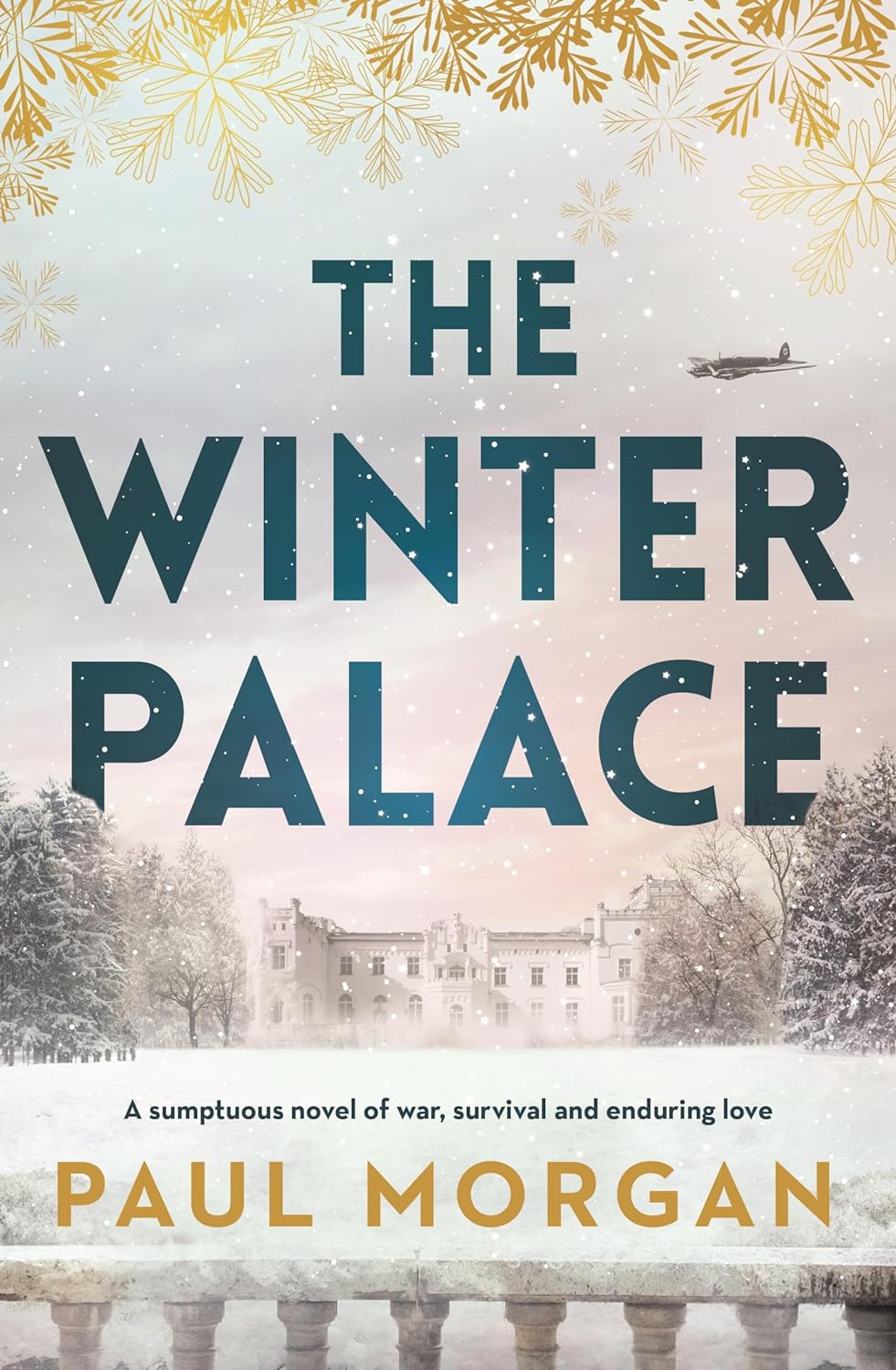
The Winter Palace Cover

Publisher: Penguin Books (Trade Paperback – 26 March 2024)

Series: Standalone

Length: 329 pages

My page: 4.25 out of 5 stars

Amazon

Compelling Australian author Paul Morgan presents an intense and intriguing historical drama that examines the tragic lives of a Polish husband and wife who find themselves torn apart by war and circumstance in The Winter Palace.

Plot Synopsis:

If he had died, I would know it in my heart.

In 1939, Anton, a captain in the Polish army, says goodbye to his wife, Elisabeth. He is leaving to defend their homeland against the invasion by Nazi Germany and Russia. They make a vow that – whatever happens, however much time passes – they’ll meet again at the Winter Palace, their stately home in the Polish countryside.

The winds of war draw them far apart. Anton is captured and sent to Siberia as a POW. He eventually joins a lost army that battles through snowstorms and scorching deserts in Central Asia to find freedom. Anton survives, driven by his determination to join Elisabeth again. She, meanwhile, is forced to be the ‘mistress’ of a Nazi officer before escaping to join the Polish resistance.

As the war ends, Anton and Elisabeth are at the opposite ends of the world. Anton is in Australia. Elisabeth is in Poland, awaiting his return for months and then years. Will they ever meet again at the Winter Palace?

From 1930s Europe to present-day Australia, this is a sweeping story of love that cannot be broken by time, distance, war or even death.

Morgan came up with a powerful and captivating tale in The Winter Palace which really hits hard.  Following Anton, a Polish military captain, and his wife Elisabeth, The Winter Palace features a well-planned-out split protagonist storyline that shows their respective dark journeys during the destructive chaos of World War II.

Both character-focused storylines are interesting and dark in their own ways, especially as the two protagonists go through hell and back as part of their respective war stories.  Anton’s plot follows the fate of the Polish soldiers who were captured during the joint Nazi and Soviet Invasion.  In Anton’s case, he experiences being a Soviet POW, a reluctant Soviet soldier fighting the Nazis, and then a member of the Allies when the Soviets send their freed Polish soldiers to Palestine.  Elisabeth’s story is more Poland focused, as she is forced to become a Nazi ‘mistress’ before escaping and finding purpose, first as a nurse, and then as a member of the Polish resistance.  Both storylines go in some very compelling directions, as the protagonists experience major traumas, tragedies and struggles, all while the two characters are convinced that they will never see their spouse again.

I honestly have a hard time saying which of these two storylines was my favourite, as both hit you in different ways.  Anton’s was possibly the more interesting to me as a fan of military history, and I found his constant struggle to survive the direct imprisonments he experienced to be both moving and intense.  There are some very direct tragedies in Anton’s experiences, including a particularly dark moment in the first half of the book, and I really found the story of the captured Polish soldiers to be extremely fascinating.  However, the other half the book that focuses on Elisabeth is just as dark, if not even more traumatic, especially as the protagonist experiences evil she can’t fight back against, at least not at first.  Watching her overcome her constant oppression and pull together a satisfying life that allows her to help people on many fronts was particularly inspiring, and I really enjoyed how her arc came together.

While these storylines are separate for the entirety of the plot, I felt that Morgan did a good job playing them off each other. The corresponding tragedies, the near misses in finding out each other’s fates, and the decisions they make as a result are all moving and captivating, and you are constantly enthralled to see if or how they will get back together.  I think that the ending Morgan left the book on was particularly moving, and it fit the overarching themes of the tragedy of war and not knowing about those left behind.  I also appreciated how Morgan didn’t overuse the trope of Australian descendants finding out the wartime secrets of their parents or grandparents.  Instead, readers were given a simple but highly effective connection to the present that ended the story on a thoughtful and peaceful note that was a great conclusion to such an intense story.

I really must emphasise how impressed and intrigued I was by some of the historical elements captured in The Winter Palace.  Morgan does an amazing job of showcasing various alterative experiences suffered by the Polish, from the initial invasion all the way up to the end of the war.  This includes a great rundown of how many citizens, especially women, were abused in Poland as the troops rolled in, which ensured a dark aura around the potential homecoming many characters were hoping for.  However, I found the historical details of the Polish soldiers and civilians captured in the opening days of the invasion to be the most interesting.  Watching the various hardships and journeys that these individuals had to go through during the war, including being POWs, having to fight alongside their former captors against the Nazis when they found themselves on the same side as the Soviets, and the transfer of their army to the Middle East to serve with the Allies on the Western front was extremely fascinating and it was an part of history you don’t see often in fiction.  These historical details from Morgan where some of my favourite parts of the book, and I deeply appreciated the compelling story he told around them.

Overall, The Winter Palace by Paul Morgan was an outstanding and compelling historical drama that really grabbed my attention.  Powerful, unflinching and focusing on a complex and dark period of our history, this was an emotionally charged and excellent read that is really worth checking out.

Amazon

Quick Review – The Hidden Book by Kirsty Manning

The Hidden Book Cover

Publisher: Allen & Unwin (Trade Paperback – 29 August 2023)

Series: Standalone

Length: 312 pages

My Rating: 3.75 out of 5

Amazon

Australian author Kirsty Manning presents an emotionally charged and compelling historical drama that follows a beleaguered group of protagonists during and after the horrors of World War II with The Hidden Book.

Plot Synopsis:

Europe, 1940

 Imprisoned in the Mauthausen concentration camp in Austria, Spanish fighter and photographer Mateo Baca is ordered to process images of the camp and inmates for a handful of photo books being made for presentation to top Nazi figures. Just five books in total, or so the officials think …

Mateo manages to make a secret sixth book and, with the help of a local woman, Lena Lang, it remains hidden until the end of the war.

Australia, present

 When thirteen-year-old Hannah Campbell’s Yugoslavian grandfather, Nico Antonov, arrives in Australia to visit his family, one of the gifts he brings with him is an intriguing-looking parcel wrapped in calico cloth which Roza, Hannah’s mother, quickly hides.

Later, Hannah sneaks off in search for the mysterious package. She is horrified to find in it a photo book full of ghastly historical photographs of a terrible place full of people suffering.

At first Hannah has little context for what she sees, but over the years as she experiences love, grief and trauma, she understands what these photos came to mean, for herself, her freedom and for those who risked their lives to ‘bear witness’ to history.

A startling story of clandestine courage and treachery in World War Two, and how we must meet and overcome our pasts to move into our futures.

This was a great piece of historical fiction from Manning, who has written several other intriguing novels in this genre over the years.  The plot of The Hidden Book is interesting as it combines a harrowing story of people caught up in the Holocaust with a complex narrative of a young person trying to understand the horrors they came from.  Half the novel follows several characters either imprisoned at the Mauthausen concentration camp, or living in the surrounding area, as they work together to record and smuggle out pictures of the atrocities being perpetrated against them.  The second storyline follows Hannah, the grandchild of one of the characters from the first storyline, who grows up in Australia, constantly wondering about the secrets of her grandfather’s book of pictures, and who finds her life defined by it.

Both of these storylines are interesting in their own way, and I think that Manning did a pretty good job of bringing them together into a fantastic overall story.  The half of the book, set in Mauthausen, is suitably dark and nerve-wracking, as you are constantly bombarded by the fear and determination of the characters imprisoned there in one shape or another.  This part of the book is an interesting retelling of real historical events surrounding Mauthausen, and Manning brings together a great group of characters here, including a sadistic camp commandant and a family of anti-Nazi locals who are afraid the Nazis will find out about their mentally impaired daughter.  This compelling and dark storyline serves as an excellent basis for much of The Hidden Book’s plot, and it leads into the second plot line extremely well.

This secondary plotline involves the character of Hannah Campbell finding her grandfather’s photo album covering the atrocities at Mauthausen and spending the rest of her life trying to make sense of them.  While I am not the biggest fan of historical dramas that rely on descendants finding old material from their ancestors (it is a bit of an overused story device), Manning presented some interesting storylines around it.  In particular, she uses it as a key part of Hannah’s coming-of-age storyline, as she experiences the highs and lows of life from childhood to parenthood.  Manning tells a great story of growing up in Australia, including country living and city life, and while parts of this storyline is are very frustrating, and it serves as an interesting counterbalance to the Holocaust tale while also providing insights into how the younger generations view the Holocaust and how knowing your history and change your present.

I enjoyed how well these two separate and distinctive storylines come together throughout the course of The Hidden Book.  The intensity, conflict and drive for survival in the historical part of the novel is well offset by a different layer of emotion in Hannah’s life story, and I liked the constant looks back to the past.  This proved to be a fast-paced and easy to read novel, and I liked the blend of characters, historical elements and two very different background settings that emerged.  Despite all that, I didn’t get amazingly emotionally invested in the plot, and I think parts of Hannah’s storyline slowed down the pacing at times.  Overall, I thought that The Hidden Book by Kirsty Manning was an intense and compelling read that I had good time with.  An excellent read for fans of historical drama, especially those that combine dark pasts and hopeful futures into powerful character driven narratives.

Amazon

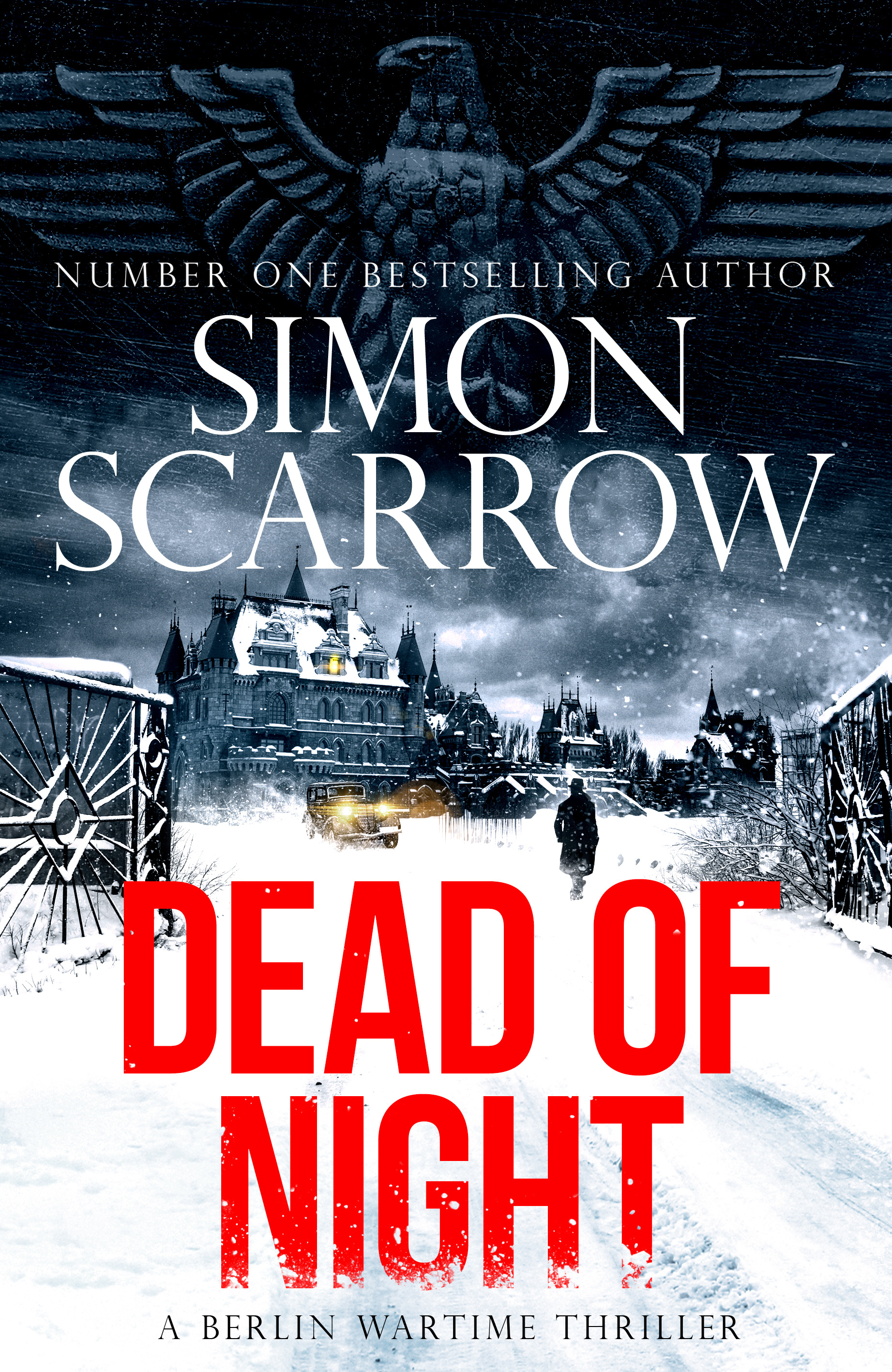
Dead of Night by Simon Scarrow

Dead of Night Cover

Publisher: Headline (Trade Paperback – 14 February 2023)

Series: Berlin Wartime Thriller – Book Two

Length: 422 pages

My Rating: 4.75 out of 5 stars

Amazon

One of my favourite historical fiction authors, the always impressive Simon Scarrow, dives back into turbulent World War II Germany with his latest compelling read, Dead of Night, an excellent and intense historical thriller with a dark twist to it.

Readers of this blog will know that I have long been a fan of Simon Scarrow ever since I read his first exceptional novel many years ago.  I particularly enjoy his long-running Eagles of the Empire series, an outstanding adventure series that follows two Roman officers as they travel throughout the empire.  The Eagles of the Empire books are some of the best historical fiction I have ever read, and I have had the pleasure of reviewing several of them, including The Blood of Rome, Traitors of Rome, The Emperor’s Exile, The Honour of Rome and Death to the Emperor.  Aside from his Roman novels, Scarrow has also written several other series and standalone books set in various periods of history.  This includes his 2021 release, Blackout, a gritty and complex murder mystery set in Nazi-controlled Berlin.  Blackout was an awesome book, and I was very happy to hear that Scarrow was producing a sequel, Dead of Night, which turned out to be another outstanding read.

Berlin, January 1940.  As Germany’s invasion of Poland rolls along, the Nazis continue to take complete control of their own country.  While the people of Berlin wait to see how the Allies will retaliate, a mysterious death is about to occur with massive ramifications.  A prominent SS doctor and his wife return home, having had a seemingly normal night attending a concert with the Nazi elite of the city.  However, by the morning, the doctor will be dead in his study, the result of an apparent suicide.

After his last near-fatal brush with the Nazi state, Criminal Inspector Horst Schenke of the Berlin Kripo is determined to simply do his job and stay off the party’s radar.  However, when Ruth Frankel, the Jewish woman whose life he saved during his previous investigation, reappears, Horst is once again dragged into unwanted trouble.  The dead SS doctor is an old friend of Ruth’s family, and Ruth has promised his widow that she would help find out the truth behind his death, and Horst is her tool to do so.

Reluctantly agreeing to help, Horst looks into the case and quickly realises that the doctor’s death was no suicide.  However, his superiors soon pull him off the investigation and forbid him from digging any further.  But with his curiosity peaked, Horst cannot turn away, especially when he manages to connect the victim to the mysterious deaths of several children throughout Germany.  Determined to find the truth no matter what, Horst soon discovers a terrible secret that places him in the firing line of the entire Nazi party and other volatile factions in the city.  Can Horst survive this new case, or will the regime he despises finally take him off the board?

This was an excellent read from Scarrow, who has been on a real roll lately with his awesome books.  Dead of Night not only served as an incredible sequel to Blackout, but it also features an intense and historically powerful narrative that had me hooked from the very beginning.

Dead of Night follows several of the same characters from the first book, primarily Criminal Inspector Horst Schenke, who serves as the main protagonist and point of view character, in another intriguing and complex case.  Schenke must again work with Ruth Frankel to investigate the apparent suicide of a prominent SS doctor, which produces an intriguing and compelling early investigation storyline that I really enjoyed.  However, Schenke soon runs into political problems, as well as threats of violence, which force him to conduct a subtle investigation.  At the same time, Schenke’s socially crusading love interest, Karin, requests that he look into the mysterious deaths of several children at a remote medical institute.  This second investigation takes up a good chunk of the novel and the protagonists dive into really starts to enhance the intensity of the plot.  This is because Scarrow starts to utilise particularly sinister elements of Nazi history in the plot, which ensures that the novel gets fairly dark in tone and content.  Scarrow is very subtle in how he brings these elements to the character’s attention, and there is a lot of emotion and disgust that emerges in the story as the protagonists realise what is going on.

From there the two divergent investigations start to come together as subtle clues that the author introduced in the first half of the book are brought to light again.  The revelation of how the two cases are connected is pretty captivating, especially as it gives the ‘antagonists’ of the novel a very compelling and relatable motivation.  The protagonist is forced to make some hard decisions as they come to terms with just what is going on and this leads to some great scenes about the differences between duty and what is right.  Everything leads up to an emotionally charged confrontation which cleverly brings the entire story together and wraps up all the remaining mysteries and character arcs.  This final major sequence is pretty damn awesome and it results in some of the most dramatic and powerful moments in the entire novel.  I really liked how the entire novel came together at the end, especially as the protagonist is left in several unenviable positions while he watches his country descend further into darkness.  I felt that the entire novel was very well paced out, and it doesn’t take long for the readers to get hooked on the story, especially with the two quality mysteries that Scarrow came up with.  The blend of mystery, dark historical moments, and intriguing character interactions is pretty perfect, and it works to create a memorable and haunting tale.  Combined with some of the great twists, many of which are based around evil parts of real-life history, and I felt that Dead of Night surpassed is predecessor in some very awesome ways

For me, the best thing about Dead of Night was the fantastic and distinctive wartime setting that surrounded the plot.  Stories set in Nazi controlled Germany are always intense and dark for obvious reasons, but I felt that Scarrow did a particularly outstanding job of capturing it, especially as he pairs the dark mood with a gritty winter backdrop.  Just like with Blackout, there is a focus on the evils of the Nazi regime in Dead of Night, and quite a lot of the plot is devoted to seeing how normal citizens, including non-political police officers, view what their city and country has turned into.  There is a good focus on the fear and control that the Nazis blanket the city with, and the investigation angles of the narrative become even more complex and compelling due to the protagonist being constantly blocked by his Nazi and SS superiors.  However, the best, or worst, historical elements of the book revolve around one of the cases that Inspector Schenke is dragged into, specifically around the death of several children.  This case thrusts the protagonist right into the heart of some of the darkest things the Nazis ever did to their own people, which really gives this entire book a powerfully tragic edge.  Scarrow uses this historical inclusion to his full advantage, as not only does it provide an excellent motivation for some of the crimes being committed, but it also increases the emotional conflict of the protagonist.  Scarrow really does not hold back when it comes to showcasing these historical horrors and the readers get a full idea of what is going on and the sort of people behind it.  This dark historical inclusion really helped to turn Dead of Night’s narrative into something particularly distinctive and captivating, and I felt that Scarrow did a fantastic job of drawing the reader in by giving them knowledge of this terrible moment from history.

I also need to highlight some of the excellent characters featured within Dead of Night, several of whom carry on from the previous novel in the series.  Most of the focus is around Inspector Horst Schenke, one of the few senior police officers left in Berlin without a connection to the Nazi Party.  Dedicated to the law, Schenke, a man already traumatised by his past, keeps finding it harder and harder to do his job in the new regime.  Despite his best efforts, Schenke keeps getting dragged into the middle of the several Nazi plots and hidden schemes, which constantly place him in political danger.  I loved the deep conflict that this builds within him as he is forced to choose between ignoring what he discovers, or trying to get justice and doing something.  Further complicating matters are his relationships with the two women in his life, his girlfriend, Karin, and the Jewish women he previously saved, Ruth Frankel.  Both keep pushing him to do more to oppose the Nazis or get to the truth of crimes they are covering up, and he is forced to balance his desires to help them with his sense of pragmatism while trying to protect them from the Nazis.

Other great characters in this book include Schenke’s police backup, Sergeant Hauser and former Gestapo agent Liebwitz.  These two are great supporting characters and they provide interesting counterviews to German life, with Hauser being a more everyman figure, while Liebwitz is bound up by his Gestapo training.  Despite the apparent differences between Hauser and Liebwitz, the two work together well and serve as good support to Schenke, and I liked the fun odd-couple team that they formed.  They also have some intriguing moments throughout the book, especially when they encounter some of the horrors of the Nazi regime.  While Hauser has some great emotional reactions, especially when it comes to the death of children, Liebwitz has the more intriguing responses, as he balances his loyalty to the state with his own past experiences and conscious.  Watching him come to terms with some of the evils he witnesses makes for some powerful reading and I am glad that Scarrow added in these intriguing alternate characters.  I also really enjoyed the complex main antagonists of the story, as they had quite a powerful motivation for some of the crimes committed in the book.  While they are not as noble as they believe, the antagonist’s goal still serves to trouble the protagonist’s sense of justice, and interesting compromises have to be made as a result.  I deeply appreciated some of the deep characters that Scarrow featured in this novel and I look forward to seeing how they are utilised in any future books in the series.

Simon Scarrow continues to impress me as one of the best historical fiction authors out there with this incredible new read.  Dead of Night has a brilliant and powerful story behind it that takes full advantage of its bleak and historically rich setting.  Featuring an outstanding investigation narrative and some dark insights into the horrors of the Nazi regime, Dead of Night will easily grab your attention and ensure you will not forget it anytime soon.  A highly recommended novel from one of my favourite authors.

Amazon

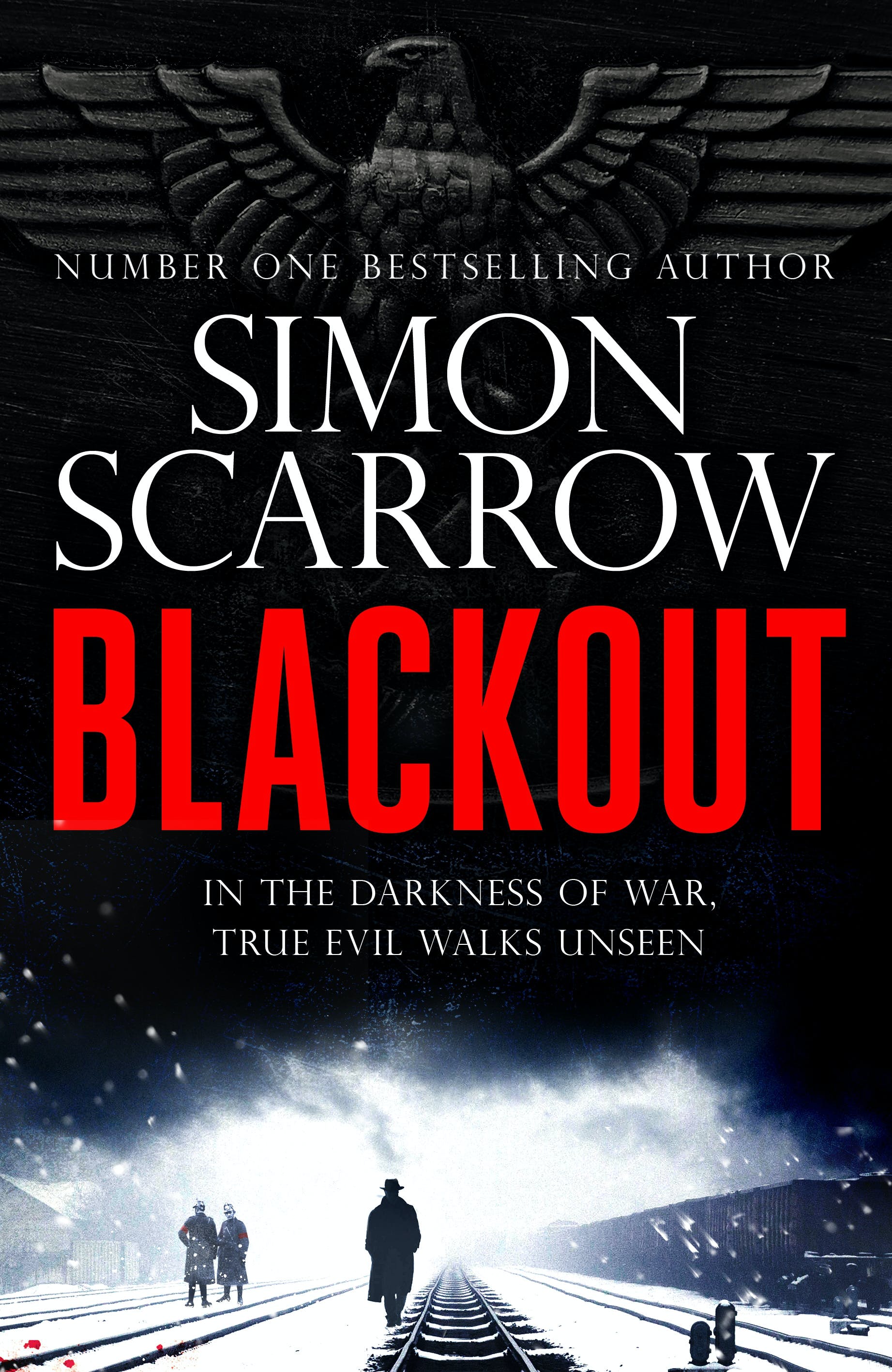
Blackout by Simon Scarrow

Blackout Cover

Publisher: Headline (Trade Paperback – 30 March 2021)

Series: Standalone/Book One

Length: 424 pages

My Rating: 4.5 out of 5 stars

Amazon     Book Depository

One of the leading authors of historical fiction, Simon Scarrow, breaks new ground in a thrilling and captivating historical murder mystery, Blackout.

Berlin, December 1939.  As the citizens of Berlin worry about a potential upcoming conflict with Britain and France, the Nazi party continues to sink their claws into every aspect of German society.  But as a bleak winter sets in and enforced blackouts plunge the city into darkness, a far more sinister threat begins to stalk the streets of Berlin.

A young woman has been found brutally murdered near a busy set of train tracks.  The victim is a former famous actress with a powerful husband.  Due to her marital connections, as well as a scandalous past with various high-ranking Nazi figures, including Goebbels, her case has dangerous political implications.  To that end, her case is assigned to Criminal Inspector Horst Schenke of the Kriminalpolizei, the Kripo, one of the few police officers not to join the party.  Due to his apparent disregard for the party and the importance of the victim, Horst is under intense pressure from the head of the Gestapo to solve this case.  However, what begins as an easy murder case swiftly devolves into something far more dangerous when a second body is found, and Horst is forced to face the reality that he is chasing a serial killer.

As the bodies of more young women are discovered, Horst rushes to find a killer before the government attempts to hush up the fact that a killer is loose within their perfect Nazi society.  But with the Gestapo interfering at every step and key suspects protected by the Abwehr, German Military Intelligence, this case proves difficult to solve.  When a survivor is found, Horst thinks this may be the opportunity to find the killer.  However, when the witness is revealed to be Jewish, Horst is forced to find a way to protect her from both the killer and the Gestapo.  Can Horst find the killer before it is too late, or will he discover that disloyalty to the Nazi government is considered a far worse crime?

This was another amazing novel from one of my absolute favourite authors.  Scarrow is best known as a Roman historical fiction author due to his long-running and impressive The Eagles of the Empire series, which I am a particular fan of (see my reviews for The Blood of Rome, Traitors of Rome, and The Emperor’s Exile).  However, Scarrow has also branched out into other historical periods with his Revolution quartet, the standalone novels The Sword and the Scimitar and Hearts of Stone, and a modern crime novel he wrote with his colleague Lee Francis, Playing with Death (which I really need to check out).  His latest book, Blackout, is an interesting change of pace from some of the previous Scarrow novels I have enjoyed, presenting a compelling murder mystery story with the dark historical setting of Nazi Germany.  Blackout, which was unfortunately delayed from last year, proved to be an excellent read, and I loved the complex and powerful story that Scarrow came up with.

Scarrow’s latest book has an outstanding narrative that starts with a Nazi social party scene quickly leading to the brutal murder.  This shocking opening in the dark of a blacked-out Berlin sets the scene for the rest of Blackout perfectly, and lets the reader know that they are in for an intense and dark tale.  The narrative then advances to the next day, with a great introduction to central protagonist Inspector Horst Schenke, who gets to showcase his deductive ability while also covering his personality and feelings about the Nazi government.  Once the case proper begins, Horst and his team are thrust into a lethal hunt for a serial killer, while also having to contend with the vicious politics and intrigue of the Nazi party.  Horst finds himself caught between the Gestapo, German Military Intelligence, and other influential Nazis, each of whom are attempting to manipulate the situation for their own ends.  This blend of mystery and dangerous political intrigue makes for a fantastic read, and I enjoyed the compelling balance that Scarrow produced.  The mystery itself is well crafted, with the author ensuring there is a complex and tangled web to unravel, with several promising suspects.  There are some very cool twists added into the plot, and I quite enjoyed the exciting conclusion and eventual reveal of the killer.  This is also a very effective standalone mystery, which would serve as a great introductory novel if Scarrow ever wanted to revisit this setting and characters in the future.  A series set around this book could go in some interesting directions, and I for one would be quite keen for that.

Easily the most captivating and fascinating part of this novel is the amazing historical setting that Scarrow used as the backdrop to his amazing mystery.  While several great mystery series have used World War II Germany as a setting before (the Bernie Gunther series by the late, great Philip Kerr comes to mind), I think that Blackout was a particularly good example of how it could be done, with Scarrow making sure that it really enhanced this already incredible story.  Scarrow skilfully works several fantastic and intriguing elements of this iconic setting into his narrative.  This includes the blacked-out winter streets and train lines of 1939 Berlin, which serve to hide the killer’s actions and ensures an easy hunting ground.  I also appreciated the air of worry and uncertainty that inhabited many of the characters as they are constantly left wondering if their country is heading towards a bigger war with Britain and France, not knowing of their government’s master plan.  There is also a certain amount of nationalism, patriotism and casual racism/anti-Semitism on the streets, which is a confronting and concerning aspect that the protagonist has to deal with.  There is also a fascinating focus on the way in which the Nazis infested all aspects of the German government and administration, particularly the police.  Inspector Horst is constantly butting heads with other members of the police force who were only promoted due to their party allegiances, rather than any skill or ability, which impacts the protagonists to successfully investigate his crime.  Add in the compelling depictions of German politics and Nazi interference that I mentioned before, and you have a very impactful and distinctive setting, which really helped to turn this crime novel into something very special.

Scarrow has a knack for creating some interesting and likeable characters, and this is certainly true for Blackout.  Inspector Horst is a fantastic protagonist, a former famous race car driver who experienced a traumatic crash several years ago.  He has since reworked himself as a talented police investigator and a rare man of honour in troubled times.  There is a lot to like about Horst, including his brilliant investigative skills, his courage in the face of danger, and his complete disregard for the Nazi leadership.  As one of the few senior police officers who has not joined the Nazi party, Horst is a bit of a black sheep amongst the ranks of his organisation, especially as he barely contains his disdain for the Nazis and what they are doing to his country.  This invariably leads him into a whole mess of trouble, which sees him in the crosshairs of the Gestapo and other Nazi figures, who seek to use his neutrality and skill for their own advantages.  I had a lot of fun following Horst throughout this novel, and it was great to see how a non-Nazi supporter would survive amongst the authoritarian ranks of German police in this period.  There are several great storylines surrounding this character, including about the trauma he is experiencing from his crash, as well as guilt at his failure to save the people closest to him.  I really enjoyed this character in Blackout, and it seems likely that Scarrow would have some very compelling storylines in place for this character if he ever revisited this series.

Aside from Horst, there are several other compelling side characters in this novel, which include a mixture of fictional characters and real historical figures.  One of the better characters is Ruth, the only apparent survivor of one of the serial killer’s attacks.  Ruth is a feisty and combative character, made so by her position as one of the few Jewish people still remaining in Berlin.  Despite being threatened by the entire German apparatus as well as a serial killer, Ruth remains strong throughout the book and is a very inspirational character to follow.  I also quite enjoyed the character of Liebwitz, a Gestapo agent assigned to Horst’s unit to spy on him and report back to the Gestapo commander.  However, Liebwitz proves to be a rather unusual Gestapo agent, more concerned with facts and analysis, rather than Nazi internal politics, and it was fascinating to see an honest and non-sociopathic member of the Gestapo.  While there is a lot of mistrust for Liebwitz in the beginning, he soon becomes a major part of the investigation, and Scarrow sets up some very interesting storylines for him.  Finally, I also quite enjoyed the killer of the story.  Several sequences in Blackout are shown from his point of view, although his identity is kept hidden towards the end of the book.  Scarrow paints an interesting picture of this killer’s mental state, and it was interesting to see his motivations run parallel to the goals of the Nazi party, which he uses to justify some of his actions, and indeed his actions are something that the Nazi leadership might approve of.  I felt that the author did a good job setting this antagonist up throughout the novel, and I rather liked the twist surrounding their eventual reveal.

Simon Scarrow continues to show why he is one of the leading authors of historical fiction with the outstanding and captivating historical murder mystery, Blackout.  Breaking into a whole new historical period and setting, Scarrow produces a fantastic and powerful murder investigation which makes amazing use of its complex characters and detailed historical setting.  Featuring all manner of twists, political intrigue and devious Nazi characters, Blackout was a compelling and intriguing read that comes highly recommended.  I cannot wait to get my next hit of Scarrow, and luckily I don’t have to be patient for long as the next Eagles of the Empire book, The Honour of Rome, is out in a few months time.

Amazon     Book Depository

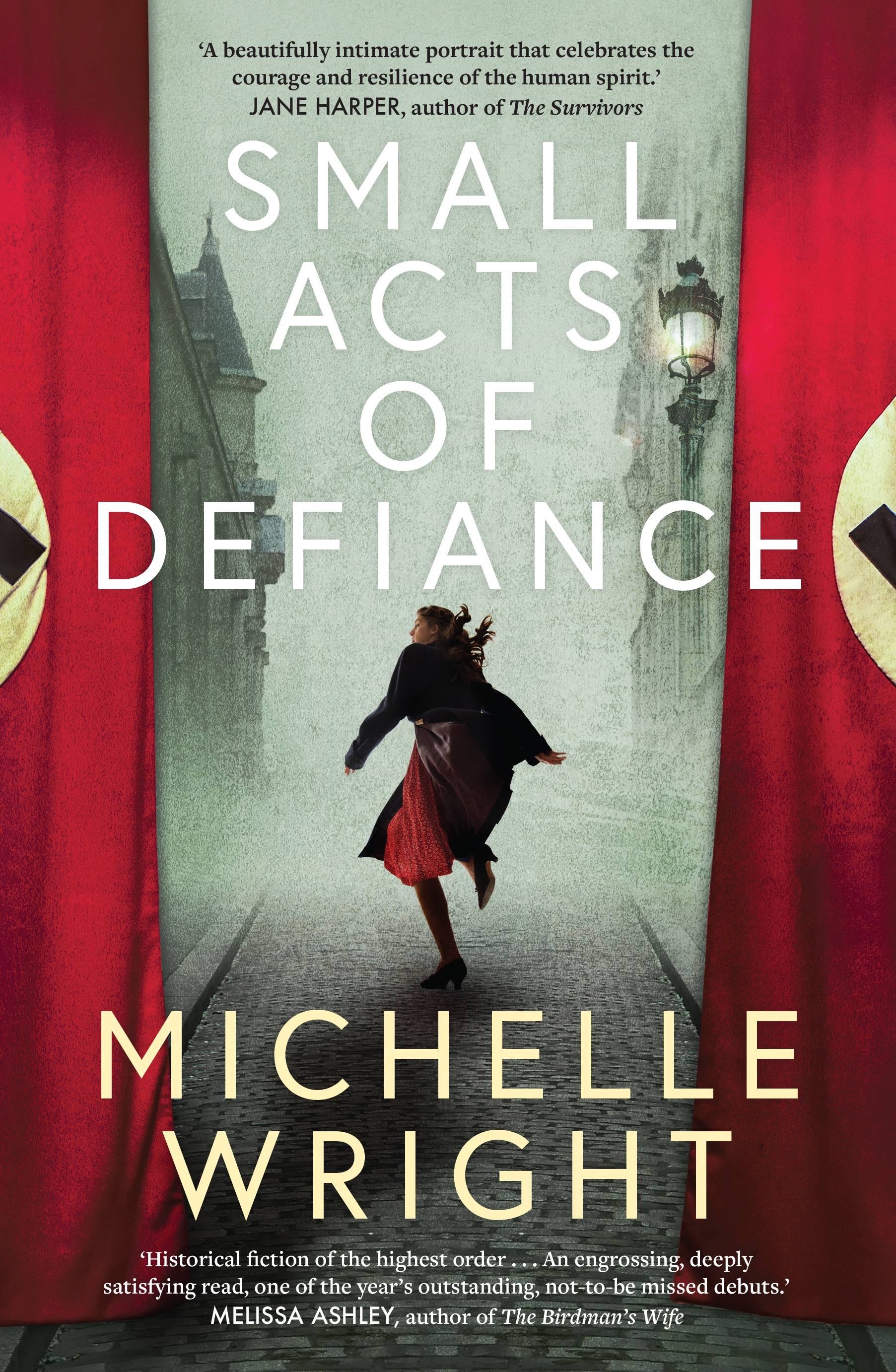
Small Acts of Defiance by Michelle Wright

Small Acts of Defiance Cover

Publisher: Allen & Unwin (Trade Paperback – 1 June 2021)

Series: Standalone

Length: 344 pages

My Rating: 4.5 out of 5 stars

Amazon     Book Depository

Impressive debuting Australian author Michelle Wright transports the reader back to the horrors and struggles of occupied Paris with the moving historical drama, Small Acts of Defiance.

May 1940.  Following the tragic death of her father, Australian teenager Lucie and her French mother Yvonne are left without any means of supporting themselves in Australia.  Reaching out to the only family they have left, Yvonne’s estranged brother Gerard, Lucie and her mother are convinced to journey back to Yvonne’s home city of Paris to live with Gerard in his apartment.

Despite having reservations about leaving for a Europe rocked by the early stages of war, Lucie is quickly enchanted by the beauty and culture of the city.  However, shortly after their arrival, disaster strikes and the French army suffers a catastrophic defeat, allowing the Nazis to invade France and occupy Paris.  Forced to adapt to the new regime, Lucie and her family attempt to survive as well as they can.

While wishing to remain safe and unnoticed by the Nazis, Lucie is drawn into the conflict when she befriends several people around Paris who resent the German occupation.  Encouraged by their strength and determination, Lucie experiments with using her artistic talents to engage in small acts of defiance against the Nazis and the puppet Vichy French government.  However, when she witnesses the Nazis’ increased attacks against Paris’s Jewish population and the attitudes of her authoritarian uncle, Lucie is drawn even deeper into the fight.  How far will Lucie go to save her new home, and what difference can even a few small acts of defiance truly have?

Small Acts of Defiance was a fantastic and moving novel from a promising new author that did an excellent job highlighting the horrors and troubles of occupied France.  Author Michelle Wright, an Australian who has spent considerable time in Paris, has written an outstanding novel with a story that is both beautiful and devastating, as she tells the intriguing and intense tale of Lucie and her experiences during the war.

Wright has produced a fast-paced and deeply moving narrative for Small Acts of Defiance.  The author swiftly sets the scene for the main characters of Lucie and her mother, who move to Paris right before the invasion while still dealing with the traumatic aftermath of Lucie’s father’s death.  It really does not take long for the historical horror to occur, as Paris is swiftly conquered by the Nazis, although Wright ensures that there is just enough time for Lucie, and the reader, to become enchanted with the city before its occupation.  Following the invasion, you are introduced to several great supporting characters who help Lucie to fully see how evil the Nazis and their French collaborators are, especially as some of her new friends are Jewish.  This centre part of the novel is great, and it was fantastic to see Lucie find her feet while also starting her initial acts of defiance.  However, while all appears mostly right, you know that tragedy is on the horizon, especially as the Jewish characters you become close to slowly have more and more restrictions placed upon them, which can only lead to disaster and despair.  Once the inevitable happens, the story really intensifies, as the protagonist witnesses true horrors and atrocities which slowly costs her some people she is really close to.  Readers will not be prepared for how dark and tragic the book becomes, although you cannot help but keep reading, especially as there is a little bit of hope for some characters.  The conclusion of Small Acts of Defiance is pretty intense and satisfying, especially as the protagonist achieves several great things while there is some good news for the other supporting characters.  This entire narrative very well written, and I loved the dramatic and powerful tale that Wright created here.  There is so much amazing and moving character development, especially around Lucie, which really grounds the novel and helps keeps the readers glued to the pages.  Wright has a real talent for writing hard and dark scenes, and I was utterly enthralled by this powerful story.

I was deeply impressed by the sheer amount of historical detail that Wright put into her debut novel, which is no doubt a side effect of all the time she spent in Paris.  The author covers the entirety of the Nazi occupation, from the French defeat, to the chaos of the invasion and the subsequent control of the city by the Germans.  There are so many interesting details and facets of history contained within the story, and I found myself getting really engrossed in the spectacular portrayal of this key historical location.  Wright spends time focusing on the various attitudes and reactions of the citizens of Paris, which ranged from outrage to acceptance or even outright support of the new regime.  The depictions of the puppet Vichy government and its actions was particularly intriguing, especially as the author examines the reason it had some support from the French.  This is particularly shown by Lucie’s uncle, an authoritarian former solider who respected the military general put in charge of the country, and who felt disenfranchised by the previous free French government.  There was also a lot of focus on the gradual crackdown and eventual deportation of the city’s Jewish population.  Due to the protagonist befriending several Jewish characters, you get to see the various restrictive laws come into effect, and the way that the Jewish population was dehumanised and destroyed one step at a time.  All of these proved to be deeply fascinating, and I loved how Wright was able to work it all into her intense and excellent story.

One aspect of this historical detail that I found extremely intriguing was the storyline surrounding the protagonist’s attempts at defying the Nazi and Vichy governments.  Unlike most historical fiction protagonists who fight back with guns, political speeches or brazen heists, the hero of Small Acts of Defiance at first uses art to subtly push back against authority.  This is achieved by drawing pamphlets or subtle symbols of French freedom in the postcards that she sells, small things that could still get her in trouble.  As the war progresses, the protagonist gets involved in other small ways, such as helping to pass information to the Allies or assisting the city’s remaining Jewish population.  I found these small acts of resistance to be a fascinating part of the book’s plot, and it was rather interesting to see the effect that even these minor actions could have on the character’s moral.  It also resulted in some compelling comparison to some of the more radical members of the French Resistance, especially some of Lucie’s friends, who take more drastic actions and face several physical and moral consequences as a result.  While Lucie does become more involved later in the book, I felt that it was really intriguing to see the various small, non-violent ways that French citizens could have helped in the war effort, and I think that it was a fantastic part of this captivating narrative.

Small Acts of Defiance was an incredible debut from Australian author Michelle Wright that does an amazing job capturing the tragedy, division and defiance that occurred during Nazi occupation of Paris.  Featuring a moving and captivating tale that surrounds one girl’s small attempt to help her friends and her new city, Small Acts of Defiance is an outstanding historical drama that comes highly recommended.  I am very intrigued to see what additional novels Wright creates in the future, and I am extremely glad I got the opportunity to read her fantastic first novel.

Amazon     Book Depository

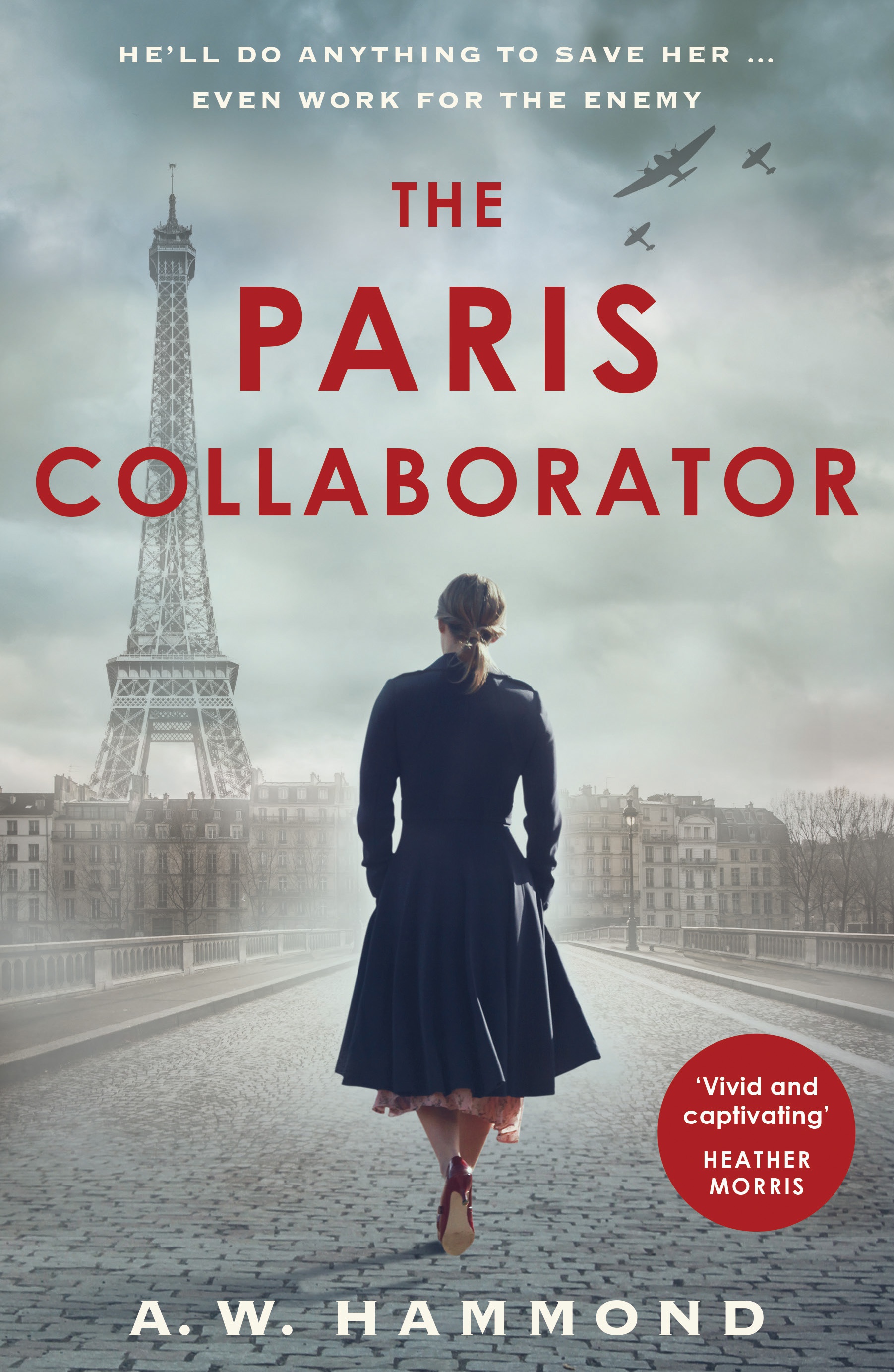
The Paris Collaborator by A. W. Hammond

The Paris Collaborator Cover

Publisher: Echo Publishing (Trade Paperback – 4 May 2021)

Series: Standalone

Length: 312 pages

My Rating: 4.5 out of 5

Amazon     Book Depository

Amazing Australian thriller author A. W. Hammond presents his first historical read with The Paris Collaborator, a clever and exciting novel set in occupied Paris.

August 1944.  With Allied forces advancing towards Paris, the Nazi occupation of the city seems to be nearly at an end.  But just because the Germans are poised to leave does not mean that the city is any less dangerous, especially for those whose loyalties are in question.  Since the Germans arrived, former teacher Auguste Duchene has taken on a whole new profession to survive: finding missing children.  With his impressive observational skills, Duchene has proven to be a keen investigator, but his talents are about to get noticed by all the wrong people.

Despite his desire to only help reunite lost families, Duchene is forced into working for a violent faction of the French Resistance after they threaten the safety of his collaborating daughter, Marienne.  Recruited to find a missing priest and the cache of stolen weapons he was hiding for them; Duchene reluctantly begins his search.  However, hours after he begins working for the Resistance, he is approached by a senior Nazi officer who blackmails him into finding a missing German soldier.

Caught between two dangerous masters, Duchene has no choice by to comply with both if he and Marienne are to survive.  With only 48 hours until both groups will deliver on their deadly threats, Duchene scours Paris for both the missing men.  However, the more he discovers, the more he begins to realise that the cases may be connected, and that he may be only able to satisfy one of his employers.  Worse, the Gestapo have taken an interest in Duchene’s investigation and are determined to interfere for their own ends.  Can Duchene find his targets before it is too late, or will everything he love be taken away from him?

This was an awesome and fantastic novel from an impressive author who I was not too familiar with before I picked up this outstanding read.  A. W. Hammond has previously written two Australian thrillers under the name Alex Hammond.  These books, 2013’s Blood Witness and 2015’s The Unbroken Line, were intriguing legal thrillers that focused on his Will Harris protagonist.  The Paris Collaborator is the author’s first foray into historical fiction, and he did an exceptional job producing a clever and addictive historical thriller.  I had an incredible time reading The Paris Collaborator and I ended up finishing it off in a few short days once I got drawn into its cool and memorable narrative.

Hammond has come up with an excellent thriller storyline for The Paris Collaborator that is exciting and clever, and which also makes great use of its historical backdrop.  This is a very fast-paced story, and it really does not take long for it to take off, as unconventional missing child investigator Duchene is drawn into the conflicting webs of radical French Resistance fighters and an influential Nazi officer.  Forced to work on both cases on a very lean timeline, the protagonist conducts a hurried investigation, trying to find hints of two different missing persons while also trying to survive in the middle of a chaotic and failing city.  With the interference of the Gestapo, Duchene is trapped in the middle of a three-way battle for his loyalties, as each of these very dangerous groups threatens to kill him and his daughter unless he complies.  This results in a very epic final third of the book, as the protagonist runs around Paris, which is in the middle of overthrowing its German occupiers, trying to find the last pieces of the puzzle with everybody trying to kill or capture him.

This was a very captivating and high-stakes story, and I loved all the thrilling intrigue, action and suspense as the protagonist jumps from one bad situation to the next.  The overall investigation had some rather intriguing twists to it, many of which took me pleasantly by surprise, although they were very well set up in hindsight.  I absolutely lost it when the final twist was revealed, as it was so outrageous and surprising that I ended up laughing for several minutes.  This reveal, while a little hilarious, did fit nicely into the dark tone of the novel, and I felt it was an outstanding way to wrap up this novel, especially as it is guaranteed to stick in the reader’s mind.  I deeply enjoyed The Paris Collaborator’s clever story, and this ended up being one of the more entertaining and unique thrillers I have read all year.

While readers will definitely remember the amazing thriller story, I also must highlight the exceptional historical setting that was featured in The Paris Collaborator.  Hammond chose to set his clever story amid the final days of the Nazi occupation of Paris, which I really enjoyed.  The author does an outstanding job of portraying this intriguing historical setting, and I loved the exploration of an occupied city on the edge, with minimal resources, a thriving black market, a near-rebelling populace, nervous soldiers starting to pull out and a dangerous resistance movement planning their next strike.  Hammond makes great use of this unique setting throughout the story, and I really appreciated the way he featured historical elements like the Resistance, the Gestapo and the German army throughout the story.  The final part of the book is set during the French uprising to free Paris from the Nazis, and I loved how the protagonist had to overcome all the obstacles this put in his way, from tanks attempting to put down dissent, to crowds determined to kill any Germans they could find.  This was an outstanding depiction of occupied Paris and I felt that Hammond perfectly utilised it throughout this amazing book.

One of the most intriguing aspects of the historical setting of The Paris Collaborator is the compelling focus on the French mentality of collaboration and resistance.  Throughout the novel, the protagonist encounters a wide range of different characters who have survived the Nazi occupation by working for, engaging with, or falling in love with German soldiers, much to the disgust of their fellow French citizens.  The protagonist himself is considered by some to be a collaborator, not only because he has helped wealthy French collaborators find their children but because he finds himself working for various Nazis throughout the course of the book.  This forces the protagonist to walk a thin line, as he must appear to be a patriotic Frenchman disgusted with the occupiers while also making sure that he does not enrage any of the Nazis who are employing him, something he does not do particularly well.  As a result, Duchene, and several supporting characters, encounters dangerous reactions from some French characters and Resistance members, and this really adds to the tension and danger that he encounters.  I think that Hammond did an excellent job examining and portraying this mentality of anti-collaboration throughout the novel, especially as it is cleverly layered into nearly every interaction the protagonist has.  Some of the actions of French characters who were actively resisting against the Germans were also pretty intriguing, including one particularly over-the-top one that is definitely going to stick in my mind.  It was also fascinating to see what some people would do to avoid being labelled as a collaborator, even if that means completely changing who they are.  I really enjoyed the author’s examination of how collaborator would have been viewed during this turbulent period of history and it ended up being an excellent and compelling addition to The Paris Collaborator’s narrative.

The Paris Collaborator by A. W. Hammond is an outrageous and impressive historical thriller that comes highly recommended.  Hammond has written a fantastic fast-paced story that is heavy on action, intrigue, and amazing twists, all set amid Paris in the final days of the Nazi occupation.  I had a lot of fun getting through this awesome novel, and thanks to some outstanding reveals and exciting moments, The Paris Collaborator is really going to stick in my mind.  Readers are guaranteed a thrilling and clever time with this book and will power through it in no time at all.

Amazon     Book Depository

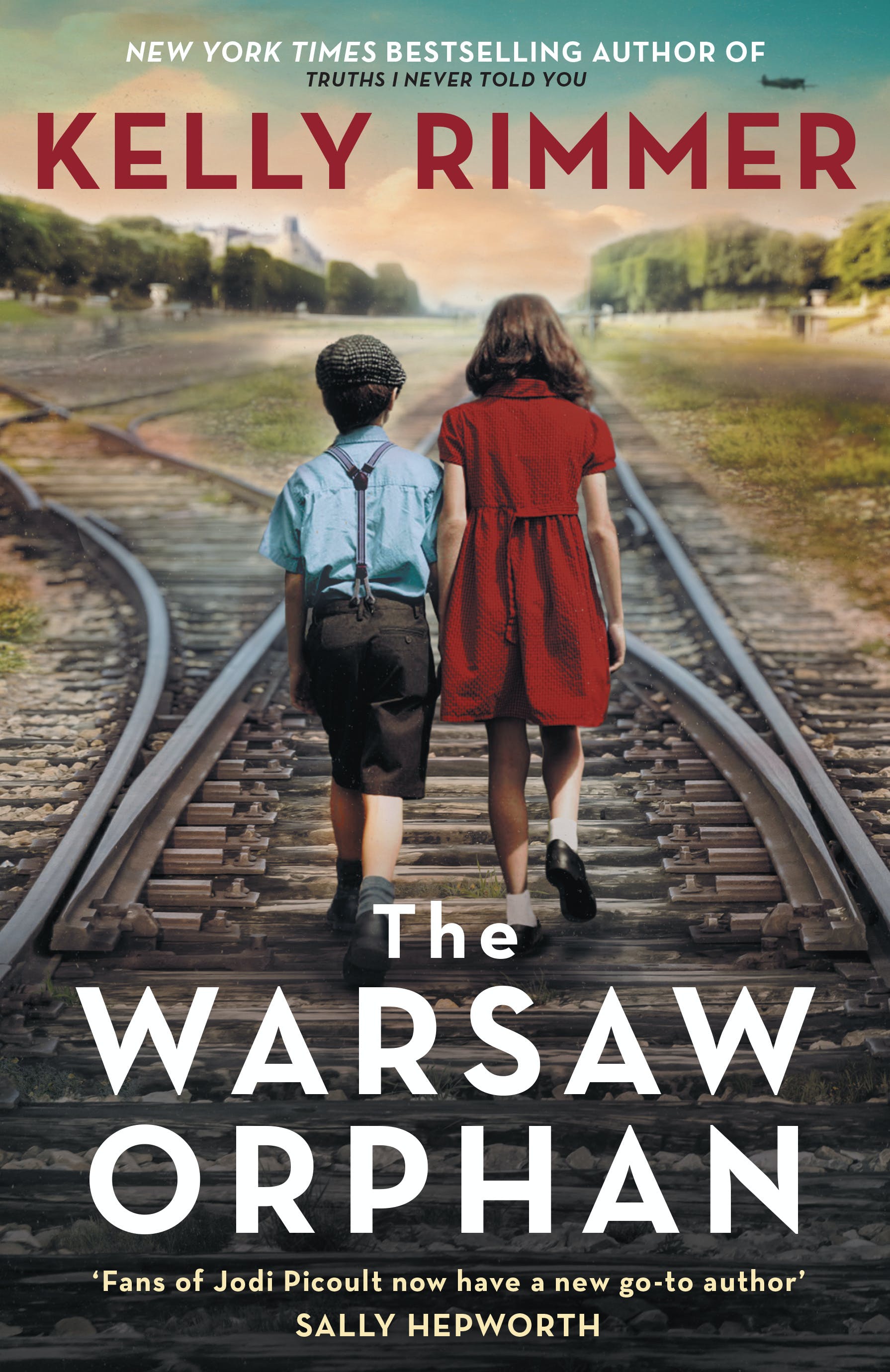
The Warsaw Orphan by Kelly Rimmer

The Warsaw Orphan Cover

Publisher: Hachette Australia (Trade Paperback – 28 April 2021)

Series: Standalone/sequel to The Things We Cannot Say

Length: 416 pages

My Rating: 5 out of 5 stars

Amazon

Prepare to have your heart broken again and again as Australian author Kelly Rimmer presents a captivating, powerful and dark historical drama, The Warsaw Orphan.

Warsaw, 1942.  The Nazis have a firm control over all of Poland and have moved the entire Jewish population into the infamous Warsaw Ghetto.  Vastly overcrowded and with limited supplies, life is extremely hard in the Ghetto, and many have given up all hope.  For Jewish teen Roman Gorka, all he can do is try to survive and earn enough to keep his family alive.  However, when rumours spread through the Ghetto about the Nazi plans to transport them to “work camps” out in the forest, Roman knows that it is time to act.  Knowing that the lives of himself and his parents are already forfeit, Roman attempts to find a way to save his younger siblings.

At the same time, a young woman, Elzbieta Rabinek, has just arrived in the city and appears to be a typical Polish girl living with her family.  However, Elzbieta is hiding a dangerous secret: her real name is Emilia, and she is the younger sister of an executed Jewish sympathiser.  Fleeing her village with her new family, Emilia is kept hidden from any potential pursuers.  But when Emilia discovers the truth about the Ghetto, she becomes determined to help and joins an underground group of women working to smuggle Jewish children to safety.

As Emilia becomes more involved with the secret work of her organisation, she soon encounters Roman.  Working together to save Roman’s younger sister, the two grow close and soon their fates are inevitably tied together.  But when a terrible tragedy strikes, both Roman and Emilia will be thrown into disarray.  As Warsaw becomes overwhelmed with fire and despair, can these two young people survive with hope, or will they be washed away in a flood of righteous anger?

Wow, just wow.  This was an incredibly touching historical drama that has really impressed me thanks to its moving story and striking portrayals of life in World War II Warsaw.  The Warsaw Orphan is the latest novel from Australian author Kelly Rimmer, who has previously produced moving novels such as Truths I Never Told You and Before I Let You GoThe Warsaw Orphan is actually a sequel to Rimmer’s previous book, The Things We Cannot Say, with some of the supporting characters from the previous novel appearing in more prominence in this latest novel.

I was lucky enough to receive a copy of The Warsaw Orphan a few weeks ago and thought it sounded like an intriguing novel, especially as it was from a new-to-me Australian author.  Based on the synopsis for the book, I knew going in that this would be a dark and emotionally rich novel, but I was very surprised with how compelling and poignant the narrative it contained would be.  Using the perspectives of the two narrators, Roman and Emilia, Rimmer paints a grim and powerful picture of the situation in Warsaw which the two protagonists find themselves in at the start of the book.  Both story arcs progress on their own separate way for a while, and it is intriguing to see the different experiences of two people living only a few streets away from each other in Warsaw.  It does not take long for the protagonists to encounter each other, combining the narrative together.  While the initial joining of their character arcs brings some hope to the story, Rimmer makes sure to quickly crush that with despair and heartbreak as both protagonists experiences tragedy after tragedy, as a series of different historical catastrophes engulf Warsaw and its people.  Every time the two central characters appear to be close to some sort of happiness, some new danger or disaster seems to befall them, and the reader is forced to sit back and watch as they endure their latest hardship.  While this novel is emotionally tough to read at times, Rimmer’s excellent storytelling ensures that you keep moving forward, especially as you become really invested in the lives of her two protagonists and the struggles of the various peoples of Warsaw.  While you may be left emotionally ragged and drained by the end of this book, readers will come away from this story extremely satisfied and with a little bit of hope.

I must really highlight the author’s outstanding and powerful depiction of historical events and places throughout The Warsaw Orphan.  Rimmer has clearly done her research on the subject and utilises a lot of fascinating and horrifying historical elements to great effect throughout the narrative.  For example, much of the story surrounding Emilia and the organisation she joins that helped to smuggle Jewish children out of the Ghetto is based on real life Polish hero Irena Sendler, with various features of Sendler’s work and personality imparted on some supporting characters.  The portrayal of occupied Warsaw is also extremely impressive, and you get a real sense of life in the city.  This is especially true of the Ghetto, as the author spends a significant amount of time exploring what happened within.  Rimmer pulls no punches when it comes to the horrors of the Ghetto and the brutalities the Nazi regime imparted on the Jewish population.  The various descriptions of the Ghetto are extremely harrowing, but through them the reader gets a sense of what the people within would have experienced.  I particularly appreciated the way in which she tried to capture the uncertainty that many of the characters, both Jewish and non-Jewish, had about the Nazis’ plans and you get a real sense of the fear and confusion in the lead up to the deportations.  Rimmer ends up covering all the key events that occurred in Warsaw between 1942 and 1947, and readers get some powerful and detailed views of the forced deportations to the camps, the Warsaw Ghetto Uprising, the Warsaw Uprising, the German retreat and the subsequent Soviet occupation.  The author shows every dark aspect of these historical events as her point-of-view characters find themselves involved in them, often to their great detriment.  All these powerful and remarkable historical events and locations serve as a great backdrop to this dramatic tale, and I found it fascinating to learn more about some of these events.

Rimmer has come up with an incredible pair of young point-of-view characters for this book, Roman and Emilia.  Roman is a Jewish teen living in the Warsaw Ghetto with his family.  Through his eyes you get to see many of the horrors of the Ghetto, starvation, Nazi oppression and the constant fear and death.  Rimmer does an impressive job of capturing the inner thoughts and feelings of someone caught up in these terrible events, and I really appreciated the strong sense of survival and desperation you get from him.  This quickly morphs in anger, righteousness and revenge when Roman experiences one tragedy too many, and he becomes in a number of dangerous fights against his oppressors.  Not only does this result in a number of brutal war sequences, but Rimmer paints a picture of a rebellious soul whose anger and moral outrage overwhelm his senses and force him to do darker and more dangerous deeds.  This depiction of anger and rage is quite powerful, and definitely fits an individual who loses everything and does not know what to do.

Emilia, on the other hand, is a somewhat more innocent figure, who, despite not being Jewish, has her own experiences with oppression after witnessing her brother dying in The Things We Cannot Say.  Due to the events of this previous book, she has fled to Warsaw with her adoptive parents, hiding under an assumed name.  Despite the troubles she is running from, Emilia chafes under the rules her guardians put in place, especially once she learns what is happening in the Ghetto.  Despite her fear, uncertainty and loyalty to her guardians’ wishes, Emilia soon becomes involved in the smuggling of children.  I really liked how Rimmer decided to utilise her previous character in this novel, and the author does a great job of revisiting parts of her story so that new readers can appreciate what has happened in her past.  Emilia proves to be a really interesting character throughout the book, and I loved the contrast in views between her views of Warsaw and Roman’s darker experiences.  Watching a non-Jewish citizen experience the horrors of the Ghetto for the first time is pretty moving, and the reader feels a certain kinship to her as they are also witnesses to the various tragedies.  I loved the storyline surrounding Emilia joining the movement to save Jewish children, and the author utilises her to tell this group’s very unique tale extremely well. 

Both Roman and Emilia have some fantastic storylines in The Warsaw Orphan, and I really liked the way their two separate character arcs come together.  These two characters experience an immense amount of grief, regret, violence and despair throughout the book, and their connection is one of the few things to keep them going.  Rimmer sets up both characters extremely well throughout The Warsaw Orphan and readers will quickly become obsessed with their unique tales and harrowing experiences.  I think both character storylines worked extremely well on their own, but together they tell an even more tragic story, as these two fall in love amongst the worst moments of human history.  Seeing the various tragedies and poor decisions that impact their relationship is pretty heartbreaking, and the reader is left in hope that they both survive in the end.  I think that Rimmer did an exceptional job creating and developing these two characters, and it is a mark of her writing ability that I ended up caring so much for them both. 

The Warsaw Orphan by Australian author Kelly Rimmer is an exceptional and incredible historical drama that comes highly recommended.  Rimmer has produced a first-rate story that perfectly utilises two tragic protagonists, an extremely dark and atrocious historical period and an addictive, if tragic, story of love, loss and survival.  The Warsaw Orphan is a powerful and compelling book that will stick in your mind long after you finish its final harrowing page.

Amazon

Quick Review – The Imitator by Rebecca Starford

The Imitator Cover

Publisher: Allen & Unwin (Trade Paperback – 2 February 2021)

Series: Standalone

Length: 344 pages

My Rating: 4.25 out of 5

Amazon     Book Depository

Deception, divided loyalties and despair are all on offer in the debut novel of Australian writer Rebecca Starford, who presents a curious and captivating read with The Imitator.

Synopsis:

‘We trade in secrets here, Evelyn. There’s no shame in having a few of your own. Our only concern is for who might discover them.’

Out of place at boarding school, scholarship girl Evelyn Varley realises that the only way for her to fit in is to be like everyone else. She hides her true self and what she really thinks behind the manners and attitudes of those around her. By the time she graduates from Oxford University in 1939, ambitious and brilliant Evelyn has perfected her performance.

War is looming. Evelyn soon finds herself recruited to MI5, and the elite counterintelligence department of Bennett White, the enigmatic spy-runner. Recognising Evelyn’s mercurial potential, White schools her in observation and subterfuge and assigns her the dangerous task of infiltrating an underground group of Nazi sympathisers working to form an alliance with Germany.

But befriending people to betray them isn’t easy, no matter how dark their intent. Evelyn is drawn deeper into a duplicity of her own making, where truth and lies intertwine, and her increasing distrust of everyone, including herself, begins to test her better judgement. When a close friend becomes dangerously ensnared in her mission, Evelyn’s loyalty is pushed to breaking point, forcing her to make an impossible decision.

A powerfully insightful and luminous portrait of courage and loyalty, and the sacrifices made in their name.

This ended up being a fantastic and enjoyable read from Rebecca Starford, who has come up with a really intriguing and unique story.  Starford is an Australian writer who is probably best known for her work on the Kill Your Darlings magazine, as well as her non-fiction book Bad Behaviour, which chronicled the author’s life at an elite country boarding school.  The Imitator, which was also released under the title, An Unlikely Spy, is an impressive and captivating historical drama that follows a young woman who becomes involved with British espionage at the start of World War II. 

The Imitator has an interesting and surprising story to it which is guaranteed to grab the reader’s attention all the way up to its final shocking twist.  Told from the perspective of protagonist, Evelyn Varley, the story is split into two distinct periods, with some of plot set shortly after the end of World War II, while the rest follows the protagonist during the early days of the war.  Most of the narrative is set during the earlier time and examines the protagonist during this period, including her recruitment into MI5 and her eventual work investigating Nazi sympathisers.  This proves to be quite a fascinating narrative thread, and I really enjoyed the great blend of historical espionage and the compelling drama surrounding the character and her personal relationships.  I was particularly intrigued by the parts of the book that explored Evelyn’s attempts to infiltrate a major group of Nazi sympathisers, especially as she is forced to alter her personality to fit into the tight-knit group of fascists.  Starford also includes several chapters set after the war which show Evelyn dealing with the aftermath and her actions during the conflict.  These post-war sequences compliment the rest of the story extremely well, and hint at tragic consequences to what she did after she is contacted by people from her past.  However, readers are in for quite a shock, as these later sequences are shown to be a major bait and switch.  Instead of the conclusion that you would generally expect in one of these stories, Starford puts in a particularly major and dramatic twist which really changes the entire tone of the narrative.  This twist was a brilliant master stroke from the author, especially as it switches around the implications for the post-war chapters and shines a whole new light on everything.  I was really impressed with this amazing narrative, especially once you realise how the author set up the clever ending, and this was truly an awesome and memorable story.

One of the things that I really liked about The Imitator was the fantastic historical setting of London during the early period of World War II.  Starford did a great job of highlighting what life during this period would have been like, from the early actions of organisations such as MI5, to the feelings of the populace, most of whom were convinced that the war would be fought far away or would not happen at all.  I was also really impressed by the author’s examination and dramatization of several intriguing real-life historical events that occurred during this period.  The character of Evelyn Varley is based upon the real life of MI5 operative Joan Miller, who infiltrated a major Nazi sympathiser movement, known as the Right Club, in London back in 1939.  Many details about the Right Club are fitted into the book and used as the basis for the Nazi group the protagonist infiltrates.  While there are several name changes, the fictional group closely matches what actually happened with the Right Club and MI5’s mission to infiltrate it.  I felt that Staford did an amazing job exploring this group and the mission of Joan Miller, and it proved to be an exceptional and clever base to this awesome story.

I also must compliment the compelling and intriguing protagonist of this novel, Evelyn, who serves as the main point-of-view character for the story.  Evelyn is a complex individual with a number of features formed during her harsh early life at a prestigious private boarding school.  Thanks to her less affluent parents, Evelyn does not really fit in with the richer students and is soon forced to adopt a much different persona, which is helped by the relationship she forms with the family of her one friend at the school.  This ability to change her persona becomes particularly important later in life when she begins her career in espionage and must show a false side to herself to people she is trying to take down.  Starford has written a fantastically complex character here in Evelyn, and I really appreciated the way in which the author examines what events or personality traits a successful undercover spy might need to have.  I also liked the way in which we get to see the character at different parts of her life as the book progresses, such as her innocent pre-war life, her experiences as a seasoned infiltrator and her reflections as a damaged survivor.  These various periods of her life and the different personalities are very dramatic and intriguing, and I found it fascinating to see how the author envisioned her changing personality.  Starford also writes in an extremely good storyline around the protagonist’s twisted loyalties, which forces her to choose between the safety of her country and the people closest to her.  These conflicting loyalties and friendships take Eveyln in some dark places and I really must applaud the clever and powerful narrative that Starford constructed around this great character.

Overall, The Imitator by Rebecca Starford is an exceptional and captivating read that comes highly recommended.  I really enjoyed this fantastic book’s clever blend of historical fiction, espionage and dramatic storylines, and I had a wonderful time getting through all of The Imitator’s compelling twists and revelations.  An outstanding read that is guaranteed to stick in the mind long after you have finished reading it.

Amazon     Book Depository