Throwback Thursday: Stars Wars: Lords of the Sith by Paul S. Kemp

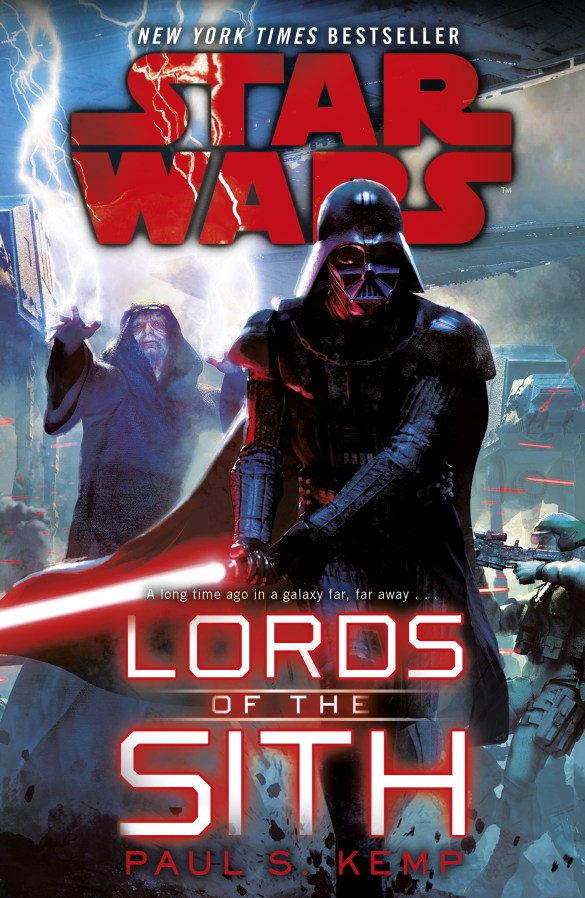
Lords of the Sith Cover

Publisher: Penguin Random House Audio (Audiobook – 28 April 2015)

Series: Star Wars

Length: 10 hours and 56 minutes

My Rating: 4.5 out of 5 stars

Amazon

Reviewed as part of my Throwback Thursday series, where I republish old reviews, review books I have read before or review older books I have only just had a chance to read.

For my second Throwback Thursday article of this week (what can I say, I was in the zone for reviewing older content) I check out a fast-paced and addictive Star Wars novel that was released a couple of years ago, with Star Wars: Lords of the Sith by Paul S. Kemp.

It is the early days of the Galactic Empire. Under the reign of Emperor Palpatine, few openly oppose imperial rule, and those that do are swiftly dealt with by Palpatine’s ruthless apprentice, Darth Vader. But as the power and influence of the Emperor and Vader grow, so does their desire to rule and oppress every planet in the galaxy, and with that comes the first sparks of rebellion.

The planet Ryloth knows all about oppression and invasion. Following a brutal occupation during the Clone Wars, Ryloth now finds itself under the control of the Empire, which strips the planet of its natural resources while using the people for slave labour. In opposition to this occupation, an aggressive resistance moment has arisen, led by idealistic leader Cham Syndulla and his comrade Isval, a vengeful former slave. Thanks to their excellently placed sources, Syndulla’s resistance has been able to launch some substantial attacks against the Empire, but their actions have gained the attention of the Emperor and Vader. In a bid to assert his dominance on Ryloth, the Emperor sets out on a rare mission to the planet, accompanied by Vader. However, this is the opportunity that Syndulla has been waiting for.

Upon the Imperial’s arrival above Ryloth, the resistance fighters are able to do the impossible and blow up their Star Destroyer. Forced to abandon ship, the two Sith lords find themselves trapped on the dangerous surface of Ryloth with no means to communicate with Imperial command and no reinforcements on the horizon. In a bid to liberate the galaxy from their dark rule, Syndulla and Isval gather all their forces and resources to hunt the Emperor and Vader down. Surrounded by enemies, inhospitable terrain and terrible native fauna, the two Sith Lords appear to be at their most vulnerable. However, what Syndulla and his team fail to realise is that their prey are two of most dangerous beings in the galaxy, and together they are a force of unnatural destruction. Can the resistance fighters take on Emperor and Vader, and what happens when the two Sith lords work out that their biggest threat is each other?

Now this is a rather fantastic and captivating Star Wars novel that I have been wanting to check out for a while now due to the book’s cool concept. This is the first book that I have read by Paul S. Kemp, a fantasy author who has been writing since the early 2000s. His first novel, Twilight Falling debuted in 2003, after the author released several pieces of short fiction. Kemp then went on to write several fantasy series and standalone novels, including The Erevis Cale trilogy, The Twilight War trilogy and the Egil and Nix books, most of which fell within the Forgotten Realms shared fantasy fiction universe. Kemp has also written a few Star Wars novels, including Crosscurrent, The Old Republic: Deceived and Riptide, which were part of the old Star Wars Legends canon. Lords of the Sith is Kemp’s first novel in the new Star Wars canon, and he presents the reader with a fun and fast-paced novel that has some intriguing elements to it.

Kemp pulls together an excellent Star Wars novel that has a great story, is full of breathtaking action scenes and features compelling dives into some iconic Star Wars characters and elements of the universe. While I came for all the fun action that was bound to feature in a story surrounding the Emperor and Vader fighting against overwhelming odds, I stayed for the intriguing story that is full of betrayal and manipulations. The author does a fantastic job of utilising multiple character perspectives to tell a fuller story, which showed the perspectives of not only Vader and Syndulla’s resistance but also two Imperial officers stationed on Ryloth: one who is loyal to the Emperor and one who has been working for the resistance. This helped produce a really clever narrative, and it was interesting to see where Kemp took the story throughout Lords of the Sith.

The story is set five years after the events of Revenge of the Sith and focuses on the Emperor and Vader encountering some of the earliest forms of rebellion against the Empire. There are some strong elements from the extended Star Wars universe in this book, most notably with the inclusion of Cham Syndulla, a character who appeared in two Star Wars animated series, The Clone Wars and Star Wars Rebels, and is the father of Hera Syndulla, one of the main characters from Rebels (who is featuring in a lot of other pieces of Star Wars fiction at the moment). However, this is definitely a novel that can be enjoyed by the more casual Star Wars fan, and no real knowledge of the extended universe is needed to follow the plot. As always, though, those readers who are fans of some of the extended universe fiction are probably going to enjoy this book a little more. I myself enjoyed seeing the exploration of the early days of the Empire, an examination of Cham Syndulla’s history between the two animated shows and some exploration of the planet of Ryloth.

Without a doubt, the highlight of this book has to be the amazing action sequences featuring Darth Vader and the Emperor. Kemp went out of his way to show off just how badass these two characters can be, and he did not hold back any punches. Vader and the Emperor get into some major scrapes throughout the book, as they hunt or are hunted by members of the Ryloth resistance or some of the deadly creatures that reside on the planet’s surface. Needless to say, these two characters use all of their deadly Force abilities to take down swathes of opponents, and they come across as pretty impressive characters, especially in the eyes of some of the other point-of-view characters. I loved the reactions from characters like Syndulla or Isval, especially as it becomes more and more apparent to them that their opponents are something too much for them. I have always loved comics and books that showed off how badass Vader and the Emperor can be, and this is one of the better examples of this. Kemp started this book off strong by having Vader crash his fighter onto a ship to board it, before systematically taking down the crew one by one, while Syndulla and Isval are forced to listen from another ship (accompanied by Vader breathing heavily into a comms unit to freak everyone out). This is then followed by a plethora of other cool sequences, which includes Vader and the Emperor decimating a massive swarm of Ryloth’s apex predators and a particularly cool sequence where Vader started force choking several characters aboard a separate spaceship while he was flying upside down above them. All of this was exceedingly cool, and I loved Kemp’s amazing imagination when it comes to these two characters.

I also quite liked the intriguing examination of the unique relationship between Darth Vader and the Emperor that became an interesting central focus of the plot. While the story doesn’t show the Emperor’s point of view, you get Vader’s take on the situation, and through his eyes you see his perceptions of the Emperor, his thoughts on the partnership they have formed, and the knowledge that it will eventually end with Vader attempting to kill Palpatine to take his place. Palpatine, for his part, spends most of the story devising tests and challenges to get into Vader’s head and to ensure that his apprentice is loyal and has no thoughts of overthrowing him at the moment. I liked the compelling and clever examination of these two characters’ mindsets that Kemp pulled together, and I felt that he had a great handle on the personalities of these iconic Star Wars characters. I also rather enjoyed Kemp’s portrayal of the Emperor’s manipulative and purely evil nature, as it is revealed that everything that happens throughout the book is due to his design, and he threw away thousands of Imperial lives to achieve his goals. The revelation of this to some of key characters in this book makes for a great scene and I think that it really encapsulated just how evil the Emperor could be, which was pretty awesome.

Like with most Star Wars books that I read, I ended up checking out the audiobook format of Lords of the Sith, which was narrated by Jonathan Davis. This audiobook runs for just under 11 hours, and can be powered through quite quickly, especially once the listener hears the opening action sequence read out to them. I have to once again highlight that use of the cool music and sound effects that are included in all Star Wars audiobooks in order to enhance the story. Lords of the Sith had some great sound inclusions throughout its run time, and I felt that these definitely had a major impact on my enjoyment of this book. This audiobook features the audio talents of skilled narrator Jonathan Davis, whose work I have previously enjoyed in Star Wars books such as Master & Apprentice and Dooku: Jedi Lost. Davis does an incredible job narrating this book and he comes up with some impressive voices for the various characters featured throughout it. I particularly liked the great voices he came up for key characters like the Emperor and Darth Vader (with the help of some appropriate sound effects) and Cham Syndulla, and they sounded a lot like their appearances in the movies and animated shows. As a result, I really powered through this excellent audiobook, and I would strongly recommend this format to anyone who wants to check out Lords of the Sith.

Lords of the Sith is a fun and exceedingly entertainingly Star Wars novel that I had an outstanding time listening to. Kemp comes up with an exciting and action-packed story that not only explores some intriguing aspects of the expanded Star Wars universe, but which also contains some over-the-top action sequences that shows just how awesome a Star Wars novel can be. Lords of the Sith comes highly recommended to anyone looking for a fantastic and enjoyable read, and I hope that Kemp writes some more Star Wars novels in the future.

Amazon

Rules for Perfect Murders by Peter Swanson

Rules for Perfect Murders Cover

Publisher: Faber & Faber (Trade Paperback – 3 March 2020)

Series: Standalone

Length: 272 pages

My Rating: 4.5 out of 5 stars

Amazon     Book Depository

In a mood for a complex and rather clever murder mystery? Make sure to check out Rules for Perfect Murders, the curious latest release from bestselling crime fiction author Peter Swanson.

Across the greater Boston area a series of unsolved murders have been committed. None of the deaths appear to have anything in common, except for the fact that each one bears a similarity to a famous literary murder. However, there is one other tenuous link that could tie the murders together, and FBI agent Gwen Mulvey is curious enough to meet with the owner of the Old Devils mystery bookshop, Malcolm Kershaw, to test her theory.

Years ago, Malcolm posted an article on his bookshop’s blog titled Eight Perfect Murders, detailing the eight homicides in literary fiction that he thought were the cleverest ways to kill someone and get away with it. This list features some of the most devious cases ever conceived by some of the history’s greatest mystery writers, from Agatha Christie’s The ABC Murders to Strangers on a Train by Patricia Highsmith. Now it appears that several of the killings match the unique selection of books that Malcolm listed all those years ago. Is the killer using his post as a guide for his gruesome work?

Working with Agent Mulvey, Malcolm soon discovers a link between himself and the killings, as one of the victims was a former customer of his store. Convinced that the killer is someone he knows, Malcolm attempts to find them before they finish off his list. However, not everything is as it seems, and Malcolm must come to terms with some of his darkest secrets if he is to find the killer stalking him from the shadows.

This is the sixth novel from Swanson, who debuted back in 2014 with The Girl with a Clock for a Heart. I have not previously had the pleasure of reading any of Swanson’s books before; however, I really loved the concept behind this novel, and thought it would be a fun one to check out. Rules for Perfect Murders, which was also released as Eight Perfect Murders, is an intriguing and compelling novel that presents the reader with a fantastic murder mystery while also acting as a love letter to the murder mystery genre. This turned out to be an excellent read, which I was able to power through in just over a day.

I rather enjoyed the way that Swanson wrote Rules for Perfect Murders, mainly because he emulated some of the classic murder mystery novels which he clearly loves throughout the story. The book is told in first person, from the point of view of the protagonist, Malcolm Kershaw, and it is made to represent a manuscript, recalling the events that he experienced. The story than details the investigation into the murders that are occurring in the present day, while also diving back into the protagonist’s past, while also featuring a number of examinations about elements of the protagonist’s world, including his opinion about certain mystery novels. This first-person perspective really fits the tone of the book extremely well, and Swanson did an excellent job winding the various elements of the story, including the protagonist’s flashbacks, into a tight and captivating read. The various writing methods that Swanson employs throughout the book are direct references to a number of famous mystery novels, as the fictional author of the book is inspired by them as he writes. It was really fun to see the protagonist discussing the pros and cons of things like unreliable narrators, red herrings and other elements, right when he was utilising them in his manuscript. At the same time, the way that parts of the story go down, are very similar to some classic mystery stories. All of this helps create a very unique tale, and I think that Swanson did an amazing job bringing this clever concept together.

In the midst of Swanson’s homages and descriptions of classic and great mystery novels lies a rather good murder mystery storyline, as the protagonist attempts to find out who using his blog post as a basis for the killing spree. Swanson is able to produce a thrilling and clever mystery, full of twists, false leads and intriguing motive that tie into the protagonist’s complex past. It was also rather interesting to see the killer craft modern murders out of the classic scenarios featured in the fictional Eight Perfect Murders list, especially as these elements served as a complicating factor in the investigation. I thought that the end result of the mystery was pretty satisfying, and while I was able to make some guesses about parts of the protagonist’s past, the identity of the murderer was a bit of a surprise for me. I had a fantastic time getting to the bottom of this mystery, and the compelling murders that Swanson painted did an amazing job catching my attention and interest, which ensured that I powered through Rules for Perfect Murders in short order.

In addition to utilising a number of classic murder mystery tropes and techniques in Rules for Perfect Murders, Swanson also spends considerable time discussing or analysing a number of classic and iconic murder mystery novels. Swanson really dives in and does several mini reviews of a swath of great murder mystery novels, providing what I assume are his own opinions, while also examining the book’s featured murders, the strengths and weakness of their stories, the cultural impact that they had and so much more. The main focus is on the books that appeared on the fictional Eight Perfect Murders list which is made up of such classics as The Red House Mystery by A. A. Milne, Malice Aforethought by Anthony Berkeley Cox, The A.B.C. Murders by Agatha Christie, Double Indemnity by James M. Cain, Strangers on a Train by Patricia Highsmith, The Drowner by John D. MacDonald, Deathtrap by Ira Levin and The Secret History by Donna Tartt. However, Swanson also references and discusses a bunch of other mystery novels, the plots of which or the lessons they contained often having some impact or bearing on the story. I loved this dive into each of these mystery novels, and I found it really cool that Swanson was able to insert his own opinions and obvious love from each of these books into this story.

Due to the author’s examination of all these classic novels, Rules for Perfect Murders is highly recommended for those hardcore murder mystery fans who are familiar with the books featured on the list, who will really love all the references and discussions that Swanson features throughout his novel. Those who are particularly knowledgeable about murder mystery stories will be able to guess where the story is going based on the literary clues the author leaves throughout the narrative. At the same time, Rules for Perfect Murders is also a great book for readers who are less familiar with these mystery novels. I personally have not read any of the eight books on the fictional list, although I was familiar with how some of the plots went. However, despite this lack of knowledge, I was in no way disadvantaged while reading Rules for Perfect Murders, as Swanson gives concise and knowledgeable summaries of each of the relevant books, which allowed me to follow the plot without any issues. I was able to appreciate most of the references that the author included throughout the book, and I am tempted to go out and read some of the featured books, as most of them sounded extremely interesting. I think that this examination and utilisation of classic murder mysteries works well with story Swanson came up with, and I honestly had fun learning more about these books and seeing the impact that they can have on a modern story.

It was kind of cool to read this novel from the perspective of a blogger and book reviewer, as this is novel written by a book lover, about a book lover. I found myself relating to the protagonist in a number of ways, and his observations about the joy books can bring really resonated with me. His habit of analysing the various books he reads is something many reviewers are going to appreciate, and I really liked that this novel is based around a best-of list. As someone who regularly produces top ten lists, I had a fun time with this concept, and I couldn’t help imagining what I would do in a similar situation (gasp, what if someone used my one of my lists to commit some crimes? Think about all the Star Wars themed murders that would happen!). I also had a good chuckle when the protagonist starting reminiscing about all the troubles he had creating his lists, such as leaving key books off, going back and reconsidering his choices and troubles with including entries that technically don’t belong on the list, as I have been there multiple times. This was a fun part of the book, which I rather enjoyed, although it didn’t take away from the darker tone of the book’s murder mystery and character elements.

Rules for Perfect Murders by Peter Swanson was a rather interesting and unique read that I am glad I decided to check out. Swanson crafts a fascinating and captivating tale, that not only contains a fantastic central whodunnit, but which acts as an amazing homage to the murder mystery genre. Filled with some excellent and entertaining elements, this is an outstanding read which I had a great time reading. This is a book perfect for all murder mystery fans, Swanson is definitely on my radar from now on, and I look forward to seeing what he writes next.

Amazon     Book Depository

One Minute Out by Mark Greaney

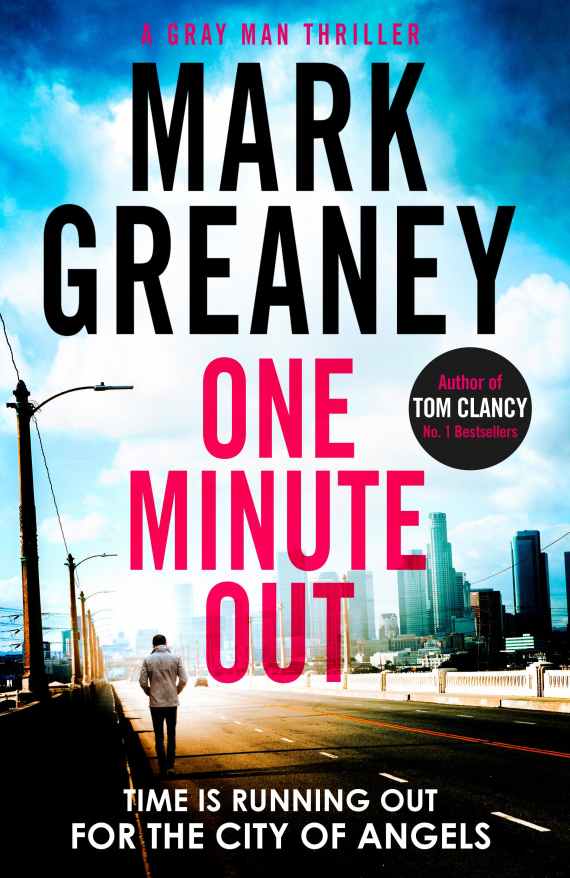
One Minute Out Cover

Publisher: Sphere/Audible Audio (Audiobook – 18 February 2020)

Series: Gray Man – Book Nine

Length: 16 hours

My Rating: 4.5 out of 5 stars

Amazon     Book Depository

Bestselling thriller author Mark Greaney returns with another fast-paced and incredibly exciting novel that this time explores the dark and shocking world of human trafficking, with One Minute Out, the ninth book in his impressive Gray Man series.

Greaney is a talented thriller author who has written a number of fantastic books since his 2009 debut, including his Gray Man series and seven books in the iconic Jack Ryan series, three of which he cowrote with the legendary Tom Clancy. I started getting into Greaney’s work last year, when I grabbed a copy of his 2019 release, Mission Critical, due to its fun-sounding plot, and I ended up really liking it. Due to how much I enjoyed Mission Critical, I also decided to check out his other release for 2019, Red Metal, which he cowrote with Lt. Col. Hunter Ripley Rawlings IV. This proved to be a very smart decision as Red Metal was an incredible read that was one of my top books (and audiobooks) of the year. As a result, I was rather keen to check out the next release from Greaney when it came out, and I have been looking forward to this book for some time.

Court Gentry is the Gray Man, a rogue CIA operative turned legendary assassin with a conscience, who is known and feared across the globe for his ability to overcome the odds and kill the most well-protected target. While still secretly working for the CIA as part of an off-the-books operation, Gentry still occasionally engages in freelance assassin work, only accepting contracts on some of the world’s most evil and corrupt individuals. His latest job takes him to a remote property in Croatia, where he is hired to kill a former Serbian general and notorious war criminal who has escaped justice for years. While Gentry is able to eliminate his target, he makes a shocking discovery in the building’s cellar: a dark room full of kidnapped women.

Gentry has inadvertently stumbled upon a human trafficking ring that transports kidnapped or coerced women across the world into a life of sexual slavery and untold horrors. Despite his best attempts to rescue the women, Gentry is forced to leave them behind, due to the fear that the women have of their captors. Haunted by what he has seen and the realisation that his actions may have led to terrible repercussions for the captives he encountered, Gentry makes it his objective to relocate and free the women, no matter the cost, while also causing as much pain to the people responsible.

However, this is no ordinary mission for Gentry. The human trafficking ring he is tracking, known as the Consortium, is made up of many different criminal organisations across the world which are highly invested in keeping the operation intact. Forced to work outside his usual intelligence networks, and with no CIA backup on the horizon, Gentry teams up with rookie EUROPOL analyst Talyssa Corbu, who has a personal stake in bringing the Consortium down. Together Gentry and Corbu are able to trace the human trafficking pipeline across Eastern Europe to Italy and America. However, the Consortium is far larger than Gentry and Corbu realised, with an elite and deadly fighting force at their back. Can Gentry once again overcome the odds to bring down his opponent, or will the Consortium and their influential allies be his undoing?

Now this was an impressive and fantastic thriller novel from Greaney, who did an outstanding job with this dark and captivating read. One Minute Out is a substantial and clever book that pits the author’s capable protagonist against a host of the most despicable villains in the world today, human traffickers. Like the rest of the books in this series, One Minute Out can be enjoyed as a standalone novel, and no prior knowledge of the other Gray Man books is required to enjoy this latest entry in the series. While this book is very grim and uncomfortable at times due to its darker subject matter, this proved to be a compelling and enjoyable thriller, which is probably my favourite Gray Man novel so far.

This is a really well-written thriller novel, and Greaney came up with some amazing scenes and sequences throughout the course of this book. One Minute Out is told from a variety of different perspectives, including the protagonist, Court Gentry, several supporting characters and a number of antagonists. This helps produce a large-scale and comprehensive read that dives into several new characters while simultaneously showing off the scale of the opponents that Gentry is going up against. While a large part of the book is told from the third person, Greaney utilises a first-person perspective for the scenes that Gentry is narrating. Not only does this help Gentry’s chapters really stand out but it allows the reader to get some fantastic insights into the mind of the complex protagonists, and why he is so determined to engage in an apparent fool’s errand and help out a bunch of people he has never even met before. I have to say that I was really impressed with the multitude of amazing action sequences that filled this book, as Greaney has his protagonist engage in a number of thrilling, high-octane scenes, which I had a blast reading. While I really enjoyed all the various shootouts, infiltrations of secure targets, examples of tradecraft throughout various European cities and explosive car chases, a couple of scenes really stood out to me. These highlights included a particularly well-written sequence set underwater, as Gentry attempts to escape from several boatloads of killers with only a damaged set of scuba equipment, and a massive assault of a heavily fortified and well-guarded complex out in the dessert, with only a few seasoned ex-soldiers and an insane relic of a helicopter pilot backing him up. All of this helped make for an excellent read, and I really enjoyed where Greaney took the story at times.

One of the most compelling things about this novel is the way that Greaney has anchored his excellent thriller story around a sinister real-life trade that is currently plaguing the world, human trafficking for sexual slavery. As terrible as it is to consider in this modern day and age, human slavery is still a thing, and for many it is a profitable and stable business. Throughout the course of the novel Greaney shines a light on this foul trade, as his protagonist encounters this evil in Europe and deals with a number of characters affected by it. As the book progresses, the reader gains a huge amount of knowledge about this malevolent criminal industry from a bunch of different perspectives. As a result, there is a quite a lot of information about how trafficking rings operate, including the way that the girls are taken, manipulated and broken, as well as the ways that they are transported and sold across the world. Greaney does an outstanding job diving into this subject, presenting the reader with a grim and uncompromising view of all the horrors associated with this trade, and ensuring that no one is left uncertain about how evil the individuals behind it are. I really appreciate the way that Greaney featured it in this book, although those people who are uncomfortable with sexual violence will probably have a hard time reading this book.

I felt that the dark subject of human trafficking served as a rather intriguing plot point for this novel, and it definitely worked well with the spy thriller genre of the series. The main benefit is that it presents the reader with a truly despicable and completely unlikeable group of antagonists for Gentry to go up against. Thanks to the author’s use of multiple viewpoints, you get to see inside the heads of several of the Consortium’s leaders, and you swiftly learn that they are an extremely vile and irredeemable bunch of characters who the reader instantly roots against. I liked the way in which the story followed Gentry progressively working his way up the trafficking ladder, from the low-level way station that he accidently discovered, through the corrupt police in several Eastern European towns, to the organisation’s middle management, their larger auctions, right up the bases of the Consortium’s leader in America. This results in a variety of different opponents and obstacles that he must overcome, ranging from low level street thugs to elite South African mercenaries trained in similar methods as Gentry. I really enjoyed seeing Gentry use his espionage tradecraft to tear through the less competent criminal elements at the lower end of the group, before going up against the better trained, elite enforcers of the organisation. Thanks to the author’s depictions of them, it was quite fun to see the upper leadership of the Consortium slowly get more and more scared and desperate after each of Gentry’s operations against them, and their eventual fates turned out to be extremely satisfying.

I also quite liked the way that for the majority of the book Gentry is working outside of the system, without his usual CIA backup or resources. This forces him to engage in a less sophisticated battle against his opponents, relying more on his skills than having any backup or intelligence, which I thought made for a much more credible narrative with higher stakes. Thanks to author’s use of the first-person perspective for Gentry’s character, you get a much more in-depth explanation for his tactics and methods, which I enjoyed and found to be rather fascinating. I also enjoyed the author’s inclusion of several female side-characters, who Gentry works with to bring down the Consortium. The main one of these is Talyssa Corbu, who utilises her financial expertise to help move the plot along and point Gentry to his next target. While Corbu is a bit of a pain at the start of the book, due to her incompetence, she grew on me over time, especially as she became more determined and capable, especially when more of her backstory was revealed. I was also quite impressed with the depictions of several female characters who were taken prisoners by the traffickers, and who eventually helped Gentry take them down. Having the women work to free themselves was a nice touch by Greaney, and I particularly loved one scene where several of the women defied typical convention and helped save Gentry, with realistic explanations for how they obtained their relevant skills (thank goodness for equal opportunity Eastern European military training). All of this led to an extremely exciting and highly compelling story, and I really enjoyed the full extent of One Minute Out’s story.

I ended up listening to the audiobook format of One Minute Out, which was narrated by Jay Snyder, who has narrated several of Greaney’s books in the past. The One Minute Out audiobook ran for around 16 hours, and I was able to clear through it in a few days. I found the audiobook format to be an excellent way to enjoy the novel, and I strongly felt that listening to this book helped me connect a lot more with the story and characters. Snyder did an amazing job narrating this book, and I was especially impressed with the way that he brought all of One Minute Out’s characters to life. Not only did Snyder provide an excellent and fitting voice for Gentry, but he also produced some great voices for the other characters in the book, coming up with a range of realistic accents to show off the diversity of the cast. This turned out to be a fantastic and entertaining way to enjoy One Minute Out and I think that I will be checking out more of Greaney’s books this way in the future.

One Minute Out by Mark Greaney is an outstanding and exceptional new thriller which takes the reader on a dark and action-packed adventure around the world. This proved to be a deeply exciting and truly compelling entry from Greaney, who once again shows why he is one of the top thriller authors in the world today. This was an impressive new entry in the fantastic Gray Man series, and I cannot wait to see where Greaney takes this epic series in the future.

Amazon     Book Depository

Throwback Thursday – Predator One by Jonathan Maberry

Predator One Cover

Publisher: Macmillan Audio (Audiobook – 7 April 2015)

Series: Joe Ledger series – Book Seven

Length: 16 hours and 55 minutes

My Rating: 5 out of 5 stars

Amazon     Book Depository

Reviewed as part of my Throwback Thursday series, where I republish old reviews, review books I have read before or review older books I have only just had a chance to read.

For this latest Throwback Thursday, I decided to I wanted something fast-paced and action-packed, so I went and checked out another book in Jonathan Maberry’s dark and thrilling Joe Ledger series with the seventh book, Predator One.

Those familiar with my blog will be aware of my recent love affair with the Joe Ledger series. I first encountered this series back in late 2018, and after massively enjoying the tenth book, Deep Silence, I have been slowly reading and reviewing my way through the entire series from start to finish. There are so many different things that I enjoy about these novels, including the outstanding action, gripping stories, fantastic characters and the crazy scenarios each book is set around. When combined, these elements help produce some truly incredible books, and I had an amazing time reading several Joe Ledger novels last year. I also read the first book in Maberry’s Rogue Team International series, Rage, which was one of my top books (and audiobooks) of 2019. I am hoping to finish off all the remaining books in the Joe Ledger series this year, and Predator One is the first one that I have so far checked out in 2020. I have to say that I was once again blown away with Maberry’s writing ability, as Predator One is another epic and remarkable read which gets a full five-star rating from me.

It is the opening day of the new baseball season, and Joe Ledger, point-agent for the high-tech counter terrorist organisation, the Department of Military Sciences (DMS), is enjoying a well-earned day off. Everything seems to be going well, the sun is shining, the beers are flowing, and a decorated military pilot is about to throw out the first ball. Then a model airplane flies out onto the field, a replica of the one flown by the war hero. Everyone assumes it’s a harmless prank, everyone except Ledger, who can only watch in horror as the toy plane explodes. Within seconds, a swarm of bomb-laden drones appears, devastating the crowd and leaving Ledger injured in the wreckage of the stadium.

As Ledger attempts to process what has happened, a series of coordinated attacks are taking place across America. While some of the attacks appear random, several are deliberately targeting the friends and family of key members of the DMS, attempting to distract the agency and take them off the board. It soon becomes clear that an old enemy has risen from the flames, determined to get revenge on those that they believe have wronged them in the past, including Ledger and everyone he loves. Worse, they have teamed up with a force of pure evil whose deepest wish is to torment and destroy the head of the DMS, the mysterious Mr Church.

Diving back into the action, Ledger and his team attempt to find and neutralise the source of this new threat. But at every turn, they find themselves outmatched, outmanoeuvred and severely outgunned, as the enemy has access to advanced technology that allows them to take control of America’s military vehicles, aircraft, ships and drones. As the attacks against America worsen, their opponents even gain control of Air Force One, with the President aboard, and start to fly it towards New York City. Can Ledger save the day one more time or have the DMS finally come up against an enemy even they can’t outsmart?

Wow, just wow. Predator One is another impressive and extremely captivating thriller novel that I had an outstanding time listening to. Maberry has come up with another incredible, action-packed story which utilises his trademark writing style to present a first-rate novel. Readers are treated to a multi-layered story, which cleverly features multiple character viewpoints, flashbacks and deep examinations of a several major characters’ pasts and motives. All of this allows Maberry to tell a complex and intriguing thriller story that never lets up on the excitement. The various storylines flow together perfectly thanks to the short chapters and constant dancing between different character perspectives, and all the storylines lead up to an epic and memorable conclusion. Maberry really knows how to ramp up the tension and the excitement throughout the book, and the final couple of hours are exceedingly thrilling, as several exhilarating scenarios come into effect at the same time. All of this results in a deeply exciting read, which I really loved and is another perfect Joe Ledger story.

Just like so many books in this series, amongst the best things about Predator One are the fantastic antagonists and their over-the-top plot against America, Joe Ledger and the DMS. For the main antagonist, Maberry goes back to some of the earlier books in the series, and brings back the Seven Kings organisation, which is being led by an old, established opponent of the DMS. While a new, complex villain for this book could have been fun, I really loved the author’s use of the historical antagonist, especially as they have been substantially transformed since the last book, and they are now aiming for a destructive end. This older antagonist is paired with the mysterious, evil character, Nicodemus, and together they form quite a partnership. Nicodemus is a character that has been hinted at and featured in the shadows of several previous books, so it was really cool to see him in a more substantial role. The key to Nicodemus is his extremely enigmatic persona and history, as no one quite knows who or, more importantly, what he is. He seems to have some sort of mystical abilities, and it is hinted in this book that he is some form of demon or devil, although it is never fully revealed. This mystery and mystique make for a quite an intriguing addition to the series, and the two main antagonists work together quite well as an evil, villainous pairing. On top of them, Maberry also throws in a good secondary antagonist who acts as a crooked assistant to the leader of the Seven Kings and who serves as a useful narrator, as well as the standard sexually depraved henchmen. Combined, these excellent antagonists make for a fun and exciting opposition for the main characters and they help produce some extremely interesting storylines.

I was also a major fan of the fantastic and complex master plan that Maberry envisioned for the antagonists of this book, which served as a fantastic basis of much of the story. Maberry crafted a sinister and exceedingly destructive campaign of terror and destruction that culminated in the takeover of Air Force One with the President and other key characters on board, sending it on a kamikaze mission. This proved to be a rather fun villainous storyline to follow, and I enjoyed seeing it unfold from both the protagonists’ and antagonists’ points of view, as these different perspectives led to some very intriguing scenes. I also liked the way that that the origins of the plot were explored in a series of interludes, allowing the reader to become familiar with the key players of the scheme, and get hints of the full extent of the planned destruction. It was also rather cool to see these antagonists land some real blows against the DMS. Maberry has never been shy about killing off key side characters (for example, he killed off the main secondary character and primary love interest in the second book, The Dragon Factory), and he ensures that some real damage is done to some DMS characters in Predator One. This helps add a real emotional edge to the story, and I liked the way that it upped the stakes, as well as the obvious emotional and psychological impacts that it had on some of the series’s well established, long-running protagonists.

Maberry makes sure to bring back the full and unique bevy of good-guy characters for this seventh book, most of whom have appeared in multiple books before. At the fore is the series’s titular protagonist, Joe Ledger, who is the sole first-person narrator in the book, with around a third of the story told from his point of view. Ledger is his usual witty and damaged self in this book, infecting his parts of the story with his wicked humour and sarcasm, while also unleashing his barely hidden rage and special brand of hyper-violence. Ledger goes to some dark places in Predator One, especially after his friends and allies are attacked, and the way he ends the villain is particularly gruesome and memorable. In addition to the usual examination of Ledger’s complex psyche, I really liked the way that a number of other side characters got some substantial sequences in this book. Joe Ledger series stand-out character Mr Church gets quite a lot to do in this book, and it was excellent to not only see him calmly lead his people in a severe crisis, but also react to some substantially personal attacks from the shadowy Nicodemus, who he has some obvious history with. The DMS’s psychiatrist, Rudy Sanchez, also gets quite a few scenes in this book, as he and his family come under substantial attack from the antagonists. It was really intriguing to see Rudy, whose usual role is to calm and centre the rest of the protagonists, come apart a bit in this novel, and it was quite stirring to see him pull himself together in a major way. I have to say that I also really enjoyed the inclusion of Toys as well, especially as Maberry has written a rather good redemption arc for him in this book. Thanks to the author’s use of multiple viewpoints, each of these characters, and more, get multiple moments to shine in this novel, and this helped create a full and captivating thriller tale, especially as the reader inevitably becomes invested in these characters’ survival.

I can’t go past a Joe Ledger novel without commenting on the exquisite and ultra-violent action sequences that are heavily featured throughout the book. Maberry is an expert at writing detailed and explosive action scenes, and Predator One is filled with a substantial amount of battles and fights, with all manner of armed and unarmed combat. These scenes are an absolute delight to behold, and it is always cool to see these well-crafted fights come to life. There are a number of large-scale battle sequences throughout this book, and Maberry did an amazing job switching between several fights that were happening simultaneously towards the end of the book, resulting in some extremely action-packed and exciting sections of Predator One. I really enjoy the way that the author breaks down the fight, and it is interesting to hear about the tactical reasons or destructive capabilities for certain moves or weaponry. All of this makes for a really cool book, although readers should be warned that there is a lot of extreme violence in this book that might not be for everyone, especially the graphic torture scenes.

Just like the previous Joe Ledger novels I have been lucky enough to enjoy, I chose to check out Predator One’s audiobook format, which was narrated by the exceedingly talented Ray Porter. Running at 16 hours and 55 minutes, this is one of the longer Joe Ledger audiobooks (not by much), but I found myself able to power through it in only a few days, and the audiobook format remains my favourite way to enjoy a Joe Ledger book. Porter’s outstanding narration is the highlight of this format, and I will never get tired of praising his vocal work in this format. The voices that Porter comes up with for these productions are pretty damn awesome, and he has perfected some amazing voices for the characters featured in this series. I once again have to highlight Porter’s take on Mr Church, as his version of the character has some real presences, authority and gravitas. I also liked some of the voices that he did for the villainous Nicodemus, especially as the script called for a change of accent and voice mid-sentence, something which Porter pulled off perfectly, and which made the character sound pretty sinister in this format. However, nothing can top the amazing work that Porter puts into the series’s titular protagonist, Joe Ledger, as the narrator is scarily in sync with this character, and expertly portrays all his emotion, personality and raw sarcasm. I cannot emphasise enough how impressive the Joe Ledger audiobooks are, and if you are keen to check them out, this is the format to do it in.

Predator One by Jonathan Maberry is an outstanding and captivating tale of revenge, destruction, action and war, as the author’s team of elite warriors go face to face with an army of pure evil. This was an intense and thrilling read, which I once again completely failed to put down multiple times. Filled with amazing characters, including some very well-crafted evil antagonists, a fun story, violent action sequences and some outrageous story elements, this book is relentlessly entertaining and it proved to be an impressive addition to the Joe Ledger series. Predator One comes highly recommended, especially in audiobook format, and I look forward to finishing off the final two books in the series later this year.

Amazon     Book Depository

Gideon the Ninth by Tamsyn Muir

Gideon the Ninth Cover

Publisher: Tor (Hardcover – 10 September 2019)

Series: The Ninth House – Book One

Length: 448 pages

My Rating: 4.5 out of 5 stars

Amazon     Book Depository

From debuting author Tamsyn Muir comes a very unique and compelling science fiction novel filled with death, comedy and necromancers in space, Gideon the Ninth.

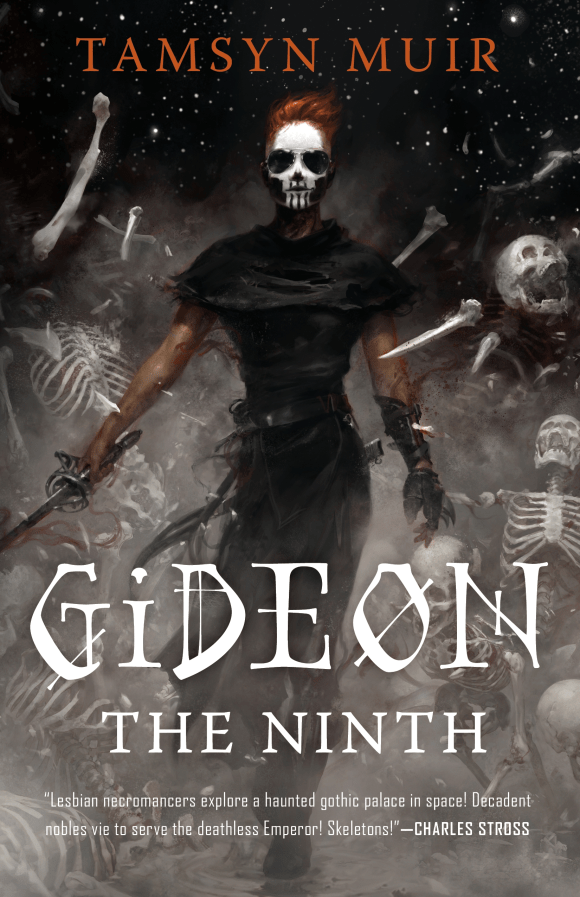
Before I begin reviewing Gideon the Ninth, I have to point out how impressive the design of the hardcover copy I received was. When I previously featured this book in one of my Waiting on Wednesday articles, I mentioned how much I loved the cover art. Indeed, the drawing of the book’s titular redheaded character with her face painted liked a skull surrounded by exploding skeletons is pretty damn cool. The hardcover copy also has some excellent visuals, as the outer rim of all the pages is coloured black, which definitely gives prospective readers a noticeable visual hook, especially when combined with the all-black binding underneath the jacket, emblazoned with gold writing on the spine and a single golden skull on the front. I really liked this fantastic presentation style, and it definitely left an impression on me as I started to read the book.

In the far future, a vast interstellar empire is ruled by necromancers whose control over the various magical disciplines of death make them a powerful force. Eight noble houses serve under the First House of the Emperor, and each of them has just received a message from their ruler. The heirs to each of these houses and their cavaliers, loyal sword-wielding protectors and companions, must attend the Emperor’s planet in order to compete to become the next generation of Lyctor, immortal beings of vast power.

Gideon Nav is an indentured servant to the Ninth House of the Empire, a small and impoverished house that carries a dark reputation. A skilled swordswoman, Gideon wants nothing more than to enlist in the imperial army to leave the dark crypts, the strict occult nuns and the multitude of skeletons that make up the Ninth Planet far behind. However, when her latest escape attempt fails, she finds herself offered an irresistible bargain: act as the Ninth House’s cavalier for the period of the trials and be granted her freedom. There is just one minor problem: Gideon and the heir to the Ninth House, Harrowhark Nonagesimus, an extremely powerful bone witch, absolutely hate each other.

Forced to temporarily put their differences aside, Gideon and Harrow travel to First House, only to discover it is a near ruin, looked after by a few old and mostly unhelpful servants. They soon learn that the secrets to becoming a Lyctor lie hidden within the walls around them, and the representatives of various houses can do whatever they wish to learn them. Trapped on the planet, Gideon and Harrow begin to explore the First House and encounter the heirs and cavaliers of the other houses. As the mismatched pair from the Ninth House start to unravel the various mysteries and challenges before them, a gruesome murder occurs. Something powerful is lurking within the First House, and it has the heirs in its sight. Can Gideon and Harrow work together, or will their own turbulent past and the secrets of their house tear them apart?

Gideon the Ninth is a chaotically clever and massively entertaining first novel from Tamsyn Muir, who has done an excellent job introducing readers to her intriguing new world. Gideon the Ninth is the first book in her The Ninth House series, which already has two planned sequels in the works, with the first of these currently set for release next year. After hearing the awesome plot synopsis for this book earlier in the year, I had picked this as potentially being on the best books for the latter half of 2019. I am glad to see that my instincts were once again correct, as this was an awesome read that gets four and a half stars from me.

Muir has produced an outstanding story for her first novel, as the plot for Gideon the Ninth is an amazing combination of humour, universe building, emotional character moments and a captivating set of mysteries as the protagonists attempt to uncover not only the vast secrets of the First House but the identity of the person or being that is killing them off one by one. The author has stacked this book with all manner of fantastic twists, and there are a number of major and game changing developments that are well paced out amongst the story. There is never a dull spot within the book, as even parts where no substantial plot developments are occurring are filled with excellent humour from the sarcastic narrator with a huge vocabulary of various swear words. There is also a substantial amount of action throughout the course of the book. The various fight scenes blister and explode off the page, especially thanks to the unique magical system that Muir has populated this world with. All of this results in an addictive and electrifying overall story with a very memorable ending.

The real heart of Gideon the Ninth lies in its incredible main characters, Gideon Nav and Harrowhark Nonagesimus, and the complex relationship the two of them have. Gideon is the badass, rebellious, coarse, girl-loving mistress of the blade, who serves as the book’s narrator and only point-of-view character. Gideon is an absolute blast as a main character, as she deals with every situation she comes across with an abundance of disrespect, anger and exaggerated responses, resulting in much of the book’s humour. Harrow, on the other hand, is the dark noble necromancer heir to the Ninth House, whose reserved persona, obsession with necromantic research and abilities, and vindictive nature work to make her initially appear as a polar opposite to Gideon. The relationship between these two main characters is initially extremely adversarial, as both characters declare their absolute hatred for each other, and Harrow seems determined to make Gideon’s life a living hell. As the book progresses, however, Muir really dives into the heart of the relationship between the two characters, revealing a complex history and a twin tale of woe and dark secrets that has defined them for their entire lives. The combined character arc of these two main characters was done extremely well. While you knew from the very start of the book that the two characters would eventually work together, the exact reason why this occurred was handled perfectly, and the final form of this cooperation helps create an epic and tragic conclusion to the entire book. While their relationship is not explicitly romantic (Harrow’s sexuality really is not explored in this book), they do become quite close by the end of the novel, and both characters are written exceedingly well.

In addition to Gideon and Harrow, Muir has also included a range of different characters, representing the heirs and cavaliers of the other major houses in the Empire. This results in an intriguing assortment of side characters who add a lot to the overall story. The author has made sure to invest in substantial backstories for all these additional characters, and this has a number of significant benefits for the story. Not only are the readers now blessed with an abundance of viable and duplicitous suspects for the story’s murder mystery, but each of the various representatives of the houses have their own individual secrets and motives for being at the First House. Learning more about each of these characters is quite fascinating, and a number of them have some pretty amazing character arcs. I particularly enjoyed the storyline of Palamedes Sextus of the Sixth House, who treats his necromancy more as a science than a form of magic. Sextus is the most logical character out of all the people in the book, and he serves as a major driving force of the investigation into the murders. His connection to some of the other characters in the book is a major part of the book, and the ultimate conclusion of his story arc is really cool. Muir has done an incredible job coming up with the book’s various characters, and it is a major part of why this book is so awesome.

It is quite clear that Muir has an amazing imagination, as she has produced a grim and compelling new universe to set this book in. Necromancy and a futuristic science fiction setting make for a fascinating combination, and I really loved her examination of an empire built on worshipping an immortal, necromantic Emperor and the various secrets that come with it. The sheer range of different necromantic magic featured within this book is pretty impressive, especially as each of the Imperial Houses has their own specific form of necromancy, all of which are examined throughout the book. Not only are all these different types of magic really fascinating to examine but it also results in some diverse pieces of magical action, as many of the necromancers unleash their various forms of magic throughout the book, resulting in some fantastic sequences. I do think that the author could have done a slightly better job of explaining some of the unique elements of her universe at the start of the book, as I got a little confused at some points towards the beginning; however, this was quickly chased away by deeper dives into the universe’s lore later in the book. Muir has left open a number of questions and plot directions to explore in future books in the series, and I am really curious to see what happens next.

Gideon the Ninth is a wild and exciting novel that makes use of an intriguing concept, some compelling characters and an excellent story to create an exceedingly entertaining book that was a heck of a lot of fun to read. Featuring laugh-out-loud humour, intense action and major emotional moments, this is an incredible read that is really worth checking out. Muir has hit it out of the park with her debut novel, and I cannot wait for the next book in the series.

Amazon     Book Depository

Spaceside by Michael Mammay

Spaceside Cover

Publisher: Harper Voyager (Ebook – 27 August 2019)

Series: Planetside – Book Two

Length: 336 pages

My Rating: 5 out of 5 stars

Amazon

Last year, Michael Mammay debuted an absolutely incredible book, Planetside, the outstanding science fiction thriller that absolutely blew me (and the planet of Cappa) away with its inventiveness, addictive story and explosive conclusion. Now Mammay attempts to follow up this amazing first novel with a second book in his Planetside series, Spaceside.

I mentioned several times already on my blog how much I loved Planetside last year. Mammay’s first book was a spectacular story that blended a science fiction story about an advanced human military occupying an alien planet with an intriguing thriller around a missing soldier. Planetside was easily one of the best books I read in 2018, and I still cannot get past that epic finale to the story.  As a result, when I found out that Mammay was following it up this year with Spaceside, I knew that I would have to read it, and featured it in both a Waiting on Wednesday post and my Top Ten Most Anticipated July-December 2019 Releases list. I was lucky enough to get an advanced electronic copy of Spaceside from Mammay and the publisher, and it did not take me long to dive in and read this book. I had pretty high expectations, considering how good the first entry in the series was.

In Planetside, veteran soldier Colonel Carl Butler is sent to the planet of Cappa to find a young officer who mysteriously disappeared following a mission against an insurgent group of the local aliens, the Cappans. Butler’s mission quickly revealed a massive conspiracy where elements of the occupying human military had been working with the Cappans to genetically modify humans with Cappan DNA, creating a dangerous hybrid species. After uncovering the existence of these hybrids and the full extent of the technology that had been traded to the Cappans, Butler is forced to make the terrible decision to initiate a major missile strike against Cappa to prevent a huge number of Cappans and hybrids from escaping into the wider galaxy. His actions stop the planned exodus and devastate the planet, killing a huge number of Cappans. Butler is subsequently arrested, frozen and sent back home for court martial, with his fate unrevealed in the last book.

Spaceside begins about two years after the events of Planetside, and reveals that Butler is now the most infamous man in the galaxy. While many view him as a hero, others consider him a genocidal monster. Forced out of the army, Butler now has an easy job as Deputy VP of Corporate Security for Varitech Production Company, a high-tech military company on the planet of Talca Four. In theory he helps protect the company against corporate threats, but in reality his job is to impress clients and utilise his substantial military connections for his bosses’ benefits.

As a result, he is surprised one day when he is called into the CEO’s office and given an actual security assignment. A rival tech company, Omicron Technology, has had a breach in their supposedly unhackable computer systems, and Varitech wants to know how it happened and whether their own systems are vulnerable. With no obvious leads and no-one claiming credit for the hack, Butler reaches out to one of his contacts working at the impacted company. However, shortly after their meeting, Butler’s contact is found dead and Butler is now the police’s prime suspect.

Determined once again to find out the truth no matter what, Butler starts to dig around at Omicron and discovers that they were working on a secret project with links to his time on Cappa. When information arrives from the most unlikely of places, Butler is once again drawn into a massive conspiracy that he is not meant to survive. Can he find a way out of this, or will he be forced to redo his greatest mistake?

Wow, just wow. This was another exceptional book from Mammay, who has once again produced a fantastic science fiction thriller hybrid with some amazing moments in it. I absolutely loved this follow-up to Planetside, which not only contains another addictive story with an amazing protagonist but also serves as an excellent sequel to the first book. I powered through Spaceside extremely quickly and loved every minute I spent glued to my screen. This gets another five out of five stars from me, and I reckon that I will once again be placing Mammay’s latest book on my top reads of the year list.

Just like the previous book in the series, Spaceside, is a compelling thriller set in a great science fiction environment and with some intriguing military thriller and science fiction elements thrown into it. However, in this book, the protagonist is no longer an official investigator for the military but a civilian involved in events that appear to be corporate espionage. This results in an intriguing change of pace from the first book that I quite enjoyed. Butler is much more of an outsider in this book, and his methods of investigating the potential crime and attempting to uncover the conspiracy are a lot more clandestine than before. Mammay takes this thriller based storyline to some interesting places and forces the protagonist to make some surprising alliances in order to survive and get to the bottom of the investigation. While the story is more focused on corporations than the army, there is still a strong military element to the book, as Butler is investigating military technology companies. There is also a strong amount of military action towards the end of the book as Butler once again sees combat against an enemy. Mammay writes some strong military action based sequences in his books, and the reader can almost see the detailed and well-written fight scenes. All of this results in an extremely strong main storyline that leaves open the potential for another intriguing entry into this series.

I was really happy that Mammay continued to follow the adventure of his protagonist from Planetside, Carl Butler. Butler, who serves as the story’s narrator and point-of-view character, is a fantastic protagonist who was one of my favourite parts of the first book. Butler is a blunt and honest old character, whose craggy, veteran solider outlook on life infects his narration of events and helps the reader connect with his story. Just like in Planetside, Butler is reluctantly dragged into the events of this book and goes up against a seemingly superior opponent, who thinks that they know how to manipulate the old soldier. However, Butler is a wily operator who is able to turn the situations to his advantage through his rough charm and experience of dealing with people, especially former military personnel, who assist him with his investigation and help keep him alive. I particularly liked the clever way that he was able to manipulate the situation towards the end of the book by playing on certain character’s weaknesses, military training and humanity, and while his final plan did not have the explosiveness of his actions at the conclusion of Planetside, it was still a great scene. I look forward to seeing what sort of trouble Butler gets up to in any future instalments of this series, as he is a truly enjoyable protagonist.

I felt that Spaceside also did a great job following on from the story established in the first book of the series. I really enjoyed seeing how the author followed through with several of the storylines left open at the end of Planetside, as well as how he explored a number of the consequences of the protagonist’s actions. The main way that this was achieved was by showing the reader how Butler’s life changed following his bombing of Cappa. Because the story is told from Butler’s point of view, we get to see how the guilt from his actions and the events that led up to them has affected his psyche. Despite the tough outer shell he shows most people, Butler is struggling with whether he did the right thing and must now deal with being the most infamous person in the galaxy, receiving glares or praise wherever he goes. These events and inner thoughts impact how he reacts to certain events later in the book, and it is a clever and natural progression for the character.

In addition to the focus on Butler, Mammay makes sure to include several characters from the first book so the reader gets to see how their storylines progressed. Not only does this help bring in a previously established sidekick for Butler, as well as a sassy reporter contact who gives him intel and clues, but it also brings back Butler’s old mentor and friend, General Serata, for a tense scene. Serata was the man who sent Butler to Cappa in the previous book, and in many ways he is responsible for the destruction on Cappa as he knew how his old friend would be forced to act in response to what was going on there. It was great seeing these two characters awkwardly try to discuss the events of the previous book and come to terms with Serata’s manipulation of Butler. All of this makes for a gripping follow-up to the first book, and I really enjoyed seeing how the author addressed some of the events from Planetside.

Spaceside is an incredible second outing from Michael Mammay, who has a truly bright future in the science fiction genre. I once again found myself drawn into the excellent story and fantastic central protagonist of this book, as Mammay does an outstanding job crafting together a clever and addictive narrative that does a spectacular job following on from the author’s amazing debut, Planetside. Spaceside gets a full five stars from me, and I am already looking forward to Mammay’s next enjoyable book.

Amazon

Howling Dark by Christopher Ruocchio

Howling Dark Cover

Publisher: Gollancz and Recorded Books (16 July 2019)

Series: Sun Eater – Book 2

Length: 679 pages or 28 hours and 3 minutes

My Rating: 5 out of 5 stars

Amazon

Outstanding new author Christopher Ruocchio, who blew me away last year with his debut novel, Empire of Silence, returns with the second book in his brilliant Sun Eater series, Howling Dark.

Empire of Silence was one of my favourite books from last year, easily making my Top Ten Reads for 2018 list, and I absolutely loved the author’s highly addictive story and its vast new science fiction universe. This was a fantastic first book from Ruocchio, and when I finished it, I really wanted to know what happened next. As a result, I have been waiting to read this sequel for a while, having done a Waiting on Wednesday article on it and including it on my Top Ten Most Anticipated July – December 2019 Releases list. I was pretty excited to receive a copy of this book a few weeks ago, especially as Ruocchio was nice enough to mention my blog in his acknowledgements (this has not affected my review or rating in any way). However, due to having a huge number of other books that were high priority reads, I ended up listening to the audiobook format of Howling Dark instead, which is narrated by Samuel Roukin. I had extremely high hopes when I started reading this book, and I was definitely not disappointed by the final result.

The Sun Eater series is set far in humanity’s future, where humans have left Earth and expanded out to thousands of worlds. While humanity, mostly in the form of the Roman-inspired Sollan Empire, has flourished, for the last four hundred years they have been fighting a brutal and destructive war with the Cielcin, a spacefaring race of aliens who have destroyed hundreds of colonies and billons of humans. Each of the books in the series is written as a part of the autobiographical chronicle of series’ protagonist, Hadrian “Halfmortal” Marlowe, otherwise knowns as the Sun Eater. Hadrian is the man who will one day destroy a sun in order to burn every Cielcin to a cinder, and in doing so become both history’s greatest hero and most infamous monster. However, these events are set to occur much further on in the future, and these earlier books focus on the events that formed Hadrian’s character, and show how he became the man to end it all.

In Howling Dark, the story is set some 50 years after the events of Empire of Silence. During this time Hadrian Marlowe has been wandering the outer fringes of the galaxy trying and failing to find a myth. Leading a band of mercenaries, former gladiators and disguised Imperial legionnaires, and carrying a cargo of frozen Cielcin prisoners, Hadrian hopes to travel the lost planet of Vorgossos. The planet’s mysterious master apparently has a way to contact the Cielcin, who Hadrian hopes to finally negotiate peace with, ending the brutal war that has ravaged both races.

However, finding Vorgossos has proven far more difficult than Hadrian initially anticipated. The legendary planet is well hidden, and the only way to uncover its location is to deal with the Extrasolarians, a group of humans who live outside of Imperial control and whose reliance on technology and enhancements borders on the heretical. As Hadrian and his companions locate a promising lead, they are suddenly ordered back to the fleet as the war against the Cielcin needs every soldier.

Determined to bring his plan for peace to fruition, Hadrian and his companions disobey these orders and go rogue. Entering the worlds of the Extrasolarians, the Exalted and other grim horrors at the edge of the known universe, they are able to obtain passage to Vorgossos. However, what they find at their destination may be even worse than the alien foes they are attempting to contact. Between facing technological monstrosities, a cruel, immortal king and the appearance of humanity’s oldest and most feared enemy, Hadrian has his work cut out for him. But the further along his path he travels, the more Hadrian begins to understand the grim destiny in front of him and the terrible cost he will have to pay.

This is another epic book from Ruocchio! Howling Dark is a dark, gothic science fiction masterpiece that was an absolute treat to read, and which really highlights the author’s creativity and ability to create a wide-ranging universe with some unique and captivating features.

This was another incredible and ambitious story from Ruocchio, who takes the reader on an extended and powerful adventure through his great universe. The Howling Dark contains a lengthy and compelling plot which goes in some very interesting directions. While this is a long book, Ruocchio does a great job of pacing the story out, and there is rarely a moment where the plot is not progressing in an intriguing way, or where the reader is left bored. I really enjoyed some of the dark places that the author took the story in this book, and there are a variety of cool new locations, antagonists and other monsters that the protagonist and his friends need to deal with in one way or another. Hadrian goes through some notable character development in this story as he takes more and more steps down the road to becoming the biggest legend in the universe. Howling Dark has a pretty epic conclusion to it, with some major plot developments occurring in the last 100 pages or so, and I really liked how Ruocchio wrapped up the storyline. Overall, this book has an intense and captivating storyline to it, and I am exceedingly glad I got a chance to read it.

I did find that the start of the book was a tad hard to get into. Due to the complex storylines (and possibly because I have read so many different books in the last year) it took me a little while to remember whom some of the characters were and where the plot was up to. It did not help that the story had jumped ahead by 50 years, and some of the events that occurred during this break are mentioned a few times at the start of the book. However, once I was able to get my bearings, it did not take me long to get hooked on the story and I had no problems following the enjoyable plot, especially as the author does a great job explaining these missing events and offering the reader several recaps of the events from the first book. Readers of the physical copy of Howling Dark will also be helped by the detailed dramatis personae, index of worlds and lexicon of terms that is included at the back of the novel, which can really help to clear up some confusion about the events that have occurred. I would say that readers would probably be best served checking out Empire of Silence first before trying to read Howling Dark, but I believe that new readers will be able to fully enjoy this story once they reach the recaps and get a sense of what happened in the previous books.

I really enjoyed how Ruocchio continued to write his story in the chronicle format that worked so well in the first book. Each of the books in the Sun Eater series are presented as part of a self-written chronicle of Hadrian’s life, penned some years in the future after he destroyed the sun. As a result, the story is told exclusively from Hadrian’s perspective and features his memories of the various events that formed his character. This is a great way to tell the story, mainly because the reader gets to see a contemplative version of the narrative. There is a real and palpable sense of regret in Hadrian’s narration, which really adds to the book’s grim tone, as the reader gets to hear the protagonist recount events that are not only traumatic for him, but which set him down the path to his defining moment. Due to Hadrian’s lifetime of self-reflection, you also get a far more in-depth examination of the character’s motivations for taking certain actions, as well as an analysis of why other characters acted the way did, which adds a great edge to the story. I also liked how the protagonist hinted at some of the key moments that occur later in the book or may occur in later books. This dramatic irony does a wonderful job of keeping a sense of tension in the air, as the reader knows that the worst is yet to come. Ruocchio’s use of the chronicle format for these novels is cleverly done, and I really enjoyed how it helped enhance the overall story.

Possibly Ruocchio’s biggest strength as a writer is his amazing ability to come up with a widespread and intriguing new universe to use as a setting for his fantastic story. This was one of my favourite things about Empire of Silence, as I loved the large, sprawling human empire that Hadrian lived in during the first book. This Sollan Empire was created after a major war with artificial intelligences thousands of years before, and therefore any technology that is too advanced or which thinks for itself is considered heretical by a controlling religious organisation. The massive empire is heavily inspired by the Roman Empire, with a similar government, military system, social castes and culture. This also affects the overall tone of the story, as the narrator, Hadrian, is a true son of this empire, and thus has a classical education that guides his overall view of life. As a result, the story is filled with the Hadrian quoting a number of historical verses and aphorisms to tell his tale, which really helps to give the overall story a more classic tone in the science fiction environment. I really liked this cool combination of science fiction elements with this antique mindset, and the general history of the Sollan Empire, with its veneration of other historical empires such as the Romans or the Victorians, is deeply interesting. This Sollan Empire actually reminded me a bit of the Imperium from Warhammer 40k, which also has a Roman inspiration and overarching gothic theme to them. As a fan of Warhammer 40k, it was cool see a universe built along similar ideas, and Ruocchio comes up with a number of clever and unique new elements to make his Sollan Empire stand out. Although most of the story in Howling Dark is spent outside of the main empire, the author still spends time expanding on elements of this massive organisation, and the reader gets more of a sense of them. I especially enjoyed seeing the Imperial legions in battle during this book, and it results in a number of incredible scenes that I really enjoyed.

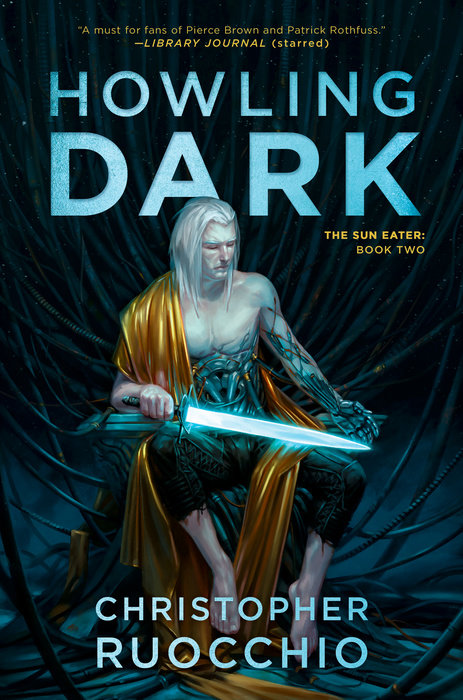
Ruocchio also does an outstanding job introducing a number of intriguing new universe elements to this book in the form of the Extrasolarians. I found the dive into the world of the Extrasolarians to be extremely fascinating, especially as Ruocchio let his creativity run wild during this part of the books, coming up with all manner of technological marvels, body augmentations, genetic modifications and other science fiction wonders. However, many of these technologies have a darker side to them, which the protagonist and his friends find out the hard way. Some of these modifications are downright creepy, and this really helped the author create a dark and distinctive expansion to his universe. I was especially impressed with one of the new antagonists of this story, Kharn Sagara, a sinister, technologically enhanced ancient with hidden motivations (check out the cover below to see how cool his character design is). The reader also gets a much more in-depth look at the Cielcin in this book, as the protagonist starts to understand more about them and how they think. Ruocchio does a fantastic job exploring the mindset of these creatures and showing them as truly alien beings with very little similarities to humanity, and the reader starts to get an understanding of why Hadrian will eventually be forced to destroy them. All of this is really cool, and I could honestly go on for pages about all the cool world building that Ruocchio does in this book, it was that impressive.

As I mentioned above, I ended up listening to Howling Dark’s audiobook format. The audiobook runs for 28 hours and 3 minutes and is narrated by Samuel Roukin, who does a fantastic job bringing this story and the characters to life. This is a lengthy audiobook, and readers will need to make a bit of room in their listening schedule to get through it. It is actually the longest science fiction audiobook that I have ever listened to (so far) and would easily make my Top Ten Longest Audiobooks That I Have Listened To list. I found that Howling Dark’s audiobook format was a great way to enjoy this epic novel. I always find that listening to a complex story helps me absorb a lot more of the story and universe details, making for a much fuller read. This was definitely true for Howling Dark, as I was able to really appreciate the huge amount of gothic science fiction detail that Ruocchio installed in his work. I also found that Roukin’s narration also did a wonderful job of capturing Hadrian’s inherent regret and despair, and this really helped me appreciate the entirety of the book’s story. Roukin also creates some terrific voices for the various characters and does a fantastic job bringing them to life through the audiobook. This was a fantastic format to enjoy Howling Dark with, and I will strongly consider listening to the audiobook of the next book in this series.

Overall, I think that Christopher Ruocchio does an excellent job following up on his spectacular debut, Empire of Silence. Howling Dark is an amazing read that I absolutely loved. Ruocchio has come up with a complex story for this book, which is massively enhanced by his clever writing style and impressive imagination. Clearly, Empire of Silence was no fluke, as Howling Dark gets a full five stars from me. I am really looking forward to checking out the next book in the series, especially as Ruocchio has left a huge number of intriguing storylines open, and I fully intend to stick with this series until Hadrian destroys that sun.

Howling Dark Cover 2

Amazon

Graveyard Shift in Ghost Town by Michael Pryor

Graveyard Shift in Ghost Town Cover

Publisher: Allen & Unwin (Trade Paperback – 1 July 2019)

Series: Ghost Town – Book 2

Length: 307 pages

My Rating: 4 out of 5 stars

Amazon     Book Depository

Acclaimed Australian author Michael Pryor revisits his Ghost Town young adult series with another entertaining and intriguing story, Graveyard Shift in Ghost Town.

Anton Marin is having an extremely odd gap year. As a member of an infamous outcast ghost-hunting family, Anton can see the ghosts that linger in our world, and he has recently taken up the family business. Working with his new partner, the English badass Rani Cross, Anton works to protect the people of Melbourne from the more dangerous types of ghosts while also ensuring that all the wandering spirits they encounter are helped on to the next world. However, even with Rani’s help, ghost hunting in Melbourne has recently gotten even more difficult as the city finds itself in the midst of a genuine ghost plague. A massive infestation of the most dangerous types of ghosts imaginable is wreaking havoc across the city, and even usually benign or harmless spirits are starting to attack people.

Anton and Rani’s problems are about to get even worse; a deadly cult of Trespassers, humans who use magic to control ghosts for their own ends, is in town and determined to capture anyone with ghost sight for use in their rituals. As Anton and Rani find themselves with a target on their back, Anton must deal with the return of his long-lost aunt Tanja. While Anton is overjoyed to have a member of his family back, he quickly realises that not everything with his aunt is as it seems. What secrets is Tanja hiding and what is her connection to the leader of this group of Trespassers? As secrets and occult dangers arise within Melbourne, the fate of the world hangs in the balance.

Michael Pryor is one of Australian’s most notable authors of young adult fiction, having written a number of fantasy and science fiction novels for a younger audience. Some of his most notable series include The Law of Magic, The Extraordinaries and his six entries in the long-running The Quentaris Chronicles. Graveyard Shift in Ghost Town is the second book in Pryor’s latest series, Ghost Town, and follows on from his 2017 release, Gap Year in Ghost Town. I initially thought that Graveyard Shift in Ghost Town was my first experience reading Pryor’s work, but I actually remember reading some of the books in The Doorways trilogy back when I was kid. While this was something like 20 years ago (and now I feel old), I do know that I greatly enjoyed these books and their clever concept, so I was excited to check it out.

Graveyard Shift in Ghost Town is an interesting and engaging piece of young adult fantasy with a number of cool features. Pryor has done a fantastic job combining a unique concept of ghost hunting with a group of enjoyable characters and grounded the story in the author’s home city of Melbourne. This results in a great piece of fiction that will do a wonderful job of enthralling a whole new generation of young Australian readers. For those readers who are only just coming onto this series, knowledge of the previous book is not a necessity to enjoy this sequel, as the author does a good job of re-introducing the characters, plot details and adventures that were featured in Gap Year in Ghost Town.

One of the most enjoyable aspects of this series is the overarching concept of a world haunted by real and potentially malevolent ghosts, and the adventures of the few individuals who can actually see them. Pryor has populated his story with all manner of different types of ghosts, each with their own specific characteristics, strengths and appearances. Readers will get to see the various ghosts that the protagonists go after, including the Lingers, Moaners, Thugs, Weepers and a new breed of zombie ghosts, just to name a few. All of these ghosts are really cool, and I enjoyed how this book started going into a little more detail about the origins of ghosts and the malevolent forces behind them. I also liked how the story also pivoted towards a more human antagonist in the form of the Trespassers, and it was intriguing to see how a group of people utilising the ghosts for nefarious purposes. It was interesting to see the protagonist’s ghost hunting techniques in action, and it results in some intense action sequences, especially when they have to fight ghosts and the Trespassers at the same time. This is an inventive and clever concept that helps make this series stand out from some of the other young adult fantasy books out there.

Another great distinguishing feature about this book is the author’s inclusion of a contemporary Melbourne setting. I love fantasy stories that utilise modern settings, and Pryor did an exceptional job bringing the city of Melbourne to life. The characters visit all manner of key landmarks in the city throughout the course of the story, and I really liked seeing locations I have visited featuring fights between ghost hunters and spirits. Pryor also uses the opportunity to showcase some of his favourite restaurants and cafes and it was nice to see an author insert elements of a city they clearly love into their story.

In addition to its intriguing concept and excellent setting, I was also impressed with the complex characters in Graveyard Shift in Ghost Town. The main protagonist is Anton, the funny and slightly odd heir to an exiled ghost hunting family with their own unique techniques for dispersing ghosts. Anton serves as the narrator and point-of-view character for the story, and he offers a fun and introspective narration to the book, while the revelations about certain family secrets offer up some interesting drama. The other main protagonist, Rani, is an extremely skilled sword-wielding badass who is a former member of an established ghost-hunting order from England and is an excellent female character for this series. Anton and Rani form a great team in this book, as the two of them find their groove as a partnership and work well against the threats they face. The character of Bec is an interesting third member of this partnership, as not only is she Anton’s oldest friend, who plays a cute game where they try to guess quotes from famous figures, but she is also Rani’s girlfriend, who they share an apartment and cat with. Bec really brings the team together, and there are some interesting examinations of the dynamics between the three of them, as each of them feels like they are the outsider in the group. There are also a few cool new additions to the series in this book, including a couple of Scottish ghost hunters, their ghost-hunting dog and a good antagonist in the form of the leader of the new cult of Trespassers.

Graveyard Shift in Ghost Town is an excellent piece of young adult fiction that is appropriate for a wide range of different ages and tastes. While there are a few dark scenes, such as a somewhat gruesome torture sequence, the vast majority of the book is appropriate for young teens and perhaps particularly mature young readers. I thought the author’s inclusion of a positive lesbian relationship between Rani and Bec was a really good feature for the young adult audience, and it was that was portrayed extremely well. I am also sure that young Australian readers, especially those living in Melbourne, will love to see these fantasy variations of locations they are familiar with, and it will hopefully invigorate their imagination.

Michael Pryor has done an amazing job following up Gap Year in Ghost Town, as he presents another compelling and enjoyable paranormal young adult adventure. With inventive ghosts, scary antagonists, great characters and a fantastic Australian setting, Pryor has once again shown why he is one of the leading authors of young adult fiction in Australia. Graveyard Shift in Ghost Town is definitely worth checking out, and it has a lot of features that should prove appealing to the younger teen audience.

Amazon     Book Depository

A Capitol Death by Lindsey Davis

a capitol death cover

Publisher: Hodder & Stoughton (Hardcover – 4 April 2019)

Series: Flavia Albia – Book 7

Length: 383 pages

My Rating: 4 out of 5 stars

Amazon

For the last 30 years, Lindsey Davis has been one of the most prolific and impressive authors of ancient history murder mystery, writing 28 amazing books during this period. Starting in 1989 with The Silver Pigs, Davis introduced the world to Falco, the private investigator who solved murders in ancient Rome. This series, known as the Marcus Didius Falco series, eventually ended after 20 books in 2010; however, several of the characters and storylines explored in these books were continued in 2013’s The Ides of April, the first book in the new Flavia Albia series. In each of the following years, Davis has released a new book in this second series, resulting in A Capitol Death, which is the seventh Flavia Albia book to be released.

I was lucky enough to get a copy of The Ides of April when it first came out, and absolutely fell in love with the awesome main character and her fantastic investigations. I have since gone out of my way to grab every book in the Flavia Albia series, as Davis is one of my auto-buy authors, and I currently have reviews for the last two books in the series, The Third Nero and Pandora’s Boy on my blog. I really loved Pandora’s Boy last year, and it even got an honourable mention on my Top Ten Reads for 2018 list. As a result, I have been quite eager to get my hands on A Capitol Death for a while now.

In Rome, in 89 AD, while the city is preparing for the return of the cruel Emperor Domitian, murder is literally in the air. The body of a minor government official has been found at the base of the symbolic Capitoline Hill, and it appears that he was pushed off the top of the cliffs. While a case like this would usually be a low priority for the city’s authorities, the man who died was responsible for all the transportation during the Emperor’s upcoming triumph and his death is now politically sensitive.

Enter Flavia Albia, professional informer and adopted daughter of the legendary investigator Falco. Employed by her husband, the magistrate Faustus, to investigate the murder for the city, Flavia sets out to discover who is responsible for this crime. However, that is easier said than done, as the victim is revealed to have been an extremely unpleasant individual whose attitude and shady dealings made him a very unpopular person. With a huge list of suspects lining up before her, Flavia has her work cut out for her.

When a second murder occurs on the hill, the case becomes even more complicated. Flavia must work out the connection between the two victims and who would want to murder both of them. As the start of the Emperor’s triumph gets closer, Flavia must interrogate a lengthy list of people, including oyster farmers, slaves, diviners, goose handlers, seamstresses and more in order to find the killer. What happens when the killer finds her instead?

A Capitol Death was another great addition to the Flavia Albia series, and well worth the wait. Davis once again sets a compelling mystery within her excellent Roman historical setting, and sets her unconventional protagonist on the case to find out the truth in an ancient city that is portraying some very modern attitudes and mentalities. The result is a captivating and entertaining read that I was able to finish off in relatively short order. While I did not quite enjoy A Capitol Death as much as the last two Flavia Albia novels, this was still a fantastic piece of historical crime fiction and I will be grabbing the eighth instalment of this series when it comes out next year.

At the heart of this story is a well-thought-out and compelling murder mystery. Davis constructs a complex case, involving a deeply unpopular victim, a huge number of suspects with substantial motives, very little evidence and a complete lack of cooperative witnesses. Without modern forensic techniques in this ancient setting, the protagonist’s main investigative recourse is to talk to everyone with a connection to the victim in an attempt to find out who would want to kill him. As a result, Flavia digs her way through the lives of everyone involved in the case, finding out deficiencies in stories and the various connections between the various suspects and witnesses. I really enjoy the way that the protagonist investigates this case, and it is interesting to see the variety of evidence and leads she can come up with simply by asking the right questions. The case has a substantial number of twists and turns, as well as a huge number of likely suspects that act as good red herrings. The entirety of the case is very intriguing, and I really enjoyed the investigative angle of this book.

While the murder investigation is a key part of the main plot, Davis also spends a bit of time focusing on the chaotic personal life of series protagonist Flavia Albia. Between setting up her new home, dealing with her high-maintenance family and helping out a husband only recently recovered from a freak lightning strike, there is a lot going on for the character, even before she is forced to investigate a murder. While some readers might have trouble caring about a character setting up a household, entertaining her family or finding reliable domestic help, I actually found it to be an enjoyable part of the book, mainly because the author uses these scenes to make a number of jokes of humorous observations. In addition, after all these books, I have grown attached to the main character and I am genuinely interested to see how her life progresses.

Davis has always done a great job of utilising the ancient city of Rome as a setting for her stories, and she continues to do this in A Capitol Death. This story is set in 89 AD, during the reign of the Emperor Domitian, and features an interesting version of the city. In this book, Domitian is returning to the city after a military campaign and the city is organising a triumph in his honour. This means that the city is filled with all manner of secret agents, Praetorians and officials organising the triumph for the Emperor, which makes for an intriguing background setting for this story. I really enjoyed the author’s examination of the triumph, which becomes a big focus of the book due to several of the case’s suspects or persons of interest being involved in its planning and set-up. There are a number of sequences that show the huge amount of preparation that goes into the triumph, and it was entertaining to see how they may have faked certain required elements of the triumph, such as dressing up random citizens to use as fake captured prisoners.

In addition to the examination of the political make-up of the city and the preparation for the military triumph, Davis also spends this book looking at some other fascinating aspects of the city and its citizens. The presence of certain witnesses who live outside the city of Rome necessitates a visit to one of the smaller Roman towns on the Italian coast, and it is always interesting to see the protagonist leave the city. The visit also allows the author to spend some time highlighting the process behind the creation of the coveted imperial purple dye that was used for the priciest garments in ancient Rome. There was also an intriguing focus on Capitoline Hill as the site of a murder. The Capitoline Hill, as one of the original Seven Hills of Rome, is a major feature of city, and Davis really dives into its history and importance during the course of her book, giving the reader a great idea of what this historical location is like and what goes on there. I always love it when an author takes the time to teach the reader about some obscure aspects of history, and Davis showcases some really cool bits of historical trivial in A Capitol Death. This is a fun aspect of this book and one I quite enjoyed, especially as Davis does an excellent job of weaving it into the murder mystery part of the story.

I have always loved the way that Davis has introduced characters with more modern attitudes and personalities into her historical stories, as it makes for a funny and enjoyable story. Watching characters in an ancient setting act exactly like a person in a modern city is always enjoyable, and Davis makes sure to amp up the snark in each of her characters, making for a fun bunch of characters. Flavia is of course the snarkiest of them all, and as the story’s narrator and point-of-view character, her amusing opinions, thoughts, descriptions of the other characters and anecdotes from her past really help to give this book a light-hearted and entertaining tone. This is always a great feature of the Flavia Albia books, and I am glad that Davis continued it in this book.

This was another amazing outing from Davis that once again shows why she is the master of the ancient history murder mystery. Not only does she do an excellent job blending together a clever murder mystery with some fascinating historical details, but she also brings her trademark humour to the mix, creating another entertaining tale. I look forward to continuing this series next year, with The Grove of the Caesars, set to be released in April 2020, and I am sure I will have an incredible time reading the next instalment of the Flavia Albia series.

Amazon

Commodus by Simon Turney

Commodus Cover

Publisher: Orion (Trade Paperback – 11 June 2019)

Series: The Damned Emperors – Book 2

Length: 482 pages

My Rating: 5 out of 5 stars

Amazon

Acclaimed historical fiction author Simon Turney catalogues another infamous ruler of Rome in the second book of his The Damned Emperors series, Commodus.

Rome, 162 AD. The Roman Empire is in a rare period of peace and stability, with two brothers, Marcus Aurelius and Lucius Verus, both ruling as Emperor. The future also looks bright, as for the first time in Rome’s history, two male heirs have been born to a ruling Emperor. However, only one of these children is destined to become Emperor and make his own mark on history. His name is Commodus.

Raised as Rome’s golden child, Commodus eventually succeeds his father as Emperor following a period of war, rebellion and disease. Beloved by the people and loathed by the Senate, Commodus styles himself as Hercules reborn, becoming a great patron and competitor of gladiatorial fights, chariot races and other feats of martial strength. However, behind the scenes, Commodus’s life has been filled with tragedy and despair, and he hides a darker side beneath his golden exterior.

As Commodus succumbs more and more to his inner demons, Rome is rocked by power struggles and plots, as his family and servants attempt to control or usurp the unpredictable Emperor. Only one woman, Marcia, truly understands Commodus and can keep his mind together. Born a simple palace servant, Marcia was the love of Commodus’s life and a skilled player of Roman politics. However, not even Marcia can contain Commodus’s self-destructive urges forever, and eventually she must decide whether she will die at the hands of her great love or make the ultimate betrayal.

Commodus is the second book in Turney’s The Damned Emperors series, which takes a look at some of the most tragic, infamous and self-destructive rulers of ancient Rome. After presenting an exciting tale of insanity and vengeance in Caligula, Turney now takes a look at one of the most intriguing emperors in Roman history, Commodus. The result is a powerful, well-written and captivating piece of historical fiction that I absolutely fell in love with and which easily earns a full five-star rating from me.

Commodus is truly one of the more fascinating figures in Roman history, which is saying a lot. While most would probably know him as the villain in the movie Gladiator, as portrayed by Joaquin Phoenix, he actually had a long and controversial reign, with many events that are hard to believe. As a result, a book focusing on his life is bound to be interesting; however, Turney goes above and beyond, presenting a well-researched and deeply compelling novelisation of Commodus’s life. Not only does Turney explore some of the more extraordinary aspects of Commodus’s reign, such as his devotion to becoming the new Hercules, his exploits in the arena or the cult of personality he formed around himself, but Turney also attempts to explain why he may have done them. This results in a clever and thought-provoking look at the entirety of Commodus’s life, including several formative events that are known, or are likely to have happened, and which may have led to some of his more extreme actions later in life. I really enjoyed the potential scenarios that Turney came up with to explain Commodus’s personality, and his justifications featured towards the end of the book are really quite interesting and very compelling. There are also some interesting historical tweaks to some of Commodus’s actions, but I feel that these work in the wider aspect of the story and help to create a more believable narrative. The end result is an outstanding examination of this fascinating historical figure which will allow the reader to see Commodus in a whole new light.

Turney has done an amazing job telling this story, thanks in part to the use of an excellent point-of-view character. The story is told from the perspective of Marcia, the women in love with Commodus, and is set out as a personal chronicle of Marcia’s actions, which run parallel to the life of Commodus. Turney takes more historical liberties with this character and re-imagines Marcia as a close childhood friend of Commodus. The use of Marcia as the story’s narrator and the subsequent re-imagining of parts of her life story are done extremely well, allowing the author to have a single, consistent narrator who is constantly close to the main character. This was the best way to tell the complete story of Commodus’s life, and it was an amazing storytelling device from Turney which completely justifies historical variations in the character.

Using Marcia as the point-of-view character also allowed Turney to tell an addictive historical tale of love, revenge, ambition and tragedy. Marcia is a tragic character in this book, and her storyline is really quite powerful. The daughter of a servant in the Imperial Palace, Marcia is allowed to grow close to Commodus, becoming his childhood friend and confidant before circumstances conspire to keep them apart. However, Marcia’s determination to be with Commodus results in a series of power plays, plots and other nefarious actions as she tries both to free herself and to deal with other people who wish to influence the Emperor. Despite some of the terrible actions she commits, Marcia comes across as a very sympathetic character in this book, and your heart goes out to her with some of the setbacks she encounters. Her romance with Commodus, while caring and filled with love, is also very dramatic, as Commodus’s moods and the influences of others in his circle often place strains and boundaries on them being together. The final, tragic result of this story is told extremely well, as the reader gets to see the highs of their love, swiftly followed by the swift, one-sided deterioration of their relationship. This results in a devastating conclusion to the book, and the reader is left reeling at how this romance comes to an end.

In addition to the story of Commodus and Marcia, Turney also does an excellent job exploring Roman history and events during the span of Commodus’s life in the second half of the second century. Some truly fascinating events occurred during this period of Roman history, including wars, plagues and the reign of proxy tyrants such as Cleander and Perennis. The author covers these events in some detail, and it is really interesting to see how some of the events unfolded, how long they lasted and what actions led up to them. Commodus is also filled with a number of intriguing depictions of Roman life, and the various ancient Roman settings proved to be an amazing background for this great story.

Commodus is a first-rate novel and easily one of my favourite pieces of historical fiction for 2019. Turney is an incredibly skilled author whose dedication to historical detail pairs well with his amazing ability to tell a dramatic and powerful story. Commodus comes highly recommended, and I cannot wait to see which flawed ruler of Rome Turney focuses on in his next instalment of The Damned Emperors series.

Amazon