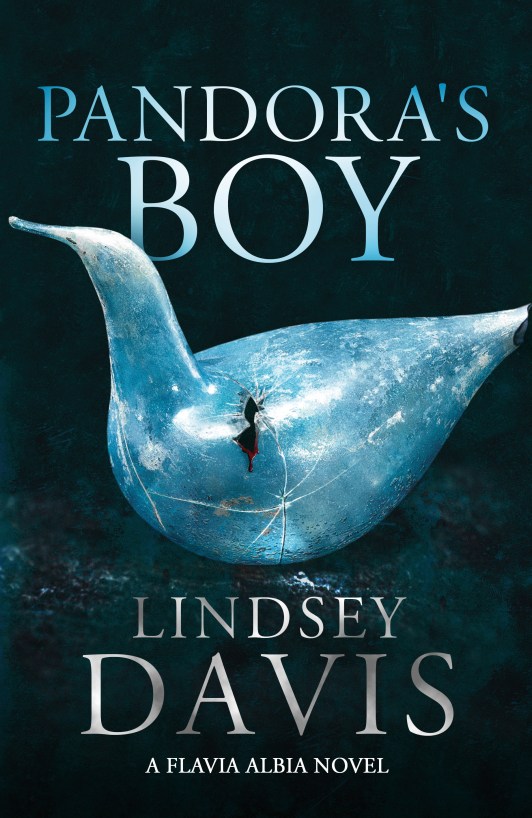
Pandora’s Boy by Lindsey Davis

Pandora's Boy Cover.jpg

Publisher: Hodder & Stoughton

Publication Date – 5 April 2018

Amazon

Ancient Rome’s premier female detective returns in the latest Flavia Albia mystery from veteran historical crime author Lindsey Davis.

Rome, 89 AD.  Flavia Albia, the daughter of the legendary investigator Falco, is now a proficient private investigator and informant in her own right.  When the ex-wife of her husband, Tiberius, brings a case of family drama to her, Flavia is tempted to refuse, but when Tiberius disappears she needs a distraction.

The case revolves around a teenaged girl found dead in the prosperous Quirinal Hill district of Rome.  The girl, Clodia, was the apparent victim of a poisoned love potion, and her parents and grandparents are blaming each other for her death.  What begins as a simple investigation quickly becomes complicated when the witch accused of supplying the potion turns out to be the sister of the city’s biggest crime boss.  No-one is talking, and everyone in the Quirinal Hill has a secret.

Flavia is forced to seek the truth from a variety of people, including warring grannies, concerned parents, criminal lawyers, secretive slaves, a lettuce salesman with an interesting religious statue and, worst of all, the overprivileged offspring of Rome’s elite.  However, as Flavia’s investigation continues and a friend of hers dies, it soon becomes apparent that a vicious gang war is imminent.  Can Flavia solve the crime without getting caught in the crossfire, especially when she has a terrible history with one of the gangs?

Pandora’s Boy is the sixth book in the Flavia Albia series, which acts as a direct sequel series to Davis’ Marcus Didius Falco series.  Davis is one of the most prolific authors of historical whodunits and has a particular focus on novels set in ancient Rome.  For example, her Marcus Didius Falco series contains 20 books, and she has produced some stand-alone books set in the same period.

Like the previous books in the Flavia Albia series, Pandora’s Boy takes a contemporary look at Roman culture and lifestyles.  The inhabitants of Davis’ books act in a very modern way despite their ancient surroundings, and this results in a very humorous interpretation of the ancient Roman characters.  Davis also uses this book to parody a specific group in modern society: the millennials.  Throughout the story, Flavia is forced to follow, interview and generally endure the victim’s friends, who are the offspring of the city’s rich and powerful.  These friends are exceedingly selfish, have sordid love lives and get into all sorts of mischief.  In other words, they act in a very similar way to how modern day millennials are often perceived and portrayed.  Their appearance is quite jarring in the ancient Roman setting and leads to a lot of the books humour.  In all, it is a fun, quirky addition, and an amusing examination of modern society through very ancient eyes.

The core of the book is the death of a young woman and its investigation by the main character.  This is a well-done mystery that takes many twists and turns to keep the attention of the reader.  Flavia’s investigation is done through interviews, trickery, observations and undercover work, and, like many other parts of the book, is infused with Davis’ trademark humour.  The investigation is wrapped up in a final scene that is a throwback to classic murder mystery dénouements.  All the interested parties are gathered together in one place and the investigator reveals their conclusions, eventually leading to their solution to the crime.  Davis provides a perfect parody of this, infused with her own unique touch.  As a result, there are several jokes about this well-used literary device, including discussions around the necessary prep work and tricks to keep the gathered parties’ concentration of the speaker that will greatly amuse many murder mystery buffs.

One of the more diverting and memorable aspects of the Flavia Albia series is Davis’ tendency to include big action sequences that devolve into near absurdity and provide some of the best laughs in the entire book.  For example, in Davis’ previous book, The Third Nero, the climactic scene was a battle in the heart of Rome that featured, among other things, a war elephant, Parthian cataphracts and one of the most improbable chase sequences in all of fiction.  While nothing will quite top this, Davis has striven to include one such scene in Pandora’s Boy, featuring an interrupted séance, an all-out brawl between legionnaires and Vigiles at a collapsing temple, all of which serves as a backdrop to a fight between two warring grannies.  This is an extremely entertaining scene and definitely a highlight to watch out for.

Another notable feature of the books in the Falco universe is the deeper examination of the Roman criminal justice system.  The investigators in these books often deal with the Vigiles and the Aediles, the ancient Roman equivalent of the police and magistrates, many of whom turn into key characters.  This is a unique feature, as most Roman historical fiction books neglect to focus on these institutions, only mentioning them if in the context of political gain.  Pandora’s Boy includes a detailed look at the Vigiles who patrol the Quirinal Hill district and their investigation into the death and other serious crimes.  Loaded up with a suitable modern twist, the inclusion of these characters is an intriguing addition that highlights an often-neglected side of ancient Roman life.

Pandora’s Boy is a wonderful addition to one of the best ancient crime series currently on the market.  Davis once again creates a fantastic murder mystery and infuses it with outrageous humour and a modernistic take on ancient Roman life.  This is an exceedingly fun and deeply absorbing novel that will appeal to a very wide audience of readers.

My Rating:

Five Stars

Amazon

Nucleus by Rory Clements

Nucleus Cover.jpg

Publisher: Zaffre

Australian Publication Date – 1 March 2018

World Publication Date – 25 January 2018

Amazon     Book Depository

In June 1939, war is on the horizon.  While many in England still hope to avoid another conflict with the Germans, it is becoming clearer that war may be unavoidable.  Nazi Germany is aggressively moving throughout Europe, while back in England the IRA has embarked on a new bombing campaign.

While the world watches and waits, many governments have turned their focus towards a dangerous new arms race.  Advances in nuclear fission have allowed scientists to envision a potentially game-changing weapon: an atomic bomb.  Many believe that the research at Cambridge’s Cavendish Laboratory will lead to the creation of the first bomb, and the laboratory is now the subject of intense scrutiny.

While holidaying in America, Cambridge professor Tom Wilde is summoned to the White House to meet President Roosevelt.  The president requests that Wilde use his position to spy on the research at Cavendish and report their progress to the Americans.  Upon his return to Cambridge, Wilde begins to suspects that Nazi spies may have infiltrated the laboratory when one of the Cavendish researchers is brutally murdered.  As he investigates further, he learns that the murder may be connected to a wealthy family with Nazi sympathies and the famous movie star sister of one of his colleagues.  Wilde is forced into a web of spies and assassins as he tries to discover what terrible plans the Nazis have for Cavendish.  What does his long-lost cousin have to do with this plot, and how do these attacks tie into a kidnapped child that Wilde’s girlfriend, Lydia, is searching for in Germany?

Nucleus is a pulse-pounding thriller that combines mysterious events and spycraft with a dark historical background and a grounding in nuclear physics.  This is the second book in Clements’ Tom Wilde series, and the follow-up novel to his 2017 bestseller, Corpus, which was a stunning historical thriller that featured a plot against the royal family.

Clements has a lot of experience with historical thrillers, having previously examined espionage during the Elizabethan era in his acclaimed John Shakespeare series.  In Nucleus, Clements combines several intriguing storylines into one compelling plot that will draw the reader into the book’s many mysteries.  With a series of hidden adversaries, twisting character loyalties and several shocking conclusions, Clements tells a first-rate thriller that combines well with his story’s historical setting and locations.

Clements uses his latest book to once again explore the period of calm immediately before World War II.  Clements does a masterful job of depicting the dread and apprehension filling England as the whole country found itself drawing closer and closer to war.  This bleak and foreboding historical period is the perfect setting for Clements’ thriller, especially as the characters realise the major repercussions their actions could have on the world.

The historical locations used throughout Nucleus are an essential part of the book and add a lot to the story.  Clements once again returns to the Cambridge backdrop that was one of the defining features of Corpus.  The academic background is used less during this book, but the reader is compensated by being able to see the famous Cavendish Laboratory.  There is also a harrowing journey into Nazi Germany for one of the characters, Lydia, which Clements uses to full effect, highlighting the terror many German citizens felt during that time and their attempts to flee the country before it was too late.  Another highlight of the scenes set in Nazi Germany was the interesting focus on some of the groups attempting to get refugees out of the country, such as the Quakers and the staff at the British Embassy.  The reader also experiences Lydia’s palpable dread as she comes into direct contact with the dark mechanisms of the Nazi machine, and these scenes contain an amazing and appropriate level of suspense.

Due to it being a major plot point for Nucleus, Clements spends a significant amount of time focusing on the state of nuclear science in the 1930s.  Clements does a good job of explaining the science in some detail without it getting too complicated.  As a result, the reader receives a basic understanding of nuclear science of the time, at least enough to appreciate what the spies and nuclear physicist characters within the book are up to and are attempting to achieve.  This is a good balance to have and it allows the reader to experience the fascinating early history of nuclear fission and the early arms race for the atomic bomb.

By infusing his excellent storytelling with a dark historical period, Clements once again delivers with an exhilarating historical thriller.  Featuring a gritty and captivating storyline and making full use of its excellent historical setting, Nucleus is guaranteed to blow you away.

My Rating:

Four and a half stars

Amazon     Book Depository

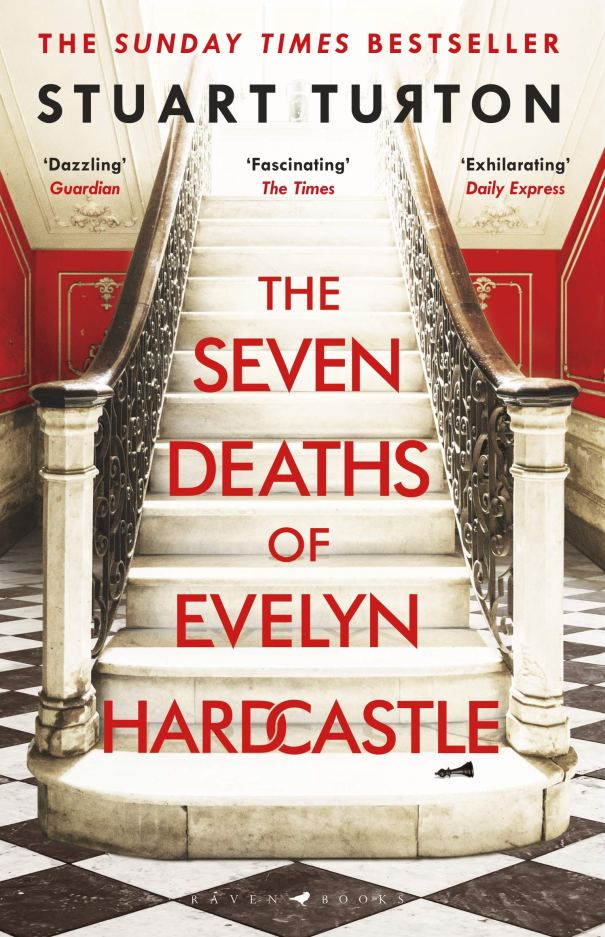
The Seven Deaths of Evelyn Hardcastle by Stuart Turton

The Seven Deaths of Evelyn Hardcastle Cover

Publisher: Raven Books

Publication Date – 8 February 2018

Amazon     Book Depository

A classic and complex murder mystery in an English manor combines with ingenious elements from fantastic genres to create one of the best new releases of 2018.  Reading like the outrageous combination of Groundhog Day, Inception, Downton Abby and Sherlock Holmes written by Agatha Christie, The Seven Deaths of Eveyln Hardcastle is the triumph debut from outstanding new author Stuart Turton.

In a turn-of-the-century country manor, Blackheath, a group of distinguished family guests have gathered for the first time since a terrible incident many years ago.  Before the end of the weekend’s masquerade, a terrible crime will be committed.  A young woman will be killed, and no one will realise that her death was the result of murder.

Inserted into the middle of all this chaos is Aiden Charles, who awakens with no memory of who he really is.  Aiden thinks at first that he is a cowardly doctor with amnesia until a man wearing a plague mask reveals that nothing is as it seems.  Aiden is an outsider, inhabiting and controlling the body of the doctor through unknown means.  The plague doctor reveals that Aiden has been trapped within the manor and is being forced to repeatedly relive the same day again and again, awakening each morning in a different host and living the entire day in their body.

There is only one way Aiden can earn his freedom: solve the murder of Evelyn Hardcastle, the estranged daughter of the manor’s owners.  If Aiden can solve the murder by the end of his eighth day, he will be able to leave.  If he fails to solve the murder his memory will be erased and the cycle will start again.

Using the abilities and connections of his eight very different hosts, Aiden must navigate the halls of Blackheath and the various guests who have arrived for the party.  However, Blackheath has a dark history of murder and betrayal that still casts a shadow to this day.  Every one of its inhabitants has a secret, and many of the guests would willingly kill to protect theirs.

Aiden is also forced to overcome several unnatural problems associated with his circumstances.  While the bodies he inhabits all hold the means to solving the crime, he is forced to balance the varied personalities of his hosts, each of which causes him to act or think in a very different way.  The longer he remains trapped in Blackheath, the more powerful the personalities are.

It also soon becomes apparent that Aiden is not as alone as he thought.  Two other people like him have also been trapped in Blackheath, but only one of them can solve the murder and earn their freedom.  One of his competitors appears to be trying to help him, but Aiden may not be able to trust the mysterious Anna, even though her name is the only thing from his past life that he can remember.  The third competitor has taken on the persona of a murderous footman and has no qualms about killing all of Aiden’s hosts to remove him from the competition.  Can Aiden solve an unsolvable crime before all his hosts are killed, or will he be trapped forever within Blackheath?

The Seven Deaths of Evelyn Hardcastle is a fantastic read that features a unique and imaginative combination of genres.  The basis of the story is a complicated murder mystery placed within the setting of a British manor house.  However, there is a certain and mysterious fantastic element that makes the narrator relive the day over and over again within a new host.  The murder mystery, the manor house setting and the time travelling body swapping, combine together perfectly into a tremendously addictive narrative.

At the heart of the story is an intense and compelling mystery that quickly becomes the main draw for the reader.  Solving the murder of Evelyn Hardcastle requires the protagonist to discover and expose every single secret and lie within the manor.  The sheer amount of details and enigmas that Turton has included with the book are so immense that it takes nearly eight different perspectives of the same sequence of events to get them all together.  Even then, the reader will be amazed by every single twist and turn that it takes to get to the final reveals.  The time travel and body  switching elements of the plot cleverly tie in and enhance the book’s mystery elements.  These elements allow the reader to see multiple versions of the same event, provide a wide variety of different perspectives on the clues, and pull together different testimonies from the same characters as they are questioned by the various hosts.

In addition to enhancing the murder mystery elements, the time travel and body switching aspects of the novel also help to increase the pacing and suspense throughout the book.  The transition between the main character’s various hosts is not as linear as it first appears.  Not only does the narrator switch to his next host once a day is over, he can also switch back to a previous host when he one of his hosts is knocked out, falls asleep or is killed.  This allows the reader to flip through these hosts when a lot of action is occurring, especially when the narrator’s various hosts are targeted in quick succession.  Additional suspense is also introduced due to many of the incidents within the story being out of sync with the narrator.  Various events have been put into place by either future hosts of the narrator or by characters from different points of the book’s timeline.  As a result, the reader has no idea why some events are happening, especially at the start of the book, and it is cool when the various causes of these events are revealed throughout the later parts of the book.

An appealing part of The Seven Deaths of Evelyn Hardcastle is the eight unique hosts for the main character to possess.  Each of these hosts has their own strengths and weaknesses, and it is intriguing watching the main character try and work out what they are.  They also have their own distinctive personalities that affect the main character in different and subtle ways.  The hosts also have their own way of dealing with people or situations, and this affects how the main character reacts and goes about his investigation.  It is intriguing to see how he changes from host to host.  In addition, there is no certainty about who the main character’s future hosts are going to be.  While there are hints, the reader doesn’t know until the narrator wakes up in the body, so the reader can’t help but examine the other characters with whom the narrator interacts in case they are a future host.  There are also some interesting scenes in which the narrator attempts to find and interact with a future version of himself.  Turton’s use of multiple hosts for his narrator is an important and distinctive part of this book that cleverly adds additional mystery to the narrative while also providing suspense and a changing array of personalities and challenges for the protagonist.

Representing a masterful combination of crime fiction and otherworldly attributes, The Seven Deaths of Evelyn Hardcastle is pure enthrallment that is guaranteed to transfix all eyes to its pages.  As one of the best releases of 2018, I cannot recommend this book enough.

My Rating:

Five Stars

Amazon     Book Depository

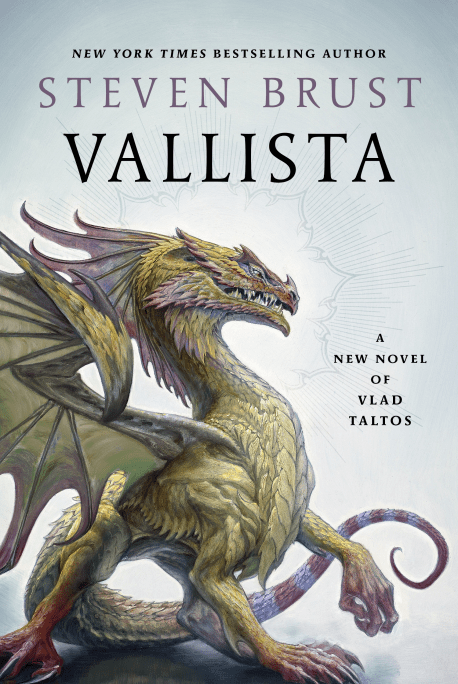
Vallista by Steven Brust

Vallista Cover

Publisher: Tor

Australian Publication Date – 28 November 2017

World Publication Date – 17 October 2017

Amazon     Book Depository

One of fantasy’s most iconic heroes returns in Vallista, the latest book from acclaimed fantasy writer Steven Brust.

In the world of Dragaera powerful and long-lived humanoids known as the Dragaerans are the planet’s dominant species, while humans, called Easterners, are second-class citizens.

Vlad Taltos is a rare anomaly, being an Easterner with a title, money and influence.  Having made his name as an enforcer and assassin, Vlad was a respected member of House Jhereg, the Dragaeran clan in charge of the Empire’s organised crime.  However, Vlad’s relationship with the Jhereg has deteriorated.  Having betrayed his clan, Vlad has spent the last few years on the run, hunted day and night by ruthless assassins.  Luckily, Vlad has friends in very high places, including the Empress, some powerful sorcerers, a necromancer and even a Dragaeran god.

Throughout his travels, Vlad has had several meetings with Devera, a small Dragaeran girl who is the daughter of one of his many powerful friends.  Devera is a mysterious creature of considerable power, an overabundance of enigma and a casual relationship with the rules of time.  Devera has once again appeared to Vlad, requesting his help and leading him to a mysterious manor that has suddenly materialised by the sea.

Despite the fact that the manor should not even exist, Vlad enters, only to find himself trapped with the manor’s mysterious inhabitants.  The inside of the manor is a weird collection of rooms and corridors altered by magic and no longer obeying the rules of reality.  Mirrors teleport people from room to room, mysterious portals lead to the ancient past, and a certain door leads to the Halls of Judgement, the Dragaeran afterlife.

The more Vlad explores, the more he understands that the manor is home to many lies and death.  The overly helpful servants are determined to keep the manor’s past a secret.  No one will explain how an unused and empty kitchen keeps providing Vlad with warm meals.  On top of this, Vlad encounters a ghost unaware of how she died, a mutant deformed by magic, and a powerful demon determined to kill him.

In order to escape, Vlad must uncover the manor’s bloody history and reveal all of its inhabitants’ dark secrets.  With his sarcastic familiars and a sentient sword to aid him, Vlad must use every trick at his disposal to survive while trying to interpret some beguiling visions of his own past lives.  If only Devera, his only guide, would stop disappearing in the middle of every conversation.

Vallista is the 15th book in Brust’s iconic Vlad Taltos series, and is set before the 14th book in the series, Hawk.

One of the most appealing features of Brust’s books has always been their trademark combination of fantasy world-building, action, adventure and fun comedic undertone.  Brust continues this trend in Vallista, creating a fast-paced book that delivers several exhilarating action scenes and a good amount of comedy without compromising the fantasy elements of the plot.  Fans of the Vlad Taltos series will be excited to see an in-depth look at Devera, a minor character who has long mystified readers, as well as visions into several of the titular character’s past lives.

Brust also has an enjoyable habit of combining elements of other genres into his stories.  This ensures that many of the books in the Vlad Taltos series are transformed into different genres, such as murder mysteries, political thrillers or heists contained within the fantasy setting.  Vallista continues this trend with its interesting and unique fantasy mystery.  The main character is forced to uncover the secrets of the mysterious manor in which he is trapped in order to escape.  As a result, Vallista reads a lot like a typical mystery, which is enhanced by the book’s various fantasy elements.

Vallista also borrows several elements from classic haunted house tales.  The main character is trapped and imperilled, the house is filled with servants reluctant to reveal their secrets, and ghosts, monsters and strange events are around every corner.  However, as this is a fantasy book, our hero has far more experience in dealing with such things, and quite a lot of the book’s humour revolves around Vlad responding to the manor’s various challenges.

Unsurprisingly, this book will appeal greatly to those readers who enjoyed the previous instalments of the Vlad Taltos series.  At the same time, this is one of the most inclusive fantasy series that I have ever read.  Burst is very good at succinctly explaining the universe’s lore so that new readers will easily be able to enjoy Vallista every bit as much as any seasoned veteran of the Vlad Taltos series.

Overall, Vallista is fun fantasy adventure that will appeal both to Brust’s established fans and to casual fantasy readers.

My Rating:

Four stars