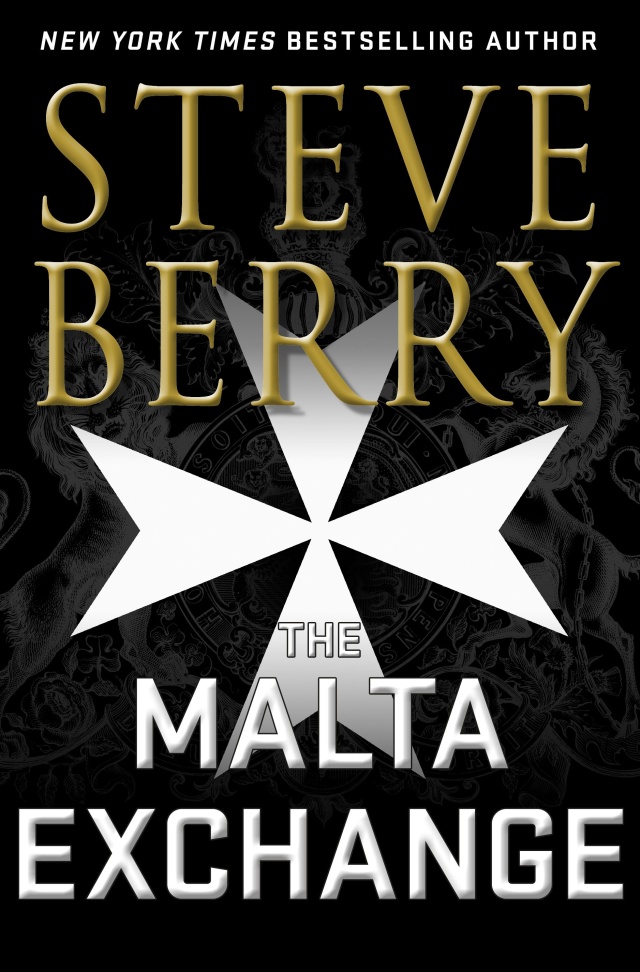
The Malta Exchange by Steve Berry – Audiobook Review

The Malta Exchange Cover

Publishers: Hodder & Stoughton and MacMillan Audio (5 March 2019)

Series: Cotton Malone – Book 14

Length: 13 hours and 31 minutes

My Rating: 4.5 out of 5 stars

Amazon

From the brilliant mind of international thriller sensation Steve Berry comes the 14th book in his acclaimed Cotton Malone series, The Malta Exchange.

When the pope unexpectedly dies, opportunity and chaos grips the Vatican.  As the world’s cardinals arrive in Rome in preparation for the conclave to elect a new pope, one cardinal, the controversial Kastor Gallo, suddenly leaves for an impromptu visit to Malta.  He has been summoned for a clandestine meeting, the results of which could hand him the papacy.  The only witness to this meeting is United States Justice Department operative Luke Daniels, whose covert observations of the meeting is quickly compromised, forcing him to fight for his life.

While Daniels attempts to uncover what is happening in Malta, his former colleague, Cotton Malone, is in Italy working for British intelligence.  An Italian collector claims to have letters between Churchill and Mussolini that could prove extremely damaging to Churchill’s legacy, and MI6 is eager to recover them.  What is meant to be a quick mission for Malone is complicated when armed men kill the collector and steal the letters.  Malone is able to trace his assailants to the legendary Knights of Malta, and his chase to recover the letters leads him into a hunt from a mysterious document from the reign of Emperor Constantine.

This document, revered by the Knights of Malta and feared by the church, has been lost for hundreds of years.  Hunted by some of history’s greatest tyrants, including Napoleon and Mussolini, this secret document not only has the potential to influence the current concave if revealed, but it could also tear the church down completely.  As a secret society within the modern incarnation of the Knights of Malta and elements of the Entity, the church’s intelligence organisation, both attempt to claim the document, Malone and Daniels once again team up to recover the document and destroy the conspiracy threatening to envelope them and the entire Catholic world.

Steve Berry is a veteran author of thrillers that focus on complex conspiracies, having written a number of exciting books since his 2003 debut.  While Berry has written four standalone novels, including The Amber Room, The Romanov Prophecy and The Third Secret, he is probably best known for his long-running Cotton Malone series of books.  The Cotton Malone series, which began in 2006 with The Templar Legacy, is made up of 14 books, each of which features the series titular character, retired U.S. Justice Department operative Cotton Malone as he is forced to investigate a series of elaborate conspiracies or secrets with origins in history.

The Malta Exchange features several characters from the previous books in the series.  While this is the 14th book in the series, The Malta Exchange can easily be read as a standalone book, as no prior knowledge of the Cotton Malone series is required to enjoy this story.  While there are some mentions of previous adventures in the series, none of these brief references are really relevant to this book’s story.  Likewise, the series’ recurring characters are re-introduced in some detail, and no pre-existing knowledge of them is needed.  Those readers who are already familiar with this series will enjoy another amazing thriller from Berry, although there may be some repetition, as the protagonists once again dive into another elaborate conspiracy centred with a secret order associated with the Catholic Church.  As one of my reviewer colleagues who is somewhat more familiar with this series than me stated, “How many conspiracies can one man wander into?”  Still, for those people who have enjoyed Berry’s stories before, The Malta Exchange is another exceptional read with a thrilling mystery that is a lot of fun to unravel.

While I received a physical copy of this book to read, I ended up listening to the audiobook format of The Malta Exchange narrated by Scott Brick.  This book was an absolutely fantastic piece of thriller fiction as the reader is thrown into an extremely intriguing and wide-reaching conspiracy involving hidden documents, major historical figures and deep dives into the history and background of several fictional and real-life organisations.

This is an excellent book for thriller fans, as The Malta Exchange contains a number of intense and complex conspiracies and plots overlayed across each other to create an addictive and enjoyable read.  The main plot focuses on the search for a long-lost document that originated during the reign of Emperor Constantine, which has the potential to damage or destroy the Catholic Church.  As a big fan of the historical fiction genre, I loved how this central mystery cleverly utilised a number of massive historical events and figures in its overall conspiracy.  For example, this central conspiracy has ties to Emperor Constantine, the founding of the Catholic Church, Napoleon, Mussolini, the Crusades and important events in World War II.  It even features a number of cool flashbacks to Mussolini and Napoleon’s life, showing how they were embroiled in this conspiracy.  This results in a treasure hunt so large, mysterious and potentially world-changing you cannot help but be intrigued and eager to see how it ends.  On top of that, a number of secret organisations with conflicting agendas and plots are duking it out around the hunt for this document and the reader is uncertain of their true motivations until later in the story.  All these story threads come together incredibly well at the end of the story, resulting in an intense, intelligent and entertaining thriller storyline that I could not wait to fully uncover.

Except for a couple of chapters featuring flashbacks to historical figures like Mussolini or Napoleon, The Malta Exchange is told from the point of view of four main characters: Cotton Malone, Luke Daniels, Cardinal Kastor Gallo and a mysterious ‘knight’ who remains unnamed for most of the book.  Malone and Daniels serve as good central protagonists, and I liked the contrast in their styles and personalities.  While Malone is the older, wiser and occasionally more careful protagonist who puts together the various clues around the hidden location of ancient document, Daniels is the younger, more action orientated character who does a number of crazy stunts throughout the book while also hiding his intelligence and cunning behind a convincing “good ol’ boy” routine.  The unnamed knight is The Malta Exchange’s main antagonist, whose identity remains hidden for much of the book.  This knight is an interesting character, and it is always fun to see the antagonist’s point of view as they attempt to outwit the protagonists.  While the reveal of this character’s secret identity is somewhat obvious due to there only being a few significant secondary characters, the antagonist’s overall plan was quite ingenious and devious.  Kastor Gallo is another interesting character; a self-serving Cardinal who wants to become Pope, he skirts the line between protagonist and villain in this story.  While the character considers himself an honest and pious priest, he is not particularly likeable due to his extremely conservative religious views and unbridled arrogance.  Still it was fun watching him try to manipulate the other characters, as well as his plot to try and gain the papacy.  There are several other fantastic side characters whom I will not discuss in any detail lest I hint at the identity of the unnamed knight above, but they really add a lot to this story.

One of the things that really impressed me about this book was the way that Berry dived into several organisations and locations in extreme and intriguing detail, particularly when it comes to two specific organisations.  The first of these organisations is the Knights of Malta, otherwise known as the Sovereign Military Order of Malta or the Sovereign Military Hospitaller Order of Saint John of Jerusalem, of Rhodes and of Malta.  Throughout this book, Berry spends a significant amount of time exploring this order, from their origins as the Knights Hospitaller and the Crusades, to their current existence as a massive charitable organisation.  Berry examines a large amount of their history, how they are organised, where they are located, what they do, their political status and how they have evolved over the years, and this amazing examination is further extended out into the incredible history of the nation of Malta.  Even the order’s leadership crisis between 2016 and 2018 is somewhat represented in the book, as the author describes a similar crisis affecting the organisation featured within The Malta Exchange.  All of this is deeply fascinating, and I really enjoyed the author’s examination of this organisation and how he was able to utilise the Knights of Malta’s actual history to the degree he did, with only a few alterations to fit his story.

The second organisation that Berry dives into is the Catholic Church, as a number of key aspects of the church and the Vatican come into play throughout the plot.  Like with his deep dive into the Knights of Malta, the author included a number of detailed examinations about church history, organisation and key events, like the selection of a new pope, that I quite enjoyed learning more about, and which fit incredibly well into the story.  The part of the examination into the church that I enjoyed the most was the look at the church’s supposed intelligence organisation, the Entity.  While the church has never confirmed they have an official intelligence organisation, several historical books have discussed its potential activities, and a number of thriller writers have utilised such an organisation, often known as the Entity, to great effect.  Perhaps because thrillers are not a genre that I read an awful lot of, this was the first book I have read that featured a church intelligence agency.  I really liked the idea of a secret intelligence organisation working for the Vatican, and Berry really utilises them well throughout his book, making them out as one of the most elite and effective intelligence organisations on the planet, who people really should not mess with.  I absolutely loved all the Catholic Church inclusions that the author featured and that, combined with the captivating examination of the Knights of Malta, helped turn this into an amazing overall story.

As I mentioned above, I chose to listen to the audiobook version of The Malta Exchange, which was narrated by Scott Brick.  This was not a massively long audiobook, only clocking in at around 13 and a half hours, and I was able to power through this really quickly, especially as I become more and more enthralled with the book’s compelling story.  I was quite glad that I chose to listen to this book rather than read it.  While you do lose out on some of the book’s visual elements, like some of the diagrams of anagrams or secret codes that feature throughout the physical copy, I found that listening to The Malta Exchange really helped me absorb the massive conspiracy storyline, as well as the history and organisation examinations, a hell of a lot more.  Brick has an amazing voice for thrillers, and I quite enjoyed listening him narrate this fantastic novel.  The voices he creates for the various characters in this book are quite good, and I liked some of the accents that he came up with.  I would strongly recommend the audiobook version of The Malta Exchange, although readers will still be able to get a huge amount out of the physical copy of the book.

The Malta Exchange by Steve Berry is an incredible and addictive ancient conspiracy thriller that I had an amazing time reading.  Once you get sucked into the book’s various conspiracies and mysteries it is hard to pull yourself out until each and every one of them is untangled.  What I enjoyed most about the main conspiracy was the author’s ability to explore fascinating history and famous organisations in outstanding detail, and then use these events to really enhance his story.  The end result is an awesome novel that comes highly recommend from me.  Appealing and accessible to established fans of the Cotton Malone series, as well as other fans of the thriller genre, I was really glad I decided to check this book out and I am curious to see what historical conspiracy Malone uncovers next.
Amazon

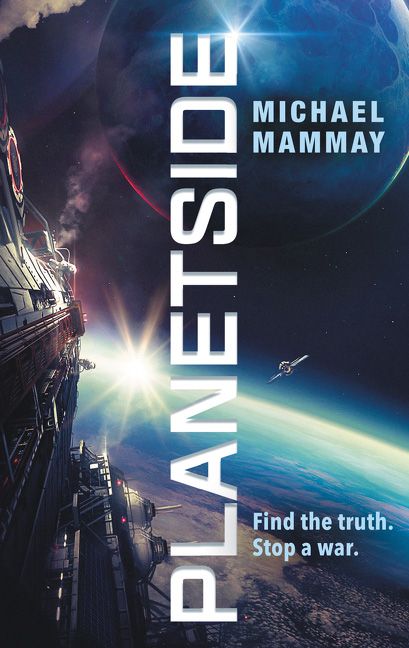
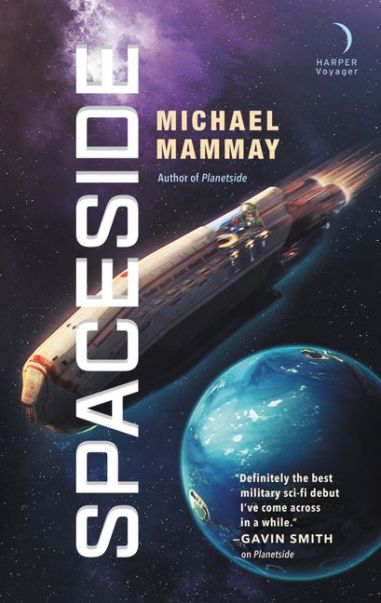
Waiting on Wednesday – Spaceside by Michael Mammay

Welcome to my weekly segment, Waiting on Wednesday, where I look at upcoming books that I am planning to order and review in the next few months and which I think I will really enjoy.  Stay tuned to see reviews of these books when I get a copy of them.

Spaceside Cover.jpg

For this week I look at Spaceside by Michael Mammay, the sequel to one of my favourite books from 2018, PlanetsidePlanetside was an incredible debut from Mammay, who blended together mystery and science fiction elements to create an outstanding space military thriller with an absolutely explosive ending that I still cannot get over.  As a result, I have huge hopes for Spaceside, which is set to be released in August, and I am very excited to see how Mammay tops his amazing first book.

Goodreads Synopsis:

Following his mission on Cappa, Colonel Carl Butler returns to a mixed reception. To some he is a do-or-die war hero. To the other half of the galaxy he’s a pariah. Forced into retirement, he has resettled on Talca Four where he’s now Deputy VP of Corporate Security, protecting a high-tech military company on the corporate battlefield—at least, that’s what the job description says. Really, he’s just there to impress clients and investors. It’s all relatively low risk—until he’s entrusted with new orders. A breach of a competitor’s computer network has Butler’s superiors feeling every bit as vulnerable. They need Butler to find who did it, how, and why no one’s taken credit for the ingenious attack.

As accustomed as Butler is to the reality of wargames—virtual and otherwise—this one screams something louder than a simple hack. Because no sooner does he start digging when his first contact is murdered, the death somehow kept secret from the media. As a prime suspect, he can’t shake the sensation he’s being watched…or finally succumbing to the stress of his past. Paranoid delusion or dangerous reality, Butler might be onto something much deeper than anyone imagined. But that’s where Butler thrives.

If he hasn’t signed his own death warrant.

I have to say that the plot for this new book sounds really intriguing.  I am looking forward to seeing Butler investigate another complex science fiction crime.  I like that that author has taken the story into a somewhat new direction, focusing on a corporate crime, but I hope the story spends a good amount of time exploring the repercussions of his actions in the first book.  There are so many ways that the awesome story that was started in the first book could be continued, and I look forward to seeing if the conspiracy he uncovered in Planetside plays into this new mystery.

I am very confident that this book will be pretty epic, and Spaceside is currently sitting at the top of my must-read list for 2019.  I have not decided if I will get a physical copy of this book or try and get the audiobook version.  R. C. Bray did an incredible job narrating the audiobook version of Planetside, so I would like to listen to the sequel.  However, if I get an advanced copy of the trade paperback of this book, I very much doubt I will be able to restrain myself enough to wait for the audiobook version.  Sigh, life is so hard when it comes to awesome upcoming books.

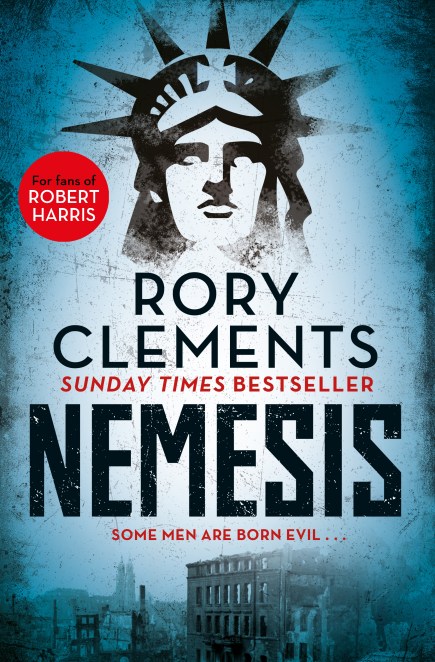
Nemesis by Rory Clements

Nemesis Cover.jpg

Publisher: Zaffre (Trade Paperback Format – Australia – 3 March 2019)

Series: Tom Wilde – Book 3

Length: 317 pages

My Rating: 4 out of 5 stars

Amazon     Book Depository

Historical thriller and murder mystery author Rory Clements returns with the third book in his electrifying and clever Tom Wilde series, Nemesis.

August 1939.  War is on the horizon, and while most of the world is preparing for the next great conflict, Cambridge Professor Tom Wilde is enjoying a holiday in France with his partner, Lydia.  That is, until a mysterious man alerts him to the fact that one of his former students, an idealistic young man by the name Marcus Marfield, is currently being held in an internment camp on the France-Spain border after his involvement in the Spanish Civil War.  When Wilde finds Marfield at the camp he moves quickly to secure his release, and they flee the country just as the Germans begin their invasion of Poland.

Back in England, the country moves to a war footing, as the Allies attempt to persuade America to join them against the Nazis.  While many Americans oppose joining the war, the sinking of the passenger ship the SS Athenia may be the spark that brings them into the war.  With the Nazis attempting to convince the world that Churchill orchestrated the sinking of the Athenia to galvanise American support against Germany, Wilde and his companions return to Cambridge.

Once back in the city, Wilde begins to notice a change come over Marfield.  At first attributing it to his shell shock following his battles in Spain, a series of mysterious deaths around Cambridge all seem to link to the recently returned Marfield.  These events are tied to a deadly conspiracy to keep America out of the war for good.  A spy ring is active in Cambridge, and Wilde must find a way to uncover it before it is too late.  Can Wilde once again avert disaster, and what role does Marfield play in this conspiracy?

After the excellent first two books in his Tom Wilde series, Corpus and Nucleus, Clements continues the adventure of his series’ titular character, Tom Wilde, as he investigates a series of Nazi espionage activities around Cambridge in the lead-up to World War II.  I have quite enjoyed this series in the past and was looking forward to continuing the story in Nemesis.  The latest book is a thrilling story that takes place just at the outset of the war and utilises the several historical events and figures to turn this into quite an intriguing tale.

Nemesis is a really good historical thriller which combines a great spy story with the historical context of early World War II.  The previous books in the Tom Wilde series have all contained compelling and complex mysteries with huge implications for England and the allies, and Nemesis is no different.  Clements has crafted together an excellent mystery that has massive, worldwide implications, and I really enjoyed unravelling the mystery, especially as the author presents all sorts of doublecrosses, twists, cover-ups and mysterious deaths to confuse the reader away from the main goal of the antagonists.  The antagonists’ master plan is quite out there, and it is one of those plots that would have had massive historical implications.  I quite like the role that new character Marcus Marfield played in this plot, as the protagonists and the reader are constantly trying to work out what his secrets are and what kind of person he truly is.  Overall, I found the thriller and mystery elements of this book to be quite clever and captivating, and readers will enjoy uncovering the full extent of the antagonist’s overall plot.

One of the most interesting parts of the Tom Wilde series so far was its setting during the chaotic pre-World War II period.  In Nemesis, Clements sets his story right at the start of the war and immediately shows all the panic and preparation that followed this declaration of war.  Clements did a fantastic job portraying the low-key sense of dread and paranoia that the inhabitants of England would have felt in the build-up to the war in the previous books in the series, and in Nemesis these feelings are realistically amplified now that the war has begun.  The author has quite a good grasp on a number of historical events and feelings during this period, and I quite liked seeing the Cambridge viewpoint of the war.  The Cambridge setting has always been a fantastic highlight of this series, but it was quite intriguing to see the author incorporate all the various changes to the city that occurred as a result of the war into his novel.  Clements dives deep into the Cambridge lifestyle when it comes to the war, whether it involves the removal of the rare books from the colleges, the preservation of the stained glass windows, the roles that the professors were being assigned in the war effort or even the many Communist professors throwing away their party membership cards when it became clear that the Soviets were supporting the Nazis.

Clements also ties his story in quite closely with one of the more interesting early events of World War II: the sinking of the passenger liner the SS Athenia as it sailed across the Atlantic.  I was deeply fascinated not only with the depictions of this event, but the discussions and conspiracy theories that resulted from it.  This was especially true when it came to the examination about the sinking of the ship being used to bring the United States into the war.  The likelihood of America joining in the war became a major part of the story, and it was interesting to see what the European characters thought about America’s reluctance to enter the war, especially as one of the protagonists is an American character, and one of the chief architects of America’s isolationist policy, Joe Kennedy, was the United States Ambassador to England at the time.  I thought that the historical elements that Clements explored were a real highlight of this book, and readers will enjoy his literary examination of these events.

While the main focus of the book’s story is a conspiracy and the start of the war, Clements does take his time to continue to develop a number of the characters introduced in the previous books.  For example, Wilde continues to deepen his relationship with his romantic partner, Lydia, and I quite liked the role that Lydia played in investigating the case alongside Wilde.  There is also a significant focus on Wilde’s American friend Jim Vanderberg and his family, especially as Vanderberg’s family are passengers aboard the Athenia.  Phillip Eaton, the British spy who was hit by a car in the last book of the series makes a return in Nemesis, and the reader gets to see his struggles to recover from his horrific injuries while still working as an intelligence officer.  A number of intriguing new characters are introduced in this book and it will be interesting to see what role they and the existing characters will play in any future entries in this series.

In the latest book of his enjoyable Tom Wilde series, Nemesis, Rory Clements once again delivers a captivating historical thriller that brings the reader into the early days of World War II.  Featuring an incredible overarching mystery and some detailed examinations of intriguing historical events and settings, Nemesis is a deeply interesting book that is well worth checking out.  I am very curious to see where Clements takes the series next, and I look forward to seeing what impact Thomas Wilde will have on the rest of World War II.

Amazon     Book Depository

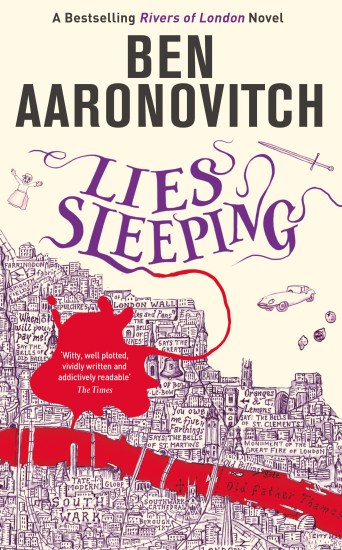
Lies Sleeping by Ben Aaronovitch

Lies Sleeping Cover.jpg

Publishers: Gollancz and Orion Audio (Audiobook format – 15 November 2018)

Series: Rivers of London – Book 7

Length: 10 hours 25 minutes

My Rating: 5 out of 5 stars

Amazon     Book Depository

Prepare to dive headfirst into one of the best urban fantasy series in the world today, with the seventh book in Ben Aaronovitch’s Rivers of London series, Lies Sleeping.

London is a magical place, especially for Peter Grant, Detective Constable and apprentice wizard.  Peter is a member of an elite unit of the London Metropolitan Police, known as the Folly, which is tasked with investigating magical crimes and protecting the city from all sorts of magical threats.  The person at the top of the Folly’s most wanted list is Martin Chorley, also known as the Faceless Man, a magical criminal mastermind who is determined to do whatever it takes to gain power.  However, despite the Met and the Folly’s considerable resources, Chorley is always able to stay one step ahead of those chasing him.

During a routine attempt to subtly panic several of Chorley’s known associates, a magical creature attacks a potential witness.  Peter’s investigation soon reveals that the witness had ordered the forging of a large and mysterious bell, which Chorley is desperate to get his hands on.  As Peter and his team dig deeper in the bell’s construction, they quickly begin to realise that Chorley is the final stages of his master plan, a plan tied deeply into the heart of London’s dark and bloody history, and one which could cause untold disaster for the entire city.

As the clock ticks down, Peter needs to work out the connection between London’s past and the mysterious magical events occurring all over the city.  Can Peter and his team once again save the day, or will their adversary finally obtain the power he has always desired?  Moreover, what will Peter do when he comes face to face with the woman who betrayed him to Chorley, his old partner in the Met, Lesley May?

Ben Aaronovitch is a highly regarded author with an interesting writing history to his name.  His writing career began back in the late 1980s and early 1990s, when he wrote a couple of Doctor Who television serials, including the highly regarded serial Remembrance of the Daleks, as well as three entries in the Virgin New Adventures series of Doctor Who books.  The Virgin New Adventure series chronicled the adventures of the Doctor after the television show’s hiatus in 1989.  Aaronovitch’s three entries in this book series sound incredibly interesting, although they were considered to be somewhat controversial at the time due to their more adult content.  Aaronovitch did not get around to writing his fantasy work until 2011, when he wrote the urban fantasy Rivers of London.  This was the first book in the author’s Rivers of London series of books (alternatively known as the Peter Grant series or the PC Grant series), for which the author is best known for.  The Rivers of London series is very highly regarded, and Aaronovitch has worked hard to expand on the story and universe of this series, writing a number of novellas, short stories and graphic novels on top of the series’ main seven books.

Before Lies Sleeping, I had never got around to reading any of Aaronovitch’s books, despite hearing good things about his main series.  As a result, I was very happy that I finally managed to check out the series earlier this year.  I did receive a trade paperback edition from Hachette Australia, but in the end, I chose to listen to the audiobook version of this book, narrated by Kobna Holdbrook-Smith.  I have to say that I was extremely impressed with this brilliant book and found that I really enjoyed the excellent and captivating story.  Lies Sleeping easily gets a full five-star rating from me, and I fully intend to go back and check out the other books in this series.  This book is an excellent blend of the fantasy and crime fiction genres, both of which come together perfectly to create an extremely compelling and complex read.

Lies Sleeping will prove to be extremely appealing to huge range of people; not only pre-existing fans of the series but also those readers who have not read any of the Rivers of London books before.  As a first-time Aaronovitch reader, I found that it was incredibly easy to step in and enjoy this series, as the author did a fantastic job making Lies Sleeping accessible to everyone.  While Aaronovitch has created a huge amount of lore around his series, including in his novellas and comics, the reader does not need to have any knowledge of these or the previous six books in the series to fully understand the entirety of Lies Sleeping’s story.  However, those readers who do have experience with this series will love how the story continues to development, as well as the massive and surprising twists that occur throughout the book.

At the core of this book lies a series of intriguing mysteries that take place throughout London.  In order to achieve his villainous goals, the antagonist has embarked on a series of seemingly random and chaotic crimes and ventures, all of which apparently form part of his master plan.  These various mysteries or criminal events were really interesting, and I liked trying to work out how they would all come together.  I particularly liked how various parts of these mysteries were deeply tied into the history of London, and the protagonist needed to gain a historical understanding of some of various myths and legends surrounding London.  Watching the protagonist attempt to unwind the complex plan of the book’s villains was extremely compelling, and I had a great time trying to work out what was happening myself.  One or two threads of these mysteries did go unsolved in this book, and I will be curious to see if they are picked up in any of the future entries in this franchise.

Aaronovitch is clearly a very creative writer, as he utilises a huge range of different and fairly unique fantasy elements throughout this book.  While there are a large number of wizards, spells and elvish beings throughout the book, the main focus is on the titular rivers of the series.  The more common magical beings encountered in this series are the personifications of the various rivers and waterways (current and historical) that flow through and around London.  These beings are similar to gods, although the term genius loci may be more appropriate, and have a huge range of powers.  These are a really intriguing addition to the book, and it was interesting to see the protagonist attempt to deal and interact with the various river characters, including his girlfriend, Beverly Brooke (yes, the main character of this series is dating a river).  There is also a huge range of other genius loci, or similar beings, that are featured within the story, including the mysterious and insane Mr Punch.  The magic that the human characters utilise is complex and slightly less ostentatious than some classic pieces of fantasy, but when the master wizards get to work it can be quite impressive.

One of the things I liked best about this book is how the author could create a realistic British police narrative and ensure magic became part of the procedure.  The Folly may be a special branch of the Metropolitan Police, but it is still part of the police force, and as such the characters are forced to follow standard procedure when investigating magical crimes.  Having these elite magical characters fill out paperwork and other various elements of day-to-day police life was deeply amusing.  I did like seeing how regular law enforcement tactics, anti-crime strategies and police combat techniques could be utilised against magical opponents.  The overall fantasy elements of this book are really enjoyable, but I really liked to see them be blended with a classic British police story.

Aaronovitch has done a fantastic job creating a huge and intriguing group of characters for this series.  The protagonist of Lies Sleeping and the Rivers of London series is Peter Grant, police officer and official wizard’s apprentice.  Peter is the sort of protagonist I really enjoy (sarcastic, funny and determined) so I quite enjoyed having him narrate the story, making a number of great jokes throughout.  The other police characters make up a great supporting and diverse cast, with a range of different abilities and characteristics.  I especially liked the classy and wise Detective Chief Inspector Thomas Nightingale, the last officially sanctioned English wizard and Peter’s mentor.  He is an extremely charming and old-fashioned character who has a huge amount of magical power at his fingertips and who can be quite intimidating if he puts his mind to it.  I also quite enjoyed the other magical characters that appeared throughout the book, as Aaronovitch has created a bevy of river gods and associated genius loci characters.  I liked how many of these ancient characters portrayed modern characteristics and ways of speaking, even when talking in a historical context.  Long-time readers of the series will also enjoy the further exploration of several recurring characters, including finally revealing the backstory of the mysterious Mr Punch.

While the protagonists and supporting cast are great characters, I really liked the antagonists in this story.  The main villain of the story is Martin Chorley, also known as the Faceless Man.  He is an excellent antagonist who is built up as a master planner, master magician and crazy villain before you even see him in the book.  His master plan was fairly complex, and the character’s overall arc in this book featured some massive twists that I did not see coming.  Lesley May is another really complex character who is a great addition to the series.  Her relationship with Peter is one of the best parts of the book, as even after her betrayals earlier in the series, he is still trying to save her from herself.  The way this works out in the end is quite dramatic, and it will be interesting to see where it goes from there.

While a large part of this book is set out more as a slow and steady police procedural, there are some fantastic action sequences within Lies Sleeping.  These come about when the protagonist attempts to stop the plans of the Faceless Man, and all manner of chaos erupts.  Nothing highlights this better than an extended action sequence which involves Peter chasing after a van on a bicycle, throwing fireballs, while all manner of debris is magically flung at him and several pursuing police vehicles.  The magical duels between some of the participants, mainly Nightingale and Martin Chorley, can be particularly impressive, but I personally liked how many of the confrontations devolved into fist fights as both sides attempt to distract the other and disrupt their castings.  Plus, where else are you likely to see British police with truncheons attempt to fight evil wizards?  These amazing action sequences really added to the story, and it was great to see all this magic in action, rather than being theorised the entire time.

While I would have already been tempted to give Lies Sleeping a five-star review, the thing that definitely clinches it for me is the amazing audiobook adaption of the novel, narrated by actor Kobna Holdbrook-Smith.  At nearly 10 hours and 30 minutes, this is a moderately easy audiobook to get through, and I had an absolute blast listening to it.  Holdbrook-Smith has an amazing voice and his work narrating this audiobook was just incredible.  His voice for protagonist and story narrator Peter perfectly encapsulated the character and got the full force of his witty and enjoyable personality across to the reader.  I really liked all the voices that Holdbrook-Smith created for the various characters featured throughout Lies Sleeping, especially for some of the magical creatures, who had an air of ancient wisdom in their voices.  However, without a doubt my favourite voice was the one for Nightingale.  The voice chosen for Nightingale is full of all sorts of old British class, and I thought it fit the character perfectly and was one of my favourite parts of this whole audiobook.  Aside from the outstanding voice work, I also quite liked the jazzy music that was played at the start of each chapter.  It gave the book a real noir private investigator feel, and I like how it added to the tone of the book as a whole.  The audiobook version of this book also helped me understand the story a bit better as an outsider to the series, and that, combined with Holdbrook-Smith’s brilliant voice work, makes me completely happy to recommend the audiobook format of Lies Sleeping.

Aaronovitch once again delivers a spectacular read that expertly combines amazing fantasy and crime fiction elements into one widely outstanding narrative.  There are so many excellent elements to this book, and I had absolutely loved my first foray into the Rivers of London series.  I strongly recommend listening to the Lies Sleeping audiobook, narrated by the very talented Kobna Holdbrook-Smith, but those readers who prefer to read their books will also find much to enjoy about this fantastic book.  This is one of the best urban fantasy books I have ever had the pleasure of reading.  I fully intend to go back and check out all the preceding books in this series, and I can’t wait to see where the series goes next.  Five stars all the way.

Amazon     Book Depository

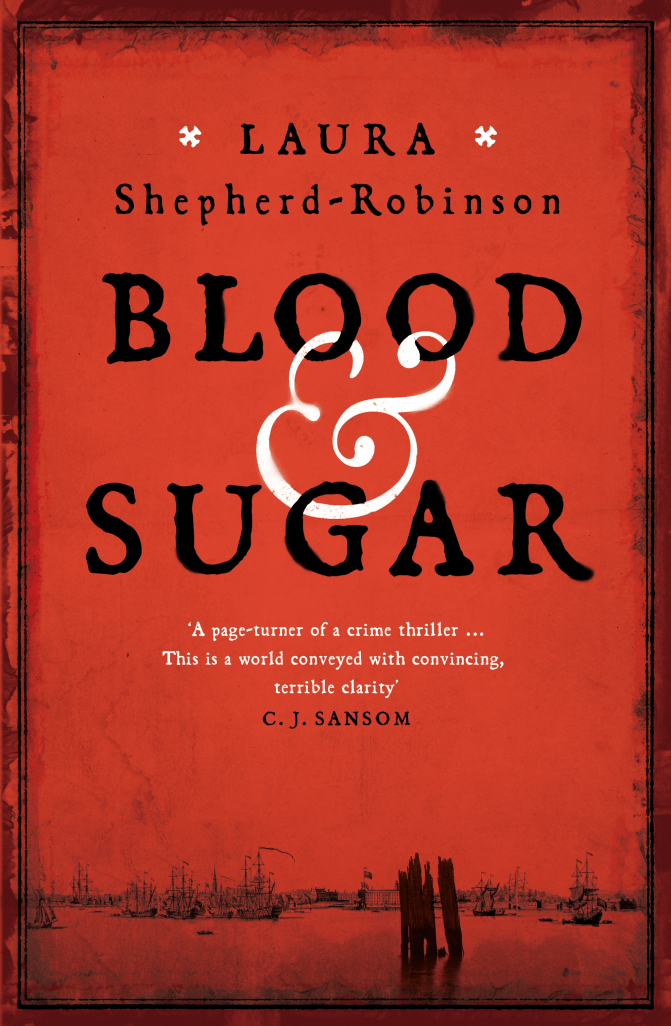
Blood & Sugar by Laura Shepherd-Robinson

Blood & Sugar Cover

Publisher: Mantle (Trade Paperback edition – 24 January 2019)

Series: Standalone/Book 1

Length: 432 page

My Rating: 5 out of 5 stars

Amazon     Book Depository

From the creative mind of Laura Shepherd-Robinson comes this powerful, dark and extremely captivating historical murder mystery, which might just be one of the most impressive debuts of early 2019.

In June 1781, a horrific murder is discovered on the dock of the slaver port of Deptford, outside of London.  The body has been brutally tortured in a variety of ways associated with the slave trade, and his chest has been branded with a slaver’s mark.  The dead man was Tad Archer, a passionate abolitionist who had been causing trouble throughout Deptford as part of his abolitionist campaign.

Days later, Captain Harry Corsham, a war hero who fought in the American Revolution, currently attached to the War Office and about to embark on a promising career as a politician, receives a visit from Tad’s sister, who is searching for her missing brother.  Tad, an old estranged friend of Harry’s, was apparently in Deptford to expose a secret that could potentially end the British slave trade.  Travelling to Deptford, Harry discovers the terrible fate of Tad and is determined to bring his killer to justice.

In order to discover who is responsible for his friend’s the murder, Harry must uncover the secret that Tad believed could permanently end the slave trade.  But as Harry investigates further, he finds himself embroiled in a conspiracy that reaches to the very heart of the realm.  Powerful forces wish to see murder covered up and anyone connected to the dark secret silenced.  Harry soon finds himself on the wrong side of men who can easily destroy his career and family.  Undeterred, Harry presses on with his investigation, but he may prove to be unprepared for the cruel killer stalking him through Deptford.

Blood & Sugar is the debut novel of Laura Shepherd-Robinson, a fantastic new voice in the historical murder mystery genre.  Shepherd-Robinson has created an outstanding novel that masterfully blends a fantastic and clever murder mystery with some powerful and evocative historical content.  The result is a terribly addictive novel that highlights this debuting author’s obvious ability to craft an excellent and compelling story.  From how the story is written, Blood & Sugar will probably be a standalone novel, although I do hope that Shepherd-Robinson sticks with the historical fiction and murder mystery genres, as she has an amazing talent with both.

At the heart of this amazing book is a complex and intriguing murder mystery that sets the book’s protagonist off on a dangerous and dark investigation of the slave trade.  While the investigation is originally focused on the murder of Tad Archer, it spirals out into to encapsulate several additional murders and a larger and more widespread conspiracy which may or may not be connected to the initial murder.  Each of these mysteries is clever, well thought-out and guaranteed to grab the reader’s curiosity and keep them going through the story to work out the incredible solution.  The author has also populated her story with a number of distinctive and complex characters, each of whom has their own hidden secrets and dark pasts.  In order to solve Blood & Sugar’s overarching mystery, the protagonist has to unravel each of these character’s lies and personal secrets, each of which add a new layer to book’s excellent plot.  These characters are all extremely self-serving and naturally suspicious, providing the reader with a huge pool of potential suspects.  The investigation into each of these mystery elements is extremely well written, and I really loved all the solutions to the book’s various mysteries.  I was really impressed with the conclusion to each of the personal mysteries that are uncovered throughout the narrative, and some of them were extremely satisfying to see come to a conclusion.

In addition to the outstanding mystery storyline, Shepherd-Robinson has also created an amazing and realistic historical setting for her story.  I felt that the author did a terrific job capturing the essence of 18th century England, from the streets of London to the docklands of Deptford.  There was a particular focus on the then port town of Deptford, which served as a major plot focus for the book, as well as several other riverside locations.  I loved this examination of Deptford, and I found the examination of this part of its dark history to be absolutely fascinating.  These locations serve as an appropriately dingy setting for such a dark story, and I really enjoyed it.

A major part of this book was the focus on the evil slave trade that was a major business during the 18th century in England.  As part of the plot, the author spends a significant amount of time exploring every facet of English slavery and the slave trade in the 1780s, including the economics behind it, the burgeoning abolitionist movement, slave laws throughout England during this period and how it was a major part of Deptford’s economy and way of life.  These details are extremely interesting and disconcerting, as Shepherd-Robinson pulls no punches when it comes to describing the brutal actions of the slavers and the cold business that they practiced.  The slave trade also serves as an incredibly effective background motive and catalyst for the murders and the conspiracy that the protagonist finds himself drawn into.  The author crafts an incredibly captivating mystery storyline around the English slave trade, and I was both intrigued and appalled to find that certain horrendous elements of this plot were based around a real-life historical slave event.  Blood & Sugar is definitely a must-read for those unafraid to learn more about the cruelty of the English slave trade and who wish to see it creatively used as a major plot point in this captivating story.

While Blood & Sugar featured a number of duplicitous and villainous characters who serve as excellent antagonists, Shepherd-Robinson has also crafted a compelling and layered protagonist to tell this story as the book’s narrator.  On the surface, Captain Harry Corsham is your typical English hero, a former soldier determined to find the man responsible for the death of his friend.  However, as the book progresses, the reader finds out that there is a lot more to Harry’s character than first meets the eye.  Harry is a deeply conflicted character in many ways, but throughout this book he struggles with his opinions about slavery and the abolitionist movement.  In his past he was a strong supporter of abolishing the slave trade, but since he has entered politics and married into an influential family, he is more aware of the current political realities around the slave trade.  But as he spends more and more time investigating the Deptford slave traders, he finds himself being drawn more and more into the abolitionist way of thinking.  The author has also written in a fairly realistic portrayal of PTSD for Harry after the horrors he experienced fighting in the American Revolution.  This is an intriguing character trait, and one that comes into play the more horrors that Harry experiences during this book.  Shepherd-Robinson has also included some amazingly well-written and very surprising personal developments for her protagonist that really change everything in the latter half of the book.  All these character elements add layers to this central protagonist, and I liked the emotional and ethical impacts that they caused on the story.

Overall, I thought that Blood & Sugar was a powerful and captivating historical murder mystery that expertly combines an intriguing and clever mystery storyline with some first-rate historical backgrounds and plot points.  This is an exceptional debut from Laura Shepherd-Robinson which showcases her amazing talent and superb ability as a writer.  This was an easy five stars from me, and I am really excited to see what sort of story this fresh and inventive author writes next.

Amazon     Book Depository

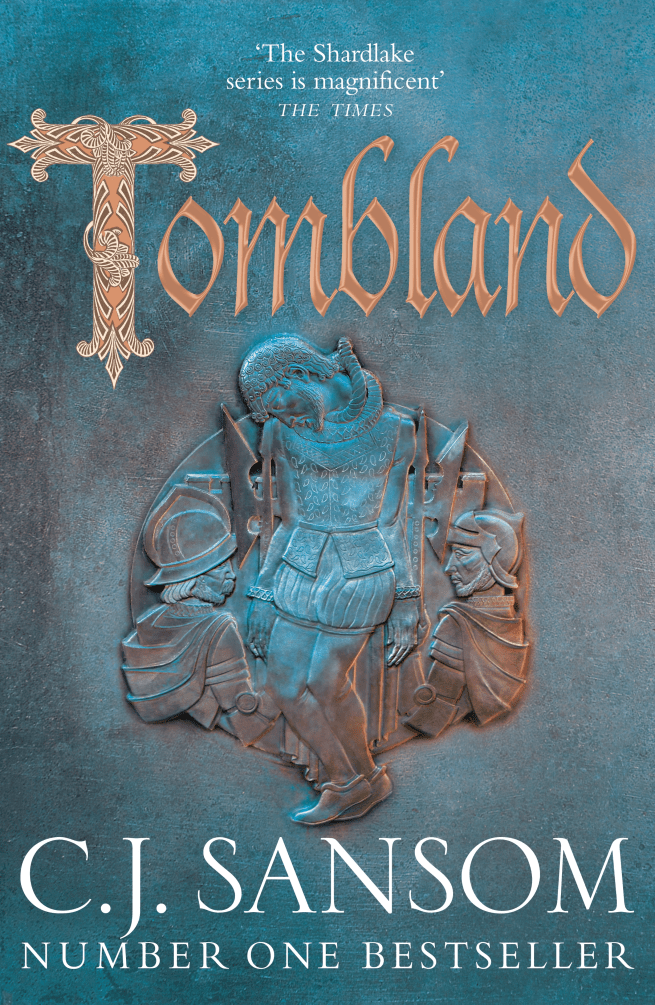
Tombland by C. J. Sansom

Tombland Cover

Publisher: Mantle

Publication Date – 18 October 2018

Amazon

One of the best historical fiction authors in the world today creates another exceptional piece of literature with Tombland, the epic historical crime fictional book set during the fictionally unexplored events of Kett’s Rebellion.

It is the summer of 1549, and King Henry VIII has been dead for two years.  The young Edward VI is on the throne, while his uncle, Edward Seymour, the Duke of Somerset, rules the country as Lord Protector.  However, the country is slowly descending into chaos as a long, unsuccessful war with Scotland, religious conflict, poverty and the corrupt actions of the rich landowners are raising discontent among England’s peasant population.

In the midst of this, Matthew Shardlake is working as a lawyer for the King’s sister, the young Lady Elizabeth.  When a distant relative of Lady Elizabeth’s mother, Anne Boleyn, is found murdered near Norwich and her husband, John Boleyn, is accused of the crime, the case could have political implications for Elizabeth.  Matthew is sent to organise a legal defence of John and to investigate whether or not he committed the crime.  Travelling with his assistant Nicholas, Matthew travels to Norwich and begins to examine the details of the case.  Meeting up with their old friend Jack Barak, the three friends are convinced of John’s innocence, but malevolent forces intervene to disrupt their defence.  As several deaths occur around Norwich, Matthew’s investigation is disrupted by events outside of his control.

A well-organised peasant rebellion erupts around the city, throwing everything into chaos.  Led by the charismatic Robert Kett, the rebels march on Norwich and set up a large camp outside the city, filled with thousands of disenfranchised peasants.  Captured by the rebels, Matthew and his companions find themselves in the midst of a dangerous and divisive situation.  Nicholas’s established views about the superiority of gentlemen sees him imprisoned, while Barak finds much in common with the peasants and their cause.  Matthew is forced to make a decision about where his loyalties lie, as Kett wishes him to assist in organising trials for the landowners they have captured.  As the rebellion drags on, Matthew finds evidence about the Boleyn murder case in the camp.  Following these leads, Matthew soon uncovers a terrible conspiracy that will not only endanger John Boleyn and his lawyers but could affect the fates of every peasant in Kett’s Rebellion.

C. J. Sansom is one of historical fiction’s most highly regarded authors, having written a series of amazing novels in the genre. His most significant body of work is the Matthew Shardlake series, which follows the titular lawyer as he finds himself forced to solve a series of elaborate mysteries during the Tudor period. All the books in this series are extremely impressive, as they all feature clever mysteries and an excellent use of the book’s historical setting.  In addition to this series, he has also written a standalone historical thriller, Winter in Madrid, as well as an alternate history novel, DominionTombland is the seventh book in the Matthew Shardlake series and Sansom’s first book since 2014, but considering the sheer amount of detail and the length of the text, this is hardly surprising.

Tombland is another epic novel from Sansom and one that I really enjoyed reading and ranked as one of my top 10 reads for 2018.  This book contains an outstanding combination of an intense and complex murder mystery and some amazing historical settings and storylines.  All of these elements are extremely amazing by themselves, but together they create one of the best reads of the year.  While I really loved this book, potential readers really need to set aside a lot of time to get through Tombland.  It has over 800 pages of story, with an additional 50 plus pages of the author’s historical notes and discussions about what events he included.  In addition, each page has such a rich amount of detail and plot that I found myself getting through this book at a lot slower pace than I usually would.  While it does take a while to get through Tombland, I personally believe it is well worth the effort, as the incredible story within had me hooked from the very first page.

This book has an intricate and powerful investigation angle, as Matthew and his associates attempt to solve a terrible murder that they believe their client has been wrongfully accused of.  The mystery part of this book is very well done and features an elaborate and intriguing solution that is slowly revealed throughout the course of the book.  Sansom introduces a significant number of potential suspects, all of whom have substantial motives to kill the victim, designed to throw the reader off the scent of the real solution.  I liked how the case continued to expand out as the book went on, as the protagonists not only attempt to solve the original murder but must also investigate several murders committed to cover up the initial acts, as well as several attempts to eliminate John Boleyn.  There are several major and surprising twists throughout the investigation, as a number of small clues and characters that at first appear minor turn out to have major implications for the overarching mystery.  The solutions to the mysteries at the end of the book reveal a dark and powerful motive that has severe consequences for several of the characters involved.  Overall, Tombland contained an outstanding central mystery, which is guaranteed to keep the reader deeply curious and engaged with this fantastic text.

One of the most interesting features of Tombland is the fact that Sansom has set it during Kett’s Rebellion of 1549.  This is a somewhat obscure piece of history that many readers might not be familiar with, but it is an incredibly fascinating event of English history.  Sansom does a masterful job of portraying the entirety of the rebellion throughout the novel and use it as a fantastic secondary storyline as the protagonists witness the beginning and end of the mystery.

Sansom does an outstanding job covering the events of this rebellion, including the events that led up it and caused the peasants to rise up against the rich landowners.  As a result, he expertly examines all the events and conditions that were making the peasants and poor of Norwich, and the rest of England, discontented with the way the country was being run.  In order to do this, a number of relevant elements are effortlessly inserted into the story and become key parts of the plot.  These elements include discussions about the poorly run war in Scotland contributing to armed deserters on the rebels’ side, talks about the political structure of the country and thoughts about the religious disagreements and schisms that were rife in the country during that period.  One of the most fascinating and significant elements that apparently led to the rebellion was the rich landowners’ focus on sheep farming and the creation of large sheep enclosures rather than the growth of traditional crops.  Before reading Tombland I would never have thought that sheep farming would have the potential to be a cause of rebellion; however, Sansom is able to explain in some significant detail how sheep farming and enclosures were negatively impacting many poorer individuals in England, and how it became a key part of Kett’s Rebellion.

In addition to covering the causes of the rebellion, Sansom’s narrative grows to cover the entire length of this intriguing event.  All sorts of elements of it are explored, and readers get an excellent idea of how the peasants were organised, what their motivations were, what sort of actions they were undertaking, how the government reacted to it and what the overall attitude of the participants was.  This was all boundlessly fascinating, and as the reader gets deeper and deeper into the book it becomes harder to put the book down as they become extremely curious about what the overall fate of this group of people was, especially after the reader gets an idea of how big the rebellion was and what sort of victories they were able to obtain.  The final results of this rebellion and the long-term impacts it had on the country are really interesting to hear about, and I had an amazing time seeing all the significant events that occurred during this underexamined historical rebellion.

As always, I was immensely impressed with the sheer amount of research that Sansom did and the historical detail that resulted from it.  Tombland includes over 50 pages of the author’s notes about the event and the conclusions he drew from his extensive research.  While these 50 pages are extremely interesting to read, the revelations about how many of the events the protagonist witnesses actually occurred were astounding, and it sounds like Sansom was able to recreate nearly every significant event of Kett’s Rebellion throughout the course of Tombland, with some necessary dramatic flourishes to create the overall story.  It was amazing how many of these events actually occurred, and how many of the secondary characters were actually real-life people who had significant impacts on the outcome of the rebellion.  Readers will also be amazed by the historical details that Sansom has included on every page of this book and will have a hard time forgetting the events of 1549 and Kett’s Rebellion.

There are several other elements I enjoyed in this book, including the seamless ways that the investigative storyline combines with the historical background of Kett’s Rebellion.  So many characters that are potential witnesses or suspects in the murders that the protagonists are investigating become key figures in the historical events that occurred around Norwich.  Suspects and witnesses are also found in the rebel camp, and I liked how the key to crime and the downfall of the rebels were both in the same place.  I also enjoyed the examination of 16th century English legal procedures and the depictions of murder trials, and found the scenes featuring them very fascinating.  The book’s focus on the divide between the rich and the poor is also a great addition to the story and gets a significant look in throughout the entire book, and it is a discussion that is still relevant to this day.

C. J. Sansom once again hits his literary ball out of the park with Tombland, another five-star historical mystery that has the perfect combination of compelling mystery and intriguing historical elements. With an incredibly addictive overall narrative and a focus on a fascinating historical event that is rarely used in other pieces of historical fiction. One of my favourite reads of 2018, I highly recommend this book, especially for people who love a great mystery.

My Rating:

Five Stars

Amazon

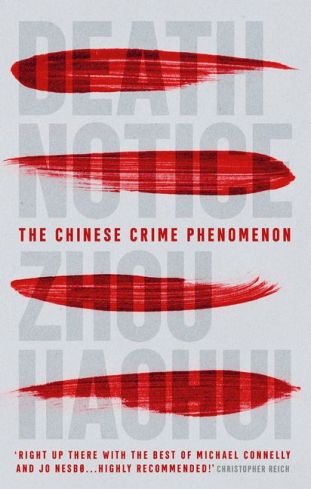
Quick Review – Death Notice by Zhou Haohui

Death Notice Cover.jpg

Publisher: Head of Zeus

English Edition Translated by Zac Haluza

Publication Date – 14 June 2018

Amazon     Book Depository

This is a book I read earlier in the year, but I did not get a chance to write a review for it until now.  Death Notice is an intricate murder mystery thriller from bestselling Chinese author Zhou Haohui, originally written back in 2014.  The first English translation was released in June of 2018.

Goodreads Synopsis:

An elite police squad hunts a manipulative mastermind out to publically execute criminals the law cannot reach. A wild thriller and deadly game of cat-and-mouse from one of China’s most popular authors. For fans of Jo Nesbo, Se7en, and Hong Kong police cinema.

The brutal murder of respected police officer Sergeant Zheng Haoming sends shockwaves through Chengdu, a modern metropolis in the heart of China’s stunning Sichuan Province. He had been obsessed by an unsolved, eighteen-year-old murder case, until an entity calling themselves Eumenides (after the Greek goddess of vengeance and retribution) releases a terrifying manifesto. Is the manifesto a sick joke, or something more sinister? Soon, the public starts ‘nominating’ worthy targets for Eumenides to kill, and two days later, Sergeant Zheng is dead.

Eumenides’ cunning game is only getting started. The police receive a “death notice,” a chilling note announcing the the killer’s next target, the crimes they have committed, and the date of their execution. The note is both a challenge and a taunt to the police. When the first victim dies in public, under their complete protection, the police are left stunned. More death notices are coming. The chase is on.

Death Notice is an explosive, page-turning thriller filtered through a vibrant cultural lens. Zhou Haohui expertly adds an exhilarating new perspective to the twists and tropes of the genre all fans love, making for a uniquely propulsive and entertaining read.

I found Death Notice to be an extremely enjoyable piece of crime fiction that I was able to power through in a short amount of time.  The overall mystery of this book is quite complex, as the investigative team has to investigate this modern set of killings as well as the original murders which occurred some 18 years previously.  There are a lot of fantastic twists and turns throughout the book as various reveals about the characters in the book are brought to light.  I loved seeing how all the pieces of this mystery came together, and thoroughly enjoyed the overall conclusion about who was behind it, their motivation and their legacy.

While the overall mystery is really clever, I loved the intricate ways in which the antagonist was able to manipulate the police in order to kill the targets they were protecting.  Not only does the killer come up with some elaborate plans to take out his intended victims, he is often able to get the police to do his bidding.  There are some great scenes showcasing this throughout the book, as well as some great reveals about the police characters and why they are able to be manipulated.

The setting of this book is also pretty intriguing, especially as it is not a setting Western crime readers would likely be familiar with.  The book is set in the Chinese city of Chengdu, and I am willing to bet many Western readers have never even heard of that city before.  This provides the reader a unique setting where they do not know the rules or how the police investigate crimes.  The author’s interpretation of Chinese criminal investigation is quite fascinating and readers can enjoy the similarities or differences between this and Western crime fiction.  I also liked how the book was set back in 2002, in the early days of public internet technology.  It was interesting to see how different this recent time period was technology–wise, and it offered some intriguing elements to the story.

Overall, Death Notice is an outstanding piece of crime fiction, with an intricate story and a compelling setting.  This is an easy book for Western audiences to enjoy, and readers should find this piece of Chinese crime fiction quite intriguing.  I hope that we will get more translations of Zhou Haohui’s work in the future, especially ones that continue the captivating story started in this incredible book.

My Rating:

Four and a half stars

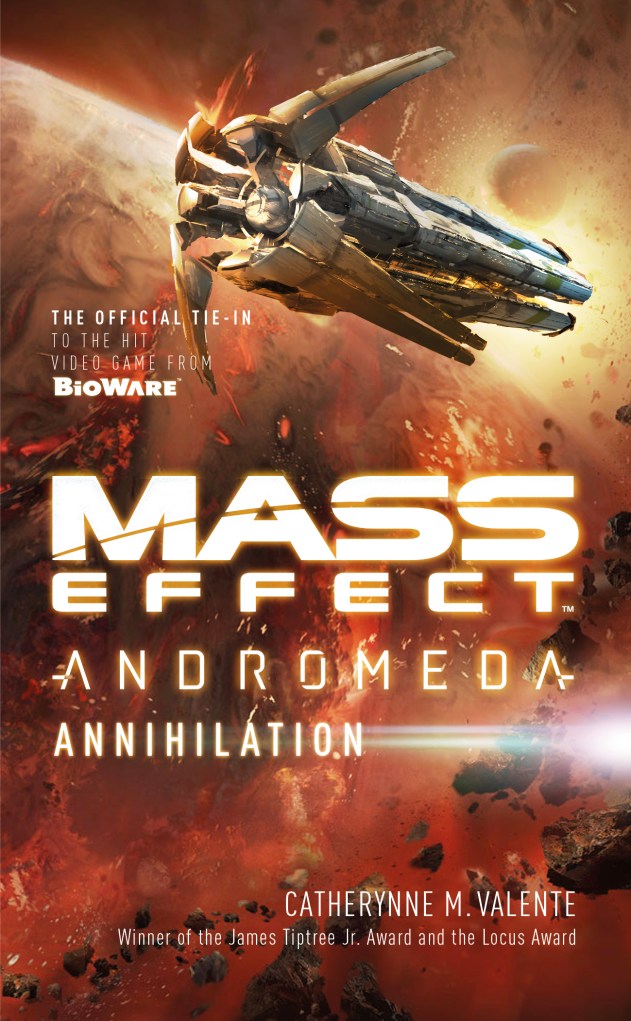
Mass Effect: Annihilation by Catherynne M. Valente

Mass Effect Annihilation Cover

Publishers: Titan Books

                        Blackstone Audio

Publication Date – 6 November 2018

Amazon     Book Depository

A new galaxy, a ship full of disparate alien species, what could possibly go wrong?  Veteran author Catherynne M. Valente brings to life a new adventure in the Mass Effect universe with Mass Effect: Annihilation, the third official tie-in novel to the 2017 video game, Mass Effect: Andromeda.

This was a really good piece of science fiction that expertly built on the intricate extended universe that has been created around the Mass Effect video game franchise.  I should preface this review by mentioning that I am a huge fan of this video game series, and one of the best things about it is the great universe and intriguing storylines that have been produced as a result.  While I know that many people had some valid criticisms about the latest game in the series, Andromeda, I actually really enjoyed the new addition to the series’ story and lore and had a lot of fun playing it and exploring all the additional plot that is hidden outside of the main missions.  One of the many mysteries that I hoped to get an answer about was the fate of Quarian ark, so I was very eager to read this book when I first heard about what it was going to focus on.

For those unfamiliar with the Mass Effect franchise, the first game was released in 2007 and is set in a universe where humanity has gained spaceflight and by 2183 has expanded throughout the Milky Way galaxy.  Once they were outside of our solar systems, humans met with several alien races which governed large portions of the galaxy.  The three main species, the Asari, the Salarians and the Turians, formed a ruling council on the ancient alien space station, the Citadel, which served as a capital city for these races and several other allied species.  The game series followed the human protagonist, Commander Shepard, as he (or she, depending on your settings), investigates the resurgence of the Reapers: ancient, sentient space ships who appear every 50,000 years to destroy all sentient organic life.  While Shepard is able to delay the appearance of the Reapers in the first two games, they launch a full-scale attack in Mass Effect 3, leading to significant, galaxy-changing events.

The game Mass Effect: Annihilation is based on, Mass Effect Andromeda, is the fourth Mass Effect game released and a loose sequel to the original series.  Andromeda is set over 600 years after the events of Mass Effect 3, and follows a group of explorers and colonists from the Milky Way galaxy as they travel to the Andromeda galaxy in an epic one-way trip to find new planets to settle on.  This was a result of the Andromeda Initiative, a joint exercise from a number of Citadel species in order to settle in the new galaxy.  The Initiative launched their ships to Andromeda in the period between Mass Effect 2 and 3.  Each of the main Citadel races, humans, Asari, Salarians and Turians sent an ark ship to Andromeda, each filled with 20,000 cryogenically frozen members of their respective species.  These four arks were launched at the same time, and the plan was for them to dock in the Nexus, a miniature version of the Milky Way Citadel sent in advance of the arks, which was to be used as a staging ground while the Pathfinders found and explored new planets for their races to settle on.  During the events of Mass Effect: Andromeda, mention was made of a fifth ark, built by the Quarians and filled with several other alien races, that was supposed to launch soon after the initial four arks.  However, this fifth ark made no appearance during Andromeda, and was one of the game’s unsolved mysteries, perhaps destined to never be solved, as there is currently no plans to continue the Mass Effect game franchise (although it is too big a franchise for them not to do something else with it in the future).

The Mass Effect games have inspired a number of additional media releases over the years.  Four Mass Effect books were written between 2007 and 2012 to correspond with the original game trilogy, as well as a number of comic book series.  Following the release of Mass Effect: Andromeda in 2017, a new trilogy of books was commissioned which further explored key events or characters mentioned in the fourth game.  Annihilation is the third and final book in the Mass Effect: Andromeda book trilogy.

As the Reaper fleet begins to appear in the Milky Way galaxy, a fifth ark is launched by the Andromeda Initiative to bring another 20,000 settlers to the Andromeda galaxy.  Built by the planetless Quarians, the ark Keelah Si’yah is the only ark to hold colonists from a number of different races, including Quarians, Drell, Elcor, Batarians, Volus and Hanar.  Despite having different outlooks, opinions, biological requirements and reasons to leave the Milky Way, these races are united in their decision to reach the new galaxy and find new planets to settle on.

As the ship reaches the end of its 600-year long journey, problems are soon identified aboard the ship.  One of the ark’s Sleepwalker teams, a small team of individuals tasked with checking on the status of the ark as it flies through space, is suddenly awoken years before the Keelah Si’yah is scheduled to dock with the Nexus.  The ship’s virtual intelligence has identified certain discrepancies in the readings of several Drell cryopods.  Investigating the pods, the Sleepwalker team find that their inhabitants have died from a disease, something that is supposed to be impossible while frozen.  Even worse, the ships systems are all reporting that everything is fine, and that the inhabitants of the pods are still alive.

The Sleepwalker team quickly discover that the dead colonists have all been infected by a virulent disease, one that seems capable of jumping across to the vastly different alien species.  The team are desperate to find out the cause of the disease, but their investigation is severely hampered by a number of system failures across the ark, while the ship’s computers continue to insist that everything is all right.  As the failing systems start to randomly unfreeze more and more colonists, the disease quickly spreads across the ark.  It soon becomes apparent that the disease has been artificially created, and that someone is launching a deliberate attack against the Keelah Si’yah and its crew.  As the various colonists turn on each other in fear and confusion, can the Sleepwalker team find a cure and uncover who is behind the attack, or will everyone on the ark die before reaching Andromeda?

The author of this book, Catherynne M. Valente is not an author I was very familiar with before listening to Annihilation, but she appears to have produced a wide range of different novels, some of which are quite quirky in content.  I do remember seeing and trying to get a copy of her 2018 release, Space Opera, earlier this year, mainly because it sounded like such a fun read, what with it essentially being Eurovision in space.  Luckily, I was able to obtain a copy of Annihilation a week ago and powered through its audiobook format, narrated by Tom Taylorson.

Mass Effect: Annihilation has an exciting and intriguing story that expands on the established lore of the Mass Effect universe while also providing the reader with a compelling science fiction mystery.  The story is broken up into three main parts: the characters attempting to identify and cure the disease, the attempts to fix the ship’s broken system and an investigation into who or what initiated the attack on the ark and its inhabitants.  As a result, there is a good combination of medical, technical and investigative scenes that come together into a rather intriguing overall narrative.  There is not a lot of action, but the focus on the various problems around the ship is very interesting.  The link between the various parts of the book and the final solution to who is behind them was also quite clever and the reasons behind it were quite interesting.  There are some certain dark moments, especially when it comes to the reveal of who was behind it.  Annihilation is obviously going to appeal a lot more to readers who are familiar with the games and who enjoy the backstory of this series, but this is a great story with plenty for other readers to enjoy, and I felt that Valente makes this story accessible for outside readers.

One of the most interesting parts about Annihilation is the fact that the book focuses on the less prominent alien races in the Mass Effect universe.  Aside from one prologue that follows a human, every single character is a member of six less common races in the lore and games, the Quarians, Drell, Volus, Batarians, Hana and Elcor.  This is unique, as the games and the previous novels tend to mostly focus on human characters, or feature a significant number of characters from the games more prominent races, such as the token sexy alien species, the Asari, or the gigantic and war loving Krogan.  The other main council races, the Turians and the Salarians, are also extremely prominent compared to the six races featured within this book, with great Turian and Salarian characters appearing frequently in the games or the books (I am the very model of a scientist Salarian).  In pretty much all of the games, the protagonist can choose members of the above aliens to be a part of the team.  However, Annihilation completely changes this around, as four of the six races that the book focuses on have never had usable characters in any of the games and are mostly minor side characters.  Of the other two races, the Quarians do get a good examination within the games, with one of their members quite a key character.  The Drell are explored to a much lesser degree, although badass Drell assassin Thane Krios as a useable teammate in the second game.

I was pleasantly surprised to read a book where these six less commonly featured races were so prominent.  Valente has a great understanding of these races and spends a significant part of the book exploring each race’s various quirks, important parts of their biology, culture, society or lifestyle, as well as certain parts of their history.  The author does a fantastic job expressing all these racial traits throughout the book, and even new readers to the franchise can quickly gain an understanding of what these species are and what is key to all of them.  For example, Valente is able to expertly capture the various speech characteristics of each of the races featured in Annihilation.  This includes the heavy breathing of the Volus, the lack of personal pronouns in the Hanar’s dialogue, the rolling stream of Drell memories that they say aloud when flashing back to important memories, and even the Elcor habit of prefacing their sentences with their emotional state.  These are all done incredibly consistently throughout the book and really add a lot of authenticity to the story.  These vocal patterns can also be particularly entertaining, especially when it comes to the Elcors, as nothing is more amusing than having an angry Elcor calmly telling everyone how enraged he is.  The various alien species did have the potential to make the investigation into the virus hard to understand, but the author cleverly got around this by having the characters compare the disease, cures and other relevant aspects to common and recognisable human disease.  Overall, these alien inclusions are fantastic, and it was great to see these more obscure fictional species finally get the limelight in a Mass Effect story.

While the alien races as a whole are great inclusions in Annihilation, Valente has also created some amazing characters to make up the Sleepwalker team investigating the issues plaguing the ark.  These characters include the team’s leader, Quarian Senna’Nir vas Keelah Si’yah, Drell detective Anax Therion, Elcor doctor Yorrik, former Batarian crime lord Borbala Ferank, Volus tailor Irit Non and a religiously fanatic Hanar apothecary.  Each of these characters is pretty fun, and all of them have demons in their past that are explored throughout the book.  For example, Senna’Nir is obsessed by computer intelligences, something that is forbidden by the other Quarians following a terrible event in their history.  As a result, Senna’Nir spends large portions of the book coming to terms with his secret obsession, and it is quite an interesting subplot which also allows the introduction of one of the best side characters, a sassy Quarian grandmother virtual intelligence.  Each of the characters’ backstories is fairly compelling and each add a lot to the story.  Borbal Ferank’s crime lord persona is also a lot of fun throughout the book, as she casually mentions her previous crimes and familiar betrayals that are quite common for Batarians.  There are also the mysteries around Anax, as the ultimate infiltrator gives several versions of her past throughout the book to various characters to get the answers and stories she requires.

Easily the best character in Annihilation is Yorrik, the Shakespeare-obsessed Elcor doctor who spends the entire book trying to cure the virus infecting the ark.  He was extremely amusing throughout the entire book, as he spend significant parts of the book dropping jokes in his emotionless tone, or attempting to engage his companions in discussion about his extremely long Elcor adaptions of Hamlet or Macbeth.  Yorrik is a fantastic character throughout the entire book, and he is definitely the person the reader gets the most attached to.  Never have Shakespearian quotes been more appropriate for the fate of an alien.  I also really loved the unique partnership between Anax and Borbala.  The detective and criminal make a great team, and the two have a lot of fun investigating the attack on the ship, and it was great seeing the two of them get closer to each other through the course of the book.  Valente has done an incredible job with the characters in this book, and their histories, relationships and unique viewpoints really make this novel awesome.

I listened to the audiobook version of Annihilation, which I found to be an amazing way to enjoy this book.  At just under nine hours long, this is an easy audiobook to get through, but it is one I had a lot of fun with.  One of the best things about the audiobook version was the fact that they got Tom Taylorson, the voice of the male protagonist in Mass Effect: Andromeda, to narrate this audiobook, which is just awesome for those people who have played the game.  Taylorson does an excellent job portraying each of the characters in this book and I loved all the voices he came up with.  He also managed to get all of the unique voice patterns and vocal particularities of the various alien species down perfectly, and each alien species sounded exactly as they did in the games.  This is an outstanding piece of audiobook narration, which really added a lot to how much I enjoyed this book.

Overall, I am going to give Mass Effect: Annihilation a rating of four and a half stars.  I will admit that one of the main reasons I am giving it such a high rating is because of my love of all things Mass Effect and because of how much I love the franchises lore and expanded fictional history.  I am aware that people who are not as familiar with Mass Effect may not enjoy it as much, but I hope that most readers will appreciate the great characters, interesting story and excellent audiobook adaption.  This is great piece of science fiction and an excellent tie-in novel that is a perfect read for fans of the Mass Effect franchise.

My Rating:

Four and a half stars

Amazon     Book Depository

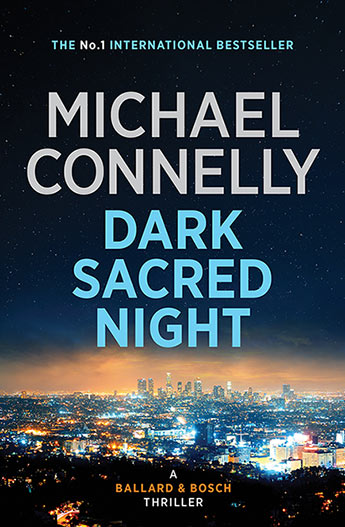
Dark Sacred Night by Michael Connelly

Dark Sacred Night.jpg

Publishers: Orion

                       Hachette Audio

Publication Date – 30 October 2018

Amazon

Legendary crime author Michael Connelly returns for another clever and technically detailed crime thriller that teams up his iconic and most utilised protagonist, Harry Bosch, with his recently created female protagonist, Renée Ballard.

In the chaotic world of the LAPD, Renée Ballard is an outsider who has found herself permanently on the graveyard shift of the Hollywood beat.  Returning to the near-abandoned station after a callout, Ballard is surprised to find a stranger rifling through her unit’s filing cabinets.  The intruder is maverick retired detective Harry Bosch, formally of the LAPD, now currently working as a contractor for the San Fernando police.

Bosch is working a cold case for personal reasons.  The victim, a 15-year-old runaway, Daisy Clayton, was brutally murdered several years before and Bosch has gotten close to the girl’s devastated mother.  Initially kicking him out the station, Ballard’s subsequent investigation of Bosch’s actions reveals the full details of the case to her and she finds herself drawn to Bosch’s hunt for justice.  As the two outsider detectives join forces in order to solve the case, they are once again thrust into the grimy underworld of Hollywood.  But as they attempt to find justice, a cornered killer, departmental politics and the dangerous suspects of the two detectives other investigations may cause the case to come crashing down around them.

Michael Connelly is a prolific and award-winning crime novelist who has been writing since 1992.  During that period he has written over 30 books, all of which are set in the same shared universe.  Connelly’s debut book, The Black Echo, introduced his most iconic character, Harry Bosch, who has been the protagonist of 21 of Connelly’s books, as well as being a supporting character in several other books.  Due to the author’s focus on this character, Connelly’s extended crime universe is often referred to as the Harry Bosch universe.  Connelly has also written a number of other thrillers in this universe, featuring several other protagonists, such as lawyer Mickey Haller, reporter Jack McEvoy and investigator Terry McCaleb.  Many of the characters introduced in previous books often have small roles in later books, while Bosch has had interactions with most of Connelly’s other protagonists.  The second protagonist in Dark Scared Night, Renée Ballard, is a more recent creation who was introduced in the 2017 novel The Late Show, and this is her first interaction with Bosch in Connelly’s wider universe.

Outside of the literary world, Connelly’s works have been adapted to film and screen.  His Harry Bosch novels have been adapted into the current Bosch television series, which will air its fifth season in 2019.  Two of his books have also been adapted into movies.  His novel, Blood Work was adapted into film in 2002 with Clint Eastwood, while his first legal novel, The Lincoln Lawyer was adapted into film in 2011 with Matthew McConaughey.

Dark Sacred Night is an excellent piece of crime fiction that presents the reader with a series of interesting investigations, told from the perspectives of two fantastic police protagonists.  I listened to this book in its audiobook format, which is jointly narrated by Christine Lakin and Titus Welliver, and runs for 10 hours and 39 minutes.  Dark Sacred Night primarily focuses on the investigation into a cold case of a young runaway girl who was brutally killed nine years previously.  This central case is massively intriguing and takes the reader deep into the sordid and disturbing criminal nightlife of Hollywood.  The main case is a gritty and unique investigation as the protagonists are forced to rely on different methods than they would usually utilise to solve the case.  Rather than having any recent evidence, the detectives are forced to rely on old interviews and pieces of police intelligence to identify any potential suspects or witnesses.  This is an intriguing way to investigate an old crime, and I really enjoyed the way they were forced to utilise this less substantial evidence to find their killer.  This method results in the protagonists identifying and investigating several distinctive suspects, and the reader is presented with a series of false leads and suggested possibilities.  I was able to identify who the killer was quite early in the book, but I still had a lot of fun following the investigation to its conclusion.

I really enjoyed the way that Connelly seeded a large number of smaller cases throughout the novel for the protagonists to solve, as well as a number of examples of police work in action.  There is an interesting split here as Ballard, the full-time detective, is given a series of more official and everyday crimes to solve, such as a suspicious death, a missing persons, a theft, trespassing and a kidnapping that she investigates to various degrees throughout the book.  Bosch, on the other hand, only has one case, an old, unsolved gang execution that he is pursuing in San Fernando and which is the focus for a good portion of his chapters.  The inclusion of these smaller cases is a clever move from Connelly as it breaks up the story from a pure focus on the main case and presents a wider viewpoint of crime and policing in the book’s setting.  It also allows the author to showcase his protagonists’ divergent investigative skills and presents the readers with an additional number of compelling mysteries and adventures that they can sink their teeth into.  Some of these additional cases tie into the main mystery in some surprising ways and clues or suspects may be revealed through this.

All of these mysteries do an amazing job showing of the author’s obvious knowledge of police procedures and law enforcement techniques.  Connelly, a former crime reporter for the Los Angeles Times, has an amazing grasp of the minutiae of police work and he expertly inserts these details into his story.  As a result his police characters mostly investigate crimes, examine evidence and file the paperwork in a way that feel extremely realistic and which adds a huge amount to the books authenticity.  Connelly’s police characters even feel like real cops, as the way that they act or think feels like real life police would act.  All of this combines with the amazing mysteries to create a first-rate piece of crime fiction.

Dark Sacred Night is the first time that Connelly’s main protagonist, Bosch, engages with the author’s newest protagonist, Ballard.  There are some interesting similarities between the two characters, which makes for a great story.  Both detectives have a similar maverick style when it comes to investigating crimes, and both have been screwed over by LAPD politics and had their careers impacted as a result.  As a result, both characters are dogged in their pursuit of criminals, especially those guilty of sex crimes, and both are willing to bend the rules to get their suspects.  However, the main difference between them is how far they will go to get justice.  While Ballard is happy to bend rules, she doesn’t go too far over the line or deliberately hurt or damage her suspects.  Bosch on the other hand has a much more flexible idea of where the line is and engages in some questionable behaviour that could be seeing as going too far. The two characters work well together during this book, and I hope that Connelly continues to use his latest protagonist in the future, especially as there are some interesting stories available when it comes to her complex police past.

The audiobook version of Long Dark Night is a great way to enjoy this crime novel and I found that I quickly powered through the book with this format.  The audiobook format utilises two separate narrators to describe the adventure contained within, broken up by whichever protagonist is narrating that chapter.  For example, Christine Lakin narrates the chapters told from Ballard’s point of view, while Titus Welliver narrates Bosch’s chapters.  Both of these narrators have great voices for their central characters, and both of them fit in perfectly in this gritty crime drama.  Lakin captures Ballard’s character perfectly, and you get a real sense of the no-nonsense and wary personality that is Ballard every time you hear Lakin’s voice.  Welliver’s voice, on the other hand, is deep and gruff and really fits Bosch’s old school and veteran personality.  Overall there is some fantastic voice work in the audiobook format of Dark Sacred Night, and I found that listening to this mystery really drew me into the middle of this investigation and helped me remember certain details and clues.

This latest book from veteran crime author Michael Connelly is a fantastic mystery thriller that draws the reader in with two outstanding protagonists and a series of captivating mysteries.  Dark Sacred Night is written in a way that is very easy to get into and the reader can enjoy the full mystery without any details of the previous books in Connelly’s shared universe.  As a result, despite it being such a late book in this long-running series, Dark Sacred Night is also the perfect place to start your investigation into the crime sensation that is Michael Connelly.  First rate crime fiction at it’s very best, this is an outstanding release from Connelly that is guaranteed to draw the reader into the dark and intriguing world of mysteries.

My Rating:

Four and a half stars

Amazon

Planetside by Michael Mammay

Planetside Cover 2

Publishers: Harper Voyager

                        HarperAudio

Publication Date – 31 July 2018

Amazon

Well, that was an unexpectantly awesome book!  I am usually pretty good at predicting how good a book is going to be by its plot synopsis or my prior knowledge of the author.  When I first heard about Planetside I thought it sounded like an interesting concept from first-time author Michael Mammay.  While I had high hopes for the book, I did somewhat assume that it would just be another solid but enjoyable science fiction mystery.  What I was not expecting, however, was one of the best science fiction books of 2018 that easy achieves a five-star rating from me.

Set in the far future of Earth’s expansion, Planetside follows Colonel Carl Butler, a war hero living out a peaceful semi-retirement on a training base.  However, when his old friend General Serata calls him late at night and drags him all the way to headquarters, he obliges for old times’ sake.  Serata needs him to travel to the planet of Cappa, humanity’s current warzone, where members of a resilient and intelligent alien race known as the Cappans are fighting a gruelling insurgency against the humans attempting to exploit their planet.  Once there, he will head up an investigation into the disappearance of a young lieutenant who went missing after being wounded on the planet.  By all accounts, the wounded lieutenant was successfully evacuated from the surface, but the military hospital claims that he never arrived at their facility.  To makes matters worse, the lieutenant is the son of a high councillor, and the disappearance has become a highly publicised affair.  Despite knowing that there is more to the case than Serata is letting on, Butler agrees to find the missing officer.

Arriving at Cappa Base, the space station hovering over the planet, Butler soon finds that his investigation is going to be a lot harder than he anticipated.  All the soldiers he speaks to have the same rehearsed story, the head of the base’s military hospital flat out refuses to cooperate with him, the head of Special Ops is continuously unable to come off-planet to speak to him, and any witnesses or evidence that could point him in the right direction mysteriously disappears.  It is also damn suspicious that any time he takes a step in the right direction, somebody tries to have him killed.  Under pressure to wrap this investigation up, Butler decides to drop down onto the surface of Cappa, but what he finds down there will change everything.  Forced into an increasingly desperate situation, Butler must find the answers he needs before it is too late.

This is the first book from Michael Mammay, but it was more than enough to make me a dedicated fan of this author.  With a sequel already set to be released in 2019, Planetside is an extraordinary introduction to an amazing new series.  I chose to listen to this book in its audiobook format, read by R. C. Bray, and at 8 hours 38 minutes, this is a fairly quick way to enjoy this fantastic book.

Planetside’s story is based around the protagonist’s investigation into a missing human soldier on an alien planet that has been occupied by the human military.  As Butler arrives at the military base the solider was stationed out of, he begins to realise that there is something much more to the case than what was advertised.  Every single person he speaks to is hiding something, he seems only to uncover more lies, and some shadowy figures are actively trying to sabotage his investigation in any way they can.  Despite all these setbacks, the protagonist persists with his investigation throughout the course of the book and slowly begins to uncover the underlying conspiracy that the soldier’s disappearance is just one small part of.  There is so much about this mystery investigation to enjoy, as the author seamlessly combines the mystery and conspiracy part of this story with the science fiction element, creating a unique and captivating overall narrative.  The full scope of this conspiracy is very impressive, and Mammay’s slow burn reveal of the extent and implications of what Butler uncovers is well done to keep the reader in suspense.  I was intensely intrigued by this multilayered conspiracy, and was left constantly guessing at what the potential solution was.

The book is told from the point of view of its protagonist, Colonel Butler, and Mammay has created an excellent central character for this story that the reader is instantly drawn to and cannot help but like.  The author has done a fantastic job conveying the fact that Butler is a straight-shooting, no-bullshit, wily veteran soldier who has had enough of war and is just looking forward to retirement.  He is an amusing and intriguing choice to investigate the book’s intricate and potentially wide-reaching conspiracy, as he powers through the expected political niceties other investigators may have worried about without any concerns for his future or career.  His years of service also ensure that he has impeccable instincts when it comes to the people he is dealing with and is fully aware of when the other characters are bullshitting him, which occurs frequently throughout this book.  I had fun observing this rough and seemingly uncomplicated old-school soldier get to grips with this elaborate conspiracy and blow through all the careful plans of the book’s antagonists.  The colonel also has a sense of humour, something that the other characters encounter to various degrees of frustration, especially the people he is intentionally pissing off.  I also appreciated the self-deprecating and extremely honest reflections about the situation that Butler presents to the reader, as it made me like him even more.

The military aspects of this book are another amazing part of Planetside, as Mammay has perfectly captured elements of the modern day military and transplanted them into this science fiction storyline.  The majority of the story is set within Cappa Base, and the reader is made to feel like they are in a real military base.  The author also seeks to capture the full minutiae of military life throughout the book, and the reader is given insight into what tasks are undertaken on the base, the main characters experience and the respect he commands of the other soldiers in the story.  While most of the focus is on the investigation, there are a couple of action scenes throughout the book, including an extended battle sequence that see’s the protagonist and his allies engage in a protracted firefight with enemy forces on the planet’s surface.  The author’s use of the first-person perspective is perfect for these battle sequences and the reader is dragged right into the middle of these firefights, really experiencing the action through Mammay’s skilled and descriptive writing.  This battle sequences felt very realistic and had some noticeable similarities to real-life skirmishes in modern day battlefields.  The tactics the humans use during these conflicts on Cappa are highly reminiscent of American forces in the Middle East, although the inclusion of more science fiction appropriate weapons and technology allow for some interesting differences.

While the impressive investigation storyline does a fantastic job holding onto the reader’s interest, and the solution to the entire mystery arc is creative and clever, nothing compares to the book’s epic conclusion.  Without going into too much detail, I thought that the way that Mammay ended this book was just incredible, and is one of the main reasons why I am giving this book a five-star rating.  I also loved how, towards the end of the book, the protagonist becomes fully aware of how everything has to end, and at the same time he starts to understand that his oldest friend had sent him on this mission because he knew exactly how Butler would act upon uncovering the full extent of the conspiracy.  The final scene of the book was just perfect as the protagonist reflects on everything that has happened with one of the book’s side characters.  During this scene there is an excellent use of the end of a subtle countdown that has been occurring throughout the entire book, represented by a depleting number of whisky bottles, as well as an appropriate moment of happiness for Butler as he finally gets to have a whisky in a proper glass, which was just perfect.  As mentioned above, Mammay already has a sequel planned, and I am extremely curious to see where the story goes next.

The audiobook version of Planetside is a great way to enjoy this fantastic book, and I had a lot of fun listening to this format.  The audiobook’s narrator, R. C. Bray, manages to capture the gruff and grizzled personality of Butler perfectly, and for most of the book it really sounded like the old colonel was telling you his story.  Bray also does a good job producing distinctive voices for the rest of the characters in book, including several female characters, and the listener is able to distinguish between the various people without too much difficulty.  I also felt that listening to this story really helped bring me into the book’s awesome battle sequences as well as ensuring that I was fully invested in the success of the enjoyable main character.  Overall, I would recommend the audiobook format as an excellent way to enjoy this book, although readers will of course get a lot out of this book if they choose the paperback format.

Michael Mammay’s debut novel, Planetside, is an incredible piece of science fiction and is one of my favourite books of 2018.  Featuring a captivating mystery storyline that places the book’s likeable protagonist in the middle of a massive conspiracy, this book completely grabs the reader’s attention and refuses to let go until its powerful and memorable conclusion.  I cannot recommend this book enough and it is essential reading for all fans of the science fiction genre.  I am very much looking forward to Mammay’s sequel to Planetside, which is already at the top of my must-read list for 2019.

My Rating:

Five Stars

Amazon