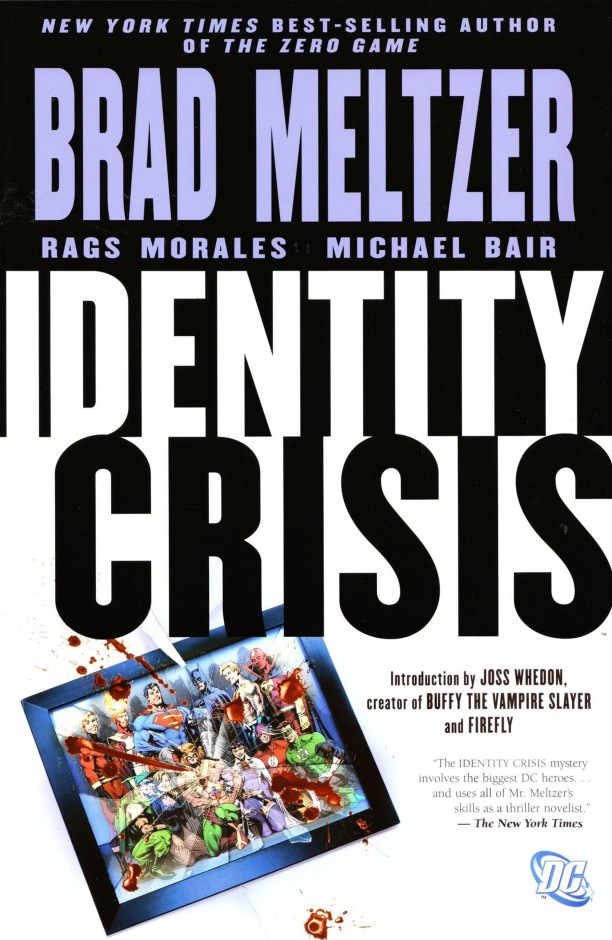
Throwback Thursday – Identity Crisis by Brad Meltzer, Rags Morales and Michael Bair.

Identity Crisis Cover

Publisher: DC Comics (Paperback – 1 October 2005)

Series: Identity Crisis Limited Series

Writer: Brad Meltzer

Penciller: Rags Morales

Inker: Michael Bair

Letterer: Ken Lopez

Colorist: Alex Sinclair

Length: 288 pages

My Rating: 5 out 5 stars

Amazon     Book Depository

Welcome back to my Throwback Thursday series, where I republish old reviews, review books I have read before or review older books I have only just had a chance to read.  For this week’s Throwback Thursday I take a look at one of my absolute favourite comic book limited series, the epic 2004 DC Comics event, Identity Crisis.  (Quick warning, there are spoilers ahead).
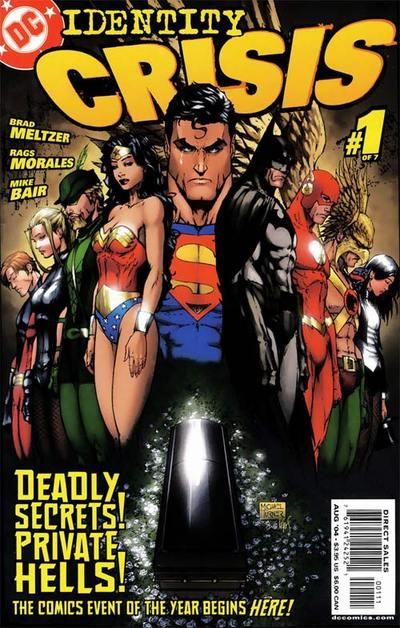
Identity Crisis #1

It is fair to say that the early to mid-2000s was one of my favourite periods of comic books, with some truly cool and epic ongoing and limited series being released.  This was particularly true for DC Comics, who produced some of their best work during this time, many of which rank amongst my all-time favourite comic series.  This easily includes the exceptional and brilliant crossover event, Identity Crisis, which to my mind is one of the best limited series ever written.

Made of seven issues, Identity Crisis combines the unique writing talent of thriller author Brad Meltzer with the artistic stylings of veteran DC Comics collaborators Rags Morales and Michael Bair.  This ended up being a near perfect combination of talents and skill, and I have a lot of love for the exceptional story, which absolutely hooks me every time, and its outstanding associated artwork.  I particularly impressed with the addition of Meltzer, who, despite his more literary background has written some of the absolute best and most human comics I have ever had the pleasure of reading, including Green Arrow: The Archer’s Quest and the two Justice League of America storylines, The Tornado’s Path and The Lightning Saga.  However, his story in Identity Crisis is particularly powerful and thought-provoking, and it ends up being a comic that completely changes everything you knew about your favourite heroes.

For years the members of the Justice League of America have protected the world from all manner of evil and destruction, always prevailing no matter the odds.  But who can protect them when someone goes after those closest to them?  And what if they actually deserve the punishment being visited upon them?

On an unremarkable night, a mysterious attacker breaks into the home of long-serving Justice League associate, Ralph Dibny, the Elongated Man, and commits a terrible crime, the murder of Ralph’s beloved wife, Sue Dibny.  With no evidence about who the killer is and no idea how they breached the Dibnys’ impressive security, the superhero community rallies behind their bereaved friend and seeks to find the killer by any means necessary.

As the rest of the heroes seek answers at any potential suspect within the supervillain community, the Elongated Man and a small group his closest friends hunt for a minor villain, Dr Light, whose secret connection to the League’s darkest moment may hold the answers they seek.  However, when a second attack occurs on another publicly known relative of a superhero, Jean Loring, the former wife of the Atom, it soon becomes clear that someone else is targeting the heroes and their loved ones.
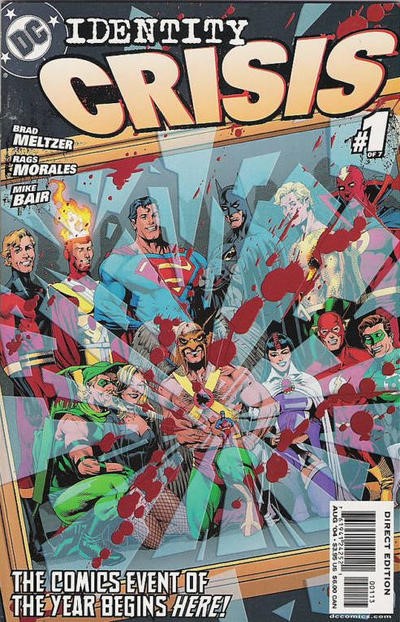
Identity Crisis #1b

As Batman, Superman, Green Arrow and others attempt to get to the bottom of the case, cryptic threats to one hero’s relative reveal that whoever is targeting them knows all of the League’s secrets, including their hidden identities.  As even more tragedies befall the superhero community, dark secrets from the League’s past are brought into the light and no-one will be prepared for the terrible truth behind these brutal murders.  Can the League weather this latest attack, or is this the beginning of the end for the world’s greatest heroes?

Damn, no matter how many times I read this comic, the tragic and powerful events of Identity Crisis still really get to me.  This exceptional comic contains one of the most impressive narratives I have ever seen in a limited series, taking the reader on a captivating and emotional dive into the world of your favourite heroes.  Perfectly combing a dark, mysterious narrative with incredible character work and some truly amazing artistic inclusions, this comic gets an extremely easy five-star rating from me.

For Identity Crisis, Brad Meltzer really went to the well, producing an insanely compelling and moving story that relentless drags you in and introduces you to a completely new side of your favourite heroes.  Utilising his experience as a crime thriller writer, he produces a powerful, character driven superhero narrative with detailed crime fiction elements to create an exceptional and unique story.  Identity Crisis has an amazing start to it, which not only carefully introduces several key figures but also installs some dark tragedy, as the wife of a superhero is killed off.  The subsequent investigation into her murder by the enraged superhero community is extremely compelling and intense, as the emotional heroes turn over every rock and stone, much to the horror of the villains.  However, it is soon revealed that several members of the Justice League are harbouring a devastating secret, one that could reveal the identity of the killer.  This secret becomes one of the most important parts of the first half of the series, and it leads to an epic, action-packed fight sequence against a particularly dangerous foe.
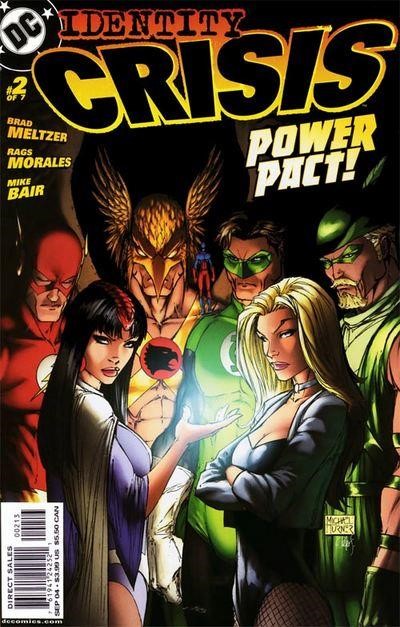
Identity Crisis #2

The story starts to go in a bit of a different direction at this point, with the above secret not really panning out regarding the investigation.  However, other superhero relatives, both public and secret, are targeted, resulting in pandemonium around the characters.  I loved the narrative’s move to a more classic investigation at this point, as the heroes start following every lead they can, while more character development and big moments are explored.  This all leads up to the defining moment when another superhero loses a loved one and the identity of the killer is seemingly revealed.  However, this turns out to be a bluff, as the real killer is still hidden.  The reveal of who did it and why are revealed pretty suddenly towards the end, with some curious and clever motivations exposed.  This leads to a tragic and heartbreaking conclusion, as more secrets are revealed, dangerous lies are uncovered, and several characters leave the story more broken and destroyed than ever before.  You will be thrown through the emotional wringer as you check this comic out.

I deeply enjoyed the way that Meltzer told Identity Crisis’s excellent story, especially as it quickly and effectively engrosses the reader and ensures their undivided attention.  The author utilises a mass-character narrative that follows a substantial collection of heroes and villains, many of whom have distinctive or semi-separate storylines.  This works to tell an intriguing, rich narrative that not only has some clever dramatic components but also allows for some intriguing and compelling retcons and expansions to the already elaborate DC universe.  It is very cool how the story developed into more of a murder mystery/thriller story as the comic progressed, and this really played to Meltzer’s strengths.  The investigation is handled very well, and I liked how the superhero elements altered and enhanced it in some clever ways.  The mystery itself is complex and clever, with Meltzer adding in some great twists, false leads and compelling surprises to keep the reader guessing.  The twist about the actual killer is pretty good, and Meltzer did a great job layering in hints and clues throughout the rest of the story while also introducing a few good alternative suspects.  While the motivations and complexities surrounding the killer’s actions are great, I did think that how the protagonists worked it out was a little abrupt, and it might have been a little better if they worked it out from some earlier clues.  The use of female characters wasn’t the best either, especially as most of them are there simply to be victims in one shape or another.  Having a long-established character getting both raped and murdered in a comic as a plot device is pretty unfortunate, and some stronger female figures might have helped balance this out.  Still, this ended up being an awesome read and I deeply enjoyed how it turned out.

One of the things that I really enjoy about Identity Crisis is the interesting examinations that were included as part of the plot.  Meltzer and the artistic team obviously had a lot of fun exploring or introducing some cool aspects of the DC Universe in this series, especially when it comes to the secret or hidden lives of superheroes and supervillains.  I particularly loved the in-depth examination about how both groups are officially or unofficially organised, and there are some very intriguing views of them socialising or working together.  The inclusion of a highly organised superhero death investigation squad, made up of a range of random heroes (the Ray, the Atom, Animal Man, Mister Miracle and two of the Metal Men) is particularly clever, as is the way the various heroes organise into a vengeful posse to question potential suspects.  The deep dive into the importance of a superhero secret identity also becomes an important part of the story, especially as the loss of the secret brings pandemonium thanks to the killer stalking them.  I also loved the counterbalance look at organised villainy, and there are some excellent scenes that see the villains gathering to socialise or talk shop.  Having an organising force like the Calculator, as well as a secret space station hangout, is pretty elaborate, and the deeper look at the villains of this universe, definitely gave Identity Crisis a compelling and intricate edge.
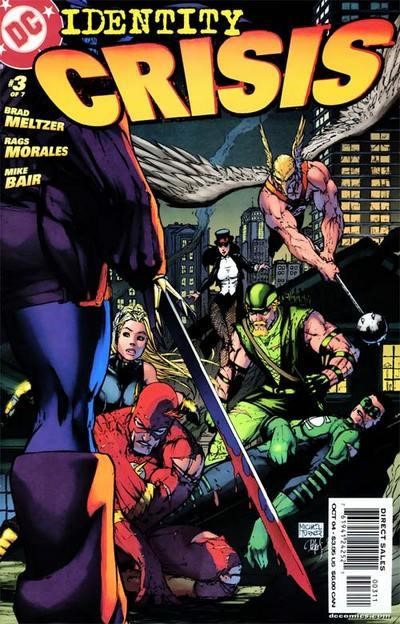
Identity Crisis #3

However, easily the most groundbreaking and compelling new inclusion to the universe is the reveal about the unofficial league within the Justice League who have some dark secrets.  Made up of heroes Green Arrow, Black Canary, Hawkman, Zatanna and Atom, as well as the Silver Age Green Lantern and Flash, this group of heroes apparently operated separately of the main Justice League during their classic Silver Age adventures, acting as their clean-up crew.  This retcon by Meltzer provides an interesting explanation for why villains never remember the secret identities of the heroes they switch minds with or whose dreams they invade, namely they have their mind erased by Zatanna’s magic after being captured by this inner-League.  While this is already a dark move by these established heroes, it gets even worse when they are forced to reveal that they intentionally destroyed Dr Light’s brain to make him less of a threat.  This and other revelations, acts to make many of your favourite heroes appear much more morally grey and fallible, and it was a particularly impressive and monumental inclusion, that will have grave consequences down the line for the entire universe.

Unsurprisingly for something written by Meltzer, Identity Crisis contains some insanely complex and impressive characters who form the heart of the tale.  Due to the way the story is told, Identity Crisis follows a massive cast of comic characters, including several obscure or underappreciated figures.  Meltzer does a brilliant job of utilising all these established characters throughout his story, with nearly every major cast member getting a moment to shine in some way or another, and multiple figures who were underutilised or unappreciated before this comic were given brilliant and defining second chances here.  While the use of multiple focus characters had the potential for a scattered narrative, Meltzer was able to direct the flow of the story around all these various protagonists and antagonists perfectly, and you still get a tight and concise story, which also takes the time to dive into each of these figures and showcase them to their greatest degree.  As I mentioned before, there is a real focus on highlighting the darker side of the superhero characters throughout Identity Crisis, and you end up really seeing these fantastic figures in a whole new scary light.

Let’s start with Ralph and Sue Dibny.  I must admit that the very first time I ever read Identity Crisis, many years ago, I honestly had no idea who Elongated Man and his wife were, as they were a little obscure.  However, Meltzer really goes out of his way to feature them in this story (even adding in a few retcons) and you are given a great introduction to them at the start.  In just a few panels, you understand who these characters are and what they mean to each other and the other superheroes, as well as some unique characteristics and relationship quirks.  This excellent introduction makes you start to care about them just as Meltzer brings the hammer down and kills Sue.  The subsequent grief, rage and despair from Elongated Man is just heartbreaking, and you go through the rest of the comic seeing him attempt to recover from these terrible events.  This amazing use of characters at the start of the comic has a great flow-on effect to the rest of the story, and you become exceedingly invested in finding the killer as a result.
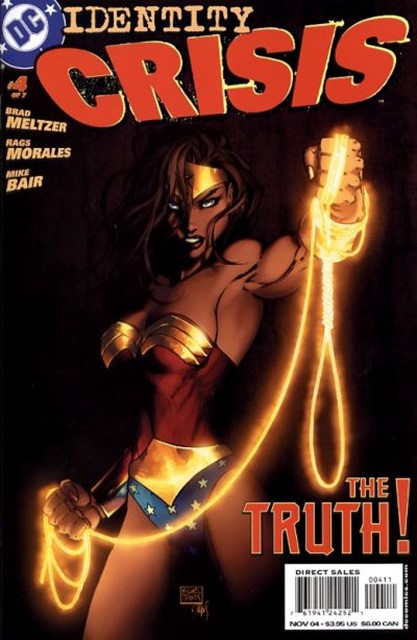
Identity Crisis #4

From there, a lot of the superhero focus goes to the surviving members of the Justice League who formed the league within the League I mentioned above.  There is some exceptional character work around some of these team members, especially as they come to terms with the decisions they made in the past and how they are impacting them now.  I loved seeing them attempt to justify their actions to the other heroes, even their darkest decisions, especially as you can understand why they did what they did, while also feeling disappointed in them.  You really get a sense of determination and shame from them as the story continues, and you see all of them go through a lot in both the past in the present story.  Despite multiple differences, this team are still friends and comrades, and watching them come together to brawl with some of the most dangerous characters is pretty heartwarming, even if darker elements lie just beneath the surface.

While there is a focus on these inner-Leaguers, some of them are utilised a lot more frequently than others, particularly the original Green Arrow, Oliver Queen.  Green Arrow is an excellent figure in this comic and is probably the closest thing to a heroic narrator/central protagonist the story has.  His unique perspective on the events acts as a good foil to many of the other characters, such as Batman and Superman, and he proves to be a calm, if potentially vengeful figure for much of the story, organising many of the League actions and forensic investigations.  He also proves to be the voice of reason for the inner League, calmly justifying many of their actions and serving as a bridge between this existing group and the newer Flash and Green Lantern.  Despite his belief that they are doing the right thing, you can see some real emotion and regret in his face, especially when the further revelations about Dr Light and Batman come out.  I also appreciated the deeper look into his antagonistic relationship with Hawkman, which partially originated in the past events mentioned here, and it is interesting to see how the events of this comic impact future Green Arrow storylines.

Aside from Green Arrow, other members of this secret League who get an intriguing focus include the Atom, Ray Palmer, and his ex-wife, Jean Loring.  Due to his status as another public hero, Atom and Jean are also targeted throughout the story, and you end up getting a rather intense and fascinating look at both.  Watching their failed relationship rekindle is a nicer part of most of the comic, although eventual reveals and tragedies naturally ruin it and smash everything around.  Still, their complicated emotions and issues surrounding their fractured relationship make for some of the best parts of the comic.  I liked the interesting look at Zatanna throughout the comic, especially as she is largely responsible for some of the worst moments of this group of heroes, as she clearly feels guilty about her magic messing with the villain’s minds.  I also need to highlight the younger Flash, Wally West, who finds out about the actions of the other characters during the current events of the comic.  It is absolutely heartbreaking to see Wally learn that his mentor and predecessor, Barry Allen, was not as perfect as he imagined, and actually participated in some of the team’s worst events.  The distress he exhibits with every subsequent reveal is showcased through the comic’s art extremely well, and his subsequent guilt as he is forced to keep it secret from other Leaguers like Batman is quite noticeable.
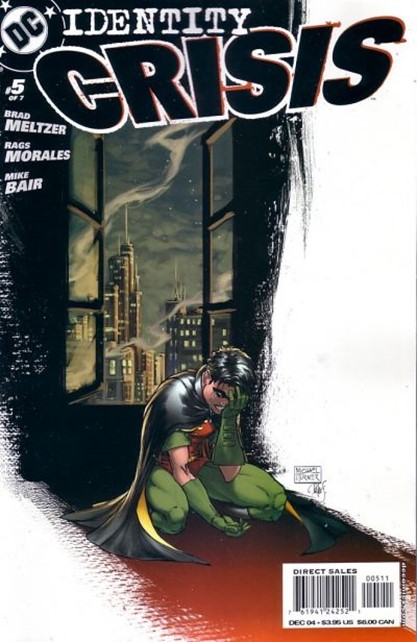
Identity Crisis #5

As you can expect from any major DC Comics crossover event, members of DC’s Big Three are strongly featured throughout Identity Crisis.  While Wonder Woman only has a few intriguing scenes, in which you get to see both her ferocity and her kindness, there is much more of a focus on Superman and Batman.  Superman gets some great sequences throughout Identity Crisis, especially as the creative team sinisterly focus on his family and friends, all of whom are potential targets.  Watching Superman slowly get frustrated with the investigation, especially when Lois is threatened, helps to enhance the seriousness of the story, and he has some powerful moments here.  I did appreciate the way in which Meltzer attempted to paint the big blue Boy Scout in a darker light, as it is revealed that even the supposedly righteous Superman is not as innocent as you’d believe.  It is subtly implied that Superman always knew what the inner League was up to (yay for super hearing), and chose to ignore it for convenience.  This brilliant and dark suggestion that even Superman isn’t infallible is a pretty weighty one that  helps to enhance the weight and power of Identity Crisis’s narrative.

Batman is a lot more involved in the story and leads his own investigation into who is behind the killing.  Even though he does not actually appear until halfway through the comic, he is a heavy presence throughout Identity Crisis, both because of his brusque, loner ways of trying to solve the crime, but because of the dark shadows of the past.  There are multiple moments that revisit his childhood and the death of his parents, which parallels some of the other losses in Identity Crisis, and you get to see the human side of grief impacting this usually stoic character.  Batman’s storyline gets even more intense when it is revealed that part of his memory was erased by his fellow Leaguers to cover up their actions surrounding Dr Light, which is a very haunting inclusion.  Meltzer makes this even more intriguing by having Green Arrow suggest, mostly out of guilt, that Batman likely has done something similar in the past, while also acknowledging that he has likely already deduced that his memories were erased.  This really makes you consider Batman’s relationship with the rest of his heroes, and it certainly has a big impact on future Batman storylines.

The Batman impact on this story is also felt through the great focus on the current Robin, Tim Drake, who plays a surprisingly big role in the events of Identity Crisis.  At the start of the comic, Tim is one of the few members of the Bat-family who still has a father, which puts him at odds with Batman and the Robin predecessors.  As his father has only just discovered his dual identity as Robin, he becomes one of the more interesting protagonists, as the comic explores the stress of the superhero lifestyle on family.  Tim’s storyline ends up being extremely tragic when his father is murdered.  Watching Robin talk to his father over the phone as he’s about to die is just damn horrific, and your heart can’t help but break during that epically drawn-out scene where he and Batman arrive too late.  The subsequent parallel between him, Bruce Wayne and previous Robin Dick Grayson during this moment is particularly poignant, and it results in a whole new chapter of this amazing incarnation of Robin.
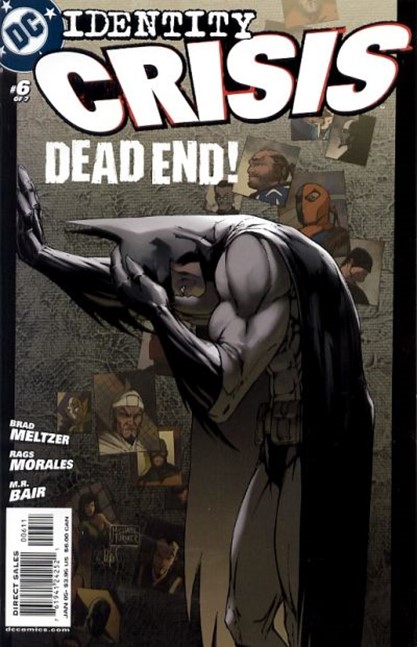
Identity Crisis #6

While there are a few other interestingly featured heroes in Identity Crisis, I’m going to start talking about the villains, as many of them have a brilliant role in this comic.  Thanks to Meltzer’s fantastic writing, Identity Crisis proves to be just as much about the villains as the heroes, as many of them are deeply impacted by the events disclosed here.  While I won’t reveal the identity of the killer here (I’m keeping some spoilers locked up), I will say that their motivations are pretty fascinating and provide a compelling insight into the super lifestyle.  The rest of the villains in Identity Crisis are fair game for discussion, though, and I deeply loved the creative team’s excellent examination of them.

Easily the villain I need to talk about the most is Dr Light, an old school Justice League villain who had not been really utilised in recent years.  Mostly known before this comic as the Teen Titans’ punching bag, Meltzer completely revitalised the character in Identity Crisis and, with a stroke, turned him onto one of the most deranged and dangerous figures in the entire universe.  It is revealed throughout the comic that Dr Light used to be an extremely powerful villain, but after invading an empty Watch Tower and raping Sue Dibny, the League brutally took him down, erased his memory of the event and then magically lobotomised him.  This resulted in him becoming the moronic and weakened villain who was routinely taken down by the teenage heroes and other embarrassing foes.  This entire reveal is pretty damn epic and horrifying at the same time.  Not only does Dr Light seem excessively evil and deranged in the flashback scenes, but the shocking revelations of his actions immediately make you hate him.  Meltzer’s explanation for why he turned into such as pathetic creature (aside from the real reason of capricious authors) really hits home hard, and even though Dr Light is a terrible person, you can’t believe that members of the Justice League went so far.  The subsequent scenes where Dr Light regains his memories and his powers feature some of the best artwork in the comic, and while he doesn’t do much here, the scenes with him brooding and plotting hit at his returned and future malevolence.  I deeply appreciated how much Meltzer was able to morph this villain, and while the reliance on rape for antagonist purposes is a bit low, he succeeded in making him a very hateful and despicable figure.

Aside from the killer and Dr Light, several other villains hold interesting and significant roles in Identity Crisis, and I deeply enjoyed how they were portrayed.  This includes Green Arrow villain Meryln, who serves as an interesting shadow to Oliver Queen throughout the comic (more so than usual).  While Green Arrow provides the superhero community’s viewpoint on events, Merlyn’s narration examines the supervillain community and their various reactions.  I loved his fun insights into his fellow villains, and he ends up being an interesting inclusion to the cast.  The same can be said for the Calculator, a formerly silly figure who has turned himself into a non-costumed villain who acts as an anti-Oracle, providing the villain community with tech support and intelligence by charging them $1,000 per question.  I loved this interesting revamp of this minor character, especially as this suave, behind-the-scenes information broker became his default look for years.  Calculator’s conversations and business dealings offer some compelling insights into the superhero community, and I loved the occasional jokes about his old costume.  Meltzer also makes exceptional use of one of my favourite villains, Deathstroke, who once again shows why he is the DC universe’s ultimate badass.  Hired by Dr Light to protect himself from the League, Deathstroke takes on an entire team of heroes single handily and essentially spanks them.  I love how the creative team not only showcase his insane physical abilities, but also his tactical knowhow, as he expertly takes down major heroes in brilliant ways (he takes down the Atom and Hawkman with a laser pointer, true story).  His scene in the centre of the comic is the best action sequence in Identity Crisis, and it perfectly showcased this awesome villain (seriously, give this man a movie), while also hinting at some future grudges.
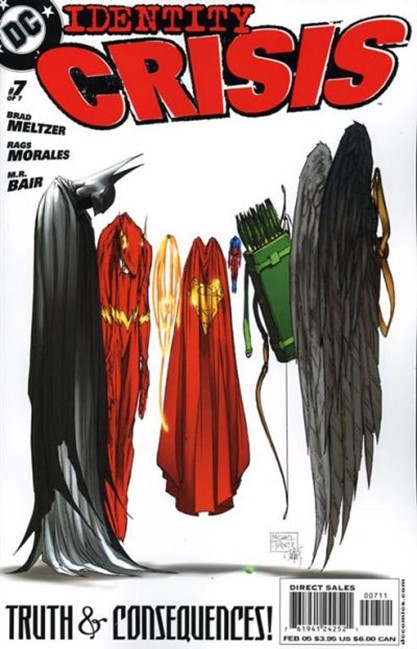
Identity Crisis #7

The final character I want to talk about is the lecherous and always entertaining Captain Boomerang, who has a major role in the plot.  I absolutely loved the exceptional story that Meltzer wrote around this infamous villain, and it is easily one of his most defining depictions.  Captain Boomerang has always been shown as a bit of a joke, but this comic shows him as a fat, washed up has-been, who leaches off his fellow villains and is generally looked down upon by them.  However, he gets a very intense and emotional story in this comic, as he meets his long-lost son and starts to develop a relationship with him.  The father/son moments add a rather interesting and nice edge to the main story and seem slightly disconnected from the rest of the plot.  That is until the final killing, when it is revealed that Captain Boomerang has arrived to kill Robin’s father.  The implied suggestion that Captain Boomerang of all people might be behind the killings is pretty iconic, and I loved the split panels that contrast his phone call to his son with the phone conversation between Robin and his father.  The subsequent results of the attack, as well as the reveals in the aftermath are pretty awesome, and I really appreciated the fun second chance that Meltzer and the artistic team gave to this iconic, old-school villain.

While I have gone a lot about story elements and characters, I also really need to highlight the incredible artwork featured in Identity Crisis.  The artistic team of Rags Morales and Michael Bair did an outstanding job in this limited series, producing some of the absolute best artwork from this era of DC Comics which perfectly enhances Meltzer’s epic storytelling.  There are so many impressive and memorable artistic moments and sequences throughout Identity Crisis, and I loved the various ways in which the artists convey movement, action, and emotion in their detailed and captivating panels.  There are so many brilliant action sequences in this comic, with my favourite being the Deathstroke vs Justice League fight I mentioned above, although a few others are also very cool to see.  I also loved the character designs featured throughout Identity Crisis, especially as the creative team took the opportunity to seriously reinvent several heroes and villains.  The streamlined look of the Calculator is particularly fun, and I also loved the balding and fat version of Captain Boomerang.  While I didn’t love how a couple of characters looked (what was with the hair on Connor Hawke?), most of it was pretty exceptional, and I love how it was later reutilised by other artists.

There are multiple truly brilliant and eye-catching artistic highlights of Identity Crisis that I must highlight, including the massive and powerful funeral sequence that takes place in the early part of the series.  There is an incredibly elaborate double-page public funeral spread that shows every single emotional superhero in attendance, with the various heroes organised by team or connection to the grieving family.  The use of the multiple heroes and associates is pretty awesome, especially as there are a range of character-appropriate reactions, and I loved seeing the whole costume crowd surrounded by members of the press and public as they mourn.  You also get also some excellent and heartfelt sequences in the subsequent scenes which show the eulogies, especially when Elongated Man starts to literally deteriorate due to his grief, which is just so powerful.  Other great examples of the artist’s work include the fun flashback scenes that allowed them to draw events in various classic comic styles, that offer a little bit of simplicity compared to the darker modern spread.

I particularly loved some of the brilliant sequences that are set around Dr Light, as not only do you see him at his most dangerous in the past but you also have some outstanding scenes when he regains his memories and powers.  The excellent parallels between the Justice League’s takedown of Dr Light and their attack on Deathstroke are incredible, and the subsequent massive panel of blinding light around Dr Light’s face is perfection.  However, the absolute best-drawn sequence in Identity Crisis must be the panels leading up to the death of Robin’s father.  Watching the insane amount of emotion on Batman and Robin as they realise that Robin’s father is about to die is so damn moving, especially the anguish on Robin.  The most moving of these panels is the one that focuses on Batman’s face after Robin begs his mentor to save his father.  The look of pure dread, fear and despair on Batman’s face takes my breath away every single time I look at it, and it perfectly conveys all of Batman’s repressed feelings as he realises that history is once again going to repeat itself.  While there are some other great scenes, the above are easily the cream of the artistic crop and definitely make this comic stand out.  I have so much love for the artistic work of Morales and Bair here, and it markedly enhances the already exceptional story, turning Identity Crisis into a true epic classic.

Well, that’s pretty much everything I have to say about Identity Crisis here.  As you can no doubt guess from the excessive way I have waffled on, I have a lot of love for this exceptional comic and I’m not afraid to show it.  The brilliant creative team behind Identity Crisis did an incredible job with this comic and they really turned out something special.  Perfectly bringing together a deep and clever story with impressive artwork, amazing characters, and so much damn emotion, this comic has something for everyone and is so very highly recommended.  I deeply enjoy everything about Identity Crisis, especially how it leads to some other epic comic books (the continuation of the mindwipe stuff in Justice League of America, Green Arrow, Teen Titans and more is particularly good).  One of the most distinctive and amazing comics ever and a must read for all DC Comics fans.

Amazon     Book Depository

Throwback Thursday: Usagi Yojimbo: Volume 14: Demon Mask by Stan Sakai

Usagi Yojimbo - Demon Mask Cover

Publisher: Dark Horse Comics (Paperback – March 2001)

Series: Usagi Yojimbo – Book 14

Length: 224 pages

My Rating: 5 out of 5 stars

Amazon

Welcome back to my Throwback Thursday series, where I republish old reviews, review books I have read before or review older books I have only just had a chance to read.  In this latest Throwback Thursday I once again dive into the awesome and elaborate world of Usagi Yojimbo as I check out the 14th epic volume, Demon Mask.

It feels good to be on a Usagi Yojimbo review streak here at The Unseen Library, and I have been having a lot of fun diving into some of the awesome middle volumes of one of my absolute favourite comic series.  My last two Throwback Thursday reviews of the 12th Usagi Yojimbo volume, Grasscutter, and the 13th volume, Grey Shadows, were really fun to pull together, and I really had no choice but to also have a look at the 14th volume this week with Demon Mask.

Usagi #31

Demon Mask is another excellent addition to the Usagi Yojimbo series that unsurprisingly gets a full five-star rating from me.  Exclusively written and drawn by Stan Sakai, this impressive entry once again follows the rabbit ronin Miyamoto Usagi as he continues his action-packed adventures through the anthropomorphic animal filled version of feudal Japan this series is set in.  Containing issues #31-38 of the Dark Horse Comics run on the series, as well as a few additional issues from associated magazines, Demon Mask continues the trend of featuring several shorter stories, while also leading back towards the next volume, Grasscutter II, which will contain a big crossover story.  I deeply enjoyed all the cool stories in this volume, and there are some real classics here.

The first story contained within Demon Mask is the entertaining and elaborate tale, The Inn on Moon Shadow Hill.  In this story, a travelling Usagi comes across a mysterious inn surrounded by strange sights and an unusual group of patrons.  The land surrounding the inn is apparently haunted, filled with all manner of monsters, demons and obakemono (haunts), which attracts many wealthy individuals to the safe inn to watch.  However, Usagi is soon drawn into a hefty wager with an arrogant merchant and must travel outside the inn to encounter the haunts and the forces behind them.

This is quite an amusing story that perfectly combines Sakai’s fantastic humour with his love of classic Japanese monsters and haunts.  The entire story comes together really well, first introducing the situation, and then forcing Usagi outside to face the ghosts after making a bet.  The subsequent reveal of the various monsters and creatures is pretty spectacular, and Sakai goes out of his way to include as many uniquely Japanese legendary creatures as possible, especially in one breathtaking and elaborate panel.  I really enjoyed the fun twist that occurred here, especially as it allowed Usagi to win his bet with the merchant, and his over-the-top explanation of what he experienced was pretty damn amusing with all the exaggerated facial expressions and reactions from Usagi and his audience.  This ends on a very satisfying and entertaining note, and The Inn on Moon Shadow Hill ended up being a fantastic and light-hearted start to the entire volume.

Usagi #32

Following on from the first fun story is the touching tale, A Life of Mush.  In this story Usagi encounters a brash peasant boy, Eizo, who wishes to become a warrior to avoid the farmer’s simple lifestyle (a life of eating mush).  However, Eizo soon grows tired of Usagi’s honourable warrior philosophy and attempts to befriend a group of bandits, only to discover that there is more to life and battle than brashness and toughness.  This was a great shorter story that presents an interesting outside perspective on the life of a warrior in this setting.  I liked the comparison between a child’s view of a warrior to Usagi’s intense dedication and spiritual thoughts, which in fairness, does seem a little more boring.  The subsequent events provide a fantastic lesson on perception and life choices, as Eizo and the bandits he encounters discover just how tough a true warrior like Usagi can be.  A compelling and thoughtful addition to the volume, A Life of Mush was a powerful and clever read.

The next story is a shorter entry, Deserters, which brings us back to the iconic Neko Ninja and their leader, Chizu.  Deserters examines a tragic tale of two Neko Ninja, Take and Saruko, who attempt to leave the Neko Ninja and start a new life together.  Captured by their fellows, they are taken before Chizu for trial, and must soon face the treachery and manipulation of Chizu’s ambitious second in command, Kagemaru.  This was another excellent shorter entry in Demon Mask, especially as it combines some quick, but efficient, character introductions, with some inherent tragedy and betrayal.  The result of the story, while a little predictable, ends up being very moving, and you can’t help but feel for the star-crossed lovers.  I also really like how this shorter entry turns out to be an interesting bridging story between several of the plot lines in the 11th volume, Seasons, and some of the big storylines in the next few volumes.  A surprisingly important and powerful story, Deserters is a great read that adds a lot to the overall volume.

Usagi #33

Up next, we have the rather entertaining and fun story, A Potter’s Tale, which makes great use of amusing coincidences to create a fantastic and hilarious story.  A Potter’s Tale sees the notorious thief, Samo, steal a precious jewel from a wealthy merchant and have to stash it.  Choosing an unfired pot in a small pottery shop, Samo makes the vessel distinctive before he is brought in for questioning.  Unfortunately, Usagi is staying with the same family of potters and chaos ensues when Usagi and his friends take a liking to Samo’s inadvertent innovation.

This is a great story that always gets a good laugh out of me when I read it.  While a rather quick story, Sakai manages to achieve a lot with it, setting up the base of the humour quickly and ensuring that the reader becomes invested with both the potters and the caddish thief.  The subsequent fantastic use of surprises, reveals and coincidences results in some amusing scenes, especially when the unlucky thief discovers that he must give up all his ill-gotten loot to fix his mistake.  The reveal that all his endeavours are for naught and his loot has returned to its original owner, in a roundabout way, is pretty entertaining, as is the ironic comeuppance he gets for his actions.  Sakai makes sure to enhance this story by featuring a compelling look at traditional Japanese pottery making (I love it when he examines authentic Japanese industries or art forms), and there are some beautiful sequences drawn as a result.  Easily one of the most entertaining stories in this volume, I deeply enjoyed A Potter’s Tale, and it is always guaranteed to crack me up.

Usagi #34

Sakai follows this funny story with another shorter entry, The Missive, which sees Nakamura Koji’s request for a duel reach Usagi’s master, Katsuichi.  Reflecting on the matter of honour brought before him, Katsuichi remembers a moment from Usagi’s childhood and the lessons it contains.  This was another quick but excellent entry from Sakai, which once again highlights how much he can do with only a few short pages.  Not only do we get an excellent bridging storyline between a good entry in the 11th volume, Seasons, and another future volume, but you also get an interesting reveal about a major supporting character.  Throw in an amusing childhood tale about a young Usagi, and you have an entertaining and unique entry that helps to break up the flow of the overall volume.

Now we get to the main event of the volume, with the three-issue story, The Mystery of the Demon Mask.  After receiving a dire warning about his future, Usagi ventures into a new town, only to witness a deadly duel between a fellow ronin and a mysterious opponent wearing a demon mask.  Encountering the police, including the venerable Inspector Kojo, Usagi soon learns that the killer, known as Demon Mask, has been targeting and killing ronin around town.  Helping with the investigation, Usagi encounters all manner of potential suspects as he also finds himself firmly in Demon Mask’s sites.

Usagi #35

The Mystery of the Demon Mask is probably the best story in the entire volume, and Sakai has put a lot of effort into developing a powerful and elaborate murder mystery storyline in this unique Japanese setting.  The entire story has a great flow to it, quickly introducing the villain, the murderous Demon Mask, and then introducing Usagi to the various players involved in the investigation.  From there Usagi is thrust into several dangerous situations as Demon Mask stalks him and other masterless samurai around the town.  There are several complex and intriguing characters introduced during this story, each of whom is a potential suspect.  This story ends on a big finale, with Demon Mask exposed as he faces off against Usagi in a deadly duel.  Sakai does a brilliant job of revealing who the killer is, and I really appreciated the various subtle clues scattered throughout the story to set this up.  This ended up being quite a fantastic murder mystery story that works extremely well despite the limitations of the shorter comic form.  The motivations behind the killer are pretty heartbreaking, and I really appreciated Sakai’s portrayal of their madness and grief.  There is an excellent focus on fighting and duels throughout this story, especially as Demon Mask engages several skilled samurai in personal combat, and I loved seeing all these fights unfold.  An excellent entry that has a brilliant balance of mystery, complex characters, classic Japanese elements and comic book action.

Following on from this awesome murder mystery story, we have another intriguing dive into Japanese mythology and monsters with the spooky story, Kumo.  In this story, Usagi, who is eager to reach his friends, takes a shortcut across the mountains and finds himself in an isolated village, surrounded by an unusual number of spiders and an insane amount of webbing.  When the innkeeper’s daughter is kidnapped in an improbable attack, it becomes apparent that something more is haunting the village, and that Usagi’s only hope might be another traveller in town, Sasuke.

Usagi #36

This was another particularly good entry in Demon Mask; I always love Sakai’s more supernatural narratives.  The story premise is somewhat typical, with Usagi arriving in a troubled town that needs his help, this time in defeating the monsters haunting them.  The subsequent conflict with this threat gets pretty wild, not just because of the cool monster (in this case a Spider Goblin and her giant spider minions), but also because it introduces the intriguing side character of Sasuke.  Sasuke, also known as The Demon Queller, is a mystical monster hunter who travels around Japan taking down supernatural threats (no doubt with Kansas blaring in the background).  Sasuke goes on to become a major recurring character within this series, having most recently appeared in the 34th volume, Bunraku and Other Stories (where he does some cool Demon Slayer-esque sword fighting).  However, he gets a very awesome introduction here in Kumo, with Sakai perfectly setting up the character’s mystique, as well as his powerful magical abilities.  This story literally sees Sasuke summon up a giant frog to fight a Spider Goblin, which has so many levels of awesome to it, and I loved seeing the magic on monster fight that ensures.  Another fantastic story that makes excellent use of Japan’s rich spiritual and mythological past, I always have an outstanding time reading Kumo.

The final major story in this volume is the intriguing tale, Reunion.  Usagi returns to the monastery of his friend, priest Sanshobo, only to discover it under attack by brigands, apparently after a rich merchant sheltering inside.  Working with Sanshobo and a recovered Gen, Usagi must find a way to overcome the brigand horde and save the monastery from attack.  However, the real threat may already be inside the walls, and soon Usagi, Sanshobo and Gen must overcome a dangerous enemy determined to take the most precious treasure, the legendary sword Grasscutter.

Usagi #37

Reunion was another fun entry which ended the main Demon Mask stories on a compelling and interesting note.  While a distinctive story itself, Reunion is primarily focused on setting up the events of the following major volume, Grasscutter II.  This presents a fun scenario where Sanshobo’s temple is attacked (again, it honesty gets attacked a lot), while the real danger remains inside the wall.  There are several fun parts to this story, from Usagi’s attempted infiltration of the gang, the many fight scenes against to the bandits, to the dangerous confrontation against the disguised adversaries within the temple.  This proved to be an excellent story, and it was great to see Sanshobo and Gen again, especially as they prepare for their next epic adventure.

While Reunion concludes the main stories, this volume also has a couple of shorter stories that were contained in other publications, such as Dark Horse Presents (vol. 1) #140, Dark Horse Presents Annual #3, Wizard Magazine #3, Oni Double Feature #11, and Dark Horse Extra #20-23.  These short stories provide a couple of quick, highly amusing tales which leave the reader smiling as they close the volume.  Sakai achieves a lot in these shorter stories, and each has an entertaining or moving story, even if they only last for only a page.  The most detailed of these was the entertaining Death and Taxes, which sees Usagi fighting bandits for a conniving and amusingly clever peasant.  There is also the sweet little story, A Funny Thing Happened on the Way to the Tournament, which shows a young Usagi meeting his future friend (and love interest) Tomoe Ame when they were children.  The short but powerful Netsuke sees Usagi reflect on a former comrade, while The Leaping Ninja has a hilarious one-page tale about an acrobatic infiltrator who leaps before he looks.  The final story was the intense Tsuru, which sees Usagi encounter a member of the Koroshi assassins with a love for paper cranes, who has a contract out on Usagi, resulting in a fantastic duel.  Despite their length, each of these stories features all of Sakai’s usual attention to detail and excellent story writing, and it was great to see these excellent examples of the creators shorter writing style.

Usagi #38

I must once again highlight all the incredible artwork featured in this impressive volume, as Sakai continues to showcase all his amazing artistic talent.  Pretty much every panel in this volume is filled with some excellent and powerful art, as Sakai tells his complex tales.  There is the usual brilliant focus on Japanese landscapes and towns, and Sakai has such a talent for capturing all the elaborate cultural elements of the period, as well as the beautiful locations that dotted Japan.  While all the art is really well drawn in this volume, I definitely have to highlight a few panels in particular.  The first story, The Inn on Moon Shadow Hill, has so many great drawings of creatures and haunts from Japanese folklore, and there is one brilliant panel were all of them are they facing Usagi at once.  The spider goblin and her minions in Kumo are also very cool and spooky, and the various scenes where they fight a samurai like Usagi and the magical Sasuke are pretty extraordinary.  I also loved the awesome character design on the antagonist Demon Mask from the main story.  Not only does it bear an interesting similarity to Usagi’s main foe, Jai (who himself is based on a character with distinctive mask), but it looks so dangerous and intimidating, especially when they silently engage in battle.  I deeply enjoyed the exceptional artwork in Demon Mask, and Sakai has once again shown how much feeling and emotion he can portray with his brush and ink.

Another week, another epic and incredible Usagi Yojimbo volume reviewed on my blog.  The 14th volume of this outstanding series, Demon Mask, was another awesome comic as Stan Sakai provides his usual blend of impressive writing, stunning artwork, and powerful characters.  Featuring several memorable and exciting short stories, Demon Mask serves as an excellent and wonderful entry in this wider series, and it is one that I always look forward to reading.  A highly recommended read, Sakai really can do no wrong with this exceptional series.

Amazon

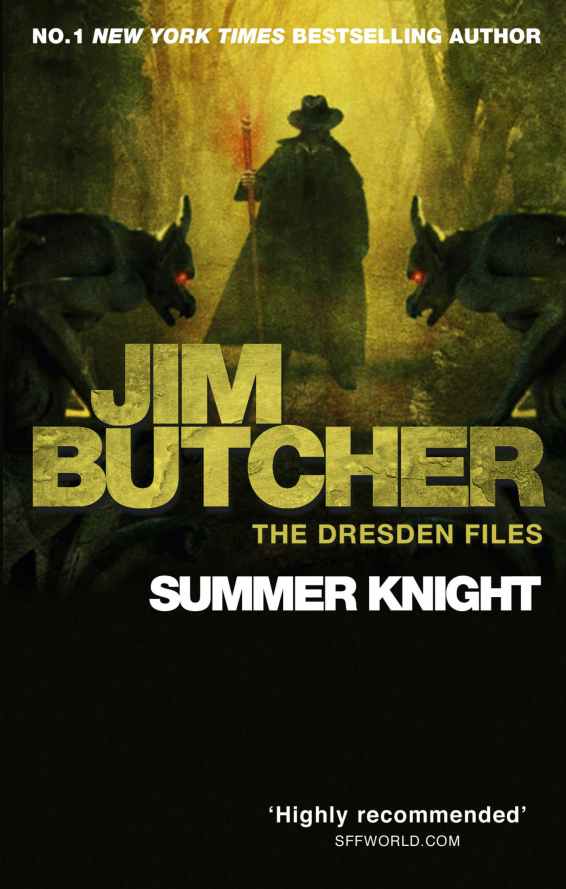
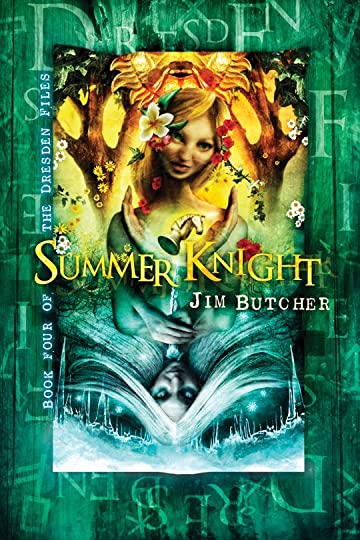
Throwback Thursday – Summer Knight by Jim Butcher

Summer Knight Cover

Publisher: Buzzy Multimedia (Audiobook – 3 September 2002)

Series: The Dresden Files – Book Four

Length: 11 hours and 13 minutes

My Rating: 5 out of 5 stars

Amazon

Welcome back to my Throwback Thursday series, where I republish old reviews, review books I have read before or review older books I have only just had a chance to read.  In this week’s Throwback Thursday I continue to explore the incredibly fun Dresden Files series by Jim Butcher with the fourth book, Summer Knight.

Readers of this blog will be familiar with my recent exploration of the epic Dresden Files series by the outstanding Jim Butcher, widely considered one of the best urban fantasy series out there.  After having an absolute blast last year with the latest book in the series, Battle Ground (one of the best books and audiobooks of 2020), I have spent a bit of time this year checking out the earlier entries in the series.  I have so far had the pleasure of listening to the first three Dresden Files novels, Storm Front, Fool Moon and Grave Peril, each of which got a five-star rating from me, and when I wanted a good audiobook to check out, the next entry in the series made the most sense.  The fourth Dresden Files novel is the impressive and compelling Summer Knight, which sets the protagonist against the fairest and most vicious opponents yet.

Following the events of Grave Peril, the White Council of wizards is at war with the Red Court of the vampires, and it is all Harry Dresden’s fault.  With vampire attacks increasing and his life consumed with finding a cure for the vampirism affecting his ex-girlfriend, Dresden is once again dragged into the conflict when the White Council arrives in Chicago.  Considered by many wizards to be a dangerous maverick, Dresden will need to find a powerful bargaining chip if he is to continue receiving the protection of the council.  Unfortunately for Dresden, the perfect opportunity has been given to him; he just wishes it were anything else.

Harry has been contacted by Winter Queen Mab, the powerful leader of the Winter Court of the Faeries, who offers him a dangerous bargain: in exchange for forgiving a previous debt, and for allowing certain concessions to the warring White Council, Harry must work a case for her.  The Winter Queen desperately needs Harry to find out who murdered a seemingly normal human, and with his life entirely in the White Council’s hands, he has no choice but to comply.  However, when it is revealed that the victim was the Summer Knight, the rival Faerie Summer Court’s mortal champion, Harry begins to realise that this will be no easy case, especially as a great deal of the Summer Court’s power was stolen after the murder.

With the Summer Court and the Winter Court gearing up for war in response to the Summer Knight’s death, Harry must quickly race to find the killer before Earth’s climate is destroyed by these powerful magical forces.  However, this is no simple case, and to solve the murder Dresden is forced to confront some of the most dangerous and malicious magical beings in existence.  Worse, the Summer Court have hired their own investigator, Dresden’s first love, Elaine, the woman who broke his heart and tried to kill him.  Can Dresden solve this murder before it is too late or will the entire world tremble at the destruction of an all-out war?

Summer Knight was another impressive and wildly entertaining release from Butcher, which did a wonderful job expanding his universe in some amazing ways.  Perfectly flowing on from the events of the previous novel, Summer Knight has an incredible story, some great characters, as well as some clever new fantasy inclusions that set up multiple future novels extremely well.  I had an absolute blast listening to Summer Knight’s audiobook format, and unsurprisingly it gets another five stars from me.

Summer Knight Cover 3

This latest entry from Butcher has a pretty amazing story that is extremely easy to enjoy.  Like the rest of the Dresden Files novels, Summer Knight can be easily read as a standalone read, although there are some compelling story threads that are continued from the prior books.  The novel starts with a damaged Harry Dresden dealing with hit squads, angry vampires and his own irritated wizard brethren.  After a fun and action-packed opening scene, Dresden soon gets drawn into another dangerous case as Mab, the Winter Queen, buys Dresden’s debt to his fairy godmother and uses it and the wizards war against the Red Court to trap him into investigating a case.  The subsequent magical murder investigation proves to be pretty fantastic, as Dresden is forced to dive into the murky magical underworld of the warring Fae courts.  After some deadly attacks, fascinating internal wizard politics, and an interesting side story about neutral half-Fae teenagers, Dresden soon uncovers the reason for the victim’s death.  I liked the twist surrounding who was responsible for murder as well as the revelation of their master plan.  Butcher did a really good job of disguising the people behind it and their methods, especially as most of the clues were often cleverly in plain sight.  This all leads up to a massive and epic conclusion, where Dresden and his allies find themselves fighting through two armies of rival Fae to try and stop the end of the world.  There are some awesome moments during this part of the novel, and Butcher throws together some epic clashes, interesting revelations, and a tragic death.  I had a particularly good chuckle at the surprising way in which the big bad was taken down, and it proved to be a great way to end this novel.  I felt that Butcher once again hit the right balance of action, drama, comedy, and character development throughout Summer Knight’s narrative, and this was another exciting and addictive read.

I really enjoyed the way in which Butcher expanded out the Dresden Files’ universe in Summer Knight, with several impressive inclusions turning this fourth book into a significant entry in the series.  Not only are events and inclusions from the previous three novels fit into this book seamlessly, but it also successfully introduces some elements that were a prominent feature of the 17th book in the series.  The most significant inclusions are those surrounding the rival Winter and Summer Courts of the Fae.  Butcher utilises a mixture of Faerie lore and his own pre-existing explanations of magical creatures to create a compelling group of characters, locked in a constant and balanced war between the Summer and Winter Courts.  The author does a good job introducing the various creatures, rules, and roles of these two competing groups of Faeries, which serves as a great basis for much of the narrative.  I also loved the fascinating examination of the differences between the two rival courts, with the Summer Court shown as caring and artistic sorts, while the Winter Court are colder and darker.  Of course, with Faeries, not everything is as it seems, and it was really intriguing the way the various plot reveals around them unfolded.  There was also a great focus on the White Council, the governing body of wizards that Dresden is a member of.  While the White Council has been mentioned in the previous novels, this was the first time that we get a deep look at their inner politics, especially as the more maverick Dresden has dragged them into a war with the Red Court of the vampires (so many Courts, so little time).  There was a particularly great council meeting towards the start of the book where Dresden and his mentor are forced to navigate the politics of the White Council to keep Dresden alive, and it was an interesting part of the book.  I really appreciated the detail that Butcher put into these expansions, and I look forward to seeing how else he expands on them between the fourth and 17th book.

As always, one of the best parts of this Dresden Files novel was the outstanding and well-developed characters, all of whom continue to develop and evolve as the novel continues.  This is particularly true with central protagonist and point-of-view character Harry Dresden.  When Summer Knight starts, Dresden is still reeling from the events of the previous three novels, particularly Grave Peril, where his lover partially turned into a vampire and then left him.  This has left Dresden an emotional mess, especially as he has spent the intervening time ignoring some of the other dangers coming at him while he fruitlessly searches for a cure to vampirism.  Dragged into this case against his will, Dresden soon starts to regain his old personality as he slowly overcomes his grief thanks to his friends and the intervention of some magical beings.  It was great to see Dresden start to heal as the book progresses, and I really appreciated the way in which Butcher explored the trauma surrounding his protagonist.  Even though he is a bit emotionally compromised, Dresden continues to be the main source of the novel’s comedy due to his sense of humour.  It is always fun to see Dresden’s witty take on the insane events occurring around him and I found myself cracking up several times throughout Summer Knight.

In addition to Dresden, Summer Knight contains an excellent group of side and supporting characters, including a combination of existing characters and newer inclusions that were introduced in this novel.  I liked the return of the werewolf gang, the Alphas, who were previously featured in the second novel, Fool Moon.  The Alphas, particularly their leader, Billy, serve as backup to Dresden for most of the novel, and it was really fun to see how much they have grown since their introduction, turning into mystical vigilantes, while also remaining a pack of nerds.  It was also great to see more of police lieutenant Karrin Murphy, who serves as a compelling female opposite to Dresden for most of the novel.  Murphy, who has also gone through a lot in the last few books, is showing a fair bit of trauma in this novel, and she ends up having some deep discussions with Dresden about it.  Despite her lack of magical abilities, Murphy serves as some impressive backup for Dresden, managing to take down several foes, including an ogre with a chainsaw.  There were also more signs of the growing romance between her and Dresden which becomes a big part of the series later, and I like the way in which Butcher is slowly building it up.  I also must highlight the inclusion of Dresden’s first love, Elaine Mallory, who suddenly reappears in his life, working for the Summer Court.  Elaine has been mentioned several times in the previous books and is a cause for a lot of Dresden’s mistrust and romantic failures.  It was great to finally meet her and see the full extent of her complex relationship with Dresden.  Elaine naturally brings out a lot of emotional issues with Dresden throughout the book, and she serves as an interesting supporting character, especially as you have no idea about her true loyalties.  These supporting characters, and more, really add a lot to the overall story and I had a great spending time with them.

Like I have with the rest of the Dresden Files novels, I made sure to grab the audiobook version of Summer Knight, a choice I am extremely thankful for.  The Dresden Files audiobooks are pretty damn awesome, mainly because of their excellent choice of narrator, actor James Marsters.  Marsters has an amazing voice, and he perfectly dives into the various characters featured within the novels, making these audiobooks an absolute treat to listen to.  I especially love the way he gets into the emotional head of the main protagonist, as well as the sheer enthusiasm he exhibits while yelling out spell conjurations.  I also enjoyed the fun voices that he assigns to some of the smaller pixies that appeared in this novel, as well as the very fitting voices that the rest of the cast received.  This voice work is pretty amazing and it ensures that readers can fly through the audiobook in no time at all.  Summer Knight’s run time was just over 11 hours, but it only took me a few days to get through due to how engrossed I got in the story, as well as the audiobook adaption.  As with all Dresden Files entries, Summer Knight comes highly recommended in its audiobook format, and I fully intend to check out the rest of the series in this same way.

Summer Knight by Jim Butcher was another exceptional entry in the awesome Dresden Files series and I had an incredible time listening to it.  With a captivating story, some complex characters and some awesome new fantasy inclusions, I deeply enjoyed this novel, and it is really worth checking out, especially in its audiobook format.  Butcher continues to shine as one of the best authors of urban fantasy and look forward to working my way through the Dresden Files in the next few years.

Summer Knight Cover 2

Amazon

The Devil’s Advocate by Steve Cavanagh

The Devil's Advocate Cover

Publisher: Orion (Trade Paperback – 27 July 2021)

Series: Eddie Flynn – Book 6

Length: 403 pages

My Rating: 4.5 out of 5 stars

Amazon

Bestselling thriller author Steve Cavanagh returns with another exciting and over-the-top fun legal thriller, The Devil’s Advocate, an awesome read with a very entertaining plot.

Randal Korn is an evil man, a dangerous killer, and an unrepentant corrupting influence on everyone around him.  Unfortunately for the residents of Sunville County, Alabama, Randal Korn is also their District Attorney, who uses his skills and influence to get the legal system to commit his killings for him.  Known as the King of Death Row, Korn has sent more men to the electric chair than any other district attorney in US history, deriving great pleasure from every life his prosecutions have taken.  However, not all of Korn’s victims have been guilty, a fact that Korn knows and deeply relishes.

When a young woman, Skylar Edwards, is found brutally murdered in Buckstown, Alabama, the corrupt sheriff’s department quickly arrests the last person to see her alive, her innocent African American co-worker Andy Dubios.  After the racist cops quickly beat a confession out of him, Andy is set to stand trial with Korn prosecuting a seemingly airtight case.  With the entire town already convinced of his guilt and with no chance of a fair trial, Andy’s death looks certain, until Eddie Flynn arrives in town.

Hired after Andy’s previous lawyer goes missing, former conman turned brilliant New York lawyer Eddie Flynn heads down to Alabama with his team to try and save Andy’s life.  However, the moment he arrives, Eddie begins to understand just how stacked the deck is.  Thanks to Korn’s immense influence, the entire town is hostile to him, the police are refusing to cooperate, witnesses are threatened or arrested by the sheriff, the judge is already on the prosecutor’s side, and any potential juror will already believe that Andy is guilty.  To save his client’s life, Eddie will have to use every single trick he has to con the jury into finding Andy not guilty, but even that might not be enough.  Worse, it soon becomes apparent that the killing of Skylar Edwards was only the start.  A dangerous murderer still stalks Buckstown, killing whoever gets in their way to achieve their own sinister agenda, and their sights are now firmly set on Eddie.

This was a pretty awesome and wildly entertaining novel from the talented Steve Cavanagh.  A lawyer himself, Cavanagh burst onto the crime-fiction scene a few years ago with his debut novel, The Defence, the first book in his Eddie Flynn series.  There have since been several other Eddie Flynn books, each of which places the protagonist in a unique legal situation.  I have been meaning to read some of Cavanagh’s books for a while now due to the awesome sounding plot synopsis and I currently have a couple of his novels sitting on my shelf, waiting to be read.  Unfortunately, I have not had the chance yet, although I think I will have to make a bit of an effort after reading The Devil’s Advocate, which I was lucky enough to receive a little while ago.  The Devil’s Advocate was an outstanding and captivating novel and I swiftly got drawn into the exciting and amusing narrative.

The Devil’s Advocate has an awesome story to which is extremely addictive and enjoyable.  When I picked up this book, I initially intended only read around 50 pages in my first sitting, however, once I started I honestly could not put it down, and before I knew it I was halfway through and it was well past my bed time.  Cavanagh produces an extremely cool narrative that starts with an awesome scene that introduces the main antagonist and ensures that you will really hate him.  From then, Cavanagh quickly sets up the initial mystery, the introduction of the legal case, and the plot that brings the protagonist to Alabama.  The rest of the narrative neatly falls into place shortly after, with the full details of the case, the corruption of the main setting, and the massive injustice that is taking place, coming to light.  From there, the protagonists attempt to set up their case while facing sustained and deadly opposition from pretty much everyone.  While the initial focus is on the legal defence aspect of the thriller, the story quickly branches out into several captivating storylines, including an examination of the antagonist’s corrupting influence on the town, planned action from a white supremacist groups, attempts to run off or kill the protagonists, as well as mystery around who really killed Skylar.  All these separate storylines are really fascinating and come together with the plot’s central legal case to form an exceptionally fun and electrifying story.  The reader is constantly left guessing about what is going to happen next, especially with multiple red herrings and false reveals, and I ended up not predicting all the great twists that occurred.  While I did think that Cavanagh went a little too political with the overall message of the book, The Devil’s Advocate had an outstanding ending and I had an exceptional time getting through this thrilling story.

One of the best parts of this entire story is the outrageous and unfair legal case that the protagonists must attempt to win.  This case forms the centre of The Devil’s Advocate’s plot, with most of Eddie and his colleagues’ appearances focused on their upcoming legal battle.  Cavanagh really went out his way to create a truly unique and compelling set of legal circumstances for the protagonists to wade through, with the case so tightly sewn up against their innocent client before they even get there.  Despite this, the protagonist goes to work with a very effective, if unconventional, legal strategy that plays to the antagonist’s underhanded tactics.  The entire legal case soon devolves into crazy anarchy, with both sides doing outrageous actions to win, which Cavanagh writes up perfectly.  I found myself getting quite invested in the case, especially after witnessing several blatant examples of the prosecution’s corruption, and these terrible actions really got me rooting for the protagonist, who had some entertaining tricks of his own.  This all leads up to an excellent extended trial sequence, where the various strategies and manipulations in the first two-thirds of the novel come into play.  There are some brilliant and entertaining legal manoeuvrings featured here, with the protagonist initially focusing more on pissing off the prosecution and the judge rather than producing alternative evidence.  However, there are some great reveals and cross-examinations towards the end of the book, as Eddie has a very good go at dismantling the case.  The way it finally ends is pretty clever, and I really liked the way some of it was set up, even if it relied a little too much on a minor character’s conscience finally flaring.

Cavanagh also featured some great and entertaining characters in The Devil’s Advocate, with a combination of new characters and returning protagonists from the previous novels.  The author makes great use of multiple character perspectives throughout this novel, especially as it allows the reader to see the various sides of the battle for Buckstown’s soul.  Seeing the moves and counter-moves of the protagonists and antagonists enhances the excitement of the novel, especially as it shows the creation of several traps that could potentially destroy Eddie and his client.  Most of the characters featured in the novel are very entertaining, although I think in a few cases Cavanagh went a little over-the-top, with some of the villains being a bit cartoonish in their evilness.

The main character of this novel is series hero Eddie Flynn, the former conman who now works on impossible cases as a defence attorney.  Eddie was an awesome central protagonist, especially as his unique sense of justice and criminal background turns him into one of the most entertaining and likeable lawyers you are likely to ever meet.  I loved the very underhanded way in which he worked to win his case, and the variety of tricks and manipulations that he used were extremely fun to see in action, especially as it rattles the police antagonists and completely outrages the other lawyers and judges.  I loved his style in the courtroom scenes, especially as most of his appearances eventually end up with him thrown in jail for contempt (it is a pretty wise legal strategy).  Eddie has a very fun code in this novel, and I think that I will enjoy seeing the earlier novels in which he transitions from conman to lawyer.

Eddie is also supported by a fantastic team from his small law practice, each of whom get several chapters to themselves and who serve as great alternate characters who in some way overshadow the main protagonist.  These include his wise old mentor character, Harry; the younger lawyer, Kate; and the badass investigator, Bloch.  Each of them brings something fun and compelling to the overall story, and I liked the way that Cavanagh ensured that they all get their moment throughout The Devil’s Advocate.  I really enjoyed some of the great sub-storylines surrounding these three supporting protagonists.  Examples of this include Harry, a genuine silver fox with the ability to attract a certain type of older lady, who serves as the team’s heart and soul, although he’s not opposed to some improper legal tactics.  I also enjoyed Kate’s appearances as a secondary trial attorney, especially as she serves as a good alternate to the flashier Eddie, while also finding her feet in a murder case that has rattled her.  I personally enjoyed the gun-toting investigator Bloch the most, mainly because of her hard-assed attitude and inability to be intimidated by the various monsters lurking around town.  Bloch has some very intense and exciting scenes, and it was really entertaining to see her stare down rabid militiamen and crooked cops.  These protagonists end up forming an impressive and cohesive team, and it was a real joy to see them in action.

I also must highlight the outstanding villain of the story that was Randal Korn.  Korn is a truly evil and terrifying creation who is pretty much the direct opposite of the more heroic Eddie.  Cavanagh has clearly gone out of his way to create the most outrageously despicable antagonist he could, and it really works.  Korn, who apparently is a bit of a pastiche parody of five real-life American prosecutors who always seek the death penalty, is a man who became a lawyer solely so he would have a legal way to kill people.  The pleasure he receives from controlling people and ensuring that they die, even if they are innocent or undeserving, is terrifying, and it ensures that the character will go to extreme lengths to win his case.  The author does a fantastic job painting him as a despicable figure, including through several point of view chapter, and there are some interesting examinations about his psyche and his desires.  Having such an easily hated villain really draws the reader into the narrative, mainly because the reader cannot help but hope that he gets what is coming to him.  Despite that, I think Cavanagh went a little overboard in some places (the self-mutilation and the rotting smell are a bit much), and the whole soulless creature angle is layered on a bit too thickly.  Still, the author achieved what he wanted to with this antagonist, and I had a wonderful time hating this character from start to finish.

The final point-of-view character that I want to mention is the mysterious figure known as the Pastor.  The Pastor is another antagonist of this novel whose identity is kept hidden from the reader for much of the book.  This is mainly because he is the real killer of Skylar Edwards, whose death was part of an elaborate plan.  The Pastor is another great villain for this novel, due to his crazed personality, murderous tendencies and horrendous motivations for his crimes.  I think that Cavanagh did a great job utilising this second villain in his novel, and I liked the tandem usage he had with Korn.  I was especially impressed with the clever mystery that the author had surrounding his identity, which was kept hidden right till the very end.  It took me longer than I expected to work out who the Pastor was, thanks to some clever misdirects from the author, but the eventual reveal was extremely good and helped tie the entire story together.  Readers will have a lot of fun trying to work out who this character is, and I really enjoyed the extra villainy that they brought to the table.

The fantastic Steve Cavanagh has once again produced a captivating and intense legal thriller with The Devil’s Advocate.  This latest Eddie Flynn thriller was an amazing ball of crazy fun that I powered through in two sustained reading sessions.  With some over-the-top characters, a clever legal case, and an exciting overarching conspiracy, The Devil’s Advocate proved to be next to impossible to turn down and is really worth checking out.  I will definitely be going back and reading some of Cavanagh’s earlier books, and I look forward to seeing what insane scenarios he comes up with in the future.

Amazon

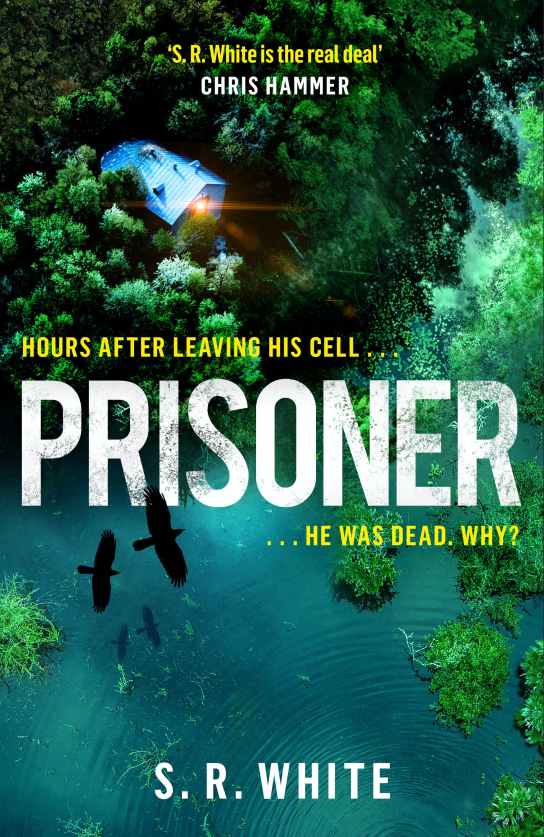
Prisoner by S. R. White

The Prisoner Cover

Publisher: Headline (Trade Paperback – 31 August 2021)

Series: Hermit – Book Two

Length: 421 pages

My Rating: 4.5 out 5 stars

Amazon     Book Depository

Prepare for a twisty and dark Australian murder mystery novel as author S. R. White presents the compelling and powerful Prisoner.

Deep in rural Northern Australia, a dead body has been found in the middle of a dank and dangerous swamp.  The corpse is staged to appear like a crucifixion, with the man’s arms and legs tied to poles, and his chest caved in with several blows.  Called to the scene of the crime, Detective Dana Russo soon discovers that the victim was a convicted rapist who had only been released from prison a few hours earlier and whose crime occurred only a short walk away from his murder site.

Determined to get to the bottom of this unusual murder, Russo and her team swiftly begin tearing apart the victim’s life in prison and find that he had been in communication with two local sisters who offered him a place to stay once he was released.  Investigating the sisters, they discover a unique pair of siblings who have been irreparably damaged by trauma and abuse and who live separate from the rest of society.  Believing that the solution to the mystery may lay with them, Russo brings them both in for questioning, but finds them uncooperative and elusive.

Under pressure to solve the crime, the detectives slowly unwind an intriguing case, concerning corruption, drugs and prison gangs.  However, the further they dig, the more apparent it becomes that the sisters are hiding some dark secrets about themselves and the victim.  Forced to dig deep within herself, Russo uses the memories of her own traumatic childhood to analyse the suspects and find some common understanding with them.  Can Russo break through these two unlikely suspects, or will the solution to this murder never be revealed?

This was a pretty cool and captivating novel from former British Police officer turned author S. R. White.  Prisoner is White’s second novel and serves as a sequel to his 2020 debut, Hermit.  This proved to be a fantastic read and I deeply enjoyed the intriguing and powerful narrative, especially as White loads his book with a complex mystery and some deeply damaged characters.  I got pretty hooked on this book as it progressed and ended up finishing it in only a couple of days.

Prisoner contains a very impressive and compelling narrative that I really found myself getting drawn into.  The novel mostly starts off focusing on the murder, with the discovery of the body in the first few pages, and then the protagonists immediately jump into the investigation, including the interrogation of one of the main suspects.  As the story progresses, you get some other interesting elements thrown in, mostly around Dana Russo and one of her other colleagues as they deal with some dark personal history.  There is also a captivating subplot regarding internal police politics that produces a real shakeup in the department and has some potential series-wide ramifications.  However, most of the story remains on the mystery, and I really appreciated the creativity and darkness that the author fits into the case.  Despite being a sequel to White’s first book, Prisoner can easily be read as a standalone novel, and no prior knowledge of the characters or the setting is needed.  I felt that the entire narrative progressed along at a great pace, and there were no slow bits throughout the book, as the reader was either reading about the case or dealing with the intense personal demons of the various characters.

I must highlight the fantastic writing style that White featured throughout this novel.  While most of the focus of Prisoner is on central character Russo, the author makes good use of multiple perspectives, mainly of the other detectives on the investigation team, to move the story along and provide some alternate points of view and different investigative threads.  White utilises a very detailed writing style, which encourages a slower reading pace to make sure you don’t miss anything, and I felt that enriched the mystery and increased the realism of the plot.  I also must highlight the incredibly detailed descriptions of the swampy landscape that surrounded the crime scene and the Northern Australian town where the plot is set.  White paints a grim picture of small, isolated community on its last legs, where even the landscape has turned against it.  You can really feel the stickiness and deadliness of the swamps, and it proves to be quite a haunting background to several scenes.  I also must mention the really fun and unique take that several of the characters had on the film Signs.  This film, which I personally rather enjoyed, is brought up several times and becomes a key plot point.  While that does sound a little strange, its inclusion worked surprisingly well, and the subsequent discussions and insightful analysis of the film and its themes, ended up fitting into the overall narrative quite seamlessly, helping to create quite a unique tale.

I also deeply enjoyed the crime fiction/mystery elements of Prisoner, which really helped to turn this into quite a compelling and exciting story.  White crafts together a really clever and psychologically intense mystery for this book, and I had a wonderful time seeing the protagonists unwind it.  The author sets up a great methodical criminal investigation, with the characters slowly uncovering clues, backstory and various suspects throughout the story.  While the police do achieve an impressive amount in just a couple of days, there is a gritty sense of realism to much of the story, and I really enjoyed seeing the police in action.  The best part of the investigation is easily the focus on interrogations as the protagonist engages two uncooperative suspects in several separate interviews throughout the course of the book.  These interrogation sequences are among some of the best parts of the entire book, as Russo really dives into the pasts and minds of her suspects, which also requires her to reach back and harness some of her own trauma to break through to them.  This, combined with the rest of her team’s investigation, proved to be quite fascinating, and I really enjoyed seeing the cooperative work and professional skills involved.  I also quite enjoyed the solution to the murder, especially as White comes up with quite a unique and dark motivation for the crime.  There are several good suspects and motivations for the murder, which at times made me question who the killer might be.  However, I thought the overall resolution of the mystery was extremely clever, and it really made great use of the dark psychology of some of the characters.

One of the biggest highlights of this book were the damaged and traumatised central characters, who White spent a substantial amount of time exploring throughout the course of the story.  This includes a mixture of characters who previously appeared in Hermit and some new characters brought in for Prisoner.  This includes central protagonist Dana Russo, the detective in charge of the investigation.  Dana had a very traumatic childhood, brought on by an abusive mother who beat and emotionally tormented her following her father’s death.  While this was revealed in the previous novel, it was recounted once again in Prisoner, especially as details of the case end up mimicking parts of Dana’s life.  The protagonist is forced to dive deep into her prior experiences to help solve this case, and it was fascinating to see how she could instantly spot signs of abuse, as well as rationalise the various reasons behind it and the impacts it can have on a young person.  The protagonist also uses her experiences to get into the minds of her two main suspects, resulting in some intense and extremely powerful interrogation scenes, where both suspect and interrogator are broken down at the same time.  White also produces some more revelations about Dana’s terrible childhood, including a certain reveal on the last page that was pretty memorable, and I really liked the compelling picture he painted around this impressive leading character.

The other characters who proved to be extremely compelling were the main suspects of the murder case, Suzanne and Marika Doyle.  The Doyle siblings are instantly identified as persons of interest in the case due to their house’s proximity to the crime scene and the fact that they wrote to the victim in prison and helped to organise his parole, despite having never met him.  Upon examination of their history, as well as an insightful look at their house, it soon becomes apparent that both siblings had a hard childhood because of their controlling mother.  Their life story becomes a key part of the overarching plot as Russo attempts to uncover their full history and personalities, as she believes it is important to solve the case.  The eventual reveals about the siblings and their relationship, their past and their emotional states is extremely captivating, and White paints quite a dark and troubled narrative around them that was really fascinating.  The way that this ties into the murder and their relationship with the victim is very clever, and White really outdid himself making these two sibling suspects.

I also must give a quick shout out to the character of Lucy Delaney, one of Dana’s co-workers and an invaluable resource in the case.  Dana and Lucy got quite close to each other in the previous novel, with Dana revealing some of her childhood trauma to her, something she rarely does.  In this novel, you get a much closer look at Lucy, who reveals some of her own personal issues, and the shared grief becomes a major part of her connection to Dana.  Unfortunately for Lucy, she gets dragged into some internal police politics, which impact her and her secrets quite severely and will likely become a recurring issue in the series, especially if the relationship between Dana and Lucy progresses.  Aside from Lucy, I felt that the police characters represented an interesting blend of personalities and skills, such as the wily veteran Mike or the similarly damaged officer Ali, who helped to give the film more personality.  It will be interesting to see how these characters are featured in the future, and I look forward to learning more about them.

Prisoner by S. R. White is a clever and moving piece of Australian crime fiction that proved to be a real treat to read.  White has produced a deep and compelling murder mystery narrative that focuses on a fantastic group of damaged protagonists and suspects, and who have some dark stories to tell.  I really loved the more methodical and grounded police investigation angle of this book, especially the inclusion of some powerful interrogation sequences, and I was impressed with how the narrative unfolded.  An excellent and captivating murder mystery, Prisoner comes highly recommended, and you will have a great time getting through the latest book from this fantastic Australian author.

Amazon     Book Depository

The Mask of Mirrors by M. A. Carrick

The Mask of Mirrors Cover

Publisher: Orbit (Audiobook – 19 January 2021)

Series: Rook & Rose – Book One

Length: 23 hours and 13 minutes

My Rating: 4.5 out of 5 stars

Amazon     Book Depository

Magic and masquerade combine into one of the most creative fantasy releases from the first half of 2021 with The Mask of Mirrors by M. A. Carrick, the first book in the Rook & Rose trilogy.

The Mask of Mirrors was a fantastic novel that caught a lot of buzz earlier in the year.  This book was written by M. A. Carrick, the joint pen name of Marie Brennan and Alyc Helms, two established fantasy authors who are teaming together for their first novel.  This debut novel was pretty impressive and the two talented authors ended up producing an exciting and complex fantasy tale that sees a young con artist attempt to change her fate.

Welcome to Nadežra, a city of iniquity and greed that forms the gateway between two warring cultures.  Many people call Nadežra home, although few truly prosper, with only the great noble houses and their supporters gaining any true wealth.  However, one young woman is about to change everything.  Ren is a former street rat of Nadežra who escaped the city years ago to seek her fortune.  Returning after several years, Ren has taken on an entirely new persona: Renata Viraudax, a mysterious and seemingly wealthy noblewoman from the capital, come calling on her long-lost relatives.  Ren hopes to con her way into the once great noble family of House Traementis and use their name and legacy to make her fortune and ensure a comfortable life for herself and her sister.  But as she begins to worm her way into the family, she soon finds that the life of a noble in Nadežra is far more complex than she ever imagined.

Despite their noble standing, House Traementis is in poor shape, and if Ren is going to make money off them, she first needs to ensure their success.  However, a powerful rival family is seeking to destroy House Traementis, and they will do anything in their power to get their way.  Forced to work with criminals and shadows to achieve her goal, Ren will find just how ugly the glittering nobles of Nadežra can be.  Unbeknownst to Ren, a far more insidious presence is lurking within the city, killing children and unleashing corrupt magic for their own goals.  Worse, this evil has a deadly connection to Ren’s past and wants to use her to destroy everything she holds dear.  Can Ren overcome this evil while maintaining her cover, or will the nobility of Nadežra eat her whole?

This was an extremely captivating first outing from this new writing team, and I deeply enjoyed the cool and compelling story that they came up with.  The Mask of Mirrors is a complex tale that expertly combines intriguing and clever fantasy elements with a thrilling confidence trick, as the protagonist attempts to work her way into high society.  Of course, nothing works out that simply, as the protagonist soon finds herself embroiled in all manner of scandals, plots and deadly feuds, producing an excellent story. 

While I did enjoy the overall narrative, the book did start off a little slow and it took me a while to get really excited about it.  I personally only got hooked when the character of the Rook was added in.  The Rook is a mysterious, Zorro-esque (perhaps more Tuxedo Mask than Zorro) character who haunts the streets of Nadežra, fighting oppression and tyranny while thumbing his nose at authority.  Following a great duel sequence, the mystery of the Rook’s identity becomes a major part of the plot, and I found myself really getting into this and the other interesting storylines.  The rest of the novel flows at a fantastic pace, especially after the authors set up so many fascinating and compelling plot points at the start of the book that slowly come to fruition.  There are some amazing moments throughout the novel, and I was really impressed by a particularly tragic moment that occurred around two-thirds of the way through, which was shocking and surprising.  The entire narrative comes together in an excellent conclusion, providing a satisfying and moving ending, while also setting up some excellent moments for the next two entries in the series.  I did think that the novel could maybe have benefited from either finishing at the big moment I mentioned above, or by trimming around 100 pages out of the middle of the book.  Some of the twists at the end of The Mask of Mirrors were also a little predictable, especially around the identity of the antagonists (it literally could not have been anyone else).  However, I think that the eventual reveal about who was under the Rook mask was handled beautifully, and I honestly did not know which direction they were going to go in for much of the plot.  I had a really amazing time getting through this story, and I look forward to seeing how these two talented authors continue it in the next two entries in the series.

The Mask of Mirrors contains a fantastic collection of characters who offer up a range of different perspectives and vantage points to tell a massive and complete narrative.  The authors behind this book spent a lot of time building up the various characters, ensuring that they had intriguing and tragic backstories, which leads to some fantastic development throughout the course of the novel and the entire series.  The most prominent character is Ren, a former local who attempts to pull off and ambitious con.  Ren is a confident, talented, haunted figure, who experienced great tragedy at an early age and is still trying to pull herself together.  She is forced to return to the city that she fled from years before to achieve greatness and make money and ends up connecting to her heritage as well as being forced to relive her greatest mistakes and traumas.  I loved the fantastic storylines surrounding Ren, and she proves to be quite a complex character.  Rather than being obsessed with money and dislike of the noble class in Nadežra, Ren grows to care for her marks and works to save them and the entire city when the antagonist makes their move.  Ren proves to be an exceptional central character to follow, especially as she provides the most insight into one of the main magical disciplines featured in the book, and it will be very interesting to see how her storyline continues later in the series, especially after she gains a mask of her own.

Other great characters contained within this novel include ruthless rising crime boss Derossi Vargo, a man with great ambition who is willing to risk anything and anyone to achieve his goal.  Vargo, a seemingly self-made man, proves to be one of the most entertaining and enthralling figures in the entire novel, and I deeply enjoyed seeing him work with Ren while enhancing his own plans.  It looks like Carrick has some major plans for Vargo, and he could be an amazing overarching antagonistic figure.  Another excellent character is Grey Serrado, a police officer and friend of the Traementis who finds himself investigating some of the major activities occurring the city.  Grey is a conflicted and damaged character, constantly torn between his duty as an officer and his heritage.  He goes through some major events throughout this novel and looks set to be a major figure throughout the rest of the series.  I also enjoyed Ren’s adopted siblings Tess and Sedge, who act as fantastic supporting figures to Ren and her plans.  Carrick develops them quite nicely and they prove to be entertaining figures who have a long and caring relationship with Ren.  I also appreciated the focus on the members of House Traementis, the people that Ren is trying to con.  The Traementis are a once great house who have fallen on hard times and are slowly falling into oblivion due to a rumoured curse.  While you initially aren’t too concerned with these characters, due to their status as patsies, the three surviving members swiftly grow on you, enough that you eventually start to judge Ren’s continued attempts to con them.  Finally, I have to say that the masked Rook was a particularly awesome character, and I deeply loved his inclusion in the plot.  It was so much fun trying to figure out who he was, and the authors utilised him to perfection to create an outstanding narrative.

You cannot talk about The Mask of Mirrors without discussing the complex and distinctive setting that is the city of Nadežra.  Nadežra is a sprawling, independent city state resting on a delta, filled with palaces, slums, massive buildings and all manner of different people.  Due to its unique history, Nadežra is home to several distinct ethnic groups, the local Vraszenians underclass and the Liganti upper class.  The two ethnic groups are opposites, and there is substantial friction between them, especially as the Vraszenians feel like second-class citizens in their own historical city.  While most of the novel shows the two groups living mostly in harmony, the lingering tension between the two groups becomes a major plot point as the novel, and I think that the authors did an outstanding job highlighting this and using it as part of the story.  Carrick provides detailed explorations of the different cultures between the two groups, and it was interesting to see how it partially paralleled some real-life political situations.  It was also quite interesting to see that, despite the cultural differences and clashes, Nadežra proves to extremely woke and tolerant when it comes to issues of gender and LGTB+ issues.  Not only are there several prominent female figures within the city but there also several homosexual, nonbinary and transgender characters.  I love the way in which most modern fantasy novels are featuring more and more of these aspects in their settings, and this was a great example of that.  The city of Nadežra proves to be a very magical place, and there is so much detail, backstory and culture contained within that the reader will feel like they are actually walking the streets.

Carrick also comes up with several distinctive forms of magic, which are as diverse and different as the various cultures contained within the city.  There are three major forms of magic shown in the book, although I had to say that I found all three of them to be a little less dramatic than you would expect in a fantasy book.  The first one of these is numinata, which is sort of a combination of geometry and astronomy, often using complex glyphs or geometric patterns.  Numinata is generally used by the Liganti and is considered a more cultured and precise form of magic.  The Vraszenian magic, on the other hand, is based on patterns and dreams, and is mostly shown through the protagonist’s pattern reading, a form of tarot card reading which gives glimpses into the past, the present and the future.  The final form of magic is imbuing, which allows the user to put a little bit of their essence into an item or product to enhance its effect.  All three magics are featured fairly prominently within The Mask of Mirrors and prove to give the novel a unique feel, while also highlighting the cultural and social differences between the ethnic groups.  While I did think that much of the magic was a little undefined in the novel, it becomes a key part of the plot, and it was interesting to see how the combination of magics could create some nightmarish results.  Overall, I deeply enjoyed the extraordinary and detailed setting that Carrick came up for The Mask of Mirrors and I found myself getting really lost in its spectacle and details.  While I would have preferred just a little more info about the universe’s magical rules, I felt that Carrick did a wonderful job pulling this together, and it was a definite highlight of this great book.

I ended up listening to the audiobook version of The Mask of Mirrors, narrated by Nikki Massoud, who has done several interesting audiobooks in the last year.  While this is a pretty long audiobook (at 23 hours and 13 minutes, it is the 17th longest audiobook I have ever listened to) I am actually incredibly glad that I ended up checking out the audiobook format of this book.  The complex narrative and immensely detailed setting really came to life, and I found myself absorbing a whole lot more of the story and the beauty of the background.  However, the real advantage of this format was the outstanding narration by Massoud.  Massoud did an exquisite job portraying the various characters featured within The Mask of Mirrors, capturing each figure perfectly and providing them with an outstanding and wildly fitting voice.  To achieve this, Massoud utilises a wide array of different voices and accents, which really help you differentiate the various characters, and which help to show their nationality or social status.  I was particularly impressed at how Massoud was able to showcase the various personas of the main character, Ren.  This was achieved by seamlessly changing accents depending on which character Ren was playing at the time.  For example, when Ren was with her sister or pretending to be a local, Massoud would use the rougher, more exotic accent that all the Vraszenian characters have.  However, when the character changed back into the persona of Alta Renata, her voice would become a lot more cultured, mimicking the nobility.  This seamless change between the various voices was perfectly done, and I really appreciated the narrator’s determination to capture the separate halves of the character.  This was some truly impressive voice work, and I think that listening to the audiobook format ended up adding to my overall rating for the novel.

The Mask of Mirrors by M. A. Carrick is an outstanding and moving fantasy novel that I had a wonderful time reading.  Featuring an excellent narrative, some complex characters and a detailed and memorable fantasy setting, this debut novel from the writing team of Marie Brennan and Alyc Helms was an immense amount of fun and I really got into this fantastic story.  The Rook & Rose trilogy looks set to a spectacular series and I am quite excited to see how all the books turn out.  The next entry, The Liar’s Knot, is set for release in December, and I look forward to continuing this great series into the New Year.

Amazon     Book Depository

Throwback Thursday – Grave Peril by Jim Butcher

Grave Peril Cover

Publisher: Buzzy Multimedia (Audiobook – 1 September 2001)

Series: Dresden Files – Book Three

Length: 11 hours and 55 minutes

My Rating: 5 out of 5 stars

Amazon

Welcome back to my Throwback Thursday series, where I republish old reviews, review books I have read before or review older books I have only just had a chance to read.  In my latest Throwback Thursday article, I continue my dive into the bestselling Dresden Files urban fantasy series by Jim Butcher by looking at the third chilling novel, Grave Peril.

I am really getting into the awesome Dresden Files novels, a major long-running urban fantasy series that follows Harry Dresden, a wizard living in modern-day Chicago, as he investigates supernatural crimes.  Generally considered one of the best urban fantasy series of all time, I started enjoying this series last year when I read the latest novel, Battle Ground.  I absolutely loved Battle Ground (easily one of the best novels and audiobooks of 2020) and I have since decided to go back and check out the earlier entries in the series.  I already enjoyed the very first novel, Storm Front, a couple of months ago, and Fool Moon, which I finished and reviewed last week, was so much fun that I had to immediately go and read another Dresden Files book.  I have just finished off the third entry, Grave Peril, and decided to feature it in this Throwback Thursday article.

Something is stirring in the dark of Chicago and it is bringing all manner of ghosts and spooks with it.  Harry Dresden, professional wizard, is used to facing the supernatural dangers infecting his city, but he has never experienced quite so much chaos as the spirit world has gone crazy.  Powerful ghosts and tortured spirits are popping up all around Chicago, causing the walls between our world and the Nevernever (the spirit world), to weaken and fray.  As Dresden attempts to find out who or what is behind the current upsurge in spiritual activity, he finds himself under attack from a powerful and unseen force that can strike through his nightmares.  Scared, weakened and full of self-doubt, Dresden is near powerless to stop this creature as it begins to target his friends and loved ones.

With a righteous Knight of the Cross at his back and his reporter girlfriend hounding him for a scoop, Dresden looks for the true source of the entity coming after him.  But in order to find the truth, Dresden must place himself in the very heart of Chicago’s supernatural underworld.  With old enemies, bloodthirsty vampires, howling spirits, deadly demons and his twisted fairy godmother coming after him, can Dresden survive this latest attack unscathed, or will his enemies finally succeed in destroying him, mind, body and soul?

Is it even possible for Butcher to write a bad Dresden Files book?  I have yet to see any evidence to suggest this as Grave Peril, the fourth Dresden Files novel I have read and the third book in the series, turned out to be another epic and powerful fantasy read.  Butcher has come up with a fantastic novel in Grave Peril, and I loved the dark and compelling story that sees Dresden face various demons from his past.  Utilising some great new characters and serving as a major entry in the overall series, this was an outstanding read which gets yet another five-star rating from me.

I deeply enjoyed the cool and complex narrative that Butcher came up with for Grave Peril, especially as it takes Dresden and his friends into some sinister and dangerous places.  This book starts quick, with a great extended sequence that sees Dresden and Michael face off against a powerful ghost in the Nevernever.  This amazing opening to the novel is then followed by an intriguing central story which forces Dresden to investigate a new and unusual antagonist, the Nightmare, who is feasting on his dreams and using the power it steals to go after Dresden’s loved ones.  This central story is very intense and compelling, playing to the series’ detective novel inspirations as Butcher sets up a fantastic mystery while also showing a desperate Dresden coming under attack in some unusual ways.  There are some fantastic moments in this part of the book, and I really appreciated the author’s inclusion of multiple supernatural suspects as you try to figure out who is involved and how they are pulling off their plans.  All this leads to the book’s most memorable sequence, a vampire masquerade, which sees Dresden and his closest allies trapped at a ball, surrounded by a dangerous array of enemies and, trying to work out motivations and plans on the fly.  The story is eventually all wrapped up with a dramatic and clever conclusion that is exciting, emotionally rich and a little traumatising to the reader.  I deeply enjoyed Grave Peril’s cool narrative and it honestly did not take me long to get fully engrossed in what was happening.  While this novel is not as action orientated as the previous book, Fool Moon, it has a much darker edge to it with a particular focus on manipulation, emotions and intrigue.  Readers should be warned that some of the scenes can be a bit over-the-top at times (I am pretty sure the protagonist gets raped by a vampire at one point) and are a little hard to read.  However, this is an overall exceptional narrative.

Like most books in the Dresden Files series, Grave Peril can be read as a standalone novel without any knowledge of the previous entries.  Butcher always makes his novels very accessible to new readers, and while there are some references to the character’s previous adventures, most of the relevant details and re-examined and explained throughout this book.  Grave Peril is a fairly major entry in the overall series as Butcher starts to introduce some important storylines, key supporting characters and lasting world-building elements which become quite significant in future novels.  In particular, Butcher introduces lore surrounding vampires, spirits, and fairies, with the protagonist coming into conflict with all three.  Each of these fantasy elements are set up extremely well and have a dark edge that fits into the series’ distinctive tone.  I loved the author’s depiction of the fairy creatures as monstrous and shadowy manipulators, and it was quite cool to see all the lore around vampires.  Grave Peril introduces three major vampire courts, with each court made up a different sub-species of vampire with their own specific powers and weaknesses, from the Dracula-esque Black Court, to the sexually and emotionally powered vampires of the White Court.  Each of these different types of vampires are strongly featured in Grave Peril and are a fantastic part of the story.  The highlight for me was probably the various battles between Dresden and the members of the Red Court, who can be pretty freaky and repulsive, and Butcher sets up an intriguing, long-running storyline with the Red Court here.

It is near impossible to discuss a Dresden Files novel without mentioning the incredible and well-written characters that appear in each book.  Butcher has a real talent for introducing and developing memorable protagonists and antagonists, and Grave Peril is a particularly good example of this.  Not only do several amazing recurring characters reappear in a big way but Butcher also introduces some intriguing new figures who make a big splash.

The key character as always is series protagonist and point of view character, Harry Blackstone Copperfield Dresden, the sarcastic and amusing maverick wizard who is constantly finding himself in trouble.  I always deeply enjoy following Dresden throughout these novels, mainly because he has a wicked sense of humour, an entertaining attitude and an uncanny ability to annoying and enrage everyone he comes across.  Most of Grave Peril’s humour comes from Dresden’s outrageous actions and observations, including his insane decision to arrive at a vampire’s ball dressed in a cheesy Dracula costume (that raised some eyebrows and lengthened some fangs).  Despite this fun and amusing exterior, Dresden is quite a damaged individual, and you really get to see that on full display in Grave Peril.  Dresden goes through some major traumatic events in this novel, several of which nearly break him as he is forced to encounter or do some very dark deeds.  Butcher really takes his protagonist to the edge in this novel, and there are some very intense scenes, including a glimpse of Dresden’s nightmares and deepest fears.  The author also continues to drip-feed hints of his protagonist’s dark past throughout this novel, especially when Dresden comes into conflict with an old enemy/mentor.  All this hurt and trauma is really touching and compelling, and the entire novel features a heartbreaking ending for Dresden, which really hits home, especially after you find yourself connecting with the character.

Aside from Dresden, there is a great collection of supporting and side characters I had a lot of fun seeing in this novel.  The most prominent of them is newly introduced protagonist, Michael Carpenter, Knight of the Cross.  Michael is a modern-day holy crusader, wielding a powerful blessed sword and his own unflappable faith to strike down evil.  Michael is a very intriguing character, and I deeply enjoyed the friendship he forms with Dresden.  Michael is a man of intense faith and goodness, who manages to balance family with his responsibilities as a knight, and this serves as a fantastic counterpart to the more flaky and irresponsible Dresden.  Like Dresden, Michael goes through some major traumas in this novel, several of which shake even his faith and resolve.  However, no matter how dark the situation, Michael manages to pull through and he and Dresden work together well as an enjoyable team with Michael serving as a mentor figure and conscience to Dresden.  I felt that Butcher did a great job introducing Michael in this novel, and I am excited to see how this noble knight develops in future Dresden Files’ entries.

Other great side characters in this novel include Dresden’s girlfriend, feisty reporter Susan Rodriguez.  Susan has not been my favourite character in the past, but she has a great story arc in this novel.  Not only does she attempt to do her own research into the case but she also serves as a major figure of emotional turmoil for Dresden as he struggles to prioritise her over his supernatural work.  While I did get a little annoyed at some of Susan’s decisions in this novel, I enjoyed the compelling story arc Butcher weaves around her, especially as it alters her in a big way.  My favourite haunted skull, Bob, returns once again and has several great scenes throughout Grave Peril.  I love Bob’s funny, if slightly pervy, personality, and all his appearances are very amusing.  There are some great new characters featured in this book as well, including Lea (The Leanansidhe), Michael’s fairy godmother.  Lea, who previously made a dark bargain with a desperate teenage Dresden, spends much of this book manipulating and hunting Dresden, attempting to claim him and his power.  I loved the use of this evil, manipulative and sexy fairy godmother through the novel, and she ended up being a pretty impressive secondary antagonist.  Grave Peril also sees the introduction of Thomas Raith, a White Court vampire who finds himself helping Dresden.  Thomas is a cool addition to the plot, and it was intriguing to see his introduction to the Dresden Files, especially as I know some spoilers about him.  All of these characters were pretty awesome and I had an outstanding time seeing their latest dark adventure unfold.

As I have with the previous entries in this series, I ended up listening to Grave Peril’s awesome audiobook format.  The Dresden Files audiobooks are a thing of beauty and I love how fun and exciting listening to these great books turns out to be.  The Grave Peril audiobook has a decent runtime of just under 12 hours, which is longer than the previous two Dresden Files novels, but readers will be too caught up in the amazing narrative to care.  I managed to power through it in only a few short days, mainly because of the outstanding narration from actor James Marsters.  Marsters, best known for his roles in shows like Buffy the Vampire Slayer, Angel, Smallville and Torchwood, narrates all the Dresden Files books and does an exceptional job bringing each of these novels to life.  I absolutely loved the incredible gravitas and energy he infused in the Grave Peril audiobook.  Marsters really gets into the heart and mind of Dresden, and you get an amazing sense of what the protagonist is thinking and feeling through the narrator’s voice and tone.  I also enjoyed the enthusiasm that Marsters exhibited in several key scenes, as he attempted to highlight certain weird and dangerous story elements.  For example, he does a fantastic enraged and shrieking ghost wail towards the start of the novel that gave me a start, and I loved the dark and dangerous voices he pulls together for some of the more monstrous creatures.  It was also very cool to hear Marsters yell out some of Dresden’s spells in the heat of battle, and it really enhances the excitement of the scene.  All of this and more makes the Grave Peril audiobook the perfect way to enjoy this novel, and I plan to check out the entire Dresden Files in this format.

Grave Peril by Jim Butcher is an exceptional and incredible fantasy novel that serves as an amazing third entry in the bestselling Dresden Files.  Butcher crafted together a dark and compelling character driven narrative for Grave Peril which proved to be extremely addictive and powerful.  I had an outstanding time getting through this novel, and I loved all the clever introductions and memorable sequences the author loaded into the plot.  A highly recommended read, especially as an audiobook, I cannot wait to see what other madness occurs in the rest of this fantastic series.

Amazon

Throwback Thursday – Star Wars: Maul: Lockdown by Joe Schreiber

Star Wars - Maul - Lockdown Cover

Publisher: Random House Audio (Audiobook – 28 January 2014)

Series: Star Wars

Length: 12 hours and 20 minutes

My Rating: 4.5 out of 5 stars

Amazon

This is part of my Throwback Thursday series, where I republish old reviews, review books I have read before or review older books I have only just had a chance to read.

2021 has so far been a fantastic year for Star Wars novels with excellent releases such as the two Star Wars: The High Republic novels, Light of the Jedi and Into the Dark, and the final entry in the Alphabet Squadron trilogy, Victory’s Price.  I have been really enjoying these new Star Wars novels but I recently got a hankering for something a little different and decided to go back and check out some of the older Star Wars tie-in novels.  While there were several intriguing options (I was strongly eyeing off A New Dawn by John Jackson Miller, Darth Plagueis by James Luceno and Razor’s Edge by Martha Wells), I eventually settled for the one of the last entries in the Star Wars: Legends range of books, Maul: Lockdown by Joe Schreiber, an intensely exciting and dark novel with an amazing story to it.

Welcome to the space station Cog Hive Seven, the most dangerous prison in the entire galaxy.  Here inmates are forced to fight to the death in matches broadcast to millions of gamblers across the Republic determined to make a profit off the blood of the galaxy’s worst killers and criminals.  No one escapes from Cog Hive Seven, and every one of its deadly and evil inhabitants know that they will eventually die there.  However, not even these deranged inmates are prepared for the new evil that has been thrown into their midst, the lethal dark-side assassin, Darth Maul.

Sent by Darth Sidious to contact a secretive weapons merchant, Iram Radique, Maul has disguised himself as a notorious mercenary and killer.  Determined to complete the mission his master has given him, Maul begins to upend the prison to find the elusive Radique, quickly establishing himself as a destructive force of chaos.  However, his notoriety also sees him forced into progressively more dangerous matches against some of the deadliest creatures in the galaxy.

Bereft of his lightsaber, forbidden from using the force and with bombs injected into both his hearts, Maul must rely on his brutal combat abilities and own inner strength to succeed.  But the closer he gets to finding Radique, the more he realises that not everything is as it seems aboard Cog Hive Seven and that his target will do everything is his power to avoid meeting with Maul.  Worse, dangerous factions have taken notice of the prison and its deranged warden and soon Maul must contend with a death cult, the followers of Jabba the Hutt and a horrifying monster living within the walls of the prison.  Can even Darth Maul overcome the odds in front of him, or will the creatures of Cog Hive Seven swallow him whole?

I think readers of this blog will not be too surprised to hear that the moment I found out that there was a book that followed Darth Maul participating in death matches aboard a space prison, I knew I would have to read it, and boy am I glad I did.  Maul: Lockdown is an impressive and fantastic novel that I found to be instantly captivating and which I powered through in a short amount of time.  Author Joe Schreiber, whose previous novel, Death Troopers, featured an outstanding story about key Star Wars characters encountering a zombie horde (it is as awesome as it sounds) came up with a pretty epic narrative for this Star Wars novel, and I really enjoyed this cool, Darth Maul-centric book.

I have to say that I was really surprised about how complex and impressive Maul: Lockdown’s narrative turned out to be.  Based on the plot description, I would have expected a simple, action-orientated story, but instead Schreiber crafted together a dark and powerful Star Wars tale with some compelling mystery elements.  This book reads a lot like a prison thriller, with Maul thrust into the middle of a dangerous jail which he must navigate to find his target.  While there is a natural focus on the fights between Maul and the other dangerous inmates, which results in some exceptional action sequences, the author also works in some great mystery and crime fiction elements that combine perfectly with the Star Wars backdrop.  The author utilises a bunch of multiple perspectives to show the chaotic nature of the prison, and there are several great storylines based around supporting characters which twist their way around Maul’s central story of surviving and attempting to find the secretive arms dealer.

As the story progresses, more and more dangerous elements and antagonists are thrown into the narrative, including monsters, deranged cultists and even Jabba the Hutt, intensifying the obstacles facing Maul and raising the thrilling stakes of the narrative.  I really enjoyed the main storyline of the hunt for Radique, and there were plenty of false leads and twists around who he was and where he was hiding.  I did think the eventual reveal of the character (spoiler ahead!!!) was a tad weak, mainly as it ended up being a character we hadn’t seen before (spoiler end), but it was still an interesting and exciting centre to the narrative.  Schreiber also weaves some excellent horror elements into the story, especially surrounding one unique creature in the prison.  The author makes this creature particularly horrifying to behold, both because of its appearance and its unsettling abilities, and there are some real terrifying sequences surrounding it.  All these great elements come together perfectly into one fantastic and captivating tale that proves to be extremely addictive and very clever.

This is an exciting Star Wars novel that fans of the franchise are really going to enjoy.  Maul: Lockdown was one of the later entries in the previous Star Wars extended universe which is now known as the Star Wars: Legends range.  Despite no longer being considered canon, the Star Wars: Legends books still have some great stories, such as the impressive heist novel Scoundrels, and this was a pretty cool entry.  Set a year before The Phantom Menace, this book is loaded with a ton of references to other pieces of Star Wars media, including several previous Star Wars: Legends novels and comics, Schreiber’s previous book Death Troopers (featuring a clever cameo), and even an old Star Wars video game, Bounty Hunter.  There are lots of interesting pieces of Star Wars lore in here, and the author features a couple of major figures from the prequel films, as well as a few obscure characters from some of the older Star Wars novels, including a corrupted Padawan of Count Dooku I had not heard of before (she is not in the new canon).  I really enjoyed the author’s inclusion of a battle of intrigue between Darth Sidious and his master Darth Plagueis, and the story in Maul: Lockdown has some great connections to certain events in the Darth Plagueis novel.  While Schreiber has included a lot of high-level lore, I felt that this was quite an accessible Star Wars novel and anyone who saw Darth Maul emerge in The Phantom Menace will definitely enjoy this darker and captivating piece of Star Wars fiction.

One of the most intriguing things about this novel is the way in which the author attempts to dive into the mindset of fan-favourite character Darth Maul.  Ever since he whipped out his dual-bladed lightsaber in The Phantom Menace, Maul has been a much beloved figure in the Star Wars franchise, but you do not often get to see much of his inner thoughts.  While I would probably be happy reading a simple hack-and-slash adventure featuring Maul, I really appreciated the way in which Schreiber takes the time to examine Maul’s inner psyche, and you get an intriguing glimpse into his thoughts about his mission, his purpose in life and his loyalty to his master.  I found it quite fascinating to see the way in which Schreiber portrays Maul’s complex feelings about Sidious, as he is both simultaneous absolutely loyal to him while also being deeply suspicious about his intentions.  Maul spends most of the book believing that everything he is experiencing is a test or deception levelled at him by his Master and he also hints at his suspicions that he will eventually be betrayed.  While this examination of Maul’s more complex thoughts and feelings is quite interesting, it is also perfectly counterbalanced by a huge number of scenes that examine just how much of a badass Maul is.  Schreiber has loaded this book up with awesome and brutal fight sequences pitting Maul up against a range of deadly opponents, which are made even more awesome by the fact that Maul is unable to use either his lightsaber or force abilities.  Instead, Maul shows off his impressive unarmed fighting skills and his natural cunning, as he overwhelms his opponents in some brutal and clever ways.  The author also fits in some compelling hints and depictions of Maul’s training and early life, which I found to be very interesting, particularly as some of these events slightly differ from the current canon.  All of this makes for an exceptionally cool Darth Maul novel, and I loved seeing this great character in all his deadly glory.

I ended up checking out Maul: Lockdown on audiobook, which is easily the best way to enjoy a Star Wars book.  The Maul: Lockdown audiobook has a reasonable run time of 12 hours and 20 minutes, which dedicated listeners can get through in a couple of sittings.  I absolutely powered through this audiobook myself, especially once I got caught up in the cool story, and I had a great time experiencing all the features of this format.  Like most Star Wars audiobooks, Maul: Lockdown makes excellent use of the iconic sound effects and musical scores from the Star Wars films and television series to enhance its story.  The sound effects are particularly impactful in Maul: Lockdown, and I liked the way they made the many fight sequences pop with the sounds of violence and weapons blasting.  They also made one horrifying creature even more terrible to listen to thanks to the slithering and sucking sounds that played when it appeared.  This audiobook also made great use of John Williams’ amazing scores.  I always love hearing the inspirational and moving Star Wars music during these audiobooks, and while it was more restrained in this audiobook than some others I have enjoyed, it still helped to make several emotional or exciting scenes just a little more epic.

In addition to the cool sound effects and awesome music, Maul: Lockdown’s audiobook also made great use of exceptional narrator Jonathan Davies.  Davies is a veteran narrator who has lent his voice to several Star Wars novels in the past, such as Doctor Aphra, Dooku: Jedi Lost, Master and Apprentice and Lords of the Sith.  He does a fantastic job bringing the various characters in Maul: Lockdown to life, and I really enjoyed the unique tones that each character received.  I really liked the voices that he used for established Star Wars characters, which were close, if not spot on, to how they appeared in the films or television series.  This includes the menacing tones he came up with for Maul, which contained all the character’s barely supressed anger and hatred, and he did a rather good Darth Sidious which was reminiscent of Tim Curry’s take on him in The Clone Wars animated series.  Davis also did a perfect Jabba the Hutt (not exactly sure that is a compliment, but please take it as such), and I loved hearing him do Jabba’s iconic laugh.  Overall, his narration was pretty damn awesome and, when combined with the fantastic sound effects and great musical inclusions, helped to really enhance Maul: Lockdown’s narrative and continued the trend of outstanding Star Wars audiobooks.

Star Wars: Maul: Lockdown by Joe Schreiber is an outstanding and awesome novel that sees one of the best characters in the Star Wars canon fighting for his life in a dangerous setting.  Featuring a powerful and addictive narrative, loaded with intrigue, betrayal, and a whole lot of violence, this is a rich, clever, and dark Star Wars novel that comes highly recommended.  I had an incredible time reading this cool and captivating book and I really need to check out some of the other amazing sounding novels in the Star Wars: Legends range.

Amazon

Quick Review – The Art of Death by David Fennell

The Art of Death Cover

Publisher: Zaffre (Trade Paperback – 4 February 2021)

Series: Standalone/Book One

Length: 422 pages

My Rating: 4 out of 5 stars

Amazon     Book Depository

2021 is definitely proving to be a great year for debut novels and one of the most intriguing examples of this is the fantastic murder mystery, The Art of Death by David Fennell.

Synopsis:

Death is an art, and he is the master . . .

Three glass cabinets appear in London’s Trafalgar Square containing a gruesome art installation: the floating corpses of three homeless men. Shock turns to horror when it becomes clear that the bodies are real.

The cabinets are traced to @nonymous – an underground artist shrouded in mystery who makes a chilling promise: MORE WILL FOLLOW.

Eighteen years ago, Detective Inspector Grace Archer escaped a notorious serial killer. Now, she and her caustic DS, Harry Quinn, must hunt down another.

As more bodies appear at London landmarks and murders are livestreamed on social media, their search for @nonymous becomes a desperate race against time. But what Archer doesn’t know is that the killer is watching their every move – and he has his sights firmly set on her . . .

He is creating a masterpiece. And she will be the star of his show.

This first book from Fennell ended up being quite an enjoyable and intriguing read as this new author has come up with a compelling and dark murder mystery with some great surprises to it.  I was lucky enough to receive a copy of this book a few weeks ago and became quite intrigued by the plot synopsis and the extremely cool cover art by Nick Stearn.  I had a fun time getting through it, thanks to the captivating group of characters and clever mystery it contained, and this ended up being a fantastic novel to check out.

At the centre of this fantastic debut novel is a rather good mystery that revolves around a callous and inventively deranged serial killer who kidnaps and kills people in order to feature them in his art show.  The Art of Death’s story follows this case from the discovery of the first three bodies, contained in a gruesome art display in Trafalgar Square, to its epic conclusion after the police engage in a lengthy investigation.  This proved to be a complex and exciting investigation, as the police characters are constantly one step behind the brilliant and sadistic killer as he works to finish off his masterpiece.  This results in a thrilling storyline as the police are forced to rush around and try to save the potential victims once the killer starts broadcasting their upcoming deaths online.  Fennell makes excellent use of multiple character perspectives to show off the various sides of this case, whether it be the police investigation or the killer’s sick plans as they kidnap several people from around London with the help of social media.  Fennell also adds an extra layer to the story when the killer starts to deliberately target and mess with the protagonist of the story in an attempt to draw them into his web.  All of this leads to a fantastic and intense conclusion, and I loved some of the twists that Fennell introduced into the story, including some misleading suspects and compelling circumstances.  I had an awesome time getting to the bottom of this dark and disturbing case and I thought that this was a great first mystery from this new author.

The best parts of this great novel were some of the distinctive and damaged characters featured throughout.  The most notable are probably the protagonist, Detective Inspector Grace Archer and the antagonist, the serial killer/artist known as @nonymous.  I thought that the character of Archer was an impressive cop protagonist, a no-nonsense, recently promoted female DI who takes the lead in the case over less capable colleagues.  Archer proves to be a great central character of this book, and I enjoyed seeing her attempt to balance this trying case with her own complex personal life and the distain of several of her colleagues who she has previously alienated with a police corruption case.  Fennell also works in a compelling angle which reveals that Archer was herself a survivor of a serial killer when she was younger, something which still haunts her to this day.  This proved to be an intriguing facet of Archer’s character and one that impacts her role in the main case, although I think that it could have been worked into the main story a little better.

I also very much enjoyed the main antagonist, @nonymous, and Fennell did a fantastic job coming up with a vile and irredeemable killer.  @nonymous is essentially an evil, murderous Banksy who stalks his prey through social media and live-streams his killings as a form of art.  I found myself really disliking this character due to his ego, his belief in his artistic “genius” and the way he ruthlessly preys on people with low esteem, especially as you see several terrible sequences from his point of view.  However, this worked well in the context of the book, as the reader cannot wait to see him fail, and it really amps up the anticipation in the story.  I also appreciated the way in which the killer becomes obsessed with the protagonist and it adds a great additional edge to their story.  I was able to predict who the killer was early in the novel, despite a couple of clever attempts from Fennell to throw the reader off the trail.  Still, the author sets the reveal up really well and final confrontation between @nonymous and the protagonists is thrilling and suspenseful.  Overall, this was an amazing use of characters, and I appreciate the complex protagonist and killer that the author created.

The Art of Death is an awesome debut murder mystery from new author David Fennell which I had a fantastic time reading.  Thanks to this book’s compelling mystery and clever characters readers will quickly become engrossed in the fantastic story and will have fun seeing how the case comes to an end.  I look forward to seeing what Fennell comes up with next, especially if he reuses the intriguing protagonist introduced in his amazing debut.

Waiting on Wednesday – The Man Who Died Twice by Richard Osman

Welcome to my weekly segment, Waiting on Wednesday, where I look at upcoming books that I am planning to order and review in the next few months and which I think I will really enjoy.  I run this segment in conjunction with the Can’t-Wait Wednesday meme that is currently running at Wishful Endings.  Stay tuned to see reviews of these books when I get a copy of them.  For this latest Waiting on Wednesday, I check out a unique upcoming crime fiction novel that I know I am going to absolutely love, The Man Who Died Twice by Richard Osman.

The Man Who Died Twice Cover

Last year I had the very great pleasure of reading some amazing and entertaining novels, but one that particularly stood out to me was the debut novel of British television personality Richard Osman, The Thursday Murder ClubThe Thursday Murder Club was an excellent and clever novel that followed four skilled and intelligent pensioners living in a retirement village as they attempted to solve several murders that occurred on their doorstep.  This was an extremely awesome and compelling debut novel, and I loved the intriguing mystery, fantastic characters and brilliant humour that made this book such a superb read.  The Thursday Murder Club ended up being one of my favourite debuts, audiobooks and overall reads of 2020, and it got an easy five-star review from me.

Due to how much I enjoyed this superb first novel from Osman, I have been keeping a very close eye out for any additional books from him and I was delighted when I found out that he was writing a second Thursday Murder Club novel.  Currently set for release on 16 September 2021, this sequel, titled The Man Who Died Twice, will continue the fun adventures of these incorrigible septuagenarians as they once again find themselves amid a dangerous hunt for a killer.

Synopsis:

It’s the following Thursday.

Elizabeth has received a letter from an old colleague, a man with whom she has a long history. He’s made a big mistake, and he needs her help. His story involves stolen diamonds, a violent mobster, and a very real threat to his life.

As bodies start piling up, Elizabeth enlists Joyce, Ibrahim and Ron in the hunt for a ruthless murderer. And if they find the diamonds too? Well, wouldn’t that be a bonus?

But this time they are up against an enemy who wouldn’t bat an eyelid at knocking off four septuagenarians. Can The Thursday Murder Club find the killer (and the diamonds) before the killer finds them?

I have to say that I like the sound of the above synopsis, especially as their new crime will involve more violent gangsters, killers and an intriguing hunt for some stolen diamonds.  The pensioners-versus-criminals story that Osman set up in his first novel was a lot of fun, and it sounds like this second book is really going to raise the stakes.  That being said, the four outstanding and incredibly determined protagonists, Elizabeth, Joyce, Ibrahim and Ron, will probably be up to the challenge, and I look forward to seeing how they outwit and outsmart everyone again in outrageous fashion.

Due to how much I loved the first book in this fantastic series, as well as Osman’s excellent creativity inside and outside the literary world, I already know that I am really going to love this upcoming book.  The Man Who Died Twice sounds like it is going to be another fantastic novel and I really cannot wait to see what happens next to the great characters who form the Thursday Murder Club.  This is probably one of the books that I am most looking forward to in the second half of 2021 and I am exceedingly excited to see how Osman tops his first epic mystery novel.