A Drop of Corruption by Robert Jackson Bennett

Publisher: Hodderscape (ebook – 8 April 2025)

Series: Shadow of the Leviathan – Book Two

Length: 432 pages

My Rating: 5 out of 5 stars

Amazon

Robert Jackson Bennett continues to shine brightly with the epic second novel in his Shadow of the Leviathan series, A Drop of Corruption, an exceptional and incredible fantasy murder mystery that I could not get enough of.

Robert Jackson Bennett is an awesome author who has produced some impressive fantasy series over the last few years.  Best known for his Divine Cities and Founders trilogies, Bennett has consistently wowed audiences with his elaborate settings, great characters and intricate narratives.  However, even though I knew how good an author Bennett was, I honestly was not prepared for how much I would enjoy his 2024 novel, The Tainted Cup.

The Tainted Cup was a truly outstanding novel that saw Bennett bring together the fantasy and murder mystery genres into an exceptional and highly addictive fusion.  The first book in the author’s Shadow of the Leviathan series, The Tainted Cup followed the young assistant to an unnaturally gifted investigator as they attempted to solve several murders brought about by magical grass.  Set in a powerful Empire constantly under attack from giant leviathans, The Tainted Cup was a truly epic read, and I loved the elaborate narrative that emerged, as Bennett perfectly set a highly clever mystery amongst the chaotic and highly detailed fantasy setting.  The result was a five-star novel that ended up being one of my favourite books of 2024.  I really cannot emphasise enough just how good The Tainted Cup was, and I think it goes without saying that I was very keen to continue the series after that outstanding first entry.  As such, the second Shadow of the Leviathan novel, A Drop of Corruption, was one of my most anticipated books of this year, and it really did not disappoint.

On the borders of the Empire of Khanum lies the small canton of Yarrowdale, part of an independent kingdom that is reluctantly set to join the Empire.  A dank and impoverished land filled with swamps and waterways, the only thing of importance for the Empire in Yarrowdale is the high-security compound known as the Shroud.  A top-secret lab where the best scientists from the Empire dissect fallen leviathans to harvest the transformative magic found in their blood, the Shroud keeps Yarrowdale on the map and its inclusion in the Empire an inevitability.  However, when an impossible crime takes place within its borders, all eyes within the Empire will be looking towards it.

An important Imperial Treasury officer on assignment to Yarrowdale has gone missing, seemingly disappearing into thin air inside his locked and guarded quarters.  Needing answers, the Empire calls upon its most unlikely hero, the brilliant, and possibly insane, special investigator Ana Dolabra.  Accompanied by her loyal and often exasperated assistant, Dinios Kol, Ana soon invokes her uncanny talent for observations and ability to make unlikely connections to find answers.  But despite quickly working out how the victim disappeared, Ana discerns that the crime was only the first move in a diabolical master plan.

A dangerous and clever killer is stalking Yarrowdale, one with the ability to think ten steps ahead and effortlessly cover their tracks.  Worse, the killer has devious designs on the Shroud and is willing to use the facilities own dark science against it, crippling the Empire’s ability to defend itself.  To save the Empire, Ana and Din will need to discern the killer’s schemes and stop them before it is too late.  But have the pair finally met an opponent even more brilliant that Ana?

Wow, wow, wow, now that was an outstanding book!  Robert Jackson Bennett once again impresses to the extreme as A Drop of Corruption was an incredible read that I honestly could not put down.  Another excellent blend of brilliant mystery and inventive fantasy fiction, A Drop of Corruption was so damn good, and I loved every single second I spent absorbed in its captivating pages.  A very easy five-star read and one of the very best fantasy novels of 2025.

I just loved the story Bennett cooked up for A Drop of Corruption, and frankly I am still thinking about its many elaborate twists, turns and revelations.  Starting off with a good introduction to Yarrowdale, a setting starkly different to the locations from the previous book, the reader is soon brought up to speed about the unusual case within the isolated canton.  Told exclusively from the perspective of assistant investigator Dinios Kol, you soon become emmeshed in finding out how the treasury official disappeared from his guarded room, with his body soon discovered in the nearby waterways.  Thanks to the combination of Kol’s enhanced memory and the unique mind of lead investigator Ana Dolabra, the manner of the victim’s disappearance becomes apparent; however, this only raises more questions and reveals a dangerous killer stalking the canton.

Now I guarantee that at this point of the story you will be extremely hooked, thanks to the compelling mystery that is developing, as well as the intriguing characters, cool new setting and the hints of a very clever killer capable of outthinking the protagonists.  Following some cool moments that indicate just how far the killer is willing to go to achieve their goals, Bennett cleverly ties his mystery into some of the fantastic elements of the setting, including Yarrowdale politics, and the hidden science of the Apothetikal, the branch of the Empire dedicated to the biological alchemy that enhances people.  The author really raises the stakes as the book continues, especially with dangerous bioweapons, essential scientific advances, and ancient political turmoil all impacting the plot.  Bennett keeps the shocks going with several impressive scenes, especially the killer works to alter the destiny of both Yarrowdale and the Empire.

This leads up to the very exciting and fast-paced final third of the book, where all the pieces of the mystery come together.  Despite knowing the identity of their opponent, the protagonists are forced to work overtime to try and catch them as they constantly stay multiple steps ahead of them.  The protagonists are soon forced to take drastic action to get answers, and there are some great scenes as some interesting revelations come to light and various characters are forced to face the consequences of their actions.  After a particularly powerful scene that hints at dark secrets that will likely become a bigger problem later in the series, Bennett masterfully builds up to the final confrontation, where Ana provides her final deductions, and chaos reigns as a result.  This entire conclusion was so damn clever, and it was very satisfying to see Ana bring all the story threads and hidden elements of the mystery together in the climatic revelation scene.   This all results in a thoughtful, moving but overall satisfying end to the book that perfectly wraps everything up, and allows the series to continue.  Readers are guaranteed to come away from A Drop of Corruption very happy, and I know that I am even more eager to continue this series after this exceptional second outing.

As with the first Shadow of the Leviathan novel, A Drop of Corruption was an outstanding and captivating blend of fantasy and murder mystery storytelling elements, as Bennett wraps a particularly impressive investigation narrative around a distinctive fantasy setting.  In many ways an over-the-top fantasy Sherlock Holmes novel, A Drop of Corruption was so damn addictive, with no slow moments as the protagonists follow a deadly trail of a dangerous and unnatural killer.  The mystery itself is just perfect, and I loved how well the author enhanced the elaborate investigation with his own unique fantasy elements, carefully blending them together to create and even more elaborate tale.  Thanks to the constant revelations, carefully hidden clues, sudden outrageous twists and some very entertaining characters, I honestly found myself unable to put this book down, as I couldn’t wait to see what amazing reveal was coming next.  Bennett also successfully balanced the darker tone of the narrative with his own excellent character-driven humour, which ensured some lighter moments amongst the serious investigation and dangerous results.  This humour, which mostly lay around the author’s outrageous detective protagonist, often had me chuckling out loud, while never overpowering the murder mystery or fantasy elements.  Working well as either a standalone novel or a sequel to The Tainted Cup, there is something very fun for everyone in this book, and all fans of either fantasy or crime fiction can have a brilliant time here.

In addition to featuring a cool story with some wonderful blended elements, A Drop of Corruption also served as a great expansion of the outstanding fantasy realm introduced in The Tainted Cup.  I personally loved the overarching setting of the Empire of Khanum, which not only features gigantic, mutated monsters constantly attacking its walls from the sea, but also features a unique magical system of biological grafts originating from leviathan blood that alters people, animals and plants to benefit the Empire.  Many of these unique elements are on full display in A Drop of Corruption, with the focus on new grafts, research into the leviathans, and the existing enhancements of the protagonists all serving as key plot points in the main mystery.  Highlights include dangerous bio-weapons, grafts that turn the antagonist into a particularly dangerous opponent, and an elaborate look inside the research station known as the Shroud.  These unique fantasy elements are well re-introduced and expanded on as the novel continues and allowed for quite a unique crime fiction read as they are cleverly inserted into the plot.

Bennett also uses this book to explore new areas of his fantasy setting, particularly by introducing Yarrowdale, a semi-autonomous nation under the Empire’s influence that has yet to officially join it.  Filled with its own people, politics and history, as well as the influence of the Apothetikal, who have one of their most important bases there, Yarrowdale is a very different place to the previous settings featured in The Tainted Cup, and Bennett paints an elaborate picture of swamps, waterways and disgruntled locals who have their own opinions about joining the Empire.  As with the existing fantasy and setting elements of the book, Bennett expertly introduces and utilises this new setting into his narrative, and it serves as an effective and compelling background to the plot, especially when the case gets even more complicated, and the protagonists are forced to become involved in Yarrowdale politics and its royal family.  These scenes also allow Bennett to engage in a bit of social commentary, especially when it comes to the overall wickedness of kings (or other autocratic rulers), and it was fascinating to read his notes at the end where he expands on some of these points.  I really enjoyed this complex additional world building from Bennett, especially with how well it was utilised in the main story, and every new glimpse of the Empire of Khanum makes me an even bigger fan of this series.

I must also highlight the two awesome main protagonists that helped to make A Drop of Corruption so impressive, as Dinios Kol and Ana Dolabra were a highly entertaining duo.  Featuring an often exasperated but loyal subordinate working for a brilliant and eccentric detective, Bennett once again achieves the iconic detective/sidekick dynamic that fans of Sherlock Holmes will be familiar with.  In this case, Dinios serves the Watson role as the book’s only point of view, which allows him to be the sounding board for the mad detective, in this case Ana, while also being present for all of her deductions.  As such the reader, through Dinios’ eyes and ears, get the full explanation for how Ana reached her conclusion as she brings her assistant up to date.

This method of splitting the load between the detective and the sidekick is a classic for a reason, and I loved seeing the compelling story emerge from Dinios’s perspective, as he was front and centre for all the case’s twists and turns.  He was also a witness to all the crazy behaviour of his boss, and Ana did not disappoint, being her usual disrespectful and slightly unhinged self.  Most of the book’s humour came from Ana’s insane behaviour and the reactions of the other characters seeing it, which, alongside her incredible detective skills, is quickly making her one of my favourite fictional detectives.  I really enjoyed the dynamic that continued in this sequel novel between Dinios and Ana, and you get a great balance of eccentric genius and troubled young apprentice throughout the story.  While this partnership hits some snags in this book, especially as Dinios dreams of a more heroic career while Ana proves to be her usual impossible self, it proves to be a strong centre to the book, especially as certain revelations bring them even closer together.  A truly incredible central pair of protagonists whose entertaining antics I could not get enough of.  Throw in a great selection of supporting characters, including an intelligent and enhanced local assistant who manages to out-sass the protagonist, a multitude of suspicious individuals who have their own secrets around Yarrowdale, and an antagonist who is built up to be an insanely intelligent opponent for the protagonists, and this really ends up being an exceptional, character focused novel with some real emotional heart to it.

Overall, A Drop of Corruption was another exceptional novel from Robert Jackson Bennett, who did a truly outstanding job continuing his Shadow of the Leviathan series.  A Drop of Corruption was so damn good, and I loved every single part of this epic fantasy and crime fiction hybrid.  I honestly cannot recommend this book enough, and it easily one of the top fantasy reads of the year.
Amazon

Quick Review – Gunnawah by Ronni Salt

Publisher: Hachette Australia (Trade Paperback – 1 January 2025)

Series: Standalone/Book One

Length: 328 pages

My Rating: 4.5 out of 5 stars

Amazon

New Australian author Ronni Salt presents a compelling new crime fiction debut with the fantastic novel Gunnawah, an intriguing and distinctive read that explores an intriguing period of rural Australian history.

Plot Synopsis:

It’s 1974 in the Riverina

The weather is hot

But the body in the Murray River is stone cold . . .

A captivating and compulsive crime thriller about guns, drugs and a young woman dead on the money

When nineteen-year-old farmgirl Adelaide Hoffman applies for a cadetship at the Gunnawah Gazette, she sees it as her ticket out of a life too small for her. The paper’s owner, Valdene Bullark, seeing something of the girl she once was in young Adelaide, puts her straight to work.

What starts as a routine assignment covering an irrigation project soon puts Adelaide on the trail of a much bigger story. Water is money in farming communities, and when Adelaide starts asking questions, it’s like she’s poked a bull ant’s nest. Someone will do whatever it takes to stop Adelaide and Val finding out how far the river of corruption and crime runs.

Shady deals. Vested interests. A labyrinth of lies. It seems everyone in Gunnawah has a secret to keep. And too many are already dead quiet.

Set deep in the heart of rural Australia during the era of Gough Whitlam, pub brawls and flared jeans, Gunnawah is a compulsive crime thriller of corruption, guns and drugs from Australian Noir’s most arresting new voice.

Gunnawah was an excellent first book from Ronni Salt that was an amazing and entertaining bit of Australian fiction to start 2025 on.  Cleverly examining the unique landscape of Australia’s Riverina area in the 1970s and diving into its controversial history, Gunnawah was a fast-paced and surprisingly complex read that blended big characters with an addictive crime fiction narrative.

The book has an interesting, if slow, start to it, as the reader is introduced to the protagonist, Adelaide Hoffman, as well as the various other memorable inhabitants of the town.  Much of the first third of Gunnawah is dedicated to building these figures up, while also hinting at the many secrets surrounding the town.  While readers don’t get a lot of excitement off the bat in Gunnawah, I felt that this slow burn start was vital to the book’s later impact, especially as Salt loads up a ton of clues and hints about the later events of the book.

Things begin to heat up when the protagonists discover that there is a darker side to their small town, especially when it becomes clear a vital new irrigation project has ties to a local drug operation, while other crimes remain hidden in the shadows.  There are some tense scenes as Adelaide, Val and their offsider Wayne begin to uncover what’s really going on around Gunnawah.  However, it is the last third of the book that really ensures Gunnawah sticks in the mind.  Starting off with a big event that is reminiscent of a particularly infamous Australian crime, the protagonists are soon thrust into greater danger and are forced to fight back like the battling Australian farmers they are.  There are some awesome scenes here, especially as damaged protagonist Adelaide shows how badass she is, and I liked some of the satisfying conclusions that occur to the main story.  Salt also cleverly ties up some other intriguing mysteries that have been running alongside the central plot, and I liked the solutions that emerged, especially as the resulting reveals were well built up in the earlier parts of the book.  Readers come away very satisfied with how Salt concludes Gunnawah, and there is some potential to continue this book as a series if the author wants to.

Salt pulls together an intriguing book for her debut that blends a fantastic crime fiction read with some cool historical inclusions and a subtle web of humour that proves hard to get away from.  Featuring a mass of interesting perspective characters, Gunnawah’s plot revolves around finding out all their relevant secrets and working together the storylines of the various big personalities in the town.  These multiple perspectives help to create a complex and layered narrative, and they often backup the fantastic central characters of Adelaide and Val.  The author builds up some excellent character development and human moments throughout Gunnawah, especially as there are some complex and damaged protagonists featured throughout.  For example, Adelaide comes into the narrative traumatised by a previous incident that is expanded on as the book continues, and it was great to see her regain her confidence as Gunnawah continues.

The rest of the characters in the novel are an excellent combination of outrageous small-town folk, and a lot of Gunnawah’s humour is built from the fantastically funny interactions between these entertaining figures.  For example, Val and Wayne, long-time friends who have history with the seedier side of Sydney before coming to small-town Gunnawah, prove to be a highly entertaining duo, and I enjoyed how they took events into their own hands, especially when it comes to protecting Adelaide.  Other great humorous figures include the ambitious, if slightly hapless, mayor of Gunnawah and his social-climbing wife, whose antics in face of the serious crimes going on around town prove to be a lot of fun.  These figures, as well as a range of other great exaggerated small-town folk in Gunnawah, add a lot to how entertaining Gunnawah proved to be, and I am curious to see if Salt will revisit them in any future books.

Another amazing aspect of Gunnawah that I really enjoyed was the fantastic historical background surrounding the main setting of the plot.  Salt did a great job emulating a Riverina town for this book, and you really got the sense of a small Australian town in the 1970s, with the mixture of farmers, local politics and other country folk.  Small towns always work well in Australian crime fiction, especially as readers love to see antics out in the bush, and Salt makes her story stand out by tying the narrative into real-life crime aspects of 1970s Australia.  In particular, the narrative features representatives of a criminal organisation active during the period, and one of the major events of the books is highly reminiscent of the Donald Mackay incident.  The author also includes a lot of references to larger events occurring around Australia during the period, especially rampant police corruption in New South Wales, as well as a focus on Australian politics.  I personally enjoyed seeing the references to the Gough Whitlam era, and Salt actually includes a visit from Whitlam to Gunnawah as part of the plot, which proves to be quite a fun scene, especially when two of the book’s more entertaining personalities become involved.  These intriguing historical inclusions give Gunnawah some real authenticity, especially if you are familiar with how bad things got in the Riverina area during the period, and I appreciated how Salt worked it into her narrative.

Ronni Salt comes out of the gate swinging with her first novel as Gunnawah proves to be an outstanding and compelling piece of Australian fiction.  An amazing debut to start 2025 on, Gunnawah featured a great blend of crime fiction and historical inclusions to create a gripping and entertaining read.  I had an awesome time reading Gunnawah, and I look forward to seeing what Salt writes next.

Amazon

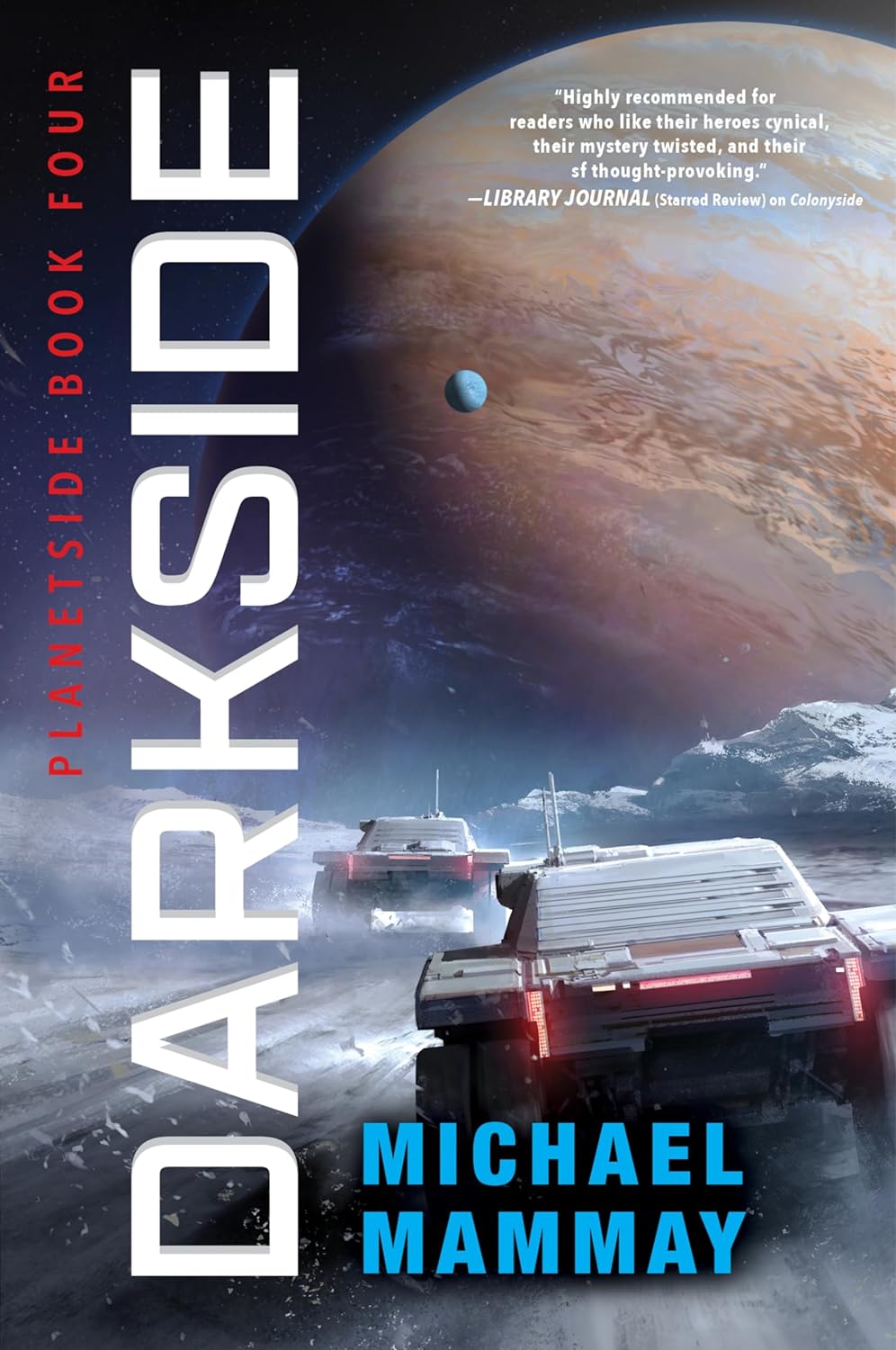
Darkside by Michael Mammay

Publisher: Harper Audio (Audiobook – 24 September 2024)

Series: Planetside – Book Four

Length: eight hours and six minutes

My Rating: 5 out of 5 stars

Amazon

One of my favourite science fiction authors returns with another fantastic and compelling military thriller in space, the highly addictive Darkside by Michael Mammay.

Back in 2018 I had the very great pleasure of reading the debut novel of new author Michael Mammay, Planetside.  An intriguing science fiction thriller that sent a retiring military officer to an alien planet to find a missing soldier, Planetside turned into quite the clever and exciting read, and I really got attached to its complex narrative and maverick protagonist.  Ending on a massive and well-written twist, Planetside was an exceptional read and was one of my favourite books of 2018.  The series continued strong from that point on as Mammary released more cool additions to the Planetside series, each of which pit the protagonist against human corruption and corporate greed in the depths of space with Spaceside (one of my favourite books of 2019) and Colonyside (one of my favourite books and audiobooks of 2021).  I have been curious to see if Mammay was planning to continue this series going forward, and I was nicely surprised earlier this year to find out that there was a fourth book coming out with Darkside.  One of my most anticipated books of 2024, Darkside was an intriguing entry to the series that once again forced the author’s protagonist to deal with old corporate threats on a distinctive new environment.

Colonel Carl Butler, former military officer turned genocidal fall-guy, has had an interesting life since his retirement from the military.  Thanks to the machinations of both the government and powerful corporation, Butler has found himself drawn into multiple conspiracies, and his direct way of dealing with the resulting controversy has made him infamous throughout the galaxy, as well as making him some very dangerous enemies.

Attempting to live out a quiet life on a remote planet, Butler finds his retirement once again disturbed when a young girl tracks him down, requesting his help in finding her missing father.  Finding it hard to say no to the desperate girl, especially when it becomes clear that something truly sinister has befallen her father, Butler reluctantly agrees to help, not realising the trouble he is about to find himself in again.

The missing father, Jorge Ramiro, had been working as the assistant for a famous archaeologist on the isolated moon of Taug.  With no electronic trace of Jorge remaining on the planet, Butler and his team chart a ship to the mining operations of Taug to find him.  However, Butler soon finds his investigation complicated by the fact that he has history with the two consortiums who control mining on Taug, Caliber and Omicron, as both have tried to kill him in the past.  Determined to find the truth no matter what, Butler relentless follows the dwindling trail of clues before him, even when that leads to the dangerous dark side of Taug where secrets lie hidden, and the two corporations are free to act without repercussion.

Michael Mammay presents another outstanding and impressive science fiction thriller that drags the reader in with its elaborate tale of intrigue, secrets, and one determined man seeking to fight the system.  Featuring a great combination of elements and a fantastically fun protagonist, Darkside was a brilliant addition to the Planetside series, and I had such an amazing time with it that it gets a full five-star rating from me.

I felt that Mammay produced another exciting and captivating narrative for his fourth Planetside book that ties in nicely to the rest of the series while providing readers with an excellent and entertaining ride capable of standing on its own feet.  Once again bringing in series protagonist Carl Butler to investigate a mysterious case on a new planet, Darkside features a fantastic tale of mystery, corporate antics and deeper intrigue.  The author does a great job of quickly setting the scene at the start of Darkside before dropping the protagonist right into the action as they attempt to find the missing father on Taug.  Seeking information from both corporations on the moon, Butler initially starts a methodical and low-key investigation.  However, things get tricky when Butler and his team discover evidence of a major coverup, and the protagonist is forced to pit the corporations against each other in his attempts to find the missing person.  This complex first half proves to be an excellent start to the novel, and Mammay ensures that the tension, stakes and mystery rise at an effectively rate, keeping the reader’s attention the entire way through.

Things take a very exciting turn around halfway through Darkside, as Butler’s investigation provoke action from his opponents that results in some extremely dramatic and intense moments.  While I had been enjoying the investigation and intrigue of the first half of the book, it was fun to dive into something much more action packed for the second half, and I really enjoyed the exciting direction that Mammay took the story.  There are some great reveals here, and I love how complicated the various corporate lies and agendas became at times.  Everything leads up to a very intense final set of sequences, as Butler finds his back against the wall and is forced to decide which devil to have in his corner.  There are some great twists here, as well as a cool chapter told from the perspective of one of the series’ major supporting characters, and it leads up to a particularly intense and moving conclusion that perfectly fit the overarching anti-corporate message of the entire series.

Darkside has an excellent and addictive style to it that really draws the reader in.  Told from the perspective of the cynical, but realistic, Colonel Butler, readers are presented an outstanding thriller novel expertly set in a futuristic setting.  Starting off with a mystery of a missing person, the story evolves into a more elaborate game of intrigue as the protagonist attempts to outsmart two rival companies.  Mammay hits the right blend of manipulation, investigation and action throughout Darkside, and readers are presented with a great story that thrills the reader while dragging them further in with the curious mystery.  This story is well set by the moon of Taug, which proves to be an outstanding setting for this intense novel.  Not only does Mammay provide some striking descriptions of this desolate moon, but the isolated nature of it, as well as more scientific elements like gravity and composition, are well utilised in the plot, creating problems and opportunities for the protagonists.  Whilst Darkside is part of a larger series, for the most part it is a standalone novel that new readers can easily dive into, especially as there is an effective summary at the front to fill in some major details about the protagonist and his previous outings.  I think I had a bit more fun having read the previous books first, especially as you appreciate how Butler’s relationship with some of the supporting characters has grown, as well as having a better understanding the protagonist’s adversarial relationship with the corporations on the moon.  Darkside was such a great addition to this series, and I had an exceptional time powering through this novel in record time.

Another major element of Darkside, and indeed the entire Planetside series, that I come to really enjoy, was the outstanding characters who sat at the heart of the story and who add some real emotional depth to the book.  This primarily refers to the protagonist and point-of-view character, Colonel Carl Butler, who is very fun to follow.  A former career soldier trying to enjoy retirement, Butler has been hit by controversy, betrayal and the downside of duty, which has made him infamous and forced him to live on a remote planet.  Despite this, he is still a cheerful figure whose desire to do good forces him into another adventure.  Witty and honourable, Butler has a very eccentric personality that results in most of Darkside’s humour, and you have to laugh at some of his clever thoughts and responses to the dark events around him.  Despite having a seemingly carefree, easy-going attitude, Butler is a canny operator at this point in the series, and it was great to see how he has finally learnt from his previous experiences of dealing with corrupt corporations.  I also really enjoy how Mammay portrays Butler’s thought process in this novel, as you get to see him weighing the options and impacts of his various potential actions, and seeing the steps Butler takes to make his decisions makes him a little more human and relatable to the reader.  As such, you really get caught up in Butler’s latest crusade, and it proves hard not to root for him the entire way, even despite his dark history.

In addition to Butler, Mammay also features a great supporting cast of characters in Darkside, most of whom play off Butler extremely well.  This includes the returning characters of Mac and Ganos, Butler’s bodyguard and computer expert respectively, who once again saddle up to help.  Mammay works these two characters back into the plot quickly and effectively, and it was great to see this team in action again.  Mac and Ganos serve as an entertaining support to Butler, especially as by this point, they have learned to anticipate their boss’s likely course of action.  I really enjoyed seeing the close camaraderie and support these three had together, and it there were some excellent and moving moments as a result.  The rest of the case also worked well around these central characters, with several new members of Butler’s team providing some intriguing plot options.  Throw in the usual collection of local soldiers who work with Butler, and a group of manipulative corporate officers who serve as the antagonists, and the cast of Darkside proves to be a fantastic part of the book, and I loved seeing them all in action.

I ended up enjoying Darkside on audiobook, which has been my preferred way of enjoying the Planetside books, primarily because of the inclusion of R. C. Bray as the narrator.  Bray, who is one of my favourite audiobook narrators, did another exceptional job voicing the characters in Darkside, and I love how well his gruff and rich voice fits Colonel Butler.  Bray’s voice work perfectly captures Butler’s sarcastic, pragmatic and rebellious streak, and you really get caught up in this excellent narrator’s central performance.  In addition to his excellent portrayal of Butler, Bray also brings all the supporting cast to life in fun and effective manner, with each character given their own distinctive voice or accent.  I particularly enjoyed the fun voice he gave to Butler’s right-hand man, Mac, which was handy considering Mac got a lengthy chapter from his perspective that really popped in Bray’s voice.  I honestly don’t think I would have enjoyed Darkside quite as much without having Bray read it out to me, and I have so much love for the paring between Bray and Mammay’s great writing.  Coming in with a runtime of just over eight hours, most people will be able to power through Darkside very quickly, and I honestly found it very hard to stop listening to this audiobook, which comes very highly recommended.

Michael Mammay continues to impress with Darkside, a brilliant addition to his fantastic Planetside series that proves hard to turn away from.  Clever, exciting, and featuring a well-written and intense story, Darkside is one of Mammay’s best Planetside novels yet, and I cannot wait to see how he continues the story in the future, especially as the rascally protagonists keeps making more and more enemies.

Amazon

Warhammer 40,000: Lazarus: Enmity’s Edge by Gary Kloster

Publisher: Black Library (Audiobook – 9 March 2024)

Series: Warhammer 40,000

Length: 11 hours and 47 minutes

My Rating: 5 out of 5 stars

Amazon

Secrets, lies and devils from the past converge around the Dark Angels in this exceptional Warhammer 40,000 novel from Gary Kloster, Lazarus: Enmity’s Edge.

I have been on a real roll with Warhammer 40,000 fiction this year, as books like Da Big Dakka by Mike Brooks, Deathworlder by Victoria Hayward, Oaths of Damnation by Robbie MacNiven and Renegades: Lord of Excess by Rich McCormick have all proven to be exceptional additions the Warhammer canon.  But despite how awesome the above books and others have proven to be, I am still keen for more.  That is why I made sure to listen to a copy of the early 2024 novel, Lazarus: Enmity’s Edge by new-to-me author Gary Kloster.  An interesting entry that follows members of the iconic Dark Angels chapter, Lazarus: Enmity’s Edge was a book I nearly didn’t read this year, but I was sure glad that I did.

For over 10,000 years the Space Marines of the Dark Angels chapter have defended the Imperium of Man from all manner of insidious threats, all while keeping their own terrible secrets hidden.  Maintaining watch for fallen members of their order, the Dark Angels are forced to balance their Chapter’s need for secrecy and revenge with their solemn duty to keep humanity safe from the monsters and heretics stalking the stars.  But not every member of the Dark Angel’s inner circle believes that the battles of the past should impact the Chapter’s future.

Lazarus, Master of the Dark Angels Fifth Company, knows the burden that history can have on the soul.  The first Primaris Marine to hold rank within the chapter’s inner circle, Lazarus finds himself haunted by the battle that killed him and forced him to undergo the Rubicon surgery.  Determined to rid the universe of all psykers and the foul forces of Chaos behind them, Lazarus is a dedicated warrior, although one that questions the secrets that impact his ability to fulfill his duty.  That is why, when an ancient beacon located on the planet Reis is activated, the Supreme Grand Master of the Dark Angels, Azrael, summons Lazarus and his Fifth Company to fulfill an old debt of honour.

A thousand years before, the Imperial Knight world of Reis was nearly overwhelmed by a rampaging army of daemons, resulting in the destruction of the planet’s war machine guardians, and only through the intervention of the Dark Angels was Reis saved.  But now, after years of peace, Reis finds itself under attack from a new foe, one that may cause another daemonic incursion.  Determined to ensure the daemons stay in the warp, Lazarus arrives to assess the situation on Reis, but soon discover that not everything is as it seems.  The planet is a hotbed of sinister politics, ancient grudges, and long-buried secrets, all of which conspire to drag Reis closer to destruction.  Forced to navigate the planet’s complex history, Lazarus discovers a terrible enemy hiding deep within the planet’s jungles, one that, like Lazarus, refuses to die.  To save Reis and his brothers, Lazarus must uncover the true hidden past of the planet and understand the origin of the grudge that could turn the Dark Angels against the Imperium they are sworn to protect.

Wow, Warhammer 40,000 fiction is in peak form in 2024 as Gary Kloster deeply impressed me with Lazarus: Enmity’s Edge.  Featuring a particularly complex and captivating narrative that blended awesome action and great characters with a clever and well-written plot, Enmity’s Edge proved to be extremely addictive, and I found myself irreversibly hooked.  Exciting, intense and loaded with all manner of intrigue, Enmity’s Edge is one of the best Warhammer books of 2024 and gets a full five-star rating from me.

I must admit that when I first decided to check out Enmity’s Edge, I didn’t quite know what to expect.  Space Marine focused Warhammer 40,000 novels can sometimes be an overloaded, action slog colloquially known as “Bolter porn”, and I was initially slightly worried that was the direction Enmity’s Edge was going, especially as it started off with an intense war sequence against orks.  However, Kloster instead showcased a remarkably compelling and layered Warhammer 40,00 novel that made excellent use of its Dark Angel protagonists and a unique, secret-laden background setting.  The initial battle serves as a great introduction to the main protagonist, Lazarus, and his command staff, and you get a sense of his tactical skills, as well as his dislike of psykers and the secrets of his order.  This leads nicely to the more complex part of the book, as the reader is introduced to some interesting side characters, as well as the world of Reis, where Lazarus and his company are sent to.

Arriving on Reis, Lazarus discovers a unique world of secrets, lies and hidden history, with the populace attacked by a mysterious fungal infection that has taken over various host bodies.  Quickly diving into the fray to determine the full extent of the threat, the first half of the book sees the Dark Angels essentially taking on the zombies from The Last of Us with an intelligent malevolence behind them, and these unique antagonists prove an interesting alternative to the classic villains of the franchise.  From there the story devolves into an intriguing combination of sequences, as Lazarus attempts to uncover his true opponent, while also dealing with attacks on multiple fronts.  This leads to some compelling and occasionally brutal scenes, including a continued conflict inside an Adeptus Mechanicus base, as well as some other great sequences scattered throughout the planet.  The author spends some substantial time building up some impressive and moving character arcs, as various figures deal with the chaotic events in different ways.

The author does an excellent job building up a great hidden villain who the protagonist must uncover, and the secrets and mysterious surrounding the figure really adds to the intrigue of the story.  While the identity of some of the antagonists are a little predictable, the journey getting there is impressive, and I loved the setup to the answers that Kloster subtly hid through the earlier parts of the book, with the reliance on understanding the past to survive the future being a great recurring theme.  This leads up to a particularly intense and dark final third as the antagonist’s very long-term plot comes to dramatic fruition.  Kloster does a masterful job of building up tension and substantially upping the stakes in the leadup to this, and you find yourself deeply engaged as you wait to see how everything will unfold.  There are some brilliant moments here, including a ton of over-the-top action, some fantastic plot resolutions, and several particularly tragic moments as the protagonists face overwhelming foes.  The overall resolution is very clever and builds on some excellent prior story inclusions and character growth, that Kloster wraps up perfect.  The end result is an awesome, memorable and particularly enthralling standalone story, that really showcases just how cool and complex a Warhammer 40,000 story can be.

I really enjoyed how Enmity’s Edge came together, and I felt Kloster had a great writing style the ensured a powerful and intense story.  His entire complex narrative was a ton of fun from start to finish, and it proved to be well showcased through several compelling protagonist perspectives.  While there is a ton of awesome and intense action in this book, as is required for a Warhammer 40,000 novel (war is in the name for a reason), the focus on a more subtle threat ensured that Enmity’s Edge stood out from the pack.  I particularly appreciated how subtly Kloster set up a lot of key story elements early in the book and they all paid off extremely well, with a great theme on the lessons of the past recurring in an excellent way.  I also must highlight the great new setting of the planet Reis, which Kloster made fantastic use of.  The Warhammer 40,000 universe is home to a multitude of intriguing and unique worlds, but Reis really stood out to me thanks to Kloster’s vibrant descriptions and the clever way the planet’s complex history and disposition played into the narrative.  An Imperial Knight planet (a feudal world governed by mech pilots who take the whole knight thing way too seriously) that has fallen on hard times thanks to the destruction of the ruler’s battle suits, Reis is a hotbed of dark history, lingering secrets, and intense rivalries, covered with useful fungus.  Kloster perfectly introduces and then utilizes this planet throughout the narrative, and you find yourself getting really drawn into the revealed history, especially as it produces a particularly effective and dark antagonist.  These writing elements ensure that Kloster’s captivating narrative pops in the reader’s mind, and I was really impressed with how he presented this excellent Warhammer novel.

In addition to being an outstanding read, I also felt that Enmity’s Edge was an excellent piece of Warhammer 40,000 fiction, and one that really emphasizes how clever and compelling a story in this canon can be.  Focusing on the Space Marine chapter, the Dark Angels, Kloster presents a gripping standalone narrative that makes great use of the franchise’s unique features and history without getting too bloated or lore heavy.  Thanks to how effectively the author covers these franchise inclusions, I felt that readers unfamiliar with Warhammer fiction could easily jump into Enmity’s Edge without too much pre-knowledge and still deeply enjoy the plot, especially as it really showcases how cool the iconic Space Marines can be.  More established Warhammer 40,000 fans will naturally get a lot more out of the story, especially as Kloster explored some particularly awesome aspects of the universe.  I personally loved how well he showcased the various squads featured within a specific Space Marines company, and it was fun to have a mixture of troop specializations and vehicles which reminded me of tabletop gameplay at times.  He also does an outstanding job showcasing the Dark Angels, who are one of the more popular Space Marine chapters for a reason.  This proved to be a very strong book for Dark Angels fans, and I appreciated how he veered away from the typical topics you’d expect for a Dark Angels novel (completely focused on the Fallen), and instead showed them facing a fresh foe with some excellent motivations to hate them.  As such, this is a highly recommend read for all Warhammer fans that might also attract a few new readers to the franchise.

One of Enmity’s Edge’s real strengths was the excellent batch of characters that Kloster set the narrative around.  This includes the titular protagonist, Lazarus, Master of the Dark Angels Fifth Company, who proves to be an intriguing central character.  A well-known tactician, secret holder, and one of the few commanding Primaris marines (an upgraded Space Marines) in the Chapter, Lazarus proves to be a great main figure for the plot.  While some Space Marine characters in fiction can be a little one-dimensional, I felt that Kloster did an excellent job turning Lazarus into a complex figure, haunted by his previous battles, concerned about the future of his chapter, and bitter about those friends he has lost to psykers.  There are some great scenes featuring Lazarus throughout Enmity’s Edge, especially as he showed a lot of humanity to a certain point-of-view character, and it was intriguing to see his tactical mind in action.  He also proves to be an excellent foil to the excellent main antagonist of the plot, and they had some compelling scenes together.

Aside from Lazarus, Enmity’s Edge featured a raft of notable support characters, including several major members of the Dark Angels Fifth Company.  I particularly enjoyed the imposing and unfailingly honorable figure of Ancient Jequn, the Fifth Company’s veteran standard bearer.  Jequn has a particularly tragic arc in this book, and I really grew attached to him and his resolve throughout the run of Enmity’s Edge.  Other enjoyable characters included members of Lazarus’s command squad, an Adeptus Mechanicus tech-priest whose technology reflects their obsession with birds, and the various key rulers of Reis.  The antagonists of Enmity’s Edge are also well set-up and utilized, and while I won’t got into too much detail of them here, they had some brilliant sequences, and really enhanced the overall narrative.

However, I felt that one of the best characters in Enmity’s Edge was Learned Ysentrud, an enhanced human of a type found only on Reis called a Wyrbuk, who finds themselves helping the Dark Angels.  Essentially a living repository of knowledge, Ysentrud becomes a key figure in the plot as she provides the Dark Angels with history and insights into Reis that allow them to uncover the plot’s big mystery.  Probably the book’s main point-of-view protagonist after Lazarus, Ysentrud had one of the more relatable character perspectives in Enmity’s Edge, as she finds herself surrounded by the demi-god figures of the Space Marines as they engage in combat.  Not only does Ysentrud’s perspective help to bring readers a little more into the plot, but I really enjoyed the compelling story arc Kloster wove around her as she attempted to find her courage and prove her worth to the Dark Angels.  Kloster’s entire arc around Ysentrud was really well written, and I felt that her complex personal narrative was a particularly strong part of the book.

Those familiar with this blog will be unsurprised that I chose to enjoy Enmity’s Edge on audiobook, which is how I primarily check out all my Warhammer content.  As with most Warhammer 40,000 books, Enmity’s Edge came across extremely well in this format, and you are in for a really good time listening to it.  Coming in with a runtime just short of 12 hours, listeners can get through Enmity’s Edge’s audiobook in no time at all, especially once you get caught up in its fantastic story.  The intense action, elaborate sequences and deep intrigue of the plot is perfectly enhanced by having it read out to you, and I loved hearing the elaborate descriptions of the setting and the unique characters within it.  I was also very impressed by narrator John Banks, who has lent his voice to several Warhammer audiobooks over the years.  Banks did a remarkable job diving into the various characters featured within Enmity’s Edge, and I also felt that his amazing voice lent a lot of gravitas to these figures.  While all the characters are given excellent and fitting voices, I particularly loved his take on the various Dark Angels characters featured throughout the plot.  He gives these genetically enhanced, ancient warriors the booming and commanding voices you would expect, and their emphatic declarations sound really cool here.  I absolutely powered through this excellent audiobook, and I would strongly recommend it as the very best way to enjoy Enmity’s Edge.

Lazarus: Enmity’s Edge by Gary Kloster was another excellent 2024 Warhammer 40,000 novel that I could not get enough of.  Featuring a complex and intense plot of betrayal, secrets and dark history, Enmity’s Edge grabs your attention early and ensures you can’t put it down as you rush towards the end.  One of the best Warhammer 40,000 novels of the year, Enmity’s Edge is a must read of all fans of the franchise, and I really loved its brilliant story.

Amazon

White Ash Ridge by S. R. White

White Ash Ridge Cover

Publisher: Headline (Trade Paperback – 12 March 2024)

Series: Detective Dana Russo – Book Four

Length: 343 pages

My Rating: 4.5 out of 5 stars

Amazon

One of Australian’s most distinctive new crime fiction authors returns with a complex murder mystery the blends compelling characters with unique methods, White Ash Ridge by S. R. White.

Over the last few years, I have really been enjoying the works of new author S. R. White.  White, a former UK Police officer who emigrated to Australia, has been producing some amazing pieces of Australian outback crime fiction.  His work has so far been part of his Detective Dana Russo series, which follows the titular detective as she investigates complex cases out in the Australian bush.  This series has so far featured three impressive reads, Hermit, Prisoner and Red Dirt Road and these amazing books have been very fun to read, especially as White comes up with some unique crimes which require the protagonist’s more unusual methods to solve.  I have really enjoyed White’s previous books, and I jumped on his new novel, White Ash Ridge, the moment I got my hands on it.

Murder, deceit and controversy are all that are on the limited menu of the White Ash Ridge hotel, especially when tragedy strikes its guests.  An isolated and decaying hotel, hidden away in the Australian wilderness, White Ash Ridge has been booked out by the inner circle of a high-profile charity organisation for urgent discussions about its future.  As the relentless heat raises tensions, the body of one of the charity’s founders is found dead on the track outside, his death caused by a blow to the head.

Called to the scene, Detective Dana Russo anticipates another complex murder case.  With no one else spotted in the area and tensions running high amongst the charity’s founders, it seems likely that one of the four remaining guests at the White Ash Ridge is the murderer.  However, as she begins to investigate, Dana is unprepared for the chaos that is about to descend upon her small command.  The charity the victim work for was founded by two parents whose son was killed after intervening in a violent assault.  The subsequent failed police investigation sparked public outrage and launched the boy’s mother into Australia’s political orbit.

Now thrust into the centre of a controversial family familiar with the police, Dana must quickly solve the case before events get out of hand.  With a lack of physical evidence, Dana and her small team are forced to pull the truth from the four suspects to determine their history with the victim and why anyone would want to kill him.  However, they only have limited time before the overwhelming public interest forces her to let the suspects go, likely at the cost of her career and reputation.  Can Dana convince her suspects, none of whom have any love of the police, to cooperate before it’s too late, or will the killer walk free thanks to the will of the people?

S. R. White delivers another complex, impressive, and highly distinctive piece of Australian crime fiction with White Ash Ridge. Blending White’s unique murder mystery style with great characters and a compelling situation, White Ash Ridge was an amazing read that I could not get enough of.

I have always really enjoyed White’s take on the Australian murder mystery, as his focus is always on finding out all the details of the victims and the suspects to solve the case, often through the medium of interrogation.  This was once again the case in White Ash Ridge, as the protagonists, under pressure to solve the case quickly, need to find out which of the four suspects committed the crime.  As such, the story develops in a very interesting way, as the detectives both investigate in the traditional way, including finding witnesses and evidence, while also diving into the lives of everyone involved in the case.  Much of this revolves around the eight main interviews of the investigation as the protagonists talk to each of the suspects twice to gain the relevant insights into themselves and the murder victim.  White, through his main protagonist, Detective Dana Russo, has a very person-centric take on the interrogation progress, and the resulting character-driven focuses become a key part of the plot.

This proves to be a very clever way to set out this excellent mystery and subsequent investigation, and thanks to White’s expert writing ability White Ash Ridge ended up being an extremely clever and captivating book.  The focus around the charity and its anti-police sentiments added some great intrigue to the narrative, and I liked the ticking clock aspect of the plot it brought in.  All eight of the main interviews were very intense and compelling in their own ways, and you soon get a great idea of the various people drawn into the case.  White combines this expertly with the personal dramas of the protagonists, including some ongoing storylines from the prior books, although the overarching threat of Dana’s new supervisor is getting a little stale at this point.  At the same time, the reader gets the full blast of the Australian wilderness from the unnamed part of the country that White sets his novels in, which adds a lot of character to the story in its iconic and beautiful ways.  The central mystery of White Ash Ridge comes together extremely well, and the eventual solution is smart, intriguing, and very well set up.  The entire story comes together in a powerful way, and I loved this unique mystery which was another strong story from White.

As with all of White’s books in the series, White Ash Ridge is a hugely character-driven read, not only because of the compelling and damaged protagonists, but because his style of writing relies on diving into the lives of the various suspects and victims of the case to solve the crime.  This all results in some exceptional character development and focuses, and I loved how complex and powerful the various stories that emerged were.  Most of the protagonists focused development occurred around returning main character Detective Dana Russo, who serves as the solid and empathetic centre of the investigation.  Dana once again showcases her unique investigation style that focuses on character interactions, history and mindsets to solve the case, which proves to be quite effective at diving into the minds of her targets.  This time Dana is backed up by new detective, Mila Jelovic, who serves as a great support for the main character.  While the development around Dana is a little light in White Ash Ridge, you do get an intriguing and powerful examination of Mila, whose previous undercover work has cost her severely in more than one way.

Aside from the police characters, the reader also gets an intense look at five specific figures who become the focus on the investigation, with the murder victim and the subsequent four suspects.  All five of these people are members of a high-profile charity formed in the aftermath of a botched police investigation, with goals of stopping teen violence and keeping the police accountable.  Due to the way the mystery is set out, there is a lot of focus on these characters and the events that brought them together, which provides the reader with an intriguing backstory to get familiar with.  All five of these characters are interesting and complex in their own way, with various interactions, lies, manipulations and plans bringing them all together.  Probably the most interesting of these is the charity’s figurehead, Keena Flynn, a major public figure following the death of her child.  Due to her previous interactions with the police and politicians, Keena proves to be a tough nut to crack, and her pain, anger and distrust become a major obstacle to overcome.  White does a wonderful job exploring these five characters, and indeed you often get more about them than the police protagonists.  There is such a dark and compelling web of relationships surrounding these characters, and the subsequent reasons for why one of them was killed and by who was pretty impressive and helped to produce an incredible mystery.

S. R. White continues to flourish with another awesome entry in his compelling murder mystery series that is setting him up as one of Australia’s most distinctive crime fiction authors. Expertly combining his ability for complex murder scenarios and character-focused investigation methods to produce an outstanding story, White did an amazing job with White Ash Ridge, and I had an incredible time reading it. One of the cleverest mysteries of 2024 so far, this book comes highly recommended.

Amazon

Quick Review – Glenrock by Lee Christine

Glenrock Cover

Publisher: Allen & Unwin Australia (Trade Paperback – 30 January 2024)

Series: Standalone

Length: 320 pages

My Rating: 4.25 out of 5 stars

Amazon

Bestselling Australian author Lee Christine brings together a compelling and intriguing crime fiction read with the excellent Glenrock; a fantastic mystery set around the Australian city of Newcastle.

Plot Synopsis:

A murdered judge. Two missing lawyers. A thrilling tale of mystery and suspense from the bestselling author of Charlotte Pass and Dead Horse Gap.

When Justice Maurice Tempest is murdered in the Glenrock State Conservation Area in Newcastle, local detective Senior Sergeant Callan O’Connor is the first on the scene. News of a second body, found in the same location days later, makes what had looked like a revenge killing into so much more.

Angela Avery, formerly a political journalist, is spending a lot of time at the Hunter Valley Prison interviewing a soon-to-be-released forger, Benjamin Reid. When O’Connor’s investigation reveals an interest in Ben, Angela is determined to protect both her source and her fledgling relationship with O’Connor.

Meanwhile, two young, female lawyers have disappeared after making a devastating discovery in an upcoming case. Can O’Connor unravel the connections before the body count rises further? And how much does Angela Avery really know?’…


Glenrock
was a great and fast-paced crime fiction novel that I had the great pleasure of reading earlier in the year.  Christine came up with a fantastic story that really drew you in thanks to its multilayered mystery, compelling characters and high stakes.

The main mystery of Glenrock is set around the murder of a prominent judge in the Glenrock National Park area, which sets off an elaborate investigation primarily seen through the eyes of Senior Sergeant Callan O’Connor.  O’Connor is a great central protagonist, and I enjoyed his intriguing insights into the case, especially as it pairs well with his complex family life and adversarial past with the Sydney homicide detective who arrives to take over the case.  While the murder of a judge would be an interesting focus for the book by itself, especially when the apparent murderer is found in the most unlikely of scenarios, Christine raises the stakes by introducing two parallel storylines that combine into one heck of a novel.

The first of these storylines revolves around Angela Avery, a journalist for the local paper who finds herself drawn into the larger murder story thanks to the human-interest story she was writing.  Thanks to her relationship with Callan, which provides a good romantic subplot for the story, Angela gets more involved with the case, especially as her investigation reveals connections to two young lawyers who disappeared the day of the murder.  These two lawyers, who went on the run to save themselves, provide the third overlapping storyline, and it was fascinating to see their attempts to flee, especially as they provide some compelling context to the main mystery.

All three storylines prove to be very entertaining on their own, but their real strength is the way that they wrap together and form a complex, overarching narrative.  Christine ensures that all three character-focused storylines stand on their own before bringing the various characters together in a sensible and compelling way.  I really enjoyed seeing the various story arcs come together, and Christine enhances this with several moving dives into the complex characters.  The focus on O’Connor’s family life is a prominent one, although I was particularly drawn to the character of Angely Avery, the plucky reporter who drives much of the plot’s investigative angle.  Christine draws together a complex and harrowing past for Avery, as her previous reporting experiences resulted in great pain, and I would be very interested to see Christine revisit these characters in the future.  The entire story, including the clever mystery, comes together extremely well, and Christine ensures there are some intriguing twists and reveals that keep you hanging in to the very end.  Throw in some excellent depictions of Sydney and the picturesque area surrounding Newcastle, including Glenrock, and this proves to be quite an impressive read.

Overall, Glenrock was an excellent piece of Australian crime fiction by Lee Christine that I had a wonderful time reading.  The combination of a compelling story, fantastic characters and an intriguing mystery is hard to resist, and readers will come away from Glenrock very satisfied.  An amazing and exciting read from a talented Australian author.

Amazon

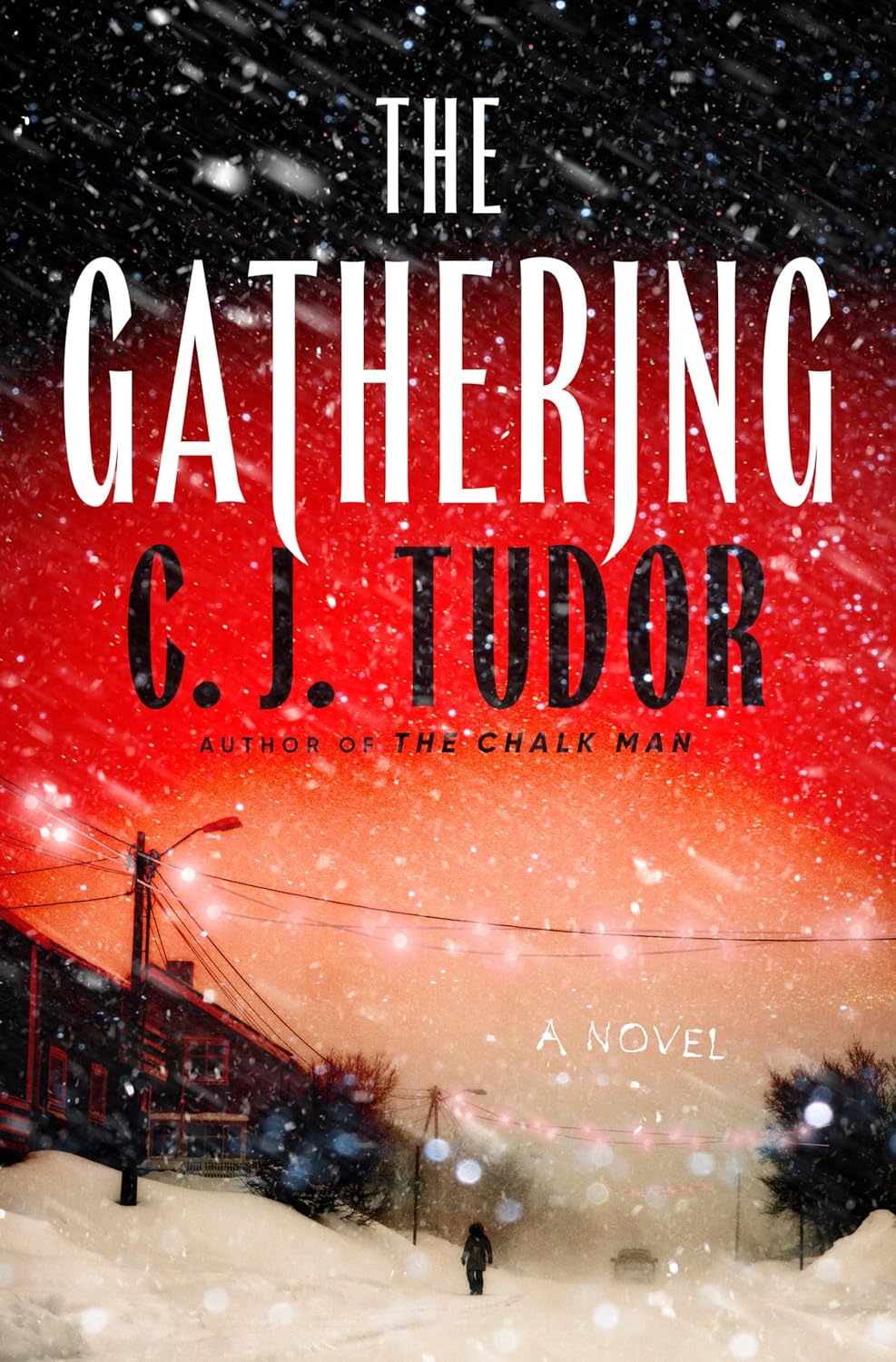
The Gathering by C. J. Tudor

The Gathering Cover

Publisher: Michael Joseph (ebook – 16 April 2024)

Series: Standalone/Book One

Length: 412 pages

My Rating: 5 out of 5 stars

Amazon

Acclaimed author C. J. Tudor continues her excellent run of clever and dark thrillers with the intense, inventive, and gripping horror murder mystery, The Gathering.

C. J. Tudor is a talented and highly inventive author who has been producing some intriguing reads over the last couple of years. Starting with her 2018 debut, The Chalk Man, Tudor has consistently produced some compelling books with clever horror or psychological thriller elements. Her other books include The Hiding Place (also titled The Taking of Annie Thorne), The Other People, The Burning Girls and The Drift.  While Tudor’s intriguing novels have often stood out to me, generally because their unique plots, I unfortunately haven’t had the opportunity to read any of her prior works, which is something I really regret.  However, this has recently changed as I was lucky enough to receive a copy of Tudor’s latest book, The Gathering, an intriguing murder mystery thriller with some distinctive element behind it.

Welcome to the small town of Deadhart, Alaska, home to a small population of living humans and a colony of vampyrs.  Maligned and hunted beings throughout the world, vampyrs in America now have legal protection from unsanctioned killings, as long as they don’t harm any humans.  While members of the Colony attempt to stay away from humans, old hatreds, prejudices and grudges rear their ugly head when a young teenager is found murdered with his throat ripped out and his body drained of blood.

Detective Barbara Atkins, a specialist in vampyr killings and physiology, is sent to Deadhart to determine if a vampyr committed the murder and authorise a cull if the Colony is unwilling to hand over the perpetrator.  Arriving in the small town, Barbara finds the local inhabitants afraid and angry, looking for vengeance for the death of the boy and determined to wipe out the vampyrs for good, especially as this case bears a striking similarity to a previous killing blamed on the Colony 25 years ago.

Beginning her investigation, Barbara soon discovers that there is far more to the case then initially appears.  Much of the evidence has been staged, and no one is willing to tell her the truth about what has really going on in town.  When more deaths occurring throughout Deadhart and the town in uproar, Barbara deputises former Deadhart sheriff Jenson Tucker, whose investigation into the previous killings nearly left him for dead.

As Barbara and Jenson attempt to discover the culprit, it soon becomes clear that someone is attempting to stir up a conflict between the people of Deadhart and their vampyr neighbours.  With both settlements on the warpath, Barbara and Jenson need to dive into Deadhart’s dark history to truly understand the crime before them.  But is the killer a bloodthirsty vampyr, a psychotic human with a taste for chaos, or something far worse?

Tudor absolutely blew me away with this exceptional and highly clever read.  The Gathering was a brilliant book that expertly combined an inventive and well-established concept with a complex murder mystery.  Loaded with intriguing and damaged characters and a dark story of death, revenge and oppression, The Gathering was an extremely awesome book that I could not turn away from.

Thanks to its vampyr focused murder mystery, I knew I was going to really enjoy the plot behind The Gathering well in advance of reading it, and boy was I proven right.  Tudor does a wonderful job quickly and effectively setting the scene, and you are soon introduced to the town of Deadhart, the concept of vampyrs and the particulars of the murder.  What follows is a complex case as protagonist Barbara Atkins is forced to investigate as an outsider, as most of the town is filled with anti-vampyr sentiment.  Further complications are added when Atkins finds a range of dark secrets hidden throughout Deadhart, both in the present and in the past, which have bearing on the modern case.  At the same time, the various residents of Deadhart and the Colony react in different ways to the murder, using it to restart old grudges or bring long-festering hurts to the surface.

The Gathering’s narrative progresses at a fast and compelling pace, and you are soon treated to revelation after revelation, as well as several additional killings.  I loved the combination of a modern-day investigation and dives back into various periods of Deadhart’s history that emerged, especially as clues in the past have huge bearings on the modern story.  Tudor cleverly builds up several simultaneous mysteries and ongoing storylines, and soon the protagonist is not only trying to discover who the killer is but prevent a war between Deadhart and the Colony.  Everything leads up nicely to a pretty epic conclusion, which was well foreshadowed, with some pretty awesome revelations coming to the fore.  I loved how well several compelling character arcs came full circle during this confrontation, and the main antagonist of the plot proved to be quite sinister and well established.  Several other tertiary mysteries are also solved near the end, and Tudor ensures that many storylines are tied off in a satisfying and clever way.  There are some awesome twists at the end, including one surrounding one of the book’s most compelling characters, and this last twist in particular is likely to lead to additional books in the series.  I honestly was the hooked the entire way through this amazing story, and I really appreciate how Tudor brought it together.

I’m a huge sucker for classic for thrillers with distinctive twists to them, and The Gathering was a great example of this.  Tudor managed to pull together a complex murder mystery that not only features an isolated Alaskan town with a dark history and multiple complex and haunted characters, but also contains an elaborate vampiric society and history.  All these elements are used extremely well throughout The Gathering, and I was extremely impressed with how Tudor was able to tie everything so effectively together.  Tudor makes sure to tell multiple character-focused storylines at the same time, which allows for a more multifaceted plot that goes in some very interesting direction.  The split focus on several captivating and distinctive figures works wonders to enhance this, and Tudor uses this to showcase the rising tension in the town, and the various perspectives surrounding it.  There are some great plot lines here, and the way that they interacted and came together was very impressive.  I was particularly impressed by the chapters that kept coming back to an unnamed figure being held prisoner by a mysterious captor.  This storyline was weaved throughout the novel, and I was constantly left guessing about who the figures were and how it would work into the main story.  The reveal surrounding it was not what I was expecting, but I loved how well it set up a major twist at the end.  Other character-focused storylines also proved to be just as compelling, and the way everything came together was very impressive.  I honestly knocked out this book in just over a day, it was that damn good, and I cannot emphasise how cleverly Tudor brought everything together.

One aspect of this book that I really must highlight is just how great a setting Deadhart proved to be as it enhances the plot of The Gathering in so many excellent ways.  The well-written depictions of the frigid Alaskan wilderness and secluding storms allows Tudor to bring together a classic thriller background of an isolated, snowed-in town, where the protagonist is unable to get backup and is forced to rely on unlikely help from the local outsider.  While this always makes for a great story background, Tudor enhances it by building up a dark history around Deadhart and the Colony, that plays so well into the modern storyline.  This unique history of the town was expertly explored by Tudor, and it worked to produce a much more complicated mystery, one dotted with historical grudges and family feuds.  I particularly loved how effectively Tudor explored the growing terror infesting Deadhart as the killings continue, as both the humans and the isolated vampyrs begin to fear what is to come.  This undercurrent of fear and the resulting rage it leads to is almost palpable at times, and you can fully understand how and why the various characters act the way they do.

Another element of The Gathering that really impressed me was how well Tudor set up an alternate world where vampyrs exist.  The whole concept of the vampyrs as biological offshoots with several classic vampiric traits, including blood drinking and an aversion to sunlight, is quickly and effectively established by Tudor, who does a wonderful job of immediately bringing readers into this world.  As the book continues, the reader gets a more in-depth look at the vampyrs, their biology, their psychology, and their history, especially when it comes to their interactions with humans.  This examination of the interaction with humans is particularly key, as Tudor explores the prejudices that emerged, as humans learned to hate the entire species.  Featuring some fantastic parallels between other social rights issues, the relationship between the two species is explored in detail, and then applied to isolated Deadhart.  Watching the prejudices of the town come to light again was a great part of the book, especially as it is well contrasted by looks at the vampyr community.  As the story continues, you soon realise that there are monsters on both sides of the biological line, and figuring out who is crossing this line is a major part of the plot.  Defining vampyrs in both a scientific and social way proved to be very interesting, and I liked the attempts at humanising the figures and making them less of a horror monster.  That being said, there are some dark and scary scenes in The Gathering, especially when the vampyrs get angry.  Overall, the use of vampyrs is in The Gathering was very cleverly, and Tudor really highlighted her writing ability by setting this up so effectively.

The final element of the book I want to highlight is the amazing group of complex and damaged characters featured throughout The Gathering.  Tudor clearly has an aptitude for bringing together a compelling cast, as the reader is treated to a range of different figures, each of whom have their own compelling histories and dark pasts mottled by the troubled relationships between humans and vampyrs.  The most prominent of these is the visiting detective, Barbara Atkins, who is forced to battle mystery, local hatred, and her own unique feelings about vampyrs as she determines whether a cull is required.  Showcased as the calm and reasonable inclusion to the investigation, Barbara finds herself severely tested by the town’s prejudices and mistrust, while trying to find the truth no matter what.  Much of Barbara’s actions are guided by rationality, although there is an intriguing look back into her past, as her own experiences with small towns with vampyr colonies plays a big role in her motivations.  As such, she is an excellent central protagonist, and I loved how well she played the outsider figure coming into town.

In addition to Barbara, The Gathering also features a complex group of locals, each of whom have their own connection to Deadhart’s dark history and the hostile relationship between the town and the Colony.  Standouts include former sheriff Jenson Tucker, whose previous investigation of a vampyr death left him as the town pariah.  Tucker goes through a powerful redemption arc in The Gathering, and he proved to be an able secondary protagonist as he comes to terms with his many secrets.  Other great characters include an ancient vampyr, trapped in the form of a child, whose connection to the dark side of Deadhart becomes a driving force for their revenge.  There is also a mysterious local preacher determined to bring violence to the vampyrs, and who proves to be an intriguing counterpoint to the main protagonist Barbara.  Finally, the various members of an original Deadhart family with a long simmering hatred for all thing vampyr, adds a great amount of drama to the plot, not only because of their connections to the previous killing in town but because their well-established fear of vampyrs leads to much of The Gathering’s conflict.  These characters, and more, are very well written, and their dark attitudes, fearful actions and unique viewpoints add a great deal to this already impressive and emotionally charged novel.

C. J. Tudor deeply impressed me as The Gathering turned out to be one hell of a read. Expertly utilising her inventive and clever alternate world in conjunction with a captivating mystery, Tudor wrote a particularly epic tale in The Gathering, and I had such a lot of fun getting through it. An intense and powerful read, The Gathering is one of the best books I have read so far in 2024 and I cannot recommend it enough.

The Gathering Cover 2

Amazon

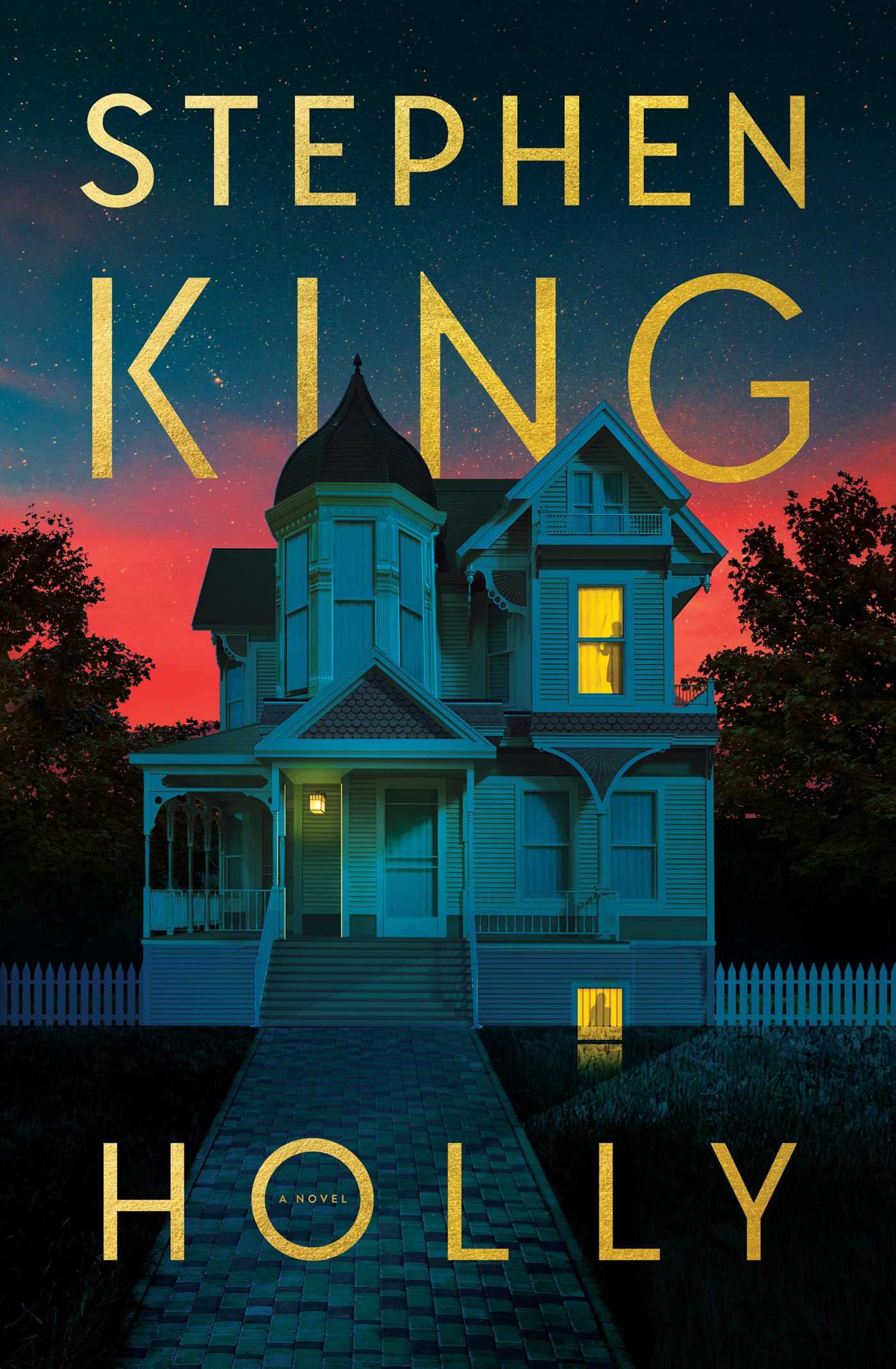
Holly by Stephen King

Holly Cover

Publisher: Hodder & Stoughton/Scribner (Audiobook – 5 September 2023)

Series: Holly Gibney

Length: 15 hours and 24 minutes

My Rating: 5 out of 5 stars

Amazon

The master of thrills and chills, Stephen King, returns with his latest exceptional read, the powerful and gruesome thriller Holly, an outstanding and utterly gripping read that brings back an amazing original protagonist.

Fans of this blog will be aware that I have been in a bit of a Stephen King mood recently, especially being quite a latecomer to his books.  I have had a wonderful time reading some of his latest works, including Later, Billy Summers and Fairy Tale, each of which has been great in its own way.  I have also been keeping a firm eye out for any upcoming books from King, and I was highly intrigued when I saw that he was releasing Holly in the second half of 2023.

Holly, which was one of my most anticipated books of the year, serves as a continuation of the adventures of protagonist Holly Gibney.  Holly Gibney, who first appeared in Mr Mercedes, is a unique and damaged figure who ended serving a vital supporting role in all three Bill Hodges books, as well as the horror-filled thriller, The Outsider (both of which have been adapted into awesome television series).  Holly is the first full novel where this quirky figure will be the main protagonist (although there was the novella, If It Bleeds), and I was very intrigued to see how that turned out.  I even went back and read Mr Mercedes for the first time so I would have a better idea of the character and their fascinating story.

It is the height of the 2021 COVID pandemic, and Holly Gibney is reeling from the sudden death of her domineering and stubborn mother.  Initially planning to take some time off, Holly finds herself drawn to a new case when distraught mother Penny Dahl calls the Finders Keepers detective agency hoping to get help in finding her missing daughter, Bonnie.  With her partner, Pete, out of commission with COVID, Holly decides to take on the case by herself, especially when Penny’s desperation breaks through to her.

Diving into the case to distract herself from her deep personal concerns, Holly begins to uncover all the details surrounding Bonnie’s sudden disappearance.  But the further she digs, the more sinister the case becomes, especially when it becomes apparent that more than one person has disappeared in the same residential area.  To uncover the truth, Holly will need to find out more about these other disappearances.

However, Holly is unaware of a deadly threat watching her from the suburban shadows.  Professors Rodney and Emily Harris are octogenarians living an easy life as semi-retired academics.  But this old married couple is keeping a dark and unimaginable secret in their basement, one that will shake Holly to her very core.  Can Holly find out what really happened to Bonnie and the other missing persons before the clever and patient professors make their move?

Wow, just wow!  This was such an exceptional and powerful read, and it is one of the best books I have ever read from Stephen King.  Featuring an exciting, emotionally charged and highly gruesome story that will leave you breathless and horrified, Holly had me hooked from the second I started it and it refused to let me go even after I finished it.  Intense, clever, and oh so beautifully disturbing, Holly gets an easy five-star review from me for so many delicious reasons.

Holly has an epic and addictive narrative that grabs the reader’s attention right off the bat, especially as you are immediately introduced to the horrifying schemes of the antagonists.  This great introduction perfectly leads into the main story, which focuses on the protagonist’s investigation into the disappearance of a missing girl.  This is very much a character driven plot, as the protagonist simultaneously deals with her troubled history and roiling emotions following the death of her mother.  King features a range of intriguing character perspectives throughout the course of Holly, showcasing different angles to the case and introducing several additional personal stories.  Thanks to these intriguing perspectives, especially those surrounding Holly herself, the investigative storyline rolls along at a fast and exciting pace, and Holly quickly begins to realise something nefarious did happen to her client’s daughter, as well as other people in the same area.  King backs up these revelations with great flashback chapters that showcase the actual sinister deeds of the antagonists, while also giving you some fascinating insights into who they are and what drives them to commit these insanities.

The resulting story continues at a fast and compelling clip, as you get further drawn into both Holly’s case and the intriguing history of the Harrises and the people whose lives they impact.  King writes a very tight and captivating investigative storyline around the protagonist, and I liked how Holly methodically finds connections and identifies new victims through a series of fun character interviews.  Thanks to the flashback sequences, the reader already knows what the Harrises have done and what Holly is going to find as her investigation continues, which gave the protagonist’s scenes more of an edge as you wait for her to uncover the full horrors awaiting her.  As this unfolds, you are also gifted to several compelling and emotionally charged scenes around Holly, as well as several other great supporting figures, as they go about their damaged and complex lives.  This includes a large sub-story thread around returning character Barbara Robinson, whose foray into the literary world proves quite powerful and personal, while also revealing several major clues in the case.  These multiple character-driven storylines are pretty fascinating and captivating in their own way, and they pull together perfectly into one cohesive and bloody narrative that you can’t prove away from.

While the first two thirds of Holly are extremely cool and addictive, the third act is where everything comes together, and boy is it glorious.  King came up with an excellent and very impressive conclusion that keeps you irresistibility hooked up to the end.  Several lingering questions, such as the fates of characters, are cleverly and gruesomely answered in the leadup to Holly pulling the clues together.  At the same time, the author also revolves several key character arcs and storylines, which set up these various figures for the big confrontations, for better or for worse.  I love how King maneuverers all the characters around through chance, tragedy and mistakes so that there is the maximum risk for his protagonists, and you are seriously left wondering who is going to survive and how the entire story will unfold.  The climatic scenes are pretty damn memorable, as King brings everything together in a brutal way that only he could envision.  The shock, the emotional damage and the horrors that are revealed are extremely powerful and cool, and you will come away from Holly disturbed and satisfied in equal measure.

While I already had a great deal of respect for King’s writing ability before reading this book, I have to say that I was even more deeply impressed with how he pulled Holly together.  This fantastic book was the perfect blend of mystery, suspense and character-driven narrative, and there was frankly not a single second that I did not enjoy.  The way that the author told his complex narrative is outstanding, and I loved how the perspective switches between the various intriguing characters, as well as featuring flashback chapters that range from heartfelt to highly sinister.  The constant changes in focus helped to create a very compelling and elaborate read, and showcasing all the key characters ensures that the reader gets a much more complete and powerful narrative, especially during the main investigative storyline.  While I liked the protagonist’s narrative, some of the best scenes were those that focused on the antagonists and their sinister secrets in the basement.  The Harrises’ scenes are pure and exquisite horror that had me shuddering and shivering the entire way through, especially when you find out exactly what they are doing and why.  I cannot fully express how gruesome King made this part of the book, and I could not stop reacting at his horrifying descriptions at times; it was that damn dreadful.  Combine that with the highly personal and relatable character arcs, and this ended up being an exceptional read that you will have a hard time putting down.

While Holly is part of a larger series of books and stories that feature the main character of Holly Gibney in some way, King makes sure to cover all the relevant details from these previous works where needed, and this can be read as a standalone novel.  Both I and my wife (who hasn’t read any of the books, but did watch the Mr Mercedes television series), were able to follow every point of this book without any issue, although established King readers will probably have fun seeing the story continue from these previous reads.  As such, Holly is an easy and compelling read to check out, even if you are unfamiliar with King’s work, and you are guaranteed to have fun with it.

I cannot talk about Holly without discussing the outstanding and beautifully written characters that help to turn this amazing novel into such a classic and exceptional read.  King has always excelled at wrapping his elaborate narratives around powerful and distinctive protagonists and villains, and Holly is a brilliant example of this.  The heart of the tale lies in the motivations and actions of Holly’s excellent cast, and the simultaneous examination of their lives and the case is so very addictive.

The most prominent of these characters is titular protagonist Holly Gibney, who returns this time as the main character of her own book.  Holly is such a fascinating and complex figure to focus a story around, and while much of her development occurred in previous novels, King still has a lot to work with here.  Already somewhat emotionally damaged and immature, especially after a lifetime of anxiety and manipulation, Holly has only come out of her shell in recent years thanks to the help of her friends and her new career as a private investigator.  However, the death of her mother brings up a whole new bag of issues, especially as it uncovers additional layers of manipulation that Holly had previously been unaware of.  Most of Holly’s scenes see her try to deal with continual feelings of guilt, betrayal and regret that results from these revelations, while the words of her mother continue to play in her head, influencing her decisions.  While this pain and uncertainty is a big part of Holly’s personality, King expertly balances this with some more positive character aspects, including her expert investigation skills, the emotional strength she draws from her friends, and her unyielding determination to find the truth.  King really did a great job of reintroducing and utilising Holly here, and I felt that she served as an excellent central protagonist of her own novel.  I did think that King really didn’t write Holly as a woman in her mid-50s, as she felt a lot younger than she should have, but a lot of this is due to how emotionally immature the character is due to her hard life.  Honestly, her unique insights, thoughts and relationships are extremely refreshing and so much fun, and I would read so many more novels that have Holly Gibney as the main protagonist.

While Holly is a great protagonist, this book would be nothing without the fantastic figures of Rodney and Emily Harris, who might be some of the best villains that King has ever written (which is saying something).  The Harrises are quickly shown to be anything but the harmless retired academics they present to the world, especially when readers are treated to a view of their basement.  I don’t want to give too much away here, because you really need to read King’s excellent buildup to fully experience the horror around them, but they are gloriously and exceptionally sinister.  Part of this is because their age belies how dangerous and malicious they truly are, with other characters constantly underestimating them, and watching these frail figures commit acts of utter evil is very shocking.  Other elements of their sinister nature are derived from the initial secrecy surrounding their motivations as well as the uncertainty around whether their actions are normal human evil or something more unnatural.  King does such a good job of diving into the mind of these characters throughout the course of Holly, and you really get some powerful and captivating insights into who they are and why they are committing their crimes.  The author works in a complex layer of fear, regret, love and insanity underneath their actions, you can kind of empathise with their desires and understand why they are doing what they are doing.  However, these brief flashes of empathy only ensure that the reader is even more repulsed by their actions, especially when you also get the points of view from their victims.  Honestly, I could go on, but I think I will just leave it here and say that Rodney and Emily Harris are exceptional villains, and you won’t be the same after visiting their basement.

Aside from the complex protagonist and the amazing villains, Holly is also loaded with a great cast of supporting characters, each of whom have their own moments to shine.  Many of these are returning figures from the previous Bill Hodges books, such as Jerome and Barbara Robinson, Holly’s friends and emotional support.  Both Jerome and Barbara have had a lot of growth in the previous novels, and it was great to see their stories continue in Holly.  Barbara in particular has a fascinating and moving character arc in this novel, as her horrifying experiences from the previous books inspire her to write haunting poetry.  This proves to be an intriguing and moving side storyline for part of the book, which, while it does have certain implications for the main investigation, also expands on Barbara’s creativity and highlights the joy that writing and creativity in all forms can bring to a person.  Barbara’s mentor, elderly poet Oliva Kingsbury, also proves to be a wonderful additional to the cast, and her canny insights and elaborate experiences add some great depth to parts of the novel.  I also need to highlight the poor unfortunates who serve as the victims of this story.  While many of them are only briefly featured throughout Holly, King ensures that each of them is effectively and emotionally highlighted.  While each of them is primarily shown at their very worst, you really get a sense of who they are, and the inherent tragedy of their lives and what is being done to them, will stick with you.  All these characters and more are so perfectly written by King, and their unique journeys and powerful emotions, help to drive Holly’s narrative in some outstanding directions.

King also injects an interesting level of social commentary into Holly by strongly featuring some of the key events of the last couple of years into this story.  Holly is King’s first novel set during COVID times, and he really tries to showcase how life was changed during this period.  The characters are constantly talking about masks, vaccines, and the impact of the pandemic on their lives.  While this is somewhat repetitive and traumatic for people trying to put that behind them, I felt that it was a perfect reenactment of how life was a few years ago.  The characters encounter all manner of different mindsets and opinions about the pandemic and other key events during this time, which will be instantly recognisable to readers, and I liked seeing the protagonists react to it, especially when it plays into their own personal experiences.  While King mostly speaks through his protagonists, there is a certain level of social commentary, and you can feel that King has some strong opinions about recent events.  While this commentary might not be for everyone, I really appreciated it and I felt that it gave the story some more realism, especially when the author sticks his narrative right in the middle of recent major events.

While I did get a physical copy of Holly, I decided to check out the audiobook version instead, because I had a road trip that this was the perfect accompaniment for, and also because they got the perfect narrator in Justine Lupe, who plays the character of Holly Gibney in the Mr Mercedes television series.  I love it when audiobooks get fun and appropriate narrators with connections to related media, and Justine Lupe was easily one of the best examples of this.  Not only does she perfectly capture Holly’s spirit, emotions and personality due to her experiences with Mr Mercedes, but she also does an amazing job narrating the rest of the story and bringing the other characters to life.  Lupe really dives into all the members of this brilliant cast in a great way, and I love how each of them is gifted a distinctive and fitting voice, such as how she made the Harrises sound both innocent and sinister at the same time.  I was really impressed with Holly’s perfect choice in casting, and I loved the continuation on from the existing portrayal of the titular protagonist.  Coming in at around 15 and a half hours, the Holly audiobook has a decent length to it, but once you start listening to it, you really can’t stop.  As such, I would strongly recommend this audiobook to anyone interested in checking out Holly in all its gory glory, especially if you also enjoyed the Mr Mercedes television series.

I could go on about Holly, but the point is that this latest Stephen King novel is pretty damn exceptional.  Perfectly blending established characters and an elaborate new narrative with some gruesome and intense elements, Holly had me hooked from the first scene thanks to its brilliant storytelling.  Dark, shocking and deeply personal, there is so much to love about Holly, and it was one of the strongest King stories that I have had the pleasure of reading.  I honestly cannot recommend this book enough, both to new readers and established King fans, and Holly is easily one of the best books of 2023.

Amazon

Warhammer 40,000: Cypher: Lord of the Fallen by John French

Cypher - Lord of the Fallen Cover

Publisher: Black Library (Audiobook – 18 July 2023)

Series: Warhammer 40,000

Length: 5 hours and 8 minutes

My Rating: 4.75 out of 5 stars

Amazon

One of Warhammer 40,000’s most mysterious and elusive characters finally gets the spotlight in the awesome new book from John French with Cypher: Lord of the Fallen.

Gosh, 2023 is turning out to be a brilliant year for Warhammer 40,000 fiction.  I have already had a ton of fun with such great books as The Lion: Son of the Forest, Warboss, Shadowsun: The Patient Hunter, Leviathan, The King of the Spoil and Longshot, but the best is honestly yet to come.  There are still several great Warhammer 40,000 novels coming out before the end of the year, and one of the most intriguing was Cypher: Lord of the Fallen.  Written by well-established Warhammer fiction author John French, Cypher: Lord of the Fallen follows one of the most iconic and mysterious figures in the Warhammer 40,000 canon and places them in a sinister new adventure.

Thousands of years ago, at the end of the Horus Heresy, the Space Marines of the Dark Angels Legion suffered a devastating schism, as betrayal and deceit tore them apart from within.  The resulting civil war destroyed their home planet, killed their Primarch, and scattered the Dark Angels who rebelled across space and time.  Since then, the remaining loyal Dark Angels and their successor Chapters have hunted these traitors, known as the Fallen, throughout the galaxy, determined to bring them all to justice and hide the truth about their Legion’s fall.

Out of all the Fallen still at large in the galaxy, none is more hated or more dangerous the mysterious warrior known only as Cypher.  A Space Marine with strange motivations and deadly martial ability, Cypher has haunted the Dark Angels for centuries, manipulating them for unknown reasons and threatening everything they hold dear.  His latest mysterious scheme saw him and a small band of Fallen save the reborn Ultramarines Primarch, Roboute Guilliman, from the forces of Chaos and then accompany him to the Imperial Palace on Terra for his own purposes.  But rather than being welcomed as honoured guests, the suspicions around Cypher have seen him and his Fallen comrades locked up in the Dark Cells of the Adeptus Custodes, the most secure prison in all the Imperium, designed to never be breached or release their occupants.

But Cypher is no ordinary prisoner, and as the Great Rift unfolds across the skies of Terra, strange and seemingly unpredictable events will allow him to escape from the Dark Cells into the Imperial Palace proper.  Now loose in the most sacred and heavily guarded location in the entire Imperium of Man, Cypher leads his Fallen brothers from captivity and deeper into the palace complex.

However, their presence has not gone unnoticed, and Cypher and his comrades find themselves contending with the relentless defenders of Terra, including the Emperor’s personal bodyguards, the Adeptus Custodes, lethal Imperial Assassins and powerful predictive seers.  Worse, the Dark Angels are aware of Cypher’s presence on Terra, and a desperate strike force soon arrives, determined to capture or kill Cypher no matter the cost.  But as all these forces start to close around the members of the Fallen, it becomes clear that Cypher has a far greater agenda than anyone realised: to stand before the Emperor on the Golden Throne.  But are Cypher’s intentions noble, or does he intend to destroy the Emperor and sacrifice all of humanity to Chaos gods?

Cypher: Lord of the Fallen was a very fun and tricky Warhammer 40,000 entry that fans of the franchise are going to absolutely love.  French does a wonderful job of bringing the enigmatic and chaotic Cypher to life in all the best ways, pressing him and several other unique figures into a fast-paced and intense series of manipulations and conflicts.  The book is slick, addictive and loaded with clever references and allusions to the wider Warhammer 40,000 canon.  I managed to power through the audiobook version of this book in no time at all and had a wonderful time doing so.

Cypher: Lord of the Fallen has a short but exceedingly sweet story to it that wastes no time dragging the reader in.  This is primarily because of the unique narration that French features in this book, with the entire story told through Cypher’s enigmatic perspective.  Cypher describes all the events that are occurring, even when the chapter’s focus is on other characters far away from him, and his depiction of events is quite unique, as you are never certain how he is seeing events, or whether he is making everything up.  French, through the mechanism of Cypher, quickly dives into the events of Lord of the Fallen, efficiently setting the scene of the Imperial Palace in chaos and the defenders stretched thin.  Thanks to the arrival of the Dark Angels and other machinations, Cypher and his cohort are soon unleashed into the larger palace.

The narrative splits off into several threads, some following Cypher, some following the Dark Angels infiltrators, and some following the Palace defenders trying to restore order.  However, all of these scenes are still shown through Cypher’s mind’s eye, and his confident and possibly unreliable narration gives each sequence a compelling and ethereal edge that I quite enjoyed.  There are some great sequences spread throughout this part of the story as everyone dances to Cypher’s tune one way or another and you quickly grow attached to the great cast and their unique motivations.  Each character meets an intriguing end or conclusion to their tale, which is quite fitting in its own way, as French layers in the action, the compelling world building, and the constant allusions and stories from Cypher.  The overall conclusion of the main story is interesting, if a tad anticlimactic and overly mysterious, but the reader can make some substantial inferences from what happened.  I honestly was hooked the entire way through, and French did such a great job of creating as unique a read as possible that was perfectly fitting for the titular character.

While I usually find most Warhammer 40,000 novels are quite accessible to readers somewhat unfamiliar to the franchise, this is one piece of Warhammer 40,000 fiction that is best enjoyed by those people exceedingly familiar with the franchise’s lore.  French does do a good job of explaining certain aspects of what is going on, however this story quickly dives into some of the more complex pieces of lore surrounding the game, such as the hidden history of the Dark Angels and the mysteries surrounding the character of Cypher.  As someone highly familiar with the background lore, I personally found this to be extremely fascinating, although I could see new readers getting fairly frustrated.  However, even those fans of the game might get a little frustrated here, mainly because they are not going to find as many solid lore revelations here as they might hope for.  The narrator flat out states at the beginning of the book that this tale is not about him, and Cypher’s history remains mostly hidden as a result.  There are certain hints and anecdotes that could lead knowledgeable fans to make guesses, but the narrator fully admits that these could be lies or falsehoods designed to hide the truth even from the reader.  Those Warhammer 40,000 fans familiar with who or what Cypher might potentially be and how he operates will absolutely love this, and I personally enjoyed how French kept us guessing.

For those readers who are hoping for more, French does paint a fantastic and elaborate picture of the Emperor’s Palace on Terra, which is one of the more fascinating settings in Warhammer 40,000 fiction.  The dark and elaborate depiction of the palace, with its excessive bureaucracy, forgotten corners, vast religious underpinnings, and millions of workers, is endlessly fascinating, and I loved all the cool details French provided.  I particularly enjoyed seeing the Custodes in action, and the elaborate depictions of the Dark Cells, a truly unique location, was very damn fun.  This compelling dive into one of this universe’s best locations more than makes up for any disappointments a reader may have regarding the lack of revelations around Cypher, and French does such a great job bringing this entire setting to life.  A fantastic read for those already in love with all things Warhammer!

As I mentioned above, I ended up listening to the audiobook version of Cypher: Lord of the Fallen, which is honestly the best way to enjoy a Warhammer 40,000 novel.  This was once again the case in this tricky and fun book as Cypher: Lord of the Fallen’s impressive story really comes to life when it is read out to you.  All the secrets, twists and fantastic depictions of Terra are so much more epic in this format, and I really had a blast listening to it.  It helped that the audiobook was narrated by the very talented Jon Rand, who has previously impressed me in Ghazhkull Thraka: Prophet of the Waaagh! and Dredge Runners.  Rand has a great voice for dark Warhammer 40,000 fiction, and he puts that to full use in Cypher: Lord of the Fallen, especially when he brings the very cryptic narrator to life.  The near whispering and often gloating tones Rand ascribes to Cypher are pretty perfect, and I felt he captured this mythical and notorious trickster perfectly.  His portrayal adds a lot of depth to Cypher’s appearance in this audiobook, especially as he also covers the evident regret and occasional sad despondency that Cypher experiences as he manipulates events, which makes you grow attached to the figure, even though he could be faking it.  At the same time, the rest of the cool cast, including the proud Custodes, the vengeful Dark Angels and the lost members of the Fallen, are also portrayed extremely well.  Rand gives each of them very fitting voices and you cannot help but feel their relative emotions of duty, resolve and occasional despair that follow.  This was a masterful bit of voice work by Rand, and he really helps to turn this format into the ultimate way to enjoy the exceptional Cypher: Lord of the Fallen.

Overall, Cypher: Lord of the Fallen is an outstanding and epic piece of Warhammer 40,000 fiction that I cannot recommend enough.  John French did a remarkable job bringing together a novel that perfectly portrays and encapsulates one of the most mysterious and beloved figures in the canon, and shows him at his manipulating best.  Featuring a unique and enjoyable writing style, as well as a ton of hints for established Warhammer 40,000 fans, Cypher: Lord of the Fallen was one of my favourite Warhammer books of the year and is really worth checking out, especially in its audiobook format.

Amazon

White Night by Jim Butcher

White Night Cover

Publisher: Penguin Audio (Audiobook – 3 April 2007)

Series: Dresden Files – Book Nine

Length: 14 hours and 12 minutes

My Rating: 5 out of 5 stars

Amazon

Welcome back to my Throwback Thursday series, where I republish old reviews, review books I have read before or review older books I have only just had a chance to read.  In my latest Throwback Thursday post, I continue to explore the epic Dresden Files series by Jim Butcher, with the exceptional White Night.

Readers of this blog will have noticed that my last few Throwback Thursday posts have been all about the amazing Dresden Files by Jim Butcher.  One of the most impressive and recognisable urban fantasy series in the world today, the Dresden Files are brilliant novels that follow Harry Dresden, a wizard and magical protector of humanity, as he faces off against all manner of unique supernatural foes and mysteries in modern day Chicago.  This series features so many incredible books, such as Storm Front, Fool Moon, Grave Peril, Summer Knight, Death Masks, Blood Rites and Battle Ground, as well as the novella The Law, all of which are five-star reads.  I have been reading this series on and off since 2020, and I recently got back into it, managing to finish off two more books, Dead Beat and Proven Guilty in recent weeks.  These outstanding novels were also pretty exceptional, and I was in such a Dresden Files mood I ended up also listening to ninth book in the series, White Night, which turned out to be a pretty awesome decision.

Harry Dresden, wizard, private investigator, and now Warden for the White Council, is Chicago’s only defence against a range of supernatural threats lurking around its exterior.  However, due to his growing power, the extended war between the White Council and the Red Court vampires, and his new position as a Warden, a lethal magical law enforcer, the ordinary magical users of Chicago have grown to fear him and no longer consider him one of their own.  As such, Dresden is shocked to discover that several lesser practitioners in the city have either died in apparent suicides or simply disappeared.

Investigating the crimes, he discovers several mysterious messages that hint at a serial killer stalking female magic users in the city, one who seems to be taunting Dresden directly.  Diving into the city’s hidden magical underbelly, Dresden soon finds a group of minor witches living in fear, all of whom are convinced that Dresden has something to do with their comrade’s deaths.  Attempting to gain their trust, Dresden tries to find the truth, only to discover that all the evidence points towards his secret half-brother, the vampire Thomas Raith.

Unwilling to believe that his brother has become a murdering monster, Dresden dives deeper, only to discover a far more sinister plot lying beneath the surface.  The vampires of the White Court are on the hunt, and their malevolent schemes are expanding to capture all of Chicago, including Dresden and his friends, in their web.  Working with a range of allies, including wizards, gangsters and an old flame, can Dresden untangle the web and stop the White Court before every human magic user on the planet becomes the ultimate prey?

Damn, it really is proving impossible for me to have a bad time with one of the Dresden Files books.  The ninth novel in this series by Butcher, White Night, was another incredible addition and one that I absolutely inhaled in only a few short days.  Featuring a brilliant and well-written story loaded with the series’ great characters, White Night is an amazing and captivating read that gets another easy five-star rating from me.

Butcher has come up with a pretty epic story for White Night, and it was one that had me hooked the entire way through.  The narrative starts off in familiar ground for a Dresden Files novel, with Dresden helping the Chicago police with a suspicious death that might have magical implications.  Butcher draws the reader in at first by presenting them with a juicy and compelling case, that of a serial killer stalking minor magical practitioners in Chicago and leaving taunting messages or Dresden to find.  This story gets even more intriguing when it turns out that many witnesses or the victims’ friends consider Dresden to be the main suspect, not only because of circumstantial evidence, but because his damaged reputation.  Despite this, Dresden keeps trying to investigate, only to come across evidence that suggests his half-brother, Thomas, a White Court vampire, might be behind some of the crimes.  He also encounters his first love, Elaine, who has been hired by a local group of witches for protection, and who Dresden teams up with again to solve the case.

I really appreciated the investigative focus for the first third of the book, and it really reminded me of some of the more classic Dresden Files adventures that started the series off.  This initial investigation soon leads the protagonists into a pretty massive confrontation, and I loved how deadly and destructive things got around halfway through.  Butcher also works in a rather good flashback sequence at this point, which lends itself well to explaining the protagonist’s mental state and providing some excellent context to his recent actions.  As the story continues, Butcher starts to layer out and fully explore the major mystery of White Night in some fantastic ways.  Not only is one of the killers exposed after some fun revelations, but a massive, elaborate conspiracy is also revealed that places Dresden and his allies in a major predicament.  This leads up to an extended confrontation sequence in the last third of the book where Butcher really cuts loose and provides the reader with all the action and intense scenes that they can handle.  Not only is their a beautifully written duel sequence that was pretty cool to see, but Butcher than provides a massive battle sequence that had so much going for it.  There are explosions, betrayals, carnage and sacrifices here, and it is an impressive extended sequences that was near impossible to put down, especially as Butcher loads in epic surprise after epic surprise.  The entire sequence comes together perfectly, and I had so much fun with it, especially as it opens up some cool storylines for the future.  It also serves as a great conclusion to the narrative, and I was really impressed at the ongoing storylines that were either wrapped up or strengthen.  Everything comes together really well and it honestly left me wanting even more Dresden Files.

Butcher once again backs up his amazing story with some outstanding writing that always works to drag the reader write into the middle of the plot.  Featuring a great first-person perspective from Dresden that showcases his unique view of events, as well as his own deep personal concerns, Butcher moves White Night along at a swift pace, ensuring that every scene has something deeply interesting or exciting to keep the reader’s attention.  I really appreciated the great blend of elements within White Night, as Butcher cleverly balances action, adventure, humour, character growth and dark moments, which, along with the investigation elements, ensures that there is a little something for everyone in this book.  I particularly enjoyed some of the elaborate and intense major action sequences in White Night, especially that epic one at the end, and it was cool how massive and deadly some of them got.  Just like most of the previous Dresden Files novels, White Night can be read as a standalone urban fantasy adventure, as Butcher makes sure to recap and reference and relevant prior event, character or storyline so new readers can easily follow along and still have fun.  However, as this is a key novel in the series which concludes or continues several long-running storylines and character arcs, White Night is best enjoyed by those who have checked out the earlier Dresden Files books, especially as the emotional elements of some revelations or actions are greatly enhanced by continuous reading.  I always have so much fun with Butcher’s style in this series, and I felt that White Night was particularly well served by the author’s ability to tell an amazing story.

I have a lot of love for the cool fantasy setting that the Dresden Files utilises as the combination of modern-day Chicago and classic fantasy monsters and magic is always makes for an excellent story.  There are so many excellent elements to this fantasy society that Butcher has dreamed up over the years, and at this point in the series the lore and history of magic and its various factions is very well established.  Despite this, Butcher always finds intriguing new elements to dive into each book, which is something I really appreciate.  In White Night, he takes the time to look at the less powerful magic users in this society, the ones that don’t have enough magic to bother the White Council or interact with Dresden.  These somewhat marginalised magic users have created their own societies and communities as a result, and it was really interesting to see Dresden interact with them, especially as, due to his position as a Warden, they all fear what he represents, which is a fun reversal of how Dresden was persecuted at the start of the series.  I really loved seeing magic through the eyes of the little guy, and Butcher works them into the story in a very intriguing way.

The book also features quite a few White Court vampires, who feed on emotion and mental energy rather than blood.  The White Court are always a rather distinctive inclusion in any Dresden Files novel, and of course there is the requisite extremely beautiful women and focus on lust that are a key part of the White Court vampires.  However, several of the other factions of vampires are finally introduced here, those that induce and feed off fear and despair.  This adds a rather darker angle to parts of the book, especially when these abilities are unleashed at full blast, and it was interesting to see how badly it can be weaponised.  The accompanying vampiric schemes and backstabbing plans are also very fun, and Butcher manages to weave several elaborate ruses and plots into the narrative with some effective results.  These fantasy elements, and more, really help to create a distinctive and captivating read, and I cannot get enough of Butcher’s ability to come up with and utilise the inventive elements.

As always, the characters contained within White Night were pretty damn amazing, and I felt that their complex and powerful character arcs added so much value and intensity to the plot.  The focus is once again on protagonist and point-of-view character, Harry Dresden, who finds himself under all manner of immense pressure in White Night, which blows up around him in some big ways.  Not only is he dealing with the dual responsibilities of having an apprentice and being the magical law in Chicago, but he also has some major family issues and a tone of intense mental trauma that has been building up over the last few books.  A lot of this comes to a head in White Night, and Dresden actually comes across as a lot more angry and frustrated than he has in previous novels, especially after experiencing more losses and seeing some dreadful things.  Butcher writes some compelling and complex storylines around Dresden’s many emotional concerns in White Night, and it proves very intriguing and powerful to see him try to work through them, especially as he is in denial about several of the more prominent concerns.  The author does an amazing job exploring Dresden’s inner psyche here, and you come away feeling closer to him as a result.  White Night is actually a pretty significant book for Dresden’s character growth, especially as several long-running storylines about his mental state finish up here, and this ends up being a pretty satisfying read as a result, especially if you like how he was portrayed in the previous few novels.  Despite, or perhaps because of, his many issues, Dresden still brings his typical humour and complete disregard for decorum or his opponents to the table in White Night, and his fun comments and witty observations are responsible for most of the book’s comedy and entertainment.  As such, Dresden remains a pretty impressive and likeable central character, and I cannot wait to see what future adventures and pain he has coming to him in the future.

White Night also features a great supporting cast of friends and antagonists to liven up the plot in some awesome ways.  While most of the focus of the story is on Dresden, you see a lot of these characters and there are some fantastic and complex storylines written around them.  The most prominent of these characters in White Night is probably Dresden’s half-brother Thomas Raith, who has been a major figure for the last few books.  Due to his banishment from his vampire family, Thomas has been somewhat adrift in recent books, and it was clear that he had been keeping secrets from Dresden for various reasons.  Most of his secrets are finally revealed here in White Night and it was interesting to see what resulted.  Some of them are quite intriguing, some are pretty funny, and it was nice to finally get some answers, especially as it helped to strengthen the relationship between the two brothers.  Other great characters in White Night include Dresden’s former lover, Elaine, who has managed to bounce back since her last appearance and is trying to become more like Dresden by helping people; Dresden’s dog, Mouse, who is such a fun supernatural canine character; and the fallen angel in Dresden’s head Lasciel, who has some of the most emotionally powerful scenes in the book.  However, my favourite supporting character in White Night is probably Chicago gangster John Marcone, a mortal crime lord who dips his toes in supernatural affairs and often serves as an antagonist/uneasy ally of Dresden.  Marcone is always very fun in these books, especially as he and Dresden play off each other perfectly, and he is the perfect foil to the hot-headed protagonist.  His appearance in White Night is particularly good, as you get a deeper look at his true character, and realise he isn’t as evil as he appears.  Despite that, he still proves to be rather ruthless and Butcher writes some amazing and compelling scenes around him.  These characters and more add so much to the power and impact of White Night’s story, and I love how captivating and complex Butcher makes them.

I can’t talk about a Dresden Files novel without once again raving about its audiobook format.  I love, love, love the Dresden Files audiobooks, and there is honestly no substitute to listening to these amazing stories, especially when all the audiobooks feature the incredible vocal talents of actor James Marsters.  Marsters, who is one of my favourite audiobook narrators thanks to this series, is so damn talented, and his take on the Dresden Files books is very special.  This proves to be the case again in White Night, as Marsters utilises all his intensity and passion to bring this epic story to life.  His grip on all the major characters in White Night is pretty damn amazing, and I love how he manages to expertly portray all the characters, ensuring that the reader fully understands their personalities, emotions and inner thoughts when Marsters speaks in their voice.  This is particularly true for protagonist Harry Dresden, a character that Marsters has always done an incredible job voicing, and I deeply appreciated how the narrator was able to capture his full emotional turmoil in this fantastic audiobook.  This brilliant narration, as well as the great story it follows, ensures that White Night was another exceptional listen, and I had an outstanding time getting through this audiobook.  Coming in at just over 14 hours, White Night was slightly shorter than some of the other Dresden Files audiobooks out there, but it still takes a little bit to get through it.  However, it is well worth the time investment, and I cannot recommend White Night on audiobook enough.

Just like every Dresden Files novel I have read, White Night is an exceptional and captivating read that I had an absolute blast getting through.  Jim Butcher’s novels always drag me in with their brilliant storytelling, complex scenarios and fantastic characters, and White Night is one of his more intense and exciting inclusions in the series.  A highly recommended read and an outstanding addition to the series.  I will be reading more Dresden Files novels as soon as I can.

Amazon