Billy Summers by Stephen King

Billy Summer Cover

Publisher: Hodder & Stoughton (Trade Paperback – 3 August 2021)

Series: Standalone

Length: 433 pages

My Rating: 5 out of 5 stars

Amazon

Stephen King returns with another exceptional read, Billy Summers, an awesome and memorable character driven thriller that has proved to be one of the best books of the year so far.

2021 has been quite an amazing year for Stephen King, who has released two outstanding and impressive novels in a short period of time.  His first book of 2021 was the interesting horror novel, Later, which followed a child who can see and talk to the recently deceased.  While I have not had a lot of experience reading Stephen King novels in the past, I really got into Later due to its likeable characters and thrilling narrative, and it ended up being one of the best audiobooks I listened to in the first part of 2021.  Due to how much I liked Later, I made sure to keep an eye out for any additional Stephen King releases, and I was extremely intrigued to see that he had a second book coming out with a great-sounding plot.  As a result, this second novel, Billy Summers, was one of my most anticipated reads for the second half of the year, and I was excited when I received my copy, especially as it contained a really cool story.

Billy Summers is an assassin and gun for hire.  A maestro with a sniper rifle and a master of elaborate escapes, there are few killers better than him.  However, for all his skills, Billy has one unusual quirk: he has a conscience and a moral code which limits him to only taking out contracts on targets he considers to be bad guys.  After a lifetime of killing, as both an assassin and a soldier, Billy wants out, and he is willing to take one final job to retire.  Luckily, his employer has a job that fits all his criteria.

Taken to the small city of Red Bluff on the East Coast of America, Billy is hired to kill a notorious gangster and killer who is currently locked up in Los Angeles but due to be extradited back to Red Bluff.  Billy’s boss wants the target dead the moment he arrives to stop him making a deal with the authorities ahead of his murder trial.  With a massive pay cheque on the line, Billy accepts the job, despite some odd stipulations.  As part of their plan to take out their target, Billy will need to take on the identity of an author working in the office complex overlooking the courthouse and maintain his cover for as long as it takes the extradition process to go through.

Despite misgivings about the job, Billy dives into the role as required and soon establishes himself as a regular figure in the office block.  As he waits for his target to arrive, Billy begins to get to know the people around him and takes the opportunity to write a memoir about his life and the decisions that led to him becoming a killer.  However, the closer he gets to the conclusion of the job, the more he suspects that nothing involved with this assassination is on the level, and that his bosses intend from him to die as well.  Making his own plans in case things go sideways, Billy prepares to end his career as an assassin on his own terms.  But then he meets Alice, and everything changes.

Well damn, how the hell does King do it?  After nearly 45 years of writing, you’d think the man would run out of unique and compelling ideas, but that apparently is not the case, as his latest book, Billy Summers, turned out to be quite an exceptional read.  King has produced an impressive and powerful story that follows a complex and well-established protagonist as he experiences life for the first time.  With some outstanding characters, a deeply thrilling storyline and some intriguing insights into the human condition, this was an outstanding read that was easily one of the best books I read in 2021 and which got a full five-star review from me.

Billy Summers contains a pretty addictive and powerful story that I found to be really cool.  The book is primarily told through the eyes of the titular Billy and shows him as he prepares to take on his final job.  King does a great job of introducing the character and the scenario, and you are soon placed into the midst of a very cool storyline as Billy moves into suburbia under an assumed identity to build his cover.  This results in some compelling character interactions, as Billy simultaneously prepares for his assassination mission with his employers while also getting close to some of the people he encounters and starts to see what a normal life feels like.  At the same time, he also builds up a third identity to use after the job is completed, which requires him to assume a different disguise and create some additional personal connections.  He also starts writing a personal memoir which tells a slightly altered version of his life story, including his rough childhood, his military career, and his early contract work.  This mixture of intriguing and fascinating story threads come together extremely well in the first half of the novel, and you get quite a unique and compelling narrative which perfectly blends thriller excitement with personal character growth.

After a big moment halfway through the novel, the entire storyline dramatically changes, especially as Billy is introduced to a key character, Alice.  While there is still a large amount of focus on the job from the first half of the novel and its consequences, the story noticeably morphs at this point, really diving into the relationship that develops between these two characters.  The storyline also moves away from some of the prior relationships that were introduced, and moves into a road trip, with Billy now accompanied by Alice.  There are some really good sequences in this second half of the novel, as well as a continued exploration of Billy’s past.  King does a fantastic job morphing the various story threads and plot ideas into a cohesive and captivating narrative, and I really enjoyed the powerful combinations.  The set pieces are a series of awesome action sequences, which help tie up several of the main story threads and lead up to the book’s epic conclusion.  While King is often criticised for his endings, I felt that Billy Summers had an exceptional and incredible conclusion that I deeply enjoyed.  This great conclusion is both tragic and memorable, and it ties together the entire novel extremely well, helping to turn Billy Summers into one of the best stories I have read all year.

I really enjoyed King’s writing style in this novel, especially as it focused a lot on character development and interactions between unique people.  The entire novel has a very philosophical bent to it, as King and his characters take time to explore the human experience, especially those aspects of life that people on the outside, such as BIlly, miss out on.  While you wouldn’t think that this would pair well with a thriller story about an assassin, it actually works extremely well, especially when combined with Billy’s journaling scenes, and readers are guaranteed to fall in love with this distinctive form of storytelling.  I also liked the author’s great use of various settings which help to show off the uniqueness of America’s landscapes.  King features several different locations, including suburbia, the inner city, the wide open road, the isolated Colorado mountains, and even some more famous locations, like fabulous Las Vegas.  Each location offers the reader and the characters something new to enjoy or appreciate, and King makes sure to capture both the beauty and the ugliness of these various settings.  While King does move away from some of his more extreme murder sprees in this novel, there are some dark moments in this book.  Not only are there some very graphic action sequences, but readers should also be warned about the sexual violence content, especially one scene where Billy enacts some justice.  I’m also slightly concerned that King might end up getting sued by Rupert Murdoch for a certain facsimile character who does some bad things.  Overall, though, I really enjoyed the way King told his latest unique story, and there is something for everyone in it.

As I mentioned above, I don’t have the most experience reading Stephen King novels, with only a few of his more recent reads under my belt.  Despite this, I was easily able to enjoy Billy Summers, especially as it is a standalone thriller with one-shot characters.  As a result, this is a book that any reader can easily pick up and get into, and I really liked how open the author made Billy Summers.  However, fans of King, as well as those people generally aware of his work, will probably have fun seeing the references to some of King’s previous books.  One of his more iconic works is referenced several times, especially as the protagonists end up spending time near a pivotal location.  While this is not particularly essential to the plot, it was a nice callback, and I think that most people will appreciate the fun self-homage.  I also found it interesting that both of King’s novels of 2021 had a compelling focus on writing, which becomes a key part of the plot.  While Later focused more on the publishing side of things, Billy Summers contains a fantastic examination of the difficulties of putting your ideas to paper as a writer, with the protagonist attempting to write his life story in his downtime.  While there are several fantastic advantages to the writing subplot, such as it being a great way to introduce the protagonist’s backstory in a compelling and episodic manner, I also quite enjoyed seeing the depiction of the writing process, and the various difficulties of telling a story.  It very much felt that King was pouring some of his own experiences with writing into these sections of the novel, and it was incredibly fun and insightful to see one of the world’s greatest authors depict the difficulties of writing in one of his novels.

Another area that Billy Summers excelled in is the fantastic central and supporting characters.  King does a remarkable job of introducing a diverse cast of characters, each of whom affect the character in various ways, either by showing him what his missing, or showing him what he is better than.  The most focused character is naturally the titular protagonist, Billy Summers, a brilliant contract killer who only kills bad people.  Billy is a remarkably complex figure, who builds several different personalities and personas around himself for professional reasons and protection.  I really enjoyed the intriguing portrayal of this character, mainly because you got to see at least four different versions of him in the first half of the book.  While the narrator is the calm and collected lover of classic novels who is basically a good guy, despite being an elite professional killer able to see every angle and work out the best way to kill someone and escape, that is a viewpoint that only the readers sees, at least at the start of the novel.  Billy hides this real side of himself from the rest of the world, effecting a less intellectual personality to his criminal associates, which he calls his “dumb self”, to fool them and think he’s less of a threat.

While his dumb self is usually enough to get by, his new assignment requires him to take up the identity of a struggling author who moves into a suburban neighbourhood and a local office block to focus on his upcoming bestseller.  Billy is forced to integrate into these social systems to keep his cover, and he soon makes friends amongst the people he meets, many of whom have an impact on him due to their honesty, innocence, and normality, all of which Billy has long given up.  He also builds up yet another identity to rent an additional house, which he plans to use as a safe house if the job goes wrong, which forces him to deal with additional normal people.  On top of that, he also takes the opportunity to write a memoir of his life, not only to maintain his cover but to satisfy his own curiosity about the writing process.  This proves to be a delicate balancing act, as he attempts to give an honest account of his past while also trying to keep up the charade of being dumb in case his employers read the story he writes.  This results in a unique, multifaceted character, and you get hints at the true nature of Billy, not just from the narration, but from seeing the similarities and differences between the various versions he presents to the world.

Billy’s life changes even further when he meets Alice, a woman who he meets at the very worst time of her life.  Saving her initially to maintain his cover, Billy soon finds himself drawn to protecting Alice, who has no-one and is having trouble getting over her trauma.  Billy soon works in a fantastic and touching relationship with Alice, as the two become close and help each other see the world in other ways.  Not only is Alice a great character in her own right, especially as King presents a very real and moving portrayal of a damaged and lost woman, but she also brings out the best in Billy.  While Alice does imprint on Billy due to her trauma, she also encourages him and gets him to continue writing his book.  This powerful bond they form soon becomes a central part of the book’s plot, and it is extremely fascinating and compelling to see what happens to them.  These exceptional characters and deep personalities really turn Billy Summers into an exceptional read, and I become severely invested in their story, even though I knew it was likely to end badly.

Stephen King has once again shows why he is the premier fiction author in the world today with another intense and exquisite read in Billy Summers.  Featuring a deep and captivating narrative about a complex character, Billy Summers was an absolute treat to read, and comes highly recommended.  Readers will swiftly fall in love with the unique narrative and compelling leading figures, and I guarantee that you will have trouble putting this excellent novel down.  Easily one of the best books of 2021, I cannot praise Billy Summers enough.

Billy Summers Cover 2

Amazon

Prisoner by S. R. White

The Prisoner Cover

Publisher: Headline (Trade Paperback – 31 August 2021)

Series: Hermit – Book Two

Length: 421 pages

My Rating: 4.5 out 5 stars

Amazon     Book Depository

Prepare for a twisty and dark Australian murder mystery novel as author S. R. White presents the compelling and powerful Prisoner.

Deep in rural Northern Australia, a dead body has been found in the middle of a dank and dangerous swamp.  The corpse is staged to appear like a crucifixion, with the man’s arms and legs tied to poles, and his chest caved in with several blows.  Called to the scene of the crime, Detective Dana Russo soon discovers that the victim was a convicted rapist who had only been released from prison a few hours earlier and whose crime occurred only a short walk away from his murder site.

Determined to get to the bottom of this unusual murder, Russo and her team swiftly begin tearing apart the victim’s life in prison and find that he had been in communication with two local sisters who offered him a place to stay once he was released.  Investigating the sisters, they discover a unique pair of siblings who have been irreparably damaged by trauma and abuse and who live separate from the rest of society.  Believing that the solution to the mystery may lay with them, Russo brings them both in for questioning, but finds them uncooperative and elusive.

Under pressure to solve the crime, the detectives slowly unwind an intriguing case, concerning corruption, drugs and prison gangs.  However, the further they dig, the more apparent it becomes that the sisters are hiding some dark secrets about themselves and the victim.  Forced to dig deep within herself, Russo uses the memories of her own traumatic childhood to analyse the suspects and find some common understanding with them.  Can Russo break through these two unlikely suspects, or will the solution to this murder never be revealed?

This was a pretty cool and captivating novel from former British Police officer turned author S. R. White.  Prisoner is White’s second novel and serves as a sequel to his 2020 debut, Hermit.  This proved to be a fantastic read and I deeply enjoyed the intriguing and powerful narrative, especially as White loads his book with a complex mystery and some deeply damaged characters.  I got pretty hooked on this book as it progressed and ended up finishing it in only a couple of days.

Prisoner contains a very impressive and compelling narrative that I really found myself getting drawn into.  The novel mostly starts off focusing on the murder, with the discovery of the body in the first few pages, and then the protagonists immediately jump into the investigation, including the interrogation of one of the main suspects.  As the story progresses, you get some other interesting elements thrown in, mostly around Dana Russo and one of her other colleagues as they deal with some dark personal history.  There is also a captivating subplot regarding internal police politics that produces a real shakeup in the department and has some potential series-wide ramifications.  However, most of the story remains on the mystery, and I really appreciated the creativity and darkness that the author fits into the case.  Despite being a sequel to White’s first book, Prisoner can easily be read as a standalone novel, and no prior knowledge of the characters or the setting is needed.  I felt that the entire narrative progressed along at a great pace, and there were no slow bits throughout the book, as the reader was either reading about the case or dealing with the intense personal demons of the various characters.

I must highlight the fantastic writing style that White featured throughout this novel.  While most of the focus of Prisoner is on central character Russo, the author makes good use of multiple perspectives, mainly of the other detectives on the investigation team, to move the story along and provide some alternate points of view and different investigative threads.  White utilises a very detailed writing style, which encourages a slower reading pace to make sure you don’t miss anything, and I felt that enriched the mystery and increased the realism of the plot.  I also must highlight the incredibly detailed descriptions of the swampy landscape that surrounded the crime scene and the Northern Australian town where the plot is set.  White paints a grim picture of small, isolated community on its last legs, where even the landscape has turned against it.  You can really feel the stickiness and deadliness of the swamps, and it proves to be quite a haunting background to several scenes.  I also must mention the really fun and unique take that several of the characters had on the film Signs.  This film, which I personally rather enjoyed, is brought up several times and becomes a key plot point.  While that does sound a little strange, its inclusion worked surprisingly well, and the subsequent discussions and insightful analysis of the film and its themes, ended up fitting into the overall narrative quite seamlessly, helping to create quite a unique tale.

I also deeply enjoyed the crime fiction/mystery elements of Prisoner, which really helped to turn this into quite a compelling and exciting story.  White crafts together a really clever and psychologically intense mystery for this book, and I had a wonderful time seeing the protagonists unwind it.  The author sets up a great methodical criminal investigation, with the characters slowly uncovering clues, backstory and various suspects throughout the story.  While the police do achieve an impressive amount in just a couple of days, there is a gritty sense of realism to much of the story, and I really enjoyed seeing the police in action.  The best part of the investigation is easily the focus on interrogations as the protagonist engages two uncooperative suspects in several separate interviews throughout the course of the book.  These interrogation sequences are among some of the best parts of the entire book, as Russo really dives into the pasts and minds of her suspects, which also requires her to reach back and harness some of her own trauma to break through to them.  This, combined with the rest of her team’s investigation, proved to be quite fascinating, and I really enjoyed seeing the cooperative work and professional skills involved.  I also quite enjoyed the solution to the murder, especially as White comes up with quite a unique and dark motivation for the crime.  There are several good suspects and motivations for the murder, which at times made me question who the killer might be.  However, I thought the overall resolution of the mystery was extremely clever, and it really made great use of the dark psychology of some of the characters.

One of the biggest highlights of this book were the damaged and traumatised central characters, who White spent a substantial amount of time exploring throughout the course of the story.  This includes a mixture of characters who previously appeared in Hermit and some new characters brought in for Prisoner.  This includes central protagonist Dana Russo, the detective in charge of the investigation.  Dana had a very traumatic childhood, brought on by an abusive mother who beat and emotionally tormented her following her father’s death.  While this was revealed in the previous novel, it was recounted once again in Prisoner, especially as details of the case end up mimicking parts of Dana’s life.  The protagonist is forced to dive deep into her prior experiences to help solve this case, and it was fascinating to see how she could instantly spot signs of abuse, as well as rationalise the various reasons behind it and the impacts it can have on a young person.  The protagonist also uses her experiences to get into the minds of her two main suspects, resulting in some intense and extremely powerful interrogation scenes, where both suspect and interrogator are broken down at the same time.  White also produces some more revelations about Dana’s terrible childhood, including a certain reveal on the last page that was pretty memorable, and I really liked the compelling picture he painted around this impressive leading character.

The other characters who proved to be extremely compelling were the main suspects of the murder case, Suzanne and Marika Doyle.  The Doyle siblings are instantly identified as persons of interest in the case due to their house’s proximity to the crime scene and the fact that they wrote to the victim in prison and helped to organise his parole, despite having never met him.  Upon examination of their history, as well as an insightful look at their house, it soon becomes apparent that both siblings had a hard childhood because of their controlling mother.  Their life story becomes a key part of the overarching plot as Russo attempts to uncover their full history and personalities, as she believes it is important to solve the case.  The eventual reveals about the siblings and their relationship, their past and their emotional states is extremely captivating, and White paints quite a dark and troubled narrative around them that was really fascinating.  The way that this ties into the murder and their relationship with the victim is very clever, and White really outdid himself making these two sibling suspects.

I also must give a quick shout out to the character of Lucy Delaney, one of Dana’s co-workers and an invaluable resource in the case.  Dana and Lucy got quite close to each other in the previous novel, with Dana revealing some of her childhood trauma to her, something she rarely does.  In this novel, you get a much closer look at Lucy, who reveals some of her own personal issues, and the shared grief becomes a major part of her connection to Dana.  Unfortunately for Lucy, she gets dragged into some internal police politics, which impact her and her secrets quite severely and will likely become a recurring issue in the series, especially if the relationship between Dana and Lucy progresses.  Aside from Lucy, I felt that the police characters represented an interesting blend of personalities and skills, such as the wily veteran Mike or the similarly damaged officer Ali, who helped to give the film more personality.  It will be interesting to see how these characters are featured in the future, and I look forward to learning more about them.

Prisoner by S. R. White is a clever and moving piece of Australian crime fiction that proved to be a real treat to read.  White has produced a deep and compelling murder mystery narrative that focuses on a fantastic group of damaged protagonists and suspects, and who have some dark stories to tell.  I really loved the more methodical and grounded police investigation angle of this book, especially the inclusion of some powerful interrogation sequences, and I was impressed with how the narrative unfolded.  An excellent and captivating murder mystery, Prisoner comes highly recommended, and you will have a great time getting through the latest book from this fantastic Australian author.

Amazon     Book Depository

Blood Trail by Tony Park

Blood Trail Cover

Publisher: Pan Macmillan Australia (Trade Paperback – 1 August 2021)

Series: Standalone

Length: 384 pages

My rating: 4.5 out of 5

Amazon     Book Depository

One of Australia’s leading thriller authors, Tony Park, presents another clever and intense thriller set in the nature parks of Africa with his latest action-packed novel, Blood Trail.

Tony Park is a talented author who has written several amazing thriller novels over the years, all of which make use of a distinctive African setting with a focus on wildlife parks and poachers.  I have previously enjoyed three of his great books, Scent of Fear, Ghosts of the Past and Last Survivor, and his latest novel, Blood Trail, features another exceptional and exciting tale, which was an extremely fun and captivating read.

Life is always dangerous on the game preserves of South Africa, as poachers and opportunists are constantly looking for a way to make some serious money by harvesting endangered species.  In recent years, the counter-poaching patrols and police have made great strides in defending the critical wildlife, with the poachers aware that entering the reserves means death or imprisonment.  However, with South Africa severely impacted by COVID-19, more desperate locals are turning to poaching to survive, relying on the magic of their traditional medicine to protect them.

At the Lion Plains game reserve, something strange is happening.  While conducting a virtual safari, park guide and ace tracker Mia Greenway witnesses a poacher kill a rhino.  Chasing after him, Mia and her backup find no trace of him as his trail mysteriously disappears, with the killer appearing to have vanished into thin air.  At the same time, police captain Sannie van Rensburg, is called to investigate two missing local girls, who also disappeared in suspicious circumstances.  Sannie soon learns that the local populace fear that the girls have been killed and their bodies used as ingredients by a dark practitioner of traditional medicine.

When a young female tourist is kidnapped within the reserve, once again vanishing with no trail to follow, Mia and Sannie begin to realise that their cases are connected.  With the locals convinced that the poachers are using dark witchcraft to evade the police and the anti-poaching teams, all evidence suggests that the kidnapped girls are going to be killed and harvested.  However, something far more sinister is afoot, with a dark conspiracy working its way through the very heart of the game preserve.  Can Mia and Sannie uncover the truth before it is too late or will the poachers and their dangerous benefactors continue to bring terror and death to the wilds of Africa?

In Blood Trail, Park has included another intense and action-packed story that makes full use of the author’s love of all things Africa.  Set in a game reserve under siege, this multi-perspective story starts off fast, with a poacher on the loose and the trackers, led by the tenacious Mia attempting and failing to find him.  There is also an intriguing criminal case happening concurrently, as police detective Sannie attempts to find two missing girls.  Both central narrative threads are soon drawn together as Mia, Sannie and their colleagues work to solve the connected cases.  Park has come up with a very exciting, character-driven narrative here, and it honestly did not take me long to get really invested.  This book is loaded with some amazing action sequences, and the reader is treated to one electrifying scene after another as the protagonists face extreme opposition.  The overarching mystery surrounding the poachers and the missing girls is very good, and I loved the complex and clever story the author wraps around them, especially as it ties into various aspects of life in Africa and the game reserves.  The author makes sure to include a huge number of twists and reveals, especially towards the end of the novel, and while I was able to predict how a couple would go, I ended up being pleasantly surprised by some of the others, and I really enjoyed seeing how everything came together.  I also liked the huge range of intriguing characters featured throughout this book, and I really got invested in some of their stories, especially the two strong lead female protagonists, Mia and Sannie, who overcome a lot in this novel and go through some excellent development.  Blood Trail is set in the shared universe of Park’s other works, with characters from some of his prior novels and series either featured or mentioned.  Despite this, you really need no prior knowledge of these books, and Blood Trail is a very easy novel to get into.  This is an overall exceptional and thrilling narrative, and I found myself powering through the last half of this book in a day.

Easily the best things about Tony Park’s novels are his exceptional portrayals of the African wilderness and the amazing and insightful discussions about the troubles faced by game preserves.  Park, who has spent a significant amount of time in Africa and the game reserves, is clearly very passionate on the subject, and he injects all his novels with some gritty realism about the parks and the poachers who prey on them.  Blood Trail is a particularly good example of this, as a large amount of the narrative revolves around poaching on the park, the park’s anti-poaching detail and the local police who support them.  It is always incredibly interesting to learn about poaching and anti-poaching techniques and Park includes a lot of detail about both.  I found this to be extremely fascinating, and Blood Trail includes compelling detail about some of the modern techniques some of the parks potentially utilise, such as drones and even WhatsApp.  Park also weaves a particularly good story around poaching, and I loved all the thrilling sequences of poachers versus authorities that this fantastic novel contained.  You also have to love the outstanding and beautiful depictions of the African bush and the communities that serve as a backdrop for the story.  Park clearly puts all his personal experiences into these depictions, and his writing brings in a strong visual element.  I really enjoyed this use of setting, and it really sets Park’s novels apart from other contemporary thrillers.

In addition to the outstanding setting, Park also includes a deeply intriguing and fascinating examination of traditional African medicine and magic in Blood Trail, which becomes a very amazing and key part of the plot.  This traditional medicine, known as umuthi, is utilised by the South African people as protection from a variety of dangers, with the poachers, and even some protagonists, using it in the hope that it will stop bullets or impair their opponents.  This becomes a very interesting part of Blood Trail’s plot, as the characters encounter various unusual phenomenon, such as their targets vanishing without a trace or unexpected illnesses, which some blame on dark magic.  This proves to really fascinating, especially as Park keeps including several mysterious events or occurrences, and the reader is left wondering whether it is just a coincidence, a psychological ploy, or something more spiritual in nature.  I found this inclusion to be extremely intriguing, and I really appreciated the detailed and balanced examination that Park included in this book, as he goes out of his way to respectfully examine all the aspects of this traditional medicine, as well as the perceptions surrounding it.  Various characters of differing backgrounds are shown reacting to the idea of umuthi, including local Africans, foreigners, academics, and white South Africans, each of whom have differing opinions on the validity of the magic behind it.  I loved this fascinating range of views, which seems to accurately reflect the differing opinions you would find throughout South Africa, and there are some truly unique views and beliefs which Park has clearly researched.  The character of Mia proves to be a very intriguing inclusion here, as she is a white South African who was raised by black South African women, and was brought up to believe in umuthi and other traditional beliefs.  This results in some intriguing identity issues, as she and some of the other people who partake of umuthi attempt to work it around their modern perceptions or Christian teachings.  This unique and captivating examination of umuthi and other traditional beliefs was extremely interesting and I am very glad that Park took the time to include this in his latest novel.

Another extension of Blood Trail’s game reserve setting that I enjoyed was the tracking.  Several characters in the novel, particularly Mia, are trackers, who spend their days trailing animals and poachers through the bush.  As such, there are some fascinating scenes where these characters use their tracking skills to chase after the antagonists.  This proves to be extremely interesting, and Park ensures that his book features a lot of details about they various tracking techniques, and the counter techniques that poachers would use to try and avoid the trackers.  Not only is this a very captivating inclusion by Park but it also flows extremely well into the narrative, with the protagonists forced to question their abilities when the villains keep getting away.  The way in which the antagonists manage to avoid the trackers ends up being quite clever, especially as Park also includes some false leads to confuse the eventual reveal.  I deeply enjoyed this awesome look at the work the trackers do in the park, and it produces some really fantastic scenes.

The final inclusion that I found really compelling was Blood Trail’s examination of the impacts of COVID-19 on South Africa, and how it is driving people to poaching.  While I am sure that many people are getting sick of reading about COVID, even in thriller novels, I felt that Park did a really good job featuring it in Blood Trail.  Park paints a pretty grim scene surrounding the impacts that the pandemic is having in South Africa, with many side characters either out of work or negatively impacted by the government’s harsh lockdown rules, such as an alcohol ban.  This becomes quite a key theme of the novel, with the stress and loss of income impacting everyone and driving them to commit crime on the understaffed game reserves.  The author really dives into the unexpected impacts the global pandemic is having on the nature reserves, and it adds some complexity to the dark story.  Other featured aspects of COVID in South Africa are also pretty interesting, such as the increased roaming of certain animals, as well as the advent of virtual safaris, with streaming projects sharing the beauty of the wilds to a world in lockdown.  Overall, this examination of the impacts of COVID was very fascinating and topical, and Park did a fantastic job including it in his story.

The fantastically talented Tony Park once again shows why he is one of the best and most distinctive Australian thriller authors out there.  His latest novel, Blood Trail, contained an intense and compelling story that takes the reader on a wild and thrilling journey through the game reserves of Africa.  Filled with some amazing action and fantastic characters, Park makes full use of his powerful setting to craft a memorable and addictive narrative.  I loved all the unique elements that Blood Trail contained, and you are guaranteed an exceptional time if you check this awesome book out.

Amazon     Book Depository

Throwback Thursday – Batman: Under the Red Hood

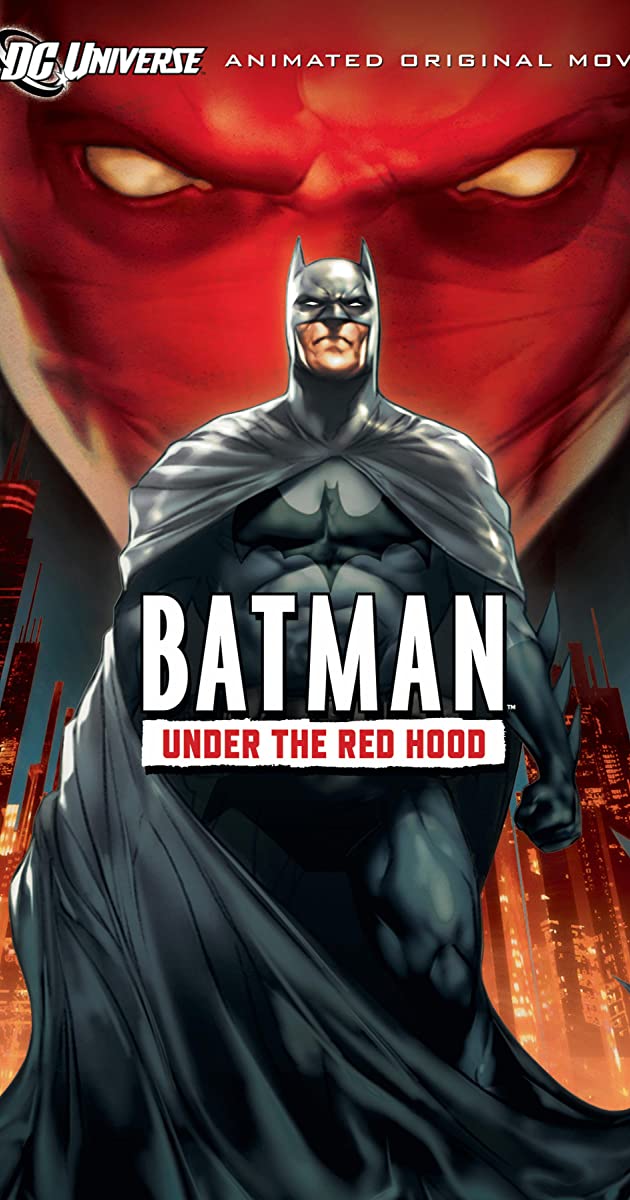
Under the Red Hood Cover

Studio: Warner Bros. Animation and DC Entertainment

Series: DC Universe Animated Original Movies – Film Eight

Director: Brandon Vietti

Writer: Judd Winick

Producers: Bruce Timm and Bobbie Page

My Rating: 5 out of 5 stars

Welcome back to my Throwback Thursday series, where I republish old reviews, review content I have enjoyed before or review older books I have only just had a chance to read.  For this latest Throwback Thursday, I am going to keep following a recent trend of looking at animated movies and review Batman: Under the Red Hood.

Ever since I reviewed Justice League Dark: Apokolips War last year, I have been focusing a little more on one of my favourite forms of entertainment, animated films based on comic books.  Not only did I have a great time listing my favourite comic book based animated films and television shows, but I have also done some cool reviews for Batman: Soul of the Dragon and Batman: Assault on Arkham.  After I got some positive responses to my review for Assault on Arkham last week, I thought I would use this Throwback Thursday to highlight the incredibly awesome Batman: Under the Red Hood, which is probably my absolute favourite DC Comics inspired animated film.

Released in 2010, Under the Red Hood was an early entry in the DC Animated Originals Movies range, and it remains one of the best that they have ever done.  Directed by Brandon Vietti and written by Judd Winick, this film is an adaptation of the iconic Batman comics storyline Under the Hood, which was also written by Winick.  Not only does this film contain an excellent story that does an amazing job capturing the original comic but it also features an all-star voice cast and some excellent animation, resulting in a dark and exciting film that is also rich in emotion and tragedy.

Years ago, Batman suffered the greatest defeat in his entire crime-fighting career when the Joker did the unthinkable by brutally killing his sidekick, Jason Todd, the second Robin.  Despite this terrible loss, Batman left the Joker alive and continued his non-lethal mission for justice, fighting from the shadows to save Gotham City from its criminal element.

In the present, Gotham is controlled by the ruthless crime boss, Black Mask, who has managed to take over the entire criminal underworld.  But a new player in town, the mysterious Red Hood, is making moves to disrupt Black Mask’s interests and take control of the city.  With some incredible skills, brilliant manoeuvring and intense violence, Red Hood soon becomes a major thorn in Black Mask’s side, taking parts of the city from him.  At the same time, Red Hood has placed himself right in the path of Batman and his former sidekick, Nightwing, determined to test his abilities against those of the Dark Knight.

As Batman attempts to stop the latest wave of violence sweeping the city, he notices something disturbingly familiar about the Red Hood.  His skills and training are too familiar, and even more shocking, he knows that Batman is Bruce Wayne.  With Black Mask on the warpath, the mysterious Ra’s al Ghul watching from the shadows, and the Joker always a menacing presence in Arkham, Batman gets closer to finding out the terrible truth about who Red Hood truly is.  But is he prepared for the darkness and tragedy he will find under the hood, or will the ghosts of his past finally push Batman over the edge?

Under the Red Hood is a dramatic, exciting, and overall tragic animated feature, which is brought together beautifully to produce an epic and powerful film, anchored by an exceptional narrative.  The film starts in a very dark place, with a malicious and hilarious Joker brutally killing Robin just before Batman can save him.  This perfectly sets the tone for the entire film, as the story advances to modern times and shows a new brutal crime war between the Black Mask and newcomer the Red Hood.  At the same time, Batman becomes embroiled in their war, when he interrupts a ploy by the Red Hood to steal an Amazo superweapon.  This leads to an action-packed middle section of the film, as Batman and Nightwing attempt to capture Red Hood, who is also dealing with assassins sent by Black Mask.  After several impressive fight sequences, Batman learns the shocking truth about Red Hood’s identity (which is as a tad obvious, even for those unfamiliar with the comics), resulting in some extreme drama, as Batman is forced to confront the dangerous ghosts of his past.  As Batman attempts to come to terms with his discovery, Red Hood forces his opponents to make some dramatic moves, which work into his plans.  What follows is a fantastically powerful and intense final act, as Batman confronts Red Hood and finds out the tragic and touching reasons behind his motivations.  What follows is emotional blow after emotional blow, as Batman, Red Hood and the Joker have their final confrontation.  The aftermath of this is absolutely heartbreaking and will leave you breathless and utterly moved: “This doesn’t change anything; this doesn’t change anything at all!”  This is an epic and exceptional narrative that I have so much love for.

Under the Red Hood serves as an exceptional adaptation of the Under the Hood Batman comic storyline, although as the film and the comic share the same writer, that’s pretty understandable.  This film does a great job fitting all the key points of the comic into its 75-minute runtime, and you get the full enjoyable story, as well as some useful backstory, especially around Jason Todd’s death.  This is mostly a pretty straight adaption, although there are a few noticeable changes designed to make the movie flow a little better.  I think these changes work extremely well, and Winick adds several great new scenes into this film that make for a different and, in some ways, better experience than the comic source material.  This is mainly because the Under the Hood comic was set amid several other ongoing Batman storylines, as well as the major crossover event, Infinite Crisis, which impacted Under the Hood’s overall narrative.  As it would have been too confusing to include some of these elements in the film, their removal resulted in a few notable changes.  While this did result in a few fun parts from the comics being removed, such as having the opponents in the Batman/Red Hood team-up fight change from members of the Secret Society of Supervillains, such as Captain Nazi and Count Vertigo, to a group of mechanised martial artists (it’s still a great fight though), some of the other changes worked really well.  I loved the alterations to the Joker’s story, as it was clever to have the Red Hood orchestrate Joker’s release to kidnap him.  It also results in some amazing scenes, including that great cell scene with Black Mask, and the fantastic scene with the truck on the bridge.

One disadvantage that I felt the film version had was that the big reveal over Red Hood’s identity is a lot less impactful.  When the Under the Hood comic first came out, it was a major revelation and there were some great surprise elements to it.  However, by the time the film came out, every comic fan knew who Red Hood really was, so that really cut down on the surprise factor of the reveal.  In addition, even if you were unfamiliar with the Under the Hood comic, the Jason Todd death scene at the start of the film ensured that most viewers would be easily able to figure out this twist as soon as the mysterious Red Hood appeared.  This was kind of unavoidable though, as the rest of the film wouldn’t have made sense without the establishing scene.  I did think that the reason behind Robin’s resurrection was handled a lot better in the film.  The original story, in which he is brought back to life due to Superboy-Prime punching a dimensional barrier, never really worked for me, so having it purely be the result of a Lazarus Pit resurrection was a lot neater and simpler (well, as simple as a magical resurrection pit can be).  Overall, I think that Under the Red Hood proved to be a really good adaption of the original comic, and in many ways I felt that in enhanced the source material while also compensating for the changed canons.

I am always deeply impressed by the fantastic and well-crafted animation of Under the Red Hood.  This entire film features a constant stream of beautiful and amazing sequences that are an absolute joy to behold.  The action is seamless throughout, and the creative team make sure to feature several sequences that show off the various skills of the main characters, while also bringing some iconic scenes from the comics to life.  I really must call out the two excellent extended chase sequences, as Red Hood flees from Batman and Nightwing.  These scenes are full of excitement and major moments, and the fantastic running sequences, equipped with all the players using their various gadgets and tricks, are so cool, and they are just animated perfectly.  However, these chase scenes pale in comparison to some of the epic fight sequences featured throughout the film.  While I do deeply enjoy the Amazo fight sequences at the start of the film, which expertly highlights the way Batman and Nightwing work together as a team, the best ones are the two fights involving Batman and Red Hood.  The first of these, which sees the two former partners team up against the anime-inspired team of assassins, the Fearsome Hand of Four, is so deeply cool, especially as the amazingly drawn martial arts techniques are beautifully paired with the over-the-top gadgets (one guy gets thrown through the air with explosives several times).  The animators save the best for last, with a brutal brawl between Batman and Red Hood near the end of the film.  This impressive and dramatic fight sequence is teased throughout the entire film, and when it goes down it does not disappoint.  The two heroes go to war with each other, each of them bringing lethal fighting abilities and an entire arsenal of toys and gadgets against each other for some incredible action.  The fight goes from the alley where the two first met, to the rooftops, all the way to a dilapidated apartment bathroom, where bodies are brutally thrown through fixtures and walls.  There is so much intensity in this sequence, and the animators outdid themselves bringing this major and spectacular fight to the screen.  You will be so impressed by this terrific animation.

You cannot talk about Under the Red Hood without out mentioning the incredible collection of characters and the outstanding voice cast that perfectly portrayed each of them.  Unsurprisingly for a Batman film, the cast is anchored by the Dark Knight himself, who is voiced by the talented Bruce Greenwood.  This is a great portrayal of Batman and the writer really captured the complexities of the veteran version of this superhero.  This Batman has been fighting crime for a very long time, and has been struck by tragedy after tragedy, especially the death of Jason Todd.  This comes into play throughout the film, and there are some major emotional moments, especially in the final climatic scene with the Red Hood.  Watching this film, it is impossible not to see Batman as a tragic figure, always destined to experience heartbreak and trauma as the result of his relentless crusade.  I did love the amazing animation featured around Batman’s various fight scenes, and it contrasts nicely with some of the other characters, such as Red Hood, with more of a focus on his experience and placing the right move at the right time.  I also really enjoyed Bruce Greenwood’s portrayal of Batman, who brings a gruff and determined depiction of the character which really works.  Greenwood delivers several great dialogue sequences which show the depth and complexity of this iconic character, and I had a fantastic time following him in this film.

Another major character is the character of Jason Todd/Red Hood (I would add a spoiler alert, but after all these years it’s kind of redundant), voiced by Jensen Ackles.  The Red Hood featured in this film is an amazing and outstanding version of the character, and you run the entire emotional gambit with him.  I loved the fantastic and clever introduction of the character, where he manages to take over a large criminal organisation with just a bag and a machine gun.  This evolves into a very fun game of cat and mouse between Red Hood and Batman, while he also works to take over from Black Mask.  The eventual reveal about Red Hood works extremely well: “You haven’t lost your touch, Bruce,” and I loved the various chase scenes between the two, as well as their joint fight sequence against the Fearsome Hand of Four.  All this perfectly leads up to the great final confrontation with Batman, with a big elaborate fight scene and that extremely dramatic sequence opposite Batman.  Ackles adds some real cockiness to the character, and his various interactions with the supporting characters are pretty funny and really fun.  However, it is his sequences with Batman that are the best, as Ackles adds all the appropriate drama of a murdered child when encountering his former mentor.  The revelation of Red Hood’s motive is deeply captivating, and the entire scene where he, Batman and the Joker are reunited is so very tense and powerful.  You also have to love how the final scene in the film features the younger version of Robin on his first night of crime-fighting, as his innocence and childlike joy at being a hero stands in such contrast to his eventual fate: “This is the best day of my life.”  This is an outstanding portrayal of one of the most complex characters in the DC canon.

I also really must highlight the incredible version of the Joker that is featured in this film, who is voiced by the always entertaining John DiMaggio.  This is a great interpretation of the Joker, and you get to see just how vicious and ruthless he can be.  I love how the writers and actor did a great job capturing his insane mentality when it comes to the Batman, especially as his greatest ambition is to drive Batman insane enough to kill him.  I was honestly surprised at how awesome John DiMaggio was in this role, especially as the purely evil Joker is very different from the comedic characters he is best known for portraying.  However, he brings some very excellent menace to this character, and while there are a lot of humorous undertones to his actions, the sheer insanity and joy he has at other people’s suffering is more than evident.  Joker has some incredible scenes throughout this movie, which DiMaggio really enhances with his unique take on the character.  The opening sequence in which he beats Jason Todd half to death with a crowbar is pretty dark, despite the constant jokes, and his later confrontation with Batman in Arkham really captures his overall insanity.  However, his best sequences occur later in the film.  The first of these is the cell scene with Black Mask, where he accepts a job offer in the most boss way possible (never hand the Joker a cup of any variety).  The follow sequence on the bridge, where he attempts to draw the Red Hood out with a truck, some guys and some gasoline is really great, especially when it is revealed that the Black Mask is also amongst his hostages.  However, DiMaggio shines best in the final sequence where Batman and Red Hood finally have their dramatic showdown with the Joker in the middle.  The Joker revels in all the drama and emotion in the room, especially when Red Hood attempts to force Batman to kill Joker: “This is turning out even better than I hoped!”  The final bit of the confrontation where Joker, realising that Red Hood’s bomb will kill them all, joyfully attempts stop Batman, “This is perfect…. I’m the only one who’s going to get what they want tonight,” really captures the character’s chaotic mentality and is a great conclusion to his story arc.

The other major character in the film is Nightwing, former Robin Dick Grayson, who is portrayed by the legendary Neil Patrick Harris.  Mostly featured in the first half of the film, Nightwing serves as the traditional sidekick role, bringing a lighter comedic role to the dynamic duo and playing off the ultra-serious Batman perfectly.  I loved the fantastic coordination in the action sequences between these two, and the animators do an outstanding job showing how their fighting styles complement each other and they instantly know what the other one is doing.  Harris’s voice work is great, hyping up the characters comedic, banter-laden fight style, and while it didn’t fit as well as some other versions of Nightwing I have seen, this was still a pretty epic bit of casting.

Aside from these above four main characters, I deeply appreciated Jason Issacs and Wade Williams as Ra’s al Ghul and Black Mask respectfully.  Issacs does an outstanding job bringing the enigmatic and ruthless al Ghul to life, and it was great to see the respect and personal code this version of the character has, especially once his actions result in Jason Todd’s death.  Williams’s unhinged version of Black Mask is also incredibly good, and I loved the ultra-anger he brings to the role, especially as he slowly becomes more and more targeted by Red Hood and Batman.  His reactions to the crazy antics of the other characters is pretty fun, and you’ve got to love the look on his face when he sees Red Hood targeting him with a giant rocket launcher.  I also want to call out Kelly Hu as Black Mask’s assistant, Ms Li, a gender-swapped version of the assistant character in the comic.  Ms Li serves a pretty cool counterpart to Black Mask and is a constant calm presence in his chaotic administration, barely batting an eye at any of his angry or violent outbursts.  These great supporting characters compliment the main cast perfectly, and I felt the film’s entire collection of characters and actors helped to turn Under the Red Hood into something incredibly special.

While there have been some incredible DC animated movies out there, none have eclipsed the exceptional and awesome Batman: Under the Red Hood.  Featuring an impressive adaption of an iconic and cool comic story arc, this amazing film contains a fantastic narrative loaded with action, excitement, and intensity, as the characters engage in a dramatic and tragic battle.  With a perfect voice cast and some outstanding animation, Under the Red Hood is a must-watch animated film that I have seen and deeply enjoyed so many times.  An easy five-star watch that is highly recommended; if you love Batman, you need to see this film.

The Final Girl Support Group by Grady Hendrix

The Final Girl Support Group Cover

Publisher: Penguin Random House Audio (Audiobook – 13 July 2021)

Series: Standalone

Length: 13 hours and 55 minutes

My rating: 4.25 out of 5 stars

Amazon     Book Depository

Bestselling author Grady Hendrix presents one of the most unique and intriguing novels of 2021, The Final Girl Support Group, a compelling thriller that brilliantly explores the slasher movie genre.

Hendrix is an interesting author and screenwriter whose name I have been hearing a lot in the last couple of years.  The author debuted in 2012 and has gone on to write several fun horror-based novels, including Horrorstör, We Sold Our Souls and The Southern Book Club’s Guide to Slaying Vampires.  Each of Hendrix’s previous novels had some fun concepts, and while I have not had the opportunity to check them out myself, I did read some very positive reviews for the previous two novels.  Hendrix’s latest book is The Final Girl Support Group, which caught my eye a few months ago.  What I found was a cool and clever novel that proved to be a compelling and addictive read.

We all know who the final girls are.  They are the only survivors of the vicious horror killers and slasher fiends in the movies, who manage to kill their monsters, avenge their friends, and walk off into a bloody sunset.  However, what happens to these final girls after they survive the worst days of their lives?  How do the final girls move on?

For Lynnette Tarkington, the horror of her defining moment never truly left her.  Twenty-two years since surviving terrible experiences, she is still barely able to leave her apartment, with paranoia and fear forcing her to see unimaginable danger around every corner.  Her only solace is the long-running support group she shares with five other final girls who have gone through their own traumatising events.  Together these women have slowly begun to put their lives back together one way or another, until the fateful day that one of their number fails to show up to group.

It soon becomes clear that their missing member has been murdered, a victim of one of the monsters they all fear.  As the remaining final girls go to ground, Lynnette finds herself under attack by someone who knows all about her and her escape plans.  Forced to improvise outside of her comfort zone, Lynnette discovers proof that other final girls are also being targeted.  When evidence suggests that Lynnette is responsible for some horrendous actions, she goes on the run to find out who is framing her.  Desperate, terrified, and still bearing the scars from all those years ago, Lynnette’s situation looks grim, but her latest monster is about to discover that you never count a final girl out.

As you can probably guess from the awesome plot of this book, The Final Girl Support Group is a very interesting novel that has some excellent elements to it.  Hendrix has come up with a clever narrative for this book, especially as it contains a very fun and compelling take on the classic slasher films.

The Final Girl Support Group has an excellent and deeply entertaining narrative which tells a very unique tale of a plot to kill the survivors of classic horror killers.  Hendrix does a really good job setting up each of the characters and the different world they lived in.  From there the story moves fast, as the protagonist experiences a variety of attacks on herself and her friends from all manner of directions.  The middle of the novel slows down a little and is extremely heavy, really examining the psychology of the protagonist and her friends, while also containing some excellent reveals and dark moments.  This all leads up to a very exciting conclusion, which was extremely intense and reminiscent of the films Hendrix is emulating and honouring.

Despite its roots, this novel was written more like a character-driven psychological thriller rather than a pure horror read, which I think worked extremely well.  The entire novel is loaded up with some cool twists, and the eventual reveal about who is behind the plot is pretty awesome and has some clever set-up behind it.  I loved the author’s inclusion of certain in-universe fictional articles and other inclusions, such as horror movie reviews, listicles and police transcripts, which helped to enrich the universe while also providing some interesting context to the various characters.  While I did have some issues with the middle section of the novel, mostly because of my feelings towards the main character, I felt that the entire narrative came together extremely well, and the outstanding conclusion really enhanced the entire overarching story.  An overall compelling and addictive read.

Easily the best part of this entire novel was the author’s examination of the horror/slasher genre as part of the plot.  Hendrix is obviously a massive fan of the horror genre, which is not too surprising considering he has actually written a couple of horror screenplays, such as the weird and disturbing sounding Satanic Panic, which I’m kind of keen to check out.  This love of horror is very clearly shown throughout The Final Girl Support Group, as this book acts as a major homage to some of the most famous slasher films of the last century.  The five other members of the support group are all strongly inspired by the final girls from Friday the 13th, A Nightmare on Elm Street, Halloween, The Texas Chainsaw Massacre and Scream.  Each of these characters has a very similar backstory to the characters from these movies, and Hendrix takes the time to describe the events that made them famous, which are near matches to the films, with similar characters, events and sequels.  Even Lynnette’s story, which is shown in the most detail, bears a very strong resemblance to the controversial 1980’s slasher film, Silent Night, Deadly Night and its sequel (a somewhat more obscure film that I had never heard of).

As a result, this novel is chock full of references to these various films, as well as some other horror/slasher entries (there was one that sounded a lot like Leprechaun).  I must admit that I am not the biggest fan of the horror genre, and my knowledge of slasher films is limited, however, even I was able to pick up and appreciate most of the references, which was really cool.  Hendrix does a wonderful job of deconstructing the various films, and it was extremely compelling and fascinating to see the author explore the aftermath of the event, the psychology of the killers, and the concept of crazy film fans.  I deeply appreciated the way that Hendrix structure this unique world where all these slasher movies occurred, and it was very interesting to see stuff like the final girls getting the film rights to their experiences, or the acceptance that a killer will come back in one form or another for a sequel.  The author also explores the negative sides of the slasher genre, such as the fact that they can be rather sexist and exploitative, and that author manages to cleverly tie some of the violence of the novels into the alt-right and men’s rights movements.  I did think that the underlying message that all men are evil was plastered on a little too thickly (having every single male character be an ass was a bit much), but I suppose that was a pretty significant theme of these slasher films.  This examination of the horror and slasher genre was pretty damn amazing, and fans of these movies are going to absolutely love seeing all the subtle references and compelling homages.

While I loved the story and all the amazing slasher film references in The Final Girl Support Group, I did feel that the novel was rather let down by the characters.  I was not the biggest fan of protagonist and point-of-view character, Lynnette, and I am in two minds about how much I liked her.  I did appreciate the author’s depiction of her as extremely paranoid and traumatised, which felt very realistic and deep.  I also enjoyed her survivalist mindset, which reminded me of Jamie Lee Curtis’s character in the 2018 Halloween film.  However, what annoyed me was at how incompetent the character was.  While I understood that the author was building towards the character having a breakthrough and becoming more dependable, I honestly think he really overdid the hopelessness.  Despite all her training and disaster planning, she manages to mess up every single action, interaction, or plan that she engages in, and is constantly outsmarted by the most obvious ploys or traps.  It was so frustrating to see her screw up again and again, and I found myself nearly yelling at the book every time she made a mistake.  Honestly, if Hendrix had dialled back these traits just a little, I probably would have enjoyed this novel a little more.  That being said, I did really appreciate the changes to the characters that did occur, and it was great to see her get some wins eventually.  I also enjoyed some of the twists that Hendrix set up around the character, which proved to be extremely compelling and place new light on her story.

Other members of the support group include Dani (whose story is like Halloween), Marilyn (Texas Chainsaw Massacre), Julia (Scream), Heather (Nightmare on Elm Street) and Adrienne (Friday the 13th).  Hendrix spends a bit of time exploring these characters, and it was cool to see the exploration of all these classic final girls and the aftermath of their horrors.  I really enjoyed seeing how each of them moved on with their lives after their experiences, with the characters running the gauntlet from inspirational to depressing.  It proved to be extremely captivating to learn more about these characters, and I grew to like several of them, although Heather was pretty annoying (her issues relate to her more psychological experiences, and the character does redeem herself by the end of the book).  I did find myself getting frustrated with each of these characters at times, as they also make some classic horror movie heroine mistakes, such as not performing a double tap (rule one in a horror situation), and being so quick to disbelieve Lynnette, even after all their experiences.  There were also some noticeable issues when it came to portraying the character’s ages.  Despite each of these characters having their traumatic event occur in the 1980’s when there were teenagers, none of them act like middle-aged women, which seemed really odd to me.  However, in the end I was able to overlook some of these flaws, and I ended up enjoying each of the characters’ stories and development.

While I was tempted to grab a copy of The Final Girl Support Group as an ebook for a quick read, I ended up getting the audiobook version, which has a runtime of just under 14 hours and which took me about a week to get through.  One of the more interesting things about this audiobook format is the narrator, Adrienne King, who horror/slasher fans will recognise as the final girl of the original Friday the 13th and who also had a subsequent appearance in Friday the 13th Part 2.  I felt that this was a pretty brilliant choice, not only because King portrayed a final girl but because her own real-life experiences with stalkers mirrors what happens to the characters in this novel.  However, while I did think it was a very fitting choice, I have to admit that I was not amazingly impressed with King’s narration.  She did a good job keeping the novel going at a quick pace and providing some emotion and feeling to the story, but I didn’t like the way she voiced the characters.  There is some variation between some of the final girls, but I honestly found that King’s voice work highlighted some of the character’s annoying tendencies and it never fully drew me in.  Still, this audiobook format is a fine way to enjoy this novel, and it is worth checking out.  I am also sure that Friday the 13th fans will enjoying hearing King’s take on the novel, especially when she describes the various homages to her own film, including the similarities in the deaths between one of the characters and King’s final girl in Friday the 13th Part 2.

The Final Girl Support Group was a fantastic read and is one of the more memorable and inventive novels of 2021.  Grady Hendrix does an outstanding examination of the final girl phenomenon in this novel and manages to craft quite an impressive and enjoyable thriller narrative around it.  While I wasn’t the biggest fan of every aspect of The Final Girl Support Group, it is still a great novel to check out, and horror fans will love the excellent examination of the genre.  I am very glad I decided to check this novel out and I will have to keep an eye out for whatever unusual book Hendrix writes next.

Amazon     Book Depository

Blackout by Simon Scarrow

Blackout Cover

Publisher: Headline (Trade Paperback – 30 March 2021)

Series: Standalone/Book One

Length: 424 pages

My Rating: 4.5 out of 5 stars

Amazon     Book Depository

One of the leading authors of historical fiction, Simon Scarrow, breaks new ground in a thrilling and captivating historical murder mystery, Blackout.

Berlin, December 1939.  As the citizens of Berlin worry about a potential upcoming conflict with Britain and France, the Nazi party continues to sink their claws into every aspect of German society.  But as a bleak winter sets in and enforced blackouts plunge the city into darkness, a far more sinister threat begins to stalk the streets of Berlin.

A young woman has been found brutally murdered near a busy set of train tracks.  The victim is a former famous actress with a powerful husband.  Due to her marital connections, as well as a scandalous past with various high-ranking Nazi figures, including Goebbels, her case has dangerous political implications.  To that end, her case is assigned to Criminal Inspector Horst Schenke of the Kriminalpolizei, the Kripo, one of the few police officers not to join the party.  Due to his apparent disregard for the party and the importance of the victim, Horst is under intense pressure from the head of the Gestapo to solve this case.  However, what begins as an easy murder case swiftly devolves into something far more dangerous when a second body is found, and Horst is forced to face the reality that he is chasing a serial killer.

As the bodies of more young women are discovered, Horst rushes to find a killer before the government attempts to hush up the fact that a killer is loose within their perfect Nazi society.  But with the Gestapo interfering at every step and key suspects protected by the Abwehr, German Military Intelligence, this case proves difficult to solve.  When a survivor is found, Horst thinks this may be the opportunity to find the killer.  However, when the witness is revealed to be Jewish, Horst is forced to find a way to protect her from both the killer and the Gestapo.  Can Horst find the killer before it is too late, or will he discover that disloyalty to the Nazi government is considered a far worse crime?

This was another amazing novel from one of my absolute favourite authors.  Scarrow is best known as a Roman historical fiction author due to his long-running and impressive The Eagles of the Empire series, which I am a particular fan of (see my reviews for The Blood of Rome, Traitors of Rome, and The Emperor’s Exile).  However, Scarrow has also branched out into other historical periods with his Revolution quartet, the standalone novels The Sword and the Scimitar and Hearts of Stone, and a modern crime novel he wrote with his colleague Lee Francis, Playing with Death (which I really need to check out).  His latest book, Blackout, is an interesting change of pace from some of the previous Scarrow novels I have enjoyed, presenting a compelling murder mystery story with the dark historical setting of Nazi Germany.  Blackout, which was unfortunately delayed from last year, proved to be an excellent read, and I loved the complex and powerful story that Scarrow came up with.

Scarrow’s latest book has an outstanding narrative that starts with a Nazi social party scene quickly leading to the brutal murder.  This shocking opening in the dark of a blacked-out Berlin sets the scene for the rest of Blackout perfectly, and lets the reader know that they are in for an intense and dark tale.  The narrative then advances to the next day, with a great introduction to central protagonist Inspector Horst Schenke, who gets to showcase his deductive ability while also covering his personality and feelings about the Nazi government.  Once the case proper begins, Horst and his team are thrust into a lethal hunt for a serial killer, while also having to contend with the vicious politics and intrigue of the Nazi party.  Horst finds himself caught between the Gestapo, German Military Intelligence, and other influential Nazis, each of whom are attempting to manipulate the situation for their own ends.  This blend of mystery and dangerous political intrigue makes for a fantastic read, and I enjoyed the compelling balance that Scarrow produced.  The mystery itself is well crafted, with the author ensuring there is a complex and tangled web to unravel, with several promising suspects.  There are some very cool twists added into the plot, and I quite enjoyed the exciting conclusion and eventual reveal of the killer.  This is also a very effective standalone mystery, which would serve as a great introductory novel if Scarrow ever wanted to revisit this setting and characters in the future.  A series set around this book could go in some interesting directions, and I for one would be quite keen for that.

Easily the most captivating and fascinating part of this novel is the amazing historical setting that Scarrow used as the backdrop to his amazing mystery.  While several great mystery series have used World War II Germany as a setting before (the Bernie Gunther series by the late, great Philip Kerr comes to mind), I think that Blackout was a particularly good example of how it could be done, with Scarrow making sure that it really enhanced this already incredible story.  Scarrow skilfully works several fantastic and intriguing elements of this iconic setting into his narrative.  This includes the blacked-out winter streets and train lines of 1939 Berlin, which serve to hide the killer’s actions and ensures an easy hunting ground.  I also appreciated the air of worry and uncertainty that inhabited many of the characters as they are constantly left wondering if their country is heading towards a bigger war with Britain and France, not knowing of their government’s master plan.  There is also a certain amount of nationalism, patriotism and casual racism/anti-Semitism on the streets, which is a confronting and concerning aspect that the protagonist has to deal with.  There is also a fascinating focus on the way in which the Nazis infested all aspects of the German government and administration, particularly the police.  Inspector Horst is constantly butting heads with other members of the police force who were only promoted due to their party allegiances, rather than any skill or ability, which impacts the protagonists to successfully investigate his crime.  Add in the compelling depictions of German politics and Nazi interference that I mentioned before, and you have a very impactful and distinctive setting, which really helped to turn this crime novel into something very special.

Scarrow has a knack for creating some interesting and likeable characters, and this is certainly true for Blackout.  Inspector Horst is a fantastic protagonist, a former famous race car driver who experienced a traumatic crash several years ago.  He has since reworked himself as a talented police investigator and a rare man of honour in troubled times.  There is a lot to like about Horst, including his brilliant investigative skills, his courage in the face of danger, and his complete disregard for the Nazi leadership.  As one of the few senior police officers who has not joined the Nazi party, Horst is a bit of a black sheep amongst the ranks of his organisation, especially as he barely contains his disdain for the Nazis and what they are doing to his country.  This invariably leads him into a whole mess of trouble, which sees him in the crosshairs of the Gestapo and other Nazi figures, who seek to use his neutrality and skill for their own advantages.  I had a lot of fun following Horst throughout this novel, and it was great to see how a non-Nazi supporter would survive amongst the authoritarian ranks of German police in this period.  There are several great storylines surrounding this character, including about the trauma he is experiencing from his crash, as well as guilt at his failure to save the people closest to him.  I really enjoyed this character in Blackout, and it seems likely that Scarrow would have some very compelling storylines in place for this character if he ever revisited this series.

Aside from Horst, there are several other compelling side characters in this novel, which include a mixture of fictional characters and real historical figures.  One of the better characters is Ruth, the only apparent survivor of one of the serial killer’s attacks.  Ruth is a feisty and combative character, made so by her position as one of the few Jewish people still remaining in Berlin.  Despite being threatened by the entire German apparatus as well as a serial killer, Ruth remains strong throughout the book and is a very inspirational character to follow.  I also quite enjoyed the character of Liebwitz, a Gestapo agent assigned to Horst’s unit to spy on him and report back to the Gestapo commander.  However, Liebwitz proves to be a rather unusual Gestapo agent, more concerned with facts and analysis, rather than Nazi internal politics, and it was fascinating to see an honest and non-sociopathic member of the Gestapo.  While there is a lot of mistrust for Liebwitz in the beginning, he soon becomes a major part of the investigation, and Scarrow sets up some very interesting storylines for him.  Finally, I also quite enjoyed the killer of the story.  Several sequences in Blackout are shown from his point of view, although his identity is kept hidden towards the end of the book.  Scarrow paints an interesting picture of this killer’s mental state, and it was interesting to see his motivations run parallel to the goals of the Nazi party, which he uses to justify some of his actions, and indeed his actions are something that the Nazi leadership might approve of.  I felt that the author did a good job setting this antagonist up throughout the novel, and I rather liked the twist surrounding their eventual reveal.

Simon Scarrow continues to show why he is one of the leading authors of historical fiction with the outstanding and captivating historical murder mystery, Blackout.  Breaking into a whole new historical period and setting, Scarrow produces a fantastic and powerful murder investigation which makes amazing use of its complex characters and detailed historical setting.  Featuring all manner of twists, political intrigue and devious Nazi characters, Blackout was a compelling and intriguing read that comes highly recommended.  I cannot wait to get my next hit of Scarrow, and luckily I don’t have to be patient for long as the next Eagles of the Empire book, The Honour of Rome, is out in a few months time.

Amazon     Book Depository

Waiting on Wednesday – The Burning and City of the Dead

Welcome to my weekly segment, Waiting on Wednesday, where I look at upcoming books that I am planning to order and review in the next few months and which I think I will really enjoy.  I run this segment in conjunction with the Can’t-Wait Wednesday meme that is currently running at Wishful Endings.  Stay tuned to see reviews of these books when I get a copy of them.  For this week’s Waiting on Wednesday, we have a Kellerman double feature, as I look at two intriguing upcoming murder mystery novels that are sure to be excellent and enjoyable reads.

Over the last couple of years, I have been rather enjoying some intense murder mysteries from bestselling author Jonathan Kellerman.  In particular, I have been lucky enough to receive the last three novels in his long running Alex Delaware series, The Wedding Guest, The Museum of Desire and Serpentine, all three of which have been pretty amazing pieces of crime fiction.  Due to how great his latest compelling crime novels have been, I am currently planning to grab any new mystery books that he releases, and, as luck will have it, there are currently two Kellerman novels coming out in the near future.

The Burning Cover

The first of these is the fantastic sounding The Burning, which is the fourth entry in the Clay Edison series.  The Clay Edison series, which has been running since 2017, is actually written by both Jonathan Kellerman and his son Jesse Kellerman, himself a best-selling crime fiction author.  This is the second series jointly written by the father/son duo (the other being the Jacob Lev series), and follows the investigations of Deputy Coroner Clay Edison as he solves various complex murders in Alameda.  The Burning is set for release in late September 2021, and it sounds like it is going to have an intense and captivating narrative.

Synopsis:

Things get personal for Deputy Coroner Clay Edison when a murder hits close to home in this riveting, emotional thriller from the bestselling father-son team.

A raging wildfire. A massive blackout. A wealthy man shot to death in his palatial hilltop home.

For Clay Edison, it’s all in a day’s work. As a deputy coroner, caring for the dead, he speaks for those who cannot speak for themselves. He prides himself on an unflinching commitment to the truth. Even when it gets him into trouble.

Then, while working the murder scene, Clay is horrified to discover a link to his brother, Luke. Horrified. But not surprised. Luke is fresh out of prison and struggling to stay on the straight and narrow.

And now he’s gone AWOL.

The race is on for Clay to find him before anyone else can. Confronted with Luke’s legacy of violence, Clay is forced to reckon with his own suspicions, resentments, and loyalties. Is his brother a killer? Or could he be the victim in all of this, too?

This is Jonathan and Jesse Kellerman at their most affecting and page-turning–a harrowing collision of family, revenge, and murder.

I really like the sound of the cool synopsis above, and it looks like the Kellerman’s are going to produce an intriguing and complex mystery.  There several things that I am really excited for when it comes to The Burning, especially as this is the first Clay Edison novel that I will be reading.  Not only am I rather interested to see how Jesse Kellerman influences the writing style of his father, but I am also keen to see a medical pathologist investigation, rather than the pure detective work/psychological based mysteries that are featured within the Alex Delaware books.  On top of that, the two Kellermans have included several great hooks to their story; and I look forward to seeing a murder investigation in the middle of a raging Californian wildfire.  The protagonist is also going to have to deal with some significant family drama, as his ex-con brother becomes a murder suspect.  It will be extremely awesome to see how this mystery unfolds, and I am interested to see how involved the brother is (you would assume he is being set up, but I am hoping for some clever twists).  Based on the cool synopsis, I think that The Burning has some great potential, and I am looking forward to reading this in a few months.

In addition to The Burning, Jonathan Kellerman will also be continuing his fantastic Alex Delaware series in early 2022, with City of the Dead.  The Alex Delaware books are part of an outstanding long-running series that  revolves around titular protagonist, Alex Delaware, as he uses his training as a psychologist (which incidentally was Kellerman’s profession before he took up writing), to help the LAPD solve some of their most complex murder investigation alongside his best friend, Detective Milo Sturgis.

City of the Dead Cover

The latest three entries in the Alex Delaware series have proven to be excellent and compelling crime fiction novels, and I have loved their intriguing mysteries, as well as the great focus on methodical casework and the fun partnership between the main protagonists Alex and Milo.  My favourite so far is probably Serpentine, although The Wedding Guest and The Museum of Desire were also really good.  City of the Dead, will be the 37th Alex Delaware novel, and it is currently set for release in early February 2022.  Kellerman has come up with another impressive story for this upcoming book, and I am very keen to check it out.

Synopsis:

The past comes back to haunt psychologist Alex Delaware and Detective Milo Sturgis when they investigate a grisly double homicide and uncover an even more unspeakable motive in this riveting thriller from the #1 New York Times bestselling master of suspense.

Los Angeles is a city of sunlight, celebrity, and possibility. The L.A. often experienced by Homicide Lt. Detective Milo Sturgis and psychologist Alex Delaware, is a city of the dead.

Early one morning, the two of them find themselves in a neighbourhood of pretty houses, pretty cars, and pretty people. The scene they encounter is anything but. A naked young man lies dead in the street, the apparent victim of a collision with a moving van hurtling through suburbia in the darkness. But any thoughts of accidental death vanish when a blood trail leads to a nearby home.

Inside, a young woman lies butchered. The identity of the male victim and his role in the horror remain elusive, but that of the woman creates additional questions. And adding to the shock, Alex has met her while working a convoluted child custody case. Cordelia Gannett was a self-styled internet influencer who’d gotten into legal troubles by palming herself off as a psychologist. Even after promising to desist, she’s found a loophole and has continued her online career, aiming to amass clicks and ads by cyber-coaching and cyber-counseling people plagued with relationship issues.

But upon closer examination, Alex and Milo discover that her own relationships are troublesome, including a tortured family history and a dubious personal past. Has that come back to haunt her in the worst way? Is the mystery man out in the street collateral damage or will he turn out to be the key to solving a grisly double homicide? As the psychologist and the detective explore L.A.’s meanest streets, they peel back layer after layer of secrets and encounter a savage, psychologically twisted, almost unthinkable motive for violence and bloodshed.

This is classic Delaware: Alex, a man Milo has come to see as irreplaceable, at his most insightful and brilliant.

Wow, it looks like we are going to have another awesome crime fiction story on our hands in February.  This upcoming mystery has a pretty much everything, including a brutal murder, a mysterious second body that may or may not be connected to the main crime, a phoney psychology using influencer and an intriguing connection to the protagonist.  I love all the various intriguing details that are contained in the synopsis, and it sounds like Kellerman has a very complex and clever mystery planned.  I cannot wait to see how all these fascinating details come together and I am expecting that City of the Dead will have a particularly interesting and memorable conclusion to it.

As you can see, it looks like I am going to be getting my Kellerman murder fix twice in the next several months and I could not be happier about that.  Both The Burning and City of the Dead sound pretty damn incredible, and based on my prior experiences with Kellerman’s writing, I know that I am guaranteed a compelling and exciting couple of mysteries.

Throwback Thursday – Heroes in Crisis by Tom King and Clay Mann

Heroes in Crisis Cover

Publisher: DC Comics (Paperback – 1 October 2019)

Writer: Tom King

Artists: Clay Mann, Travis Moore, Lee Weeks, Mitch Gerads, Jorge Fornes

Colourists: Tomeu Morey, Arif Prianto, Mitch Gerads

Letterer: Clayton Cowles

Length: 234 pages

My Rating: 4 out of 5 stars

Amazon     Book Depository

Welcome back to my Throwback Thursday series, where I republish old reviews, review books I have read before or review older books I have only just had a chance to read.  For this latest Throwback Thursday article, I look at an interesting DC Comics crossover event from a couple of years ago, the deep and compelling Heroes in Crisis.

Heroes_in_Crisis_1 (V1)

Now I have to admit that I have been somewhat avoiding a lot of the recent DC crossover events, mainly because I think the universe is getting a bit too complicated, what with the multiple versions of characters and timelines.  However, I recently grabbed the Heroes in Crisis collected edition (containing all nine issues of the limited series), mostly because I had heard some conflicting reports about whether it was any good, and I thought that it would be worth seeing just what sort of comic it really was.  I was also drawn to this comic as I am major fan of Tom King and Clay Mann after the work they recently did on Batman, which featured some really cool and compelling storylines.  Heroes in Crisis turned out to be a rather fun and intriguing comic, especially as King came up with another fascinating narrative.

Heroes_in_Crisis_1 (V2)

After years of fighting and surviving against the very worst evils in the universe, even the greatest heroes will start to crack under the unreal pressures of their chosen lives.  Realising this and determined to help their fellow superheroes, the trinity of Superman, Batman and Wonder Woman designed Sanctuary.  Sanctuary is a hidden facility containing a cutting-edge artificial intelligence programmed to provide advanced therapy, support and counselling to any hero that needs it after harsh battles and traumatic events.  However, no sanctuary lasts forever, and after losing contact with the facility, Superman, Batman and Wonder Woman arrive to find Sanctuary in shambles and several patients brutally killed.  As the world’s superheroes reel from the deaths of friends and colleagues such as Roy Harper, Red Devil, Commander Steel, Poison Ivy and Wally West, their thoughts swiftly turn to justice.  But who is responsible for the killings, and could the culprit be one of their own?

Heroes_in_Crisis_1 (V3)

The answer may lie with the only two survivors of the Sanctuary massacre, the greatest hero you have never heard of, Booster Gold, and the mad clown princess, Harley Quinn.  However, Booster and Harley are both convinced that they saw the other commit the crime, and are now out to stop the other survivor by any means necessary.  As the heroes attempt to uncover the killer lurking amongst them, their world will be further turned upside down when the confessions and therapy sessions recorded at Sanctuary are leaked to the media, casting a new light on them.  Can the killer be caught before they strike again, or will this case irreparably damage the world’s greatest superheroes?  Whatever happens, the DC universe will never be the same again.

This was a very unique and fascinating crossover comic which contains some notable flaws, but is something that I quite enjoyed.  King, Mann, and their artistic team produced a clever comic that really dives into the minds of the collected heroes of the DC universe.  Featuring a great story, some powerful character moments and some impressive artwork, Heroes in Crisis turned out to be a fun and heartfelt comic that I had a wonderful time reading and which has really stuck in my mind.

Heroes_in_Crisis_2

Heroes in Crisis has an intense and powerful character driven narrative that presents the reader with an interesting mystery, while also attempting to dive into the minds of some of the most iconic comic book characters out there.  I very much enjoyed the excellent premise that King came up with for this comic, especially as he starts the narrative off by showing several iconic heroes brutally killed around the Sanctuary within the first several pages.  At the same time, two of DC’s most unique and complex characters, Booster Gold and Harley Quinn, are fighting to the death, with both claiming that the other is responsible for the crimes.  This proves to be an excellent start to the comic which really drew me into the book, and which quickly leads into a compelling investigation angle with Booster, Harley and the DC Big Three (Superman, Batman and Wonder Woman) all working towards the same goal while also fighting amongst themselves.  At the same time, a mysterious opponent is manipulating events from the shadows, ensuring that the protagonists are distracted by the public revelations about their mental fragility.  All of this leads up to an interesting and heartfelt conclusion where the killer is finally revealed in an emotional confrontation.

Heroes_in_Crisis_3

This was a rather intense and fast-paced narrative and it was clear that King was drawing a lot of inspiration from the iconic Identity Crisis crossover comic (another controversial comic that split the fan base, although I personally consider it a masterpiece).  However, unlike Identity Crisis, I think that Heroes in Crisis fell a little flat and I can see where a lot of the criticism surrounding it came from.  While this comic has a great start and the author sets up the whole mystery and characters perfectly, I felt that the ending had some major flaws to it.  The reveal of the killer, despite some hints throughout the story, is a bit of a letdown (admittedly, due to internet spoilers, I did know who it was in advance of reading this comic, but this didn’t massively impact my overall reaction).  While I could appreciate some of the motives surrounding the killer’s choices, especially as it ties into the psyche aspects of the comic, it was a bit of a weak choice that undermined an amazing and well-established character.  In addition, many aspects of the conclusion, such as the reveal, the killer’s motivations, and the eventual solution to some established problems, were unnecessarily complicated and required some major logic leaps.  I also did not quite get why King included a certain “bros before heroes” scene, as it proved to be a very odd inclusion for such a serious story.  While I did greatly enjoy the set-up, as well the impressive inclusion of flashbacks and character centric panels throughout the entire comic, this ending was a bit of a letdown that substantially affected how much I enjoyed Heroes in Crisis.

Heroes_in_Crisis_4

While the flaws in the story were a little disappointing, I think that King’s excellent character work more than makes up for it.  As he has previously done with his recent run on Batman, King attempts to really dive into the heart of the characters featured within Heroes in Crisis, highlighting their complex psyches and personalities to help to draw the reader in.  I also quite liked how this comic focuses on a very unique selection of characters, including several of my personal favourites.  While much of the story follows the Big Three, with some additional inclusions from the Barry Allen Flash, the major focus of the comic is on the fun duo of Booster Gold and Harley Quinn.

Booster Gold, unconventional time traveller and the greatest hero you have never heard of, is a character I have a lot of love for, especially as he is usually shown to be a bungling hero trying to do the right thing.  Booster ends up being an excellent character in Heroes in Crisis as he desperately tries to understand who is responsible for the deaths at Sanctuary, especially as he is a suspect himself.  While much of Booster’s appearance is comical, there is a deeper sadness to him, both before the killings and after them.  King does a masterful job showing off Booster’s inner thoughts in some of his therapy sessions while also presenting him as a damaged person potentially capable of committing the murders.  I loved seeing Booster used so prominently in the comic and I hope we see more of him in the future.  The appearance of Booster also ensures that we get to see some of his robot companion, Skeets, who has a fun relationship with Booster, often pointing out the stupidity of several of his plans, such as telling the Flash that he may be responsible for Wally West’s death and not realising it would get him punched in the face.

Heroes_in_Crisis_5

Heroes in Crisis also strongly features Harley Quinn, who DC have been heavily promoting recently.  Harley is her usual fun, chaotic self throughout Heroes in Crisis, although like Booster, deep down she is hurting.  King makes sure to explore the various damages that she still bears from her abusive relationship with the Joker, while also focusing on her current, relatively healthier relationship with Poison Ivy (who has a very lethal idea about therapy).  However, when Ivy is killed, Harley snaps a little and is determined to hunt down the person she thinks is responsible.  King does a great job showing off Harley’s unpredictability, humour and inner turmoil, and I liked how he presents her as a real threat, even to the likes of Superman and Batman.  Harley has a number of great moments throughout this comic, including a dangerous standoff, some great character development and some fantastic lines.  Harley also serves as a great foil to Booster, and when they are not trying to kill each other their conversations highlight their similarities, as both consider themselves failures in one way or another.  I deeply appreciated the use of Booster and Harley as key characters, and they were an outstanding focus of this comic.

Heroes_in_Crisis_6

Heroes in Crisis also features a fantastic array of supporting characters, and the creative team takes full advantage of their story to bring back some great underutilised heroes.  I loved how King spent time exploring all the various characters who were massacred at the start of the novel, especially as he examines why they were there seeking help.  While there is an obvious focus on the more prominent heroes like Wally West and Poison Ivy, I had a lot of fun seeing characters like Lagoon Boy, Commander Steel and Gnarrk the Last Cro-Magnon.  King did a lot with these very minor DC characters, using a few short sequences to build them up as sympathetic and likeable characters, ensuring that the impact of their death was a little more significant to the reader.  The inclusion of Wally West was also mostly well done and I appreciated the exploration of all the trauma and pain he has gone through in the last few years (being written out of existence for a few years is a painful experience).  Batgirl and Blue Beetle (Ted Kord) also show up as supporting characters for Harley and Booster respectfully, and I quite enjoyed the examination of the unique relationships between these friends.  All of these characters really add a lot to the story and I very glad that King took the opportunity to explore and highlight how complex some of these DC heroes can be.

Heroes_in_Crisis_7

While Heroes in Crisis has many good and bad qualities, without a doubt the best thing about it is the examination of traumatised heroes.  A large part of this comic’s narrative revolves around the fact that all the superheros in the DC universe are deeply traumatised or emotionally damaged because of their heroic careers, requiring them to seek treatment at Sanctuary.  While I know that some readers really disliked this portrayal of superheroes being emotionally and psychologically damaged, I personally felt that it was a clever inclusion from King that added a lot of realism to the DC universe.  Of course these heroes are going to be traumatised!  Most of them have been fighting crime or dealing with crazy people for most of their lives, experiencing innumerable tragedies and losses along the way, including dying and coming back to life multiple times.  It is honestly rather refreshing to see this acknowledged within the comics, and I deeply appreciated that King decided to feature it so prominently in Heroes in Crisis.

Heroes_in_Crisis_8

One of the reasons that this psychological plotline works so well is because Heroes in Crisis features a ton of panels and scenes highlighting the heroes as they discuss their trauma.  Not only do you get glimpses at several AI assisted therapy sessions, some of which are quite intense (Lagoon Boy’s one hurts to read at times), but there are a ton of “confession” panels, which show the various heroes sitting in a special room discussing their pain to a camera.  These confession scenes are cleverly scattered throughout the comic and are worked into the story extremely well, showing the raw psyche of some of the comic’s major characters or murder suspects and providing possible motivations for their actions.  At the same time, they work to show the reader just how damaged some of your favourite heroes can be.  While there is a focus on characters who were part of the Sanctuary massacre, nearly every DC superhero makes an appearance at some point in Heroes in Crisis, talking about their pain and their sorrow.  King ensures that each of these confessions, even the single-panel ones, are really emotionally rich and moving, and you get some amazing feelings out of all of them.  Highlights for me include a great sequence with Batman lamenting the death of his sidekicks, and another one with Commander Steel, who is pretty damn traumatised by his experiences of dying, being reborn as a zombie, having his corpse mutilated, and then coming back again.  Booster, Harley and Wally West also have some very intense, story driven confessions which both moved the story along and helped to get to the roots of their issues.  I found these scenes of trauma, healing and emotions to be particularly well written and very powerful, and they are one of the main reasons I enjoyed this comic as much as I did.

Heroes_in_Crisis_9

Another major highlight of Heroes in Crisis is the exceptional artwork by a massive collection of artists who banded together to produce some iconic and powerful pieces of art.  All of the scenes within this comic are very well drawn, and there is a real sense of movement, purpose and intensity in every panel.  I loved all the cool action sequences, and the artists really did not pull any punches when it came to highlighting the tragic deaths of so many different heroes.  Some of the best artwork, however, lies around the amazing and wonderful background and landscape shots throughout the comic.  There are so many fantastic shots that superimpose the characters in front of some beautiful settings, whether they be fields, sunsets or other pieces of nature.  These shots are not only visually impressive but they really add to the dramatic feel of the entire comic, especially as they remind you of the hope that so many of the damaged characters want to feel, but cannot, either because of the events of this comic or some pre-existing trauma.  The artistic team also has a lot of fun bringing to life a host of heroes from various periods of DC’s history, including some obscure characters we have not seen for a very long time.  While some of them were brought back only to die a painful death, it was great to see them again and the artwork surrounding them turned out to be superb.  I also deeply appreciated the artists’ ability to portray emotion and sorrow on the faces of each of the characters featured within Heroes in Crisis.  You get a real sense of the darkness and pain lying behind some of the characters’ eyes, especially in some unguarded moments, and it helps to enhance the emotion of the pages.  Overall, this was some impressive and memorable artwork that did a great job enhancing King’s intriguing tale.

Heroes_in_Crisis_9 (V1)

Heroes in Crisis was a very interesting and memorable comic which I had a great time reading.  While it does have some flaws, I think that the creative team behind it managed to create a very touching character driven narrative that succeeded in highlighting the vulnerabilities of several iconic DC superheroes.  I had an amazing time reading this comic and it is definitely worth checking out, especially if you are interested in exploring the damaged minds of some of your favourite heroes.

Amazon     Book Depository

The Two-Faced Queen by Nick Martell

The Two-Faced Queen Cover

Publisher: Gollancz (Audiobook – 25 March 2021)

Series: The Legacy of the Mercenary Kings – Book Two

Length: 20 hours and 6 minutes

My Rating: 5 out of 5 stars

Amazon     Book Depository

Following his epic 2020 debut, one of the fastest rising stars in fantasy fiction, Nick Martell, returns with the second entry in his The Legacy of the Mercenary Kings series, The Two-Faced Queen.

Last year I was lucky enough to listen to a copy of Martell’s incredible first novel, The Kingdom of LiarsThe Kingdom of Liars was a gripping and impressive fantasy read set in Hollow, a crumbling city surrounded by an army of rebels, which followed the misadventures of the infamous Michael Kingman.  Michael is the scion of the legendary Kingman family, a noble clan of heroes and leaders who have guided Hollow for generations, serving as both supporters to the royal family and a check on their power.  However, the legacy of the Kingman family has been severely tarnished in recent years as Michael’s father was executed for the murder of the heir to the throne.  With their family disenfranchised, Michael grew up as an outcast in his own city, acting out against authority.  This changed when a chance encounter allowed him to investigate who was responsible for his family’s downfall and the death of the prince of Hollow.  While he was eventually able to discover the true murderer, his investigation also resulted in the King’s suicide, which subsequently saw him tried for regicide and sentenced to death.  The end of the book saw him manage to escape his execution, while also setting up several of the storylines for future entries in the series.  I deeply enjoyed the cool story of this first entry in The Legacy of the Mercenary Kings, and The Kingdom of Liars ended up being one of my favourite novels, audiobooks and debuts of 2020.  As a result, The Two-Faced Queen was one of my most anticipated reads of 2021.

Michael Kingman is a dead man walking.  Still accused of killing the King of Hollow, Michael is now under the protection of the Orbus mercenary company, serving as an apprentice under the mysterious mercenary Dark.  However, even with Orbus’s protection, everyone in Hollow still wants to either kill him or use him for their own dark ends.  The deadliest of these is the one person Michael is sworn to protect above all others, the heir to the throne, Princess Serena.  After spending years away, a vengeful Serena has returned to claim her throne and end Michael’s life.  Wielding great power, a lethal attitude and holding the keys to Michael’s heart, nothing will stand in the way of her wrath.

To restore his family’s position, save his home and convince Serena of his innocence, Michael needs to unravel the various conspiracies that have encircled Hollow and uncover the true motivations of the various power players in the city.  However, to succeed, Michael is forced to go up against a magnitude of foes, from the Corrupt Prince, the unhinged Rebel Emperor besieging the city, enraged royal guards, conspiring nobles, a scheming immortal, an insane serial killer, dangerous assassins and his former foster father, the man responsible for all his family’s ills.

But the more Michael attempts to understand Hollow’s hidden past and the dangerous plots surrounding his city, the more it becomes apparent that his is a mere pawn in a very dangerous game.  Immortals, monsters and mercenaries are all present in Hollow, and each of them has their own nefarious designs for Michael and his family.  Can he save everyone he loves before it is too late or has the Kingman family finally breathed its last?  Michael’s rise to become a Mercenary King continues, but who will truly wield power when the dust settles?

Now that was one hell of a sequel!  Martell absolutely crushed this second entry in this outstanding and exceptional fantasy series, producing a five-star novel that is extremely compelling, intense and so damn exciting.  I was absolutely enthralled with this book the moment I started listening to it and I loved every second.  The Two-Faced Queen is easily one of the best books I have read in 2021 and I think that any other fantasy novel coming out this year is going to be extremely hard-pressed to outdo it.

Martell has come up with a pretty incredible and intense narrative for The Two-Faced Queen, one that proves to be extremely addictive and insanely good.  Starting shortly after the events of The Kingdom of Liars, this novel starts fast and hard, with Michael following up on a number of storylines and revelations from the previous novel.  There is already so much going on right from the start of the novel, as the protagonist finds himself surrounded by enemies and conspiracies, both old and new.  While several secrets were revealed at the end of the first novel, there is still so much that Michael needs to understand.  However, as he attempts to learn these additional secrets, he must also try to avoid the deadly attentions of his beloved princess, end the rebellion plaguing the city, restore his family, defy a dangerous immortal, and make up with his betrayed friends.  While this is already a substantial amount of story, Martell keeps adding to it, as Michael also soon encounters a deadly assassin with a contract on him, and a deranged and unnatural serial killer.

While this may seem like too many story elements for one novel, it actually works extremely well, and the reader quickly becomes engrossed in Michael’s various adventures throughout the city.  I loved the inclusion of the serial killer storyline, as not only does it add some fantastic mystery elements, but it also proves to be a gateway to some intriguing world building, revealing more of the dark, immortal forces manipulating events from the shadows.  This storyline also results in several epic action scenes that place the protagonist and his friends in mortal danger from some unusual foes.  I had an outstanding time getting through this complex and well-constructed narrative, especially as every single scene has an intriguing revelation, intense character development or subtle clue to the future of the series.  Several key mysteries and secrets from the first novel are answered, partially or wholly, in this novel, although many more are introduced.  This really helps to keep the reader’s attention focused on The Two-Faced Queen’s plot, and I am not exaggerating when I talk about how addictive the secret-ridden narrative proves to be.  Readers are hammered with large amounts of lore and history in places, so I would recommend reading the first novel in the series, The Kingdom of Liars, before reading this book, although binge-reading this series is hardly a chore.  Overall, The Two-Faced Queen’s narrative is epic story writing at its best, and readers will love this terrific tale.

I absolutely must highlight the awesome and well-developed characters featured within The Two-Faced Queen.  The most prominent is series protagonist Michael Kingman.  Michael is an intriguing and distinctive figure through whose eyes most of the plot unfolds.  I have to admit that Michael was not my most favourite character in the first book, mostly because of his impetuous nature and selfish behaviour at times.  However, it was revealed that the reason for some of his annoying behaviour was due to some magic affecting his memories and personality.  As a result, Michael’s behaviour is substantially changed in The Two-Faced Queen and he comes across as a more considerate figure in this book.  He still has quite a few flashes of recklessness and stubbornness, but many of the rougher edges from the first novel are worn away here.  Still, a lot of people call Michael out for his crap in this book, including his friends and family, and it was great to see him finally heed their words.  There was also some additional exploration of how Michael deals with the legacy of being a Kingman; he is forced to live up to some big expectations.  There is a rather good scene where Michael is exploring the crypt of his ancestors with some of his friends, describing why some of them are famous and others are considered failures because they never achieved anything remarkable but just lived a normal life.  Seeing this, Michael’s friends, both of whom have been some of his greatest critics, start to understand just how much pressure he is under.  I really appreciated the way in which Martell continues to develop his protagonist, and it will be very fascinating to see how Michael’s story continues in the future novels.

Aside from Michael, there is an impressive collection of interesting supporting characters, each of whom have some fascinating storylines, as well as secrets or details from their past which helps to move the story along.  They also have their own motivations and plans to shape Hollow and the rest of the world to their advantage, which results in additional plots and conspiracies that the protagonists have to overcome.  The most prominent supporting character is probably Serena, the titular Two-Faced Queen.  Serena is Michael’s childhood friend and the royal he was sworn to, meaning that he was always destined to be her protector, advisor, and conscience.  However, after the death of her brother and Michael’s family were declared traitors, their relationship effectively ended.  Now returned, Serena is determined to destroy Michael for the apparent murder of her father, even if it leads to her own ruin.  The novel starts up with Michael visiting Serena only to find that she has hand-dug a grave for him, showing her resolve for killing him.  This forces Michael to attempt to change her mind, which is no easy prospect, and results in great calamity.  Naturally, these two characters share thorny romantic feelings for each other, which complicates Michael’s plans to stay alive, as Serena is a major blind spot in his defences.  Their entire joint character arc in this novel is extremely good, and I really appreciated the author’s take on their complex relationship.

Another key character is Dark, Michael’s mercenary master, who, aside from having his own mysterious past and motivations, is the son of Michael’s nemesis, Angelo Shade.  Due to Michael and Dark working together closely, the protagonist learns several of Dark’s secrets, especially those related to his troubled childhood and his encounters with the Heartbreaker serial killer.  While you don’t learn everything about Dark’s past in this novel (Martell is the master of dolling out just enough character detail to keep you interested, while also keeping plenty back for future novels), you do find out quite a lot, and what is revealed is extremely memorable.  Dark has a real dark side to him, no pun intended, and while Michael initially believes that Dark is his ally, he is soon faced with the possibility that he might have placed all his trust in a monster.  This results in a very interesting mentor/student relationship between the two, filled with much conflict and mistrust.  I really enjoyed learning more about Dark in The Two-Faced Queen, and it will be fascinating to see how the rest of his story unfolds in the future.

Other intriguing characters in this novel include Michael’s best friend Trey, who is attempting to forge his own path and take down both the nobles and the rebels, even if this leads him into conflict with Michael.  Trey has a fantastic arc as dangerous antihero in this book, taking control of the city’s criminal element in order to protect its citizens.  While a lot of his hostility towards Michael has ended, Trey and the protagonist still have a strained relationship, although Trey does go out of his way to help his friend.  Despite their friendship, it is clear that there is a major schism between the two planned in the future, which no doubt will result in all manner of pain and regret.  The ruthless immortal Charles Domet is still a firm favourite of mine, and it was fun to see his attempts to manipulate Michael, especially as Michael is now well aware of his true nature.  There are some interesting hints to Domet’s past in this novel, and he is clearly working up to something big.  The ambitious social climber Naomi also returns, although now she is suffering from a bad drug addiction which makes her even more entertaining, especially as she decides to torment Michael through embarrassment.  I also quite liked the expanded use of the chronicler, Symon.  Symon, who is determined to record and analyse every secret of Michael and his family, has taken to stalking them by living at the Kingman family home, and it is always entertaining to see his take on the events occurring before him.  He ends up actually narrating several interludes in The Two-Faced Queen, which are laid out as parts of his in-novel chronicles as part of a very clever and amusing supplement to the main story.  Symon really endeared himself to me in this novel, especially after his insulting descriptions of Michael in his proposed history book, and I deeply appreciated his increased presence.

I honestly could go on and on about the various characters featured within this novel; indeed, I have only just scratched the surface of the support cast in the paragraphs above.  However, it is more than clear that Martell does an excellent job in introducing and developing complex characters, and I loved the detailed and intriguing depictions of them throughout the novel.  Nearly every character featured within The Two-Faced Queen gets at least one big moment, and there are plenty of revelations and compelling backstories that are really cool to uncover.  I will say that you should probably not get too attached to the characters; however, I am very much looking forward to seeing what happens to each of the survivors, especially as Martell has set up some deeply captivating and powerful character arcs around them.

In addition to the fantastic story and amazing character work, Martell has also invested a lot of time in expanding his enthralling fantasy world.  The first entry in The Legacy of the Mercenary Kings did a great job setting up the key elements of Hollow, such as the noble families, the people of the city and the various problems they faced.  This unique setting of a besieged city filled with scheming nobles and set on a world where pieces of a shattered moon fall to the ground was so cool, and The Two-Faced Queen continues to expand on these previous elements, while also adding to the history and geography of the city and its surrounding nations.  Not only do you learn of several outside nations and locations but you also get to see how the key characters of this novel, or their ancestors, have impacted them, as well as the various dangers these realms represent.  However, some of the most substantial world-building revolves around some of the unusual creatures residing in this world, including a range of dangerous and destructive immortal creatures.  In the previous novel we only encountered one immortal (that we knew of), whose plots and schemes were a major part of the book’s plot.  This second novel, in contrast, is loaded with many more immortals, each of whom has their own unique abilities and plans for the world.  Martell introduces the lore around these immortals extremely well, and their various traits and schemes are worked into the plot extremely well.  It sounds like we are going to encounter a whole raft of intriguing and monstrous immortals in the future of this series, and I am very much looking forward to seeing what happens there.  The next book also looks like it will be set in a whole new location, and I will be extremely intrigued to see how that impacts the narrative.

One particular bit of world-building that I really enjoyed was the excellent expansions of Martell’s unique magical system.  The main magic of Hollow is known as Fabrication, which allows its users certain control over certain elements or phenomena at the cost of their own memories.  This is a really cool magical system, and Martell uses it to great effect throughout his novels, ensuring that there is all manner of destruction and manipulation throughout the narrative.  The Two-Faced Queen features multiple new Fabrication types, as Martell introduces unique Fabrications throughout the story, including several that even the protagonists have never heard of.  Examples include a particularly dangerous telekinetic Fabrication, which forces everyone to their knees (perfect for its user), while I was also very impressed with the disturbing blood Fabrication that one of the supporting characters pulled out.  In addition, Martell also introduces some different forms of magic from some of the other countries in his fantasy world.  While you only get to see one or two of these new magical abilities, they are still fun to see and they stand as an intriguing counterpoint to the already established magical abilities.  It looks like Martell is setting up some sort of mystery around the origins of all these different powers and it should prove pretty interesting to see how that turns out.

Martell also does an incredible job fitting the downsides of this magical Fabrication into the plot, as several characters experience memory loss, which affects their plans, reactions and relationships.  This is most obvious in Michael; as narrator, he loses several days of his life, resulting in him being unaware of plans he puts into motion or certain secrets that he learnt in these missing days.  Because the reader does not see these missing pieces of time either, this adds an extra amount of mystery and uncertainty into the narrative, as you try to work out both what is being deliberately hidden from Michael and what he has simply forgotten.  These bigger lapses in memory are a fantastic part of The Two-Faced Queen’s narrative, and it helps to make the flow of this book unique and compelling.  However, you also have to appreciate some of the smaller examples of memory loss throughout the book, some of which are quite heartbreaking in nature as the characters forget elements of their friends and families without realising it.  There is one extremely poignant scene in which Michael confesses to forgetting something very important to him, with the reader only then realises that a certain normal-sounding character description was evidence of memory loss all along.  Some of these subtle details are really impressive, and I deeply enjoyed seeing the hurtful side effects of this magical system.

To enjoy this awesome book, I ended up grabbing its audiobook format, mainly because I had such a great time listening to the first novel.  There were actually two audiobook versions of The Two-Faced Queen, and I ended up grabbing the Joe Jameson narrated version.  Jameson is a fantastic audiobook narrator who has previously lent his voice to amazing fantasy novels like King of Assassins by RJ Barker.  I loved his narration for The Kingdom of Liars last year and I was really keen to continue to listen to him in this sequel.  Jameson has a great voice for this complex fantasy read, and you swiftly become enthralled by the way he narrates the events occurring, as well as the fantastic voices he comes up with for his characters.  All the characters are given a unique voice in a variety of different accents, and each of them really helps to capture the character’s emotions and personality perfectly, whether it is the constant confusion and hurt in Michael, the raging anger of Serena, the cold menace of Dark or the calculating and manipulative voice of Charles Domet.  All this voice work is perfect and spot on and I really appreciated the effort that Martell put into this book.  Despite its runtime of 20 hours, I got through this audiobook in no time at all and I honestly wished it was a lot longer by the end.  This was another outstanding audiobook, and this format comes highly recommended to anyone interested in this fantastic novel.

With this epic and captivating second novel, Nick Martell has cemented his position as one of the best new fantasy authors out there.  The Two-Faced Queen was absolutely incredible, and I loved the complex and addictive story, set in a unique fantasy world.  There are just so many cool elements to this awesome novel and it really does not take long for the reader to become hooked on every single mystery, secret and hidden past that Martell features within this great read.  I cannot wait to see what happens next in this series, but it is already perfectly clear that The Legacy of the Mercenary King books are going to be one of the defining fantasy series of the next few years.

The Two-Faced Queen Cover 2

Amazon     Book Depository

Throwback Thursday – Fool Moon by Jim Butcher

Fool Moon Cover

Publisher: Buzzy Multimedia (Audiobook – 9 January 2001

Series: Dresden Files – Book Two

Length: 10 hours and 6 minutes

My Rating: 5 out of 5 stars

Amazon

In my Throwback Thursday series I republish old reviews, review books I have read before or review older books I have only just had a chance to read.  For my latest Throwback Thursday, I continue my exploration of one of the most highly regarded urban fantasy series out there, Jim Butcher’s The Dresden Files, with the awesome and deeply captivating second entry in the series, Fool Moon.

The Dresden Files are an outstanding collection of novels that follows professional wizard and private investigator Harry Dresden in modern-day Chicago as he battles magical creatures and practitioners that threaten innocent people.  Generally considered the gold standard of the urban fantasy genre, The Dresden Files have been going for over 20 years and currently consist of 17 novels and a massive collection of short stories and novellas.  While I have been meaning to check this series out for a while, I only started reading them last year when I received a copy of the latest entry in the series, Battle GroundBattle Ground was an epic and extraordinary read that featured a mass-supernatural war in the middle of Chicago.  I absolutely loved Battle Ground and it was easily one of my favourite books and audiobooks of 2020, while Butcher was one of the best new-to-me authors I read last year.  Because of how incredible I found Battle Ground to be I have decided to go back and start reading the series right from the beginning.  I started with Butcher’s first Dresden Files novel a couple of months ago, Storm Front, which proved to be another impressive read, and I am now extremely hooked on this series.  So when I was in the mood for a fun book to break up my reading schedule, I decided to start listening to Fool Moon, and boy am I glad that I did.

Business has been slow for Harry Dresden, Chicago’s only professional wizard, after his last investigation led to all out chaos and destruction.  However, his life is once again about to get very interesting when he is dragged to a murder scene.  One of the bodyguards of a notorious crime lord Dresden has dealt with in the past has been brutally torn to shreds.  With a full moon in the sky and bloody wolf prints surrounding the victim, Dresden comes to the only conclusion he can: there is a killer werewolf stalking the city.

Diving once more into a supernatural case, Dresden attempts to find the killer before the moon rises again.  However, this may prove more difficult than he initially believes, as Chicago is currently rife with wolf-based magic practitioners, enhanced criminal gangs and monsters, each of whom could be more than capable of committing the crime.  Worse, when an associate of his turns up dead, Dresden finds himself under suspicion for the murders by the police and the FBI.

Now on the run with his reporter girlfriend and a mysterious ethereal shifter, Dresden needs to find out who or what is responsible for the murders and why they have involved him.  But with the most bestial elements of Chicago’s criminal elements coming after him and an uncontrollable and seemingly unkillable monster hunting through the night, can Dresden stop the killers before it is too late, or will the next full moon be his last?

Wow, now this was a pretty awesome second entry in the outstanding Dresden Files series.  Butcher has crafted together something really special in Fool Moon, thanks to its compelling and intense story, amazing characters, great humour and impressive fantasy additions.  I had an absolute blast getting through this book in a few short days and it was so good I have no choice but to give it a full five-star rating.

At the centre of this incredible novel is a complex and exciting narrative that sets the protagonist on a deadly journey filled with murder, mystery and monsters.  Starting with an intriguing investigation into an apparent werewolf serial killer, Fool Moon’s story eventually devolves into a survival story for the protagonist as he finds himself on the wrong side of the law, the true killers and several different groups of criminals and werewolves.  This proved to be a really impressive and addictive narrative, and I loved the outstanding blend of a detective story with magic, wizards and wolves.  The mystery angle contained within Fool Moon is particularly good, and while the culprit is revealed about two-thirds the way through for excellent story reasons, it was still a fantastic and twisty case that I enjoyed.  Butcher really invested in several excellent and memorable extended sequences in this novel that were a lot of fun to get through, including a particularly intense brawl between several antagonistic groups with Dresden in the middle, and a fantastic high-stakes final confrontation where no one is safe.  However, my absolute favourite sequence occurred in the middle of the novel and saw Dresden forced to contend with a rampaging monster in the middle of a police station.  The sheer carnage and destruction that occurred in this sequence was really cool, and readers are left on the edge of their seats as the fates of several characters hang in the balance.  I deeply enjoyed this intense scene, and it absolutely cemented Fool Moon’s place in my dark heart.  This was an incredible and powerful story, and readers who check it out are in for a thrilling and captivating treat.

A particular strength of The Dresden Files as a series is the way in which the author makes it very accessible to new readers who can easily slip into any of the books in the series, even some of the later instalments, and easily follow what is going on.  Fool Moon is a great example of this, and I felt that people unfamiliar with the rest of the series should be able to enjoy this book without any problems.  All the recurring characters in the narrative are quickly and effectively reintroduced, often in a similar manner to how they appeared in the first book, and any relevant storylines, magical abilities or prior adventures are also covered in some detail.  As a result, new readers should have no trouble enjoying this great book, and indeed this will probably turn them into a fan of the series and ensure that they check out some of the other books.  However, there are some cool connections to the first novel that dedicated readers will notice, and I liked the underlying story thread of someone plotting and planning behind the scenes to mess with the protagonist.  Overall, this a great book for all fantasy and mystery fans, especially those who like a complex, multi-genre narrative.

I love all the awesome fantasy elements that Butcher slips into his novels, and it is always great to see the weird and magical in the midst of modern-day Chicago.  Fool Moon is no exception, as Butcher has a lot of fun expanding out some of the rules of magic in this book, as well as highlighting a few additional magical denizens and powers.  While this is very cool, the real magical highlight of Fool Moon has to be the werewolves.  Most fantasy authors who feature werewolves in their story would choose just one specific type that they like and leave it at that.  Butcher, however, is not the sort of person to do stuff by half measures (check out the massive fantasy war featured in Battle Ground) and instead features five separate subtypes of werewolves, all of whom are potential suspects for the murders.  I deeply enjoyed this use of multiple werewolves throughout the novel, not only because it really helped to enhance the book’s already fantastic mystery, but because it was awesome and fascinating to see the different creature subtypes.  Each werewolf or wolf-based magic user has their own unique abilities, source of power and personalities which Dresden has to learn about and overcome if he is to survive.  These wolves include shapeshifters, demon talisman powered wolves and humans with wolf-like mentalities that make them act like berserkers.  The standout, however, is the loup-garous, a cursed individual with no control over their actions; essentially a more monstrous version of wolf man from film.  Butcher paints his loup-garous as a particularly dangerous being which is practically invincible to everything and anything it encounters, including the protagonist’s most destructive magic.  This loup-garous causes some real carnage in this book, and watching Dresden attempt to defend himself from it is pretty crazy and makes for some excellent and intense scenes.  I deeply, deeply enjoyed the epic use of werewolves in this novel and Butcher really does the old lore surrounding them justice.

It is impossible to talk about a Dresden Files novel without discussing the incredibly well-developed characters featured within.  The most prominent of these is central protagonist Harry Dresden, Chicago’s resident wizard for hire.  Dresden is an exceptionally entertaining and likeable protagonist who provides pretty much all of the book’s great humour thanks to his outrageous personality, disrespect for authority and witty observations about the events going on around him.  As such, he is a fantastic character to follow, and you really appreciate his knowledge and insights into the supernatural and the people around him.  While much of the book shows Dresden as a confident and amusing being, we do get to see more of the character’s darker side as he deals with dark and dangerous magic.  Thanks to the author’s outstanding writing style, the reader is front and centre for all of the protagonist’s slips towards darkness and despair, especially as he encounters tragedy, loss and insane opposition.  I really appreciated this examination of the protagonist’s fragile psyche, and Butcher makes sure to take him to the edge in Fool Moon.  The author also makes some additional intriguing references to Dresden’s past which hint at some traumatic events and betrayals.  Fool Moon also shows of Dresden’s full magical potential, especially as he launches some incredible attacks here, even if they do leave him very drained.  It also shows the character at his most vulnerable, as he is forced to go it alone with only the bare amount of resources and abilities.  All of this makes for an intriguing and powerful character and I really enjoyed seeing more of this awesome protagonist.

In addition to Dresden, Butcher also makes excellent use of several great supporting characters, each of whom add some fun and compelling elements to the plot.  The most prominent supporting character was probably Karrin Murphy, Dresden’s liaison in the Chicago police.  Murphy, a hardnosed professional who is one of the few police officers to believe in the supernatural, has an intriguing character arc in this novel.  This is mostly because of Dresden’s actions in Storm Front, as well as his somewhat chauvinistic determination to protect Murphy from magic, both of which ruined have Murphy’s trust in him and placed her in some hot water with the police brass.  This fractured relationship becomes a key story point in Fool Moon, especially as it leads to Murphy being quick to jump on Dresden as a potential suspect in the crimes.  This adds some compelling difficulties for the protagonist in the story, and I really appreciated the excellent drama that emerged between the two as Murphy and a repentant Dresden attempt to work out their issues.

Aside from Murphy, you have the return of Susan Rodriquez, Dresden’s love interest and a reporter for a tabloid newspaper.  Susan is an interesting counterpoint to Dresden, being an ambitious reporter determined to find out the truth of the arcane no matter what.  She has a fun and fiery relationship with Dresden in this novel, and it was interesting to see her more involved with the story, especially as she sees Dresden at his darkest and most dangerous point.  I also loved seeing more of Gentleman Johnny Marcone, the sly and powerful gangster who Dresden has previously gone up against.  Macone is a fantastic villainous character, and I love the antagonistic relationship he has with Dresden, even when the two are on the same side.  You also have to have a laugh at Bob, a guiding spirit who resides inside a skull in Dresden’s basement, as he adds some intriguing exposition and laughs in his scenes.  There were also some intriguing new characters added in this book, although I will not go into too much detail about them as it could spoil some parts of the story.  None the less, they were all really fun additions to the plot, and having so many different new magical or shapeshifting beings ensured the reader was constantly trying to work out who was the actual villain.  All in all, a fantastic group of characters, and I felt that they really helped to turn Fool Moon into an excellent and first-rate read.

One of the reasons I have been enjoying The Dresden Files books is because they have some really awesome audiobook formats.  Each of these audiobooks I have listened to have been extremely amazing, and I love the way in which they portray these fun stories in a concise and exciting manner.  The Fool Moon audiobook has a runtime of just over 10 hours, and listeners will power through this in no time at all, especially as it is really easy to become addicted to the fantastic story.  However, the main thing that I love about these audiobooks is the perfect choice of narrator in actor James Marsters (Spike from Buffy and Angel).  Marsters does an outstanding job with his narration, imbuing the various characters with some fantastic and fitting voices that expertly convey their personality, emotions and actions.  I am particularly impressed by the way in which he portrays the story’s narrator and main protagonist, Harry Dresden, and the tone he uses for him perfectly represents the sarcastic and entertaining rogue wizard.  This is one of the best examples of an audiobook narrator matching their protagonist, and it makes for some fantastic listening.  I also appreciated the way in which Marsters started really getting into his narration of certain key events in this second novel.  While he did an excellent job in Storm Front, I felt that Marsters stepped up his game in Fool Moon, and while it was not quite at the level of enthusiasm and volume that featured in Battle Ground (he was really getting caught up in the action there), it was noticeably more exciting.  This enthusiasm added a lot to the enjoyment I felt while listening to Fool Moon and I strongly recommend this format to anyone who wants to check this book out.

Fool Moon by Jim Butcher ended up being another exceptional and spectacular addition to the author’s legendary Dresden Files series.  I had an outstanding time listening to the clever and exciting narrative that Butcher came up with for his second novel and I think that the author actually stepped up his game a little with Fool Moon.  Featuring some great characters and an addictive and thrilling mystery surrounding werewolves, Fool Moon is an incredible read that I powered through in no time at all.  I can think of no higher praise for this book than to say that the moment I finished it I immediately started the next novel in the series, Grave Peril, as I still had not gotten my fill of Dresden Files goodness.  I am already making some amazing progress with Grave Peril and I am planning to review in the next week or so.  Until then, readers are strongly encouraged to check this awesome second entry in the series out, as you will not regret it.

Amazon