The Riviera House by Natasha Lester

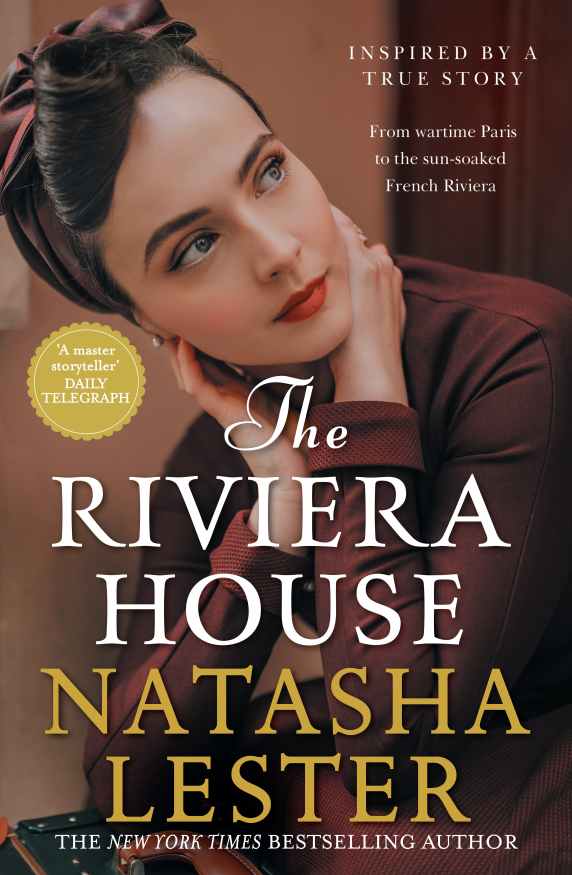
The Riviera House Cover

Publisher: Hachette Australia (Trade Paperback – 1 September 2021)

Series: Standalone

Length: 452 pages

My Rating: 4.25 out of 5 stars

Amazon     Book Depository

Bestselling Australian author Natasha Lester returns with a powerful and intense historical drama that presents a multigenerational tale of love, loss, culture, and the horrors of the Nazi occupation of France, in The Riviera House.

Paris, 1939.  With the war about to start and fears of a Nazi invasion becoming more apparent, Éliane Dufort, a young art student who works part time at the Louvre, watches the staff store away the gallery’s most expensive artworks and begin to hide them throughout France.  Determined to survive the upcoming war, the last thing Éliane should have done was fall in love, however when she meets one of her brother’s friends, Xavier, she cannot help herself, and they soon begin a whirlwind romance.  However, with the Nazis right outside of Paris, Xavier leaves for England, breaking her heart.

With Xavier gone and most of her family killed by the Nazis as they tried to flee the city, Éliane vows to fight the invaders by any means necessary.  Her connection to the Louvre lands her a job working for the enemy in the vast warehouse the Nazis are using to store the artwork looted from France.  Working with the legendary Rose Valland, Éliane is tasked with recording every single piece of art that the Germans steal, as well as attempting to discover where they are being sent.  However, Éliane soon gains the unfortunate romantic attention of a powerful Nazi officer, while a returning Xavier, now a treacherous art expert working for Hermann Göring, threatens to destroy her cover.

Many years later, vintage fashion expert Remy Lang travels to the French Riviera and arrives at a beautiful house that was part of a mysterious inheritance from her unknown biological parents.  Hoping to escape from her intense grief at the loss of her husband and child, Remy soon becomes involved with a visiting family living at the neighbouring villa, including charming photographer Adam.  As she attempts to understand her feelings for Adam amidst her sorrow, Remy soon stumbles upon a shocking mystery when she chances upon a catalogue detailing artworks stolen from France during the war, which includes a painting that hung in her bedroom as a child.  Determined to get to the bottom of this mystery, Remy attempts to trace her past and the history of the unexplained painting.  But the story she uncovers is one of great tragedy and shocking revelations that will change everything Remy thought she knew about her past.

This was an outstanding and deeply impressive historical drama from Natasha Lester, who has previously written some great historical dramas, such as The Paris Secret and The French PhotographerThe Riviera House is a particularly compelling and intense novel that perfectly brings two separate timelines together into one moving narrative, while also focusing on two distinctive and complex groups of characters.  This results in a brilliant and moving read that is guaranteed to haunt you long after you finish reading.

Lester tells a deep and captivating tale in this novel that is moving, intense and very addictive to behold.  The author utilises a split timeline throughout The Riviera House, with one storyline set during World War II in Paris, while the other is based in the modern day and takes place in several locations, although primarily in the French Riviera.  The book jumps back and forth between these two timelines, with the speed of transition increasing the closer it gets to the conclusion.  Both storylines contain their own plot, characters, and interesting features, and they come together to form quite an intense overarching narrative.

The first storyline of The Riviera House is the World War II storyline, which follows the character of Éliane Dufort.  Éliane, after suffering several great losses because of the Nazi invasion, becomes embroiled with the French Resistance and soon gets a job working for the Nazis, assisting in their loot warehouse, and helping historical figure Rose Valland create her record of stolen works.  However, the story gets increasingly complicated as the book progresses, with Éliane torn between her remaining family, her love/hate relationship with the traitor Xavier, and her forced relationship with a powerful Nazi member who has fallen for her.  The entire story comes to a head in the closing days of the Nazi occupation, when Éliane is forced to risk everything dear to her, and soon encounters just how tragic the war is and how evil people can be, even those closest to you.

This part of The Riviera House is an amazing bit of historical fiction, exploring the history of the time while also featuring an emotional and moving tale of love, hope and courage.  I really connected with this half of the novel, due to the thrilling and intense story that shows a grim picture of the period and featuring some memorable moments.  The story of Éliane and her family is full of tragedy and suspense, and if you are looking for a happy read than you have come to the wrong place.  While I did see most of the major twists coming, I appreciated how this narrative came together, as well as the clever way it led into The Riviera House’s other timeline.  I also deeply enjoyed the unique historical aspects of this novel, particularly around the Nazis’ systematic looting of French art.  Lester really dove into this part of the war, providing a detailed account how the Germans stole the art, stored it, and eventually shipped it away as the war progressed.  This tale features several real-life historical figures who are worked into the plot extremely well and who add an extra layer of authenticity to the tale.  One of the most interesting historical figures is Rose Valland, the courageous art historian who risked everything to pull together a record of the looted artwork.  Valland, who has inspired characters in films such as The Train or The Monuments Men, was a fascinating character in this novel, and I liked how Lester tied Éliane’s story into that of Valland.  I felt that this examination of the Nazi art theft was both fascinating and cleverly utilised, and it helped to provide some extra power and intensity to the novel.

The other timeline in The Riviera House is based in modern times and follows Remy Lang, a fashion figure who is spending time in the French Riviera, trying to escape her grief over the tragic death of her husband and child, and soon meets some new people who help her move on.  This storyline was more of a pure dramatic tale and focuses on Remy’s grief, her new romance, and the friction brewing between the family she has just met.  I got quite attached to the potent emotional elements featured in this book, especially as Lester really focuses on the lingering impacts of grief, such as the guilt survivors feel when thinking about something new or considering moving on.  Add in quite a compelling mystery element to it, as Remy and her new friend Adam start investigating the connection that Remy had to the other story, such as her long-dead biological parents and several mysterious inheritances.  These connections to the storyline set in the past compliment the protagonist’s current issues and concerns extremely well, and it was really fascinating to see her work out how her life was shaped by the original protagonists many years before.

I ended up really liking both timelines within the novel, although I did prefer the storyline set in World War II due to its interesting historical research, complex characters riven by war, and terrible tragic moments.  I must admit that I am not usually the biggest fan of historical dramas that feature two separate timelines (it really is an overused device in historical dramas).  However, I think that it was utilised extremely well in The Riviera House, and the two separate storylines melded together into a fantastic overarching read.  I loved how Lester was able to provide subtle hints about the fate of the historical protagonists in the contemporary storylines, although the full revelations about them was often hidden and not revealed until later.  I also really appreciated finding out how the events of the World War II story led into the later plot, and the full truth about how everything occurred is not only great to behold in the historical storyline, but it also has some major impacts on the modern-day protagonist.  This really enhanced The Riviera House’s plot and the overall drama of the book, and it helped to produce an excellent overall narrative.

I also quickly wanted to highlight some of the cool and fascinating cultural elements that Lester slipped into her novel, particularly around art and fashion.  I already mentioned how much I enjoyed the interesting and in-depth examination of the Nazis’ looting and the plans to stop them, however, I also appreciated the way in which Lester examined the art itself, as well as the people who were fighting to protect it.  You really get a sense of the beauty and subtlety of the different artworks featured throughout the book, but more than that you also get to explore what makes people passionate for art.  This book contains several characters who appreciated the true value that this art had to themselves and the nation, so much so that they were willing to risk their lives for it.  This forms a major part of the historical storyline’s plot, and I think that Lester did a wonderful job exploring it.  In addition, the contemporary storyline features a compelling examination about the appeals of vintage fashion.  Lester, who has previously explored fashion in some of her past novels (for example, a major part of her previous novel, The Paris Secret, revolves around vintage gowns), did a good job explaining the current obsession with vintage fashion, as well as how people can make money off it.  While I usually care very little about any sort of clothing fashion, Lester’s descriptions proved to be very intriguing, and I found myself appreciating her obvious passion for the subject.  Both these cultural inclusions enhanced the story, especially as they were strongly related to the various protagonist’s motivations and obsessions, and I really appreciated they time that Lester took to feature them.

Overall, I felt that The Riviera House by Natasha Lester was an excellent and well-crafted historical drama with some powerful elements to it.  Lester did a wonderful job of crafting a compelling, multi-period storylines that combined historical and contemporary narratives into a single, moving tale.  I particularly enjoyed the cool focus on the Nazi occupation and art obsession, which resulted in a thrilling and very tragic tale.  The Riviera House is a highly recommended book and a must-read for all fans of historical drama.

Amazon     Book Depository

Fire Made Flesh by Denny Flowers

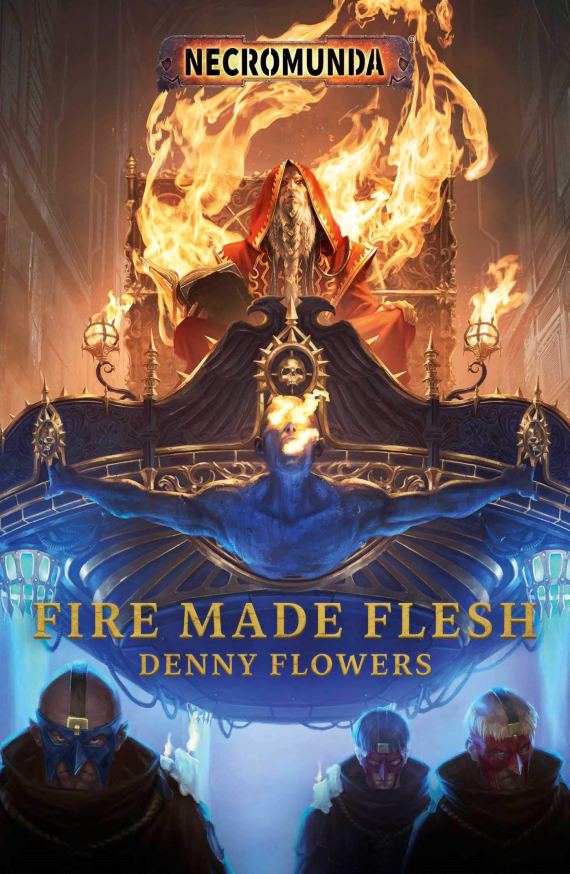
Fire Made Flesh Cover

Publisher: Black Library (Audiobook – 5 June 2021)

Series: Necromunda

Length: 13 hours and 29 minutes

My Rating: 4.25 out of 5 stars

Amazon     Book Depository

Prepare to return to the violent and deadly world beneath the hive cities of Necromunda, as Denny Flowers presents an outstanding and compelling entry in the Warhammer 40,000 universe with Fire Made Flesh.

Over the last year or so I have been having fun exploring the immense extended universe that has sprung up around the Warhammer 40,000 and Warhammer Fantasy tabletop games.  I have so far read several cool entries in the Gortrex and Felix fantasy series (Trollslayer, Skavenslayer and Daemonslayer), as well as the awesome science fiction reads First and Only and Deathwatch: Shadowbreaker.  However, my favourite Warhammer novel so far was the deeply entertaining Kal Jerico: Sinner’s Bounty, which was part of the Necromunda sub-series, another tabletop game set in the gothic Warhammer 40,000 universe.

The Necromunda games and extended universe are all set in and around the towering and immense hive city, Hive Primus, capital of the industrial planet of Necromunda.  Hive Primus is a city of billions, with the inhabitants crammed together in a massive hive structure located both above and below ground.  Necromunda fiction is primarily based in the Underhive, the foundational layers of the hive and below, made up of tunnels, habitation zones and caverns, most of which have been abandoned as the hive was built up.  The Underhive is filled with various gangs and feuding families who fight in these tunnels for riches, dominance and glory.  This unique landscape makes for some impressive stories, such as the awesome narrative of the latest Necromunda novel, Fire Made Flesh.

Deep underneath Hive Primus many secrets and treasures lay hidden in the darkness, waiting to be found by bold adventurers, but none are spoken of with more reverence than the lost habitation dome, Periculus.  Periculus was once a flourishing base of commerce where both sanctioned trade and illicit dealings were held, and vast wealth was accumulated.  However, Periculus was mysteriously abandoned years ago when its inhabitants were killed, and all knowledge of its location has been lost.  Now, after years of searching, someone has rediscovered the dome, and all hell is about to break loose.

Believing that the ruins of Periculus hold innumerable treasures and opportunities, various gangsters, Guilders, hive scum and opportunists have descended into the Underhive, hoping to stake their claim.  However, none of the people moving towards Periculus are more dangerous than the revered Lord Silas Pureburn of the Guild of Fire.  Holding a monopoly on energy production in the Underhive and gifted with a holy flame from the God Emperor himself, Pureburn inspires loyalty and religious fervour wherever he goes.  However, behind his holy facade of purity and flame lies a dark soul determined to dominate everything and everyone he encounters.  One of the few people to see the truth about Pureburn is young Guilder Tempes Sol.  Sol, a scion of the Mercator Lux, the Guild of Light, has found himself bested by Pureburn many times, and he is determined to discover the truth behind his improbable works.  After an unholy accident scars Sol and leaves him with an unusual power, he is forced to flee his guild and travel to Periculus, where his only hope of redemption lies in exposing Pureburn as a fraud.

However, upon arriving at Periculus, Sol discovers a settlement on the edge.  Pureburn has gathered around him an army of religious fanatics who control Periculus through fear, fire and bloodshed.  Determined to stop his insidious influence before it is too late, Sol attempts to forge alliances with other newly arrived inhabitants of Periculus who have been disadvantaged by Pureburn.  However, the deeper Sol dives into Pureburn’s actions, the more danger he finds himself in, as this seemingly holy man hides a dark and disturbing secret.  Worse, even more terrible dangers are affecting people within the dome, as twisted creatures roam the shadows, and the humans are struck with a dark rage that drives them to great acts of violence.  As the forces within gather for a final deadly confrontation, the fate of both Periculus and the entirety of Hive Primus hangs in the balance.

Fire Made Flesh was an interesting and impressive read that did an amazing job of bringing the twisted maze of the Necromunda Underhive to life.  This was actually the debut novel of author Denny Flowers, who has previously written some fun Necromunda short fiction and novellas but had yet to produce a full-length book.  This turned out to be a pretty awesome first novel from Flowers, and I had an outstanding time getting through the intense story, especially with its unique locales and outrageous characters, and it was a fantastic piece of Necromunda fiction.

At the heart of Fire Made Flesh lies a compelling and intense story that showcases the unique and deadly battle for control of Periculus.  After some set-up to show the rediscovery of the lost dome, Flowers starts establishing the various characters and their motivations, exploring how and why they are heading to Periculus.  Told from multiple character perspectives, the reader gets an interesting look at each point-of-view character, as well as the people they travel with.  While this was a good introduction to the many complex aspects and figures of the novel, it did make the pacing of the first third of Fire Made Flesh a tad slow, with a couple of difficult sections.  However, these pacing issues are resolved around halfway through Fire Made Flesh, once all the primary characters make it to Periculus.  From that point onward, the book really picks up, especially as the reader has grown attached to protagonists by this point.  From there the rest of the story is extremely fast, with a big moment two-thirds in, resulting in utter bedlam across Periculus and thrusting each of the characters into extreme danger.  After several intense and action-packed sequences, the entire narrative gets wrapped up extremely well in a satisfying conclusion, with each of the fun character arcs set up throughout the book coming together wonderfully.  I had an absolute blast with this narrative, and I felt that it had the right blend of action, intrigue, character development and Warhammer 40,000/Necromunda detail, to keep every reader happy.  I was really impressed by how Flowers was able to bring the disparate storylines together into one entertaining read, and I ended up powering through the last half of the novel in less than a day.  I also deeply enjoyed some of the cool twists and reveals right near the end, as they contained some excellent character moments.  Interestingly, the story is left open for a sequel, and I know I will be curious to see what happens in the Underhive next time.

Fire Made Flesh is an excellent addition to the Necromunda range of fiction, and I appreciated how Flowers attempted to examine and recreate the various elements of the unique landscape and culture featured within this fictional location.  Flowers really dived into the lore surrounding Necromunda, and the reader is soon engulfed in discussions about the social order, technology, and religious zeal of the Hive City.  While the author did a good job of trying to give context to this setting and its various features, readers may get a little overwhelmed with all the unique lore elements that are shovelled into it, especially at the front of the book when Flowers was trying to set everything up.  While I managed to keep my head around what was happening and what the characters were talking about, I could easily see a reader who has less experience with Warhammer 40,000/Necromunda lore, being a bit more confused and potentially getting lost.  Still, this ended up being a great Necromunda novel, and I loved the way in which the author featured the various gangs and controlling interests.  I especially enjoyed the in-depth examination of the Guilders, Hive Primus’s merchant class, who provide the various services to keep the settlements running.  Fire Made Flesh features members from the various guilds, each of whom have different professions, including slavers, energy providers, fuel dispensers and corpse grinders (people who process bodies to produce corpse-starch, the hive’s primary food source).  Readers get a pretty intense crash course in Necromunda lore in this book and will end up having a good understanding of how Underhive works.  There are a lot of details that will appeal to long-term fans of the Necromunda game and its associated extended fiction, and they will no-doubt love to see another entertaining and dark adventure.  While there are some connections to previous novels, including some of Flower’s short-fiction, I would say its easy enough for most people familiar with the Warhammer 40,000 universe to jump into this book without getting too lost, and even general science fiction fans should be able to have fun with this novel.

Flowers also makes great use of the dark and dangerous setting that is the Underhive throughout Fire Made Flesh.  The Underhive is already an awesome and well-established setting, but Flowers really tried to show just how hostile and unpredictable it could be.  There are some great descriptions of the tight walkways, giant caverns and isolated settlements which prove to be an outstanding backdrop to the dark narrative, and I had a lot of fun exploring some new locations in this novel.  Periculus itself is also an impressive setting, as the reader is treated to an intriguing look at a newly formed town that is slowly getting to its feet in the ruins of an abandoned settlement, and all the strife that comes as a result.  The depictions of the town surrounded by monsters, coated with powdered bone, and filled with fractious groups with enflamed personalities, really helps to set the mood for much of the novel, especially as it all comes crumbling down again.  I deeply enjoyed this cool setting and I think that it was an exceptional addition to a fun novel.

I also had a lot of fun with the compelling collection of characters featured in Fire Made Flesh.  Flowers made use of several entertaining point-of-view characters throughout this novel, including several protagonists of his previous short fiction reads, and this results in a vibrant and well set-up blend of personalities and compelling personas.  The central protagonist is Tempes Sol, the young Guilder genius who spends his days attempting to understand power, electricity, and technology.  Tempes has a rather rough journey in this novel, mostly brought on by his obsession with stopping the book’s antagonist, Pureburn, who has bested him in several prior encounters.  However, this time Tempes is suffering from the after-effects of a psychic attack, which has gifted him strange lightning abilities associated with his cybernetic upgrades.  Cast out of his guild and on the run, Tempes is a desperate figure in this novel, attempting to show the hypocrisy of Pureburn while also trying to redeem himself and understand his new powers.  I felt that Tempes had a very interesting storyline in this novel, and I found his personal growth and the exploration of his personal technology to be quite fascinating.  I wasn’t the biggest fan of his impulsive behaviour and self-righteous personality, but he did start to shed those as the novel progressed, while also developing a certain amount of savviness, especially when it came to some of his supposed allies.  It looks like Flowers is setting Tempes up for some interesting storylines in the future, and I would be quite keen to see this protagonist in another book at some point.

I was also a big fan of the antagonist of Fire Made Flesh, Lord Silas Pureburn.  Pureburn is another Guilder character who specialises in bringing fire and fuel to isolated communities, even when it shouldn’t be possible.  This, and his family’s legacy as keepers of a holy flame, sees him given religious reverence by the general population, as well a collection of devoted, if deranged, followers, who view him as a celebrated champion of the Emperor.  However, Pureburn is really a deceitful and manipulative being, who cares only for profit and his own selfish goals.  Flowers does an amazing job setting this antagonist up and the reader is soon pretty sick of his hypocrisy and arrogance, something that become really apparent after you read a few of his point of view chapters.  Pureburn ends up annoying or alienating every single protagonist in this book, which results in a loose alliance as everyone attempts to take him down.  I love a villain so evil that he brings different people together, and this was a great antagonist to hate, especially once you find out the true source of his power.

Aside from this compelling protagonist and entertaining antagonist, this novel also featured a great range of additional characters with whom the reader gets to spend time with.  My personal favourite had to be Lord Credence Sorrow, a corpse grinder contracted to bring food to Periculus against his will.  Sorrow is a lover of fine things, and his enjoyment of delicate items and gourmet food is at odds with his profession of turning corpses into edible powder.  This character has a brilliant amount of flair, and all his scenes are particularly entertaining, especially as he keeps finding himself stuck between some dangerous employers, resulting in quite a fun and fitting overarching storyline.  I also had a great time with the oddball partnership of Caleb Cursebound, the self-proclaimed ninth most dangerous man in the Underhive, and his silent Ratskin partner Iktomi.  These two make a great pair, especially as Caleb has all the bluster and personality, while Iktomi has a wicked amount of lethal skill, making them a surprisingly effective team, and I loved the entertaining odd-couple vibes that they gave out throughout the book.  I also must highlight Anquis, a member of the notorious Delaque family of spies and infiltrators.  Anguis spends most of the novel helping Tempes achieve his goals with her intelligence-gathering and manipulations.  However, it soon becomes quite clear that Anguis is playing her own games, and no one, especially Sol, knows what she is really after.  The final character I want to talk about is Virae the Unbroken, a Chain Lord (slaver) and pit fighter, who is hired to capture unlucky civilians and bring them to Periculus for labour purposes.  Despite initially appearing as a blunt and unforgiving figure, Virae soon proves to be one of the most complex and best-written characters in the entire novel.  Virae is a former slave herself, who proved herself to be tough and unbreakable, resulting in her title and her eventual promotion to slaver.  However, she really struggles with her profession in this novel, especially after many of her charges die on the journey to Periculus.  Her battles for survival, especially in the face of Pureburn’s evilness are pretty excellent, and I loved her eventually transformation into a bloody figure of vengeance.  This turned out to be an outstanding collection of characters, and I deeply appreciated how Flowers used them to enhance Fire Made Flesh’s great narrative and make it even more exciting and compelling.

I decided to grab the audiobook version of Fire Made Flesh.  This format has a decent run time of around 13 and a half hours, and I ended up powering through it in only a few days, especially once the story started to get very exciting and fun.  I had an outstanding time getting through this audiobook, and one of the main reasons for this was the impressive narration of Joe Jameson, whose work I have previously highlighted in awesome fantasy audiobooks like King of Assassins by R. J. Barker, and The Kingdom of Liars and The Two-Faced Queen by Nick Martell.  These previous works by Jameson have been some of best audiobooks of their respective release year, and Jameson is easily one of my favourite narrators.  He has an outstanding voice for fantasy and science fiction, and I love the way he can make a story move at a fast pace while also ensuring that the listener is absorbing all the detail and obscure lore with interest.  Jameson did a really good job of voicing each of the characters within Fire Made Flesh, and while some of the voices were very similar to those he used in the other books, I think that they fitted this new group of characters extremely well.  You get a real sense of the various emotions and personalities of each of these characters, and his affinity for voicing outrageous figures such as religious zealots and conniving businessmen proved very useful here.  I had a great time with this audiobook, and it was an amazing way to enjoy this dark and compelling story.

Fire Made Flesh by Denny Flowers is an exciting and captivating novel in the Necromunda series.  This is an entertaining and intense science fiction read that makes full use of the unique Warhammer 40,000 universe, the cool setting of the Underhive, and some great and memorable new characters, to produce an electrifying tale.  I had a fantastic time reading this book and I cannot wait to see what other adventures wait for this outrageous group of characters in any future Necromunda novels Flowers writes.

Amazon     Book Depository

The Man Who Died Twice by Richard Osman

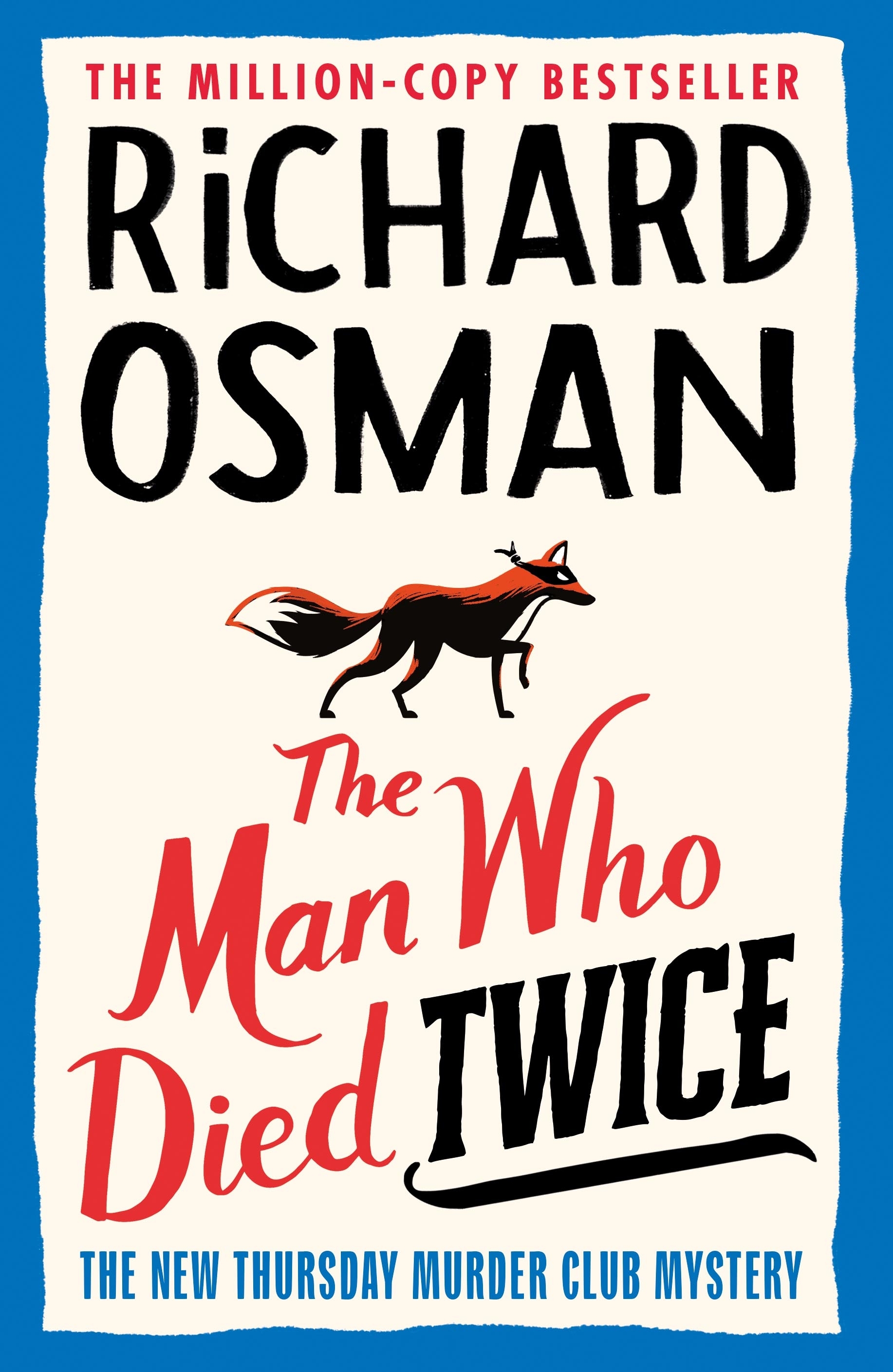
The Man Who Died Twice Cover

Publisher: Viking/Penguin Audio (Audiobook – 14 September 2021)

Series: The Thursday Murder Club – Book Two

Length: 12 hours and 30 minutes

My Rating: 5 out of 5 stars

Amazon

Following on from his epic crime fiction debut last year, writer and television personality Richard Osman presents the second book in his Thursday Murder Club series, The Man Who Died Twice.

Richard Osman is an awesome comedic talent and personality who I have enjoyed for many years on Pointless, Would I Lie to You and other fun British panel shows.  Known for his clever wit and immense height, Osman has a great sense of humour, and I was pretty excited last year when I saw that he had written a crime fiction novel, The Thursday Murder Club, which followed a group of true crime loving retirees who investigated a nearby murder.  While I knew I was likely to have a great time reading The Thursday Murder Club, I was truly blown away and it ended up being one of the best books, audiobooks and debuts I enjoyed in 2020.  Due to this, and the fact that my review for The Thursday Murder Club received a lot of attention this year, I have been really looking forward to reading the sequel for some time and I was very excited when details about The Man Who Died Twice were finally revealed.  This awesome sequel was one of my most anticipated releases for 2021 and it did not disappoint, presenting another clever and impressive character driven mystery.

Welcome back to Coopers Chase, the sprawling aged-care community near the town of Fairhaven, England, where peace and serenity is guaranteed for all its residents, aside from the thrill-seeking members of the Thursday Murder Club, a small group of friends who spend their Thursdays investigating cold cases and gruesome murders.  Made up of the intrepid Elizabeth, Joyce, Ibrahim and Ron, the Thursday Murder club has already had great success solving the murder of the previous owner of Coopers Chase, and they are now looking for their next batch of excitement.

Their wish appears to be granted when former spy Elizabeth receives a letter from a man she thought was dead, her former colleague and ex-husband, Douglas Middlemiss.  Douglas has recently run afoul of a dangerous English mobster and an international criminal cartel after stealing a bag of valuable diamonds and securing them in a secret hiding place.  Reluctantly put into witness protection by MI5, Douglas is keeping a low profile in Coopers Chase while he plans his escape and new life in retirement.  But when an assassin breaks into his flat and tries to kill him, Douglas turns to Elizabeth for help. 

Rallying the Thursday Murder Club to her side, Elizabeth attempts to figure out which of Douglas’s enemies is trying to take him out and who knew he was hiding at Coopers Chase.  But when tragedy strikes and an unknown enemy appears to have made off with the diamonds, everything seems lost.  But this opponent is unprepared for just how relentless the Thursday Murder Club can be, as Elizabeth and her friends put an ambitious plan in place.  However, this time the Thursday Murder Club aren’t just going after a killer; now they are facing down hardened criminals and assassins with a substantially less compunction about killing senior citizens.  Will the Thursday Murder Club once again solve the unsolvable, or will this be their final case?

Wow, this was amazing novel from Osman that I had an outstanding time getting through.  Featuring another epic and captivating mystery set around a fun group of characters, and featuring Osman’s amazing subtle humour, The Man Who Died Twice was an excellent read that I powered through in a few short days, and which gets another five-star rating from me.

The Man Who Died Twice has an impressive and deeply compelling character driven narrative that follows its various protagonists as they attempt to unravel the compelling case of the twice murdered man and the stolen diamonds.  This second entry in the Thursday Murder Club series can easily be enjoyed as a standalone read, although fans of the first book will no doubt have an amazing time seeing how the various characters continue to progress throughout this second book.  Osman beautifully utilises multiple character perspectives to tell several fantastic stories throughout the book, with the protagonists also involved in several personal battles, as well as attempting to bring down a local crime lord and a vicious young thug.  All of these storylines are chock full of mystery, humour, emotion and personal tragedy, as the protagonists work through the issues and challenges in their own unique ways.  The author balances all the storylines perfectly throughout the novel, eventually producing a clever and very entertaining conclusion.  I loved how the entire narrative came together, and there are some very amusing and compelling moments featured throughout.  Thanks to Osman’s ability to provide a great wrap-up to a story, the readers are left feeling incredibly satisfied and happy, especially after every single twist and bit of character development is revealed.  Combine that with Osman’s subtle sense of humour, mostly relating to the more outrageous situations these unlikely heroes casually wander in and out of, as well as some amusing jokes about being out of touch, and the barrage of references to British pop culture, and you have a very entertaining and addictive story that proves near impossible to put down.

I really enjoyed the central mystery of The Man Who Died Twice as the Thursday Murder Club and their associates are drawn into the case of Elizabeth’s ex-husband, a MI5 agent who has stolen a bunch of diamonds from a crime lord and is now avoiding assassins in the Coopers Chase retirement community.  While the initial hunt is for the location of the hidden diamonds, it soon morphs into another murder when a mysterious killer gets too close to the prize.  This is a very interesting and well-crafted mystery, and I loved how Osman moved away from more traditional murder and into the world of espionage and international crime.  To help solve this crime, the Club are forced to work with MI5 agents and soon find themselves investigating an influential criminal middleman with ties to the Mafia, who are hunting for the diamonds.  However, the nature of the crime also suggests an inside job, and the Club are forced to investigate friends and supposed allies to figure out who is responsible.  I had a great time with this mystery, and I loved the clever misdirection and various suspects that Osman featured throughout the plot.  I was able to pick up one of the twists pretty early in, but the full scope of the conspiracy was a lot more complex than I realised, with some additional unexpected reveals that I didn’t see coming.  I deeply enjoyed the elaborate and entertaining final plan utilised by the protagonists to entrap their opponents, especially when it ends in such a comical and amusing manner.  An overall compelling and fantastic mystery, I cannot wait to see what intriguing case appears in the next book.

You can’t talk about a Thursday Murder Club novel without mentioning the outstanding and loveable characters the story is formed around.  The Man Who Died Twice follows an intriguing and eclectic mix of characters as they find themselves caught up in the events of the latest mystery.  Osman spent a great deal of time in the previous novel introducing these fantastic characters and ensuring that the reader would fall in love with them.  This enjoyment for the characters continues in The Man Who Died Twice, as each character continues to evolve, with some excellent new details revealed about them.  Osman really does a good job of utilising each of these character perspectives in the novel, and I really appreciated the way in which the tone subtly changes for each of the characters.

The main characters of this book are the two female members of the Thursday Murder Club, Elizabeth and Joyce, who have some excellent moments in this latest novel.  The first of these is Elizabeth, the former spy and investigator who is now retired and has formed the Club to keep her mind busy.  Elizabeth gets a lot of attention in this novel as the story focuses on her prior relationship with Douglas, which also examines her career in espionage.  Elizabeth is a great protagonist to follow, mainly because she is bold schemer even now as an old woman.  I always have a fun time seeing her manipulating and outsmarting everyone she comes across, especially now that most of the other characters know her game but still can’t help falling into her webs.  While there is a lot of focus on her abilities and unerring talent for danger and deception, you also get a good look at her somewhat tragic personal life.  Not only is she impacted by the return of Douglas, which raises a lot of memories from her past, but she is also still trying to hold onto her current husband, Stephen, who is suffering from dementia.  I really appreciated the complex storylines around Elizabeth, and I appreciated the way in which Osman did an intriguing dive into her past.

Joyce on the other hand is a pleasant and friendly former nurse who was the last member of the gang to join the Club.  Joyce seems like your typical, well-intentioned older lady, and I am sure that many readers will see a lot of parallels between her and their own parents or grandmothers.  However, Joyce is a brilliant thinker who uses her brain and her friendly personality to make everyone like her and then help her out.  Joyce forms a fantastic partnership with Elizabeth, and the two make an effective double team, with Joyce’s more subtle tactics and insights combining well with Elizabeth’s more direct approach.  It is a lot of fun to see Joyce investigating these brutal crimes, especially as she picks up on just as much, if not more, than the experienced spy Elizabeth.  I also really appreciate the way in which Joyce’s chapters are written, with her point-of-view shown in a series of diary entries.  This different storytelling technique helps Joyce stand out as a protagonist, especially as it highlights her entertaining personality, including the revelations and observations she has about modern technology and younger people (I had so many chuckles at her forays on Instagram).

The male members of the Thursday Murder Club are Ibrahim and Ron,  who are a little underutilised compared to Elizabeth and Joyce in this novel, but they both get their intriguing storylines which were really well-written and compelling.  This is particularly true for Ibrahim, the group’s shy intellectual, who is forced to deal with a brutal physical attack from a young criminal at the start of the book, a scene which really hit me hard due to how much I got to know this harmless character during the first book.  This attack leaves Ibrahim scarred mentally as well as physically, and he spends the rest of the novel feeling quite afraid and unwilling to leave Coopers Chase.  Osman does some deep and emotional character work on Ibrahim here, and readers end up getting quite invested in his recovery as well as his intense mental journey.  This attack on Ibrahim is also the primary catalyst for Ron’s storyline, which probably gets the least amount of attention out of all the main characters.  Ron, the former union leader, who always puts on a classic tough-guy persona, is deeply impacted by the attack on his best friend and spends the early part of the book constantly by his side.  However, once it becomes clear that Ibrahim is alright, he then leads the charge against his friend’s attacker, and uses Elizabeth’s contacts to bring the thug to justice.  I felt that Osman hit the right notes with Ron in this book, and I appreciated seeing both his emotional side and his vengeful side, and I loved how they both came from the same place of love.

The final characters I want to mention are the associated members of the Thursday Murder Club, younger characters who have been drawn into the orbit of the compelling senior citizens.  These include police officers Donna and Chris, both of whom had an entertaining introduction to the Club in the previous novel and are now firm friends with them.  Donna and Chris spend most of the book attempting to bring down a Fairhaven crime lord while also dealing with their personal issues.  Chris, who was a bit of a sad-sack character in the first novel, has been revitalised by his blooming relationship with Donna’s mother.  While happy and now health conscious, this results in a lot of soul-searching by Chris, who is unsure how to pursue the romance, especially once his girlfriend is threatened by the criminal they are hunting.  Donna, on the other hand, continues her unlucky hunt for love and purpose in this novel, going from one bad date to another while also being suitably horrified by her boss sleeping with her mother.  While Donna does not get as much focus in this novel as she did in The Thursday Murder Club, she still had some great character moments, and I deeply appreciated that touching scene she had with Ibrahim.  I also need to mention Bogdan, who, after being a major suspect in the first novel, has moved on to a supporting role in this book due to his firm friendship with Elizabeth and her husband.  Simply put, Bogdan is the coolest person in Fairhaven and a true friend, helping Elizabeth with her projects by doing all manner of unusual requests, from looking after Stephen to buying a large amount of cocaine.  He has some really good scenes in this book, and Osman sets him up as quite the bright, mysterious action man with a heart of gold.  Throw in some other well-established and explored side characters in addition to the above and you have an exciting and compelling cast with a great story around them.

One of the key things about this series that I really appreciate is the way in which Osman attempts to champion the aging process and show how capable and interesting older members of the community can be.  The Man Who Died Twice is another great example of this, as it contains multiple amazing examples of older protagonists doing impossible things and manipulating people half their age in some elaborate and entertaining ways.  It was a lot of fun once again seeing these older characters taking charge, and Osman has a very unique and entertaining take on the aging process and the mindset of older people.  However, not everything is about the positives of aging, as the author once again presents some sad and dark elements that added some powerful drama to the narrative.  Throughout the course of the story, there are plenty of discussions about illness, living with regrets, and the growing realisation that death is just around the corner.  There was a particular focus on the vulnerability of the elderly, especially with Ibrahim’s storyline, as it shakes both the victim and all his friends.  There is also a compelling look at Stephen’s battle with dementia, which includes Elizabeth’s attempt to keep him in their apartment despite what may be medically best for him, resulting in some touching and emotional scenes, especially once the double meaning of the novel’s title becomes clear.  I really appreciated the author’s unique and compelling take on the aging process, and it was great to see more of the novel’s fun senior protagonists.

While I was lucky enough to receive a physical copy of The Man Who Died Twice, I decided in the end to listen to the audiobook format of this novel, which was a fantastic choice.  The Man Who Died Twice has a runtime of 12 and a half hours, although the last 40 minutes or so is an interesting interview.  I found myself getting through this audiobook extremely quickly, not just because of the amazing story but because the audiobook has a great pace to it and some excellent narration by actress Lesley Manville.  Manville, who also narrated The Thursday Murder Club, does another wonderful job in this second novel, and it was great to hear her impressive take on this fantastic story.  Manville has come up with some amazing voices for the various characters, with each person getting their own distinctive and fitting voice, with some great continuation from the first book.  Each of the character’s voices work extremely well, and I really appreciated the way in which Manville can ascribe age, emotion, and personality with her vocal work.  I had an outstanding time listening to Manville tell this cool story, and it was made even better by a fun discussion between Osman and Manville at the end of the book.  This nice and unique talk between author and narrator was an outstanding and fitting way to finish of this audiobook, especially as it offers some cool insights into the book you have just been enjoying.  I particularly enjoyed finally getting an explanation about why Osman doesn’t narrate his own novel, and I actually agree with his reasoning for it.  Overall, this was another exceptional audiobook adaptation, and I would strongly recommend this format to anyone and everyone keen to check out The Man Who Died Twice.

With his second entry in the spectacular Thursday Murder Club series, Richard Osman continues to showcase he is just as talented at writing crime fiction as he is at comedy.  The Man Who Died Twice is an outstanding and wildly entertaining read that combines an impressive story with a clever mystery, some complex and likeable characters, and a brilliant sense of humour.  This was a spectacular read and I had an incredible time getting through this fantastic sequel, especially in its amazing audiobook format.  The Man Who Died Twice was one of the best books of 2021 and I cannot wait to see where Osman takes this series next.

Amazon

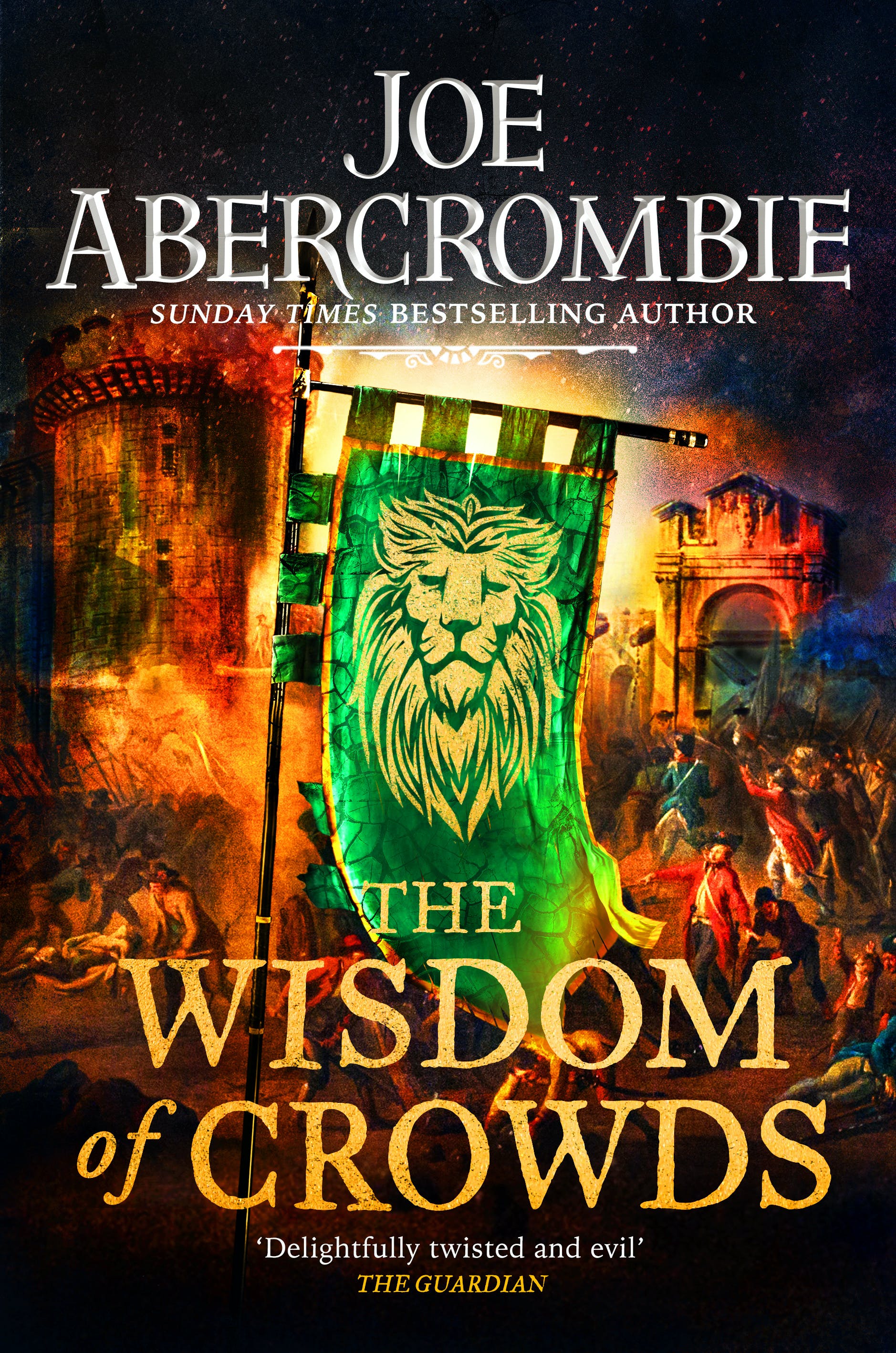
The Wisdom of Crowds by Joe Abercrombie

The Wisdom of Crowds Cover

Publisher: Gollancz (Audiobook – 14 September 2021)

Series: The Age of Madness – Book Three

Length: 23 hours and 36 minutes

My Rating: 5 out of 5 stars

Amazon

One of the best authors of dark fantasy, Joe Abercrombie, returns with the final book in his brilliant Age of Madness trilogy, the thrilling and deeply captivating The Wisdom of Crowds.

Joe Abercrombie is a particularly impressive author whose work I have been really enjoying over the last few years ever since I dove into his iconic First Law trilogy.  This great dark fantasy trilogy followed a group of complex and damaged characters who are thrust into a series of dangerous adventures in a corrupt fantasy world.  The original trilogy was pretty damn perfect, and I loved the outstanding story and universe that Abercrombie came up with.

Following his original books, Abercrombie wrote three standalone novels that continued the universe’s overall story in different ways before introducing his Age of Madness trilogy in 2019.  The Age of Madness trilogy is set around 20 years after the events of the First Law books and follows the children of the original trilogy’s protagonists as they are engulfed in additional chaotic events, including war, revolution, and lots of betrayal.  This trilogy has already featured two outstanding five-star novels, A Little Hatred (one of the best books of 2019) and The Trouble With Peace (one of the best books and audiobooks of 2020).  Due to how awesome the previous novels were, I was deeply excited for The Wisdom of Crowds, and it turned out to be another exceptional read with an impressive story to it.

Following King Orso’s decisive victory over the rebellious young hero Leo dan Brock and his wife, Savine dan Glokta, Orso believes that he has finally gained control of the Union.  However, he is unprepared for the chaos and destruction that is about to befall the kingdom.  The revolution, known as the Great Change, has finally descended upon the Union, with the people rising up and overthrowing the hated nobles.  Led by former Arch Lector Pike, known by the masses as the Weaver, the rebelling Breakers and Burners soon take the capital, Adua, bringing hope and destruction in equal measure.

Imprisoned by the mob, Orso soon discovers that there is nothing lower than a deposed king.  The freed Citizen Leo and Citizeness Savine must adapt and find new ways to manipulate a mob that both loves and hates them.  The newly raised up Chief Inspector Teufel must soon decide where her loyalties lie as she begins to see the insanity of the new rulers, while former soldier Gunnar Broad once again finds himself causing trouble as a key citizen of the new regime.  At the same time, the magically prescient Rikke has taken control of the North, capturing the former King Stour Nightfall.  However, taking the North and keeping it are two very different things, especially as the forces of her family’s old enemy, Black Calder, advance towards her, determined to free Stour.  With enemies around every corner and even her closest allies beginning to doubt her, Rikke must implement a drastic plan and make use of every tool at her disposal, even notorious turncoat Jonas Clover.

As the Great Change starts to devolve into anarchy, the death toll starts to rise and no one is safe, least of all those who have profited in the past.  Soon hard choices will need to be made and only the strongest and most cunning will survive.  The Age of Madness is well and truly here, but who will live and who will die as the fires of anger, resentment and despair burn throughout the land?  No matter who survives, the Union and the North will never be the same again, especially with unseen hands manipulating events from the shadows.

How the hell does Abercrombie do it?  I knew in advance that this was going to be an awesome book, but I was yet again blown away by the author’s clever blend of captivating storylines, outstanding characters, and outstanding dark fantasy settings.  The Wisdom of Crowds served as an excellent conclusion to the Age of Madness trilogy, and I found myself absolutely powering through this amazing novel in no time at all.  This gets another five-star review from me as I had such an incredible time reading it.

Abercrombie has come up with an exceptional narrative for his latest novel, and I deeply enjoyed the captivating and extremely dark story contained within The Wisdom of Crowds.  This novel has an impressive and memorable start to it with the aftermath of the previous novel immediately giving way to the Great Change.  This uprising quickly overcomes the existing government and changes everything, with Orso imprisoned, Savine and Leo freed from captivity and incorrectly hailed as heroes of the people, and characters like Gunnar Broad and Inquisitor Teufel pushed to the fore due to their suffering under the previous regime.  After a great extended revolution sequence, Abercrombie spends a good chunk of the first act of the novel showcasing all the severe changes to the setting of the Union, including the impacts to the protagonists, as well as the nation’s quick decline after the initial glorious revolution.  At the same time, you have the events in the North occurring at the same pace, with Rikke trying to solidify her power in the face of a rising opposition.  Most of the novel’s major storylines are either set up here or transported over from the previous novels, and it moves at a great pace with some fantastic moments.  The novel really heats up in the second act, when a group of extremists take over the Union and Rikke’s war in the North gathers speed.  The storyline set in the Union during this section of the novel is filled will all manner of insanity and terror, and this is probably one of the darkest parts of the entire book.  While there is a noticeable focus on the craziness of a Burner revolution, there is also a lot of character development occurring here, with most of the protagonists starting their last bit of major growth here, with their big plans set up.  This second act is capped off with a massive battle in the North that changes the entire fabric of that setting and provides a great deal of fantasy action and bloodshed to keep the reader satisfied, while also featuring a pretty fun story twist.

All this leads up to an impressive final act which takes up the last third of the novel.  Most of this is set in the Union and showcases the protagonists making their moves.  There are some very good scenes here, with a mixture of big character moments, destructive fights, and a cool trial sequence, which help this part of the book really stand out.  All of this leads to a major change in the plot that occurs with roughly a quarter of the novel left to go.  While there are some great scenes involved with this big shift, I must admit I was a little surprised that the book didn’t end right there, due to the resulting significant change of pace, and I wonder if Abercrombie might have been better off using this final quarter in another novel.  However, the story is still extremely cohesive, especially as it leads up to some major reveals and big character moments that had me gasping with surprise.  I really did not see some of the big twists coming, even though they were really well set up throughout the trilogy (although I really should have known who was behind everything).  The book concludes on an interesting note, with some noticeable tragedy and some outstanding character moments as the surviving protagonists settle into their new roles.  I did think that Abercrombie may have spent too much time setting up events for his next trilogy, with multiple scenes containing open-ended events that will clearly get picked up in later books.  However, to be fair it did get me excited for the next novel like it was supposed to, and I don’t think it took too much away from the overall narrative.  This was such an awesome story, and The Wisdom of Crowds’ character focus had me hooked the entire way through.

Abercrombie has a real talent for writing awesome and complex dark fantasy novels, and I really enjoyed his outstanding and compelling style.  I deeply appreciated his excellent use of multiple character perspectives to tell a rich and vibrant tale, as the story seamlessly flicks between seven major characters throughout the book.  The spread of character perspectives has been an outstanding feature of all the author’s First Law novels, and it is extremely cool to see this complex tale told from various points of view.  Not only does it ensure you get a brilliant, multifaceted exploration of the setting and the progress of the plot, but it really helps the reader get into the mind of the characters and see their personalities, emotions and opinions.  I also really appreciated the two great extended sequences that were told through the eyes of multiple supporting or one-off characters, especially as it captured the chaos and destruction of both revolution and a major battle.  The author has quite a vivid and adult writing style, which works with the realistic characters and complex storylines extremely well.  Not only does this result in some particularly graphic and powerful action sequences, including one amazing and massive pitched battle, but it also works in some distinctive and very adult dialogue.  While some of the language gets a tad over the top at times, it does give the book a very realistic feel and is a lot of fun.  Readers should be warned that this is a pretty dark tale including torture, ultra-violence and a lot of brutal deaths.

I have to say that I was quite impressed with the changes to the major setting of the Union in this novel.  While the other significant setting, the North, remains pretty much the same (its always snow, death and blood there), the Union is majorly impacted quite early on as part of the revolution known as the Great Change, which Abercrombie had been expertly setting up throughout the trilogy.  The Great Change, which was brought on by rioting workers and peasants disenfranchised by the industrial revolution that was such an amazing and distinctive feature of this trilogy, hits the city with most of the nobles, the wealthy, the ruling Closed Council, and the King all arrested.  This initial overthrowing was done pretty perfectly, with several chaotic sequences, and it eventually leads to a whole new era for the nation.  This part of the novel was very clearly inspired by the French Revolution, and I deeply appreciated the way in which the author evoked the iconic imagery of destructive historical events into his fantasy novel.  I loved the initial set-up of the new democratic government that replaced the monarchy, and I had a good chuckle at the character’s glorious ideas of a utopian society with a pompous constitution.  However, the real fun occurs when these high ideals fail miserably and are replaced by a general purge where no-one is safe.  Abercrombie did a really good job here of capturing the terror, uncertainty and horrible human nature that accompanies these sorts of purges, with a series of one-sided trials and brutal executions in front of a cheering crowd.  This chaotic setting serves as an outstanding backdrop to novel’s various storylines, and it was an amazing and dark part of The Wisdom of Crowds that made it really stand out.

As with the rest of Abercrombie’s books set in this connected universe, one of the absolute best things about The Wisdom of Crowds was the exceptional and complex characters.  Just like the previous two novels in the Age of Madness trilogy, the story is primarily shown from the perspective of seven unique and well-established point-of-view characters.  Each of these characters is extremely complex and layered as Abercrombie has been setting up some fantastic storylines around each of them throughout the course of the series.  These characters include:

  • Orso – the son of King Jezal, a point-of-view character from the original trilogy, and current High King of the Union, for whatever that title is worth. Orso is a very fun character who has probably grown the most out of all the characters featured in this series, going from a foppish, unmotivated prince, to a decisive, competent and victorious king in the second novel.  Despite his victory over his rival Leo and his secret half-sister (and former lover) Savine, Orso soon finds himself a prisoner when the Great Change leads to a people’s revolt.  Despite being imprisoned and constantly mocked by everyone, Orso keeps most of the confidence he built up in the previous novels and is a constant figure of comedy, especially with his great sarcastic observations of the events around him.  Abercrombie has done a masterful job with Orso over the last three books, and I really appreciated his growth and humour, making him one of my favourite characters in this trilogy.  Due to this it is pretty hard to see him get taken down and condemned by his people, especially as he is a much better ruler than everyone thinks he is.  I once again found myself really pulling for him in this novel, and I think he was the character I wanted to survive and win the most.
  • Savine dan Brock (formerly dan Glokta) – a formidable businesswoman and adoptive daughter of Arch Lector Glokta (the best character from the original series). Savine has been an awesome character in this trilogy, experiencing some massive highs and significant lows.  After marrying Leo and organising a revolt against her half-brother Orso in the previous novel, Savine starts this novel in chains.  However, once the Great Change occurs, she is quickly freed and must find her place amongst the revolutionaries.  Rightly terrified of being tried for her ruthless business practices, and changed by motherhood, Savine engages in charity works and tries to save herself through generosity.  I quite enjoyed Savine’s storyline in this latest novel and it had some awesome moments.  While I do think she was a bit underutilised in the middle of the book, she eventually emerges in full form and shows everyone why she is the most dangerous person in the Union.  There are some outstanding scenes surrounding her, especially that awesome court sequence, and I quite liked where her story ended up.
  • Leo dan Brock – the former governor of Angland and shining hero of the Union, before he had an arm and leg blown off during his big battle against Orso in the previous book. Leo starts this novel a shell of his former self, full of regret that his recklessness and arrogance caused his injuries and the death of his friends.  However, this regret soon turns to anger and ruthlessness as he uses his hero status to become a key part of the Great Change, attempting to manipulate it for his benefit.  I must admit that Leo was always my least-favourite character in this series, and I liked how the features I disliked about him led to his downfall in the previous book.  Abercrombie perfectly follows this up by making him a much more unlikable character in this novel, and I deeply appreciated the realistic way his personality was twisted and darkened by anger, jealousy and frustration, giving him a new ruthless edge.  Out of the characters in The Wisdom of Crowds, Leo probably goes through the most development in this novel, and it was pretty captivating to see where his new hate and frustrations led him.
  • Rikke – a Northern protagonist and the daughter of the Dogman, Rikke has had a very interesting story arc within this series due to her magical Long Eye, which allows her to see into the future. Rikke was able to outsmart all her opponents in the previous novel, taking the Northern capital and capturing her opponent, Stour Nightfall.  Now Rikke is forced to lead her people against Stour’s father, Black Calder, while also trying to balance the concerns and treachery of her allies.  I have been really impressed with Rikke’s storyline throughout The Age of Madness, and I liked the great transition from scared girl to effective leader.  This book continues to showcase her skills, even if she still appears a bit rash and too clever for her own good.  She ends up being forced to make some hard and heartless decisions, which really highlights just how far she has come.  There are some outstanding movements with Rikke in this novel, and I particularly loved the good twist around her that occurred at the big battle scene (I did see it coming, but it was still a lot of fun).  I also loved the fantastic scene where she confronts Bayaz, the First of the Magi, as it was one of the first times that you see the master manipulator of the series appearing rattled and impotent.  Rikke was a really well set up character and I really appreciated the epic and compelling storylines around her.
  • Vick dan Teufel – a Union inquisitor and protégé of Arch Lector Glokta, Vick is a master spy and investigator. Despite all her skills, Vick was taken by surprise by the revelation that Pike is the Weaver and is forced into supporting the Great Change against her will.  Falling back on her old survivalist mentality to support the winners, Vick is eventually shaken into action by the destruction caused by the Burners and finds herself supporting the losing side.  After being a little underused in the previous novel, Vick has a very strong outing in The Wisdom of Crowds and her character changers are quite essential to the plot.  Like Leo, Vick goes through a fair bit of development in this novel, although her development is a lot more positive as she tries to do what is right rather than what will keep her alive.  Vick also experiences some very crushing moments, and it was fascinating that out of all the characters, she maintained the moral high ground the best.
  • Gunnar Broad – a former Union soldier with a gift for extreme violence, who has been both a Breaker and a servant to Savine as an enforcer and bodyguard. Imprisoned after the last book, Gunnar is freed with Savine and Leo and once again finds himself drawn into the fight, despite his desire to stay out of trouble and get back to his family.  While he once again tries to be a good person at first, he is eventually seduced by the dark appeal of the Burners and truly loses himself, giving into his inner violence and anger.  While he does do some redemptive actions, Gunnar remains a bit of a lost cause, which is pretty tragic to see.  Gunnar proved to be a great character throughout this series, despite a lack of any real development, and I enjoyed his darker scenes and compelling personal insights.
  • Jonas Clover – the cunning and treacherous veteran Northern warrior who, after spending the last two books serving Stour Nightfall, betrayed him at the end of The Trouble with Peace and sided by Rikke. However, he soon finds his loyalty divided between Rikke and Black Calder, with both sides aware of his tendency to turn on the losing side, and he must finally decide who to support.  Due to his very entertaining personality and cynical viewpoint about the world, Clover was my favourite character in the series, and I love all the clever insights and subtle jokes that are characteristic of his scenes.  I really appreciated his mindset of patience, self-restraint and picking your moment, which is mostly unheard of amongst the other Northerners, and which usually sees him through most conflicts.  Despite this, Clover is finally forced to face the music in this novel after his various betrayals come back to bite him.  While he doesn’t always make the best decision, his entertaining and canny attitude ensures that the reader is constantly amused by his antics, and I am really glad that Abercrombie included him in this series.  It will be interesting to see how he is utilised in the future, especially as the author tried to evoke some similarities between his journey and that of original character Logan Ninefingers.

I deeply enjoyed each of these impressive characters, with each one bringing something very memorable and entertaining to the table.  While a couple of these characters were a bit underutilised in previous novels, I think that Abercrombie struck the right balance in The Wisdom of Crowds, with each of them shown in pretty much equal measure.  All seven character arcs are pretty awesome in their own right, but the real strength is the way that they come together to tell the overall story.  It was pretty cool to see multiple character perspectives of the same events, especially as each of these complex characters have very different views on what has happened.  I think that each of the arcs ended extremely well, with each of the characters going in some very interesting and surprising directions.  I was a bit surprised by who was left standing and in control at the end of the novel, and I must admit that I really did not foresee the fates of several of the characters.  Abercrombie sets up each of these events incredibly well, and there were some very fitting endings or transformations here.  It was interesting to see how some of these characters ended up mirroring the cast of the First Law trilogy, which seemed fitting as some were inspired by these prior characters, while others tried to escape becoming them.  I also really appreciated the way that barely any of the primary characters end up being portrayed as good people by the end of it.  While all of them initially tried to do the right thing, even the best of them is forced to make some terrible compromises which shatter their morality and impact their personality.  As a result, the reader is left with little sympathy for some of the surviving characters, and it was once again really amazing to have such morally ambiguous and naturally selfish characters.  It looks like Abercrombie might strongly feature the remaining characters again in his next trilogy, and I cannot wait to see how their various story arcs are continued.

Aside from the seven focal characters above, The Wisdom of Crowds also featured a vast collection of supporting and side characters, each of whom added a ton to the novel.  Most of the supporting characters where previously introduced in the first two novels of this trilogy, as well as a few holdouts from the original trilogy, and there weren’t too many new characters in this final novel.  The author ensures that the reader has a pretty good idea of these characters’ feelings and motivations, and it was fascinating to see the complex and powerful storylines told around several of them.  There are some really good twists around a few characters in particular, and I have to admit that I did not see most of them coming, with Abercrombie doing some masterful writing to set up these reveals throughout the entire trilogy.  Many of these side characters inspired some excellent and moving storylines, although readers should be aware that, as this is the final novel, quite a few of these characters did not survive, and I was particularly cut up by the death of one major supporting character near the end.  It will be very interesting to see what happens to the survivors in the future, and I am especially curious about a couple of key characters from the original trilogy who are set for some major events in Abercrombie’s next outing.

While I did get a physical copy of this book, I ended up listening to the audiobook instead, which proved to be an awesome decision.  The Wisdom of Crowds has a substantial runtime of 23 hours and 36 minutes (it would have placed 17th on my latest longest audiobooks list).  However, despite its length, I was able to power through it in about a week, especially after I got pretty damn hooked on the awesome story.  I found that this format moved the story along at a pretty fast pace, and it was a great way to absorb the fun and compelling details of this dark and epic tale.  It also works extremely well thanks to the outstanding voice work of the incredible Steven Pacey, who is one of my absolute favourite audiobook narrators at the moment.  Pacey, who has narrated all the other books in the First Law and Age of Madness trilogies, does another outstanding job with The Wisdom of Crowds.  Not only does he ensure that every aspect of the narrative comes across in a fun and compelling way; he also ensures that every character is perfectly brought to life.  Pacey brings back all the fun and fitting voices that were featured in Abercrombie’s previous novels, which proved to be a lot of fun, especially as he perfectly captures the unique personalities and characteristics of these fantastic figures.  Pacey makes a lot of effort to portray all the emotion and intensity of the characters, and you really get a sense of the heartbreak and darkness that surrounds all of them, especially by the end of the story.  This results in another incredible audiobook which I had an outstanding time listening to; at one point I managed to listen to it for over five hours straight and was not bored in the slightest.  As a result, I would strongly recommend The Wisdom of Crowds’ audiobook version, and it is easily one of the best audiobooks I have listened to in 2021.

With another incredible and powerful story, filled with outrageous and complex characters, impressive settings and clever twists, Joe Abercrombie brings his latest trilogy to end with the brilliant The Wisdom of Crowds.  This final book in the Age of Madness trilogy was an exceptional read, and I deeply enjoyed the dark and clever places this amazing book went.  An epic and captivating dark fantasy experience, readers are guaranteed to power through The Wisdom of Crowds in no time at all, especially as they become more and more engrossed with the excellent central protagonists.  A must-read for all Abercrombie fans, this was easily one of the best books I have read in 2021 so far and I cannot wait to see what madness and destruction are unleashed in the author’s next awesome series.

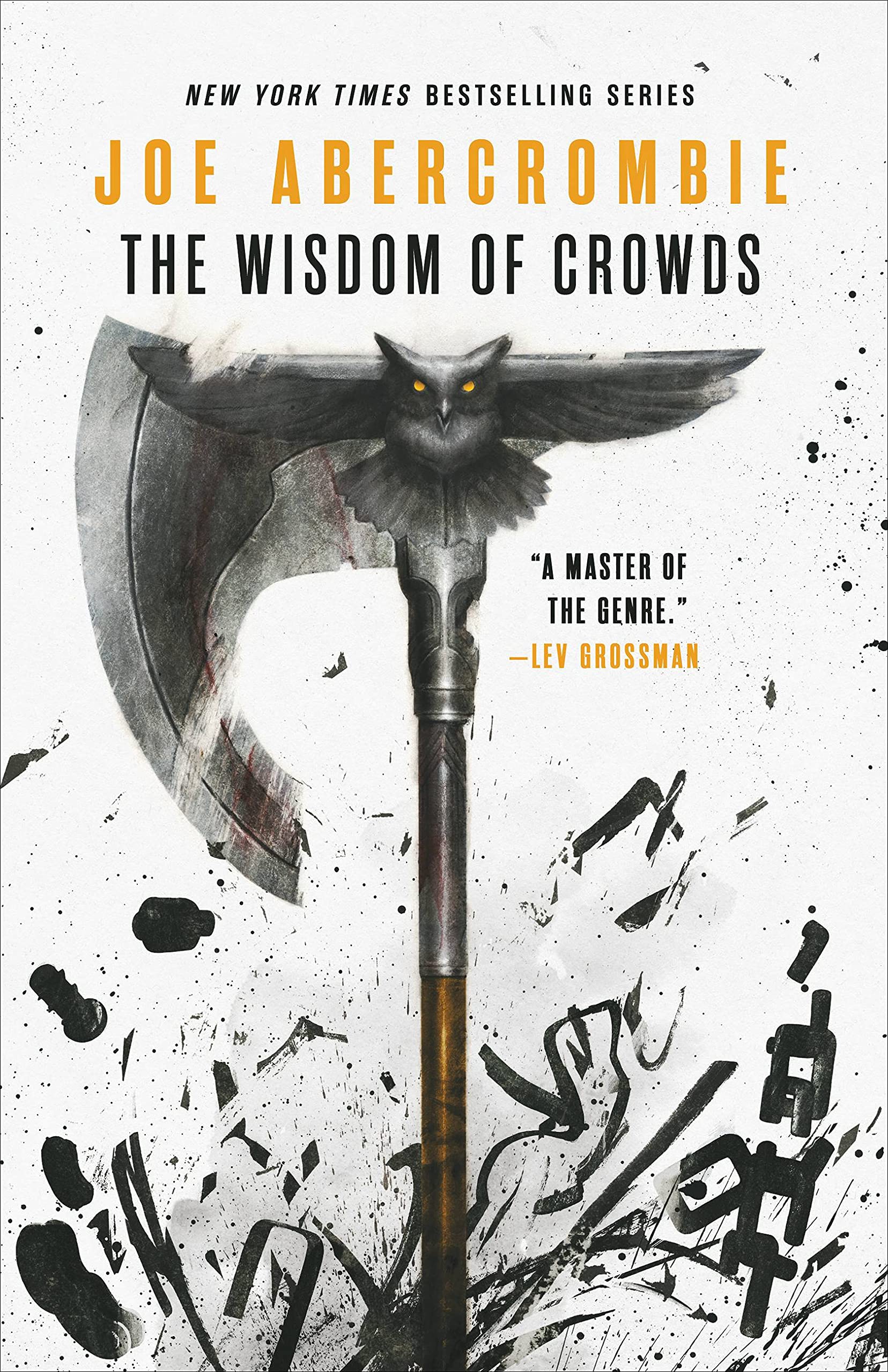
The Wisdom of Crowds Cover 2

Amazon

Throwback Thursday: The Gray Man by Mark Greaney

The Gray Man Cover

Publisher: Audio Studios (Audiobook – 29 September 2009)

Series: Gray Man – Book One

Length: 11 hours and 11 minutes

My Rating: 5 out of 5 stars

Amazon     Book Depository

Welcome back to my Throwback Thursday series, where I republish old reviews, review books I have read before or review older books I have only just had a chance to read.  For this latest Throwback Thursday I check out the debut novel of impressive thriller author Mark Greaney, The Gray Man.

Over the last few years, I have been really enjoying some of the latest novels from the amazing Mark Greaney, one of the leading authors in the spy thriller genre.  Having previously worked with Tom Clancy on his Jack Ryan series, Greaney is probably best known for his awesome Gray Man series.  I have managed to check out the last three novels in this great series, which have been some pretty awesome reads, including Mission Critical, One Minute Out (one of the best books and audiobooks of 2020) and Relentless (one of the best books and audiobooks I have so far read this year).  I also really enjoyed the outstanding military thriller he did with H. Ripley Rawlings, Red Metal, which ended up being one of my top books and audiobooks of 2019).  I have long been meaning to go back and check out the earlier books in the Gray Man series, especially as there is a big Netflix adaption coming out soon (directed by the Russo brothers and starting Ryan Gosling and Chris Evans).  I finally got the chance a few days ago to read the first Gray Man novel, which was also Greaney’s debut book, and I am extremely gad that I did as The Gray Man proved to be an exceptional novel with boundless action.

Court Gentry was the very best operative the CIA ever had, and for years he helped take down vital targets the world over.  However, his career in government espionage came to a violent end when Gentry was set up and burnt, becoming one of the most wanted men in the world with a shoot-to-kill order on his head.  With the entire intelligence community gunning for him, Gentry disappeared into the shadows, becoming a private assassin.  Despite his murky profession, Gentry keeps his humanity by only accepting contracts on those people he believes deserve to die.  After years of taking out the very worst gangsters, war criminals and terrorists in impossible situations, Gentry has gained a legendary and is known throughout the business as the Gray Man.

However, after his latest job sees him assassinate a high-ranking member of the Nigerian cabinet, Gentry suddenly finds himself under attack like never before.  The outgoing president of Nigeria now wants the Gray Man dead, and with a powerful French company on the hook for a billion-dollar contract, he has the perfect tool to get his vengeance.  Led by former CIA officer Lloyd, the French company have organised for a team of hitters to take Gentry down for good, but when their first strike fails, they must get inventive.

Taking Gentry’s handler and his family hostage, Lloyd gives Gentry an ultimatum, travel to their compound in Normandy within the next day or he will kill the hostages, including two young girls.  Determined to save his friend’s family, Gentry is forced to traverse the entirety of Europe to get to his target.  However, between him and his destination are 12 elite kill teams from around the world, each of them competing for a massive bounty on his head.  With every eye on the continent watching out for him and no possible backup, Gentry will need to fight his way through more than 100 killers if he is to succeed.  For most men this would an impossible task, however, the Gray Man is anything but ordinary and he is about to show the world why he is the absolute best.

Well damn, now this was an incredible thriller.  I actually managed to power through the audiobook version of The Gray Man in two days especially once I got stuck into the incredible story.  Loaded with a ton of action of spy thriller excitement, this was such a fun and action-packed read that gets a full five-star rating from me.

I deeply enjoyed The Gray Man’s exciting and compelling narrative, which takes the reader on a wild ride through death and destruction.  While I wasn’t the biggest fan of how the book started, as the slaughter of Taliban soldiers in Iraq seemed a tad over-the-top for an introduction scene, it honestly does not take long for the rest of the story to get incredibly addictive and fun.  The moment that the antagonists start targeting Gentry, all bets are off and what follows is an incredible blend of action, adventure and spy tradecraft that is very hard to put down.  I loved the central story concept of Gentry forced to fight his way across Europe, and Greaney did a great job setting this entire scenario up.  This results in an awesome central section of the novel, where Gentry slowly moves through Europe towards his goal, with everyone in the way trying to kill him.  The action and intensity of these scenes are first rate, and I loved the slow, deliberate war of attrition that the antagonists wage against Gentry, with the protagonist forced to contend with a lack of equipment, allies, and later in the book, blood.  This exceptional story eventually leads up to a massive conclusion, with a wounded Gentry storming the castle and facing off the people who have expended a lot of effort into killing him.  The entire story is wrapped up extremely well, and readers are left very satisfied and happy with how everything turns out.  I had a fantastic time getting through this outstanding story, and there was honestly not a single second that I wasn’t amazingly entertained.

Due to its status as the initial novel in the series, The Gray Man has a very self-enclosed narrative, which ensures that all the main storylines are wrapped up by the final page.  While it does serve as a really good introduction to the protagonist and his unique situation, I found The Gray Man works well as a standalone novel, and it does not rely too heavily on details revealed in the later novels.  There are a lot of great features to this book, and I must highlight the incredible action sequences.  The intense violence and powerful fight scenes are beautifully written, and the reader gets a good sense of the characters interactions with his foes.  I also really appreciated the author’s depiction of tradecraft and spy skills, with the characters using all manner of intelligence tricks and assets to try and win.  Greaney makes really good use of multiple character perspectives throughout The Gray Man to highlight the battle of wits between the various players, and I liked how it also increased how impressive and brutal some of the action scenes were.  While I could have probably done without the sections told from the perspective of one of the eight-year-old granddaughters, the rest work extremely well to create a detailed and richer spy thriller.  I loved seeing the opposition put their plan into action to hunt down Gentry, and it was really great to see all the sides of this adventure.  It was particularly fun to see the antagonist’s reactions as Gentry continues to survive against the odds, and the added note of desperation was pretty entertaining.

I also must highlight the great characters featured within The Gray Man, which really helped to enhance this already awesome story.  They are led by impressive action hero Court Gentry (a great name, BTW), who is perfectly built up throughout the novel as a superhuman spy, thanks to his skill, intelligence, and pure stubbornness.  Gentry has a hell of an ordeal in this novel, forced to fight against impossible odds while being hunted by literally everyone in Europe.  Greaney does a good job introducing the key parts of his protagonist’s personality and history throughout the novel, and you really get a good sense of who Gentry is.  I also loved how Greaney showed Gentry slowly getting worn down as the novel progressed, which felt pretty realistic, especially after all the opponents who try to kill him.  These various injuries slow him down and make him sloppy as the narrative progresses, so much so that he is barely standing by the time he gets to the final showdown.  It was fun to see the other characters debating the truth behind Gentry’s previous missions, especially as he has built up a reputation for impossible tasks.  The constant discussion about what he achieved is really entertaining, especially as it causes several antagonists some major apprehensions.  While substantial parts of his history, such as why he was betrayed by the CIA, are not examined here, you still get some great details about him, and I look forward to seeing what else is revealed in the books I haven’t read yet.  In some ways Gentry was a little one-dimensional in The Gray Man and could have used some more depth, especially around his motivations and his feelings about his betrayal from the CIA.  However, this was a great introduction to this ruthless killer with a heart of gold, and readers will enjoy this first great adventure.

In addition to Gentry, Greaney came up with an excellent group of supporting characters who serve as alternate point-of-view characters throughout the novel.  Due to the plot being about Gentry being hunted by everyone in Europe, most of the alternate perspectives are antagonists, and I had fun with the cool group of villains that Greaney featured in this novel.  Each of these antagonistic characters are well utilised and introduced, even if they have a short shelf-life, and I appreciated some of the time put into building them up.  My favourite, or least favourite, of these is central antagonist Lloyd.  Lloyd is a former CIA analyst turned private-sector lawyer who, after stuffing up and forcing his company to work for the Nigerians, sets his company after Gentry.  Greaney went out of his way to make Lloyd as unlikeable as possible, with the character being extremely arrogant, petty, insecure, and vicious, especially as the novel proceeds and he faces setback after setback.  Every scene he is in is a lot of fun, mainly because he is such an annoying figure in them, and this ensures that the reader is constantly barracking for Gentry, hoping that he wins so that he can punch Lloyd in the face.  I had a wonderful time hating Lloyd throughout this book, and I cannot wait to see Chris Evans’s take on him in the upcoming film adaption.

As I mentioned above, I ended up checking out The Gray Man on audiobook, which proved to be an awesome way to enjoy this excellent book.  The Gray Man audiobook has a decent run time of just over 11 hours, and I found myself flying through it in no time at all.  This audiobook format proved to be the perfect way to enjoy this great book, especially as the many intense action sequences come to life extremely well while being narrated.  I absolutely must highlight the book’s amazing narrator, Jay Snyder, who has since narrated all Greaney’s Gray Man novels.  Snyder has an amazing voice for thrillers, and he ensures that the plot of this book moved along at a quick and exciting pace.  I also deeply enjoyed the various voices that he produced, as every character featured within this novel had a very fitting and distinctive voice.  I particularly appreciated the slimy and cocky voice that he gifted to main antagonist Lloyd, which gave the man a cowardly, bureaucratic voice (it honestly reminded me a little of Cyril from Archer), and really helped to make him even more unlikeable.  Snyder also does some fantastic accents for the various international characters featured in the novel, and each of them worked extremely well.  Overall, this was an exceptional way to check out this book, and I would strongly recommend the audiobook format to anyone interested in this novel.

The Gray Man is an incredible and deeply entertaining debut from Greaney and it is one that I had an outstanding time listening to.  This great book had an awesome narrative, loaded up with a ton of action, mayhem and fun characters, and it swiftly turned into an intensely addictive and thrilling read.  Greaney sets up a lot of elements for his future series, and I am really glad that I went back to see where this fantastic series started.  This book comes highly recommend, and if you are a thriller fan, you will love this book.  I am definitely going to have to check out the rest of the Gray Man novels I am missing, and I am looking forward to seeing what over incredible stories that Greaney has in store for me.

Amazon     Book Depository

The Devil’s Advocate by Steve Cavanagh

The Devil's Advocate Cover

Publisher: Orion (Trade Paperback – 27 July 2021)

Series: Eddie Flynn – Book 6

Length: 403 pages

My Rating: 4.5 out of 5 stars

Amazon

Bestselling thriller author Steve Cavanagh returns with another exciting and over-the-top fun legal thriller, The Devil’s Advocate, an awesome read with a very entertaining plot.

Randal Korn is an evil man, a dangerous killer, and an unrepentant corrupting influence on everyone around him.  Unfortunately for the residents of Sunville County, Alabama, Randal Korn is also their District Attorney, who uses his skills and influence to get the legal system to commit his killings for him.  Known as the King of Death Row, Korn has sent more men to the electric chair than any other district attorney in US history, deriving great pleasure from every life his prosecutions have taken.  However, not all of Korn’s victims have been guilty, a fact that Korn knows and deeply relishes.

When a young woman, Skylar Edwards, is found brutally murdered in Buckstown, Alabama, the corrupt sheriff’s department quickly arrests the last person to see her alive, her innocent African American co-worker Andy Dubios.  After the racist cops quickly beat a confession out of him, Andy is set to stand trial with Korn prosecuting a seemingly airtight case.  With the entire town already convinced of his guilt and with no chance of a fair trial, Andy’s death looks certain, until Eddie Flynn arrives in town.

Hired after Andy’s previous lawyer goes missing, former conman turned brilliant New York lawyer Eddie Flynn heads down to Alabama with his team to try and save Andy’s life.  However, the moment he arrives, Eddie begins to understand just how stacked the deck is.  Thanks to Korn’s immense influence, the entire town is hostile to him, the police are refusing to cooperate, witnesses are threatened or arrested by the sheriff, the judge is already on the prosecutor’s side, and any potential juror will already believe that Andy is guilty.  To save his client’s life, Eddie will have to use every single trick he has to con the jury into finding Andy not guilty, but even that might not be enough.  Worse, it soon becomes apparent that the killing of Skylar Edwards was only the start.  A dangerous murderer still stalks Buckstown, killing whoever gets in their way to achieve their own sinister agenda, and their sights are now firmly set on Eddie.

This was a pretty awesome and wildly entertaining novel from the talented Steve Cavanagh.  A lawyer himself, Cavanagh burst onto the crime-fiction scene a few years ago with his debut novel, The Defence, the first book in his Eddie Flynn series.  There have since been several other Eddie Flynn books, each of which places the protagonist in a unique legal situation.  I have been meaning to read some of Cavanagh’s books for a while now due to the awesome sounding plot synopsis and I currently have a couple of his novels sitting on my shelf, waiting to be read.  Unfortunately, I have not had the chance yet, although I think I will have to make a bit of an effort after reading The Devil’s Advocate, which I was lucky enough to receive a little while ago.  The Devil’s Advocate was an outstanding and captivating novel and I swiftly got drawn into the exciting and amusing narrative.

The Devil’s Advocate has an awesome story to which is extremely addictive and enjoyable.  When I picked up this book, I initially intended only read around 50 pages in my first sitting, however, once I started I honestly could not put it down, and before I knew it I was halfway through and it was well past my bed time.  Cavanagh produces an extremely cool narrative that starts with an awesome scene that introduces the main antagonist and ensures that you will really hate him.  From then, Cavanagh quickly sets up the initial mystery, the introduction of the legal case, and the plot that brings the protagonist to Alabama.  The rest of the narrative neatly falls into place shortly after, with the full details of the case, the corruption of the main setting, and the massive injustice that is taking place, coming to light.  From there, the protagonists attempt to set up their case while facing sustained and deadly opposition from pretty much everyone.  While the initial focus is on the legal defence aspect of the thriller, the story quickly branches out into several captivating storylines, including an examination of the antagonist’s corrupting influence on the town, planned action from a white supremacist groups, attempts to run off or kill the protagonists, as well as mystery around who really killed Skylar.  All these separate storylines are really fascinating and come together with the plot’s central legal case to form an exceptionally fun and electrifying story.  The reader is constantly left guessing about what is going to happen next, especially with multiple red herrings and false reveals, and I ended up not predicting all the great twists that occurred.  While I did think that Cavanagh went a little too political with the overall message of the book, The Devil’s Advocate had an outstanding ending and I had an exceptional time getting through this thrilling story.

One of the best parts of this entire story is the outrageous and unfair legal case that the protagonists must attempt to win.  This case forms the centre of The Devil’s Advocate’s plot, with most of Eddie and his colleagues’ appearances focused on their upcoming legal battle.  Cavanagh really went out his way to create a truly unique and compelling set of legal circumstances for the protagonists to wade through, with the case so tightly sewn up against their innocent client before they even get there.  Despite this, the protagonist goes to work with a very effective, if unconventional, legal strategy that plays to the antagonist’s underhanded tactics.  The entire legal case soon devolves into crazy anarchy, with both sides doing outrageous actions to win, which Cavanagh writes up perfectly.  I found myself getting quite invested in the case, especially after witnessing several blatant examples of the prosecution’s corruption, and these terrible actions really got me rooting for the protagonist, who had some entertaining tricks of his own.  This all leads up to an excellent extended trial sequence, where the various strategies and manipulations in the first two-thirds of the novel come into play.  There are some brilliant and entertaining legal manoeuvrings featured here, with the protagonist initially focusing more on pissing off the prosecution and the judge rather than producing alternative evidence.  However, there are some great reveals and cross-examinations towards the end of the book, as Eddie has a very good go at dismantling the case.  The way it finally ends is pretty clever, and I really liked the way some of it was set up, even if it relied a little too much on a minor character’s conscience finally flaring.

Cavanagh also featured some great and entertaining characters in The Devil’s Advocate, with a combination of new characters and returning protagonists from the previous novels.  The author makes great use of multiple character perspectives throughout this novel, especially as it allows the reader to see the various sides of the battle for Buckstown’s soul.  Seeing the moves and counter-moves of the protagonists and antagonists enhances the excitement of the novel, especially as it shows the creation of several traps that could potentially destroy Eddie and his client.  Most of the characters featured in the novel are very entertaining, although I think in a few cases Cavanagh went a little over-the-top, with some of the villains being a bit cartoonish in their evilness.

The main character of this novel is series hero Eddie Flynn, the former conman who now works on impossible cases as a defence attorney.  Eddie was an awesome central protagonist, especially as his unique sense of justice and criminal background turns him into one of the most entertaining and likeable lawyers you are likely to ever meet.  I loved the very underhanded way in which he worked to win his case, and the variety of tricks and manipulations that he used were extremely fun to see in action, especially as it rattles the police antagonists and completely outrages the other lawyers and judges.  I loved his style in the courtroom scenes, especially as most of his appearances eventually end up with him thrown in jail for contempt (it is a pretty wise legal strategy).  Eddie has a very fun code in this novel, and I think that I will enjoy seeing the earlier novels in which he transitions from conman to lawyer.

Eddie is also supported by a fantastic team from his small law practice, each of whom get several chapters to themselves and who serve as great alternate characters who in some way overshadow the main protagonist.  These include his wise old mentor character, Harry; the younger lawyer, Kate; and the badass investigator, Bloch.  Each of them brings something fun and compelling to the overall story, and I liked the way that Cavanagh ensured that they all get their moment throughout The Devil’s Advocate.  I really enjoyed some of the great sub-storylines surrounding these three supporting protagonists.  Examples of this include Harry, a genuine silver fox with the ability to attract a certain type of older lady, who serves as the team’s heart and soul, although he’s not opposed to some improper legal tactics.  I also enjoyed Kate’s appearances as a secondary trial attorney, especially as she serves as a good alternate to the flashier Eddie, while also finding her feet in a murder case that has rattled her.  I personally enjoyed the gun-toting investigator Bloch the most, mainly because of her hard-assed attitude and inability to be intimidated by the various monsters lurking around town.  Bloch has some very intense and exciting scenes, and it was really entertaining to see her stare down rabid militiamen and crooked cops.  These protagonists end up forming an impressive and cohesive team, and it was a real joy to see them in action.

I also must highlight the outstanding villain of the story that was Randal Korn.  Korn is a truly evil and terrifying creation who is pretty much the direct opposite of the more heroic Eddie.  Cavanagh has clearly gone out of his way to create the most outrageously despicable antagonist he could, and it really works.  Korn, who apparently is a bit of a pastiche parody of five real-life American prosecutors who always seek the death penalty, is a man who became a lawyer solely so he would have a legal way to kill people.  The pleasure he receives from controlling people and ensuring that they die, even if they are innocent or undeserving, is terrifying, and it ensures that the character will go to extreme lengths to win his case.  The author does a fantastic job painting him as a despicable figure, including through several point of view chapter, and there are some interesting examinations about his psyche and his desires.  Having such an easily hated villain really draws the reader into the narrative, mainly because the reader cannot help but hope that he gets what is coming to him.  Despite that, I think Cavanagh went a little overboard in some places (the self-mutilation and the rotting smell are a bit much), and the whole soulless creature angle is layered on a bit too thickly.  Still, the author achieved what he wanted to with this antagonist, and I had a wonderful time hating this character from start to finish.

The final point-of-view character that I want to mention is the mysterious figure known as the Pastor.  The Pastor is another antagonist of this novel whose identity is kept hidden from the reader for much of the book.  This is mainly because he is the real killer of Skylar Edwards, whose death was part of an elaborate plan.  The Pastor is another great villain for this novel, due to his crazed personality, murderous tendencies and horrendous motivations for his crimes.  I think that Cavanagh did a great job utilising this second villain in his novel, and I liked the tandem usage he had with Korn.  I was especially impressed with the clever mystery that the author had surrounding his identity, which was kept hidden right till the very end.  It took me longer than I expected to work out who the Pastor was, thanks to some clever misdirects from the author, but the eventual reveal was extremely good and helped tie the entire story together.  Readers will have a lot of fun trying to work out who this character is, and I really enjoyed the extra villainy that they brought to the table.

The fantastic Steve Cavanagh has once again produced a captivating and intense legal thriller with The Devil’s Advocate.  This latest Eddie Flynn thriller was an amazing ball of crazy fun that I powered through in two sustained reading sessions.  With some over-the-top characters, a clever legal case, and an exciting overarching conspiracy, The Devil’s Advocate proved to be next to impossible to turn down and is really worth checking out.  I will definitely be going back and reading some of Cavanagh’s earlier books, and I look forward to seeing what insane scenarios he comes up with in the future.

Amazon

Quick Review – Falling by T. J. Newman

Falling Cover

Publisher: Simon & Schuster (Trade Paperback – 6 July 2021)

Series: Standalone

Length: 290 pages

My rating: 4 out of 5 stars

Amazon     Book Depository

Prepare to never feel safe on a plane again after reading the exciting debut thriller from author T. J. Newman, Falling.

Synopsis:

You just boarded a flight to New York.

There are one hundred and forty-three other passengers onboard.

What you don’t know is that thirty minutes before the flight your pilot’s family was kidnapped.

For his family to live, everyone on your plane must die.

The only way the family will survive is if the pilot follows his orders and crashes the plane.


Falling
is an intense and exhilarating novel with an intriguing plot idea about a pilot being blackmailed into crashing a plane.  This was the very first novel from author T. J. Newman, a real-life flight attendant, who cleverly utilises knowledge from her career to produce this exciting read.  I was lucky enough to receive a copy of Falling a little while ago, and I managed to power through it in a few short days thanks to its compelling and fast-paced narrative.

I was a fairly hooked with Falling’s story from the very beginning thanks to a very memorable opening line: “When the shoe dropped into her lap the foot was still in it”.  This great line, despite being part of a somewhat unexplained dream sequence, and it does a great job of setting the tone for the rest of the novel.  The story proper gets off to a great start, with the entire scenario set up quickly and the danger to the plane shown in short order.  The book swiftly splits into several separate storylines for the pilot, the pilot’s family, the kidnapper, a flight attendant marshalling the passengers in the back of the plane, and the FBI agent attempting to save the victims.  This mixture of different perspectives produces a rich and intense narrative, and it was great to see the various parts of this dark situation.  This is a very fast-paced narrative with no slow moments at all, at Newman adds in some great twists and turns as the story continues.  There is a great blend of action in the air and action on the ground as the various characters attempts to come to terms with the situation and either save the plan or the pilot’s family.  This all leads up to a big, exciting climax, with the various storylines coming to a great end.  I enjoyed the fantastic story featured in Falling, especially as it was anchored to a compelling cast of characters.  The motivations for the kidnapper were very interesting and well set up, and it was great to see who else was involved in the case.  Some of the supporting characters, such as the sassy attendant known as Big Daddy, were quite entertaining, and Newman ended up wrapping some awesome storylines around them.  This great story really grabs your interest and attention.

A major thing that I really appreciated about Falling was the amazing amount of detail about planes, flight procedure, and the duties and responsibilities of pilots and cabin crew that Newman added to the story.  The author made exceptional use of her experiences in her career to give these parts of the book some impressive realism, and you really get a sense of what it is actually like up in the plane.  This is particularly true when it came to the parts of the book revolving around the hijacking and potential crash, as Newman, who has clearly spent a lot of time thinking about the subject (which admittedly is a tad concerning for a flight attendant), does a great job detailing all the counter procedures and issues involved.  These fascinating bits of insider information are worked into the story extremely well, enhancing the various thrilling scenes and ensuring that the reader is immersed even more into the narrative.

Overall, Falling is an outstanding and exciting thriller debut that is definitely worth checking out.  Author T. J. Newman did a great job on her first novel, and I had an excellent time getting through the fantastic story.  I really enjoyed the author’s amazing use of her own knowledge and experiences throughout the story, especially as they helped to create a memorable and clever story.  I look forward to seeing what Newman writes in the future, especially after enjoying the captivating and electrifying Falling.

The Enemy Within by Tim Ayliffe

The Enemy Within Cover

Publisher: Simon & Schuster (Trade Paperback – 28 July 2021)

Series: John Bailey – Book Three

Length: 353 pages

My Rating: 4.5 out of 5 stars

Amazon

One of Australia’s fastest rising crime fiction authors, Tim Ayliffe, returns with another impressive and brilliantly relevant novel, The Enemy Within.

Ayliffe is a great author whose work I have been really enjoying over the last couple of years as he sets some fantastic stories around contemporary Australian subjects.  Debuting in 2018, this journalist wrote a compelling and intriguing first novel with The Greater Good, which looked at political corruption and the growing influence of China in Australia.  He followed it up in 2019 with State of Fear, which looked at Islamic terrorism and featured a dramatic and impactful story.  Now Ayliffe checks out the complete opposite end of the political spectrum in The Enemy Within, which features a look at growing right-wing radicals.

As the smoke from devastating January 2020 bushfires covers Sydney, investigative reporter John Bailey is covering a far more dangerous threat in the suburbs.  Barely recovered from the traumatic events that took the love of his life from him, Bailey is now working for a news magazine.  His first story will cover the re-emergence of right-wing nationalists and white supremacist groups in Australia.  Attending one of their meetings, where a controversial American social media star whose entrance into the country has gained much political opposition and protest, Bailey attempts to gain the pulse of this movement, only to face violence and an anti-media mentality from the crowd.

Working on his story, Bailey has no idea of the chaos that is about to rain down on his life.  After he meets with an old contact and informant, Bailey’s house is raided by the Australian Federal Police.  The police are investigating him for a story he ran back while he was a war correspondent that highlighted the alleged war crimes Australian soldiers committed in the Middle East.  Armed with a warrant granting them access to his phone, computer and all his files, the police tear through Bailey’s life and throw him in gaol for attempting to impede their search.

With the entire nation’s media covering his plight, Bailey is released from prison and soon discovers that someone orchestrated the police raid to delete evidence from the rally.  Attempting to investigate further, Bailey is shocked when his contact ends up dead in mysterious circumstances and the police fail to investigate.  With Sydney on the verge of a race war, Bailey continues his investigation and soon uncovers proof about a dangerous conspiracy that aims to shake the very foundations of Australian life.  With only his old friend CIA agent Ronnie Johnson as backup, Bailey attempts to stop this plot before it is too late.  But with a seemingly untouchable enemy targeting him from the shadows, has Bailey finally met an opponent even more determined than he is?

This was an awesome and captivating novel from Ayliffe who once again produces an intense, character-driven narrative.  Set around some very relevant and controversial topics, The Enemy Within is a powerful and exciting novel that takes the reader on a compelling ride.  I had a fantastic time reading this clever book and I loved the fascinating examinations of one of the more insidious threats facing Australia.

Set in the blistering, smoke covered streets of early 2020 Sydney, this story starts with protagonist John Bailey engaged in a controversial story about the rising far-right wing.  After a predictably violent confrontation, the narrative takes off like a shot, with the protagonist investigating a series of concerning events, including several murders, racial attacks, and a re-opened investigation into an old story of his that sees the AFP raid his house.  Each of these separate investigative threads are drawn together as the book progresses, and the reader is treated to an impressive and deadly conspiracy with several clever allusions to real-world issues and events.  This was a very exciting and captivating novel to get through, and I found myself reading it extremely quickly, nearly finishing it off in a day.  The story leads up to an awesome and intense conclusion, where Bailey uncovers the entire scope of the plot and races to stop it.  While the identity of some of the participants is very clear since the character’s introductions, their full plan, methods, and reach are more hidden and it was great to see the protagonist uncover them all, especially as several were cleverly hidden in innocuous moments earlier in the novel.  There is even an excellent twist towards the end of the book that reveals a well-hidden antagonist, which I particularly enjoyed as it was so skilfully inserted into the story.  I ended having an excellent time getting through this amazing narrative, and this might be one of the best stories that Ayliffe has so far written.

One of the things that I have always enjoyed about the John Bailey novels is the way in which so much of the amazing story was tied to how extremely damaged the titular protagonist is.  John Bailey is a veteran reporter whose previous life as a war correspondent has left him extremely broken, especially after being tortured by a dangerous terrorist leader.  This eventually led to him becoming an alcoholic, which ruined his career and separated him from his family.  However, since the start of the series, Bailey has shown some real character growth, although this is usually accompanied by some traumatic events or tragic moments.  In The Enemy Within, as Bailey is still recovering from the loss of his lover at the end of State of Fear.  Despite making some strides to recover, Bailey is still reeling from the loss, and this becomes a major aspect of his character in this latest book.  This is especially true as Ayliffe does an outstanding job of highlighting the grieving process and showing Bailey’s feelings of despair.  It was really moving to see Bailey in this novel, and I was glad to see him continue to recover from all the bad events of his life, including stopping drinking and getting a dog.  However, Bailey still has an unerring knack to annoy the subjects of his stories, and he ends up getting into all sorts of danger.  It was great to see him getting to the root of this story by any means necessary, and I continued to appreciate his impressive development.

I also love the way that the each of Ayliffe’s novels feature some fascinating contemporary issues facing Australia or the wider world.  In The Enemy Within, the main issue is the rise of Australian right-wing and white supremacist groups in recent years.  Like in the rest of the world, these groups have been becoming a bit more prominent recently in Australia, and Ayliffe does an excellent job analysing this issue throughout his novel.  The author does a deep examination of the movement as the story progresses, and the reader is given a good insight into their concerns, motivations, and the reasons why the movement has been gaining progress in recent years.  There are some clever parallels between the events or people portrayed in the novel and real life, which was interesting to see.  Examples of this include the government allowing controversial right-wing figures into the country despite protests, and the reactions of certain right-wing media groups.  I liked how Ayliffe once again featured the character of Keith Roberts, a right-wing commentator who is a pastiche of several Australian radio personalities.  It was also quite fascinating to see how the concerns and motivations of the right-wing groups were extremely like some of the Islamic terrorists featured in State of Fear, with both groups feeling disconnected from and attacked by mainstream Australian society.  Not only is this extremely fascinating and thought-provoking but it also serves as an amazing basis for Ayliffe’s narrative.  The author does a fantastic job of wrapping his thrilling story around some of these elements, and it makes the overall narrative extremely relevant.

I also must highlight another significant contemporary inclusion that was featured in The Enemy Within, and that was the Australian Federal Police’s raids on Bailey’s house.  This police raid is a direct reference to a series of controversial raids that occurred on several media organisations, including ABC News (who Ayliffe works for), in relation to articles they published.  Ayliffe uses these real-life examples to really punch up what happens within The Enemy Within, and he produces some realistic scenes that were comparable to this.  The subject of the articles that prompt the raids are also very similar and feature another topic that is quite controversial in Australia in the moment, that of alleged war-crimes by Australian soldiers fighting in the Middle East.  Just like with the other divisive topics featured in this novel, Ayliffe did a fantastic job re-imagining these events in his novel, and it produces some excellent inclusions that will particularly resonate with an Australian audience.  I deeply appreciated the way in which he was able to work these events into his story, and I think that it made The Enemy Within a much more compelling and distinctive read.

I have to say that I also really loved the author’s use of setting in The Enemy Within.  This latest book is set in early 2020, when Sydney was surrounded by some of the worst bushfires in Australian history and the entire city was covered in smoke for months.  Ayliffe does an excellent job portraying these terrible conditions, no doubt drawn from his own personal experiences, and the reader gets a good idea of how difficult life was under those conditions (it certainly brought me back to that time, although we didn’t have it quite as bad down in Canberra).  Ayliffe uses this unique setting to full effect throughout the book and it provides some fitting atmosphere for the narrative, especially as the landscape reflects the simmering tensions flaring up within the city.  This was one of the more distinctive features of The Enemy Within, and I really appreciated the way the author used it to enhance his great story.  I also quite enjoyed the throwaway references to COVID-19, with none of the characters particularly concerned about it considering everything else that was happening, and I have no doubt that Ayliffe’s next novel will make great use of the pandemic in some way.

With his latest novel, The Enemy Within, Tim Ayliffe continues to showcase why he is one of the best new writers of Australian crime fiction.  The Enemy Within had an awesome and incredible story that perfectly brings in amazing contemporary Australian issues and settings, which are expertly worked into a thrilling novel.  I had an outstanding time reading this fantastic read and it comes highly recommended.

Amazon

Star Wars: The High Republic: Out of the Shadows by Justina Ireland

Star Wars - Out of the Shadows Cover

Publisher: Disney Lucasfilm Press (Audiobook – 27 July 2021)

Series: Star Wars – The High Republic

Length: 10 hours and 50 minutes

My Rating: 4 out of 5 stars

Amazon     Book Depository

The marvels and terrors of the High Republic era of Star Wars history continues with the latest fantastic and exciting young adult tie-in novel, Star Wars: Out of the Shadows by Justina Ireland.

The High Republic is an interconnected collection of novels, comics, audio dramas and other pieces of media produced by top Star Wars authors, set hundreds of years before the films.  Starting in January 2021, this compelling multimedia project features several great pieces of fiction, including the awesome introductory novel Light of the Jedi by Charles Soule, the impressive The Rising Storm by Cavan Scott, and the entertaining young adult novel Into the Dark by Claudia Gray.  The latest High Republic novel, Out of the Shadows, is another compelling young adult novel that continues several key storylines from previous High Republic novels.  This was the second Star Wars book from author Justina Ireland, who previously wrote the High Republic junior novel, A Test of Courage.

Death, destruction, pirates, and plant monsters!  The Republic may be at the height of its culture and influence, but it is in some major trouble.  Following the devastation that occurred during the Republic Fair at Valo, the Republic are at war with the marauders known as the Nihil, with the Jedi leading the efforts to hunt them down.  But in the far corners of space, the Nihil are planning something new, something that could change the very fabric of the galaxy.

Sylvestri Yarrow is a young pilot and captain of a dilapidated ship, who is doing the best she can to keep her crew above water after the death of her mother.  However, when her ship is suddenly pulled out of hyperspace in a remote area of space with a boarding party of Nihil raiders waiting for her, she has no choice but to abandon her home.  Determined to get some form of justice, Sylvestri heads to Coruscant to convince someone of the dangers, but no one is willing to listen to a teenage pilot from the frontier until the unscrupulous and ultra-wealthy Xylan Graf appears and makes her an offer she cannot refuse.

In exchange for a new ship and a substantial number of credits, Sylvestri will accompany Xylan to the area of space where she lost her ship to help him disprove rumours of a dangerous Nihil weapon and to convince a senator into giving his family access to valuable hyperspace lanes.  Despite her misgivings about the plan, and the trustworthiness of Xylan, Sylvestri agrees to accompany him.  However, the Senator has a caveat: Xylan must take along some unimpeachable observers of her choosing, Jedi.  Now accompanied by young Jedi Knight Vernestra Rwoh, her Padawan Imri Cantaros, Master Cohmac Vitus, his apprentice Reath Silas, and, awkwardly, Sylvestri’s ex-girlfriend Jordanna Sparkburn, the team heads out to the wilds of space.  But the Nihil are always watching and waiting from the shadows, and their plans could spell doom for everyone.  Can Sylvestri and her new Jedi friends survive the dangers ahead of them, or will terrible secrets from her past threaten to overwhelm everyone once they are dragged out of the shadows.

Out of the Shadows proved to be a fun and compelling entry in this great new Star Wars series that I had a fantastic time listening to.  Featuring a great story and some excellent characters, this novel continues several key storylines from the previous High Republic novels and presents a strong and action-packed adventure.

Ireland has come up with a pretty good story for Out of the Shadows, resulting in a very exciting read.  Set around a year after Ireland’s last novel, A Test of Courage, and a short period after the events of the last major High Republic novel The Rising Storm, Out of the Shadows ties together several intriguing story threads set around some compelling characters.  The book starts out quick, with each major characters introduced in short order through a series of separate point-of-view chapters.  These early introductions do a good job of establishing the characters’ histories, personalities and motivations, and sending them on their various story paths.  The first third of the novel moves quickly, with each character getting some compelling moments, such as Sylvestri getting involved with unscrupulous businessman Xylan Graf, while Jedi Vernestra and her friends get a taste of the dangerous frontier life on their way to Coruscant.  This results in a fun mixture of plot inclusions, from some captivating political intrigue in Sylvestri’s storyline to some more action in Vernestra’s story combined with some interesting examinations of the Jedi and the Force.

These storylines combine around halfway through the book, with the key characters (except for one point-of-view antagonist) coming together and working as a team.  While it did have some good moments, I felt the middle part of the novel dragged a little, and there was not a great deal of excitement there.  However, it did set up the conclusion nicely, with Sylvestri and the Jedi coming face to face with the Nihil in less-than-ideal circumstances.  After a short confrontation, the story goes into overdrive, with the characters racing through several events all the way up to the end, including one event that might have some major ramifications for the High Republic storylines.  Strangely enough, while the second act was a little slow, the final part of the novel was way too quick, with a lot happening in a very short amount of time.  Still there were some great moments in these end scenes, including a couple of good twists, and it also sets up some further adventures extremely well.  All the key characters get gratifying conclusions to their various storylines, and readers are left feeling pretty satisfied with how events turned out.  Ireland makes sure to layer her story with some great action sequences, and there are some entertaining moments spread throughout the book.  I had a wonderful time reading this cool story, and it ended up being a rather good Star Wars book.

This latest Star Wars novel is marketed towards a young adult audience, and I felt that it was a particularly good read for teenagers.  Not only does it feature several teenage characters kicking ass, including a girl who became a Jedi Knight at age 15, but it also contains a clever and enjoyable story that does not pander to the younger age group or shy away from violence or controversial topics.  Ireland did a great job diving into the teenage mindset, and I felt that the various teenage characters featured in this novel were well portrayed as competent and complex figures.  I also liked the strong LGBT+ elements that Ireland featured throughout the novel, especially between Sylvestri and Jordanna Sparkburn, and it is cool that it is being shown so prominently in these novels.  Like many young adult Star Wars novels, this book is can be easily enjoyed by older Star Wars fans, who will appreciate the intriguing story and fascinating developments to the wider High Republic universe.  Younger readers will also probably have a good time with this novel, especially as Ireland does not go too over the top with the violence and romance, and as such I felt that this was an accessible novel to fans of all ages.

Out of the Shadows’ narrative is a continuation of several previous High Republic novels, which readers may need a bit of pre-knowledge about to fully enjoy.  Not only does this novel continue to expand the High Republic series and make frequent references to characters and events primarily featured in Light of the Jedi or The Rising Storm; it also serves as a direct continuation of two previous books.  This includes Ireland’s first Star Wars novel, A Test of Courage, as well as earlier 2021 release, Into the Dark, with key characters and storylines continued in Out of the Shadows.  Readers unfamiliar with these previous novels might also have a hard time following what is happening in Out of the Shadows, although I did think Ireland had a good go at making this novel accessible to readers, no matter their knowledge base.  Some key events of previous novels are explored in some detail, and I had no trouble following what was happening or who the characters were, even though I haven’t read A Test of Courage.  Ireland also blended the various existing storylines together extremely well, and this helped to turn Out of the Shadow into a key entry in the overall High Republic series, especially as it continues to show the galactic machinations of the Nihil.  It also looks like several storylines, mainly surrounding Ireland’s primary protagonist Vernestra Rwoh, will be continued in some future novels and I will have to try to read Ireland’s next novel, Mission of Disaster, even though I have avoided the junior High Republic novels in the past.

One of the things that particularly impressed me about Out of the Shadows was the excellent collection of characters that Ireland fit into her narrative.  There is a substantial central cast in this book, including some new additions and some characters who have appeared in previous High Republic novels.  The author does a good job of introducing and exploring these key characters throughout the novel, and you get some interesting and intense character development occurring, which really adds to the narrative.

These characters include Sylvestri Yarrow, a young pilot who finds herself dragged into the middle of this adventure.  Sylvestri is a tough frontier girl with a big independent streak and a massive chip on her shoulder when it comes to both the Nihil and the Jedi, and she goes through a lot in this novel.  Serving as one of the main point-of-view characters, Sylvestri offers a very interesting view on the events occurring and has some deep connections to the Nihil plot without even realising it.  She also forms an intense and fantastic relationship with Jordanna Sparkburn, her ex-girlfriend, who suddenly re-enters her life.  Jordanna is a frontier deputy responsible for defending her planet from Nihil raiders, which has seen her fight in quite a few battles.  Brought into the story after the Jedi help her to defend her home, Jordanna accompanies them to Coruscant and then gets wrapped up the main story.  Mainly introduced as the tough girl still interested in Sylvestri, Jordanna gains a lot of depth as a character as the story progresses, especially as she has experienced a lot of trauma after being forced into multiple battles.  A lot of this comes out when Sylvestri is in trouble, and Jordanna goes on a bit of a killing spree with a unique Nihil weapon she has obtained.  This scene really adds a lot to how the reader sees her, and it proves to be quite fascinating.  I was also a big fan of Jordanna’s giant alien cat, Remy, a dangerous creature who is just a big kitten at heart, especially when she bonds with some of the other characters.

I also enjoyed the great Jedi characters featured in Out of the Shadows.  These include Jedi Knight Vernestra Rwoh and her Padawan Imri Cantaros, who were the main characters of A Test of Courage and are now Ireland’s go-to Star Wars protagonists.  These two Jedi make for a unique pairing, as Vernestra is a brilliant Jedi prodigy, becoming a Knight at a very young age, while Imri is only slightly younger and has a unique ability to perceive emotions.  Vern is a particularly striking character, particularly with her lightwhip (a lightsaber modified to also be used as a whip) and I enjoyed seeing the challenges that a very young Knight would face.  Her unique connection to the force also connects her to another interesting character in the High Republic canon, and it sets her up for some big storylines in the future.  The other major Jedi characters are Jedi Master Cohmac Vitus and his apprentice Reath Silas.  Cohmac and Reath were previously heavily featured in a previous young adult novel, Into the Dark, and it was great to see them again.  Despite being the apprentice, Reath is the more prominent character, with several point-of-view chapters to himself.  While it was great to see more of Reath and Cohmac, they are a little underutilised, and I would have liked to see more about them, especially with Reath’s unique connection to one of the antagonists.

The other two characters who were a lot of fun in this book are Nan and Xylan Graf, two complex figures who are playing their own games.  Nan is a young Nihil spy and infiltrator who previously encountered Reath while the two were trapped on a space station together.  Serving as one of Marchion Ro’s most loyal soldiers, Nan is entrusted with an important treasure and is subsequently forced to navigate the Nihil’s internal feuding and plotting to survive.  Nan provides a fantastic alternate perspective for much of the events of the novel as she is used to show what is happening in the Nihil camp.  I liked her use in this book, and while I would have enjoyed a much more intense confrontation with Reath when they are inevitably reunited, I did enjoy how Nan’s story arc dramatically changed towards the end of the novel, which should be interesting for future High Republic novels.  The other character is Xylan Graf, the ultimate rich-kid master manipulator.  Xylan is the scion to the exceedingly powerful and rich Graf family, who organises the entire expedition, seemingly to gain rights to a valuable sector of space.  Xylan is an extremely flashy and stylish figure, and it is quite entertaining to see the other characters react to his eccentricities.  He is also quite a sly operator, cooking up plans and spinning tales to keep everyone happy.  He is so slippery that you honestly don’t know what he is planning for most of the novel, and I felt that he was a very compelling and fun addition to the cast.  All of the above characters were really fun and I hope they reappear in some of the future High Republic entries.

I made sure to grab a copy of Out of the Shadows’ audiobook format, which proved to be an interesting experience.  While I tend to really enjoy Star Wars audiobooks due to the cool production inclusions they usually feature, I ended up being a little disappointed with Out of the Shadow’s audiobook.  This was mainly because it lacked the iconic Star Wars musical score or background sound effects that all the other Star Wars audiobooks have, which made for a more subdued listening experience.  While this didn’t make Out of the Shadows impossible to enjoy, it was a very noticeable departure from the typical fun I have with Star Wars audiobooks, and several scenes could have benefited from being enhanced by some emotional music.  Still, I enjoyed the production, mainly because narrator Keylor Leigh does a really good job telling the story.  Leigh, who previously narrated Ireland’s A Test of Courage, has a great voice for teenage characters.  I felt that Leigh gave each of the key protagonists a unique and fitting voice, and she also ensured that the narrative moved along at a quick and exciting pace.  In addition, with a runtime of just under 11 hours, this is a relatively quick listen, which dedicated listeners can power through in no time at all.  As a result, this is a good format to enjoy Out of the Shadows on, although I really do wish that it had featured the usual strong Star Wars production values.

Star Wars: Out of the Shadows by Justina Ireland is an awesome and captivating High Republic tie-in novel, which continues to explore this unique period in Star Wars history.  Containing a fun story and some great characters, this novel serves as a key entry in the High Republic series, following several fascinating plot threads from some previous novels.  Readers are in for an excellent time with this novel, and Out of the Shadows proves to be an exciting and compelling experience.

Amazon     Book Depository

Prisoner by S. R. White

The Prisoner Cover

Publisher: Headline (Trade Paperback – 31 August 2021)

Series: Hermit – Book Two

Length: 421 pages

My Rating: 4.5 out 5 stars

Amazon     Book Depository

Prepare for a twisty and dark Australian murder mystery novel as author S. R. White presents the compelling and powerful Prisoner.

Deep in rural Northern Australia, a dead body has been found in the middle of a dank and dangerous swamp.  The corpse is staged to appear like a crucifixion, with the man’s arms and legs tied to poles, and his chest caved in with several blows.  Called to the scene of the crime, Detective Dana Russo soon discovers that the victim was a convicted rapist who had only been released from prison a few hours earlier and whose crime occurred only a short walk away from his murder site.

Determined to get to the bottom of this unusual murder, Russo and her team swiftly begin tearing apart the victim’s life in prison and find that he had been in communication with two local sisters who offered him a place to stay once he was released.  Investigating the sisters, they discover a unique pair of siblings who have been irreparably damaged by trauma and abuse and who live separate from the rest of society.  Believing that the solution to the mystery may lay with them, Russo brings them both in for questioning, but finds them uncooperative and elusive.

Under pressure to solve the crime, the detectives slowly unwind an intriguing case, concerning corruption, drugs and prison gangs.  However, the further they dig, the more apparent it becomes that the sisters are hiding some dark secrets about themselves and the victim.  Forced to dig deep within herself, Russo uses the memories of her own traumatic childhood to analyse the suspects and find some common understanding with them.  Can Russo break through these two unlikely suspects, or will the solution to this murder never be revealed?

This was a pretty cool and captivating novel from former British Police officer turned author S. R. White.  Prisoner is White’s second novel and serves as a sequel to his 2020 debut, Hermit.  This proved to be a fantastic read and I deeply enjoyed the intriguing and powerful narrative, especially as White loads his book with a complex mystery and some deeply damaged characters.  I got pretty hooked on this book as it progressed and ended up finishing it in only a couple of days.

Prisoner contains a very impressive and compelling narrative that I really found myself getting drawn into.  The novel mostly starts off focusing on the murder, with the discovery of the body in the first few pages, and then the protagonists immediately jump into the investigation, including the interrogation of one of the main suspects.  As the story progresses, you get some other interesting elements thrown in, mostly around Dana Russo and one of her other colleagues as they deal with some dark personal history.  There is also a captivating subplot regarding internal police politics that produces a real shakeup in the department and has some potential series-wide ramifications.  However, most of the story remains on the mystery, and I really appreciated the creativity and darkness that the author fits into the case.  Despite being a sequel to White’s first book, Prisoner can easily be read as a standalone novel, and no prior knowledge of the characters or the setting is needed.  I felt that the entire narrative progressed along at a great pace, and there were no slow bits throughout the book, as the reader was either reading about the case or dealing with the intense personal demons of the various characters.

I must highlight the fantastic writing style that White featured throughout this novel.  While most of the focus of Prisoner is on central character Russo, the author makes good use of multiple perspectives, mainly of the other detectives on the investigation team, to move the story along and provide some alternate points of view and different investigative threads.  White utilises a very detailed writing style, which encourages a slower reading pace to make sure you don’t miss anything, and I felt that enriched the mystery and increased the realism of the plot.  I also must highlight the incredibly detailed descriptions of the swampy landscape that surrounded the crime scene and the Northern Australian town where the plot is set.  White paints a grim picture of small, isolated community on its last legs, where even the landscape has turned against it.  You can really feel the stickiness and deadliness of the swamps, and it proves to be quite a haunting background to several scenes.  I also must mention the really fun and unique take that several of the characters had on the film Signs.  This film, which I personally rather enjoyed, is brought up several times and becomes a key plot point.  While that does sound a little strange, its inclusion worked surprisingly well, and the subsequent discussions and insightful analysis of the film and its themes, ended up fitting into the overall narrative quite seamlessly, helping to create quite a unique tale.

I also deeply enjoyed the crime fiction/mystery elements of Prisoner, which really helped to turn this into quite a compelling and exciting story.  White crafts together a really clever and psychologically intense mystery for this book, and I had a wonderful time seeing the protagonists unwind it.  The author sets up a great methodical criminal investigation, with the characters slowly uncovering clues, backstory and various suspects throughout the story.  While the police do achieve an impressive amount in just a couple of days, there is a gritty sense of realism to much of the story, and I really enjoyed seeing the police in action.  The best part of the investigation is easily the focus on interrogations as the protagonist engages two uncooperative suspects in several separate interviews throughout the course of the book.  These interrogation sequences are among some of the best parts of the entire book, as Russo really dives into the pasts and minds of her suspects, which also requires her to reach back and harness some of her own trauma to break through to them.  This, combined with the rest of her team’s investigation, proved to be quite fascinating, and I really enjoyed seeing the cooperative work and professional skills involved.  I also quite enjoyed the solution to the murder, especially as White comes up with quite a unique and dark motivation for the crime.  There are several good suspects and motivations for the murder, which at times made me question who the killer might be.  However, I thought the overall resolution of the mystery was extremely clever, and it really made great use of the dark psychology of some of the characters.

One of the biggest highlights of this book were the damaged and traumatised central characters, who White spent a substantial amount of time exploring throughout the course of the story.  This includes a mixture of characters who previously appeared in Hermit and some new characters brought in for Prisoner.  This includes central protagonist Dana Russo, the detective in charge of the investigation.  Dana had a very traumatic childhood, brought on by an abusive mother who beat and emotionally tormented her following her father’s death.  While this was revealed in the previous novel, it was recounted once again in Prisoner, especially as details of the case end up mimicking parts of Dana’s life.  The protagonist is forced to dive deep into her prior experiences to help solve this case, and it was fascinating to see how she could instantly spot signs of abuse, as well as rationalise the various reasons behind it and the impacts it can have on a young person.  The protagonist also uses her experiences to get into the minds of her two main suspects, resulting in some intense and extremely powerful interrogation scenes, where both suspect and interrogator are broken down at the same time.  White also produces some more revelations about Dana’s terrible childhood, including a certain reveal on the last page that was pretty memorable, and I really liked the compelling picture he painted around this impressive leading character.

The other characters who proved to be extremely compelling were the main suspects of the murder case, Suzanne and Marika Doyle.  The Doyle siblings are instantly identified as persons of interest in the case due to their house’s proximity to the crime scene and the fact that they wrote to the victim in prison and helped to organise his parole, despite having never met him.  Upon examination of their history, as well as an insightful look at their house, it soon becomes apparent that both siblings had a hard childhood because of their controlling mother.  Their life story becomes a key part of the overarching plot as Russo attempts to uncover their full history and personalities, as she believes it is important to solve the case.  The eventual reveals about the siblings and their relationship, their past and their emotional states is extremely captivating, and White paints quite a dark and troubled narrative around them that was really fascinating.  The way that this ties into the murder and their relationship with the victim is very clever, and White really outdid himself making these two sibling suspects.

I also must give a quick shout out to the character of Lucy Delaney, one of Dana’s co-workers and an invaluable resource in the case.  Dana and Lucy got quite close to each other in the previous novel, with Dana revealing some of her childhood trauma to her, something she rarely does.  In this novel, you get a much closer look at Lucy, who reveals some of her own personal issues, and the shared grief becomes a major part of her connection to Dana.  Unfortunately for Lucy, she gets dragged into some internal police politics, which impact her and her secrets quite severely and will likely become a recurring issue in the series, especially if the relationship between Dana and Lucy progresses.  Aside from Lucy, I felt that the police characters represented an interesting blend of personalities and skills, such as the wily veteran Mike or the similarly damaged officer Ali, who helped to give the film more personality.  It will be interesting to see how these characters are featured in the future, and I look forward to learning more about them.

Prisoner by S. R. White is a clever and moving piece of Australian crime fiction that proved to be a real treat to read.  White has produced a deep and compelling murder mystery narrative that focuses on a fantastic group of damaged protagonists and suspects, and who have some dark stories to tell.  I really loved the more methodical and grounded police investigation angle of this book, especially the inclusion of some powerful interrogation sequences, and I was impressed with how the narrative unfolded.  An excellent and captivating murder mystery, Prisoner comes highly recommended, and you will have a great time getting through the latest book from this fantastic Australian author.

Amazon     Book Depository