Armored by Mark Greaney

Armored Cover (2)

Publisher: Sphere (Trade Paperback – 12 July 2022)

Series: Standalone/Book One

Length: 497 pages

My Rating: 4.5 out of 5 stars

Amazon     Book Depository

Bestselling thriller author Mark Greaney presents one of the most exciting and action-packed novels of 2022, the high-octane thriller Armored.

Over the last few years I have been really getting into the awesome thriller novels of impressive author Mark Greaney, who is having a very big 2022.  Not only has he released two separate novels but he also has a film adaptation of his iconic series coming out later this week, The Gray Man.  I am really looking forward to this film, especially as I am now a pretty big fan of The Gray Man novels, having enjoyed both the first book, The Gray Man, and some of the latest entries, such as Mission Critical, One Minute Out, Relentless and Sierra Six.  However, Greaney’s year is far from done as the novel version of his 2021 Audible Original release, Armored, has just come out.  Converted into book format, Armored tells an impressive and over-the-top tale of survival and destruction that has already grabbed the attention of legendary director Michael Bay, who plans to adapt it into his next major blockbuster.

Joshua Duffy used to be one of the best close protection agents in the world, working with teams of private military contractors as security for elites in some of the most dangerous countries.  But after his fateful last mission in Lebanon cost him his team, his client and his lower left leg, Joshua finds himself suddenly and violently out of the game.  Forced to work as a mall cop to support his struggling family, Joshua’s future seems shot.  However, opportunity is about to come knocking with a deadly offer he cannot turn down.

Following a chance encounter with an old colleague, Joshua is given the opportunity to work one last job that promises to solve all his financial issues.  A violent and highly organised drug cartel has risen to power in the Sierra Madre Mountains of Mexico, and its recent actions have greatly infuriated the Mexican government and army.  To save the large civilian population living in the Sierra Madre Mountains, the United Nations is sending a peace mission in to ease tensions and attempt to negotiate a truce before it is too late.  However, the only way to reach the cartel’s base of operations is by road, and that means travelling through one of the most dangerous and lawless areas on the planet, the Espinazo del Diablo, the Devil’s Spine.

Joining up with the notorious Armored Saint company and hiding his injury, Joshua is recruited as a team leader in the convoy assigned to keep the UN dignitaries safe.  Even loaded up in advanced armoured vehicles and working with a team of elite operators, Joshua has no allusions that his chances of success are slim, but even he is unaware just how dangerous this mission is going to be.  The other Mexican cartels are determined that the peace talks fail and are willing to pay any price to see the UN team killed and their rivals destroyed in the aftermath.  Worse, someone else is working behind the scenes to manipulate events to their advantage, and they are willing to kill everyone in the convoy to get what they want.  Can Joshua and his new team survive the deadly onslaught about to be unleashed upon them, or will they end up another victim of the Espinazo del Diablo?

Greaney continues to shine as one of our leading thriller readers with this highly entertaining action saga.  Armored is pure pulse-pounding excitement from start to finish, and I ended up powering through this substantial novel in very short order, especially once I got lured into its amazing narrative and impressively written fight scenes.

Armored Cover

I had a lot of fun with the awesome story that Greaney came up for this impressive release that is based around an intriguing and epic premise of a small team of mercenaries caught up in the violence and backstabbing of the Mexican cartels in a remote and dangerous area.  Armored has a great start to it that sets up complex protagonist Joshua Duffy extremely well, showcasing his last mission as a conventional private security contractor in a massive and deadly confrontation.  After this action-orientated introduction, you see a very desperate Duffy as he attempts to get on with his life, only to be dragged into the main mission of the book.  Greaney sets up many key parts of Armored’s plot in the early pages, introducing the main characters, showing the desperation surrounding the central protagonist, and introducing all the substantial opposition that they are likely to face.  Thanks to the use of mysterious antagonist Oscar Cardoza, you see just how rigged the situation is against the protagonists as the villain manipulates and deals with multiple cartels to ensure that they are all set against the peace mission.  As such, you know pretty early on that you are in for a wild thrill ride later in the book and Greaney does not disappoint.

Once Armored’s main story gets underway, the book moves at an extremely fast pace to match the convoy of armoured cars it is following.  The protagonists immediately face opposition, obstacles and attacks as they continue on their way, ignoring the multiple warnings about the even greater threats to come (seriously, they get so many warnings).  After surviving an increasingly deadly barrage of ambushes, betrayals and personal dramas, the story takes a whole new turn as a big twist switches the entire narrative on its head.  This twist was a fantastic game changer that was well set up during the earlier parts of the book, and it was really cool to see it fully unfold, introducing some intense new problems and opportunities.  Thanks to this twist, the second half of Armored essentially becomes one continuous battle for survival.  There are some really awesome and over-the-top moments during this second half, as several key characters die, the odds become more and more stacked against the protagonists, some final twists come into play, and new players are drawn into the fray.  This all leads up to the big conclusion, which unsurprisingly contains more action and excitement, before bringing everything to an awesome end.  I came away feeling pretty satisfied with how the story came together, and I think that Greaney wrapped up everything really well.

I quite enjoyed how Greaney wrote Armored as he brought his typical style to this later thriller.  The story was expertly told using multiple character perspectives to show the various viewpoints of the key protagonists and antagonists.  Not only does this result in a much richer story with various intriguing characters, but Greaney ensures that it ramps up the novel’s tension, especially when the reader can see betrayals and traps being formed in advance of them being unleashed upon the characters you are rooting for.  The author uses these alternate perspectives to also hint at hidden motivations in some of the supporting characters and it does a good job mostly disguising who the culprits are, while ensuring that the reader knows something big is about to go down.  There are even some intriguing flashback sequences thrown in for greater context, which help to highlight the bond two key characters have.  The entire story is very well paced, with Greaney doing a good job evenly spreading out the big action moments and the intriguing character development to ensure a continuous story that never has any slow points.  I also liked the way in which Greaney adds in some intriguing commentary about certain real-world issues, including around private military contractors, the issues surrounding wounded veterans, and the current political and criminal situation in Mexico, especially regarding the volatile cartels.  All this comes together extremely well, and the reader has a very hard time turning away from the story as everything unfolds before them.

Unsurprisingly, the real star of Armored is the action sequences, as Greaney really goes all out to provide the reader with all the high-octane gun fights they could ever want.  This thriller novel is packed to the gills with battle scenes as every major character is dragged into a series of brutal and bloody fights as they attempt to achieve their goals and survive.  I have always been really impressed with how realistic Greaney can make his fight sequences in The Gray Man novels, and this awesome attention to detail and realism continues over into Armored.  Greaney clearly knows what he is talking about when it comes to gun battles, and you really get drawn into the intense battles, as well as the detailed descriptions of proper military tactics and strategies, especially in the first half of the novel.  However, I did think that Greaney went a little too far with some of the action scenes in the second half of the book, as the already over-the-top action started to get a little insane.  Greaney was clearly trying to set up some big Hollywood moments for the announced adaptation here (to be fair, Michael Bay is going to love bringing some of these sequences to the big screen), even though it was a little too much at times.  I was especially bemused by one scene that saw several characters shooting guns out the back of a small plane, which resulted in one of the most ridiculous things I have read about in a serious thriller read.  While these crazy moments honestly did not detract too much from my enjoyment of the novel, it did give Armored a bit of an unfortunate sillier edge that it really did not need.

Finally, I need to highlight the characters featured within Armored.  Greaney has a good knack for creating large groups of likeable and distinctive characters, and most of the protagonists and antagonists in Armored were extremely good, adding some great elements to the overall story.  I particularly liked main protagonist Joshua Duffy, the wounded veteran contractor who is dragged back in for one last dangerous job.  Greaney does a lot with Duffy in this novel, showcasing him at his emotional height, slamming him down hard, and then slowly building him back up through the course of the main story.  As such, Duffy serves as an excellent central figure for most of the story, and watching him try to escape the ghosts of his past and bring his new team together to complete the mission proves to be deeply captivating in many ways.  I really enjoyed watching him being a major badass, even with one leg, and Greaney wrote a fantastic storyline over his attempts to take on a leadership role in this mission, despite dealing with a group of disrespectful and arrogant soldiers.  A definite standout character for me, it will be very interesting to see who is cast to play Duffy in the movie adaptation, and whoever it is will have a great role to fill.

Aside from Duffy, Armored featured a pretty large and fun cast of characters, with a decent focus being on the team members in Duffy’s armoured vehicle.  Made up of six members, Charlie team proves to be a solid group of protagonists, and Greaney writes a good story about them slowly coming together as a team, despite being gradually picked off.  While I enjoyed them, I did find them to be a little stereotypical in ways, with most of them being classic disrespectful and uncontrollable soldiers.  This is especially true for the characters of Wolfson, the arrogant former seal; Frenchie, the weathered veteran acting as the voice of reason; Squeeze, the extremely angry African American former Marine; and Tony Cruz, the talented but token Spanish-speaking soldier.  All of the above filled overused action tropes to a degree, and it felt a little lazy, especially when compared to some of the other characters in the book.  Luckily, this group of soldiers were well balanced out by their final member, NASCAR, the team’s driver and the book’s comic relief.  NASCAR, a former race driver turned military contractor with a history of crashing his vehicles, was an excellent addition to the cast, and his entertaining antics helped to distract from some of the blander figures in the team.

I also need to mention Duffy’s wife, Nikki, a former Army officer who has taken to cleaning houses to support her family and wounded husband.  While initially just a supporting role to help motivate the protagonist, Greaney ends up bringing Nikki into the main story in a big way as she attempts her own rescue mission.  I deeply enjoyed the determined narrative around Nikki, and it was a fantastic addition to the plot, even if it resulted in more problems for the protagonist.  I also enjoyed the other major female character in the novel, Dr Flores, a Mexican anthropologist who is assigned to the peace talks as a cultural advisor and interpreter.  Despite being a bit of a preachy figure, Dr Flores is pretty much the only character that has any common sense or idea of what they are walking into, and her knowledge and passionate personality slowly bring the main cast around.  I really enjoyed Dr Flores’s scenes throughout the novel, and you really feel for her as she keeps trying and trying to talk some sense into the soldiers or diplomats, only to be knocked back by their arrogant and dismissive attitudes.  The final character I need to highlight is Oscar Cardoza, who serves as the book’s main antagonist.  Billed as a cartel consultant who works for the highest bidder, Cardoza is a mysterious and dangerous figure for most of the book, visiting the various cartel leaders and working them to his advantage, before getting closer to the action halfway through.  I instantly enjoyed Cardoza from his first scene, especially after some fun, if ineffective, small talk with some cartel guards, and it was fantastic to watch him flit around the various cartels and play them to his advantage.  He also serves as a great foil to the main band of protagonists, and once he gets involved in the hunt for them, he really shines as a villain, especially once some secrets about him are revealed.  The cast of Armored ended up being a fantastic and captivating band of character, and I ended up becoming really invested in their unique and powerful storylines.

I cannot emphasise how exciting and enjoyable Armored turned out to be and I am really glad that I got the chance to read it.  Mark Greaney obviously had a ton of fun turning his latest novel into the most action-packed adventure he could, and Armored really lived up to its plot potential, providing the reader with wall-to-wall fire fights and intense combat.  While the novel did get a little over-the-top in places, this was a solid and impressive read that is really worth checking out.  An excellent and fast-paced thriller designed to entertain anyone who reads it; the Armored adaptation is going to end up being a pretty awesome movie that Michael Bay will have a wonderful time making.

Armored Cover 3

Amazon     Book Depository

Warhammer 40,000: Assassinorum: Kingmaker by Robert Rath

Assassinorum Kingmaker Cover

Publisher: Black Library (Audiobook – 2 April 2022)

Series: Warhammer 40,000

Length: 11 hours and 12 minutes

My Rating: 5 out of 5 hours

Amazon     Book Depository

The most lethal assassins in the Warhammer 40,000 universe go face to face with a gigantic foe in the impressive and deeply thrilling Assassinorum: Kingmaker by amazing author Robert Rath.

I know I’ve said this before, but 2022 is turning out to be a fantastic year for Warhammer fiction.  Thanks to my recent obsession with this franchise, I have been deeply enjoying all the new tie-in novels associated with this table-top game, as a bevy of talented authors seek to expand on the already massive lore.  I have already had a lot of fun with books like Steel Tread, The Bookkeeper’s Skull, Day of Ascension, Kreig, Ghazghkull Thraka: Prophet of the Waagh!, Reign and The Vincula Insurgency, but I may have just finished one of the most purely entertaining and awesome new entries, Assassinorum: Kingmaker.  Written by Robert Rath, who previously wrote the intriguing Necron focused book, The Infinite and The Divine, Assassinorum: Kingmaker had a very appealing story that instantly grabbed my attention and which ended up being an outstanding read.

In the 41st millennium, a new generation of war has engulfed the Imperium of Man, as the forces of Chaos press mankind from all sides and the recently resurrected Roboute Guilliman leads his forces on a new crusade.  Enemies attack the Imperium from all corners, often hidden in the shadows, and all the Emperor’s agents must work to find and eliminate them.  The most deadly, effective and feared of these agents are the members of the Officio Assassinorum, elite modified assassins who kill all of the Emperor’s enemies without mercy or fear, and who many believe are merely myth.

When the mechanical warriors of the Knight World of Dominion fail in their duty, the Imperial overlords task Vindicare assassin, Absolom Raithe, to travel to the planet and kill Dominion’s High Monarch, Lucien Yavarius-Khau, and managed the succession of a suitable replacement.  However, this will be no easy kill as the High Monarch has long ago bonded himself to his massive war machine, remaining permanently within its heavily armoured cockpit.  To kill this near-invulnerable king, Raithe is forced to recruit a kill-team with variable talents, featuring the Callidus assassin Sycorax and the Vanus assassin Avaaris Koln.

Infiltrating the planet using returning Knight, Sir Linoleus Rakkan, who has been co-opted into their plans, the assassins arrive to find a world in turmoil.  The planet’s two rival ruling houses are in constant battle with each other, and in the ensuing chaos, anti-Imperial sentiment is high, and the already invincible High Monarch is under heavy guard.  Seeking to infiltrate the court of Dominion, the kill team begin to manoeuvre themselves into position, while manipulating the feuding knights around them.  However, the assassins soon begin to realise that not everything is as it seems, and a dark secret lies at the heart of this noble planet.  Can Raithe’s team achieve their goals, or are they destined to die at the hands of a dangerous foe with malicious plans for the entire Imperium?

Damn! Damn! Damn! What an over-the-top and extremely cool Warhammer 40,000 novel that I deeply, deeply loved.  Robert Rath really went out of his way to make Kingmaker as awesome as possible, and the result is an extremely thrilling, electrifying and epic read, loaded with so many cool elements.  This was honestly one of the best Warhammer novels I have had the pleasure of reading and I have very little choice but to give it a full-five star read.

I really, really loved the cool story in this book, which essentially boiled down to ultra-elite assassins attempting to kill the king of a planet of mecha, which is such an awesome idea.  Despite this being a heavy concept to achieve, Rath managed to achieve it in spades, providing readers a fantastic and clever narrative that instantly grabs your attention.  This book starts off extremely well, introducing the world of Dominion, the unique mission, and the four central characters of the three assassins, and their Knight patsy, and generally setting up all the key elements of Kingmaker to ensure some outstanding moments later.  From there, the story turns into a bit of an espionage thriller, as the three assassins begin their infiltration of the court, impersonating the knight Rakkan, and coming to grips with the unique world they have arrived at.  Rath provides an excellent balance of story elements in this first half of the novel, and the reader gets a fantastic mixture of character development, massive universe building, political intrigue, spy elements and some early mecha-action, all of which is a ton of fun and ensures that the reader is firmly addicted with this novel.

While I deeply enjoyed the excellent story elements contained with this first half of Kingmaker, it’s the second half that made me a major fan of this book, as Rath amps up the action, excitement and thrills in a massive way.  Following a major, action-packed moment around the halfway mark that sees all the characters in their element, the protagonists soon have a new objective.  This leads to several great sequences of entertaining mayhem and death as the protagonists attempt to manipulate local politics to their advantage.  However, the fun doesn’t last much longer, as the book enters its final phase and big conclusion.  While it initially appears that everything is going to plan, you just know it will end badly as there is still a lot of book left to go.  However, you do not appreciate just how bad things have gotten for the protagonists until they are suddenly hit from every direction and hell reigns down all around them.

The story essentially devolves into all-out war for its last quarter, as the protagonists find themselves facing enemies all around, and all four main characters are forced go in some amazing directions at this point as they attempt to stymie the damage before them, with varying degrees of success.  Rath really pulls out all the stops here, and the reader is dragged into non-stop action on every front, from a mass of deadly mecha fights, close combat against abominations in the bowels of an ancient castle, and an intense gun fight against overwhelming numbers.  At the same time, there are a ton of big revelations occurring here as a lot of the storylines Rath has been patiently setting up throughout the rest of Kingmaker finally come to fruition.  I honestly did not notice some of the clues that Rath set out in the earlier stages of the novel, but once you realise what he has done, it really becomes apparent how much detail and planning the author put into the story.  Everything comes together extremely well at the very end, and Rath wraps up most of the storylines perfectly, leaving the reader very, very satisfied, with all their action needs firmly quenched.  However, he also leaves a couple of storylines opened, which could potentially lead to some form of sequel in the future, which I would be very excited for.  An, epic story with so much going for it!

Rath has a great and exciting writing style which I deeply enjoyed and which I found to really enhance the cool story.  The author was able to successfully blend multiple key elements together into a very cohesive narrative which delivered the right combination of action, intrigue, character moments, world building, a little humour and more.  This was a very fast-paced and exciting story, especially during some of the key moments at the centre and towards the end, and there was honestly not a single slow moment that made me even considering turning this book off.  With the use of multiple character perspectives, particularly of the four main characters, the reader is gifted a massive overarching view of the key events occurring throughout the novel, and they are always right in the centre of the story.  I particularly need to highlight the very impressive action sequences, as Rath had a real talent when it came to displaying violence and death, whether it be by the hands of the assassins, or via the multiple Knights featured throughout the book.  There is a wonderful interchange between perspectives during some of the more impressive action sequences, with the reader is shown multiple angles of key events, which really helped to enhance how epic they were.  I was really drawn to one sequence where you see a group of characters “talking” before it flashes over to another character quickly and efficiently killing everyone nearby.  Elements like this really drew me into Kingmaker’s story and were a lot of fun to see in action.

Kingmaker proves to be a very impressive addition to the Warhammer 40,000 canon, especially as Rath ensures that the reader leaves with a healthy amount of knowledge about the universe, and several major factions within it.  Ostensibly a standalone read (although there is room to expand out into an extended series), this is a book that will appeal to a wide range of Warhammer fans, especially as it focuses on two particularly unique and brilliant Imperial sub-factions, the dual use of which clash together perfectly to create an awesome narrative.  As such, a little bit of pre-knowledge about the Warhammer 40,000 universe, its recent history and the various major groups are useful to help you enjoy this story fully.  However, Rath did a great job of explaining a lot of these key universe elements throughout his story, and general science fiction fans should be able to pick up on the context easily enough.  As such, Kingmaker has a pretty broad appeal, and I loved seeing the great ways he expanded and explored some crazy groups.

The first faction that Rath deeply explored in Kingmaker is the Officio Assassinorum, the Imperium’s elite, hidden network of ruthless trained killers, who most people believe are a myth.  Trained, conditioned and modified to become the deadliest killers in the galaxy, the Officio Assassinorum are a pretty badass part of the Warhammer 40,000 universe, and there are only a few novels currently about them.  However, Rath really goes to town exploring them, and as they come together as a Kill Team to take facilitate the plot’s main mission.  Kingmaker features three different types of Imperial assassins from Officio Assassinorum temples, each of whom has their own unique skills, methods and technology.  As such, you are given a great insight into three additional sub-factions, with the Vindicare, Callidus and Vanus temples all featured here.  Rath really does a great job showcasing these different assassins throughout Kingmaker, and you come away with some major insights into how these assassins operate, what their skills are, and how they work or don’t work together.  There is also a deep and intriguing examination of the inner minds of these assassins, and you get a good idea of their opinions on the events unfolding, as well as their general thoughts on being deadly killers in service to the Emperor.  I really enjoyed the unique and compelling team-up of assassins featured in Kingmaker, and their technologically focussed attacks and elaborate methods worked well in contrast to the other major faction in this book, the Imperial Knights.

Imperial Knights are another great human sub-faction from the Warhammer 40,000 game, and one that I really didn’t know too much about before this novel.  However, that changed really quickly as, despite Kingmaker being labelled as an Assassinorum novel, Rath spent just as much time, if not more, examining members of a Knight World.  Knight Worlds in the Warhammer 40,000 universe are unique planets that have evolved into a feudal system equivalent to Earth’s medieval period, with peasants and other servants serving the noble houses who field Knights for war.  I always love seeing the cool range of different societies, cultures and technology levels throughout the Warhammer universe, and the Knight Worlds are especially fun, as they have gone out of their way to stay as a feudal society, rather than become standard Imperial worlds.  The contrast between the spoiled nobility and the poorer peasants in this futuristic context is just great, and I loved seeing so many Medieval elements being altered to fit into a degree of advanced technology, while still retaining a lot of traditional elements (e.g. footmen with laser rifles).  However, rather than riding to battle on a horse, these knights are mounted in the Imperial Knight war machines, massive mecha that, while not as large as the god-sized Titans, are still impressive walking weapons.  Rath has a lot of fun showcasing these Knights throughout Kingmaker, and you end up getting a good look at the unique machines, which are bounded to their pilot, and which contain the spirts of all their previous riders.  The impressive Knight-on-Knight battles throughout the book are extremely good, no matter their context, and I particularly enjoyed the focused look at the war machines’ apparent sentience, as the riders are bombarded with the thoughts and voices of the previous riders.

Dominion also proves to be a great and complex setting for Kingmaker, and I loved all the unique politics and elaborate back stabbings it created.  Featuring two rival houses, Stryder and Rau, as they battle for supremacy, Rath explores its rather elaborate and distinctive rulership and court as the assassin characters search for a weak spot.  Dominion’s status as a somewhat independent planet in the Imperium was also pretty intriguing, and it was fascinating to see members of the planet arguing over whether they should serve themselves or help the Emperor.  An overall deeply impressive examination of the Imperial Knights and their worlds, I deeply enjoyed how well Rath was able to work this faction into his complex narrative and it really highlighted his attention to detail and his love for the lore.

I also need to highlight the great characters featured within Kingmaker as Rath has created an excellent collection of enticing figures whose unique personal stories deeply enhanced the overall tale.  This was a fantastic group of deep and complex characters, and their statuses within this universe ensured that they all had some unique experiences.  Most of Kingmaker’s narrative is spread amongst the three members of the Assassinorum who represent a different Assassinorum Temple, and as such have very different viewpoints on the universe and the best way to operate as killers.  This provides some compelling initial conflict amongst them as they try to work together, something none of them are really good at.  However, they soon start to come together as a team as the novel continues, and they ended up playing off each other’s strengths and personalities to create an excellent, core group of protagonists.

The Assassinorum characters in Kingmaker are headlined by Absolom Raithe, the Vindicare assassin who has been appointed team leader.  An infamous sniper, tactician, and resolute loner, Raithe struggles the most with working as a team, and his initial attempts at leadership aren’t that successful.  The author adds in some additional issues for Raithe as the story continues, especially as he is forced to deal with an injury and taking on roles that are outside his comfort zone, producing some dangerous risks for the team.  However, Raithe ends up growing a lot as a leader as the book continues, while his multiple sniper scenes contain some of the best action in the entire novels.

Apart from Raithe, there is also a lot of focus on Sycorax, a Callidus assassin who specialises in infiltration and whose enhanced abilities allow her to morph her shape.  Due to her role impersonating Rakkan for most of the novel, Sycorax is one of the most significant characters in the book, and she ends up with some thrilling and intrigue laden sequences.  Watching her take on multiple personalities throughout the novel is really cool, and it was captivating to watch her more elaborate methods strongly clash with Raithe’s more direct attempts throughout the book.  Sycorax also provides the reader with some of the best and most intense insights into being an Imperial Knight pilot, as she is required to bond with Rakkan’s Knight Jester for much of the book.  Seeing an outsider character interact with Jester’s mind, which contains the spirits of its previous riders, was extremely fascinating, and you get a good sense of the difficulties and insanities involved with piloting such a machine.  In addition, the experiences and memories she obtained from the link impacted on Sycorax’s psyche and ensure that she gets some fantastic interactions with Rakkan, while also gaining a better understanding of the people and machines she is trying to manipulate.

The final assassin character in Kingmaker is Koln, a Vanus assassin with a skill in technology, data manipulation and analysis.  Even though Koln tended to get the least focus of the assassin characters, I really grew to like this tech-focused assassin, especially after her awesome introduction at the start of the book.  Koln proved to be an excellent third member of the Assassinorum team, balancing out the impulsive Raith and manipulative Sycorax well.  Her ability to kill just by manipulating some data, providing an elaborate forgery, or by hacking into a device was really fun, and I really appreciated the examination of the lesser utilised Vanus assassins.  Koln had some interesting story moments in Kingmaker, particularly towards the end of the novel, and it sounds like the author has some intriguing plans for her in the future.

I also need to highlight the character of Sir Linoleus Rakkan, a noble of Dominion who is co-opted into the plans to kill the high monarch and becomes a member of the assassin team.  At the start of the book, he is introduced as an ambitious pilot attempting to raise his fortunes.  However, after nearly being killed, he becomes a mercenary Freeblade, fighting against the forces of Chaos, before being kidnapped by the assassins.  Initially a depressed prisoner who relies heavily on drink to mask his emotional pain and the issues surrounding his disabled legs, the assassins manage to convince him to help Sycorax impersonate him on Dominion and use his return to gain access to the court.  Due to being a son of both the rival Stryder and Rau houses, Rakkan provides some great insights into both houses and the royal court, as well providing instruction on how to pilot a Knight.  It was a lot of fun to see Rakkan’s reactions to many of the early events of the book, especially as he is forced to watch himself being impersonated, providing information to help them pull off the charade.  While Rath could have left Rakkan as a useful, one-note character, he instead spent a good portion of the novel evolving Rakkan and ensuring that he ended up being a key part of the plot.  Not only does he mature greatly after witnessing some of the key moments of the mission and Sycorax’s impersonation of him, but Rath also dives into his past and the connection he has to his father, a Dominion hero whose glorious death Rakkan continually witnesses due to his connection to Jester, which his father died in.  This obsession with his family and the past eventually leads him to some big revelations in the present, and he ends up having some major and exciting moments in the last half of the novel.  Rakkan ended up being one of the most complex and entertaining characters in Kingmaker, and I really appreciate the excellent way in which the author developed him.

Aside from these four main characters, Kingmaker is loaded with an excellent group of supporting characters, most of whom are members of the Dominion nobility.  As I mentioned above, I had an amazing time seeing the diverse and contentious Knights of Dominion, especially as most of them are engaged in a brutal blood feud between the two ruling families.  Several of these noble characters have some intriguing storylines throughout Kingmaker, with an interesting focus on the members of the Court, the king’s inner circle who are hiding some major and disturbing secrets.  Of the rest of the noble characters, the best is probably Rakkan’s mother, the leader of the Stryder family, Baroness Hawthorn Astair-Rakkan, a domineering and ambitious woman who spends most of the novel trying to manipulate Rakkan for her own gain.  Baroness Hawthorn had some excellent moments throughout the novel, and I especially loved her collection of hounds, each of whom are humorously named after famous Imperial commanders, just to show off her arrogance and disrespect to the Imperial Guards.  Hawthorn’s story arc really changes towards the end of the book, and it will be interesting to see if we get some extra appearances from her in the future.  The other major supporting character of Kingmaker is Gwynne, Rakkan’s loyal Sacristan (Jester’s mechanic, a low-level Tech Priest with some additional cultural restrictions).  Gwynne serves as another ally to the main characters, and her knowledge of the Knights and their inner workings proves invaluable, as does her inquiring mind.  The author weaves some subtle, but important, storylines around Gwynne in Kingmaker, and she ends up serving a key and impressive role.  Overall, this was an excellent collection of characters, and I deeply enjoyed how well Rath used them throughout Kingmaker’s narrative.

Like many of the newer Warhammer novels I have been lucky enough to enjoy, I chose to check out Kingmaker on audiobook, which I found to be an awesome way to enjoy this book.  Coming in with a run time of just over 11 hours, this was a decently long Warhammer novel, but I honestly flew through it in just a few days, especially once I got fully addicted to its impressive story.  The audiobook format really helped me dive into the highly detailed setting and narrative, and I deeply appreciated how much more epic it made the action sequences.  Having the intense and over-the-top fighting between the various mechanical Knights was an outstanding experience, and you got the full impact of every powerful strike.  I also really enjoyed the excellent narration of veteran audiobook voice actor Gareth Armstrong, who has done a ton of other narration for the Warhammer franchise.  Armstrong’s work in Kingmaker was very good, and I loved the great array of voices he features for the various characters, capturing the ethereal and strange nature of the assassin characters and the more robust, proud and arrogant nobles of Dominion.  There was a great contrast between these two groups, and I loved how Armstrong succeeded in making every single character stand out on their own.  An overall exceptional way to enjoy this wonderful Warhammer book, the Kingmaker audiobook is without a doubt the best way to enjoy this novel, and I deeply enjoyed every single second I spent listening to it.

I think it is fair to say that I deeply enjoyed Assassinorum: Kingmaker.  Robert Rath crafted together a brilliant and exceptionally entertaining Warhammer 40,000 novel that was loaded with action, fun and great characters.  Featuring lethal assassins facing down massive Imperial Knights, Kingmaker has a little bit of everything, including political intrigue, impressive use of Warhammer elements, and some fantastic war sequences towards the end.  Easily one of the most impressive and captivating Warhammer novels of 2022, Kingmaker is a must-read for all fans of the franchise, and you are guaranteed to have an incredible time with this epic book.

Amazon     Book Depository

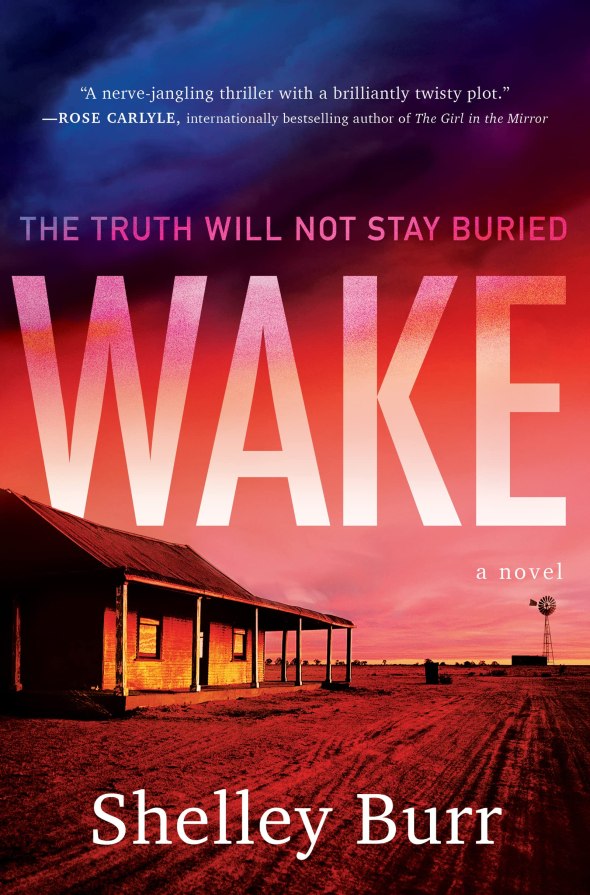
Wake by Shelley Burr

Wake Cover

Publisher: Hachette Australia (Trade Paperback – 27 April 2022)

Series: Standalone

Length: 360 pages

My Rating: 4.5 out of 5 stars

Amazon     Book Depository

2022 is proving to be quite the year for Australian crime debuts, with several compelling and thrilling read already out.  However, one of the more impressive recent debuts is probably the amazing release by new Canberran author Shelley Burr, Wake, a gripping and powerful crime thriller that takes the reader on a wild and emotionally charged ride.

Nannine is a small rural town in the harsh heart of New South Wales, punished by drought and slowly declining as the local agriculture industry starts to deteriorate.  However, Nannine will always have one harrowing claim to fame: the unsolved disappearance of Evelyn McCreery.  In 1999, young Evelyn disappeared from her rural house in the dead of night, right from the bedroom that she shared with her twin sister, Mina.

Now, 19 years after Evelyn’s disappearance, Mina lives a reclusive life on the destocked family farm, desperately seeking some shreds of normality.  However, the shadow of the unsolved case and the subsequent massive media storm that bombarded her family still haunts her, especially as many question whether she had a role in the tragic events, while others constantly attempt to claim the massive reward the family posted.  However, despite the time and her attempts to not get involved in the craziness again, Mina finds old wounds reopened when Lane Holland arrives in town.

Lane is a private investigator and failed Federal Police cadet who has made a living out of cracking cold cases involving missing girls.  Interested in claiming the substantial reward, Lane begins his own in-depth investigation of Evelyn’s disappearance, and his determination and insights soon grab Mina’s attention and she finds herself drawn close to Lane.  However, Lane has his own personal reasons for solving the case, and his dark ghosts could end up dragging Mina down with him.

This was an excellent and captivating debut novel from Shelley Burr, which is already gaining some major recognition, including some major Australian awards.  While I knew I was likely to enjoy this amazing novel, I ended powering through Wake in a day as I got really hooked on its compelling and intense outback story.

I deeply enjoyed Wake’s awesome story, especially as Burr makes sure that it contains all the necessary elements to grab your attention.  This novel starts in the modern day, 19 years after the disappearance that rocked Nannine, and sees newcomer Lane Holland arrive to attempt to solve the case.  The introduction of this sleuth character helps to jumpstart the narrative, especially as his new investigation allows the reader to find out all the relevant details about the old case, while also revealing the lasting issues it had on the various protagonists, including the long-running infamy of being involved with such a major case.  Most of the first half of the book revolves around Lane trying to find his feet in the investigation and get close to Mina, while also finding himself involved in a separate case involving another missing girl.  At the same time you get to know Mina from her perspective, and find out just how messed up she is because of the disappearance and media scrutiny.  All the key characters, major story elements, hints and settings are perfectly set up in the first half of Wake, and the captivating mystery and damaged characters really drag you in and ensure that you become deeply invested in seeing how the case unfolds.

After some big reveals about halfway through the novel, the story intensifies even further, especially once you fully understand Lane’s drive and get to know the characters even better.  There are some compelling twists and turns in this second half of the book, with multiple theories and red herrings to cleverly distract the reader, while major personal moments hit all the key characters.  This all perfectly sets up the big finale, as all the plot points, tragic backstories and hidden hints come together extremely well for the major reveal.  I really liked how Wake’s story concluded, and I think both the solution to the mysteries and the resolution of all the character arcs was pretty ingenious, especially with how well it tied together the various character’s secrets, histories and regrets.  Overall, the reader will come away very satisfied with how everything is tied up, and this ended up being a very impressive and compelling narrative that was well-paced and loaded with some great surprises, major moments, and a very intriguing central mystery.

There were many cool elements to Wake that I deeply enjoyed and which I felt helped to enhance the mystery-laden story.  I liked the rural setting of Nannine, a fictional town that captures the heart of feel of many rural Australian communities, especially those that are suffering from many issues such as drought and the slow decline of the agricultural economy.  This decaying agricultural town serves as the perfect backdrop to this amazing story, and you really get to see how the small-town vibes and attitudes affect the investigation of the case.  I also appreciated the fantastic dive into the over-the-top press coverage that surrounds famous crime cases.  The disappearance attracted a massive media focus, and Burr spends a lot of time exploring how it initially covered the case, how it morphed over the years, and the lasting impact that growing up as a media sensation had on both Mina and the other supporting characters from Nannine.  I particularly enjoyed the examination of how the case became a favourite of true-crime fanatics, which is primarily shown through a series of posts on the murder forum that appears in front of multiple chapters.  These posts highlight the attitudes, theories, mindsets and more of the true-crime internet community and serves as an intriguing weather vane for the wider Australian community.  I loved these posts, not only because they were entertaining and realistic but because it proved to be a great way to provide the reader with some interesting context while also having some impacts on the main story.  Throw in the great way that Burr utilised several flashback sequences, some hidden clues in character names, some clever insights into missing person cases, and other outstanding elements, and you have a really impressive book that will easily keep your attention.

I also need to highlight Wake’s awesome damaged characters that the plot focuses on.  Burr has come up with some sensational and powerful story arcs for these great characters, and their various histories, connections and life events add some excellent emotional heft to the story that I really enjoyed.  This includes Mina McCreery, who serves as a major point-of-view character for most of the plot.  Mina is the twin of the disappeared Evelyn, and has spent the last 19 years living in her disappeared sister’s shadow.  Not only did she have to deal with the emotional backlash of her sister being either killed or abducted but she also had to experience the intense media scrutiny and other issues associated with the major case, especially as her mother ended up becoming a media sensation to keep the focus on Evelyn’s case.  Due to this, the strained relationship she had with her sorrowful mother, and certain suspicions from some that she had something to do with her sister’s disappearance, Mina now lives a solitary life, avoiding most people and not having many friends.  This makes her rather standoffish, angry and a little paranoid (for good reason) for most of the novel, and she has a hard time connecting to anyone, especially Lane.  The events of this book really shock her in some major ways, as the years of repressed trauma and emotional uncertainty come to the surface again, especially once secrets and long-hidden truths come to the surface.  I felt that the author did an amazing job highlighting all the major issues contained within Mina’s psyche, and the subsequent emotional moments were a fantastic and powerful part of the book.

Aside from Mina, the other major character in Wake that I need to discuss is private investigator Lane Holland, who arrives in Nannine to investigate the case.  Burr created something really impressive in Lane, a former police cadet turned private investigator, as he ends up having one of the more intense and memorable character arcs in the entire novel.  Initially seen as an unwelcome outsider by most of the other characters, apparently interested in only the reward money, Lane is able to prove himself to Mina and other characters and manages to gain their trust.  However, everything you think you know about Lane is blown out the water when you find out his surprising connection to the case, as well as his motivations for investigating it.  Burr sets up the connections extremely well in the early parts of the novel, putting in several clever hints and suggestions, while also doling out useful flashbacks to Lane’s past that explain everything.  These revelations, as well as some insights into Lane’s personal history and motivations, help to both intensifies the story, while also dragging you closer to Lane as a character, hoping that he will succeed for everyone’s goods.  Burr takes Lane’s character arc into some very dark, by captivating, directions, and his entire story comes together in a brilliant and powerful way, especially with some major decisions made towards the end of the book.  These two excellent, intense, and very damaged central characters, really acted as the heart-and-soul of Wake, and I was really drawn into the outstanding narrative Burr wove around them.

With her excellent debut novel, Wake, Shelley Burr has successfully entered the world of Australian crime fiction in a big way.  Featuring a captivating and distinctively dark murder mystery narrative that sees damaged characters bring a notorious cold case into the light, Wake was a gripping and deeply thrilling read that I had a fantastic time reading.  A moving and enthralling novel, Wake was an exceptional Australian crime debut and I am extremely excited to read more stories from Burr in the future.

Wake Cover 2

Amazon     Book Depository

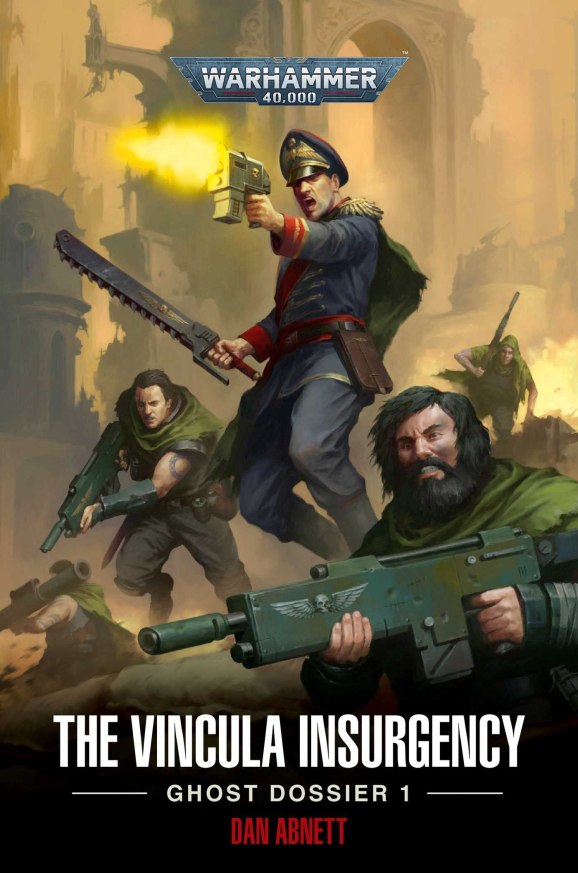
Warhammer 40,000: The Vincula Insurgency by Dan Abnett

The Vincula Insurgency Cover

Publisher: Black Library (Audiobook – 21 May 2022)

Series: Ghost Dossier – Book One

Length: 6 hours and seven minutes

My Rating: 4.5 out of 5 stars

Amazon     Book Depository

One of the leading authors of Warhammer fiction, Dan Abnett, returns to his iconic Gaunt’s Ghosts franchise in a big way with the compelling military thriller, The Vincula Insurgency.

Few people have excelled at tie-in fiction in the same way that acclaimed author Dan Abnett has over the years.  Not only has he written multiple awesome comics and several original novels but he has contributed tie-in books to several different fandoms, including Doctor Who and Tomb Raider.  However, his most significant work has easily been within the Warhammer extended universe.  Abnett has produced a ton of impressive and compelling Warhammer novels over his career in both the Warhammer 40,000 and Warhammer Fantasy sub-series.  Some of his more notable works include some cool-sounding Warhammer comics, the Tales of Malus Darkblade novels (I’ve got a copy on my shelf waiting to be read), and some major Warhammer 40,000 novels, including multiple entries in the massive The Horus Heresy series, as well as his Eisenhorn, Ravenor and Bequin novels, which together paint one of the most complete pictures of the Imperial Inquisition).  However, I would say that his most notable series is probably the Gaunt’s Ghosts series of novels.

Set in the Warhammer 40,000 universe, the Gaunt’s Ghosts novels are part of the larger Sabbat Worlds crusades arc of fiction (which have come out of this series) following a unique regiment of soldiers, the Tanith First and Only.  The Tanith First and Only, also known as Gaunt’s Ghosts in respect to their commander, Colonel-Commissar Ibram Gaunt, are a highly skilled unit who specialise in stealth and scouting missions.  Their planet, Tanith, was destroyed shortly after their formation, hence the designation First and Only.  The Gaunt’s Ghosts series follows their battles through the Sabbat Worlds as a major part of the crusades.  This series began back in 1999 with the awesome novel, First and Only, and the latest novel, Anarch, (book 15) came out in 2019.  Generally considered one of the most iconic and compelling series in the Warhammer 40,000 universe, I have been meaning to properly read this series for ages, although so far I have only had the chance to check out First and Only.  However, Abnett recently revisited this series with the intriguing The Vincula Insurgency.  The first entry in Ghost Dossier series, which presents never-before-seen stories of the Ghosts, The Vincula Insurgency acts as a prequel to the main series and tells an impressive and fun new tale of the early regiment.

Before the battles that would make them famous throughout the Sabbat Worlds Crusades, the Tanith First and Only, under the command of Colonel-Commissar Ibram Gaunt, are still coming together as a unit.  After fighting a gruelling campaign on the planet of Voltemand, politics has forced the Tanith to remain and take over security for a backwater agricultural province and its capital, Vincula City.  Determined to get off-world and back to the frontlines, Gaunt and his regiment grudgingly prepare for the arrival of a new provincial governor and his administrators.  However, life is about to get very interesting for the Tanith forces.

A highly skilled and deadly insurgency movement has emerged within Vincular City, determined to cripple the Imperial forces within and disrupt their ability to assist the rest of the crusade.  After a series of brutal bombings, Gaunt and his troops attempt to keep the peace within the province.  However, their actions are countered at an impressive rate by the local insurgency elements, who are receiving outside help and training from a dangerous opponent who knows all the Tanith’s tricks.  Can Gaunt and his unit pull together to defeat this deadly foe?  And what happens when they discover that their mysterious opponent is linked to the Ghost’s long-dead planet?

This was another extremely awesome Warhammer novel from Abnett who has produced an intense and clever prequel to his existing Gaunt’s Ghosts novels.  The Vincula Insurgency is a relatively short novel, with a somewhat compressed story.  However, despite this length, Abnett manages to achieve quite a lot.  Not only does it set up plot points for the main series, but it also features a brilliant and very entertaining self-contained narrative that is guaranteed to keep the reader entertained.  Shown from the perspective of several of your favourite Ghosts, the author tells an excellent story that sees the protagonists under attack from a well organised insurgency group.  This results in a very fast-paced narrative that perfectly brings together the science fiction Warhammer 40,000 elements with a military thriller storyline as the Ghosts attempt to overcome the enemy attacking them from all sides.  The action flies thick and fast here, and features some impressively written battle sequences that really drag you into the heart of the fighting.  In addition, the author keeps the tension levels high throughout most of the story, and the feeling that some bad things are about to happen is never far from the reader’s mind.  The multiple character driven storylines come together extremely well within The Vincula Insurgency to create a comprehensive and powerful narrative, and I really appreciated some of the unique story elements that Abnett came up with.  This cool novel ends on an interesting note, and I will be quite intrigued to see what additional new Gaunt’s Ghosts’ stories Abnett has planned.

This was a very interesting addition to the Warhammer canon as Abnett dives back into the earlier days of his established series.  The Vincula Insurgency serves as an excellent prequel to the Gaunt’s Ghosts series, and it was great to see more of the early history surrounding this awesome unit.  Abnett makes sure to load up the book with a ton of references and hints of the events that are to come in the series, which established fans will really appreciate.  However, even those readers who are unfamiliar with the Gaunt’s Ghosts series can have fun here, as Abnett tells a very inclusive narrative that anyone can enjoy, with plenty of exposition about who the Tanith are and what is happening in the Sabbat Worlds Crusades.  Indeed, The Vincula Insurgency serves as a very good introduction to the series’ characters and storylines, and many readers could use this as a jumping point into the main Gaunt’s Ghosts novels.  Abnett also takes this opportunity to do an interesting bit of lore expansion with the Tanith troops.  Due to certain plot points, the characters dive into the Tanith culture and history, which proves to be very fascinating, especially when it may connect to a new enemy.  This also serves as a very good introduction to the wider Warhammer 40,000 canon, especially as it showcases the common trooper’s role in this chaotic universe.  I often say that stories about the common Imperial soldiers result in some of the best Warhammer 40,000 novels (Steel Tread and Krieg for example), and this was extremely true in The Vincula Insurgency.  Abnett really nails the feel of an armed insurgency in the Warhammer 40,000 setting, and the parallels between the battles in this book and in some real-world conflicts are pretty uncanny (think Iraq or Afghanistan with laser rifles).  An overall excellent addition to both the Warhammer and Gaunt’s Ghost canon that is really worth checking out.

I had a lot of fun with the characters in The Vincula Insurgency, especially as Abnett features slightly younger versions of all your favourite original Gaunt’s Ghosts protagonists.  This is a slightly different version of the Ghosts that you have seen before, as they are still coming together as a regiment and aren’t yet a fully cohesive team.  Abnett does a brilliant job featuring multiple key Gaunt’s Ghosts characters in this book, with many getting their own distinctive storylines.  I liked his portrayal of unit leader Colonel-Commissar Ibram Gaunt, who is still relatively new in his command of the regiment.  While he is still incredibly confident, skilled and an absolute badass, it was interesting to see a few differences here, such as his inability to remember the names of the members of his unit.  Other key characters include Colonel Colm Corbec, the regiment’s second in command who is sent on an alternate mission for most of the book where he learns all the joys of interacting with the upper echelons of the Imperial Guard.  Major Elim Rawne, the rebellious member of the unit has a great outing in this book, not only showcasing his established resentment for Gaunt, but also featuring him in an intriguing romance with an Administratum official that deeply impacts him.  Brin Milo, the youngest member of the Tanith, also has a major arc in this book, with the novel focusing on both his uncanny insights, and his rise to become Gaunt’s official aid.  Other characters who get some good showings in this book include Ceglan Varl, Bragg, Tolin Dorden, Oan Mkoll, and more, with all of them getting their moment to shine in this book.  I had a brilliant time seeing earlier versions of these great characters, and Abnett clearly had fun revisiting them and showcasing their older attitudes.

I ended up grabbing The Vincula Insurgency audiobook, which proved to be an excellent adaptation of this book.  With a runtime of just over six hours, listeners can really speed through The Vincula Insurgency audiobook, and the story just flows along, especially with the impressive narration from Toby Longworth.  Longworth, who is one of the more prolific Warhammer narrators, having voiced all the previous Gaunt’s Ghosts novels, is a very talented voice actor who brilliantly brings this compelling story and its great characters to life.  Not only does he address every bit of action and exposition for a powerful and impressive tone, but each of the characters are given their own distinctive and fitting voice throughout the book.  I particularly liked how he gave all the Tanith characters similar accents to denote that they all come from the same planet, and it was a very nice touch, especially as it contrasts well with the various non-Tanith characters, some of whom have other, often strongly European, accents.  This incredible voice work really helped to drag me into this captivating story, and I found myself getting a lot more invested in the characters and the plot as a result.  Easily the best way to enjoy The Vincula Insurgency, this audiobook comes highly recommended.

The always impressive Dan Abnett returns with another awesome addition to his fantastic Gaunt’s Ghosts series with The Vincula Insurgency.  Featuring an outstanding and exciting prequel narrative, The Vincula Insurgency takes an earlier version of the Tanith First and Only on an intense and action-packed adventure in captured enemy territory.  Tense, fast-paced, and loaded with compelling characters, The Vincula Insurgency is an excellent and highly enjoyable Warhammer 40,000 novel that will appeal to wide range of readers.

Amazon     Book Depository

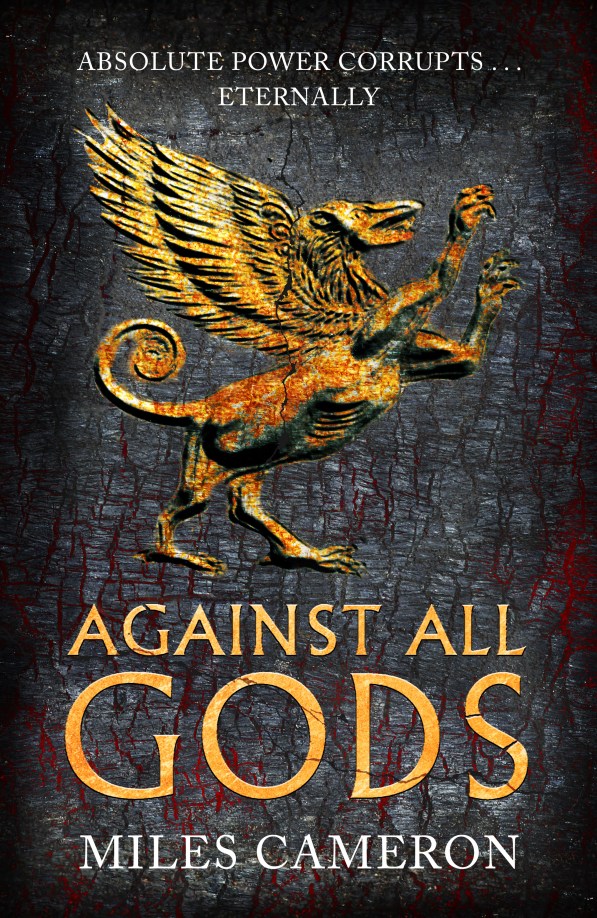
Against All Gods by Miles Cameron

Against all Gods Cover

Publisher: Gollancz (E-book – 23 June 2022)

Series: The Age of Bronze – Book One

Length: 465 pages

My Rating: 5 out of 5 stars

Amazon     Book Depository

The always impressive and inventive Miles Cameron returns with another awesome novel, Against All Gods, a compelling epic with a truly divine story.

There are few authors with more of a diverse catalogue of books than the talented Miles Cameron.  The pseudonym of historical fiction author Christian Cameron (who has also released novels with his father, Kenneth Cameron, under the joint pseudonym Gordon Kent), Cameron has been on a real roll with his fantasy and science fiction novels lately.  Not only did he have great success with his incredible Master and Mages series, which included Cold Iron and Dark Forge (one of my favourite novels and audiobooks of 2019), but he also successful released his first foray into science fiction last year with Artifact Space (one of my favourite books of 2021).  As such, I have been keenly anticipating Cameron’s latest read and I was extremely excited to receive an early copy of his latest fantasy novel, Against All GodsAgainst All Gods is the awesome first entry in his new The Age of Bronze series, which follows a group of desperate mortals as they attempt to overthrow an entire deadly pantheon of gods.

In a damaged world filled with death, despair and injustice, the gods rule with an iron fist.  Secure in their power and glory after destroying or banishing the previous pantheon, the current gods make games of the lives of mortals, controlling them for their own gain and punishing them on a whim.  However, the gods are not as secure as they would hope, and all it will take is one spark to ignite a deadly rebellion against them.

When the daughter of powerful magos and aristocrat, Gamash of Weshwesh, is killed by a malicious god, it sets off a chain of events that will change everything.  Determined to get revenge, Gamash finds himself a willing tool of an older god who exists to stir up chaos and challenge her new masters.  Following the signs laid out before him, Gamash receives weapons that can hurt the corrupt divine beings and embarks on a quest to challenge the gods once and for all.

As Gamash’s quest continues, he is soon joined by an eclectic mixture of mortals, all of whom have their own issues with the current deities and who have been manipulated to fight against them.  Faced with dangers at every turn and soon caught up amid multiple divine conspiracies, these reluctant rebels soon begin to understand the full extent of the danger they find themselves in.  Determined not to be mere pawns in a cosmic game of immortal gods, the rebels will decide to do the impossible: go up against all the gods and win!

Wow, Cameron continues to impress me with his unique and incredible story writing.  Against All Gods is a distinctive and powerful read that takes multiple fantastic characters on an epic adventure through a great new fantasy landscape.  I loved the powerful narrative that Against All Gods contained, and it really did not take me long to become incredible addicted to its twisty and compelling tale.  Complex, utterly enthralling and very fun, Against All Gods was an excellent read and I honestly have no choice but to give it a full five-star rating.

Against All Gods has an outstanding story that I had a wonderfully entertaining time reading.  Essentially a Bronze Age inspired fantasy that sees multiple mortal characters caught up in the multiple machinations of the gods, this is a particularly fun and over-the-top narrative that you cannot help but fall in love with.  Against All Gods’ narrative has an excellent flow to it that individually introduces the substantial main cast and showcases their various pasts and issues they have with the ruling pantheon.  These initially separate storylines come together towards the centre of the book, once all the protagonists are thrust together by their unseen benefactor, and it swiftly evolves into a powerful plot, with the same events beautifully showcased from multiple different narrators.  At the same time, much of the story follows the machinations of the gods as they plot and backstab against each other, while also attempting to counter the actions of the mortal characters.  These scenes set in Heaven are often the most entertaining parts of the book, especially as Cameron produces a ton of twists and facilitates the multiple scheming deities, each of whom has their own plans.  These multiple storylines combine for a massive and awesome conclusion, as the protagonists come face-to-face against the gods in their opening salvo.  There are some truly epic scenes in this final part of the novel, and Cameron ends the book with some fun surprises and reveals that indicate how awesome the rest of The Age of Bronze series is going to be.

I really liked the style of Against All Gods, which is a slight departure from some of Cameron’s previous novels.  Despite the Bronze Age setting, the characters, attitudes and personalities are a bit more modern than some of Cameron’s existing fantasy books, and I think this really fit Against All Gods’ over-the-top narrative extremely well.  This is easily one of Cameron’s more elaborate narratives, and I loved how he started utilising a large range of character perspectives, rather than focusing on a single central protagonist.  Again, this works extremely well for this novel’s plot, and it helps to introduce the various outrageous characters and highlight the completely insane pantheon of gods who are fighting behind the scenes of the main story.  Cameron’s proven ability to craft a complex and highly detailed story is once again on display here, and every scene comes across in a powerful and expansive way, painting a powerful picture.  This works particularly well during the many impressive action sequences, and the reader is really drawn into the intense battles and fights that occur.  The narrative itself has an excellent blend of world building, character development and classic adventure, all of which is bound together by a healthy and entertaining dose of intrigue and deceit.  I was very quickly drawn into the unique story that Cameron was telling here, and I found it very hard to put this book down in places, as I really wanted to see what happened next.

You can’t discuss Against All Gods without mentioning the impressive and highly complex new world that Cameron has come up with.  Cameron has clearly combined two of his literary loves here, producing an intense and dangerous Bronze Age fantasy world clearly inspired by ancient Greece, especially its mythology.  As such, you get some glorious scenes of bronze covered soldiers facing off against each other, elaborate Mediterranean inspired cities, and a ton of awesome depictions of ancient seafaring ships.  However, there are some noticeable differences as this version of the world is ruled over by a corrupt and dangerous pantheon of new gods.  Centuries ago, this pantheon arrived in this world, mostly destroying the previous pantheon, and completely taking over the lands.  Their rule has become an insanely despotic one, where only they and their minions profit, while the people are now forced to worship them and ignore their old gods while powering the petty choices of their new masters.  The subsequent world is a dark and brutal place which serves as an excellent background to the powerful and exciting narrative Cameron has come up with for Against All Gods.  The idea of a Bronze Age society totally dominated by an evil pantheon of invading gods is exceedingly inventive, and Cameron really makes it work, showcasing all the ways that the gods screw over humanity and control them.  There are so many fun details here, with the new hierarchy, the multiple magical eyes that turn the lands into a divine surveillance state, and even the enforced reliance on bronze, as the gods have removed all iron from the world.  Throw in several awesome cultures, some unique creatures (the Dry Ones are pretty awesome), and even a marauding army of murderous savages, and you have a brilliant backdrop to this story that I found to be extremely cool.  I look forward to seeing how this setting evolves in the future and I am sure that Cameron has some more bonkers ideas for it.

One of the other great things about Against All Gods was the impressive and compelling collection of characters that Cameron focuses the story on.  There is a great group of point-of-view figures throughout this novel, and the author generally breaks these up into mortal and divine characters.  Most of the novel focuses on a small band of mortals who are framed as the protagonists of the series, each of whom has their own grudges and reasons to dislike the gods.  I felt that Cameron did an awesome job of presenting all these main characters at the start of Against All Gods, and their extended introductory chapters really allow the reader to get to know them and understand their unique stories and histories.  These characters include Gamash, a powerful magos seeking revenge against the gods after they kill his daughter, and who serves as a tragic figurehead for most of the plot.  He is joined by other impressive characters, like Era, a singer and dancer, whose extreme confidence, impressive sarcasm and tough exterior are at great odds with her warm interior.  Era, who is also an excellently represented lesbian character, serves as a great foil to the rest of the cast.  She really plays off Zos, a Godborn warrior, whose martial prowess and cynical worldview brings him into conflict with the gods, especially after he incurs their wrath.  The major protagonists are well rounded out by Pollon, a former highborn scribe and intellectual, whose cushy life is crushed in a matter of days, which convinces him to go up against the gods.

These four protagonists are backed up by an intriguing and eclectic mixture of supporting characters, each of whom bring something special and fun to the mix.  This includes the crew of the Hakran ship, Untroubled Swan, led by Aanat, another substantial point-of-view figure.  The Hakran are a curious group of characters, serving as one big polygamist family, which makes for some very interesting dynamics in the book.  They are also major pacifists who are manipulated into helping the heroes and who constantly find their wishes and way of life threatened by the actions of their new comrades.  I also had a lot of fun with Daos, a mysterious child adopted by Era, who bears an odd gift that allows him to see the world in different ways, and who helps to guide the protagonists to some interesting directions.  These characters and more (there is a fantastic stuffed bear and donkey combination that works surprisingly well) are a lot of fun to watch, and the constant interactions and intriguing developments help to enhance the plot.  While the plot was a bit bogged down in places with too many characters at once, this was an overall good collection of supporting figures who had some fun storylines between them.

I also really must highlight the fantastic god characters in Against All Gods.  Cameron has gone out of his way to create a truly vicious, conceited and manipulative troop of deities, each of whom is in it for their own benefit or power.  This pantheon is led by the bull-headed thunder god, Enkul-Anu (essentially Zeus), a powerful and stubborn being who conquered the previous gods and installed his kin as the new rulers of this world.  Forced to control a group of idiotic, rebellious or half-insane gods, as well as the always troublesome mortals, Enkul-Anu is an angry and exasperated figure in this novel, constantly at his wits ends with the stupidity and self-serving nature of the other gods.  Even though he’s the brutal main villain, you can’t help but feel a little for Enkul-Anu at times as he must deal with all the issues his followers have created.  He is well matched by an excellent group of other gods, including a fantastically depraved and eternally underestimated god of drunkenness and orgies, Druku; his beauty-obsessed consort, Sypa; his ambitious son and herald, Nisroch; and two troublesome sisters, the Huntress and the Blue Goddess, who constantly seek to destroy him.  All these excellent characters, plus several insane greater gods and their ultra-keen offspring, serve as a brilliant pantheon of villains, and I had so much fun with their manipulative and selfish actions.  The intriguing interactions between these characters are extremely entertaining, and you won’t believe who comes out on top at times.  I can’t wait to see how these gods continue their battles in the future, especially after the results of this book’s crazy conclusion.

With Against All Gods, the first book in his brilliant new fantasy series, Miles Cameron continues to shine as one of the most inventive authors out there.  Featuring an extremely compelling narrative that pits likeable mortal characters against selfish, all-powerful gods in a Bronze Age setting, Against All Gods is a layered and deeply entertaining book that comes highly recommended.  This was a truly awesome read and I look forward to seeing how Cameron continues The Age of Bronze series in the future.  The next book in this series, currently titled Storming Heaven, is set for release in a year’s time, and I personally can’t wait to get my hands on it.

Amazon     Book Depository

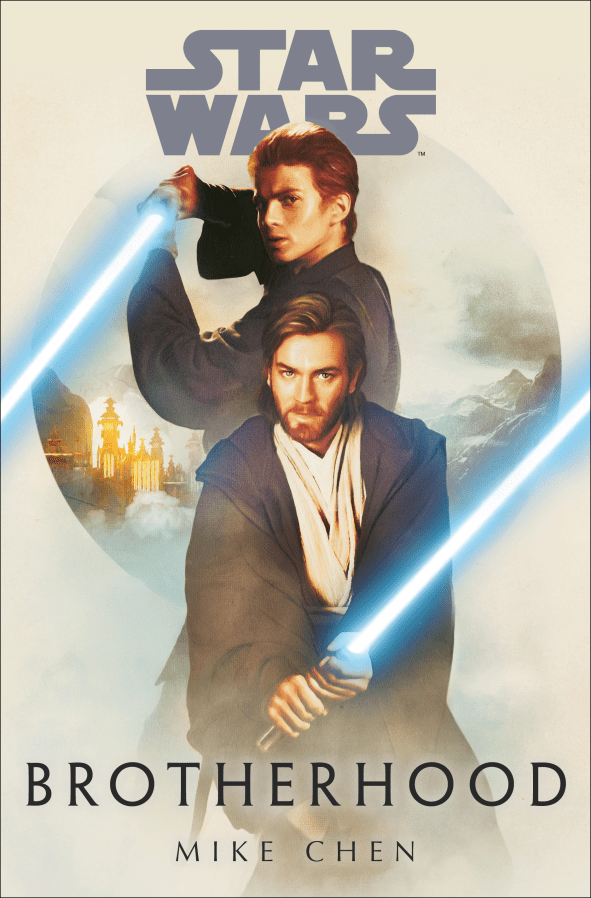
Star Wars: Brotherhood by Mike Chen

Star Wars - Brotherhood Cover

Publisher: Penguin Random House Audio (Audiobook – 10 May 2022)

Series: Star Wars

Length: 12 hours and 46 minutes

My Rating: 4.25 out of 5 stars

Amazon     Book Depository

2022 is a great time to be a Star Wars fan as we are currently being bombarded with a string of awesome shows, cool comics, and fantastic novels (a movie also would be nice, but apparently there are issues there).  Fans like me are currently having a great time with the Obi-Wan Kenobi live-action show that has been all manners of fun, especially as it brings Ewan McGregor and Hayden Christensen back to their iconic roles as Obi-Wan Kenobi and Anakin Skywalker.  However, this is not the only recent Star Wars release that focuses on this iconic duo, as author Mike Chen presents Star Wars: Brotherhood.  This is Chen’s first Star Wars novel and follows these two great characters as they embark on a dangerous political adventure right after the events of the film, Attack of the Clones.

It is dark days for the galaxy as the destructive Clone Wars between the Republic and the Separatists have just begun.  As the galaxy splits down the middle and more and more systems join the war on opposing sides, the Jedi begin to take a new role as soldiers, the fragile peace they have long guarded slowly disappearing.

When an explosion devastates the neutral planet of Cato Neimoidia, home of the Trade Federation, the Republic is blamed by Count Dooku and the Separatists.  Desperate to keep Cato Neimoidia from joining the Separatists, the Jedi dispatch Obi-Wan Kenobi to the planet to investigate the explosion and attempt to maintain the peace.  However, Obi-Wan has his work cut out from him as he encounters a hostile planet, blinded by mourning and a long history of prejudice from the Republic.  Worse, not everyone wants him to solve the crime, as Count Dooku’s sinister agent, Asajj Ventress, is also on Cato Neimoidia, attempting to turn the populace against the Republic.

At the same time, Anakin Skywalker has been promoted to the rank of Jedi Knight and works to balance his new responsibilities with his secret marriage.  Despite orders not to intervene on Cato Neimoidia, when Obi-Wan finds himself in himself trouble, Anakin races to help him, dragging along a promising Jedi youngling.  However, with their relationship forever changed by Anakin’s promotion, can the two Jedi brothers still work together as they attempt to grow beyond master and apprentice?

This was a fantastic new addition to the Star Wars canon that fans of the franchise are really going to enjoy.  Containing an interesting character-driven story, Brotherhood was a great first outing from Chen, who successfully explored some of the best characters and settings of the Star Wars universe.

Brotherhood has a rather interesting multi-perspective narrative that I felt was pretty good.  This cool Star Wars novel is set right at the start of the Clone Wars and seeks to not only highlight some early aspects of the conflict but also dive into the minds of the iconic protagonists, Obi-Wan Kenobi and Anakin Skywalker.  The book has a strong start to it, with a devastating bombing going off on a neutral planet that forces Kenobi to investigate by himself.  Arriving on a planet thick with emotion, undue influences and conspiracies, Kenobi finds himself in all manner of danger, while his former apprentice, Anakin, is forced into a far less interesting mission.  Chen does a good job introducing the key elements of this book, and you soon get invested in the protagonists’s storylines, as well as the deeper emotions raging within them and other supporting characters about the bombing and wider events in the galaxy.

While I liked the start of the book, the centre of Brotherhood honestly dragged for me.  Now part of this is because I had to have a break from audiobooks for a few weeks, but even when I started listening to Brotherhood again, I had a hard time making much progress.  The slow investigation and Anakin’s slightly lumbering narrative, combined with the occasionally unnecessary plot around Mil Alibeth, just didn’t hold my attention as much as I had hoped, and it ended up being a bit of slog to get through it.  Luckily, the pace really picks up towards the end as the various storylines start to coalesce into a more compelling and exciting read.  I managed to get through the final third of the novel a heck of a lot quicker, and I was substantially invested in the characters, including a few supporting figures, and the narrative as a result.  Everything comes together pretty well in the end and Chen delivers a mostly satisfying conclusion that hints at the wider threat to come.  An overall entertaining, if slightly staggered narrative, I did have a lot of fun getting through it.

I mostly enjoyed how Brotherhood was written, as Chen did an outstanding job of blending compelling plot elements with deep character development and some fantastic universe-building.  The main story itself features a mixture of investigation, conspiracy and personal conflicts, as Obi-Wan visits a hostile planet impacted by all manner of anger and mistrust.  The author makes excellent use of multiple character perspectives to tell a complete and wide-ranging narrative.  While a good portion of the plot focuses on the main two characters, Chen routinely throws in the perspective of several great supporting figures, including some antagonists, and it was fantastic to get some alternate views on the events occurring.  As I mentioned above, I found the pacing was a bit off in the middle of the novel, and there were certain parts of the story that I had a harder time getting through.  For the most part, though, the book flowed pretty well, and the switch between various characters helped facilitate that.  While this is primarily a character-focused book, I did think that Chen did spend way too much time having his characters over-analyse everything in their heads, as the constant contemplation of their emotions or actions slowed the story down in places.  However, I did think that the author was particularly good at capturing action, with some brilliant and intense scenes featured throughout the book.  The ones that really shined to me where the sequences that showcased the Jedi character’s abilities in battle, as Chen made them come to life in a vibrant and powerful way.  Overall, I thought that this was a mostly well written story, I loved how Chen’s distinctive style helped to enhance the narrative in places.

Brotherhood proves to be a particularly interesting piece of Star Wars fiction as Chen sought to not only expand on the main characters but also explore the wider universe during the early Clone Wars period.  Written mostly as a standalone novel, Brotherhood has a lot of interesting canon elements that established fans of the franchise will deeply enjoy.  The book is closely connected with both the events of the second prequel film, Attack of the Clones, and the following Clone Wars animated series.  It was also apparently written somewhat in sync with another 2022 Star Wars novel, Queen’s Hope by E. K. Johnston, which I haven’t had a chance to read.  However, despite this, most readers familiar with the films should easily be able to jump in and read Brotherhood without any issues as Chen does a great job of explaining all the key characters, concepts and other elements.  There is also a ton of stuff for established fans of the franchise to enjoy as Chen spends a bit of time adding in some interesting elements and some great fan service.

One of the more interesting things featured within this novel is the examination of the early days of the Clone Wars.  This hasn’t been greatly explored in the current canon too much, so it was cool to see the start of the war, with some of the earlier battles, conflicts and issues surrounding this galactic civil war.  Chen spends a bit of time showcasing how the Clone Army was incorporated into the existing Republic structure, as well as the militarisation of the Jedi as they became commanders and generals.  There is also an interesting examination of the rise of extremism during the Clone Wars, as various factions start to cause trouble outside the actions of the main armies.  As a result, Brotherhood serves as an excellent bridging novel between Attack of the Clones and some of the preceding material, and I loved how Chen spent time setting up a few things for the Clones Wars animated series, although the sudden and unexplained appearance of a female clone was a bit odd.  I also had a lot of fun seeing some of Palpatine’s machinations here as he subtly manipulates events to get the Jedi even more involved in the war and more integrated with the clones.  There are also some key moments of the corruption of Anakin that occur here, and it was fascinating to see the moment that Anakin revealed his massacre of the Sand People to his future master.

While I deeply appreciated all the above, the most fascinating bit of Star Wars universe-building in Brotherhood had to revolve around the planet of Cato Neimoidia, the capital of the Trade Federation as Chen really went out of his way to explore this planet and its people, the Neimoidians.  For years the Neimoidians have mostly been seen as the exploitive and evil villains from The Phantom Menace and were never really explored in that much detail.  Chen spends a massive part of the book providing a deeper look at them and it soon becomes quite a compelling part of the novel.  In particular, the Neimoidians and their Trade Federation are shown to be mostly neutral, trying to stay out of the war and disavowing the actions of Nute Gunray and his faction who are supporting the Separatists.  When Obi-Wan arrives at Cato Neimoidia, he is introduced to their rich culture, unique society and a distinctive mindset that relies heavily on calculation and risk-assessment.  However, Obi-Wan soon discovers that there is far more to being a Neimoidian than he ever realised, as the Neimoidians have a long history of being ignored, ridiculed and prejudiced against by the Republic.  This long history of abuse, combined with the bombings on their planet, proves to be a deeply captivating and powerful part of the story.  All these great Star Wars elements add a lot to the narrative of Brotherhood, and I had an outstanding time seeing all the clever new ways that Chen worked to expand and explore this iconic universe.

While the story and Star Wars universe are key parts of this book, Chen spends most of his time working on the characters.  Brotherhood features a great cast of point-of-view protagonists who all have their own deep and unique journey through the book.  However, the focus is on the pairing of Obi-Wan Kenobi and Anakin Skywalker, whose relationship lies at the core of the book.  Both characters are featured very heavily throughout Brotherhood, and you are soon deeply invested in their individual narratives as well as their joint story.  Chen paces out their appearances together very well, and you get to see them act as both a team and independently, although one of the main themes of the book is the examination of how well they work together as a team and how close they are.  The author spends a lot of time exploring the unique relationship this master and apprentice duo have especially now that Anakin has become a full Jedi and they are now equals.  This proves to be a fascinating element to focus on and I loved how powerful the character work around the pair and their relationship was.

On an individual level, Chen spares most of the focus to look at Anakin, who is going through a lot at this point in his life.  Not only is he dealing with the sudden abilities of having to be a Jedi, but he is now secretly married to Padme, is trying to get used to his new robotic hand, and also bearing some anger and guilt at his actions of Tatooine.  This presents many complications for Anakin, and he is constantly battling his emotions, desires and the feelings of disconnection that he feels to the rest of the Jedi.  Chen does a great job of exploring the complex emotions and history surrounding Anakin, and you get a real sense of the inner conflict he feels all the time, especially when it is reflected in other characters.  He does end up coming to grips with many of these issues as the book progresses, although some of them remain, leading to darker events in the future.  The author’s focus on Obi-Wan is a little less intense, although there are still some very interesting elements there.  Most of Obi-Wan’s concerns reflect his current mission as he finds himself dealing with a culture he doesn’t understand and whose emotions he has trouble responding to.  At the same time, Obi-Wan is deeply concerned for Anakin, and his constant worries and examinations of their strained relationship deeply impact him.  I found it fascinating to see Obi-Wan’s observations during this period, especially as he witnesses and chooses to ignore some warning signs around Anakin.  Chen does a good job of trying to establish the more confident and wiser version of Obi-Wan that we see in The Clone Wars and Revenge of the Sith, and I it was very fun to see him negotiating and investigation on Cato Neimoidia.

Aside from these central characters, Brotherhood contains some other great characters whose storylines prove quite fascinating.  The most prominent of these is Jedi youngling Mil Alibeth, whose unique connection to the Force makes her very sensitive to the pain people are feeling, so much so that she spends much of her earliest appearances trying to cut herself off from the Force.  Mil finds an unlikely mentor in Anakin in this novel, and I appreciated the impromptu master-apprentice relationship they formed, especially as it benefits them both.  Two Neimoidian characters, royal guards Ruug Quamom and Ketar Kor, also serve a significant role in the story, although in two different ways.  The younger Ketar, whose family suffered greatly due to Republic prejudice, is extremely hostile to Obi-Wan and becomes a secondary antagonist, driven by his rage, anger and the manipulations of others.  Ruug, on the other hand, is a veteran soldier and commando whose more cynical world view, a result of her long life of violence and black ops missions, allows her to see past her emotions and investigate the bombing properly.  This results in Ruug becoming an ally to Obi-Wan as she tries to find the truth to save her people from more pain.  Ketar and Ruug serve as interesting counterpoints to the Neimoidian emotional spectrum, and their separate impacts on the story are extremely fascinating.  You really grow to like Ruug through the book, especially as she sticks to her principles, while Ketar, despite being an easily manipulated idiot, is one of the more understandable Star Wars antagonists you will encounter in, and his dive towards extremism is both powerful and understandable.

I also loved seeing fan favourite The Clone Wars’ character Asajj Ventress in this book, who serves as Brotherhood’s primary antagonist.  The events of this book represent Ventress’s first canon interactions with Obi-Wan and Anakin, and it was fascinating to see them attempt to work out who or what Ventress is.  Ventress ends up being very slippery and manipulative throughout Brotherhood, and she swiftly outmanoeuvres Obi-Wan by playing to the Neimoidian prejudices and emotions.  I loved seeing this early Ventress appearance, and her conversations with Obi-Wan are really fun, especially as Ventress’s sarcasm, venom and contempt shine through in every sentence, only to be met by Obi-Wan’s politeness.  This ended up being a great first major outing for Ventress, and I really enjoyed seeing how her rivalry with the Jedi began.  The interactions, development and introductions of these great characters serve to really strengthen Brotherhood as a whole and I had a great time seeing Chen’s interpretations about all this amazing figures.

Naturally, I decided to check out the audiobook version of Brotherhood, which turned out to be an excellent decision.  The Brotherhood audiobook was a fun experience that once again makes great use the classic and iconic Star Wars sound effects and music to enhance the story.  At 12 hours and 46 minutes, this is a pretty standard length for a Star Wars audiobook, although it took me a little while to get through it.  I had a lot of fun again with the sound effects which do a great job providing the ambient noise of the story that helps to bring the listener into the story.  In addition, the always awesome Star Wars score is utilised to amazing effect during key parts of the book, and it is really impressive how much John Williams’s epic music can increase the impact of a scene.

In addition to the music and sound effects, the Brotherhood audiobook is greatly enhanced by its excellent narrator, Jonathan Davis.  Davis is one of the best Star Wars narrators out there and his outstanding voice has been well utilised over the years.  I have personally enjoyed Davis works in several fantastic audiobooks such as in Lords of the Sith, Kenobi, Maul: Lockdown, Master & Apprentice, Dooku: Jedi Lost, Doctor Aphra and Tempest Runner, and he is always great value for money.  This was once again true for Brotherhood, as Davis does an outstanding job presenting the complex story to the listener while also bringing the various characters to life.  Davis does a particularly good Obi-Wan Kenobi voice, which really helped here considering the character’s prominence in the plot.  The rest of his voices are also very good, with multiple major and iconic characters come across in distinctive ways that fit how they have been portrayed in other media, particularly Yoda.  In addition, the various new characters introduced in Brotherhood are also gifted fantastic and appropriate voices that allow the listener to distinguish who is talking.  This excellent voice work, alongside the music and sound effects, really helps listeners to enjoy the compelling story and this is easily the best format to enjoy Brotherhood in.

This was another awesome addition to the rapidly expanding canon of the Star Wars universe.  Mike Chen’s Brotherhood had an impressive and compelling narrative that not only explores some intriguing areas of Star Wars lore, but which also perfectly features two of its most iconic protagonists.  A fantastic read that will appeal to anyone currently enjoying the Star Wars universe, Brotherhood is really worth checking out and I look forward to seeing what other awesome novels are added to this brilliant, expanded universe later this year.

Amazon     Book Depository

Master of Furies by Raymond E. Feist

Master of Furies Cover

Publisher: Harper Voyager (Hardcover – 5 July 2022)

Series: The Firemane Saga – Book Three

Length: 515 pages

My Rating: 4.5 out of 5 stars

Amazon

One of the leading authors of fantasy fiction, Raymond E. Feist, brings his Firemane Saga to an end in a big way with the impressive and deeply entertaining Master of Furies.

I was recently in the mood for some classic high fantasy awesomeness, and few people do high fantasy better than one of my all-time favourite authors, Raymond E. Feist.  I have been a massive Feist fan for years, ever since I stumbled upon his epic Riftwar Cycle in my youth.  Made up of around 30 connected novels in a massive, multi-world universe, including his epic debut, Magician, and the fantastic Empire trilogy (co-written with Janny Wurts), the Riftwar Cycle contains so many fantastic stories and it remains one of the seminal pieces of fantasy fiction out there.  Feist appeared to finish the Riftwar Cycle off in 2013 and after a break he started working on a different fantasy series, the Firemane Saga.

Set in a new fantasy world, the Firemane Saga followed several great protagonists as they found themselves dragged into a series of conflicts that threaten to tear their continent apart.  This series started in 2018 with King of Ashes, an excellent book that served as a brilliant introduction to the setting, story and characters.  This series was continued in 2020 with Queen of Storms, which continued the various character-based storylines, expanding on some existing elements while also throwing in a ton of new enemies and some surprising changes.  This second novel included a pretty fantastic twist halfway through, as one of the major settings of the series was completely destroyed and various supporting characters were killed off.  I have been eager to see how this series would continue and I was pretty excited when I saw that the third and final book in the series, Master of Furies, was set for release this year (it was one of my most anticipated releases for the first half of the year).  I ended up grabbing this book the day it came out and I swiftly got drawn into its fun and action-packed story.

War and death have come to the Barony of Marquensas after unknown raiders from across the seas arrived and laid waste to everything before them.  Their most savage action saw them destroy the town of Beran’s Hill, which resulted in the death of Gwen, Declan Smith’s beloved wife.  Now determined to get revenge, Declan has become a soldier and allied with Baron Daylon Dumarch, whose family was also killed in the raid.  As the Baron gathers a new army around him, Declan travels to the desolate far south of Tembria to recover rare materials that will allow him to forge the best weapons and armour for them.

At the same time, Hava, former spy for the shadow nation of Coaltachin, has drawn first blood against the mysterious forces attacking her friends.  After capturing the enemy ship, Queen of Storms, Hava has become a notorious pirate captain, raiding ships from across the waves to find out who or what is threatening Marquensas.  Her investigations will eventually lead her to the hidden continent of Nytanny, where a powerful group holds sway of a vast population of warring nations.

As Hava, Declan and Baron Daylon prepare their forces to fight whatever lies within Nytanny, the fate of the world may rest in someone else’s hands.  Hava’s husband, Hatushaly, the last living member of the Ithrace royal family, has finally discovered his legacy as a legendary Firemane.  Under tutelage on the hidden island Sanctuary, Hatushaly works to hone his destructive magical abilities.  But as his powers grow, Hatushaly will find himself thrust into events beyond his control.  A new darkness is rising within his world and Hatushaly will need all the help he can find to stop it.

This was another awesome book from Feist that I felt was a great end to the excellent Firemane Saga.  This third and final book takes the character-driven story in some fantastic directions, and I think that Master of Furies was one of Feist’s better recent novels.

I had an outstanding time getting through Master of Furies’ clever and compelling narrative and I really enjoyed the elaborate and exciting third part of the series.  Now, I must admit that I initially had a bit of a hard time getting back into this book, mainly because it had been two years since Queen of Storms’ release and I had forgotten some of the story details from the preceding novels.  I probably should have done a bit of a reread of the series before starting Master of Furies, and this is one of those cases where interested readers should really check out the first two novels first. Master of Furies immediately dives back into the plot lines from the last book, and while a lot of elements are recapped, it does help to remember how the series has unfolded.

Master of Furies is told from multiple character perspectives as all the protagonists from the first two novels are featured here.  There is a good mixture of different storylines throughout the novel, including the mystical training of Hatushaly, the adventures of Declan in a hostile desert, political intrigues occurring with Marquensas, and Hava’s nautical and espionage activities as she sails from location to location, attempting to find out who they are actually fighting.  All of those storylines are spread out evenly through the book and they played off each other well, coming together into an exciting and expansive narrative.  I particularly liked Declan’s storyline, not only because it was a very good example of a classic fantasy adventure but it also expertly showcased the character’s grief and anger after the events of Queen of Storms.  I liked the balance between action, world-building and character development contained in each chapter, and this book had an amazing flow to it.  The action scenes are particularly well written, and Feist features multiple epic battles and fights that really get the reader’s adrenalin pumping.  The resulting story is very well paced out and there are no slow spots in the story at all.  Each of the separate stories start coming together a lot more towards the centre of Master of Furies as Feist starts to prepare for the big conclusion.

While I was initially worried that Feist was going to rush the conclusion too much (I had some doubts with 150 pages to go, as there seemed to be too much that needed to get wrapped up), this ended up coming together really well.  The established character arcs ended on an awesome (if slightly predictable) note and most of the open storylines are resolved in a satisfying manner.  It was great to see some of the fun characters you have grown to like over the course of the trilogy finally get what they deserve, while others start new adventures that will lead to some interesting storylines in the future.  Feist also works to set up some interesting storylines for the future and it is pretty clear that he has intentions to produce some form of sequel trilogy or series in the future.  An overall strong and exciting story, I absolutely powered through this book and I was extremely entertained and happy the entire way through.

There was some interesting world-building in Master of Furies that I quite enjoyed as Feist sought to expand on his already established new fantasy realm.  Not only did Feist take one of his main characters to the previously unseen harsh deserts at the lower part of the main continent of Tembria, but we also got our first real look at the rival continent of Nytanny, where most of the antagonists originate.  I found both areas to be fascinating and detailed as Feist does a great job of building up both settings in this novel, ensuring that the reader gets an idea of geography, culture and history.  I had a great time exploring both, and the fantastic landscapes of south Tembria were particularly cool, especially as one of the main protagonists spends half the book facing off against every enemy and threat he can find there.  I did think that the focus on Nytanny came too late in the trilogy, as Feist has deliberately kept this continent and its people obscured from the reader and the main characters.  While this did enhance the mystery surrounding their actions, it did mean that their sudden reveal in this book felt a tad forced and you did not care as much about who they were or savoured the eventual counterattack against them by the protagonists.  Likewise, some of the political situations in the rest of Tembria that were featured in the earlier books, such as the impacts of the corrupt Church of the One and the politics of the other kingdoms of Tembria, are somewhat ignored here in favour of focusing on the characters in Marquensas.  While I do not think this took away from the narrative too much, it might have made for a more elaborate and complete universe if more of these missing elements had been explored in more detail (I reckon Feist could have turned this into a four-book series to properly set up this world).  Still, I really enjoyed the rest of the world-building and the change in the settings in this book, particularly surrounding the impacts of the massive raids from Queen of Storms which have devastated not only the Barony of Marquensas but also the various other kingdoms and lands featured in the book.  I really hope that we get to see a lot more of this world in Feist’s future novels as I really want to see how it progresses and changes as it faces more dangers.

For the final thing I wish to discuss about this novel, I think I’m going to have to put a Spoiler Warning into effect as some of the details I’m about to discuss are significant and one of the more surprising things about Master of Furies.

This feature was the intriguing connection that Master of Furies, and by extension the entire Firemane Saga, has with Feist’s established Riftwar Cycle.  I was pleasantly surprised when, seemingly out of nowhere, one of the most entertaining characters from the Riftwar Cycle suddenly appeared in the narrative and started helping Hatushaly learn how to control his magic, revealing that this new world is set in the same joint universe as Feist’s previous series.  While I really should not have been too surprised, (multiple alternate fantasy worlds are a staple of Feist’s writing), I honestly did not see this coming.  In hindsight there were some subtle hints in some of the previous books, but I did not realise to what extent the author intended to bring everything together.  Feist really goes to town on the connections in this third book, and soon several additional Riftwar Cycle characters appear, referring all the existing books.  It soon became very clear at the end of Master of Furies that the author was intending to substantially combine the Firemane Saga with the Riftwar Cycle, especially when an established malevolent presence was discovered on this new world.  The book ends on a very interesting note, with the main characters of this series meeting with two of the biggest characters from the Riftwar Cycle, and it looks like Feist’s next trilogy is going to combine these two universes together in even more substantial ways.

Now, bringing the Firemane Saga into the larger Riftwar Cycle is a bit of a double-edged sword for Feist, although it is one that I personally enjoyed.  I loved the surprise at seeing some of these favourite characters come across each other, and every single new connection or reference brought a thrill for me, Feist nerd that I am.  However, I know that some readers are going to be disappointed, especially as people who were hoping for something new from Feist suddenly got thrown back into the author’s established universe and characters.  This connection also means that those readers unfamiliar with the entire Riftwar Cycle might get a little lost here, especially if they do not fully realise the significance of events or characters.  While Feist does a good job of highlighting who these characters are and why readers should care, I can see some people getting confused about what is going on.  As such, I can understand if some readers are frustrated, but I think it was a great choice by Feist and I loved seeing the author bringing everything together.  If nothing else, this is probably going to inspire me to do a big Feist re-read at some point in the future, especially if all his previous novels are going to come into play in his next series (can I read all the Riftwar Cycle novels before Feist’s next book? I don’t know, but I’m willing to try).

Spoiler Warning End

Raymond E. Feist continues to shine as one of my absolute favourite fantasy authors with the outstanding third and final entry in his awesome Firemane Saga, Master of Furies.  Containing an epic and deeply entertaining narrative that cleverly concludes this fun trilogy, Master of Furies has an excellent blend of story, setting and characters, as well as some cool connections to some of Feist’s more iconic works.  While there were a few issues with how this book came together, I honestly had a fantastic time reading Master of Furies as I was so wrapped up in its outstanding story.  Overall, this book comes highly recommended, especially for those established fans of Feist’s work.

Master of Furies Cover 2

Amazon

Throwback Thursday: World War Z by Max Brooks

World War Z Cover

Publisher: Random House Audio (Audiobook – 14 May 2013, originally published 12 September 2006)

Series: Standalone

Length: 12 hours and 9 minutes

My Rating: 5 out of 5 stars

Amazon

Welcome back to my Throwback Thursday series, where I republish old reviews, review books I have read before or review older books I have only just had a chance to read.  For my latest Throwback Thursday review I take a look at the zombie horror classic, World War Z by Max Brooks, a truly epic and outstanding read.

One of the biggest novels that I have been meaning to read for ages was the highly regarded zombie novel, World War Z, also known as World War Z: An Oral History of the Zombie War.  Written by Max Brooks as a follow-up to his first book, the non-fictional The Zombie Survival Guide, World War Z is a unique novel that fully examines a zombie apocalypse from multiple perspectives.  I had heard some great things about this novel, and I even enjoyed the movie adaptation when it came out (more on that later).  Unfortunately, I never got a chance to read it and I kind of figured for a while that it might stay in my to-read pile for a while.  However, it moved much higher up my list of books to check out after I read Brooks’s 2020 novel, Devolution, which was one of my favourite novels of 2020 (as well as one of my favourite all-time horror novels).  I had also heard a lot of praise for World War Z‘s awesome audiobook edition, so when my wife and I needed some entertainment during a recent cross-country road trip, this was our first choice.

Plot Synopsis:

The Zombie War came unthinkably close to eradicating humanity. Max Brooks, driven by the urgency of preserving the acid-etched first-hand experiences of the survivors from those apocalyptic years, traveled across the United States of America and throughout the world, from decimated cities that once teemed with upwards of thirty million souls to the most remote and inhospitable areas of the planet. He recorded the testimony of men, women, and sometimes children who came face-to-face with the living, or at least the undead, hell of that dreadful time. World War Z is the result. Never before have we had access to a document that so powerfully conveys the depth of fear and horror, and also the ineradicable spirit of resistance, that gripped human society through the plague years.

Ranging from the now infamous village of New Dachang in the United Federation of China, where the epidemiological trail began with the twelve-year-old Patient Zero, to the unnamed northern forests where untold numbers sought a terrible and temporary refuge in the cold, to the United States of Southern Africa, where the Redeker Plan provided hope for humanity at an unspeakable price, to the west-of-the-Rockies redoubt where the North American tide finally started to turn, this invaluable chronicle reflects the full scope and duration of the Zombie War.

Most of all, the book captures with haunting immediacy the human dimension of this epochal event. Facing the often raw and vivid nature of these personal accounts requires a degree of courage on the part of the reader, but the effort is invaluable because, as Mr. Brooks says in his introduction, “By excluding the human factor, aren’t we risking the kind of personal detachment from history that may, heaven forbid, lead us one day to repeat it? And in the end, isn’t the human factor the only true difference between us and the enemy we now refer to as ‘the living dead’?”

Note: Some of the numerical and factual material contained in this edition was previously published under the auspices of the United Nations Postwar Commission.

Holy hell, that was an exceptional book!  I loved the powerful and expansive narrative contained within World War Z as Brooks attempts to fully encapsulate the entire experience of a zombie apocalypse in impressive detail.  Literally all the good things I heard about this book were true, and I loved his unique and very captivating way of capturing the horrors of this sort of experience, both from the zombies and other humans.  An exceptional and impressively inventive read, World War Z gets an easy five-star read from me.

I cannot get over how awesome and distinctive World War Z was as a concept.  Rather than a traditional novel, Brook’s masterpiece is written as an epistolary novel, written as in-universe oral history anthology of a zombie apocalypse.  The book, which was compiled by this universe’s version of Max Brooks, contained multiple testimonials and interviews, as Brooks seeks out and talks to multiple people who experienced the apocalypse and pulls together their various unique stories.  This book contains around 40 individual stories set out across five chapters which look at the various stages of the zombie war, from its origins all the way up to the postwar ‘new normal’.

At this point I need to make a quick note about the version of World War Z that we checked out.  There are a couple of different World War Z audiobooks out there, but for our trip we listened to the World War Z: The Complete Edition, which combines two separate audiobook adaptations of the novel, and contains all the stories from the original book.  I did look over a paperback edition of World War Z before I started this review, and it looks like our audiobook version covered the full stories well, although I did notice that some of the stories were shortened or missing minor parts.  In addition, the audiobook version did not feature any of the paperback’s footnotes, which contained technical details and notes from the author.  However, I don’t think I lost out on too much of the plot from some of these missing gaps.

I really fell in love with the various individual stories contained with World War Z as Brooks went out of his way to produce the most unique and moving tales that he could.  These are mostly standalone tales, although there are a few interesting crossovers as the book continues, with some character’s mentioning events or supporting figures from other stories in their interviews.  However, as you follow the stories within these five chapters (made up of Warnings, Blame, The Great Panic, Turning the Tide, and Good-Byes), you get a full sense of the entire war, and it quickly comes apparent how cleverly Brooks was crafting everything here.  I personally deeply enjoyed both the individual shorter tales and the much larger connected story of World War Z, and I was deeply impressed with the excellent writing style behind it.  Brooks is a true master of writing deeply personal, character-driven tales of survival, and you swiftly become attached to the various protagonists as they tell their unique stories.  The action within is gruesome, fast-paced and deeply terrifying, and there are multiple over-the-top descriptions of zombie and human violence that will stick with you forever.  This was easily one of the best zombie novels I have read in terms of storytelling and action, and everything about this tale is so damn compelling.

As I mentioned, there are roughly 40 separate stories contained within this anthology, each of which contains its own unique protagonist, supporting characters, settings and unique circumstances.  Naturally, with so many stories you have a bit of a range in terms of storytelling, with some being substantially better than others.  However, I felt that Brooks did a very good job of writing each of these stories extremely well, and there were none that particularly dragged the novel down.  There is a real mixture of narratives here, with particularly gruesome horror stories mixed in with more human-focused narrative, political plotlines, military thrillers, stories that balance on the edge of science fiction, and everything in between.  The spread of these stories works pretty well, with Brooks providing an entertaining mixture of storylines throughout the book so readers aren’t constantly bombarded by tales of horror or tragedy.  Instead, there are often fascinating, humorous and humanising stories thrown in amongst the horror.  This works to make the entire novel flow at a fantastic pace.

While pretty much all these stories are fun and tell some outstanding tales of the zombie apocalypse, there are a few that stood out to me as being a cut above the rest.  I had some early fun with the Stanley MacDonald storyline, which showed an amoral illegal surgeon in Brazil unwittingly transfer a zombie heart into a patient, which led to one of the earliest outbreaks in South America.  The Jesika Hendricks plot showed a brilliant, if very dark, take on ordinary citizens trying to flee the zombies only to experience the other dangers of surviving the winter in a desperate community.  There are several amazing and cynical storylines, such as the Breckinridge Scott and Grover Carison testimonies that showcase the capitalist opportunism that surrounded the initial outbreaks.  I also really liked the South African focused storyline around Paul Redeker, which showed a former Apartheid strategist using his stark and brutal plans to save the country from the undead hordes.  I loved the particularly inventive and clever testimony surrounding the character of Arthur Sinclair Junior, which focuses on how America was reorganised after the initial stages of the war, with the country setting its sights towards industry, construction and warfare, which really highlights the author’s impressive insights into the world.

Two other fantastic World War Z storylines set in Japan focus on two unique individuals, one an “otaku” (a computer-obsessed outsider who tried to live entirely online), and a blind “hibakusha” (a person affected by the atomic bombs used in WWII).  Both characters were outsiders in Japan before the zombie war, but the zombie invasion changed their entire lives and led to them becoming renowned warriors and survivors against all the odds.  These two storylines are extremely compelling, and I loved the way that the author utilised unique subsections of Japanese society and tried to imagine how those sorts of people would survive the zombies.  There was also a really intense storyline, told by Admiral Xu Zhicai, that details a Chinese submarine’s attempt to escape the zombies with their families, which turns into a brilliant, powerful and occasionally disturbing tale of survival, loyalty and family.  I also must mention the Terry Knox testimony that details the actions aboard the International Space Station and the Darnell Hackworth story that looks at the US army’s canine units that helped scout and herd zombies (yay for mini dachshunds, the real heroes of this book).  However, out all the testimonies featured within World War Z, my favourite had to be the ones focussing on soldier Todd Wainio.  Todd battled the zombies at multiple stages of the war, and his multiple entries paint a pretty grim picture but are easily some of the best depictions of the horror of the zombies and the challenges faced by the armed forces.  His first testimony about the army’s initial inability to combat the zombies is very chilling, and it was fascinating to hear about the changes to his training and equipment as the military adapted to fight this new and strange enemy.  I am honestly just scratching the surface of these testimonials here, as pretty much all of them were great in their own way.  However, the ones I mentioned here were my personal favourites, and I had a blast listening to them and seeing how they fit into the wider narrative.

For me, one of the main highlights of World War Z was Brooks’s incredible inventiveness and insights when it came to envisioning a potential world-wide zombie apocalypse.  Thanks to his amazing range of stories, Brooks showcases a vast global catastrophe that impacts everyone no matter where they are.  I loved his depiction of how the apocalypse emerged, and rather than a continuous attack that pretty much destroys everything in a single day, Brooks imagines a gradual catastrophe that is initially ignored and mishandled before it spreads uncontrollably.  This is covered in the early chapters of the book with some substantial skill, and you really get to see how and why everything falls apart, with appropriate zombie violence included.  While there is an understandable focus on America, I found it fascinating to see how Brooks imagined different countries would deal with this crisis, with different culturally informed strategies, and there are even some compelling references to real-life figures (the Nelson Mandela facsimile reacts in a very different way than you’d expect).  The author really dives into all the details of a zombie attack and examines all the pros and cons of various strategies humans could utilise, from fleeing, staying in defensible positions, or fighting back.  There are some brilliant testimonies that cover all of them, and Brooks’s dark depictions of unprepared or overconfident humans failing to understand the threats in front of them and paying the price for it are shocking, bleak and captivating.  Brooks also comes up with some truly unique and clever problems or impacts of the zombies, many of which are referenced or experienced by multiple characters, including floating zombies, marine zombies, feral children who survived without their parents, looters, civil wars, and even crazed humans pretending to be zombies.

These intriguing insights from Brooks’s imagination are further expanded on in the later chapters of the novel, where the author explores how the world order changed because of the zombie war.  Again Brooks dives into multiple countries here, and it was fascinating to witness which countries the author imagines will be destroyed by the zombies and which would thrive.  I really enjoyed his examinations of the way that America needed to reorganise itself and its subsequent battleplans, which were perfectly covered by several of the best characters.  Seeing countries likes Russia, China, Japan and more change in drastic ways a result of this apocalypse was really cool and compelling, especially as the author covers it in such a reasonable and logical manner.  Countries like Cuba and the West Indies thriving due to their isolation was pretty fascinating, and they stood as an interesting contrast to more prominent countries that were disadvantaged or never stood a chance thanks to their socioeconomic issues or unsuitable landscapes.  I loved some of the unique issues that some countries experienced, such as the infested Paris catacombs or the mystery around North Korea, and they leave some intriguing afterthoughts as a result.  Brooks also cleverly examines other unique impacts that the zombies are having on the world, such as extinctions (goodbye whales), changes in global relations, and long-term problems, and I was deeply fascinated and enthralled by all this impressive thinking.  All of this compelling insight and imagination really enhances the stories being told by various characters, especially as they all impact humanity’s potential survival, and I really lost myself in the author’s powerful and impressive vision of a zombie apocalypse.

While World War Z is primarily about survival and the wider impacts of a zombie apocalypse, Brooks also takes the time to cover a few interesting themes.  In particular, he uses this novel about zombies to examine humanity.  While there is a certain overlying theme about the indomitable human spirit and our ability to triumph no matter the odds, there are some very noticeable depictions of the worst parts of human nature.  I found his initial depictions of most people ignoring or ridiculing the slow rising zombie threat to be pretty realistic (keep in mind that this was written 14 years before COVID).  There are also some major critiques about corruption and government incompetence in the face of disaster that I also found to be very intriguing and insightful.  Many of the early chapters that talked about military attempts to fight back had some interesting parallels to the wars in the Middle East, and I really appreciated the author’s clever critiques of these conflicts through the medium of a zombie war.  I felt that Todd’s testimony about the first major battle of the zombie war was a great example of this, as he regales the reader with how politically motivated leadership and incompetence led to a massacre.  All of this added a thought-provoking and entertaining edge to many of the storylines in the novel, especially the earlier testimonies, and I felt that Brooks did an amazing job bringing some of his own insights and critiques into his writing.

As I mentioned a few times above, I listened to the extended audiobook adaptation of this novel, which I personally felt was the absolute best way to enjoy this epic read.  Running at just over 12 hours in length, we absolutely powered through the World War Z audiobook during our road trip, and it served as an excellent entertainment for a long drive.  I often find that having a story read out to you really helps you to absorb everything about the story, and this was particularly true with World War Z.  Not only did the narration allow you to focus on all the details of the testimonials, but the horror elements and action felt a lot more intense, especially when you were dragged into some of the more gruesome scenes.  I also feel that the audiobook version of World War Z had a better flow than the paperback novel.  The testimonials with the audiobook are a lot more separated out, treated as a new chapter each time the narrator changes.  This is very different from the paperback version, which throws multiple testimonials in a quick fire manner, with everything crammed together into the five chapters.  As such, I really felt the audiobook helped to highlight the uniqueness of each testimonial and you really got to focus on each story a lot more.

However, easily the best thing about the World War Z audiobook was the truly impressive voice cast that were featured within.  Brooks, a voice actor himself, recruited a crack team of international actors to fill out his cast, including several A-listers, who give some outstanding and amazing performances.  All these actors really dive into their various roles here, conveying the emotion, fear and insights of their protagonists, and their great voice work definitely enhanced the already cool stories of their characters.  I deeply enjoyed all their voice work throughout the audiobook, and I know that I enjoyed several testimonies even more because of the talented actors voicing them.  This cast is led by Brooks himself, who voices the interviewer, asking all the questions and meeting all the various figures the novel is set around.  Brooks does a really good job here, and his calm, collected interviewing style and additional narration helps to set the scene for the entire novel and moves the other character’s stories along at a great pace.

Aside from Brooks, there are a good 40 or so voice actors featured in the World War Z audiobook, and I was pretty impressed with all their performances.  Some standout early performances include a brief appearance from Nathan Fillion as Canadian soldier Stanley MacDonald; Paul Sorvino, who gives a very fun performances as the sketchy doctor Fernado Oliveira; and Martin Scorsese, who gives an unrepentant portrayal of corrupt businessman Breckinridge Scott.  Other great performances include Kal Penn as Sardar Khan, an Indian soldier who serves an excellent witness to an act of heroism; the late, great David Ogden Stiers, who brings Ukrainian solider Bohdan Taras Kondratiuk to life perfectly as he watches a great act of evil from his government; Common as dog trainer Darnell Hackworth; and Rob Reiner as “The Whacko” a radical politician/former Vice President who shares his strong opinions in a very fun outing.  I really need to highlight some intriguing voice performances from Simon Pegg, who does a pretty good Texan accent in the role of Grover Carlson; and Alfred Molina, whose Australian accent was pretty accurate (a rare talent).

The performances of Masi Oka and Frank Kamai really brought to life the two Japanese characters I mentioned above, as does Ric Young for Chinese Admiral Xu Zhicai’s elaborate testimony.  I also really need to highlight the brilliant work of Alan Alda in this book as he voices pivotal administrator Arthur Sinclair Junior.  Alda, whose voice I have loved since M*A*S*H, perfectly inhabits the role of this intriguing figure, and I loved hearing his narration of how America’s economy was changed.  However, out of all the voice actors in World War Z, my favourite was the always impressive and remarkable Mark Hamill, who voiced standout character Todd Wainio.  Hamill was one of the main reasons why Todd was such a great character, and I loved his outstanding performance as a former ground soldier recounting all the horror of the front line of the zombie war.  There is so much weariness, trauma and cynicism in Hamill’s voice as he narrates Todd’s testimony, and you really feel the character’s resentment and anger.  The way that Hamill describes all the gruesome gore and zombie violence was just so great, and his impressive range and tone helped to really enhance the insanity and horror of the moment.  These voice actors, and the rest of the impressive cast, are extremely epic here, and they turned this production into something extremely impressive.

A quick final note about the World War Z film.  Until I read this book, I really did not appreciate how wildly off-book the film adaptation was.  None of the true magic from the original story appears in the film at all, as they turned it into a generic action flick rather than a clever analysis of how a zombie apocalypse would change the world.  While I did enjoy the World War Z movie on its own, it is a terrible adaptation, with only small elements from the book appearing in the film.  While I can appreciate that this is not the easiest book to turn into a film, they didn’t even try.  I really do hope that someone does a proper adaptation of World War Z at some point, as it frankly deserves a lot better than what it got (perhaps a television series with each episode recreating one of the testimonies).

As you can clearly tell from the massive essay above, I deeply enjoyed World War Z by Max Brooks.  This was easily one of the best zombie novels I have ever read, and it definitely deserves its epic and highly regarded status.  Brooks’s distinctive and brilliant story was just plain amazing and I loved the outstanding combination of smaller testimonies coming together into one connected and thought-provoking tale.  The author cleverly examines every single aspect of a potential zombie apocalypse, and you find yourself not only loving the insane horror elements, but the fascinating political and social impacts that come with such an invasion.  Best enjoyed in the full audiobook format which features so many impressive voice actors, World War Z comes extremely highly recommended and I cannot hype it up enough!

World War Z Cover 2

Amazon

Quick Review – Esther’s Children by Caroline Beecham

Esther's Children Cover

Publisher: Allen & Unwin Australia (Trade Paperback – 3 May 2022)

Series: Standalone

Length: 361 pages

My Rating: 4.25 out of 5 stars

Amazon     Book Depository

Prepare to read about one of the more unique experiences of World War II with an excellent and moving historical drama, Esther’s Children by fantastic Australian author Caroline Beecham.

Plot Synopsis:

Inspired by the extraordinary life of Esther Simpson, Esther’s Children is a powerful novel of love and courage.

Austria, 1936: Esther ‘Tess’ Simpson works for a British organisation that rescues academics from the cruel Fascist and anti-Semitic regimes taking hold in Europe. On a dangerous trip to Vienna to help bring aid to Europe’s threatened Jewish scholars, Esther meets Harry Singer, a young Jewish academic and musician.

Tess works tirelessly to rescue at-risk academics and scientists from across Europe, trying to find positions for them in Britain and America. In 1938, she secures employment for Harry at Imperial College, London, their love affair intensifying as the world heads into war, yet they are separated once again as Britain moves to intern European refugees.

With Harry detained on the Isle of Man while still waiting for news of his parents, Esther and the Society plead with the government for the interned scientists’ release. When Harry is eventually liberated, his future with Esther is by no means secure as he faces an impossible choice.

Confronting the horrific dangers of World War Two with remarkable integrity and bravery, Esther Simpson is revealed as an exceptional heroine.

This was a rather great read from Caroline Beecham, who once again plumbs the highs and lows of history’s greatest struggle to produce an excellent read.  Beecham, who has written several other intriguing historical dramas, including 2020’s Finding Eadie, is a talented Australian author whose novels usually feature an intriguing hook around World War II.  Her latest novel, Esther’s Children, is probably my favourite one of her books so far, and tells another powerful and intense story about love, survival, and the evils committed during war time.

In Esther’s Children, Beecham has written a particularly clever and compelling story that follows the life of real historical figure Esther Simpson.  Adding in some fictional and dramatic details, Esther’s Children turns into a multi-year tale that showcases Esther’s work as she attempts to rescue academics from Nazi controlled countries in the lead-up to the war and beyond.  In particular, it follows her interactions with fictional character/love interest Harry Singer, as she attempts to get him out of Vienna and into England.  This forms the basis for an intense and heartbreaking story as these two ill-fated lovers are forced to ] contend with the obstacles placed before them, including the encroaching war, the machinations of the Nazis, the bureaucracy surrounding asylum seekers coming to England, and subsequent prejudice faced even after Harry has reached safety.  Told using a split perspective between Esther and Harry, you get an intense inside look at both characters as they attempt to overcome the odds keeping them apart, while also experiencing some of the horrors brought on by the Nazis and others, with the reader hit by constant frustration at everything that happens to these characters.  This entire story moves at a brisk and intense pace, and you will be swiftly drawn into the clever and touching narrative that is driven by these two characters’ experiences.  The way everything turns out is both poignant and heartbreaking, and I felt that this was a great and captivating read.

Esther’s Children’s dramatic story is greatly enhanced by the captivating and fascinating historical details that Beecham has set it around.  The author has clearly done a ton of research to pull her story together, and I was very impressed with some of the unique elements it contains.  Not only do you have some fantastic, if very disturbing, depictions of the Nazi movement taking over Austria, but the story goes out of its way to highlight the work done to get certain (primarily Jewish) academics out of Europe.  Focusing on the work of Esther Simpson, a unique figure from history who I was pleased to learn a lot about in this novel, you see the Society for the Protection of Science and Learning attempt to help these academics emigrate and find them jobs in England’s educational and government settings.  This novel really focuses on the impact that Esther had for many famous academics (her children, many of whom appear in the plot) and I found it fascinating to learn about her work and the people she helped.

However, I personally thought that the most fascinating historical aspect of this book was the subsequent imprisonment of these scholars and scientists by the English once the war broke out.  I must admit that I was unaware of just how widespread and unfair the interment of German nationals in England was during the war, and I was very surprised to find out that so many refugees and fleeing Jews were also incarcerated in places like the Isle of Man, often alongside Nazi sympathisers.  Shown directly through the eyes of one of her protagonists, Beecham paints a pretty grim picture of the terrible life that these incarcerated people would have experienced, and it was pretty heartbreaking to see all these people who had already lost everything get locked up by the country they were trying to help.  I really appreciated the powerful emotional weight that the author loaded into all the historical scenes, and they really work to expand on the dramatic and romance elements of the entire novel.  I cannot wait to see what unique historical element Beecham will explore in her future novels, but I am sure it will be fascinating.

Overall, Esther’s Children is a particularly powerful and captivating read that really highlights Caroline Beecham’s great skill as a historical drama author.  Expertly combining intriguing and dark elements of history with a dramatic tale of love, loss and regret, Esther’s Children becomes harder and harder to put down as the story progresses and you are drawn into the character driven narrative.  An excellent historical drama that is really worth checking out.

The Sandman – Act 1 (Audiobook) by Neil Gaiman and performed by a full cast

Sandman Act 1 Cover

Publisher: Audible Original (Audio Drama – 15 July 2020)

Series: The Sandman

Script: Neil Gaiman and Dirk Maggs (script adapter)

Director: Dirk Maggs

Cast: Neil Gaiman, James McAvoy, Kat Dennings, Taron Egerton, Riz Ahmed, Samantha Morton, Bebe Neuwirth, Andy Serkis, Michael Sheen, Justin Vivian Bond, Arthur Darvill, William Hope, Mathew Horne, Reginald D. Hunter, Sue Johnston, Paterson Joseph, Josie Lawrence, Anton Lesser, Joanna Lumley, Miriam Margolyes, Tom Alexander, Stephen Critchlow, Blake Ritson, Oris Herhuero, Karen Batke, Ray Porter, Michael Roberts, Kerry Shale, Andrew James, Simon Vance, Sandra Dickinson, Ellen Thomas, Cathy Tyson, Sandra-Mae Luyx, Amaka Okafor, Shey Greyson, Laurel Lefkow, Harry Myers, Mack Keith Roach, Laurence Bouvard, Toby Longworth, Daniel Weyman, Samantha Beart, Cliff Chapman, Felicity Duncan, Julia Winwood, Nicholas Boulton, John MacMillan, Tracy Wiles and Adam Thomas Wright.

Length: 11 hours and 2 minutes

My Rating: 5 out of 5 stars

Amazon

Thanks to a lengthy and productive road trip, I have finally breached the realm of dreams and explored the iconic and powerful creation that is Neil Gaiman’s The Sandman.  In this review I check out the first act of its impressive full-cast audiobook adaptation.

Back in 1989, mind-bending author Neil Gaiman unleashed his most iconic comic creation when he introduced the complex and dark The Sandman.  Centred on the mysterious character of Dream, the anthropomorphic personification of dreams, The Sandman was a clever and intense hybrid of horror, fantasy and superhero storylines released as part of the Vertigo comic imprint, which was associated with the DC Comics universe.  This series was considered a revolutionary success and its unique and colourful story cemented Gaiman’s legacy in comic circles, as The Sandman and its spinoffs are still very highly regarded.

Now I must make a bit of a confession: I have never actually read The Sandman and it is a bit of a gap in my comic book knowledge.  I just never seemed to be in a position to read these comics despite hearing how good they were.  However, with the upcoming television adaptation of The Sandman set for release later this year, I thought that it was about time that I tried to check it out.  Luckily, the good folks at Audible decided to make this rather easy for me as they recently released a full-cast audiobook adaptation of The Sandman.  Not only was this a great opportunity for me to check out this cool comic in my favourite format, but this adaptation featured a truly remarkable cast of actors, with the production pulled together by the highly acclaimed Dirk Maggs.

There are many strange, unusual and powerful creatures inhabiting the universe, but only seven siblings, known as the Endless, are truly immortal.  The Endless, each a personification of a human concept, have their own realms and powers, with the most mysterious and unique belonging to Dream.  Known by many names, including Morpheus, he is the manifestation of all dreams and stories, and governs the Dreaming, the vast realm made up of creation’s collected dreams.  Unchanging since the dawn of time, Morpheus’s eternal life is about to get more complicated than he ever believed.

Summoned by a mystical cult seeking to capture his sister, Death, Morpheus finds himself trapped and powerless on Earth.  Stripped of his tools of office and placed within a magical cage, Morpheus is kept as a prisoner for over 70 years.  When he eventually escapes from his captors, Morpheus returns to his realm only to find it in tatters, with several of his servants missing and his own powers greatly weakened.  To ensure the continued stability of the Dreaming, Morpheus must endeavour to regain his full strength by recovering his lost tools of power.

However, this is no easy task as all three items have been scattered across the world and are now in the hands of several dangerous foes.  To obtain them, he will have to contend with human magician John Constantine, face down Lucifer and battle the malicious Justice League foe known as Doctor Destiny.  From dangerous demons to rogue dreams and even his own siblings, Morpheus will face great challenges and unique creations on his road back from capture.  But even if Morpheus does succeed, is he prepared for the full chaos his absence has wrought on the world?

I’ve been exceedingly foolish by neglecting The Sandman for so long.  This is such a unique and epic tale that contains powerful looks at revenge, change, human perception and the power of dreams and stories, and so much more, as Gaiman cleverly examines elements of the human psyche through the eyes of an elusive immortal.  The impressive and exceedingly memorable story contained within these early entries of The Sandman, are deeply captivating and I found myself really getting drawn into the amazing narrative and distinctive characters.  Throw in an exceptional voice cast and a brilliant audiobook production, and I honestly have no choice but to give this a full five-star review.

When I first heard about The Sandman audiobook I did wonder if it would provide a more abridged version of the narrative.  However, it appears that this production was a pretty faithful and full adaptation of issues #1-20 of The Sandman comic.  As such you get an intense and fully developed story that is guaranteed to grasp your attention and send your imagination into overdrive, especially by the two major storylines contained within these first 20 issues.  The first of these, the “More than Rubies” storyline, examines Morpheus’s capture by human occultists in the early 20th century, his decades-long imprisonment, his eventual escape, and his subsequent attempts to recover his tools of office to regain his lost power.  This storyline serves as a pretty awesome and captivating start to the entire production and it contains several distinctive and addictive chapters.  The initial chapters that deal with Morpheus’s imprisonment set up a lot of major storylines for the rest of the series, give you some fantastic early impressions of this world, introduce some key concepts and provide readers with their first compelling look at the main character.  From there, the story gets even more exciting as you follow Morpheus as he attempts to recover his items of power from some dangerous individuals.  This sets up some brilliant chapters as he deals with everyone’s favourite magician, John Constantine, in a horrific tale that provides readers with their first glimpse at the true danger of dreams.  From there, Morpheus goes straight to hell as he attempts to retain his helm from an army of demons while also dealing with the nefarious Lucifer in what is possibly one of the most entertaining parts of the entire production.  That is then followed by a particularly dark storyline that sees Morpheus forced to contend with damaged DC comics supervillain Doctor Destiny, who is using Morpheus’s own powers to destroy the world.  This initial main storyline is particularly good, with an amazing and captivating flow to it that is guaranteed to make you a fan of The Sandman.

The other major storyline of this first act of The Sandman sees Morpheus attempt to contend with a new dangerous threat impacting the Dreaming.  This threat turns out to be young woman, Rose Walker, who is a powerful Dream Vortex.  To fully understand her, Morpheus finds himself getting involved in her hunt for her missing brother, and soon finds himself in conflict with several of his missing creations, each of whom has their own agenda in the real world.  At the same time, Morpheus must contend with the machinations of his powerful siblings as they attempt to manipulate him for his own ends.  This second major storyline, The Doll’s House, is an extremely good follow-up to the introductory issues and continues several plot points, with several characters returning in interesting ways.  Indeed, as you traverse through this storyline, it becomes apparent how much the author set up in the initial major storyline, and this helps to make The Doll’s House flow extremely well.  This major storyline itself is pretty damn fun, and I liked how it split between Morpheus and several of the other major players, particularly Rose Walker and The Corinthian.  The entire thing goes in some rather interesting directions, from the traumatised dreaming mind of a young boy also containing several lost superheroes, to a serial killer convention where some of Morpheus’s most dangerous creations have arrived.  This entire storyline is pretty damn twisty and trippy in places, but it comes together extremely well and has some amazing high points to it.  I particularly enjoyed the sequences depicting the serial killer convention, which was both entertaining and disturbing in equal measures but which also has an outstanding payoff to it.  The Doll’s House ends the major storylines on an extremely high note and it will ensure that you will come back for the second act desperately wanting more.

Aside from the two main storylines, The Sandman also contains several filler arcs that take place around the main storylines, including all the stories contained in the collected volume Dream Country.  While I would usually be a little disappointed to have a gap occur between some of the main storylines like this, it worked really well.  Not only do these filler chapters serve as a bit of a palate cleanser, breaking up the major storylines, but they also provide a lot of additional context for the wider The Sandman universe by expanding on many of the supporting characters, such as Morpheus’s relatives or some of the strange people he encounters through his travels.  Each of these storylines lasts for a single chapter (an issue from the comic), and are fairly self-contained, coming together and concluding in short order.  Each of these filler stories is quite intriguing in their own right, especially as these stories are a little more metaphysical and often contain a dark, thought-provoking cautionary tale.  There is also an interesting range of settings and time periods for many of these stories, as some occur many years before the events of the major storylines, due to the immortal nature of Morpheus and his siblings.  I honestly enjoyed each of these separate storylines, not only because of the fantastic ways that they expanded The Sandman universe but because of the way that each story hit a different emotional note.  My favourite was probably Men of Good Fortune (issue #13 of the comic), a brilliant story that sees Morpheus and Death encounter a man, Hob Gadling, who is certain of his desire never to die.  Intrigued, Morpheus ensures his immortality and arranges to meet him once every 100 years in the same tavern.  So begins a fantastic story that skips across centuries as you see Hob continue to exist and change through the centuries.  Watching him achieve the highs and lows of an immortal is deeply fascinating, as is his compelling and deeply personal interactions with Morpheus as they discuss his experiences and his desires to stay alive.  The conclusion of this story proves to be particularly moving, and it helps to humanise Morpheus after several issues of him being emotionally distant.  Other interesting filler arcs include Morpheus meeting with Death and following her around in her complex and sad duties, another sees William Shakespeare, who years earlier made a Faustian bargain with Morpheus, debut A Midsummer’s Night Dream to a host of elven nobility in a touching performance.  All these filler arcs, and more, add a certain gravitas to the overall book, and I think that they really helped to enhance the major storylines they were set around.

I was really impressed with all these major and minor storylines, especially as the writing behind them was particularly powerful and brilliant.  Everything flows together extremely well and you can see that Gaiman is setting up a ton of fascinating storylines for the future, while also ensuring that the current plot points stand on their own and are extremely fun.  Everything about this story is interesting, and while the author does occasionally go in some zany, grotesque and unique directions, it generally proves to be entertaining and eventually fits back into the major storylines in a great way.  Gaiman seeks to create a massive and powerful epic that not is not only filled with action and excitement but which causes the reader to stop and think about certain states of being or metaphysical aspects such as dreaming.  This is often achieved, especially in the audiobook format, with distinctive and powerful dialogues that showcase the unique attributes of the characters and the dramatic and dangerous situations they find themselves in.

I personally loved how there were a range of different styles and elements featured throughout the plot as The Sandman didn’t conform to one particular genre.  The story could at any time jump from unique fantasy adventure to a deep character driven narrative or end up being a bleak and deeply disturbing horror tale.  For example, one of the best chapters in this act of The Sandman was a dark, disturbing and somewhat detached horror narrative they fit in right after a chapter involving the Justice League and certain Batman villains.  In this story the deadly Doctor Dee, having stolen Morpheus’s dream stone, holds several people hostage in a diner over the course of a day.  Throughout this day (which is counted down hour by hour for some impressive dramatic impact), Doctor Dee toys with his pets, diving deep into their personal lives and using disturbing elements from their past to manipulate their emotions and their reactions.  This results in several extremely disturbing hours as the bad doctor makes them experience lust, despair, hatred, animalist urges, religious zeal and more to entertain him as he waits, and it turns this chapter into a horrific experience in between some more action packed or fantasy issues.  This frequent change in genre really helps to make this first act stand out, and all the different storylines and elements work well with the overall dark gothic theme of The Sandman.  It also helps to make The Sandman a bit more accessible to different readers as there is something here for all fans of horror, fantasy and comics, although some basic knowledge of DC and Vertigo comics may be somewhat helpful.

This story is greatly helped by the complex and exceedingly memorable characters featured throughout.  The most notable of these characters is the titular Sandman himself, central character Dream/Morpheus, an immortal anthropomorphic personification who lives in creation’s dreams and serves as their lord and master.  I loved how Morpheus is portrayed in this first act as the reader really gets to sink their teeth into the character and find out what makes him tick.  Gaiman ensures you get the most out of Morpheus by immediately showing him at his worst, imprisoned for decades by humans with his powers stolen from him.  While you don’t get a lot of insight into who or what he is at the beginning, once he escapes you find out everything you need about his motivations, responsibilities and personalities.  Gaiman initially paints Morpheus as a callous and detached being, removed from humanity and more concerned with his own needs and realm than the people he interacts with.  While it does make it a little harder to root for him in some of the earlier storylines, I think this coldness helped to stoke some real mystery around the character and you wanted to find out more about him and his past.  Once the first major story arc ends and you get into some of the filler stories, especially the one involving the interaction with his sister Death, you start to understand him a lot better and soon see that his a basically good person, just with some major personality flaws brought on by his immortal existence and purpose.  Don’t get me wrong, at times he is still a pretty hard character to like, especially when details about his love life are revealed, but he is generally a lot more likeable than most of the other immortal or non-human characters you encounter, and you get really invested in his continual struggles.  By the end of his first act you will become extremely addicted to his story arc, and I cannot wait to see how Morpheus’s narrative continues in the future.

Gaiman has come up with an eclectic and distinctive group of characters to support the story, with a fantastic combination of original characters, mythological figures and even a few established DC and Vertigo comic characters.  These great characters are featured to various degrees throughout the story, with some being continuously used, while others only get brief flashes.  All of them are pretty fantastic, and I loved seeing how Gaiman worked them into his brilliant narrative.  There are so many notable characters throughout this first act to talk about, especially as they were portrayed by some outstanding actors (more on that later), and I could honestly spend pages talking about all of them, however, in the interests of saving time I might just limit it to my absolute favourites.  I must highlight Dream’s sister Death; rather than a traditional mournful or skeletal figure, Death is shown as a cheerful young woman who bears great compassion and kindness to those she reaps.  This is a really interesting change to the usual personification of Death you see in fiction, and it works really well, especially as Death here serves as a great positive foil to her dour brother Dream and the other Endless.  As such, she swiftly becomes a favourite character to follow, especially with her many different appearances.  I also must mention Gaiman’s great use of John Constantine, everyone’s favourite drunk English wizard, who has a notable chapter towards the start of the story.   Lucifer himself is also brilliant as a brief secondary antagonist, and Gaiman lays some interesting story seeds here for him.  The comedic duo of Cain and Abel brings some fun to several stories, as does Morpheus’s servant, Matthew the Raven.  Rose Walker serves as an excellent protagonist of the second major storyline, and I enjoyed her very English protector, Gilbert, who has some intriguing scenes.  Finally, I was rather impressed with the great early antagonist Doctor John Dee, better known as the Justice League villain Doctor Destiny.  Gaiman went out of his way to make Doctor Dee as creepy and deranged as possible in this comic and he has some outstanding, if shockingly horrifying, scenes throughout the More than Rubies storyline.  He, and other great villains like The Corinthian, add some intriguing danger and a ton of depravity to the story, and I had an absolute blast getting to know all these great characters.

As I mentioned before, I chose to check out the full-cast audio adaptation of The Sandman rather than reading the original comics, and this greatly impacted my experiences of how I absorbed this unique story.  However, while I probably missed out on some brilliant artwork, I think that this audio adaptation was the perfect way to enjoy this elaborate and massive story.  As far as I can tell, the audio production faithfully adapts all the comic storylines throughout its run, with the movement and action of the comic page replaced with narration, sound effects and probably altered dialogue where necessary for the benefit of the listener.  While this is probably a little different than the comic, I think that it captured the tone, characters, and intent of The Sandman exceedingly well, and the resulting production is pretty damn impressive.  Not only does it feature some brilliant acting, but the production team makes outstanding use of a ton of cool sound effects and some moving music to create something extremely special.

While this audio production has many great features, without a shadow of a doubt its most defining aspect is the incredibly stacked voice cast who bring the various characters to life.  Someone clearly sold their soul to get the eventual cast for The Sandman, as some exceedingly talented actors are featured here giving some intense and powerful performances.  These great performances deeply enhance the entirety of The Sandman and turn this already outstanding story into something that you will listen to again and again.  This voice cast is led by the insanely talented James McAvoy, who voices main character Morpheus.  McAvoy is extremely good in this production, showcasing all his acting range to bring this complex character to life in all his dark, gothic and detached glory.  Thanks to the way he voices the character, listeners really get a sense of how ethereal and distant Morpheus can be, as well as the intense weight of the events of this story and the relationships he has formed.  You really get the full gambit of Morpheus’s emotions during this first act and McAvoy covers them all perfectly, embodying the character’s rage, sorrow, impatience and intense regret extremely well.  This performance really serves to enhance the character of Morpheus in this production of The Sandman, and McAvoy was the perfect actor to helm this entire series.

The rest of the voice cast is just as impressive, with several major celebrities featured here.  Taron Egerton has a notable time voicing the iconic John Constantine and his pretty damn good here, bringing the distinctive magician to life extremely well.  Edgerton brilliantly brings forth Constantine’s full emotional range throughout The Sandman, and you get a great sense of his cheeky demeanour which overlays his insane amount of guilt and despair.  This was a very good version of Constantine, and indeed after listening to this production, Edgerton would be my choice for Constantine if they chose to do another major movie with him.  In addition, Kat Dennings has a major role in this audiobook as Death.  Dennings is pretty amazing here, and she brings some real life (pun intended) to this major role, showcasing this character’s intense warmth and friendliness, as well as her exasperations when it comes to her brother.  Dennings really made this unique character her own, and I deeply enjoyed her performance.  I also had a lot of fun with Andy Serkis who voices Matthew the Raven, Dream’s messenger and servant.  Matthew is a fairly comedic role which Serkis fills perfectly, giving the raven a sarcastic and everyman feel that fit the lines really well and helped to make him a very distinctive and fun figure.

Other big-name actors include Bebe Neuwirth, who perfectly voices a prophetic cat with aspirations to change the world through dreaming.  Riz Ahmed is pretty terrifying as The Corinthian and you get some major serial killer vibes from his performance.  Arthur Davill has a great couple of appearances as William Shakespeare, while the legendary Joanna Lumley has an unfortunately short appearance as Lady Johanna Constantine, although she gets her time to shine in future productions.  Likewise, Michael Sheen has only a short appearance as Lucifer Morningstar, although he brings some incredible flair to the character, dripping style, venom and power.  Like Joanna Lumley, Sheen will get his time to shine in future instalments of this audio series, so don’t be too disappointed with his limited appearances here.  I loved William Hope as Doctor Dee, as he gives the villain some deep malevolence and insanity.  Michael Roberts and Kerry Shale are fun as Cain and Able respectfully, while Paterson Joseph has a great sequence as The Demon Choronzon.  I was also very happy to see that one of my favourite audiobook narrators, Ray Porter, was featured here, voicing multiple supporting characters.  All of Porter’s portrayals were very fun, although I think he was best as Gilbert, providing some fun British pomp to the character.  Finally, Neil Gaiman himself has a massive role in this production as the Narrator, which is pretty damn appropriate.  Gaiman is great as the narrator, with his distinctive voice perfectly moving the story along, as he describes events, actions and settings, as well as providing a massive dose of exposition.  I was really impressed with Gaiman’s continued performance here, and I honestly don’t know if anyone else could have done such an impactful and meaningful job of it.  I am honestly only just scratching the surface of this cast, as there are a ton of other actors featured throughout The Sandman in some way.  However, all of them are extremely good and their work on this show is just superb.

As you can no doubt tell from the elaborate and long-winded review above, I had an outstanding time with this audio production of The Sandman, and I am so very happy that I got to finally experience Neil Gaiman’s amazing series.  Everything about this audiobook was impressive, with an elaborate and dark narrative, gritty characters, fantastic performances and some incredible world building.  There is truly something for everybody here, as readers unfamiliar with The Sandman can easily jump in and learn everything they want to know about the series (I’m now ready for that upcoming Netflix series), while established fans will no doubt enjoy it performed by such a talented team of actors.  I had such a good time listening to this first act that once I finished, I immediately jumped into listening to the second act, which has an even better and expanded voice cast.  I will hopefully review that in a few weeks, but in the meantime do yourself a favour and listen to this incredible audio production of The Sandman, as you will not regret it.

Amazon