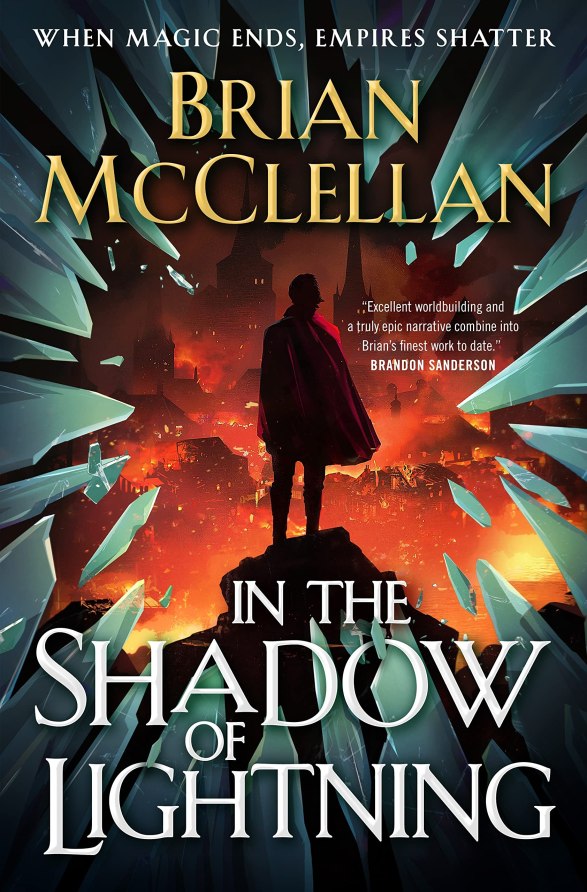
In the Shadow of Lightning by Brian McClellan

In the Shadow of Lightning Cover

Publisher: Macmillan Audio (Audiobook – 21 June 2022)

Series: The Glass Immortals – Book One

Length: 24 hours and 53 minutes

My Rating: 5 out of 5 stars

Amazon

One of the most inventive and compelling authors of fantasy fiction, Brian McClellan, kicks off an awesome new series with In the Shadow of Lightning, the first book in The Glass Immortals series.

Few authors over the last 10 years have had more of an explosive impact on the world of fantasy fiction then Brian McClellan.  Debuting in 2013, McClellan quickly set the world ablaze with The Powder Mage trilogy, which saw chaos and destruction unravel in a new fantasy world where gunpowder-powered mages face off against an enraged god.  I had a brilliant time with the first book in the series, Promise of Blood, and McClellan followed this initial trilogy off with the sequel, Gods of Blood and Powder trilogy, set in the same universe.  While I still need to finish the Powder Mage novels off, I was very excited to hear that McClellan was starting a new series with In the Shadow of Lightning, the first book in the author’s The Glass Immortals series.  This is an impressive and outstanding read that introduces readers to a distinctive new fantasy world, this time with a fascinating focus on glass magic.

Demir Grappo was once one of the most respected politicians, tacticians and glassdancers in the Ossan Empire.  A rising star in the assembly, a proven governor, and the only son of a prominent family, Demir’s promising career is suddenly shattered in the immediate aftermath of his greatest military victory when his army sacked and destroyed the entire city of Holikan, apparently on his orders.  Mentally broken by the massacre done in his name, Demir abandons his army and vanishes into the provinces, giving up his life of privilege for one of anonymity.

Now, nine years after the sacking of Holikan, Demir is a very different man, having spent the intervening time as a grifter with no true home.  However, everything changes when news reaches him that his mother was murdered, brutally beaten to death in public in an apparent political attack.  Determined to find her killers, Demir returns to the city of Ossa to reclaim his seat as the head of his family.  But not everyone is happy that he has returned, and Demir soon finds himself in the midst of several deadly conspiracies, while Ossa goes to war against its neighbour, all in the name of avenging his murdered mother.

To get to the centre of these conspiracies, Demir must find allies, including old friends and new acquaintances if he is to gain the power and influence he needs find answers, especially those hidden by the powerful guild families who rule Ossa.  However, as he searches, and soon finds a much more troubling secret: godglass, the source of magic within the world, is running out, and when it goes, chaos will reign.  The key to securing the future may lie in a device that could re-power inert pieces of godglass, and only one girl appears to have the skill to create such a device.  But as Demir fights to secure this new vital ally, he finds himself fighting against a mysterious new enemy, one that seems determined to destroy anyone who gets in their way.

McClellan impresses again with another incredible fantasy novel that had me instantly enthralled.  Presenting the reader with a multifaceted narrative that combines great characters with intriguing fantasy elements, In the Shadow of Lightning proved to be an outstanding start to McClellan’s new series and I had an exceptional time reading it.  Epic in scope, ambition and potential, In the Shadow of Lightning gets a full five-star rating from me and I am still reeling from just how good this was.

In the Shadow of Lightning is a particularly addictive novel, especially as McClellan presents the reader with an outstanding and complex narrative that pulls them in on so many levels.  Starting off with a compelling prelude that perfectly introduces central protagonist Demir Grappo and shows his dramatic and bloody fall from grace and sanity, the novel then undergoes a time skip which takes the reader into the current storyline, right as events are kicking off.  The initial focus is on Demir, who, after finding out his mother has been murdered, returns to Ossa to take over the family business and discover her murderers.  However, he soon finds that his mother was involved in complex dealings that might have led to her death, and that her assassination has been blamed on a neighbouring city Ossa is going to war with.  The story then splits as McClellan introduces three additional point-of-view characters, each other whom has their own distinctive story arc, closely related to Demir and the politics of Ossa.

These new characters include Thessa Foleer, a siliceer (godglass worker) from Ossa’s neighbour Grent, the breacher Idrian Sepulki and Kizzie Vorcien, an enforcer for a powerful guild-family who Demir hires to investigate his mother’s death.  Each of these new characters have their own individual storylines that tie into the plot points introduced in Demir’s initial chapters.  While these character arcs go in their own direction, their storylines are loosely connected together and form a great overarching narrative as they are dragged into war, imprisonment, political battles, conspiracies and criminal investigations.  I loved the cool blend of character-driven storylines, and everything comes together extremely well to show that something very rotten is going on within Ossa.  This is a very fast-paced story, and McClellan keeps multiple compelling plotlines running simultaneously to keep the reader’s attention, with some great reveals and amazing fight scenes scattered throughout the book.  Most of these reveals are set up and foreshadowed extremely well, with a couple of exceptions, and I didn’t see some of the twists coming, which was pretty fun.  Everything comes to a head towards the end of the novel, as all four characters find themselves in their own extremely dangerous and concerning situation.  Not only is there a massive battle for the future of Ossa but there are some shocking revelations about who is involved in the conspiracy and why.  The author leaves everything on an amazing note that not only leaves readers satisfied with the conclusion of some of the storylines but which also leaves a lot of questions unanswered and the reader wanting more.  An excellent and impressive story that dragged me in extremely quickly.

I was very impressed with how In the Shadow of Lightning’s story came together, as McClellan presented an epic and addictive offering that I snapped up extremely quickly.  I especially loved the use of four separate narrators to tell this story, and McClellan did an outstanding job of separating out their narratives.  Each narrator has their own unique story to tell, and what is really good is that they also explore a different aspect of the author’s new fantasy world, which often breaks across the associated genres.  For example, Thessa’s story focuses on the magical science behind godglass, and examines the political and social elements associated with this branch of magic.  Idrian’s tale comes across as a war tale as he is forced to participated in the deadly conflict between Ossa and Grent, where his particularly magical expertise makes him a living weapon.  Kizzie’s chapters come across as an investigation arc, as she attempts to uncover who killed Demir’s mother, and is forced to dive into the intrigues and shifting allegiances amongst the Ossan families, uncovering a deep conspiracy.  Demir serves as a bit of a joining figure; while he also has his own unique adventures, especially around Ossan politics, a lot of his arc involves interactions with the other three point of view characters.  Not only does this ensure that we get another viewpoint on the other character’s actions, as he gets involved in the godglass, espionage and the war elements that they are solely focussed on, but he helps to bring the other protagonist’s disparate storylines together into one solid and compelling narrative.

All four character-driven storylines are pretty exceptional in their own right, and this was one of those rare multi-perspective novels where you honestly can’t choose which character arc is the most intriguing or enjoyable.  I was particularly impressed with how McClellan brought these storylines together into one outstanding novel, and it makes for quite the epic read, especially as the author ensures you get the right blend of intrigue, action, magic and mystery throughout.  Despite its longer length, In the Shadow of Lightning has a pretty fast pace to it, and the readers are constantly treated to fantastic scenes that really keep your interest, either by being directly exciting, or featuring excellent examples of character development or world building.  I also really have to highlight the outstanding and amazing action sequences featured throughout this book.  McClellan has an impressive way of making these fight scenes really come to life in your mind, and it so easy to see all the epic events unfold.  These action scenes are particularly impactful when combined with the new magical features that the author has come up with, and I had so much fun seeing them unfold.  This really was an exceptional and highly entertaining read, and I loved how this entire amazing story was presented to the reader.

One of the things that most impressed me about In the Shadow of Lightning was the way in which McClellan envisioned and introduced the reader to an entirely new fantasy realm, equipped with its own distinctive magical system, all of which was substantially different from the elements featured in his previous Powder Mage novels.  While there are some similarities, namely that the Glass Immortals series also features magic, firearms, and a similar level of technology, there are quite a few differences which really make this new series stand out.  Most of the book is set in the Ossan Empire and its capital city of Ossa, which proves to be an excellent background location for the complex story.  Ossa, as well as some of the other nations mentioned reminded me of an Italian city-state, and I felt that it was an interesting change of pace to the French/English influences of Powder Mage universe.  The city is ruled by rival merchant guild families who are constantly battling for dominance, while the influence of the cities extends out to various provinces in the extended empire.  There is an intricate society set up around Ossa, and I loved the compelling interplay of industries, politics and intrigue that resulted.  McClellan examines various aspects of Ossan society, including sports, leisure, the military, and the various social levels, all of which were pretty intriguing to discover, and which painted Ossa and its people in a compelling light.  I particularly enjoyed their innate love for intrigue, contracts and business above everything else, and the fact that their national sport involves two magically enhanced people beating each other with cudgels tells you a lot about them.  Throw in some compelling snapshots of other relevant nations, as well as some sneaky hints at other mysterious beings, and the reader is given a really impressive and detailed introduction to this new world in this first book in the series, which McClellan did an outstanding job setting up.

However, the most distinctive part of this new universe is the cool magical system that forms the basis for much of the plot.  Just like with the Powder Mage novels, there are actually several different variations of magic and magic users in this series, which are connected to various forms of glass.  The first of these is the magical godglass, empowered glass items that give its users various abilities, such as strength, intelligence and enhanced senses, or which can be used to control a person.  Godglass is the most common form of magic in this series, which anyone can use, and indeed the entirety of human society in this world is based around the use of these items.  Pretty much every action a character does in this book is helped out in some way with godglass, resulting in some excellent sequences, especially during fights, and McClellan spends a lot of time exploring how it fits into his new world.  This includes multiple scenes set inside glassworks, where the godglass is forged, and you get an idea of how it is made and the significance it holds to the people of this world, including the fact that many of the characters have piercings that allow them to attach godglass to them.  Godglass actually becomes a key part of the book’s plot, once it is revealed that the supplies of magical cindersand that is used to create it is running low, resulting in an undercover war to control the remnants or finding a means of regenerating it.

The other magical elements of this new series involve the inbuilt talents of several characters, who have various degrees of sorcery in them.  The most prominent of these are the glassdancers, sorcerers who can control glass (except godglass) to an astonishing degree, and use it as a weapon.  There are multiple glassdancer characters featured throughout In the Shadow of Lightning (including the central protagonist), and you get to see multiple fights involving them, which are pretty badass.  You would never consider just how dangerous someone controlling glass could be until reading this book, and the brutal and quick ways in which they kill their opponents are pretty damn impressive.  The other major form of magical user are glazalier, who have more of a passive ability that allows them to resist the negative impacts of godglass (too much magic starts to eat away at someone) while still being able to use them.  These glazaliers are deployed as breachers, heavily armoured soldiers equipped with a ton of godglass that make them unstoppable tanks in battle, capable of killing units of men by themselves.  Acting as both a hammer and shield to their comrades, they are a lot more brutal than the subtly lethal glassdancers, and I loved the compelling contrast between the two major magical soldiers featured in this book.  McClellan does an outstanding job introducing, explaining and showcasing all these different magical elements in this first book, and I deeply enjoyed seeing the many cool ways these magical abilities and the godglass could be used, especially in the book’s many awesome action sequences.  I look forward to seeing how McClellan expands on them in the future, and I am still so impressed by how much magic the author could work into glass.

Another area where McClellan really excels as a writer is with the complex and multi-layered characters he is able to create.  This was really evident in his new novel, where several great point of view protagonists and fascinating supporting characters are perfectly introduced to the reader and become exciting focal points for the brilliant plot.

The most prominent of these is central protagonist, Demir Grappo, a brilliant strategist and politician, whose entire life is shattered in the opening prologue.  Forced back into public life after the death of his mother, Demir takes control of his family and attempts to rebuild his legacy while also finding answers.  Utilising the swindling, bluff and manipulation skills he built in the decade he was away, Demir proves to be a tough political adversary and quite an interesting figure to follow.  I loved his impressive and unique storyline, and watching him regain his political skills and self-confidence was really enjoyable, especially as he acts as a deadly glass sorcerer, businessman, politician, leader and even a general.  There are great sequences that highlight his skills, and I loved how he was able to manipulate everyone in many different ways, from being an agreeable political ally, to acting like a smarmy lord who is able to bluff his way around by sheer force of personality.  While he does come across as arrogant at times, which is partially due to the fear and respect everyone gives him due to his sorcerous abilities, McClellan ensures that the protagonist is aware of it, and works to fix his character flaws as he goes.  However, the biggest character aspect of Demir involves the trauma he carries after his actions apparently led to the massacre of an entire city.  Still haunted by the scenes from that night, Demir is forced to revisit them throughout the course of the book, especially when he meets a survivor while trying to find out who was actually responsible.  His roiling emotions around these events are his one weak spot, and the author slips in some powerful and understandable scenes where he loses control.  McClellan did a great job setting up Demir in this first book, and I have no doubt his story is going to get even more complex and painful.

McClellan ensures that all his intriguing characters have their own distinctive and compelling motivations, as well as a dark history that is explored throughout the course of In the Shadow of Lightning.  This includes Thessa Foleer, whose heartbreaking narrative and past worked perfectly in concert with Demir’s, which was appropriate as their storylines were the most closely linked.  Thessa’s story is one of constant loss, especially as everyone who seems to get close to her dies or suffers in some way, and the character goes through some major grief and trauma as a result.  The author does a good job balancing the focus on her past and her feelings of loss, with the scenes depicting her work as a siliceer, and I liked how you get some of the best insights about this book’s primary fantasy elements throughout her chapters.  McClellan sets up Thessa as quite a major character in this novel, and it will interesting to see how her story progresses in the future.

The other two point-of-view characters are Idrian Sepulki and Kizzie Vorcien, who add a lot more excitement and fun to the story.  Idrian’s scenes are some of the most action-packed, and it is very cool to see him in battle, especially as he tends to plough through entire units of men like a human tank.  However, Idrian is one of the most caring and likeable figures in the entire novel.  Primarily concerned for the lives of his comrades, Idrian goes into the battle to protect them, and the close friendships he builds with his men help define him.  However, Idrian is also battling some inner demons, and it is clear that McClellan has some tragedy planned for him in the future.  This is a little heartbreaking, as you really cannot help but enjoy Idrian’s straightforward nature and natural integrity, and anything bad that happens to him is going to strike the reader twice as hard as a result.  Kizzie, on the other hand, is a scrappy enforcer, forced to survive the intense politics of the city’s guild families.  The bastard daughter of the Vorcien family head, Kizzie desperately seeks legitimisation and acceptance from her father, if only to protect her from vicious brother.  Dragged into Demir’s hunt for his mother’s killers, Kizzie dives into the world of political intrigue and family espionage, only to find herself conflicted by the answers she seeks.  Forced to choose between friends and family, as well as between her desires and what his right, Kizzie has some great moments in this book, and her inner conflicts add a great amount of drama to the plot.

These central protagonists are well rounded out by an impressive and enjoyable series of supporting characters, each of whom add to the plot in their own unique way.  McClellan does a great job introducing all the key supporting characters featured in the plot, and there are some amazing and distinctive characters featured here, from long-time friends of the characters, to bitter enemies with their own agendas.  My favourite supporting character would probably be Baby Montego, Demir’s adopted brother who returns to help Demir with his exploits and find out who killed their mother.  A massive brute of a man and a former cudgeling world champion, Baby is considered to be the deadliest man on the planet, even though he doesn’t have any magical abilities and can’t use godglass.  He more than lives up to this reputation throughout the book, and he has some of the most exciting and action-packed sequences in the entire novel as he casually deals out violence.  At the same time, he is also a cunning thinker, and his dry humour and complete self-confidence really make him standout.  It was fantastic to see amazing characters like Baby interact with the point-of-view characters, and you get some impressive moments as a result.  Honestly, every character featured in this book was amazing in their own way, and I cannot emphasise enough how well McClellan wrote them.

As I tend to do with most massive fantasy novels, I chose to check out In the Shadow of Lightning in its audiobook format, which proved to be pretty damn awesome.  Coming in with a runtime of just under 25 hours, this is a lengthy audiobook to listen to (it comes in at number 15 on my latest longest audiobooks I have listened to list), and it took me a decent amount of time to get through it.  However, I felt that was time well spent, as I was relentlessly entertained every single second I spent listening to In the Shadow of Lightning, and there were times I wished it was even longer.  This epic novel really came to life in the audiobook format, and I loved how impressive and cool some of the big action sequences and confrontations felt when being listened to.  While I did initially struggle to keep track of the side characters in this format (having the ability to easily go back and figure out who people were would have been helpful), I was soon able to figure out who everyone was, while also absorbing a heck of a lot more detail about the new universe and its unique elements.

I was also deeply impressed with the outstanding narration In the Shadow of Lightning featured, thanks to the work of Damian Lynch.  Lynch is a veteran audiobook narrator with several epic fantasy series under his belt and he swiftly made me a big fan with his great voice work here.  He really dove into the various characters featured in the book, and you got a great sense of their personalities, emotions and actions as he narrated them.  I had fun with several of the voices he provided in this book, and I thought that protagonists like Demir, Idrian and Baby Montego, were really good, especially as you get notes of weariness in the old veteran Idrian, and the barely contained violence that resonates off Baby every time he talks.  I particularly liked the cool European accents that Lynch gave to the various characters, which helped to reinforce the Italian city-state nature of the main location, and people from other nations or cities had subtly different accents, which I thought was a very nice touch.  All this, and more, makes for an outstanding audiobook and this is easily the best way to enjoy In the Shadow of Lightning.  I had a wonderful time with this exceptional audiobook and I will definitely be grabbing the next book in this format when it comes out.

As you can no doubt see from this lengthy review, I deeply enjoyed In the Shadow of Lightning, which was such an epic book.  Brian McClellan did a remarkable job with this new novel, and he really proved his ability to set up another distinctive and exceptional fantasy series.  Loaded with so many amazing story elements, a cool new fantasy world with unique magical elements, and some impressive and complex characters, In the Shadow of Lightning was so very addictive, and I really could not stop listening to it.  A highly recommended read, especially in its audiobook format, In the Shadow of Lightning was one of the best books of 2022 and is a must read for all fantasy fans, especially those who have enjoyed McClellan’s work in the past, and I am exceedingly excited to see how The Glass Immortals series progresses from here.
Amazon

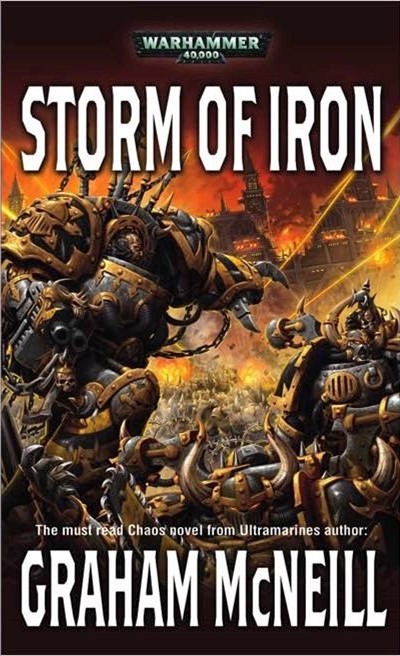
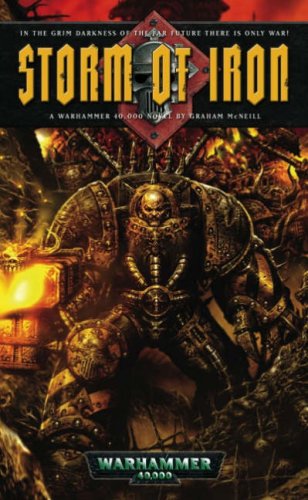
Throwback Thursday – Warhammer 40,000: Storm of Iron by Graham McNeill

Storm of Iron Cover 2

Publisher: Black Library (Audiobook – July 2002)

Series: Warhammer 40,000

Length: 11 hours and 3 minutes

My Rating: 4.5 out of 5 stars

Amazon

Welcome back to my Throwback Thursday series, where I republish old reviews, review books I have read before or review older books I have only just had a chance to read.  For this latest Throwback Thursday, I dive into some old-school Warhammer 40,000 fiction with the exceptional Storm of Iron by one of the most prolific Warhammer authors, Graham McNeill.

Readers of this blog will know that I have been really getting back into Warhammer fiction in the last few years, and I have had an outstanding time reading all the exciting and captivating reads the franchise’s extended universe contains.  I have been particularly impressed by the sheer number of talented authors who contribute to this extended universe, and I already have a few favourites due to how epic and complex their novels have turned out to be.  However, one of the main contributors to the current Warhammer canon I had not really explored yet is the superbly talented Graham McNeill.  McNeill has been writing Warhammer fiction for 20 years now, and he has produced multiple books for both the Warhammer 40,000 and Warhammer Fantasy sub-franchises.  Best known for The Ambassador Chronicles, Legend of Sigma, Ultramarines and Forges of Mars series, as well as his entries in the massive Horus Heresy series, McNeill has produced some outstanding sounding books throughout his career (including several books I really want to read) and had an incalculable impact on Warhammer fiction universe.  I however, have not had too much experience with his works, although I do have several of his novels sitting on my shelf.  I am hoping to read more of his stuff in the future, but I ended up starting with one of his earlier books, the standalone Warhammer 40,000 novel, Storm of Iron.

The Adeptus Mechanicus Forge World of Hydra Cordatus is a barren and desolate place, garrisoned by Imperial Guard of the 383rd Jouran Dragoons and members of Adeptus Mechanicus, who rule from one of the mightiest and seemingly impregnable fortresses in the galaxy.  No-one ever expected that the many wars that plague the universe would ever come to a planet as seemingly inhospitable as Hydra Cordatus, but hell has descended upon the planet in the form of Chaos Space Marines from the feared Iron Warriors legion.

Under the leadership of the dread Warsmith Barban Falk, the Iron Warriors have arrived on Hydra Cordatus in substantial numbers, determined to destroy all the Imperial defenders and take the planet’s main citadel.  After a blistering landing upon the surface of the planet that cuts off all hope of relief, the Iron Warriors deploy their full force of warriors, slaves, labourers and even several corrupt Titans to assault the enemy.  But they have not chosen an easy target, as the citadel of Hydra Cordatus is no ordinary fortress.  It is an ancient and mysterious stronghold, whose walls are designed to stymy any attack, and few foes would have a chance of defeating its defences.

However, the Iron Warriors have long been considered the greatest siege warfare specialists in all the universe.  Having honed their bloody craft for millennia since their betrayal of the Emperor, the corrupt Iron Warriors soon embark on an ambitious and fast campaign that soon threatens to completely destroy the Imperial forces.  Only the arrival of members of the Iron Warrior’s greatest enemies, the Space Marines of the Imperial Fists, gives any hope to the defenders.  But can even the legendary Imperial Fists stand against the ancient fury of the Iron Warriors?  And what secrets truly lay hidden in the depths of Hydra Cordatus’s citadel?

Well, this was a pretty damn awesome Warhammer book.  McNeill did a remarkable job with Storm of Iron, producing an intense and action-packed novel that might be one of the best siege novels I have ever had the pleasure of reading.  Loaded with impressive battle-sequence after impressive battle-sequence, as well as a ton of intriguing and fun characters, Storm of Iron was an outstanding read, and I had so much fun getting through it.

I will admit that one of the things that really drew me to Storm of Iron is that it showcases a massive siege in the gothic future of the Warhammer 40,000 universe.  I have always deeply enjoyed books with sieges in them, and the Warhammer universe is naturally filled with some good examples of this, although these mostly occurred in the fantasy focussed books.  As such, I was quite intrigued to see how a science fiction siege would occur, and McNeill really did not disappoint, painting a powerful and captivating picture and using the Iron Warriors and Imperial Fists, both of whom are known for their siege craft, as central figures in the narrative.

McNeill starts Storm of Iron off with a bang, showing the Iron Warrior’s initial move as they launch a lightning-fast raid and landing upon Hydra Cordatus in the opening chapters.  From there, the siege of the citadel starts in earnest as the Iron Warriors deploy their entire army towards it.  Told from multiple character perspectives of both the attackers and defenders, you swiftly get to know all the key players of the book and see their various personal and military struggles as the siege unfolds.  The author sets everything up perfectly, and you are soon engrossed in the novel-spanning siege, which McNeill explores in intricate detail, examining the various moves and countermoves that the two sides are doing.  You get some awesome scenes throughout Storm of Iron, and it really has everything you could want from a siege book, including artillery barrages, trench warfare, sapping, sallies, reinforcements, counterattacks and desperate fighting in breaches.  The entire story moves pretty quickly, and there are barely any pauses in between battle scenes.  Any delays that do occur serve an essential part of the plot, showing the various personal issues impacting the participants, introducing new characters, or exploring some of the hidden intrigue going on within the besieged citadel.

The story picks up even further around the middle, with the arrival of the Imperial Fists Space Marines who give the defenders more of a fighting chance.  As such, you are never quite certain how the book is going to unfold, and the battle really could go any way.  I liked how McNeill balanced the book between the Chaos and Imperial characters (or the attackers and defenders), and I deeply enjoyed seeing how each side conducted their war, especially as both had to deal with internal dissension and setbacks.  I think that the narrative had a great blend of cool story elements, and the combination of action, intrigue and character work fit the story very well.  Naturally, the best part of the book is the exceptional battle scenes, and thanks to author’s detailed depictions, it is extremely easy to envision all the intense fight sequences that unfold.  There are some outstanding scenes here, and there is a little bit of everything, included destructive ranged warfare, brutal close combat fights, desperate last stands and even some over-the-top battles between the massive Titans (essentially intense mecha warfare).  This entire story comes together pretty well, and I really liked the fantastic and dark notes that McNeill left it on.  While I wasn’t too shocked by one of the book’s main twists, there honestly wasn’t a moment where I wasn’t entertained by Storm of Iron’s story, and I had such a fantastic time seeing this entire epic siege unfold.  I managed to power through this book extremely quickly, and I had so much fun seeing how this protracted battle unfolded.  As such, this is a must-read for all those who love a good siege book, and I really appreciate the awesome story that McNeill featured here.

I love all the cool Warhammer 40,000 elements that McNeill was able to fit into this awesome book, and fans of the franchise will appreciate his attention to detail and fun depictions of the various factions and their iconic regiments/toys.  While the Imperial Guard, Adeptus Mechanicus and Imperial Fists are all featured here, this book is mainly about the Iron Warriors, and it was fascinating to see them in action.  These traitorous and corrupt siege specialists have a rich history of hatred, and while the author doesn’t go completely into their fall from grace, you get a good idea of why they turned and some of the terrors they have inflicted.  Indeed, all the depictions of the Chaos side are extremely powerful, and you get an impressive view of just how twisted and dangerous they and their dark gods are.  That being said, you get a much more nuanced viewpoint of the Chaos side here than most Warhammer books have, and it was utterly fascinating to see their views on the conflict.  That, combined with some of the secrets that the Adeptus Mechanicus are hiding, continues to reinforce one of the key concepts of the Warhammer 40,000 universe: that there really are no good guys here, just winners and dead people.  Thanks to author’s ability to highlight key universe and faction details, this is one of those Warhammer 40,000 books that could serve as a great introduction to Warhammer fiction, and if a massive and bloody siege doesn’t get your attention and make you interested in this franchise, nothing will.  As such, you don’t need to come into Storm of Iron with too much pre-knowledge of the Warhammer 40,000 universe to enjoy this book, although established fans will naturally get a lot more out of it.  I am personally glad that, of all of McNeill’s books, I chose to start with Storm of Iron, especially as it apparently sets up some of his future Warhammer entries.  In particular, it introduces one of the key antagonists of his Ultramarines series, which has long been on my to-read list, and I look forward to enjoying more of McNeill’s epic Warhammer books in the future.

I also deeply appreciated some of the excellent character work that was featured within Storm of Iron.  Due to how McNeill writes the story, the book features a huge range of different point-of-view characters, broken up between the Iron Warriors and the members of the 383rd Jouran Dragoons who are defending the citadel.  While the quick-paced story and multiple character perspectives cuts down on development a little, you do get to know all the key characters very quickly, and McNeill fits in some absolutely fascinating character arcs that I deeply enjoyed.  Three of the most interesting characters are the Iron Warriors captains who are leading the assault on Hydra Cordatus, Honsou, Forrix and Kroeger.  All three are pretty interesting in their own right, with Honsou the true believer ostracised by his comrades due to his heritage, Forrix the disillusioned veteran, and Kroeger the mad berserker who is slowly going insane serving the Blood God Khorne.  Their personal storylines are all amazing, but the real fun is seeing their interactions, especially as they all hate each other and are vying for their master’s favour.  McNeill spends a lot of time with these three villains, and you really get a sense of whole Iron Warrior’s legion through their disparate viewpoints.  I will say that I didn’t think any of the Imperial characters quite measured up to these Chaos characters, especially as McNeill really worked to make them as compelling as possible.  I did deeply enjoy the character of Guardsman Julius Hawke, a slacker who finds himself alone in the wilds and serves an interesting role in the battle.  I was also quite intrigued by Lieutenant Larana Ultorian, a defiant soldier who is captured by the Chaos forces and slowly driven insane by her forced service to them.  These characters, and more, all help to turn Storm of Iron into a much more complex and powerful read, and I had a great time explore all their unique stories and histories here.

I doubt anyone is going to be too surprised that I made sure to grab the recently released audiobook version, which in my opinion is one of the best ways to enjoy a cool Warhammer book.  The Storm of Iron audiobook was a pretty good example of this, as I quickly got drawn into it, especially as the awesome action sequences became even more epic when they are read out.  With a run time of just over 11 hours, this was a decent length Warhammer audiobook, although I managed to power through it in less than a week, mainly because of how much I got caught up in the story.  I was also pretty impressed by the narration from Michael Geary, who really dove into the various roles contained within Storm of Iron’s story.  Geary clearly had a lot of fun telling this dark tale, and I felt his fast-paced narration really added the intensity and excitement of the story.  I also felt that he did a great job bringing the various characters of Storm of Iron to life, and each of the main figures is given a unique voice or accent to help set them apart.  While I liked all the cool voices he did, Geary’s take on the various Chaos Space Marines was very memorable, especially as he really captures the cruelty, hatred and dark demonic influences that affect them.  An overall excellent Warhammer audiobook, I had such an exceptional time listening to this version of Storm of Iron, and this format comes highly recommended.

Overall, I am extremely happy that I chose to read this fantastic Warhammer 40,000 novel, and it was one of the more interesting older entries in the franchise I have so far read.  The extremely talented Graham McNeill did a wonderful job on Storm of Iron, and I had such an amazing time getting through its elaborate and action-packed narrative.  This book featured such an impressive depiction of a siege in the gothic far future, and readers are in for an intense and captivating time as they see this complex battle between besiegers and defenders unfold.  Clever, compelling, and filled with pulse-pounding fun, Siege of Iron was an excellent book and I look forward to reading more of McNeill’s Warhammer books in the future.

Storm of Iron Cover

Amazon

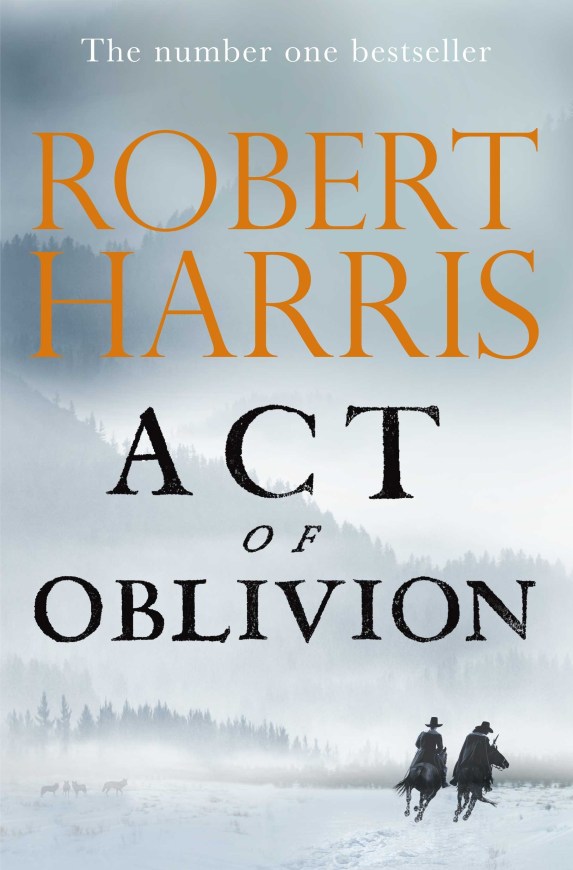
Act of Oblivion by Robert Harris

Act of Oblivion Cover

Publisher: Hutchinson Heinemann (Trade Paperback – 20 September 2022)

Series: Standalone

Length: 464 pages

My Rating: 4.5 out of 5 stars

Amazon

That master of historical fiction, Robert Harris, returns with another deeply compelling read, this time diving into one of the most fascinating manhunts in history with Act of Oblivion.

1660, England.  It is the dawn a new age in English history.  Following the death of Oliver Cromwell, the country has allowed King Charles II to come to power.  In exchange, the King has agreed to clemency for the former Parliamentarians, allowing peace to return to England for the first time in decades.  However, the King’s clemency is not absolute, and under the terms of the Act of Oblivion, all the men involved in the execution of his father, King Charles I, including the 59 men who signed his death warrant, are to be hunted down and brutally executed.

General Edward Whalley and his son-in-law, Colonel William Goffe, are two such men.  Former Parliamentarian leaders, their signatures lie prominent on the king’s death warrant.  Knowing that their deaths are close behind, Whalley and Goffe are forced to abandon their families and flee to the colonies.  Arriving in New England, Whalley and Goffe attempt to become part of the local community, but the shadow of their treason is far-reaching, and both old soldiers will have to live with the consequences of their action.

In London, Richard Nayler has been appointed as secretary of the regicide committee of the Privy Council.  Tasked with tracking down, capturing and executing all the men wanted in relation to the King’s death, Nayler attacks his task with zeal and passion, determined to bring justice to those who wronged the kingdom.  However, Nayler saves the vast amount his hatred and determination for Whalley and Goffe, two men he bears a particular grudge against.  Soon, a large bounty is placed on the two fugitive’s heads, and Nayler himself arrives in America, determined to see the men captured.  Forced to flee across the continent, Whalley and Goffe find themselves as outcasts and fugitives wherever they go.  The chase is on in the new world, and no-one is prepared for how far this mission of vengeance will go.

Robert Harris does it again, producing a brilliant and riveting historical epic that reconstructs fantastic historical events in impressive detail.  I have long been a fan of Harris’s writing, having deeply enjoyed An Officer and a Spy and V2, and his latest book, Act of Oblivion, is one his better works.  I had an outstanding time getting through this complex novel, especially as it spent substantial time diving into a unique historical occurrence I was unfamiliar with.

I had an exceptional time with Act of Oblivion, especially as Harris presents an elaborate and massive story set across multiple years.  Leaning heavily into historical sources, Harris dives deep into the flight of Goffe and Whalley and perfectly portrays their journey to America and the hardships they encountered.  This proves to be quite an intense and frustrating tale, as these two protagonists suffer a great deal through the course of the book.  Forced to abandon their families, Goffe and Whalley are initially seen as heroes by the people of Boston and Cambridge, but the two fugitives are gradually forced to flee from these towns due to the machinations of the English and their former enemies.  Forced to flee to smaller and smaller settlements, the protagonists are chucked into some uncomfortable positions in their flight, which includes years of depredation and isolation throughout the country.  The full tale of their time in America (or at least what is known), is pretty damn remarkable, and I felt that Harris did a wonderful job bringing it to life and showing what these two might of experienced and the lengths they went through to survive.  However, it does occasionally get slow in places, mainly because the historical fugitives were often unable to move for fear of being captured.

Harris covers these slower periods well by mixing in a second major storyline that runs parallel to the depictions of Whalley and Goffe.  This second storyline is primarily set in England and Europe and showcases the events occurring while the fugitives are in hiding.  Mainly shown from the perspective of the fictional character hunting them, Richard Nayler, as well as several scenes that show the fugitives’ family, this second storyline adds some real colour and danger to the events, especially as you get to witness the hunt from the other end.  The blend of fictional and historically accurate storylines works extremely well, and Harris creates a deeply fascinating and compelling overall narrative that really draws you in.  Seeing the simultaneous actions of both hunter and fugitives is a lot of fun, and I loved Nayler’s reactions to the constant escapes of Whalley and Goffe.  Harris also spends time showing the hunt for the other regicides, which Nayler embarks on with greater success.  Not only does this add in some additional fun action and historical context, but it also ups the stakes of the main storyline, as you are forced to witness the gruesome fate that awaits Whalley and Goffe if caught.  All this adds up to quite a remarkable tale, and I was deeply impressed with how exciting and captivating Harris was able to make these historical events appear.

One thing that is extremely clear about Act of Oblivion is the sheer amount of historical research that Harris put into crafting this book.  There is so much exceptional and compelling detail put into Act of Oblivion, as Harris goes out of his way to make this book as historically accurate as possible.  Naturally a substantial amount of this research goes into showing the known events of the two fugitives, as Harris meticulously recounts where they went and the various places they were forced to hide.  While the author does add in a few literary embellishments, this appears to be a very accurate and intriguing depiction of the fugitives’ flight in America, and I had such an amazing time seeing what they went through.  Harris makes sure to try and tells as much of their tale as possible, and the book goes all the way up until 1679, when the records end.  At the same time, Harris spends a large amount of time exploring the history of the rest of the world.  The novel is chock full of intriguing depictions of various key parts of British and American history at the time, which I found to be extremely fascinating, especially as you get to see how England changed after the return of the

King.  Harris also makes sure to examine how major historical events around the world might have impacted the lives of the two fugitives, and I felt that he worked all these fascinating events into the main story extremely well.  All the historical aspects of the book are showcased to the reader in a fantastic and very readable way, and even non-history fans will be able to dive into this story extremely easily.  This is mostly because the historical events themselves are pretty damn remarkable (honestly historical reality stranger than fiction in some places), but I really appreciated how well Harris was able to explore them and showcase them to the reader.

Another historical aspect of this book I deeply enjoyed was the author’s extremely detailed and moving depictions of the American countryside and its settlements in the 17th century.  Quite a lot of the book is spent out in the American wilds, as the two protagonists are constantly fleeing from their pursuers and avoiding people, and Harris makes sure to patiently and lovingly depict the various locations they find themselves in.  You really get a sense of the beauty and danger of the land during this period, and I loved seeing the various English characters react to the wide open spaces after spending time in cities like London.  Harris also takes the time to describe several of the historical settlements that the characters journeyed to and through, and you get a real sense of how built up or settled they were.  I found it fascinating to see all the descriptions about the various settlements, especially as many are quite significant cities in modern times, and it was really cool to see how they originated.  The descriptions of towns like Boston and Cambridge were pretty intriguing, especially as I didn’t realise just how built-up they were during this period (sentiments that some of the character’s shared), and I loved also seeing the Dutch settlement of New Amsterdam, especially as Harris also explored the events that saw it renamed as something far more iconic.  Throw in the deeply fascinating depictions of the people inhabiting these settlements, including the distinctive religious differences (so many puritans) and political sentiments.  Religion in particular becomes quite a key part of this book, and watching the various Puritan figures discuss their beliefs and their thoughts on the actions of the main characters, is particularly intriguing, as you get to see how these religious fugitives shaped early America.  Overall, this is a very impressive and clearly heavily researched look at 17th century America, which all historical fiction fans will deeply appreciate.

I also really enjoyed the central figures of Act of Oblivion and I found their storylines to be very compelling.  As I mentioned above, I really didn’t know that much about Edward Whalley and William Goffe before reading this book, but that swiftly changed.  Harris did a remarkable job showcasing the lives of these two historical figures and you really get to know everything about them.  While I am sure that Harris made a few character changes to fit the narrative, I felt that the overall presentation of them was pretty realistic.  Harris really highlights their personalities, religious convictions, and deep pride in the actions they took under Cromwell throughout the book as they spend time remembering their pasts.  All the key moments are their lives are captured in some way throughout the book, either in the plot or in their memories, and you soon see what events led them to become fugitives.  While the depictions of some their actions during the war and Cromwell’s control of England does make them a tad unsympathetic, I grew attached to them, especially as you see them suffer in isolation over a period of years.  Harris did a remarkable job showcasing how he believed these people would have felt spending years and years trapped in attics and basements, and you can just feel the mental and physical impacts it had on them.  This was frankly a brilliant portrayal, and I had an excellent time getting to know these unique historical figures.

Aside from Whalley and Goffe, the other major character I need to mention is Richard Nayler, the man charged with hunting the fugitives down.  Nayler is a purely fictional character, although Harris indicates upfront that someone likely had this job in the 17th century.  I quite enjoyed the portrayal of Nayler in this book, especially as he serves as a grim and determined counterpart to the protagonists.  A Royalist who witnessed the execution of King Charles I, Nayler goes about his duties with a resolute duty, determined to make all the regicides pay.  However, his main obsession lies with Whalley and Goffe, who holds responsible for the death of his wife and child.  Despite this tragic past, it is a times hard to feel sorry for the super serious Nayler, especially as he has little compassion for others, even the innocent.  However, he is quite a captivating figure, especially as his growing obsession with finding the fugitives becomes more and more apparent.  While his fellow returned Royalists initially share his determination, it soon becomes evident that he is true fanatic, while the others are purely in it for political reasons.  Harris really shows the downside of obsession through this character, especially as Nayler sacrifices a lot to try and find the fugitives.  I felt he had an impressive storyline throughout Act of Oblivion, and this great fictional character played off the real historical figures extremely well.

Robert Harris’ latest novel, Act of Oblivion, once again highlights the author’s outstanding skill as he recounts a particularly fascinating occurrence from history.  I loved the amazing story contained in Act of Oblivion, especially as the author did such a great job incorporating historical events into an intense and captivating plot.  Deeply intriguing and very entertaining, Act of Oblivion is a highly recommended read, and I can’t wait to see what elaborate historical tale Harris comes up with next.

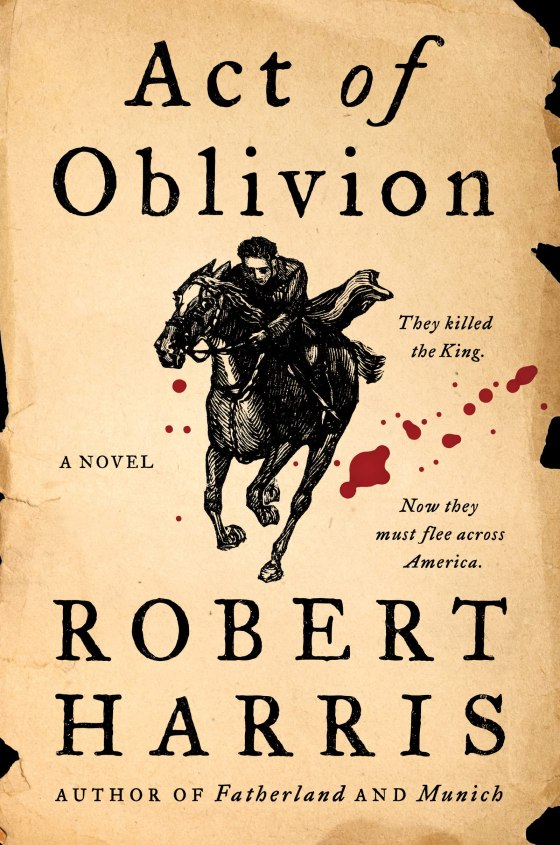
Act of Oblivion Cover 2

Amazon

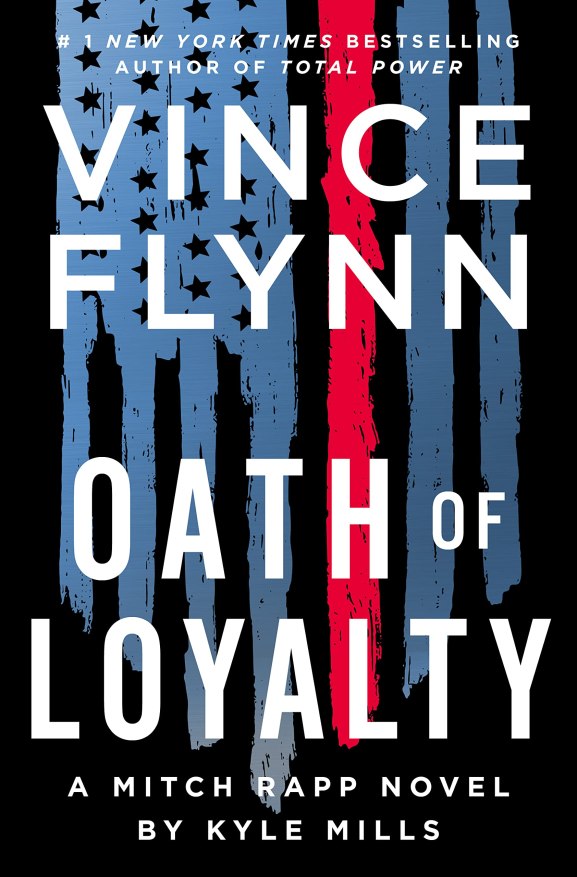
Oath of Loyalty by Kyle Mills (Based on the series by Vince Flynn)

Oath of Loyalty Cover

Publisher: Simon & Schuster Audio (Audiobook – 13 September 2022)

Series: Mitch Rapp – Book 21

Length: 9 hours and 23 minutes

My Rating: 4.5 out of 5 stars

Amazon     Book Depository

Fantastic spy fiction author Kyle Mills continues his excellent stewardship of the late, great Vince Flynn’s Mitch Rapp series, with the new action-packed thriller, Oath of Loyalty.

I have had a lot of fun with some cool spy thriller series over the last few years, but one series that keeps on pulling me back in is the ultra-compelling Mitch Rapp series.  Originally written by Vince Flynn, the Mitch Rapp series follows rugged American spy Mitch Rapp as he wages a brutal war against America’s enemies.  While sometimes a little too nationalistic for my tastes, the Mitch Rapp series nonetheless has some outstanding and inventive scenarios in its arsenal, with the protagonists forced to take on some dangerous enemies and crazy situations.  Since Flynn’s death, the series has been taken over by Kyle Mills, who has continued the tradition of compelling high-concept spy action.  I have had a great time reading Mills’s recent contributions to this series, with awesome reads like Red War, Lethal Agent, Total Power and Enemy at the Gate, all of which were extremely fascinating stories that proved very hard to put down.  As such, I am always very keen to check out the new Mitch Rapp adventure, and I was really drawn into the fascinating plot of the 21st Mitch Rapp novel, Oath of Loyalty.

After a lifetime of protecting the country he loves from terrorists, enemy nations and foreign spies, the shoe is on the other foot as Mitch Rapp finds himself as America’s most wanted man.  The corrupt and paranoid President Anthony Cook is determined to shape America into a personal kingdom that he and his calculating wife can rule for years.  However, after Mitch Rapp foils Cook’s plan to destroy his greatest rival, Rapp is now in the firing line.

Convinced that Rapp will attempt to assassinate him, especially as his actions have resulted in the death of one of Rapp’s oldest friends, Cook attempts to eliminate him, only to have Rapp slip through his fingers.  With neither side wishing to be at war with the other, the President and Rapp manage to negotiate a truce through former-CIA director Irene Kennedy, by which Rapp will remain untouched if he agrees to leave America and stay in plain sight for as long as the Cooks control the White House.  However, the ambitious new head of the CIA is determined to win the President’s influence and manages to convince Cook that Rapp still plans to kill him.  To stop Rapp from coming after them, the new administration decides to attack those closest to him by leaking the identity and location of Rapp’s partner, Claudia Gould, to her many enemies.

Soon, everyone Claudia and her dead assassin husband ever crossed is out to get her.  Despite Rapp’s violent reprisals against her attackers, the threat increases dramatically when one of Claudia’s old enemies hires the infamous Legion.  Legion is a completely anonymous team of assassins who rely on secrecy and never meet their client in person.  No one knows who they are; all they know is that once Legion accepts a contract they don’t stop until their target is dead, no matter how long that may take.  With their country turned against them, can Rapp and his allies save Claudia from this new threat before it is too late, or will he lose another woman he loves?

Kyle Mills continues to showcase just how awesome a Mitch Rapp novel can be with this fantastic new entry.  Perfectly utilising all the typical action, intrigue and political insight that the latest Mitch Rapp books have all been known for, Oath of Loyalty features a fantastic narrative that I really got stuck into.  This was another impressive and fun spy thriller read, and I ended up powering through this book in no time at all.

Oath of Loyalty had another excellent Mills narrative that took the protagonist on a wild adventure of survival, revenge, and political upheaval.  The start of the book contains a detailed prologue that replays the closing scene of the prior novel, Enemy at the Gate, which was a good recap to start off with.  The rest of Oath of Loyalty seamlessly follows on, showing Mitch Rapp in the crosshairs of the new President and his corrupt administration.  After a great escape sequence, Rapp flees to South Africa and arranges a truce, and begins to watch the decline of America from afar.  However, the President is far from done with him, and his fearmongering advisor convinces him to keep Rapp occupied while they prepare for his potential retaliation.  Rapp is forced to defend Claudia and her daughter from several dangerous assassins, which includes one particularly impressive action sequence as Rapp fends off an entire hit squad by himself.  This results in some A-grade vengeance as Rapp goes after Claudia’s enemies in retaliation, which naturally includes some very over-the-top results.

However, the characters find themselves in dire straights when one enemy hires the unstoppable Legion assassin team, who specialise in elaborate kills.  Mills sets up Legion extremely well, and the reader is soon engrossed in watching the cat-and-mouse game that emerges between them and Rapp.  At the same time, Rapp and his allies are forced to contend with a selfish and power hungry president who is determined to destroy them all.  The second half of the book has some great sequences, and I loved seeing Legion’s actions and their attempts to get past Rapp, and the protagonist finds himself in a tough situation, especially as his limited help sometimes proves to be even more dangerous than his opponents are.  Everything leads up to a fantastic and very entertaining conclusion, which I think worked very well.  While I did think that part of the solution was a little silly when it came to just how threatening the protagonist could be, this was a pretty amazing story and I had a wonderful time getting through it.

I felt that Mills did a great job setting out Oath of Loyalty’s narrative, and there are many great elements to it that make it so much fun to read.  The author makes excellent use of multiple character perspectives to showcase the fun narrative, and it was awesome to see the various sides of the story.  I especially liked the parts of the book shown from several antagonists’ standpoints, and it was great to see the simultaneous moves and counter-moves that Rapp and his opponents put into play.  Like the rest of the Mitch Rapp books, Oath of Loyalty has several great action scenes that come together extremely well.  The brutal combat is crisp and flows off the page perfectly, ensuring that every action junkie can imagine just how the protagonist is kicking ass.  This works in concert with the book’s outstanding espionage elements, which Mills features so very well here.  I love the author’s take on spy craft in Oath of Loyalty, and there is a gritty realism to how Rapp and his allies go up against their foes, especially as this time they are going up against the American intelligence apparatus.  Oath of Loyalty is also well paced out and readers are left with barely a second to breathe between the various exciting or compelling sequences of espionage, or political malfeasance.  All this, and more, definitely helped me stayed glued to Oath of Loyalty and I really got stuck into the cool narrative and couldn’t wait to see how it all came together.

While characters are never the strongest part of a Mitch Rapp novel (I always felt that the protagonist was a tad one-dimensional), I did like how some of the recurring figures turned out in Oath of Loyalty.  There was some interesting work on Mitch Rapp himself in this book.  While he is still the same highly feared and insanely talented assassin and general sadist, you can see that the years are really starting to get to him in this book as he starts to think about winding down.  The cynical weariness that infects him in this book as his country turns against him is pretty compelling, and it was interesting to see him as America’s enemy for once.  Throw in some growing family concerns and touching relationship moments, and this was an interesting book for Rapp, and I quite enjoyed seeing his deeper thoughts on several matters here.

Several other characters had some fantastic moments in Oath of Loyalty.  Irene Kennedy and several of Rapp’s allies find themselves on the wrong side of politics here, and it was compelling to see the loyal American soldiers realise they have been betrayed by their country.  Claudia gets quite a lot of focus, especially as her past mistakes are brought into focus, and Mills does a good job of examining how she fits into Rapp’s life and how their relationship has grown.  I liked the fantastic backstory around Legion, and Rapp manages to make them appear dangerous and interesting in a very short amount of time, which I really appreciated.  Without ruining too much, I also was highly entertained by Rapp’s allies in the second half of the book, especially as they result in a really mental minefield for the protagonist, who finds himself stuck with two damaged people he has no idea how to deal with.  Finally, President Cook and his inner circle prove to be entertaining antagonists, and I loved seeing them abuse their power all in an attempt to kill one man.  Their ambition, ruthless political savvy and complete disregard for the people they serve makes them quite unlikeable, and it was fun to see them thrown for a loop by a single man as they live in fear of what Rapp may do to them.  The growing instability of the president as he gets consumed by his paranoia is particularly fun, and Mills comes up with a great crony character who feeds on that for unique reasons, all of which is very amusing to see.  I had an excellent time with all these fantastic characters, and Mills certainly wrapped an awesome story around them.

One of the things I have appreciated with Mills’s last few Mitch Rapp novels is his insights into the current state of American politics and the country’s current divides.  All his major American protagonists, who are old hats at politics and espionage, are disillusioned by the direction the country has taken, and this becomes apparent in their discussions and inner thoughts, as many of them begin to wonder what they were fighting to preserve all these years.  At the same time, several of the villainous political figures in this book are shown to be quite aware of the divides occurring in America, and are very willing to manipulate it to their own ends.  Indeed, many of their discussions about strategy show them actively doing this, and there are several scenes with them attending the sort of rallies and conventions that people familiar with contemporary politics will know and loath.  I really appreciated this frank and intriguing look into American politics and the state of the country in Oath of Loyalty, and I honestly felt that the author and the characters were even more critical than in recent books (although some of that was tied into the plot).  It is honestly a little refreshing to see this sort of introspection from a series that has always been very pro-American, and it is definitely a sign of the times.  However, these political insights aren’t just there for the sake of making the novel stand out, and they play quite a vital role in the plot.  The characters have many discussions about the future of America, and their decisions are very tied into how they want it to proceed.  It proved to be quite a key part of Oath of Loyalty’s narrative, and I think that Mills did a pretty good job of utilising this modern-day elements in his latest book.  It will be quite interesting to see how this is presented going forward, and I really appreciated how Mills is trying to keep the series relevant.

As I have with the last few Mitch Rapp novels, I chose to check out Oath of Loyalty’s audiobook format, which was a great way to enjoy this book.  With a run time of just under nine and a half hours, this a relatively short audiobook and I managed to get through it quite quickly once I got stuck into the story.  I had an excellent time getting through the Oath of Loyalty audiobook, and I felt that it did a great job enhancing the narrative, especially by picking up the pace of the awesome action sequences.  I am however, once again on the fence when it comes to narrator George Guidall, who has lent his voice to most of the Mitch Rapp audiobooks.  I always find that Guidall’s voice sounds a little tired when he reads these audiobooks and there really is not that much variation between the various characters, although I never had any issue working out who was talking.  While this would ordinarily put me off, I have actually gotten quite used to Guidall as narrator for this series, and I honestly could not imagine anyone else voicing these cool books.  I also feel that Guidall’s older, wearier voice perfectly fits the character of Mitch Rapp in these latest books, especially as he is getting sick and tired of all the political games and general BS surrounding him.  I was quite happy to listen to Guidall once again in Oath of Loyalty, and I look forward to hearing him again with the next Mitch Rapp audiobook.

Overall, I was very happy with this great book and Oath of Loyalty proved to be an excellent addition to this brilliant long-running series.  Kyle Mills continues his impressive run of elaborate and clever Mitch Rapp stories here, and Oath of Loyalty served as an outstanding sequel to the author’s previous book while perfectly continuing some amazing storylines.  Exciting, intense and loaded with so much action, Oath of Loyalty is a very easy book to fall in love with, and I had a brilliant time getting through it.

Amazon     Book Depository

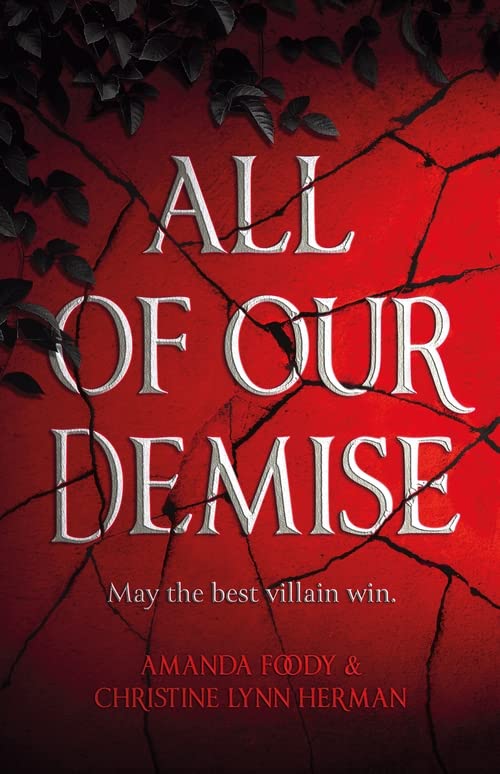
All of Our Demise by Amanda Foody and Christine Lynn Herman

512vserm0oL

Publisher: Gollancz (Trade Paperback – 30 August 2022)

Series: All of Us Villains – Book Two

Length: 470 pages

My Rating: 4.75 out of 5 stars

Amazon     Book Depository

After wowing the world with their first collaboration, 2021’s All of Us Villains, the superstar young adult fiction team of Amanda Foody and Christine Lynn Herman return with the second book in their impressive duology, All of Our Demise, one of the most anticipated young adult fantasy releases of the year.

For generations, seven prominent families of the city of Ilvernath have each sacrificed one of their children to a legendary death tournament, the winner of which would secure the extremely powerful high magick for their family.  However, this latest tournament has not turned out like anyone expected.  Already exposed to the world thanks to a tell-all book, some of the champions, led by the seemingly heroic Briony Thorburn, are determined to break free from the bloody tournament that has long haunted their families.  But as they attempt to break the curse that binds the tournament to them by destroying the enchanted artefacts and locations associated with their families, their actions will have unexpected consequences on all around them.

For the first time in its history, the magical Blood Veil that physically separates the participants from the outside world has been broken and now everyone can witness the tournament unfold.  As reporters and members of the public swarm into the historic battleground as witnesses, the participants can return to Ilvernath and seek help from those in town.  The destruction of the Blood Veil seems proof that Briony’s plan is working, but not everyone wants the curse to end.

After the miraculous resurrection of his murdered brother, Hendry, Alistair Lowe believes that the only way he can keep Hendry alive is by winning the tournament.  After murdering his entire evil family and after being cursed by the girl he fell for, Alistair finds himself isolated with Hendry, unsure how to proceed.  However, he soon finds himself working with a surprising new ally in Gavin Grieve, the boy no-one expected to survive, and who has his own desperate reasons for working with the Lowes.  At the same time, the formerly glamorous Isobel Macaslan finds herself drawn to the mysterious Reid MacTavish, whose manipulation of the champions has brought nothing but trouble.  Determined to help Briony destroy the tournament, Isobel will break all the rules to survive, even if that means drafting Reid in against his will.

As the battle lines are drawn and the two groups of champions attempt to path their respective courses to victory, they find unexpected obstacles blocking their way.  Not only are the champions’ manipulative families attempting to sway events to their favour, but the media is determined to make all of them infamous in their own way.  Forced to battle each other both in the tournament and in the field of public opinion, the champions will face unbelievable tragedy and despair as they all try to survive.  However, the biggest threat to all of them may come from outside the tournament, and no-one is prepared for the evils waiting for them in the wider world.

Foody and Lynn Herman have delivered quite an impressive sequel here with All of Our Demise, which presents the reader with another epic and powerful story.  Building on the elaborate narrative and character arcs of All of Us Villains, All of Our Demise takes the reader on an exceptional emotional rollercoaster as they watch four extremely complex and distinctive point-of-view characters battle in impossible circumstances.  All of Our Demise ends up being just as good, if not a little better, than Foody and Lynn Herman’s first impressive outing, and it provides readers with an outstanding and memorable conclusion to this captivating young adult fantasy duology.

I’m still reeling a little bit about how All of Our Demise’s story turned out.  Foody and Lynn Hermann did a remarkable job with this sequel and the story continues seamlessly on from the events of the first book.  Told from the perspective of the four main characters, the death tournament focus of the story has evolved due to the events of All of Us Villains and the characters are now forced to contend with outside forces as they fight in an extended battleground.  The protagonists are now split down the middle as some fight to destroy the tournament for good, while they others try to keep it alive so they can win, either for their own survival or to save those closest to them.  All four protagonists have some brilliant character driven storylines around them, and each of them is fighting for something important to them, whether it be redemption, family, reputation, or respect.  In addition, the protagonists are still reeling from the events of All of Us Villains, and no-one has been left emotionally or physically untouched from the events of the first book.  This results in an emotionally heavy storyline, especially once everyone gets a taste of betrayal, either from the other champions or from other malign figures outside of the main group.  The story evolves at a great pace, and the authors chuck in some imaginative and clever twists as each group starts to get closer to their goal.  New relationships are built while others are torn down, and there are some very intense moments as scorned friends finally confront each other over past betrayals.  Everything leads up perfectly to the big conclusion, where there are some big sacrifices and some major changes in the lives of every protagonist as they reach their endgame.  I really appreciated how this impressive story came together, and you will be left shocked, moved and very satisfied with how this outstanding duology came to an end.

I think the excellent team of Foody and Lynn Herman did a remarkable job pulling All of Our Demise together, and this was an extremely well-written book.  As I mentioned above, this is a pretty epic sequel, and the authors strike off right after the cool cliff-hanger that All of Us Villains ended on.  All the great story elements from the first book are seamlessly continued here, and I really appreciated being able to jump straight into the narrative again.  While the authors do ensure that there is some exposition so that readers can remember what happened in the first book, I would say that All of Our Demise is a bit of a harder book to enjoy if you haven’t read All of Us Villains first.  There are some story and character gaps featured here that might be a bit hard to follow without having read the first book, so I would definitely recommend checking that out first.  Once you are into this story, there really isn’t a slow moment, as the characters are constantly engaged in some form of action, the enhanced intrigue surrounding the event, or a deep examination of their psyche and relationships, especially as they continue to examine the terrible events they have found themselves in.  While All of Our Demise is a bit of a brick, you honestly are never left feeling bored or stuck, and you frankly can’t help but move forward as you are drawn into this elaborate tale.  I really think that the split between the four protagonists is handled perfectly as well, and it ensures you get a well-balanced narrative and substantial time to dive into their respective and impressive character arcs.  This was one of those young adult novels that has a lot of appeal both for its target teen audience, and much older readers, as everyone will deeply appreciate its clever storylines and deeply relatable characters.  I felt that All of Our Demise came together exceptionally well, and this ended up being quite an outstanding and addictive read.

I must make special note of the cool death tournament that is such a fantastic feature of this amazing duology.  I love a great young adult death tournament scenario (who doesn’t?), and the one featured in All of Us Villains and All of Our Demise is particularly inventive, loaded with a unique history, fun magical features, and all manner of devastating tragedy.  I was really impressed with how the authors set up and featured this elaborate tournament in the previous book, and they continue to utilise it throughout All of Our Demise.  The constant fight to survive the lethal tournament becomes even more complicated throughout this second book, and it was fascinating to see how the characters deal with the pressure and the constant war they find themselves in.  There are some excellent features of the tournament that come into play in this second book, including the new magical artefacts and locations featured within that give them varying advantages.  These are generally short lived as the champions are determined to destroy them all, which not only requires them to learn more of their various family’s dark histories but forces them to engage in deadly challenges built into the tournament to destroy it.  These challenges are pretty epic, and it was great to see the protagonists involved in progressively more lethal encounters.

However, the most distinctive and entertaining change to the tournament that occurred in All of Our Demise was the sudden lack invasion of the public that occurred due to the breaking of the Blood Veil barrier.  The tournament has always historically been a private affair between the champions, but now the entire battle is a worldwide sensation being constantly reported on by the media.  It was quite fascinating and a little maddening to see the supposed sombre death tournament devolve further into a gaudy spectacle, equipped with baying fans, manipulative outsiders and a ton of paparazzi, all of whom have a very different view of the events occurring.  I particularly enjoyed seeing the ridiculous media coverage that occurred throughout this second part of the tournament, especially as various over-the-top and often blatantly false headlines and discussions of current tournament events appeared at the start of every chapter, replacing the quotes from the tell-all book that were featured in All of Us Villains.  This media coverage nearly always painted the complex characters in such a terrible light for the rest of world, which was a little hard to see, especially after you have become quite attached to the various protagonists.  However, I personally felt that it drew me into the narrative a little more, and it was a very entertaining and fun element that I had an amazing amount of fun with.  This media coverage had an interesting impact on the events of the narrative, as the characters are forced to conduct interviews and discussions with reporters to further their goals.  This entire change in the publicity of the tournament was a brilliant addition to this second book, and it altered the tone of the book in an impressive and amazing way, that really added to my enjoyment of the book.

However, the best thing about All of Our Demise was the exceptional character work featured within.  Foody and Lynn Herman did such a brilliant job setting up the four complex protagonists in All of Us Villains, and these impressive character arcs are continued seamlessly in the sequel, with each of the protagonists forced to deal with some of the further traumas that were inflicted on them in the first book.  All of Our Demise maintains the same four point-of-view characters as before, and I found myself instantly connected to them again as I remembered their compelling history and the devastating events that occurred to them in the first book.  The authors continued to perfectly build these characters throughout All of Our Demise, subjecting them to further trauma, emotional concerns and hardships, and watching them try to deal with these as they fight for their survival is a key and impressive part of this epic young adult book.

Probably the most compelling character in the entire duology is Alistair Lowe, who simultaneously plays the role of the best antagonist and an intriguing and likeable protagonist.  Alistair is the oldest son of the Lowe family, who are generally considered to be the major villains of the tournament.  Despite being raised from birth to be a monster, Alistair was hesitant about his role in the tournament and was initially a reluctant participant, even though he knew it was his destiny.  Thanks to his romantic interactions with fellow champion Isobel and the murder of his brother Hendry by his family to boost his chances, Alistair had a brief brush as being a hero and destroying the tournament with the others.  However, the apparent resurrection of Hendry by the tournament at the end of All of Us Villains caused Alistair to abandon his allies and attempt to kill Isobel as he believes their plan would result in his brother dying again.  Now fatally cursed and having taken brutal revenge on his family, Alistair is forced to re-envision himself as the villain once again to convince himself to kill the other champions, all to save the most important person in his life.

It is very hard not to appreciate Alistair as character as the authors have done an incredible job creating him and turning him into the most complex figure in the novel.  The authors really did a number on Alistair in the last book, and watching him try and work through all these issues here is extremely powerful, especially as he keeps experiencing more setbacks and traumas as he proceeds.  There is so much tragedy and emotional turmoil surrounding Alistair in this book, and the authors write an excellent arc around him for this sequel.  Watching him try to balance his desires and true nature with everyone’s perspective of him as a monster is just so damn fascinating and moving, and you can’t help but feel sorry for this fictional character.  I am glad that Foody and Lynn Herman did work in a redemption arc for Alistair in All of Our Demise, and there are some surprising, but very heartfelt relationships surrounding him in this novel that help to keep him going.  I really think that the authors handled Alistair perfectly, and he is definitely the character that everyone will remember once they finish this book.

Another character who you fall in love with Isobel Macaslan, another person who has gone through absolute hell through the course of the books.  Forced into the tournament against her will, Isobel tried to use her sudden infamy to her benefit and projected an air of confidence before the tournament, despite being terrified and used by her family.  Since then, she had an unfortunate romantic entanglement with Alistair Lowe which resulted in him murdering her.  Resurrected by a dark curse that makes her more corpse than woman, Isobel is in a very bad place during this book.  Still controlled by doubt and despair, Isobel is uncertain about whether she believes in the plan her friends are proposing and spends most of the book coming to terms with her fears and her growing attachment to another dangerous character.  Throw in some major family issues, as she continues to struggle with her selfish family, and a hostile press who produce some typical paparazzi junk about her, and you some excellent and compelling moments around Isobel that are fascinating to see.  Isobel continues to experience quite a lot of tragedy in this novel and watching her power through them and try to fix all her damaged relationships is a great part of the plot.

The third point-of-view character is Briony Thorburn, who serves quite a key role in the plot.  Briony has seen herself as the hero her entire life and was the only person excited for the tournament.  However, after her younger sister was chosen in her place thanks to the machinations of the government, Briony illegally entered the tournament by incapacitating her sister and cutting her finger off.  Now determined to destroy the tournament, Briony leads the charge to destroy the artefacts and landmarks.  However, there are some major concerns about her actual motivations, as many assume this part of her manipulative hero complex.  Briony spends most of the book trying to redeem herself after the mistakes of the first novel, a task that is complicated by her own family, who have their own sinister plans for her and the other champions.  Mentally isolated and hated by the media, Briony has a terrible time in All of Our Demise, and the authors weave some powerful moments around her.  I honestly think that Briony had one of the best and most complete narratives in the entire series, and All of Our Demise brought her character arc together extremely well.  Like the rest of the cast, it is very hard not to grow attached to Briony as you witness her complicated physical and mental battles unfold, and I really appreciated the outstanding way it ended.

The final main character is Gavin Grieve, who proved to be one of the most surprising and captivating characters from the first book.  The chosen sacrifice of the one family who has never won the tournament, Gavin always knew he was destined to die.  Full of rage and resentment, Gavin chose to make a deal with the devil and accessed a dangerous form of magick that drained his own life to gain substantial power.  Made into a lethal contender but slowly dying, Gavin is convinced by outside forces that they can save him, but they require him to work with Alistair Lowe.  Forced to overcome his own prejudices, most of which revolve from the perceived disrespect of the other champions, Gavin grows close to Alistair, and they form an interesting team.  I was really surprised by the direction of Gavin’s storylines in this book, especially as there are some fantastic reveals and changes in personality.  The authors did a great job of explaining his changes in personality, and I felt that it was quite a natural transition, especially when you consider everything he’s gone through.  Gavin rounded out the central cast of damaged, complex protagonists, extremely well, and I thought that this was a brilliant combination of characters.  Their combined complex storylines and arcs are just superb, and while you might get a little more drawn in to one or two of the characters more than the rest, there is no perspective that you are actively wanting to avoid.  I cannot highlight just how impressive these four characters were, and Foody and Lynn Herman should be commended for the exceptional character work they did here.

The wonderful and insanely talented team of Amanda Foody and Christine Lynn Herman have come up with something truly special with All of Our Demise.  Perfectly finishing the brilliant story started in All of Us Villains, All of Our Demise lived up to all the hype surrounding it and ended up being one of the best young adult fantasy books of the year.  Featuring all the great characters from the first book, Foody and Lynn Herman weave an addictive and deeply personal narrative around them that takes the reader back into the midst of a constantly evolving and deeply traumatising magical death tournament.  Intense, captivating and very complex, All of Our Demise is a highly recommended read, and I cannot have envisioned a better end for the exceptional young adult duology.

All of Our Demise Cover

Amazon     Book Depository

Recursion by Blake Crouch Review

Recursion Cover

Publisher: Random House Audio (Audiobook – 11 June 2019)

Series: Standalone

Length: 10 hours and 47 minutes

My Rating: 5 out of 5 stars

Amazon

Get ready for one of the most impressive and compelling science fiction books of the last few years with Blake Crouch’s outstanding 2019 release, Recursion.

Crouch is one of the more intriguing and highly regarded science fiction and thriller authors out there now, having produced a fantastic catalogue of intense and addictive novels over his career.  Best known for his Wayward Pines trilogy (adapted into a television series of the same name), Crouch’s books for the last few years have been a collection of fantastic standalone science fiction thrillers, such as the bestselling Dark Matter.  These novels often combine intense thriller storylines with high-concept science fiction elements to produce some epic and captivating reads.  So far, I have only read one of Crouch’s books, his 2019 release, Recursion, which was an exceptional and amazing read.  Unfortunately, I didn’t review it back then, even though it was one of my top books and audiobooks of 2019.  As I have just started reading Crouch’s latest book, Upgrade, I thought this would be a good opportunity to quickly give Recursion the love it deserves, as this honestly was one of the better books of 2019.

Synopsis:

Memory makes reality.

That’s what New York City cop Barry Sutton is learning as he investigates the devastating phenomenon the media has dubbed False Memory Syndrome—a mysterious affliction that drives its victims mad with memories of a life they never lived.

That’s what neuroscientist Helena Smith believes. It’s why she’s dedicated her life to creating a technology that will let us preserve our most precious memories. If she succeeds, anyone will be able to re-experience a first kiss, the birth of a child, the final moment with a dying parent.

As Barry searches for the truth, he comes face-to-face with an opponent more terrifying than any disease—a force that attacks not just our minds but the very fabric of the past. And as its effects begin to unmake the world as we know it, only he and Helena, working together, will stand a chance at defeating it.

But how can they make a stand when reality itself is shifting and crumbling all around them?


Recursion
was a powerful and deeply complex novel that perfectly brought together an impressive and thrilling narrative about choices, survival, and fixing mistakes, with some outstanding and clever science fiction concepts.  Based around the concept of memory, Recursion eventually devolves into a deeply compelling time travel narrative as its amazing two protagonists are dragged into a terrifying struggle to save the world.

The narrative of Recursion is split between grizzled cop Barry Sutton and brilliant scientist Helena Smith, both of whom have tragic pasts and memories that they would kill to get a do-over for.  Their storylines are initially kept separate, as Barry attempts to investigate a mysterious illness that is causing people to suddenly awaken with a second set of memories about a life that didn’t happen, driving them insane.  At the same time, Helena works with a mysterious corporate benefactor to develop a machine that will allow people to relive their most important memories, but her boss soon takes control of the project and morphs it into something very different with impossible knowledge.

It is soon revealed that Helena’s boss is using her memory machine to travel back to the time that the important memories were created in order to alter the timeline for his and his friend’s advantage.  The false memory syndrome is a side effect of this process, as people eventually start to remember all the changes that have been made due to the time travelling villains.  Both Barry and Helena are dragged into this conspiracy, as Barry is bribed to stop investigating by reliving and altering the memory of his daughter’s death, while Helena fights to stop it before it’s too late.  Eventually teaming up once the world starts going crazy with multiple memories, Barry and Helena are too late, with the various nations launching nukes against America to stop them ruling the world through time travel.  Helena is barely able to escape by diving back in time to a point in her personal years before the events of the book.

From there the novel turns into an intense time travel thriller as Helena works through her past and attempts to perfect her machine and stop time travel from ever existing.  Continuously recruiting a younger Barry, Helena is unable to find a solution before the world regains its lost memories and is forced to travel back again and again to avoid the inevitable arrests and nuclear strikes and ends up living multiple lifetimes.  This leads to a desperate series of attempts to save the world, which results in a fantastic and clever conclusion that fits the unique science fiction elements and characters of this book extremely well.

Recursion’s entire narrative comes together extremely well and serves as a powerful standalone read.  I loved how the story developed throughout the course of the book, and I found the second half of the novel, with the multiple examples of time travel to be some of the best parts of Recursion, especially as the stakes are raised higher than ever before.  This is a very well-written and fast-paced thriller, and Crouch brings in some fascinating concepts that work extremely well in the context of the clever narrative he pulled together.  The blend of intense action, compelling characters and complex science fiction elements is pretty damn perfect, and readers really get drawn into this narrative as a result.  I was personally addicted to Recursion very early in the game, and I had an outstanding time seeing how everything came together.

Crouch explores a lot of unique and compelling scientific elements which become an excellent part of the overall book.  The author presents a very complex and intriguing series of concepts around human memory, time travel, and everything in between, and makes some very interesting and well-researched points about them.  While most of these concepts are high-level science, Crouch takes the time to explain them carefully, and I found myself following along with the ideas fairly well.  While I did think the leap from memory experiments to time travel were a little over-the-top, it did become an incredible part of the narrative, and I really loved how well time travel was used in the story.  I love a good time travel story, and Recursion was one of the better ones that I have read, especially as it covers it in a unique way, while also highlighting the many dangers of unchecked changes to the time stream.  I loved how well the author was able to weave a compelling and powerful story around these concepts, and you will come away from this book really thinking about all the implications of this potential technology, as well as the importance of memory to the human psyche.

I also deeply enjoyed the outstanding pair of protagonists, Barry Sutton and Helena Smith, whom the story is set around.  Not only does Crouch do a wonderful job splitting the narrative between them, often in some very clever ways, but he also builds both characters up extremely well, showcasing their deep inner pain.  Both have experienced a lot of tragedy in their lives, and thanks to the technology being explored here, they are given the chance to relive it and change it.  Watching them go through these deep emotional moments, as well as witnessing the various mistakes they make as they try to fix the world, is pretty damn heartbreaking, and you really grow to appreciate their struggles, especially if you can relate to their tragic memories.  As such, you grow attached to them rather quickly, and I liked how Crouch made sure to build in a compelling, if unique, relationship between them.  While both grow close during their first meeting, their romantic relationship takes on a whole new edge once time travel is brought into it and it turns into powerful romantic bond that literally last lifetimes.  I really grew close to both Barry and Helena while reading Recursion, and they are an outstanding pair of protagonists to follow.

I must admit that I was a little wary about listening to the Recursion audiobook, as a colleague of mine who read the novel before me indicated that it might prove a little challenging to keep track of the various time periods without a physical copy to flip through.  However, I really did not have any trouble keeping track of what was going on in the story while listening to the audiobook, and indeed I found that the format helped me understand the concepts more.  I also enjoyed the combined narration of Jon Lindstrom and Abby Craden, with Lindstrom reading the chapters told from Barry’s perspective and Craden doing the same for Helena’s chapters.  This split in narration worked really well, and I liked how it changed each time the character perspective did.  With a run time of just under 11 hours, this was a fairly easy audiobook to get through, and I powered through it very quickly.  An overall excellent way to enjoy this fantastic book.

Recursion by Blake Crouch is an epic and exceptional read that really showcases the author’s impressive writing skill and ability to come up with some truly unique concepts.  This science fiction masterpiece is so damn awesome, and there is a very good reason that it was one of my favourite books of 2019.  A five-star read and highly recommended in every way possible, I loved Recursion, and I can’t wait to finish off and review Upgrade next.

Amazon

The Coward by Stephen Aryan

The Coward Cover

Publisher: Angry Robot (Audiobook – 28 April 2021)

Series: Quest for Heroes – Book One

Length: 14 hours and 50 minutes

My Rating: 4.5 out of 5 stars

Amazon     Book Depository

Prepare for a legendary quest with a complex and damaged hero as bestselling author Stephen Aryan presents the first book in his new fantasy duology, The Coward.

Aryan is an awesome fantasy author who has been writing some great books over the last few years.  Aryan debuted back in 2015 with Battlemage, the first book in The Age of Darkness trilogy, which focused on a brutal magical war.  After finishing this initial trilogy, Aryan released a sequel trilogy, the Age of Dread trilogy, which was set 10 years after the events of the first trilogy, which focused on the consequences of the first trilogy, especially the fear and prejudice its magical war brought on every mage in this fantasy world.  I ended up reading the second book in this trilogy, Magefall, and quite enjoyed its interesting story.  Unfortunately, I never got a chance to finish the trilogy off or go back and check out some of the earlier books, which I kind of regret.  But I did get the chance last year to read the first book in his new series, The Coward, the first instalment of the Quest for Heroes duology.

Everyone in the Five Kingdoms knows the legend of Kell Kressia, the most renowned hero in all the lands.  At the young age of 17, Kell volunteered to join a band of legendary warriors and heroes on their greatest quest ever: travelling to the far north and killing the Ice Lich to save the world.  Twelve men ventured to the north, and only Kell returned, having slain the Ice Lich, leaving the land’s greatest heroes behind in death.  Kell’s fame as a hero spread throughout the land thanks to song and story.  However, not everything you hear in stories is true.

Ten years later, Kell is living the simple life on his family’s farm, content with the peace and quiet and avoiding people where possible.  However, fate has a funny way of catching up with heroes, and when word reaches the kingdoms of further trouble in the north, Kell is called for once again.  A terrible evil is said to have taken root in the fortress of the Ice Lich, and their power threatens the entire world.

Taking up his famous sword and ready to revisit the dangers up north, Kell sets out.  However, Kell is carrying a dark and desperate secret: he is no true hero; instead he is just a lucky man broken by his experiences and with no intention of returning to hell.  However, caught up in his own legend, and with a new band of heroes forming around him, Kell has no choice but to once again venture forth, even if it means his death.  Everyone is convinced that Kell will once again save the world, but can the hero win when he doesn’t even believe in himself?

This was a fantastic and clever fantasy novel from Aryan that I had an excellent time reading.  Aryan came up with an outstanding story for The Coward, based on a complex protagonist forced to relive his worst experiences.  I deeply enjoyed this cool novel and I managed to power through its entertaining and compelling narrative in no time at all.

The Coward has an awesome and captivating plot that quickly draws the reader in and ensures that they are held captive by the compelling quest.  I was honestly a fan of this book the moment I read the first line: “Kell Kressia, slayer of the Ice Lich and saviour of the Five Kingdoms, tripped on a rake and fell into a pile of horse shit.”  This perfectly set the scene for the entire novel, and showcased Aryan’s fun and compelling take on classic fantasy quest heroes.  The story initially develops primarily around Kell and showcases his severe emotional damage, as well as the fact that the legendary events of the past are mostly false, no matter what the bards and histories say.  Quickly dragged back into the fray by an ambitious king, Kell is tasked with travelling back to the scene of his last adventure and killing whatever evil he discovers there.  Naturally Kell, having learnt his lesson the first time, graciously accepts the request, and then tries to run away the first chance he gets.  However, thanks to a starstruck young man following in his footsteps, Kell is trapped into the mission and decides the best way to survive is to recruit a new bunch of heroes, and soon pulls together a small, eclectic group of rogues and warriors to take up the quest.

Most of these events take place in the first half of the book, and you really get to grips with the central characters while also fully understanding Kell and his pain.  Interspersed with flashbacks to the true story of the original quest, Aryan does a wonderful job of painting the risks of the upcoming journey to the reader, and you know that some brutal events are in store for the protagonists in the future.  At the same time, there is an excellent subplot that shows political intrigue throughout the Five Kingdoms, as a nefarious church attempts to take control of the lands, while the kings use Kell and his quest as pawns in a great political game.  This results in some dangerous moments for the protagonists on their way to their destination, and I liked the compelling and thrilling change of pace the dive into court politics presented.

Everything leads up to the big trek up North that dominates the second half of the book.  What follows is a bleak and captivating series of events that ensures that Kell and his companions hit every single monster and deadly creature that the author could think off, including wraiths, cunning ice sharks and an aggressive herd of lethal arctic beasts.  These scenes are all written extremely well, and Aryan does an excellent job of showcasing the deadly stakes of the mission, and there is even a memorable, and frankly surprising, tragedy just before the final major sequence.  This sequence, which sees the heroes re-enter the Ice Lich’s fortress, is paced extremely well, and leads to a brutal and intense final confrontation with their enemy.  While I did think that Aryan was a little too mysterious when it came to who or what this antagonist was, they certainly left their mark on the story, and it was fascinating to see their impacts.  Aryan fits in a couple of concluding chapters to set up the characters for the next book, while also containing some interesting surprises that will come into play in the future.  The reader comes away from The Coward extremely satisfied, and I felt that this was a very well-crafted narrative that not only stands on its own, but which leaves the reader curious to find out what happens next.

I deeply enjoyed the way that Aryan set this entire narrative up, and I felt that all the distinctive narrative threads fell into place extremely well.  Running at a swift and enjoyable pace, The Coward’s fantastic and elaborate story quickly drags you in, especially with its focus on a damaged protagonist and his new quest.  The author was extremely good at balancing deep and damaging character insights with a fast-paced action narrative, and you really had to feel for the protagonist as he revisited his trauma, while also selfishly encouraging him to keep going with the quest.  There is an excellent layer of dark humour over the entire story, and I liked how the action and adventure of the main storyline was well balanced by the alternate scenes of political intrigue that also set up the main villain of the second book.  I also deeply appreciated the captivating and clever dive into the dark side of an epic fantasy quest, and the traumatic memories of the events really shape the protagonist and the narrative in some excellent ways, while also proving to be an interesting and fun alternate perspective of classic fantasy novels.  Aryan features several fun allusions and homages to other iconic fantasy works in this book, and I appreciated his distinctive take on how a classic fantasy story adventure would really go.

I also quite enjoyed the fantastic and impressive new fantasy landscape that Aryan introduced in The Coward.  This first book is set in the Five Kingdoms, a collection of lands who are currently experiencing hardship, especially with a poor harvest and the increasing cold.  Despite the efforts of the authoritarian Church of the Shepherd to quash them, rumours abound that the Five Kingdoms are facing a threat from the north again, just like they did years before.  Aryan does a great job setting up the Five Kingdoms, and you swiftly get an idea of the many problems and conflicts befalling them, especially as their church is slowly increasing its influence and power, attempting to undermine its kings.  This proves rich ground for the early part of the narrative, and it was amazing to get introduced to this land.  I particularly loved the exploration of the myth of the protagonist throughout the lands, and the impact it had on the people, both in terms of morale and celebration, as well as politically.  Having multiple characters recite a famous in-universe retelling of the original quest was particularly fun, especially as the inconsistencies and blatant lies attached to them soon become extremely apparent.  The best setting in the entire book, however, was easily the North, were much of the second half of the book takes place.  Although it is similar to other famous fantasy winter landscapes, Aryan works to make his fairly distinctive, especially with the unique creatures and threats that lurk within.  The author really makes the landscape seem as brutal, barren and isolated as possible, and it is very intense to see the characters travel through it, particularly when Kell encounters remnants of the original quest, and is forced to relive his previous horrors again.  I had a lot of fun exploring Aryan’s intriguing world in this book and I look forward to seeing how it is expanded out in the sequel.

While I deeply enjoyed the narrative and had a great time exploring the new fantasy realm, easily the best thing about this book is the character work.  Aryan has done a real masterclass with some of the characters in The Coward, and you swiftly get attached to the main band of heroes, especially the protagonist Kell Kressia, all of whom are damaged or hiding something.  Watching them endure through terrible hardship and come together as a group is just wonderful, and I loved how attached I ended up feeling them as the novel progressed.

Most of the focus of the plot is directed to Kell Kressia, the titular coward.  Kell is a fantastic and memorable figure who draws you in with his unique story of woe.  The lone survivor of a legendary quest he undertook as a naïve teenager, Kell suffered a lot during the previous journey, and despite the renown and love lauded upon him, Kell ended up with nothing to show for his quest and has lived a simple life ever since.  In the current story, Kell has grown up significantly and is now content to be alone.  However, when he is sent on another quest, he attempts to flee, only to be dragged in against his will.  I really appreciated the development that Aryan put into Kell, especially as I figured that the twist would be that he’s a fraud.  However, despite the title, you realise that Kell isn’t really a coward; instead he is a deeply traumatised man who is now wise enough not to repeat the mistakes of his youth.  Rather than seeking battle, he tries to avoid it, but when he is forced to complete the quest, he reveals himself to be quite competent and able to lead his companions, even if he doesn’t want to.  I had an amazing time with Kell in this book, and you really sympathise with him once you find out the whole truth behind him.  I loved seeing how much he matured since the original quest, and the canny and realistic new hero is a very understandable figure as a result.  Aryan builds in a bit of closure for Kell in The Coward, especially as he comes to terms with the dark events from his past and finally starts to move on, but he does have to suffer some more tragedy along the way.  I also liked seeing him manipulate and utilise his status as a legendary hero throughout the book, even if he doesn’t believe it, and it was fun to see people who knew in the past underestimate him, not realising how much he’s grown up.  Kell is an excellent and impressive protagonist, and I can’t wait to see what Aryan puts him through next.

Another major character I need to highlight is Gerren, a young and idealistic teenager.  Following Kell’s example from the stories, Gerren finds Kell on his quest and stubbornly follows along, attempting to become a hero in his own right, despite Kell’s many attempts to get rid of him.  Realising that Kell doesn’t want to be there and means to run away, Gerren becomes quite angry and uses Kell’s own legend to trap him in the quest.  However, the further he travels with Kell and the heroes, the more he realises that Kell was right, and he soon regrets his decision.  I loved how Aryan used Gerren in The Coward, as the character essentially ends up being a younger version of Kell, making all the mistakes that his hero did, and becoming a dark mirror to him.  Watching Gerren mimic Kell’s life is pretty moving for all involved, and I loved seeing Kell’s reaction, especially as he tries to save Gerren from all the pain he suffered, which results in some amazing scenes.  Aside from being an emotional anchor on Kell, Gerren also goes through quite a lot of development in his storyline, as he grows from naïve kid to serious adventurer.  Watching his resentment to Kell grow and then fade when he realises what Kell was trying to protect him from is amazing, and you really wish that he would turn back at some point, not just for his sake but for Kell’s.  You also grow really attached to Gerren as the book goes on, and he served as an intriguing companion to the protagonist and really helped amp up the dramatic heft of Kell’s trauma.

Aside from Kell and Gerren, I really must highlight the rest of the fantastic band of heroes that travel with him, as Aryan brings together an eclectic and complex group, each of whom are there for very different reasons.  This includes the mysterious but entertaining bard Vahli, the hilarious pairing of Bronwyn and Malormir, two outrageous heroes with many a tale behind their deeds, and the monstrous but heroic non-human character of Willow.  Willow is probably the most intriguing out of these, as her entire species is something of a mystery, with a strange connection to the events of the plot.  Willow grows to be quite a significant figure as the book continues, and I am looking forward to seeing how the author expands on her in the future.  All these characters and more (the villainous Revenant Mother Britak was a fantastic secondary antagonist), were very impressive, and their unique and powerful adventure, as well as the many deep secrets in their past, help to turn The Coward into an exceptional character driven novel.

Like many great epic fantasy books, I would strongly recommend The Coward’s audiobook format.  Narrated by actor Matt Wycliffe, The Coward flows along at an excellent pace as an audiobook, and you really get caught up in the adventure and epic fight scenes out on the snow.  Wycliffe does some amazing and fitting voices for the various characters, and you really get caught up in their personalities and emotional depths through this narration.  With a run time of just under 15 hours, this is a slightly lengthy audiobook to get through, but I found myself powering through a very short amount of time thanks to the compelling story and characters.  A wonderful way to enjoy this amazing and clever novel.

Overall, The Coward by Stephen Aryan was one of the more captivating and intriguing fantasy novels of 2021 and it is one that is well worth checking out.  I loved elaborate narrative and impressive character work in this outstanding read, and readers will find themselves getting dragged into its compelling adventure tale.  I had an exceptional time with The Coward last year, and I really regret not reviewing it sooner.  I will hopefully read the next book in this duology, The Warrior, in the coming weeks, and I have no doubt it will be just as awesome as The Coward.

Amazon     Book Depository

Tribe by Jeremy Robinson

Tribe Cover 2

Publisher: Breakneck Media (Audiobook – 26 November 2019)

Series: Standalone/Infinite Timeline

Length: 10 hours and 36 minutes

My Rating: 4.5 out of 5 stars

Amazon     Book Depository

Gods, mortals and everything in between will clash in Tribe, the intriguing fantasy thriller from the always entertaining Jeremy Robinson.

Last year I decided to take a chance and check out an author whose work I was unfamiliar with, and boy did that work out for me.  Jeremy Robinson had a very impressive and extensive list of awesome books to his name, most of which straddled the border between thrillers and other genres like fantasy, science fiction and horror.  The first book of his I checked out was The Dark, which followed a very likeable protagonist who gets caught up in a terrifying and horrific invasion of his neighbourhood by a horde of demons.  The Dark was an outstanding read, and I really got drawn into its awesome story, intense pacing and fun characters.  After giving The Dark a full five-star rating, I had to make sure to grab the other 2021 release from Robinson, Mind Bullet, especially as it was in the same loosely connected series.  Mind Bullet was a fantastic and highly entertaining read that followed a psychic hitman being hunted by a series of unusual but deadly assassins.  Mind Bullet was another five-star read in my book, and I had such a great time reading it.  Indeed, I loved both The Dark and Mind Bullet so much that I included them both of my top books and audiobooks lists of 2021.

Naturally, this has made me quite eager to read some more of Robinson’s work, and while I had to miss one of his 2022 releases The Order (I need to read some of the lead-up books beforehand), I did recently decide to go back and try one of his older novels, the 2019 release, Tribe, from the same storyline as The Dark and Mind Bullet.  Not only does this allow me to better follow one of Robinson’s upcoming books in the Infinite series but it had a very fun-sounding story that I really wanted to check out.  It turns out Tribe was just as fun as I hoped it would be, and I had a wonderful time getting through it.

Sarah, a 20-year-old college dropout working at a donut shop in Boston, has long struggled with the bad turns her life has taken.  Constantly plagued by bad luck and misfortune, Sarah has no one in her life she can count on, until she runs into homeless teen street punk Henry.  Henry, a kid who literally knows no fear, has randomly blown into her life and the two find themselves with a strange attachment to each other that they can’t explain.  However, life is about to get much more complicated for both when they run into each other at the local bank.

Arriving at the same time, the two manage to work together to foil a robbery that seems focused on targeting a mysterious and wealthy woman named Helen.  Taking Sarah and Henry under her wing, Helen attempts to take them to her apartment, but before they can make it they find themselves under attack by members of an ancient cult who are determined to cause as much chaos and destruction as they can.

Separated from the incredibly capable and violent Helen, Sarah and Henry find themselves alone on the streets of Boston, pursued by the cult.  Forced to keep moving and face off against a stream of determined and dangerous foes, Sarah and Henry begin to realise that there is something special about them that allows them to fight back, and which is making them stronger.  However, if they want to survive, they will need to discover the truth about who they are and what dark legacy their blood contains.  But with a dangerous figure hunting them, can Sarah and Henry live out the day, or will they become links in a master plan spanning millennia?

Tribe was an extremely entertaining and action-packed novel from Robinson, who utilises his usual fun and thrilling style to create an excellent read.  Featuring a captivating and electrifying narrative based around a couple of interesting and damaged figures, Tribe was a truly unique and captivating read that I had a fantastic time with.

Robinson crafted together a very interesting and highly exciting narrative for Tribe, which is essentially a non-stop action adventure from the very first scene.  After a quick but memorable introduction to, Sarah and Henry, the story dives right into the action, when the protagonists chance upon a violent bank hold-up.  Thanks to the impulsive Henry, the two are forced to intervene, assisting the mysterious Helen, making them heroes.  While you would imagine that would allow them to have some quiet time, Robinson puts them into the next action set piece within a few pages, as they are forced to flee an army of angry and over-the-top cultists who are hunting them.  This results in a series of impressively violent and extremely compelling fight sequences and chase scenes, as the protagonists try to survive while their lives are changing in ways that they don’t fully understand.  These initial sequences fill up the first half of the novel well, and you quickly become pretty damn invested in the narrative, especially once Robinson finally reveals the reasons behind everything and how everyone connects into the wider plot.  This first half also does a great job setting up the novel’s style, and you soon get quite used to the fantastic combination of action, character development and slick humour as the outrageous characters experience an array of over-the-top situations.

There are some rather interesting dives into Greek mythology in the second half of Tribe, which alters the course of the story and impacts everything the protagonists thought they knew about the world and themselves.  After a couple of attempted separations, the characters find themselves in some pretty dark situations as they finally face off against the big bad of the story, who ended up being an extremely sinister baddie.  The action comes thick and fast in this second half of the book, as the protagonists keep going up against a series of unique and memorable foes.  These scenes really make you appreciate Robinson’s ability to write brilliant, fast-paced action sequences, and the fantastic detail and intriguing depictions of deadly fights are so much fun to see.  I also enjoyed the strong Greek mythological motifs and elements that are slipped into this half of the book.  I think that they melded with the thriller style of the plot extremely well, and a lot of the story felt like a cool fantasy/superhero combination.  Along with some powerful reveals, major trauma, and subsequent character evolution, the protagonists become ready for the final confrontation that lays everything on the line.  The entire narrative flowed into this intense and high-stakes conclusion extremely well, and readers are in for a fun and captivating time as the protagonists go all out.  I really liked how everything turned out, and while this wasn’t my favourite of Robinson’s narratives, it was pretty damn addictive and readers will come away extremely satisfied.

I had a lot of fun with Tribe, and I am very glad that I checked it out, especially with how it plays into Robinson’s wider universe.  As I mentioned above, Tribe is part of a loosely connected series of cool books that are part of the Infinite Timeline.  While most of them are standalone reads, the further you get into the series, the more the storylines start to blend a little more, and this will all lead to several massive crossover novels, such as one being released later this year.  This is one of the main reasons why I wanted to read Tribe, as the main characters from it have appeared in the two other Robinson books I have read and will also be part of the upcoming 2022 release, Khaos.  However, readers don’t need to do any pre-reading for Tribe to enjoy it; thanks to its relatively early position in the Infinite Timeline, it doesn’t noticeably feature characters or story elements from the other novels.  As such, it is a very accessible read, and anyone who likes a fun action story can have a great time reading it.  Still, those people who are interested in Robinson’s larger series will do well to read Tribe soon, especially as it sounds like the plot of Khaos is going to come back to key details from Tribe in a big way.

I also deeply appreciated how Robinson made use of some excellent and fun central characters, Sarah and Henry, two seemingly unconnected people.  The story is set up to continuously rotate between their perspectives, which really enhances the overall quality of the narrative, especially when you get two separate views of the same events, or the characters are dealing with separate outrageous events at the same time.  The author does a great job of building up both characters throughout the novel as they start to discover their destiny and their various shared connections.  A lot of the revelations around them result in some interesting abilities and moments for the characters and watching them react to it in very different ways was very entertaining.  They also go through a lot of trauma throughout the book, and again both of them deal with it differently, which I felt was an intriguing and realistic inclusion.  Both characters are quite interesting in their own way, and they serve to balance each other out in the narrative, with Sarah acting as the moral and sensible one (at least until she unleashes the inner beast), and Henry being the wildcard.  Henry is definitely the life and soul of the much of the book.  Due to a brain condition, he lacks any sense of fear whatsoever and has no filter when it comes to doing stupid stuff.  I have mixed feelings about this; while many of these random outbursts and actions are a lot of fun, they do start to get a little repetitive and annoying after a while.  I also felt that it ensured Henry started to overshadow Sarah in parts of the book.  Still, these were some great central protagonists you quickly get attached to, and with the fantastic supporting figures, you have a lot of fun characters in this book that really enhance the narrative.

One of the most appealing things about Robinson’s books is that they all make for an amazing audiobook.  Tribe was another excellent example of this, especially as listening to the story really allows you to get to grips with the incredible and powerful action sequences.  With a run time of just over 10 and a half hours, this is a relatively quick audiobook to get through, and it is very hard not to get attached to it, especially when it features brilliant narrator R. C. Bray.  Bray is a very skilled audiobook narrator who, in addition to providing his voice to most of Robinson’s books, has also narrated several other great books and series, such as Michael Mammay’s Planetside series (Planetside, Spaceside and Colonyside), all of which were excellent audiobooks.  Bray has an exceptional voice that works really well to tell high-stakes and powerful action orientated novels while also bringing a range of interesting characters to life.  He did another outstanding job in Tribe, and all the high-octane action fights are told perfectly, with Bray really highlighting the brutal fights with his telling.  He also provides powerful and insightful voices to all the characters, with all their quirks and interesting features perfectly brought to life as a result.  As such, I had a brilliant time listening to Tribe on audiobook and felt that Bray’s excellent narration really added to my overall enjoyment of this novel.  As such, I would very much recommend the audiobook version to anyone interested in trying out Tribe, as it was a lot of fun to listen to.

Overall, Tribe was a pretty fantastic and extremely entertaining book from Jeremy Robinson.  Loaded with all the intense action, clever references to Greek mythology and intriguing characters you need for an incredible narrative, Tribe was such an epic read and it comes very highly recommended, especially as an audiobook.  I had an outstanding time, with Tribe and it will be interesting to see how these characters, as well as the protagonists of The Dark and Mind Bullet, will feature in the upcoming Khaos.

Amazon     Book Depository

Hide by Kiersten White

Hide Cover

Publisher: Penguin Random House Audio (Audiobook – 24 May 2022)

Series: Standalone/Book One

Length: 8 hours and 9 minutes

My Rating: 3.75 out of 5 stars

Amazon     Book Depository

Get ready to run and scurry for cover in the intriguing new horror thriller from Kiersten White, Hide.  Kiersten White is a captivating author who is known for her young adult and tie-in fiction novels.  I best know her for her work on the extended universe of franchises like Buffy the Vampire Slayer, where she recently wrote a series of novels about a new Slayer, which started with the 2019 release Slayer.  White is also making some waves this year with the new Star Wars young adult novel, Padawan, which follows a young Obi-Wan Kenobi and which is pretty high up on my to-read list.  However, her 2022 release that intrigued me the most was the thriller release, HideHide had a great concept to it and I couldn’t resist checking it out in the last week to see what it was all about.

Mack is good at hiding.  She’s spent her whole life doing it after it worked so well to save her life as a child while her family died around her.  However, after years of avoiding people, Mack is running out of options and money.  So when a strange challenge arises, Mack has no choice but to accept, even if it brings back terrible nightmares from her past.

A mysterious corporation is sponsoring a new and unique reality competition with a prize of $50,000 to the winner.  The challenge is simple: survive a week hiding in a creepy abandoned amusement park and don’t get found.  The last person left hidden is crowned the winner and gets enough money to change everything.

Competing against a group of similarly desperate and determined young people, each of whom is hoping that this game will turn their life around, Mack thinks the odds are in her favour to win.  However, there is something far more sinister going on than any of the contestants know.  As the people around her start disappearing, one by one, Mack and the rest of the competitors begin to realise that something else is in the park with them, something that is hungry and unrelenting.  Come out, come out, wherever you are.

This was an intriguing and fun book from White that I managed to get through in a few days.  I loved the excellent premise behind Hide and I think that the author produced a pretty good story that appeals to both horror and thriller fans.  While the book has a slightly slow start to it, once the competition starts I found myself getting pretty into it as I was very keen to see what happened.  White ratchets up the tension day by day as the competition continues, and I think that the increased level of threat and uncertainty that occurred helped to keep my attention and make me want to figure out what is going on.  There are some interesting revelations about halfway through the book that I thought were pretty clever, especially the reveal about what exactly is chasing them and why.  Once that happens, it’s a pretty high-octane fight for survival that results in some fantastic and compelling moments.  While there were still a few questions left over by the end of the book, I think White ended Hide pretty well and everything came together in interesting way.  I do wish that there the competition was a bigger part of the plot, as that could have been pretty cool, but I guess you can’t have everything.

White utilised an interesting storyline telling method to get Hide’s narrative across, which worked for the most part but had a few issues.  While the story is primarily focused around Mack, the book does quickly jump between the other characters in the book, giving some brief insights into their thoughts and history.  While this worked to keep you in the loop about every contestant, it was a bit random at times and I felt that it impacted the pacing of the story, especially when it jumped between multiple perspectives in a very short amount of time.  I also felt that the use of jumps resulted in some missing details in places, such as when some characters are removed from the contest without you realising it.  I did think that White did a good job inserting the background lore behind the events of the book into the story through a series of journal entries, and that part of the book was quite fascinating, although I wouldn’t have minded a bit of a deeper dive.  There is also quite a bit of social commentary chucked into the mix as well, especially when it comes to exploring the motives of the unsurprising villains, plus you must appreciate the strong LGBT+ elements thrown in as well.  The story itself had a mostly fine flow to it, and you do feel the fear and terror of the contestants once they realise what is going on.  All of this worked pretty well in the end, and I think that the story came across in a pretty accessible and compelling way.

White focuses the story on an interest group of protagonists, each of whom has their own reason to be there.  Due to the way that the narrative jumps around to examine different characters, you get a decent look into the heads of each of the competitors, as well as some other characters, and you soon get some insights into why each of them is there.  It soon becomes apparent that each contestant is pretty desperate and broken in their own way, which I felt added to the drama and intensity of the story.  However, due to the quick-fire change in perspective, the reader isn’t given a lot of time to bond with most of the characters, and their eventual fates aren’t too shocking or moving as a result.  The main exception to this is Mack, who you do spend quite a lot of time with.  Mack has a very tragic backstory (it reminded me of last year’s book, The Final Girls Support Group by Grady Hendrix), which becomes a major part of her motivations and trauma in Hide.  Watching her attempt to overcome her dark past and her reservations for being there is pretty intense, and there was some interesting character work there, as well as a potential for new friendships and romance.  A couple of other characters who survive towards the end of the book (I won’t mention who) are also developed to a decent degree, and I felt that some of the story arcs around them were pretty intense as well.  It was a little obvious which of them was going to survive and who was going to die, even with a few twists thrown in, although I did appreciate a few surprise changes in motivations that worked really well.  An overall interesting group of characters, I do wish that we could have gotten to know a few of them a little better though.

I ended up listening to Hide on audiobook, which worked as an excellent format to enjoy this interesting horror read.  Hide has a pretty short runtime of just over eight hours, so if you get caught in the story you can get through it rather quickly.  I felt that this format did help to emphasise the tension and the rising panic of the protagonists, especially as narrator Emma Galvin does a good job telling the story.  Galvin had an excellent voice that was pretty fitting to this setting and story genre, and she ended up doing a good job personifying the main characters.  I rather enjoyed the tone and intensity that Galvin brought to this audiobook, and I felt that this was a fantastic format to check out Hide on.

Overall, I had a lot of fun with Hide and Kiersten White came up with a great story that I really enjoyed.  While I do think that there were a few missed opportunities and pacing issues in places, this mostly came together pretty well and I think fans of exciting novels with horror elements to it will have a great time with Hide.  An interesting book that is worth checking out.

Amazon     Book Depository

Warhammer 40,000: Catachan Devil by Justin Woolley

Catachan Devil Cover

Publisher: Black Library (Audiobook – 29 March 2022)

Series: Warhammer 40,000/Astra Militarum – Book Two

Length: 9 hours and 14 minutes

My Rating: 4.5 out of 5 stars

Amazon     Book Depository

Another iconic regiment of the Astra Militarum is on full display in the new Warhammer 40,000 novel by talented author Justin Woolley, with the intense and action-packed read Catachan Devil.

2022 is shaping up to be a particularly epic year for Warhammer 40,000 fiction, with a ton of brilliant novels coming out that cover a range of factions and sides of the surprisingly massive and highly compelling extended universe surrounding the famous tabletop games.  Some of the best Warhammer books of the year include Ghazghkull Thraka: Prophet of the Waaagh! by Nate Crowley and Assassinorum: Kingmaker by Robert Rath, which both got five-star ratings from me.  However, I have also been really drawn to the impressive novels that examine the basic human troopers of the Imperium of Man.  These soldiers, members of the Astra Militarum, better known as the Imperial Guard, come from many different planets, and are forged into unique fighters by the harsh conditions of their worlds.  I have had a great time reading some of the recent books about them, such as Steel Tread, Krieg and The Vincula Insurgency, especially as the authors dive deep into the psyches of the regiments and their members to unearth their history, mentality, and their opinions of the deadly wars they are fighting.  As such, I was excited when I saw that there was a cool book coming out that followed the legendary Catachan Jungle Fighters, Catachan Devil by Justin Woolley.

Deep in the 41st century, where war and death surrounds the fragile Imperium of Man, many serve the Imperium as soldiers of the Astra Militarum.  However, not all Imperial Guard are created equal, as Trooper Torvin of the newly formed Skadi Second Infantry is about to find out.  Conscripted to fight in the Emperor’s wars, the poorly trained and terrified Torvin suddenly finds himself on the jungle world of Gondwa VI, expected to go up against the brutal and ever-growing greenskin threat.  However, fate is about to place him in the path of a far more dangerous group of fighters.

The lone survivor of his regiment after their vital outpost is overrun and captured by orks, Torvin is accused of cowardice and faces death by firing squad.  However, he is given a chance at redemption by joining up with the men chosen to retake his fallen outpost, the legendary and lethal men of the Catachan 57th Jungle Fighters.  Led by Colonel Haskell ‘Hell Fist’ Aldalon, the Catachans are masters of stealth and jungle fighting, and the 57th Jungle Fighters have a particular grudge to bear against the orks.

Accompanying a small detachment of Catachan Devils to the fallen fortress, Torvin is in awe of the Catachan’s skill and lethality, while they view him with nothing but disdain.  Forced into the fight, Torvin soon discovers that the Catachans are just as likely to turn on him for his incompetence as they are to kill the orks they are hunting.  If he wants to survive, Torvin will need to forget his standard training and fight his hardest to gain the respect of the Catachans.  However, not even the Catachans are fully prepared for the opponents waiting for them; these orks are aware of their strengths and have taken to emulating their tactics and style.  May the best commandos win!

Woolley’s first full Warhammer 40,000 novel was a real hit, and I loved how Catachan Devil provided the reader with a powerful and deeply exciting science fiction tale that also highlights one of the more distinctive factions from the tabletop game.  Catachan Devil has a brilliant and deeply compelling story to it that I found myself powering through in only a few days.  A standalone Warhammer 40,000 book, Catachan Devil takes the reader into heart of the action quickly by introducing two of the main protagonists in the early goings of the book and showing their arrival on Gondwa VI.  These initial chapters primarily focus on the character of Trooper Torvin and show his initial attempts at being an Imperial Guardsman and his unfortunate first encounter with the orks and their fun point-of-view character.  Following this, you are introduced to the Catachans and their leader, Colonel Aldalon, who are brought in to clean up the mess made by Torvin’s regiment.

While it was a tad surprising not to see any Catachan characters until a third of the way in, I think it worked, as all the previous events set up the main narrative extremely well, while also showcasing the dearth in skill of the human soldiers at that point.  The rest of the book follows at a brilliant pace, taking the various characters on an intense and ultra-exciting adventure.  The rest of the story has a great blend of combat, universe building and character development splattered throughout it, as the three central characters all evolve in different ways as they fight against their own issues and their various opponents.  Woolley takes Catachan Devil’s narrative in some interesting directions, and I enjoyed the examination of the Catachan mission and the work done to build up a worthy set of adversaries.  This all leads up to some brilliant and highly exciting final confrontations between the Catachans and their foes, and I loved the fantastic way that Woolley was able to wrap up the main narrative of this book, as well as the three central character storylines.  Everything comes together extremely well, and readers will come away very satisfied, although if they are anything like me, they will be wanting more, even if that is a tad unreasonable.  While Catachan Devil does work as a standalone narrative, Woolley does leave some options for a sequel open in the future, which I personally would be quite interested to see.  An awesome and highly addictive narrative that was really fun to get through.

I enjoyed the way that Catachan Devil was put together as Woolley wrote it in an enjoyable and captivating way.  While this book is primarily designed to highlight a specific regiment of Imperial Guard, something that Woolley does really well, it still contains a brilliant and extremely fun narrative that can be easily enjoyed by anyone familiar with Warhammer 40,000.  However, Catachan Devil would serve as a rather good introductory novel for new readers of the franchise.  Catachan Devil contains an excellent blend of damaged characters, impressive action sequences and entertaining humour that anyone can have an awesome time with this book, and I personally found myself laughing myself silly at times (there is a fun scene where some orks are trying to lure the Catachans out), while also getting drawn into some powerful character arcs.  The entire book is very well paced out, and I particularly enjoyed how Woolley perfectly utilised three central character perspectives to tell a layered and intriguing tale.  Seeing three very different perspectives of the events occurring in Catachan Devil adds to the humour and complexity of the tale, and the three unique main characters play off each other extremely well to create an outstanding book.  I had such a great time getting through Catachan Devil and it was an exceptional addition to the Warhammer 40,000 canon.

Without a doubt the highlight of this book is the focus on the iconic Imperial Guard regiment, the Catachan Jungle Fighters.  The Catachans are a fan-favourite regiment with a distinctive look strongly based on Green Berets in Vietnam (or more likely around Rambo).  Portrayed as tough, disrespectful, and extremely deadly warriors whose fighting ability is a result of their upbringing on a jungle Death World, the Catachans have long captured the imagination of the Warhammer fandom, and they have some of the coolest models in the game.  Due to their popularity, the Catachans have featured in multiple tie-in novels and comics before, but I felt that Woolley did a particularly good job of examining this iconic faction throughout this book.  Indeed, the author really goes out of his way to showcase just how cool and impressive the Catachans are, and the reader gets an intriguing deep dive into their history, mentality and deadly ability in combat.

I felt that the way Woolley set out Catachan Devils really helped to highlight just how skilled and different they are from typical Imperial Guards.  Woolley ensures that there is a very fun and compelling comparison between the Catachans and the other Imperial Guards by first showing a normal regiment of troopers getting slaughtered by the orks while relying on their standard training.  From there, the Catachans are shown from various perspectives: an insider one from their commander, and two outsider perspectives, including from a poorly trained guardsman, which really helps to highlight the differences between the typical soldiers and these badass Jungle Fighters.  Watching the Catachans’ various ambushes, sneak attacks and brutal close combat fights was pretty amazing, and I loved the way that Woolley worked to highlight the practical aspects of their skills and techniques.  You learn a lot about the Catachans throughout this book, as all the point-of-view characters learn or reminisce about the things that drive them and the full applications of their skills and training.  I definitely came away from Catachan Devil with a new appreciation for this faction, and I loved how well Woolley focused the book on them.

To tell Catachan Devil’s fantastic story, Woolley centred the narrative on three point-of-view characters who each have multiple chapters told from their perspective.  These three characters proved to be a winning narrative combination, and you get a powerful and intriguing story as a result.  While each of them has their own distinctive personal narrative, their stories come together throughout the book, and it proves very entertaining to see their different takes on the same events.  This use of three characters was very effective, especially as you get drawn into their personal stories in some powerful ways.

The first character is Trooper Torvin, a rookie Imperial Guard from the ill-fated and newly formed Skadi Second Infantry.  Torvin, who was drafted into the Imperial Guard against his will, is thrust into the deep end on this book and soon finds himself forced to work with the Catachans, even though his inexperience and lack of any jungle training make him a major liability.  Woolley makes good use of Torvin throughout Catachan Devil, and he is the primary example used to show the differences between the common solider and the Catachans.  There are a ton of great examples scattered throughout the book that showcases the difference between a draftee like Torvin and the Catachans, who are raised from babies to be tough soldiers, from the lack of training, the bad information about opponents, and the way he lugs around a ton of unnecessary gear.  I particularly enjoyed the way in which several exerts from The Imperial Infantryman’s Uplifting Primer, an in-universe propaganda document, are quoted throughout Torvin’s chapters, often with ridiculous and untrue information that leads the character astray.

While much of Torvin’s story arc is used to highlight the Catachans, Woolley also inserts a compelling and emotionally rich narrative around Torvin as you witness his experiences as a newly minted Imperial Guard.  I felt that Woolley did an amazing job capturing the fear and uncertainty that a draftee like Torvin would experience.  The hesitation and reluctance that Torvin goes through feels very realistic, and the subsequent reactions from his superiors, most of whom would kill him if they knew what he was feeling, really got me to care for Torvin early on, and it was a great portrayal of a common man in the insane Warhammer 40,000 universe.  Naturally, Torvin develops as the book continues, especially once he is with the Catachans, and there are several great scenes as he slowly works to emulate his new comrades and gain their respect.  While it is slow going, Torvin eventually finds his courage and comes to terms with the fact that he is going to be an Imperial Guardsman for the rest of his life, and he really develops in a realistic manner.  Woolley did some brilliant character work here in Torvin, and I really appreciated how his character arc turned out.

The second major character in Catachan Devil is Colonel Haskell Aldalon, the Catachan commander known as Hell Fist due to the Power Fist he wields.  Aldalon is a lifelong soldier who has spent his entire life surviving and fighting in jungle warfare.  Portrayed as a gruff and unforgiving figure who fits the mould of the tough, impossibly muscled Catachans extremely well, Aldalon is Torvin’s polar opposite and is an interesting character as a result.  While Aldalon doesn’t change much in the book, he is dealing with some deep emotional issues after a big loss in his unit’s last battle.  He spends most of Catachan Devil keeping his emotions in check, and he ends up making several mistakes and fighting in a very un-Catachan way, just so he can kill some orks.  Aldalon is the most damaged figure in the entire novel, and it proves to be quite moving to witness him come to terms with his grief and despair to regain his old mindset.  I really grew attached to this old soldier as the book progressed and his impressive viewpoint added a lot to the quality of the entire narrative.

It is a little ironic that in a book all about the Catachans, one of my favourite characters is an ork.  Readers will be blown away by the incredible figure of Nogrok Sneakyguts.  Nogrok serves as the book’s primary antagonist and third point of view character and is a rather interesting figure that offers a fantastic alternate perspective on events.  Rather than the ultra-violent orks you typically see in Warhammer fiction, Nogrok is something special as he is a Blood Axe Kommando, an ork who has grown enamoured with human ideas of tactics and battle strategy, and who attempts to emulate these ideas in battle.  In particular, Nogrok has spent time observing the Catachans in combat and starts to use their ideas of infiltration, camouflage and sneaky kills, rather than the standard ork strategy of running towards the enemy screaming “WAAAAAAGH!”  Unfortunately for Nogrok, he is currently under the control of a warboss from another clan who doesn’t believe in tactics and is constantly berating Nogrok for his human ideas and suggestions.  I loved how Nogrok spent the entire book idolising the Catachans, and it was impressive to see an antagonistic perspective on them, especially as Nogrok acted more like a demented fanboy than anything else.  The comparisons between Nogrok’s opinions about the Catachans and his fellow orks are very entertaining, and it was so much fun seeing the long-suffering character trying and failing to talk sense into his stronger boss.  Woolley writes some interesting character development into Nogrok throughout Catachan Devil, and he ends up serving as an outstanding foil to Aldalon, especially as there is some major history between them.  Between all of this, and all the hilarious scenes featuring ork society and the hilarious discussions he becomes involved with, Nogrok’s chapters quickly ended up being a favourite of mine, and I loved how Woolley was able to build up the Catachans from this enemy viewpoint in a very funny way.

Like I have with most of the Warhammer 40,000 novels, I listened to Catachan Devil on audiobook, and I felt that this was the superior format to experience it in.  Catachan Devil ended up being a pretty exciting and fun audiobook experience, and the format works really well to enhance the action sequences and ensure that listeners can quickly power through its enjoyable narrative.  With a run time of over nine hours, this is a relatively easy audiobook to get through, and I managed to polish it off in only a few days.  I was particularly impressed with the narration by Joe Shire, who did a remarkable job with Catachan Devil.  Not only does he bring all the action and excitement to life with his excellent tone, but he also provides some fantastic voices to the various characters featured within.  All the key characters are given distinctive and very fitting voices for their dialogue, and you can really feel the emotion, anguish and bloodlust that the various figures felt.  I especially loved the various ork voices that Shire came up with throughout the book, and he captured the hilarious and vicious nature of these extremely fun characters, ensuring that all their jokes are delivered to the listener perfectly.  I had so much fun listening to Catachan Devil on audiobook and this format comes highly recommended as the best way to enjoy this epic read.

Catachan Devil by Justin Woolley was an impressive and highly entertaining Warhammer 40,000 novel that I had an incredible time reading.  Featuring a fantastic central cast, some awesome humour, compelling action and three outstanding central characters, Catachan Devil really grabbed my attention, and I had a wonderful time getting through it.  A guaranteed fun read that will appeal to both established Warhammer fans and general science fiction readers alike.

Amazon     Book Depository