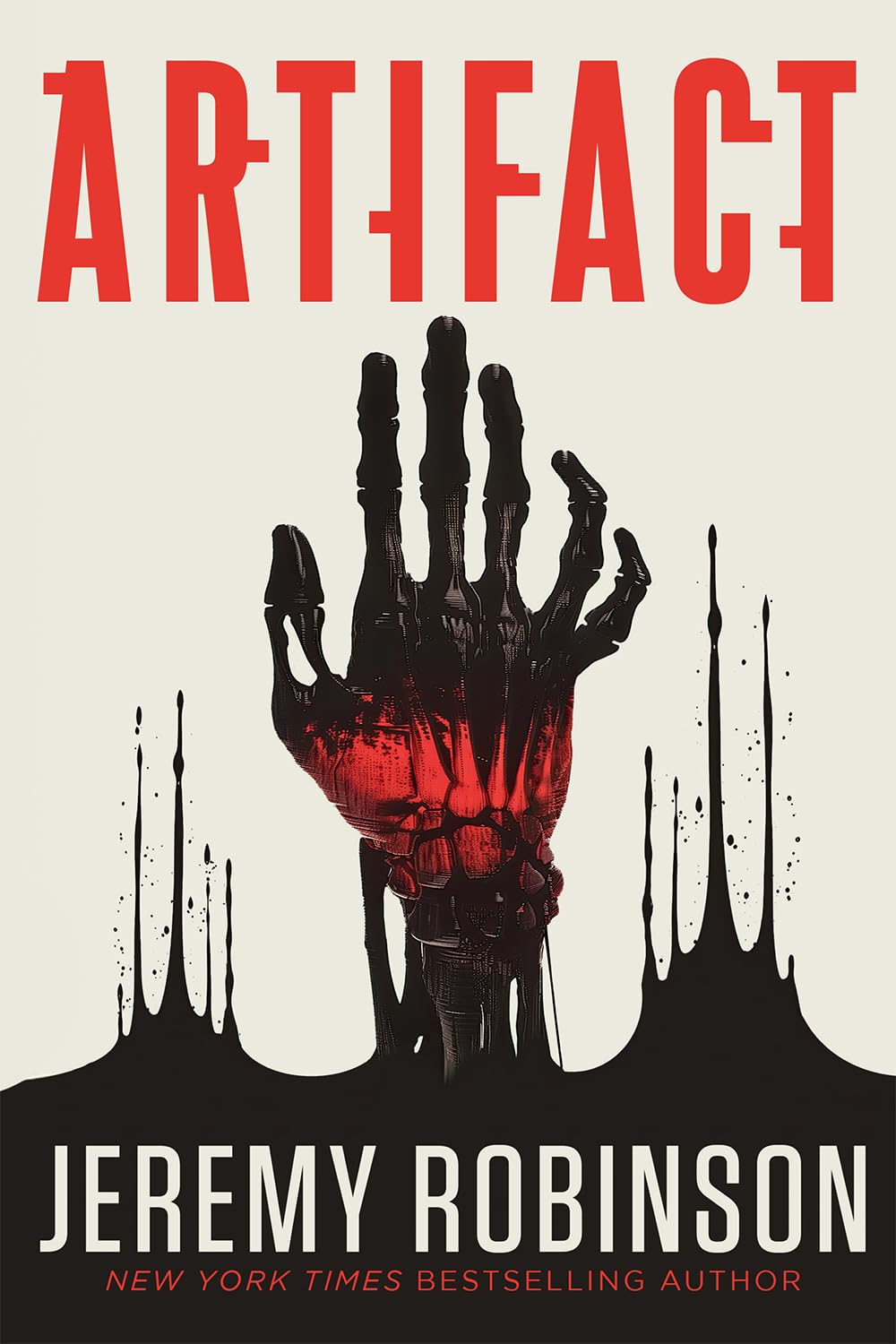
Artifact by Jeremy Robinson

Publisher: Podium Audio (Audiobook – 26 August 2025)

Series: Standalone

Length: 9 hours and 56 minutes

My Rating: 5 out of 5 stars

Amazon

One of my very favourite authors of outrageous fiction, Jeremy Robinson, returns with another intense and horrifying science fiction thriller, Artifact, a captivating and powerful novel I couldn’t get enough of.

Jeremy Robinson is an outstanding author who has a fantastic career writing clever, fun, and occasionally terrifying thrillers, often featuring intriguing science fiction elements.  Best known for his Antarktos Saga, Chess Team and Nemesis Saga series, Robinson has written a staggering amount of fiction over the years, including additional cool series and standalone reads.  I personally got into Robinson’s work a few years ago when I read a few books from his massive, interconnected Infinite Timeline series, including Tribe, The Dark and Mind Bullet (the latter two of which were amongst my favourite books and audiobooks of 2021), all of which were incredibly fun and addictive.  I have also started getting into Robinson’s standalone novels, such as last year’s fantastic novel Point Nemo (one of my favourite audiobooks of 2024), which contain some amazing stories.  As such, I was very excited when I got a copy of Robinson’s awesome new novel, Artifact, on audiobook, which sounded extremely amazing.  I honestly started listening to Artifact the same day I found out about it, and boy was I glad that I did.

Plot Synopsis:

In an isolated Alaskan town, the local sheriff uncovers a secret lab where generative A.I. and bioprinting have unleashed grotesque, living anomalies—and now, something monstrous is loose.

Sheriff Colton Graves prefers the quiet life in Raven’s Rest, Alaska, a remote town accessible only by tunnel and home to a hardy mix of locals and secrets buried in the ice. But when a camel wanders down Main Street—its head grotesquely sprouting a dozen eyes—Colton knows his quiet days are over. The bizarre incident leads him to NovaGen, a nearby research facility constructed inside a Cold War bunker, buried in the mountains above town. There, a trail of blood and eerie silence hints at something far more sinister than an escaped animal experiment.

With his deputies—the sharp-witted Tali and rookie Ethan—Colton recruits a few trusted locals, including the unshakable Marit, Tali’s sister, the intimidating ‘Grizz’ Norval, and Edgar ‘Old Red’ Rydell, an aging man plagued by demons from when he worked at the bunker during its covert cold war days.

Together, they investigate the abandoned lab. What begins as a search for missing scientists soon reveals chilling evidence: pools of blood without bodies, cryptic warnings left behind, a bloody six-fingered handprint, and the revelation of a new technology: a generative A.I. capable of printing living organisms. As they descend deeper into the lab, it becomes clear that the answers they seek may come at a terrifying cost—and that what was made in the dark may not be content to stay there.

Jeremy Robinson once again greatly impresses with his new thriller Artifact.  A complex and deeply clever read loaded with weird science, fantastic humour and incredible action, Artifact was an exceptional read that had me hooked very early on and kept my attention all the way to the end.  A particularly intense novel with so many amazing elements to it, Artifact gets a full five-star rating from me, especially on audiobook, and I ended up powering through it so damn quickly.

I deeply enjoyed the compelling and fast-paced narrative that Robinson featured in Artifact, which amps up the intrigue and excitement quickly and keeps it going all the way to the very end.  Starting with an enticing inciting event of a multi-eyed camel arriving in the middle of a snowed-over Alaskan town, the initial narrative of Artifact is quick and effective, with the protagonists quickly realising that something dark has occurred at the nearby and mysterious NovaGen facility.  Pulling together a band of scrappy locals, the group begin their decent into the facility, only to encounter mysterious creatures and tragic death.

Robinson soon takes the novel into twisted science fiction territory as you are shown the variety of experiments taking place in the facility.  In particular, the staff of NovaGen are bio-printing monsters and other creatures, which has inevitably gone wrong.  Forced to put an end to the experiments and save the town from potential destruction, Colton and his team continue to descend the various levels of the facility, all while being hunted by the worst monsters humans can imagine.  The author does an excellent job of building and maintaining tension throughout Artifact’s story, and you are expertly drawn into the personal struggles of the characters as they try to understand and withstand the horrors of the facility.  There are some outstanding twists and sudden deaths as the story draws towards its conclusion, and I enjoyed the mixture of shocking moments and well-crafted reveals many chapters in the making, which results in an outstanding novel where you never quite know what is happening next.  Robinson ends the book on a mostly hopeful note, along with an amusing cliffhanger, and this proved to be an impressive standalone narrative that is guaranteed to entertain.

I felt that the author pulled Artifact together in a very entertaining manner that allowed for the maximum thrills, tension and character development.  Perfectly utilising the first-person perspective that Robinson is so fond of, Artifact is a great standalone read that requires no prior knowledge of the author’s other works to enjoy (although there are a few fun references established fans will chuckle at).  The author does an excellent job of effectively setting out the key elements of Artifact throughout its run, including with the advanced science elements of the book.  These science elements are both compelling and quite interesting, and you can tell that Robinson did a bit of research into the subject.  This research allowed the author to envision some dark and horrifying creations of potentially realistic science, and I loved how the creatures the protagonist encounter was a combination of weaponised efficiency and dark human imagination.

These fantastic science fiction creations, and the dark conspiracy that birthed them, work well with the author’s Michael Crichton inspired scenario, to create a lot of excellent tension and uncertainty that keeps readers constantly on the edge of their seat.  I loved the constant uncertainty of what traumatising event was about to come out of nowhere next, and there are some great twists and reveals scattered throughout this captivating novel.  Throw in a series of particularly thrilling action sequences as the protagonists face off against printed monstrosities and the other disturbing denizens of NovaGen, and there is a lot to love about how Artifact was written, especially as it perfectly enhances Robinson’s fantastic and captivating narrative.

My favourite elements of Artifact were the complex and compelling characters whom Robinson set his narrative around.  Robinson has always excelled at creating entertaining characters, and I think he did a wonderful job pulling together a layered cast of Alaskan outcasts and rogues to fill the pages of Artifact.

The most prominent of these characters is main protagonist Sheriff Colton Graves, from whose perspective we see the events of this book unfold.  Colton is a widowed lawman who enjoys the simple life at Raven’s Rest, but who quickly rises to the challenge when strangeness invades his town.  Effectively established as a compelling and solid centre to the book’s plot, Colton is an easy character to like thanks to his fun humour, clever insights and leadership skills.  However, Robinson makes Colton even more interesting as the book continues by revealing some fascinating character details that are expertly weaved into the story.  This includes a new romance for Colton that helps him to move forward from his dead wife and serves as his inspiration to continue pushing through the horrors of the NovaGen lab.  In addition to this, the story reveals that Colton has autism and hypersensitivity, and these conditions have strong impacts on the plot and the way the perspective protagonist interacts with the world.  Robinson does an exceptional job really diving into these fascinating aspects of his protagonist, and it was clear that the author was trying to showcase the conditions as accurately as possible based on his own personal experiences.  I think that Robinson really succeeded in showcasing these character elements, and while certain aspects are no doubt enhanced to fit in with the science fiction aspects of the book, it was mostly realistic.  I really enjoyed how Robinson made Colton a particularly likeable and relatable protagonist, and he helps to make Artifact a very distinctive read.

In addition to Colton, Robinson loads up Artifact with a great collection of memorable supporting characters who are perfectly utilised in the narrative and add some entertaining spice on top of the protagonist.  Highlights for me include the troubled and mysterious Old Red, a survivalist with dark connections to facility, who serves as the groups guide and secret badass.  I also had a lot of fun with Grizz, a tough, bear-killing lady with the scars to prove it.  Colton’s deputy, Tali, was the perfect backup for the protagonist, while her sister, Marit, proved to be an excellent love interest to Colton, which resulted in some complicated and emotional sequences.  The rest of the cast, including some unique figures found in the bunker, are also quite entertaining, be they friend, bio-engineered organism, or evil antagonist, and I loved some of the amazing interactions that emerged.  I will warn readers not to get too attached to any characters, as most figures don’t last as long as you’d want, but Robinson makes full use of every character he features, even if they only have a brief life in the book.

As with all the previous Robinson novels I’ve enjoyed, I chose to check out Artifact on audiobook, which was a ton of fun.  I have always found that Robinson’s novels come across particularly well on audiobook, and Artifact was no exception as I powered through its near 10-hour long runtime very quickly.  Part of the reason why I had such a great time with this audiobook is the return of one of my favourite audiobook narrators R. C. Bray.  Bray, who has lent his voice to most of Robinson’s audiobooks, is a truly exceptional narrator, and I just love any story read out in his gravelly and distinctive voice.  This was particularly true for Artifact, where the intense action and the horrifying descriptions of the laboratory’s contents were so much more impactful thanks to Bray’s calm and powerful take on events.  Bray also expertly showcases each of the key characters of the novel, and I felt he developed fitting and personal voices for each of the members of the cast.  While I love Bray’s voice for Old Red and the slacker Jimmy, his best work was saved for main protagonist and point-of-view character Colton.  Bray has long perfected voicing Robinson’s various first-perspective protagonists, and he always manages to cover their complex personalities, dialogue and interactions extremely well.  His take on Colton was very moving in Artifact, and I felt that Bray really enhanced Robinson’s depictions of this character’s quirks and unique viewpoints on life.  Due to this impressive narration, and Robinson’s general cinematic writing style, the Artifact audiobook is exceptional, and it’s easily the best way to enjoy this novel.

With all the chaotic action, crazy science fiction elements, and great character I’ve come to expect from Jeremy Robinson, Artifact was an outstanding novel I had a blast getting through.  Featuring a thrilling plot, laden with shocks and monsters, Artifact grabs the reader’s attention early and refuses to let go.  This book comes very highly recommended from me, especially on audiobook, and anyone keen for a horror-filled and deeply intense thriller is going to have an outstanding time with Artifact.
Amazon

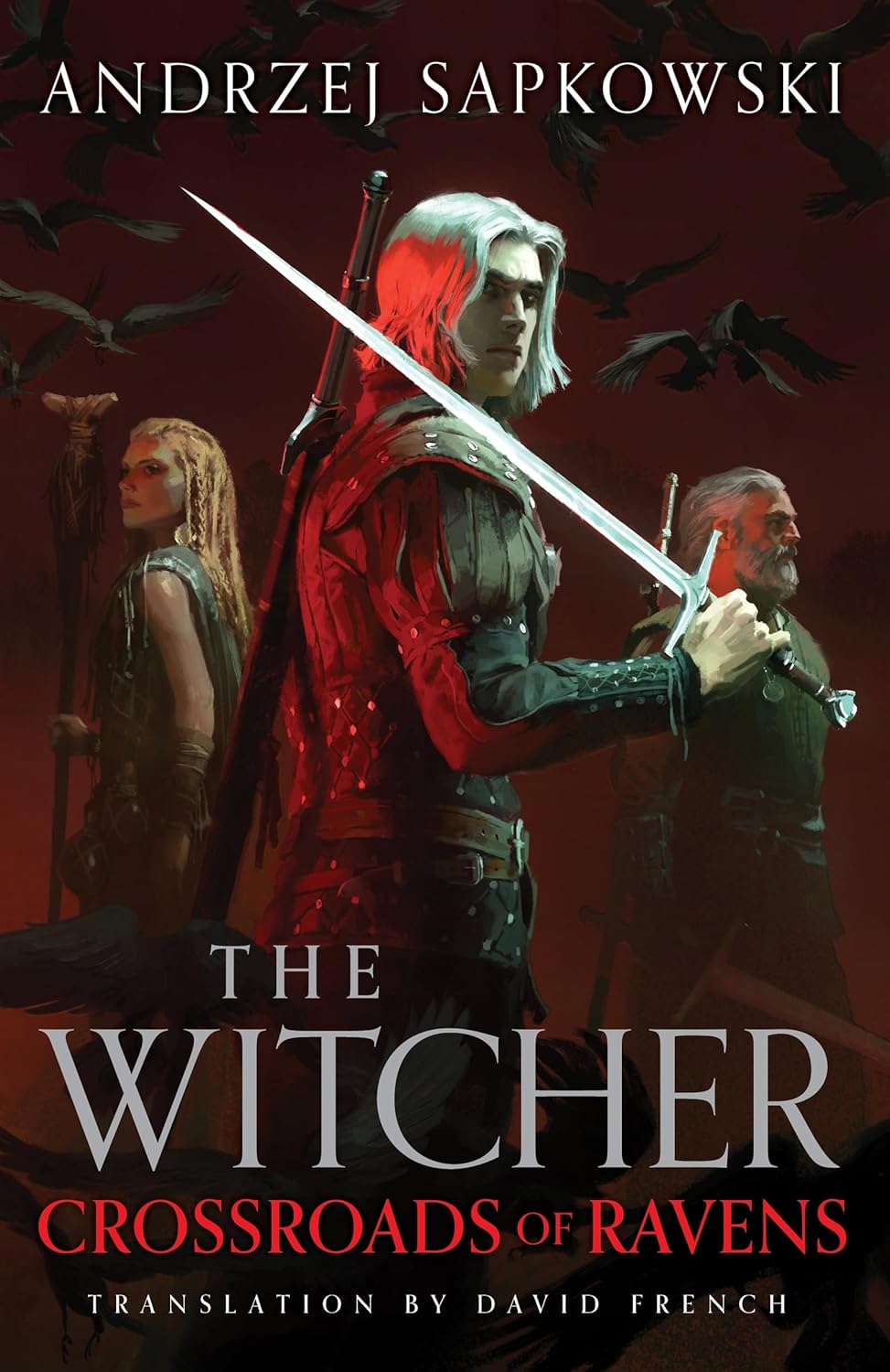
The Witcher: Crossroads of Ravens by Andrzej Sapkowski

Publisher: Gollancz (Trade Paperback – 30 September 2025)

English Translator: David French

Series: The Witcher – 0.1

Length: 310 pages

My Rating: 4.5 out of 5 stars

Amazon

Legendary fantasy author Andrzej Sapkowski returns to the epic world of The Witcher with the outstanding and awesome prequel novel, Crossroads of Ravens.

I doubt anyone familiar with fantasy fiction is unaware of the cultural juggernaut that is The Witcher franchise.  An exciting and intense fantasy series revolving around Geralt of Rivia, a wandering, monster hunting witcher who finds himself drawn into chaotic events that threaten the entire world.  The initial series birthed seven original novels that were released in Poland the 1990s (later released in English), as well as a series of short stories.  However, The Witcher novels would gain prominence around the world after they were used as the inspiration for an incredible video game series, as well as a later Netflix television show.  I personally have enjoyed several excellent pieces of The Witcher fiction over the years, including the previous novel Season of Storms.  As such, I was very happy when I received an early copy of the new prequel novel from the series, Crossroads of Ravens, which proved to be a gripping read.

Long before the events that would make him a legend, grant him the sobriquets of the White Wolf or the Butcher of Blaviken, or even before he claimed to be from Rivia, Geralt was a young, recently graduated witcher.  Descending from the witcher stronghold of Kaer Morhen for the first time, Geralt soon discovers that the world is a harsh place where ideals of heroism only get you into trouble, and that the entire continent holds nothing but disdain for his kind.

Swiftly finding himself on the wrong side of the law and a noose, Geralt is only saved by the intervention of grizzled veteran witcher Preston Holt.  An enigmatic and damaged figure with his own agenda, Holt takes the young Geralt under his wing, teaching him the true reality of being a witcher and honing the important skills that the future White Wolf needs to survive. 

Emboldened by this training, Geralt soon begins to gain fame as a witcher, serving the people previously protected by the ailing Holt.  However, as Geralt wanders the land, he finds many eyes on him, including those who hold a grudge against his order.  As new adversaries and dangerous secrets from the past are uncovered, Geralt will have to decide whether to become the noble hero he always envisioned himself to be, or the monster the world believes all witchers are.

Andrzej Sapkowski continues to expertly expand the lore of The Witcher universe with this exciting and action-packed prequel.  Crossroads of Ravens was an amazing novel that takes the readers on a series of intense adventures, loaded with intrigue, conspiracy and death that all fans of the franchise are going to have an outstanding time with.  I ended up powering through this novel in less than a day, and it proved to be a very impressive read.

Crossroads of Ravens was an outstanding and very exciting novel that piled on the action, intrigue and adventure in its fantastic story.  Starting off with an effective bang that sees a young Geralt in trouble during his first foray out as a witcher, Sapkowski does an excellent job of quickly setting up the scenario and introducing Geralt, and the reader, to a new mentor figure with the entertaining Preston Holt.  What follows is a series of compelling adventures, as Geralt initially learns from Preston, before journeying off into the wilds, facing off against various monsters and the even more troublesome human population of the land.  Sapkowski has fun placing Geralt into a new, mostly self-contained adventure each chapter of Crossroads of Ravens, the events and characters of which may reappear later in the book.  This allowed for a quick-paced and very interesting overall narrative, and it was entertaining to see the young Geralt in action.

While there is a good focus on Geralt’s independent adventures, Crossroads of Ravens has a larger, overarching narrative, that sees Geralt seeking knowledge of a historical attack on Kaer Morhen many years earlier.  Thanks to hints revealed in some of the earlier adventures, a run-in with a complex secondary antagonist, and in-universe notes from intelligence officers keeping watch on Geralt and Preston, readers get the general shape of this matter in the first half of the book, and it lies like a dark shadow over Geralt’s main adventures.  Everything comes to a head perfectly towards the last quarter of the book, as Geralt fully understands the threat towards him and those he cares about, and decides to act.  This leads to a tragic series of events, especially as Geralt faces the consequences of his action and his order’s history, while also trying to determine whether he should stay as a selfless witcher or become something far more vengeful.  Sapkowski makes sure that several open story threads from the protagonist’s previous adventures are also tied together by the end of the book, and it was interesting to see how certain plot elements from these earlier chapters came into play in the conclusion.  The result was an excellent and highly enjoyable story that serves well as both a standalone adventure and a prequel to the rest of The Witcher series.

I rather enjoyed how this great prequel Witcher novel came together, as Sapkowski imbues Crossroads of Ravens with his usual flair and wry humour.  Loaded with action, quick-paced stories and an array of unique monsters, Crossroads of Ravens was very reminiscent of early Witcher novels, especially as containing certain adventures to a specific chapter is very similar to the series’ original short-story format.  Naturally, this novel will be best enjoyed by those established fans of The Witcher franchise, especially readers of Sapkowski original novel series.  Crossroads of Ravens features various references to future events or characters in its pages, which long-running readers of the series will enjoy, and there is some great early characterization of the protagonist as well.  There are also interesting alternate versions of events readers might have seen in other media, including the historical attack on Kaer Morhen, which was featured in the Nightmare of the Wolf anime film.  While older fans will get the most of this book, anyone with any knowledge of the franchise will be able to enjoy Crossroads of Ravens to a great degree, especially as it is the earliest book in the current canon of The Witcher series.  As such, this novel will have a lot of appeal to wide array of readers, who will be in for a great time with the action and adventure.

As with all The Witcher books, Crossroads of Ravens features an excellent array of characters, including a great supporting cast around protagonist Geralt.  I very much enjoyed Geralt in this novel as Sapkowski features a young and inexperienced version of his iconic protagonist.  It was fascinating to see Geralt’s initial forays into both the world of ignorant humans, and monster hunting, especially as his reactions to both are different at a young age.  A great example of this can be seen in one adventure where Geralt attempts to save a girl turned into a striga, which parallels The Witcher short story, which is the first entry in Sapkowski’s original novel/short story collection, The Last Wish.  This adventure in Crossroads of Ravens goes very differently from the author’s original story, and it was fascinating to see how a younger, less confident Geralt dealt with the same situation.  I also quite enjoyed seeing Geralt, upon experiencing loss, go on a mission of vengeance, which threatens his previous attempts to be a respected hero rather than a monster.  I felt that Sapkowski cleverly balanced Geralt’s conflicting emotions in these sequences, and the end scene where he makes a choice about what sort of witcher he is, was a great finish to his story.  Throw in an array of excellent additional characters, including a wise, vengeful mentor, a dedicated investigator, a kind healer and many other fun figures, and Crossroads of Ravens proves to be an awesome book for fans of Sapkowski’s entertaining characters.

With another fun and captivating adventure, Andrzej Sapkowski’s The Witcher series continues in all its monster-hunting glory with Crossroads of Ravens.  An outstanding prequel novel that features an array of fantastic storylines and characters, Crossroads of Ravens serves as a highly entertaining entry in this acclaimed series that will appeal to a wide audience of fantasy fans.  I had a great time reading Crossroads of Ravens, and it’s worth checking out for anyone in the mood for fun action and an interesting narrative from an excellent established series.

Amazon

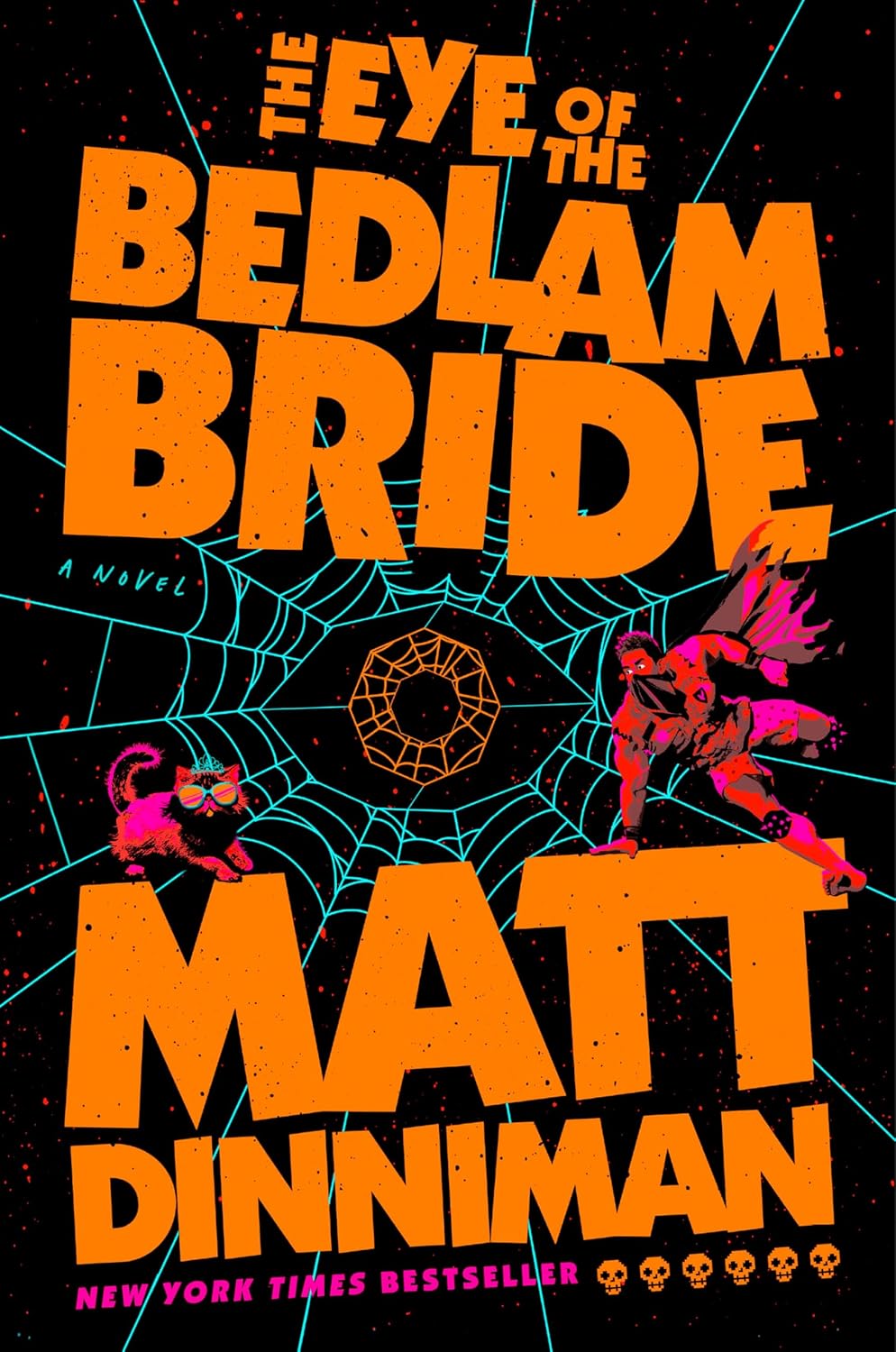
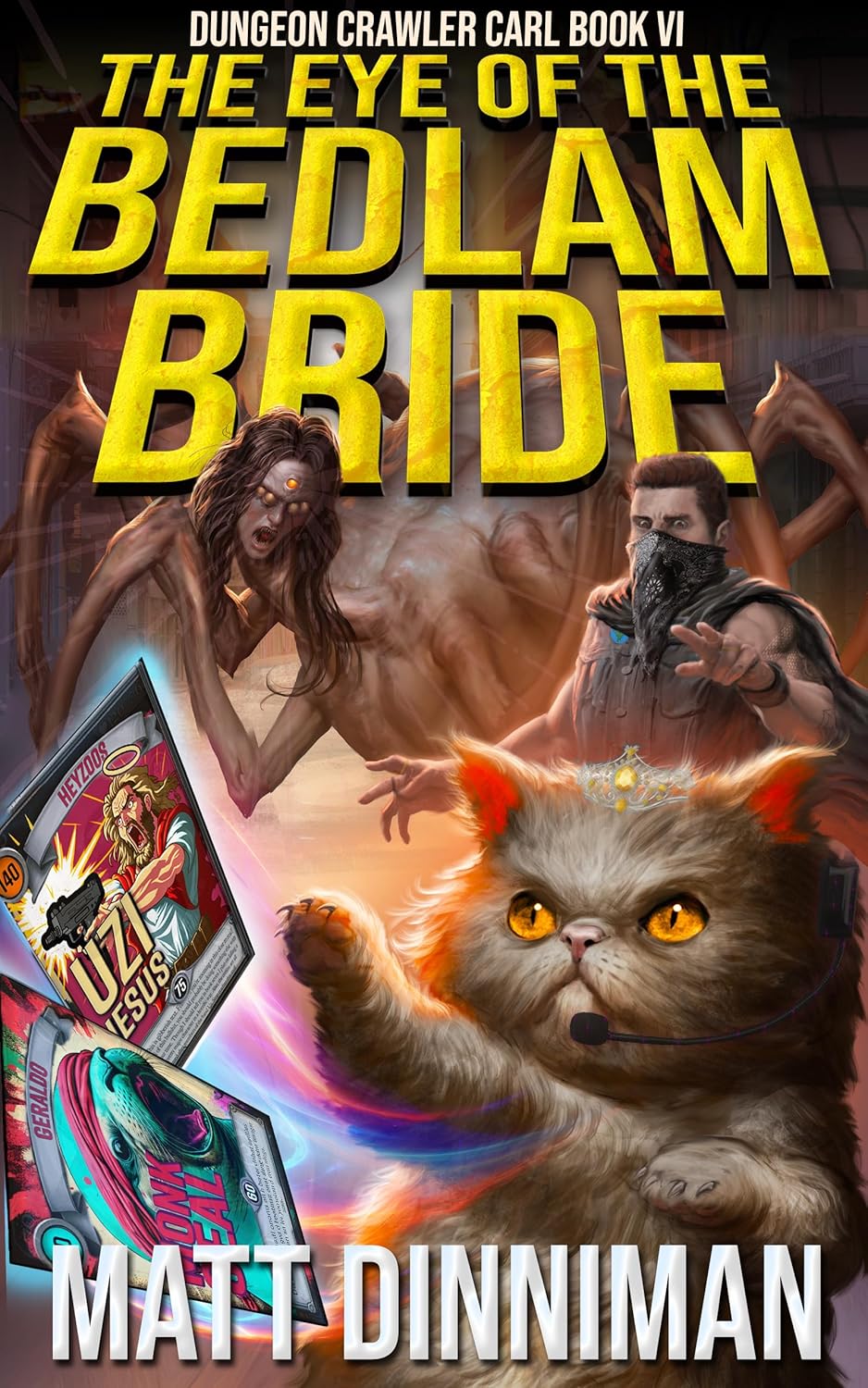
The Eye of the Bedlam Bride by Matt Dinniman

Publisher: Soundbooth Theater (Audiobook – 2 July 2023)

Series: Dungeon Crawler Carl – Book Six

Length: 26 hours and 46 minutes

My Rating: 5 out of 5 stars

Amazon

The chaotic fun of Matt Dinniman’s Dungeon Crawler Carl series continues in epic fashion with the ultra-impactful and deeply addictive sixth entry in the series, The Eye of the Bedlam Bride, an exceptional novel designed to strike hard at the reader’s emotional heartstrings.

As you might have guessed from my recent flurry of reviews for this series, I am seriously in love with the Dungeon Crawler Carl books.  An impressive and surprisingly deep LitRPG series, the Dungeon Crawler Carl novels follow a collection of compelling characters as traverse a deadly fantasy dungeon created from the ruins of all of Earth’s buildings by aliens for intergalactic viewing content.  Set around a damaged protagonist and his excitable and now sentient cat, these books are deeply addictive, and once you start the series you really can’t stop.  Indeed, I literally just chain-read the entire series, with awesome books like Dungeon Crawler Carl, Carl’s Doomsday Scenario, The Dungeon Anarchist’s Cookbook, The Gate of the Feral Gods and The Butcher’s Masquerade all proving to be outstanding reads.  I loved these previous books so much, that I instantly started listening to the sixth book in the series, The Eye of the Bedlam Bride, the first chance I got, and boy was I in for an incredible time with it.

After barely surviving the Butcher’s Masquerade and then witnessing the surprising end to the seventh floor, Carl and Princess Donut are exhausted and traumatised by recent losses.  However, they have no time for rest as they find themselves thrust into the dangerous eighth floor of the dungeon.  One of the most ambitious levels so far, the eighth floor is based on a map of Earth’s final days, filled with intangible ghosts of the humans who wandered the world mere weeks before the planet’s death.

However, this is not a perfect replica of Earth; instead these locations have been seeded with monsters and mythological figures based on twisted accounts of Earth legends, with each creature tied to the geographic area their folklore originated.  To complete this level, the crawlers are tasked with finding and capturing six of these monsters and turning them into cards, which can then be summoned to fight alongside their new owners.  Each team will need to find and convert as many powerful creatures as possible to create the best decks, especially as they will be forced to face off against mobs and other crawlers with their own cards.

Unexpectedly starting in Cuba, Carl and Donut navigate an unfamiliar location as they try to learn the new mechanics of the game.  Determined to get to the next floor, Carl and Donut endeavour to find the best monsters they can.  However, the stronger the monster, the less controllable the card, and Carl and Donut will soon have their hands full managing a strange array of summonable creatures, including the legendary demon Shi Maria, who has far more independence than they would like.  Can Carl and Donut survive this new floor of the dungeon, or will they finally be crushed by their dark secrets, troubled pasts and Carl’s slowly eroding sanity, especially once he looks into the eye of Shi Maria, the Bedlam Bride?

Just when you thought this series couldn’t get even better, Matt Dinniman amps up the intensity and complexity of his plot and characters a whole additional notch, with one of the more moving and powerful entries in the entire series.  The Eye of the Bedlam Bride was an absolute masterpiece that featured the author’s trademark LitRPG chaos, while really showcasing his impressive writing ability.  One of the best books in an already incredible series, The Eye of the Bedlam Bride was so damn good, and it gets a very easy five-star rating from me.

Dinniman pulled together another brilliant narrative for his sixth Dungeon Crawler Carl novel, as They Eye of the Bedlam Bride perfectly continued the long-running series storylines while also presenting its own unique adventure.  Thrusting the protagonists into a complex new level, Dinniman quickly showcases all the floor’s new elements, including a fun card-based combat mechanism that fits into the existing dungeon battle system surprisingly well.  While the pacing is initially a tad slower to ensure the readers fully appreciate all the necessary lore and gameplay details of this book’s plot, Dinniman quickly works to show that The Eye of the Bedlam Bride isn’t a filler novel between the pivotal fifth and seventh books.  This becomes especially clear during a major sequence that requires Carl and Donut to make a deadly choice while surrounded by several vengeful gods.  Dinniman also makes sure that a major secret from the previous book is brought into the light early, complicating protagonist relationships and presenting them with dark choices.  Dinniman swiftly follows this up with some very awesome sequences, such as Carl and Donut coming face-to-face with their most problematic card, demonic carnage in a night club, and problems from the wider universe caused by Carl’s ambitious and rebellious plots.

While all these early elements are great, The Eye of the Bedlam Bride hits its storytelling height about halfway through, as Dinniman amps up the emotional stakes of the narrative.  Forced to compete in a gruelling series of battles that test the unique fight mechanics of the floor, the protagonists find nothing but heartbreak as they near the end of the second phase of the level, including a truly horrifying and deeply personal big boss.  All this follows a series of impactful personal revelations for Carl, that hit his already fragile mental state hard and finally provides full context for character background elements that have been hinted at throughout the series.  This central part of the story was so damn heartbreaking, and you really must appreciate how Dinniman can make you laugh before loading up substantial sorrow and regret and producing some beautifully crushing sequences.  While these scenes are emotionally charged, I appreciated how Dinniman often tempered them with more heartwarming moments that show the connections the protagonists have built up during the series, and the author does some amazing character work in the second half of this book.

Everything perfectly leads up to the incredible final third of The Eye of the Bedlam Bride, as Dinniman raises the stakes as only he can.  With the protagonists forced to compete in a brutal third and final phase of the floor, events soon break down into pure chaos with undead hordes, demonic possessions, crazed gods and various rival crawlers all coming into play.  Dinniman keeps the story moving so fast in this last part of the book, as the protagonists dive into key battle after key battle.  I actually ended up listening to the last several hours in one day as I just had to see what happened next.  Following one of the most tragic scenes in the series, which nearly broke me, Carl and Donut race to save as many people as they can from the AI’s inventive endgame, leading to an all-out battle royal in the middle of Cuba.  I loved how so many story elements from the entire book came into play for the conclusion after some clever set up earlier in the plot, resulting in some very epic moments.  The ending was a brilliant mixture of humour, intense action, extra lore, and some particularly dark moments for the protagonists, which came together beautifully and ended the novel on a real high.  Throw in some last-minute reveals that really amp up the excitement for the next book, and this was pretty much a perfect narrative that is guaranteed to keep you hooked all the way the bloody end.

I honestly feel that The Eye of the Bedlam Bride was one of the best-written entries in the entire Dungeon Crawler Carl series, and frankly I am still not over every single amazing moment of this book.  Dinniman achieves so much in this impressive novel by simultaneously changing the rules of his own game while also providing the deepest examination of his complex protagonists yet.  At the same time, he makes a novel that most authors would have turned into a filler entry into one of the series’ most impactful books.  I was really impressed by how the author chose to further amp up his various storylines and character arcs in this book, and Dinniman perfectly carries on the craziness of The Butcher’s Masquerade while building up the oncoming calamity of the seventh book and the long-awaited Faction Wars.  Naturally, this means that The Eye of the Bedlam Bride is best enjoyed by those who have read all the previous Dungeon Crawler Carl books first.  Still, for those who are determined to dive in here, Dinniman provides enough context and flashbacks to ensure you can easily follow what’s happening, and there is even a fun summary at the beginning.

This sixth novel in the series brings back all the impressive humour, intense action, and great LitRPG elements that made the previous Dungeon Crawler Carl books so damn good, while also bringing in some impressive new features, primarily a fun new battle element.  I must admit that I wasn’t too sure that the card system of this level, which on paper sounded like a crazy combination of Pokémon and Yu-Gi-Oh!, was going to work.  However, I should never have doubted Dinniman as it fitted in amongst the usual chaos and over-the-top scenes perfectly.  Dinniman does an excellent job introducing and then exploring this system throughout The Eye of the Bedlam Bride it proved fun to see the characters adapt to the new rules.  There is some great progression in how these cards impact battles, and each fight with them gets increasingly hectic.  I really enjoyed how big and crazy battles with these cards could get, especially towards the end, and you won’t see protagonists facing off in card duels with gods and demons anywhere else.

There are some additional excellent elements to The Eye of the Bedlam Bride that also enhanced the epic story in some interesting ways.  This includes a haunting new setting of the book, the ghost-filled replica of the pre-dungeon Earth, which really amplifies the feeling of despair and loss that many of the characters feel.  Dinniman continues to also feature a compelling array of LitRPG elements in this novel, and you really find yourself getting drawn into the minutiae of stat updates, item benefits, spell effects, and so much more, as the author cleverly works it into the narrative.  A lot of why these RPG features are so fun is due the chaotic humour that infests every single page of this hilarious book.  The book’s comedic elements are so effortlessly funny and feature a great mixture of sudden outrageous moments with realistic reactions, the insertion of the book’s reality television elements into life-and-death struggles, often inappropriate jokes from the massive and fun supporting cast, and an array of reference focused commentary on all matters of the dungeon.  While some of the comedic moments get a little out of hand: “I need a baby seal”, they all work beautifully in the context of the book’s clever plot, and I laughed myself silly so many times during this book, including at how the day was saved thanks to, let’s say, “crab meat”.  I’m also as appalled as a certain velociraptor that some of the funniest, if weirdest, moments of the book occurred in Chapter 69.  However, what makes The Eye of the Bedlam Bride particularly good is the way in which these comedic elements are well matched by darker, tragic moments, which allows for quite on overall powerful read, especially when it comes to the characters.

Dinniman went above and beyond when it came to the character development in this book, with a particular focus on series protagonist Carl.  After several books laden with hints about his past, we finally get Carl’s full backstory, which really goes to show just how damaged he is.  Dinniman does an outstanding job showcasing this background in several powerful scenes in The Eye of the Bedlam Bride, and I really appreciate how it built on the subtle foreshadowing from the previous novels.  This existing trauma was further enhanced in this book, as Carl also finds out multiple new revelations about his family, including several that had been kept from him (which simultaneously shows just how bad a girlfriend Bea really was).  Throw in his anger and guilt from being one of the few survivors of Earth, and the trauma from all carnage he has witnessed in the dungeon, and Carl really isn’t in the best headspace for this book, and that’s even before the titular Bedlam Bride gets hold of his mind.  As such, there is a lot of dark moments for Carl to unpackage throughout this novel, and Dinniman perfectly captures his protagonist’s continued struggle to remain in control.  This deeper dive into Carl’s psyche produced some of the best scenes Dinniman has so far written in the series, and I really appreciated how these darker moments were well matched by the revelation that Carl now has a true family with Donut and his new friends.  These relationships kept him relatively sane in this book, and allowed him to remain the resilient, if explosively inclined, straight man of the book.  Dinniman also works to showcase how despite his issues and reputation, Carl has become a bit of a legendary figure for his fellow crawlers, and the big sequence at the end where he is able to convince them to follow one of his craziest plans, was just amazing.

While most of this book’s focus is on Carl and his history, the rest of the characters in The Eye of the Bedlam Bride also get their moments to shine, and you continue to appreciate just how awesome the ended cast of this series is.  This includes the other main protagonist, Princess Donut, Carl’s now sentient cat who provides much of the humour in the story thanks to her over-dramatic reactions, silliness, and feline superiority complex.  While Donut is the comedic relief of the main duo, she still has a lot of serious moments in The Eye of the Bedlam Bride, especially while serving as the emotional anchor the spiralling Carl.  Donut is also dealing with her own grief and sadness, especially after the tragedies of the previous novel, and there are some heartbreaking moments where you see her trying to push that down.  Despite her issues and immaturity, Donut role in the plot, especially as she controls the cards during most of the battles, and you get to see her tactical genius in full display.  There are some super sweet moments with Donut in this novel, and I really love how well Dinniman continues to feature the bond between her and Carl as the true heart of this series.

In addition to Carl and Donut, The Eye of the Bedlam Bride also features multiple other key members of the Dungeon Crawler Carl cast, and it is very impressive how much you care for so many of these figures.  This includes Katia, who, despite leaving the team in the previous novel, still has a major impact on the plot.  Dinniman perfectly revisits some key revelations from the end of the previous novel, that adds additional complexities to her relationship with Carl and Donut.  The protagonist’s mentor, Mordecai, also has a key role in this book, especially as you finally get the full context for his tragic past.  This background adds some additional drama to the main story, especially when Carl and Katia find themselves caught in the same feud between forces outside the dungeon that he did.  There is also a certain sweetness to Mordecai’s story in this novel, especially when you find out he’s caring for several NPC children, in ways very contrary to his usual gruff disposition.  Dinniman also perfectly brings back the various members of Carl’s guild, who form a surrogate family with each other, and whose appearance in one scene was one of the most heartwarming moments in the plot.

Other characters of note in The Eye of the Bedlam Bride include the possessed sex doll head, Samantha, whose insane declarations, unhinged actions, unsettling abilities and crazy general demeanour make her one of the funniest characters in the series.  There is also an array of over-the-top monsters and creatures that the protagonists encounter and turn into cards.  These include Uzi Jesus, a kung-fu seal, hilarious caricatures of Carl and Donut, and a crab who must overcome his ‘performance issues’ to save the day, just to name a hilarious few.  These comedic monsters were well contrasted by Shi Maria, the titular Bedlam Bride, whose dark actions amp up the intensity of this book in some powerful ways.  I also must mention a couple of recurring crawlers from previous novels who reappear in dramatic fashion in the final third of the novel, allowing for some of the book’s best moments.  One of these character ends up having one of the series’ saddest moments, and I frankly am still not over how brutally raw and tragic that whole sequence was.

While all these above characters are amazing in their own ways, my favourite character in this series remains the dungeon’s System AI.  Despite never physically appearing, the AI has a major impact on the plot, and you are constantly bombarded by its unique humour in the various descriptions and summaries it provides to Carl and the reader, often full of weird and hilarious references.  So many serious or threatening moments are turned into comedic gold by the AI’s inappropriate commentary, and anytime it provides input to the plot, you are guaranteed to laugh.  While the AI has been fun the entire series, it gets even more unhinged in this novel as it gains full sentience and takes full control of the.  Determined to continue the crawl on its own dramatic terms, the AI starts making things even weirder for the characters, throwing in its own twists and changes.  Dinniman does a wonderful job showcasing just how insane the AI is at times, including with some very worrying inclusions in its usually informative descriptions.  There are also some hilarious scenes where the AI interacts directly with the characters, including one brilliant moment when he responds to Carl’s feedback on its descriptions in a particularly petty way.  All this, and more, allows the AI to really standout in this book, and it is a testament to how good Dinniman is as an author, that a disembodied voice is one of the best characters in a series loaded with exceptional and extremely complex figures.

As with all the previous Dungeon Crawler Carl novels, I ended up listening to The Eye of the Bedlam Bride on audiobook, which is honestly the only way to enjoy the author’s fantastic and chaotic narrative.  Coming in at nearly 27 hours in length, The Eye of the Bedlam Bride was one of the longest audiobooks in the series, but you frankly don’t mind as every second you spend listening to a Dungeon Crawler Carl audiobook is so much fun.  I honestly powered through The Eye of the Bedlam Bride in no time at all, especially the concluding several hours, and I still love how audiobook format brings out all the book’s humour, tragedy and excitement.  A lot of this is down to the series’ awesome narration, which in the case of The Eye of the Bedlam Bride, includes an extended voice cast.  While there are a few voice actors for this particular audiobook, Jeff Hays remained the principal narrator, voicing nearly all the characters and the plot descriptions.  Hays is an incredible narrator, and I loved the sheer range of epic voices he brings to bear throughout the audiobook, all of which fit their associated character perfectly, with associated accents and clever tonal changes.  This includes an excellent reuse of voices for previously featured characters, while the various crazy new cast members featured in this book were also extremely cool.  My favourites for The Eye of the Bedlam Bride remain Princess Donut, who gets autotune in this audiobook to help with her singing (the sound effects for this were brilliant), and the AI running the dungeon, as Hays matches the unhinged energy of the cracked computer and conveys this insanity to the listener with amazing enthusiasm.

In addition to Jeff Hays, The Eye of the Bedlam Bride also features three other actors who voice small roles in the larger audiobook to great effect.  The most notable of these is actor Patrick Warburton, who was an awesome addition to the experience.  Initially voicing the flashback voice of Carl’s father in several heavy scenes, Warburton did an outstanding job of breathing life into a harsh figure we’d only had glimpses of in the previous books, and his appearances here had some real menace to them.  Warburton also gets to have some fun when he plays a secondary character later in the audiobook with some brilliant levels of enthusiasm.  Narrator Travis Baldree was also hilarious with his appearance in The Eye of the Bedlam Bride, voicing a giant crab who becomes one of the protagonist’s cards.  Featuring a comedic accent and some very over-the-top lines, Baldree was just amazing, and I loved the interactions he had with Hays and Warburton’s characters.  Finally, Soundbooth Theater regular Annie Ellicott returns to voice an entertaining character in a concluding skit, which was very amusing on a variety of levels.  I really loved how well these outstanding extra voice actors were fitted alongside Hays’s impressive main narration, and it allowed for a great overall listen.  Throw in the excellent sound effects of the series, some of which alter Hays’s voice in clever ways, or places a voice role into the background of a scene for some interesting ambience, and this was an exceptional audiobook that I loved so damn much.  There is honestly nothing better than a Dungeon Crawler Carl audiobook, and I must once again recommend this format with all my heart.

With a particularly impressive and powerful plot, The Eye of the Bedlam Bride was one of the best books in the already incredible Dungeon Crawler Carl series, and author Matt Dinniman outdid himself when it came to diving into his damaged protagonists.  A highly inventive and captivating novel that I just couldn’t stop listening to, The Eye of the Bedlam Bride was Dinniman at his very best and you are guaranteed to have an exceptional time with this novel, and you will, like me, instantly dive into the next novel of the series, This Inevitable Ruin, just to see what happens next.

Amazon

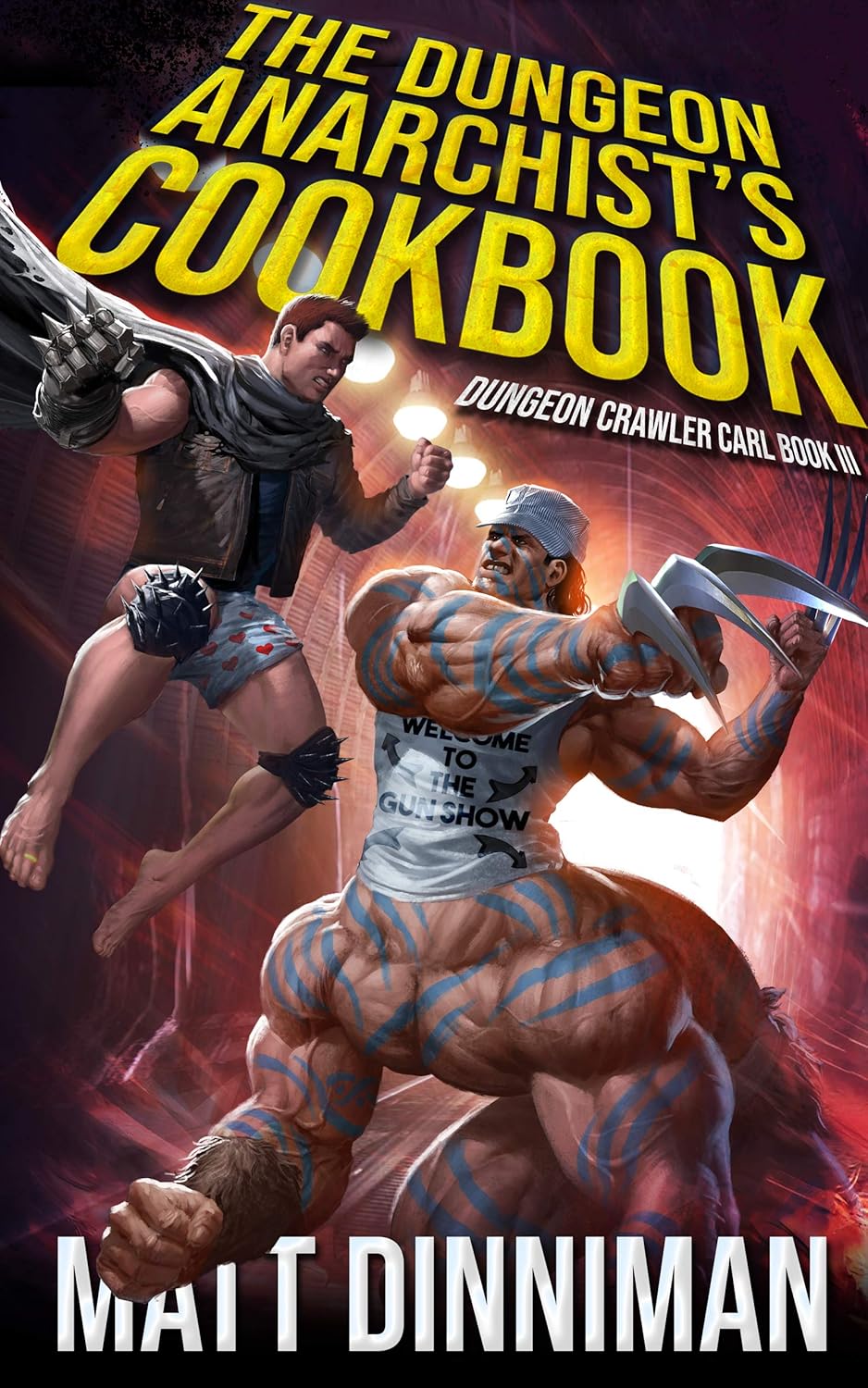
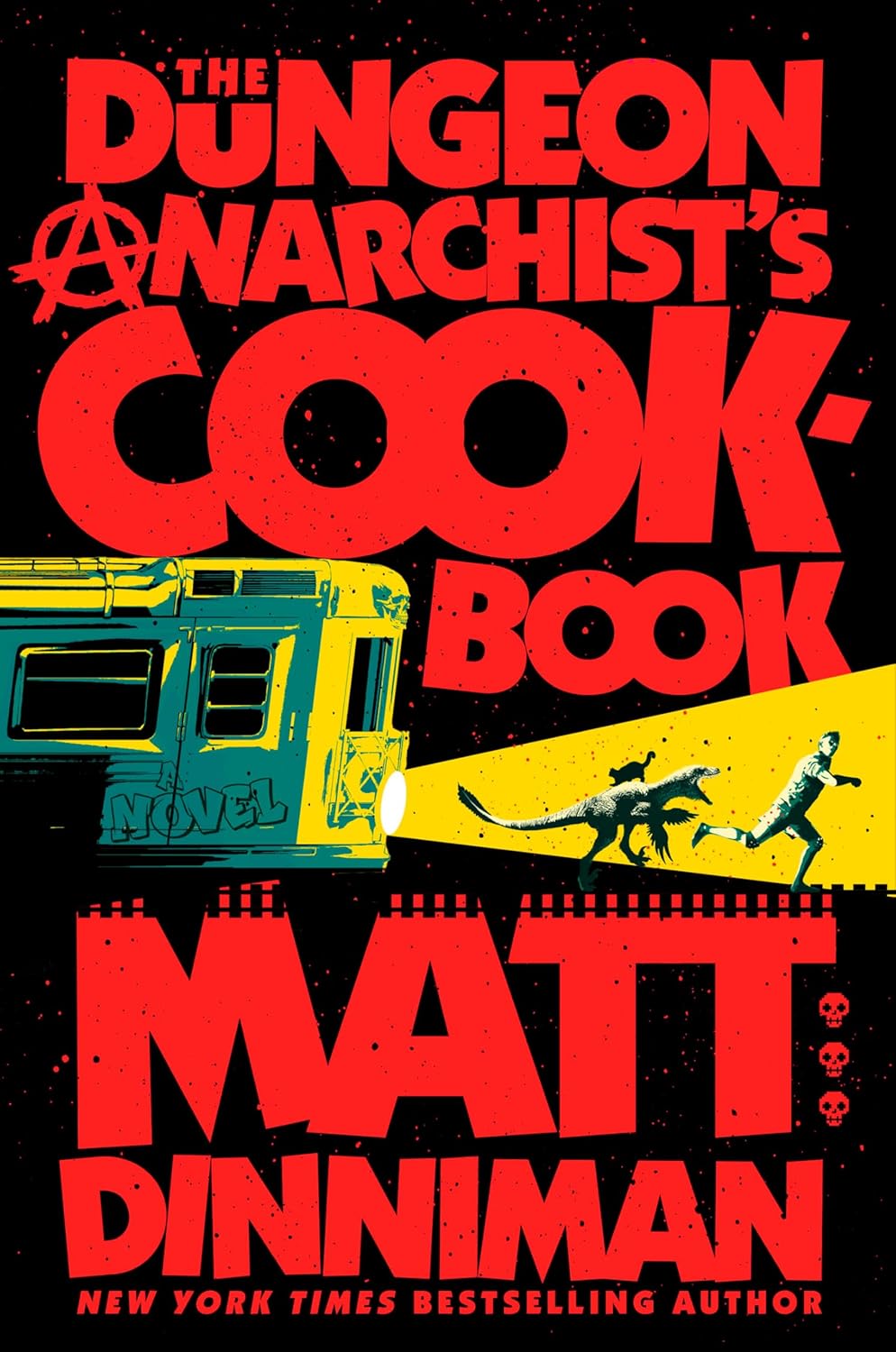
The Dungeon Anarchist’s Cookbook by Matt Dinniman

Publisher: Soundbooth Theater (Audiobook – 19 March 2021)

Series: Dungeon Crawler Carl – Book Three

Length: 16 hours and 54 minutes

My Rating: 5 out of 5 stars

Amazon

Matt Dinniman’s elaborate tale of carnage and comedy continues with the third entry in the Dungeon Crawler Carl series, The Dungeon Anarchist’s Cookbook, another exceptional and highly addictive novel that I could not get enough of.

Those familiar with this blog will know that I recently discovered the sheer insanity that is Matt Dinniman’s epic Dungeon Crawler Carl books.  An outstanding LitRPG series that sees Earth demolished by aliens and turned into a massive, multi-layered fantasy dungeon that the surviving humans need to fight through and descend, all in the name of reality television, the Dungeon Crawler Carl novels are an incredible collection of books with some amazing depth to them as they follow two of the more explosive dungeon crawlers, the gruff Carl and his now sentient cat, Princess Donut.  I powered through the first two books in the series, Dungeon Crawler Carl and Carl’s Doomsday Scenario, in no time at all, and both were epic five-star books.  Due to how incredible these first two books were, I just had to continue the series, and I instantly started listening to the third book, The Dungeon Anarchist’s Cookbook, as soon as I finished off Carl’s Doomsday Scenario, and boy was it something special.

After the cataclysmic end to the third floor of the dungeon, Carl, Princess Donut, their dinosaur pet Mongo, and new party member Katia have arrived on the fourth floor.  This new floor opens all manner of changes for the crawlers, with sponsorship programs, advanced living quarters, new crafting areas and a leaderboard, all needing to be considered by Carl and his companions.  At the same time, the difficulty of the game is ramping up, and this new level is far more complicated than anything they have faced before.

Known as the Iron Tangle, the fourth floor of the dungeon is a mass of interwinding subway tunnels and stations built from the world’s pillaged railway systems.  Tied together in an elaborate knot, thousands of different lines populate this level, filled with random subway and train cars loaded with monsters.  To survive and find the stairs to the next floor, the crawlers need to work out the elaborate puzzle of the Iron Tangle, including which areas are safe, where the monsters are coming from, and what trains can be used to get to important destinations.  However, the dungeon’s creators have populated this floor with all manner of nasty surprises, surprises designed to swallow all the crawlers they can find.

Faced with a seemingly impossible puzzle before them, Carl, Donut and Katia will need to work with all the crawlers on the floor if they want to decipher the mystery of the Iron Tangle.  Only by coming together can the remnants of humanity survive the horrors before them and find a way to continue descending to the bottom of the dungeon.  But can Carl trust his fellow crawlers, especially now that he has a bounty on his head and a potential traitor in his own party? 

Wow, wow, wow!  I honestly didn’t believe that the series could get even better than the awesome first book, but Dinniman once again proves me wrong by producing a particularly elaborate third entry that I once again fell in love with.  Featuring a clever and memorable new scenario, The Dungeon Anarchist’s Cookbook was an exceptional continuation of the series, bringing back all Dinniman’s great characters, complex RPG elements and insane humour, and producing a particularly special story with it. This is another incredible Dungeon Crawler Carl book that gets a well-deserved five-star rating from me.

Like the previous entry in the series, the plot of The Dungeon Anarchist’s Cookbook covers the protagonists’ attempts to journey through a single level of the dungeon, in this case the massive fourth floor, which is made up of an elaborate tangle of monster-filled subway tunnels.  Thanks to The Dungeon Anarchist’s Cookbook having a longer length than the previous novels and not requiring any substantial introduction material, Dinniman is able to spend a substantial amount of time fleshing out the exploration of this level, and the primary focus of the plot focuses on the characters trying to find the various tricks of the Iron Tangle.  While the narrative of The Dungeon Anarchist’s Cookbook is a little slower paced than the previous entries in the series, you soon get engrossed in this complex adventure narrative, especially as there is the usual fun humour, cool character dynamics and the inevitable explosive solutions to all the problems the characters encounter.  Dinniman also spends time expanding on some of the background character plots and wider universe narrative threads that give greater context to the events of the dungeon.  While these parts aren’t as prevalent as in the original novel, you still get some interesting continuation of the wider conspiracies and issues surrounding the crawl and the whole series, which come into play in some compelling ways.

While the first half of the book is very awesome and has some great moments, it is the second part of The Dungeon Anarchist’s Cookbook that really ensures that readers will come away from this novel particularly happy.  Starting with a fantastic and particularly bloody rescue sequence when Carl and his associates attempt to save a bunch of trapped fellow crawlers and initiate a group stand against the horrors of the Iron Tangle, the plan swiftly breaks down in some particularly memorable ways, with the entire dynamic of the dungeon changing in a single moment.  Other great scenes, including a confrontation between Carl and one of his main enemies in the dungeon, also add to the general drama of the novel, and I love how these complex moments, as well as the entire plot of the second half of the book, perfectly flows from the great build up Dinniman featured in the first half of The Dungeon Anarchist’s Cookbook, as well as a multitude of other great plotlines the author has been building up throughout the series.

This impressive narrative eventually leads up to the big and massively destructive conclusion of the book, which was a perfect end to such a captivating novel.  Dinniman cleverly builds up the tension in the lead-up to this finale, and you know that the other shoe is about to drop in a big way.  When it does, Dinniman does not disappoint, forcing the protagonist into some elaborate life and death scenarios, including one particularly epic showdown.  I really loved how all these intense and action-packed sequences came together, and you are constantly on your edge of your seat as you wait to see what happens next.  The protagonist’s various creative plans and failed solutions in the face of these over-the-top scenarios really add to the outrageous entertainment value of the book, and I cannot emphasise enough what an awesome conclusion The Dungeon Anarchist’s Cookbook had.  The author also cleverly sets up the events for the next book, with several hints at key moments to come, and you are left eagerly waiting for even more of the series, especially after seeing how crazy and intense things got in this novel.

Dinniman did another outstanding job writing this third Dungeon Crawler Carl book, and I really appreciated how he brought the same energy and level of excitement to The Dungeon Anarchist’s Cookbook.  The reader is once again treated to an amazing amount of complex action, intriguing LitRPG elements, captivating character growth, and the author’s outstanding humour, which equates to a particularly gripping and intense read.  I liked that The Dungeon Anarchist’s Cookbook had a much more effective pace than the second novel, and the entire journey through the floor was very well set out and quite captivating.  While the labyrinthine nature of the Iron Tangle is a little hard to follow at times, I think this worked well in the context of the story, as it helped to underscore the confusing puzzle that the protagonists had to solve, and you really have to appreciate the sheer inventiveness that the author threw into this distinctive fourth floor.

As with the second novel, I felt that people interested in trying out this series really shouldn’t start with The Dungeon Anarchist’s Cookbook, and instead they need to read the preceding novels first.  While this third novel does have a bit more internal recapping, as the protagonist thinks back to key events, Dinniman does drop the reader into the story immediately after the closing moments of Carl’s Doomsday Scenario, which will confuse most new readers.  The author again builds on the cool LitRPG elements of the previous novels, adding in even more classic gaming features that the protagonists, and through them the readers, need to keep in mind as the book progresses.  All these features have an effective introduction so that anyone can understand their impact, no matter their experience with RPGs, and Dinniman works them into the wider plot extremely well.  As always, a lot of the dryer LitRPG elements of the book are made a lot more entertaining thanks to the over-the-top explanations, clever jokes, and the general insane manner in which the protagonists utilise them, and those reader’s with less interest in stats, abilities or equipment, will still have fun with the scenes focussed on them, especially as they feature some of the book’s funniest lines.  The rest of the novel also features a great comedic tone, and I laughed so many times throughout The Dungeon Anarchist’s Cookbook, especially as Dinniman keeps upping the ante with the plot and forcing the protagonist into even more ridiculous scenarios.

This great humour is well balanced by the often more serious character moments that Dinniman does a wonderful job inserting into the story.  Most of these revolve around the perspective character, Carl, who serves as the voice of the entire story.  A sarcastic, gruff and scarred figure, Carl serves as an excellent everyman protagonist for the series, and you soon get very attached to him, especially as he attempts to be the dungeon’s hero and save everyone he can.  The author builds up some really moving storylines around Carl in this third book, and I loved seeing his continued growth as the team’s unofficial leader, as his accurate insights and tactical ideas really move the plot along.  There are some very dramatic moments loaded in as Carl encounters the various dark sides of the dungeon, and I loved the big anti-authoritarian aspect to the character that Dinniman is expanding upon, especially as he witnesses more and more of the dungeon’s cruelty.  The inclusion of the titular Dungeon Anarchist’s Cookbook, a secret in-game book that gives him hints and ideas to survive in the dungeon, was a fun twist, and I loved how it gave him even more explosive ideas, while allowing the author to explore his rebellious side even more.  Despite being a mostly serious figure, there is still a lot of humour around Carl, mainly from him being the straight man in a very ridiculous place, and you have to love his very reasonable reactions to some of the weird things he witnesses.  Dinniman also continues the very funny trend of having Carl gain a well-deserved reputation of being one the craziest crawlers in the dungeon, mainly due to his tendency of solving all his problems with explosives, and there is a lot of entertainment in seeing Carl’s various plans go further off the rails than intended.

In comparison to Carl, sentient cat Princess Donut is the fun face of the team, and it’s impossible not to love her various antics and over-the-top attitudes.  Her many entertaining quirks, including her obsession with fame, hilarious insights into humans, her long-running grudge against all Cocker Spaniels, her relentless use of all-caps in chat mode, and her general cat-like personality all add a lot of amusement to the novel, and you have to love the odd-couple relationship that forms with Carl.  So many of The Dungeon Anarchist’s Cookbook’s funniest sequences result from Donut’s antics and Carl’s subsequent reactions, and this novel would not be as entertaining without her.  Despite mostly being a comedic figure, Donut does get some serious interactions with the other characters, which help to showcase her character growth and protective nature.  Her occasional vulnerable and honest discussions with Carl really highlight their bond, and she has one of the best moments in the entire book when she overreacts after a friend is hurt.  I really cannot emphasise enough what a great character Donut is, and I really love that Dinniman decided to make this hilarious sentient cat one of his main protagonists.

I also must mention the newest member of the protagonist’s party, Katia, a shy woman who has taken on a shapeshifting race that allows her to act as an effective tank.  I must admit I wasn’t too certain about Katia as a character at the start of The Dungeon Anarchist’s Cookbook, due to her understated personality and somewhat random introduction and inclusion to the team in the second half of the previous novel.  However, Dinniman steadily builds up her complex personality as the book continues, and thanks to the continued support of her new party, as well as Carl’s various attempts to hack her race features, she becomes quite an effective crawler, gaining a lot more confidence.  Her unique abilities and likeable personality nicely compliment the already existing team of Carl and Donut, and they end up becoming a well-balanced trio thanks to her inclusion.  The author also sets up an intriguing storyline around Katia’s conflicting loyalties between her previous party and the current group of Carl and Donut, which come into play perfectly during one of the novel’s big moments.  Katia ends up becoming quite an awesome part of the book thanks to these scenes, and I loved the excellent new dynamic she brings to the series.

Aside from these main three characters, The Dungeon Anarchist’s Cookbook features a really impressive supporting cast, especially as Dinniman brings back a lot of awesome characters from the previous two novels.  This includes Donut’s pet, Mongo, a giant velociraptor who was once again a fun addition to the plot.  While Mongo does get used a little less in the book thanks to the compact train cars of the setting, he made an impact when he did appear (especially to a certain gnoll) it is very entertaining to see Donut finally able to ride him.  The group’s manager, Mordecai, was once again perfect as the reluctant and exasperated mentor figure, who plays off the personalities of the main protagonists perfectly.  One excellent scene in the book ended up limiting Mordecai’s role in The Dungeon Anarchist’s Cookbook, which serves as an effective handicap for the protagonists, while also hinting at Mordecai’s traumatic past, and I look forward to the author expanding on that in the future.

This lack of Mordecai also allows for the author to feature a lot of additional characters, which fits the giant group teamwork focus of the plot, and it was fun to see some of Carl and Donut’s acquaintances from the previous two books return here, especially as several have changed in some very entertaining ways.  I need to highlight the return of antagonist Frank Q, whose big scene with Carl was one of the most powerful moments of the novel, especially as Frank seemingly gets his revenge.  Other previously mentioned antagonists, including some introduced outside the dungeon, are brought back here, often in a big way, and their interactions with Carl are always quite destructive.  Dinniman also focuses on an array of NPC characters in The Dungeon Anarchist’s Cookbook, and the dark plight of these poor figures helps to showcase both the protagonist’s empathy and the twisted nature of the entire dungeon process.  Finally, I again need to mention the hilarious AI who runs the dungeon, as the disembodied figure is easily the most hilarious character in the series thanks to his unhinged descriptions, brilliant references, and the twisted way he manipulates the crawlers to get the funniest result for the audience.  I love how Dinniman showed how the AI is starting to crack a little, especially when it begins rebelling against the corporation running the game (how dare they appeal the AI’s decisions), and I laughed so hard at so many things the AI said.  All these characters, and more, were very entertaining to follow, and I love the many rich character arcs and moments that the author cleverly inserted into the novel’s plot.

I have been having an absolute blast with the Dungeon Crawler Carl audiobooks, and I didn’t even hesitate in choosing to also listen to The Dungeon Anarchist’s Cookbook on this format.  Unsurprisingly, this was another exceptional listen as the audiobook version of The Dungeon Anarchist’s Cookbook really helped to highlight all the best aspects of the book, including the great action, amazing characters and brilliant, over-the-top humour.  Coming in at nearly 17 hours, this was the longest Dungeon Crawler Carl audiobooks yet (they only get even longer from here), although I still managed to power through it in very quick order.  A large reason this audiobook was so good was because the very talented Jeff Hays once again impressed as narrator.  Thanks to his zany voices Hays makes this audiobook truly come alive, and I love how perfectly he inhabits all the crazy and complex characters featured within this book.  There is an outstanding array of accents, parody voices, and over-the-top tones from Hays in this audiobook, and all the voices were a lot of fun, especially for some of the big or exaggerated monsters.  I again need to highlight his excellent voices for Carl and Princess Donut, and it’s just amazing how he can embody both very divergent characters.  I also loved the voice he used for the system AI, especially as Hays brings out all the disembodied figure’s sass, anger and sadistic comedy with his reading of the announcements, especially when the AI gets freaky or mad.  This Dungeon Crawler Carl audiobook also features the voice of Youtube personality The Critical Drinker, who voices a minor character in a well-done, if unnecessary, inclusion.  I felt this entire audiobook came together pretty damn perfectly, including the very funny ad for Soundbooth Theater thrown in at the end, and I honestly don’t think I would enjoy this series nearly as much if it weren’t for these fantastic audiobook productions.  I plan to listen to all future Dungeon Crawler Carl novels on audiobook, and I know I am going to have so much damn fun doing so.

With yet another explosive story, loaded with great characters, clever RPG inclusions and the author’s outstanding humour, The Dungeon Anarchist’s Cookbook was extremely epic, and I could not get enough of it.  The best book in the Dungeon Crawler Carl series so far, The Dungeon Anarchist’s Cookbook was ultra-impressive, and Matt Dinniman did an exceptional job bringing everything together.  I enjoyed this novel so much that I once again decided to start reading the next book in the series the moment I finished this one and then continued after that.  As such, I am currently in the middle of the fifth book in the series, The Butcher’s Masquerade, after loving the fourth book, Gate of the Feral Gods, and both are incredibly awesome and so much fun.

Amazon

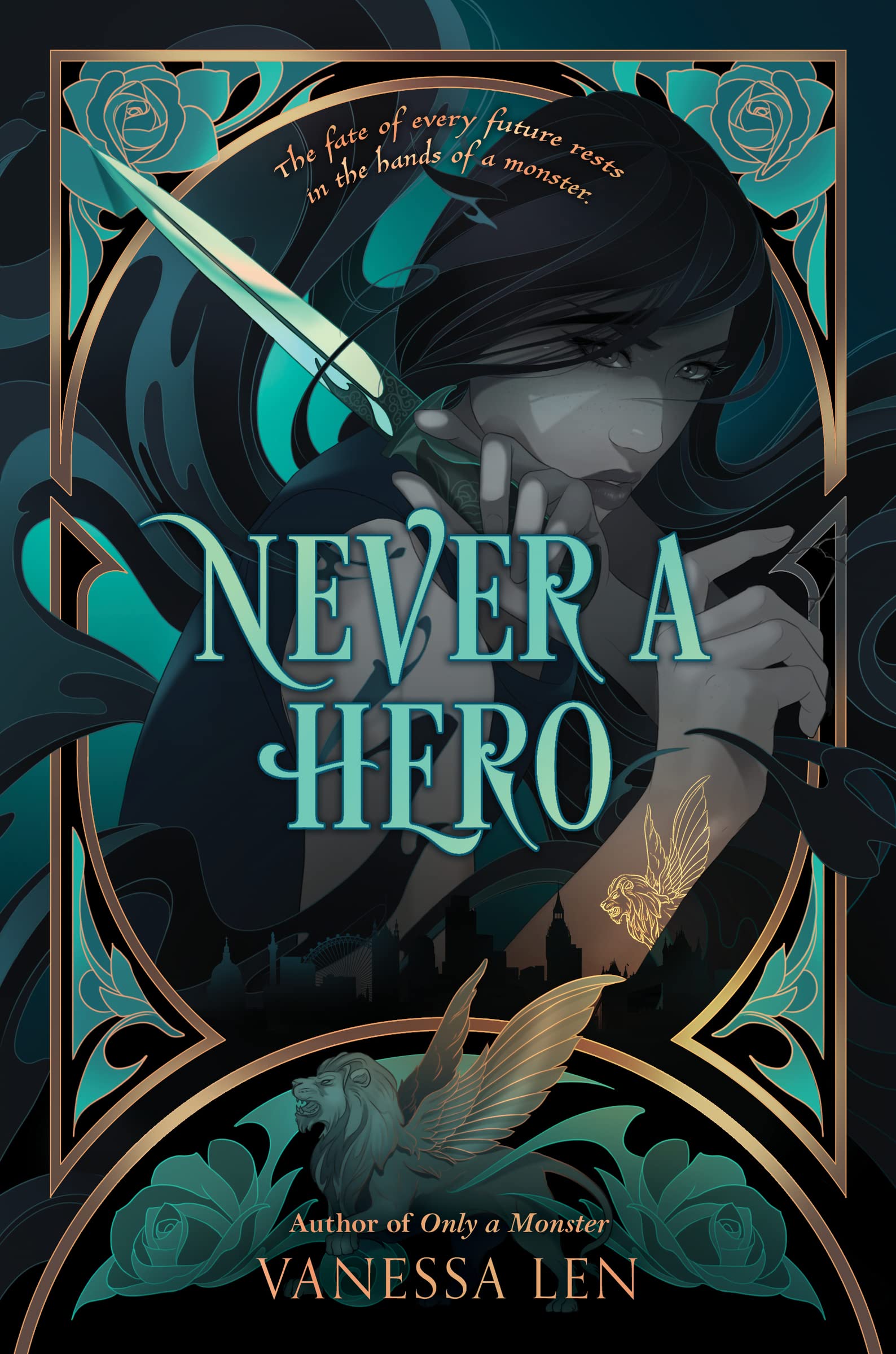
Quick Review – Never a Hero by Vanessa Len

Never A Hero Cover

Publisher: Allen & Unwin (Trade Paperback – 29 August 2023)

Series: Only a Monster – Book Two

Length: 475 pages

My Rating: 4.75 out of 5 stars

Amazon

New Australian fantasy author Vanessa Len follows up her outstanding debut with her second book, Never a Hero.

Back in 2022 I was lucky enough to receive a copy of Vanessa Len’s awesome debut novel, the young adult fantasy Only a Monster.  This amazing and clever read saw a young woman find out that she was a monster, part of a community of people who can travel through time by absorbing the life force of ordinary humans.  When her crush is revealed to be a deadly monster hunter determined to destroy her and everyone she loves, she is forced to flee through time to try and save her family.  I loved the unique concept that Len came up with in her debut, and the resulting story was powerful, compelling, and very moving, especially as the author finished it off with a major twist and some heartbreaking decisions.  Only a Monster proved to be so damn good, and it ended up being one of my favourite debuts and Australian novels of 2022.  As such, I was quite excited when I saw that Len had a sequel to Only a Monster coming out last year, and I really enjoyed the unique way that she chose to continue her brilliant narrative.

Plot Synopsis:

This sequel to the contemporary fantasy Only a Monster will take Joan deeper into the monster world, where treacherous secrets and even more danger await.

Despite all of the odds, Joan achieved the impossible. She reset the timeline, saved her family – and destroyed the hero, Nick.

But her success has come at a terrible cost.

She alone remembers what happened. Now, Aaron, her hard-won friend – and maybe more – is an enemy, trying to kill her. And Nick, the boy she loved, is a stranger who doesn’t even know her name. Only Joan remembers that there is a ruthless and dangerous enemy still out there.

When a deadly attack forces Joan back into the monster world as a fugitive, she finds herself on the run with Nick – as Aaron closes in.

As the danger rises – and Nick gets perilously closer to discovering the truth of what Joan did to him – Joan discovers a secret of her own. One that threatens everyone she loves.

Torn between love and family and monstrous choices, Joan must find a way to re-gather her old allies to face down the deadliest of enemies, and to save the timeline itself.

Vanessa Len’s stunning Only a Monster trilogy continues with this second instalment, a thrilling journey where a secret past threatens to unravel everyone’s future.

Len comes up with quite an outstanding story for Never a Hero that hits the ground running fast and never lets up with the feels, action and deadly reveals.  The story starts with Joan living in a slightly different world thanks to her manipulations of the timestream, where her former love interest, Nick, has no memory of who she is or that he used to be a monster hunter.  However, an attack by the agents of the Monster Court forces her to once again jump back into that world to try and unravel a deadly conspiracy hinted at in the first novel.  However, this time she is the expert, dragging along the very human Nick, who quickly learns about the monster world as Joan desperately tries to keep him from remembering his deleted past as a monster hunter.  At the same time, her former ally from the first book, Aaron Oliver, has no idea who she is and is instead leading the hunt for her.

The resulting story proves to be quite exciting and intense, as the protagonists stay on the run, connecting with old allies and trying to discover why they are being chased and what deadly new plot has impacted their lives.  While there are some deliberate similarities with the first book, Never a Hero goes in some different directions, especially as Joan is aware of what it means to be a monster.  The book really goes in some interesting directions, and I loved how Len chose to wrap everything up.  The conclusion has so many heartbreaking revelations about the characters’ pasts, and the resulting secrets will shake readers to the core.  I love how well Len set up many of these reveals, and it was great to get a satisfying pay-off to some of the secrets and questions left unanswered in Only a MonsterNever a Hero ends on a big and ground-shaking note, hinting at a big final novel that will push the characters to their limits.

Len did an outstanding job following up her amazing debut here in Never a Hero, and this was another intense and moving character-driven read that expertly built on the elaborate story of her first book.  This was a great piece of young adult fantasy fiction that will attract both a mature teenage audience as well as older fans of inventive fantasy fiction.  While written in the same style as Only a Monster, Never a Hero definitely has a different feel to it, mainly because Len is weaving in some complex and inventive additional time travel elements.  In particular, the protagonist is forced to manoeuvre through a different world brought on by the changes to timeline she made at the end of the last book.  There is a constant reintroduction of supporting characters, locations and events, often in a much different context as the protagonist tries to work out the consequences of her actions.  At the same time, the reader is also treated to some additional lore surrounding the various monster families and there is some substantial and imaginative world building as a result.  I love how effectively and effortlessly Len utilised these complex fantasy concepts throughout her second novel and it really enhances an already exciting and memorable story.  While Len does work to make Never a Hero more accessible to new readers, the focus on differing timelines and alternate characters does slightly restrict who is going to enjoy this book.  I personally would strongly recommend reading the first novel before diving into Never a Hero, and that is honestly the best way to enjoy this story.

One of the best aspects of Never a Hero was the amazing character work of Len, who did an amazing job bringing together several intense and compelling story arcs around her excellent protagonists.  The main three characters of the book, Joan, Nick and Aaron, each have impressive appearances and scenes in Never a Hero, and what was particularly great about them is that they were so different from their prior appearance in Only a Monster.  Thanks to the time manipulations, each of them experiences an interesting new narrative in this book, and Len works this into the overall narrative of the book extremely well.  Joan, the only one who effectively remembers the prior events, is burdened by all manner of guilt, not only because of her monster heritage but because she killed off a version of Nick in the previous novel.  This guilt and despair only grows as the novel continues, especially when she realises the true consequences of her actions.  At the same time, Joan is constantly trying to hide the evil of her species from Nick, while also trying to come to terms with the other dramatic changes and revelations in her life.

The other two major characters, Nick and Aaron, also have some amazing sequences in this book.  Nick, who spent the previous novel hunting Joan as a monster hunter, is reborn for this book as a normal teen with a happy home life.  However, he is soon forced back into the world of monsters when he and Joan are attacked, and it was fascinating to see him experience everything from the other side, especially as a single wrong move from the other characters could turn Nick back into a ruthless killer.  Len also dives into the complex past around Nick’s various incarnations, and I deeply appreciated the tragic story about how he became a killer.  Aaron, on the other hand, is a monster from a noble family who was a reluctant ally to Joan in the previous book, before something else formed between them.  However, in Never a Hero, Aaron remembers nothing about this adventure or Joan, and instead he finds himself hunting her.  This was an outstanding move from Len, as readers of the first book had grown to care for Aaron, so it was jarring to see him evil again in this sequel.  The author wove quite an interesting storyline around Aaron, especially when it came to his connection with Joan, and there were some amazing scenes where the protagonist tried to bring him back onside by using secrets she previously learned from him.  These three characters and their unique personal stories formed a powerful emotional heart to Never a Hero, especially when combined with the excellent supporting cast and a wonderfully wicked villain.

Never a Hero proved to be quite an impressive and outstanding follow-up to Vanessa Len’s epic debut.  This amazing young adult fantasy novel had me quite enthralled and I loved the clever and powerful ways Len continued her unique narrative.  Len is truly proving to be one of Australia’s best new fantasy authors and I cannot wait to see how she wraps this series up with her next amazing novel.

Amazon

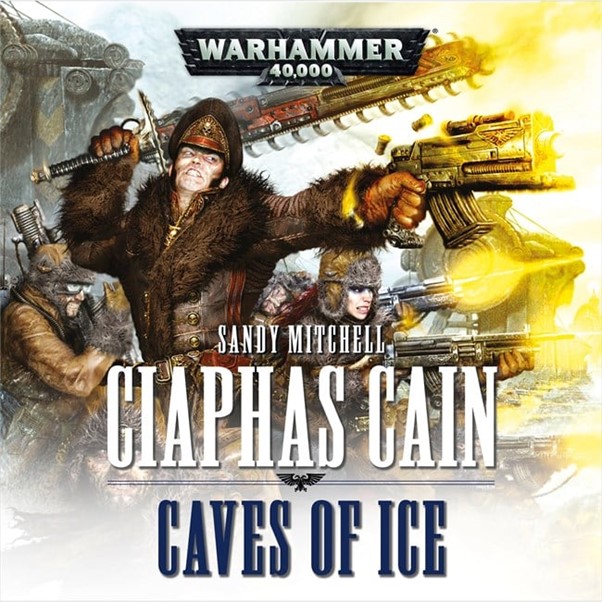
Throwback Thursday – Warhammer 40,000: Caves of Ice by Sandy Mitchell

Caves of Ice Cover

Publisher: Black Library (Audiobook – 1 February 2004)

Series: Ciaphas Cain – Book Two

Length: 6 hours and 46 minutes

My Rating: 4.5 out of 5 stars

Amazon

Welcome back to my Throwback Thursday series, where I republish old reviews, review books I have read before or review older books I have only just had a chance to read.  For this latest Throwback Thursday I look at another highly entertaining entry in the hilarious Ciaphas Cain Warhammer 40,000 series with the second book, Caves of Ice.

Even after my many recent reviews of Warhammer 40,000 fiction, my obsession with this franchise is far from over, so when I had a spare second, I quickly listened to Caves of IceCaves of Ice is the second novel in Sandy Mitchell’s (a pseudonym for author Alex Stewart) iconic Ciaphas Cain series, which follows the outrageous life of Commissar Ciaphas Cain, legendary hero of the Imperium of Man, who in reality is a pragmatic survivor whose heroic reputation is the result of chance and coincidence.  I had a wonderful time reading the first book earlier in the year, For the Emperor, and not only was it an extremely funny book but it also ended up being one of the absolute best Warhammer 40,000 novels I have had the pleasure of reading.  As such, I have been looking for an opportunity to continue this series and I worked hard to slip it into my reading cycle.  This was well worth the effort as Caves of Ice is another fun and awesome read that takes the protagonist to a whole new dangerous battlefield in deadly circumstances.

After unravelling a diabolical conspiracy on Gravalax, the legendary Commissar Ciaphas Cain and the troops of the Valhallan 597th have been redeployed to a new battlefront, the ice planet of Simia Orichalcae.  Empty except for a vital promethium refinery, Simia Orichalcae has recently received a group of unwelcome guests, a warband of orks who crash landed on the planet and are making their destructive way towards the refinery with ill intent.

Happy to be facing a more conventional enemy on their preferred icy terrain, the Valhallan men and women eagerly prepare for battle.  However, Cain, in his usual pragmatic approach to life and war, is less enthusiastic about the violent battle to come and searches for any way to avoid the fighting.  Several mysterious disappearances in the tunnels beneath the refinery offer a potential escape for Cain as he leads a small squad underground to map the tunnels and discover the reasons behind the missing miners.

Cain, with his typical bad luck, finds far more than he bargained for beneath the ice.  Not only are several ferocious monsters lurking in the vast underground labyrinth, but a far more sinister foe lies there undisturbed, one that Cain has good reason to fear.  When the war and Cain’s explorations awaken this enemy, the entire planet is put at risk as this new, unrelenting danger attempts to destroy both the orks and the humans.  It once again falls to the reluctant Cain to face impossible odds and try to find a way to save his men.  But can even this legendary hero of the Imperium stop the flood of evil that is to come?

Sandy Mitchell continues his fantastic Ciaphas Cain series in a very fun way with Caves of Ice, which features another excellent story that strongly focuses on Mitchell’s reluctant hero.  Caves of Ice was a wild ride from start to finish, with a fantastic and captivating mixture of action, adventure, humour and intriguing character moments.  Taking place after the events of For the Emperor, Caves of Ice is another self-contained novel that any new reader can easily jump into.  This was a much shorter novel than the previous Ciaphas Cain book, and Mitchell provides a more direct narrative as a result.  Initially focusing on the ork invasion of Simia Orichalcae, the story is soon primarily set in the labyrinth of mines and tunnels laying underneath the refinery, where several miners have gone missing.  Attempting to avoid the fighting on the surface, Cain leads his aide Jurgen and squads of soldiers on several missions into he depths to explore the tunnels and find whatever is behind the disappearances.  What follows is an Aliens-esque series of adventures, as Cain discovers a variety of different and steadily more terrifying dangers down in the tunnels.  Each discovery forces Cain to go even deeper into danger, thanks to his heroic reputation and hidden skills, and the resultant action is pretty epic, especially when combined with Cain’s cynical and self-serving narration of events.  Everything leads up to a very explosive conclusion as the protagonist and his comrades are faced with the absolute worst their enemy has to offer them, and the resulting mess really brings everything together.  This ended up being a pretty strong sequel to For the Emperor, and I had an incredible time seeing Cain dragged into another deadly adventure.

I love the way that Mitchell portrays the various adventures of Cain in these novels, especially as it allows him to express a great range of different writing styles.  Just like with For the Emperor, Caves of Ice is primarily told from Cain’s perspective as entries from his personal memoirs.  However, this chronicle is cut through with notes and inclusions from his unintended editor, Inquisitor Vail, who provides some added context to the story through her own introductions, footnotes, inclusions of in-universe texts, and quotes from other notable characters.  These inclusions from Vail not only allow for a much wider story than the one Cain is telling (especially when it comes to the battle on the surface), but it also increases the humour of the novel by implying Cain is an unreliable narrator.  This, combined with the cynical and less-than-heroic observations and actions of the protagonist, gives the entire Ciaphas Cain series a much more comedic edge than many other Warhammer 40,000 books out there, and indeed there were several times I was cracking up laughing throughout this book.  However, Mitchell perfectly balances this lighter tone with some dark and bloody moments as the protagonist encounters all manner of deadly foes.  The action and lethal battles are recorded in exquisite detail, and you can feel the terror and fear that the protagonist feels as he constantly fights for his life.  This great blend of styles and tones really helps to make Caves of Ice stick in the mind, and I find the entire setup extremely compelling and very easy to fall in love with.

In addition to being a great Ciaphas Cain novel, I felt that Caves of Ice was a great entry in the wider Warhammer 40,000 canon.  The clever, humorous writing, and the fact the book could easily stand on its own, makes Caves of Ice an ideal place for someone to start their Warhammer 40,000 adventure, even if they are very new to the franchise.  The book provides some interesting insights into life in the Warhammer 40,000 universe, both through Cain’s insights and through the humorous or satirical texts that Inquisitor Vail adds to the book.  I really enjoy the solider-focused observations of the primary narrator and some of the supporting characters, and it is always quite compelling to see the common soldier’s reactions to the aliens and monsters they encounter.  Cain’s observations are always very sharp and funny, and his own range of experiences adds some amazing colour to the events unfolding in Caves of Ice.  Mitchell also takes the time to explore several iconic Warhammer 40,000 factions and races throughout the book and its quite interesting to see Cain’s opinions and insights into them, especially as he has a much more realistic views towards them than some of his cohorts.  Combine that with some fun insights into the day-to-day lives of soldiers in the Imperial Guard and their Commissar, and Caves of Ices proves to be quite an interesting Warhammer 40,000 novel.  I love seeing the range of different experiences that the protagonist has in this universe, and it will be fascinating to see what deadly danger he encounters in the next book.

Without a doubt, the major highlight of this series and Caves of Ice is the fantastic and compelling characters, particularly Commissar Ciaphas Cain.  Cain is one of the more entertaining figures in Warhammer 40,000 lore as he is a somewhat cowardly man who, in his mind, has accidently gained a reputation as a great hero and legendary fighter.  Just like in his previous adventure, Cain is still obsessed with staying alive and avoiding battle, often manipulating events to ensure he’s far away from the action.  Nearly all his thoughts revolve around how he can stay alive or in control, and it is often very entertaining to see his very selfish thought process in action.  At the same time, he is conscious of his image as a hero, which he also tries to maintain as dearly as his life, and this forces him into so many situations and fights he would honestly rather avoid.  His honest observations and hilarious internal reactions when events don’t go his way (which happens often), are some of the main drivers behind the book’s outrageous humour, and it is hard not to fall in love with this cheeky rogue.  While a lot of this book does focus on Cain’s attempts at survival and avoiding combat, Mitchell does take the time to focus on Cain’s good qualities.  Despite his own narration constantly trying to talk down his own abilities out of modesty (or self-loathing), Cain is shown to be a very competent fighter, explorer and commander, effectively leading his troops into battle and facing down a series of outrageous threats.  His keen insights, vast history fighting the enemies of the Imperium, and his own uncanny survival skills, actually make him an ideal champion who often succeeds against all the odds.  Indeed, with each adventure it is becoming more and more apparent that Cain is in denial about his own abilities and is suffering some form of imposter syndrome.  Whatever the case is, Cain remains a particularly entertaining and surprisingly likeable figure, and I cannot wait to see what crazy adventures he has in his next book.

Aside from Cain, Caves of Ice contains an intriguing range of characters who add to the story in several different and unique ways.  This second novel contains a fascinating range of supporting figures, including several who previously appeared in For the Emperor, as well as a few new characters as well.  The always entertaining Inquisitor Vail, despite not appearing in person, continues to have a major impact on Caves of Ice as she is the one presenting Cain’s manuscripts to the reader, often editing it to make it more reliable and cohesive.  Her insights into Cain’s adventures, mindset and unreliable narrations are very amusing, while also simultaneously impacting the reader’s perception of the protagonist and his various actions.  As such, she is a vital part of Caves of Ice, and I am glad Mitchell continues to utilise her as a narrator.  Another major character in the book is Jurgen, Cain’s aide and bodyguard who accompanies him on most of his adventures.  Portrayed as a slightly dim, relentlessly straightforward, and somewhat smelly, Jurgen is essentially the Baldrick to Cain’s Blackadder, and at times he serves as a good additional comic relief, especially in some of the more serious scenes where Cain is scared.  Despite his portrayal as a simple man, Jurgen is a very effective fighter and companion to Cain, and his love of the meltagun heavy weapon gets them out a jam plenty of times.  I liked how Mitchell also strongly hints that Jurgen is a lot smarter than anyone realises, especially when it comes to Cain’s nature, and it will be interesting to see how their friendship develops in the future.  Other great characters include Lieutenant Sulla, an exceedingly keen and annoying solider who offers some entertaining insights into the wider events of the story.  This is primarily due to the fact that Vail quotes Sulla’s memoirs throughout the book, although Mitchell writes them as pompously and badly as possible to really highlight Sulla’s character deficits.  Throw in some additional soldiers, arrogant bureaucrats, and a fanatical Adeptus Mechanicus priest who brings nothing but trouble for Cain, and you have an outstanding cast that I had a great time following.

Unsurprisingly, I chose to listen to the Caves of Ice audiobook rather than grab a physical copy, and I once again had an epic time with the fantastic audio format.  Coming in at just under seven hours, this was a relatively short Warhammer audiobook entry, and I was able to power through extremely quickly.  The audiobook format really made Caves of Ice a joy to listen to, and the entire story was beautifully portrayed throughout, especially the action scenes in the tunnels.  I was particularly happy that this production once again featured the three narrators who were utilised in For the Emperor, with the excellent team of Stephen Perring, Penelope Rawlins and Emma Gregory once again making a major impact.  All three give excellent performances in Caves of Ice, and I had a good chuckle listening to their fun and clever takes on the characters.

Perring is once again the central narrator as he voices everything in Caves of Ice shown from Cain’s perspective.  Perring has an outstanding voice, and he really brings all the characters to life in a colourful way, especially when it comes to showcasing the slippery and jaded Cain.  I also love his take on most of the supporting characters, especially Cain’s aid Jurgen, who Perring gives a very Baldrick-esque voice to.  In addition to Perring, Penelope Rawlins serves a very vital role as Inquisitor Vail in the outside narration, who is compiling Cain’s memoirs for the reader.  Rawlins voices all the extra notes that Vail adds to the proceedings, including the footnotes, several chapter introductions, and the descriptions of several in-universe texts, all of which Vail adds to give extra context to the story.  Rawlins gives Vail an awesome voice steeped in knowledge, command and a light sense of humour, and it is always very fun to see her add some honesty and truth to Cain’s version of events, especially when the footnote appears in the immediate aftermath of Cain’s false information or ignorance.  The final voice actor, Emma Gregory, is primarily used to narrate one of the major in-universe texts that is quoted throughout, the chronicles of supporting character Lieutenant Sulla (Like a Phoenix From the Flames), written many years after the events of Cave of Ice.  Gregory voices all the excerpts of Like a Phoenix From the Flames in a particularly pompous manner to match the tone of these poorly written memoirs, and you really get a sense of the self-importance Sulla must feel in the future.  This brilliant combination of narrators ensures that Caves of Ice, and indeed all the Ciaphas Cain audiobooks, really stands out, while also effectively increasing the humour of the entire production.  For that, and more, audiobooks are easily the best way to enjoy the Ciaphas Cain series and I cannot recommend it enough.

The second entry in the outstanding Ciaphas Cain series, Caves of Ice, was another exceptional novel from Sandy Mitchell that I had an awesome time reading.  Featuring an outstanding and hilarious protagonist, Caves of Ice is a great addition to one of the funniest series in the Warhammer 40,000 franchise.  I cannot recommend this book enough, and any fans of fun adventure are going to have a great time with Caves of Ice.

Amazon

Quick Review – Only a Monster by Vanessa Len

Only a Monster Cover

Publisher: Allen & Unwin Australia (Trade Paperback – 1 February 2022)

Series: Monsters – Book One

Length: 410 pages

My Rating: 4.5 out of 5 stars

Amazon

Only a Monster by Australian author Vanessa Len is a particularly wonderful debut highlight of last year that I have been meaning to talk about for some time.  A brilliant and awesome young adult fantasy read, Only a Monster is an impressive novel that sees a shocked girl realise that everything she thought she knew about her family was a lie and that deep down she really is a monster.  Intense, incredibly clever, and beautifully inventive, Only a Monster was pretty damn epic and proved to be one of the best debuts of 2022.

Plot Synopsis:

With the sweeping romance of Passenger and the dark fantasy edge of This Savage Song, this standout YA contemporary fantasy debut from Vanessa Len, is the first in a planned trilogy.

It should have been the perfect summer. Sent to stay with her late mother’s eccentric family in London, sixteen-year-old Joan is determined to enjoy herself. She loves her nerdy job at the historic Holland House, and when her super cute co-worker Nick asks her on a date, it feels like everything is falling into place.

But she soon learns the truth. Her family aren’t just eccentric: they’re monsters, with terrifying, hidden powers. And Nick isn’t just a cute boy: he’s a legendary monster slayer, who will do anything to bring them down.

As she battles Nick, Joan is forced to work with the beautiful and ruthless Aaron Oliver, heir to a monster family that hates her own. She’ll have to embrace her own monstrousness if she is to save herself, and her family. Because in this story . . .

. . . she is not the hero.


Only a Monster
has an awesome story that takes a teenage girl on a dark journey of self-discovery and magical adventure as she tries to figure out who she is and what lies within her.  Len starts this book quickly, with a good introduction to central protagonist and point-of-view character Joan Chang-Hunt, who is part of the unusual Hunt family.  A shuddering moment of unreality reveals that she is really half monster, someone who has the ability to steal time from humans to power their time-travelling abilities.  Though Joan initially tries to avoid this revelation and enjoy time with her crush, Nick, an encounter with the malevolent Oliver family of monsters forces her further into their hidden world, especially when it is revealed that Nick is secretly a monster slayer destined to kill every monster in existence, including Joan.  After a brutal series of events that sees most of her family and the other monsters of London killed in a single, coordinated massacre, Joan flees into the past with her surviving cousin Ruth and the youngest member of the Oliver family, Aaron, hoping to find a way to save their families.  Their quest leads them to try and recover a legendary artifact that will allow them to rewrite time.  But to do so, they will need to go up against the mysterious King of the Monsters and his dangerous plot to control reality.  Caught between monsters and monster slayers, the characters are forced into a series of deadly encounters which will force Joan to choose whether to retain her humanity or embrace her inner monster.

Len really came up with something special in Only a Monster, and I personally loved how this outstanding debut unfolded.  The author keeps a pretty fast pace throughout the entire book, and you are constantly thrown from intense moment to intense moment as the protagonist and her companions attempt to stay ahead of their enemies and find a way to bring back their families.  I felt that Len did a great job introducing her compelling world, fantastic characters and unique magical elements, and you quickly learn to appreciate the author’s inventive ideas.  This is actually a pretty dark read, especially as it starts with a massacre and focuses on a group of magical beings who can suck the life force out of normal humans to power their abilities.  I personally deeply enjoyed this darker tone, as Len balances it well with her unique creative ideas and the emotional character development to create an intense and addictive read.  The magical time travel elements of this book are very well done, and the darker ideas behind the absorption of people’s time span helped to make it a malevolent gift that the protagonist is forced to use by necessity.  Despite this, it does produce some fun time travel jokes, and I had a laugh at some of the pop culture references that were utilised in the identification of the period.  Len also lays down a series of interesting twists throughout the story which are revealed at perfect moments and which help to produce a pretty amazing story.  However, the absolute highlight of this book had to be the epic ending that Len decided to traumatise her readers with.  While I’m not going to give away anything here, let’s just say it is pretty insane, and I was deeply impressed with how Len set it up and executed it.

The final thing I really need to gush about when it comes to Only a Monster is the deeply complex and damaged characters featured within.  Only a Monster features a fun crew of central protagonists, each of whom are going through their own epic journeys.  The primary focus is on central character Joan Chang-Hunt, a sweet and nerdy character who, in the course of a day, finds out she is a half-monster with life-sucking time travel abilities, and then witnesses her entire extended family getting massacred.  This naturally causes her to experience a lot of emotions and trauma as she constantly tries to come to terms with how her life has unravelled and changed forever.  The main focus of her character arc is the examination of her inner monster as Joan tries to get to grips on whether she wants her abilities, especially as they force her to drain away people’s time.  She is also dealing with intense guilt over her role in the massacre that destroyed her family, partially thanks to her relationship with Nick, and this clashes hard with her own concerns about being a monster.  All this, and more, ensures that Joan is forced to grow up a lot throughout the course of Only a Monster, and she must keep making harder and harder decision as she gets closer to crossing lines she doesn’t want to.  Her final actions in this book bring all these deep feelings close to the surface as she is forced to make a terrible decision in a heartbreaking and powerful scene.  Len did an outstanding job when it came to Joan in this book, and I look forward to seeing how she continues to develop in future entries in this series.

Two other major characters I need to highlight are Joan’s accidental companion, Aaron Oliver, and her crush/personal nightmare, Nick.  Both characters have pretty dark introductions to the story, especially as they end up trying to kill Joan in the starting chapters, but Len develops them separately as the book continues.  Aaron ends up working with Joan as they try to stay alive and find a way to save their families, and they become an intriguing and combative duo throughout the book.  While Aaron is initially arrogant and antagonistic, you soon see that this is a façade, as Aaron is also incredibly damaged due to the actions of his cruel family.  Len does a wonderful job of slowly uncovering this deeper side of Aaron throughout the course of Only a Monster, and the eventual bond he forms with Joan is a touching and moving part of the book, even if it isn’t destined to last.  Nick, on the other hand, is an outstanding villain for this story, especially when it is revealed that he is an unflinching and implacable monster hunter.  Despite the connection he had formed with Joan before the events of this book, mainly because he sees her as more human than monster, Nick soon starts fanatically hunting her throughout time and becomes determined to stop her at all costs.  Clever and dark reveals about Nick come to light as the book continues, painting him in a somewhat sympathetic light, but this doesn’t stop him from hunting Joan, which leads to an exceptional and shocking confrontation towards the end of Only a Monster that perfectly changes everything.  The powerful character work contained in these central characters, as well as the intense bonds they form with Joan, are such a key part of Only a Monster, and you will come away heartbroken and moved with how their storylines unfold.

Overall, I had an incredible time with Vanessa Len’s Only a Monster, and not only was it one of the best debuts of 2022 but one of the best young adult books of the year as well.  This brilliant and powerful fantasy read had an amazing story and you will be impressed and excited by the complex characters and deeply inventive fantasy elements that are worked into this compelling narrative.  Intense, dark, and full of hope, Only a Monster is an incredible read that comes highly recommended to anyone interested in seeing the start of an extremely promising career in fantasy fiction.  I am very excited to check out the sequel, Never a Hero, later this year, and if Len keeps up the amazing writing from Only a Monster, it is going to be particularly epic and exceptional.

Amazon

The Coward by Stephen Aryan

The Coward Cover

Publisher: Angry Robot (Audiobook – 28 April 2021)

Series: Quest for Heroes – Book One

Length: 14 hours and 50 minutes

My Rating: 4.5 out of 5 stars

Amazon     Book Depository

Prepare for a legendary quest with a complex and damaged hero as bestselling author Stephen Aryan presents the first book in his new fantasy duology, The Coward.

Aryan is an awesome fantasy author who has been writing some great books over the last few years.  Aryan debuted back in 2015 with Battlemage, the first book in The Age of Darkness trilogy, which focused on a brutal magical war.  After finishing this initial trilogy, Aryan released a sequel trilogy, the Age of Dread trilogy, which was set 10 years after the events of the first trilogy, which focused on the consequences of the first trilogy, especially the fear and prejudice its magical war brought on every mage in this fantasy world.  I ended up reading the second book in this trilogy, Magefall, and quite enjoyed its interesting story.  Unfortunately, I never got a chance to finish the trilogy off or go back and check out some of the earlier books, which I kind of regret.  But I did get the chance last year to read the first book in his new series, The Coward, the first instalment of the Quest for Heroes duology.

Everyone in the Five Kingdoms knows the legend of Kell Kressia, the most renowned hero in all the lands.  At the young age of 17, Kell volunteered to join a band of legendary warriors and heroes on their greatest quest ever: travelling to the far north and killing the Ice Lich to save the world.  Twelve men ventured to the north, and only Kell returned, having slain the Ice Lich, leaving the land’s greatest heroes behind in death.  Kell’s fame as a hero spread throughout the land thanks to song and story.  However, not everything you hear in stories is true.

Ten years later, Kell is living the simple life on his family’s farm, content with the peace and quiet and avoiding people where possible.  However, fate has a funny way of catching up with heroes, and when word reaches the kingdoms of further trouble in the north, Kell is called for once again.  A terrible evil is said to have taken root in the fortress of the Ice Lich, and their power threatens the entire world.

Taking up his famous sword and ready to revisit the dangers up north, Kell sets out.  However, Kell is carrying a dark and desperate secret: he is no true hero; instead he is just a lucky man broken by his experiences and with no intention of returning to hell.  However, caught up in his own legend, and with a new band of heroes forming around him, Kell has no choice but to once again venture forth, even if it means his death.  Everyone is convinced that Kell will once again save the world, but can the hero win when he doesn’t even believe in himself?

This was a fantastic and clever fantasy novel from Aryan that I had an excellent time reading.  Aryan came up with an outstanding story for The Coward, based on a complex protagonist forced to relive his worst experiences.  I deeply enjoyed this cool novel and I managed to power through its entertaining and compelling narrative in no time at all.

The Coward has an awesome and captivating plot that quickly draws the reader in and ensures that they are held captive by the compelling quest.  I was honestly a fan of this book the moment I read the first line: “Kell Kressia, slayer of the Ice Lich and saviour of the Five Kingdoms, tripped on a rake and fell into a pile of horse shit.”  This perfectly set the scene for the entire novel, and showcased Aryan’s fun and compelling take on classic fantasy quest heroes.  The story initially develops primarily around Kell and showcases his severe emotional damage, as well as the fact that the legendary events of the past are mostly false, no matter what the bards and histories say.  Quickly dragged back into the fray by an ambitious king, Kell is tasked with travelling back to the scene of his last adventure and killing whatever evil he discovers there.  Naturally Kell, having learnt his lesson the first time, graciously accepts the request, and then tries to run away the first chance he gets.  However, thanks to a starstruck young man following in his footsteps, Kell is trapped into the mission and decides the best way to survive is to recruit a new bunch of heroes, and soon pulls together a small, eclectic group of rogues and warriors to take up the quest.

Most of these events take place in the first half of the book, and you really get to grips with the central characters while also fully understanding Kell and his pain.  Interspersed with flashbacks to the true story of the original quest, Aryan does a wonderful job of painting the risks of the upcoming journey to the reader, and you know that some brutal events are in store for the protagonists in the future.  At the same time, there is an excellent subplot that shows political intrigue throughout the Five Kingdoms, as a nefarious church attempts to take control of the lands, while the kings use Kell and his quest as pawns in a great political game.  This results in some dangerous moments for the protagonists on their way to their destination, and I liked the compelling and thrilling change of pace the dive into court politics presented.

Everything leads up to the big trek up North that dominates the second half of the book.  What follows is a bleak and captivating series of events that ensures that Kell and his companions hit every single monster and deadly creature that the author could think off, including wraiths, cunning ice sharks and an aggressive herd of lethal arctic beasts.  These scenes are all written extremely well, and Aryan does an excellent job of showcasing the deadly stakes of the mission, and there is even a memorable, and frankly surprising, tragedy just before the final major sequence.  This sequence, which sees the heroes re-enter the Ice Lich’s fortress, is paced extremely well, and leads to a brutal and intense final confrontation with their enemy.  While I did think that Aryan was a little too mysterious when it came to who or what this antagonist was, they certainly left their mark on the story, and it was fascinating to see their impacts.  Aryan fits in a couple of concluding chapters to set up the characters for the next book, while also containing some interesting surprises that will come into play in the future.  The reader comes away from The Coward extremely satisfied, and I felt that this was a very well-crafted narrative that not only stands on its own, but which leaves the reader curious to find out what happens next.

I deeply enjoyed the way that Aryan set this entire narrative up, and I felt that all the distinctive narrative threads fell into place extremely well.  Running at a swift and enjoyable pace, The Coward’s fantastic and elaborate story quickly drags you in, especially with its focus on a damaged protagonist and his new quest.  The author was extremely good at balancing deep and damaging character insights with a fast-paced action narrative, and you really had to feel for the protagonist as he revisited his trauma, while also selfishly encouraging him to keep going with the quest.  There is an excellent layer of dark humour over the entire story, and I liked how the action and adventure of the main storyline was well balanced by the alternate scenes of political intrigue that also set up the main villain of the second book.  I also deeply appreciated the captivating and clever dive into the dark side of an epic fantasy quest, and the traumatic memories of the events really shape the protagonist and the narrative in some excellent ways, while also proving to be an interesting and fun alternate perspective of classic fantasy novels.  Aryan features several fun allusions and homages to other iconic fantasy works in this book, and I appreciated his distinctive take on how a classic fantasy story adventure would really go.

I also quite enjoyed the fantastic and impressive new fantasy landscape that Aryan introduced in The Coward.  This first book is set in the Five Kingdoms, a collection of lands who are currently experiencing hardship, especially with a poor harvest and the increasing cold.  Despite the efforts of the authoritarian Church of the Shepherd to quash them, rumours abound that the Five Kingdoms are facing a threat from the north again, just like they did years before.  Aryan does a great job setting up the Five Kingdoms, and you swiftly get an idea of the many problems and conflicts befalling them, especially as their church is slowly increasing its influence and power, attempting to undermine its kings.  This proves rich ground for the early part of the narrative, and it was amazing to get introduced to this land.  I particularly loved the exploration of the myth of the protagonist throughout the lands, and the impact it had on the people, both in terms of morale and celebration, as well as politically.  Having multiple characters recite a famous in-universe retelling of the original quest was particularly fun, especially as the inconsistencies and blatant lies attached to them soon become extremely apparent.  The best setting in the entire book, however, was easily the North, were much of the second half of the book takes place.  Although it is similar to other famous fantasy winter landscapes, Aryan works to make his fairly distinctive, especially with the unique creatures and threats that lurk within.  The author really makes the landscape seem as brutal, barren and isolated as possible, and it is very intense to see the characters travel through it, particularly when Kell encounters remnants of the original quest, and is forced to relive his previous horrors again.  I had a lot of fun exploring Aryan’s intriguing world in this book and I look forward to seeing how it is expanded out in the sequel.

While I deeply enjoyed the narrative and had a great time exploring the new fantasy realm, easily the best thing about this book is the character work.  Aryan has done a real masterclass with some of the characters in The Coward, and you swiftly get attached to the main band of heroes, especially the protagonist Kell Kressia, all of whom are damaged or hiding something.  Watching them endure through terrible hardship and come together as a group is just wonderful, and I loved how attached I ended up feeling them as the novel progressed.

Most of the focus of the plot is directed to Kell Kressia, the titular coward.  Kell is a fantastic and memorable figure who draws you in with his unique story of woe.  The lone survivor of a legendary quest he undertook as a naïve teenager, Kell suffered a lot during the previous journey, and despite the renown and love lauded upon him, Kell ended up with nothing to show for his quest and has lived a simple life ever since.  In the current story, Kell has grown up significantly and is now content to be alone.  However, when he is sent on another quest, he attempts to flee, only to be dragged in against his will.  I really appreciated the development that Aryan put into Kell, especially as I figured that the twist would be that he’s a fraud.  However, despite the title, you realise that Kell isn’t really a coward; instead he is a deeply traumatised man who is now wise enough not to repeat the mistakes of his youth.  Rather than seeking battle, he tries to avoid it, but when he is forced to complete the quest, he reveals himself to be quite competent and able to lead his companions, even if he doesn’t want to.  I had an amazing time with Kell in this book, and you really sympathise with him once you find out the whole truth behind him.  I loved seeing how much he matured since the original quest, and the canny and realistic new hero is a very understandable figure as a result.  Aryan builds in a bit of closure for Kell in The Coward, especially as he comes to terms with the dark events from his past and finally starts to move on, but he does have to suffer some more tragedy along the way.  I also liked seeing him manipulate and utilise his status as a legendary hero throughout the book, even if he doesn’t believe it, and it was fun to see people who knew in the past underestimate him, not realising how much he’s grown up.  Kell is an excellent and impressive protagonist, and I can’t wait to see what Aryan puts him through next.

Another major character I need to highlight is Gerren, a young and idealistic teenager.  Following Kell’s example from the stories, Gerren finds Kell on his quest and stubbornly follows along, attempting to become a hero in his own right, despite Kell’s many attempts to get rid of him.  Realising that Kell doesn’t want to be there and means to run away, Gerren becomes quite angry and uses Kell’s own legend to trap him in the quest.  However, the further he travels with Kell and the heroes, the more he realises that Kell was right, and he soon regrets his decision.  I loved how Aryan used Gerren in The Coward, as the character essentially ends up being a younger version of Kell, making all the mistakes that his hero did, and becoming a dark mirror to him.  Watching Gerren mimic Kell’s life is pretty moving for all involved, and I loved seeing Kell’s reaction, especially as he tries to save Gerren from all the pain he suffered, which results in some amazing scenes.  Aside from being an emotional anchor on Kell, Gerren also goes through quite a lot of development in his storyline, as he grows from naïve kid to serious adventurer.  Watching his resentment to Kell grow and then fade when he realises what Kell was trying to protect him from is amazing, and you really wish that he would turn back at some point, not just for his sake but for Kell’s.  You also grow really attached to Gerren as the book goes on, and he served as an intriguing companion to the protagonist and really helped amp up the dramatic heft of Kell’s trauma.

Aside from Kell and Gerren, I really must highlight the rest of the fantastic band of heroes that travel with him, as Aryan brings together an eclectic and complex group, each of whom are there for very different reasons.  This includes the mysterious but entertaining bard Vahli, the hilarious pairing of Bronwyn and Malormir, two outrageous heroes with many a tale behind their deeds, and the monstrous but heroic non-human character of Willow.  Willow is probably the most intriguing out of these, as her entire species is something of a mystery, with a strange connection to the events of the plot.  Willow grows to be quite a significant figure as the book continues, and I am looking forward to seeing how the author expands on her in the future.  All these characters and more (the villainous Revenant Mother Britak was a fantastic secondary antagonist), were very impressive, and their unique and powerful adventure, as well as the many deep secrets in their past, help to turn The Coward into an exceptional character driven novel.

Like many great epic fantasy books, I would strongly recommend The Coward’s audiobook format.  Narrated by actor Matt Wycliffe, The Coward flows along at an excellent pace as an audiobook, and you really get caught up in the adventure and epic fight scenes out on the snow.  Wycliffe does some amazing and fitting voices for the various characters, and you really get caught up in their personalities and emotional depths through this narration.  With a run time of just under 15 hours, this is a slightly lengthy audiobook to get through, but I found myself powering through a very short amount of time thanks to the compelling story and characters.  A wonderful way to enjoy this amazing and clever novel.

Overall, The Coward by Stephen Aryan was one of the more captivating and intriguing fantasy novels of 2021 and it is one that is well worth checking out.  I loved elaborate narrative and impressive character work in this outstanding read, and readers will find themselves getting dragged into its compelling adventure tale.  I had an exceptional time with The Coward last year, and I really regret not reviewing it sooner.  I will hopefully read the next book in this duology, The Warrior, in the coming weeks, and I have no doubt it will be just as awesome as The Coward.

Amazon     Book Depository

Throwback Thursday – Warhammer: Runefang by C. L. Werner

Runefang Cover

Publisher: Black Library (Paperback – 24 June 2008)

Series: Warhammer Fantasy

Length: 413 pages

My Rating: 4.5 out of 5 stars

Amazon

Welcome back to my Throwback Thursday series, where I republish old reviews, review books I have read before or review older books I have only just had a chance to read.  For this week’s Throwback Thursday I have a look at a classic Warhammer Fantasy adventure novel with the entertaining fantasy thrill ride, Runefang.

I have been reading an awful lot of Warhammer 40,000 novels lately, but deep down my heart will always belong to the Warhammer Fantasy franchise, as that was the game that I played back in the day.  Even though the Warhammer Fantasy game has ended (replaced by The Age of Sigmar), while it was going the Black Library invested a lot of time into creating some excellent novels in this setting, which I have also been enjoy recently.  This includes the awesome Broken Honour and some of the earlier entries in the iconic Gotrek and Felix series (including Trollslayer, Skavenslayer, Daemonslayer, Dragonslayer and Beastslayer).  Even after reading these, I am still in the mood for more fun Warhammer Fantasy adventures and so I just read Runefang by established Warhammer fiction author C. L. Werner.  Werner, whose other writing credits include the Witch Hunter, Thanquol & Boneripper and The Black Plague series, came up with a compelling idea for this novel which I had a lot of fun getting through.

As civil war, discord and political instability rock the human realms of the Empire, a far greater threat marches upon it from the south.  A massive horde of undead creatures has been raised from the grave and is  cutting its way through the heavily populated province of Wissenland.  As the forces of Wissenland gather to fight, they are disheartened to find that these are not the typical shambling herd of undead horrors, but a well-organised, highly disciplined force of relentless fighters with dangerous magic backing them up.  Worse, the leader of this force is a true monster, the wight lord Zahaak, an ancient general of the legendary dark necromancer, Nagash, who has risen from his last defeat to finally achieve the victory he promised centuries before.

After several devastating slaughters, it becomes apparent that the undead force before them is unstoppable and the only way to defeat it is to kill the unkillable undead general.  In desperate need of anything that will save his realm, the Count of Wissenland and his advisors come up with an unlikely plan: recovering the Solland Runefang.  Lost years before when an orc raid destroyed the former province of Solland, the stolen Runefang, one of the legendary 12 swords signifying rulership of the Empire’s provinces, is rumoured to be the only weapon capable of killing Zahaak.

The task of finding the Runefang falls to Baron von Rabwald, who pulls together a small expedition of soldiers, knights and adventurers and leads them to the Runefang’s purported hiding place in the Worlds Edge Mountains.  However, this is no easy quest, and the chances of success are low, especially as the Worlds Edge Mountains are a notorious haunt for monsters, orcs and innumerable other dangers.  Worse, they are not the only group seeking the lost Runefang, and the fell magic of Zahaak is never far behind.  Can the expedition recover the Runefang before it is too late, or will Wissenland fall at the hands of its greatest foe from the past?

This was an outstanding and extremely exciting Warhammer Fantasy novel that I had a wonderful time reading.  C. L. Werner did an excellent job providing readers with an amazing fantasy adventure, and Runefang has a lot of great elements that will appeal to a wide range of readers.

At the heart of Runefang lies a captivating and highly enjoyable fantasy narrative that quickly drags the reader in with its impressive action, enjoyable characters, intriguing examination of the Warhammer world, and exciting adventure narrative.   Starting off with a fantastic introduction that sees the Wissenland army’s first disastrous attack against the undead horde, you are swiftly brought into the middle of the conflict as you witness the aftermath of the defeat, which also introduces several of the main characters.  Following some compelling exposition about the enemy they are facing, the story splits into two parts, with Baron von Rabwald leading most of the supporting cast off to find the lost Runefang, while the rest of the story focuses on the Count of Wissenland’s attempts to delay the undead army to give the adventurers time.  This split works really well, and seeing the disasters unfolding in Wissenland heightens the stakes of the expedition’s adventures and ensures that the reader is even more invested in its outcome.  The expedition storyline encounters multiple obstacles throughout their adventure, including monsters, traps, and orcs and goblins.  They are also forced to deal with a rival force of humans who are also hoping to claim the Runefang, untrustworthy mercenaries, as well as a traitor within their ranks who is helping the enemy.

This all translates into a very good and action-packed adventure, and I loved seeing all the epic events unfold through the eyes of the varied characters.  The story chugs along at a quick and exciting pace, with a good combination of action, dark moments and some fun, if grim, humour that I quite enjoyed.  Werner also ensures readers are in for a wild ride by not being sentimental when it comes to character survivability.  This became really apparent around halfway through Runefang when several key characters, many of whom had been built up in a big way for most of the narrative, were very suddenly killed off, and one of the supporting cast took the reigns as lead protagonist.  While this was a little surprising, I think it worked rather well, and it added to the suspense and drama of the tale, as the new protagonist is forced to make some big choices and deals to keep the quest alive.  Following this, the story keeps advancing at a great pace, with new foes and dangers appearing the closer the protagonists got to their goal.  This leads up to the epic final sequences of the expedition narrative, and it was fantastic to see the surviving protagonists go up against all the villains that had been chasing them in a big, extended confrontation, and Werner kept continuously hitting the reader with twists, surprises and dangers.  The reveal about the traitor in the ranks was pretty good, especially as Werner threw in an excellent red herring character (although by the time it is revealed, there were limited potential characters who it could be).  Everything comes together extremely well, with all the storylines and character arcs reaching their natural end, and I felt that it was an excellent, if rather bittersweet, conclusion.

I have to say that this was a particularly good and accessible entry in the wider Warhammer Fantasy canon, which is very well suited to this sort of immense and powerful story.  While Werner could have just phoned in Runefang with a generic adventure story set in the universe, he does a great dive into the lore.  This novel is set well before the events of most Warhammer Fantasy novels and takes place during the Age of the Three Emperors, where the Empire was split by a raging civil war.  As such, the province of Wissenland is on its own throughout the novel and must also deal with the substantial machinations of its neighbours as it fights to survive, which gives it a great additional edge of intrigue.  The author also spends a great deal of time focusing on the ruined province of Solland and the importance of its lost Runefang.  It was fascinating to see the ruins of Solland in Runefang, as it was still badly scarred by the orc invasion that destroyed it, and the impact of Wissenland’s absorption of it was quite interesting.  I also really appreciated the fantastic portrayal of the notorious Worlds Edge Mountains, the former realm of the dwarfs that is now controlled by orcs, bandits, and monsters.  The author did a really good job showing this to be a desolate and dangerous place, and he really did not disappoint when it came to featuring the variety of cool creatures and threats it contains, forcing the protagonists up against dangerous odds again and again.

Finally, I must highlight the author’s excellent use of the undead army in this book.  Rather than using the armies of the Vampire Counts or the Tomb Kings (which were the two undead factions at the time of Runefang’s release), Werner features a historic army of undead creatures who have risen after their defeat during the early days of the Empire to have their vengeance.  As such, they are a unique force of undead creatures, and I loved seeing them in action, particularly as you get some awesome reactions of terror from the human characters observing them.  Overall, I really loved the cool use of Warhammer Fantasy elements, history and settings in Runefang, and I felt that this was the sort of Warhammer novel that any fantasy fan could pick up and enjoy.

I also need to highlight all the impressive action featured throughout Runefang, and Werner has a clear talent for making fight scenes come to life in a big way.  There are so many battles throughout this book, and each of them is showcased to the reader in exquisite detail.  Whether it be a small skirmish, a one-on-one fight, a brawl against a giant monster, or a large pitched battle between armies, the author ensures that the reader gets the full sense of everything that his happening.  It was extremely cool to see all these fights unfold, and I was able to mentally see every sword swing, desperate charge and epic moment.  I liked how some of these fights emulated the battles from the table-top Warhammer Fantasy game, and you could really envision how they would have looked being played out on the board.  These action scenes combined well with the awesome and exciting story, and I think that they strongly enhanced my enjoyment of Runefang.

The final thing I want to talk about is characters, as Runefang features an excellent and massive cast of distinctive protagonists and villains.  Now, I am not going to go into too much detail about character arcs or development here, as to do so might ruin which key characters are killed off early.  However, I have to say that I was really impressed with the awesome way that Werner introduced each of the major figures in the book.  As such, you quickly grow to like many of the figures in Runefang, especially as Werner goes out of his way to feature a unique and often damaged group of protagonists to fit the story around.  I will say that I deeply enjoyed the Baron’s notorious and scarred champion, Kessler, who has some great moments; the dwarf Skanir, who serves as cantankerous guide; and the fantastic duo of the halfling Theodo Hobshollow and his ogre sidekick, Ghrum, who were an excellent and entertaining comic relief team.  There are also some really good villains in this novel, including the bandits who are also after the Runefang (featuring a brilliantly despicable leader and an entertaining pair of cowards), and an extremely dangerous orc warlord, Uhrghul Skullcracker.  Uhrghul was a particularly fun character, and I liked both his philosophical insights about being an orc leader as well as his effective way of questioning human prisoners (eating my legs in front of me probably would get me to talk).  I did think that the main villain of Runefang Zahaak was a tad underdeveloped, even if he was shown to be an epic badass with major historical cred to his name.  However, this might have been a deliberate choice by Werner to highlight the uncomplicated nature and motivations of the undead compared to the more insidious, evil, or animalistic plots of the humans and orc villains.  I had an amazing time following these characters, just try not to get too attached to any of them.

Filled with fantastic action, a compelling adventure storyline, fun characters and great use of the Warhammer Fantasy setting, Runefang was an outstanding novel from C. L. Werner that I had an amazing time reading.  Werner really went out of his way to create the most impressive and exhilarating fantasy adventure he could, and the result is really worth checking out.  A highly recommended Warhammer fantasy novel that you are guaranteed to have fun with.

Amazon

Throwback Thursday – Warhammer: Broken Honour by Robert Earl

Warhammer - Broken Honour Cover

Publisher: Black Library (Paperback – 22 February 2011)

Series: Warhammer Fantasy

Length: 411 pages

My Rating: 4 out of 5 stars

Amazon

Welcome back to my Throwback Thursday series, where I republish old reviews, review books I have read before or review older books I have only just had a chance to read.  For my latest Throwback Thursday, I look at a cool standalone entry in the Warhammer Fantasy canon with the 2011 novel, Broken Honour by Robert Earl.

Damn it has been fun getting back into Warhammer fiction over the last couple of years, especially as there have been so many amazing and epic recent additions to the franchise.  I have really been having fun with the huge variety of stories associated with these iconic tabletop games, and while I have been mostly focused on the science-fiction based Warhammer 40,000 novels, I have also been dabbling with the Warhammer Fantasy subgenre.  Set in a chaotic and war-ridden world filled with all manner of creatures from classic fantasy, the Warhammer Fantasy novels contain fun and dark adventures, such as the Gotrek and Felix novels (check out my reviews for Trollslayer, Skavenslayer, Daemonslayer, Dragonslayer and Beastslayer).  I was lucky to recently find several cool Warhammer books in a second-hand shop, and I immediately dived into a particularly fun fantasy novel, Broken Honour, written by a new-to-me author, Robert Earl, who had written various other interesting Warhammer novels.  Set before the 2015 destruction of this setting and the start of the Age of Sigma, Broken Honour was a fantastic and entertaining read with a great story to it.

Chaos has once again invaded the realms of man, this time in the Imperial state of Hochland.  The ravenous beastman hordes are emerging from their deep forest lairs to begin their annual raids of the human settlements to destroy, despoil and feast on the people within.  As the armies of Hochland gather to repel them, they find themselves outmatched and outsmarted at every turn.  A powerful and dangerously intelligent beastman lord has risen to command the herd, and his unusual tactics may spell the end for every human living in Hochland.

As the Hochland baron and his advisors attempt to withstand the new threat advancing towards them, they desperately seek out any fighting men they can find.  Sensing opportunity, mercenary Captain Eriksson, a veteran fighter for sale currently only missing a regiment to command, arrives at the capital.  Keen to take advantage of the current chaos, Eriksson buys the freedom of a large group of prisoners to form a new free company.  Promised freedom and pardons for their crimes if they fight, the prisoners form a reluctant and ill-trained regiment, the Gentleman’s Free Company of Hergig, who hope to avoid the brunt of the battle in the back.

However, Eriksson and his troops soon find themselves in the very thick of the fighting, as those above them seek to use his unit to in the very worst ways.  Forced to contend with ravenous monsters, political intrigue, and a villainous lord with everything to lose, Eriksson and the Gentleman’s Free Company of Hergig will need to come together and hone their skills if they are to survive.  Can this band of rogues, thieves and criminals regain their lost honour and find redemption on the battlefield, or will they find only death and destruction as humanities most bestial enemies come to claim them?

Broken Honour was an awesome addition to the Warhammer Fantasy canon that I had an amazing time getting through.  Earl produced an exceedingly exciting and action-packed read that is essentially The Dirty Dozen in the Warhammer Fantasy universe (it is also comparable to the Last Chancers series from Warhammer 40,000).  Obviously, with a plot like that, I knew that I was going to have a lot of fun with this book, and Earl really did not disappoint.  While the narrative is a tad by the numbers, it is a pretty cool military fantasy narrative that is worked well into the Warhammer Fantasy setting.  The entire story flows really well, with the antagonists introduced up front and the protagonist, Eriksson, and his unwilling soldiers brought in quickly after that.  From there you follow the paroled Free Company as they are dragged from one conflict to the next and forced to contend with overwhelming odds.  As such, the book is loaded with a ton of outstanding action and brutal fight sequences that are guaranteed to keep you entertained.  Earl makes excellent use of multiple character perspectives to tell a deep and wide-ranging narrative, and you soon get dragged into several different character arcs, including several surrounding the antagonists.  Not only do you get to see into the heart of the beastman camp, but there are several brilliant sequences told from the perspective of a villainous Hochland noble who is trying to kill the protagonists.  This all ends up being a pretty exciting and fantastic story, and I found myself getting really caught up in the novel, powering through it very quickly.  Everything comes together really well into a great self-contained adventure, although a couple of character arcs didn’t get the conclusions that they deserved, and some storylines are never revisited, despite Earl leaving the story open for a sequel.  Despite that, Broken Honour was an excellent, easy novel to check out, and you are guaranteed to have a great time reading it.

I really liked how well Broken Honour slotted into the established Warhammer Fantasy setting, and this was a great addition to the overall canon.  Earl focuses his narrative around two particularly intriguing factions from the game here, the villainous beastmen and the human armies of the Empire, specifically from the state of Hochland.  I loved the insight into both, especially the beastmen, and the author really brings them to life in exquisite detail.  You can really feel the monstrous power, the Chaos infused evil and the beast-like mentalities contained within these creatures, and they prove to be excellent and brutal antagonists for the entire novel.  At the same time, there are some awesome insights into the soldiers of the Empire, and I loved the various depictions of their battle tactics and the various regiments.  While Earl does dive into these various Warhammer factions throughout Broken Honour, readers don’t need to know too much about them to enjoy the series, as the author does an amazing job introducing them and explaining what they are, and any fan of fantasy or dark fantasy would have a great time with this book.  Indeed, Broken Honour would serve as an excellent introduction to the Warhammer Fantasy canon for those readers unfamiliar with its details, as the story encapsulates the constant struggles and battles that occur within it, as well as the fun and larger-than-life characters it focuses on.  As such, this is a really good and entertaining Warhammer novel that will really appeal to both established fans and potential newcomers.

I really must highlight some of the great characters featured within Broken Honour, as Earl has come up with a wonderful and compelling group of figures to set the story around.  Most of the plot naturally revolves around the members of the Gentleman’s Free Company of Hergig, who are formed to face the threat within it.  Made up of over 120 former criminals, you don’t get to know all the members, but most of the ones who are featured are extremely fun and very memorable.  The leader, Captain Eriksson, proves to be a canny veteran who can manipulate events and his superiors in his favour to field a force in the war and get a lot of money.  Despite his mercenary attitude, Eriksson proves to have a conscious and builds up a fair bit of loyalty to his men, and this character growth really helps endear him to the reader.  Most of the other named Free Company members are a rather interesting and cool.  The drummer boy, Dolf, for example, proves to be an excellent human MacGuffin in the narrative as political plots revolve around his survival.  Other members of the Free Company that stood out to me include the tired veteran Sergeant Alter, the possibly mad former warrior priest Gunter, and the wily quartermaster Porter, whose moneymaking schemes and remarkable survival ability rounds out the character dynamics extremely well.

While I had fun with these protagonists, the best characters within Broken Honour are easily the baddies, with several great antagonist figures really coming together perfectly throughout the book.  The most prominent of these is Beastlord Gulkroth, who leads the beastman armies in the book.  Empowered by dark magics which have enhanced him even further than the rest of his kind, Gulkroth proves to be an intimidating and compelling figure in the novel, especially as his grasp of strategy, tactics and patience are highly unusual amongst his race.  Gulkroth spends the bulk of the novel balancing this newfound intelligence against his bestial nature, and it proves extremely interesting to see both sides of his personality come into conflict, especially as it impacts how his army attacks.  While Gulkroth is a fascinating figure, the best antagonist is Viksberg, a cowardly noble who was the sole human survivor of the first battle in the book thanks to his spinelessness behaviour.  Despite this, he manipulates the situation to make him appear as a hero and gets promoted as a result, killing anyone who knows the truth of his actions.  This eventually forces him to contend with Eriksson’s regiment, as one of them is a witness to his crimes, and he tries to get all of them killed on multiple occasions.  Viksberg’s continued attempts to kill the protagonists through indirect means really adds to the intrigue and enjoyment of the entire novel, and it was exceedingly entertaining to watch his various plots unfold.  Earl really goes out of his way to make Viksberg as despicable as possible, and you end up really disliking the entitled bugger, especially as he gets better characters killed.  You end up rooting against Viksberg in the hope that he’ll get his just deserts, only to be disappointed when he manages to survive to fight another day, which is both frustrating and extremely fun.  These brilliant antagonists, and all the other characters, add so much to the overall plot of Broken Honour, and I really appreciated the work that Earl put into his various characters.

Overall, Broken Honour by Robert Earl was an awesome and deeply entertaining Warhammer novel that I had a delightful time with.  The straightforward story is very exciting and contains some impressive character arcs that unfold to produce a riveting tale, while also providing all the action and bloodshed I could ever want in the iconic Warhammer Fantasy setting.  While I am a little disappointed that Earl didn’t write any additional novels featuring the characters in Broken Honour, I still had an awesome time with this book and it’s a great read for both Warhammer fans and those general fantasy readers.  Highly recommended!

Amazon