
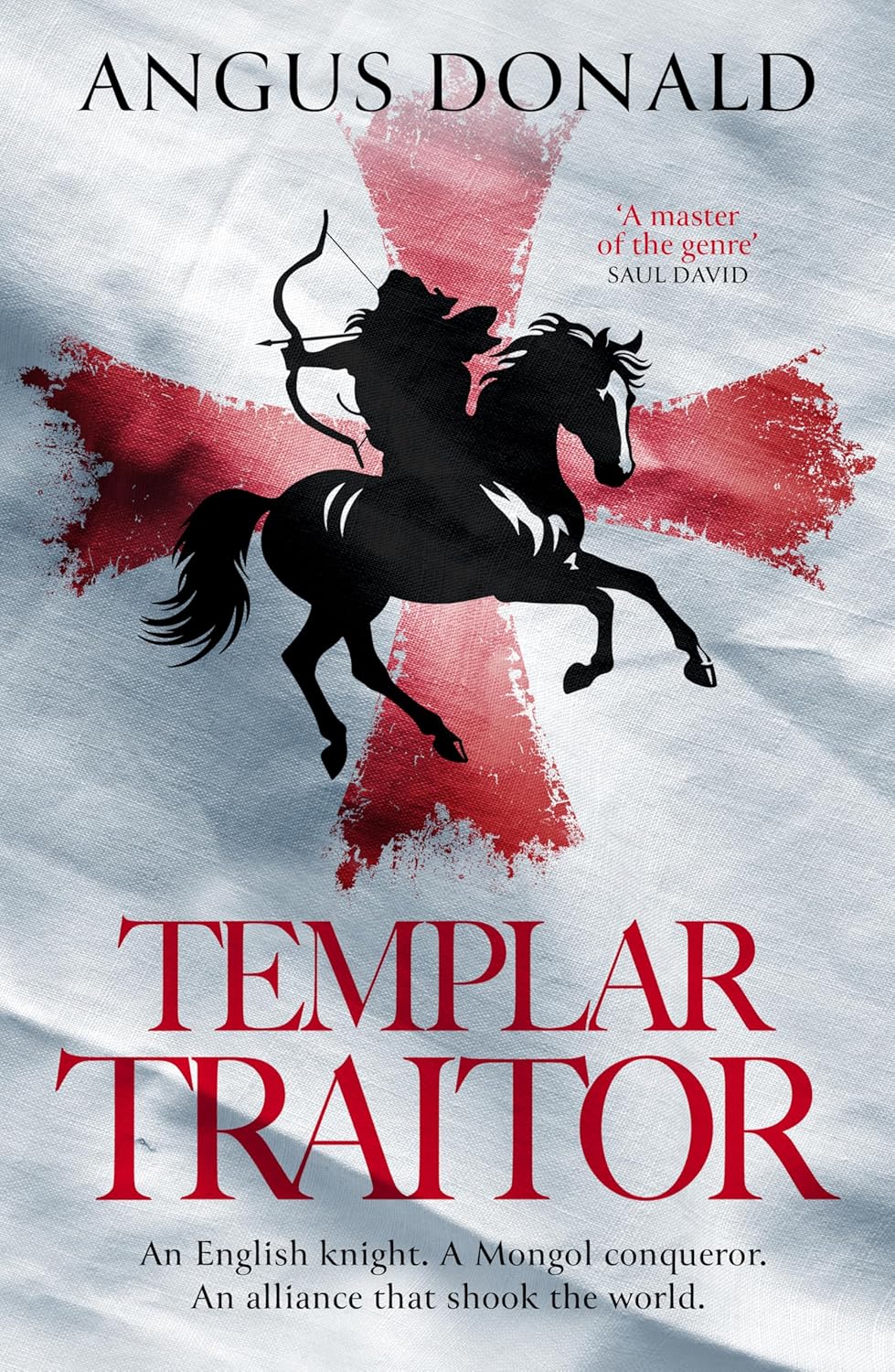
Templar Traitor by Angus Donald

Publisher: Canelo Adventures (ebook – 28 August 2025)

Series: The Mongol Knight – Book One

Length: 411 pages

My Rating: 4.5 out of 5 stars

Amazon

Those in the mood for an awesome and intense adventure should check out the soon-to-be-released historical fiction novel from Angus Donald, Templar Traitor, an outstanding book that I had a brilliant time getting through.

I have mentioned several times on my blog that my experiences with reviewing started with historical fiction, which was the main genre that I read for several years.  While I have progressed to a range of other genres since then, historical fiction still holds a very special place in my heart, and I always love to dive back into time and read a great adventure or moving tale set in our collective past.  One of the more enticing recent examples was Templar Traitor by Angus Donald.  Featuring a cool plot about an English knight fighting alongside the Mongolian horde, Templar Traitor is the first book in Donald’s The Mongol Knight series, which I really liked the sound of.  It helped that Donald is an author I have an interesting history with, as his early novel, Outlaw, was one of the first books that I reviewed professionally, and I was very keen to see how he had progressed as a writer since then.

Plot Synopsis:

“Do not lie to me, Templar, or it will be the last thing you do.”

July 1241. Christendom cowers in terror before the threat of a Mongol invasion. The swift-moving, invincible cavalry of Genghis Khan has smashed the proud, steel-clad knights of Russia, Poland and Hungary – and now Austria lies directly in their path.

At a skirmish outside the walls of Vienna, German knights capture a squad of Mongol scouts, and are astonished to discover one of their number is an Englishman – a Templar knight – who has been riding with these Devil’s horsemen for more than twenty years.

Interrogator Father Ivo of Narbonne is summoned to Vienna Castle to draw the truth from the imprisoned Englishman before his impending trial, to find out why he abandoned his Faith, his Brethren and his homeland to become… a traitor to Christendom.

This was a very impressive novel from Donald that nicely sets up a cool new historical fiction series, while also containing an intense and exciting story.  Loaded with action, adventure and some fascinating historical elements, Templar Traitor was an excellent read that I’m very glad I got to check out early.

Donald pulled together a very interesting story for Templar Traitor that cleverly makes use of a real recorded historical event and expands on it to create an elaborate tale of adventure, war and survival from the perspective of an initially eager young knight.  The framing device of the novel starts in Austria in 1241, with the capture of protagonist Robert of Hadlow, a knight from England who rides with the Mongols during their invasion of Europe.  From there, the captured Robert gives testimony to a priest with his own agendas, who is shocked to discover that Robert is a former Templar Knight who had journeyed to Mongol lands many years earlier.  From there the story dives back in time and chronicle of Robert’s life, following him as a young man ejected from Templars two decades earlier to becoming a wandering merchant travelling across Europe, before he is given the unique opportunity to try and establish an exclusive trade deal with Genghis Khan. This first part of the book was a very compelling introduction to the story, and it sets up the early story of the protagonist nicely, including his pressing reasons to undertake such a task, while also providing some fascinating historical contexts of the regions that the protagonist initially journeyed through.

From there Templar Traitor takes on a much more action-oriented edge, as Robert and his lone companion journey deep into Persia and beyond to find the Mongols, while pursued by rival European faction who seeks to secure trade for their own masters.  This resulted in some fast-paced and frenetic sequences, and the protagonist is soon dropped in amongst the Mongols, trying to find a way earn their favour.  Soon accepted as an envoy, Robert finds his place within the Khan’s army and witnesses their culture, people as well as their devastating war against the Khwarazmian Empire of Persia.  To gain Genghis Khan’s favour, Robert finds himself serving as a key figure in the invasion, which allows for multiple battle sequences, as the protagonist finds himself thrust into the centre of the war.  This resulted in a very rich and compelling historical novel, and it was fascinating to see some of Genghis Khan’s most famous battles through the lens of a western outsider.  Donald adds in a rather good twist near the end of the novel that completely alters your entire perspective of the events of Templar Traitor, while also setting up some very interesting storylines going forward.  This ended up being quite a fantastic overall story, and I appreciated how it contained a great, self-contained plot, while also working well as the first entry in a larger series.

Templar Traitor was a very strong historical fiction novel from Donald, and I really appreciated the layered book that emerged.  The use of an older, imprisoned protagonist giving his confession as a framing device for the main plot worked extremely well, especially as the experiences of the older Robert of Hadlow impact his narrative of the past.  The elaborate narrative of adventure and exploration allows Donald to really flex his historical writing ability, and he does an exceptional job exploring and showcasing the landscapes and cultures that his protagonist journeys through.  However, his best writing is saved for exploring the Mongolian armies of Genghis Khan, whom the protagonist spends more than half the book riding with.  Donald did an outstanding job diving into the complex culture and society of the Mongols throughout Templar Traitor, and the novel is loaded with compelling details and vivid descriptions.  This was further enhanced through the author’s decision to frame these descriptions through the eyes of an outsider, and it allows for some very complex scenes of misunderstanding and cultural exchange.

Naturally, much of this examination of Mongolian culture is focused on their military exploits (the protagonist did join a war camp), and you get a very detailed examination of their invasion of Persia.  The intense and bloody battle scenes are a true highlight of Templar Traitor, and you can easily imagine yourself riding amongst the Mongols as they fight through Asia, Europe and the Middle East.  I felt that Donald did an outstanding job of covering the history around this war, and it was an excellent choice to have the protagonist join the Mongols at the height of their power, rather than at the beginning of Genghis Khan’s rule.  I also enjoyed the fact that the scenes between the protagonist and his interrogator in 1241 were based on real events and Donald does an excellent job exploring a figure caught between his Christian upbringings in Europe, and his experiences living with his Mongol comrades.  The compelling narrative about the protagonist’s motivations for journeying into the East, as well as the hidden secrets beneath his main story, was featured extremely well, and I loved the complex layers that emerged around Robert.  This was a really impressive piece of historical fiction, and I really appreciated the skilled way that Donald set out his excellent story.

Overall, Templar Traitor was a great new novel from Angus Donald that is guaranteed to appeal to all historical fiction fans.  Expertly blending intense action with some great characters and a deeply intriguing historical period, Templar Traitor was a joy to read, and I look forward to continuing The Mongol Knight series in the future.

Amazon

Quick Review – Crusade by Richard Cullen

Publisher: Boldwood Books (ebook – 10 February 2025)

Series: Chronicles of the Black Lion – Book Two

Length: 369 pages

My Rating: 4.5 out of 5 stars

Amazon

If you’re in the mood for some excellent and exciting historical fiction, look no further than the outstanding read Crusade by fantastic author Richard Cullen.  Cullen, who also writes as fantasy author R. S. Ford (see my review for his book Engines of Empire), provides a fantastic second entry in his Chronicles of the Black Lion historical series with Crusade.  An amazing sequel to his 2024 novel, Rebellion, Crusade continues to follow his protagonist, Estienne Wace, former squire to William Marshal, on another powerful journey, this time into the Fifth Crusade.


Plot Synopsis:

Egypt 1219AD.

Abandoning the safety of England for the perilous shores of the Levant, Estienne Wace is thrust into the turmoil of the Fifth Crusade. Burning with righteous purpose, he is determined to reclaim the Holy Land in the name of Christ.

War rages along the banks of the Nile as a crusading army besieges the Saracen city of Damietta, certain that the price they pay in blood will return the glory and treasures they crave. But as the Black Lion roars, and the siege grinds on, Estienne’s unwavering faith is tested more and more by the grim reality of this brutal conflict.

As the siege turns on a knife edge, Estienne finds himself thrust upon a journey across the merciless desert. Stripped of everything, and forced into a dangerous alliance, he will grapple with the true meaning of faith, honour, and the price of salvation, in a land where nothing is as he once believed.


Crusade
was a captivating and worthy sequel to Rebellion that provided readers with the intriguing next chapter in the life of Cullen’s main character.  Easily read as a standalone historical adventure or a continuation of the author’s previous book, Crusade starts off strong and keeps the action coming quick and fast, as the protagonist is thrown into battle to seize the Saracen city of Damietta.  There are some awesome sequences here, as Cullen produces some high-quality and intense medieval combat scenes that allow the reader to feel every hack and thrust of the protagonist’s sword.  At the same time, the author also provides the reader with some introspection, as the protagonist has his first doubts about the crusade he has sworn to fight for.

Cullen quickly moves the reader into one of the more memorable parts of Crusade, as the protagonist finds himself separated from his crusader brethren and is instead captured and sold into slavery.  Forced to cross the desert, Estienne faces innumerable hardships as he attempts to escape, including slavers, the elements, a surprise band of Mongolian raiders, and a gigantic and vengeful warrior who has sworn to hunt down and kill him.  This proved to be a really fun part of the book, as the author provides innumerable perils, while also introducing or expanding on several interesting supporting characters.  You really get stuck into Crusade’s story here, and it sets up the final third of the book extremely well, as a doubtful Estienne takes part in the final conflicts of the Fifth Crusade.  Cullen features these final battles nicely, especially with some dual perspectives from Estienne’s gigantic rival, and you get some interesting closure as the final battles of the crusade emerge.  Everything ends on a hopeful note, and you are left wondering what adventures will appear next in the series as the protagonist embarks on a new journey.

As with Rebellion before it, one of the things that I personally enjoyed about Crusade was Cullen’s excellent use of historical elements as he dove into the compelling events surrounding the Fifth Crusade.  One of the lesser utilised crusades in historical fiction, the Fifth Crusade saw the armies of Christendom invade Egypt, with a combined force of multiple nations and knightly orders.  This was a clever historical event to set a story in, especially as it fits in right after the First Barons’ War, which was the focus of Rebellion.  Cullen clearly did his research when it came to this conflict, and I liked how he fit his protagonist in amongst the key events of the crusade.  Estienne proves to be a good witness to the major conflicts of the war, and his subsequent wanderings in the desert also provided some interesting historical context, especially with the appearance of the Mongolians and other desert groups.  I deeply appreciated this cool examination of this period, and I love that Cullen is taking the opportunity to feature some less well-known conflicts with his books.  It will be interesting to see what wars or key historical events Cullen will set his next entry in the Chronicles of the Black Lion series around, but I am sure I will find it fascinating.

Richard Cullen continues to impress with his cool historical fiction.  Crusade proved to be a great addition to Chronicles of the Black Lion series, and I enjoyed its excellent action, compelling historical inclusions and intriguing narrative.  I look forward to seeing where Cullen will take his series next, and I am having fun with these awesome books.

Amazon

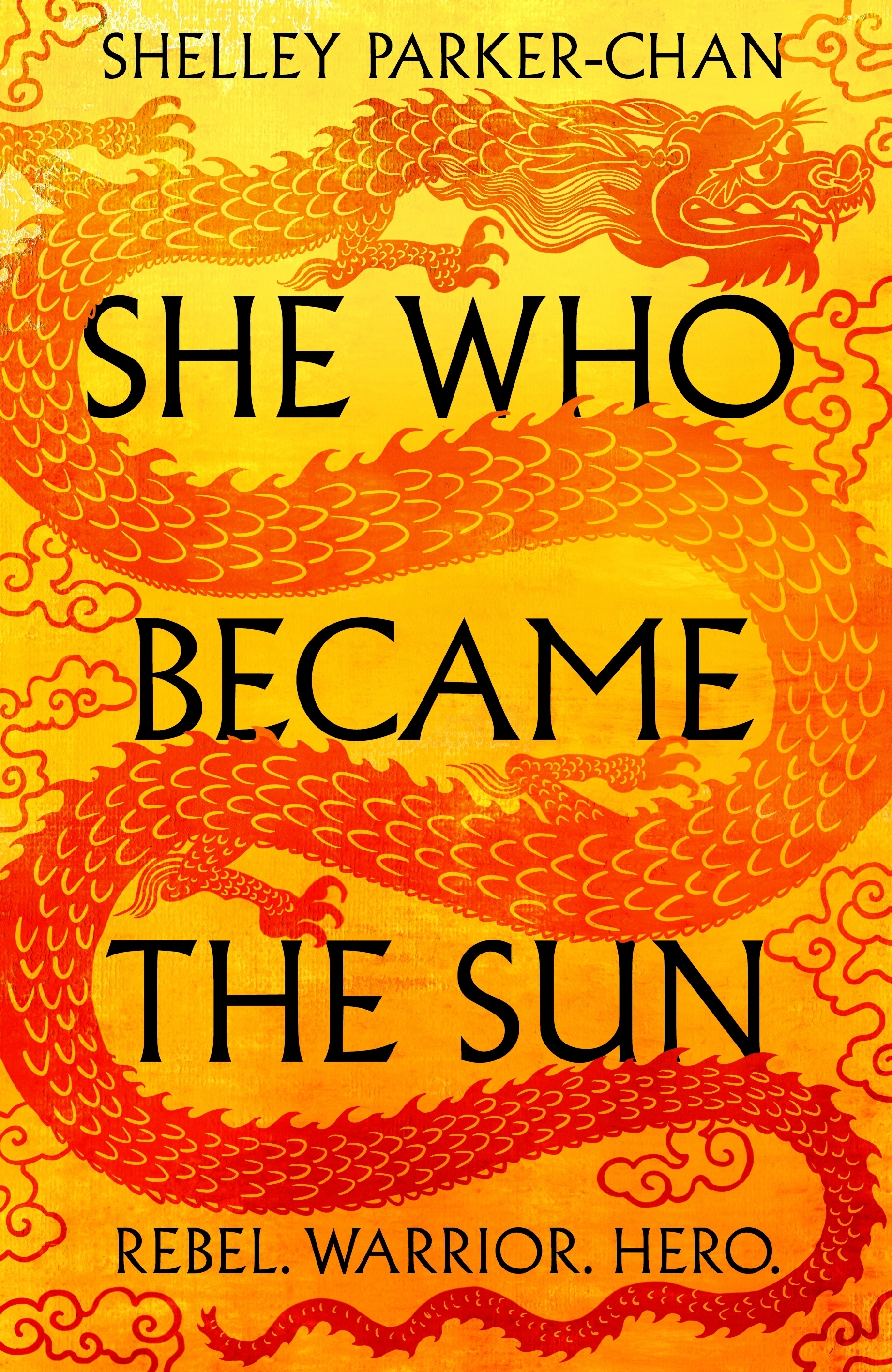
She Who Became the Sun by Shelley Parker-Chan

She Who Became the Sun Cover

Publisher: Mantle (Trade Paperback – 27 July 2021)

Series: The Radiant Emperor – Book One

Length: 414 pages

My Rating: 4.5 out of 5 stars

Amazon

Intriguing new Australian author Shelley Parker-Chan presents one of the most unique debuts of 2021 with the awesome She Who Became the Sun, a powerful historical read with a compelling twist.

In 1345 AD China languishes under the rule of the Yuan dynasty, descendants of the Mongolian invaders who have taken control and punished the southern Chinese citizens.  As famine and banditry stalk the land, the fate of the country will be decided by the most unlikely of people.  In a small village in the south, a seer predicts the future for two siblings.  For the favoured son, the seer sees greatness and unlimited potential, while for the daughter he sees nothing in her future at all.

When a bandit raid wipes out the village, only the daughter is left alive as her brother succumbs to his grief and despair.  Determined not to die an insignificant death and prove the seer right, the daughter plans the impossible.  Stealing the identity of her dead brother, she attempts to cheat fate and take her brother’s destiny for herself.  But how far can the newly named Zhu Chongba truly go, even with a fake identity and a stolen fate?

Travelling to a nearby monastery, Zhu impresses the Abbot and is soon accepted as a novice.  Growing up amongst the monks, Zhu finds a purpose for the first time.  But when a rampaging general destroys the monastery, Zhu is forced to find a new path that sets her against the emperor and the entire Yuan dynasty.  Joining with the Red Turban rebellion, Zhu manages to prove herself and soon leads her forces to several crucial victories.  But the eye of an old rival is upon Zhu, and not even this brilliant monk will be able to emerge unscathed.  The path to China’s future begins here, and soon the fate of the entire country will fall on the poor second daughter, destined to become the nation’s first female emperor.

This was a really compelling debut from Shelley Parker-Chan, who produced an epic and unique historical tale of war, destiny, identity and fate.  Serving as the first book in Parker-Chan’s The Radiant Emperor series, She Who Became the Sun was one of the most anticipated new releases for 2021, and I had an incredible time reading it, especially once I got caught up in its fantastic story.

She Who Became the Sun has an awesome and powerful narrative that proves to be extremely addictive.  The book first shows the protagonist as an unnamed daughter, destined for nothing until she adopts the identity of her brother, Zhu, and grows into a confident and capable young adult at a nearby monastery.  The first quarter of the book is primarily told from the perspective of Zhu and serves as a rather good introduction to the character and the overarching setting.  However, the story shifts dramatically after the eunuch General Ouyang, who serves under a noble family of the Yuan dynasty, burns down the monastery and leaves Zhu a medicant monk.  Determined to gain the destiny her brother was promised, Zhu joins with the rebel movement known as the Red Turbans.  The story then focuses on several interesting storylines, including Zhu’s ascent to commander in the Red Turbans, the volatile internal politics of the rebels, as well as troubles facing the wider Yuan dynasty.  The story adds in two additional point-of-view characters a quarter of the way through, with a particular focus on General Ouyang.  Ouygang is engaging in his own plot against the Yuan, and his fate soon becomes intertwined with that of Zhu.  This results in a pretty epic tale, especially as the various story threads tie together perfectly and produce an interesting and addictive overall narrative.  This leads up to an intense and fantastic conclusion that shows how much the protagonist has changed and how determined they are to see their destiny.  It also does an excellent job setting up the future novels in this series, and I have to say that I am pretty excited to see where Parker-Chan takes this tale next.

I was deeply impressed by the cool setting of She Who Became the Sun, especially as Parker-Chan worked in some excellent and compelling historical elements.  The novel is set in 14th century China during the Yuan dynasty and features an interesting retelling of the life of famed emperor Zhu Yuanzhang, founder of the Ming dynasty.  While there are a few major changes, like Zhu being a woman in disguise, She Who Became the Sun captures several key aspects of this figure’s early life, such as their peasant upbringing, their training as a monk, and their rise to power through the Red Turbans.  I really enjoyed the great examination of China during this period, and Parker-Chan does an excellent job of capturing the tyrannical rule of the Mongol invaders, the famines and crisis their ineffective rule caused, as well as the rebellion that rose to oppose them.  The author also makes sure to include several key historical figures, such as Zhu’s major supporters, and it proved to be a fun re-imagining of their relationship with the future emperor.  While this is primarily a historical fiction novel, Parker-Chan includes a lot of other interesting elements that alter the feel of She Who Became the Sun.  For example, there are several mystical features, such as some key individuals who can summon an aurora of visible light to show they have the divine right to rule.  Zhu also has the ability to see ghosts and finds herself haunted and at times damaged by malevolent spirits, angry at her decision to steal another person’s destiny.  These supernatural elements give She Who Became the Sun an intriguing and unique feel, and I really love it when authors subtly work in some subtle alternate genre inclusions into their work.

I also must mention the excellent inclusion of major LGBT+ elements into this book, especially around central character Zhu Chongba.  Zhu spends the entirety of the novel in the role of her late brother, pretending to be a man so she can rule and lead.  This was a really fascinating and distinctive choice by Parker-Chan, and one that makes She Who Became the Sun really stand out.  While there are some understandable comparisons to Disney’s Mulan, Parker-Chan instead frames it as a choice made from a desire to survive and to be more than what her sex would usually allow her to be in this period, especially under Yuan control.  Zhu spends most of the novel trying to hide her birth gender from everyone around her, allowing her to continue to achieve her.  While a few characters find out, Zhu is able to ensure their secrecy, which leads to some fascinating scenes.  I particularly love the interactions between Zhu and female characters who discover her secret, and the understanding that flows through these scenes is extremely powerful.  Other LGBT+ elements are later added to the story, especially around Zhu’s marriage to her wife Ma, and I really appreciated the clever and compelling way that it was worked into the plot.

Another impressive aspect of this outstanding book I want to highlight is the great use of characters.  This novel featured some amazing point-of-view characters whose journeys become the focus of She Who Became the Sun.  The main character is Zhu, the woman destined to become Emperor, who spends most of the book trying to live up to the legacy she believes she deserves.  I really liked the compelling character growth featured as her personality changes throughout the course of the book.  Initially meek and barely able to keep her secret, Zhu develops her cunning and her skills of manipulation to become a major figure in the monastery and the Red Turbans.  I loved the depiction of her rise to power, including that fun scene where she manages to win a battle with a prayer, and it was really entertaining to see her use the mild-mannered, humble monk routine to fool the people around her.  Having grown up with nothing, Zhu is more resilient against setbacks than some of the other characters and is able to overcome major hardships.  While Zhu spends most of the book as a good person, the desires for power and a great destiny eventually grows within her, encouraging her to do some evil things to win.  I really liked this subtle shift in personality as the novel continued, and the way that her character arc in this novel ends was really surprising and intense.

The other major character I really want to talk about is Ouyang, a general serving the powerful noble Lord Esen-Temur, son of the Prince of Henan.  Ouyang has a complex past, the son of a family declared traitor by the Emperor and the Prince of Henan, his entire family was killed, while Ouyang was made a eunuch.  Eventually able to work his way up from slave to general, Ouyang is initially portrayed as a petty, vicious, and vindictive figure, especially as he destroys the monastery that Zhu was living in.  However, as the novel progresses, you get to see how much Ouyang has suffered throughout his life, even though he is the best friend of Lord Esen-Temur.  Due to his status as a eunuch, there are some really interesting parallels between Ouyang and Zhu, especially as neither of these outsiders is comfortable in their body.  However, despite their similarities, they form a bitter rivalry, although occasionally working towards the same goals.  I really enjoyed Ouyang’s storyline, especially as it provided an intriguing alternative to the scenes focusing on the Red Turbans, providing the reader with a look at the politics of the Yuan dynasty and the fractious family dynamics surrounding Lord Esen-Temur.  It also leads to an excellent storyline where Ouyang slowly gets his long-awaited revenge and makes some moves to obtain even more power and control.  Ouyang served as an excellent antagonist for the novel, and his dark and brooding perspectives of life and the Yuan dynasty really enhanced She Who Became the Sun’s overall narrative.

Overall, I deeply enjoyed the unique and intricate book that was She Who Became the Sun, and it turned out to be an outstanding read.  Australian author Shelley Parker-Chan did an exceptional job with this impressive debut novel, and I loved the brilliant and epic historical tale she wove, especially as it contained some complex and intriguing characters.  This book comes highly recommended by me, and it is easily one of the best debuts I have so far read in 2021.

Amazon