
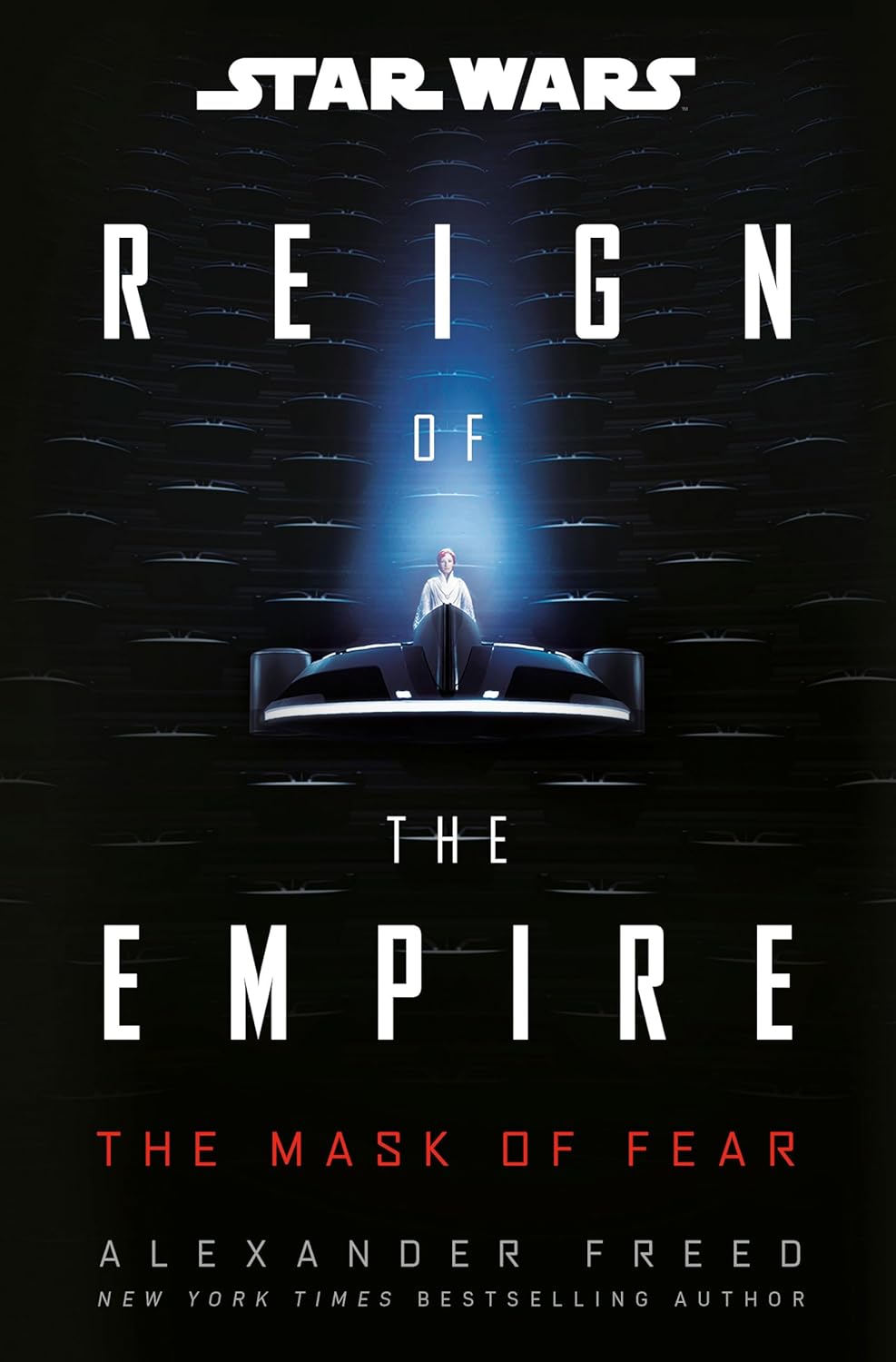
Star Wars: Reign of the Empire: The Mask of Fear by Alexander Freed

Publisher: Penguin Random House Audio (Audiobook – 25 February 2025)

Series: Reign of the Empire – Book One

Length: 16 hours and 51 minutes

My Rating: 4.5 out of 5 stars

Amazon

One of the top authors of Star Wars extended fiction, Alexander Freed, presents a compelling and complex inclusion to the franchise with The Mask of Fear, a powerful Star Wars novel that is a must-read before the upcoming second season of Andor.

There are some impressive authors writing Star Wars fiction at the moment, but one of my favourites is Alexander Freed, primarily because of his Alphabet Squadron trilogy.  An awesome series that followed a group of New Republic pilots in the immediate aftermath of Return of the Jedi, the Alphabet Squadron novels (Alphabet Squadron, Shadow Fall and Victory’s Price), are amongst some of my favourite Star Wars books, and I loved Freed’s dark take on the universe following the happy ending of the original trilogy.  As such, I was very intrigued when I heard that Freed was working on a new Star Wars trilogy set during one of my favourite periods of the franchise’s history, with the cool Reign of the Empire trilogy.

The Reign of the Empire trilogy is an ambitious series that seeks to chronicle the rise of the Empire and provides some cool new history in the current Disney canon.  Set immediately after Revenge of the Sith, the Reign of the Empire follow several key supporting characters from the films, as well as some new figures, as they attempt to navigate the galaxy following the formation of the Empire.  The first book in this series, The Mask of Fear, proved to be extremely fascinating, and I loved the compelling direction that Freed took the story.


Plot Synopsis:

Before the Rebellion, the Empire reigns, in book one of a trilogy told through the eyes of Mon Mothma, Bail Organa, and Saw Gerrera – for fans of Andor.

“In order to ensure the security and continuing stability, the Republic will be reorganized into the first Galactic Empire! For a safe and secure society!”

With one speech, and thunderous applause, Chancellor Palpatine brought the era of the Republic crashing down. In its place rose the Galactic Empire. Across the galaxy, people rejoiced and celebrated the end to war—and the promises of tomorrow. But that tomorrow was a lie. Instead the galaxy became twisted by the cruelty and fear of the Emperor’s rule.

During that terrifying first year of tyranny, Mon Mothma, Saw Gerrera, and Bail Organa face the encroaching darkness. One day, they will be three architects of the Rebel Alliance. But first, each must find purpose and direction in a changing galaxy, while harboring their own secrets, fears, and hopes for a future that may never come, unless they act.


The Mask of Fear
was another impressive and unique Star Wars novel from Freed, who sought to bring together a complex narrative of early rebellion and fear, as various people witness the rise of a tyrannical government.  Clever, intense and cleverly addressing some real-world parallels, The Mask of Fear was extremely good, and it served as a brilliant start to an excellent new Star Wars trilogy.

Freed produced a particularly intricate and complex narrative for The Mask of Fear that really sets the scene for the trilogy in a fantastic character-driven read.  I must warn potential readers that this is a very slow-burn narrative, with a focus on politics, character development, and Star Wars lore, and as such the book doesn’t have a ton of action in it at the start.  Instead, Freed follows the experiences of several different characters as they face the early days of the Empire’s rise and the end of the Clone Wars, with the narrative broken down across several character perspectives, including Mon Mothma, Bail Organa, a former Separatist operative who is forced to team up with Saw Guerra, and a couple of Imperial spies who find out the hard way that their Empire isn’t everything it’s cracked up to be.  This interesting combination of characters allows The Mask of Fear to go in a few compelling directions, including a political narrative around Mon Mothma, an adventure-laden investigation by Bail Organa, who tries to prove that the Jedi was set-up by the Emperor, a dark journey of revenge by the former Separatist, while the two spies find their stories interacting with the other characters as they try to investigate them.

As I mentioned above, the first half of The Mask of Fear is a little dry and slow-paced, but it nicely explores the universe after Revenge of the Sith and provides some dark context to how the Republic was changed into the Empire.  Mon Mothma’s story lies at the heart of the book, as she tries to bring about a legislative end to the Emperor’s reign, and this compelling political tale meshes well with the more action focused or espionage laden chapters of the other protagonists.  Things start to get a lot more interesting and intense once some of the characters start to interact with each other, including with a few action sequences, and Freed ensures that narrative gets realistically dark as you begin to understand the full evil of the Empire.

Everything leads up to the climatic final third of The Mask of Fear, where most of the major storylines of the book start to come together.  Thanks to the complicated story elements Freed set up in the earlier stages of the book, the reader finds themselves quite hooked at this point, especially as the characters find themselves in real peril.  I really enjoyed how Freed wrapped up a couple of the story arcs in The Mask of Fear, especially in one scene were a previously moral character finds the dark side of conflict.  Freed rewards the reader by providing a big moment of hope towards the end of the book, although this is swiftly taken away just to highlight what sort of Star Wars series this is going to be.  I really enjoyed this final section of the book, as the dark result of all the character’s plans galvanises them and leads them into a new direction.  I felt that this story came together extremely well, and while it was initially a little hard to get invested in it, Freed’s excellent establishment of the characters, narrative and overarching setting, ensured that it became a really gripping narrative.

The Mask of Fear was a very well-written novel from Freed, who expertly sets up a cool new Star Wars novel trilogy with some intriguing disparate elements to it.  The blend of politics, intrigue and action made for quite a compelling read, and I felt the author’s excellent use of multiple character perspectives led to a very rich and complex read that hit a lot of great boxes for me.  In addition, Freed does an amazing job placing this into the larger Star Wars canon, especially as he spends a lot of time exploring the very early days of Imperial rule, which is such a fascinating period in the franchise’s history.  The author perfectly blends compelling Star Wars lore about the fallout of the Clone Wars and the start of the Empire with his own story, and the resulting narrative is very fascinating.  While not every reader is going to love the complex political inclusions, I personally really enjoyed them, and this book helped to fill in some interesting gaps in how the Republic from the prequel films becomes the Empire.  As such, The Mask of Fear is a novel geared more towards hardcore Star Wars fans, although anyone who’s seen the original and prequel trilogies, or who wants to get a little more universe history before the second season of Andor comes out will probably have an amazing time with this book.

Speaking of politics, it’s hard not to notice some interesting real-life parallels that The Mask of Fear has with political realities of the world right now.  Freed would have written this book in 2024, and he paints a grim picture of the Empire’s new political and social reality within this book, which includes gross corruption, manipulation of the media, disinformation and other despicable practices, which will probably be quite familiar to readers now.  For example, the portrayal of a legislative body transferring most of its power to a popular-supported executive who then makes radical right-wing changes is jarringly close to how 2025 is turning out in some ways.  I found that these real-world parallels made the story that much more fascinating, and the reader ends up really feeling for the emotional turmoils of the protagonists.  One particular part of Freed’s portrayal of the Empire that I personally appreciated was the decision not to feature any of the franchise’s main villains, but instead focused on the people joining the administration purely for their own goals or benefit, who start revelling in the power they now have, or the lower level supporters who finally believe that they have a worthy leader.  In some ways this makes the Empire seem even eviler, as much like certain real-world governments, it’s obvious that the Empire was corrupt from top to bottom since the beginning.  As such, The Mask of Fear proved to be a masterful examination of how such fascist governments come into being and stay in power, and it was interesting, if a little scary, to see how the ultimate evil empire from fiction is being mirrored in the world today.

While the amazing story elements and intriguing examination of politics is a highlight of this book, for me, the best part of The Mask of Fear was the brilliant and damaged characters that Freed featured, especially his five major protagonists.  Each of these protagonists, which includes a compelling mixture of established characters and new figures written for this novel, has fascinating plot arcs behind them, as each of them tries to find their place in the new book.

Of these, I personally enjoyed the compelling storylines around future Rebel leaders Mon Mothma and Bail Organa the most.  Mon Mothma, who has been so well used in recent shows like Star Wars Rebels and Andor, had a compelling showing here in The Mask of Fear, and it was fascinating to see what happened to her in the immediate aftermath of the Empire’s takeover.  Portrayed as an ambitious politician already under attack by the new administration, Mon’s storyline around her attempts to curtail the Emperor’s power through political means and to keep power in the Senate is interesting, and I really enjoyed seeing the version of Mon who still believed in the institution she was apart of.  Freed weaves together an excellent combination of storylines around Mon, including her political troubles, personal issues, trauma from past arrests and her own growing disillusion with her political colleagues.  Mon’s storyline in The Mask of Fear starts her on the path to becoming the future Rebel leader, as she is forced to take deadly action in protection of her ideals, while also learning just how ruthless the new Emperor and his administration is.

The storyline surrounding Bail Organa on the other hand was a little more action and adventure focused, as he began his own journey towards rebellion.  Portrayed as the only person in the Empire who actually knows that the Emperor is a Sith Lord, Bail spends much of the book desperately trying to fight back by clearing the Jedi’s name.  You can really feel the despair in Bail as he tries to solve the situation in a manner he believes is right, only to hit roadblocks and disinterest from even his potential allies who disregard the Jedi who Bail knows are innocent.  This allows for some very intense scenes, especially as Bail crosses some major boundaries to chase his goals, and you really sympathised with everything Bail is going through.  Bail’s storyline was really well written, and I really enjoyed Freed’s realistic portrayal of what this character would be going through.  His storylines ended up melding nicely with the rest of the cast, especially Mon Mothma’s, and I loved how Freed showed them as having some noticeable political and personal friction.

The rest of the main point-of-view cast of The Mask of Fear includes three original characters, who provide intriguing alternate views about the Empire.  This included Soujen, a cybernetically enhanced Separatist infiltrator who awakens from hibernation to find that the government that made him was defeated, and he has to decide who or what he is going to fight for now.  A complex figure who believed in the Separatist cause, Soujen provides a compelling alternate view of events from the Clone Wars and the formation of the Empire.  Freed works an interesting and intense storyline around Soujen, as he is forced to confront the impact of his actions and the realisation that he might not have achieved anything with his fighting.  I loved how dark some of Soujen’s scenes got, as well as the realistic emotional outbursts as the character refuses to give up the war.  Soujen’s storyline is one of the most impactful in the entire story, as his more destructive approach forces the other characters to act against him.  There were some very complex interactions that occurred as Soujen tried to achieve his objectives, including a certain amount of tragedy which hits the reader hard.  The other key perspective characters are two imperial intelligence operatives, made up of an elderly spy who doesn’t fit in with the new regime and her young apprentice from the slums of Coruscant.  They both go on compelling journeys throughout the book, with the veteran tailing Bail, while the younger journeys into the morass of the extremist groups supporting the Emperor.  I really enjoyed seeing both coming to realise the problems with the Empire they’re solving in their own different ways, and both their perspective character arcs supported the other storylines extremely well.

This main cast is supported by an interesting array of figures, including supporting characters from the main shows, who have a big impact on the story.  The most prominent of these is Saw Gerrera, who, despite having a big role in the plot, doesn’t serve as a major perspective character.  Freed does an excellent job portraying Saw in this book, and it proves fascinating to see the character’s journey to become an extremist fighter begin in this book, as he initiates the first militant rebellion against the Empire.  This mostly rounds out the main cast, and as I mentioned above there is a distinct lack of major antagonists in this book, with neither the Emperor or Darth Vader appearing.  However, there is an array of self-serving middle management administrators and agents, pro-Imperial vigilantes and politicians supporting the new Empire, who prove to be quite dangerous and corrupt in their own way, especially as they oppose and attempt to remove the protagonist when they oppose the Emperor.  An overall excellent collection captivating character arcs in this book which really enhanced The Mask of Fear’s narrative in some impressive ways.

As with most Star Wars novels that I check out, I chose to enjoy The Mask of Fear on audiobook, which proved to be an outstanding way to enjoy this captivating read.  Star Wars audiobooks always do such a great job of capturing the atmosphere and excitement of the franchise’s extended universe, and I love how awesome they can make a story.  The Mask of Fear was a great example of this, and the complex narrative of politics, betrayal and damaged characters, really came to life when read out by the talented January LaVoy.  LaVoy, who specialises in reading female-led fiction, including extended universe books such as Star Trek: Die Standing and Freed’s Alphabet Squadron books, did an outstanding job narrating this awesome novel, and I loved how well she captured the key characters.  Her voice work for Mon Mothma was particularly good, and I liked the fun voices that accompanied some of the other intriguing female characters.  LaVoy also ensured that the story moved at a swift pace, and readers found themselves really drawn in, even with the book’s politically heavy content.  It helped that The Mask of Fear featured the typical array of iconic sound effects and music from the Star Wars films, which are put to great use throughout the production.  The sound effects in particular were cool, giving extra life to some scenes, especially those involving firefights, vehicles and crowds, while the music was used to add some outstanding gravity or excitement to key moments.  The combination of the amazing narration and the cool Star Wars sound inclusions helped to make The Mask of Fear something truly wonderful to listen to, and this is easily the best way to enjoy this fantastic novel.

Alexander Freed kicks off his Reign of the Empire trilogy in a big way with this captivating novel.  An outstanding addition to the Star Wars canon that dives into one of the franchise’s most intriguing periods, The Mask of Fear was an intriguing, character-driven novel that examines the fallout of war, political upheaval and the rise of evil.  Highly recommended, especially on audiobook, The Mask of Fear is a must-read for all Star Wars fans.
Amazon

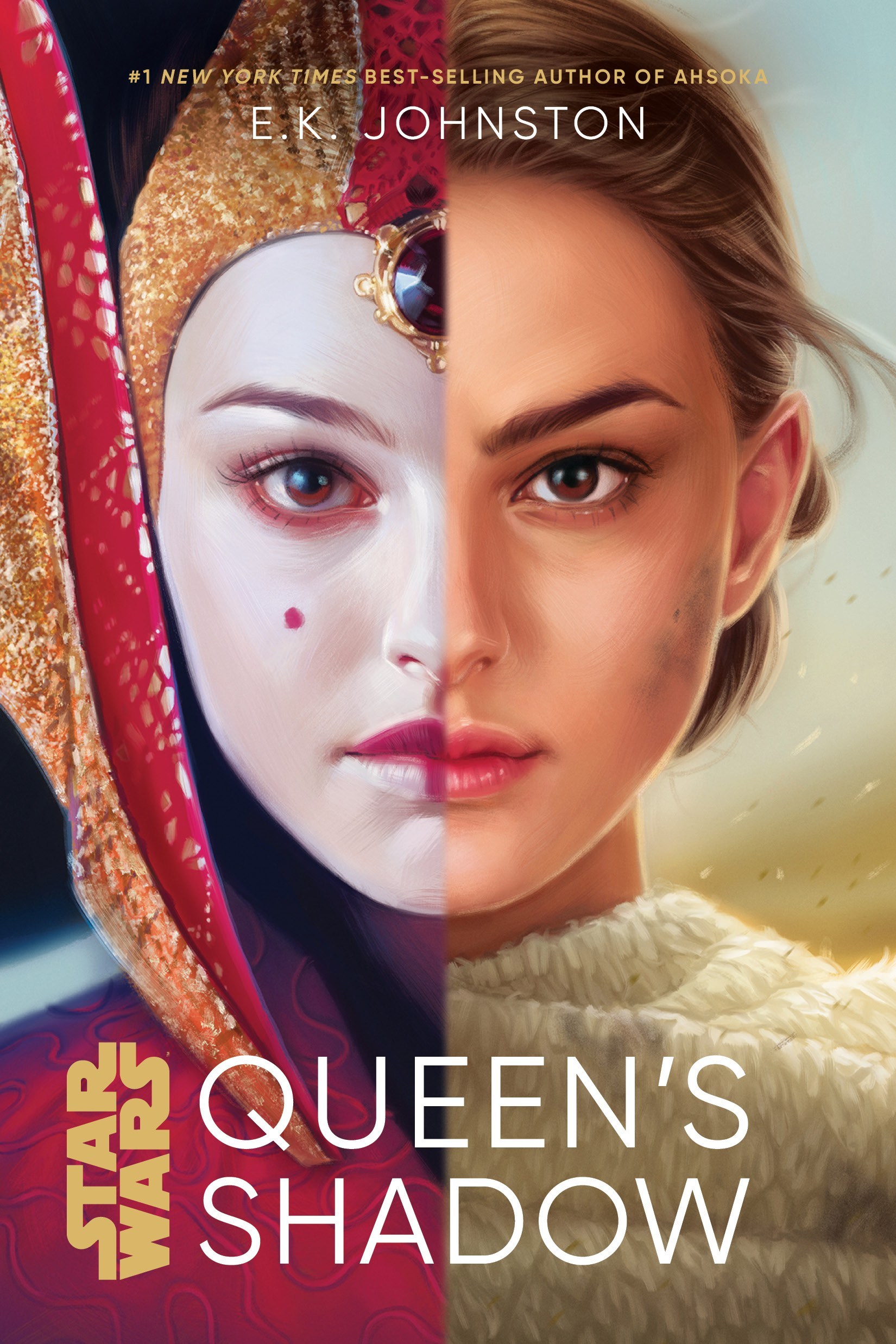
Star Wars: Queen’s Shadow by E. K. Johnston – Audiobook Review

QueensShadow Cover.jpg

Publishers: Disney Lucasfilm Press and Listening Library (5 March 2019)

Series: Star Wars Extended Universe

Length: 8 hours 22 minutes

My Rating: 4 out of 5 stars

Amazon

The female protagonist of the Star Wars prequel movies, Padmé Amidala, gets a story mostly worthy of her, as young adult fiction author E. K. Johnston attempts to bridge the character gap between the first two Star Wars prequel movies in Queen’s Shadow, the first Star Wars novel of 2019.

While The Phantom Menace had its flaws, one of the things that the first Star Wars prequel film did right was the character of Queen Amidala, the young, fierce and strong democratically elected Queen of Naboo, who was able to lead her people to freedom.  Portrayed by a young Natalie Portman, the character appeared in the other two prequel movies, where her relationship with Anakin Skywalker became a key plot point of the entire series.  While I am not the biggest fan of how Padmé was portrayed in the second and third prequel films, I was quite excited to read a novel that explored the character in more detail, especially one written by Johnston, who did such a fantastic treatment on the popular character Ahsoka Tano in her one previous foray into Star Wars fiction.  After my previous awesome experiences with Star Wars audiobooks, such as Ahsoka, I chose to listen to this book’s audiobook format, which was narrated by Catherine Taber.

Four years after ensuring the defeat of the Trade Federation on Naboo, Queen Padmé Amidala has served the last elected terms of office and is no longer Queen.  Now free of the responsibilities of ruling, Padmé and her loyal handmaidens now have time to think about a new future.  However, before Padmé can put any plans in place the new Queen of Naboo presents her with a job she cannot refuse: become the new representative of Naboo in the Galactic Senate.

Accepting the role, Senator Amidala travels to Coruscant, the capital of the Galactic Republic, to take up her seat, accompanied by a completely new support staff.  She is quick to discover that her experiences as a ruler have not prepared her for the demanding and treacherous world of galactic politics.  The Senate is a hotbed of corruption and bureaucracy, and Padmé is already considered by many to be a puppet of Chancellor Palpatine.  She also has number of powerful enemies throughout the galaxy who seek not only to discredit her but also to kill her.

However, Padmé Amidala is used to being underestimated, and with Sabé, her former decoy and shadow, watching her back, she begins to forge the political alliances she needs to finally bring some change the galaxy.

This was an interesting piece of Star Wars fiction that I quite enjoyed.  However, it is not without its flaws, and there were a few things that I disliked about the story that resulted in me dropping my overall rating slightly.  But before I talk about the parts of the story that I had issue with, I want to mention the elements of this book that I enjoyed quite a bit.

Queen’s Shadow is an amazing Padmé Amidala story that helps redeem the character after her less than stellar showings in the second and third Star Wars prequel movies.  This book helps make people forget about the helpless, pregnant damsel from Revenge of the Sith (although some deleted scenes from that movie do show some of the politics she was involved with), and instead focuses on her role as a canny political operator.  I was also quite happy that Anakin did not appear as a character in this book; I preferred to see Amidala stand on her own without being defined by her relationship with a Jedi.

Johnston did a spectacular job of creating a novel that bridges the gaps in Padmé’s story between the first and second prequel movies.  At the end of The Phantom Menace Padmé is still queen of Naboo, but by the start of Attack of the Clones she has become a senator, with very little discussion in the movies concerning how this came about.  While I am sure that some of the books and comics in the old Star Wars extended universe would have covered this period of Padmé’s life, Queen’s Shadow is one of the first stories to explore this in the new Disney owned and operated Star Wars extended universe.

The author spends a significant amount of time focusing on Padmé’s early days in the Galactic Senate, including how she formed some of her early alliances, such as with Bail Organa and Mon Mothma, and how she became such a significant force in the Senate.  In addition to this, we get to see how and why several of the minor Naboo characters from The Phantom Menace left Padmé’s side, and how several new characters, such as her new handmaidens and her security guard, Gregar Typho, came into her service.  In addition to serving as a bridge between the two prequel movies, Queen’s Shadow also ties into The Clone Wars animated television show, showing Padmé’s first contact and initial relationships with some of the characters who originated in the animated show, such as Senators Rush Clovis and Mina Bonteri.  While the book does spend time setting up events for Attack of the Clones, Johnston ensures that Padmé and the other main characters reflect on the events that occurred during The Phantom Menace, and the people that helped them during these adventures, such as Qui-Gon Jinn and little Anakin Skywalker.  Overall, I felt that this really helped tie in the events between the two books and is an excellent new piece of Star Wars cannon.

In my opinion, one of the cleverest parts of The Phantom Menace was the revelation towards the end of the film that Queen Amidala was actually being played by two separate actresses: Natalie Portman and Keira Knightley.  In the context of the film, Natalie Portman’s character, Padmé, was the real queen of Naboo, while Keira Knightley’s character, Sabé, was a decoy used for security purposes.  While Padmé portrayed the Queen at the start of the movie, when the Trade Federation invaded there was a subtle switch and Sabé took on the role while Padme could be seen disguised as a nondescript handmaiden in the background.  The two characters would then switch between portraying Queen Amidala throughout the film, with Sabé taking on the role whenever there was a chance the Queen could be captured or killed, while Padmé took on the role herself when official discussions or speeches needed to be made.  Handmaiden Padmé also got her own scenes when Sabé was taking on the role as Queen, allowing the viewers to see this side of the character.  This was and still is an amazing and ingenious part of the movie, which worked due to the similarity in appearances between the two then relatively unknown actresses, a downplaying of Knightley’s role in the film, as well as because of the elaborate makeup, hairstyles and dresses that Queen Amidala wore.  As a result, the general audience were quite surprised at the time, especially as cast lists were not as easily available on the internet at the time.

As a result, I was extremely happy that Johnston chose to explore the utilisation of the queen’s decoy in some detail throughout this book.  Quite a lot of time is spent discussing the techniques behind the Amidala persona, from the distracting makeup and costumes, to the quick-change techniques that Padmé and her handmaidens utilise, and even several discussions about the ‘Amidala voice’, the imperious tone that Portman and Knightly both performed in The Phantom Menace.  I found this entire exploration of this decoy angle incredibly fascinating, and it gave me a completely new appreciation for how the decoys were utilised in the first prequel film.  The decoys were also a key part of Queen’s Shadow, as Padmé still continues to utilise them as a senator, allowing her to avoid danger and slip away at social gatherings so she can undertake other covert tasks.  The scenes where they utilise them are quite intriguing, and I liked the author’s thoughts on the psychology behind the effectiveness of the decoys and how they are still an effective technique in an advanced science fiction society.  It was interesting to note that both of Padmé’s decoys who appear the films, Sabé and Cordé (who was blown up at the start of Attack of the Clones), have major roles in this book, with both taking on the Amidala persona at some point in the story.

While it was intriguing to see Cordé learn to take on the role of Amidala in this book, the original decoy, Sabé, was a much bigger part of the plot.  Sabé has a significant role within the book and is actually Queen’s Shadow’s secondary protagonist, performing undercover work on Padmé’s behalf.  The relationship between Padmé and Sabé was a really interesting and emotional subplot to explore, as Sabé is quite loyal to the former queen.  How Sabé defines herself as Padmé’s friend and confidant is a significant part of Sabé’s story, and Johnston spends time attempting unravel this complicated relationship.  The overall result is a fascinating inclusion to this story, and one that adds some real emotional depth to the story.

In addition to the focus on the decoy characters, Johnston also spends time looking at the role of Padmé’s royal handmaidens, the young hooded women who followed Padmé around in the first film.  I had never really given the handmaidens much thought before this book, apart from how Padmé was able to hide her identity by taking up a handmaiden’s garb for several parts of the film.  However, Johnston does a fantastic job of explaining the actual role of these characters as Padmé’s confidants, covert operatives, undercover bodyguards and potential body doubles.  I really liked how Johnston was able to turn these minor characters from the films into a significant part of her book, and it was quite interesting to see them be deployed to help with Padmé’s political moves.  Each of the handmaidens, both those who only appeared in The Phantom Menace and those who only appeared in Attack of the Clones, are explored in some detail throughout the book.  The reader gets a real sense of each of the characters personalities, what skills they bring to Padmé’s table and the fates of those handmaidens who served Padmé during the invasion of Naboo are also explained by this book.  This look at the handmaidens is an excellent part of the book, and one that I actually found quite fascinating.

Aside from the look at Padmé and her associates, Queen’s Shadow also examines a number of other aspects of the Star Wars universe during this time period.  For example, there is quite a large focus on politics, both on Naboo, and within the Galactic Senate.  The galactic politics in particular is quite intriguing, and I liked seeing Padmé’s initial impression of Senate procedure and its many shortcomings.  Johnston has also included some fun media articles throughout the book, showing how negative news coverage is being used to disadvantage or advantage Padmé’s political ambitions, which I found to be quite amusing.  There are also some hints at the coming Separatist movement, as several planets are showing discontent with the Republic and certain actions are taking place to undermine security throughout the galaxy.  All of the features are pretty interesting, and I had fun reading about them throughout this book.

Now, while I obviously quite enjoyed many of the elements that Johnston explored in this book (having gone on about them for over two pages), I have to admit that the overall story is actually a bit boring in places and the story really does not go anywhere.  There are some big points, including a quick assassination attempt, piracy, large-scale disasters and potential political crisis, but many of these events has any real significance, follow through or any sort of actual conclusion.  This could potentially be alright if Queen’s Shadow is the start of a larger storyline or a new book series, but I am not too sure how likely that is.  Not only is there no real indication that Johnston will be continuing this story, but the epilogue of the book kind of puts a damper on that, which I will discuss below.

BEWARE SPOILERS BELOW:

The epilogue of the book shows Padmé’s funeral, as shown at the end of Revenge of the Sith.  While I did like how Johnston alluded to the funeral at the start of Queen’s Shadow’s by using the same descriptions of Padmé’s floating flower-covered body, and the funeral does put a final end to the story.  The epilogue did show Sabé talking with Senator Organa, so this book could potentially set up a follow-up book focusing on the former decoy either joining the Rebel Alliance or investigating Padmé’s death.  However, this does not really fit with some of the open story points from this book, as the Trade Federation are the most likely people behind the assassination attempts and the piracy, and who cares about the Trade Federation after Revenge of the Sith?  In addition, this book only really explored around a year of Padmé’s life as a senator, and I think it would make more sense to follow more of Padmé’s early political career, especially as there is still around five more years until Attack of the Clones begins.  I suppose you could maybe do a split-timeline story that follows Padmé and Sabé before and after Revenge of the Sith, with the two storylines coming together, although I am not sure how well that would work.  I would like to see Johnston explore this more and give her overall story more shape, I just do not know how likely that is at this point.

END OF SPOILERS

While the somewhat pointless story does bring Queen’s Shadow rating down a bit, its audiobook features really help raise it up again, especially with its excellent narrator Catherine Taber.  The audiobook version of Queen’s Shadow runs for around eight hours and 20 minutes, so it is an easy book to get through quickly.  Catherine Taber is the actress who voiced Padmé in The Clone Wars animated show and is also the most recent person to portray the character on screen.  As a result, she is the perfect narrator for this book, as she already perfected a great Natalie Portman imitation voice for the show.  Taber did a fantastic job narrating this book, as she not only is the perfect voice for Padmé but also has an amazing range for the other characters featured in the book.  I appreciated how she was able to craft similar voices for the handmaiden characters, many of whom were chosen to be handmaidens because they were physical and audible matches to Padmé.  This is particularly true of Sabé, and as a result Taber ensures she has pretty much the same voice that Padmé does.  Other high points of Taber’s narration include her rendition of the Amidala voice, as well as the creepy tones she utilises for Chancellor Palpatine, especially when he kept saying “my dear”.  As always, the producers of this Star Wars audiobook load up this version with all sorts of sound effects and classic Star Wars music.  I felt that these sound effects and music really helped enhance the story, and gave it some real atmosphere, and I liked the way that certain things, such as holo-messages between the characters, were altered to make them sound more realistic.  I would strongly recommend the audiobook format of Queen’s Shadow as the best way to enjoy this story, and I thought it was just wonderful.

Queen’s Shadow is marketed as a young adult novel, and it is quite a good novel for a younger audience to enjoy, with only minor sexual references, coarse language, drug use and violence throughout the book.  However, there really is not any upper age limit on enjoying this book, and older readers can just as easily explore Johnston’s story.  While there is no age limit, readers should ideally be a Star Wars fan to fully enjoy Queen’s Shadow.  At the very least, readers should have watched all of the prequel films first to get a full handle on what is happening.  While I imagine someone with no prior knowledge of Star Wars might be able to enjoy reading this, it is probably not the best young adult science fiction book to pick out.  As a result, this book is recommended more for established fans of the franchise, and as a pretty hard-core Star Wars fan myself, I know I enjoyed all of the references and character exploration that Johnston did a lot more.

In the end, I decided to award Queen’s Shadow four stars out of five.  While I really loved all the intriguing elements that Johnston explored in this book, the lagging story did make it a little harder to enjoy.  That being said, I would not hesitate to grab another Star Wars book from Johnston, as she has an outstanding understanding and appreciation of the Star Wars universe.  I do hope that this story is continued in some way, and if it does, I will definitely check out the audiobook version of it, especially if it is narrated once again by Catherine Taber.  Interesting reading, Queen’s Shadow is worth checking out, especially if you are an established fan of the Star Wars franchise.

Amazon