The New Achilles by Christian Cameron

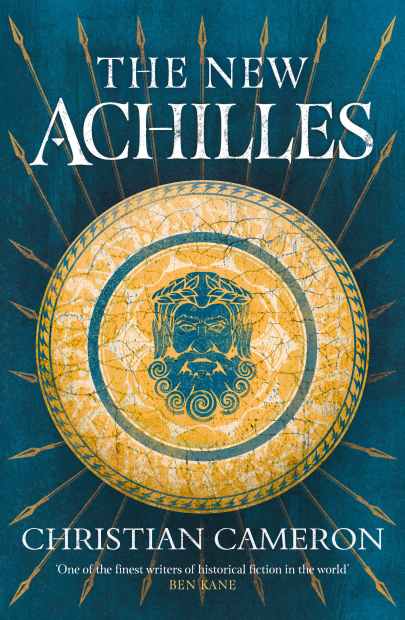
The New Achilles Cover

Publisher: Orion (Hardcover – 18 April 2019)

Series: The Commander series – Book 1

Length: 399 pages

My Rating: 4 out of 5 stars

Amazon     Book Depository

Acclaimed historical fiction author Christian Cameron once again returns to his favourite setting of ancient Greece with his latest novel, The New Achilles.

Greece, 223 BCE. War has come to Greece, as the various Mediterranean powers, including Egypt, Rome and Macedon, engage in a proxy battle on Greek soil. In a sacred sanctuary near the city of Epidauros, Alexanor, a former marine from Rhodes, has spent several years training to become a healer, seeking to escape his violent past. However, war will find Alexanor once again when the Spartans invade the nearby city of Megalopolis, forcing the surviving defenders to bring their wounded to Alexanor’s sanctuary.

Among the wounded is the leader of the men who attempted to fight against the Spartans at Megalopolis, a young man called Philopoemen. After saving his life, Alexanor finds his future tied into that of Philopoemen, who is destined to become one of ancient Greece’s greatest military leaders. Allied with the armies of Macedon against the Spartans and their Egyptian paymasters, Philopoemen proves to be a capable military commander. More importantly, his bravery and skill in battle earn the respect of his fellow Greeks, many of whom consider him to be Achilles reborn.

When prevailing political and military currents require Philopoemen to help with a civil war on Crete, Alexanor travels with him. There they will attempt to take on the powerful city-state of Knossos with an eclectic mix of troops and minimal support from Macedon and the Achaean League. Can Philopoemen and Alexanor succeed, or will the new Achilles fall short of his destiny?

Christian Cameron is a skilled author who has written a number of books throughout his career. While the author is probably best known for his historical fiction work, he has also branched off into fantasy under his pseudonym of Miles Cameron, including his Masters & Mages series, the first book of which, Cold Iron, I previously reviewed here. His latest book, The New Achilles, is the first book in his The Commander series, which will follow the life of the historical figure Philopoemen. This is the third of Cameron’s series which focuses on ancient Greece, with his Tyrant and Long War series both focusing on different periods of ancient Greek history. I have always found that Cameron has a very thorough writing style, and he tends to throw himself into the historical details of his books. This is continued with The New Achilles, as the reader is presented with a very complex tale that may prove a little harder to connect with. However, this book is well worth sticking with, as the author has created an outstanding historical tale that focuses on quite a remarkable character from history.

While The New Achilles does contain some other story elements, at its core it is an intriguing story about the life of Philopoemen. Philopoemen was a skilled general and political leader who was responsible for turning the Achaean League into a viable military power in Greece. He is sometimes known as “the last of the Greeks” (I believe that the next book in this series will be called The Last Greek) due to being one of the last great Greek generals before the Roman era. I have to admit that this was a historical character I had no real experience with, so I was extremely curious to see the author’s vision of his life and deeds. Cameron tackled the story with his usual highly detailed writing style, presenting a comprehensive novelisation of several key events of Philopoemen’s life, his earliest successes and his campaign on Crete. However, there is apparently a large amount of this man’s story left to tell, as he accomplished a great many deeds during his long life. I felt that the author did a fantastic job of capturing the personality of this larger-than-life figure, and I really enjoyed the well-paced story that showed his early rise to prominence.

The story is told from the perspective of the fictional character Alexanor, who, after healing Philopoemen, continues to encounter him and eventually becomes his friend and confidant, accompanying him on several adventures. I liked the use of an outside narrator to tell Philopoemen’s story, and Alexanor is an excellent character in his own right, as he constantly has to balance his duties as a medically trained priest with his desire to help Philopoemen win his battles and his wars. There are issues from his past that he has to deal with, including trauma from a previous war, a lost love and family strife, all of which make for an intriguing character. Another benefit of having a priest as a narrator is that it allows the author to spend time exploring ancient Greek medicine. This was a particularly fascinating element of the book’s story and it was extremely intriguing to see how ancient medicine compares to more modern techniques, and the differences and similarities in knowledge are quite interesting. It also results in some compelling ethical deliberations from the narrator about the dissection of human corpses, which, while strictly forbidden, could result in greater medical knowledge. Overall, I quite enjoyed the author’s use of Alexanor as a narrator, and his focus on his life was an intriguing and enjoyable addition to the story.

This book is set during quite a chaotic period of Mediterranean history, with a huge number of different ancient empires and city-states engaging in various wars and conflicts, many of which have an impact on The New Achilles’s story. Cameron makes sure to examine the various political implications of many of the conflicts occurring around the same time as the events Philopoemen was involved with, and it is quite fascinating to see what effect something like the war between Carthage and Rome could have on the inhabitants of Greece. In addition to the consequences of these distant wars or events, Cameron also looks at the political and national makeup of the various forces arrayed in the conflicts that Philopoemen and Alexanor are involved with. These could get quite complex at times, with a range of alliances, competing city-states and mercenary forces involved or attempting to intervene in a conflict. An example of how complex things could get could be seen in the protagonists extended conflict on Crete, where Philopoemen led a force of Achaean League troops to support one Cretan city state against the on the behest of Macedon. The opposing Cretan city-state was supported by the Ptolemaic dynasty of Egypt, whose Spartan allies joined in and led the fight against Philopoemen. Various other mercenary groups of different nationalities such as the Thracians and the Illyrians were also employed in this conflict and had various roles in the battles and politics. While the sheer number of different historical groups can get a bit overwhelming at times, Cameron does a great job explaining their history and their allegiances, and it is quite fascinating to see the roles they played in various conflicts.

Like many of Cameron’s previous books, the author’s dedication to historical detail and accuracy in The New Achilles is extremely impressive. Each page is full of intriguing elements from history, and it is easy for the reader to find themselves transported to this classical historical landscape. The author not only looks at the military and political aspects of this historical setting; he also examines day-to-day life for the various Greek civilisations. Cameron also makes use of a whole glossary of historical Greek terms and names throughout The New Achilles, all of which gave his story a greater sense of authenticity.

The New Achilles features a huge number of battle scenes and sequences, as the author captures a number of the historical fights Philopoemen was involved with. These battle sequences were extremely exciting, as the author presents some gritty and blood battle scenes. These were quite spectacular, and I loved the realism contained within the story as even the victors find themselves covered in all manner of wounds, and rarely is there a battle where the main characters come out unscathed. This is particularly true for Philopoemen, who tends to suffer injuries in nearly every battle he gets involved with, due to throwing himself into the heart of the fight. I thought this was a clever inclusion from the author, as not only does this reflect some historical accounts of the relevant battles but it is incredibly refreshing to see a hero that does not emerge from a battle unscathed. I quite enjoyed the examination of Greek battle tactics and weaponry, and the battle sequences in this book are fairly spectacular and well worth checking out.

Christian Cameron’s latest book, The New Achilles is a detailed and compelling examination of a truly remarkable, if overlooked, historical figure. The story of Philopoemen’s life proves to be an amazing focus for the plot, and Cameron brings a number of intriguing aspects of the ancient Greek period to life with his trademark detail orientated writing style. This was an incredibly interesting and captivating read, and I am looking forward to seeing how Philopoemen’s life progresses from here in future instalments of The Commander series.

Amazon     Book Depository

Throwback Thursday – Star Wars: Thrawn by Timothy Zahn – Audiobook Review

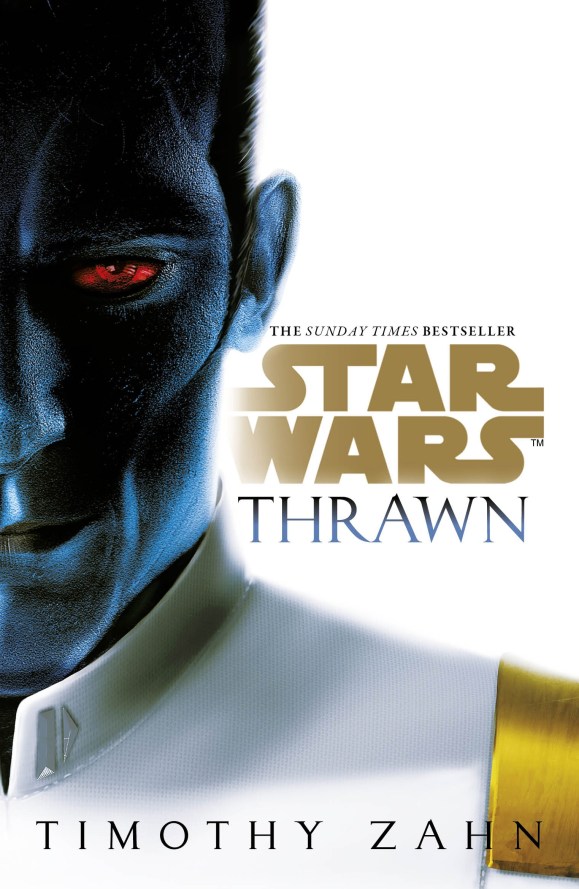
Thrawn Cover

Publisher: Random House Audio (11 April 2017)

Series: Star Wars

Length: 16 hours and 56 minutes

My Rating: 5 out of 5 stars

Amazon

Reviewed as part of my Throwback Thursday series, where I republish old reviews, review books I have read before or review older books I have only just had a chance to read.

While Disney are currently releasing quite a large number of Star Wars tie-in novels and comics, none of them quite had the history behind them that Thrawn did. Timothy Zahn is probably one of the best authors of Star Wars fiction of all time, having written several books in the previous Star Wars expanded universe (now rebranded as Star Wars Legends) before Lucasfilm was bought out in 2012. Without a doubt, his most iconic contribution to the Star Wars universe was the character of Grand Admiral Thrawn, who was introduced in his 1991 book, Heir the Empire, the first book in Zahn’s original Thrawn trilogy. Grand Admiral Thrawn was the Empire’s greatest tactician and naval commander, who led the war against the protagonists of the original Star Wars trilogy following the events of Return of the Jedi and proved to be an effective major antagonist. Thrawn swiftly became a fan favourite, and Zahn revisited the character several times.

While Thrawn was an amazing character, many assumed that he was unlikely to be seen again after Disney shelved the original expanded universe to allow for their own stories and characters. However, Disney surprised many when they announced that Thrawn would be brought back to their extended universe in the Star Wars Rebels animated show. Thrawn was introduced as the show’s main antagonist for the third and fourth season and he shone as the villain of the show, bringing his tactical abilities and unique view of war to bear against the rebels. Brought to life with the voice work of the extremely talented Lars Mikkelsen, Thrawn is easily one of my favourite things about the show’s last two seasons and was a fantastic addition to the plot.

Disney also decided to include Thrawn in their slowly building collection of Star Wars novels, with a whole new Thrawn trilogy commissioned from Timothy Zahn. Given the unique opportunity to have a second go at introducing one of his most iconic creation, Zahn has so far written two books in this series, Thrawn and Alliances. I read and reviewed Alliances last year, but I unfortunately missed getting a copy of Thrawn when it first came out. With the third and final book, Treason, coming out at the end of July, I decided to finally go back and check out an audiobook copy of Thrawn.

In the Star Wars Legends canon, Thrawn was active for a long period of time, essentially from before the events of Attack of the Clones until several years after the events of Return of the Jedi, with a lengthy service in the Imperial Navy. In this book, however, Zahn has to reintroduce his character in a much earlier and compacted period of Star Wars history, as his character could only have come to prominence between Revenge of the Sith and the third season of Star Wars Rebels in the Disney canon. I was quite keen to see this new version of the character, especially as Zahn gets to once again show how an alien managed to rise to the highest of ranks in the xenophobic Imperial military.

Several years after the fall of the Galactic Republic and the Jedi, the Empire reigns supreme throughout the galaxy and is always looking to expand its control. A routine survey of an unexplored world in Wild Space uncovers a small, ramshackle settlement with items featuring writing in an unknown alien language. As the Imperial survey team investigates, they find themselves under attack from an unseen adversary who manages to inflict heavy causalities with minimal resources. Retreating back to their ship, the Imperials discover that their attacker, a blue-skinned, blue-haired alien, has stowed away on their transport. The alien identifies himself as Mitth’raw’nuruodo, a member of the Chiss Ascendency, a legendary race from the Unknown Regions. The Imperial commander takes Mitth’raw’nuruodo, or Thrawn, to Coruscant to be presented to the Emperor, who he impresses with his tactical ability and his mysterious connection to the Clone War General, Anakin Skywalker.

Taking Thrawn into his service, the Emperor makes him an officer in the Imperial Navy, along with his translator, cadet Eli Vanto. As Thrawn and Vanto are first enrolled in the Imperial Naval Academy and then assigned junior roles on a ship, they face opposition and resentment from other members of Navy. However, thanks to Thrawn’s unparalleled tactical and strategic mind, as well as his ability to understand and predict the actions of his opponents on the battlefield, the two are able to rise in the Imperial hierarchy.

As Thrawn is quickly promoted up the ranks, he starts to become obsessed with the enigmatic Nightswan, a brilliant rogue tactician who has been helping criminals and dissidents defy the Empire across the galaxy. At the same time, Thrawn’s inability to understand the political realities of the Imperial Navy proves to be a major threat. Luckily the politically ambitious Arihnda Pryce is willing to provide help, as long Thrawn assists with her plans to gain political power and become governor of her home planet of Lothal. As rebellion spreads through the galaxy, Thrawn leads the assault to cut it down as he heads towards his promotion as Grand Admiral.

This was a pretty outstanding novel. I absolutely loved Thrawn and it is probably the best canon Star Wars novel in that I have so far had the pleasure of reading. Zahn did an amazing job revamping his iconic character by presenting a fantastic new story that not only harkens back to the author’s original novels but also fits the character perfectly into the Disney timelines. Thrawn is an excellent balance of character work, action, political intrigue and exploration of the Star Wars universe, all of which adds up to an incredible novel that I was nearly unable to stop listening to and which results in an easy five-star rating from me.

The events of this book take place over the course of nine years, between the events of Revenge of the Sith and A New Hope. More specifically, it starts 11 years after Revenge of the Sith, and continues directly at the start of the third season of Star Wars Rebels, approximately two years before A New Hope. Thrawn is split into two separate storylines: one that follows the rise of Thrawn through the Imperial Navy and another that focuses on the machinations of Arihnda Pryce as she becomes governor of Lothal. The Thrawn storyline is mostly told from the perspective of Thrawn’s companion, Eli Vanto, although a few chapters are shown from Thrawn’s perspective alone. While the two storylines start off showing Thrawn and Pryce’s separate rises to power and are not initially connected, once the two characters start working together, their stories mesh together a lot more. While I had a stronger preference for the parts of the book focussing on Thrawn, I did quite enjoy the sections focusing on Pryce, as they had some compelling elements and showed a different side of the Empire. The two separate storylines mesh together quite well, and together they tell a complete and intriguing story that highlights how the characters obtained the relevant positions in the Imperial hierarchy that they had when introduced in Star Wars Rebels.

At the heart of this book is the focus on Thrawn, an absolutely amazing central protagonist, whose escapades and adventures are some of the best parts of the book. Zahn has done an amazing job reinventing Thrawn for this new era of Star Wars history, keeping all the character traits that made him such a hit in the original expanded universe, while fitting his character timeline into a much shorter period. Thrawn is still the same highly intelligent alien with an unmatched tactical mind and an appreciation for the culture and art of the various people he encounters. However, in this universe, he achieves his rank of Grand Admiral in a far shorter period of time. Starting with his rescue on a remote planet after ambushing Imperial forces (the entire scene is a rewrite of Zahn’s 1995 short story, Mist Encounter, although with a few necessary changes), this book shows him joining the Imperial Academy, and then climbing the ranks all the way up to Grand Admiral within a few short years. The entire story of Thrawn’s early career in the Imperial Navy is absolutely fascinating, and I really enjoyed this look at the character’s history, especially as his rapid promotions were due to the multiple intriguing military actions he oversaw. His entire storyline is extremely well paced out, and the reader gets a full story that is incredibly captivating. This was a really clever reimagining of the character’s history, and it is a great story to tell.

Zahn does a great job showcasing Thrawn as an utterly brilliant individual who is clearly smarter than everyone else he encounters. There are some great characteristics to Thrawn, like the way he is able to get into his opponents’ heads and anticipate their actions and intentions. His shear analytic ability is showcased so many times throughout the book, most notably in the way that he analyses the emotions and body language of all the people he encounters. For example, whenever Thrawn is talking with someone, the reader gets a short description of the facial reactions or emotions that the character talking to Thrawn is exhibiting. I’m unsure what this looks like in the hard copy of the book, but in the audiobook version the narrator uses his chilling Thrawn voice rather than his baseline narrator voices. From these short descriptions, the reader gets an idea of what Thrawn thinks the other character is thinking, and it is deeply fascinating to see how this affects Thrawn’s actions. I loved that the author continued to show how Thrawn gains insight into a people’s culture and personalities through their art. Throughout the book, Thrawn is shown appreciating a potential opponent’s art and culture, and then using the conclusions and observations he gleams from the items to alter his strategies or the way that he deals with them. This is a fantastic character trait that I am glad Zahn continued to use in his works.

Probably one of the best things about the character of Thrawn in this book is the inventive and brilliant strategies that he comes up with to defeat his enemies. Throughout the course of the book, Thrawn utilises some deeply inventive plans for both large-scale conflicts and smaller battles, and it is always very entertaining to watch these plans come to fruition. I loved some of the strategies that Thrawn used in this book; whether he is swamping a shielded fortress with artificial tidal waves or using Clone Wars era buzz droids to take out a pirate ship, the end result is just spectacular. In many ways, the Thrawn in this book is a bit like Sherlock Holmes, if Sherlock worked for an evil space empire. His opponent, Nightswan, is essentially Moriarty (a man nearly as smart as Thrawn, who sells his tactical abilities to members of the underworld), and the author uses this to make the battle scenes even more intense, as a brilliant attack from Nightswan is countered by an even more sophisticated move from Thrawn. In addition, Thrawn also has a loyal sidekick in Eli Vanto, who is essentially the Watson to Thrawn’s Sherlock. Not only are there certain similarities between the two within the story, such as the way that Thrawn takes Vanto and train him in his methods, turning Vanto into an extremely competent strategist, but Zahn also uses him in a similar literary way to Watson in the Sherlock Holmes novels. Vanto is used as a proxy for the audience, so when he questions Thrawn on how he came up with his plans or anticipated his opponents, the audience gets a full explanation within the scope of the story. Thrawn was an extremely awesome character in this book, and his presence helps turn this into an outstanding read.

In addition to the character of Thrawn, Zahn also looks at Governor Arihnda Pryce, another major antagonist from Star Wars Rebels. Zahn spends a good amount of time showing Pryce’s past and how she went from a nobody to a powerful planetary governor with major political connections and a history working with Grand Admiral Thrawn. I liked this look at Pryce; her story is pretty compelling and it offers a great look at the political side of the Empire. Pryce is already a pretty despicable character in Star Wars Rebels (she is responsible for the tragic death of one of the main characters), but this book does a masterful job of showing just how evil she is. While it starts off showing her experiencing early hardship and difficulties, she quickly stops being a character you can root for the moment she has any sort of power within her grasp. The way she turns on her friends and her extreme act of self-preservation towards the end of the book are pretty dark, and you cannot help but dislike the character even more after reading her full arc in this book. This was some really good character work, and Zahn does an amazing job showcasing Pryce’s motivations and despicable nature.

If you are a fan of massive and electrifying space battles, there is a lot for you to love in Thrawn. Zahn has packed this book with a huge number of large and impressive battles between Imperial ships and the various pirates and rebels that are encountered throughout the story. There are some really fun ship-to-ship battles throughout this book, and they are absolutely spectacular to watch unfold. Thanks to the brilliant adversary that Thrawn faces for most of the book, the characters face some unique opposition, such as Clone War era ships, like the vulture droids, and an impressive island base with massive guns. These result in some amazing sequences, especially when Thrawn comes up with a surprising strategy to defeat the opposition. I had a lot of fun listening to these battle sequences, and they are a real highlight I feel that many readers will enjoy.

Thrawn takes quite an interesting look at certain parts of the Star Wars universe, and fans of the series will enjoy the author’s canonical deep dive into the Empire at the height of its power. Quite a lot of time is spend showcasing the ins and outs of the Imperial Navy, and readers get a good idea of how it operates and its system of command as the main character rises through the ranks during the course of the book. In addition to the military side of the Empire, the storyline focusing on Governor Pryce highlights how brutal Imperial politics is during this period, as she attempts to gain power and influence. Zahn also includes a number of key characters from Star Wars lore and inserts them into his story. Characters such as Grand Moth Tarkin and Colonel Wullf Yularen (a background Imperial character in A New Hope who was given an expanded role in The Clone Wars animated show) are used quite successfully in this book and offer some interesting insights into additional aspects of the Empire. There are also the obligatory hints at the Death Star (seriously, nearly every piece of Star Wars fiction set in the period has some mention of a “secret Imperial project”) and other elements of the Star Wars movies. I quite enjoyed this intriguing look at the Empire between the events of the first two trilogies, and it helped with the story.

Like most Star Wars tie-in novels, Thrawn is intended more for dedicated fans of the franchise, although I felt that this book would be particularly accessible to those readers with only a basic knowledge of the Star Wars franchise. Zahn does an excellent job explaining key aspects of the Star Wars universe that fans who are only familiar with the movies might not understand, and the book features some really fun and exciting moments. As a result, this might be the perfect book to try if you are interested in exploring the Star Wars expanded universe for the first time, especially if you happened to enjoy Thrawn in Star Wars Rebels. There really is so much in here for dedicated Star Wars fans to enjoy, and those readers who grew up with Zahn’s original Thrawn trilogy will no doubt be extremely curious to see this new version of the character.

Like most of the Throwback Thursday books I review, I chose to listen to the audiobook version of Thrawn rather than read the physical copy. The Thrawn audiobook is narrated by veteran Star Wars audiobook narrator Marc Thompson and runs for 16 hours and 56 minutes. I have mentioned before that listening to a Star Wars audiobook is an intriguing experience, as the productions are filled with all manner sound effects, including a number of iconic sounds from the Star Wars franchise. Thrawn continues this tradition, featuring a huge number of sound effects in pretty much every scene. These sound effects are really effective at creating an ambiance and atmosphere, and the reader gets a whole other experience of the events occurring in the book. This includes a background susurration during parties and large gatherings or the sound of blaster fire during a battle sequence. While I really love how most of these sound effects work, I did have a slight issue with an effect used to alter the voices of a certain alien species. The producers added a high-pitched screeching echo to the voices of the aliens known as the Afe in order to simulate their unique vocal patters as described in the book. However, this sound effect is extremely distracting and unpleasant, and I found it hard to listen to the dialogue of the Afe characters. While these characters were only in the book for a short while, their voices were extremely memorable and it is hard to forget that screeching sound. On the plus side, the audiobook also featured several pieces of John Williams’s epic music from the Star Wars films at key parts of the book, which helped enhance several of the scenes and bring the audience into the story.

In addition to all the sound effects and music, the Thrawn audiobook also featured the vocal talents of narrator Marc Thompson. Thompson is an extremely talented voice actor, and his work in Thrawn was pretty amazing. He has an excellent voice for the character of Thrawn that not only sounds like Lars Mikkelsen from Star Wars Rebels but which also carries all of the character’s intelligence and charm. Thompson comes up with a great voice for Eli Vanto, utilising an accent that screams space yokel and which stands out from the voices of other Imperial characters in this book. I was also quite impressed with how Thompson was able to imitate key characters from the Star Wars universe. For example, Thompson does a great Emperor Palpatine voice and also comes up with passable imitation of Grand Moth Tarkin. I felt that Thompson really got the heart of many of the characters he narrated, whether by showcasing Thrawn’s cool intelligent manner or by replicating the arrogance that comes off many of the book’s Imperial characters. As a result, I would wholeheartedly recommend the audiobook version of Thrawn, as not only do the producers continue to make good use of sound effects and music, but they also use an amazing narrator to bring this story to life.

I had an absolute blast going back and listening to Thrawn for the first time. This is an exception piece of Star Wars fiction and Zahn does an outstanding job bringing his iconic character, Grand Admiral Thrawn, into the new Disney canon. Featuring a ton of amazingly entertaining moments and some excellent character work, Thrawn is an exceedingly fun book that will prove to be extremely appealing to both hardcore Star Wars fans and novice readers. This was a wonderful five-star read, and I cannot wait to see how Zahn wraps up this trilogy.

Amazon

Emperor of Rome by Robert Fabbri

Emperor of Rome Cover

Publisher: Corvus (February 2019)

Series: Vespasian – Book 9

Length: 349 pages

My Rating: 4.5 out of 5 stars

Amazon

After eight years of being one of my favourite yearly highlights of the Roman historical fiction scene, Robert Fabbri brings his bestselling Vespasian series to an end with the ninth and final book, Emperor of Rome.

Rome, 68 AD. Vespasian started his life as the second son of a rich but rural Roman family from the Sabine Hills. Looked down upon by the older Roman families for his family’s humble origins, Vespasian was never expected to obtain any major power in Rome. But after nearly 40 years of political intrigue, unusual adventures and a distinguished military career, Vespasian may actually be in a position to claim the ultimate prize: becoming Emperor of the Roman Empire.

Ever since he first arrived at the city of Rome at the young age of 16, Vespasian has lived under several unhinged or easily manipulated emperors of the Julio-Claudian line, each of whom was worse than the last. The latest of these emperors, the ruthless and insane Nero, has ordered Vespasian to put down a major rebellion in the Roman province of Judaea. However, this appointment is the ultimate no-win situation. If he fails in his task, his family’s prestige and political future are over. But if he succeeds in bringing the rebellion to an end with a successful military campaign, he will incur Nero’s lethal jealousy for obtaining glory that could make him more popular than the Emperor. As Vespasian debates what course of action to take, news from Rome will change everything.

The rebellion of several legions and their noble commanders has forced Nero to commit suicide, and his death results in a massive power vacuum. Vespasian, being in charge of two legions and having allies governing key provinces, is now a major contender for the throne, especially with his brother Sabinus lobbying for him back in Rome. Moreover, for years Vespasian has been gifted with signs and portents of his eventual rise to power, and he wants to claim his destiny. However, Vespasian is not the only person with dreams of imperial power, and several others are marching on Rome. The Year of the Four Emperors has begun, and only one man will be left standing.

Robert Fabbri’s Vespasian series are fun and at times over-the-top novelisations of the life of one of Rome’s most important emperors. The main series is made up of nine books, but there is also a related standalone novel, Arminius: The Limits of Empire, as well as the ebook-only Crossroads series. I have been a huge fan of the series for some time and have read and reviewed several of the books in the series, as well as the Arminius novel, although only my review for the previous Vespasian novel, Rome’s Sacred Flame, is currently featured on my blog. This series really has been a favourite of mine for some time, and I have been looking forward to Emperor of Rome for a few months. Unfortunately, this book does mark the end of the series, as Fabbri brings his epic story to a close and finally brings his chosen Emperor to the throne.

Emperor of Rome is a fantastic new addition to this awesome series. It tackles the chaotic period following the death of Nero, known as the Year of the Four Emperors. I felt that Fabbri did a fantastic job finally showing the ascension of Vespasian to the throne and covering a number of other interesting historical events, many of which would have widespread implications in the future. The overall story is a great blend of action and politics, and it also ends the story of several important characters from the series, as well as the rise of some of the next generation of Roman politicians and rulers.

Emperor of Rome is primarily told from the point of view of its protagonist, Vespasian, as he campaigns in the east of the Roman Empire. This allows for Fabbri to tell a different story to some of the other historical fiction novels that feature the Year of the Four Emperors. Rather than get bogged down in the politics happening in Rome, the focus is instead completely on Vespasian and his companions as they observe the chaotic events occurring in Rome from afar while trying to decide the best time for Vespasian to make his move. I thought that this was a rather clever way to look at the story as it let Fabbri examine the potential political, military and personal implications of each of Vespasian’s actions during this period, especially as early moves on Vespasian’s part might have seen him be overthrown by some other potential candidate for the throne. Emperor of Rome also showcases the early reign of Vespasian to a degree, and it was great to finally see the character gain the throne after nine books.

In addition to the examination of Vespasian’s bid to become emperor, Fabbri also focussed on Vespasian’s campaign in Judea, which is a significant event in Middle Eastern history. For much of the book, the province of Judea (modern Israel/Palestine) and its Jewish population are in revolt against the Romans. Vespasian, and later his son Titus, lead a particularly vicious campaign against the population, killing or enslaving thousands. Fabbri spends quite a lot of time describing the events of this conflict, sometimes known as the First Jewish-Roman War, and mostly relies on the accounts of the Romano-Jewish historian Josephus, who wrote several works on the subject and actually appears as a character in Emperor of Rome, as a basis for this story. Fabbri does an amazing job providing an account of this conflict. A number of key events of this war are covered in this book, including several ridiculous events that apparently actually occurred around the siege of Jotapata. I was greatly intrigued by the author’s novelisation of this conflict, as I had not read too much about it before in other works of historical fiction. The author brings a gritty realism to the conflict and does not hold back on the probable violence, cruelties and dehumanisation of the Jewish people that would have occurred during this war. This was a captivating but essential part of Vespasian’s story, and one that was necessary to explore in order to fully understand the actions required to become Emperor.

Several of the previous books in the Vespasian series have had an enjoyable supernatural edge to them, as the protagonist encountered ancient gods, prophets and sorcerers, as well as some biblical figures from early Christianity. This is continued in Emperor of Rome, mainly in the form of omens and prophecies that Vespasian has received in the previous books that show he is destined to be a great ruler, such as his viewing of a phoenix while on a mission in Africa. In this book, many of these signs come together, encouraging Vespasian to finally make his bid for Emperor. The look at the influence of such omens and prophecies added an intriguing element to the overall story. I also liked how some of the prophecies and predictions of the some of the characters were relevant to larger historical events in the future, such as the spread of Christianity or the current conflict in modern Israel/Palestine. These supernatural elements have always been one of the things that helped distinguish the Vespasian books from other Roman historical fiction series out there, and it was great to see so many of the events from the previous books finally come together here in the final chapter of the book.

Emperor of Rome is an amazing conclusion to this outstanding and entertaining historical fiction series. Fabbri has always had the fantastic ability to turn historical fact into wild and captivating tale filled with action, intrigue and historical excesses, and in this final book he once again takes several intriguing historical events and uses them to craft another excellent story. I will miss reading the Vespasian series each year, but at the same time I am also very excited, as Fabbri’s next series, The Alexander Legacies, is set to be released next year, and it sounds like it will look at some other exciting times in ancient history.

Amazon

Throwback Thursday – Legend by David Gemmell

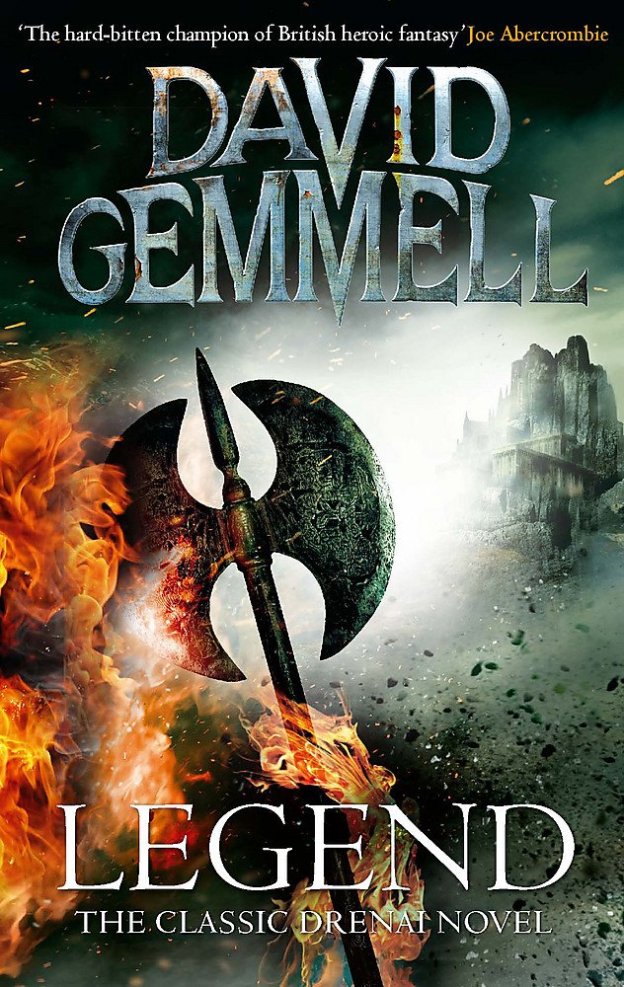
71IuPaXC5kL.jpg

Publisher: Hachette Audio (22 June 2017) – originally published by Century (April 1984)

Series: Drenai – Book 1

Length: 13 hours and 13 minutes

My Rating: 5 out of 5 stars

Amazon

Reviewed as part of my Throwback Thursday series, where I republish old reviews, review books I have read before or review older books I have only just had a chance to read.

In this week’s Throwback Thursday, I try out a fantasy book that has been on my mind for many years, the 1984 classic fantasy novel, Legend, by the late, great David Gemmell.

Legend was the debut novel from Gemmell, an impressive author who wrote over 30 novels between 1984 and his death in 2006, most of which fell within the fantasy genre. Some of his works included the Rigante, Stones of Power, Jon Shannow and Hawk Queen fantasy series, as well as the Troy and Greek historical fiction series. However, his most famous body of work has to be the Drenai series. Featuring 11 books, the Drenai series were a collection of loosely connected novels set within the same fantasy universe. While the storylines are all linked in some way or another, especially books like the three Waylander novels, the series can pretty much be read in any order, which is kind of what I did.

I actually have a bit of a random history with the Drenai series, as I happened to listen to the 10th book in the series, White Wolf, some years ago. For the life of me I cannot think why I would have grabbed this fantasy book off the shelf. Whatever the reason, the story of White Wolf stuck with me, and I would find myself occasionally remembering details of the plot, while completely forgetting the book’s title or the author’s name. I was eventually able to figure out what book it was thanks to the one clear detail I could remember (the names of the protagonist’s famous swords) and tracked down another audiobook copy of White Wolf to listen to a few years ago. I also really enjoyed White Wolf the second time around and was eager to find out more about the rest of the books in the series.

Out of all of the books in the Drenai series that I looked at, the one that appealed to me the most was the very first one in the series, Legend. Legend tells the story of an epic and desperate siege that sets up the entire Drenai universe and contains the defining story of Gemmell’s most iconic character, Druss the Legend, who also appeared in White Wolf. Many of the story elements of Legend deeply appealed to me, and it also made practical sense to start at the beginning of the series, especially as it serves as a significant point in the series’ chronology. Unfortunately, due to a combination of a lack of time, problems finding a copy of Legend, and a requirement to focus on more recent books, I never got a chance to read Legend or dive deeper into the Drenai series. However, it always remained high on my to-read list, and I am so happy that I finally got a chance to read it.

Legend is the story of the siege of Dros Delnoch, the fortress city that acts as a gateway to the declining Drenai Empire. Dros Delnoch is the greatest fortress in the world. Sitting in the middle of a narrow pass and guarded by six high walls and a great keep, the city should be able to withstand any attack. However, the charismatic Nadir warlord Ulric has forged together a mighty host of 500,000 Nadir tribesmen, which he plans to sweep over the walls of Dros Delnoch.

If the city is able to hold for a few months, a new Drenai army will be able to reinforce the battlements. But with only a small force of 10,000 soldiers within the city, many of them raw recruits, this seems to be an impossible task. However, help soon arrives from the most unlikely of places. Former solider Regnak follows his newfound love to the city, despite his apparent cowardice and dark secrets. A gentleman bandit leads his band of outlaws to man the walls, partly for money and partly to make up for his past sins. The mysterious band of mystical warrior priests, known as The Thirty, also arrives to fulfil their destiny to die in battle. Each group has a role to play in the defence of the city, but only one of the new defenders will give the Nadir pause and raise the defenders’ hopes, the greatest hero of the age, Druss the Legend.

For decades, Druss has fought and defeated every enemy he has come across, but there is one thing even he cannot overcome: time. Now a grizzled veteran of 60 years, Druss has come to the city for one final battle, but first he needs to come to terms with his status as a living legend. Even as an old man Druss is still a dangerous person, and there is a reason that he is known as Deathwalker by the Nadir. As the siege begins, heroes will rise, tragedy will stalk the defenders and a legend will end, but will anything be enough to withstand the Nadir horde?

Well damn, that was a pretty epic book and one that was well worth the wait it took for me to get around to reading this. Legend was an incredible and enthralling read that had me hooked from the very beginning all the way to the very last word. It is a classic piece of fantasy action and adventure. Gemmell loaded his story with some truly compelling and flawed characters to create an outstanding read. Featuring a ton of amazing, pulse pounding action, heartbreaking tragedy and an epic siege, this book was absolutely fantastic, and I am really glad I read it.

Probably the main thing that I liked about the book was Gemmell’s outstanding portrayal of a massive fantasy siege. I have always loved the classic siege storyline, and there is something about a huge army attacking a castle that I cannot turn away from. The siege of Dros Delnoch within Legend is easily one of the best sieges that I have ever read, as Gemmell produces a magnificent battle around the city that lasts nearly the entire book. The whole setup for the siege is pretty insane, with 500,000 Nadir tribesmen (who bear a lot of similarities to the historical Huns) attacking a Drenai (essentially Roman) city with six massive walls. The author does an amazing job properly pacing out this siege throughout the novel, including appropriating enough time to really showcase all the pre-siege activities, including training, preparation of the defences and initial sabotages before the first battle even happens. Once the battle begins, though, it is a non-stop barrage of action as the defenders fight off multiple assaults each day.

Due to the author’s excellent storytelling and character work, the reader becomes extremely invested in the fate of the defenders, and each time a wall falls, or the attackers gain an inch, you are mentally rooting for them to fight back. There are a number of discussions and plans that take place throughout the book, and it is quite fascinating to see the thought and planning that the author put into the defence of his city. I especially liked how the city’s six walls played into the battle, as the defenders’ decisions on how and when to hold these battlements provided some great moments and debates for the reader to appreciate. The siege lasts the entire book and features a huge number of epic fight sequences, all of which will get your adrenaline racing and your heart pounding. I loved every second of the siege that was featured in this book, and I hope to see it brought to life on screen one day (provided they do it right).

In addition to its first-rate siege, Legend also features a large number of complex and well-written characters. The first is Regnak, who turns into one of the book’s main characters. Regnak is a former soldier who is first presented as a coward, looking to flee all personal responsibility, although this is quickly revealed to be a side effect of being a natural ‘baresark’. However, when he meets Virae, the daughter of the Earl of Dros Delnoch, he falls in love and follows her back to the siege. Regnak has a great storyline about finding one’s inner courage and overcoming one’s issues, and while his romance with Virae is a bit weird at times, it does result in some tragic scenes throughout the book. Next you have the members of The Thirty, an order of 30 warrior priests who enter the fight knowing that 29 of their members are going to die. Not only do the priests represent most of the fantasy elements of this book thanks to their physic abilities but their ability to see into the future results in some interesting debates about destiny and fate. Quite a few members of The Thirty are introduced, although most of their story is focused on their youngest member, Serbitar, and his mentor, Abbot Vintar, as Serbitar has the hardest time accepting the future and wants to change it to help the defenders.

Without a doubt, the best character in the entire book is Druss the Legend. Druss is Gemmell’s most iconic character and has appeared in several other books in the Drenai series, all of which occur before the events of Legend. These include The First Chronicles of Druss the Legend, which details the rise of Druss and the events that made him a legend, The Legend of Deathwalker, which features an earlier encounter with Ulric and the Nadir, and White Wolf, where I first encountered the character of Druss. However, Legend is definitely the character’s defining book, as it features the conclusion of his epic life and his final stand.

There is a lot of great character work involved with Druss, and the man is a pretty epic character. He is an older man, many years past his prime, who was faced with a choice: die in glory at Dros Delnoch or decline into obscurity. Choosing to die in battle (mainly to spite Death), Druss arrives in Dros Delnoch ready to fulfil his destiny. Gemmell does an outstanding job portraying Druss as an old and wise warrior who is weakened by age but is still a far more capable warrior than many of the others involved with the siege. While readers will enjoy the action sequences featuring Druss, the main thing about the character is the way that he attempts to come to terms with his status as a living legend whose body can no longer keep up with his myth. Druss knows that his reputation as a man who always wins is one of the main things that keeps the soldiers going, and he is constantly working to inspire the soldiers and show that he is still the super human many of them think he is. However, at the same time he must deal with the tangible impacts of age and must try to overcome them in order to survive and inspire on the battlefield. This examination of a man uncertain about his continuing place in the world and who knows he is going to die very soon is extremely well done, and readers cannot help but fall in love with the character and get very invested in his storyline, even though you know how it is going to end. The Druss that is featured in Legend is probably one of the finest fantasy characters that I have read, and I look forward to reading some additional books featuring him in the future.

The book also features an amazing cast of secondary characters, each of whom adds so much to the story featured within Legend. These characters include:

  • Orrin – the commander of the forces defending Dros Delnoch. Orrin is a nobleman who is inexperienced and ill-suited for command. However, once Druss arrives, he works hard to change his ways and become a worthy leader of his troops. He has an amazing redemption arc and turns into quite a likeable character.
  • Bowman – a forest bandit who Druss convinces to join the defence of the city. Initially pretending he is there for money; it is eventually revealed that he is searching for some sort of redemption as well. Bowman’s sarcastic wit adds some necessary humour to the story and he proves to be quite a likeable character.
  • Gilad and Bregan – two farmers who sign up to the army and find themselves becoming heroes of Dros Delnoch. These two characters allow Gemmell to show the story of the common defender of the city. Together they have quite a surprisingly compelling storyline, and the readers actually get quite invested in their survival.
  • Hogun – one of the few professional soldiers in the city. Hogun serves as a great secondary observer for most of the book, and his growing respect and camaraderie with the other defenders mirrors the reader’s growing attachment to all those people featured within Legend.
  • Ulric – leader of the Nadir horde attacking the city. Ulric is presented as a visionary like Atilla the Hun or Genghis Khan, who has united his people against a common threat and now seeks to create a mighty empire. I quite liked how Ulric, despite being the antagonist, is only partially presented as an evil man. Instead, he sees all the violence he does as necessary and he even grows to respect the defenders of the city, especially Druss. Ulric turns out to be quite a complex and well-written antagonist that reader ends up respecting to a degree.
  • Caessa – a female member of Bowman’s band, who harbours a deep secret. She’s not my favourite character, but her storyline has a few intriguing twists, and it is interesting to see her growing attachment to Druss.

In addition to all the characters mentioned above, there are also a huge bevy of other minor characters from both sides of the conflict whose point of view and feelings are examined throughout the book. Not only does this allow for a number of short and, in some cases, tragic stories for the reader to enjoy; it also increases the scope of the battle. Overall the character work is pretty impressive, and pretty much every character allowed for a richer and more captivating tale to be told. If I had one criticism of Legend’s characters, it would be that the female characters are mostly portrayed as over-emotional, irrational or downright catty in most of their interactions, which makes the book feel a bit socially dated at times.

I ended up listening to an audiobook version of Legend narrated by Sean Barrett. At only 13 hours and 13 minutes, Legend represents a fairly quick listen, especially when you get stuck into the story. I had a fantastic time listening to the audiobook version of this book, and I felt that it really helped me sink into the story and appreciate all the amazing action and drama going on in the city. Barrett has an excellent voice for an older fantasy like Legend, and I really felt he got to the heart of most of the book’s characters. I strongly recommend the audiobook version of Legend, and I will probably check out the other books in the series on audiobook as well.

Legend really did not disappoint, as it easily met every single one of my high expectations. I enjoyed every minute of this exceptional book and it gets an easy five stars for me. I cannot overstate how epic in scale and writing the siege featured in this book was, and all of the characters within this story are just sensational, especially the Legend himself, Druss. I fully intend to check out some additional books in Gemmell’s Drenai series in the future, although there are so many interesting choices that I’m not too sure where to start. Be sure to check out future instalments of Throwback Thursday to see which other Gemmell books I look at.

Amazon

The Unbound Empire by Melissa Caruso

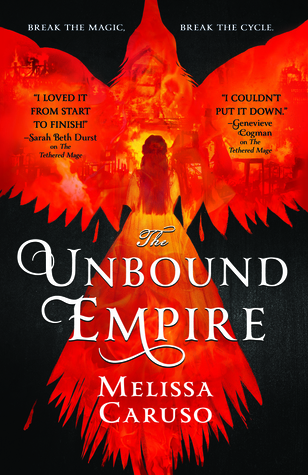
The Unbound Empire Cover (WoW)

Publisher: Orbit (Trade Paperback – 25 April 2019)

Series: Swords and Fire – Book 3

Length: 508 pages

My Rating: 5 out of 5 stars

Amazon

One of the fast-rising authors of fantasy fiction, Melissa Caruso, brings her outstanding debut series to an end with the third book in the Swords and Fire trilogy, The Unbound Empire.

It is always a bittersweet moment when a great book series comes to an end. For the last two years, the Swords and Fire trilogy has been one of my favourite new fantasy series due to its excellent combination of characters, story, intrigue, fantasy elements and world building. I absolutely loved the first book in the series, The Tethered Mage, and I felt that Caruso did an excellent job following this up with The Defiant Heir, which made my Top Ten Reads For 2018 list and my Top Ten Books I Loved with Fewer than 2,000 Ratings on Goodreads list. As a result, I have been eagerly waiting for The Unbound Empire for the last year, and it even featured in my very first Waiting on Wednesday post.

The Swords and Fire series is set on the continent of Eruvia, which is made up of two great nations, the Serene Empire of Raverra and the loosely collected states of Vaskandar. The Serene Empire is the home of our protagonists, and is a land where magic is controlled by the government, led by the Doge and the Council of Nine. All mages who are identified as having enough power are conscripted into the army as a Falcon. Each Falcon is bound to a non-magical handler, a Falconer, who is entrusted to control and protect their Falcon. One such Falconer is Lady Amalia Cornaro, heir to one of the most powerful families in Raverra and future member of the Council of Nine. While the nobility is usually forbidden from becoming Falconers, desperate circumstances forced Amalia to be bound to the powerful and rebellious fire warlock Zaira.

Vaskandar, on the other hand, is a far wilder nation, ruled by the Witch Lords, magicians whose powerful vivomancy literally flows through their land, making them part of everyone and everything in their domain. War is always looming between these two nations, and while Vaskandar as a nation has decided to remain out of the most recent conflict, nothing can stop an individual Witch Lord from attacking. The cruel and ambitious Witch Lord Ruven, the Skinwitch, has long wanted to conquer and rule over The Serene Empire. His most recent ambitions have been stymied by the combined actions of Amalia and Zaira, who managed to stop his plan to unleash a destructive volcano, although it came at great cost to Amalia.

However, Ruven is far from done and is determined to gain new land, either in the Serene Empire or in the domains of the other Witch Lords. Launching a series of attacks against the Empire’s capital, Raverra, as well as several outlying holdings, with a range of horrifying strategies, Ruven is able to cause significant damage. But while he launches his attacks, he is also trying to recruit Amalia to his cause by any means necessary, as her unique heritage gives her the ability to usurp the domains of other Witch Lords. As Amalia and Zaira race to counter Ruven’s actions, Amalia finds herself once again torn between love, duty and friendship, as the responsibilities of her office clash with the friendships she has formed. As Amalia struggles to maintain her humanity in the heat of war, Ruven’s greatest cruelty might be the thing that finally breaks her and leads to the fall of the Serene Empire.

Caruso once again knocks it out of the park with The Unbound Empire, creating a satisfying conclusion to her series that still contains her trademark storytelling ability and character work. The final book in the Swords and Fire trilogy does a great job utilising the previous entries of the series and also attempts to tie up all of the existing loose storylines and plot points. The Unbound Empire is filled with some really emotional storylines, a number of powerful magical action sequences and several surprising plot developments. The end result is another five-star book from Caruso that I powered through in quite a short period.

At the heart of this book lies the series’ main two characters, the narrator and point-of-view character, Amalia, and the fire warlock Zaira. The challenging and evolving relationship between the initially sheltered Falconer and the rebellious and infinitely destructive Falcon has always been a major part of this series. While the two characters have been establishing a better relationship with each book, it was great to see the two of them becoming even closer in this book and helping each other deal with some major issues. I also liked how both characters’ stories come full circle in this book, as Amalia becomes more and more like her mother, while Zaira finally confronts a number of her personal demons and for once starts to consider having a future. The author’s depiction of the doubt and guilt that Amalia is feeling after the events of the last book forced her to kill her cousin added some extra emotional depth to the story, and I liked the inclusion of such a realistic emotional reaction. The character arcs for the two main characters were incredible, and it was great to see how much they had evolved over the course of the trilogy.

Caruso has also developed a number of great side characters for this series, and she continues to expertly utilise them in this final book. The main two side characters of The Unbound Empire were Amalia’s love interests: Captain Marcello of the Serene Empire; and the Witch Lord Kathe, known as the Crow Lord. Throughout the course of the book, Amalia is caught between them; while she loves Marcello, her position makes a relationship impossible, and Kathe presents a more suitable match. Marcello’s storyline in this book is pretty significant, and there are some substantial and emotive changes to his character that really helped make The Unbound Empire extra compelling. I also really liked the deeper dive into Kathe’s personality and backstory, as well as the natural strengthening of the relationship between Amalia and Kathe. Thankfully the book’s love triangle aspect wasn’t too over-the-top or filled with insufferable toxic jealousy, as both the men understand the difficult position Amalia is in. The arc of Zaira’s love interest, Terika, is really sweet, and I liked how she continues to have a positive effect of Zaira’s personality. Other side characters, such as the Amelia’s powerful and unflappable mother; the surprisingly lethal Cornaro servant, Ciardha; and Marcello’s eccentric artificer sister, Istrella, all shine through in this book, and all of them add quite a lot to this book’s story.

No great fantasy story would be complete without a despicable antagonist threatening the heroes, and luckily this book has a truly evil and threatening villain. The Witch Lord Ruven is a powerful Skinwitch, a person with the ability to control and alter other creatures just by touching him. Not only is this power by itself pretty horrifying but Ruven uses it in some fairly novel and evil ways, unleashing all manner of horrors upon the protagonists. I thought that Ruven had some of the best magical powers in the entire series, and his abilities were really fun to see in this book. Caruso also tried to humanise the character in places throughout this book, which was a nice touch and added some new depth to the story, although he does mostly come off as utterly irredeemable. Overall, I feel that Ruven was an excellent villain and his antagonism really helped make this book and the series as a whole.

I have always loved the complex fantasy world and elements that the author came up with for this series. The various forms of magic and resulting rules that form the backbone of this book are very imaginative, and I loved how Caruso was able to utilise them in her story. There are some amazing new versions of the magic and fantasy elements from the previous two books included in The Unbound Empire, as well as some new locations to explore. While the world building is not as intense as the first two books in the trilogy, Caruso still offers some great new elements, and I had a lot of fun seeing these extra expansions to the universe. Hopefully Caruso will come back to this world at some point in the future, as I had a lot of fun there over the course of the series.

The Unbound Empire was another incredible piece of fantasy fiction from author Melissa Caruso that expertly wraps up her debut trilogy. This has got to be one of the best debut fantasy trilogies I have had the pleasure of reading, and it has been a lot of fun absorbing the excellent tales of magic, adventure and intrigue that Caruso has woven over the last two years. I have really loved the Swords and Fire trilogy, and while I am sad to see it go, I am excited to see where Caruso goes next as this author has amazing potential for the future. I highly recommend each and every book in the series and encourage you to get wrapped up in the magic and characters of this series if you have not had a chance to read it.

Amazon

Star Trek: The Next Generation: Available Light by Dayton Ward – Audiobook Review

Star Trek - Available Light Cover

Publisher: Simon & Schuster Audio (9 April 2019)

Series: Star Trek

Length: 11 hours and 59 minutes

My Rating: 4 out of 5 stars

Amazon     Book Depository

For my latest review, I dive back into the massive universe of extended books that surround the Star Trek television and movie series, with the latest novel from legendary Star Trek fiction author Dayton Ward.

When I reviewed my first piece of Star Trek fiction, The Way to the Stars by Una McCormack, a couple of months ago, I mentioned how substantial the extended book universe around Star Trek was. With a huge number of series that cover various points of the Star Trek universe and over 840 novels to accompany the various movies and television shows, there are so many additional stories and characters out there for dedicated fans to enjoy. Star Trek tie-in novels and comics were not something that I had really gotten into before The Way to the Stars, but after enjoying it, I thought that Available Light would be a good opportunity to expand my knowledge of the Star Trek universe. I also decided that I would try my first Star Trek audiobook; I chose to listen to the audiobook format of Available Light, narrated by Robert Petkoff.

Quite a large amount of the extremely large Star Trek extended universe can be attributed to the author of this book, Dayton Ward. Ward is a prolific author who has been writing Star Trek fiction since 1998 with his inclusions in the long-running Strange New Words collections of Star Trek short stories, becoming the first author to contribute to three separate volumes of this series. Since then he has written more than 20 additional inclusions in the Star Trek universe, including last year’s Star Trek Discovery: Drastic Measures, which made my Top Ten list of Books I Wish I Read in 2018.

Available Light is the latest book in a series of novels which are set after the events of the last Star Trek: The Next Generation film, Nemesis. Available Light takes place in the year 2386, set seven years after the events of Nemesis and continues to follow the adventures of the USS Enterprise E, under the command of Captain Picard. Ward has written the last three books in this specific Star Trek series and Available Light continues several of the storylines established in these previous novels.

For over 200 years, covert organisation Section 31 has policed and protected the United Federation of Planets from the shadows. Following the designs of an artificial intelligence, Control, Section 31 has committed attacks, assassinations, political interference and all manner of illegal actions to preserve the security of the Federation, without any oversight. However, thanks to the actions of Star Trek: Deep Space Nine character, Dr Julian Bashir, all of Section 31’s secrets have been published and are now out in the open for everyone to see. With the entire Federation of Planets now aware of Section 31’s actions, the Federation government and Starfleet move to arrest and prosecute all known Section 31 agents for treason against the Federation.

While numerous crimes and atrocities have been revealed, perhaps none is more controversial than Section 31’s assassination of Federation President Min Zife following his secret deposition by a group of Starfleet officers. More shocking is the revelation that one of the Starfleet officers responsible for the illegal coup d’etat that unseated Min Zife was none other than Jean-Luc Picard, the captain of the USS Enterprise E.

While the politicians and remaining commanders of Starfleet argue about the future of Picard, the Enterprise continues its exploration of the distant and uncharted Odyssean Pass. The Enterprise has come across an incredibly large and ancient spaceship adrift in the middle of nowhere and apparently abandoned. When the Enterprise’s away team boards the ship, they discover that the ship might not be as abandoned as first believed. As Picard and the Enterprise attempt to help the mysterious beings who inhabit the ship, they find their plans complicated by the arrival of a band of salvagers with designs on the massive ship.

I really enjoyed Available Light, as Ward presents the reader with a compelling adventure in space that really reminded me of an episode of Star Trek: The Next Generation. Ward goes deep into the Star Trek lore to produce an intriguing story for the fans, and it was quite interesting to see how the events of Available Light help shape the wider Star Trek book universe. The book makes exceptional use of advanced science and a large amount of action to make the story even more interesting and fun. I especially enjoyed the various wonderful examples of ship-to-ship combat that occurred throughout much of the book, and I found them to be extremely entertaining and exciting. Overall, this is a pretty fun read, although there are some issues when it comes to its intended audience and the distribution of its two main storylines.

One of the things that I always try to cover when reviewing novels related to movies, television shows and video games is whether a book is suitable only for fans of the original media or whether readers with limited background knowledge of the franchise will be able to appreciate the book. Available Light falls into the category of books which is primarily aimed towards those readers with some knowledge and appreciation of the Star Trek franchise, especially those who are fans of the books, as Ward makes use of a number of storylines that originated in other books. For example, Available Light continues to showcase the Enterprise’s exploration of the region of space known as the Odyssean Pass, which has been covered in Ward’s last three novels, Armageddon’s Arrow, Headlong Flight and Hearts and Minds. It also dramatically follows storylines started in David Mack’s 2004 novel, A Time to Heal, which detailed the assassination of Min Zife, and his 2017 Star Trek: Section 31 novel, Control, which featured the publication of Section 31’s secrets. The book also contains a huge number of references to previous Star Trek adventures that happened in other books, the movies and the television shows. This does not just include those works associated with The Next Generation, as events from other shows, such as Deep Space Nine, are also heavily referenced. As a result, fans of these existing pieces of Star Trek fiction will have a much deeper appreciation for what is going on, and they may already be invested in the storylines that have been established in these previous books.

Dedicated fans of The Next Generation television series and movies will probably be surprised about the extensive storylines established in these books. Since the events of Nemesis, the books included in these series cover a huge range of adventures and character developments of the crew of the Enterprise. Those Star Trek television and movies fans coming into this book will be surprised at events like Picard and Beverly Crusher getting married and having a son. These fans should also be prepared for the fact that only a few of The Next Generation’s main characters are really featured in Available Light. While Picard, Worf, Geordi La Forge and Beverly Crusher are still aboard the Enterprise, major characters such as Deanna Troi, Data and Wesley Crusher do not appear at all, while the character of William Riker (now an Admiral) only appears in one chapter. In their place, several new, original characters have taken on their roles and become point-of-view characters for the Enterprise. While these characters are quite intriguing, fans of the original crew may be a little disappointed not to see how the missing characters are going. Ward has also included some characters that appeared in minor roles in both The Next Generation and Deep Space Nine. These include Admiral William Ross (who appeared in 13 episodes of Deep Space Nine), Worf’s brother Martok (who also appeared in Deep Space Nine) and Philippa Louvois (the Judge Advocate General from The Next Generation episode The Measure of a Man). Not only are these characters quite interesting in their own right, but there are some significant developments for some of these characters that fans of the franchise will be deeply intrigued to see.

That being said, while a large amount of the story is quite heavy on Star Trek lore, references and tie-ins to previous storylines, Ward does an exception job making this story accessible to a wide range of readers. I am not a particularly dedicated Star Trek fan and I only have an average knowledge of the lore and the various series and movies. However, I was able to follow the story quite closely, as Ward did a fantastic job explaining and describing the events that occurred in the previous storylines and episodes that Available Light’s story follows on from. While some readers whose knowledge of Star Trek is lesser than mine might struggle a little with the book, I feel that Ward has made this book extremely accessible to most readers. However, this book will really appeal to those readers who have a prior appreciation of the Star Trek franchise.

I should mention that that this book, like many licensed Star Trek novels, is not actually considered to be canon in relation to the television shows or movies. While some books, such as the recent Star Trek Discovery books, are considered to be canon (indeed, events in The Way to the Stars were mentioned in the show), Available Light and the books that it follows on from are not. That means that events that occur in this book are unlikely to affect what happens in upcoming movies or television shows, such as the upcoming show featuring the return of Captain Picard. While reading a non-canon book like this might not appeal to some fans of the franchise, I still quite enjoyed the story, and I am intrigued to see how this separate Star Trek universe will continue.

Available Light features two separate storylines that mostly remain separate from each other. The first storyline focuses on the fallout of the events of Control, including the revelation about Section 31’s actions and the attempts by the Federation to round up and prosecute all those who worked with or for the covert organisation. The second storyline focuses on the Enterprise as they encounter the new alien ship and the various inhabitants of this new region of space. Despite the huge amount of detail used to describe the Section 31 part of the book in both the official synopsis and the synopsis I wrote above, this storyline only really takes up around one-third of Available Light, with the remaining two thirds focusing on the Enterprise and her crew. I found both storylines to be extremely fascinating and a lot of fun. The Enterprise storyline felt like a classic episode of a Star Trek television series, with the crew working together to explore an intriguing phenomenon and overcome the odds to save an innocent party. The Section 31 storyline is also really cool, and I really enjoyed seeing what happens when the existence of this organisation becomes public knowledge.

While Ward does try to bring these two separate storylines together, such as by examining Picard’s guilt at the role he played in Min Zife’s ousting and assassination and having it affect his actions in the Enterprise storyline, I did at times feel like I was reading two unrelated books. I really think this would have been a better book if Ward had focused on only one storyline. I would have really loved a book completely dedicated to the aftermath of the Section 31 reveal, including having Picard stand trial for his crimes, and I am sure that the story of the Enterprise discovering the massive ship could have been even better with some additional storytelling. Instead, the story of Picard’s trail will occur later this year in David Mack’s upcoming novel, Collateral Damage. While it was slightly disappointing to find out that Available Light’s Section 31 storyline was mostly included to set up a future book, it was still really interesting and helped created a book that was a lot of fun to read.

Ever since Section 31 was first introduced, it has been a deeply intriguing plot point. The idea of a secret Federation security organisation that goes against nearly everything that Starfleet stands for is really clever, and it opens up a lot of possibilities. Section 31 is getting a lot of focus at the moment, as not only did they appear throughout the second season of Star Trek Discovery (which utilised the AI program Control, who appeared in several novels linked to Available Light as an antagonist) but there are apparently plans to do a Section 31 television series featuring Michelle Yeoh’s character from Discovery. As a result, it was really interesting to see this book universe version of Section 31 start to unravel in Available Light. The shock and outrage that results throughout the book are deeply intriguing, and I really liked seeing how the Federation and Starfleet reacted to the news. This really was a cool plot point, and I am extremely curious to see what happens to the organisation in future books.

As I mentioned before, I chose to listen to the audiobook version of Available Light. At just under 12 hours in length, it did not take me too long to get through this book, and I found it to be a great format to enjoy the intriguing, Star Trek based plot. I did find that listening to the story helped me pick up a lot more of the previous storylines and Star Trek references that Ward had littered throughout the book, which probably gave me a better base to enjoy the story. I found Robert Petkoff to be a really good narrator, and I really enjoyed the way that he told the story. Petkoff does a pretty good impersonation of the male characters from The Next Generation, including Picard, Worf and La Forge, and I found his Picard voice to be extremely convincing. Petkoff also did a great impersonation of Vulcan and Klingon characters throughout the book, and I thought the voices he attributed to these alien characters were quite excellent. As a result, I would strongly recommend the audiobook version of Available Light, and I am extremely glad it was the version of the book I chose to enjoy.

In the end, my second dive into the Star Trek universe was a little bit of a mixed bag. While there are some great and enjoyable story inclusions throughout Available Light, this is a book that is more aimed towards extremely dedicated Star Trek fans and features a split story that at times is more concerned with setting up future books rather than standing on its own. But I found the storylines explored within the books to be a lot fun, and I had an absolute blast listening to this captivating Star Trek tale. I am still really keen to check out additional Star Trek novels, and I hope to see where the various plots explored in this book go from here.

Amazon     Book Depository

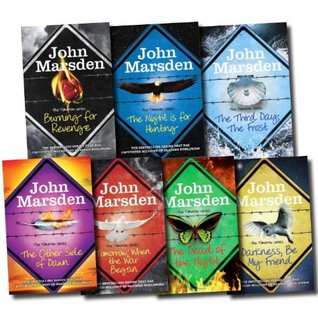
Throwback Thursday – The Tomorrow Series by John Marsden

28110461.jpg
Publishers: Pan Macmillan Australia and Bolinda Audio

Books:

1. Tomorrow, When the War Began (1993) – Amazon     Book Depository

2. The Dead of the Night (1994) – Amazon     Book Depository

3. The Third Day, the Frost (1995) – Amazon     Book Depository

4. Darkness, Be My Friend (1996) – Amazon     Book Depository

5. Burning for Revenge (1997) – Amazon     Book Depository

6. The Night is for Hunting (1998) – Amazon     Book Depository

7. The Other Side of Dawn (1999) – Amazon     Book Depository

Series Rating: 5 out of 5 stars

Reviewed as part of my Throwback Thursday series, where I republish old reviews, review books I have read before or review older books I have only just had a chance to read.

For this week’s Throwback Thursday review, I dive back into one of the most popular and iconic Australian fiction series of all times, John Marsden’s epic Tomorrow series.

Tomorrow, When the War Began Cover.jpg

The Tomorrow series, by bestselling and award-winning Australian author John Marsden, is a powerful and thought-provoking young adult series that was released in the 1990s.  Made up of seven books, the series began in 1993 with Tomorrow, When the War Began and ended in 1999 with The Other Side of Dawn.  The Tomorrow series follows a small group of young teenage protagonists as they deal with a foreign invasion of Australia which forces them to hide in the bush and engage in a guerrilla war to win.  Thanks to its strong characters, frank depictions of war and trauma and its excellent utilisation of Australia’s bush and rural landscape, the Tomorrow series has become one of the most highly regarded and popular Australian series of all times, with millions of copies sold in Australia alone (which, considering our relatively small population, is pretty impressive).  It is also considered a must-read series for young Australian readers, and it is still required reading in many schools to this day.

I have been a major fan of this series for a very long time.  I remember reading these books while I was at school, both for classes and for my own enjoyment, and I was enthralled by its depictions of war and its captivating story, which stoked my imagination for years.  Re-reading it at an older age, I began to appreciate the more complex nature of its story and the characters portrayed within.  I have re-read or re-listened to these books many times over the years, and it still remains one of my most favourite series of all times.  I have actually been planning to review this as part of my Throwback Thursday series for some time, and after recently mentioning it in my First Ten Books I Reviewed list, where it placed No. 1 thanks to a review project at school, I have decided it was time to share why I love this series and why those who readers unfamiliar with it should check it out.

The Tomorrow series is set in the 1990s, around the same time as the books were written, in a fictional area of Australia.  The plot revolves around seven teenagers, Ellie, Corrie, Homer, Fiona, Lee, Robyn and Kevin, who live in and around the rural town of Wirrawee.  During the holiday period they decide to head out to a remote and mostly unexplored area of the bush, known as Hell, for a week of camping.  Isolated from the rest of the world, they are mostly unaware of events transpiring beyond their bush hideaway.  Once they finish their trip, they emerge from Hell to find their farms and houses abandoned and their town occupied by soldiers.  It soon becomes apparent that all of Australia has been invaded by a foreign nation, with Wirrawee being one of the initial points of occupation due to its proximity to a harbour that is vital to the invader’s supply network.  Using Hell as a base, the protagonists have to come to terms with the new reality they find themselves in, and they must band together to not only survive, but to try and find some way to oppose the invading army.
The Dead of the Night Cover.jpg
The first book, Tomorrow, When the War Began, sets up the story and introduces the readers to the main characters.  The book starts with the seven main characters heading off into the bush, and then returning to find that their world has changed.  Not knowing what had happened and only initially finding that their families are missing, they venture into Wirrawee and encounter their first batch of enemy troops.  After some initial conflicts, which include Lee getting shot, Ellie blowing up an enemy patrol and Corrie’s house getting destroyed by a missile, the group retreats back to Hell with newcomer Chris, who had also managed to hide from the invaders.  Once back in the bush, they initially work on gathering information about the enemy forces and on turning Hell into a long-term home for themselves.  However, as it becomes obvious that the war is going poorly for Australia and the invading army is here to stay, they decide to attempt a major act of sabotage.  Their plan works, but tragedy forces two members of the group to surrender themselves to enemy custody while the rest of the group remain hidden in Hell.  Tomorrow, When the War Began is an excellent novel that does a great job introducing the reader to the characters and setting up an amazing story.  While Tomorrow, When the War Began would have been a great standalone novel, it also does an outstanding job setting up the rest of the series.  There are so many good parts to this novel, but I have to say that the early scenes in which the protagonists start putting the clues together and slowly begin to work out that their town and country have been invaded are among some of the best in the entire series, especially with the tension and uncertainty that the characters are experiencing.

The second book in the series, The Dead of the Night, starts only a few weeks after the events of the first book.  Still reeling from the loss of two of their friends, the remaining members of the group engage in more attacks or acts of sabotage, before finding a group of adult rebels who have managed to avoid capture.  However, the teenage protagonists quickly realise that the adult rebels have no idea what they are doing, and disaster strikes when they encounter the enemy.  The protagonists manage to escape back to Hell, where they successfully undertake another massive attack, although another unforeseen tragedy is revealed in the aftermath.  This is a great follow-up to Tomorrow, When the War Began and it continues several interesting story threads from the first book, while also setting up some new characters and situations.  The scenes with the teenage protagonists encountering the adult rebels are not my favourite, but the counterpoints between the two groups are extremely fascinating.  In addition, the various covert actions that the group undertakes in this book, as well as the characters starting to show evidence of war trauma, offers some well-written and powerful moments to the series.

The next book, The Third Day, the Frost (released as A Killing Frost in the US and Canada), takes the protagonists out of their comfort zone as they leave Hell and the Wirrawee area in order to launch a seemingly impossible attack on the enemy’s nearby harbour complex.  Their hopes are buoyed when they manage to reconnect with a lost friend whose newfound knowledge may prove to be the key to pulling off their attack.  However, their success is short lived as they fall into the clutches of the enemy army and are soon sentenced to death.  They eventually manage to escape, but their freedom comes at a great cost.  This is easily one of the darker books in the Tomorrow series, especially the parts where the remaining main characters are caught and held in prison.  Some of the sequences in the book are pretty cool, especially the assault on Cobbler’s Bay, and this book is one of the ones I enjoy the most in the entire series.

The Third Day, The Frost Cover.jpg

Following the events of The Third Day, the Frost, the series experiences a seven-month time-skip as the remaining main characters recover in New Zealand.  As a result, the fourth book, Darkness, Be My Friend, feels a lot like it is the beginning of a slightly different second half of this series, resulting in some significant changes and character developments.  This book starts with the protagonists being asked to return to Australia in order to escort a band of army commandoes to a high-value target in the Wirrawee area.  While initially reluctant to return, the protagonists eventually agree to head back for a short mission.  However, when the commandoes go missing, the protagonists find themselves once again trapped in occupied territory and are forced to use their wits and experience to survive and fight back.  Darkness, Be My Friend is a really interesting and significant instalment in the series.  Not only are there a number of major changes in Wirrawee, including several shocking deaths, but this is the book where the trauma and PTSD angles of Marsden’s storytelling really come into effect, as all of the main characters are completely shell-shocked after the events of the first three books, and it takes them a lot to get back to their former operational readiness.  This book does feature some great scenes, including a night-time escape on horseback and a failed attack on the enemy which necessitates another desperate escape.

The fifth book in the series, Burning for Revenge, sees the protagonists once again holed up in Hell, hiding from the enemy army.  With no chance of extraction back to New Zealand, the young guerrillas decided to leave their sanctuary and find a new target to attack.  Fate intervenes, and they find themselves in a position to do a lot of damage to the enemy.  I really enjoyed Burning for Revenge, even though it suffers from some pacing issues.  The major offence takes place in the middle of the book, and while the corresponding sequences are epic in their scale, destruction and savagery, the second half of the book, in which the characters hide out in a nearby city, really peters out in comparison.  The parts of the book set in the city do offer an interesting change of location, and also feature some compelling story points, but it does seem to be a bit lacking after the big attack.  But the major action sequence, the lengthy escape and the significant story developments that occur more than make up for it.

The next book, The Night is for Hunting, is set right after the events of Burning for Revenge and sees the protagonists still hiding out in the suburbs of Stratton.  Their new way of life is shattered when they witness troops capturing some of the wild street children who also haunt the ruins of Stratton.  Rescuing the small group from the enemy, the protagonists escape back to Hell, and must find a way to adapt to their new charges.  However, Hell may not be the safe haven they remember; violence visits them in the bush for the first time.  The Night is for Hunting is probably my least favourite book in the Tomorrow series, although it still is an extremely enjoyable book and an essential part of the series.  It is a little hard to deal with this book’s change of focus from war to childcare, but the focus on the new war orphans who require care allows for some interesting scenes and some intriguing character development.  Most of the child characters are pretty annoying, but their leader, Gavin, more than makes up for it, as the deaf badass has some amazing scenes through this book.  The final action sequences above Hell are also quite jarring, as the bush location that has been built up as a safe haven for your favourite characters is invaded.
Darkness, Be My Friend Cover.jpg
The seventh and final book in the Tomorrow series, The Other Side of Dawn, begins immediately after the conclusion of the sixth book.  After taking out the enemy patrol that infiltrated Hell, the protagonists need to escape before the soldiers are reported missing.  However, instead of an extraction back to New Zealand, they are given a new mission: to venture out and perform as many attacks as possible.  The war is in its final days and any damage they can do will help determine the future of Australia.  Setting off again, the protagonists prepare for their final battle.  Who will survive and what will the country look like after they are done?  This is a really good conclusion to the series that features a number of great scenes.  Not only are many of the story threads that ran through the entire series wrapped up but the protagonists find themselves drawn further into the wider war than they ever have been before.  Marsden tries some different stuff in this book, including a significant amount of the book focusing on an isolated Ellie, and it works to create not only an enjoyable novel but also an excellent end to this great series.

While all seven books in the series are deeply entertaining and extremely well written, their real strength lies in their continuation as a series.  Marsden does an outstanding job linking all of the books in the series together, creating one lengthy and captivating story that you cannot wait to get to the end of.  The sheer amount of character development that occurs throughout the series, as well as the various attacks and input in the war effort, is amazing, and the Tomorrow series really needs to be read in its entirety and in order.

The Tomorrow series is told from the first-person perspective of the main character, Ellie, who is chronicling the adventures of the protagonists so there is a record of what they did during the war in case they are captured or killed.  I always quite enjoyed having the story told in this manner, as it gave the series a lot of realism and is supposed to evoke other famous wartime chronicles.  Ellie is a unique narrator, as she really does not tell a straight story of the entire adventure.  While she endeavours to cover all the events that are occurring, she goes off on a huge number of tangents, recalling stories from her past, analysing the thoughts and feelings in her head, or engaging in some deep emotional debate about the situations the characters find themselves in.  While this may seem random, it goes a long way to explaining the narrator’s thought process, as it helps her break down events she cannot quite handle and interpret them as something more recognisable to her.  It is also through her eyes that we see the other characters, and as such we get a really good idea of their past and their potential motivations, as Ellie knows huge amounts about their past and tells a number of funny stories or analogies that help highlight their character traits and personalities.  Because all of the main characters are her friends, Ellie’s feelings of closeness and love for these characters really shines through and ensures that the readers really care for all the other characters.  One of the things I quite liked about the chronicle format of this series was that Marsden went out of his way to explain the text’s creation and how the protagonist was able to preserve them through the war.  The chronicles also have an impact on the story, especially in the second book, as the characters read and react to Ellie’s inner thoughts and observations about the series’ opening events.
Burning For Revenge Cover.jpg

I absolutely love the overarching story concept of this series, which sees Australia being invaded by a hostile enemy force who quickly takes over the country, forcing a small group of young people to fight back.  While some comparisons with Red Dawn can be made, there are some significant differences to the story, such as its focus on Australia, character development and the more realistic story of young people surviving in a war zone.  I always felt that the idea that Australia, with its relatively small population and relative isolation from Europe and America, could be invaded and completely conquered in such a short period is a lot more realistic than similar events occurring in America.  In addition, the way that the teenage protagonists operate is a lot more realistic in the Tomorrow series.  The characters spend most of their time mainly trying to survive and avoid capture or death at the hands of their enemy.  Even when they attempt an attack, they plans usually attempt to avoid a direct fire fight, as they realise that any attempts to do so would likely see them killed.  Instead, they mostly travel without guns, hoping that if captured, the enemy would believe they were kids who were hiding and not actual guerrillas.  I also liked how the protagonists’ planned assaults on the enemy are more opportunistic in nature and rely more on improvisation and everyday items rather than training or proper military explosives or weapons.  Most of their attacks involve petrol, gas and weapons farmers would use (although one attack was achieved by toasters), and even when they receive some better equipment from the New Zealand army, they utilise it in a way adult soldiers would not think about.  The author’s depiction of Australia’s invasion is really interesting, and the attack and the international reaction to it feel quite realistic, even in more modern times.  I really love the ideas that Marsden comes up with when it comes to the actions his protagonists undertake to survive the war, and it is clear that he dedicated a lot of time and attention to coming up with these actions.  As a result of this, and the realistic depiction of Australia being invaded, the Tomorrow series has always fired my imagination about what I would do if Australia were invaded, and I have to admit I would be tempted to do what these protagonists would do and try and hide out in the bush.

The way that the war is depicted in this series is quite intriguing.  Due to the story being told from Ellie’s perspective as a chronicler, the reader only gets a fairly narrow view of the war, as the protagonists lack any knowledge of what is happening due to their isolation.  Having the protagonists only finding out about the invasion days after it occurs, and then retreating to their hidden base for long periods of a time is quite a cool concept, and I always found that it added so much to the story, especially realism; you cannot expect teen civilians in the bush to have knowledge of troop movements.  Another clever plot device that the Tomorrow series makes use of is the fact that the series has no singular antagonist; instead, the protagonists see every member of the invading army as an equal threat.  While the character of Major Harvey in the second and third book is an antagonist, he is really just a cog in the military machine that is conquering Australia.  Much more negative focus is put on the enemy army as a whole, even though they are fairly faceless, with only one member of their forces ever really named, and that was in the last book.  I always felt that Marsden considered war and the reasons for it as the book’s primary villain, as the harsh depictions of it and its aftermath are very convincing.

As you would expect from a series that focuses on invasion, war and guerrilla attacks, there is a heck of a lot of action going on within these books.  Marsden has some real skill when it comes to writing these scenes, and the reader is dragged right into the middle of the carnage as the narrator describes everything that they see.  I was also impressed with how realistic these scenes were, and the author does not pull any punches when it comes to describing the carnage, with some truly gruesome or violent events occurring all over the place.  There are a huge number of scenes that come to mind in the series, but the one that I would say is the most descriptive is the airfield sequence in Burning for Revenge.  The devastation, destruction and fire that occur in the scene is just insane, and you can’t help but feel the heat of the flames and explosions that are occurring all around the narrator.  This intense action adds so much to the story and really highlights the author’s skill as a writer.

The Nigh is for Hunting Cover.jpg

One of the most distinctive aspects of the Tomorrow series is Marsden’s extremely realistic and insightful depictions of emotional and psychological trauma as a result of war and death.  The inclusion of this sort of trauma is prevalent throughout the entire series and affects all of the characters in some way or another.  Marsden started featuring these depictions of trauma quite early in the series, as within the first book alone two of the characters suffer from panic attacks after seeing or being forced to commit severe acts of violence.  This trauma continues to define many of the characters throughout the rest of the books, and large parts of the series deal with them trying to come to terms with the various traumatic experiences, the deaths of loved ones and all the horrendous acts of violence they have committed.  The most obvious example of these occurs in the fourth book, Darkness, Be my Friend, where at the start all the surviving characters are deeply shell-shocked and emotionally distraught after everything they have done, as well as only narrowly escaping from the death sentence at the enemy prison and witnessing another one of their friends dying.  Even after months recovering in New Zealand, none of them have come close to coming to terms with what happened to them, and the stream of emotion that followed the discussions about heading back to Australia really cuts to the reader’s core.  This is especially true when at least two characters have mental breakdowns when back in Australia, especially Kevin, whose mind essentially shuts down for most of the fifth book in response to everything that happens.  Some of Ellie’s descriptions of the depression or despair she experiences throughout the course of the series are just heartbreaking, but they really drive home how the war has affected her and how devastating the events of the book are.

The Tomorrow series features a fantastic core group of characters who are thrust unprepared into a war setting.  The characters are a diverse and interesting bunch.  Due to his background as a teacher in a rural area of Australia, Marsden has a good idea of the lifestyle of rural kids, and he incorporates this into his characters.  After the various adventures with these characters, the reader does really start to care for them, and they really feel the dark points strongly, such as when they are imprisoned.  I liked the way that Marsden portrayed their relationship, as the characters become dependent on each other in their isolation and situation.  Each of the main characters goes through some significant character development throughout the books, as the situations they face force them to become more responsible or more vicious, depending on their circumstances.  None of the characters are unaffected by this, whether it is the initially rebellious Homer turning into a compassionate leader, or the initially pampered Fiona becoming a more independent and resilient person.  Perhaps the best example of character changes is Lee.  In the first book he is a more easy-going character whose main story arc involves his romance with Ellie.  However, when he witnesses the brutality of the enemy in the second book, he starts to show more signs of violence and anger, killing several soldiers in brutal fashion.  When he finds out that his parents have died, he becomes eager for vengeance, acting out more against the group and putting them in danger with his decisions.

As the narrator, we spend the most time with Ellie, and as a result we really get a deep dive into her character, personality and motivations.  Throughout the series, so many things happen to Ellie that fundamentally change her as a person.  One of the things I really liked about this series as a whole is the way that Ellie maintains her quirky outlook on life even when terrible things happen to her or when she is forced to do terrible things to survive.  Ellie is the first one of the characters to kill someone, and the many deaths she witnesses or is forced to participate in haunt her for all of the books.  With her strong and overwhelming personality, I always thought that Ellie was an outstanding main character for this series, and she is a fantastic creation of Marsden.
The Other Side of Dawn Cover

Much of the Tomorrow series is set in the Australian bushland.  Marsden is a very descriptive author, and throughout the course of his books, he really brings the bush to life with his fantastic writings.  The reader really gets a sense of the beauty and strangeness of the bush, and the narrator, who has spent her entire life near the bush, gives several poetic and inspiring accounts of why she loves the bush so much.  There are a number of great bush locations featured throughout the series, and this landscape takes on a life of its own at times.  I loved the location and thought that it contrasted well with some other locations, such as the city the characters spend time in during the last three books.  The immortal bush remains undamaged through the entire series, while the city becomes more and more devastated every time the characters visit.  I loved the use of the bush, and it is an outstanding location that adds so much to the series.

These books are an excellent young adult series that are a must read for its intended audience.  Some of the violence and other content may be considered a bit much for some younger audiences, although I did read this when I was quite young and I personally think that the underlying lessons and themes well outweigh the risks.  Marsden, as a teacher who worked with teenagers, really wanted to portray a group of teenage protagonists in a positive light by showing them as capable beings rather than as the lazy troublemakers of popular media.  Without a doubt, Marsden was able to achieve this, showing a group of teenagers who able to adapt and survive in the most hostile of locations, becoming heroes and survivors where their contemporaries were mostly captured in the early days of the invasion.  Even those adults they encounter after the invasion are mostly incompetent, especially the group known as Harvey’s Heroes in The Dead of the Night.  These characters, including some of their antagonists, actually try to treat them like children, which is galling when the protagonists are far more capable.  However, the protagonists are able to survive where the adults do not, and even some of the professional soldiers they work with in the later books are unable to do the things they do.  As a result, this book does a great job of showing what teenagers are capable of when they face adversity.  However, while it does show them stepping up, the books do not glorify war for young people, as all their actions are done out of necessity, and they are left with some terrible mental and physical scars.  I would strongly recommend this series for all young readers, and I believe that older readers will become enthralled in the story contained within.

As the Tomorrow series is one of the most popular and well-known book series in Australia for the last 20 years, there have been a couple of attempts at adapting the books to the screen.  While this is not necessarily important to enjoying the story, it is intriguing to see how these adaptations have gone, especially as I do not think either of them gets the story 100% correct.  The first adaption the Tomorrow series had was the 2010 film, Tomorrow, When the War Began, which stared a young, mostly Australian cast, a couple of whom have gone on to some international success.  I quite liked the film, which I felt mostly captured the heart and intent of the first book.  However, there were some scenes that were way over the top or slightly stupid, such as having the religious Robyn killing a whole bunch of soldiers while the camera pans sadly to a playground to represent innocence lost, or the final scene showing the protagonists outfitted like a major paramilitary group.  The film also did a really good job of moving the story out of the 90s and setting it in 2010 by cleverly inserting recent technology into the story.  For example, there is one memorable scene where all the characters simultaneously check their cell phone reception when they first discover Ellie’s farm abandoned, rather than having one person checking the landline.  The second adaptation was a television show that ran for one season in 2016.  While it roughly covered the events of the first book, they really took a lot of artistic licence, which honestly did not pay off.  For example, they spent a huge amount of time focussing on what was happening with the captured parents, even though the parents where pretty much non-entities in the first book.  Stuff like this really added nothing to the story, and I personally thought it was quite stupid and kind of ruined the show for me.

twtwb_quad_large2.jpg

Marsden actually continued the story of the Tomorrow series in a sequel trilogy known as The Ellie ChroniclesThe Ellie Chronicles ran between 2003 and 2006 and focused on Ellie as she struggles to adapt to life in post-war Australia.  I have actually not had the chance to read or listen to The Ellie Chronicles before, which is weird considering how much I love the Tomorrow series.  I have a copy of these books and I will try to get through them at some point in the future as I am deeply curious to see what happens to these beloved characters in peace time (Is the leader of the Australian terrorist group mentioned in the synopsis Lee?  He was still pretty murderous at the end of the series).

While I originally read the physical copies of these books, I mostly choose to listen to the stories on audiobook.  The audiobooks are all narrated by Suzi Dougherty, and mostly run for around seven hours, with the final book, The Other Side of Dawn, running for over nine hours.  When I do my re-listen of these books, I try to get through the entire series in one go and I am generally able to do so quite quickly, as the compelling story keeps me enraptured for all seven books.  Doherty does an amazing job when it comes to these books and she comes up with some outstanding voices for all the characters she portrays.  I especially feel she gets the character of Ellie down perfectly, which has a real trickle-down effect to the rest of the book, as Ellie is the character narrating the entire series.  I really enjoy listening to the series and I think I become a lot more attached to the series when I do.  I would strongly recommend listening to the Tomorrow series on audiobook; it is an amazing way to enjoy these fantastic books.

As you can see from my rather long review, there is so much about the Tomorrow series that I enjoy.  To my mind it is one of the best book series I have ever read, and even after the many years since I first read it, I am still enthralled by the epic story it contains.  Each of the books within the Tomorrow series is excellent, but when taken as a whole, the series becomes some sensational.  I highly recommend this entire series and I am so glad that many Australian schools still require their students to read it.
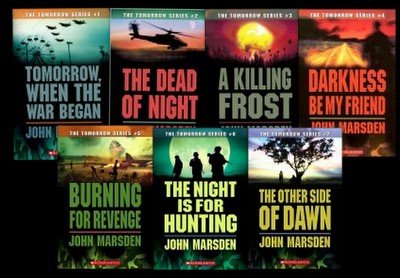

51eYr9CzIAL

Aurora Rising by Amie Kaufman and Jay Kristoff

Aurora Rising Cover

Publisher: Allen & Unwin (Trade Paperback – 6 May 2019)

Series: Aurora Cycle – Book 1

Length: 470 pages

My Rating: 5 out of 5 stars

Amazon

The superstar team of Australian young adult fiction authors Amie Kaufman and Jay Kristoff comes together once more to create an outstanding, heartfelt and deeply entertaining new novel that may prove to be one of the best young adult books of 2019.

Kaufman and Kristoff are two of the biggest and most creative authors currently writing young adult fiction.  Kaufman is probably best known for her work with Meagan Spooner, where they have co-authored the Starbound trilogy and Unearthed series of books, the second book of which, Undying, was released earlier this year.  She is also in the process of writing her own Elementals series, with the second book, Scorch Dragons, released a month ago.  Kristoff first came into prominence with The Lotus War series, which debuted in 2012.  Since then he has also written The Nevernight Chronicle, the final book of which is set to be released in September, while his latest book, Lifel1k3, was one of the most talked about young adult releases of 2018.  Kristoff’s sequel to Lifel1k3, Dev1at3, is set to be released in a month, and he is currently working on an epic fantasy series, Empire of the Vampire, with the eponymous first book set to be released in September next year.

Kaufman and Kristoff have previously collaborated on the bestselling and award winning The Illuminae Files, a space opera epistolary series made up of three books which ran between 2015 and 2018.  Their latest collaboration, Aurora Rising, is another epic piece of young adult science fiction and is the first book in their planned Aurora Cycle series, which is currently set to feature another two books, released in 2020 and 2021.

Aurora Rising is set in the year 2380 and follows a spacefaring team of young adventurers as they attempt to save the galaxy.  In the future, humans have expanded out deep into the Milky Way, with fast intergalactic travel made possible through the Fold, dangerous space found on the other side of literal folds in the universe.  The Aurora Legion are an independent peacekeeping force made up of humans and several friendly alien races.  In order to complete their various humanitarian, exploration and peacekeeping missions, the Aurora Legion sends teams of young legionnaires, who can better withstand the rigors of the Fold, into the field.  Each team is made up of six highly trained and skilled individuals, who together can solve any problem they encounter.

Tyler Jones is the star graduating cadet of the Aurora Academy, who, thanks to his dedication and ability, will be given first pick of his fellow graduating cadets to form an elite team.  However, when an unscheduled joyride forces him to perform a risky rescue in the Fold, he misses the cadet draft, leaving him with a team of the cadets none of the other graduating squad leaders wanted.  These include (the descriptions were copied from the blurb due to accuracy):

  • His sister, Scarlet – A cocky diplomat with a blackbelt in sarcasm;
  • His best friend, Cat – A tomboy pilot who’s totally not into her squad leader, in case you were wondering;
  • Zila – a sociopath scientist with a fondness for shooting her bunkmates;
  • Finian – a smart-ass tech-whiz with the galaxy’s biggest chip on his shoulder;
  • Kal – an alien warrior with anger management issues.

Forced to make the most of his bad luck, Tyler leads his team on a routine mission that quickly turns hairy when a hostile force of aliens seek to destroy them.  However, genocidal aliens are the least of their problems, when they discover that the girl Tyler saved in the Fold, Aurora O’Malley, has stowed away on their ship.  Aurora, the only survivor of a colony ship long thought lost, is 200 years out of time and desperate to figure out what happened to her colony and the family she left behind.  The squad discovers that she is far more significant than they could ever imagine when she displays strange abilities and impossible knowledge of both the past and future.  When shadowy government agents attempt to arrest Aurora, the squad are forced to go rogue to solve the mystery and end up in a race to save the galaxy.

Aurora Rising is a spectacular read, as these skilled authors take the reader through an intense young adult science fiction adventure in an intriguing new universe.  The book’s story as a whole is an outstanding mixture of intense action, enjoyable science fiction elements and excellent character work, all wrapped up with clever storytelling that is both compelling and humorous.  There are a number of great scenes and epic moments throughout this book that really highlight this book’s unique style and the writer’s ability to tell a story.  For example, I personally liked an extended sequence that followed the protagonists as they embarked on an elaborate and seemingly impossible heist on a massive space station ruled by a vicious crime lord.  The overall result is a near perfect read that I had an absolute blast checking out.  This is an amazing piece of young adult fiction, with enough action and relatable characters to appeal to all manner of potential teen readers.  Older science fiction readers will also have a great time with this book, especially as it sets up a captivating and ambitious new trilogy that will appeal to a huge and diverse audience.

This book is told from the first-person perspectives of the book’s seven protagonists, which includes Aurora and all six members of Tyler’s squad, each of whom gets a series of chapters throughout the book to tell the story.  Kaufman and Kristoff make good use of the chapters each of the characters narrate and the reader gets a good idea of each character’s individual personality, as well as important snippets into their individual backstory.  The authors also try to differentiate these chapters out a bit for some of the characters.  For example, Zila’s chapters are rather short, blunt and analytical in nature, matching her personality, while Scarlet’s chapters feature her listing off the humorous pros and cons of her ex-boyfriends, figuring out which ones to stay in contact with.  I really enjoyed how the authors told the story through these seven separate narrators, as not only did it bring me closer to the characters but it allowed the authors to showcase various perspectives of some of the more impressive sequences and events, allowing for a fuller and more intense story.

Aurora Rising features an outstanding complement of main characters, as each member of the squad, including Aurora, are looked at in some detail.  I was very impressed with how the authors where able to create such expansive and intriguing backstories for all seven main characters, as each of them has their own issues or concerns.  For example, Tyler and Scarlett are living in the shadow of their dead father’s heroics and trying to make him proud, Cat is deeply in love with Tyler and is having a hard time keeping her feelings in check, and Zila struggles with her disconnection with other people brought on by her tragic past.  Other examples include the team’s two alien members: Finian, who to hides his feelings of abandonment behind his brilliance and snark; and Kal, who is torn between guilt about what his race’s warrior caste, of which he is a member, has done to his home planet and his surprising feelings for one of the other members of his squad.  Aurora is perhaps one of the most complex characters, waking after 200 years to find that everything and everyone she knew is dead and parts of her past have been hidden for nefarious reasons.  Add into that her discovery of uncontrollable mental abilities and the feeling that something mysterious is guiding her and she has a lot to worry about.  One of the best things about this book is that whilst all seven characters are fairly complex individually, the book’s true strength revolves around the fact that when these characters come together they are an extremely dysfunctional crew.  The crew starts off as a rebellious and overly sarcastic mess unable to work together effectively, even with their individual abilities and strengths.  However, as the book continues, they do learn to cooperate to a degree, and the reader is made to really care for them, both individually and as a whole.  I loved how these character relationships expanded and strengthened throughout the book, and I had a lot of fun with this humorous and entertaining group of people.

I really enjoyed the universe that Kaufman and Kristoff crafted to fit around this enjoyable and intriguing story.  Visions of humanity’s future can always be a bit hit or miss, but I thought that the science fiction setting that the authors utilise in this book, which sees humanity expanding and interacting with other races while dark secrets and wars build up in the background, to be a fun and well-thought-out setting.  The characters visit an interesting and inventive number of locations through the book, all of which really add to Aurora Rising’s adventure and action.

I liked the author’s concept of the Aurora Legion, an intergalactic peacekeeping organisation that sends teenage operatives into action due to science fiction reasons.  One of the things I quite enjoyed about this was how these teams were designed to have six members whose joint abilities and specialities would allow them to anticipate and overcome any problem.  As a result the teams are made up of:

  • Alphas – leaders
  • Faces – diplomats
  • Aces – pilots
  • Gearheads – mechanics/inventors/technicians
  • Tanks – combat specialists
  • Brains – science officers/medics

This team breakdown proved to be quite an interesting concept, even if they do sound like party roles in a MMORPG (tank, healer, DPS etc).  I liked this idea and the various characters slid into the roles quite effectively.

I also had a lot of fun with the universe-expanding insertions that Kaufman and Kristoff placed before a number of the book’s chapters.  These insertions are written as information pages being read by Aurora on her uniglass, an AI tablet called Magellan, who has a playful sense of humour and who also provides some amusing commentary within the story.  These information pages provide the reader extra information about the universe, including about the Aurora Legions, the roles of the squads’ various members, the history of the universe, alien species, locations the protagonists visit and other relevant inclusions.  While each of these pages contains universe factual information, Magellan adds humorous twists to each of these pages which are very entertaining and really fit into the easy going and entertaining mood of most of the book.  However, these information pages do change and get more serious in the darker parts of the book, which also helps prepare the reader for the shift in mood.  I loved these inclusions, not only appreciating the inventive universe building they allowed, but also the fun take on the classic idea of in-universe media inclusions.

Aurora Rising is an absolutely fantastic book that blasts off with action, humour and amazing characters to create a deeply compelling and relentlessly entertaining story.  Australian authors Kaufman and Kristoff are an outstanding writing duo, and their latest collaboration is an amazing piece of young adult fiction that brilliantly establishes their new trilogy and ensures that future instalments of the Aurora Cycle will be some of the most sought after young adult books for 2020 and 2021.  Aurora Rising comes highly recommended from me, and it is one of my favourite new young adult books of 2019 so far.

Amazon

Treason by Rick Campbell

Treason Cover

Publisher: St Martin’s Press (Hardcover Format – 19 March 2019)

Series: Trident Deception

Length: 320 pages

Rating: 4 out of 5 stars

Amazon     Book Depository

The world is once again heading towards war in the latest military thriller from Rick Campbell that sets the United States against Russia in a battle for domination.

After Russia’s last attempt to take control of the countries on their western border ended in disaster, the Russian military is eager for another invasion that will restore Russia’s place as a superpower.  However, even with America’s forces weakened after recent conflicts, Russian President Yuri Kalinin is reluctant to challenge NATO again.  His generals have no such reservations and initiate a sudden military coup, arresting Kalinin and taking Russia to a war footing.

America is once again ready to oppose Russia’s advance into Europe, until a routine weapons test sends several ballistic missiles hurtling towards Washington DC and crashes several of America’s B2 Bombers.  The Russians have apparently found a way to disarm America’s nuclear arsenal and are using this to keep the US out of the latest conflict.

As several European countries are overrun, America must find a way to regain control of their weapons and push back the Russians.  Their only hope may lie in the hands of Christine O’Connor, the President’s national security adviser, who was being entertained by Kalinin at his official residence when the coup occurred.  After freeing Kalinin, O’Connor hatches a plan to return him to power in exchange for an end to the invasion.  Can America achieve this with only one submarine and a small team of SEALs, or will NATO and Russia be forced into a destructive war for Europe?

This is the fifth book from Campbell, and it follows on his military thriller storyline that was started in his 2014 debut, The Trident DeceptionTreason follows on the storyline from these previous books, and once again sees America fighting against its iconic adversaries the Russians in an intriguing story of war, espionage and treachery.  I have been on a real military thriller kick recently, so I was quite excited to pick up Treason.  This book is an extremely fun piece of fiction that I really enjoyed and was able to get through quite quickly.  Campbell tells an entertaining story that, while connected to the storylines of the previous books in the series, is fairly inclusive and able to be enjoyed by those readers who have not had the chance to read any of Campbell’s previous works.

This is a pretty good example of military fiction, as two superpowers face off against each other for control of Europe.  The story is a great combination of imaginative storytelling and real-world politics, as Campbell is able to bring in elements of current international relations into his already established fictional version of our world.  This allows for some more realism behind the story, especially when combined with the sheer amount of military detail Campbell injects into the story, showcasing how both sides would prepare for and enact the early stages of a war to control all of Europe.  Treason is told from a huge range of different character perspectives as the author attempts to show as many sides of the story as possible.  While this does result in the book having a somewhat distractingly high number of quite short chapters, it does allow for a much fuller story, especially as it shows the plans of the book’s Russian antagonists.  This also allows for a story that is slightly less “America good; all opponents evil” direction that many military thrillers turn into, as the Russian characters’ motivations and perspectives are taken into account, although America does come out of this book looking pretty good.  Still, this is a very intriguing military thriller book, and I quite enjoyed reading Campbell’s view of how war between the US and Russia could potentially start up, while also leaving room for additional conflicts in future books.

While Treason does not turn into the full-on total war story action junkies might be hoping for, there is a substantial amount of battles and fighting in this book.  A large amount of the action is between covert squads of Americans and Russians, and it always fun to see SEAL teams kick ass against more numerous opponents.  Without a doubt, the most impressive sequence in this book is the superb submarine fight between opposing US and Russia vessels.  These scenes are pretty epic, and they really highlight the author’s writing ability as he drags the reader into the battle.  His quick change of perspectives between the opposing submarines means that the reader is aware of every action being undertaken and they get a spectacular view of the intense battle occurring beneath the waves.  Campbell’s past as a commander aboard a US Navy submarine clearly comes into play here, as he describes all the aspects of submarine combat in extreme detail.  This results in the reader getting an outstanding idea of the various tactics and weapons both sides utilise in these incredible battles, and it was amazing how the fight between submarines felt like a game of chess.  These extended submarine battles are easily the best sequences in the whole book, and I really loved reading them.  This book is perfect for those readers who love to read a good action sequence, and I am looking forward to reading any additional submarine battle scenes that Campbell comes up with.

Overall, Treason is a fantastic military thriller and well worth checking out if you are a fan of the genre or of Campbell’s previous books.  I am intrigued to see how the author will continue this series in the future, and I especially hope to see more of the superb submarine-on-submarine combat sequences.  Treason is a very entertaining and enjoyable book and is perfect for those who are looking for something fun and exciting to read.

Amazon     Book Depository

Sixteen Ways to Defend a Walled City by K. J. Parker

Sixteen Ways to Defend a Walled City Cover

Publisher: Orbit (Trade Paperback Format – 9 April 2019)

Series: Standalone

Length: 350 pages

My Rating: 5 out of 5 stars

Amazon

Ok, now this was one hell of a book!!!

K. J. Parker’s Sixteen Ways to Defend a Walled City is an exceptional piece of fantasy fiction that keeps the reader enthralled with its excellent story, fantastic self-aware humour and one of the best depictions of a siege that I have ever had the pleasure of reading. The end result was an excellent read that I just had to give a full five stars to, and it has to be one of my favourite books of 2019 so far.

The Robur Empire is one of the great civilisations in the world, and at its heart lies the City, capital and seat of power of the Emperor, kept safe by its impenetrable walls, powerful armies and unsurpassed navies.  However, that safety is unexpectantly compromised when a massive force of soldiers appears out of nowhere, slaughtering the entire imperial army, crippling the navy and completely surrounded the City.

The only forces left garrisoned in the City are the men of the Empire’s Engineering Corps, led by Colonel-in-Chief Orhan, who suddenly finds himself in charge of the defence of the City.  Orhan is a coward, a glorified bridge builder, a man able to work the complex imperial military system for his own gain and a foreigner despised by most of Robur society, but he is not a great military leader.  He is, however, one of the most devious and underhanded men the army has ever seen, and these might just be the qualities needed to save the City from destruction.  As Orhan works to unite the various factions in the City to his cause and come up with a range of unique defences, he makes a shocking discovery.  A figure from his past is leading the assault against the City, and Orhan quickly realises that he might be on the wrong side of this battle.

I really enjoyed this latest book from Parker, who has created a complex and captivating fantasy tale that proves exceedingly hard to put down.  K. J. Parker is actually a pseudonym of author Tom Holt, who was able to keep the dual identity secret for 17 years before it was revealed in 2015.  Between his two identities, the author has written an amazing number of books since his 1987 debut, mostly focused on the fantasy genre.  This includes over 30 humorous fantasy novels as Tom Holt, five historical fiction novels, the Fencer, Scavenger and Engineer trilogies as Parker, a number of standalone fantasy books and a huge range of short fiction, some poems, songs and even some non-fiction work.  For those who may be concerned, no reading of any of Parker’s prior work is required to enjoy Sixteen Ways to Defend a Walled City as this latest book is a standalone novel.  Still, I will be keeping an eye out for any future books by either Tom Holt or K. J. Parker as I really enjoyed the author’s writing style and fantastic sense of humour.

Sixteen Ways to Defend a Walled City is an intriguing novel that is told from the perspective of its “hero” Orhan, who is narrating the story of his defence of this city within a historical text.  This story is incredibly entertaining, as not only does it feature a first-rate siege within an excellent fantasy location, but it is told by a complex and multi-layered character who paints the entire ordeal of being in charge in a very funny light.

I am a man who loves a good siege storyline, but this has to be one of the best ones that I have ever had the pleasure of reading.  At the start of the siege the situation looks grim, as a vast host surrounds the City, whose defenders have all been slaughtered outside the walls, with the exception of Orhan’s engineers, who lack the basic military supplies and machinery to defend the City.  As the enemy start a conventional long-term siege with advanced weaponry and superior forces, Orhan is forced to come up with something to delay their inevitable defeat in the hopes of reinforcements turning up.  Without the required men, equipment or leadership, they cannot rely on the traditional 15 methods of defending a walled city that the books suggest, so he has to rely on the on his own 16th way, which involves bluffing, chaos and mad-cap innovation.  As a result, much of the book features Orhan’s many unconventional methods to defend the City, whether it involves taking symbolic control of the entire empire, legitimising and attempting to control two rival criminal gangs or creating devastating new siege weapons.  The protagonist and his men’s engineering prowess comes in effect quite a bit throughout the book, and I loved seeing the machines and other unique defence methods that he deploys as a result.  All the various deceptions and tactics used to hold the City against this superior force is widely entertaining and I absolutely loved the siege storyline which serves as an amazing centre to this incredible story.

The setting that the author chooses for this book is pretty interesting and adds a lot of great elements to the story.  The Robur Empire is pretty much the Roman Empire, with the City being this universe’s equivalent of Rome.  I thought that the City was a fantastic setting for the vast majority of the story, and the various factions and problems with such a large city really tied into the great siege storyline.  The City’s criminal organisations, the Greens and the Blues, former charioteer supporters (very Roman) turned rival criminal unions, are the cause of a large amount of strife, and I liked how their own battles and self-importance became such a major part of this book.  I also felt that Parker did an amazing job portraying a city that sits at the heart of a massive empire, and the attitudes of the people within felt pretty accurate.

On top of the great setting, Parker has also created an intriguing, extended world for this story.  The Robur Empire is a great overall setting for most of this book, as its setup, design and attitudes are very similar to the ancient Romans.  Parker’s initially subtle use of racial identity in this empire is quite intriguing, and it becomes a major part of the book.  Essentially the empire is made up of the pure-blooded Robur, who are called blueskins due to their darker skin colouration.  Then there are those people with white skin, who are given the derogatory name of milkfaces, who are treated like second-class citizens within the empire, and who came from lands conquered by the Imperials.  Not only does this become an important plot point with the army attacking the City made up completely of milkfaces, but it is reminiscent of the Roman Empire, when the pure-blooded Roman citizens looked down upon the paler barbarians from Gaul, Britain or Germany.  I also liked how the author tried to replicate the precision military system of the Romans with the Robur, and it was fun to see how the problems of such a system came into play throughout this book, such as having the military resources of the entire empire being kept in supply depo sites rather than in the capital.  I quite enjoyed these fantastic settings, and I thought that they were an excellent place to set these complex stories.

While the siege storylines and settings are extremely amazing, this book would be nothing without its main character and the person narrating this fictional historical text, Orhan.  Orhan is an amazingly complex character, and the personality that Parker creates for his hero is outstanding.  Orhan is a milkface who has risen to high military command within the Robur Empire due to his abilities as an engineer.  As a result of his hard early life and the constant belittlement and discrimination by the blueskins he serves under, he is an incredibly cynical person with a very jaded outlook on life.  The author does an amazing job transcribing these character traits onto the page, often in a sarcastic and very entertaining manner as he describes the events going on around him, and the reader gets a great sense of the character’s frustrations.  While Orhan is attempting to defend the City, his own narrations reveal him to be an extremely self-serving and selfish person who has been forced by circumstances rather than duty to protect the City.  His motivations become even more complex as he begins to wonder if he is on the wrong side of the conflict, as the invading army is completely made up of milkfaces like himself, and even when he is doing the right thing the blueskins in the city that he is defending still treat him badly.  Even with that doubt, he is a surprisingly (especially to himself) effective commander, whose deceitful and inventive nature, as well as his extensive knowledge of history and engineering, allows him to come up with some outstanding defensive strategies.  My favourite has to involve his unique method for dealing with the enemy’s sappers, which sees him use his knowledge of the City, his craft and his ability to manipulate his opponents to create a fantastic response.  The entire sequence involving this anti-sapper technique is one of the best parts of the book, and I love the doubt and regret he experiences as a result of his actions.  Overall, Orhan is an outstanding narrator, and his depiction of the chaotic event and his part in them really made this story for me.

Sixteen Ways to Defend a Walled City is an exceptional piece of fantasy fiction, and I think I already have a contender for my future top ten books of 2019 list.  This book has to be read to fully appreciate its complexity and cleverness, and I found it to be boundlessly entertaining and widely funny.  K. J. Parker’s latest book comes highly recommended, and it is well worth checking out.

Amazon