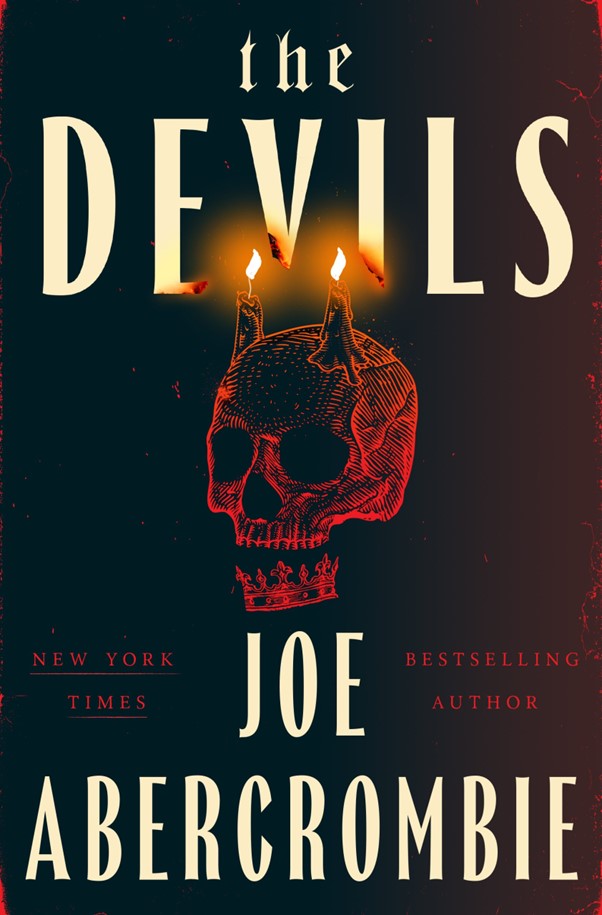
The Devils by Joe Abercrombie

Publisher: Gollancz/Macmillan Audio (Audiobook – 13 May  2025)

Series: The Devils – Book One

Length: 25 hours and 7 minutes

My Rating: 5 out of 5 stars

Amazon

The master of grimdark fantasy fiction presents a bold and over-the-top new story with The Devils, an outstanding, addictive and highly entertaining read that you will not be able to turn away from.

Joe Abercrombie is an impressive and compelling author who has been wowing fantasy fiction authors with his complex reads for nearly 20 years.  While he has written some other cool books, like his Shattered Sea trilogy, Abercrombie is best known for his iconic First Law series of dark fantasy novels, that followed a group of highly damaged people as they tried to survive war, magic and politics in a messed-up fantasy world.  I really enjoyed the original First Law trilogy, and Abercrombie has cleverly expanded it out over the years, including with three standalone novels and his sequel Age of Madness trilogy.  The Age of Madness novels were ones that I particularly enjoyed reading, and A Little Hatred (one of my favourite books of 2019), The Trouble With Peace (one of my favourite books and audiobooks of 2020) and The Wisdom of Crowds (one of my favourite books and audiobooks of 2021), were very highly rated by me, and I could not get enough of this series.

Needless to say, I am a pretty big fan of Abercrombie’s novels, and I have been eagerly awaiting a new book from him since I finished The Wisdom of Crowds.  While I had hoped that we would be getting a new First Law novel, Abercrombie instead decided to present readers with something a little different with his new The Devils series.  Starting off with The Devils, this series is another clever dark fantasy series, set in an alternative, magic filled version of medieval Europe.  One of my most anticipated books of 2025, The Devils sounded so damn good, especially with its crazy plot and intriguing new setting.

The lands of Europe are in dire peril.  Between the constant wars, dangerous monsters, ruinous famines and deadly plagues, the various kingdoms of Europe are in poor condition, barely held together by the fractured church.  However, the real danger lies outside its borders, as the mysterious elves gather their power in the Holy Lands, preparing for another invasion of Europe that will surely lead to the destruction of all humanity.

In response to the growing threat of the elves, the church and its juvenile pope determine that a new ruler needs to be placed upon the Serpent Throne of Troy after its evil sorcerous empress dies.  With all four of the empress’s duplicitous and power-hungry sons unfit for the crown, the church surprisingly finds that their ideal candidate is a lowly street thief from the Holy City called Alex.  A ferrety sneak with no noble bearing or confidence, Alex is shocked to discover that she is really the long-lost Princess Alexia Pyrogennetos of Troy, destined to reunite the churches of Europe by claiming the throne.

Turning the reluctant and terrified Alex into a potential princess is one thing, but getting her to Troy is a far more difficult prospect, especially as her rival contenders to the throne are stalking Europe with their deadly, magically enhanced followers, determined to claim Troy for themselves.  To succeed in marching Alex through the European hellscape and placing her on the Serpent Throne, the church will need far more than prayers and the blessing of saints; they are going to need devils.  Luckily, such devils are close at hand. 

Deep within the Holy City lies the Chapel of Holy Expediency, which binds dangerous heretics and monsters and forces them to seek redemption through holy missions for the pope.  Led by the hapless Brother Diaz, the congregation of the Chapel of Holy Expediency is charged with getting Alex to Troy and placing her on the throne.  But can a terrified monk, an immortal knight, an arrogant necromancer, an invisible elf, a sarcastic vampire, an uncontrollable Viking werewolf and the most experienced woman in Europe succeed in making a street-rat an empress, or will their new mission only bring even more death and destruction to the continent? 

Joe Abercrombie once again shows why he is one of the very best authors of dark fantasy fiction with his captivating and deeply impressive new novel.  The Devils was an ultra-entertaining read that perfectly introduced the author’s intriguing setting and populated it with highly amusing characters and dark deeds.  Exciting, clever and loaded with over-the-top humour, The Devils was an absolute joy to listen to, and I loved every second I spent with it.  One of the most addictive novels of 2025 so far, The Devils gets a very-well deserved five-star rating from me, and readers are guaranteed an extra fun time with this crazy novel.

I absolutely loved the cool and highly entertaining story that Abercrombie came up with for The Devils, which was essentially a fun dark fantasy iteration of The Dirty Dozen/Suicide Squad narrative with some amazing monsters.  Providing a quick introduction to the key characters, the reader soon becomes highly invested in the narrative, as the memorable and very amusing protagonists begin their trek to Troy.  What follows is a classic travelling adventure story with some dark and comedic twists, as the protagonists encounter all manner of foes on the way to their destination, which they are forced to dispatch with ruthless efficiency.  While parts of this story start to become a tad formulaic, especially as the protagonists are intercepted multiple times by one of Princess Alexia’s cousins, with each encounter resulting in a deadly battle for survival against different occult forces, you are generally so entertained by the compelling characters, interesting interactions, and over-the-top action sequences, you don’t even really mind.  Abercrombie works to break up these encounters with some fun side quests, as well as altering the circumstances by having the characters occasionally split up into unlikely pairings, exploring the fun alternate medieval Europe that works as such an effective setting for this book.  This allows for some interesting changes of pace in the main quest narrative, while also allowing for some outrageous character moments as the reader gets to know the protagonists a little better.

Everything nicely leads up to the last third of The Devil, which sees the protagonists arrive at their destination against the odds.  Without going into much detail, things naturally go to hell, and everybody is forced to fight for their lives.  This chaotic series of events isn’t unexpected, as the reader is waiting for the other shoe to drop the entire book, but the who and the how of it makes for great reading.  Some excellent twists come to life here, often revealed in a fun meta way, and, while you see a couple of them coming, the entire ball of surprises and reveals make for quite an exciting end sequence.  These twists are well backed up by some of the grittiest action sequences in the entire book, and you are constantly on your feet waiting to see what happens next.  The entire novel ends on a tragic, if thoughtful note, especially when you’re left to consider who the true monsters of the story are.  An overall impressive narrative, that blends alternate history and classic adventure narrative threads with Abercrombie’s wild imagination to create something exceedingly entertaining and addictive.

The Devils was a very fun and well-written story as Abercrombie provides a very intense and hard-hitting tale, bound together by dark humour, over-the-top sequences, and complex characters.  Abercrombie once again showcases his skill at balancing multiple distinctive perspectives to tell an integrated and ongoing narrative, with the story cleverly bouncing between the viewpoint of several impressive protagonists.  The continued switches between the characters allows for a very elaborate narrative, and the reader is drawn into both the overarching plot and the more personal battles of the protagonists.  I liked how Abercrombie was able to tailor the descriptive narration of each of the perspective chapters to suit the character it was following, and each chapter has a slightly different tone as a result.  However, this is a very dark overall story, as the characters encounter outrageous scenarios of death and destruction, and the resulting carnage allows for some intense moments.  I will say that The Devils did feel a little sillier than some of Abercrombie’s previous novels, although the author uses this extra layer of ridiculous energy to full effect to tell an extremely addictive story.

As you would expect from Abercrombie, the intense action sequences are a highlight of The Devils, with the many brutal sequences coming to life thanks to the author’s great descriptive style.  There was a certain casualness to some of the fights, especially those featuring the plot’s more dangerous killers, and which was enhanced by the clever overall narration of the writing.  I loved how Abercrombie set out all his scenes, with a lot of subtle humour revolving around cynical description of events, especially as the author provides some ironic results and meta commentary.  This more subtle writing of events is counterbalanced by the over-the-top humour of the dialogue, especially when it comes to certain characters.  A lot of the dialogue gets downright filthy at times, with some very adult discussions coming out in outrageous fashion.  While this excessive crass language had the potential to distract from the story, I think that Abercrombie got the right balance, with the ridiculously rude dialogue fitting in well amongst the crazy events of the plot.  While the combination of ugly events, adult humour and cooky carnage isn’t going to be everyone, I think most fantasy fans are going to have a ton of fun with it, especially as it plays into Abercrombie’s grimdark style.  Throw in a clever alternative medieval Europe as the elaborate setting which will delight history buffs with the intricate differences, and The Devils was a very impressive read that perfectly plays the author’s strengths and talent for entertaining and dark fantasy fiction.

Fans of Abercrombie will know that the author specialises at making damaged and captivating characters to set his narratives around, and The Devils is no exception to this.  The author introduces an amazing cast of complex and memorable characters in The Devils, and I love the very impressive storylines that emerge around them.  This includes six separate perspective protagonists, two major supporting characters, and an array of interesting figures throughout Europe who play various roles in the outcome of the plot.  Abercrombie does an excellent job of introducing and utilising this complex cast, with all the major characters getting their chance to shine in some impressive ways.  While some of the characters in The Devils didn’t quite have the complexity of the protagonists from the First Law books, Abercrombie instead amps up the entertainment aspect of these figures, introducing several particularly hilarious, ridiculous and highly relatable monsters, each of whom added a great deal to the overall reading experience.

The first two characters I want to talk about are major perspective protagonists, Brother Diaz and the newly discovered princess, Alex.  Despite neither being members of the titular devils, both have major roles in this book and are shaped by their experiences with the monstrous pawns of the church.  Brother Diaz, a simple monk who is brought in to guide the devils, is initially shown to be a hapless and terrified figure, clearly out of his depth when it comes to the dangerous mission he has been entrusted with.  Abercrombie has a lot of fun showcasing him as a useless social climber at the start of the novel, and he initially has more of a comedic role in the plot.  However, as the story progresses, Diaz starts to gain a little confidence as he continues to survive, and you soon see flashes of the man he could be.  Despite falling to temptation (repeatedly), Diaz ends up being quite a stalwart figure in the book, and I loved some of the scenes where he got to show off his intelligence (including one particularly entertaining legal battle).  The way in which Abercrombie subtly added more and more depth to Diaz’s personality as the story continued was very impressive, and his growth as a character was a highlight of the book.  The author also ensured that Diaz was one of the more relatable characters in The Devils, especially as he continuously makes mistakes, finds himself shaken by his fears and failings, yet continues to try to do the right thing.

Much like Diaz, the other non-devil perspective protagonist, Alex, is also shown to be an imperfect figure who finds themselves thrust into events outside of their control.  Initially shown as a simple thief, Alex, or Princess Alexia Pyrogennetos, is ill prepared for the events before her, and is forced to rise to the occasion when she is declared long-lost royalty.  Mostly shown as the book’s damsel in distress, Alex is generally scared and lacking confidence, especially as she knows she is not the princess everyone wants her to be.  Like Diaz, Abercrombie writes Alex slowly rising to the occasion throughout course of The Devils’ plot, as she learns to fight back and become a leader.  I really liked following Alex’s journey in The Devils, and while the journey to the character finding her self-confidence is a long and bloody affair featuring some good twists, it ended up being a powerful part of the book’s overarching narrative.

Outside of Alex and Diaz, a lot of time is also spent following the other perspective members of The Devils, including Balthazar, Sunny and Vigga, who are a necromancer, an elf and a werewolf respectively.  These three characters are amazing, and I liked how well they played off each other and the rest of the cast with a great mixture of serious and more comedic elements.  For example, Balthazar (or to introduce him properly, Balthazar Sham Ivan Draxi), is a highly arrogant figure who chafes at being captured and controlled by the church.  Much of his story focuses on his many attempts to break the Papal binding compelling him to help Alex, while also dealing with the realisation that he is helpless against those he considers his lesser.  Much of the entertainment around Balthazar is his complete lack of self-awareness or humility, especially within his own mind, and while there are times when it appears that he is going to become a better person, he usually returns to his old personality when he hits a wall.  Sunny the elf, on the other hand, is a far more sensible character, who serves as the team’s shadow thanks to her ability to become invisible.  Despite her nice and helpful personality, Sunny is shown as an alien creature, incapable of understanding the humans who generally hate and fear her.  Imbued with a more subtle humour than her fellow devils, Sunny proves to be quite an interesting figure, especially when you examine her past and her dark experiences with humans.  Probably one of the more likeable and selfless figures in the book, Sunny’s arc adds a lot to the overall story, especially through her unlikely romance angle, and Abercrombie clearly had fun writing the various scenes where she traipses around invisible.

One of the more memorable cast members of The Devils is Vigga, a former Viking raider who was cursed as a werewolf and then captured by the church.  Crass, constantly controlled by her urges, incapable of self-restraint and particularly deadly, even when not a massive wolf, Vigga powers through the entirety of The Devils’ narrative, leaving a major impression whenever she appears.  Featuring some of the more visceral and entertaining perspectives of the book, which includes a combination of hungry sequences from her wolf mind and her more entertaining insights as a human with no impulse control and an inability to focus on anything, Vigga is responsible for a large part of The Devils’ chaotic and outrageous tone, and the book would not be anywhere near as fun without her.  However, as this is Abercrombie, there are quite a few darker moments in Vigga’s story, and you soon become absorbed with her attempts to pull together her fractured mind and control the monster within, especially when she gets close to her travelling companions.  The dark depression that occasionally befalls her because of her uncontrolled actions adds some major drama to certain tragic parts of The Devils’ plot, and Vigga comes away as one of the more sympathetic, if scary, characters in the book.

While the above perspective characters are all particularly impressive, my favourite was the team’s resident knight, Jakob of Thorn.  An old soldier cursed with immortality who has been fighting battles on behalf of the church and God for hundreds of years, Jakob is a tired and haggard figure bound by his many vows.  Suffering from the degradation of his body due to age and the many injuries inflicted on him, Jakob is weariness personified as he attempts to deal with his pain, and the guilt from his long history of death and service to the church.  Readers familiar with the author will know that Abercrombie specialises at writing tired old warriors who are sick of the death and destruction they cause, and Jakob of Thorn is one of his better ones (which is saying a lot).  I loved all of Jakob’s scenes, especially as he doggedly continues to fight despite his pain, often providing some of the book’s best quotes and insights.  Unsurprisingly, Abercrombie makes Jakob suffer a lot in this novel (what else would this sadistic author do with an immortal character?), and you learn a lot about his resolve and psyche as a result, especially as he knows he is the biggest monster of them all.  I really think that Jakob’s grittier and more self-aware perspective chapters helped to balance out the more outrageous character arcs in The Devils, and he was a perfect addition to this outstanding narrative.

The final two major characters I want to highlight are Baron Rikard, an ancient vampire, and Baptiste, a rogue hired to keep the devils in check, who seems to have experience with every profession possible in Europe.  Both these characters are excellent additions to the plot and manage to shine through, despite not being perspective characters.  Indeed, I felt that their role in the book was enhanced by the readers not having direct insights about their motivations or actions, and instead you get to enjoy the mystery surrounding them as you see them through the eyes of the other characters.  Baron Rikard, who serves as a fun, sarcastic figure who only helps when it suits him, proves to be a great inclusion in the plot, especially as his gentlemanly manners and demeaner makes him stand out amongst the other characters.  While a ridiculously charming figure (especially when he starts talking about dumplings), you are initially given the impression that Rikard is another trapped monster keen to escape his binding.  However, Abercrombie nicely turns this assumption on its head as the story continues, and I really enjoyed the character’s revealed motivation, especially as it shades all the character’s actions in a new light.

Baptiste, on the other hand, is a suave and entertaining figure whose impact on the book would be diminished if you got a deeper look at her thoughts, motivations or true history.  I particularly enjoyed how well Baptiste served as a foil to Balthazar, and they had a great back and forth that helped to define them both.  Throw in a range of other impressive supporting characters, including a barrage of outrageous or diabolical antagonists, and the cast of The Devils was something very special.  I cannot emphasise enough just how much fun all these characters were, and their moving and complex arcs and interactions really helped to give some powerful meat to The Devils’ entertaining narrative.  You really come away with some conflicted feelings for many of the protagonists, especially as none of your favourites have a truly happy ending, and it will be interesting to see what happens to the survivors in the future entries of the series.  A special shoutout as well to the fun artwork depicting several of these characters in The Devils paperback, especially as the artist really captures how the author wrote these colourful protagonists.

While I did receive a physical copy of The Devils, I ended up listening to this novel on audiobook, which was a fantastic choice.  Not only did the audiobook version allow for a fuller immersion in Abercrombie’s new fantasy universe and his crazy action sequences, but it also featured the superb voice of actor Steven Pacey.  Pacey, who is one of my favourite audiobook narrators, previously lent his voice to the audiobook versions of Abercrombie First Law novels, and he frankly does a perfect job of capturing the author’s unique tone and style.  Abercrombie’s complex writing, witty dialogue and excessive humour really come to the fore when read out by Pacey, and the narrator’s tone and cadence in The Devils always perfectly matched the intended mood of the scenes, no matter how dark or over-the-top they became.  Pacey also does some very entertaining and highly fitting voices for the key characters of The Devils, and it is amazing how well he captures all these outrageous figures.  All the defining character details, including the timid nature of Brother Diaz, the arrogance of Balthazar, the pain and weariness of Jakob, the wry amusement of Baron Rikard, the unearthly nature of Sunny and the sheer wildness of Vigga are all amazingly highlighted by Pacey’s various voices, and really come to love the characters the way that Pacey reads them out.  Thanks to Pacey’s brilliant acting and evident love for the content, this was an incredible listen, and I really cannot emphasise enough just how effectively he narrated this crazy story.  I flew through the books lengthy, 25-hour runtime due to this brilliant narration and epic narrative, and I honestly don’t believe that anyone but Steven Pacey could make Abercrombie’s amazing novels come to life in the same way.  An exceptional audiobook and one of the best things I have so far listened to in 2025.

With his trademark blend of chaos, fantastic humour and complex characters, Joe Abercrombie presents one of the very best books and audiobooks of 2025 with The Devils.  A unique and very entertaining fantasy adventure novel, The Devils pushed everything to 11 and beyond, ensuring that you couldn’t turn away.  An exceptional read from start to finish, I had so much fun with The Devils and I cannot wait to see how Abercrombie will continue this series in the future.
Amazon

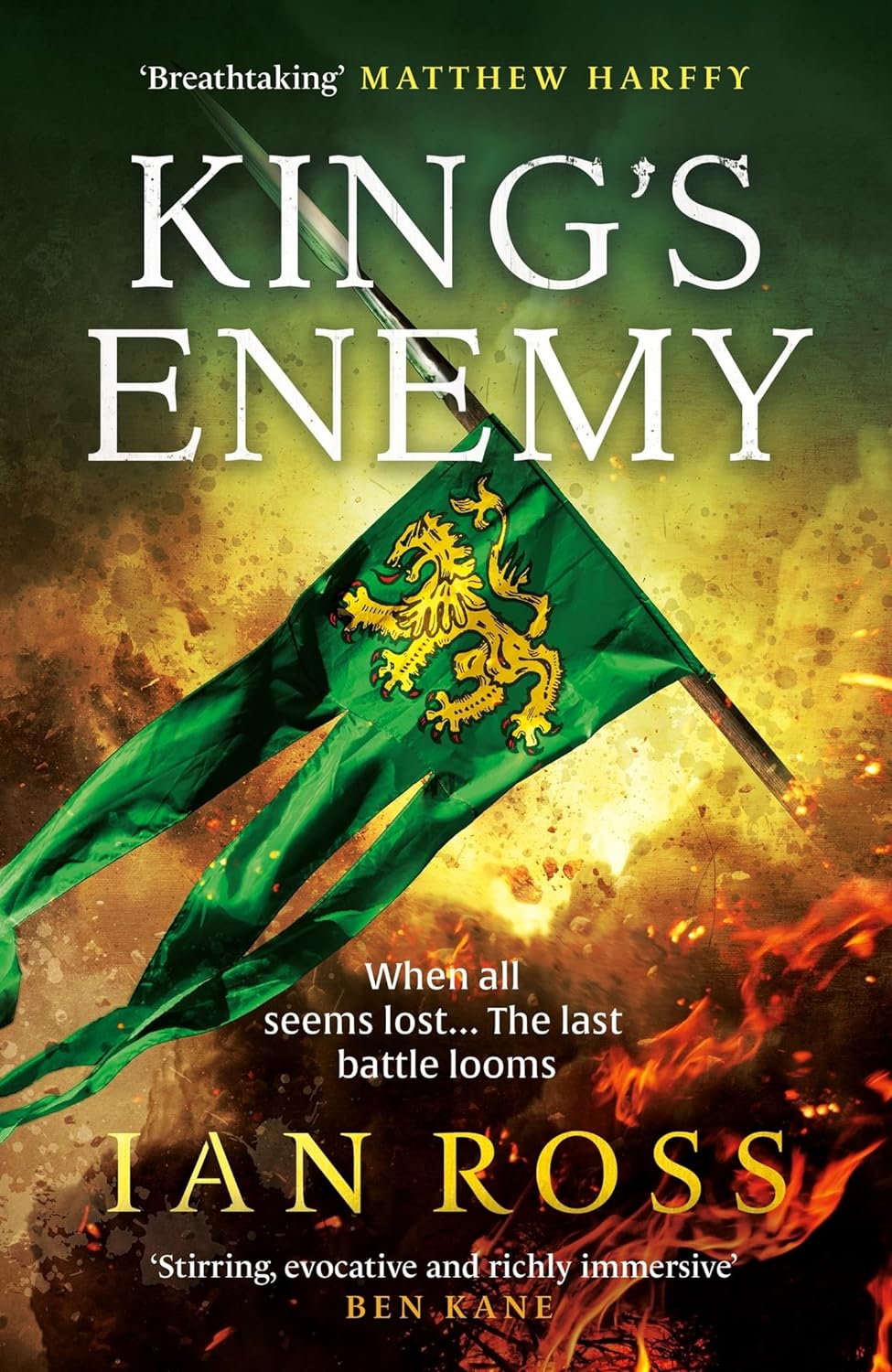
King’s Enemy by Ian Ross

Publisher: Hodder & Stoughton (Trade Paperback – 10 September 2024)

Series: De Norton Trilogy – Book Three

Length: 419 pages

My Rating: 5 out of 5 stars

Amazon

Ian Ross brings his exceptional De Norton historical fiction trilogy to an extremely strong end with the excellent and powerful third and final entry, King’s Enemy.

For the last year or so, I have been utterly enthralled with acclaimed historical fiction author Ian Ross’s latest series, the De Norton books.  Following young squire and eventual knight, Adam de Norton, as he finds himself drawn into the 13th century rebellion of Simon de Montford against the crown, the De Norton books are extremely compelling, and I love the blend of action, cool characters, and compelling historical setting.  The first book in the series, Battle Song, was an outstanding read that expertly introduced the protagonist, as well as his unpredictable mentor, and showed how he became involved in the war on de Montford’s side.  Battle Song ended up being one of my favourite books of 2023, and I eagerly dived into the sequel, War Cry, earlier this year.  Set shortly after the events of Battle Song, War Cry worked to show the aftermath of de Montford’s major victory, and the subsequent royalist counter-rebellion, by following the newly knighted de Norton as he finds himself once again called to battle.  War Cry was a very worthy sequel, and I loved how dark and grim it got in places, especially at the end.  War Cry left the reader on a major cliffhanger, and as such I have been eagerly waiting to get my hands on the third and final book, King’s Enemy.  One of my most anticipated books from the second half of 2024, King’s Enemy had an outstanding plot behind it that really got me excited.

England, 1265.  It is two months after the infamous battle of Evesham, where knight Adam de Norton lost everything.  The rebellious Simon de Montford lies dead on the field alongside de Norton’s mentor, Robert de Dunstanville. and the rest of their army, massacred by Prince Edward and his victorious army.  Spared by the prince alongside a few other noble survivors, de Norton remains a prisoner of the crown in the grim castle of Beeston, with all his lands, wealth and honour stripped from him.

However, despite the crushing victory at Evesham, England is far from peaceful, as new rebellions begin against the king.  Determined to take his fate into his own hands, de Norton makes good an escape from Beeston and becomes a fugitive from the crown.  Branded a king’s enemy, a man who can be slain with impunity by those pursuing him, de Norton flees across England, alongside the recently widowed noblewoman Joane de Bohun, contending with royal troops and dangerous outlaws, desperate to find a cause to fight for.  But when the promised new rebel army is swiftly beaten, de Norton and Joane are once again left without options.

Adam and Joane soon find their fates tied to that of the mightiest fortress in England, Kenilworth Castle, when they seek sanctuary there.  The last castle holding out against the crown, Kenilworth is garrisoned by a motley band of rebels and knights, each with their own reasons for being there.  Joining the defenders, Adam finds old friends and enemies within and without the castle walls, as he prepares to endure a lengthy siege.  But as the months pass and the battle becomes more desperate, Adam must decide what is more important, the lives of those he loves or his knightly honour.

King’s Enemy was another outstanding novel from Ross, who brings his de Norton trilogy to brilliant end with this third book.  Once again expertly focusing on a particularly intriguing part of English medieval history, Ross crafts together a powerful and intense narrative that will have you hooked the entire way through.  King’s Enemy is an epic read that gets a full five-star rating from me.

Ross has come up with a fantastic story that I honestly could not turn away from.  Starting shortly after the memorable cliffhanger of the second book in the trilogy, War Cry, King’s Enemy starts off with Adam de Norton in captivity, having lost everything.  Ross does a great job capturing the initial despair of his protagonist before setting him off on a new adventure as he makes his escape from captivity.  This results in a pretty good fugitive arc as Adam and his ill-fated main love interest, the recently widowed Joane de Bohun, attempt to find a new cause so that they may both recover their positions.  This first half of the book is very fun and makes sure to set the scene for the rest of King’s Enemy.  There is plenty of adventure, excitement, and even a surprising nod to classic Robin Hoods mythology, as the two protagonists head towards promised safety and a new army to fight with.  However, as readers of the De Norton books will be aware, things rarely go well from the main character, and Ross adds in a major road-bump for him halfway through the plot that forces him towards his inevitable destiny at Kenilworth Castle.

The rest of King’s Enemy is essentially one big siege sequence, as Adam, Joane, and several surviving supporting characters, take refuge int the castle and attempt to hold off a massive besieging force belonging to the crown.  This proved to be an exciting second half which really pushes the protagonists to the limit.  I’m a huge fan of sieges in fiction, and I thought that this depiction of this infamous British siege was extremely good.  Ross captures so many cool aspects of this siege with his writing, including the desperate defenders, the intense fighting, and the grinding impacts of time as the besiegers attempt to starve out the inhabitants of the castle.  Things get really tense as the book continues, as Adam finds himself caught amid various big personalities, including an unstable fellow knight and other defenders seeking to gain advantage from their plight.  There are some dark and deadly moments here, and Ross keeps the reader on the edge of their seat as Adam tries to determine the best course forward.  Everything ends on an interesting note, as all the existing storylines are wrapped up, many figures, both fictional and historical, meet their fates, and the final chapter in the protagonist’s adventure and complex romantic life is revealed.  I personally felt that Ross ended everything on a very strong note, and those readers who have become quite attached to the series will come away very satisfied.

I felt that Ross once again did a really good job of enhancing his captivating narrative with his great writing, and readers really get stuck into King’s Enemy as a result.  The quick-paced flow of the story and the intense action really help to drag you in and go hand in hand with the great characters and intriguing historical setting.  Ross does an outstanding job of showcasing the hard-hitting combat associated with historical knights, and all the intense action sequences are a joy to read.  I also must once again highlight the cool siege that made up the second half of the book, and fans of fictional fighting will love some of the chaotic sequences that emerge there.  There is also a strong emotional edge to the plot, as many of the main characters are desperate figures struggling in the aftermath of a devastating defeat and trying to find a path forward that balances their survival with their sense of honour.  While King’s Enemy can be read as a standalone novel due to the excellent way Ross summarises some key prior events, readers really should check out the first two entries in the series first.  The continuing character arcs, recurring themes, and excellent conclusion to long-running story elements, help to make King’s Enemy a lot more enjoyable for returning readers rather than interested newbies, and I was very invested in seeing how this story ended due to how much I had connected to the protagonist.  I felt that Ross wrapped up this trilogy extremely well, and if you loved Battle Song and War Cry you will not be disappointed here.

As with the previous De Norton novels, one of the things that most impressed me about King’s Enemy was the intriguing historical events that Ross chose to set his story around.  The 13th century rebellion of Simon de Montford is one of England’s lesser-known civil wars, and I have been deeply enjoying seeing the events of this war unfold through the eyes of the protagonist.  The first book did a wonderful job exploring the events leading up to the rebellion, as well as de Montford’s major victory that turned the whole country on its head, while the second book captured the chaotic instability that followed and the eventual end of the main rebellion.  King’s Enemy continues in this vein by examining what occurred after de Montford’s death and defeat, with the country still unstable despite the crown’s victory.  Ross does an excellent job of ensuring his protagonist is present for many of the key moments of this post-rebellion period, and you really get some good insights into these tumultuous events from the protagonist’s perspective.  There is a great focus on the politics and society at the time, especially as major parts of the plot revolve around how the defeated knights and lords were treated.  Ross also excelled at capturing the many key parts of the siege of Kenilworth Castle in the second part of King’s Enemy.  The longest siege in English history, the battle for Kenilworth is a fascinating inclusion to the story, and I loved how Ross showcased it as the last stand for the desperate rebels.  You really get a sense of the events leading up to, and surrounding the siege, and I loved how well Ross examined the motivations of the various defenders and why they kept fighting.  All this proves to be an excellent background setting to Ross’s main story, and it was fascinating to find out how this entire civil war came to its end.

I also need to once again highlight the great characters that Ross has featured in this series, with some intriguing and moving character-based storylines sitting at the core of the plot.  King’s Enemy is another great example of this as, while many key characters died at the end of the previous novel, it still features a strong cast of complex protagonists and supporting characters, including a mixture of original characters and historical figures.  The most prominent of these is series protagonist and primary point of view character Adam de Norton, a former lowly squire who gained lands and a knighthood for his role in Simon de Montford’s rebellion.  After gaining so much in the previous books, Adam starts King’s Enemy at his lowest, with most of his friends dead and everything he fought for lost.  This places the protagonist in desperate circumstances, and he spends this entire book fighting with his back against the wall, literally and figuratively.  Ross writes some moving storylines around Adam’s conflicted mind, as he is forced to balance his honour and loyalty with getting what he wants.  I loved seeing the continued epic of Adam de Norton in King’s Enemy, as it proved impossible not to become attached to the scrappy and exceedingly honourable figure in the previous books.  This proved to be a great final entry in Adam’s story, and Ross ensures that there is still plenty of suffering and conflict for his protagonist.

Other major characters I need to highlight include Adam’s main love interest, Joane de Bohun.  Joane, a strong-willed survivor determined to survive and regain her lands, proves to be an interesting companion to Adam.  The two share an intense and often contentious relationship, as Joane attempts to balance romantic feelings with her ambitions.  Due to the desperate events of the book, Adam and Joane are finally able to express themselves to each other at times, although their differing goals often lead them into conflict.  There is a real tragic romance angle going on between Adam and Joane in King’s Enemy that worked extremely well, especially with the other story elements, and it added a compelling extra layer to already impressive story.

The final character I really want to highlight was bold younger knight, Henry de Hastings, with whom Adam has many interesting encounters in King’s Enemy.  A captured rebel like Adam, de Hastings seems to follow the protagonist around to all the major encounters of the book, and they become both comrades and rivals as a result.  I really enjoyed how Ross portrayed de Hastings in this book, and you have to love the combination of arrogance, contempt and friendship that he gives towards the protagonist, which ensures that the reader finds him both insufferable and entertaining.  De Hastings’s appearance in the book’s main siege also produces some memorable character changes as the knight becomes obsessed with winning and holding out against the enemy, so much so that he becomes a dangerous threat to the protagonist.  There is a wonderfully written slide into darkness for this side character that I deeply enjoyed, and he ended up being a standout figure in King’s Enemy as a result.  All these characters, and more, helped to turn King’s Enemy into something special, and it was amazing to see where many of these recuring figures ended up.

Overall, I found King’s Enemy to be an exceptional book that served as a brilliant and impressive conclusion to Ian Ross’s De Norton trilogy.  Loaded with intense characters, fascinating history, and outstanding action, King’s Enemy had me hooked the entire way through and provides readers with a powerful end to a great historical series.  A highly recommended read, you won’t be disappointed with this latest offering from Ross.

Amazon

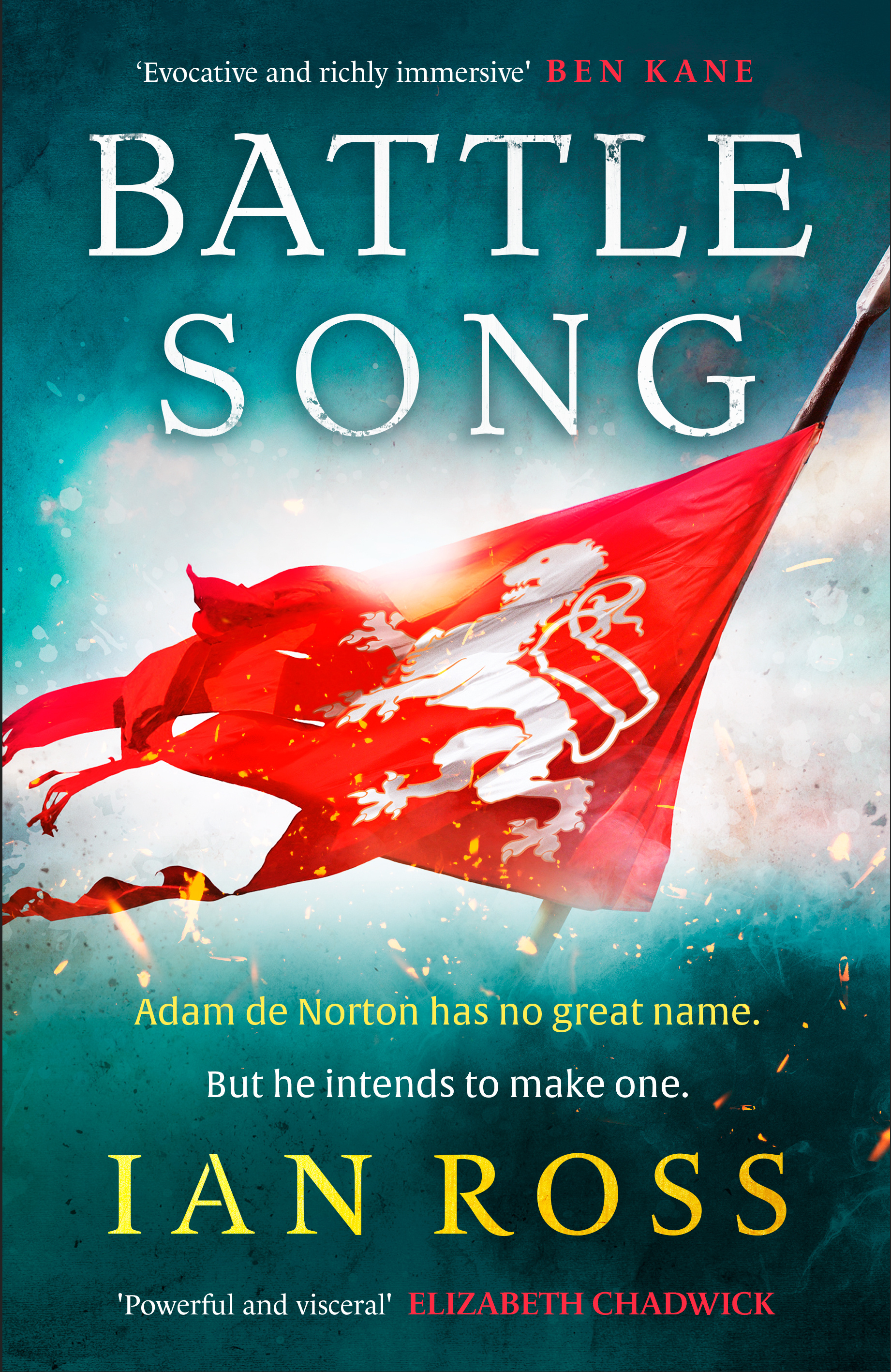
Battle Song by Ian Ross

Battle Song Cover

Publisher: Hodder & Stoughton (Trade Paperback – 28 March 2023)

Series: Standalone/Book One

Length: 405 pages

My Rating: 4.75 out of 5 stars

Amazon

Impressive historical fiction author Ian Ross journeys away from his typical Roman history novels and instead dives into the chaos and glory of medieval England with the outstanding and highly addictive read, Battle Song.

England, 1262. Adam de Norton is a lowly squire with very few prospects to his name.  Unable to claim his family’s rightful estates, Adam’s only hope is to be knighted by his lord, which will allow him to win the glory and respect his chivalrous heart believes in.  However, his chances of even being noticed by his lord seem slim, and Adam looks set for a life of disappointment until a hunting accident leads him to his new master, the rogue knight Sir Robert de Dunstanville.

Robert de Dunstanville is a man infamous throughout England as a murderous heretic, and his anger, resentment and apparent lack of knightly virtue seem to match his devilish reputation.  A keen member of the tournament scene, Robert leads Adam to Europe, where his underhanded strategies and desire for victory over honour, prove to be highly effective.  While Adam chafes under the dishonour of his new master and the circumstances that lead them together, he soon discovers that Robert seems to have a far better idea of the realities of his world than he does.

Two years later, Robert leads Adam back to England, determined to take advantage of the chaotic political situation that emerges.  The Earl of Leicester, Simon de Montfort, has declared war against his brother-in-law, King Henry III, and now leads the barons of the realm in a rebellion, aimed at bringing reform and redressing the balance of power in the country.  As the country plunges into civil war, Robert and Adam must choose which side will give them the greatest advantage and keep them alive.  Soon caught in the middle of a desperate battle for the fate of the kingdom, will this duo get everything they think they deserve, or wind up in a bloody grave?

Ian Ross has written an exceptional and captivating historical adventure in Battle Song that I had an absolutely wonderful time reading.  Blending some great characters with an exciting story and intriguing historical detail, Battle Song is one the most thrilling and intense historical novels I have read in a while, and which is worth checking out.

Battle Song has an intense and captivating story that perfectly follows a young knight in training as he finds his destiny and gets embroiled in war.  Blending emotional personal growth with an exciting narrative from a great part of history, Ross’s narrative for this book is really addictive, and I had a ton of fun powering through it in a few days.  The story starts off great with a very strong introduction to protagonist Adam de Norton, a minor squire overlooked in life who still believes in the knightly virtues.  After a violent brawl shows his true raging potential, Adam is drafted into the service of Robert de Dunstanville, a bastard knight with a severe grudge against the king, who drags Adam to Europe for a run at the knightly tournaments.  The initial part of the book is really good as it sets up the story and the key politics of England, while also serving as an invaluable introduction to main characters.  I loved the early friction between Adam and Robert, which really helps to showcase the differences between their world views and ensures that there is some intriguing personal conflict between them throughout the book.

Ross dedicates a good chunk of the plot to following Adam, Robert and their companions, on an extended romp through the European tournaments, which are so damn fun.  The various scenes depicting the harshness of the tournaments, including the infamous melee, are some of my favourites in the book, and the author’s depiction of the chaotic violence and sheer unpredictability really appealed to me.  At the same time, this book serves as a good learning experience for the protagonist as Adam learns the realities of being a knight as he experiences love, betrayal and begins a deadly rivalry.  Ross also uses this part of the story to further dive into the start of the conflict between Simon de Montfort, as Robert meets and plots with the exiled Earl while in Europe and begins to weigh his options.

The second half of Battle Song is set back in England as Adam and Robert return home, determined to take part in the civil war to come, even if they don’t know which side to choose.  This half of the novel is pretty damn intense as Ross really dives into the intriguing and dark history of the period in some great ways.  The narrative drags the protagonists into some of the key events of the period, including riots, a dangerous siege, and several minor conflicts, as they watch the King and Simon de Montfort fight for control of the country.  This part of the book is also well layered with the personal concerns of Adam and Robert, as Adam faces a hopeless romance while witnessing some of the most vicious elements of war, while Robert continues to battle his conscience, inner-hate and survival instincts to come out on top.  There are some pretty epic scenes here and I deeply enjoyed how Ross balanced out the historical detail with the deeper part of his story.  The characters all go through setbacks, growth, and dark moments as the plot proceeds, and the reader gets caught up in their personal tales.  The battles themselves are really impressive, as Ross captures the sheer chaos of war and Adam learns what it is to kill.  I really appreciated Ross’s use of Adam as the main point-of-view character for this second half of the battle, not only because his position allows a great view of all the key historical moments, but because you see a more impassioned take on events which gives the entire narrative some great heart.  Everything leads up to the big final battle, which Ross covers perfectly, showcasing it as a metal meatgrinder of knight-on-knight combat.  There are some outstanding moments in these final pages, especially as several character arcs and storylines are cleverly finished, and I was deeply intrigued to see how the entire conflict came together.  Ross leaves everything on a satisfying conclusion and Battle Song ends up serving a particularly epic and brilliantly self-contained standalone read, which does have some potential to be continued in the future.  I deeply enjoyed this exceptional story and it was so damn addictive in places.

One of the best highlights of Battle Song is the way that Ross expertly portrays the historical period in which the book is set.  I loved the depictions of England and Europe in the 13th century featured throughout Battle Song, and Ross has a lot of fun showcasing the people, culture and politics of the people at the time.  There is a particular focus on the lives and experiences of the knightly classes as the book as shown through the eyes of a lowly squire experiencing them for the first time.  As such, you get a great idea of what it is to be both a knight and a squire as Adam grows into both roles while watching his master and peers in action.  There are some great discussions about the how knights act in life, and I loved how Ross examined how the realities of this compared to the romanticized notions of chivalry and honour that Adam had been fed growing up.  Naturally some of the best parts of the historical elements of Battle Song fall amongst the tournaments and battles that were such an amazing feature of the story.  Ross really dives into the nitty gritty detail of the tournaments, and I loved seeing the tactics and practicalities of big events like the joust and the melee.  It was also very interesting to see how these skills then translated across to the battlefield and the similarities and differences between the two proved to be deeply fascinating.  Ross really went out of his way to highlight the gritty and brutal nature of both the tournament melee and the battlefield throughout Battle Song, and I loved the high-intensity action scenes that emerged as a result.  Battle Song honestly some of the best historical battle sequences that I had seen for a while, and I found myself getting even further dragged into the story thanks to that.

In addition, I really enjoyed the compelling and impressive examination of the events of Simon de Montfort’s rebellion in 1264, one of England’s lesser-known civil wars.  The entirety of Battle Song is set around this war, and Ross really good job of showcasing the politics and the events leading up to the rebellion as Adam and Robert witness his plotting during their tournament days.  The second half of the book then examines the resulting war in high detail as the protagonists find themselves dragged into several key battles and incidents of this war, including the siege of Rochester and the decisive battle of Lewes.  The author does an outstanding job showcasing these battles as he looks at how they came about, what happened during them, and the resulting impacts it had on the war.  At the same time, Ross also tries to examine some of the key historical figures involved in this conflict, and it was very interesting to see the protagonists interact with them.  Ross initially paints this war as a battle for rights against the king, with de Montfort trying to rally the nobles behind his leadership.  However, rather than showing this as a purely noble affair, Ross also highlights some of the darker aspects of de Montfort’s campaign, including the infamous purge against the Jewish population of London at the start of the rebellion, which honestly was some of the darkest and most intense moments in the entire book.  I deeply appreciated this complex examination of the history, especially the prejudice against the Jews, and it painted both sides in morally ambiguous tones that fit the two protagonists.  Ross clearly has a real talent for portraying fascinating moments from history, and I had an outstanding time learning more about this unique and captivating period.

I was also quite impressed by the characters featured within Battle Song as Ross introduces the reader to an outstanding cast of both original characters and notable figures out of history.  The main protagonists are the duo of Adam de Norton, a poor squire who serves as the book’s point of view character, and Robert de Dunstanville, a blackhearted knight with a low opinion of the world around him.  Both characters are intriguing as they represent very different ends of the knightly spectrum.  Adam starts the book as a naïve squire who believes in honour and duty, even after years of being overlooked by his lord.  Robert, on the other hand, is a far more devious and jaded being.  A bastard with no lands of his own, Robert is upset about royal rulings made against him and takes out his anger in the tournaments, where his cunning tactics allow him to achieve many victories.  These two characters are polar opposites to begin with, however, they both start to influence the other in different ways.  Adam starts to become a little more cynical, wiser, and learns how to survive in this harsh world, eventually becoming a competent and dangerous warrior.  Robert on the other hand starts to soften as they grow closer, and the protagonist finds out that there is far more to Robert than he lets the rest of the world see.  These two play off each other, and the rest of the extended cast, extremely well, and I loved the complex mentor-mentee relationship that emerged.  These two are definitely the heart of the story, and I deeply enjoyed their compelling storylines, especially as they both experience hopeless romances, loss, disappointment, intense rivalries, betrayal and moments of glory as they journey towards the conclusion of the book.  The rest of the cast supports the story nicely, and I loved some of the interactions that emerged, as well as the clever mixture of real people from history and original characters invented for the narrative.  These great characters and their unique stories deeply enhance the quality of Battle Song and its powerful story and I was very impressed by how well Ross set them out.

With its outstanding blend of historical detail, amazing protagonists, and an intense and powerful narrative, Battle Song is a brilliant and epic read that I had such an incredible time reading.  Ian Ross produced such a great read here and this was one of the more exciting and entertaining historical fiction novels I have read all year.  Battle Song is a highly recommended historical fiction novel that is really worth checking out.

Amazon

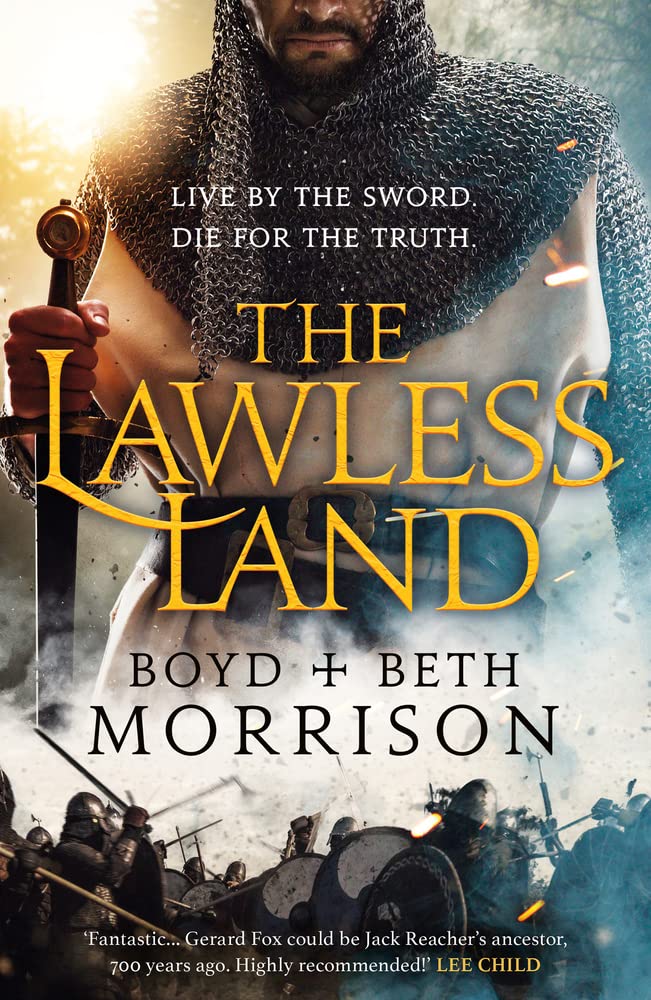
The Lawless Land by Boyd and Beth Morrison

The Lawless Land Cover

Publisher: Head of Zeus (Trade Paperback – 31 May 2022)

Series: Standalone/Book One

Length: 474 pages

My Rating: 5 out of 5 stars

Amazon

Get ready for one of the most thrilling historical adventures of 2022 with the wildly entertaining and deeply captivating medieval fiction novel, The Lawless Land, by the outstanding team of Boyd and Beth Morrison.

Despite my recent focus on other genres, historical fiction in all its forms remains one of my favourite book categories to check out, especially with awesome new novels coming out all the time.  One of the best examples of this is The Lawless Land, which I was lucky enough to receive a copy of a little while ago.  The Lawless Land was a fascinating read that takes some great protagonists on a bold adventure through medieval Europe.  This book was written by Boyd and Beth Morrison, a brother and sister team who have deeply impressed me.  This was a rather interesting combination of writers, as Boyd Morrison is an acclaimed thriller and historical fiction author, and Beth Morrison is the Senior Curator of Manuscripts at the J. Paul Getty Museum and has a PHD in history.  These overachieving siblings really cooked up something special here with their first book, and I loved the outstanding story it contained.

In 1351, Europe is in utter chaos as the Hundred Years’ War rages in France and the Pestilence ravages the countryside, depopulating towns and devastating cities.  These are dark days indeed, and only the desperate and the foolish can be found traversing the roads.  Unfortunately, this includes skilled knight Gerard Fox, whose lands and titles have been taken from him as punishment for a crime against the church, and who is now forced to wander the world by himself, desperate to reclaim his family’s honour.

Journeying towards the castle of Lord Tonbridge, the one man who may be able to prove his innocence, Gerard witnesses a band of armed men waylaying a noblewoman.  Impulsively jumping into action, Gerard saves the women, slaughtering her attackers and forever changing his life.  The young woman, Lady Isabel, is Lord Tonbridge’s betrothed, who has fled from her future husband, taking with her a sacred relic she is sworn to protect.  Forced to abandon his own quest, Gerard agrees to escort Isabel to safety, however, he is unaware of the chaos that is about to be unleashed upon him.

Tonbridge had promised Isabel’s relic to an ambitious Cardinal in Paris, one who is determined to rise to the station of Pope.  Desperate to reclaim the relic and use it to cement his position, the Cardinal and his pawn, Tonbridge, unleash their substantial forces to hunt down Gerard and Isabel.  Fleeing their pursuers, Gerard and Isabel traverse the breadth of England and France to find safe harbour for the relic.  Forced to contend with dangerous foes around every corner, Gerard, Isabel, and their faithful companions will face the worse that medieval Europe has to offer and more.  But worse lies in wait for Gerard, as he bears a dark connection with his pursuers that will ensure they will never stop hunting him.

Wow, now this was a really cool historical fiction novel.  The exceptional writing team behind The Lawless Land have produced an outstanding novel that is extremely exciting, action-packed, and character driven, while also being heavy on the historical detail and accuracy.  This results in an exceptional and epic historical thriller read that I had an absolute blast getting through and which gets a well-deserved five-star rating from me.

The Lawless Land was such a cool read, and I quickly fell in love with its brilliant and exceptional story.  Essentially an adventure thriller set in medieval times, the authors start The Lawless Land off very quickly, showing the protagonist in battle as he saves the damsel in distress, only to end up in even more trouble.  Effectively introducing the key characters early on, you get a real sense of the novels impressive style right at the start, especially with its gritty feel and intense action sequences.  The story soon evolves into a high stakes chase across Europe, as Gerard, Isabel and their companions try to outrace and outwit their opponents to save Isabel’s relic and get revenge for Gerard.  The authors make excellent use of multiple character perspectives here to showcase the chase from both sides, and you get a good look at the various schemes and ploys of the antagonists, as well as the full depths of their villainy.  These amazing and action-packed scenes are expertly interspersed with some flashback chapters that examine the full history and tragedy of the protagonists, especially Gerard, and work to fully establish the enmity between him and the antagonists.  This entire first half of the book is very well written, and the authors’ excellent style will appeal to wide range of readers, not just historical fiction fans, as anyone who enjoys a great adventure or gripping thriller read, can get really engrossed in this excellent story.

This perfectly sets up the second half of this epic novel, which sees the character involved in all manner of carnage and battle as they attempt to win.  I honestly powered through the last 250 pages or so in a day; I was having that much fun reading it.  This second part has everything, including jousting tournaments, prison breaks, desperate chases, elaborate skirmishes, political intrigue, skullduggery and more action than you can shake a stick at.  There is even a full-on judicial duel (think The Last Duel), which was one of the most impressive and gritty fights in the entire book.  There are some intriguing twists, clever reveals, major tragedies, and some outstanding action throughout this entire second half, and it was so much fun to see it all unfold.  I really must highlight the impressive action of The Lawless Land, as all the fights felt particularly realist and very epic, and you can honestly feel every powerful swing and strike of steel on steel.  The authors bring all the established story elements of The Lawless Land together extremely well in the end, and readers will come away satisfied, especially with the fun conclusion and the great ending for the characters.  While this is ostensibly a standalone read, and the authors do wrap up everything really well, there is potential for a sequel at the end, and I for one would not be opposed to seeing more from these characters in the future.

One of the most compelling parts of The Lawless Land was the brilliant dive into the history of medieval Europe.  The writing team clearly did their research when it came to this novel, which is hardly surprising considering the scholarly expertise of one of its authors.  As such, this novel is loaded with impressive and captivating historical detail which isn’t overshadowed by some of the more over-the-top action.  You get a great sense of the how bleak and brutal the continent was at this point in history, with some chilling depictions of plague and pestilence, as well as some intriguing looks at The Hundred Years’ War, including a full flashback chapter to the Battle of Crécy.  The authors spend time exploring a ton of fascinating stuff from this period, including knightly conduct, the power and influence of the church, day to day life for people in cities and the countryside, and so much more.  I particularly loved the scenes set around a tournament in France, where the protagonist engages in a series of jousts.  The sheer amount of detail and realism around these scenes are so very cool, and you can really picture how everything would have looked and felt.  There is also a great examination of medieval manuscripts (again, because of one of the author’s academic focuses), which become a key part of The Lawless Land’s plot, and it was really interesting to examine the significance and process behind them.  All this impressive work around the setting and other historical elements of The Lawless Land really enhanced the overall quality of the book, and I loved how seamlessly it was worked into the epic narrative.

I also must highlight the fantastic characters featured within The Lawless Land, which includes an awesome balance of likeable protagonist and maniacal villains who hunt them.  The story is perfectly split between the two groups, and you get some fun and intense competing views of events throughout the story as a result.  The protagonists are headlined by the awesome character of Gerard Fox, a wandering knight, banished from his family’s lands by the church following a confrontation with one of the antagonists years ago.  Dragged into this conspiracy by accident, Gerard becomes Isabel’s companion and protector, and tries to escort the relic to safety.  A man of action and honour, Gerard is haunted by his past and his many failures, which include watching his brother die in battle, and being tricked into losing everything.  He is also obsessed with discovering the true fate of his mother, and her mysterious disappearance and certain revelations draw him into this conspiracy even further.  A lot of the novel revolves around Gerard’s past, and it was fascinating to see him come to terms with it and try to balance this current quest with his own desires.  Gerard ends up being a pretty awesome protagonist to follow, especially with his martial prowess, unique weaponry, penchant for mischief and trickery (like a certain French fox), and his unbending desire to do the right thing.

Gerard is accompanied by some interesting companions, and the most prominent of these is Lady Isabel.  A noblewoman who was forced into marriage, Isabel seeks to protect her family’s most sacred relic from her betrothed and goes to great length to escape him.  Although she is initially seen as a bit of a damsel in distress, you soon begin to realise that there is a lot more to Isabel than what first appears, as she is an incredibly capable woman with some keen insights and strategies that prove invaluable to her companions.  The authors work some excellent storylines around Isabel in this novel, and you really come to appreciate and enjoy her pluck, courage and intelligence.  There is also a very clever twist about this character revealed in the second half of the book, which was set up extremely well by the authors, including in some flashbacks that both hint at and hide the truth from the reader.  I also should mention the fun supporting characters of Henri and Youssef, two friendly rogues who have substantial history and friendship with Gerard.  Henri and Youssef are excellent additions to the protagonists, and their fun personalities balance well with Gerard and Isabel’s to create a very likeable group of heroes that you become quite attached to, even if that leads to eventual heartbreak for the reader.

I also need to talk about The Lawless Land’s outstanding trio of villains who dog the protagonists’ steps throughout the entire narrative.  This includes the evil Lord Tonbridge, Isabel’s betrothed who she runs away from.  While Tonbridge is mainly hunting them for Isabel’s relic, it also becomes clear that Tonbridge is even more obsessed with righting the perceived slight to his honour and is eager for vengeance.  However, Tonbridge is also partially subservient to villainous French cardinal Molyneux, who has promised him power and a kingship if he succeeds.  Molyneux is particularly despicable, as an ambitious and immoral member of the church who is attempting to become Pope.  Using his influence and the protection of the church for his advantage, Molyneux gains large amount of money and land through unscrupulous means and has some dark history with Gerard’s family, which deeply impacts both his and Gerald’s motivations to confound each other.  The final villain is Molyneux’s vassal and bastard son Basquin, who serves as the protagonist’s main pursuer.  A skilled swordsman and tactician, Basquin is a worthy, if not superior, foe to Gerard, whom he bears a powerful grudge against.  There is some fascinating history behind Basquin that became quite an awesome part of the plot, and it was great to see the intense and captivating confrontations between the two.  The authors take Basquin in some intriguing directions in this book, especially when his own desires clash with that of his abusive father, forcing him to go rogue and enact his own ambitious plan.  All these villains were extremely well written, and it proved highly entertaining to see them go up against Gerard, Isabel and the rest throughout The Lawless Land.  I had such a great time with the characters in this book, and their intense relationships, rivalries and schemes added so much to the power of the novel.

Overall, The Lawless Land was an exceptional and impressive historical fiction read from the great new team of Boyd and Beth Morrison.  These two talented writers came up with something very special with The Lawless Land, and I loved the outstanding and highly addictive narrative contained in this book.  Featuring a ton of epic action, some amazing characters, and some superb historical detail, The Lawless Land was an incredible read that comes very highly recommended by me.

Amazon

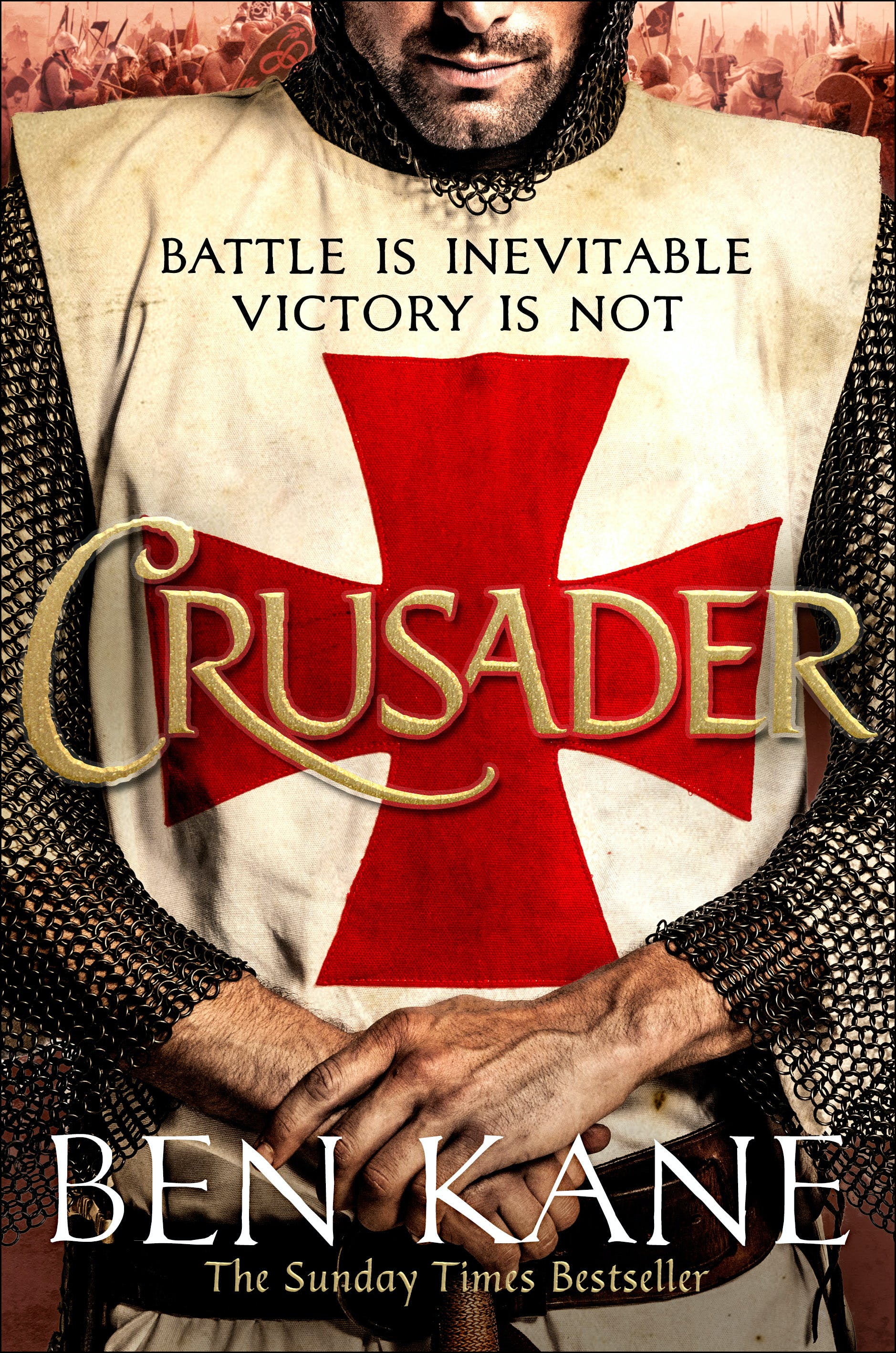
Quick Review – Crusader by Ben Kane

Crusader Cover

Publisher: Orion (Trade Paperback – 27 April 2021)

Series: Lionheart – Book Two

Length: 393 pages

My Rating: 4.5 out of 5 stars

Amazon

Impressive historical fiction author Ben Kane returns with the second entry in his Lionheart series, Crusader, which does an amazing job of continuing the epic story of King Richard the Lionheart.

Synopsis:

KING. POLITICIAN. WARRIOR. CONQUEROR.

1189. Richard the Lionheart’s long-awaited goal comes true as he is crowned King of England. Setting his own kingdom in order, he prepares to embark on a gruelling crusade to reclaim Jerusalem.

With him on every step of the journey is Ferdia, his loyal Irish follower. Together they travel from southern France to Italy, to the kingdom of Sicily and beyond.

Finally poised to sail to the Holy Land, Richard finds a bitter two-year-long siege awaiting him. And with it, the iconic Saracen leader responsible for the loss of Jerusalem, Saladin.

No one can agree who should fill the empty throne of the Kingdom of Jerusalem and Saladin’s huge army shadows Richard’s every move. Conditions are brutal, the temperatures boiling, and on the dusty field of Arsuf, the Lionheart and his soldiers face their ultimate test…

Kane has produced another amazing novel in the Lionheart trilogy.  While Kane is best known for his incredible Roman historical novels, I have been particularly enjoying his compelling foray into medieval fiction with this outstanding series that examines the life of King Richard the Lionheart.  Told through the eyes of fictional character Ferdia, better known as Rufus, the first novel in this series, Lionheart, did a remarkable job of covering some of the most influential younger years of Richard’s life, which cumulated in him seizing the throne.  Crusader continues this epic retelling of Richard’s life by recounting the events that occurred as Richard led his forces on a bloody journey to the Holy Land.

Crusader contains a historically rich narrative that explores one of the most iconic periods of Richard’s life, the crusades.  Kane produces a very detailed story that focuses on the journey to the east as well as the battles in the Holy Land.  This includes the army’s stops in Sicily and Cyprus, where Richard was forced into conflict with other Christian rulers, before eventually arriving in the Holy Land and engaging in his legendary conflict with Saladin.  Kane attempts to cover every major battle of this Crusade, with several sieges, large-scale attacks, skirmishes and the infamous massacre at Acre.  At the same time, Rufus continues his deadly rivalry with the dishonourable knight Robert FitzAldelm, while also secretly engaging in a very risky romance.

This proves to be a very compelling story, and I very much enjoyed seeing this detailed portrayal of this legendary crusade.  Kane does a wonderful job of bringing all the dry historical facts to life throughout Crusader, and I found it fascinating to see his take on the entire journey and eventual battles with Saladin’s forces.  While the story does occasionally get a bit bogged down in medieval politics, royal disputes and petty squabbles, Kane keeps the novel going at decent pace, and the reader is treated to several epic and dangerous fight scenes.  The author can write a deeply impressive and thrilling battle sequence, and the reader is left on the edge of their seats multiple times, especially as the various characters you come to care about find themselves in utter peril.  I also enjoyed the bitter conflict that occurred between the non-fictional Rufus and his rival, FitzAldelm.  While not as prominent as in the first book, this rivalry is still a fantastic part of the book, especially as it adds an intrigue-laden edge to the main story.  While I really enjoyed this great novel, I do think that it suffered a little being the middle novel in the series, primarily because certain overarching conspiracies and plots are put on hold because of the crusade.  I also felt the first half of the novel was a little slow in places, especially when compared to the intense second part of Crusader.  Still, this was a pretty amazing story, and I loved how the author managed to ensure that his tale contained both excitement and fascinating historical fact.

Just like in the first novel in this series, Kane spends considerable time examining the complex historical figure of Richard the Lionheart.  In this book, Richard is portrayed as a multifaceted and intense being with a wide range of emotions and moods.  Most of the story focuses on the classic King Richard, the inspirational and personable figure that the protagonist Rufus eagerly vows to follow.  This includes multiple portrayals of Richard’s prowess in combat, especially in the Holy Land where he leads his troops to many great victories.  The author features several intense battles throughout the book where Richard either lead the charge or proved to be something more than human, such as fighting through a superior forces or chasing off an entire army by himself.  I initially assumed that Kane was taking a bit of artistic licence with some of these outrageous scenes, but it turns out that most were based on real historical accounts.  While I found these epic depictions of Richard to be cool, I also appreciated the way in which Kane tries to show the king’s darker side.  There are multiple scenes that portray Richard in a despondent mood, especially when faced with setbacks or betrayals, and this low mood could often transform into a dangerous anger at a drop of a hat.  This makes for a very complex and contrary portrayal, and I really appreciated the way in which Kane attempted to examine the true mind and thoughts of Richard, as seen by his closest friend.

It was also really interesting to see the continued growth of Rufus throughout Crusader, as he keeps moving away from the helpless Irish hostage he was at the start of the series, and is now a knight and close companion to the King.  Rufus goes through a lot in this novel, and it was fascinating to see how he deals with the horrors and dangers of the war around him.  I found his description and concern about the massacre of Acre to be particularly intense, and it was interesting to see him witness such an event while remaining loyal and dedicated to Richard.  Rufus’s rivalries and loves were a major focus of this novel, and it is clear that Kane is setting up something major with them for the final novel.  It was also intriguing to see the changes occurring with additional fictional character Rhys, Rufus’s squire and close confidant, who has accompanied the protagonist on all his adventures.  Rhys, after killing a vicious knight in the first book, has become a little bloodthirsty, and is constantly seeking to prove himself in combat, much to Rufus’s concern.  I really enjoyed the inclusion of these fictional characters amongst the more historically accurate tale of Richard’s campaigns, and it serves as a great narrative device, while also adding in some additional drama and conflict.  I am very curious about how Rufus and Rhys’s stories will end in the final book, although I am not expecting a happy ending.

Overall, Crusader was a pretty amazing historical novel that presented a detailed and captivating picture of King Richard’s crusades.  Loaded up with some excellent portrayals of historical events and a series of epic battles, Crusader will appeal to a wide range of historical fiction fans, and readers will have an outstanding time digging through Kane’s captivating text.  A clever and intriguing novel, I am very keen to read the final entry in this series next year, especially as we all know how dark the final chapters of King Richard’s story are.

Amazon