Star Wars: Doctor Aphra: Volume 6 – Unspeakable Rebel Superweapon

Doctor Aphra Unspeakable Rebel Superweapon

Publisher: Marvel Comics (Paperback – 10 December 2019)

Series: Doctor Aphra – Volume Six

Writer: Simon Spurrier

Pencilers: Wilton Santos, Caspar Wijngaard, Andrea Broccardo and Cris Bolson

Inkers: Marc Deering, Walden Wong and Scott Hanna

Colour Artists: Chris O’Halloran and Stephane Paitreau

Letterer: VC’s Joe Caramagna

Length: 112 pages

My Rating: 5 out of 5 stars

Amazon

The most devious woman in the galaxy, Doctor Aphra, is back, and she’s got both side of the Galactic Civil War gunning for her in the sixth volume of one of the best Star Wars series out there. I have been meaning to review this volume since it first came out in December. However, I just picked up the seventh and final volume of the current run of Doctor Aphra, so I thought I would quickly review this volume first before I get around to that.

DoctorAphra-32

Doctor Aphra is one of the few ongoing Star Wars comic book series that has been released in the last couple of years, and in my opinion it is one of the strongest Star Wars series out there. The Doctor Aphra comics are set in the period of time between the fourth and fifth Star Wars films (A New Hope and The Empire Strikes Back), and follow the adventures of Doctor Chelli Aphra, renowned archaeologist, adventurer and master criminal. Aphra is an original character who was introduced in the first volume of the 2015 Darth Vader series, Vader, where she served as Darth Vader’s secret agent. Following the conclusion of the Darth Vader series, Aphra, who proved to be a very popular character, received her own spin-off series, which followed on after the events of Darth Vader and feature Aphra as she attempts to make money while trying to ensure Vader doesn’t find out that she is still alive. This series was initially written by one of the original creators of the Doctor Aphra character, Kieron Gillen, however, the second half of the series has been written by Simon Spurrier. Spurrier is the sole writer of this sixth volume of Doctor Aphra, which also features the artistic talent of a several talented artists.

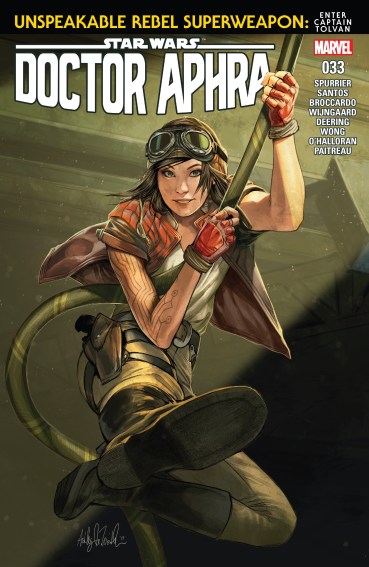
In Unspeakable Rebel Superweapon, Aphra is up to her old tricks again. Despite only recently recovering from a life-threatening injury, Aphra has taken on a dangerous job robbing an alien robot death cult shrine with the help of her new sidekick and ward, Vulaada. However, while aboard the shrine, Aphra notices an ancient Jedi weapon, a sniper rifle that utilises lightsaber technology to kill opponents from vast distances. Unable to help herself, Aphra steals the rifle, starting a chaotic chain of events across the galaxy.

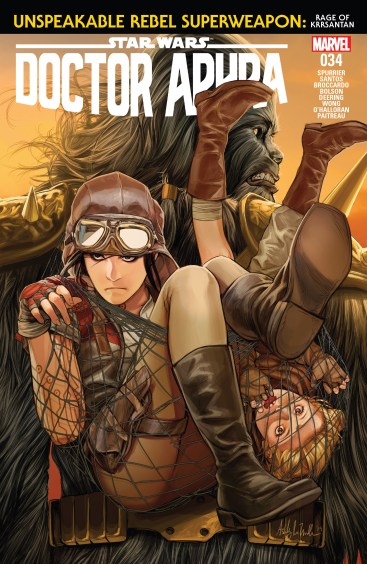
Already extremely unpopular with the Empire, this theft pops Aphra to the top of their most wanted list with a hefty bounty placed on her head. Captured by the Rebel Alliance first, Aphra learns that her stolen rifle is the key to a secret rebel superweapon that they plan to use to assassinate the Emperor. Sensing an opportunity to make some money and permanently get the Empire of her back, Aphra recruits her old associate, the Wookiee Black Krrsantan, in order to steal the rifle back from the Rebels. However, this puts her into conflict with her ex-girlfriend, Captain Tolvan, who is now working for Rebel Intelligence.
DoctorAphra-33

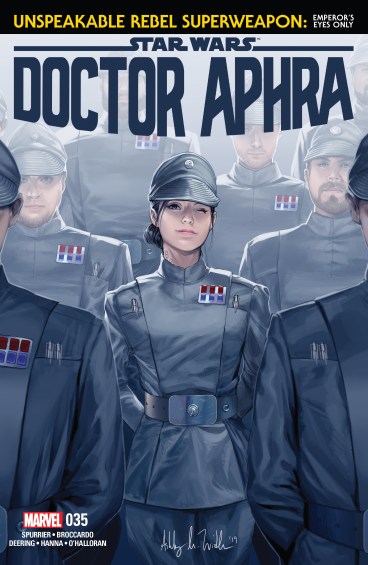
As Aphra recovers the rifle and flees to the Empire, she finds herself face to face with the mysterious Imperial Minister for Propaganda and Misinformation, Pitina Voor, the woman behind the latest Imperial manhunt for Aphra. Voor has plans for her, and Aphra is right in the middle of a vast scheme involving both the Rebels and the Empire. However, no plan has ever survived contact with the good doctor, especially when Aphra has revenge on her mind.

Unspeakable Rebel Superweapon was a superb and outstanding addition to the excellent Doctor Aphra comics, and this might actually be one of the strongest volumes in the entire series. Author Simon Spurrier tells a tight and compelling story within this volume which not only dives back into the past of the series’ titular character but which also showcases new elements of both sides of the Galactic Civil War. You also see the welcome return of several of the best characters from the series, such as Black Krrsantan and Aphra’s love interest, Captain Tolvan, as well as the introduction of an intriguing new antagonist. Featuring issues #32 – 36 of the Doctor Aphra series, this volume is a riot from start to finish (hell, the last two pages are the best in the entire volume), and I really loved the captivating tale that Spurrier wove together in these issues, especially as it features the series trademark dark humour and the focus on its self-destructive and conniving main character.

At the centre of Unspeakable Rebel Superweapon lies an amazing narrative of schemes, plots and lies as Aphra is hunted and manipulated by elements of both the Empire and the Rebel Alliance. Thanks to a recent archaeological theft, Aphra is thrust into the midst of a Rebel conspiracy to kill the Emperor and must decide what to do. Of course, Aphra being Aphra, she goes with the course of action that benefits herself the most and ends up backstabbing and manipulating both the Rebels and the Empire. This leads to some great scenes, including a heist aboard a Rebel spaceship and a sequence where Aphra hacks the entire Imperial communications system in order to sing her praises as an Imperial hero in order to avoid a summary execution. However, not everything is as it seems as the various sides are all trying to manipulate Aphra to their own ends, which results in a surprising number of different twists and turns (or as one character puts it “that is the most convoluted plan I’ve ever heard”). It was fascinating to see Aphra, the ultimate manipulator, being played by so many different sides, each of whom thinks they know how she is going to react. Aphra manages to end up on top, but it was cool to see the various ways she managed to get to the bottom of the plans surrounding her and use it to her own ends. Her motivations for doing so were really compelling, and it was amazing how the creative team had been building up to them throughout the course of the book. Of course, it doesn’t all end up Aphra’s way, and the end result of her schemes sees her come full circle to the last place she wants to be. This all makes for one hell of thrilling main storyline of intrigue and deception, and I really loved where all the twists and turns went.
DoctorAphra-34

Just as with the rest of the entries in this series, one of the best things about the Doctor Aphra series is the titular character herself. Aphra is a complex and haunted character who seemingly lacks a moral code and will only do what is in her own best interest. The character has a rather flippant and disrespectful attitude, and most of this volume’s amazing humour is down to her clever quips and humorous observations amongst the more serious Star Wars characters. One of the things that I have really enjoyed about the Doctor Aphra series has been the examination of Aphra’s self-destructive tendencies and the way that she makes the lives of everyone she comes into contact with worse. This is continued once again in Unspeakable Rebel Superweapon, as she runs from one bad situation to the next, with her every action making her life and the lives of those around her infinity more miserable and more complicated, which makes for some very dramatic and emotional sequences. This is such an expected trait that many of the characters who Aphra has dealt with in the past or who have studied her actually expect her to make these bad or selfish decisions, and I really liked the way that this was a central plot point in the intrigue and espionage storyline. I also loved Aphra’s interactions with her love interest, Captain Tolvan, especially because, during their last meeting, Aphra purposely altered her memories to make her believe she had killed Aphra in a jealous rage. While Aphra did this with the best of intentions (it was the only way to save both Aphra and Tolvan from Vader), this has obviously had a major negative impact on their relationship, and Tolvan now actively loves and hates Aphra in equal measure and apparently has zero trust in her. This is one of the many things haunting Aphra in this volume, as she clearly knows the damage she has done to woman she loves: “I broke her heart. She’s too smart to ever help me again.” Of course, this fraught relationship is another part of the intrigue surrounding Aphra, and it was rather clever the ways in which both sides tried to manipulate Aphra through it.

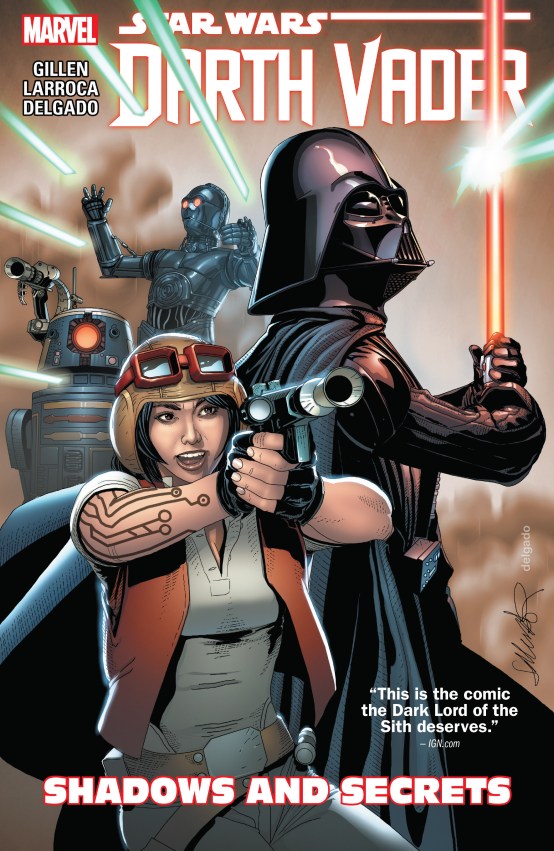
In addition to the all the awesome character work happening with Aphra in the present, the readers of this volume are also treated to a look back at the characters past. In particular, you finally get to see Aphra’s mother for the first time and learn the tragic circumstances around her death. This has been hinted at for some time, all the way back to the second volume of the 2015 Darth Vader series, Shadows and Secrets. As a result, it was great to finally see the full extent of this character background, and it was fascinating to see what happened and how this has impacted on the personality of Aphra. I enjoyed the way in which the scenes from the past were mirrored in the scenes from the present, and I really liked the similarities in the way that Aphra was raised with the harsh way she is treating her new ward, Vulaada. I was also impressed by the way in which seemingly innocuous details from Aphra’s past suddenly had a big impact on her current story, and the creative team did a great job hinting about these impacts throughout the entire volume. All of this helps build up a much more complex story around the character that is Aphra, and I found this dive into her past to be extremely compelling.
DoctorAphra-35

I also need to say how much I loved the parts of this book that featured Darth Vader, whose villainy and hatred for Aphra shine through in the few short scenes that he has. Aphra and Vader have a complicated history together, and Vader is desperate to kill Aphra once and for all (she’s faked her death on him a few times already), as she is the only living person in the galaxy who knows about his obsession with Luke Skywalker and his plans to overthrow the Emperor. Vader has two sequences in this book, both of which revolve around his determination to kill Aphra, no matter the perceived costs. While the first is really good, mainly due to Vader answering an Imperial officer’s request to state his rank with “Lord”, nothing quite beats the second appearance on the last two pages of the volume. After apparently beating all of her opponents, Aphra is sure of her safety due to her status as an Imperial hero, right up until Vader appears, lopping off heads with his lightsaber. The moment Aphra sees him, she knows she and Vulaada are dead, and she immediately hugs Vulaada and gets her to close her eyes. I really loved this scene, especially the resigned way in which she responds to Vulaada’s frantic belief that them being heroes is going to save them with “he doesn’t care”. This was a pretty outstanding end to the entire volume, and it was amazing to see the next chapter of the turbulent relationship between Aphra and Vader.

The Doctor Aphra series has always done a great job showing off several different sides of the Star Wars universe, including giving a closer look at parts of its criminal underbelly and its archaeological sector. However, in this book, we get to see new sides of both the Empire and the Rebel Alliance. In particular, we get to see the Empire’s Coalition for Progress, a sinister organisation led by new antagonist Pitina Voor that is dedicated to expanding and maintaining the Empire through manipulation, trickery and propaganda, rather than brute force. This is rather fascinating inclusion into the canon, and it was rather interesting to see a whole new side to the way that the Empire controlled the galaxy. Voor is also a rather intriguing character, with a unique vision for how the Empire should be run and maintained, and it was kind of fun to see her gripe about the PR problems that occur when you are being ruled by Sith Lords (I had to agree, the Emperor really isn’t adequately loveable). They also have a rather nifty little museum dedicated to some of the Empire’s greatest victories and propaganda coups, which the artistic team filled with several Easter eggs. I was also rather impressed by the way that the creative team explored the darker side of the Rebel Alliance by examining the covert and morally ambiguous actions of their intelligence agency. This is something that has been explored before in some other Star Wars entries, such as in Rogue One, but this volume of Doctor Aphra takes it to a new extreme with Rebel Intelligence apparently plotting to build a miniature Death Star in order to take out the Emperor and win the war. I rather liked this darker side of the Rebels, and it was interesting to see more of a Rebel organisation that uses less moral tactics to achieve their goals.
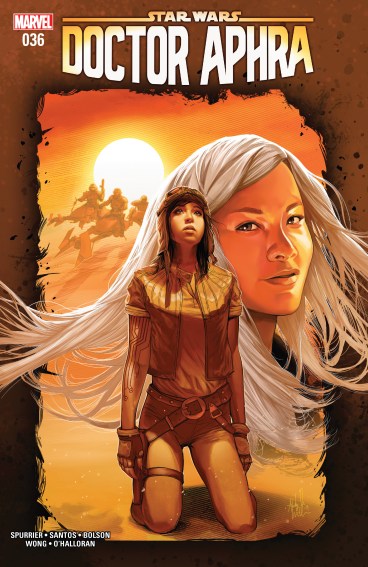
DoctorAphra-36

Unspeakable Rebel Superweapon features the work of several different artists, each of whom worked on a couple of different issues within the volume, which results in an interesting combination of styles. This means that this volume of Doctor Aphra contains a range of different art styles and techniques across the various issues. I actually liked the myriad changes that occurred issue to issue, and it was fantastic to see the different styles and artistic ideas that this large team produced. This volume contains some rather impressive and beautifully drawn scenes and sequences, which fit perfectly around Spurrier’s compelling story and which work really well together. The end result is a fantastically drawn and executed comic, which is a delight to look at.

This sixth volume of the always entertaining and incredible Doctor Aphra series, Unspeakable Rebel Superweapon, is an outstanding addition to the series, and it is one that I had an amazing time reading. This volume contains a complex plot of intrigue and doublecrosses, which sets the loveably dysfunctional protagonist down another road of self-destruction and manipulation in order to survive. Filled with some excellent and memorable story moments, and an incredible conclusion to this volume’s key storyline, Unspeakable Rebel Superweapon is relentlessly entertaining and endlessly captivating, and I had an absolute ball unwrapping it. A highly recommended read; if you have not read any Doctor Aphra yet, then you are missing out!
Amazon

Throwback Thursday – Star Wars: Darth Vader (2015): Volume 2 – Shadows and Secrets

Darth Vader - Shadows and Secrets

Publisher: Marvel Comics

Writer: Kieron Gillen

Artist: Salvador Larroca

Colourist: Edgar Delgado

Publication Date: 5 January 2016

Length: 136 pages

My Rating: 5 out of 5 stars

Amazon

Reviewed as part of my Throwback Thursday series, where I republish old reviews, review books I have read before or review older books I have only just had a chance to read.

Darth Vader (2015) 7

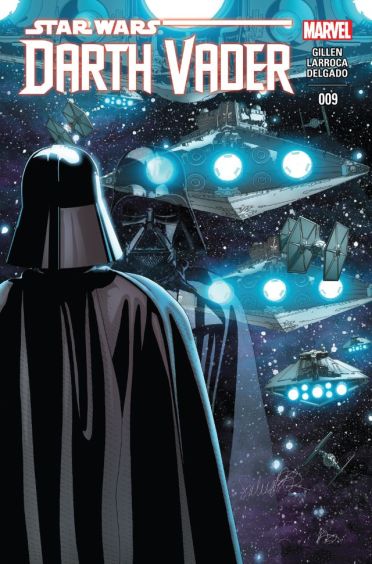
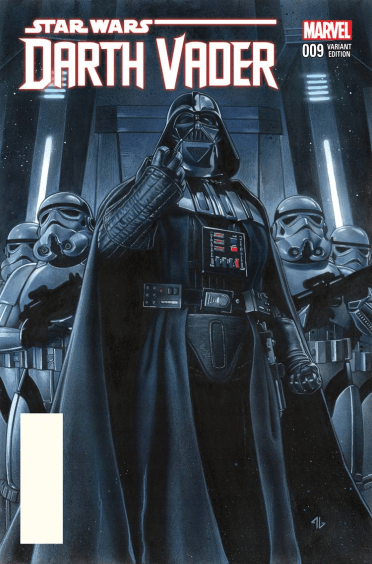
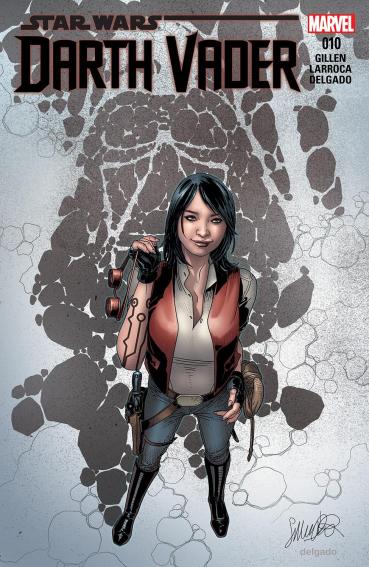
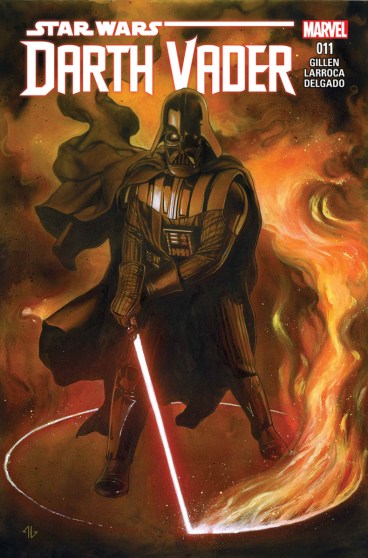
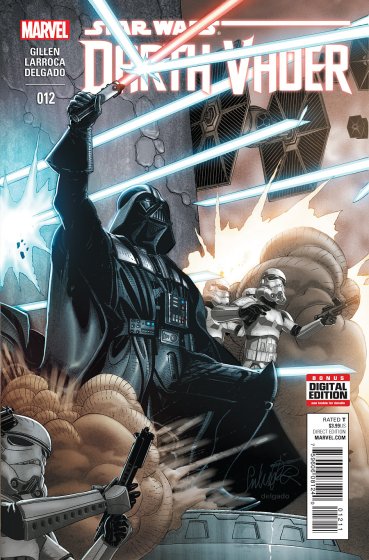
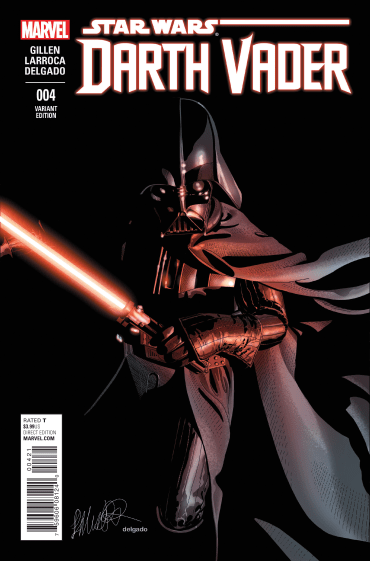
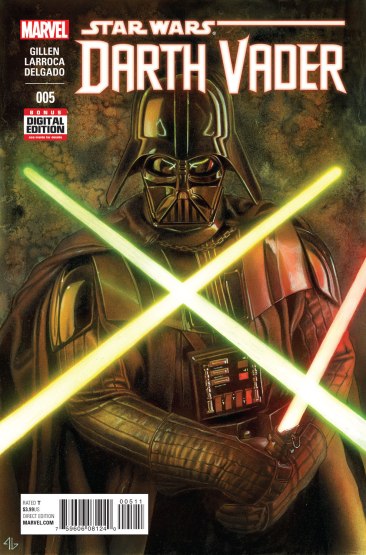
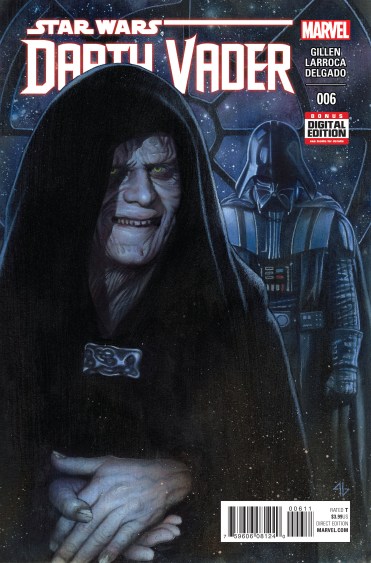
For my latest Throwback Thursday, I take a look at the second volume of the 2015 Darth Vader series, Shadows and Secrets. This is a superb and fantastic addition to a series which I honestly consider to be one the best overall pieces of Star Wars fiction out there, as it continues to explore the complex character that is Darth Vader.

Following the events of the first volume of this series, Vader, Darth Vader now knows that the mysterious Rebel pilot who destroyed the Death Star is actually his son, Luke Skywalker, and that the Emperor has been lying to him for years. This revelation, combined with the fact that the Emperor is forcing him to compete for his favour with the scientific creations of the cybernetic genius Cylo, has crystallised Vader’s rage, and he is now determined to overthrow the Emperor and rule the Empire with his son. To that end, he has commanded his new agents, the rogue archaeologist Doctor Aphra and her two murderous droids, Triple Zero and BT-1, to gather the resources needed to pursue his agendas.

Darth Vader (2015) 9

Whilst Aphra and her criminal contacts do their work for him, Vader must appear to obey the commands of his new superior officer, Grand General Tagge. His latest mission from Tagge requires him to find out who stole a massive consignment of credits that the Empire recently seized from crime lords in the Outer Rim. There is just one problem: Aphra and a small group of bounty hunters stole the credits on his behalf. Vader attempts to cover up his involvement in the crime and lead the investigation away from Aphra. However, the arrival of his new aide, the brilliant Inspector Thanoth, may prove troublesome, as Thanoth’s investigation leads him in all the right directions.

However, despite the importance of Vader’s plans within the Empire, his main concern is the search for his son. Needing to locate and corrupt Luke before the Emperor finds out who he is, he tasks Aphra with not only finding his son’s location but to also find and silence the one person who knew that Luke was actually born. As Vader does all he can to keep Thanoth from finding Aphra and incriminating himself, he finds himself walking a fine line between victory and destruction. With new rivals and both the Empire and the Rebellions seemingly against him, can even Darth Vader get what he wants?

Darth Vader (2015) 9 alternate

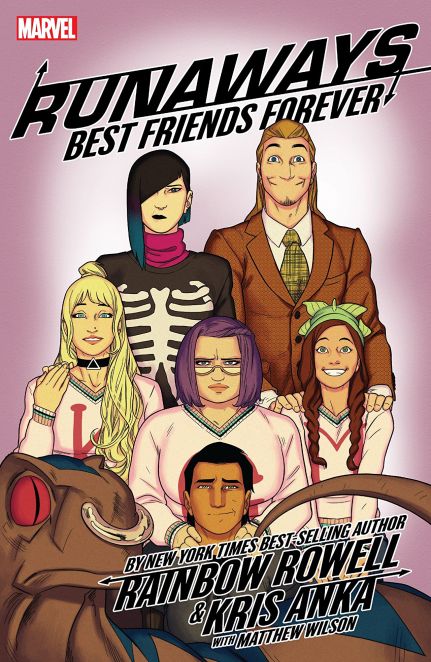
Well this was another fantastic bit of Star Wars fiction! The first thing that I do have to admit is that Shadows and Secrets is probably my least favourite volume in the entire 2015 Darth Vader series. However, this is only because every other volume in this series is just so incredible that this one suffers a little in comparison. That being said, I absolutely loved this second volume as it contains an excellent story, some great moments, fantastic characters and some impressive artwork. Containing issues #7-12 of the Darth Vader series, Gillen and Larroca have done an incredible job with this second volume, and I still consider it to be a five-star read.
One of the best things about Shadows and Secrets is Gillen’s outstanding story, which continues some of the tantalising threads from the first volume while also introducing some great new elements. Gillen sets out a clever, well-paced story that is filled with all manner of action, adventure and intrigue, as Vader begins his duplicitous actions within the Empire, attempting to amass the resources he needs for his projects without drawing the suspicion of either his rivals in the Imperial hierarchy or his new superior. Most of the story contained within this volume is fairly self-contained, featuring a fantastic heist sequence and the subsequent fallout from this event. This fallout mostly revolves around Vader’s investigation into his own heist, which he attempts to cover up from his new aide, Inspector Thanoth. Thanoth is a genius detective of Sherlockian talents who was quickly able to get to the truth of the matter and find the culprit of the heist, despite Vader’s vest efforts. I really enjoyed this whole investigation element to the book, especially as it was fun watching Vader routinely sabotage his own investigation, often by killing any and all potential witnesses, only to have Thanoth easily breeze through these obstacles. Thanoth turned out to be an excellent new addition to this series, and I really enjoyed the intriguing partnership he formed with Vader, especially as he plays a dangerous game by continuously hinting that he knows Vader is behind the theft. This turned out to be quite an amazing and enjoyable storyline, and I really appreciated Gillen’s perfect blend of humour and serious storylines throughout the volume.

Darth Vader (2015) 10

I also loved the continued focus on Vader’s obsessive hunt for Luke Skywalker, which has taken on a new edge now that he knows he is his son. While he was already searching for him in the first volume, now that he realises who he really is, Vader decides to protect his identity and the find out the whole truth behind his birth. This is shown in the first part of Issue #7, in which Vader and Aphra visit both the Lars Homestead and Ben Kenobi’s hovel on Tatooine, where he tries to gleam some knowledge from both houses about his son, before setting off a molecular bomb to erase all useful forensic evidence. Shortly after this, Vader than sets Aphra a task of finding and interrogating a former mortician from Naboo who prepared Padme Amidala’s body for her funeral, including setting up a hologram to make it appear that she was still pregnant. This tuned out to be an outstanding sequence, as the mortician, who has a huge amount of personal loyalty towards Amidala, at first refuses to provide any information about his work, before being tortured and confirming the existence of a child. While this admission is a betrayal of his beloved Queen that clearly costs the former mortician a lot, he is able to do one last act of service for her by not revealing any details about the second child, Leia. I thought that this scene was amazing, and I liked how it helped explain how Vader was aware of Luke’s existence and status as his child, but not that he also had a daughter. I also appreciated Gillen’s focus on the loyalty the inhabitants of Naboo had to Amidala, even in death, which was even able to move the cynical Aphra. Her subsequent mention to Vader of how Amidala must have really been something was a nice touch, as Vader’s subdued and hidden reaction hints at his continuing deep feelings towards his long-dead wife. I really liked this focus on the search for Luke, as not only does it makes sense in the context of the movies, but it also showcases the lengths Vader was willing to go to find and protect his son, and it leads to the best sequence in the entire volume.

I personally really enjoyed how the creative team continued to show off Vader as a dangerous and vicious powerhouse in this volume. While it does not contain the same level of carnage that he unleashed in the first volume of the 2015 Star Wars comic book series, Shadows and Secrets contains several amazing scenes depicting his destructive abilities and personality. Whether he is stuffing a crime lord into the mouth of his own exotic beast and then easily killing the distracted monster, or whether he is taking down and entire squadron of Rebel space fighters one at a time by throwing his lightsaber at them, he is shown to be pretty impressive.

Darth Vader (2015) 11

Just like in the first volume, Doctor Aphra continues to shine as the series’s main supporting character, and her entire character arc within Shadows and Secrets is very intriguing. Throughout this volume, Aphra ends up undertaking several missions for Vader, such as trying to find the location of Luke Skywalker, and has become one of his main confidants. This puts her in a terrible position, as Vader is likely to kill her to protect his secrets, especially when Thanoth gets close to capturing her. Watching the various ways that this ultimate opportunist attempts to survive against the odds, including by brazenly withholding information from Vader in order to stop him killing her, is pretty impressive, and it makes for some great reading. Shadows and Secrets also contains one of the first deeper looks at Aphra’s internal character. During the sequence I mentioned above with the mortician, she gives a lengthy monologue about the death of her mother and how it has affected her. This was a heavy scene, and while she tries to play it off as not being very important, you can see that it has impacted her, turning her into a much more cynical and self-reliant person who has no room for idealism or blind belief. The significance of this scene is also quite crucial when you consider that much of what she said is later shown in the Doctor Aphra spinoff series and ends up becoming a defining part of her character. I also like how the noticeable changes that the creative team have inserted into Aphra’s personality when she deals with Vader. For most of the volume, Aphra comes across as an ultraconfident being who is able to manipulate and control bounty hunters, murderers and crime lords with ease. However, whenever Vader appears, there is a noticeable change in her bearing and personality, which isn’t too surprising as Aphra knows Vader is going to kill her one day.

I also have to point out how much fun the two murder droids Triple Zero and BT-1 continued to be in this novel. Essentially perverted versions of C-3PO and R2-D2, Triple Zero and BT-1 are remorseless killers who delight in murdering or torturing all organic life. These two add an insane element of humour to the entire series, and they have a number of great moments in Shadows and Secrets. Watching the two of them delight in all sorts of murder and mayhem is all sorts of fun, and you’ve got to love the weird and friendly relationship the two of them have formed with each other.

Darth Vader (2015) 12

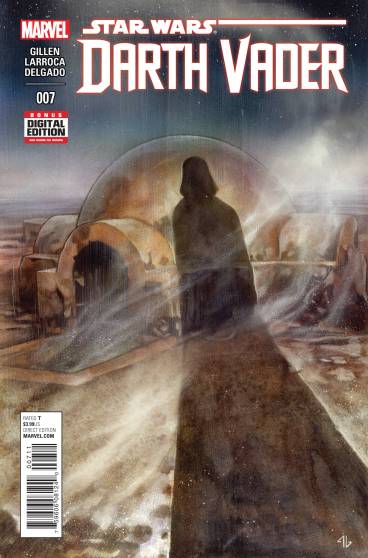
One of the best highlights of this second volume is the amazing artwork. The artistic team, helmed by Salvador Larroca, did another fantastic job bringing the amazing story contained within Shadows and Secrets to life on the page. There are so many vibrant and imaginative panels in this volume, and the volume’s artistic team produce some amazing pieces of art that showcase the wider Star Wars universe. One of the things that continues to impressive me about this series is the way that the artistic team are able to convey so much emotion from the faceless main protagonist. Despite only ever seeing Vader’s expressionless and iconic mask, I found that I was constantly able to glean the true emotions that Vader was surely feeling at the time when I looked at him, ranging from cold menace, surprise, frustration to deeper emotions, such as sadness when Amidala is mentioned. There are some truly amazingly drawn scenes throughout this entire volume, although there are two that I would bring particular attention to. The first is the very first scene in Issue #7, which shows Vader standing out the front of the Lars Homestead, staring at Tatooine’s twin suns as they set. I absolutely loved how this drawing matched the iconic scene from A New Hope where Luke stared off in the same position, and I really appreciated the symmetry. The other piece of art that really stood out to me was a quick sequence that appeared a little later in the volume within Issue #8. In this scene, Aphra has just confidently dealt with one of the bounty hunters in her employ and is looking off in the distance speaking to someone. As she talks, Vader slowly materialises out the shadows behind her, responding to her comments. Despite the fact that Aphra’s expression does not change at all there is a notable shift in the tone of the panel when Vader appears, and you cannot help but feel the threat and menace that he exudes. This was some impressive artwork, which helped to really increase how much I loved this comic.

The second volume of the 2015 Darth Vader series, Shadows and Secrets, is a first-rate comic book that once again shows off how impressive Star Wars comics can really be. Gillen and Larroca did an incredible job following up the first volume of this epic series and I really enjoyed the complex and fun story that this second volume contained, especially when it was backed up by great characters and exceptional artwork. This is a superb addition to the series that is really worth checking out.

Amazon

Throwback Thursday – Star Wars (2015) Volume 1: Skywalker Strikes by Jason Aaron and John Cassaday

Star Wars (2015) Volume 1 Cover.jpg

Publisher: Marvel Comics

Publication Date: 6 October 2015

Length: 160 pages

My Rating: 5 out of 5 stars

Amazon

Reviewed as part of my Throwback Thursday series, where I republish old reviews, review books I have read before or review older books I have only just had a chance to read.

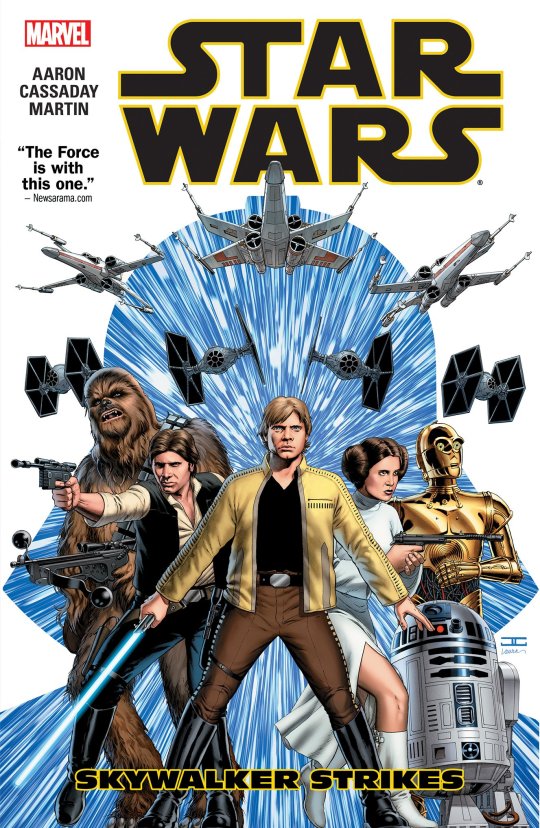
I think it is fair to say that I have been in a real Star Wars mood lately. Maybe it is because of the imminent release of the final movie in the Skywalker Saga, Star Wars: The Rise of Skywalker, or perhaps it is because The Mandalorian is such an awesome TV show. Whatever the reason, I have been reading and reviewing quite a few Star Wars books and comics lately. For example, I am currently listening to Star Wars: Force Collector, I reviewed Tarkin last week and I recently read and reviewed Resistance Reborn and Vader: Dark Vision. As a result, I thought that this week would be a good time to do a Throwback Thursday on the first volume of the 2015 Star Wars comic book series, Skywalker Strikes, which did an outstanding job of introducing an extremely exciting ongoing comic series.

The Star Wars comic book series was started in 2015 and follows the adventures of the protagonists of the original Star Wars trilogy. Set shortly after the events of A New Hope, this series attempts to fill in the three years between the first film and The Empire Strikes Back. The Star Wars comics originally ran concurrently with the Darth Vader (2015) comic series until that series ended, and then proceeded to run alongside the Doctor Aphra comics. The Star Wars series ran for 75 issues and has only recently concluded. A sequel series with the same name is set to begin in early 2020, which will follow the events between The Empire Strikes Back and Return of the Jedi.

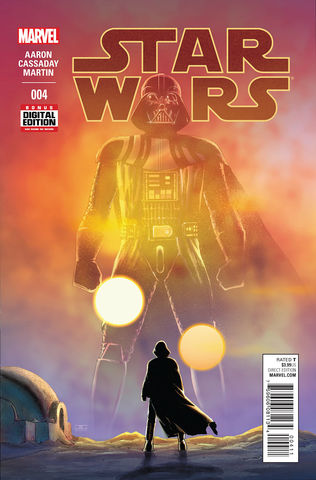
Star_Wars_Vol_2_2.jpg

Volume One of Star Wars begins shortly after the destruction of the Death Star. With the Empire in turmoil following the destruction of such a major weapon, Rebel Alliance members Luke Skywalker, Leia Organa, Han Solo, Chewbacca, C-3PO and R2-D2 use the chaos to infiltrate a key Imperial weapons factory. While they are able to destabilise the factory’s reactor core and free its slave labour force, the Rebels are unprepared for the unexpected arrival of Darth Vader.

Attempting to complete their mission while also trying to kill Vader, the Rebels find themselves hopelessly outmatched by the Dark Lord of the Sith, who is determined to capture the Rebel who blew up the Death Star. Not even Luke, with his newly discovered Jedi abilities, is able to stand up to Vader, and the Rebels barely manage to escape with their lives.

Frustrated by his failures against Vader, Luke decides to take a leave of absence from the Rebel Alliance and returns to Tatooine to contemplate his future. Travelling to the house where Obi-Wan Kenobi lived in exile for years, Luke hopes to find something that will guide him. Instead he finds himself walking into a trap, as the bounty hunter Boba Fett is lying in wait. At the same time, Leia talks Han into a scouting mission for the Rebels, but their simple mission soon attracts the wrong sort of attention. Who is the mysterious woman hunting Han, and why is claiming to be his wife?

Star_Wars_3_Marvel.jpg

Skywalker Strikes, which is made up of Issues #1-6 of the Star Wars series, contains an outstanding story, fantastic artwork and some of the most insane Star Wars action sequences that you will ever see. The team of Jason Aaron and John Cassaday, have done an amazing job on this comic, and this first volume does a wonderful job starting off this long-running series. While all the issues in this volume are connected together pretty well, I would say that there is a distinctive break between Issues #1-3 and Issues #4-6. Issues #1-3 focuses solely on the protagonist’s attack on the weapon facility, while the last three issues feature some more independent adventures from some of the series’ various characters, as each of them is searching for something.

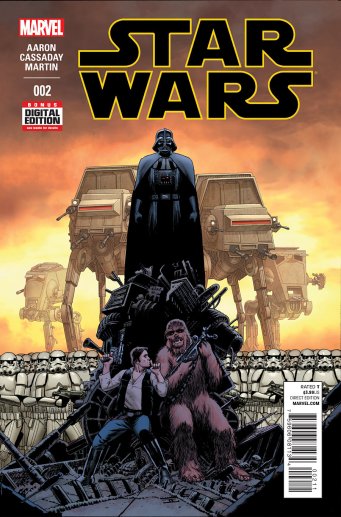
The sequence contained within Issues #1-3 is just incredible, and it is easily my favourite part of the entire series. What starts as a fun infiltration of an Imperial facility quickly devolves into utter chaos as Darth Vader enters the mix. What then follows is nearly three whole issues of action, explosions, fantastic first meetings and all manner of destruction as the Rebels desperately attempt to escape the factory. While all the characters involved in this part of the comic are really good, I have to say that Vader steals the show as the indestructible villain. This was actually one of the first pieces of fiction in the new Disney Star Wars canon that shows off how amazing Vader could truly be, and it is pretty darn awesome. Pretty much from the first instance he appears, he shows off the full extent of his powers by throwing stormtroopers in front of a sneak attack from Chewbacca, and then by starting to crush an AT-AT with the force. He then subsequently survives a full-on blast from the AT-AT’s cannons and hacks it to pieces with his lightsaber. He also cuts through a bunch of escaping slaves and shows his intense displeasure to his subordinates in a number of destructive ways, including twisting a stormtrooper’s head 180 degrees with the force (to be fair, he did catch sight of Vader without his helmet) and choking a Star Destroyer captain from an insane distance. I can also not be the only person who cracked up at Vader very quickly destroying an Imperial Officer moments after he said “Lord Vader will have my….” (spoilers, he was going to say head, and Vader really did). All of this destruction and action was essentially pure awesome, and I loved every second of it.

Star_Wars_Vol_2_4.jpg

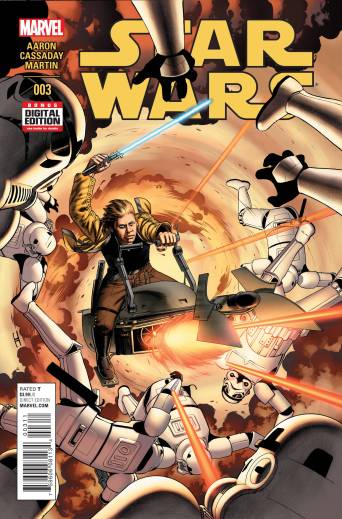
In addition to all the action in this part of the book, there are also some major moments in Star Wars history that fans of the franchise are really going to enjoy. For the one thing, it actually has the first face-to-face confrontation between Luke and Darth Vader. This scene is handled extremely well. Luke, still believing that Vader is the one responsible for the death of his father, jumps at the chance to get revenge. However, as Luke runs towards Vader’s location full of confidence, he hears the disembodied voice of Obi-Wan Kenobi telling him to run. This is advice that Luke really should have taken; Vader, after berating Luke for his obvious lack of skill with the lightsaber, rather easily disarms him. While getting ready to kill Luke, Vader notices that the lightsaber he has taken off him is the very one he used to wield as Anakin Skywalker, which obviously raises some issues within him. As events at the factory spiral out of control, Luke is able to evade Vader, who starts to grow slightly more impressed by his skills. As Luke makes his escape, Vader realises that he is not only the pilot that destroyed the Death Star but also Kenobi’s last great hope. Still not fully realising the identity of the boy he just encountered, Vader rather vindictively promises to corrupt him to his purposes. All of these events are pretty incredible moments in Star Wars history, and I think that the creative team did an outstanding job introducing them in this new canon. The initial face-to-face showdown between the main protagonist and villain of the original Star Wars trilogy is a pretty significant moment, and I really loved how it was shown. The hints at the hidden history between the two are great, and the initial realisations from Vader that there is more to Luke than he realises are fantastic. I also liked how the creative team showed Luke as having no real skill with the lightsaber or the force. Considering that he only had about an hour of training with Kenobi, it really isn’t that surprising that he has no lightsaber abilities, so this is a pretty clever and realistic inclusion, especially as a good part of the following Star Wars comic series deals with some of the earliest days of his training. While these events are probably not the most significant to occur in this volume (more on that later), they are incredibly intriguing and any fan of the Star Wars franchise is going to love it.

The last three issues of Skywalker Strikes are also very entertaining, though less action-packed, since the creative team has opted instead for storytelling and showing off the state of the Empire and Rebel Alliance. While a despairing Luke sets off to find answers, Han and Leia set off to find potential locations for a new Rebel base, while Vader has a meeting with Jabba the Hut. There are some really interesting aspects to this part of the story, from the growing hopelessness in Luke as he begins to realise how far he is from becoming a Jedi, to Vader’s sudden obsession with capturing Luke, to the growing hints of romance between Han and Leia, disguised at this point as antagonism. However, I would say that it’s the newcomers to the comic series, Boba Fett and Sana Solo, that are some of the best parts of the last three issues of the volume. Fett, who has long been a fan favourite despite his complete underutilisation in the movies, shines as the badass bounty hunter as he scours Tatooine for Luke, eventually finding out all about him through some very violent means. This leads to a pretty fun showdown between Boba and Luke, as Boba ambushes him at Kenobi’s house and easily incapacitates him and R2-D2 with his cool array of weapons and tactics. It is only thanks to Luke’s first close-combat use of the force that he is able to escape, as he successfully blocks a blaster bolt while blinded (a nice homage to the training sequence from A New Hope) and moves an item with his mind. All of this was a pretty entertaining showdown, and I loved seeing Fett in action for once. We also have the mysterious Sana Solo, who has a pretty fantastic takedown of some Rodian thugs with a great piece of technology and a ruthless demeanour. She is later able to track down Han and Leia, absolutely terrifying Han before dropping one of the biggest bombshells of the book: that she is Han’s wife. While this is not explored in any great detail in this volume, it is an excellent introduction for this great character, who goes on to become a fairly major figure in the current Star Wars canon. As a result of all of this, the second half of the volume holds up pretty well to the action-packed first half, and there are plenty of major scenes, including the very big ending.

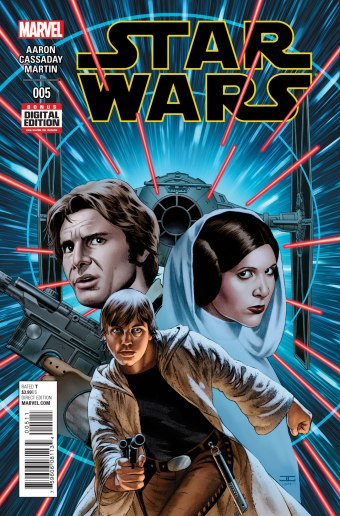
Star_Wars_Vol_2_5.jpg

While I did really like the second part of this volume, the best way to appreciate it fully is if you understand its connection to the Darth Vader (2015) series of comics. The Darth Vader series was launched right on the heels of the Star Wars comics and it is actually set in the aftermath of the first three issues of this volume. In the first issue of this concurrent comic, it is shown that Vader has actually started going rogue on the Emperor and is making his own deals with Jabba the Hutt, before the formal discussion he has with Jabba in Issue #4 of the Star Wars series. This actually clears up the somewhat cryptic discussion he has with Jabba later in the issue, where they talk about the bounty hunters he has hired, and also shows the point where he actually tasked Boba Fett with finding Luke. While none of this is absolutely vital when it comes to fully understanding the plot of Skywalker Strikes, it is interesting to see that some of the referenced events occurred in another series. However, the main reason why readers should try to understand the connection between this comic and the Darth Vader series is in the epic conclusion both of them share, where Vader learns the last name of the boy he has been hunting. Both Issue #6 of Star Wars and Darth Vader were actually released on the same day, so readers of both series were able to see this scene at the same time. The two scenes are shown in a slightly different light in each series. It is expanded a bit more in the Darth Vader series, as it plays into the feelings of resentment towards the Emperor that have been building in Vader through the series. However, I quite liked the simpler version in Issue #6 of Star Wars, as the slow-boiling rage and anger within Vader is pretty obvious, as he takes a whole page to fully react, cracking the glass on a Star Destroyer and simply whispering, “Skywalker”. As a result of this connection, the Star Wars and Darth Vader series complement each other extremely well, and I would strongly recommend reading both pretty close together. However, no matter which series you read, the sequence showing the moment where Vader realises that his son is still alive and a Jedi is pretty darn epic and really memorable.

It could be argued that splitting this volume into two separate storylines was an interesting choice from the book’s creative team. I imagine that six issues focused on the attack on the Imperial weapons factory would have been pretty epic (just imagine how much more destruction Vader could have wrought). However, I personally think they did the right thing by splitting the story and showcasing the aftermath of this action. This way you not only get the intense action of the first few stories but you also get to see the consequences of the mission, and all the implications this has for the wider Star Wars universe. In addition, there is also quite an intriguing set up for several key moments in the upcoming series as a whole, a whole new fight between Luke and another iconic Star Wars character in Boba Fett, and some amazing connections with a sister series. I really liked how the story of the entire volume came together, and I think it was an outstanding way to start this excellent series.

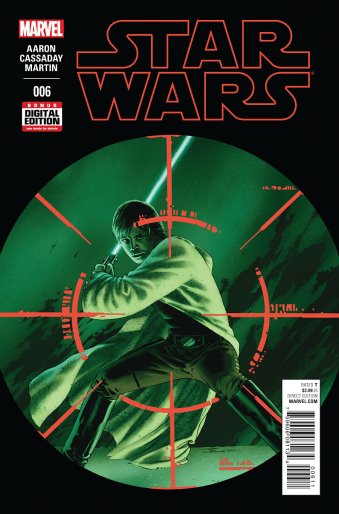
Star_Wars_Vol_2_6.jpg

I have to say that I was also really impressed with the awesome artwork that was featured in this first volume. The artwork was drawn by John Cassaday, and featured Laura Martin as the colourist. It is pretty amazing the way that Cassaday was able to capture the faces of the core original trilogy cast members with his artwork. Luke, Leia and Han all look really good to my eye in this volume, and the artist has also done some great renditions of other existing characters, such as Vader, Boba Fett and Jabba the Hutt. In addition, I really enjoyed all of the marvellous and exhilarating action sequences that they artistic team portrayed throughout the volume. These action scenes, especially the ones featuring Vader at the start of the book are just incredible, and I really loved seeing all the fantastic and creative violence. In addition to all the action, there are a number of scenes where the artwork helps to enhance the emotions and hidden meaning of a scene, and I will always love the way that they portrayed the closing moments of this volume. This was some first-rate Star Wars comic book art that is really worth checking out.

As you can see from the above review, I really loved this first volume of the Star Wars (2015) comic book series. The amazing creative team behind this first volume did a fantastic job with the first six issues that make up Skywalker Strikes, producing an extraordinary story which is complimented by a connection to another series and some exceptional artwork. This volume is a fantastic introduction to the flagship comic book series of the Star Wars franchise, and it comes highly recommended. No great knowledge of the expanded Star Wars canon is required to enjoy it, and indeed this may prove to be an effective gateway to the greater Star Wars universe. This gets a full five stars from me, and I am so very glad I decided to check out the Star Wars comic book series this year.

Amazon

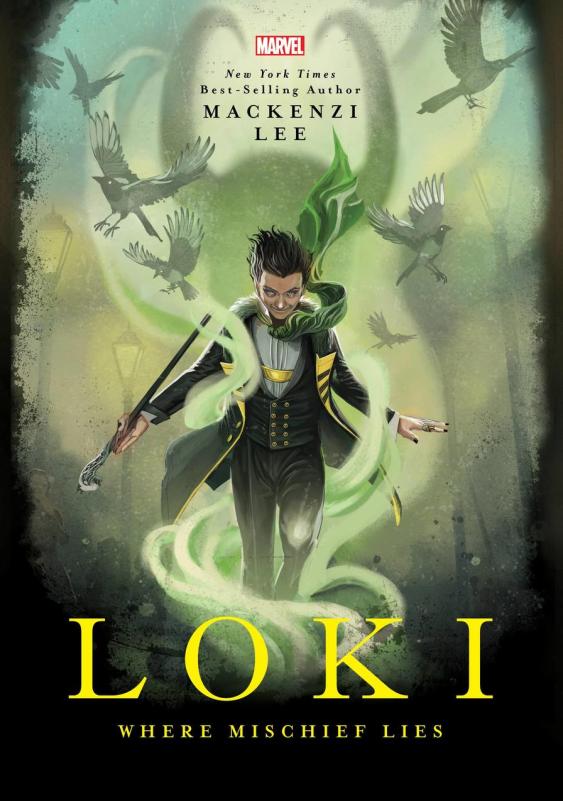
Loki: Where Mischief Lies by Mackenzi Lee

Loki Where Mischief Lies

Publisher: Penguin Random House Audio (3 September 2019)

Series: Standalone/Book One

Length: 9 hours and 10 minutes

My Rating: 4.25 out of 5 stars

Amazon

From acclaimed young adult fiction author Mackenzi Lee comes a fun and clever young adult tie-in novel to the Marvel comic book universe that follows the early life of one of the genre’s best villains, Loki, the Asgardian God of Mischief.

Loki has long been one of the most infamous and complicated villains in the Marvel Universe, whose manipulations and machinations are a constant threat to Asgard, his brother, Thor, and the Avengers. However, years before he started causing chaos in Midgard, he was a young prince of Asgard and the unfavoured son of Odin. Despised and mistrusted by the people of Asgard for his magical abilities, and feared by his father as a prophesied destroyer, Loki’s only confidant is Amora, a powerful sorceress in training.

When Loki and Amora accidently destroy an ancient and valuable magical artefact, Amora is banished to Midgard (Earth), where her magic will eventually fade, and Loki loses the one person who appreciates who he truly is. Determined to prove his father wrong, Loki dedicates himself to becoming a dutiful son, but he continues to find himself overshadowed by his brother’s bravery. When a failed mission once again disappoints Odin, Loki is sent to Midgard in order to investigate a series of murders that have been caused by Asgardian magic.

Arriving in 19th century London, Loki makes contact with a small group of humans who police interdimensional travel, the Sharp Society. Loki, despite his reluctance to help, soon finds himself trying to find the mysterious killer who is turning humans into living corpses. But when he discovers who is responsible for the deaths, he is once again torn between doing the right thing and acting the villain. As his adventure on Midgard continues, Loki soon realises that he needs to decide who he truly is: the good prince of Asgard his family always wanted, or the villain everyone expects him to be.

Loki: Where Mischief Lies is a rather intriguing read that caught my attention some time ago. I am a huge fan of Marvel comics and I will always be interested in checking out any tie-in novels connected to either the comics or the movies. As a result, I made sure to grab a copy of the audiobook version of this book as soon as I could. This turned out to be a fast-paced and enjoyable read that explores the life and times of a young Loki, placing him into a fascinating setting that helped enhance the story. Lee, who is best known for her young adult novels set in the 19th century, including This Monstrous Thing and the Montague Siblings books, created a great Loki story that does a spectacular job diving into the psyche of the character and shaping a fun adventure around it. This is actually the first book in a series of three historical novels that Lee has been contracted to write that will feature Marvel antiheros, and I am really interested in finding out which characters will be in these books.

Where Mischief Lies contains a compelling central storyline that follows the early days of Loki in Asgard and his first foray down to Midgard. Lee starts the story off by introducing a young Loki on Asgard, establishing his character, examining some of his early motivations, inserting a major life-changing event and inserting a magical premonition that will haunt the character throughout the rest of the book. I really enjoyed this introduction to the characters and the plot, and thought that it set up the rest of the story perfectly. The next few parts of the book, which are set after a time jump of a few years, do a good job showing how the character has evolved after the introductory events of the book, and then they manoeuvre him down to London where he has to discover the cause of a series of deaths done using Asgardian magic. The set up to get him down to London, the initial parts of Loki’s adventures on Midgard, his introduction to the Sharp Society and the first encounter with the mysterious bodies are all pretty interesting, and is a great follow-through from the book’s introductions.

I did however struggle with the middle parts of the book, as they felt a little flat and hard to get through. Those readers hoping for a complex mystery into who is leaving the bodies on the streets of London are going to be disappointed, as Loki solves the case quite quickly, and it is literally the most obvious suspect ever. I also wasn’t the biggest fan of the following periods of Loki’s indecision and angst as he tries to deal with the fallout from this revelation. However, the ending of the book more than makes up for it, as Lee wraps it up with an epic conclusion that showcases the full extent of the character’s nature and his eventual future, while also utilising story elements set up earlier in the book. While there were periods in the middle of the book where I was starting to get a little restless, I think overall the story of Where Mischief Lies is really good and its strong ending made it all worthwhile.

Thanks to his appearances in the MCU, Loki is probably one of the most popular and well-known Marvel antiheroes and characters, so any portrayal of him needed to be spot on. Luckily, Lee did an outstanding job with her characterisation of Loki, and the examination of the younger version of this character is probably one of the best things about this book. Lee’s version of young Loki contains all the hints of the growing arrogance, swagger, fashion sense, penchant for mischief and casual disdain for mortals and Asgardians that make him such a fun character in the comics and movies. However, what really makes this an excellent portrayal is the fact that Lee also shows all of Loki’s inherent vulnerability, frustration and anger, which have resulted from a childhood of being seen not only as the lesser son but as something that is dangerous and untrustworthy. This examination of the character’s inner psyche is a fantastic central point of the book, and it is interesting to see the world from Loki’s point of view, especially as you really start to sympathise with him. The story also shows some key moments in Loki’s life, and you get a sense of his motivations and determination to torment those around him. I also think that Lee did a fantastic job of examining the relationship between Loki and Thor. While a lot of their relationship is antagonistic, Thor is shown at times to be the only character who trusts Loki, and it is interesting to see the relationship that might lead to Loki’s eventual redemption. If I were to complain about any aspect of Lee’s portrayal of Loki, it would be that his powers and abilities were a bit inconsistent at times. For example, it was a little weird to see him being physically inconvenienced by a human in one scene, and then a chapter or two later he has the strength to lift two people up at the same time. While this is a relatively minor issue and I imagine that you could explain this away as some form of deception by Loki, I personally found it to be a little jarring.

One of the most intriguing aspects of Lee’s portrayal of Loki is his gender and sexuality. In the build-up to the release of Where Mischief Lies there was a lot of discussion about how this book was going highlight certain LGTB+ elements from the comic books, especially as Lee’s previous books have all contained LGTB+ components. Throughout his comic book history, Loki has been portrayed as both genderfluid and pansexual, and both of these elements of the character are explored within this new book to various degrees. While an interesting part of the character, the genderfluid aspect of Loki is only really shown to a small degree in this book. While Loki does not actually change his gender within Where Mischief Lies (which has occurred in some Marvel comics), when asked “if he prefers men or women”, he does indicate that he has been both. There are also several examples of Loki using his powers of magic to appear as a female character (with various degrees of success), and there are also scenes where he dresses in women’s clothing, usually stolen from Amora, who is amusedly annoyed that they look better on him. While it was not as fully explored as it could have been (and to be fair, it would have been hard to add it in to a novel of this length), it is really cool to see a genderfluid character being introduced into a novel connected to the Marvel Universe.

In addition to this, the pansexual aspect of Loki’s character is on full display throughout the book, as Loki has romantic connections with both male and female characters. Not only does he fall in love with Amora (there is a reason they call her The Enchantress), but a romantic connection also begins to spark between him and a young Sharp Society member, Theo. I really liked the way that Lee handled both of these romances. While the relationship between Loki and Amora ends in flames (which should come as no surprise to Marvel fans), the slowly growing feelings he shares with Theo are quite sweet and contain some rather interesting social commentary. The relationship with Theo is underscored with feelings of identity; due to the social conventions of the 19th century, Theo is unable to be who he really is. This is mirrored by Loki, who has complete freedom of sexuality and gender, but who finds that he is looked down on because of his magic, which he sees as a being major part of his identity. All of this was intensely fascinating, and I really enjoyed seeing this additional complexity explored within the character.

Another aspect of this book that I enjoyed was the various tie-ins it contained to the Marvel’s comics universe. This was a pretty comprehensive origin story for Loki, and quite honestly it could be used as a prequel to both the comics and the Marvel Cinematic Universe. However, given that there is a lot more focus on magic, runes, elves and artefacts, it should probably be more associated with the comics. Lee does a fantastic job bringing Asgard to life, and there are a number of cool references to the various settings and characters of the Thor comics that will appeal to major comic book fans. In addition to this, the author also peppers the story with other Marvel references, especially when the story goes down to Midgard. For example, there are mentions of an industrialist called Stark, talk of a green-skinned female alien and discussion that the Sharpe Society should be renamed as either SHIELD or SWORD. While all these references are rather amusing, I would say that no real prior knowledge of the comics or the movies are really required to enjoy this book, although Marvel fans will probably get more out of it.

Where Mischief Lies is being marketed as a young adult fiction novel, and I believe that this would be a great book for young teen readers, who will love this intriguing look at one of the best Marvel characters. Younger readers should be prepared for the typical amount of comic book level of violence and sex in this book, but there is really nothing that is too explicit for younger readers. I personally think that many teens will appreciate the various LGTB+ elements included in the story, and they will be interested to see this side of the character that has not been included in the movies. Like many young adult tie-in novels, Where Mischief Lies is very accessible to older readers, and I know that many will really like this take on Loki as well, making this a fantastic novel for all ages.

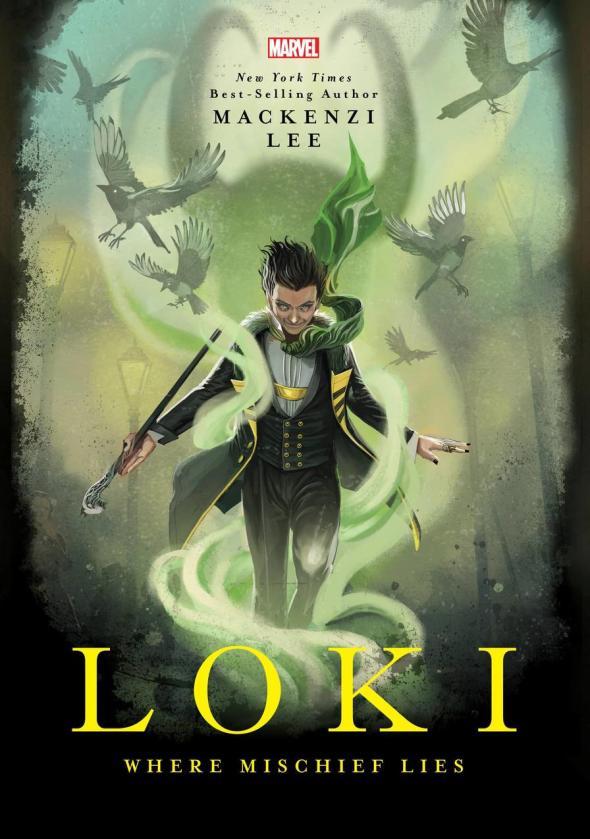
While I really enjoyed the awesome cover of Where Mischief Lies’ hardcover edition, I ended up listening to it on audiobook rather than grabbing a physical copy. The audiobook format of this book is narrated by Oliver Wyman and runs for just over nine hours in length. I think that was a pretty good way to enjoy Where Mischief Lies, as it proved to be a rather easy book to listen to, and I was able to complete it in only a couple of days. Wyman is an enjoyable narrator, and I really like his take on the book’s protagonist and point-of-view character, Loki. He did a fantastic job capturing various aspects of the character’s personality and speech patterns, from his sneering contempt to his frustrations at the way he is treated. This excellent narration really added a lot to my enjoyment of the novel and I would definitely recommend the audiobook format to anyone who is interested in checking this book out.

Loki: Where Mischief Lies by Mackenzi Lee was a fantastic young adult tie-in novel that does a wonderful job of bringing the character of Loki to life. I had a lot of fun listening to this novel, especially as Lee dives deep into the life and mind of Loki, exploring how he became the villain we all love. I was initially planning to give this book a rating of four out of 5 stars; however, considering how much I ended up writing about it, it must be worthy of 4.25 stars instead. I have to say that I was impressed with Lee’s talent for writing novelizations about Marvel antiheroes, and I look forward to her next book in this young adult series.

Amazon

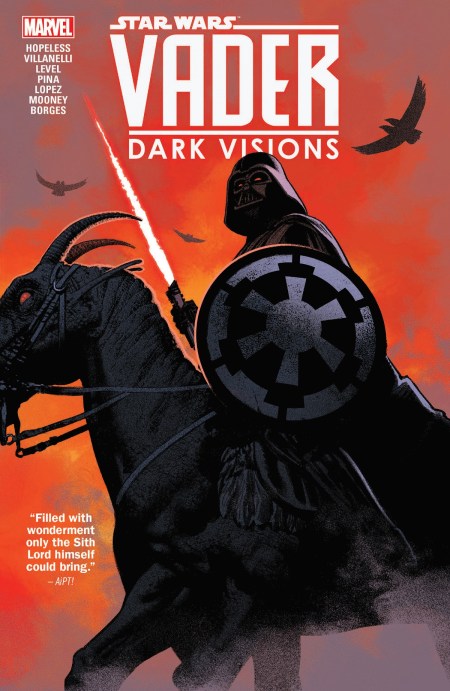
Star Wars: Vader: Dark Visions by Dennis “Hopeless” Hallum and Various

Vader-DarkVisions-TPB.jpg

Publisher: Marvel Comics

Publication Date: 27 August 2019

Length: 128 pages

My Rating: 4.5 out of 5 stars

Amazon

Prepare to see one of the most iconic and beloved villains in all of fiction, Darth Vader, in a whole new light as Dennis “Hopeless” Hallum and several talented artists present five new and clever stories of the Dark Lord of the Sith from across the galaxy.

To most of the universe, Darth Vader is the Empire’s ultimate symbol of power, authority and fear, delivering death and destruction upon all who incur his wrath. But to some he can be something even more potent and remarkable. On one planet he is a Black Knight, a beacon of hope that saved them from a terrible monster. To a certain Imperial Commander, Vader is a reminder that failure is unacceptable. To one Imperial nurse, Vader is her one true love. But no matter how people see him, the one universal truth is that those who encounter this Sith Lord are likely to end up dead.

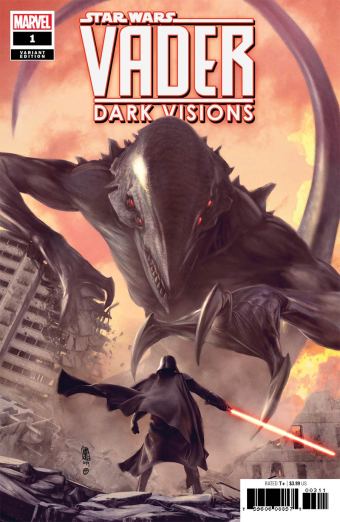
VaderDarkVisions1-Camuncoli.jpg

Vader: Dark Visions is a fun and uniquely intriguing Star Wars comic that I bought a few weeks ago while on holiday. Vader is easily one of my favourite Star Wars characters, especially as most recent pieces of Star Wars expanded universe fiction have gone out of their way to show him as the ultimate badass. For example, I have absolutely loved some of the recent Darth Vader comics that have been published, including the 2015 Darth Vader series, the Darth Vader: Dark Lord of the Sith series (check out my reviews for Volumes 2 and 3 here), and he has also been exceedingly impressive as a villain in recent volumes of the 2015 Star Wars comic series and the always entertaining Doctor Aphra comics. I also loved his appearance in the second season of Star Wars Rebels and in novels such as Thrawn: Alliances (which features a very cool scene of Vader flying a Tie Defender). As a result, I have been looking forward to Dark Visions for a while, as I found the cool concept of five new and different stories about Darth Vader very appealing.

This collected edition of Dark Visions contains five separate, standalone comic issues that have been written by Hopeless, each of which features the talents of a different artist. Each of these separate stories is really cool, featuring some very interesting story elements, eye-catching artwork and interactions that give the reader a real sense of how terrifying and complex the character of Darth Vader truly is. I also liked how different each of the stories was as Hopeless goes in some very interesting directions to showcase Vader.

VaderDarkVisions1-LFY

The first issue of Dark Visions is Savior and it features the artistic talents of Paolo Villanelli and colour artist Arif Prianto. Savior is the set piece of the entire book and is probably the one that shows off how powerful Vader truly is as he faces off against a gigantic civilisation-destroying monster by himself. Not only is this a pretty epic fight, but everything is shown from the perspective of a young boy whose people have been living in fear of the monster for generations. To him, Vader appears as a great hero, a Black knight, who has come to save their planet, and who even rides a black horse-like steed into battle. However, even after he saves his entire world, the young narrator gets a sense of what Vader really is and is quite rightly terrified. This was an awesome, action-packed first issue and it serves as a great introduction to the entire volume. You also have to give props to the cool cover art that this story produced. The main cover for Issue #1 was used as the cover for the Dark Visions collected edition, and the shot of Vader as an actual knight is one of the main reasons why I wanted to grab this comic. I have also included the two alternate covers that this issue inspired as well, as they are a lot of fun, and show the behemoth that Vader faces off against

SW_Vader_-_Dark_Visions_2.jpg

The second issue of this comic is easily the funniest of the whole Dark Visions volume. Issue #2, Unacceptable, features an absolutely hilarious Moby Dick inspired story drawn by Brian Level and coloured by Jordan Boyd. The story follows an Imperial Commander who, after seeing Vader brutally kill an entire room full of officers when he was younger, is absolutely terrified of any form of failure. As a result, when a single Rebel spy escapes his attack and he learns that Vader is on route, he abandons the fleet to take his Star Destroyer after this spy in order to capture him, as “failure is unacceptable”. What follows is a destructive rollercoaster ride through space, as the Rebel spy pilots his ship through a range of obstacles and the Imperial Commander obsessively follows him no matter the risk. This results in a fantastically amusing story filled with laughs, disbelief, some very impressive artistic set pieces and an ending that brings the entire story full circle. Thanks to excellent artwork, the commander’s fall to insanity is pretty clear throughout the issue, and I absolutely loved the crazy obstacles he went through. If you’ve ever wanted to see a Star Destroyer fly into an exogorth (the giant space slug in Empire Strikes Back) then this is the comic for you.

VaderDarkVisions-3.jpg

Next we come to the third issue of Dark Visions, Tall, Dark and Handsome, which has David Lopez and Javier Pina as the artists and Muntsa Vicente as the colour artist. Like Unacceptable, the story within Issue #3 is a tale of obsession; however, it goes in a very different direction. Tall, Dark and Handsome follows an Imperial nurse on the Death Star who, after treating Vader and feeling his power, starts to fall in love with him and begins to imagine an epic romance with him. This story pretty much ends the way you would imagine, but it is a very dark and emotional journey to the conclusion. While this story is pretty messed up, it is written and drawn extremely well, and you can’t help but feel sorry for the nurse who is slowly losing her mind. The artists did a fantastic job showcasing the various stages of the nurses obsession, from the initial stages of her infatuation, to the look she gives him after he knocks her down with the force (a look that can only be described as “thirsty”), to the scenes at the end where she finally cracks and goes into full-blown crazy stalker mode. I also loved the various sequences generated by the nurse’s imagination, which show her idealised versions of the romance, and they are a great portal into her shattered mind.

VaderDarkVisions-4.jpg

The fourth issue of Dark Visions is titled Hotshot and featured Stephen Mooney as the artist and Lee Loughridge as the colour artist. This is a rather interesting story that examines the impact Vader has on the psyche of the Rebel pilots he flies against. In this issue, Vader goes up against a group of skilled Rebel pilots, including a young hotshot flyer with boundless confidence. However, Vader’s superior skills and reputation as a pilot soon have a noted influence on his opponent’s minds, and Vader is able to defeat one solely through fear. I really liked seeing a story that focused on Vader’s ability as a pilot, as it is one of his more impressive abilities, and is pretty cool when focused on (his appearance in the season 2, episode 1 of Star Wars Rebels springs to mind). The various space battles that occur within this issue look fantastic, and you get a real sense of how skilled Vader is in the cockpit.

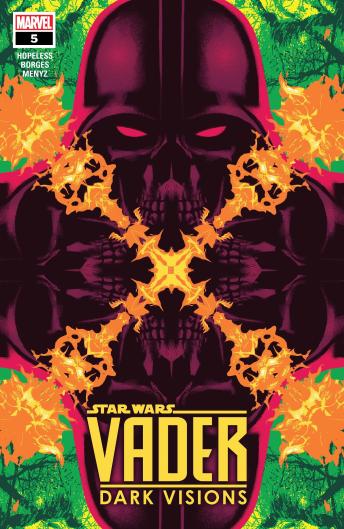
VaderDarkVisions-5.jpg

The fifth and final issue contained within this volume is called You Can Run…, and it was drawn by Geraldo Borges and coloured by Marcio Menyz. This final inclusion focuses on the general aura of fear that Vader exudes as he hunts down a person carrying valuable information on a hostile jungle world. Vader is already pretty terrifying on his own, but when his target gets dosed by a hallucinogenic compound and begins to see all sorts of horrors around him (like the Scarecrow’s fear toxin in Batman), Vader’s scariness gets amped up to 11. The artists come up with some pretty impressive fear-induced sequences throughout this issue, and the various exaggerated ways that Vader is shown are quite inventive (there is a hint of the Predator in one of them).

Overall, I think that this was a really varied and enjoyable combination of different stories that all examine a different aspect of this great character. All five of these issues are done extremely well and feature a fantastic combination of intriguing stories and amazing artwork. I absolutely loved each of the first three issues, and also quite enjoyed Hotshot and You Can Run… However, I actually found it really hard to pick out my favourite story, mainly because they were all enjoyable in such different ways. I do think that these various stories came together into a very satisfying overall volume that is extremely entertaining. As a result, I would strongly recommend Vader: Dark Visions, and it is an excellent read for all fans of the Star Wars franchise.

Amazon

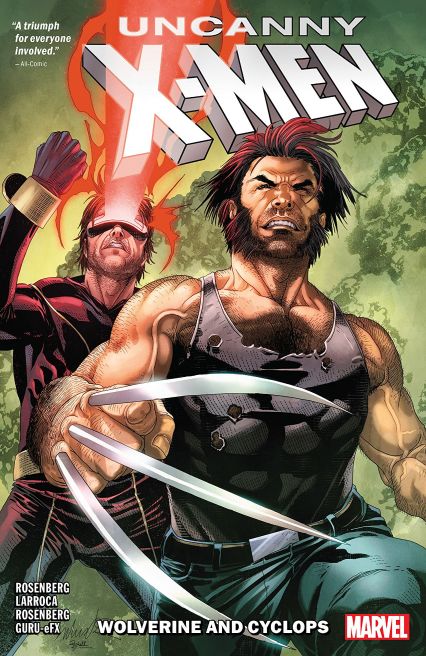
Uncanny X-Men – Vol. 2: Wolverine and Cyclops

Uncanny X-Men Wolverine and Cyclops Cover.jpg

Publisher: Marvel Comics (Trade Paperback – 2 July 2019)

Series: Uncanny X-Men (2018) – Volume 2

Writer: Matthew Rosenberg

Artists: Salvador Larroca

               John McCrea

               Juanan Ramirez

Colour Artist: Rachelle Rosenberg

Length: 136 pages

My Rating: 4.5 out of 5 stars

Amazon     Book Depository

Prepare to enter a whole new era of X-Men comics as writer Matthew Rosenberg and artist Salvador Larroca bring forth a second volume in the new series of Uncanny X-Men and focus on the aftermath of the latest disaster to befall mutantkind.

No More X-Men!

For years, the X-Men have tried to fulfil Charles Xavier’s dream of unity between mutants and humans by being the shining examples of their species as superheroes, protecting even those people who hate and fear them. However, in one devastating moment, that dream has been smashed. The godlike mutant X-Man, in an attempt to remove all opposition to his messianic desires, combined his powers with that of the reality-bending mutant Legion in order to end all the X-Men who stood against him. In a single instant, nearly every mutant who had served as a member of the X-Men was gone, and the world reacted accordingly.

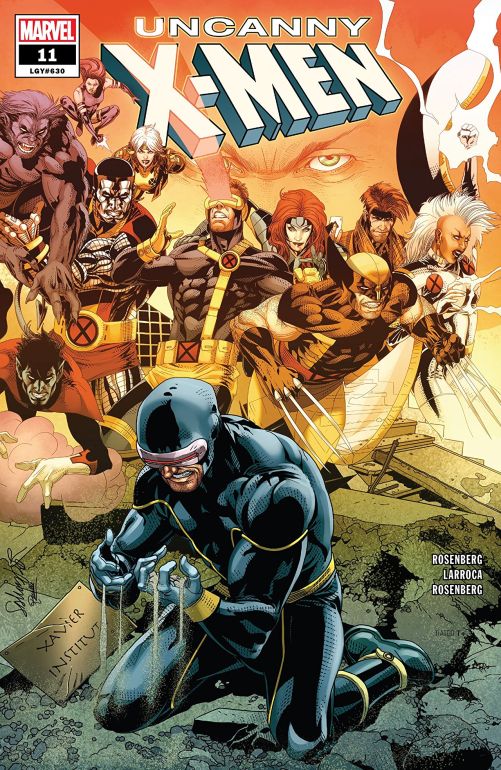
Uncanny_X-Men_Vol_5_11.jpg

In the aftermath of this loss, Mutantkind is on the brink of extinction. Already suffering from years of losses caused by the Genosha genocide, the M-Day Decimation, the Terrigen Mists and Disney’s wrath for being owned by Fox, the remaining Mutants are now left without their protectors. With public opinion firmly against them, government agencies hunting down and imprisoning any surviving mutants and the new mutant vaccine being made mandatory for the entire population, this looks like the end for the species. However, one mutant is desperate to change this: the original leader of the X-Men, Cyclops.

Having been recently returned from the dead, Cyclops attempts to find his way in the new world, where all his X-Men comrades have disappeared. After an encounter with the mysterious mutant Blindfold, whose cryptic visions now contain nothing but despair, Cyclops will try to do what he always does, attempt to save his species. However, with no allies willing to help and even the Avengers turning against them, Cyclops is finding it hard not to give in to despair. In a desperate move, he makes a televised plea for any remaining X-Men to join him at the remains of the X-Mansion. While at first it appears that only the X-Men’s enemies have turned up in order to kill him, one X-Man answers the call, the last person Cyclops expected to come to his aid, his long-time rival Wolverine.

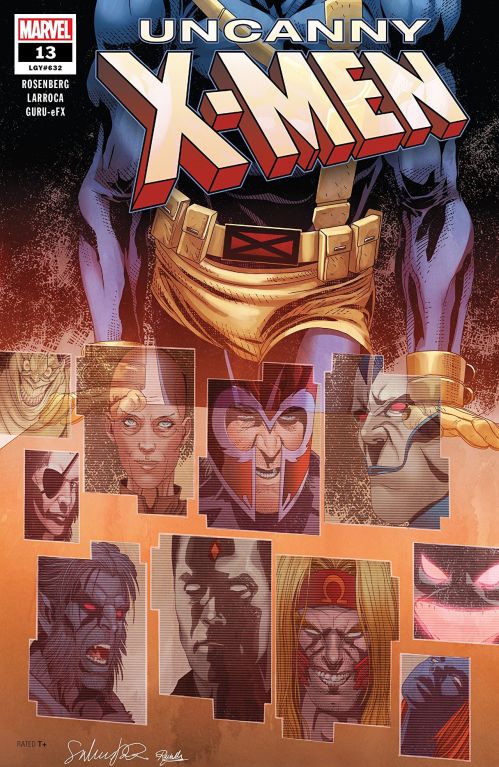
Uncanny_X-Men_Vol_5_13.jpg

Having also just come back from the dead, Wolverine is reluctantly drawn back into Cyclops’s orbit. In their recent past these two legendary X-Men have fought, gone to war and nearly killed each other over their ideals, the future of mutantkind and the heart of Jean Grey, but now they can agree on one thing: the X-Men need to come back. Pulling together a rag tag team, including Magik, Wolfsbane, Havok, Dani Moonstar, Karma, Chamber and Jamie Madrox, Cyclops and plan to go after the biggest mutant threats they can find on order to stop additional escalations against mutants and to leave the world in a better place if this is truly the end of mutantkind. But what happens when they are forced to go up against old friends such as Banshee or Hope Summers, as they attempt to obtain their own form of justice leading a new version of the Mutant Liberation Front?

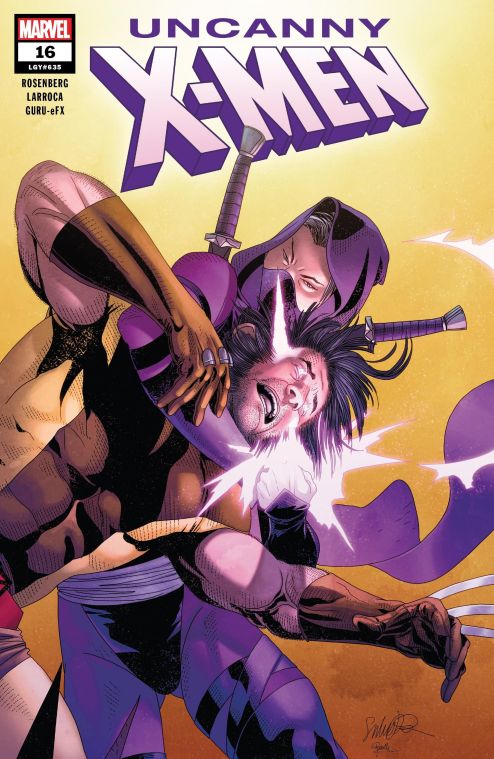
The second volume of this new series of Uncanny X-Men, Wolverine and Cyclops, is a fantastic and enjoyable comic that does a wonderful job introducing a cool new version of the X-Men following the major changes that occurred in the first volume of the series, X-Men Disassembled. Featuring issues #11-16 of the 2018 series of Uncanny X-Men, this volume does an excellent job of showcasing the new, darker version of the Marvel Universe following the disappearance of the X-Men.

Cyclops and Wolverine is written by Matthew Rosenberg, who has been working on a number of cool series for Marvel lately, including the extremely entertaining new Punisher series. In a nice sense of continuity, Rosenberg returns to write this second volume of Uncanny X-Men after completely changing everything with X-Men Disassembled. After setting up the cool story in that book, Rosenberg now puts his thoughts to exploring the aftermath of this tale, not only in this volume but in a number of future entries. For this second volume, Rosenberg is joined by artist Salvador Larroca, who provides the art for most of this book, while veteran artist Rachelle Rosenberg serves as the colourist for all the issues in this volume.

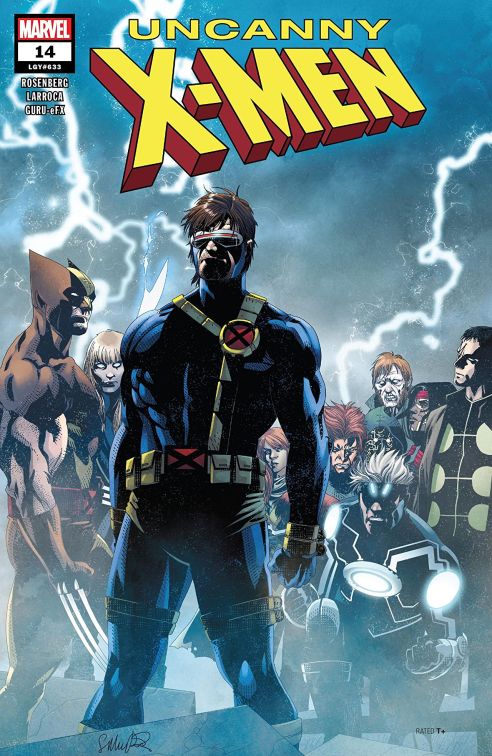
Uncanny_X-Men_Vol_5_14

After the previous entry in the series, the creative team was left with the interesting problem of how to run an X-Men series after you sent away all the X-Men (probably to the universe featured in the various Age of X-Man miniseries). What they came up with was a fantastic story that featured a new end of days for mutantkind and a new version of the iconic team. Since the events of the last volume, the whole world has dramatically changed for mutants. While they were never popular, now they are being actively hunted down, captured, experimented on or exterminated by government-sanctioned groups and there is no one able to stop them until this new team of X-Men come along. I really liked one of the ideas broached in the story that the X-Men, despite their attempts to be peacemakers, really only stopped this sort of government attack because they intimated the government, and now that the X-Men gone, there is nothing stopping them from ensuring there are no more mutants. As a result, this is a really interesting setting for a new X-Men series, and Rosenberg has come up with a really cool story. This is a much grimmer version of the classic X-Men story, as the team no longer has a high-tech base, matching uniforms or an advanced jet. Instead, they are a small team of rebels, hiding out in a bar and getting involved in fights for survival. This first volume contains a number of big plot moments, including the additional deaths of several mutant characters (which probably won’t last that long), noteworthy character developments (one character’s code-name gains a whole new level of significance) and the formation of an intriguing new team of X-Men.

I really enjoyed the way that the creative team set out this story in the first volume and I particularly enjoyed the first issue of the volume (Issue # 11). This issue does a wonderful job introducing the new Marvel Universe, and showing Cyclop’s difficulties coming back to such an altered world, bereft of hope for mutants. As the first issue continues, Cyclops meets several former friends and allies, such as Blindfold, Chamber, Ben Urich, Jamie Madox and Captain America, each of whom try to convince Cyclops that the X-Men are dead and that his mission is over. All of these encounters, including a second tragic meeting with Blindfold, drive Cyclops to his former home at the X-Mansion, where it appears he is truly the last X-Man, and only his enemies, such as the Reavers, the Purifiers and the Sapien League remain. However, at the last second, it is revealed that Wolverine was also on the scene and joins the fight, teaming up with Cyclops to defeat the mass of foes in the front of them in a particularly satisfying fight sequence to end the first issue. The volume then goes on to show two mini-stories, which show the reader that Wolverine had been following Cyclops for a while and had actually been helping him without the reader or Cyclops knowing it. Another story also shows why Blindfold had gotten involved and adds a whole new layer of tragedy to the story. The rest of the volume unfolds in a pretty logical way; without going into too much detail, Cyclops and Wolverine manage to form a team of X-Men, and in the following volumes they face a variety of different threats and find new allies, all of which will set up some interesting storylines for the next few volumes of the series. I liked where the story went towards the volume, and there were some really interesting developments that did a fantastic job following the strong opening issues.

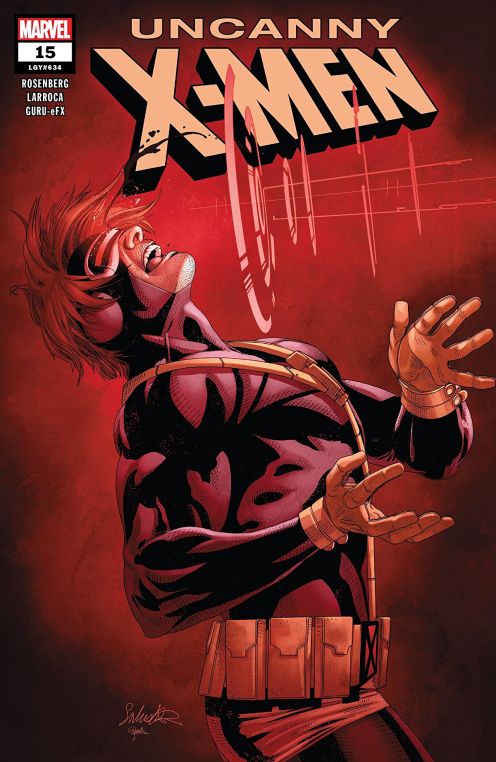
Uncanny_X-Men_Vol_5_15

While this volume features a number of great characters, as the name suggests, the story is mostly focused around Cyclops and Wolverine, who team up again for the first time in years. These two are probably two of the most iconic X-Men ever created, and the longstanding rivalry and dislike between them has long been a recurring X-Men story arc. However, in recent years, this dislike has turned into direct antagonism, especially after the events of the 2011 miniseries, Schism, where a fight of their respective ideological differences saw them split off and lead two separate groups of X-Men. This antagonism continued through several major X-Men arcs, including Avengers vs X-Men, but it was ultimately left unresolved due to Wolverine’s death in 2014. As a result, this volume is the first time Wolverine and Cyclops have both been alive in nearly five years, and it was interesting to see the two of them finally come together again. I really enjoyed their reconciliation in this volume, especially as all it took for these two to get on the same page was two simultaneous resurrections, the complete destruction of the X-Men, one cathartic fight against a group of bigots, and a one-word greeting on the battle field.

The rest of the volume continued to build on their relationship as they work together to reform the X-Men. It is a fun return to the pre-Schism dynamic, as Wolverine once again follows Cyclops’s lead, and the two have a fun, banter-laden relationship built on mutual respect. However, Rosenberg does not ignore some of their prior conflict; rather he incorporates it into their relationship. Cyclops is fully aware that much of the X-Men’s current issues are due to his past actions, such as pushing for a more militant approach while he was the mutant leader, going to war with both the Avengers and Inhumans, and killing Professor X. As a result, he starts to rely on Logan’s opinion a lot more than some of the other X-Men, such as his brother Havok, as he knows that Wolverine won’t just agree with him if he is in the wrong again. This new era of cooperation between Cyclops and Wolverine forms a fantastic heart of this volume of Uncanny X-Men, and it was great to see these two characters back in action again after their lengthy absences.

Uncanny_X-Men_Vol_5_16

I rather enjoyed the artwork that was featured in Wolverine and Cyclops, and the artistic team of Larroca and the colourist Rosenberg do a good job producing an interesting art style for this volume. I personally liked the darker artistic tone quite a lot of the scenes had, which I felt reflected the tone of the series and which was also a result of the X-Men trying to remain hidden by doing their missions at night. I also liked the interesting character designs that featured in the book, as the team is forced to wear a mismatched bunch of scavenged uniforms from across the various X-Men eras, which really helped highlight the low resources and support they have. There are a number of detailed and exciting action sequences throughout the book that the artists do an amazing job bringing to life. I was particularly fond of the first major sequence, in which Cyclops and Wolverine took on the anti-mutant soldiers near the X-Mansion. It was a particularly brutal couple of pages, and I loved seeing the two main characters in action again. I also really liked the scene where Wolverine first reveals himself. The look of horror and resignation of several characters’ faces when they hear “snikt” was just beautiful. Extra art done by John McCrea and Juanan Ramirez for the two background stories, Wolverine Returns and The Last Blindfold Story, added an interesting new element to the volume, and it was cool to see their different art style in the middle of the book. Overall, this was some great artwork, and I cannot wait to see what this team produces in the future.

Wolverine and Cyclops is a bold new direction for Uncanny X-Men that I really enjoyed. With a darker universe, some interesting story directions and the return of two of the team’s most iconic characters, the X-Men have entered a brave new era, and I was glad to be there for the ride. This new creative team for Uncanny X-Men did a fantastic job reintroducing these two amazing characters, and they have proven that they have some intriguing ideas. The next volume of this series is out in October and is already one of my top comics to buy later in the year.

Amazon     Book Depository

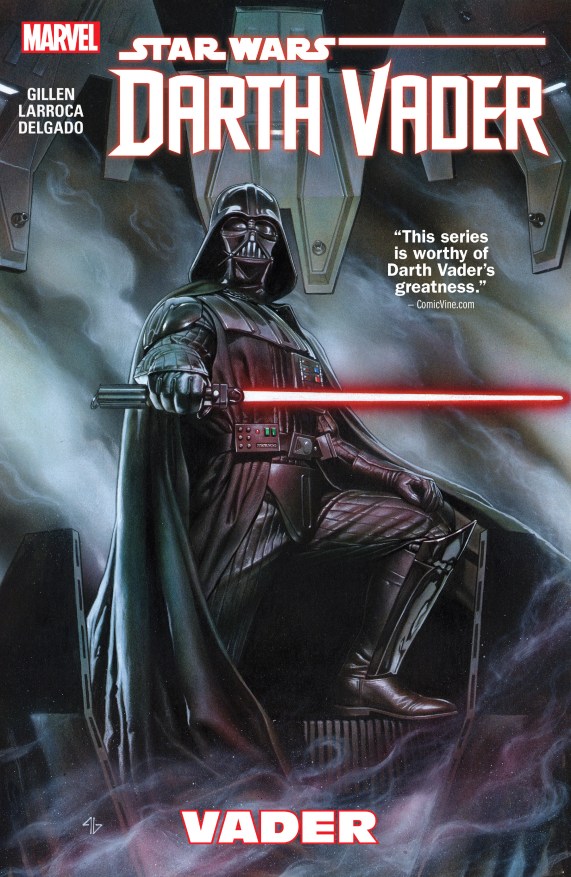
Throwback Thursday – Star Wars: Darth Vader: Volume 1 – Vader

Star Wars - Darth Vader Volume 1 Cover.jpg

Publisher: Marvel COmics

Writer: Kieron Gillen

Artist: Salvador Larroca

Colourist: Edgar Delgado

Publication Date: 20 October 2015

My Rating: 5 out of 5 stars

Amazon

Reviewed as part of my Throwback Thursday series, where I republish old reviews, review books I have read before or review older books I have only just had a chance to read.

For this week’s Throwback Thursday, I check out the fun and exciting first volume of the Darth Vader comic book series, Vader, which features the destructive adventures of the Star Wars trilogy’s greatest villain, Darth Vader, and presents a new story for Disney’s extended universe.

DarthVader1-Variant.jpg

When I previously reviewed two volumes of the Darth Vader: Dark Lord of the Sith comic book series (Legacy’s End and The Burning Seas), I mentioned how much I love the classic Star Wars movie villain Darth Vader. This current series is pretty epic and does an amazing job of telling the story of Darth Vader’s early adventures following the fall of the Jedi and the rise of the Empire. However, another Darth Vader series, helmed by writer Kieron Gillen and artist Salvador Larroca, commenced in 2015 off the heels of the Star Wars comic book series.

This first volume of this Darth Vader series is set after the events of A New Hope and deals with the fallout of the destruction of the Death Star. It is also deeply connected with the Marvel 2015 Star Wars comic series that started around the same time, especially the first volume of this series, Skywalker Strikes. Issue #1 of the Darth Vader comic, for example, starts just after the events that occurred in first three issues featured in the Skywalker Strikes, and both Star Wars #6 and Darth Vader #6, which close out each series’ respective first volume, end at the exact same moment of time.

Star_Wars_Darth_Vader_Vol_1_2.jpg

For nearly 20 years, Darth Vader has been the most feared being in the Empire, loyally serving under the Emperor as his most effective enforcer and most trusted subordinate. However, recent failures have damaged his relationship with his master. The destruction of the Death Star on his watch has left the Empire vulnerable, and his failure to stop the recent Rebel assault on Cymoon (as seen in Star Wars issues #1- #3) has made them look weak. The Emperor, displeased with his apprentice’s failures, has placed Grand General Tagge in command of Vader and is keeping secrets that could prove deadly to him. At the same time, Vader finds himself intrigued by the young, unnamed Rebel who is responsible for the destruction of the Death Star, especially after their encounter on Cymoon, where he discovered that his old master, Obi-Wan Kenobi, gifted the boy the lightsabre Vader once wielded as Anakin Skywalker.

Concerned with the events occurring around him, Vader decides it is time to start operating outside of the Emperor’s orders. Not only does he send the bounty hunter Bobba Fett to capture the mysterious Rebel pilot and bring him directly to Vader; he also recruits the rogue archaeologist, Doctor Aphra, as his agent. Using Aphra’s knowledge and contacts and the two murderous droids she has assembled, Vader amasses the resources needed to investigate the Emperor’s hidden agenda. However, his investigation reveals that the Emperor has commissioned research into a series of deadly individuals meant to take Vader’s place at the Emperor’s side. As he attempts to deal with this new competition, Vader finds himself rocked by another revelation: the pilot who destroyed the Death Star is named Skywalker!

Star_Wars_Darth_Vader_Vol_1_2_Salvador_Larroca_Variant.jpg

Darth Vader: Volume 1: Vader features issues #1-6 of this series, and features the writing of Kieron Gillian and the artistic talents of Salvador Larroca. Gillian and Larroca are veteran comic book talents with a variety of different titles under their belts, although both are probably best known for their work with Marvel Comics. The two of them have formed an effective creative team in the last few years, as they have worked together on a number of Star Wars comic book titles, including all 25 issues of this Darth Vader series. The two have also produced the last 30 or so issues of the amazing Star Wars series, creating several of the series best moments, and have worked together on the entertaining Doctor Aphra title, which follows the adventures of the popular character, Doctor Aphra, who is introduced in this volume of Darth Vader. I think at this point I actually have a copy of every Star Wars comic this pair have created together, and it is almost guaranteed that I will feature more of their work in the future.

I started getting into the 2015 Darth Vader series late last year after I was blown away by the Darth Vader: Dark Lord of the Sith comics. I am extremely happy that I decided to check out the 2015 Darth Vader series, because I absolutely loved this first volume of the series, Vader, and had an amazing time reading it. Not only was this one of the first comic book volumes in the new Star Wars canon that showed what an absolute badass Darth Vader is but it features a captivating story, some major Star Wars moments, incredible artwork and iconic new characters.

DarthVader3.png

This first volume of Darth Vader contains some epic sequences that really highlight how awesome and destructive the character of Vader really is. I loved the opening scene in particular, which features Vader having a covert meeting with Jabba the Hutt at Jabba’s palace on Tatooine. This meeting is in some ways very similar to the meeting Luke has with Jabba at the start of Return of the Jedi, with Vader entering alone to stand before Jabba in his audience chamber. However, some key alterations really show how different Vader’s style is compared to his son’s. Rather than attempting to negotiate like a Jedi, Vader slaughters his way in, deliberately avoids standing on Jabba’s hidden trap door, kills every minion that Jabba ambushes him with and then proceeds to force choke Jabba until he gets his way. It makes for one hell of an introduction to the series, and does an incredibly successful job of setting up Vader as a major badass. This first issue #1 also has a great ending, showing Vader nonchalantly having a conversation over a smoking pile of Tusken Raiders that he spent the day killing. This is a nice call-back to his past as Anakin Skywalker and it also shows how much more causal he now is around death and destruction, especially as he leaves simply saying, “All my present business is concluded.”

I also liked how this volume showed a completely different side to Vader’s relationship with the Emperor. The series is set in some unique circumstances, as it occurs right after the destruction of the Death Star, and the Emperor’s displeasure at Vader for allowing it to happen is vast. Vader in turn is suspicious of the Emperor’s secrets, and actively starts working behind the Emperor’s back for the first time. The sequences featuring Vader assembling his own private resources and working against the benefits of the Empire are quite fascinating, and results in some interesting missions. I also really liked the part of the book when Vader and the Emperor eventually find out each other’s secrets, especially as it results in an interesting discussion. While the Emperor is actually impressed with Vader showing initiative and working outside the system, Vader is outraged that the Emperor has been creating abominations to replace him for the last 20 years. The Emperor reveals that he has been disappointed with Vader ever since he was defeated at the end of Revenge of the Sith, and that he needs to prove himself worthy of the Emperor again.

Star_Wars_Darth_Vader_Vol_1_3_Salvador_Larroca_Variant.jpg

While all the above scenes are pretty awesome, the best part of this volume is the incredible conclusion of the volume in issue #6. Vader, already enraged after his talk with the Emperor, finds out that the young Jedi he encountered is named Skywalker. The building anger within Vader as he finds out is palpable as he flashes back to the events of Revenge of the Sith and realises that the Emperor lied to him; he did not actually kill Padmé before she gave birth to their child. The switch between Vader’s reaction in the present and the scenes from the past is done perfectly, building up the tension around Vader and making for some amazing pages. The scene then continues with Vader calling up the Emperor to confront him, in a nice continuation of the storyline I mentioned above. However, rather than revealing that he knows the Emperor lied to him all those years ago, he instead keeps it secret and indicates he understands his place with the Emperor. The final pages reveal Vader staring off into space and stating, “I have a son. He will be mine. It will all be mine”, referring to the Empire and the galaxy with the last part. There is so much in this scene to love. Not only do we actually get to see the moment where Vader finds out Luke is his son, a major moment in Star Wars history that ties together parts of the prequel series with the original trilogy, but we also get a look into Vader’s mind when he finds out the truth after all these years. This whole sequence is just incredible and has to be one of my favourite moments in this entire series. It also cleverly matches the end of the first volume of the related Star Wars comic book series and actually expands on that original comic for fans who were curious about it.

Star_Wars_Darth_Vader_4.jpg

While the focus on Darth Vader is amazing, this volume also features the introduction of several outstanding new characters in the Star Wars canon, Doctor Aphra and her droids. Dr Aphra is an awesome character, as she is essentially an anti-Indiana Jones living in the Star Wars universe. Aphra recovers valuable (and often extremely dangerous) artefacts from across the galaxy, either for her own use or to sell for a profit. However, in this first volume, Aphra is forced into Vader’s employ and must help him obtain the means to act outside the Emperor’s notice. Aphra story arc in the first volume is pretty darn compelling. While Aphra is willing to help Vader, and even thinks of it as a cool opportunity, she is under no illusions about the fact that Vader will kill her at some point in the future and is a constant mess of emotions as a result. There is a fantastic scene in this volume where Aphra makes it clear to Vader that she knows he is eventually going to kill her and begs him to show some mercy when the time comes and use his lightsabre rather than worse methods, such as chucking her out of an airlock (this actually comes into play later in quite a clever way). I also liked that the creative team really played up the Indian Jones aspects of her character at times, such as her introductory sequence, where she is forced to escape a series of booby traps, including a spherical droid, similar to the boulder sequence in Raiders of the Lost Ark. Humour like that really makes Aphra an excellent addition to this volume, and I love how the creative team are able to get some dark moments out of her relationship with Darth Vader.

SWVader4Larroca.png

In addition to Aphra, we are introduced to her droids 0-0-0 (Triple Zero) and BT-1, who are fun parodies of C-3PO and R2-D2. Like C-3PO and R2-D2, Triple Zero and BT-1 are a protocol droid and astromech duo, but with a few key differences. Triple Zero has been programmed with a number of languages and human protocols, but he has also been programmed for torture and is equipped with a number of syringes and other torture implements. BT-1, on the other hand, is actually a lethal assassin droid disguised as an astromech in order to appear harmless, and is loaded with multiple weapons, including a massive cannon and a flamethrower. Both of them had been decommissioned by the Empire for being too dangerous (which tells you a lot), but are brought back online by Aphra and Vader. These two droids are an extremely fun duo, acting a lot like the iconic C-3PO and R2-D2, except with a complete disregard for human life and a desire for as much destruction and death as possible. The discussion the two have in this first volume about killing the various creatures they come into contact with are very funny: “Hahaha! You are on fire and also dead.” I also found it amusing that, even though they are remorseless killers, the two droids get along better than C-3PO and R2-D2 ever did, with Triple Zero actually complimenting BT-1 and appreciating everything he does, especially all the murder. These two are an extremely entertaining couple of characters, and it was fun to see them parody the classic Star Wars droids in such a clever way.

Star_Wars_Darth_Vader_5_cover.jpg

I loved the artwork in this volume, and some of the cool details that were included in the various scenes added so much to the story. For example, the fantastic closing sequence where Vader finds out his son is still alive is superbly enhanced by the cracks that appear on all the glass around Vader as he comes to his realisations. This looks so cool and really highlights how angry he is feeling. The art also showcases all the awesome action contained within this book, especially when it comes to all the destruction Vader and his cohorts unleash to achieve their goals. There are so many explosions and so much destruction laced throughout the book, and the artists who contributed to this first volume make them look pretty darn spectacular. I also loved the close-up action when Vader gets to work with the force and his lightsabre. The artists do an impressive job showcasing all the destruction he is capable of, and the reader is constantly reminded of that amazing Darth Vader scene at the end of Rogue One. The artists also do an amazing job conveying character emotion through the subtleties of their facial expressions. You get a real idea of what the characters are feeling thanks to the artwork, whether it is Doctor Aphra’s fear whenever she has to deal with a pissed of Vader, or the constant anger Vader is feeling throughout this volume. I am particularly impressed with how they were able to compensate for the helmet Vader is always wearing in order to show off Vader’s various emotions. Subtle things like the tilt or shape of the mask and the character’s body language seemed to speak volumes at times, and I think that they captured Vader’s emotions perfectly every time. Vader featured some very clever and very impressive artwork, which not only stand on its own, but which enhances the book’s story substantially.

Star_Wars_Darth_Vader_Vol_1_6.jpg

The first volume of the 2015 Darth Vader series was an outstanding example of Star Wars fiction which really modernises one of the most iconic Star Wars characters of all times. Darth Vader is masterfully reborn here as a being of pure destruction, as this first volume places him in some extremely compelling situations. I loved where the story went in this first volume, and the creative team have come up with some amazing scenarios and several excellent new characters who are so unique and creative they manage to escape Vader’s sizeable shadow. Overall, this first volume did a fantastic job setting the stage for the rest of the series, and I had an incredible time reading this comic.

Amazon

Waiting of Wednesday – Loki: Where Mischief Lies by Mackenzi Lee

Welcome to my weekly segment, Waiting on Wednesday, where I look at upcoming books that I am planning to order and review in the next few months and which I think I will really enjoy.  Stay tuned to see reviews of these books when I get a copy of them.

I am a man that loves a good and complex anti-hero story, so for this week’s Waiting on Wednesday I check out an absolutely spectacular-sounding book that is set to be released in September 2019: Loki: Where Mischief Lies.

Loki Where Mischief Lies.jpg

Loki: Where Mischief Lies is the first of three young adult novels that acclaimed author Mackenzi Lee has been contracted to write by Marvel Comics. Each of these books will focus on a different Marvel anti-hero and will feature a historical setting. The first of these anti-heroes is the master of mischief himself, Loki, Prince of Asgard, who, thanks to the Marvel Cinematic Universe, has to be one of the most popular comic book villains at the moment.

Even before Tom Hiddleston brought him to life with some significant swagger in the MCU, the character of Loki has been a major figure in the Marvel Comics universe. A re-imagining of the Norse god of mischief, Loki is portrayed as a powerful magician who battles against his brother, the superhero Thor, out of jealousy or for control of Asgard or the world. He has been a recurring Marvel villain for over 60 years and is the villain responsible for the formation of the Avengers. Over the years, a large amount of complexity has been added to his character, with some significant developments to his motivations and history, and a number of notable shifts in his allegiance and relationship with Thor and the rest of Asgard. As a result, I am quite eager to see any sort of novel written about Loki, especially one that sounds as awesome as this one.

Goodreads Synopsis:
Before the days of going toe-to-toe with the Avengers, a younger Loki is desperate to prove himself heroic and capable, while it seems everyone around him suspects him of inevitable villainy and depravity . . . except for Amora. Asgard’s resident sorceress-in-training feels like a kindred spirit-someone who values magic and knowledge, who might even see the best in him.

But when Loki and Amora cause the destruction of one of Asgard’s most prized possessions, Amora is banished to Earth, where her powers will slowly and excruciatingly fade to nothing. Without the only person who ever looked at his magic as a gift instead of a threat, Loki slips further into anguish and the shadow of his universally adored brother, Thor.

When Asgardian magic is detected in relation to a string of mysterious murders on Earth, Odin sends Loki to investigate. As he descends upon nineteenth-century London, Loki embarks on a journey that leads him to more than just a murder suspect, putting him on a path to discover the source of his power-and who he’s meant to be.

There are so many amazing elements to unwrap in the plot synopsis, but the bottom line is I think I am going to like this. Not only do we have a comic book novelisation focusing on an amazing character, but we have Loki investigating murders in 19th century London. Historical fiction is one of my favourite genres, and a murder mystery in 19th century London is always a great basis for a good story. Combine that with comic book shenanigans and a young Loki investigating the crimes, and you have a book with insane amounts of potential.

I am also quite excited by the choice of author for this trilogy. Mackenzi Lee is a fantastic author known for her unique and powerful novels, most of which are set in 19th century England. I am very much looking forward to seeing her take on the character of Loki, and I cannot wait to see what sort of backstory and conflicted thought processes she attributes to this amazing character.

One of the things about Where Mischief Lies that is getting a lot of attention is the author’s apparent intention to make Loki a genderfluid and pansexual character. This is based on a tweet from December 2017, in which Lee responds to someone’s question about Loki being queer in her upcoming book. Lee correctly points out that Loki “is a canonically pansexual and gender fluid character” and then ends it with “So.”. Based on that, quite a lot of people are assuming she will explore this aspect of the character in her book. Loki’s gender identity and sexuality have been featured in many comics, with the character reincarnating as a female several times, and there are also some examples of Loki romancing members of various genders. I am quite interested in seeing how much of this is explored in Where Mischief Lies, and I am sure it will result in quite an intriguing part of the story.

I am uncertain whether I will grab a physical copy of this book or try to get it on audiobook. While I love the awesome cover for Where Mischief Lies and imagine it would look great on a hardcover book, I do love a good audiobook and I have had excellent experiences with comic book based audiobooks in the past. They have also gotten Marc Thompson, one of the best Star Wars audiobook narrators, to narrate this book. I have recently finished listening to one of his Star Wars audiobooks and would be really intrigued to see what voice he would attribute to Loki and the other iconic Marvel characters.

This has the potential to be an outstanding novel, and I am really looking forward to seeing how Lee tackles the character of Loki. The plot of this book sounds like a huge amount of fun, and I am sure there will be some amazing story and character developments throughout the book. I think this is going to be one of the best tie-in novels of the year and I plan to get it as soon as it comes out.

Runaways Volume 2: Best Friends Forever by Rainbow Rowell and Kris Anka

Runaways Volume 2 Cover.jpg

Publisher: Marvel Comics

Publication Date – 30 October 2018

Amazon     Book Depository

Recently reunited and still coming to terms with being a family again, the adventures of Marvel Comics’ favourite group of misfit youths continues in Best Friends Forever, the second volume of young adult author Rainbow Rowell and artist Kris Anika’s run on Runaways.

The Runaways, Chase, Gert, Karolina, Nico, Victor, Molly and Old Lace are finally back together and living in one of their parents’ old hideouts.  While most of the team have grown up since the last time they were all together, this does not mean that they have their lives together.  Each of the Runaways has their issues to deal with, be it Gert’s recent return to life after several years of being dead, Karolina’s relationship problems or Victor’s current existence as a disembodied head.  The only one who appears to have their life even remotely together is the team’s youngest and at times wisest member, Molly, who is enjoying her time in middle school.  But even Molly is having problems, as she is faced with a hard choice and must consider whether she actually wants to grow up.

Runaways_Vol_5_8.jpg

As Molly deliberates over the dilemma presented to her, a barrage of other arrivals impact on the Runaways.  Karolina’s girlfriend, Julie Power of Power Pack fame, is in town, which causes significant drama for Karolina and Nico, while Dr Doom has apparently appeared on their doorstep, determined to find Victor.  Can a team rife with squabbles, drama and internal strife come together to face the problems before them, or will their significant changes be too much to bear?

Runaways is still one of my favourite Marvel series.  After the revamp earlier this year, previously reviewed here, these fantastic characters are still going strong.  In this second volume, Rowell, Atkins and their creative team continue to produce some outstanding and emotional stories that are based more on the relationships between the main characters than the traditional crime-fighting storylines contained within other comics.  While they do go up against a couple of superpowered opponents within this story, none of these antagonists is truly evil, and their motivations and history are a lot more morally ambiguous than some of the previous Runaways stories.  The creative team do a fantastic job of blending highly emotional storylines with a bunch of fun and heart-warming sequences, filled with random and funny elements, such as an errant Doombot.  This all comes together into one fantastic overall story that hits all the right buttons.  This second volume contains issues #7 – #12 of this new run on Runaways.

Runaways_Vol_5_9.jpg

One of the main aspects of this second volume of Runaways is the continued focus on the relationships between the series’ main characters.  Most of these characters are still coming to terms with being back together after all of them attempted to live lives outside of their team.  Quite a bit of Volume 2 involves the characters trying to determine what roles they have within this surrogate family, and the fact that they are not as close as they used to be.  What I liked is the way that Chase, usually the most immature member of the team, attempts to become the father of the group, matching up with the traditional female leader of the team, Nico, as the team’s mother.  This new parental role is highlighted in a funny couple of scenes where Chase and Nico use magic to become Molly’s legal guardians, a shortcut way that “seems totally legit and great”.  A lot of this volume is also focused on the romantic relationships between several of the group’s characters, including the relationship between Gert and Victor and the new romantic feelings between Nico and Carolina.  I thought the lead-in to both these relationships worked out very well and sets up some interesting potential in future volumes.  I am also very curious to see how the friendship between Victor and Chase is going to be impacted as a result of this new relationship in future volumes of this series.  I liked the way that the relationships and romantic considerations that featured between Carolina and Julie and Carolina and Nico were handled very well and with great sensitivity, and showed great representations of LGBT+ relationships.

Runaways_Vol_5_10.jpg

I also appreciated the way that Rowell and Anika continued to focus on the emotional and mental damage that the team’s exploits have had on these characters over their entire comic book history.  In this second volume, there is a significant focus on Victor, who was mentally and physically damaged during his previous appearances in Vision.  Chase and Doombot’s attempts to rebuild Victor during this volume prove to be a particularly vivid trigger for Victor, and leads to some significant emotional moments.  There is also a look at Victor’s fear of vibranium because of its addictive and mind-altering impact on him, which drove him to commit terrible acts in a previous series.  The creative team also take a look at the life of old team member Klara, the young powered girl the team rescued from abuse back in 1907 during a time-travel adventure.  It was previously revealed that Klara had been taken away from the team by the state and is now in a loving household.  A brief section of this volume is dedicated to the team finding her and attempting to bring her back into the fold, but Klara refuses to come back, as she is happy in her new life.  You have to appreciate Klara’s sound reasoning for not wanting to come back to the team, due to the death and multiple problems experienced in the previous adventures.
Runaways_Vol_5_11.jpg

One of the most significant issues that the character’s experiences have had on them is based around their negative opinions of adults.  Most of the truly terrible things in their lives have been the result of the plans of the adults they encounter, and their distrust of most adult characters has been a long-running aspect of the series.  It is interesting to see that this carries through to the new series, even though several of the characters are now actually adults.  This viewpoint is most prevalent in Gert, whose death during one of the previous run of this series means she still shares the beliefs these characters had while they were fugitives.  However, the rest of the team also have a hard time trusting other adults, such as when they assume Klara’s new adopted parents have to be evil, as every adult they have previously dealt with in similar circumstances were also evil or abusive.  This viewpoint has significant plot impacts in this second volume, as Molly, given the opportunity to stay young forever, talks to several of the other Runaways in an attempt to subtly work out their thoughts on growing up.  Most of the characters, including non-team member Julie Powers, talk somewhat negatively about their current lives and regret growing up, which tempts Molly to accept the chance to stay young.  The final message of this storyline strongly implies that growing up isn’t so bad, as even the antagonist, a young girl who has stayed 13 for 50 years, does not always want to be young.  It was also interesting to see Klara try to correct the team when they say that no adults can be trusted; having had a loving family relationship, she no longer believes that.

Runaways_Vol_5_12.jpg

The second volume of this run of Runaways continues to make use of some fun artwork throughout the various issues.  The character designs continue to be fun, and it is interesting to see some new looks and some constantly changing character designs, especially for the trendy Nico.  The art is often used for comedic affect.  Victor has a fun use throughout the book, and it is pretty humorous to see the head floating around in a number of scenes, even in a middle of a fight scene.  I also loved how throughout the course of the volume, he was given more and more advanced mobility upgrades in each scene that he appeared in, each more comedic than the last.  For example, at the start of the volume he is mostly transported in other character’s hand, his own momentum or in a backpack.  However, as the volume continues he is variously attached to a Roomba, a small tracked rover, several helium balloons (so he can get the feeling on flight back again) and eventually a new drone.  All of these are slightly ridiculous and fun, but they do not take away from the emotional nature of several scenes, and I must point out some of the awesome drawings that hint at the issues Nico is having with her magic.

The second volume of this new series of Runaways, Best Friends Forever, is another strong and emotional addition to this new version of this young adult superhero comic.  I really appreciated the creative teams continued focus on the character relationships and the emotional aspects of the characters’ lives.  Best Friends Forever is another fantastic addition to this powerful new run of Runaways, and I am excited to see what happens to this great group of characters next.

My Rating:

Four and a half stars

Amazon     Book Depository

X-Men Red Volume 1: The Hate Machine by Tom Taylor, Mahmud Asrar and Pascal Alixe

X-Men Red Volume 1 Cover.jpg

Publisher: Marvel Comics

Publication Date – 18 September 2018

Amazon     Book Depository

Writer Tom Taylor and his artistic team have created an excellent and thought-provoking new X-Men series that not only follows the reintroduction of one of comics’ most interesting characters to the turbulent Marvel Universe but once again examines the real world problems of hatred and prejudice.

X-Men_Red_Annual_Vol_1_1_Johnson_Variant.jpg

For years, Jean Grey’s fate has always been tied to the universe-ending Phoenix Force, the cosmic entity of rebirth and destruction that is constantly seeking the most powerful host it can find.  However, following her latest resurrection during the events of Phoenix Resurrection: The Return of Jean Grey, Jean has renounced the Phoenix power once and for all and is now determined to live her life on her own terms.  Still one of the most powerful mutants in the entire world, Jean Grey sets out to restore her connections and find her place in a world that has changed dramatically since her last death.

The one thing that hasn’t changed is the fact that mutants are still feared and hated by a world that doesn’t understand them.  Despite all the adventures and endeavours of Charles Xavier and his X-Men, animosity towards mutants has never been higher.  Determined to change the world for the better, the resurrected founding member of the X-Men sets out to achieve her vision for the future and change world opinion about mutants once and for all.  To do that, Jean first attempts to create a mutant nation at the UN.  But when she is framed for the murder of politician, Jean is declared a criminal and mutants are subject to greater hatred from mankind.

X-Men_Red_Vol_1_1.jpg

Realising that someone must be behind the recent upswing in anti-mutant sentiment and determined to protect those mutants targeted by hatred, Jean forms a new team of X-Men, made up of Nightcrawler, Storm, Namor, Gambit, Gentle, Wolverine (Laura Kinney – X-23), Honey Badger (Wolverine’s adorable clone) and newcomer Trinary.  But even as Jean and her team fight to save those mutants being targeted, more hatred and attacks are occurring around the world.  The sinister Cassandra Nova is determined to wipe mutants out once and for all and views Jean Grey as the greatest threat to this goal.

Following the end of his All-New Wolverine series, Australian author Tom Taylor returns at the head of a brand new X-Men series, X-Men Red, which takes fans back to the basics of the X-Men franchise.  Volume 1 of X-Men Red is made up of issues #1-5 of this new series, as well as Annual #1.  After enjoying Taylor’s work in All-New Wolverine (check out my review here: https://unseenlibrary.com/2018/09/08/all-new-wolverine-volumes-1-6-complete-series-by-tom-taylor/), I was excited to see him continue to work with Marvel, especially as it allows him to expand on characters and story elements he introduced in his previous Marvel series.  Most of the artistic work in this new series has been produced by veteran artist Mahmud Asrar, who has significant work in DC, Image, Marvel and other publishers.  X-Men fans may be familiar with his work on All-New X-Men and Wolverine and the X-Men.  Asrar was the main artist for issues #1-5, while the work on Annual #1, which is placed at the start of the volume, was drawn by Pascal Alixe.

X-Men_Red_Vol_1_2.jpg

It is always fun when starting a new superhero team comic book series made up of established characters to see which heroes the creative team will include in their version of the team.  Taylor has certainly chosen an intriguing and previously unseen mixture of characters for this new X-Men series, and it is interesting to see which characters he focuses on.  The central character of this new team is the newly resurrected Jean Grey, the red in the series title.  This is one of the few times we see Jean step up to lead a team, as she is no longer in the shadow of her mentors or former lovers.  Aside from Jean, the main team members are Nightcrawler, Wolverine and Honey Badger, who are featured in all the issues contained within this first volume.  It was great to see Nightcrawler given such a prominent role in the comic, and it feels like it’s been a while since he’s been such a major character within an X-Men series.  I also liked new character Trinary, who is introduced in this series and is given an interesting set of powers.  Trinary is from India, and has technopathy powers, or the ability to manipulate technology.  Introduced as a new mutant who is attempting to fight the good fight in her own way, Trinary is given a key role in the series understanding the full nature of the technological attacks of the volume’s antagonist, while also taking over a sentinel to use as the team’s new primary source of transportation.  I think this character is given a great introduction, and could have an interesting future in the Marvel universe.  Other characters, Namor, Gentile, Gambit and Storm join the team at various points in the volume, and have a slightly reduced role, appearing for some of the big team ups, with only some short introductory storylines.

I was especially happy to see Taylor transplant the main characters of his previous All-New Wolverine series, Wolverine and Honey Badger, into his next project.  As I mentioned in my previous review, this version of Wolverine, Laura Kinney, also known as X-23, has always been one of my favourite X-Men characters, so I was very happy to see her used again in this series.  She plays a similar role in this team to the original Wolverine, as the silent infiltrator and bodyguard who is loyal to the team’s leader, who in this case is Jean rather than Professor X.  Just like in All-New Wolverine, the heart and soul of this series is definitely Honey Badger, Laura’s clone, who, as well as being a full member of the team, is the series’ comic relief.  Her humorous interactions with all the other characters in the book, especially the stern and serious characters, add a good amount of levity to the book.  Having her refer to Namor as Abs-lantis, or making Gambit hurriedly justify his actions for blowing up Honey Badger by saying it was “for strategic reasons” is particularly amusing and definitely made me smile.  However, the best line in the book has to be given to Wolverine, who casually replies to Jean’s amusement about Laura’s excitement about being in an underwater city with “Being Wolverine doesn’t make me impervious to the wonder of a #$%@%$& mermaid”.

X-Men_Red_Vol_1_3.jpg

One of the most defining things about the start of this new series is how it focused on the evolution of the character of Jean Grey.  Despite being a founding member of the X-Men, Jean’s most significant storylines have usually been about her relationships with Cyclops and Wolverine, or her connection to the Phoenix Force.  Now, after coming back to life, Jean has stepped out of these currently deceased characters’ shadows and starts her own attempt to change the world, as she is no longer content to return to her old life.  Essentially, Taylor is trying to set Jean up as the new Professor X, with her own vision for mutant kind and her determination to change the world for the better and end the current level of hatred and prejudice.  While she has her own unique style and vision, there are a lot of call backs to the original Professor X, including the standard “To me, my X-Men” saying that Professor X and other X-Men leaders utilised throughout X-Men history.  I also enjoyed seeing a Jean Grey that is no longer defined by her relationship with the Phoenix Force, especially as Jean lets it be known that the Phoenix Force was holding her back.

It was also nice to see Jean repair the relationships she previously lost with several prominent X-Men characters, as well as establishing new relationships with characters she’s never had a chance to meet before.  This is particularly prevalent in Annual #1, which starts the volume, as she reunites with her surrogate X-Men family, which is heart-warming, especially as there is a focus on her friendship with Nightcrawler, who spends the volume as her BFF.  I also really enjoyed seeing her think about her relationships with Cyclops and Wolverine.  For the first time in X-Men history, Jean is alive when Cyclops and Wolverine are both dead, and must focus on the world without the two men she’s loved.  As such, she spends time adventuring with the daughters of these two men, Rachel Grey and the new Wolverine, and meeting up with them is one of the first priorities she has returning to the world.  I liked how one of the definitive love triangles of Marvel Comics is acknowledged in this new series, even though two points of the triangle are currently dead, and the focus of Jean’s relationship with the next generation of these characters was a clever idea.  I’ll be very interested to see what relationships are explored in the future, with all sorts of different iterations or offspring of Jean and Cyclops out in the world at the moment.  It will also be very intriguing when the original Wolverine is resurrected to see what role he plays in this series, as the creative team will have to have a look at the relationships that this character has with Jean, the current Wolverine and Honey Badger, a new daughter character he’ll have to interact with.
X-Men_Red_Vol_1_4.jpg

Since its earliest days, X-Men has always been about the fight against prejudice, as the hatred the mutant characters experience has often been seen as an analogy for social issues such as racism, anti-Semitism and homophobia.  Taylor and the creative team behind X-Men Red continue this tradition of using their X-Men series to reflect social issues, in this case focusing on modern issues such as the latest rise of the extreme right-wing, intense nationalism, islamophobia, fear and concern about refugees and migrants, as well as racism.  All of these social issues are reflected in the portrayed hatred of mutants in this volume, with various elements of recent world events shown directed towards the mutant characters.  For example, you have Poland attempting to use their military to round up and detain mutants, similar to how some countries have been using their military to stop or detain refugees.  In another very unconcealed scene, rioters carrying tiki torches start attacking mutants, not considering them people, and even killing one mutant counter protestor, in events that are reminiscent of those of Charlottesville.  There is also a focus on the damage or the impact that social media and the internet can have on these events, as many of the anti-mutant events or rhetoric are contained online.  This will be very familiar to readers, as it is impossible not to see the online hatred that many anonymous people direct towards various groups around the world, and at least the one in the comic may be the result of supervillain plot.  Overall this focus on prejudice is a familiar subject to X-Men readers, and many will appreciate how the creative team have tried to bring in modern issues in this new series.  The creative team do end Volume 1 with a message of hope, with some of these antagonist people given a proper understanding of an opposing viewpoint, momentarily giving up their hatred and prejudice, and is something aspire for in the real world.

The artwork within Volume 1 of X-Men Red is just gorgeous and a real highlight of the book.  As mentioned above, Alixe does the artwork for Annual 1, while Asrar does the artwork for issues #1-5.  Both artists’ works are visually distinctive and give the reader something different when it comes to character design, displays of power and fight sequences.  Asrar in particular does some gorgeous backdrops and landscapes, as the stories he is illustrating see the characters go to all sorts of locations, including India, underwater cities and Wakanda.  There are a lot of well-drawn action scenes throughout this volume, although I found the final pages of issue #1 to be some of the most powerfully drawn in the entire volume.  Not only is there a somewhat graphic scene for a Marvel comic but the final panel shows the look of despair on the main characters as the volume’s antagonist makes her first move.  The artistic team of X-Men Red have outdone themselves in this first volume, creating some superbly drawn artworks that are catch the eye and the imagination.

X-Men_Red_Vol_1_5.jpg

X-Men Red takes this new version of this iconic superhero team back to the sort of storylines that made the X-Men such a smash hit in the first place.  With a resurrected Jean Grey taking the lead, Australian author Tom Taylor and his creative team have cleverly brought current social issues to the forefront of their new series while also doing some superb character work, including redefining one of the original X-Men.  This is a great start to an amazing new comic series and a fantastic read for fans of the X-Men franchise.

My Rating:

Four and a half stars

Amazon     Book Depository