Throwback Thursday – Moving Pictures by Terry Pratchett

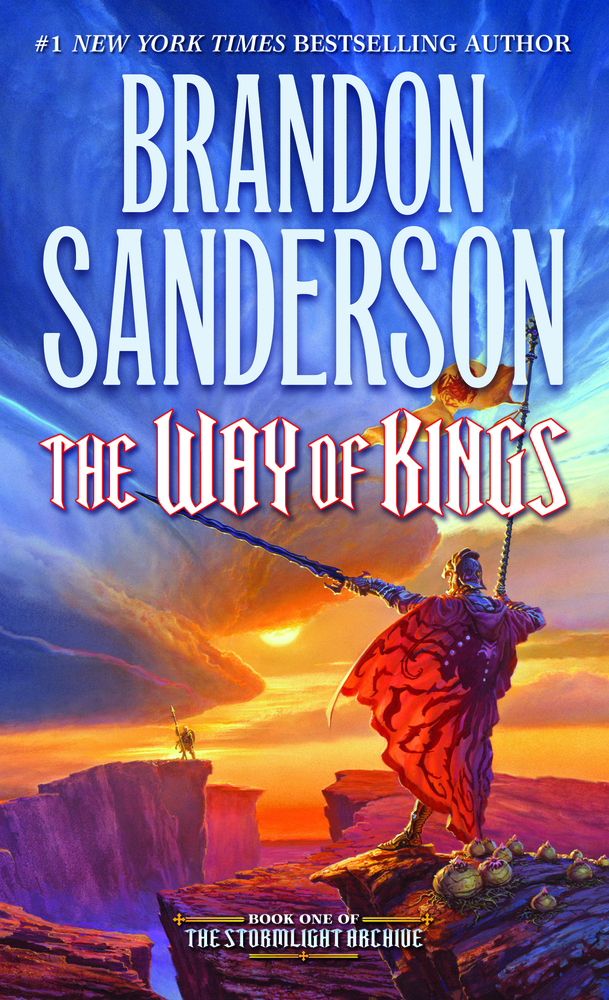
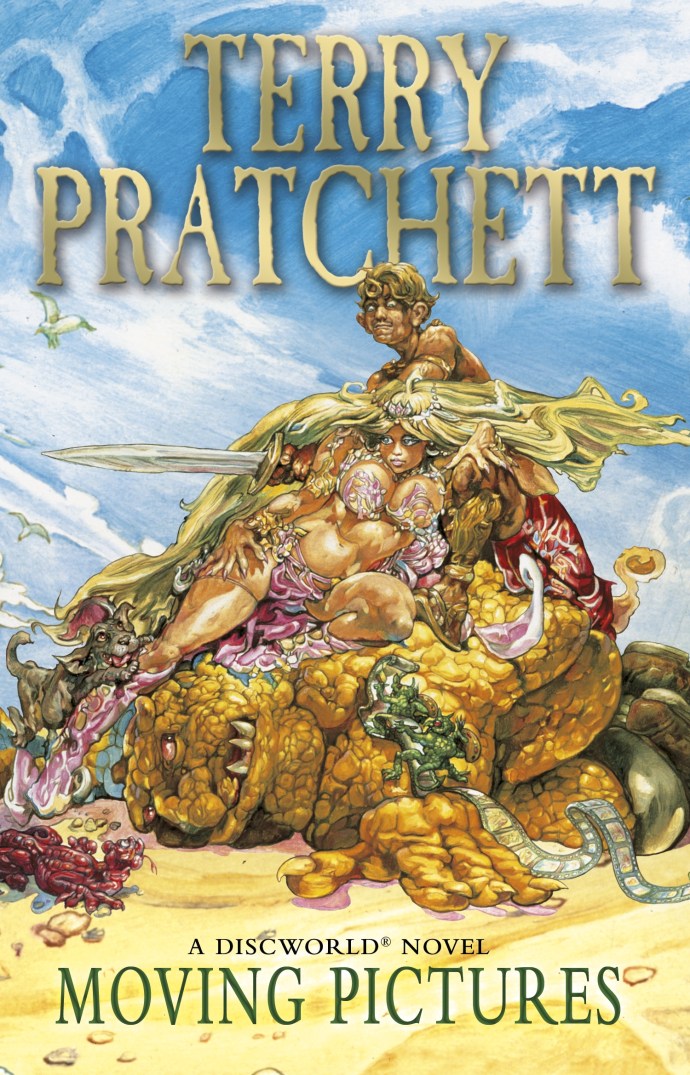
Moving Pictures Cover

Publishers: Corgi and ISIS Audiobooks (14 November 1991)

Series: Discworld – Book 10

Length: 332 pages or 10 hours and 8 minutes

My Rating: 5 out of 5 stars

Amazon

Reviewed as part of my Throwback Thursday series, where I republish old reviews, review books I have read before or review older books I have only just had a chance to read.

Because my blog shares the name of a building featured in Terry Pratchett’s Discworld series, some people might have assumed that I am a fan.  You would be right, so very, very right.  I have loved Discworld since I was a small child, and my appreciation and respect for the complex writings of the late, great genius, Sir Terry Pratchett, has grown with me.  The Discworld series represents one of my ultimate comfort series of books.  It’s the series that I go back to at any time when I want something fun and familiar to enjoy.  I have read all of the adult books set in Discworld multiple times (I have yet to read all of the young adult ones), and it is an unusual year when I do not listen or read some of these books in my spare time.  Pretty much every single book in this series deserves five out of five stars or higher (with one or two exceptions that I may mark down to a 4.75 with a heavy, heavy heart), and you are unlikely to find any real criticisms about this book below.  After nearly a year of running this blog, the continued exclusion of a review of any of Pratchett’s Discworld is a travesty, and one that I seek to rectify in this somewhat late Throwback Thursday with a review of the 10th book in the series, Moving Pictures.

Before I review Moving Pictures, here is some quick context of the Discworld series for those people unfamiliar with these books.  Discworld is the main series of Sir Terry Pratchett, set upon the Discworld, world and mirror of worlds.  The Discworld, or the Disc, is a flat world that rests on the backs of four massive elephants, who themselves stand on the back of a gigantic turtle swimming in space, Great A’Tuin.  The Discworld itself features a huge range of different nations and continents that bear striking similarities to real-world locations.  This series is, without a doubt, the best series that utilises a combination of fantasy and satire in the entire world.  The seamless blend of the two elements is just incredible, and both elements do an unbelievable job at enhancing each other.  Before his death, Pratchett wrote 41 books in the Discworld series, six of which are considered young adult books.  While the books can be read in any real order, the series were mostly written in chronological order (with the exception of Small Gods), and events from earlier books in the series are often referenced.  Although most of the Discworld stories are self-contained, a number of the books are linked together by a recurring main character and are subsequently grouped together into subseries.  These include the Rincewind, Witches, City Watch, Death, Tiffany Arching and Moist von Lipwig subseries, in addition to a few standalone books that fall outside of any of the subseries.  Characters often appear in other Discworld books outside of their subseries, and there are a string of side or secondary characters who appear in multiple subseries and standalone books.

The book I am reviewing, Moving Pictures, is a standalone book that does not really fall within any of the main subseries.  It is sometimes considered part of minor subseries, called the Industrial Revolution subseries, with The Truth and Monstrous Regiment, but I am not a big fan of that distinction.  As it is the first Discworld book I am reviewing, you might think that it is my favourite book in the entire series, which is not true; although it does get five out of five stars from me and I have enjoyed it an amazing number of times, it is not my absolute favourite Discworld book, although it is high on the list.  It is, however, an easier one for me to review as there is a lot I can say about it.

Goodreads Synopsis:

‘Holy wood is a different sort of place. People act differently here. Everywhere else the most important things are gods or money or cattle. Here, the most important thing is to be important.’

People might say that reality is a quality that things possess in the same way that they possess weight. Sadly alchemists never really held with such a quaint notion. They think that they can change reality, shape it to their own purpose. Imagine then the damage that could be wrought if they get their hands on the ultimate alchemy: the invention of motion pictures, the greatest making of illusions. It may be a triumph of universe-shaking proportions. It’s either that or they’re about to unlock the dark terrible secret of the Holy Wood hills – by mistake…

The blurb above is a bit vague on the details of what is actually happening in Moving Pictures.  Essentially, the alchemists of Ankh-Morpork, the largest city on the Discworld (and a central location for many of the books), suddenly develop filmmaking, which they call moving pictures, and set up a filming base at the ancient and abandoned Holy Wood.  The moving pictures issue a weird siren call to the inhabitants of the Discworld, dragging all manners of people and creatures from across the lands and infecting them with their magic (not a metaphor).

Among those drawn to Holy Wood are Victor Tugelbend, a former student wizard, and Theda “Ginger” Withel, a small-town girl with big dreams.  Thanks to the magical on-screen chemistry between them, Victor and Ginger quickly become the superstars of the fledgling moving pictures industry, especially when the Discworld’s most infamous salesman, Cut-Me-Own-Throat Dibbler, comes to town and takes over the studios.

However, reality on the Discworld is always a bit thin, and Lovecraftian monsters (a favourite recurring antagonist of Pratchett’s early Discworld novels) are revealed to be the ones who planted the idea of moving pictures and Holy Wood in the alchemists’ heads.  Using the new sort of magic created by Holy Wood, the creatures start to break through.  With the wizards of Unseen University, the people who are supposed to guard against these sorts of incursions, distracted by the arrival of an unconventional new Archchancellor, it is up to Victor, Ginger and a ragtag band of other Holy Wood characters to save the day.

This book has so many moving parts to it that it’s hard to know where to begin when reviewing it.  While the main story is concerned with the introduction of moving pictures into the Discworld, there are a number of other entertaining storylines going on throughout the book, each one complementing the main story and creating an amazing overall narrative.  The major appeal of this book is its sharp and intelligent satire of the movie business, which also examines the nature of a film industry in a world as crazy as the Discworld.  I also quite like all the amazing characters, either introduced or built up in this book, many of whom appear in later books in the series.

This book is absolutely hilarious and filled with a huge number of clever and outrageous jokes and observations about the film industry, all of which lie on top of Pratchett’s usual humour about day-to-day life in the Discworld and his random observations, many of which are perfectly introduced in the book’s footnotes.  The main storyline is an amazing portrayal of the hectic early days of the film industry, placed in a fantasy setting.  The cameras are powered by miniature demons (who paint the pictures really, really fast), the lighting is done by salamanders, actors of all species make up the cast, the audience eat ‘banged grains’ while watching the ‘clicks’ and the film’s monsters and villains are all trolls in crude costumes.  However, literal movie magic is making people do strange things (strange even for Discworld folk), talking animals are showing up looking for work, Dwarfs are singing “Hihohihohiho” as they work, characters routinely burst into song and dance in the rain, and one producer keeps threatening to turn people into stars, all while the book’s few straight-characters look on in bemusement.  All of this is amazing, and the sheer number of fantasy-assisted jokes throughout the book is pretty unbelievable.

At its heart, Moving Pictures is a satire and a critique about the film industry as a whole.  Quite a large amount of the story is dedicated to parodying the real-life the crazy effect that movies can have on audiences and the people who make them, as the book shows some ridiculous events.  The story also reflects the insubstantial nature of fame and the fragility of dreams surrounding the movie industry.  The fast-moving world of the film industry is also shown, although sped up even more for comedic and story value, as they film creators are constantly searching and finding new advancements in their field.  A great example of this is shown when Cut-My-Own-Throat Dibbler invents and then continually advances the art of advertisement, so that, within a few short weeks, the film industry goes from ineffective text advertisements to eye-catching posters and explorations of product placement and subliminal messages.  Pratchett handles these critiques very skilfully, and you cannot help but laugh aloud as he skewers the film industry quite cleverly throughout Moving Pictures.

Pratchett also filled Moving Pictures with a ton of references to iconic films and elements of the film industry.  Many of the characters involved with the films are caricatures of famous movie actors, with Victor playing all the typical romantic or manly male heroes of the day, and Ginger is essentially Marilyn Monroe.  Several films are parodied throughout the book, such as Gone With The Wind, which becomes Blown Away, an epic love story set around a famous Ankh-Morpork Civil War.  There is a rather good King Kong parody, in which a gigantic woman kidnaps a poor defenceless Ape (the Librarian) and drags him to the roof of the tallest tower in Ankh-Morpork, all while two wizards on a broomstick shoot at it with a crossbow, with one shouting “If it bleeds, we can kill it!”  That is only scratching the surface of the references featured within this book.  A golden figure with a name starting with O plays a big part in the story, the various studios are all parodies of real-life studios, and there a huge number of funny and subtle references to various famous films.  Examples of these include Wizard of Oz, Lassie, Lawrence of Arabia, Indiana Jones, Looney Tunes, Blues Brothers, Casablanca, Tarzan and Star Trek just to name a few.  Readers can go through this book multiple times and not pick up every detail, which is a testament to the cleverness of Pratchett and his ability to come up with some hilarious references.

I have always found the way that Pratchett utilises or re-uses his characters to be extremely fascinating; while some characters appear in multiple books, a number of his main characters, especially from his earlier books, are only used once. There are several examples of this, including Mort from Mort, Pteppic from Pyramids and Esk from Equal Rites (who did appear in a later young adult novel, but there was a significant time gap between the writing of these two books).  While Pratchett may have simply had only one story in mind for these characters, I have a feeling that he simply did not like how they turned out and decided not to use them again under any circumstances.  Mort is probably the best example of this.  Despite being the protagonist of the first Death subseries book Mort, he never appears in any of the Death subseries books again (aside from one brief flashback), and is instead replaced by his own daughter, Susan.  It is interesting to note that most of the main characters who were never or rarely used again are somewhat similar to each other, being young heroes without too many obvious flaws to them.  On the other hand, the unique main characters Pratchett creates with notable flaws, such as Rincewind, the wizard who has turned cowardice into an art form, or the overly cynical and dangerous alcoholic Sam Vimes, helm multiple books.

If I have to make one criticism about this book, it is the weak and somewhat inconsistent main characters, Victor and Ginger.  Ginger is a generic female character, and while she is a good parody of Marilyn Monroe and other early screen actresses, she is pretty one-dimensional and unlikeable.  Victor starts out with some very interesting character traits, as he is described as an extremely lazy person, whose unique brand of laziness forces him to become a brilliant student wizard in order for him to succeed in his quest to fail every test he ever takes by a certain point margin to ensure he remains a student.  However, these character traits are pretty much thrown out the window a few chapters in and he becomes a typical male hero for the rest of the book.  While this sort of straight-man character was needed for this wacky adventure, it is surprising that the character never again really shows the slightest hint of some of these earlier established character traits.  It is interesting to note that neither Victor or Ginger appear in any of the subsequent Discworld novels, so I think there is a strong possibility that Pratchett might also have disliked how these characters turned out.

While one or two of his earlier main characters were somewhat unimpressive, Pratchett always managed to make up for this by creating a range of memorable and enjoyable side characters.  It was always interesting to see which of these side characters would appear in various later books, as you knew Pratchett had to like them as well.  For example, Granny Weatherwax was a supporting character in Equal Rites, but Pratchett must have liked writing her, as she became a major character in the Discworld series, even getting her own subseries with several other witch characters.  Moving Pictures is perhaps the best example of Pratchett’s love of side characters; while Victor and Ginger never appear in the Discworld again, many of the side characters introduced or developed in this book have major roles later in the series.

For example, I was always impressed with how this book turned two minor characters from Guards! Guards!, Cut-Me-Own-Throat Dibbler and Detritus the troll, and gave them more expanded roles in Moving Pictures.  Dibbler was an opportunistic merchant who got a couple of good, if minor, scenes in Guards! Guards!, but in Moving Pictures, Pratchett transformed him into a ruthless and extremely savvy salesman who gets in the front door of every major new opportunity inflicted on the Discworld, but is often forced by circumstances back to becoming a sausage-in-a-bun merchant.  Dibbler was absolutely fantastic as the stereotypical sleazy film producer, and it is unsurprising why he suddenly became a major recurring character throughout the Discworld books, not only appearing in nearly every book set in Ankh-Morpork but also having clones of him appear in the other nations and cities, all of whom sell disgusting local delicacies.  Detritus is another great example, as he goes from the simple bouncer introduced in previous books to a troll seeking love and a new way of life.  Pratchett comes up with a great personality for Detritus in this book, and it carries through to the City Watch subseries when he joins the Watch in Men at Arms and becomes a major recurring character in this subseries and other books set around Ankh-Morpork.  Other recurring characters, Death and the Librarian, are as awesome as ever, but Dibbler and Detritus are the real standout stars of this book.

Several new characters introduced in this story also make a number of reappearances throughout the rest of the Discworld series.  A good example of this is the talking dog, Gaspode, who is a fantastic and sarcastic character through the book.  He has some great scenes, with the highlight being his friendship with Laddie, a Lassie parody and idiot who Gaspode takes under his wing.  The idea of a clever, underappreciated and sarcastic talking dog side character apparently worked so well that Pratchett found a way to return his magical intelligence and ability to speak a few books later in Men at Arms (the same book Detritus reappeared in) and he then featured in several additional books.

You also have to love the new wizard characters that Pratchett also created for this book.  Before Moving Pictures, the faculty of Unseen University, with the exception of the Librarian and Rincewind, were replaced each book with a new group of senior wizards, thanks to the competitive nature of succession in the university.  However, this 10th book introduces a brand new and more permanent faculty of Unseen University, led by Archchancellor Mustrum Ridcully.  Ridcully is a fantastic character as he is big, loud and sporty man who is generally the complete opposite to any other wizard previously shown in the Discworld series.  I really enjoyed his storyline and found it to be one of the most entertaining in the entire book.  Pratchett must have agreed, as Ridcully became the only recurring Archchancellor in the Discworld series.  This also allowed for the creation and stabilisation of unique characters to make up the senior faculty of Unseen University, including the Bursar, the Dean, the Chair of Indefinite Studies and the Lecturer in Recent Runes.  While the other wizards have a fun romp breaking out to go see the moving pictures, the Bursar has a great story, as you get to see the first signs of madness that would afflict him throughout every other book he appears in, as he first encounters the stress associated with working under Ridcully.  I also liked the introduction of a young Ponder Stibbons, whose bad day while trying to escape from the university is pretty humorous, but also the complete departure from his later role as the only serious member of the faculty.  Thanks to their entertaining storylines, the wizards would appear in multiple books in the rest of the Discworld series, and while they never had their own specific subseries, they would get major inclusions in several other subseries, including substantial stories in The Last Continent, Soul Music, Lords and Ladies and The Hogfather, as well as their own novel, Unseen Academics.

While I have physically read most of the books in the Discworld series, including Moving Pictures, these days I tend to only listen to the audiobook formats of these books.  The Discworld audiobooks are pretty awesome, and the two narrators for the series, Nigel Planer and Stephen Briggs, both do an incredible job.  I find that the humour in the Discworld novels is massively enhanced by the narration, and I love listening to the stories this way.  At 10 hours and 8 minutes, this is not a long audiobook, and I always tend to power through these books really, really quickly.  Planer is a comedy veteran and has an awesome audiobook voice, and it is quite impressive the sheer range of different and distinctive voices he can come up with.  I also like his incredible consistency when it comes the multiple books in the Discworld series; for example, voices he creates for Moving Pictures are generally the same used for that character in later books he narrated.  The audiobook format of Moving Pictures is my preferred way to enjoy this book, and it is really worth trying out.

As you can see from my extremely long rant above, I absolutely love Moving Pictures and the Discworld series.  Pratchett created an incredibly complex and extremely funny novel that laughs right at the heart of the film industry.  The sheer range of references in this book is amazing, and the creation and enhancing of the various side characters featured in this book has massive ramifications for many of the later Discworld novels.  If you have yet to experience the joy of Terry Pratchett’s Discworld series, get on it as soon as you can.  It is well worth it, and Moving Pictures is a great place to start your Pratchett adventure.  I fully intend to review more books in this series in the future.
Amazon

Waiting on Wednesday – War of the Bastards by Andrew Shvarts

Welcome to my weekly segment, Waiting on Wednesday, where I look at upcoming books that I am planning to order and review in the next few months and which I think I will really enjoy.  Stay tuned to see reviews of these books when I get a copy of them.

This week, I look at War of the Bastards by Andrew Shvarts, the third book in the incredibly entertaining and addictive Royal Bastards young adult fantasy series.

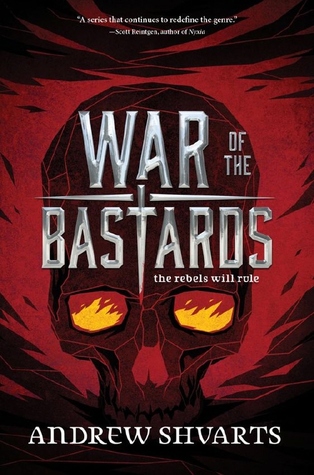
War of the Bastards Cover.jpg

Before I start talking about the series and why I want to read this book, can I just say how much I love this cover.  It is an incredibly eye-catching piece of artwork, and I think it matches the dark tone of this series extremely well.

The Royal Bastards is Shvarts’s debut series, and it follows the adventures of a group of rebellious teenagers as they attempt to save the fantasy nation of Noveris.  The series is told from the perspective of Tilla, the bastard daughter of a powerful western lord, whose life changes when she forms an unexpected friendship with the princess of Noveris, Lyriana.  In the first book in the series, Tilla finds out that her father, Lord Elric Kent, is plotting a rebellion against Lyriana’s father, and acts quickly to save Lyriana’s life.  In the second book, after escaping from the west, Tilla, Lyriana and Tilla’s love interest, Zell, arrive at the Lightspire, the capital of Noveris, and attempt to start new lives in the city.  However, the western forces, led by fellow royal bastard Miles Hampstedt, manage to enact a brutal takeover of the city utilising a powerful new form of magic.

To be honest, I have been really looking forward to this book for months, ever since I finished City of Bastards, the second book in the series.  City of Bastards had one hell of an ending, with the sudden and bloody death of the entire royal family and court, from which the protagonists were only just able to escape.  I also really enjoyed Shvarts’s writing style in the second book, and I hope that War of the Bastards is written in a similar manner, but potentially with a darker tone.  I am deeply intrigued to see where the story goes from here and I am already excited about the book’s awesome plot summary.

Goodreads Synopsis:

A year has passed since the fall of Lightspire. The Inquisitor Miles Hampstedt has usurped the throne and rules Noveris with a blood-soaked iron fist. Tilla and her friends have become hardened rebels in the Unbroken, a band of guerilla fighters hiding out in the fringes of the Kingdom. Tilla is plagued with doubt and regret; Lyriana struggles with the burdens of being a fugitive Queen; Zell atones for his guilt by killing for the cause. And even as they all fight, they know their cause is doomed, that with very passing day Miles’ power grows, his army of Bloodmages spreading to cover the continent.

Then a raid on an outpost produces two unexpected prisoners: Lord Elric Kent himself, now a prisoner obsessed with revenge, and Syan See, a strange girl from the Red Wastes. Tilla struggles with the emotional weight of confronting her father, but it’s Syan that offers the true revelation. She demonstrates a new incredible kind of magic, and speaks of a secret civilization hidden in isolation in the mysterious Wastes. With Miles’ forces closing in, Tilla and her friends (alongside a hostage Lord Kent) set out to make contact with Syan’s people, to make an pact that could turn the war. The journey will test their character, forge unlikely alliances, reveal the horrifying true nature of magic, and set in motion a battle that will determine the fate of Noveris itself.

There are quite a few amazing-sounding plot elements contained within this synopsis.  The year-long gap since the last book in the series is going to be extremely interesting, and I am looking forward to seeing the main characters evolve once again into hardened resistance fighters after all the betrayals of the second book.  A hopeless fight against impossible odds followed by a dangerous quest for lost magic is always a winning story combination in my book, and I will look forward to seeing how Shvarts portrays this in War of the Bastards.  I believe that this will be the final book in this series, so I am expecting some massive twists and possibly one or two major character deaths to round out the story.

One of the best things about City of Bastards was Shvarts’s examination of the emotional trauma and damage experienced by the protagonists following their adventures in the first book.  The synopsis seems to support that this interesting inclusion will be a major feature of War of the Bastards, and after the events of the second book, you have to imagine that the trauma and guilt that each character will be experiencing is going to be amplified even further.  Tilla will no doubt feel guilty about the terrible things her father has made possible, and the impacts it has had on her friends.  Zell, whose actions in the second book partially led to the bloody coup, is also going to have massive regrets.  I also expect that Lyriana is going to be suffering quite a lot in this book.  She already experienced severe survivor’s guilt in the second book following the death of her love interest, Tilla’s half-brother Jax, and now with most of her family killed, this is likely to be amplified by a significant degree.  I am also curious to see what will happen to side-character Ellarion in this book.  Ellarion is Lyriana’s cousin and he inherited the role of Royal Archmagus following the murder of the previous Royal Archmagus in the first book.  As he avoided most of the trauma in the first book, he was one of the more buoyant characters in City of Bastards.  However, at the end of the book, his attempted to shield his friends from a massive magical explosion and lost his hands as a result.  I am very curious to see how Ellarion is portrayed in this final book, as not only has he lost most of his family like Lyriana but the loss of hands will also be extremely devastating to him, not just because of their physical use but because it will have a negative impact on his magical ability.

I have a feeling that Tilla’s character relationships will be a key part of War of the Bastards, and I am looking forward to seeing what happens when she is forced to team up with her father.  The two characters have always had a complex relationship due to Tilla’s status as a bastard, but following all the revelations of the first two books, I think that their relationship in this book will be incredibly dramatic.  I am also curious to see how Tilla’s love angle with Zell goes.  Despite coming together in the first book, their time in Lightspire really affected their relationship, as the two lied to each other.  I imagine that they will get back together in this final book, but we will have to see what happens (especially as Zell is the main character most likely to die in my opinion).  I am also expecting an appearance from antagonist Miles Hampstedt in this book.  Miles was once a friend of Tilla, but his extreme jealousy after she chose Zell over him resulted in him betraying the group.  Since then he has taken control of the west and the entirety of Noveris with complete dominance over the blood mages.  No doubt, he will appear at some point, portray himself as the victim because Tilla did not choose him and be an extra despicable villain as a result.

I have a strong feeling that War of the Bastards will be an amazing and thrilling piece of fantasy fiction, and I am really looking forward to getting my hands on this book.  Shvarts is an exceptional new fantasy author, and I have high hopes that he will do an outstanding job with this final book in the Royal Bastards series.

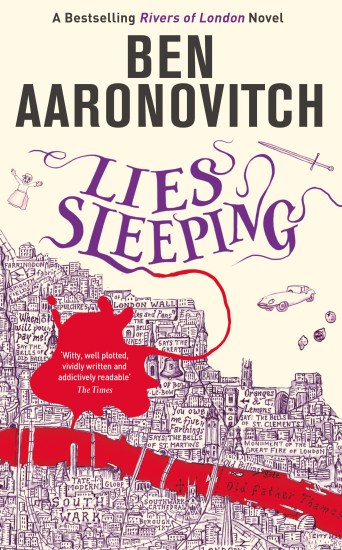
Lies Sleeping by Ben Aaronovitch

Lies Sleeping Cover.jpg

Publishers: Gollancz and Orion Audio (Audiobook format – 15 November 2018)

Series: Rivers of London – Book 7

Length: 10 hours 25 minutes

My Rating: 5 out of 5 stars

Amazon     Book Depository

Prepare to dive headfirst into one of the best urban fantasy series in the world today, with the seventh book in Ben Aaronovitch’s Rivers of London series, Lies Sleeping.

London is a magical place, especially for Peter Grant, Detective Constable and apprentice wizard.  Peter is a member of an elite unit of the London Metropolitan Police, known as the Folly, which is tasked with investigating magical crimes and protecting the city from all sorts of magical threats.  The person at the top of the Folly’s most wanted list is Martin Chorley, also known as the Faceless Man, a magical criminal mastermind who is determined to do whatever it takes to gain power.  However, despite the Met and the Folly’s considerable resources, Chorley is always able to stay one step ahead of those chasing him.

During a routine attempt to subtly panic several of Chorley’s known associates, a magical creature attacks a potential witness.  Peter’s investigation soon reveals that the witness had ordered the forging of a large and mysterious bell, which Chorley is desperate to get his hands on.  As Peter and his team dig deeper in the bell’s construction, they quickly begin to realise that Chorley is the final stages of his master plan, a plan tied deeply into the heart of London’s dark and bloody history, and one which could cause untold disaster for the entire city.

As the clock ticks down, Peter needs to work out the connection between London’s past and the mysterious magical events occurring all over the city.  Can Peter and his team once again save the day, or will their adversary finally obtain the power he has always desired?  Moreover, what will Peter do when he comes face to face with the woman who betrayed him to Chorley, his old partner in the Met, Lesley May?

Ben Aaronovitch is a highly regarded author with an interesting writing history to his name.  His writing career began back in the late 1980s and early 1990s, when he wrote a couple of Doctor Who television serials, including the highly regarded serial Remembrance of the Daleks, as well as three entries in the Virgin New Adventures series of Doctor Who books.  The Virgin New Adventure series chronicled the adventures of the Doctor after the television show’s hiatus in 1989.  Aaronovitch’s three entries in this book series sound incredibly interesting, although they were considered to be somewhat controversial at the time due to their more adult content.  Aaronovitch did not get around to writing his fantasy work until 2011, when he wrote the urban fantasy Rivers of London.  This was the first book in the author’s Rivers of London series of books (alternatively known as the Peter Grant series or the PC Grant series), for which the author is best known for.  The Rivers of London series is very highly regarded, and Aaronovitch has worked hard to expand on the story and universe of this series, writing a number of novellas, short stories and graphic novels on top of the series’ main seven books.

Before Lies Sleeping, I had never got around to reading any of Aaronovitch’s books, despite hearing good things about his main series.  As a result, I was very happy that I finally managed to check out the series earlier this year.  I did receive a trade paperback edition from Hachette Australia, but in the end, I chose to listen to the audiobook version of this book, narrated by Kobna Holdbrook-Smith.  I have to say that I was extremely impressed with this brilliant book and found that I really enjoyed the excellent and captivating story.  Lies Sleeping easily gets a full five-star rating from me, and I fully intend to go back and check out the other books in this series.  This book is an excellent blend of the fantasy and crime fiction genres, both of which come together perfectly to create an extremely compelling and complex read.

Lies Sleeping will prove to be extremely appealing to huge range of people; not only pre-existing fans of the series but also those readers who have not read any of the Rivers of London books before.  As a first-time Aaronovitch reader, I found that it was incredibly easy to step in and enjoy this series, as the author did a fantastic job making Lies Sleeping accessible to everyone.  While Aaronovitch has created a huge amount of lore around his series, including in his novellas and comics, the reader does not need to have any knowledge of these or the previous six books in the series to fully understand the entirety of Lies Sleeping’s story.  However, those readers who do have experience with this series will love how the story continues to development, as well as the massive and surprising twists that occur throughout the book.

At the core of this book lies a series of intriguing mysteries that take place throughout London.  In order to achieve his villainous goals, the antagonist has embarked on a series of seemingly random and chaotic crimes and ventures, all of which apparently form part of his master plan.  These various mysteries or criminal events were really interesting, and I liked trying to work out how they would all come together.  I particularly liked how various parts of these mysteries were deeply tied into the history of London, and the protagonist needed to gain a historical understanding of some of various myths and legends surrounding London.  Watching the protagonist attempt to unwind the complex plan of the book’s villains was extremely compelling, and I had a great time trying to work out what was happening myself.  One or two threads of these mysteries did go unsolved in this book, and I will be curious to see if they are picked up in any of the future entries in this franchise.

Aaronovitch is clearly a very creative writer, as he utilises a huge range of different and fairly unique fantasy elements throughout this book.  While there are a large number of wizards, spells and elvish beings throughout the book, the main focus is on the titular rivers of the series.  The more common magical beings encountered in this series are the personifications of the various rivers and waterways (current and historical) that flow through and around London.  These beings are similar to gods, although the term genius loci may be more appropriate, and have a huge range of powers.  These are a really intriguing addition to the book, and it was interesting to see the protagonist attempt to deal and interact with the various river characters, including his girlfriend, Beverly Brooke (yes, the main character of this series is dating a river).  There is also a huge range of other genius loci, or similar beings, that are featured within the story, including the mysterious and insane Mr Punch.  The magic that the human characters utilise is complex and slightly less ostentatious than some classic pieces of fantasy, but when the master wizards get to work it can be quite impressive.

One of the things I liked best about this book is how the author could create a realistic British police narrative and ensure magic became part of the procedure.  The Folly may be a special branch of the Metropolitan Police, but it is still part of the police force, and as such the characters are forced to follow standard procedure when investigating magical crimes.  Having these elite magical characters fill out paperwork and other various elements of day-to-day police life was deeply amusing.  I did like seeing how regular law enforcement tactics, anti-crime strategies and police combat techniques could be utilised against magical opponents.  The overall fantasy elements of this book are really enjoyable, but I really liked to see them be blended with a classic British police story.

Aaronovitch has done a fantastic job creating a huge and intriguing group of characters for this series.  The protagonist of Lies Sleeping and the Rivers of London series is Peter Grant, police officer and official wizard’s apprentice.  Peter is the sort of protagonist I really enjoy (sarcastic, funny and determined) so I quite enjoyed having him narrate the story, making a number of great jokes throughout.  The other police characters make up a great supporting and diverse cast, with a range of different abilities and characteristics.  I especially liked the classy and wise Detective Chief Inspector Thomas Nightingale, the last officially sanctioned English wizard and Peter’s mentor.  He is an extremely charming and old-fashioned character who has a huge amount of magical power at his fingertips and who can be quite intimidating if he puts his mind to it.  I also quite enjoyed the other magical characters that appeared throughout the book, as Aaronovitch has created a bevy of river gods and associated genius loci characters.  I liked how many of these ancient characters portrayed modern characteristics and ways of speaking, even when talking in a historical context.  Long-time readers of the series will also enjoy the further exploration of several recurring characters, including finally revealing the backstory of the mysterious Mr Punch.

While the protagonists and supporting cast are great characters, I really liked the antagonists in this story.  The main villain of the story is Martin Chorley, also known as the Faceless Man.  He is an excellent antagonist who is built up as a master planner, master magician and crazy villain before you even see him in the book.  His master plan was fairly complex, and the character’s overall arc in this book featured some massive twists that I did not see coming.  Lesley May is another really complex character who is a great addition to the series.  Her relationship with Peter is one of the best parts of the book, as even after her betrayals earlier in the series, he is still trying to save her from herself.  The way this works out in the end is quite dramatic, and it will be interesting to see where it goes from there.

While a large part of this book is set out more as a slow and steady police procedural, there are some fantastic action sequences within Lies Sleeping.  These come about when the protagonist attempts to stop the plans of the Faceless Man, and all manner of chaos erupts.  Nothing highlights this better than an extended action sequence which involves Peter chasing after a van on a bicycle, throwing fireballs, while all manner of debris is magically flung at him and several pursuing police vehicles.  The magical duels between some of the participants, mainly Nightingale and Martin Chorley, can be particularly impressive, but I personally liked how many of the confrontations devolved into fist fights as both sides attempt to distract the other and disrupt their castings.  Plus, where else are you likely to see British police with truncheons attempt to fight evil wizards?  These amazing action sequences really added to the story, and it was great to see all this magic in action, rather than being theorised the entire time.

While I would have already been tempted to give Lies Sleeping a five-star review, the thing that definitely clinches it for me is the amazing audiobook adaption of the novel, narrated by actor Kobna Holdbrook-Smith.  At nearly 10 hours and 30 minutes, this is a moderately easy audiobook to get through, and I had an absolute blast listening to it.  Holdbrook-Smith has an amazing voice and his work narrating this audiobook was just incredible.  His voice for protagonist and story narrator Peter perfectly encapsulated the character and got the full force of his witty and enjoyable personality across to the reader.  I really liked all the voices that Holdbrook-Smith created for the various characters featured throughout Lies Sleeping, especially for some of the magical creatures, who had an air of ancient wisdom in their voices.  However, without a doubt my favourite voice was the one for Nightingale.  The voice chosen for Nightingale is full of all sorts of old British class, and I thought it fit the character perfectly and was one of my favourite parts of this whole audiobook.  Aside from the outstanding voice work, I also quite liked the jazzy music that was played at the start of each chapter.  It gave the book a real noir private investigator feel, and I like how it added to the tone of the book as a whole.  The audiobook version of this book also helped me understand the story a bit better as an outsider to the series, and that, combined with Holdbrook-Smith’s brilliant voice work, makes me completely happy to recommend the audiobook format of Lies Sleeping.

Aaronovitch once again delivers a spectacular read that expertly combines amazing fantasy and crime fiction elements into one widely outstanding narrative.  There are so many excellent elements to this book, and I had absolutely loved my first foray into the Rivers of London series.  I strongly recommend listening to the Lies Sleeping audiobook, narrated by the very talented Kobna Holdbrook-Smith, but those readers who prefer to read their books will also find much to enjoy about this fantastic book.  This is one of the best urban fantasy books I have ever had the pleasure of reading.  I fully intend to go back and check out all the preceding books in this series, and I can’t wait to see where the series goes next.  Five stars all the way.

Amazon     Book Depository

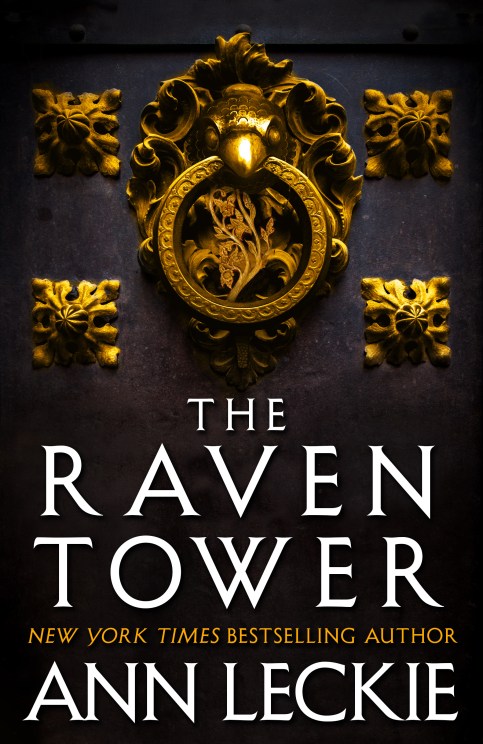
The Raven Tower by Ann Leckie

The Raven Tower Cover

Publishers: Orbit and Hachette Audio (Audiobook Format – 26 February 2019)

Series: Standalone/Book 1

Length: 12 hours and 1 Minute

My Rating: 4.25 out of 5 Stars

Amazon     Book Depository

The bestselling author of the Imperial Radch series, Ann Leckie, presents her first foray into fantasy fiction with The Raven Tower, an intriguing fantasy read that I have been looking forward to for a while, and which attempts something new and different in its presentation.

The Raven Tower is set in a world filled with gods whose power and abilities can be gifted to humans in exchange for worship and offerings.  For centuries, a powerful god known as the Raven has ruled over the rich kingdom of Iraden, offering protection and prosperity from atop a tower in the city of Vastai.  The human ruler of all of Iraden is known as the Raven’s Lease and has been chosen by the Raven to bear his power and enact the god’s will.  However, this power comes at a price, as each Lease must sacrifice himself to the Raven in order to keep the god strong and Iraden safe.

When Eolo and his lord, Mawat, heir to the Raven’s Lease, return to Vastai, they find the city in chaos.  Mawat’s father, the former Lease, went missing just before he was required to pay the Raven’s price.  In his place, Mawat’s uncle, Hibal, has taken the throne and has been named the new Raven’s Lease.  Determined to find out what happened to the former Lease and reclaim the throne for his master, Eolo attempts to uncover the many secrets of Vastai.  But as Eolo investigates he discovers that something ancient and mysterious is concealed within the Raven’s Tower: a secret from Iraden’s past that the Raven has kept hidden for centuries.  It is clear there will be a reckoning, but is Eolo ready to pay the price?

To be honest, I found that The Raven Tower was a very challenging book to critically examine and assign an overall rating for.  Before I had even started reading it, I saw that a number of other reviewers had noted that had great difficulty with this book, mainly due to the author’s unique way of narrating the story.  As a result, I chose to listen to the audiobook version of The Raven Tower, narrated by Adjoa Andoh, in the hopes that this would make it easier for me to follow along.  The audiobook version of the book is around 12 hours long, and I managed to get through it in around a week.  While I did also experience some issues with the way the book was set out, I actually began to appreciate this unique format the more that I stuck with the story, and this turned out to be a really enjoyable piece of fantasy fiction.

For this book, Leckie chose to utilise a noticeably different second person limited narration format to tell her story.  The story is told by a god known as the Strength and Patience of the Hill, who not only tells the main story in Vastai, specifically focusing on the character Eolo, but who also describes all the events of its own life that led up to this period of time.  This god has a very unique way of speaking that impacts how the Vastai story is told.  In particular, the god constantly describes what Eolo is doing, but, at the same time, it has no idea of what is going on inside Eolo’s head.  As a result, it makes very generic statements and guesses about Eolo’s memories, state of mind or thought process.  Take for example the following line, said as Eolo explores the docks near the tower: “I don’t think you grew up near the sea, and so you likely knew very little about boats or tides.”  Having this being make guesses about the protagonist’s thoughts or feelings is a little unusual, and I was very confused about why the author had written her book this way, and for a large portion of the book I really thought that it would have made more sense to have a more traditional narrator system.  However, as I read deeper into the story, it became a whole lot clearer why Leckie had set her story out in this way, and I was able to really appreciate it use.

As the book progresses, the two halves of the story start to come together.  Taken separately, both parts of the story are fairly interesting.  The storyline focusing on Eolo and the mystery surrounding the Raven’s Lease is fairly intriguing mystery filled with politics, murder, mystery and the fate of an entire nation.  The second storyline, which looks at the backstory of the Strength and Patience of the Hill, helps build up Leckie’s new world while also explaining much about the book’s primary fantasy element, the gods, as well as the Raven’s rise to power.  While both these storylines are quite fascinating in their own right, when they start coming together in the later part of the book, it creates a much more complete and intense story.  The author’s use of the Strength and Patience of the Hill as the book’s primary narrator becomes a lot clearer, and I actually really liked how this unconventional narration was utilised.  I also really enjoyed the fantastic twists that occurred at the end of the book, and the author’s excellent lead-up to these events was really quite clever and subtle.  Overall, this turned into quite an amazing story, and I was very glad that I stuck with it and got all the way through.

One of the main things that I enjoyed about The Raven Tower was the interesting fantasy elements that Leckie utilised throughout her story, mostly shown in the form of the gods that inhabit this world.  The gods in this book are quite an interesting creation from Leckie, who has come up with a number of rules surrounding them, all of which is explored by the narrator.  In this world, the gods have a finite amount of power, which they gain from worship and which they lose by altering the world, either for their own benefit or in order to answer prayers.  The gods’ power is tied to their speech; anything they say as a fact, their power will act to make it so.  For example, if they say that an object will turn, then their powers will act to make it turn.  However, if the action they want to accomplish takes more power than they have access to, then they will die or become extremely weak.  As a result, the gods are forced to speak extremely carefully, lest they inadvertently make a command that will take way too much energy.  The gods, therefore, try to avoid absolutes in their conversations and have to use words such as “I think” or “I heard” to get around this.  Leckie consequently has to have her narrator, the Strength and Patience of the Hill, utilise this language throughout the entire book, as to the god addresses the main character Eolo (even if Eolo does not hear them).  That is why there are so many unusual language choices throughout the book, such as the recurring “Here is a story that I have heard”.  While these language choices did throw me at first, once I understood why it was happening, I got used it and I thought it was extremely creative and commendable that the author stuck with this throughout the entire story.

In addition to this use of language, Leckie spends considerable time exploring the limitations and abilities of the gods throughout her book.  Leckie uses all sorts of different narrative devices to showcase this, from the Strength and Patience of the Hill’s personal memories and experiments, conversations they have with other gods, as well as telling stories about other gods and how they utilise their powers (there is one particularly amusing story about a god-powered spear I liked).  It is clear that the author put a lot of thought into her universe’s gods and the abilities that they have, and the exploration of these ideas were some of my favourite parts of the book.  I was also extremely impressed with how Leckie was able to utilise these fantasy ideas so effectively in her story, and I liked the bearing that they had on both the plot and the way the book was written.

Another interesting aspect of The Raven Tower is the characters that the author has used within the story.  The main protagonist is Eolo, whose attempts to get to the bottom of the mysterious events in Vastai are a large focus in the book.  Eolo is a pretty boss protagonist, able to disguise his intelligence and cunning behind an ignorant peasant facade, while quickly unravelling what has occurred in the city and then playing the politics to get the best result for her master.  Eolo is actually a transgender character, and I was really impressed with how well-written this part of the character’s identity was, and with how it was explored within the book.  In addition to Eolo, there are also several other intriguing characters used throughout the book.  Once you get the hang of its speech pattern, the Strength and Patience of the Hill is a pretty good narrator, and I found the god’s backstory and way of seeing the world to be incredibly intriguing.  I quite liked the character of Tikaz, who serves as one of the main female characters in the book, as well as Eolo’s potential love interest.  Tikaz is fleshed out incredibly well, and I loved the various interactions that she has with Eolo.  The book’s main villain, Hibal, is suitably evil and conniving, and he even has a pair of creepy twins serving as his henchmen.

I need to point out the fantastic job Leckie did coming up with one of the main characters in the book, Mawat.  Mawat is the heir to the Raven’s Lease, who finds his position usurped by his uncle.  However, rather than write him as a noble character we are supposed to feel sympathy for, Mawat immediately has a temper tantrum and spends the rest of the book acting as an unreasonable child, completely ignoring Eolo’s advice and even attacking his loyal servant whenever he hears something he does not like.  While a large amount of this is necessary for the story, I liked the reversal of the noble disenfranchised heir trope that is often utilised in fantasy, and instead we are left with a more complex character.

I quite liked the audiobook format of The Raven Tower and found it to be a really great way to enjoy this book.  I definitely think it helped me follow the plot and navigate the different narrative devices of this book, and I absorbed more information about Leckie’s fantasy elements.  I quite enjoyed Adjoa Andoh’s narration throughout the book and thought their voice was perfect for the mysterious and wise Strength and Patience of the Hill, who narrated most of the text.  I especially liked how Andoh was able convey the Strength and Patience of the Hill’s anger at certain key points of the book and to make the god’s voice quite menacing.  Apart from the Strength and Patience of the Hill, the other character voices throughout The Raven Tower were fairly distinctive and matched the personalities of the characters quite well.  I was especially fond of the fitting accents she assigned to some of the human characters, such as Tikaz or the god known as the Myriad.  Overall, I would strongly recommend that readers check out the audiobook format of The Raven Tower, as it may prove to be an easier way to enjoy this intricate story.

As I mentioned above, I had a hard time giving this book an overall rating.  When I first started reading it and I encountered the strange narration style for the first section of the book, I thought I might have to give it a low score.  However, once I started to get more into the story and the lore behind the gods of this world was explained in some detail, I ended up changing my score to something closer to 4 out of 5 stars.  This reflected my appreciation of Leckie’s inventiveness, but also had a few demerits due to the slow start and issues I had getting into the story.  However, I ended up changing this to a 4.25 out of 5 stars in the end, once I appreciated how the two separate storylines came together and that superb ending.  As a result, I would highly recommend The Raven Tower to fantasy readers, and I encourage people to see past the issues at the start of the book.  Leckie is an outstanding author, and her first foray into fantasy featured some unique elements that turned The Raven Tower into one of the most distinctive and clever reads of 2019.  The Raven Tower works incredibly well as a stand-alone book, but if the author decides to return to this world in the future I would be extremely curious to see where she takes the story next.

Amazon     Book Depository

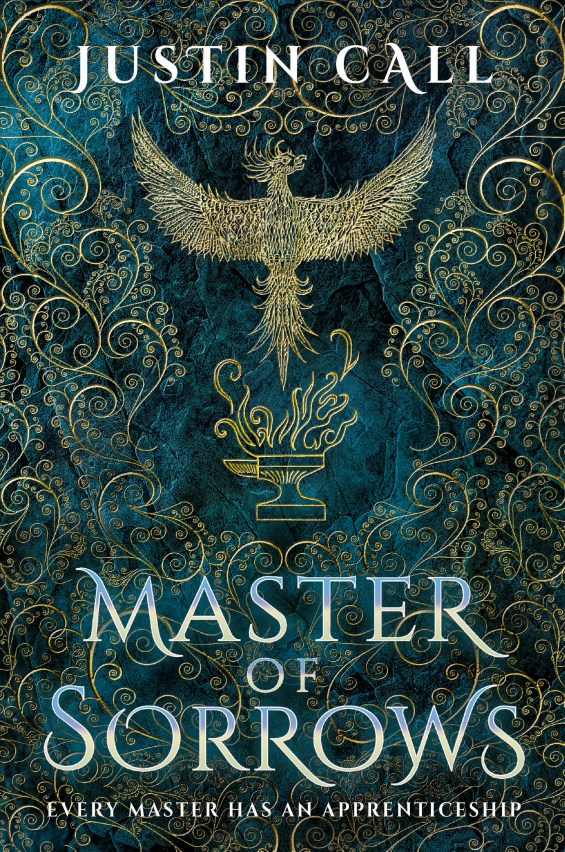
Master of Sorrows by Justin Call

Master of Sorrows Cover

Publisher: Gollancz (Trade Paperback format – 21 February 2019)

Series: The Silent Gods – Book 1

Length: 576 pages

My Rating: 4.5 out of 5 stars

Amazon     Book Depository

I have been looking forward to reading and reviewing Master of Sorrows for a while now.  I previously mentioned this book in one of my Waiting on Wednesday articles, which got a fair amount of attention, which I took as a sign of some interest from the general fantasy fandom.  The intriguing-sounding plot also made me extremely eager to check this book out, so I was very happy when I received a copy of it from Hachette Australia.  In the end I found Master of Sorrows to be a terrific piece of fantasy fiction and an outstanding debut from first-time author Justin Call.

The world of Luquatra has known much chaos and turmoil throughout its long history as three elder gods and their followers have battled for supremacy.  But now with the dark god Keos banished from the land, the greatest concern for many is the presence of magic.  The ancient and hidden Academy of Chaenbalu has long been a bastion against all things magic and will go to extreme lengths to achieve its primary objective of finding and containing the vast number of magical artefacts scattered throughout Luquatra.  No artefact, no matter its strength or intended purpose, can be allowed to remain outside the control of the Academy, as even those artefacts created for good can be used for great evil.

In order to fulfil this sacred work, the Academy trains all the children of Chaenbula in the arts of combat and magical detection.  Only the best students will become Avatars, warrior thieves capable of infiltrating any location and making away with the hidden artefacts.  Most importantly, an Avatar is trained to resist the lure of magic and the corruption of Keos.

Annev de Breth has always dreamed of becoming an Avatar and is determined to pass the Academy’s tests.  However, Annev is different from every other student at the Academy; trained by the town’s mysterious priest, Annev has an affinity for magic and hides a secret disfigurement that would see him immediately put to death.  Caught between the warring ideologies of the man who raised him and the head of the Academy, Annev needs to decide what kind of man he wants to be while navigating the complex politics of Chaenbalu.  But ancient powers are rising from the past, and it soon becomes apparent that Annev might not be the hero of this story; instead, he may be the man destined to unleash Keos once more upon Luquatra.

As I mentioned above, Master of Sorrows is author Justin Call’s debut novel.  It is also the first book in his The Silent Gods series, which is going to be made up of four books.  Call has already announced that each of the three upcoming books will be released in late February of each year for the next three years, with this series set to wrap up in February 2022.  This first book is an ambitious introduction to series that does a fantastic job of setting up the main story, as well as introducing the reader to an intriguing new fantasy universe.

I really enjoyed the story contained within Master of Sorrows, as it is well paced out and contains some fantastic moments.  The first part of the book features Annev attempting to pass the Academy’s tests in order to become an Avatar.  I love a good magical school storyline, and this one is pretty fantastic, featuring some unique, complex and entertaining testing sequences, as well as an introduction to the complex and restrictive life within the Academy.  The rest of the book is extremely exciting and eventful as the protagonist learns more about the threats and complex world outside of Chaenbalu, and even embarks on a dangerous mission where he encounters a series of mysterious threats.  This all leads up to the book’s spectacular conclusion, which not only sets the scene for all manner of adventures in the future but also results in some interesting character development while also setting up several dangerous new antagonists with personal grudges against the main character.

One of my favourite things about the plot is the general intrigue and hypocrisy surrounding the Academy of Chaenbalu.  The Academy is framed as some ultimate bastion of good in the world, opposing the evils of magic and Keos.  However, as the book progresses, the reader, through the protagonist’s eyes, begins to see that everything about the Academy is more complex and morally ambiguous than it first appears, resulting in a number of powerful story developments.  For example, in this universe, any disfigurement or disability is viewed as a mark of the dark god Keos’s favour, and people who bear them, especially those born with some sort of disfigurement, are shunned or killed.  These rules are especially enforced within the Academy, and Annev is forced to hide his disability to stay alive.  Watching a basically good character be vilified for something outside of his control makes the reader lose trust in most of the characters associated with the Academy.  It is also very thrilling to see the lengths the protagonist will go to in order to hide his disfigurement and try to live a normal life within Chaenbalu, knowing that his secret could be discovered at any turn.  The reader is also left questioning the Academy’s many archaic rules, as these rules and blind obedience are particularly frustrating to the protagonist, who chafes at the restrictions and is constantly questioning everything.  There are also a huge number of different plots and schemes occurring within the Academy, with many of the characters having secret allegiances and plans, many of which come to the surface by the end of the book.  All of these elements are fantastic, and they really add a keen edge of intrigue and thoughtfulness to an already captivating story.

Within Master of Sorrows, Call introduces his readers to a deep and enjoyable new fantasy universe that serves as an excellent basis for his story.  While the author does make an effort to set up a much larger world, the vast majority of the story is set in and around the village of Chaenbalu, which houses the Academy.  As I have mentioned before, I loved the Academy as a setting, but some of the other locations are also intriguing, such as the massive magical forest that surrounds the town.  I really loved the overall setting of the gods and magic within this world, especially when it comes to people’s perceptions about them, as they have some fantastic impacts on the story.  Call spends a bit of time expanding on the mythology of this world’s main gods, telling their stories and explaining the impacts that they had on the world.  These are quite interesting, especially as the stories they tell reveal that the conflicts of the gods were just as complex as the issues occurring within the Academy.  The author has also come up with some fun and dangerous new fantasy creatures, mostly as servants of the god Keos.  These creatures have some great scenes, especially towards the end of the book, and I look forward to seeing more of them and this intriguing new world throughout the rest of The Silent Gods series.

I really need to the hype up some of the incredible action sequences featured within Master of Sorrows.  Call has created several exceptional extended action scenes within this book, including two intricate tests within the Academy, where the students must overcome not only each other but also the various obstacles set up against them.  These testing scenes are extremely elaborate and feature some interesting rules and opposition.  I loved reading these scenes, and it was great watching the protagonist try to complete them his way.  In addition to these testing scenes, there is also a great magic based combat sequence featured later in the book, where the protagonist and his companions must overcome all manner of magical traps and attacks in order to complete their objective.  This scene is massive in terms of destruction and brutality featured and was an excellent addition to the book.  As a result, readers who love a good amount of thrilling action in their fantasy stories should definitely check this book out as Call demonstrates a real skill for creating unique and captivating fantasy action sequences.

Master of Sorrows is an amazing debut from new author Justin Call, who has done a wonderful job setting up a fresh and intriguing new fantasy series.  This first book in the planned The Silent Gods series has some awesome and memorable plot points and features a thrilling and captivating action-packed adventure.  Call has certainly set himself up as a fantasy author to watch, and I am extremely eager to see where this story goes next.  I cannot wait to check out the second book in The Silent Gods series.

Amazon     Book Depository

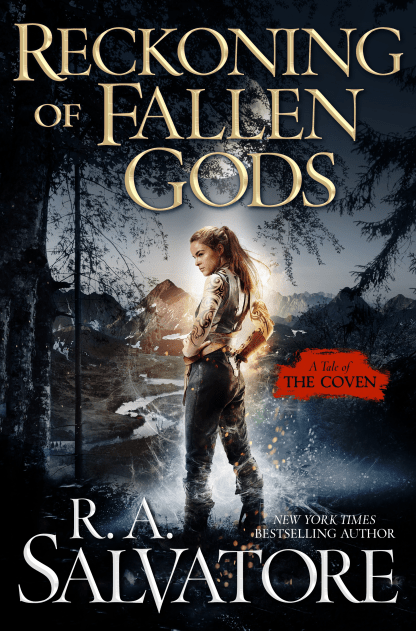
Reckoning of Fallen Gods by R. A. Salvatore

Reckoning of Fallen Gods Cover.png

Publishers: Tor Books and Audible Studios (Audiobook Format – 29 January 2019)

Series: The Coven – Book 2

Length: 14 hours 37 minutes

My Rating: 4.5 out of 5 stars

Amazon     Book Depository

Prepare to return to Corona, the world of The DemonWars Saga, for Reckoning of Fallen Gods, the latest book from master fantasy author R. A. Salvatore and the second book in his outstanding new The Coven series.

In the world of Corona, no lands are as harsh or unforgiving as those surrounding the massive Loch Beag.  All manner of dangerous creatures live in and around the loch, including one massive and unseen lake monster that lurks right below the surface.  But for those who live in the fishing villages that eke out a living around the shore of Loch Beag, the biggest danger is more human in origin.  Living at the top of the massive mountain, Fireach Speur, is a barbaric tribe, the Uscar, who constantly raid the fishing villages below.  Enhanced in battle by the crystal magic of their witches, the Uscar are ferocious warriors who consider themselves vastly superior to the inhabitants of the villages they raid.

This cycle of violence and death existed for hundreds of years until a powerful young Uscar witch, Aoelyn, attempted to change her tribe’s ways by destroying the fossa, a demonic creature that haunted the mountain at night.  However, her decision will have terrible consequences, as ambitious members of her tribe turn against her.  As Aoelyn endures the wrath of her tribe, her friend, the slave Bahdlahn, attempts to escape from the Uscar with help from an unexpected ally.  Down at the shore of Loch Beag, the trader Talmadge, who Aoelyn saved from her tribe’s brutality the night she ended the fossa, attempts to find some sort of peace among the fishing villages who have accepted him as a friend.  However, the appearance of a mysterious stranger will bring significant changes to his life.

But while those living around Loch Beag fight among themselves, they are unaware of a much bigger threat growing in the East.  A lost empire of goblinoids, the Xoconai, are on the march, driven by the return of their fallen god.  The Xoconai are determined to conquer all the lands of man, and the first obstacle they must overcome is the people of Fireach Speur and Loch Beag.

R. A. Salvatore is one of the best and most prolific authors of fantasy fiction in the world today, having a written over 60 fantasy books in his career. He is perhaps best known for his work in the established Forgotten Realms universe and the incredibly popular character of Drizzt Do’Urden. However, Salvatore has also written a series of novel set within his own unique fantasy world of Corona.

Salvatore introduced audiences to this new fantasy world in his 1997 release, The Demon Awakens, the first book in his epic The DemonWars Saga, which spanned seven books between 1997 and 2003.  This universe was expanded out in 2004 with The Highwayman, the first book in his Saga of the First King series.  After the Saga of the First King series ended in 2010, Salvatore left the world of Corona untouched for eight years while primarily focusing on his Forgotten Realms series.  However, he returned to Corona in 2018 with Child of a Mad God, the first book in his new The Coven series.  The Coven series is primarily set in a previously unexplored area of Corona, in the lands around the massive Loch Beag, with the first book focusing on a whole new group of characters.

I am a massive fan of Salvatore’s work, having read nearly all the books featuring Drizzt Do’Urden and his companions (click here for my review of the latest Drizzt Do’Urden book Timeless).  However, before last year’s Child of a Mad God, I had not really gotten into his work set in Corona, having only really read The Highwayman back when it was first released in 2004.  While Child of a Mad God was not my favourite of Salvatore’s books, it did a great job introducing this new area of Corona, while also creating an excellent starting point for the series’ overall plotline.

I found that I enjoyed Reckoning of Fallen Gods a lot more than the first book in the series, possibly because the author was able to dive right in and continue several of the more intriguing plot threads from the first book.  I quite enjoyed how the story progressed; all of the storylines contained within were very well paced and entertaining, coming together extremely well towards the book’s conclusion.  I really liked the over-the-top way that the story ended, as it sets up the next book in the series with some massive stakes and makes full use of the intriguing new fantasy elements that were included within this book.  A bit of a warning about this series: is it substantially darker than some of Salvatore’s other works.  This was particularly true of the first book of The Coven series, Child of a Mad God, which contained a fair amount of torture and sexual violence.  While there is a little less sexual violence in this book, several character development elements are based around these original events and are discussed in some detail.  There is also some fairly dark and gruesome action and torture, which might not be enjoyable for some readers.  Overall, though, this is a great follow-up to Child of a Mad God that once again highlights Salvatore’s skill as a master fantasy storyteller.

Some readers may be wary about checking this book out because it is the second book in The Coven series and the 13th overall book set in the world of Corona.  However, I found that this book to be easily accessible to new readers, with the author ensuring that relevant details from the previous book and series were easy to understand and follow nearly right away.  In addition, there are also a lot of elements for established fans of this universe to enjoy, especially as Salvatore includes a substantial character from one of his previous Corona based series in this book.  The inclusion of this character is an excellent way to tie this new series with the author’s existing works in this fantasy universe, which also highlights the importance of this story to the rest of the world of Corona.  The ending of Reckoning of Fallen Gods also hints that characters and locations from the previous series may come into play in the next book in The Coven series.

I loved all the fantasy elements in this book.  The world of Corona is a fantastic setting for the great story that is taking shape within The Coven series.  The main location for most of this book’s plot, the lands around Loch Beag and Fireach Speur, is a substantially dark and rugged area with a large number of natural and unnatural threats.  In Reckoning of Fallen Gods, there are a number of significant developments around several of these locations and creatures, some of which are pretty insane.  Just like in the first book in this series, Child of a Mad God, Salvatore continues to expand on the intriguing gem-based magic that is a feature of the books set in Corona.  The gem magic that was featured in Child of Mad God was somewhat different from the already established gem magic used in some of previous Corona books, such as The DemonWar Saga, and is based around the magic found atop Fireach Speur.  This expansion of the gem magic continues in Reckoning of Fallen Gods with the main character, Aoelyn, developing additional magical abilities.  Many of these abilities are quite spectacular, and Salvatore’s enthralling writing highlights how impressive these abilities are when Aoelyn utilises them in fights or other magical engagements.  At the same time, another character utilises some of the more traditional gemstone powers they had in one of the previous series, and it is interesting to see the differences and similarities this has with the Uscar magic.

One of the more unique and enjoyable fantasy inclusions within Reckoning of a Fallen God is the new antagonist race, the Xocanai.  The Xocanai are a new race of goblinoid creatures that exist in a realm on the other side of the mountains surrounding Fireach Speur.  The Xocanai are somewhat Aztecan in culture and their empire has been rather cut off from the rest of the world for some time.  However, recent actions have allowed them to come together to invade the human lands, and some of the events of Child of a Mad God may be to blame.  I felt that Salvatore did an excellent job of introducing them in the current book, and he was able to build them up as a substantial antagonist in quite short order.  I liked how the reader is able to get a good view of this new race’s culture and religion in only a few short chapters, while in-universe texts present at the start of each section of the book help to establish a historical past for these creatures.  In the end, they are a fantastic new inclusion to the series and the universe and serve as excellent new antagonists.

Salvatore has created some great new characters for this series, and many of the key characters who were introduced in the first book go through some significant and compelling character development throughout Reckoning of Fallen Gods.  The main character development occurs with Aoelyn, who, after the fallout of the events in the first book, develops a stronger sense of independence and rejects the established male hierarchy imposed upon her and all the female members of her tribe.  Her friend Bahdlahn gains the courage to finally flee the Uscar and is finally able to come to terms with his feelings for Aoelyn.  At the same time, the trader Talmadge comes to terms with the tragedies in his life and is finally able to find some semblance of peace with the people living around Loch Beag.  Even the established character from the previous series (who I am still not mentioning for spoiler reasons) has developed somewhat in this book, as he ruminates on the mistakes from his past that were covered in the previous series.

I have to give credit to Salvatore for creating some truly villainous antagonists for this series, especially among the Uscar characters.  The main antagonists are quite despicable, especially in the way that they deal with Aoelyn and Bahdlahn, and the reader is hoping for all sorts of comeuppance for these characters.  Even the Uscar characters that come across as more compassionate members of the tribe can still be quite dislikeable.  For example, there is one character who appears to change his ways in Reckoning of Fallen Gods.  However, he has a sudden and quite unjustified change of heart back to the Uscar ways towards the end of the book, and his complaining about the event that drove him to betray his friends really does not endear him to the reader.  These great antagonists serve as spectacular foils to the protagonists and really add a lot to the overall story.

I chose to listen to the audiobook version of Reckoning of Fallen Gods, narrated by Tim Gerard Reynolds.  This was an interesting change of pace for me, as I had read the physical copy of the first book in The Coven series, so it was cool to hear these characters come to life in the audiobook format.  At 14 hours and 37 minutes, this was not the longest audiobook I have listened to recently, but it still required a little bit of time to get through.  Reynolds is a spectacular narrator, and I really enjoyed listening to him tell this story.  His base narration voice for this book was really good, and I found I was able to absorb a lot of the story through his great narration.  The character voices he came up with were also excellent, and I loved how the distinctive cultural/species groups within Reckoning of Fallen Gods got their own accents.  For example, he ensured that the Uscar characters had a form of Scottish accent, while the other groups that feature in the book, such as the Xocani have a noticeably different way of speaking.  Because of this excellent voice work, I had a lot of fun listening to this book, and I will make sure to get the audiobook versions of this series in the future.

Fantasy icon R. A. Salvatore is in high form once again with Reckoning of Fallen Gods, the second book in his new The Coven series.  Salvatore does an outstanding job continuing the intriguing story he started in the first book of the series, Child of a Mad God, and effortlessly inserts a number of original and familiar elements to create an exciting and epic read.  With some great characters and some inventive new ideas, this is a spectacular new addition to this darker fantasy adventure series.

Amazon     Book Depository

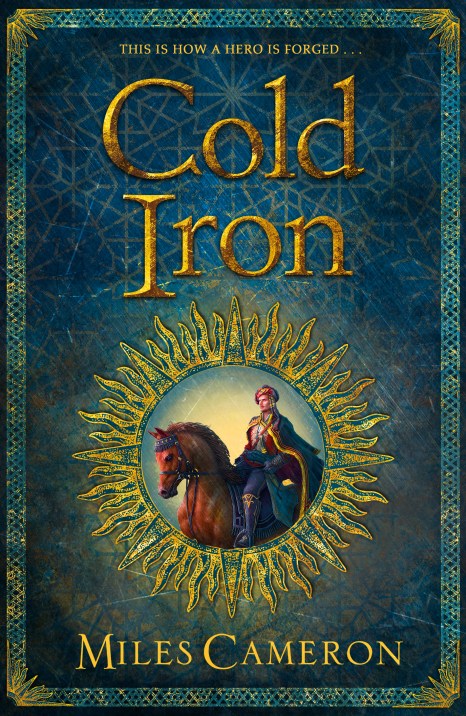
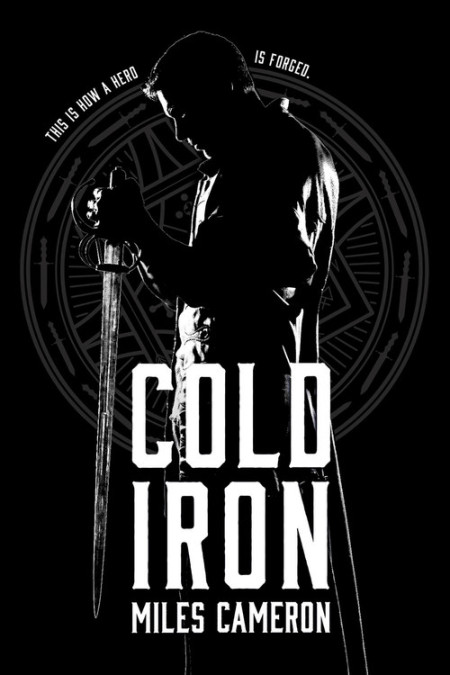
Cold Iron by Miles Cameron

Cold Iron Cover 1.jpg

Publisher: Hachette Audio (Audiobook Format – 30 August 2018

Series: Masters & Mages – Book 1

Length: 19 hours, 29 minutes

My Rating: 5 out of 5 stars

Amazon     Book Depository

I recently managed to read one of the books that was featured in my Top Ten Books I Wish I Had Read In 2018 list.  I have to say I was quite impressed with this book, Cold Iron by Miles Cameron, as it is one of last year’s most intriguing fantasy reads.

Miles Cameron is the pseudonym historical fiction author Christian Cameron uses when he writes fantasy novels.  Cameron debuted in 1999 with Rules of Engagement, the first book in the seven-book long Alan Craik thriller series, which he wrote with his father, Kenneth Cameron, under the joint pseudonym of Gordon Kent.  In addition to this joint series, Cameron started writing his own novels in 2003 when he wrote his first historical fiction novel, Washington and Caesar.  Since then, Cameron has written over 15 historical fiction novels, including the multiple books in his Tyrant, Long War and Chivalry series.  In 2013, Cameron branched off again into a new genre, fantasy, with his five-book long Traitor Son Cycle, which he wrote as Miles Cameron.  Cold Iron is the first book in his brand-new fantasy series, called the Masters & Mages series.

I am mostly familiar with Cameron through his historical fiction works, having read and reviewed a couple of books in his Tyrant and Long War series early in my career.  I particularly enjoyed the first book in his Long War series, Killer of Men, which set a young protagonist from Plataea on an adventure across ancient Greece and Persia.  Unfortunately, I failed to get any of Cameron’s books in the intervening years and was completely unaware that he had written any fantasy books.  So when I came across Cold Iron and recognised the author, I was deeply intrigued and thought it would be an interesting book to check out, especially as it had been receiving some great reviews.  After mentioning it in one of my Top Ten lists, I decided to check out the audiobook version of this book a few weeks ago.  I was especially keen to check it out as the second book in the Masters & Mages series, Dark Forge, has recently been released, although it looks like this second book will be released in a number of different formats throughout the year.

Cold Iron follows Aranthur Timos, a young student at The Academy, a prestigious institute of magic, science and other scholarly pursuits that lies at the heart of a mighty empire.  Aranthur, a poor farmer’s son, is not the best student at The Academy, and aside from some slight skill with the sword, nothing sets him apart from any of the other students.  But fate has something special in store for Aranthur.  Travelling back to his family farm for the holidays, Aranthur stops at a small inn.  When bandits attack the owners of the inn, Aranthur steps in to try and help, and in doing so sets a momentous series of events into play.  His actions that night inadvertently place him in the middle of a vast and terrible conspiracy, as he comes to the attention of the inn’s other guests, including a powerful priest, a master swordsman, a young gentleman spy and an enigmatic and dangerous beauty.

After returning to The Academy, the results of Aranthur’s actions at the inn indirectly introduce him to a number of new friends that help him excel at his studies.  But a series of chaotic events are occurring across the lands.  The city surrounding The Academy is in turmoil, as factions and noble houses fight against each other.  Worse, refugees are flooding in from lands to the east, driven out of their homes by a group known as the Disciples, followers of a shadowy figure known as the Master, who seek to return the world to an ancient status quo where only the nobles have access to magic.  Despite being a simple student, Aranthur keeps finding himself in the centre of the momentous events sweeping the city.  Can Aranthur survive all the mysterious events occurring around him, and, if he does, what sort of person will he become?

I absolutely loved this book; it gets a well-deserved five stars from me.  Cold Iron is an extremely clever coming-of-age fantasy story set within an immensely detailed and inventive new world.  I have found with some of Cameron’s previous works, such as the books in his Chivalry series, that the author has a very particular writing style, such as his propensity to include large amounts of detail in his paragraphs and the utilisation of a somewhat more formal dialogue.  This style has always worked well with the author’s historical fiction work, and I felt that this writing style translated across well to this fantasy book.  It was reminiscent of some of the older classical fantasy stories, although with some more modern language.  This results in the book having a much more unique feel to it, which I found to be quite curious and actually helped draw me into the story.

The overall story of Cold Iron is quite an intriguing fantasy read that places its protagonists and point-of-view character in the centre of a worldwide conspiracy.  There are so many elements to this story to enjoy, including an excellent coming-of-age focus.  Throughout the course of the book, the protagonist, Aranthur, grows from a poor and insignificant student to a central figure in the fight for kingdoms and the freedom of magic.  The story is quite clever as it focuses on a character who, rather than being the dreaded “chosen one” fantasy trope, is instead thrust into events by accidentally being in a certain place at a certain time.  I really enjoyed how everything that happens to Aranthur throughout the book is the direct result of the one tavern fight at the start of the book, and he is drawn into the subsequent events or introduced to key characters through sheer coincidence.  The resultant conspiracy is deeply intriguing and ties in really well with Cameron’s excellent fantasy elements.  I am also a sucker for a storyline involving magical schooling or training, so I loved how this story was set within a magical university and focused quite a bit on the protagonist’s training.  All of these elements work together to produce an incredible overall narrative that I really enjoyed listening to.

For this new series, Cameron has come up with a fun and detailed fantasy world.  The Masters & Mages series is set in a sprawling world that features a number of diverse human nations.  Only a small part of this world is explored within this first book, although there are quite a number of references to nations outside of the central settings, and events occurring in these locations impact on the main story.  This world appears to be in a post-medieval point of its history, with early firearms starting to be utilised, although older technologies such as crossbows are still in use.  The setting comes across a bit like Italy or France during a similar time period, but with a magical edge to it that works quite well.  The main setting is a gigantic and rich city of canals and elaborate architecture that hosts The Academy, and this serves as a perfect location for the intriguing, conspiracy-laden fantasy story.  The city is filled with a huge number of factions, refugees and competing noble houses, creating quite a significant amount of internal political strife which plays into the story quite well.  There are also some examinations of some more rural areas within the world, and Cameron does a spectacular job of presenting the more down-to-earth folk that live in these locations.  The locations featured within this book were very well done and I look forward to seeing what new lands are explored in future books.

One of the most interesting things about the setting of the book was how several of the issues and plot points have some interesting parallels with modern issues.  For a bit of context, the world that the Masters & Mages series is set within a world where a historical revolution installed a series of reforms that granted magic and education to the lower classes.  Now even quite poor families have access to basic magic that cleanses water, helps create fires and heal people, resulting in a better class of life for the common people.  At the same time, women are able to attend classes at The Academy and learn magic and other skills.  The book’s antagonists are determined to reverse these reforms and return magic to the rich and the nobles and ensure women have no more power.  This has resulted in a number of invasions and wars that have resulted in a huge number of refugees entering the city and other locations, much to dismay of the city’s rich and powerful.  I found the motivations of the antagonists to be very interesting, and it is easy to see some real-life parallels.  Intolerance towards refugees is a major issue at the moment, and it is deeply fascinating to see this reflected in a work of fantasy fiction.  In addition, the book featured quite a lot of intolerance towards people of certain nationalities, including the protagonist’s nationality.

Highlights of Cold Iron the spectacular action sequences that occur throughout the book.  There are a substantial number of fight scenes throughout the book, featuring magic, firearms, crossbows and swordplay.  All of these action elements are pretty impressive, and I especially love some of the larger sequences, where all the above methods of combat are being utilised by both sides.  For the most part, only some basic magical techniques are used within fights, which while intriguing, do not result in any eye-popping scenes.  However, there is one sequence where two powerful magic users fight in front of the protagonist, and he sees the destructive potential of their respective magic abilities.  Without a doubt, the most amazing action element is the swordplay.  There is quite a focus on swords throughout the book as the protagonist spends a large amount of time learning and training with them before using them in a number of duals and fights.  Cameron’s insane attention to detail and incredible knowledge of sword fighting makes these scenes absolutely incredible and produce some amazing fight sequences that feel extremely realistic.  These sword fight scenes are some of the best parts of this book and I really enjoyed having them narrated to me.

I had a lot of fun with several of the characters in this book.  The main character, Aranthur, is a pretty good protagonist who goes through some substantial character development in this book.  Not only does he grow to appreciate different points of view and increase his abilities as a warrior and scholar but he actually learns from his mistakes, although in some cases, such as when it comes to learning about women, it takes a little too long.  The other characters featured within Cold Iron are an interesting group.  My favourites include Ansu, a noble from another land who brings some amusing cultural differences; Tiy Draco, a gentleman spy with unclear allegiances; and Dahlia, the feisty warrior student who highlights the abilities and determination of the female students in The Academy.  My favourite character, however, had to be Sasan, the sarcastic and fatalistic refugee and drug addict who Aranthur attempts to help.  Sasan has some of the best lines in the entire book, and his exclamations and actions when under the effect of an enhancement spell were really funny.  Each of these characters is a lot of fun, and I will be intrigued to see what future development awaits them.

I listened to Cold Iron’s audiobook format, narrated by Mark Meadows, and I had a good time listening to this book.  Clocking in at around 19 and a half hours, this is a fairly long audiobook; however, I found myself really drawn into the story, so I was able to get through it fairly quickly.  I personally thought that the audiobook format was the best way to enjoy this book due to the huge amount of detail and worldbuilding that went into this story.  I was able to focus on all the details a hell of a lot more by listening to them, and I think this helped me follow the plot with a lot less confusion.  Cold Iron’s action sequences are particularly good when narrated, and I found that the intense and elaborate sword sequences were really enhanced by this format.  Mark Meadows does a fantastic job of narrating Cold Iron and I really appreciated his work in bringing the story to life.  I felt that the voice Meadows used for the narration of Cold Iron was very appropriate, and I liked listening to all the descriptions and actions that Cameron had inserted into his story.  Meadows also came up with a range of unique voices for his various characters, each of which did a great job of conveying the character’s emotions and personality.  Part of the reason why I liked the character of Sasan so much was because of the voice that Meadows created for him and used to exclaim some of his best lines.  Overall, I would strongly recommend that readers interested in checking out Cold Iron should try its audiobook format, and I was quite glad that I did.

Before I wrap up, I just wanted to make a quick comment on Cold Iron’s cover art.  Cold Iron has two separate covers: the one I have included at the top of this review, and the one I have placed below.  I loved both of these covers individually, and I felt that they contrasted with each other quite nicely.  The first cover is very classy and really exudes an old-school fantasy vibe, which I think represents Cameron’s storytelling style quite well.  However, I did enjoy the more modern look of the second cover, and I really enjoyed the artist’s use of the simple, but effective black and white colour scheme.  Both are very impressive, and I have to say that the artists did a fantastic job with both of them.

I was very impressed by my first foray into Cameron’s fantasy writings.  Cold Iron is an exceptional piece of fantasy fiction and an easy five stars from me.  This book’s story was incredibly well written and contained a very compelling plot filled with wide-reaching conspiracies, magic and excellent characters.  Set in a brilliant new fantasy world, Cold Iron is an excellent start to the Masters & Mages series and sets it up as a fantasy series to watch out for.  Some paperback versions of the second book in the series, Dark Forge, came out a short while ago, and I am tempted to order a copy in.  However, I may wait until September, when the audiobook version is released, as I found this was a great way to enjoy the first book.  Cold Iron is an outstanding read, and I am really glad I went back and checked out this excellent 2018 release.

Cold Iron Cover 2.jpg

Amazon     Book Depository

Lady Smoke by Laura Sebastian

Lady Smoke Cover

Publisher: Pan Macmillan Australia (Trade Paperback Edition – 12 February 2019)

Series: Ash Princess Trilogy

Length: 496 pages

My Rating: 4.5 out of 5 stars

Amazon     Book Depository

Bestselling young adult fantasy author Laura Sebastian presents an outstanding follow-up to her 2018 debut with this superb novel which builds on the author’s original book and uses it to create a fantastic story.

For many years, Theodosia was a prisoner in her own palace.  The brutal warrior race, the Kalovaxians conquered Theo’s country of Astrea, enslaving her people and killing her mother, the Fire Queen.  Forced to live as a trophy prisoner and ridiculed as the Ash Princess, Theo eventually rebelled, escaping from the Kalovaxian ruler, the Kaiser.  However, her escape had complications, as she was forced to kidnap the Kaiser’s son, Prinz Soren, and poison her only Kalovaxian friend, Crescentia.

Now freed and claiming her birthright as Queen of Astrea, Theodosia is determined to take her country back.  With no troops of her own and only a handful of followers, Theo is forced to rely on her aunt, the pirate known as Dragonsbane, for support.  However, her aunt believes that the only way to liberate Astrea is for Theo to marry a foreign ruler and use their army to fight the Kalovaxians.  No Astrean Queen has ever married before, but with the desperate situation that Theo finds herself in, she has no choice but to allow Dragonsbane to organise a meeting with a number of potential suitors from the lands not controlled by the Kalovaxian armies.

Descending on the wealthy nation of Sta’Crivero, Theo is thrust into a dangerous hive of foreign royals and nobles, all of whom seek to use the newly released Astrean Queen to their own advantage.  Forced to decide between her heart and the needs of her people, Theo has to play along in order to find a way to defeat the Kalovaxians.  But sinister forces are at work within the Sta’Crivero palace: politicians are playing with her people’s lives, a sinister poisoner is targeting those closest to Theo, and the Kaiser has placed a price on her head.  Theo must rely on those closest to her, but even those she cares about the most could bring her down.

Lady Smoke is Laura Sebastian’s second novel, which follows on from her debut book, Ash PrincessAsh Princess was a fantastic fantasy debut which I enjoyed thanks to its interesting blend of political intrigue and clever fantasy elements.  However, I felt that Lady Smoke was an even better book, as Sebastian creates a much more compelling story while also expanding her fantasy universe and looking at the relationships between her characters.

Sebastian continues to focus on the growth of her protagonist and point-of-view character, Theo, as she rises to become the queen her people need.  In this book, Theo is recovering, both physically and emotionally from her years of captivity in the Kalovaxian court.  She is haunted by her decisions, including her ruthless manipulation and poisoning of Cress, one of the few people who considered Theo to be a friend.  In order to obtain the power she needs to free her kingdom, she must try use a strategic marriage to arrange an alliance with one of the countries outside of Kalovaxian’s influence.  The storyline focusing on her adventures within Sta’Crivero takes up a large portion of the book, and is an interesting piece of political intrigue.  Theo and her companions must attempt to find a political suitable match while also avoiding being manipulated by the rich and powerful rulers who all want to control or exploit her or her country.  There are a variety of layers to this story, as many of the rulers she encounters have their own agendas, and she must try and unravel them while also bringing some other nations to her cause.  Add to that, a mysterious poisoner is at large within the palace, attempting to kill Theo’s favoured suitors and allies while also framing one of her advisers.  Each of these parts of the story is deeply compelling, and I was very curious to see how this part of the story turned out.  These sequences also had some great emotional depth, as Theo is forced to balance her personal desires and opinions about arranged marriages, with the requirements of an army to free her enslaved people.

I thought that the main political intrigue and arranged marriage storyline of Lady Smoke was done amazingly and was one of the most enjoyable parts of the book.  The eventual conclusion of this storyline was handled pretty well, and readers will love the solution that the protagonist came up with.  I really liked the reveal about who the poisoner was, although I kind of saw the twist coming far in advance.  Even though I knew it was coming, I felt that the reveal was done extremely well, and the sinister motivations behind them made for some extremely compelling reading.  The final twists of the book were also very shocking, and I definitely did not see one particular event coming.  Overall, I had an absolute blast with this story, and thought it was substantially better than the awesome first book in the series.

Aside from the great story, one of the things I really enjoyed about Lady Smoke was the author’s superb universe expansion.  While a number of other nations that make up Sebastian’s fantasy world were mentioned within Ash Princess, the entirety of the plot took place within the conquered country of Astrea.  The plot for Lady Smoke, however, takes place in an entirely new setting, the kingdom of Sta’Crivero, which is an extremely wealthy and elitist realm.  While the people of Sta’Crivero initially appear supportive of Theo and the Astreans, it is revealed that they look down on the refugees and treat them as slave labour.  Sebastian does an amazing job of making the Sta’Crivero nobles sound exceedingly arrogant, and her descriptions of the rich and elaborate palace are stunningly decadent.  Once Sta’Crivero has been introduced as an excellent new setting for the story, the author brings in the rulers from all the nations that have not been conquered by the Kalovaxians.  Each of these new rulers is given an introduction, and their countries’ strengths and weaknesses are explored in various degrees of detail.  As Theo interacts with each of these rulers, the reader gets a better idea of the world outside of Astra and Sta’Crivero, resulting in a richer world tapestry for the audience to enjoy.  By the end of the book, Theo has made a number of allies and enemies from amongst these various nations, and it will be extremely fascinating to see how this comes into play within any future books in the series.

I quite enjoyed the unique and somewhat subtle magical elements that were shown throughout Ash Princess.  In this second book, the author continues to expand on her interesting magical inclusions by showing her magical characters utilising their powers to a greater and more obvious degree and using their powers in different situations.  I rather liked the exploration of ‘mine madness’, the process by which some Astrean magic users become overloaded with magic, especially those who have spent significant time in their magical mines as slave labour under the Kalovaxians.  Alternate explanations for this condition are given throughout Lady Smoke, and the author also examines the destructive nature of the condition, through several impressive scenes.  Other magical maladies are also featured within this book, and I liked how several unexpected characters were affected by these changes.

Sebastian does an amazing job of exploring the main character’s relationship with her friends and companions, and this forms an intriguing part of the plot.  There is a bit of a focus on her friendships with her companions, Artemisia and Heron.  Due to story reasons (Theo spent most of the first book on the other side of a wall), Theo was unable to build much of a relationship with either of these characters, so I liked how she started to bond with both of them.  This deepening relationship results in some character development of these two interesting side characters, and some interesting explorations of their life are explored, such as Artemisia’s relationship with her mother, the Dragonsbane, and Heron’s homosexuality.

The most compelling character interactions occur between Theo and her two love interests, Blaise and Soren.  Blaise is her oldest friend, her most loyal companion and the man who broke her out of the Astrean palace.  Soren, on the other hand, is the son of the Kaiser, her most hated enemy, and the man who Theo spent the majority of Ash Princess seducing and manipulating for her own ends.  Throughout the course of Lady Smoke, Theo finds herself attracted to both of these men, and must find a way to balance her feelings for them while also having to reconcile the possibility of choosing neither of them in order to secure her country’s freedom.  Adding to this drama, both Blaise and Soren have their own storylines and character development that they must undergo.  Blaise is suffering from mine madness, which has amplified his earth-based magic to a dangerous degree.  As a result, Theo has to spend a significant part of the book as his emotional tether, trying to rein in his temper and creating chaos.  Soren, on the other hand, must reconcile the evils that his countrymen and himself have undertaken while also trying to escape his father’s cruel legacy.  In order to make amends and to get revenge on his father, he finds himself on Theo’s side, but his relationship proves to be more of a liability to Astrea in a number of ways.  All of these issues make for an utterly captivating love triangle that really adds some interesting elements to the story.

In the follow-up to her debut novel, Ash Princess, Laura Sebastian continues her incredible fantasy series.  Lady Smoke is an amazing sequel that really highlights Sebastian’s growth as an author.  Not only does Sebastian successfully expand her fantasy universe, but she further develops her characters and provides the reader with an outstanding story.  I am very much looking forward to the sequel to this book, Ember Queen, which is coming out in 2020, and I am extremely curious to see how several story developments at the end of Lady Smoke take form.  Exceptional fantasy fiction from a creative and talented new author, Lady Smoke comes highly recommended.

Amazon     Book Depository

Throwback Thursday – Promise of Blood by Brian McClellan

Promise of Blood Cover.jpg

Publishers: Orbit

                        Hachette Audio

Publication Date – 16 April 2013

Amazon

Reviewed as part of my Throwback Thursday series, where I republish old reviews, review books I have read before or review older books I have only just had a chance to read.

One of the saddest realities of being a bibliophile is that no matter how hard you try or how much spare time you have, no one can read every great book that comes out every year.  I am no exception to this rule, as for years I was mainly focused on the historical fiction genre.  While this is a fantastic genre to focus on, it did mean that I missed out on many of the biggest science fiction and fantasy releases for the last several years.  Ever since I expanded my attention to a range of other genres, I have been seeking out and reading a number of different fantasy or science fiction books and series, many of which I have or will review on my blog and on Goodreads.  One of the series that I have heard constantly praised by friends, fantasy fans and other book reviewers is The Powder Mage trilogy by Brian McClellan.  Nearly every fantasy reviewer and their dog has read and said good things about these books and, as a result, The Powder Mage trilogy has long been at the top of my to-read list.  So when I was recently able to fit the first book in the trilogy, Promise of Blood, into my reading schedule, I thought I would try it out and see if it lived up to everyone’s hype.

The Powder Mage trilogy are the debut novels of fantasy author Brian McClellan, and are a flintlock fantasy series, which is a modern fantasy sub-genre that features pre-industrialisation civilisations who utilise flintlock firearms with fantasy elements.  The Powder Mage trilogy started in 2013 with Promise of Blood, which the author followed up with a new book in 2014 and 2015.  Following the success of his initial trilogy, McClellan introduced a second trilogy, the Gods of Blood and Powder trilogy, which is set 10 years after the events of The Powder Mage trilogy.  This second trilogy is still ongoing, with the third and final book set to be released in November of this year.  In addition to these two main trilogies, McClellan has also written a number of novellas and short stories set in the same universe as his main books, which expand on his fantasy world.

McClellan has created a new and captivating fantasy world in order to contain the stories in his two main trilogies.  The Powder Mage trilogy is primarily set in the nation of Adro, one of nine nations that were founded thousands of years ago by the god Kresimir, which are together known as The Nine.  By the start of the first novel, Promise of Blood, the nations of The Nine have reached a level of technology equivalent to Europe’s pre-industrial revolution period, with flintlock firearms in heavy use.  Magic is also common in this world, with the nations of The Nine containing three separate levels of magical ability.  These include the privileged, extremely powerful sorcerers who can wield a range of devastating elemental abilities; the marked, lesser mages with more specific gifts; and the knacked, who have one specific magical talent, like a perfect memory or not needing to sleep.  The privileged of The Nine are generally organised into sorcery cabals, with the most powerful organised into a Royal Cabal loyal to the King of their nation.

Promise of Blood starts with Field Marshal Tamas, the highest-ranked military officer of Adro, leading a bloody coup against his country’s corrupt king and nobility.  During the coup, Tamas and his powder mages, marked whose abilities are powered by gunpowder, assassinate every member of Adro’s Royal Cabal.  However, every member of the Royal Cabal said one thing before they died, “You can’t break Kresimir’s Promise”.  In order to find out the meaning of these mysterious words, Tamas hires former police inspector Adamat to investigate.  While Adamat sets out to uncover meaning behind these mysterious final words, Tamas begins the difficult process bringing order to his country.  However, it soon becomes apparent that staging the coup was the easiest part of his endeavour.

Tamas’s coup provokes a war with the Kez, one of Adro’s rival nations in The Nine, whose previous attempts to control Adro’s king, led to Tamas overthrowing him.  As Tamas deals with assassins, Royalists, deposed nobles and Kez magicians, it soon becomes apparent that someone on Tama’s council has betrayed him.  Brought in by Tamas to investigate who betrayed him, Adamat finds his loyalties tested when mysterious figures target him and his family.  At the same time, Tama’s estranged son, Taniel Two-Shot, embarks on a hunt for a surprisingly powerful member of the Royal Cabal who escaped Tamas’s powder mages.

Both Adamat and Taniel’s missions reveal dark secrets about the formation of their country.  With dark omens in the sky and ancient legends come to life, can Tamas and his forces stop the destruction of Adro, or will the mysterious forces arrayed against them succeed in their mission to summon forth an ancient power?

To be honest, even before I heard about this trilogy from other book lovers and reviewers, I thought the synopsis was pretty cool and the idea of gunpowder-wielding mages was an interesting concept.  I listened to the audiobook format of Promise of Blood, narrated by Christian Rodska, which goes for a lengthy 19 hours.  Now the question is; did this book live up to the hype?  The answer is yes.  I loved this book, I thought it was massively creative, filled with incredible action, had some complex, if mostly male, characters and made use of some excellent fantasy elements.

I really enjoyed the story within this book and I thought it was an amazing combination of intrigue, action and fantasy storytelling.  I liked the idea of starting the book just as a successful coup had taken place and the focus on the immediate aftermath of such a significant event.  The story is essentially broken into three main parts.  About a third of the book is told from Adamat’s point of view and really focuses on the intrigue elements of the story.  Adamat at first investigates “Kresimir’s Promise”, which is a fairly interesting part of the book, as it dives into the history of the country, and quickly reveals that shadowy forces are at play behind the scenes.  This initial investigation only lasts for a short part of the book, before Adamat is drawn into the larger investigation about the traitor in Tamas’s council.  This is a very well done investigation part of the book as the reader is presented with five suspects, each of whom is hiding several secrets and many of which have suspicious employees.  In addition, Adamat has to deal with a mysterious figure who is blackmailing him, and who keeps the identity of his employer secret.  These multiple layers of intrigue and lies ensures that the reader is looking in several different directions and have a much harder time guessing who these antagonists are.

Another third of the book is told from Taniel’s point of view, and follows him as he first hunts down a powerful privileged, and then finds himself stuck in the middle of a large battle for the survival of Adro.  While there are quite a lot of reveals about some of the book’s underlying fantasy elements in this part of the book, the main focus is on the action, as Taniel and his allies fight a number of opponents, and Taniel reveals while he is known as Two-Shot.  There is some interesting character work in this section as Taniel works through his feelings for his father, finds himself having to choose between obeying orders and the life of his best friend, and him coming to terms with his weird relationship with the powerful female character, Ka-poel.

The final main part of the book is told from the point-of-view of Tamas himself, and deals with the fallout from his coup and the multitude of issues he has to deal with in the aftermath.  The parts of the book focusing on Tamas are the most important chapters within Promise of Blood, as they bridge the other two sections of the book due to Taniel and Adamat not really interacting too much during the book.  The Tamas chapters have the best balance of Promise of Bloods’ excellent combination of fantasy elements, intrigue and action.  Throughout these chapters, Tamas is constantly forced to deal with the political infighting and betrayals occurring all around him, while also being targeted by assassination or capture by his various enemies.  Tamas also encounters a number of hints about the true nature of the fantasy events impacting Adro, including from a bizarre chef, and I loved the layers of intrigue that surrounded something most of the characters believed was a myth.  I really liked Tamas as a character, and I found him to be an intriguing combination of a calm, tactical genius and an absolute rage monster.  Despite alienating most of the people around him, especially Taniel, deep down Tamas is a good man who has been forced to make the hard decisions no-one else will.  However, when enraged he is an absolute terror to behold, especially to someone who has crossed his friends or family, and during these scenes of anger he gives several of the best lines, such as the one that appears on the cover:  “The age of kings is dead, and I have killed it”.  He is an absolutely great character and a fantastic focus for this trilogy.

In addition to these three main characters, a small portion of the book is narrated by female character Nila.  Nila’s character really is not explored too much in Promise of Blood, although she is given a good introduction, and I understand she will become a much bigger character in the next books in the trilogy.  On top of the main characters, there are several excellent side characters who really make this book extra awesome.  This includes Tamas’s bodyguard, Olem, a sarcastic and funny man who acts as Tamas’s moral compass for much of the book, and who also has certain ideas about people shooting his dog.  There is also Sousmith, Adamat’s bodyguard, a former boxer who acts as a fun foil to Adamat’s detective character.  While several characters at the Mountain Watch are also enjoyable, you have to love Ka-poel, the mute, witch who serves as Taniel’s spotter.  She has some crazy magic to her, and I have a vague feeling (without knowing anything about the plot of the future books) that she is some sort of young god or something.  I liked the way that Ka-poel was able to express everything, despite being a completely non-verbal character, although the implied romance between her and Taniel was a tad weird, especially as it started the moment he realised she was older than she looked.

The world building in this book is extremely impressive and it serves as an outstanding introduction to the key elements of the series’s universe.  While the other magical and fantasy elements of this book are pretty awesome, I especially loved the powder mages, and their magic is easily the best part of the book.  The powder mages have a unique blend of abilities, all of which are powered by eating or snorting gunpowder.  Consuming the powder gives them focus, enhanced perception, great strength and stamina.  In addition, they have control over gunpowder, igniting at will, and using their abilities to manipulate bullets in flight.  Each of the characters have different abilities on top of that.  Tamas can ricochet bullets around a room; Taniel can fire bullets further than anyone else, as well as firing two bullets at once; while another powder mage, Vlora, can ignite powder from a distance.  These characters in battle are absolutely fantastic, and I love it when these characters, especially Tamas, fully unleash their abilities.  The fight scenes between the powder mages and the privileged were exceptionally amazing, and I loved the contrast between the more traditional fantasy magic of the privileged and McClellan’s more unique powder magic.  That being said, when the privileged unleash their abilities they can be much more destructive, and some of their fights are pretty impressive.

I had a wonderful time listening to the audiobook format of Promise of Blood, and I thought that it was a spectacular way to enjoy this amazing story.  The action sequences, especially when the magic and bullets are flying, really come to life when narrated, and audiobooks always help me absorb complex new fantasy worlds such as the one in this series.  Rodska’s narration is really well done, and I found that he really captured the essence of the characters.  I especially thought he got the gruff and powerful voice of Tamas down perfectly, and it was an extremely realistic personification of the character’s voice.  I really hope that Rodska does the narration for the other books in McClellan’s series, and I would easily recommend the audiobook format of Promise of Blood to anyone interested in this series.

Overall, I really loved Promise of Blood and I found that it lived up to its substantial hype.  It’s easily a five-star novel in my eyes.  I loved this book so much that I am planning to listen to the remaining books in The Powder Mage trilogy as soon as I can, and I will probably also try and listen to the first two books in the Gods of Blood and Powder before the final book comes out in November.  McClellan is a fantasy genius, and anybody who loves action and explosions should invest the time to read this book.

My Rating:

Five Stars

Amazon

Throwback Thursday – The Way of Kings by Brandon Sanderson

The Way of Kings Cover.jpg

Publishers: Tor Books

                       Macmillan Audio

Publication Date – 31 August 2010

Amazon

Reviewed as part of my Throwback Thursday series, where I republish old reviews, review books I have read before or review older books I have only just had a chance to read.

In this week’s Throwback Thursday I will be reviewing one of the best pieces of fantasy fiction from the last decade: The Way of Kings by Brandon Sanderson.  I listened to this book for the first time earlier in the year and have been seeking to review it for some time.  However, I just finished reading the latest Brandon Sanderson book, Skyward, which I will be reviewing next week, and decided that this would be the perfect opportunity to finally get a review of The Way of Kings together.

Brandon Sanderson is one of the best writers of fantasy and science fiction in the world today, with several iconic series created by him.  These include the Mistborn series, the Wax and Wayne series, the Warbreaker series, The Reckoners series and his latest book, Skyward, which serves as the first book of his new Skyward series, just to name a few.  Perhaps the biggest indication of how highly regarded Sanderson is the fact that he was the author chosen to finish off Robert Jordan’s iconic Wheel of Time series of fantasy books, generally considered one of the most important fantasy series ever created, and the second bestselling series since The Lord of the Rings.  Following Jordan’s death, Sanderson put several of his series on hold to write the final three books in the Wheel of Time series, finishing off these epic fantasy novels with the help of Jordan’s notes.

The Way of Kings is the first book in Sanderson’s most iconic series, The Stormlight Archives, an epic fantasy series set in gigantic fantasy world.  The Stormlight Archives is a massive series from Sanderson with at least 10 books currently planned.  The first three of these books have already been released, with a fourth planned for 2020.  Each of these books is a massive undertaking to read, each totalling over 1,000 pages.  I chose to listen to The Way of Kings in its audiobook format, read by Michael Kramer and Kate Reading.  At over 45 hours in length, it does take a while to get through, but it was well worth it for the epic adventure within.

The Stormlight Archives is set within the world of Roshar, which has seen much chaos and bloodshed and is constantly beset by powerful storms, known as highstorms.  Centuries ago, a recurring event, known as the Desolation, unleashed the demonic Voidbringers upon the lands, devastating all before it.  To counter these creatures, the legendary Knights Radiant were formed.  They were powerful warriors with magical powers who wielded the epic magical armour and swords known as Shardplate and Shardblades.  After years of fighting, the Desolation was stopped and the Voidbringers defeated.  With their task complete, the Knights Radiant abandoned their weapons and disappeared.  Centuries later, when the main story is set, these events have become myths and legends, with many doubting that they ever existed.  However, the remaining pieces of Shardplate and Shardblades have become valuable commodities to the warring nations that have sprung up since the end of the Desolation, as they allow normal men to become the mightiest of warriors.

The main story of The Way of Kings begins with the assassination of the powerful King of Alethkar, Gavilar Kholin by Szeth-son-son-Vallano, apparently on the order of the Parshendi, a recently discovered race of humanoids who Gavilar was seeking peace with.  This killing results in a war between the Alethi and the Parshendi on the Shattered Plains.  After years of fighting, the war has mostly stymied, with neither side gaining a significant advantage, as the two armies compete for magical resources on the Plains.

This book has three distinctive main plot lines that lie mostly unconnected throughout the course of the novel.  The first plot follows the brother of the slain King Gavilar, Dalinar Kholin, and his sons, as they serve the new king on the Shattered Plains.  After years of fighting, Dalinar has grown weary of war and the competitive and caste based Alethkar way of life and attempts to find solace in the ancient book The Way of Kings, a volume that his brother became obsessed with before his death.  Questioning the merits of his people’s current ways of life, Dalinar attempts to find a way to unite the squabbling highprinces in a final strike against the Parshendi, while also dealing with visions of the past that affect his ability to lead.

The second plot line follows Kaladin, a former solider to an Alethi lord.  Kaladin was betrayed and has been sold into slavery.  Transported to the Shattered Plains, Kaladin is forced to become a bridgeman, carrying the heavy bridges into battle that the armies require to cross the canyons and broken landscape of the Shattered Plains.  Bridgeman have low life expectancies and are usually targeted first by the Parshendi in the battles that dominate the plains.  Determined to survive, Kaladin attempts to form his unit of bridgemen into an effective team in order to minimise casualties in each battle.  But the lord he serves has no interesting in having his bridgeman survive, and Kaladin must utilise newly discovered magical abilities if he is to keep his unit alive.  A part of this storyline also follows a younger Kaladin and shows how he gained his skills and abilities, and the events that resulted in his enslavement.

The final storyline follows Shallan Davar, a minor noblewoman and scholar who seeks the patronage of Jasnah Kholin, the current king’s sister, who is Dalinar’s niece.  While Shallan succeeds in becoming Jasnah’s apprentice, she is really plotting to steal an item of great value from Jasnah that will ensure her families survival.  But as she makes her plans, she finds herself embroiled in a series of plots while also uncovering her own powerful magic.

In addition to these three main storylines, there are a series of interludes that help build up the world in which The Stormlight Chronicles is set, while also briefly introducing a number of characters who are likely to become major players in future volumes of this series.  Each interlude also features an extended sequence that focuses on Szeth-son-son-Vallano, the assassin forced to kill King Gavilar, as he finds himself controlled by a mysterious organisation that appears to be behind many of the books more mysterious events.

Quite frankly, there is so much going on within The Way of Kings.  Not only are there several substantial storylines that combine together into one massive and captivating overall narrative, but Sanderson also creates a massive and detailed new fantasy world with significant history and character backstories to form the basis of this massive series.  It is actually quite amazing that Sanderson has managed to combine so much together into one book without it getting away from him, but The Way of Kings is proof that it is possible.

Without a doubt, the most impressive thing about The Way of Kings is the sheer amount of world building that Sanderson is able to cram into one book.  There is so much that forms the basis of The Stormlight Archive’s universe, from its magical based technology, to the iconic weapons and armour, the unique battle tactics, the creatures found within, the caste system based upon eye colour and this world’s history.  Every different nation appears to have its own unique and fascinating culture, all of which come into play within the plot of the story in some way or another.  For example, the Shin culture results in the character of Szeth-son-son-Vallano becoming a servant to whoever holds his Oathstone, while the Alethi culture produces quite a lot of backstabbing and conflict due to the competitive nature of its citizens.  There are some really fun cultural details added into these world cultures, such as women being the sole scholars of this world, while men do not even learn to read, or several cultures requiring all the women to wear gloves on one hand.

In addition to the culture, the world of Roshar is pretty impressive in itself.  One of the most distinctive and defining features of Roshar is the continuous gigantic storms, known as high storms, that devastate the land on a regular basis.  As a result, the people have had to adapt to these conditions, and there are a number of interludes where the protagonists have to shelter for periods from the storm.  I loved the way that Sanderson was able to come up with a range of impacts that these destructive storms would have on this world, such as the way that plants would grow and become reactive in response to constantly being hit by storms.  A large portion of the story is set around the landscape known as the Shattered Plains, which, as the name suggested, is a shattered landscape made up of a series of massive canyons and gaps between plateaus, haunted by giant monsters and prone to flash floods during high storms.  There are a number of massive battles and smaller explorations occurring in this landscape throughout the book, and it serves as a distinctive background which quite a number of fantastic plot points build up around.

All of this world building is quite incredible, but it is also impressive in the way that Sanderson has linked this world to some of the other series he has created or is currently planning to create.  This shared universe, known as The Cosmere, is made up of a number of worlds where some of his fantasy books are set.  The books in The Cosmere share several characters who travel from world to world, as well as some overarching themes and plot points.  For example, some of the chaos that the characters explore is the result of a massive conflict that affects all the books within The Cosmere universe.  There are several aspects of this explored within The Way of Kings, and it results in some interesting storytelling.

In addition to the massive world in which this book is set, Sanderson has filled The Way of Kings with a series of incredible storylines.  I really enjoyed each of the storylines, as each of them added something different to the book.  The storylines that focused on Dalinar Kholin and his family provide the reader with large-scale battles and a deep look at the culture, history and lifestyle of one of the main nations on Roshar, while also exploring the mystery of the disappearing Knights Radiant.  The storylines that are mostly told from the point of view of Shallan Davar are a bit slower paced, but contain an intriguing storyline of research, teaching, ethical deliberations, various plots and even a planned heist of a magical item.  Without a doubt however, my favourite storylines focused on the Kaladin and his attempts to turn his bridgemen into a cohesive unit.  These storylines contain some great scenes of comradery, friendship and training, while also allowing for some intense and clever battle sequences.  The storylines focusing on Kaladin’s youth were among my least favourite in the entire book, but they were still intriguing as they allowed the reader to see how Kaladin gained his complicated personality, his hatred for the world’s noble class and his determination to save lives.  In addition, I have no doubt that all that backstory will serve an important part in a future book in the series.  All three of these main storylines, as well as the shorter stories contained within the interludes, come together perfectly to form a complex narrative that interweaves subtly for most of the book.  While there are some brief mentions or crossovers for the majority of The Way of Kings, Sanderson does not focus too much on bringing these characters together until the very end of the story.  This allows Sanderson to set up each of these main characters and their associated minor characters in more detail, and allows them to be defined on their own terms.

I really loved how each of the main point-of-view characters within The Way of Kings is incredibly complicated.  For example, Dalinar Kholin is a person who spent years becoming the most feared warrior in the world.  Nicknamed the Blackthorn, his skill in battle and bloodlust helped unite Alethkar under his brother’s rule and he was considered the epitome of Alethi warrior culture.  However, after the death of his brother, Dalinar is weighed down with guilt, and his desire to follow ancient codes of conduct and the teachings of The Way of Kings causes him to doubt everything he previously knew.  Szeth-son-son-Vallano, is a killer without peer, but he is not in control of his own actions, due to becoming Truthless.  Forced to obey whoever holds his Oathstone, Szeth is constantly forced to kill for a rotating string of masters, and he despairs at the death he deals around him.  Finally there is Kaladin, a man so full of regret and despair for the friends and family he has lost, he is constantly drawn to the brink of sanity.  He is brought out of his stupor by his desire to help the men on his bridge crew and his relationship with the spren Syl, and is a fantastic character to follow, especially when Sanderson spends time simultaneously examining his past and previous tragedies.  Each of these storylines also features a huge number of intriguing side characters, and the reader can get quite attached to a number of these, especially the members of Kaladin’s bridge crew, who unfortunately have a short life expectancy.

Those people who like a healthy dose of action with their incredible storytelling will not be disappointed with The Way of Kings, as it features an incredible number of battles and warfare throughout its various storylines.  There are so many different and unique action sequences throughout this book for the reader to enjoy, and the inclusion of the epic magical weapons and armour, Shardblades and Shardplate, in many of these scenes provide some truly awesome moments.  There are a number of fantastic large-scale battles throughout the book, often with the character of Dalinar leading the charge.  However, I always quite enjoyed the sequences where Kaladin and his bridge crew are forced to carry a massive bridge at the front of the army.  These scenes are always extremely intense as the bridgemen come under intense fire and many die in the attempts to cross the gorges that make up the Shattered Plains.  As the book continues, Kaladin and his crew experiment with a number of different techniques and strategies to try and stay alive during these assaults, with varied and intriguing results.

While all the above scenes are pretty epic, nothing can top the sequences where Szeth-son-son-Vallano unleashes his full potential.  Szeth has unique magical abilities and wields a powerful Shardblade so is quite a powerful opponent, even against Full Shardbearers (those wielding both a Shardblade and Shardplate, essentially indestructible warriors).  There are two great scenes where Szeth unleashes his abilities against his opponents.  The first time is one of the best opening scenes in fantasy fiction as he storms the palace of King Gavilar, taking out a number of opponents with his abilities.  Quite frankly, if this scene were to be the first thing that was shown in an adaption of this series, it has the potential to be one of the most epic opening moments in movie or television history.  This is actually topped later in the book, when Szeth falls into a trap against one of his targets, who utilises a number of Shardbearers against him.  This scene is great not only because it has a number of additional opponents for the assassin but because Szeth unleashes his full rage when he realises how many people his opponent has sacrificed to trap Szeth.  All of these action sequences are fairly epic, and are enough to make any action junkie extremely happy.

At this point, I have not had the chance to read any additional books in The Stormlight Archive, mainly as I have not had time to dive into such a big book with so many other great reads coming out this year.  That being said, I fully appreciate how much of a great introduction to this series The Way of Kings is.  It sets up so much of the universe and starts each of these major storylines and introduces several fantastic main characters.  I have no doubt that future books in these storylines will be awesome, and I really appreciate how well Sanderson introduces his series.  I fully intend to read the next books in this series soon, and my goal is to get through the second and third book in The Stormlight Archive before the fourth book is released in 2020.

I listened to the audiobook version of The Way of Kings and have to say it was an incredible way to enjoy this incredible book.  The publishers utilise two separate narrators, Michael Kramer and Kate Reading, who split the book between them.  Kramer reads the chapters told from male characters’ point of view, while Reading does the same for chapters told from a female characters’ point of view.  Both of these narrators are pretty epic and do an amazing job portraying their various characters and bringing them to life.  I would mostly recommend using the audiobook version of The Way of Kings because I find it helps the reader remember all the insane amount of information, detail and lore that the author has crammed into this book.  I also loved the way that the narration dragged me into the centre of some of these epic battles, and it is definitely one of the best ways to enjoy The Way of Kings.

Overall, The Way of Kings is an incredible piece of fantasy fiction and really lives up to the hype.  This is the perfect book to start exploring Sanderson’s work, and readers can expect a massive read, chock full of intricate and detailed world building, intense and unique action and a series of outstanding characters.  This is some of the best fantasy fiction you will ever read.  Clear out your calendar and make room to read this book.

My Rating:

Five Stars

Amazon