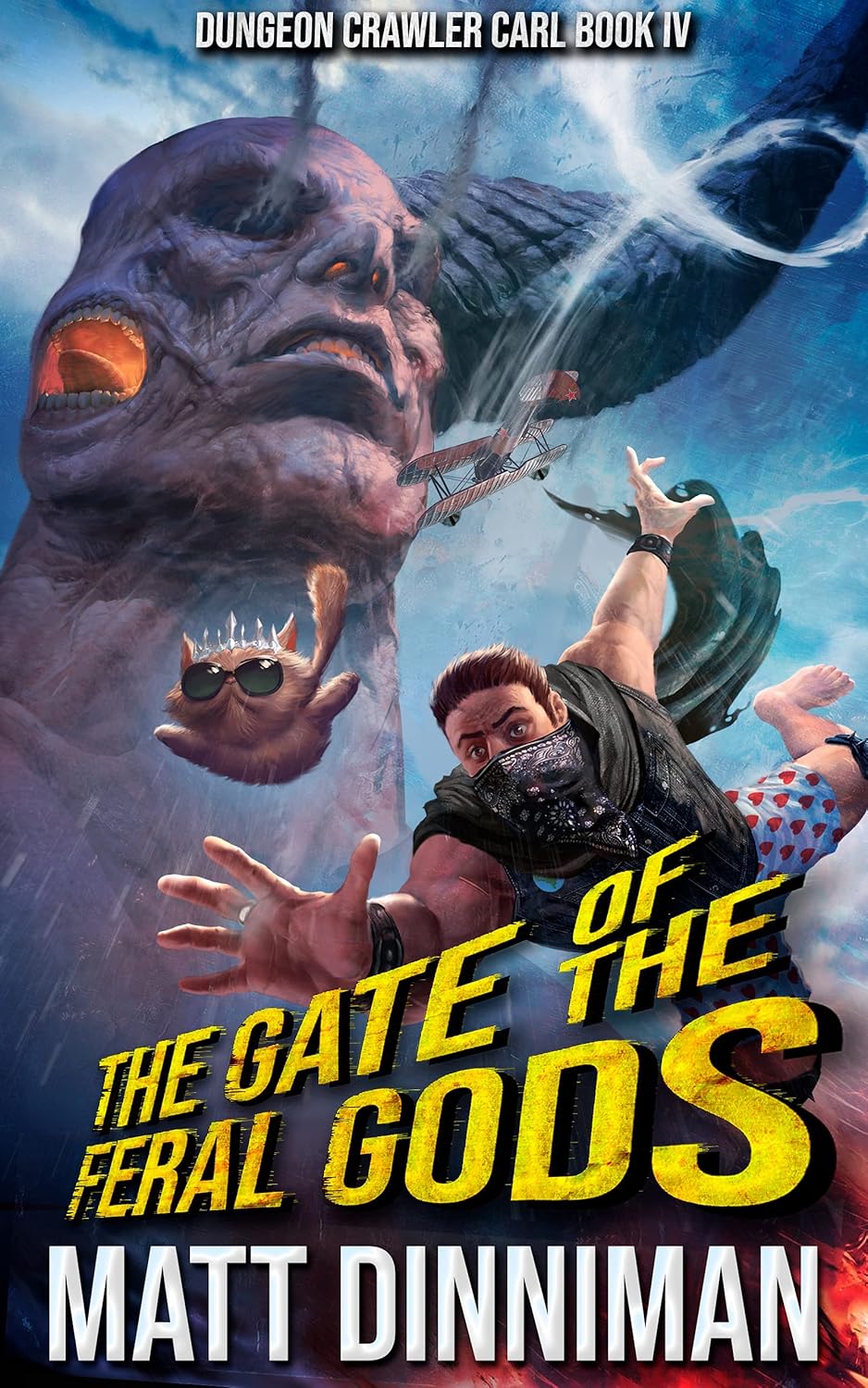
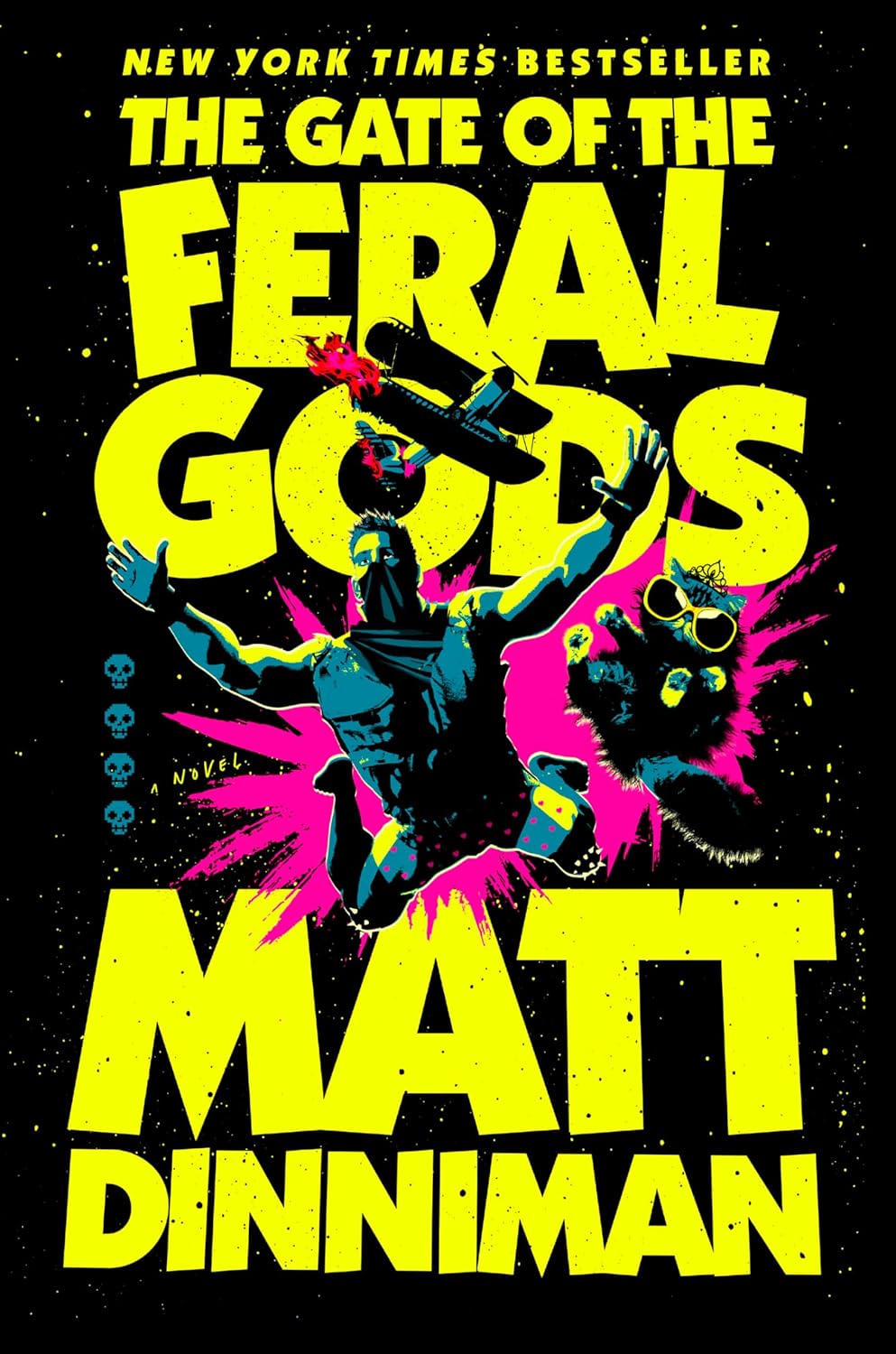
The Gate of the Feral Gods by Matt Dinniman

Publisher: Soundbooth Theater (Audiobook – 1 July 2021)

Series: Dungeon Crawler Carl – Book Four

Length: 18 hours and 3 minutes

My Rating: 5 out of 5 stars

Amazon

The chaotic fun of Matt Dinniman’s Dungeon Crawler Carl series reaches another impressive level in the awesome fourth book, The Gate of the Feral Gods, an exceptional read that I could not put down until its gripping and epic end.

I can officially say that I am incredibly obsessed with the Dungeon Crawler Carl books.  Taking place after all buildings on Earth are instantly destroyed and turned into an elaborate fantasy dungeon, all in the name of an alien reality show, the Dungeon Crawler Carl books are an incredible series that perfectly utilises its unique concept and LitRPG basis to create a particularly addictive story loaded with crazy action, over-the-top humour and an array of incredible characters.  I only started it a few weeks ago and I have so far powered through several books in the series, including Dungeon Crawler Carl, Carl’s Doomsday Scenario and The Dungeon Anarchist’s Cookbook, all of which were five-star reads.  Indeed, I have had such a great time with this series, that the moment I finished off The Dungeon Anarchist’s Cookbook I instantly started listening to the fourth book in the series, The Gate of the Feral Gods, which continued the series in some outstanding ways.

After surviving the carnage of the Iron Tangle, Carl, Princess Donut and Katia have emerged on the fifth floor of Dungeon Crawler World Earth and must now contend with a new dastardly set-up.  Placed into a multitude of small, bubble-contained worlds, each remaining human party needs to assault castles contained within each of the bubble’s four zones.  If they succeed in capturing each zone’s castle, the dungeon stairwell will open and they’ll be able to advance to the sixth floor.

While the setup for the fifth floor seems simple, in reality it is a logistical nightmare, as the popular team of Carl, Princess Donut and Katia must navigate and master four very different environments within a rushed timeline, including a desert landscape infested with flying gnomes, a gigantic haunted crypt filled with traps, a besieged sand castle that is home to a powerful mage with relationship issues, and a derelict underwater submarine surrounded by gigantic sharks, all while trying to untangle a unique puzzle hidden in an elaborate quest storyline.  Worse, thanks to their high levels, the team are forced to rely on ineffective, low-level fellow crawlers to clear out the bubble’s zones, including those people who have barely survived the previous floors.

However, the elaborate new floor is only the tip of the problems facing Carl.  Old enemies from outside the dungeon are desperate to strike him down for the chaos he has caused, while the AI controlling the dungeon continues it erratic obsession with him.  As events heat up, Carl is given the unique chance to obtain a legendary artefact loaded with unimaginable power and terrible risk, The Gate of the Feral Gods.  If Carl can master the gate, he has the chance to keep his friends and loved ones safe on this floor.  But what happens when Carl decides to use the gate to strike back against those who have destroyed his planet?  You will not break him, but he will break everything in the galaxy to get his revenge!

Dinniman does it yet again as The Gate of the Feral Gods was another exceptional and epic novel that I could not stop reading.  Perfectly continuing the impressive story from the previous Dungeon Crawler Carl novels, The Gate of the Feral Gods was an ultra-exciting and complex novel, that brings laughter, excitement and powerful emotional moments in equal measure.  Another book in this series that gets a very easy five-star rating from me, The Gate of the Feral Gods was so damn good, and I had so much fun getting through this insane, but clever, adventure.

I really enjoyed the impressive story that Dinniman came up with for The Gate of the Feral Gods, especially as the author uses the opportunity to feature a more traditional fantasy narrative, while also building on the unique character relationships that have been an impressive part of the previous novels.  In a new dungeon floor with some unique quirks, you are once again drawn into the battle for Carl, Donut and Katia’s survival, as they attempt to understand their new scenario as the population of the entire galaxy watches their progress.  There are also some great new characters introduced in this early part of the book, who add some excellent human elements to the wider story.  Determined to clear their part of the floor, Carl’s team embark on some explosive initial actions, and I liked how Dinniman treated this early part of the story in a more traditional LitRPG manner, as the protagonists follow the quest elements laid out as part of the story.  However, it doesn’t take long for Dinniman to throw things completely off the rails, as there are some great scenes halfway through, including the return of an old friend with real inner anger, and a unique boss battle in a flying house that will have you cackling with surprise.  However, one of the more impressive events set around the middle of the novel sees Carl start to embrace his anarchist persona, striking back against his oppressors in his usual destructive manner.

The big events of the first half of the book have an impressive impact on the second half of The Gate of the Feral Gods, as the protagonists find themselves in a time crunch.  This forces them to go on some risky missions, including invading a giant sandcastle with some unique elements, as well as journeying beneath the waves, much to the horror of everyone’s favourite sentient cat.  The various intense challenges faced by the protagonists are usually overcome in some impressively inventive ways, I loved how well Dinniman hints at the protagonist’s eventual plans.  While this is unfolding, you get some interesting looks at the wider crawl thanks to flashes of other character’s battles, and Dinniman also provides some intriguing looks at the issues surrounding the outer galaxy.

While all the above elements are impressive and result in some epic moments, it pales in comparison to the final third of the book.  Thanks to the titular Gate of the Feral Gods, all hell breaks out (literally and figuratively), as the protagonists find themselves involved in the biggest escort mission ever.  Thanks to that, they get into some brutal confrontations, which help to define how desperate things are getting for the characters.  The final sequences of The Gate of the Feral Gods helps to cement this novel as a truly impressive part of the series, as Carl and Donut finally face down one of their oldest enemies, while also fooling everyone with a particularly chaotic scheme.  The set-up for the protagonist’s bold strike against their foes is very clever, and while there are a lot of hints about what is to come, Dinniman cleverly obscures the entirety of the plan, allowing for some awesome surprises that really show off how audacious the protagonists are coming.  This was honestly an incredible end to such a chaotic and compelling read, and it sets up the next book in the series perfectly, allowing for some impressive moments going forward.

I really enjoyed how The Gate of the Feral Gods turned out, especially as Dinniman turned what could have been a filler novel between two major parts of the Dungeon Crawler Carl series, into a particularly powerful and intense novel with long-running implications for the rest of the series.  Due to its position as the fourth book in the series, The Gate of the Feral Gods is best read by those who have enjoyed the previous entries in the series, even with the protagonist’s useful internal recaps, especially as this book continues to feature and build on a lot of complex ongoing storylines and character arcs.  Once again written in the first-person style, Dinniman perfectly showcases his unique scenario, and gifts the reader with so much awesome action, fun humour, compelling characters, and surprisingly enjoyable LitRPG elements.  With a bit more of a slower pacing at the start of the novel, Dinniman gives this book time to breath after the crazy conclusion of The Dungeon Anarchist’s Cookbook, and allows the characters, and the readers, time to get familiar with the new floor of the dungeon.  This complex new setting within the dungeon was extremely well crafted, and its unique features ensured that The Gate of the Feral Gods had a very distinctive feel amongst the rest of the series.  The focus on quests and the internal storylines of the level helped to amp up the fantasy vibe of the story, while Dinniman also set up a multitude of additional long-running storylines that have a big impact later in the series.  At the same time, Dinniman cleverly continued to showcase the wider universe outside of the dungeon and the way that these exterior events impact the protagonist’s battles, and vice versa, allowing for a particularly compelling narrative.

While I felt that The Gate of the Feral Gods had a slightly slower start, that doesn’t last long, as Dinniman adds in some amazingly exciting and over-the-top sequences that really stick in the mind.  The author proves extremely capable of completely going even further beyond the craziness of his previous novels, and I loved how fantastically outrageous things get at times, with giant boss battles, unbelievably dangerous traps, multiple crazy gods, and some deeply human fights, all making this story particularly epic at times.  The many, many action scenes within the book are so well written, and I loved how impactful, insane, and usually hilarious these sequences are, and Dinniman makes excellent use of the LitRPG part of the series, with so many cool elements from RPG games coming into play in entertaining ways.  Dinniman also does an excellent job expanding on a ton of complex elements of the dungeon in this novel by including various extracts from Carl’s Dungeon Anarchist’s Cookbook, a secret compendium of knowledge from previous crawlers.  These extracts are each cleverly written in their own style, and I love how they highlight technical elements of the dungeon, as well as the emotional damage each of these previous crawlers experienced.  These LitRPG elements are further made better by the author’s unique sense of humour, which inhabits every aspect of the book and ensures that the reader is constantly laughing at all the insane moments, clever jokes, and over-the-top characters.  While this humour might not be for everyone, I felt it was perfect, especially as it blended with all Dinniman’s complex storytelling and the deeper emotional pain of the book, allowing for a very impressive overarching novel.

The thing that made The Gate of the Feral Gods really stand out was the author’s focus on character introductions, growth and powerful human moments, as the protagonists, their allies, and the various beings involved in the running on the dungeon, continue their chaotic journey together.  As with all the books in the series, the plot of The Gate of the Feral Gods revolves around protagonist and perspective character Carl, through whose eyes we see the plot unfold.  The perpetually exasperated and intense heroic figure who is desperately trying to save everyone he comes across, Carl continues to struggle in his role of leader and must keep coming up with dangerous plans to save his friends and beat the latest challenges of the dungeon.  While mostly serious, there is some fantastic humour and deeply sympathetic moments behind Carl, and it proves fascinating to see him struggle to maintain his anger and place as the reasonable one in the group, especially when it comes to his habit of blowing everything up.  The author also really dials up the rebellious anarchist aspects of Carl in this novel, as he starts fighting back against everyone he holds responsible for Earth’s destruction in some very cathartic ways.  Throw in the continued hints at the character’s traumatic past and his growing connection to all his friends, and Carl proves to be an excellent central character for this incredible book.

While Carl is a great main protagonist, this series would be nothing with his sentient cat companion, Princess Donut, who continues to be the highlight of most of the scenes she is in.  An overly dramatic, imperious and fun figure who maintains many stereotypical cat elements, Donut is the heart and soul of the book, and you have to laugh at all her funny jokes, entertaining reactions and the unlikely friendships and interactions she has.  Dinniman has fun building up the cat aspect of the character in The Gate of the Feral Gods, especially in the sequence where Donut finds herself underwater, and it was so damn entertaining to see her freak the hell out at times.  Much of the book’s humour also revolves around her unlikely partnership with Carl, and the way the two play off each other is just amazing.  While most of her personality and appearance is humorous in nature, it hides a deeper heart to it, as Donut’s child-like nature ensures that she is very reliant on Carl, and it was deeply moving to see them bond even further in this novel, and you can clearly see how close they are, even during the moments when Donut is deliberately annoying her human.  Probably one of the best cat characters in modern fiction, Princess Donut is so much fun, and I deeply enjoy every scene she is in.

While most of the book’s focus is on the central pair of Carl and Princess Donut, Dinniman continues to expand the incredible supporting cast of the series in The Gate of the Feral Gods, and I loved the brilliant storylines and development that occurs around these secondary figures.  This includes the third member of the protagonist’s party, Katia, who serves as the more reasonable and responsible member of the team.  It was fascinating to see how much Katia comes into her own in this novel, especially during a period where Carl and Donut are out of the game for an extended time, and she really steps up as a compelling alternative leader to the supporting cast.  Donut’s manager, Mordecai, a former crawler with issues, was a wonderful mentor figure for much of the story, and I quite enjoyed the interactions he has with the rest of the characters, especially Carl, while his attempts to keep his charges from doing anything too crazy are often ignored.  I also continue to be deeply entertained by the AI running the dungeon, whose over-the-top commentary, descriptions and jokes, add so much awesome and often concerning humour to the story.  There were some hilarious moments in The Gate of the Feral Gods where the AI continued to act a little crazy as its personality evolves to match the dungeon’s participants, including his continued messing with Carl, his weird foot fetish, and its own rebellion against the showrunners and people outside the game who are trying to restrict its fun.  Dinniman clearly had a ton of fun when it came to writing the AI’s actions, and it is so entertaining to see how crazy things get around it.

While all these returning major characters are great, one of the best things about The Gate of the Feral Gods was the way in which Dinniman brought in outstanding new characters, as well as reintroducing figures we haven’t see for a few books.  Some of the best new characters include Louis and Firas, two out-of-their-depth crawlers whom the protagonists must rely on.  Thanks to the encouragement of Carl and the others, they start to become much more effective as the book continues, and I loved their compelling growth in The Gate of the Feral Gods, as well as their impacts in their later books of the series.  I also must mention fun new character Samantha, renamed that by Donut from Psamathe.  A minor deity of unrequited love (or crazy ex-girlfriends), Samantha is a banished god trapped in the decapitated head of a magical sex doll.  Loud, rude, crude and constantly threatening every character’s mother, Samantha is probably the most over-the-top character in the series (which is saying something), but boy is she entertaining.  Perfectly introduced amongst the chaos of this book’s story, Samantha perfectly fits in amongst the main characters and becomes a major comic relief for much of the series.  Other great characters include some other fractious crawlers, the return of Chris from the first novel, who has gone through some major personality changes, a variety of insane gods including some unfortunately named demons, and various NPCs, whose existential plight becomes a major ongoing arc in the series.  All these characters, and more, allow for quite an entertaining and at times moving novel, and I really appreciate how well Dinniman utilises them in The Gate of the Feral Gods.

As with the previous Dungeon Crawler Carl novels, I ended up listening to The Gate of the Feral Gods on audiobook, which is such an incredible experience.  These Dungeon Crawler Carl audiobook are so damn good, and it’s one of the key reasons I have been able to so effortlessly binge this entire series.  The narration, done by the very talented Jeff Hays, perfectly captures the insane and over-the-top nature of the series, and so many elements of The Gate of the Feral Gods, including its humour, the intense action, and the impressive LitRPG inclusions, are deeply enhanced by having the story read out.  Hays complements this narration with unique and very fitting voices for all the characters, and I love all the elaborate and often hilarious tones that come out as a result.  It’s impressive how many new voices Hays comes up with each audiobook, and I loved the excellent consistency between audiobooks for the recurring characters.  The long-running voices for Carl and Donut are just perfect, especially as Hays perfectly captures the various emotions hidden within both figures.  I really love how much extra humour you get from hearing Carl’s exasperated voice at times, while the entirety of Donut’s excessive personality, including her hilarious overreactions and continuous outrage, are just amazing.  The rest of the cast are also voiced extremely well, and Dinniman pulls out some fun voices and accents in this book, including an acceptable Australian accent from a crocodile-themed crawler.  However, one of my favourite voices is still the one he uses for the Dungeon AI, and it is so much fun to hear Hays’s voice the various excited, mocking and occasionally deranged announcements and descriptions from this figure.  Throw in some subtle sound effects and vocal enhancements, that add even more umph to the narration, and The Gate of the Feral Gods is an exceptional listen.  I absolutely powered through the 18-hour runtime, and I cannot recommend this format enough, as you guaranteed to have an absolute blast listening to it.

With even more incredible carnage, character development and the author’s incredible humour, The Gate of the Feral Gods was another outstanding novel from Matt Dinniman.  Perfectly continuing the extended Dungeon Crawler Carl narrative and adding in some excellent, long-term characters and elements, The Gate of the Feral Gods is an amazing entry in this epic series, and I honestly couldn’t stop enjoy this novel.  I loved The Gate of the Feral Gods so much that I instantly dove into the next book in the series, The Butcher’s Masquerade, the very second I finished it, and I am so very glad I did. 
Amazon

Four Ruined Realms by Mai Corland

Publisher: Recorded Books/Zaffe (Audiobook – 7 January 2025)

Series: The Broken Blades – Book Two

Length: 13 hours and 31 minutes

My Rating: 4.75 out of 5 stars

Amazon

One of the hottest fantasy sequels of 2025 is the impressive Four Ruined Realms by Mai Corland, that once again follows an entertaining band of killers and self-interested liars as they get drawn into dark events that threaten their entire world.

Last year I had the pleasure of reading the outstanding debut Five Broken Blades by Mai Corland.  The first book in Corland’s Broken Blades trilogy and one of my favourite debuts of 2024, Five Broken Blades was an impressive fantasy novel with some great Korean aesthetics that followed five deadly killers who are recruited to kill the king of Yusan and steal the magical crown that makes him invulnerable.  However, their planned assassination and heist becomes complicated by secrets, treachery and the fact that each member of the group had hidden motivations for being there.  Corland provided a pretty wonderful story for this first book, loaded with betrayals, lies and compelling character-driven perspective chapters, and I loved the great twist at the end that saw the protagonists captured and forced to engage in a new heist.  As such, I have been eagerly awaiting the sequel since last year, especially as I couldn’t wait to see how Four Ruined Realms resolved the awesome cliffhanger Corland left the first book on.

The group known as the Blades are five of the best killers, liars and thieves in the kingdom of Yusan.  Made up of a master spy, a beautiful poison-maiden, a murderous banished prince, a lethal thug and a mysterious thief, the Blades were hired to pull off an impossible task: kill Yusan’s God King Joon and steal his crown.  Each of the killers had a reason for becoming involved with the plot, as well as their own dark secrets that drove them onwards.  However, all of them underestimated Joon’s manipulations and greed, as the entire job was a ploy from the King to bring them together and evaluate their skills.

Captured and forced by bribes and threats to accept a new mission, the Blades now find themselves journeying to the neighbouring nation of Khitan, which has long resisted the armies of Yusan.  Ruled over by Joon’s vengeful sister, Quilimar, Khitan remains free thanks to the power of the Golden Ring of the Dragon Lord, one of five legendary magical treasures gifted to the ruling houses of the rival realms.  Determined to possess all the treasures, Joon gives the Blades one month to steal the ring and return it to him.  If they succeed, they will have everything they desire, but if they fail, then they and everyone they love will be killed.

Arriving in Khitan, the Blades find dangerous enemies all around, an impossible theft before them and their once cohesive group fractured thanks to their uncovered lies.  But even with their conflicting motivations and secrets out in the open, these killers can all agree on one thing: King Joon is their true enemy.  Determined to fight back, the Blades embark on a mission to gain an audience with Quilimar and find a way to use Khitan’s resources to defeat Joon.  However, there is a darker conspiracy at play within the borders of Khitan, and the Blades have once again underestimated the lengths their enemies will go to win.  Worse, each of the band still has secrets, and soon a new set of lies will tear them apart from within.

Four Ruined Realms was another exceptional fantasy novel from Corland that effortlessly drags you in with its fun action, compelling story, doomed romances and outstanding and damaged protagonists.  Perfectly telling a massive, multi-character narrative, Four Ruined Realms was a very worthy sequel to Five Broken Blades that proved very hard to put down.

Corland set forth another complex and emotionally charged narrative in Four Ruined Realms, and I loved how well she continued after the cool cliffhanger ending of the first book.  Taking place right in the aftermath of the betrayals and lies of Five Broken Blades, Four Ruined Realms begins just as the Blades arrive in Khitan and are forced to work together to survive and secure the prize, despite the complete lack of trust and the anger brought about by their revealed secrets.  Corland works a lot of great character development into these early chapters, as the book flits between the protagonists and showcases their respective mindsets.  There is a good blend of early planning, espionage, and personal issues, as the protagonists try to work together, while also maintaining additional secrets that they know will tear the group apart.  The first part of the book features some very fun sequences, especially when the male protagonists depart on an expedition for knowledge, while the girls attend a party that ends in turmoil.  At the same time, there are hints of a bigger conspiracy beneath the surface of the new realm they are in, and Corland provides some interesting clues that perfectly come into play later.

As Four Ruined Realms continues, Corland enhances the book by including more chapters from the perspective of returning protagonist Tiyung.  Tiyung, while a perspective character in Five Broken Blades, only had a relatively minor point-of-view role, so it was interesting to see him as more of an equal protagonist in the sequel.  His storyline of being stuck in a notorious prison back in Yusan proved to be particularly compelling, especially as he gets to interact with two of the book’s best supporting characters.  Tiyung’s storyline blends well with that of the main protagonists, and thanks to the simultaneous timeline, you get to see him react to the events occurring over in Khitan and find out secrets that have potential impacts on how the Blades succeed in their task.

The second half of the book primarily details the Blades’ attempts to learn more about Khitan and find a way to get an audience with its queen.  Their plans to achieve this see them once again split up into dramatic groupings, and you get some interesting adventures and interactions as a result, especially as all the powerful emotions come to the surface.  It also perfectly sets up the final massive sequence of Four Ruined Realms, which really delivered in both action and tragedy.  While I don’t want to spoil too much, readers will come away from this novel pretty heartbroken, and there are some very intense moments going on in the last third of the book.  Combined with a series of final reveals and twists, all of which are nicely foreshadowed by earlier subtle inclusions from the author, you come away from Four Ruined Realms both moved and extra excited to see how the series is going to come to an end.

As with the first book in the series, Corland sets Four Ruined Realms out in a fantastic manner, and I deeply enjoyed how the complex narrative came across.  The use of six separate perspective characters was a major highlight as it allowed for a multi-layered narrative with a focus on character development and interactions.  The author did an outstanding job of balancing the different perspectives, with all the protagonists getting their chance to shine in their respective chapters, and even the increased use of Tiyung didn’t throw this out of whack.  Indeed, Tiyung’s chapters honestly pulled the other perspectives together into a tight and captivating overarching narrative, as the inclusion of an outsider character viewing events from afar increased the complexity of the plot.

The author makes full use of the book’s alternating viewpoints to insert a lot of great story elements into the plot, so there is a little something for everyone here.  The constant intrigue and danger that the protagonists found themselves in was well balanced by the author’s excellent worldbuilding, while the cool action scenes are guaranteed to get anyone’s blood pumping.  There are also multiple romance subplots that none of the protagonists are immune to.  While not a full-on romantasy novel, a good chunk of the book is focused on the complicated relationships that have formed between various protagonists, which will appeal to some readers, especially as the doomed nature of many of these romantic affairs leads to some excellent drama and heightened personal tensions.  While there were a few more romantic subplots than I typically enjoy in a fantasy novel, I felt that Corland got the right equilibrium here, with the focus on relationships and failed love enhanced the main fantasy intrigue elements of the plot rather than distracting from them.

Four Ruined Realms proved to be a very worthy sequel to Five Broken Blades, and I really enjoyed how effectively the author continued her elaborate storylines and continued to build up her great characters.  Corland uses this book to substantially expand the overarching setting of the series, including exploring a second realm and diving into the larger politics of the world.  The primary new setting, Khitan, worked extremely well as a background to the story, especially as its history and inherent intrigue played nicely into the chaotic mission of the protagonists and the plots surrounding it.  While I loved how the narrative continued in this sequel, readers should be warned that Four Ruined Realms isn’t necessary the best place to dive into the Broken Blades books, primarily because it is the second entry in a complex ongoing fantasy series.  While Corland does a great job of recapping the key events of the first book throughout Four Ruined Realms to make it accessible to newcomers, readers should really start at the start of the trilogy as it will give you the full emotional impact, especially when it comes to the character arcs.  Still, there is plenty for everyone to enjoy here, and I feel that Four Ruined Realms was a great book and sequel for readers new or returning.

As with the first book in this trilogy, the element that really ensures Four Ruined Realms stands out was its well-crafted main characters through whose eyes we see the narrative unfold.  Corland brings back all six protagonists from the first novel, made up of Royo, Sora, Euyn, Mikail, Aeri and Tiyung, and features them as equal parts of the plot.  After exploring their tragic backstories in Five Broken Blades, Corland spends this second novel diving into the drama and turmoil caused by the events of the first book, including the reveal of their darkest secrets and hidden motivations.  This brings out a lot of mistrust, antagonism and broken romances, which works to create quite a turbulent and entertaining plot.  I really appreciated how well each of these protagonists came through as a result, and it was fascinating to see their next set of secrets and hidden concerns, especially the deeper you get into their new mission.

Of the six, Royo, Mikail and Tiyung probably had the best arcs in Four Ruined Realms.  Royo continues to be the loveable, tough street thug with a past, and his more straightforward approach to life and honest need for redemption are quite refreshing amongst the rest of the schemers in the group.  Mikail, the dark spy master, proves to be the book’s ultimate badass, and his entertaining persona, complex backstory, and conflicted opinions about his love interest Euyn, ensure that he is one of the better perspectives in Four Ruined Realms, especially as he continues to mislead and lie to everyone.  Tiyung, as I mentioned above, gets much more of a chance to shine in this sequel, and his transformation from spoiled rich kid to starving prisoner ensures you get a better look at his character.  A genuinely good person, Tiyung continues to rise above his family legacy here, and his narrative of prison life and unexpected connections was a true highlight of the book.

The rest of the Four Ruined Realms protagonists also had some excellent moments, and I really appreciated their storylines.  Euyn, the fugitive prince of Yusan, has a troubled time in this sequel, primarily as he has the most paranoia and mistrust after the events of the first book.  This leads to a lot of conflict, and Euyn’s character growth from the first book starts to reverse in places as he seeks fights and alienates his allies.  However, Corland works this conflict into an excellent overarching narrative for Euyn, with its resolution being a key part of the plot.  I also felt that Sora, the beautiful and deadly poison-maiden, had a great arc in this sequel, especially as she loses her confidence and her killing edge, becoming the group’s conscience.  The final protagonist, Aeri, is my least favourite, although she ties the central cast together nicely.  The secret child of the main antagonist Joon and the group’s traitor in the first book, Aeri is the most mistrusted protagonist, despite being in the same boat as the rest of the Blades, and spends much of Four Ruined Realms trying to prove herself again.  While her storyline is really interesting and an essential part of the overall plot, I still didn’t connect with Aeri.  I’m not sure if this is because of how she is written, or because of the narrator assigned to Aeri’s chapters, but I feel that there is a huge disconnect between Aeri and the other protagonists which makes her not quite fit in, especially with her overly manic (and horny) personality.  Still, she does have some great moments in Four Ruined Realms, and it will be very interesting to see where Aeri and her doomed romance ends up.  Throw in an array of excellent supporting figures, including outstanding and ruthless antagonists, and this proves to be an amazing overall cast, whose layered roles and interactions helps to turn Four Ruined Realms into quite an exceptional read.

As with the first book in the series, I chose to listen to the audiobook version of Four Ruined Realms, especially after Five Broken Blades came across so epically on the format.  Unsurprisingly, the sequel was just as impressive on audiobook with Four Ruined Realms also featuring talented narrators, Greg Chun, Zion Jang, Roger Yeh, Donald Chang, Jaine Ye and Sophie Oda, each of whom voiced the chapters of a particular character.  These multiple narrators worked wonders to tell Four Ruined Realms’s elaborate character-driven story, and I loved how each of them inhabited the role of their respective protagonist.  All the narrators really impressed me in Four Ruined Realms and thanks to the even spread of chapters between characters, they all got a chance to shine.  There was a fantastic array of voices featured in each chapter, and we get to hear several differing tones for the same characters throughout the course of the audiobook.  I will admit that the narration for Aeri’s chapters still didn’t quite seem to fit the tone of the rest of the audiobook, but the other chapters more than made up for it, and I really enjoyed some of the elaborate and varied voices that emerged.  Featuring a 13-and-a-half-hour runtime, this was a quicker audiobook to get through than Five Broken Blades, and it ended up being a wonderful way to appreciate Corland’s fantastic story.  As such, this format comes very highly recommended for Four Ruined realms, and I am currently planning to finish this series off on audiobook.

With even more betrayals, secrets and tragedy, Four Ruined Realms was another exceptional novel from Mai Corland, who is really starting to impress me as an author.  An outstanding sequel to Five Broken Blades, Four Ruined Realms perfectly continues the trilogy’s captivating narrative, and you won’t be prepared for all the cool twists, turns and major moments.  A brilliant and moving fantasy novel with some dramatic character moments, Four Ruined Realms was such a good book and I’m so very glad I continued this fantastic series.  I cannot wait to see how this trilogy concludes, and luckily the final book, Three Shattered Souls, is out in July.

Amazon

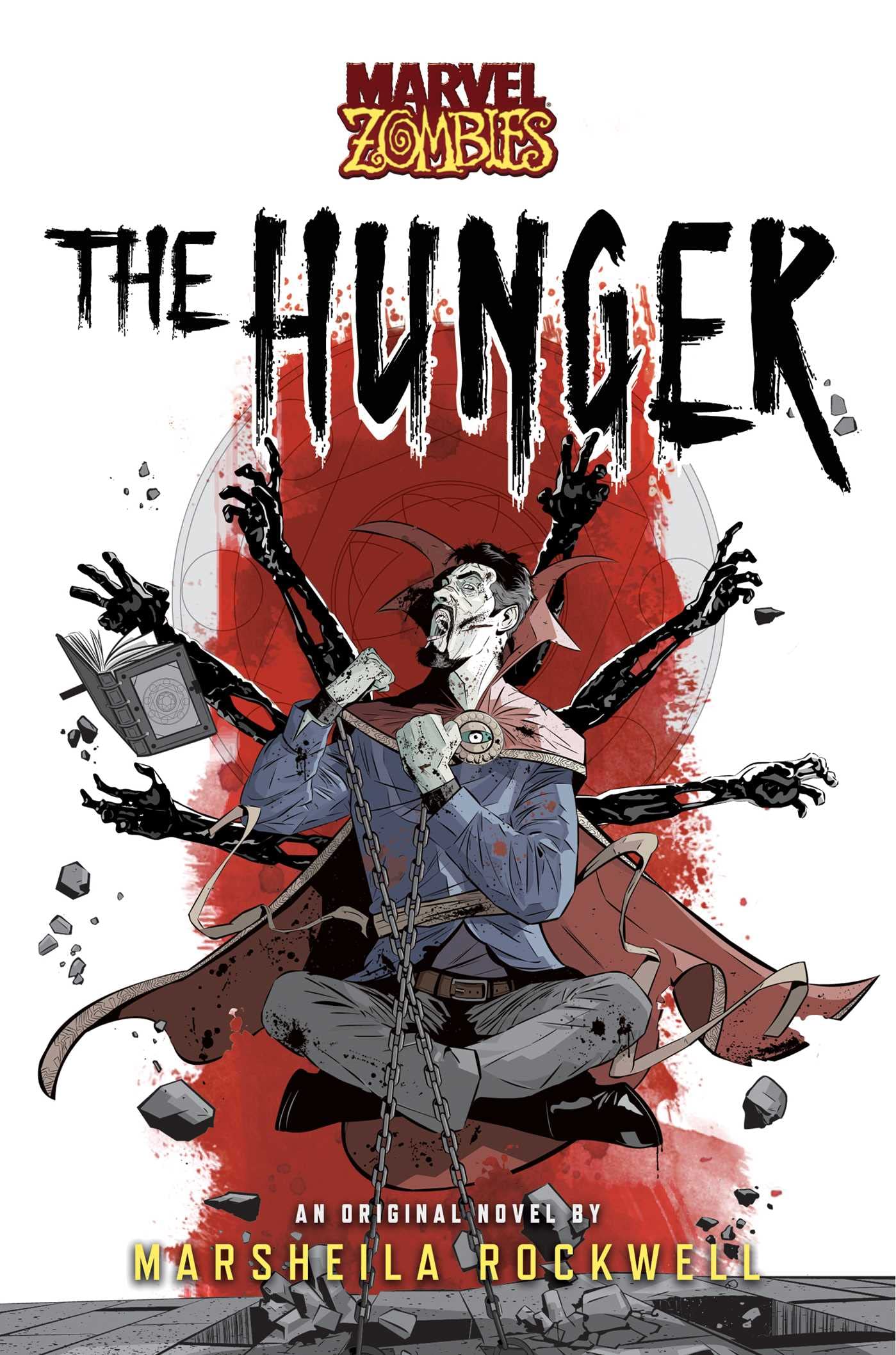
The Hunger by Marsheila Rockwell

The Hunger Cover

Publisher: Aconyte Books (ebook – 3 October 2023)

Series: Marvel Zombies

Length: 249 pages

My Rating: 4.5 out 5 stars

Amazon

Prepare to dive into a wacky, time travelling, zombie filled Marvel novel with Marsheila Rockwell’s fantastic tie-in book, The Hunger.

After having a lot of fun reading the awesome Marvel Comics tie-in novel The Tyrant Skies by David Annandale earlier this year, I thought it would be an excellent idea to dive into another amazing Marvel book, especially one with a great plot like The Hunger.  Written by intriguing fantasy and science fiction author, Marsheila Rockwell, whose previous foray in Marvel fiction produced the magic Sisters of Sorcery novel, The Hunger is an awesome upcoming book that I was very happy to get an early copy of thanks to Netgalley.  Set around the iconic Marvel Zombies concept, The Hunger was a pretty epic read that I had an outstanding time with.

When a mysterious object falls to Earth, landing in New York city, it unleashes a wave of evil and despair as the world’s greatest heroes are turned into ravenous zombies determined to feast on all living flesh.  As the zombified superheroes begin to spread out across the planet, turning or eating everything before them, only Doctor Strange can briefly retain his sanity to try and find a way to avert disaster, but despite his best efforts, his overwhelming hunger threatens all around him.

With no alternative, Doctor Strange is forced to turn to one of the few magic users left unaffected by the zombie outbreak, the librarian of the Sanctum Sanctorum, Zelma Stanton, who reluctantly takes up the burden and imprisons her zombified mentor.  Despite her lack of experience, Zelma has access to all the magical knowledge and ancient artefacts in Doctor Strange’s Sanctum Sanctorum, and she hopes to find some answer to the deadly chaos consuming her planet.  But Zelma soon realises that even all the books in the Sanctum aren’t enough; if she wants to succeed, she’s going to need help.

Pulling together a ragtag team of survivors, including Runaway witch Nico Minoru, monster hunter Elsa Bloodstone and the living embodiment of insanity, Deadpool, Zelma hopes that together they can find a solution.  But their plan to trap the zombies in a time loop backfires on them, thanks to antics of Deadpool, unsurprisingly.  Now with time fracturing all around them, an evil magic threat unleashed, and the zombie horde still determined to eat everything, Zelma and her strange team need to find a way to reverse the damaged they caused while still saving the world.  But is this group of survivors truly capable of stopping the flesh-eating nightmares waiting for them?

That was an insanely fun book about zombies and time travel shenanigans that I desperately needed, and I am sure glad that I decided to check this novel out.  The Hunger was a very entertaining book that I ended up knocking out in a few hours because of how easy and fantastic it was to read.  Rockwell came up with a very impressive story that quickly grabbed my attention and took me along a wild journey loaded with so many awesome moments.  Starting off with a great new introduction to an alternate Marvel Zombies event, where Doctor Strange and pretty much every other hero gets brutally turned into zombies, the story gets bleak very quickly and rarely lightens up after that.  The resulting narrative focuses on the intriguing figure of Zelma Stanton, a supporting character in one of the recent Doctor Strange comics, and it proves to be very interesting as you follow a young, inexperienced magician as she tries to survive in a very dangerous world.  The resulting story has a lot of great features to it as Zelma finds her courage, gathers a unique group of allies, and then finds herself getting thrown into all manner of chaos as her actions produce more zombie mayhem and every time travel issues you could think of.  The second half of The Hunger is pure, unadulterated bedlam, and I frankly loved every second of it, as Rockwell comes up with some outrageous and exciting scenarios that never really slow down.  Bringing together some well set-up storylines in some excellent ways, you honestly will find it hard to put down The Hunger once you get rolling with it, and I found the entire story to be exceedingly entertaining, especially as Rockwell wove together some complex scenes that saw the characters journey through all manner of unique points the Marvel Universe timeline.  This story was a riot from start to finish, especially the fantastic extended time travel sequences, and you will come away from this book very satisfied and honestly wanting more.

Rockwell has a great writing style that I felt really lent itself to the emotionally charged and intense story that came together in The Hunger.  Primarily told from the perspective of two young female magic users, The Hunger is a strong, character-driven tale that showcases how people grow under adversity, while also treating the reader to a brilliant amount of action, carnage and Marvel comics lore.  Rockwell really leans into the Marvel Zombies background of her story to provide some gruesome and graphic moments, which I felt helped set The Hunger apart from some of the other Marvel tie-in books.  While there is a lot of humour attached to the book, mainly thanks to the inclusion of a particular merc-with-a-mouth, The Hunger gets very deep and serious at times, and I loved the impactful dive into the traumas affecting the protagonists.  I loved the fast pace that Rockwell sets for The Hunger’s story, and frankly there was not a single moment of this book where I wanted to stop, as I just wanted to see what was going to happen next.  I did think some of the early sequences of the book felt a little simplistic in their writing, which almost threw me off.  However, Rockwell found her stride as the book continued, and I loved some of the elaborate sequences that emerged, especially those that feature multiple figures, time elements and obscure bits of Marvel lore.  Some of The Hunger’s twists were very well set up in the earlier stages of the book, and I loved how well things came together in the end, especially as Rockwell made such great use of the time travel elements to tell a very entertaining story.

The Hunger serves as a rather interesting addition to the wider Marvel lore that exists as Rockwell makes fine use of several existing storylines, concepts and characters, to create a pretty fun read.  Set in a version of the main Marvel universe that is suddenly impacted by a Marvel Zombies event, The Hunger has a ton of curious and distinctive elements to it that established fans of the comics will deeply enjoy.  Not only are there a ton of different characters present, often in zombie form, but Rockwell goes out of her way to feature or reference multiple storylines from the comics.  This includes a great mixture of more recent comics and some classic storylines, both of which work extremely well in the context of the story and its time travel elements.  I felt that Rockwell did a very good job of cleverly introducing and then utilising these different storylines throughout the course of the comics, and the resulting crazy plot encounters and big moments were pretty damn awesome.  Each of the main characters also makes sure to remember or mention many key story arcs from their history, many of which have a compelling impact on the current storyline or mental state.  The author clearly has an appreciation for the various storylines and obscure characters that she featured and I loved how random and compelling the later scenes got.  While Rockwell does go to some diverse areas of the Marvel universe and history, all of these elements and characters are explored in excellent detail so that anyone with some basic knowledge of Marvel comics can easily enjoy what is going on.  I personally loved all the cool references that emerged, as well the excellent reimagining of the Marvel Zombies storyline which helped turn The Hunger into a pretty awesome tie-in novel.

As with her previous Marvel tie-in novel, Sisters of Sorcery, Rockwell chose to focus The Hunger on three intriguing and somewhat underused female characters from the Marvel canon, Zelma Stanton, Nico Minoru, and Elsa Bloodstone.  All three characters are already epic, but it was great to see them forming a team here in The Hunger, especially when faced with an insane, world-ending threat.  Of these three characters, Zelma is probably the one I knew the least about, mainly because I’ve never read any of the Doctor Strange comics she is in, but she soon proved to be the invaluable heart of this entire novel.  Rockwell did a remarkable job of introducing and utilising Zelma as a character, even to a reader like me that has had no experience with her.  You are swiftly brought up to speed on who Zelma is and why she is involved, and soon you follow this overwhelmed magical character as she is thrust into events beyond her comprehension.  I loved the overarching narrative of this character finding her confidence and ability in this ultimate post-apocalyptic setting, and it was great to see her become the hero that Doctor Strange believed her to be.  Watching her use her unique intelligence and experiences to survive and attempt to stop all the chaos is quite compelling, and you really grow to appreciate Zelma, especially as she has very relatable doubts and concerns.  Zelma is the emotional heart of this entire book and I felt that Rockwell was very wise to use her as a central character, especially with how exceptionally she is portrayed.

In addition to Zelma, I really enjoyed the fantastic use of Nico Minoru and Elsa Bloodstone in The Hunger who served as impressive joint protagonists.  I particularly loved seeing Nico Minoru here in The Hunger, mainly because I’m such a big fan of Runaways, and Rockwell featured her in an excellent way.  Focusing on her at a key part of her character development from the comics, this already jaded and wary Nico arrives on the scene after seeing her entire adopted family turned to zombies and is swiftly forced into another harrowing adventure with a new group of strangers.  I really enjoyed exploring Nico’s fears, concerns and complex history throughout The Hunger, and she served as a great secondary point-of-view character for the plot.  These female characters are further enhanced by monster hunter extraordinaire Elsa Bloodstone, who is well suited for this sort of dark, monstrous tale.  The foul-mouthed, highly confident figure is a great addition to the focal cast of the novel, especially as her loud personality plays off the more reserved Zelma and Nico for a good chunk of the novel.  While initially shown to be mostly carefree, there are some compelling darker feelings under the surface, especially related to the start of the zombie apocalypse, and I felt that Elsa was a brilliant and great addition to the plot.

The final major character in the book really needs no introduction as Rockwell features Deadpool as the much need comic relief.  Brought into the story for very unique reasons, Deadpool is his usual blend of irrelevant humour, catchy one-liners, and all-round killing machine that works well with the female protagonists to save the day.  His constant jokes, weird comments and fourth wall breaks deeply add to the enjoyment I had of the book, even with its darker story content.  So many of the best plot moments in The Hunger revolve around Deadpool’s antics, and he really is an unsurpassed character to include in a crazy book like this.  His interactions with the other protagonists are also a lot of fun, with an intriguing blend of comedic conversations, crazed resentment, and even a grudging respect for his fellow survivors.  Throw in a ton of zombified superheroes, an overpowered magical witch from history, a fun new mount for Deadpool, and some intriguing figures from the dawn of the Marvel canon, and The Hunger has an outstanding cast that are a lot of fun to follow, especially during their darker and emotionally charged moments.

The Hunger really lived up to all its great potential and I had an epic time getting through this insane and highly exciting read.  Marsheila Rockwell produced one hell of a story here that made great use of the Marvel Zombies theme and featured a bonkers story with fantastic time travel elements, complex characters, and a ton of compelling references to the wider Marvel canon.  I honestly had such an incredible time with The Hunger and readers are guaranteed to get caught up in its cool story just like me.  Highly recommended, for all Marvel fans, you will have fun with this book.

Amazon

Master of Sorrows by Justin Call

Master of Sorrows Cover

Publisher: Gollancz (Trade Paperback format – 21 February 2019)

Series: The Silent Gods – Book 1

Length: 576 pages

My Rating: 4.5 out of 5 stars

Amazon     Book Depository

I have been looking forward to reading and reviewing Master of Sorrows for a while now.  I previously mentioned this book in one of my Waiting on Wednesday articles, which got a fair amount of attention, which I took as a sign of some interest from the general fantasy fandom.  The intriguing-sounding plot also made me extremely eager to check this book out, so I was very happy when I received a copy of it from Hachette Australia.  In the end I found Master of Sorrows to be a terrific piece of fantasy fiction and an outstanding debut from first-time author Justin Call.

The world of Luquatra has known much chaos and turmoil throughout its long history as three elder gods and their followers have battled for supremacy.  But now with the dark god Keos banished from the land, the greatest concern for many is the presence of magic.  The ancient and hidden Academy of Chaenbalu has long been a bastion against all things magic and will go to extreme lengths to achieve its primary objective of finding and containing the vast number of magical artefacts scattered throughout Luquatra.  No artefact, no matter its strength or intended purpose, can be allowed to remain outside the control of the Academy, as even those artefacts created for good can be used for great evil.

In order to fulfil this sacred work, the Academy trains all the children of Chaenbula in the arts of combat and magical detection.  Only the best students will become Avatars, warrior thieves capable of infiltrating any location and making away with the hidden artefacts.  Most importantly, an Avatar is trained to resist the lure of magic and the corruption of Keos.

Annev de Breth has always dreamed of becoming an Avatar and is determined to pass the Academy’s tests.  However, Annev is different from every other student at the Academy; trained by the town’s mysterious priest, Annev has an affinity for magic and hides a secret disfigurement that would see him immediately put to death.  Caught between the warring ideologies of the man who raised him and the head of the Academy, Annev needs to decide what kind of man he wants to be while navigating the complex politics of Chaenbalu.  But ancient powers are rising from the past, and it soon becomes apparent that Annev might not be the hero of this story; instead, he may be the man destined to unleash Keos once more upon Luquatra.

As I mentioned above, Master of Sorrows is author Justin Call’s debut novel.  It is also the first book in his The Silent Gods series, which is going to be made up of four books.  Call has already announced that each of the three upcoming books will be released in late February of each year for the next three years, with this series set to wrap up in February 2022.  This first book is an ambitious introduction to series that does a fantastic job of setting up the main story, as well as introducing the reader to an intriguing new fantasy universe.

I really enjoyed the story contained within Master of Sorrows, as it is well paced out and contains some fantastic moments.  The first part of the book features Annev attempting to pass the Academy’s tests in order to become an Avatar.  I love a good magical school storyline, and this one is pretty fantastic, featuring some unique, complex and entertaining testing sequences, as well as an introduction to the complex and restrictive life within the Academy.  The rest of the book is extremely exciting and eventful as the protagonist learns more about the threats and complex world outside of Chaenbalu, and even embarks on a dangerous mission where he encounters a series of mysterious threats.  This all leads up to the book’s spectacular conclusion, which not only sets the scene for all manner of adventures in the future but also results in some interesting character development while also setting up several dangerous new antagonists with personal grudges against the main character.

One of my favourite things about the plot is the general intrigue and hypocrisy surrounding the Academy of Chaenbalu.  The Academy is framed as some ultimate bastion of good in the world, opposing the evils of magic and Keos.  However, as the book progresses, the reader, through the protagonist’s eyes, begins to see that everything about the Academy is more complex and morally ambiguous than it first appears, resulting in a number of powerful story developments.  For example, in this universe, any disfigurement or disability is viewed as a mark of the dark god Keos’s favour, and people who bear them, especially those born with some sort of disfigurement, are shunned or killed.  These rules are especially enforced within the Academy, and Annev is forced to hide his disability to stay alive.  Watching a basically good character be vilified for something outside of his control makes the reader lose trust in most of the characters associated with the Academy.  It is also very thrilling to see the lengths the protagonist will go to in order to hide his disfigurement and try to live a normal life within Chaenbalu, knowing that his secret could be discovered at any turn.  The reader is also left questioning the Academy’s many archaic rules, as these rules and blind obedience are particularly frustrating to the protagonist, who chafes at the restrictions and is constantly questioning everything.  There are also a huge number of different plots and schemes occurring within the Academy, with many of the characters having secret allegiances and plans, many of which come to the surface by the end of the book.  All of these elements are fantastic, and they really add a keen edge of intrigue and thoughtfulness to an already captivating story.

Within Master of Sorrows, Call introduces his readers to a deep and enjoyable new fantasy universe that serves as an excellent basis for his story.  While the author does make an effort to set up a much larger world, the vast majority of the story is set in and around the village of Chaenbalu, which houses the Academy.  As I have mentioned before, I loved the Academy as a setting, but some of the other locations are also intriguing, such as the massive magical forest that surrounds the town.  I really loved the overall setting of the gods and magic within this world, especially when it comes to people’s perceptions about them, as they have some fantastic impacts on the story.  Call spends a bit of time expanding on the mythology of this world’s main gods, telling their stories and explaining the impacts that they had on the world.  These are quite interesting, especially as the stories they tell reveal that the conflicts of the gods were just as complex as the issues occurring within the Academy.  The author has also come up with some fun and dangerous new fantasy creatures, mostly as servants of the god Keos.  These creatures have some great scenes, especially towards the end of the book, and I look forward to seeing more of them and this intriguing new world throughout the rest of The Silent Gods series.

I really need to the hype up some of the incredible action sequences featured within Master of Sorrows.  Call has created several exceptional extended action scenes within this book, including two intricate tests within the Academy, where the students must overcome not only each other but also the various obstacles set up against them.  These testing scenes are extremely elaborate and feature some interesting rules and opposition.  I loved reading these scenes, and it was great watching the protagonist try to complete them his way.  In addition to these testing scenes, there is also a great magic based combat sequence featured later in the book, where the protagonist and his companions must overcome all manner of magical traps and attacks in order to complete their objective.  This scene is massive in terms of destruction and brutality featured and was an excellent addition to the book.  As a result, readers who love a good amount of thrilling action in their fantasy stories should definitely check this book out as Call demonstrates a real skill for creating unique and captivating fantasy action sequences.

Master of Sorrows is an amazing debut from new author Justin Call, who has done a wonderful job setting up a fresh and intriguing new fantasy series.  This first book in the planned The Silent Gods series has some awesome and memorable plot points and features a thrilling and captivating action-packed adventure.  Call has certainly set himself up as a fantasy author to watch, and I am extremely eager to see where this story goes next.  I cannot wait to check out the second book in The Silent Gods series.

Amazon     Book Depository