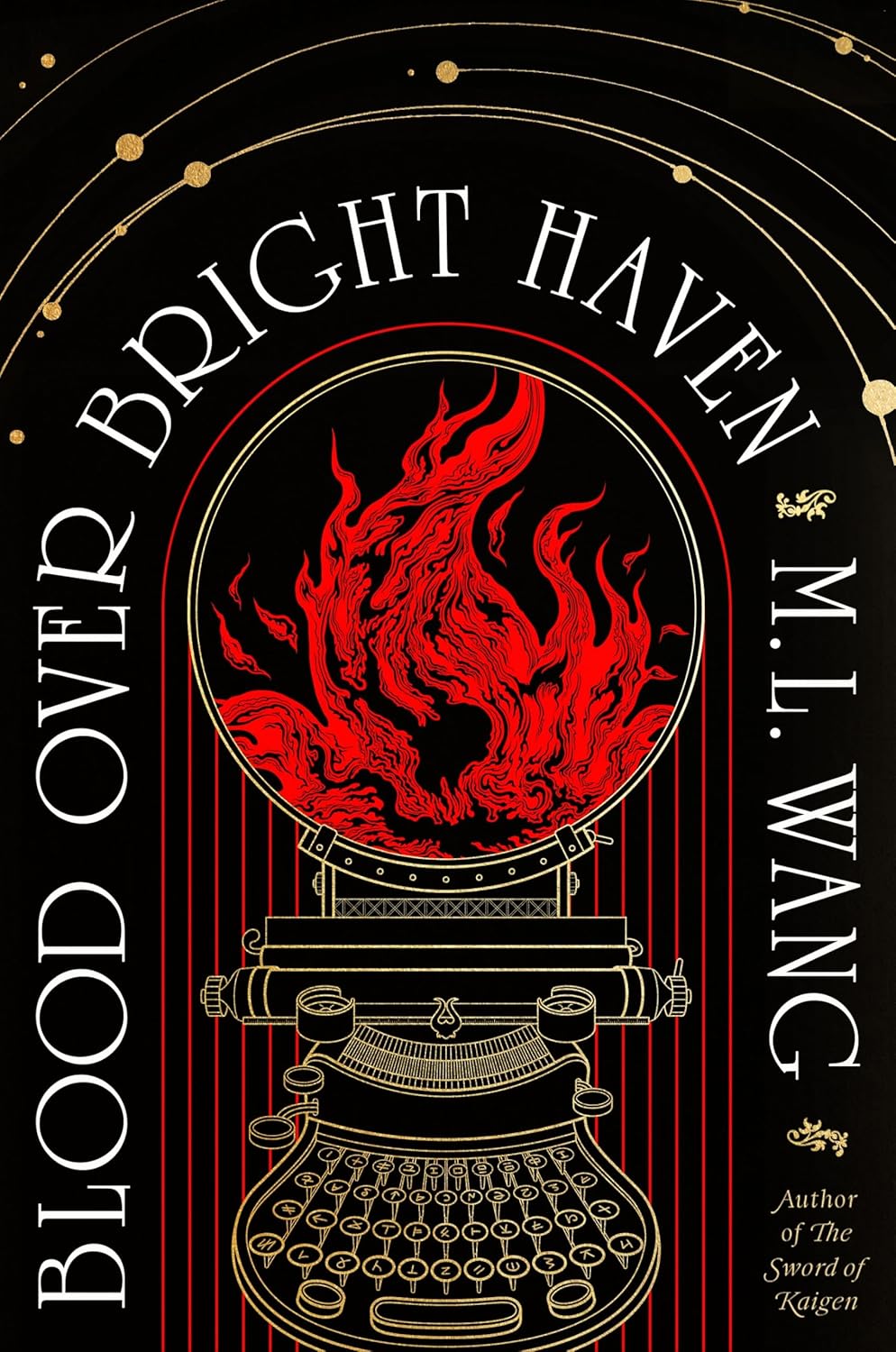
Blood Over Bright Haven by M. L. Wang

Publisher: Del Rey (Trade Paperback – 29 October 2024)

Series: Standalone

Length: 431 pages

My Rating: 5 out of 5 stars

Amazon

One of the biggest rising stars in fantasy fiction, M. L. Wang, effortlessly showcases her amazing talent with the outstanding read, Blood Over Bright Haven.

M. L. Wang is an awesome author who I have been hearing a lot about over the last few years. Debuting back in 2018 with her first book, The Sword of Kaigen, Wang blew away the fantasy crowd with this intriguing debut fantasy novel that featured a compelling Asian inspired setting and theme. While I have yet to have the pleasure of reading The Sword of Kaigen, it is currently high on my to-read list, especially as it has received an exceptional amount of love in fantasy circles.  As such, this has made me very curious about Wang, so when I saw that her new book, Blood Over Bright Haven, was coming out in Australia, I made sure to grab a copy of it.  Wang’s second adult fantasy novel, Blood Over Bright Haven was originally self-published in 2023, although I think I will be counting it as a 2024 release later this year.  I really loved the sound of this cool book from Wang, and boy did Blood Over Bright Haven deliver, as it proved to be an epic and highly impressive read.

In a world full of death, despair and fear, the city of Tiran serves as a gleaming beacon of civilisation and safety.  Protected by a magical dome that keeps out the destructive Blight, a mysterious occurrence that destroys everything it touches, Tiran has managed to survive while the rest of the world withers away.  Many of Tiran’s citizens believe that the dome, and the magic that powers it, are a gift from the city’s forefathers and only they have the right to benefit from it.  However, not everyone is treated the same within Tiran.

Sciona is a talented young mage seeking to become the first women ever admitted to the High Magistry at the University of Magics and Industry.  After studying for 20 years Sciona finally proves herself worthy to become a highmage and is excited to push the field of magic forward with her inventive techniques and unparalleled ambition.  However, despite everything she has achieved, when Sciona arrives at the university, she is treated with scorn and derision by her male colleagues and assigned only a janitor to help her rather than a qualified assistant.

Determined to show everyone what she is capable of, Sciona sets out to pioneer new ways of harnessing magical power that will allow Tiran’s dome to be expanded.  Forced to work with the tools in hand, Sciona decides to train her new assistant, the Kwen janitor Thomil, and soon discovers a bright and focused mind.  A former hunter from the plains who sort sanctuary with the city after seeing his entire tribe torn apart by the Blight, Thomil has lived within the oppressive Tiranish system for ten years, trying to survive the city’s prejudice for the Kwen.

Despite their differences, Sciona and Thomil form a formidable team, especially when Sciona begins using Thomil’s knowledge of the world outside of Tiran to good use.  But their work will uncover a dark secret, one rooted at the heart of Tiran’s history and their ability to harness magic.  Can Sciona and Thomil overcome the shocking truth before them to ensure both their people’s survival, or will everything they know come crashing down?

Well damn, now that was a particularly awesome book!  While I had high hopes for Blood Over Bright Haven, this honestly blew me away as Wang produced a truly inventive and powerful novel loaded with dark twists, complicated characters, and a unique magical system.  I could not stop reading Blood Over Bright Haven once I started as this was such an addictive and memorable read.  As such, I have very little choice but to award Blood Over Bright Haven a well-deserved five-star rating, and this was easily one of the best fantasy books I read in 2024.

Wang brings together an addictive and complex stand-alone fantasy narrative for Blood Over Bright Haven that I am frankly still not over due to its very clever twists and dark turns.  Starting off with a great prequel scene that sets the stage for much of the drama to come, you are soon introduced to main character Sciona as she works to become a highmage in the male-dominated magical trade of the city.  The fantastic entrance exam for the High Magistry was honestly the part of the book that first really grabbed my attention, and I loved how it simultaneously introduced the ambitious protagonist and several key plot points, all while presenting the basics for the novel’s distinctive magical system.  I really cannot emphasise how well these initial scenes set the rest of Blood Over Bright Haven up, and you really plunge into the rest of the story from there.

From there the book quickly evolves into a complex story that is part intriguing magical research story part societal piece, as Sciona tries to overcome the inherent sexism of her colleagues while also working with her new assistant Thomil.  Thomil, a Kwen from outside of the city, provides some further insights into the plight of the refugees in the city, which really amps up the excellent social commentary that the author is making.  Thomil’s introduction also allows Wang to further dive into the complex elements of the book’s magic as Sciona teaches him the basics to make him a better assistant.  You swiftly become attached to this new partnership between the idealistic and academic Sciona and the more pragmatic Thomil, and their combined dive into magical theory and the deeper issues of the city proves fascinating, right up until you hit the book’s big twist about halfway through.  Now, I don’t want to reveal too much about this twist because it is so damn impactful, but I also really want to gush about how clever it is.  I must commend Wang for how effectively she set up elements of this reveal in the first half of the book and I was really impressed with how it made so much sense looking back.  It also completely changes the entire tone and context of much of the previous plot, which is frankly brilliant, and you go into the next part of the book a little traumatised as a result.

Naturally the second half of the book is very dark, as Sciona and Thomil try to move past the terrible secrets they have learned.  This results in multiple brilliant scenes, as Sciona has her eyes full opened to all the secrets and lies around her.  I particularly enjoyed the great sequence where Sciona overcomes the initial trauma of learning the book’s big secret by completely outthinking a doctor (who’s alchemical ‘cures’ is another grim plot inclusion which allusions to the historical medical treatment of women), and her somewhat naïve attempts to rationalise everything going on.  Wang takes the reader into the final third of the book with some major moments as the protagonists go on the offensive and try to show the city the truth, even if they don’t want to see it.  I particularly enjoyed the protagonist’s initial inventive attempt to sway people to her cause, which backfires in some shocking, if predictable ways, and everything is set up nicely for the final big twist, which I had honestly been hoping for most of the book.  Wang wraps everything up brilliantly, and there is a bleak, yet hopeful, conclusion, which I think fit the powerful overarching narrative extremely well.  You honestly come out of finishing Blood Over Bright Haven extremely thoughtful, and I cannot emphasise enough just how complex, compelling and clever this entire story was.

I deeply enjoyed how Wang set out her outstanding story, and I really found myself drawn to her compelling writing style in Blood Over Bright Haven.  A very impressive and though-provoking stand-alone fantasy read, Wang balances a lot of great elements in her writing and sets it out extremely well for the reader to appreciate.  The focus on some complex and highly relatable protagonists, whose perspective of the story allows to fully appreciate the hidden horrors of the plot, works extremely well, and I got so drawn into the various elements of the story as a result.  Wang also proves effective at changing the tone of the book to match the plot, and I appreciated how the feel of the book went from a determined tale of magical research against the odds to something far bleaker.  The background setting of Tiran was also extremely effective at helping to showcase the various social issues and concerns that Wang was strongly alluding to with her writing, and the more you learned about the city, the more you understand the points that the author was making.  Wang also proved very effective at hiding the set-up for her big twists throughout her writing, including in examining history and magical theory, which is something I really appreciated.  All the elaborate elements and reveals are extremely well foreshadowed in the earlier parts of the book, and I really enjoyed how everything came together in this plot.

As I have mentioned quite a few times above, I loved the compelling fantasy elements of the Blood Over Bright Haven, which were extremely inventive and highly memorable.  This includes the magical city of Tiran, which, in addition to providing societal elements for the plot, also had a compelling history tied around magic and religion.  However, the best fantasy elements of Blood Over Bright Haven was the truly unique magical system that so much of the plot was focussed on.  In this case, magic revolves around a spellograph, essentially a magical steam-punk computer/typewriter, that allows its wielder to perform magic by setting out specific tasks and drawing energy from an alternate dimensional plain.  While this sounds a bit clunky, it works extremely well, and Wang does an impressive job of setting it out and explaining it to the reader.  The more you learn about this elaborate system, the more you appreciate Wang’s inventiveness, as she clearly put a lot of thought into the various processes and aspects of her system.  The author furthers this by focusing much of the narrative around the protagonist’s magical research, and the reader finds themselves following all of Wang’s thoughts and complex in-universe theories to their inevitable conclusions.  This outstanding magical system adds so much to the book, especially as so much of story’s darker moments are tied into understanding the full extent of how the citizens of Tiran came by their magic and how they utilise it.  This was easily one of the more inventive new sorcerous concepts that I have seen in fantasy fiction for a while, and I cannot emphasise enough about how impressive I found it.

Finally, I need to highlight the great characters who Wang’s impressive narrative was set around, the brilliant, self-absorbed magical student Sciona and the former hunter turned desperate refugee Thomil.  While on paper they sound like the leads of a rom-com, Wang has some elaborate and deep storylines around them that allow for some massive emotional depth and character growth.  The two characters play off each other extremely well in the first half of the book, being an interesting duo trying to prove to the world what they can do.  Both characters represent the oppressed classes of Tiran, and it was fascinating to see the different ways in which they try to address it, from Sciona trying to prove herself to those who will never respect her, while Thomil learns to knuckle under to survive, despite his pride and deep fury.  While there is a little bit of a romantic edge to them at the start, the big reveal at the centre of the novel and their wildly different, but understandable, reactions to it, drives a big wedge, especially as it forces Sciona to finally fully address the many ills of her society, while Thomil comes to understand just how badly he has been wronged.  I felt that both protagonists had some brilliant changes in their personality in the second half of the book, especially Sciona, who loses everything she previously believes in.  Their subsequent interactions are laced with tension, especially as Sciona still attempts to see good in those around her, while Thomil has a more realistic viewpoint.  Despite this, Thomil still tries to help her, and their final interactions, especially once Sciona finally understands everything, is very heartfelt and moving.  These two protagonists are so well written, and Wang’s ability to dive into their minds and hit them with dark emotional curveballs created some gripping and powerful moments.  Throw in Thomil’s wild, but entertaining niece, and a group of fantastic villains whose entitlement, selfishness, and determination to continue institutionalised oppression (cough, sounds familiar, cough), really make you hate them, and this proved to be an outstanding character-driven book.

M. L. Wang is easily one of my favourite new fantasy authors as Blood Over Bright Haven was so damn good. The epic combination of compelling narrative, extremely inventive fantasy elements, effective social commentary, and great characters made for a particularly impressive read, which sticks in your mind long after you put Blood Over Bright Haven down. I honestly cannot recommend this fantastic book enough, and you are in for an incredible treat if you decide to pick it up.  As for myself, I am planning to check out The Sword of Kaigen in the new year, as I really want to read more awesome fantasy fiction from this brilliant new author.
Amazon

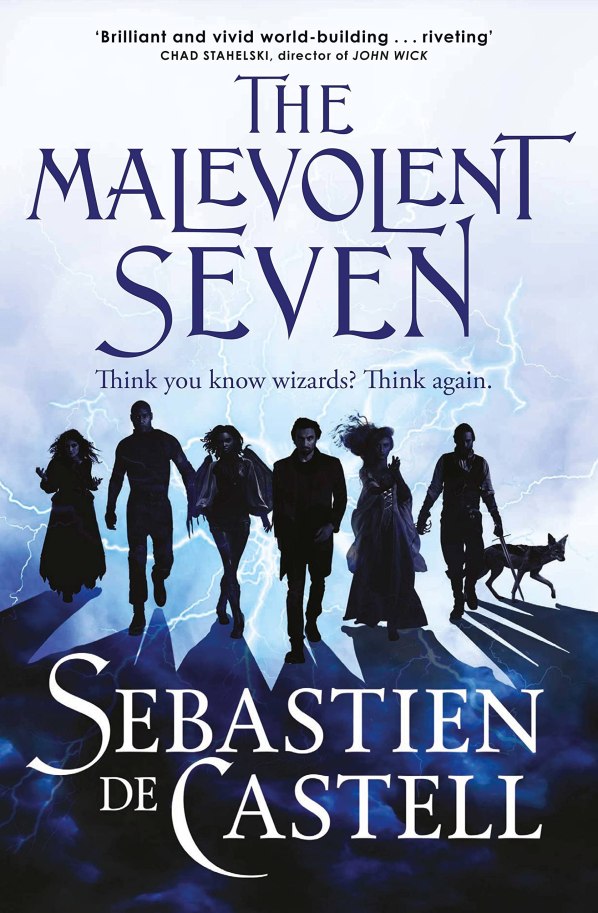
The Malevolent Seven by Sebastien de Castell

The Malevolent Seven Cover

Publisher: Jo Fletcher Books (Trade Paperback – 9 May 2023)

Series: Standalone/Book One

Length: 373 pages

My Rating: 4.5 out of 5 stars

Amazon

Rising fantasy star Sebastien de Castell returns with a bold and highly entertaining new fantasy novel, The Malevolent Seven, that takes several dangerous and dastardly characters on a magical journey of death, deceit and despair which is so much fun to behold.

Magic is power and only the strong can hope to wield it, especially if they can make a profit out of it.  Cade Ombra is a powerful wonderist, a magic user who makes his living as a war mage, selling his services to highest bidder to fight in their wars and kill their enemies, even if his employers are monsters.  Cade has long struggled with the ethics of his job, and when his latest employment ends badly, with Cade framed for murder resulting in a relentless band of holy enforcers hunting him, he knows he needs to find a way out.

Luckily, a lucrative new job is looking for wonderists, and the payment is something he’s always desired, an artefact capable of changing everything about his life.  However, to get paid he needs to do one last very bad thing: kill seven heroic mages attempting to take down a corrupt noble and survive everything that wants to kill him along the way.  Determined to win no matter the cost, Cade and his violent colleague Corrigan set off to claim the reward before any of their rivals can.  But to succeed, they’ll need to recruit five more mages capable of taking down their powerful enemies and who have no moral qualms about killing heroes for money.

So begins a deadly recruitment mission as Cade and Corrigan seek out five mages just as crazy as they are.  But even with a mentally unstable blood mage, a fallen angel, a moral demon knight, a charismatic rat mage and a mysterious jackal, can even this mismatched bad of rogues hope to survive against the seven most deadly magic users on this plane of existence?  However, nothing about this job is as it seems, and Cade and the Malevolent Seven find themselves caught up in a deadly game between gods, demons and monsters, with the fate of the world lying in the balance.

Wow, now this was a very, very fun and addictive novel.  Sebastien de Castell wasn’t an author I was too familiar with before this point, although I had heard good things about The Greatcoats series.  However, I am now going to have to go out of my way to read more of his stuff, especially after reading the epic and entertaining The Malevolent Seven.

The Malevolent Seven was such a great read as de Castell pulls together a dark fantasy reimagining of heroic stories like Seven Samurai and The Magnificent Seven.  The book starts of strong with a great introduction to the main character, Cade Ombra, the rules of magic in this realm, and the author’s very entertaining and outrageous sense of humour.  Expertly and hilariously told from the first-person perspective of Cade, whose observations about the insane events going on around him adds so much value to the story, you soon get a great sense of what to expect from this book and de Castell does not disappoint.  The story initially focuses on Cade and his friend Corrigan’s efforts in a brutal war for a mad ruler, but things go south when their employer is killed, Cade is betrayed by his fellow wonderists, and a band of ruthless religious warriors, the Glorian Justiciars, arrive determined to hunt down Cade for his use of demonic magic.  Forced to take a new job with Corrigan to save his skin and quickly get out of dodge, the two take up the mysterious contract to kill seven heroic mages in exchange for a powerful artefact, and begin a recruitment drive for five additional mages.

I love a good recruitment montage in heist or action fiction, and this one is pretty damn fun as de Castell writes in a particularly eclectic and insane group of mages for the protagonists to recruit.  Naturally nothing goes as plan, as the two are forced to take along a half-insane junior blood mage who Cade feels responsible for.  Their subsequent recruitment attempts land them in all manner of trouble as they rescue a highly chivalrous rat mage, save a mysterious fallen angel from a pleasure ship, journey to hell to recruit a demon knight, and end up in the middle of a wasteland, chased by everyone.  This recruitment period took up more of the plot than I thought it would, but it works really well to tell a great overall narrative.  Each scene introduces the reader to more of the world and it allows a compelling dynamic to grow between the various protagonists, especially as they grow to understand each other crazy tendencies.  De Castell also builds up several intriguing long-running storylines of manipulation and betrayal as it becomes clear that someone is influencing their mission and has set gods and demons against them.  This middle section of the book is a lot of fun, and I loved how de Castell keeps up the same blend of humour, intriguing character development, and insane over-the-top moments, that really draws you in at the start of the novel.

Everything perfectly leads up to the final third of the book, when the protagonists arrive at their destination.  Of course, as can be expected by the theme of this story so far, nothing is what they thought it would be, and instead they find themselves facing off against a mysterious foe with very different motivations to what they expected.  I loved how de Castell turned the plot a little on its head at this point, as the characters find themselves in the unexpected position of being the good guys.  This leads to some amazing scenes in the final third, loaded with magic, chaotic confrontations and more, all of which is a ton of fun to see.  There is some great character growth as several storylines come full circle, as well as a ton of twists and turns.  I loved some of the epic reveals that came across, and while I saw a few coming, de Castell managed to surprise me in places, which I really enjoyed.  The final twists about why the characters were on the job and who really wins were pretty damn epic and it sets the story up nicely for a sequel, which I am definitely going to grab a copy of.  I loved how de Castell really enhanced the drama in this final third of the book, especially as several character relationships or conflicts come to the boil in some explosive and captivating ways.  This combines really well with the continued craziness of the story and the inherent humour of the plot, and you really get drawn into all the fantastic elements of this book.  The Malevolent Seven ended up being an incredible read, and I managed to power through this entire story in a couple of days and had a ton of fun doing so.

I loved the dark and despairing world that served as the cool new setting for The Malevolent Seven and de Castell has a ton of fun showcasing this new fantasy landscape throughout the book.  Loaded with petty tyrants, warring nobles, and wandering wonderists who dish out death to the highest bidder, this land is the perfect backdrop for the crazy and self-serving narrative, and I loved seeing de Castell’s great characters traverse it causing trouble.  While there are some outstanding locations, including a magically blasted wasteland and several deadly battlegrounds, the highlight of this setting is the complex magical system that the author came up with.  This magical system is primarily predicated on wonderists breaching dimensional barriers and utilising magic that they have an infinity for.  This results in several unique rules and abilities that de Castell did an outstanding job of effectively introducing, and I loved how weird some of the abilities were, especially those that played into the novel’s humour.  Some of the more interesting realms require the magical users to interact with the associated denizens, including this world’s equivalent of angels and demons, all of whom have a stake in the mortal realms.  Several of the best scenes in the book require the protagonist to make dark and forbidden deals with his demonic contact, and the manipulation of the various mystical entities from both heaven and hell becomes a key part of the book.  The author makes sure to utilise all these fantastic and lethal abilities to their full extent throughout The Malevolent Seven and the epic, ultra-destructive battles that emerged, as well as the clever combination of talents, resulted in some amazingly, electrifying sequences.  It will be interesting to see what crazy abilities de Castell brings to the table for the sequel, but it’s going to be good.

The final thing I want to highlight about The Malevolent Seven are the excellent and compelling damaged characters featured throughout the plot.  De Castell really went out of his way to make his main seven protagonists as random, broken and insane as possible, and this really works in the context of this brilliant story.  The main protagonist is point-of-view character Cade Ombra, a wonderist with a secret past whose current magical ability comes from deals with a literal demon (nice guy actually).  Because of this and many other mistakes in his life, Cade is pretty alone and damaged when the story starts, and he is constantly trying to balance his survival instincts and desire for power, with his conscience, something that keeps getting him in trouble.  De Castell builds up Cade extremely well throughout The Malevolent Seven and I liked his constant growth as he tries to do the right thing, even though it usually makes life even harder for him.  The author sets Cade up as a reluctant leader and hero, and it was intriguing to see the dynamics that form between him and the rest of the team fate brings together around him.  The rest of the titular Malevolent Seven are all pretty entertaining and uniquely crazy in their own way, and the range of diverse and entertaining personalities makes for a great overall dynamic to the story. My favourite character in the group was the excessively violent Corrigan Blight, whose thunder magic matches his outrageous personality.  Corrigan served as the straight speaking, highly reactive and trigger-happy organiser of the group, who plays off the more reserved Cade perfectly, especially as they form a unique and fragile friendship.  Other highlights include the highly charismatic and surprisingly noble Aradeus, whose rat magic proves to be highly effective if a little weird, and the novice blood mage Galass, whose spunky personality is only matched by her deadly abilities that are slowly driving her insane.  I loved this impressive and very entertaining cast and I cannot wait to see what happens to them next.

I think it is very clear that I loved The Malevolent Seven as Sebastien de Castell’s outrageous and inventive dark fantasy tale was a real joy to behold.  The great blend of fantastic humour, twisty storytelling, brutal magic and over-the-top characters, works exceedingly well and I loved the witty and extremely fun story that emerged.  The Malevolent Seven is a great read and if you are in the mood for a cool and highly compelling fantasy adventure than this is the book for you.

Amazon

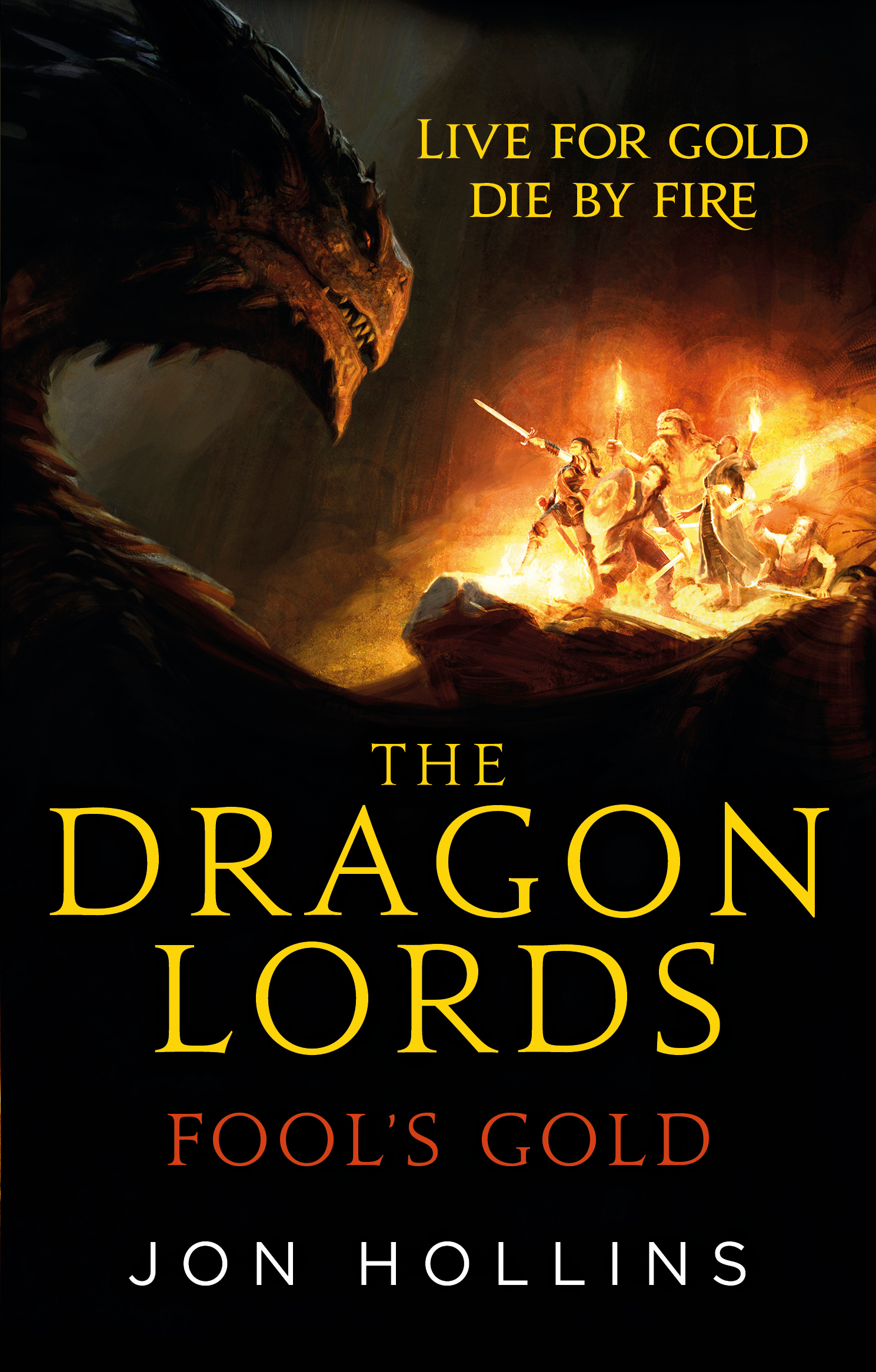
Fool’s Gold by Jon Hollins

9780356507651

Publisher: Orbit (Paperback – 26 July 2016)

Series: The Dragon Lords – Book One

Length: 517 pages

My Rating: 4 out of 5 stars

Amazon     Book Depository

Prepare for all manner of craziness and exceedingly entertaining fun as Jon Hollins presents an amazing book about heists and dragons with Fool’s Gold.

A few months ago, whilst perusing my local book fair, I happened upon a copy of Fool’s Gold by Jon Hollins (a pseudonym for fantasy author Jonathan Wood), which really grabbed my attention.  The first book in Hollins’ The Dragon Lords trilogy, Fool’s Gold had a fantastic plot synopsis which involved heists and dragons.  I was very intrigued by this cool book, which sounded so very fun, so naturally I made sure to grab it.  As a result, it was nice and handy when I was in the mood for a fun fantasy book, and boy was I entertained by this cool read.

In the fantasy land of Avarra, there are many different magical creatures and beings who infest the world and bring all manner of chaos with them.  However, no creature is as dangerous, arrogant, and domineering as the dragons, especially members of the destructive Consortium who have taken over the isolated nation of Kondorra and rule it as overlords.  Employing a private army, the dragons impose massive taxes on the lands surrounding their lairs, driving the people into poverty and forcing many to lose everything.

It is only a matter of time before something gives, and when Willett Fallows loses his farm to greedy dragon who controls his village, he snaps and becomes a fugitive.  On the run, Will finds himself in the most unusual of situations after a chance meeting with four unlikely wanderers in a nearby cave, including a skilled warrior woman, a murderous lizard man, a dragon obsessed academic with explosive magical powers, and his village’s local insane drunkard.  Together the five new companions come up with an ambitious plan to steal all the gold from the local dragon lord and make their escape.

However, when their heist unsurprisingly goes wrong the friends find themselves in a surprising position as the nation’s apparent saviours.  Suddenly worshipped by a massive following, the companions must find a way to escape both the deadly retribution coming their way and their own insane devotees.  But no matter how hard they try, all their plans seem to backfire until they find themselves in the middle of a deadly religious war against the dragons.  Can they pull off one more con to destroy the Consortium, or is everyone about to end up dead in a field of fire?

Fool’s Gold is an exceedingly fun and very entertaining read that I was able to finish off in a few days, especially once I got caught up in its exciting and fast-paced narrative.  Hollins sets everything up very quickly, with the new fantasy world introduced, the dragon’s control of Kondorra established, and all five of the main characters brought together.  While I wasn’t the biggest fan of the extremely coincidental meeting that saw all the protagonists meet up in the first few chapters, the story evolves at a much more appropriate pace from there, with the characters quickly planning their theft of the local dragon’s hoard.  I was a little surprised at how fast the first heist came about, as I figured it would be a long-term plan that would unfold much later in the book.  However, featuring this heist early on really works, as it sets up the rest of the story extremely well while also showcasing early just how crazy and over-the-top this book is going to be.  The chaotic results of the first heist see the protagonists incorrectly declared religious saviours destined to bring down the dragons.  Suddenly leading a ragtag army, the protagonists are forced to engage in several more attempted heists and plots against other dragons and their minions.  While these plans often backfire in very funny ways, the protagonists keep failing upwards and must keep the con going while dealing with a multitude of problems, including deranged followers, immense responsibility, and deep personal issues.  This all leads up to the final confrontation with the dragon Consortium, with the characters unleashing their most ambitious plan yet.  Watching this final plan come together is pretty damn awesome, and the insane battles and crazy results that follow were so damn epic.  I ended up really loving this compelling and very fun story, which Hollins leaves open for some intriguing sequels in the future.

Fool’s Gold is an incredibly fast-paced novel with a great writing style that makes it very easy to power through.  The author has a brilliant and wicked secret of humour that infects his writing, and I found myself chuckling the entire way through, not just because of the jokes but because of the insane scenarios that resulted.  I was also deeply impressed with how well Hollins brought together several genres to create a compelling and hilarious read.  The book initially appears to be a classic fantasy read, as the author quickly and effectively sets up an intriguing new fantasy world at the start of the book, which contains several classic fantasy creatures and elements that are likely going to get expanded on in the sequels.  However, it soon becomes apparent that this isn’t going to be a typical fantasy book, especially as the very modern sense of humour and language that Hollins employs gives it a whole new tint.  I often enjoy when authors feature contemporary language and attitudes in fantasy novels, and I felt that Hollins uses it to great effect in Fool’s Gold, giving the book a distinctive tone.  The author further brings in the brilliant heist elements to the book, which I deeply enjoyed thanks to all the fantastic plans and cons.  It proved to be extremely fun to see all these elaborate and weird heists get planned out and executed in a fantasy universe, and it combines extremely well with the humorous tone and fantasy elements of the book.  I deeply enjoyed how this captivating story came together, and I can’t wait to see how the next books in the series pan out.

I also really liked the cool characters featured in Fool’s Gold, especially as Hollins came up with a very eclectic and damaged group of central figures.  The book primarily revolves around five protagonists, each of whom have multiple chapters told from their perspective and who unite as a team very early in the book.  This includes Willett Fallows, the former farmer who turns to heist planning after the dragon’s greed takes everything from him.  There is also the fantastic pair of Lette and Balur, a female adventurer looking to settle down and her lizard man companion who loves all forms of violence and is determined to fight and kill the biggest opponents he can find, in this case dragons.  There is also Quirk, a former mage turned academic who arrives in Kondorra to study the dragons and finds herself dragged into the group’s plans so she can get a closer look at the dragons and their lairs.  Finally, there is Firkin, a local drunk whose failure years ago to defeat the dragons drove him mad and who finds new life during the new adventures. 

All five characters are pretty crazy in their own way, and I think they made for quite an intriguing and amusing focus for the narrative, especially all the interesting growth Hollins makes use of.  Will’s evolution from a farmer to a master strategist was very well written and I appreciated the compelling examination of how the power he started to wield was potentially corrupting him, especially when he holds the lives of so many in his hands.  The inevitable romance between Will and Lette was handled well throughout the book and it came across as a natural and well-developed relationship.  Balur, the battle-loving lizard man was easily one of the most entertaining characters in the novel, and I loved seeing his mad rages and various attempts to kill the dragons they encounter, especially as it results in an incredibly funny and hilariously brutal final fight at the end of the book.  I was also quite impressed that Hollins was able to keep up Balur’s unique style of speech for much of the story.  Firkin’s rise from unpredictable drunk to unpredictable drunken religious mouthpiece and rabblerouser was exceedingly funny in places, especially as you are never quite sure whether he is actually insane or just messing with everyone.  I did find his continued crazy speech a bit too much at times, although the occasional hints at his deeper intelligence and sanity made up for that.  However, the best character work was probably reserved for Quirk as Hollins really dives back into her history as a child soldier/mage who was gently rehabilitated and taken into the academic lifestyle.  Quirk finds herself reverting to her old destructive magical ways throughout the course of the adventure and she must figure out who she truly wants to be.  I had a great time with all the cool characters in this book, although I do wish that the greedy and arrogant dragons might have gotten a little more development.  Overall, I would say that the characters were some of the best parts of Fool’s Gold and look forward to seeing more of them in the future.

Unsurprisingly, I had a pretty wonderful time with Fool’s Gold and it ended up being as thrilling and compelling as I hoped it would be.  Jon Hollins wrote a wildly entertaining and very funny fantasy heist narrative for Fool’s Gold, which came equipped with some great fantasy elements and a bunch of excellent characters.  I really enjoyed Fool’s Gold and I will have to try to grab the next two books in the Dragon Lords trilogy, especially when I’m in the mood for some crazy, over-the-top adventure and excitement. 

Amazon     Book Depository

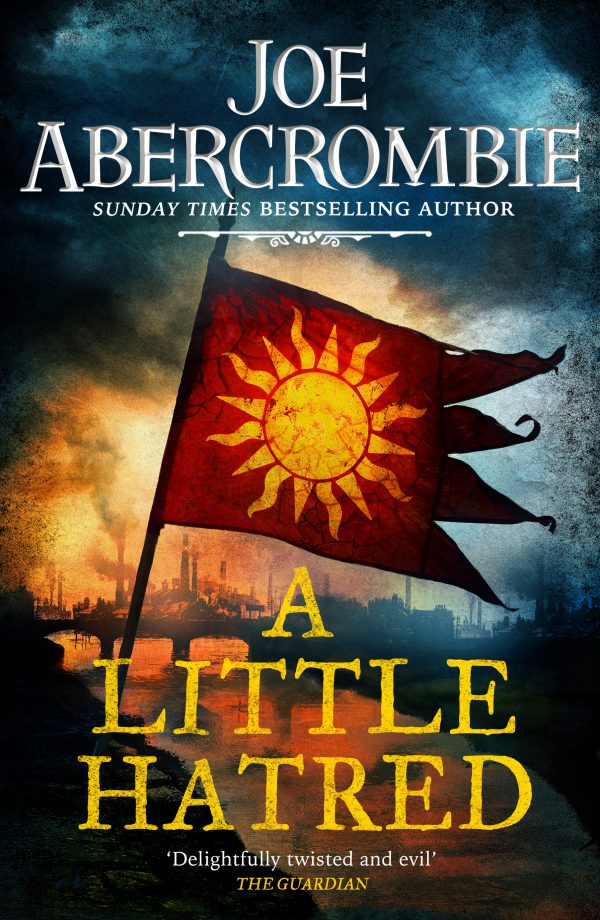
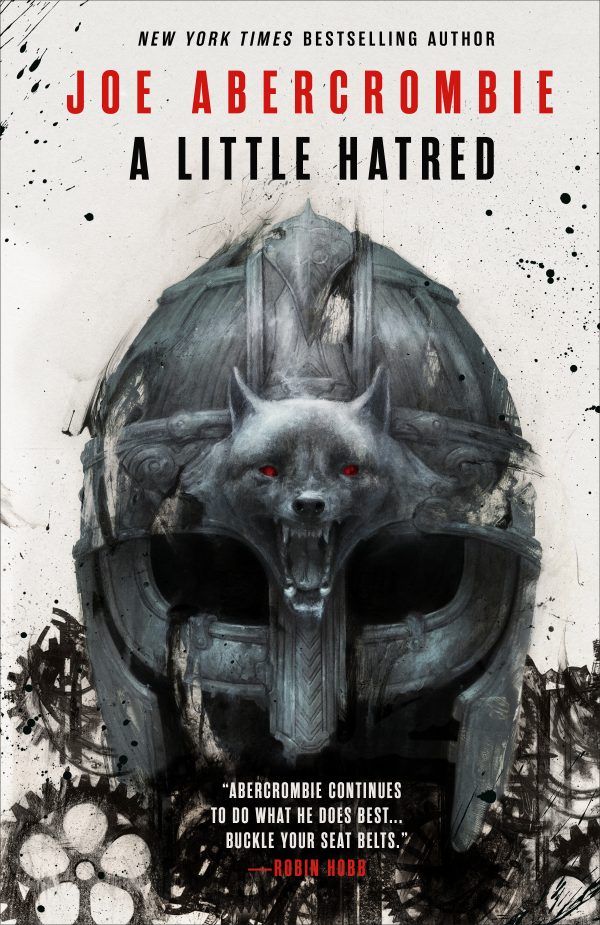
A Little Hatred by Joe Abercrombie

A Little Hatred Cover

Publisher: Orion (Audiobook – 17 September 2019)

Series: Age of Madness Trilogy – Book One

Length: 20 hours and 20 minutes

My Rating: 5 out of 5 stars

Amazon

One of the very best authors of dark fantasy fiction, Joe Abercrombie, returns to his epic First Law series with A Little Hatred, an outstanding and deeply entertaining read that serves as an excellent start to a whole new trilogy.

28 years after the failed Gurkish invasion of the Union and Jezal dan Luthar’s sudden rise to the throne, the world is much changed. Industry has come to the Union, with vast factories, production lines and businesses now defining the Union’s various cities at the expense of the nation’s farmers, labourers and working classes. In this time of change, a whole new generation is ready to make its mark in the world, but the rivalries, hatreds, manipulations and disappointments of those who have come before are hard things to overcome.

In the North, war once again rocks the lands, as the forces of Stour Nightfall invade the Dogman’s Protectorate, forcing the armies of Angland to come to their aid. Young lord Leo dan Brock is desperate to seek honour and glory on the battlefield; however, his forces are too small to defeat the vast Northern hordes. Requiring help from the Union, Leo is hopeful that a relief force led by Crown Prince Orso may help to turn the tide of battle, but the Crown Prince is a man known to constantly disappoint all who pin their hopes on him. However, the arrival of the mysterious Rikke, daughter of the Dogman, may provide him with a all the help he needs, especially with her ability to see through the Long Eye. Back in the Union, Savine dan Glokta, daughter of the feared Arch Lector Glokta, is making a name for herself as a ruthless businesswoman. Dominating the world of business and industry, Savine believes that she is untouchable, but dissent amongst the working classes are about to show her how wrong she is.

As both the North and the Union find themselves on the dawn of a whole new era, chaos will absorb all before it. While this new generation attempts to find their place, they soon begin to realise what the previous generation found out the hard way that they are not the ones in charge of their destiny, and there is nothing a little hatred cannot ruin.

Joe Abercrombie is a highly acclaimed author who has produced some truly amazing pieces of dark fantasy fiction over the years. While he has written other books, such as the Shattered Sea trilogy, he is probably best known for his First Law series. The First Law series is currently made up of seven books (including A Little Hatred), which detail bloodshed, politics and manipulation in a dark fantasy world. This series started with The First Law trilogy, which debuted in 2006 with The Blade Itself and ended in 2008 with Last Argument of Kings. The First Law trilogy followed the adventures of several complex and amazing characters as they fought to not only stop the Gurkish invasion of The Union but also the end a war in the North. Abercrombie would eventually follow this original trilogy with three standalone novels, which were set after the events of The First Law trilogy. These three books, 2009’s Best Served Cold, 2011’s The Heroes and 2012’s Red Country, each had various degrees of connection to the original trilogy, and in many cases showed what happened to some of the major characters from the first three books. These standalone novels were eventually collected together into the loose Great Leveller trilogy. I absolutely loved the original First Law trilogy, and it remains amongst one of my favourite fantasy series of all times. I do need to check out all of the Great Leveller books at some point, although I have no doubt the will all prove to be first-rate reads.

A Little Hatred is Abercrombie’s first entry in the First Law series since 2012, and it is set 28 years after the events of the original trilogy and 15 years after the events of Red Country. A Little Hatred is also the first book in a new connected trilogy that Abercrombie is producing, The Age of Madness trilogy, with the next two books in this trilogy to be released in September 2020 and September 2021. I have been looking forward to reading A Little Hatred for a while now, mainly because of how much I enjoyed the original The First Law trilogy, and I was very happy to not be disappointed with this new book. A Little Hatred was an incredible and captivating read which I powered through in short order. Not only does this book get a full five stars from me, but I even listed it as one of my favourite novels from 2019 when I was only about halfway through it.

For his latest book, Abercrombie utilises the same writing style that proved to be so successful in the previous First Law books. Readers are once again in for a dark, gruesome and very adult story that follows seven main point-of-view characters as they experience the events unfolding throughout the book. While each of the seven main characters has their own unique arcs, their various stories combine throughout the course of the novel to produce a deeply compelling overall narrative. I really like all the places the story went in this book, and it turned into an excellent blend of war, political intrigue, violent social revolution and intense interaction between a number of amazing characters. Abercrombie does not hold back any punches in this story, and there are a number of intense and excessively violent fight and torture scenes in this book, and there is plenty to keep action fans satisfied. At the same time, the author also installs a fun sense of humour throughout the book, which usually relates to the personalities of the various characters who are telling the story. All of this adds up to an absolutely amazing story and you are guaranteed to get quickly get drawn into A Little Hatred’s plot.

I thought that the author’s use of multiple character perspectives was an extremely effective storytelling method, especially as the seven point-of-view characters followed in this book often find themselves on different sides in the various featured conflicts. This allows the reader to see all the relevant angles to the political, social and military conflicts that are shown in the story, whilst also advancing the book’s various character arcs. These multiple character perspectives also allow the reader to see multiple viewpoints of the same events. This is especially effective during a couple of the larger battle sequences or during a particular duel scene, where you get to see the thoughts, fears and plans of the various participants and spectators, allowing for richer and more elaborate scenes. There are also a bunch of brief scenes which are told from the perspective of several minor characters, which are used, for example, to show off the extreme chaos surrounding the takeover of a city by members of the working class. I also really liked how Abercrombie used these different character viewpoints to imbue the story with some intriguing symmetry, such as by having two separate characters spending time with their respective parents back to back in order to show the differences and similarities in their relationships. All of this produces an excellent flow to the novel, which I really appreciated, and which helped with the overall enjoyment of the book.

A Little Hatred is an excellent continuation of the previous First Law books, and Abercrombie has come up with a bold new direction for the series. This latest novel is strongly connected to the events of the previous entries in this overarching series and continues a bunch of the storylines established in the prior books. It also continues the adventures of several characters who have previously appeared in the series, showing what has happened to them in the intervening years and how their legacy is being continued. Despite this strong connection to the previous six books in the First Law series, I would say that it is not a major necessity to have read any of the prior books, as the author does a great job of rehashing all the relevant major events while also successfully reintroducing some of the main characters, allowing new readers to enjoy this book. That being said, those readers who are familiar with some of the prior books, especially The First Law trilogy, are going to have a much better understanding of the events and characters that are featured within A Little Hatred, which may also result in a change in how readers view certain characters and events. For example, one of the main characters from the original trilogy makes several appearances throughout the book, interacting with some of the point-of-view characters. As these new characters have no prior experiences dealing with him, they believe he is a fairly harmless and friendly old man, which is how he is then presented to new readers. However, those readers who are familiar with him from the original trilogy know just how dangerous he can be, and his harmless routine actually becomes a little sinister. Readers with knowledge of the events of the original trilogy are also in for a lot more cringe throughout this book, as you know all the shocking details of a certain inappropriate relationship well before it is revealed to one of the characters later in the book.

I thought it was interesting that Abercrombie included such a significant time skip between this book and the original trilogy, but I think that it really paid off and created an excellent new setting. While the North and the conflicts that defined it remained very similar to what was featured in the previous books, the main setting of the Union proved to be very different. Since the last time you saw it, the Union has started to evolve from a more medieval society to an industrial society, with factories and production lines, which in many ways were very reminiscent of the Industrial Revolution in places like England. Of course, these changes result in different types of conflicts, as the lack of traditional jobs combined with the rich ruthlessly taking the agricultural industry away from the peasants results in an interesting bout of extreme class warfare, led by the organisation called the Breakers. These Breakers bear a lot of similarities to the organised instigator of real-life industrial revolts that occurred throughout historical Europe, and it was interesting to see Abercrombie’s take on them, especially as he included an anarchist sub-group, the Burners. I really liked this intriguing focus on class revolution, and it looks like this is going to be one of the major story threads of this new trilogy. I am very curious to see how it all unwinds, and I imagine there is more anarchy, chaos and bloody revolution on the horizon.

While the above elements are all pretty outstanding, the true highlight of the First Law books has always been the complex and damaged protagonists through whose eyes the story is told. Abercrombie has a real knack for creating compelling and memorable characters, which he once again showcases within this book. There are some really enjoyable and complex characters here, and I really liked their various interactions and character arcs. These new point-of-view characters include:

  • Crown Prince Orso – son of King Jezal and notorious wastrel who, despite his outward appearance as a lazy, useless and apathetic drunk, is actually a surprisingly capable and deeply caring individual, who hides his abilities and real feelings, especially as his attempts to be a good person usually have disappointing results.
  • Savine dan Glokta – daughter of Arch Lector Glokta, Savine has capitalised on her business sense and the fear of her father to become a successful investor. As a woman in a man’s world, she is forced to be utterly ruthless like her father, and Savine mostly comes across as heartless until a traumatic experience and revelations about her past almost break her.
  • Rikke – a Northern girl who is the daughter of the Dogman. Rikke is a powerful seer with the ability to see both into both the past and the future, although she has limited control of these powers. Rikke starts the book out as quite an innocent woman, until Stour Nightfall’s invasion hardens her and makes her keener for violence and revenge.
  • Leo dan Brock – a Union lord who is the son of two of the protagonists of The Heroes. Leo is a young man’s man, eager to prove himself in combat, whose abilities have made him a popular hero. However, his impatience and desire for glory ensure calamity on the battlefield, which guilts him to try and learn a new way of command. However, once he tastes glory again, he forgets all the lessons he has learned and the friends who got him there.
  • Vick dan Teufel – a Union Inquisitor serving under Arch Lector Glokta. Despite the fact that Glokta framed her father in the original trilogy and sent her and her entire family to a prison camp, Teufel appears loyal to him and the Union, as she likes being on the winning side. Despite her misgivings about the people she works with and her respect for some of the people she is investigating, she continues her missions and tries not to get close to anyone. Teufel is actually very similar to Glokta in personality, especially as she has the familiar storyline of being forced to investigate a conspiracy that no one wants solved.
  • Gunnar Broad – a former Union soldier who returned home after many years of fighting for his country to find that the local lord has stolen his farm. Attempting to find work in the cities, Broad becomes involved in the events of the Breaker’s revolution. Broad is a killer without peer whose temper, bloodlust and the emotional trauma of war drag him into great acts of violence, even when these actions backfire on him and his family.
  • Jonas Clover – a veteran Northern warrior who finds himself serving as an advisor to the young warlord Stour Nightfall. Clover is easily my favourite character in A Little Hatred, as his sense of humour, penchant for mockery and jaded personality really stand out amongst the more serious and blood thirsty characters he interacts with and he has some of the best lines in the whole book. Clover affects an air of laziness and cowardice and is constantly spouting wisdom and council to the younger warriors, who either don’t listen or openly mock him. Despite his apparently amiable nature, Clover is actually a vicious bastard when he needs to be, and he has a couple of memorable kills throughout the book.

In addition to the above seven new point-of-view characters, there is also a bevy of great side characters which really help move the story along. While I could go on about several of them, I might just stick to Isern-i-Phail and Stour Nightfall. Isern is another older Northern character who serves as Rikke’s mentor and protector. While Isern is generally a hard and practical character she is in many ways crafted in a similar vein to Jonas Clover, gently mocking the younger characters she interacts with and producing some of the most entertaining insults and comments throughout the book. Stour Nightfall, on the other hand, is one of the primary antagonists of the book. The cocky son of Black Calder and the grandson of Bethod, one of the major antagonists of the original trilogy, Stour has a real sense of entitlement and viciousness, brought on by his famous relatives and his skill with the blade. In many ways he is a mirror to Leo dan Brock, as both are determined to seek glory in combat, and both seek to emulate the Bloody Nine, Logen Ninefingers, despite their elder’s warnings about what kind of person their hero really was. While at times Stour was a bit two-dimensional as a character, he changes after a significant event at the end of the book, and his future in the series should prove to be very interesting.

Aside from this new group of protagonists, several of the major characters from the original trilogy make a return in this book, allowing readers to get an idea of what has happened to them since their last appearances. This includes returning former point-of-view characters Jezal dan Luthar, Sand dan Glokta (who might just be the best character Abercrombie ever came up with) and the Dogman, as well as several secondary characters. While all of these characters get a few lines and are presented as major figures in the current world order, most of the focus of A Little Hatred is given over to the newer protagonists, which I think fits in well with the book’s overall focus on change. It was great to see these characters again, and there were even some major developments surrounding one of them. It was also cool to see them interact with the younger generations, especially when they see these new characters making the same mistakes they did at their age. A Little Hatred also features the return of the First of the Magi, Bayaz, who is still pulling all the strings in the world. Despite his grandfatherly appearance, Bayaz is probably the main villain of this entire series, and you just know that he is behind all of the events occurring in this book. I look forward to seeing more of the excellent villain in the future, and I cannot wait to see how and why he is manipulating everyone this time.

Rather than read a physical copy of this book, I ended up listening to the audiobook version, which was narrated by Steven Pacey. The A Little Hatred audiobook runs for 20 hours and 20 minutes, making it a fairly substantial audiobook that would actually come in at number 19 on my longest audiobook list. The audiobook format is an excellent way to enjoy A Little Hatred, as you get a real sense of all the gore and violence as it is narrated to you, as well as a better vision of the impressive, changed world that served as the setting of this book. I was really glad that they continued to utilise Steven Pacey as narrator for this new book as Pacey has narrated all the previous First Law audiobooks. It was really good to once again hear the unique voices that Pacey assigned to the characters from the original trilogy, especially as, to me, they were the defining voices of these original characters. The voices that he came up with for the new characters in this book were also good, and I think that he got the character’s personalities down pretty effectively. As a result, I would strongly recommend the audiobook format of A Little Hatred to anyone interested in checking out this book, and I am planning to listen to the rest of The Age of Madness books.

A Little Hatred by Joe Abercrombie is an outstanding and impressive new addition to his brilliant First Law series. Abercrombie has once again produced a captivating, character-based tale of bloody war and politics, while also adding some intriguing new elements to it. This is an exceptional book, which I had an absolute blast listening to. The Age of Madness is off to an extremely strong start, and I cannot wait to see where Abercrombie takes this amazing series to next.

ALH-Final-600x925

Amazon