Of Flame and Fury by Mikayla Bridge

Publisher: Macmillan (Trade Paperback – 15 July 2025)

Series: Standalone / Book One

Length: 383 pages

My Rating: 4.5 out of 5 stars

Amazon

Australian author Mikayla Bridge produces one of the more compelling young adult fantasy debuts of 2025 with the inventive and clever read, Of Flame and Fury.

Plot Synopsis:

On an island built from ash and shrouded in fire, phoenix racing is a sport just as profitable as it is deadly.

Seventeen-year-old Kel Varra and her team of underdogs, the Crimson Howlers, are desperate to win the annual races and the fortune that comes with it. But the Howlers need a new rider, which leads Kel to join forces with Warren “Coup” Coupers – an arrogant rival she can’t get out of her head.

As tensions rise on and off the track, Kel’s home is mistakenly burned down, and she’s forced to take a job from a mysterious tech mogul with an unsettling interest in her phoenix, Savita. This sets in motion a conspiracy that threatens everyone Kel cares for, especially Coup, for whom her embers of resentment are quickly igniting into something dangerously new.

Heart-pounding pages full of steamy romance, fiery confessions, political scheming, and volatile magic culminate in a final twist readers will never see coming.

Of Flame and Fury was a very interesting 2025 young adult fantasy release that I was quite excited to get my hands on.  The first book from Australian author Mikayla Bridge, Of Flame and Fury had a very exciting plot behind it which Bridge effectively built on with an excellent story and some fantastic writing.

I ended up really enjoying Of Flame and Fury’s intriguing narrative, which grabs the reader’s attention early thanks to an initial intense and tragic phoenix racing sequence.  This early race quickly and effectively sets up most of the book’s key characters, including protagonist Kel Varra and her rival and inevitable romantic interest, Coup, with an additional, fiery moment bonding these key figures together.  The story quickly moves onward with Kel forced to recruit Coup to her phoenix racing team, which has been recruited by a powerful tech mogul with his own hidden agenda.  This initial part of the book was quite interesting and set up a lot of key story elements, while also providing readers with a lot of the new lore in Bridge’s phoenix filled society.

While fun and loaded with interesting character introductions, this early part of the book lacked a little action, especially as there was a nearly 150-page gap between the first and second phoenix races.  I feel that some readers may lose momentum in this part of the book, especially as the promised races are such a big part of the book’s appeal.  Still, I enjoyed the story development here, and Of Flame and Fury’s big races, when they finally start, have all the chaotic fun you’d hope for, made even more exciting and compelling by the character relationships and distinctive fantasy elements Bridge introduced and built up during this period.

The second half of the book flies by quickly, as you soon get drawn into the various races, intrigues, and complex relationships that are such a vital part of the narrative, even if the main enemies-to-lovers storyline was a little tropey.  I ended up really enjoying the compelling focus on the intrigues of the corporation sponsoring Kel and her team, which leads up to the big climax of the book.  While it does have an obvious villain, the motivations of this antagonist are very important and well set out.  The revelations around this main storyline make Of Flame and Fury’s plot really stand out, especially as it leads to an impressive twist I honestly didn’t see coming.  This big twist worked extremely well, as it cleverly utilized lore elements that Bridge had been inserting into the narrative the entire time, while also completely reshaping your entire perspective of the preceding story.  I deeply appreciated how this came together, and its excellent execution honestly amplified my entire estimation of this novel.  Following on from this, Bridge leads Of Flame and Fury to its fantastic conclusion, which featured all the drama and intensity you would expect from a great young adult fantasy novel, and which leaves the reader very satisfied.

I felt that Of Flame and Fury came together extremely well as a novel, and Bridge really showcased her writing chops in her debut.  Primarily shown from the perspective of the main character, Kel, Of Flame and Fury was a very fast-paced read that did a good job of blending fantasy elements with compelling characters.  I love how seamlessly Bridge was able to work the unique elements of her fantasy universe into the narrative, and readers were quickly able to get across the cool phoenix lore.  The resulting high-octane phoenix races were a real highlight of this novel, while other bits of compelling lore were well utilised, especially in that cool twist I gushed about above.

Bridge kept an excellent young adult tone for Of Flame and Fury, resulting in a novel that would primarily appeal to teenager readers, while also being quite enjoyable for older fantasy fans, especially those who like unique ideas or compelling characters.  There is also a certain amount of appeal for the romantasy crowd, thanks to the fiery relationship between Kel and Coup.  As someone who doesn’t massively enjoy romance fiction, I personally found the enemies-to-lovers sub-plot to be one of the weaker parts of the book, while the book’s secondary romance (between team winger Dira and corporate engineer Rahn) was a little more interesting.  Still, I’m sure more typical romance/romantasy fans will enjoy the combative relationship between Kel and Coup, and it helps that both are well-written characters who stand on their own outside of the romance.

Due to its great characters, clever story and fun, fire-filled phoenix races, Of Flame and Fury was an awesome young adult fantasy novel, and it’s one I had a lot of fun reading.  New author Mikayla Bridge proved to be extremely talented with this debut book, and I will be curious to see what she writes next.  An overall wonderful novel that will appeal to a wide audience.

Amazon

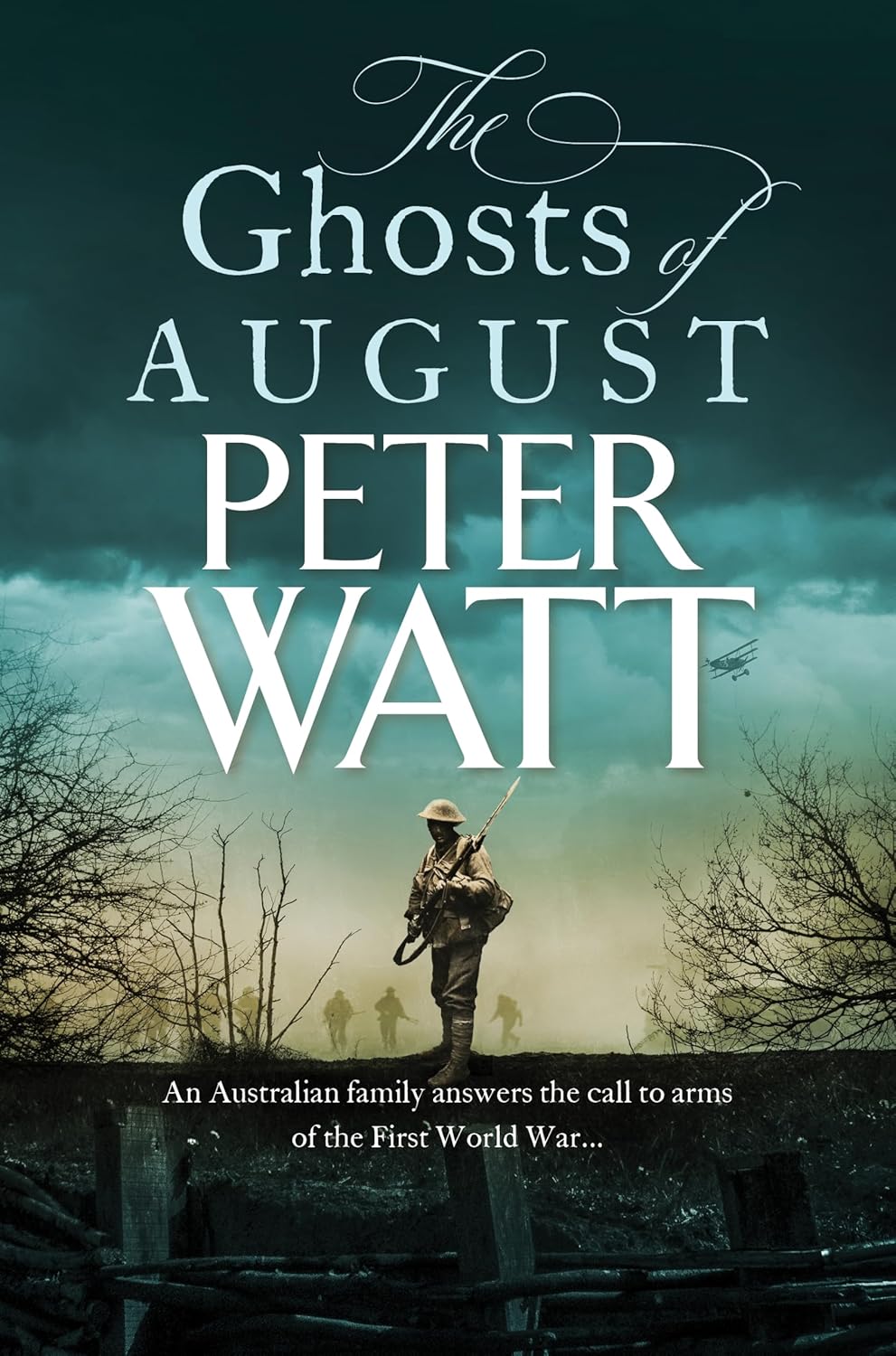
The Ghosts of August by Peter Watt

Publisher: Macmillan Australia (Trade Paperback – 29 October 2024)

Series: Colonial series – Book Six

Length: 401 pages

My Rating: 4.25 out of 5 stars

Amazon

Australia’s master of historical fiction, Peter Watt, continues to shine with the latest exciting book in his Colonial series, The Ghosts of August.

Watt is a fantastic author who has a particular skill at writing fast-paced adventure novels based around Australia’s compelling and complex history.  The author of several intriguing multigenerational series, Watt’s current body of work is the Colonial series, which started back in 2018 with The Queen’s Colonial.  An awesome book that followed a young Australian farmer, Ian Steele, who journeys to England and through a series of shenanigans gets commissioned in the British army as a captain, gaining the moniker the Queen’s Colonial.  I had a lot of fun with this first book, and Watt has kept the series going strong ever since.  The next two books in the series, The Queen’s Tiger and The Queen’s Captain, followed Ian through several mid-19th century wars, while also encountering love, loss, and dark intrigues.  The third and fourth novels, The Colonial’s Son and Call of Empire, featured a time skip to the late 19th century, where a mostly retired Ian had taken a step back from adventuring while his two sons, Josiah and Samuel, became the main characters.  With the death of Ian at the end of Call of Empire, the series entered a new phase as Watt again skipped ahead with The Ghosts of August.  Set around the turbulent events of World War I, The Ghosts of August was another fantastic entry in the series that continued to follow all the adventures of the Steele family.

The Queen’s Colonial, Ian Steele, is dead, but his family still serve the crown, especially as the threat of war spills across the globe. Ian’s oldest son, Josiah, is now head of the Steele family, and, like his father before him, he has two very different sons to worry about.  His oldest son, David, is a canny and cultured young man with the world at his feet, while his youngest son Ben is a wild child, constantly finding trouble and solving it with his fists.  However, despite their differences, both David and Ben are about to be caught up in the chaos of war.

Ben, sent away on a secret mission about the family’s boat, inadvertently finds himself trapped in German New Guinea when the war breaks out, where circumstances force him to become a desperate fugitive from the German troops stationed there.  David, determined to do his bit, becomes an officer in the Australian army, and finds himself involved in Australia’s attempt to take control of German New Guinea, hoping to reunite with his brother.

However, with petty grievances and the love of a women between them, Ben and David find themselves on different paths as the war progresses.  While David finds himself serving as an officer on the Western front, Ben signs up as an enlisted man in the deserts of Palestine.  Both brothers will face danger and death the like of which the world has ever seen before, and the desperate battles will rock the Steele family to its very core.

The Ghosts of August was another awesome book from Watt that pits the latest generation of his central family against all the horrors of war, turmoil and history.  A great addition to the Colonial series, The Ghosts of August was a very fun and action-packed read that cleverly tied into some fascinating periods of history.

Watt features a very familiar narrative structure for The Ghosts of August, which follows the current protagonists of the Colonial series into a whole new conflict.  Starting in 1914, the novel initially follows the various characters through the period leading up to the conflict, before throwing them right into the carnage with several battles and action pieces.  Making great use of the historical record to enhance his narrative, Watt sets his story throughout a range of fascinating locations and periods, all shown from the overlapping perspectives of his point-of-view characters.  Watt provides an interesting spread of protagonists in The Ghosts of August; while the key characters are the younger members of the Steele family, you also see alternate perspectives from the books various antagonists, as well as some more friendly German characters.  There is a good mixture of action, character-focused drama, and intrigue as these figures deal with issues on various fronts.  I particularly enjoyed Ben’s attempt to survive in the wilds of German New Guina for the first part of the book, while the various intricate depictions of war in the second half of the book steal the show, especially as there is a ton of tragedy and shocking moments.  Watt brings the entire narrative to a sad, but hopeful end, and it will be interesting to see if or how the author continues the series in the future.

As with all the books in the Colonial series, The Ghosts of August works well as both a standalone novel and a continuation of the rest of the series, as Watt highlights key character history and previous adventures in an effective manner for new readers.  I personally have had a lot of fun exploring the entire series from the start, and it has been great to see how the central family has evolved.  The focus on a single family and its various members, friends and enemies throughout turbulent points of history is a fun writing style that the author has a lot of experience in, and it always results in an entertaining and fast-paced book.  As with the previous Colonial novels, Watt’s focus on action, warfare, and the intricate history of the period, is the highlight of The Ghosts of August.  Anyone with a love of early 19th century warfare or adventure is in for a great time, and I deeply enjoyed the powerful war sequences the author featured.  However, I did think that some of the characters were a little one-dimensional in places, especially as his two main protagonists, brothers Ben and David, are carbon copies of other Watt central characters.  That being said, Watt writes an excellent storyline that sees the two brothers at odds due to an alluring German noblewoman, and the resulting attempts to get past it are moving, with some real tragedy thrown in.  I also enjoyed the devious German military antagonist, Kurt Jäger who plagues Ben in the first half of The Ghosts of August, and whose full storyline in the novel proves to be particularly interesting.  An overall fun book that is easy to enjoy, especially if you have read one of Watt’s novels in the past.

The final element of The Ghosts of August that I want to highlight is the fascinating historical features that really made this novel stand out.  Watt has a clear love for Australian history that shines through in his writing, especially in The Ghosts of August where he dives into various unique aspects of Australia’s contribution to World War I.  Not only does he take his characters to the obligatory battlefields of Gallipoli and the Western Front (the former of which is relatively brief for an Australian war novel), but he also examines other lesser-known conflicts Australia was involved with during this period.  This includes Australia’s contribution to the fighting in the Middle East, as there are some very intense and action-packed sequences that follow one of the protagonists fighting in Egypt and Palestine with the Australian Light Horse.  I also found the first conflict focused on in the book, Australia’s expedition to take control of German New Guinea, to be particularly fascinating.  Watt portrays the main battle in compelling and exciting detail, and it was fascinating to learn more about this expedition, especially as it rarely gets featured in fiction, despite being Australia’s first contribution to the war.  All these historical elements are expertly woven into the main narrative by Watt, who always does an outstanding job of setting his own story arcs around these events.  You really get stuck into both the narrative and the Australian history as a result, and I loved seeing more of Watt’s infection love for Australian wartime history.

The Ghosts of August was another amazing book from Peter Watt that provided a fantastic continuation to his highly enjoyable Colonial series.  Loaded with action, adventure and interesting historical inclusions, The Ghosts of August is classic Watt, and I had a ton of fun with it as always.  I am curious to see where Watt goes next, as I will always be eager to grab another historical adventure from this excellent Australian author.

Amazon

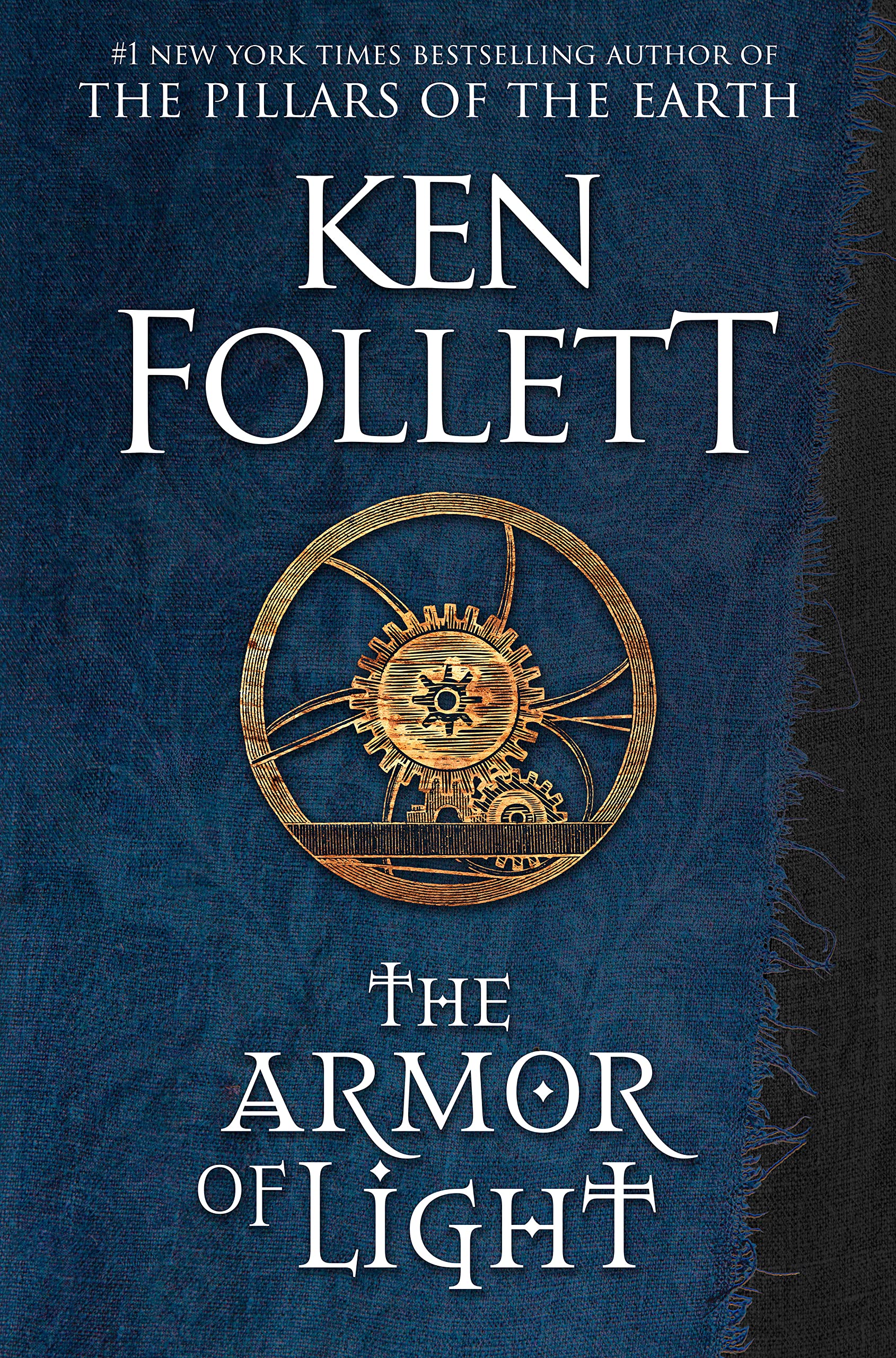
The Armour of Light by Ken Follett

The Armour of Light Cover

Publisher: Macmillan (Hardcover – 26 September 2023)

Series: Kingsbridge – Book Four

Length: 737 pages

My Rating: 5 out of 5 stars

Amazon

Acclaimed author Ken Follett returns with another exceptional addition to his iconic Kingsbridge historical fiction series with the fantastic and captivating The Armour of Light.

Out of all the authors who dive into the complex and impressive genre of historical fiction, few are as well-known or epic as Ken Follett, who has been dominating the genre for years with his massive and epic thrillers.  I have only really had the chance to explore Follett’s historical fiction books, with his Century trilogy being a particular favourite of mine (one of my favourite trilogies of all time).  However, Follett’s most iconic work is his Kingsbridge series, which has long gained mass recognition and accolades

The Kingsbridge books are a series of massive, epic novels that chronicle the complex lives of the residence of the town of Kingsbridge in historical England.  Each book follows the lives of several intriguing characters as they attempt to survive the various challenges and turmoil of the age, often coming into conflict with each other in some elaborate and extended ways.  The series started in 1989 with The Pillars of Earth, which is probably Follett’s most successful novel.  Set over the course of 50 years in the 12th century, The Pillars of Earth showcased a range of personal, political, economic and social issues that the characters spent their lives overcoming in different ways, often loaded with dramatic or historical significance.  An exceptionally epic book, The Pillars of the Earth is very highly regarded and was turned into a compelling TV miniseries with an awesome cast.

Follett has since followed up his original novel several times throughout his career, with each of the Kingsbridge books set in a different period of the town’s history.  For example, the 2007 release World Without End (which was also adapted into a miniseries), is set in the 14th century around the start of the Hundred Year’s War.  The 2017 novel, A Column of Fire, was another compelling sequel that mirrored the life and reign of Queen Elizabeth I and featured a compelling plot involving Catholic spies and religious conflict.  The fourth book was the 2020 novel, The Evening and the Morning (one of my favourite books of 2020), which served as a prequel to the rest of the series and showed the founding of Kingsbridge in the early years of Viking infested 11th century.  All four of these books have been exceptionally good, and I love following a whole new group of characters while exploring the unique aspects and conflicts of their historical era.  Due to how much love I have for this amazing series, I was pretty damn excited when I found out that Follet had a new Kingsbridge novel coming out in late the 2023 with The Armour of Light.  Set during the early years of the English Industrial Revolution, The Armour of Light sounded so damn good, and it was one of my most anticipated books of 2023 as a result.

England, 1792.  As Napoleon Bonaparte begins his rise to power in France, the people of England look on in fear and curiosity at the changes wracking their neighbour.  As the march towards progress continues throughout England, many people find their way of life changing faster than they can adapt.  Nowhere is this felt more keenly that the town of Kingsbridge.  A major hub of England’s cloth industry, Kingsbridge has been transformed by the rampant industrialisation and modernisation of ancient textile processes.  Now the cloth workers of Kingsbridge are forced to work in crowded factories, pushing out vast amounts of material in often unsafe conditions.  But with each new advance and new dangerous machine, the number of workers needers diminishes, and soon many in Kingsbridge find themselves out of work and thrust into poverty.

As the march towards war with France continues, many inhabitants of Kingsbridge will find themselves thrust into a conflict between the rich and the poor of England.  Spinner Sal Clitheroe tries to make an honest living, but her stubborn determination to get justice continues to put her into conflict with the town’s rich and elite.  Wool merchant Amon Barrowfield attempts to salvage his family’s business, only to find tough rivals on every front.  Weaver David Shoveller attempts to run a fair business, but an ill-advised love affair could ruin everything, while Sal’s son Kit finds himself obsessed with the new machines manipulating the wool.  These figures personal struggles will define the struggle of their generation, as the fight for freedom and enlightenment coincides with a much bigger war.

Ken Follett has another fascinating and impressive character-driven read with The Armour of Light that once again follows several complex figures as they live their lives in historical England.  Clever, powerful and chock full of historical detail, The Armour of Light was an outstanding addition to the Kingsbridge series and just had to give it a full five-star review.

Much like the other books in the Kingsbridge series, The Armour of Light follows a group of intriguing characters as they navigate life during a turbulent period of England’s history and attempt to change their destiny and the destiny of the people they love.  Set between 1772 and 1824 (although most of the main story ends in 1815), you get an intriguing examination of each of these characters as they overcome all manner of adversity, oppression, war and more.  The scope of The Armour of Light’s story is pretty damn epic as Follett really lays on the challenges and tragedies for his characters to endure and overcome.  There is intrigue, politics, imprisonment, business rivalries, unexpected deaths, conscription, unrequited loved and much more as many of the protagonists find themselves going up against the system and often coming off second best.  You really grow attached to these characters as you follow them throughout the decades and see many of them grow up, find their callings, fall in love, and more, only to often see them then at their worst as they encounter setbacks they can’t overcome.  While most of the story deals with the industrial changes the characters are trying to get used to, the plot does also tie into the Napoleonic War.  Naturally, pretty much all the characters find themselves over in Belgium in 1815, so everyone is involved at Waterloo to some degree or another.  This proves to be an impressive end to the story, and it was fascinating to see where all the various characters ended up, especially after experiencing the deadliest of battles.  I had an outstanding time getting through this elaborate story, which honestly had me hooked the entire time.  Despite The Armour of Light’s near 750-page length, I managed to power through it in a matter of days, its story was that damn interesting.

As I mentioned, The Armour of Light is part of the Kingsbridge series and serves as a sequel to all four previous novels.  However, due to compartmentalised nature of the book’s plot and the focus on completely new characters, readers do not need a prior knowledge of the rest of the Kingsbridge books to enjoy The Armour of Light.  The novel is very accessible, and due to the substantial gap between it and A Column of Fire, readers should really consider this a standalone novel that any historical fiction fan can easily enjoy.  However, long-term fans of Follett and the Kingsbridge series will no doubt appreciate seeing how the setting of Kingsbridge has evolved over the years, especially in the face of industrial revolution, which changed the nature of the textiles industry that has always been central to the series’ plots.  There are also a bunch of clever references and connections to the previous novels, although if you don’t pick these up it in no way ruins your flow or enjoyment of the story.  As such, The Armour of Light is a book most readers and historical fiction fans will be able to enjoy, while also serving as an intriguing continuation to the Kingsbridge series.

One of the main reasons why I enjoy the Kingsbridge books so much is because Follett excels at showcasing fascinating historical periods and working his characters into unique situations based on the events of the period.  The Armour of Light is an incredibly good example of this as it examines the impact of the early Industrial Revolution on a textile town like Kingsbridge.  Follett really dives into the intricacies of the mechanised weaving process that would have taken place in factories like this, and the various issues they caused.  As the book progresses, the characters are introduced to new machines more efficient than the last, which causes more of the characters and inhabitants of Kingsbridge to lose work.  This leads to discontent amongst the working classes, many of whom are trying to raise themselves up through any means possible, and the rich factory owners and the other elites try to hold them down using various legal and political angles.  As such, the story captures interesting aspects about the English legal system and the controversial politics at the time, especially as parliament was so against unionisation and other actions after seeing the revolution in France.  I quite enjoyed the discussions that occurred surrounding the French Revolution and Napoleon at various points of the book, and it was fascinating to see the various classes reactions to these events, such as fear from the wealthy, and interest from the poor.  Other intriguing historical elements were also examined throughout the book, such as the growing rivalry between the Church of England and the Methodist faith, and I had a wonderful time seeing them all introduced into the plot.  Follett did a remarkable job working so many of these historical details into The Armour of Light’s story, and it helped to make this a fantastic and fascinating read I couldn’t put down.

Finally, I need to highlight the great characters featured throughout the plot.  Follett came up with an intriguing collection of figures to follow in The Armour of Light, and each of them goes through some compelling trials and tribulations.  I really enjoyed the range of different characters featured within the novel, although most of them were tied into the wool trade to some degree to really hammer home the novel’s main point about change and industrial revolutions.  Follett came up with some very interesting personal stories for each of these characters, and their powerful journeys through life, love and loss, was the true heart of the book.  This includes Sal Clitheroe, the heart and soul of the book, Amon Barrowfield, the always hopeful young merchant, and David Shoveller, a mostly noble figure who works to help those he can.  I also loved the striking Alderman Joseph Hornbeam, who served as the book’s main villain.  The wealthiest man in Kingsbridge, Hornbeam is determined to expand his empire no matter who he must crush to do so.  As such, he comes into conflict with many of the protagonists, and his actions are usually the crux for much of the book’s plot.  I really enjoyed Hornbeam as an antagonist, and Follett weaves some interesting storylines around him, including a hidden backstory, and a redeeming examination of his love of family.  Pretty much all the characters in The Armour of Light were extremely well written, although I thought it was a bit odd that every major female character either committed adultery or lusted after another man while married.  I’m not sure if that was commentary on women’s lack of choice back in the 18th and 19th centuries or some particularly interesting choices from Follett, but it was weird that it happened at least four times.

Ken Follett did an outstanding job continuing his amazing Kingsbridge series with the wonderful book, The Armour of Light.  A compelling and historically rich novel, The Armour of Light was another great read and I had such a fantastic time getting through it.  I have so much love for the Kingsbridge series, and I cannot wait to see what period Follett decides to explore next.  Highly recommended.

Amazon

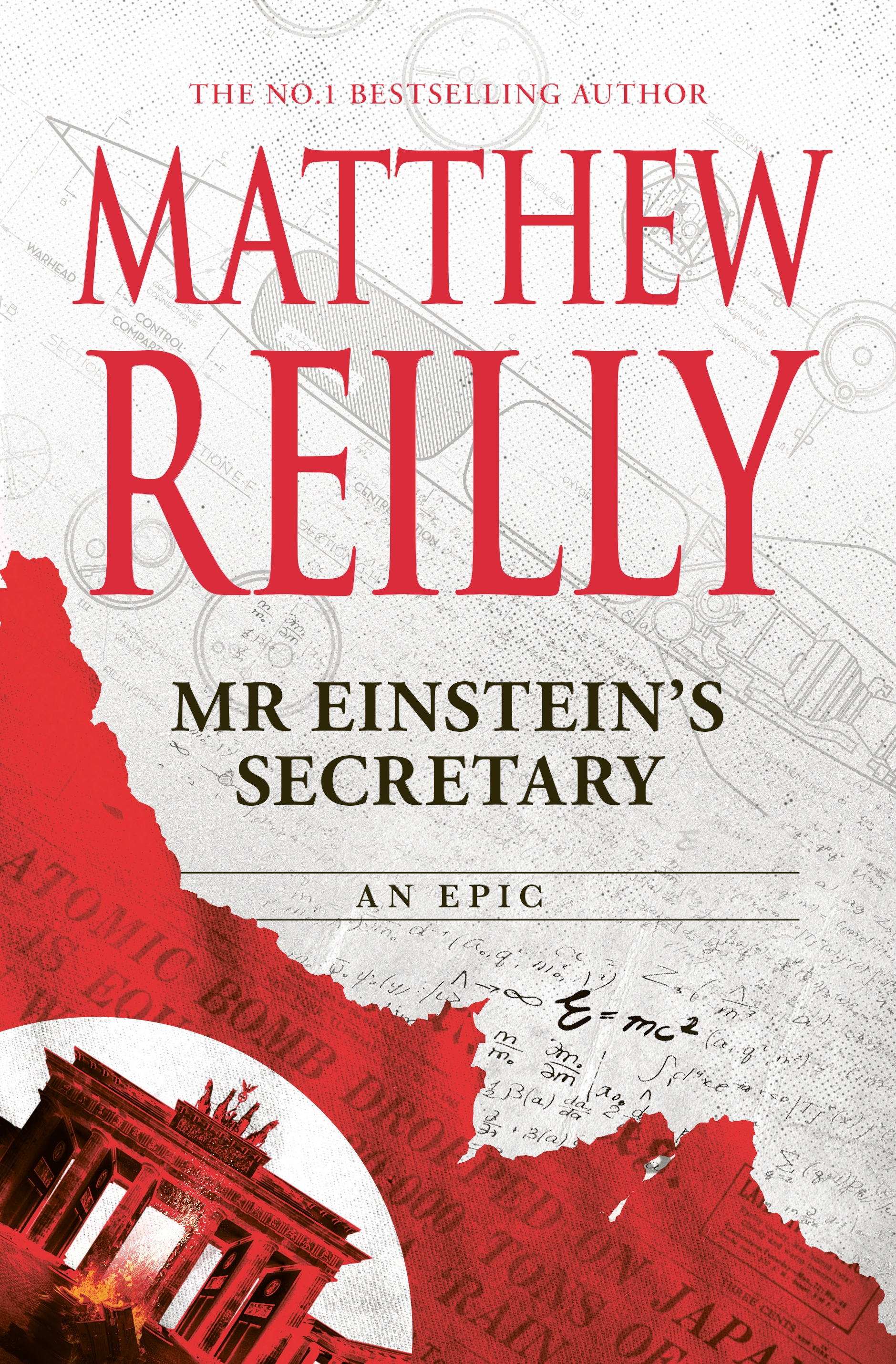
Mr Einstein’s Secretary by Matthew Reilly

Mr Einstein's Secretary Cover

Publisher: Macmillan Australia (Trade Paperback – 17 October 2023)

Series: Standalone

Length: 464 pages

My Rating: 5 out of 5 Stars

Amazon

Acclaimed Australian author Matthew Reilly presents one of the most entertaining, moving and brilliant historical fiction reads of 2023 with his compelling and well-written novel, Mr Einstein’s Secretary.

Matthew Reilly is a highly creative Australian author who has been wowing audiences for years with his elaborate and inventive thrillers and science fiction novels.  Known for his Shane Schofield and Jack West Jr series, as well as several impressive standalone reads, Reilly has produced an intriguing array of fiction throughout his career, much of which revolves around ancient secrets and action-seeking protagonists.  I have personally only had the pleasure of reading one of Reilly’s novels so far, the intriguing 2019 release, The Secret Runners of New York, which saw a group of teenagers travel back and forth between the modern city and a future dystopia.  I really enjoyed this cool book and I have been meaning to read more of Reilly’s works.  As such, when I got a copy of Reilly’s first foray into historical fiction, a favourite genre of mine, with Mr Einstein’s Secretary, I had to check it out, and boy was I glad that I did.

Born at the start of the 20th century in Berlin to an American mother and a German father, Hanna Fischer is a curious young woman whose greatest wish in life is to study physics like her mother and her neighbour the great Albert Einstein.  However, when her peaceful existence is violently turned upside down in 1919, Hanna has no choice but to flee to America and make a new life for herself in New York.

Forced to give up her dreams of studying physics, Hanna makes the fateful choice to enrol in a prestigious school for secretaries.  Her decision will place her in the orbit of some of the most interesting people in the city, including business tycoons, socialites, gangsters and one determined Treasury agent, as she works to find a way to return home.  But as the years go by, it soon becomes apparent that the Germany she left behind is no longer her home, especially when Hanna returns to Einstein’s orbit as his secretary.

Trapped in Germany when the Nazis come to power, Hanna is recruited as an American spy and soon finds herself serving as secretary to several high-ranking Nazis.  Caught between dangerous men, lethal intelligence operatives and her own conflicted loyalties, Hanna attempts to uncover the terrible truths of the Nazi regime without her own secrets coming out.  But not everything in Hanna’s life is as it seems, and one dangerous part of her past will always come back to haunt her.

Mr Einstein’s Secretary was a fascinating and compelling read that had me hooked very early thanks to its unique style, focus on various gripping parts of early 20th century history, and fantastic characters.  Loaded with some fascinating detail, a ton of action and a wonderful life story, I honestly couldn’t put this book down at times and I managed to power through the entire second half of the book in a single afternoon.  Due to its clever writing and brilliant story, I just had to give Mr Einstein’s Secretary a full five-star rating, and this is honestly one of the best historical fiction novels of 2023.

Reilly tells a very unique story in Mr Einstein’s Secretary that primarily focuses on protagonist Hanna Fischer and her experiences living through some of the most turbulent parts of history.  Reilly really piqued my interest early on when the first-perspective narrative opens on the protagonist’s funeral, with the reader apparently seeing it through her ghost’s eyes.  While having the narrator’s funeral upfront can sometimes be problematic, I think it worked out well for this book, especially as Reilly introduces a few key characters for the reader to keep an eye out for, before jumping into three key scenes from the protagonist’s life.  These scenes are three separate interrogations that the protagonist experienced during her intriguing career, each one undertaken by a different regime, including the American police, the Nazis, and the Soviets.  All of these interrogations are key reference points in the main story, and you are immediately intrigued to see the chain of events that leads the protagonist to each of them, as well as how she managed to get out of the deadly situations each time.

After this excellent introduction, the story begins in earnest with a more traditional chronological approach.  Starting with her childhood in Berlin where she lived next to Albert Einstein, Hanna’s story quickly fills with tragedy and adversity, especially as the early clouds of fascism and the consequences of World War I cause her to lose everything and force her to flee to America, where she is enrolled in a secretary school.  This early part of the book is well set out, introduced several key characters, and really showcased some of the defining early moments for the protagonist that would serve her well in the future, as well as exploring the impacts that chance and simple choices can have on a person.  The next section of the novel set in New York is initially a bit slower, but it soon picks up, especially when the Prohibition Era kicks in.  Reilly has an excellent way of portraying someone’s personal story in the most interesting way, and I loved seeing Hanna’s life in America, especially when it combined early corporate America with gangster lifestyle and the burgeoning physics scene.  There is a compelling sojourn back to Germany for Hanna that results in nothing but heartbreak, especially when her twin is involved, and I really enjoyed the protagonist’s encounters with a New York gangster during this time, especially as it showcases just how practical and cold Hanna can be when necessary.  This part of the book ends when it reaches the events of the first interrogation, and the protagonist becomes a more permanent secretary to Einstein.

From there, the plot of Mr Einstein’s Secretary moves at a much quicker pace, especially when Hanna gets dragged into the events surrounding the rise of the Nazi regime.  Trapped in Germany after Hitler’s rise to power, Hanna is recruited to spy on the Nazis and becomes the secretary to key members of the party.  Thanks to this, Hanna has an excellent view of the full evils of the Nazis and becomes involved in several espionage missions against them and the Soviets.  This part of the book combines spy thriller moments with compelling and dark historical detail, and you really get caught up in Hanna’s life as an operative, especially when it goes side by side with some of the major moments of the Nazi regime.  I was absolutely powering through this part of the book it was so darn fascinating, especially as Hanna had to also deal with personal issues and her growing revulsion about what she was witnessing.  Reilly keeps the plot moving quickly in the final third of the book, and there are some truly intense scenes leading up to the fall of Berlin, especially when Hanna is forced to make some hard choices and faces the ultimate betrayal.  I loved some of the shocking moments and twists that emerged in this last section of the novel, especially as it places the protagonist in some major trouble, and the resulting scenes have you constantly on the edge of your seat.  Everything ends on a pretty comfortable and satisfying note, and I felt that Reilly resolved his story in an excellent if crowd-pleasing way.  An overall outstanding, gripping and electrifying story from start to finish.

While this impressive story is pretty strong and exciting in its own right, what really elevates Mr Einstein’s Secretary is the author’s clever and distinctive writing style.  I loved how Reilly set up the entire story as the memories of a shadowy figure watching their own funeral, especially as events unfolding before them reminds the protagonist of some of the most traumatic memories of her life.  The initial focus on the three defining interrogation sequences produces an extra strong start for the novel, and the fascinating foreshadowing that resulted really heightened the reader’s anticipation for the rest of the story.  While the story does transfer to a more traditional biographical novel after these scenes, Reilly breaks this up masterfully by having the narrator suddenly remember other similar events of her life, and then having this scene unfold.  For example, when the character visits a certain location as a child, Reilly will then insert a quick paragraph showing the same location at a different part of her life.  This switch between time periods proves to be a fascinating and powerful way of expressing the character’s linked memories, and it also adds in some interesting additional foreshadowing and some fascinating contrasts.  Reilly does a wonderful job of highlighting what part of the character’s life these memories are from by changing the font type around, and I loved how multilayered the novel got as a result.  An additional font choice towards the end of the book also highlights a shocking and dark change in narrative focus, as a similar figure starts to tell the story in their own twisted way.  These unique writing elements really helped to turn Mr Einstein’s Secretary into quite a distinctive read, and I deeply appreciated Reilly’s desire to experiment and tell a historical story his own way.

Aside from Reilly’s intriguing narration and style choices, I also think that Mr Einstein’s Secretary had an excellent balance of action, intensity, drama and romance to appeal to a wide audience of readers.  The author does a remarkable job of developing his protagonist while simultaneously exploring so many fascinating historical events and moments, especially in New York and Germany.  So many key historical events in the lead-up to and eventual outbreak of World War II are covered in excellent detail, and Reilly does an outstanding job of working his protagonist into these events and making her a witness and participant.  I loved Reilly’s depictions of 1920s New York, which served as a grand backdrop for much of the early narrative, and the author takes the time to showcases several key periods of the decade, from the early roaring twenties with the economic boom, the prohibition era, and the eventual Wall Street crash.  There are also some fascinating, if necessarily dark, depictions of the rise of the Nazi regime in Germany, which Reilly captures perfectly, especially through the eyes of his protagonist who has her own issues with the Nazis due to her family and her association with Einstein. There is even an intriguing discussion about historical physics, with the protagonist having a fantastic inside track, and watching her spy on the German attempts at nuclear technology is an intriguing part of the book, especially after seeing Oppenheimer earlier this year.  Reilly utilises all these historical events extremely well, and his use of them allows for some great support characters, especially as there is a combination of fun original characters and multiple real life historical figures.  I had such a brilliant time with the historical focus of Mr Einstein’s Secretary, and it proved to be a powerful, exciting and well-balanced read.

Matthew Reilly does it again with his first major foray in historical fiction.  Mr Einstein’s Secretary is a powerful and captivating tale of life, love and loss in the run up to World War II and I loved every second spent with Reilly’s compelling protagonist.  Featuring a brilliant and unique style from the author that deeply enhances an already fascinating narrative, Mr Einstein’s Secretary was a treat from start to finish, and I cannot recommend it enough.

Amazon

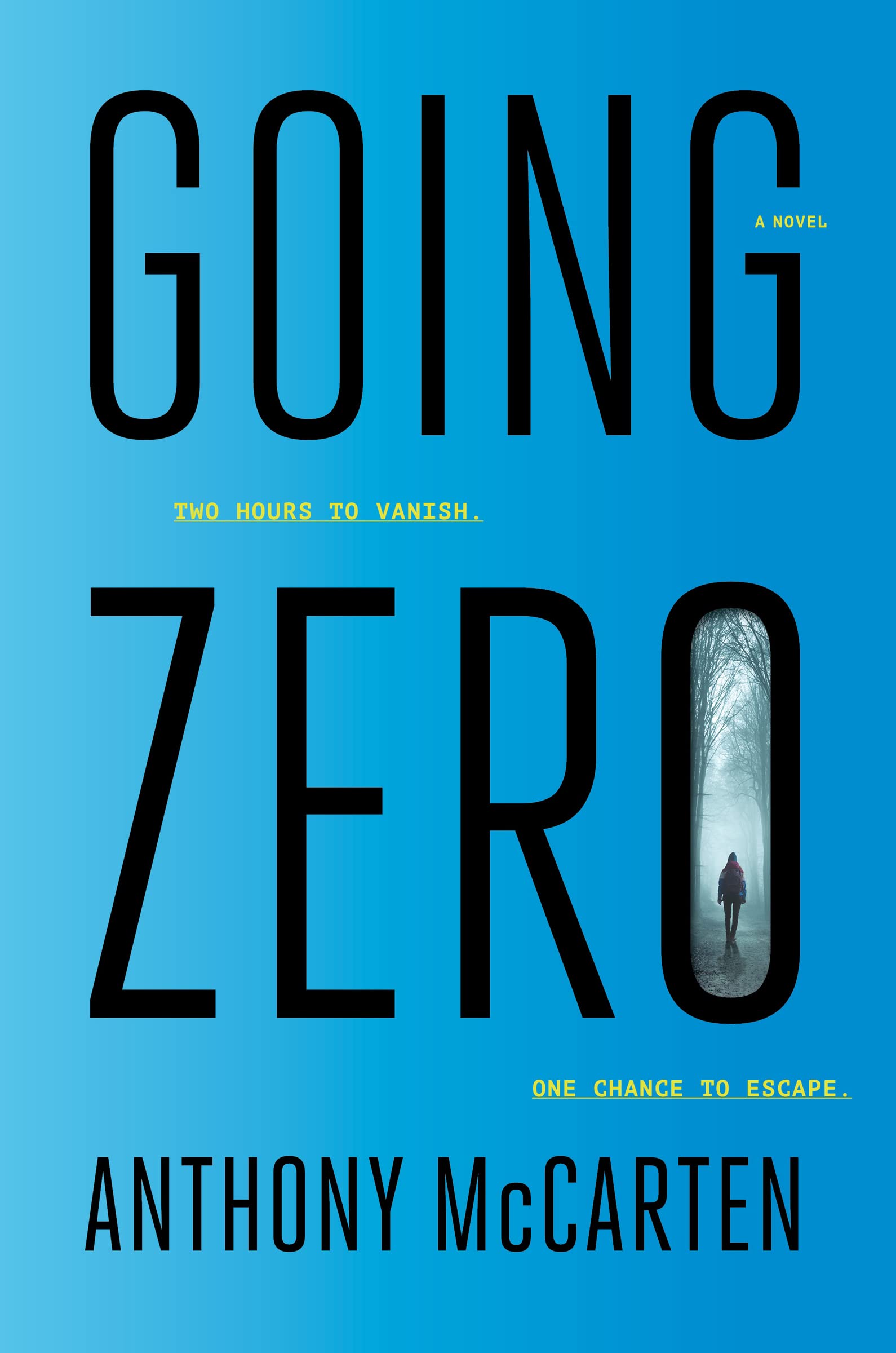
Going Zero by Anthony McCarten

Going Zero Cover 2

Publisher: Harper/Macmillan (Ebook – 11 April 2023)

Series: Standalone

Length: 298 pages

My Rating: 4.5 out of 5 stars

Amazon

Acclaimed screenwriter and author Anthony McCarten presents a compelling and intense techno-thriller that shows readers the terrifying future of surveillance technology in the intriguing read, Going Zero.

It is a time of great expansion in the world’s spy technology as every country works to increase their internal and external surveillance capability.  To keep up with their rivals, the CIA have been convinced to partner with billionaire Silicon Valley tycoon Cy Baxter to create the ultimate surveillance program.  Known as FUSION, the new system will allow the government, through Baxter’s company, to find anyone in the country, no matter how hard they hide.

But before FUSION can officially go online and Baxter’s company can be awarded its massive, multi-billion-dollar contract, Baxter needs to prove that the system can deliver everything he promises.  To that end, the ultimate test is proposed, pitting 10 random Americans against the new technology.  At an appointed hour, all 10 participants will need to “Go Zero”, going completely off the grid and leaving their lives, families, and homes behind to hide as best they can.  If they can elude the company’s technology and capture teams for 30 days, then they receive $3 million in prize money.

As the participants each choose their own unique ways of vanishing off the face of the Earth, one stands out amongst the security experts, tech geniuses and law enforcement professions that have been recruited.  Boston librarian Kaitlyn Day was chosen to be an easy target, an everyday woman who could test the most basic bounds of the program.  However, she swiftly shows that she is far more skilled and versed in counter surveillance tactics than anyone expects.  As the test continues, Kaitlyn manages to counteract every trick FUSION has up its sleeve, and soon Baxter grows desperate trying to find her.  But as the test nears its end, it becomes clear that there is far more to Kaitlyn than meets the eye, especially as she has a very personal reason for playing this elaborate game.

This was an awesome and impressive novel from McCarten, who presents the reader with a fun scenario guaranteed to grab their attention.  Going Zero is an awesome book that I really got drawn into thanks to its compelling narrative and fast-paced style.  I actually managed to read this entire book in a day, as I got quite hooked on the story and just kept going, trying to see how everything ended and I really was not disappointed with how it turned out.

Going Zero’s story itself is great, as it plays out like a giant, technological game of cat and mouse throughout the United States.  It reminded me a lot of the reality show, Hunted, on steroids, with the facilitators, the CIA and Cy Baxter’s team, having access to every single surveillance feed and scrap of digital information they need to catch the players.  The first half of the book is primarily focused on this hunt, with most of the attention on both Kaitlyn Day and Baxter’s team as they hunt for her.  The author makes great use of short, sharp chapters to move the story along at a very quick pace, which also limits the reader’s desire to stop reading, as the end of the next chapter is always in sight.  McCarten sets the entire scenario up extremely well, and you are soon dragged into the intriguing middle of this over-the-top fugitive situation.  It is incredibly fun seeing Kaitlyn’s initial exploits, as well as the overarching reach of Baxter, whose insane control room put me in mind of the game masters in The Hunger Games film.  These two intriguing primary perspectives are often interspersed with quick interludes that show the other nine participants slowly getting hunted down by Baxter’s capture teams.  Each of their methods of hiding is unique to them and seeing them getting effortlessly capture serves as a rather compelling counterpoint to Kaitlyn’s own endeavours to avoid detection.  I really got caught up in this hunt scenario, which dominates the first half of the novel, mainly because it was so damn fun, intriguing, and a little terrifying to see the FUSION system in action.  While I would have been happy enough to read a lot more of this, McCarten introduces a rather good twist about halfway through that throws everything on its head.

Now, while the inclusion of a twist wasn’t too surprising, especially as the plot had been hinting like crazy that something was suspicious about the protagonist, the full extent of it is pretty damn epic, especially as it makes you rethink everything that occurred in the first half of the book.  McCarten had done a really good job of inserting subtle hints and clues into the preceding story, and the way they were dragged together was really clever.  This major twist changes the entire story around and moves it from a mostly harmless story about advanced hide and seek to an intense and personal thriller with some major national security ramifications.  The second half of the book goes into overdrive, especially as, after the twist, you are particularly attached to the protagonist and her potential victory, while the antagonist becomes easier to root against.  There is conspiracy, espionage and deeply personal attacks against the various characters, as everyone is suddenly trying to survive the changes that the protagonist brought on.  I deeply enjoyed where the story went at this point, and the resulting exciting scenes, which also included some more twists, continue to drag you in and ensure that that stick along for the ride.  The author provides a great, if highly cynical, ending for this entire narrative, and you come away feel satisfied, especially as it leaves the reader wanting more.  An overall impressive and addictive story that I had such a great time getting through.

Perhaps one of the most distinctive features of Going Zero was McCarten’s frank and often terrifying look at the state of surveillance technology in the world today.  The hunt for the 10 participants requires FUSION team to employ a ton of intriguing methods to find their prey, with the hunters mapping out their targets’ habits, history, and personal connections to find where they will likely go and who they will try to interact with.  Some crazy technology and methods are featured throughout the book and McCarten combines some clear research with some more imaginative approaches to reveal how the hunters were able to find the contestants.  While some of the elements were obviously enhanced for narrative purposes, the story does feature quite a few more realistic methods that honestly had me thinking about how much information I have on the grid (they’d catch me in less than 10 minutes).  This intriguing focus on how humans have become used to sharing their information and leaving themselves upon to tracking and exploitation becomes a key part of the plot as certain characters start to misuse this information for their own good.  McCarten also introduces a great counterpoint to this through Kaitlyn’s perspective, as her insights into the surveillance world provide some interesting contrast, especially when she starts turning the tables on the hunters and their technology.  The loss of privacy and anonymity ended up being a pretty big theme for this novel, and I think readers will come out with their eyes opened about just how easy it may be for governments or companies to track where you are or what you are doing (or thinking) in the future.

I really liked the fun blend of characters that McCarten featured throughout Going Zero, especially as thanks to the focus on privacy loss and personal investigation, you soon learn a lot about them.  The fun, if brief, snapshots into the nine other participants in the beta test added some great colour to the story, especially as McCarten had to quickly and comprehensively showcase who they were and how they think in order to show how FUSION caught them.  Cy Baxter, the brains behind FUSION, was a great figure within the story as well, as he ticked all the boxes of an egotistical billionaire and tech genius.  While he was initially shown to be an ambitious and eccentric figure who was attempting to introduce the system for the right reasons, the moment he gets some opposition you begin to see the real Cy Baxter under the surface, and it is not pretty.  Thanks to his ego and his own belief in his intelligence, Baxter keeps going further and further down the dark path to achieve his goals, and by the end of the book he proves to quite an effective and highly unlikable antagonist (with some great similarities to a certain real-life tech billionaire twit).

However, most of the best character work is reserved for main protagonist Kaitlyn Day, who had quite a fascinating arc throughout the book.  I loved the way that McCarten initially built her up as a typical librarian and a potential amateur without any real chance of succeeding.  However, it soon becomes clear that there is far more to Kaitlyn, especially as some of her earliest moves prove to be so infuriating to Baxter and the FUSION team.  McCarten drops some excellent hints throughout her storyline about her past which provide some potential clues about what is about to happen with her character, especially when combined with the research the antagonists do on her.  I really cannot emphasise how well McCarten set up the twist around Kaitlyn, and the full details of her life and motivations only further increase how much you start rooting for her.  There is some noticeable but relatable character change that occurs after the twist is revealed, and it was interesting to see how serious she was and how she managed to manipulate the system.  These characters, and more, helped to turn Going Zero into quite the excellent read, and I loved some of the intriguing figures that emerged.

Going Zero was an exceptional and captivating read that had me hooked from the very start.  Anthony McCarten’s unique scenario led to an exciting and highly fun story that proved near impossible to put down.  I powered through Going Zero in no time at all and this was one of the more entertaining books of 2023 for me so far.  An excellent and highly enjoyable read that has potential as a film, Going Zero comes highly recommended and is definitely worth checking out.

Going Zero Cover

Amazon

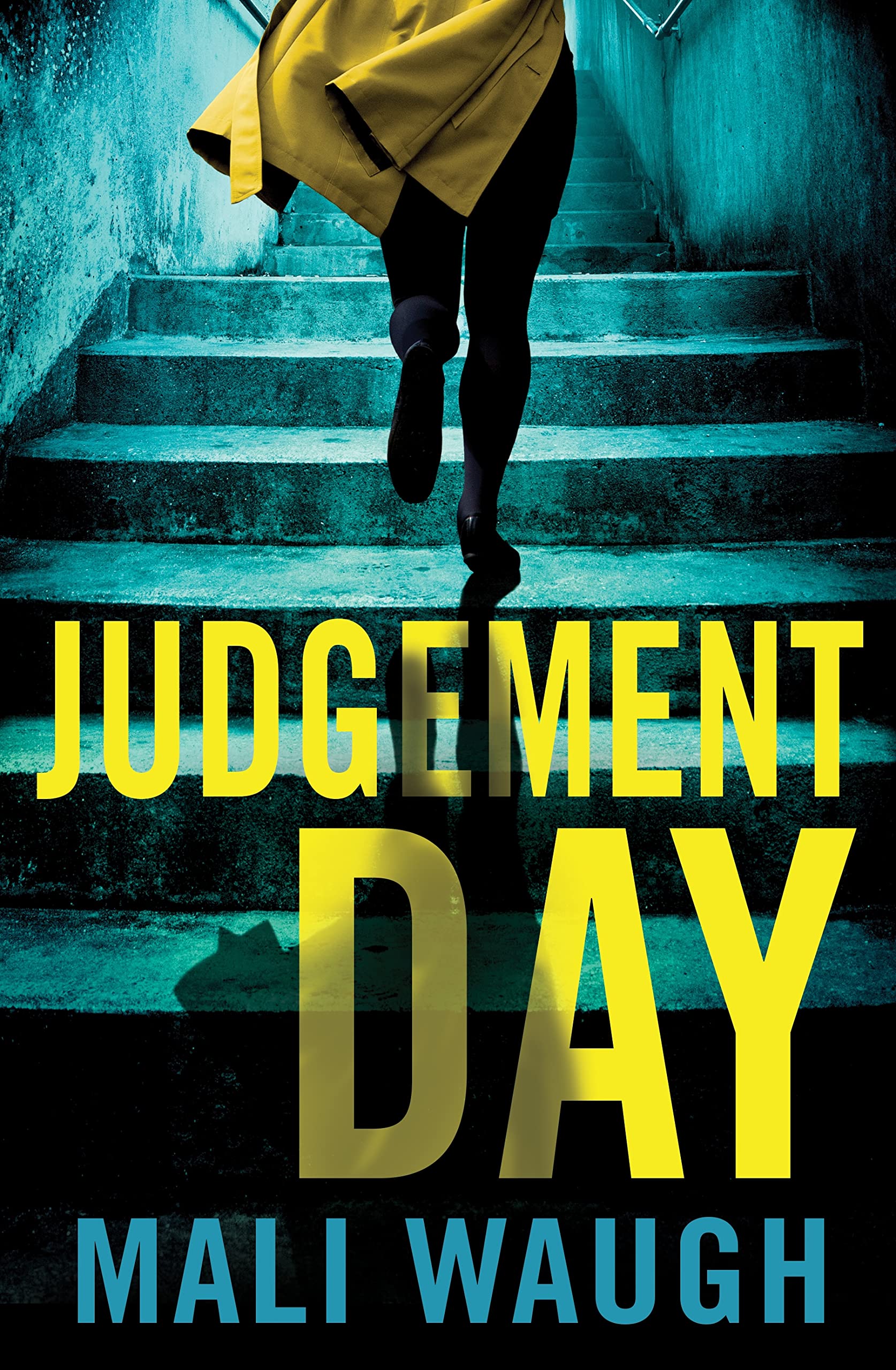
Judgement Day by Mali Waugh

Judgement Day Cover

Publisher: MacMillan (Trade Paperback – 28 February 2023)

Series: Standalone/Book One

Length: 327 pages

My Rating: 4.5 out of 5 stars

Amazon

Fantastic new author Mali Waugh presents her excellent and memorable debut with the Australian crime fiction read, Judgement Day.

Family law judge Kaye Bailey is a woman on the rise.  An honest and determined member of Melbourne’s Federal Circuit Court, Kaye is set to be the next chief judge, allowing her to make the changes she’s always dreamed about to make a real difference.  However, hours after finding out about her promotion, Kaye is brutally murdered in her chambers.

Detective Jillian Basset has just returned from maternity leave and is having trouble balancing motherhood with her complicated career.  Brought in with an arrogant partner to investigate the killing at the courthouse, Jillian hopes to crack the biggest case of her career.  However, the murder of Judge Bailey is far more complicated than anyone anticipated, as the victim was a fierce and honest woman whose determination caused her to get on the wrong side of many of her colleagues and the people she ruled on.

As the detectives dive deeper into the judge’s life, they soon find themselves surrounded by potential suspects, from jealous judges to dangerous individuals with grudges against the entire family law system.  As they attempt to understand who wanted to kill their victim, Jillian also finds her own life getting even messier, as her return to work raises problems she has been trying to avoid.  Can Jillian crack the case before her own life spirals out of control?

Judgement Day was an amazing and captivating Australian novel that got my attention early on.  Waugh pulls together a powerful and intense narrative that combines a brilliant murder mystery storyline with some fascinating legal thriller elements to produce a particularly impressive debut.

Waugh has come up with an excellent crime fiction narrative for her debut novel, and I liked the fantastic blend themes and story elements that she introduced throughout the book.  Judgement Day starts off with an extended prologue that quickly and effectively sets the scene for the plot, introduces the victim and other key suspects, and showcases the events that led up to her murder.  From there, the book primarily focuses on the main character of Detective Jillian Basset, a recent mother who is going through various personal issues as she tries to get back into her career.  Forced to work with a new, glory-seeking partner, Jillian finds the journey back into the detective groove hard, but she is soon diving into the complex case before her.  Waugh sets up an outstanding police procedural storyline here, as the character being their careful dive into the victim’s life, trying to identify who would have wanted to kill her.

The story moves along at a steady pace and the reader really gets drawn into learning about who the victim is and who might have wanted to kill her.  Waugh loads up the story with a ton of great suspects and potential motives at this point, as the protagonists find out about all the drama that occurs behind the scenes of the court system.  This takes the story in several intriguing directions, and you are soon hooked on the various leads that are presented to you.  At the same time, Waugh paints a very complex and heartbreaking tale about the main character’s personal life, which I found to be just as interesting and moving as the tragic murder of the main plotline.  The rest of the story moves very swiftly, especially as you are pretty invested in solving the case, and I personally managed to knock the second half of the book off in a single night.  Several intriguing plot points from earlier in the book, including an infamous divorce case, jealousy from other judges, a kidnapping, and some intriguing character history, are brought together in a very clever way as the solution to the murder presents itself.  Waugh set everything up extremely well, and I really liked the clever clues and hints that she had scattered through the rest of the book.  The final resolution of the case, as well as the reveal of the murderer’s motivation and methods, was handled well, and I really liked how Waugh brought everything together and left the reader with a very satisfying conclusion.

While the story itself is very strong, I also liked some of the clever and compelling elements that Waugh added in to make it even more complex and emotionally powerful.  The most prominent of these is the inclusion of some fascinating legal thriller elements that enhanced Judgment Day’s police procedural storyline and really helped to book stand out to me.  Waugh uses all her experiences as a lawyer to paint an intriguing picture of the family court system in Melbourne, and the struggles and work of its judges become a key part of the plot.  This leads to several other intriguing elements, such as domestic violence and the issues that professional women face in the workforce, especially when it comes to balancing family and the opinions of their male colleagues with a successful career.  These elements are blended into the narrative in a smart and thoughtful way, and I liked how it forced the protagonists to examine the case from several different angles.  While these intriguing elements are great, the focus on classic police work is still very strong, and I really enjoyed the impressive mystery that Waugh wove together in Judgement Day.  The author’s focus on the character development and personal issues added a great deal to the overall story, and this ended up being quite a powerful read.

The characters that Waugh chose to focus the story on are a particular strength of Judgement Day, and I deeply appreciated some of the emotionally rich personal storylines that developed around them.  In particular, Detective Jillian Basset was a brilliant lead, and you can tell that Waugh really poured her heart into her development.  Not only was she everything you want in a police detective protagonist, smart, determined and empathetic to the victim, but she is also dealing with some deeper issues related to her recent maternity leave.  While this initially shows itself to be her struggling to return to the office and fearing losing her place on the team, Waugh slowly reveals that her issues are much more concerning as she is suffering from postnatal depression.  Feeling unable to connect with her new child, Jillian instead focuses on her work and neglects her family, leading to strain and conflict in her personal life.  Waugh does an excellent job of examining her protagonist’s personal issues throughout Judgement Day, and the frank and powerful look at her mental health concerns was a key part of the book.

I also need to highlight Jillian’s new partner, Sergeant John McClintock, who was brought in as her temporary replacement while she was on leave.  Now working together, McClintock initially comes across as an arrogant and ambitious male figure trying to overshadow the main protagonist, and the two have trouble working together.  However, rather than stick with this cliche, Waugh provides a deeper look into McClintock and you realise that a lot of his attitudes are a façade brought on by his own issues.  Waugh works these into the story really well, and Jillian and McClintock soon grow to understand each other and are able to help each other in their own ways.  This partnership becomes a great part of the book, and I enjoyed these two main characters, as well as the intriguing supporting cast of suspects, witnesses and Jillian’s family, which add a great deal to story as a whole.

Overall, Judgement Day was an impressive Australian crime fiction debut from Mali Waugh and one that I am very glad I got the chance to check out.  The outstanding story with its complex mystery, intriguing elements and fantastic characters ensured that I had an excellent time reading Judgement Day.  I think that Waugh really showcased her writing ability with her first book and I think this is the start of an amazing new talent.

Amazon

Call of Empire by Peter Watt

Call of Empire Cover

Publisher: Macmillan (Trade Paperback – 25 October 2022)

Series: The Colonial series – Book Five

Length: 368 pages

My Rating: 4.5 out of 5 stars

Amazon     Book Depository

Australia’s master of the historical adventure returns with another deeply exciting and highly intriguing character driven read that follows one historical family as they embark on war and adventure across the world, Call of Empire by Peter Watt.

Towards the end of each year, I always know that I am about to have my historical action and adventure quota filled as the new Peter Watt is coming out.  Watt has been a particularly enjoyable and compelling Australian author for years, producing intriguing historical fiction books with a focus on Australian history.  His works have so far included the long-running Frontier series and his compelling Papua trilogy, both of which contained some remarkable historical adventures.  However, I personally have been really getting into his currently body of work, The Colonial series, which I have had a wonderful time reading in recent years.

The Colonial series started of back in 2018 with The Queen’s Colonial, an intriguing read that followed young Australian Ian Steele in 1845 as he switched places with an English nobleman to take up his commission in a British regiment.  Becoming Captain Samuel Forbes, Steele found himself drawn into several of England’s deadly 19th century wars, while also forced to confront several dangers back in England as the real Samuel Forbes’ family sought to have him killed.  This fantastic series continued for two more books, The Queen’s Tiger and The Queen’s Captain, both of which were excellent reads.  Watt continued the series last year with The Colonial’s Son, which jumped ahead a couple of decades to follow the main character’s oldest son as he followed in his father’s footsteps and become a soldier in the Queen’s army.  I had a great deal of fun with these exciting books, and I was very happy when I received the next entry in the series, Call of Empire.

Starting in 1885, several years after the conclusion of The Colonial’s Son, Call of Empire sees protagonist Ian Steele finally living the quiet life in New South Wales, enjoying time with his family and friends, and expanding his business empire.  However, the British Empire is constantly finding itself in conflict across the globe, and soon the young New South Wales colony is called upon to send troops to assist the British campaign in Sudan.

Determined to serve the Empire once again, Ian’s oldest son, Josiah, takes a commission in the New South Wales army and journeys to Africa to fight the Sudanese forces for the British.  However, his decision will alienate him from the love of his life, Marian Curry, who is determined that he stop fighting in imperialistic wars.  At the same time, Ian’s younger son, Samuel, is learning the family business out in the Pacific with the family’s friend, Ling Lee.  However, Samuel and Lee are soon dragged into a dangerous plot to smuggle guns for the Chinese, as Lee’s obsession with freeing China from European control leads them into mortal danger.

Soon the entire Steele family finds themselves in deep trouble across the world, and only the most daring of actions will help them survive.  But as the Empire’s wars continue and the Steele family and their friends are drawn into even more conflicts, can even their legendary luck continue?  Death and tragedy awaits them all, and soon the Steele family will face a loss they never expected.

This was another fantastic and deeply exciting novel from Watt, who continues to dazzle with his fast-paced writing and impressive historical insights.  I loved the awesome story contained in Call of Empire, and I ended up powering through this book in less than a day.

Watt produces another exciting and ultra-fast paced story for Call of Empire that takes the reader on a wild and captivating journey through some interesting parts of late 19th century history.  Starting in 1885, Call of Empire primarily follows the three male members of the Steele family as they attempt to overcome the various challenges they face in their respective endeavours.  Watt tells a multi-layered, multi-generational, character driven story that follows multiple characters simultaneously as they engage in their own story.  This means that readers are often treated to a range of different storylines in the same chapter, having one character engaged in war, while another deals with issues at home, and at the same time a third finds themselves caught up in adventures at sea.  This makes for quite a complex read, although the range of storylines are well balanced and never oversaturate or confuse the story.  Indeed, Watt is a pretty clear and concise writer, and the reader is able to have a lot of fun with several of the storylines at the same time.  Watt features an outstanding range of storylines throughout Call of Empire, and I loved the blend of war, politics, exploration, business, romance, character development and legal concerns that were featured at various points throughout the 15 year long plot.  This reminded me a lot of the author’s previous Frontier novels, especially the focus on one big family, and I had a wonderful time seeing the elaborate narrative he wove around his characters.  Watt really takes this story in some interesting directions, and there are a few big surprises, as well as some tragedies that established readers of this series will be hit hard by.  This proved to be quite an addictive read, and I loved seeing his characters continue to traverse through life in their chaotic and adventurous ways.  The book ends at the start of the new century, and it looks like Watt will be taking his characters in World War I next time, which I am sure will be suitably traumatic.

Easily my favourite thing about this book was Watt’s excellent dive into the always eventful colonial history of Australia.  In particular, Watt examines several lesser-known wars and conflicts from the 19th century, with a particular focus on the role of New South Wales.  This starts early in the plot with one of the characters getting involved in the Suakin Expedition in Sudan, which was part of the larger Mahdist War.  This deployment saw a battalion of New South Wales soldiers travel to Sudan as part of the war effort and was the very first military force to be raised and deployed overseas by Australia.  While there wasn’t a lot of fighting involved with this campaign, I was deeply intrigued by the history and the politics behind it, and Watt did a wonderful job of exploring it in great detail throughout the book by inserting his characters.  Watt continued this trend throughout the rest of the book, which saw several of his characters involved in both the Boer War and the Boxer Rebellion in China.  Both conflicts had Australian soldiers involved, fighting on the side of the British, and Watt took exquisite care to explore what role the Australians played in them, and how they came to be involved in the conflict.

Out of all of them, I particularly enjoyed the captivating examination of the Boer War in Africa, which was one of the more deadly wars Australians fought in during the 19th century.  This war, and one of the character’s roles in it, dominated a good part of the book, and Watt did an amazing job of bringing different parts of the conflict to life.  The author really captured just how dark and bloody this war was, from snipers in the African bush, to the horrors inflicted on the Boer settlers.  However, Watt saves some of his best writing for the Battle of Elands River, a protracted battle that saw the Boers surround a force of Australians and their allies in a brutal siege for 13 days.  Naturally, one of the characters is right in the middle of this fight, and Watt really showcased the carnage and terror that the Australians would have felt being surrounded and bombarded.  I honestly didn’t know a great deal about some of these early Australian military conflicts, and it was absolutely fascinating to see them come to life in the hands of this talented author.  Having this great historical background really enhanced the overall quality of the novel, and I had a wonderful time diving back into these sometimes overlooked parts of Australian military history.

As I mentioned above, Call of Empire was a very character focused book that featured a range of fantastic point of view protagonists through whose eyes the story unfolded.  Watt features a great combination of characters, with a compelling mixture of younger figures who were the focus of The Colonial’s Son, and even a few characters from the first three Colonial books.  There was quite a range of different character storylines in Call of Empire, and you swiftly get drawn into the various unique adventures of each of the characters.  It was fascinating to see how the older characters had evolved since their original adventures, and I liked how Watt started focusing more on the next generation, including by expanding the role of the younger Steele son, Sam, who had an amazing outing here.  There is a great examination of the events that help to form these figures character, and it was fantastic to see them overcome so much adversity at various parts of their life.  I will say that some of the male Steele characters did tend to blend personality wise as the book proceeded, mostly as they are cut from the same adventurous cloth, but you still grow to like all of them, and you ended up getting touched when bad things happen to them.  There are some very interesting and powerful developments that hit the main characters in this book, and this ended up being a very key novel in the family history.  I had a wonderful time seeing the latest exploits of the Steele family, and with the next generation being introduced towards the end of the book, you know that they have even more adventures to come.

Peter Watt continues to showcase his talent as Australia’s premiere author of the Australian historical adventure with his latest Colonial novel, Call of Empire.  Bringing back several of his fantastic protagonists from the previous books, Watt crafts together another exciting read that dives into some intriguing parts of Australia’s military history.  Fast paced and full of awesome action, Call of Empire is another amazing read from Watt, and one that I had a lot of fun getting through.

Amazon     Book Depository

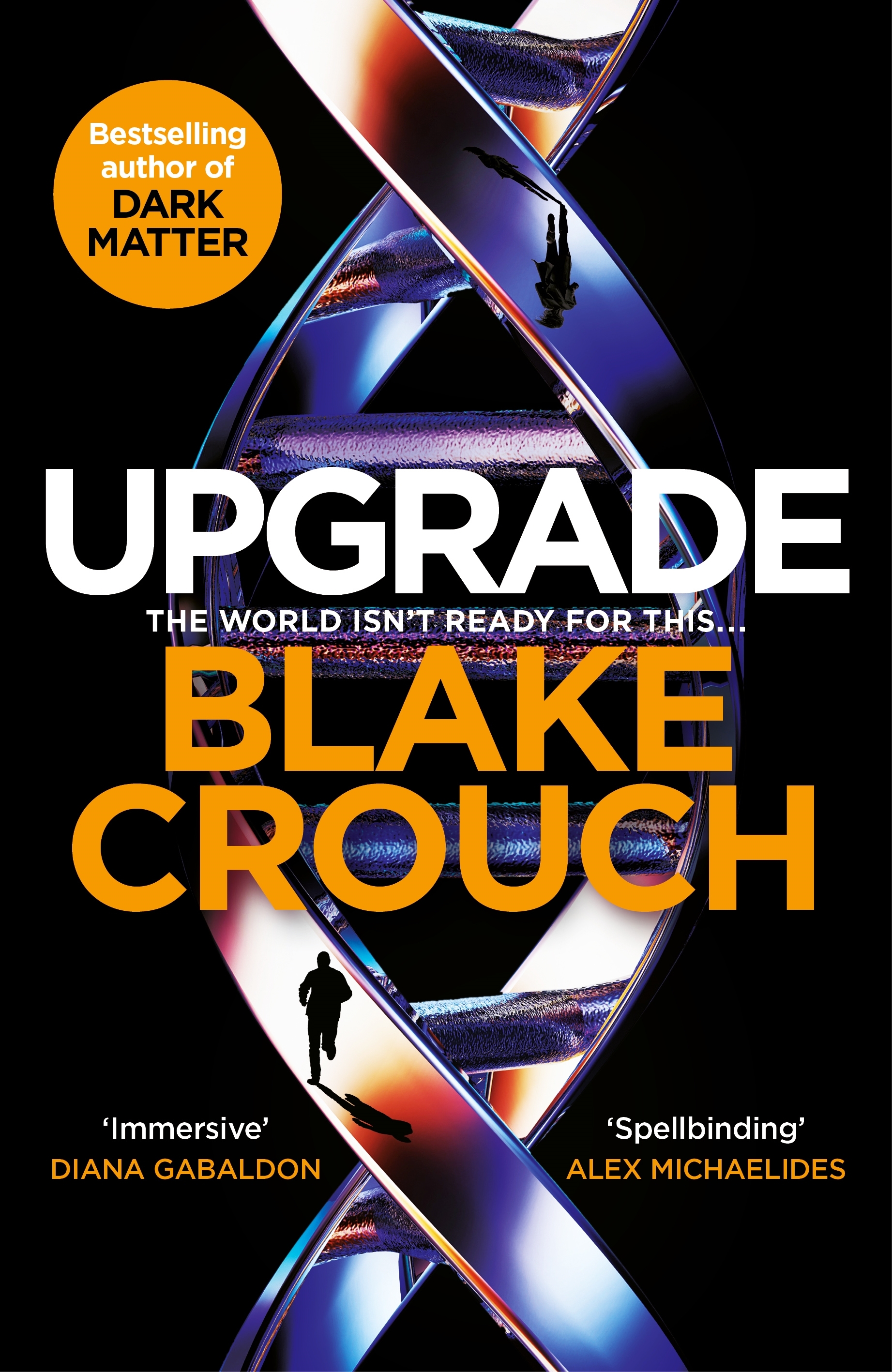
Upgrade by Blake Crouch

Upgrade Cover

Publisher: Macmillan (Trade Paperback – 7 July 2022)

Series: Standalone

Length: 341 pages

My Rating: 5 out of 5 stars

Amazon

The master of the high-concept science fiction thriller, Blake Crouch, returns with another exceptional and deeply addictive standalone read, Upgrade, which takes the reader on a deep journey into the world of genetic engineering.

In the near future, Earth is facing multiple threats and catastrophes that are slowly destroying the human race.  However, the greatest threat to humanity may come from within, as advances in genetic engineering and manipulation have allowed scientists to change DNA itself.  Following a massive genetic disaster that led to the destruction of an entire food supply and the deaths of hundreds of millions of people, all genetic research has been made illegal and is strictly policed by world governments.

Logan Ramsay is an agent in the newly created Gene Protection Agency that enforces the research ban in the United States and which comes down hard on anyone illegally modifying genes.  The son of the scientist responsible for the last crisis, Logan works to atone for his role in her work and no longer believes in the benefits of genetic research of that kind.  However, when a raid goes wrong and Logan is targeted by a bomb designed to inject an unknown gene hack into him, Logan’s entire life and grasp on humanity is changed forever.

With enhanced physical and mental capacities, Logan has been upgraded into something superhuman.  Forced to leave his family behind and flee from his own agency, Logan soon finds himself caught up in a war for control of humanity’s future, with dangerous forces seeking to change everything about the species.  To survive and prevent another genetic catastrophe, Logan must dive deep into his past and his family’s legacy.  But the more upgraded he becomes, the harder it is for him to care about everyone’s fate.

Wow, Crouch does it again with Upgrade, combining an intense and compelling thriller storyline with an outstanding and highly detailed scientific principle, to create an exceptional and extremely addictive story.  I knew that I was going to enjoy Upgrade when I got it, especially after having such a brilliant time with Crouch’s previous novel, Recursion, and the author really did not disappoint.  Upgrade is a gripping and powerful read, and I ended up powering through it in very quick order once I got addicted to its excellent plot.

I absolutely loved the exciting and clever science fiction thriller narrative that Crouch featured in Upgrade, which swiftly drags you in with its unique story and compelling concepts.  Crouch really kicks everything off in high gear right from the start, providing a quick but efficient introduction to the protagonist, Logan Ramsay, and the dystopian future of the novel, before kicking off the key plot events.  The protagonist is almost immediately placed into danger from a booby trap that alters his genetics, and he is forced to deal with the side effects as he is upgraded to superhero levels.  Forced to escape from his own employers, Logan must come to terms with the changes being done to him, while also diving into some deep family drama as he realises his connection to the person behind it.  After a journey of discovery, Logan ends up in a war to decide the future of humanity’s genetics, as he goes up against a group determined to alter humans against their will.  This led to some big and intense sequences as genetically enhanced beings face off in some powerful and cleverly crafted moments.  Everything is wrapped up in a compelling and emotionally heavy way, and readers will come away very happy after getting caught up in Upgrade’s elaborate and highly entertaining story.

I felt that Crouch did a brilliant job setting out Upgrade’s narrative, and it is perfectly designed to keep the reader absorbed in the plot.  I loved the faster pace of the book, which ensured that you power through the novel very quickly, although it isn’t so fast that you lose sight of its many featured scientific elements.  There are several time skips throughout the course of the plot, which help to move the story along and set up some interesting changes in the character’s situation.  The story is set in a near-futuristic dystopian setting which has been rocked by a series of environmental and genetic disasters.  Seeing some of the author’s suggested futures for certain famous cities (a semi-abandoned Las Vegas and a partially flooded New York), was very interesting, and it worked well with some of the other cool science fiction elements featured throughout.  I also appreciated Crouch’s interesting philosophical take on what it means to be human and the depths of human nature.  There are multiple discussions between the key characters in Upgrade, as they debate the changes being undertaken, as well as humanity’s overwhelming self-destructive tendencies.  This becomes a rather interesting overall theme for the book, and a captivating motivation for some of the characters.  I also must highlight the awesome action sequences spread out through the book, which add some exciting punch to the narrative.  Not only are these very entertaining, but I loved how they were showcased through the protagonist’s eyes, especially once his upgrades take over, and the clinical detail he attributes to various actions give them a fun twist.  This fantastic narrative really comes together well throughout Upgrade, and I felt that this was an exceptional read.

I deeply enjoyed the compelling and intense scientific framework that went into Upgrade.  Crouch does an impressive and expansive dive into the world of genetics for this book, and the reader is soon inundated with information about DNA, genes, and genetic research.  It is very clear that the author has really done their research when it comes to this subject, and this combined with his immense imagination results in some intriguing story elements.  Crouch postulates multiple potential genetic upgrades to humans and other species throughout this book and how such manipulations could be brought about.  As such, you see a lot of very cool stuff throughout Upgrade, particularly enhanced human beings who move and think at superhuman rates.  The author paints a very interesting and compelling picture about what such enhanced humans would be capable of, and it was fascinating to experience them throughout the course of the plot especially as you see them happening through the eyes of someone going through these changes.  There are various evolutions of these genetic upgrades throughout the novel and watching the characters become more and more powerful while simultaneously losing their humanity is a fantastic and captivating element.  Crouch also presents some compelling and thought-provoking discussions about whether genetic engineering should be allowed and would humanity benefit from it.  The different points of view and the resultant debates are an outstanding part of book, and I am sure that many people will come away from Upgrade with a different opinion on the subject.

While Crouch does dive deep into the science for Upgrade, I found that I was able to follow along with the various premises without too many issues.  The author really tries to explain the genetic science to the reader in an interesting way, which I really appreciated.  There were no points in the book where I couldn’t follow what was happening, and I ended up getting really interested in all the potential genetic manipulations that might be possible in the future.  I also felt that these scientific elements were worked into the plot of Upgrade extremely well, and the awesome thriller narrative really wrapped around it.  Overuse of genetic manipulation is a real potential threat in the future, so having government agencies, underground labs and world-affecting schemes in place isn’t too far-fetched, and these science elements serve as a rich ground for the cool storylines.  I loved seeing upgraded humans facing off against agents and SWAT teams, and it resulted in some brilliant scenes.  The underlying message about the responsibility of those involved in genetic research played well with the action-packed narrative, and I was once again really impressed with how the author can seamlessly combine science with fiction.

Another outstanding element of Upgrade was its fantastic protagonist and point-of-view character, Logan Ramsay.  Logan is quite a fascinating and complex character, especially as Crouch establishes him as the son of the brilliant genetic scientist who caused the ban and was partially responsible for the resulting mass deaths.  For most of the novel he is trying to redeem himself for these actions, mainly through his work as a government agent.  However, his entire life changes when he becomes genetically enhanced, and there are some deep emotional scenes and narrative threads that are explored because of this.  While he is initially horrified by the changes, Logan soon realises they are exactly what he always wanted, and he must reconcile that with his perceptions of humanity and the damage he has already caused.  At the same time, he is also finding himself changing, and the continued and detailed examinations of all his upgrades and altered perceptions are showcased in an excellent way by the author.  The increased physical and mental capacities are worked into his character well, and it was fascinating to see the first-person perspective of everything that happens to him.  I particularly appreciated the slow loss of his emotional self and as the book proceeds, he becomes less and less human in many ways, unable to connect with the people around him.  This is sad in a lot of ways, especially as he must give up his family, but you get an impressive understanding of everything the protagonist is going through and grow closer to him as a result.  There is some excellent character work around this protagonist in Upgrade, and I really appreciated the emotional depth that it brought to this already captivating story.

With Upgrade, Blake Crouch continues to shine as one of the most creative and brilliant authors of science fiction in the world today.  The compelling, science-based ideas he comes up with combine perfectly with his exciting and emotionally powerful storylines to create an excellent narrative with amazing characters.  I had such a great time with Upgrade, and it is one of the better science fiction novels I have read so far in 2022.  I also think it was also really good in comparison to the other Crouch book I have read, Recursion, which I hold in really high regard.  While I think that Recursion had the better overall narrative, I appreciated the scientific elements of Upgrade a little more and I felt it fit into the plot a little better.  As such, I think that Upgrade is another five-star read, and it comes very highly recommended by me.  A must-read for all science fiction fans in 2022!

Amazon

Quick Review – Dirt Town by Hayley Scrivenor

Dirt Town Cover

Publisher: Macmillian (Trade Paperback – 31 May 2022)

Series: Standalone

Length: 359 0ages

My Rating: 4.25 out of 5 stars

Amazon     Book Depository

Intriguing new author Hayley Scrivenor presents her powerful and excellent debut novel with the powerful and dramatic Australian mystery, Dirt Town.

Plot Synopsis:

My best friend wore her name, Esther, like a queen wearing her crown at a jaunty angle. We were twelve years old when she went missing.

On a sweltering Friday afternoon in Durton, best friends Ronnie and Esther leave school together. Esther never makes it home.

Ronnie’s going to find her, she has a plan. Lewis will help. Their friend can’t be gone, Ronnie won’t believe it.

Detective Sergeant Sarah Michaels can believe it, she has seen what people are capable of. She knows more than anyone how, in a moment of weakness, a person can be driven to do something they never thought possible.

Lewis can believe it too. But he can’t reveal what he saw that afternoon at the creek without exposing his own secret.

Five days later, Esther’s buried body is discovered.

What do we owe the girl who isn’t there?

Character-rich and propulsive, with a breathtakingly original use of voice and revolving points of view, Hayley Scrivenor delves under the surface, where no one can hide. With emotional depth and sensitivity, this stunning debut shows us how much each person matters in a community that is at once falling apart and coming together.

Esther will always be a Dirt Town child, as we are its children, still.


Dirt
Town was a fantastic and clever novel that contains a lot of interesting elements and moving parts to it that I had an amazing time reading.  Set in the small Australian country town of Durton in late 2001, the crux of Dirt Town’s plot revolves around the sudden disappearance of local schoolgirl Esther, who vanishes on her way home.  The subsequent search and police investigation into the disappearance soon involves several different inhabitants of Durton, including Esther’s friends, family and other connections, many of whom are dragged into the case over the course of the following days.  The investigation and the eventual reveal of what happened to Esther slowly but surely tears the town of Durton apart, as everyone’s secrets come spilling out.

The story focuses on several intriguing protagonists, including Esther’s best friend, Ronnie, who attempts to find her without really realising what is going on; their fellow schoolmate Lewis, who witnessed something relevant to the case but is unable to say anything out of fear of being outed; the various relatives to the children; the cops that come to investigate; and more.  This strong focus on these complex characters allows Scrivenor to weave together a compelling and exciting tapestry of personal stories that are altered for the worse when Esther goes missing.  All the characters react to the disappearance in different ways, and the reader gets a deep and captivating look into their lives, which often reveal long-buried secrets, fears and insecurities that the investigation brings to the light.  At the same time, the hunt for the missing child reveals other crimes going on around Durton, and everyone is moved in some way by the events of the narrative.  The eventual reveal about what happened to Esther and who was involved is very intense, and I really loved the clever, heartbreaking twist that Scrivenor utilised here.  The author layers the story with some clues, but it is still shocking to see what unfolded, and the series of events that led up to it and followed from there.  Dirt Town ends with a satisfying, if very bittersweet, conclusion, and I really appreciate the impressive debut narrative the Scrivenor produced here.

This was a pretty moving and distinctive novel, as Scrivenor blends several genres together into a single riveting tale.  While mostly framed as a mystery novel, Dirt Town also has a strong drama aspect to it, especially when it comes to examining the lives and secrets of the various townsfolk.  This ensures that you get quite a lot of unique character interactions throughout Dirt Town, and it was very moving and powerful to see how everyone was impacted by the events of the plot, often in quite substantial and painful ways.  It is also a particularly good piece of rural Australian fiction, as Scrivenor, who grew up in a small country town herself, does an amazing job portraying the tight-knit community, isolated landscape, and the feeling of decline that many of these towns experience during times of hardship.  Scrivenor added in a distinctive, disassociated chorus narrator, which is essentially the joint voice of the town, which produces some poetic and insight examinations of the impacts that the case has on the town and its people, as well as providing compelling insights into how the town is generally faring.  These separate elements blend well into a captivating and moving story, and you can find yourself getting quite drawn into Dirt Town as a result.

Overall, I felt that Dirt Town by Hayley Scrivenor was an outstanding and very distinctive debut novel, and one that sets Scrivenor up as an interesting rising talent in Australian fiction.  A recommended read, especially for those who love complex stories in Australia’s unmatched rural setting, Dirt Town was an outstanding book that is well worth checking out.

Amazon     Book Depository

Kagen the Damned by Jonathan Maberry

Kagen the Damned Cover

Publisher: Macmillan Audio (Audiobook – 10 May 2022)

Series: Kagen the Damned – Book One

Length: 20 hours and 53 minutes

My Rating: 5 out of 5 stars

Amazon     Book Depository

One of my favourite unusual thriller writers, the legendary Jonathan Maberry, enters the world of fantasy in a big way with Kagen the Damned, a dark fantasy masterpiece with a brutal heart to it.

I have made no secret of the fact that I am a huge Jonathan Maberry fan.  I got into Maberry’s writings when I chanced upon a copy of his 10th Joe Ledger novel, Deep Silence, a few years ago, which introduced me to both Maberry’s unique writing and his iconic protagonist, the titular Joe Ledger, a badass action hero who saves the world from crazy and dark science creations.  I deeply enjoyed Deep Silence (it was one of my favourite books of 2018) and quickly moved onto his other Joe Ledger books, diving back to the start of the series with Patient Zero, and then working my way through the rest of the awesome entries, such as The Dragon Factory, Code Zero, Predator One and Dogs of War.  I also kept up with his latest releases, including the two entries in the follow-up Rogue Team International series, Rage (one of my favourite books and audiobooks of 2019) and Relentless (one of my favourite books and audiobooks of 2021), and his standalone novel Ink (one of my favourite books and audiobooks of 2020).  I have been very eager to see what awesome novel Maberry releases in 2022, and, luckily for me, that materialised in the form of Kagen the Damned.

Kagen the Damned is an interesting and unique read from Maberry, as it is his debut foray into the fantasy genre.  While many of his other books have had fantasy elements to them (albeit with a horror edge), this is his first pure fantasy fiction novel, as well as the start of his Kagen the Damned series.  Naturally I was rather curious about how Maberry would transition to a new genre, and while I was a tad disappointed that the Rogue Team International series isn’t getting a new entry any time soon, Kagen the Damned ended up pretty high on my most anticipated reads for 2022 list.  After a few weeks of other books getting in the way, I finally got the chance to listen to Kagen the Damned, and it turned out to be quite an impressive novel.

Kagen Vale was once one of the most trusted and revered fighters in the entire Silver Empire.  A scion of the legendary Vale family, who have served the Silver Empire for generations, Kagen was a beloved member of the royal court and so highly regarded that he was entrusted as the guardian of the Seedlings, the Empresses’ children.  That was until the fateful night when, out drinking and whoring, he was drugged and left for dead.  Awakening in a daze, Kagen found himself in the midst of hell as the capital of Silver Empire, Argentium, was besieged by a foe long thought dead, the dread nation of Hakkia, whose dark magic has once again emerged to blot out the world.

Arriving to the palace too late to save anyone, including the Seedlings, Kagen falls into despair at failing his sacred duty and can only watch in horror as the Gods of the Garden, the deities of the Silver Empire, turn their back on him and damning him for all time.  Now with everything and everyone he has ever known lost forever, Kagen the Damned wanders the ruined countryside a broken drunk, dreaming of revenge on the one man responsible for all his ills, the mysterious and feared Witch-king of Hakkia.

However, not everything is as lost as it seems, as shadowy figures across the world being to formulate their plans to repel the Witch-king’s evil.  As two young women embark on a deadly quest to awaken a sleeping, ancient god from beneath the waves, a covenant of resistance attempts to find their own magic to oppose the Witch-king with.  Determining that Kagen may bear the best chance of recovering the tools needed to succeed, they manipulate events to set him on his path to revenge.  However, what price will a doomed man truly pay to get the revenge he so desperately seeks, and will Kagen be ready for the terrible secrets he uncovers along the way?  Only the gods and the damned know for sure!

Well, it is now more apparent than ever that there is no Jonathan Maberry book I will not enjoy to the extreme.  Kagen the Damned is an incredible and very memorable novel from Maberry, who puts the ‘dark’ in dark fantasy, with this barbaric and action-packed journey into hell.  Making use of his trademark style, flair for horror and exceptional character work, Maberry pulls together a deeply addictive and extremely exciting story that I fell in love with very, very quickly.  This was another easy five star read for me, and I loved every single second I spent reading it.

Maberry once again blew me away with an outstanding and high-action narrative, and I quickly got very attached to Kagen the Damned.  This book has an extremely memorable start to it, showing the bloody fall of Argentium from the perspective of Kagen, who awakens from a drunken haze to find a vast army in his supposedly impenetrable city, destroying and killing everything they see.  This was a very compelling and brutal start the novel, and its one that I quite enjoyed, especially as you see just how dangerous the enemies are and the chaos they have unleashed.  Maberry does a great job of setting up multiple key storylines, settings and characters in this early section, and while the focus is primarily on Kagen, you get some interesting insights into other figures that will impact the rest of the book.  The entire first part of the book is very distinctive and really showcases how dark this novel is going to get, especially when it comes to the character of Kagen and the fate of the royal children.  This whole first section ends on a brilliant note, with Kagen left broken and damned, while the once great Silver Empire, which you only saw glimpses of, is destroyed and replaced with a new world order.

Following this epic start, the narrative slows down a little, as Maberry works to set up some alternate storylines and characters, while as taking the time to do some compelling and extended word building.  Set in the direct aftermath of the opening sequence, the story primarily splits into three different streams at this point, with the main one following a despondent Kagen as he traverses the former Silver Empire, lost in grief and drink.  At the same time, two separate storylines tell some great connected narratives, with one following two young women as they journey off into the unknown, while the rest focuses on the Hakkian takeover back in Argentium.  This focus on the Hakkians and their plans, as told by the Witch-king’s advisors, as well as a resistance group, is very awesome, and it was fascinating to see some impressive political intrigue going on behind the scenes as the antagonists work to consolidate power through various methods.  While the rest of the narrative continues in a straight line, the story around Kagen slowly adapts as he meets some new friends and begins his mission of revenge as planned, with some detours.

This leads up to the excellent final part of the book, which I powered through extremely quickly to see how everything ended.  All three major storylines are reaching there climax here, and they start to blend a lot more closely, especially the ones focusing on Kagen and the Hakkians.  Everything leads up to a highly anticipated confrontation that sees Kagen finally face his enemies, and it is just as epic as I was hoping.  There is a ton of action, tragedy, twists and revelations here, as many of the plot elements and storylines come full circle.  I loved the various reveals that happen here, and most have been set up really well throughout the extended course of the narrative.  I really should have seen the identity of the Witch-king coming, but it was the right choice by Maberry, which leaves some big questions open for the future.  Everyone will come away from Kagen the Damned extremely satisfied, as Maberry leaves everyone on a brilliant note, that ensures that readers will definitely come back for more.  This is an outstanding and deeply addictive narrative that is guaranteed to grab your attention early one and refuse to let go.

I really enjoyed how well Kagen the Damned was written, as Maberry brought his unique style to bear to help create an outstanding story.  In many ways, this novel proved to be essentially one of Maberry’s thrillers set in a fantasy universe.  Indeed, there were a lot of similarities in the style, the structure of the chapter, the pacing and even the use of familiar horror elements that I have previously seen and loved in the Joe Ledger books and I think this cool style worked well to tell an intense fantasy narrative.  As such, Kagen the Damned is a swift and well-structured book that pushes the story along at a swift pace, while also taking the time to build up the universe and the multitude of characters.  Maberry utilises a great range of story elements throughout this novel, and the readers are treated with a fantastic blend of action, intrigue, dark, over-the-top moments, horror, despair and humour, as the characters experience all manner of devastating trials and oppositions.

I also have a lot of love for the way that the author sets up the story and showcases the elaborate events that are occurring.  Maberry makes excellent use of a huge number of shorter, focused chapters told from a variety of viewpoints.  These briefer chapters really increase the pace and intensity of the book, and I deeply appreciated how the narrative quickly jumped across the various characters.  The interplay between the three central storylines, which are primarily anchored around Kagen, is extremely good, and I loved seeing the characters react to some of the same events or actions of their fellow cast members.  These storylines are also joined by a series of interludes that show the various impacts that the Hakkian invasion has on the wider world, especially those attuned to magic.  These interludes are usually very fascinating, and they are often used to introduce some minor supporting characters in a fun and unique way.  I loved the complexity that these interludes usually have, and the often self-contained stories are well structured and always feature a distinctive or chilling conclusion.  Maberry uses these interludes cleverly, often inserting them between major or extremely powerful chapters to help relieve tension, or to remind the reader of the wider stakes or events occurring around the main story.  I definitely enjoyed this larger look at the world that Maberry provided through them, and it was an outstanding part of Kagen the Damned’s story.

One of the major highlights of the writing in Kagen the Damned is the intricately described and fast-paced action, which is a major hallmark of Maberry’s writing style.  Maberry has always excelled at writing brutal fight scenes in a way that paints a vivid mental picture for the reader, and this was once again the case for Kagen the Damned.  The many, many action and fight sequences are brought to life in exquisite and bloody detail, and the reader is easily able to imagine every strike and slice as they happen.  This makes the action sequences really pop, and they were a particularly awesome highlight of this great book.  This focus on action and combat was really effective in this fantasy novel, and it was very cool to see Maberry bring his knowledge of combat and the accompanying writing skill to bear on large scale battles between armed and armoured fighters, while magic and gods blow stuff away around them.  There are some really great fight scenes loaded throughout this book, and I loved every skirmish, battle and duel that was featured within it.

While I did really love the action and brutal combat sequences within Kagen the Damned, I probably should add a warning about how dark and gruesome it can get in places.  Maberry’s writing style has always relied on over-the-top violence, cruelty and brutality to a degree, and this was once again the case in Kagen the Damned, which not only featured a ton of killing but also gruesome scenes of torture, corpse desecration and depictions of sexual violence.  While I think that these ultra-violent moments do work to showcase just how dark and savage the new world order is, they are often a bit hard to witness.  I will note that Maberry did take the time to discuss the emotional and social impacts of the various acts of sexual violence in the book, rather than just including them for gratuitous effect.  There are also some great scenes where the protagonist calls out and belittles several characters willing to commit such acts, before delivering his own violent justice, and I think that the author did his best to show have damaging it can be in his own way.  However, readers should probably be aware that these scenes exist, as people might find them to be a bit shocking.

I was also a major fan of the cool new fantasy universe that Maberry cooked up with Kagen the Damned, mainly because it is such a distinctive creation of the author.  Set on a giant continent made up of various nations, this is an impressive and compelling world, filled with a unique history, gods, people and settings.  The author does a great job of swiftly introducing this world and some of the key parts of its history in the early parts of the book, mainly so that readers can be a little more shocked at the early events and full appreciate the destruction and change that the Hakkian nation brings with it.  Maberry is clearly emulating some classic fantasy novels and settings throughout Kagen the Damned, and I loved seeing this bold new world that he has created.  There are some unique and cool elements featured within, and I liked how there are certain shades of grey shown when it comes to the morality and righteousness of the various factions.  Maberry also takes the time to highlight the changes that are coming to the world, thanks to the return of the Hakkian Witch-king, and the slow and steady resurgence of magic and the death of a certain pantheon of gods, are highlighted really well, both in the main story and the interlude chapters.

Perhaps one of the most distinctive features of this new world is the horror elements that Maberry worked into the plot.  I really should not have been surprised at the strong Lovecraftian elements that featured, as the author has used them strongly in some of his previous books.  However, it is even more explicit here in Kagen the Damned, with several notable Elder Gods playing key roles in the plot and even appearing in some epic scenes.  While I am not personally a fan of Lovecraft, I did quite like how Maberry utilised these elements throughout this book, and they gave parts of the book a darker and more eldritch quality that I quite enjoyed.  This, and certain discussions about other worlds and alternate realities, potentially links this series to some of Maberry’s existing works, and it wouldn’t surprise me if there were some form of crossover in the future, although it would have to be handled well.  I had a great time exploring this new fantasy world in Kagen the Damned, and I look forward to seeing what other surprises and dark gods appear in future entries of this series.

I also must highlight the incredible character work featured with Kagen the Damned, as Maberry went all out to create an excellent and unique cast of characters, whom the excellent narrative revolves around.  There are some amazing characters featured within this novel, and the author works hard to feature all of them in some impressive roles.  I had a lot of fun with the huge cast of Kagen the Damned, and there are deep and emotional figures featured here.

The most prominent and intriguing character is the titular Kagen, who takes on the moniker of Kagen the Damned.  Maberry really does a number on his central protagonist early on, as Kagen awakens from a drunken haze to find that everything he cared about and held dear had been lost while he slept.  Despite his best efforts to redeem himself in the battle that follows, he still fails miserably, and manages to escape the conquered capital in a fractured haze.  Broken, dazed and emotionally destroyed, Kagen becomes even more despondent when he sees his gods in the sky turn their back on him due to his failure to maintain his sacred oaths, which convinces him that he is damned.  Naturally, these events leave him severely emotionally damaged, and he spends most of the book trying to come to terms with his failure while also trying to find some way to get revenge on the Witch-king for all he has done.  A large amount of the book is dedicated to Kagen falling into despair, and Maberry presents a realistic depiction of a man who has lost everything and who is barely able to survive, relying heavily on drink and violence to get through his days.  While Kagen is eventually able to throw off much of this despair, it is still lurking within him, and he is often shown living in regret at his failure, even though no one else blames him as much as he does.  Kagen working through these complex feelings of failure results in much of the novels emotional strength, and Kagen serves as a moving and powerful heart for the entire novel.

While I did deeply enjoy this intriguing central character and his rough and emotional journey through this book, it is hard not to notice some similarities between Kagen and another one of Maberry’s protagonists from another series.  Kagen is in many ways a fantasy version of Joe Ledger, with similarities including a propensity for violence, extreme skill with knives (technically short-swords in Kagen’s case), and even a similar sense of humour during some of the lighter moments of the books.  There is also the same high level of mental damage brought on by extreme trauma, with both characters often seeking revenge against the people who wronged them and those they loved.  Despite these similarities, I still really appreciated Kagen as a protagonist, and I felt that some of his additional elements, such as his complex familiar bonds and strong sense of failure, did set him apart in some key ways.  No matter what, Kagen is a pretty awesome character to follow, and I loved seeing him continue to go through all his dark moments to keep going.

Aside from Kagen, there are several other amazing characters featured in this novel, all of whom have some outstanding storylines around them.  Two of the most prominent are Ryssa and Miri, who were in Argentium when the Hakkians invade.  Both junior members of the Silver Empire’s clergy, the two women initially appear to be primarily concerned with surviving the invasion.  However, it soon becomes apparent that Miri, whose knowledge of the gods and creatures of this world are far greater than they should be, has a different agenda.  Taking Ryssa with her on a big journey to a remote island nation, Miri soon engages in a plot to save the world her way.  Ryssa and Miri make up a fun combination that Maberry weaves some interesting storylines around.  While these characters aren’t explored as deeply as Kagen, you still get a great sense of who they are, particularly Ryssa, who is the primary point-of-view character between them.  Their entire storyline is covered in mystery and uncertainty as Ryssa is left in the dark about what is coming her way.  I liked the religious world-building that went into this character storyline, and there are some excellent moments in it loaded with tragedy and despair.  Even with their storyline being mostly separated from the rest of the characters, and it was a little predictable that Maberry would turn them into a lesbian couple, they had a compelling relationship and I felt that they added a lot to the narrative.

I also had a great deal of fun with the primary Hakkian characters featured in Kagen the Damned.  While they are ostensibly the antagonists of the book, Maberry takes the time to really establish the main four characters and presents them as a lot more complex and even sympathetic in places.  The main Hakkian character is their leader, the Witch-king, a character shrouded in mystery for most of the book.  A previously unknown figure, the Witch-king uses his magic to defeat the entire Silver Empire in a night and then spends the rest of the book trying to set himself up as the legitimate ruler of the land while also advancing the position of his brutal god.  I loved the way that Maberry kept the details about the Witch-king’s past and identity hidden for most of the narrative, although there is some great foreshadowing of his identity scattered throughout the novel.  The Witch-king cuts a fantastic and menacing figure for most of the book, and it was intriguing to see him present himself as a fair and loving ruler, while simultaneously exuding an aura of menace and dark magic.  It was pretty hilarious to see him terrify his key advisors for much of the book, and I loved all the hints about his true objectives.  An overall excellent central antagonist, I look forward to getting more details about him and his history in the rest of the series, especially after the revelations at the end of this book.

The other three key Hakkian characters are the Witch-king’s advisors, the chamberlain Lord Nespar, necromancer Lady Kestral, and newcomer Jakob.  Nespar and Kestral are fantastic characters who spend most of the book administrating the Witch-king’s will, running his empire, hunting for Kagen, and setting up the upcoming coronation of the Witch-king to become emperor.  While they are initially shown to be quite dangerous and evil, mainly due to their role in destroying the Silver Empire and Kestral’s disturbing magic, you eventually see that there is a lot more to them.  In particular, you see that they are actually extremely terrified of the Witch-king and are desperately obeying his will in order to survive.  You actually end up feeling a bit sympathetic for the pair of them, even after you see Kestral tear a corpse apart for a ritual, and I enjoyed the intrigue and politics they got involved with to rule the new empire.  The other character is Jakob, a Silver Empire historian who is drafted into the Witch-king service as his minister for propaganda.  Rechristened as Jakob Ravensmere, he becomes fully compliant in the Hakkian takeover and proves to be a very competent advisor and political mind while also working to rewrite history to increase the legitimacy of the Witch-king.  It was extremely fascinating to see Jakob discussing the control given by those who control history and propaganda, and I really enjoyed his role in the new empire.  It was also fun to see his rather quick slide towards the dark side as he fully embraces the Hakkian lifestyle and even starts to develop a taste for a power.  I always love seeing Maberry’s narrative unfold from the antagonist’s point of view, and this worked out extremely well again in Kagen the Damned.

The final characters I need to highlight are some of the excellent supporting cast surrounding Kagen.  Kagen has two excellent companions who work with him throughout the book, Tuke and Filia.  Tuke is a giant professional thief who recruits Kagen for a job that will help an anti-Hakkian resistance movement.  Tuke serves as the comic relief for much of the book, and I loved the outstanding chemistry he had with Kagen.  The two play off each other extremely well, and their excellent camaraderie and humour were pretty fun to see.  Not only does Tuke have some of the best lines (and the funniest curses) in the book, but he also serves as an emotional sounding board to Kagen, helping him get better after all the tragedy he experienced.  Filia is a strong-willed warrior and former associate of Kagen who finds herself dragged into the chaos around the war and Kagen’s wild adventures.  Filia’s no-nonsense attitude and sarcasm are a great counterpart to the other characters in Kagen the Damned, and I especially liked it when it combined with the humour of Kagen and Tuke.  These characters, and more, really enhanced the overall quality of this impressive narrative, and I loved seeing their powerful storylines unfold in some excellent and enjoyable ways.

There was no way that I was going to check out the new Jonathan Maberry novel in any format other than audiobook.  I have had some outstanding experiences with Maberry’s audiobooks over the years, and all of them have been deeply impressive and extremely enjoyable.  This again proved to be the case with Kagen the Damned, as I had an outstanding time having this dark epic read out to me, especially as it really helped me to absorb all the details of the characters and the impressive new universe.  With a runtime of just under 21 hours, this is a pretty lengthy audiobook to get through, but it is well worth the time investment, especially as it delivers the story in such an awesome way.

Easily the best thing about this audiobook is the outstanding narration from the very, very awesome Ray Porter.  Porter, who is one of my favourite audiobook narrators, who has previously narrated Maberry’s books, as well as contributing his voice to other works like The Apollo Murders and The Sandman audio adaptation.  As such, the moment I heard that Porter was also going to narrate Kagen the Damned, I knew that I had to get this audiobook.  Porter has an amazing ability to move the story along, and his voice is perfect for all the intense action, world-building and intrigue Maberry features in his novels.  I love the way that Porter dives into the various characters featured in the books, with every single person getting their own distinctive voice, while Porter also effortlessly emotes all their emotion to the listener.  This includes a very sinister voice that Porter saves for when the villains are talking or some incredibly dark moments are happening, and having him use variations of this voice to highlight just how brutal a moment is being, is always a great experience.  It also works well when the characters start speaking in the languages associated with the Elder Gods, and the resultant ceremonies and spells are quite spooky to hear in Porter’s voice.

Porter also did a particularly good job at inhabiting the voice of Maberry’s central protagonist, Kagen, and you get a real sense of who he is and the intense pain he is feeling throughout the book.  While the voice Porter uses from Kagen is a little like that of Joe Ledger from Maberry’s other audiobooks (a side effect of Porter ensuring that the main protagonist’s voice matches the tone he uses for basic narration), Porter does add a little more of a growl to it here, which helped to a degree.  This was another incredible performance from Porter, and I am so very glad that they got him back to narrate Maberry’s new series.  I cannot emphasise how outstanding the Kagen the Damned audiobook turned out to be (although I did feature it in my recent best audiobooks from the first half of 2022 list before I’d even finished it), and this is the absolute best way to enjoy Kagen the Damned.

Well, after rabbiting on for nearly seven pages, I think it is exceedingly obvious that I loved Kagen the Damned.  Jonathan Maberry’s latest novel was extremely compelling and deeply exciting, and I was really impressive with the author’s jump to the fantasy genre.  Featuring a clever, complex, and action-packed narrative loaded with destruction, thrilling revenge and some great, damaged characters, Kagen the Damned was an outstanding read and its one that I absolutely flew through.  Kagen the Damned is easily one of the top books of 2022 and this is a favourite new series for me.  I am extremely excited to see where the Kagen the Damned series will go in the future, and the next book, Son of the Poison Rose, is out in a few months’ time, and I cannot wait to get my hands on it.

Amazon     Book Depository