Cytonic by Brandon Sanderson

Cytonic Cover

Publisher: Gollancz (Audiobook – 23 November 2021)

Series: Skyward – Book Three

Length: 14 hours and 28 minutes

My Rating: 5 out of 5 stars

Amazon

One of the best authors of fantasy and science fiction in the world today continues his incredible and brilliant Skyward young adult science fiction series, with the third epic instalment, Cytonic.

This was another incredible book from the amazingly talented Brandon Sanderson, who I would say is one of the top authors in the world today.  Debuting back in 2005, Sanderson has written many brilliant and complex fantasy and science fiction novels and was personally selected to finish off Robert Jordan’s iconic The Wheel of Time series.  Sanderson has since written a great collection of books, most of which have been part of his interconnected Cosmere universe.  This includes his groundbreaking The Stormlight Archive series, which started in 2010 with The Way of Kings, as well as his bestselling Mistborn series.  While the extremely prolific Sanderson is constantly adding to his Cosmere novels, he has also been working on several other series, such as his Skyward books.

The Skyward series are an excellent young adult science fiction series that follows the character of Spensa Nightshade, a misfit who rose to become a fighter pilot to defend her planet from alien invaders.  Made up of Skyward and Starsight, this great series has proven to be truly fantastic, and these first two novels were amongst the best books of 2018 and 2019 respectfully.  The first book detailed Spensa’s training as a pilot, which saw her save her planet and discover that her people were intentionally trapped on their planet in a penal colony.  The second book, Starsight, followed Spensa as she infiltrated the alien capital in disguise to discover what the aliens wanted, and what plans they had for her planet.  However, after being betrayed, Spensa learns that the Superiority government want to use the mysterious interdimensional beings known as the Delvers as weapons against the humans.  This third book in the series, Cytonic, follows on immediately after the events of Starsight and continues Spensa’s adventure, showing what happened to her after she dove into a Superiority interdimensional portal at the end of the second book.  Sanderson also released several novellas around the same time as Cytonic, including Sunreach, Redawn and Evershore, which add context to the universe and focus on some of the side characters from the previous novels.

Following her dive into the mysterious portal in the middle of Starsight to escape the Superiority, Defiant Defence Force pilot and amateur spy, Spensa Nightshade, finds herself in all manner of trouble when she arrives in the realm known as the Nowhere.  The Nowhere is a unnatural and chaotic dimension outside our universe that hosts the Delvers, destructive creatures that are being manipulated by the Superiority into destroying humanity, especially the psychically empowered beings known as Cytonics, such as herself.

Determined to find out more about both the Delvers and her own Cytonic abilities, Spensa remains in the Nowhere to find the clues that will uncover the history behind her own power and that of her enemies.  However, the Nowhere is a weird and mysterious place, made up of floating fragments of multiple planets and filled with all manner of creatures, alien pirates and Superiority forces.  Worse, the very nature of the Nowhere slowly changes the people within it, draining their memories and making them forget everything important to them.

Alone except for her unhinged ship AI, M-Bot, and a forgetful intergalactic explorer, Spensa begins her quest.  As Spensa hunts down fragments from the past, she soon finds herself under attack from the Delvers, who are desperate to destroy her and the threat she poses to their entire race.  With mysterious monsters, dangerous physics and hostile aliens closing in on her, Spensa is thrust into the great adventure she always wanted.  However, the closer she gets to the truth about herself and the delvers, the more she begins to realise just how high the cost of knowledge and power can be.

This was an exceptional and addictive read from Sanderson, who once again takes the reader on a complex and powerful ride.  Cytonic was an excellent continuation of the unique story started in Skyward and then expanded on in Starsight, and I love the powerful journey contained in this novel.  Featuring a brilliant combination of a clever narrative, a unique new setting and some amazingly entertaining characters, this was an exceptional read that gets a full five-star rating from me.

I deeply enjoyed this incredible narrative, especially as it continues the cool plot from the previous two novels.  One of the best things about this series is the amazing amount of variance in storylines, with the first book reading like a flight academy story (teenage Top Gun), while the second book was an espionage book set in the heart of alien territory.  This third book turned out to be a wild and epic adventure novel, which places the protagonist in a unique and dangerous new setting and requires her to complete a great quest to save her friends and escape.  This great change of tone really made for a compelling read, and I loved the inventive pivots featured in this book.

Cytonic starts right after the events of Starsight, quickly resolving the cliffhanger from the second book, while also placing Spensa immediately in danger yet again.  Once the new main character, Chet, is introduced, Cytonic’s story quickly sets the protagonist on her mission, travelling to one location after another to learn the past of the universe and her enemies.  There are some brilliant sequences set throughout this part of the book, as Spensa gets to grips with the strange new dimension she has found herself in, while also enjoying the cool adventure she is having.  Around halfway through the book, several key new characters are introduced, as Spensa is forced to join an alien pirate gang to advance any further into the Nowhere.  What follows are some brilliant character moments as Spensa starts to find her place in this dimension, while also worrying about her friends back home.  After some intense and exciting space fighter fights, Spensa and her companions eventually get towards the end run of the book, learning everything they came to while trying to escape the Delvers.  The final major sequence of the book is loaded up with an intense amount of action, drama and major twists, as everything you think you know is changed around, and some big events occur that will rock you right in the feels.  This was a brilliant and extremely fast-paced narrative, with the protagonists never sitting still for long as they encounter danger and adversity around every corner.  Despite the intense pace, Sanderson also works a lot of character development and emotional encounters throughout the book, and you get an extremely well-balanced story that is very easy to get addicted to.

I deeply enjoyed Sanderson’s excellent writing style which helped to make Cytonic particularly accessible and fun to read.  Told exclusively from the perspective of Spensa, the reader gets a detailed and upfront examination of all the events occurring in front of her in addition to her own hilarious observations and reactions.  I find that the Skyward novels have a very different tone from some of Sanderson’s other works, and I appreciate the cool and perfect combination of intense science fiction elements, with compelling character development, impressive action sequences and outrageous and exciting humour that was featured in Cytonic.  The various fighter combat sequences are particularly good, and while they aren’t as plentiful as some of the other Skyward novels, there are still some exciting and elaborately written scenes that pit Spensa against other pilots or entities in high-stakes combat.  I will say that Cytonic does, at times, seem like a bridging novel in the series, setting up events for the big finale and sidelining several supporting characters.  However, I still really liked this great read, and I had an amazing amount of fun with its clever adventure framing.

Before starting Cytonic I was a little worried about how easy it was going to be for me to follow, especially as it had been nearly two years since I read Starsight, and I might have forgotten a lot of detail.  I was also concerned because I did not have a chance to read any of the novellas that Sanderson released around Cytonic, which some readers claimed were vital to the plot.  I personally felt that I was able to read this book without a refresher as Sanderson ensured that certain key details were summarised within the text extremely well, and I was swiftly able to remember anything that might have slipped my mind.  I also found that my enjoyment didn’t suffer from having not read any of the novellas, mainly because it was such a Spensa focused story.  The novellas detailed events that occurred back on Detritus and the Superiority during Spensa’s absence, and they only have minor impacts on the plot.  As such, readers can manage without them, although I think I will read them soon to find out what else has been happening in the wider universe.  One of the other things that I really appreciated about Cytonic is that it is extremely appealing to a wide range of readers.  While it is marketed as a young adult novel to teenagers, I honestly think that readers of most age ranges can really enjoy this book.  Older readers will deeply appreciate the complex characters and intriguing science fiction elements, while younger fans will love the cool action and hilarious humour.  Combined, this makes for an awesome read that I would strongly recommend to anyone interested in a great science fiction read.

I really must rave about the fantastic setting and universe building contained within Cytonic.  Sanderson really went all out expanding the Skyward universe in this latest novel, and the reader gets a ton of information as key elements from the previous novels are finally explained in full, such as Cytonics and the Delvers.  While readers may occasionally feel overwhelmed by all the new inclusions and background information that Sanderson shoved into this novel, I personally found it really fascinating and I appreciated having several questions answered.  There are some great scientific and character elements built into who and what Cytonics, Delvers, and the Nowhere are, and I think they were woven into the exciting plot extremely well.  Established elements from the previous two novels are also reintroduced expertly throughout Cytonic, and it was great to get some updates on the history, disputes and characters that were such a cool feature of the first two novels.  I particularly loved the fun reimagining of key parts of human culture that have been warped by years of retellings and misunderstandings.  Spensa’s love of stories ensures that several of these are featured throughout Cytonic, and it was always amusing to hear distorted version of well-known movies and books, such as Spensa’s epic and hilarious retelling of The Lion King.

I also need to gush about the incredible new setting of the Nowhere, which serves as the primary location for the entire narrative.  The Nowhere is a weird and haunting dimension outside of real space that is filled with all manner of wonder and danger.  Revolving around a faux-star containing Delvers, the rest of the Nowhere contains a ton of floating fragments of land and soil, containing all manner of elements from the planets they originated from.  This makes for a brilliant and shifting landscape which was really fun to explore and even more cool to fly over.  However, the real brilliance of this setting lies in the impact it has on the characters’ minds.  People stuck in the Nowhere, which includes pirates, miners, outcasts and anyone the Superiority wants to get rid of, are slowly having their memories, personality and sense of time sucked away by the weird space, with only certain figments of reality slowing the process down.  This naturally has some substantial impacts on the plot and the characters, with Spensa constantly trying to hold on to what is important to her.  This exceptionally clever and inventive setting is a great backdrop to this amazing narrative, and it was extremely cool to see Spensa and her friends try to navigate and overcome the various elements of the Nowhere.  Sanderson is a true master of creating unique and captivating universes, and I cannot wait to see what happens in this one next.

There is no way that you cannot talk about one of Sanderson’s novels without highlighting the many exceptional and complex characters featured within.  Cytonic, and the Skyward series in general, is a perfect example of this, as the readers are treated to a range of unique and entertaining protagonists, each of whom add an incredible amount to the overall story.  Due to the events of the plot, there is a much more limited range of characters in this novel, although the three main characters more than make up for it with their bold personalities and captivating backstories.

The most prominent of theses is point-of-view character and main protagonist Spensa Nightshade.  Spensa is a great character who has gone through an amazing amount during the trilogy, transforming to loner weirdo child who was reviled as the daughter of a traitor, to a heroic pilot, then to a daring spy.  In this third book, she becomes a wilderness adventurer on a quest to save her people, which plays perfectly to her personality, which has been warped by her youth of listening to wild stories.  As such, Spensa has a great time in this book, and it is deeply entertaining to see her adventure around and become a space pirate.  While there are a lot of fun moments with Spensa, Sanderson also takes the time to once again dive into her personality, showing how much she has grown since the start of the first book, as well as the unique relationships she has formed.  Spensa is faced with some hard choices in this book as she attempts to return home, and there is an impressive examination of her damaged psyche, especially surrounding all the responsibilities that have been thrust upon her.  This makes for a complex and compelling portrayal in this novel, and while you may laugh at Spensa’s antics you know that there is a lot going on within her head.  There are some interesting developments around Spensa in this book, particularly when it comes to her Cytonic powers, and it will be fascinating to see how she further develops in the next novel.

I also deeply enjoyed the character of M-Bot, the silly and distracted artificial intelligence who Spensa discovered in a crashed ship in the first book.  After being disassembled by the Superiority in Starsight, M-Bot now flies around in a tiny cleaning drone and finds himself going through some big changes.  In particular, he has gained full sapiency in this book, and he immediately goes on an emotional bender, trying to understand the complex feelings he is now experiencing, while also dealing with his sense of betrayal after Spensa abandoned him in the previous book.  This dive into sentience adds some really entertaining layers to M-Bot in Cytonic, and he is even more amusing and charming than before, which I didn’t think was possible.  Readers will swiftly fall in love with M-Bot again, and it was so much fun following him around, especially as he continues to develop his unique friendship with Spensa.  M-Bot has some amazing moments and ridiculous dialogue in this book, and you will not be prepared for everything that occurs with him.

The other major character of this book is new protagonist Chet Starfinder, a human Cytonic explorer who lives in the Nowhere and decides to help Spensa achieve her goals and escape back to her universe.  Chet is an eccentric being who combines aspects of all the famous literary explorers into his personality, thanks to his love of stories and his inability to remember life outside of the Nowhere.  Readers will enjoy getting to know Chet, and it was fascinating to see the cool dynamic that grows between him and Spensa as they take on a fun partnership to traverse the Nowhere.  Sanderson opens some big questions surrounding who Chet is at the start of Cytonic, and it was a lot of fun finding out who exactly he was and what his motivations for helping Spensa are.  I deeply enjoyed Chet’s unique and compelling storyline and he proved to be a brilliant addition to the novel.

Aside from these main three characters, Cytonic also features an interesting supporting cast.  Most of these characters are new, with characters from the preceding novels barely featured here (they appear in the accompanying novellas).  These new characters are the trapped inhabitants of the Nowhere who find Spensa and become part of her journey.  These include the Broadsiders, an alien pirate band who Spensa joins and swiftly grows close to thanks to their inclusive nature and love of great pilots.  It was fascinating to see Spensa, who has had to fight for inclusion her entire life, gain some more friends, even though she knows she can’t stay with them.  There are some great figures amongst this bunch, and I loved some of the unique alien features they had.  Sanderson reintroduced one of the best characters from the Starsight in the book, who proves to be quite an entertaining and lovable inclusion, even if they are experiencing some memory issues.  Some of the main series antagonists have minor appearances in this book, plotting from afar and setting some evil plans in motion.  While it would have been interesting to see more about them, especially as they were only introduced in the prior novel, I think keeping them mostly apart from Spensa worked in the context of the unique plot that Sanderson was trying to develop.  I also deeply enjoyed the strange creatures known as the Delvers.  The Delvers are dangerous and powerful interdimensional beings who exist on a whole other form of reality and consciousness.  Sanderson does a fantastic job exploring what exactly these beings are, and you get a real sense of their dangerous emotions and outlook on life.  I really appreciated the author’s clever use of these seemingly less than humourous monsters as the antagonists of this book, and it proved to be a welcome addition to the plot.  Every character in this book is extremely awesome, and readers will have an exceptional time exploring their complex personalities as the plot unfolds.

While I did receive a physical copy of this book, I chose to enjoy the audiobook version of Cytonic instead to fit it into my reading schedule.  This proved to be an extremely wise decision as the audiobook was a fantastic way to check Cytonic out, something I had previously found when listening to Skyward.  There are actually two versions of the Cytonic audiobook available, but I chose to listen to the Sophie Aldred version, as she was the narrator who I listened to previously.  This version of Cytonic had a run time of just under 14 and a half hours, making it a relatively quick audiobook to get through, especially once I got incredibly hooked on the story.  I really enjoyed listening to Cytonic and I found that the audiobook version helped my appreciation of both the new setting of the Nowhere and the various cool space fighter sequences featured throughout.  Aldred is an outstanding narrator, and I had an exceptional time with the various voices she featured throughout Cytonic.  She hits the character of Spensa perfectly, fully capturing her daring and adventurous personality, and enhancing all her many quirks.  I also loved the cool voice she used for M-Bot, including the fun accent, which fully showed of his computer origin, as well as the many unusual behavioural quirks that have developed within him.  This great narration deeply enhanced this already cool novel and I had a wonderful time listening to this incredible audiobook.

With the third entry in the epic Skyward series, Cytonic, acclaimed author Brandon Sanderson continues to shine as one of the absolute best modern fantasy and science fiction writers out there.  Cytonic is another captivating and impressive young adult science fiction read that perfectly continues the outstanding narrative from the previously Skyward novels.  Featuring some incredible characters, an intense and moving narrative, and a bold and inventive new setting, Cytonic is an exceptionally awesome read that you will get addicted to.  I had a fantastic time with this novel and I cannot wait to see how Sanderson wraps up this series in the future.

Cytonic Cover 2

Amazon

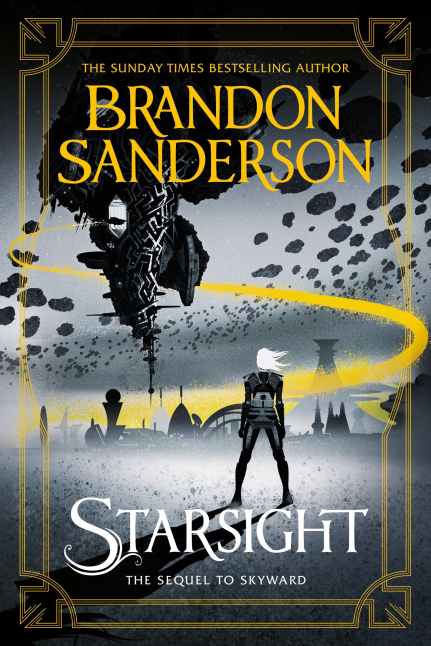
Starsight by Brandon Sanderson

Starsight Cover 2.jpg

Publisher: Gollancz (Trade Paperback – 26 November 2019)

Series: Skyward – Book 2

Length: 461 pages

My Rating: 5 out of 5 stars

Amazon

From one of the best authors of fantasy and science fiction in the world today, Brandon Sanderson, comes Starsight, an outstanding and addictive young adult science fiction read which continues the wildly entertaining adventures of a young starfighter years in the future.

Starsight is the second book in the Skyward series and follows on from the 2018 release of the same name. Skyward was a fantastic young adult science fiction book that told a compelling tale of bravery, determination and camaraderie in humanity’s distant future. Skyward was an amazing read, and it was easily one of my favourite books of 2018. As a result, I have been looking forward to Starsight for a while now, and it was one of my most anticipated releases for the second part of this year.

The Skyward series is set on the planet of Detritus, a desolate world that houses a population of humans in the caverns beneath the surface. The humans on Detritus are the remnants of a once great intergalactic human civilisation that has been destroyed in a war with a superior alien civilisation. Forced into hiding within the planet for hundreds of years, humanity eventually returned to the surface utilising scavenged starfighters to escape and build a military outpost to fight back against the alien ships who continue to harass the planet.

In Skyward, the reader is introduced to Spensa Nightshade, a young woman determined to become a pilot in the Defiant Defence Force (DDF), the military organisation that fights the alien invaders. While talented, Spensa faced opposition to being accepted into the military due to an apparent act of cowardice by her father years before. Despite the odds, Spensa was accepted in the DDF and was trained to become a skilled pilot, fighting in a number of actions against the enemy, while also trying to find out what actually happened to her father. Along the way, Spensa discovered an ancient but advanced human ship that had crash-landed on Detritus. Upon repairing the ship, Spensa discovered it had an AI installed in its computers, which she called M-Bot. After stopping an extremely destructive alien attack with the help of M-Bot, Spensa was compelled to fly through Detritus’s atmosphere, where she made several startling discoveries, the first of which was that Spensa and her family are powerful cytonics, beings with mental powers who are capable of traversing vast distances through space with their ability. The second discovery she made was that the aliens attacking Detritus were not simply mindless aggressors determined to wipe out humanity; instead they are members of an interstellar conglomeration called the Superiority, who are attempting to contain humanity within the planet. The Superiority hold a great fear of humans, who they see as an extremely dangerous and violent species, and Detritus is actually a prison planet/wildlife preserve where humans can live without disrupting the rest of the galaxy. Unfortunately, the actions of the DDF in reclaiming the surface and utilising spaceships have forced the Superiority to reconsider their approach, and they are now working to kill all the humans.

Usually this is the part of the review where I would give a brief plot synopsis of the new book and then go into an analysis of what I liked about it. However, this is going to prove a little hard to do without revealing some spoilers. While I don’t typically avoid talking about plot points that occur around 50-100 pages into book (I don’t particularly consider something happening that early to be a spoiler), I am a little more wary with Starsight. This is mainly because the plot of the book features some immediate substantial changes from the story that appeared in Skyward, none of which are really hinted at in any of the official online plot synopsis or book blurbs. As I am publishing this review a week before Starsight’s official release date, I think it is best that I put up a spoiler alert below, before I start going into the book in any real detail.

For those readers who do not want to risk any spoilers, I will say now that Starsight is an incredible book that I really, really enjoyed. Sanderson tells a wildly entertaining and highly addictive story that features some memorable characters, high-stakes events, some of the best science fiction action I have ever read and a ton of inventive world building. I honestly think that this is one of the best releases of 2019, and it easily gets a full five-star rating from me (if only I could go higher). I would highly recommend this book to anyone interested in an epic science fiction read, and if you loved Skyward, you are going to love this book.

Anyway, if you are not interested in learning any more details about this book’s plot or characters (which I do explore to a substantial degree), I would suggest you stop reading now, as everything below this paragraph has a spoiler alert in effect.

SPOILER ALERT:

Starsight is set a few months after the events of Skyward, and humanity has been busy. Thanks to Spensa and Skyward Flight, as well as the advanced technology contained with M-Bot, the DDF has managed to capture several of the planet’s ancient orbiting defensive platforms, which have allowed them to push the Superiority forces out of Detritus’s obit. However, despite these successes, humanity is still trapped on Detritus, and the eventual Superiority mass retaliation will likely wipe out everyone on the planet. Their only chance at survival is to flee from Detritus and find a new planet to make their home, somewhere the Superiority cannot find them. However, the only way to do this is with some form of hyperdrive, which humanity lacks access to, and Spensa’s cytonic teleportation abilities are too restrictive for mass use.

The crash-landing of an unknown alien spacecraft on Detritus may provide the solution that will ensure humanity’s survival. The pilot of this craft is a member of a non-Superiority species who has been invited for diplomatic reasons to enlist in a new Superiority fighter squadron, and she is able to pass on the cytonic coordinates to the squadron’s base to Spensa. Disguised with M-Bot’s holographic technology, Spensa travels to the Superiority space city, Starsight, in order to infiltrate the Superiority military and find and steal a working hyperdrive.

Joining the new Superiority squadron, Spensa discovers that she and her fellow recruits are being trained to fight the delvers, titanic inter-dimensional beings that dwell in the nowhere, who are capable of devastating planets if they are drawn into our dimension by an over-use of cytonic ability. But as Spensa attempts to complete her mission, she finds herself caught amidst the politics of the various Superiority races, many of whom wish for the complete and utter destruction of her people. Can Spensa navigate the strange new world she finds herself in, or will her actions result in the destruction of all she knows?

As you can see from the above synopsis, Starsight goes in some very interesting and unpredictable directions. I personally loved all of these new story elements, and the idea of Spensa having to infiltrate a mostly unknown alien society was a really clever and intriguing central plot idea that I think worked extremely well. The subsequent narrative is a fantastic blend of different story elements, which includes some great new characters, settings and plot directions, as well as some of the best parts of Skyward. For example, not only do you get to see a whole new take on the excellent space fighter training plot point that made the first book so amazing, but you also get a science fiction spy thriller story filled with all manner of political intrigue. This was a fantastic book to get into, and Sanderson has made sure that the plot is accessible to readers who did not get a chance to check out Skyward last year. However, I would strongly recommend reading Skyward first, not only because it will give you a better idea of the characters and certain plot elements, but because it is such an awesome book in its own right.

One of my favourite things about the first book in the Skyward series was the excellent group of characters that Sanderson focused on, including Spensa, M-Bot and the members of Skyward Flight. Throughout Skyward the reader got to know and care for these characters, and it was actually a little bit distressing when bad things happened to them. Skyward continues to look at several of the characters from the first book, although readers who grew attached to Skyward Flight might be a tad disappointed as Sanderson shifts the focus away from them and introduces the reader to a whole new group of alien characters.

Spensa is still the main point-of-view character for this second book and serves as a fantastic central protagonist. In many ways, Spensa is still the same impatient and reckless pilot that was such to see in the first book. However, it soon becomes obvious that the experiences, relationships and life lessons that she has faced since joining the DDF have tempered her in many ways, especially as she has to deal with the intense responsibility of being her people’s greatest hope for survival. I really enjoyed watching Spensa as she was forced to assimilate into the alien cultures on Starsight, and it was interesting to see how she reacted when she realised not everyone there is as evil as she believed. The opinions and support she gives to her alien friends result in some emotional moments, and it was really heart-warming to see how far she has progressed since the last book.

While Spensa is a great central protagonist, to my mind the best character in the entire book is still her sentient ship, M-Bot. M-Bot is the snarky and hilarious artificial intelligence that Spensa discovered crashed on Detritus, and together they form an efficient and enjoyable team. M-Bot honestly has all the best lines in the book, and nearly every interaction with Spensa results in some excellent jokes or banter. Despite the humour, M-Bot is a pretty complicated character, especially as in this book he is attempting to work out the full limits of his consciousness and code. He is continuously attempting to prove that he is actually alive, and these attempts result in safeguards in his system attempting to shut him down. I really enjoyed the way that Sanderson continues to utilise M-Bot. Even though he is a ship, he is still a fantastic and highly enjoyable character to focus on and we even get a reason for his mushroom obsession in this book.

Spensa’s new flight of Superiority comrades features an eclectic bunch of aliens, each with their own quirks and unique personalities. These include a figment called Vapour, who is essentially a sentient smell that can take control of ships and pilot them. Vapour is the ultimate spy and requires Spensa to be constantly on her toes. There is also the dione draft, Morriumur. Dione are a race of non-violent aliens high up in the Superiority hierarchy, who have a unique breeding system that combines the parents into one new being. This is a process that can take several goes, as the family of the newly bred dione may choose to reform a young dione so that they have an ideal personality. Morriumur is a draft, spending the first few months of their life testing out their personality to see if they are an ideal member of the species. Morriumur, who has slightly more violent tendencies than most of their species, is trying to prove that they belong as a starfighter, but the combined expectations of their family and the inner thoughts that they are not worthy, are a constant hindrance to them as a pilot.

While both of the above characters are pretty cool, and Sanderson spends a good amount of time exploring them, two members of Spensa’s new flight really stood out. The first of these is Brade, a human from another prison world who has been recruited as a cytonic enforcer by one of the book’s central antagonists. Brade, after being taken from her parents as a child, has essentially been brainwashed all her life to consider humans as evil and inferior, and this has a major damaging effect on her psyche. The interactions between her and Spensa throughout the book are quite fascinating, and she proved to be one of the most complex characters in this book. My favourite new character, however, had to be Hesho, who is totally not king of the kitsen. The kitsen are a race of tiny gerbil-like aliens who have recently converted from a monarchy to a democracy in an attempt to become a Superiority race. Hesho leads a group of around 50 kitsen who pilot one heavily armed fighter in Spensa’s squadron like it’s a capital ship. Hesho and the kitsen are really hilarious characters, mainly because Hesho is attempting to convince the Superiority that he is no longer ruling his people as a king, and instead the kitsen have embraced democracy. Unfortunately, despite Hesho insisting he is no longer a monarch in every interaction he has, his people continue to worship him, which kind of undercuts this message. I also found the similarities in the personalities between the kitsen and the Spensa we first encountered in Skyward to be very amusing, as the kitsen attempt to compensate for their size with extreme confidence and boasting like Spensa used to (for example, the first ship we see the kitsen flying is called Big Enough to Kill You).

All of the above characters are great, and I really loved the way that I was once again drawn into their various personalities and histories. It was a bit of a shame not to see too much of the characters I liked so much from the first book (although we do get an idea of what various members of Skyward Flight are up to), but I think the new characters that Sanderson introduced more than made up for it.

In addition to the fantastic character work, one of the other best features of Starsight is the epic and fast-paced action sequences that punctuate much of the book. Just like in Skyward, Sanderson presents a huge number of different scenes where Spensa is fighting or training in a fighter. The sheer amount of detail that goes into these various action sequences is pretty amazing, and I was able to picture all the flying and manoeuvres perfectly. The author comes up with a number of clever new scenarios in this book, including the fancy flying and combat required to fight a delver, or having Spensa fly in the type of craft she has been fighting against for her entire military career. All of the action in this book is first-rate, and I can guarantee that you will get lost in some of the incredible action sequences.

I have always been impressed by the elaborate worlds that Sanderson can create for his stories. Whether it is the vast fantasy world that he came up with for The Stormlight Archive, the supervillain dominated alternate version of Earth that appeared in The Reckoners trilogy, or the fantastic science fiction planet of Detritus that was the main setting for Skyward, Sanderson always delivers complex and intricate settings for his story, complete with huge amounts of backstory. In Starsight, Sanderson once again produces a huge and detailed new setting for his outstanding story. The alien civilisation that is living on Starsight is very impressive, and I love all the different alien races that he has come up with for this story. Many of the aliens have some very complex and fascinating history, a great deal of which featured in the story. I really look forward to seeing how Sanderson expands this universe even further in the final book in the trilogy, and I cannot wait to see what new aliens or civilisations he comes up with.

As you can see from this rather lengthy review, there is a lot to love about this book. Sanderson does an impressive job of combining the intriguing new story direction, the amazing characters, intense action and fascinating new setting into one concise narrative, and the end result is a perfect book. While Starsight is being marketed as a young adult book, and indeed it would prove appropriate for most young readers, it is really a novel that can be enjoyed by any reader of any age. I cannot recommend this book enough, and I am eagerly awaiting the next book in this series (which seems to be 2021 at this point, so far away!).

Amazon

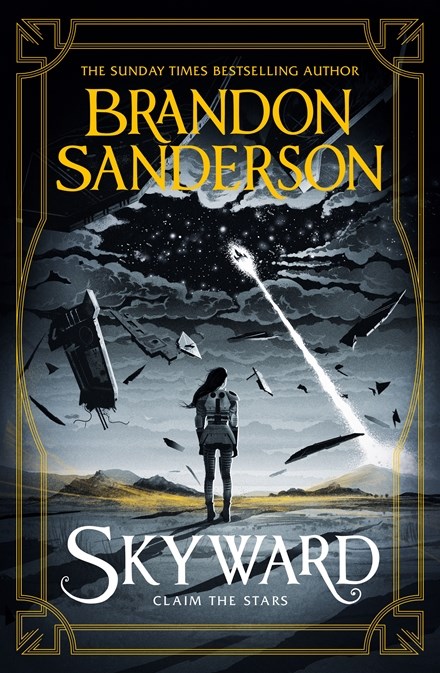
Skyward by Brandon Sanderson

Skyward Cover.jpg

Publishers: Gollancz

                        Audible Studios

Publication Date – 6 November 2018

Amazon

Legendary fantasy and science fiction author Brandon Sanderson once again delivers an incredible five-star read with Skyward, a brilliant young adult science fiction story that follows the journey of an energetic young protagonist at she attempts to claim the stars.

As of right now, I have only had the opportunity to read one of Sanderson’s novels, the epic fantasy book, The Way of Kings, which was easily one of the best fantasy reads of the last decade and which I gave a five-star review here.  After enjoying The Way of Kings I was keen to see how Sanderson’s writing ability translated to the young adult science fiction genre.  I have to say I was in no way disappointed, as Sanderson once again creates an amazing and exciting piece of literature, all set within an incredibly detailed new fictional landscape.  Skyward is the first book in Sanderson’s planned Skyward series, which is to be made up of a total of four books.  The second book in this series, Starsight, has apparently already been written, with a release planned for November 2019, while the third and fourth books, both yet untitled, already have tentative release dates in 2021 and 2022.  Starsight is already on my must-read list for next year, and will appear in my Waiting-on-Wednesday series of blog posts the moment the cover gets released.

Far in the future and on another planet, humanity has been under constant attack for hundreds of years.  A mysterious alien race known as the Krell pursued the human fleet across the stars, forcing it to crash on a desolate planet.  Those humans that survived were forced to flee below the planet’s surface, hiding in caves and only re-emerging when they gained the ability to create space fighters capable of fighting off the alien craft.  Now the Defiance Defence League (DFF) fights a constant war against the Krell, who are determined to wipe out the DFF’s main base and the production facilities beneath it.

Since she was a young girl, Spensa Nightshade has always dreamed of becoming a DDF pilot, the elite defenders of humanity, in order to claim the stars.  However, years ago, her father deserted during the most famous battle in DDF history and was shot down by his comrades.  Having been forced to live for years as a daughter of a coward, Spensa is eager to forge her own heroic destiny, but the DDF will never accept her into their flight program.

But with the war going badly and new pilots needed, Spensa is given a chance to join the DDF, thanks to the actions of her father’s old wingmate.  Joining a class of misfit cadets who dub themselves Skyward Flight, Spensa learns to fly the DDF’s ships against the Krell and quickly shows her determination and skill.  However, her father’s legacy is constantly weighing her down, whether by the sabotage of the DDF or the constant fear that deep down she might also be a coward.  With the Krell attacks getting worse, will Spensa find her place as a pilot, or will a terrible secret from the past come back to haunt her?  And through it all, what role will the ancient spaceship Spensa discovers have on the fate of humanity?

I not only received a physical copy of Skyward from Hachette Australia, but I also listened to a copy of this book in its audiobook format, which is narrated by Sophie Aldred and goes for just a little over 15 hours.  Both versions are pretty cool.  The trade paperback version of this novel contains a couple of great maps at the start of the novel that some readers may find useful when it comes to navigating around the story.  There is also a series of intriguing drawings throughout the book that show off several of the ships, both human and alien, that are featured in the story, all of which are juxtaposed against the main ships that the protagonist and her wingmates train and fight in.  The later parts of the book also contain some fantastic illustrations of flight manoeuvres and abilities, which prove informative when utilised with Skyward’s many aerial flight sequences.  I personally preferred the audiobook format of Skyward to the physical copy, as it allowed me to enjoy the many action-packed aerial scenes a whole lot more.  I also loved the narration by Aldred, who was able to create a number of excellent voices for the book’s various characters.

The reason I am giving Skyward such a high-star review is because it is an incredible piece of young adult science fiction that not only has an amazing story but which also contains several outstanding characters and some of the best ship-to-ship action sequences I have ever seen, all of which is combined with Sanderson’s trademark knack for large-scale world building.

I had a lot of fun with the story contained within this book, as Sanderson sets forth a layered and powerful narrative for the reader to enjoy.  Told primarily from the point of view of the protagonist, Spensa, Skyward contains a fantastic coming-of-age storyline set within a flight academy where the cadets learn how to fly in defence of their planet.  I always love a good school based learning narrative, and Sanderson has created an outstanding version of this, where the main characters spend most of the story learning the theory behind flying, while also engaging in real-life combat situations as they train.  As a result, there are heartbreaking losses, great emotional connections forged, and secrets and hints about the overall story slowly released to the reader, all while the protagonist is forced to contend with the machinations of a biased authoritarian figure who even gets to narrate a few chapters to highlight the reasons for her actions.  Overall this is an addictive and exciting story that will really stick in the reader’s imagination.

Sanderson has once again created a detailed and captivating new world in which to set his new series.  The book is set within a new planet that humans from Earth crashed upon years ago in the past, fleeing from a mysterious alien force.  For years the humans lived a nomadic lifestyle in the caves beneath the planet before finally fighting back using newly fabricated fighter craft.  Sanderson has created a fantastic world to host this story, exploring a society forced to live in caves and eventually creating a military base on the surface.  I love how the author has created a ton of new societal rules and features, as well as a world above and beneath the surface of this alien planet.  There is also some really cool and unique technology that comes into play throughout the book, especially in the many aerial combat sequences.  The aliens are mostly a mystery for the entirety of the novel, although I did really enjoy the reveals about them.  I imagine Skyward’s fictional universe will be expanding out in the future instalments of this series and I am very excited to see where this goes.

Some of the best things about this book are the excellent characters that the author has populated his story with.  Of particular note is the main protagonist and point-of-view character, Spensa, who is a really fun and complex character to see this story through.  Spensa is a great character whose life has always been defined by her father’s legacy.  As a result, she puts on an extremely brave and aggressive front to everyone she meets as she tries to convince people she is not a coward.  Because of this, Spensa is quite an eccentric character, spouting out long expositions about how she will harm her opponents, which is quite amusing at times.  However, as the reader gets further into the book, they find out how vulnerable she truly is, as deep down her father’s actions and legacy have had quite an impact on her.  As she progresses into flight training and becomes more and more like her father, she must content with the trials of war, emotional issues with her friends and loved ones, the DDF’s indoctrination against cowards and the secrets that have been kept from her.  The internal conflict and fear that follows is really well written by Sanderson and forms a captivating emotional centre for this amazing narrative.

Quite a lot of time is spent looking at the other cadets that make up Skyward Flight.  Each member of this flight has a unique personality and is given a callsign to make them more distinctive.  There is a fun camaraderie between these characters, and they form quite a close-knit team.  Sanderson spends significant time building up several of these characters, and Spensa, much like the reader, gets quite attached to them.  As a result, when tragedy hits the team, there are some significant emotional blows that come with it.  I liked how the different friendships and relationships help Spensa grow as a character, as she started out the book a bit of a loner.  These side characters are absolutely fantastic, and add another great emotional feature to Skyward’s story.

While Spensa and Skyward Flight are all great characters, my favourite character in all of Skyward had to be the sentient spaceship, M-Bot.  M-Bot is an advanced spaceship who, for various reasons, is obsessed with mushrooms, spends much of the book cracking bad jokes and forms a close relationship with Spensa, the human who discovers it.  M-Bot has to be one of the funniest and quirkiest characters in the whole book, providing several of the book’s best jokes and funniest lines.  The ship’s relationship with Spensa is really well written, as it attempts to balance its existing command code with its new friendship.  This results in some amazing scenes, and I never thought before this book that I would get emotional about a spaceship.  M-Bot is particularly great in the audiobook version, as Aldred gives the ship an excellent Irish accent that really fits the character’s personality perfectly and makes M-Bot stand out throughout the book.

Easily my favourite thing about Skyward has to be the insane and incredibly well-written aerial combat sequences that fill this book.  All of the battles take place within the planet’s atmosphere among falling debris fields, resulting in some elaborate and exciting dog-fights between the DDF fighters and the Krell.  Quite a number of battles feature throughout Skyward, as the protagonist and her companions attempt to stop the Krell destroying humanity’s only hope of leaving the planet.  The author spends significant time exploring the physiology of these aerial fights, including the various tactics, training and technology utilised by the DDF and the Krell.  In particular, Sanderson has created some unique technology to help create some truly amazing combat sequences, including light-lances, which are energy beams that the DDF fighters use to not only throw Krell fighters around but to also help their ships do precise and elaborate manoeuvre around the falling debris.  I also loved how Spensa and her flight got better as the book progressed, reflecting their training and their ability to work together as a team.  All of these battle scenes are fast paced and incredibly well written, and the reader constantly finds themselves placed into the middle of these epic battle sequences.  I found that the audiobook version of Skyward was particularly effective at bringing me into these combat scenes, and I was often on the edge of my seat as I listened to them.  There are a number of these amazing sequences throughout the book, whether they were real battles or simulations.  Highlights for me have to be a high-speed chase through a giant, ancient factory crashing down to the ground, or the final high-stakes battle that serves as an epic conclusion to the whole story.  These battles are truly an amazing feature of Skyward, and I cannot wait to see what incredible aerial battles feature in the future books of this series.

Skyward is one of my favourite books of 2018 and is definitely one of the best young adult books I have read this year.  Brandon Sanderson once again cements his legacy as one of modern fiction’s best fantasy and science fiction authors, as readers are treated to an epic science fiction read set in a rich and detailed new world.  Featuring some amazing characters and outstanding depictions of aerial combat between humans and aliens, this book comes highly recommended.  I have made no secret about how much I am looking forward to future entries in this series and cannot wait to see where Sanderson takes this story next.

My Rating:

Five Stars

Amazon