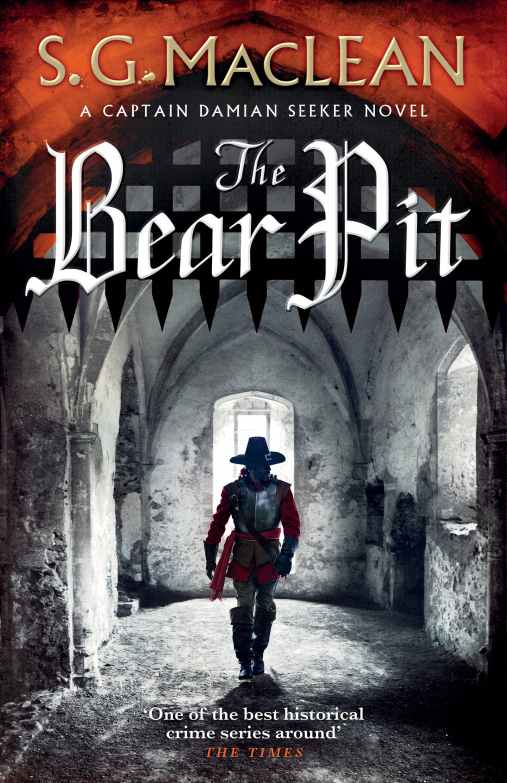
The Bear Pit by S. G. MacLean

The Bear Pit Cover

Publisher: Quercus (Trade Paperback – 11 July 2019)

Series: Damien Seeker – Book Four

Length: 410 pages

My Rating: 4.5 out of 5 stars

Amazon

Back in 2018 I was lucky enough to receive a copy of Destroying Angel, the third book in S. G. MacLean’s Damien Seeker series of historical murder mysteries.  I had an amazing time reading this fantastic book, which I ended up giving a full five-star rating, and I was excited when I heard that a sequel was coming out in 2019.  This sequel, The Bear Pit, had an intriguing premise and sounded like it was going to be quite an awesome read.  Unfortunately, I did not get a chance to read it last year when it first came out, which I have been regretting for some time now.  Luckily, I recently found myself with a little bit of spare reading time, so I finally managed to check this book out.  I am really glad that I did, as The Bear Pit contained a captivating and clever story that sets MacLean’s intense protagonist on the trial of some dedicated killers.

London, 1656.  Oliver Cromwell rules England as the Lord Protector, but not everyone is happy with his reign.  Many believe that his death will end the Puritan state and lead to a return of the monarchy in exile.  In order to bring this about, three men loyal to the crown are currently plotting to kill him.  However, Cromwell is not without his protectors, and his most ardent investigator, the legendary Captain Damien Seeker, is on the case.

Seeker has only recently returned to London after a harrowing investigation in Yorkshire and he is determined to catch the potential assassins before it is too late.  However, Seeker soon finds himself on another case when he discovers the mutilated body of man while conducting a raid on a gaming house.  The victim appears to have been brutally savaged by a bear, yet all the bears in London were shot after bear baiting was declared illegal by Cromwell.  Where did the bear come from and why was it used to commit a murder?

While he continues his hunt for the assassins, Seeker employs his reluctant agent, Thomas Faithly, a former Royalist turned informer, to infiltrate the underground fighting pits in an attempt to find out if any bears remain in the city.  However, as both investigations progress it soon becomes clear that they are connected and that the murder is tied into the assassins hunting Cromwell.  As Seeker attempts to stop them before it is too late, he finds himself facing off against a talented and intelligent foe with great reason to hate Cromwell and everything Seeker stands for.  Can Seeker stop the assassins before it is too late, or has he finally come up against someone even he cannot outthink?

MacLean has come up with another fantastic and compelling historical murder mystery with The Bear Pit.  This book contains an amazing multi-character narrative that combines an intriguing murder mystery storyline with real-life political intrigue and plots, enjoyable characters and a fascinating historical backdrop, all of which comes together into an impressive overall narrative.  Despite being the fourth Damien Seeker book, The Bear Pit is very accessible to readers unfamiliar with the series, and people who are interested in a good historical murder mystery can easy dive into this book without any issues.

At the heart of this novel is an enthralling mystery and intrigue laden storyline that sees Seeker and his companions not only investigating a murder apparently done by a bear, but also trying to unravel a plot to assassinate Cromwell.  This turned into quite an enjoyable and exciting tale that was filled with all manner of twists, surprises, reveals, action-packed fights, disguised antagonists and confused loyalties.  Naturally, the murder and the assassination plot are connected, and the investigations of the protagonist and his compatriots combine together as they attempt to find out who is behind the various crimes and why they were committed.  This proved to be a very captivating storyline, and I really loved the way in which MacLean blended an inventive murder mystery with realistic political intrigue and plots.  There are several clever clues and plenty of foreshadowing throughout the book, and the end result of the mystery was rather clever and somewhat hard to predict.  I really liked how these intriguing storylines turned out, and they helped to make this story particularly addictive and hard to put down.

Another distinctive and enjoyable part of this book is the great characters contained within it.  The main character of The Bear Pit is the series’ titular protagonist Damien Seeker, the moody and serious investigator and loyal solider of Oliver Cromwell.  Seeker is a particularly hardnosed protagonist who inspires all manner of fear and worry in the various people he meets, and it proves to be rather enjoyable to watch him go about his business.  While Seeker is the main character, this novel also follows a substantial cast of characters who end up narrating substantial parts of this book.  Most of these additional point-of-view characters have appeared in previous entries in the series, and it was great to see MacLean reuse them so effectively while also successfully reintroducing them in the context of this book.  Two of the main characters who assist Seeker with his investigation are Thomas Faithly and Lawrence Ingolby, both of whom were introduced in the previous novel, Destroying Angel.  Both characters are rather interesting additions to the novel’s investigative plot, and they serve as a great counterpoint to Seeker due to their youth, their inexperience, and their own way of investigating the crimes.  While Ingolby was a great younger character who looks set to be a major protagonist in the next book in the series, a large amount of the plot revolves around Faithly and his conflicted loyalties.  Faithly is a former exile with strong ties to the royal family, but his desire to return to England sees him make a deal with Seeker to serve Cromwell as a spy.  Despite his desire to remain in England, Faithly finds himself torn between his existing friendships and his new loyalty to Seeker, and this ends up becoming a rather dramatic and compelling part of the book.  Extra drama is introduced thanks to the reappearance of Maria Ellingworth, Seeker’s former love interest.  Both Seeker and Ellingworth have a lot of unresolved feelings with each other, which only become even more confused throughout the course of The Bear Pit when they find themselves in a love triangle with another major character.  This romantic angle, as well as the continued use of his secret daughter, really helps to humanise Seeker, and I enjoyed getting a closer look under Seeker’s usual tough mask.

In addition to the fantastic mystery and intriguing characters, one of the best aspects of The Bear Pit, and indeed the entire Damien Seeker series, is the author’s fascinating look at life in Cromwell’s England.  This is particularly interesting part of England’s history, which saw the implementation of Puritan law across the country, while secret Royalists lay hidden across the country.  This book in particular took a look at what was going on within London, and it was fascinating to see the various aspects of life during the period, from the politics, the hidden loyalties, the impact of day-to-day activities and the removal of previously iconic parts of London life, such as the bear baiting and other blood sports.  MacLean does a really good job of examining these various aspects of life during the Cromwell era and working them into her novels, making them a vital part of the plot as well as a fascinating setting.

One of the most fascinating and impressive historical aspects that MacLean includes in The Bear Pit was the focus on the 1656 plot to kill Oliver Cromwell.  This was a real historical conspiracy that took place throughout London, as three conspirators attempted to kill Cromwell through various means.  The author really dives into the details of the plot throughout this book, and the reader gets a glimpse into the various attempts that were made on Cromwell during this period, as well as the identity and motivations of the three killers.  MacLean even shows several chapters from these killers’ viewpoints, showing all the various preparations they put into each attempt, and then presenting how and why they failed.  I really liked how the author worked these assassination attempts into the main plot of the book, utilising Seeker as a major reason why several of the attempts failed and ensuring that the antagonists were aware of him and considered him the mostly likely person to stop them.  This was a very clever story aspect as a result, and I liked the blend of creative storytelling with historical fact to create an epic and impressive storyline that really stood out.  I also liked MacLean’s compelling inclusion of a major historical Royalist figure as the mastermind of the plot and the main antagonist of the book.  This character has such a distinctive and infamous reputation, and I liked how the author hinted at their arrival and then sprung the surprise towards the end of the book.  This was such a great part of the plot and I look forward to seeing what major historical events MacLean features in the next book in the series.

Overall, The Bear Pit was an outstanding and captivating historical murder mystery that really highlighted S. G. MacLean’s writing ability and creativity.  I really enjoyed the excellent blend of murder and intrigue, set during a fascinating period of England’s history, and the author’s use of great characters and the inclusion of a particularly notable historical occurrence proved to be extremely impressive and resulted in an outstanding read.  As a result, The Bear Pit comes highly recommended by me and I really do regret taking this long to read it.  Luckily, this should ensure that the overall plot of the series is fresh in my mind when I get my hands on the next and final book in the Damien Seeker series, The House of Lamentations, which is out in a couple of weeks.  I have already put in my order for a copy of this upcoming book and I am looking forward to seeing how MacLean finishes off this series, especially after I had such an awesome time reading The Bear Pit.
Amazon

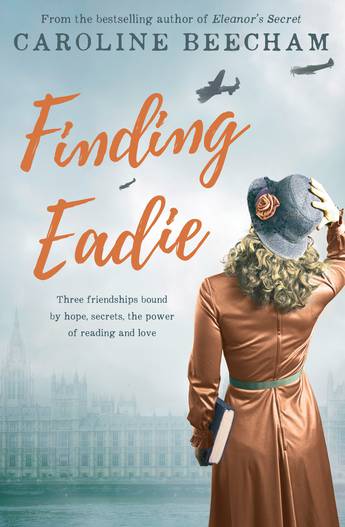
Finding Eadie by Caroline Beecham

Finding Eadie Cover

Publisher: Allen & Unwin (Trade Paperback – 2 July 2020)

Series: Standalone

Length: 360 pages

My Rating: 4 out of 5 stars

Amazon     Book Depository

Acclaimed Australian author Caroline Beecham is back with another moving and compelling World War II historical drama with Finding Eadie.

London, 1943.  As the war rages across the world, there is a demand for new books to not only distract the public from the grim realities of the war but to also entertain the troops as they fight.  However, despite this increased need for books, the London branch of the Partridge Press publishing house is struggling due to wartime restrictions on resources and the damage done to their former offices.  In order to survive, Partridge Press need a new bestseller and young staff member, Alice Cotton, has an idea for a book that will both appeal to the public and help lift their spirits.  But before work can begin on this project, Alice suddenly leaves.

Alice’s absence is due to her secret pregnancy to an unnamed father.  Determined to keep the baby, Eadie, Alice comes up with a plan to give birth in secret and then raise the baby with her mother, pretending it is a wartime orphan.  However, Alice is unprepared for the ultimate betrayal by her mother, who steals the baby from her and gives it away in order to save her daughter’s reputation.  Devastated, Alice searches for her daughter, and soon finds out that her mother gave the baby to baby farmers, people who make a semi-legal profit by taking unwanted babies and selling them to the highest bidder.  Desperate to get Eadie back no matter the cost, Alice returns to Partridge Press and uses her book as a cover to get more information on the baby farmers.  At the same time, she finds solace in an American, Theo Booth, who has been sent from the American office of Partridge to help salvage the failing British office.  Can Alice find her daughter before it is too late, or will she lose Eadie forever?

Beecham is a talented and impressive author who is making a real impact on the historical drama scene due to her touching storylines that focus on fascinating aspects of the World War II experience.  For example, her 2016 debut novel, Maggie’s Kitchen, focused on the struggles of opening a restaurant during the blitz, while her second novel, 2018’s Eleanor’s Secret focused on a young woman who was employed by the War Artist Advisory Committee.  Finding Eadie is another powerful war drama that focuses on some intriguing aspects of the war.

At the centre of this book is an excellent dramatic storyline that focuses on two people trying to do their best in difficult circumstances.  This story employs two separate point-of-view characters, Alice Cotton and Theo Booth, each of whom have their own intriguing and dramatic storylines.  While Theo’s narrative of a young, conflicted, book-loving man who finds his true calling in war-torn London is very enjoyable, I really have to highlight the excellent story surrounding the character of Alice.  At the start of the book, Alice has her baby, the titular Eadie, stolen from her by her mother and she spends the rest of the novel trying to find her.  This is an incredibly powerful and emotional story thread which I found to be extremely moving.  Beecham does an incredible job portraying Alice’s pain and distress throughout the course of the novel and the resultant raw emotion is heartbreaking and mesmerising in equal measures.  This search for Eadie has a number of notable elements to it, including emotional confrontations between Alice and her mother, the continued strain impacting the protagonist the longer she is separated from Eadie, a compelling investigative narrative, and a dangerous dive into London’s criminal underbelly.  The reader gets really drawn into the story as a result, as they eagerly wait to see if Alice will get a happy ending or if she will become another victim of the tragic circumstances surrounding the war.

On top of this compelling and dramatic storyline there is also a well-written, if somewhat understated, romantic angle between Alice and Theo.  While it is quite obvious that the two are going to end up together (it is a historical drama with a male and female as the main characters, of course they are going to end up together), Beecham builds it up rather well, and while there are significant obstacles to their romance, such as Theo’s engagement to another woman and the fact that Alice is rightly more concerned with finding her baby, the two slowly realise their feelings for each other.  Overall, the entire story comes together extremely well, and I found myself quite drawn to this excellent narrative which allowed me to read this book in remarkably short order.

While this book has an amazing story, I also really enjoyed Beecham’s examination of certain unique aspects of life during the war, which proves to be rather fascinating.  I particularly enjoyed the exploration of the publishing world during the war, and this goes on to become a major and compelling part of the book’s plot.  Beecham does a fantastic job highlighting what was going on during the publishing industry during the period in both England and America.  This includes an impressive deep dive into the industry, exploring the importance of books during the period, the troubles involved with publishing during a war such as the lack of supplies, as well as also examining the sort of books that were popular at the time.  I absolutely loved all this amazing detail about publishing during the war, and it was an outstanding highlight of the book.  I also liked how well it tied into the rest of the book’s narrative as their love of books was not only a key element of both Alice and Theo’s personal storylines but also a major part of the characters, and it was something that made both of them more relatable and likeable to the reader, ensuring that they are more emotionally invested in the story.

In addition to the focus on the publishing world Beecham also explores other intriguing aspects of London during the war.  Probably the most important one relating to the plot was the shocking practice of baby farming, where babies were bought and sold for profit.  This was a remarkably horrifying aspect of history that I wasn’t too familiar with, but Beecham does a great job explaining it throughout her story, going into the history, the impacts, the surrounding social issues and the sort of the people that were involved.  While most aspects of this are a tad disturbing, especially as it is based on some true historical stories, I found this entire inclusion to be really fascinating and it proved to be a compelling story element.  I also quite liked Beecham’s examination of the London Zoo and how it survived during the war, and it was intriguing to see this small bubble of normality amongst the chaos of the blitz and the rest of the story.  All of these incredible historical elements were really interesting parts of Finding Eadie’s story, and I had an amazing time learning more about London life during the war.

Finding Eadie by Caroline Beecham is a great and compelling historical drama that proved to be an excellent read.  Containing a strong, emotional charged story, and featuring a clever look at some unique historical elements, this is a very easy book to enjoy which is worth checking out.

Spy by Danielle Steel

Spy Cover

Publisher: Macmillan (Trade Paperback – 26 November 2019)

Series: Standalone

Length: 273 pages

My Rating: 4.25 out of 5 stars

Amazon     Book Depository

From the mind of the fourth-bestselling author of all time, drama and romance novelist supreme Danielle Steel, comes an excellent and compelling story about life, war and espionage that is really worth checking out.

Alexandra Wickham is the youngest child of a well-to-do British family living out on their estate in the country. A beautiful and intelligent young lady, Alex appears to be set for a life of privilege and marriage. However, the outbreak of World War II in 1939 allows Alex to throw off the shackles of expectation, and she moves to London, volunteering as a nurse. However, her fluency in French and German attracts the attention of a new government organisation, the Special Operations Executive (SOE), who are desperate to recruit her.

Suffering from personal losses and determined to do her part for her country, Alex joins the SOE and quickly becomes a skilled and valued agent. Trained in various forms of combat, sabotage and espionage, Alex makes several journeys into German territory to obtain valuable information. However, the hardest part of her new life is keeping her work secret from her friends and family, including her worried parents and the brave pilot she falls in love with.

Even after the war ends, Alex finds that she is unable to stop spying. When her husband, Richard, enters into the foreign service, Alex is recruited into MI6 and tasked with obtaining information from the various people she meets socially. As she follows her husband from one volatile end of the world to the next, Alex must reconcile the two separate parts of her life if she is to survive. But who is she? The loving wife and parent or the government agent who can never reveal her secret to those closest to her?

Now, I have to admit that before this year Danielle Steel was not an author that I really went out of my way to read. Steel writes a staggering number of novels each year (seven in 2019 alone), and most of them do not appeal to me (I think a quick perusal of some of the previous books I’ve read will give you a good idea of what my usual literary tastes are like). However, after enjoying Turning Point earlier this year (which I checked out because I do enjoy medical dramas), I decided to try Spy, as I was kind of curious to see how Steel would handle the historical spy genre. What I found was a captivating and enjoyable story which I was really glad I grabbed a copy of.

Spy is a historical fiction novel that follows the life story of the fictional protagonist, Alexandra Wikcham, who serves as the book’s point-of-view character. This was a rather full and exciting story that not only focuses on the main characters career as a secret government agent but also explores her personal life, such as her interactions and relationship with her family, how she fell in love, and how she become a caring wife and mother. Spy’s overall narrative is a fantastic blend of drama, historical fiction, spy thriller and romance novel, which proves to be quite addictive and rather enjoyable. I loved seeing the full progression of the main character’s life, and I found myself getting attached to several of the characters featured within.

This was the first historical fiction by Danielle Steel that I have read, and I have to say that I was impressed with the various periods that were explored. The first half of the book is set during the events of World War II, and Steel does an incredible job of portraying this iconic part of the 20th century. The story is primarily set in England during this part of the war, and the reader gets a real sense of the events that are occurring, the struggles facing normal citizens during the conflict and the various contributions that the English people were making during the war. Spy also explores the damage, both physical and emotional, that the war produced, as the main character experiences great loss and despair throughout the course of the conflict and sees the impact on people that she cares for.

In addition to the great portrayal of World War II, Spy also examines a number of other intriguing historical events, periods and locations. The second part of the book is set over a much longer period of time and follows Alex and her husband, Richard, as they travel the world as English diplomats. These diplomatic assignments place them in a number of different countries during significant periods in history. For example, Alex and Richard end up in India during the end of British rule, when India is split into two countries. Other countries they end up in include Morocco, Hong Kong, America and the Soviet Union. All of these visits are only for a short part of the book, but they offer some intriguing snapshots into the various countries during significant parts of history. These combined historical periods make for a truly captivating and enjoyable novel, and they really work well with the dramatic and espionage aspects of the book, enhancing these other story elements with the cool historical settings.

I really enjoyed the espionage parts of Spy, as Steel has come up with a fascinating underlying thriller plot for this book. The actions of the SOE during World War II have long formed a great basis for historical spy stories over the years, and Steel did a fantastic showcasing how their female agents were recruited, often from organisations such as the First Aid Nursing Yeomanry, trained, and then dropped into Europe for missions. The various missions that the protagonist undergoes in Europe are quite interesting, and range from various reconnaissance missions, to more complex information gathering exercises. The protagonist’s actions after the war are also quite intriguing, as she is recruited by MI6 to spy on the various people her husband comes into contact with as a diplomat, and this results in her getting involved in some major historical events. It was quite fascinating to see with both missions during and post-World War II, the importance of information obtained from gossip or a leading conversation with a beautiful woman, and the impacts such information could have. This espionage part of the book is also the part of the book that I personally found the most thrilling and entertaining, and it was really cool to see all the danger and intrigue that followed this central character.

As Spy is a Danielle Steel novel, there is of course a central romance storyline that dominates the course of the book. At the beginning of the war, Alex meets and falls in love with Richard, a handsome and charming English fighter pilot, and they form a great relationship that lasts over 50 years. This is a really nice and supportive relationship, which is able to overcome some rather substantial obstacles, mainly World War II and Alex’s career as a spy. Not only are the forced to put their relationship on hold during the course of the war, in fear that one of them might die, but Alex is required to keep all of her espionage activities a secret from Richard. Even when they are married, Alex is unable to tell him that she is a MI6 Agent or warn him that she might be putting their lives at risk in foreign countries. All this secrecy weighs heavily on the mind of Alex throughout the course of the book, and it adds a whole new dramatic edge to their relationship. However, I really liked the way it ended, and this was a fantastic and heart-warming romantic storyline that I quite enjoyed.

The latest Danielle Steel novel, Spy, proved to be a really compelling and moving story of life and love during the turbulence of the 20th century. Featuring a gripping story which followed the entire life of a female British espionage agent, Spy was an excellent novel that honestly has something for everyone in it. I was really impressed with this novel, and I am planning to check out more Danielle Steel novels in the future. Her next release, Moral Compass, sounds particularly intriguing, and I have already requested a copy of it.

Amazon     Book Depository

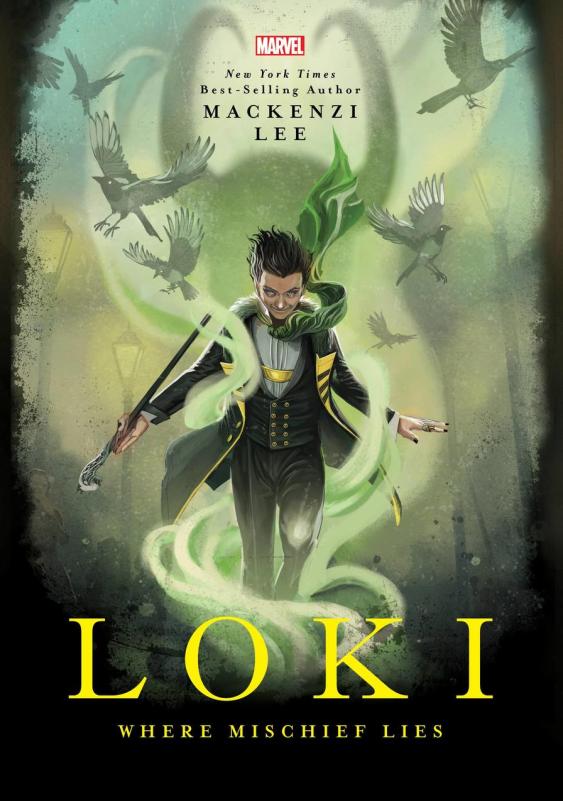
Loki: Where Mischief Lies by Mackenzi Lee

Loki Where Mischief Lies

Publisher: Penguin Random House Audio (3 September 2019)

Series: Standalone/Book One

Length: 9 hours and 10 minutes

My Rating: 4.25 out of 5 stars

Amazon

From acclaimed young adult fiction author Mackenzi Lee comes a fun and clever young adult tie-in novel to the Marvel comic book universe that follows the early life of one of the genre’s best villains, Loki, the Asgardian God of Mischief.

Loki has long been one of the most infamous and complicated villains in the Marvel Universe, whose manipulations and machinations are a constant threat to Asgard, his brother, Thor, and the Avengers. However, years before he started causing chaos in Midgard, he was a young prince of Asgard and the unfavoured son of Odin. Despised and mistrusted by the people of Asgard for his magical abilities, and feared by his father as a prophesied destroyer, Loki’s only confidant is Amora, a powerful sorceress in training.

When Loki and Amora accidently destroy an ancient and valuable magical artefact, Amora is banished to Midgard (Earth), where her magic will eventually fade, and Loki loses the one person who appreciates who he truly is. Determined to prove his father wrong, Loki dedicates himself to becoming a dutiful son, but he continues to find himself overshadowed by his brother’s bravery. When a failed mission once again disappoints Odin, Loki is sent to Midgard in order to investigate a series of murders that have been caused by Asgardian magic.

Arriving in 19th century London, Loki makes contact with a small group of humans who police interdimensional travel, the Sharp Society. Loki, despite his reluctance to help, soon finds himself trying to find the mysterious killer who is turning humans into living corpses. But when he discovers who is responsible for the deaths, he is once again torn between doing the right thing and acting the villain. As his adventure on Midgard continues, Loki soon realises that he needs to decide who he truly is: the good prince of Asgard his family always wanted, or the villain everyone expects him to be.

Loki: Where Mischief Lies is a rather intriguing read that caught my attention some time ago. I am a huge fan of Marvel comics and I will always be interested in checking out any tie-in novels connected to either the comics or the movies. As a result, I made sure to grab a copy of the audiobook version of this book as soon as I could. This turned out to be a fast-paced and enjoyable read that explores the life and times of a young Loki, placing him into a fascinating setting that helped enhance the story. Lee, who is best known for her young adult novels set in the 19th century, including This Monstrous Thing and the Montague Siblings books, created a great Loki story that does a spectacular job diving into the psyche of the character and shaping a fun adventure around it. This is actually the first book in a series of three historical novels that Lee has been contracted to write that will feature Marvel antiheros, and I am really interested in finding out which characters will be in these books.

Where Mischief Lies contains a compelling central storyline that follows the early days of Loki in Asgard and his first foray down to Midgard. Lee starts the story off by introducing a young Loki on Asgard, establishing his character, examining some of his early motivations, inserting a major life-changing event and inserting a magical premonition that will haunt the character throughout the rest of the book. I really enjoyed this introduction to the characters and the plot, and thought that it set up the rest of the story perfectly. The next few parts of the book, which are set after a time jump of a few years, do a good job showing how the character has evolved after the introductory events of the book, and then they manoeuvre him down to London where he has to discover the cause of a series of deaths done using Asgardian magic. The set up to get him down to London, the initial parts of Loki’s adventures on Midgard, his introduction to the Sharp Society and the first encounter with the mysterious bodies are all pretty interesting, and is a great follow-through from the book’s introductions.

I did however struggle with the middle parts of the book, as they felt a little flat and hard to get through. Those readers hoping for a complex mystery into who is leaving the bodies on the streets of London are going to be disappointed, as Loki solves the case quite quickly, and it is literally the most obvious suspect ever. I also wasn’t the biggest fan of the following periods of Loki’s indecision and angst as he tries to deal with the fallout from this revelation. However, the ending of the book more than makes up for it, as Lee wraps it up with an epic conclusion that showcases the full extent of the character’s nature and his eventual future, while also utilising story elements set up earlier in the book. While there were periods in the middle of the book where I was starting to get a little restless, I think overall the story of Where Mischief Lies is really good and its strong ending made it all worthwhile.

Thanks to his appearances in the MCU, Loki is probably one of the most popular and well-known Marvel antiheroes and characters, so any portrayal of him needed to be spot on. Luckily, Lee did an outstanding job with her characterisation of Loki, and the examination of the younger version of this character is probably one of the best things about this book. Lee’s version of young Loki contains all the hints of the growing arrogance, swagger, fashion sense, penchant for mischief and casual disdain for mortals and Asgardians that make him such a fun character in the comics and movies. However, what really makes this an excellent portrayal is the fact that Lee also shows all of Loki’s inherent vulnerability, frustration and anger, which have resulted from a childhood of being seen not only as the lesser son but as something that is dangerous and untrustworthy. This examination of the character’s inner psyche is a fantastic central point of the book, and it is interesting to see the world from Loki’s point of view, especially as you really start to sympathise with him. The story also shows some key moments in Loki’s life, and you get a sense of his motivations and determination to torment those around him. I also think that Lee did a fantastic job of examining the relationship between Loki and Thor. While a lot of their relationship is antagonistic, Thor is shown at times to be the only character who trusts Loki, and it is interesting to see the relationship that might lead to Loki’s eventual redemption. If I were to complain about any aspect of Lee’s portrayal of Loki, it would be that his powers and abilities were a bit inconsistent at times. For example, it was a little weird to see him being physically inconvenienced by a human in one scene, and then a chapter or two later he has the strength to lift two people up at the same time. While this is a relatively minor issue and I imagine that you could explain this away as some form of deception by Loki, I personally found it to be a little jarring.

One of the most intriguing aspects of Lee’s portrayal of Loki is his gender and sexuality. In the build-up to the release of Where Mischief Lies there was a lot of discussion about how this book was going highlight certain LGTB+ elements from the comic books, especially as Lee’s previous books have all contained LGTB+ components. Throughout his comic book history, Loki has been portrayed as both genderfluid and pansexual, and both of these elements of the character are explored within this new book to various degrees. While an interesting part of the character, the genderfluid aspect of Loki is only really shown to a small degree in this book. While Loki does not actually change his gender within Where Mischief Lies (which has occurred in some Marvel comics), when asked “if he prefers men or women”, he does indicate that he has been both. There are also several examples of Loki using his powers of magic to appear as a female character (with various degrees of success), and there are also scenes where he dresses in women’s clothing, usually stolen from Amora, who is amusedly annoyed that they look better on him. While it was not as fully explored as it could have been (and to be fair, it would have been hard to add it in to a novel of this length), it is really cool to see a genderfluid character being introduced into a novel connected to the Marvel Universe.

In addition to this, the pansexual aspect of Loki’s character is on full display throughout the book, as Loki has romantic connections with both male and female characters. Not only does he fall in love with Amora (there is a reason they call her The Enchantress), but a romantic connection also begins to spark between him and a young Sharp Society member, Theo. I really liked the way that Lee handled both of these romances. While the relationship between Loki and Amora ends in flames (which should come as no surprise to Marvel fans), the slowly growing feelings he shares with Theo are quite sweet and contain some rather interesting social commentary. The relationship with Theo is underscored with feelings of identity; due to the social conventions of the 19th century, Theo is unable to be who he really is. This is mirrored by Loki, who has complete freedom of sexuality and gender, but who finds that he is looked down on because of his magic, which he sees as a being major part of his identity. All of this was intensely fascinating, and I really enjoyed seeing this additional complexity explored within the character.

Another aspect of this book that I enjoyed was the various tie-ins it contained to the Marvel’s comics universe. This was a pretty comprehensive origin story for Loki, and quite honestly it could be used as a prequel to both the comics and the Marvel Cinematic Universe. However, given that there is a lot more focus on magic, runes, elves and artefacts, it should probably be more associated with the comics. Lee does a fantastic job bringing Asgard to life, and there are a number of cool references to the various settings and characters of the Thor comics that will appeal to major comic book fans. In addition to this, the author also peppers the story with other Marvel references, especially when the story goes down to Midgard. For example, there are mentions of an industrialist called Stark, talk of a green-skinned female alien and discussion that the Sharpe Society should be renamed as either SHIELD or SWORD. While all these references are rather amusing, I would say that no real prior knowledge of the comics or the movies are really required to enjoy this book, although Marvel fans will probably get more out of it.

Where Mischief Lies is being marketed as a young adult fiction novel, and I believe that this would be a great book for young teen readers, who will love this intriguing look at one of the best Marvel characters. Younger readers should be prepared for the typical amount of comic book level of violence and sex in this book, but there is really nothing that is too explicit for younger readers. I personally think that many teens will appreciate the various LGTB+ elements included in the story, and they will be interested to see this side of the character that has not been included in the movies. Like many young adult tie-in novels, Where Mischief Lies is very accessible to older readers, and I know that many will really like this take on Loki as well, making this a fantastic novel for all ages.

While I really enjoyed the awesome cover of Where Mischief Lies’ hardcover edition, I ended up listening to it on audiobook rather than grabbing a physical copy. The audiobook format of this book is narrated by Oliver Wyman and runs for just over nine hours in length. I think that was a pretty good way to enjoy Where Mischief Lies, as it proved to be a rather easy book to listen to, and I was able to complete it in only a couple of days. Wyman is an enjoyable narrator, and I really like his take on the book’s protagonist and point-of-view character, Loki. He did a fantastic job capturing various aspects of the character’s personality and speech patterns, from his sneering contempt to his frustrations at the way he is treated. This excellent narration really added a lot to my enjoyment of the novel and I would definitely recommend the audiobook format to anyone who is interested in checking this book out.

Loki: Where Mischief Lies by Mackenzi Lee was a fantastic young adult tie-in novel that does a wonderful job of bringing the character of Loki to life. I had a lot of fun listening to this novel, especially as Lee dives deep into the life and mind of Loki, exploring how he became the villain we all love. I was initially planning to give this book a rating of four out of 5 stars; however, considering how much I ended up writing about it, it must be worthy of 4.25 stars instead. I have to say that I was impressed with Lee’s talent for writing novelizations about Marvel antiheroes, and I look forward to her next book in this young adult series.

Amazon

Waiting on Wednesday – False Value by Ben Aaronovitch

Welcome to my weekly segment, Waiting on Wednesday, where I look at upcoming books that I am planning to order and review in the next few months and which I think I will really enjoy.  I run this segment in conjunction with the Can’t-Wait Wednesday meme that is currently running at Wishful Endings. Stay tuned to see reviews of these books when I get a copy of them. For this latest Waiting on Wednesday, I check out a book that is sure to be on most fantasy fans’ November wish lists, False Value by the incredible Ben Aaronovitch.

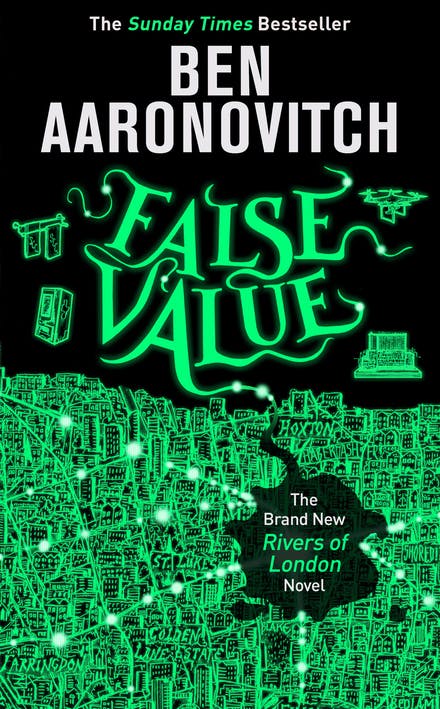
False Value Cover.jpg

False Value, which is set to be released in a few short weeks, is the eighth novel in Aaronovitch’s highly acclaimed Rivers of London series. This series follows its protagonist, police officer and apprentice wizard Peter Grant, as he attempts to navigate the various dangers of London’s magical underground, which is dominated by the powerful personifications of the various rivers running through the city, but which also features rogue wizards, hostile ghosts and talking foxes.

Goodreads Synopsis:

Peter Grant is facing fatherhood, and an uncertain future, with equal amounts of panic and enthusiasm. Rather than sit around, he takes a job with émigré Silicon Valley tech genius Terrence Skinner’s brand new London start up—the Serious Cybernetics Company.

Drawn into the orbit of Old Street’s famous ‘silicon roundabout’, Peter must learn how to blend in with people who are both civilians and geekier than he is. Compared to his last job, Peter thinks it should be a doddle. But magic is not finished with Mama Grant’s favourite son.

Because Terrence Skinner has a secret hidden in the bowels of the SCC. A technology that stretches back to Ada Lovelace and Charles Babbage, and forward to the future of artificial intelligence. A secret that is just as magical as it technological—and just as dangerous.

I am really looking forward to checking out False Value, as the Rivers of London series is probably one of the best examples of modern urban fantasy around at the moment. Aaronovitch’s previous books have done an outstanding job of combining creative fantasy elements with police procedural investigations into intriguing mysteries to create first-rate reads. For example, the seventh book in the series, Lies Sleeping, was an absolutely incredible book that had me hooked from page one. This latest book has another fascinating-sounding story, and I look forward to seeing how the author combines magic with ancient and futuristic technology. Based on all of this, I am extremely confident that False Value will blow me away, and I am planning to grab my copy as soon as possible. I also have to say how much I like the new fluoro green cover; it is a very interesting look that ties in well with the series focus on ghosts and spirits.

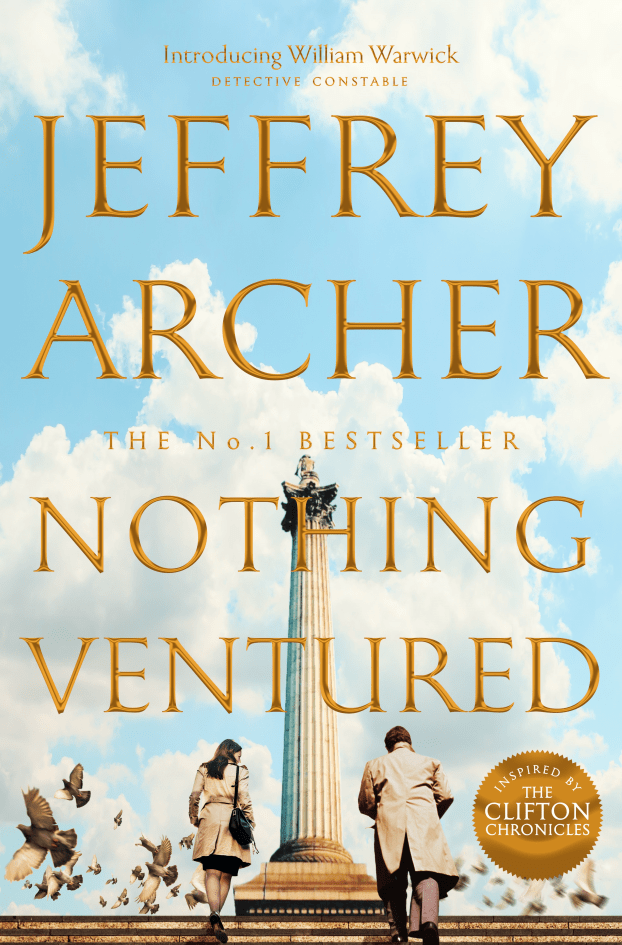
Nothing Ventured by Jeffrey Archer

Nothing Ventured Cover

Publisher: Macmillan (Trade Paperback – 10 September 2019)

Series: William Warwick series – Book 1

Length: 323 pages

My Rating: 4 out of 5 stars

Amazon

One of the biggest names in modern fiction, Jeffrey Archer, returns with Nothing Ventured, an intriguing piece of historical crime fiction that starts up his brand-new William Warwick series.

William Warwick, son of a respected London defence attorney, has always dreamed of becoming a detective in the London Metropolitan Police Force. Despite the opposition of his father, William enrols as a trainee police officer at the start of the 1980s after finishing university. Armed with determination, sharp observation skills, an education in fine art and a can-do spirit, William is unaware of the adventures in store for him.

After quickly making the rank of detective constable, William is assigned to Scotland Yard’s Arts and Antiquities squad. While also investigating of a series of different art crimes and frauds across London, the squad is mainly concerned with capturing Miles Faulkner, a criminal mastermind responsible for the thefts and forgeries of some of the most expensive art in England. All previous attempts to capture Faulkner have failed miserably, as the criminal is always two steps ahead of the police.

As William becomes more and more involved in investigating the various crimes Faulkner is organising, he makes a crucial breakthrough when he befriends Faulkner’s wife, Christina. Christina is willing to return a valuable stolen Rembrandt from Faulkner’s personal collection in return for help from the police. Can Christina be trusted, or will Faulkner once again evade justice and continue his dastardly schemes? In addition, what happens when William falls head over heels in love with Beth, a research assistant at the museum the Rembrandt was stolen from, whose family secrets may drive a terrible wedge between her and William?

I have mentioned before how Jeffrey Archer, or the Lord Archer of Weston-super-Mare as a Member of the British House of Lords, is one of the more colourful professional novelists in the world today. Archer has produced over 30 diverse books since 1976, including several standalone novels, a bestselling long-running series, several collections of short stories, three plays, three non-fiction books about his time spent in prison, and four children’s books. I have read several of his books in the past, although I only have his 2018 book, Heads you Win, currently reviewed on my blog at the moment.

Nothing Ventured is a fantastic new novel from Archer and is the first book in a planned eight-part William Warwick crime fiction series. The William Warwick series actually has a very interesting origin, as William Warwick served as the protagonist of a fictional series of books written by the main character in Archer’s most iconic series, the Clifton Chronicles, Harry Clifton. Following the end of the Clifton Chronicles in 2016 and several requests from his fans to expand on the adventures of Warwick, Archer started on this series. The William Warwick series will examine the career of its titular character and show the various cases he investigates that helped him to become a great detective.

This series is off to a good start with Nothing Ventured, as Archer creates a compelling and enjoyable read that does a fantastic job introducing the readers to his new protagonist and showing the early days of his police career. Archer has always excelled at creating historical fiction narratives that focus on the lives of specific characters, and Nothing Ventured is no exception. Within this book, the reader gets a great idea of the character of Warwick and sees the struggles and early influences that drive him to become a successful police detective. The reader is also introduced to a bevy of interesting side characters, many of whom are set up to be major friends, colleagues, love interests or antagonists of Warwick through the future books of the series. Overall, Archer does a superb job setting up his overarching series in Nothing Ventured, and the intriguing mysteries explored within, as well as the introduction of a likeable new protagonist, should ensure readers will check out future instalments of this series.

One of the most intriguing aspects about Nothing Ventured was the focus on the artistic world and the subsequent fraud or theft that accompanies it. At the start of the book, the protagonist studies art history at university and subsequently develops a life-long love for the artistic greats. This appreciation of art becomes an important part of his future career, as it helps him join the Arts and Antiquities squad. Throughout the course of Nothing Ventured, Warwick and his colleagues investigate a number of different instances of art fraud, including forgeries of famous works, fraudulent signatures of historical figures and the forging of fake antique coins, among several other interesting examples. I thought that this was an absolutely fascinating focus for this book, and I really enjoyed reading about all the different ways art fraud could be committed. It also allowed for a number of unique and compelling mysteries, and readers will enjoy seeing the diverse outcomes that result from these cases. I also enjoyed the various discussions about art that permeated the book’s narrative. Archer is obviously very passionate and knowledgeable about classic artworks and antiquities, and this shines through in his writing. I am hoping that this focus on art will continue in future books of the William Warwick series, as it really helped set this book apart from some other historical mystery series.

The focus on the art world in Nothing Ventured also allowed Archer to introduce a great antagonist in the form of Miles Faulkner. Faulkner is a criminal mastermind who specialises in crimes involving art and is the bane of the Arts and Antiquities squad. Faulkner is a great gentleman-thief character, who is in many ways quite similar to Warwick, especially when it comes to his love and appreciation of artistic works. However, unlike Warwick, he uses his knowledge for his own benefit and is a fantastic master criminal. I really enjoyed the various ways that Faulkner was able to outsmart the police in this book, and he proved to be a worthy opponent to Warwick and his colleagues. The reveal of the true depths of Faulkner’s intelligence and deviousness in the last sentence of the book is masterfully done and Archer is clearly setting the character up as one of the major antagonists of this series. I look forward to seeing him return in future entries in this series, and I am sure he will continue to be a great villain.

Readers should also keep an eye out for the chapters in which Archer splits the focus between two separate events occurring at the exact same time. This is done a couple of times throughout the course of the book, and these split chapters are a lot of fun to read. They are mostly done to highlight the differences between two similar events happening in different areas; for example, showing two different police operations occurring at the same time, or two unrelated court cases with implications for the protagonist that are running in separate court rooms. The inclusion of these simultaneous events was done really cleverly in places, and it resulted in a couple of amazing and compelling chapters which I felt were some of the book’s best scenes. I hope that Archer continues to utilise this writing technique in the future books of this series, as it was a true highlight of Nothing Ventured.

Jeffrey Archer has once again created a thrilling and intriguing novel that focuses on the life of an English protagonist in a historical fiction setting. Nothing Ventured is the compelling first instalment of a crime fiction series with some real potential. Within this first book of the William Warwick series, Archer has come up with an intriguing life story to follow, introducing some great characters and producing some captivating mysteries and criminals that readers will love to unravel in future books. The massive planned William Warwick series should ensure Archer remains one of the bestselling historical fiction authors for the next eight years, and I look forward to seeing how the career and life of the titular main character progresses in the next instalment of the series.

Amazon

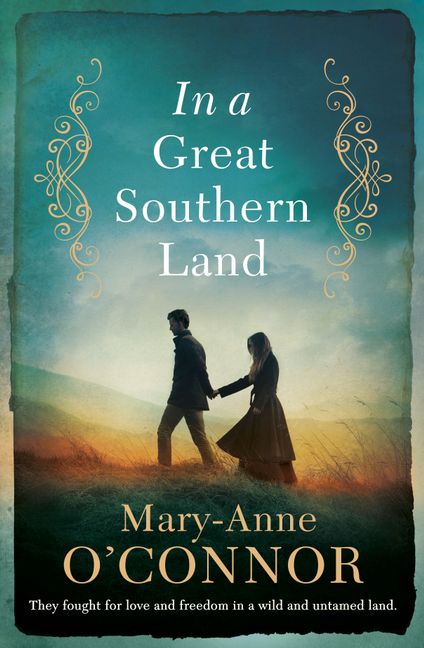
In a Great Southern Land by Mary-Anne O’Connor

In a Great Southern Land Cover

Publisher: HQ (Trade Paperback format – 18 March 2019)

Series: Standalone

Length: 416 pages

My Rating: 4.5 out of 5 stars

Amazon     Book Depository

Historical drama author Mary-Anne O’Connor once again presents the readers with a powerful and moving journey through a number of iconic moments in Australian history with her fourth book, In a Great Southern Land, which focuses on Australia’s colonial history and the chaos surrounding the infamous Eureka Stockade.

In 1851, the colonised but still mythical continent of Australia represents many things for many different people.  For the Clancy family living in Ireland it represents freedom, as they seek their own land away from the British aristocracy that controls their country.  For young Eve Richards it represents a harsh prison; she is unfairly transported as a convict after losing everything that she cares about.

Once in New South Wales, Eve briefly encounters the wild but kind Clancy brother, Kieran, who manages to save her from a harsh life in the Tasmanian colonies.  Following a bad experience as he left Ireland, Kieran is wondering around Australia in search of a new purpose, while his family, including his brother, Liam, and his sister, Eileen, settle in Orange.  Despite the love of his family, Kieran’s temper and thirst for adventure leads him down to the goldfields at Ballarat, close to where Eve is employed as a convict servant.

It does not take long for Kieran and Eve to find each other again, and the two are soon drawn together romantically.  However, their plans for their future and a life together are imperilled by events occurring around the goldfields.  The corrupt colonial regime is imposing harsh taxes on the miners attempting to scratch a living at the fields, and resentment and hostility is growing.  When several shocking events become a catalyst for revolt among the miners, Kieran finds himself being forced to choose between supporting his friends or marrying Eve.  Can Kieran and Eve’s relationship survive the chaos of the Eureka Stockade, or will tragedy once again strike them both?

This is the fourth book from Australian author Mary-Anne O’Connor, who specialises in historical dramas set in the backdrop of significant events in Australia’s history.  Her 2015 debut, Gallipoli Street, features aspects of World Wars I and II as well as the Great Depression.  Her second book, Worth Fighting For, is set in World War II, while her third book, War Flower, focuses on Australia in the 1960s, including the country’s involvement in the Vietnam War.  In a Great Southern Land is the author’s first foray into a 19th century setting, and her love and dedication to recounting parts of Australia’s complex and chaotic history once again shines through.

At its heart, In a Great Southern Land is a dramatic story of several individuals who are searching for a new beginning, and find love, loss and upheaval in their new home.  I have to admit that dramatic novels are not usually the sort of book that I am naturally drawn to, but something about this book really appealed to me and I had a great time reading it.  The main characters are extremely sympathetic and realistic, and the reader can not help but get drawn into their story.  A lot of bad stuff affects all of them, especially Kieran and Eve, and you are left hoping that they can hang on and find the happiness that they deserve.  I quite enjoyed the romance angle between Kieran and Eve; it came about quite naturally and had quite a satisfying conclusion.  I really got into this fantastic story and I was impressed by how this fantastic dramatic tale was woven so effectively into the book’s amazing historical elements.

One of the things I quite liked about this book was O’Connor’s ability to examine and bring several aspects of Australia’s colonial history to life.  Several iconic parts of the mid-19th century Australian experience are explored by the author, including the transportation of convicted criminals from England to Australia, the often terrible convict lifestyle, the resettlement of Irish settlers to various parts of Australia and the trials and tribulations of those seeking their fortunes in the goldfields.  On top of that, O’Connor also explores various Australian locations, including historical Sydney, Melbourne, Orange and Ballarat.  All of these examinations of history are deeply fascinating, and I really enjoyed reading about them.  The author has obvious skill at portraying all the historical aspects, and the reader gets a real sense of what it would have been like to experience these historical events, ordeals and locations.

The most significant historical event that occurs within this book is the Eureka Stockade, which plays a huge role in the overall story.  O’Connor does an amazing job examining this interesting and often venerated piece of Australia’s colonial history and explores so many of the key elements surrounding the event.  As such, the reader gets an excellent idea of what events led up to the Eureka Stockade, and why the participants thought it was necessary to organise as they did.  The actual battle at the Eureka Stockade is pretty brutal and tragic for the reader and becomes one of the major parts within the book.  I quite liked the examination of the aftermath of the event, especially the rather entertaining, but apparently accurate, courtroom sequence, which I was not as familiar with.  O’Connor does a fantastic job brining the Eureka Stockade to life, and I was quite impressed with how it was utilised in the telling of the book’s dramatic storylines.

I really enjoyed the author’s underlying examination of freedom and control that seemed to permeate a large amount of In a Great Southern Land’s plot.  Throughout the story, the main characters experience high amounts of oppression or prejudice, often from upper-class English characters, due to a wide range of social factors.  For example, before the Clancy family leave for Australia, they are oppressed by the rich, English family who controls their land and whose greed takes something precious from Kieran.  Eve is taken advantage of by the son of the household she works for and is then cast out when the affair is discovered without the son standing up for her.  Even when they reach the promised land of Australia, the characters are still oppressed.  The Clancy family still face discrimination for being Irish, with the police targeting Kieran, and one particularly dislikeable doctor refusing to leave a party to treat someone from Ireland.  Eve, on the other hand, is treated poorly as a convict, and even after she finds work with a nice, wealthy family, she and Kieran are forced to act a certain way with Eve’s employers in order to gain permission to marry.  This underlying oppression and the resentment and anger that these characters felt plays wonderfully into the events that led up to the Eureka Stockade, and it was intriguing to see how these events affected the characters’ decisions in relation to these events.

In this book, Mary-Anne O’Connor has produced another outstanding historical drama that the reader really gets drawn into.  The main story is deep and emotive and ties in well with O’Connor’s rich and detailed depictions of historical events that represent key points in Australia’s colonial history.  In a Great Southern Land is an amazing and powerful read that I was quite happy to find myself really enjoying.  I ranked this book 4.5 stars, and I will be quite interested to see what period of Australian history O’Connor decides to explore next.

Amazon     Book Depository

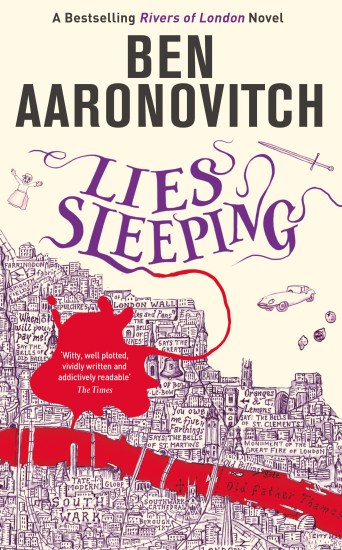
Lies Sleeping by Ben Aaronovitch

Lies Sleeping Cover.jpg

Publishers: Gollancz and Orion Audio (Audiobook format – 15 November 2018)

Series: Rivers of London – Book 7

Length: 10 hours 25 minutes

My Rating: 5 out of 5 stars

Amazon     Book Depository

Prepare to dive headfirst into one of the best urban fantasy series in the world today, with the seventh book in Ben Aaronovitch’s Rivers of London series, Lies Sleeping.

London is a magical place, especially for Peter Grant, Detective Constable and apprentice wizard.  Peter is a member of an elite unit of the London Metropolitan Police, known as the Folly, which is tasked with investigating magical crimes and protecting the city from all sorts of magical threats.  The person at the top of the Folly’s most wanted list is Martin Chorley, also known as the Faceless Man, a magical criminal mastermind who is determined to do whatever it takes to gain power.  However, despite the Met and the Folly’s considerable resources, Chorley is always able to stay one step ahead of those chasing him.

During a routine attempt to subtly panic several of Chorley’s known associates, a magical creature attacks a potential witness.  Peter’s investigation soon reveals that the witness had ordered the forging of a large and mysterious bell, which Chorley is desperate to get his hands on.  As Peter and his team dig deeper in the bell’s construction, they quickly begin to realise that Chorley is the final stages of his master plan, a plan tied deeply into the heart of London’s dark and bloody history, and one which could cause untold disaster for the entire city.

As the clock ticks down, Peter needs to work out the connection between London’s past and the mysterious magical events occurring all over the city.  Can Peter and his team once again save the day, or will their adversary finally obtain the power he has always desired?  Moreover, what will Peter do when he comes face to face with the woman who betrayed him to Chorley, his old partner in the Met, Lesley May?

Ben Aaronovitch is a highly regarded author with an interesting writing history to his name.  His writing career began back in the late 1980s and early 1990s, when he wrote a couple of Doctor Who television serials, including the highly regarded serial Remembrance of the Daleks, as well as three entries in the Virgin New Adventures series of Doctor Who books.  The Virgin New Adventure series chronicled the adventures of the Doctor after the television show’s hiatus in 1989.  Aaronovitch’s three entries in this book series sound incredibly interesting, although they were considered to be somewhat controversial at the time due to their more adult content.  Aaronovitch did not get around to writing his fantasy work until 2011, when he wrote the urban fantasy Rivers of London.  This was the first book in the author’s Rivers of London series of books (alternatively known as the Peter Grant series or the PC Grant series), for which the author is best known for.  The Rivers of London series is very highly regarded, and Aaronovitch has worked hard to expand on the story and universe of this series, writing a number of novellas, short stories and graphic novels on top of the series’ main seven books.

Before Lies Sleeping, I had never got around to reading any of Aaronovitch’s books, despite hearing good things about his main series.  As a result, I was very happy that I finally managed to check out the series earlier this year.  I did receive a trade paperback edition from Hachette Australia, but in the end, I chose to listen to the audiobook version of this book, narrated by Kobna Holdbrook-Smith.  I have to say that I was extremely impressed with this brilliant book and found that I really enjoyed the excellent and captivating story.  Lies Sleeping easily gets a full five-star rating from me, and I fully intend to go back and check out the other books in this series.  This book is an excellent blend of the fantasy and crime fiction genres, both of which come together perfectly to create an extremely compelling and complex read.

Lies Sleeping will prove to be extremely appealing to huge range of people; not only pre-existing fans of the series but also those readers who have not read any of the Rivers of London books before.  As a first-time Aaronovitch reader, I found that it was incredibly easy to step in and enjoy this series, as the author did a fantastic job making Lies Sleeping accessible to everyone.  While Aaronovitch has created a huge amount of lore around his series, including in his novellas and comics, the reader does not need to have any knowledge of these or the previous six books in the series to fully understand the entirety of Lies Sleeping’s story.  However, those readers who do have experience with this series will love how the story continues to development, as well as the massive and surprising twists that occur throughout the book.

At the core of this book lies a series of intriguing mysteries that take place throughout London.  In order to achieve his villainous goals, the antagonist has embarked on a series of seemingly random and chaotic crimes and ventures, all of which apparently form part of his master plan.  These various mysteries or criminal events were really interesting, and I liked trying to work out how they would all come together.  I particularly liked how various parts of these mysteries were deeply tied into the history of London, and the protagonist needed to gain a historical understanding of some of various myths and legends surrounding London.  Watching the protagonist attempt to unwind the complex plan of the book’s villains was extremely compelling, and I had a great time trying to work out what was happening myself.  One or two threads of these mysteries did go unsolved in this book, and I will be curious to see if they are picked up in any of the future entries in this franchise.

Aaronovitch is clearly a very creative writer, as he utilises a huge range of different and fairly unique fantasy elements throughout this book.  While there are a large number of wizards, spells and elvish beings throughout the book, the main focus is on the titular rivers of the series.  The more common magical beings encountered in this series are the personifications of the various rivers and waterways (current and historical) that flow through and around London.  These beings are similar to gods, although the term genius loci may be more appropriate, and have a huge range of powers.  These are a really intriguing addition to the book, and it was interesting to see the protagonist attempt to deal and interact with the various river characters, including his girlfriend, Beverly Brooke (yes, the main character of this series is dating a river).  There is also a huge range of other genius loci, or similar beings, that are featured within the story, including the mysterious and insane Mr Punch.  The magic that the human characters utilise is complex and slightly less ostentatious than some classic pieces of fantasy, but when the master wizards get to work it can be quite impressive.

One of the things I liked best about this book is how the author could create a realistic British police narrative and ensure magic became part of the procedure.  The Folly may be a special branch of the Metropolitan Police, but it is still part of the police force, and as such the characters are forced to follow standard procedure when investigating magical crimes.  Having these elite magical characters fill out paperwork and other various elements of day-to-day police life was deeply amusing.  I did like seeing how regular law enforcement tactics, anti-crime strategies and police combat techniques could be utilised against magical opponents.  The overall fantasy elements of this book are really enjoyable, but I really liked to see them be blended with a classic British police story.

Aaronovitch has done a fantastic job creating a huge and intriguing group of characters for this series.  The protagonist of Lies Sleeping and the Rivers of London series is Peter Grant, police officer and official wizard’s apprentice.  Peter is the sort of protagonist I really enjoy (sarcastic, funny and determined) so I quite enjoyed having him narrate the story, making a number of great jokes throughout.  The other police characters make up a great supporting and diverse cast, with a range of different abilities and characteristics.  I especially liked the classy and wise Detective Chief Inspector Thomas Nightingale, the last officially sanctioned English wizard and Peter’s mentor.  He is an extremely charming and old-fashioned character who has a huge amount of magical power at his fingertips and who can be quite intimidating if he puts his mind to it.  I also quite enjoyed the other magical characters that appeared throughout the book, as Aaronovitch has created a bevy of river gods and associated genius loci characters.  I liked how many of these ancient characters portrayed modern characteristics and ways of speaking, even when talking in a historical context.  Long-time readers of the series will also enjoy the further exploration of several recurring characters, including finally revealing the backstory of the mysterious Mr Punch.

While the protagonists and supporting cast are great characters, I really liked the antagonists in this story.  The main villain of the story is Martin Chorley, also known as the Faceless Man.  He is an excellent antagonist who is built up as a master planner, master magician and crazy villain before you even see him in the book.  His master plan was fairly complex, and the character’s overall arc in this book featured some massive twists that I did not see coming.  Lesley May is another really complex character who is a great addition to the series.  Her relationship with Peter is one of the best parts of the book, as even after her betrayals earlier in the series, he is still trying to save her from herself.  The way this works out in the end is quite dramatic, and it will be interesting to see where it goes from there.

While a large part of this book is set out more as a slow and steady police procedural, there are some fantastic action sequences within Lies Sleeping.  These come about when the protagonist attempts to stop the plans of the Faceless Man, and all manner of chaos erupts.  Nothing highlights this better than an extended action sequence which involves Peter chasing after a van on a bicycle, throwing fireballs, while all manner of debris is magically flung at him and several pursuing police vehicles.  The magical duels between some of the participants, mainly Nightingale and Martin Chorley, can be particularly impressive, but I personally liked how many of the confrontations devolved into fist fights as both sides attempt to distract the other and disrupt their castings.  Plus, where else are you likely to see British police with truncheons attempt to fight evil wizards?  These amazing action sequences really added to the story, and it was great to see all this magic in action, rather than being theorised the entire time.

While I would have already been tempted to give Lies Sleeping a five-star review, the thing that definitely clinches it for me is the amazing audiobook adaption of the novel, narrated by actor Kobna Holdbrook-Smith.  At nearly 10 hours and 30 minutes, this is a moderately easy audiobook to get through, and I had an absolute blast listening to it.  Holdbrook-Smith has an amazing voice and his work narrating this audiobook was just incredible.  His voice for protagonist and story narrator Peter perfectly encapsulated the character and got the full force of his witty and enjoyable personality across to the reader.  I really liked all the voices that Holdbrook-Smith created for the various characters featured throughout Lies Sleeping, especially for some of the magical creatures, who had an air of ancient wisdom in their voices.  However, without a doubt my favourite voice was the one for Nightingale.  The voice chosen for Nightingale is full of all sorts of old British class, and I thought it fit the character perfectly and was one of my favourite parts of this whole audiobook.  Aside from the outstanding voice work, I also quite liked the jazzy music that was played at the start of each chapter.  It gave the book a real noir private investigator feel, and I like how it added to the tone of the book as a whole.  The audiobook version of this book also helped me understand the story a bit better as an outsider to the series, and that, combined with Holdbrook-Smith’s brilliant voice work, makes me completely happy to recommend the audiobook format of Lies Sleeping.

Aaronovitch once again delivers a spectacular read that expertly combines amazing fantasy and crime fiction elements into one widely outstanding narrative.  There are so many excellent elements to this book, and I had absolutely loved my first foray into the Rivers of London series.  I strongly recommend listening to the Lies Sleeping audiobook, narrated by the very talented Kobna Holdbrook-Smith, but those readers who prefer to read their books will also find much to enjoy about this fantastic book.  This is one of the best urban fantasy books I have ever had the pleasure of reading.  I fully intend to go back and check out all the preceding books in this series, and I can’t wait to see where the series goes next.  Five stars all the way.

Amazon     Book Depository

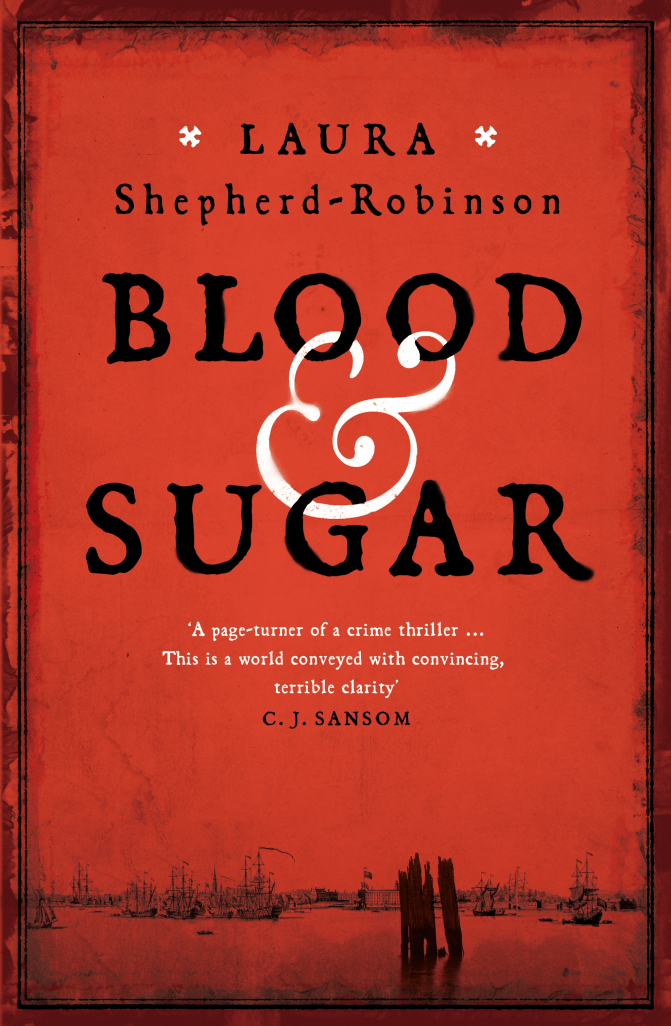
Blood & Sugar by Laura Shepherd-Robinson

Blood & Sugar Cover

Publisher: Mantle (Trade Paperback edition – 24 January 2019)

Series: Standalone/Book 1

Length: 432 page

My Rating: 5 out of 5 stars

Amazon     Book Depository

From the creative mind of Laura Shepherd-Robinson comes this powerful, dark and extremely captivating historical murder mystery, which might just be one of the most impressive debuts of early 2019.

In June 1781, a horrific murder is discovered on the dock of the slaver port of Deptford, outside of London.  The body has been brutally tortured in a variety of ways associated with the slave trade, and his chest has been branded with a slaver’s mark.  The dead man was Tad Archer, a passionate abolitionist who had been causing trouble throughout Deptford as part of his abolitionist campaign.

Days later, Captain Harry Corsham, a war hero who fought in the American Revolution, currently attached to the War Office and about to embark on a promising career as a politician, receives a visit from Tad’s sister, who is searching for her missing brother.  Tad, an old estranged friend of Harry’s, was apparently in Deptford to expose a secret that could potentially end the British slave trade.  Travelling to Deptford, Harry discovers the terrible fate of Tad and is determined to bring his killer to justice.

In order to discover who is responsible for his friend’s the murder, Harry must uncover the secret that Tad believed could permanently end the slave trade.  But as Harry investigates further, he finds himself embroiled in a conspiracy that reaches to the very heart of the realm.  Powerful forces wish to see murder covered up and anyone connected to the dark secret silenced.  Harry soon finds himself on the wrong side of men who can easily destroy his career and family.  Undeterred, Harry presses on with his investigation, but he may prove to be unprepared for the cruel killer stalking him through Deptford.

Blood & Sugar is the debut novel of Laura Shepherd-Robinson, a fantastic new voice in the historical murder mystery genre.  Shepherd-Robinson has created an outstanding novel that masterfully blends a fantastic and clever murder mystery with some powerful and evocative historical content.  The result is a terribly addictive novel that highlights this debuting author’s obvious ability to craft an excellent and compelling story.  From how the story is written, Blood & Sugar will probably be a standalone novel, although I do hope that Shepherd-Robinson sticks with the historical fiction and murder mystery genres, as she has an amazing talent with both.

At the heart of this amazing book is a complex and intriguing murder mystery that sets the book’s protagonist off on a dangerous and dark investigation of the slave trade.  While the investigation is originally focused on the murder of Tad Archer, it spirals out into to encapsulate several additional murders and a larger and more widespread conspiracy which may or may not be connected to the initial murder.  Each of these mysteries is clever, well thought-out and guaranteed to grab the reader’s curiosity and keep them going through the story to work out the incredible solution.  The author has also populated her story with a number of distinctive and complex characters, each of whom has their own hidden secrets and dark pasts.  In order to solve Blood & Sugar’s overarching mystery, the protagonist has to unravel each of these character’s lies and personal secrets, each of which add a new layer to book’s excellent plot.  These characters are all extremely self-serving and naturally suspicious, providing the reader with a huge pool of potential suspects.  The investigation into each of these mystery elements is extremely well written, and I really loved all the solutions to the book’s various mysteries.  I was really impressed with the conclusion to each of the personal mysteries that are uncovered throughout the narrative, and some of them were extremely satisfying to see come to a conclusion.

In addition to the outstanding mystery storyline, Shepherd-Robinson has also created an amazing and realistic historical setting for her story.  I felt that the author did a terrific job capturing the essence of 18th century England, from the streets of London to the docklands of Deptford.  There was a particular focus on the then port town of Deptford, which served as a major plot focus for the book, as well as several other riverside locations.  I loved this examination of Deptford, and I found the examination of this part of its dark history to be absolutely fascinating.  These locations serve as an appropriately dingy setting for such a dark story, and I really enjoyed it.

A major part of this book was the focus on the evil slave trade that was a major business during the 18th century in England.  As part of the plot, the author spends a significant amount of time exploring every facet of English slavery and the slave trade in the 1780s, including the economics behind it, the burgeoning abolitionist movement, slave laws throughout England during this period and how it was a major part of Deptford’s economy and way of life.  These details are extremely interesting and disconcerting, as Shepherd-Robinson pulls no punches when it comes to describing the brutal actions of the slavers and the cold business that they practiced.  The slave trade also serves as an incredibly effective background motive and catalyst for the murders and the conspiracy that the protagonist finds himself drawn into.  The author crafts an incredibly captivating mystery storyline around the English slave trade, and I was both intrigued and appalled to find that certain horrendous elements of this plot were based around a real-life historical slave event.  Blood & Sugar is definitely a must-read for those unafraid to learn more about the cruelty of the English slave trade and who wish to see it creatively used as a major plot point in this captivating story.

While Blood & Sugar featured a number of duplicitous and villainous characters who serve as excellent antagonists, Shepherd-Robinson has also crafted a compelling and layered protagonist to tell this story as the book’s narrator.  On the surface, Captain Harry Corsham is your typical English hero, a former soldier determined to find the man responsible for the death of his friend.  However, as the book progresses, the reader finds out that there is a lot more to Harry’s character than first meets the eye.  Harry is a deeply conflicted character in many ways, but throughout this book he struggles with his opinions about slavery and the abolitionist movement.  In his past he was a strong supporter of abolishing the slave trade, but since he has entered politics and married into an influential family, he is more aware of the current political realities around the slave trade.  But as he spends more and more time investigating the Deptford slave traders, he finds himself being drawn more and more into the abolitionist way of thinking.  The author has also written in a fairly realistic portrayal of PTSD for Harry after the horrors he experienced fighting in the American Revolution.  This is an intriguing character trait, and one that comes into play the more horrors that Harry experiences during this book.  Shepherd-Robinson has also included some amazingly well-written and very surprising personal developments for her protagonist that really change everything in the latter half of the book.  All these character elements add layers to this central protagonist, and I liked the emotional and ethical impacts that they caused on the story.

Overall, I thought that Blood & Sugar was a powerful and captivating historical murder mystery that expertly combines an intriguing and clever mystery storyline with some first-rate historical backgrounds and plot points.  This is an exceptional debut from Laura Shepherd-Robinson which showcases her amazing talent and superb ability as a writer.  This was an easy five stars from me, and I am really excited to see what sort of story this fresh and inventive author writes next.

Amazon     Book Depository

Heads You Win by Jeffrey Archer

Heads You Win Cover.png

Publisher: Macmillan

Publication Date – 30 October 2018

Amazon

From the mind of one of modern fiction’s most controversial authors comes a two-in-one fantastic and elaborate piece of historical fiction that utilises an intriguing narrative device to create one of 2018’s most unique stories.

Young student Alexander Karpenko is the bright, talented and ambitious child of two hardworking citizens of the Soviet Union.  Living in Leningrad in 1968, Alexander’s dream is to become the first democratically elected president of his country.  However, when he is betrayed and his father is killed by the KGB, Alexander and his mother realise that their only hope is to flee Russia and make a new life for themselves in another country.

Arriving at the docks, Alexander and his mother are given a choice between two different ships: one heading to London or one heading to New York.  The decision is made by the flip of a coin, and Alexander’s life splits into two separate paths: one where he heads to Britain and one where he heads to America.  Alexander arrives in these countries with great ambition and a desire to succeed no matter what.

Over the next 30 years, in both these lives, Alexander finds success in a two separate ways.  He fights his way up from the bottom as a lowly immigrant to an influential person, overcoming obstacles and antagonists along the way.  Both Alexanders’ journeys are inspirational, but no matter what these two Alexanders accomplish, the fate of their home country is always on their minds, and the shadow of the Soviet Union constantly surrounds them.

Jeffrey Archer is a rather interesting individual, with a very eventful and controversial background.  A former British MP, Archer is probably better known for the various accusations of fraud he has attracted throughout his life, and he has even spent some time in jail as a result.  However, rather than let that ruin his public profile, Archer has used his experience and imagination to create a number of fascinating novels, many of which utilise aspects of his political, academic or professional life or expertise to some degree.  As a result, Archer is now one of the most high-profile authors in the world and has written over 20 adult novels, including the three books in his Kane and Abel series and the seven books in his bestselling Clifton Chronicles.  On top of that, Archer has also written a number of short stories, a couple of plays, several children’s books and his Prison Diaries, three non-fiction novels that chronicle his life in prison.

Heads You Win is an extremely fascinating novel from Archer, which takes his protagonist on two separate adventures through over 30 years of American and British history and life.  Archer utilises a very clever divergent timelines narrative device (think Sliding Doors), which creates two separate timelines around the different outcomes of one event, in this case, the outcome of a coin toss.  As a result, in one timeline, the protagonists and his mother get on a ship to London, while in another timeline they board a ship bound for New York.  This is a very interesting concept to utilise in this story, and one that works to create two separate narrative threads to follow.  Both of these storylines focus on the protagonist attempting to find his place in the country that he eventually ends up in, and then moves onto the protagonist becoming a powerful and influential individual in his own way, all the while dealing with the terrible people that seem to inhabit Archer’s world.

I rather enjoyed both of the separate storylines in this book, and had a lot of fun seeing the different or similar ways that the protagonist attempted to make his fortune in each lifetime.  The differences between these two storylines happen right away, as in the London timeline, Alexander and his mother find themselves on a nice ship with a friendly crew who mostly want to help, while the New York timeline finds them in a poorly maintained vessel with a self-serving crew who seek to exploit the two main characters.  I found it rather fascinating to see the way that their treatment and the environments they find themselves in change the way in which they act.  For example, Alexander’s experience in the English setting encourage him to seek the full Cambridge academic lifestyle, while his American counterpart was less focused on his formal education and learned more on the street.

Both of these divergent timelines feature an intriguing look at the cities and countries that the protagonists end up in, and both serve as a good historical backdrop to each of the main storylines, featuring several real historical events and some historical characters.  For example, the Alexander who ends up in the American timeline is forced to fight in the Vietnam War, while the British Alexander rubs elbows with a number of the country’s prominent politicians.  I liked how the divergent ways that the two separate protagonists gained their power and prestige matched the country that there were in.  The American Alexander became rich through his business acumen and financial brilliance, while the British Alexander went the academic route and eventually become deeply involved with the British political system, something close to the author’s heart.  Not only does this help match the locations and people that the protagonist deals with, but it allows the two separate stories to diverge out slightly, with the British storyline containing political intrigue, while the American storyline reads a little bit more like a financial thriller.  While the focus on the protagonist’s two adopted homelands is a great part of this novel, the protagonist’s history in the Soviet Union is a major part of this story.  The initial chapters capture the uncertainty and despair that inhabitants of the Soviet Union would have felt in the 1960s, while the character’s subsequent visits helped highlight the obvious differences between the Soviet Union and the countries that Alexander escaped to.  There is also a rather exciting reveal about one of the Russian characters towards the end of the book that will prove to be the most memorable part of Heads You Win, and is definitely something to look out for.

While I enjoyed the divergent timelines narrative device that Archer employed throughout Heads You Win I did feel that he could have done more with it.  I would have loved to see a bit more crossover between the two separate timelines, and, for example, see how key characters from one storyline would have fared without their Alexander in their lives.  Instead there is minimal crossover between these two separate storylines, which feels like a bit of a missed opportunity.  I am also not the biggest fan of what these quick crossovers revealed, as it strongly hinted that both storylines actually exist together at the same time, and as a result, there are two Alexanders existing in the world at the same time.  This is a bit of a weird twist, and while it does not negatively impact the vast majority of either storyline, it does result in a conclusion that some may find slightly confusing.  As a result, while this did slightly mark down my rating of Heads You Win, the split storyline concept is a fantastic and unforgettable part of this book and makes it quite a distinctive read.

This latest novel from one of the world’s most colourful professional authors is a fun, historical thrill ride that features a very unique and memorable narrative device.  With a great look at two different countries during the same historical time period and featuring two separate by similar stories of life, adversity and success, this is an extremely enjoyable novel that will appeal to a varied range of readers.  Heads You Win is definitely worth checking out, and I am planning to keep an eye out for the next read from Archer.

My Rating:

Four stars

Amazon