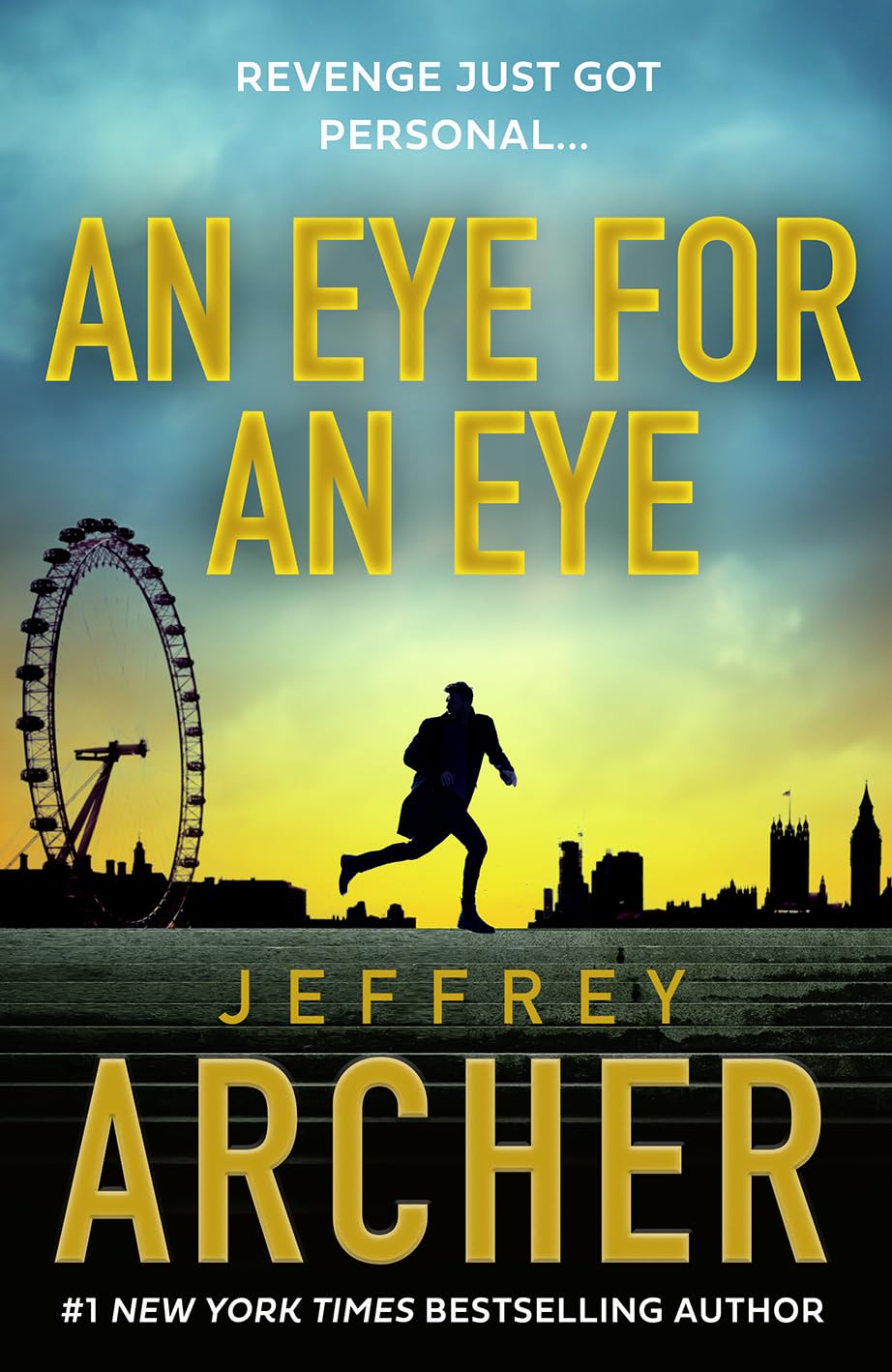
Quick Review – An Eye For An Eye by Jeffrey Archer

Publisher: Harper Collins (ebook – 24 September 2024)

Series: William Warwick – Book Seven

Length: 384 pages

My Rating: 4.5 out of 5 stars

Amazon

One of the world’s most interesting and well-known authors, Jeffrey Archer, returns for the penultimate entry in his long-running William Warwick series, An Eye For An Eye.

Well-known British figure Jeffrey Archer has carved an intriguing niche for himself as a crime fiction author over the last few decades.  Known for his compelling and fast-paced crime fiction reads, which often contain a historical element to them, Archer has written a huge body of work, including his Kane and Abel books, his Clifton Chronicles and standalone novels such as Heads You Win.  His most recent focus has been his entertaining William Warwick series, which follows the titular protagonist as he rises the ranks of the Metropolitan Police over a period of years while solving a series of complex crimes and facing off against his dastardly nemesis.  I have had a brilliant time with several books in this series, including Nothing Ventured, Hidden in Plain Sight, Turn a Blind Eye and Traitors Gate, all of which have proven to be quite exciting and enjoyable.  As such, it was an easy choice to grab the latest entry in the series, An Eye For An Eye, which had an excellent plot behind it.  The seventh book in the series, An Eye For An Eye is the second to last William Warwick book, and Archer keeps the excitement going all the way to the end.

Plot Synopsis:

In one of the most luxurious cities on earth…

A billion-dollar deal is about to go badly wrong. A lavish night out is about to end in murder. And the British government is about to be plunged into crisis.

In the heart of the British establishment…

Lord Hartley, the latest in a line of peers going back over two hundred years, lies dying. But his will triggers an inheritance with explosive consequences.

Two deaths. Continents apart. No obvious connection.

So why are they both at the centre of a master criminal’s plot for revenge?

And can Scotland Yard’s William Warwick uncover the truth before it’s too late…

The ultimate race-against-time is about to begin.


Archer pulls together another compelling, intense and exciting story for An Eye For An Eye that combines an intriguing new storyline with some of the series’ existing plotlines.  Starting off with a murder in Riyadh that throws the British government into turmoil, the plot sees William Warwick and his team drawn into an international concern, as one of their team members, the roguish Inspector Ross Hogan, is recruited to save a British government delegate and the heir to the Hartley family, who has been framed and falsely imprisoned for murder.  However, things become even more problematic when the protagonist’s old criminal rival, Miles Faulkner, becomes involved with the plot, desperate to not only have his revenge against Warwick, Hogan, and their loved ones but also steal a valuable letter from the Hartley family.

What follows is the usual game of cat and mouse between the protagonists and the vengeful Faulkner, as Warwick’s team attempts to counter the criminal’s various ploys, while also trying to find evidence that will allow them to put him away again.  This combines nicely with the larger storyline around the international conspiracy involving the imprisonment of the British delegate, and I liked the compelling back-and-forth twists as the protagonists doggedly try to stop Faulkner getting out on top.  There are some fun twists as we get towards the end of the book, and readers are treated to the usual fast-paced excitement that they have come to know and appreciate over the course of the series.  Everything comes together nicely in a gripping cliffhanger conclusion as Archer lays the groundwork for the final book in the series, which looks set to be the big showdown between the long-time series rivals.

As with the previous books in the William Warwick series, An Eye For An Eye was a really entertaining and fast-paced read that kept dragging the reader along with it.  Featuring a wonderful blend of intrigue, schemes, complex thrills and interesting character work, An Eye For An Eye was very fun and you honestly have a hard time putting down the constantly moving story.  Archer once again brings back his eccentric group of protagonists, which include Chief Superintendent William Warwick, his boisterous family, the various key police officers he has teamed up over the years, as well as a fun collection of rogues and victims introduced in this plot.  Thanks to Archer’s use of quick-changing character perspectives, you get an interesting look at the plot from various points of view, which allowed for an intricate tale with a lot of moving parts to it.

Out of all these characters, my favourite has to be the main series antagonist, Miles Faulkner, a master criminal and schemer who the protagonist has been feuding with since the very first novel.  Thanks to their lengthy history and many defeats, Faulkner is a little obsessed with Warwick, Hogan, and their colleagues and families, engaging in a series of plots against them that range from killing their key witness to trying to get Warwick’s wife fired from her gallery directorship.  While this rivalry and the elaborate means that Faulkner utilises to spite and try to destroy the protagonists is very over the top, especially as it has been going now for seven books and over 20 in-series years, it is frankly very entertaining, and I love how much energy Archer puts into writing Faulkner as the ultimate gentleman criminal.  The back-and-forth schemes and ploys between Faulkner and the protagonists are always a highlight of any book in the series, and An Eye For An Eye showcases this perfectly, delighting both new readers and those already invested in the long-running feud.  Indeed, the conclusion of this book brings this into focus perfectly, and I cannot wait to see how they finish off this feud in the final William Warwick book later this year.

Jeffery Archer once again impresses with his exciting and captivating William Warwick novel, An Eye For An Eye.  Setting his fun protagonists on a compelling new crime fiction adventure while also featuring the author’s fantastic recurring villain, An Eye For An Eye had me hooked the entire way through, and it is so easy to sit back and enjoy this fantastic read.  A gripping and highly enjoyable novel, I look forward to seeing how Archer wraps up the series with his next and final William Warwick book.

Amazon

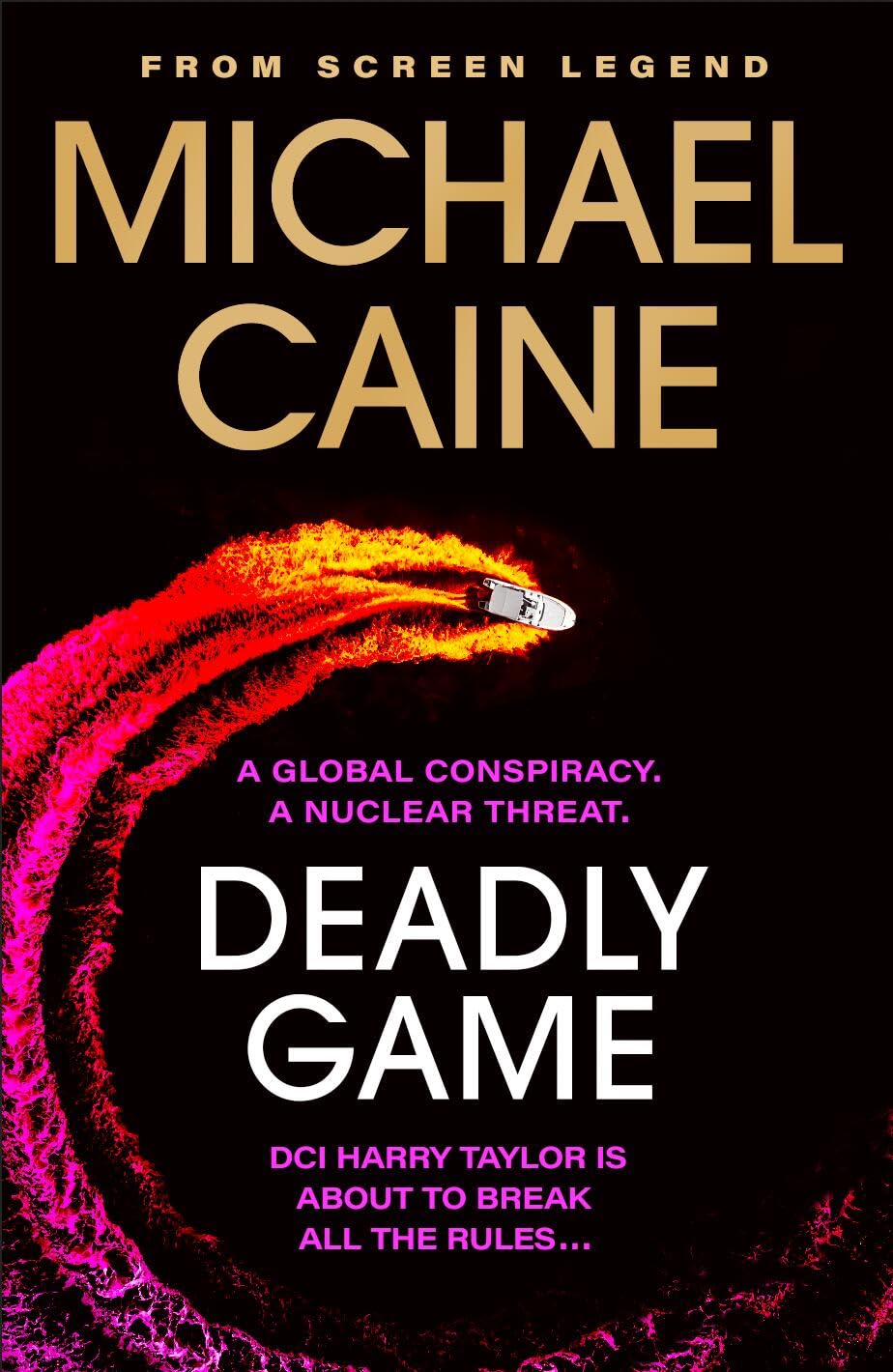
Quick Review – Deadly Game by Michael Caine

Deadly Game Cover

Publisher: Hodder & Stoughton (Trade Paperback – 28 November 2023)

Series: Standalone/Book One

Length: 327 pages

My Rating: 4 out of 5 stars

Amazon

Legendary actor Sir Michael Caine presents his debut novel, the fun and ultra-exciting thriller, Deadly Game, which follows a maverick cop investigating a case with world-changing implications.

I’m sure I’m not the only person who was surprised when they saw that Michael Caine was releasing a novel in late 2023.  While I absolutely love Michael Caine as an actor, I didn’t realise he had any aspirations as an author, so Deadly Game was easily one of the more interesting releases of last year.  As I am a fan of unusual thrillers, I naturally had to get my hands on a copy of this book, especially as it had an interesting plot behind it.  While I was mainly intrigued by its author, Deadly Game proved to be a wonderful and compelling book that I had a great time reading.

Plot synopsis:

DCI Harry Taylor has no respect for red tape or political reputations – but he’s great at catching criminals.

And all his unorthodox skills will be needed as an extraordinary situation unfolds on his a metal box of radioactive material is found at a dump in Stepney, East London, but before the police can arrive it is stolen in a violent raid.

With security agencies across the world on red alert, it’s Harry and his unconventional team from the Met who must hit the streets in search of a lead. They soon have two wildly different suspects, aristocratic art dealer Julian Smythe in London and oligarch Vladimir Voldrev in Barbados. But the pressure is on. How much time does Harry have, and how many more players will join the action, before the missing uranium is lighting up the sky?

Caine had an interesting story idea for Deadly Game that I think worked quite well.  The mysterious and violently taken radioactive material amps the stakes of the book right off the bat, and it perfectly sets up the story about DCI Harry Taylor’s team being let off the leash to hunt down the material without any oversight or restrictions.  The early goings of this story are a lot of fun, and I liked the build-up of different villains who might be involved in the theft.  The book got particularly fun when Caine introduced the two rival crime lords, Julian Smythe and Vladimir Voldrev, who come in as major suspects to the crime.  Due to their connections, it is likely that at least one has the material or knows where it is, and their extreme hatred for each other means that they are willing to trade stories about their rival to the police.  I loved the fantastic way that Caine portrayed both these over-the-top villains, and their introductory scenes with the protagonist, as well as some of the fun background that went into them, were highly entertaining, especially as they both played off the serious protagonist extremely well.

The second half of Deadly Game is where the fun really begins, as Taylor and his team get close to finding the material, only for their various opponents to get the drop on them in several ways.  There are some great scenes here, and I liked the efficient way in which Taylor and his team deal with the neo-Nazis for example.  However, things take a pretty major turn near the end, and it was a bit surprising just how far Ciane took this part of the story.  I loved the sudden darker tone that resulted, and it made for quite an intense final third of the book.  Everything leads up to the big confrontation with the hidden antagonist of the novel, and I really loved the fun, well-planned out and utterly over-the-top twist that resulted here.  It was somehow simultaneously smart and ridiculous, and I loved everything about it.  The story wraps up quite nicely from there, and there are hints that Caine might have some sequels in the works, which I personally wouldn’t mind, as I had a lot of fun with the outrageous narrative in Deadly Game.

Deadly Game had a quite a unique feel to it that revels in its roughness and over-the-top nature.  Something about how the characters talked and acted felt very cockney, and it honestly reminded me a lot of some of the author’s tough-guy roles in film.  While certain elements of this writing style aren’t going to appeal to everyone, I had a fun with it, and particularly enjoyed the amazing action scenes, the intriguing characters, and the elaborate and fun scenarios that emerged.  While some of the characters, both protagonist and antagonist, are a little silly and weird in places, they still proved to be a fantastic group of people to follow, and the resulting chaos from their actions makes for an excellent story.  The main character’s portrayal as a cop who hates politics and red tape and just wants to get the job done wasn’t amazingly original, but it worked for the story being told, and Caine did try to make him somewhat nuanced.  I think that Caine got the right balance of intrigue, mystery, suspense and action throughout the course of Deadly Game, and I was very interested in finding out who was behind the events and how things unfolded.  There was something cinematic in a lot of the resulting scenes, and it wouldn’t surprise me if Caine had a film adaptation in mind whilst writing it. Indeed, a Guy Ritchie directed version of Deadly Game could be pretty fun, especially if they got Hugh Grant in to play either of rival gangsters.

Overall, I had a great time with Deadly Game, and it proved to be an awesome and interesting debut from the legendary Michael Caine.  While not everyone is going to love this novel, I felt it was really entertaining, and it was great to dive into its outrageous plot, especially with some of the big moments and twists towards the end.  As such, I would recommend this book to anyone looking for something exciting, and if the idea of a thriller written by Michael Caine appeals to you, then you’ll probably enjoy Deadly Game.  It will be interesting to see what happens to this in the future, and I personally wouldn’t mind some sort of adaptation or sequel at some point.

Amazon

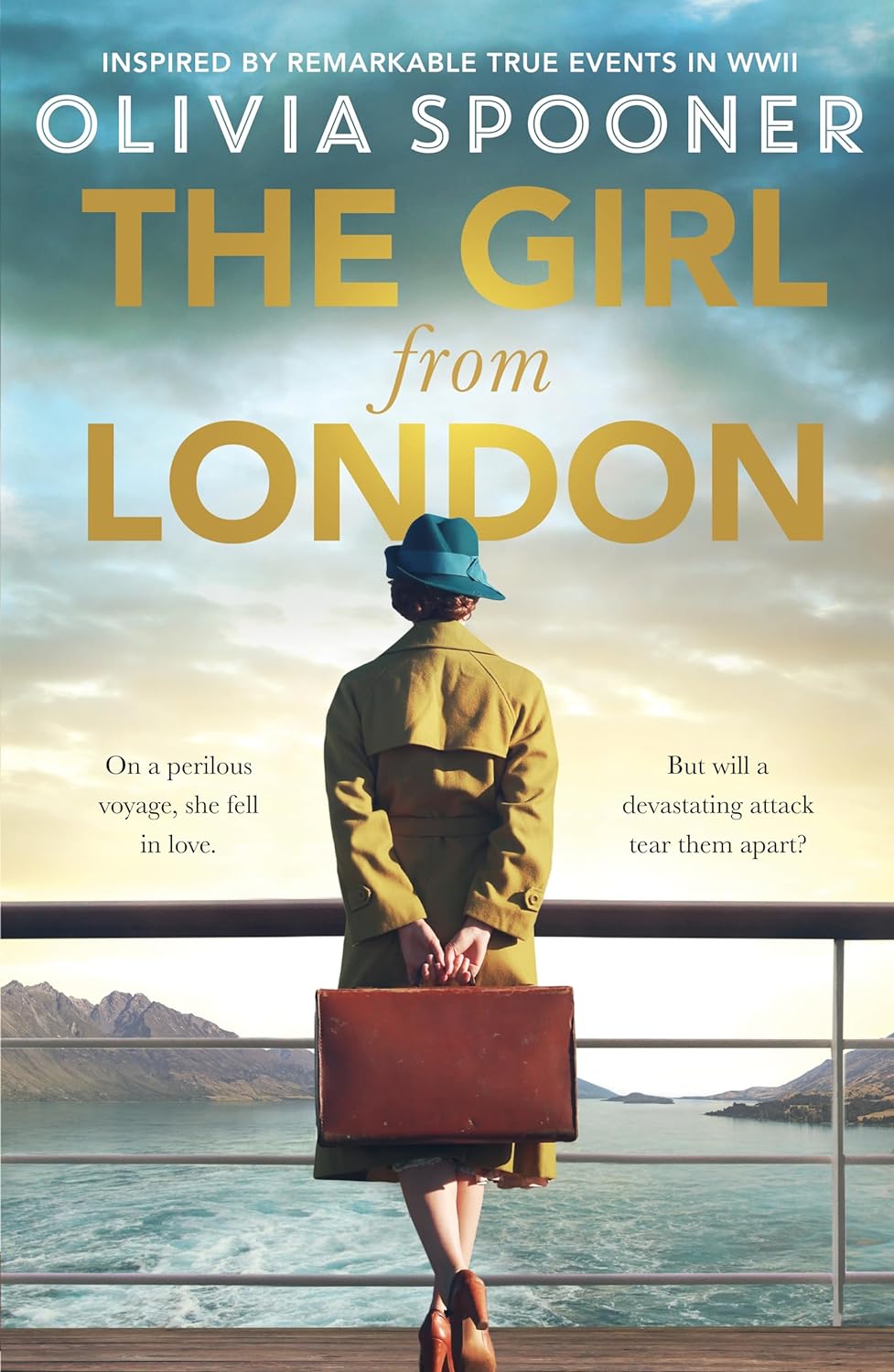
Quick Review – The Girl From London by Olivia Spooner

The Girl From London Cover

Publisher: Moa Press (Trade Paperback – 14 November 2023)

Series: Standalone

Length: 314 pages

My Rating: 4.25 out of 5 stars

Amazon

Fantastic New Zealand author Olivia Spooner presents her first dive into historical fiction, with the intriguing and clever historical drama, The Girl Form London, an outstanding read that proved quite fascinating.

Plot Synopsis:

London, 1940. Ruth, a young schoolteacher, volunteers as an escort helping to evacuate children from war-torn England to Australia and New Zealand. Her three-month voyage is fraught – their passage is perilous, and the children anxious and homesick. Nine-year-old Fergus is more troubled than most and Ruth forms an unexpected bond with the boy.

It’s not just Fergus who captures Ruth’s attention. Bobby, a fellow volunteer who initially infuriates Ruth with his laidback charm, somehow gets under her skin and throws her ordered life into chaos.

Tragedy strikes on their return voyage, when the Rangitane is attacked by German raiders. As the ship goes down, the surviving passengers are taken as prisoners of war aboard the German vessel. To the rest of the world, they are missing, presumed dead.

New Zealand 2005. Hazel boards a plane to London, eager to explore Europe. Sitting next to her is a man named Joe. On her lap is a treasured book from her grandfather, Fergus. A book that will finally reveal Ruth’s story.

A captivating, heart-wrenching story of love, loss, and the resilience of the human spirit that will stay with you long after you turn the final page.

This was an outstanding novel from Spooner that took the reader on an enchanting and tragic adventure during some very distinctive moments from World War II.  Spooner chose to tell The Girl From London’s narrative through the somewhat overused medium of a young person in modern times learning about the struggles their older relatives went through during the war.  However, I rather enjoyed Spooner’s take on this writing trope by having her modern characters getting invested in a novel that covers the adventure of Hazel’s grandfather and the people that were important to him as a child.  This not only allowed the author to dive back into the unique story generated in the past but also allowed for a quite good and heartfelt romance story to occur in the present as Hazel and Joe have a meet-cute which develops naturally into a compelling, complex relationship.

While this modern storyline was interesting, I much preferred the storyline set in the past surrounding Ruth’s journey from England to Australian and New Zealand and then the tragic events aboard the Rangitane.  That entire journey away from England was pretty darn fascinating, and I loved the captivating details of how the children were being transported to safety, the inherent tragedy of their journey, and the complicated figures who volunteered to help escort them to a new life.  Spooner covers the historical aspects of their journey extremely well and the first half of their story is quite powerful and lovely, especially as she takes the time to explore the various characters, their developing relationships, and their complex motivations for being on the ship.

The Girl From London takes a fascinating turn once the main characters start the second part of their journey aboard the Rangitane.  The historical events covering the sinking of this ship off the coast of New Zealand during the war is absolutely amazing, and despite a love for history and a good knowledge of World War II history, I had personally never heard of the Rangitane before.  As such I was really enthralled by this real-life tale, and Spooner told it magnificently, examining the taking of the ship in detail and showcasing all the remarkable events that followed.  While these events in themselves are fascinating, Spooner makes them even more compelling by tying her great characters into this historical event.  By this point of the book, you’ve come to care for the characters, so having them involved in this tragedy really raises the stakes for the reader, especially as you know something bad has to happen to Ruth at some point.  This entire part of the book was pretty remarkable, and I really got caught up in how everything unfolded.

I think that Spooner did a pretty good job of bringing the two separate storylines together in an effective and enjoyable way.  As I mentioned above, I liked Spooner’s version of the relative finding out their grandparent’s story here, and the constant breaks in the World War II storyline to explore Hazel and Joe’s burgeoning relationship gave the story a distinctive flavour.  Honestly having her grandfather’s story not become Hazel’s entire identity was quite refreshing compared to other historical dramas I’ve read and I liked the mixture of storylines that emerged.  Still, it was good to get some closure on the main storyline surrounding Ruth, and I liked the emotionally powerful way that Spooner chose to have her story be told.  The ending is both tragic and heartwarming in all the right ways and this ended up being quite an excellent read.

Overall, The Girl From London is a wonderful and compelling historical drama that I had a fantastic time reading.  Olivia Spooner produced a compelling and emotionally charged narrative, that examines romance, sacrifice and the power of choices across the generations, while also diving into a fascinating historical event.  This ended up being an amazing book and Spooner definitely showcased her ability as an author in her first foray into historical fiction.

Amazon

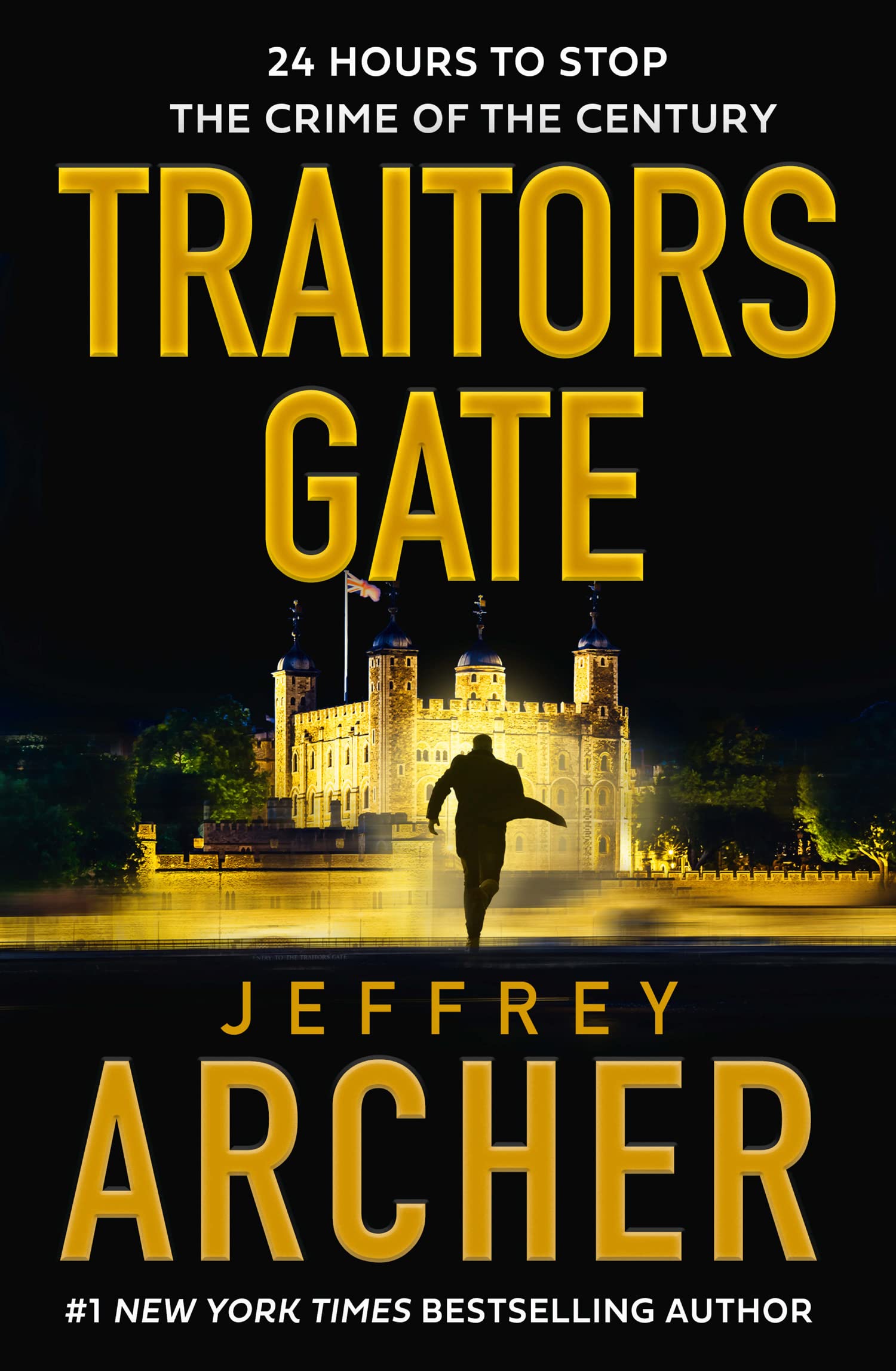
Traitors Gate by Jeffrey Archer

Traitors Gate Cover 2

Publisher: Harper Collins (ebook – 26 September 2023)

Series: William Warwick – Book Six

Length: 384 pages

My Rating: 4.5 out of 5 stars

Amazon

Bestselling author Jeffrey Archer returns with another exciting addition to his fun and compelling William Warwick series with Traitors Gate.

Jeffrey Archer is a well-known and interesting British figure: a former politician, a convicted criminal, a life peer and member of the House of Lords.  However, these days Archer is best known as a bestselling author, having written a large catalogue of novels that usually contain a historical or thriller element to them.  Some of his works include the Kane and Abel series, his well-known Clifton Chronicles and a range of standalone books like Heads You Win.  I particularly enjoy the William Warwick series, which is a fun and entertaining collection of historical thrillers.

The William Warwick novels, which originated within the fiction universe of the Clifton Chronicles series, follows the life and career of titular protagonist William Warrick, an idealistic London police officer who rises through the ranks while solving a series of dastardly crimes.  This series, which is defined by its character-driven plots, new criminal focuses for each novel, and the protagonist’s bitter rivalry with a notorious crook, are always very entertaining and feature some compelling stories.  I personally really enjoyed the first three books in the series, Nothing Ventured, Hidden in Plain Sight, and Turn a Blind Eye, although I unfortunately missed the next two books in the series.  Luckily, I was able to grab a copy of the upcoming sixth William Warwick book, Traitors Gate, which honestly might be one of the best entries in the series.

London, 1996.  There is nothing more sacred nor valuable in the entire realm than the crown Jewels of England.  Kept secure within the Tower of London, the jewels are only brought out once a year for the Queen to attend the State Opening of Parliament.  Providing security for the transfer between the Tower and the palace is one of the most important jobs done by the Metropolitan Police, and this vital duty is now overseen by Chief Superintendent William Warwick and his crack team.  Thanks to all the elaborate precautions around the transfer, the jewels are considered unstealable, but there is one audacious crook who is about to prove them wrong.

For years, William has sought to bring down notorious criminal mastermind Miles Faulkner, a gentleman thief and deadly rogue who has brought nothing but misery to William’s friends and family.  But despite the best effort of William and the men under his command, Faulkner has always managed to elude justice as he continues to hatch his despicable plots and thefts.

However, Faulkner also has a vengeful streak, and when William manages to finally get one over on his rival by recovering a stolen artwork, Faulkner decides it is time to get his final retribution against William and everyone close to him.  Pulling together a team of rogues and villains, Faulkner sets in place his boldest plan yet: steal the Crown Jewels and ruin the career of William and the other police involved in its protection.  Can William stop this plan before everything he loves is destroyed, or has Faulkner finally won their decades-long game of cat and mouse?

Archer continues to impress with his latest William Warwick book, which honestly had me hooked the entire way through.  An intriguing continuation of his fun ongoing series, Traitors Gate was a great character-driven thriller that was fun from start to finish.

Traitors Gate has a great story to it that expertly combines existing storylines from the series with an excellent and wildly entertaining new plot.  Once again focusing on protagonist William Warwick and fantastic antagonist Miles Faulkner, Archer sets up a great story that takes their rivalry to a new level.  The author does an outstanding job of setting this up, with the early parts of the novel recapping key events from the previous William Warwick novels whilst highlighting the protagonist’s current role in protecting the Crown Jewels.  The first half of Traitors Gate follows some intriguing story threads focused on several key existing characters that eventually lead to William getting one over on Faulkner in their long-running feud.  This first half of this book is very entertaining, especially as the rivalry between the protagonist and antagonist is so damn fun, and you really get drawn into the unique and continuing character stories.

The second half of the book really amps up a notch as Faulkner initiates a series of elaborate and daring revenge plots against those who wronged him, while also setting up his master heist.  These various storylines, which include a con job and a fantastically fun court sequence, work together well to tell an excellent overall story, and they play into the build-up for the big conclusion extremely well.  However, the crown jewel (pun intended) of the plot has to be the great heist scene, which was so damn tense and exciting.  Archer sets the entire thing up perfectly, and by constantly switching back and forth between various characters on both sides, you get quite the intense and captivating sequence.  This entire heist is a ton of fun from conception to implementation and leads to a compelling final part of the novel which sees the characters all desperately trying to come out on top.  The various elements of this, from the fun characters involved, the multiple elaborate steps the antagonists take, and the ticking clock the protagonists need to beat, are designed to keep the reader on their toes, and I had such a fun time seeing everything unfold.  The entire story honestly comes together extremely well, and frankly this was one of the more impressive and addictive stories that Archer has come up with yet.

Archer pulled this excellent story together in his typical style that focuses on the characters and makes great use of quick jumps between various perspectives.  I loved the multiple fantastic storylines that emerge as a result, and the author does a great job of balancing the various elements and character arcs.  Archer also proves very apt at building suspense and laying down the ground work for the key sequences for his story where the real magic happens.  Watching some of the more impressive scenes, such as the excellent entertaining court sequences (which are generally the highlight of all the William Warwick books) and the brilliant heist, are so much fun, and you really appreciate the planning and build-up he puts into it.  The author also makes excellent use of the 1990s London setting for the majority of the plot, and I have really enjoyed how the William Warwick books have moved from the 80s to the 90s, incorporating real-life events as they go.  The 1996 election plays a key role in the plot of Traitors Gate, and I loved the historical colour that Archer added to the plot, including a great in-story presentation about Colonel Blood and his own infamous Crown Jewel heist.  I also really need to highlight the way that Archer makes each of his novels inclusive and open so that new readers can easily dive into Traitors Gate.  Thanks to some quick and effective recaps and reintroductions, new readers can start the series at Traitors Gate without any issues, and indeed even after missing the last two books in the series, I was able to dive in without any pause at all.  This book comes together so well and I had a great time reading it.

I really need to highlight the fantastic and outrageous characters the plot of Traitors Gate follows.  Throughout the course of six William Warwick books, Archer has built up quite an intriguing cast of characters to follow, and he does an excellent job of breaking up the story between them.  There is a notable divide between the protagonists and the antagonists throughout the course of Traitors Gate, and watching the cast play off each other with their moves and countermoves is exceedingly fun.  Each of the protagonists, especially the police characters, are very righteous in their dealings (William goes by the nickname “Choir Boy”, for example), although they aren’t averse to breaking the rules if it gets them justice, which makes for some great scenes.  However, it’s the baddies are the ones who really make the book extremely entertaining.

Archer has done such a great job building up main antagonist Miles Faulkner throughout the course of the series, and the elaborate and spiteful rivalry he forms with William and his friends drives so much of the plot.  Faulkner honestly steals every scene he is in with his elaborate schemes, villainous persona, and sheer petty hate of the protagonists, and I have so much fun following throughout the book.  I also have a lot of fun with secondary antagonist Booth Watson QC, Faulkner’s lawyer, who seems to act for every criminal and villain in the William Warwick series.  A morally corrupt lawyer who specialises in every devious legal trick you can think of, Watson is nearly as bad as Faulkner, and he proves to be such a delightful thorn in the protagonist’s side.  Watching him legally manipulate and pontificate is so much fun, especially when he faces off against William’s straightlaced and proper father, Sir Julian Warwick, who he brings out the worst in.  These two characters are at their best when they face off against each other in the courtroom, and it so damn entertaining to see them get childish and outraged in the middle of a trail.  These characters, and more, add so much enjoyment to Traitors Gate and I look forward to seeing the epic rivalry between William and Faulkner continue in the future.

Jeffery Archer has produced a fantastic and awesome new addition to his always entertaining William Warwick series with Traitors Gate.  Featuring a fun and inventive narrative that makes great use of the bitter rivalries of Archer’s well-established cast, Traitors Gate is a highly addictive and exciting novel that has some outstanding moments to it.  Slick, hilarious and always compelling, Traitors Gate is an amazing novel that is well worth checking out.

Traitors Gate Cover

Amazon

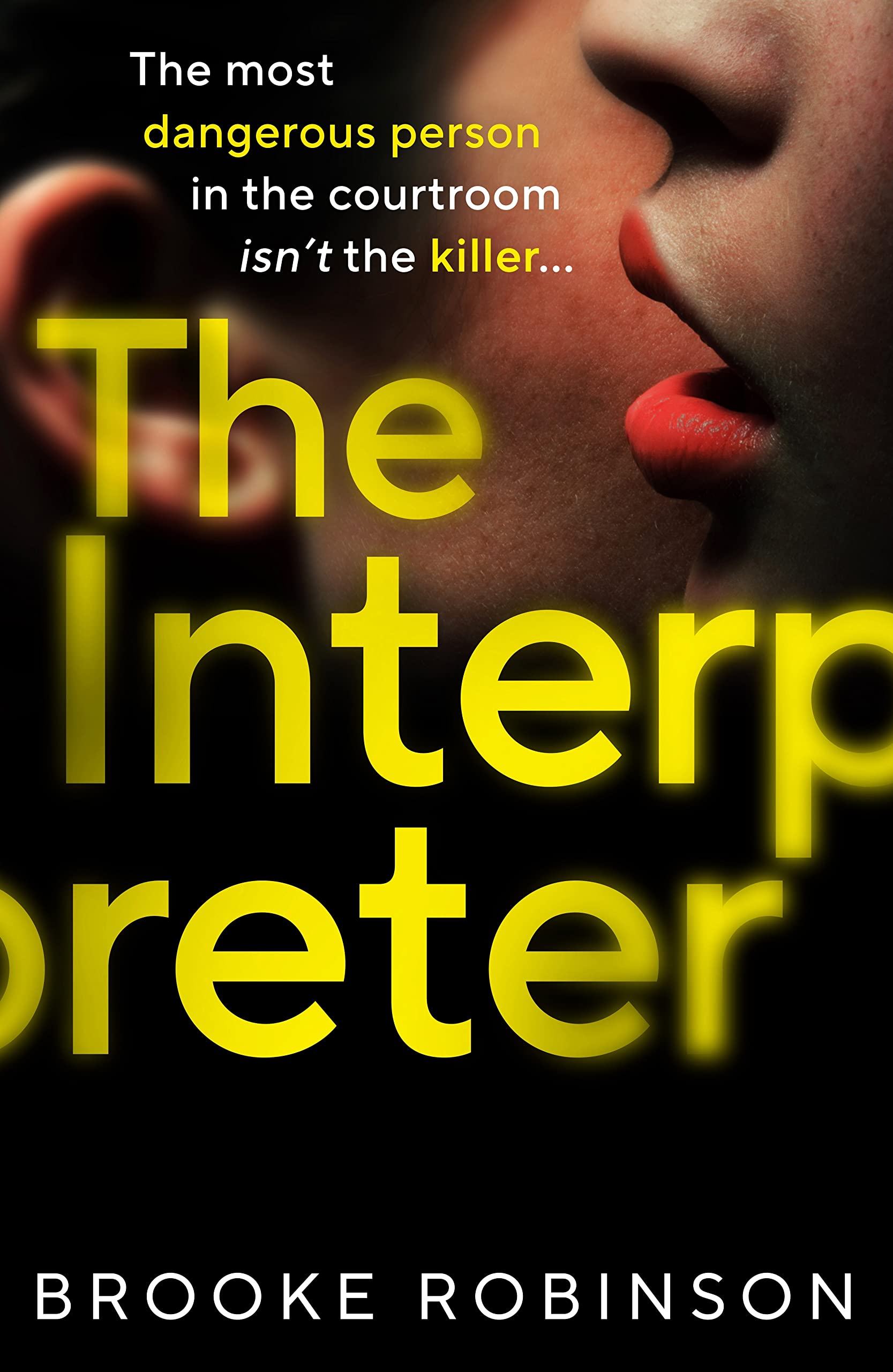
Quick Review – The Interpreter by Brooke Robinson

The Interpreter Cover

Publisher: Harvill Secker (Trade Paperback – 6 June 2023)

Series: Standalone

Length: 317 pages

My Rating: 4 out of 5 stars

Amazon

Debuting Australian author Brooke Robinson presents an intriguing and captivating first novel with The Interpreter, which looks at a previously unseen player in the crime fiction genre, the person translating testimony in the background.

Plot Synopsis:

THE MOST DANGEROUS PERSON IN THE COURTROOM ISN’T THE KILLER…

Single mother Revelle Lee is an interpreter who spends her days translating for victims, witnesses and the accused across London. Only she knows what they’re saying. Only she knows the truth.

When she believes a grave injustice is about to happen, and a guilty man is going to be labelled innocent, she has the power to twist an alibi to get the verdict she wants. She’s willing to risk it all to do what’s right.

But when someone discovers she lied, Revelle finds the cost might be too high… and she could lose everything, including her son.


The Interpreter
proved to be a very interesting book that I had a good time getting through.  Following the titular interpreter, Revelle Lee, The Interpreter had a very cool crime fiction story to it that contained both mystery and a compelling dark thriller element to it.  I loved how the story focused on an interpreter in the legal scene, and Robinson did a very good job of diving into this unique profession, especially as the author takes a ton of time to show how such individuals work and the range of scenarios they might find themselves in.  The author also provides the reader with a compelling introduction to the character of Revelle Lee, a dedicated interpreter with a past who is trying to learn the parenting ropes after adopting a boy from a troubled home.

The main story quickly dives into Revelle’s life as she balances her interpreting duties with being a single parent who nothing seems to go right for.  You soon begin to realise how complicated Revelle’s life is, especially as she is constantly worrying about her new child being taken away from her.  Initially shown to be necessarily neutral in the courtroom, Revelle becomes personally invested in a case when someone she knows becomes the victim of a terrible attack.  When she is required to interpret for the police in this case, she alters the witness’s testimony to ensure the potential suspect has no alibi.  I love this intriguing slide away from impartiality that she adopts, especially as it builds off some of her prior frustrations, and she starts to implement her new idea of justice into some of her other jobs.  However, this decision eventually brings some degree of regret when it turns out one of the people she worked against might have been innocent, and she tries to find out the truth.

It is around this time that the author works in a secondary point of view character, a mysterious figure who is stalking Revelle and her son, working from the shadows to destroy her.  This intriguing hidden antagonist works to increase the tension of the plot, and their eventual identity is tied to the secrets from the protagonist’s past, which is being simultaneously explored to give her more depth and a tragic background.  Robinson soon works these story elements together in a very interesting way, and the final third of the plot is loaded with particularly tense moments as the protagonist tries to deal with the attacks from unseen angles, as well as the increased demands on her interpreting ability as she tries to determine the right course of action to take.  I liked how the plot came together, although the identity of the mysterious antagonist did come a little out of nowhere.  Still, this was a well-crafted and intriguing story, and it was fascinating to see more details about interpreters.

While I did enjoy this fantastic novel, I did have some issues getting too attached to the protagonist, and this reduced my overall enjoyment a bit.  I appreciated the deep dive into the world of professional interpreters through Revelle’s eyes, as well as her complex past and desire to be a good parent, but I honestly had a hard time liking her.  This is probably because there was a certain narrative stupidity to her as she makes the worst decision possible for herself and her child time and time again.  While this is usually fine in fiction, I found myself getting a little annoyed at times with how she acted, and this impacted how much I wanted to see her succeed.  I did enjoy how Robinson tried to showcase through Revelle’s actions the importance of being neutral in the legal system, as her desire to get justice has major consequences for her.  However, the protagonist fails to learn from her mistakes, even at the very end, which was very frustrating.  This was probably the main issue I had with The Interpreter, and while it was mostly outweighed by the book’s positive features, these character elements really bugged me.

Overall, I felt that The Interpreter was a pretty solid debut from Brooke Robinson, who has an interesting future in crime fiction.  While the plot and the characters did have some issues, this was a compelling and intriguing read, especially as Robinson expertly captured the experiences and insights of professional interpreters in the legal and criminal justice fields.  I really enjoyed seeing how The Interpreter unfolded and this book is well worth the read for people interested in a fantastic crime fiction novel with a distinctive hook to it.

Amazon

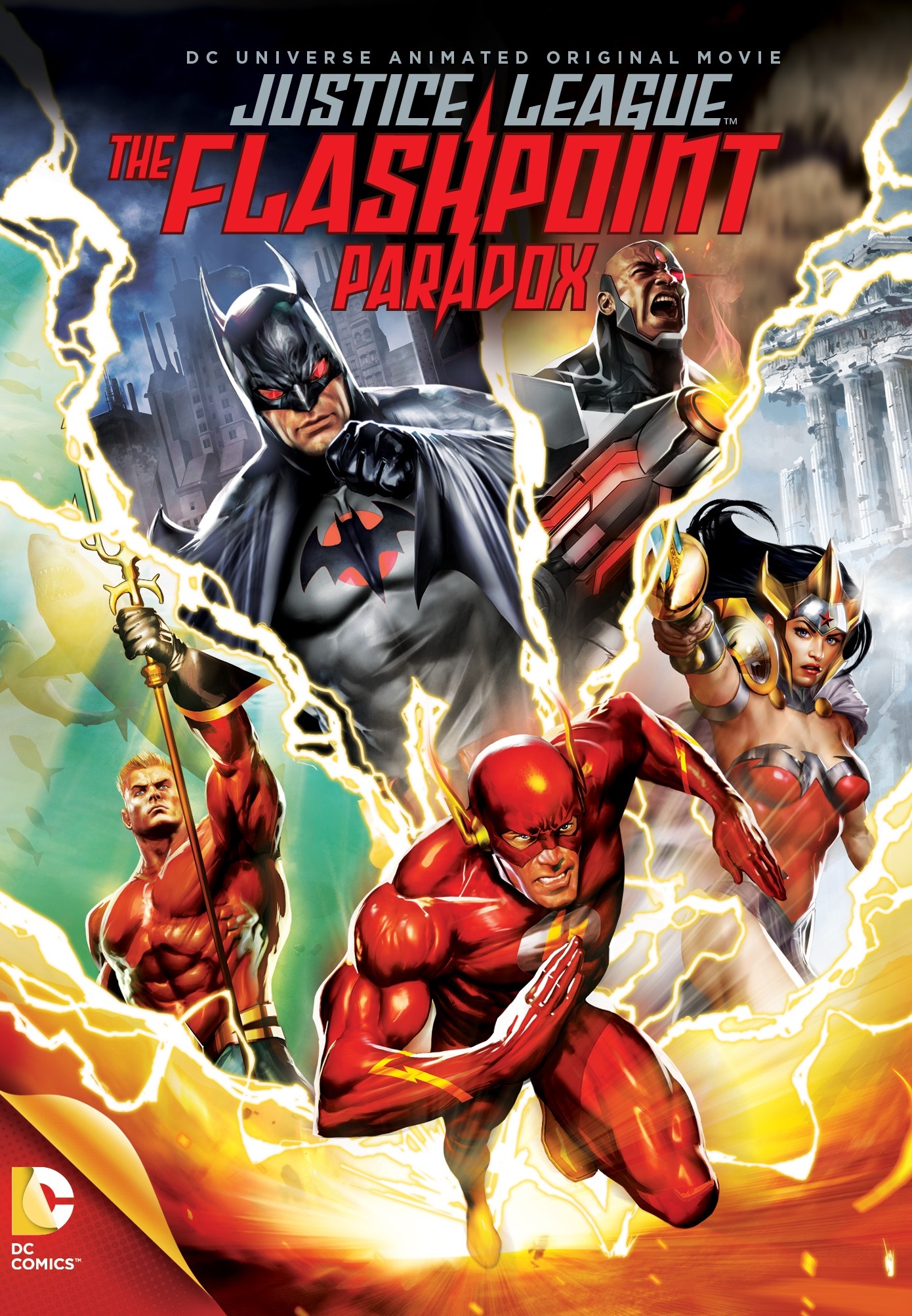
Throwback Thursday – Justice League: The Flashpoint Paradox

The Flashpoint Paradox Poster

Studio: Warner Bros. Animation and DC Entertainment

Series: DC Universe Animated Original Movies – Film 18 / DC Animated Movie Universe – Film One

Director: Jay Oliva

Writer: Jim Krieg (Based on the comic by Geoff Johns and Andy Kubert)

Producer: James Tucker

Length: 81 minutes

My Rating: 5 out of 5 stars

Welcome back to my Throwback Thursday series, where I republish old reviews, review content I have enjoyed before or review older books I have only just had a chance to read.  For this week’s Throwback Thursday, I dive into a pretty damn awesome DC Comics animated film that is highly relevant at the moment with the awesome Justice League: The Flashpoint Paradox.

Like many comic book fans in the world, I went out last weekend for the epic new film offering, The Flash, which ended up being pretty damn good.  The film had a lot of great elements to it, including the return of Michael Keaton as Batman, the introduction of a great new Supergirl, and a fantastic examination of the Flash mythos.  I was also very happy to see a fresh new take on the iconic Flashpoint comic, and it will be interesting to see how that impacts any upcoming live action DC films.  While I liked what they did with the Flashpoint story, I don’t think that The Flash was the absolute best adaptation of the Flashpoint comic; instead that honour goes the focus of this article, the 2013 animated film, Justice League: The Flashpoint Paradox.

Before we talk about the film, I should give a little background about the Flashpoint comic.  Flashpoint was a major 2011 comic event, written by Geoff Johns, whose work I have deeply enjoyed in comics like Rogues’ Revenge and Teen Titans, and pencilled by Andy Kubert.  Flashpoint was a compelling alternate timeline story that ended up resetting the main DC Universe in a big way.  While I honestly have very little love for the resulting changes it caused (I will never forgive DC for The New 52), the Flashpoint comic itself is pretty good, featuring some unique and stunning ideas within it.

Flashpoint has been adapted a few times in recent years, including in several seasons of The Flash television series, and the current The Flash film takes a lot from it.  While these other adaptations are pretty good, I think that The Flashpoint Paradox did the most with it, mainly because it sticks a lot closer to the source material and provides a very gritty animated film with a brilliant cast behind it.  Directed by veteran animated film director Jay Oliva (who has directed several of my favourite animated comic book films) and written by Jim Krieg, The Flashpoint Paradox is pretty damn awesome film and it is one that I have rewatched multiple times over the years.

Barry Allen is the Flash, founding member of the Justice League, the fastest man alive and the greatest hero Central City has ever known.  However, despite all he has done and everyone he has saved, Barry still cannot shake the trauma of his mother’s murder, a tragedy that has haunted him since his childhood.  After defeating several of his greatest foes, including his archenemy, the Reverse-Flash Eobard Thawne, Barry awakens to find himself in a new world, one where his mother is still alive and the Flash never existed.  Despite the joy he feels about his mother, this new world is no paradise, instead it is on the brink of ruin.  The Atlanteans, under the command of Aquaman, and the Amazons, led by Wonder Woman, are at war, and their relentless battling and disdain for humanity, has seen the destruction of much of Europe and the death of hundreds of millions of people.

Determined to find out what is happening and to stop the war between the Atlanteans and the Amazons before it destroys the world, Barry seeks out the one man who he thinks can help him, Batman.  However, the Batman he encounters is far different from the one he knows and has very little desire to save the world.  Worse, it soon becomes apparent that the changes to the world have been caused by Thawne, whose obsession with destroying the Flash could lead to unbelievable destruction.  To save the day, Barry needs to find a way to regain his powers and unite the scattered heroes of this reality.  But with all-out war in front of him, and his own trauma catching up behind, can the Flash stop Thawne before it’s too late?  And even if he succeeds, is he truly ready for the revelations that await him?

The Flashpoint Paradox was a pretty epic film that I have a lot of love for, especially as it blends a compelling story with great aesthetics, slick animation and a brilliant cast to produce something pretty damn awesome and a lot of fun to check out.

The creative team behind The Flashpoint Paradox did an outstanding job bringing this film together and one of the main reasons it works is the fantastic and intense story behind it.  The film itself is an exceptional adaptation of the original Flashpoint comic and much of it is a close and deliberate match to the source material.  That being said, it’s not a straight adaption as they needed to make it more accessible and take the story out of the main comic universe.  The film starts off with an exceptional sequence where the Flash faces off against the Rogues and the Reverse-Flash, who ambush him at the Flash Museum.  This scene, which sees a series of bombs threaten Flash and Central City, manages to achieve a lot of essential story points, including introducing Flash, showcasing his bitter rivalry with the self-destructive Thawne, and presenting the established version of the various Justice League characters who will later appear in the alternate timeline.  It’s also a very entertaining scene in several great ways, not only because the banter between Flash and Thawne is pretty brutal, but because it shows each member of the Justice League in action as they disarm a bomb in their own unique way.  This great intro really sets up the rest of the film, especially thanks to the clever references to Barry’s mothers’ death, and while it does make it a little more obvious whose ultimately responsible for events, it was a pretty damn epic start.

The middle part of the film is where the meat of the story is developed, as Barry arrives in the alternate universe and attempts to find out what is going on.  This part of the film resembles the source material the closest as they are pretty much doing a straight adaptation of the Flashpoint comic at this point.  However, they manage to really show off the grim reality of this new timeline very effectively in a short amount of time, and you really get to appreciate just how murderous the Amazons and the Atlanteans are, as well as how dark a world without the Justice League can be.  The creative team tell a very impactful story in this part of the film, and you must love the powerful interactions between Barry and the new Batman, as well as the emotional impacts of Barry realising just how much his universe has changed.  Everything is well capped off by the infiltration into the lab holding Superman, which is honestly way darker than what they did in the recent Flash film, especially with the horrifying aesthetics around the captured Superman.  At the same time, the growing sense of doom in the world is intensifying as the two superhuman armies prepare for war in London, and the tension is well and truly ratcheted up before the final phase of the film.

Everything leads up perfectly to the final act of The Flashpoint Paradox, which frankly is the best and most impactful part of this entire exceptional film.  The final third of the film is essentially an all-out war sequence, as the various characters descend into a three-way battle in the ruins of London, with the Atlanteans, the Amazons, and the human resistance, which includes the protagonists, fighting to kill as many enemies as possible.  This sequence is dominated by several excessively brutal fights between the heroes, and so many characters end up dead in some pretty horrible ways.  Not only are these action scenes highly polished and exciting, but they are also emotionally powerful, as the various character arcs and elements come full circle.  The best scenes are probably shared between Barry and Thawne, as they fight through the battle, debating what has happened to the world.  There are some outstanding revelations here, especially if you aren’t familiar with the source material or the other Flashpoint adaptations, and the moment when Barry figures out what truly happened is just heartbreaking, especially with Thawne’s taunting.  There is so much dramatic tension floating around, especially as Barry witnesses the full onslaught of the battle in front of him, and everything tilts on the edge of destruction.  The final brutal moments of this fight are so damn epic, and it leads up to some painful farewells and some tough decisions from Barry that will shake him forever.  This built-up emotion remains to the very end of the movie, especially as Flash manages to get closure for himself and others, and I really appreciated just how well the film ended.

On top of the epic plot and amazing concluding third, I also need to really highlight the impressive animation, stylistic choices, and fantastic musical score that accompanied it.  The animation in particular is awesome, and I loved the brilliant and iconic character designs that it depicted, especially as there is a mixture of classic character depictions, and the alternate versions that appeared in the Flashpoint universe.  The grim nature of the Flashpoint timeline serves as a powerful backdrop to the plot of The Flashpoint Paradox, and it was fantastic to see the DC universe in an even darker and more desperate light.  The best animation is naturally saved for the multiple impressive fight sequences scattered throughout the film, especially in the big war sequence at the end, and the brutality and sheer ferocity of the fights and battles are quite distinctive.  The animators honestly show no hesitation in showing blood, gore, death and even brains throughout this film, and it is even more brutal than The Flash film or the original comics, as there is barely a second in the final war where someone isn’t dying in some dramatic fashion.  There is some outstanding attention to detail during these various battles, whether it be a brutal fight in the sky, an intense duel between Cyborg and Aquaman in the middle of a warzone, or a high-speed fight through the midst of over combatants, and these are expertly portrayed and guaranteed to keep your interest with its high concept impact.  The cool time travel sequences are also a great highlight, and the clever animation around them really dial up the intensity of the film, especially during certain seminal scenes.  I’m also a big fan of the way that the major characters are presented throughout this film, and I appreciated how their designs change at various points of the film depending on which timeline is being watched.  The alternate costumes or depictions are well contrasted by the classic costumes shown at the start of the film, and I also love the subsequent subtle changes that appear at the end of the film to represent the further changes that have been created.

I also must talk about the fantastic use of music throughout this film, which works perfectly in concert with the animated sequences.  There are some great orchestral scores and tunes that are featured throughout the film, often in the most impact scenes, and I really liked how well they were used to enhance emotion or drama in a very powerful way.  Some of the very best scenes, including several particularly tense or pivotal sequences at the end come across as so much better thanks to the music that was overscoring it, and this really drew me further into the plot.  Combined this great music with the excellent graphics and The Flashpoint Paradox turns out to be an exceptional watch that I cannot get away from.

While the adapted plot and amazing stylistic choices help to turn this film into something special, I cannot walk away from this review without talking about the incredible cast of actors who bring this elaborate story to life.  The Flashpoint Paradox features a pretty hefty and impressive group of voice actors who each dive into their respective characters and bring forth some of the more iconic figures from the DC universe, as well as their alternate versions, in some pretty epic ways.  There is a great combination of classic character depictions, as well as the more nuanced and, in many cases, evil versions from the alternate timeline, that are featured in The Flashpoint Paradox, and the creative team brilliantly balanced the two throughout the plot.

At the centre of The Flashpoint Paradox is the Barry Allen version of the Flash, who embarks upon one of the most important missions of his life.  Expertly voiced by Justin Chambers (of Grey’s Anatomy fame), this version of the Flash is much more closely related to the classic comic portrayals (rather than Ezra Miller’s quirky version) and is an experienced and competent crime fighter.  Despite being one of the more stable superheroes out there, Barry is still haunted by the murder of his mother and his failure to save her.  Chambers really dives into this role and perfectly voices the full emotional spectrum out of Barry, showing all the deep inner pain, as well as his inherent hope, all of which really comes out throughout the film.  There are so many powerful scenes featuring Barry in the film, from his initial confusion over the new timeline, the emotional meeting with his mother, the despair at how the world turned out, and his absolute shocked resignation at who is responsible.  I also felt that the writers did an outstanding job of capturing the entire personality, key history and mythos of the Flash within this film, and you really understand his decisions and how he interacts with the other heroes.  I particularly loved his shock and pain at seeing what his friends have become in this alternate timeline, and it is so damn compelling.  Honestly, there are so many powerful moments here and I have a whole new level of respect for Chambers thanks to this film as he honestly was just magical here.

On top of the Flash, I really need to highlight two figures from the new timeline who perfectly mesh with the main character and show off just how dark events are.  The most prominent of these is easily this universes Batman, who was voiced by another Grey’s Anatomy alumni, Kevin McKidd.  Rather than being an older version of Bruce Wayne, this version of Batman is his father Thomas Wayne, who took on the cowl after Bruce was killed in Crime Alley and Martha became this universe’s Joker.  McKidd goes full on growly here for Batman, and the result is a grizzled, violent, and very murderous Dark Knight who has given up on the world in many ways.  I loved this fantastic and clever take on Batman in The Flashpoint Paradox, and it is so damn epic to watch Barry attempt to work with this very different Batman.  The shared connection of knowing Bruce gives these characters a powerful emotional bond, and McKidd kills it in several emotionally charged scenes, showcasing this Batman’s hidden heart.

I also have a lot of love for the cool version of Cyborg that appears in The Flashpoint Paradox, and honestly this is probably the grimmest and most powerful portrayal you are likely to see.  Voiced by a young Michael B. Jordan, this Cyborg is the only real superhero left in America and has been modded out into a massive tank figure who runs national security.  Out of all the figures in the film, Cyborg has the most impressive change in characterisation between timelines, especially as he goes from teenage figure to actual adult, and this is one of the first animated films that really showed what he could offer the wider DC universe.  Jordan provides a pretty good and slightly robotic voice for Cyborg here, and I loved how he was portrayed as a level-headed peacemaker, trying to save the world.  While still a little naive and idealistic, he really lives up to all the hype surrounding him in his initial introductions, especially during the final bloody battle scenes.  He honestly goes full out in this war, and it was so damn cool to see just how dangerous he could be.

While the more heroic (or anti-heroic for Batman) characters above were great, this film would be nothing without its villains.  The most prominent of these is easily Flash’s archnemesis Eobard Thawne, better known as the Reverse Flash.  Voiced by the very talented C. Thomas Howell, Thawne is a brilliant and powerful figure in The Flashpoint Paradox, mainly because he has such a tangible hatred for Barry and his legacy.  While he is the main villain of the story, he only appears in a few short scenes, but Howell makes each and every one of them count.  The sheer contempt and bile that drips from every sentence is so important for the performance, and you quickly understand just how much he wants to destroy him, even if that means losing his own life.  Thawne’s best sequence occurs at the end of the film when he finally appears to mock Barry and reveal everything that has been done.  The joy, satisfaction and mocking appreciation for Barry is just perfect, and he has such a great villain monologue here.  Howell has one of the strongest performances in The Flashpoint Paradox and I deeply appreciated how he brought such a fun and compelling villain to life.

In addition to Thawne, The Flashpoint Paradox features two other outstanding and particularly unique antagonists in the form of militarised and anti-human versions of Aquaman and Wonder Woman.  Both characters have been twisted by a failed romance and the hatred that followed Wonder Woman’s slaying of Aquaman’s wife, and they are now brutally engaged in war to kill each other and the rest of the world.  I loved these darker and more murderous forms of these iconic characters, especially after they are shown in their more heroic guises at the start of the film, and their complex war is a destructive backdrop to the intense narrative.  Like Reverse-Flash, both are consumed by hatred, and they are willing to destroy the world rather than lose.  Despite that, there is still an obvious, if twisted, love between them, which makes their fight even more tragic.  I loved how both characters are portrayed, although I especially like how badass they make Aquaman here, especially as this was released in the pre-Jason Momoa days when Aquaman was still a bit of a joke.  Watching him destroy everyone in The Flashpoint Paradox really sets him up as a massive threat, and I deeply appreciated this fantastic change to the character.  I also loved the great casting behind these characters as well.  Aquaman is portrayed by legendary actor Cary Elwes, who honestly disappears into the role, providing a much more gruff and commanding voice than I have heard in his previous works.  The voice of Wonder Woman is provided by veteran voice actor Vanessa Marshall (Hera Syndulla from Star Wars Rebels), who is reprising the role she previously portrayed in Justice League: Crisis on Two Earths.  Both actors really get these iconic characters down perfectly, especially in their darker moments, and I loved how well they were utilised in the film, especially as they enhance the emotional power and looming threat of the narrative.

On top of the great performances above, I also must commend the use of several excellent supporting actors in smaller roles who did an outstanding job.  I as particularly happy that several actors who had previously voiced certain characters in other films and shows revisited their roles here, including some big names.  The most noticeable of these is the late great Kevin Conroy, who does an exceptional (as always) job of voicing the Bruce Wayne Batman at the beginning and end of the story.  Conway has several amazing scenes, including a particularly emotional sequence at the end that will have you in tears.  Other performers include Nathan Fillion providing a cocky voice to the Hal Jordan Green Lantern, Dana Delany once again voicing Lois Lane after voicing her the DC Animated Universe (Superman: The Animated Series, Justice League and Justice League Unlimited), and Ron Perlman revisiting his epic Teen Titans performance as Deathstroke for a short scene.  Other notable actors and characters include Danny Huston doing a quick dash as General Sam Lane and Dee Bradley Baker (the voice of all the clones in Star Wars animation, as well as several hundred other credits) doing a fantastic Etrigan the Demon.  However, my favourite of these side characters is Danny Jacobs’s portrayal of the Wildstorm Comics character Grifter.  Grifter is a brutally effective figure in the final third of the film, and he has some outstanding interactions with other characters like Batman.  This cast, and more, all add so much to the film with their brilliantly portrayed characters, and I am still blown away by the calibre of the cast that was brought together here.

I think it is pretty obvious from the lengthy rant above that I have a lot of love for Justice League: The Flashpoint Paradox, and it is one of those animated films that I have watched so many times.  Thanks to its amazing cast, fantastically adapted story, intense animation and general darker vibe, The Flashpoint Paradox is a pretty spectacular animated film, and I honestly think it has the best execution of the Flashpoint comic.  It also has an awesome legacy, especially as it sets up the DC Animated Movie Universe and has impacts that range all the way to the final film, Justice League Dark: Apokolips War.  As such, I really must give this film a full five-star rating and it is a must-watch for all comic fans, especially those who like their animation a little more adult and emotionally charged.

Quick Review – Only a Monster by Vanessa Len

Only a Monster Cover

Publisher: Allen & Unwin Australia (Trade Paperback – 1 February 2022)

Series: Monsters – Book One

Length: 410 pages

My Rating: 4.5 out of 5 stars

Amazon

Only a Monster by Australian author Vanessa Len is a particularly wonderful debut highlight of last year that I have been meaning to talk about for some time.  A brilliant and awesome young adult fantasy read, Only a Monster is an impressive novel that sees a shocked girl realise that everything she thought she knew about her family was a lie and that deep down she really is a monster.  Intense, incredibly clever, and beautifully inventive, Only a Monster was pretty damn epic and proved to be one of the best debuts of 2022.

Plot Synopsis:

With the sweeping romance of Passenger and the dark fantasy edge of This Savage Song, this standout YA contemporary fantasy debut from Vanessa Len, is the first in a planned trilogy.

It should have been the perfect summer. Sent to stay with her late mother’s eccentric family in London, sixteen-year-old Joan is determined to enjoy herself. She loves her nerdy job at the historic Holland House, and when her super cute co-worker Nick asks her on a date, it feels like everything is falling into place.

But she soon learns the truth. Her family aren’t just eccentric: they’re monsters, with terrifying, hidden powers. And Nick isn’t just a cute boy: he’s a legendary monster slayer, who will do anything to bring them down.

As she battles Nick, Joan is forced to work with the beautiful and ruthless Aaron Oliver, heir to a monster family that hates her own. She’ll have to embrace her own monstrousness if she is to save herself, and her family. Because in this story . . .

. . . she is not the hero.


Only a Monster
has an awesome story that takes a teenage girl on a dark journey of self-discovery and magical adventure as she tries to figure out who she is and what lies within her.  Len starts this book quickly, with a good introduction to central protagonist and point-of-view character Joan Chang-Hunt, who is part of the unusual Hunt family.  A shuddering moment of unreality reveals that she is really half monster, someone who has the ability to steal time from humans to power their time-travelling abilities.  Though Joan initially tries to avoid this revelation and enjoy time with her crush, Nick, an encounter with the malevolent Oliver family of monsters forces her further into their hidden world, especially when it is revealed that Nick is secretly a monster slayer destined to kill every monster in existence, including Joan.  After a brutal series of events that sees most of her family and the other monsters of London killed in a single, coordinated massacre, Joan flees into the past with her surviving cousin Ruth and the youngest member of the Oliver family, Aaron, hoping to find a way to save their families.  Their quest leads them to try and recover a legendary artifact that will allow them to rewrite time.  But to do so, they will need to go up against the mysterious King of the Monsters and his dangerous plot to control reality.  Caught between monsters and monster slayers, the characters are forced into a series of deadly encounters which will force Joan to choose whether to retain her humanity or embrace her inner monster.

Len really came up with something special in Only a Monster, and I personally loved how this outstanding debut unfolded.  The author keeps a pretty fast pace throughout the entire book, and you are constantly thrown from intense moment to intense moment as the protagonist and her companions attempt to stay ahead of their enemies and find a way to bring back their families.  I felt that Len did a great job introducing her compelling world, fantastic characters and unique magical elements, and you quickly learn to appreciate the author’s inventive ideas.  This is actually a pretty dark read, especially as it starts with a massacre and focuses on a group of magical beings who can suck the life force out of normal humans to power their abilities.  I personally deeply enjoyed this darker tone, as Len balances it well with her unique creative ideas and the emotional character development to create an intense and addictive read.  The magical time travel elements of this book are very well done, and the darker ideas behind the absorption of people’s time span helped to make it a malevolent gift that the protagonist is forced to use by necessity.  Despite this, it does produce some fun time travel jokes, and I had a laugh at some of the pop culture references that were utilised in the identification of the period.  Len also lays down a series of interesting twists throughout the story which are revealed at perfect moments and which help to produce a pretty amazing story.  However, the absolute highlight of this book had to be the epic ending that Len decided to traumatise her readers with.  While I’m not going to give away anything here, let’s just say it is pretty insane, and I was deeply impressed with how Len set it up and executed it.

The final thing I really need to gush about when it comes to Only a Monster is the deeply complex and damaged characters featured within.  Only a Monster features a fun crew of central protagonists, each of whom are going through their own epic journeys.  The primary focus is on central character Joan Chang-Hunt, a sweet and nerdy character who, in the course of a day, finds out she is a half-monster with life-sucking time travel abilities, and then witnesses her entire extended family getting massacred.  This naturally causes her to experience a lot of emotions and trauma as she constantly tries to come to terms with how her life has unravelled and changed forever.  The main focus of her character arc is the examination of her inner monster as Joan tries to get to grips on whether she wants her abilities, especially as they force her to drain away people’s time.  She is also dealing with intense guilt over her role in the massacre that destroyed her family, partially thanks to her relationship with Nick, and this clashes hard with her own concerns about being a monster.  All this, and more, ensures that Joan is forced to grow up a lot throughout the course of Only a Monster, and she must keep making harder and harder decision as she gets closer to crossing lines she doesn’t want to.  Her final actions in this book bring all these deep feelings close to the surface as she is forced to make a terrible decision in a heartbreaking and powerful scene.  Len did an outstanding job when it came to Joan in this book, and I look forward to seeing how she continues to develop in future entries in this series.

Two other major characters I need to highlight are Joan’s accidental companion, Aaron Oliver, and her crush/personal nightmare, Nick.  Both characters have pretty dark introductions to the story, especially as they end up trying to kill Joan in the starting chapters, but Len develops them separately as the book continues.  Aaron ends up working with Joan as they try to stay alive and find a way to save their families, and they become an intriguing and combative duo throughout the book.  While Aaron is initially arrogant and antagonistic, you soon see that this is a façade, as Aaron is also incredibly damaged due to the actions of his cruel family.  Len does a wonderful job of slowly uncovering this deeper side of Aaron throughout the course of Only a Monster, and the eventual bond he forms with Joan is a touching and moving part of the book, even if it isn’t destined to last.  Nick, on the other hand, is an outstanding villain for this story, especially when it is revealed that he is an unflinching and implacable monster hunter.  Despite the connection he had formed with Joan before the events of this book, mainly because he sees her as more human than monster, Nick soon starts fanatically hunting her throughout time and becomes determined to stop her at all costs.  Clever and dark reveals about Nick come to light as the book continues, painting him in a somewhat sympathetic light, but this doesn’t stop him from hunting Joan, which leads to an exceptional and shocking confrontation towards the end of Only a Monster that perfectly changes everything.  The powerful character work contained in these central characters, as well as the intense bonds they form with Joan, are such a key part of Only a Monster, and you will come away heartbroken and moved with how their storylines unfold.

Overall, I had an incredible time with Vanessa Len’s Only a Monster, and not only was it one of the best debuts of 2022 but one of the best young adult books of the year as well.  This brilliant and powerful fantasy read had an amazing story and you will be impressed and excited by the complex characters and deeply inventive fantasy elements that are worked into this compelling narrative.  Intense, dark, and full of hope, Only a Monster is an incredible read that comes highly recommended to anyone interested in seeing the start of an extremely promising career in fantasy fiction.  I am very excited to check out the sequel, Never a Hero, later this year, and if Len keeps up the amazing writing from Only a Monster, it is going to be particularly epic and exceptional.

Amazon

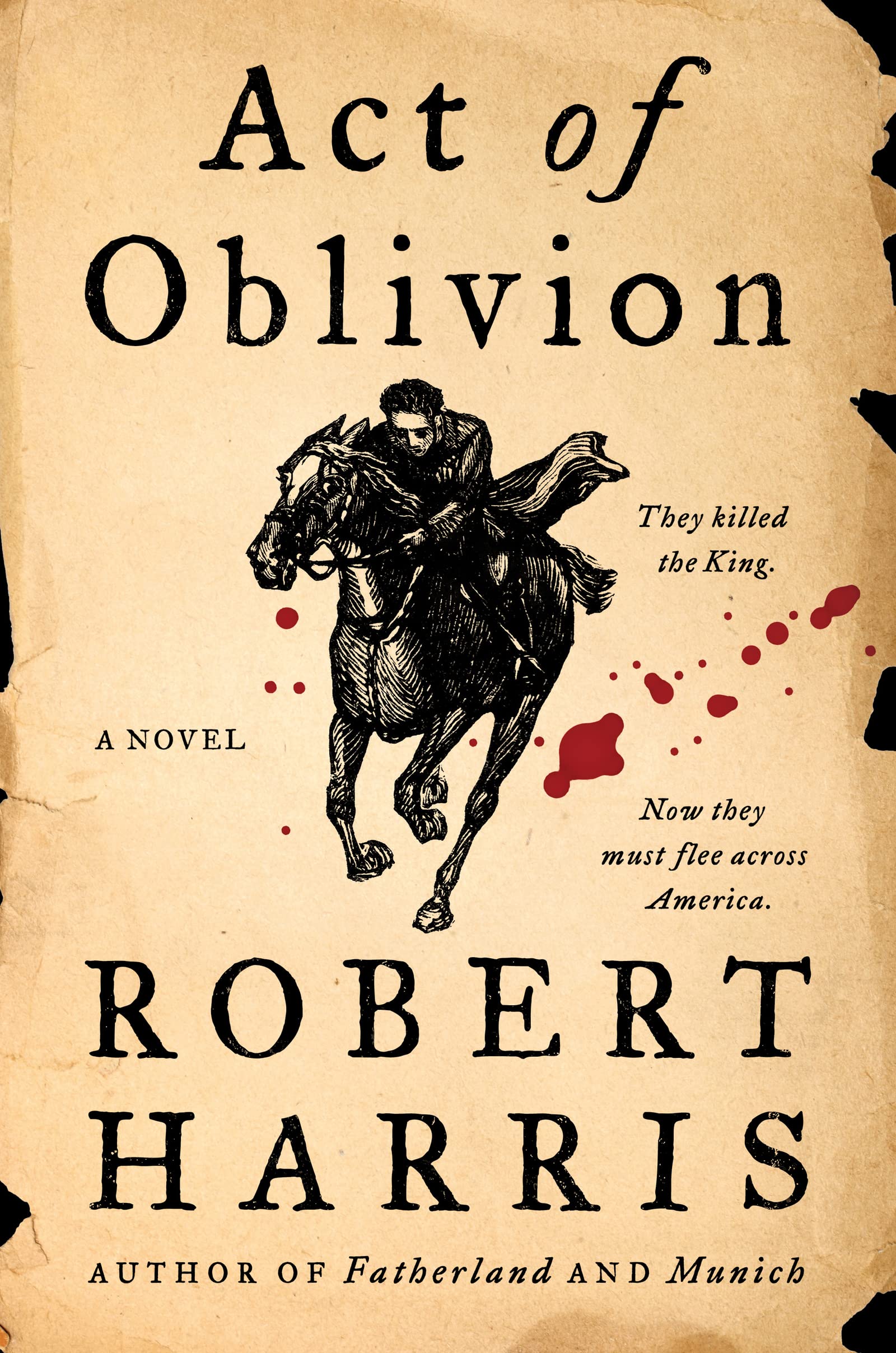
Act of Oblivion by Robert Harris

Act of Oblivion Cover

Publisher: Hutchinson Heinemann (Trade Paperback – 20 September 2022)

Series: Standalone

Length: 464 pages

My Rating: 4.5 out of 5 stars

Amazon

That master of historical fiction, Robert Harris, returns with another deeply compelling read, this time diving into one of the most fascinating manhunts in history with Act of Oblivion.

1660, England.  It is the dawn a new age in English history.  Following the death of Oliver Cromwell, the country has allowed King Charles II to come to power.  In exchange, the King has agreed to clemency for the former Parliamentarians, allowing peace to return to England for the first time in decades.  However, the King’s clemency is not absolute, and under the terms of the Act of Oblivion, all the men involved in the execution of his father, King Charles I, including the 59 men who signed his death warrant, are to be hunted down and brutally executed.

General Edward Whalley and his son-in-law, Colonel William Goffe, are two such men.  Former Parliamentarian leaders, their signatures lie prominent on the king’s death warrant.  Knowing that their deaths are close behind, Whalley and Goffe are forced to abandon their families and flee to the colonies.  Arriving in New England, Whalley and Goffe attempt to become part of the local community, but the shadow of their treason is far-reaching, and both old soldiers will have to live with the consequences of their action.

In London, Richard Nayler has been appointed as secretary of the regicide committee of the Privy Council.  Tasked with tracking down, capturing and executing all the men wanted in relation to the King’s death, Nayler attacks his task with zeal and passion, determined to bring justice to those who wronged the kingdom.  However, Nayler saves the vast amount his hatred and determination for Whalley and Goffe, two men he bears a particular grudge against.  Soon, a large bounty is placed on the two fugitive’s heads, and Nayler himself arrives in America, determined to see the men captured.  Forced to flee across the continent, Whalley and Goffe find themselves as outcasts and fugitives wherever they go.  The chase is on in the new world, and no-one is prepared for how far this mission of vengeance will go.

Robert Harris does it again, producing a brilliant and riveting historical epic that reconstructs fantastic historical events in impressive detail.  I have long been a fan of Harris’s writing, having deeply enjoyed An Officer and a Spy and V2, and his latest book, Act of Oblivion, is one his better works.  I had an outstanding time getting through this complex novel, especially as it spent substantial time diving into a unique historical occurrence I was unfamiliar with.

I had an exceptional time with Act of Oblivion, especially as Harris presents an elaborate and massive story set across multiple years.  Leaning heavily into historical sources, Harris dives deep into the flight of Goffe and Whalley and perfectly portrays their journey to America and the hardships they encountered.  This proves to be quite an intense and frustrating tale, as these two protagonists suffer a great deal through the course of the book.  Forced to abandon their families, Goffe and Whalley are initially seen as heroes by the people of Boston and Cambridge, but the two fugitives are gradually forced to flee from these towns due to the machinations of the English and their former enemies.  Forced to flee to smaller and smaller settlements, the protagonists are chucked into some uncomfortable positions in their flight, which includes years of depredation and isolation throughout the country.  The full tale of their time in America (or at least what is known), is pretty damn remarkable, and I felt that Harris did a wonderful job bringing it to life and showing what these two might of experienced and the lengths they went through to survive.  However, it does occasionally get slow in places, mainly because the historical fugitives were often unable to move for fear of being captured.

Harris covers these slower periods well by mixing in a second major storyline that runs parallel to the depictions of Whalley and Goffe.  This second storyline is primarily set in England and Europe and showcases the events occurring while the fugitives are in hiding.  Mainly shown from the perspective of the fictional character hunting them, Richard Nayler, as well as several scenes that show the fugitives’ family, this second storyline adds some real colour and danger to the events, especially as you get to witness the hunt from the other end.  The blend of fictional and historically accurate storylines works extremely well, and Harris creates a deeply fascinating and compelling overall narrative that really draws you in.  Seeing the simultaneous actions of both hunter and fugitives is a lot of fun, and I loved Nayler’s reactions to the constant escapes of Whalley and Goffe.  Harris also spends time showing the hunt for the other regicides, which Nayler embarks on with greater success.  Not only does this add in some additional fun action and historical context, but it also ups the stakes of the main storyline, as you are forced to witness the gruesome fate that awaits Whalley and Goffe if caught.  All this adds up to quite a remarkable tale, and I was deeply impressed with how exciting and captivating Harris was able to make these historical events appear.

One thing that is extremely clear about Act of Oblivion is the sheer amount of historical research that Harris put into crafting this book.  There is so much exceptional and compelling detail put into Act of Oblivion, as Harris goes out of his way to make this book as historically accurate as possible.  Naturally a substantial amount of this research goes into showing the known events of the two fugitives, as Harris meticulously recounts where they went and the various places they were forced to hide.  While the author does add in a few literary embellishments, this appears to be a very accurate and intriguing depiction of the fugitives’ flight in America, and I had such an amazing time seeing what they went through.  Harris makes sure to try and tells as much of their tale as possible, and the book goes all the way up until 1679, when the records end.  At the same time, Harris spends a large amount of time exploring the history of the rest of the world.  The novel is chock full of intriguing depictions of various key parts of British and American history at the time, which I found to be extremely fascinating, especially as you get to see how England changed after the return of the

King.  Harris also makes sure to examine how major historical events around the world might have impacted the lives of the two fugitives, and I felt that he worked all these fascinating events into the main story extremely well.  All the historical aspects of the book are showcased to the reader in a fantastic and very readable way, and even non-history fans will be able to dive into this story extremely easily.  This is mostly because the historical events themselves are pretty damn remarkable (honestly historical reality stranger than fiction in some places), but I really appreciated how well Harris was able to explore them and showcase them to the reader.

Another historical aspect of this book I deeply enjoyed was the author’s extremely detailed and moving depictions of the American countryside and its settlements in the 17th century.  Quite a lot of the book is spent out in the American wilds, as the two protagonists are constantly fleeing from their pursuers and avoiding people, and Harris makes sure to patiently and lovingly depict the various locations they find themselves in.  You really get a sense of the beauty and danger of the land during this period, and I loved seeing the various English characters react to the wide open spaces after spending time in cities like London.  Harris also takes the time to describe several of the historical settlements that the characters journeyed to and through, and you get a real sense of how built up or settled they were.  I found it fascinating to see all the descriptions about the various settlements, especially as many are quite significant cities in modern times, and it was really cool to see how they originated.  The descriptions of towns like Boston and Cambridge were pretty intriguing, especially as I didn’t realise just how built-up they were during this period (sentiments that some of the character’s shared), and I loved also seeing the Dutch settlement of New Amsterdam, especially as Harris also explored the events that saw it renamed as something far more iconic.  Throw in the deeply fascinating depictions of the people inhabiting these settlements, including the distinctive religious differences (so many puritans) and political sentiments.  Religion in particular becomes quite a key part of this book, and watching the various Puritan figures discuss their beliefs and their thoughts on the actions of the main characters, is particularly intriguing, as you get to see how these religious fugitives shaped early America.  Overall, this is a very impressive and clearly heavily researched look at 17th century America, which all historical fiction fans will deeply appreciate.

I also really enjoyed the central figures of Act of Oblivion and I found their storylines to be very compelling.  As I mentioned above, I really didn’t know that much about Edward Whalley and William Goffe before reading this book, but that swiftly changed.  Harris did a remarkable job showcasing the lives of these two historical figures and you really get to know everything about them.  While I am sure that Harris made a few character changes to fit the narrative, I felt that the overall presentation of them was pretty realistic.  Harris really highlights their personalities, religious convictions, and deep pride in the actions they took under Cromwell throughout the book as they spend time remembering their pasts.  All the key moments are their lives are captured in some way throughout the book, either in the plot or in their memories, and you soon see what events led them to become fugitives.  While the depictions of some their actions during the war and Cromwell’s control of England does make them a tad unsympathetic, I grew attached to them, especially as you see them suffer in isolation over a period of years.  Harris did a remarkable job showcasing how he believed these people would have felt spending years and years trapped in attics and basements, and you can just feel the mental and physical impacts it had on them.  This was frankly a brilliant portrayal, and I had an excellent time getting to know these unique historical figures.

Aside from Whalley and Goffe, the other major character I need to mention is Richard Nayler, the man charged with hunting the fugitives down.  Nayler is a purely fictional character, although Harris indicates upfront that someone likely had this job in the 17th century.  I quite enjoyed the portrayal of Nayler in this book, especially as he serves as a grim and determined counterpart to the protagonists.  A Royalist who witnessed the execution of King Charles I, Nayler goes about his duties with a resolute duty, determined to make all the regicides pay.  However, his main obsession lies with Whalley and Goffe, who holds responsible for the death of his wife and child.  Despite this tragic past, it is a times hard to feel sorry for the super serious Nayler, especially as he has little compassion for others, even the innocent.  However, he is quite a captivating figure, especially as his growing obsession with finding the fugitives becomes more and more apparent.  While his fellow returned Royalists initially share his determination, it soon becomes evident that he is true fanatic, while the others are purely in it for political reasons.  Harris really shows the downside of obsession through this character, especially as Nayler sacrifices a lot to try and find the fugitives.  I felt he had an impressive storyline throughout Act of Oblivion, and this great fictional character played off the real historical figures extremely well.

Robert Harris’ latest novel, Act of Oblivion, once again highlights the author’s outstanding skill as he recounts a particularly fascinating occurrence from history.  I loved the amazing story contained in Act of Oblivion, especially as the author did such a great job incorporating historical events into an intense and captivating plot.  Deeply intriguing and very entertaining, Act of Oblivion is a highly recommended read, and I can’t wait to see what elaborate historical tale Harris comes up with next.

Act of Oblivion Cover 2

Amazon

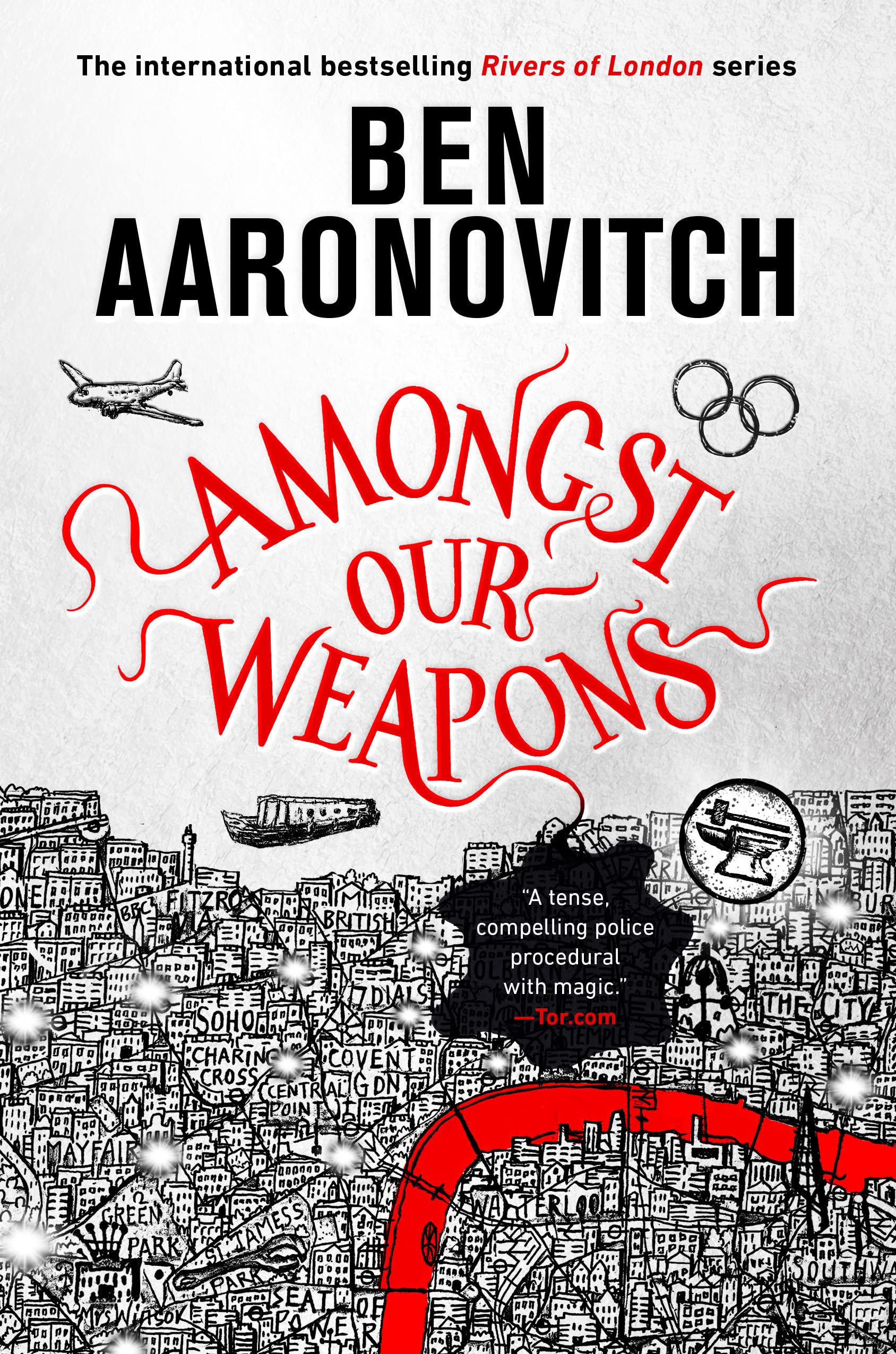
Amongst Our Weapons by Ben Aaronovitch

Amongst our Weapons Cover

Publisher: Orion (Trade Paperback – 12 April 2022)

Series: Rivers of London – Book Nine

Length: 406 pages

My Rating: 5 out of 5 stars

Amazon     Book Depository

One of the leading lights in the urban fantasy genre, the exceedingly talented Ben Aaronovitch, returns with the latest epic book in his brilliant Rivers of London series, Amongst our Weapons.

For the last 10 years, the fantasy world has been exceedingly impressed by the fantastic writings of Ben Aaronovitch, who came up with a real winner with his Rivers of London series (also known as the Peter Grant series).  Aaronovitch, who already had some major nerd cred as a writer of two Doctor Who serials, debuted the first book in this series, Rivers of London, back in 2011.  This book told the story of Peter Grant, a young Metropolitan Police officer who is assigned to a specialised branch of the Met that deals with magic and supernatural incidents.  This intriguing debut combined magical elements with a classic police procedural format to create an epic and captivating read.  The author has since expanded this series out to several novels, as well as a range of novellas, short stories, and even a graphic novel series, all of which continue the story of Peter Grant and Aaronovitch’s unique magical world.  I have had a lot of fun over the last few years with this series, and I have greatly enjoyed Aaronovitch’s last two entries, Lies Sleeping and False Value.  Aaronovitch is back with another exceptional read in his ninth Rivers of London novel, Amongst our Weapons, which continues the excellent format and presents the reader with an awesome new mystery.

The London Silver Vaults are a renowned underground market for silverware in the heart of London.  They are highly secured and constantly monitored, so getting away with any sort of crime in the vaults is impossible.  So when a crazed would-be robber is brutally killed in the middle of the vaults with no witnesses or cameras catching the act, the Met are forced to call in their secret weapon, Peter Grant and his fellow detectives from the Special Assessment Unit, better known as the Folly.

Specialising in investigating magical incidents, Peter and his team are quickly able to determine that the death and the murder’s subsequent escape were a result of powerful magic.  Taking the lead on the case, Peter hopes to catch the killer quickly, but are quick to discover that their investigation is about to get far too complicated.  Ancient magics and unknown powers are loose around London, and after discovering a second body, the Folly team begin to investigate the members of a mysterious college cult from Manchester that has been inactive for years.  As more attacks occur, it becomes apparent that members of the cult are being hunted down and that their killer appears to be a vengeful, spear-wielding angel.

Determined to get to the bottom of the killings, Peter dives into the history of the cult and the mysterious artefacts they uncovered.  His investigation will lead him all over England, from the colleges of Manchester all the way to the dismal North.  But even as he begins to uncover the truth behind the killings and the being responsible, does even the full might of the Folly have the power to stop an angel and the deadly magic gifted to her?  Worse, another party has involved themselves in the case, someone that Peter knows far too well.  Can Peter solve this case before it is too late, and how will he deal with the greatest challenge of his life, becoming a father to his two magical twins?

Wow, Aaronovitch continues to massively impress me, bringing together another brilliant and unique urban fantasy read.  Once again bringing together an outstanding story that features distinctive fantasy elements with a clever mystery, Amongst our Weapons was a fantastic read that I had an incredible time reading.  This book was pretty damn awesome and gets a full five-star rating from me.

I had an absolute blast with the story contained within Amongst our Weapons as Aaronovitch has once again cleverly combined complex fantasy elements with a compelling murder mystery investigation, resulting in a deeply entertaining and addictive story.  Aaronovitch starts this latest novel off strong, with the protagonist and his team immediately thrust into an investigation of a man with a mysterious magical hole blown into his chest and no witnesses who saw what happened.  This intriguing start quickly becomes even more enticing, as a second murder is soon discovered, as well as other unusual signs and discoveries at the various crime scenes.  However, the excitement does not end there, as Aaronovitch also fits in an early encounter with the powerful murder, who appears to be an exceedingly deadly angel of vengeance, as well as the sudden reappearance of recurring antagonist Lesley May, Peter’s former partner who now acts as a magical mercenary.  Throw in some great character driven storylines about the protagonist’s family, as his river goddess wife is about to give birth, and you have quite an exceptional start to the novel.  Indeed, once all these elements were set up, I was hopelessly hooked on the story, and it proved extremely hard to put this book down at all.

The rest of the narrative flows on from here extremely strongly, as the characters launch an exhaustive and intense investigation not only into the murders but into the origins of certain magical items and the history of the college cult who appear to be targeted.  This takes the protagonist on a bit of a fieldtrip outside London, exploring Manchester and the North, and introducing the characters to some intriguing new magical elements.  While parts of the story here did get a bit bogged down when it came to exploring some of the more complex new fantasy inclusions, I flew through the second part of the book, especially as it is laced with several brilliant and imaginative confrontations between the protagonist and the book’s various antagonists.  Everything comes together extremely well in the lead-up to the conclusion, which results in a fantastic battle that helps resolve everything perfectly.  I did think that it got a little too metaphysical in places, but I still deeply enjoyed this great conclusion, which should really satisfy every reader, while also setting up some interesting storylines for the future.

Aaronovitch has such a distinctive writing style for the Rivers of London series, which is put to great use throughout Amongst our Weapons.  Like most of the Rivers of London novels, Amongst our Weapons can be read as a standalone read, with Aaronovitch doing a great job of rehashing some of the relevant continued storylines when they become relevant to the ongoing story.  This book features the usual awesome blend of magic, crime fiction and character-led storylines, wrapped up with a great sense of fun and humour, which helps to produce quite an entertaining and captivating read.  I particularly loved how the author makes his novels feel like a police procedural with magic, and this is perfectly on display in Amongst our Weapons, as the protagonists engage in elaborate investigation into several unique deaths.  It is so much fun to watch these magic-wielding protagonists do research, official police investigations, paperwork, evidence collecting and various theorising as they examine both the magical and human sides of the case, and I always love how well these elements can be fit into a seemingly typical murder mystery storyline.  Everything flows extremely well through this novel, and while I think there are some minor pacing issues towards the middle, readers will power through this entire book once they get caught up in the mystery and the magic.

I have always been really impressed with the distinctive and captivating fantasy elements contained within the Rivers of London novels, which prove to be intrinsic and outstanding parts of the book.  Rather than use classic fantasy elements, the magic and unique creatures featured within this series are a lot more abstract with a focus on energy manipulation, creatures from alternate universes and godlike beings who get their powers by being embodiments of important locations.  This really gives the novels a great, unique feel that is brilliantly enhanced by the way that the various characters treat magic in an almost scientific way, especially from a policing perspective, as the protagonists are effectively investigating and monitoring it in London.  This fantastic way of examining magic proves to be quite effective in Amongst our Weapons, as you get to see all manner of theorising, analyses and scientific conclusions drawn up as the protagonists attempt to identify and quantify the new forms of magic they are dealing with, especially when they come face to face with an unknown being of immense power.  This cool magic is also quite stunningly described throughout the novel, and I loved seeing its unique and clever use throughout the various magical confrontation sequences, and there is nothing more awesome than reading about a couple of wizards face off against an apparent angel.  I find all the cool magical elements quite fascinating to explore, and I loved seeing some of the world building that occurred throughout Amongst our Weapons, with some new groups of magical users introduced or referenced throughout.  Aaronovitch actually sets up some intriguing new world-building elements throughout Amongst our Weapons, and I look forward to seeing how this expands in some of the future novels.

Finally, I really must highlight the outstanding characters featured within Amongst our Weapons, who really help to turn this awesome story into something truly special.  This cast is headlined by the book’s main protagonist and point-of-view character, Peter Grant, who I really have a lot of fun with.  Grant is a funny and bold protagonist, who has been really growing since the first novel, not only in personality and responsibility but also in magical talent.  He serves as a brilliant protagonist for Amongst our Weapons, and his dogged and clever investigation of the unusual events moved the story along at a swift and enjoyable pace.  While his police work is a major part of the character, this latest novel also focuses again on his personal life, showing his unique marriage to a river (well, the living embodiment of a river), and the upcoming birth of his likely magical children.  This puts some major responsibility on Peter’s head, which he struggles to deal with, still taking risks with his work.  Watching him obsessively chase after the culprit while also trying to balance the upcoming birth of his children was a great part of the novel, and it really helped to make the reader feel attached to him.  However, I personally loved his outstanding sense of humour throughout this novel, as much of the book’s comedic elements are thanks to this protagonist’s funny statements and clever observations about the outrageous events he is witnessing.

Aside from this excellent and relatable protagonist, Amongst our Weapons features a large and diverse cast of figures, including a combination of new people associated with the case and a huge batch of recurring characters who have been perfectly set up before.  Most of the recurring characters are re-introduced extremely well, and even new readers should be able to follow who is who amongst this unique cast of magic users and professional police officers who work together to solve crimes.  My favourite supporting character is Detective Chief Inspector Thomas Nightingale, head of the Folly and the last official wizard.  A gentlemanly figure who fought in World War II, Nightingale serves as a great mentor as well as a badass magician able to throw down with the worst creatures or dark magic users.  While not featured as heavily here as in previous novels, Nightingale has some great moments throughout Amongst our Weapons, and it was awesome to see him squaring off against the winged antagonist.  Aaronovitch also sets up some interesting storylines for him in this book, and it sounds like he will have a much more altered role in the future.  The other major character I should highlight is Lesley May, who serves as a secondary antagonist throughout this book.  Lesley, who spends most of the book as a mercenary character attempting to undermine the police’s investigation, is a great addition to the plot and I am extremely glad that Aaronovitch brought her back for this novel.  Not only do you get more of the regret-filled interactions with Peter but she serves as a great foil for the protagonists, and it was really fun to see her get involved and attempt to manipulate the situation to her advantage.  All these characters, and many more, are great additions to the fantastic and complex plot of the book, and I deeply enjoyed seeing the fantastic and powerful interactions between them.

The Rivers of London series continues to shine as one of the best and impressive urban fantasy series with Amongst our Weapons.  Ben Aaronovitch is such a talented author, and I deeply enjoyed distinctive and captivating stories he crafts, especially with its outstanding blend of unique fantasy and memorable murder mystery elements.  Amongst our Weapons is one of my favourite books from Aaronovitch I have read so far and it is a highly recommended for all fantasy fans.  If you aren’t exploring the Rivers of London, then you are really missing out!

Amazon     Book Depository

Black Drop by Leonora Nattrass

Black Drop Cover

Publisher: Viper (Trade Paperback – 15 February 2022)

Series: Laurence Jago – Book One

Length: 343 pages

My Rating: 4.25 out of 5 stars

Amazon     Book Depository

Intriguing and talented new author Leonora Nattrass presents a compelling historical thriller debut with Black Drop, a fantastic novel that drags readers into the conspiracies and issues of late 18th century London.

In July of 1794, as the terror of the French Revolution reaches its height and the war on the continent goes poorly for the British army, uncertainty and fear of violent change infect the people of London.  For Laurence Jago, clerk to the Foreign Office, his position is even more uncertain that those around him.  A young man with hidden French heritage, Jago fears the day that his connections to his mother’s nation will be discovered, especially after spending years serving as a spy for sinister French agent Aglantine.

Now believing himself to be free from Aglantine’s employment, Jago is thrust into an untenable situation when vital confidential information about the British army is leaked from his office to the press.  Suspected by his peers of leaking the information and under investigation, Jago fears that all his secrets and former dealings are about to come out.  His problems are only further compounded when he discovers the body of a fellow clerk in his rooms, supposedly dead by suicide.

When the blame for the leak is shifted onto the dead man, Jago is freed of the suspicion against him.  However, Jago knows that the dead clerk was incapable of stealing the letter and believes that he was murdered.  Determined to find out the truth behind the death, Jago finds himself investigating the highest level of the British civil service and their political masters.  Out of his depth and thwarted at every turn, Jago will risk everything to root out the culprit before they strike to disrupt England again.  However, can he succeed without revealing his own dark secrets, or will Jago hang as a traitor instead of the murderer?

Black Drop is an excellent and clever novel that I had a great time reading as Nattrass perfectly combines a compelling spy thriller/murder mystery storyline with intriguing and detailed historical fiction elements.  This resulted in one of the more unique and fantastic debuts of 2022 and I really enjoyed Black Drop’s impressive story.

This awesome debut novel has an excellent story that expertly combines intriguing spy thriller and murder mystery elements with a character driven historical narrative to create a compelling and impressive read.  Set throughout key events of 1794 and told as a chronicle from the perspective of central character, Laurence Jago, Black Drop presents the reader with an intriguing tale of murder, political machinations and the threat of revolution at the heart of the period’s government.  Nattrass sets the scene perfectly at the start, introducing the key characters while also highlighting the feelings of unrest and dissent as the fear and inspiration from the French revolution hits London.  From there, the story starts to unfold in some interesting directions as the protagonist finds himself involved in political and espionage adventures while also investigating the murder of a fellow clerk, which appears to be connected.  At the same time, the slow-paced story utilises some intriguing aspects from the protagonist’s life as he struggles with dark secrets from his past that have potential implications on the current events.

Following this introduction and the initial parts of the narrative, the middle of Black Drop starts to bring in certain key historical events and figures, which results in some fantastic moments and character interactions, especially once an antagonistic figure becomes more prominent.  While the middle of this novel did drag in places, I felt that Nattrass was providing the reader with the right blend of intrigue, mystery, historical detail and character growth to produce a great overall story.  You really get to grips with the protagonist and the key aspects of the setting during this part of the book, especially when Jago hits a major personal downturn earlier than expected, and interesting reveals enhance the reader’s attachment to the mystery.  The story really starts to pick up once it gets to Nattrass’s recreation of the infamous trial surrounding supposed radical and revolutionary Thomas Hardy.  The ridiculous, and mostly accurate depiction of the trial (with certain elements from other trials thrown in for greater effect), proves to be a great high point for the novel, especially as other key parts of the plot are slotted in perfectly around it.  I did feel that the novel started to come undone around the conclusion a little, especially when it came to the big reveal.  While there were a couple of good twists around certain characters, the solution to the main mystery and the intrigue seemed a little weak to me, and I was a little disappointed with how it turned out, especially as you barely get to see anything about the final confrontation.  Still, this did not affect the overall quality of the story too much, especially as the author throws in an excellent wrap-up for the protagonist’s storyline in this novel which has a lot of potential for a sequel.  While much of the story can be a little sluggish and lacking a lot of action, I had a great time getting through Black Drop, and I loved how the excellent interplay of elements came together so well.

One of the most distinctive parts of Black Drop is the sheer amount of fascinating historical detail that was fit into the story.  Nattrass has clearly done her research on the period and the reader is presented with a fantastic and powerful view of London in the late 18th century.  Not only are there some brilliant and vibrant depictions of historical London but the reader gets some fascinating views into the inner workings of the government at the time.  Substantial parts of the book are dedicated to examining the civil service and the political hierarchy of the day, with multiple influential figures featured as supporting characters.  This proves to be a deeply fascinating part of the book, and I loved how Nattrass was able to weave these intriguing details into the thriller plot, becoming a key part of Black Drop’s story.  I also deeply appreciated the way in which Nattrass explores the social and political issues of the day, especially where it relates to the concerns in London about an uprising similar to what happened in France.  As such, you get a full spectrum of personalities from across London, as royalists and loyalists clash with potential radicals who are targeted by the worried government.  This all cumulates in the fantastic court case of Thomas Hardy, a shoemaker accused of radical actions and attempted rebellion.  This historical trial is expertly recreated by Nattrass to include all of its most interesting parts, including several extremely ridiculous elements from history (a blowgun murder conspiracy).  Nattrass also cleverly combines in some elements from related trials that occurred around the same time as the Hardy case for some amusing dramatic effect, and this extended sequence ended up being one of my favourite parts of the novel.  The overall hint of discontent by many members of London’s society, as well as the innate fear of the established institutions, is portrayed beautifully, and you get a great sense of the public issues during this period.  All these impressive historical elements are handled extremely well by Nattrass, and while it did get a tad tedious in places, it was an excellent part of the book that I deeply enjoyed.

To back up her unique historical tale, Nattrass has furnished Black Drop with a compelling array of characters with some complex and compelling character arcs.  This book actually contains a great combination of original characters and historical figures, with many major figures in 18th century British politics and the civil service featured in substantial roles throughout the book.  Not only does this brilliantly enhance the already substantial historical details of Black Drop, but it also results in some fascinating interactions and depictions as the fictional characters, including the point-of-view character, observe them.  Due to the complexity of the story, Black Drop makes use of a pretty large cast of characters, and while a few of them blend together, most come across as pretty distinctive with some interesting and fun character traits.

The best character of Black Drop is the protagonist Laurence Jago, who also serves as the book’s sole point-of-view character.  Jago turns out to be a particularly complex and damaged individual whose emotional attachment to the case and the state of London society provides some intriguing drama and insight into the events of the book.  Already made quite distinctive by his unique green-glass spectacles, Jago proves to be an impressive and captivating figure, especially as he has some major issues.  Secretly half-French, Jago lives a conflicted and fear-filled life, especially with the intense anti-French attitudes sprinkling the city.  This, combined with his foolish youthful dalliance of being a spy for France, ensures that he has a powerful sense of guilt, and is constantly worried about being discovered, especially once other accusations are made against him.  The discovery of a dead friend, combined with his guilt, the pressures of work, and the constant fear of discovery really strain his mind, and while he doggedly tries to find out the truth behind the murder, he starts to crack and nearly blows his cover.  Watching him trying to hide his own secrets while uncovering the lies and machinations of those around him becomes pretty intense, especially as you grow quite attached to this damaged soul.  His mental state further deteriorates once he becomes addicted to Black Drop (an opium concoction), which dulls his worried and troubled mind, while also leaving him lethargic and susceptible to danger.  This proves to be a serious handicap to his abilities, and it is fascinating to see him try to balance all his issues with the hunt for the truth.  All these issues and concerns result in a very conflicted and emotionally drained character, who Nattrass portrays perfectly, and it was very powerful to see Jago’s entire story unfold.

Aside from Jago there is a rich cast of supporting characters, each of whom add to the story in their own distinct way.  I particularly want to focus on two who ended up being the best supporting figures in different ways.  The first of these is William Philpott, a fiction British reporter character, who arrives in England from and extended stay in America and sets up his paper and family residence next to Jago’s lodgings.  An eccentric, rambunctious and slightly uncouth fellow, Philpott stands in stark contrast to the various stuffy characters that make up the majority of the cast, which ensures that the reader is quickly drawn to him.  Not only does he serve as a lighter character in the novel and a firm confidant for the protagonist, but you also get an interesting viewpoint into his changing feelings about the events occurring throughout London.  Philpott starts the novel as a strong, patriotic figure who fully intends to support the government in his paper when it comes to the court cases against the supposed radicals.  However, upon viewing some of the injustices they are committing, such as their harassment of and unfair case against Thomas Hardy, Philpott becomes more sympathetic, supporting the dissenting voices and writing fair accounts of the proceedings.  This interesting middle ground perspective on the historical events of the book proves to be extremely interesting, and I loved how Philpott’s unique storyline unfolded, especially as it results in him throwing some valuable lifelines to the troubled Jago.

The other character of note is real-life historical figure and future British Prime Minister George Canning, who serves a much more antagonistic role in this novel.  Canning, who at this point in the time period was a young MP with connections to the sitting PM, William Pitt, gets embroiled in the case quite early in the novel, thanks to his connection to the dead man and the suspicions surrounding Jago.  Portrayed in Black Drop as an uncaring and malicious man, Canning is a menacing antagonist for much of the novel, constantly butting heads with Jago and complicating his investigation.  I loved the use of this intriguing historical character, especially as Nattrass turns him into a very unlikable figure, who you cannot help but hate.  Not only does Nattrass do a great job of examining some of the historical elements surrounding him at this period of time but she also layers in some fantastic references to future events in his life, such as the infamous duel that he would eventually take part in.  However, his real benefit is the impact he has on the story and the deep rivalry he forms with the protagonist.  Watching these two battle it out in different arenas is very amusing, especially as Jago is constantly outmatched by this influential politician, and I do hope that we see more of Canning in future books in this series.  These great characters, and more, all add a great deal to this intriguing novel, and I really appreciated how fantastic and compelling they turned out to be.

Overall, Black Drop by Leonora Nattrass is an impressive and captivating piece of historical crime fiction that I am really glad I decided to check out.  Making excellent use of some fascinating historical elements, Nattrass did an amazing job of producing a clever and enjoyable spy thriller/murder mystery storyline in 18th century London, which came together very well.  Filled with great historical events and compelling characters, Black Drop was an absolute treat to read, and I look forward to seeing how Nattrass’s next book will turn out, especially as the sequel, Blue Water, is apparently set for release in October this year.

Amazon     Book Depository