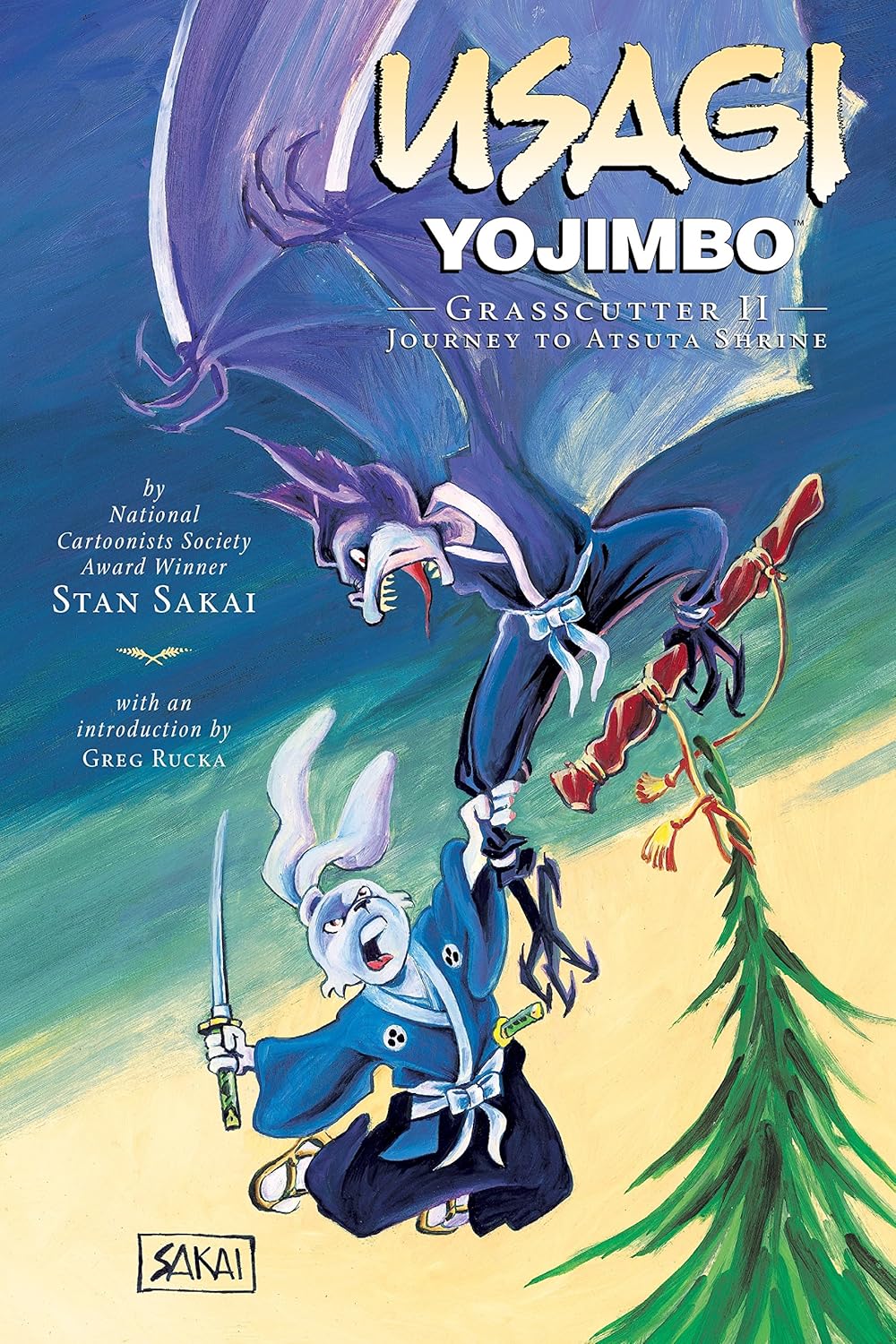
Usagi Yojimbo: Volume 15: Grasscutter II- Journey to Atsuta Shrine by Stan Sakai

Publisher: Dark Horse Comics (Paperback – 1 February 2002)

Series: Usagi Yojimbo – Volume 15

Length: 184 pages

My Rating: 5 out of 5 stars

Amazon

The classic adventures of Usagi Yojimbo continue as I look back at the 15th brilliant volume, Grasscutter II – Journey to Atsuta Shrine, one of Stan Sakai’s more ambitious and powerful comics, which sees the protagonist and his friends caught up in the tides of fate and history.

Ever since I read the recently released 40th volume of Stan Sakai’s iconic Usagi Yojimbo comic series, The Crow, I have been in a major Usagi Yojimbo mood, so I decided to go back and continue reviewing the older volumes of this classic comic, which follows a rabbit ronin in a version of Feudal Japan populated with anthropomorphised animals.  I reviewed the first 14th volumes during COVID lockdown, and had a lot of fun doing so, especially as Usagi Yojimbo is one of my favourite comic series.  I have been meaning to restart reviewing the older comics for a while, and I’m not going to throw away this sudden surge of creative energy, so this is the perfect time to bring out my review for the 15th volume in the series, Grasscutter II.
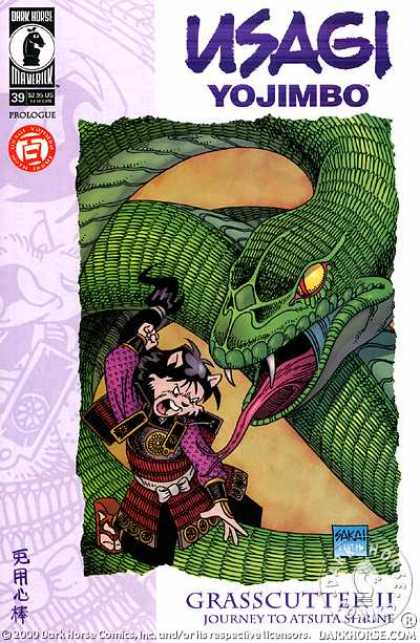
Grasscutter II is one of Sakai’s most impressive comics in the series.  Featuring issues #39-45 of the first Dark Horse Comics run on the Usagi Yojimbo series, Grasscutter II serves as the gripping sequel and conclusion to the intense and pivotal story contained in the 12th volume, Grasscutter.  This previous volume saw Usagi and his friends become embroiled in the recovery of the legendary sword Kusanagi and the foiling of a major plot to rebel against the Shogun.  A dark and compelling entry in the series, Grasscutter featured an amazing story with major implications for the Usagi Yojimbo series.  This was such a key volume, and it is interesting to see how Sakai follows it up here, especially as he needed to make Grasscutter II’s story in just as epic, if not more impressive.

Following dark events of magic and death, few people are aware that the legendary Imperial sword Kusanagi has been recovered from the sea.  Forged by the gods and wielded as a symbol of Imperial authority for generations, Kusanagi, or the Grasscutter sword has the potential to reshape the power structure of Japan, as whoever holds it could rally all the country to their cause, bringing war and destruction to a currently peaceful nation. 
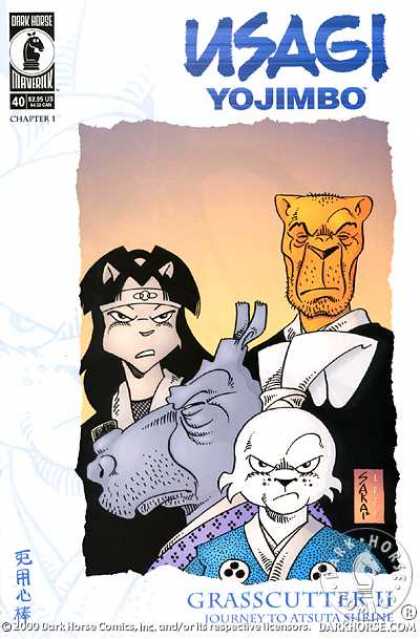
Hidden at a small temple, the sword is currently guarded by the honourable samurai Miyamoto Usagi, the irrepressible bounty hunter Gen, and the head priest Sanshobo.  However, the three know that they cannot keep the sword hidden for long, with dangerous foes seeking to uncover its secrets.  The only place that the sword will be truly safe and out of the hands of those who would use it for political gain is the sacred shrine of Atsuta, where a replica of the sword currently rests.

Embarking on a noble quest, Usagi, Gen and Sanshobo hope to sneak the sword to the shrine before anyone knows they have it.  However, the road to safety is long, and it soon becomes apparent that dangerous foes know exactly what they are carrying.  Pursued by two rival ninja clans who will stop at nothing to possess the sword as fuel for their own dark ambitions, Usagi and his comrades will need to fight tooth and nail to survive and keep the sword out of their hands.  But with old friends and new bitter rivals revealing themselves, can even Usagi and his skilled companions avoid the tragedy that stalks them?
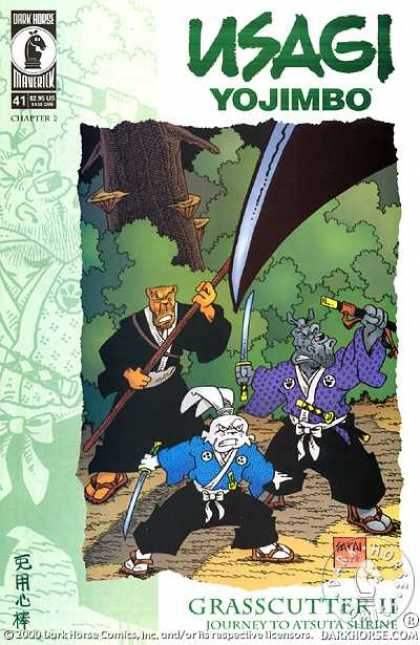
Grasscutter II was an epic and captivating classic entry in one of the best ongoing comic series.  Serving as an effective follow up to the bloody events of Grasscutter, Grasscutter II blended together a ton of outstanding action with some great character moments to create a memorable and beautifully drawn addition to the series that gets a very easy five-star rating from me.

This 15th volume of the Usagi Yojimbo series has a very gripping and intense storyline that seeks to combine Japanese history and mythology with the author’s action-packed style.  Starting with a beautifully drawn prologue that gives some interesting historical and mythological context to the sacred shrine of Atsuta, Sakai quickly moves into the main story, with Usagi, Gen and Sanshobo starting their journey to the shrine after being forced to protect the sword in the previous volume, Demon Mask.  At the same time, two rival bands of ninja, the Komori ninja and Neko ninja, discover that the existence of the sword and move quickly to intercept the companions, hoping to claim it for their own conflicting reasons.  The Neko ninja, led by Chizu, who has a complicated history with Usagi, catch up to the protagonists around the same time as the Komori ninja, leading to a wild three-way brawl.  Forced to work together, Chizu joins Usagi and his friends to recover the sword, which raises some interesting conflicts and issues, especially as Chizu has very different plans for the Kusanagi sword.
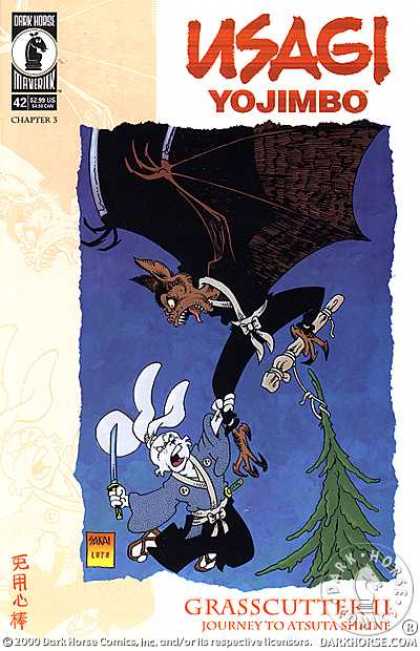
The second half of Grasscutter II is epic the entire way through, as Sakai continues to feature impressive action, while also allowing several character arcs to develop and conclude in tragic ways.  This includes the companions meeting up with the excellent supporting character Ikeda, who had such a great redemption arc in the previous Grasscutter volume.  Following some initial betrayal from Chizu, Usagi, Gen and Sanshobo follow her and enter battle with the Komori ninja, which ends in a dark moment of honour and loyalty from another interesting supporting figure.  While this initially seems to wrap up the main story, a fun twist ensures that Grasscutter II enters a fantastic concluding arc that sees that protagonists enter one last battle before achieving their goal.  This big battle is one of the most brutal and intense in the entire volume, and results in the book’s final tragic moment, which proves to be a fitting end to one amazing figure.  Loaded with powerful emotion, sacrifice and grief, this ending to Grasscutter II wraps up the entire story perfectly and ensures you are hooked all the way to the final blow.

This was another great volume from Sakai that successfully pushes the overall narrative of the series onwards and results in some intriguing changes to the comics, both in this book and the future.  As with all of Sakai’s work, Grasscutter II features a great combination of action, intrigue, character work and beautiful art that comes together perfectly to create an exceptional comic that is impossible not to finish in one sitting.  There are some truly great moments in Grasscutter II that help to make it stand out amongst Sakai’s other outstanding work, including the cool battle sequences.  The various scenes that feature the protagonists caught between two different schools of ninja were the best, and Sakai had fun showcasing the scary fighting ability of the blade-winged Komori ninja, as well as the established tricks of the Neko ninja.  This fantastic clash of styles allowed for some brilliant sequences, which were so damn epic to see unfold.  While I had a lot of fun with Grasscutter II, I must say that it probably isn’t the best volume of Usagi Yojimbo to start the comic on.  While Sakai does a good job revisiting some of the key plotlines and characters, you probably should read the previous Grasscutter volume to fully appreciate the plot, as well as some of the other earlier volumes to understand some of the character arcs.  Still, this is a very impressive Usagi Yojimbo entry, and a key read for established fans of the series who will have an exceptional time with Grasscutter II.
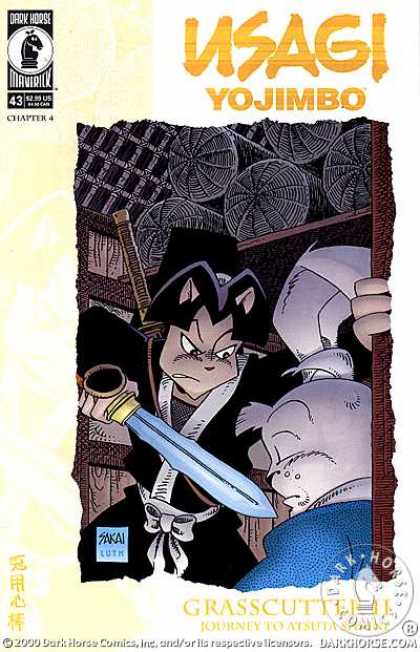
While fans will probably enjoy Grasscutter II’s exceptional action the most, I personally thought that it was some of the great character work in this volume that helped to make it particularly good.  Thanks to the volume featuring one extended storyline, Sakai takes his time to set up some outstanding character moments that work perfectly alongside the complex narrative and cool artwork.  While Usagi and Gen are their usual fun selves (there opposing views on honour, duty and what is right is always fun), I thought it was several returning supporting characters who really stole the show in Grasscutter II, especially as Sakai wove some great storylines around each of them.  This includes the former samurai turned monk Sanshobo, who has been an excellent recurring figure since his introduction in the series’ 10th volume, The Brink of Life and Death.  Not only does he mesh well with Usagi and Gen, acting as a voice of reason between the two strong-willed characters, but Sakai also brings one of his main character arcs full circle when he encounters his former lord.  Sanshobo has some great moments in Grasscutter II, especially his grief at the end, and I liked how Sakai utilised him as part of the main trio.

Another impressive character in Grasscutter II is Ikeda, who Sakai has built up as a wonderful figure.  Introduced in the moving story, The Patience of the Spider (contained in the 11th volume, Seasons) and expanded on in the first Grasscutter story, Ikeda is a former lord and general who learned to enjoy the quiet life of a peasant after his defeat.  Reunited by chance here with his former retainer Sanshobo, Ikeda proves to be an interesting addition to the cast.  Not only do his insights into the Neko ninja, who he greatly distrusts due to his history with them, result in a key plot point, but he is also once again tempted to achieve power, something he decides against in a great continuation of his storyline.  However, it is in the final sequence where Ikeda’s full character is revealed, where he serves as a willing rearguard to the companions to ensure the Neko ninja don’t get the Grasscutter sword.  His big battle sequence is very well portrayed, especially with how Sakai features his old war wound, and his final scene is one of the most badass inclusions in any Usagi Yojimbo comic.  An extremely well-written and complex character who is used to his full potential in this last appearance.
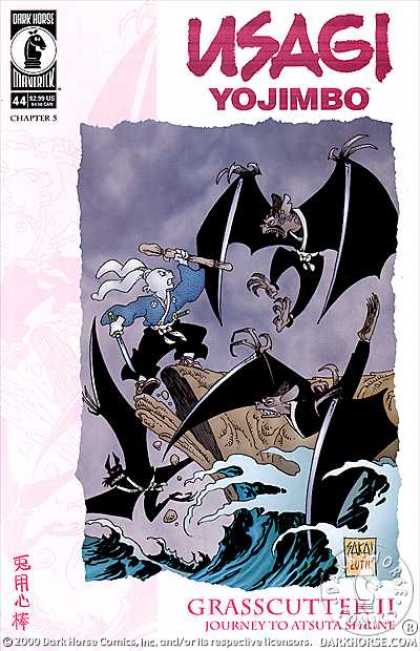
The final characters I want to mention are the various members of the Neko ninja who appear in this volume, primarily as antagonists.  Long-time opponents of Usagi, the Neko ninja represent the more classic ninja styles in the Usagi Yojimbo universe and prove to be great foils to the protagonist’s samurai style.  This includes their leader, Chizu, who has a long and complicated history with Usagi.  Simultaneously serving as both an alternate protagonist, antagonist and potential love interest to Usagi, Chizu has a lot of storylines in Grasscutter II, which Sakai makes full use of.  Forced to hunt for the Grasscutter sword against her better judgement, Chizu desires nothing more than to throw the sword back into the ocean to keep it out of anyone’s hands, and will betray anyone, including Usagi for that goal.  This results in some intriguing personal issues amongst the protagonists, especially as Usagi tries to see the best in her, while Gen forms an instant, mutual dislike of her.  Chizu’s inner conflicts become a key part of the plot, and her appearance here will have major impacts for her storyline going forward, especially when it comes to her ambitious number two, Kagemaru, who has been angling for power for several volumes now.  Kagemaru proves to be a ruthless alternate antagonist in Grasscutter II, and I liked how well Sakai set him up as both a physical and political threat going forward.  The final Neko ninja character I should mention is Saru, a former member of the clan betrayed by Kagemaru in the previous volume.  Seeking revenge on Chizu, who Saru believes was behind the betrayal, Saru stalks Chizu for much of the volume, resulting in some excellent sequences of ninja-on-ninja violence.  A compelling figure, Saru ends up redeeming herself in a particularly moving sequence and makes an impact despite her relatively short appearance.  These great ninja characters, and indeed the entire case of Grasscutter II, deeply enhanced the impact of the comic’s narrative, and I had an outstanding time seeing their arcs unfold.

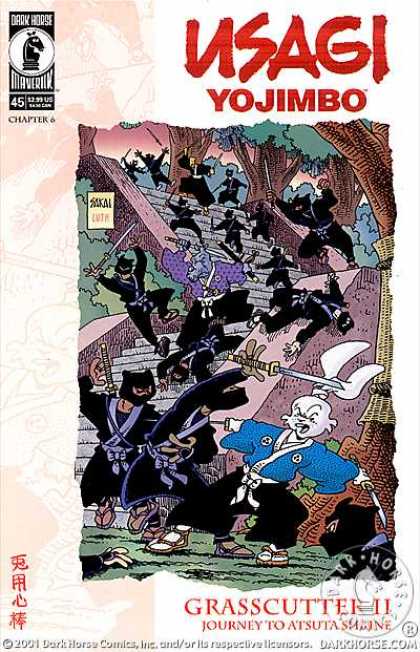
As with all the Usagi Yojimbo comics I review, I must highlight the outstanding artwork that is such a brilliant feature of Grasscutter II.  Featuring Sakai’s classic pre-colour style of drawing, Grasscutter II’s art is very visually impactful, and I loved the fantastic black-and-white panels that cleanly show the complex actions and characters.  Every panel is extremely striking, and I love how effectively Sakai showcases everything in such detail, including the actions of his many characters.  I am always impressed with how well Sakai implies movement and activity with his drawings, and you really get the flow the scene from his panels.  I particularly appreciate how well the intense fight sequences come across in Grasscutter II, especially as there are so many scenes of carnage that occur within this volume.  The various battles, which usually involve a range of ninja, are so well drawn, and I loved the complex array of combat that flitters along the pages.  Some of these scenes are quite elaborate, and I loved seeing all the multiple black-clad figures moving around the established cast, especially in some of the bigger fight sequences.
In addition to great fights, Sakai does a great job capturing the emotive nature of his cast with his fantastic drawings of the major characters.  The intense reactions of many of his characters help to make the scene pop, and I love how well Sakai showcases the emotional range that the story elicits.  Highlights include the final face of one badass warrior while the grief of another usually calm figure really hammers home the seriousness of the moment.  All this amazing action and great character drawings is perfectly supported by Sakai’s trademark drawings of the picturesque Japanese landscapes, towns and temples that serve as an amazing backdrop to the main story.  Sakai has some real talent of showcasing Feudal Japan with his artwork, and you can often feel the world through which the characters are trapsing.  I particularly appreciated Sakai’s portrayals of a wild oceans beneath a ragged cliff, which was a setting for several of the volume’s more visually powerful panels.  The harsh waves striking around the combatants was especially impactful, and you could almost feel the wave’s strength as the characters fight at their edge.  Throw in Sakai’s interesting take on a classic Japanese legend at the very start of the volume in the prologue and Grasscutter II’s art comes together in a truly perfect manner, especially as this volume features some of the artist’s most ambitious fight sequences.

Based on my rambling paragraphs above, I think it is safe to say that I had an amazing time reading the 15th Usagi Yojimbo volume, Grasscutter II.  Featuring the exceptional storytelling and artwork of the legendary Stan Sakai, Grasscutter II achieves so much with its ambitious plot, long-term, character driven storytelling, and amazing sequences of combat and chaos.  A brilliant, classic addition to a truly incredible comic series, Grasscutter II comes highly recommend, and I had such a great time getting through it yet again.

Amazon

Usagi Yojimbo: Volume 38: The Green Dragon by Stan Sakai

Usagi Yojimbo - Volume 38 - The Green Dragon Cover

Publisher: IDW (Paperback – 18 April 2023)

Series: Usagi Yojimbo – Volume 38

Length: 128 pages

My Rating: 5 out of 5 stars

I once again return to one of my absolute favourite comic book series as Stan Sakai brings out the 38th volume of his iconic Usagi Yojimbo series, The Green Dragon.

Fans of this blog will know that I am a massive fan of the classic Usagi Yojimbo comic series, having had a ton of fun reviewing multiple volumes of it over the years.  Written and drawn by the legendary Stan Sakai, the Usagi Yojimbo comics are set in a version of Feudal Japan inhabited by anthropomorphic animals, and follow a rabbit Ronin, Miyamoto Usagi, as he journeys the countryside fighting monsters, bandits, and other dangerous foes.  These comics are something truly special thanks to their clever stories, great characters, beautiful artwork, and impressive utilisation of Japanese mythology and iconography, and I have so much love for them.

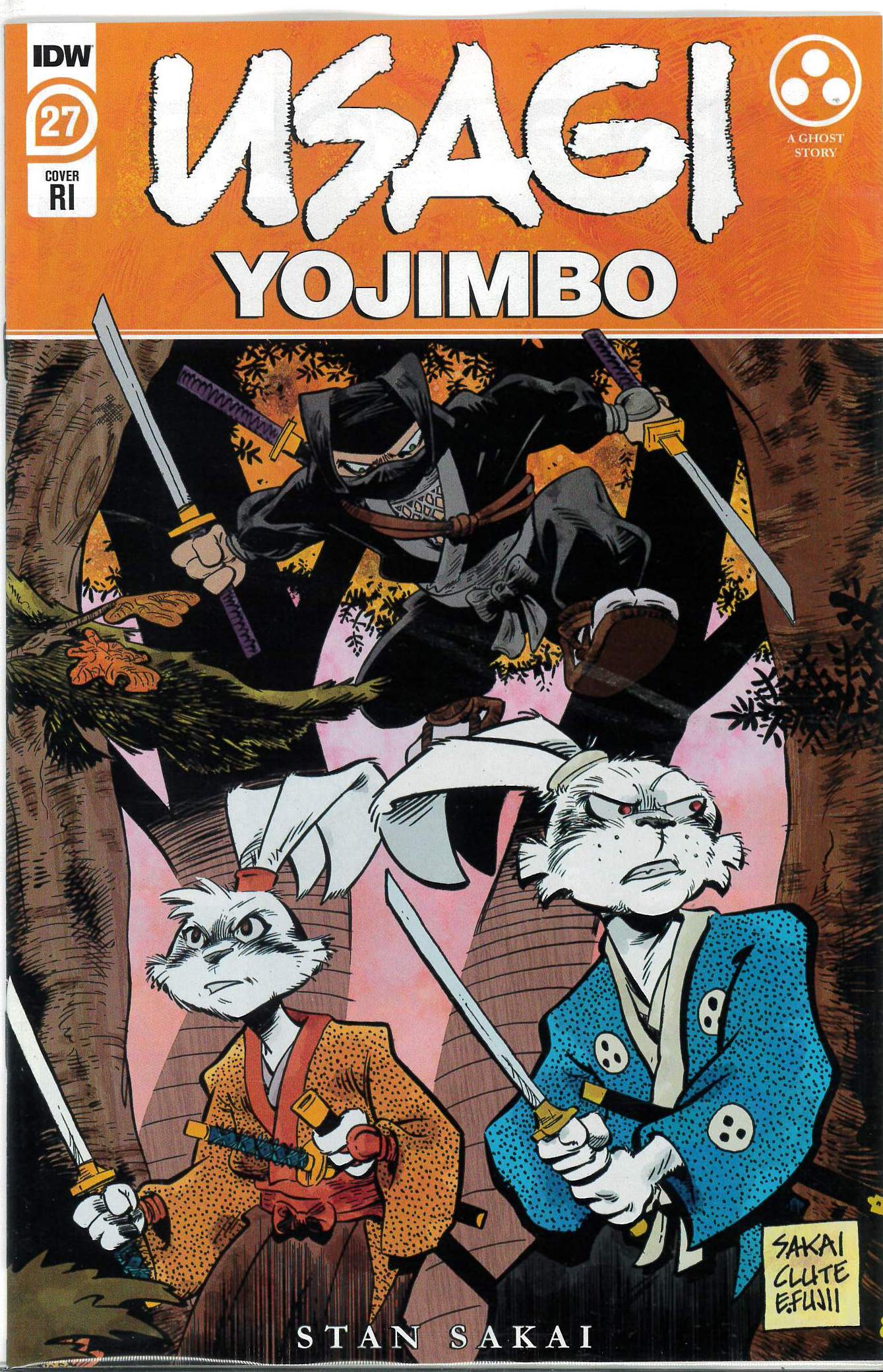
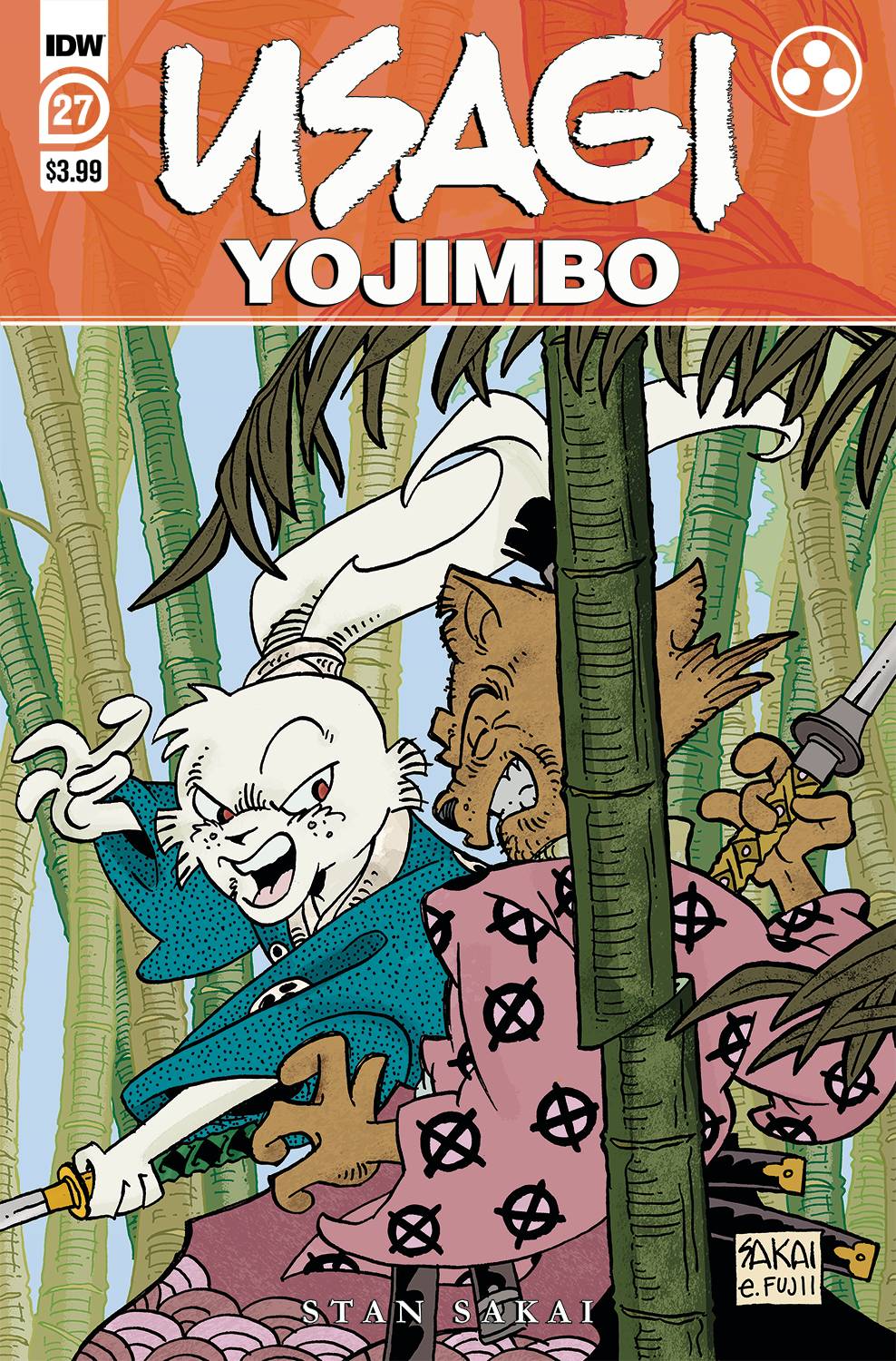
Usagi Yojimbo #27 Cover

For the last couple of years, Usagi Yojimbo has been published by IDW comics, who have done a pretty good job continuing this epic comic, especially as they started the trend of releasing the volumes in colour right off the bat, which has been highly effective and striking.  All the previous IDW volumes, including Bunraku and Other Stories, Homecoming, Tengu War! and Crossroads, have been pretty awesome five-star reads, so I knew that I was going to have a ton of fun with the latest volume, The Green Dragon.  Containing issues #27-31 of the current series, The Green Dragon featured three intriguing new stories, each of which was better than the last.  This was another very strong entry in the series and Sakai did a wonderful job of continuing some storylines from the previous volumes while also making The Green Dragon stand out in some distinctive ways.

The first story in The Green Dragon is one of the shorter entries, titled A Ghost Story.  This story sees Usagi and his current travelling companion, his cousin Yukichi, travelling through a dark, apparently haunted forest before coming to a shrine at its heart.  The shrine is dedicated to a deceased pregnant maid who was murdered on the orders of her lover and master, and now stands as a place of prayer for women in similar circumstances.  Upon reaching the shrine, Usagi and Yukichi see history start to repeat itself, as another maid praying at the shrine is attacked by a group of bandits intent on murdering her.  Intervening to save her, Usagi and Yukichi attempt to discover who ordered the hit, only to discover a murderous plot with unexpected twists.  Worst, the ghosts of the forest are out in force, and they won’t go until revenge is satisfied.

Usagi Yojimbo #27b Cover

A Ghost Story was a fun story that utilises a few compelling elements that are very familiar to Usagi Yojimbo readers.  The murder plot at its heart is a bit simple, especially when it comes to working out who is orchestrating events, but Sakai tells it in a very compelling manner, especially with the fun action and quick-paced plot.  The parallels between this current murder plot and the story told to them at the beginning was an intriguing story device, especially as it gets twisted around a little, and I loved how Sakai works in supernatural elements to the narrative.  Sakai has made great use of vengeful and tricky ghosts in his stories before, and I felt this one was particularly good, especially as it gave the plot some fitting narrative justice.  It was also quite amusing to see Usagi acting as the wise mentor to Yukichi when it came to matters he is very familiar with, such as ghosts and murder plots, so I had fun with that.  This was an overall strong and entertaining first entry in this volume and it sets up the story extremely well.

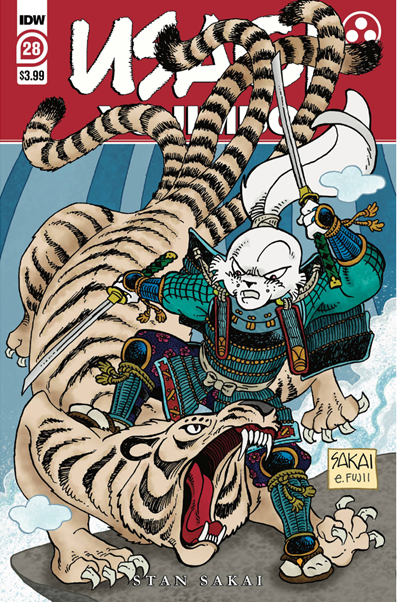
Usagi Yojimbo #28 Cover

The second story in this volume is another single-issue story, The Long Road, which follows a different highly familiar Usagi Yojimbo trend of Usagi intervening in a sudden bandit attack in the woods.  This time, Usagi and Yukichi encounter a merchant and his servant being ambushed by bandits determined to steal a valuable jade figurine.  Managing to scare off the bandits just after they kill the merchant, Usagi and Yukichi agree to escort the servant to the next town and deliver the figurine to its buyer.  However, as they continue their journey, it soon becomes apparent that their new travelling companion is in league with the bandits, and he is leading them into a trap.

Usagi Yojimbo #28b Cover

This was another great Usagi Yojimbo story that has a similar feel to previous entries, although Sakai uses that to his advantage.  Usagi Yojimbo fans have seen a whole lot of Usagi-led escort missions over the years, but The Long Road was a pretty good overall story.  Part of this was because Usagi is very much wising up to treachery that always seems to occur on these missions, and he takes active steps to not only identify the threat but also counter it in a satisfying way.  There is also a lot of entertaining betrayal, especially as the disloyal servant learns a harsh lesson about backstabbing from some experts.  It was also quite entertaining to see the green and unworldly character of Yukichi get a hands-on lesson about being a Yojimbo, especially as Usagi has some fun explaining at the moral issues surrounding it.  Combine that with Sakai’s great art, the well-drawn battle scenes, and the way it leads into the main story of the volume, and The Long Road is an impressive story that has a lot going for it underneath its veneer of a typical Usagi Yojimbo entry.

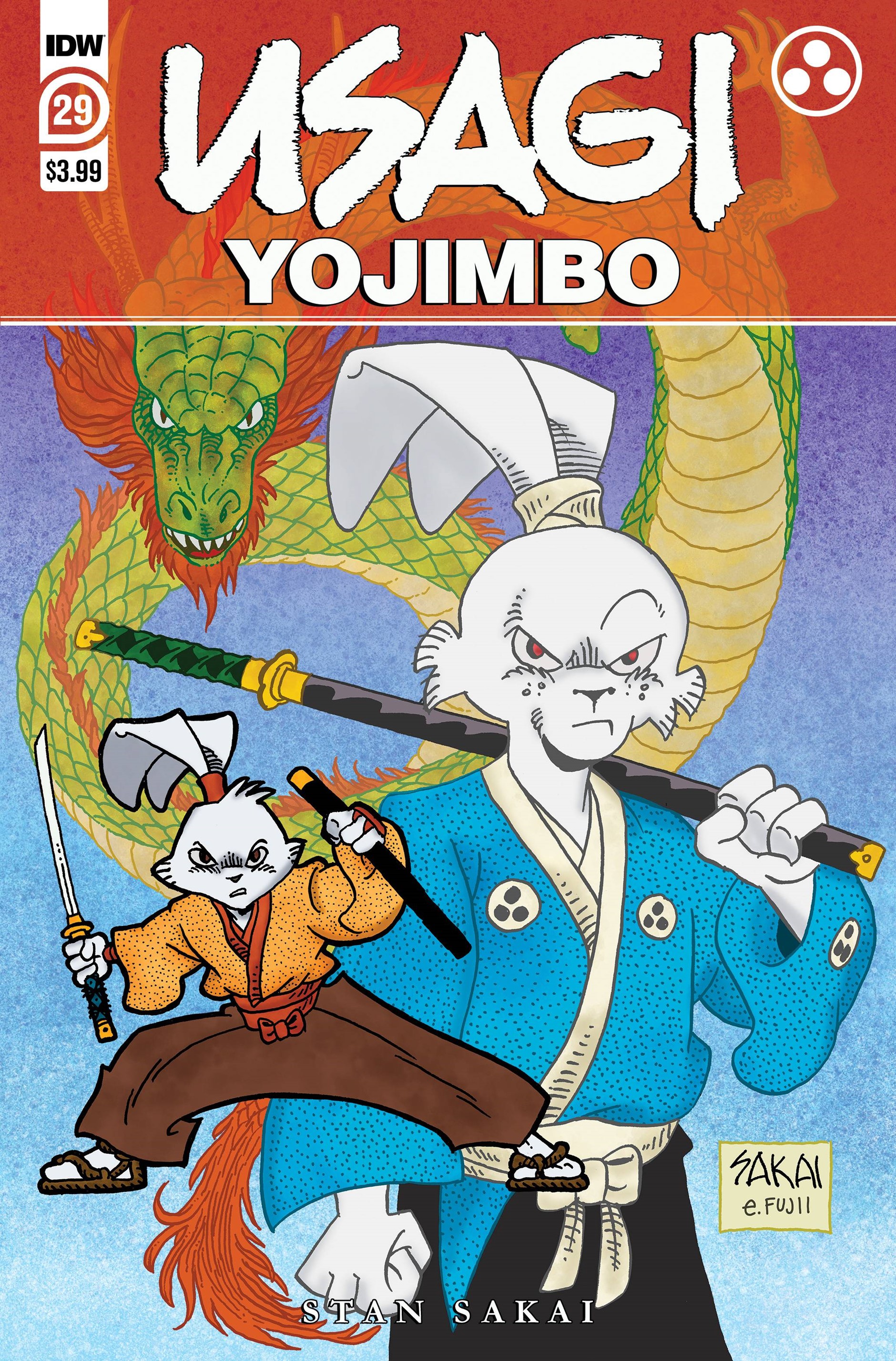
Usagi Yojimbo #29 Cover

The final story in this volume is the main entry, The Secret of the Green Dragon.  A three-issue long story that continues in the immediate aftermath of The Long Road, The Secret of the Green Dragon has much of the volume’s meat and sees Usagi and Yukichi get involved in a deadly battle between rival ninja clans.  The story starts with the samurai continuing their journey to deliver the jade figurine from The Long Road, only to witness a courier going to the same destination being brutally murdered by the flying Komori Ninja.  Usagi and Yukichi soon discover that the Komori Ninja are after something very special being delivered to the town, and naturally that secret package is in their care.  As they attempt to work out why their package is so important, Usagi runs into his old friend Chizu, former head of the Neko Ninja, who reveals that the figurine’s box contains an important missive that will cause issues for the scheming Lord Hikiji.  Hiring Usagi and Yukichi as bodyguards, Chizu leads them on a desperate mission across the countryside to escape the hovering Komori Ninja.  But the Komori Ninja aren’t an easy foe to avoid, and the trio soon find themselves under attack in the snowy landscape.

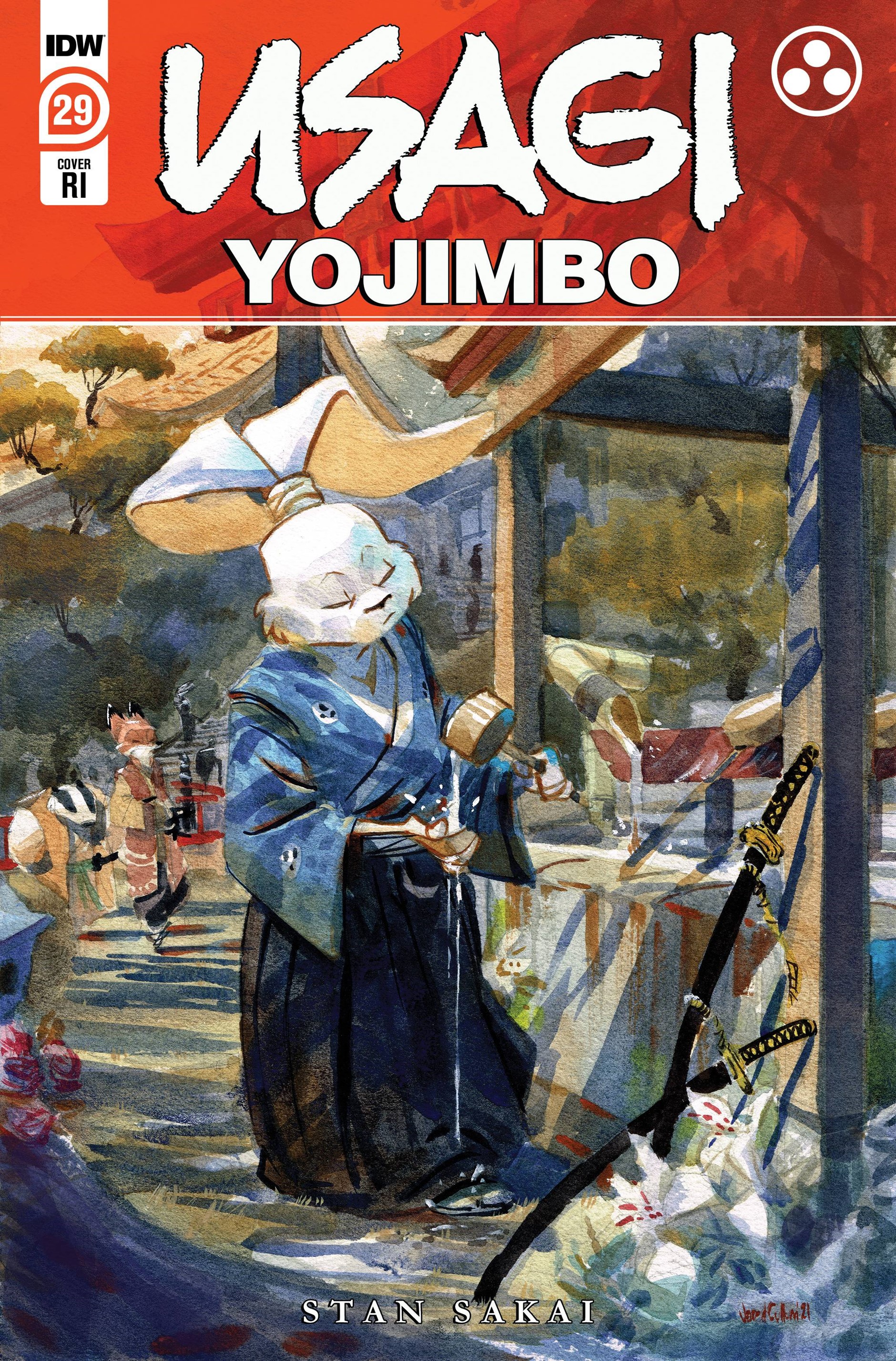
Usagi Yojimbo #29b Cover

The Secret of the Green Dragon is easily the best story in the entire volume as it takes the protagonists on one heck of an adventure.  Storylines with the various ninja clans of Usagi Yojimbo’s Japan are always extremely fun, and The Secret of the Green Dragon is no exception to this as it features the sinister Komori Ninja.  Flying bat ninja with blades attached to their wings, the Komori Ninja are always a fantastic addition to any plot as Sakai sets them up as one of the most unique and deadly foes in the series.  Sakai makes especially great use of them in The Secret of the Green Dragon, and their constant pursuit of the protagonists over the harsh wintery terrain makes for some impressive visuals.  The author loads this story with a ton of action, and there are some amazing set pieces that are extremely well showcased by Sakai’s art style, including desperate chases, powerful air-to-surface combat, and forays across impossible terrain.

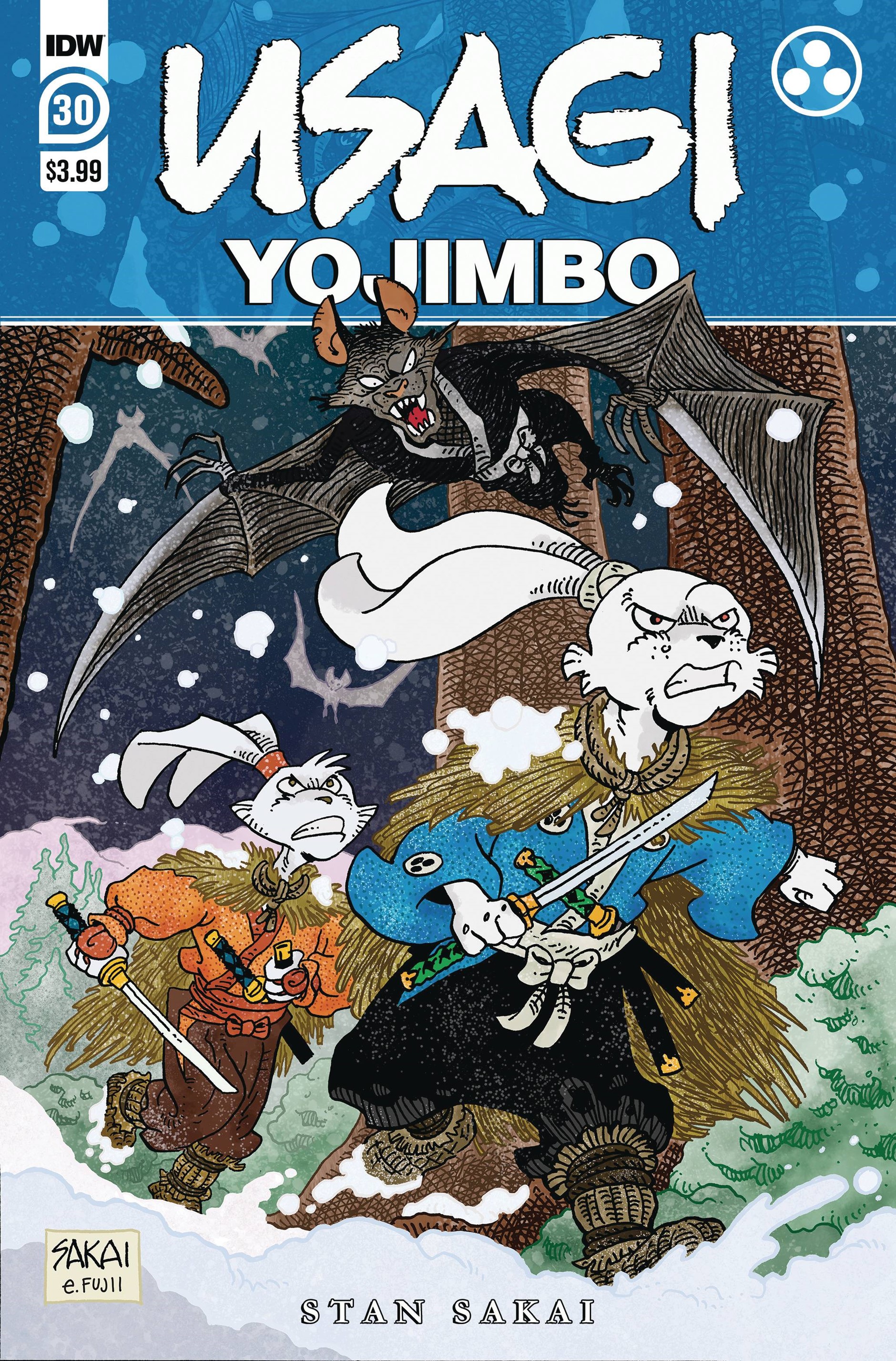
Usagi Yojimbo #30 Cover

There are a lot of fun story elements involved with The Secret of the Green Dragon, especially as it continues a lot of the ongoing plotlines involving the feuding ninja clans and Chizu’s attempts to regain control of the Neko Ninja.  The volumes ongoing storyline about Yukichi getting introduced to the various complicated elements of Usagi’s life as a wander was well set up, and he and Usagi learnt some harsh lessons about trust.  Watching Usagi lose his faith in Chizu after she engages in one deceit too many is pretty striking, and Chizu’s obvious regret later really makes this hit harder, especially as it is just one more tragedy this lonely ninja is forced to experience.  Finishing up with a threatening cameo from the series’ best villain, Jei, this ended up being a very strong story that is likely to have some intriguing repercussions later.

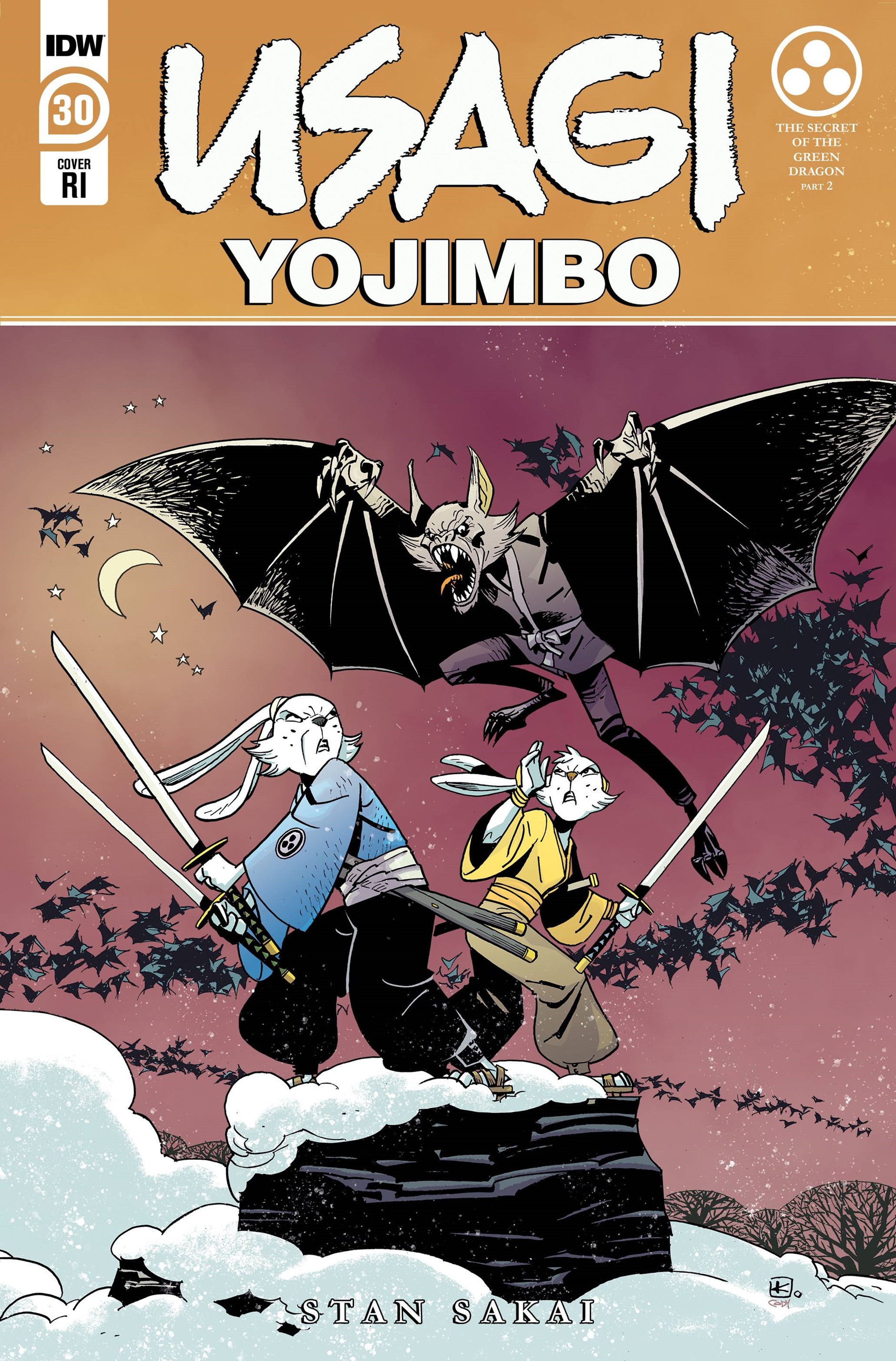
Usagi Yojimbo #30b Cover

I once again really need to highlight the outstanding artwork that is such an important cornerstone of this comic.  Sakai does some amazing drawings in The Green Dragon, and I loved the elaborate sequences that come together as a result.  All three stories are filled with eye-catching shots of beautiful Japanese scenery and towns, which really adds to the ambience of the story.  I particularly enjoyed the snowy landscapes that were such a big part of the third story, The Secret of the Green Dragon, serving as a powerful backdrop to the pursuit and battle-laden plot.  The villains of The Secret of the Green Dragon, the Komori Ninja, are also well showcased in the art style, and I think the full-colour spread helped to give them an added edge.  Their various attack scenes are very distinctive, especially compared to the typical combat sequences between Usagi and other samurai, and Sakai always goes out of his way to make the Komori Ninja a powerful villain with his drawings.  I honestly loved every beautifully drawn panel featured in The Green Dragon, and Sakai is still doing some amazing work after all these years.

Overall, The Green Dragon by Stan Sakai is an epic and fantastic volume in the always impressive Usagi Yojimbo series.  Filled with great art, clever stories, and some amazing, well-established characters, The Green Dragon was another strong outing from Sakai and one that I absorbed the second I got my hands on it.  There is a reason this is my absolute favourite comic series, and I will be reading this until the day it ends.  Highly recommended, especially for long-time fans of the comic, and one that pretty much gets an automatic five-star rating from me.

Throwback Thursday: Usagi Yojimbo: Volume 10: The Brink of Life and Death by Stan Sakai

Usagi Yojimbo - The Brink of Life and Death

Publisher: Dark Horse Books (Paperback – 1998)

Series: Usagi Yojimbo – Book 10

Length: 215 pages

My Rating: 5 out of 5 stars

Amazon

Reviewed as part of my Throwback Thursday series, where I republish old reviews, review books I have read before or review older books I have only just had a chance to read.

Another week, another Throwback Thursday review of an early volume of one of my all-time favourite comic book series, Usagi Yojimbo, by legendary author and artist Stan Sakai.  This week I will look at the epic 10th volume in the series, The Brink of Life and Death, which proved to be another amazing and exciting five-star read.

Usagi Yojimbo Mirage 15

The Brink of Life and Death continues the adventures of the rabbit ronin, Miyamoto Usagi, as he travels throughout the lands encountering all manner people and dangers.  This 10th volume is a fantastic addition to the series, featuring a great mixture of stories, from the tragic to the supernatural, and utilising some iconic recurring characters.  This volume is the third that has been collected by Dark Horse Books, and it features a mixture of issues from two separate publishers.  This includes the final issues of the Mirage Comics run on the Usagi Yojimbo series, with Issues #15 and 16, as well a story taken from Issue #13 (the rest of Issue #13 was used in the last volume, Daisho).  It also contains the first six issues of the Dark Horse Books publication run of Usagi Yojimbo and serves as the starting point to Dark Horse’s lengthy connection to the series.  As a result, the volume starts off with a quick recap of the series (titled Origin Tale), containing some very broad strokes and ensuring that new readers could start on this volume if they wanted (although Sakai does make most of his comics fairly accessible to unfamiliar readers).  This volume also contains Dark Horse’s trademark story notes at the end of the volume, which proved to be a particularly intriguing companion to the excellent stories contained within The Brink of Life and Death.

The first story contained within this volume is the intriguing and exciting Kaiso.  In Kaiso, Usagi encounters a local peasant, Kichiro, while wandering on the coast, and travels with him to his village.  There, Usagi becomes familiar with Kichiro’s family and begins to learn more about the village’s main trade, seaweed (kaiso) farming.  While Usagi enjoys the seemingly simple life of the villagers, he soon finds himself involved in a feud with a neighbouring village, who Kichiro believes are poaching their seaweed fields.  However, not everything is as it seems, and Usagi manages to uncover a conspiracy that threatens to destroy his new friends.

Usagi Yojimbo Mirage - 16

Kaiso is a fantastic and compelling story that once again highlights a traditional Japanese industry, in this case, seaweed farming.  Sakai does a fantastic job exploring seaweed farming in this story, as he introduces and portrays a number of key tools, concepts and techniques involved with the production of edible seaweed, all the way from harvesting it from the ocean to turning it into its dried form, nori.  This examination of seaweed farming serves as a surprisingly good centre for this story, and it is a testament to Sakai’s skill as a writer that he was able to produce an exciting and intrigue filled narrative around this industry in just 20 pages.  There are some great action sequences throughout this story, and it was cool to see Usagi fighting off a bunch of attackers whilst on a small fishing boat, utilising traditional farming tools as weapons.  There are also several impressive drawings throughout this story, as Sakai seeks to capture the beauty of the Japanese coastline as well as the complexities of the seaweed trade.  Kaiso proved to be an awesome first entry in this volume, and its intriguing story content and premise really helps to draw the reader in right off the bat.

The next story within The Brink of Life and Death is a great entry titled A Meeting of Strangers.  While enjoying a quiet lunch at an inn, Usagi watches as a striking swordswoman, later revealed to be called Inazuma, enters the inn.  Wary of this mysterious woman, Usagi bears witness to her skill and ferocity in combat as she takes down a band of bounty hunters who attack her, before departing into the wilds.  However, Inazuma is not the only person being hunted, and soon Usagi finds himself under attack from a group of killers who have been hired to end him.

Usagi Yojimbo Dark Horse #1

This is a really good story that showcases Sakai’s ability to quickly introduce an intriguing new character.  Inazuma goes on to become a major figure in the Usagi Yojimbo series for the next 14 volumes, and she gets an amazing introduction in this story, instantly coming across as something new, due to her striking appearance and her tough mannerisms.  Sakai shows early in the story that she is pretty damn dangerous, as Usagi casually reaches for his sword the moment he sees her, a completely new action from the character, which clearly identifies Inazuma as a major threat.  She quickly backs this up with her impressive swordplay, including slicing up the clothes of a local creep, and then taking out a band of bounty hunters.  She has a brutal fighting style as shown in this comic, and I loved her trademark finishing manoeuvre of completely cleaning the blood off her blade with one deft swish through the air.  In addition to the introduction of this great character, other fun elements of the story include the return of the Snitch (who was introduced in the last volume), who facilitates the hit on Usagi.  The Snitch is such a fantastic minor antagonist, and it is really entertaining seeing him running around doing his thing: “money, money, money!”  There is also a particularly impressive fight sequence in the last half of the story between Usagi and the assassins in the woods.  This scene sees Usagi take on over 20 guys in quick succession and is a real showcase of his ability.  There is a particularly fun panel in this sequence which sees Usagi kill several people at the same time, with his defeated opponents arranged in a semi-circle, all of them dying in dramatic fashion while making a different death rattle (including one guy who goes: “Trout, Trout!” for some reason).  All of this was over-the-top and helped show off just how crazy and action-packed this series can be.

The third story in this volume is the short entry Black Soul, which continues to showcase the return of series antagonist, Jei.  During a stormy night, a young girl and her grandfather have their house invaded by three bandits who steal their food and kill the grandfather.  However, the bandits are far from the only predators out that night, as the mysterious and frightening Jei appears at the door.  This was a great story that added a lot of key elements to the character of Jei in only a few pages.  Jei’s sudden appearance is suitably dramatic, and it shows off how terrifying he can be.  I loved the way that Sakai portrayed Jei’s fight against the three bandits, as all you see is several drawings of the hut’s exterior while terrified screams run out.  The story then returns to the interior of the house, where the bandits’ corpses are strewn around the house, including one guy who is hanging upside-down from the rafters, dripping blood.  Not seeing what actually happened makes the reader imagine the very worst scenario, and it really amps up the dread that this antagonist emanates.  Sakai then continues to hint at Jei’s more supernatural abilities by having him ‘consecrate’ the spear of one of his fallen opponents, with the blade visibly turning black in his hands, matching the soul of the wielder.  Perhaps the most interesting part of the story is the young peasant girl, Keiko.  At first it appears that Jei is going to kill her; however, he stops after not sensing any evil in her.  This is the first time we have seen Jei show mercy, and it is a defining moment for the character, especially as Keiko starts following him as his companion.  Having Jei care for a young girl really adds to the complexity around Jei’s character, and in many ways it makes him seem even more evil, as he is corrupting this innocent with his dark crusade.  Overall, Dark Soul is a great and scary story which leaves the reader wanting to see more of this fantastic antagonist.

Usagi Yojimbo Dark Horse #2

Now we move on to Noodles, the only multi-issue entry in the volume which contains a powerful and impressive narrative that I really enjoyed.  In Noodles, Usagi enters a new town, only to be immediately accosted by the police, who are searching for a thief behind a recent crime wave.  Proving his innocence, Usagi swiftly finds out the source of the recent crimes is his friend Kitsune, who is up to her usual tricks.  Kitsune has a new companion, a soba noodle street vendor and mute giant known only as Noodles, who assists Kitsune to hide from the police.  However, Kitsune has underestimated the deviousness and corruption of the local police administrator who puts a deadly plan into place to save his own skin.

This was an incredible entry in this volume, and I have a lot of love for Noodles’s fantastic crime narrative.  Sakai crafts together a fantastic storyline that follows Usagi as he meets up once again with the entertaining side character Kitsune and intriguing new character Noodles.  Kitsune is her usual fun self, and the introduction of the mute gentle giant Noodle adds a lot of dimensions to her character.  Up to now, Kitsune has been shown to be a generally good person, although she is motivated by greed or a sense of mischief.  However, in this story, she is given someone to care for, and she is determined to protect him no matter what.  Unfortunately, this leads to some great tragedy for her, which I found to be extremely moving, and you cannot help but feel bad for her.  Luckily, this leads to a rather good revenge plot in the second part of the story, which gives Noodles a satisfying and enjoyable ending.  This entire story was extremely well written, combining together humour, intrigue, character interactions and some genuine tragedy to produce an epic and compelling read.  I also really enjoyed Sakai’s amazing depictions of life in a larger feudal Japanese town, and it is clear that he did a lot of research to show what day-to-day life would look like, as well as examining how the criminal justice system worked during this period.  There are some really impressive drawings throughout this story, from the multiple detailed street and crowd views filled with all manner of activities and people (there is a sneaky shot of Jei and Keiko walking through town at one point), to the amazing action sequences, including a great scene where the gigantic Noodles is attacked by the police.  However, I really must highlight a particularly gruesome execution sequence that was a key part of the story.  While this scene is sad and horrifying, it is extremely well drawn, very memorable and it does its job of producing a major emotional response from the reader.  Noodles is probably the best entry in this entire volume, and I cannot praise just how amazing its clever and captivating story is.

Usagi Yojimbo Dark Horse #3

The next story within this volume is the supernatural tale, Wrath of the Tangled Skein, which sees Usagi arrive at a local inn which is experiencing some trouble.  A rich merchant’s daughter has been taken mysteriously ill, and her entourage fear that it is the work of a demon or haunt, picked up from their travels through the dangerous forest known as The Tangled Skein.  Usagi, who has previously travelled through The Tangled Skein (back in Volume 7: Gen’s Story), offers his assistance and takes command of the merchant’s ronin while they wait for a priest to arrive.  It does not take long for events to come to a head, and Usagi finds himself facing off against dangerous and malicious terrors.

I really like it when Sakai does a supernatural tale in the Usagi Yojimbo series, and this one was particularly awesome as the author expertly utilises some fascinating creatures from Japanese mythology.  There are two separate monsters contained within this story.  First you have the nue, a terrifying chimeric creature with the head of a monkey, the body of a badger, the legs of a tiger and a snake for a tail.  Needless to say, this is a particularly weird creature, and Sakai does a fantastic job drawing it and then portraying a chaotic and dangerous fight around it as Usagi attempts to defeat it.  In addition to the nue there is also a tanuki, a shape-changing racoon dog, who manages to trick Usagi and almost costs him everything.  I really loved the designs of both these creatures within the comic, and it was extremely cool to see and learn more about these facets of Japanese culture and tradition.  This story is set up extremely well, and the author has a great blend of action, supernatural intrigue and fun character moments.  Wrath of the Tangled Skein also introduces the character of Sanshobo, a Bonze priest who goes onto become a key recurring character, helping to make this a significant and important entry in the Usagi Yojimbo series.

Up next we have another short character-driven tale, The Bonze’s Story.  In this entry, Usagi travels with the Bonze priest Sanshobo after the events of the previous story.  The two quickly find camaraderie with each other, especially when Usagi realises that his companion is a former samurai.  Sanshobo then relates the tragic tale of how he gave up his warrior ways, which occurred when the young son of his lord accidently died in his care.  This forced Sanshobo’s own son to take his own life to restore his family’s honour, an event that broke Sanshobo.  This was a rather fascinating tale that does a lot to cement interest in a new side character.  The origin tale for Sanshobo is really good, and the whole story of sacrificing a son to save honour is extremely captivating and memorable.  The entire background story is drawn amazingly, and the various expressions of horror, sorrow and pride on the face of participants as they attempt to survive in a storm are quite exceptional.  This was another amazing example of what sort of impressive story Sakai can tell in only a few short pages, and The Bonze’s Story definitely sticks in the mind.

Usagi Yojimbo Dark Horse #4

Following this shorter tale, we have the fun, action-packed Bats, the Cat and the Rabbit.  In this entry, Usagi seeks shelter in an old temple, but his quiet night is ruined when several Komori Ninja arrive, seeking a specific prey.  After they leave, Usagi discovers that the person they are hunting is an injured Chizu, the leader of the Neko Ninja.  Helping her, Usagi learns that she is carrying a valuable and dangerous scroll that the Komori Ninja are desperate to obtain.  Can Usagi and Chizu keep it out of their hands, or will a powerful new weapon be unleashed upon the lands?

Bats, the Cat and the Rabbit was an exciting and entertaining entry that sees Usagi reunited with one of his potential love interests Chizu, who we last saw back in Volume 8: Shades of Death.  This is a fast-paced story that focuses on the conflict between two rival ninja clans, Chizu’s Neko Ninja and the Komori Ninja.  The Komori Ninja, giant bats with blades on their wings who had an amazing introduction back in Volume 5: Lone Goat and Kid, are fantastic antagonists for this story, and it is always cool to see them in action, especially when Sakai draws them slicing through trees to get their prey.  The highlight of this story is the impressive ninja-on-ninja combat, as the more traditional ninja techniques of Chizu and the Neko Ninja go up against these flying opponents, all with Usagi in the middle.  This results in some epic fight sequences which end up being a lot of fun to see come to life.  I also really enjoyed the fantastic conclusion to this story, which not only has a great twist but which also adds a bit of tragedy to the life of Chizu, as she reflects on what constitutes duty for ninja.  An overall awesome and enjoyable story, this was another fantastic entry in this volume.

The penultimate entry in The Brink of Life and Death is the gripping story, The Chrysanthemum Pass.  After humiliating a group of thugs in a town, Usagi obtains a new travelling companion, Icho, a wandering medicine peddler.  The two become friendly as they wander around the mountains, but Icho is not what he seems.  Instead, he is secretly a member of the Koroshi, a notorious assassins’ guild, and is planning to take out a rich lord who is travelling through the Chrysanthemum Pass, and Usagi is also on his kill list.

Usagi Yojimbo Dark Horse #5

This was another outstanding story.  I loved the entire cleverly written narrative, which sees Usagi dragged into the middle of another devious plot.  Having his companion, Icho, turn out to be secretly evil was a fantastic choice by Sakai, and he sets it up perfectly, with only minor hints of his true intentions being revealed to the reader until about halfway through the story.  The rest of the story deals with Icho trying to subtly kill Usagi before his assassination mission and failing, allowing Usagi to be in the midst of the events in the pass.  This story then features a number of fantastic twists, including the fact that Usagi suspected that Icho was an assassin the entire time, implying that his reasons for travelling with him was to keep an eye on him and intervene if he was proven correct.  It was great to see the return of the Mogura Ninja, ninja moles with some really cool character designs who were introduced in the very first volume, The Ronin, and they once again proved to be surprisingly effective adversaries.  This story also serves to introduce a new group of antagonists for Usagi, with the first mention of the Koroshi assassins’ guild, whose various members tangle with Usagi multiple times throughout the rest of the series.  The Chrysanthemum Pass is therefore a fantastic and notable entry within this volume, and it ended up having quite an impressive story.

The final story in this volume is Lightning Strikes Twice, a powerful and captivating entry which provides new background for new character Inazuma.  In this story, Usagi once again runs into the mysterious Inazuma after finding several dead bodies on the road.  Encountering her within a temple, surrounded by other travellers, Usagi sits and listens to her tragic tale of love, loss and revenge as she recounts how she became so skilled with the sword, and the reasons why she is constantly being hunted throughout the lands.

Usagi Yojimbo Dark Horse #6

This was another epic story that really helps to build up Inazuma as an impressive and unique character within the series.  Her entire backstory as a girl who followed her heart and then lost everything is really emotional and humanising, adding layers of complexity to her rough exterior.  It was rather jarring to see such a strong woman stay with an abusive and uncaring partner, and it serves as an intriguing starting point for her road to exceptional warrior.  I enjoyed seeing her learning the way of the sword, and Sakai really builds her up as a natural prodigy with the blade.  Despite the humanising aspects of this story, Inazuma again comes across as a major badass within this story, thanks to the bloody fight sequence at the beginning, where she swiftly takes down a band of assassins with some very fancy moves, as well as the sequence at the end of the origin story, where she shows just how dangerous and cruel she can be.  I also absolutely loved the shocking reveal at the end of Lightning Strikes Twice where Usagi discovers that the people who have been quietly sitting through Inazuma’s story with him are all dead bounty hunters, which adds a real edge to Inazuma and her actions.  Lighting Strikes Twice proves to be a truly compelling and exciting tale, and I really liked learning more about this intriguing new character.  I also really appreciated how it tied into the previous Inazuma story and it ended up being a fantastic way to end the entire volume.

This 10th volume of the incredible Usagi Yojimbo series, The Brink of Life and Death, is another outstanding and addictive creation from Stan Sakai that features several impressive stories.  I loved this amazing combination of tales, and it was great seeing both standalone stories and entries that have deeper ties with the rest of the series.  Filled with awesome character moments, stunning artwork, and detailed depictions of feudal Japan, The Brink of Life and Death is a must read for fans of this series, and Sakai should be very proud of what he accomplished with this volume.

Amazon

Throwback Thursday: Usagi Yojimbo: Volume 5: Lone Goat and Kid by Stan Sakai

Usagi Yojimbo Lone Goat and Kid Cover

Publisher: Fantagraphics Books (Paperback – January 1992)

Series: Usagi Yojimbo – Book Five

Length: 142 pages

My Rating: 5 out of 5 stars

Amazon

Reviewed as part of my Throwback Thursday series, where I republish old reviews, review books I have read before or review older books I have only just had a chance to read.

In this latest Throwback Thursday I once again check out another early volume of the excellent Usagi Yojimbo series, which I have been reviewing over the last couple of weeks. For this review, I am looking at the fifth volume, Lone Goat and Kid. Lone Goat and Kid was first released in 1992 by Fantagraphics Books and contains issues #19-24 of the Usagi Yojimbo series.

Usagi 19

This fifth volume of Usagi Yojimbo once again sees series protagonist, the rabbit ronin Miyamoto Usagi, traverse a feudal Japanese landscape populated solely with anthropomorphised animals. This volume follows on right after the chaotic events of the fourth volume, The Dragon Bellow Conspiracy, and contains five new stories across six issues. This is an interesting entry in the series, particularly as it is the first volume to barely feature any of the previously introduced recurring characters aside from Usagi (a huge departure from the last volume, which contained a number of recurring characters coming together and teaming up). Instead, Sakai takes the time to introduce a bunch of new characters and scenarios across the volume’s five separate stories. Unsurprisingly, I really liked this fifth volume of Usagi Yojimbo, especially as Sakai manages come up with some fantastic and exceedingly enjoyable tales.

The first story featured within this volume is titled Frost & Fire, and it is a tragic story with undertones of forbidden love and class struggle. In this story, Usagi is hired by the cold and proper widow of a samurai to travel to the place of her husband’s death and retrieve his swords. Upon arriving at the small village where the samurai died, Usagi discovers that the swords are in the possession of the dead man’s lover, a poor peasant girl, who wishes to keep them as a remembrance of the man she loved. Unwilling to take the swords by force, Usagi leaves, but the peasant girl’s greedy brother has other plans for the swords.

This was a rather heartfelt first story for the volume, and it contains some great underlying elements to it. Much of the story revolves around a forbidden romance between a samurai and a peasant girl who wanted to be together but were unable to due to class differences. This was a rather intriguing central element for this story, and you can’t help but feel for the poor peasant girl, especially after meeting the samurai’s harsh and honourable widow in the opening pages. There is also examination of the evils of greed and avarice, as several of the side characters attempt to deceive and murder in order to get a quick payday. Luckily, their greed proves to be their undoing, as karma quickly strikes throughout the course of the story. There are some great scenes in this story, including one sequence where Usagi stares down the peasant girl when she refuses to give up the swords, “You know I can just take them from you”, before ultimately backing down and refusing to force her to give them up. I also liked a scene later in the book where the brother’s greed proves to be his undoing, as not only does Usagi appear behind him at one point like a vengeful spirit, but he is then ironically attacked by his “friends”, who are jealous of the wealth he achieved because of his bad actions, and whose mindset mirrors that of the brother. All of this makes for a great first entry for this volume, and I really enjoyed the amazing and captivating story that Sakai came up with.

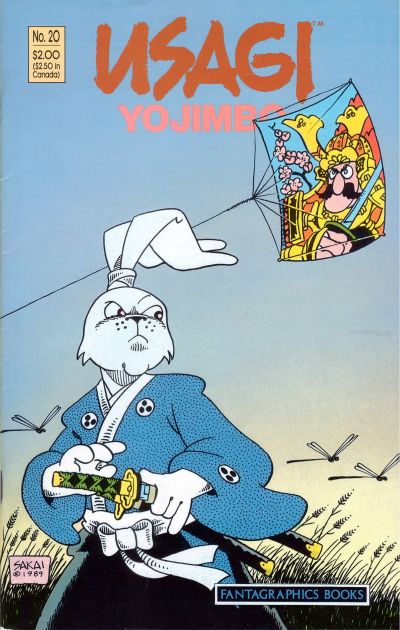
Usagi 20

The next story is a rather unique entry called A Kite Story, which I have a particular love for. A Kite Story is actually broken up into four distinctive parts, each of which focuses on a different character participating in a famous kite festival. The first part, called The Kite Maker’s Story, follows a kite maker, Tatsusaburo, in the lead up to the festival. This part of the story contains no dialogue, but instead features a first-person narration from Tatsusaburo that overlays the drawings. This narration explains how he gathers the resources for his kites and the various processes he goes through to craft them together. It particularly focuses on the work he puts into creating an odako, a giant kite that he and a team of handlers hope to fly. The story then jumps to its second distinctive part, called The Gambler’s Tale, which follows the crook Hatsu and his gang of itinerant gamblers as they work the crowds gathering for the kite festival. This part starts off with some first-person narration from Hatsu and explores how he and his gang set up a rigged game of dice. This part ends its narration on the second page, when Usagi arrives on the scene and it becomes purely dialogue driven after that. Usagi, upon noticing the game, gets involved and is able to prove the gamblers are cheating (thanks to some fancy sword work), which sees not only the crooked gamblers run out of town but also those gamblers who were running fair games, and who are none too pleased with how they have been treated. This then moves to the third part of the story, called The Ronin’s Tale, which is nearly entirely dialogue driven, with only a small bit of narration at the front. Usagi deals with some of the players from the first two parts of the book, as he is unfairly blamed by the cheating gamblers in The Gambler’s Tale as the source of all the trouble to the honest gamblers. This sees Usagi have to make a rather quick and unconventional exit from the festival, which quickly breaks down into chaos. The story then concludes with a quick two-page final part, called The Kite Maker’s Tale II, which follows Tatsusaburo again and serves as an epilogue to the whole story.

I really liked A Kite Story, as Sakai did a really good job blending together a couple of distinctive narratives into one fantastic story. I particularly enjoyed the fascinating first part of this story and I always love it when Sakai uses his stories to explore certain unique Japanese cultural elements and industries. For this one, the author presents the reader with an amazing examination of the traditional kite-making process, and I loved seeing the process explained by the titular kite maker. This part of the story blends in surprisingly well with the other sections of A Kite Story, and I was impressed with how Sakai was able to turn these seeming separate and disparate tales into a complete narrative that is both entertaining and informative. Sakai also produces some amazing artwork in this story, from the giant kite to the visually impressive and detailed crowd scenes, and this is easily one of the more innovative stories that Sakai has come up with.

Usagi 21

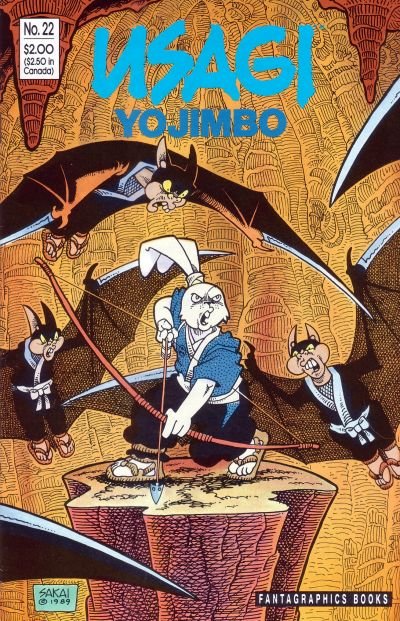
The third story is the action-packed spectacular, Blood Wings, which Sakai tells over two issues. Late one night, Usagi is wandering along the road when he comes upon a dying peasant. The peasant’s last words are a mysterious warning about whatever killed him, “wings of blood”. Travelling to a nearby village, he finds a settlement living in terror, completely cut off from the outside world. They are being kept prisoner by a new and dangerous group of ninja, the Komori Ninja Clan, killer flying bats. The Komori Ninja were accidently discovered by the villagers as they prepared to ambush a shipment from a nearby goldmine and the ninja are now keeping them prisoner while they execute their attack. Knowing that the ninja will not leave the villagers alive as witnesses after the heist, Usagi attempts to break out and warn the goldmine, and when that fails, he leads the villagers in a spirited defence of their home.

Blood Wings was a fantastic and exciting story that serves as an excellent set piece for the middle of this volume. This third story is an impressive read that not only introduces a notable new group of antagonists, but it also contains some rather good action sequences. The Komori Ninja prove to be a great group of villains, and I really liked the character design that Sakai came up for them, as they fly around with sword blades attached to their wings, cutting through anyone and anything they encounter. The highlight of this story has to be the thrilling action sequences between Usagi and this new foe, who are able to outmatch the protagonist with their unique combat style. This all culminates in an extended battle sequence which sees a swordless Usagi defending the village with a force of farmers. This is probably the fastest-paced story in the volume, and Sakai comes up with an awesome narrative for it. This is also the entry in this volume that is most tied into the overarching Usagi Yojimbo world, as the Komori Ninja are revealed to be working for Lord Hikiji and are seeking to replace the Neko Ninja. This story also contains my favourite joke in the whole volume, as only Saki would have a guard yell out, “Holy flying furball! It’s Bats, man!” as the Komori Ninja descend.

Usagi 22

The fourth story is an elaborate and compelling entry titled The Way of the Samurai. This story sees Usagi intervene when a gang of bandits (including a very cool-looking walrus samurai), attack a messenger, and is directed to seek out the magistrate of the local town. Arriving at the town, Usagi is amazed to discover that the magistrate is a famed former general Oyaneko, whose battles and tactics Usagi idolises. Staying in the general’s house for a night, he learns that Oyaneko was a loyal retainer to the land’s former lord but was cast aside when the lord’s brash young son came to power. Now regulated to the role as a simple administrator and slowly dying of a disease, Oyaneko is discontent with his life, and, after meeting an honourable and skilled Usagi, challenges him to a duel to the death, “The way of the Samurai is found in death”.

This fourth entry in the volume is a moving tale that the author uses to explore the complexity of the samurai code of duty, loyalty and service. I really liked the intricate story that Sakai weaved around the characters of Usagi and Oyaneko, and Oyaneko’s story is particularly tragic and fascinating. This entire story is set up really well, with Usagi encountering Oyankeo, the two gaining a mutual respect for the other, learning about Oyankeo’s past and motivations, before the emotionally charged duel at the end. Sakai did a fantastic job illustrating the stress and emotion surrounding this final duel with his epic drawings, and the end result was really touching. I think this is one of the best written stories in the entire volume, and it becomes quite an emotional ride for the reader in the end.

Usagi 23

That leaves us with the fifth and final story in this volume, which shares the same name as the overall volume, Lone Goat and Kid. This story focuses on the characters of Yagi and Gorogoro, the titular Lone Goat and Kid. Years ago, Yagi served the same lord as Oyaneko. However, when their old lord died, Yagi was falsely accused of a crime by the new lord’s corrupt advisors and forced out of his service. Yagi and his son Gorogoro now work as Lone Goat and Kid, assassins for hire who many believe now travel the road to hell. The two assassins are also constantly targeted by their former lords’ samurai and bounty hunters sent after them by the corrupt advisors who framed them. As part of their latest attempt to kill Yagi and Gorogoro, these advisors use a proxy to hire the Lone Goat and Kid to assassinate Usagi, who they believe may be able to defeat the infamous assassin. When they meet, Yagi and Usagi engage in a brutal fight to the death, with the corrupt lord’s forces waiting to ambush the winner.

This was another awesome story filled with epic duels, a massive battle sequence, some superb artwork featuring Japan’s exquisite landscape, and a fun narrative packed full of deceit and conspiracy. The titular Lone Goat and Kid are a rather cool adaptation of the iconic Japanese fiction duo, Lone Wolf and Cub. Lone Wolf and Cub was a manga series back in the 1970s that followed a samurai assassin and his child as they travel feudal Japan searching for vengeance. This series has inspired several movies and a television show, and many different pieces of fiction have paid homage to them over the years, from The Mandalorian to Bob’s Burgers. Heck, Rick and Morty literally just did an anime homage to them last week on YouTube. Sakai’s versions of the characters are rather good, and they become fun recurring characters within the Usagi Yojimbo series. I loved how Sakai came up with some fantastic and unique character designs for the two assassins, turning them into goats rather than wolves (which was a nice touch, especially as the name “kid” has that fun double meaning), and providing them with a different backstory. However, there are some excellent similarities, such as the father’s skill with the blade, the desire to take down conspirators who wronged them and the baby carriage the son travels in, equipped with all manner of hidden weapons and blades. The character of Yagi, the Lone Goat, is particularly intense, and is almost demonic in his attitudes and persona, while still maintaining a samurai’s sense of honour. I was also really impressed with the battle sequences that featured in the last half of this story, and I liked how Sakai went from an elaborate one-on-one duel, to a mass fight against multiple opponents. All of this leads to another excellent story in this volume, which I really enjoyed reading.

Usagi 24

This fifth volume of Usagi Yojimbo, Lone Goat and Kid, was another incredible and powerful addition to the series, and I think Stan Sakai did another amazing job with this volume. Featuring five fantastic stories that contained Sakai’s usual complex narratives, iconic artwork and compelling underlying themes, Lone Goat and Kid gets another five-star rating from me, and it is really worth checking out.

Amazon