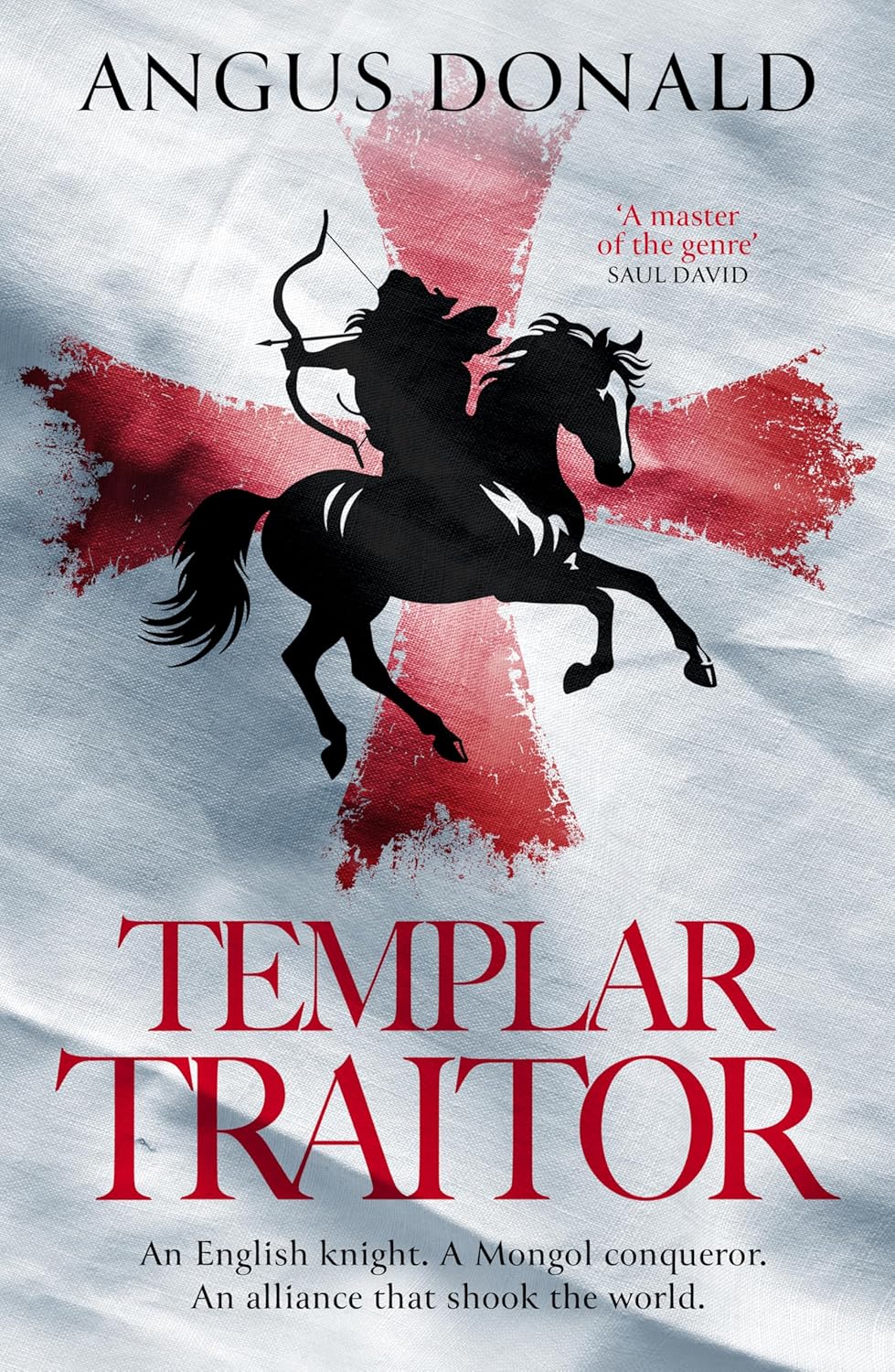
Templar Traitor by Angus Donald

Publisher: Canelo Adventures (ebook – 28 August 2025)

Series: The Mongol Knight – Book One

Length: 411 pages

My Rating: 4.5 out of 5 stars

Amazon

Those in the mood for an awesome and intense adventure should check out the soon-to-be-released historical fiction novel from Angus Donald, Templar Traitor, an outstanding book that I had a brilliant time getting through.

I have mentioned several times on my blog that my experiences with reviewing started with historical fiction, which was the main genre that I read for several years.  While I have progressed to a range of other genres since then, historical fiction still holds a very special place in my heart, and I always love to dive back into time and read a great adventure or moving tale set in our collective past.  One of the more enticing recent examples was Templar Traitor by Angus Donald.  Featuring a cool plot about an English knight fighting alongside the Mongolian horde, Templar Traitor is the first book in Donald’s The Mongol Knight series, which I really liked the sound of.  It helped that Donald is an author I have an interesting history with, as his early novel, Outlaw, was one of the first books that I reviewed professionally, and I was very keen to see how he had progressed as a writer since then.

Plot Synopsis:

“Do not lie to me, Templar, or it will be the last thing you do.”

July 1241. Christendom cowers in terror before the threat of a Mongol invasion. The swift-moving, invincible cavalry of Genghis Khan has smashed the proud, steel-clad knights of Russia, Poland and Hungary – and now Austria lies directly in their path.

At a skirmish outside the walls of Vienna, German knights capture a squad of Mongol scouts, and are astonished to discover one of their number is an Englishman – a Templar knight – who has been riding with these Devil’s horsemen for more than twenty years.

Interrogator Father Ivo of Narbonne is summoned to Vienna Castle to draw the truth from the imprisoned Englishman before his impending trial, to find out why he abandoned his Faith, his Brethren and his homeland to become… a traitor to Christendom.

This was a very impressive novel from Donald that nicely sets up a cool new historical fiction series, while also containing an intense and exciting story.  Loaded with action, adventure and some fascinating historical elements, Templar Traitor was an excellent read that I’m very glad I got to check out early.

Donald pulled together a very interesting story for Templar Traitor that cleverly makes use of a real recorded historical event and expands on it to create an elaborate tale of adventure, war and survival from the perspective of an initially eager young knight.  The framing device of the novel starts in Austria in 1241, with the capture of protagonist Robert of Hadlow, a knight from England who rides with the Mongols during their invasion of Europe.  From there, the captured Robert gives testimony to a priest with his own agendas, who is shocked to discover that Robert is a former Templar Knight who had journeyed to Mongol lands many years earlier.  From there the story dives back in time and chronicle of Robert’s life, following him as a young man ejected from Templars two decades earlier to becoming a wandering merchant travelling across Europe, before he is given the unique opportunity to try and establish an exclusive trade deal with Genghis Khan. This first part of the book was a very compelling introduction to the story, and it sets up the early story of the protagonist nicely, including his pressing reasons to undertake such a task, while also providing some fascinating historical contexts of the regions that the protagonist initially journeyed through.

From there Templar Traitor takes on a much more action-oriented edge, as Robert and his lone companion journey deep into Persia and beyond to find the Mongols, while pursued by rival European faction who seeks to secure trade for their own masters.  This resulted in some fast-paced and frenetic sequences, and the protagonist is soon dropped in amongst the Mongols, trying to find a way earn their favour.  Soon accepted as an envoy, Robert finds his place within the Khan’s army and witnesses their culture, people as well as their devastating war against the Khwarazmian Empire of Persia.  To gain Genghis Khan’s favour, Robert finds himself serving as a key figure in the invasion, which allows for multiple battle sequences, as the protagonist finds himself thrust into the centre of the war.  This resulted in a very rich and compelling historical novel, and it was fascinating to see some of Genghis Khan’s most famous battles through the lens of a western outsider.  Donald adds in a rather good twist near the end of the novel that completely alters your entire perspective of the events of Templar Traitor, while also setting up some very interesting storylines going forward.  This ended up being quite a fantastic overall story, and I appreciated how it contained a great, self-contained plot, while also working well as the first entry in a larger series.

Templar Traitor was a very strong historical fiction novel from Donald, and I really appreciated the layered book that emerged.  The use of an older, imprisoned protagonist giving his confession as a framing device for the main plot worked extremely well, especially as the experiences of the older Robert of Hadlow impact his narrative of the past.  The elaborate narrative of adventure and exploration allows Donald to really flex his historical writing ability, and he does an exceptional job exploring and showcasing the landscapes and cultures that his protagonist journeys through.  However, his best writing is saved for exploring the Mongolian armies of Genghis Khan, whom the protagonist spends more than half the book riding with.  Donald did an outstanding job diving into the complex culture and society of the Mongols throughout Templar Traitor, and the novel is loaded with compelling details and vivid descriptions.  This was further enhanced through the author’s decision to frame these descriptions through the eyes of an outsider, and it allows for some very complex scenes of misunderstanding and cultural exchange.

Naturally, much of this examination of Mongolian culture is focused on their military exploits (the protagonist did join a war camp), and you get a very detailed examination of their invasion of Persia.  The intense and bloody battle scenes are a true highlight of Templar Traitor, and you can easily imagine yourself riding amongst the Mongols as they fight through Asia, Europe and the Middle East.  I felt that Donald did an outstanding job of covering the history around this war, and it was an excellent choice to have the protagonist join the Mongols at the height of their power, rather than at the beginning of Genghis Khan’s rule.  I also enjoyed the fact that the scenes between the protagonist and his interrogator in 1241 were based on real events and Donald does an excellent job exploring a figure caught between his Christian upbringings in Europe, and his experiences living with his Mongol comrades.  The compelling narrative about the protagonist’s motivations for journeying into the East, as well as the hidden secrets beneath his main story, was featured extremely well, and I loved the complex layers that emerged around Robert.  This was a really impressive piece of historical fiction, and I really appreciated the skilled way that Donald set out his excellent story.

Overall, Templar Traitor was a great new novel from Angus Donald that is guaranteed to appeal to all historical fiction fans.  Expertly blending intense action with some great characters and a deeply intriguing historical period, Templar Traitor was a joy to read, and I look forward to continuing The Mongol Knight series in the future.

Amazon

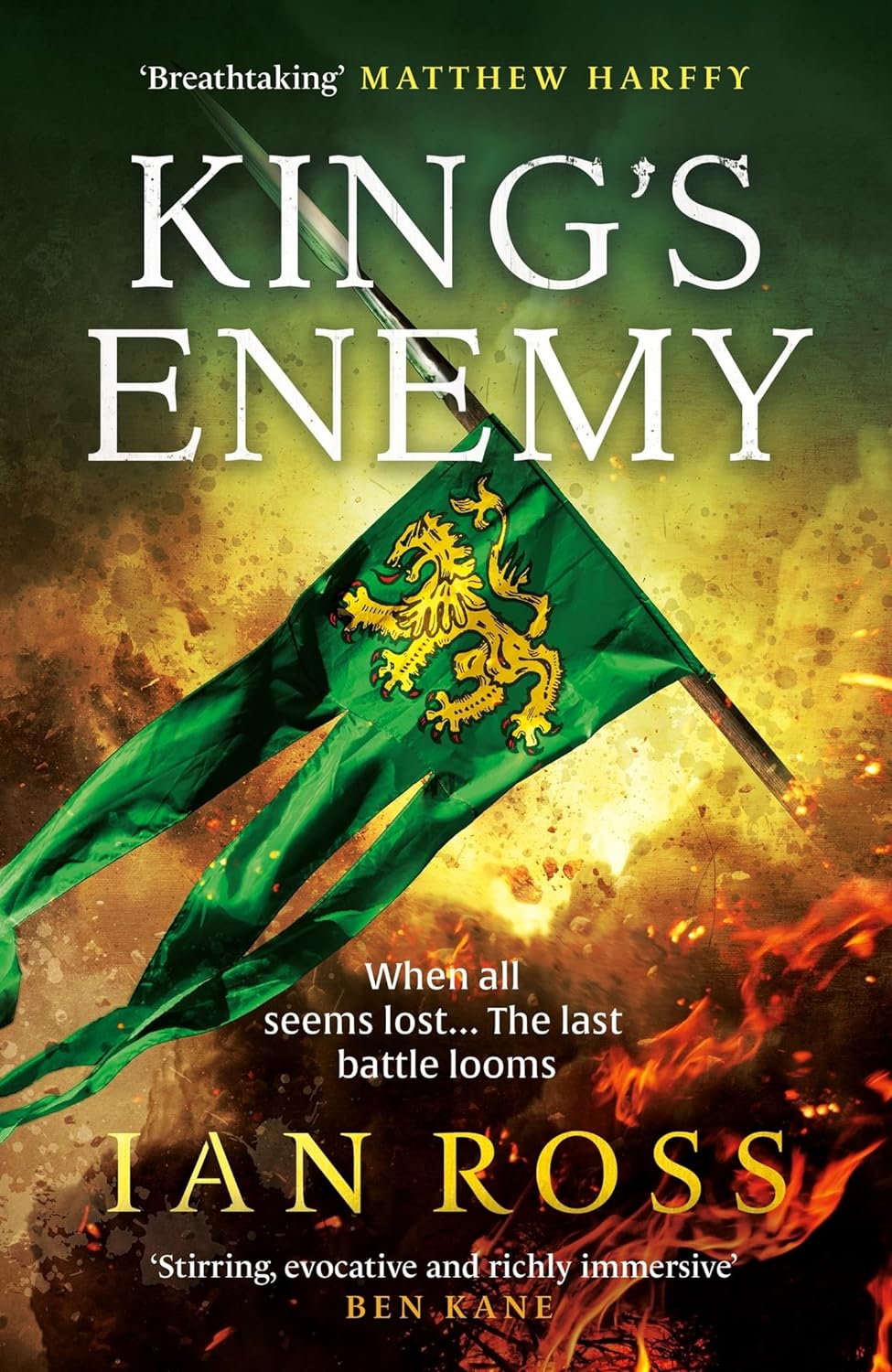
King’s Enemy by Ian Ross

Publisher: Hodder & Stoughton (Trade Paperback – 10 September 2024)

Series: De Norton Trilogy – Book Three

Length: 419 pages

My Rating: 5 out of 5 stars

Amazon

Ian Ross brings his exceptional De Norton historical fiction trilogy to an extremely strong end with the excellent and powerful third and final entry, King’s Enemy.

For the last year or so, I have been utterly enthralled with acclaimed historical fiction author Ian Ross’s latest series, the De Norton books.  Following young squire and eventual knight, Adam de Norton, as he finds himself drawn into the 13th century rebellion of Simon de Montford against the crown, the De Norton books are extremely compelling, and I love the blend of action, cool characters, and compelling historical setting.  The first book in the series, Battle Song, was an outstanding read that expertly introduced the protagonist, as well as his unpredictable mentor, and showed how he became involved in the war on de Montford’s side.  Battle Song ended up being one of my favourite books of 2023, and I eagerly dived into the sequel, War Cry, earlier this year.  Set shortly after the events of Battle Song, War Cry worked to show the aftermath of de Montford’s major victory, and the subsequent royalist counter-rebellion, by following the newly knighted de Norton as he finds himself once again called to battle.  War Cry was a very worthy sequel, and I loved how dark and grim it got in places, especially at the end.  War Cry left the reader on a major cliffhanger, and as such I have been eagerly waiting to get my hands on the third and final book, King’s Enemy.  One of my most anticipated books from the second half of 2024, King’s Enemy had an outstanding plot behind it that really got me excited.

England, 1265.  It is two months after the infamous battle of Evesham, where knight Adam de Norton lost everything.  The rebellious Simon de Montford lies dead on the field alongside de Norton’s mentor, Robert de Dunstanville. and the rest of their army, massacred by Prince Edward and his victorious army.  Spared by the prince alongside a few other noble survivors, de Norton remains a prisoner of the crown in the grim castle of Beeston, with all his lands, wealth and honour stripped from him.

However, despite the crushing victory at Evesham, England is far from peaceful, as new rebellions begin against the king.  Determined to take his fate into his own hands, de Norton makes good an escape from Beeston and becomes a fugitive from the crown.  Branded a king’s enemy, a man who can be slain with impunity by those pursuing him, de Norton flees across England, alongside the recently widowed noblewoman Joane de Bohun, contending with royal troops and dangerous outlaws, desperate to find a cause to fight for.  But when the promised new rebel army is swiftly beaten, de Norton and Joane are once again left without options.

Adam and Joane soon find their fates tied to that of the mightiest fortress in England, Kenilworth Castle, when they seek sanctuary there.  The last castle holding out against the crown, Kenilworth is garrisoned by a motley band of rebels and knights, each with their own reasons for being there.  Joining the defenders, Adam finds old friends and enemies within and without the castle walls, as he prepares to endure a lengthy siege.  But as the months pass and the battle becomes more desperate, Adam must decide what is more important, the lives of those he loves or his knightly honour.

King’s Enemy was another outstanding novel from Ross, who brings his de Norton trilogy to brilliant end with this third book.  Once again expertly focusing on a particularly intriguing part of English medieval history, Ross crafts together a powerful and intense narrative that will have you hooked the entire way through.  King’s Enemy is an epic read that gets a full five-star rating from me.

Ross has come up with a fantastic story that I honestly could not turn away from.  Starting shortly after the memorable cliffhanger of the second book in the trilogy, War Cry, King’s Enemy starts off with Adam de Norton in captivity, having lost everything.  Ross does a great job capturing the initial despair of his protagonist before setting him off on a new adventure as he makes his escape from captivity.  This results in a pretty good fugitive arc as Adam and his ill-fated main love interest, the recently widowed Joane de Bohun, attempt to find a new cause so that they may both recover their positions.  This first half of the book is very fun and makes sure to set the scene for the rest of King’s Enemy.  There is plenty of adventure, excitement, and even a surprising nod to classic Robin Hoods mythology, as the two protagonists head towards promised safety and a new army to fight with.  However, as readers of the De Norton books will be aware, things rarely go well from the main character, and Ross adds in a major road-bump for him halfway through the plot that forces him towards his inevitable destiny at Kenilworth Castle.

The rest of King’s Enemy is essentially one big siege sequence, as Adam, Joane, and several surviving supporting characters, take refuge int the castle and attempt to hold off a massive besieging force belonging to the crown.  This proved to be an exciting second half which really pushes the protagonists to the limit.  I’m a huge fan of sieges in fiction, and I thought that this depiction of this infamous British siege was extremely good.  Ross captures so many cool aspects of this siege with his writing, including the desperate defenders, the intense fighting, and the grinding impacts of time as the besiegers attempt to starve out the inhabitants of the castle.  Things get really tense as the book continues, as Adam finds himself caught amid various big personalities, including an unstable fellow knight and other defenders seeking to gain advantage from their plight.  There are some dark and deadly moments here, and Ross keeps the reader on the edge of their seat as Adam tries to determine the best course forward.  Everything ends on an interesting note, as all the existing storylines are wrapped up, many figures, both fictional and historical, meet their fates, and the final chapter in the protagonist’s adventure and complex romantic life is revealed.  I personally felt that Ross ended everything on a very strong note, and those readers who have become quite attached to the series will come away very satisfied.

I felt that Ross once again did a really good job of enhancing his captivating narrative with his great writing, and readers really get stuck into King’s Enemy as a result.  The quick-paced flow of the story and the intense action really help to drag you in and go hand in hand with the great characters and intriguing historical setting.  Ross does an outstanding job of showcasing the hard-hitting combat associated with historical knights, and all the intense action sequences are a joy to read.  I also must once again highlight the cool siege that made up the second half of the book, and fans of fictional fighting will love some of the chaotic sequences that emerge there.  There is also a strong emotional edge to the plot, as many of the main characters are desperate figures struggling in the aftermath of a devastating defeat and trying to find a path forward that balances their survival with their sense of honour.  While King’s Enemy can be read as a standalone novel due to the excellent way Ross summarises some key prior events, readers really should check out the first two entries in the series first.  The continuing character arcs, recurring themes, and excellent conclusion to long-running story elements, help to make King’s Enemy a lot more enjoyable for returning readers rather than interested newbies, and I was very invested in seeing how this story ended due to how much I had connected to the protagonist.  I felt that Ross wrapped up this trilogy extremely well, and if you loved Battle Song and War Cry you will not be disappointed here.

As with the previous De Norton novels, one of the things that most impressed me about King’s Enemy was the intriguing historical events that Ross chose to set his story around.  The 13th century rebellion of Simon de Montford is one of England’s lesser-known civil wars, and I have been deeply enjoying seeing the events of this war unfold through the eyes of the protagonist.  The first book did a wonderful job exploring the events leading up to the rebellion, as well as de Montford’s major victory that turned the whole country on its head, while the second book captured the chaotic instability that followed and the eventual end of the main rebellion.  King’s Enemy continues in this vein by examining what occurred after de Montford’s death and defeat, with the country still unstable despite the crown’s victory.  Ross does an excellent job of ensuring his protagonist is present for many of the key moments of this post-rebellion period, and you really get some good insights into these tumultuous events from the protagonist’s perspective.  There is a great focus on the politics and society at the time, especially as major parts of the plot revolve around how the defeated knights and lords were treated.  Ross also excelled at capturing the many key parts of the siege of Kenilworth Castle in the second part of King’s Enemy.  The longest siege in English history, the battle for Kenilworth is a fascinating inclusion to the story, and I loved how Ross showcased it as the last stand for the desperate rebels.  You really get a sense of the events leading up to, and surrounding the siege, and I loved how well Ross examined the motivations of the various defenders and why they kept fighting.  All this proves to be an excellent background setting to Ross’s main story, and it was fascinating to find out how this entire civil war came to its end.

I also need to once again highlight the great characters that Ross has featured in this series, with some intriguing and moving character-based storylines sitting at the core of the plot.  King’s Enemy is another great example of this as, while many key characters died at the end of the previous novel, it still features a strong cast of complex protagonists and supporting characters, including a mixture of original characters and historical figures.  The most prominent of these is series protagonist and primary point of view character Adam de Norton, a former lowly squire who gained lands and a knighthood for his role in Simon de Montford’s rebellion.  After gaining so much in the previous books, Adam starts King’s Enemy at his lowest, with most of his friends dead and everything he fought for lost.  This places the protagonist in desperate circumstances, and he spends this entire book fighting with his back against the wall, literally and figuratively.  Ross writes some moving storylines around Adam’s conflicted mind, as he is forced to balance his honour and loyalty with getting what he wants.  I loved seeing the continued epic of Adam de Norton in King’s Enemy, as it proved impossible not to become attached to the scrappy and exceedingly honourable figure in the previous books.  This proved to be a great final entry in Adam’s story, and Ross ensures that there is still plenty of suffering and conflict for his protagonist.

Other major characters I need to highlight include Adam’s main love interest, Joane de Bohun.  Joane, a strong-willed survivor determined to survive and regain her lands, proves to be an interesting companion to Adam.  The two share an intense and often contentious relationship, as Joane attempts to balance romantic feelings with her ambitions.  Due to the desperate events of the book, Adam and Joane are finally able to express themselves to each other at times, although their differing goals often lead them into conflict.  There is a real tragic romance angle going on between Adam and Joane in King’s Enemy that worked extremely well, especially with the other story elements, and it added a compelling extra layer to already impressive story.

The final character I really want to highlight was bold younger knight, Henry de Hastings, with whom Adam has many interesting encounters in King’s Enemy.  A captured rebel like Adam, de Hastings seems to follow the protagonist around to all the major encounters of the book, and they become both comrades and rivals as a result.  I really enjoyed how Ross portrayed de Hastings in this book, and you have to love the combination of arrogance, contempt and friendship that he gives towards the protagonist, which ensures that the reader finds him both insufferable and entertaining.  De Hastings’s appearance in the book’s main siege also produces some memorable character changes as the knight becomes obsessed with winning and holding out against the enemy, so much so that he becomes a dangerous threat to the protagonist.  There is a wonderfully written slide into darkness for this side character that I deeply enjoyed, and he ended up being a standout figure in King’s Enemy as a result.  All these characters, and more, helped to turn King’s Enemy into something special, and it was amazing to see where many of these recuring figures ended up.

Overall, I found King’s Enemy to be an exceptional book that served as a brilliant and impressive conclusion to Ian Ross’s De Norton trilogy.  Loaded with intense characters, fascinating history, and outstanding action, King’s Enemy had me hooked the entire way through and provides readers with a powerful end to a great historical series.  A highly recommended read, you won’t be disappointed with this latest offering from Ross.

Amazon

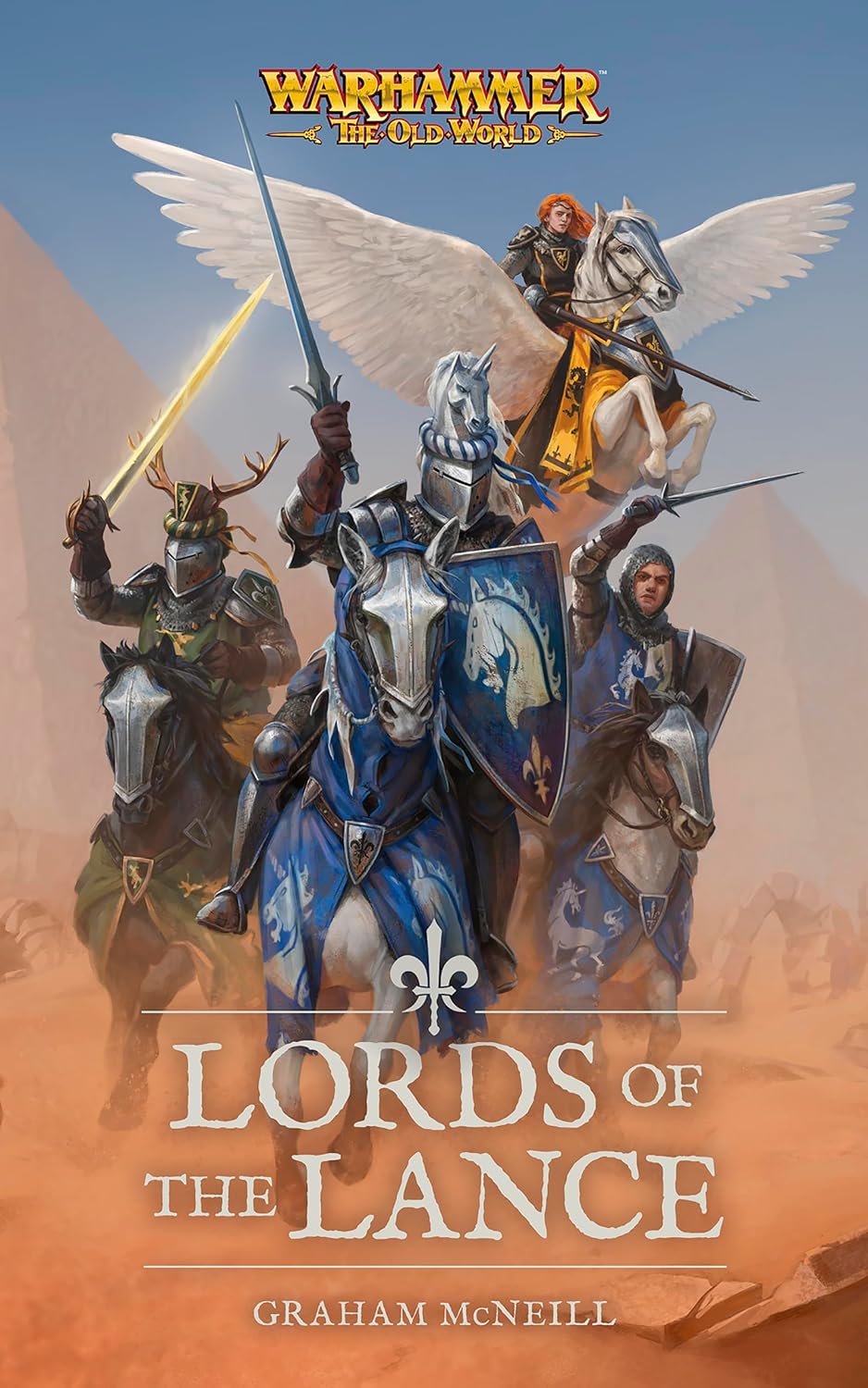
Warhammer: The Old World: Lords of the Lance by Graham McNeill

Lords of the Lance Cover

Publisher: Black Library (Audiobook – 20 January 2024)

Series: The Old World – Book One

Length: 12 hours and 5 minutes

My Rating: 4.5 out of 5 stars

Amazon

One of Warhammer’s very best authors brings fans back to the Old World in the gripping and action-packed fantasy adventure, Lords of the Lance by Graham McNeill.

As a long-time Warhammer fan, I love many of the different areas of the Warhammer fandom, including the grim dark science fiction Warhammer 40,000 universe.  However, my heart will always belong to Warhammer Fantasy, mainly because it was the game I played as a kid and where I first learned to love the franchise.  I deeply enjoyed all the fiction associated with the overarching fantasy setting, especially those set in the Old World, the main continent where most of the battles and wars took place.  Series like the Gotrek and Felix books (Trollslayer, Skavenslayer, Daemonslayer, Dragonslayer, Beastslayer, Vampireslayer and Giantslayer), as well as standalone books including Grudge Bearer, Van Horstmann, Runefang and Broken Honour, have all proven to be pretty damn awesome, and this is probably one of my absolute favourite fantasy settings.

Unfortunately, Games Worshop ceased the Warhammer Fantasy game several years ago, by having the in-game big bad win the final war against the forces of good and literally blow up the entirety of the setting.  This explosive conclusion ended all the ongoing novels, comics and characters from this universe, and Games Workshop subsequently ignored Warhammer Fantasy, prioritising Warhammer 40,000 and Age of Sigmar models and fiction.  However, Games Workshop are returning to their original fantasy world with The Old World.  Set hundreds of years before the end of the Warhammer Fantasy world, The Old World brings back the classic armies, figures, and history of this realm, while also introducing a whole new range of models.  As part of that, they are once again setting fiction in their fantasy realm and the first book back is Lords of the Lance by acclaimed Warhammer author Graham McNeill, who has really impressed me in the past with books like Storm of Iron.

Even centuries before the final war with the forces of Chaos, the Old World is still a dangerous place, where monsters, dark creatures and the forces of Chaos seek to destroy everything.  There are many dangerous places throughout the Old World, but few are more sinister than the Land of the Dead, an abandoned wasteland where the ancient and powerful nation of Khemri once stood.  Haunted by the evil actions of the dread necromancer Nagash, the former realm of Khemri is now ruled by the unliving Tomb Kings.  In this realm of sand, skeletons and death, only the greatest of warriors can hope to enter and survive, especially if they are on a noble quest.

Baron Lothar Aquilena is a great knight who has carved out territory in the lawless realm of the Border Princes.  However, despite his prowess, skilled warriors, and clever advisers, he is powerless when his son goes missing in the Land of the Dead, taken captive by the risen Amaranthine Queen, who seeks revenge against those who previously defeated her.  Desperate, Baron Lothar has no choice but to call in a debt of honour owed to him by his Bretonnian cousin, Duke Carrad of Quenelles, years after they suffered a falling out.  Despite the enmity between them, Duke Carrad leads his knights to Lothar’s realm, determined to repay the debt owed.

United in their mission, despite a mostly unwelcome reception by Baron Lothar, the knights of Bretonnia and the men of the Border Princes begin their quest to the Lands of the Dead.  However, crossing the deserts of Khemri is no easy task, and the loosely combined force soon experience the treacherous sand, blazing heat, unnatural creatures, and the forces of the dead.  Despite these obstacles, the host approach the giant tombs of Khemri, ready to save the Baron’s son.  However, nothing is as it seems, and soon the assembled knights and their retainers encounter a deadly enemy that none of them are prepared for.

Graham McNeill made me fall in love with the Old World once again as he provides a powerful and intense character-driven adventure across an iconic setting.  Lords of the Lance was a pretty damn awesome novel and I had such an epic time getting through it.

Due to this book being the first entry in The Old World canon, McNeill had a lot of pressure on his plate as he had to simultaneously bring back an established setting, tie-it into a recent model release, while also telling a powerful story that stood on its own.  I think that he succeeded on all fronts as Lords of the Lance proved to be quite an addictive read that contained some amazing features of the setting while also dragging the reader in with his elaborate storytelling.

The narrative of Lords of the Lance had a very classic fantasy quest feel to it, which honestly was a joy to see, and which fit this setting extremely well.  Starting off with an effective introduction, the story quickly proceeds with the two antagonistic lords leading their combined force towards the desert.  The narrative is effectively told from a few compelling and complex point-of-view characters, with several additional supporting characters standing in the wings.  The first half of the book is all about introducing and building up the protagonists, and there was a little less action than I was expecting, with McNeill content to firmly establish his story.  I think this build-up was very necessary as it ensured the second half was particularly epic, and there was still some good battles and compelling developments scattered throughout to keep readers interested.  This initial foray across the desert didn’t last as long as I thought it would, and McNeill brings the adventurers to their goal very quickly.  This allows him to enact an intriguing twist, which while telegraphed, was written brilliantly and changed the entire tone of the book.

This results in a frenetic, powerful, and impressive second half that sees the protagonists forced to abandon their quest and flee for their lives.  Constantly pursued, the knights and their retainers quickly traverse several of the most dangerous locations in the Old World while facing all manner of grave threats.  There are some brilliant and powerful scenes featured here as McNeill hits the protagonists hard, including with one particularly heartbreaking equine sacrifice.  I also loved the extended mini-siege sequence, as the Bretonnians face off against an awesome new foe in some of the best action scenes in the book.  McNeill also really enhances several character arcs during this half and the resulting development and emotional revelations empower the overall story, especially as the reader has become quite attached to the protagonists at this point.  Everything leads up to the final confrontation as the battered protagonists finally face their foes in one final charge.  The intensity and emotional power that leads up to this big confrontation cannot be understated, and I found myself very invested in seeing how everything came together.  The author keeps you on the edge of your feet right until the end and I really enjoyed how everything came together, although I was expecting some more tragedy.  Still, I came away from Lords of the Lance very satisfied, and McNeill leaves the story open for a sequel, while also providing one last tie to the latest release of models.

I liked how McNeill styled his narrative in Lords of the Lance, as you can tell he was trying to give it a more classic fantasy feel.  There is a lot of bold stating of titles, repetition of points, and depictions of knights, honour and magic, which gave the book an elaborate tone that I rather enjoyed, especially as it really fits the Arthurian-inspired Bretonnian faction who were the main focus of the story.  The resulting story is rich in both character work, action sequences, and intriguing Warhammer inclusions, with McNeill hitting an excellent balance of the features that had me quite hooked.  I really need to highlight some of the amazing action sequences, especially as McNeill provides such a fantastic variety of fight scenes to get the blood pumping.  The various knightly charges are a true highlight, and you can feel the thunder of the horse and power of the rushing knights, especially as McNeill endeavours to capture all the powerful details about them.  Other intense scenes also do an amazing job of enflaming the imagination, and I really loved how intricate and desperate some of the battles turned out to be.  I also really need to highlight the outstanding locations that much of this story was set in, especially as McNeill goes out of his way to make them come alive.  The deserts of Khemri are particularly vivid, and their use as a lethal and wearying backdrop is great, turning it into another foe the protagonists need to overcome.  The Marshes of Madness were also very awesome, offering another dangerous trudging location and I loved the alternate threats that they posed.  McNeill did such a great job of bringing this story together, and this great blend of story elements helped to produce an exquisite read.

I personally loved the intriguing version of the Bretonnians and the Tomb Kings that were featured within Lords of the Lance.  McNeill expertly captured the intensity, desire for honour, and compelling nature of the Bretonnian characters, as well as their prowess in combat (the scenes where they charge as cavalry are really well done).  The Tomb Kings are also shown to be an excellent antagonistic force, and while you don’t see anything from their perspective, the relentless pursuit they give and the anger contained within them is palpable at times.  A couple of other factions are also featured to a degree, mostly as additional threats for the Bretonnian characters, and I really enjoyed how well McNeill used some of them, especially during one horror-filled siege.  However, I understand that some readers had some issues with how McNeill portrayed these factions, mainly revolving around lore inconsistencies, which has led to a bit of review bombing.  While I’m no lore expert, I honestly barely noticed anything too problematic myself.  From what I could see, the most common complaints about the Bretonnian seem to be around the inclusion of female knights (gasp, oh my stars, clutch my pearls!), and one knight using a bow (seems like a pretty sensible weapon for someone riding a pegasus to me).  I will admit that some elements about the Tomb Kings, from their slightly more antagonist portrayal (they are usually a lot more neutral/good orientated), and the fact they raised some knights from the dead, was a little off lore, but I think that was mostly McNeill trying to make them even more threatening.  Honestly, most readers won’t even notice or care about these issues, and I personally didn’t let it get in my way of enjoying a great story.

For me, one of the best things about Lords of the Lance were the powerful, complex and memorable band of characters that the story was set around.  McNeill did an amazing job coming up with a cast of new and fantastic protagonists, each of whom had their own unique journey and background, which effortlessly flowed into the book’s main narrative.  You really become attached to many of these characters as Lords of the Lance progresses, and I loved how character-driven this book turned out to be.

One of the main characters of the book is Corentin Varo, equerry to Duke Carrard and known as The Knight of Quills due to his use as a clerk rather than a warrior.  Determined to prove himself, and to get over a tragic romance, Varo eagerly embarks on this quest, but chafes as his lord holds him back.  Varo proves to be an intriguing and compelling main protagonist, especially as you get invested in his tale of attempted heroism and valour.  McNeill does a good slow-burn story around Varo, as he slowly proves to others and himself that he is a worthy knight and leader, and he proves to be a good calm, central figure for most of the plot.  There are also some intriguing, if obvious, hints about his personal history, that while interesting, doesn’t have a major payoff in this book but could get explored in the future.  Varo is well matched by Karolina Lothar, who serves as the female lead of Lords of the Lance.  The daughter of Baron Lothar and a skilled knight, Karolina serves as the voice of reason for her father’s host and tries to bridge the gap between the two forces.  She forms a friendship with Varo as the book progresses and the two become a pretty impressive team.  I liked how naturally McNeill included Karolina as a strong female character and he paints an interesting picture of her family concerns, her grief as the book continues, and her martial prowess.  These two form a great centre for much of the plot and I liked the chemistry that grew between them, especially after their rough journey encourages them to let go of the past and look to the future.

Aside from Varo and Karolina, several other characters really stood out to me in Lords of the Lance, and I really enjoyed they fantastic storylines.  The most prominent of these is probably Sigurd of Yvaire, the deaf son of a nobleman who was left unknighted due to his affliction and who accompanies the Bretonnians on their quest leading the peasant host.  Sigurd ends up being the heart and soul of the book, and you get invested in his story as he finds both romance and self-worth on his journey.  I also had a lot of love for Bastien, the young and brash Knight Errant.  Bastien starts the book as an annoying cad who antagonises the other characters like Varo.  However, as the book continues, you eventually see that much of his brashness is an illusion, and he is a surprisingly thoughtful figure.  It is a testament to how good a writer McNeill is that you end up caring for Bastien after his annoying start.  Thanks to certain moments of bravery, and some notable setbacks, you really see just how noble Bastien is, and he ended up being one of my favourite characters.  Finally, I must highlight Sir Leodegar of the Golden Hart, a legendary Grail Knight who accompanies the army for duty, destiny, and to protect the Handmaidens of the Lady.  The epitome of the Bretonnian knightly code, Sir Leodegar is an imposing, memorable and incredibly noble figure who serves as a mentor to Varo, stealing every scene he’s in.  I loved how well McNeill captured the supernatural nature of the Grail Knights, and the depiction of this ethereal figure is quite fascinating, especially as the author also looks at the dark side of their duty.  These characters, and more, really enhanced Lords of the Lance’s great narrative, and I love the unique storylines that McNeill wove around them.

My love for Warhammer audiobooks is well known, so naturally I listened to Lords of the Lance.  Coming in at just over 12 hours, this is a decently long Warhammer audiobook that I was able to power through in short order.  I felt that the audiobook format did an outstanding job bringing this elaborate and intense story to life, and you really get a sense of the intense action, powerful characters, and the amazing scenery when you have it read out to you.  I particularly enjoyed the narration by Peter Kenny, who has a well-established pedigree when it comes to narrating fantasy audiobooks.  Kenny utilises a series of great voices that perfectly fit many of the characters featured within Lords of the Lance.  All the main cast come across extremely well here, and I loved the determination you get through some of the main characters like Karolina and Varo, the brashness of Bastien, and other intriguing figures.  I personally also thought he did a good job accurately voicing the deaf character, Sigurd, although I understand if some people found that a little controversial.  Still, this was an outstanding way to enjoy this remarkable book and I would strongly recommend the audiobook version to anyone interested in checking out Lords of the Lance, although it no longer seems to be available in this format.

Graham McNeill continues to show why he is one of the best authors of Warhammer fiction as he takes readers back to the Old World in Lords of the Lance.  Featuring a complex story, powerful characters, and a ton of adventure, Lords of the Lance was extremely fun to read, and I loved seeing a story set back in the iconic setting.  This book is best enjoyed by established fans of the franchise, especially those who remember the Warhammer Fantasy days, although new readers will have a great time here as McNeill provides an intense and fun standalone read.  Highly recommended, I hope we get more Old World books soon.

Amazon

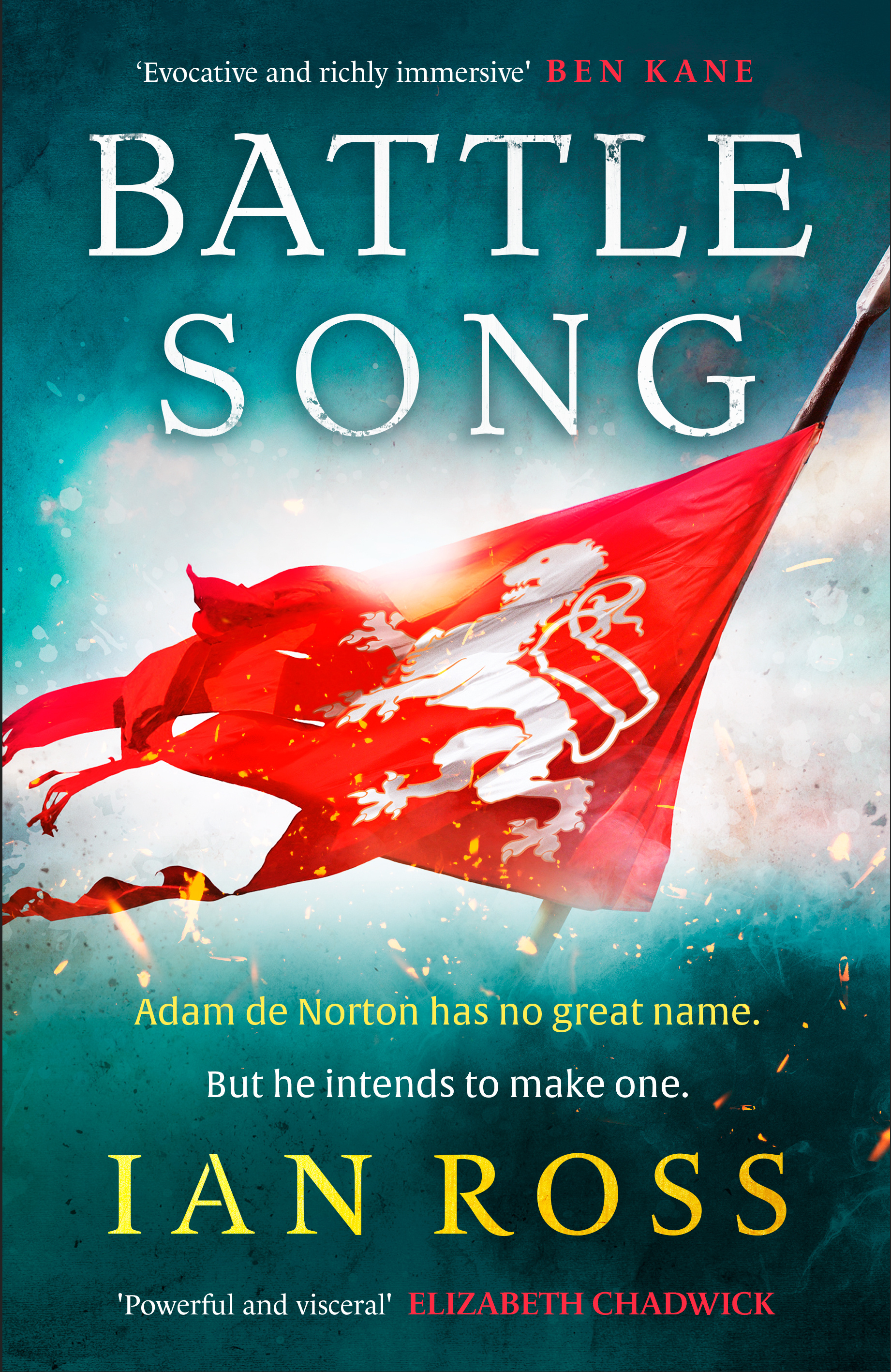
Battle Song by Ian Ross

Battle Song Cover

Publisher: Hodder & Stoughton (Trade Paperback – 28 March 2023)

Series: Standalone/Book One

Length: 405 pages

My Rating: 4.75 out of 5 stars

Amazon

Impressive historical fiction author Ian Ross journeys away from his typical Roman history novels and instead dives into the chaos and glory of medieval England with the outstanding and highly addictive read, Battle Song.

England, 1262. Adam de Norton is a lowly squire with very few prospects to his name.  Unable to claim his family’s rightful estates, Adam’s only hope is to be knighted by his lord, which will allow him to win the glory and respect his chivalrous heart believes in.  However, his chances of even being noticed by his lord seem slim, and Adam looks set for a life of disappointment until a hunting accident leads him to his new master, the rogue knight Sir Robert de Dunstanville.

Robert de Dunstanville is a man infamous throughout England as a murderous heretic, and his anger, resentment and apparent lack of knightly virtue seem to match his devilish reputation.  A keen member of the tournament scene, Robert leads Adam to Europe, where his underhanded strategies and desire for victory over honour, prove to be highly effective.  While Adam chafes under the dishonour of his new master and the circumstances that lead them together, he soon discovers that Robert seems to have a far better idea of the realities of his world than he does.

Two years later, Robert leads Adam back to England, determined to take advantage of the chaotic political situation that emerges.  The Earl of Leicester, Simon de Montfort, has declared war against his brother-in-law, King Henry III, and now leads the barons of the realm in a rebellion, aimed at bringing reform and redressing the balance of power in the country.  As the country plunges into civil war, Robert and Adam must choose which side will give them the greatest advantage and keep them alive.  Soon caught in the middle of a desperate battle for the fate of the kingdom, will this duo get everything they think they deserve, or wind up in a bloody grave?

Ian Ross has written an exceptional and captivating historical adventure in Battle Song that I had an absolutely wonderful time reading.  Blending some great characters with an exciting story and intriguing historical detail, Battle Song is one the most thrilling and intense historical novels I have read in a while, and which is worth checking out.

Battle Song has an intense and captivating story that perfectly follows a young knight in training as he finds his destiny and gets embroiled in war.  Blending emotional personal growth with an exciting narrative from a great part of history, Ross’s narrative for this book is really addictive, and I had a ton of fun powering through it in a few days.  The story starts off great with a very strong introduction to protagonist Adam de Norton, a minor squire overlooked in life who still believes in the knightly virtues.  After a violent brawl shows his true raging potential, Adam is drafted into the service of Robert de Dunstanville, a bastard knight with a severe grudge against the king, who drags Adam to Europe for a run at the knightly tournaments.  The initial part of the book is really good as it sets up the story and the key politics of England, while also serving as an invaluable introduction to main characters.  I loved the early friction between Adam and Robert, which really helps to showcase the differences between their world views and ensures that there is some intriguing personal conflict between them throughout the book.

Ross dedicates a good chunk of the plot to following Adam, Robert and their companions, on an extended romp through the European tournaments, which are so damn fun.  The various scenes depicting the harshness of the tournaments, including the infamous melee, are some of my favourites in the book, and the author’s depiction of the chaotic violence and sheer unpredictability really appealed to me.  At the same time, this book serves as a good learning experience for the protagonist as Adam learns the realities of being a knight as he experiences love, betrayal and begins a deadly rivalry.  Ross also uses this part of the story to further dive into the start of the conflict between Simon de Montfort, as Robert meets and plots with the exiled Earl while in Europe and begins to weigh his options.

The second half of Battle Song is set back in England as Adam and Robert return home, determined to take part in the civil war to come, even if they don’t know which side to choose.  This half of the novel is pretty damn intense as Ross really dives into the intriguing and dark history of the period in some great ways.  The narrative drags the protagonists into some of the key events of the period, including riots, a dangerous siege, and several minor conflicts, as they watch the King and Simon de Montfort fight for control of the country.  This part of the book is also well layered with the personal concerns of Adam and Robert, as Adam faces a hopeless romance while witnessing some of the most vicious elements of war, while Robert continues to battle his conscience, inner-hate and survival instincts to come out on top.  There are some pretty epic scenes here and I deeply enjoyed how Ross balanced out the historical detail with the deeper part of his story.  The characters all go through setbacks, growth, and dark moments as the plot proceeds, and the reader gets caught up in their personal tales.  The battles themselves are really impressive, as Ross captures the sheer chaos of war and Adam learns what it is to kill.  I really appreciated Ross’s use of Adam as the main point-of-view character for this second half of the battle, not only because his position allows a great view of all the key historical moments, but because you see a more impassioned take on events which gives the entire narrative some great heart.  Everything leads up to the big final battle, which Ross covers perfectly, showcasing it as a metal meatgrinder of knight-on-knight combat.  There are some outstanding moments in these final pages, especially as several character arcs and storylines are cleverly finished, and I was deeply intrigued to see how the entire conflict came together.  Ross leaves everything on a satisfying conclusion and Battle Song ends up serving a particularly epic and brilliantly self-contained standalone read, which does have some potential to be continued in the future.  I deeply enjoyed this exceptional story and it was so damn addictive in places.

One of the best highlights of Battle Song is the way that Ross expertly portrays the historical period in which the book is set.  I loved the depictions of England and Europe in the 13th century featured throughout Battle Song, and Ross has a lot of fun showcasing the people, culture and politics of the people at the time.  There is a particular focus on the lives and experiences of the knightly classes as the book as shown through the eyes of a lowly squire experiencing them for the first time.  As such, you get a great idea of what it is to be both a knight and a squire as Adam grows into both roles while watching his master and peers in action.  There are some great discussions about the how knights act in life, and I loved how Ross examined how the realities of this compared to the romanticized notions of chivalry and honour that Adam had been fed growing up.  Naturally some of the best parts of the historical elements of Battle Song fall amongst the tournaments and battles that were such an amazing feature of the story.  Ross really dives into the nitty gritty detail of the tournaments, and I loved seeing the tactics and practicalities of big events like the joust and the melee.  It was also very interesting to see how these skills then translated across to the battlefield and the similarities and differences between the two proved to be deeply fascinating.  Ross really went out of his way to highlight the gritty and brutal nature of both the tournament melee and the battlefield throughout Battle Song, and I loved the high-intensity action scenes that emerged as a result.  Battle Song honestly some of the best historical battle sequences that I had seen for a while, and I found myself getting even further dragged into the story thanks to that.

In addition, I really enjoyed the compelling and impressive examination of the events of Simon de Montfort’s rebellion in 1264, one of England’s lesser-known civil wars.  The entirety of Battle Song is set around this war, and Ross really good job of showcasing the politics and the events leading up to the rebellion as Adam and Robert witness his plotting during their tournament days.  The second half of the book then examines the resulting war in high detail as the protagonists find themselves dragged into several key battles and incidents of this war, including the siege of Rochester and the decisive battle of Lewes.  The author does an outstanding job showcasing these battles as he looks at how they came about, what happened during them, and the resulting impacts it had on the war.  At the same time, Ross also tries to examine some of the key historical figures involved in this conflict, and it was very interesting to see the protagonists interact with them.  Ross initially paints this war as a battle for rights against the king, with de Montfort trying to rally the nobles behind his leadership.  However, rather than showing this as a purely noble affair, Ross also highlights some of the darker aspects of de Montfort’s campaign, including the infamous purge against the Jewish population of London at the start of the rebellion, which honestly was some of the darkest and most intense moments in the entire book.  I deeply appreciated this complex examination of the history, especially the prejudice against the Jews, and it painted both sides in morally ambiguous tones that fit the two protagonists.  Ross clearly has a real talent for portraying fascinating moments from history, and I had an outstanding time learning more about this unique and captivating period.

I was also quite impressed by the characters featured within Battle Song as Ross introduces the reader to an outstanding cast of both original characters and notable figures out of history.  The main protagonists are the duo of Adam de Norton, a poor squire who serves as the book’s point of view character, and Robert de Dunstanville, a blackhearted knight with a low opinion of the world around him.  Both characters are intriguing as they represent very different ends of the knightly spectrum.  Adam starts the book as a naïve squire who believes in honour and duty, even after years of being overlooked by his lord.  Robert, on the other hand, is a far more devious and jaded being.  A bastard with no lands of his own, Robert is upset about royal rulings made against him and takes out his anger in the tournaments, where his cunning tactics allow him to achieve many victories.  These two characters are polar opposites to begin with, however, they both start to influence the other in different ways.  Adam starts to become a little more cynical, wiser, and learns how to survive in this harsh world, eventually becoming a competent and dangerous warrior.  Robert on the other hand starts to soften as they grow closer, and the protagonist finds out that there is far more to Robert than he lets the rest of the world see.  These two play off each other, and the rest of the extended cast, extremely well, and I loved the complex mentor-mentee relationship that emerged.  These two are definitely the heart of the story, and I deeply enjoyed their compelling storylines, especially as they both experience hopeless romances, loss, disappointment, intense rivalries, betrayal and moments of glory as they journey towards the conclusion of the book.  The rest of the cast supports the story nicely, and I loved some of the interactions that emerged, as well as the clever mixture of real people from history and original characters invented for the narrative.  These great characters and their unique stories deeply enhance the quality of Battle Song and its powerful story and I was very impressed by how well Ross set them out.

With its outstanding blend of historical detail, amazing protagonists, and an intense and powerful narrative, Battle Song is a brilliant and epic read that I had such an incredible time reading.  Ian Ross produced such a great read here and this was one of the more exciting and entertaining historical fiction novels I have read all year.  Battle Song is a highly recommended historical fiction novel that is really worth checking out.

Amazon

Throwback Thursday – Warhammer 40,000: Kingsblade by Andy Clark

Kingsblade Cover

Publisher: Black Library (Paperback – 1 February 2017)

Series: Imperial Knights – Book One

Length: 365 pages

My Rating: 4.5 out of 5 stars

Amazon

Welcome back to my Throwback Thursday series, where I republish old reviews, review books I have read before or review older books I have only just had a chance to read.  In my latest Throwback Thursday post I look at an exciting novel about mecha fights in the Warhammer 40,000 universe with Kingsblade by Andy Clark.

I have been having so much fun with the Warhammer 40,000 books recently, especially in my Throwback Thursday columns, as I recently published reviews for Ghostmaker, Xenos, Malleus and Hereticus by Dan Abnett, and Deus Encarmine by James Swallow.  However, the fun is not over yet as I recently read the cool 2017 novel, Kingsblade by Andy Clark, who previously impressed me with his 2022 book, Steel TreadKingsblade, a lucky find I managed to pick up in a secondhand bookshop, was an outstanding read which frankly has one of the best Warhammer covers out there, as well as a great story to match it.

War is a certainty in the far future, and the Imperium of Man is constantly under threat, especially from the fell influence of Chaos.  When a planet falls, the Imperium have many forces that can be deployed to fight the invasion, but few armies are as feared or revered as the legendary Imperial Knights, giant, ancient suits of mechanised armour that support brave pilots of regal, knightly backgrounds.

When the Imperial world of Donatos falls to heresy thanks to the disruptive influence of the Word Bearers Chaos Space Marines, the Knights of the nearby planet of Adrastapol heed the call.  Leading five noble houses of Imperial Knights, as well as substantial forces from the Astra Militarum, High King Tolwyn Draconis hopes to swiftly end the insurrection and save Donatos’s soul.  However, when a great betrayal rips the very heart out of the king’s host and the flower of Adrastapol’s Knights falls, all hope looks lost.

As the battered remnants of the Imperial Knights attempt to recover, it soon becomes clear that the fate of both Donatos and Adrastapol will lie with two unblooded Knights Errant, Danial Tan Draconis and Luk Tan Chimaeros, both of whom are reeling from the actions of their parents.  On the run, outnumbered and unsure who to trust, Danial, Luk and their comrades need to find a way to strike back against the enemy especially as the World Bearers begin a massive unholy ritual, one that threatens everything.  But can these two young Knights defeat the enemy and redeem their world, or do the betrayals of their family and former comrades run too deep?

Kingsblade was an epic and incredible Warhammer 40,000 read by Clark that I had a ton of fun with.  Featuring a mecha-laden novel that contained awesome action sequence after awesome action sequence, this was a great addition to the wider Warhammer 40,000 canon and a must read for all fans of the franchise.

I had an amazing time getting through Kingsblade’s great story, especially as Clark clearly has a lot of fun fitting in as much action and mayhem as possible.  Starting with the classic Warhammer 40,000 war story, with the brave Imperial defenders arriving to save the world of Donatos, the narrative primarily focuses on several of the Imperial Knights who arrive, especially the young bloods Danial and Luk, who are thrust into the fires of war.  The first half of the book features the typical early battles and set-up you would expect, and Clark lays down some clever hints of what is to come.  Things of course take a turn for the worse after a massive betrayal, and the protagonists soon find themselves on the run, unsure of who to trust.  The major battle that follows this betrayal is pretty damn epic, especially as there is a real sense of desperation and confusion surrounding the characters, and the chaotic fallout of this pushes the protagonists in some intriguing new directions.  The second half of the novel sees the traumatised characters attempting to fight back whilst on the run, while also dealing with the many personal issues that have arisen.  Clark does a good job of blending the enjoyable action sequences with some intense character moments during this second half, and the powerful tale of camaraderie and honour that follows is one any Warhammer fan can get behind.  Everything leads up to the big, brutal and extended final battle sequence, as the characters find themselves wrapped up in a multi-sided fight to the death.  The action flies thick and fast during this last major confrontation, and the reader finds themselves on the edge of their seat the entire time, especially as there are some lethal fights and major risks to everyone involved.  The entire story comes together in a fantastic and enjoyable way, which also remains open for the sequel, and I absolutely powered through Kingsblade, especially in that epic second half.

I think that Clark presented this exciting and powerful story in a great way, and I honestly found myself pretty hooked the entire way through.  The faster pace of the story and the constant fun action sequences are very enticing, and I felt that Clark was able to balance this well with some universe building and clever character work to create an exceptional read.  The compelling range of different character perspectives is extremely effective, and I liked seeing the variety of insights and motivations that the various characters had, especially as that gives you some very deep and compelling insights into the mindset of the Imperial Knight characters.  I also liked the additional perspectives from some of the main antagonists, especially as it allowed Clark to highlight the various plots and subterfuges that the protagonists are about to walk into and attempt to disrupt.  However, the true highlight of Kingsblade is the battle sequences, especially when it comes to the Imperial Knights.  I already knew that Clark had some great ability when it came to showcasing vehicle on vehicle combat, but Kingsblade dials that up even further by showing the Imperial Knight mecha suits in action.  The action is always fast and ferocious, and you really appreciate just how crazy and brutal the fights involving the Knights are, especially as they face a range of deadly opponents.  The complex duels between rival Knight suits are particularly impressive, and you get the full sense of their intense fights thanks to Clark’s writing style, and every thrust, blast and explosion is recorded in epic detail.  I deeply appreciated how Clark wrote this epic story, and you are guaranteed to have an exciting and fun time as you get through this amazing book.

Kingsblade also proved to be a very fun addition to the wider Warhammer canon, as Clark dove into one of the more intriguing human sub-factions, the Imperial Knights.  I have always loved the Imperial Knights in Warhammer fiction, and I read a particularly good book about them last year (Assassinorum: Kingmaker by Robert Rath), that showed one of their feudal planets.  As such, I was very excited to see more of them in another book and Kingsblade delivered that in spades.  Not only does Clark perfectly showcase the over-the-top power of the Imperial Knights in combat (so much epic mecha combat), but there is an intriguing dive into the history and society surrounding this faction.  The blend of advanced technology and historical knightly values is particularly fun, and you really get a sense of what the knights believe and how they fight as the book continues.  This intriguing and compelling focus on Imperial Knight lore is expertly featured throughout the plot and I loved seeing the ritual, pomp and knightly codes helping to drive the protagonists forward.  I also thought Clark did a good job of introducing some of the general concepts and elements of the wider Warhammer 40,000 universe into this book, and you get a good sense of what is happening and the history surrounding the franchise.  Due to this, and the fact that the history of the Imperial Knights is explored strongly throughout the plot, I felt that Kingsblade would make a pretty good introductory novel to the Warhammer 40,000 universe, especially as it showcases just how fun and over-the-top the franchise can be.  I look forward to seeing how Clark expands upon this Imperial Knight lore in future books, especially if he balances it with some more awesome mecha-on-mecha combat.

The most moving and compelling parts of Kingsblade were the excellent characters that Clark introduced and featured throughout the narrative.  While there are a ton of brilliant figures utilised in the plot, most of the focus was on the younger characters of Danial Tan Draconis and Luk Tan Chimaeros, two rookie knights and best friends in their first war.  Clark does a wonderful job of setting both these characters up early in the plot, and the two friends have very different personalities, with Danial being a cautious and seemingly unready knight, while Luk is impatient and headstrong.  However, both characters are pushed to their absolute limit after the pivotal early events of Kingsblade’s narrative which result in Danial becoming king, while Luk is considered to be a heretical traitor.  This results in some outstanding character-driven plot, as Danial attempts to find his inner courage and sense of duty, while Luk is forced to redeem himself and his name after those he trusted the most turned on him.  Clark ensures both character arcs are pretty damn powerful, and they are woven into the large plot extremely well, ensuring that victory is only obtained after these figures finally get their acts together.  I really liked the wonderful and moving narrative that was wrapped around Danial and Luk, and it will be interesting to see how that alters further in the series.  The rest of the characters in Kingsblade are also really cool, and I particularly enjoyed seeing events through several of the Chaos character’s perspective, especially once separate factions emerge and go to war.  An overall epic group of characters that are seamlessly fitted into the wider tale.

Andy Clark continues to impress me with his outstanding Warhammer fiction work as his 2017 release, Kingsblade, proved to be another smash hit.  Perfectly blending intense action with cool universe elements and complex characters, Kingsblade was pure fun from start to finish and a real pleasure to read.  I had an epic time getting through this book and I cannot recommend it enough for all fans of the Warhammer 40,000 universe.  I will have to try and get a copy of the intriguing sequel, Knightsblade, and I cannot wait to see how Clark continues this compelling and powerful narrative.

Amazon

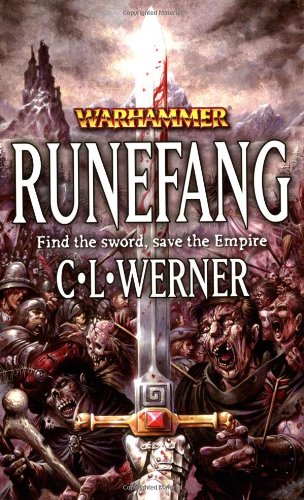
Throwback Thursday – Warhammer: Runefang by C. L. Werner

Runefang Cover

Publisher: Black Library (Paperback – 24 June 2008)

Series: Warhammer Fantasy

Length: 413 pages

My Rating: 4.5 out of 5 stars

Amazon

Welcome back to my Throwback Thursday series, where I republish old reviews, review books I have read before or review older books I have only just had a chance to read.  For this week’s Throwback Thursday I have a look at a classic Warhammer Fantasy adventure novel with the entertaining fantasy thrill ride, Runefang.

I have been reading an awful lot of Warhammer 40,000 novels lately, but deep down my heart will always belong to the Warhammer Fantasy franchise, as that was the game that I played back in the day.  Even though the Warhammer Fantasy game has ended (replaced by The Age of Sigmar), while it was going the Black Library invested a lot of time into creating some excellent novels in this setting, which I have also been enjoy recently.  This includes the awesome Broken Honour and some of the earlier entries in the iconic Gotrek and Felix series (including Trollslayer, Skavenslayer, Daemonslayer, Dragonslayer and Beastslayer).  Even after reading these, I am still in the mood for more fun Warhammer Fantasy adventures and so I just read Runefang by established Warhammer fiction author C. L. Werner.  Werner, whose other writing credits include the Witch Hunter, Thanquol & Boneripper and The Black Plague series, came up with a compelling idea for this novel which I had a lot of fun getting through.

As civil war, discord and political instability rock the human realms of the Empire, a far greater threat marches upon it from the south.  A massive horde of undead creatures has been raised from the grave and is  cutting its way through the heavily populated province of Wissenland.  As the forces of Wissenland gather to fight, they are disheartened to find that these are not the typical shambling herd of undead horrors, but a well-organised, highly disciplined force of relentless fighters with dangerous magic backing them up.  Worse, the leader of this force is a true monster, the wight lord Zahaak, an ancient general of the legendary dark necromancer, Nagash, who has risen from his last defeat to finally achieve the victory he promised centuries before.

After several devastating slaughters, it becomes apparent that the undead force before them is unstoppable and the only way to defeat it is to kill the unkillable undead general.  In desperate need of anything that will save his realm, the Count of Wissenland and his advisors come up with an unlikely plan: recovering the Solland Runefang.  Lost years before when an orc raid destroyed the former province of Solland, the stolen Runefang, one of the legendary 12 swords signifying rulership of the Empire’s provinces, is rumoured to be the only weapon capable of killing Zahaak.

The task of finding the Runefang falls to Baron von Rabwald, who pulls together a small expedition of soldiers, knights and adventurers and leads them to the Runefang’s purported hiding place in the Worlds Edge Mountains.  However, this is no easy quest, and the chances of success are low, especially as the Worlds Edge Mountains are a notorious haunt for monsters, orcs and innumerable other dangers.  Worse, they are not the only group seeking the lost Runefang, and the fell magic of Zahaak is never far behind.  Can the expedition recover the Runefang before it is too late, or will Wissenland fall at the hands of its greatest foe from the past?

This was an outstanding and extremely exciting Warhammer Fantasy novel that I had a wonderful time reading.  C. L. Werner did an excellent job providing readers with an amazing fantasy adventure, and Runefang has a lot of great elements that will appeal to a wide range of readers.

At the heart of Runefang lies a captivating and highly enjoyable fantasy narrative that quickly drags the reader in with its impressive action, enjoyable characters, intriguing examination of the Warhammer world, and exciting adventure narrative.   Starting off with a fantastic introduction that sees the Wissenland army’s first disastrous attack against the undead horde, you are swiftly brought into the middle of the conflict as you witness the aftermath of the defeat, which also introduces several of the main characters.  Following some compelling exposition about the enemy they are facing, the story splits into two parts, with Baron von Rabwald leading most of the supporting cast off to find the lost Runefang, while the rest of the story focuses on the Count of Wissenland’s attempts to delay the undead army to give the adventurers time.  This split works really well, and seeing the disasters unfolding in Wissenland heightens the stakes of the expedition’s adventures and ensures that the reader is even more invested in its outcome.  The expedition storyline encounters multiple obstacles throughout their adventure, including monsters, traps, and orcs and goblins.  They are also forced to deal with a rival force of humans who are also hoping to claim the Runefang, untrustworthy mercenaries, as well as a traitor within their ranks who is helping the enemy.

This all translates into a very good and action-packed adventure, and I loved seeing all the epic events unfold through the eyes of the varied characters.  The story chugs along at a quick and exciting pace, with a good combination of action, dark moments and some fun, if grim, humour that I quite enjoyed.  Werner also ensures readers are in for a wild ride by not being sentimental when it comes to character survivability.  This became really apparent around halfway through Runefang when several key characters, many of whom had been built up in a big way for most of the narrative, were very suddenly killed off, and one of the supporting cast took the reigns as lead protagonist.  While this was a little surprising, I think it worked rather well, and it added to the suspense and drama of the tale, as the new protagonist is forced to make some big choices and deals to keep the quest alive.  Following this, the story keeps advancing at a great pace, with new foes and dangers appearing the closer the protagonists got to their goal.  This leads up to the epic final sequences of the expedition narrative, and it was fantastic to see the surviving protagonists go up against all the villains that had been chasing them in a big, extended confrontation, and Werner kept continuously hitting the reader with twists, surprises and dangers.  The reveal about the traitor in the ranks was pretty good, especially as Werner threw in an excellent red herring character (although by the time it is revealed, there were limited potential characters who it could be).  Everything comes together extremely well, with all the storylines and character arcs reaching their natural end, and I felt that it was an excellent, if rather bittersweet, conclusion.

I have to say that this was a particularly good and accessible entry in the wider Warhammer Fantasy canon, which is very well suited to this sort of immense and powerful story.  While Werner could have just phoned in Runefang with a generic adventure story set in the universe, he does a great dive into the lore.  This novel is set well before the events of most Warhammer Fantasy novels and takes place during the Age of the Three Emperors, where the Empire was split by a raging civil war.  As such, the province of Wissenland is on its own throughout the novel and must also deal with the substantial machinations of its neighbours as it fights to survive, which gives it a great additional edge of intrigue.  The author also spends a great deal of time focusing on the ruined province of Solland and the importance of its lost Runefang.  It was fascinating to see the ruins of Solland in Runefang, as it was still badly scarred by the orc invasion that destroyed it, and the impact of Wissenland’s absorption of it was quite interesting.  I also really appreciated the fantastic portrayal of the notorious Worlds Edge Mountains, the former realm of the dwarfs that is now controlled by orcs, bandits, and monsters.  The author did a really good job showing this to be a desolate and dangerous place, and he really did not disappoint when it came to featuring the variety of cool creatures and threats it contains, forcing the protagonists up against dangerous odds again and again.

Finally, I must highlight the author’s excellent use of the undead army in this book.  Rather than using the armies of the Vampire Counts or the Tomb Kings (which were the two undead factions at the time of Runefang’s release), Werner features a historic army of undead creatures who have risen after their defeat during the early days of the Empire to have their vengeance.  As such, they are a unique force of undead creatures, and I loved seeing them in action, particularly as you get some awesome reactions of terror from the human characters observing them.  Overall, I really loved the cool use of Warhammer Fantasy elements, history and settings in Runefang, and I felt that this was the sort of Warhammer novel that any fantasy fan could pick up and enjoy.

I also need to highlight all the impressive action featured throughout Runefang, and Werner has a clear talent for making fight scenes come to life in a big way.  There are so many battles throughout this book, and each of them is showcased to the reader in exquisite detail.  Whether it be a small skirmish, a one-on-one fight, a brawl against a giant monster, or a large pitched battle between armies, the author ensures that the reader gets the full sense of everything that his happening.  It was extremely cool to see all these fights unfold, and I was able to mentally see every sword swing, desperate charge and epic moment.  I liked how some of these fights emulated the battles from the table-top Warhammer Fantasy game, and you could really envision how they would have looked being played out on the board.  These action scenes combined well with the awesome and exciting story, and I think that they strongly enhanced my enjoyment of Runefang.

The final thing I want to talk about is characters, as Runefang features an excellent and massive cast of distinctive protagonists and villains.  Now, I am not going to go into too much detail about character arcs or development here, as to do so might ruin which key characters are killed off early.  However, I have to say that I was really impressed with the awesome way that Werner introduced each of the major figures in the book.  As such, you quickly grow to like many of the figures in Runefang, especially as Werner goes out of his way to feature a unique and often damaged group of protagonists to fit the story around.  I will say that I deeply enjoyed the Baron’s notorious and scarred champion, Kessler, who has some great moments; the dwarf Skanir, who serves as cantankerous guide; and the fantastic duo of the halfling Theodo Hobshollow and his ogre sidekick, Ghrum, who were an excellent and entertaining comic relief team.  There are also some really good villains in this novel, including the bandits who are also after the Runefang (featuring a brilliantly despicable leader and an entertaining pair of cowards), and an extremely dangerous orc warlord, Uhrghul Skullcracker.  Uhrghul was a particularly fun character, and I liked both his philosophical insights about being an orc leader as well as his effective way of questioning human prisoners (eating my legs in front of me probably would get me to talk).  I did think that the main villain of Runefang Zahaak was a tad underdeveloped, even if he was shown to be an epic badass with major historical cred to his name.  However, this might have been a deliberate choice by Werner to highlight the uncomplicated nature and motivations of the undead compared to the more insidious, evil, or animalistic plots of the humans and orc villains.  I had an amazing time following these characters, just try not to get too attached to any of them.

Filled with fantastic action, a compelling adventure storyline, fun characters and great use of the Warhammer Fantasy setting, Runefang was an outstanding novel from C. L. Werner that I had an amazing time reading.  Werner really went out of his way to create the most impressive and exhilarating fantasy adventure he could, and the result is really worth checking out.  A highly recommended Warhammer fantasy novel that you are guaranteed to have fun with.

Amazon

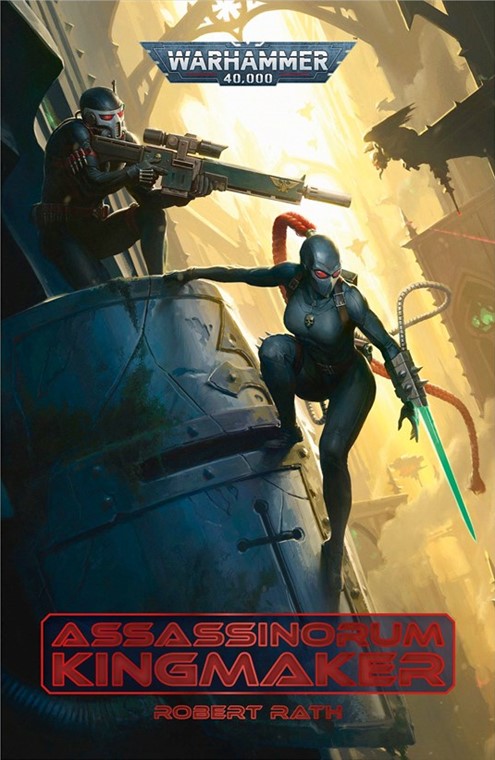
Warhammer 40,000: Assassinorum: Kingmaker by Robert Rath

Assassinorum Kingmaker Cover

Publisher: Black Library (Audiobook – 2 April 2022)

Series: Warhammer 40,000

Length: 11 hours and 12 minutes

My Rating: 5 out of 5 hours

Amazon     Book Depository

The most lethal assassins in the Warhammer 40,000 universe go face to face with a gigantic foe in the impressive and deeply thrilling Assassinorum: Kingmaker by amazing author Robert Rath.

I know I’ve said this before, but 2022 is turning out to be a fantastic year for Warhammer fiction.  Thanks to my recent obsession with this franchise, I have been deeply enjoying all the new tie-in novels associated with this table-top game, as a bevy of talented authors seek to expand on the already massive lore.  I have already had a lot of fun with books like Steel Tread, The Bookkeeper’s Skull, Day of Ascension, Kreig, Ghazghkull Thraka: Prophet of the Waagh!, Reign and The Vincula Insurgency, but I may have just finished one of the most purely entertaining and awesome new entries, Assassinorum: Kingmaker.  Written by Robert Rath, who previously wrote the intriguing Necron focused book, The Infinite and The Divine, Assassinorum: Kingmaker had a very appealing story that instantly grabbed my attention and which ended up being an outstanding read.

In the 41st millennium, a new generation of war has engulfed the Imperium of Man, as the forces of Chaos press mankind from all sides and the recently resurrected Roboute Guilliman leads his forces on a new crusade.  Enemies attack the Imperium from all corners, often hidden in the shadows, and all the Emperor’s agents must work to find and eliminate them.  The most deadly, effective and feared of these agents are the members of the Officio Assassinorum, elite modified assassins who kill all of the Emperor’s enemies without mercy or fear, and who many believe are merely myth.

When the mechanical warriors of the Knight World of Dominion fail in their duty, the Imperial overlords task Vindicare assassin, Absolom Raithe, to travel to the planet and kill Dominion’s High Monarch, Lucien Yavarius-Khau, and managed the succession of a suitable replacement.  However, this will be no easy kill as the High Monarch has long ago bonded himself to his massive war machine, remaining permanently within its heavily armoured cockpit.  To kill this near-invulnerable king, Raithe is forced to recruit a kill-team with variable talents, featuring the Callidus assassin Sycorax and the Vanus assassin Avaaris Koln.

Infiltrating the planet using returning Knight, Sir Linoleus Rakkan, who has been co-opted into their plans, the assassins arrive to find a world in turmoil.  The planet’s two rival ruling houses are in constant battle with each other, and in the ensuing chaos, anti-Imperial sentiment is high, and the already invincible High Monarch is under heavy guard.  Seeking to infiltrate the court of Dominion, the kill team begin to manoeuvre themselves into position, while manipulating the feuding knights around them.  However, the assassins soon begin to realise that not everything is as it seems, and a dark secret lies at the heart of this noble planet.  Can Raithe’s team achieve their goals, or are they destined to die at the hands of a dangerous foe with malicious plans for the entire Imperium?

Damn! Damn! Damn! What an over-the-top and extremely cool Warhammer 40,000 novel that I deeply, deeply loved.  Robert Rath really went out of his way to make Kingmaker as awesome as possible, and the result is an extremely thrilling, electrifying and epic read, loaded with so many cool elements.  This was honestly one of the best Warhammer novels I have had the pleasure of reading and I have very little choice but to give it a full-five star read.

I really, really loved the cool story in this book, which essentially boiled down to ultra-elite assassins attempting to kill the king of a planet of mecha, which is such an awesome idea.  Despite this being a heavy concept to achieve, Rath managed to achieve it in spades, providing readers a fantastic and clever narrative that instantly grabs your attention.  This book starts off extremely well, introducing the world of Dominion, the unique mission, and the four central characters of the three assassins, and their Knight patsy, and generally setting up all the key elements of Kingmaker to ensure some outstanding moments later.  From there, the story turns into a bit of an espionage thriller, as the three assassins begin their infiltration of the court, impersonating the knight Rakkan, and coming to grips with the unique world they have arrived at.  Rath provides an excellent balance of story elements in this first half of the novel, and the reader gets a fantastic mixture of character development, massive universe building, political intrigue, spy elements and some early mecha-action, all of which is a ton of fun and ensures that the reader is firmly addicted with this novel.

While I deeply enjoyed the excellent story elements contained with this first half of Kingmaker, it’s the second half that made me a major fan of this book, as Rath amps up the action, excitement and thrills in a massive way.  Following a major, action-packed moment around the halfway mark that sees all the characters in their element, the protagonists soon have a new objective.  This leads to several great sequences of entertaining mayhem and death as the protagonists attempt to manipulate local politics to their advantage.  However, the fun doesn’t last much longer, as the book enters its final phase and big conclusion.  While it initially appears that everything is going to plan, you just know it will end badly as there is still a lot of book left to go.  However, you do not appreciate just how bad things have gotten for the protagonists until they are suddenly hit from every direction and hell reigns down all around them.

The story essentially devolves into all-out war for its last quarter, as the protagonists find themselves facing enemies all around, and all four main characters are forced go in some amazing directions at this point as they attempt to stymie the damage before them, with varying degrees of success.  Rath really pulls out all the stops here, and the reader is dragged into non-stop action on every front, from a mass of deadly mecha fights, close combat against abominations in the bowels of an ancient castle, and an intense gun fight against overwhelming numbers.  At the same time, there are a ton of big revelations occurring here as a lot of the storylines Rath has been patiently setting up throughout the rest of Kingmaker finally come to fruition.  I honestly did not notice some of the clues that Rath set out in the earlier stages of the novel, but once you realise what he has done, it really becomes apparent how much detail and planning the author put into the story.  Everything comes together extremely well at the very end, and Rath wraps up most of the storylines perfectly, leaving the reader very, very satisfied, with all their action needs firmly quenched.  However, he also leaves a couple of storylines opened, which could potentially lead to some form of sequel in the future, which I would be very excited for.  An, epic story with so much going for it!

Rath has a great and exciting writing style which I deeply enjoyed and which I found to really enhance the cool story.  The author was able to successfully blend multiple key elements together into a very cohesive narrative which delivered the right combination of action, intrigue, character moments, world building, a little humour and more.  This was a very fast-paced and exciting story, especially during some of the key moments at the centre and towards the end, and there was honestly not a single slow moment that made me even considering turning this book off.  With the use of multiple character perspectives, particularly of the four main characters, the reader is gifted a massive overarching view of the key events occurring throughout the novel, and they are always right in the centre of the story.  I particularly need to highlight the very impressive action sequences, as Rath had a real talent when it came to displaying violence and death, whether it be by the hands of the assassins, or via the multiple Knights featured throughout the book.  There is a wonderful interchange between perspectives during some of the more impressive action sequences, with the reader is shown multiple angles of key events, which really helped to enhance how epic they were.  I was really drawn to one sequence where you see a group of characters “talking” before it flashes over to another character quickly and efficiently killing everyone nearby.  Elements like this really drew me into Kingmaker’s story and were a lot of fun to see in action.

Kingmaker proves to be a very impressive addition to the Warhammer 40,000 canon, especially as Rath ensures that the reader leaves with a healthy amount of knowledge about the universe, and several major factions within it.  Ostensibly a standalone read (although there is room to expand out into an extended series), this is a book that will appeal to a wide range of Warhammer fans, especially as it focuses on two particularly unique and brilliant Imperial sub-factions, the dual use of which clash together perfectly to create an awesome narrative.  As such, a little bit of pre-knowledge about the Warhammer 40,000 universe, its recent history and the various major groups are useful to help you enjoy this story fully.  However, Rath did a great job of explaining a lot of these key universe elements throughout his story, and general science fiction fans should be able to pick up on the context easily enough.  As such, Kingmaker has a pretty broad appeal, and I loved seeing the great ways he expanded and explored some crazy groups.

The first faction that Rath deeply explored in Kingmaker is the Officio Assassinorum, the Imperium’s elite, hidden network of ruthless trained killers, who most people believe are a myth.  Trained, conditioned and modified to become the deadliest killers in the galaxy, the Officio Assassinorum are a pretty badass part of the Warhammer 40,000 universe, and there are only a few novels currently about them.  However, Rath really goes to town exploring them, and as they come together as a Kill Team to take facilitate the plot’s main mission.  Kingmaker features three different types of Imperial assassins from Officio Assassinorum temples, each of whom has their own unique skills, methods and technology.  As such, you are given a great insight into three additional sub-factions, with the Vindicare, Callidus and Vanus temples all featured here.  Rath really does a great job showcasing these different assassins throughout Kingmaker, and you come away with some major insights into how these assassins operate, what their skills are, and how they work or don’t work together.  There is also a deep and intriguing examination of the inner minds of these assassins, and you get a good idea of their opinions on the events unfolding, as well as their general thoughts on being deadly killers in service to the Emperor.  I really enjoyed the unique and compelling team-up of assassins featured in Kingmaker, and their technologically focussed attacks and elaborate methods worked well in contrast to the other major faction in this book, the Imperial Knights.

Imperial Knights are another great human sub-faction from the Warhammer 40,000 game, and one that I really didn’t know too much about before this novel.  However, that changed really quickly as, despite Kingmaker being labelled as an Assassinorum novel, Rath spent just as much time, if not more, examining members of a Knight World.  Knight Worlds in the Warhammer 40,000 universe are unique planets that have evolved into a feudal system equivalent to Earth’s medieval period, with peasants and other servants serving the noble houses who field Knights for war.  I always love seeing the cool range of different societies, cultures and technology levels throughout the Warhammer universe, and the Knight Worlds are especially fun, as they have gone out of their way to stay as a feudal society, rather than become standard Imperial worlds.  The contrast between the spoiled nobility and the poorer peasants in this futuristic context is just great, and I loved seeing so many Medieval elements being altered to fit into a degree of advanced technology, while still retaining a lot of traditional elements (e.g. footmen with laser rifles).  However, rather than riding to battle on a horse, these knights are mounted in the Imperial Knight war machines, massive mecha that, while not as large as the god-sized Titans, are still impressive walking weapons.  Rath has a lot of fun showcasing these Knights throughout Kingmaker, and you end up getting a good look at the unique machines, which are bounded to their pilot, and which contain the spirts of all their previous riders.  The impressive Knight-on-Knight battles throughout the book are extremely good, no matter their context, and I particularly enjoyed the focused look at the war machines’ apparent sentience, as the riders are bombarded with the thoughts and voices of the previous riders.

Dominion also proves to be a great and complex setting for Kingmaker, and I loved all the unique politics and elaborate back stabbings it created.  Featuring two rival houses, Stryder and Rau, as they battle for supremacy, Rath explores its rather elaborate and distinctive rulership and court as the assassin characters search for a weak spot.  Dominion’s status as a somewhat independent planet in the Imperium was also pretty intriguing, and it was fascinating to see members of the planet arguing over whether they should serve themselves or help the Emperor.  An overall deeply impressive examination of the Imperial Knights and their worlds, I deeply enjoyed how well Rath was able to work this faction into his complex narrative and it really highlighted his attention to detail and his love for the lore.

I also need to highlight the great characters featured within Kingmaker as Rath has created an excellent collection of enticing figures whose unique personal stories deeply enhanced the overall tale.  This was a fantastic group of deep and complex characters, and their statuses within this universe ensured that they all had some unique experiences.  Most of Kingmaker’s narrative is spread amongst the three members of the Assassinorum who represent a different Assassinorum Temple, and as such have very different viewpoints on the universe and the best way to operate as killers.  This provides some compelling initial conflict amongst them as they try to work together, something none of them are really good at.  However, they soon start to come together as a team as the novel continues, and they ended up playing off each other’s strengths and personalities to create an excellent, core group of protagonists.

The Assassinorum characters in Kingmaker are headlined by Absolom Raithe, the Vindicare assassin who has been appointed team leader.  An infamous sniper, tactician, and resolute loner, Raithe struggles the most with working as a team, and his initial attempts at leadership aren’t that successful.  The author adds in some additional issues for Raithe as the story continues, especially as he is forced to deal with an injury and taking on roles that are outside his comfort zone, producing some dangerous risks for the team.  However, Raithe ends up growing a lot as a leader as the book continues, while his multiple sniper scenes contain some of the best action in the entire novels.

Apart from Raithe, there is also a lot of focus on Sycorax, a Callidus assassin who specialises in infiltration and whose enhanced abilities allow her to morph her shape.  Due to her role impersonating Rakkan for most of the novel, Sycorax is one of the most significant characters in the book, and she ends up with some thrilling and intrigue laden sequences.  Watching her take on multiple personalities throughout the novel is really cool, and it was captivating to watch her more elaborate methods strongly clash with Raithe’s more direct attempts throughout the book.  Sycorax also provides the reader with some of the best and most intense insights into being an Imperial Knight pilot, as she is required to bond with Rakkan’s Knight Jester for much of the book.  Seeing an outsider character interact with Jester’s mind, which contains the spirits of its previous riders, was extremely fascinating, and you get a good sense of the difficulties and insanities involved with piloting such a machine.  In addition, the experiences and memories she obtained from the link impacted on Sycorax’s psyche and ensure that she gets some fantastic interactions with Rakkan, while also gaining a better understanding of the people and machines she is trying to manipulate.

The final assassin character in Kingmaker is Koln, a Vanus assassin with a skill in technology, data manipulation and analysis.  Even though Koln tended to get the least focus of the assassin characters, I really grew to like this tech-focused assassin, especially after her awesome introduction at the start of the book.  Koln proved to be an excellent third member of the Assassinorum team, balancing out the impulsive Raith and manipulative Sycorax well.  Her ability to kill just by manipulating some data, providing an elaborate forgery, or by hacking into a device was really fun, and I really appreciated the examination of the lesser utilised Vanus assassins.  Koln had some interesting story moments in Kingmaker, particularly towards the end of the novel, and it sounds like the author has some intriguing plans for her in the future.

I also need to highlight the character of Sir Linoleus Rakkan, a noble of Dominion who is co-opted into the plans to kill the high monarch and becomes a member of the assassin team.  At the start of the book, he is introduced as an ambitious pilot attempting to raise his fortunes.  However, after nearly being killed, he becomes a mercenary Freeblade, fighting against the forces of Chaos, before being kidnapped by the assassins.  Initially a depressed prisoner who relies heavily on drink to mask his emotional pain and the issues surrounding his disabled legs, the assassins manage to convince him to help Sycorax impersonate him on Dominion and use his return to gain access to the court.  Due to being a son of both the rival Stryder and Rau houses, Rakkan provides some great insights into both houses and the royal court, as well providing instruction on how to pilot a Knight.  It was a lot of fun to see Rakkan’s reactions to many of the early events of the book, especially as he is forced to watch himself being impersonated, providing information to help them pull off the charade.  While Rath could have left Rakkan as a useful, one-note character, he instead spent a good portion of the novel evolving Rakkan and ensuring that he ended up being a key part of the plot.  Not only does he mature greatly after witnessing some of the key moments of the mission and Sycorax’s impersonation of him, but Rath also dives into his past and the connection he has to his father, a Dominion hero whose glorious death Rakkan continually witnesses due to his connection to Jester, which his father died in.  This obsession with his family and the past eventually leads him to some big revelations in the present, and he ends up having some major and exciting moments in the last half of the novel.  Rakkan ended up being one of the most complex and entertaining characters in Kingmaker, and I really appreciate the excellent way in which the author developed him.

Aside from these four main characters, Kingmaker is loaded with an excellent group of supporting characters, most of whom are members of the Dominion nobility.  As I mentioned above, I had an amazing time seeing the diverse and contentious Knights of Dominion, especially as most of them are engaged in a brutal blood feud between the two ruling families.  Several of these noble characters have some intriguing storylines throughout Kingmaker, with an interesting focus on the members of the Court, the king’s inner circle who are hiding some major and disturbing secrets.  Of the rest of the noble characters, the best is probably Rakkan’s mother, the leader of the Stryder family, Baroness Hawthorn Astair-Rakkan, a domineering and ambitious woman who spends most of the novel trying to manipulate Rakkan for her own gain.  Baroness Hawthorn had some excellent moments throughout the novel, and I especially loved her collection of hounds, each of whom are humorously named after famous Imperial commanders, just to show off her arrogance and disrespect to the Imperial Guards.  Hawthorn’s story arc really changes towards the end of the book, and it will be interesting to see if we get some extra appearances from her in the future.  The other major supporting character of Kingmaker is Gwynne, Rakkan’s loyal Sacristan (Jester’s mechanic, a low-level Tech Priest with some additional cultural restrictions).  Gwynne serves as another ally to the main characters, and her knowledge of the Knights and their inner workings proves invaluable, as does her inquiring mind.  The author weaves some subtle, but important, storylines around Gwynne in Kingmaker, and she ends up serving a key and impressive role.  Overall, this was an excellent collection of characters, and I deeply enjoyed how well Rath used them throughout Kingmaker’s narrative.

Like many of the newer Warhammer novels I have been lucky enough to enjoy, I chose to check out Kingmaker on audiobook, which I found to be an awesome way to enjoy this book.  Coming in with a run time of just over 11 hours, this was a decently long Warhammer novel, but I honestly flew through it in just a few days, especially once I got fully addicted to its impressive story.  The audiobook format really helped me dive into the highly detailed setting and narrative, and I deeply appreciated how much more epic it made the action sequences.  Having the intense and over-the-top fighting between the various mechanical Knights was an outstanding experience, and you got the full impact of every powerful strike.  I also really enjoyed the excellent narration of veteran audiobook voice actor Gareth Armstrong, who has done a ton of other narration for the Warhammer franchise.  Armstrong’s work in Kingmaker was very good, and I loved the great array of voices he features for the various characters, capturing the ethereal and strange nature of the assassin characters and the more robust, proud and arrogant nobles of Dominion.  There was a great contrast between these two groups, and I loved how Armstrong succeeded in making every single character stand out on their own.  An overall exceptional way to enjoy this wonderful Warhammer book, the Kingmaker audiobook is without a doubt the best way to enjoy this novel, and I deeply enjoyed every single second I spent listening to it.

I think it is fair to say that I deeply enjoyed Assassinorum: Kingmaker.  Robert Rath crafted together a brilliant and exceptionally entertaining Warhammer 40,000 novel that was loaded with action, fun and great characters.  Featuring lethal assassins facing down massive Imperial Knights, Kingmaker has a little bit of everything, including political intrigue, impressive use of Warhammer elements, and some fantastic war sequences towards the end.  Easily one of the most impressive and captivating Warhammer novels of 2022, Kingmaker is a must-read for all fans of the franchise, and you are guaranteed to have an incredible time with this epic book.

Amazon     Book Depository

Quick Review – Crusader by Ben Kane

Crusader Cover

Publisher: Orion (Trade Paperback – 27 April 2021)

Series: Lionheart – Book Two

Length: 393 pages

My Rating: 4.5 out of 5 stars

Amazon

Impressive historical fiction author Ben Kane returns with the second entry in his Lionheart series, Crusader, which does an amazing job of continuing the epic story of King Richard the Lionheart.

Synopsis:

KING. POLITICIAN. WARRIOR. CONQUEROR.

1189. Richard the Lionheart’s long-awaited goal comes true as he is crowned King of England. Setting his own kingdom in order, he prepares to embark on a gruelling crusade to reclaim Jerusalem.

With him on every step of the journey is Ferdia, his loyal Irish follower. Together they travel from southern France to Italy, to the kingdom of Sicily and beyond.

Finally poised to sail to the Holy Land, Richard finds a bitter two-year-long siege awaiting him. And with it, the iconic Saracen leader responsible for the loss of Jerusalem, Saladin.

No one can agree who should fill the empty throne of the Kingdom of Jerusalem and Saladin’s huge army shadows Richard’s every move. Conditions are brutal, the temperatures boiling, and on the dusty field of Arsuf, the Lionheart and his soldiers face their ultimate test…

Kane has produced another amazing novel in the Lionheart trilogy.  While Kane is best known for his incredible Roman historical novels, I have been particularly enjoying his compelling foray into medieval fiction with this outstanding series that examines the life of King Richard the Lionheart.  Told through the eyes of fictional character Ferdia, better known as Rufus, the first novel in this series, Lionheart, did a remarkable job of covering some of the most influential younger years of Richard’s life, which cumulated in him seizing the throne.  Crusader continues this epic retelling of Richard’s life by recounting the events that occurred as Richard led his forces on a bloody journey to the Holy Land.

Crusader contains a historically rich narrative that explores one of the most iconic periods of Richard’s life, the crusades.  Kane produces a very detailed story that focuses on the journey to the east as well as the battles in the Holy Land.  This includes the army’s stops in Sicily and Cyprus, where Richard was forced into conflict with other Christian rulers, before eventually arriving in the Holy Land and engaging in his legendary conflict with Saladin.  Kane attempts to cover every major battle of this Crusade, with several sieges, large-scale attacks, skirmishes and the infamous massacre at Acre.  At the same time, Rufus continues his deadly rivalry with the dishonourable knight Robert FitzAldelm, while also secretly engaging in a very risky romance.

This proves to be a very compelling story, and I very much enjoyed seeing this detailed portrayal of this legendary crusade.  Kane does a wonderful job of bringing all the dry historical facts to life throughout Crusader, and I found it fascinating to see his take on the entire journey and eventual battles with Saladin’s forces.  While the story does occasionally get a bit bogged down in medieval politics, royal disputes and petty squabbles, Kane keeps the novel going at decent pace, and the reader is treated to several epic and dangerous fight scenes.  The author can write a deeply impressive and thrilling battle sequence, and the reader is left on the edge of their seats multiple times, especially as the various characters you come to care about find themselves in utter peril.  I also enjoyed the bitter conflict that occurred between the non-fictional Rufus and his rival, FitzAldelm.  While not as prominent as in the first book, this rivalry is still a fantastic part of the book, especially as it adds an intrigue-laden edge to the main story.  While I really enjoyed this great novel, I do think that it suffered a little being the middle novel in the series, primarily because certain overarching conspiracies and plots are put on hold because of the crusade.  I also felt the first half of the novel was a little slow in places, especially when compared to the intense second part of Crusader.  Still, this was a pretty amazing story, and I loved how the author managed to ensure that his tale contained both excitement and fascinating historical fact.

Just like in the first novel in this series, Kane spends considerable time examining the complex historical figure of Richard the Lionheart.  In this book, Richard is portrayed as a multifaceted and intense being with a wide range of emotions and moods.  Most of the story focuses on the classic King Richard, the inspirational and personable figure that the protagonist Rufus eagerly vows to follow.  This includes multiple portrayals of Richard’s prowess in combat, especially in the Holy Land where he leads his troops to many great victories.  The author features several intense battles throughout the book where Richard either lead the charge or proved to be something more than human, such as fighting through a superior forces or chasing off an entire army by himself.  I initially assumed that Kane was taking a bit of artistic licence with some of these outrageous scenes, but it turns out that most were based on real historical accounts.  While I found these epic depictions of Richard to be cool, I also appreciated the way in which Kane tries to show the king’s darker side.  There are multiple scenes that portray Richard in a despondent mood, especially when faced with setbacks or betrayals, and this low mood could often transform into a dangerous anger at a drop of a hat.  This makes for a very complex and contrary portrayal, and I really appreciated the way in which Kane attempted to examine the true mind and thoughts of Richard, as seen by his closest friend.

It was also really interesting to see the continued growth of Rufus throughout Crusader, as he keeps moving away from the helpless Irish hostage he was at the start of the series, and is now a knight and close companion to the King.  Rufus goes through a lot in this novel, and it was fascinating to see how he deals with the horrors and dangers of the war around him.  I found his description and concern about the massacre of Acre to be particularly intense, and it was interesting to see him witness such an event while remaining loyal and dedicated to Richard.  Rufus’s rivalries and loves were a major focus of this novel, and it is clear that Kane is setting up something major with them for the final novel.  It was also intriguing to see the changes occurring with additional fictional character Rhys, Rufus’s squire and close confidant, who has accompanied the protagonist on all his adventures.  Rhys, after killing a vicious knight in the first book, has become a little bloodthirsty, and is constantly seeking to prove himself in combat, much to Rufus’s concern.  I really enjoyed the inclusion of these fictional characters amongst the more historically accurate tale of Richard’s campaigns, and it serves as a great narrative device, while also adding in some additional drama and conflict.  I am very curious about how Rufus and Rhys’s stories will end in the final book, although I am not expecting a happy ending.

Overall, Crusader was a pretty amazing historical novel that presented a detailed and captivating picture of King Richard’s crusades.  Loaded up with some excellent portrayals of historical events and a series of epic battles, Crusader will appeal to a wide range of historical fiction fans, and readers will have an outstanding time digging through Kane’s captivating text.  A clever and intriguing novel, I am very keen to read the final entry in this series next year, especially as we all know how dark the final chapters of King Richard’s story are.

Amazon

Battle Ground by Jim Butcher

Battle Ground Cover

Publisher: Orbit/Penguin Random House Audio (Audiobook – 29 September 2020)

Series: The Dresden Files – Book 17

Length: 15 hours and 43 minutes

My Rating: 5 out of 5 stars

Amazon

One of the leading authors of the urban fantasy novel, Jim Butcher, returns with the next entry in his world-acclaimed Harry Dresden series, Battle Ground, an awesome novel that was one of the most anticipated releases of 2020.

Jim Butcher is a highly acclaimed fantasy author who has been dominating the market since his debut novel in 2000.  Butcher has written a number of books throughout his career, including his Codex Alera series, the first book of his planned Cinder Spires series, The Aeronaut’s Windlass and even a Spider-Man tie-in novel, Spider-Man: The Darkest Hours.  However, the body of work that Butcher is best known for is his long-running urban fantasy series, the Dresden Files.  The Dresden Files started back in 2000 with Storm Front and follow the adventures of Harry Dresden, a wizard who works as a private investigator in Chicago, solving supernatural crimes and protecting humans from dangerous magical creatures.  This series proved to be incredibly popular and is widely considered to be the gold standard of urban fantasy novels.  The Dresden Files currently consists of 17 books, with the universe expanded out with short stories, novellas and even some graphic novels.

While I have always heard incredible things about the Dresden Files books, I have not previously had the pleasure of reading any of them yet.  This is an admittedly massive gap in my fantasy reading knowledge, and it is one that I have been meaning to fill for a while.  So when I recently received a copy of the latest novel in the series, Battle Ground, I figured that this would be a perfect opportunity to finally break into the series.

For years, Harry Dresden, rogue wizard and general smartass, has defended the city of Chicago from all manner of supernatural threats and each time he has managed to keep it safe, until now!  War is coming to Chicago as a being of unbelievable power, the Last Titan, Ethniu, marches towards it, determined to have her revenge.  To achieve her goal, she has assembled a vast supernatural army and is in possession of a magical superweapon of unbelievable destructive power.  With these forces at her command, Ethniu has sworn to wipe out the entirety of Chicago in one night and kill all eight million of its inhabitants.

In order to combat this terrible threat, Dresden must rally together every friend, former enemy and magical ally he can find in order to face down the opposing army and stop Ethniu.  However, this will be no easy task.  Not only must he deal with the conflicting politics of the rival magical factions but dangerous monsters are also loose in the city, determined to take advantage of the destructive circumstances.  Worse, thanks to Ethniu’s superweapon, every electronic piece of technology in Chicago has been knocked out and the entire population is now helpless and unable to flee from the oncoming chaos.

As Dresden and his allies attempt drive back the enemies coming towards them, they face an uphill battle.  Ethniu is one of the most powerful beings in existence, and not even the combined might of Chicago’s magical elite may be enough to stop her.  Throughout this night Dresden will face terrible losses and be forced to make some of the hardest decisions in his life.  But even Dresden’s most desperate tricks may not be enough to turn the tide and save the city.  One thing is clear: no matter who wins, Dresden and the entire city of Chicago will never be the same again!

Well damn, Jim Butcher really went all out with Battle Ground and has produced one heck of an impressive novel.  This was a spectacular read, filled with a lot of huge, epic moments, smart storytelling, extremely likeable characters and clever fantasy inclusions, all wrapped up with a fun sense of humour and excitement.  Battle Ground is the 17th Dresden Files book, quickly following up the 16th book, Peace Talks (where several storylines explored in the novel originated).  I had an absolute blast reading Battle Ground, and I do have to admit that I am currently feeling a lot of regret for not getting into this series a heck of a lot sooner, as this latest entry is easily one of my favourite books of 2020.

At the heart of this outstanding novel is an extremely powerful story that sees beloved series protagonist Harry Dresden attempt to save his city from all-out destruction as a magical army invades, intent on killing everyone.  This results in an intense and action-packed novel that is a bit of a change of pace from some of the previous novels in the series, which usually read more like fantasy detective fiction.  Battle Ground is a war story, with the protagonist engaged in the battle of his life throughout the entirety of the novel.  Butcher starts Battle Ground off quickly with the protagonist having to face off against a kraken, which easily draws the reader in off the bat (I know I was pretty darn impressed with that introduction).  From there he sets up the start of the war perfectly, with a number of characters introduced as their roles in the coming fight are established, as well as an exploration of the various magical political entities in the city and why they are supporting Dresden in his fight.  It does not take long for the actual war for Chicago to start, and once it does the story does not slow down again until the battle reaches its brutal climax.  There are some truly epic and captivating battle sequences throughout the course of this book as Dresden and his allies face all manner of dangers and turmoil, including a range of distinctive adversaries from the previous entries in the series.  There are so many memorable and exciting moments that featured in this part of the book and I found myself going through an emotional ringer as everything unfolded, from feeling saddened at some critical scenes, to being inspired as a beloved character led an impassioned charge against the foe.  I was on the edge of my seat as I listened to Battle Ground’s story, and it honestly did not take me long to get completely and utterly addicted to the narrative as I desperately waited to see how the story would conclude.  When it did, I found myself completely satisfied with the ending and it left me with a deep longing to see where Butcher takes the series next.  Overall, this was an incredibly well-written and wildly exciting narrative which will stick in the readers mind as they wait for the next Dresden Files book to be released.

Now, was it a mistake coming into this series on the 17th book that serves as an epic conclusion to a number of key storylines?  Potentially.  But do I have any regrets about reading this latest Dresden Files novel?  Absolutely freaking not!  I had an incredible time with Battle Ground, especially as Butcher made sure to make this novel accessible to new readers, even with the book’s huge range of characters and massive stakes.  Pretty much every major character or event that is relevant to the main narrative of Battle Ground is explained in sufficient detail so that new readers coming to the series for the first time can follow what is happening and get a decent sense of the significance of a location, event from a prior book or the personal history that Dresden has with a character.  I do have to admit there were a few things I was a tad uncertain about, mainly because they would have been covered in Peace Talks.  For example, I did find the motivations of the book’s main antagonist, Ethniu, a little vague and there was a lack of build-up around her various allies and minions.  There is also a major twist towards the end of the book which did not hit me as significantly as it would have for a long-term reader of the series, as it is tied into several overarching plot threads from the previous books.  Despite this, I was able to follow the plot extremely closely, and my lack of prior knowledge in no way stopped me enjoying all the incredible action and wonderful characters that were part of the books plot.  As with any later addition to a series, Battle Ground is definitely intended to be enjoyed by established fans; however, I will recommend this to readers unfamiliar with the series as I know they will have an amazing time reading it.

One of the key things that I enjoyed about Battle Ground was the extremely likeable and entertaining series protagonist, Harry Dresden, who serves as the narrator of the entire story.  Dresden is a very fun and unique protagonist, and for most of the series he has worked outside of the established system of magical rule as a private investigator.  However, in this book he is part of the government, serving both the White Council of Wizards and as a member of Queen Mab’s court.  Despite this, he still retains his extreme anti-authoritarian streak and is constantly infuriating those people who are higher up on the magical hierarchy with his glib attitude.  I have a strong attachment to sarcastic and infuriating protagonists and Dresden is one of the more enjoyable ones I have seen in fiction.  Butcher really goes out of his way to make Dresden as likeable and entertaining as possible and most of the book’s brilliant humour is derived from Dresden’s comedic observations and statements about the events occurring around him and the outlandish people that he meets.  I also had to have a chuckle about the various pop-culture references that Dresden brought up throughout the course of the book, even in life threatening situations, such as the way he imitated Gandalf while holding off opponents on an iconic Chicago bridge.  Despite this carefree and entertaining exterior, Dresden is actually a very deep protagonist, weighed down by the responsibilities he faces and the constant desire not to be corrupted by the forces he encounters or bargains with.  Dresden goes through a lot of emotional damage in Battle Ground as he must not only contend with the guilt of letting this destruction reign down on his beloved hometown, but also with a series of losses that he faces along the way.  Butcher expertly captures Dresden’s emotional turmoil through his use of the first-person narrative, and the reader cannot help but be entranced by some of the darker moments this usually cheerful character experiences.  This excellent combination of characteristics really helps to turn Dresden into a relatable individual and an impressive protagonist and I cannot wait to see what happens to him in the future books of the series.

In addition to Dresden, Battle Ground features a veritable smorgasbord of cool side and supporting characters who the protagonist encounters throughout the course of the novel.  Due to the high stakes of the plot, this book contains a massive cast with a huge number of characters from all the previous books and novellas appearing in cameos or significant roles.  Most of these characters are really amazing, and Butcher does a fantastic job introducing them and ensuring that the reader knows who they are, what their connection to the protagonists is, as well as key elements of their history.  Due to my lack of familiarity with the series, I really appreciated the author’s dedication to reintroducing these characters and I felt fairly confident following who the various people were and what their role in the story was.  That being said, I was probably a little less emotionally impacted with some of the resultant twists and turns involving some of these characters, and I imagine long-time readers of the story are going to get a lot more out of their actions then a newcomer to the series.  These long-term readers should be warned that Butcher takes the stakes of this book particularly seriously and several characters are going to meet some dramatic fates.

I personally enjoyed many of the characters that were featured in the plot and I felt that each of these inventive personalities either added some real emotional depth to the novel or served as an entertaining additional to the story.  Some of my favourite characters in Battle Ground included River Shoulders (full name: Strength of a River in His Shoulders), a Sasquatch magician who wears Victorian era garb and who is one of the most likeable creatures in the book.  River Shoulders has a lot of fun moments throughout the story, although I have to highlight the quick scene which saw him make a pitch to improve race relations with an improvised ventriloquist act, as it made me laugh pretty hard.  I also really enjoyed Major General Toot-Toot Minimus, a small fairy who leads an army of Little Folk in defence of Dresden, all in the name of pizza.  Toot-Toot is one of the main comic reliefs of their entire novel and it was quite entertaining to see in action, especially when he manages to overcome the bigguns in defence of Za Lord.  However, the character I enjoyed the most aside from Dresden was Waldo Butters, Knight of the Cross.  Now, despite the fact that I would constantly think about the character of Butters from South Park whenever he appeared (in fairness, they have a lot of similarities with each other), Waldo Butters is probably the character who gets the most development and use throughout the course of Battle Ground.  Butters, who only recently took on the mantle of a Knight after spending most of the series as a defenceless sidekick, really comes into his own in Battle Ground, acting in a major defence role throughout the fight for the city.  Not only does he have some very inspiration fight sequences, but he also has a series of particularly emotional scenes with Dresden and adds a lot of heart to the narrative as a result.  I also really loved some of his scenes where he squares off against Battle Ground’s big bad, and you get a real Neville Longbottom vs Voldemort feel from it.  You can clearly see that Butcher has some big plans for Butters in the future, and I am personally cannot wait to see what they are.  I am honestly only scratching the surface of the various side characters who appeared throughout Battle Ground, but needless to say that they were all pretty exceptional and it was a real treat to meet them.

Battle Ground also served as my introduction to the magical version of Chicago that serves as the setting for this fantastic series.  This proved to be an excellent setting for this great book, and I really enjoyed the way that Butcher has melded together regular Chicago with some more subtle magical elements, such as a ruling magical council, hidden enclaves of power and mysterious creatures hiding just beneath the surface.  There are a lot of cool elements to this setting, and I think that the author did an amazing job reintroducing it for the context of this latest novel.  I was particularly impressed by the way Butcher brought a number of key city landmarks to life in this book, with several iconic pieces of Chicago used to great effect throughout the book as settings for epic scenes.  Unlike any previous book in the series, the events of Battle Ground ensure that Chicago goes through some massive changes as a magical army invades.  The destruction levelled upon Chicago is substantial, and there are several emotional sequences that see the citizens attempting to deal with these forces coming to kill them.  Naturally, this is going to have some major impacts in the future entries in the series, and I look forward to seeing what the long-term impacts of this book are going to be.

I also need to mention that, aside from Battle Ground’s main story, this novel and its associated audiobook format also contains the short story, Christmas EveChristmas Eve is a relatively tiny part of the novel, only made up of 15 pages (or around 25 minutes of the audiobook), and shows Dresden encountering several people on Christmas Eve.  This short story is set after the events of Battle Ground (despite being initially written and released in 2018) and contains a rather nice and emotionally rich narrative that examines Dresden’s emotional state as a father and friend.  Christmas Eve is a much more relaxed and lower-stakes story that Battle Ground, and I personally really enjoyed reading it after all the bloodshed, sacrifice and death of the main story.

While I did receive a nice hardcover copy of Battle Ground, I ended up listening to its audiobook format instead.  The Battle Ground audiobook runs for a little under 16 hours, which I powered through in only a few short days; it did not take me long to get addicted to this novel.  I deeply enjoyed the Battle Ground audiobook and I felt that it was an awesome way to enjoy this great book.  Not only did I find myself absorbing more of the story elements and getting drawn more into the plot but I also loved the top-shelf narrator they utilised for this audiobook.  Battle Ground was narrated by James Marsters, best known as Spike from Buffy the Vampire Slayer and Angel, who has also narrated all the previous books in the series as well as the short stories and other associated novels.  I am a major fan of Marsters, having watched a ton of the television shows he has appeared in, so I was very excited to listen to one of the audiobooks he narrated.  Unsurprisingly, Marsters proved to be an outstanding narrator, empowering this already impressive novel with his amazing vocal talents and moving the story along at a brisk and exciting pace.  Marsters did an awesome job providing each of the characters with their own unique and distinctive voice which fit the personality and depiction of each character perfectly.  I was also particularly impressed with how he brought the book’s protagonist to life.  Marsters really dove into the character of Harry Dresden, providing a perfect voice for the maverick wizard that effectively captured his various quirks and personality traits.  This excellent narration also explored the various raw emotions that Dresden experienced throughout the course of the novel and you get a fantastic sense of what the character is going through and how much he is struggling.  I really have to highlight the enthusiastic emphasis that Marsters utilises when reciting Dresden’s various spells and I could totally imagine the protagonist shouting out his incarnations in that way.  I also liked the humorously altered voices that were utilised for some of the supernatural creatures, such as Toot-Toot, which was not only widely entertaining but which fit the outrageous character extremely well.  All of this makes for an incredible audiobook experience and I fully intend to listen to the other entries in the series rather than seeking out a physical copy.

Battle Ground by Jim Butcher is an extraordinary and epic urban fantasy novel that serves as the latest novel in Butcher’s acclaimed Dresden Files series.  Butcher has done an incredible job with Battle Ground, presenting the reader with an awesome and captivating narrative, filled with a huge array of enjoyable characters and clever fantasy elements.  The result is an outstanding and deeply impressive novel that I had an amazing time reading.  Battle Ground gets an easy five-star rating from me and it was one of my favourite books (and audiobooks) of 2020.  I cannot praise this novel enough and it certainly served as a wonderful introduction to the Dresden Files.  I am intending to go back and start reading the series from book one and I have no doubt I will love each and every entry in the series.  I am especially keen to check them out in their audiobook format because James Marsters has narrated each of them and I know I will deeply enjoy hearing these clever stories read out.  Needless to say, this book comes highly recommended from me and I cannot wait to see what other extraordinary stories exist within Butcher’s extensive Dresden Files.

Amazon

Song of the Risen God by R. A. Salvatore

Song of the Risen God Cover

Publisher: Audible Studios (Audiobook – 28 January 2020)

Series: Coven trilogy – Book Three

Length: 17 hours and 3 minutes

My Rating: 5 out of 5 stars

Amazon     Book Depository

Legendary fantasy author R. A. Salvatore brings his Coven trilogy to an explosive and enthralling end with the third and final novel, Song of the Risen God.

The Coven trilogy is an exciting series that Salvatore has been writing over the last three years, which is set in the world of Corona, the setting of his previous series, The DemonWars Saga. This new trilogy follows the adventures of an interesting group of characters in the lands surrounding Loch Beag, including the imposing mountain, Fireach Speuer. The first two novels in this series, Child of a Mad God and Reckoning of Fallen Gods, have both been extremely good, and I have been enjoying reading some of Salvatore’s non-Forgotten Realms fantasy work. I am a massive fan of Salvatore’s writing and I have been looking forward to finishing this series off for some time now. Salvatore certainly did not disappoint with the final entry in this trilogy, as this final novel is potentially my favourite book in the entire series.

War has once again come to the world of Corona, as a new evil leads its forces on a mission of conquest and destruction. The wild lands surrounding Loch Beag and Fireach Speuer have never been peaceful, but now a massive army of invaders is marching across them, determined to conquer and kill all before them. These mysterious invaders are the Xoconai, a lost race of humanoids from the other side of Fireach Speaur. Now, with their reborn god leading the charge on his mighty dragon, the Xoconai are commanded to expand their empire to the opposing coast.

With no hope of defeating the vast host that has suddenly appeared above them, the few surviving inhabitants of the villages surrounding Loch Beag flee through the wilds to find sanctuary. Led by the powerful witch Aoelyn, the frontiersman Talmadge and the ranger Aydrian Wyndon, the villagers move towards the apparent safety of Honce-the-Bear, the most powerful human kingdom in Corona. There they hope to warn the people of Honce-the-Bear of the approaching danger and gather a force that can push back the Xoconai.

However, the dark ambition of the Xoconai god, Scathmizzane, knows no limit, and his magical powers are as vast as they are terrifying in their origin. Using these powers, Scathmizzane is able to accelerate the Xoconai invasion at a tremendous pace, striking right at the heart of Honce-the-Bear, and managing to overpower both their armies and the magic of the Abellican monks. As the Xoconai horde advances, it falls to Aoelyn, Aydrian and their companions to stop them by any means necessary. But can even the most powerful magic user on the continent and a fallen king be able to throw back the invading armies, or will Scathmizzane’s dark power fall across all the lands?

Song of the Risen God is a really impressive and captivating read that provides the reader with an entertaining adventure in one of Salvatore’s detailed and expansive fantasy universe. This final book in the Coven trilogy is a cool addition to the trilogy that not only acts as a satisfactory conclusion to this new series but which also ties it even more firmly into the wider world of Corona.

This book contains an epic and wide-ranging narrative that showcases the dramatic aftermath of the second novel in the series, Reckoning of the Fallen Gods, which saw a massive army and a dragon-riding god descend on the isolated setting of the first two novels. In this third novel, the protagonists are chased all the way to one of this world’s key settings, the kingdom of Honce-the-Bear, where they must fight to save the world from the invading horde. This turned out to be a rather interesting departure from the previous novels in the Coven trilogy, which were much smaller in their scope, tending to focus on a handful of closely related villages in a single location. I actually liked this change of pace, as it made for a much more impressive conclusion, and I quite enjoyed seeing the characters interact with the wider world. This turned out to be an extremely exciting and fast-paced novel that contained a lot of entertaining action and large-scale battle sequences, although the author does not skimp on the intriguing dialogue, creative world building or compelling character development. Salvatore utilises a host of point-of-view characters to tell this story from a variety of different angles, which leads to a rich and comprehensive overall narrative. I am also glad that the author continues to feature in-world texts at the beginning of each part of the novel, which provides some fascinating insights into some characters, and contains some clues about a big twist towards the end of Song of the Risen God. Overall, this was an extremely captivating story with a great blend of elements, and I had a fantastic time reading it.

One of the more distinctive parts of Song of the Risen God is how it connects with some of the previous books set in the world of Corona. Corona is a unique fantasy world created by Salvatore, which has previously served as the setting for 13 novels, including the previous two Coven books. The first seven of these books are all part of the same series, known as The DemonWars Saga, which established many elements of this world, including the kingdom of Honce-the-Bear, the Abellican order of monks and the world’s gem based magical system. The Coven series has always been set in Corona, but the first novel in this trilogy, Child of a Mad God, had very little to do with these prior books. More of a connection was established in Reckoning of Fallen Gods, especially with the appearance of Aydrian, who was a major figure in the later DemonWars books. However, in Song of the Risen God, Salvatore fully combines this trilogy with his prior series, by bringing the protagonists and antagonists of the previous Coven books into the main location of The DemonWars Saga and having them interact with these established characters and settings.

Immersing this series more fully into the wider fantasy world was an interesting choice from Salvatore, and it one of the major things that distinguishes Song of the Risen God from the previous books in the trilogy. This was not a sudden or random decision from Salvatore, as there have been hints that this was going to happen in the previous two books, especially once Aydrian was introduced as a major character. I rather enjoyed the way that Salvatore so dramatically expanded the setting and started using elements from The DemonWars Saga in this novel, as it made for a much more expansive and fascinating story. I never actually read any of the books in The DemonWars Saga (a regrettable gap in my Salvatore knowledge), and before reading Song of the Risen God, I had no real idea what happened in this series, aside from what was discussed in the second Coven novel. However, I found that you really didn’t need any pre-existing knowledge of these earlier books, as Salvatore spends a good amount of time explaining some of the major story events that occurred during these novels and how they impact the current plot. As a result, at no point while reading Song of the Risen God was I in anyway confused by what was going on, and I always had a good idea how the plot was tied into the wider universe. I really appreciated being able to enjoy the entirety of the plot without having to read The DemonWar Saga first (which admittedly sounds pretty awesome, and I might have to check them out at some point), and I think that Salvatore did a fantastic job recapping the events of this prior series in text. Fans of The DemonWars Saga will no doubt like the fact that Salvatore is once again exploring this world, and many will be interested in seeing how much the universe has changed in the intervening years, as well as the major developments that occur as part of Song of the Risen God.

As I mentioned above, Song of the Risen God is the third and final book in the Coven trilogy, which does mean that this book might be a bit harder to follow for those readers who try to jump into the series at the very end (although that would be true for any trilogy). Salvatore does do a good job of recapping and exploring some of the key events of the first two novels, so most readers should be able to follow it well enough. I think that Song of the Risen God proved to be a great conclusion to the entire trilogy, as all of the major storylines were wrapped up rather well. The ending of the book also suggests that Salvatore is planning an additional Corona based series in the future, and if so, it is likely to focus on some of the major characters from the Coven trilogy. I personally would be extremely interested in a follow up series to these books, especially after all the major events that occurred in this novel, and I look forward to seeing what Salvatore cooks up next.

One of the major highlights of Song of the Risen God was the incredible raft of characters. This book had a massive and diverse group of characters featured within it, including the protagonists of the previous two books, characters from The DemonWars Saga and original characters who appeared for the first time within this book. Salvatore did a fantastic job diving down into several of these protagonists, and there was some rather intriguing character development that occurred throughout Song of the Risen God, most of which has some interesting roots in some of Salvatore’s previous novels.

A good portion of the book focuses on Aoelyn, who has served as the main protagonist for the first two Coven novels. Aoelyn is a witch who has spent the previous books trying to escape the clutches of her vicious tribe, the Usgar. In this novel, Aoelyn finally has her freedom, and finds herself in a brand new world, although she still seems to be dealing with some of the same prejudices and problems that occurred amongst the Usgar. Aoelyn spends a good portion of this book continuing to come to terms with her magical powers, which both define her and frighten her, as she has seen how magic can corrupt individuals, and she also attempts to take responsibility for the Xoconai invasion, which she inadvertently caused by killing a demon in the first Coven novel. I felt that Salvatore covered her character arc rather well, and there were quite a few intriguing moments, including Aoelyn making new friends and finding closure with some of the antagonists from the first two novels. I also liked some of the interesting developments that occurred towards the end of the novel with Aoelyn, which not only impact her outlook on life, but which may have some major impacts on any future Corona novels that feature her.

In addition to Aoelyn, quite a few other characters have some fantastic moments within Song of the Risen God. Bahdlahn, the former Usgar slave and Aoelyn’s childhood friend, probably had the most dramatic character development of all within this novel, as he grew and grew with every new encounter and experience within the plot. You cannot help but get attached to Bahdlahn, especially as he goes from wide-eyed former slave who had barely seen anything of the world, all the way up to an elite knight and resistance fighter in Honce-the-Bear. Bahdlahn is another character who has some interesting developments towards the end of this novel, and it looks like Salvatore has some big plans for him in the future. The former Usgar witch Connebragh also has a rather fascinating, if shorter, storyline within this book, as she befriends two former inhabitants of the lakeside villages, despite the long hostility between her tribe and theirs, and helps them survive the Xoconai invasion. The frontier explorers Talmadge and Khotai are also well utilised towards the front of the book, and there are some great moments with them, especially as Khotai regains her mobility in a rather unique way, although both disappear for the last third of the book. Salvatore also invests time in showing the viewpoint of a couple of key Xoconai characters, which I think really adds a lot to the story. Rather than having the Xoconai solely being mindless followers of Scathmizzane, these character perspectives help show them as being rather similar to humans, and two characters in particular have some very interesting viewpoints that lead them to question the word of their god as they attempt to fight his holy war.

All of these character arcs are great, but my personal favourite has to be the one surrounding Aydrian Wyndon. Aydrian is a major character within The DemonWars Saga, as the son of the original protagonists, who eventually became the main antagonist of the series after being possessed by a demon. Freed from his corruption at the end of the series and banished from Honce-the-Bear, which he ruled for a brief time, Aydrian has taken up the role of a ranger, which led to him meeting and helping the protagonists of the Coven series in the previous novel. In this book, he finds the threat of the Xoconai so great that he is forced to return to Honce-the-Bear, despite his banishment, to warn his former people. This leads to several outstanding scenes where he revisits the hurt and despair that he previously caused as a despotic and murderous king, and it serves as a fantastic defining characteristic as he searches for redemption. Aydrian has an absolutely incredible storyline throughout this novel, and his inclusion really added a whole lot to the overall narrative.

In addition to the fantastic story and amazing characters, I also have to once again highlight some of the enjoyable fantasy elements that Salvatore includes in this novel. At the fore of this is the cool gem-based magic that is one of the defining features of the stories set in Corona. This gem magic is an excellent concept, and it proved to be particularly fascinating in this novel as Aoelyn, a self-taught magical gem user, encounters members of the Abellican Church, who also use this form of magic, although in an apparently lesser way. Salvatore makes full use of all this cool magic throughout Song of the Risen God, and there are some rather impressive and destructive examples of the universe’s various magics, which were a lot of fun to see. I really enjoyed some of the cool and unique fantasy elements contained within this book, and it was a rather exciting addition to the story.

I ended up listening to the audiobook format of Song of the Risen God rather than grabbing a physical copy. This audiobook runs for just over 17 hours and is narrated by Tim Gerald Reynolds, who has provided narration for several of Salvatore’s previous books, including the other Coven books. I really enjoyed the audiobook version, and it proved to be a fantastic way to absorb and experience the cool story and the intriguing settings and characters. This is a bit of a longer audiobook and it took me over a week to fully listen to it, although my audiobook listening schedule has been a bit messed up lately. I felt that Reynolds did a really good job narrating this audiobook, and his fantastic voice really helped me get sucked into this fun story. Reynolds had a great handle on all the characters featured within Song of the Risen God, and I liked all the voices that he came up with for them. I ended up having an amazing time listening to this audiobook, and this is a truly excellent format to enjoy this novel in.

Song of the Risen God is a very impressive and deeply enjoyable fantasy novel that comes highly recommended. R. A. Salvatore once again shows why he is one of my favourite authors as he produces a slick and captivating read which is not only fantastic in its own right but which concludes an epic trilogy and ties it into a wider fantasy universe. This proved to be an absolutely amazing read, and I think I have to award it a full five-star rating based on how much fun I had listening to it. Salvatore has done it once again, and I look forward to checking out his next book in a few months.

Amazon     Book Depository