
Quick Review – Crusader by Ben Kane

Crusader Cover

Publisher: Orion (Trade Paperback – 27 April 2021)

Series: Lionheart – Book Two

Length: 393 pages

My Rating: 4.5 out of 5 stars

Amazon

Impressive historical fiction author Ben Kane returns with the second entry in his Lionheart series, Crusader, which does an amazing job of continuing the epic story of King Richard the Lionheart.

Synopsis:

KING. POLITICIAN. WARRIOR. CONQUEROR.

1189. Richard the Lionheart’s long-awaited goal comes true as he is crowned King of England. Setting his own kingdom in order, he prepares to embark on a gruelling crusade to reclaim Jerusalem.

With him on every step of the journey is Ferdia, his loyal Irish follower. Together they travel from southern France to Italy, to the kingdom of Sicily and beyond.

Finally poised to sail to the Holy Land, Richard finds a bitter two-year-long siege awaiting him. And with it, the iconic Saracen leader responsible for the loss of Jerusalem, Saladin.

No one can agree who should fill the empty throne of the Kingdom of Jerusalem and Saladin’s huge army shadows Richard’s every move. Conditions are brutal, the temperatures boiling, and on the dusty field of Arsuf, the Lionheart and his soldiers face their ultimate test…

Kane has produced another amazing novel in the Lionheart trilogy.  While Kane is best known for his incredible Roman historical novels, I have been particularly enjoying his compelling foray into medieval fiction with this outstanding series that examines the life of King Richard the Lionheart.  Told through the eyes of fictional character Ferdia, better known as Rufus, the first novel in this series, Lionheart, did a remarkable job of covering some of the most influential younger years of Richard’s life, which cumulated in him seizing the throne.  Crusader continues this epic retelling of Richard’s life by recounting the events that occurred as Richard led his forces on a bloody journey to the Holy Land.

Crusader contains a historically rich narrative that explores one of the most iconic periods of Richard’s life, the crusades.  Kane produces a very detailed story that focuses on the journey to the east as well as the battles in the Holy Land.  This includes the army’s stops in Sicily and Cyprus, where Richard was forced into conflict with other Christian rulers, before eventually arriving in the Holy Land and engaging in his legendary conflict with Saladin.  Kane attempts to cover every major battle of this Crusade, with several sieges, large-scale attacks, skirmishes and the infamous massacre at Acre.  At the same time, Rufus continues his deadly rivalry with the dishonourable knight Robert FitzAldelm, while also secretly engaging in a very risky romance.

This proves to be a very compelling story, and I very much enjoyed seeing this detailed portrayal of this legendary crusade.  Kane does a wonderful job of bringing all the dry historical facts to life throughout Crusader, and I found it fascinating to see his take on the entire journey and eventual battles with Saladin’s forces.  While the story does occasionally get a bit bogged down in medieval politics, royal disputes and petty squabbles, Kane keeps the novel going at decent pace, and the reader is treated to several epic and dangerous fight scenes.  The author can write a deeply impressive and thrilling battle sequence, and the reader is left on the edge of their seats multiple times, especially as the various characters you come to care about find themselves in utter peril.  I also enjoyed the bitter conflict that occurred between the non-fictional Rufus and his rival, FitzAldelm.  While not as prominent as in the first book, this rivalry is still a fantastic part of the book, especially as it adds an intrigue-laden edge to the main story.  While I really enjoyed this great novel, I do think that it suffered a little being the middle novel in the series, primarily because certain overarching conspiracies and plots are put on hold because of the crusade.  I also felt the first half of the novel was a little slow in places, especially when compared to the intense second part of Crusader.  Still, this was a pretty amazing story, and I loved how the author managed to ensure that his tale contained both excitement and fascinating historical fact.

Just like in the first novel in this series, Kane spends considerable time examining the complex historical figure of Richard the Lionheart.  In this book, Richard is portrayed as a multifaceted and intense being with a wide range of emotions and moods.  Most of the story focuses on the classic King Richard, the inspirational and personable figure that the protagonist Rufus eagerly vows to follow.  This includes multiple portrayals of Richard’s prowess in combat, especially in the Holy Land where he leads his troops to many great victories.  The author features several intense battles throughout the book where Richard either lead the charge or proved to be something more than human, such as fighting through a superior forces or chasing off an entire army by himself.  I initially assumed that Kane was taking a bit of artistic licence with some of these outrageous scenes, but it turns out that most were based on real historical accounts.  While I found these epic depictions of Richard to be cool, I also appreciated the way in which Kane tries to show the king’s darker side.  There are multiple scenes that portray Richard in a despondent mood, especially when faced with setbacks or betrayals, and this low mood could often transform into a dangerous anger at a drop of a hat.  This makes for a very complex and contrary portrayal, and I really appreciated the way in which Kane attempted to examine the true mind and thoughts of Richard, as seen by his closest friend.

It was also really interesting to see the continued growth of Rufus throughout Crusader, as he keeps moving away from the helpless Irish hostage he was at the start of the series, and is now a knight and close companion to the King.  Rufus goes through a lot in this novel, and it was fascinating to see how he deals with the horrors and dangers of the war around him.  I found his description and concern about the massacre of Acre to be particularly intense, and it was interesting to see him witness such an event while remaining loyal and dedicated to Richard.  Rufus’s rivalries and loves were a major focus of this novel, and it is clear that Kane is setting up something major with them for the final novel.  It was also intriguing to see the changes occurring with additional fictional character Rhys, Rufus’s squire and close confidant, who has accompanied the protagonist on all his adventures.  Rhys, after killing a vicious knight in the first book, has become a little bloodthirsty, and is constantly seeking to prove himself in combat, much to Rufus’s concern.  I really enjoyed the inclusion of these fictional characters amongst the more historically accurate tale of Richard’s campaigns, and it serves as a great narrative device, while also adding in some additional drama and conflict.  I am very curious about how Rufus and Rhys’s stories will end in the final book, although I am not expecting a happy ending.

Overall, Crusader was a pretty amazing historical novel that presented a detailed and captivating picture of King Richard’s crusades.  Loaded up with some excellent portrayals of historical events and a series of epic battles, Crusader will appeal to a wide range of historical fiction fans, and readers will have an outstanding time digging through Kane’s captivating text.  A clever and intriguing novel, I am very keen to read the final entry in this series next year, especially as we all know how dark the final chapters of King Richard’s story are.
Amazon

Lionheart by Ben Kane

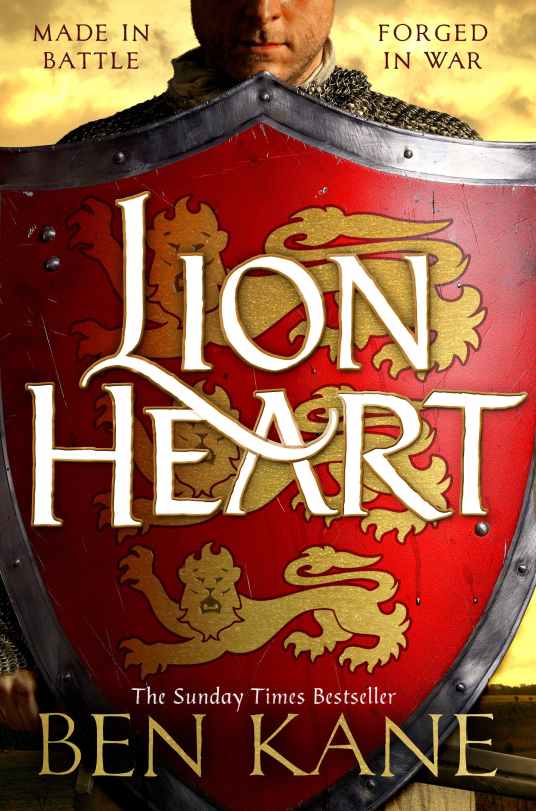
Lionheart Cover

Publisher: Orion (Trade Paperback – 14 May 2020)

Series: Lionheart – Book One

Length: 381 pages

My Rating: 4.5 out of 5 stars

Amazon

Honour, glory, loyalty and war! Bestselling historical fiction author Ben Kane takes the reader on a medieval adventure alongside a young King Richard the Lionheart, with his latest epic novel, Lionheart.

I have been on a real roll with some great historical fiction novels in the last couple of weeks, having absolutely loved The Grove of the Caesars by Lindsey Davis and The Viennese Girl by Jenny Lecoat, so when I got a copy of Lionheart by Ben Kane I jumped at the chance to read it. Ben Kane is one of the top historical fiction authors at the moment, having produced a number of fantastic books set in ancient Rome, including The Forgotten Legion trilogy, the Hannibal series and the Eagles of Rome series. I have read several of Kane’s previous novels, and I have always found them to be exciting and compelling books with loads of historical detail. This latest release, Lionheart, is Kane’s first novel that does not involve Rome in any way whatsoever, and it acts as the start of a brand new series that will follow the life of one of England’s most iconic kings.

England, 1179. Henry II rules a vast empire, made up of England, Wales, Ireland, Normandy, Brittany and Aquitaine, controlling all with an iron fist, with his only blind spot being his four rebellious sons. Ferdia is minor Irish nobleman, taken as a hostage by the English to ensure his rebellious family’s cooperation and loyalty. Given the name Rufus by his captors, he spends years languishing in an English castle, before a chance encounter with Henry’s second oldest son, Richard, will change everything.

Managing to save Richard’s life, Rufus is taken in as his squire. Drawn to the prince’s natural charisma, bravery and dedication to his men, Rufus gladly swears his loyalty to Richard, and boldly follows him to war as he attempts to subdue the rebellious lords of Aquitaine. The battles and sieges that follow will make Richard’s reputation as a warrior and leader, and Rufus is able to prove his worth beside him, despite the actions of his bitter rival Robert FitzAldelm.

However, while Richard seeks honour and glory in Aquitaine, his ambitious brothers grow jealous of his success and begin to plot against him. Lending their support to the rebels, their actions lead to a crisis that could split the kingdom in two and deliver it to the King of France. As Richard finds himself surrounded by traitors and plotters, he makes his own bid for the throne. It is time for the Lionheart to rise?

Lionheart turned out to be an amazing and exhilarating book that combines intriguing moments from history with a compelling and action-packed tale of honour, loyalty and desire for power. Kane crafts together an impressive and exciting narrative that follows the early life of King Richard the Lionheart as he fights in some of his earliest battles and deals with the various members of his family. The story is primarily told from the point of view of the fictional character Rufus, as he follows Richard through his various adventures. Not only does this allow the reader to see some of the key events of Richard’s life, but it also provides an intriguing central narrative around Rufus, as he attempts to find his place in the world after being taken from his family, while also battling his ruthless opponent, Robert FitzAldelm, another fictional character, who serves as a wonderful foil to the protagonist. Lionheart’s story contained an excellent blend of action, intrigue, compelling historical elements and fantastic interactions between the various characters, which makes it extremely easy to get lost in this book.

The absolute highlight of this novel has to be the enjoyable historical backdrop of Richard’s life that the entire story is set to. Lionheart takes place between 1179 and 1189, which is a really intriguing period of history. The book does not examine Richard and his brothers’ joint rebellion against their father (although it is mentioned several times), but it does focus on the turbulent familiar battles between Richard and his family. During this period, Richard had to put down an extended rebellion in Aquitaine, fighting first against the plots of his brothers and later against the whims of his reluctant father as he attempts to win the throne. Kane does an outstanding job exploring all these chaotic historical events in great detail, and it was extremely fascinating to learn about all the battles and politics that occurred. It also ensures that the book’s plot, which was set all around these events, proved to be rather exciting, as the protagonist watches Richard weave through all the battles and political intrigue. I also have to say that I was impressed with the shear amount of historical detail that Kane installed into every aspect of the plot. Not only has the author made use of a vast cast of historical figures throughout the story (helpfully recorded in a character list at the front of the book), but every line of this book is filled with details about period culture, dress, day-to-day life, battle and the life of a squire and knight. Kane has clearly done an incredible amount of research for this book, and I really loved the authenticity that this added to the story, making for a story that is both captivating and enlightening, just like all great historical fiction novels should be.

Another great aspect of the story is the way that Kane also spent time exploring the life of William Marshal. Marshal, a real-life historical figure of some significance, serves as the book’s secondary point-of-view character, and a number of chapters are told from his perspective (in the third person, rather than the first-person perspective used for all of Rufus’s chapters). This proves to be a clever move on Kane’s part for a number of reasons; primarily because William Marshal is such an absolutely fascinating person. Marshal was a successful and well-known knight, famous for his loyalty, honour and martial prowess, and he was widely considered the pinnacle of knightly virtue in Europe at the time. Kane spends a lot of time exploring the character of Marshal and portrays him in a more ruthless and opportunistic light, which worked rather well for this realistic and compelling story. Marshal is also an incredible useful point-of-view character, as for the entirety of this book he was either in the service of one of Richard’s brothers or his father the king. This provided the reader with a viewpoint into the camp of Richard’s political opponents, which added to the tension of the story, as the reader became privy to information that the protagonists did not know. In addition, it also allowed for an intriguing contrast between Richard and the other members of his family, as Marshal considered the deficits of his lords against those of Richard, who he held a great respect for. Marshal also finds his loyalty tested several times, as his master’s plots threaten to weaken the kingdom, and he must decide whether it is more dishonourable to disobey his liege or to allow them to act unopposed in their own worst interests. I am extremely glad that Kane decided to use Marshal as a secondary protagonist, and I look forward to seeing more of him in the future books.

I also have to mention all the awesome action sequences that Kane fits in throughout Lionheart. Due to the historical circumstances in which this book is set, there are a large number of battles, fights and sieges, which our protagonist often finds himself in the middle of. I really enjoyed seeing all the cool fight sequences that occurred throughout the plot and Kane has a real flair for historical action scenes, bringing them to live in exciting detail. Definitely a great book for those lovers of medieval battles and fights, this book is guaranteed to slake anyone’s desire for action and adventure.

Lionheart is an excellent new novel from Ben Kane, who thrives in a non-Roman history setting by bring together an impressive story about a young Richard the Lionheart. I had an amazing time reading this book, and I loved the exciting narrative and the fascinating historical elements. Lionheart serves as an awesome first book in a new series from Kane, and the second novel, tentatively titled Lionheart: Crusade, should prove to be a brilliant read for next year. Until then, Lionheart comes highly recommended, and is really worth checking out.

Amazon