Serpentine by Jonathan Kellerman

Serpentine Cover

Publisher: Random House Audio (Audiobook – 2 February 2021)

Series: Alex Delaware – Book 36

Length: 12 hours and 10 minutes

My Rating: 4.5 out of 5 stars

Amazon     Book Depository

One of the leading stars of the murder mystery genre, Jonathan Kellerman, returns with the latest entry in his long-running Alex Delaware series, Serpentine.

For years LAPD detective Lieutenant Milo Sturgis has tended to do things his own way in the department.  Thanks to his impressive solve rate and his unique and successful partnership with his best friend, psychologist Alex Delaware, Milo has been able to crack some of the toughest murder cases that the department has come up across while managing to avoid the lows of office politics.  However, not even Milo is able to withstand pressure from the very top of the LAPD, so when an extremely wealthy businesswoman wants help from the department’s best, Milo is forced to work an impossible case.

The businesswoman, young entrepreneur Eleanor Barker, wants closure over the death of her mother, a mysterious woman who was found dead decades ago in a torched Cadillac with a bullet in her head.  Despite their reservations over the way the case was assigned to them, Milo is determined to do the best job possible, and with Alex’s help he begins his investigation.  However, with no evidence, no case file, no witnesses and no real idea about their victim’s past or origins, their chances of success seem slim.

Forced to look for answers in some unusual places, Milo and Alex are slowly able to pull together a picture of the events surrounding the death of Eleanor’s mother.  However, the more they dig, the more unusual coincidences begin to arise as what they discover deviates massively from the established facts.  It soon becomes apparent that there is far more to this case than was initially believed and that someone out there is determined to stop any investigation into this brutal murder.  Can Milo and Alex solve their most difficult case yet, or will a cunning killer continue to remain free?

Well, that was a pretty cool murder mystery!  Serpentine is the 36th entry in Jonathan Kellerman’s amazing Alex Delaware series, which has been running since 1985.  I am a relative newcomer to Kellerman’s work, having only stumbled onto series when I read his 34th book, The Wedding Guest, back in 2019.  I had an excellent time reading The Wedding Guest and the loved the authors distinctive writing style and ability to weave together a great mystery.  I enjoyed it so much I ended up checking out Kellerman’s next book, the 2020 release The Museum of Desire, which contained an impressive murder case and ended up being another amazing read.  As a result, I have been very keen to check out Kellerman’s latest book for a while now and I have to say that I was very pleased with how awesome Serpentine turned out to be.

I ended up absolutely powering through this latest Alex Delaware novel, especially once I got hooked on its exceptional and impressive murder mystery narrative.  Kellerman came up with an amazing narrative for this novel that proved to be particularly captivating right off the bat as his two established protagonists become embroiled in a seemingly impossible-to-solve case.  Forced to dig around in the past, the protagonists slowly determine the events surrounding the old murder via odd bits of evidence and a range of interesting witnesses.  While the investigative process is quite fun to see, Kellerman has also thrown a ton of fantastic twists into the story, ensuring that the reader has no idea how the mystery is going to unfold.  I love some of the unique directions that the author took this compelling case and I was impressed with some of the clever reveals that he chucked in, especially as they were set up beautifully and added some fantastic surprises to the plot.  While I did think that the book concluded rather rapidly and some storylines could have been wrapped up a little better, this was still an exceptional narrative which I deeply enjoyed.

Easily my favourite thing about the Alex Delaware novels is the great way that the author portrays the ongoing investigation.  Kellerman always ensures that his investigations extremely realistic and as a result his protagonists always engage in a methodical examination of the sources, slowly gaining the information they need and building up connections and discovering any inconsistencies.  A lot of their evidence is obtained through discussions with potential witnesses, colleagues and experts, and there may be multiple conversations with various persons of interest to find out different nuggets of information.  This then results in the main characters throwing out theories about what potentially happened and basing their future investigative directions on the most promising clues.  This manner of investigation proves to be very different to other crime fiction novels I have read, and I really enjoy this more realistic portrayal of how police could solve a difficult case, especially as the author works in time delays for evidence analysis, unreliable witnesses and colleagues, and lack of resources.  I particularly enjoyed the investigation featured within Serpentine as it forces the protagonists to solve a murder that occurred over 30 years previously.  As a result, the characters lack any sort of evidence, useful witnesses, or previous investigations to help them find the killer, and they are forced to utilise more creative methods to find information or track down anyone who has the slightest idea of who the victim was or what happened to them.  This extremely cold case was a fantastic part of Serpentine’s plot and it proved to be deeply fascinating to see how he envisioned detectives solving this sort of investigation.  I loved this realistic and methodical portrayal of a murder investigation and it really made Serpentine stand out as a fantastic crime fiction novel.

I also must highlight the outstanding two lead characters who form the heart of Serpentine, and indeed the entire series, titular protagonist Alex Delaware and LAPD detective Milo Sturgis.  Alex and Milo are a fantastic pair of crime-fighting protagonists who have taken on some extremely tricky murders during their partnership.  Both characters bring a lot to the novel.  Alex is the more serious of the two.  As a clinical child psychologist with a head for mysteries, Alex can provide some intriguing insights into the minds of the victims, witnesses, and potential suspects, which provide new insight into their cases.  Milo on the other hand is the food-loving, cynical veteran cop who works the hard grind of a LAPD detective.  While I enjoy both characters, Milo is easily my favourite due to his constant wise cracks, the author’s tasteful portrayal of the character as a homosexual LAPD lieutenant, and his somewhat maverick cop persona.  Alex is also quite fun, especially as his psychological insights have a basis in the author’s own training as a psychologist, and I liked his constant clever quips about the situations they encounter.  The real joy of these two characters, however, is the way they work together.  These two make an amazing team, especially as they have become close best friends who are able to work together perfectly in sync.  I loved the way these two were able to work together to solve crimes, and their innate teamwork and friendship is a fantastic centre of the book’s story.  I also enjoyed the way the two characters play off each other throughout the story, as their personalities and unique sense of humour really gel together well and produce a lot of fun jokes and moments.  Overall, I had an amazing time following Alex and Milo through another excellent book, and I cannot wait to see what crazy case they encounter next time.

To check out Serpentine I grabbed a copy of its audiobook format, which was narrated by John Rubinstein.  This audiobook, which has a run time of just over 12 hours, ended up being an amazing way to enjoy this fantastic book and I powered through it in no time at all, especially once I got caught up in the outstanding mystery.  Rubinstein, whose has previously lent his voice to a great collection of crime fiction novels, including previous Alex Delaware audiobooks, did an outstanding job narrating this novel, and I felt that he moved the story along at a fast and enjoyable pace which really captured the audience’s attention.  I also rather enjoyed the various voices that he utilised throughout Serpentine, as each character was given their own unique voice, which I felt fit their respective personality perfectly.  I really loved the voice that Rubinstein uses for Milo in particular, as it just screams veteran cop, and it really helped enhance how much I enjoyed this already awesome character.  As a result, I would strongly recommended Serpentine’s audiobook to anyone interested in checking out this book and listeners are in for a good time with this format.

Serpentine by Jonathan Kellerman is another impressive and clever addition to the great Alex Delaware series.  This latest book features a complex and captivating murder mystery investigation which forces Kellerman’s fantastic and lovable protagonists to dive back into the past and solve an intriguing cold case.  Full of several outstanding twists around Kellerman’s latest compelling case, Serpentine has an incredible story and readers are going to have an amazing time unwinding this great mystery.  I deeply enjoyed this fantastic novel, and this might be the best Alex Delaware novel I have read so far.  Highly recommended.
Amazon     Book Depository

Quick Review – The Art of Death by David Fennell

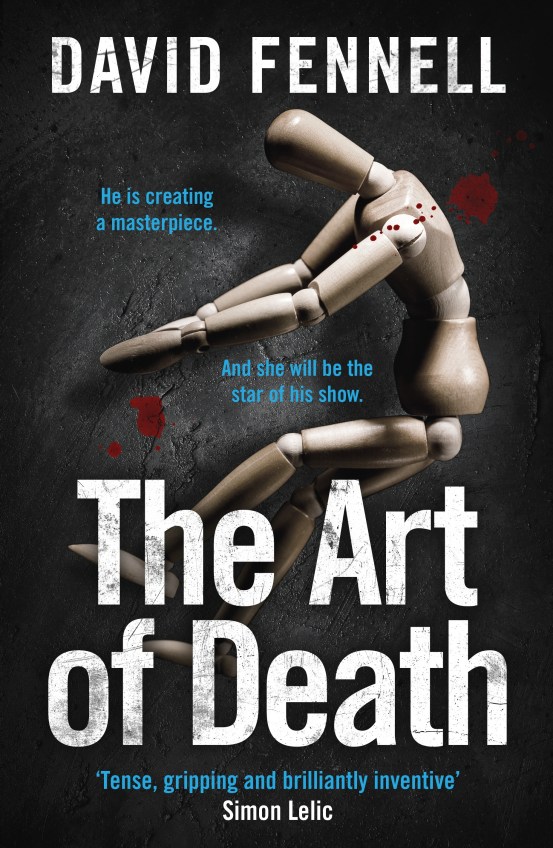
The Art of Death Cover

Publisher: Zaffre (Trade Paperback – 4 February 2021)

Series: Standalone/Book One

Length: 422 pages

My Rating: 4 out of 5 stars

Amazon     Book Depository

2021 is definitely proving to be a great year for debut novels and one of the most intriguing examples of this is the fantastic murder mystery, The Art of Death by David Fennell.

Synopsis:

Death is an art, and he is the master . . .

Three glass cabinets appear in London’s Trafalgar Square containing a gruesome art installation: the floating corpses of three homeless men. Shock turns to horror when it becomes clear that the bodies are real.

The cabinets are traced to @nonymous – an underground artist shrouded in mystery who makes a chilling promise: MORE WILL FOLLOW.

Eighteen years ago, Detective Inspector Grace Archer escaped a notorious serial killer. Now, she and her caustic DS, Harry Quinn, must hunt down another.

As more bodies appear at London landmarks and murders are livestreamed on social media, their search for @nonymous becomes a desperate race against time. But what Archer doesn’t know is that the killer is watching their every move – and he has his sights firmly set on her . . .

He is creating a masterpiece. And she will be the star of his show.

This first book from Fennell ended up being quite an enjoyable and intriguing read as this new author has come up with a compelling and dark murder mystery with some great surprises to it.  I was lucky enough to receive a copy of this book a few weeks ago and became quite intrigued by the plot synopsis and the extremely cool cover art by Nick Stearn.  I had a fun time getting through it, thanks to the captivating group of characters and clever mystery it contained, and this ended up being a fantastic novel to check out.

At the centre of this fantastic debut novel is a rather good mystery that revolves around a callous and inventively deranged serial killer who kidnaps and kills people in order to feature them in his art show.  The Art of Death’s story follows this case from the discovery of the first three bodies, contained in a gruesome art display in Trafalgar Square, to its epic conclusion after the police engage in a lengthy investigation.  This proved to be a complex and exciting investigation, as the police characters are constantly one step behind the brilliant and sadistic killer as he works to finish off his masterpiece.  This results in a thrilling storyline as the police are forced to rush around and try to save the potential victims once the killer starts broadcasting their upcoming deaths online.  Fennell makes excellent use of multiple character perspectives to show off the various sides of this case, whether it be the police investigation or the killer’s sick plans as they kidnap several people from around London with the help of social media.  Fennell also adds an extra layer to the story when the killer starts to deliberately target and mess with the protagonist of the story in an attempt to draw them into his web.  All of this leads to a fantastic and intense conclusion, and I loved some of the twists that Fennell introduced into the story, including some misleading suspects and compelling circumstances.  I had an awesome time getting to the bottom of this dark and disturbing case and I thought that this was a great first mystery from this new author.

The best parts of this great novel were some of the distinctive and damaged characters featured throughout.  The most notable are probably the protagonist, Detective Inspector Grace Archer and the antagonist, the serial killer/artist known as @nonymous.  I thought that the character of Archer was an impressive cop protagonist, a no-nonsense, recently promoted female DI who takes the lead in the case over less capable colleagues.  Archer proves to be a great central character of this book, and I enjoyed seeing her attempt to balance this trying case with her own complex personal life and the distain of several of her colleagues who she has previously alienated with a police corruption case.  Fennell also works in a compelling angle which reveals that Archer was herself a survivor of a serial killer when she was younger, something which still haunts her to this day.  This proved to be an intriguing facet of Archer’s character and one that impacts her role in the main case, although I think that it could have been worked into the main story a little better.

I also very much enjoyed the main antagonist, @nonymous, and Fennell did a fantastic job coming up with a vile and irredeemable killer.  @nonymous is essentially an evil, murderous Banksy who stalks his prey through social media and live-streams his killings as a form of art.  I found myself really disliking this character due to his ego, his belief in his artistic “genius” and the way he ruthlessly preys on people with low esteem, especially as you see several terrible sequences from his point of view.  However, this worked well in the context of the book, as the reader cannot wait to see him fail, and it really amps up the anticipation in the story.  I also appreciated the way in which the killer becomes obsessed with the protagonist and it adds a great additional edge to their story.  I was able to predict who the killer was early in the novel, despite a couple of clever attempts from Fennell to throw the reader off the trail.  Still, the author sets the reveal up really well and final confrontation between @nonymous and the protagonists is thrilling and suspenseful.  Overall, this was an amazing use of characters, and I appreciate the complex protagonist and killer that the author created.

The Art of Death is an awesome debut murder mystery from new author David Fennell which I had a fantastic time reading.  Thanks to this book’s compelling mystery and clever characters readers will quickly become engrossed in the fantastic story and will have fun seeing how the case comes to an end.  I look forward to seeing what Fennell comes up with next, especially if he reuses the intriguing protagonist introduced in his amazing debut.

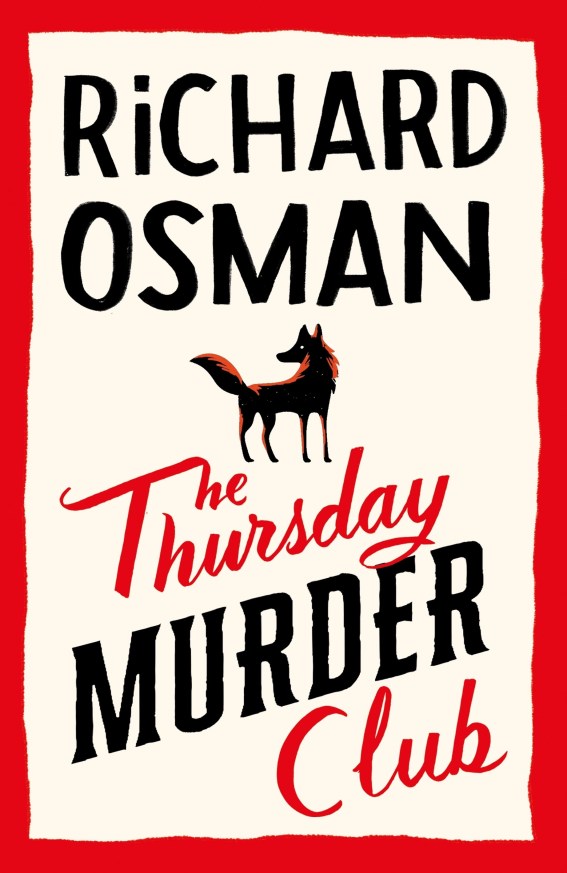
The Thursday Murder Club by Richard Osman

The Thursday Murder Club Cover

Publisher: Penguin Audio (Audiobook – 22 September 2020)

Series: Thursday Murder Club – Book One

Length: 12 hours and 25 minutes

My Rating: 5 out of 5 stars

Amazon

British comedian and television personality Richard Osman presents one of the best debut novels of 2020 with The Thursday Murder Club, a clever and hilarious murder mystery novel that was an absolute treat to read.

Welcome to Coopers Chase, a luxury retirement estate near the town of Fairhaven where the elderly can relax and enjoy their final years in peace, quiet and good company.  But for four enterprising septuagenarians, Elizabeth, Joyce, Ibrahim and Ron, retirement also offers them a bold opportunity for some excitement and adventure as the Thursday Murder Club.  Meeting up each Thursday in the Jigsaw Room, these four friends attempt to solve cold cases forgotten by the police.  While it may seem like a harmless hobby, these retirees are thrilled by their amateur investigations and welcome the chance to bring a little justice in the world.  However, when a local property developer with a dodgy past is brutally murdered with a mysterious photograph left next to his body, the Thursday Murder Club jump at the chance to investigate a real live case.

Thanks to a lifetime of connections, skills and intuition, the members of the Thursday Murder Club are able to quickly position themselves in the middle of the burgeoning case, much to the frustration of the local police.  Using every unorthodox and somewhat unethical trick at their disposal, the club members gain vital information about the murder.  However, when a second person is poisoned right in front of them, the club soon begin to realise how high the stakes are.  A killer is stalking Coopers Chase and they will do anything to protect their secret.  Can the Thursday Murder Club stop them before it is too late, or will their first real mystery be their last?

Well, that was exceedingly delightful.  Osman is a fantastic British comedian who has been in a number of great British television programs (we’re big fans of Pointless), and, like many celebrities, he decided to have a go at writing his own novel.  I have to admit that when I first heard that Osman was writing a crime fiction book, I was intrigued but I did not initially plan to read it.  However, after hearing some positive buzz from other reviewers and being in the mood for something a little different I decided to check it out, and boy was I glad that I did!  The Thursday Murder Club turned out to be an exceptional read which blew me away with this incredible and unique crime fiction story.  Osman has come up with something special with this book, and I had an outstanding time listening to it and exploring the fun story, unique characters, and clever depictions of the elderly of Britain.  This is easily one of my favourite debuts of 2020 and it gets a full five stars from me.

Osman has come up with an elaborate and entertaining story for The Thursday Murder Club that combines an excellent murder mystery with large amounts of brilliant humour and several amazing and tragic moments of drama.  The author makes great use of multiple character perspectives to tell his clever story, and the reader is soon wrapped up in a number of different personal tales that all tie into the murders that form the centre of this book.  While The Thursday Murder Club is a little slow at the start, it does not take long for the story to get going, and once the first body drops the reader is firmly entranced and cannot wait to see where the author is going next.  There are so many great elements associated with this book, and you are guaranteed to have an outstanding time getting through The Thursday Murder Club.

At the centre of The Thursday Murder Club’s narrative lies a compelling and intriguing murder mystery that follows an intense case around the Coopers Chase retirement village.  Osman has weaved together a pretty impressive murder mystery here, with two disreputable people killed in quick succession in apparently connected killings, which prompts the members of the Thursday Murder Club to get involved.  Watching these characters investigate proved to be extremely fascinating and entertaining, especially as they employ some much more unique and unusual methods to get the answers they are looking for.  Osman pairs this unorthodox search for the killer with the official investigation being conducted by the police, and the two different methodologies make for a good contrast, especially when they both get some extremely different results.  The two murder cases go in some extremely compelling and clever directions, and Osman has come up with a number of impressive twists and misleading suspects to deflect from the real culprits.  The conclusions of the cases were really good; I loved how the entirety of the mystery came together and how the various crimes were connected.  Osman adds in lot of foreshadowing for the various twists featured within The Thursday Murder Club, but some of the results were still pleasantly unexpected.  I was able to predict one of the major twists of the book in advance, which allowed me to work out who a killer was and why they were doing it, but I did not see certain other twists and reveals coming.  I really love it when a mystery can shock and surprise me and I think that The Thursday Murder Club was one of the best murder mystery novels I read all year.

An exceptional highlight of The Thursday Murder Club is the excellent characters from whose eyes we see the story unfold.  The Thursday Murder Club is made up of four unusual friends who make for very fun central protagonists.  All four members of the Thursday Murder Club are entertaining and complex characters in their own right and who each add a lot to the story.  Osman spends a great deal of time exploring each of these characters, and the reader soon becomes intimately familiar with their lives while also becoming enamoured with their intriguing personalities.  The main character of the book is probably Elizabeth, the founder of the Thursday Murder Club and its apparent leader.  Elizabeth is extremely determined, and it is strongly hinted throughout the book that she was formerly a rather successful spy.  Described by one of the other characters as being essentially Marlon Brando in The Godfather, Elizabeth is the driving force behind the club’s investigation into the murders around Coopers Chase, especially with her innumerable contacts and natural intuition.  Elizabeth has a very strong personality, and it is fantastic to see her go about her business, intimidating and outmanoeuvring everyone she encounters with practiced ease.  Despite this hard, clever exterior, Elizabeth has a number of emotional vulnerabilities, including an ailing husband and a comatose best friend, which Osman explores throughout the novel.  These vulnerabilities help to drive Elizabeth throughout the book, and she becomes quite a complex character as a result.

The other female member of the Thursday Murder Club is Joyce, a former nurse.  Joyce is a great character who becomes an invaluable part of the investigation.  Appearing to be mostly quiet and somewhat placid, Joyce is actually a deeply intelligent person who uses her mild and kind personality to get people to do what she wants.  As the newest member of the club, Joyce provides the reader with an outsider’s view of the other major characters, and you get an interesting glimpse of how the investigation is progressing as her point-of-view chapters are written in a fun journal format that is unique to her.  Aside from Elizabeth, Joyce probably gets the most character assessment and development in The Thursday Murder Club, especially as some of her personal relationships become key parts of the plot, and she proves to be a particularly intriguing character as a result.

The other members of the Thursday Murder Club are Ibrahim and Ron, two very different people who are actually the best of friends.  Ibrahim is a particularly pleasant man, a former psychologist, who is nice and sociable to everyone he meets and who serves as the heart and soul of the team.  Out of all the main characters in this book I think that Ibrahim got the least amount of development, which was a shame considering how entertaining he proved to be.  I hope he gets more of a storyline in the future entries of this series and I look forward to seeing how Osman expands this character out.  Ron, on the other hand, is the complete opposite of Ibrahim.  A famous former union activist, Ron enjoys the spotlight and revels in fighting for lost causes against authority figures.  Ron is the hot-headed member of the group and he has a personal stake in the investigation when his son becomes a prime suspect for the police.  Despite his rough and impulsive attitude, Ron fits in well with the rest of the club and is a keen investigator, mainly because of the way he refuses to believe anything anyone else tells him.  All four of these main characters are exceptionally well written, and I really enjoyed the way that they played off each other and used their unique talents to solve the case.

This novel also focuses on two police officers, Donna and Chris, who are leading the official investigation into the murders and who find themselves working with the members of the Thursday Murder Club.  Donna is a young rookie cop who has transferred over from the London Police and now finds herself bored to death as a member of a small town force.  Thanks to the manipulations of Elizabeth, she finds herself assigned to the case, which revitalises her and helps address some of her issues and concerns from her past.  Donna proves to be a fun character to follow, especially as she is the only younger person who sees through the members of the Thursday Murder Club and doesn’t fall for their antics.  She also has a fun partnership with Chris, the senior officer investigating the case, and the two swiftly form a connection throughout the story.  Chris, despite being a clever and experienced detective, is a bit of a sad-sack who finds himself stuck in a rut.  This fresh case also reinvigorates Chris, and he starts to fall out of his bad habits with Donna’s help.  However, unlike Donna, Chris is a lot more susceptible to the charms of the Thursday Murder Club, and it is extremely entertaining to see him get manipulated for a good part of the novel.  These two police characters get a fair bit of attention throughout the novel, and their official investigation nicely complements the unofficial one being run by the Thursday Murder Club, with the divergent information they receive coming together perfectly in the final results.  I also quite enjoyed the friendship that forms between Donna and Chris, as it allows both of them to grow and has a very nice development at the end which I thought was rather sweet.

Osman also creates a bevy of distinctive and entertaining side characters, many of whom have a connection to the crime or are a potential suspect.  This includes all the residents of the retirement village, which is filled with unique personalities with lifetimes of secrets.  Osman explores several of these great characters throughout the course of the book, providing some rich backstory and intriguing motivations for their potential involvement.  I personally enjoyed the character of Bogdan, a relatively young Polish immigrant who works as a labourer for the local property developers and who finds himself involved in the case after finding a body.  Bogdan forms a fantastic friendship with Elizabeth and her husband throughout the book, and I really enjoyed his guarded personality and shrewd intelligence, which proves to be an excellent match for the secretive Elizabeth.  I also have to highlight the two major murder victims.  Both of these victims get a few scenes early on in the novel before they are killed, and Osman sets them up as particularly outrageous and unlikeable people.  While this does ensure that the readers are not too cut up when they end up dead, it does mean that there are a whole of suspects when it comes to their murders, and I liked how that added to the case.  All of the characters featured in The Thursday Murder Club were a lot of fun and I had an amazing time seeing how each of their individual arcs unfolded and what each of them was capable of deep down.

I quite enjoyed how Osman turned The Thursday Murder Club into a fun and entertaining ode to the elderly that highlights the fact that retirees can achieve quite a bit and have a lot to offer to the world.  I really enjoyed the author’s story idea of four senior citizens investigating a murder and it produced a truly entertaining and enjoyable read.  Some of The Thursday Murder Club’s funniest moments revolved around the four protagonists manipulating or swindling the younger characters in the book to get what they want, whether it be information on the case or a confession about certain illegal actions.  The way in which they go about influencing the younger people they encounter is very entertaining, as they mostly utilise the classic trick of appearing helpless and innocent, while in reality they are controlling the entire situation.  Some of their methods will be very familiar to any reader with an elderly grandparent or parent, and I personally laughed my head off at one scene where one younger character is slowly worn down through a unique interrogation method involving crowded chairs, friendly company, an overflowing mug of tea and crumbly cake.  Watching the veteran police characters slowly work out how and why they are being manipulated was extremely funny, and by the end of the book they are noticeably more wary about dealing with the members of the Thursday Murder Club.  As this is a book about senior citizens, there are naturally a number of jokes about growing old, including entertaining discussions about their thoughts on today’s society and several depictions of them trying and failing to work modern technology.  While most of the discussion about the elderly is light-hearted and inspiring, it does get quite sad in places.  There are a number of scenes that focus on the debilitating impacts of aging, with each of the protagonists witnessing someone close to them starting to fade for one reason or another, resulting in several deep sequences when they consider their own mortality or frailty.  There are also a number of extremely tragic character moments involving age, and you can’t help but feel a little heartbroken in several places thanks to Osman’s excellent writing.  This adds some memorable and necessary drama to the overall narrative and it really helps to turn The Thursday Murder Club into a much more captivating read.  Overall, I think that Osman captured the issues surrounding aging extremely well, and I very much enjoyed his depictions of these badass septuagenarians outsmarting everyone they meet.

I also liked how Osman went out of his way to make his debut novel exceedingly British.  Everything about this book screams “British” to the reader, from the way the characters, act, talk and interact with each other, to the classic, subtle humour that is featured throughout.  Osman also includes a ton of references to various cultural, social and political elements of the country, with the characters discussing or reminiscing about everything from their favourite foods, television shows, bands, locations, historical experiences (Ron, for example, has some thoughts on Thatcher) and various other aspects of day-to-day life.  Due to the way that British culture funnels down into Australia, I had a decent understanding of most of the references that Osman made, although I imagine that some readers could get a little offput by the many references to aspects of the culture they are unfamiliar.  That being said I found the constant discussion about everything British to be exceedingly fun, and I really appreciated the way in which the author made a truly British book.

In order to enjoy this fantastic book I decided to grab a copy of the audiobook version of The Thursday Murder Club which was narrated by actress Lesley Manville.  The Thursday Murder Club audiobook has a run time of 12 hours and 25 minutes, and I got through it rather quickly, especially once I become wrapped up in the fun and captivating mystery.  I found myself really enjoying this excellent audiobook version of this novel and I think that having the events of the book narrated to me helped me follow the plot more closely and connect to the characters more.  I do have to admit that I was a tad disappointed that Osman did not narrate his own audiobook, but this disappointment quickly faded once I experienced Manville’s excellent narration.  Manville’s voice and narration style really fit into the unique tone of The Thursday Murder Club, and she was able to convey all of the novel’s humour, mystery and drama extremely well.  I also absolutely loved the great voices that Manville came up with for the characters featured within the novel, and I felt that she was able really accentuate the various personalities that made up the story, as well as come up with several different accents.  While Osman doesn’t narrate this audiobook, there is an interview between Osman and Marian Keyes featured at the end of it, in which Osman details how he came up with the idea for his book and why he wrote it, which I am sure many people will find fascinating.  I ended up having a wonderful time listening to this version of The Thursday Murder Club, and it ended up being one of my favourite audiobooks of 2020.

The Thursday Murder Club by Richard Osman is an exceptional and masterful crime fiction novel that is easily one of the best debuts of 2020.  Osman has crafted together an outstanding read that follows some entertaining and compelling protagonists as they investigate a complex murder mystery in a very fun way.  I had an amazing time listening to this fantastic novel and I would strongly recommend this book to anyone interested in a fun and intriguing read.  This was an absolute triumph from Osman, and I am extremely keen to see what he writes next.  I note that a sequel to The Thursday Murder Club is planned for next year and I cannot wait to get my hands on a copy.

Make sure to also check out my review for the sequel novel, The Man Who Died Twice.

Amazon

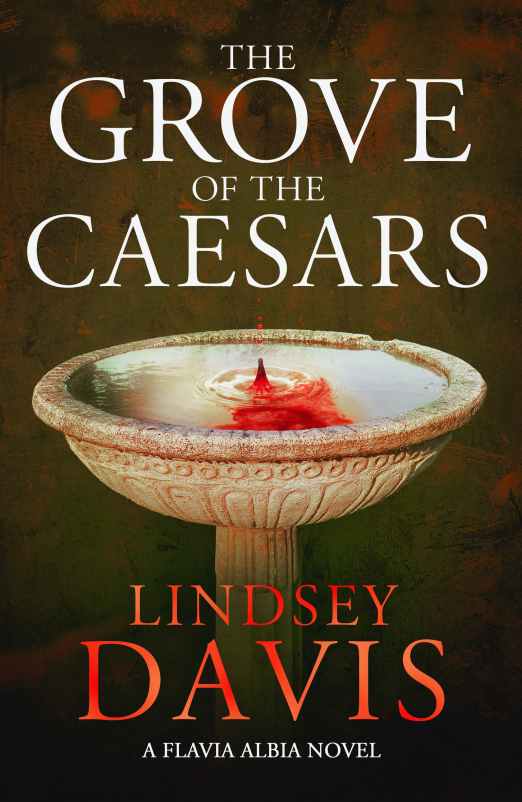
The Grove of the Caesars by Lindsey Davis

9781529374278

Publisher: Hodder & Stoughton (Trade Paperback – 2 April 2020)

Series: Flavia Albia – Book Eight

Length: 399 pages

My Rating: 5 out of 5 stars

Amazon

Get ready for an outstanding historical murder mystery as one of my favourite authors, Lindsey Davis, returns with another book in her amazing Flavia Albia series, The Grove of the Caesars.

“Don’t go to the Grove.”

Rome, 89 AD. Flavia Albia, professional informer and all-around busy body, is still adjusting to domestic life with her new husband. When he is called away for a family emergency, Flavia takes up the reins of his construction business and begins to supervise several of their projects, especially a demolition and construction job within the sprawling gardens outside the city that Caesar long ago gifted to the people of Rome.

Ignoring the subtle warnings of those men familiar with the gardens to stay away from them and their accompanying sacred grove, Flavia visits the worksite, where she finds a series of mysterious scrolls buried in a cave. Why has someone buried a mass of scrolls from obscure Greek philosophers, and what dark secrets do the scrolls hold? Before Flavia can investigate any further, a woman is brutally murdered at a party held at the grove, and two of Flavia’s slaves go missing.

It turns out that there is a killer lurking in the sacred grove; one who targets women and who has successfully avoided detection for years. With the local vigiles failing to properly investigate the crime, Flavia decides to take on the case. However, can Flavia catch a murderer clever enough to escape justice for two decades, especially once the Emperor’s sinister secret agent Karus takes over the investigation? Forced to work with Karus once again, can Flavia find justice for all the murdered women, or will she end up as the next victim of one of Rome’s most dangerous killers?

The Grove of the Caesars is a deeply compelling and highly entertaining novel that once again follows the clever and likeable protagonist, Flavia Albia, as she investigates a gruesome murder in the heart of ancient Rome. This is the eighth book in the excellent Flavia Albia series, which acts as a sequel to the 20-book long Marcus Didius Falco series of historical murder mystery novels. I have been a major fan of the Flavia Albia books for years, having read and reviewed all the previous novels in the series as soon as they came out (make sure to check out my reviews for the previous three books, The Third Nero, Pandora’s Boy and A Capitol Death). All of Davis’s previous novels have been extremely enjoyable, and I have been looking forward to reading The Grove of the Caesars for some time now, and once again Davis did not disappoint. The Grove of the Caesars is another outstanding read that successfully combines together a great murder mystery storyline with a detailed historical setting and engaging central protagonist to produce a captivating narrative that I ended up reading in very short order.

At the centre of this amazing novel is a captivating and dark mystery storyline that sets the protagonist against a cunning and vicious serial killer. The Grove of the Caesars actually has two mysteries contained within it, one involving buried scrolls that the protagonist finds hidden within a cave, and the more pressing case of the murderer within the gardens. Flavia ends up working on both cases simultaneously, and the two mysteries wrap together quite well to produce a great storyline, especially when also combined with some of the other plot elements that Davis throws into it. Both of these mysteries are really clever, and the author makes sure to fill the book with all manner of alternative suspects, intriguing swerves and false leads to keep the reader guessing right up to the end. There were a number of fantastic elements to these mysteries, from the impressive way that they were investigated to the stunning developments and the great conclusions both of them had, including some surprising revelations that came out at the end of the case of the buried scrolls. Davis once again makes sure to portray the investigation in a very modern manner, so that this case felt more like a contemporary mystery novel at times, which I thought worked really well with her enjoyable protagonist and which fit in with the very modern way that the author portrays her historical setting. I was a bit surprised about how dark this book got at times, as Davis, usually has a bit of a lighter tone with her writing, even though they follow murder mysteries. However, the central case of the serial killings was pretty gruesome at times as the antagonist, who displayed a number of characteristics associated with more modern serial killers, did some rather horrible things to his various victims. While it did give this book a bit of a stronger tone at times, I felt that having such an evil antagonist really helped to drag me into the story, as I looked forward to seeing him get caught, and this was overall a really excellent mystery storyline.

Another key aspect of the story is the detailed and compelling historical setting of ancient Rome. Historical Rome always has such potential as a setting, and Davis always does a fantastic job of bringing the city to life in all its chaotic glory, while also making all the inhabitants seem a lot more modern in their actions and attitudes. The Grove of the Caesars was no different, and I really enjoyed seeing the fun way that Davis melds her captivating mystery with this cool setting to create a great story. However, Davis also makes sure to set this story apart by her exploration of one of ancient Rome’s most fascinating features, Caesar’s gardens. The gardens are a sprawling set of sacred groves, forested areas, winding paths, statues and other intriguing features that were originally commissioned for Caesar himself and then gifted to the city after his death. Davis does an amazing job exploring this historically impressive garden, including its location, features and history, and I had a fantastic time learning more about it. It also serves as a really distinctive and compelling setting for The Grove of the Caesars’s story, and I enjoyed seeing the protagonist explore it trying to find hints and clues to the various crimes. I also enjoyed the more sinister air Davis gave the gardens once the reader knows that there is a killer stalking them, especially at night, and which helps to add a bit of tension to the story in the scenes where the protagonists is walking in the gardens alone.

One of the best parts of this book has to be the fun central protagonist, Flavia Albia, who is one of my favourite main characters in fiction at the moment. Flavia serves as The Grove of the Caesars’s sole narrator and point-of-view character, and it is through her eyes that we see most of the story unfold. For the most part, Flavia is a very confident and collected individual with bundles of sass and sarcasm and an unbelievable amount of life experience and cynicism after years spent working as an informant and investigator in Rome. It is thanks to this entertaining world view that most of the book’s humour is derived, as Flavia is full of all manner of funny comments and amusing observations about the world around her. This provides a much lighter tone for most of the novel, as Flavia can be rather sarcastic and witty, even during the darkest of moments. However, in The Grove of the Caesars she does get rather angry in places, especially after witnessing so much violence against women and other helpless characters, and her rage towards the book’s primary antagonist is quite palpable at times, making for some rather dramatic scenes. I also enjoyed the way that Davis works in a large amount of the protagonist’s home and family life into the story, and it is always entertaining to see Flavia interact with her outrageous and eccentric extended family, who offer help and hindrances to her life and investigations in equal measures. I also liked how the author has continued the storyline that sees Flavia and her husband take in and adopt a variety of interesting stray characters they encounter in their cases and add them to their growing household. It was rather fun to see characters who were first introduced in prior books make an impact on this novel’s mystery, and it makes for a fun continuity. I look forward to seeing more of Flavia Albia in the future, and I cannot wait to see what crazy adventures she gets up to next time.

I also have to highlight the wildly entertaining big story moment that occurred about two-thirds of the way into the book. In her last few books, Davis has taken to include a major sequence that features Flavia finding herself in the midst of an over-the-top situation. This includes the very funny sequence in Pandora’s Boy which saw an all-out brawl between a huge group of mixed participants in a collapsing temple, or the rather outlandish chase sequence that occurred in The Third Nero, that featured legionnaires, heavy Persian cavalry, chariots and an elephant in the heart of Rome. In The Grove of the Caesars, Davis makes sure to include another of these outrageous moments, this time featuring a desperate boat chase taking place in the middle of a park, thanks to a disused maritime gladiatorial arena. This chase sequence is filled with all manner of mishap and chaotic moment, as Flavia and several other key characters take to several dilapidated boats to try and resolve the situation, which has a rather extreme ending. Needless to say, this was my favourite part of the entire book, and I found myself laughing several times as events unfolded.

Lindsey Davis has once again shown why she is one of the best authors of historical murder mysteries, as The Grove of the Caesars is a wildly entertaining and addictive read. Davis has pulled together and exceptional story, filled with two compelling mysteries, great characters and an intriguing and distinctive historical setting. I had an amazing time reading this book, and it gets a full five-star review from me. I am eagerly awaiting Davis’s next novel (apparently titled A Comedy of Terrors), and I cannot wait to get my next Flavia Albia fix, this time next year. In the meantime, make sure to check out The Grove of the Caesars if you are in the mood for an exciting and clever read.

Amazon

Rules for Perfect Murders by Peter Swanson

Rules for Perfect Murders Cover

Publisher: Faber & Faber (Trade Paperback – 3 March 2020)

Series: Standalone

Length: 272 pages

My Rating: 4.5 out of 5 stars

Amazon     Book Depository

In a mood for a complex and rather clever murder mystery? Make sure to check out Rules for Perfect Murders, the curious latest release from bestselling crime fiction author Peter Swanson.

Across the greater Boston area a series of unsolved murders have been committed. None of the deaths appear to have anything in common, except for the fact that each one bears a similarity to a famous literary murder. However, there is one other tenuous link that could tie the murders together, and FBI agent Gwen Mulvey is curious enough to meet with the owner of the Old Devils mystery bookshop, Malcolm Kershaw, to test her theory.

Years ago, Malcolm posted an article on his bookshop’s blog titled Eight Perfect Murders, detailing the eight homicides in literary fiction that he thought were the cleverest ways to kill someone and get away with it. This list features some of the most devious cases ever conceived by some of the history’s greatest mystery writers, from Agatha Christie’s The ABC Murders to Strangers on a Train by Patricia Highsmith. Now it appears that several of the killings match the unique selection of books that Malcolm listed all those years ago. Is the killer using his post as a guide for his gruesome work?

Working with Agent Mulvey, Malcolm soon discovers a link between himself and the killings, as one of the victims was a former customer of his store. Convinced that the killer is someone he knows, Malcolm attempts to find them before they finish off his list. However, not everything is as it seems, and Malcolm must come to terms with some of his darkest secrets if he is to find the killer stalking him from the shadows.

This is the sixth novel from Swanson, who debuted back in 2014 with The Girl with a Clock for a Heart. I have not previously had the pleasure of reading any of Swanson’s books before; however, I really loved the concept behind this novel, and thought it would be a fun one to check out. Rules for Perfect Murders, which was also released as Eight Perfect Murders, is an intriguing and compelling novel that presents the reader with a fantastic murder mystery while also acting as a love letter to the murder mystery genre. This turned out to be an excellent read, which I was able to power through in just over a day.

I rather enjoyed the way that Swanson wrote Rules for Perfect Murders, mainly because he emulated some of the classic murder mystery novels which he clearly loves throughout the story. The book is told in first person, from the point of view of the protagonist, Malcolm Kershaw, and it is made to represent a manuscript, recalling the events that he experienced. The story than details the investigation into the murders that are occurring in the present day, while also diving back into the protagonist’s past, while also featuring a number of examinations about elements of the protagonist’s world, including his opinion about certain mystery novels. This first-person perspective really fits the tone of the book extremely well, and Swanson did an excellent job winding the various elements of the story, including the protagonist’s flashbacks, into a tight and captivating read. The various writing methods that Swanson employs throughout the book are direct references to a number of famous mystery novels, as the fictional author of the book is inspired by them as he writes. It was really fun to see the protagonist discussing the pros and cons of things like unreliable narrators, red herrings and other elements, right when he was utilising them in his manuscript. At the same time, the way that parts of the story go down, are very similar to some classic mystery stories. All of this helps create a very unique tale, and I think that Swanson did an amazing job bringing this clever concept together.

In the midst of Swanson’s homages and descriptions of classic and great mystery novels lies a rather good murder mystery storyline, as the protagonist attempts to find out who using his blog post as a basis for the killing spree. Swanson is able to produce a thrilling and clever mystery, full of twists, false leads and intriguing motive that tie into the protagonist’s complex past. It was also rather interesting to see the killer craft modern murders out of the classic scenarios featured in the fictional Eight Perfect Murders list, especially as these elements served as a complicating factor in the investigation. I thought that the end result of the mystery was pretty satisfying, and while I was able to make some guesses about parts of the protagonist’s past, the identity of the murderer was a bit of a surprise for me. I had a fantastic time getting to the bottom of this mystery, and the compelling murders that Swanson painted did an amazing job catching my attention and interest, which ensured that I powered through Rules for Perfect Murders in short order.

In addition to utilising a number of classic murder mystery tropes and techniques in Rules for Perfect Murders, Swanson also spends considerable time discussing or analysing a number of classic and iconic murder mystery novels. Swanson really dives in and does several mini reviews of a swath of great murder mystery novels, providing what I assume are his own opinions, while also examining the book’s featured murders, the strengths and weakness of their stories, the cultural impact that they had and so much more. The main focus is on the books that appeared on the fictional Eight Perfect Murders list which is made up of such classics as The Red House Mystery by A. A. Milne, Malice Aforethought by Anthony Berkeley Cox, The A.B.C. Murders by Agatha Christie, Double Indemnity by James M. Cain, Strangers on a Train by Patricia Highsmith, The Drowner by John D. MacDonald, Deathtrap by Ira Levin and The Secret History by Donna Tartt. However, Swanson also references and discusses a bunch of other mystery novels, the plots of which or the lessons they contained often having some impact or bearing on the story. I loved this dive into each of these mystery novels, and I found it really cool that Swanson was able to insert his own opinions and obvious love from each of these books into this story.

Due to the author’s examination of all these classic novels, Rules for Perfect Murders is highly recommended for those hardcore murder mystery fans who are familiar with the books featured on the list, who will really love all the references and discussions that Swanson features throughout his novel. Those who are particularly knowledgeable about murder mystery stories will be able to guess where the story is going based on the literary clues the author leaves throughout the narrative. At the same time, Rules for Perfect Murders is also a great book for readers who are less familiar with these mystery novels. I personally have not read any of the eight books on the fictional list, although I was familiar with how some of the plots went. However, despite this lack of knowledge, I was in no way disadvantaged while reading Rules for Perfect Murders, as Swanson gives concise and knowledgeable summaries of each of the relevant books, which allowed me to follow the plot without any issues. I was able to appreciate most of the references that the author included throughout the book, and I am tempted to go out and read some of the featured books, as most of them sounded extremely interesting. I think that this examination and utilisation of classic murder mysteries works well with story Swanson came up with, and I honestly had fun learning more about these books and seeing the impact that they can have on a modern story.

It was kind of cool to read this novel from the perspective of a blogger and book reviewer, as this is novel written by a book lover, about a book lover. I found myself relating to the protagonist in a number of ways, and his observations about the joy books can bring really resonated with me. His habit of analysing the various books he reads is something many reviewers are going to appreciate, and I really liked that this novel is based around a best-of list. As someone who regularly produces top ten lists, I had a fun time with this concept, and I couldn’t help imagining what I would do in a similar situation (gasp, what if someone used my one of my lists to commit some crimes? Think about all the Star Wars themed murders that would happen!). I also had a good chuckle when the protagonist starting reminiscing about all the troubles he had creating his lists, such as leaving key books off, going back and reconsidering his choices and troubles with including entries that technically don’t belong on the list, as I have been there multiple times. This was a fun part of the book, which I rather enjoyed, although it didn’t take away from the darker tone of the book’s murder mystery and character elements.

Rules for Perfect Murders by Peter Swanson was a rather interesting and unique read that I am glad I decided to check out. Swanson crafts a fascinating and captivating tale, that not only contains a fantastic central whodunnit, but which acts as an amazing homage to the murder mystery genre. Filled with some excellent and entertaining elements, this is an outstanding read which I had a great time reading. This is a book perfect for all murder mystery fans, Swanson is definitely on my radar from now on, and I look forward to seeing what he writes next.

Amazon     Book Depository