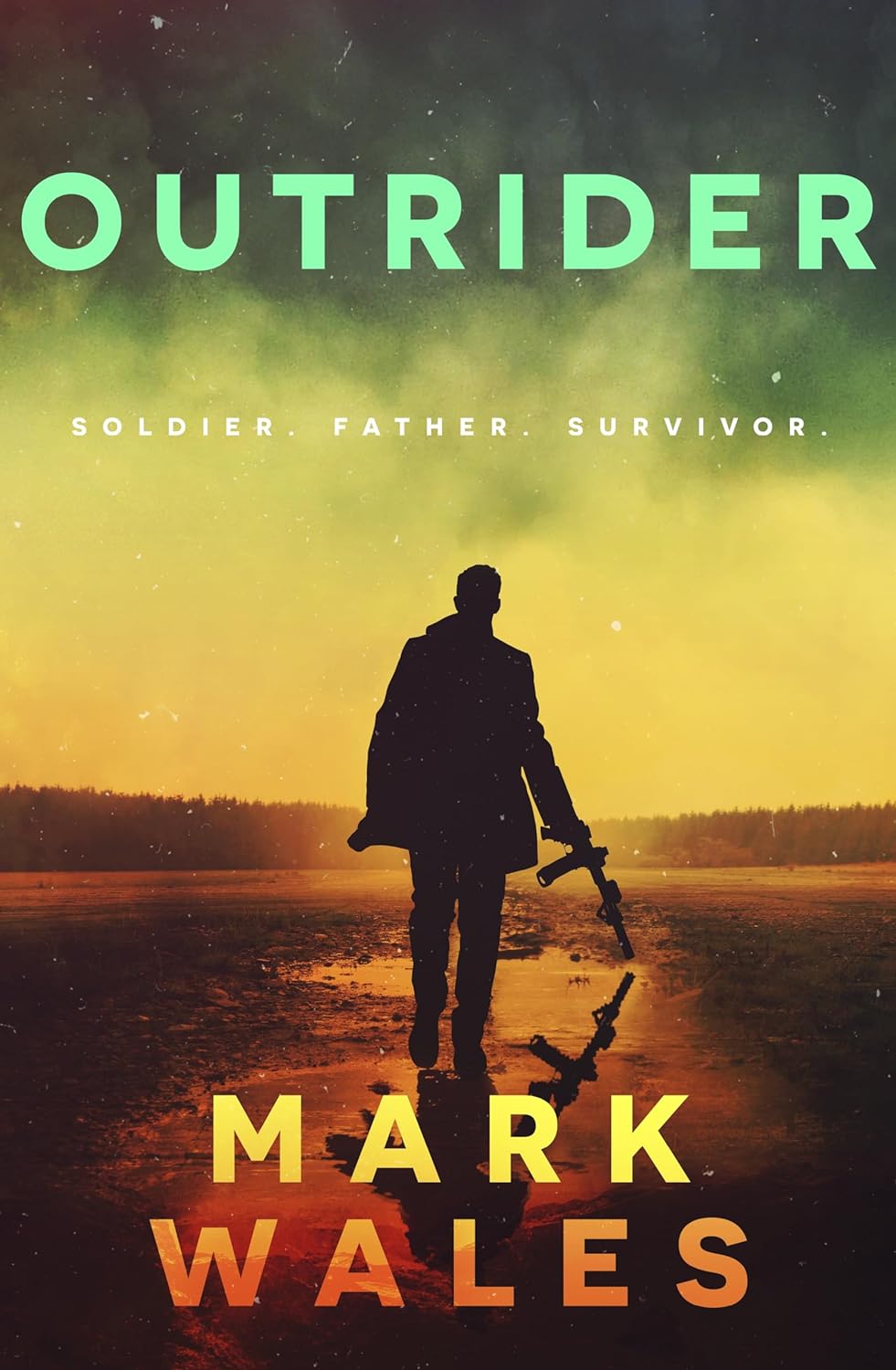
Quick Review – Outrider by Mark Wales

Publisher: Pan Macmillan Australia (Trade Paperback – 25 June 2024)

Series: Standalone/Book One

Length: 354 pages

My Rating: 4 out of 5 stars

Amazon

Former Australian soldier and current media personality Mark Wales presents a particularly exciting debut novel with the gripping thriller Outrider.  A gritty, intense, and absolutely action-packed dystopian thriller, Outrider is an awesome Australian novel readers will have a hard time getting away from.

Plot Synopsis:

Jack Dunne will do anything to save his son.

A violent civil war. An unstoppable enemy. One road to freedom.

In the wake of a global conflict, foreign forces occupy part of Australia, quashing all but a few pockets of local resistance. The tense stalemate ends in 2034, when Jack Dunne reignites the war.

Dunne is an Outrider, one of the last elite special operations soldiers in the Resistance. As the enemy prepare to eliminate the freedom fighters once and for all, he is tasked with his final mission.

If Dunne and his eleven-year-old son achieve the impossible, and survive, they’ll secure their future across the border in Free Australia.

But the road to victory will be bloody.

A cinematic action-thriller from bestselling author and veteran Mark Wales. Explosive and exhilarating, Outrider is a heartfelt father-and-son story of survival, resistance and hope.


Outrider
was an intriguing and complex novel that envisions a dark near future for Australian and sets loose a bold new action hero into the resulting carnage.  Set after a Chinese invasion of Australia, Outrider follows formidable resistance solider Jack Dunne and his son, Harry, as they attempt to save the lives of the last standing rebel fortress in Victoria from an upcoming war.  Given a mission to journey across occupied Australia to recover a military asset who can provide specialised assistance in the upcoming battle to come, Jack and his son will need to run a gauntlet of bandits, Chinese soldiers and members of the collaborating Victorian militia working for them.

This was an intense and exciting piece of Australian fiction, and Wales really dug deep to present an authentic tale of desperation and war.  Quickly and effectively introducing the 2034 dystopian setting, Wales takes the reader right into the action with a series of brutal early encounters that also set the rest of the narrative in motion.  From there, the story turns into an intense, Mad Max-style road trip as Jack and Harry embark on their journey to reach the required military asset and bring them back before it was too late.  This proves to be an excellent continued sequence, as the protagonists encounter obstacles and conflict, while also endearing themselves to the reader with a dive into their motivations and the history of events that drive Jack on.  The second half of Outrider proves to be even more epic and intense, as the protagonists desperately attempt to overcome the deadly forces coming for them.  This all leads up to the massive and impressive full on war sequence, with the fate of free Australia in the balance.  Wales does not disappoint when it comes to this final massive fight sequence, and readers will be blown away by how impressive the carnage gets.

Wales really dug deep here and produced an outstanding and fantastic debut novel that I just could not get enough of.  Making excellent use of his initial plot idea of a futuristic invaded Australia, Wales launches into a sharp and exciting narrative, that keeps grown in intensity as the book continues.  Unsurprisingly, considering the author’s background, the action sequences in Outrider are particularly well written, and Wales does an excellent job portraying the carnage of combat to the reader.  Each of these action sequences are well paced out and highly realistic (well, besides the highly advanced weapons), and the reader gets really drawn into them as a result as you can practically feel every shot or explosion.  While the main appeal of Outrider is the action and exciting story, I really appreciated that Wales took the time to set up several complex and compelling characters.  I felt that his protagonist, Jack Dunne, was an outstandingly damaged and angry main figure, whose loss of his wife is still raw for much of the book.  These intense emotions, as well as the bond he continues to form with his young son as they journey across Australia, adds a powerful edge to Wales’ narrative, and it helped Outrider be more than just an awesome action novel.

The final fantastic element I want to highlight about Outrider is the intriguing background setting of an invaded Australia.  Wales paints a haunting and disturbing picture of how this potential invasion would occur and in what form it would look like, and I liked the dark realism behind his ideas.  I particularly enjoyed how he portrayed the Chinese as only occupying key sections of Australia, rather than the whole continent, which honestly makes a lot of sense, and it allows the protagonist to slip between different parts of the country as a result.  The dive into collaborators and traitor militias continuing most of the fighting against the resistance, with China and the US playing proxy wars in the background, also had a tinge of realism behind it, even if we’d like to think differently.  Finally, the grim details surrounding the invasion add an urgent edge to the plot, and you find yourself pulling for the protagonists even more, especially after a powerful scene where they witness certain train carriages going by.  All of this proves to be an incredible background to a particularly exciting and engrossing read, and I loved seeing Wales’ intense look into the future.

Outrider by Mark Wales proved to be a particularly cool Australian thriller that I had an awesome time getting through.  An inventive and intense debut novel from Wales, Outrider comes highly recommended, especially for fans of Australian fiction with a ton of action, and it is really worth checking it.

Amazon

Warhammer 40,000: Cain’s Last Stand by Sandy Mitchell

Cain's Last Stand Cover

Publisher: Black Library (Audiobook – 1 January 2008)

Series: Ciaphas Cain – Book Six

Length: 10 hours and 30 minutes

My Rating: 4.75 out of 5 stars

Amazon

I’ve been on a real roll with the amazing Ciaphas Cain series by Sandy Mitchell (a pseudonym of Alex Stewart) lately, which is easily one of the funniest Warhammer 40,000 series out there.  Amazing books like For the Emperor, Caves of Ice, The Traitor’s Hand, Death or Glory and Duty Calls have all proved to be highly entertaining, and I like the author’s take on a less heroic figure in the martyr-filled grimdark Warhammer 40,000 universe.  As such, when in need of a particularly fun read, I made the very easy choice to power through another entry in this classic series last week with the sixth book, Cain’s Last Stand.  This was an unsurprisingly awesome book, and I loved the intriguing story that emerged.

Commissar Ciaphas Cain, legendary hero of the Imperium and self-professed fraudulent coward, has done the near impossible and survived decades of brutal service in the Imperial Guard.  Now effectively retired from active duty, Cain has returned to the planet of Perlia, which he helped save from an ork invasion early in his career, and now spends his time teaching Commissar cadets at the planet’s Schola Progenium.  However, the battle is never truly over for Cain, and soon dark forces begin to descend once again.

Half a galaxy away, Abaddon the Despoiler has launched his 13th Black Crusade, determined to invade the Imperium of Man.  While most of the fighting occurs around the fortress world of Cadia, a splinter fleet has broken off and is heading deep into the Imperium, defeating several forces sent to stop it.  When it becomes apparent that this fleet is heading directly for Perlia, Cain is once again forced into action, especially as he knows exactly what they are coming for.

An ancient alien device of devastating power lies hidden on Perlia, one capable of reshaping reality itself, and Cain is one of the few people who knows it’s there.  With no means of escape available and the fate of the galaxy in the balance, Cain is forced to lead the defence of Perlia against the oncoming Chaos tide.  With only a ramshackle army of local soldiers, militia and students from the Schola under his command, the defence of the planet looks grim, especially when faced with a charismatic Chaos lord and his fanatically loyal soldiers.  Worse, a far greater evil has its eyes on Perlia, one that Cain fears above all else.  Can the legendary hero of the Imperium pull out one last impossible victory before he rides off into the sunset, or has Cain finally met his match at the site of his greatest triumph?

Mitchell continues to bring joy to the dark Warhammer 40,000 universe with this epic sixth entry, which I had so much fun with.  Cain’s Last Stand was an excellent read, and I loved the cool and elaborate story that emerged.

I think Cain’s Last Stand might be one of my favourite stories that Mitchell has so far used for the Ciaphas Cain series, especially because it differs from the standard narrative patterns of the series, while also cleverly tying together some intriguing ongoing storylines.  Set further into the future than any of the previous books, you get to see a nearly retired Cain in action, as the series finally ties itself into the events of the 13th Black Crusade (the original version of it, not the darker recent retcon).  I liked how Mitchell takes the reader back to the setting of the fourth book, Death or Glory, and the initial scenes of Cain as a reluctant but capable teacher, were very fun.  The switch from Tyranids to Chaos as the main threat is handled extremely well, and I liked the continued niggle that even worse enemies are lurking around.  The subsequent reveal that the reason behind the invasion is due to the ancient artefact first hinted at in Death or Glory and then expanded on in Duty Calls was great, and Mitchell does an excellent job of tying the various ongoing storylines together.

The second half of Cain’s Last Stand proves to be a very fun planetary invasion arc, especially as Cain works to rally an unusual array of defenders, including untrained militia, under strength garrison forces, and his own students.  The forces of Chaos prove to be excellent foes for this story, and I liked the much more insidious nature of the threat that emerged, especially as there was a slow build to the reveal.  After plenty of action, clever ploys, some touching tragedy, and so much misdirection from the protagonist, the story eventually heads to the inevitable last stand, which cleverly mirrors a similar event from Death or Glory.  Mitchell does a great job of building up anticipation for this event, and it doesn’t disappoint as there are some excellent action sequences and fun revelations that occurred.  I particularly enjoyed the big bluff that leads to the death of a certain enemy, especially as it was a classic Cain antic.  The final reveal about the actual big bad of the story was well handled, and it leaves this storyline open for the future, which I am very excited for.  An overall excellent addition to the series that builds on the prior novels while offering existing fans something new to enjoy.

Mitchell continues to utilise the fantastic writing style that has made the other Ciaphas Cain books so much fun, and I love how it cleverly enhances the narrative of Cain’s Last Stand.  As always, the cool journal format, equipped with entertaining footnotes and in-universe texts from Inquisitor Amberley Vail, ensures that you get a frank and cynical look at events in the Warhammer 40,000 universe, and I love the inherent humour that results.  The various action scenes are exciting and fast-paced, and the constant commentary of complaints and annoyance that emerges from the protagonist are very entertaining.  This action and compelling humour are well offset by some of the darker elements of the plot, including some genuinely tragic moments, and you get thrown around the emotional ringer as a result.  This mixture of elements helped to create a much more impactful and complex read, and I appreciated some occasional seriousness to go with the impressive humour.

As with most books in the Ciaphas Cain series, Cain’s Last Stand can be read as a standalone read, especially as the author does a good job of rehashing relevant events from the prior novels.  However, for the full experience, especially when it comes to some fascinating storylines, reading the last two books would be good, and I really enjoyed how the author kept bringing the story back to these prior adventures.  While there was once again some repetition between books as Mitchell reutilises his favourite lines, I felt that the more original story and important connections to previous books ensured that Cain’s Last Stand stood out and got away from some of these minor issues.  An excellently written book that will appeal to both new readers and established fans of the series.

As always, I must give a callout to the outstanding characters featured in Cain’s Last Stand.  This of course includes Commissar Ciaphas Cain, the main protagonist and narrator, whose harrowing adventures we continue to follow.  I’ve talked a lot about the exciting dichotomy of Cain throughout my previous reviews, especially as he can be considered both a hero and a coward, and I loved seeing that occur again in Cain’s Last Stand.  Cain continues to be both a self-serving cad and a peerless commander, and it always fun to see himself plot to survive while discounting his own accomplishments.  His adventures in this book are particularly fun, and the inclusion of the protagonist as a teacher trying to get his methodology of command to Commissar cadets was a great choice from Mitchell and plays nicely on some of his offhand comments in previous books.  This, as well as the return to a planet important to his mythos, ensures that Cain has a lot to think about in Cain’s Last Stand, and I really enjoyed the way his past adventures keep coming back to haunt him.  This was a powerful adventure for Cain, and I always enjoy seeing the protagonist debate his own legacy whilst doing his trademark daring deeds.

The supporting cast for Cain’s Last Stand was also very good, and it provided an interesting mixed of established characters, returning figures, and raft of great new comrades.  This includes Inquisitor Amberley Vail, whose role as the overarching narrator of the book, as well as the person behind the footnotes, ensures that her fun influence is felt the entire way through.  Cain’s faithful bagman, Jurgen, was also a welcome inclusion, and his loyal service and fun interactions with Cain were as great as always.  Jurgen once again showed why he is the true MVP of the Ciaphas Cain series, and you have to love the entertaining contrast between his Baldrick-esque appearance and his impressive abilities.  Other great characters include a favourite character from Death or Glory, an interesting array of fellow teachers from Cain’s Schola Progenium, and other unique comrades for the protagonist.  I particularly enjoyed the class of Commissar cadets who are being instructed by Cain, and it was fun to see the range of different personalities they had.  Throw in a smarmy Chaos warlord whose charisma and influence outweighed his abilities and stature, and you had a great cast for Cain’s Last Stand, and I had a lot of fun seeing Cain interact with them.

I once again had an outstanding time with the audiobook format of this book, and frankly there is no better way to enjoy a Ciaphas Cain novel.  Thanks to the epic and well-cast multiple narrators, readers get an amazing experience when they listen to Cain’s Last Stand, especially as it helps to really capture the crazy nature of the plot.  The main narrators are Stephen Perring and Penelope Rawlins, who voice Cain’s perspective and Inquisitor Vail’s notes respectfully.  Perring once again does an incredible job voicing the main cast of the story, especially Cain and Jurgen, while Rawlins has a lot of fun including her character’s informative, if often sarcastic, comments throughout the plot.  These two main narrators complement each other extremely well, and I always have an awesome time listening to them.  The audiobook also features the talents of additional narrators Richard Reed, John Banks and Phillipe Bosher, each of whom voice fun in-universe texts and pieces of propaganda to liven up the main plot and provide some amusing context for the main story.  I have so much love for how these narrators bring the story together and this proved to be another impressive audiobook to listen to, especially as its great style really fit the fantastic story Mitchell came up with.  With a run time of 10 hours and 30 minutes, this is a very easy audiobook to get through quickly, and I managed to finish it off in no time at all.

Cain’s Last Stand was another amazing entry in the Ciaphas Cain series by Sandy Mitchell, and I have so much love for this entertaining and fun Warhammer 40,000 series.  This sixth book was a particularly impressive entry in the series, and I loved the complex story that emerged, especially as it brings together several previous adventures from Mitchell’s outstanding protagonist.  A clever, exciting and overall funny book that I could not get enough of, Cain’s Last Stand comes highly recommended and I look forward to continuing this series in the future.

Amazon

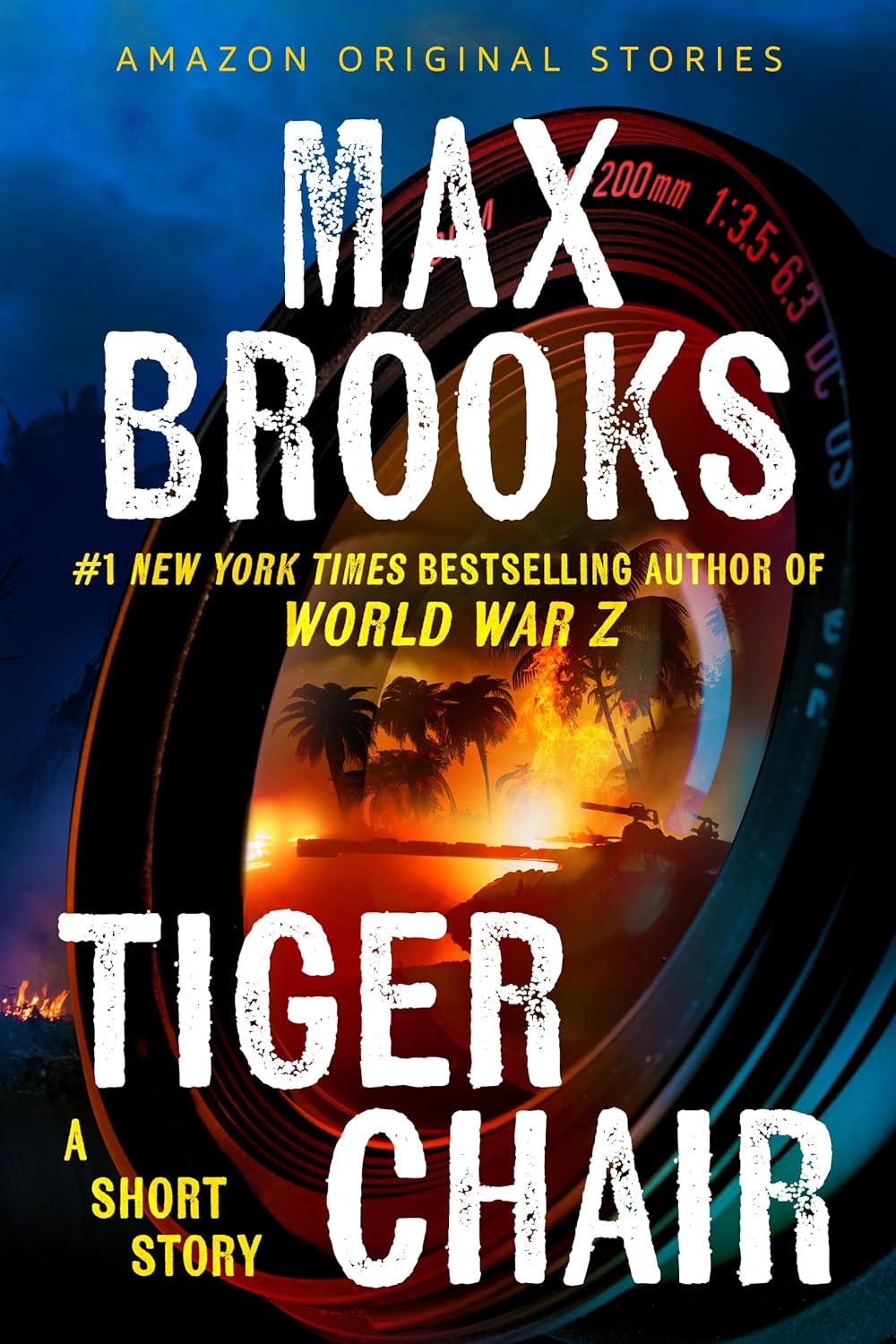
Quick Review – Tiger Chair by Max Brooks

Tiger Chair Cover

Publisher: Amazon Original Stories (ebook – 1 June 2024)

Series: Standalone

Length: 50 pages

My Rating: 4 out of 5 stars

Amazon

I was recently lucky enough to receive a copy of the new short story from acclaimed author Max Brooks, Tiger Chair, which instantly grabbed my attention.  Brooks is an author I have a lot of love for, especially as his two main novels are huge favourites of mine.  This includes his most iconic work, World War Z, which I had an exceptional time listening to a few years ago due to its complex story and the impressive array of celebrity narrators associated with the audiobook version of it.  Brooks followed this up a couple of years ago with the compelling horror read, Devolution, that saw an isolated community attacked by sasquatches in an outstanding and exciting read.  Devolution ended up being one of my favourite books of 2020 and ensured that I would check out anything else that came my way from Brooks.  As such, I made sure to read through Tiger Chair as soon as a got it, as I was intrigued by the content.

Plot Synopsis:

When China invades America, guerrilla warfare explodes on the streets of Los Angeles in this provocative short story about the future of war from Max Brooks, the #1 New York Times bestselling author of World War Z.

China thought it would be a quick war, an easy war. But now, years later, as the insurgency on the streets of Los Angeles escalates but the propaganda never changes, a Chinese officer can’t keep silent any longer. Torn between loyalty to his country and loyalty to his troops, he writes a brutally honest—and possibly suicidal—letter home to unmask the truth.

Brooks combines his signature meticulous research with unforgettable characters in this landmark work of speculative fiction.

This was a very interesting read from Brooks that I was able to power through in a short amount of time.  Set in the future, Tiger Chair is written as a secret letter from a Chinese officer involved in a fictional invasion of the United States to a friend back home.  In this letter, the officer describes the various hardships of the invasion, including the escalating insurgency in Los Angeles, who are pushing his soldiers to the limit with their intense attacks and low-tech strategies.  However, his priority in writing this potentially treasonous letter is to highlight his despair at the ineffective and inflexible strategies of his side, which care more for propaganda than the lives of their soldiers and the civilians, and his desire to see the war come to an end.

I felt this was a rather interesting choice of story for Brooks to write, and it reminded me of the cynical memories of a professional soldier during the zombie wars of World War Z.  Brooks paints a grim and gritty story of survival and duty in the Tiger Chair, and you can easily feel the frustration and fear of the protagonist as he attempts to highlight his feelings about how the war is being run and the various lies he and his soldiers have been fed by their superiors.  The author really captures the way that the protagonist is caught between loyalty to his country and his anger at how events have unfolded, especially as he is powerless to impart any effective change to the situation.

I was quite impressed by the various scenarios that Brooks imagined for this future war in Tiger Chair, and his vision for how events might unfold in this scenario, as well as the technology that would be utilised for it, is very fascinating.  While I am sure that there will be some criticism of Brooks trying to imagine the feelings of Chinese soldiers in a war they might not even undertake, I felt that the Tiger Chair was more of a general warning about the futilities of war, and the frustrations of the lower ranks at the mistakes of their politically motivated superiors.  Indeed, many of the issues the protagonist raises could be applied to many other historical or current wars, and there are several allusions to them in the plot.

Brooks does also attempt to get into the Chinese mindset, which I honestly think he did a good job of considering he had less than 50 pages in which to do so.  There is an interesting examination of the national identity and how their history and culture would influence them into going to war, and the various opinions people within the country would have about these battles.  Brooks also includes some commentary of recent well-known events and controversies involving China, which is more geared towards central criticism than specific critiques of the Chinese.  For example, while he mentions the way in which China influences American media and movies for their own purposes, the protagonist’s resulting criticism are more directed towards the media companies that allowed them to happen as they sacrificed their principles for money.  These and other observations an about current society are quite interesting and make for quite a compelling story.

Overall, I felt that Tiger Chair was a compelling and intense short story from Brooks that brings together some intriguing ideas and predictions.  While I probably would have avoided Tiger Chair if it weren’t Brooks writing it, mainly because I prefer full-length novels to short stories, I’m glad I checked this out, and it ended up being a fascinating and powerful read.

Amazon

Warhammer 40,000: The Traitor’s Hand by Sandy Mitchell

The Traitor's Hand Cover

Publisher: Black Library (Audiobook – 1 January 2005)

Series: Ciaphas Cain – Book Three

Length: 9 hours and 6 minutes

My Rating: 4.75 out of 5 stars

Amazon

After updating my list about my favourite Warhammer 40,000 novels last week, I was keen for more action from this awesome franchise, so I decided to quickly listen to the entertaining and fun novel, The Traitor’s Hand by Sandy Mitchell.

One of the things that I like most about the Warhammer 40,000 franchise is the sheer range of different stories and genres that can be found within it.  For example, one of the most popular series is a particularly funny and amusing series that focuses on a Blackadder-esque Imperial Commissar as he finds himself involved in all manner of over-the-top heroics.  This series is the Ciaphas Cain books, which follows the titular protagonist who has accidently become regarded as a great hero of the Imperium of Man, despite most of his actions being more for self-preservation.  The first two books in this series, For the Emperor and Caves of Ice, were extremely fun reads, and I have been meaning to check out the next book in the series for a while.  As such, when I had my recent Warhammer 40,000 craving, the third Ciaphas Cain book, The Traitor’s Hand, was an easy choice.

Commissar Ciaphas Cain, hero of the Imperium or unrepentant coward?  Constantly forced into the direst of circumstances despite doing everything in his power to avoid them, Cain has built up a reputation he considers entirely undeserved, especially as being known as a hero always seems to get him into trouble.  His latest assignment will test him like none other, especially when he is forced to go up against the great archenemy of the Imperium, the forces of Chaos.

With a Chaos fleet approaching the tidally locked planet of Adumbria, Cain and the soldiers of the Valhallan 597th are rapidly redeployed towards the planet to aid in its defence.  Despite wishing to stay off the frontlines, Cain’s experience and uncanny ability to find trouble forces him to join in the hunt for a Chaos cult hidden throughout the planet that has awakened in advance of the coming fleet.  However, the more he digs, the more he discovers that there is something far more sinister going on within the planet than anyone realises.

As the invading enemy arrives on the planet, it soon becomes apparent that two rival bands of Chaos worshippers are attacking Adumbria with very different goals in mind.  Leading the fight against the enemy, Cain needs to work out just what their objectives are before the world is destroyed in the Chaos crossfire.  However, with deadly enemy forces all around and a rival commissar determined to undermine him, can even the terminally lucky Cain stop them, especially when an old nightmare returns seeking revenge against him.

The Traitor’s Hand was an extremely awesome book from Mitchell that I had so much fun getting through.  Containing the outstanding blend of action, humour and intriguing characters that the Ciaphas Cain series is known for, The Traitor’s Hand was pretty damn epic, and I managed to power through it in about a day of intense listening.

This third Ciaphas Cain novel had a great story behind it that I had a wonderful time listening to.  While it does follow some similar story conventions to the previous books in the series, in that Cain and the Valhallan 597th arrive on a planet to face one foe, only for Cain to inadvertently discover another threat hidden under the surface, I think Mitchell did a good job distinguishing this book from the previous entries.  The introduction of a rival Commissar and alternating bands of Chaos worshippers makes for a great central storyline, and you get really involved in the battle for the planet and the attempts to discover a hidden Slaaneshi cult who are performing dark rituals.  The entire story evolves in a familiar manner, with Cain’s attempts to avoid a fight leading him into darker situations each time, while his keen insights allow him to determine where the true threat to the planet is located.  The big final sequence for The Traitor’s Hand was pretty damn awesome, as Cain leads a small force into a massive battle royale between warring Chaos warbands while also facing a dangerous foe from his past.  While the big bad’s identity was overly foreshadowed, their inclusion was very intense and lead to a gripping conclusion.  I do wonder if this repetitive story structure is going to be sustainable for the series in the future, but I really got stuck into this entertaining and exciting narrative and powered through it so damn quickly.

I absolutely loved the fun style of the Ciaphas Cain books which Mitchell once again uses to tell a fantastic story.  Primarily told from the first-person chronicle perspective as Cain recounts his many adventures, you get to see his insights into events that occur.  While on the surface this appears to be a typical Imperial Guard focused Warhammer 40,000 story, it is a much lighter read, as the book revolves around Cain’s continued attempts to get out of danger only to encounter worst problems.  It is really entertaining to see his excuses and manipulations, especially as nearly every action he does is calculated to avoid danger, which he shamelessly admits to.  The continued increase of stakes, desperate response from Cain and the inevitable lucky escape makes for some fun reading, and Mitchell does an excellent job of layering a strong amount of comedy into a usually dark universe.  This humour is expertly enhanced by the overarching narration of the book, provided by Inquisitor Vail’s editorial notes as she collates Cain’s memoirs.  Vail’s various notes, quotes and included histories of the story provides some much-needed context to the plot, while the entertaining and often sarcastic way they are delivered works extremely well.  I think that Mitchell got the right blend of humour, action, and dark moments throughout the course of The Traitor’s Hand, and I really got engrossed in the hilarious and action-packed story that emerged.  I did feel at times that Mitchell did get a bit repetitive with some of his phrases and lines, which you really notice with an extended read, but this is honestly a pretty minor complaint, and The Traitor’s Hand proved to be an amazing read.

I liked how well Mitchell featured the Warhammer 40,000 universe in The Traitor’s Hand, especially as he once again seeks to showcase the horrors of the franchise from the eyes of a human solider, even one as lucky as Ciaphas Cain.  The various Chaos factions prove to be great villains in this story, and I loved the cool comparisons between the Slaaneshi cult and the Khorne-worshipping warband.  You also get a great insight into the life of the common soldier or civilian, and it was fun to see the various responses many of them have to the reveals about Chaos and their dark designs.

Like most of the Ciaphas Cain novels The Traitor’s Hand can easily be read as a standalone book, and no real pre-knowledge of the Warhammer 40,000 universe is really needed.  Indeed, I really appreciated how efficiently Mitchell is able to ease new readers into the wider Warhammer 40,000 universe.  In addition, readers don’t really need to have checked out the prior Ciaphas Cain novels either, as Mitchell does a good job of summarising the necessary key points from these books when needed.  There were some strong references to the Ciaphas Cain short story, The Beguiling, which if you had read would have increased the impact of The Traitor’ Hand to a degree, however, it is also not necessary to have read it first, as Mitchell recaps it very well.  Overall, I felt this was a great piece of Warhammer 40,000 fiction that many people can get into.

A key highlight of any Ciaphas Cain novel is the excellent character work that Mitchell installs into the story.  This is certainly the case in The Traitor’s Hand, with most of the character work revolving around the protagonist and main point-of-view character, Commissar Ciaphas Cain.  While Mitchell has done a great job setting up this figure in the previous two books, it is always so much fun to see a story through Cain’s eyes, especially as the protagonist bears the duality of being a hero and a coward at the same time.  Fitted with a well-honed sense of survival, Cain is constantly trying to find ways to get out of danger and has proven quite adept at manipulating people to get what he wants.  However, due to bad luck or because he finds himself trapped by his own legend, Cain is constantly dragged into the most dangerous situations possible.  While it would be easy to dislike a character like this, readers quickly become aware that Cain isn’t as big a coward as he believes, and instead he is quite a skilled, brave and caring leader whose “cowardly” actions are often borne by shrewd assessment and tactical awareness.  Throw in his excellent sense of humour, his entertaining insights into the universe, and his vast experiences with the many different things trying to kill humans in the Warhammer universe, and Cain is such a great protagonist to follow.

Aside from Cain, The Traitor’s Hand features a raft of other great characters, each of whom bring a lot to the story.  For example, Inquisitor Vail, despite not appearing in person, serves a big role in the book, editing Cain’s unreliable manuscripts.  I loved her witty over-arching narration and notes throughout the book, and it was fun to have someone constantly calling out Cain for his wilder statements.  I also loved the continued inclusion of Cain’s aid, Jurgen, the man capable of killing anything in the galaxy with his trusted meltagun.  I love how Mitchell sets Jurgen up as the Baldrick to Cain’s Blackadder in this series, especially with his attitude, hygiene and loyalty, although he proves to be a vital ally.  It was also interesting to see Mitchell continue to explore just how vital Jurgen is to Cain’s success, especially due to his status as a Blank, and I love the entertaining team the two characters combine into.  New character Commissar Tomas Beije, an old school rival of Cain’s, serves as a great secondary antagonist for much of the story, and it was entertaining to finally see a character suspicious of Cain’s status as hero, especially as he looks deranged spouting out accusations we know to actually be true.  Finally, the various members of the Valhallan 597th, many of whom were introduced to us at the same time as Cain, continue to grow as characters and serve great supporting roles in the story, and it was touching to see how their relationship to the protagonist has grown over the years.

I have often said throughout my many reviews on the subject that the best way to enjoy a Warhammer 40,000 novel is its audiobook format.  Nowhere is that truer than the Ciaphas Cain audiobooks, which really capture the zany feel of the series through its excellent narration and style.  Most of this is due to the excellent use of multiple narrators, whose mixture of voices creates a particularly epic read (indeed this one of my favourite audiobook series with multiple narrators).  The Traitor’s Hand features four separate narrators, each of whom add so much to my enjoyment of this audiobook.  Each of these narrators has a distinctive role, with the amazing Stephen Perring providing the bulk of the narration in this series, as he narrates the chapters told from the protagonist’s perspective.  Perring serves as an epic centre for this audiobook, especially as he does such a good job capturing the larger-than-life Ciaphas Cain with his acting.  Perring’s take on Cain’s cocky dialogue, as well as his more honest chronicling of events, is impressive, and I love how he captured the various aspects of Cain’s character.  There are some other great voices featured throughout these chapters as well, as Perring assigns fitting and entertaining voices to each of the major characters.  My favourite of these is probably Jurgen, especially as Perring really tries to make him sound as much like Tony Robinson as possible.

While Perring does most of the narration in The Traitor’s Hand, the additional voice actors also add a lot to the story, especially Penelope Rawlins.  Rawlins voices the character of Inquisitor Vail, the Imperial Inquisitor and acquaintance of Cain who is compiling the memoirs for publication.  As such, Rawlins voices the prelude, chapter introductions and footnotes contained in this book to showcase the editorial notes that this character is adding in to make Cain’s ramblings easier to read.  Rawlins serves as a good contrast to Perring, especially as her character’s more serious tones are the direct opposite of Perring’s flippant take on Cain.  I love how seamlessly the production works Rawlins’ voice into the various points of the audiobook where her character cuts into the main story, and you really get into the groove of her explaining key details about the universe and the characters.  Throw in the additional voice work of Emma Gregory and new narrator Andrew Spooner, who give their voices to various in-universe texts that provide additional information for the reader, and you have a strong team who masterfully enhance Mitchell’s brilliant story.  These great actors really help to make this entire audiobook production so much fun to listen to, and with a runtime of just over nine hours, you can very easily sit back and listen to The Traitor’s Hand in one fantastic sitting.

With The Traitor’s Hand, Sandy Mitchell continues to showcase why he is one of the strongest, and funniest, authors of Warhammer 40,000 fiction.  Filled with the series’ trademark humour, intriguing characters and intense action, The Traitor’s Hand was an entertaining audiobook from start to finish that I could not turn off.  An outstanding and highly recommend novel, The Traitor’s Hand was so damn good, and I cannot wait to see how Mitchell continues this amazing series.

Amazon

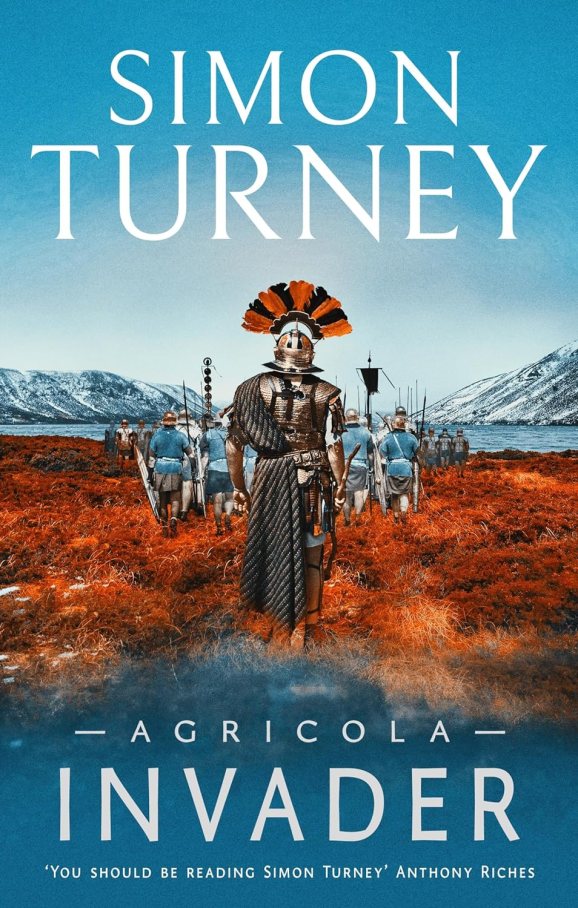
Agricola: Invader by Simon Turney

Agricola - Invader Cover

Publisher: Head of Zeus (ebook – 14 March 2024)

Series: Agricola – Book One

Length: 352 page

My Rating: 4.5 out of 5 stars

Amazon

I was in the mood for a compelling historical adventure, and the intriguing upcoming novel Invader, the first book in the Agricola series, seemed like the perfect choice, especially with the always impressive Simon Turney at the helm.

Simon Turney, who also writes as SJA Turney, is a well-established historian and historical fiction author who has been producing complex and action-packed reads for years.  Predominantly known for his Roman historical fiction works, including the Marius’ Mules, Tales of the Empire, Praetorian, Roman Adventure and Damned Emperors series, as well as the Knights Templar and Wolves of Odin books, Turney has a substantial catalogue of fantastic books to his name.  I have had some great experiences with Turney in the past, especially as I loved his 2019 novel Commodus, which perfectly captured the life of one of Rome’s most complex Emperors.  I have been meaning to read more from Turney for years and I finally got the chance when I received an early copy of his upcoming book, Invader.  The first book in a new series that will follow the life of famous Roman general Gnaeus Julius Agricola, a historical figure Turney is very familiar with, Invader was a great read that covered Agricola’s first military command.

58 AD, Rome.  Teenager Gnaeus Julius Agricola is the son of a distinguished Roman family that has languished into poverty since the death of his father.  Determined to bring honour and glory back to his family’s name, Agricola sets out to prove himself to the people or Rome through military service.  Utilising the last favour owed to his family, Agricola secures a posting as Tribune in the province of Britannia.

Determined to make the most of his opportunity, Agricola finds himself assigned to the staff of Roman general Suetonius Paulinus, who is about to launch an ambition campaign to capture more of the island and pacify the resentful tribes.  Marching across Britannia, Agricola begins to show himself a capable leader, especially while be forced to deal with rebelling locals, dangerous rivals, and an incompetent commander.

Soon, the war leads to the ancient stronghold of the druids, where Agricola finds his star on the rise.  However, great disaster awaits the Romans back at the heart of the province.  The warrior queen Boudicca has risen in revolt, determined to wipe out all the Romans in Britannia.  With the fate of the entire colony hanging in the balance, can Agricola help find a way to ensure victory for the Romans, even with the odds firmly stacked against them?

Invader was an epic and compelling piece of historical fiction from Turney, who starts up an awesome new series in a big way.  Loaded with action, intriguing characters, and some great historical detail, Invader was a highly addictive read that I was able to power through in two days.

Turney came up with an excellent story for the first Agricola book that quickly grabbed my attention and ensured I couldn’t stop reading.  Told exclusively from the focus on the new series, historical figure Gnaeus Julius Agricola, Invader serves to both introduce the protagonist, while also highlighting some of his early adventures.  The author starts the book off quick, setting the scene for the protagonist and ensuring you’re invested in his ambitions, before dropping him into a particularly chaotic period of the Roman occupation of Britania.

Thanks to the setting, most of the story focuses on General Paulinus’s massive campaign to conquer more territory and destroy the druids, which is a fascinating historical backdrop, especially considering where it led.  I liked how Turney primarily showed one leg of the invasion as the protagonist accompanied one of the split forces through a lengthy march of suppression, colonisation and negotiation.  This results in several interesting encounters and situations, especially as Agricola is desperate to prove himself against the enemy, while also dealing with internal issues, including a rival Tribune and a drunk commander.  This combination of obstacles helps to create a compelling story, and I enjoyed seeing the characters simultaneously involved with internal politics and external fights.  There are some great battles featured here, and this lengthy march of Agricola’s central force through the miserable British landscape proves to be one of the best parts of the entire book.

The rest of the story only gets better, as the protagonist and the supporting characters find themselves involved in two key conflicts, the Roman invasion of the island of Mona and Boudica’s revolt back in the settled provinces.  These scenes are loaded with more action as Turney does an excellent job of setting the protagonist right into the centre of the conflict, and the resulting chaotic warfare, personal worries and other issues really works to tell an engrossing story.  I was initially a little surprised that Turney chose to condense these two major events into the second half of the book, as you probably could have written a whole second Agricola novel about them.  However, after finishing the story, I think it worked well and honestly wasn’t too rushed.  This entire part of the novel proved to be highly entertaining and exciting, and I honestly couldn’t put it down as I waited to see how everything ended.  Turney also sets everything up nice for a sequel/continuing series, and it will be interesting to see how that turns out, especially now that we have the protagonist’s earliest adventures, a potential long-term rival, and a connection to the province Agricola is most known for.

I loved the historical elements that Turney featured in Invader as he did an outstanding job of capturing the feel of both the wild, unexplored areas of Britania and the conquering Roman legions advancing through it.  I loved the author’s great depictions of the various Roman units featured throughout Invader, and you really get a sense of the order, battle tactics and arrangements of a Roman army.  Turney also expertly portrays the intriguing events surrounding General Paulinus’s massive invasion of inner Britannia and, to a lesser degree, the events that led to Boudica’s uprising.  Many of the key recorded moments of these historical events are showcased in an amazing way in Invader, including some major battles, figures and locations.  I rather enjoyed how we saw these events from the perspective of a Roman soldier on campaign, who had no idea about the upcoming revolt that they would have to fight against, nor the wider political issues that led up to it.  Instead, you see how the army was forced to react and the resulting actions that led them to face off in the final battle against Boudicca.  As such, Invader proved to be a particularly impressive historical read, and I cannot wait to see how Turney portrays other key events that Agricola was involved within in future books of this series.

In addition to showcasing the historical events, Turney also features an intriguing range of characters who make up the story.  Most of this is shown through the eyes of series protagonist Gnaeus Julius Agricola, who serves as the point of view character.  Agricola is a historical figure that Turney is very familiar with, and Turney really does a great job featuring him.  While Agricola is generally strongly covered in historical texts (his son-in-law is one of the few surviving historical sources of the period), only a little is known about Agricola’s first visit to Britannia as a young man.  Turney does a great job of portraying Agricola as a hungry young man looking to prove himself, and I think he presented a great potential story about the character.  Watching Agricola battle against everything holding him back was very entertaining, and I look forward to seeing what happens next in the series.  Naturally, Turney places Agricola in the middle of every major battle or encounter he could find, mainly to flesh out the sparse historical notes, and it was interesting to see the combination of ambition, dedication, tactical ability and pride that the author imagined this figure would have in his youth.  Invader also features a great range of supporting characters, both from history and fictional inclusions, who all add a lot to the story.  Standouts include a frustrating rival for the protagonist, a drunk and unpredictable commander who the protagonist is forced to work around, and a native slave, Luci, with whom the protagonist forms an unusual friendship.  I really enjoyed these characters, and it will be interesting to see how their stories continue in the rest of the series.

Overall, Invader was an impressive piece of historical fiction from Simon Turney.  Featuring a great historically important protagonist, Invader served as a brilliant first entry in the new Agricola series, and I really enjoyed the intense and intriguing story that emerged.  Exciting, entertaining, and highly addictive, Invader was an outstanding read that comes highly recommended.  I had an awesome time reading Invader, and I cannot wait to see how Turney captures the rest of Agricola’s complex life throughout this series.

Amazon

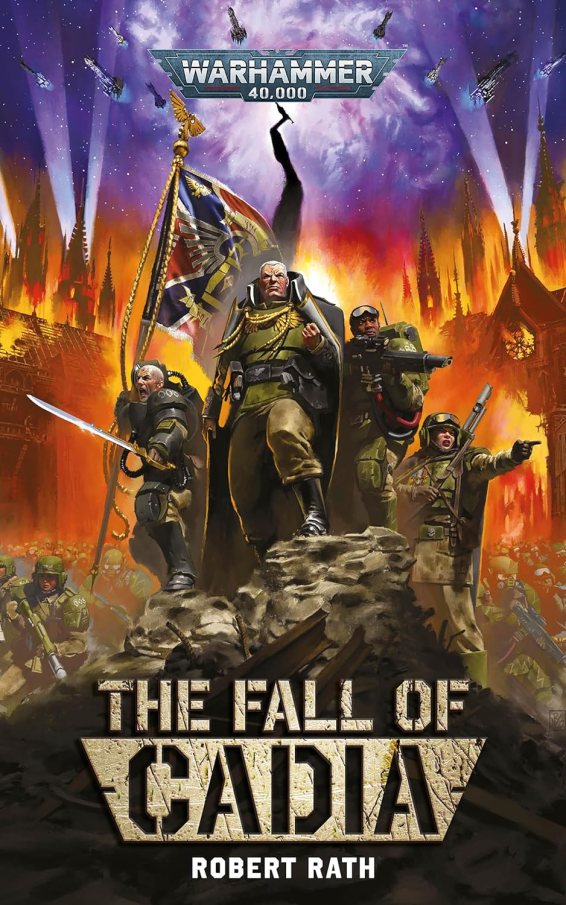
Warhammer 40,000: The Fall of Cadia by Robert Rath

Warhammer 40,000 - The Fall of Cadia Cover

Publisher: Black Library (Audiobook – 5 August 2023)

Series: Warhammer 40,000

Length: 19 hours and 42 minutes

My Rating: 5 out of 5 stars

Amazon

Cadia Stands!  I ended 2023 on a very high note with one of the best Warhammer 40,000 novels of the year that follows one of the biggest events in the franchise’s recent lore, The Fall of Cadia by Robert Rath.

There were several amazing Warhammer 40,000 novels released in 2023, with some of my favourites including The Lion: Son of the Forest and Warboss by Mike Brooks, The King of the Spoil by Jonathan D. Beer and Cypher: Lord of the Fallen by John French, just to name a few.  However, in terms of sheer scale, epic battles, and larger-than-life characters, my favourite will have to be The Fall of Cadia.  As the name suggests, The Fall of Cadia follows the final battle for the planet of Cadia at the end of the 13th Black Crusade, which was a major campaign in the Warhammer 40,000 tabletop game.  The original 13th Black Crusade campaign happened back in 2003, with the official result being something of a draw.  However, in 2017, Games Workshop retconned the campaign to result in a much more substantial Chaos victory, which ended up having substantial impacts on the wider lore of the franchise, effectively reshaping the entire Warhammer 40,000 universe.

This change ended up being a pretty significant event, and Games Workshop provided some major write-ups about it that summarised the events and their explosive aftermath.  Indeed, the lore events initiated in this event have already been featured in several novels, and most of the current Warhammer 40,000 fiction examines the consequences of this campaign.  However, there has yet to be a novel solely dedicated to trying to capture the entirety of the action at the end, until now with The Fall of Cadia by Robert Rath.  Rath was a great choice of author to write this book as he is a truly amazing author of Warhammer 40,000 fiction.  His previous novels, Assassinorum: Kingmaker (one of my favourite books and audiobooks of 2022) and The Infinite and the Divine, have both been exceptional five-star reads, telling elaborate, character-driven stories that cleverly capture complex aspects of Warhammer 40,000 lore and turn them into impressive and addictive reads.  As such, he was the perfect choice to write The Fall of Cadia and he succeeded in creating a deeply moving and epic novel that perfectly brought the chaotic events that ended this infamous war to life.

In the far future of the 41st Millenium, few battlefields are more significant or more soaked in blood than that of Cadia.  A fortress world for the Imperium of Man, Cadia stands in the shadow of the Eye of Terror, a blazing rift that serves as a gateway into the Warp and the realm of the Chaos gods.  For any substantial invasion by the forces of Chaos into the Imperium to be successful, Cadia needs to be taken and destroyed, and for that task the Chaos Gods have chosen the Warmaster of the Black Legion, Abaddon the Despoiler.  Abaddon is a legendary warrior of hatred and spite who alone is capable of welding together the unruly and contentious forces of Chaos.  Over the millennia, Abaddon has launched 12 Black Crusades against Cadia, leading an unholy alliance of monsters, daemons, cultists and traitor Space Marines to battle.  However, each time Cadia has held, at great cost to the desperate Imperial defenders.  But now, as the forces of Chaos appear stronger than ever before, a 13th Black Crusade has been declared, one that looks set to destroy Cadia forever.

The Fall of Cadia starts well into the 13th Black Crusade, as, after weeks of heavy fighting, the forces of Cadia and humanity once again appear victorious, with the armies of Chaos retreating on all fronts.  However, despite the apparent victory over the heretics and the dark gods of Chaos, Lord Castellan Ursarkar Creed is uneasy, believing that the victory was too easy.  As the celebrations continue, Creed is soon proved right, as the Eye of Terror disgorges a new enemy force unmatched in size and deadly potential since the legendary Horus Heresy.

At its head flies a dread Blackstone Fortress, an alien superweapon capable of intense destruction and now crewed personally by Abaddon.  Faced with this threat, Creed attempts to bring together the various elements of humanities defenders, including legendary Space Marines, virtuous Sisters of Battle, the inhuman soldiers of the Adeptus Mechanicus, and the outmatched by steely rank-and-file troops of Cadia, determined to save their home.

As the final invasion of Cadia begins, Creed organises the defence the best he can to hold back the oncoming horde on land, in the sky, in space, and even far behind Cadian lines in their seemingly safe cities.  If Creed has any hope of succeeding, he will need to bring together the scattered armies of the Imperium on Cadia into a single cohesive force, but not all of the defenders are fighting for the same goals.  Even if these armies come together, can the legendary Creed hold off the fury of Abaddon and his dark gods?  Cadia’s last stand has begun, but who will be left alive at its end?

Robert Rath continues to showcase just how varied and impressive his talent for writing Warhammer 40,000 fiction is as he captures the incredible events of the last siege of Cadia.  The Fall of Cadia is epic in every way possible, as it presents the reader with a great coverage of these key lore events and the characters involved.  Elaborate, intense, and featuring so much damn carnage and war, The Fall of Cadia is an incredibly addictive read that got a very easy five-star rating from me.

I think it is important to point out that Robert Rath had a difficult task ahead of him when he was chosen to novelise the events surrounding the end of the 13th Black Crusade.  A lot of detailed lore has been written around this event, not only in the various guides, rulebooks and other material associated with the tabletop game but also in several years worth of novels and extended fiction that focused on the aftermath of the war.  Any novelisation about these events ran the risk of being a stale retelling of events that all Warhammer 40,000 fans already know about.  However, Rath rose to the challenge and presented a powerful, intense and memorable depiction of the events that really drags the readers in while showing just how incredible and epic a piece of Warhammer fiction can be.

To tell the events of The Fall of Cadia, Rath elected to cover everything in a massive, multilayered, character-driven narrative, told from every perspective imaginable.  Starting towards the final days of the battle, when Abaddon unleashes his true invasion of Cadia, the reader is soon engrossed a range of different storylines that cover many different angles of the battle.  Not only do we get to see the overall strategy of both sides but the reader is also thrust into personal wars and fights across the theatre.  So many amazing moments are covered, including a desperate last stand in the mountains, battles in the sky and space, Chaos infiltration in the cities, criminal enterprises, even internal dissension amongst the Chaos command.  These scenes are usually shown through the eyes of a complex characters, whose desperate fight for Cadia helps to define them and presents the reader with some impressive and captivating character arcs.  All these varied conflicts are expertly portrayed by Rath, who does a wonderful job capturing the intensity, brutality and lack of humanity involved in warfare, as his characters suffer on every battlefield imaginable.  The sheer epic and destructive nature of these conflicts really come across in Rath’s writing style, and I honestly visualised many of the scenes being described in cinematic detail in my head.

The first half of the book primarily focuses on these various scattered storylines, and it was a lot of fun to see the different theatres of war, especially as you start to get attached to the major characters.  All the battles featured are pretty awesome and intense in their own way, and I really have to emphasise just how skilled Rath is at bringing all the different elaborate bits of combat to life.  The complex story pieces start to come together in the second half, especially as each of the characters find themselves drawn to the same battlefields.  I really appreciated how the storylines tied together, and there are some brilliant moments featured here.  I also felt that the multiple deus ex machina moments towards the conclusion of a big battle sequence that Rath needed to include because they were part of the lore was handled about as well as they could be.  Rath did some good set-up for the most important of them earlier in the plot, and I liked how in many instances he tried to examine it from the perspective of the common soldier looking for miracles, so it often did not seem too ridiculous.

Everything leads up to the big final battle in the last third of the novel, and despite knowing how it was going to end, I still was extremely invested in the plot and eager to see how everything came about.  A lot of this was because I deeply enjoyed the compelling character arcs of the newer protagonists, but I was also very interested in seeing how Rath envisioned some of the more essential events.  The author really did not disappoint, as these epic and groundbreaking moments were expertly showcased to the reader in a powerful and captivating way.  The big deaths were pretty shocking and hurtful, especially if you did not know they were coming, and the major conflicts were so damn epic in their scope and impact.  The final devastating blows of the war really hit hard, especially as the climatic events featured some deeply personal moments alongside the mass devastation, which made everything that much more powerful.  I really loved how everything came together, and the poetic conclusion that highlighted the final fights of the surviving protagonists is going to stay with me for some time.  I am so damn impressed with how much passion and emotion that Rath was able to stick into this massive war story, and I honestly loved every single second spent reading The Fall of Cadia.

In addition to the amazing story, I really need to highlight the impressive array of characters featured throughout The Fall of Cadia.  Rath did a wonderful job of presenting the massive events of this book through a range of intriguing character perspectives on every side of the conflict, and there is a fantastic combination of new characters and established Warhammer 40,000 figures.  The author really tried to cover The Fall of Cadia’s narrative from every single angle he possibly could, and the resulting combination of generals, common soldiers, legendary warriors, ancient traitors and other interested onlookers, helped to make this Warhammer 40,000 story even more powerful and layered.  This includes several Chaos characters, whose tainted perspectives allow for a compelling view of both sides of the conflict.  The Fall of Cadia’s character arcs are mostly self-contained for the majority of the book, with their focus usually on that particular figure or theatre of the war.  However, there are some clever and moving interactions between the characters as the novel continues, and it is testament to Rath’s writing style and ability to create a massive web of overlaying character storylines that these interactions fit together so well into a cohesive and powerful narrative.  Rath really dove into the complex lives and personalities of every character he featured, even those that died quite quickly, and the resulting character arcs really added to the emotional impact of The Fall of Cadia.  You become heavily invested in these characters as a result, and waiting to see who survives the war is an important part of experiencing this novel.

So many big personalities were expertly featured throughout The Fall of Cadia and every reader is going to come away with their own favourites.  The better character arcs I personally loved included that of Major Marda Hellsker, who is forced to lead a desperate last stand for much of the book and grows into the leadership position thrust upon her.  Captain Hanna Keztral’s exploits in the sky also make for great reading, especially as she desperately tries to gain respect whilst flying an unarmed aircraft.  You also have to love the storylines surrounding Salvar Ghent, Cadia’s premier gangster, as he tries to exploit the war to his advantage before finding himself thrust into a much more prominent role.  I particularly loved how well Ghent interacted with some of the major figures in the book, and his entire storyline was one of the most entertaining.  The insatiable Necron collector Trazyn the Infinite was also a great inclusion in the plot, and Rath clearly had fun bringing back this hilarious character after featuring him so heavily in The Infinite and the Divine, and I got a good laugh at several of his pivotal scenes and petty moments.

However, the best characters in The Fall of Cadia had to be the opposing leaders of the war, Lord Castellan Ursarkar Creed and Abaddon the Despoiler.  Both are major figures in Warhammer 40,000 lore and Rath ensured that they were done justice in this novel.  Creed is shown to be a rough but brilliant commander, capable of inspiring an entire world while also suffering from the stresses of constantly being on the losing side.  I particularly enjoyed the subsequent inclusion of Colour Sergeant Jarran Kell alongside Creed as his long-suffering aide and best friend, and the two make for a very powerful character combination for many of the scenes shown from the defenders’ perspective.  Abaddon on the other hand is presented as the absolute beast that he is, and his obsessive desire to destroy Cadia is palpable.  I deeply appreciated that Rath showcased Abaddon as the ultimate villain in this universe, and his appearances were always exceedingly impactful.  Many of Abaddon’s appearances were cleverly shown through the eyes of his loyal servant, Dravura Morkath, whose rose-tinted opinions of her master barely covered the restrained evil within this figure.  I quite enjoyed Dravura as a character, especially as she has the most intriguing insights into the Chaos ranks, and the resolution of her storyline with Abaddon might be one of the most heartbreaking in the entire book.  These characters, and so much more, were such a brilliant part of The Fall of Cadia, and they helped turn what could have been a simple retelling of the lore into a particularly powerful and moving novel.

As with most Warhammer 40,000 novels, I feel that The Fall of Cadia is going to appeal to those fans of the franchise who already have a grip on the basics of the lore and main characters and can fully appreciate just how massive an event this book was.  Due to the material the book is based on, there were a lot of crazy events and characters featured here, some of which would be obscure even to casual fans of the game.  While Rath does an outstanding job of explaining and exploring the most important of these elements, some readers might occasionally be confused at what is going on or how certain characters came into being.  Still, I feel that most new readers can still have an exceptional time with this book, especially as the epic battles, impressive characters, and heartfelt military focused story, is so damn good.  The Fall of Cadia might even be a great gateway novel for those people trying to get into Warhammer 40,000 fiction, and it sure as hell encouraged me to read more Warhammer fiction.

One of the other things that I really appreciated about The Fall of Cadia was the way that Rath tried to paint a more nuanced picture of the planet of Cadia itself.  Cadia is usually portrayed as a bastion of military prowess and resistance without some of the issues other planets in the Imperium had, so it was quite interesting to see Rath’s different take on the subject, showing Cadia to be a planet with hidden issues and dissent.  In particular, Rath examines the problematic social structure of Cadia, where the active military are notably prioritized and those people who could not fight or be assigned other roles were considered a second-class citizen.  I loved how well Rath examined and focused on the issues surrounding this unique military class system, and it became a surprising key part of the book.  Indeed, the motivations of several characters are highly tied into these issues, with many seeking to prove themselves after being considered lesser for their contributions.  It also serves as an intriguing motivation for several antagonistic figures, and I loved just how well Rath was able to weave the structure of a planet into these intriguing character traits.  This, and more, really showcased Rath’s inventiveness and appreciation for the little details of the Warhammer 40,000 universe, and it is one of the reasons why I really enjoy his novels.

As with most Warhammer 40,000 novels, I chose to enjoy The Fall of Cadia on audiobook, which proved to be a very smart decision on my behalf as it was one of my favourite audiobooks of the year.  Coming in with a runtime of just under 20 hours, The Fall of Cadia is a bit longer than your typical Warhammer 40,000 audiobook, which reflects the massive story Rath came up with for this epic read.  I really loved how well this audiobook format brought the epic nature of this narrative to life and the many battles, wars, and unique characters felt even more impressive when read out.  I enjoyed the narration of Mark Elstob, who has previously lent his voice to other great Warhammer audiobooks, including Kal Jerico: Sinner’s Bounty by Josh Reynolds.  Elstob’s narration of The Fall of Cadia is extremely good, and I loved how passionately he presented every big event and piece of action.  I really enjoyed some of the great voices he came up with for the cast of The Fall of Cadia, and every larger-than-life character was gifted a fitting tone that perfectly captured their personalities and intensity.  His voices for the opposing leaders of the battle, Abaddon the Despoiler and Ursarkar Creed, are amazing examples of this, and you really get awesome impressions of both character’s opposing determination and charisma in some outstanding sequences.  I really cannot emphasise just how incredible this audiobook version of The Fall of Cadia is and it is definitely the best way to enjoy this world-shattering story.

Overall, The Fall of Cadia is a pretty exceptional piece of Warhammer 40,000 fiction that did such an impressive job of capturing this intriguing event from the game’s substantial lore.  Robert Rath is such an impressive author, and I am really glad he had the opportunity to cut loose and present this massive inclusion to the Warhammer 40,000 franchise.  The Fall of Cadia is easily one of my favourite books of 2023, and I loved how Rath told such an epic war tale in such a powerful and memorable way.  I honestly hope they make a movie based around this book in the future, because it would be so damn spectacular.  A highly recommended read that no Warhammer 40,000 fan should be without.

Amazon

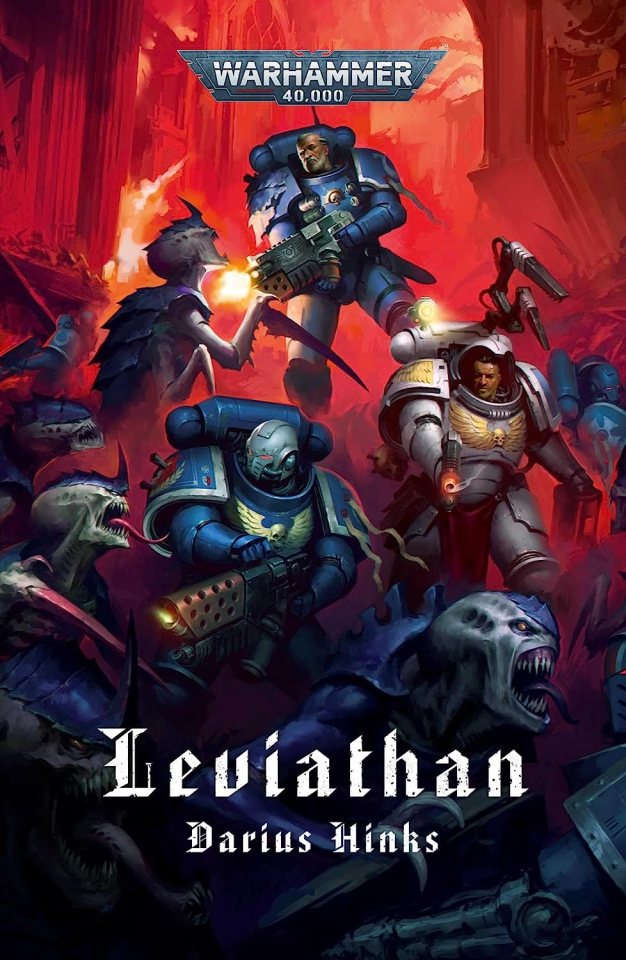
Warhammer 40,000: Leviathan by Darius Hinks

Warhammer 40,000 - Leviathan Cover

Publisher: Black Library (Audiobook – 24 June 2023)

Series: Warhammer 40,000

Length: 12 hours and 13 minutes

My Rating: 4.5 out of 5 stars

Amazon

Prepare for all-out war as the righteous Ultramarines battle the insidious Tyranids in this epic new Warhammer 40,000 novel from Darius Hinks, Leviathan.

It has been a pretty good year for Warhammer 40,000 fiction already, with several fantastic novels coming out in 2023, including Warboss and The Lion: Son of the Forest by Mike Brooks (the latter being one of my favourite books from the first half of 2023), and Shadowsun: The Patient Hunter by Phil Kelly.  However, the hits are far from over, especially as there are several fantastic new Warhammer 40,000 novels set to come out later this year.  But before we get to those, I managed to jump onto another recent release with the outstanding novel Leviathan, written by established Warhammer author Darius Hinks.  Hinks was a new author to me, but I soon grew to appreciate his latest book, especially as it showcased a dark and intense alien invasion that made for a great story.

In the far future of the 41st millennium, the besieged Imperium of Man faces many threats, but few are more deadly, unstoppable, or insidious as the unrelenting and seemingly endless hordes of the Tyranids, an alien race determined to devour everything it encounters.  While several of the larger invading Tyranid fleets have been destroyed, a splinter tendril is making its way towards the galactic centre, threatening the very heart of the Imperium.

Standing in the way of this fleet is the fortress world of Regium, an ancient planet recently taken over by Imperial forces, it now serves as a bulwark against invasions heading towards the inner-Imperium.  Many believe that Regium is secure from all threats, but when the people of the planet are haunted by parasites, strange cults, and mysterious dreams of terrifying monsters, it soon becomes clear that a Tyranid swarm is about to descend upon them.

It falls to the decorated hero, Lieutenant Castamon of the Ultramarines, to hold Regium against the foes and keep the rest of the Imperium safe.  A veteran of many battles, Castamon believes that this new Tyranid fleet will be swiftly destroyed.  However, these Tyranids are led by something far more sinister than the Ultramarines have encountered before, something cunning and ruthless that is able to disrupt minds and outthink even the cleverest of humans.  With his forces split, Regium’s defences compromised, and his allies panicking, even the vaunted Lieutenant Castamon may be unable to save Regium from the Tyranid invasion.  However, Castamon has one last trick up his sleeve, the brilliant Ultramarine Apothecary Biologis, Vultis, whose research into the Tyranid biology might be the only thing that can stop them.  Unfortunately, the enemy knows all about the Ultramarines and their plans, and the deadly creature known as the Harbinger is coming for them.

Leviathan was a pretty awesome and intense Warhammer 40,000 novel that shines a real spotlight on one of the more insidious alien races in the canon.  Featuring a strong and at times terrifying narrative, Leviathan was a great read, and I really got caught up in Hinks’s fantastic book.

Hinks pulls together an excellent story for Leviathan, and it is one that will appeal to a range of different readers, especially those fans of Warhammer 40,000 fiction.  Set around the already troubled planet of Regium, Leviathan follows an intriguing range of different human/space marine characters as they attempt to make sense and prepare for a Tyranid invasion of their world.  The early parts of the book are dedicated to introducing the key characters and the overall setting of the story, while also attempting to cast a more psychological edge to the main story as visions, doubts and other insanities haunt the populace.  There are some great early action sequences, including a disastrous shipboard incursion, and a dark hunt in some interesting terrain, and Hinks works well to set up for the second half of the book, especially as several unique, character driven stories were introduced and given some early weight.  While I enjoyed a lot of this set up, I did find the first half of the story to be a bit slow with its pacing and I was initially having trouble getting too invested in any of the characters or story elements.  However, this changed when I got to the second half of the book.

This second half masterfully builds on all the setup and character development that occurred at the start of Leviathan and readers are in for a particularly intense and gruesome narrative from this point on.  This entire second half is dedicated to the full-on invasion of Regium, as swarms of aliens, including some new creatures, emerge to decimate the populace and challenge the protagonists.  Each of the character focused plot lines set up in the first part of the book, as well as a few additional story inclusions, are perfectly thrust into this overlying chaos, and you get to see them try to survive the oncoming horrors and monstrosities.  Hinks really pulls no punches when it comes to this Tyranid invasion, and you get to witness all the devastation, the deadly transformation of the planet, and the subsequent epic battles, as the Tyranids fight against the human and Ultramarine defenders in some epic and well-crafted set pieces.  Each storyline was really good in its own way, and together they formed a fantastic and at times over-the-top overarching narrative that successfully showcased just how overwhelming the Tyranids can be.  I loved how dark Hinks made Leviathan at times, especially as he had no qualms about killing off key characters in some particularly brutal ways, which really raised the stakes for the reader.  While I did think that a lot of the plot did rely a little on the narrative stupidity of certain characters (the Ultramarines kept forgetting everything they knew about the Tyranids), the second half of the book was extremely epic, and I had real trouble putting it down.  All the separate storylines were concluded in entertaining and fitting ways, and I particularly appreciated the final plan that Hinks introduced for the main protagonists, which really fitted the outrageous feel of a lot of the plot.  This brutal and continuously exciting second half really turned Leviathan into such a great read, and I really loved how the entire thing turned out.

Leviathan proved to be an interesting and compelling addition to the wider Warhammer canon, especially as Hinks took the opportunity to really dive into some of the factions and showcase how crazy they can be.  However, I know that Leviathan has been copping a little flack in this department, mainly because some people see it as merely a promotional novel tied-in with some of the recently announced Ultramarines and Tyranid models.  While I can definitely see that, especially as Hinks spends a lot of time highlighting some of the newer Tyranid creatures in his narrative, I still enjoyed Leviathan a lot.  His depictions of the Tyranids were one of the major highlights of the book, and I loved how much he upped the horror aspect of them, showing them to be ravenous monsters who alter and devour everything they encounter.  This might be one of the better portrayals of Tyranids that I have so far seen in Warhammer fiction, and they were certainly a lot less one-dimensional here than they are in other books.  Part of this was because of the inclusion of several newer Tyranid creatures, such as the Neurotyrant and the Norn Emissary, with both being shown as unstoppable monsters with interesting abilities.  This allowed the Tyranids to attack their prey in all new ways, and it was very fun to see the various intricate tactics they were able to come up with.  Hinks tempers some of the more commercial aspects of these creatures’ inclusion by not actually using the names of the models in Leviathan, instead all you have is the protagonist’s descriptions of them when they encounter them in person.  These personal and often deeply terrified accounts of the various Tyranid bioforms really help to showcase just how terrifying and alien they are, especially to the ordinary human, and it really added a great edge to the narrative.  This darker edge is further exacerbated by the author’s powerful examination of how the planet of Regium is altered once the Tyranids arrive.  The spores constantly raining down on the planet slowly poison the various humans as they breathe in, and the depictions of the protagonists dying from within as they inhale alien matter, while their skin starts to slowly melt is pretty damn memorable and terrifying, especially as this is the first step in turning all biological matter in the planet into edible goo.  Frankly, I don’t think I’ve ever experienced the horror that is the Tyranid better than in Leviathan, and Hinks’ brilliant use of this faction enhanced the entire book.

On top of the Tyranids, Leviathan also features another intriguing major faction, the all-time classic Ultramarines chapter of Space Marines.  I mostly liked how the various Ultramarine characters were featured in Leviathan, although I did think that Hinks could have perhaps done a little more to distinguish them from other general Space Marines.  Still, Hinks goes out of his way to make the Ultramarines as badass as possible, and you really get a sense of their courage and battle prowess, especially as the severally outnumbered Ultramarines (I won’t go into the logistics of Regium’s defence here, but it did seem a tad low for such a vital planet), managed to put up quite a showing against the Tyranid swarm.  Some of the fight sequences featuring the Ultramarines in combat were pretty damn epic, and while some Space Marines did die easily for plot effect (especially when going up against a Tyranid with a new model), I felt that Hinks did a good job highlighting just how dangerous a Space Marine can be.  Hinks really tries to cover various aspects of the Space Marines throughout Leviathan, including the reverence and respect that most normal people have for them, and while this might not be the absolute best portrayal of an Ultramarine detachment ever, it was still pretty damn good, especially in those fantastic fight sequences.

I also must highlight some of the great characters featured within Leviathan as Hinks comes up with a diverse and compelling cast to tell the story with.  Thanks to the way the story is set out, each of the key plotlines revolves around some excellent characters, each with their own motivations, missions, and big moments, as they try to weather or escape the oncoming Tyranid doom.  Hinks crafts some great storylines for each of these major characters, and it proves easy to get invested in them, such as the tale of two ordinary farm workers who try to escape the monsters around them, the hapless Governor who finds himself out of his depth, or the proud Cadian leader who is drawn into war by the machinations of a delusional priest.  However, some of the best characters in Leviathan are members of the Ultramarines, and much of the story focuses on the elites of this chapter on Regium.  I really enjoyed these major Ultramarine characters, including the bold Lieutenant Castamon, the heroic leader who lives up to all the hype, the Apothecary Biologis, Vultis, whose analytical mind and desire for knowledge might hold the key to victory, and even the arrogant Sergeant Tanaro has his moments, especially in that powerful last scene.  However, my favourite character in the book is probably the scarred Ultramarine Baraca.  Baraca is a seemingly unkillable figure who has survived an insane amount of damage, but who has grown detached from even the rest of his battle brothers.  Despite appearing to be a mindless brute, Baraca is a deep and complex figure whose friendship with Vultis provides some emotional power to their scenes together.  Baraca honestly steals every scene he is in, especially his last, and Hinks writes a great storyline around him as he courts death, while trying to find his place in life.  All these characters, and more are very well written, and the impact they have on the plot is pretty impressive.

Like most Warhammer 40,000 content that I absorb, I chose to listen to Leviathan’s audiobook format, which is such a fantastic way to enjoy these intense stories.  I think that I made the right choice when it came to Leviathan, as this amazing audiobook really helped to throw me into the midst of the action.  Narrator Theo Solomon did an excellent job of setting a fast pace with his narration, and his descriptions of the massive battles, compelling heroics, and gruesome aliens was very fun to listen to.  While I wasn’t always the biggest fan of some of the character voices that he came up with, Solomon did produce some excellent tones for some of the main characters, particularly that of Lieutenant Castamon, who is made to sound very heroic and bold, which worked to showcase this intriguing protagonist.  As such, I felt that this was an excellent way to enjoy Leviathan, and with a run time of just over 12 hours, this isn’t a massive audiobook to get through, especially once you get caught up in the impressive second half.  I had an awesome time with Leviathan on audiobook, and I recently featured it on my favourite audiobooks from the first half of 2023 list.

Overall, I think that Leviathan was a pretty good Warhammer 40,000 novel and I was pretty impressed with my first book from Darius Hinks.  While I did have some issues with the story, especially in the early goings, this ended up being a very memorable and captivating read, especially thanks to the use of the cool Tyranid faction.  Loaded with carnage, brutal fights to the death, and complex characters dealing with an oncoming horde of clever aliens, Leviathan was an outstanding novel that deeply enjoyed.

Amazon

Warhammer 40,000: Outgunned by Denny Flowers

Warhammer 40,000 - Outgunned Cover

Publisher: Black Library (Audiobook – 20 August 2022)

Series: Warhammer 40,000

Length: 10 hours

My Rating: 4.75 out of 5 stars

Amazon

One of the fastest rising stars of Warhammer fiction, Denny Flowers, returns with his second novel in the Warhammer 40,000 canon, Outgunned, a deeply compelling and epic novel with a twisty and powerful story.

Last year I was lucky enough to read an interesting and memorable Warhammer 40,000 novel, Fire Made Flesh.  The debut novel of Denny Flowers, who had previously written some interesting Warhammer 40,000 short stories, Fire Made Flesh was part of the Necromunda subseries and told a fantastic story about warring factions in a spooky underworld town.  I had a lot of fun reading Fire Made Flesh, and it ended up being one of the better debuts I read in 2021.  As such, I have been eager to see how Flowers was going to follow up this debut, and I was deeply excited when I saw that he had a new novel coming out, the intriguing Outgunned.

In the far future, the soldiers of the Imperium of Man fight monsters and aliens on many battlefields and there is always a need for fresh bodies to fill the gaps in the ranks.  That is where Kile Simlex comes in.  A talented propagandist, Simlex excels at creating moving cinematic picts to inspire the people and increase recruitment to the Astra Militarum.  However, Simlex desires greater realism and seeks to travel to a battlefield to gain real footage for his greatest pict yet.

Travelling to the fetid swamp planet of Bacchus, Propagandist Simlex plans to chronicle the adventures of the Aeronautica Imperialis, the brave flying aces who traverse the skies, fighting in deadly aerial combat against the rampaging ork hordes.  In particular, he hopes to make a pict about legendary fighter ace, Lucille von Shard, considered to be the greatest pilot in the Imperium, to turn her into a renowned hero.  However, not everything is as it seems on Bacchus, and Simlex’s attempts to get footage may cost him everything.

Soon after arriving, Simlex begins to realise that the war on Bacchus is not going to plan.  The undermanned Aeronautica forces are being overwhelmed by the supposedly crude orks who have created an elaborate fleet of fighters and are slowly destroying Imperial forces from a hidden base.  At the same time, a mysterious sickness is destroying the planet itself, while its governor is determined to downplay the war no matter the cost.

However, his biggest threat may come from his chosen subject, as Lucille von Shard is an arrogant and disobedient pilot who has only avoided execution due to her peerless flying abilities.  Determined to make the situation work, Simlex attempts to chronicle the reluctant Shard’s skills, while also investigating the strange occurrences on Bacchus.  But is even the legendary Lucille von Shard capable of defeating the mysterious enemy waiting for them within the clouds?  The Green Storm hungers for combat, and the entire Imperium may shake as it approaches.

This was a superb and deeply impressive Warhammer 40,000 read that really highlights Flower’s growing skill as a science fiction writer.  Containing a unique and highly addictive narrative, Outgunned was an outstanding read that blended an exceptional story with some impressive glances at the wider Warhammer 40,000 universe.  I had an amazing time getting through this book and it was one of the more exciting and compelling Warhammer novels of 2022 so far.

I must admit that while I deeply enjoyed Outgunned’s brilliant narrative, it honestly wasn’t what I was expecting when I first started reading it.  Rather than a completely combat/military focused story about battles in the sky, Outgunned is a powerful and intense story that spends just as much time examining the darker aspects of the Imperium of Man as it does facing off against the ork threat.  This becomes clear very early on, especially as the opening introduction from Simlex hints at the deceit, cover-up and lies that are to come.  However, I was still unprepared for the full extent of the fantastic narrative that Flowers came up with, as he blends a lot of complex themes and components with some exceptional character work and clever universe expansions to create something truly special.

Outgunned’s narrative starts off hard and fast, quickly introducing Simlex and his propagandist ways, as well as his intentions on Bacchus, before throwing him briefly into the fray and introducing his fellow protagonist, Shard.  From there, Simlex attempts to film the flying aces in action, but he soon begins to realise that the supposedly stupid orks have developed a giant fleet of sophisticated airships and are slowly winning the battle against the Aeronautica Imperialis.  As he attempts to learn more about this, he finds himself drawn into a major conspiracy as Bacchus’s governor is determined to minimalize the impacts of the ork invasion and is actively working against it.  This forces Simlex to engage in multiple efforts, including diving into the past of his desired subject, the prickly and secretive Shard and flying on several missions against the orks, only to discover just how organised and deadly they are.  At the same time, he also attempts to understand what is truly going on with Bacchus and its people, as he finds many strange elements to them, including a spreading disease and a corrupt leader.  These well set up storylines are not only quite compelling and intriguing in their own right but they come together to tell a complex and impressive story that I was deeply addicted to.  I loved the mysteries and intrigues featured within this story, and they blended extremely well with the more combat orientated aspects of the plot and the unique character interactions that Flowers included.  Everything comes together extremely well at the end, and I loved some of the brilliant revelations and secrets that come out as the story concludes.  The entire narrative leads up to an excellent final fiery confrontation with the orks, which ties in nicely to many of the story elements featured throughout the book.  This is an overall excellent and powerful narrative that will really draw you in, especially with its unique look at the Warhammer 40,000 universe.

I deeply enjoyed the way that Flowers set out Outgunned’s narrative as there are so many great elements to it.  Told in a chronicle format from Propagandist Simlex’s perspective as he recalls the events in a more realistic and negative light.  This works to tell quite an intriguing tale, especially as you get some hints of the events of the future, and the negative tint that Simlex gives to the book’s narrative was a fantastic overall tone.  Despite this interesting narration choice, this novel has a brilliant, fast pace to it and the reader is never left in a dull spot, as there is always some cool action, fascinating intrigue or powerful dive into a character occurring throughout.  I loved the balance of story elements, and I must highlight the fantastic moments where Simlex works on his propaganda picts and dives through his recordings of the events around him.  I also had a lot of fun with the outstanding ariel combat scenes that are featured through the plot.  While they aren’t as heavily featured as you would expect from a book about the Aeronautica Imperialis, there are still some great sequences that were very fun to see.  Flowers really captures the magic and brutality of combat in in the air, and I loved some of the crazy scenes that resulted, especially against the ork stronghold.  There is also a particularly good fight sequence in the middle of a swamp that was pretty awesome, especially as it showed one character’s particular ingenuity and fighting spirit.

Outgunned served as an impressive standalone entry in the Warhammer 40,000 universe, and I deeply enjoyed how self-contained the narrative turned out to be.  Flowers also did a great job explaining most of the relevant Warhammer 40,000 elements featured within Outgunned, and I felt that this book can be easily enjoyed by most science fiction fans, although established Warhammer fans will probably get the most out of it.  I loved some of the very unique Warhammer 40,000 aspects that Flowers featured in Outgunned, as the author came up with some fantastic new elements that added so much more to the story.  I personally thought that Flowers did a really good job examining the Imperium through his character’s eyes, and you really get to see a fun new edge to it.  Not only do you get to see the Aeronautica Imperialis in action, which will appeal to many Imperial Guard fans, but you also get a cool viewpoint of the Imperium’s propaganda department.  Watching the protagonist dive into the techniques and motivations of the Imperial propagandists is quite fascinating, and it gives another great edge to the already dark and gothic Imperium that make you understand that deep down, they really aren’t the good guys they try to make out.  Throw in a fun blast of Imperial politics, as a corrupt planetary governor can manipulate the Astra Militarum for their own selfish ends, as well as some dark viewpoints of the brainwashing of young soldiers that occurred to certain characters, and you have a great, cynical view of the Imperium that I deeply enjoyed.

I was also quite impressed with the intriguing and cool viewpoint of the orks contained in Outgunned.  2022 has been a pretty good year for fascinating ork novels, such as Ghazghkull Thraka: Prophet of the Waagh! and Catachan Devil, and Outgunned offered another great look, even though you rarely get to see the creatures in person.  Instead, Flowers offers an interesting look at them through the human characters’ eyes as they try to work out just how these supposedly crude creatures are winning the war for the skies over the planet.  Watching the characters slowly realise just how ingenious and clever the orks really are is pretty fun, especially as the propagandist main character has spent most of his career showing them as stupid beasts.  As such, the book shows many fantastic examples of the complex ork culture through the eyes of characters who really don’t understand it, which I think worked to make it appear a lot more interesting and mysterious.  Established fans of the ork faction (and what Warhammer fiction reader doesn’t love the orks?), will have a blast watching the characters, especially the sheltered Simlex, try and understand their motivations and tactics, and I felt that it was a great way of showcasing the orks without having a major ork character present.  I deeply enjoyed all the awesome Warhammer 40,000 elements contained with Outgunned, and it really proved to be an amazing entry into the wider canon.

I also must quickly mention the outstanding setting of the planet Bacchus, where the entire narrative took place.  A swamp world with little agricultural value, Bacchus proves to be an unlikely battleground for the forces of the Imperium; however, with an influential governor and a corrupt ruling class enjoying the wine that it produces, it soon becomes a major warzone.  While I quite enjoyed this further example of how corrupt the Imperium is, its main benefit as a setting is the way that Flowers makes Bacchus appear as unpleasant and deadly as possible, and it provides a very distinctive and memorable background for many of the book’s fantastic scenes.  The sickly swamp setting comes across in vivid detail, and you can feel the terrible sucking feel of it, as well as the many dangers in contains.  If that wasn’t bad enough, Flowers also inserts in a mysterious rotting disease that is making Bacchus even more deadly and hostile.  This disease is worked into the larger story beautifully, and it helps to give Bacchus even more of a rotting, decaying feel that makes you wonder why anyone is still fighting the orks for it.  I deeply appreciated this unique and fantastic Warhammer 40,000 setting, and Flower’s masterful portrayal of it deeply enhanced Outgunned’s excellent story.

I also must talk about the outstanding characters contained within Outgunned as Flowers worked to create some impressive and complex central protagonists.  While there are some great supporting figures throughout Outgunned, I am going to limit myself to the main two characters who most of the story revolves around.  The first of these is Propagandist Kile Simlex, a renowned pict maker and artist who has dedicated his life to making inspirational films that inspire mankind and get them to fight the Imperium’s enemies.  Not only is this a very cool position in the Warhammer 40,000 canon, but Flowers writes Simlex in a very compelling way.  I loved how the character’s narration allows you to see the cynical hindsight of Simlex after he survived the events of the book and recounts his adventures, and it was fascinating to see the character slowly lose his faith in the Imperium and the system he has always served when confronted with the events of this book.  The constant danger, political selfishness, betrayal, misinformation and disdain of the soldiers he is trying to help really get to him as the novel progresses, and you really see him start to doubt himself.  Flowers writes some beautiful scenes around this, and the realisations that he has about the Imperium and his role in its continuing exploitation are great, even if they come back to bite him.

I also deeply enjoyed how Flowers paired Simlex with three servo-skulls who are linked to him mentally.  These skulls (literal skulls that have been turned into drones) are specifically altered to act as Simlex’s cameras, and he uses them to record the combat footage and gather information as he attempts to unravel the conspiracies of Bacchus.  The powerful link he has to these skulls ensures that his mind is often split between different perspectives, and he often views the world through these robotic eyes.  This unique method of viewing the world becomes a key part of Simlex’s character, and it was fascinating to see how connected he was to his floating skulls, who almost become characters in their own right.  Simlex proved to be an impressive centre for this entire narrative, and his dark and compelling view of the world really helped to shape this awesome book.

The other major character is Flight Commander Lucille von Shard, the greatest fighter ace in the Imperium, who Simlex is hoping to base his pict on.  Shard is the scion of a legendary Imperial family whose members are serving the Imperium in distinguished roles.  However, rather than being a dutiful solider, Shard is a brash, arrogant and rude figure who knows she’s the best, even when drunk, and is happy to tell everyone she knows.  Always depicted with a sneer on her face, Shard appears not to care about her position, and only truly loves flying, drinking and fighting.  Initially disrespectful of Simlex and everything he represents, the two eventually begin working as an antagonistic team against the orks, and Simlex soon sees Shard in a new light, especially once he discovers that much of her persona is an act.  Flowers does a truly fascinating dive into Shard throughout Outgunned, and she is easily the most interesting and complex characters in the entire novel.  There is so much hidden pain, unreasonable expectations and personality issues surrounding this character, and the hints about what drives her and the realities of her family and her past are just brilliant.  Shard honestly had a perfect character arc and Flowers did something special with this protagonist.  I honestly don’t think that Outgunned would have been as good as it was without Shard, and I had such an outstanding time getting to know her and seeing the complex backstory the author wove around her.

Like most of the Warhammer novels I enjoy, I chose to check out Outgunned in its audiobook format, which was pretty damn epic.  I loved how well the Outgunned audiobook turned out, and the format really enhanced the impressive, action-packed narrative.  The audiobook moves the already great story along at a brisk and fun pace, while also highlighting the excellent characters.  With a run time of 10 hours, this is a pretty quick audiobook to get through, and I managed to power through it in a few days.  I was particularly impressed with the voice work of narrator Phillip Sacramento, who does a wonderful job reading out this compelling book.  Sacramento has a brilliant voice for the dark gothic narrative of Outgunned, and I felt that this Irish accent gave the overall narration a little more gravitas.  I deeply enjoyed the great voices he attributed to the various characters of Outgunned, and every cast member was given a fitting voice that really worked for them.  I felt that Sacramento really captured each of these characters extremely well, and you get a real feel of their rough emotions as they attempt to navigate the terrible situations of the book.  I particularly liked the voice that was used for Lucille von Shard, as the sheer arrogance of the character practically drips into your ear, only to occasionally be replaced by a different emotion as her barriers break.  This outstanding narration added so much to my enjoyment of Outgunned, and this ended up being an exceptional way to enjoy this brilliant book.  As such, this format comes very highly recommended, and it is easily the best format to enjoy Outgunned.

With his second novel, Outgunned, Denny Flowers really showed the world what he is capable of as a Warhammer 40,000 author.  With its outstanding and captivating narrative, Outgunned rose above the author’s previous novel and was one of the better Warhammer 40,000 novels of 2022 so far.  The author wove some brilliant layers into this impressive read, and I loved the incredible characters, memorable setting and fascinating Warhammer elements that enhanced the clever story.  A must-read for all Warhammer 40,000 fans, Outgunned was an absolute pleasure to read and I can’t wait to find out what Flowers has planned next.

Amazon

The Crimson Thread by Kate Forsyth

The Crimson Thread Cover

Publisher: Vintage Books Australia (Trade Paperback – 5 July 2022)

Series: Standalone

Length: 360 pages

My Rating: 4.5 out of 5 stars

Amazon     Book Depository

One of Australia’s premier authors presents another compelling and powerful historical drama with The Crimson Thread by Kate Forsyth.

Kate Forsyth is a very talented Australian author whose work I have long been a fan of.  While Forsyth is best known these days for her intense historical dramas, I personally am a big fan of her The Witches of Eileanan series, which I read when I was younger.  The Witches of Eileanan books, which were Forsyth’s debut series, follows a group of powerful magical users in a troubled fantasy realm filled with dragons, mages and monsters, as they attempt to overthrow a dark anti-magic tyrant and save the world from multiple impending threats.  Filled with great characters, impressive magic, a complex setting and some brilliant and occasionally dark storylines, this was a particularly awesome and epic series, and it was among the earliest fantasy books that I ever checked out.  I deeply enjoyed The Witches of Eileanan books and the sequel Rhiannon’s Ride series, and I have been meaning to reread them all for a while.  In the meantime, I decided it would be good to check out one of her more recent works with The Crimson Thread.  This intriguing and captivating historical drama is a lot more consistent with Forsyth’s current writing focus and I was very interested in seeing something from this genre.

By May 1941, the Nazis have conquered Greece and the island of Crete lies before them as the next land to control.  As the island prepares for invasion, young Cretan woman, Alenka, attempts to find some semblance of normality amongst the chaos, but chance meetings with two Australian soldiers stationed on the island will change her life forever.  When the Germans finally invade Crete in a massive and long-running battle, Alenka finds herself stuck in the middle of the fighting and eventually chooses to hide the Australians when the Germans win.

These two soldiers are Jack and Teddy.  Lifelong best friends, the rambunctious Teddy and the shy, scholarly Jack, joined the army together to see the world, only to get caught up in the chaos of the war.  Separated during the retreat to Crete, Jack and Teddy manage to reunite on the island, with both falling for the alluring Alenka upon meeting her.  When the Germans invade and they are trapped behind enemy lines with no hope of escape, both go to ground, seeking out help from Alenka and her allies in Crete’s resistance movement.

As the Germans tighten their hold on the island, Alenka, Jack and Teddy find themselves in constant danger as they attempt to find some way for the Australians to escape.  However, their attempts to evade the Nazis are not their only trouble, as Jack and Teddy’s once close friendship starts to deteriorate through jealously and anger.  Worse, Alenka’s brother, Axel, is a dangerous Nazi collaborator, whose long simmering anger and resentment threatens everything Alenka holds dear.  As Axel searches for a way to destroy his sister and her friends, all will be forced to make some hard choices, both on the battlefield and in love.

This was a deeply moving and highly detailed historical drama from Forsyth that I had a wonderful time reading.  Balancing a captivating historical tale of invasion in a unique World War II setting with a powerful tale of romance, broken friendships and family betrayals, The Crimson Thread is an outstanding novel which really highlights Forsyth’s impressive skill as an author.

The Crimson Thread has an excellent and fast-paced narrative that quickly drags readers in with the wartime action and keeps them there with the subsequent drama and tragedy.  Told from various intriguing perspectives, The Crimson Thread does a great job of quickly introducing you to the key characters and settings before bringing the terror in the form of a sudden and devastating Nazi invasion.  What follows is captivating tale of survival, endurance and resistance, as the three central protagonists attempt to evade and outwit the occupiers while also dealing with their own simmering feelings of love, betrayal and jealousy.  Forsyth weaves together some hauntingly tense and moving scenes throughout this narrative, as you see the characters thrust into all manner of dangerous and tragic circumstances amid the horrors of war.  The entire narrative has an excellent blend of action, high-stakes espionage and deep personal drama that I found myself really drawn to, all of which fits together perfectly with the distinctive setting and period.  The entire narrative takes place over the course of several years, and I deeply appreciate the long-term storylines that Forsyth utilised as you got to see the various characters grow and change throughout the war, often for the worst.  I loved the focus on camaraderie, identity and historical pride that was worked into the story, and all the unique plot points come full circle by the end.  Forsyth ends the entire excellent story of survival and war on a tragic, but hopeful note, and while you may end up with some conflicting feelings about the fates of some of the focal characters, readers are going to come away from The Crimson Thread both moved and satisfied with the story conclusion.

One of the things that I have always appreciated about books set during World War II are the sheer number of unique stories that can be written, as there were so many different battlefields, conflicts and personal dramas that resulted from them.  While I am fairly knowledgeable about history and World War II, I honestly knew very little about the occupation of Crete during the war, nor did I realise that Australian and New Zealand soldiers were stationed there when the Germans invaded.  As such I was pretty in the dark when it came to the historical context of the novel, but Forsyth was well on hand here and spent substantial time exploring the entire Nazi conquest and occupation of Crete during the war.  Everything is covered here, including the initial 11-day battle to take control of the island, the subsequent disorganised evacuation of Allied forces, the harsh occupation of the Cretans, which included several massacres, the resistance movements, and everything else that occurred from first day to the end of the war.  I was particularly intrigued by the role that Australian troops played during this conflict, and Forsyth made sure to really highlight why they were there and the various hurdles they faced during this war, including being trapped behind enemy lines with few options to escape.  All of this is worked into the story in a clever and impressive way, and the various characters find themselves involved in many of the key events, either as witnesses or participants.  You really find yourself getting drawn into the midst of these compelling historical events, and I personally found it incredibly fascinating to see them, especially as Forsyth did some substantial research for this book.

I also really appreciated Forsyth’s dive into the culture, history and iconic landscape of the main setting of Crete.  Most of this book takes place on this beautiful island, and I felt that Forsyth really captured the heart and soul of Crete and its people throughout the story.  There are some compelling dives into the identity and culture of the Cretan people, including the importance of their dress, their customs, their speech, and their defiant nature.  Due to most of this explanation being done to show the undercover Australian citizens how to blend, it proves to be very informative, and readers without much pre-knowledge of Crete come away with a lot of detail and appreciation for its people.  There are also some fun dives into the history of the island, particularly its ancient association with legend of the Minotaur and palace of Knossos.  Due to my background in archaeology, I found this to be extremely interesting, especially as there are also some compelling depictions and discussions about the famous excavations that took place on Crete during this period.  Throw in some breathtaking and highly detailed descriptions of the various environments and settlements on Crete, including its treacherous and massive mountains, which serve as a great setting for some particularly intense scenes, and you get an outstanding appreciation for this island.  All of this is utilised in The Crimson Thread’s story really well, as the characters, like the reader, really get to know the island and how it impacts many of their decisions and actions.

Forsyth also came up with some excellent and distinctive characters for The Crimson Thread, and their unique and emotionally rich storylines are a powerful part of this great book’s story.  This includes Alenka, who finds herself caught between her culture, her troubled family past, and her attraction to the two Australian soldiers she grows close to.  Despite primarily being shown as a strong and clever woman, Alenka goes through some real tragedies and trauma in this book that slowly wear away at her psyche.  I found it fascinating to see her growth throughout the book, as well as her attempts to overcome the various obstacles and indignities that come her way.  Alenka was really well counterbalanced by her brother, Axel, a dark and dangerous youth who serves as the book’s central antagonist.  Initially shown as a youth who grows into a dangerous teenager throughout the narrative, Axel is a complex figure.  A half-Cretan boy who is the result of an extramarital affair with a German archaeologist, Axel has borne the shame of his heritage for most of his life and endured the ridicule and disdain of everyone on the island.  Focusing on his German heritage, Axel becomes obsessed with Hitler and the Nazis and quickly grows to be a valuable collaborator for the occupiers, helping them root out the resistance and hidden Allied soldiers.  While he is an extremely repulsive and evil figure, you fully understand while he idolises the Nazis and tries to join them because of how well Forsyth explored Axel’s motivations and past.  Forsyth writes a very dark storyline around Axel, and it was fascinating to see him corrupted by both his own unfair past and the invading Nazis.

The other two main characters are the Australian soldier protagonists, Jack and Teddy.  Despite being old friends, these two are very much the opposite of the other, with Teddy being a wild, confident and arrogant figure, while Jack is a kind and shy man with a stutter.  While you wouldn’t think that they would be friends, Forsyth does a good job establishing their bond, and you fully understand why they are close to each other.  Both characters are interesting in their own right, and I appreciated how Forsyth highlighted their differences and showed how their relationship eventually broke down over their mutual attraction to Alenka.  Teddy’s slow crawl from causal larrikin to arrogant jerk is subtle, but well formed, and the author shows some compelling, but damning, change in views in his mind throughout The Crimson Thread.  Jack, on the other hand, grows from unconfident scholar to strong-willed fighter, all thanks to his love of Alenka.  I loved how Forsyth showed all his artistic skills and passions, such as poetry, as a strength, and it was pretty fun to see him succeed in the specialised spy school both characters end up in.  This poetry actually had an interesting role in the wider book, and you can see a great example of it at the start of different chapters.  Forsyth really excelled at creating some amazing and captivating character arcs throughout The Crimson Thread, and I had an outstanding time getting close to these figures and experiencing their triumphs and dark pains.

Overall, The Crimson Thread was a wonderful and deeply moving read that ended up being one of the better historical dramas I have read this year.  Kate Forsyth continues to shine as an extremely talented Australian author, and I had fun exploring a book from her current genre of choice.  Featuring some damaged characters, a powerful story and some exquisite dives into Crete and its wartime history, The Crimson Thread is a captivating and clever novel that I had an outstanding time reading.

Amazon     Book Depository

The Riviera House by Natasha Lester

The Riviera House Cover

Publisher: Hachette Australia (Trade Paperback – 1 September 2021)

Series: Standalone

Length: 452 pages

My Rating: 4.25 out of 5 stars

Amazon     Book Depository

Bestselling Australian author Natasha Lester returns with a powerful and intense historical drama that presents a multigenerational tale of love, loss, culture, and the horrors of the Nazi occupation of France, in The Riviera House.

Paris, 1939.  With the war about to start and fears of a Nazi invasion becoming more apparent, Éliane Dufort, a young art student who works part time at the Louvre, watches the staff store away the gallery’s most expensive artworks and begin to hide them throughout France.  Determined to survive the upcoming war, the last thing Éliane should have done was fall in love, however when she meets one of her brother’s friends, Xavier, she cannot help herself, and they soon begin a whirlwind romance.  However, with the Nazis right outside of Paris, Xavier leaves for England, breaking her heart.

With Xavier gone and most of her family killed by the Nazis as they tried to flee the city, Éliane vows to fight the invaders by any means necessary.  Her connection to the Louvre lands her a job working for the enemy in the vast warehouse the Nazis are using to store the artwork looted from France.  Working with the legendary Rose Valland, Éliane is tasked with recording every single piece of art that the Germans steal, as well as attempting to discover where they are being sent.  However, Éliane soon gains the unfortunate romantic attention of a powerful Nazi officer, while a returning Xavier, now a treacherous art expert working for Hermann Göring, threatens to destroy her cover.

Many years later, vintage fashion expert Remy Lang travels to the French Riviera and arrives at a beautiful house that was part of a mysterious inheritance from her unknown biological parents.  Hoping to escape from her intense grief at the loss of her husband and child, Remy soon becomes involved with a visiting family living at the neighbouring villa, including charming photographer Adam.  As she attempts to understand her feelings for Adam amidst her sorrow, Remy soon stumbles upon a shocking mystery when she chances upon a catalogue detailing artworks stolen from France during the war, which includes a painting that hung in her bedroom as a child.  Determined to get to the bottom of this mystery, Remy attempts to trace her past and the history of the unexplained painting.  But the story she uncovers is one of great tragedy and shocking revelations that will change everything Remy thought she knew about her past.

This was an outstanding and deeply impressive historical drama from Natasha Lester, who has previously written some great historical dramas, such as The Paris Secret and The French PhotographerThe Riviera House is a particularly compelling and intense novel that perfectly brings two separate timelines together into one moving narrative, while also focusing on two distinctive and complex groups of characters.  This results in a brilliant and moving read that is guaranteed to haunt you long after you finish reading.

Lester tells a deep and captivating tale in this novel that is moving, intense and very addictive to behold.  The author utilises a split timeline throughout The Riviera House, with one storyline set during World War II in Paris, while the other is based in the modern day and takes place in several locations, although primarily in the French Riviera.  The book jumps back and forth between these two timelines, with the speed of transition increasing the closer it gets to the conclusion.  Both storylines contain their own plot, characters, and interesting features, and they come together to form quite an intense overarching narrative.

The first storyline of The Riviera House is the World War II storyline, which follows the character of Éliane Dufort.  Éliane, after suffering several great losses because of the Nazi invasion, becomes embroiled with the French Resistance and soon gets a job working for the Nazis, assisting in their loot warehouse, and helping historical figure Rose Valland create her record of stolen works.  However, the story gets increasingly complicated as the book progresses, with Éliane torn between her remaining family, her love/hate relationship with the traitor Xavier, and her forced relationship with a powerful Nazi member who has fallen for her.  The entire story comes to a head in the closing days of the Nazi occupation, when Éliane is forced to risk everything dear to her, and soon encounters just how tragic the war is and how evil people can be, even those closest to you.

This part of The Riviera House is an amazing bit of historical fiction, exploring the history of the time while also featuring an emotional and moving tale of love, hope and courage.  I really connected with this half of the novel, due to the thrilling and intense story that shows a grim picture of the period and featuring some memorable moments.  The story of Éliane and her family is full of tragedy and suspense, and if you are looking for a happy read than you have come to the wrong place.  While I did see most of the major twists coming, I appreciated how this narrative came together, as well as the clever way it led into The Riviera House’s other timeline.  I also deeply enjoyed the unique historical aspects of this novel, particularly around the Nazis’ systematic looting of French art.  Lester really dove into this part of the war, providing a detailed account how the Germans stole the art, stored it, and eventually shipped it away as the war progressed.  This tale features several real-life historical figures who are worked into the plot extremely well and who add an extra layer of authenticity to the tale.  One of the most interesting historical figures is Rose Valland, the courageous art historian who risked everything to pull together a record of the looted artwork.  Valland, who has inspired characters in films such as The Train or The Monuments Men, was a fascinating character in this novel, and I liked how Lester tied Éliane’s story into that of Valland.  I felt that this examination of the Nazi art theft was both fascinating and cleverly utilised, and it helped to provide some extra power and intensity to the novel.

The other timeline in The Riviera House is based in modern times and follows Remy Lang, a fashion figure who is spending time in the French Riviera, trying to escape her grief over the tragic death of her husband and child, and soon meets some new people who help her move on.  This storyline was more of a pure dramatic tale and focuses on Remy’s grief, her new romance, and the friction brewing between the family she has just met.  I got quite attached to the potent emotional elements featured in this book, especially as Lester really focuses on the lingering impacts of grief, such as the guilt survivors feel when thinking about something new or considering moving on.  Add in quite a compelling mystery element to it, as Remy and her new friend Adam start investigating the connection that Remy had to the other story, such as her long-dead biological parents and several mysterious inheritances.  These connections to the storyline set in the past compliment the protagonist’s current issues and concerns extremely well, and it was really fascinating to see her work out how her life was shaped by the original protagonists many years before.

I ended up really liking both timelines within the novel, although I did prefer the storyline set in World War II due to its interesting historical research, complex characters riven by war, and terrible tragic moments.  I must admit that I am not usually the biggest fan of historical dramas that feature two separate timelines (it really is an overused device in historical dramas).  However, I think that it was utilised extremely well in The Riviera House, and the two separate storylines melded together into a fantastic overarching read.  I loved how Lester was able to provide subtle hints about the fate of the historical protagonists in the contemporary storylines, although the full revelations about them was often hidden and not revealed until later.  I also really appreciated finding out how the events of the World War II story led into the later plot, and the full truth about how everything occurred is not only great to behold in the historical storyline, but it also has some major impacts on the modern-day protagonist.  This really enhanced The Riviera House’s plot and the overall drama of the book, and it helped to produce an excellent overall narrative.

I also quickly wanted to highlight some of the cool and fascinating cultural elements that Lester slipped into her novel, particularly around art and fashion.  I already mentioned how much I enjoyed the interesting and in-depth examination of the Nazis’ looting and the plans to stop them, however, I also appreciated the way in which Lester examined the art itself, as well as the people who were fighting to protect it.  You really get a sense of the beauty and subtlety of the different artworks featured throughout the book, but more than that you also get to explore what makes people passionate for art.  This book contains several characters who appreciated the true value that this art had to themselves and the nation, so much so that they were willing to risk their lives for it.  This forms a major part of the historical storyline’s plot, and I think that Lester did a wonderful job exploring it.  In addition, the contemporary storyline features a compelling examination about the appeals of vintage fashion.  Lester, who has previously explored fashion in some of her past novels (for example, a major part of her previous novel, The Paris Secret, revolves around vintage gowns), did a good job explaining the current obsession with vintage fashion, as well as how people can make money off it.  While I usually care very little about any sort of clothing fashion, Lester’s descriptions proved to be very intriguing, and I found myself appreciating her obvious passion for the subject.  Both these cultural inclusions enhanced the story, especially as they were strongly related to the various protagonist’s motivations and obsessions, and I really appreciated they time that Lester took to feature them.

Overall, I felt that The Riviera House by Natasha Lester was an excellent and well-crafted historical drama with some powerful elements to it.  Lester did a wonderful job of crafting a compelling, multi-period storylines that combined historical and contemporary narratives into a single, moving tale.  I particularly enjoyed the cool focus on the Nazi occupation and art obsession, which resulted in a thrilling and very tragic tale.  The Riviera House is a highly recommended book and a must-read for all fans of historical drama.

Amazon     Book Depository