
Throwback Thursday – Warhammer 40,000: Malleus by Dan Abnett

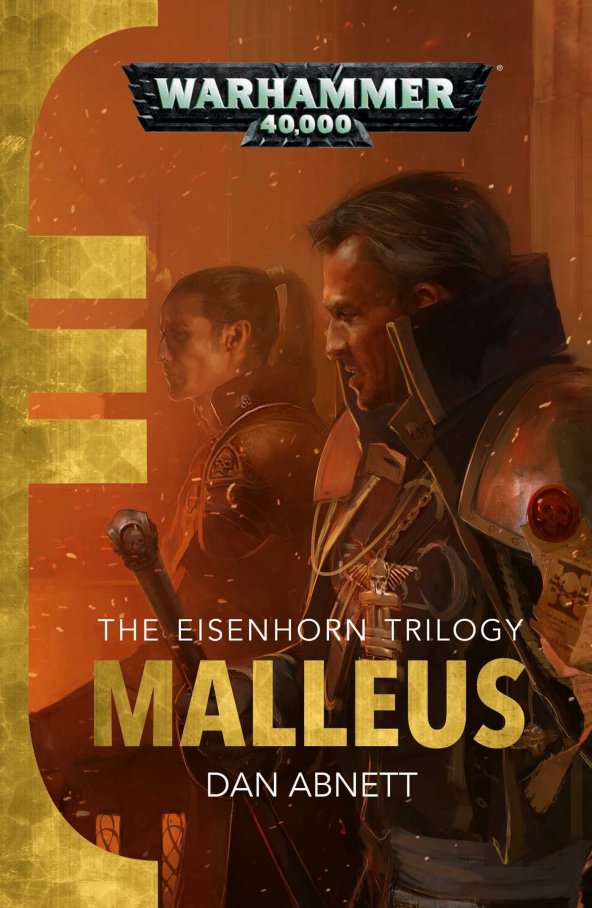
Warhammer 40,000 - Malleus Cover

Publisher: Black Library (Trade Paperback – 27 December 2001)

Series: Eisenhorn – Book Two

Length: 10 hours and 13 hours

My Rating: 5 out of 5 stars

Amazon     Book Depository

Welcome back to my Throwback Thursday series, where I republish old reviews, review books I have read before or review older books I have only just had a chance to read.  For this week’s Throwback Thursday, I continue my extensive dive into the Warhammer 40,000 universe with the awesome, galaxy-spanning thriller, Malleus by Dan Abnett.

For one of my latest Throwback Thursday reviews, I took a look at one of Dan Abnett’s iconic Warhammer 40,000 novels, Xenos, the first book in the incredible Eisenhorn trilogy.  This fantastic book, which followed Inquisitor Gregor Eisenhorn, a hunter of dark influences in the Imperium of Man, was a clever and compelling read that saw Eisenhorn face off against a range of terrible foes who seek to destroy humanity from within.  I had an outstanding time with Xenos, which really showcased Abnett’s skill as an author (I have also really enjoyed his Gaunt’s Ghosts novels, including First and Only, Ghostmaker and The Vincula Insurgency).  Indeed, I enjoyed it so much that I quickly decided to continue the Eisenhorn trilogy by listening to the second book in the series, Malleus, another exceptional read that takes its protagonist on another dark and engrossing adventure.

In the 41st Millennium, the dark enemies of mankind, whether they be heretical, daemonic, or alien in nature, continue to try and destroy the Imperium of Man from within.  It falls to dedicated inquisitors, such as Gregor Eisenhorn, to battle their malign influences by whatever means they deem necessary.  But what happens when the very institutions that Eisenhorn has long fought to uphold are turned against him?

Whilst battling against deadly alien influences on an isolated planet, Eisenhorn is made aware of certain allegations against his character which suggest that he has been corrupted by the influence of Chaos.  Initially planning to ignore the rumours and continue his vital work safeguarding humanity, his plans are put on hold when a terrible act of destruction unfolds on the planet of Thracian Primaris.  Investigating its causes, Eisenhorn is thrust into another deadly conspiracy, one tied to a foe he last encountered 100 years before, the daemonhost Cherubael.

Chasing after Cherubael and his minions, Eisenhorn attempts to discover what their latest unholy plan is.  However, his investigation reveals that Cherubael is just a pawn, and that the true mastermind of the plot he has uncovered may be a fellow inquisitor.  However, before Eisenhorn can find and confront them, he himself is declared a heretic and renegade by puritan members of his order, forcing him to flee.  Chased by the members of the Ordo Malleus, as well as other deadly hunters loyal to Imperium, Eisenhorn must work outside the bounds of his usual authority to prove his innocence and find the true culprits.  But to defeat his enemies, Eisenhorn may be forced to cross a dangerous line and become the very thing he has sworn to destroy.

Damn, Abnett was on a major roll when he wrote the Eisenhorn novels, as the second book, Malleus, is getting another five-star rating from me.  Brilliantly combining a taut and intrigue-laden plot with the darkest elements of the Warhammer 40,000 universe, Malleus is an addictive and powerful read that proves near impossible to stop listening to.

Malleus has an incredible story that I found to be pretty damn addictive.  Set 100 years after the events of Xenos, Malleus continues to follow Inquisitor Eisenhorn as he investigates several malign cults and figures throughout his sub-sector of space.  The story soon ties into some of the lingering storylines from Xenos as the daemonhost Cherubael makes another appearance, framing Eisenhorn as a heretic.  After a massive and suitably destructive series of events, Eisenhorn is thrust into a whole new investigation, trying to finally hunt down the figures that vexed him during the events of Xenos.  Traversing the sector in pursuit of Cherubael and other rogue inquisitors, Eisenhorn finds himself thrust into battle after hopeless battle, and his constant losses war with his determination to finish the case.  The protagonist faces several major hurdles towards the middle of the book, including capture and imprisonment by a fellow inquisitor for false crimes.  Eventually escaping, Eisenhorn spends much of the book as a fugitive hunted by loyalist forces, which is an exciting new element that Abnett plays to full effect to enhance the plot.  The overarching mystery/conspiracy plot of the book comes together extremely well, and I loved the outstanding investigation angle that follows as Eisenhorn desperately tries to find the evidence that not only ends the threat but exonerates him.  This hunt for answers is actually set over a substantial period of time, mainly due to the delays associated with space travel, but this only increases the power of the plot as you witness Eisenhorn lose years of his life being hunted.  Everything leads up to a massive confrontation with plenty of bloody battles and dangerous decisions that leave several fantastic characters dead or damaged.  The ultimate conclusion is pretty impressive, especially as Abnett really starts to showcase his protagonist’s inevitable fall from grace here, and he leaves the book on a particularly dark note that was so damn awesome.

Just like with Xenos, Abnett has a fantastic writing style that really helps to enhance Malleus’s narrative and make the book very addictive and exciting.  Perfectly utilising an excellent chronicle style that allows you to see inside Eisenhorn’s head, you are swiftly drawn into the complex plot.  Abnett keeps up a swift and intense pace the entire way through, and you barely have a moment to stop and breathe before the next intriguing event takes over.  The blend of intrigue, Inquisition politics, sector-spanning conspiracies, complex character development, unique Warhammer concerns, and impressive action is a heady mix and you get really get caught up in the hunt for the antagonists and Eisenhorn’s fight to prove his innocence.  I loved how intense and deadly some of the crazy battle scenes got and Abnett has great skill at showcasing his characters in mortal danger.  His attention to detail also results in some breathtaking sequences, and I was really impressed by that epic parade sequence, especially its ultra-chaotic ending.  Abnett also takes the time in Malleus to set up some future storylines and alternate books, with some fun hints at novellas/short stories you should check out, while also quickly introducing his next major protagonist, Ravenor.  All these brilliant writing elements, and more, really help to drag you into this elaborate narrative, and I deeply enjoyed the more intrigue-focused stories that are the hallmark of the Eisenhorn books.  A worthy and powerful sequel to Xenos that really showcases the awesome characters and continues the outstanding and elaborate storylines.

I really loved the elaborate Warhammer 40,000 elements that Abnett featured within Malleus as the author dives right into the heart of the Inquisition and their battles.  Just like with Xenos, you get a great understanding of the various internal threats that the Imperium faces in this universe, as Eisenhorn attempts to combat various conspiracies and threats.  However, there is also a much deeper look at the inner workings of the often hidden Inquisition Ordos, especially as Eisenhorn is forced to work against the factions associated with them, including the Ordo Malleus, who think he has been compromised.  The ensuing hunt for answers leads the protagonist, and by extension the reader, on a mighty chase around various unique planets in the Imperium, including Cadia before the fall, and Abnett has a lot of fun exploring the intriguing elements associated with these locations, as well as the general lore surrounding inquisitors, daemons and more.  I did find it interesting that one of the major McGuffins of the book, the mysterious pylons of Cadia, ended up seeming a little more important in hindsight after the 13th Black Crusade, and you have to wonder if the antagonist’s villainous plan didn’t actually have some merit.  I felt that this was a particularly awesome Warhammer 40,000 book and I deeply appreciated how the universe’s unique elements and lore were able to seamlessly support the elaborate tale that Abnett wrote here.  Due to Abnett’s detailed and compelling writing style, new Warhammer readers could easily start their exploration of the franchise with Malleus and get a rather good idea of the universe.  However, I would really recommend starting with Xenos, as you get a much better introduction to key details and characters there.  An overall exceptional read that makes full use of the massive, extended setting.

A highlight of any Abnett book is always the outstanding and highly complex characters, and Malleus has those in spades.  The focus is once again on series protagonist and narrator, Gregor Eisenhorn, who grows as a character with each passing adventure.  I really liked how Abnett portrayed Eisenhorn in Malleus and his compelling mission for justice and redemption is pretty intense.  The Eisenhorn here is a different creature to that in Xenos, especially as, after 100 additional years in the Inquisition, he is a lot more experienced and skilled in his work.  Now commanding a small army of followers, Eisenhorn has different methods and resources than before, but the same determination, loyalty and kindness (at least compared to other inquisitors) is still there.  However, Malleus sees Eisenhorn go through some major battles, both mentally and physically, as he is forced to confront an enemy within his own order while defending his own methods and character.  Watching him declared a heretic by his fellow inquisitors is pretty brutal, and Abnett throws in a heartbreaking prison scene to keep the readers intrigued.  These events, coupled with some personal losses, and the continued presence of beings far more powerful than him, force Eisenhorn to make deals and cross lines he really shouldn’t.  I love how each of the Eisenhorn books show the protagonist’s slow fall towards radicalism, and Malleus is an interesting starting point for that, as you understand why Eisenhorn is forced to go down this route.  While he ends the book with most of his humanity and integrity intact, that brilliant final scene shows that he is getting awfully comfortable with his feet over a line he previously feared, and I cannot wait to see how far he falls in the next Eisenhorn novel.

On top of Eisenhorn, Abnett features a pretty awesome collection of supporting characters who assist the inquisitor in his investigation and they each add their own distinctive personality to the narrative.  There is a good continuation of character arcs from the first book as several of his followers from Xenos make a return here, including the entertaining Savant Aemos, former Arbites investigator Fischig and his dedicated psychic blank Bequin.  Each of them is a little older, wiser and more familiar with the hardships of being an inquisitor’s acolyte, and I liked the stronger relationships that developed amongst them, particularly Bequin, who really comes into her own in this book as a veteran.  There are several interesting new characters added as well, such as the bounty hunter Nayl or brash pilot Medea Betancore (replacing her father Midas), and I felt that their distinctive personalities added a fun and entertaining edge to the narrative.  I was surprised that new character Gideon Ravenor, who goes on to get his own spinoff series, only had a relatively small appearance in this book, as I figured he would be a pretty major character to get his own story.  Still, he gets a good introduction here and it will be interesting to see how his arc plays out in the future.

Malleus also features several intriguing antagonists, each of whom test Eisenhorn and his colleagues in different ways.  While there are the usual array of cultists, aliens and other creatures, most of the antagonists in this novel prove to be other inquisitors, who are either working on their own radical plots or who believe that Eisenhorn is the true heretic who needs to be stopped.  This adds a very interesting dynamic to the story and it was fascinating to see the varied philosophies and plots amongst the rival orders and factions.  I did find it interesting that the main villain of the story, a mysterious inquisitor acting from the shadows, only had a very minor appearance in the book, and while you feel his presence, a bigger appearance from him might have been in order.  However, this character is more than made up for by his principal minion, the daemonhost Cherubael, who returns after his fantastic appearance in Xenos.  Cherubael is a brilliantly sinister character who steals every single scene they are in thanks to their menacing monologues and intriguing insights.  The outstanding obsession he forms with Eisenhorn is a great deal of fun and I loved seeing this evil figure toy with the inquisitor and force him to go to great lengths to defeat him.  Abnett really knows how to write an outstanding character, even in a limited amount of time, and it will be fascinating to see what happens to these characters in the next Eisenhorn book.

I of course chose to listen to Malleus on audiobook, as it is my preferred way of enjoying great Warhammer books, and I was not disappointed with how it turned out.  This fantastic format once again deeply enhanced the quality of the story and you can practically see the awesome battle scenes and other breath-taking elements of the wider Warhammer 40,000 universe.  Narrator Toby Longworth, who is the go-to narrator for all of Abnett’s Warhammer audiobooks, does another outstanding job with Malleus, and I loved how he was able to keep the pace of the production going.  He also has an outstanding voice that really conveys the dark and dangerous nature of the universe, while also perfectly bringing the characters to life.  I deeply appreciated how Longworth made sure to utilise the same character tones that he previously featured in Xenos here, and it gave the Malleus audiobook a great sense of continuation.  All the new characters are also given excellent voices, and I loved how awesome he made them sound, especially the more supernatural or alien beings that the protagonist comes across.  I was frankly hooked on this audiobook from the very start, and it is an exceptional way to enjoy this epic narrative.  With a run time of just over 10 hours, I managed to power through this audiobook very quickly, and this is definitely the best format for the Eisenhorn series.

Dan Abnett continues to showcase why he is one of the absolute best Warhammer authors out there with the second book in his superb and beloved Eisenhorn trilogy, Malleus.  Featuring a powerful and incredibly captivating narrative of conspiracy, heretics and desperation, Malleus takes Abnett’s compelling protagonist on an even darker journey of despair, compromise and hard choices.  Brutal, intense and impossible to put down, Malleus is easily one of the best Warhammer books I have ever read, and I cannot get over how exceptional it was.  A very highly recommended book, I plan to check out the third and final Eisenhorn book soon as I can to see how this epic series ends.
Amazon     Book Depository

Warhammer 40,000 – Ghazghkull Thraka: Prophet of the Waaagh! by Nate Crowley

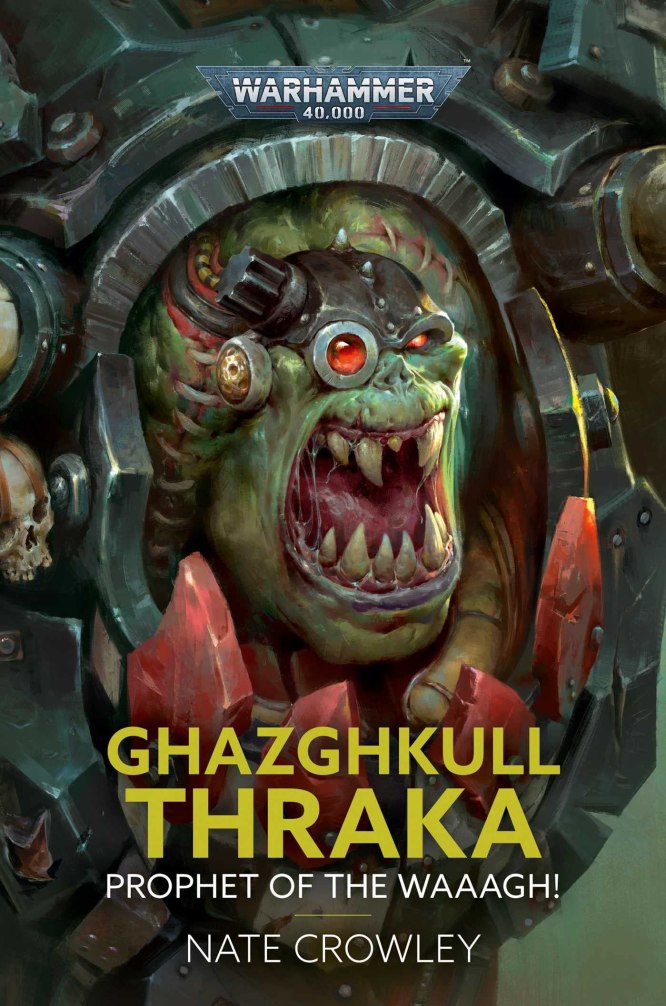
Ghazghkull Thraka - Prophet of the Waaagh! Cover

Publisher: Black Library (Audiobook – 15 March 2022)

Series: Warhammer 40,000

Length: 7 hours and 30 minutes

My Rating: 5 out of 5 stars

Amazon     Book Depository

Prepare to read one of the most amusing and downright entertaining recent additions to the Warhammer 40,000 canon with the hilarious and brilliant Ghazghkull Thraka: Prophet of the Waaagh! by outstanding author Nate Crowley.

I have been having an immense amount of fun really diving into the massive wealth of tie-in fiction surrounding the Warhammer 40,000 tabletop game this year.  Books like Steel Tread by Andy Clarke, Krieg by Steve Lyons, The Bookkeeper’s Skull by Justin D. Hill and Day of Ascension by Adrian Tchaikovsky, have really highlighted just how diverse and intense this extended universe can be.  However, the latest tie-in novel I checked out may prove to be one of my absolute favourites, as I got to learn all about one of the most iconic ork characters in this universe with Ghazghkull Thraka: Prophet of the Waaagh!

Orks are the most notorious and dangerous creatures that roam the galaxy of the 41st millennium.  Billions upon billions of the powerful, war-loving creatures can be found throughout every sector of space, fighting anyone and anything they can find, especially each other.  However, out of all these monsters, none are more feared, respected or hated than the warlord Ghazghkull Mag Uruk Thraka, chosen of the ork gods Gork and Mork and proclaimed prophet of the Waaagh!

Throughout his legendary life, Ghazghkull has done what no other ork has been able to achieve.  Bringing together innumerable warbands into one massive horde of green, Ghazghkull has warred with every faction in the cosmos, while his infamous invasions of the Imperial planet of Armageddon are the stuff of bloody legend.  Everyone knows of his epic and rivalry with his indomitable foe, Commissar Yarrick, which turned Armageddon into a perpetual warzone, but does anyone know the true story of Ghazghkull and the events that made him?

Rogue Lord Inquisitor Tytonida Falx has long attempted to discover what lurks in the minds of the xenos her order faces.  When an opportunity to find out more about Ghazghkull presents itself, she eagerly jumps at the opportunity, bringing a unique prisoner aboard her heretical ship, Ghazghkull’s banner bearer, the grot Makari.  Interrogating him, Inquisitor Falx and her team soon discover that Makari might just be the only being in the universe who knows the full truth about who, or what, Ghazghkull is, and what he plans to do next.  But, as she listens to Makari’s tale, the Inquisitor soon discovers that the shadow of Ghazghkull’s rage and desire for violence far eclipses anything that the Imperium has ever believed.

Wow, now that was a really fun and captivating read.  I knew going into Ghazghkull Thraka: Prophet of the Waaagh! that I was going to have a great time, especially after enjoying author Nate Crowley’s The Twice-Dead King novels, Ruin and Reign, but I was blown away by how awesome Ghazghkull Thraka was.  Featuring a clever and wildly entertaining story, perfectly told through various unique eyes, as well as some deeply enjoyable characters, I quickly became absorbed in the impressive story and powered through it in a couple of days.  Not only was this my favourite book from Crowley but it also probably overtakes Kal Jerico: Sinner’s Bounty as the most amusing Warhammer novel I have ever read.

I had an absolute blast with the incredible story that Crowley whipped up for Ghazghkull Thraka, as it ended up being an inventive and entertaining way to showcase an iconic Warhammer figure.  Due to his prominence within the game and the extended fiction, Ghazghkull is probably one of the most utilised non-human characters in the canon, with many different novels, game books and comics already diving into his life.  As such, Crowley needed to come up with a completely new way to examine this great character that didn’t tread on any prior works.  I think his solution to this problem was exceedingly clever, as he chose to tell the story through the eyes of the most unlikely narrator and chronicler, the grot Makari, whose unique insights and worldview turned this already known backstory into something truly special.

The story starts off in the current timeline of the Warhammer 40,000 universe and shows Inquisitor Falx obtaining Makari and interrogating him about Ghazghkull.  This causes the book to dive back into the early days of Ghazghkull as Makari chronicle his master’s existence as he saw it.  As such, you get a very specific examination of Ghazghkull’s life, with a focus on his early trials, some of his pivotal moments, and more specifically his interactions with Makari.  At the same time, the story keeps jumping back to the present, with the Inquisitor and her followers interrupting to ask specific questions and discussing whether there is any truth in what he says.  The book keeps jumping between these different perspectives, and you end up with two distinctive storylines as Makari’s presence brings some big woes for the Inquisitor in the present day.  The chronicle storyline goes at a brisk pace, especially as Makari’s interrogators get him to skip or shorten specific sections, but there is a clever and impressive logic into what parts of Ghazghkull’s life are featured or ignored.  Not only are the past and present storylines exceedingly intriguing and entertaining in their own rights, but they also come together perfectly as well, with Makari’s insights into Ghazghkull and himself impacting the actions of Falx.  While the ending was slightly too metaphysical, it served as a brilliant and powerful conclusion to this great story, and I loved seeing the entire tale come full circle in some hilarious ways.

I deeply appreciated the way that Crowley put Ghazghkull Thraka’s story together, as its distinctive and clever style really helped to enhance the chronicle contained within.  The plot device of an interrogation of an alien prisoner works extremely well to set up the main narrative, and the constant interruptions, debates and revelations that occur whenever it snaps back to the present adds to the sense of mystery and mysticism surrounding the titular figure.  While Crowley takes the story in some interesting and complex directions at times, the entire novel is paced beautifully, and there is never a single boring or slow moment within the entire thing.  I particularly liked the near constant humour that was injected into the story, a fantastic side-effect of basing the book around the funny ork species, and I laughed out loud several times as I powered through this impressively amusing read.  Like many Warhammer novels, Ghazghkull Thraka can be enjoyed as a standalone read, and the author makes sure that it features a great self-contained narrative that anyone can enjoy, even those unfamiliar with the universe and the canon.  Indeed, this would be a decent introduction to the Warhammer 40,000 canon and associated extended universe, especially as it perfectly presents one of the key factions of the universe.  Most of the unique universe elements and wider history are explained sufficiently for new readers to follow along without any issues, although some could potentially get confused by the deliberate exclusion of events previously covered in other books.  Still, Ghazghkull Thraka should turn out to be an easy and entertaining read for any science fiction fan, and I thought that this Warhammer 40,000 novel was very well written and extremely clever.

One of the things I love the most about Nate Crowley’s Warhammer novels is his brilliant ability to dive into the unique alien races of the universe and then perfectly showcase their culture and mindsets.  This was the case again in Ghazghkull Thraka, where Crowley expertly dives into the heads of the various ork and grot characters.  No matter whose perspective is shown, every scene of this book features some excellent and often highly amusing depiction of greenskin culture, as Makari attempts to explain the ork perspective as well as his place in the society as a grot.  As such, you get some incredibly detailed and compelling insights into this crude and warlike race, including their brutal hierarchy, need for violence, insane technology, and very unique worldview, which generally results in most of the book’s fantastic humour.  However, rather than the dumb, brutal and one-note figures that most authors depict, Crowley really goes out his way to show that there is a lot more to orks than you realise.  Not only do you get some excellent insights into their various clans and organisations but the various ork characters are shown to be complex beings with unique needs and the ability to formulate some very cunning plans.  There is a particularly intriguing look at the ork religion that follows the gods Gork and Mork, and this novel ends up with a spiritual edge, especially as Crowley shows the orks being extremely successful because they choose to strongly believe in themselves.  As such, you see quite a unique and compelling side to the ork race in this book, and I loved how incredibly Crowley portrayed them.

Naturally, a big part of this examination of ork culture comes from the in-depth look at the life of Ghazghkull himself.  As I mentioned before, Ghazghkull is one of the best-known characters in the entire Warhammer 40,000 canon, so most veteran readers would already be quite familiar with him and his actions.  However, Crowley does an excellent job of examining a completely new side to this character, and mostly ignores his wars at Armageddon and his intense rivalry with Commissar Yarrick, both of which have been done to death in other books.  While certain parts of his history are revisited in this novel, Crowley completely changes their implications and causes, instead focusing on Ghazghkull’s unique orkish mindset and his role as the prophet of his gods.  This new take on Ghazghkull proves to be quite unique and very captivating, as he is shown to be an overburdened being, constantly pressured by his own visions and the influence of the gods to succeed and be a uniting force for his people.  While he still retains the casual violence of his race, you really see Ghazghkull as a deep thinker, and it is fascinating to see his inner ork face off against his grand ambitions and desires.  Crowley also adds some compelling supernatural elements to his character, as Ghazghkull, as seen by Makari, bears a direct connection to the gods which he can use to alter his fellows and himself.  While this isn’t too overpowered or strange, it adds a great extra layer of menace to the character, especially for the humans, and I loved seeing the Inquisitors trying to wrap their heads around the strange occurrences.  I had a lot of fun seeing this other side of Ghazghkull, and this novel ended up being a great analysis of who they are and what they represent to their race.

I also really enjoyed the inclusion of Makari as one of the central characters, and his use as the main witness to Ghazghkull’s life worked incredibly well.  While Makari has always been associated with the character of Ghazghkull, accompanying him in his battles and waving his banner as a source of luck, Crowley really changes him in this novel and paints him as an essential part of Ghazghkull’s success and relationship with the gods.  Shown to be there the moment that Ghazghkull became the prophet, Makari follows Ghazghkull through some of his big moments and it is hilarious to see his snide view on the subject, especially as, like most grots, he a massive coward who doesn’t want to be there.  A lot of this novel’s humour is derived from Makari’s observations and responses, and I loved some of the jokes set up around it.  Crowley does an awful lot with this character, and I particularly liked how the story explained certain aspects of his previous portrayals, such as the apparent multiple versions and his surprising luck.  These are worked into the story extremely well, but it’s the relationship with Ghazghkull that becomes the most fascinating.  Just like with Ghazghkull, there is a major spiritual edge to Makari, who appears to be just as chosen and important to the plan as his master.  Makari’s mystical and religious bond enables him to have a far bigger insight into Ghazghkull’s actions than anybody else, and this really enhanced the analysis of the titular character.  However, it is in Makari’s attempts to serve and help his master achieve his destiny that we see the best Makari scenes, especially when faced with Ghazghkull’s apparent depression, the manipulation of his other followers, and his own stubbornness.  While Ghazghkull does have the inherent ork reluctance to rely on a grot, and indeed he is extremely likely to kill Makari if he starts giving advice, the moments where Makari get through to him are powerful, and I really appreciated the character work surrounding them.  There are some rocky moments between them, especially when Ghazghkull becomes dismissive of his lucky grot, and Makari’s subsequent reactions is very funny and incredibly over the top, which was so very cool.  Overall, this ended up being an excellent and surprisingly compelling portrayal of Makari, and I am exceedingly glad that Crowley featured him in this novel the way he did.

Aside from the greenskin characters, a large amount of plot revolves around the team interrogating Makari.  Crowley really went out his way to create a particularly unique group of Imperial agents who bear surprising insights into the mind of the xenos.  This team is led by Inquistor Falx, a rogue Inquisitor who bears a dangerous obsession with the alien creatures.  Falx is desperate to learn everything she can about the aliens attacking the Imperium to help defeat them and finds herself stymied by the Imperium’s controlling and non-progressive government and religion.  As such, she takes some major risks in this book to understand Makari and Ghazghkull and has some unique and dangerous methods for achieving her goals that borders on the insane/heretical.  I quite liked Falx, despite her obsessive qualities, and she proved to be a great central figure for half the novels plot, especially as her frustrations, concerns and thoughts about the evils of the Imperium, are extremely understandable.

Falx also employs a unique team of interrogators to help her with Makari, including Brother Hendriksen, a Space Wolves rune priest assigned to Deathwatch who has also fallen out of favour with the Imperium thanks to his work with Falx.  Hendriksen serves as a beastly and powerful presence on Falx’s team, and he often provides a great counterpoint to the inquisitor in both technique and common sense, often despairing at her more dangerous choices.  Crowley’s diverse cast gets even larger with the truly unique character of Cassia, a female ogryn psyker who has grown as smart as a human.  This was a fantastic and extremely distinctive addition to the cast, and her surprisingly calm demeanour, which contrasts beautifully with her immense ogryn strength, works perfectly against Hendriksen’s impatience and anger.  The final member of the team is probably the most enjoyable, with the ork character, Biter (Bites-Faces-Of-The-Face-Biter-Before-It-Can-Bite).  Biter is a member of a Blood Axes mercenary band who have dealings with Falx and who sell Makari to her, remaining behind to interpret Makari’s testimony to the humans.  Due to being a member of the Blood Axes, a group who idolise human military culture, Biter is a very distinctive figure, wearing an approximation of a military uniform and appreciating complex tactics and strategy.  However, Biter is even more intelligent and cunning than most Blood Axes, and his near human tendencies really stand out, as it is pretty unexpected from an orc.  His fantastic reactions, comedic impressions of human behaviour, and determination to antagonise the Inquisitor really make him stand out, and he was an absolute joy to behold.  These four interrogators play off each other perfectly during the present-day scenes, and their arguments, discussions and interpretations of Makari’s story give it added depth, humour and impact, especially once they start realising just how valuable their prisoner is.  This entire cast was put together extremely well, and I had an incredible time with this unique and enjoyable collection of characters.

Like most Warhammer novels I check out, I chose to grab the audiobook version of Ghazghkull Thraka, which turned out to be such a wonderful and incredible listening experience.  Not only did the story absolutely fly by in this format, allowing me to get through its seven and a half hour runtime extremely quickly, but I found that the narrative and descriptions of ork life really popped when read out.  However, the best part about the Ghazghkull Thraka audiobook is the outstanding use of narrators.  This audiobook has three separate narrators, Kelly Hotten, Paul Putner and Jon Rand, each of whom have some experience narrating other Warhammer audio productions.  Not only are each of these narrators quite talented but the way they were featured in this audiobook is extremely clever, with the voice actor changing depending on who is witnessing or telling the events of the book.  For example, Kelly Hotten serves as the narrator for the various scenes and interludes where Inquisitor Falx is witnessing Makari’s interrogation, and Hotten does a brilliant job capturing the various players of these scenes, including the Inquisitor, her unique companions, and their orkish interpreter.  Paul Putner narrates the various scenes shown directly from Makari’s perspective, and he has a lot of fun in this role, not only capturing the cowardly and sneaky mannerisms of the grot protagonist, but also providing some amusing and deep voices for the ork characters.  Finally, Jon Rand has a memorable sequence voicing Brother Hendriksen when he psychically jumps into Makari’s mind and views some of the events occurring, and he gives the character a notable accent and internal growl that fit him extremely well.  The jumps between the voice actors were done perfectly and I really loved how it changed up depending on the perspective.  All three voice actors did an amazing job with their narration, and their work, plus some fun sound effects here and there, helped to turn this into such an impressive production.  Easily the best way to enjoy Ghazghkull Thraka, you will have an incredible time listening to this audiobook.

Nate Crowley continues to shine with another entry in the Warhammer 40,000 universe, with the unbelievably entertaining Ghazghkull Thraka: Prophet of the Waaagh!  Featuring a unique and deeply amusing story that re-examines on of the canon’s most iconic alien characters, Ghazghkull Thraka has a tight and cleverly written story, loaded with action, great characters and whole mess of outstanding humour.  Not only that, but this is without a doubt one of the best portrayals of the Warhammer 40,000 orks I have seen as Crowley obviously had a ton of fun bringing them to life.  Easily one of the best (and definitely the funniest) Warhammer 40,000 novels I have been lucky enough to enjoy, Ghazghkull Thraka comes extremely highly recommended, especially in its audiobook format, and is a must read for all fans of this wonderful fandom.

Amazon     Book Depository

The Wisdom of Crowds by Joe Abercrombie

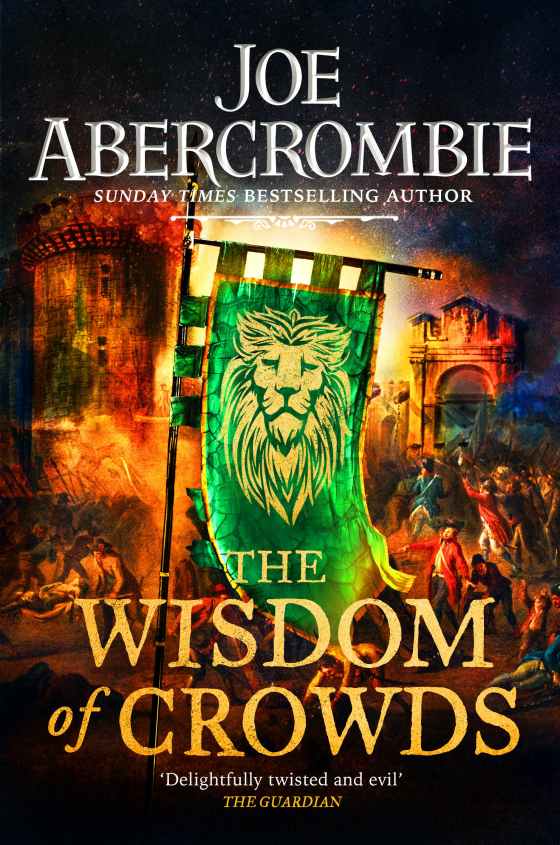
The Wisdom of Crowds Cover

Publisher: Gollancz (Audiobook – 14 September 2021)

Series: The Age of Madness – Book Three

Length: 23 hours and 36 minutes

My Rating: 5 out of 5 stars

Amazon

One of the best authors of dark fantasy, Joe Abercrombie, returns with the final book in his brilliant Age of Madness trilogy, the thrilling and deeply captivating The Wisdom of Crowds.

Joe Abercrombie is a particularly impressive author whose work I have been really enjoying over the last few years ever since I dove into his iconic First Law trilogy.  This great dark fantasy trilogy followed a group of complex and damaged characters who are thrust into a series of dangerous adventures in a corrupt fantasy world.  The original trilogy was pretty damn perfect, and I loved the outstanding story and universe that Abercrombie came up with.

Following his original books, Abercrombie wrote three standalone novels that continued the universe’s overall story in different ways before introducing his Age of Madness trilogy in 2019.  The Age of Madness trilogy is set around 20 years after the events of the First Law books and follows the children of the original trilogy’s protagonists as they are engulfed in additional chaotic events, including war, revolution, and lots of betrayal.  This trilogy has already featured two outstanding five-star novels, A Little Hatred (one of the best books of 2019) and The Trouble With Peace (one of the best books and audiobooks of 2020).  Due to how awesome the previous novels were, I was deeply excited for The Wisdom of Crowds, and it turned out to be another exceptional read with an impressive story to it.

Following King Orso’s decisive victory over the rebellious young hero Leo dan Brock and his wife, Savine dan Glokta, Orso believes that he has finally gained control of the Union.  However, he is unprepared for the chaos and destruction that is about to befall the kingdom.  The revolution, known as the Great Change, has finally descended upon the Union, with the people rising up and overthrowing the hated nobles.  Led by former Arch Lector Pike, known by the masses as the Weaver, the rebelling Breakers and Burners soon take the capital, Adua, bringing hope and destruction in equal measure.

Imprisoned by the mob, Orso soon discovers that there is nothing lower than a deposed king.  The freed Citizen Leo and Citizeness Savine must adapt and find new ways to manipulate a mob that both loves and hates them.  The newly raised up Chief Inspector Teufel must soon decide where her loyalties lie as she begins to see the insanity of the new rulers, while former soldier Gunnar Broad once again finds himself causing trouble as a key citizen of the new regime.  At the same time, the magically prescient Rikke has taken control of the North, capturing the former King Stour Nightfall.  However, taking the North and keeping it are two very different things, especially as the forces of her family’s old enemy, Black Calder, advance towards her, determined to free Stour.  With enemies around every corner and even her closest allies beginning to doubt her, Rikke must implement a drastic plan and make use of every tool at her disposal, even notorious turncoat Jonas Clover.

As the Great Change starts to devolve into anarchy, the death toll starts to rise and no one is safe, least of all those who have profited in the past.  Soon hard choices will need to be made and only the strongest and most cunning will survive.  The Age of Madness is well and truly here, but who will live and who will die as the fires of anger, resentment and despair burn throughout the land?  No matter who survives, the Union and the North will never be the same again, especially with unseen hands manipulating events from the shadows.

How the hell does Abercrombie do it?  I knew in advance that this was going to be an awesome book, but I was yet again blown away by the author’s clever blend of captivating storylines, outstanding characters, and outstanding dark fantasy settings.  The Wisdom of Crowds served as an excellent conclusion to the Age of Madness trilogy, and I found myself absolutely powering through this amazing novel in no time at all.  This gets another five-star review from me as I had such an incredible time reading it.

Abercrombie has come up with an exceptional narrative for his latest novel, and I deeply enjoyed the captivating and extremely dark story contained within The Wisdom of Crowds.  This novel has an impressive and memorable start to it with the aftermath of the previous novel immediately giving way to the Great Change.  This uprising quickly overcomes the existing government and changes everything, with Orso imprisoned, Savine and Leo freed from captivity and incorrectly hailed as heroes of the people, and characters like Gunnar Broad and Inquisitor Teufel pushed to the fore due to their suffering under the previous regime.  After a great extended revolution sequence, Abercrombie spends a good chunk of the first act of the novel showcasing all the severe changes to the setting of the Union, including the impacts to the protagonists, as well as the nation’s quick decline after the initial glorious revolution.  At the same time, you have the events in the North occurring at the same pace, with Rikke trying to solidify her power in the face of a rising opposition.  Most of the novel’s major storylines are either set up here or transported over from the previous novels, and it moves at a great pace with some fantastic moments.  The novel really heats up in the second act, when a group of extremists take over the Union and Rikke’s war in the North gathers speed.  The storyline set in the Union during this section of the novel is filled will all manner of insanity and terror, and this is probably one of the darkest parts of the entire book.  While there is a noticeable focus on the craziness of a Burner revolution, there is also a lot of character development occurring here, with most of the protagonists starting their last bit of major growth here, with their big plans set up.  This second act is capped off with a massive battle in the North that changes the entire fabric of that setting and provides a great deal of fantasy action and bloodshed to keep the reader satisfied, while also featuring a pretty fun story twist.

All this leads up to an impressive final act which takes up the last third of the novel.  Most of this is set in the Union and showcases the protagonists making their moves.  There are some very good scenes here, with a mixture of big character moments, destructive fights, and a cool trial sequence, which help this part of the book really stand out.  All of this leads to a major change in the plot that occurs with roughly a quarter of the novel left to go.  While there are some great scenes involved with this big shift, I must admit I was a little surprised that the book didn’t end right there, due to the resulting significant change of pace, and I wonder if Abercrombie might have been better off using this final quarter in another novel.  However, the story is still extremely cohesive, especially as it leads up to some major reveals and big character moments that had me gasping with surprise.  I really did not see some of the big twists coming, even though they were really well set up throughout the trilogy (although I really should have known who was behind everything).  The book concludes on an interesting note, with some noticeable tragedy and some outstanding character moments as the surviving protagonists settle into their new roles.  I did think that Abercrombie may have spent too much time setting up events for his next trilogy, with multiple scenes containing open-ended events that will clearly get picked up in later books.  However, to be fair it did get me excited for the next novel like it was supposed to, and I don’t think it took too much away from the overall narrative.  This was such an awesome story, and The Wisdom of Crowds’ character focus had me hooked the entire way through.

Abercrombie has a real talent for writing awesome and complex dark fantasy novels, and I really enjoyed his outstanding and compelling style.  I deeply appreciated his excellent use of multiple character perspectives to tell a rich and vibrant tale, as the story seamlessly flicks between seven major characters throughout the book.  The spread of character perspectives has been an outstanding feature of all the author’s First Law novels, and it is extremely cool to see this complex tale told from various points of view.  Not only does it ensure you get a brilliant, multifaceted exploration of the setting and the progress of the plot, but it really helps the reader get into the mind of the characters and see their personalities, emotions and opinions.  I also really appreciated the two great extended sequences that were told through the eyes of multiple supporting or one-off characters, especially as it captured the chaos and destruction of both revolution and a major battle.  The author has quite a vivid and adult writing style, which works with the realistic characters and complex storylines extremely well.  Not only does this result in some particularly graphic and powerful action sequences, including one amazing and massive pitched battle, but it also works in some distinctive and very adult dialogue.  While some of the language gets a tad over the top at times, it does give the book a very realistic feel and is a lot of fun.  Readers should be warned that this is a pretty dark tale including torture, ultra-violence and a lot of brutal deaths.

I have to say that I was quite impressed with the changes to the major setting of the Union in this novel.  While the other significant setting, the North, remains pretty much the same (its always snow, death and blood there), the Union is majorly impacted quite early on as part of the revolution known as the Great Change, which Abercrombie had been expertly setting up throughout the trilogy.  The Great Change, which was brought on by rioting workers and peasants disenfranchised by the industrial revolution that was such an amazing and distinctive feature of this trilogy, hits the city with most of the nobles, the wealthy, the ruling Closed Council, and the King all arrested.  This initial overthrowing was done pretty perfectly, with several chaotic sequences, and it eventually leads to a whole new era for the nation.  This part of the novel was very clearly inspired by the French Revolution, and I deeply appreciated the way in which the author evoked the iconic imagery of destructive historical events into his fantasy novel.  I loved the initial set-up of the new democratic government that replaced the monarchy, and I had a good chuckle at the character’s glorious ideas of a utopian society with a pompous constitution.  However, the real fun occurs when these high ideals fail miserably and are replaced by a general purge where no-one is safe.  Abercrombie did a really good job here of capturing the terror, uncertainty and horrible human nature that accompanies these sorts of purges, with a series of one-sided trials and brutal executions in front of a cheering crowd.  This chaotic setting serves as an outstanding backdrop to novel’s various storylines, and it was an amazing and dark part of The Wisdom of Crowds that made it really stand out.

As with the rest of Abercrombie’s books set in this connected universe, one of the absolute best things about The Wisdom of Crowds was the exceptional and complex characters.  Just like the previous two novels in the Age of Madness trilogy, the story is primarily shown from the perspective of seven unique and well-established point-of-view characters.  Each of these characters is extremely complex and layered as Abercrombie has been setting up some fantastic storylines around each of them throughout the course of the series.  These characters include:

  • Orso – the son of King Jezal, a point-of-view character from the original trilogy, and current High King of the Union, for whatever that title is worth. Orso is a very fun character who has probably grown the most out of all the characters featured in this series, going from a foppish, unmotivated prince, to a decisive, competent and victorious king in the second novel.  Despite his victory over his rival Leo and his secret half-sister (and former lover) Savine, Orso soon finds himself a prisoner when the Great Change leads to a people’s revolt.  Despite being imprisoned and constantly mocked by everyone, Orso keeps most of the confidence he built up in the previous novels and is a constant figure of comedy, especially with his great sarcastic observations of the events around him.  Abercrombie has done a masterful job with Orso over the last three books, and I really appreciated his growth and humour, making him one of my favourite characters in this trilogy.  Due to this it is pretty hard to see him get taken down and condemned by his people, especially as he is a much better ruler than everyone thinks he is.  I once again found myself really pulling for him in this novel, and I think he was the character I wanted to survive and win the most.
  • Savine dan Brock (formerly dan Glokta) – a formidable businesswoman and adoptive daughter of Arch Lector Glokta (the best character from the original series). Savine has been an awesome character in this trilogy, experiencing some massive highs and significant lows.  After marrying Leo and organising a revolt against her half-brother Orso in the previous novel, Savine starts this novel in chains.  However, once the Great Change occurs, she is quickly freed and must find her place amongst the revolutionaries.  Rightly terrified of being tried for her ruthless business practices, and changed by motherhood, Savine engages in charity works and tries to save herself through generosity.  I quite enjoyed Savine’s storyline in this latest novel and it had some awesome moments.  While I do think she was a bit underutilised in the middle of the book, she eventually emerges in full form and shows everyone why she is the most dangerous person in the Union.  There are some outstanding scenes surrounding her, especially that awesome court sequence, and I quite liked where her story ended up.
  • Leo dan Brock – the former governor of Angland and shining hero of the Union, before he had an arm and leg blown off during his big battle against Orso in the previous book. Leo starts this novel a shell of his former self, full of regret that his recklessness and arrogance caused his injuries and the death of his friends.  However, this regret soon turns to anger and ruthlessness as he uses his hero status to become a key part of the Great Change, attempting to manipulate it for his benefit.  I must admit that Leo was always my least-favourite character in this series, and I liked how the features I disliked about him led to his downfall in the previous book.  Abercrombie perfectly follows this up by making him a much more unlikable character in this novel, and I deeply appreciated the realistic way his personality was twisted and darkened by anger, jealousy and frustration, giving him a new ruthless edge.  Out of the characters in The Wisdom of Crowds, Leo probably goes through the most development in this novel, and it was pretty captivating to see where his new hate and frustrations led him.
  • Rikke – a Northern protagonist and the daughter of the Dogman, Rikke has had a very interesting story arc within this series due to her magical Long Eye, which allows her to see into the future. Rikke was able to outsmart all her opponents in the previous novel, taking the Northern capital and capturing her opponent, Stour Nightfall.  Now Rikke is forced to lead her people against Stour’s father, Black Calder, while also trying to balance the concerns and treachery of her allies.  I have been really impressed with Rikke’s storyline throughout The Age of Madness, and I liked the great transition from scared girl to effective leader.  This book continues to showcase her skills, even if she still appears a bit rash and too clever for her own good.  She ends up being forced to make some hard and heartless decisions, which really highlights just how far she has come.  There are some outstanding movements with Rikke in this novel, and I particularly loved the good twist around her that occurred at the big battle scene (I did see it coming, but it was still a lot of fun).  I also loved the fantastic scene where she confronts Bayaz, the First of the Magi, as it was one of the first times that you see the master manipulator of the series appearing rattled and impotent.  Rikke was a really well set up character and I really appreciated the epic and compelling storylines around her.
  • Vick dan Teufel – a Union inquisitor and protégé of Arch Lector Glokta, Vick is a master spy and investigator. Despite all her skills, Vick was taken by surprise by the revelation that Pike is the Weaver and is forced into supporting the Great Change against her will.  Falling back on her old survivalist mentality to support the winners, Vick is eventually shaken into action by the destruction caused by the Burners and finds herself supporting the losing side.  After being a little underused in the previous novel, Vick has a very strong outing in The Wisdom of Crowds and her character changers are quite essential to the plot.  Like Leo, Vick goes through a fair bit of development in this novel, although her development is a lot more positive as she tries to do what is right rather than what will keep her alive.  Vick also experiences some very crushing moments, and it was fascinating that out of all the characters, she maintained the moral high ground the best.
  • Gunnar Broad – a former Union soldier with a gift for extreme violence, who has been both a Breaker and a servant to Savine as an enforcer and bodyguard. Imprisoned after the last book, Gunnar is freed with Savine and Leo and once again finds himself drawn into the fight, despite his desire to stay out of trouble and get back to his family.  While he once again tries to be a good person at first, he is eventually seduced by the dark appeal of the Burners and truly loses himself, giving into his inner violence and anger.  While he does do some redemptive actions, Gunnar remains a bit of a lost cause, which is pretty tragic to see.  Gunnar proved to be a great character throughout this series, despite a lack of any real development, and I enjoyed his darker scenes and compelling personal insights.
  • Jonas Clover – the cunning and treacherous veteran Northern warrior who, after spending the last two books serving Stour Nightfall, betrayed him at the end of The Trouble with Peace and sided by Rikke. However, he soon finds his loyalty divided between Rikke and Black Calder, with both sides aware of his tendency to turn on the losing side, and he must finally decide who to support.  Due to his very entertaining personality and cynical viewpoint about the world, Clover was my favourite character in the series, and I love all the clever insights and subtle jokes that are characteristic of his scenes.  I really appreciated his mindset of patience, self-restraint and picking your moment, which is mostly unheard of amongst the other Northerners, and which usually sees him through most conflicts.  Despite this, Clover is finally forced to face the music in this novel after his various betrayals come back to bite him.  While he doesn’t always make the best decision, his entertaining and canny attitude ensures that the reader is constantly amused by his antics, and I am really glad that Abercrombie included him in this series.  It will be interesting to see how he is utilised in the future, especially as the author tried to evoke some similarities between his journey and that of original character Logan Ninefingers.

I deeply enjoyed each of these impressive characters, with each one bringing something very memorable and entertaining to the table.  While a couple of these characters were a bit underutilised in previous novels, I think that Abercrombie struck the right balance in The Wisdom of Crowds, with each of them shown in pretty much equal measure.  All seven character arcs are pretty awesome in their own right, but the real strength is the way that they come together to tell the overall story.  It was pretty cool to see multiple character perspectives of the same events, especially as each of these complex characters have very different views on what has happened.  I think that each of the arcs ended extremely well, with each of the characters going in some very interesting and surprising directions.  I was a bit surprised by who was left standing and in control at the end of the novel, and I must admit that I really did not foresee the fates of several of the characters.  Abercrombie sets up each of these events incredibly well, and there were some very fitting endings or transformations here.  It was interesting to see how some of these characters ended up mirroring the cast of the First Law trilogy, which seemed fitting as some were inspired by these prior characters, while others tried to escape becoming them.  I also really appreciated the way that barely any of the primary characters end up being portrayed as good people by the end of it.  While all of them initially tried to do the right thing, even the best of them is forced to make some terrible compromises which shatter their morality and impact their personality.  As a result, the reader is left with little sympathy for some of the surviving characters, and it was once again really amazing to have such morally ambiguous and naturally selfish characters.  It looks like Abercrombie might strongly feature the remaining characters again in his next trilogy, and I cannot wait to see how their various story arcs are continued.

Aside from the seven focal characters above, The Wisdom of Crowds also featured a vast collection of supporting and side characters, each of whom added a ton to the novel.  Most of the supporting characters where previously introduced in the first two novels of this trilogy, as well as a few holdouts from the original trilogy, and there weren’t too many new characters in this final novel.  The author ensures that the reader has a pretty good idea of these characters’ feelings and motivations, and it was fascinating to see the complex and powerful storylines told around several of them.  There are some really good twists around a few characters in particular, and I have to admit that I did not see most of them coming, with Abercrombie doing some masterful writing to set up these reveals throughout the entire trilogy.  Many of these side characters inspired some excellent and moving storylines, although readers should be aware that, as this is the final novel, quite a few of these characters did not survive, and I was particularly cut up by the death of one major supporting character near the end.  It will be very interesting to see what happens to the survivors in the future, and I am especially curious about a couple of key characters from the original trilogy who are set for some major events in Abercrombie’s next outing.

While I did get a physical copy of this book, I ended up listening to the audiobook instead, which proved to be an awesome decision.  The Wisdom of Crowds has a substantial runtime of 23 hours and 36 minutes (it would have placed 17th on my latest longest audiobooks list).  However, despite its length, I was able to power through it in about a week, especially after I got pretty damn hooked on the awesome story.  I found that this format moved the story along at a pretty fast pace, and it was a great way to absorb the fun and compelling details of this dark and epic tale.  It also works extremely well thanks to the outstanding voice work of the incredible Steven Pacey, who is one of my absolute favourite audiobook narrators at the moment.  Pacey, who has narrated all the other books in the First Law and Age of Madness trilogies, does another outstanding job with The Wisdom of Crowds.  Not only does he ensure that every aspect of the narrative comes across in a fun and compelling way; he also ensures that every character is perfectly brought to life.  Pacey brings back all the fun and fitting voices that were featured in Abercrombie’s previous novels, which proved to be a lot of fun, especially as he perfectly captures the unique personalities and characteristics of these fantastic figures.  Pacey makes a lot of effort to portray all the emotion and intensity of the characters, and you really get a sense of the heartbreak and darkness that surrounds all of them, especially by the end of the story.  This results in another incredible audiobook which I had an outstanding time listening to; at one point I managed to listen to it for over five hours straight and was not bored in the slightest.  As a result, I would strongly recommend The Wisdom of Crowds’ audiobook version, and it is easily one of the best audiobooks I have listened to in 2021.

With another incredible and powerful story, filled with outrageous and complex characters, impressive settings and clever twists, Joe Abercrombie brings his latest trilogy to end with the brilliant The Wisdom of Crowds.  This final book in the Age of Madness trilogy was an exceptional read, and I deeply enjoyed the dark and clever places this amazing book went.  An epic and captivating dark fantasy experience, readers are guaranteed to power through The Wisdom of Crowds in no time at all, especially as they become more and more engrossed with the excellent central protagonists.  A must-read for all Abercrombie fans, this was easily one of the best books I have read in 2021 so far and I cannot wait to see what madness and destruction are unleashed in the author’s next awesome series.

The Wisdom of Crowds Cover 2

Amazon