
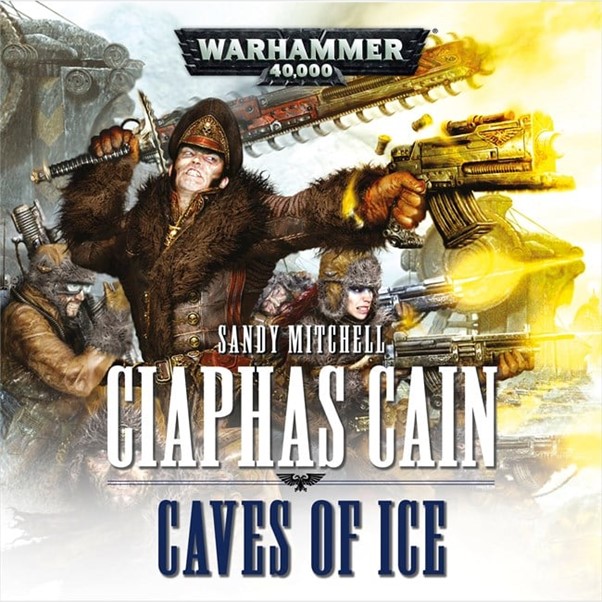
Throwback Thursday – Warhammer 40,000: Caves of Ice by Sandy Mitchell

Caves of Ice Cover

Publisher: Black Library (Audiobook – 1 February 2004)

Series: Ciaphas Cain – Book Two

Length: 6 hours and 46 minutes

My Rating: 4.5 out of 5 stars

Amazon

Welcome back to my Throwback Thursday series, where I republish old reviews, review books I have read before or review older books I have only just had a chance to read.  For this latest Throwback Thursday I look at another highly entertaining entry in the hilarious Ciaphas Cain Warhammer 40,000 series with the second book, Caves of Ice.

Even after my many recent reviews of Warhammer 40,000 fiction, my obsession with this franchise is far from over, so when I had a spare second, I quickly listened to Caves of IceCaves of Ice is the second novel in Sandy Mitchell’s (a pseudonym for author Alex Stewart) iconic Ciaphas Cain series, which follows the outrageous life of Commissar Ciaphas Cain, legendary hero of the Imperium of Man, who in reality is a pragmatic survivor whose heroic reputation is the result of chance and coincidence.  I had a wonderful time reading the first book earlier in the year, For the Emperor, and not only was it an extremely funny book but it also ended up being one of the absolute best Warhammer 40,000 novels I have had the pleasure of reading.  As such, I have been looking for an opportunity to continue this series and I worked hard to slip it into my reading cycle.  This was well worth the effort as Caves of Ice is another fun and awesome read that takes the protagonist to a whole new dangerous battlefield in deadly circumstances.

After unravelling a diabolical conspiracy on Gravalax, the legendary Commissar Ciaphas Cain and the troops of the Valhallan 597th have been redeployed to a new battlefront, the ice planet of Simia Orichalcae.  Empty except for a vital promethium refinery, Simia Orichalcae has recently received a group of unwelcome guests, a warband of orks who crash landed on the planet and are making their destructive way towards the refinery with ill intent.

Happy to be facing a more conventional enemy on their preferred icy terrain, the Valhallan men and women eagerly prepare for battle.  However, Cain, in his usual pragmatic approach to life and war, is less enthusiastic about the violent battle to come and searches for any way to avoid the fighting.  Several mysterious disappearances in the tunnels beneath the refinery offer a potential escape for Cain as he leads a small squad underground to map the tunnels and discover the reasons behind the missing miners.

Cain, with his typical bad luck, finds far more than he bargained for beneath the ice.  Not only are several ferocious monsters lurking in the vast underground labyrinth, but a far more sinister foe lies there undisturbed, one that Cain has good reason to fear.  When the war and Cain’s explorations awaken this enemy, the entire planet is put at risk as this new, unrelenting danger attempts to destroy both the orks and the humans.  It once again falls to the reluctant Cain to face impossible odds and try to find a way to save his men.  But can even this legendary hero of the Imperium stop the flood of evil that is to come?

Sandy Mitchell continues his fantastic Ciaphas Cain series in a very fun way with Caves of Ice, which features another excellent story that strongly focuses on Mitchell’s reluctant hero.  Caves of Ice was a wild ride from start to finish, with a fantastic and captivating mixture of action, adventure, humour and intriguing character moments.  Taking place after the events of For the Emperor, Caves of Ice is another self-contained novel that any new reader can easily jump into.  This was a much shorter novel than the previous Ciaphas Cain book, and Mitchell provides a more direct narrative as a result.  Initially focusing on the ork invasion of Simia Orichalcae, the story is soon primarily set in the labyrinth of mines and tunnels laying underneath the refinery, where several miners have gone missing.  Attempting to avoid the fighting on the surface, Cain leads his aide Jurgen and squads of soldiers on several missions into he depths to explore the tunnels and find whatever is behind the disappearances.  What follows is an Aliens-esque series of adventures, as Cain discovers a variety of different and steadily more terrifying dangers down in the tunnels.  Each discovery forces Cain to go even deeper into danger, thanks to his heroic reputation and hidden skills, and the resultant action is pretty epic, especially when combined with Cain’s cynical and self-serving narration of events.  Everything leads up to a very explosive conclusion as the protagonist and his comrades are faced with the absolute worst their enemy has to offer them, and the resulting mess really brings everything together.  This ended up being a pretty strong sequel to For the Emperor, and I had an incredible time seeing Cain dragged into another deadly adventure.

I love the way that Mitchell portrays the various adventures of Cain in these novels, especially as it allows him to express a great range of different writing styles.  Just like with For the Emperor, Caves of Ice is primarily told from Cain’s perspective as entries from his personal memoirs.  However, this chronicle is cut through with notes and inclusions from his unintended editor, Inquisitor Vail, who provides some added context to the story through her own introductions, footnotes, inclusions of in-universe texts, and quotes from other notable characters.  These inclusions from Vail not only allow for a much wider story than the one Cain is telling (especially when it comes to the battle on the surface), but it also increases the humour of the novel by implying Cain is an unreliable narrator.  This, combined with the cynical and less-than-heroic observations and actions of the protagonist, gives the entire Ciaphas Cain series a much more comedic edge than many other Warhammer 40,000 books out there, and indeed there were several times I was cracking up laughing throughout this book.  However, Mitchell perfectly balances this lighter tone with some dark and bloody moments as the protagonist encounters all manner of deadly foes.  The action and lethal battles are recorded in exquisite detail, and you can feel the terror and fear that the protagonist feels as he constantly fights for his life.  This great blend of styles and tones really helps to make Caves of Ice stick in the mind, and I find the entire setup extremely compelling and very easy to fall in love with.

In addition to being a great Ciaphas Cain novel, I felt that Caves of Ice was a great entry in the wider Warhammer 40,000 canon.  The clever, humorous writing, and the fact the book could easily stand on its own, makes Caves of Ice an ideal place for someone to start their Warhammer 40,000 adventure, even if they are very new to the franchise.  The book provides some interesting insights into life in the Warhammer 40,000 universe, both through Cain’s insights and through the humorous or satirical texts that Inquisitor Vail adds to the book.  I really enjoy the solider-focused observations of the primary narrator and some of the supporting characters, and it is always quite compelling to see the common soldier’s reactions to the aliens and monsters they encounter.  Cain’s observations are always very sharp and funny, and his own range of experiences adds some amazing colour to the events unfolding in Caves of Ice.  Mitchell also takes the time to explore several iconic Warhammer 40,000 factions and races throughout the book and its quite interesting to see Cain’s opinions and insights into them, especially as he has a much more realistic views towards them than some of his cohorts.  Combine that with some fun insights into the day-to-day lives of soldiers in the Imperial Guard and their Commissar, and Caves of Ices proves to be quite an interesting Warhammer 40,000 novel.  I love seeing the range of different experiences that the protagonist has in this universe, and it will be fascinating to see what deadly danger he encounters in the next book.

Without a doubt, the major highlight of this series and Caves of Ice is the fantastic and compelling characters, particularly Commissar Ciaphas Cain.  Cain is one of the more entertaining figures in Warhammer 40,000 lore as he is a somewhat cowardly man who, in his mind, has accidently gained a reputation as a great hero and legendary fighter.  Just like in his previous adventure, Cain is still obsessed with staying alive and avoiding battle, often manipulating events to ensure he’s far away from the action.  Nearly all his thoughts revolve around how he can stay alive or in control, and it is often very entertaining to see his very selfish thought process in action.  At the same time, he is conscious of his image as a hero, which he also tries to maintain as dearly as his life, and this forces him into so many situations and fights he would honestly rather avoid.  His honest observations and hilarious internal reactions when events don’t go his way (which happens often), are some of the main drivers behind the book’s outrageous humour, and it is hard not to fall in love with this cheeky rogue.  While a lot of this book does focus on Cain’s attempts at survival and avoiding combat, Mitchell does take the time to focus on Cain’s good qualities.  Despite his own narration constantly trying to talk down his own abilities out of modesty (or self-loathing), Cain is shown to be a very competent fighter, explorer and commander, effectively leading his troops into battle and facing down a series of outrageous threats.  His keen insights, vast history fighting the enemies of the Imperium, and his own uncanny survival skills, actually make him an ideal champion who often succeeds against all the odds.  Indeed, with each adventure it is becoming more and more apparent that Cain is in denial about his own abilities and is suffering some form of imposter syndrome.  Whatever the case is, Cain remains a particularly entertaining and surprisingly likeable figure, and I cannot wait to see what crazy adventures he has in his next book.

Aside from Cain, Caves of Ice contains an intriguing range of characters who add to the story in several different and unique ways.  This second novel contains a fascinating range of supporting figures, including several who previously appeared in For the Emperor, as well as a few new characters as well.  The always entertaining Inquisitor Vail, despite not appearing in person, continues to have a major impact on Caves of Ice as she is the one presenting Cain’s manuscripts to the reader, often editing it to make it more reliable and cohesive.  Her insights into Cain’s adventures, mindset and unreliable narrations are very amusing, while also simultaneously impacting the reader’s perception of the protagonist and his various actions.  As such, she is a vital part of Caves of Ice, and I am glad Mitchell continues to utilise her as a narrator.  Another major character in the book is Jurgen, Cain’s aide and bodyguard who accompanies him on most of his adventures.  Portrayed as a slightly dim, relentlessly straightforward, and somewhat smelly, Jurgen is essentially the Baldrick to Cain’s Blackadder, and at times he serves as a good additional comic relief, especially in some of the more serious scenes where Cain is scared.  Despite his portrayal as a simple man, Jurgen is a very effective fighter and companion to Cain, and his love of the meltagun heavy weapon gets them out a jam plenty of times.  I liked how Mitchell also strongly hints that Jurgen is a lot smarter than anyone realises, especially when it comes to Cain’s nature, and it will be interesting to see how their friendship develops in the future.  Other great characters include Lieutenant Sulla, an exceedingly keen and annoying solider who offers some entertaining insights into the wider events of the story.  This is primarily due to the fact that Vail quotes Sulla’s memoirs throughout the book, although Mitchell writes them as pompously and badly as possible to really highlight Sulla’s character deficits.  Throw in some additional soldiers, arrogant bureaucrats, and a fanatical Adeptus Mechanicus priest who brings nothing but trouble for Cain, and you have an outstanding cast that I had a great time following.

Unsurprisingly, I chose to listen to the Caves of Ice audiobook rather than grab a physical copy, and I once again had an epic time with the fantastic audio format.  Coming in at just under seven hours, this was a relatively short Warhammer audiobook entry, and I was able to power through extremely quickly.  The audiobook format really made Caves of Ice a joy to listen to, and the entire story was beautifully portrayed throughout, especially the action scenes in the tunnels.  I was particularly happy that this production once again featured the three narrators who were utilised in For the Emperor, with the excellent team of Stephen Perring, Penelope Rawlins and Emma Gregory once again making a major impact.  All three give excellent performances in Caves of Ice, and I had a good chuckle listening to their fun and clever takes on the characters.

Perring is once again the central narrator as he voices everything in Caves of Ice shown from Cain’s perspective.  Perring has an outstanding voice, and he really brings all the characters to life in a colourful way, especially when it comes to showcasing the slippery and jaded Cain.  I also love his take on most of the supporting characters, especially Cain’s aid Jurgen, who Perring gives a very Baldrick-esque voice to.  In addition to Perring, Penelope Rawlins serves a very vital role as Inquisitor Vail in the outside narration, who is compiling Cain’s memoirs for the reader.  Rawlins voices all the extra notes that Vail adds to the proceedings, including the footnotes, several chapter introductions, and the descriptions of several in-universe texts, all of which Vail adds to give extra context to the story.  Rawlins gives Vail an awesome voice steeped in knowledge, command and a light sense of humour, and it is always very fun to see her add some honesty and truth to Cain’s version of events, especially when the footnote appears in the immediate aftermath of Cain’s false information or ignorance.  The final voice actor, Emma Gregory, is primarily used to narrate one of the major in-universe texts that is quoted throughout, the chronicles of supporting character Lieutenant Sulla (Like a Phoenix From the Flames), written many years after the events of Cave of Ice.  Gregory voices all the excerpts of Like a Phoenix From the Flames in a particularly pompous manner to match the tone of these poorly written memoirs, and you really get a sense of the self-importance Sulla must feel in the future.  This brilliant combination of narrators ensures that Caves of Ice, and indeed all the Ciaphas Cain audiobooks, really stands out, while also effectively increasing the humour of the entire production.  For that, and more, audiobooks are easily the best way to enjoy the Ciaphas Cain series and I cannot recommend it enough.

The second entry in the outstanding Ciaphas Cain series, Caves of Ice, was another exceptional novel from Sandy Mitchell that I had an awesome time reading.  Featuring an outstanding and hilarious protagonist, Caves of Ice is a great addition to one of the funniest series in the Warhammer 40,000 franchise.  I cannot recommend this book enough, and any fans of fun adventure are going to have a great time with Caves of Ice.
Amazon

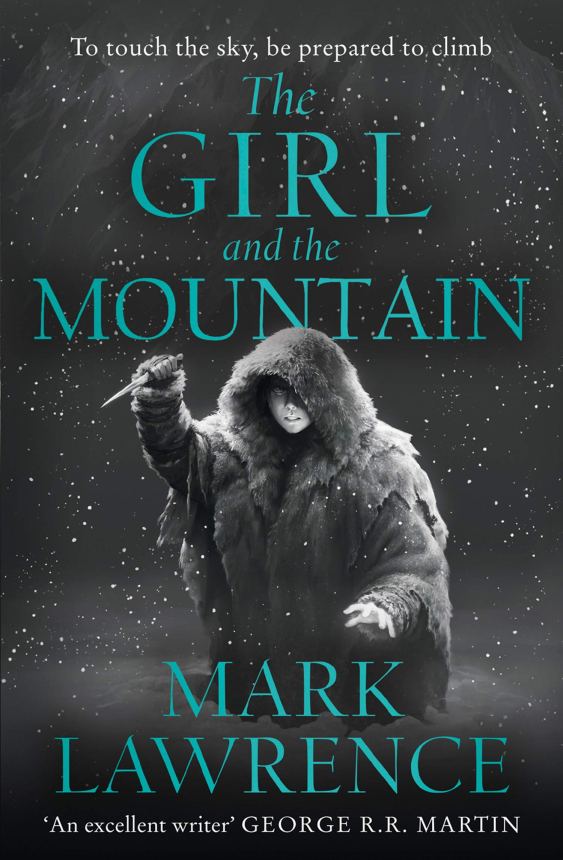
The Girl and the Mountain by Mark Lawrence

71BXoAWASUL

Publisher: Penguin Random House Audio (Audiobook – 29 April 2021)

Series: Book of the Ice – Book Two

Length: 16 hours and 48 minutes

My Rating: 4.75 out of 5 stars

Amazon     Book Depository

One of the most impressive current authors of fantasy and science fiction, Mark Lawrence, returns with the second novel in The Book of the Ice trilogy, The Girl and the Mountain.

Lawrence is a highly regarded and enjoyable writer who burst onto the scene in 2011 with the first novel in The Broken Empire trilogy, the bestselling Prince of Thorns.  Since then, Lawrence has produced a range of exciting and compelling novels, including The Red Queen’s War trilogy, The Book of the Ancestor trilogy, and the Impossible Times trilogy.  I have long been interested in checking out Lawrence’s work; especially after seeing glowing reviews from nearly every fantasy of science fiction reviewer out there.  Because of this, I was rather excited when last year I received a copy of the first entry in Lawrence’s The Book of Ice trilogy, The Girl and the Stars, as I thought it would be a good opportunity to experience the author’s writing style and imagination.

The Girl and the Stars ended up being an extraordinary read which featured an intense and captivating story of powered individuals on the ice-covered planet, Abeth, who are banished to an underground cavern to survive amongst a plethora of threats, while also learning about the various terrors inhabiting their world.  This amazing novel ended up being one of the best books I read last year, and Lawrence was one of the best new-to-me authors I experienced in 2021.  Due to how much I enjoyed his previous book, and because he left The Girl and the Stars on such an intense cliffhanger, I have been keen to check out The Girl and the Mountain for a while.

After her adventures below the ice with the Broken and the discovery of her powerful quantal abilities, former Ice Tribe member Yaz has returned to the surface with her brother and friends.  However, their plan to escape from all dangers of their icy home fails miserably when the insidious and dangerous Priests of the Black Rock, followers of the dangerous Hidden God, capture her and throw her friends back down the hole they escaped from.

Imprisoned within the Black Rock, Yaz begins to discover the true evils of the priests, who wish to use her to conquer the central green corridor of Abeth and help their twisted god bring a devastating change to the planet.  Determined to avoid this horrible fate, Yaz attempts a daring escape before it is too late.  Elsewhere, Yaz’s friends have made their own journeys to the Black Rock, and both Thurin and Quell are determined to save Yaz and the other prisoners they discover.  However, there are many horrors lurking within the Black Rock, and not even Yaz and her new powers may be enough to stand up to them.

As Yaz and her friends battle against the priests and their Hidden God, dark secrets from the ancient past of Abeth will come to the surface and the true dangers of their planet will become clear.  To fully understand her destiny and to save everything she knows, Yaz will be forced on an epic journey to reach the warm central belt of Abeth.  However, this journey will not be easy, and neither Yaz nor her friend may have the strength to survive, especially with the mad city intelligence Seus, who believes himself to be a god, manipulating events from above.  Friends will fall, destinies will be found, and the fate of Abeth will hang in the balance as Yaz’s life-changing journey begins.

This was another impressive and compelling novel from Lawrence which I had an amazing time reading.  The Girl and the Mountain serves as an amazing sequel to The Girl and the Stars, and I really enjoyed the inventive and intriguing science fiction and fantasy story featured within.  The Girl and the Mountains has some fantastic elements to it and readers will quickly find themselves engrossed by the clever story, impressive setting and relatable characters, which results in an outstanding and powerful novel.

Lawrence has come up with a unique and compelling narrative for The Girl and the Mountain, which I found myself becoming extremely drawn to.  This book starts off quickly, following three major characters from the previous novel, Yaz, Thurin and Quell.  All three of these characters initially get an equal share of the book’s plot through their separate point-of-view chapters, resulting in a comprehensive and varied story.  The characters quickly resolve the cliffhanger from the first novel and then find themselves invading the Black Rock, fortress of the antagonistic priests of the Hidden God.  These three point-of-view characters find themselves separated at the start of the novel and end up entering the Black Rock from different directions.  All three protagonists encounter a range of threats, characters and plot devices which not only enhance the stakes of their mission but help to enhance the reader’s knowledge of the setting.  Each storyline is intriguing and exciting in its own right, and the three separate perspectives complement each other extremely well, with the protagonist’s actions impacting that of their unseen colleagues, as they unknowingly encounter similar obstacles and opponents.  Yaz, Thurin and Quell’s storylines all come together about halfway through the book, which results in a major clash with an intriguing antagonist and produces an intense conclusion to this initial storyline.

However, this big confrontation is not the end of the novel; instead it only constitutes roughly half of the plot.  The second half of the narrative starts immediately after this confrontation and sees several characters embark on an epic and lengthy journey across the ice to the planet’s equator.  This results in a rather interesting change of pace in several different ways, as not only does the action become a lot more restrained but the story is told primarily from only one character’s perspective.  There is something a lot more personable and intense about this second half of The Girl and the Mountain, especially as the characters come together and bond during their trek.  While this second half did feel a little slow in places, the reader is kept extremely entertained, especially as there are a lot of dangers and distractions on the ice.  In the intriguing conclusion, Yaz and her friends finally reach a destination filled with danger and exposition.  This last quarter really brings the entire novel together and there are several great sequences and twists that will keep the reader on the edge of their seats.  The narrative eventually concludes with another intense cliffhanger in a memorable and important location, which will stick in the mind and ensure that readers of this second book will come back for the third and final entry in The Book of Ice trilogy next year.

This distinctive story split proved to be an interesting way to write The Girl and the Mountain, and I personally found myself enjoying this fantastic tale.  While it occasionally felt like there were two very different novels within The Girl and the Mountain, the halves came together extremely well, and I rather appreciated that the author tried something a little different.  I did feel that the book suffered a little from being the middle novel in this trilogy, with Lawrence trying to set up a lot of plot, which resulted in some minor but noticeable story drag.  This novel did serve as an excellent sequel to The Girl and the Stars, following up on all the storylines started in the first novel and setting up a fantastic scenario for the final entry in the trilogy.  Due to the complexity of the overarching series narrative, I would strongly suggest that readers read The Girl and the Stars first.  However, Lawrence does provide a very detailed and comprehensive summary of the first novel at the start of The Girl and the Mountains, which does bring new readers up to speed, as well as serving as a fantastic recap of some key details.  Overall, this exceptional narrative will leave readers extremely excited for the next entry in the series, especially as Lawrence has set up some very intriguing storylines for the final book.

I must highlight the amazing and inventive setting that is the ice planet of Abeth.  Abeth is any icy planet located around a dying sun, with only a thin corridor of unfrozen land at the equator.  Abeth is an amazing setting, and I loved the way in which is presents a fantastic blend of science fiction and fantasy elements.  Not only can most characters perform magic, but there are some intriguing alien elements to this world.  Large swathes of the story revolve around the mysterious race known as the Missing and their massive, frost-covered cities which are barely maintained by insane AI who consider themselves to be Greek gods.  This proves to be a really clever and amazing setting for this compelling narrative, and Lawrence does a wonderful job working his inventive locations, history and powers into the wider plot.  The Girl and the Mountain contains some interesting new locations, including the ghastly Black Rock, which is filled with insane creatures, creations, and antagonists.  There is also an intriguing and lengthy focus on the ice sheets that make up much of Abeth, as the characters attempt to track across them.  I deeply enjoyed the amazing detail that Lawrence put into bringing this harsh, icy landscape to life, and you get a real sense of the dangers and hardships that the characters experience while out there.  There are also some truly horrifying and creative monsters, constructs and inhuman antagonists throughout this world, which Lawrence uses to great effect, creating some memorable and powerful threats for his protagonists.  All of this works into the narrative extremely well, and you will have a hard time forgetting the ice planet of Abeth any time soon.

One particular intriguing aspect of this setting is the green corridor around the middle of Abeth.  This location was previously featured in Lawrence’s The Book of the Ancestor trilogy, and is the major setting for all three entries in this major series.  While I have not had the pleasure of reading The Book of the Ancestor novels yet, it is very clear that fans of these books will feel particularly drawn to The Girl and the Mountain, as the characters visit a key location from this earlier series.  As I understand it, The Book of the Ice novels are set well before The Book of the Ancestor trilogy and serve as a bit of a prequel.  Because of this, The Girl and the Mountain contains quite a lot of references that readers of The Book of the Ancestor’s novels will really appreciate, especially as they shed some additional light on some The Book of the Ancestor supporting characters.  While this makes The Girl and the Mountain a must-read for fans of Lawrence’s previous work, readers do not need to have read this previous trilogy, as Lawrence makes this latest series extremely accessible to new readers.  This great setting really enhances The Girl and the Mountain and it is very easy for fans of Lawrence, both new and established, to be drawn into the icy perils of Abeth.

Lawrence has also come up with an amazing and fantastic group of characters for The Girl and the Mountain, most of whom are carry-overs from the first novel in the series.  The main characters of this novel are Yaz, Thurin and Quell, who serve as point-of-view characters.  Each character has an intriguing background and has been bitterly changed by the events under the ice in The Girl and the Stars.  Lawrence focuses much of his character development on these central protagonists, and all three go through some major changes throughout their parts of the book.  Yaz is easily the most noticeable of these, especially as she needs to overcome her past both on the ice and under it, her uneasy destiny, and the unwanted leadership thrust upon her.  I also liked seeing how Thurin and Quell developed as well, especially as Quell became a little less of an ass, although I still disliked several of his thoughts in this novel.  I also must admit that I was not the biggest fan of the love triangle/square/pentagon (depending on how you look at it), that formed around Yaz, as there are hints of romantic feelings between her and all the major male characters.  It got a little ridiculous at times, especially as the male characters each saw each other as rivals, and I felt that the author could have cut back on it a little.

Aside from Yaz, Thurin and Quell, Lawrence also features a fun range of supporting characters, each of whom adds their own interesting edge to the narrative.  Most of these side characters continued the storylines set up in the first novel, and it was interesting to see them continue to develop.  One of the most significant of these supporting characters is Erris, the 5,000 year old boy who, after dying, found his soul stored in the mind of an ancient Missing city.  Erris now inhabits a powerful artificial body and serves as a great addition to the plot, especially as he has a unique connection to the devices and technology of the Missing.  Other characters, like Quina, Maya, Kao, Theus and Taproot all have their moments throughout this novel, and Lawrence is able to produce some fantastic storylines around them.  I also really enjoyed the brand new character Zox, a loyal mechanical dog companion who attaches himself to the group and proves to be a fun member of the team, even if there is something a little sinister about him.  All these characters are really amazing, although I would caution you not to get too attached, as Lawrence has a tendency to snuff out a few characters every novel.  I am very much looking forward to seeing how all the character arcs conclude in the final novel, although I am expecting much heartbreak and despair as Lawrence will probably be a little more lethal in his final entry.

Unlike the first novel in this trilogy where I read a physical copy of the novel, I chose to enjoy The Girl and the Mountain in its audiobook format.  The Girl and the Mountain audiobook has a decent run time just short of 17 hours, which took me a little while to get through.  While it is always interesting to change formats halfway through a series, I ended up having a great time listening to The Girl and the Mountain’s audiobook, especially as I found myself absorbing a bit more of the novel’s lore, awesome setting and intriguing character personalities.  One of the best things about this audiobook is the awesome narration from the talented Helen Duff, who has previously provided her voice to the novels in the Book of the Ancestor series.  Duff does an incredible job bringing all the characters in The Girl and the Mountain to life, especially as she has a plethora of fun and distinctive voices at her disposal.  Each character gets a unique voice of their own which fits their personality perfectly and helps the reader to understand and appreciate who they are.  Duff utilises some great accents for the main protagonists, which really helps to highlight the tribal upbringing of characters like Yaz, and which I found to be extremely fitting.  This amazing voice work really enhances this fantastic audiobook, and I would strongly recommend this format to anyone who wants to experience The Girl and the Mountain’s excellent and inventive narrative.

The Girl and the Mountain is an incredible and distinctive novel from impressive author Mark Lawrence, who once again shows off his inventiveness and ability for complex storytelling.  The Girl and the Mountain serves as an excellent middle novel in The Book of the Ice trilogy, and I really enjoyed seeing how Lawrence continued to develop his unique world, which expertly brings together fantasy and science fiction elements.  This is an amazing novel and readers will swiftly find themselves entranced by the epic and powerful story.  I cannot wait to see how this unique series ends next year, and I will really have to go back and check out some of Lawrence’s other series in the future.

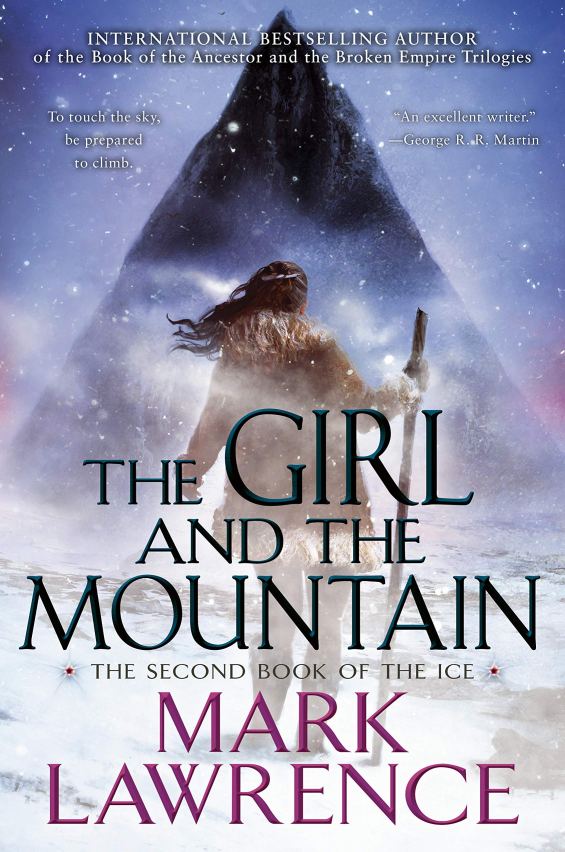
The Girl and the Mountain Cover 2

Amazon     Book Depository

Firefly: Life Signs by James Lovegrove

Firefly Life Signs

Consulting Editor: Joss Whedon

Publisher: Titan Books (Hardcover – 15 March 2021)

Series: Firefly – Book Five

Length: 377 pages

My Rating: 4.5 out of 5 stars

Amazon     Book Depository

One of my favourite tie-in series returns with another awesome Firefly novel by bestselling author James Lovegrove.  This time, Lovegrove digs up an intriguing unaired plotline for the epic science fiction series and crafts an outstanding story out of it for Firefly: Life Signs.

Set between the events of the Firefly television series and the Serenity film, Captain Malcolm Reynolds and the crew of Serenity are still scraping by, earning a living from barely legal jobs while also dealing with the consequences of their previous capers.  Life seems to be normal (well, normal for this motley crew) until they receive some shocking news: former crewmember Inara is dying from a terminal illness.

Rushing to her side, a devastated Mal learns that Inara is suffering from Kiehl’s Myeloma, an incurable form of cancer.  With only a few short weeks until Inara’s time is up, Serenity’s crew look set to lose one of their own, until a rumour reaches them of a potential cure.  Esau Weng, a maverick scientist, was rumoured to be working on a medical breakthrough that could potentially treat Inara’s condition.  However, the unethical and secretive nature of his work landed him in trouble with the Alliance, who arrested him and bundled him off to their most notorious prison.

Tracking Esau’s location, the crew are disheartened to learn that he has been sent to the prison planet of Atata, a dangerous and harsh place where the worst criminals and dissidents the verse has to offer are housed.  Inmates are abandoned on its surface and are forced to survive with no guards, no protection, and limited resources.  Worse, the planet is a frozen wasteland, nearly uninhabitable thanks to its failed terraforming, with its snow-covered surface filled with mutated animals.  Determined to save Inara no matter what, Mal organises a desperate infiltration of the prison with Zoe, Jayne and Simon.  However, finding Weng will prove to be harder than they imagined, as they are forced to deal with the deranged ruler of the prison.  Can Mal and his team find Weng before it is too late, and even if they can, will his supposed cure be enough to save Inara?

Over the last couple of years, there has been an excellent resurgence in Firefly/Serenity tie-in fiction as new publishing companies have taken charge of producing content for the franchise.  One of the best examples of this has been the new collection of Firefly novels that introduced some compelling original stories surrounding various members of Serenity’s crew.  All of these novels have been pretty awesome so far, and I have really enjoyed the awesome and impressive stories they have created.

While other authors have been lined up for these books, such as Tim Lebbon (who wrote Firefly: Generations), the MVP of this series has been James Lovegrove, who has written four out of the five novels (including this one).  His previous books have included Big Damn Hero (with Nancy Holder), The Magnificent Nine and The Ghost Machine, all three of which have been exceptional tie-in reads.  In my opinion, each of Lovegrove’s Firefly novels has been better than the last, and this continues to be the case with Life SignsLife Signs was an outstanding and clever read that explores some of the most interesting and compelling aspects of the Firefly universe while also getting to the very core of some of its iconic characters.

For his latest Firefly novel, Lovegrove comes up with an awesome narrative that is both exciting and emotionally powerful, as the crew engage in a prison break to save one of their own.  Like the rest of the Firefly books that I have had the pleasure of reading, Life Signs is an extremely fast-paced novel, which makes great use of multiple character perspectives, including all the members of Serenity’s crew as well as several new characters, to tell a complete and intriguing story.  The novel starts at pace, with the crew receiving the devastating news about Inara’s upcoming death, which hits all the characters, especially Mal, extremely hard.  From there the story splits into two linked but separate story arcs: one on the planet and one in space.  The storyline set on the prison planet is pretty good, and it was a lot of fun to see the more criminally minded Mal, Zoe and Jayne attempt to blend in, along with a faltering Simon.  Their attempts to infiltrate the criminal inhabitants of the prison ends up producing several interesting issues that they need to overcome, and they eventually engage in a desperate battle for survival out in Atata’s snowy wasteland.  There are some great twists associated with this part of the story, including a clever one surrounding an inmate who joins their team, and this was a fantastic part of the book.  At the same time, the three other members of the crew are out in space aboard Serenity and must deal with a fanatical Alliance captain who is determined to capture them, resulting in some amazing space exploits which push River to the fore.  Both these separated arcs are pretty awesome, and they come together extremely well, ensuring the reader gets a fantastic blast of action and character development.  I also enjoyed the additional emotional weight that the life-or-death storyline surrounding Inara has, and it was definitely a powerful and compelling narrative that readers are guaranteed to want to finish off as quickly as they can.

Life Signs is an intriguing and clever addition to the wider Firefly canon.  While the story is quite open to new readers or those who are unfamiliar with the franchise, this is definitely a novel best enjoyed by fans of the Firefly television show and additional tie-in media, as there are a number of fun references and major character moments that they will find particularly appealing.  One of the most interesting parts of this book is the storyline surrounding Inara having cancer.  As some Firefly fans may be aware, members of the show’s creative team have revealed that they initially planned a whole major storyline around Inara suffering from a terminal illness, which would have appeared in a future episode of the show.  They even layered a few hints about this in the first season, such as her mysterious syringe and the reasons why she was travelling on Serenity rather than a more luxurious ship.  I was very excited to hear that parts of this storyline were being used in Life Signs and I think that Lovegrove did a great job examining this interesting character thread surrounding Inara.  Not only does this result in some brilliant and dramatic moments, but Lovegrove makes sure to make mention of several of the hints that were shown in the television series, which fans will deeply appreciate.  Lovegrove provides several additional references that eagle-eyed fans will appreciate, such as the very start of the book containing a fun follow-up to one of the crew’s previous adventures.  Lovegrove also subtly ties Life Signs into some of the previous Firefly novels he wrote, including through a key supporting character, and I quite liked the continuity of the novels.  As a result, this is a perfect read for Firefly fans, although general science fiction buffs or those who enjoyed the show will have a great time with this novel as well.

As usual with Lovegrove’s Firefly novels, one of the most impressive highlights of this book is the fantastic depiction of the fantastic characters from the show.  Lovegrove has always done an amazing job of bringing these great characters to life within his novels and I really love his attention to character detail, emotion and their inner selves.  Life Signs continues this trend by thoroughly examining several members of the crew and I deeply enjoyed the emotional and enjoyable inclusions to the plot.

You can probably guess that Inara gets a bit of focus in this novel, due to the reveal that she is dying.  As I mentioned above, I really enjoyed that Lovegrove utilised this story arc in Life Signs, and the author leverages this plot to provide a fantastic and powerful dive into Inara’s character, a re-examination of her actions during the television show, as well as an exploration of her relationship with the other people aboard Serenity.  This serves to be one of the more intriguing portrayals of Inara in this series of novels, although it is rather brief as Inara spends most of the novel in a near-death state.  Due to Inara’s illness keeping her out of much of the plot, a lot of the story’s emotional weight fall to Mal, who ends up getting most of the focus of this novel.  While you do get his typical cocky attitude, fun humour and ability to annoy anyone around him, you also get to see Mal on the emotional edge during this book.  Mal is naturally devastated by the news that his unspoken love interest is dying, and he quickly latches on to any hope for her survival.  As a result, he dives into the hunt for a cure with reckless abandon and ends up taking some big risks.  Lovegrove did an amazing job portraying Mal as a bit deranged in this novel, and it was fascinating to see the usual conscientious captain seemingly prioritise Inara’s survival over the safety of his crew.  There are some amazingly dramatic and moving moments throughout this book as Mal struggles to deal with the emotions surrounding Inara’s potential death, and Firefly fans will be left on the edge of their seats as Lovegrove provides some new angles to their complex relationship.

While a good portion of the novel focuses on Mal and his concerns for Inara, the rest of Serenity’s crew also appear throughout the novel, as each of them has at least one chapter shown from their point of view.  Interestingly enough, both Tam siblings get a decent chunk of focus, with their storylines not as connected to each other’s as usual.  Simon has a great arc down on the prison planet after he is dragged along to determine if Weng can actually help Inara.  Due to his lack of criminal believability, Simon ends up having a very interesting time in the prison, especially after he befriends a seemingly innocent female inmate, who forms a romantic attachment to Simon.  This ends up causing many problems with Simon, due to his poor lying abilities and conflicted feelings over Kaylee, and it was really interesting to see how his arc ended up.  On the other hand, River spends her part of the story aboard Serenity, and is called into action when the ship is threatened by Alliance military vessels.  I loved that Lovegrove spent time exploring River’s piloting Serenity, something that is shown at the end of the Serenity film, and it was really cool to see her do some complex and insane manoeuvres.  The chapters shown from River’s point of view are amongst some of the most entertaining parts of the book, and it is always great to see this crazy genius in action.

Zoe, Wash, Kaylee and Jayne round up the main cast of this book, although each of them has more of a supporting role.  Zoe does have an intriguing storyline that sees her bond with a fellow former soldier in the prison, and there were hints back at her past as a Dust Devil, something that was initially introduced in one of Joss Whedon’s comic books.  All these characters are portrayed in exquisite detail however, and Lovegrove does a good job replicating their personalities and characteristics throughout the story.  Overall, fans of the franchise will love the way that each of the characters are utilised throughout Life Signs, and I cannot wait to see which characters are featured in the next Firefly novel.

Firefly: Life Signs is another exceptional and clever Firefly tie-in novel from the impressive James Lovegrove.  Lovegrove has come up with an exciting and clever tale that successfully utilises a planned storyline from the show and produce an addictive and memorable narrative with it.  Readers will love the awesome call back to this iconic science fiction show including the excellent portrayals of the main cast of characters.  I had an amazing time reading this book and Firefly fans are going to love every second they spend reading it.  While I cannot wait to get my hands on the next entry in this series, which looks set to be Carnival by Una McCormack, Life Signs is an outstanding novel to check out now and comes highly recommended.

Amazon     Book Depository