Tombland by C. J. Sansom

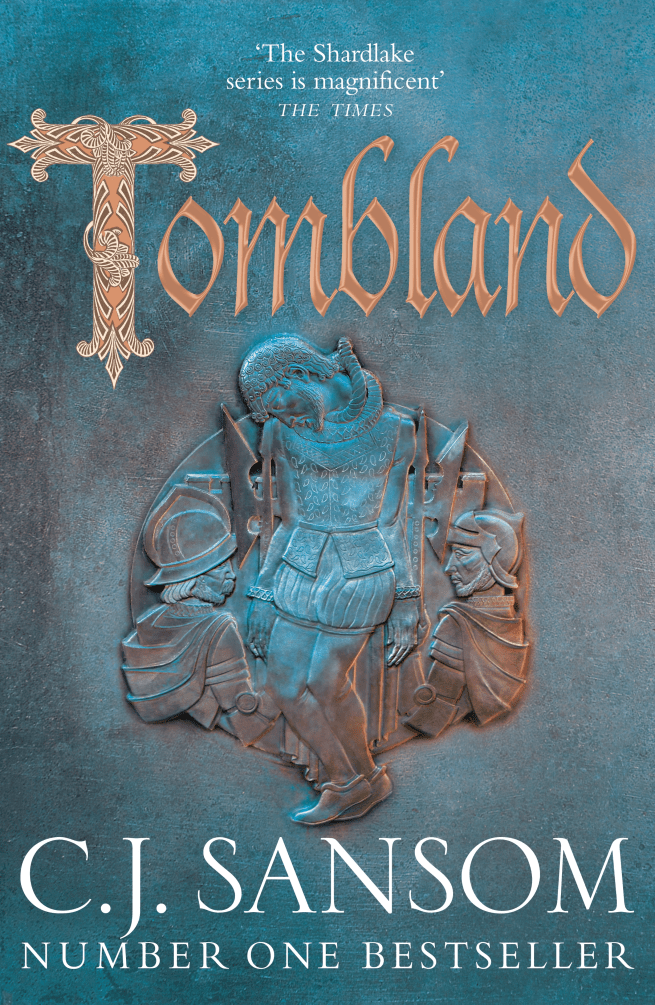
Tombland Cover

Publisher: Mantle

Publication Date – 18 October 2018

Amazon

One of the best historical fiction authors in the world today creates another exceptional piece of literature with Tombland, the epic historical crime fictional book set during the fictionally unexplored events of Kett’s Rebellion.

It is the summer of 1549, and King Henry VIII has been dead for two years.  The young Edward VI is on the throne, while his uncle, Edward Seymour, the Duke of Somerset, rules the country as Lord Protector.  However, the country is slowly descending into chaos as a long, unsuccessful war with Scotland, religious conflict, poverty and the corrupt actions of the rich landowners are raising discontent among England’s peasant population.

In the midst of this, Matthew Shardlake is working as a lawyer for the King’s sister, the young Lady Elizabeth.  When a distant relative of Lady Elizabeth’s mother, Anne Boleyn, is found murdered near Norwich and her husband, John Boleyn, is accused of the crime, the case could have political implications for Elizabeth.  Matthew is sent to organise a legal defence of John and to investigate whether or not he committed the crime.  Travelling with his assistant Nicholas, Matthew travels to Norwich and begins to examine the details of the case.  Meeting up with their old friend Jack Barak, the three friends are convinced of John’s innocence, but malevolent forces intervene to disrupt their defence.  As several deaths occur around Norwich, Matthew’s investigation is disrupted by events outside of his control.

A well-organised peasant rebellion erupts around the city, throwing everything into chaos.  Led by the charismatic Robert Kett, the rebels march on Norwich and set up a large camp outside the city, filled with thousands of disenfranchised peasants.  Captured by the rebels, Matthew and his companions find themselves in the midst of a dangerous and divisive situation.  Nicholas’s established views about the superiority of gentlemen sees him imprisoned, while Barak finds much in common with the peasants and their cause.  Matthew is forced to make a decision about where his loyalties lie, as Kett wishes him to assist in organising trials for the landowners they have captured.  As the rebellion drags on, Matthew finds evidence about the Boleyn murder case in the camp.  Following these leads, Matthew soon uncovers a terrible conspiracy that will not only endanger John Boleyn and his lawyers but could affect the fates of every peasant in Kett’s Rebellion.

C. J. Sansom is one of historical fiction’s most highly regarded authors, having written a series of amazing novels in the genre. His most significant body of work is the Matthew Shardlake series, which follows the titular lawyer as he finds himself forced to solve a series of elaborate mysteries during the Tudor period. All the books in this series are extremely impressive, as they all feature clever mysteries and an excellent use of the book’s historical setting.  In addition to this series, he has also written a standalone historical thriller, Winter in Madrid, as well as an alternate history novel, DominionTombland is the seventh book in the Matthew Shardlake series and Sansom’s first book since 2014, but considering the sheer amount of detail and the length of the text, this is hardly surprising.

Tombland is another epic novel from Sansom and one that I really enjoyed reading and ranked as one of my top 10 reads for 2018.  This book contains an outstanding combination of an intense and complex murder mystery and some amazing historical settings and storylines.  All of these elements are extremely amazing by themselves, but together they create one of the best reads of the year.  While I really loved this book, potential readers really need to set aside a lot of time to get through Tombland.  It has over 800 pages of story, with an additional 50 plus pages of the author’s historical notes and discussions about what events he included.  In addition, each page has such a rich amount of detail and plot that I found myself getting through this book at a lot slower pace than I usually would.  While it does take a while to get through Tombland, I personally believe it is well worth the effort, as the incredible story within had me hooked from the very first page.

This book has an intricate and powerful investigation angle, as Matthew and his associates attempt to solve a terrible murder that they believe their client has been wrongfully accused of.  The mystery part of this book is very well done and features an elaborate and intriguing solution that is slowly revealed throughout the course of the book.  Sansom introduces a significant number of potential suspects, all of whom have substantial motives to kill the victim, designed to throw the reader off the scent of the real solution.  I liked how the case continued to expand out as the book went on, as the protagonists not only attempt to solve the original murder but must also investigate several murders committed to cover up the initial acts, as well as several attempts to eliminate John Boleyn.  There are several major and surprising twists throughout the investigation, as a number of small clues and characters that at first appear minor turn out to have major implications for the overarching mystery.  The solutions to the mysteries at the end of the book reveal a dark and powerful motive that has severe consequences for several of the characters involved.  Overall, Tombland contained an outstanding central mystery, which is guaranteed to keep the reader deeply curious and engaged with this fantastic text.

One of the most interesting features of Tombland is the fact that Sansom has set it during Kett’s Rebellion of 1549.  This is a somewhat obscure piece of history that many readers might not be familiar with, but it is an incredibly fascinating event of English history.  Sansom does a masterful job of portraying the entirety of the rebellion throughout the novel and use it as a fantastic secondary storyline as the protagonists witness the beginning and end of the mystery.

Sansom does an outstanding job covering the events of this rebellion, including the events that led up it and caused the peasants to rise up against the rich landowners.  As a result, he expertly examines all the events and conditions that were making the peasants and poor of Norwich, and the rest of England, discontented with the way the country was being run.  In order to do this, a number of relevant elements are effortlessly inserted into the story and become key parts of the plot.  These elements include discussions about the poorly run war in Scotland contributing to armed deserters on the rebels’ side, talks about the political structure of the country and thoughts about the religious disagreements and schisms that were rife in the country during that period.  One of the most fascinating and significant elements that apparently led to the rebellion was the rich landowners’ focus on sheep farming and the creation of large sheep enclosures rather than the growth of traditional crops.  Before reading Tombland I would never have thought that sheep farming would have the potential to be a cause of rebellion; however, Sansom is able to explain in some significant detail how sheep farming and enclosures were negatively impacting many poorer individuals in England, and how it became a key part of Kett’s Rebellion.

In addition to covering the causes of the rebellion, Sansom’s narrative grows to cover the entire length of this intriguing event.  All sorts of elements of it are explored, and readers get an excellent idea of how the peasants were organised, what their motivations were, what sort of actions they were undertaking, how the government reacted to it and what the overall attitude of the participants was.  This was all boundlessly fascinating, and as the reader gets deeper and deeper into the book it becomes harder to put the book down as they become extremely curious about what the overall fate of this group of people was, especially after the reader gets an idea of how big the rebellion was and what sort of victories they were able to obtain.  The final results of this rebellion and the long-term impacts it had on the country are really interesting to hear about, and I had an amazing time seeing all the significant events that occurred during this underexamined historical rebellion.

As always, I was immensely impressed with the sheer amount of research that Sansom did and the historical detail that resulted from it.  Tombland includes over 50 pages of the author’s notes about the event and the conclusions he drew from his extensive research.  While these 50 pages are extremely interesting to read, the revelations about how many of the events the protagonist witnesses actually occurred were astounding, and it sounds like Sansom was able to recreate nearly every significant event of Kett’s Rebellion throughout the course of Tombland, with some necessary dramatic flourishes to create the overall story.  It was amazing how many of these events actually occurred, and how many of the secondary characters were actually real-life people who had significant impacts on the outcome of the rebellion.  Readers will also be amazed by the historical details that Sansom has included on every page of this book and will have a hard time forgetting the events of 1549 and Kett’s Rebellion.

There are several other elements I enjoyed in this book, including the seamless ways that the investigative storyline combines with the historical background of Kett’s Rebellion.  So many characters that are potential witnesses or suspects in the murders that the protagonists are investigating become key figures in the historical events that occurred around Norwich.  Suspects and witnesses are also found in the rebel camp, and I liked how the key to crime and the downfall of the rebels were both in the same place.  I also enjoyed the examination of 16th century English legal procedures and the depictions of murder trials, and found the scenes featuring them very fascinating.  The book’s focus on the divide between the rich and the poor is also a great addition to the story and gets a significant look in throughout the entire book, and it is a discussion that is still relevant to this day.

C. J. Sansom once again hits his literary ball out of the park with Tombland, another five-star historical mystery that has the perfect combination of compelling mystery and intriguing historical elements. With an incredibly addictive overall narrative and a focus on a fascinating historical event that is rarely used in other pieces of historical fiction. One of my favourite reads of 2018, I highly recommend this book, especially for people who love a great mystery.

My Rating:

Five Stars

Amazon

Heads You Win by Jeffrey Archer

Heads You Win Cover.png

Publisher: Macmillan

Publication Date – 30 October 2018

Amazon

From the mind of one of modern fiction’s most controversial authors comes a two-in-one fantastic and elaborate piece of historical fiction that utilises an intriguing narrative device to create one of 2018’s most unique stories.

Young student Alexander Karpenko is the bright, talented and ambitious child of two hardworking citizens of the Soviet Union.  Living in Leningrad in 1968, Alexander’s dream is to become the first democratically elected president of his country.  However, when he is betrayed and his father is killed by the KGB, Alexander and his mother realise that their only hope is to flee Russia and make a new life for themselves in another country.

Arriving at the docks, Alexander and his mother are given a choice between two different ships: one heading to London or one heading to New York.  The decision is made by the flip of a coin, and Alexander’s life splits into two separate paths: one where he heads to Britain and one where he heads to America.  Alexander arrives in these countries with great ambition and a desire to succeed no matter what.

Over the next 30 years, in both these lives, Alexander finds success in a two separate ways.  He fights his way up from the bottom as a lowly immigrant to an influential person, overcoming obstacles and antagonists along the way.  Both Alexanders’ journeys are inspirational, but no matter what these two Alexanders accomplish, the fate of their home country is always on their minds, and the shadow of the Soviet Union constantly surrounds them.

Jeffrey Archer is a rather interesting individual, with a very eventful and controversial background.  A former British MP, Archer is probably better known for the various accusations of fraud he has attracted throughout his life, and he has even spent some time in jail as a result.  However, rather than let that ruin his public profile, Archer has used his experience and imagination to create a number of fascinating novels, many of which utilise aspects of his political, academic or professional life or expertise to some degree.  As a result, Archer is now one of the most high-profile authors in the world and has written over 20 adult novels, including the three books in his Kane and Abel series and the seven books in his bestselling Clifton Chronicles.  On top of that, Archer has also written a number of short stories, a couple of plays, several children’s books and his Prison Diaries, three non-fiction novels that chronicle his life in prison.

Heads You Win is an extremely fascinating novel from Archer, which takes his protagonist on two separate adventures through over 30 years of American and British history and life.  Archer utilises a very clever divergent timelines narrative device (think Sliding Doors), which creates two separate timelines around the different outcomes of one event, in this case, the outcome of a coin toss.  As a result, in one timeline, the protagonists and his mother get on a ship to London, while in another timeline they board a ship bound for New York.  This is a very interesting concept to utilise in this story, and one that works to create two separate narrative threads to follow.  Both of these storylines focus on the protagonist attempting to find his place in the country that he eventually ends up in, and then moves onto the protagonist becoming a powerful and influential individual in his own way, all the while dealing with the terrible people that seem to inhabit Archer’s world.

I rather enjoyed both of the separate storylines in this book, and had a lot of fun seeing the different or similar ways that the protagonist attempted to make his fortune in each lifetime.  The differences between these two storylines happen right away, as in the London timeline, Alexander and his mother find themselves on a nice ship with a friendly crew who mostly want to help, while the New York timeline finds them in a poorly maintained vessel with a self-serving crew who seek to exploit the two main characters.  I found it rather fascinating to see the way that their treatment and the environments they find themselves in change the way in which they act.  For example, Alexander’s experience in the English setting encourage him to seek the full Cambridge academic lifestyle, while his American counterpart was less focused on his formal education and learned more on the street.

Both of these divergent timelines feature an intriguing look at the cities and countries that the protagonists end up in, and both serve as a good historical backdrop to each of the main storylines, featuring several real historical events and some historical characters.  For example, the Alexander who ends up in the American timeline is forced to fight in the Vietnam War, while the British Alexander rubs elbows with a number of the country’s prominent politicians.  I liked how the divergent ways that the two separate protagonists gained their power and prestige matched the country that there were in.  The American Alexander became rich through his business acumen and financial brilliance, while the British Alexander went the academic route and eventually become deeply involved with the British political system, something close to the author’s heart.  Not only does this help match the locations and people that the protagonist deals with, but it allows the two separate stories to diverge out slightly, with the British storyline containing political intrigue, while the American storyline reads a little bit more like a financial thriller.  While the focus on the protagonist’s two adopted homelands is a great part of this novel, the protagonist’s history in the Soviet Union is a major part of this story.  The initial chapters capture the uncertainty and despair that inhabitants of the Soviet Union would have felt in the 1960s, while the character’s subsequent visits helped highlight the obvious differences between the Soviet Union and the countries that Alexander escaped to.  There is also a rather exciting reveal about one of the Russian characters towards the end of the book that will prove to be the most memorable part of Heads You Win, and is definitely something to look out for.

While I enjoyed the divergent timelines narrative device that Archer employed throughout Heads You Win I did feel that he could have done more with it.  I would have loved to see a bit more crossover between the two separate timelines, and, for example, see how key characters from one storyline would have fared without their Alexander in their lives.  Instead there is minimal crossover between these two separate storylines, which feels like a bit of a missed opportunity.  I am also not the biggest fan of what these quick crossovers revealed, as it strongly hinted that both storylines actually exist together at the same time, and as a result, there are two Alexanders existing in the world at the same time.  This is a bit of a weird twist, and while it does not negatively impact the vast majority of either storyline, it does result in a conclusion that some may find slightly confusing.  As a result, while this did slightly mark down my rating of Heads You Win, the split storyline concept is a fantastic and unforgettable part of this book and makes it quite a distinctive read.

This latest novel from one of the world’s most colourful professional authors is a fun, historical thrill ride that features a very unique and memorable narrative device.  With a great look at two different countries during the same historical time period and featuring two separate by similar stories of life, adversity and success, this is an extremely enjoyable novel that will appeal to a varied range of readers.  Heads You Win is definitely worth checking out, and I am planning to keep an eye out for the next read from Archer.

My Rating:

Four stars

Amazon

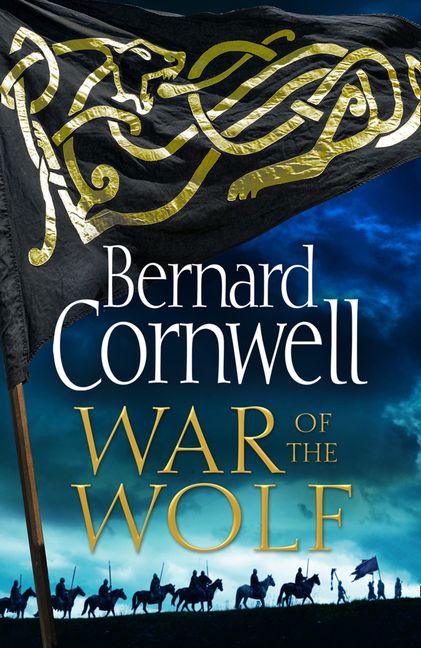
War of the Wolf by Bernard Cornwell

War of the Wolf Cover.jpg

Publisher: Harper Collins

Publication Date – 24 September 2018

Amazon

Uhtred of Bebbanburg returns in another rich historical adventure set in the heart of post-Roman Britain in this incredible and first-rate story from historical fiction legend Bernard Cornwell.

In the early 10th century, after many years of trials and tribulations, Uhtred has at last achieved his lifelong goal of reclaiming his ancestral fortress of Bebbanburg.  Finally able to claim his independence from Wessex and the Saxon Christians who have always treated him with scorn and hostility for his pagan beliefs, Uhtred seeks to move away from the politics, battles and backstabbing that has been his life for so long.  However, his new peaceful life is about to be interrupted by the interventions of enemies new and old.

In the outside world, King Edward of Wessex has made his move on the kingdom of Mercia, and has finally achieved his father’s dream of uniting the Christian kingdoms of Britain into one nation.  The only remaining country outside of his control is the Kingdom of Northumbria, ruled by Uhtred’s son in law, Sigtryggr.  These events have led to dangerous changes and new alliances for the remaining factions living outside of Edward’s control.

When a mysterious priest sends Uhtred on a mission to save Edward’s maligned firstborn son and Uhtred’s former ward, Æthelstan, from a Mercian siege, he finds himself outmanoeuvred by a new army of Danes who have come to claim Northumbria for themselves.  Faced with great loss, Uhtred finds himself in a brutal fight against an opponent who seems to have mystical powers at his command.  At the same time, the politics of the Wessex court threaten to start a war on another front, as the various contenders for the fading Edward’s throne seek to gain position, and many of the potential heirs want Uhtred dead.  With enemies all around and not enough men at his back, the odds look grim for Uhtred.  But, despite years of brutal battles and the ravages of age, Uhtred is still the most feared warrior in all of Britain, and he’s about to show everyone why he is always a force to be reckoned with.

War of the Wolf is the 11th book in The Last Kingdom series of historical fiction books from Bernard Cornwell.  To my mind, Bernard Cornwell has to be considered one of the greatest authors of historical fiction in the world today, both in the quantity of books he has written and the quality of their content.  Cornwell has been writing since 1981 and has produced more than 55 novels in his career, the vast majority of which are either set in England or focus on English characters out in the world.  The sheer scope of Cornwell’s work is incredible, as he has covered vast tracts of world history, including several more obscure eras not regularly covered by other historical fiction authors.  He is possibly best known for his long-running Richard Sharpe series, which followed the adventures of a British soldier and commander during and around the time of the Napoleonic Wars.  The Richard Sharpe series featured 24 books and was adapted into the British television series, Sharpe, featuring Sean Bean as the titular character.  Other series that Cornwell has published include the American Civil War series The Starbuck Chronicles, the Arthurian legends series The Warlord Chronicles and the Grail Quest novels, which are set during the early years of the Hundred Years’ War.  Cornwell has also produced a number of standalone novels, including several sailing based modern thrillers and a number of intriguing individual historical novels.  These standalone novels cover a huge range of different topics, from the prehistoric English story in Stonehenge, to the war novel Azincourt, the excellent examination of one of the more interesting battles of the American Revolutionary War in The Fort and the thriller set among Shakespeare’s theatre company in Fools and Mortals, which I have previously reviewed here.

The Last Kingdom series, alternatively known as the Saxon Stories, the Saxon Tales, the Warrior Chronicles or the Saxon Chronicles, started in 2004 and is Cornwell’s second–longest-running series, with 11 books currently written, and more set for the future.  The Last Kingdom series is the second of Cornwell’s series to be adapted for television, with a third season of The Last Kingdom television just starting yesterday.  I have always been a massive fan of this series, especially as one of the books in the series, Sword Song, was one of the first pieces of historical fiction I ever read and which helped get me into the genre.  This is a fantastic series, as each of the books contains an electrifying adventure set during a period of history often overlooked or underutilised by other historical fiction authors.  I have routinely reviewed several books in this series over the years, many of which will appear in future additions of my Throwback Thursday series of reviews.

War of the Wolf is another incredible outing from Cornwell that once again focuses on the life of his grizzled and battle-tested protagonist, Uhtred of Bebbanburg.  Uhtred is a superb series protagonist who has witnessed the changing political and religious landscape of this period of post-Roman Britain.  Originally a Christian Saxon, he is captured by pagan Danes as a child after the death of his father and the theft of his Uhtred’s ancestral fortress of Bebbanburg (modern day Bamburgh Castle in Northeast England) by his uncle.  Raised by the Danes, Uhtred gains an appreciation for their culture and even starts practicing their religion.  Uhtred is eventually forced into the service of the last remaining Christian kingdom of Wessex and its pious King Alfred (Alfred the Great).  Even with several falling outs between the two, Uhtred serves Alfred and his family for many years as his most ferocious warrior and war leader, participating in several of the defining battles of the era.  Throughout the series, Uhtred is constantly torn between the Christian Saxons and the invading pagan Danes.  Despite being born as a Christian in a formerly Christian kingdom, Uhtred finds more in common with the Danes after being raised by one of their noble families and taking on their religion.  While he’d rather fight alongside the Danes, circumstances force Uhtred to swear oaths of loyalty to various Saxon kings, especially Alfred, despite the hatred and disdain they show towards him for retaining his pagan faith.  These dual loyalties are a key part of the character, and often result in much internal and external conflict for Uhtred and form the basis of a number of excellent storylines.  Cornwell uses the character of Uhtred extremely well to highlight the differences between the Danes and the Saxons, as well as the importance of religion to these warring groups, especially when it comes to the somewhat insidious spread of Christianity to the Danes.

These storylines continue in War of the Wolf, as one of Uhtred’s oaths sends him into battle once again.  This sets up the main story of the new book perfectly, as Uhtred is forced to deal with the politics and betrayals of the Saxons, while also fighting against a dangerous pagan opponent.  I liked how Cornwell has continued to focus on Uhtred’s ties to the warring factions of Britain, and his attempts to reconcile his loyalties with his sense of honour and right and wrong.  I also really enjoyed the way that Cornwell has aged up his protagonists throughout the series.  Many authors will try to fit a number of adventures in to a short period of time in order to keep their protagonists in the same age range.  Cornwell, who has based many of the key occurrences of his books on real-life historical events, has instead chosen to age up his protagonist as he outlives several historical figures.  As a result, in War of the Wolf, Uhtred is no longer the young warrior he was at the start of the series, but is now an old sword in his 60s.  This is an intriguing narrative element from Cornwell, who has been slowly building up to this over the last few books in the series.  Not only has Cornwell been slowly ageing him but he’s been making him a more canny and crafty individual, able to rely on his brains and experiences more than his sword arm, although he still finds himself in the middle of every battle.  In the latest book, this leads Uhtred to think more about the future of the people he cares about than his own future, as he realises he is getting closer to death.  This is another fantastic outing featuring one of Cornwell’s best protagonists, and I am excited to see that he has left the series open for several additional stories in the future.

One of the more interesting parts of The Last Kingdom series is Cornwell’s outstanding research and his focus on historical details and events that are often not part of the public consciousness.  I can think of no better way to highlight this then to mention that while I was doing a post-Roman Britain archaeology course at university, my lecturer actually included several books from The Last Kingdom series on his suggested reading list among the usual textbooks and scholarly articles.  The previous books have all featured major battles or political events that helped decide the future of England, and his fictional point-of-view character often finds himself discussing the events with significant historical figures.  Smaller details, such as the traditional names and spellings of historical people and places, give all of these books an incredibly authentic feel and really make the reader think they are back in this time period.  As a result, these books are extremely intriguing for those fans of history and I cannot speak highly enough of the level of historical detail or insight Cornwell shows in his work.  Cornwell continues his trend of interesting historical features in War of the Wolf, as he examines several key events during this period.  This includes the annexation of the Kingdom of Mercia by King Edward of Wessex following the death of his sister Æthelflæd, the Queen of Mercia, and the subsequent rebellion by the Mercians.  There is also focus on the submission of King Sigtryggr of Northumbria to King Edward, and focuses on the events that led up to it.  Uhtred also finds himself embroiled in the politics around who would rule Sussex following the future death of Edward.  All of this is incredibly fascinating and form an amazing background for the rest of the book’s story.

Intense action sequences have always been a major part of this series, with the large-scale fight scenes between the various warring factions battling around the British countryside.  Cornwell does an excellent job replicating the battle tactics and techniques of the Saxons and the Danes, especially the standard technique of the shield wall, where the two opposing sides line up their shields and advance at each other.  The battles are always incredibly detailed and pull no punches when it comes to the gruesome realities of war and combat.  War of the Wolf in particular has quite a few great battle sequences, including one extended siege sequence towards the end of the book at an old Roman fort.  I also loved the inclusion of the úlfhéðnar, the fabled wolf berserkers, who become a major part of the story, as Uhtred and his soldiers must find a way to overcome these dangerous opponents.  It was quite interesting to see how these sorts of legendary historical fighters would actually fare in battle, and the author presents both the advantages and disadvantages of using them.  Special mention should also be given to the dual between the two opposing ‘sorcerers’ during the climactic battle that was extremely entertaining and one of the more amusing parts of the entire book.

Cornwell has once again delivered a five-star classic piece of historical fiction with the latest book in his bestselling The Last Kingdom series.  Filled with fantastic action, amazing historical context and focusing on a well-established and amazingly fleshed and complex protagonist, War of the Wolf is an incredible read that comes highly recommended.  Even after 11 books, this is still one of my favourite series and I’m very excited to get the next edition.

My Rating:

Five Stars

Amazon

The Anomaly by Michael Rutger

The Anomaly Cover

Publishers: Zaffre

                       Hachette Audio

Publication Date – 12 June 2018

Amazon

Prepare to have your fear of the dark reignited in this suspenseful and creative new novel from one of the best horror/thriller writers in the business, which takes the reader on one hell of an adventure.

The world is full of many secrets, cover-ups and mysteries, all of which have been hidden from the public by the academic elite.  At least, that’s what Nolan Moore would have you believe.  Nolan is an amateur archaeologist and former screenwriter whose web series, The Anomaly Files, attempts to uncover weird things from history.  Derided by the experts, The Anomaly Files has a devoted following of conspiracy theorists which Nolan hopes to turn into a television deal, and his latest episode might just be the break that he needs.

Following clues left by an explorer in 1909, Nolan and his production team travel to the Grand Canyon, hoping to find a hidden cave that may contain evidence of an ancient civilisation unrecorded in history.  For once, Nolan appears to be right, as the team manage to find the opening to a cave high up in a remote part of the canyon.  Exploring, they find a cave system filled with mysterious items and artefacts unlike anything ever discovered in this area before.  Their elation at this unique archaeological breakthrough is quickly quashed when they find themselves trapped within the cave, cut off from the outside world.

As their lights start to fade and their supplies begin to dwindle, Nolan and the team hold out hope for a rescue.  However, it soon becomes clear that something is very wrong.  Something alive is entombed with them and there is far more to this cave than they could have ever imagined.  As the team try to survive an increasingly desperate situation, Nolan must uncover the secrets of the structure they find themselves trapped in before they all die in darkness.

Michael Rutger is actually a pseudonym for bestselling author Michael Marshall, who has also written as Michael Marshall Smith.  Rutger has been writing since 1994 and is known for his intriguing science fiction novels, which often have a strong horror/thriller element to them.  The author is probably best known for his creepy 2002 release The Straw Men, which spawned two sequels, but his bibliography is littered with a number of other powerful and terrifying novels.  Fans of Rutger’s previous work will no doubt enjoy the quick reference to The Straw Men contained within The Anomaly, and it will be interesting to see if Rutger goes back to that series in the future.  I chose to listen to The Anomaly on audiobook.  The audiobook is narrated by Brandon Williams, and, at just under 10 hours in length, it doesn’t take too long to get to the heart of this great story.

One of the most enjoyable things about The Anomaly is the tense atmosphere that Rutger instils with his skilled writing and terrifying creative elements.  The reader really gets a sense of the desperation and despair slowly creeping up on the characters as the story progresses, even if they attempt to keep a brave face with each other.  With a limited and dwindling number of lights being held by the characters, Rutger is able to create quite a few opportunities for his protagonists to be forced to crawl around in the dark in this hostile environment.  The oppressive darkness takes a real shape during the book and at times has a near physical sense to it as the characters deal with it in different ways.  I felt that the story contained a well-balanced combination of action, exploration, archaeological and scientific exposition, despair-filled periods of rest, several gruesome and traumatic scenes and a surprising amount of humour from the characters.  However, even as the characters crack jokes at each other, you can feel the darkness surrounding them and you are constantly wondering what is going to happen next.

Special mention needs to go to Rutger’s creation of The Anomaly Files webcast show that was a major feature of the book’s early plot and the main plot reason that this group of characters are in this situation.  The author spends significant time describing the creation and filming process behind this show, and it’s intriguing how similar it sounds to some real-life conspiracy theory shows or broadcasts.  This accurate portrayal of a web show adds a lot of realism to the story, especially as it becomes clear that the characters are in over their heads and are different from the usual group of leading experts or military types you’d usually find in this type of novel.

I am not going to go into too much detail about the mystery of the cave as I don’t want to spoil this book for anyone who hasn’t read it yet.  Trying to figure out what exactly is behind the events affecting the protagonists is a big part of the experience, and too many details could potentially ruin the book’s impact.  Suffice to say, this central mystery is a very unique and creative idea from Rutger that is made up of a variety of different elements.  It was very intriguing to see the full extent of this central idea be revealed to the protagonists as the story progresses and readers will be astounded by what Rutger has come up with.  This mystery is made up of an interesting mixture of aspects from a number of different genres, and the author combines them together into one very intriguing conclusion with some massive implications.  I really enjoyed this exploration into the weird, and some of the things that harassed the protagonists as a result of the central mystery element worked very well with the tense nature of the story.

One of the defining features of The Anomaly is the strong focus on the characters entering the cave.  The readers grow to really care for these characters, and quite a lot of time is spent exploring their past and showing them as people who don’t deserve to be trapped in this terrible situation.  Most of the book’s focus is on the protagonist and narrator Nolan Moore, who is the cynical host of The Anomaly Files.  Nolan is a great central protagonist to have tell this story, as he is an observant character who has witty and at times piercing insights into his fellow characters while also providing the reader with his detailed examinations of the locations around him.  Despite coming off as a bit arrogant at the start of the book, the character’s brutal honesty about himself, as well as the exploration of certain parts of his past, does a lot to humanise him to the reader and make him into a character you can really care about.  This humanisation is furthered by his attempts to save his team and the extreme guilt that he feels for having brought his team into this place.

While Nolan is a great central character, Rutger also spends a significant amount of time focusing on the side characters, who in some ways are just as important as Nolan to the book’s overall story.  My absolute favourite of these characters had to be The Anomaly Files British producer, Ken, who spends the entire time quipping, swearing and generally making the most sarcastic comments he can, no matter how dire the situation gets.  Most of the book’s humour comes from Ken’s dialogue, as he makes it clear he’ll be joking and insulting the world right up till his death.  While this sort of character seems an odd choice for a thriller/horror novel, I felt his sarcastic attitude and comments fit the tense tone perfectly as he encapsulates a lot of feelings a normal person would have in that situation.  Ken is also one of those characters you can’t help but love and who you really, really hope will survive all the terrible stuff happening around them.

Molly the assistant producer and Pierre the cameraman also get a significant amount of focus in the book and are really good side characters.  Molly goes from being the most calm and collected character at the start of the book to the person most affected by the darkness and atmosphere of the cave.  Watching her try and work through her issues is quite inspiring, and there is even a descent exploration of the root of these deeper issues.  Not much of Pierre’s backstory is shown; however, the reader gets a good sense of his character throughout the book, and Nolan’s changing opinion and growing admiration for him mirrors the reader’s thoughts on him.  Other main characters include the ambitious reporter, Gemma, and Feather, the new age hippy who acts as a representative of the show’s sponsor.  Both of these characters get some decent exploration in the book, as well as some great scenes that make them stand out in their own ways.

I really enjoyed the audiobook version of The Anomaly.  I would definitely recommend it for anyone interested in finding out more about this compelling story.  I felt that having this book read out to me helped expand on the story’s tension and dark atmosphere, and it was a fantastic way to enjoy this amazing story.  Brandon Williams’s narration of the audiobook is excellent, and his voices for the characters are a highlight of this format.  Williams does a great job capturing the book’s point-of-view character, Nolan, very well, and the audience gets a real sense of the character’s cynical nature and inner thoughts through the terrific narration.  I absolutely loved the voice that Williams created for Ken, as he gives the character a very distinctive English accent that fits Ken’s sarcastic personality perfectly.  The accent is just wonderful and actually reminded me a lot of Matt Ryan’s voice for John Constantine in some of the modern television shows, especially when he swears (‘bollocks’, for example, is used multiple times).  The rest of the voices that Williams creates work well for the other characters and allow the readers to distinguish between them, although the less said about the ‘South African’ accent for minor character Dylan, the better.

With a powerfully intense atmosphere, The Anomaly is an exceptional horror/thriller from bestselling author Michael Rutger.  This is an amazing book, and readers will have a lot of fun trying to unravel the book’s central mystery, while desperately hoping their favourite characters survive this chilling adventure.  Addictive and terrifying in equal measures, this is an outstanding book that comes highly recommended for anyone looking for a weird, thrilling or horror based read.

My Rating:

Four and a half stars

Amazon